
Arabic bridal dress isn’t one tradition. It’s dozens, shaped by regional history, textile craft and family custom, and the looks below travel from Morocco and Palestine through the Gulf to Algeria, Tunisia, Iraq, Oman and Egypt. Some belong at the main celebration; others suit a henna night, a family gathering or a ceremonial entrance. In every case the outfit is the sum of its parts: robe, layers, belt, headpiece, jewelry, shoes. Names and motifs shift from one community to the next, so when I style a regional garment, I always bring in a relative or heritage artisan who knows it first-hand.
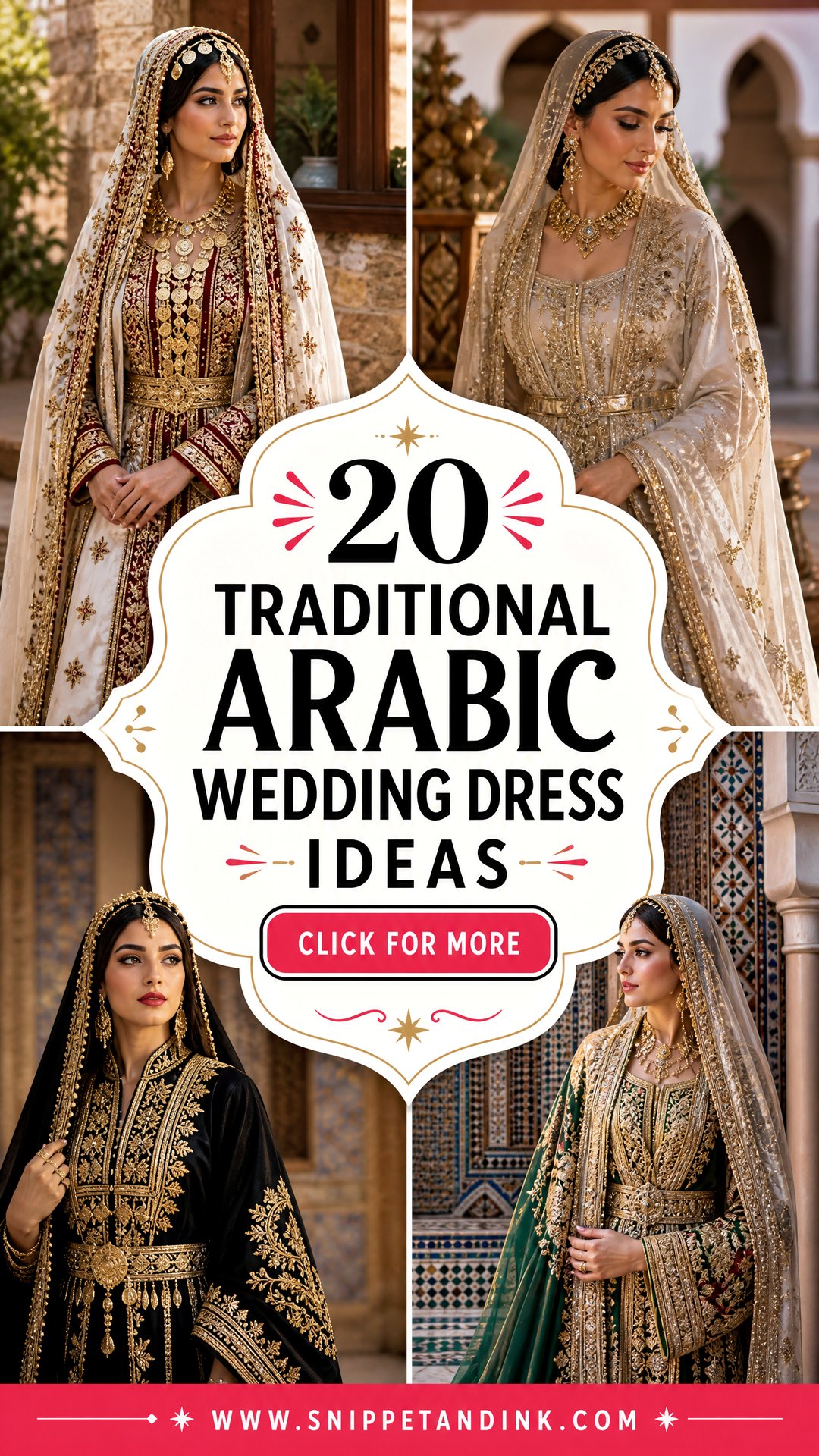
Rent, Borrow or Commission?
With traditional Arabic bridal dress, buying new isn’t the only route, and often not the usual one. How you source the outfit affects the timeline, the fit and how authentic the result is, so I settle it before we talk colours.
Renting with a bridal dresser
In Morocco and in many Moroccan diaspora weddings, a neggafa provides the outfits and dresses the bride through several changes in one night, with jewelry and headpieces included. It saves buying five garments, but you’re choosing from her collection, so visit early and ask to see the exact pieces you’ll wear.
Borrowing from family
An heirloom thobe or karakou may need relining, new closures or a let-out seam. Any alteration on old handwork should be done by hand, and the seamstress should be able to undo it later.
Commissioning new handwork
Hand embroidery is slow. A fully stitched tatreez thobe or a densely worked velvet caftan can take many months, so order this before anything else. Ask the maker for a stitched sample in your colours, how many fittings they include, and whether threads have been tested for colour bleeding.
1. White Moroccan Takchita Wedding Dress
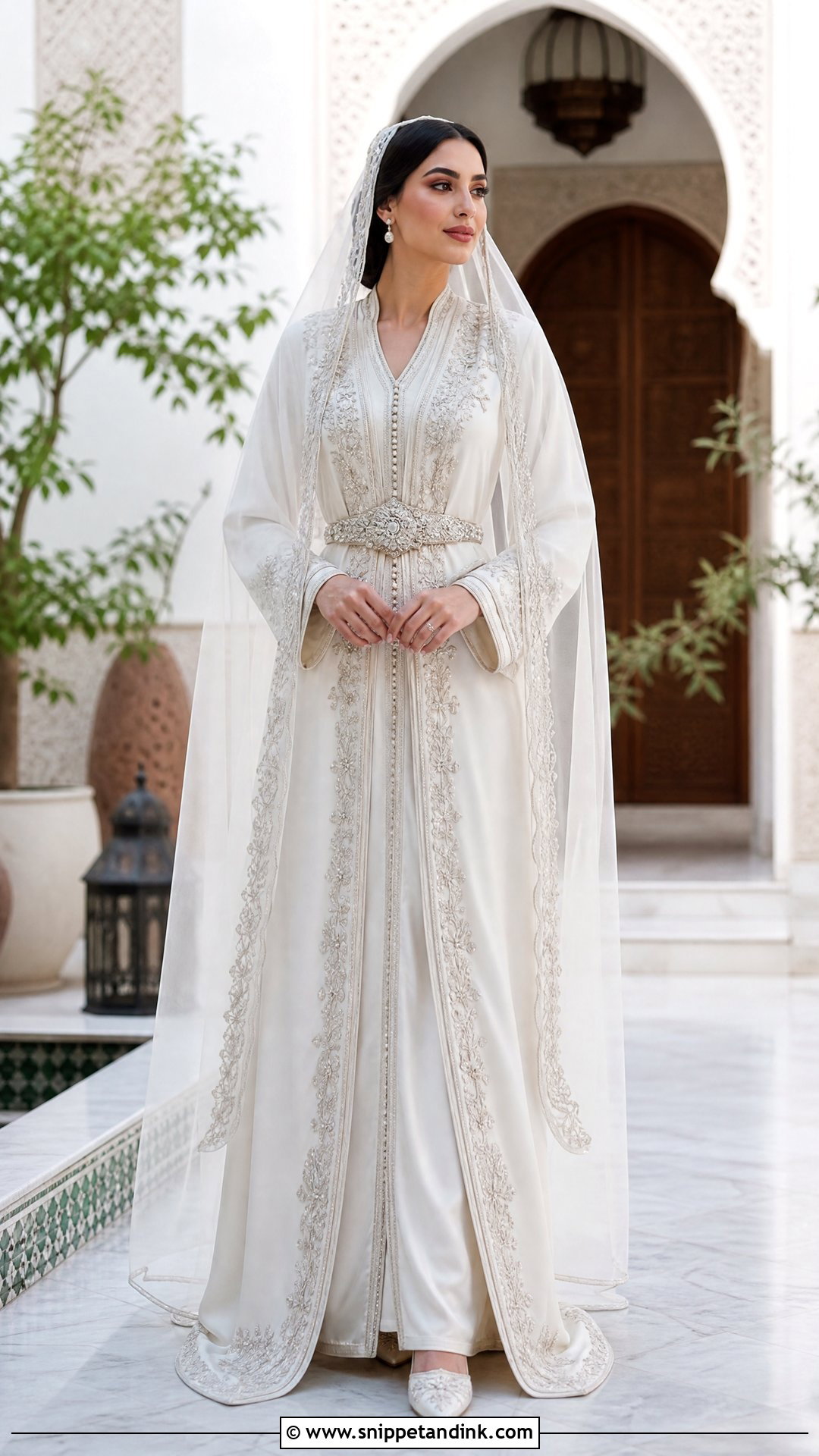
A white Moroccan takchita gives a regal look without a ball gown. It’s built in two layers: a smooth inner dress and a decorated outer robe with embroidery, ornamental closures and a belt. Ivory silk, satin or brocade with silver thread glows under evening light. The metallic belt sets the waist, and I have it fitted while the bride is seated, because a belt that’s comfortable standing can dig in at dinner. Embroidered pointed slippers, a pearl or crystal headpiece, drop earrings and a veil fixed behind the hair complete it. Hijab-wearing brides can wrap an ivory scarf with a jeweled edge. Keep the bouquet small.
2. Emerald Moroccan Caftan Wedding Dress
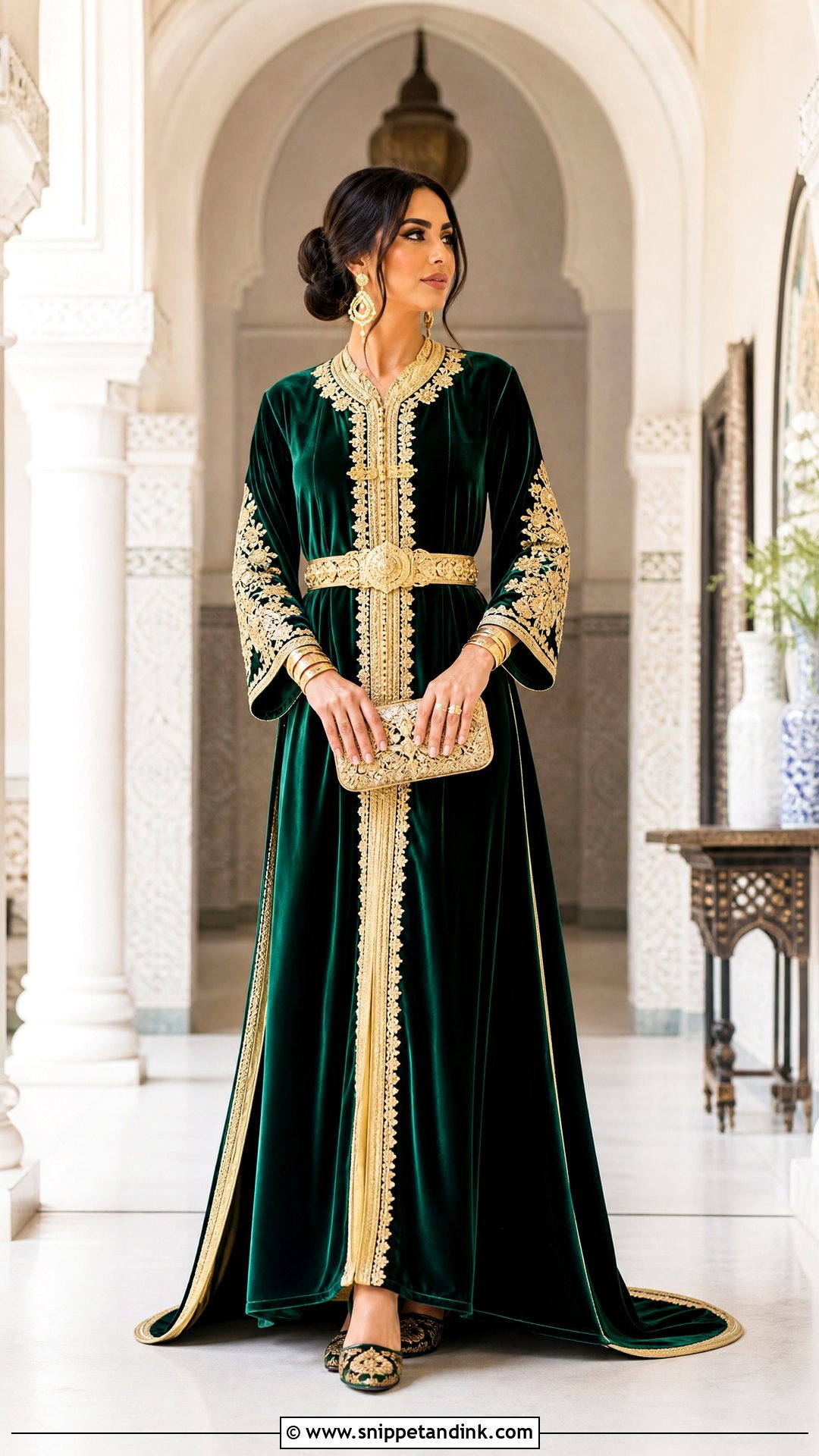
Emerald makes a Moroccan caftan feel rich, and it holds its depth under bright reception lights where paler colours wash out. Silk velvet or brocade with gold sfifa trim, covered buttons and embroidery along the neckline, cuffs and front opening is the classic build. A wide gold mdamma-style belt shapes the loose cut. Gold drops, stacked bracelets, an embellished clutch and metallic babouches finish it, with a low bun and small gold comb. Velvet is warm, so I’d keep this for an entrance or second look rather than hours of dancing. For a modest version, add a light matching scarf that leaves the collar visible.
3. Red Moroccan Henna Wedding Dress
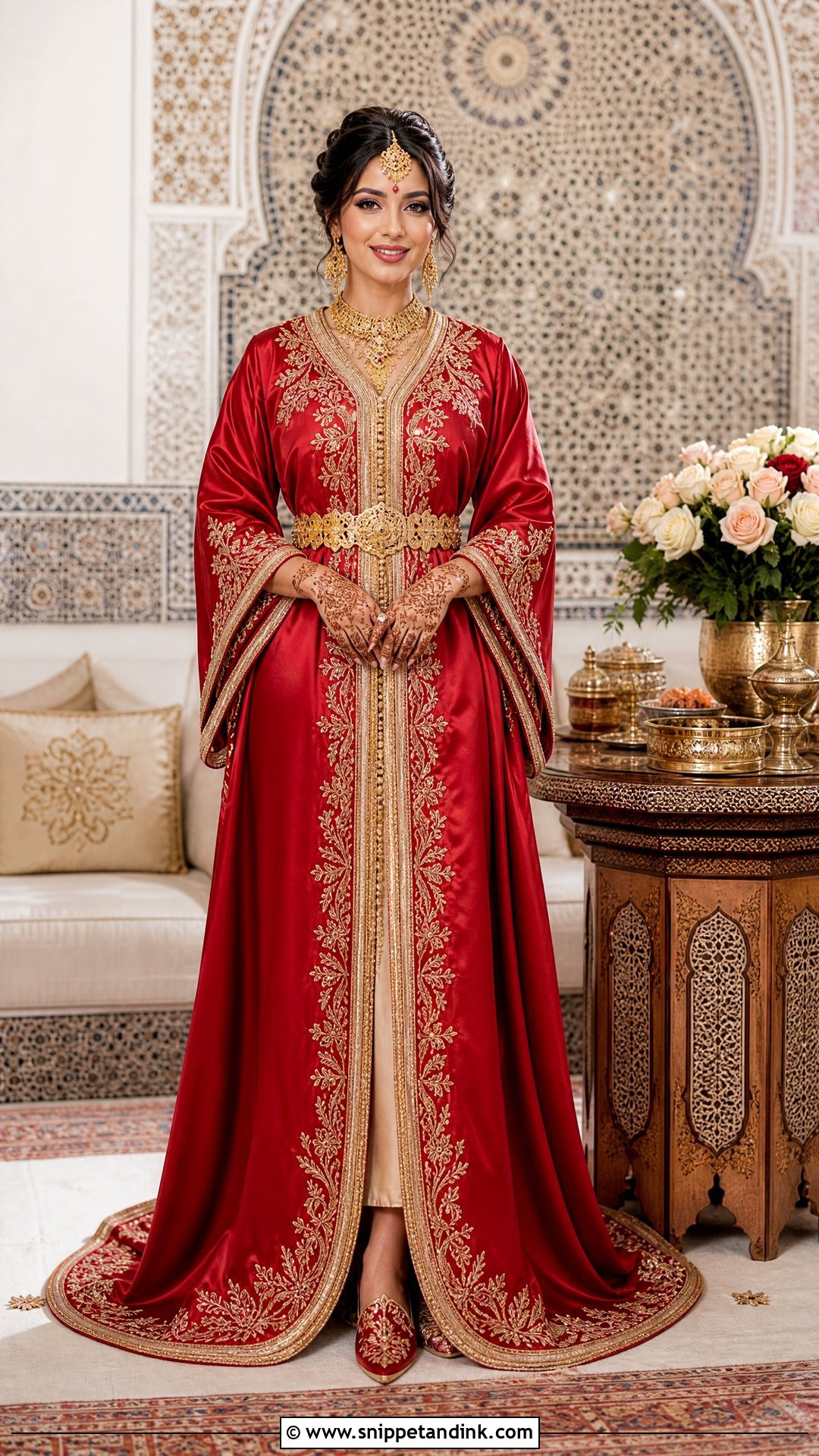
Red satin with gold embroidery has the energy a henna night needs. A red caftan or takchita with long sleeves, a floor-skimming hem and metal work concentrated down the centre, plus a gold belt, layered necklaces, earrings and embroidered slippers for dancing. Here’s a detail I always raise: fresh henna paste smears on anything it touches, so slightly wider cuffs that sit back from the wrist protect both the dress and the design. A red or gold head covering, jeweled crown or hairpiece finishes it. Carry a small posy or a decorated henna tray instead of a large bouquet, and let family guide colours and jewelry.
4. Palestinian Tatreez Wedding Thobe
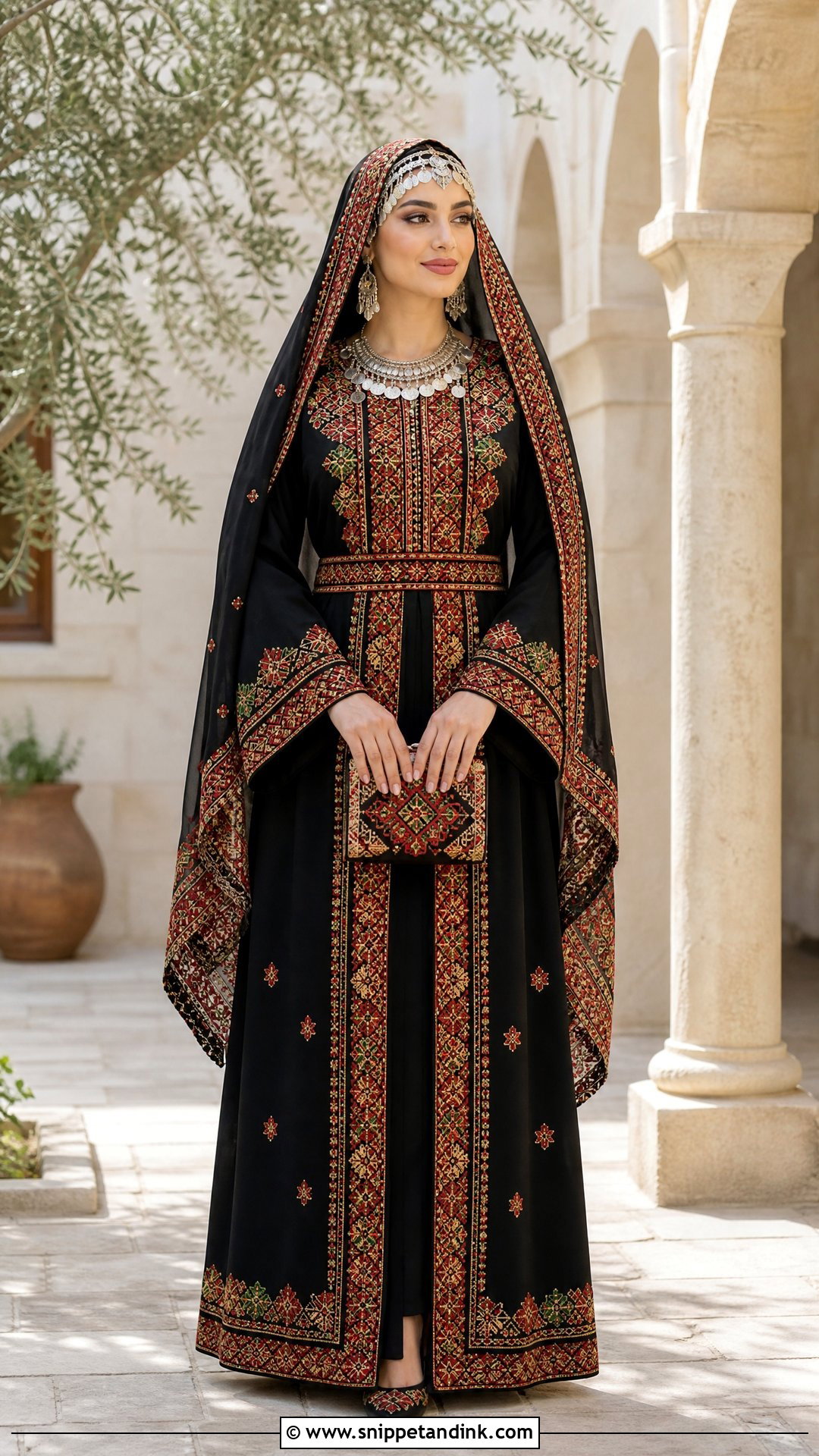
A Palestinian tatreez thobe puts heritage at the centre of the outfit. Black, cream or burgundy grounds carry cross-stitch across the chest panel, sleeves, side panels and skirt. Red thread is classic; green, gold, blue or multicolour can carry personal or regional meaning. Historically a thobe’s colours, cut and stitch placement could say where its wearer came from, which is exactly why I steer brides away from mixing motifs from unrelated villages. A coordinating embroidered veil, traditional silver or gold jewelry and plain closed shoes under the hem keep the needlework in charge. A clutch with a small tatreez panel ties it together.
5. White Ramallah Wedding Thobe
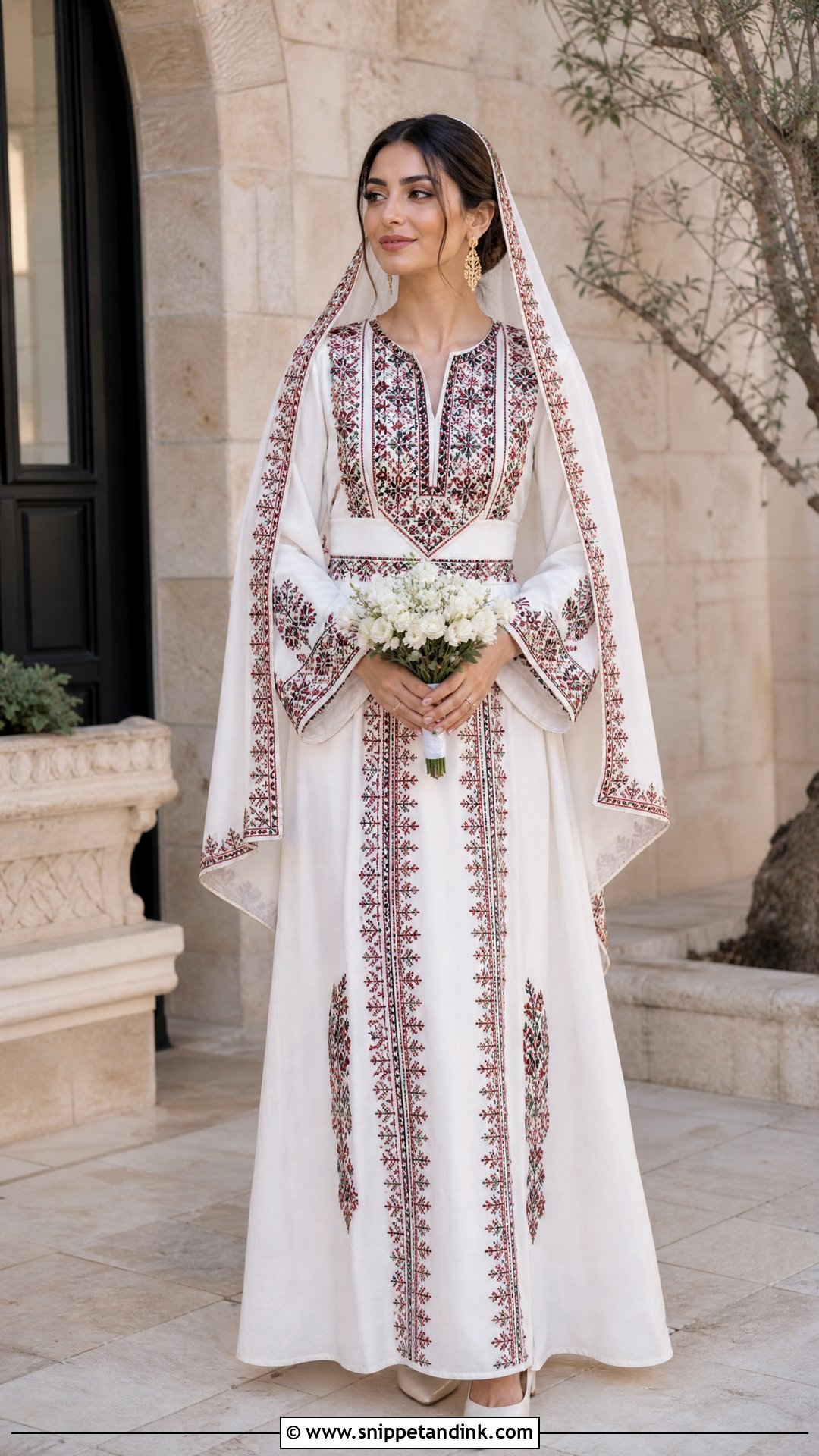
On white, every stitch of a Ramallah-style thobe shows. Choose flowing linen or a silk blend with geometric or floral tatreez around the chest, sleeves and skirt; burgundy, crimson, green and black thread contrast strongly against the light ground. Before anything is stitched, I’d ask the embroiderer to wash-test the red thread, because a dye that bleeds will tint white linen pink the first time it gets damp. A long white veil with a narrow embroidered edge, ivory pumps and a small white bouquet finish it, with gold earrings and a fine bracelet. A subtle inner waist seam adds shape without changing the long line. White thobes have historic ties to Ramallah, so seek out a knowledgeable maker.
6. Bethlehem Thob Al Malak Wedding Dress
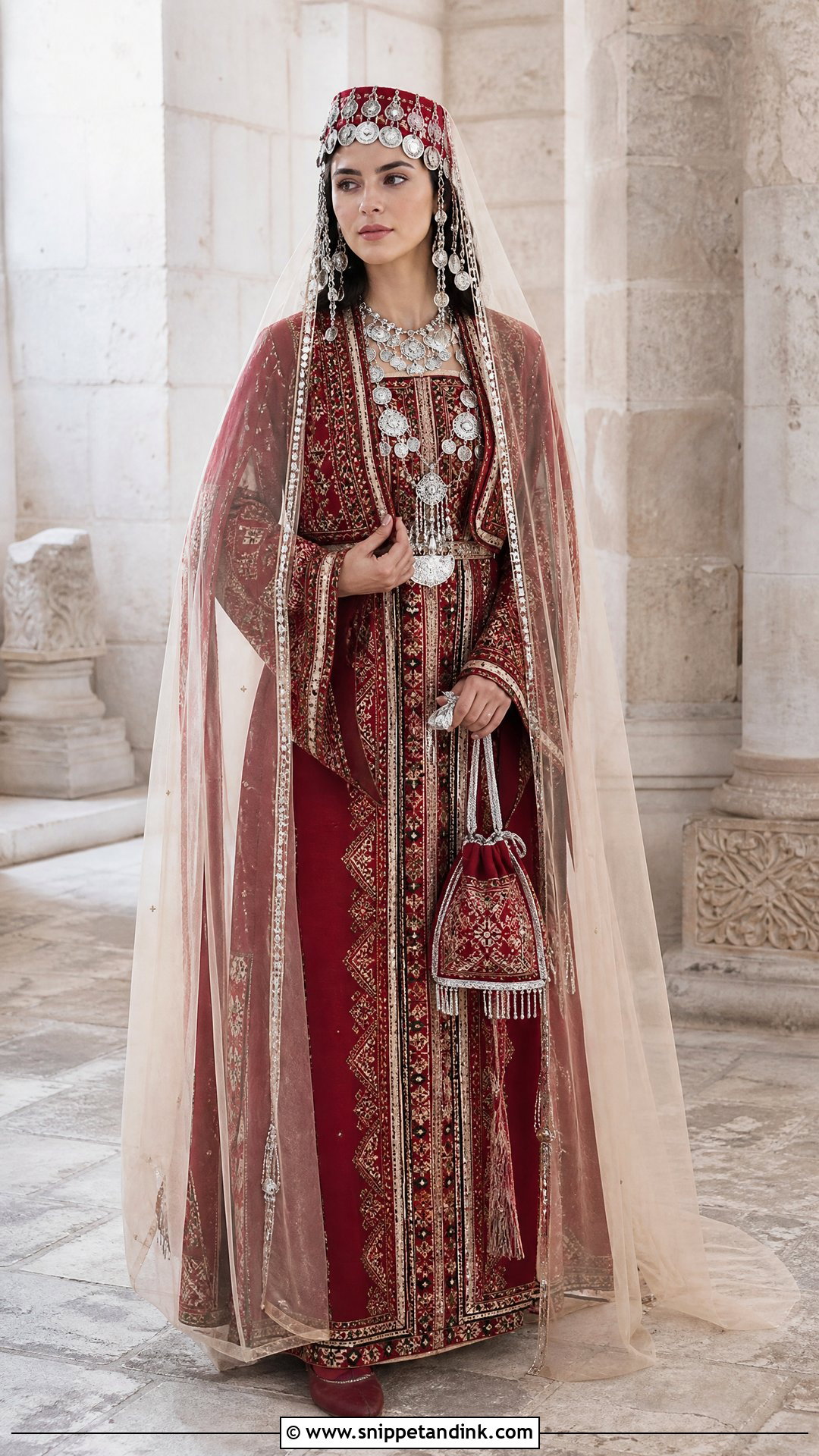
The Bethlehem thob al-malak, often called the royal dress, is the most ceremonial Palestinian piece here. Long pointed sleeves, dense couching and grand proportions do most of the styling. A jewel-toned or deep red thobe pairs with a fitted taqsireh jacket, a coin-style headdress, silver jewelry and a veil. Keep shoes low and secure; the layered skirt and long sleeves already add weight. A small embroidered pouch beats a modern handbag. For a lighter take, metallic work can stay at the neckline and cuffs. Have it made by someone who knows Bethlehem construction, rather than assembled from unrelated embroidered pieces.
7. Galilean Jellayeh Wedding Outfit
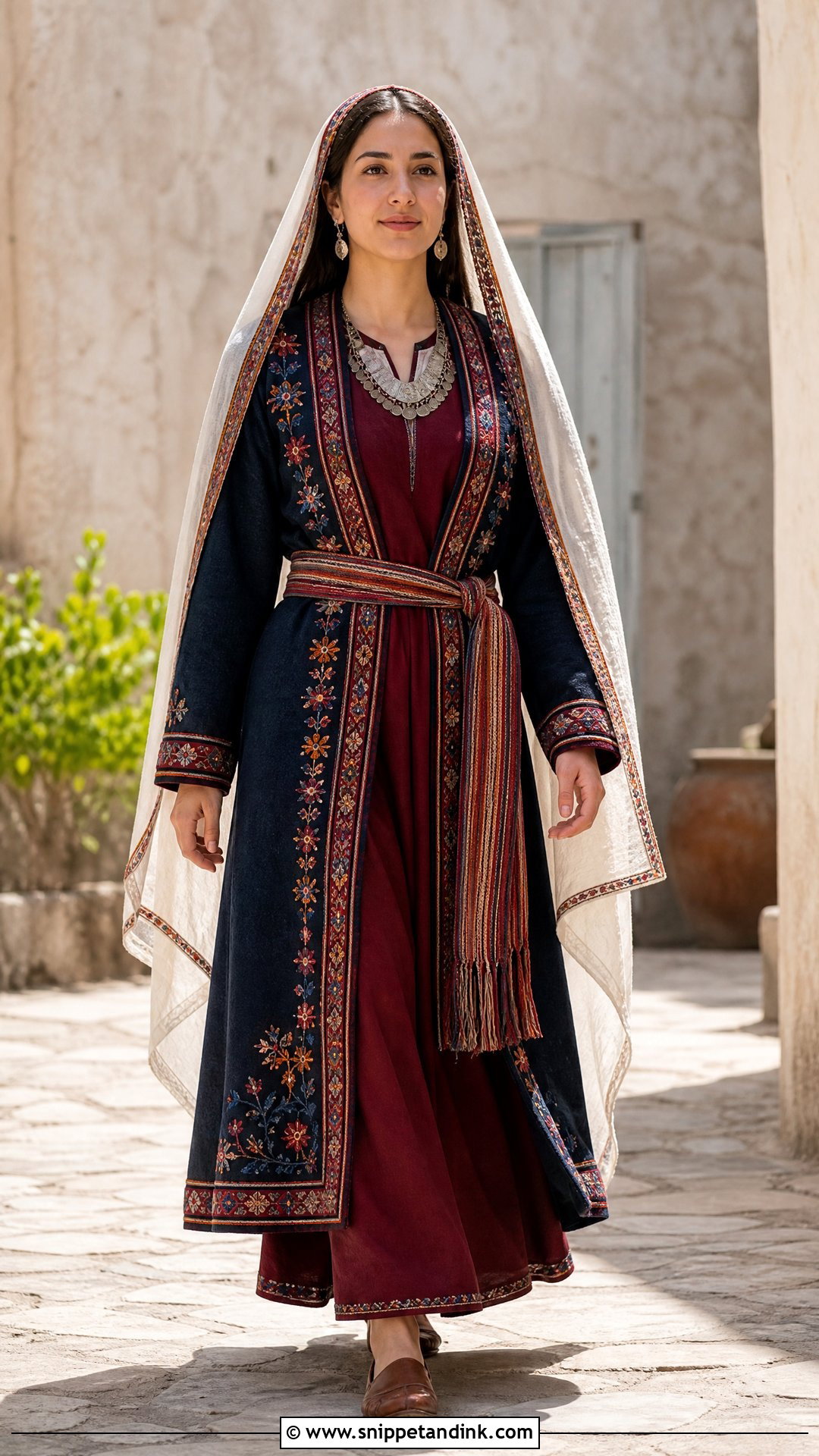
The Galilean jellayeh is a layered look: a long embroidered coat-dress in dark indigo, burgundy or black over a floor-length underdress. Embroidery should frame the neckline, sleeves, front opening and hem without crowding. I like a narrow sash at the waist so the coat still falls naturally, plus a draped veil, silver earrings, a heritage-style necklace and low leather or embroidered shoes. Keep hair and makeup refined so the textiles lead. With a coat over a dress, heat builds quickly indoors; a cotton underdress breathes far better than polyester satin. Jellayeh styles vary by region, so work from documented examples and specialist advice.
8. Najdi Embroidered Wedding Thobe
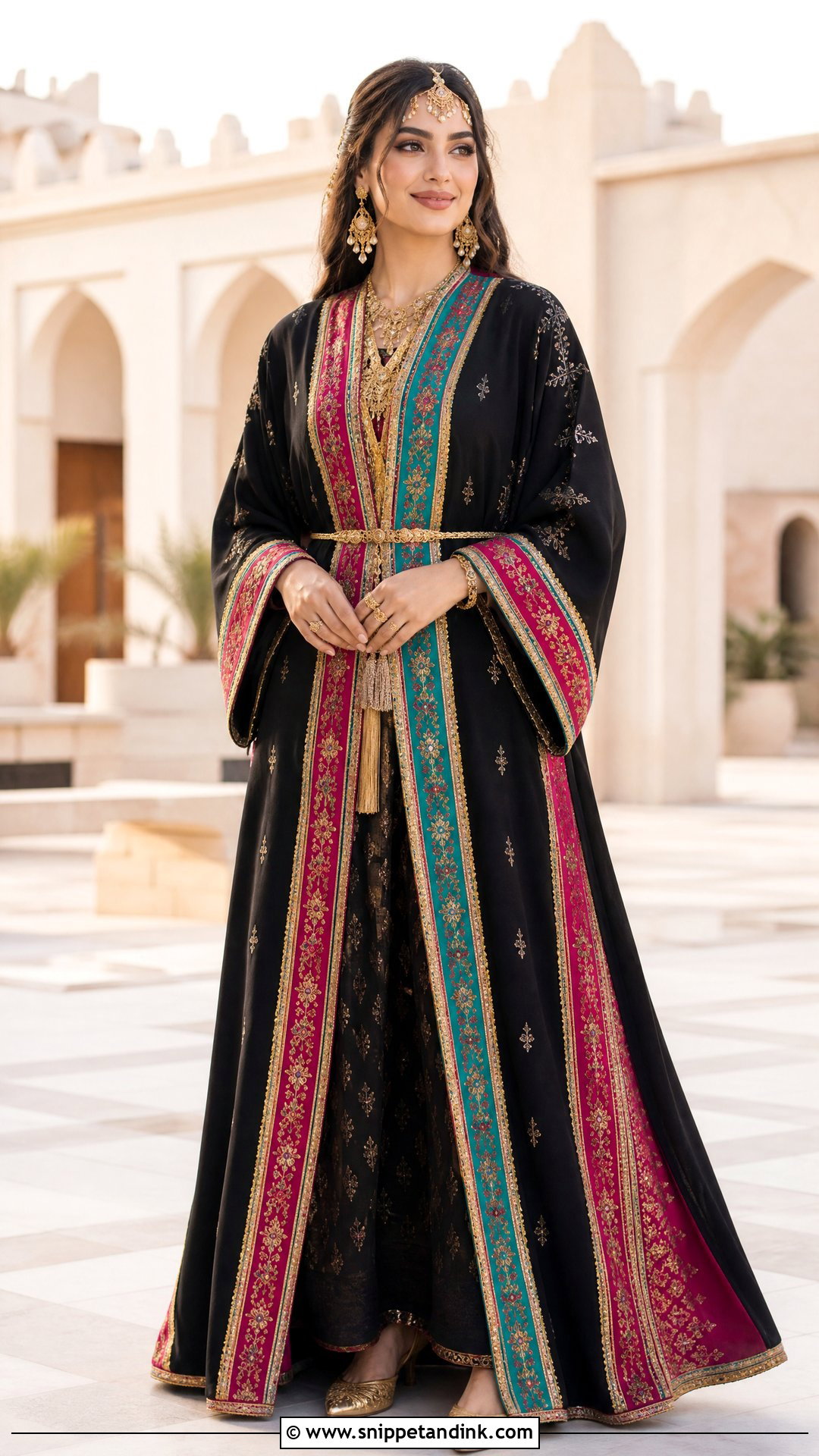
Najdi-inspired thobes rely on bold bands of colour and metallic embroidery. A loose, floor-length thobe in black, crimson or deep green, with embroidered vertical panels and generous sleeves, goes over a fitted-sleeve dress and sirwal trousers. Taffeta panels in turquoise, cerise or gold create the patchwork effect seen on some Najdi garments. Gold earrings, stacked bangles, a hairpiece and pointed flats complete it, with a compact metallic clutch. Taffeta rustles and creases sharply, so I’d have it pressed on the day, not the week before. Town and Bedouin Najdi garments differ in cut and decoration, so identify your specific reference before choosing embroidery.
9. Emirati Henna Wedding Thobe
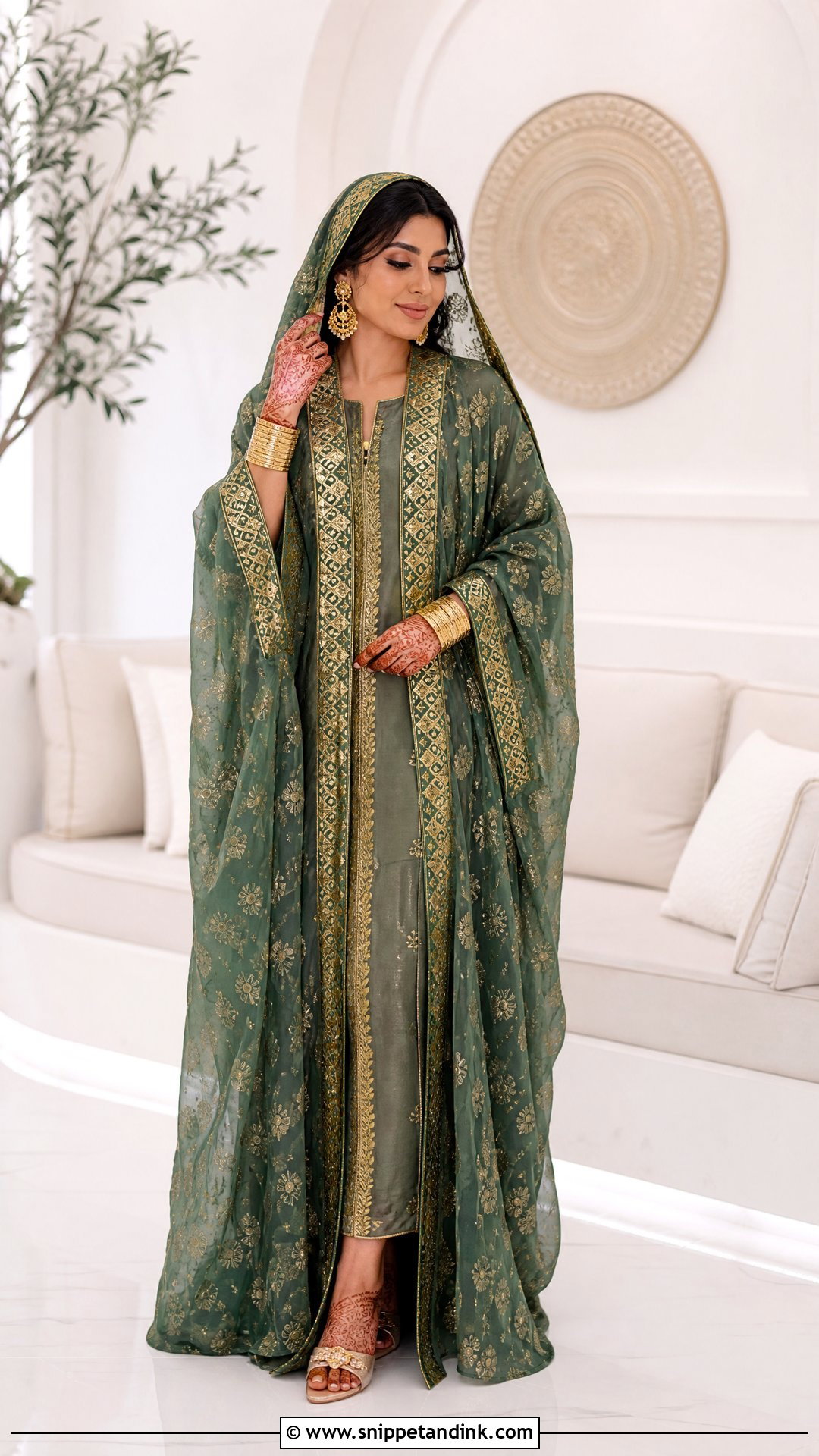
For an Emirati henna night, I treat the outer thobe and inner kandorah as one outfit. The thobe is light and airy in patterned green, pink, blue or ivory; the kandorah beneath has fitted sleeves with rich gold embroidery at the cuffs, neckline and front. Emirati thobes often focus on the square neckline, while much of the embroidery shows on the kandorah underneath. Gold jewelry, embellished flat sandals, a small drawstring bag and a matching head covering or polished hairstyle finish it. Leave the hands and wrists clear. Fresh henna needs hours to set, and fitted cuffs that rest on wet paste will smudge it.
10. Kuwaiti Tulle Wedding Thobe
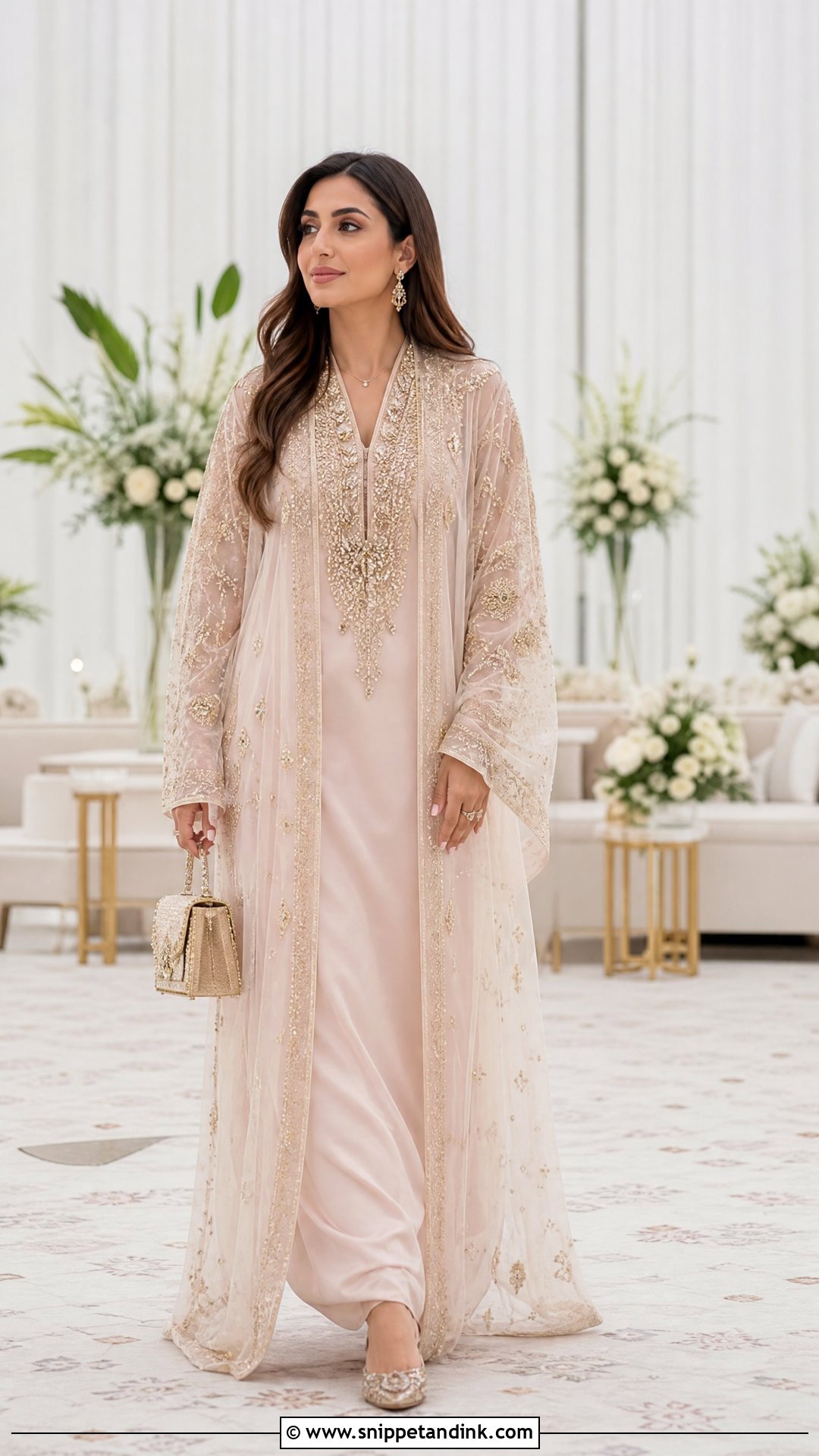
Sheer tulle makes a Kuwaiti-inspired thobe feel airy indoors. The transparent outer layer goes over an opaque satin underdress in the same colour, whether blush, turquoise, ivory or deep red. Look for a rounded or long V neckline and a small embroidered front panel in gold thread, sequins or beads. A jeweled belt only if it doesn’t break the drape. Gold earrings, a fine bracelet, a structured mini bag and closed metallic flats keep it neat, with a bun or matching scarf. I check the underdress under flash photography; satin that looks opaque in a mirror can show seams through tulle when lit from the front.
11. Bahraini Thobe Al Nashal Wedding Dress
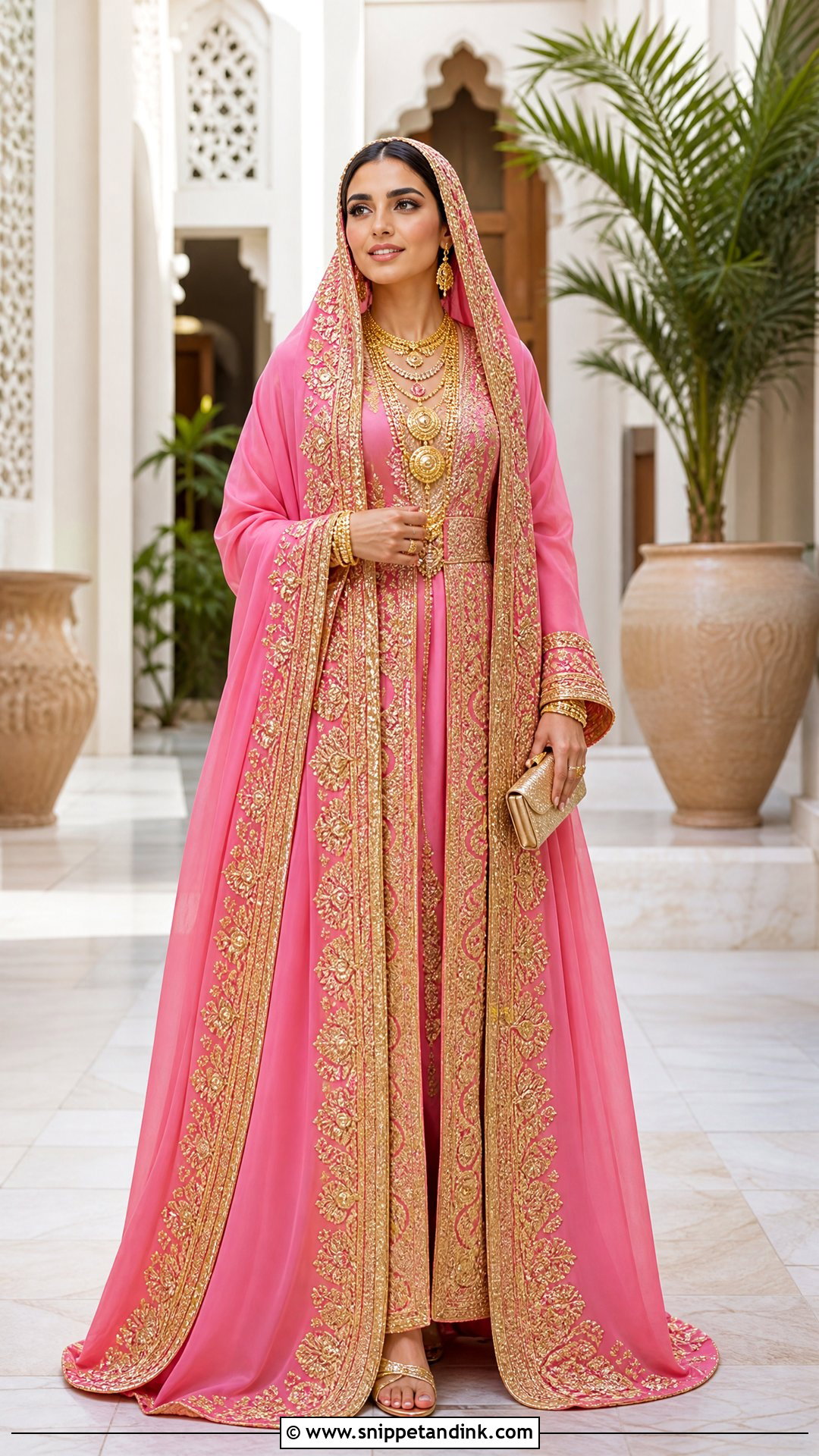
A vibrant thobe al-nashal is all colour and metal. Pink, emerald, royal blue or violet fabric carries a dense gold or silver panel down the front, and the wide sleeves float when the bride walks. Wear it over a matching long dress, with traditional gold jewelry, an embroidered head covering and metallic sandals. A plain solid clutch stops the accessories fighting the embroidery. Manthur-style scattered motifs give a lighter version. That front panel is heavy, so I ask for the shoulders to be reinforced or the panel won’t sit flat. Variations are worn across several Gulf communities; family photographs help settle colours and jewelry.
12. Qatari Gold Embroidered Wedding Thobe
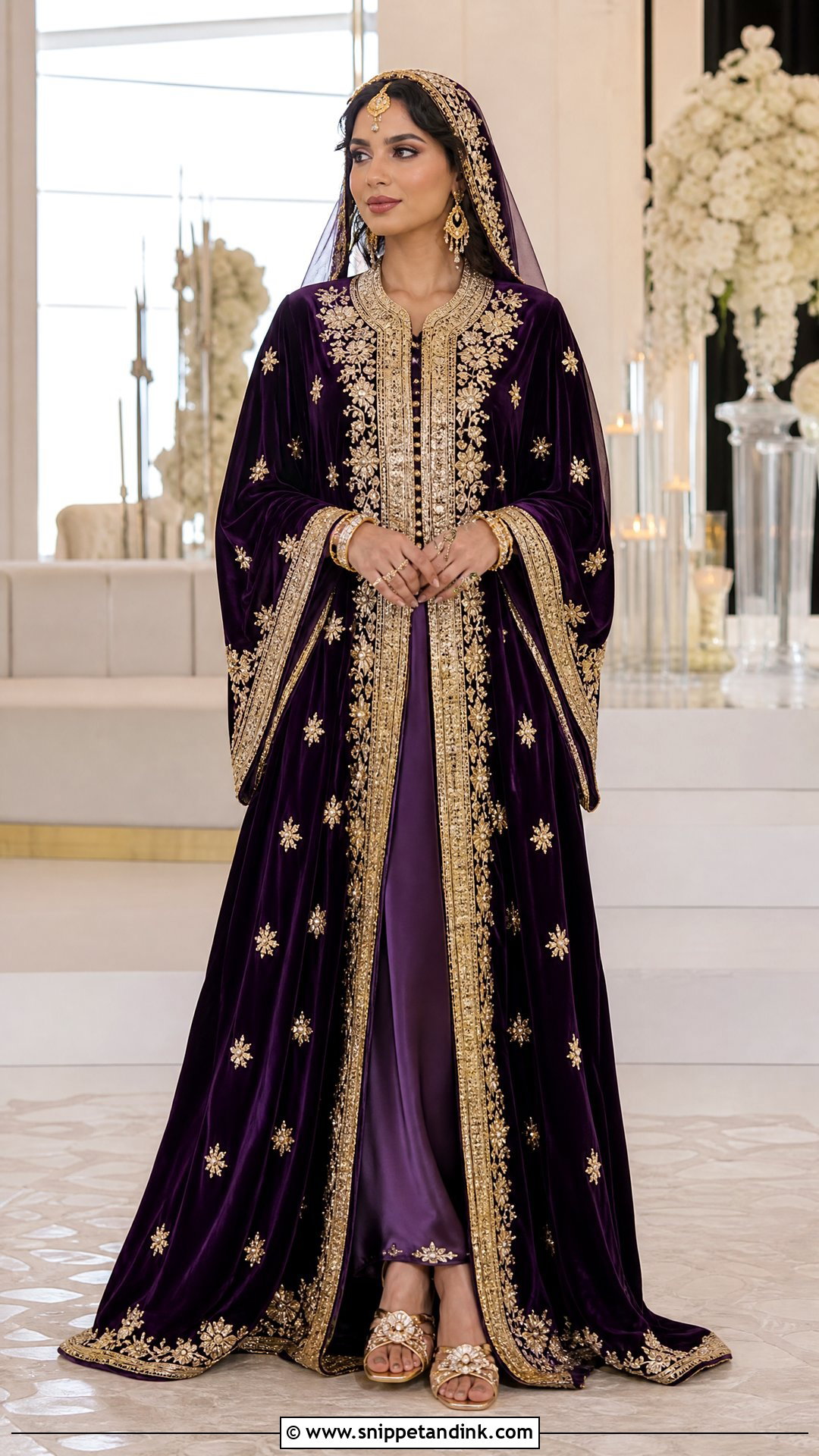
A jewel-coloured thobe catches the light every time its sleeves move. For a Qatari-inspired look, I’d choose rich purple, fuchsia, emerald or navy with gold embroidery at the centre and scattered across the body, over a tonal satin underdress. Gold drops, layered bracelets, a fine forehead ornament and embellished flat sandals complete it. On a heavily worked thobe, skip the belt and let the full shape show. A matching chiffon scarf can drape loosely or wrap neatly for hijab. Gulf thobes share broad features but differ locally, so family input matters if you want something specifically Qatari.
13. Omani Embroidered Wedding Dress
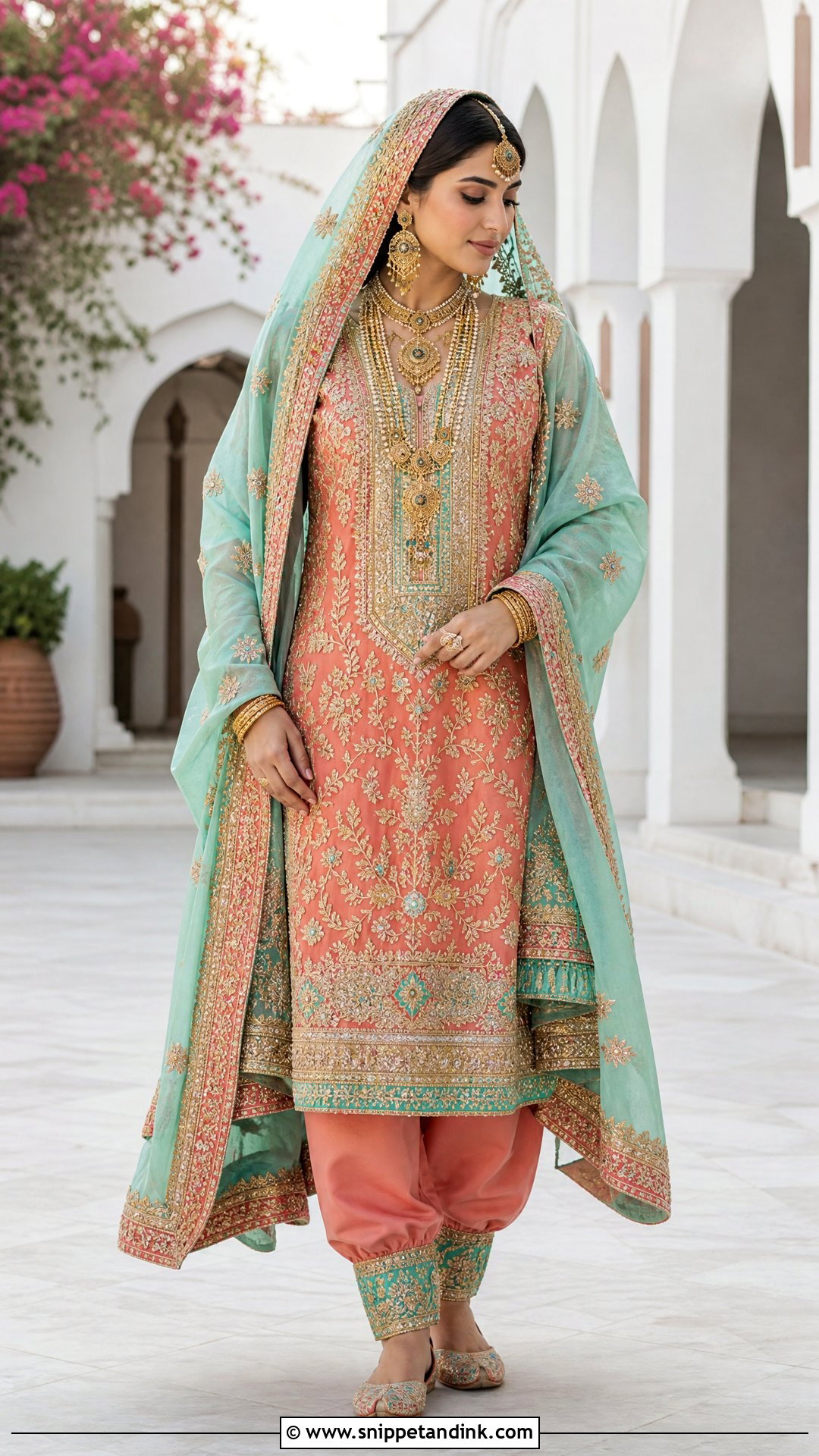
An Omani bridal outfit is a coordinated set: dress, trousers, head covering and jewelry. Start with a bright long tunic embroidered in gold or silver at the neckline, front, sleeves and hem. Sirwal trousers with decorated ankle cuffs should show beneath it, so I hem the tunic with the trousers and shoes on together. Drape a lihaf over the hair and shoulders, and finish with a gold necklace, earrings, bracelets and embroidered slippers. Cream with coral, green or turquoise embroidery gives a softer palette. Omani jewelry can be substantial, so keep the embroidery from competing. Styles vary by region; take local advice on placement and head coverings.
14. Iraqi Hashmi Wedding Thobe
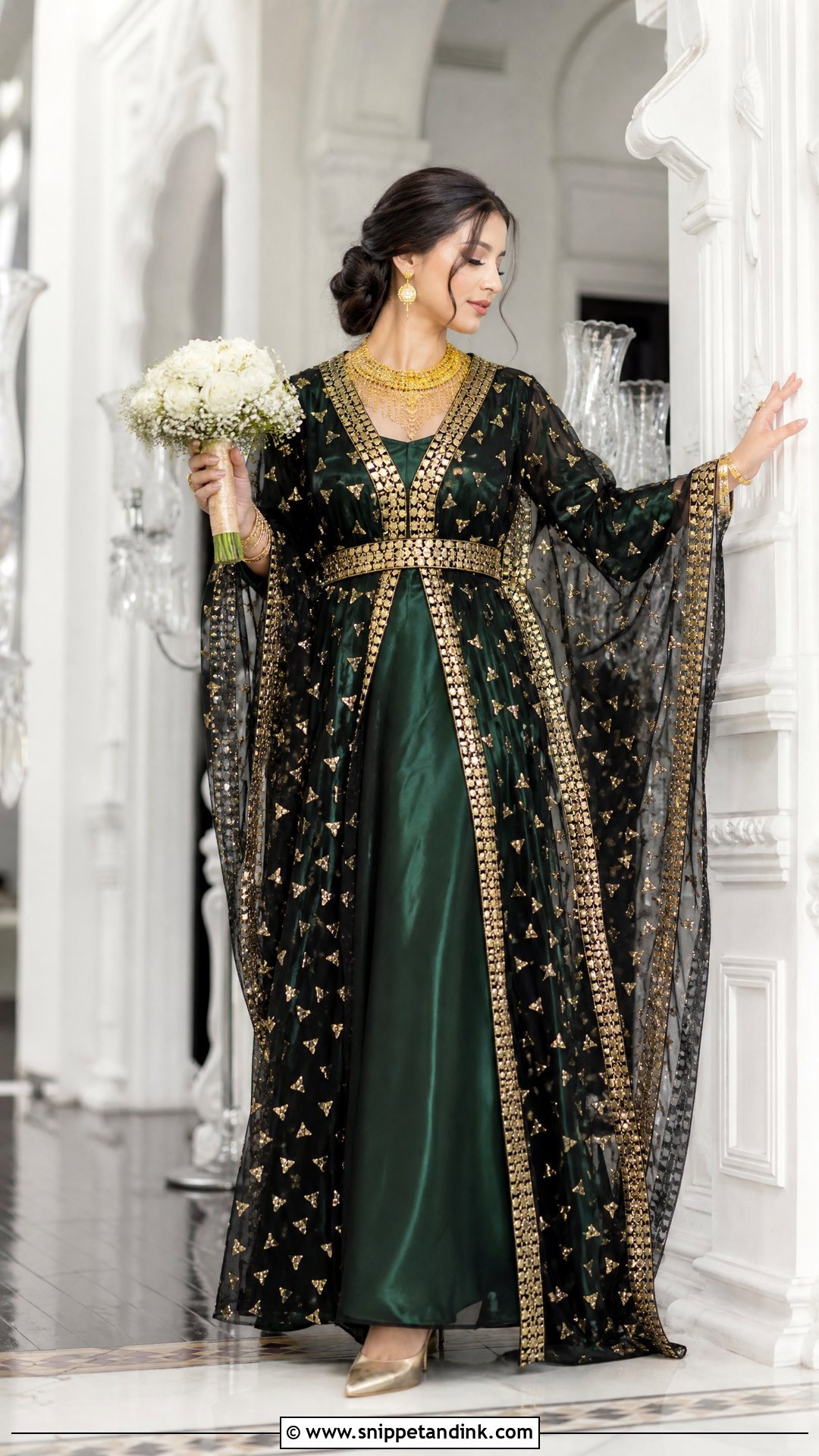
The Iraqi hashmi is sheer, wide and glittering. Black, ruby, violet or emerald tulle goes over a fully covering satin or silk dress, with gold triangles, sequins, crescents or floral embroidery spread across it so the transparency still shows. A broad gold necklace, drop earrings, bangles and simple metallic pumps suit it, with a low updo or coordinating scarf. Avoid big bags or bouquets; the thobe is already generous. The sleeves are the practical challenge. They’re wide enough to sweep a table, so at dinner I suggest pinning or gathering them lightly. The hashmi belongs to a wider family of Arabian thobes but keeps its own heritage.
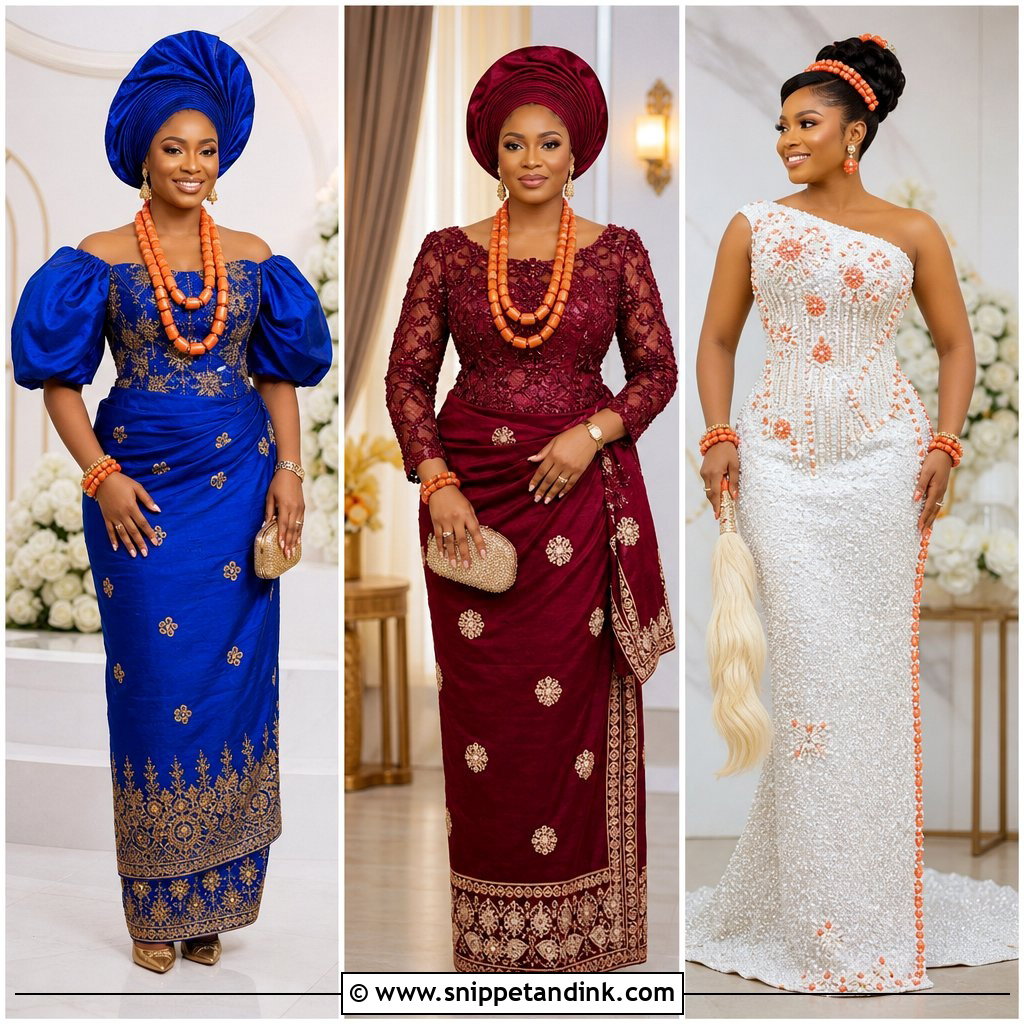
15. Tlemcen Chedda Wedding Dress
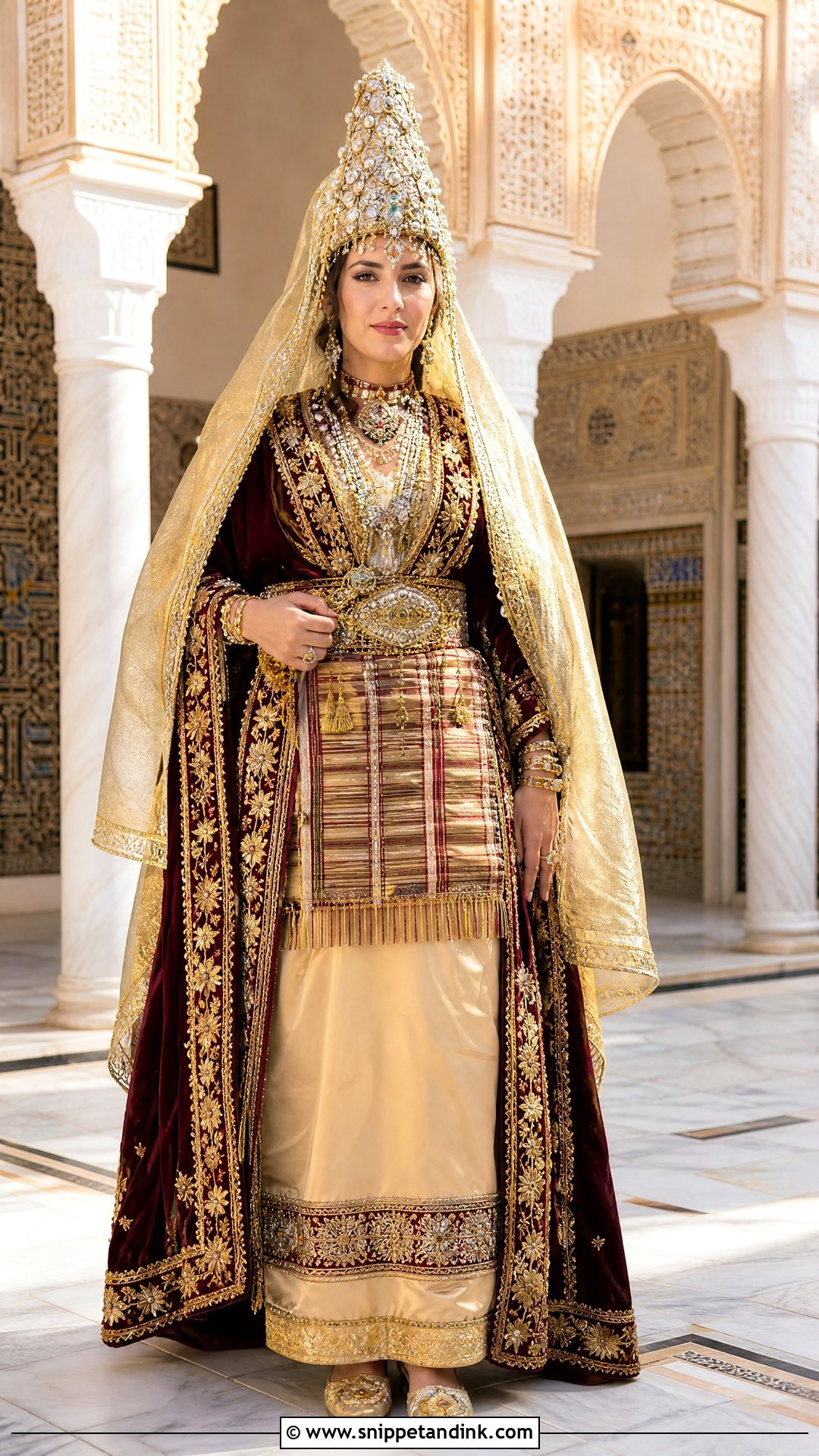
Few bridal outfits match the ceremonial wedding costume of Tlemcen for impact. A golden woven silk dress is layered with an embroidered velvet caftan, a striped silk waist covering and a belt, then crowned with a tall conical headdress, rows of pearls, metal jewelry and a silk veil. Red, burgundy, green and gold suit the layers. It’s substantial, so choose secure low shoes and expect to move slowly. The dressing itself is part of the tradition and takes time, so build that into your schedule. Work with Tlemcen artisans or family who know each component.
16. Algerian Karakou Wedding Outfit
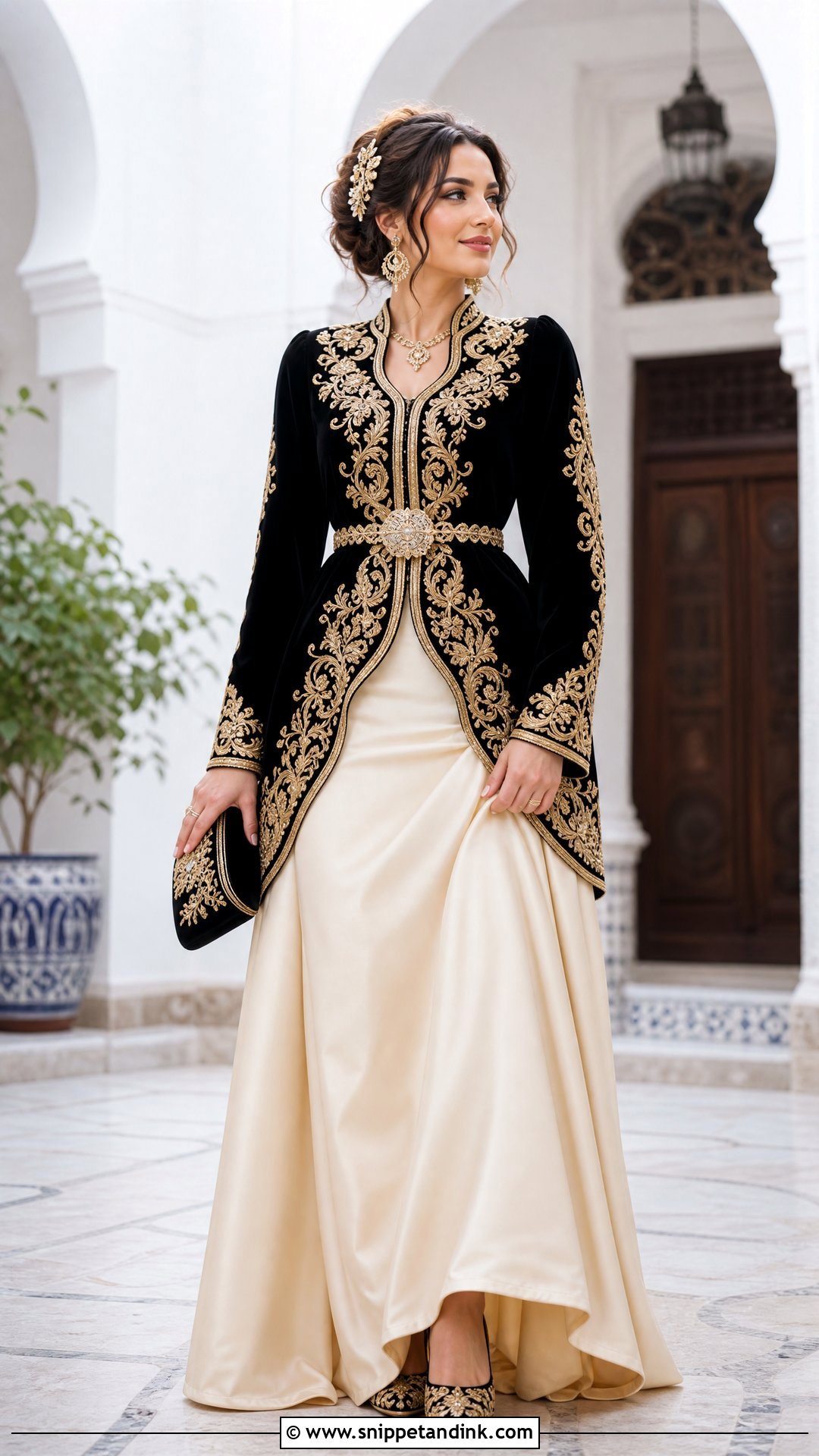
The karakou is a fitted velvet jacket worn with a long skirt or wide trousers, which gives a tailored outline instead of a flowing robe. Black, burgundy, navy or ivory velvet with gold embroidery at the collar, front, cuffs and hem is typical. The jacket has to be shaped closely but still let you raise your arms; velvet has no give, so I check the armhole at every fitting. A cream skirt under a dark jacket marks it as bridal, or go fully ivory and gold. Gold earrings, a decorative necklace, embroidered shoes and a small velvet clutch finish it, with a delicate head ornament or a scarf that leaves the collar visible.
17. Tunisian Fouta And Blouza Wedding Outfit
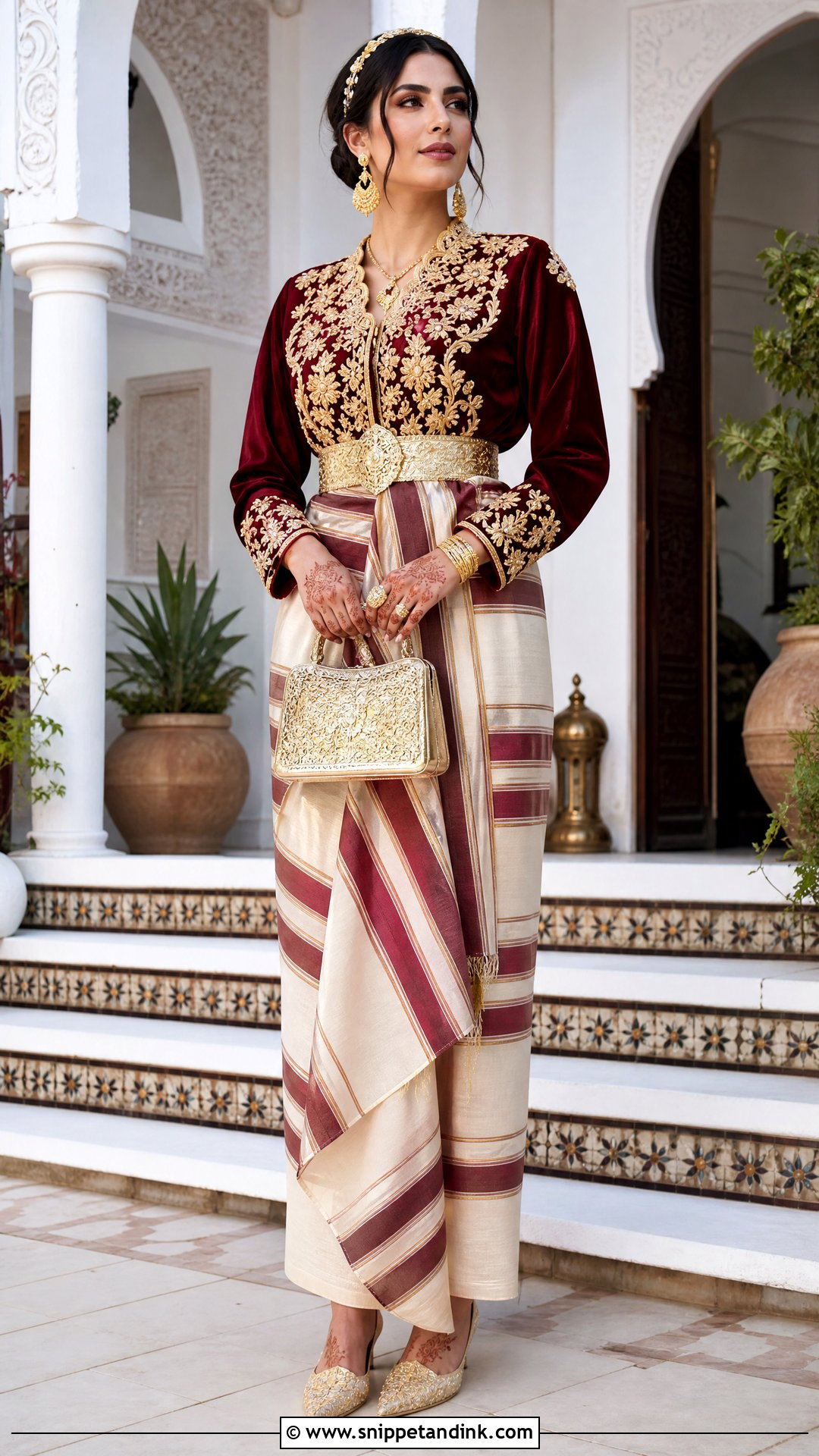
Striped silk gives colour and texture to a Tunisian fouta and blouza bridal ensemble. A fitted embroidered blouse pairs with a wrapped or draped skirt, often with metallic thread and a defined waist. Burgundy, green, coral or gold stripes suit a henna night or ceremonial entrance. Add a wide belt, earrings, bracelets, embroidered slippers and a small bag, with a head covering or hairpiece that repeats one stripe colour. A wrapped skirt can loosen when you dance, so I’d have it fitted and fastened by someone who knows the garment, and keep a few safety pins on hand. Fresh, luminous makeup lets the silk and gold lead.
18. Tunisian Keswa Kbira Wedding Dress
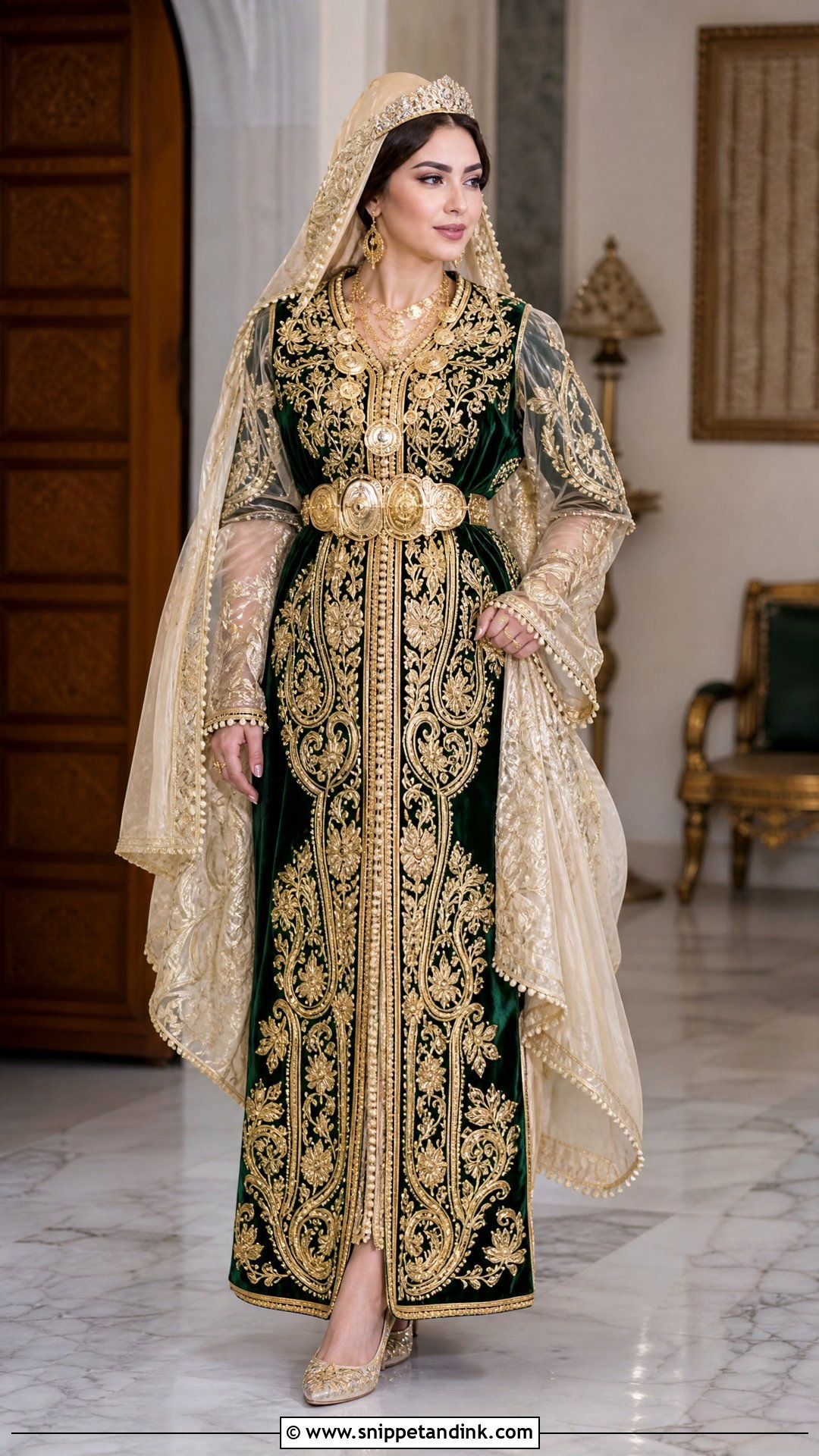
The Tunisian keswa kbira is for a bride who wants full ceremony: a deep red or green velvet gown, dense gold embroidery, decorated sleeves and a coordinating lower garment, with a structured metal belt and layered jewelry. An ornate head covering, gold earrings, bracelets and stable low heels complete it, and a small gold pouch is the only extra I’d add. Velvet and dense metal work are heavy, so precise fitting at the shoulders and waist is what lets you walk and sit comfortably. Names and construction differ between regions; commission it from an artisan who knows the specific tradition rather than a generic North African costume.
19. White Siwa Wedding Dress
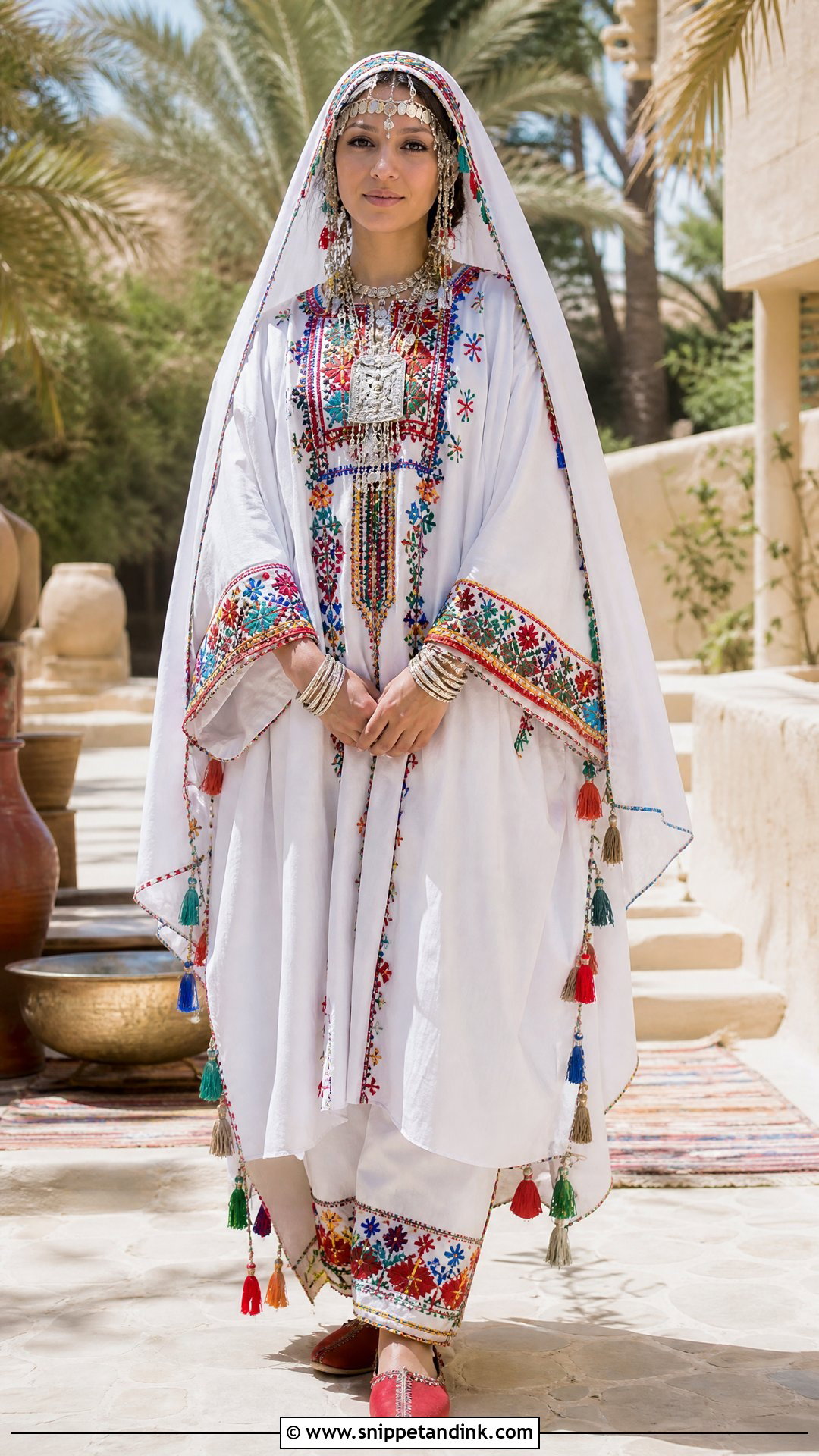
A white Siwa dress has very wide sleeves, bright embroidery and a decorated centre of mother-of-pearl buttons and small shells. The tunic is broad and T-shaped in silk or a silk blend, with orange, green, red, yellow and black stitching around a square neckline. Embroidered trousers, red leather-style shoes, a traditional head covering and chosen silver jewelry complete it, with tassels or braided cords if your reference includes them. Shell and button work can crack if it’s crushed, so I’d pack it flat rather than folded. Keep the bag and bouquet small. Siwa bridal dress has its own Amazigh and Egyptian context and isn’t a generic Egyptian gown.
20. Moroccan Keswa El Kbira Wedding Dress
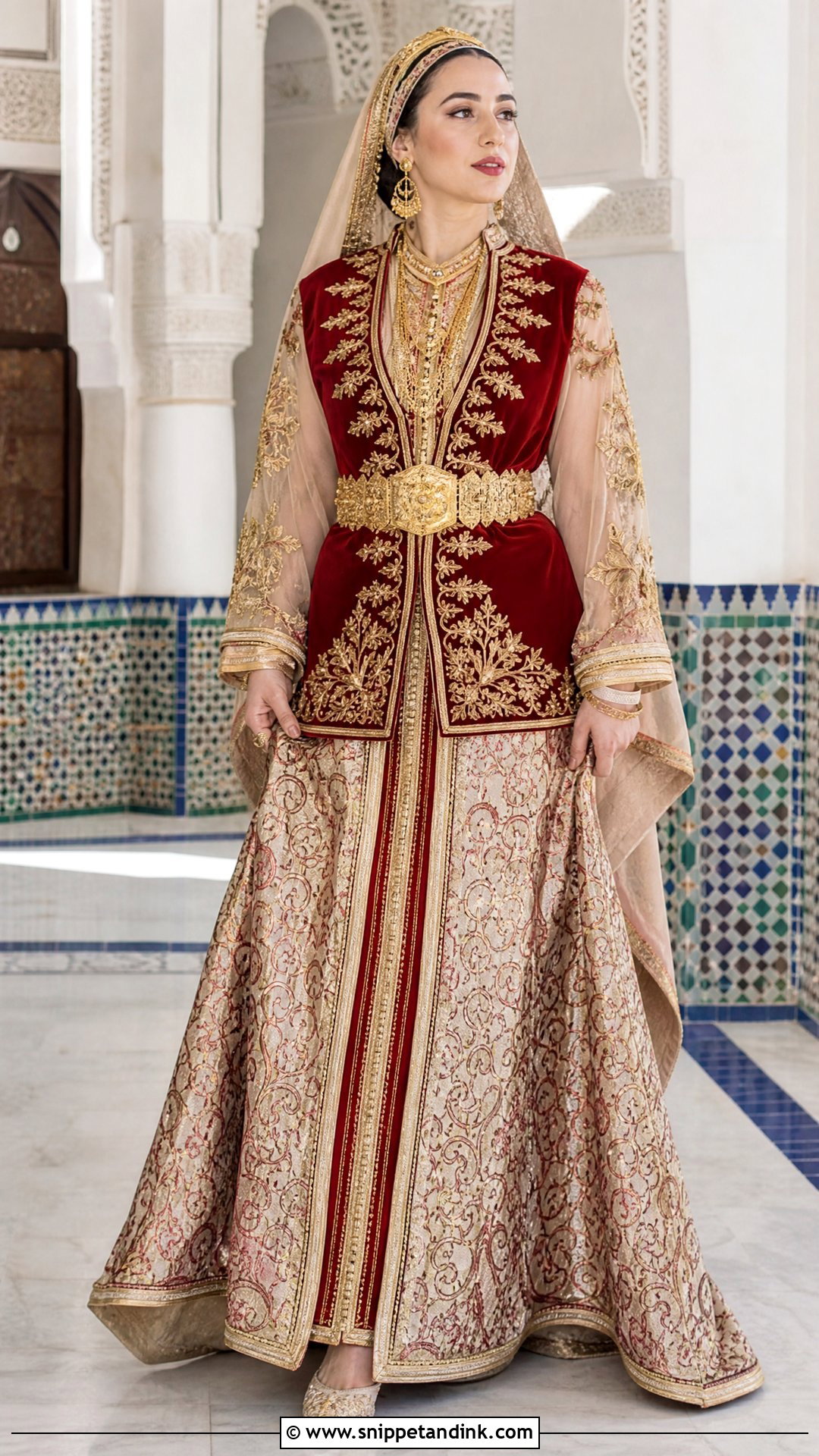
The Moroccan keswa el-kbira is tied to Moroccan Jewish wedding and henna traditions. The ensemble can include an embroidered velvet bodice, a decorated skirt, sheer metallic sleeves, an ornate belt and a coordinated head covering, in deep red, plum, green and gold. Gold earrings, layered necklaces, bracelets and low embroidered shoes balance the weight. Every element should match, down to the trim on the sleeves and the pattern on the belt. Because it belongs to a specific community’s history, I’d build it from family heirlooms, documented examples and craftspeople who know Moroccan Jewish dress, not treat it as a general Moroccan costume.
Wide Sleeves at Dinner, Layers on the Dance Floor
Many of these outfits sit gracefully when you stand still and become awkward the moment you sit down to eat. I run through the evening with the bride before the wedding and fix problems then.
- Sleeves: gather very wide sleeves with a small hidden snap or ask a helper to hold them back while you eat. Flowing tulle and silk catch on candles and sauces alike.
- Heat: two or three layers under hall lighting get warm fast. A cotton underlayer and an outfit change before the dancing help more than a fan.
- Bathroom trips: with a tunic, trousers and outer robe, you’ll need a helper. Decide who, and practise once.
- Jewelry: heavy necklaces and headdresses press on the neck over hours. Wear them for a full hour during a trial, and plan a lighter set for later.
- Henna: if the henna is applied close to the wedding, keep sleeves and gloves off it while it darkens.
None of this should change the outfit you love. It just means you’ll still enjoy wearing it at the end of the night.
Let the Garment’s Own History Lead
Arabic bridal dress varies enormously across North Africa, the Levant, Mesopotamia and the Arabian Peninsula. A meaningful outfit is more than a long dress with gold thread; fabric, cut, motifs, layers, jewelry, shoes and head covering should all belong together. You might wear one heritage ensemble for the main ceremony or several across the henna night, family gathering and reception. Comfort counts with heavy embroidery and layers. And before commissioning a regional design, talk to relatives, specialists or experienced artisans. That conversation does more for the result than any picture.
You'll Like These Ideas:


Leave a Reply