
There is no single Afghan wedding dress. What a bride wears depends on her family, region, community and which event of the wedding it is, and the first thing I do with any Afghan bride is ask which ceremonies she’s dressing for. Some brides wear red and green with mirror work; others choose velvet, woven Banarsi, metallic embroidery or a modest white gown for the nikah. Formal Afghan clothing is generally full length and richly worked, and regional embroidery is what gives each garment its identity. The looks below are styled head to toe, but treat them as starting points to shape around your own heritage.
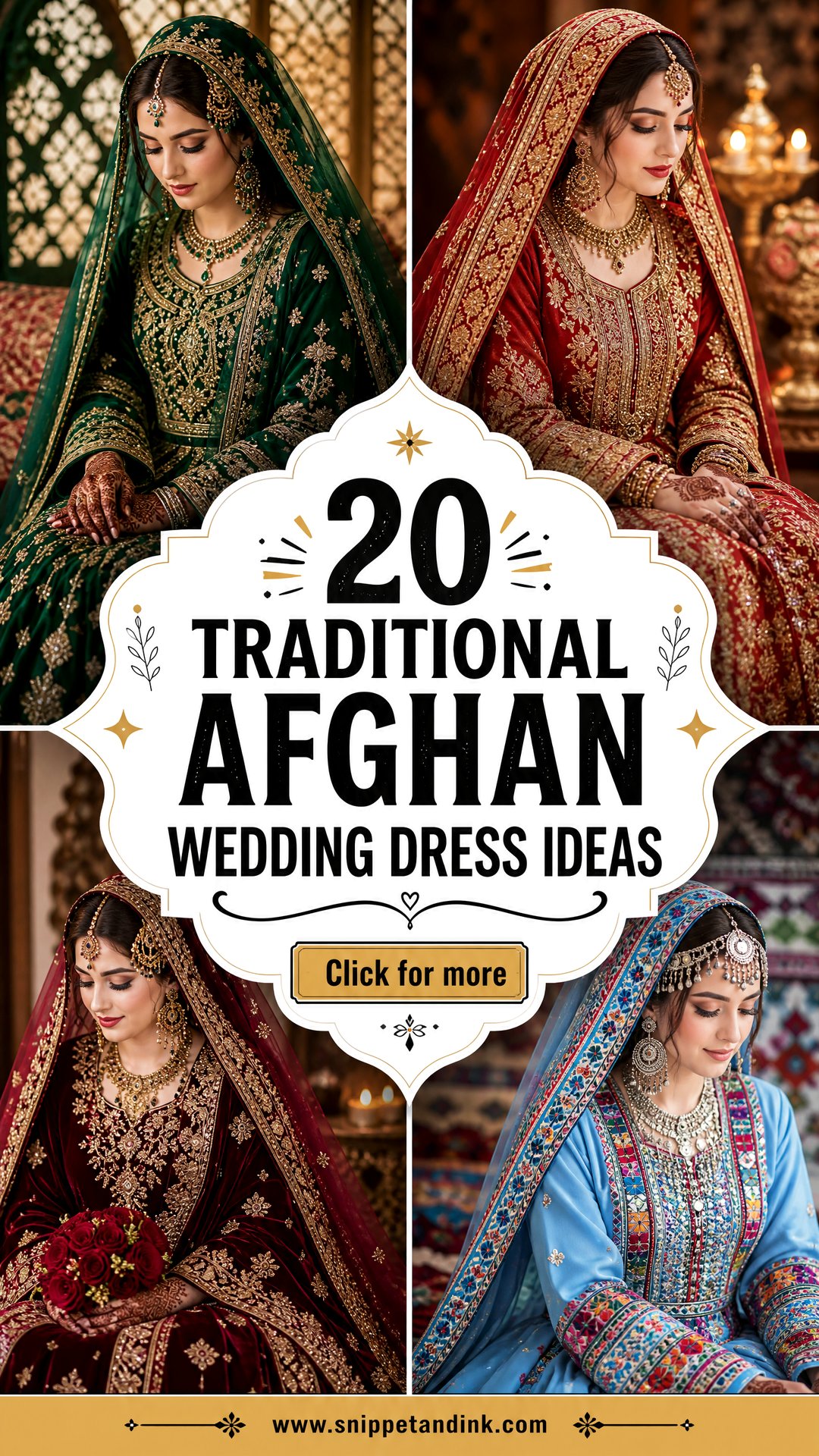
How Many Outfits an Afghan Wedding Usually Asks For
An Afghan wedding is rarely one event. Many families hold an engagement, a henna night, the nikah and a main celebration, and some add more. A bride may need three or four outfits, each with its own expectations, so I map them out together before we look at any single dress.
Henna night is often where green appears. The nikah may call for something modest and lighter in colour. The main celebration is where many brides wear red, gold or, in a lot of diaspora weddings, a white gown, with a change into a traditional dress later. None of this is fixed, and families have strong views, so ask early.
Once the list is set, spread the weight. If the main outfit has heavy coin or mirror work, I make the henna-night dress lighter, since that’s the evening you sit longest. Handmade embroidery takes time, too, so order the most detailed piece first and leave the simplest for last.
1. Red And Green Kuchi Afghan Wedding Dress
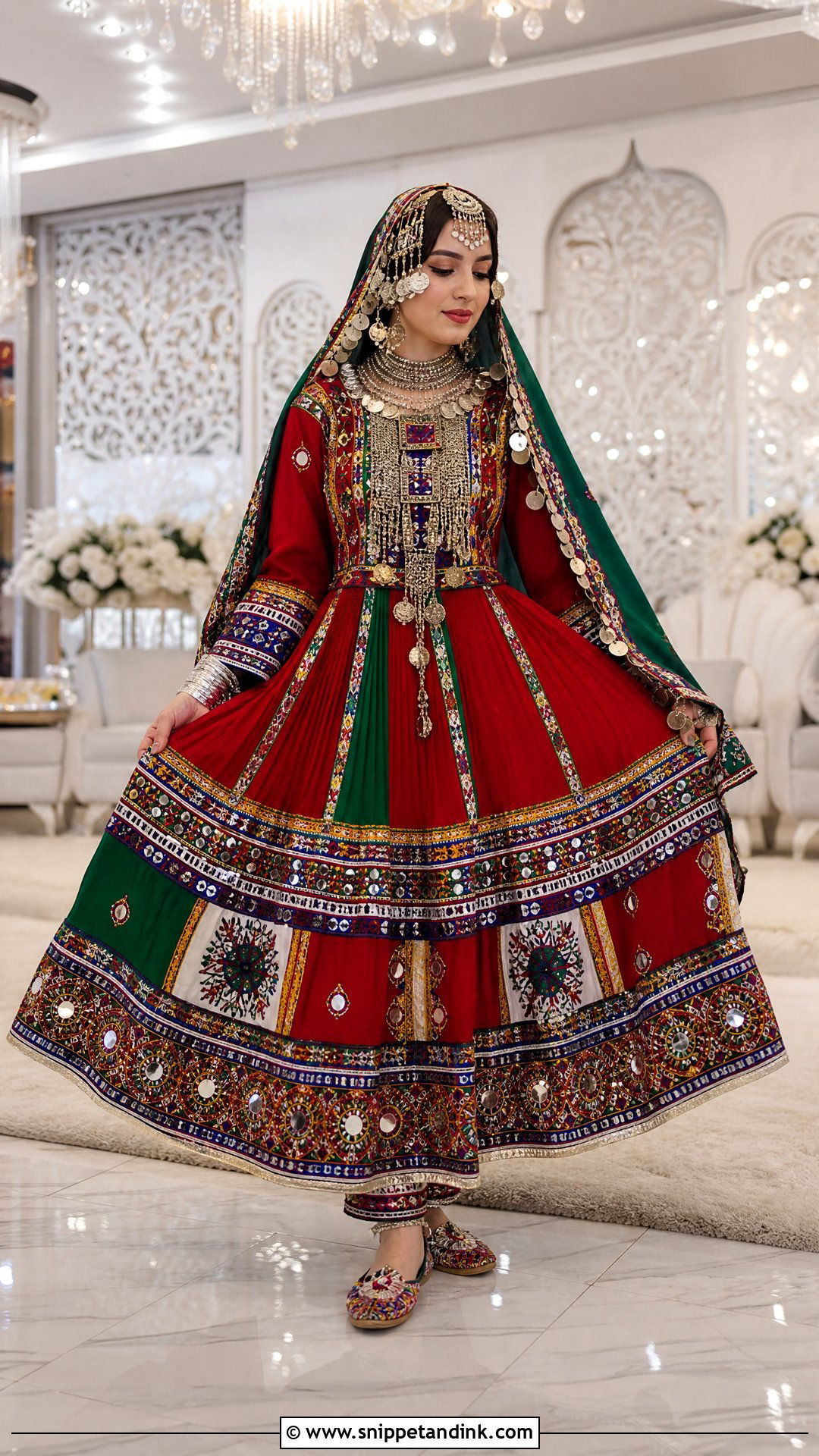
A red and green Kuchi dress is full of movement: a fitted embroidered bodice, full sleeves and a wide skirt that swings when you walk. Mirror work, coloured thread, beads and coins all appear on these dresses, and that’s where I start the practical conversation, because a heavily coined bodice can be very heavy by midnight. Drape a matching dupatta with a decorated border over the hair, leaving the neckline visible. A silver-toned headpiece, layered necklace, statement earrings and stacked bangles complete it, with embroidered flats for dancing. Kuchi patterns carry specific associations, so I’d source this through an Afghan designer or a relative who knows the work.
2. Emerald Green Afghan Henna Dress
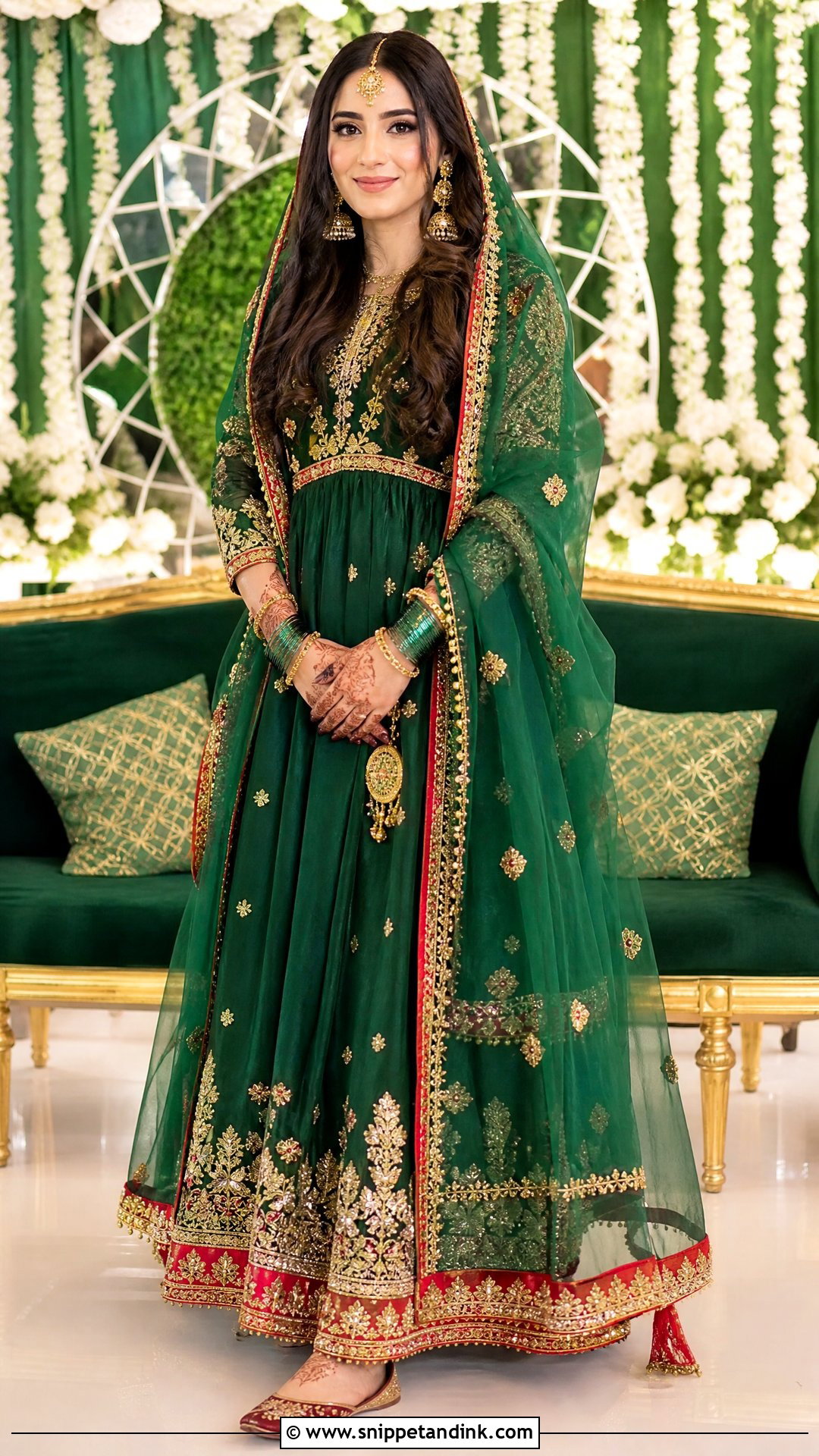
Emerald green worn with gold and red details is a classic choice for a henna celebration, and in many families green is the expected henna-night colour. Families differ, though, so confirm before you order. I like a long flared dress with an embroidered bodice, fitted sleeves and a sweeping skirt, with fine mirror accents or gold thread rather than dense work, because henna night means sitting on cushions with your hands out for hours. A lightweight dupatta over the head or one shoulder stays out of the way of the henna. Gold earrings, a forehead ornament, bangles and a small embroidered pouch finish it; red or burgundy shoes give contrast at the hem.
3. Crimson Gold Afghan Wedding Dress
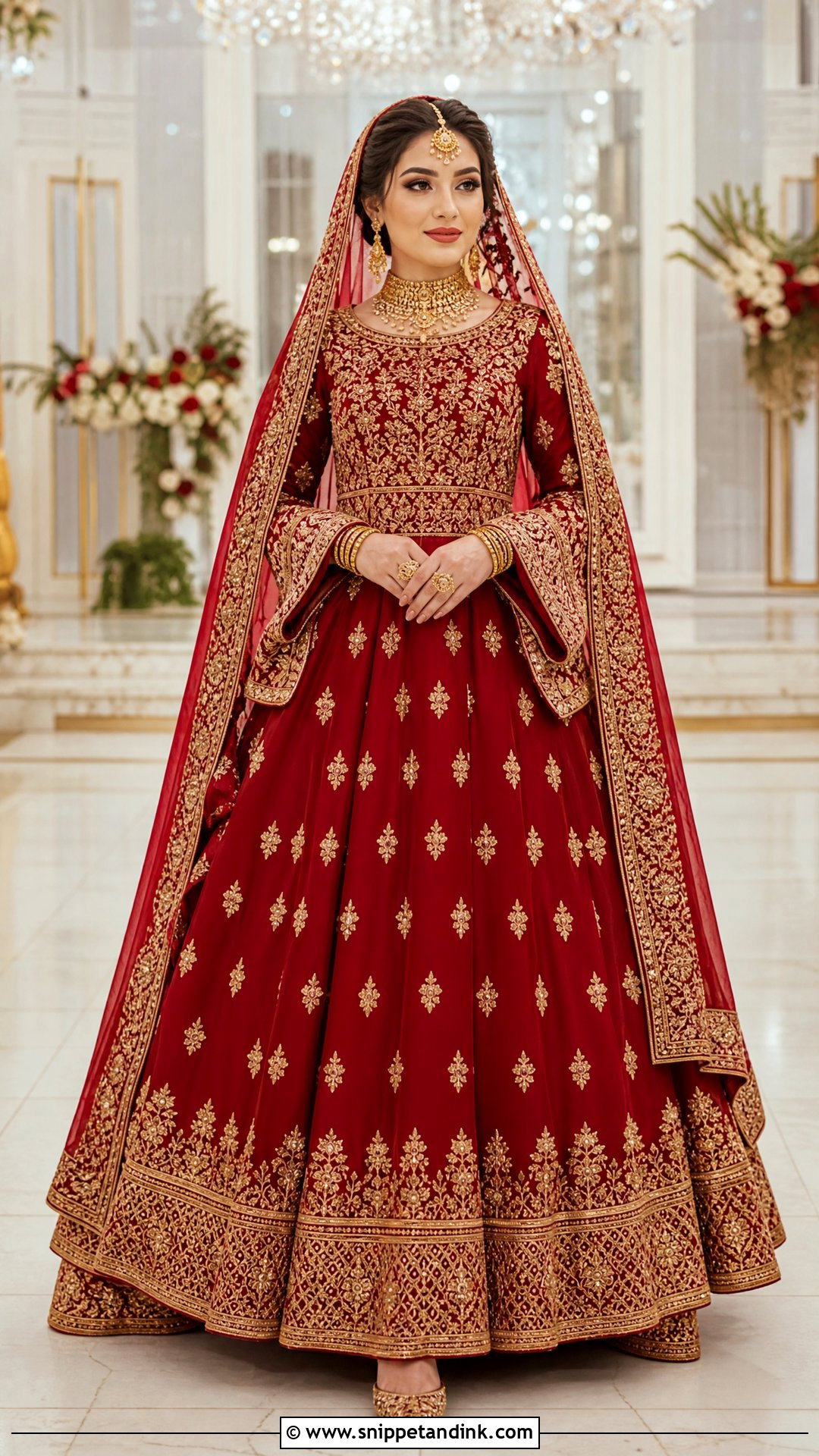
Crimson with gold embroidery is a powerful pairing for the main celebration. Choose a structured bodice, modest neckline, long sleeves and a generously flared skirt, with zardozi-style metal work framing the neckline, cuffs, waist and hem while the centre of the skirt stays calmer. That balance matters: when every inch is worked, the eye has nowhere to rest and the dress looks heavier in photos than it is. A crimson veil with a wide gold border, a gold choker, drop earrings, bangles and a fine forehead piece complete the look. Embroidered pointed flats or low block heels help under the weight. The exact shade and decoration should follow your community and family.
4. Maroon Velvet Afghan Wedding Dress
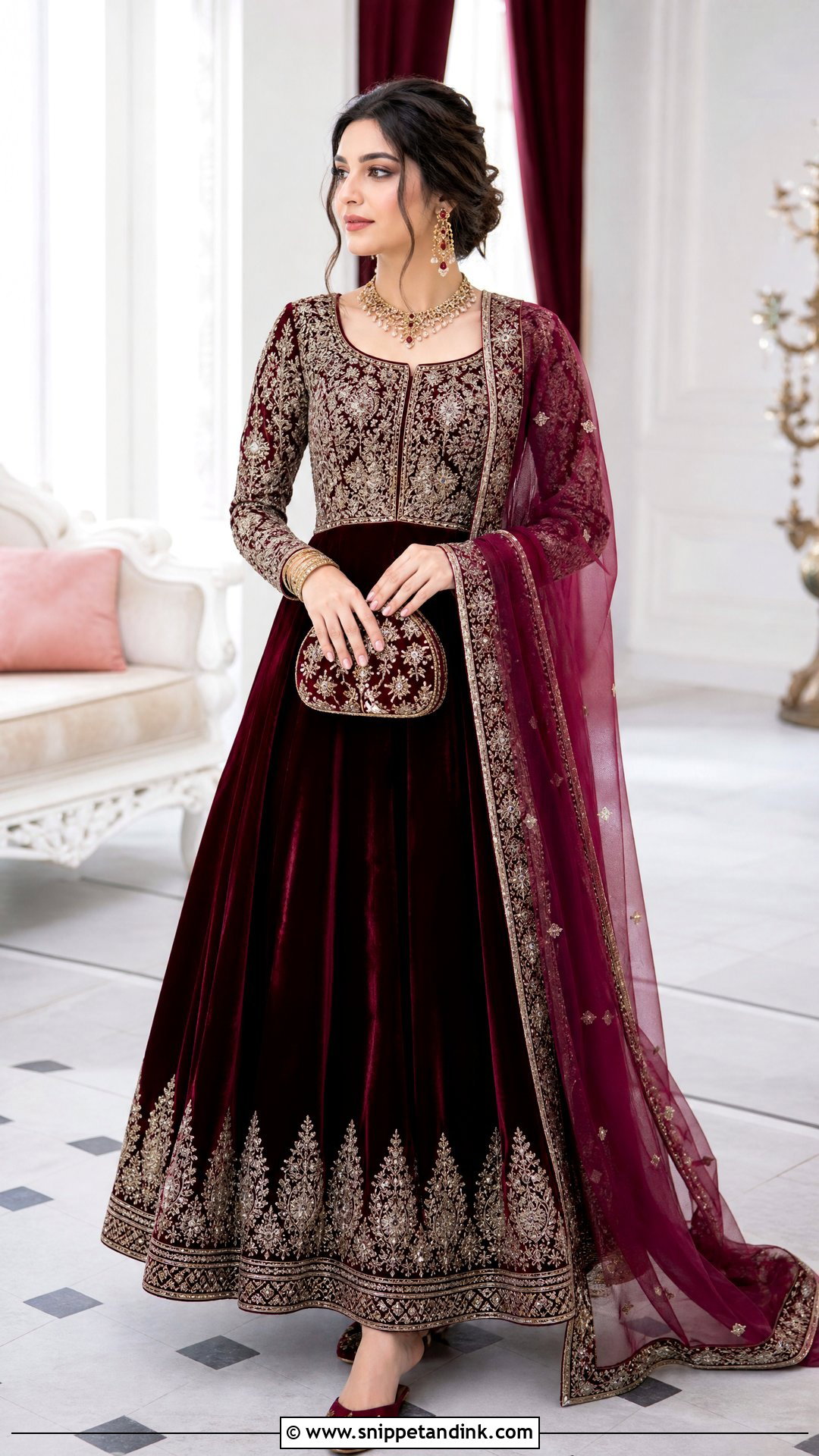
Velvet gives an Afghan dress depth and structure, and maroon is the shade I’d pick if you want gold, turquoise, green or ivory embroidery to stand out. Choose a long velvet frock with a fitted top and wide skirt. Velvet traps heat, and so does heavy handwork, so ask for a cotton or breathable lining and keep the dupatta light in chiffon or organza. Antique gold earrings, a matching necklace, bangles and an embroidered clutch suit it, with burgundy velvet shoes or cushioned gold flats. I save this one for winter weddings and cool evening venues.
5. Ivory And Green Afghan Nikah Dress
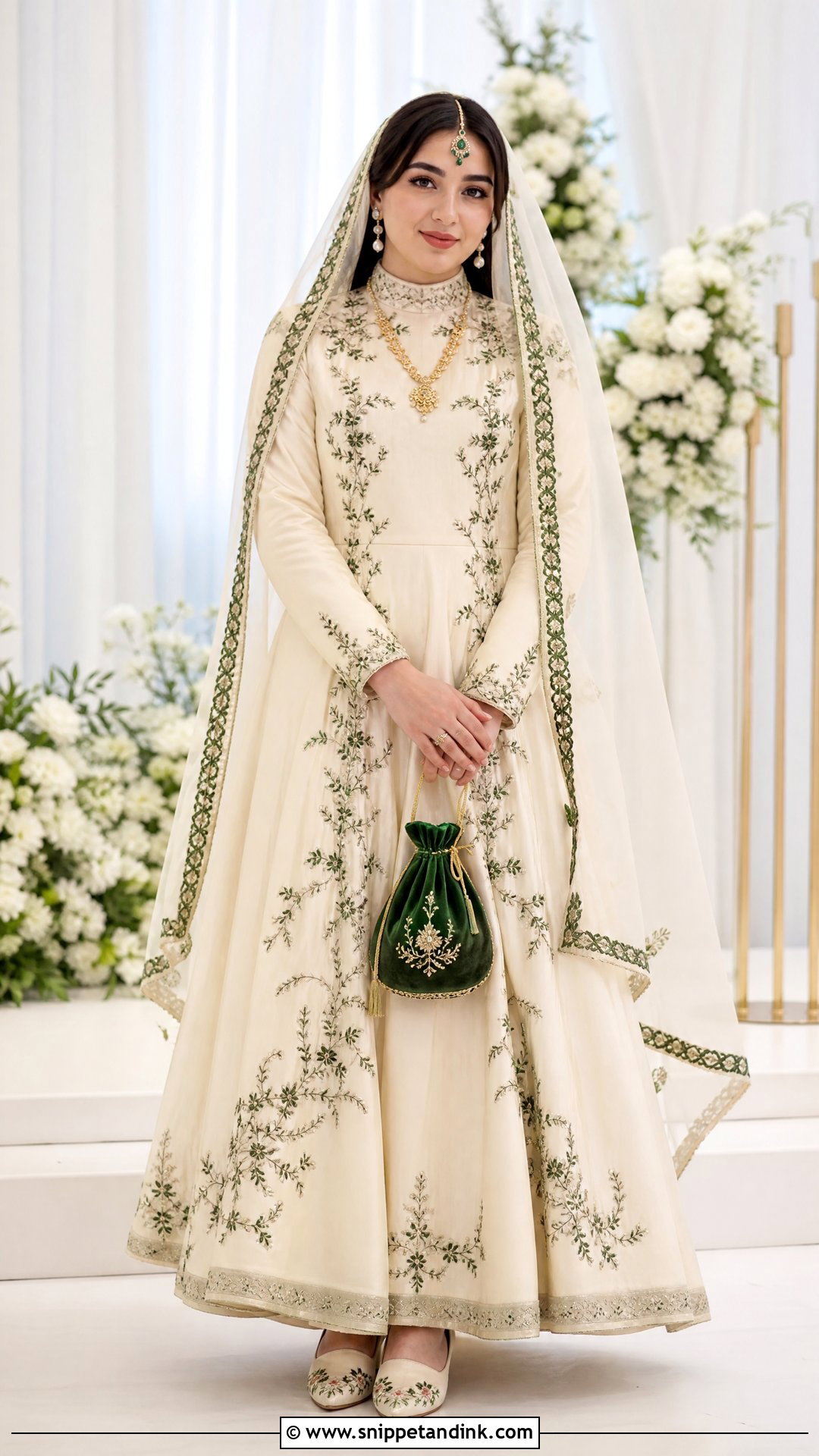
Ivory with green embroidery gives a nikah look that’s calm and still clearly traditional. A high neckline, fitted sleeves and a flowing floor-length skirt keep it modest, and green floral or geometric handwork at the neckline, cuffs and hem adds definition. I’d choose a sheer ivory veil with a narrow green border so the embroidery isn’t hidden. Pearl earrings, a fine gold necklace and a small green-stone forehead ornament are plenty, with ivory embroidered flats and a green velvet pouch. Ivory and white have become part of many contemporary and diaspora Afghan wardrobes, often paired with a colourful outfit for another event.
6. Royal Blue Mirror Work Afghan Wedding Dress
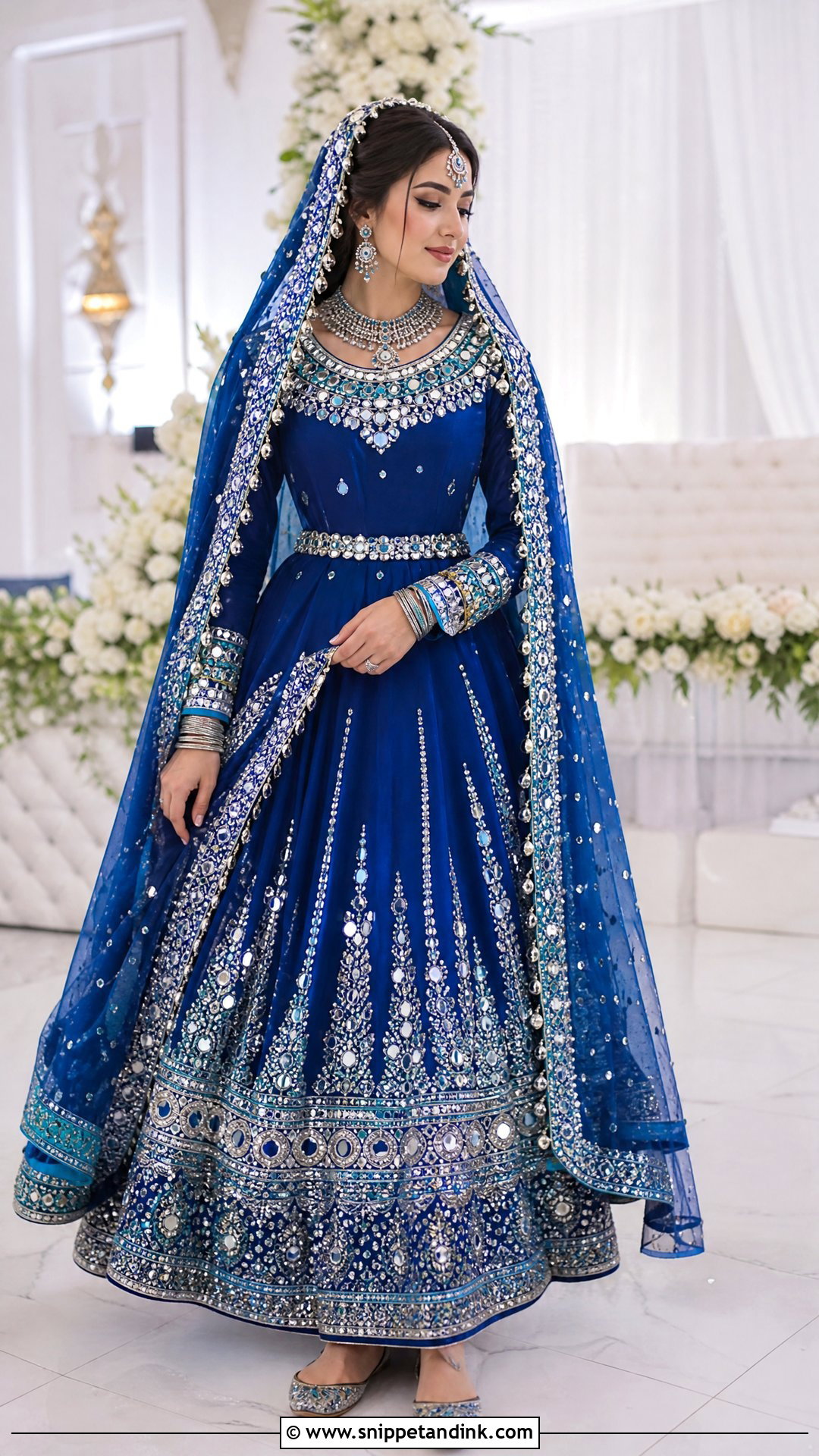
Royal blue steps away from the usual red and green without losing colour. A full-length dress with a broad embroidered neckline, long sleeves and a circular skirt shows off small mirrors, silver beads and turquoise thread on the bodice and cuffs. I’d keep the lower skirt lighter; a circle skirt only flares well when the hem isn’t weighed down. Add a sheer blue dupatta, silver statement earrings, layered necklaces and bangles. A slim metallic belt can define the waist if the dress is cut for one. Silver embroidered flats finish it. It suits an engagement or a second look during a multi-day wedding.
7. Purple Coin Work Afghan Wedding Dress
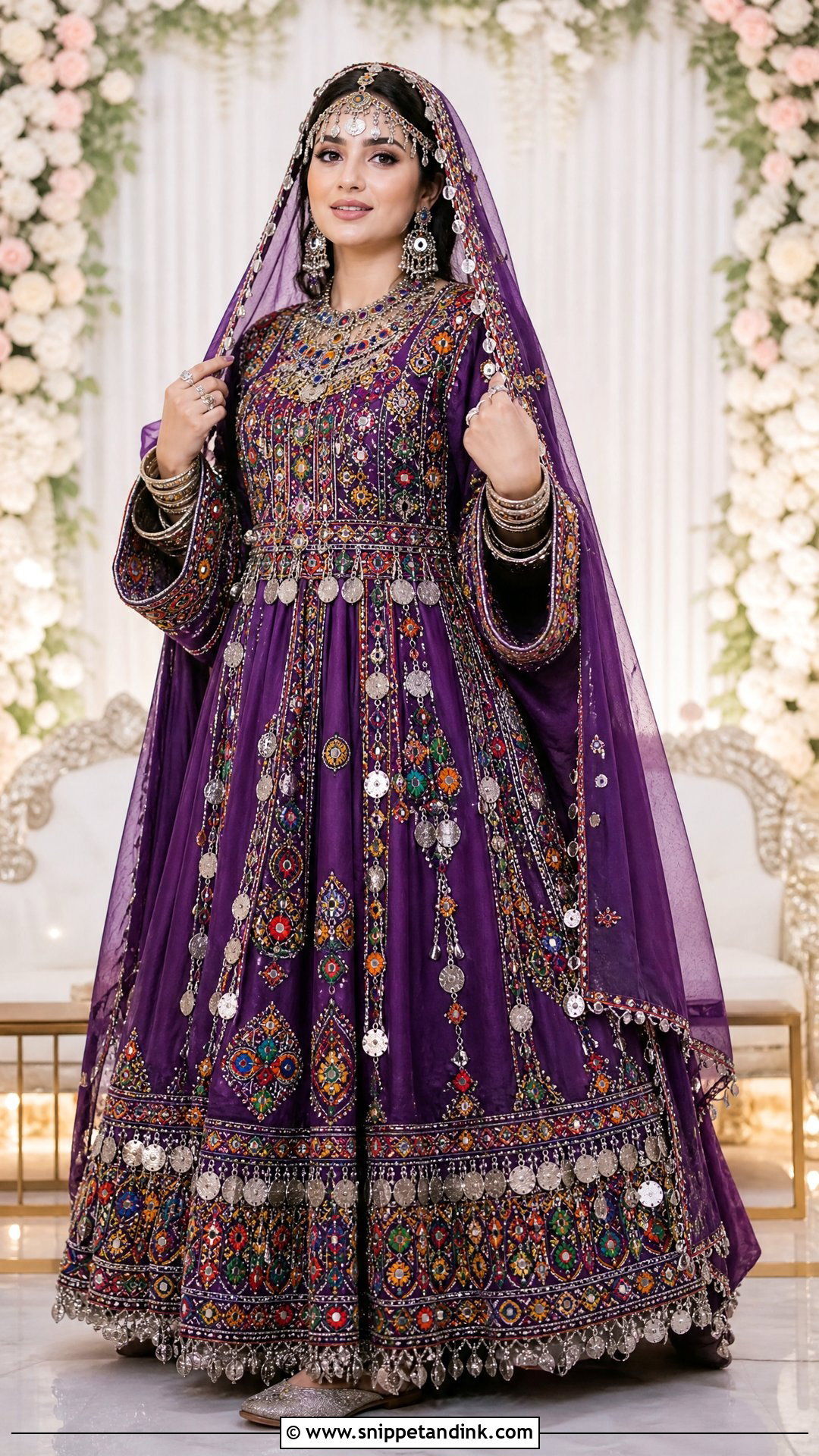
Deep purple sets off coin and mirror work richly. Start with a long frock with a fitted bodice, gathered waist, wide sleeves and a full skirt, and add silver-toned coins around the neckline and waist. Have every coin stitched through, not glued, and check the backs: loose coin edges catch on a dupatta and scratch the skin under the arm. Pink, turquoise, green and gold embroidery keep it joyful. A purple veil, silver earrings, a forehead ornament and stacked bangles complete it, with embroidered flats. Wear the full outfit for an hour before the wedding; sit, greet people and dance in it.
8. Turquoise Silver Afghan Wedding Dress
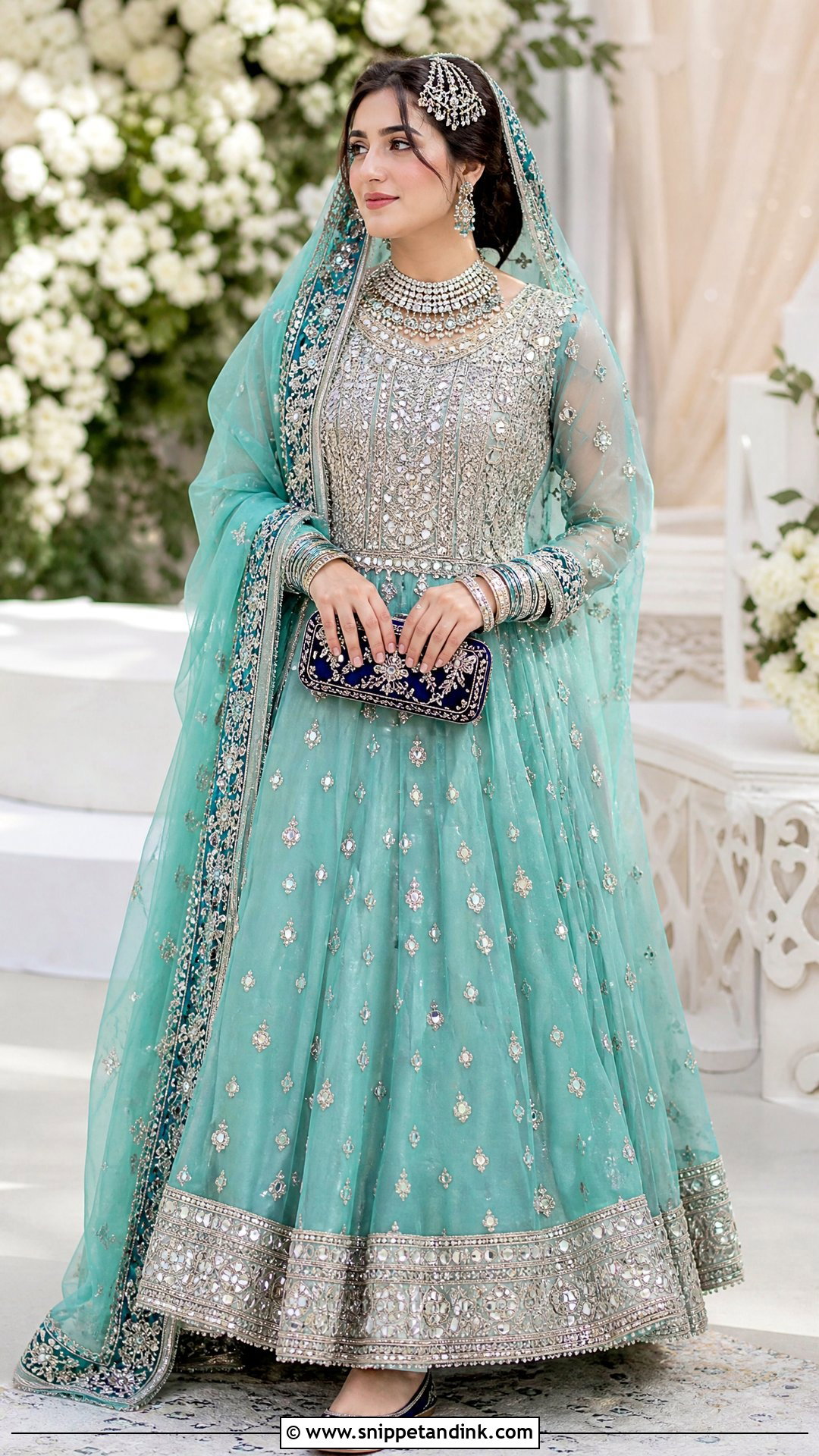
Turquoise with cool silver feels fresh, and it’s the look I’d reach for in summer. Pick a lightweight fabric for the wide skirt, with a fitted embroidered chest panel and long sleeves. Silver thread, tiny mirrors and touches of navy or white outline the neckline and cuffs. Drape the dupatta over the hair and let one end fall behind the shoulder so the bodice stays visible. Silver jhumka-style earrings, a layered necklace, a forehead ornament and slim bangles suit it, and navy embroidered shoes give quiet contrast. Daytime receptions and engagements are where it shines.
9. Blush Pink Embroidered Afghan Wedding Dress
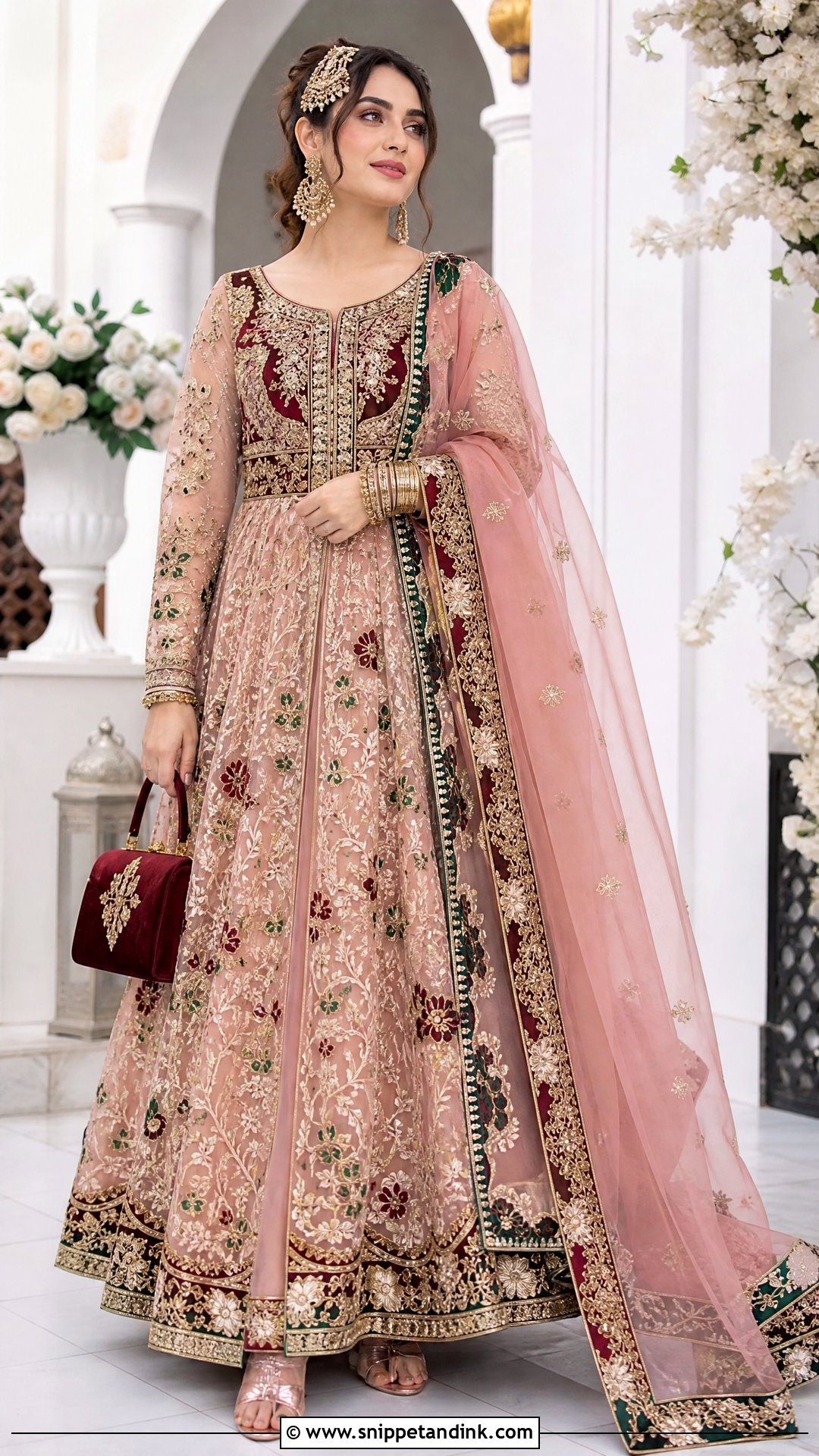
Blush pink softens an Afghan bridal look while still letting embroidery lead. A long flared dress with a modest neckline, sheer lined sleeves and a fitted waist works well. The key is contrast in the thread: burgundy, green, gold and ivory keep a pastel base from looking flat, especially under warm reception lighting that can wash pale pink out. A matching dupatta with small motifs frames the face. Antique gold earrings, a small necklace, bangles and a burgundy embroidered bag suit it, with rose-gold flats or low heels. Brides who prefer lighter colours often wear this for an engagement or as a reception change.
10. Red Kandahari Embroidered Afghan Wedding Dress
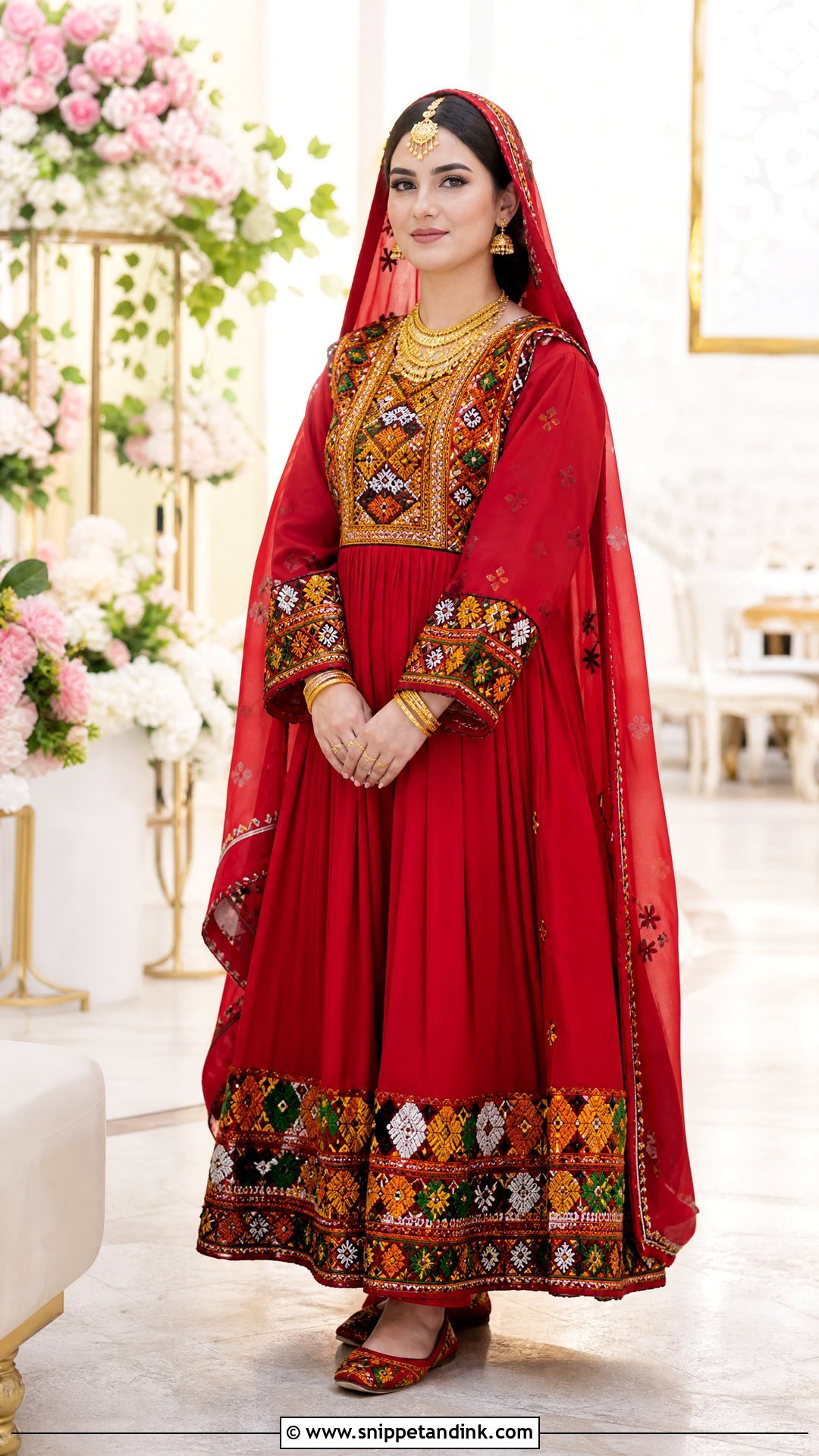
Red with bold geometric embroidery gives a Kandahari-inspired outfit. I’d look for a long frock with a structured chest panel, full sleeves and a gathered skirt, with yellow, orange, green, white and black thread forming bands around the bodice, cuffs and hem. Keep the veil plain red so the needlework leads. Gold earrings, a statement necklace, stacked bangles and embroidered red flats suit it; the bag should be small and simple. Kandahari needlework has its own techniques, so if you want the real thing, commission it from a maker who knows that community’s work, rather than assuming any geometric Afghan design will do.
11. Herati Embroidered Afghan Wedding Dress
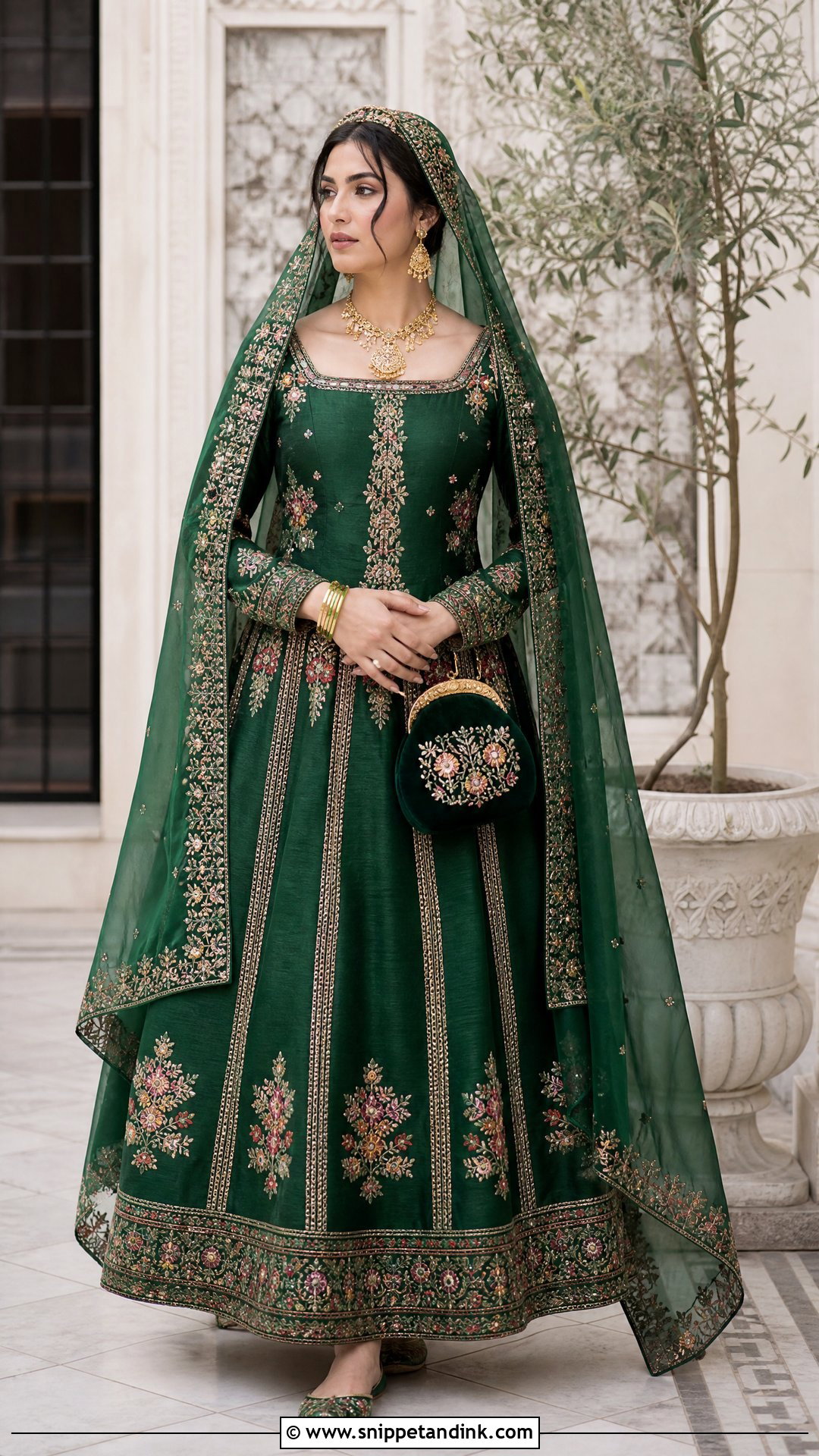
Herati-inspired embroidery is finer and more floral, and I see it worked on deep green, burgundy, navy or ivory. A fitted bodice and long sleeves flow into a wide skirt that doesn’t need to be heavy. A lightweight veil with a narrow embroidered edge keeps the focus on the needlework. Gold earrings, a fine necklace, a jeweled hair accessory and slim bangles keep things polished, with soft embroidered shoes and a structured velvet bag. Herati clothing reflects a distinct regional identity, so I’d work with an artisan who knows it directly rather than mixing unrelated motifs.
12. Sky Blue Hazaragi Afghan Wedding Dress
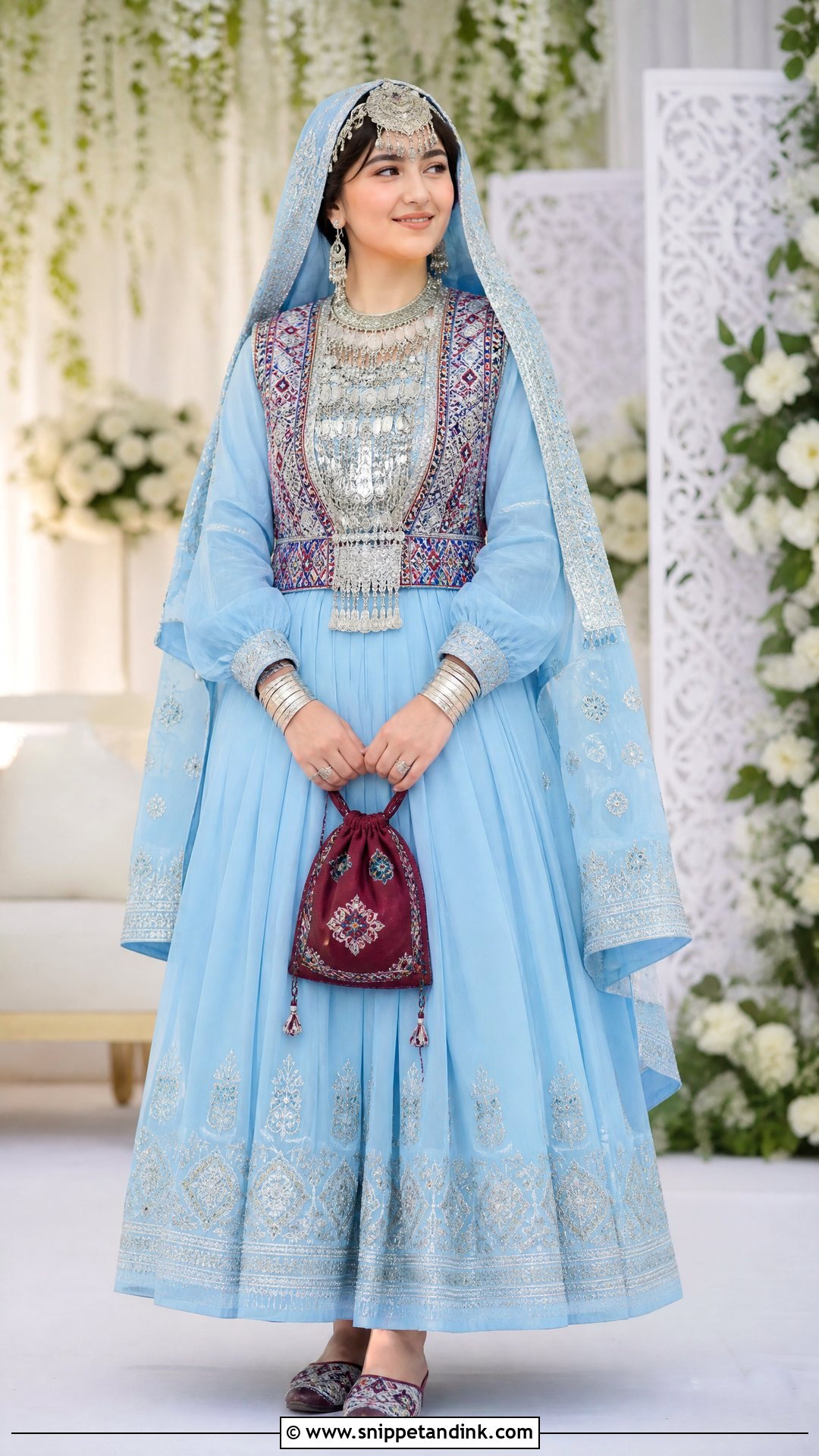
Sky blue gives a bright base for a Hazaragi-inspired outfit. I’d choose a modest full-length dress with a decorative chest panel, gathered skirt and long sleeves, with burgundy, yellow, green and silver embroidery in balanced sections. An embroidered fitted vest over the dress adds structure if it belongs to your family’s tradition. Style it with a coordinated head covering, silver jewelry, stacked bracelets and embroidered flats, plus a burgundy pouch that picks up the thread colours. Hazara clothing varies by family and place, so start from family photographs or a Hazaragi dressmaker instead of a generic costume image.
13. Red Ikat Afghan Wedding Dress
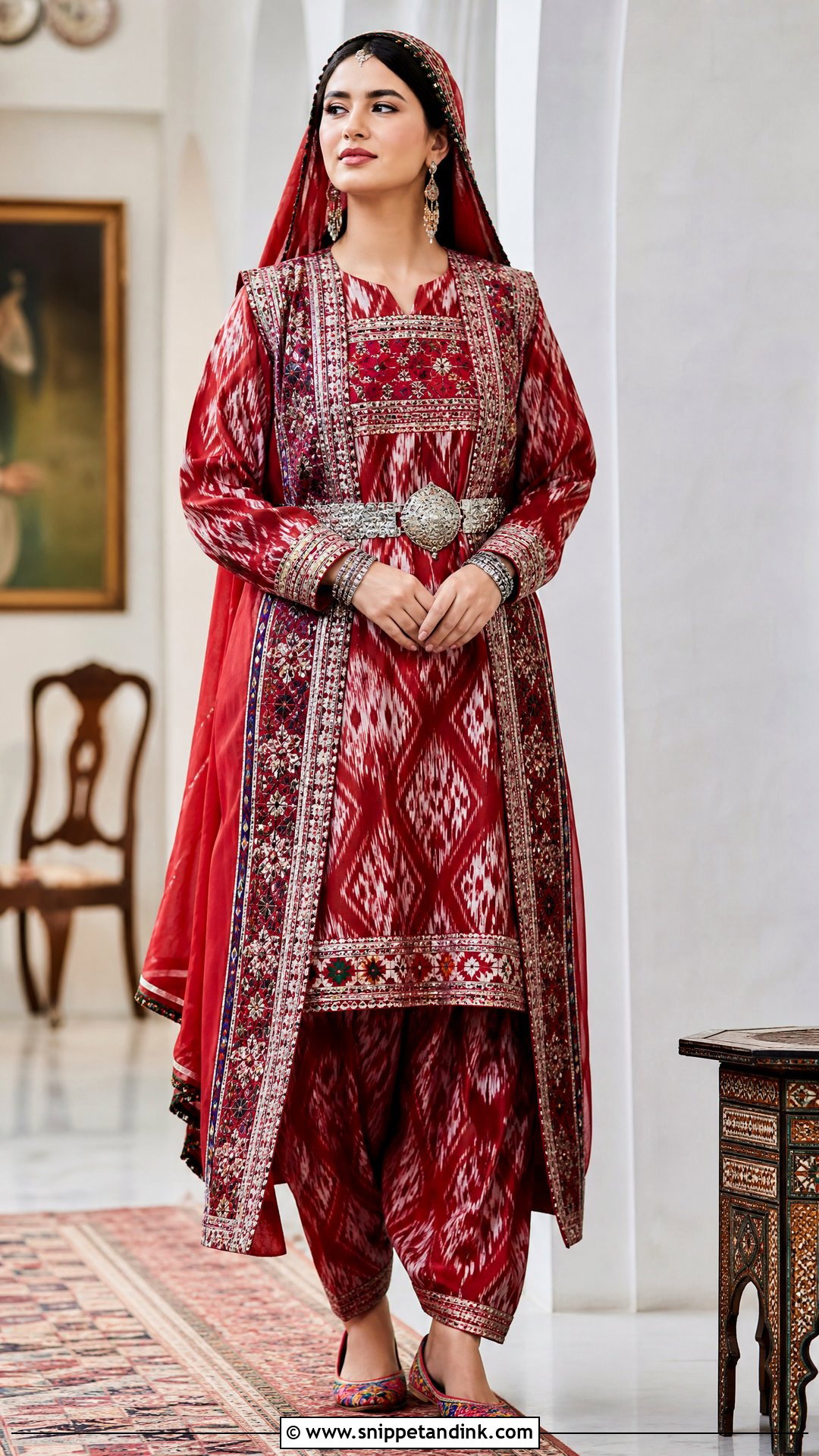
Ikat brings in a Northern Afghan and wider Central Asian influence. I build this look around a long red or burgundy tunic with ikat panels and matching loose trousers, so it’s complete and easy to move in. An embroidered sleeveless coat or chapan-style layer adds shape without covering the textile. A matching headscarf, silver belt, drop earrings, bracelets and embroidered flats finish it, and I keep jewelry selective because ikat already carries a lot of pattern. If you’re representing Uzbek or other northern heritage, let relatives or a knowledgeable maker guide the choice of fabric and layer.
14. Red Turkmen Inspired Afghan Wedding Dress
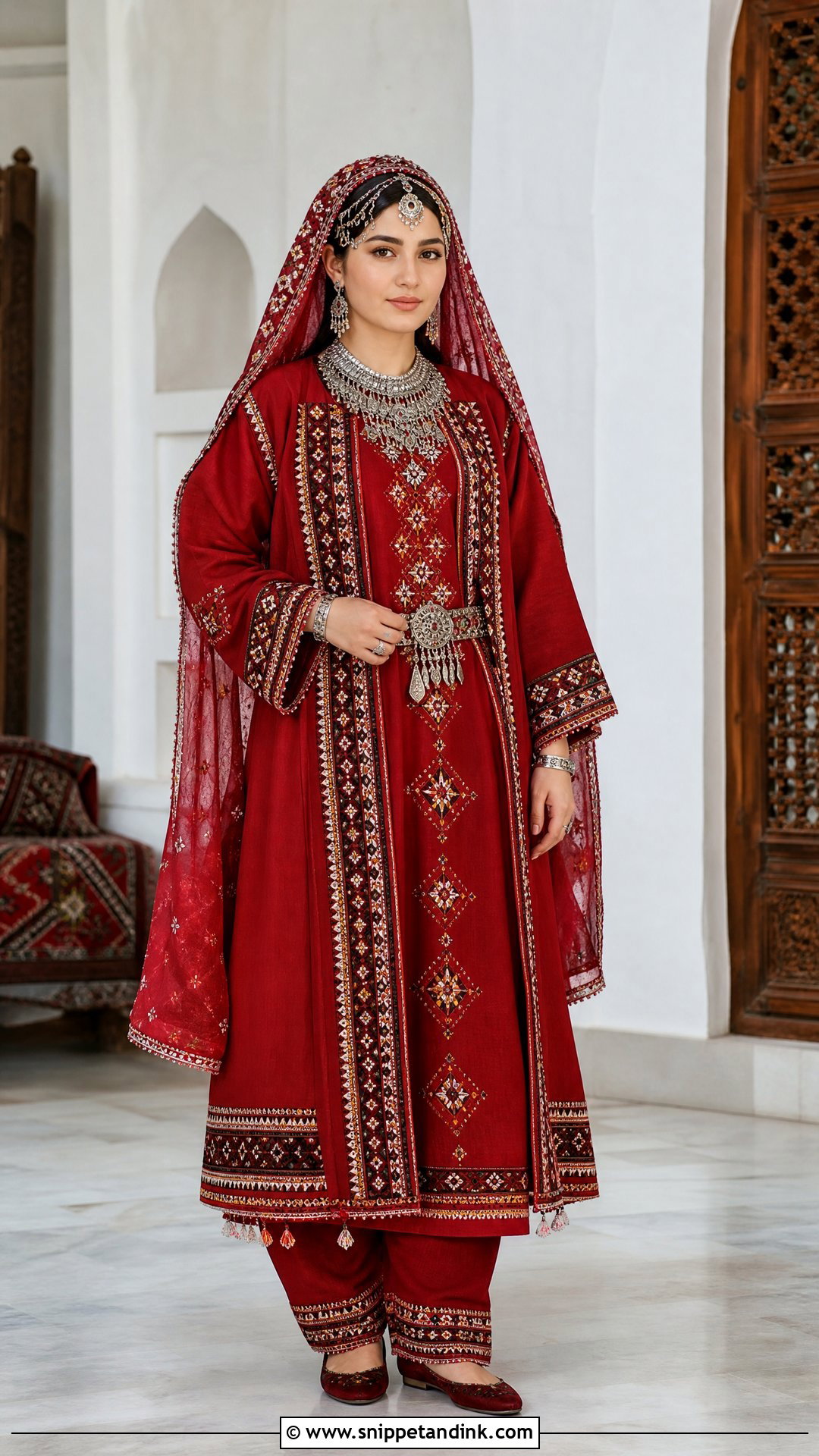
A red Turkmen-inspired outfit relies on long lines and detailed borders. Start with a full-length dress or tunic and trousers with geometric embroidery at the neckline, front panel, cuffs and hem, and add an embroidered outer layer only if it matches your family’s clothing. A red head covering with decorative edging keeps it cohesive. The silver jewelry is often the star here: an ornate necklace, drop earrings, bracelets and a fitted belt. Traditional silver pieces can be heavy, so I have brides wear the necklace and belt for a while at a fitting. Avoid random coin pieces added purely for decoration.
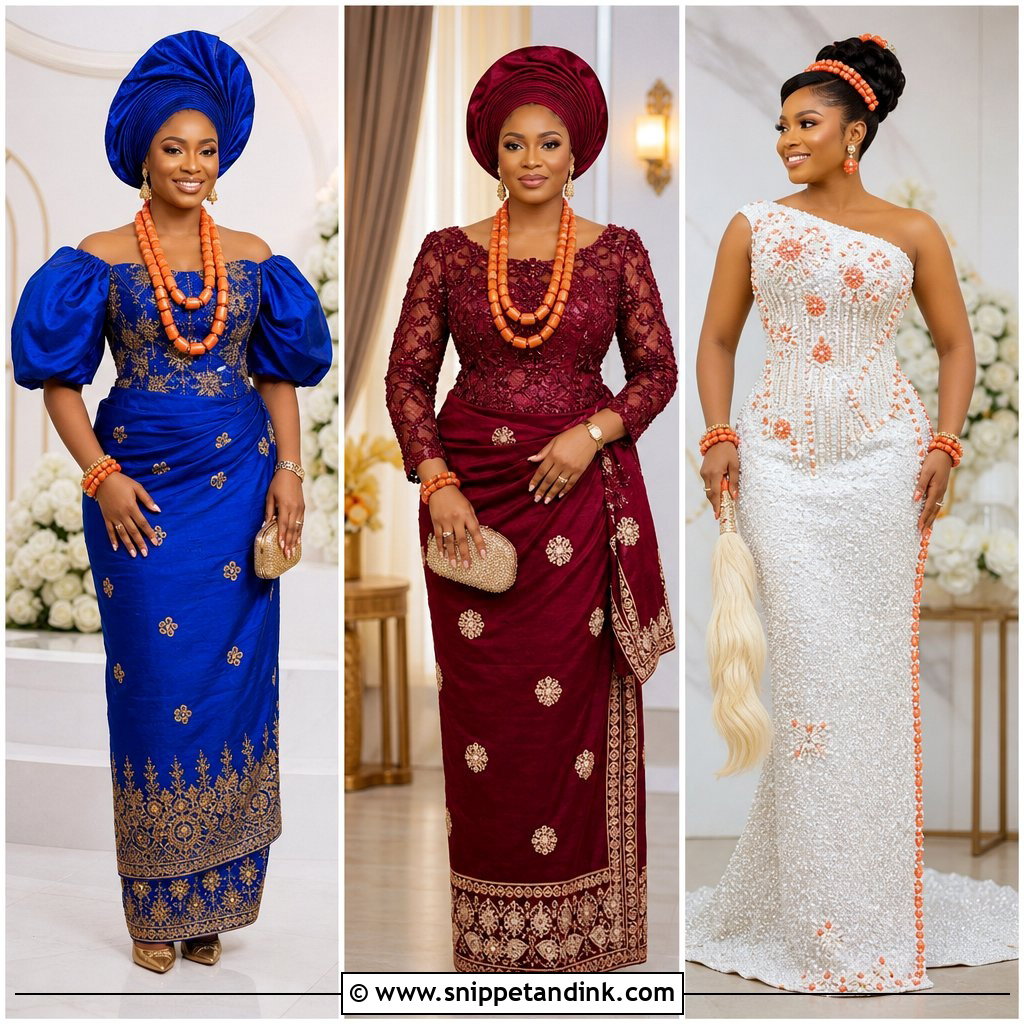
15. Green Pashtun Firaq Partug Wedding Dress
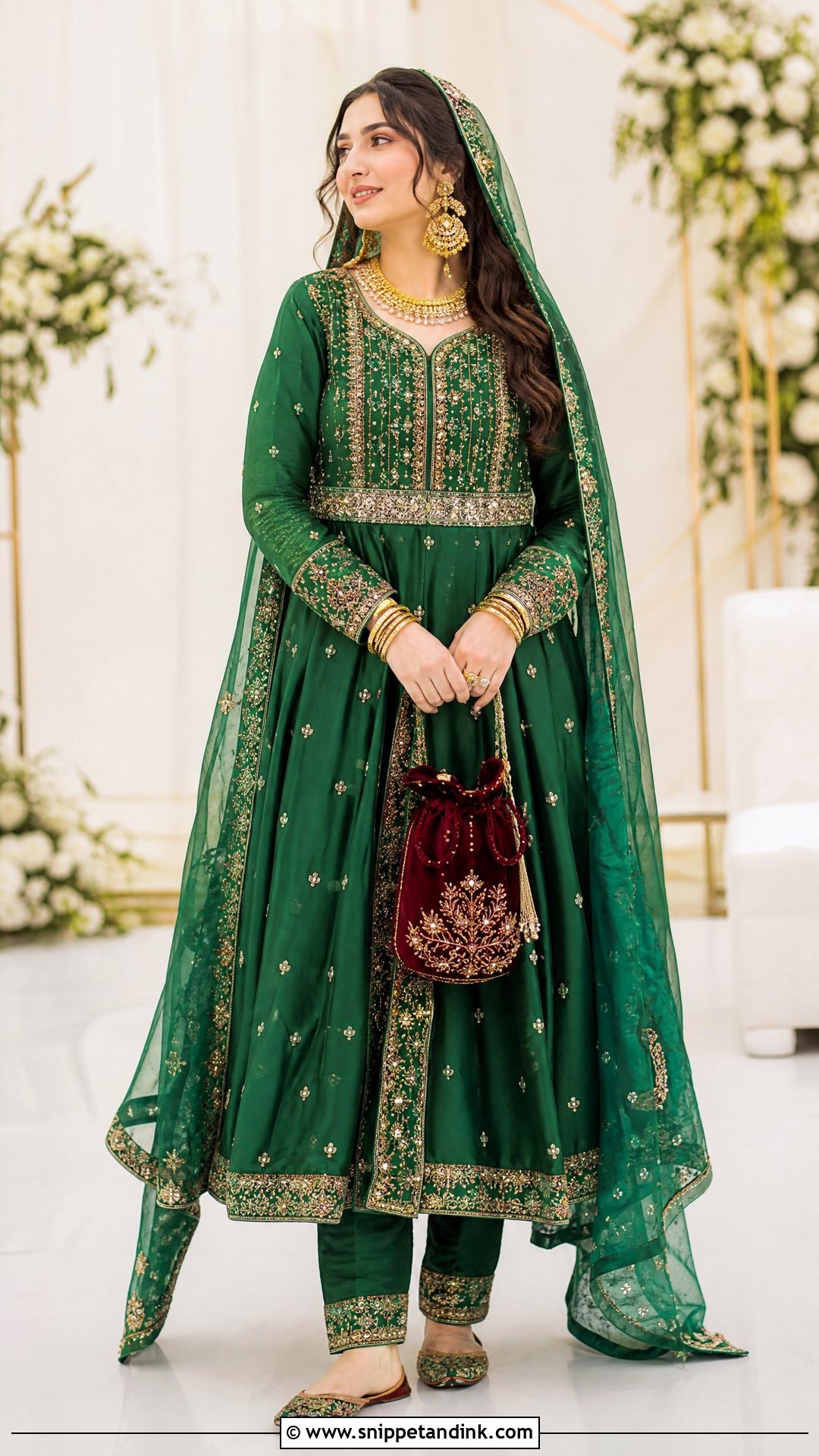
A green firaq partug, a wide flowing dress over coordinated trousers, is a graceful Pashtun bridal look. Choose emerald or forest green with a fitted embroidered bodice, long sleeves and a lot of fabric in the skirt. Gold, red and white thread at the neckline and cuffs, with smaller motifs around the skirt, keep it balanced. The partug underneath gives coverage and freedom to move. I always check the trouser length with the actual shoes, since gathered partug hems can catch under a flat heel. A green dupatta, gold jewelry, embroidered flats and a red velvet pouch finish it. Cut, volume and head covering vary across Pashtun communities, so follow your family.
16. Red Banarsi Afghan Wedding Dress
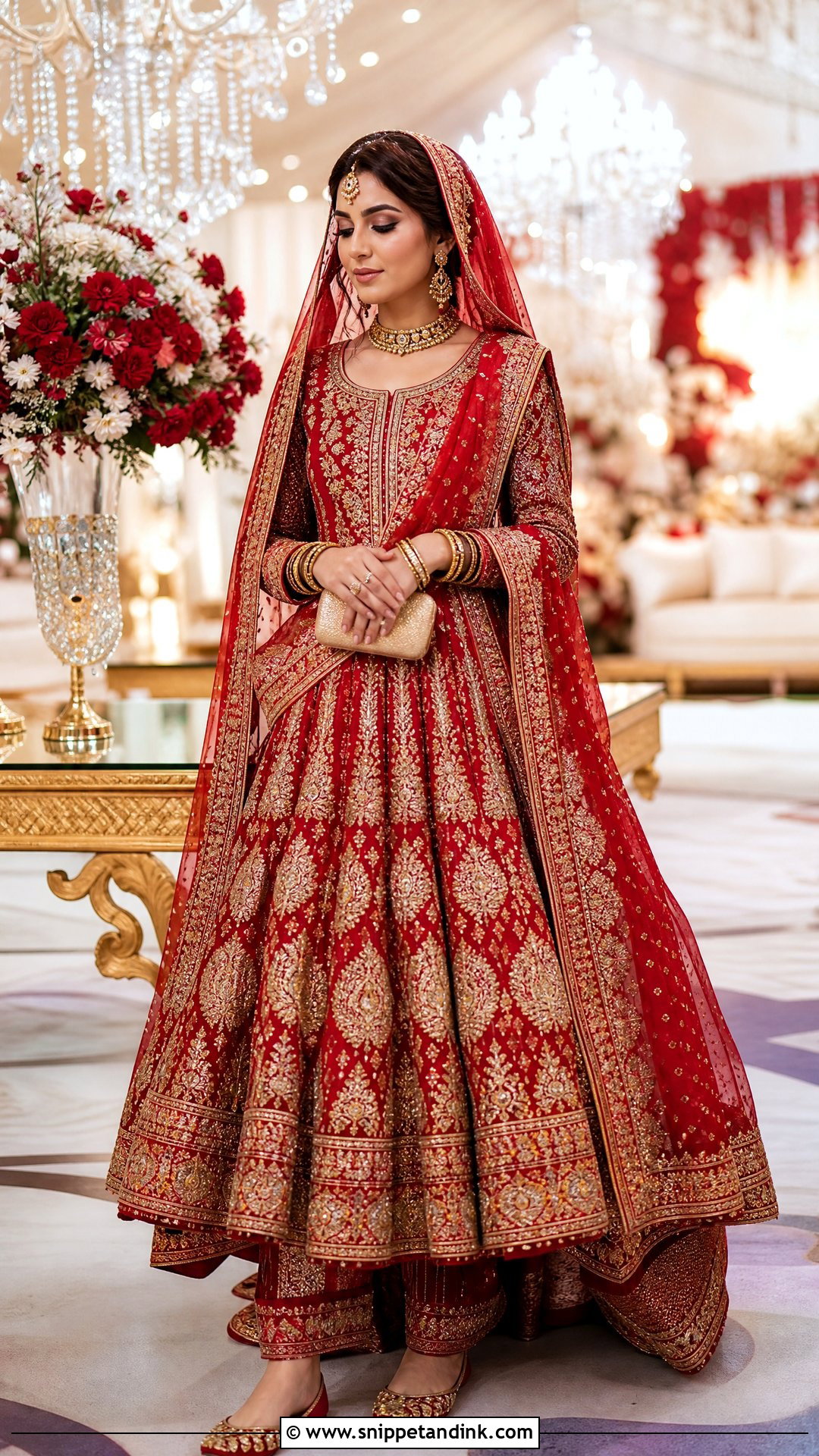
Red Banarsi has a woven pattern that glows under bright reception lights. I like it as a three-piece set: a long flared dress, matching trousers and a coordinated veil, with gold embroidery only at the neckline, waist, cuffs and hem. Woven fabric already has pattern, so extra decoration everywhere just makes it busy. A gold choker, drop earrings, bangles and a fine forehead ornament are enough, with cushioned red-and-gold flats and a small metallic clutch. Ask your tailor to match the motifs across the seams. It’s slower and uses more fabric, but misaligned borders show in every full-length photo.
17. Burgundy And Gold Afghan Wedding Dress
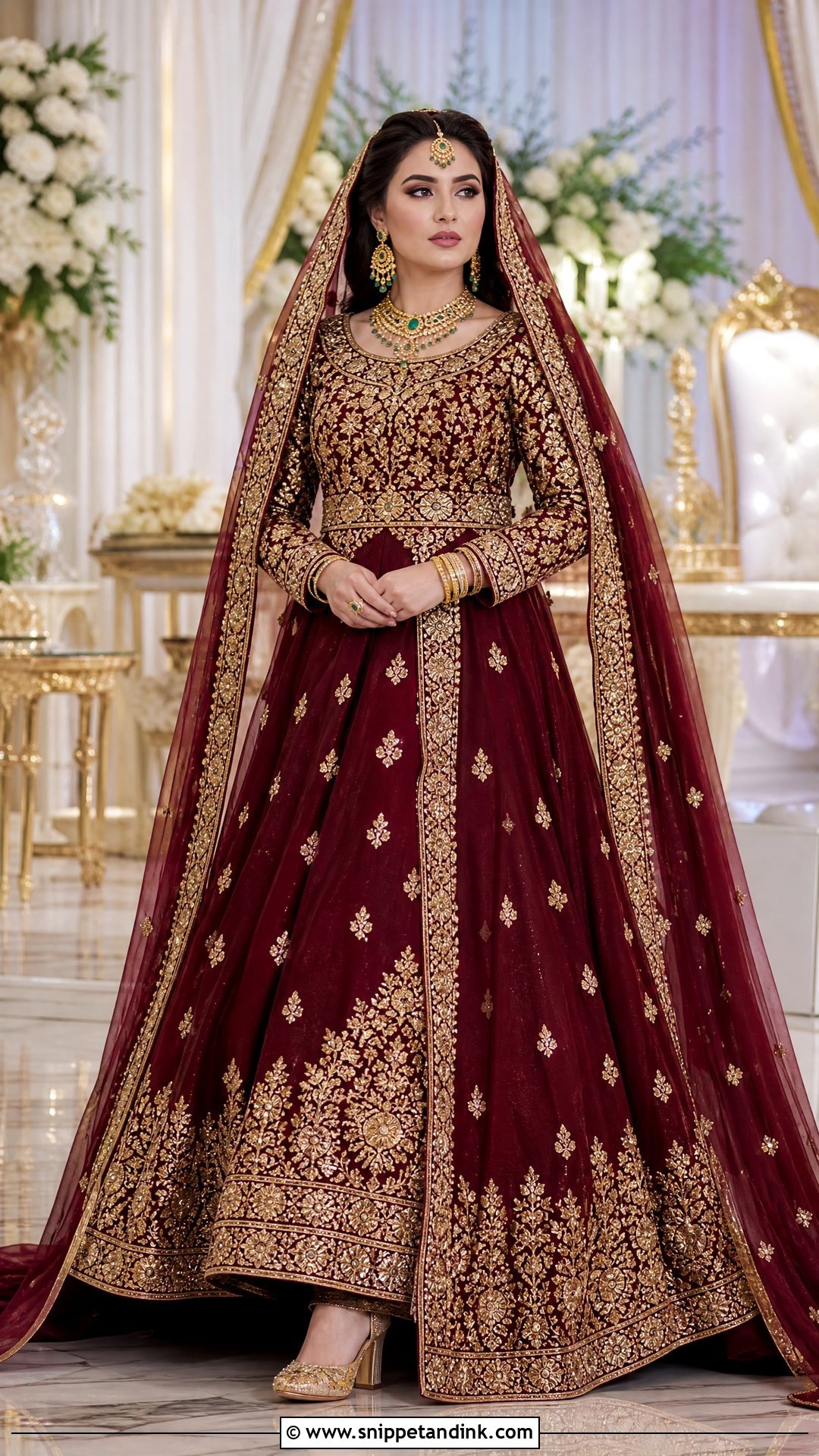
Burgundy and gold are an evening combination. A full-length gown with a shaped bodice, covered shoulders, fitted sleeves and a wide skirt carries gold embroidery best in defined zones: neckline, cuffs, waist, border. A burgundy veil with a gold edge frames the face. Gold drop earrings, a necklace, stacked bangles and a small forehead ornament complete it, with pointed gold flats or low block heels. If you want depth, slip in a little emerald through the jewelry. I find burgundy more forgiving than bright red under dim reception lighting, since it keeps its richness where red can go orange.
18. White And Gold Afghan Wedding Dress
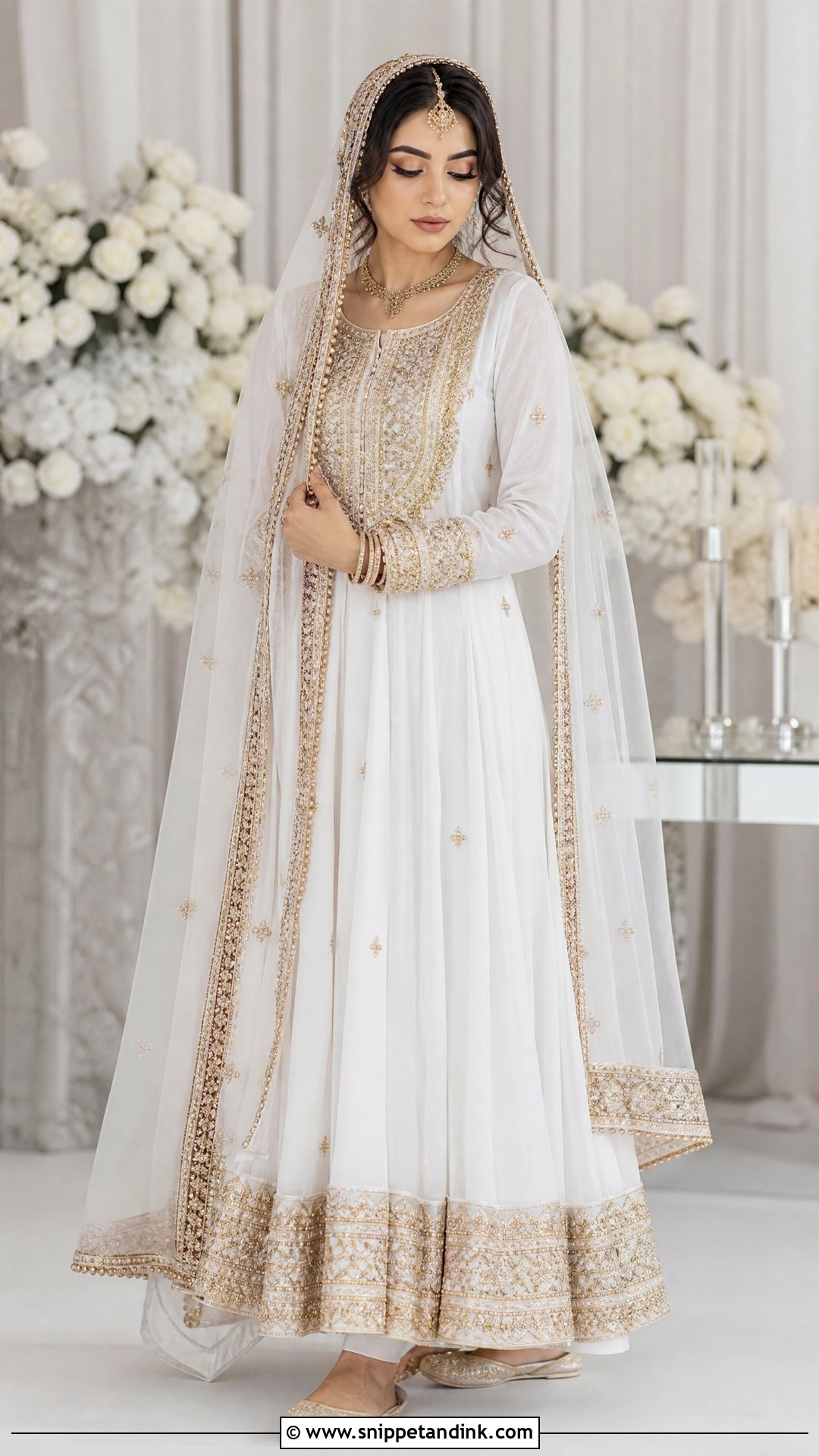
White and gold gives a modern base while keeping Afghan-style construction and handwork. A floor-length gown with long sleeves, a modest neckline and a softly flared skirt lets gold embroidery outline the bodice, waist and cuffs. Add a lightweight white head covering with a gold border, a delicate necklace, earrings, bangles and a quiet forehead ornament. Ivory or gold embroidered flats look more cohesive than bright contrasting shoes. When a bride plans a colourful traditional outfit later in the day, I often suggest this for the nikah because the change of mood is clear. White is more common in some families than others, so check expectations first.
19. Jewel Tone Patchwork Afghan Wedding Dress
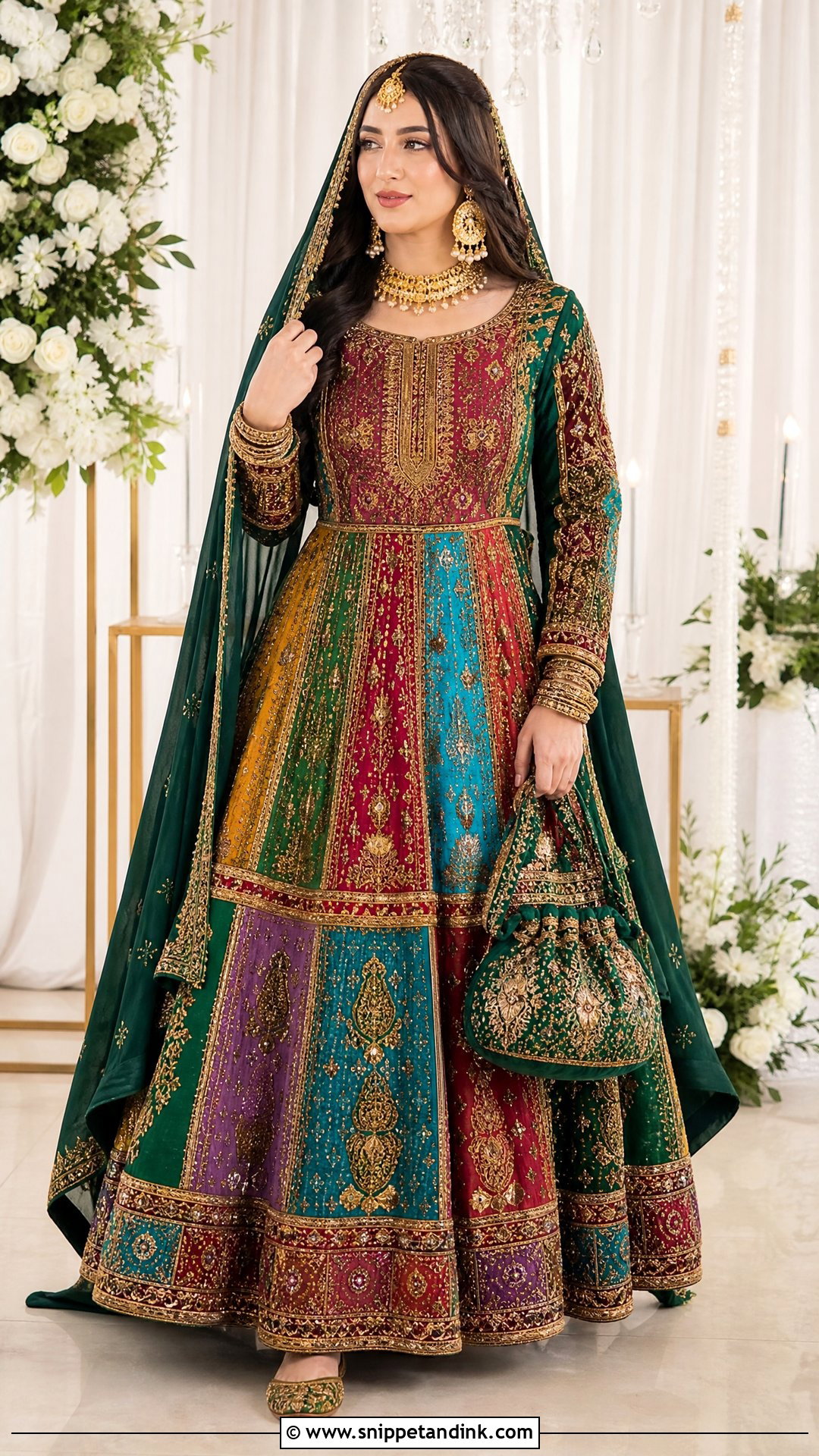
A jewel-tone patchwork dress arranges embroidered panels in ruby, turquoise, purple and gold over a deep green, navy or maroon base. Keep it full length with a fitted bodice, long sleeves and a wide skirt. Symmetry is what makes patchwork look deliberate; I lay the panels out flat and photograph them before anything is sewn. A solid dupatta balances the pattern. Silver or antique gold earrings, a layered necklace, simple bangles and flats in one dominant colour finish it. The best versions use family textiles or work from a single artisan, not motifs from unrelated communities mixed together.
20. Heirloom Embroidered Afghan Wedding Dress
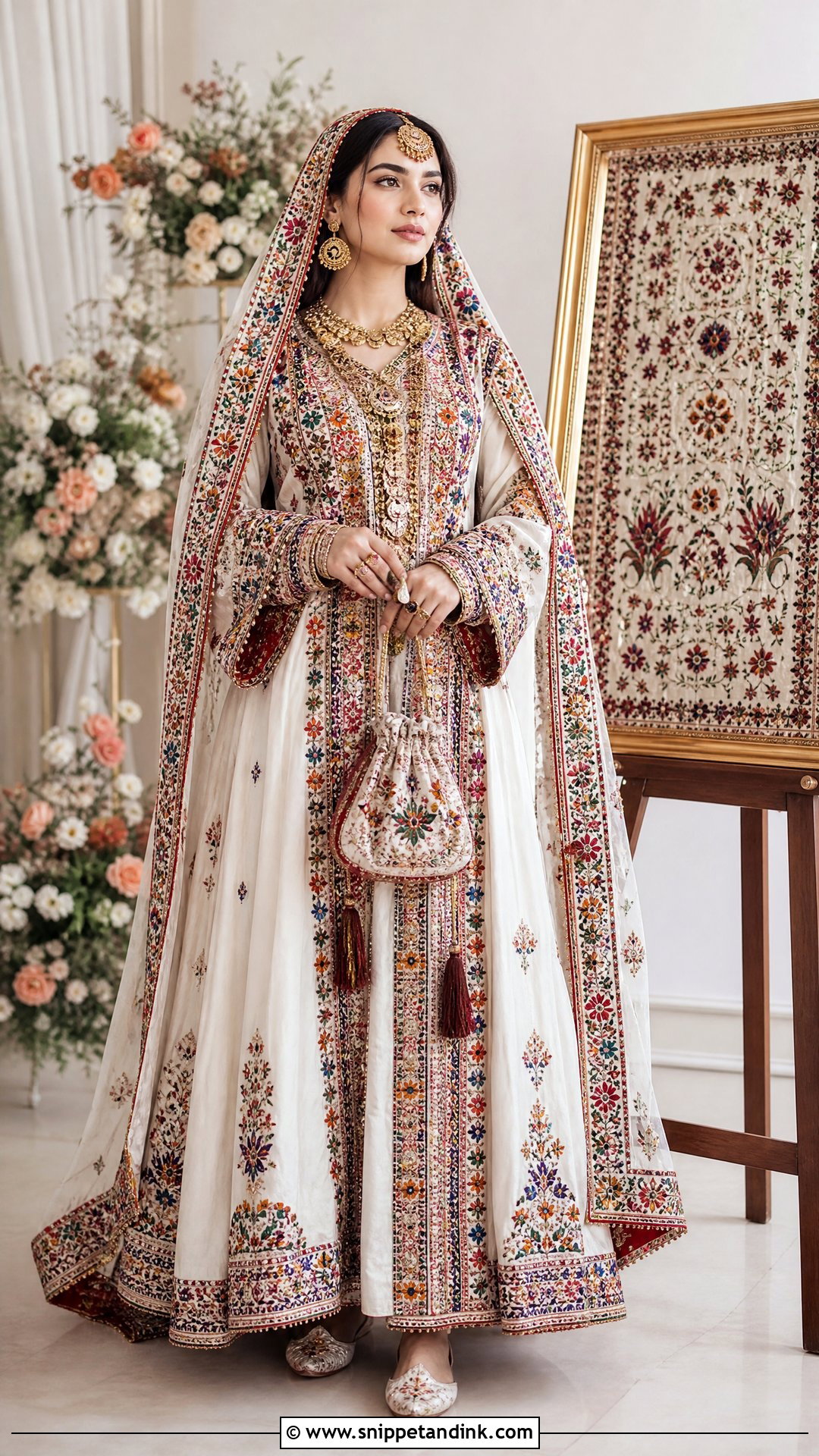
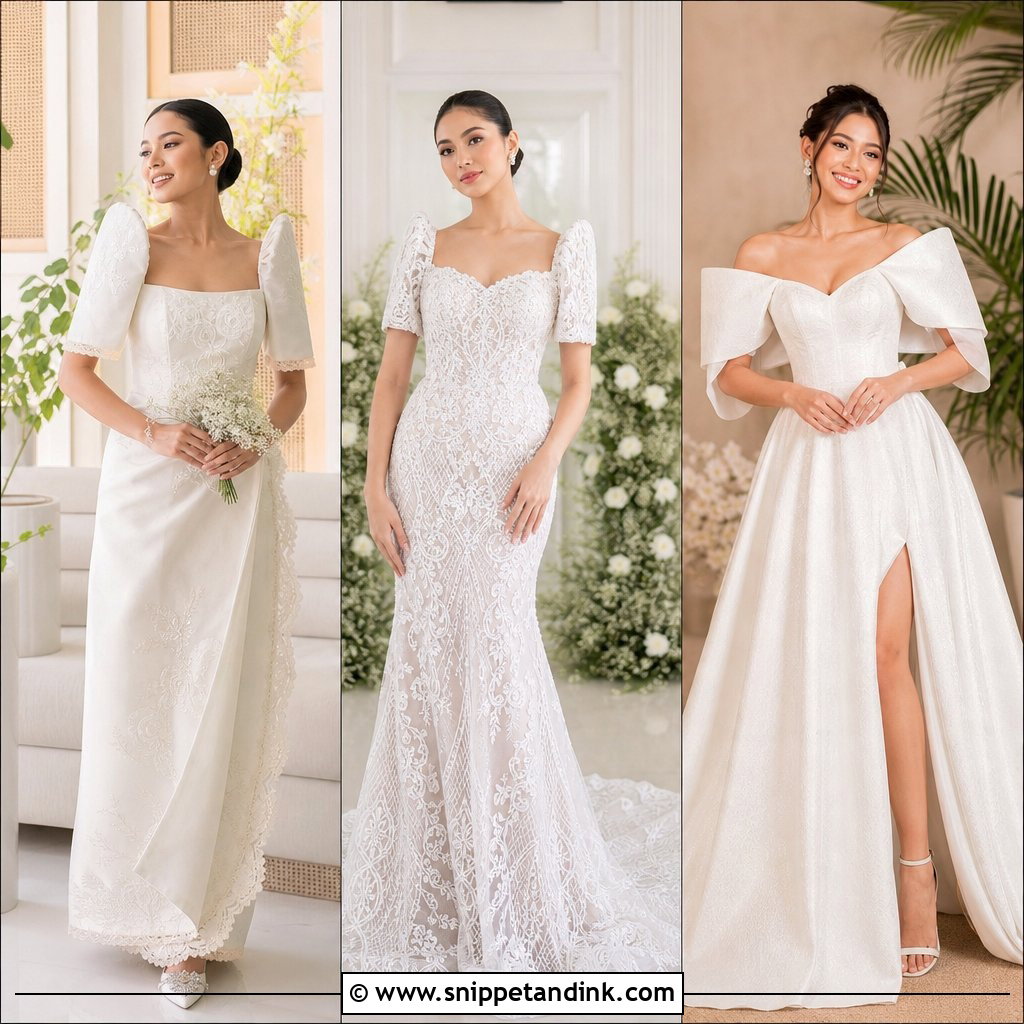
An heirloom outfit can be the most personal choice of all. It might be your mother’s or grandmother’s dress, an embroidered panel, a veil border, jewelry or a handmade textile. A skilled tailor can restore it or build it into a new gown sized for you. Before anyone cuts old handwork, have its condition and meaning assessed; aged silk can split along fold lines, and metallic thread can be brittle. If it can’t be worn, preserve the original and have selected motifs reproduced on new fabric. Build the rest of the outfit around the heirloom’s colours, with a matching dupatta, suitable jewelry, embroidered shoes and a small fabric bag.
Heavy Handwork on a Long Night
Mirror work, coins, beads and metallic thread are what make these dresses special, and they also make them heavy. A wide skirt with a dense border pulls on the shoulders and waist all evening. At the fitting I ask for three things: wide shoulder seams or internal tape so the bodice carries the weight, a soft cotton lining against the skin, and a skirt that clears the floor in your wedding shoes.
Pin the dupatta at two or three points rather than one, so it doesn’t drag the forehead ornament sideways when you turn. Bring safety pins in matching colours, a few spare mirrors or coins if your maker can supply them, and a small pair of scissors for loose threads.
Storing Embroidered Pieces After the Wedding
These outfits are often kept for daughters and nieces, so treat them well. Let the dress air before packing it. Wrap it in clean cotton or muslin, never plastic, which traps moisture. Pad the folds with acid-free tissue so mirrors and metal thread aren’t pressed flat, and refold it along different lines every year or so. Metallic thread can tarnish in damp conditions, so keep it somewhere dry and away from perfume. For cleaning, I’d only use a specialist who handles hand-embroidered pieces, and point out any glued mirrors before they start.
Ask the Women Who Wore It Before You
Everything across these 20 Traditional Afghan Wedding Dress Ideas comes back to colour, handwork, jewelry, fabric and family tradition. Kuchi reds and greens feel lively; velvet, Banarsi, ivory and turquoise each sit at a different level of formality. Afghan clothing is diverse, not one national costume, so regional pieces deserve care. Before you order, talk to relatives, look through family wedding photographs and find a maker who knows the technique you want. Then wear the whole outfit, trousers, veil, jewelry and shoes together, well before the wedding.
You'll Like These Ideas:


Leave a Reply