
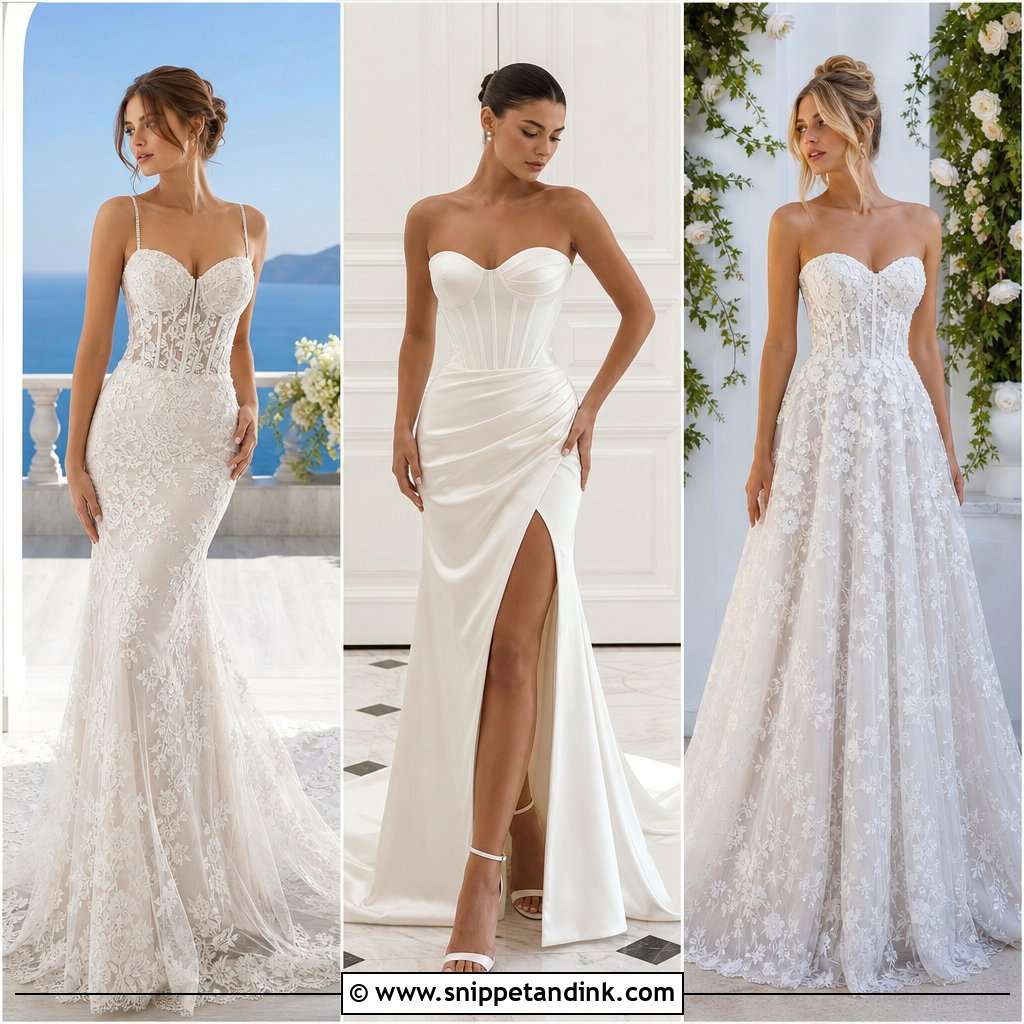
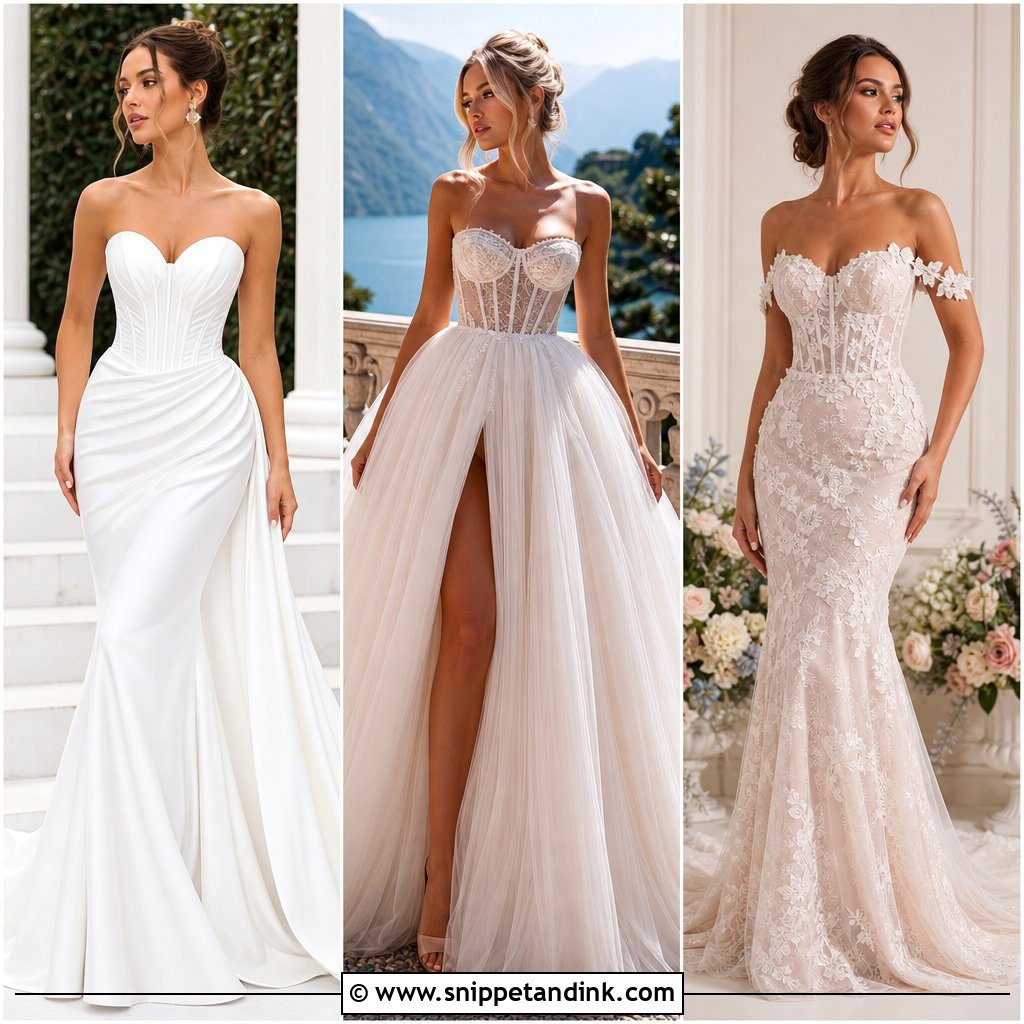
A mermaid gown is the least forgiving shape in the salon and, when it fits, the most dramatic. It hugs the waist and hips and only releases near the knee, and satin makes every bit of that tailoring visible. I’ve put together twenty satin mermaid looks here, from plain strapless gowns to pearl-trimmed and lace-touched versions, with the shoes, veil and jewellery I’d style each one with. I’ll also flag the things that go wrong at fittings with this cut, because walking, sitting and climbing steps all need testing before you commit.
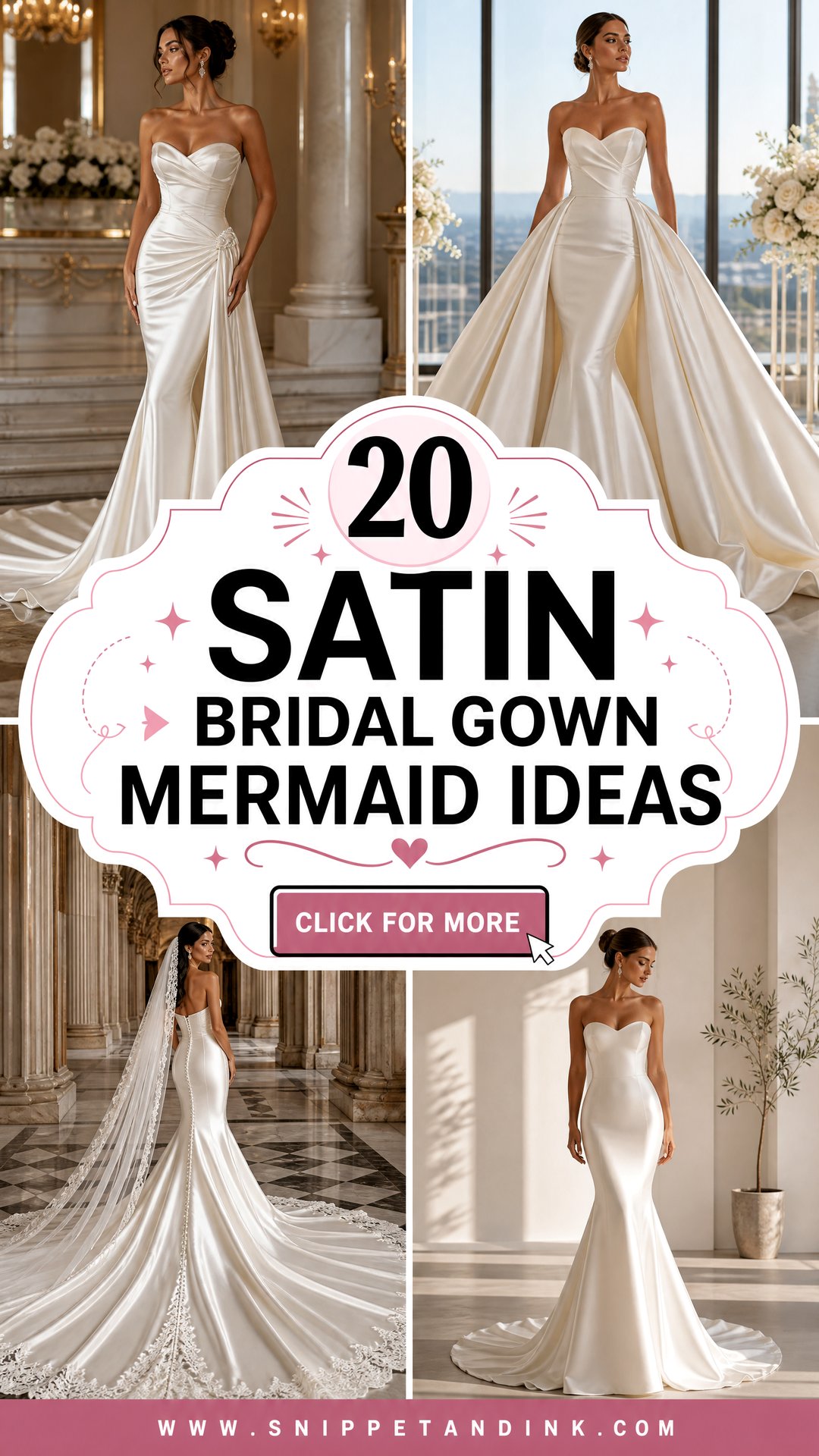
Knee, Thigh or Calf: Where Your Mermaid Should Open
Salons use “mermaid” loosely, but the height where the skirt releases changes everything about how you move. Here’s how I explain it at appointments.
- True mermaid: the flare starts at or just below the knee. It’s the most sculpted line and the most restrictive. Expect smaller steps and a careful technique for sitting.
- Trumpet: the flare opens around mid-thigh. You still get the curve, with far more freedom to walk and dance.
- Fit-and-flare: the skirt opens from the hip. Easiest to wear, least dramatic.
Height matters too. On petite brides a low flare can make the legs look short, and raising it a few centimetres often fixes the proportion. On tall brides a true mermaid usually reads beautifully. Try two placements on the same day if the salon has them; the difference shows straight away in the mirror.
Satin is less forgiving than crepe or stretch fabrics in this shape. It has little give, so whatever ease your seamstress leaves at the knee is all you get. Ask for a gusset or a slightly higher flare if you know you’ll be on stairs or a dance floor.
1. Strapless Sweetheart Satin Mermaid Bridal Gown
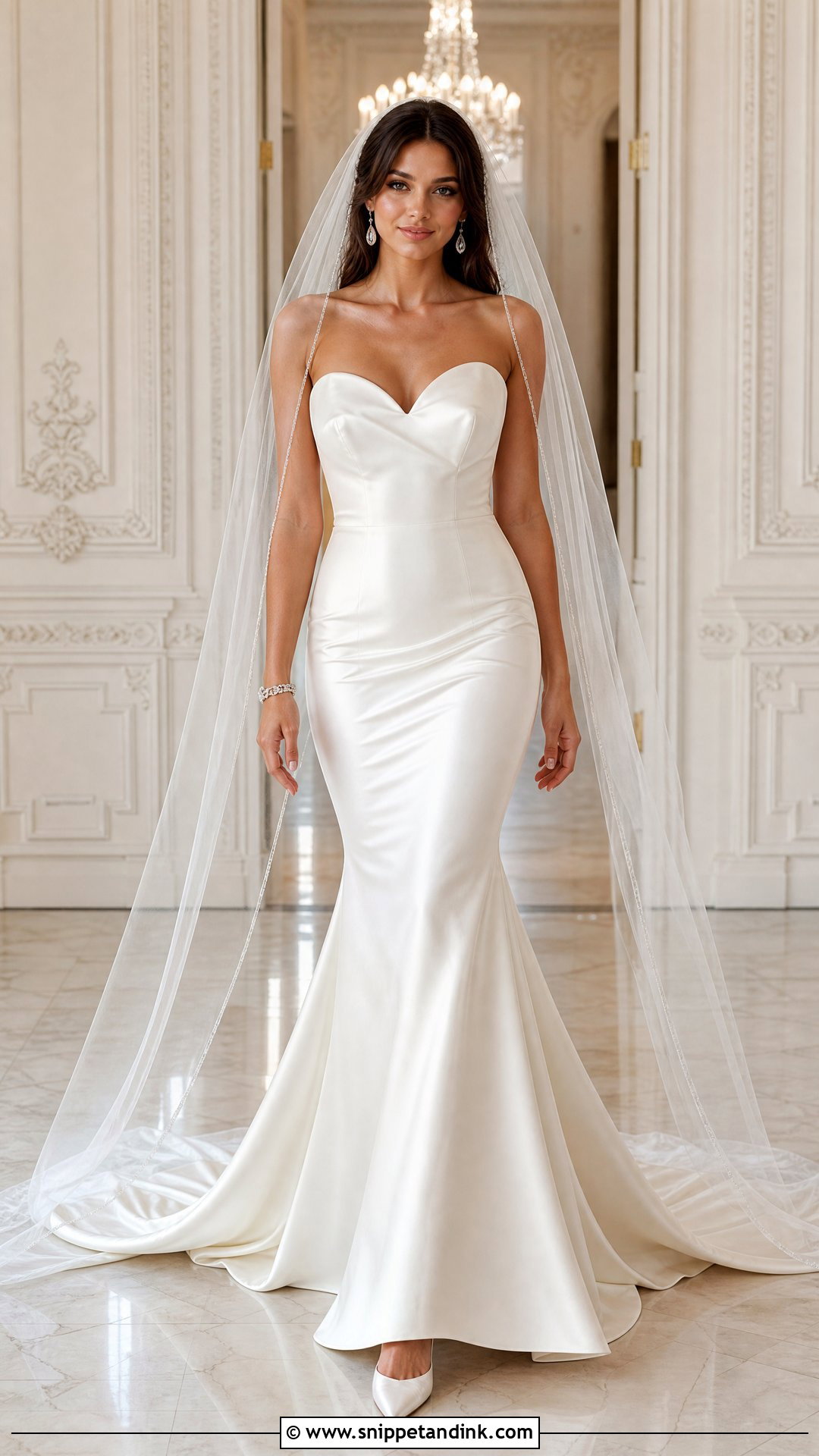
This is the mermaid most brides try first, and the sweetheart neckline softens what is otherwise a very fitted shape. A strapless sweetheart satin mermaid bridal gown lives or dies on its inside: boning plus a waist stay keeps the bodice from sliding down as the evening goes on. A medium train gives drama without needing three people to manage it. Pointed satin pumps, pear-shaped earrings, a thin tennis bracelet and a fingertip veil finish it, with a low bun to show the shoulders. Ask your tailor to leave a little ease at the knee. Too tight there and steps become a problem.
2. Off-Shoulder Satin Mermaid Bridal Gown
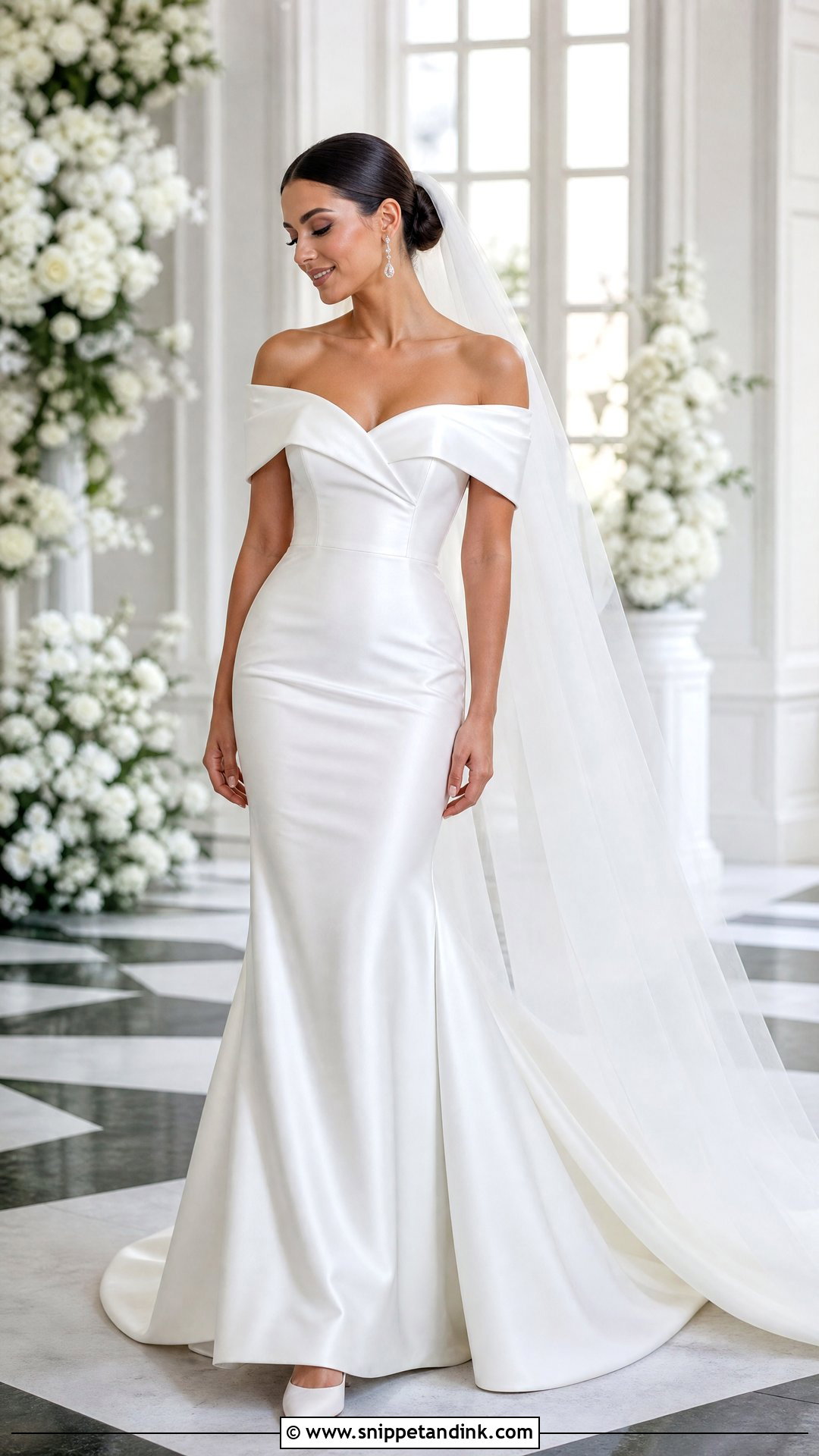
Off-shoulder bands frame the collarbones and balance all the fit below them. The catch is arm movement: the bands are stitched into the bodice, and reaching up can drag the neckline with them. I make brides lift their arms and hug the air before the bands are finalised. Closed ivory heels, crystal drops and a fine bracelet are enough, and no necklace. A smooth chignon keeps the shoulders clear, and a cathedral veil with a cut edge suits a formal church. Plan a hidden bustle so the train is off the floor for dancing.
3. Square Neck Satin Mermaid Bridal Gown
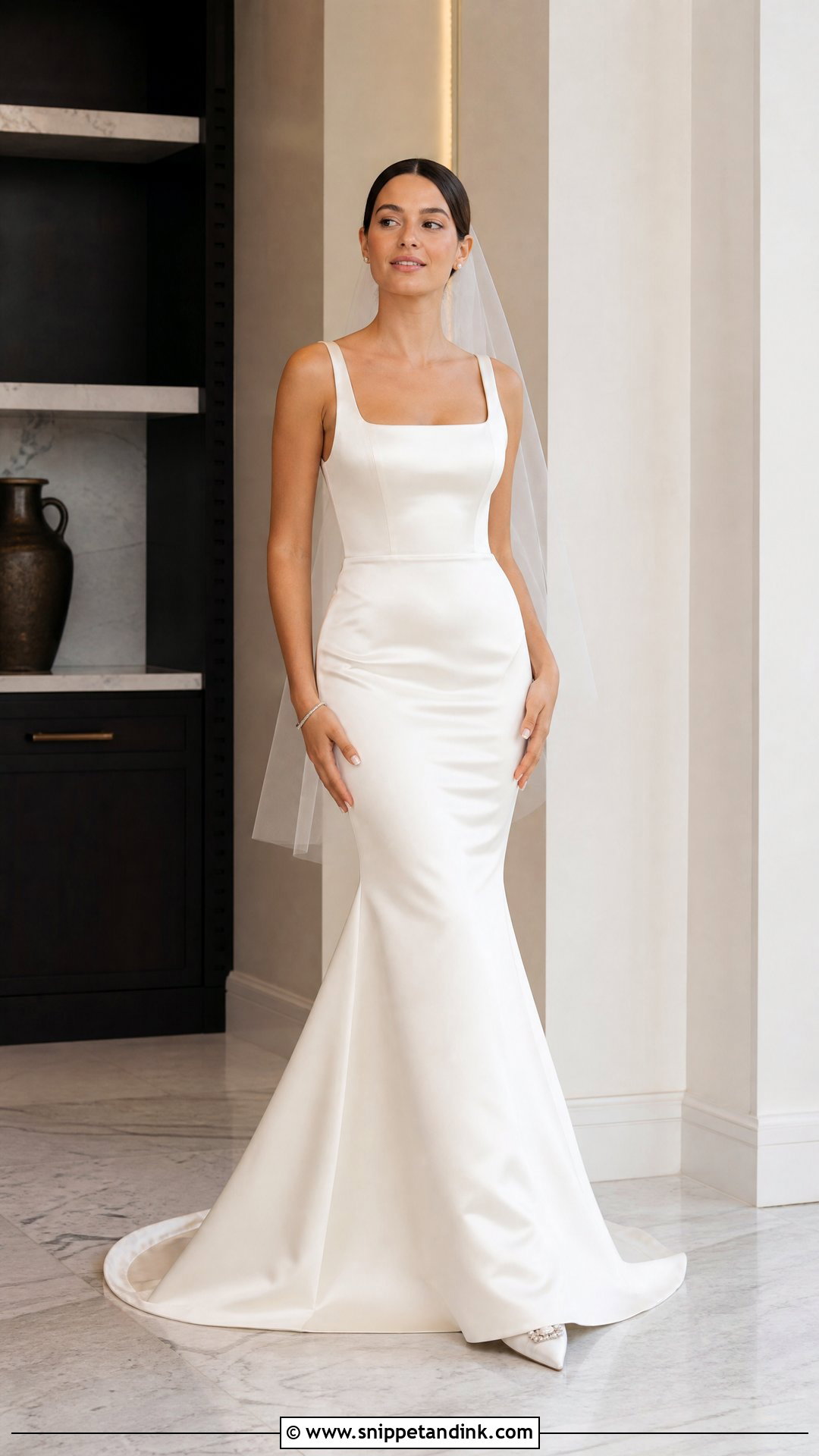
Wide straps make the square neck the easiest mermaid to wear if you dislike strapless dresses, because the straps share the job of holding the bodice up. It needs substantial satin so the line stays crisp from the neckline straight down to the low flare. I’d style it with pearl studs, comfortable pointed heels and a sleek centre-parted bun, plus a long single-layer veil for softness. Skip big necklaces; they clash with the angles of the neckline. A family ring or a delicate bracelet is a better place for something personal.
4. Scoop Neck Satin Mermaid Bridal Gown With Low Back
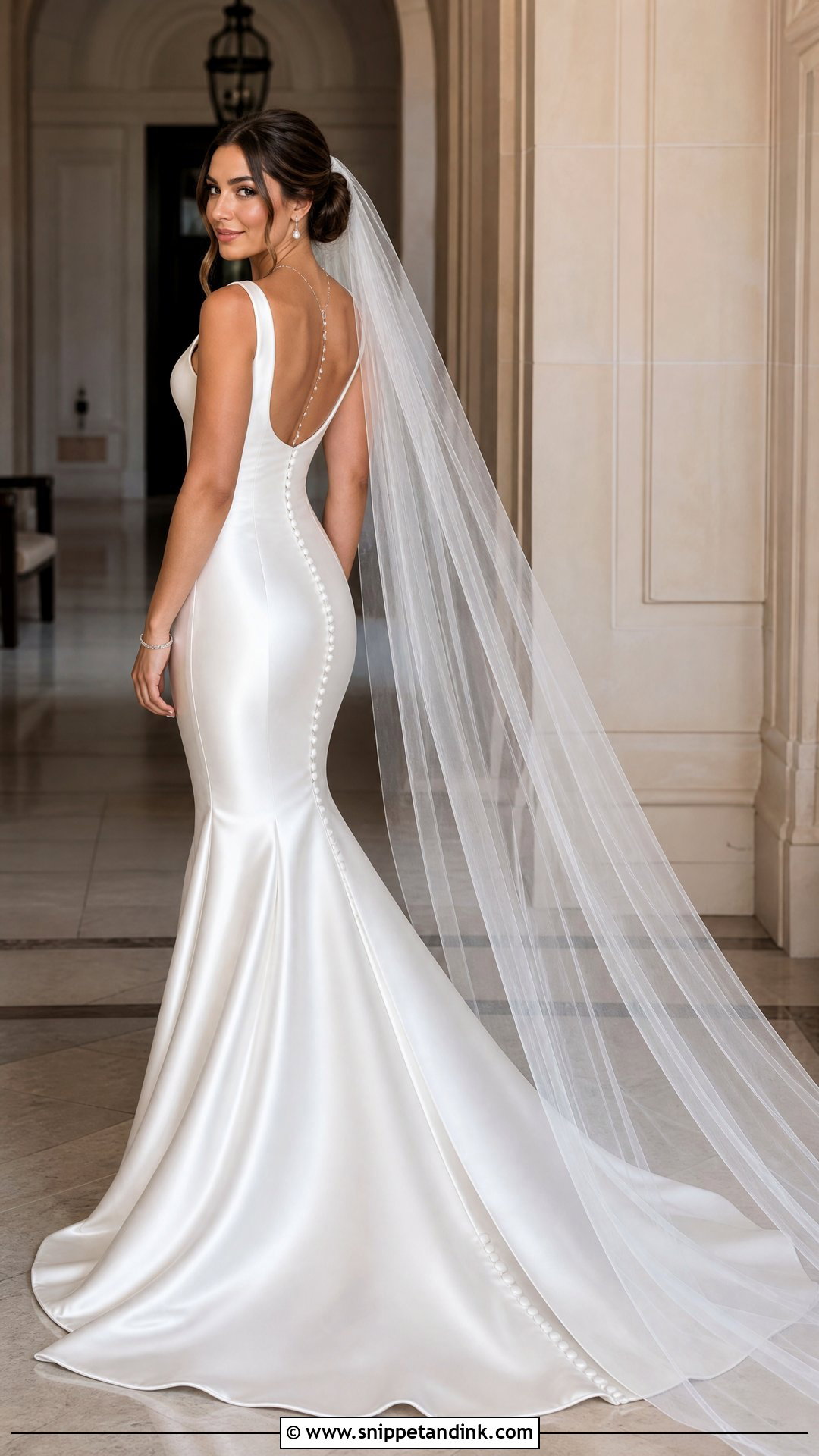
A graceful scoop neckline keeps the front familiar, and the low back gives the gown a second moment when you walk away. Support is the first thing I’d raise at the salon: sewn-in cups and support panels can go in during alterations, and that decides what underwear you need. Look for a back finished with buttons that carry down toward the train. Low satin heels, small studs and a back necklace, if the cut is deep enough, keep it light. Wear a textured bun or side-swept waves and a sheer chapel veil so the back still shows.
5. Halter Neck Satin Mermaid Bridal Gown
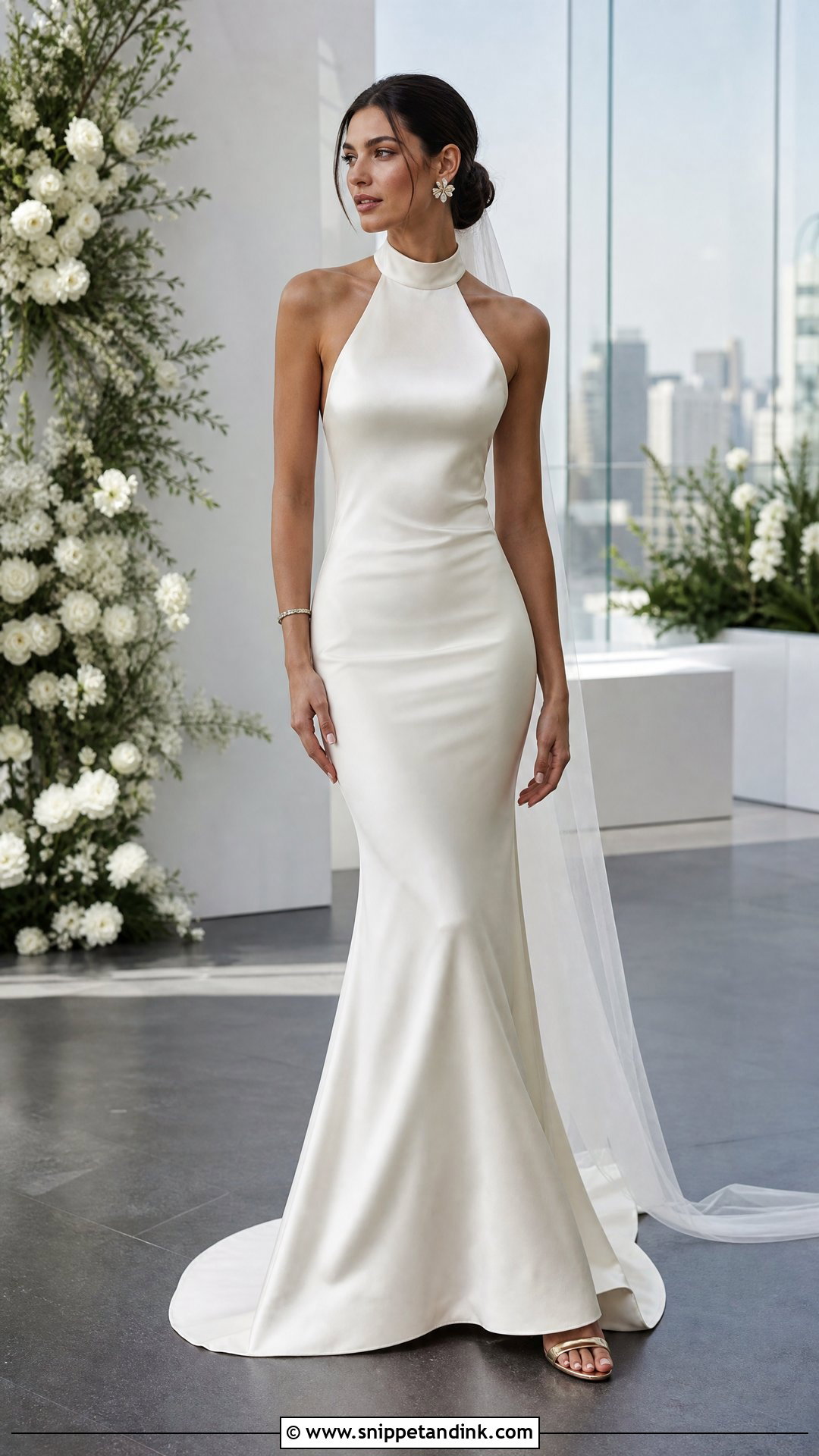
The halter feels sharp and current over a mermaid skirt. A halter neck satin mermaid bridal gown pulls the eye up, and open shoulders with a low or keyhole back keep it from looking heavy. The strap around the neck shouldn’t do all the lifting, though. If it’s taking the weight of the bodice you’ll feel it by the speeches, so check the inner support while standing, sitting and walking. Metallic sandals, sculptural earrings and a high bun or sleek ponytail suit the halter’s lines. Keep the veil short or narrow.
6. One Shoulder Satin Mermaid Bridal Gown
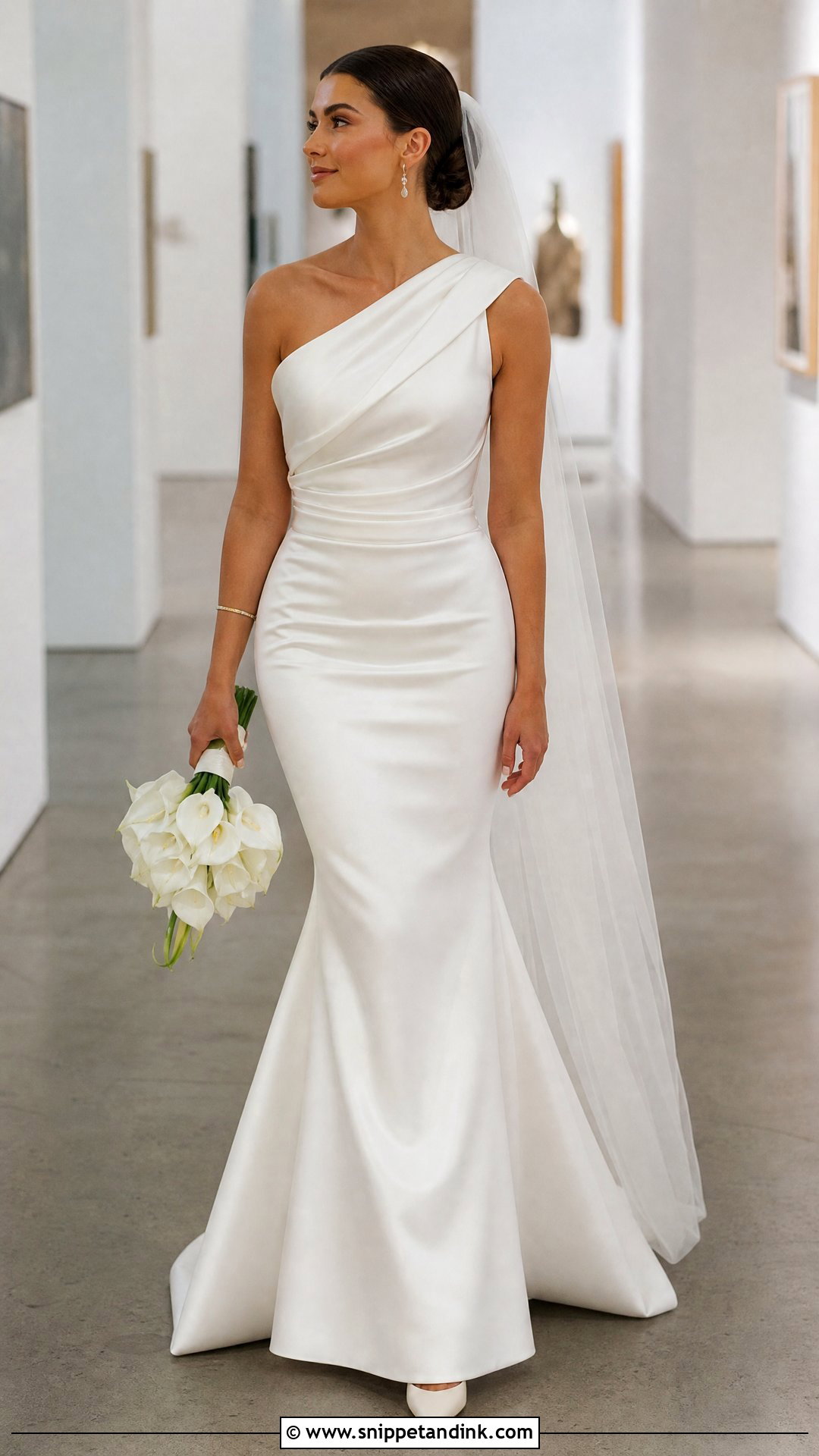
One bare shoulder gives a fitted gown a formal, editorial edge. The single strap can be a thin line or a soft draped fold, and the skirt should stay smooth through the hip before it opens. Strong internal structure is non-negotiable here. If the bodice depends on that one strap, it will twist as you move. I’d choose one statement earring on the open side, pointed ivory pumps and a slim bracelet. A low bun set to the opposite side balances the diagonal.
7. Long Sleeve Satin Mermaid Bridal Gown
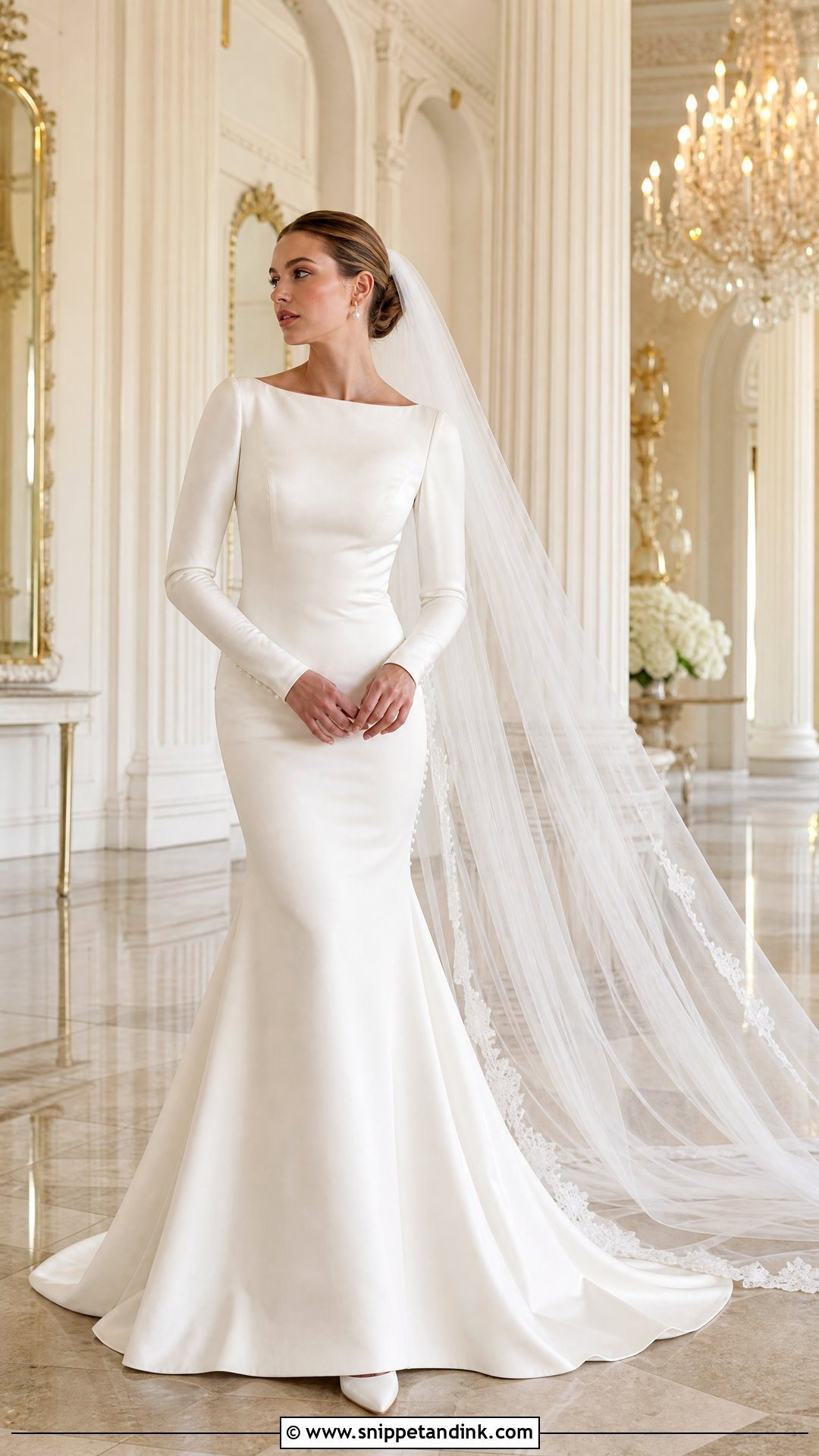
In colder months a long-sleeved satin mermaid gives a continuous line from wrist to hem, and it pairs well with a bateau, square or modest V. Sleeves are the weak point: plain satin has no stretch, so either ask for stretch satin or shaped elbow seams. During fittings, hug someone, hold a bouquet and sit at a table. If the shoulders pull, the sleeve head needs letting out. Covered buttons on the cuffs and back are all the detail it needs, with closed pumps, pearl drops and a cathedral veil.
8. Corset Bodice Satin Mermaid Bridal Gown
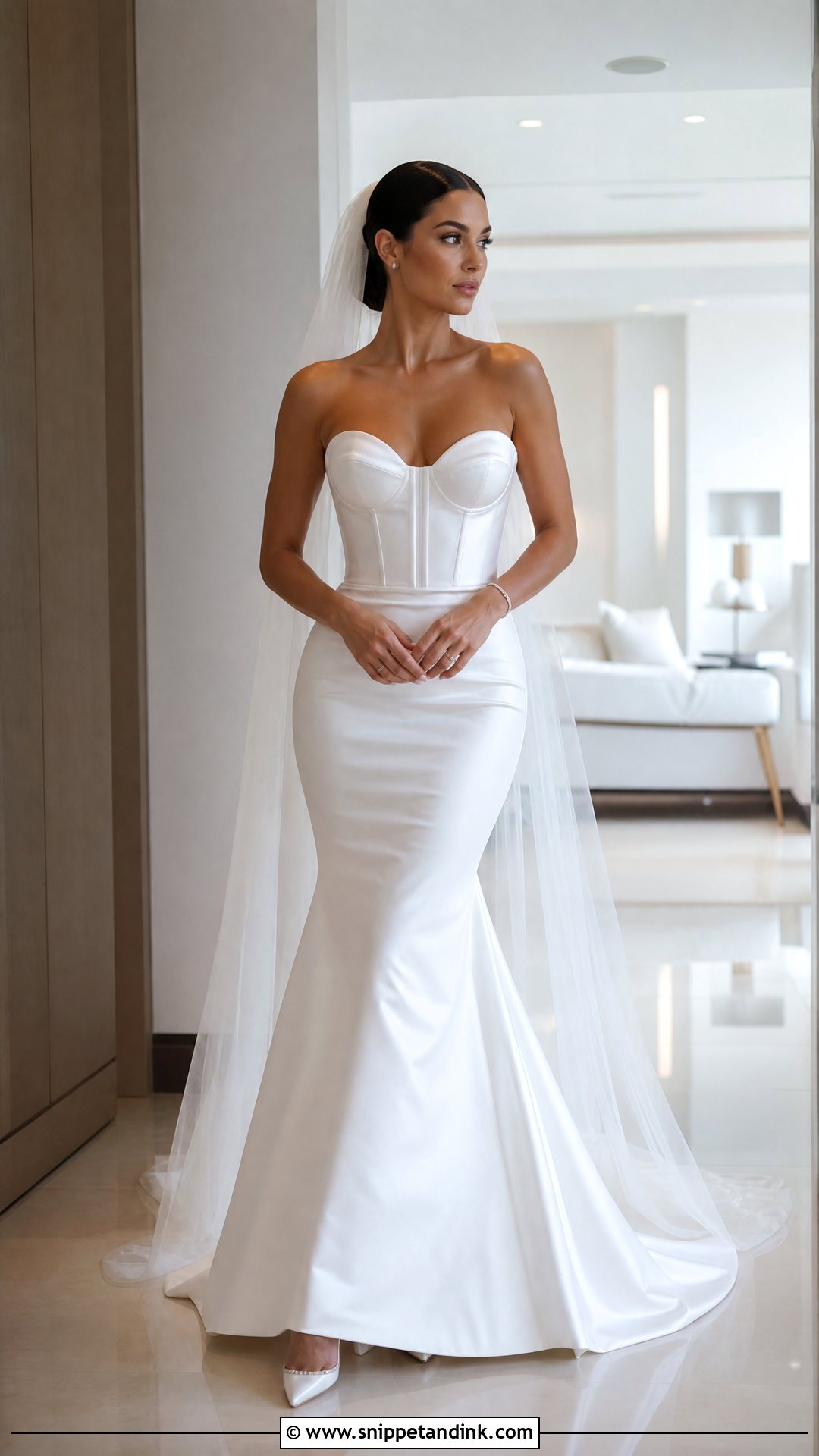
A corset bodice gives the mermaid real support and a defined waist. Exposed boning looks fashion-led; covered boning reads more traditional and smoother under satin. Sweetheart and straight necklines both suit it. The fitting mistake I see most is lacing or cutting it too tight: the satin then shows tension lines across the waist, and sitting at dinner becomes uncomfortable. Crystal studs, a fine necklace only if there’s open space, pointed heels, and a long plain veil to soften all that structure.
9. Draped Waist Satin Mermaid Bridal Gown
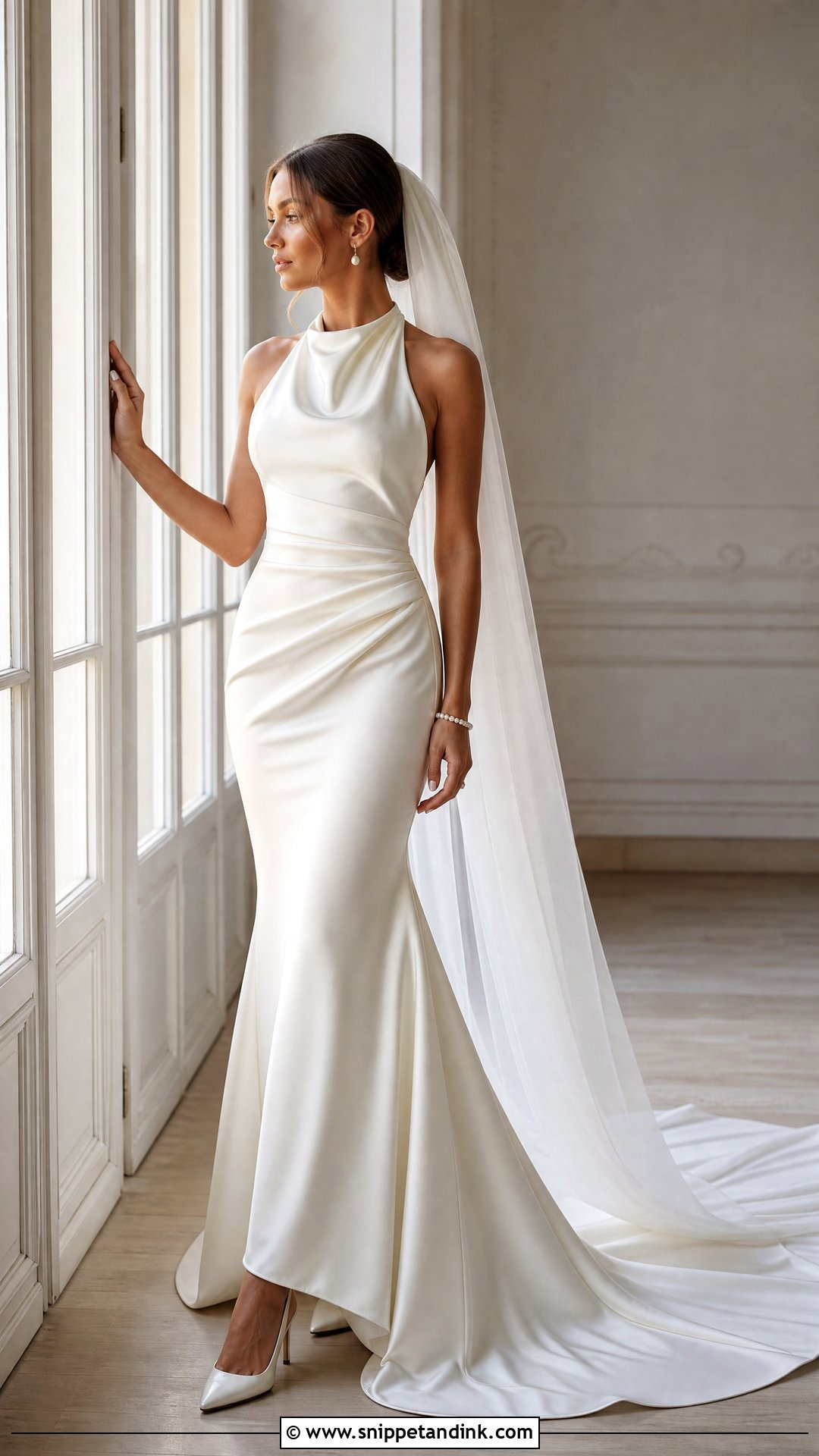
Diagonal folds at the middle take some of the severity out of a fitted shape. They should lie flat; once draping adds bulk at the stomach or hip, it does the opposite of what you want. Have your seamstress check it from front, side and back under bright light, because satin highlights a fold that’s slipped even slightly. The folds need to be tacked so they stay put when you walk and sit. Slingback heels, pearl earrings, a soft low bun and a plain chapel veil let the waist detail lead.
10. Ruched Satin Mermaid Bridal Gown
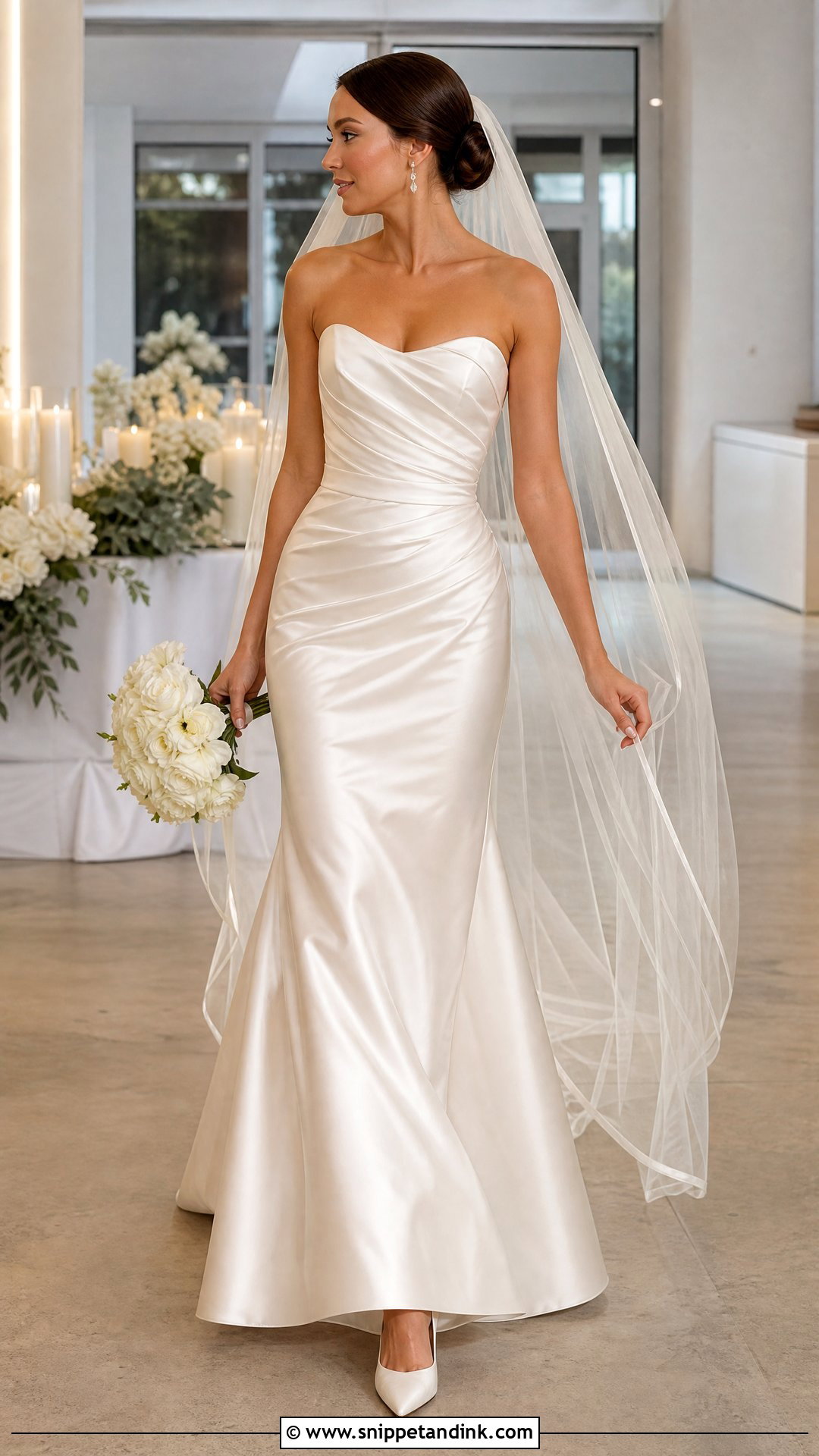
Ruching gathers satin to shape the waist and add texture without beading. Symmetrical gathers read classic; angled ones look more modern. Placement is what I spend time on at fittings, because a gather sitting a few centimetres off can widen exactly the area you hoped it would slim. Keep the flare plain below. Minimal drops, pointed pumps and a sheer veil with a narrow satin edge are all it needs, with a side-parted bun.
11. Bow Back Satin Mermaid Bridal Gown
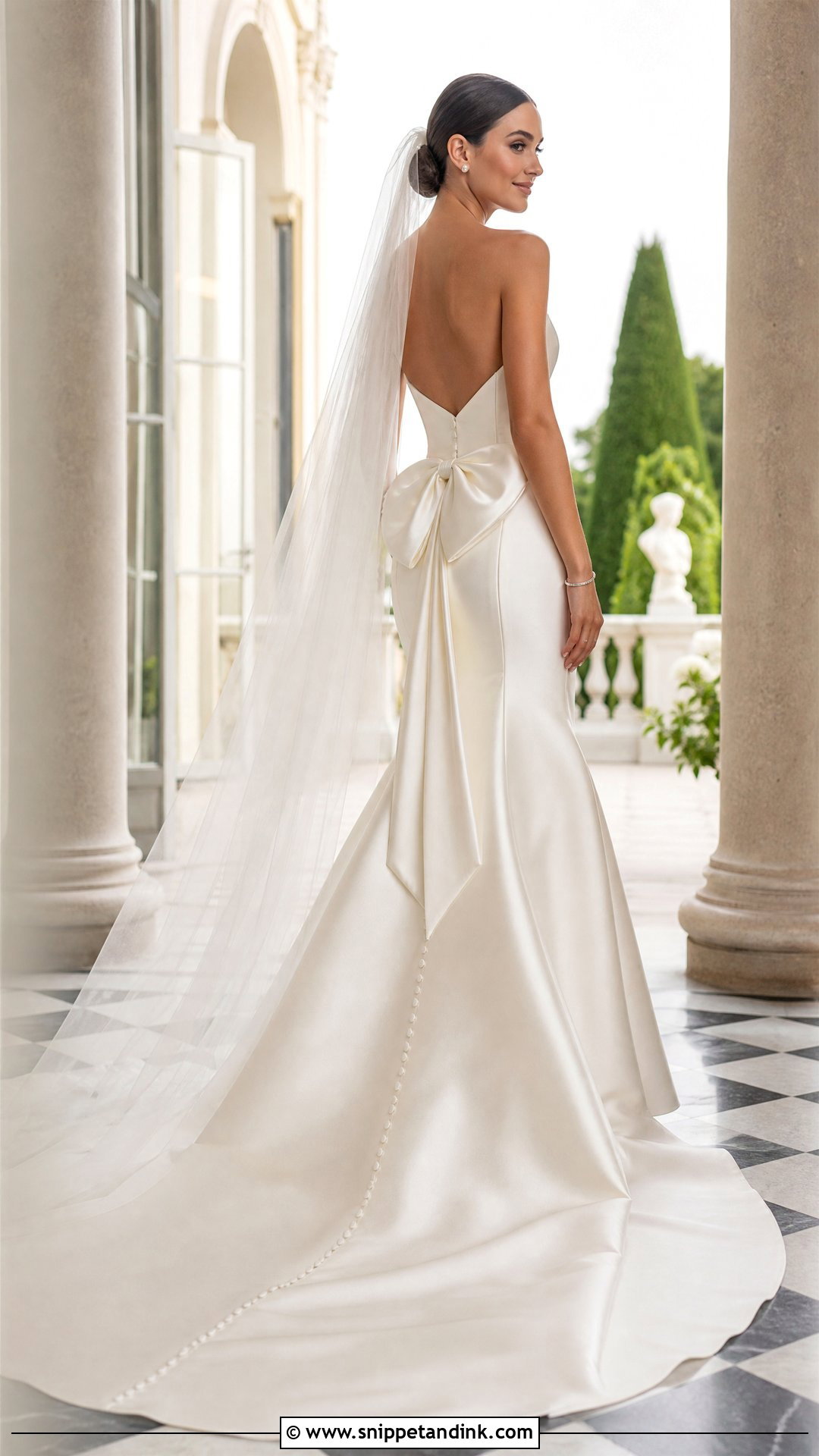
A structured bow at the lower back frames the fitted line and leads the eye into the train. Ask for it to be detachable if you want a cleaner reception look, and check with your seamstress that it doesn’t sit where the bustle points will go. That clash is easy to miss until the night. Pearl studs, satin heels and a neat updo keep the back visible. A transparent chapel veil works for the ceremony, then wear the bow on its own afterwards.
12. Detachable Overskirt Satin Mermaid Bridal Gown
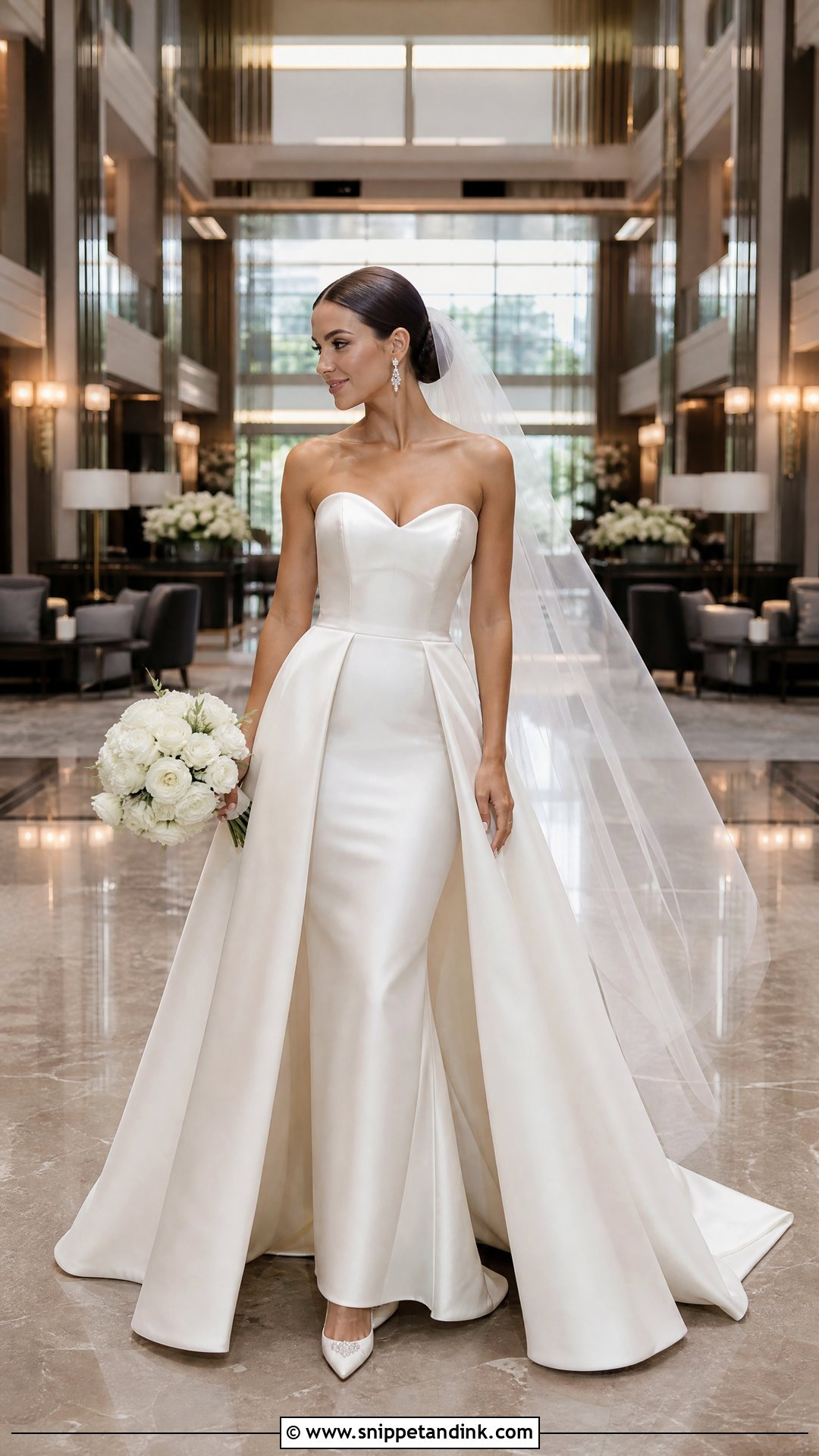
An overskirt gives you a fuller ceremony silhouette, then comes off to reveal the mermaid for the party. Colour match is the thing to check: two pieces of ivory satin from different bolts can photograph as slightly different shades. A strapless or square bodice keeps both versions balanced. During fittings make sure the overskirt lies flat at the waist and leaves no visible loops once it’s off. Crystal earrings, comfortable heels, a low bun and a veil that suits both looks.
13. Cathedral Train Satin Mermaid Bridal Gown
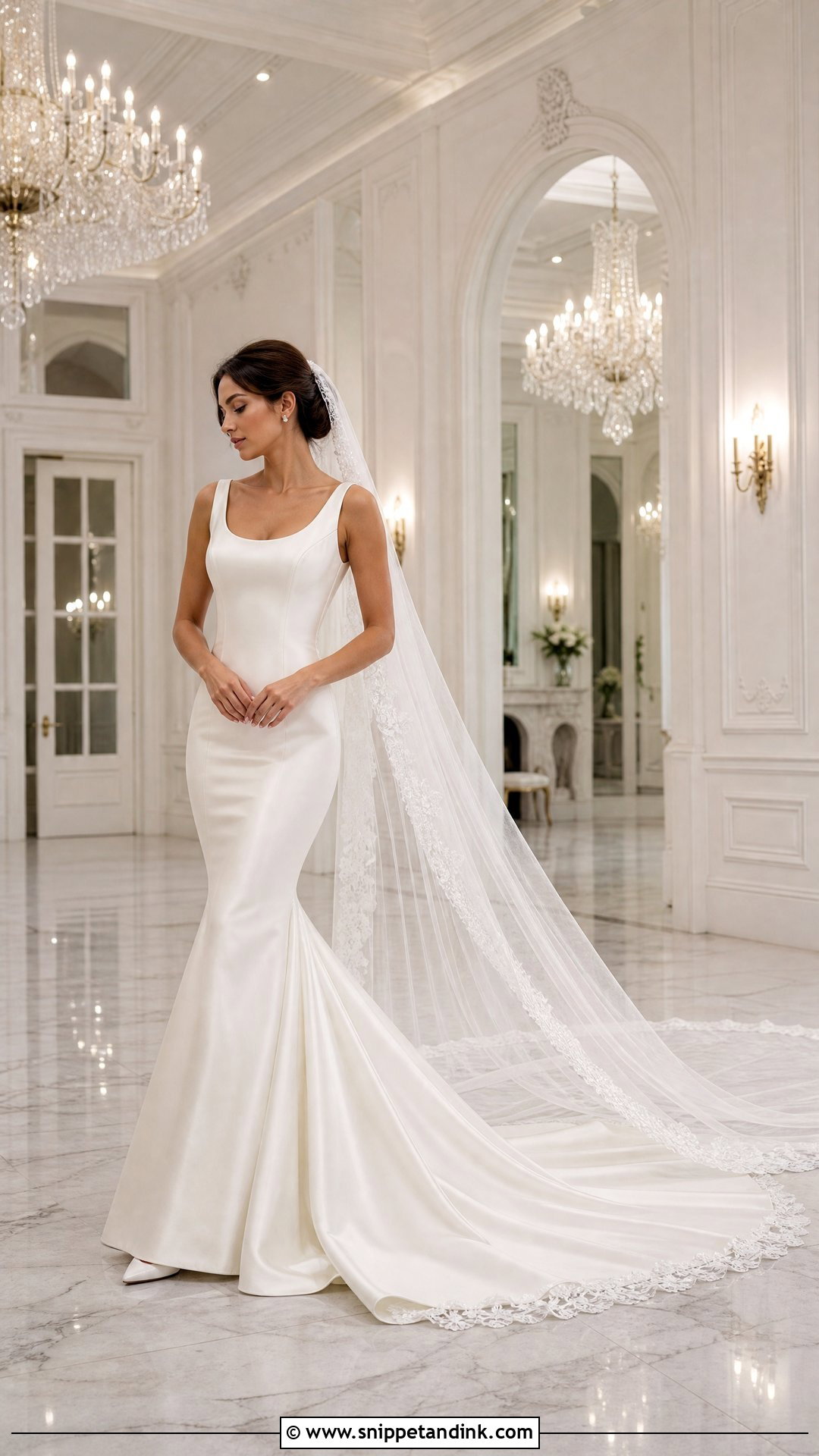
Few things make an entrance like a cathedral train behind a fitted satin skirt. Because satin reflects every fold, the train needs clean panelling and enough weight to spread flat. Keep the bodice simple with a strapless, scoop or off-shoulder neckline, and add closed heels, studs and a long veil reaching the train’s end. Measure the aisle with your planner; a long train needs room to lie straight. Ask someone to fan it out before photos, and insist on a multi-point bustle, since a single hook won’t carry this much satin all night.
14. Pearl Satin Mermaid Bridal Gown
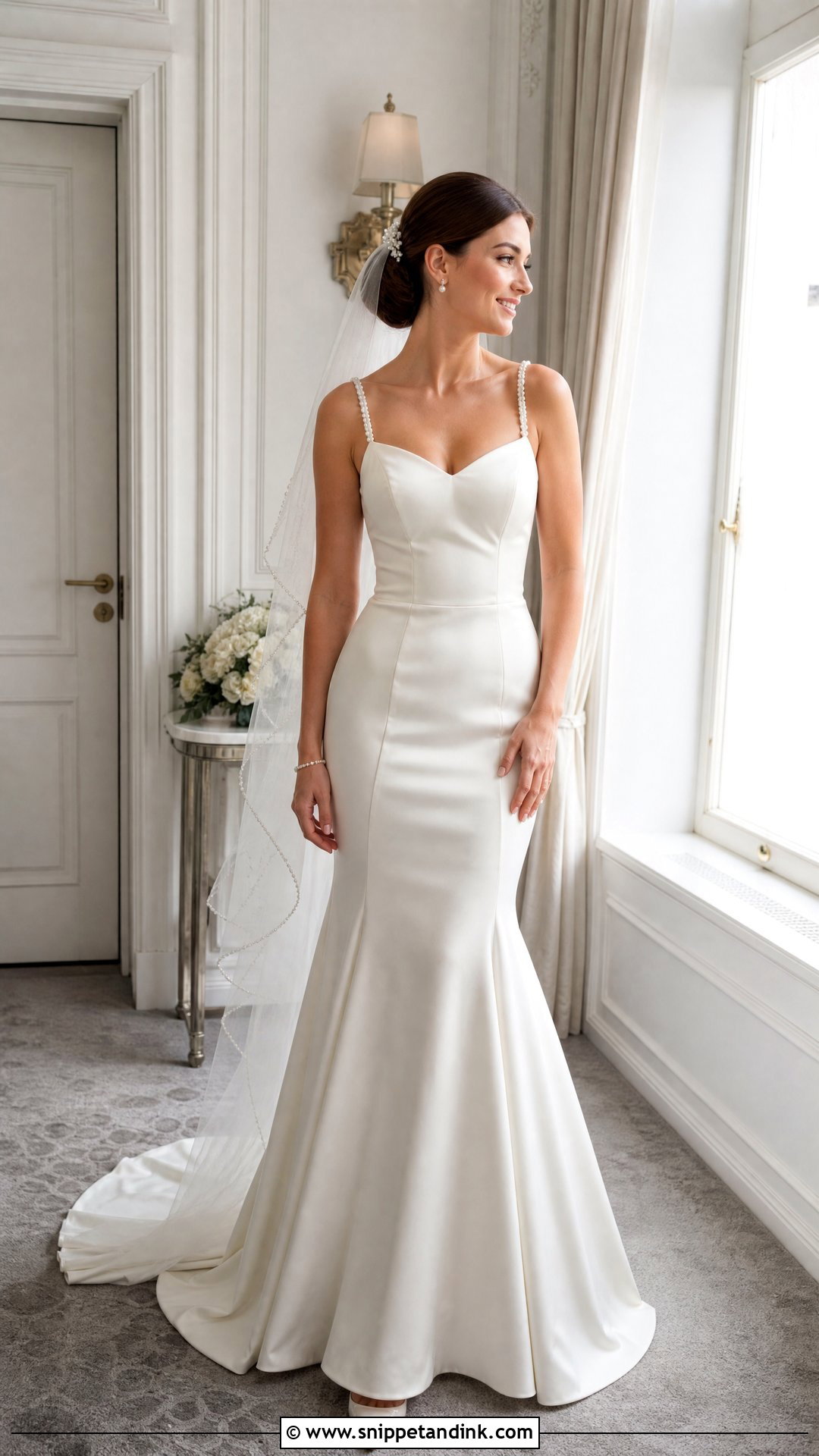
Small pearls add texture without hiding the satin’s sheen: along the neckline, on the straps, trailing down the back, or scattered lightly over the bodice. Restraint matters, because too many and the clean mermaid line starts to look busy. Repeat the pearl idea gently with studs, a sheer veil with a light pearl edge and a small comb in a low bun, not a stack of big pearl pieces. Before the final fitting, run your fingers over the embellishment. Loose or raised pearls snag the veil every time you turn.

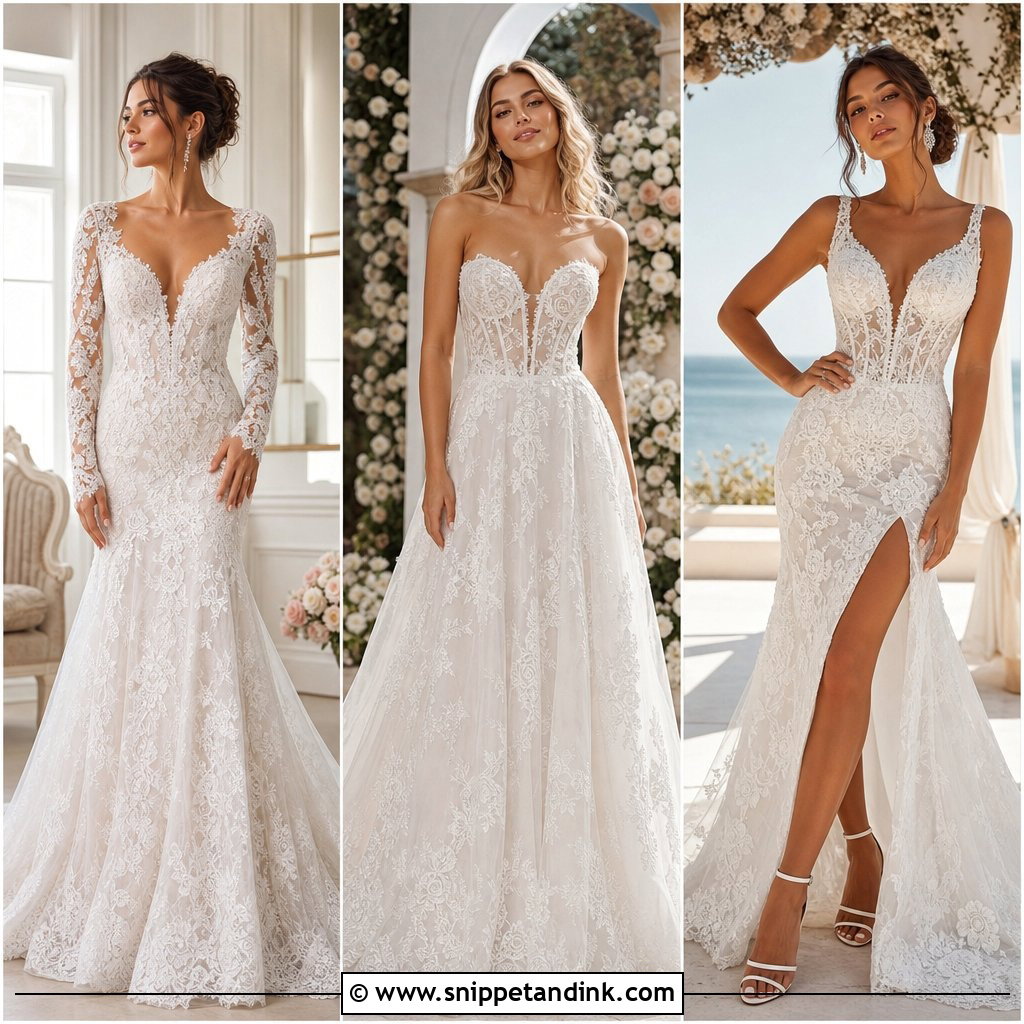
15. Lace Appliqué Satin Mermaid Bridal Gown
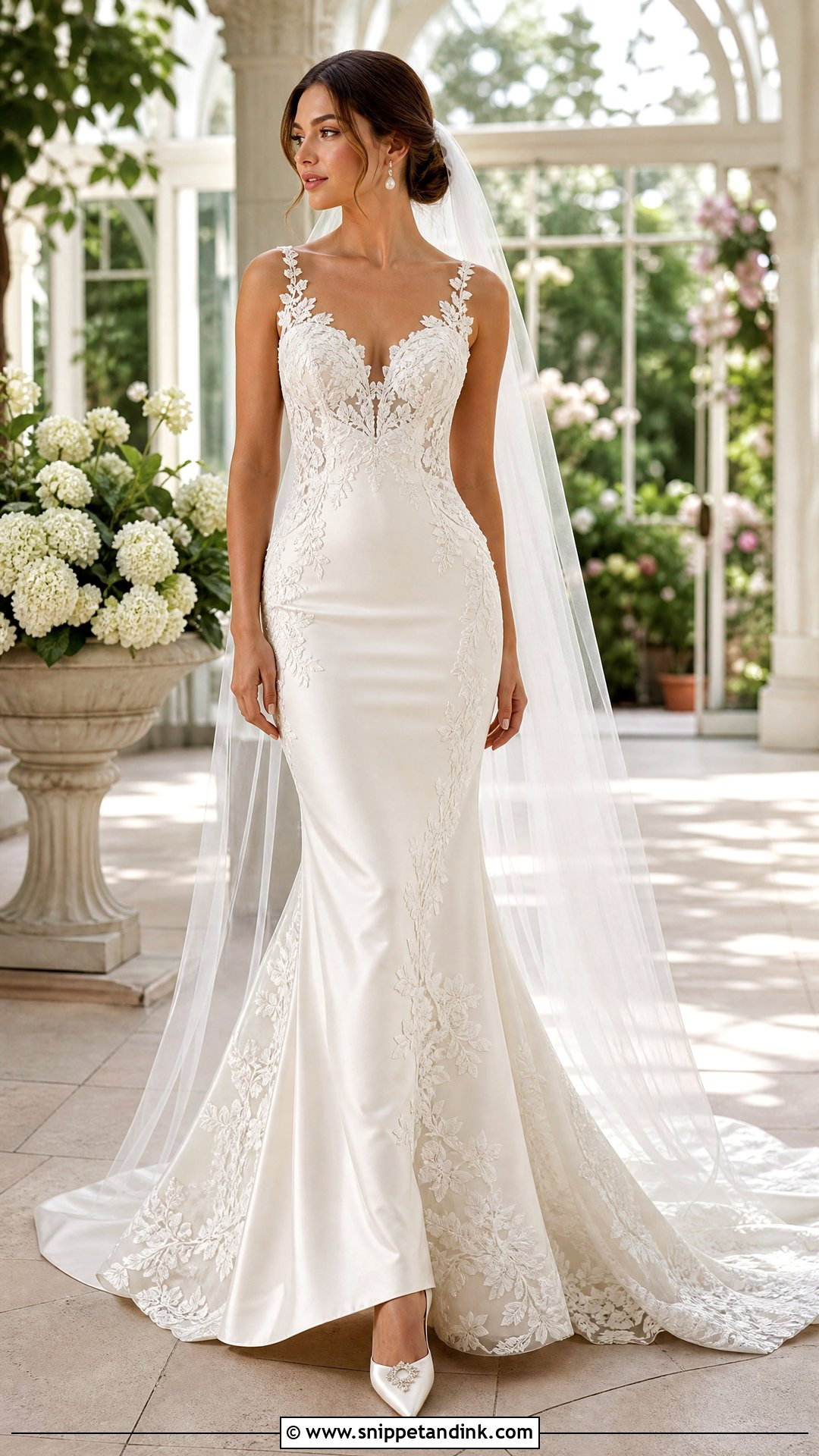
Lace appliqué softens the plain satin surface, and it looks best concentrated on the bodice and thinning out toward the hip and train. That keeps the sculpted shape readable. The detail I always check is undertone: bright white lace sitting on warm ivory satin looks harsh in daylight. At the last fitting, inspect each motif’s edge; it should lie flat, not curl or scratch your arms. Pointed ivory heels, small pearl drops and a plain tulle veil, with soft waves or a relaxed low bun.
16. Cowl Neck Satin Mermaid Bridal Gown
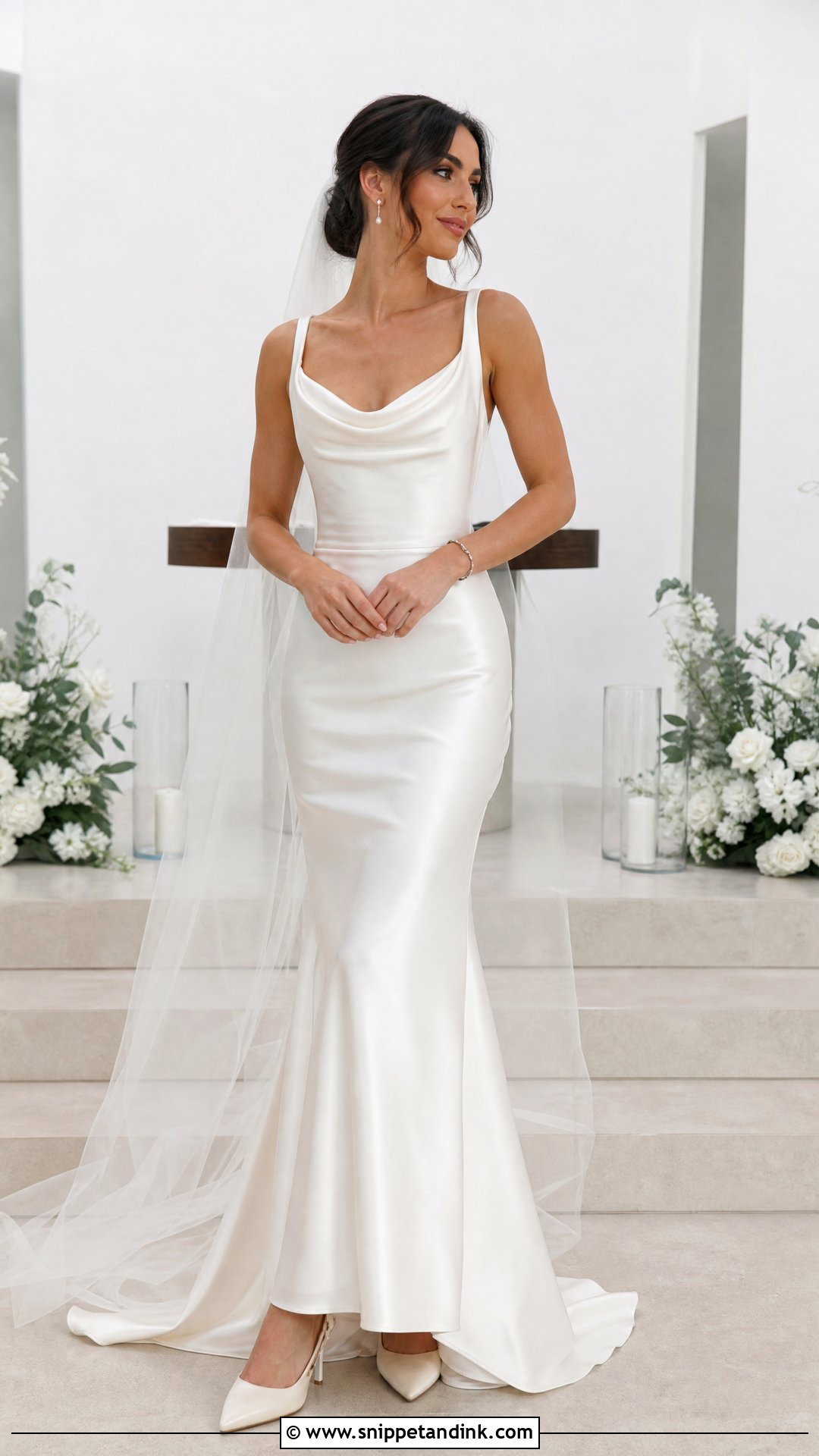
A cowl is a softer option than a boned bodice, with draped satin catching light across the chest. It needs supportive straps and satin with enough body to drape cleanly; too thin and the cowl looks limp. Lean forward in the mirror at your fitting. A cowl that gapes when you bend over the guest book needs a hidden tack. Delicate drops, slingbacks, a fine bracelet and a low twisted bun or smooth ponytail. A narrow plain veil or just a minimal hairpin.
17. High Neck Satin Mermaid Bridal Gown
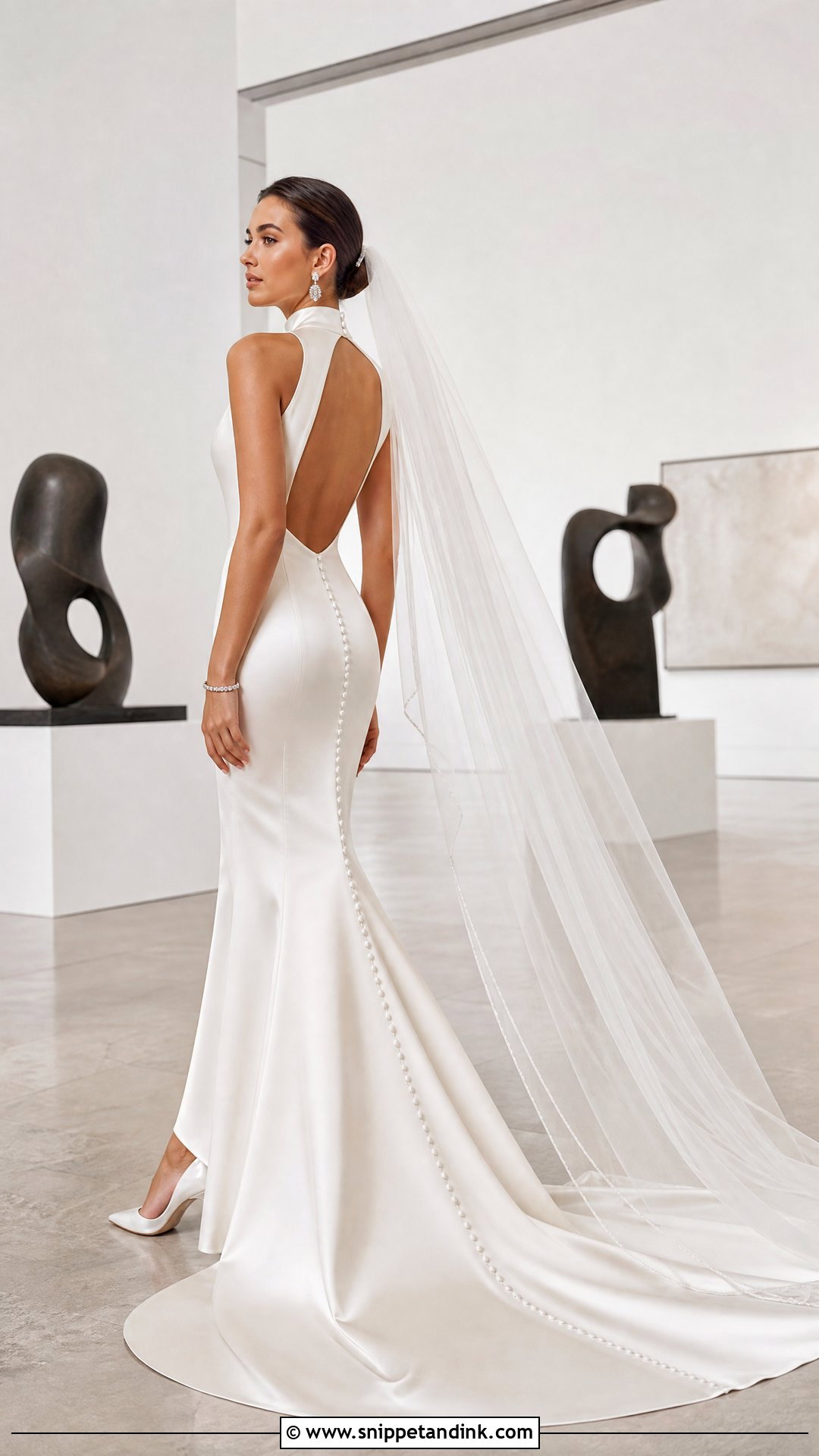
A high collar over a fitted mermaid looks modern rather than modest, especially with a sleeveless bodice and an open back. Because the surface is plain, the quality of every seam shows, so this is not the gown to rush through alterations. Statement earrings, pointed heels and a ring or bracelet are enough, and no necklace. I usually put the hair in a high bun so the upper half doesn’t feel too covered. Turn your head fully at the fitting; collars with covered back buttons can rub if they sit even slightly tight.
18. Cap Sleeve Satin Mermaid Bridal Gown
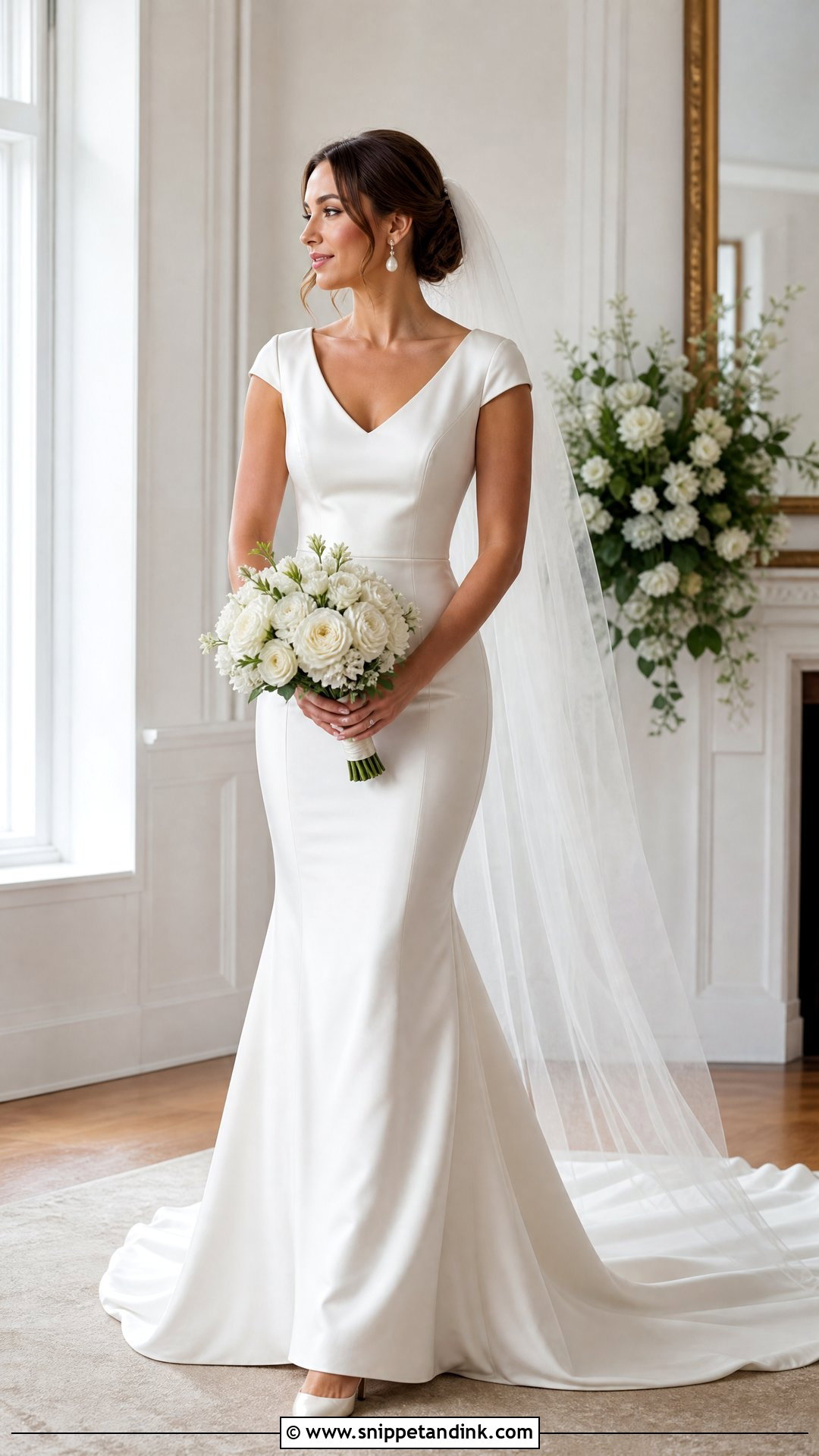
Cap sleeves add a little shoulder coverage without the weight of long sleeves, and they soften a fitted bodice into a V, scoop or bateau neck. Plain satin keeps it minimal; light beading adds sparkle. Armholes are the fitting point to watch: too tight and they change your posture, too loose and the sleeves lift and crease in photos. Pearl drops, pointed heels and a chapel veil with a plain edge suit it, with a softly pinned updo.
19. Minimal Satin Mermaid Bridal Gown
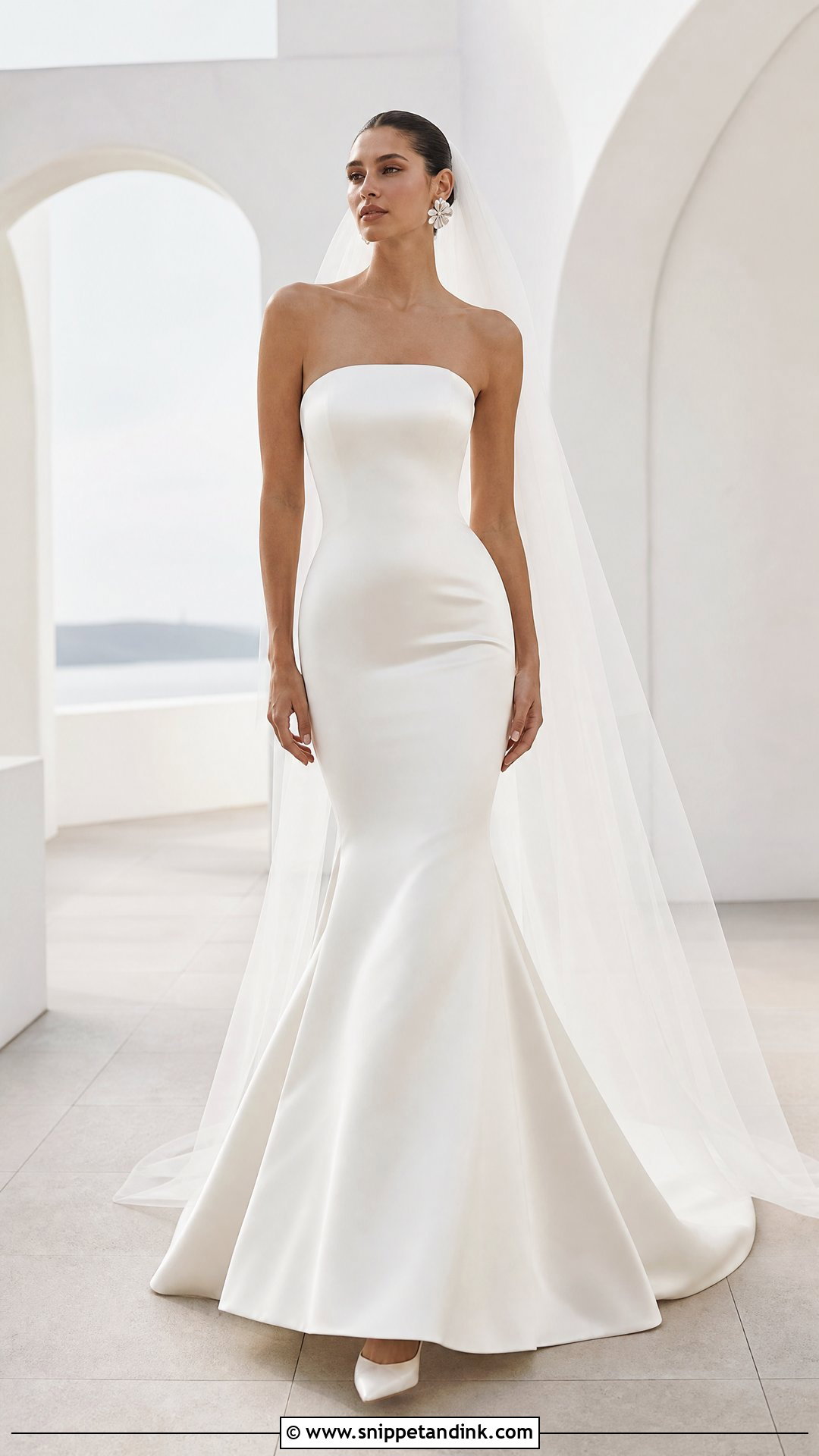
With no lace or beading, the fit is the design. Put your budget into alterations that keep the bodice secure and the hip smooth, because there’s nothing to hide behind. Strapless, square or a simple scoop all work. I’d add sculptural earrings, pointed pumps and a sleek low bun, plus a single-layer cathedral veil that comes off after the ceremony. Plain satin shows marks and creases quickly, so have it steamed properly, keep it in a clean garment bag and keep a white cloth handy when the train goes outdoors.



20. Plus Size Structured Satin Mermaid Bridal Gown
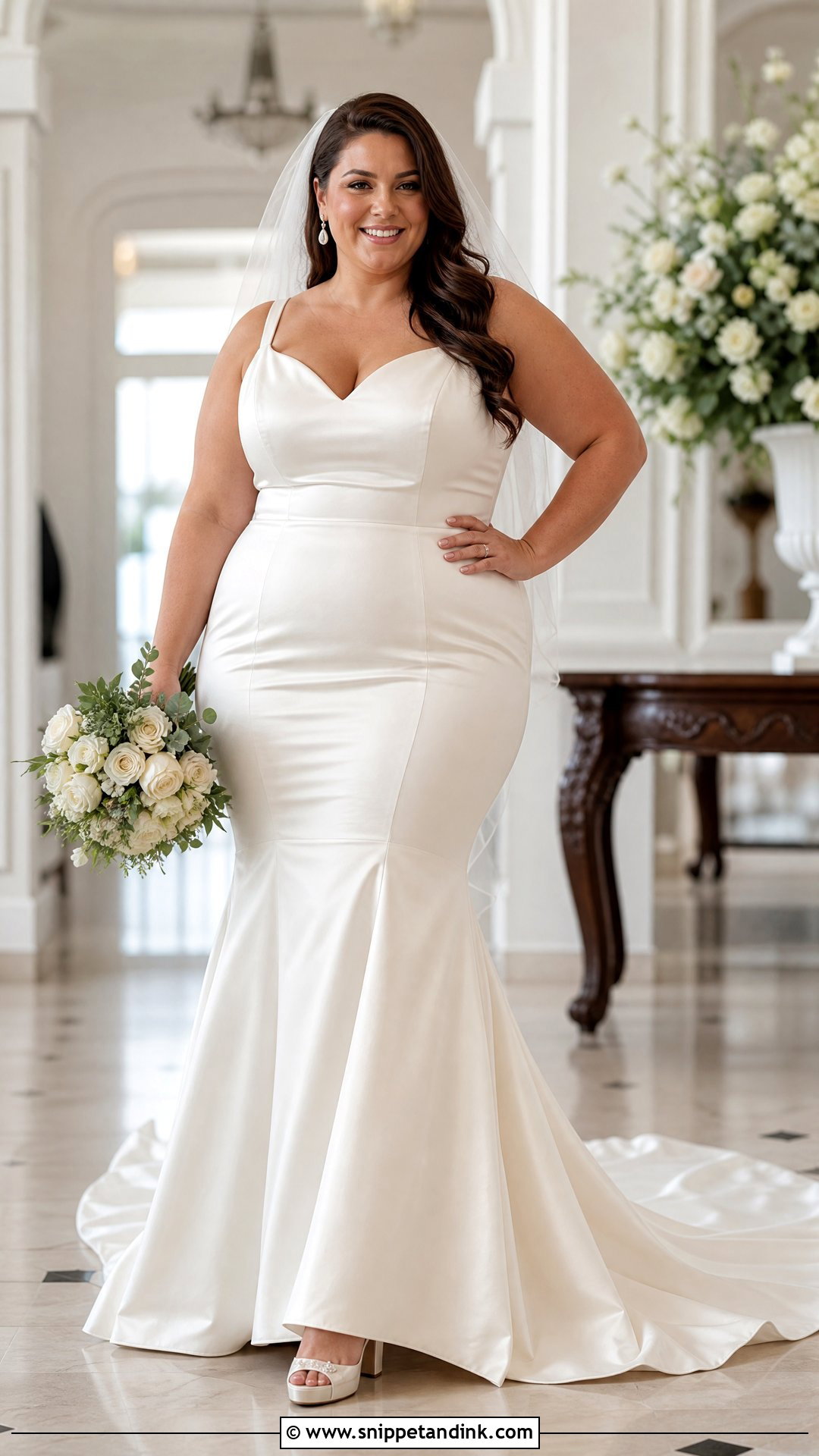
A structured satin mermaid in plus sizes should show your shape and feel secure all day. I look for strong boning, wider straps or sleeves, a supportive back and enough stretch or ease through hips and knees. Princess seams lengthen the line without squeezing. Talk to your seamstress before buying shapewear or a bra, since many gowns already have cups and shaping panels inside. Block-heel shoes, drop earrings, a light veil that doesn’t drag on the gown, and a lifted low bun. Test stairs, sitting and dancing before signing off.
A Fitted Satin Skirt After Dinner: Bustles, Stairs and Bathroom Breaks
The ceremony is the easy part. The hours afterwards are where a mermaid gets tested, and planning a few things in advance saves a lot of tugging.
Pick the bustle at your second fitting
An over bustle hooks the train up onto the back of the skirt and shows off the fabric. A French or under bustle tucks it beneath with ribbon ties, which keeps a smooth satin surface. On a heavy satin train I prefer several points over one or two so the weight spreads and nothing tears. Have the person who’ll do it on the night come to that fitting and practise; the ties are numbered or colour-coded for a reason.
Steps and sitting
Go up stairs slightly sideways, lifting the front of the skirt with one hand. To sit, lift the back of the skirt as you lower down so you aren’t sitting on the tight part, which strains seams and creases the satin badly. Perching toward the front of the chair is kinder on the fit than sinking back.
The bathroom
Practise once at home in the dress. Facing the toilet with the skirt gathered forward in your arms is usually easier with a fitted gown, and one helper is plenty. Leave the veil off for this. It’s not glamorous to rehearse, but it beats finding out at the reception.
Does the Mermaid Let You Sit, Climb and Dance?
A good satin mermaid gives you impact without trapping you. Neckline, sleeves, draping and train size change how the shape feels; minimal versions show off tailoring, while bows, pearls, lace and overskirts add more detail. Satin exposes pulling and uneven seams, so alterations matter more here than with almost any other cut. Take your shoes and underwear to every fitting and rehearse the movements of the day before you approve the final fit.
You'll Like These Ideas:








Leave a Reply