
A plain white dress hides nothing, which is exactly why I enjoy fitting one. With no lace or beading to pull the eye, people look straight at the fabric, the seams and how the bodice sits on your ribs, and those three things decide whether the gown looks expensive or flat. The ideas below run from satin slips with barely-there sandals to crepe columns, square-neck A-lines and short modern minis, and with each one I’ve added what I watch for at fittings. Some belong at a courthouse ceremony, others want a garden or a ballroom, and a few can move between both if the styling changes.
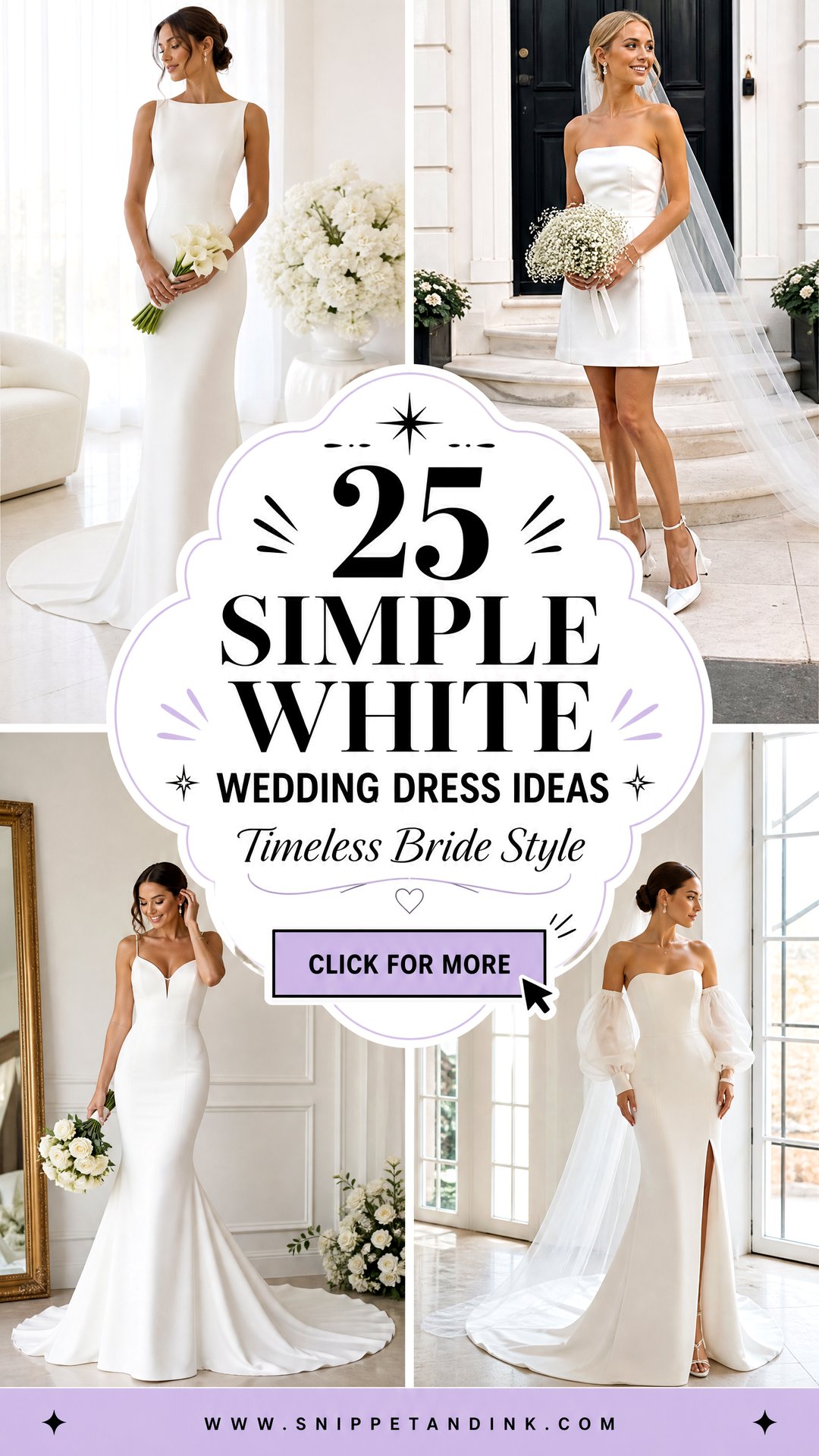
Testing a Plain White Gown in the Fitting Room
With no embellishment, a simple dress has nowhere to hide a weak fit, so my fitting-room checks are stricter for plain gowns than for beaded ones. These take ten minutes and save a lot of regret.
- Sit down, raise both arms and step up onto a stair or low box. A bodice that gapes when you lean or a hem that rides up will do exactly the same at the reception.
- Turn sideways to the mirror and look at the zip and side seams. Puckering or a wavy zip is very visible on smooth crepe and satin.
- Bring the underwear and shoes you will actually wear. Thin satin shows every line, and the hem length depends on your heel height.
- Look at the fabric by a window in daylight. Shop lighting flatters everything, including cheap fabric.
Bright White, Natural White or Ivory
Bridal white comes in shades. Bright or optic white is the coldest and can make fair, pink-toned skin look redder beside it; natural white is a little softer; ivory has a faint warm cast that flatters most skin tones. I hold a swatch under the chin by a window before anyone orders, because a plain gown shows its shade far more than a lace one does.
Order the veil in the same white as the dress, or ask the shop to match it. Against a simple gown, a bright veil over an ivory dress makes the dress look dingy, and it is obvious in every photo.
1. White Satin Slip Wedding Dress
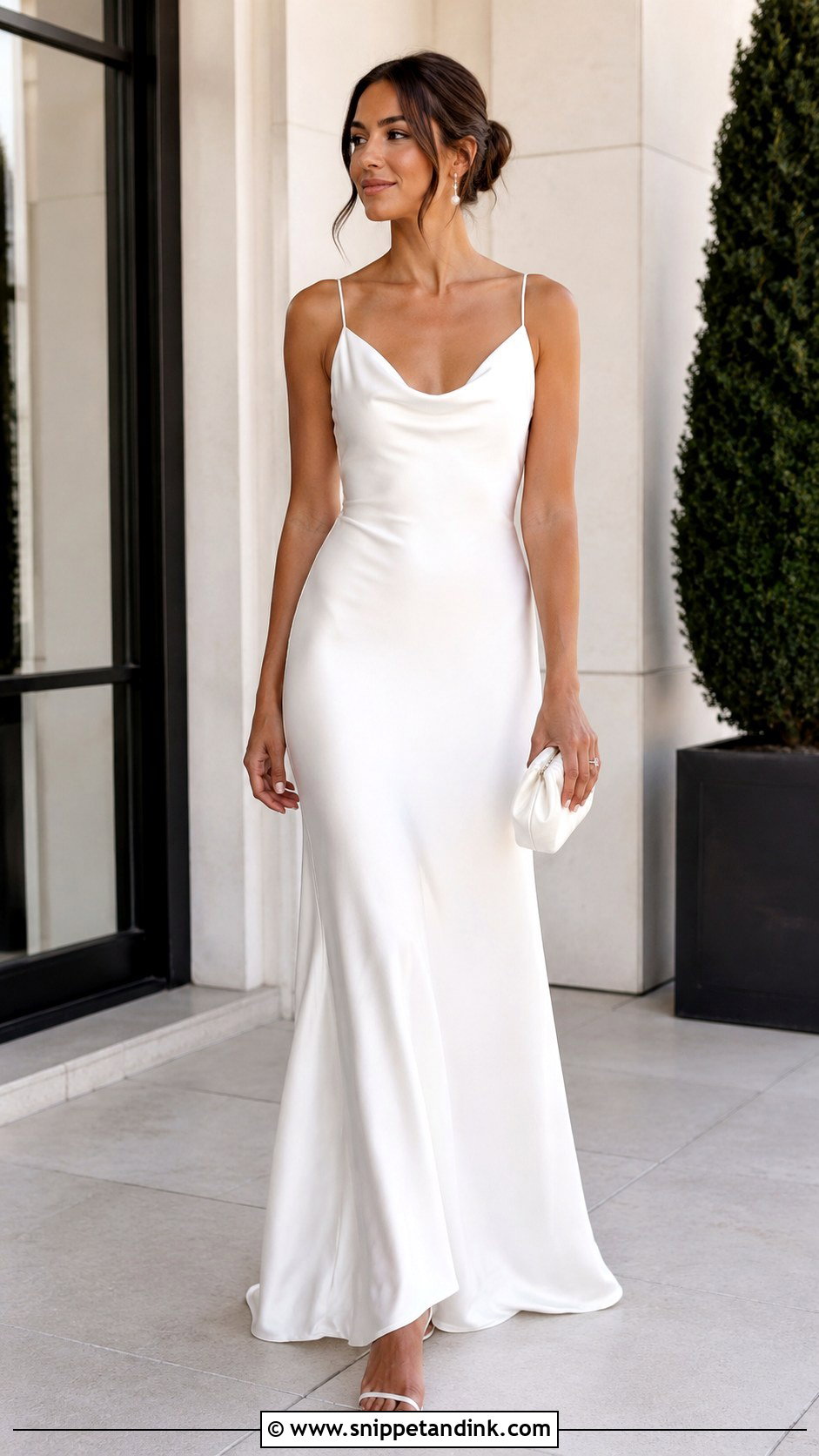
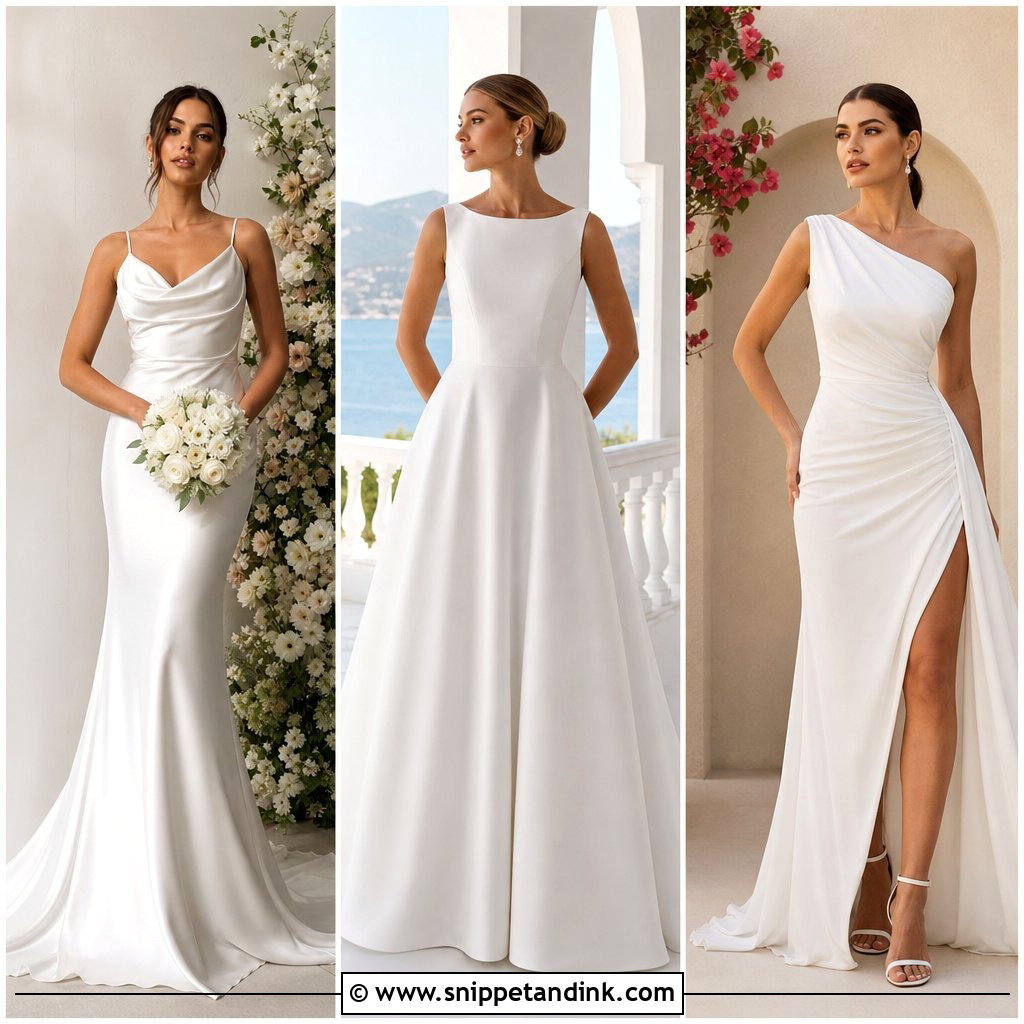
Bias-cut satin is the most honest fabric in bridal. Cut on the diagonal, it stretches over the body and follows every curve, so it also shows whatever you wear underneath. I always ask brides to bring their exact underwear to the fitting, because a line that’s invisible under crepe will show clearly under satin. Narrow straps, strappy white sandals, pearl drops and a small satin clutch are all it needs, and a low bun keeps the neckline clear. For a rooftop or beach ceremony, carry a sheer wrap for the evening; satin gives almost no warmth.
2. White Crepe Column Wedding Dress
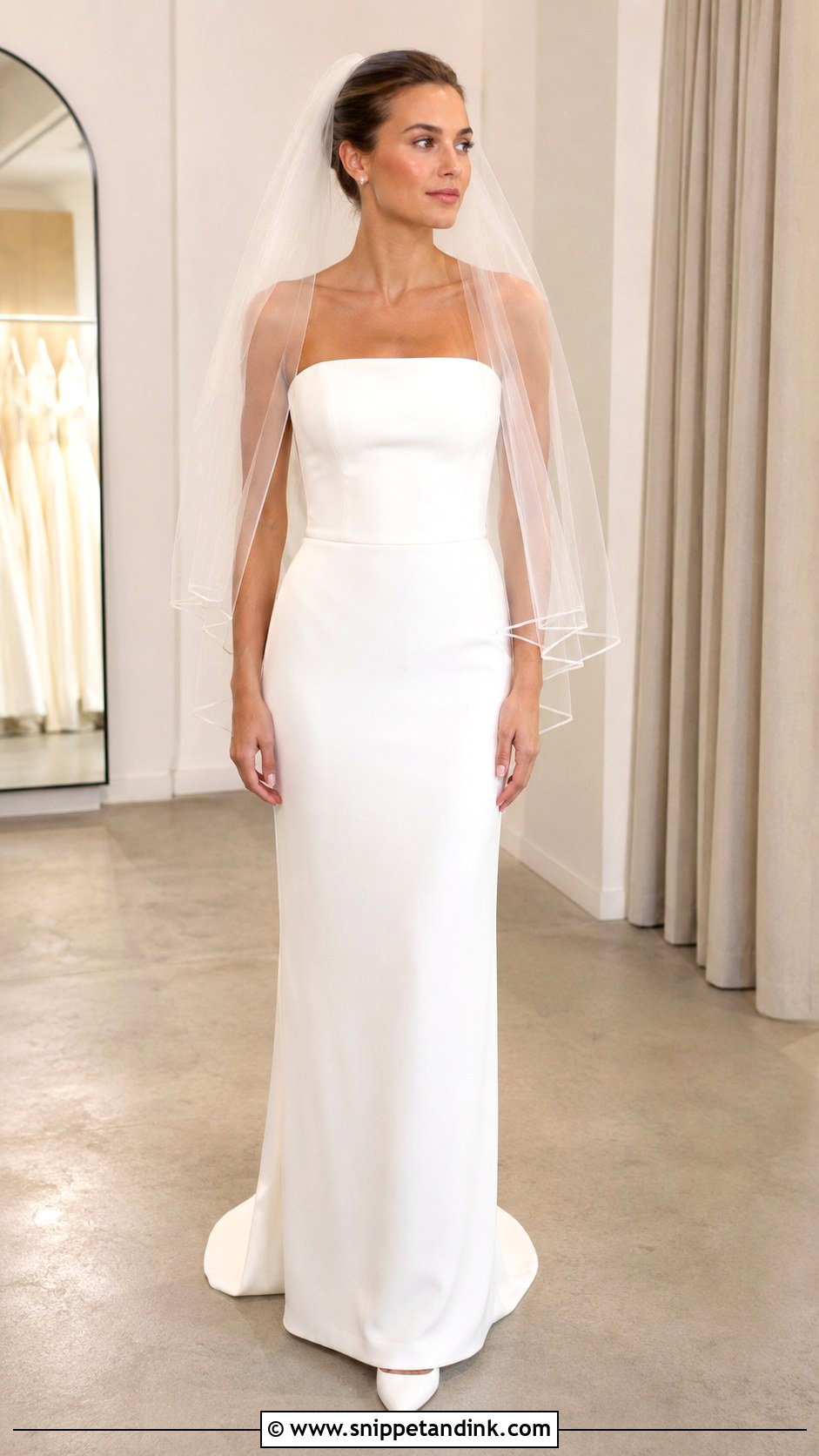
Crepe is the fabric I suggest when a bride says she wants sleek but is nervous about cling. It has enough weight to skim rather than grip, and its matte face doesn’t throw hot spots under flash the way satin can. Watch the seams, though. In a column with no decoration, a puckered side seam or a rippling zip is the first thing anyone sees, so I check them standing and sitting. A straight, square or bateau neckline, pointed white pumps, one fine bracelet and a short veil finish it without any sparkle.
3. White Square Neck Wedding Dress
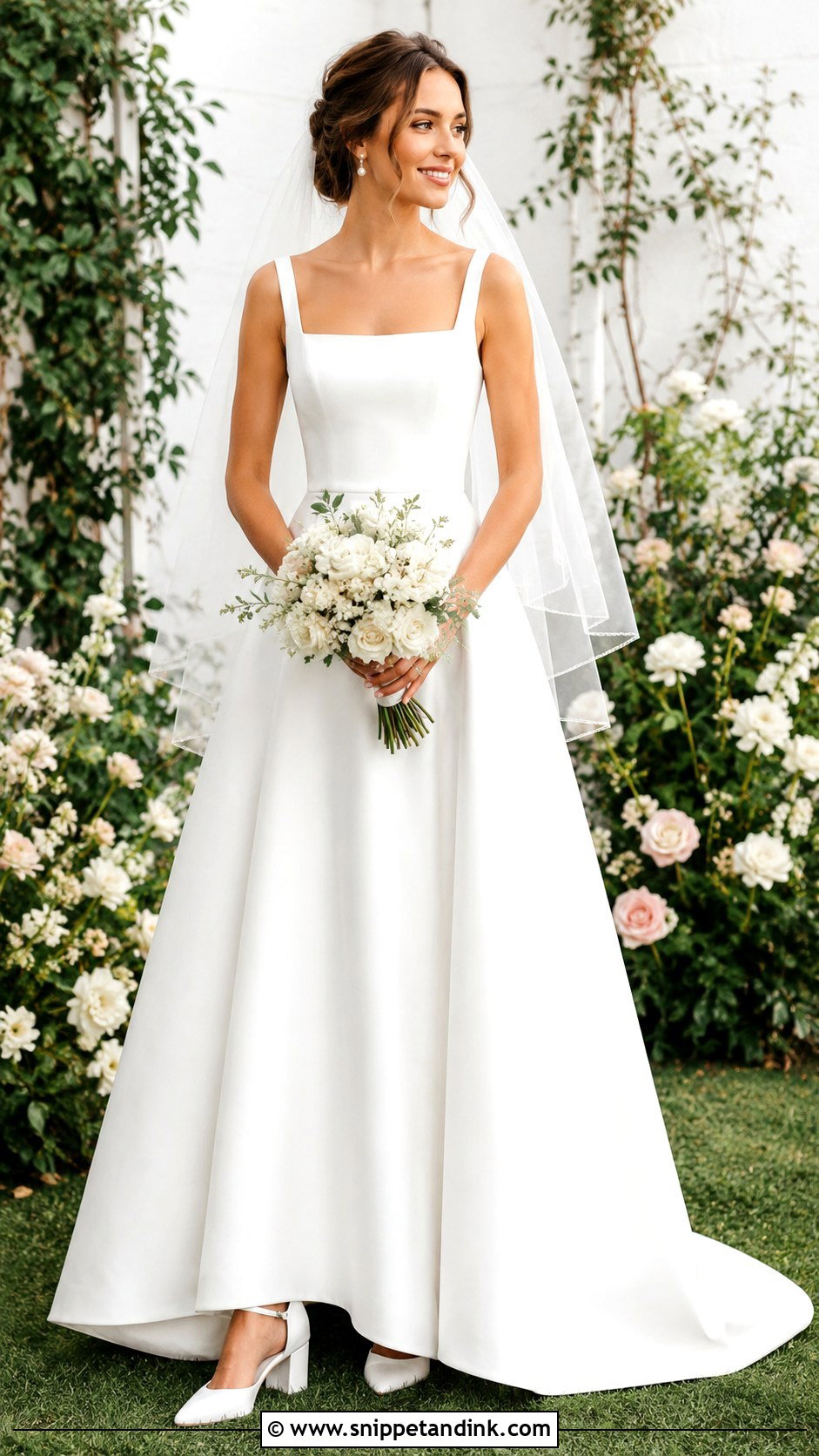
The square neckline is kinder than it looks on the hanger. It frames the collarbones and, because the line runs horizontally, it can make narrow shoulders look a touch broader, which some brides want and some don’t. The detail I fuss over is the corners: if the bodice is even slightly loose, they gape when you lean forward to sign the register. Pair it with an A-line skirt for softness or a fitted one for something sharper, and keep jewelry to pearl studs and a slim bracelet. A center-part bun or half-up style leaves the neckline doing its job.
4. White A Line Wedding Dress
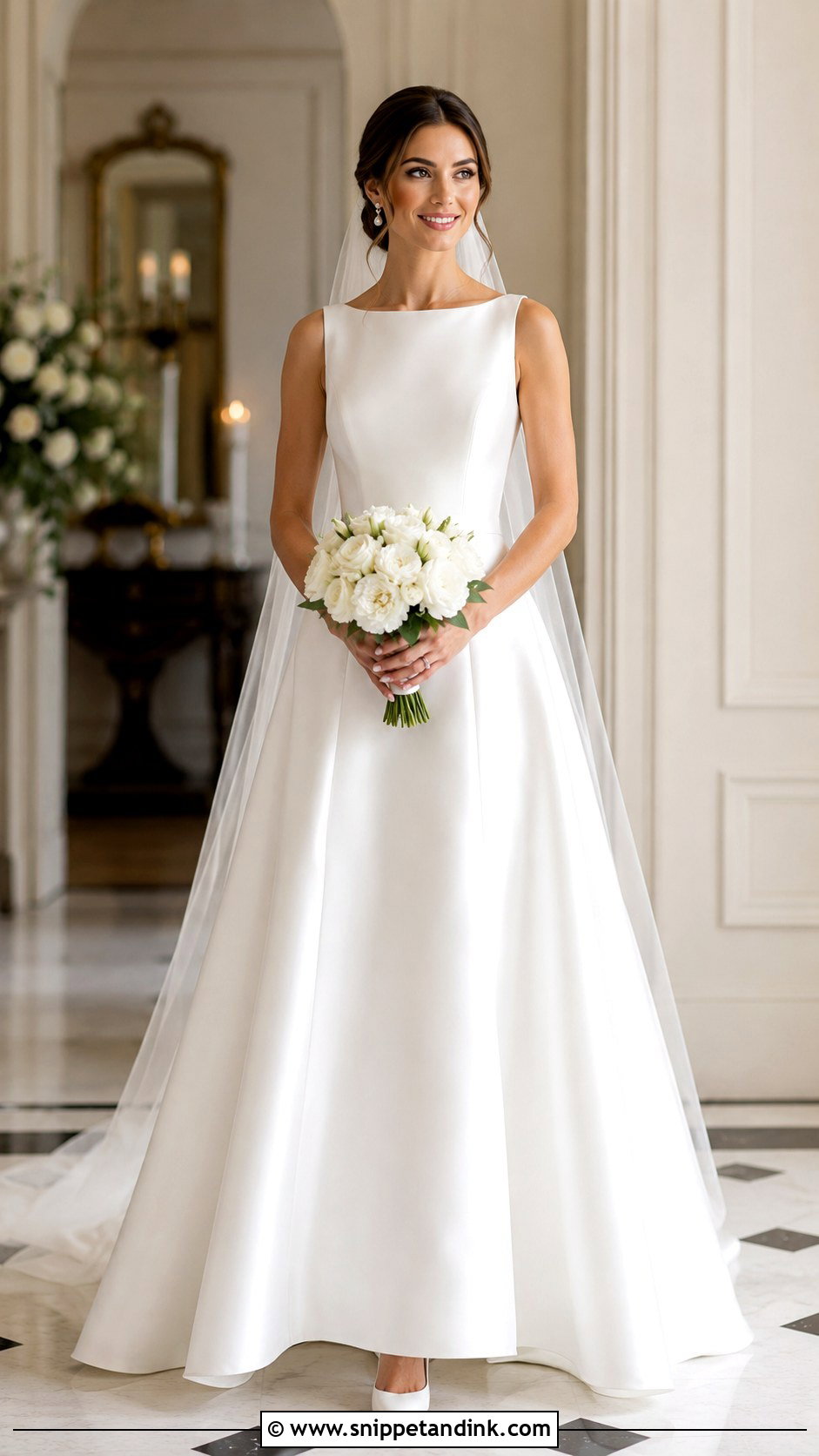
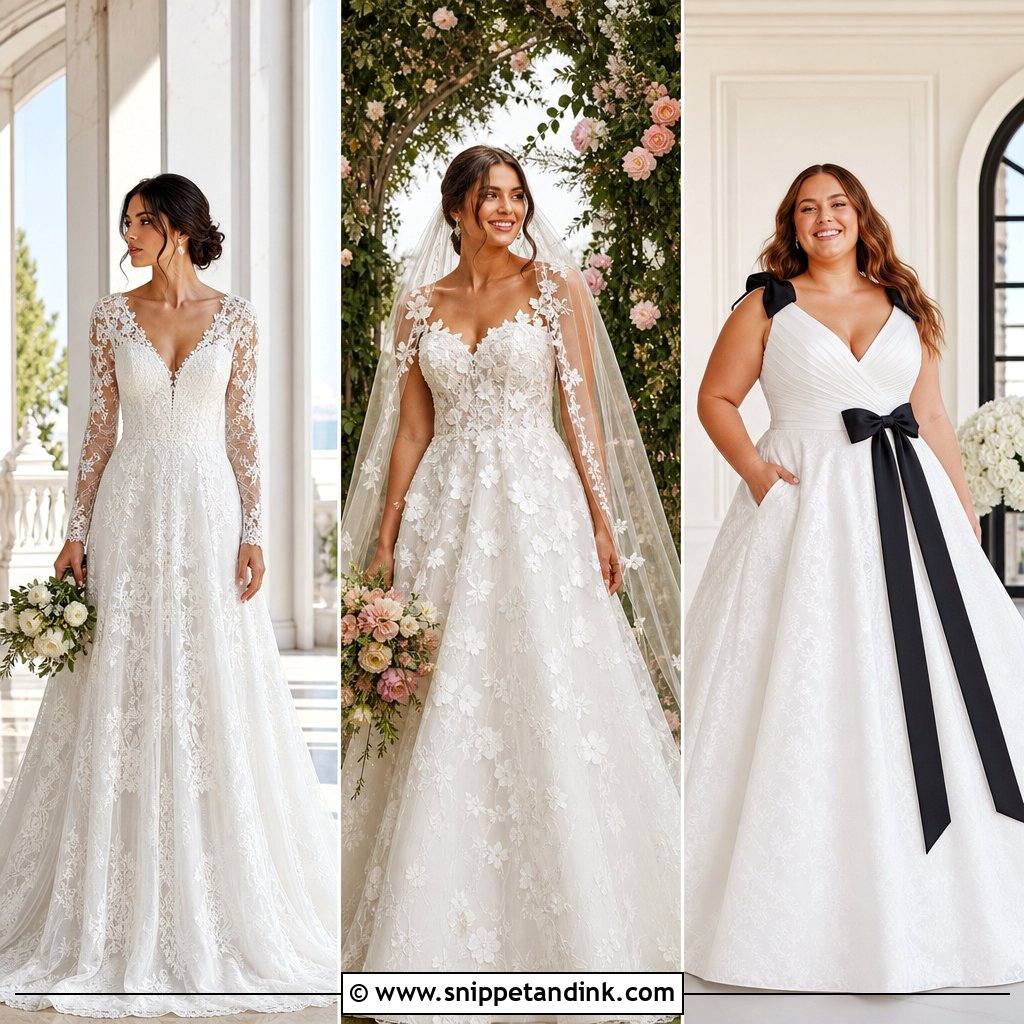
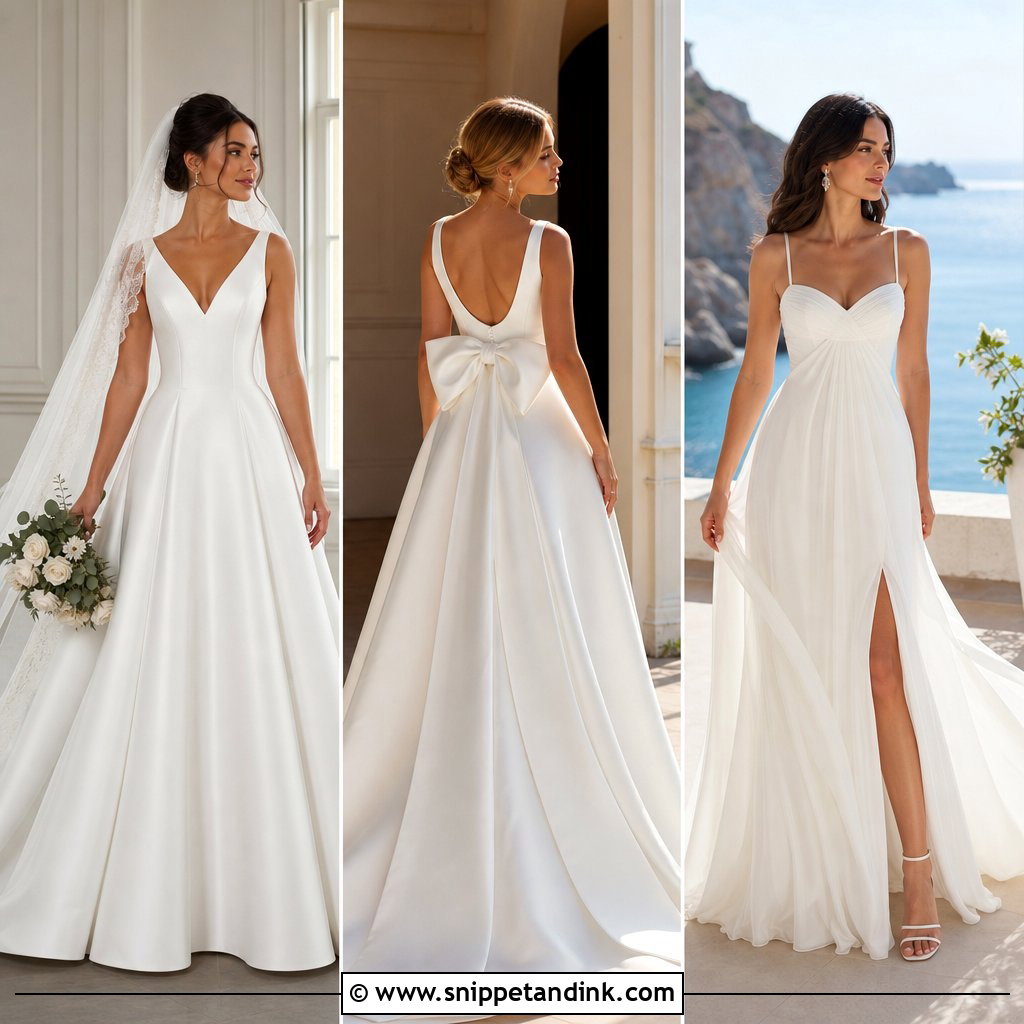
If a bride arrives unsure of everything, I usually pull an A-line first. The fitted bodice and gently flared skirt sit well on most figures, and the skirt hides a lot of fitting compromise below the waist. What changes the look entirely is the fabric. Mikado holds the flare out crisply, smooth satin falls closer to the legs, and lightweight crepe barely flares at all. Add classic white heels, a fingertip veil and small pearl or diamond-style earrings, and it moves from a garden to a ballroom without looking out of place.
5. White Strapless Wedding Dress
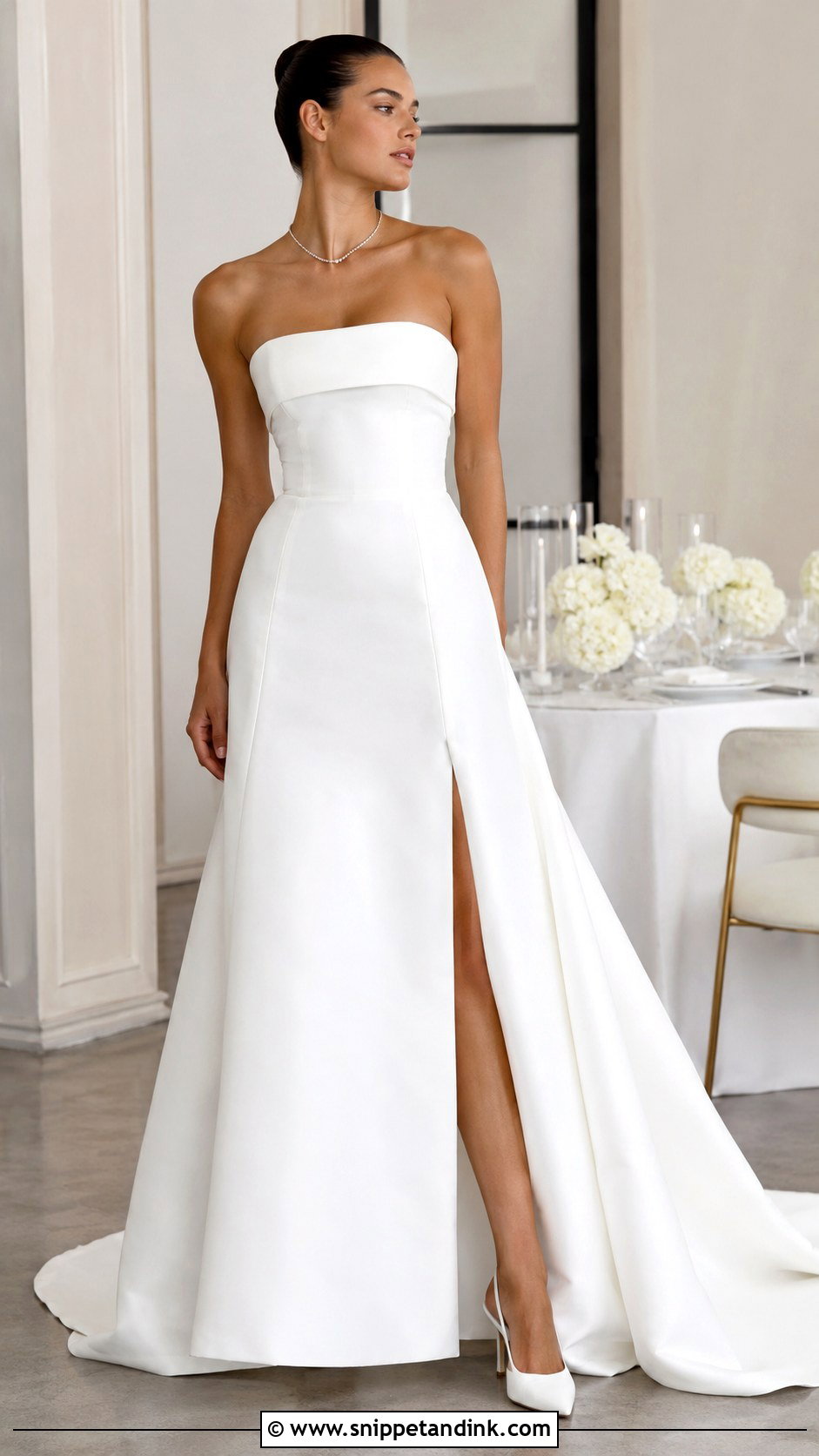
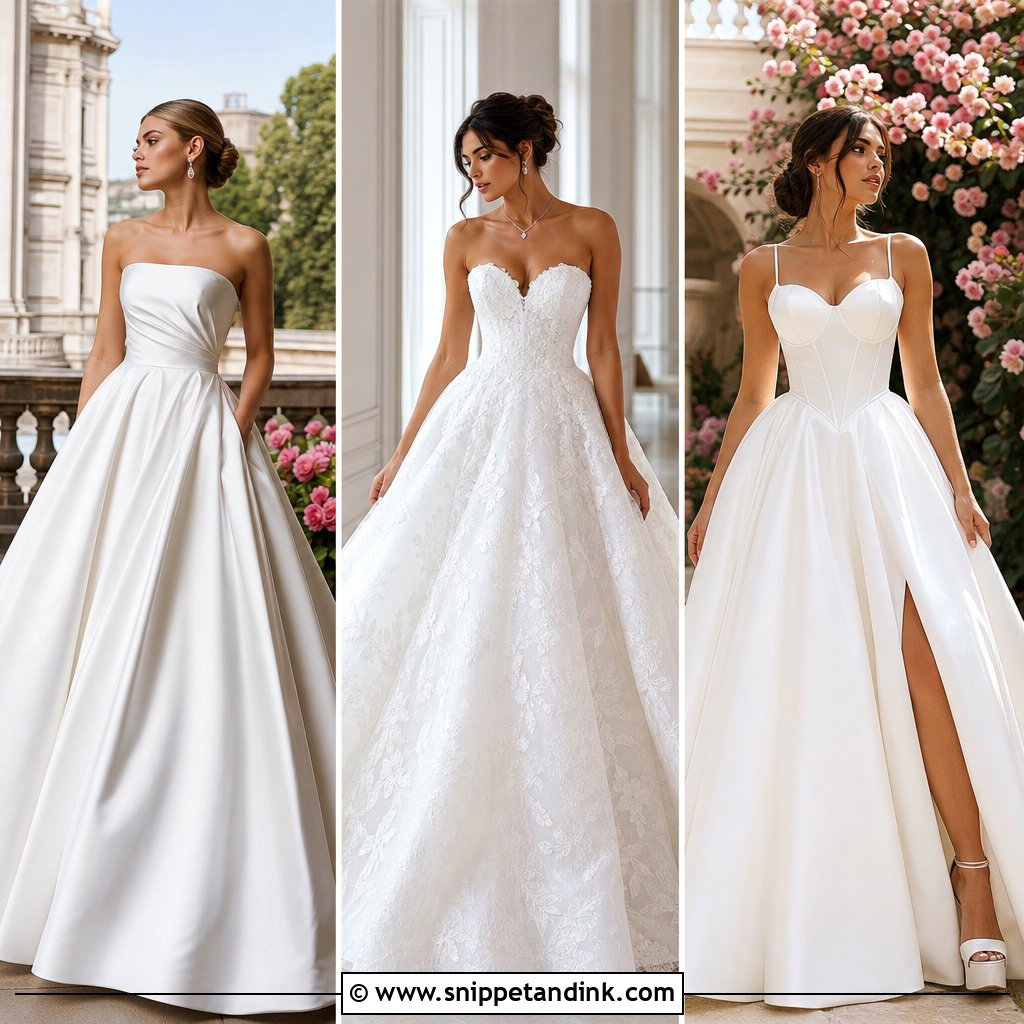
Strapless only works if the bodice is doing the holding. My test is simple: raise both arms, then hug someone. If the top edge slips or the boning digs in under the arms, it needs taking in or more structure before the day, not double-sided tape. A straight-across neckline reads modern, a soft sweetheart reads romantic. White slingbacks, a simple necklace and a sleek updo show off the shoulders, and long gloves or a light veil can add interest while everything else stays quiet.
6. White Long Sleeve Wedding Dress
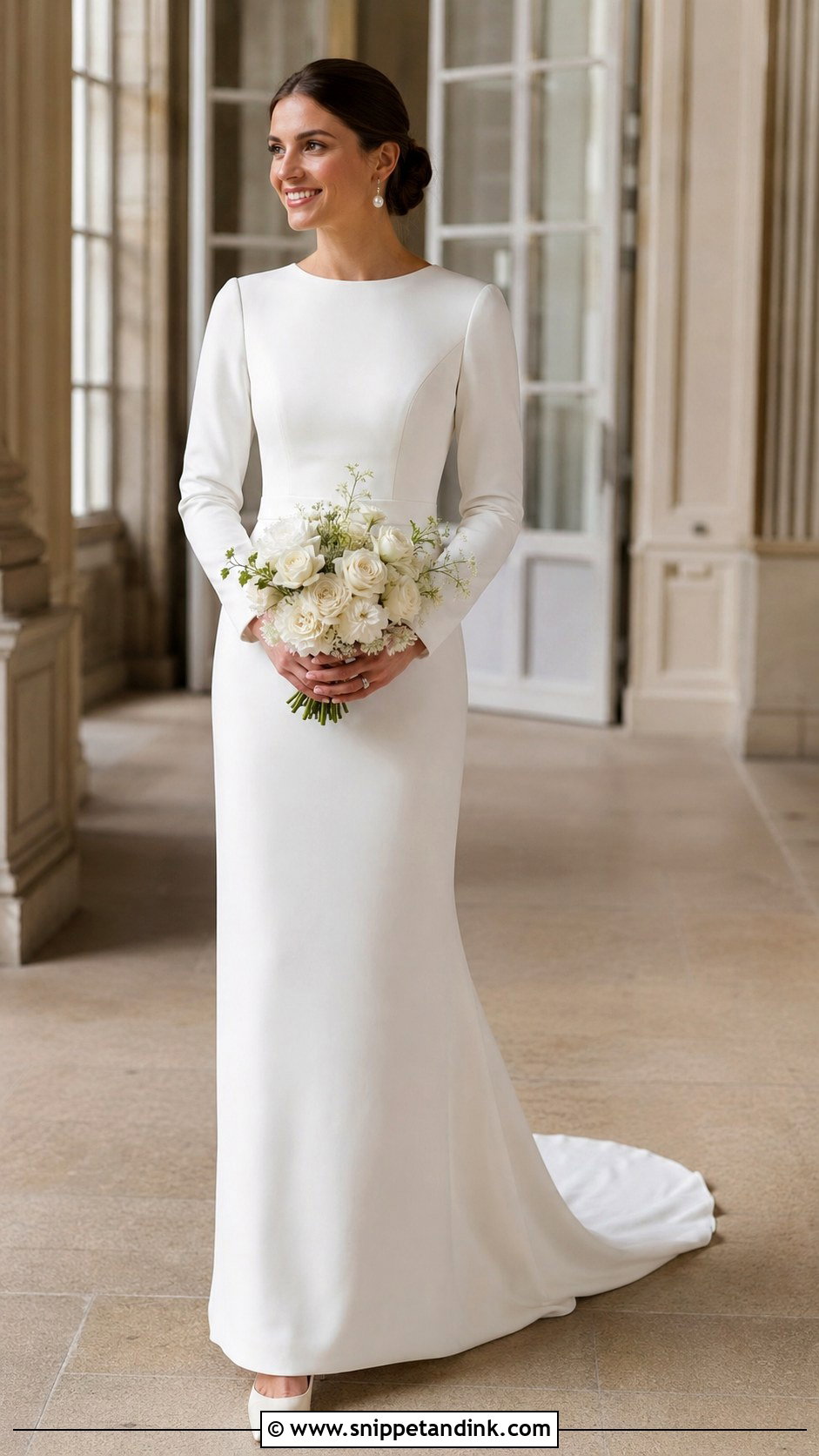
Sleeves are where alterations get expensive, so I look at them first. Sheer sleeves are forgiving and cool. Crepe sleeves look tailored but need room at the elbow, or you won’t be able to lift your arms for the first dance. Satin sleeves will crease at the inner elbow by mid-afternoon, which is normal and barely shows in photos. Keep the bodice clean with few seams, then add pointed-toe heels, pearl earrings and a neat low bun. A long veil suits a formal ceremony, and skipping it reads more modern. I reach for this shape in fall, winter and early spring.
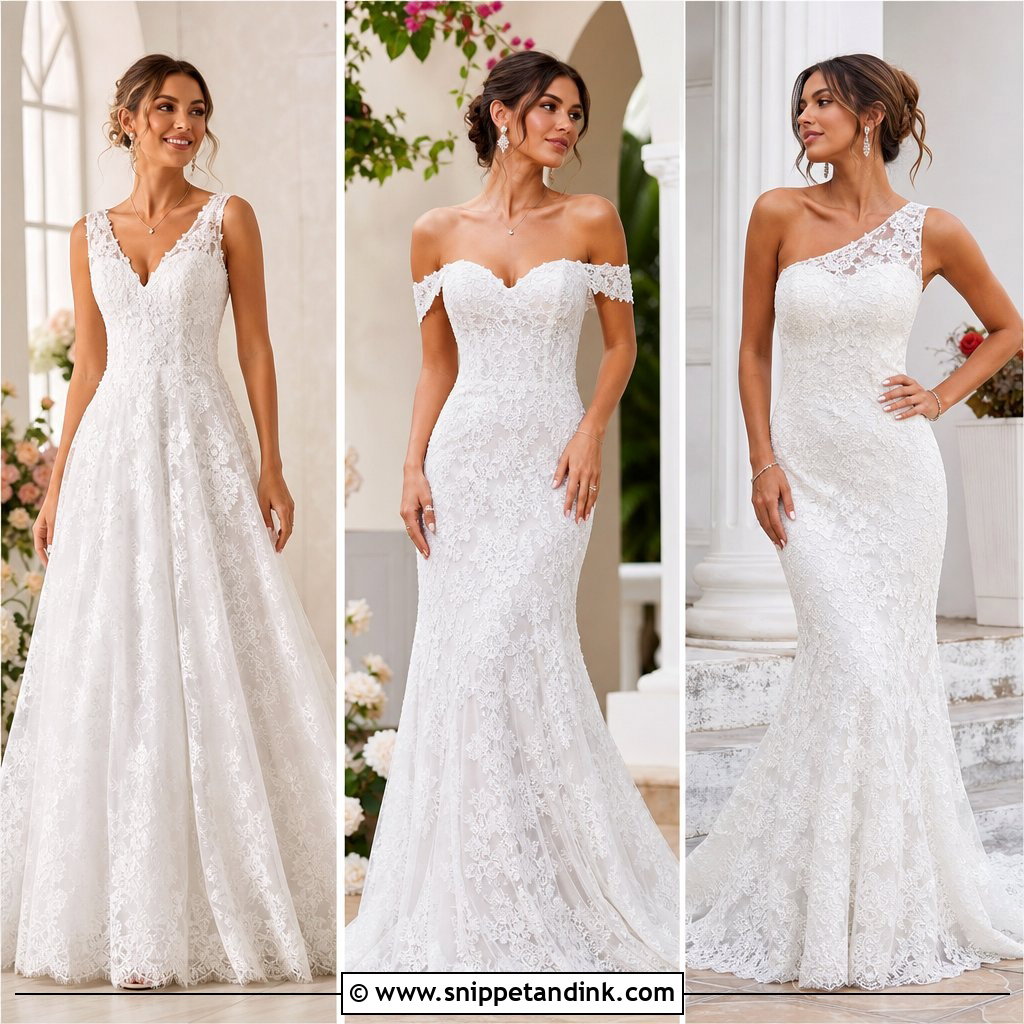
7. White Off Shoulder Wedding Dress
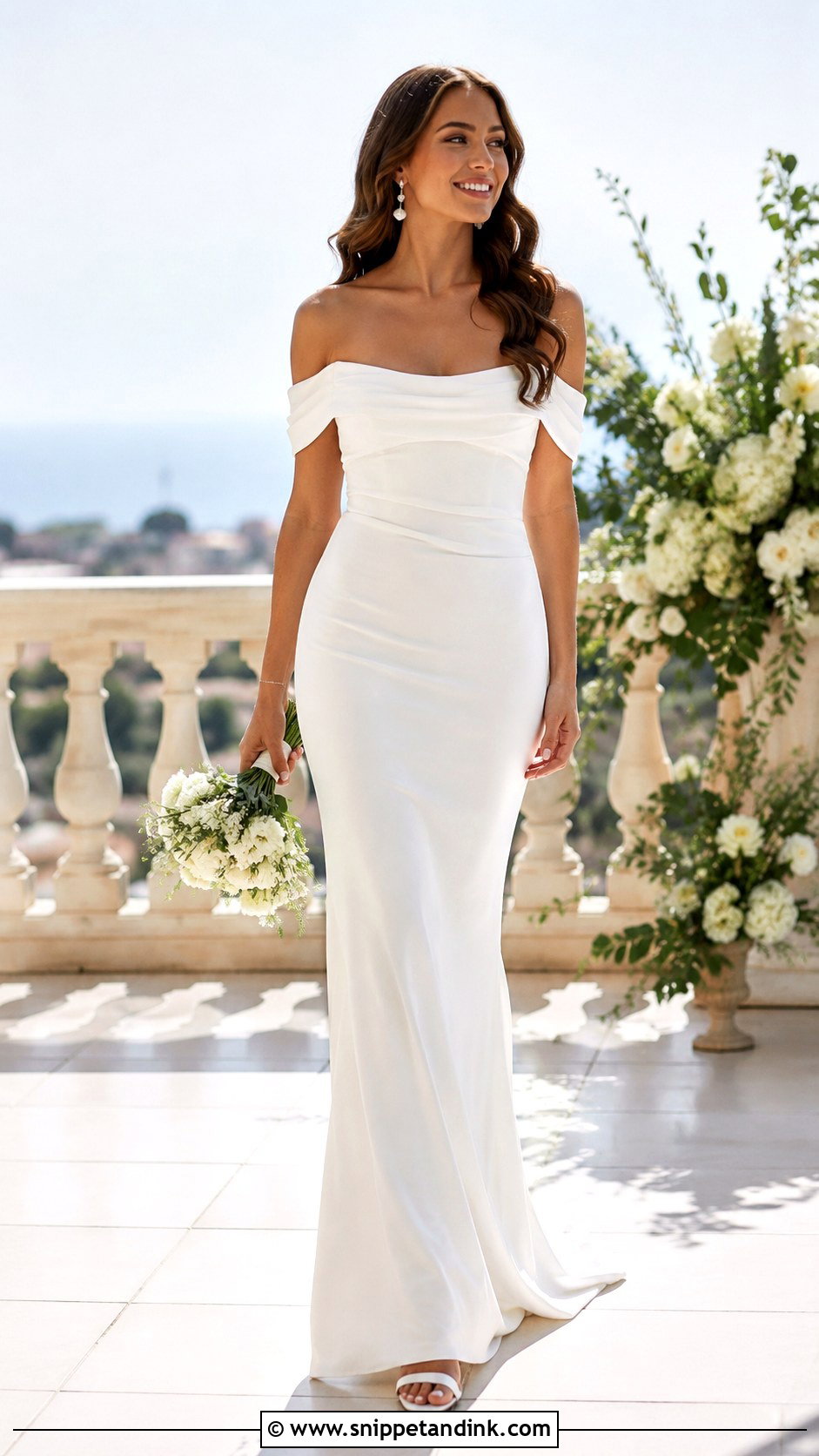
Off-shoulder necklines have one honest drawback. The band sits across your upper arms, so how high you can lift them is limited, and I always have brides mime hugging and throwing a bouquet in the fitting room. If that feels fine, the neckline shows the shoulders and collarbone softly with no lace needed. A fitted crepe skirt keeps it sleek; an A-line softens it. Simple drop earrings, white heeled sandals and a smooth updo or loose waves are enough, with a sheer veil if you want movement.
8. White Halter Wedding Dress
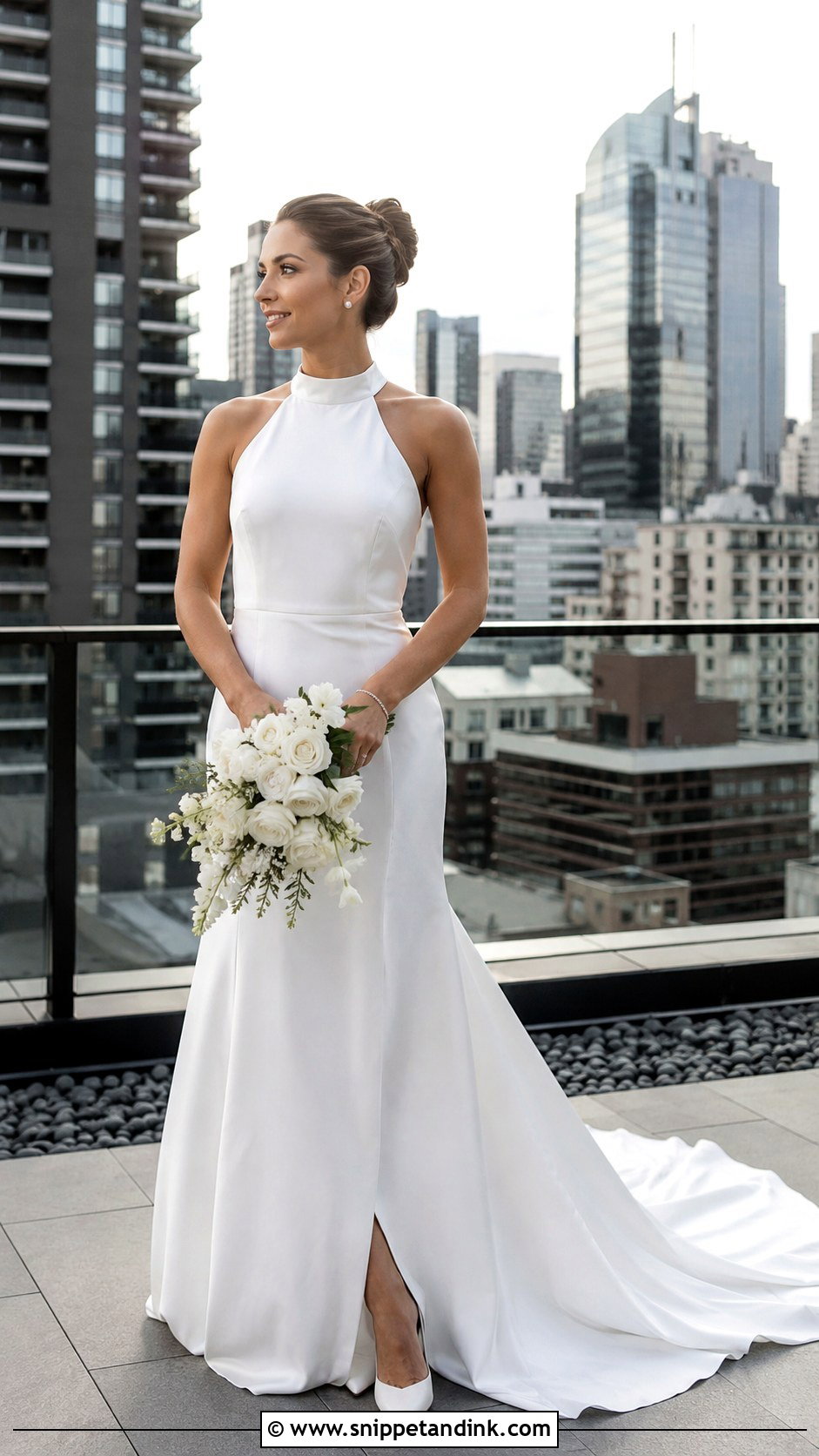
A halter carries the dress from the neck, so it gives real support without a strapless bodice. That’s why I suggest it to brides who dread hitching a dress up all evening. The catch is weight: a heavy mikado skirt hanging from a halter can pull at the back of the neck by the reception, so I lean toward satin or crepe here. The neckline already draws the eye upward. A sleek bun or ponytail, pearl studs, a slim cuff and white pointed heels are plenty for a city or rooftop wedding.
9. White High Neck Wedding Dress
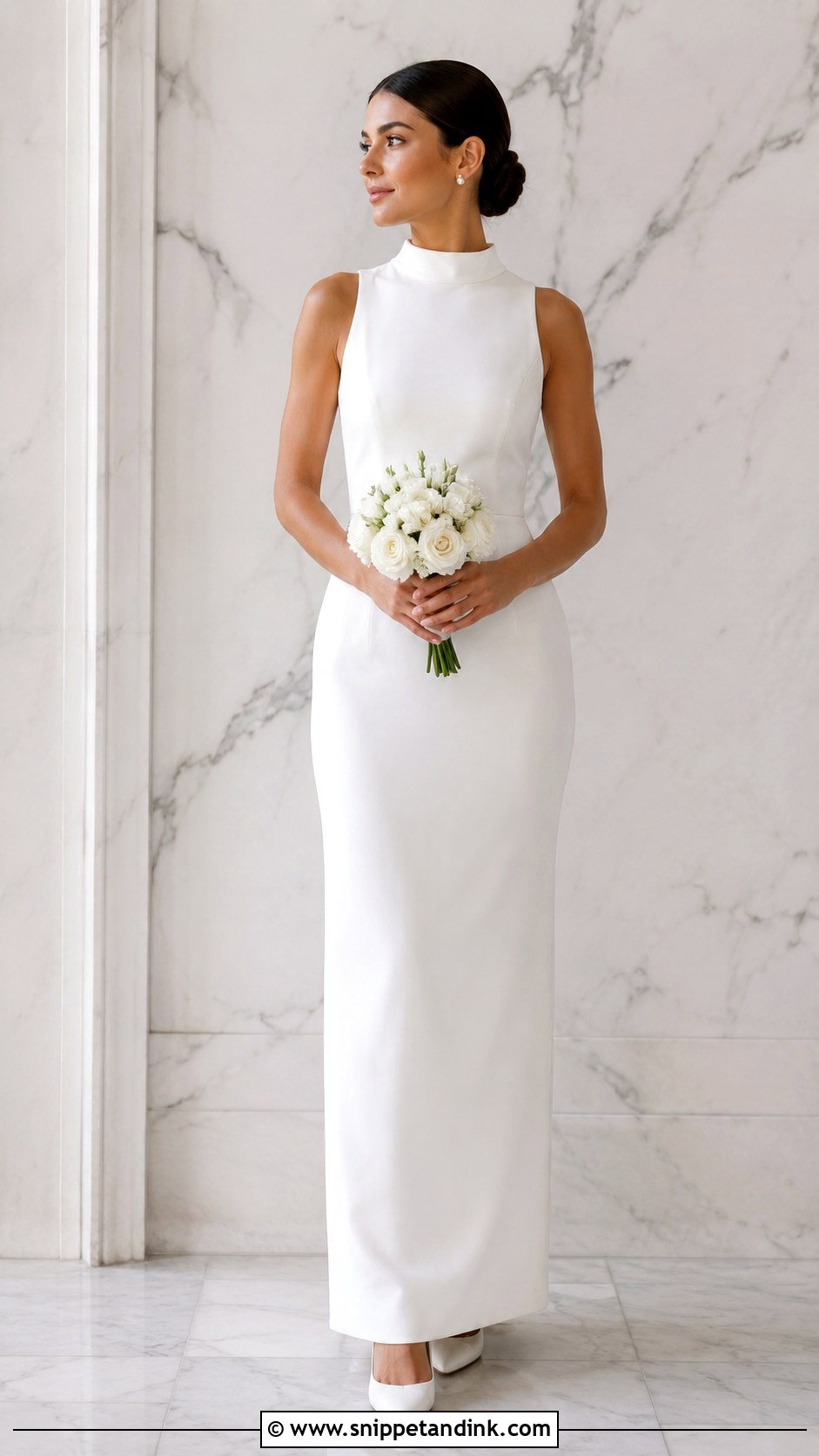
With a high neck, skip the necklace; the neckline is already the jewelry, so move the attention to your ears with pearl studs, small hoops or one crystal drop. The fit I check is at the throat. Too snug and you’ll feel it every time you swallow during your vows, too loose and a gap shows in profile photos. A sleeveless column, a soft A-line and a fitted long-sleeve version all suit it, with white pumps and a low bun. It gives coverage at a courthouse or formal ceremony and loses nothing in polish.
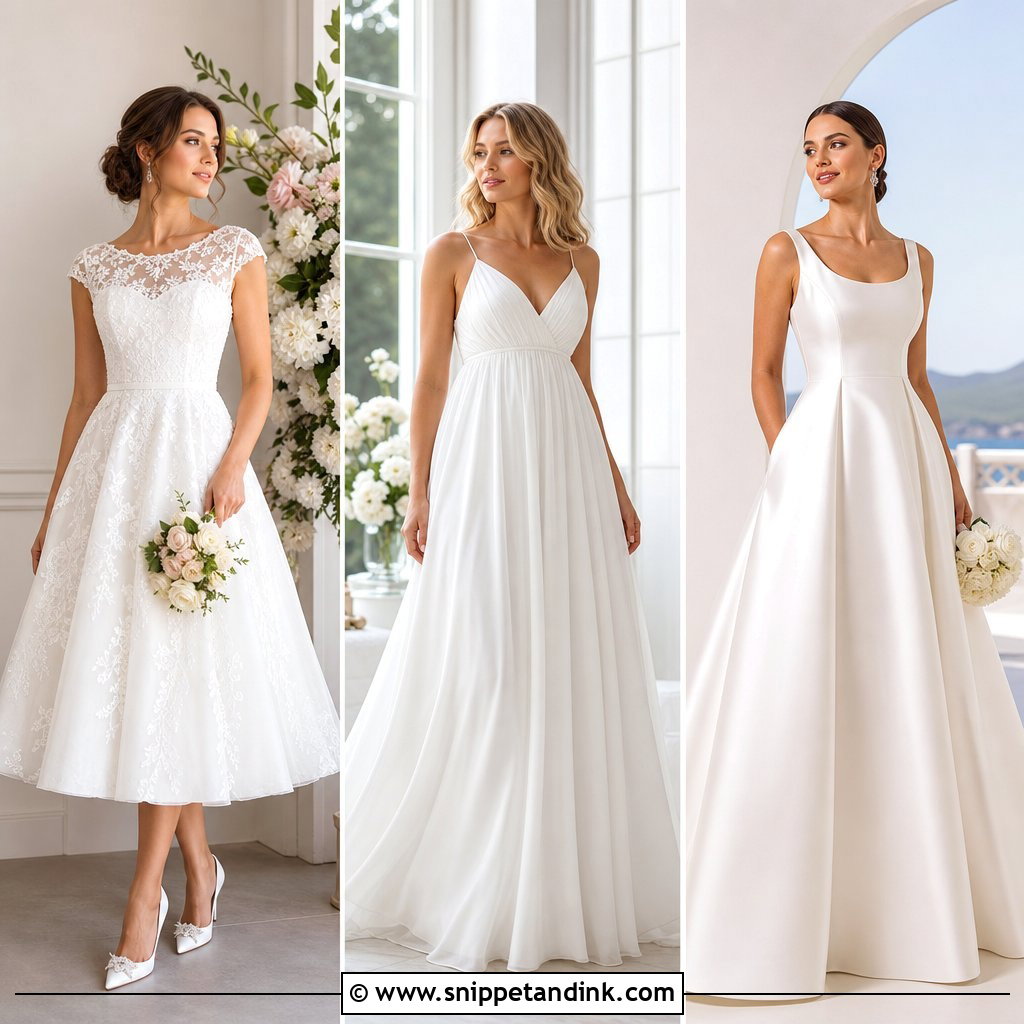
10. White V Neck Wedding Dress
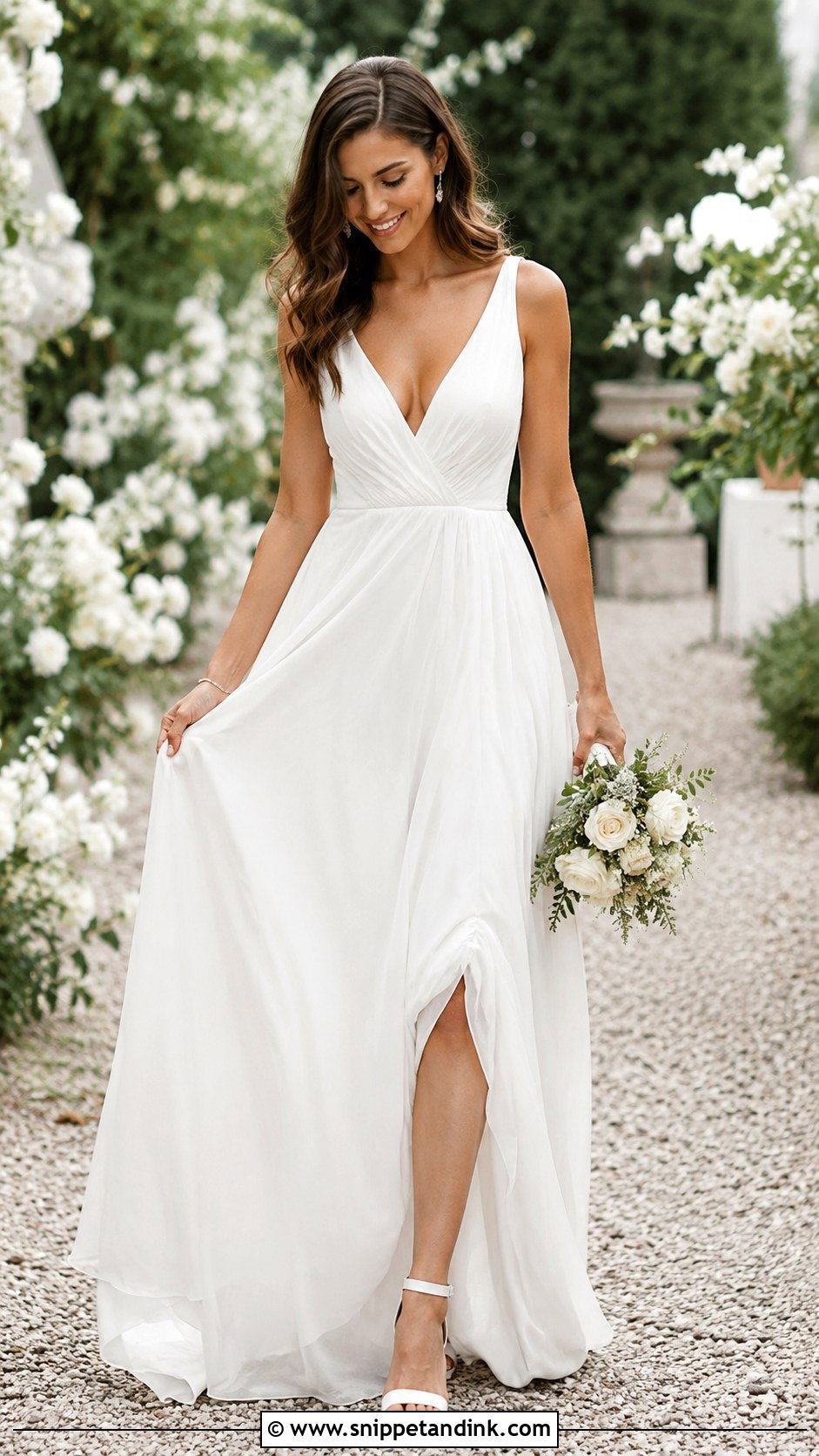
A V neck lengthens the torso visually, which is why I often suggest it to petite brides. Depth matters more than anything else. Before ordering, I mark where the point of the V will land and ask whether you’ll want built-in cups, because adding them afterward is fiddly, especially in chiffon. Chiffon or satin gives a soft drape, while crepe or mikado looks cleaner. Delicate earrings, a thin bracelet and white or ivory heels are enough when the V runs deep.
11. White Midi Wedding Dress
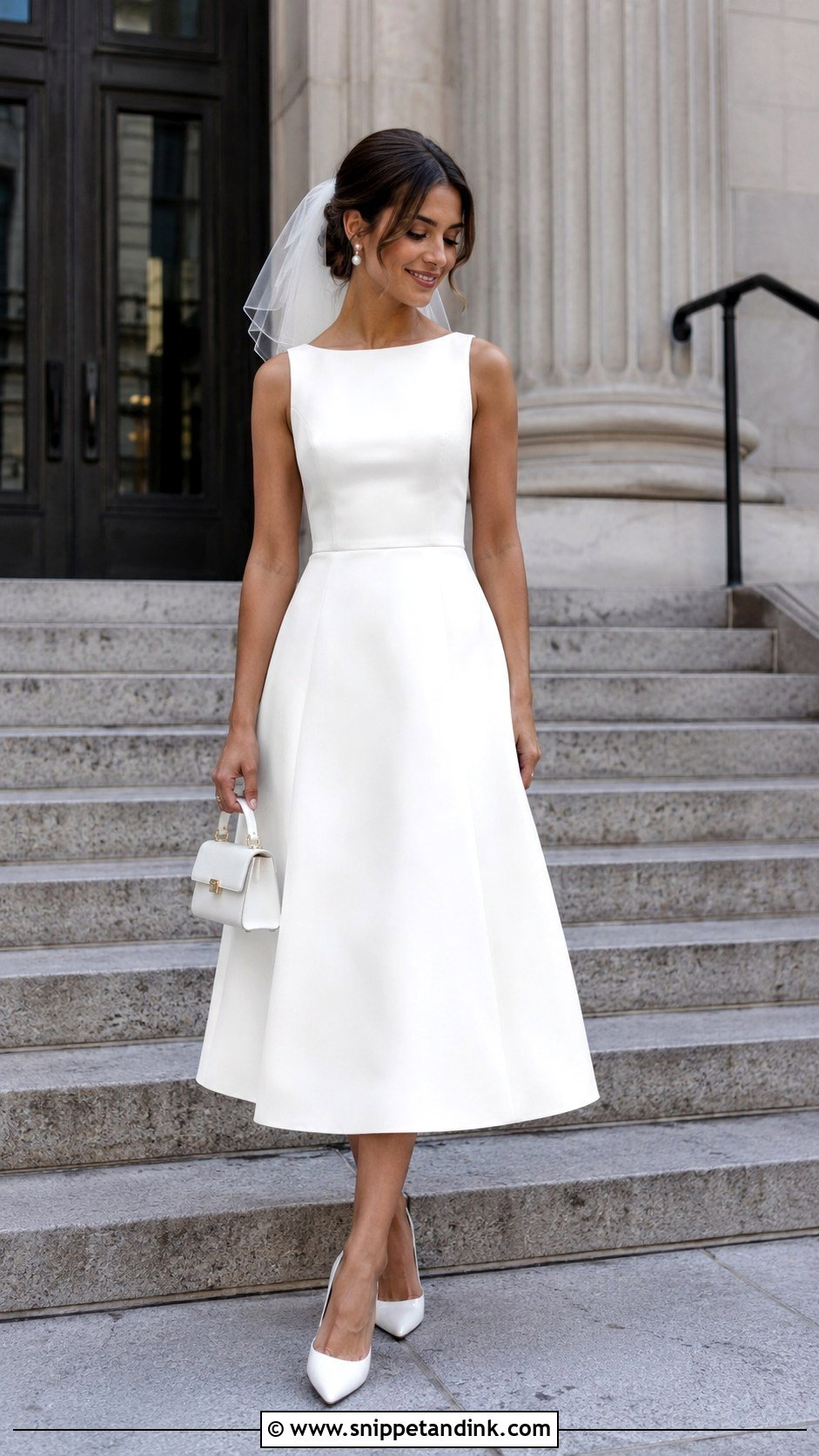
A white midi wedding dress is my usual suggestion for a courthouse, a civil ceremony or a bridal lunch, because you can walk city pavement and climb steps without holding up a hem. Your shoes are fully on show, so I treat them as half the outfit: pointed pumps, slingbacks or ankle-strap sandals, broken in on hard floors first. A fitted bodice with an A-line skirt gives a classic shape, and a straight midi looks sharper. Finish with pearl earrings and a mini veil or a structured top-handle bag.
12. White Mini Wedding Dress
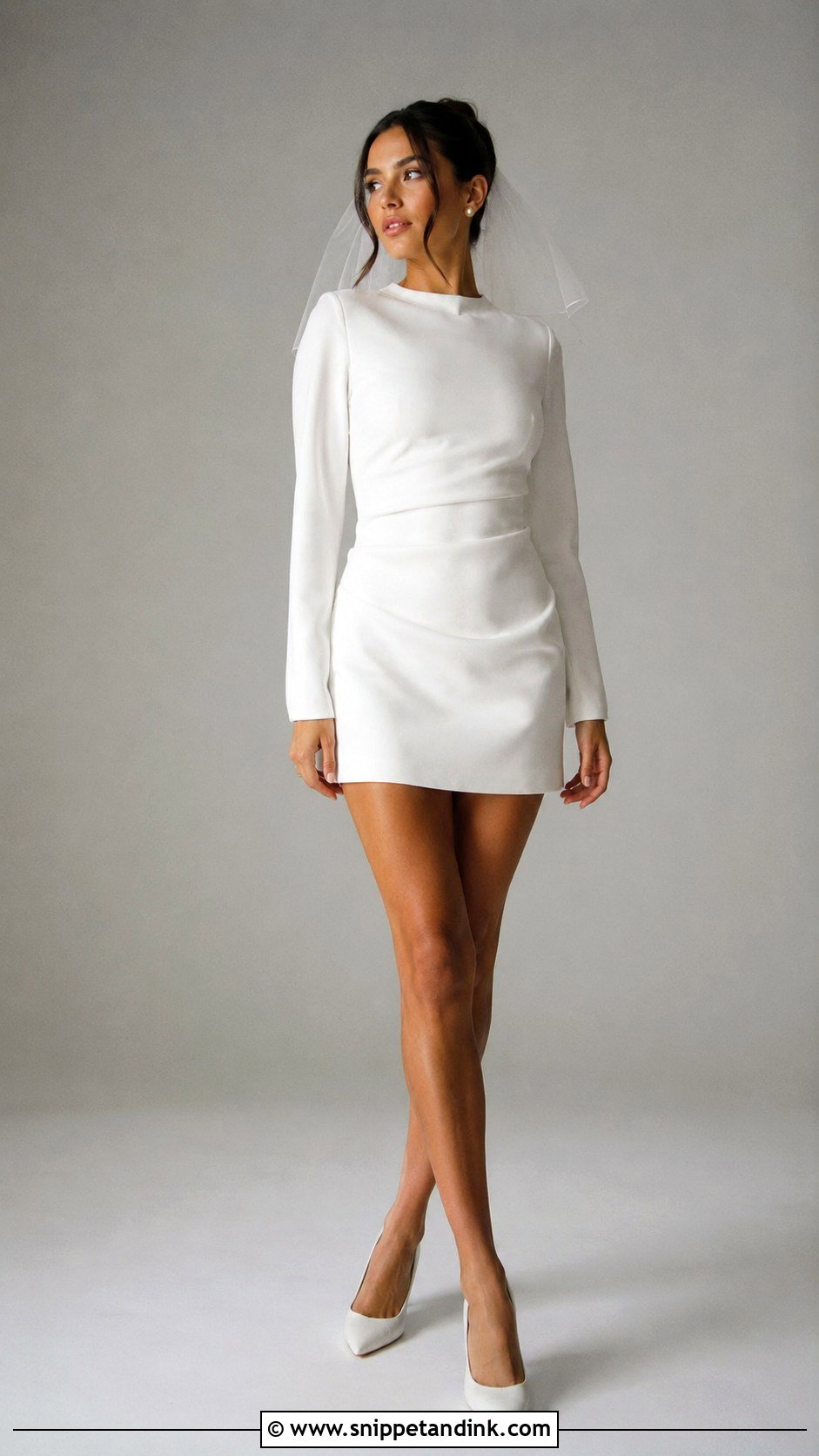
A white mini wedding dress lives or dies on proportion. The shorter the hem, the more coverage I like elsewhere, so a long-sleeved satin mini or a clean crepe shift reads bridal where a short strappy one can look like a party dress. Sitting is the real test. Crepe minis ride up more than you’d expect, so I have brides sit on a low chair before deciding. White pumps or block heels, pearl earrings and a short veil or bow clip keep it clearly a wedding outfit, for an elopement, an after-party or a second look.
13. White Tea Length Wedding Dress
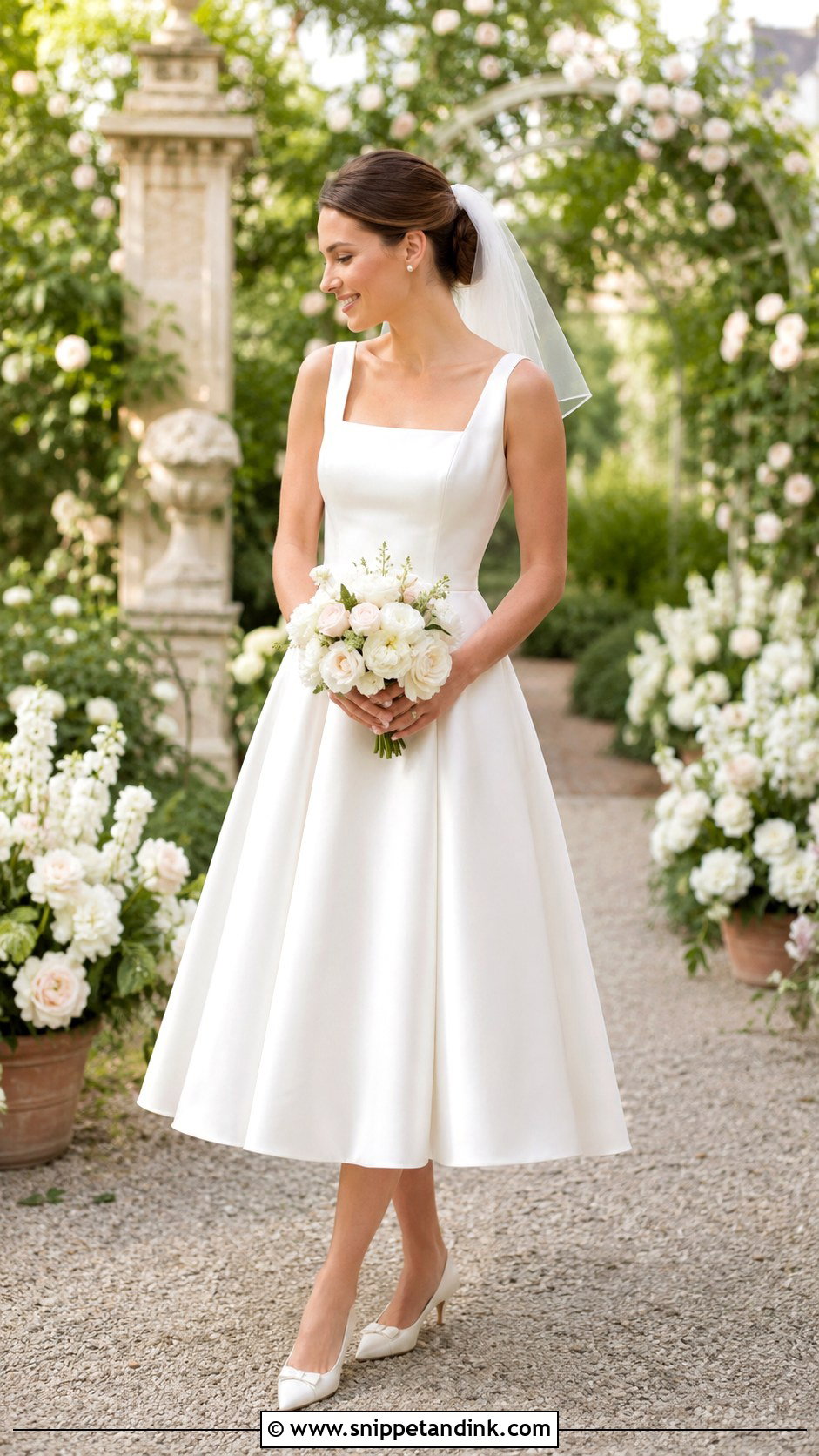
Tea length falls somewhere between the knee and the ankle, and the exact point matters. Ending just below the widest part of the calf is the most flattering spot for most legs, so I pin the hem with the bride already standing in her shoes. A smooth satin or crisp tulle skirt over a clean bodice balances the shorter length. Pointed pumps, kitten heels or Mary Janes take center stage, and pearl studs with a short veil push it toward vintage. No train, plenty of movement, ideal for a daytime reception.
14. White Lace Sheath Wedding Dress
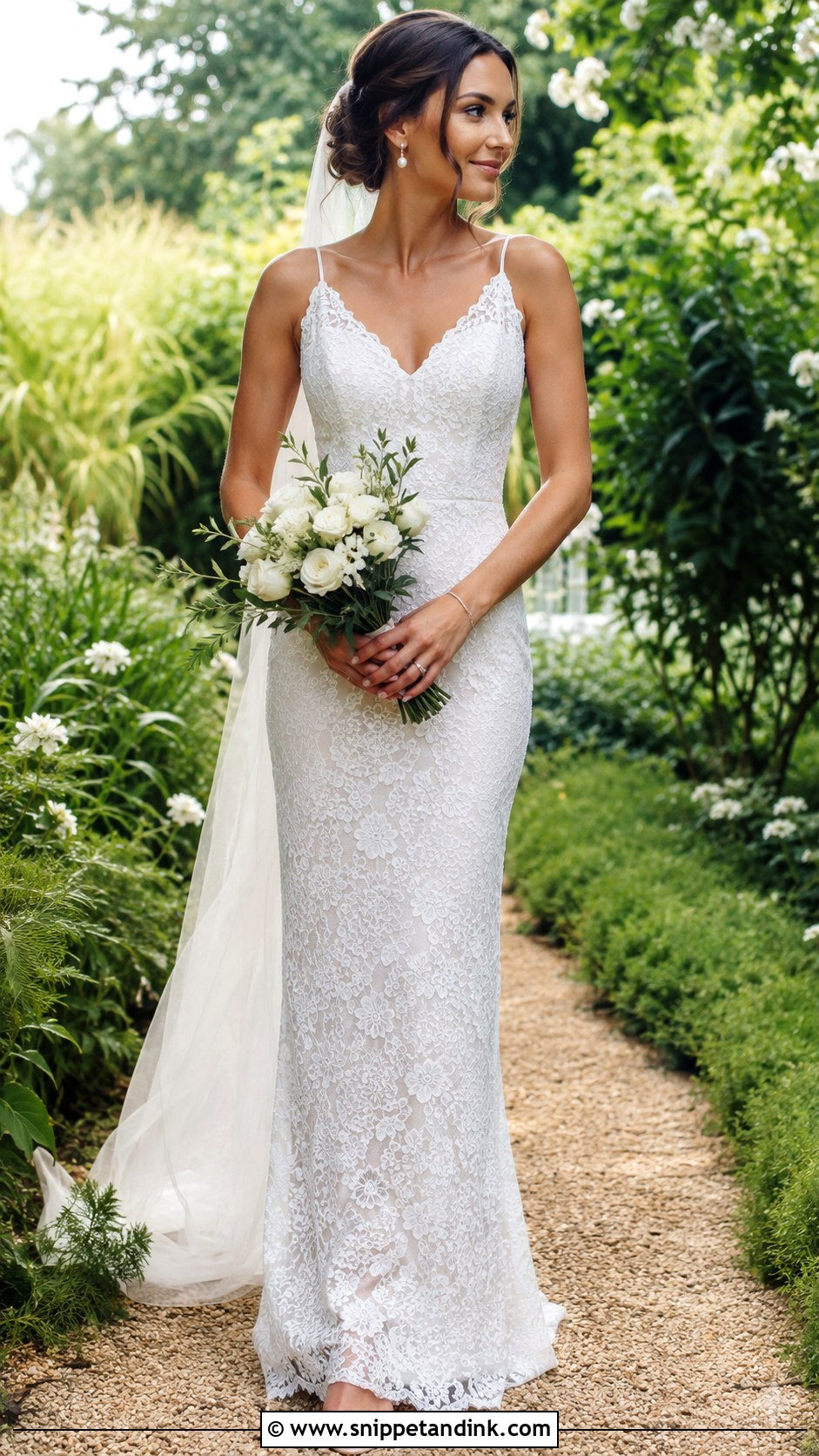
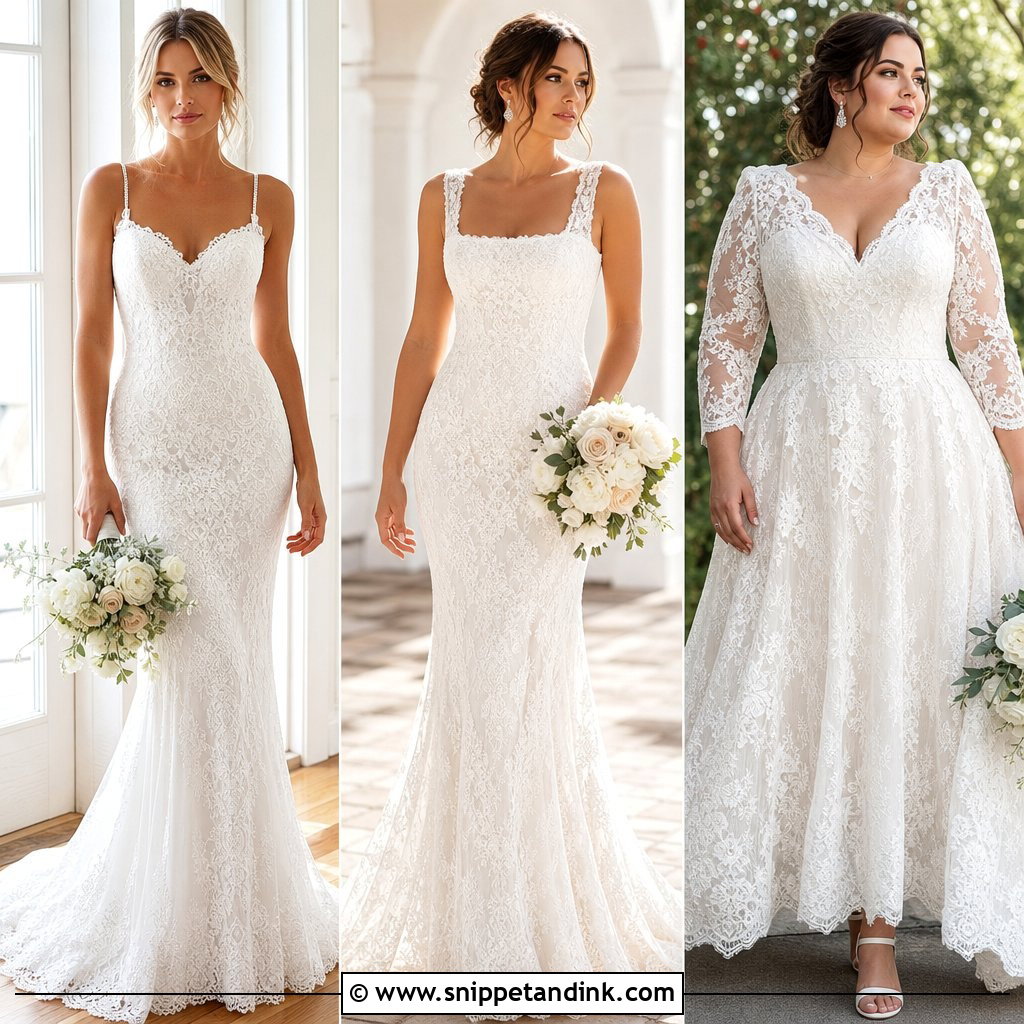
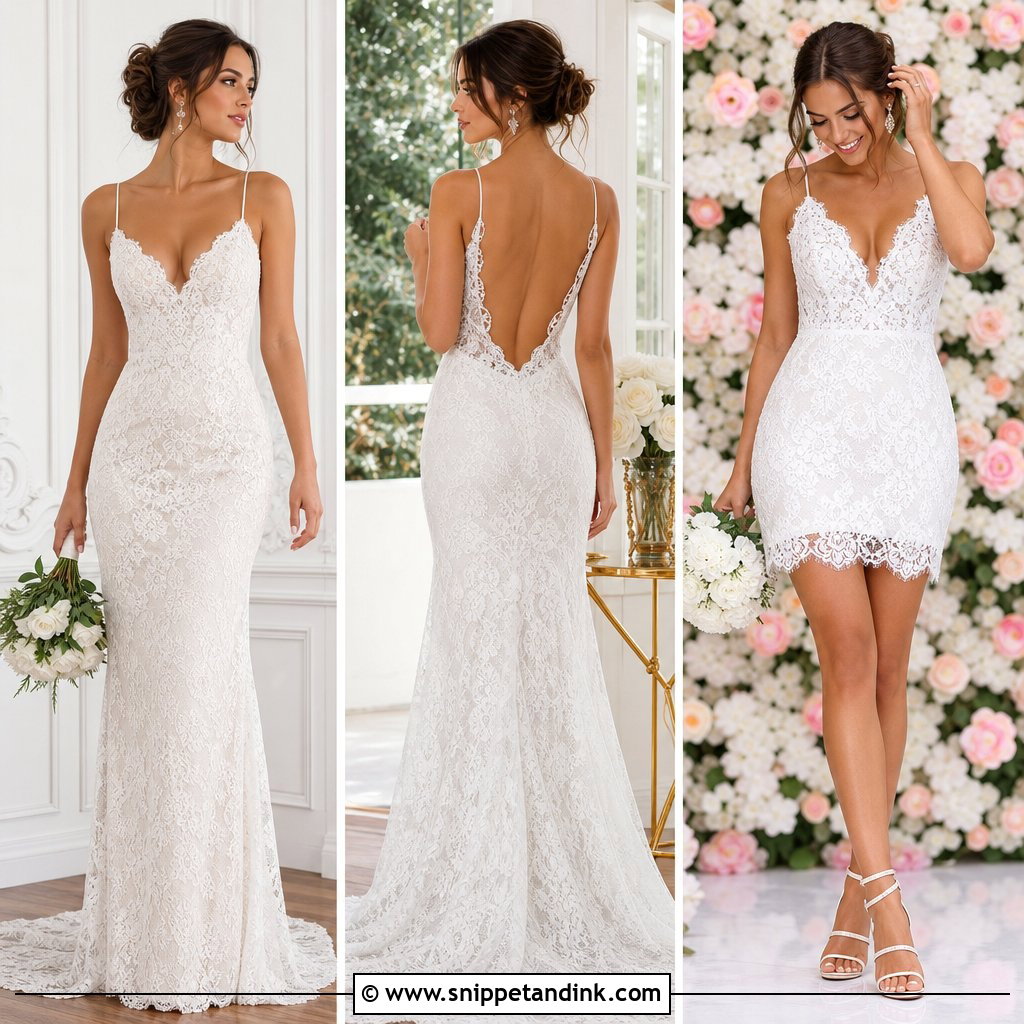
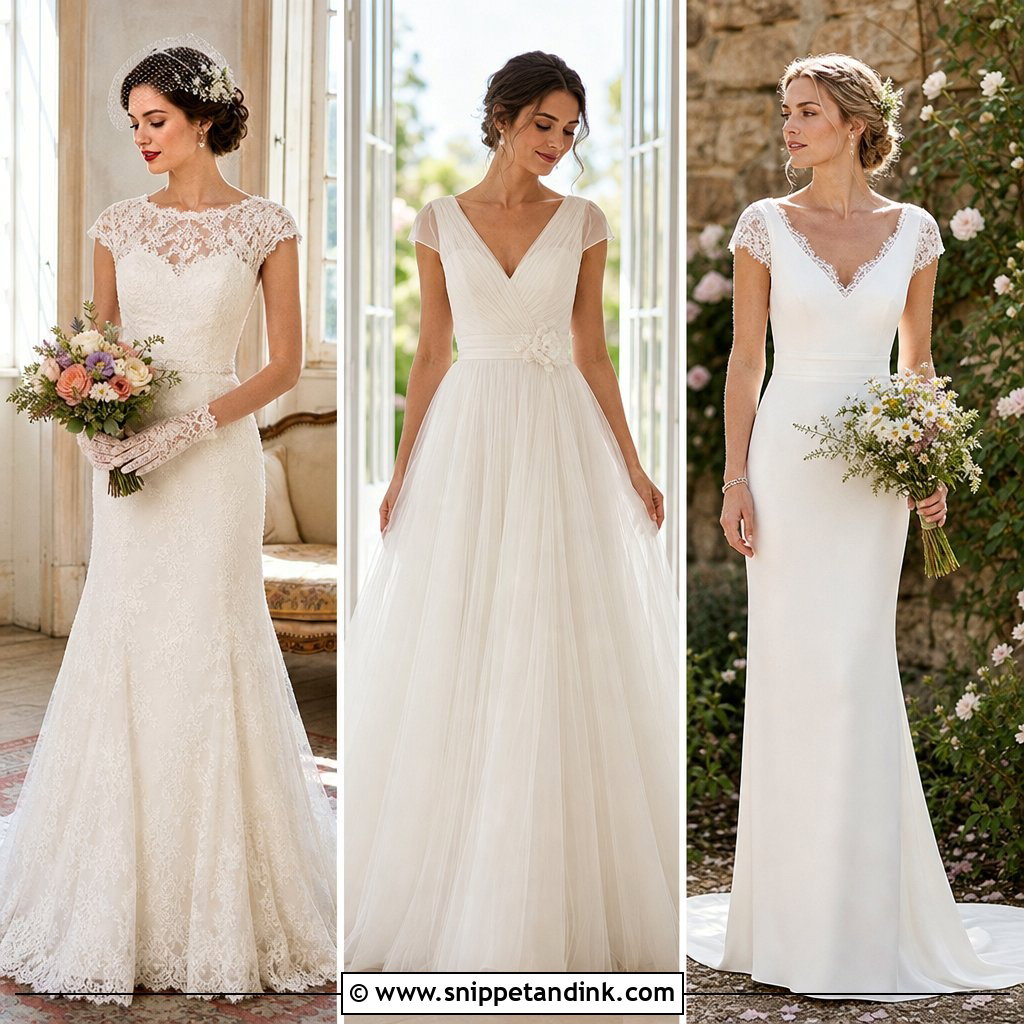
Lace and simplicity can live together, but only with the right lace. I look for a flat, fine pattern rather than corded or beaded motifs. Then I check the side seams, because better gowns have the lace matched or appliqued around the seam, while cheaper ones cut straight through the pattern, and on a narrow sheath that break shows. Nude or white heels, small pearl earrings and a plain veil let the texture stay the only detail, and a small bouquet keeps it that way.
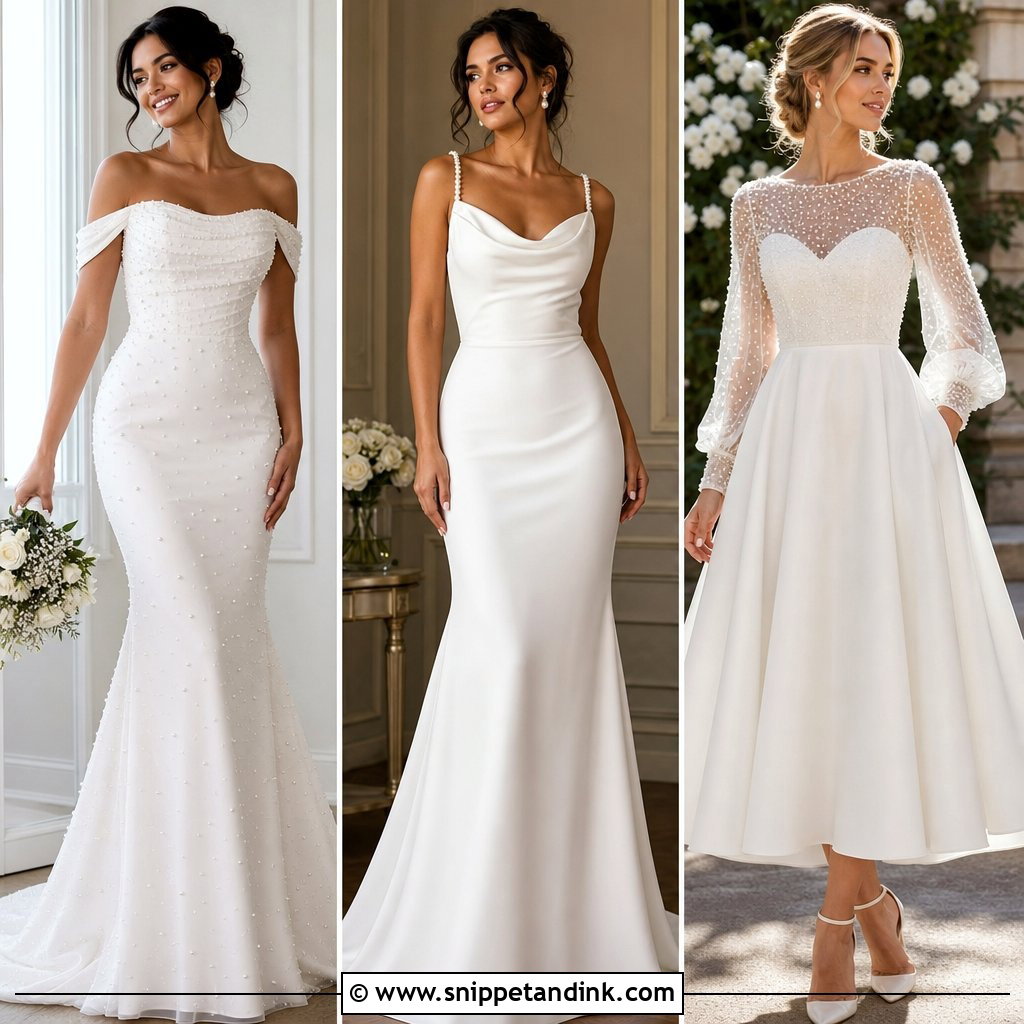
15. White Chiffon Wedding Dress
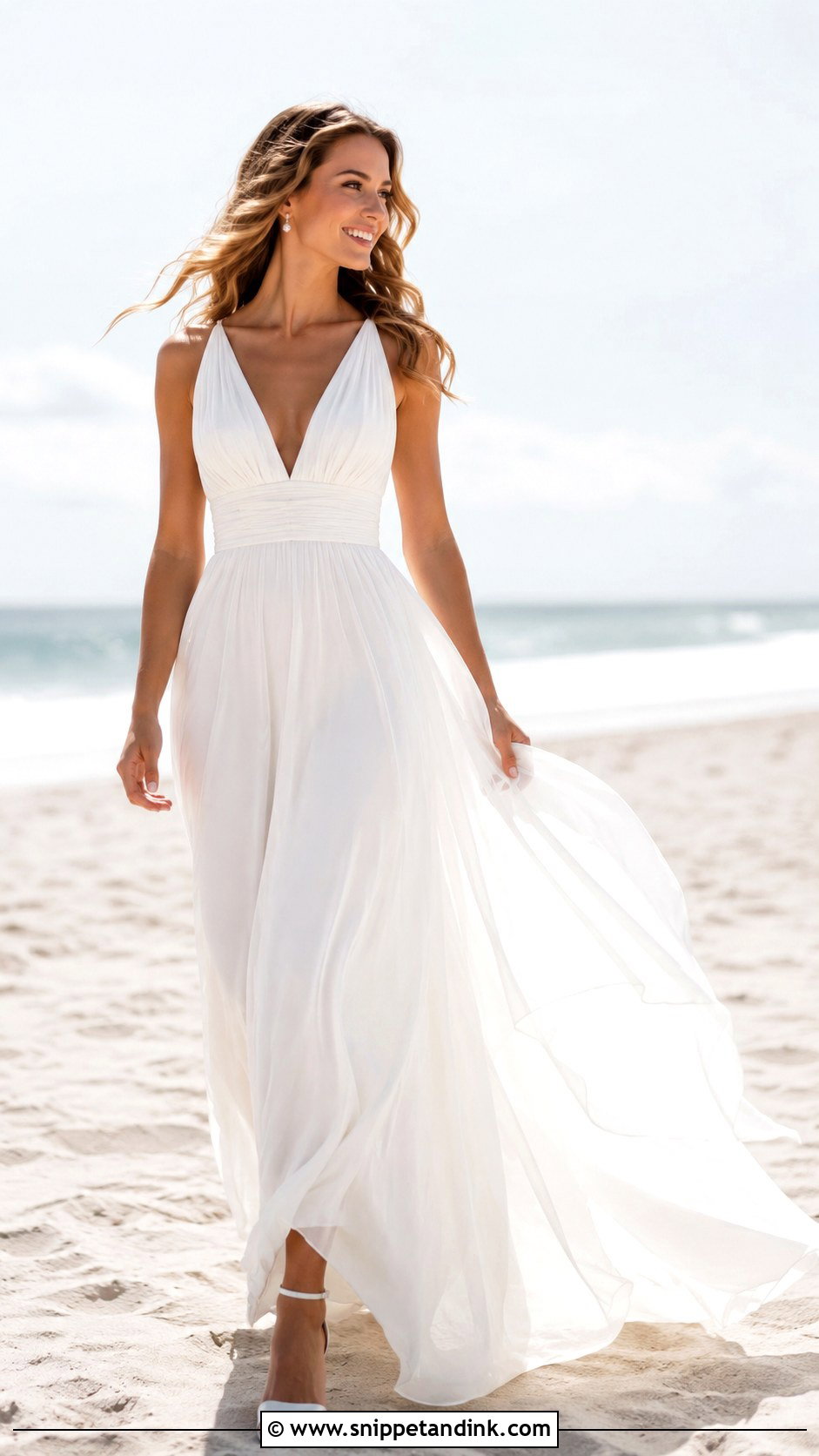
Chiffon is the warm-weather fabric I trust most. It breathes, it barely creases, and outdoors a light breeze does half the styling for you. The trade-off is fragility: it snags on rough stone, rattan chairs and bracelet clasps, so check what you’ll be sitting on. A simple V neck, halter or empire waist keeps a white chiffon wedding dress light. Flat sandals for sand, block heels for lawn, small earrings and natural waves. It packs better than most fabrics for a destination wedding.
16. White Tulle A Line Wedding Dress
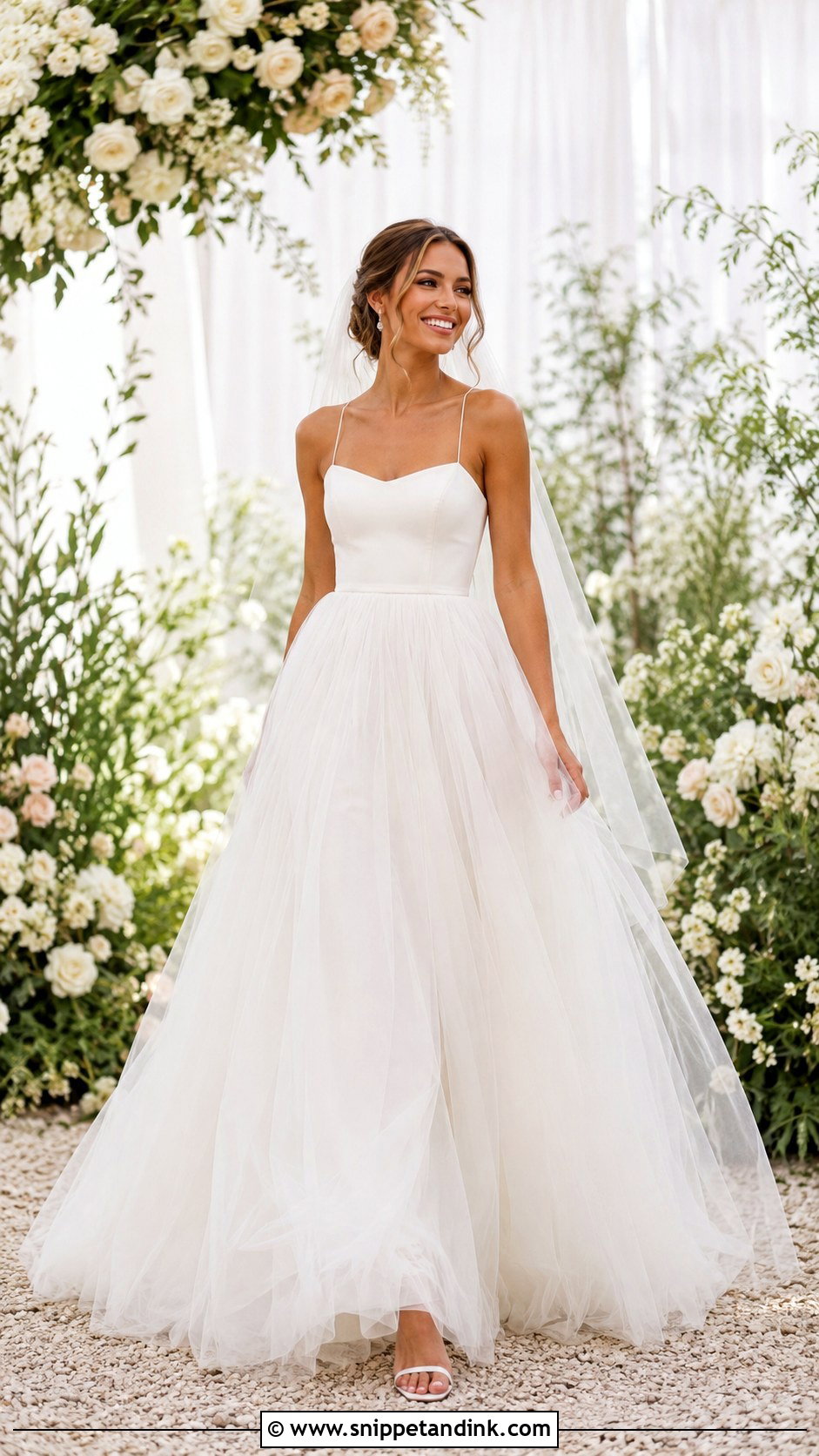
Tulle only looks light if there aren’t too many layers. Some skirts stack several layers over a lining, which looks airy on the hanger but feels warm and heavy by the reception, so I lift the skirt at fittings and count. A clean strapless, square-neck or spaghetti-strap bodice balances the texture, with simple heels, pearl earrings and a soft veil. One practical note: tulle catches on heel buckles and rough flooring, so I sometimes suggest shoes without exposed hardware.
17. White Mikado Wedding Dress
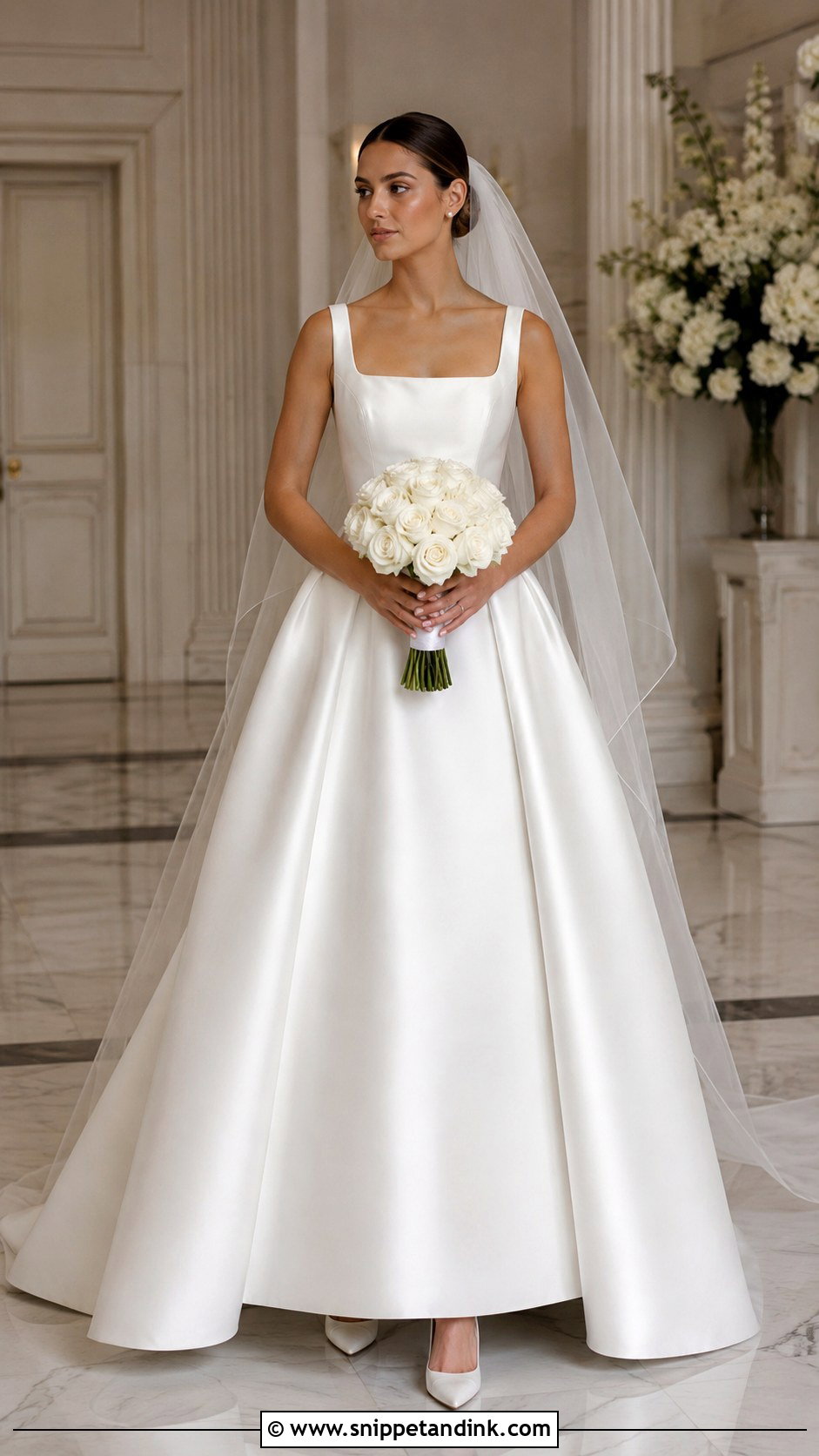
Mikado is a heavy, slightly ribbed fabric, usually silk or a silk-look blend, that holds its own shape, which is why a completely plain mikado gown never looks plain. It also takes sharp creases when you sit for long, and they don’t relax the way crepe’s do, so for a hotel or formal-venue wedding I plan a few minutes of steaming after the ceremony. A square-neck A-line, a strapless ball skirt or a clean fit-and-flare all suit it. White pumps, pearl studs and a sleek veil are enough; the fabric is doing the talking.
18. White Fit And Flare Wedding Dress
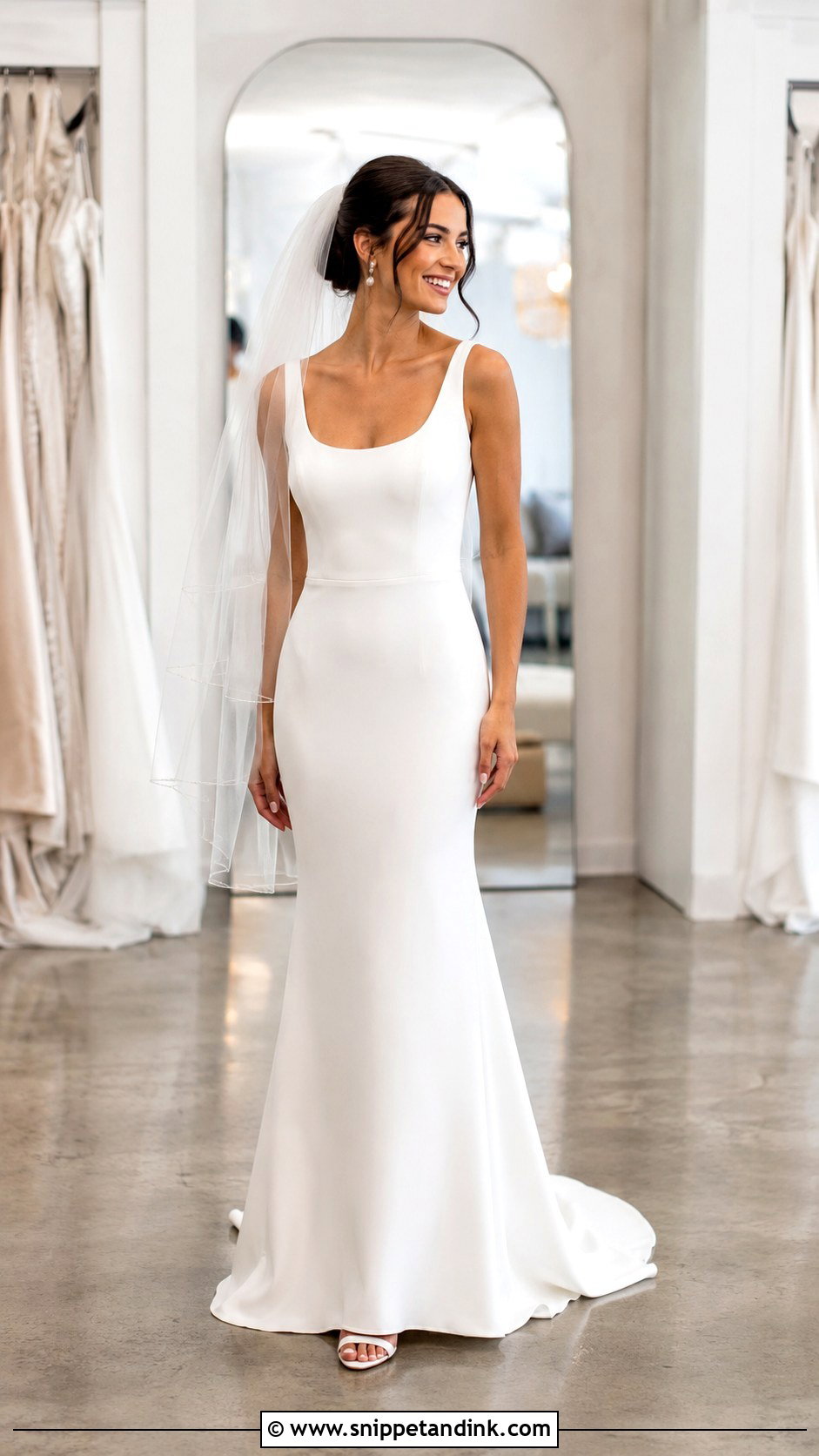
Fit and flare follows the body through the hips and opens near the lower thigh or knee, and that flare point is the fitting question I spend the most time on. Set too low, it shortens your stride; a few inches higher and you can climb stairs and dance. Crepe or satin keeps it smooth. A simple scoop neck, strapless or off-shoulder neckline works with the shape, finished with white heels, fine earrings, a low bun and a fingertip veil. You get curve without the full commitment of a mermaid.
19. White Wrap Wedding Dress
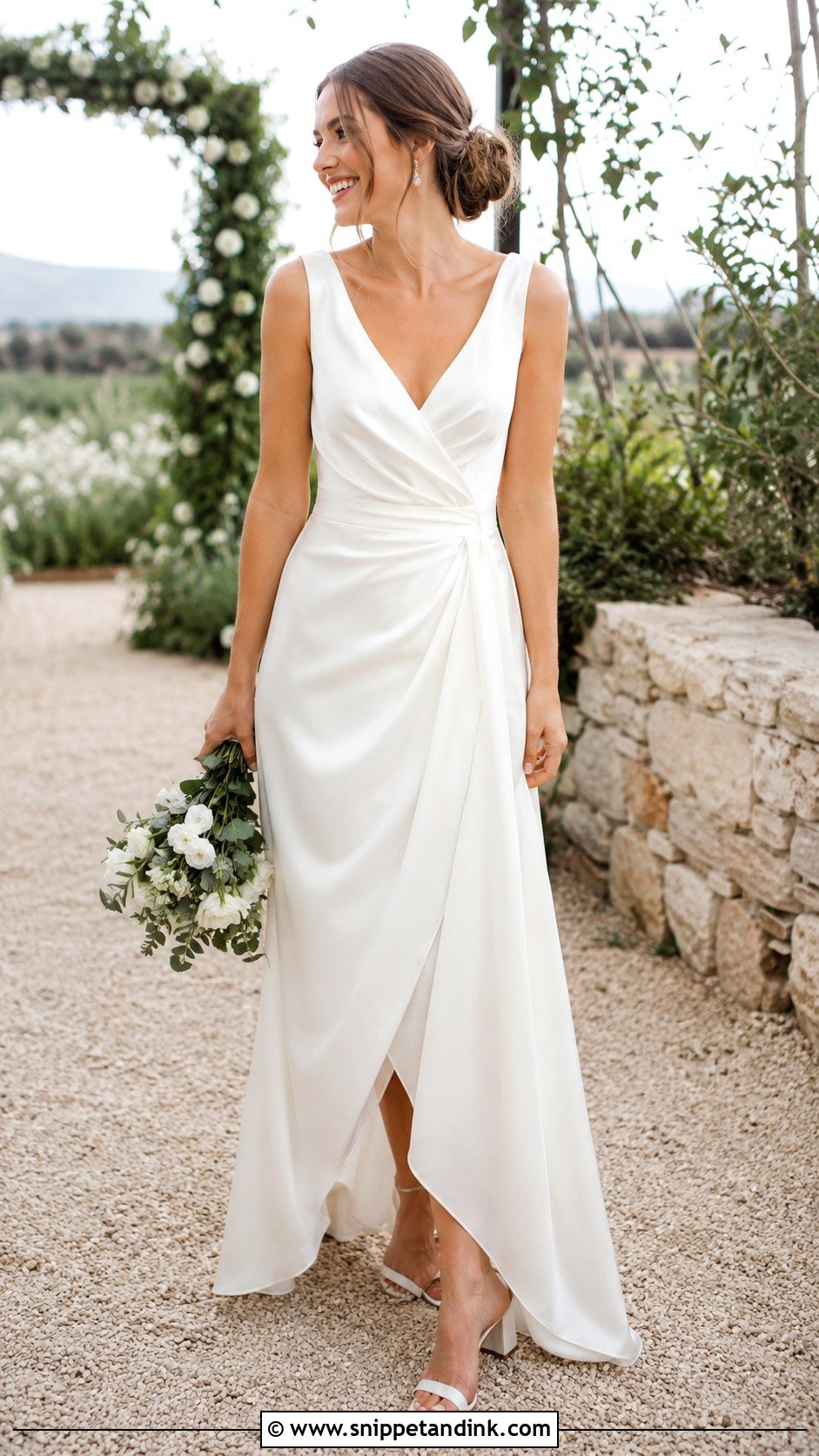
A wrap forgives weight changes between fittings better than anything else here, since the tie or overlap adjusts at the waist. Watch the neckline, though. A true wrap can open when you lean forward, so I usually add a small hidden stitch at the crossover. Satin is dressier, crepe more modern and chiffon breezier outdoors. White block heels, simple earrings and a small bouquet keep it clean, and a side-parted bun echoes the diagonal line of the wrap. I like it for courthouse, beach and small garden ceremonies.




20. White Corset Wedding Dress
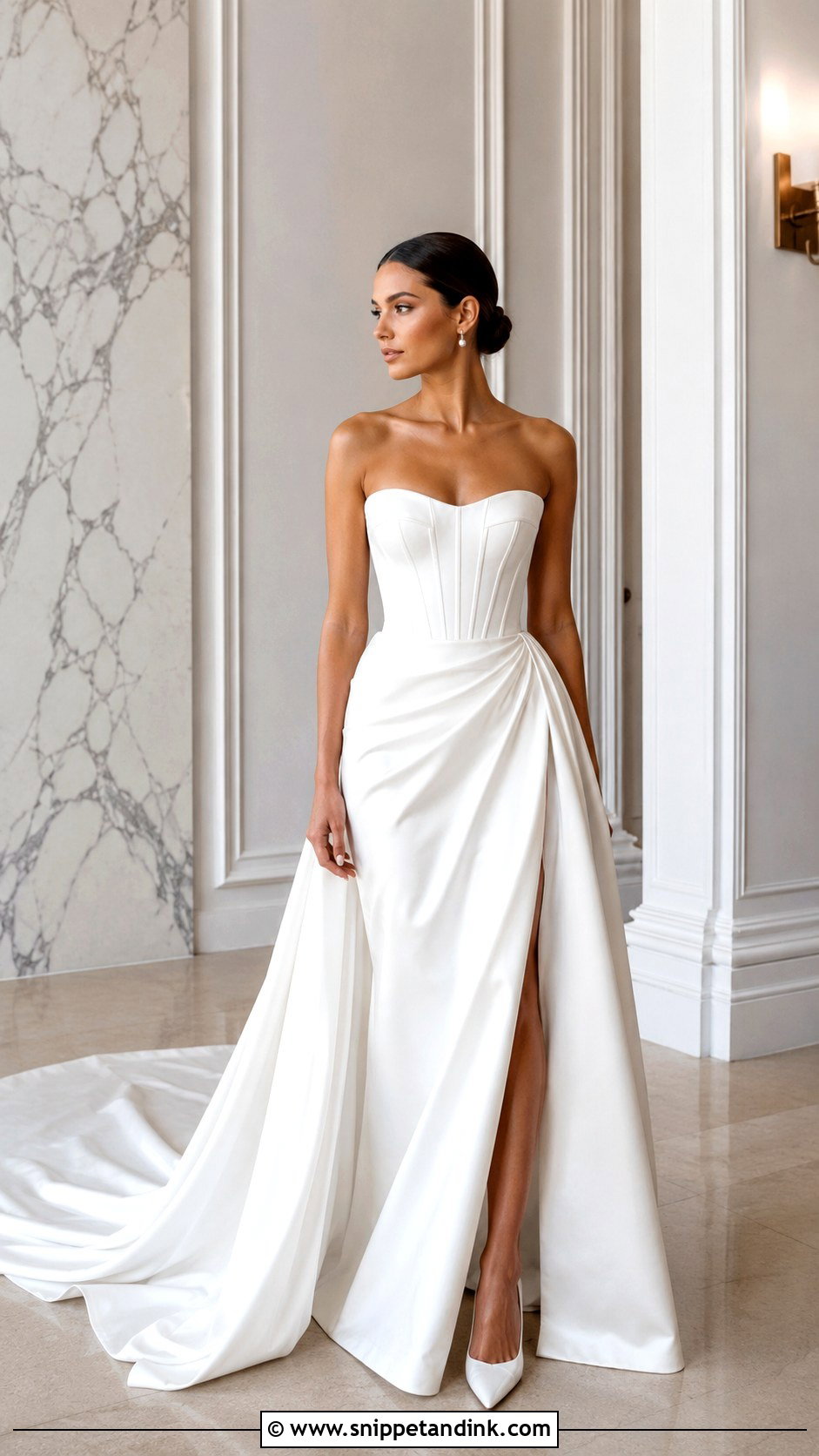
A corset bodice gives support, but the boning decides whether it stays comfortable through a long day. Plastic boning can soften with body heat and leave ridges after hours of sitting, while spiral steel bends with you and springs back. I ask brides to sit for a few minutes in the sample before deciding. Pair a smooth bodice with a plain satin, crepe or mikado skirt, white pointed heels, pearl earrings and a sleek updo, or soften it with a sheer veil or tulle gloves.
21. White Drop Waist Wedding Dress
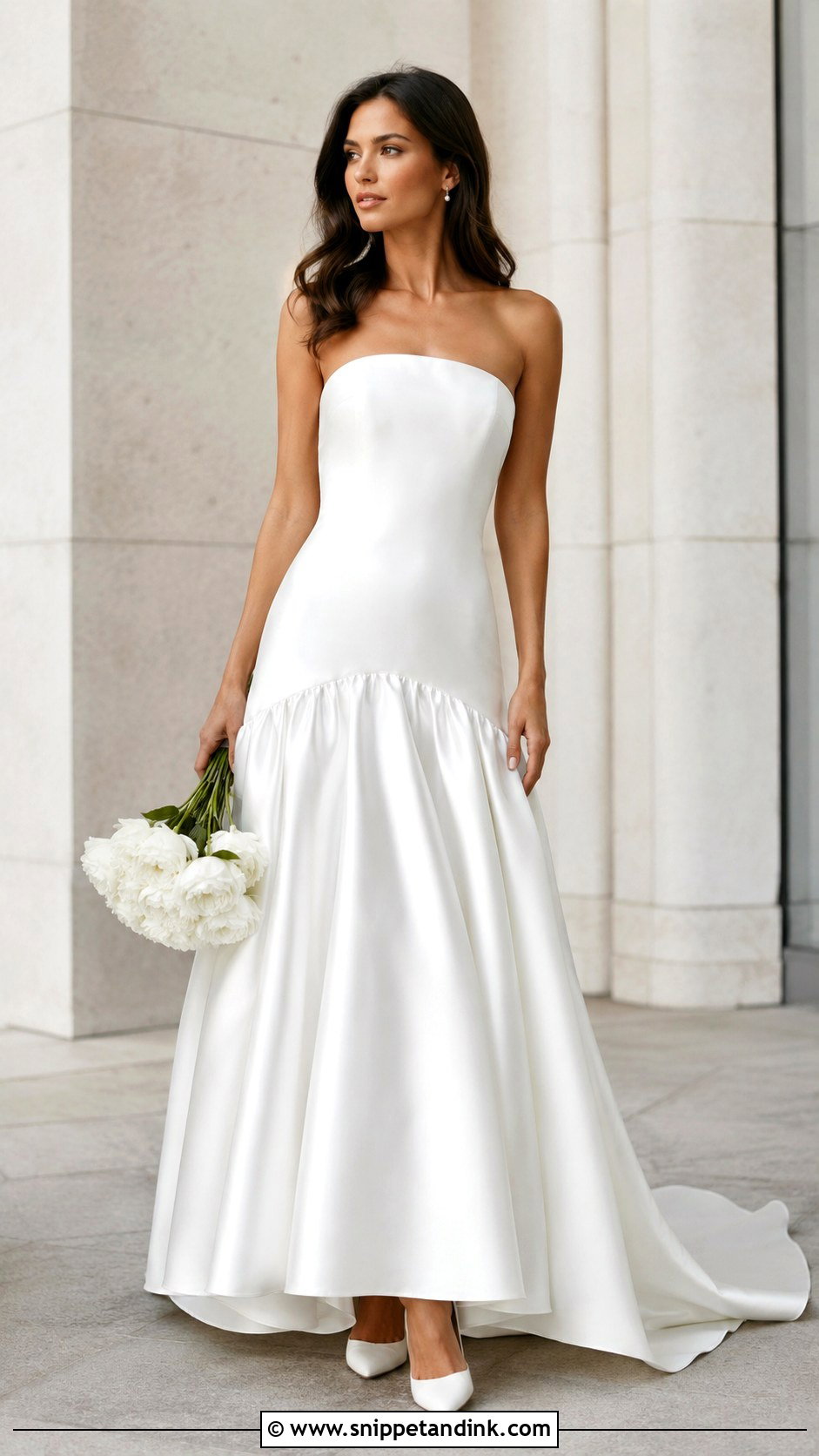
A white drop waist wedding dress moves the seam down toward the hips, which lengthens the torso and suits brides with a short waist. It’s less kind if your hips are your widest point, since the seam lands right there and draws a line across it, so I’d always try one on before committing. Smooth satin, crepe or mikado with minimal detail keeps it modern rather than costume vintage. A strapless bodice or square neckline sits well above the low seam, with sleek pumps and a smooth bun.
22. White Bow Back Wedding Dress
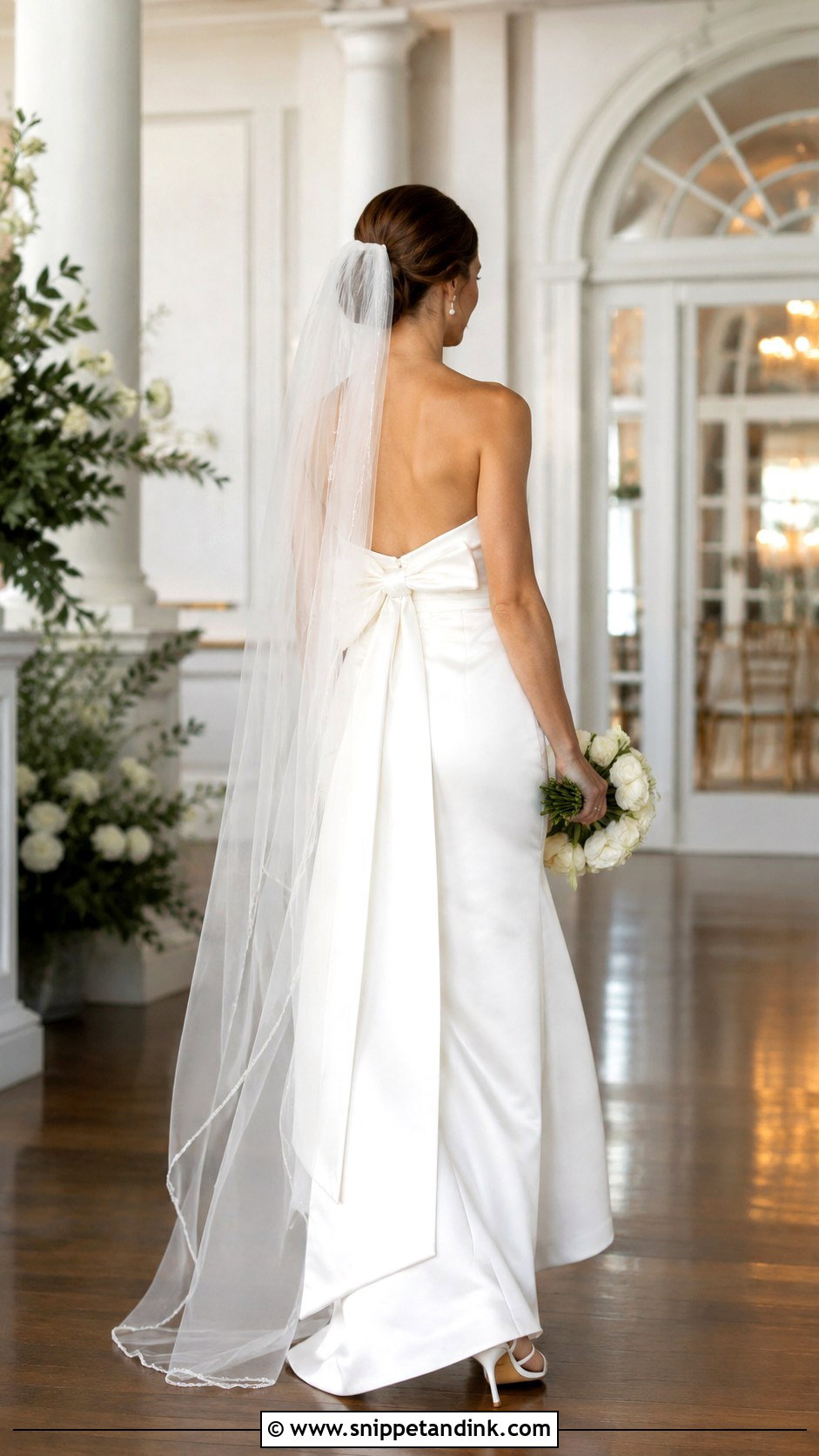
A back bow is the detail most of your guests will see longest, since they spend the ceremony looking at your back. Check its size against your veil. A long veil laid over a large bow flattens it, so I usually suggest attaching the veil below the bun or choosing a shorter one that stops above the bow. A satin column, crepe A-line or mikado midi all carry a soft bow well, and white heels with pearl earrings keep the front calm. Ask your photographer for a back view during the aisle walk.
23. White Wedding Dress With Detachable Sleeves
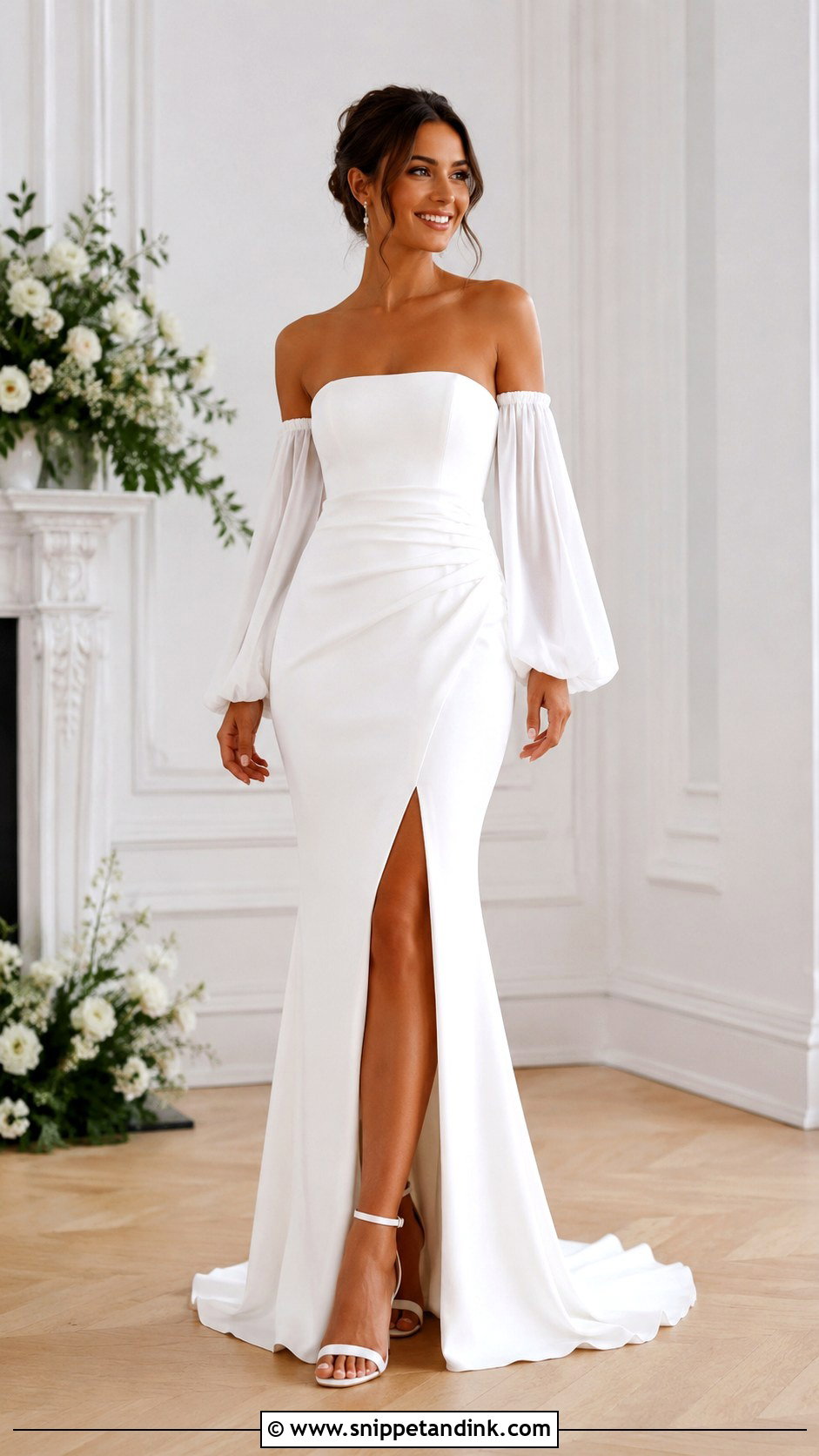
Detachable sleeves solve the ceremony versus dance floor question without a second dress. I check how they attach first: snaps or small hooks on a bodice band come off faster than buttons, and someone in your bridal party should practice removing them before the day. Puff, slim sheer or off-shoulder sleeves all sit well over a clean satin or crepe gown. Keep the base styling simple (white heels, fine earrings, an updo) so both versions look finished.
24. White Wedding Dress With Minimal Train
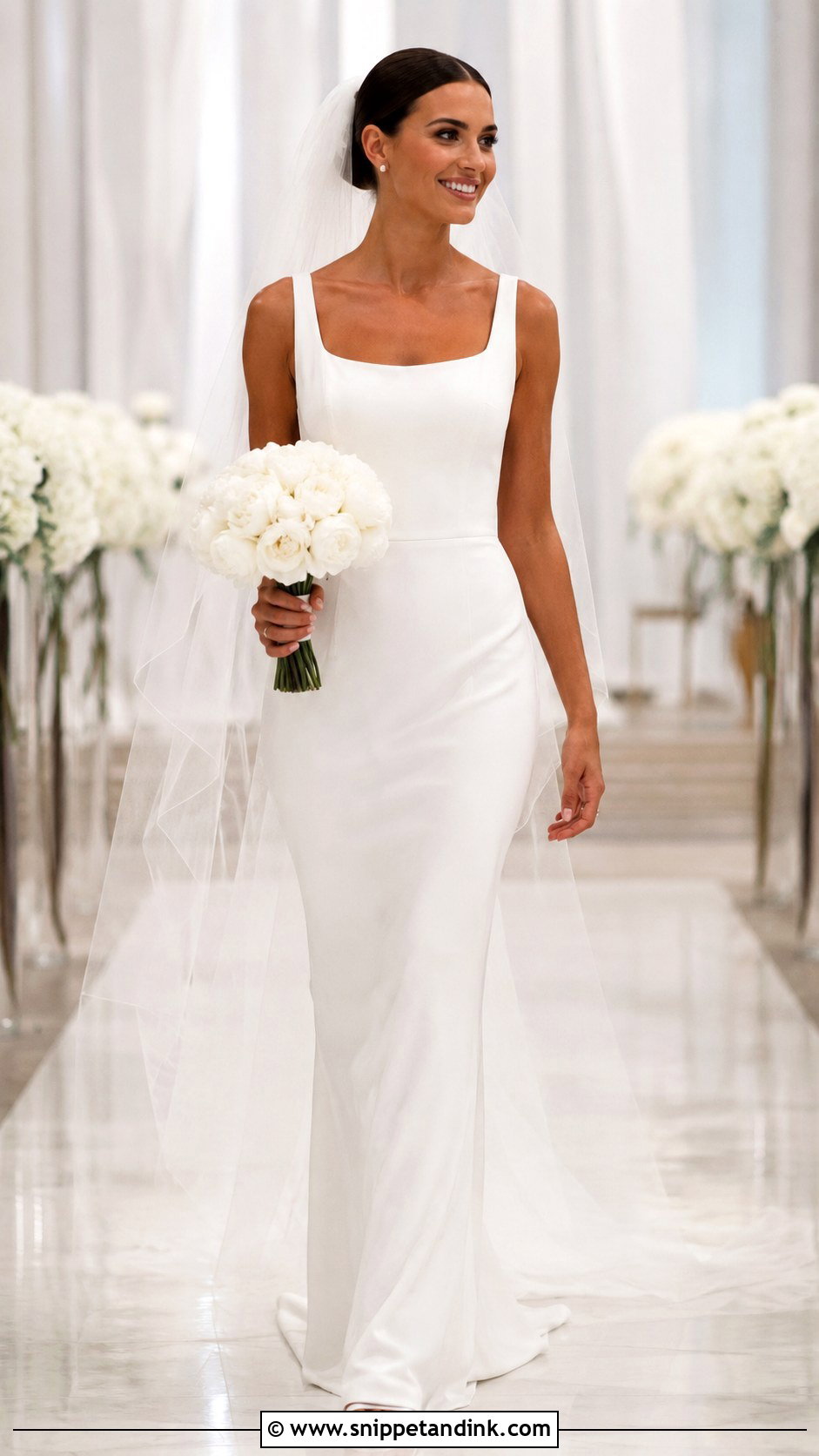
A short sweep train gives you presence on the aisle and movement in photos without someone arranging it every time you stop. It still needs a bustle for dancing. I’d ask for a single-point bustle or a wrist loop at the final fitting and have a bridesmaid learn it there. A crepe column, satin A-line or fitted mikado all suit a short train. Classic heels, pearl earrings and a veil ending close to the train’s length, so the two don’t fight, finish the look indoors or out.



25. White Two Piece Wedding Dress
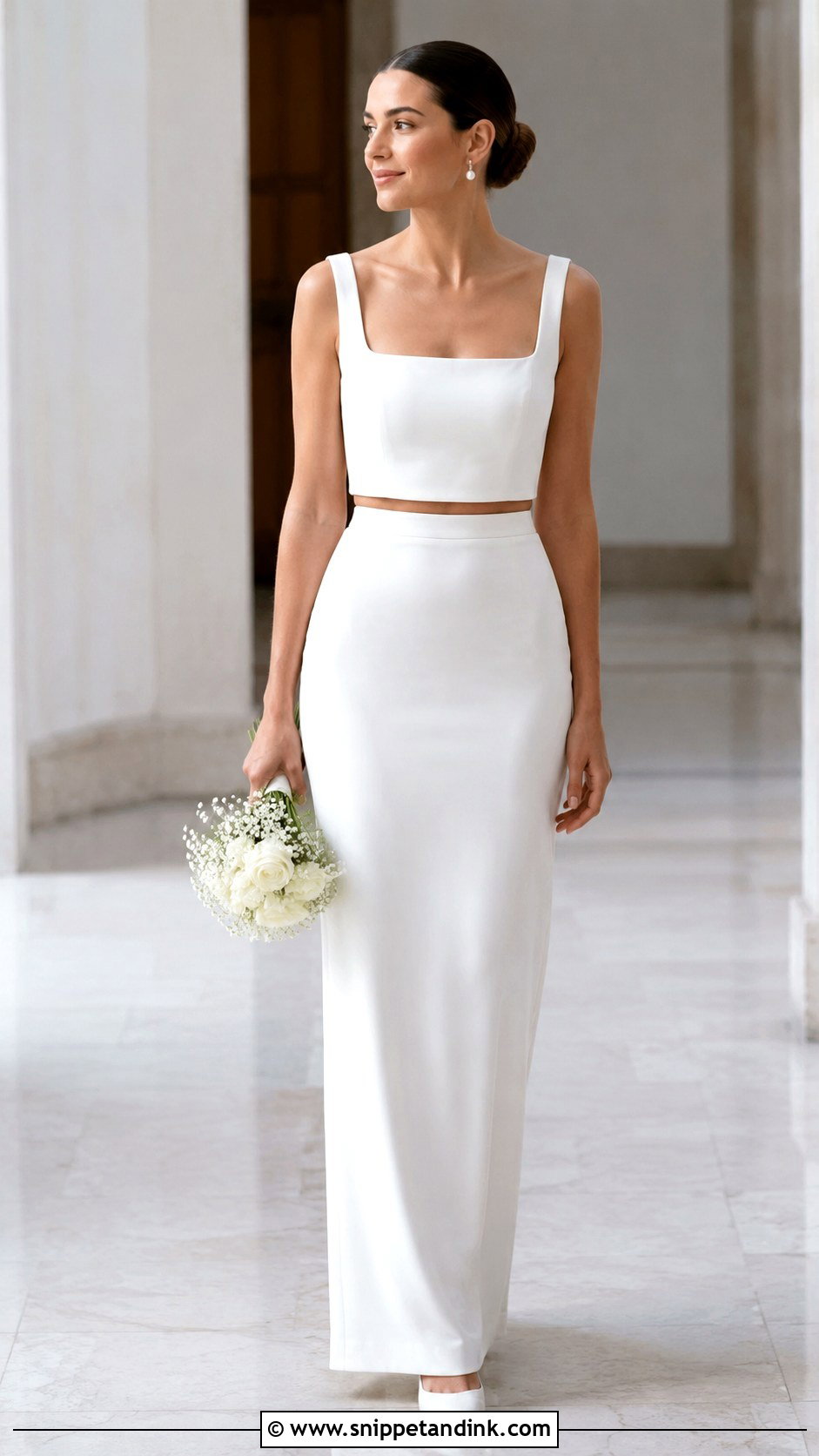
A two-piece only looks intentional when the top and skirt are exactly the same white. Two whites from different fabric batches can look mismatched in daylight, so I compare the pieces together by a window, never under shop lights. A satin cami with a flowing skirt, a structured square-neck top over a crepe column, or a long-sleeved top with a sleek midi all work. The other decision is the gap at the waist: a sliver of skin reads modern, none reads traditional. White heels, simple earrings and smooth hair suit a courthouse, beach or relaxed reception.
Creases, Steamers and the Morning of the Wedding
Simple dresses show wrinkles more than embellished ones, and each fabric behaves differently once it has been folded into a garment bag or sat on through a long ceremony.
- Crepe relaxes a lot on its own if it hangs overnight. A light pass of steam at the hem is usually all it needs.
- Satin creases across the lap and elbows. Steam it from the inside and never press it with a hot iron directly, which can leave shiny marks.
- Mikado holds sharp folds. It needs proper steaming and then time hanging before you put it on.
- Chiffon and tulle want steam from a distance. Held too close, a steamer can spit water spots or flatten fine tulle.
My routine is to unpack the gown the day before and hang it high by its hanger loops so the skirt falls free. On the morning I steam only where it’s needed, testing the steamer on the inside of the hem first, since cheap hand steamers often spit when they first heat up. If you’re traveling, fold the dress with tissue between the layers and carry it on with you.
Afterward, get it professionally cleaned within a few weeks even if it looks spotless. Splashes of champagne, sugary drinks and sweat dry invisible and can turn yellow-brown with time, and on a plain white dress there is no lace to hide them. Store it in acid-free tissue in a breathable box or cotton bag, not the plastic cover it came home in.
A Plain Gown Looks Deliberate When Fit Comes First
A plain dress and a simple dress are not the same thing. The gowns above look finished because the fit is right, the fabric suits the day’s temperature, and the shoes, hair and jewelry agree with the neckline. Satin slips, crepe columns, midis, lace sheaths and two-pieces each ask for something different. Start with fit and fabric, try the dress sitting down and moving, and add details only once the gown itself is right. That order is what makes a minimal white dress look deliberate, in person and in photos.
You'll Like These Ideas:








Leave a Reply