
A plain gown hides nothing. I say this at most first appointments, usually while a bride is holding a heavily beaded dress she doesn’t love, because without lace or sequins the eye goes straight to the seams, the fabric and the way the bodice sits on her body. That is also the good news. When those three things are right, a simple dress looks expensive in a way decoration can’t fake. Minimalist bridal right now runs from bias-cut slips and structured A-lines to sleek columns, short hemlines and modern necklines, so there is a clean shape for a ballroom, a garden or a city hall ceremony. Below are twenty complete looks, each with the fabric, styling and fitting notes I’d give a bride trying it on.
What I Watch For When a Bride Tries On a Plain Gown
With a simple dress, the mirror tells you less than you think. Standing still under flattering shop lights, almost any clean gown looks good. The real test is how it behaves when you move, sit and get photographed, so that is where I put my attention during an appointment.
- Feel the fabric weight between your fingers. Thin satin and unlined crepe show every seam allowance and undergarment line once there is no lace to distract the eye.
- Turn the bodice inside out if the consultant allows it. Boning, a waist stay and a full lining are what keep a plain dress looking crisp at hour eight.
- Wear a heel close to your wedding height and a bra or shapewear like the one you plan to wear. Both change how the dress falls.
- Sit, raise your arms and walk across the room. Wrinkles that appear across the hips or gaps at the neckline will only grow over the day.
- Ask someone to take a phone photo with the flash on. Flash exaggerates shine on satin and reveals anything showing through a light fabric.
If a dress passes all of that and you still smile at it, it is worth more consideration than the one that only looked good from the front.
1. Strapless A-Line Wedding Dress
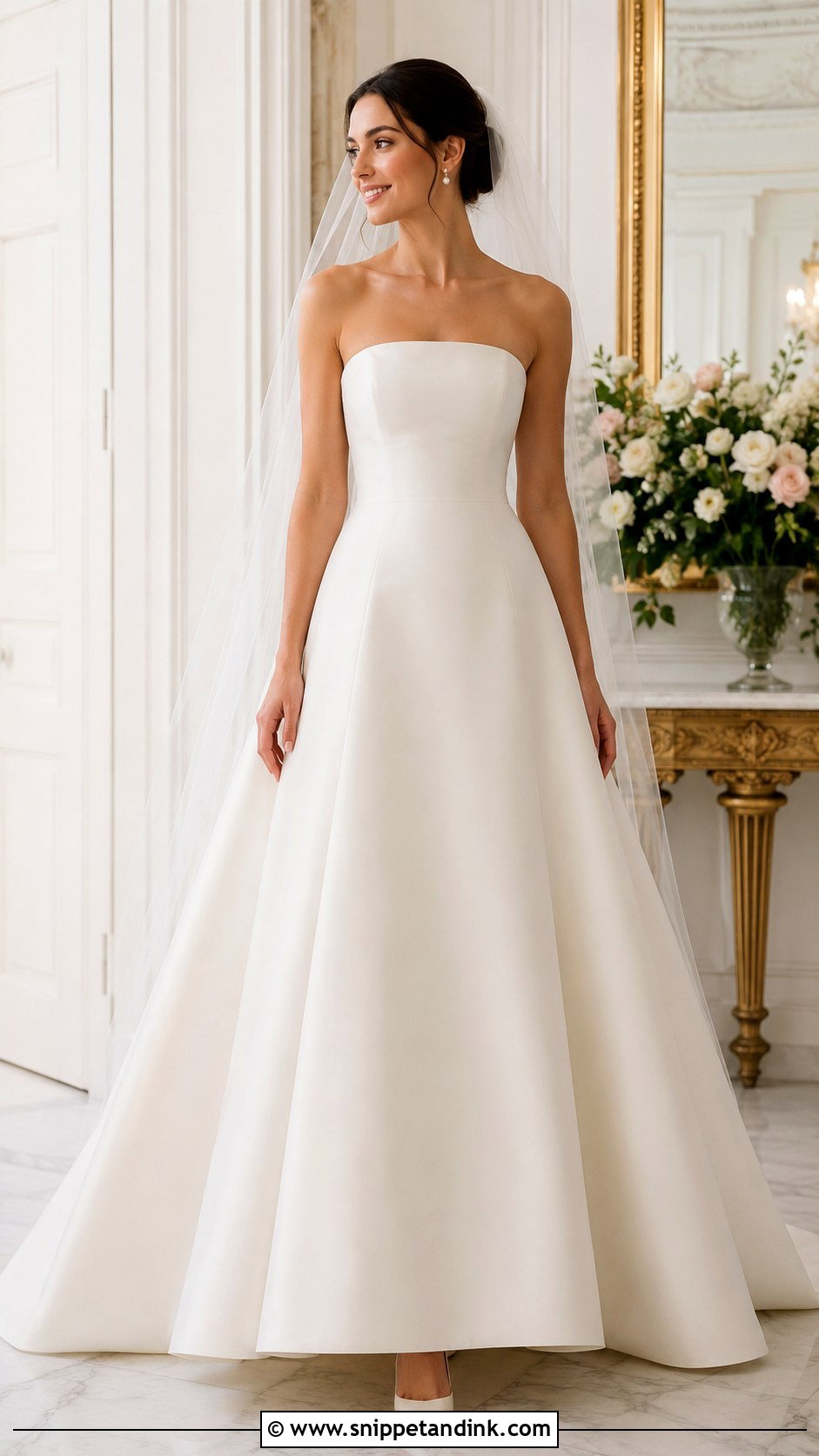
Most brides who tell me they want simple end up trying this shape first, because it is forgiving from the waist down and lets the bodice do the talking. Mikado, satin or matte crepe give it presence without a single bead. What I check first is grip: a strapless bodice should stay put through sitting, hugging and dancing, and that comes from internal boning and a waist stay, not from squeezing the top edge tighter. If you are tugging it up in the fitting room, you will be tugging it all evening. Pearl studs, pointed-toe pumps and a fingertip veil with a raw edge finish it, and a low bun keeps the neckline in view. Ballrooms, hotels and estates carry it best.
2. Square Neck A-Line Wedding Dress
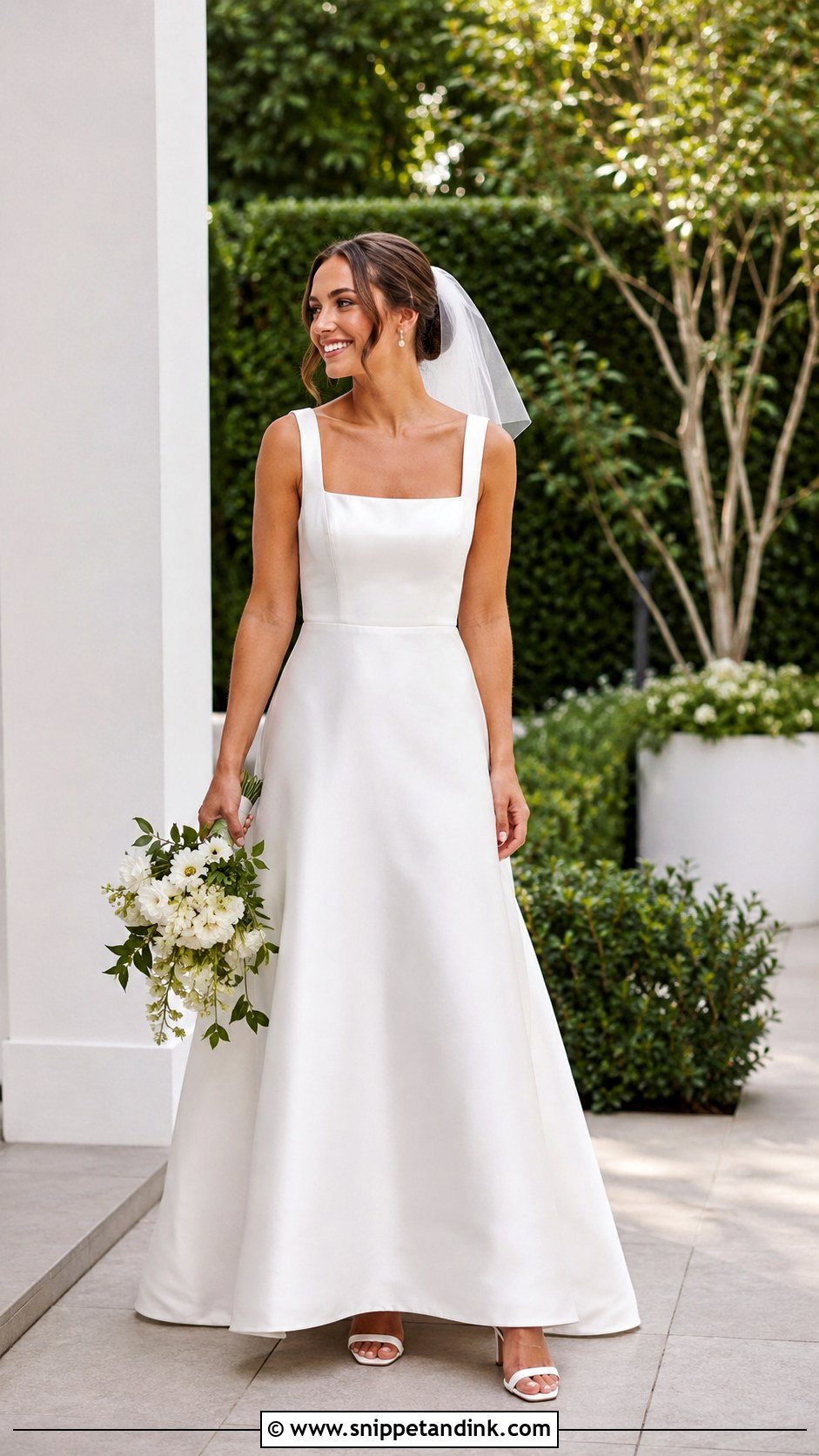
The corners decide whether a square neckline works. If they gap or roll forward when you lean in, the architectural effect collapses, so at alterations I have the bride bend, reach and turn while I watch those two points and nothing else. Wider straps help and give more support than spaghetti straps. A smooth bodice with princess seams and a softly flared skirt in satin, crepe or light mikado keeps it traditional without looking dated, and a square back or a row of covered buttons gives guests something to see during the vows. Add a short veil, small drops and block-heel sandals, with a polished chignon or soft waves. It sits comfortably in a garden or a classic indoor room.
3. Satin Slip Wedding Dress
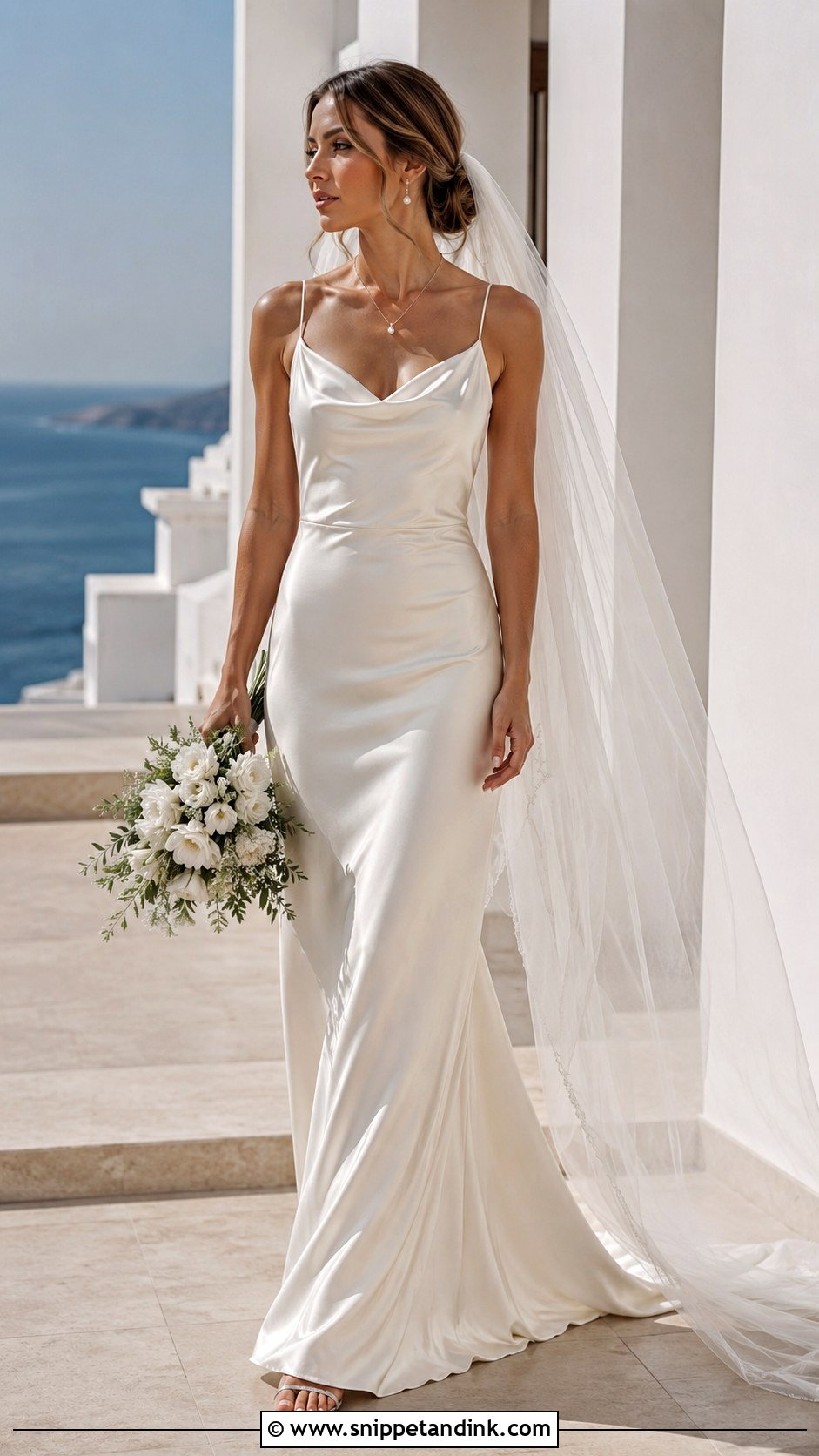
The slip is the least forgiving dress on this list and the one I’m asked about most. Narrow straps, a draped neckline and a fluid skirt give it that 1990s minimalism, but cut on the bias, the fabric shows everything underneath it. I steer brides toward a heavier satin or silk blend that skims rather than clings, and I want them in smooth, skin-tone underwear with no visible edges before any pinning starts. Bias-cut hems also drop after the dress has hung for a while, so a good seamstress lets it hang before the final hem. Style it with slim metallic sandals, a fine pendant and a chapel-length veil, then a sleek bun or loose waves. It belongs at intimate weddings, restaurants, lofts and the coast, where a structured gown would feel stiff.
4. Long Sleeve Crepe Wedding Dress
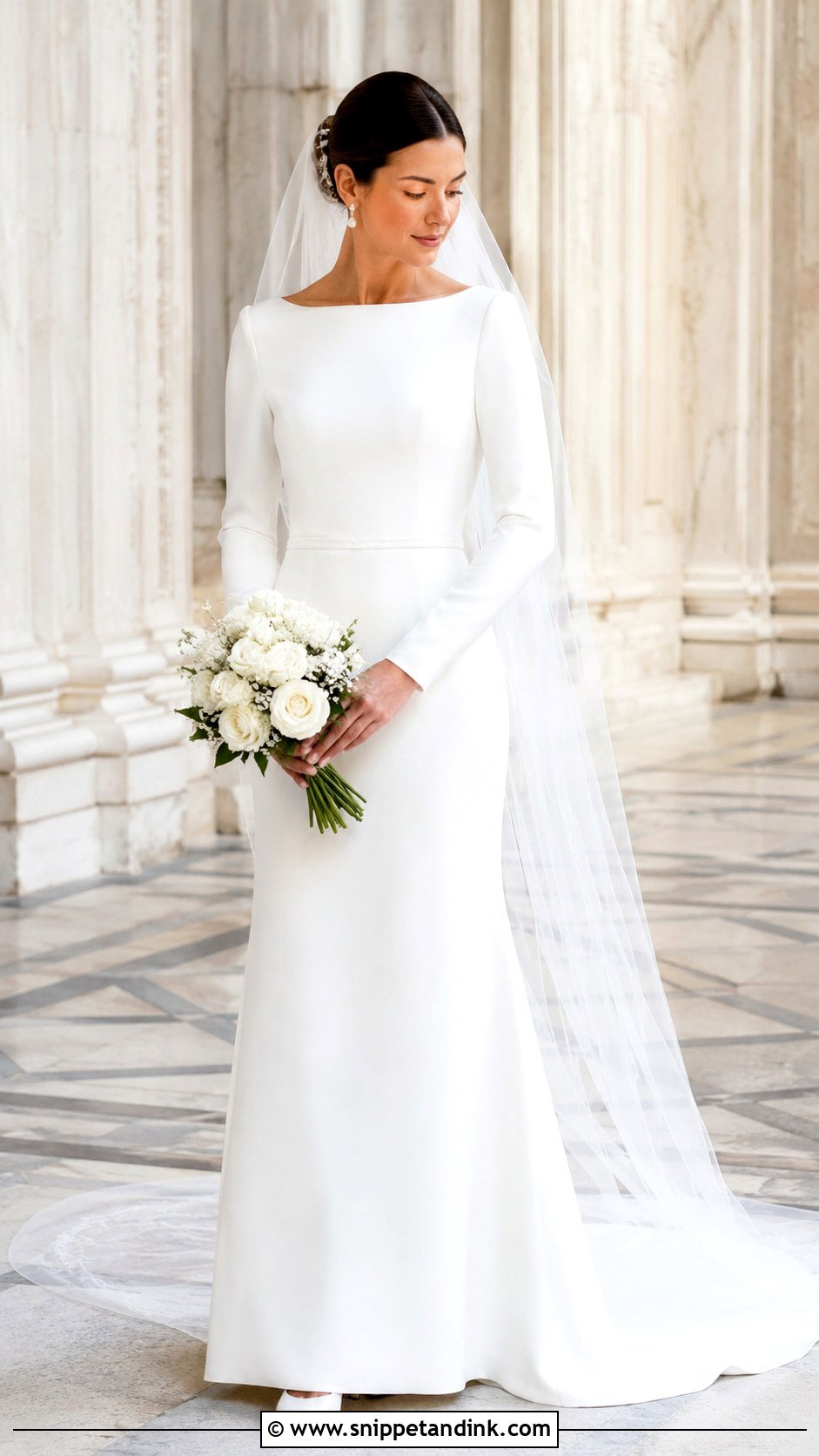
Cold-weather brides often assume sleeves will make them look covered up. In opaque stretch crepe they don’t, as long as the bodice is fitted and the waist seam is clean, because then the sleeves read as part of the silhouette. Before alterations are finished I ask the bride to hold her bouquet at chest height and then reach both arms forward: a set-in sleeve that is too narrow at the elbow pulls the whole bodice up. A bateau, scoop or modest V-neck keeps it classic. Pearl earrings, closed-toe pumps and a plain cathedral veil finish it, and a low twist stops the upper half from feeling buttoned up. Fall and winter weddings in city venues and historic houses suit it.
5. Off The Shoulder Wedding Dress
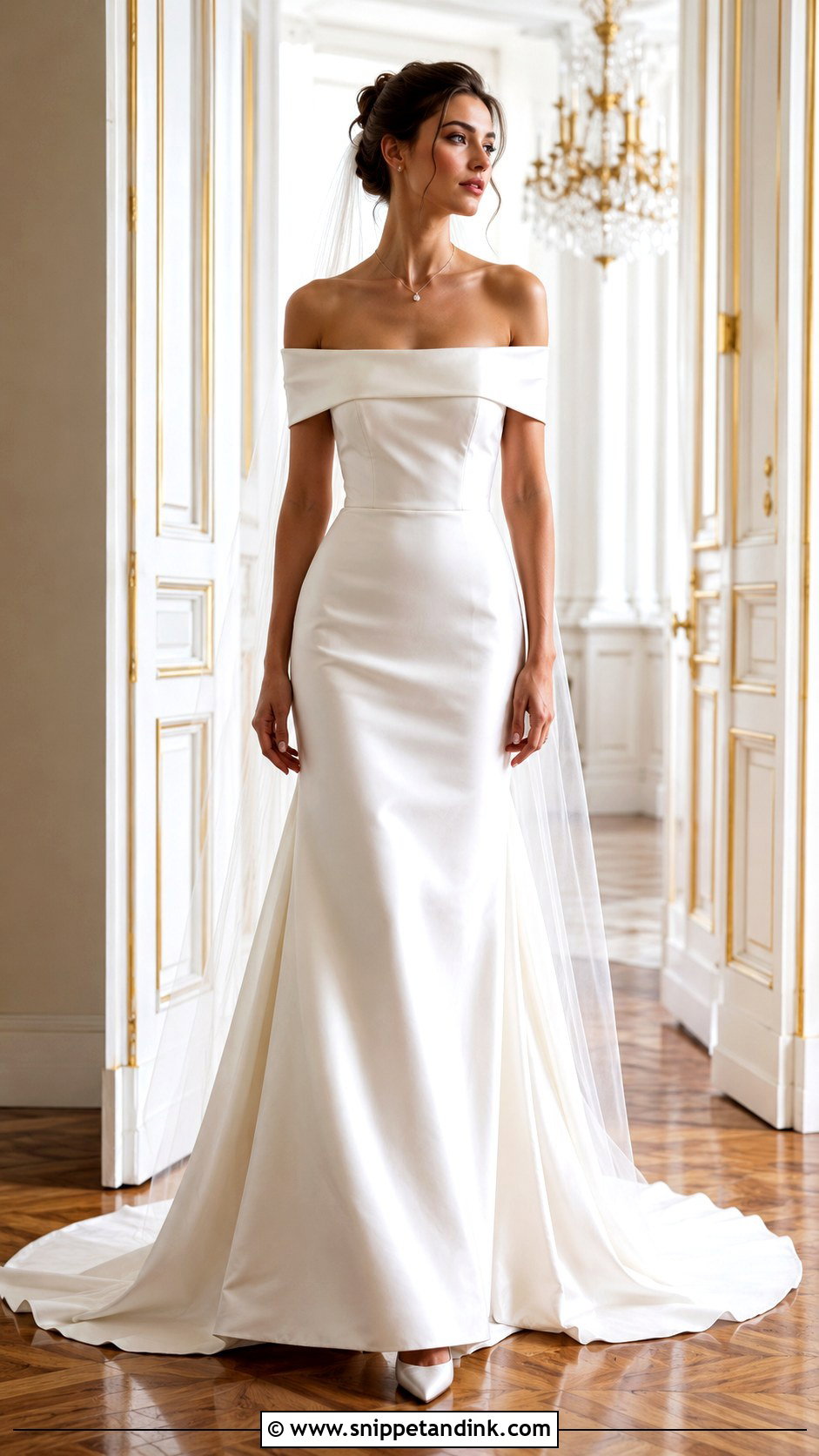
Off-the-shoulder bands are a balancing act. Too tight and they dig into the upper arm and create a little bulge; too loose and they slide down by the first dance. That is why I have every bride raise her arms as if she’s hugging someone during the fitting, because that one movement tells me more than standing still in front of a mirror ever will. A folded neckline on a smooth column, A-line or restrained fit-and-flare keeps it balanced, and the satin or crepe needs enough body to hold the shape. Wear a collarbone-length necklace or small statement earrings, pointed pumps and a sheer veil, with hair up so it doesn’t fight the neckline. It moves from ceremony to evening reception without a change.
6. Halter Neck Wedding Dress
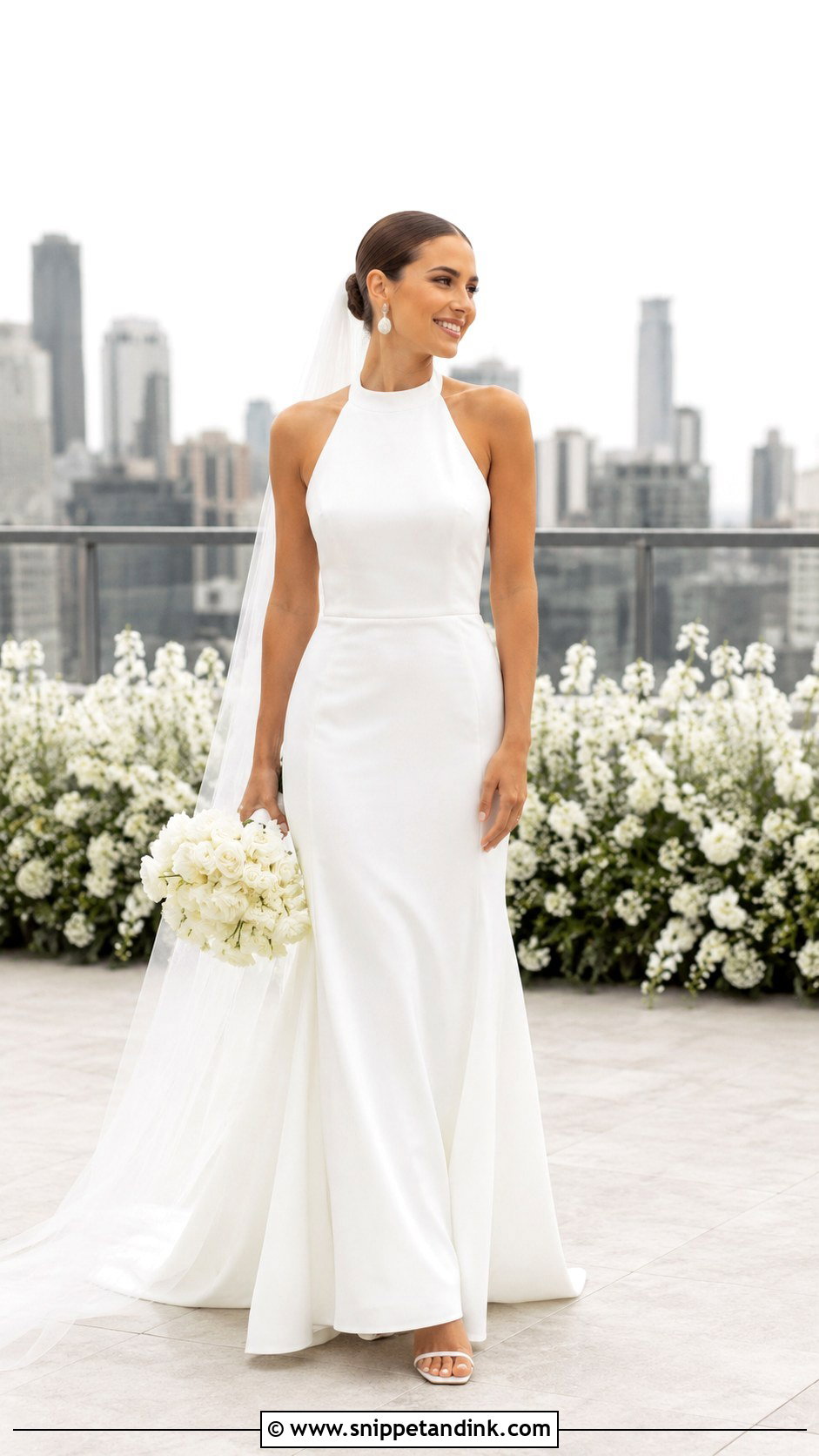
With a halter, the neck carries the weight of the bodice. In fluid crepe, silk satin or light jersey that is fine; in heavier fabric, brides start rubbing the back of their neck by the speeches. A high halter reads sharper, a gathered one moves more easily, and either looks cleanest over a column or a gently flared skirt. Because the back is usually open, I make sure support is built into the dress rather than relying on a bra that can’t be hidden. Skip the necklace and wear sculptural earrings, a smooth bun, slim heels and a narrow veil pinned below the hairstyle. Galleries, rooftops, resorts and pared-back event spaces are its natural setting.
7. Bateau Neck Wedding Dress
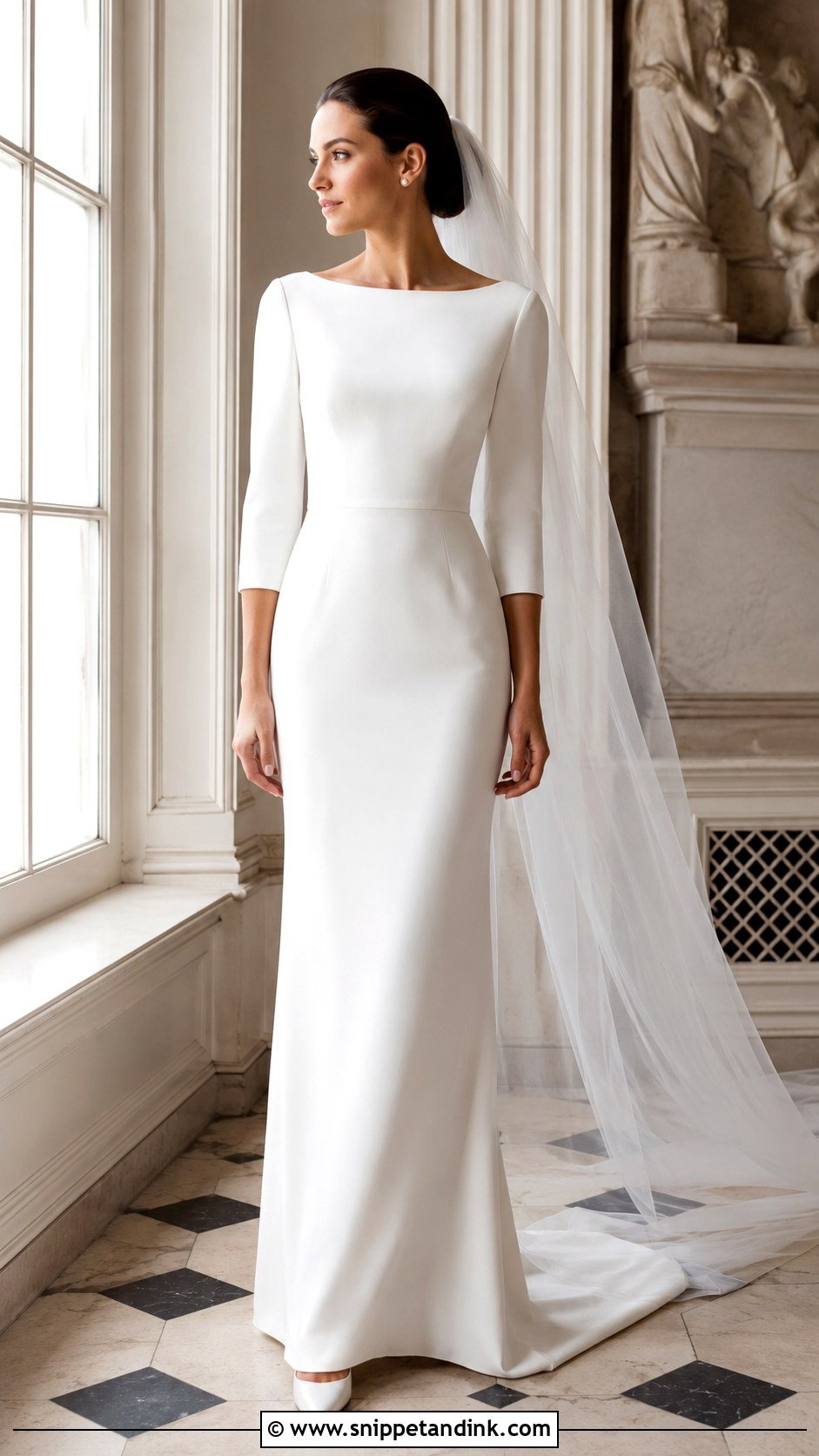
A bateau neckline follows the collarbone in a wide, shallow curve, and on narrow shoulders it has a habit of creeping outward. I solve that with precise shoulder tailoring and, if needed, small lingerie loops that hold it in place without showing. It looks most refined over a fitted bodice with a sheath or softly flared skirt, in matte crepe for quiet polish or silk faille if you want more structure. Three-quarter sleeves, cap sleeves or a sleeveless cut all suit the neckline. Pearl or diamond studs, a low chignon, a long veil secured at the back of the head and pointed shoes complete it. Formal ceremonies, civil weddings and daytime celebrations all fit its modest tone.
8. V Neck Sheath Wedding Dress
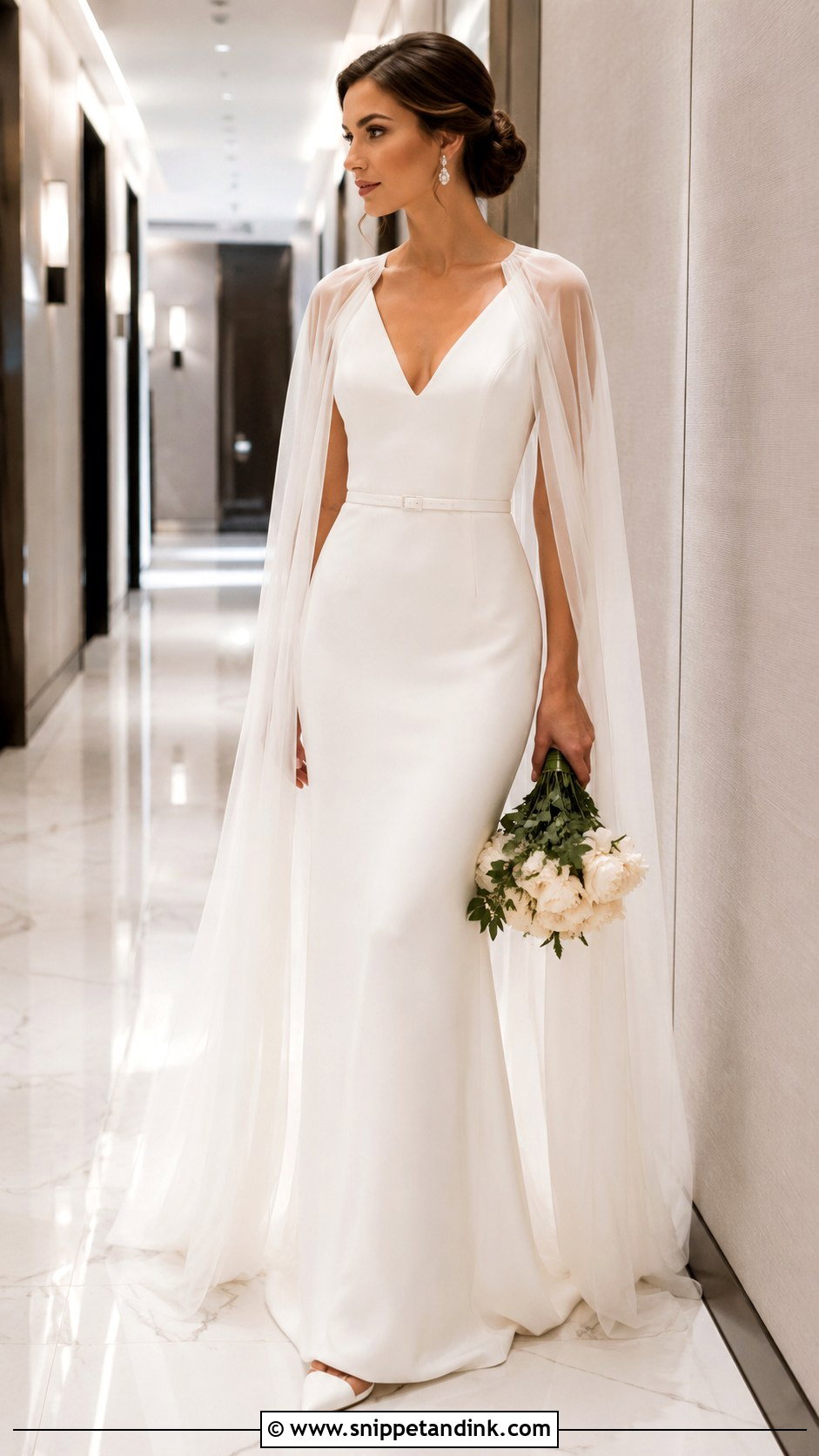
A sheath has almost no volume to hide behind, so the fabric has to hang well on its own. Crepe does this better than anything else I fit, because its weight pulls the skirt straight while still letting you move. The V can stay shallow or go a little deeper; once it drops past the bust I add a sheer mesh panel or fashion tape so nothing shifts during the ceremony. Look for supportive seaming in the bodice and a skirt that follows the body before falling to the floor. Delicate earrings, an optional narrow belt, pointed-toe heels and a plain veil or bridal cape complete it. I always make the bride walk a full lap and sit down twice, since a sheath that is too narrow at the knee turns every step into a shuffle. Modern hotels and destination weddings suit it well.
9. Cowl Neck Wedding Dress
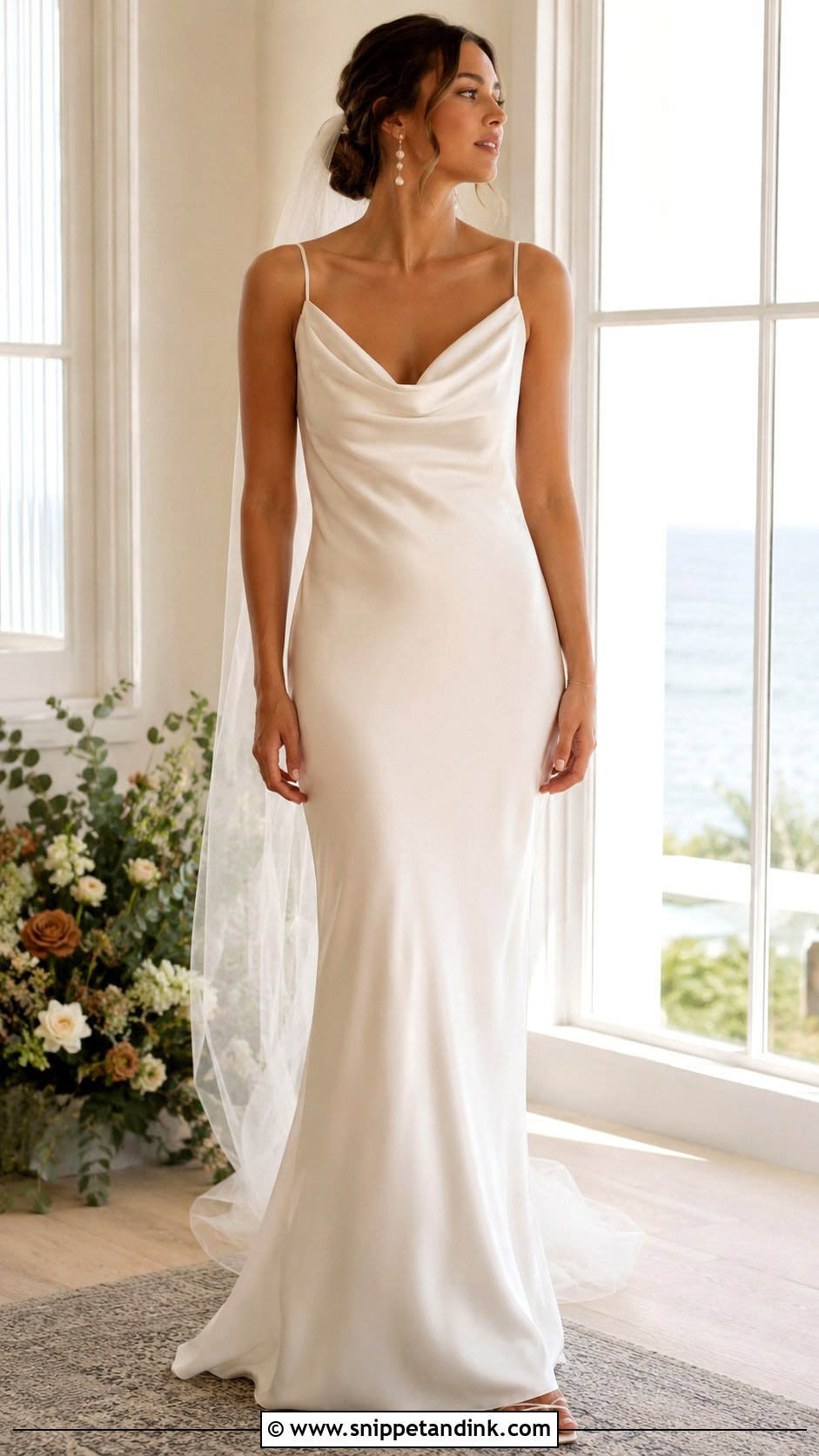
Soft folds give a cowl neckline depth without beads, lace or embroidery, but only in a fluid fabric like silk satin or charmeuse. The test I run is a small bow from the waist, as if greeting a guest, to see how far the cowl falls open; if it gapes too much, a seamstress can tack the drape or add a tiny weight inside. A straight skirt keeps it minimal, a slight flare gives more ease, and a low back needs secure fitting and proper support. Finish it with refined drop earrings, barely-there sandals and a veil attached beneath a loose bun. Leave the necklace off entirely, since it cuts straight through the folds. Candlelit indoor receptions and coastal settings bring out the sheen of the fabric.
10. High Neck Column Wedding Dress
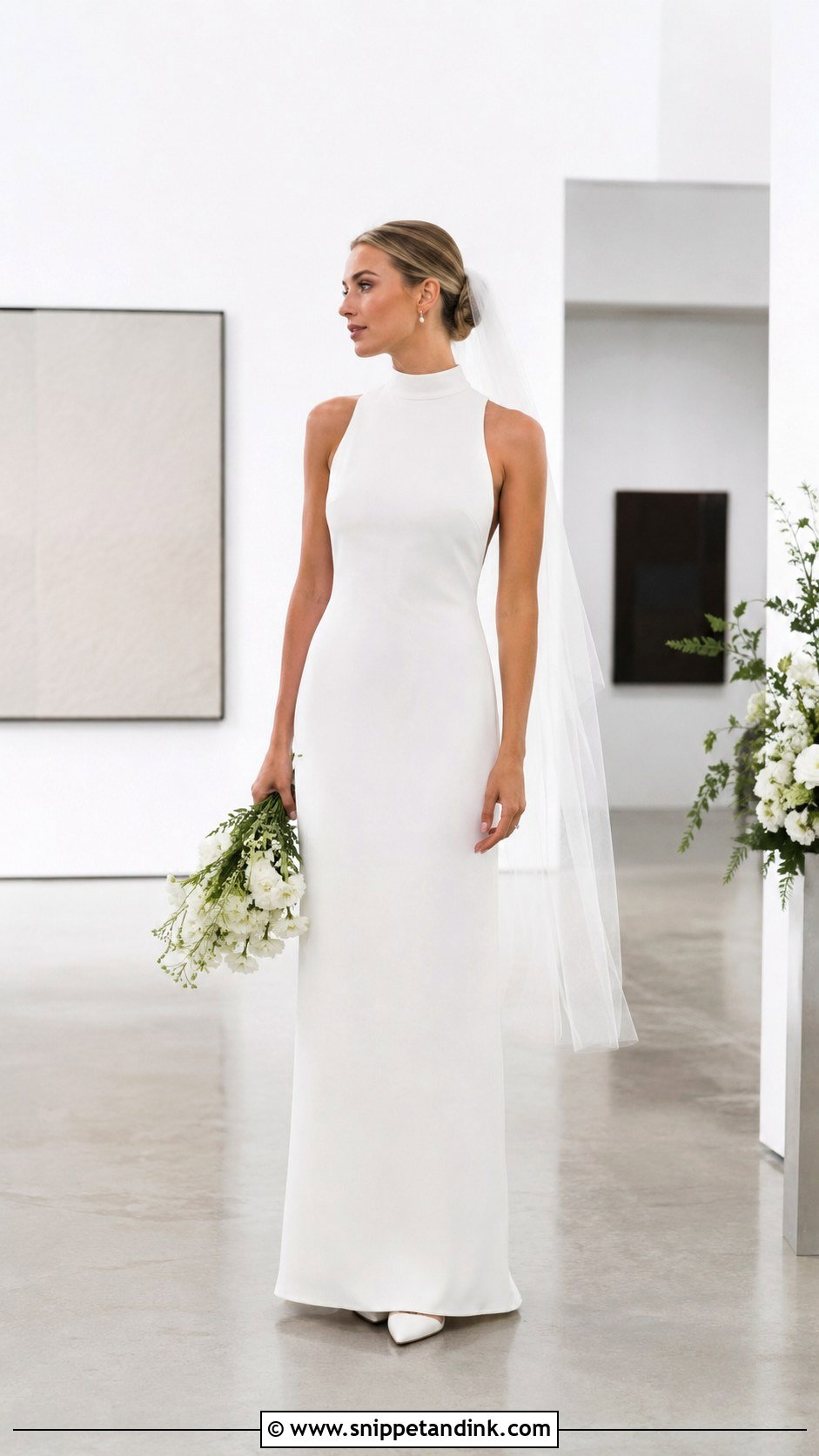
Brides who feel exposed in a strapless dress often relax the moment they put on a high neck. Sleeveless arms keep it balanced, and a softly fitted column skirt holds the long vertical line. Smooth crepe, satin or silk jersey are all you need, with the interest moved to an open, keyhole or draped back. The collar is where I spend my time: it should close at the nape without pressing on the throat when you turn your head or sit down, and hair should be up so it doesn’t catch in the buttons. Style it with small earrings, a sleek updo and pointed pumps or fine sandals, and pin the veil below the bun so the back stays visible. City weddings, galleries and evening ceremonies are a natural fit.
11. One Shoulder Wedding Dress
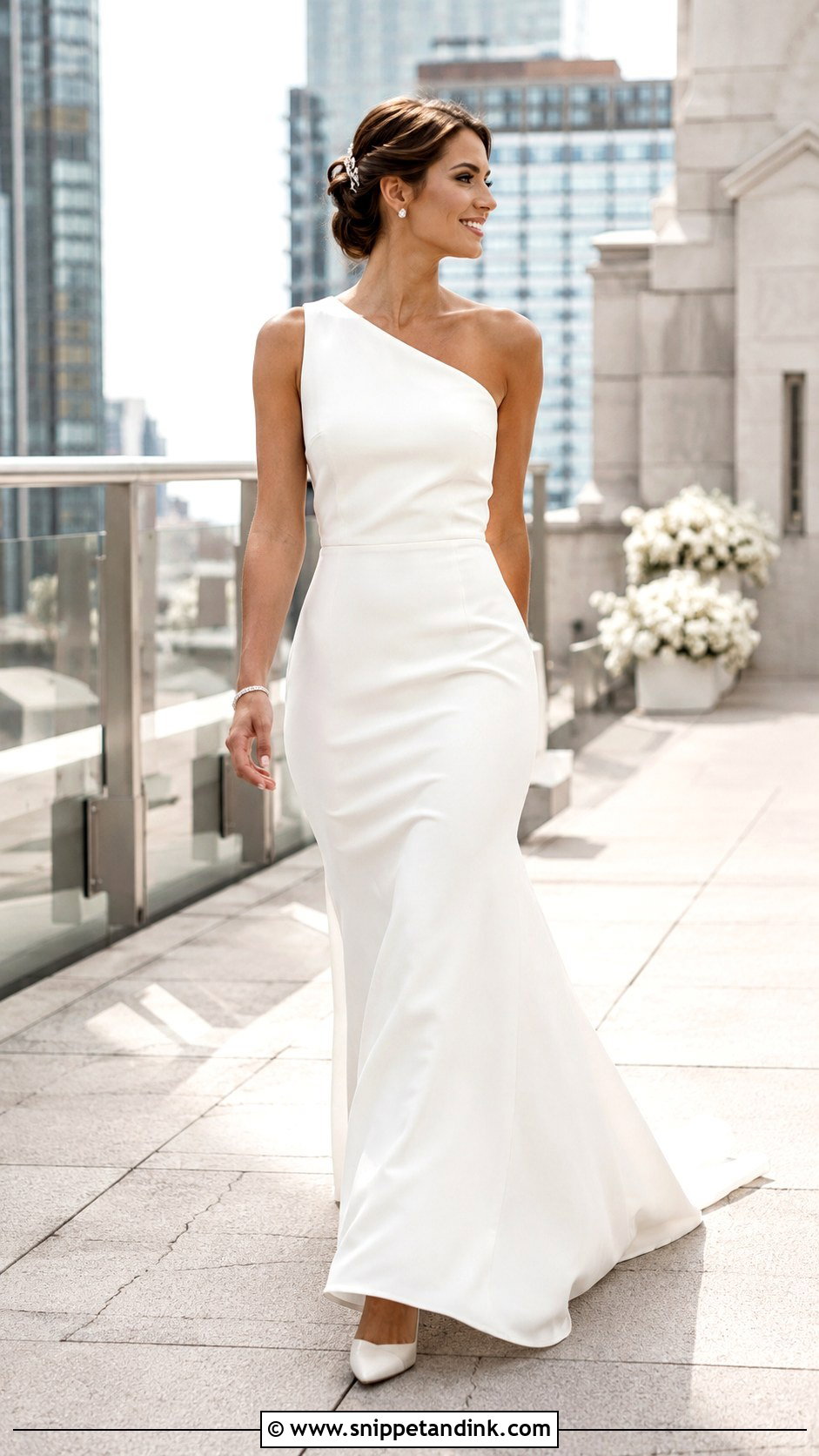
One strap carries the entire bodice here, so I check that it is anchored firmly into the side seam and doesn’t drag the neckline sideways when you lift your bouquet. Once that is right, the asymmetric line is the whole design. A fitted crepe version looks streamlined, a draped satin one moves more, and the skirt should stay plain, whether column, restrained A-line or subtle fit-and-flare. A single bracelet, small earrings and clean pointed shoes are enough. Sweep the hair toward the bare shoulder so both sides carry weight, and treat the veil as optional; a neat bun with one sculptural pin can do the same job. It suits rooftop ceremonies, modern ballrooms, art venues and destination weddings.
12. Minimalist Ball Gown Wedding Dress
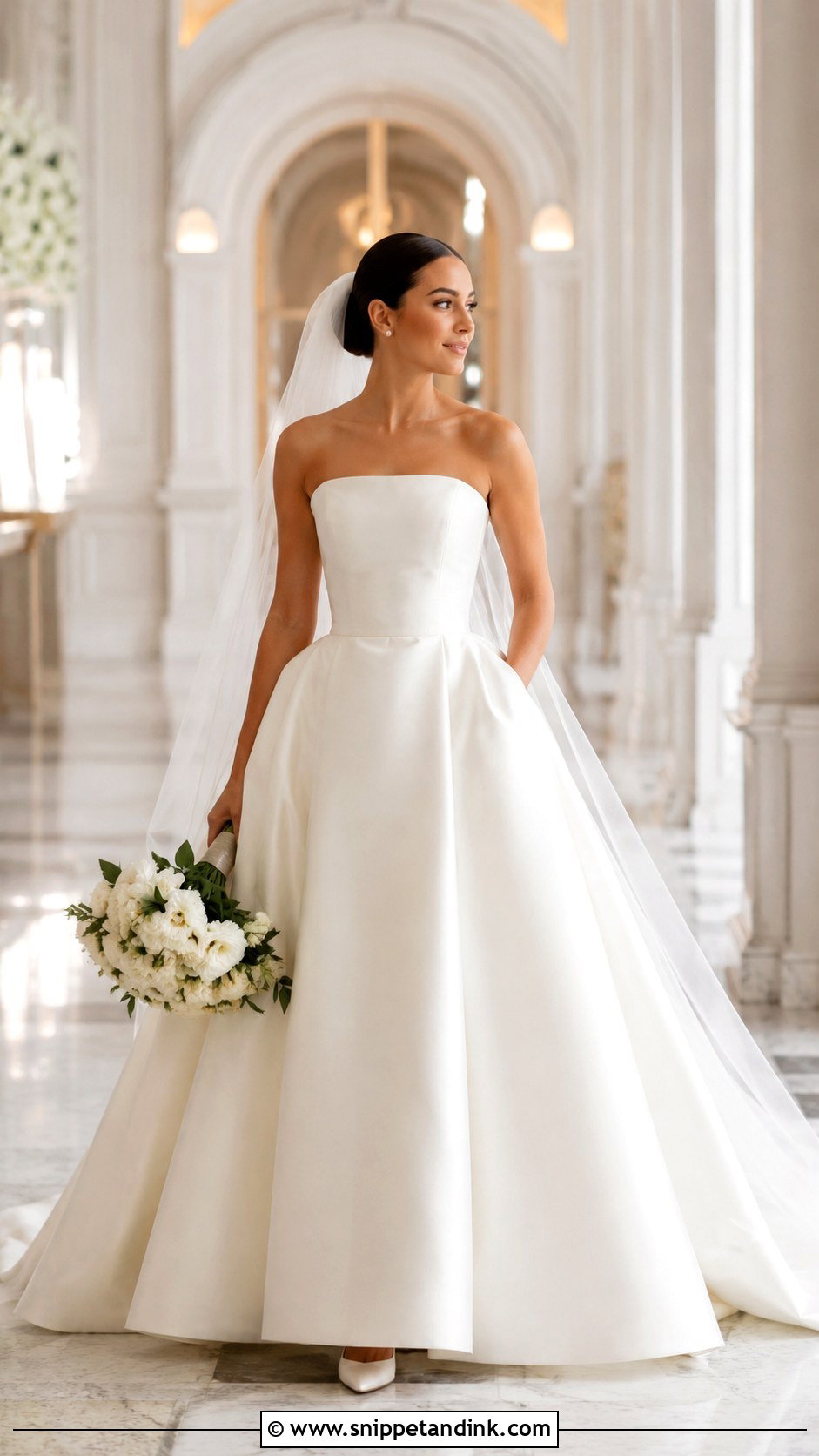
A ball gown reads as simple when the bodice is precise and the full skirt is left bare, in clean satin, mikado or silk faille rather than glitter and layered lace. A strapless, square, or scoop neckline gives it a classic base, and discreet pockets are worth asking for. What surprises brides is the weight: a full mikado skirt with its petticoat can be genuinely heavy by evening, so I like the waist seam smooth and the bustle points tested properly. Whoever will bustle you at the reception should come to the last fitting and do it twice themselves. Pearl earrings, classic pumps and a long plain veil scaled to the skirt finish it, with a neat bun or a waved half-up style. Large indoor venues, estates and formal evening ceremonies give it room.
13. Fit And Flare Crepe Wedding Dress
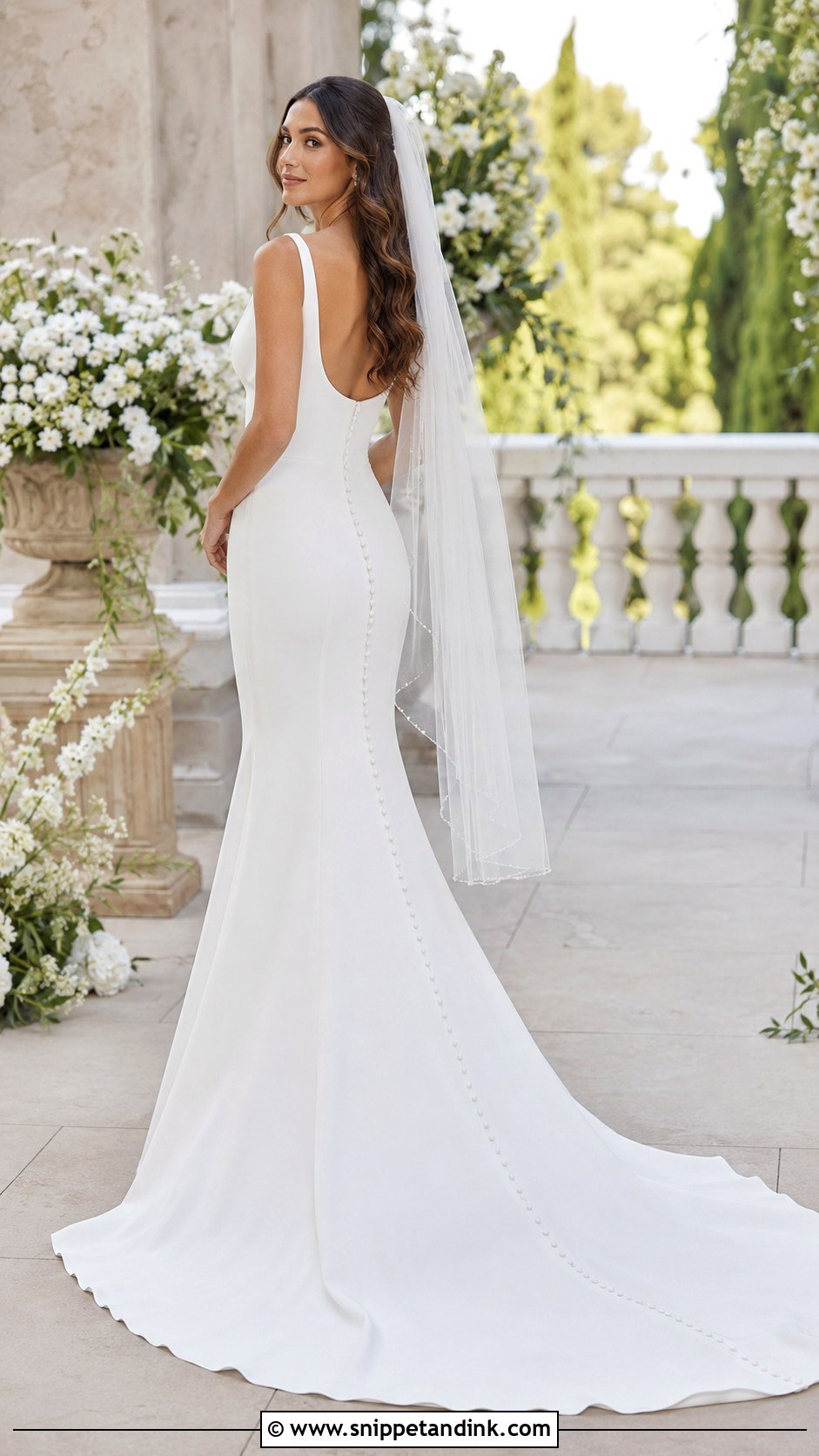
Where the flare begins matters more than any other detail of this dress. Set at the lower thigh, it lets you walk normally; set at the knee, it shortens your stride and makes stairs awkward, which is why I take brides up and down a step during fittings. The gown should follow the torso and hips before widening gradually, and smooth crepe shows off that tailoring with no ornament competing. A scoop, V or off-the-shoulder neckline all work, with covered buttons down the back as the one bridal detail. Crystal studs, a sheer veil and pointed pumps complete it, and soft waves or a low textured bun keep it from looking severe. Indoor venues, modern estates and formal gardens suit it.
14. Scoop Neck Satin Wedding Dress
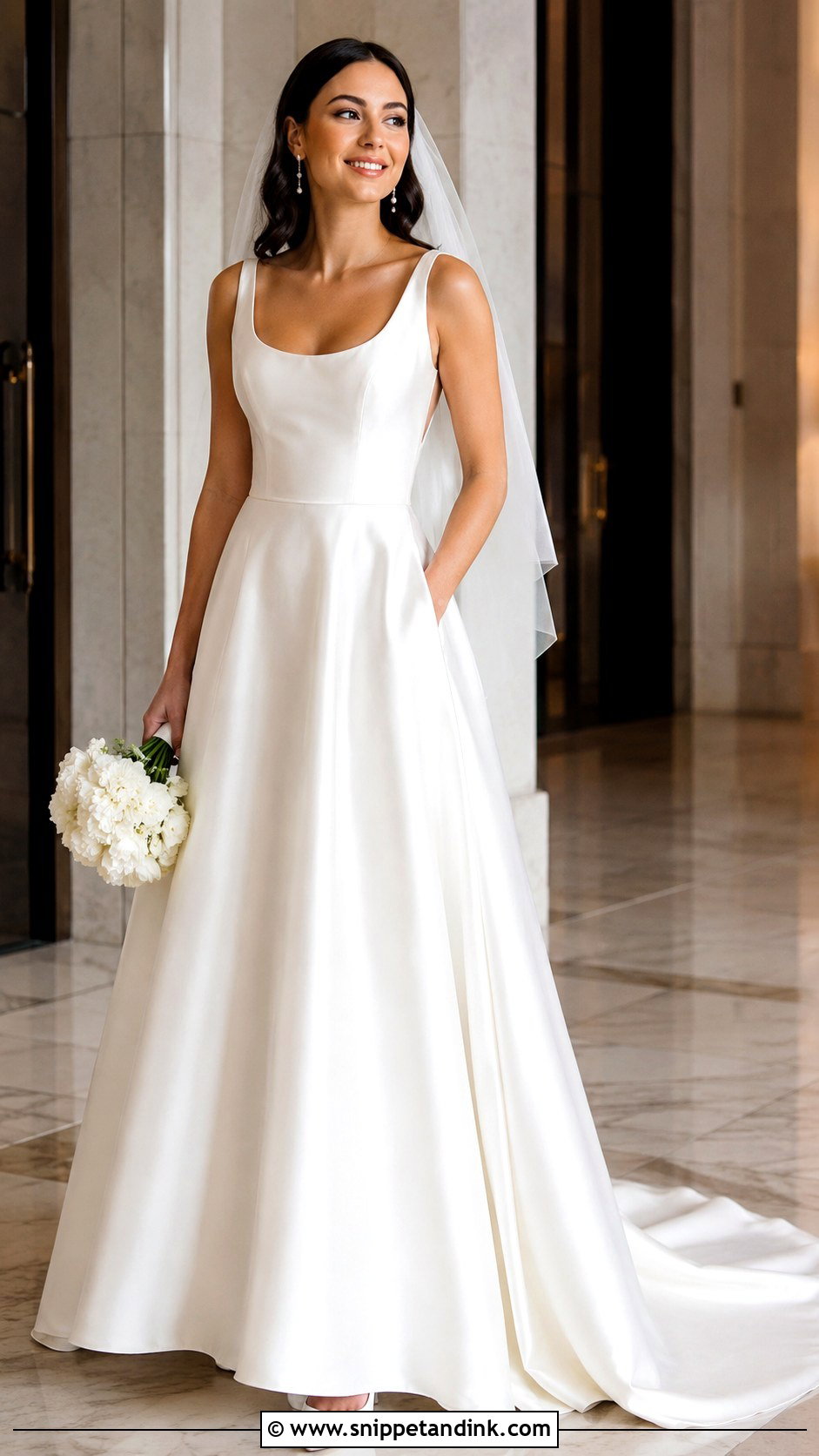
There is an easy softness to a scoop neckline in satin. The curve frames the face without the structure of a square neck or the exposure of a deep V, and satin’s natural glow means very little decoration is needed. The catch is that satin creases where you sit and marks if water touches it, so I always suggest a quick steam on the morning and keeping drinks well away from your lap. Choose a fitted bodice with supportive seams over an A-line or column skirt, then pair it with pearl drops, a short veil and satin pumps. A low bun with a center part looks modern; soft waves look more romantic. It works in a hotel ballroom as easily as at a garden ceremony.
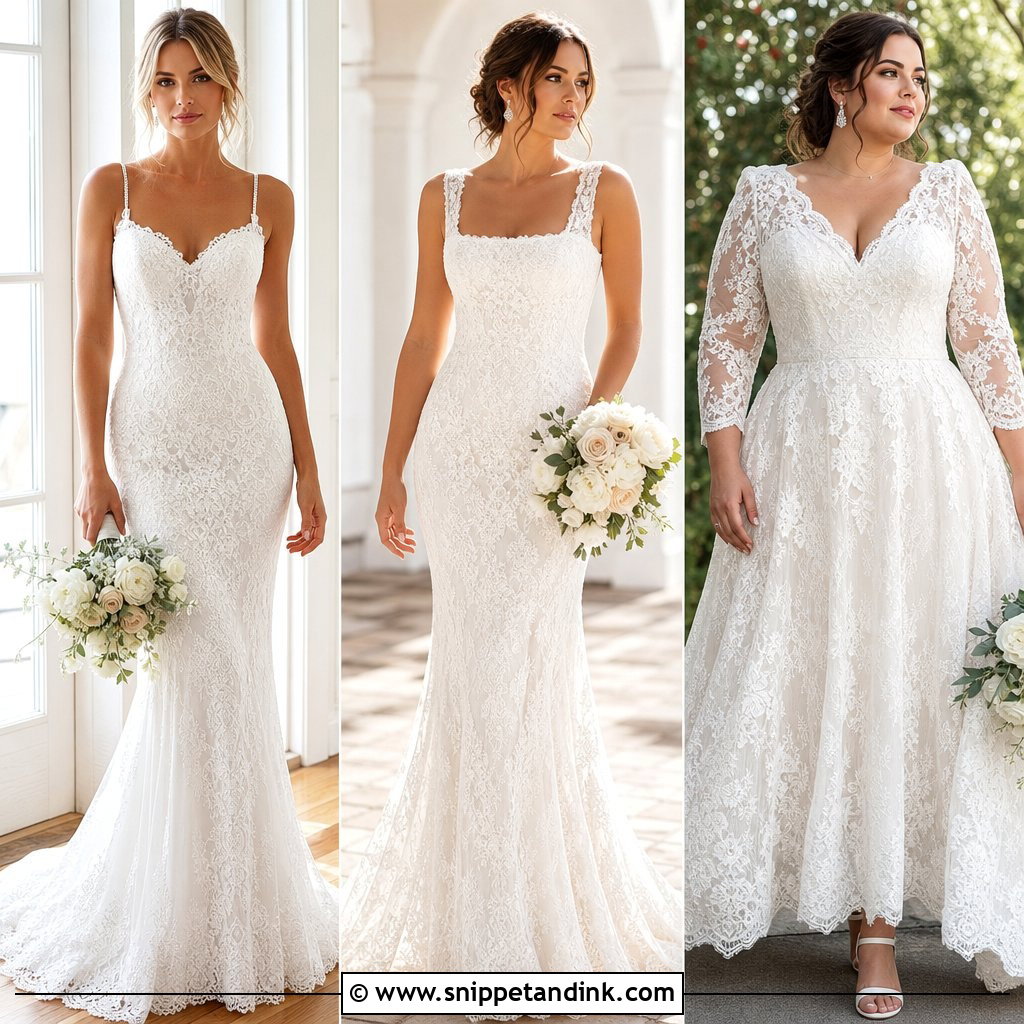

15. Cap Sleeve Wedding Dress
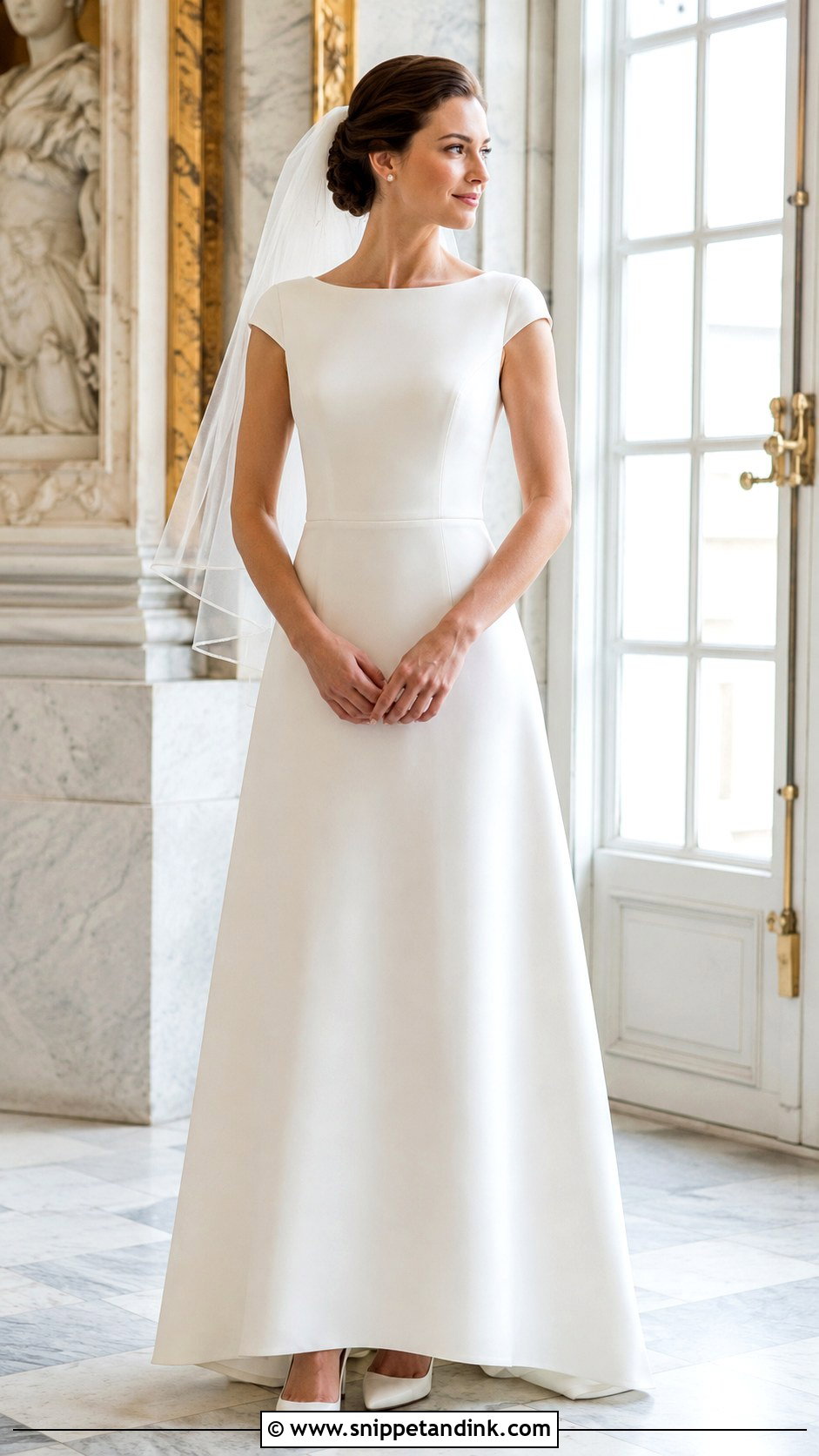
A cap sleeve wedding dress gives light shoulder coverage, and the armhole is where it succeeds or fails. Cut too high, it pinches when you lift your arms; cut too low, it gapes and shows the side of your bra. I look for narrow sleeves that follow the shoulder rather than jutting outward. A bateau, scoop or gentle V pairs well, over a tailored bodice and a sheath or A-line skirt in crepe, satin or mikado. Pearl studs, pointed pumps and a medium-length veil complete it, with a polished updo so the sleeves stay visible. Traditional ceremonies, daytime weddings and historic venues suit it.
16. Tea Length Wedding Dress
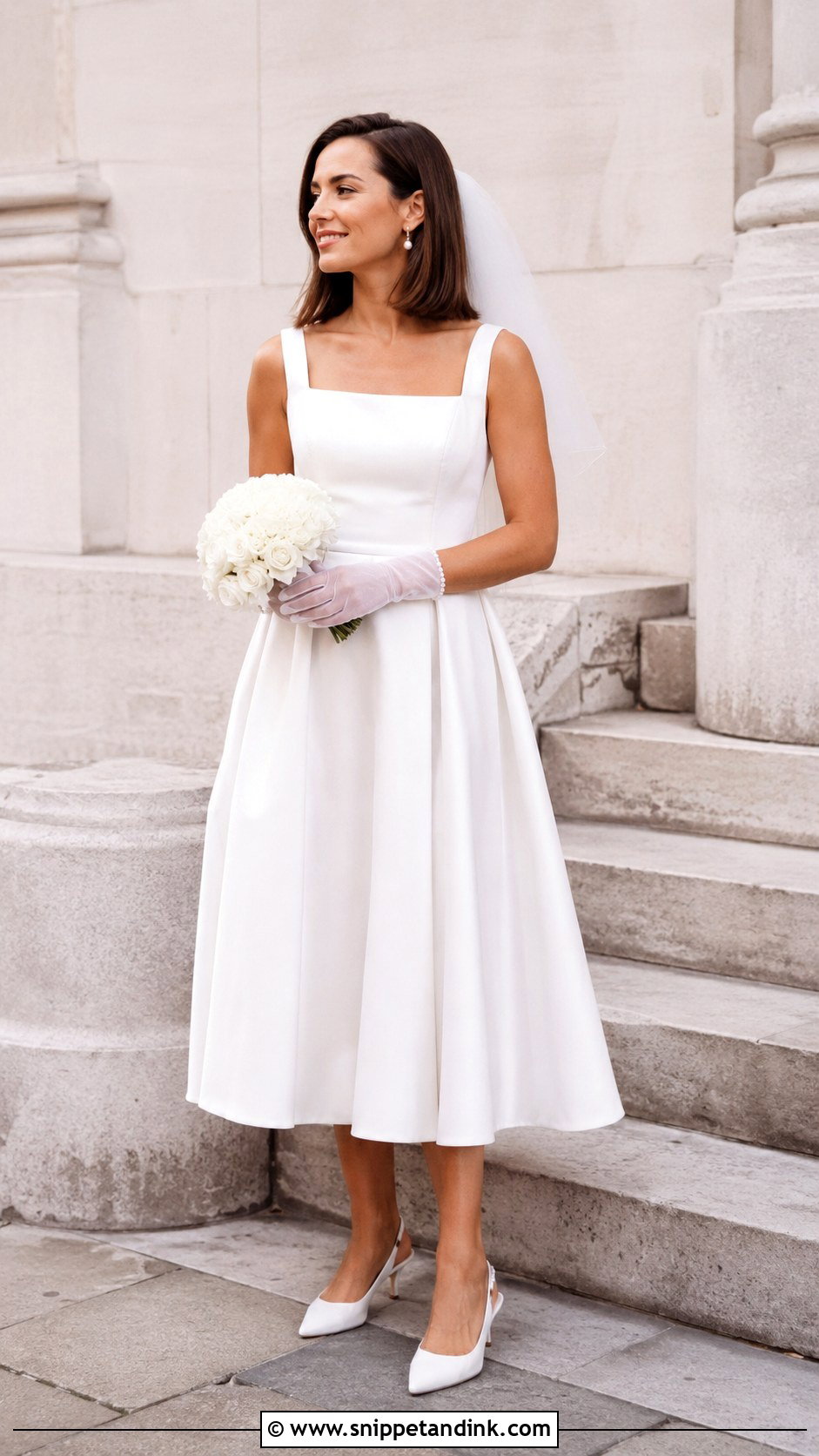
A skirt that stops between knee and ankle puts your shoes on display, so I treat them as part of the dress, not an afterthought. Break them in beforehand, and look at the soles too, because they show the moment you kneel. Pair a clean bateau, scoop or square neckline with a fitted bodice and a softly structured skirt in satin, mikado or crepe, which hold the shape without extra volume. Pointed pumps, slingbacks or refined block heels all suit it, along with short gloves or pearl earrings. A birdcage veil leans retro; a plain shoulder-length one feels current. Courthouses, daytime ceremonies, gardens and restaurant receptions fit its mood. Book the hem only once your final shoes are in hand.
17. Short Wedding Dress With Sleeves
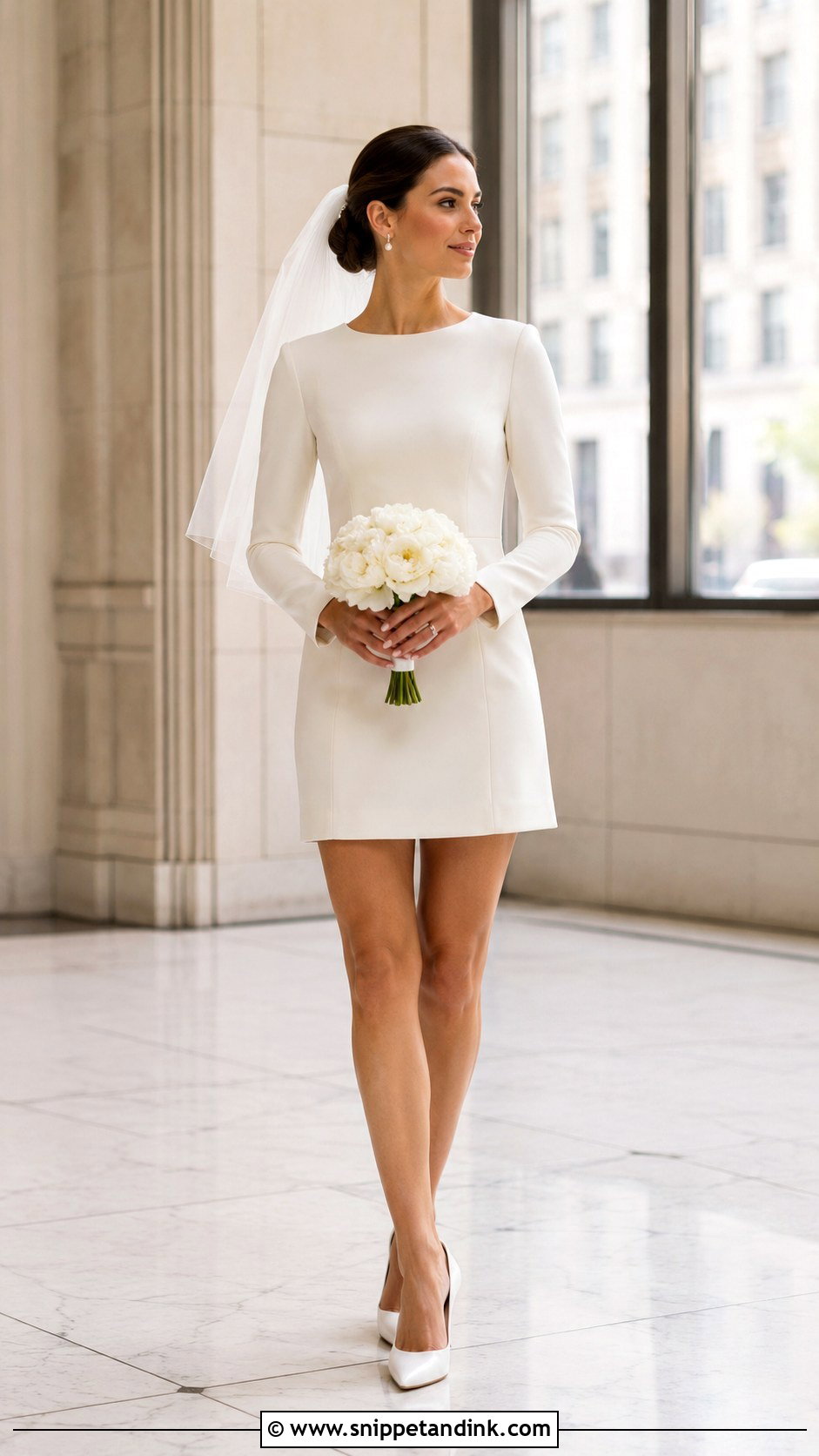
Short dresses live or die on proportion. A knee-length or mini in a clean shift, A-line or tailored sheath needs enough fabric weight, crepe, structured satin or smooth jacquard, to look bridal rather than like a cocktail dress. Long fitted sleeves feel polished; three-quarter sleeves are lighter for daytime. Sit down in it before you buy, since a short hem rides up noticeably when seated and you’ll be sitting for photos and dinner. Pointed pumps, pearl earrings and a short veil or structured hair bow work, and I keep the bouquet compact so it doesn’t swamp the shorter line. I’m seeing more brides pick short dresses for civil ceremonies and as a second look for the party.
18. Empire Waist Wedding Dress
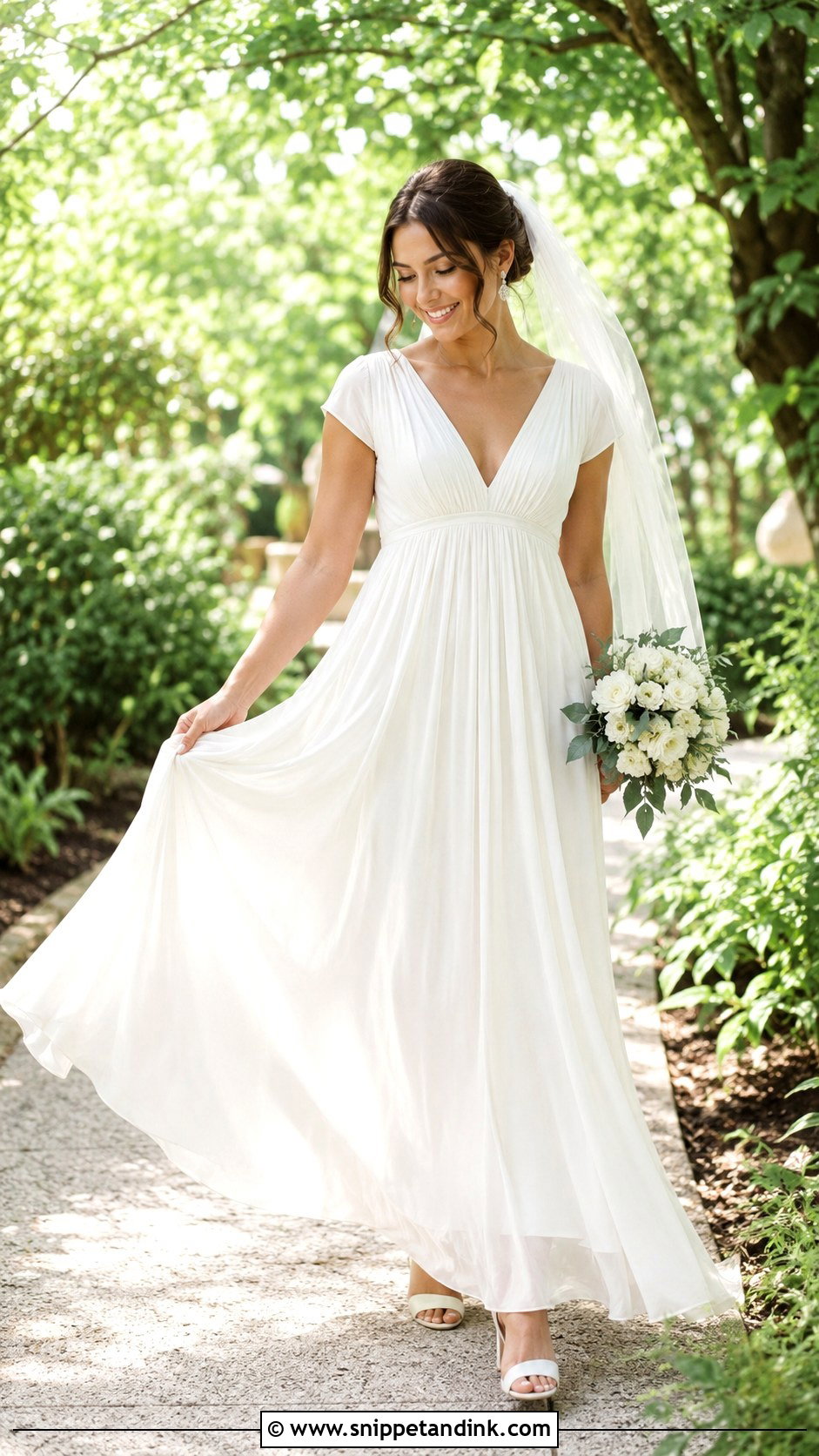
An empire waist puts the seam right beneath the bust and lets the skirt fall loose from there, so there is no stiff bodice at all. That ease is why it travels well to beach, garden and destination weddings. Chiffon, silk georgette, soft satin or lightweight crepe with minimal gathering keep it airy. The thing I always check is the lining: hold the dress up to a window in daylight, then have someone photograph you with the sun behind you, because sheer fabrics that look opaque indoors can turn see-through outside. Chiffon also catches wind, so a beach bride should walk a few steps in a breeze before committing. A square, scoop or modest V, delicate earrings, block heels and an airy veil complete it, with loose waves or a soft low bun.
19. Corset A-Line Wedding Dress
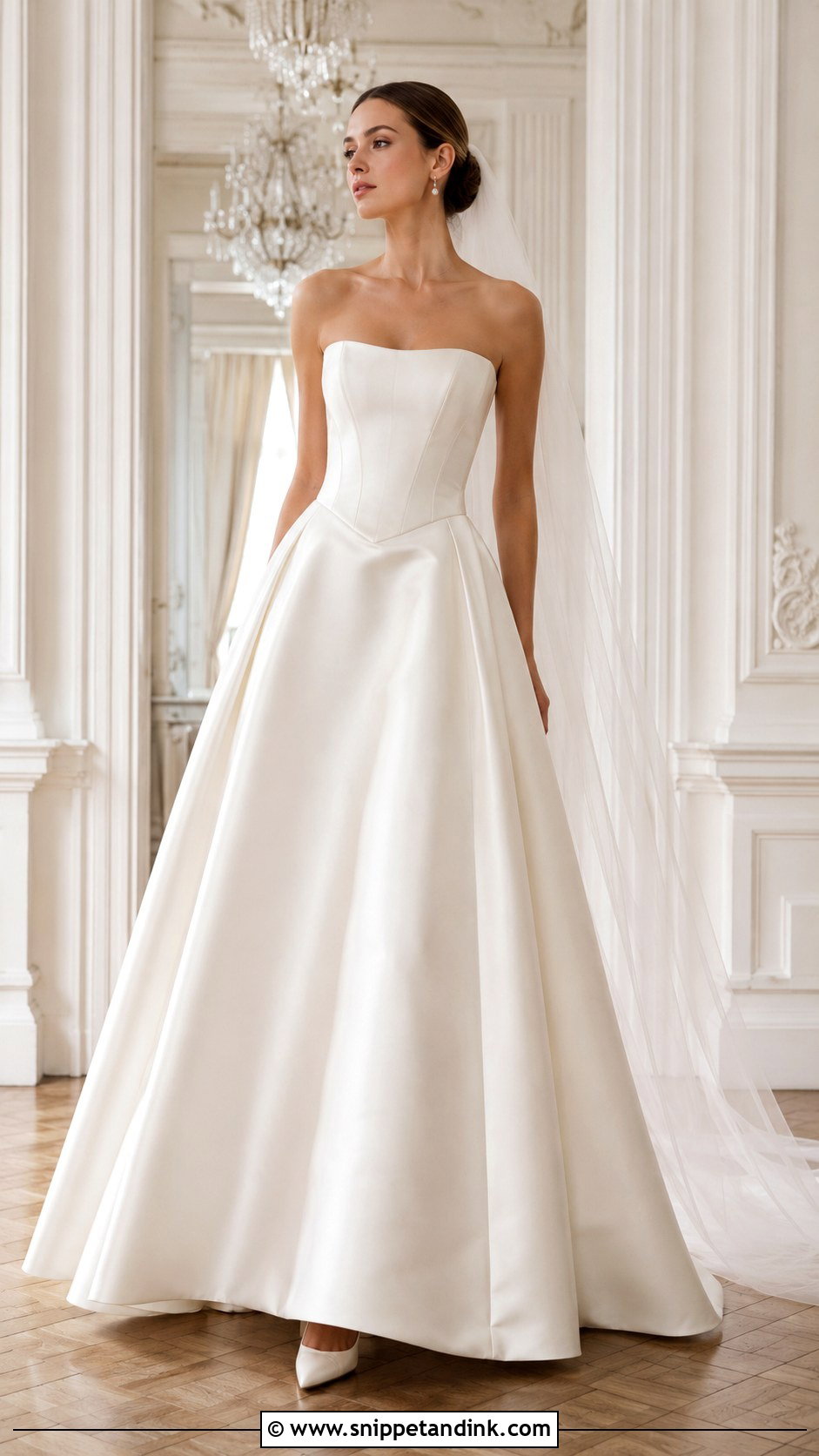
The trick with a corset bodice is keeping the structure inside the dress, with internal boning under smooth fabric, so it supports without looking costumey. A softly pointed waist or curved basque seam adds definition, and an unadorned satin or mikado skirt balances it. Bring the exact undergarments you’ll wear on the day to every fitting; a different bra changes the measurement and the bodice will be wrong. Once it’s pinned, I ask the bride to sit, take a deep breath and pretend to eat, because a corset that feels secure standing can be unbearable at dinner. Finish with a plain veil, delicate earrings, classic pumps and a low bun. Formal estates, ballrooms and traditional venues suit its structure.


20. Simple Wedding Dress With Bow
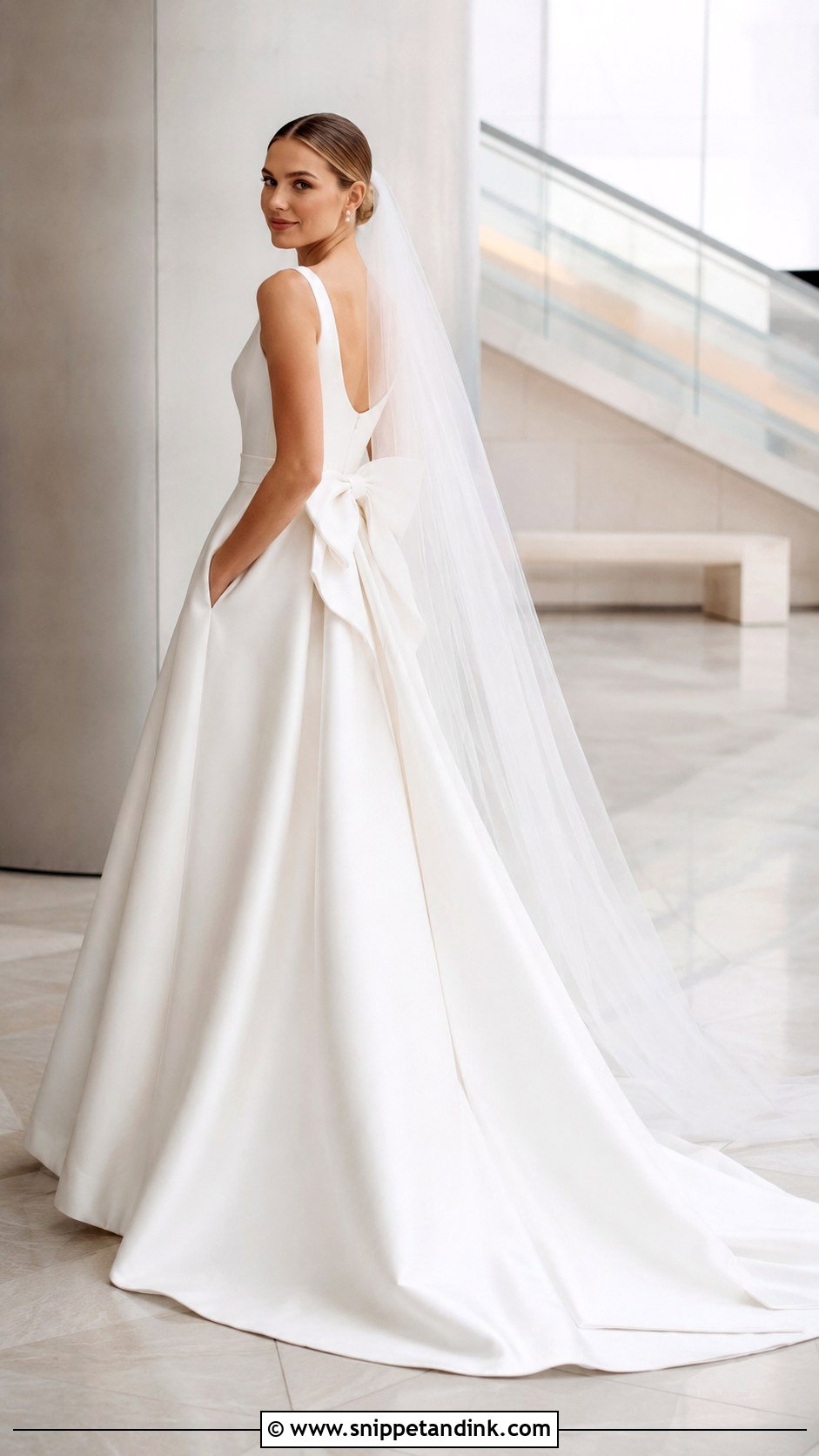
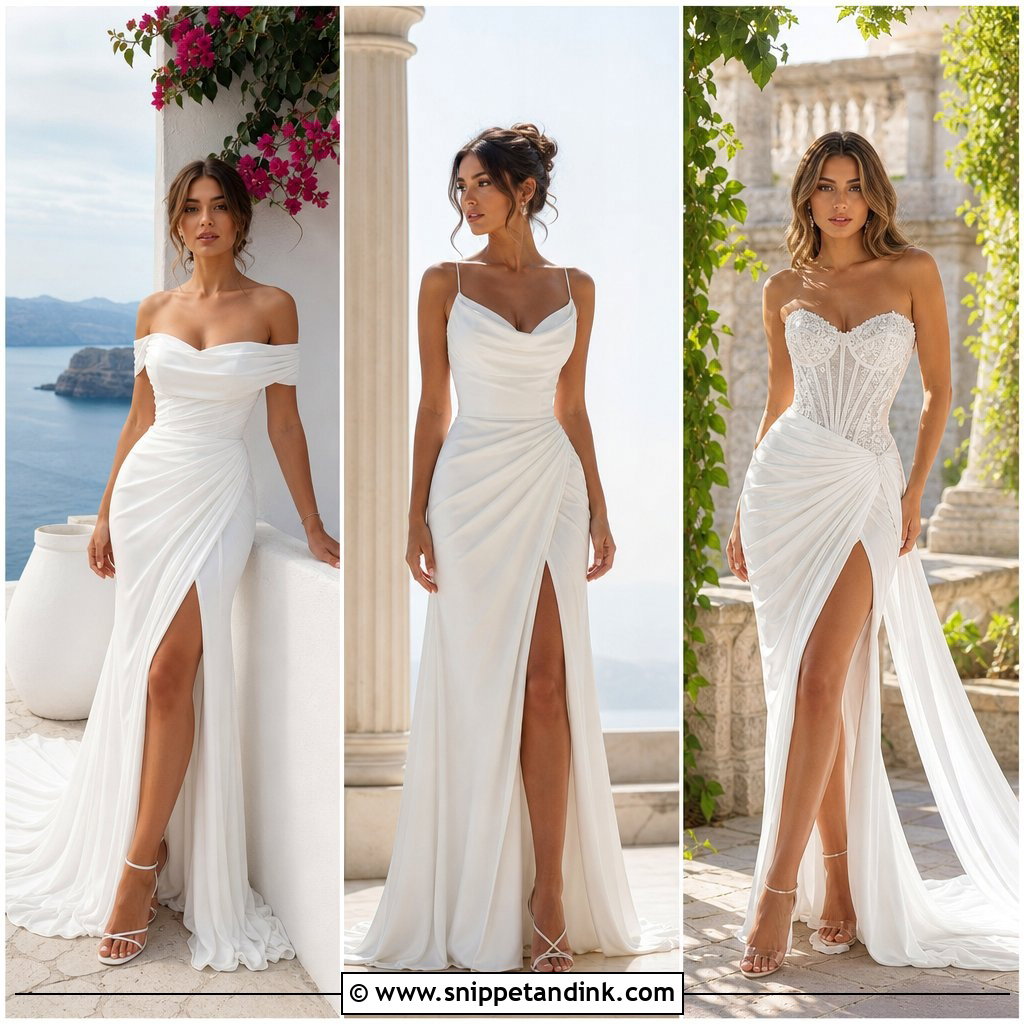
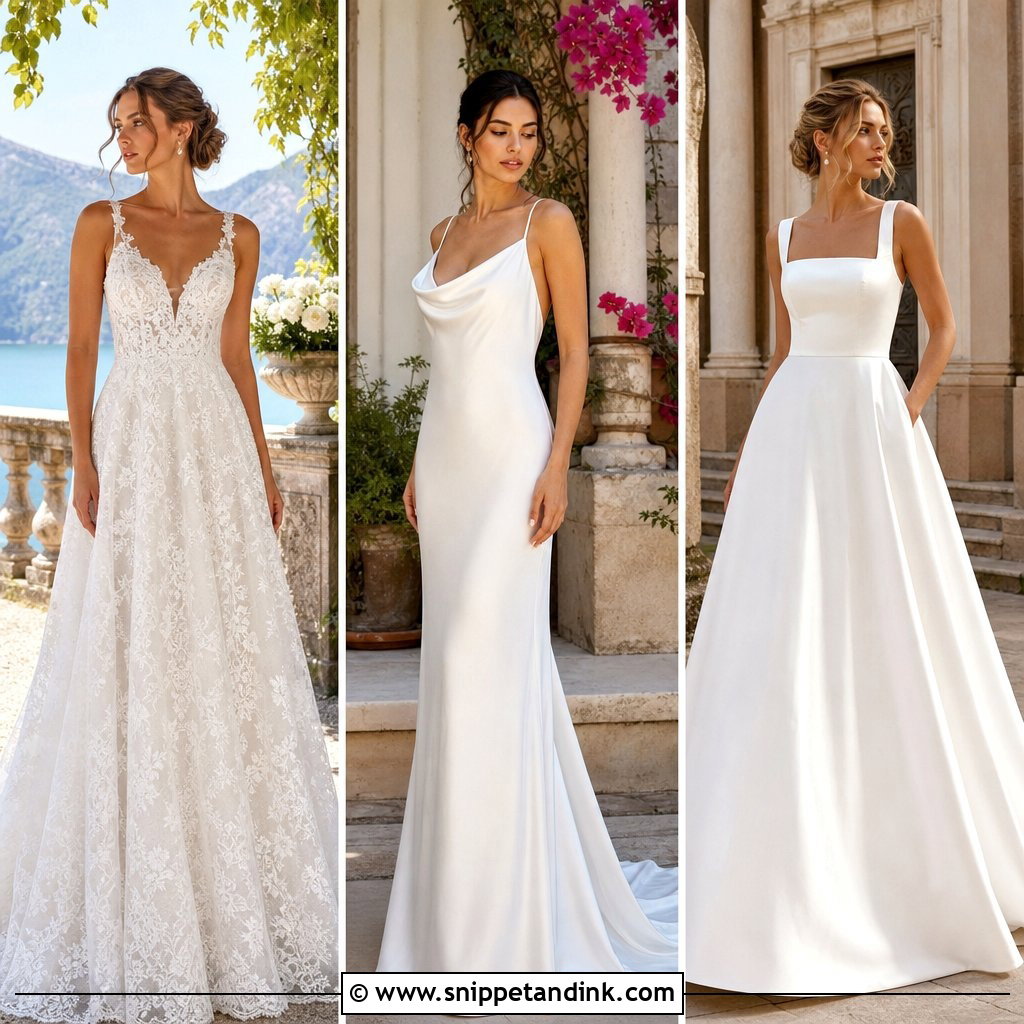
One well-placed bow can change a plain dress, but a back bow spends most of the ceremony pressed against a chair if you are seated. I ask brides where they’ll sit before recommending one, and a detachable bow often solves the problem. Choose a structured back bow, slim waist tie or shoulder bow, and keep everything else clean on a column, A-line or short sheath dress. Satin and mikado hold a sculptural bow; crepe gives a softer, slouchier one. Keep the earrings minimal, the shoes pointed and the veil plain. If the bow sits at the back, an updo and a veil that comes off after the ceremony let people actually see it. City halls, gardens and contemporary spaces all suit it.
How Satin and Crepe Behave Over a Long Wedding Day
Satin and crepe are the backbone of simple bridalwear, and they age differently through a day. Satin picks up creases wherever you sit, especially across the lap and the back of the skirt, and a drop of water can leave a visible ring. Crepe shrugs off most wrinkles, but its matte surface snags on rough bouquet stems, brooches and beaded clutches.
The morning of
Steam the gown, never iron it directly, and do it the day before or early in the morning so the fabric has time to settle. Hang it by its inner hanging loops rather than the straps, which stretch under the weight of a full skirt. Get dressed after your makeup is finished, stepping into the dress rather than pulling it over your head.
What I keep in my bag for a plain dress
- White chalk to cover a small mark on ivory or white fabric
- Double-sided fashion tape for necklines and straps
- Small safety pins and a needle threaded in a matching color for a broken bustle loop
- Clean white cloths to blot spills, since rubbing spreads them into satin
Getting a Simple Gown Cleaned and Stored Afterward
Send the dress to a specialist cleaner within a few weeks rather than months. Champagne, sugar and sweat are often invisible on the night, but they oxidize over time and turn into yellow or brown marks that are much harder to lift, and on a plain gown there is no lace to hide them.
For long-term storage, fold it loosely with acid-free tissue in the creases and keep it in a breathable cotton bag or an acid-free box, not plastic, which traps moisture. Store it somewhere cool, dark and dry, so not the attic or a damp basement. I don’t recommend leaving a heavy gown on a hanger for years, because the shoulders and straps slowly stretch out of shape.
A Plain Dress Is Only as Good as Its Last Fitting
A simple gown isn’t judged by how many details it has, but by how well the few it has are chosen and fitted. A precise neckline, a supportive bodice, good fabric and a hem altered in your real shoes are what make an understated dress feel expensive. Think about your venue, the season, how long you’ll be on your feet and how formal the day is, then try a few shapes you wouldn’t have picked from photos. I’ve watched plenty of brides walk in certain of one silhouette and leave with another. Let your accessories stay quieter than the dress, and give the alterations team enough time to get it right.
You'll Like These Ideas:












Leave a Reply