
Strapless is still the neckline I’m asked about most, and the question is nearly always the same: will it stay up? It will, if the inside of the dress is built properly and the fit is done around your ribcage rather than your bust. Below are plain strapless gowns in A-line, ball gown, column, mermaid and fit-and-flare shapes, made in satin, crepe, chiffon, organza and mikado, each styled the way I’d send a bride down the aisle. None of them rely on beading. They rely on fabric, cut and a good seamstress, which is a better investment anyway.
What Holds a Strapless Gown Up From the Inside
Most brides think a strapless dress stays up because it’s tight at the bust. It doesn’t. A well-made bodice is anchored lower, around the ribcage and waist, and the top edge simply follows the body. When a dress keeps slipping, it’s nearly always because it was fitted too loosely through the ribs and too tightly at the top to compensate.
Three things I look for inside the dress
- Boning in the side and front seams. Spiral steel or firm synthetic bones keep the bodice from collapsing when you sit.
- A waist stay, a strip of grosgrain ribbon hooked closed at the waist inside the dress. It takes the weight of the skirt off the bodice, and if a gown doesn’t have one, a seamstress can usually add it.
- Built-in cups or a corselette, so you’re not relying on a separate strapless bra that can shift independently of the dress.
At fittings, raise your arms, hug someone, bend to pick up a bouquet and sit down. If you find yourself pulling the bodice up even once, tell the seamstress then. It is far easier to take in through the ribs than to rescue a sliding neckline on the day.
1. Straight Neck Strapless Satin Wedding Dress
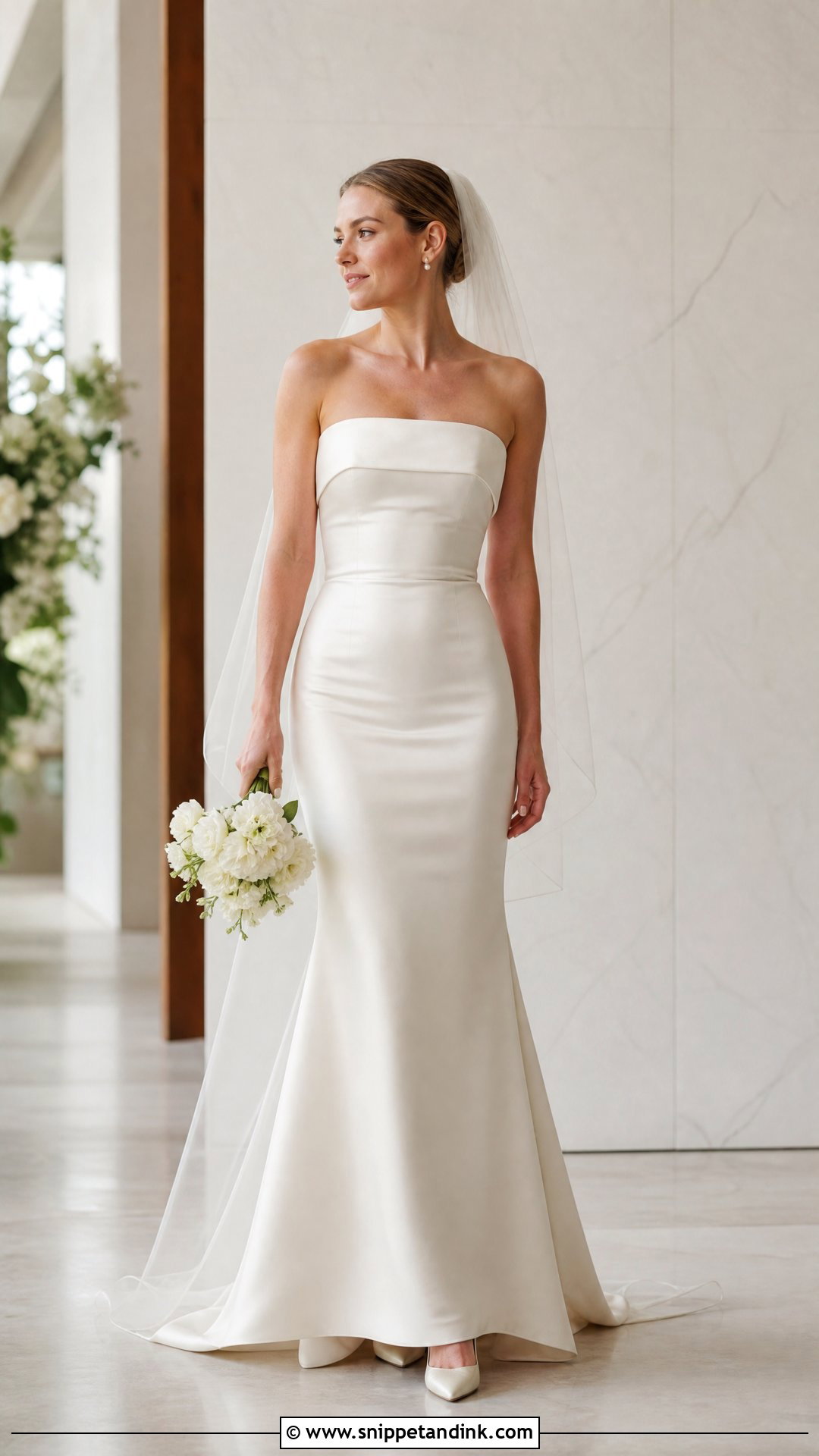
Straight across is the hardest strapless line to get right and the cleanest when it works. Any gap at the top edge shows instantly, so I have the seamstress check the boning and the top edge with you in your wedding shoes, since posture changes in heels. A fitted bodice with a softly flared skirt gives movement without ball-gown volume, and ivory satin glows nicely in a formal indoor room. Pointed pumps, pearl studs and a structured mini bag for later. Wear a low bun and a plain fingertip veil so nothing covers that horizontal line across the collarbones.
2. Sweetheart Strapless A-Line Wedding Dress
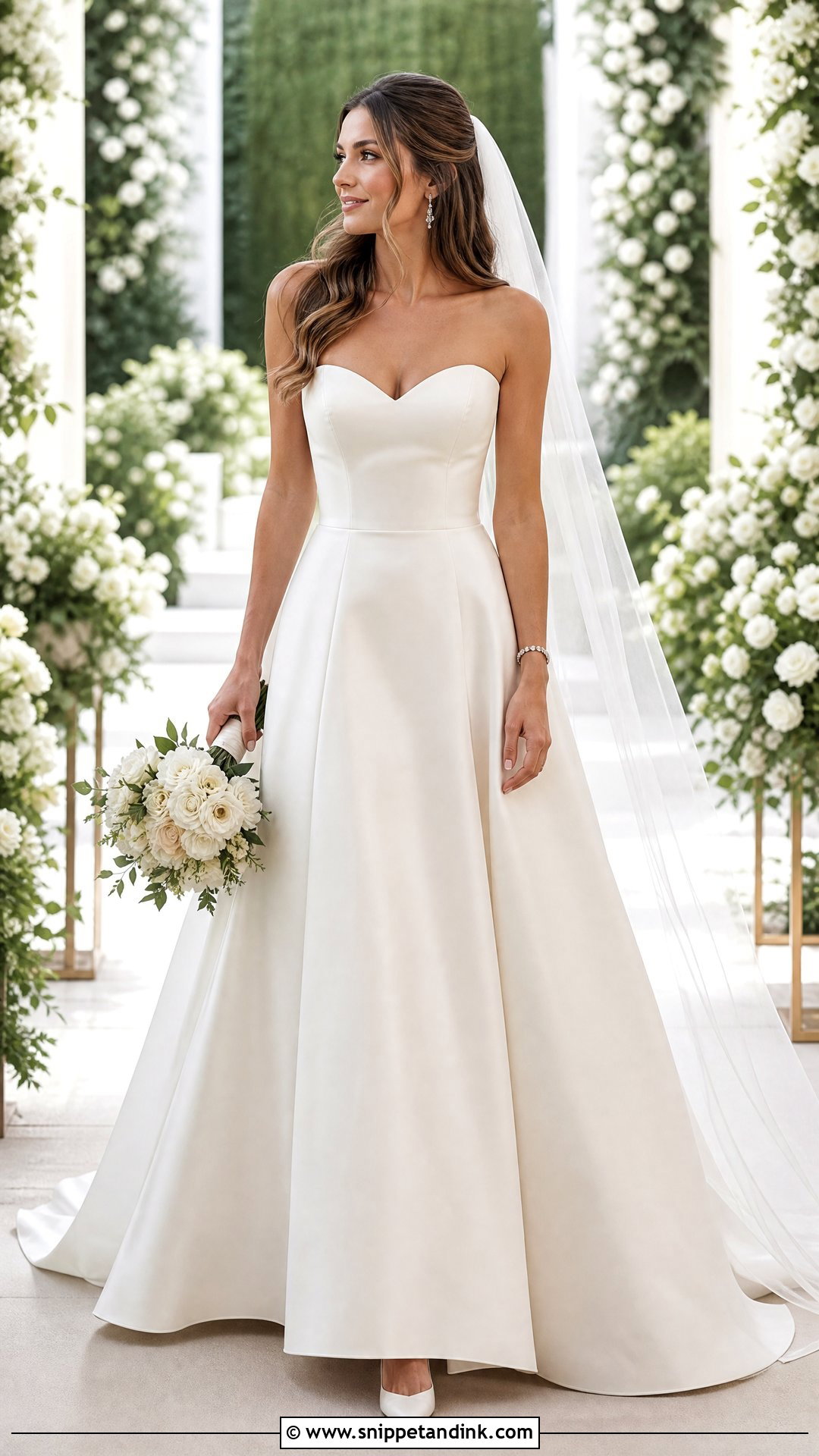
The dip in a sweetheart neckline is where problems show up. If the center point sits too low, it pulls away from the chest whenever you lean forward, so I watch that spot during the arm-raising test. On a simple A-line, the curve gives enough interest that matte satin or structured crepe with quiet seaming is plenty. Almond-toe heels, small drops and a fine tennis bracelet keep it light. A sheer chapel veil adds ceremony without hiding the dress. Soft waves or a smooth half-up style follow the curve of the neckline well.
3. Strapless Crepe Column Wedding Dress
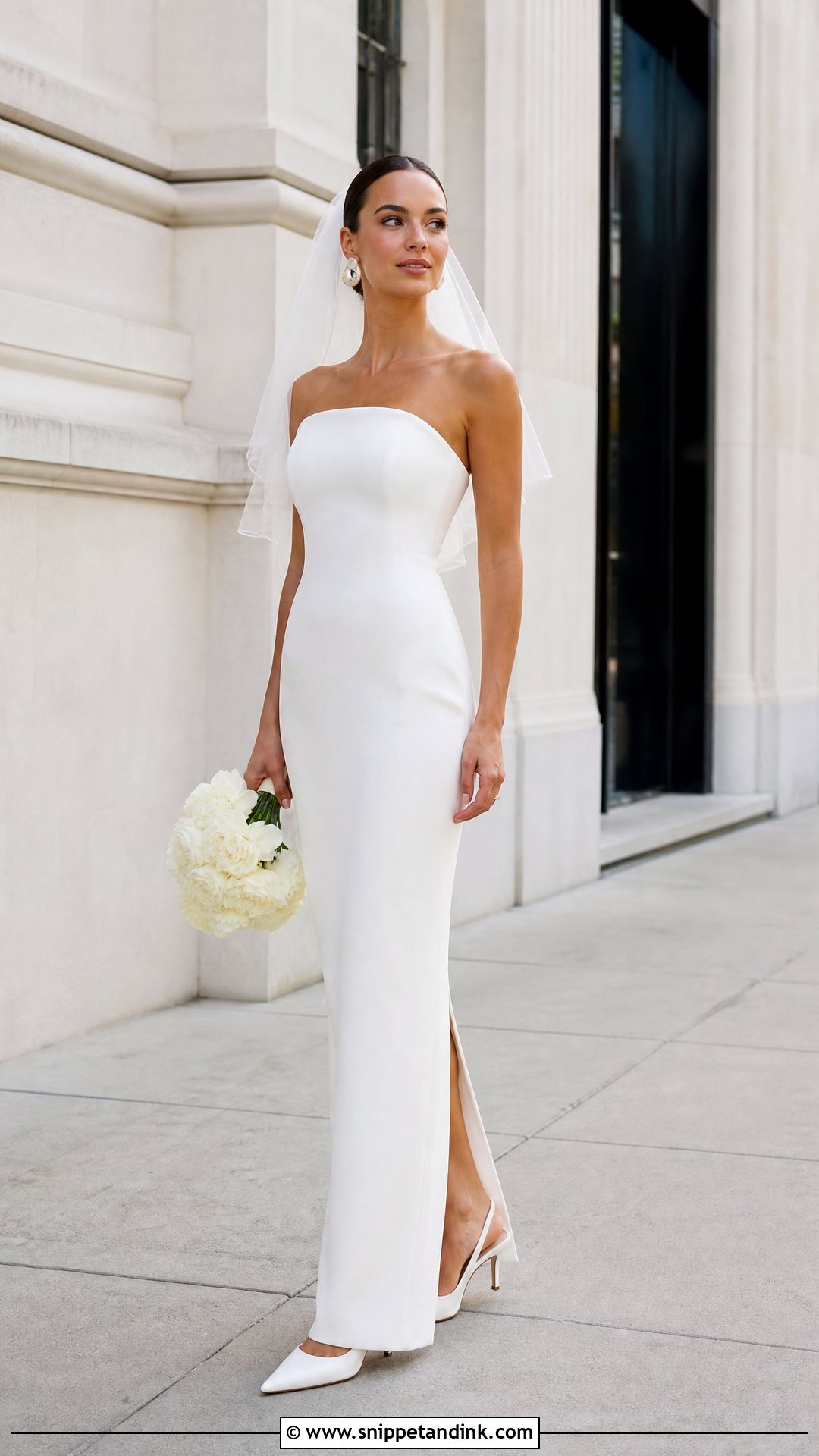
Crepe columns look easy to wear and are anything but. The skirt follows the body closely, so stride length becomes the real fitting issue: I ask brides to take a full step and climb a stair before the hem is finalized, and if the skirt pulls, a small back slit solves it. Medium-weight crepe skims rather than clings, and its matte finish is very forgiving in city venues with mixed lighting. Pair it with pointed slingbacks, sculptural earrings and a top-handle bag. A polished bun, with a short or sheer floor-length veil, keeps the mood minimal.
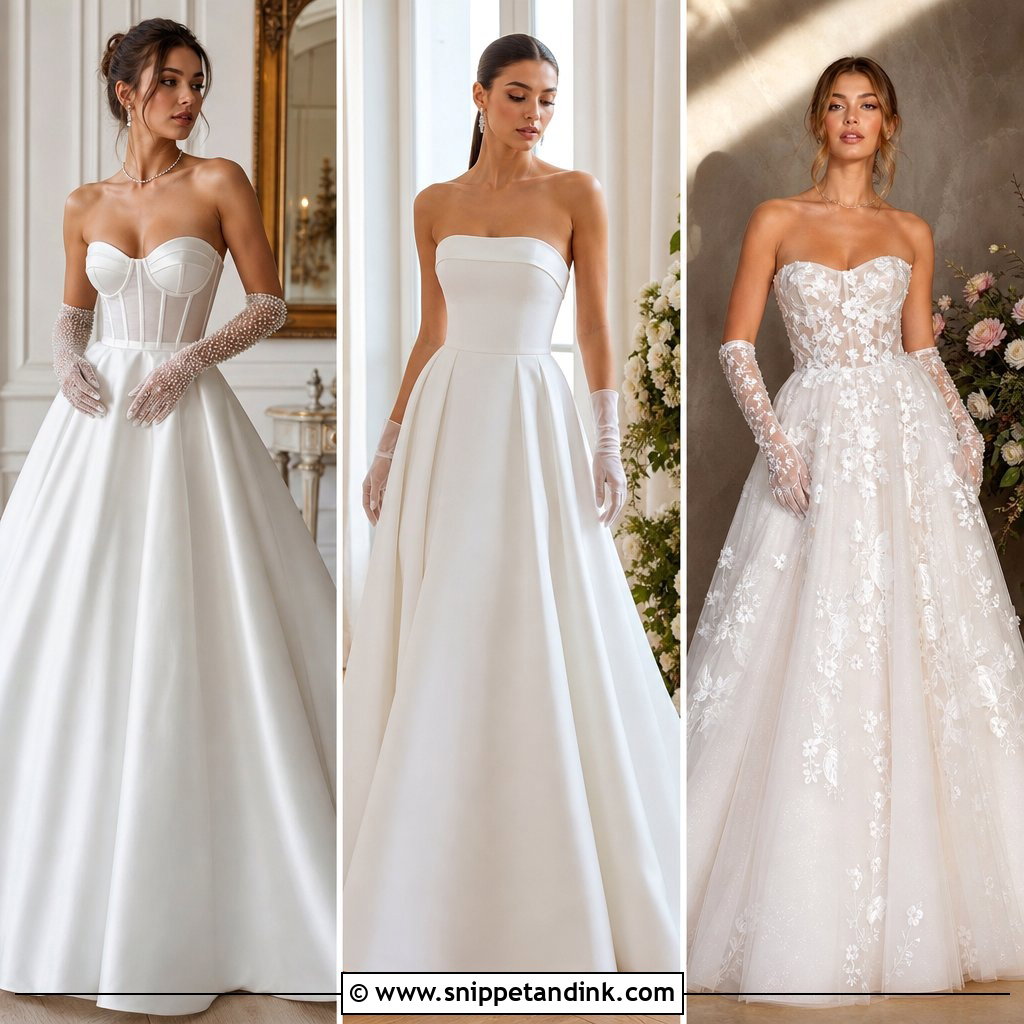
4. Strapless Mikado Ball Gown Wedding Dress
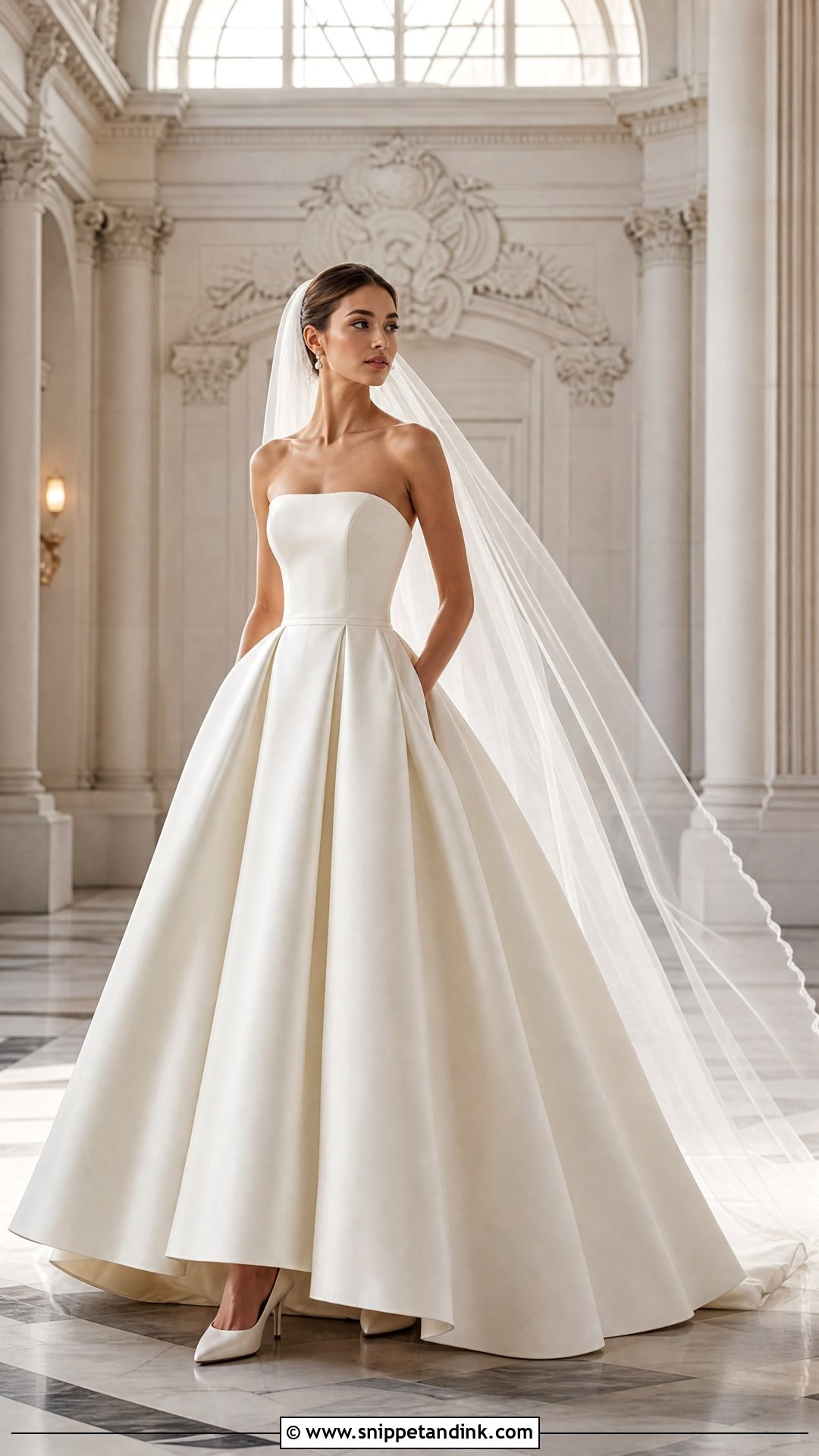
Mikado has enough stiffness to build a ball gown with no tulle petticoat at all, which keeps it lighter than it looks. That fullness needs a well-planned bustle, though. A heavy mikado train with only one or two hooks will drop by the second song. A smooth bodice and natural waist give the skirt its shape; satin pumps, pearl earrings and a neat chignon keep the rest quiet. A cathedral veil matches the scale, and a plain raw edge keeps it clean. Ask about hidden pockets; mikado holds them flat. Practice sitting and turning in the full skirt before the last fitting.
5. Draped Strapless Satin Wedding Dress
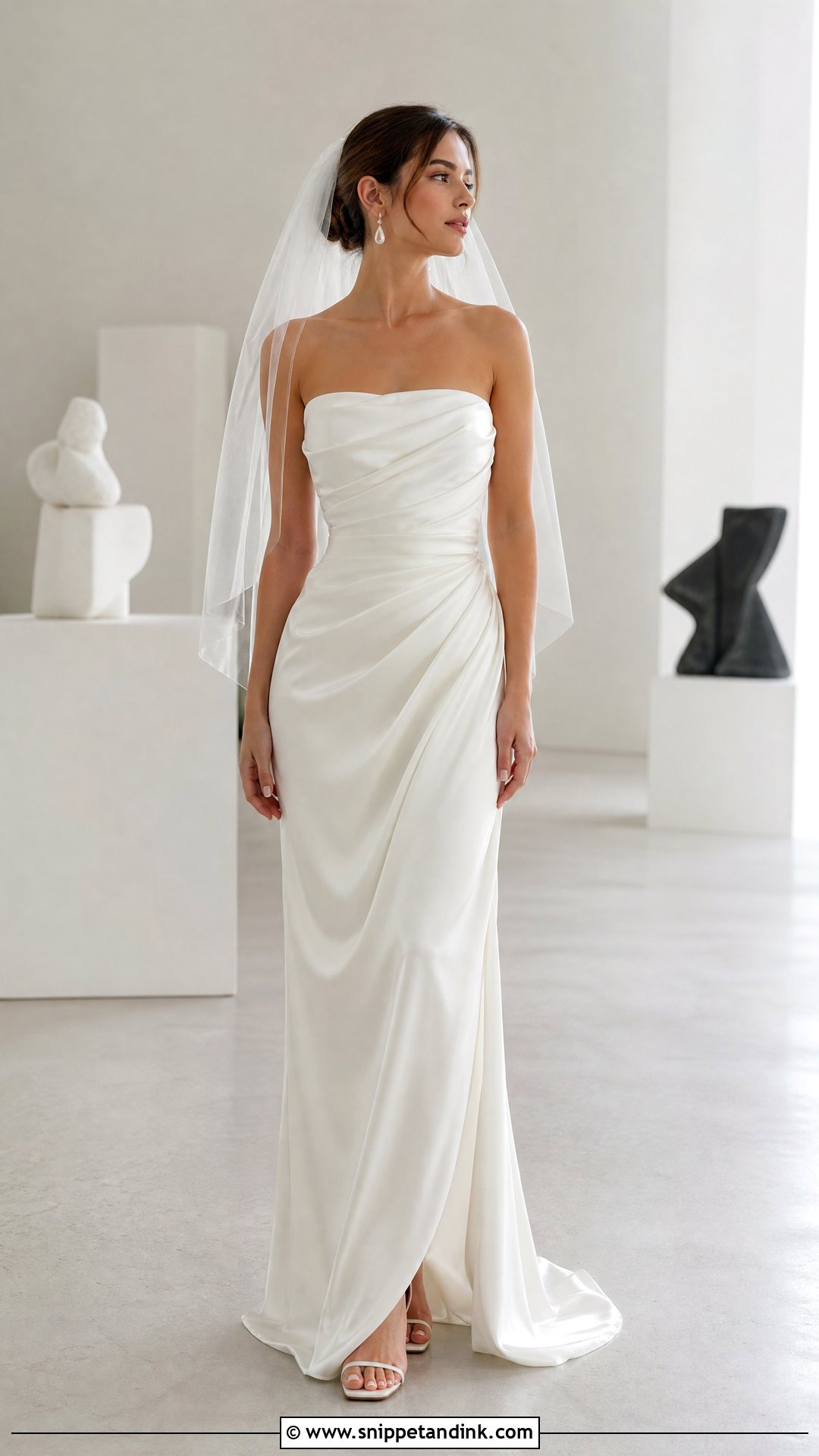
Draping is a detail I inspect from three sides, because folds that look sculpted from the front can look bulky from the side. On a good draped satin gown, the diagonal folds cross the bodice or waist and actually do some work, pulling the eye in at the narrowest point. Fluid satin shows every fold, which is the whole point. Slim heeled sandals, teardrop earrings and a fine bracelet are all it wants. Loose low buns and softly pinned waves move with the fabric. Pick a single-layer veil; anything heavier competes with the folds.
6. Basque Waist Strapless Wedding Dress
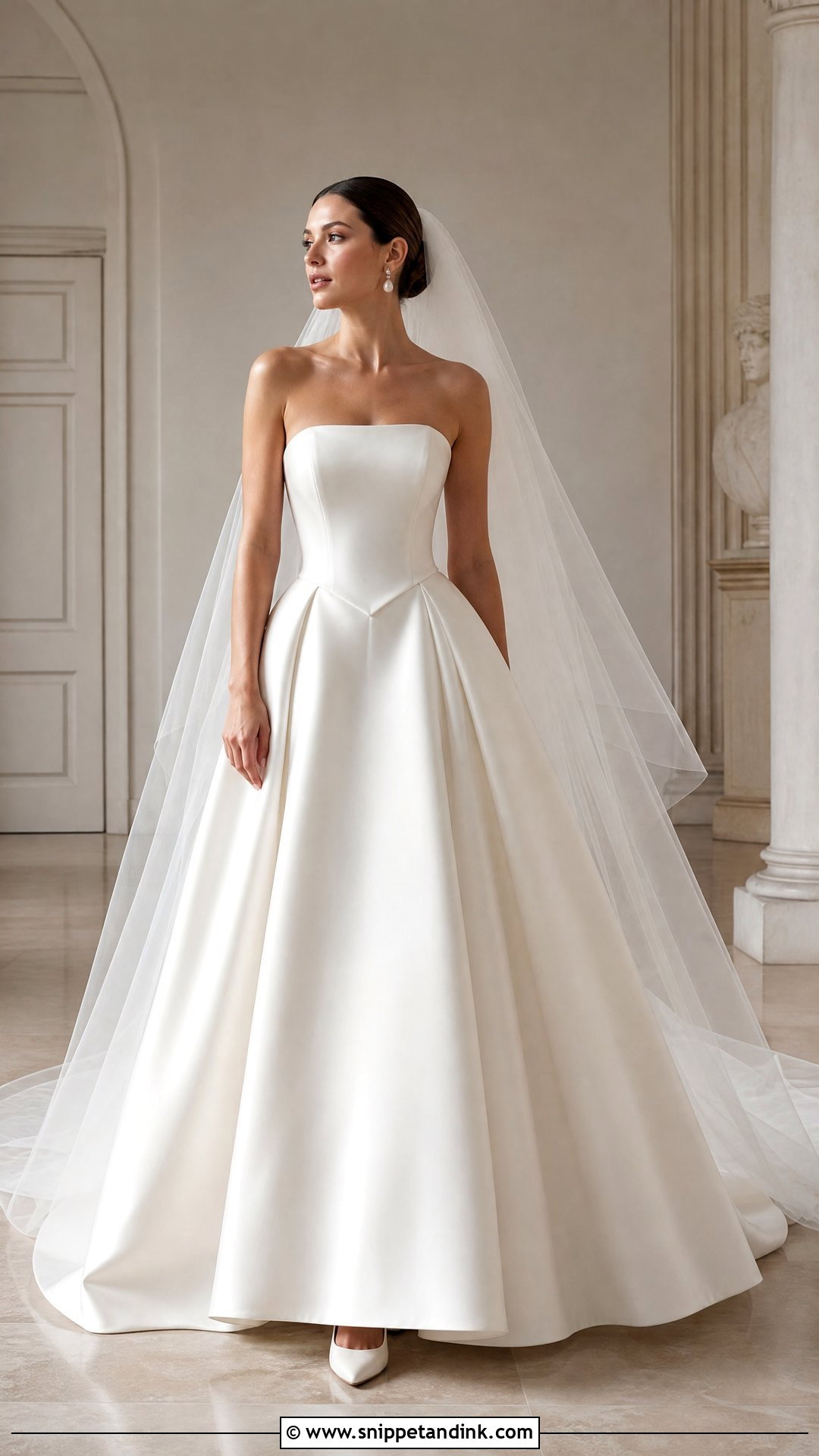
A basque waist dips into a soft V at the front, giving a plain strapless bodice distinctive architectural detail. The point should follow your own proportions. If it drops too low on a shorter torso, it can make your legs look shorter, and that’s the first thing I adjust. Plain satin or mikado keeps the waistline the focus, with a softly full skirt below. Closed-toe heels, small pearl drops and a smooth cathedral veil finish it. A low twist keeps the long bodice visible. Ask the seamstress to check that the bodice stays level all the way round.
7. Drop Waist Strapless Wedding Dress
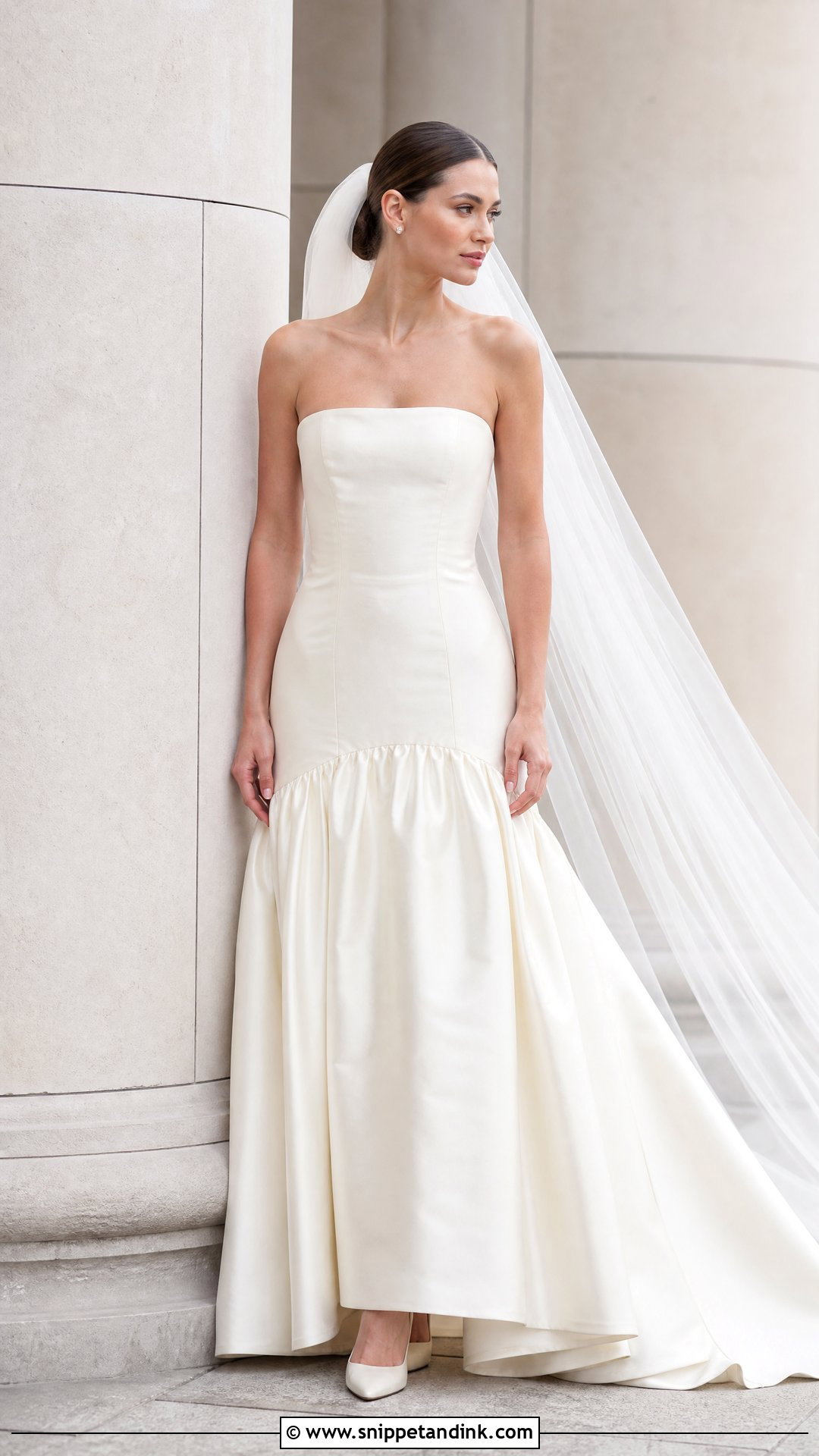
A drop-waist gown lengthens the torso by moving the skirt seam below the natural waist. Where that seam lands matters enormously: too low and sitting becomes awkward, too high and it simply looks like a misplaced waist. I’d try two or three bodice lengths at the bridal shop before committing. Matte satin or smooth taffeta with very little visible seaming suits it, along with a gently gathered skirt. Pointed pumps, sleek studs and a long plain veil complete it. A center-parted bun and a compact bouquet stop the long line from looking empty.
8. Strapless Fit-And-Flare Wedding Dress
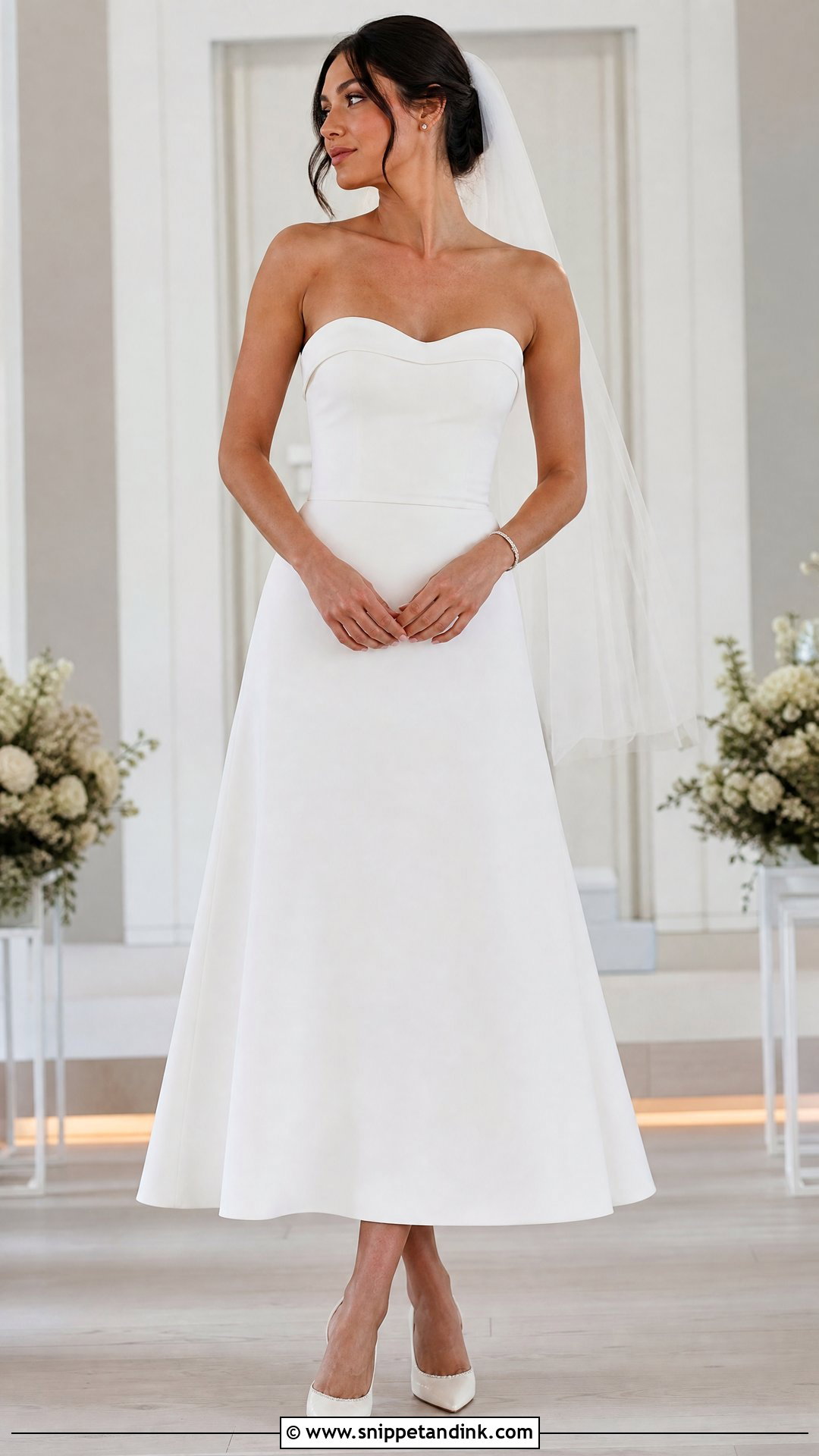
Fit-and-flare sits between an A-line and a mermaid: shaped through the hips, opening lower down without the dramatic knee flare. I suggest it to brides who want shape but still want to dance. Stretch crepe moves with you and smooths without visible corsetry. Pointed heels, a slim bracelet and small crystal or diamond studs keep it modern. A low ponytail or tidy bun shows the shoulders, and a plain chapel veil adds tradition. Walk, sit and do a few dance steps at the fitting, because the flare point should still let your knees move freely.
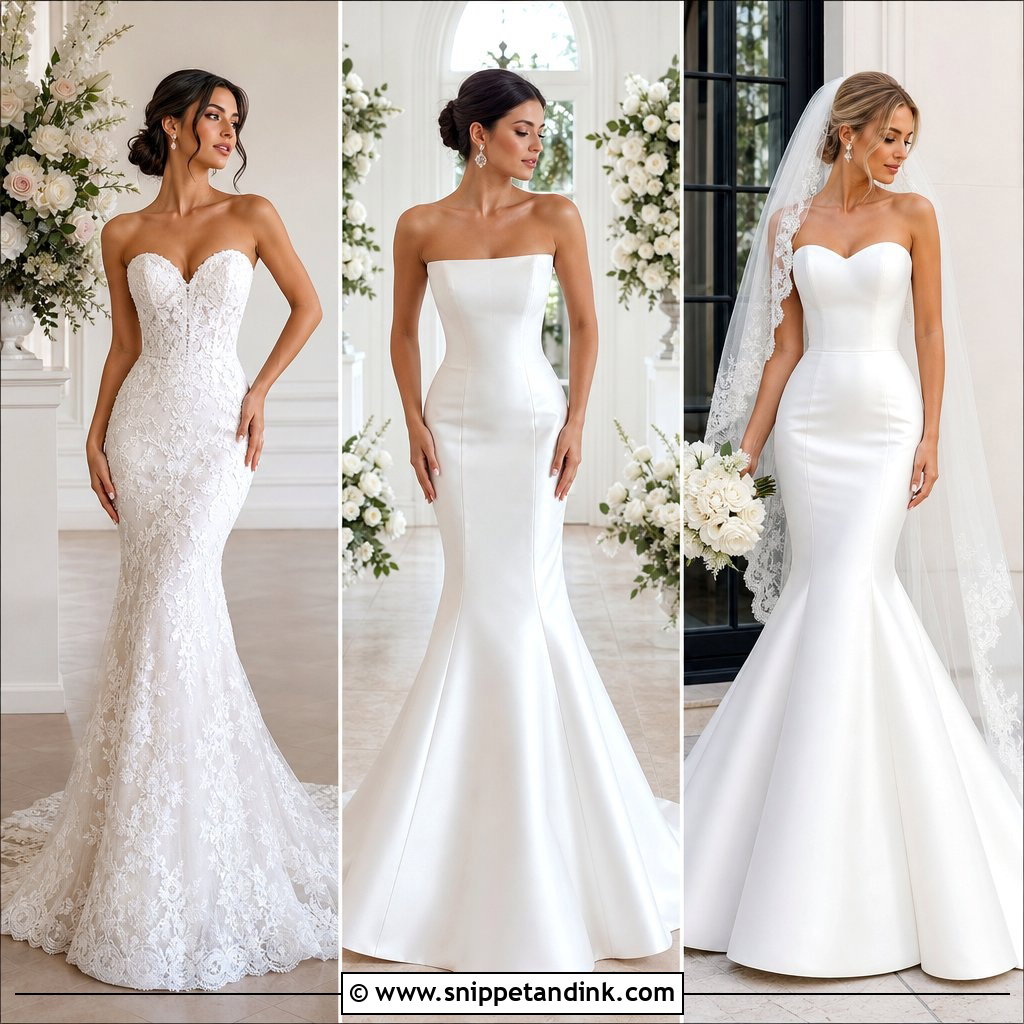
9. Strapless Mermaid Wedding Dress
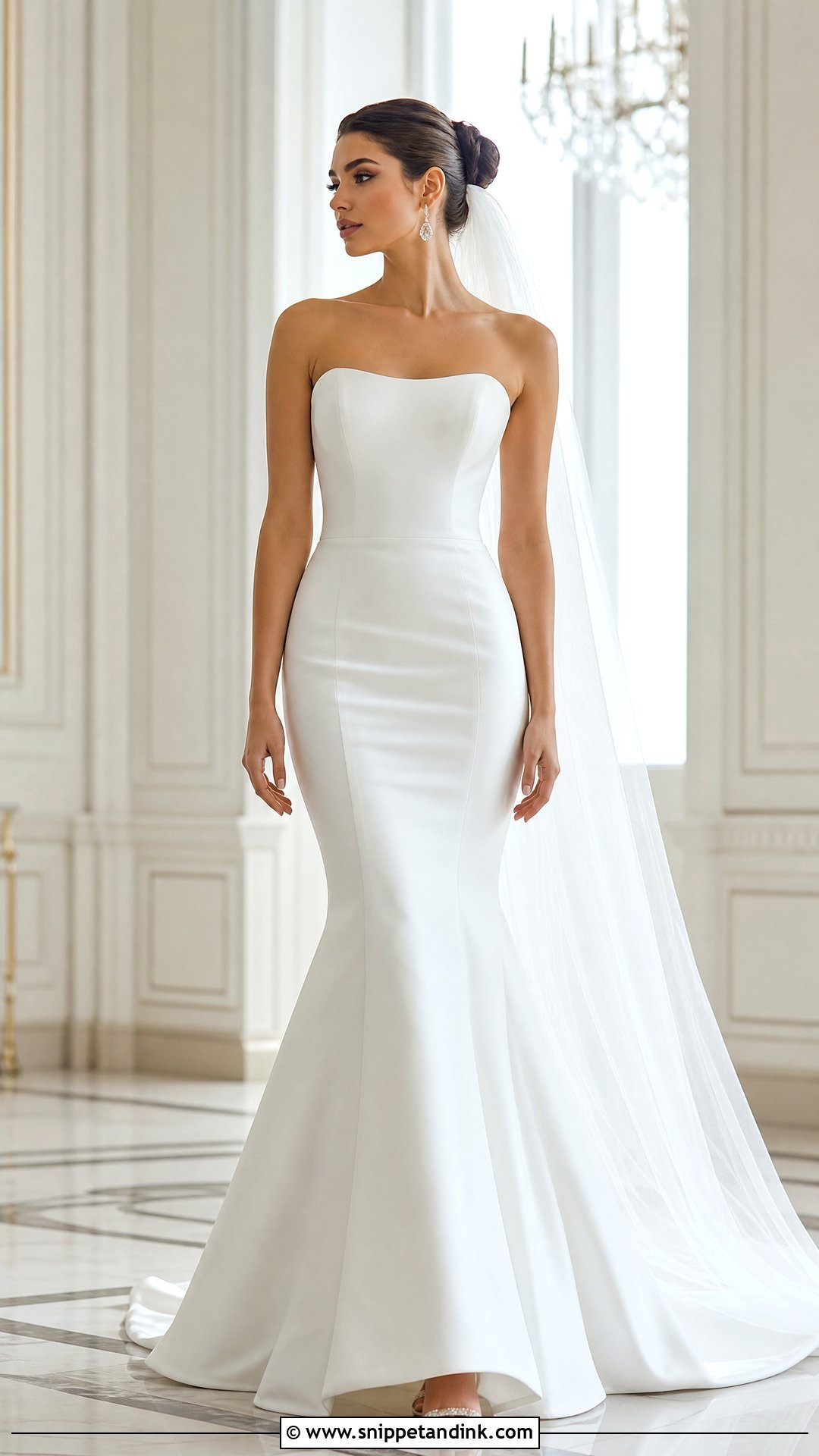
Mermaids get their drama from structure, so the bodice and hips must fit precisely or the flare starts in the wrong place. I’d decide the flare point by watching you walk, not by standing in front of a mirror. Smooth crepe or satin lets the curved seams show. Narrow heeled sandals, refined drops and a sleek updo suit the line, with a long unembellished veil for contrast and movement. Practice stairs before approving alterations. The narrow skirt also makes the bustle important: a light, well-anchored bustle lets you get through the reception without stepping on the train.
10. Strapless Tea-Length Wedding Dress
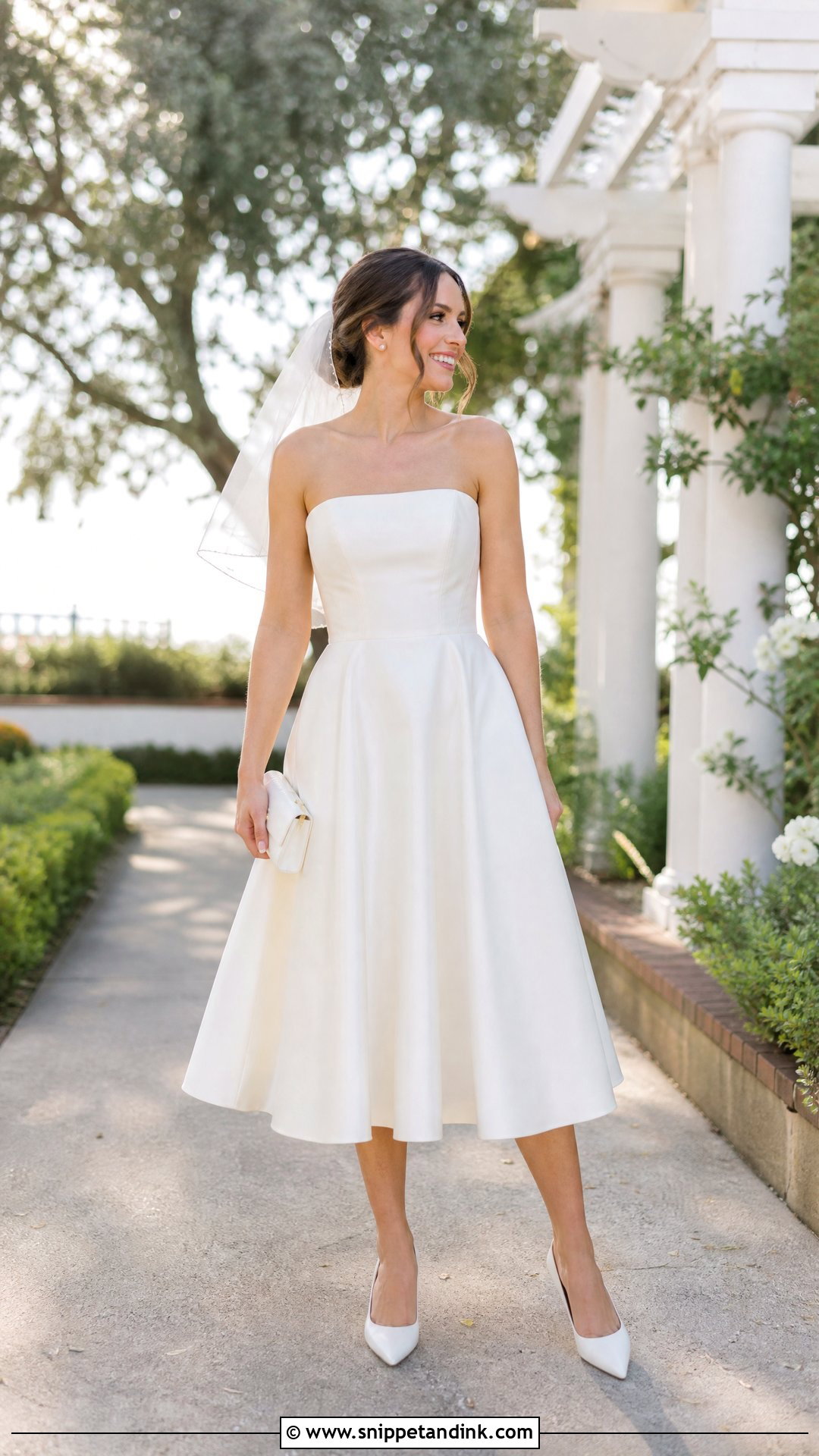
Tea length puts your shoes on show, which changes the order I work in: buy the shoes first, then hem. The hem falls between knee and ankle, and a mismatched heel height can leave it at an odd mid-calf point. A fitted satin bodice with a flared skirt is the classic version. Pointed pumps or ankle-strap heels, pearl studs and a structured clutch work for a courthouse or garden party. A short veil, birdcage face veil or simple hair bow suits the shorter proportions. Skip the petticoat if you want the line to feel relaxed rather than retro.
11. Strapless Mini Wedding Dress
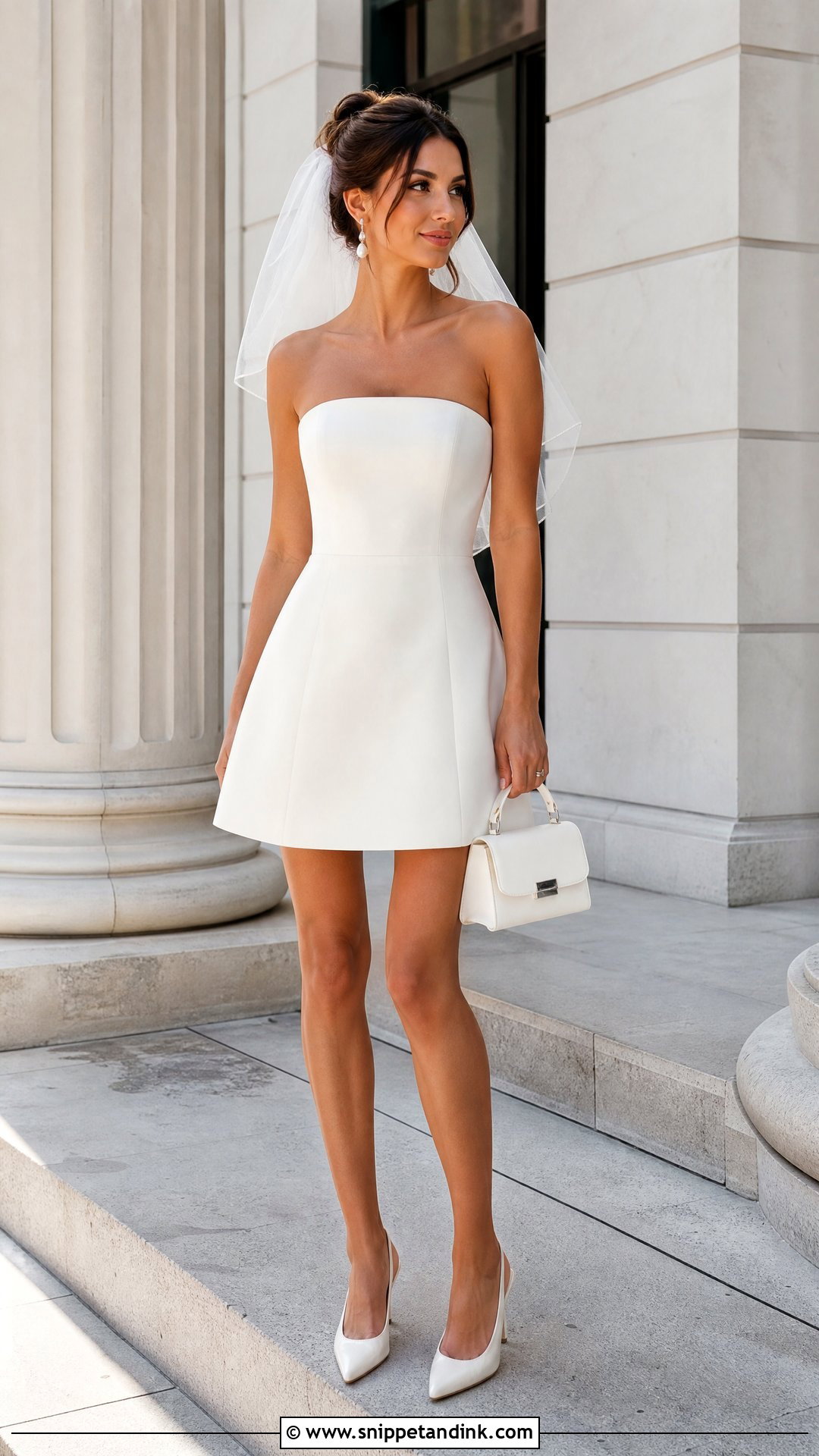
A strapless mini depends entirely on structure to look bridal. A straight neckline and a fabric with body stop it reading as a party dress. A tailored A-line, a fitted column or a subtle tulip silhouette in ivory satin or crepe all suit it. Slingback pumps, pearl drops and a compact top-handle bag are enough, with a short veil and a polished ponytail. I’d always choose a mini that ends a few inches above the knee for a ceremony, since it rises noticeably when you sit. The bodice should never need tugging; if it does at the fitting, it will all day.
12. Strapless High-Low Wedding Dress
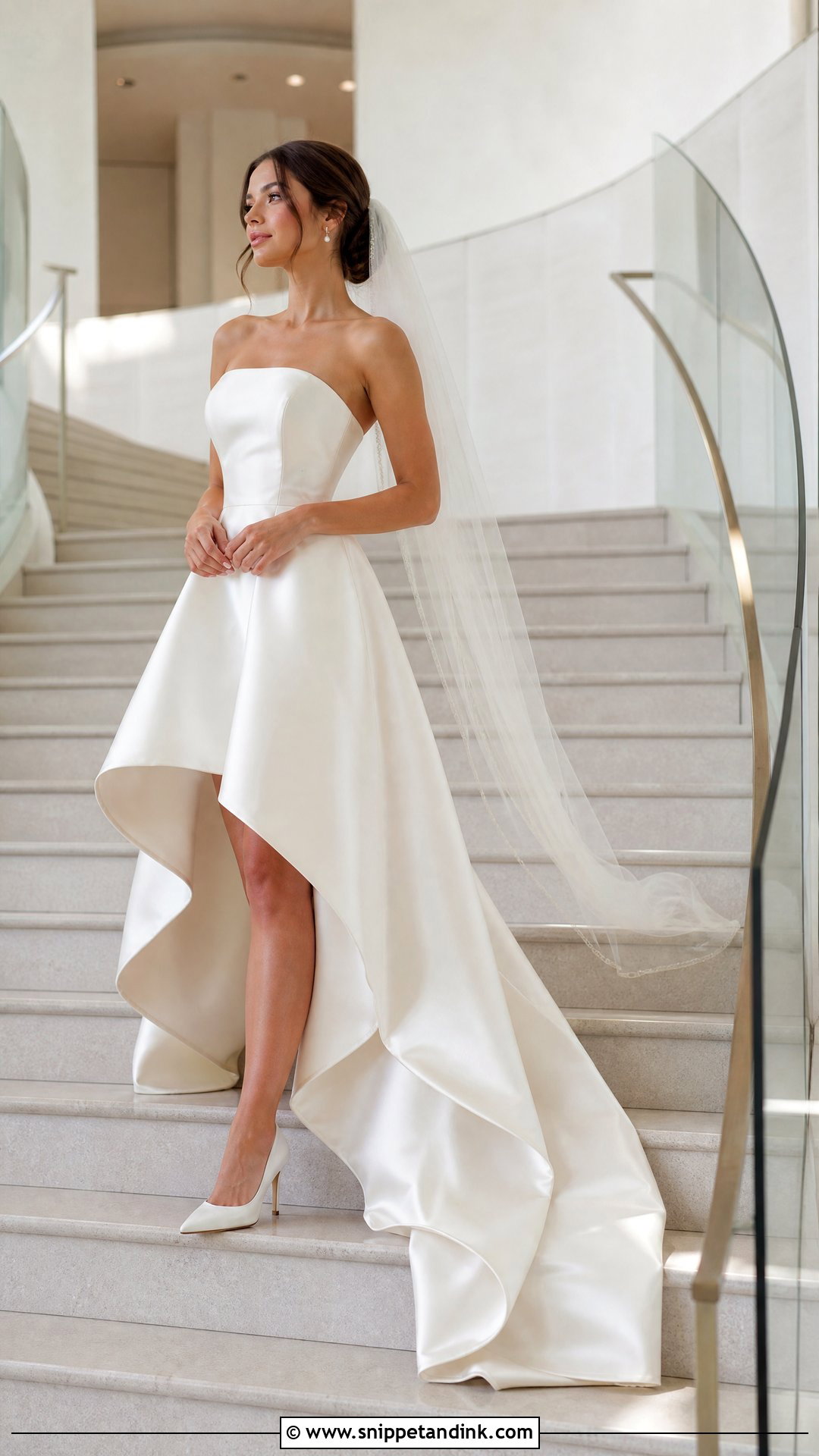
High-low hems have to look intentional from the side. A sharp step from short to long reads as unfinished, so I look for a gradual curve. Smooth satin or structured faille without lace edging keeps it simple, and the front should clear your stride entirely. Pointed pumps, small earrings and a pearl clutch suit it, with a sleek bun. My advice on veils here is firm: skip cathedral length. It fights the long back of the skirt. A fingertip or shoulder-length veil leaves the hemline to do its job.
13. Strapless Pleated Organza Wedding Dress
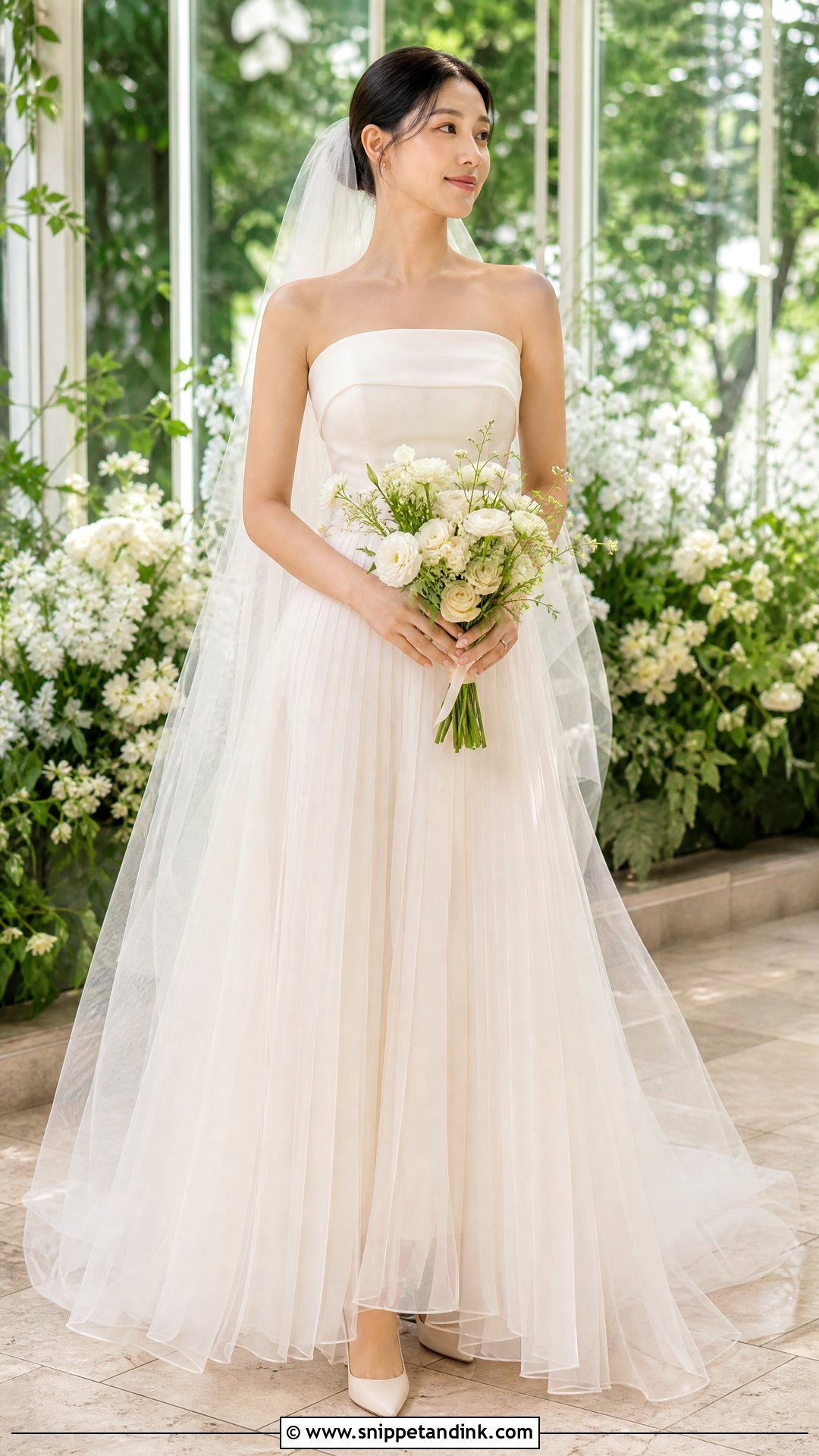
Pleated organza catches light along every fold, and that’s what makes a plain gown look rich in photos. Organza is sheer, though, and lining color matters. I always look at it in daylight and under warm indoor bulbs before deciding. The pleats should fall evenly from the waist without adding bulk right at the seam, which is where cheaper versions get thick. Slim ivory heels, delicate studs and a light veil keep it airy; a soft low bun adds romance. Restrained volume suits a minimalist, while a wider skirt looks more traditional.
14. Strapless Chiffon A-Line Wedding Dress
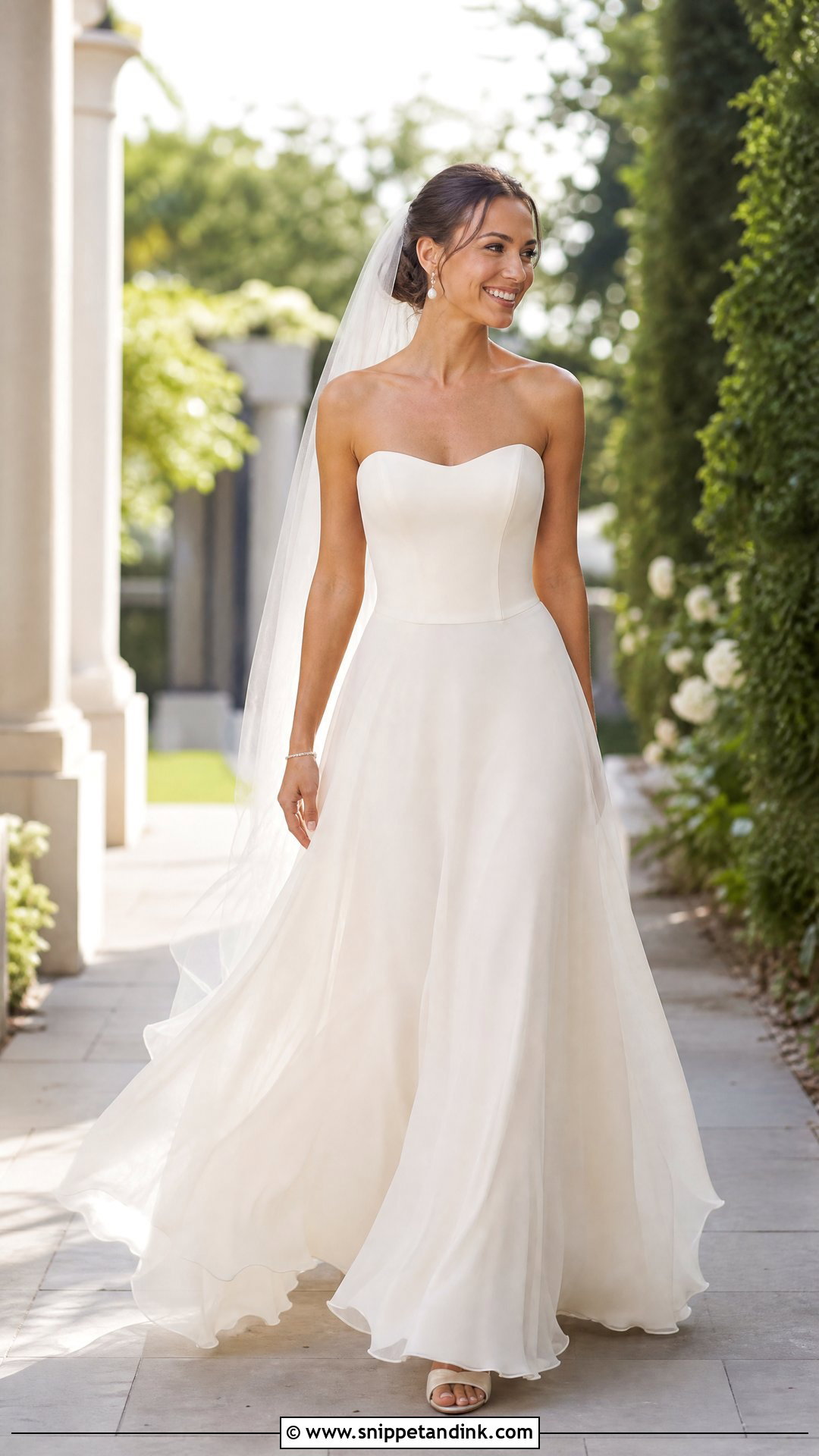
Chiffon moves with every step, which is why I recommend it for outdoor spring and summer weddings. A structured inner bodice does the supporting while the sheer overlay floats. The downside: chiffon snags on rough stone, bark and decking, so the hem should just clear the ground. Low block heels, small pearl earrings and a delicate bracelet suit its relaxed feel, with loose waves or a textured low bun. A narrow chapel veil works, or skip the veil and wear a simple comb. Ask for a bustle that tucks the train well off the floor for the reception.
15. Strapless Silk Slip Wedding Dress
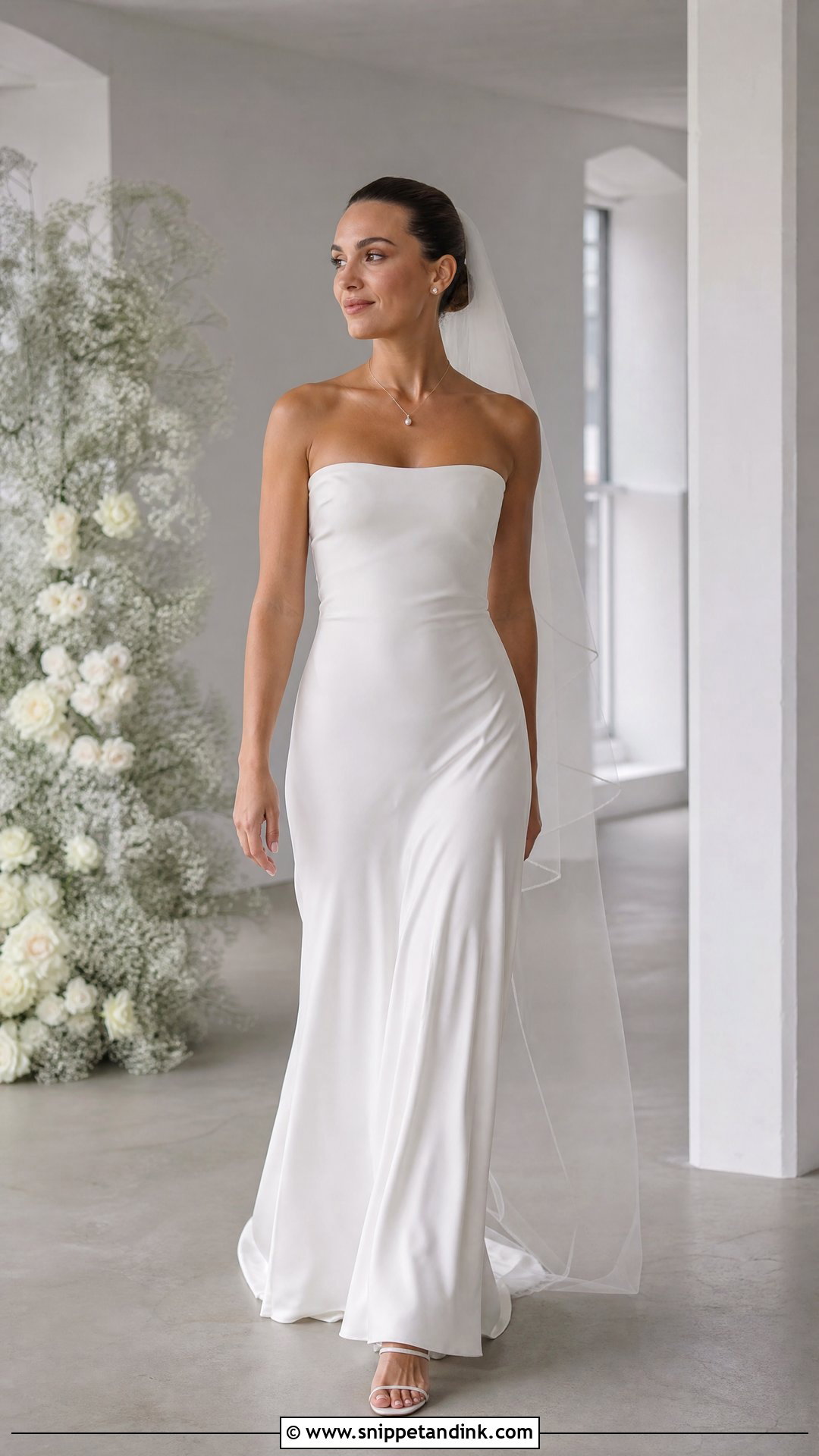
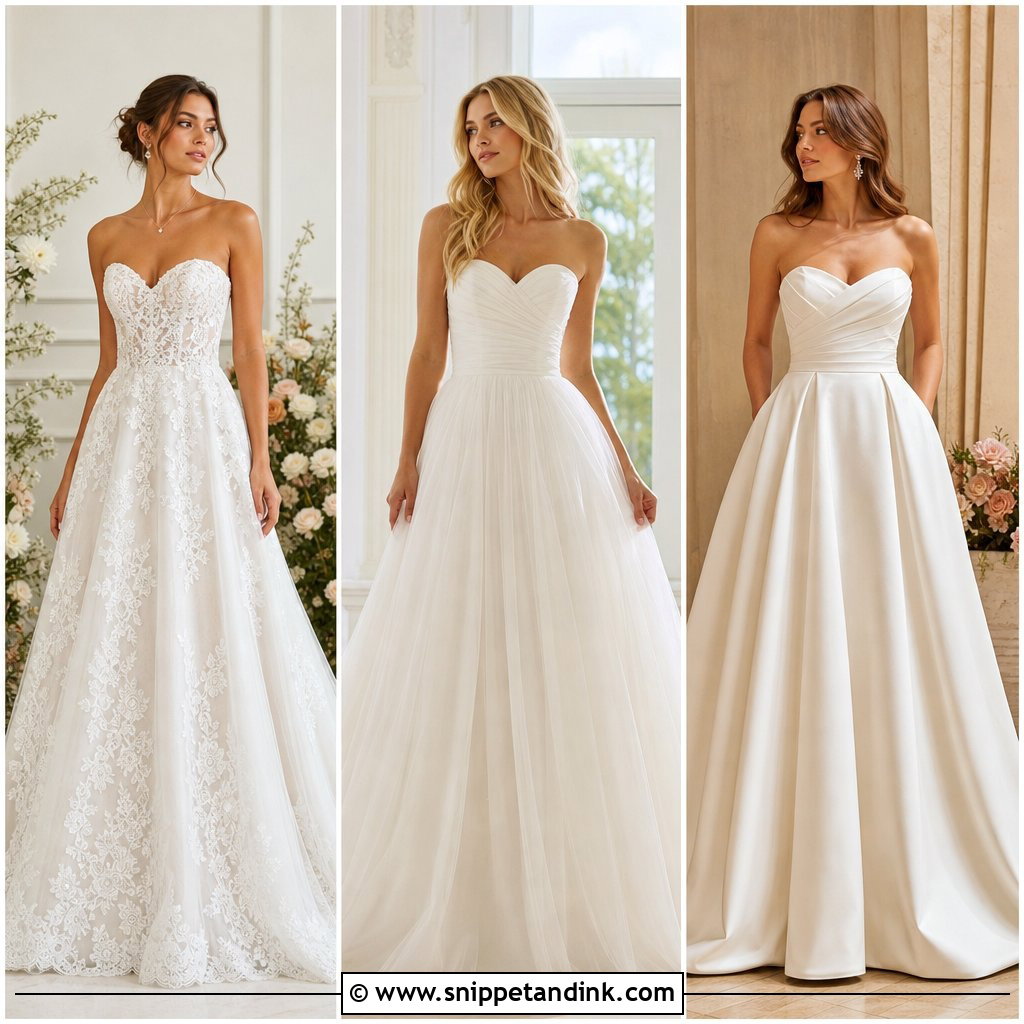
Bias-cut silk is the most demanding fabric in this list. It skims the body because it’s cut on the diagonal, and that same cut shows every pull at a seam, every line from underwear and every mark from a steam iron held too close. Here, the slip shape is held up by a fitted inner bodice rather than thin straps. I’d rely on cups built into the gown rather than a separate bra. Slim heels, tiny studs and a fine pendant above the neckline are enough. Book professional steaming close to the day, and keep the dress hung, not folded, until you put it on.
16. Strapless Corset Bodice Wedding Dress
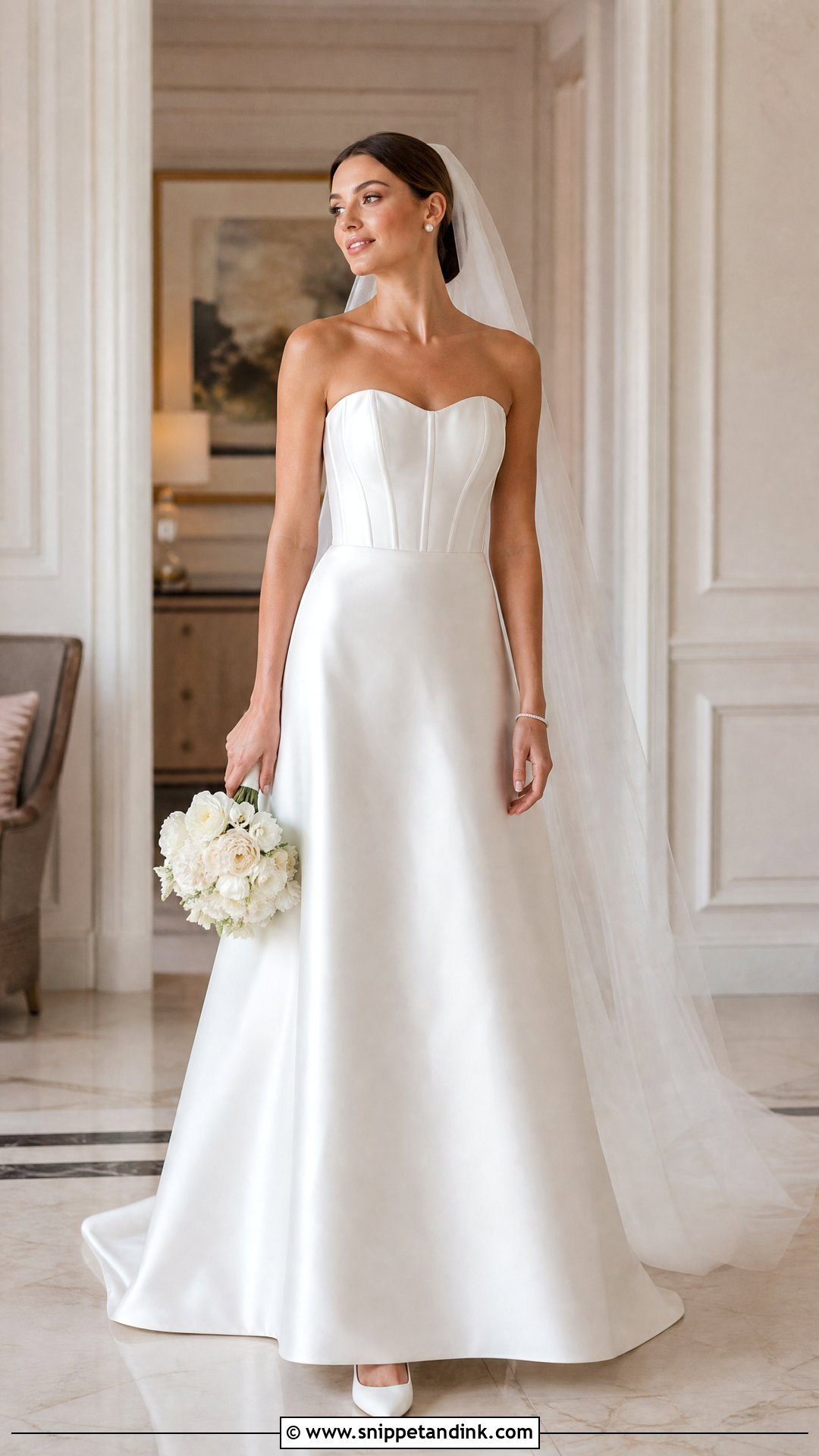
A corset bodice can stay understated if the boning is covered and the seams are tonal rather than contrasting. Pair vertical seams with a plain satin A-line skirt. The test I care about most is sitting: stay seated for several minutes at the fitting and notice any pressure under the ribs, because you’ll be seated through dinner. It should support, not push the neckline up. Classic pumps, pearl studs and a narrow bracelet suit it, with a low chignon and a plain chapel veil. With a lace-up back, teach the person who’ll dress you how to lace it evenly before the day.
17. Foldover Strapless Wedding Dress
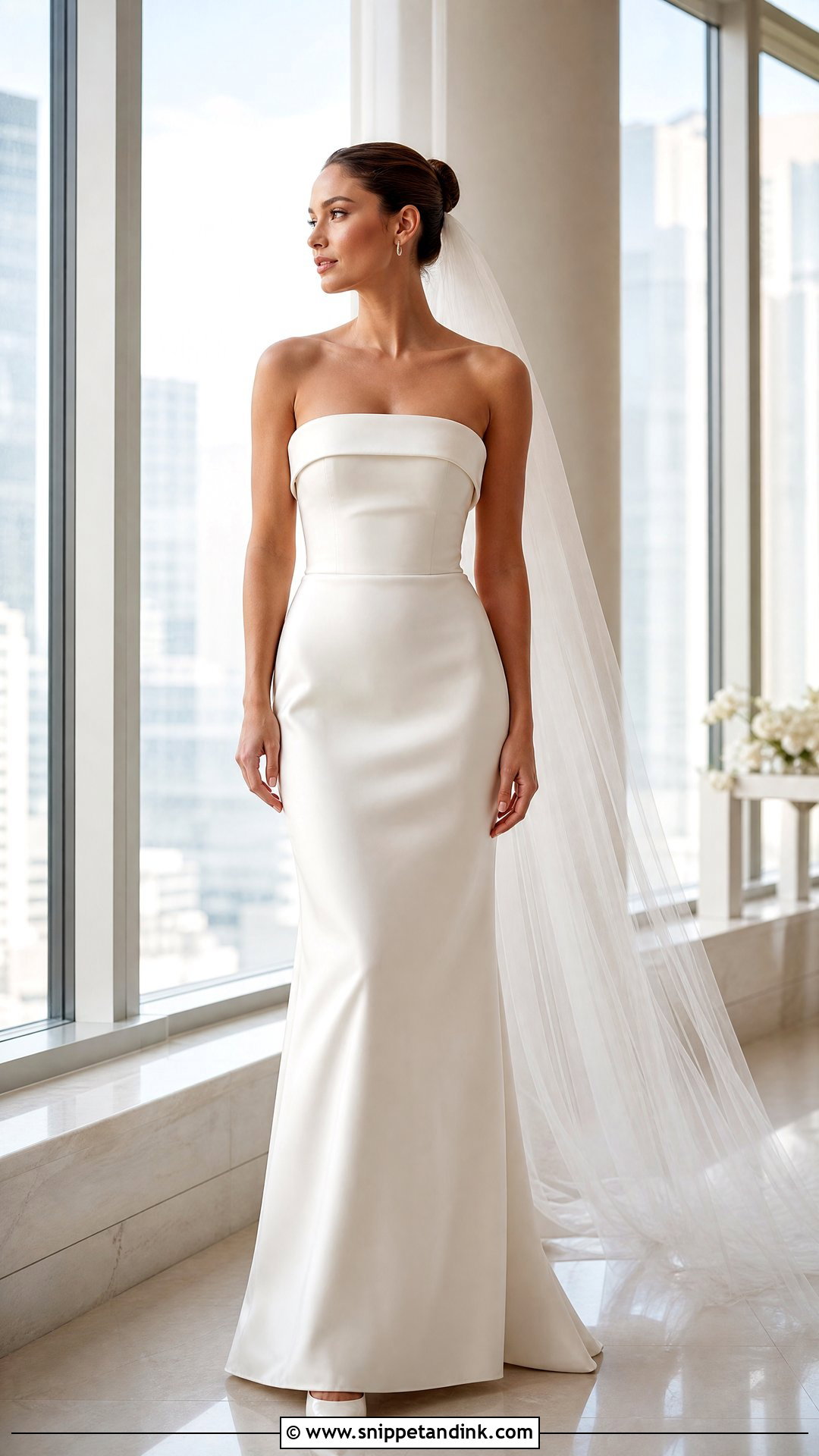
A foldover neckline turns the top edge of the bodice over into a soft band, giving a plain dress one crisp detail. It works in satin, mikado and thick crepe. Thinner fabrics roll. When I check a foldover, I look along the back, where the band tends to lift or roll first. Pointed pumps, small hoops and a sleek clutch suit it, and a polished bun keeps the band fully visible. A long sheer veil softens the defined edge.
18. Scoop Neck Strapless Wedding Dress
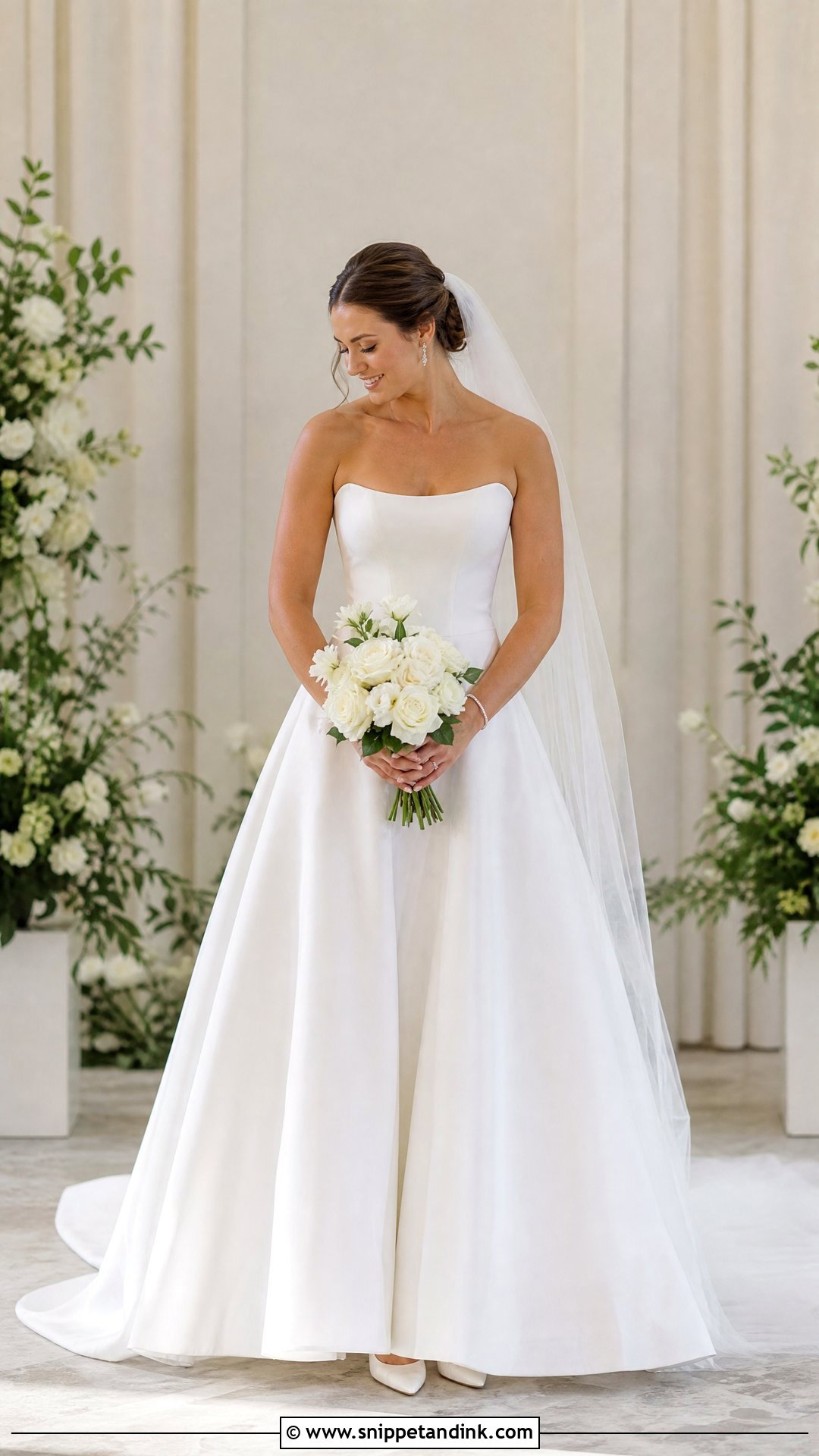
A shallow scoop opens the chest gently without the deep center of a sweetheart. I like it on brides who find straight necklines too severe. The curve has to sit level from the front, and a supportive waist stay inside the bodice is what stops it from tipping forward when you bend. Pair a fitted crepe bodice with a flowing A-line, closed-toe heels, fine drops and a single tennis bracelet. A center-parted low bun and plain veil keep it modern.
19. V-Neck Strapless Wedding Dress
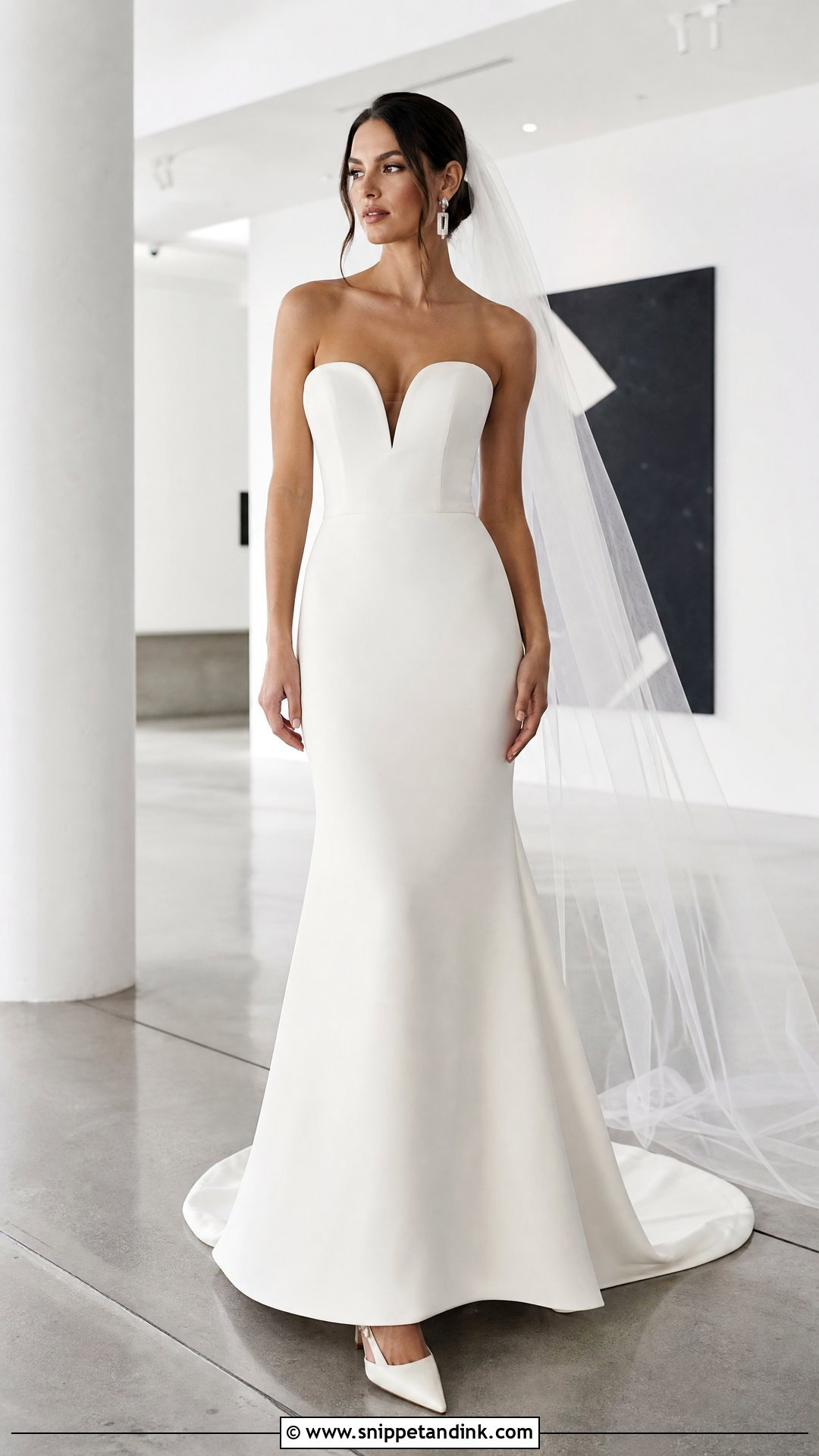
The notch is the whole design. A small V cut into a strapless neckline looks sharp only if the bodice holds both sides firmly, so I’ll often ask the seamstress about a strip of illusion mesh behind it for stability. Shallow notches suit a quieter look; a deeper V needs more support. A structured satin or crepe bodice with a column or softly flared skirt keeps it streamlined. Pointed slingbacks, geometric earrings and a slim metallic bracelet echo the angles, with a neat ponytail or low knot and an untrimmed veil.




20. Backless Strapless Wedding Dress
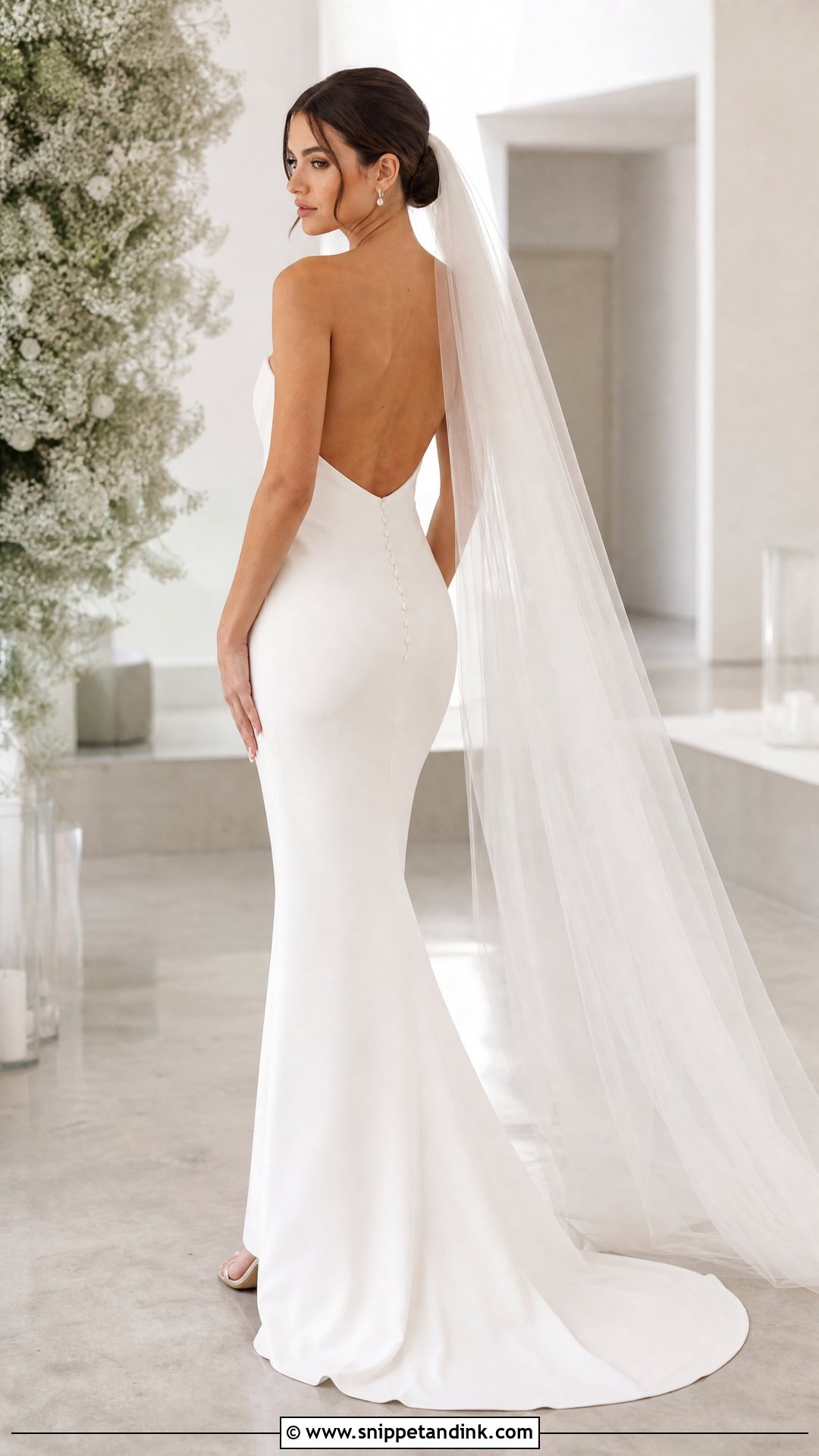
A backless strapless gown is plain from the front and makes its point when you turn around. That low back means no ordinary bra, so I plan support early: sewn-in cups, side panels and a firm fit at the side seams. Walk and sit at the fitting and watch whether the sides stay flat. A crepe column or a satin fit-and-flare lets the back carry the interest. Sleek heels, delicate earrings and a low bun placed above the opening work well, and a sheer veil frames the back without hiding it. No necklace.
21. Bow Back Strapless Wedding Dress
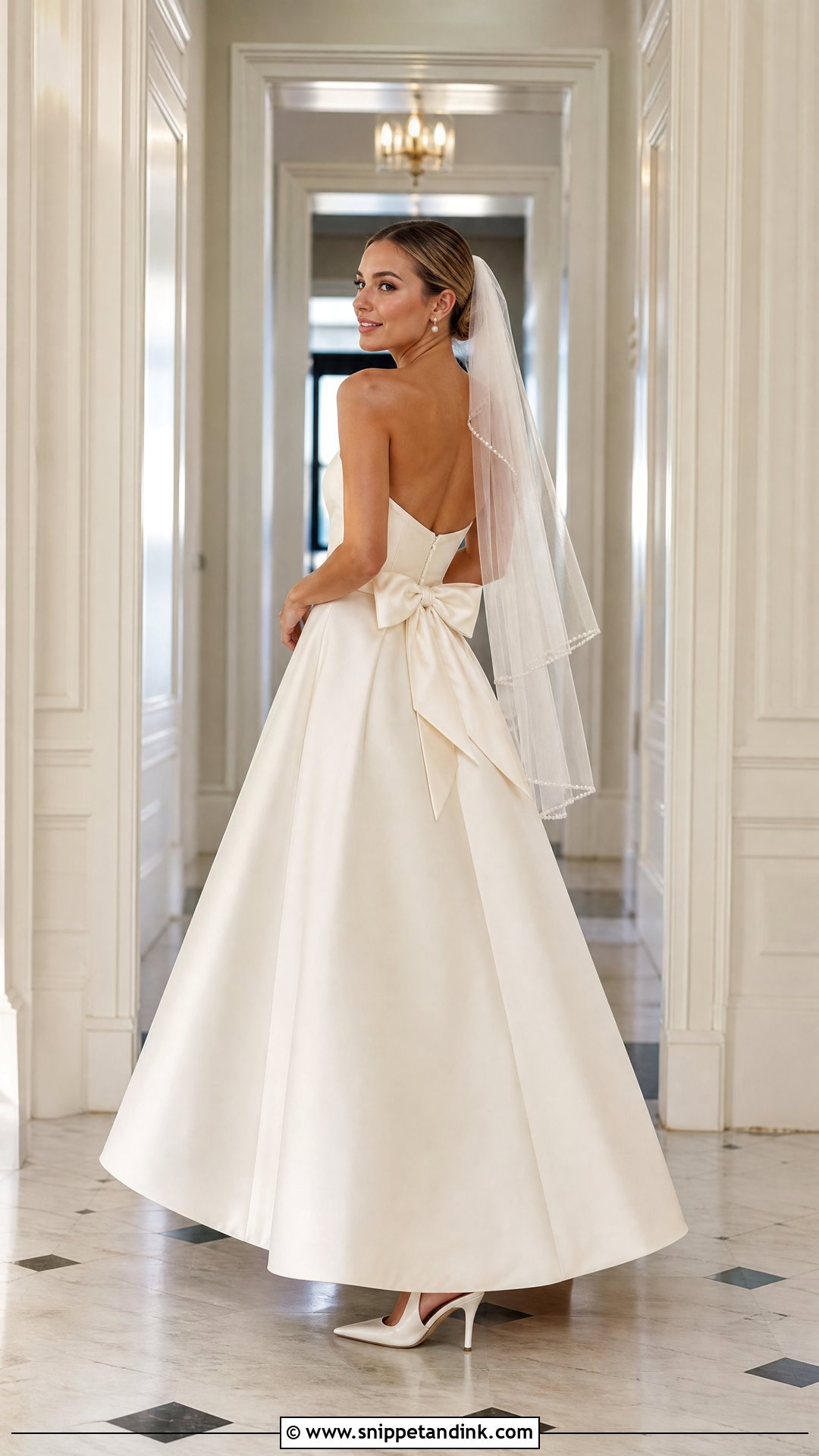
One flat, tailored bow at the waist or upper back is enough to change a plain satin gown. Long tails add movement, a compact bow looks neater. I check the bow’s position against the zipper and the bustle points early, because they often compete for the same spot. Pointed pumps, pearl studs and a smooth low bun are plenty. A fingertip veil keeps the bow visible; a long ceremony veil can come off afterward. If the bow detaches, you get a second look for the evening.
22. Strapless Wedding Dress With Pockets
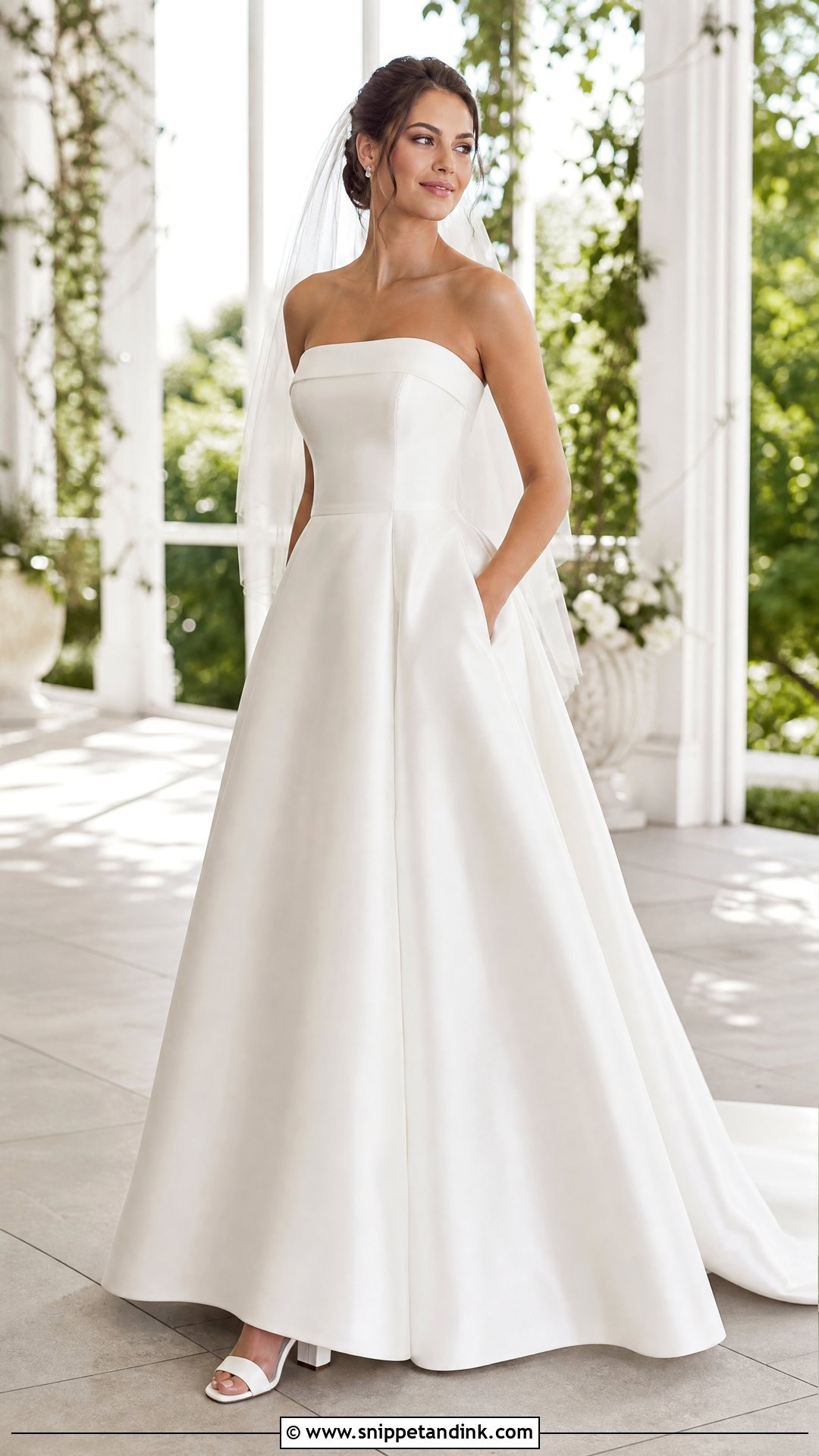
Pockets are the feature brides thank me for most. On a strapless A-line, structured satin or mikado stops the openings from pulling, and a controlled full skirt lets them disappear into the side seams. Keep them for light things: a tissue, lip balm, a ring box for a moment. A phone drags the skirt down on one side. Comfortable block heels, small earrings, a simple veil and a polished half-up style suit this relaxed but tidy look. Practice slipping your hands in without hitching the skirt.
23. Strapless Wedding Dress With Side Slit
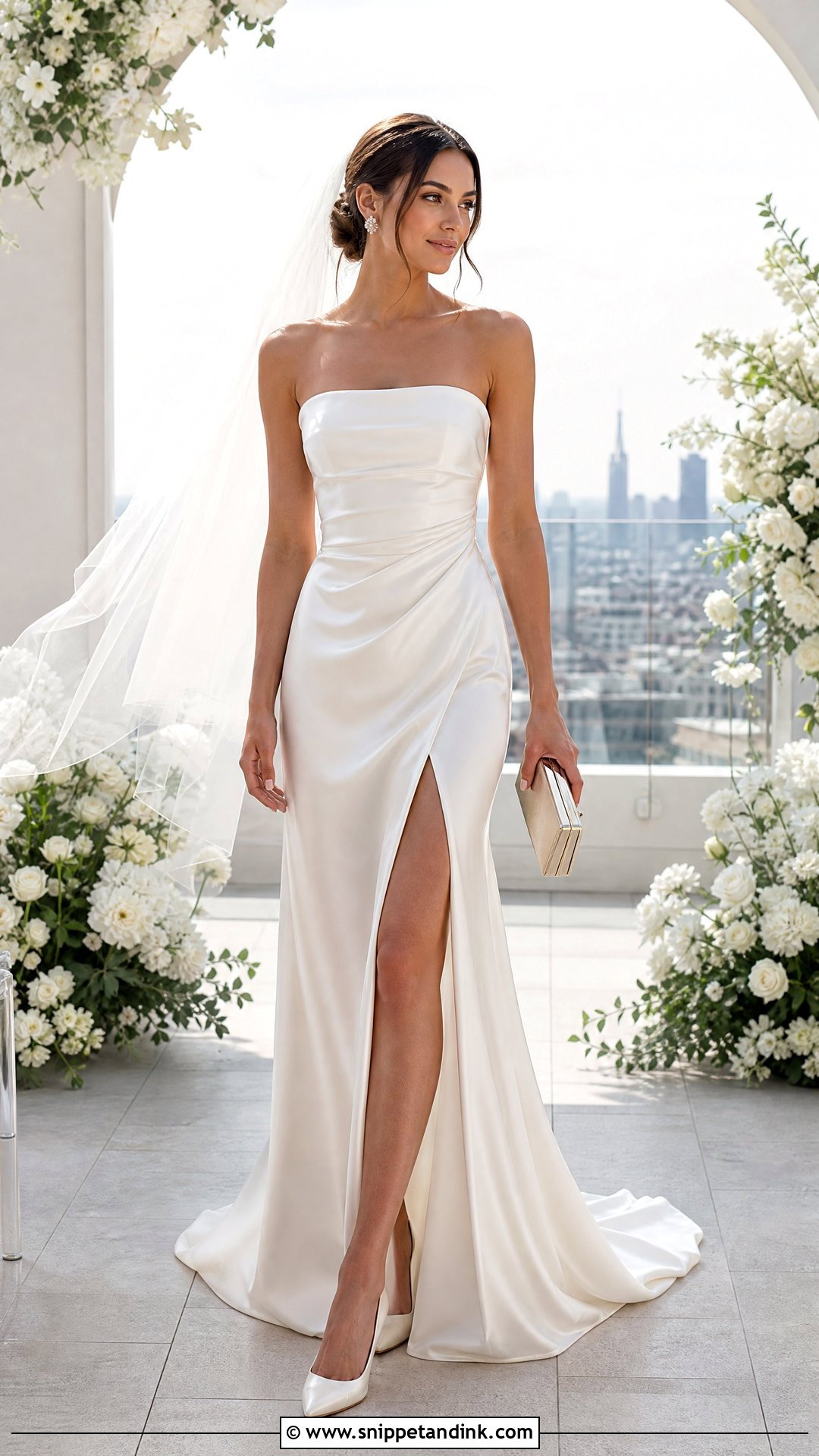
Slits belong on columns, sheaths and softly draped A-lines, not on very full skirts where they disappear. The height is personal; I mark it with you walking and climbing stairs, then lower it an inch if there’s any doubt. The top of the slit needs a reinforcing stitch, or it can tear on the dance floor, and the lining should be trimmed so it never peeks out. Matte crepe or fluid satin falls best around the opening. Pointed heels, small statement earrings and a sleek clutch suit it, with a low bun and a light veil.
24. Strapless Wedding Dress With Detachable Overskirt
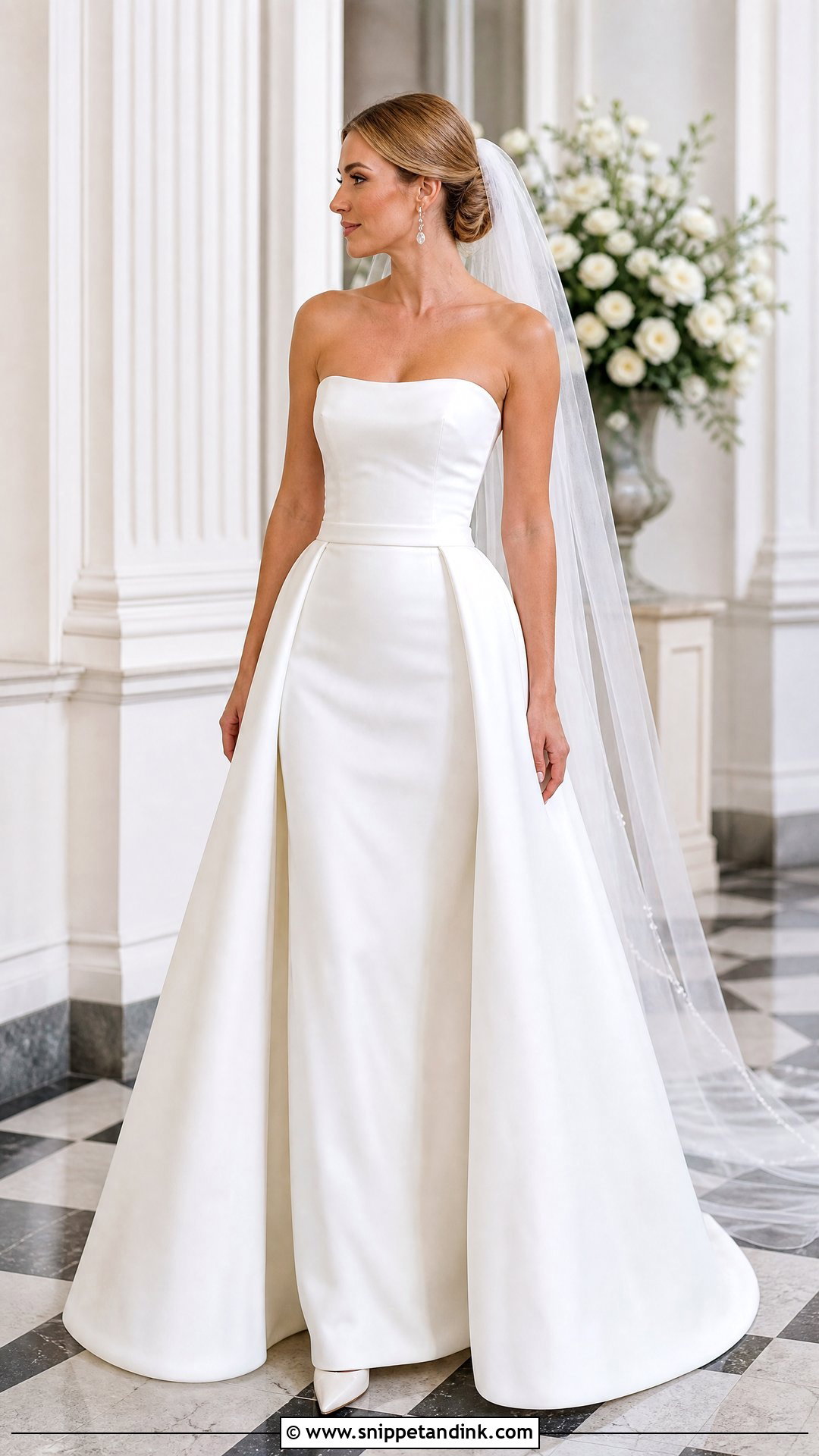
A detachable overskirt turns one column gown into two outfits. Start with a fitted crepe or satin column, add a plain A-line overskirt for the ceremony, then remove it to dance. The base dress must look finished with nothing attached: no loops, snaps or visible stitching left behind. I make sure the waistband closes flat and doesn’t add bulk. Pointed pumps, refined earrings and a neat chignon suit both versions, and a long plain veil can come off with the overskirt. Rehearse the change with whoever’s helping you.

25. Strapless Wedding Dress With Cape Veil
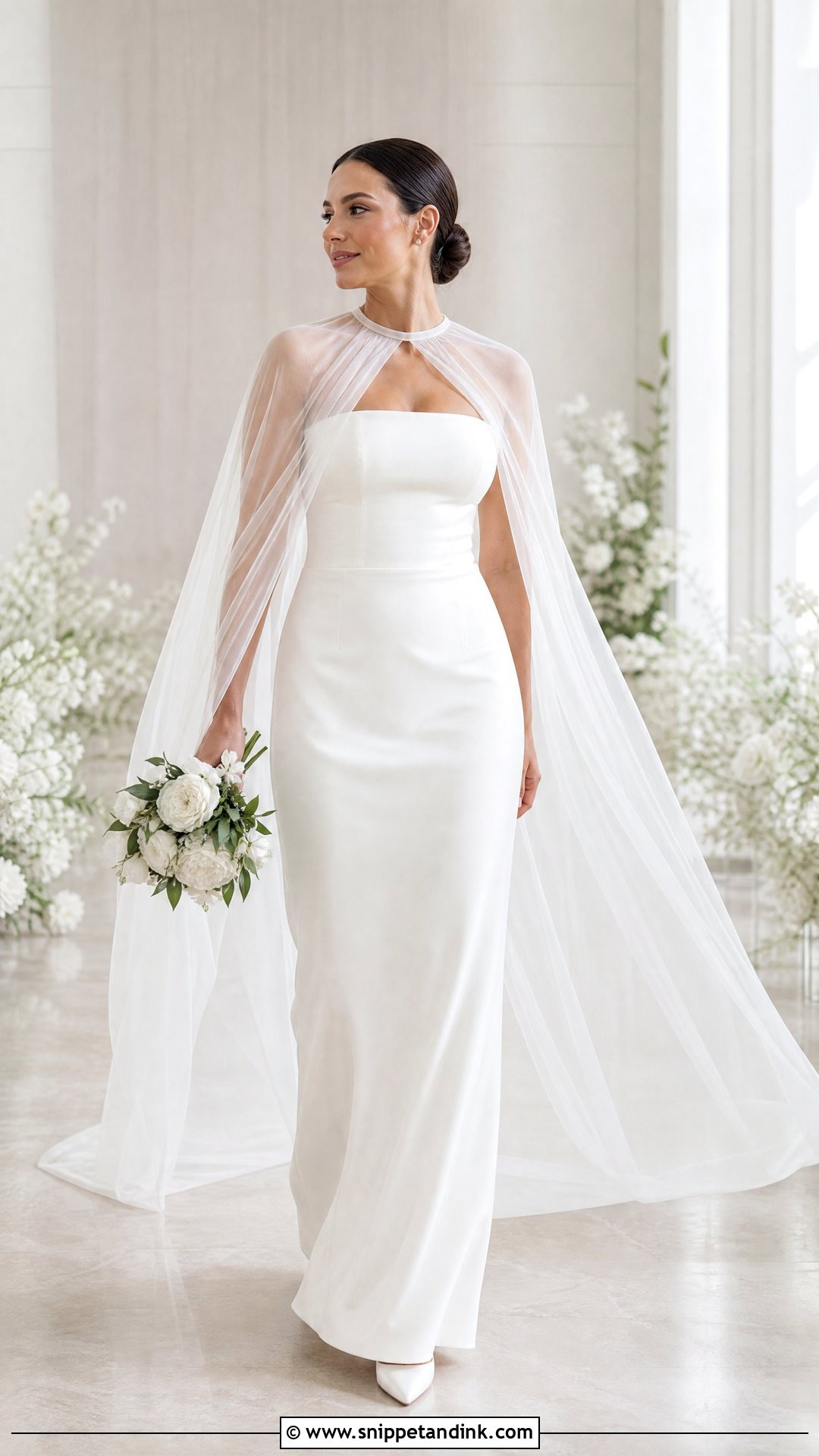
A cape veil gives a strapless gown coverage and movement while leaving the neckline intact. It either clips discreetly at the back or rests lightly on the shoulders. Weight is my main concern: a heavy cape pulls the bodice backward, so I’d choose the lightest tulle that still holds the shape. Underneath, a plain crepe column, satin A-line or structured ball gown all work. Closed-toe pumps, small studs and a sleek bun are enough; don’t add a second veil. Practice walking in it, and take it off later to show the strapless line.
Covering Bare Shoulders for a Church Service or a Cold Evening
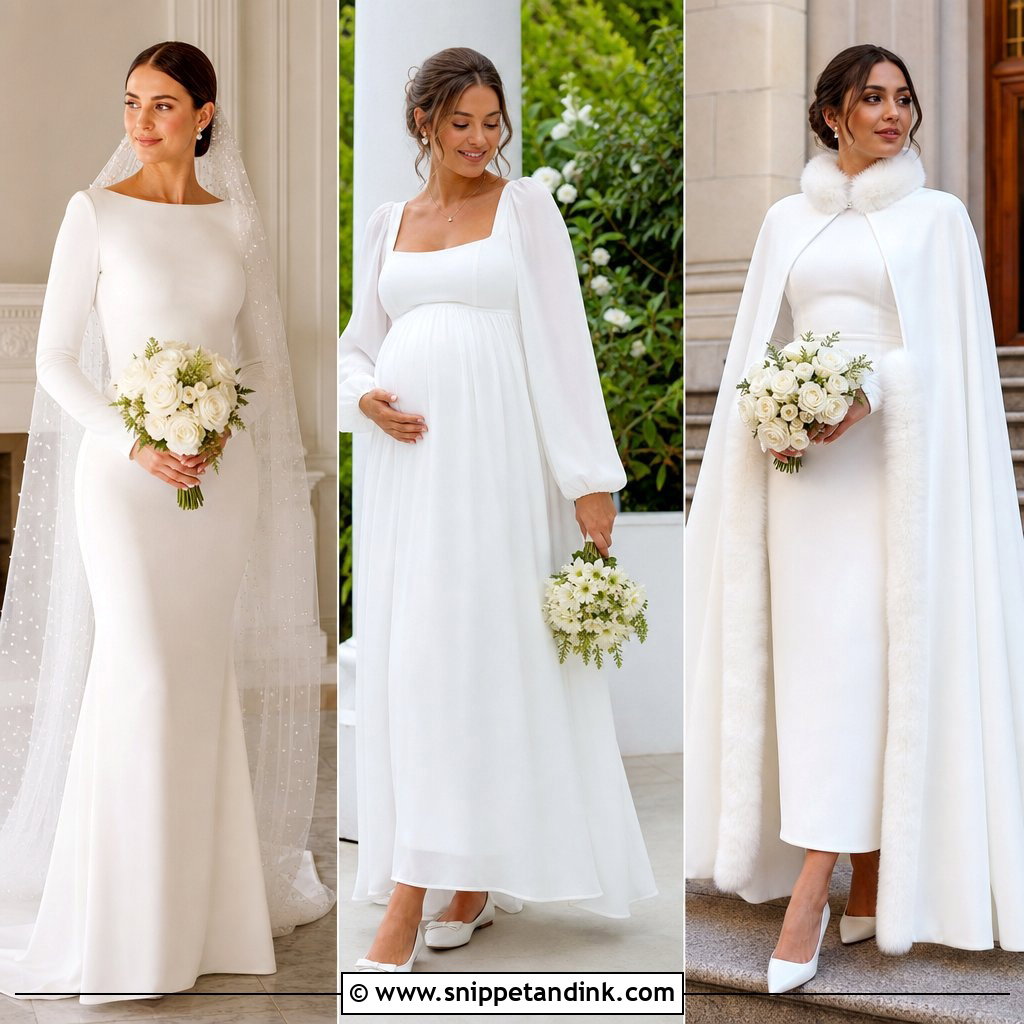
Some places of worship ask for covered shoulders during the ceremony, and some winter evenings simply demand it. You don’t need a different dress. I’d plan a cover-up that you can take off for the reception, and choose it in the same shade as the gown, held up against it in daylight, because ivory and white separate badly in photos.
- A sheer tulle or organza bolero, which keeps the neckline visible underneath.
- A cape veil long enough to cover the shoulders during vows.
- A tailored cropped jacket in crepe for a civil ceremony or city wedding.
- A wool or faux-fur wrap for outdoor photos in winter, removed indoors.
Check with the officiant or venue early so the cover-up is part of the plan, not a last-minute borrowed cardigan.
How a Strapless Neckline Behaves Over a Long Day
A bodice that feels perfect at nine in the morning has been through a lot by ten at night: a long seated dinner, plenty of hugs, dancing and probably a hot room. Fabric relaxes with body heat, so a gown fitted with almost no ease can start to feel loose late in the evening.
I pack a small kit for strapless brides: double-sided fashion tape, a few safety pins, a needle threaded in the dress color and spare hooks for the bustle. If the bodice starts to drop, the quickest fix is to have someone tighten the waist stay or re-pin the zipper top, not to keep hitching it up yourself, which only stretches the fabric further. Shoulders also show sunburn and strap marks, so skip strappy tops and sunbathing in the weeks before the wedding.
Is Your Bodice Doing the Work?
A strapless gown doesn’t need ornament to make an impression. Fabric, fit and silhouette do the work. Compare necklines with honesty about how they sit on you, test every option while moving, and wear your wedding shoes to every alteration appointment. Keep accessories in support: a plain veil, a polished hairstyle, fine jewelry and shoes you can stand in for hours. A satin ball gown, crepe column, chiffon A-line or strapless mini will all look personal and confident once the bodice fits you properly.
You'll Like These Ideas:











Leave a Reply