
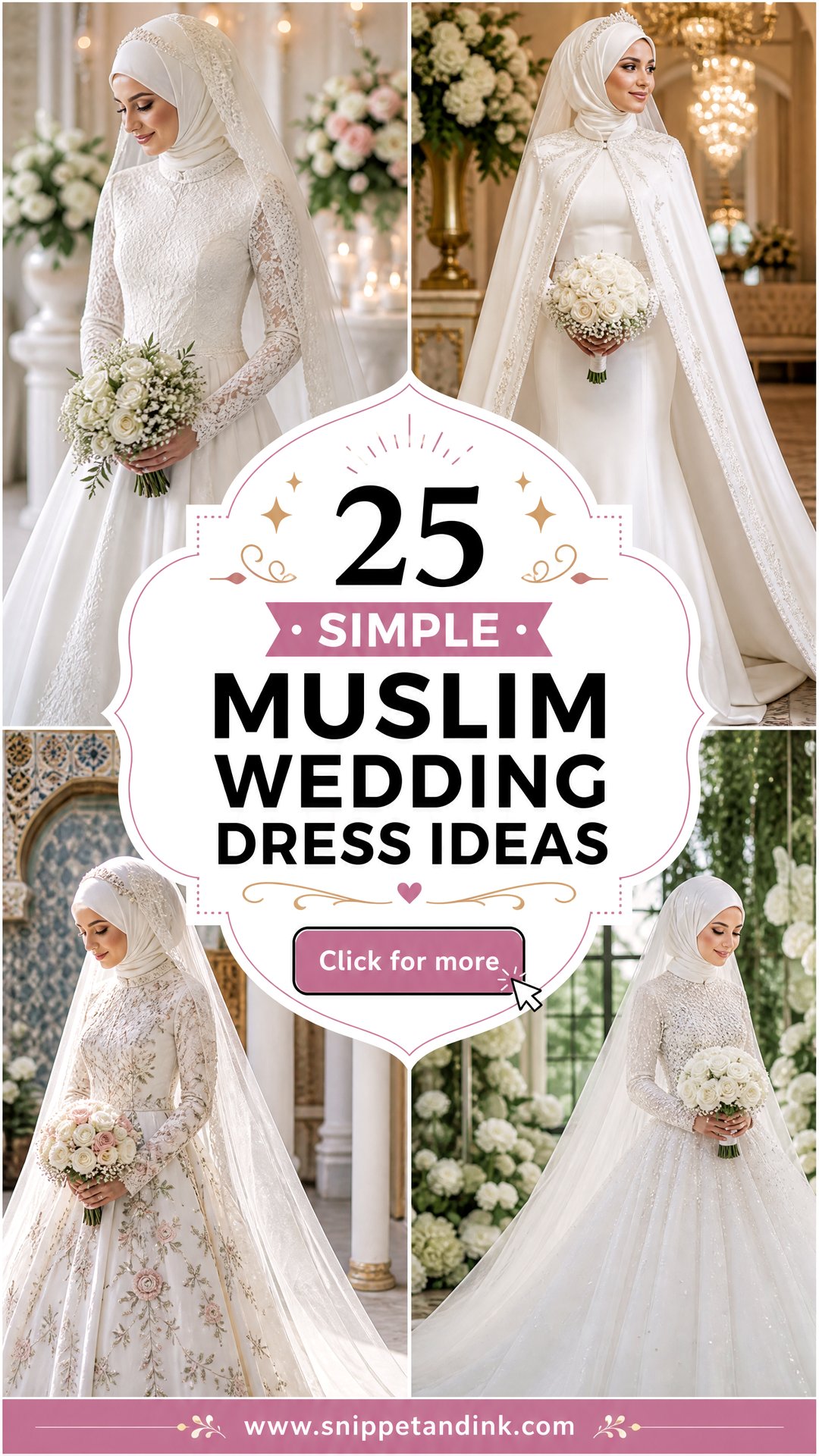
Simple Muslim wedding dress ideas are where I start most modest fittings, because a clean gown leaves room for the hijab, veil and pins to do some of the work. What brides want from me is nearly always the same: full coverage, and a dress they can sit, pray, hug and walk in through the nikah, the photos and a long evening of family greetings. Below are 25 of them, with what I check on each at a fitting and where each one tends to go wrong.
Turning a Standard Gown Into a Modest One
Plenty of brides fall for a gown that wasn’t cut for modest wear. That can work, but it changes your timeline, so raise it at the first appointment rather than the last fitting. These are the changes I see requested most, and what each one involves.
- Adding sleeves. A seamstress can add sleeves to a strapless or cap-sleeve gown, but the fabric has to match. Ask the shop to order extra fabric from the maker when you place the order; that’s far easier than hunting for a match later.
- Raising a neckline. A sweetheart or V neck can be filled with a matching panel or a high-neck lace insert. Lace hides the join better than plain satin does.
- Lining sheer areas. Sheer skirts, backs and sleeves can be fully lined. Lining adds weight and warmth, so try a lined sample if you’re marrying in summer.
- Covering an open back. A matching cape or a sewn-in panel is usually the cleanest fix.
Wedding gowns are often made to order over several months, and alterations come on top of that, usually starting a couple of months before the wedding. Big structural changes like added sleeves need the earlier end of that window. Bring your hijab, underscarf and shoes to every fitting, so the neckline and hem are judged with them in place rather than guessed at.
1. White Satin Muslim Wedding Dress
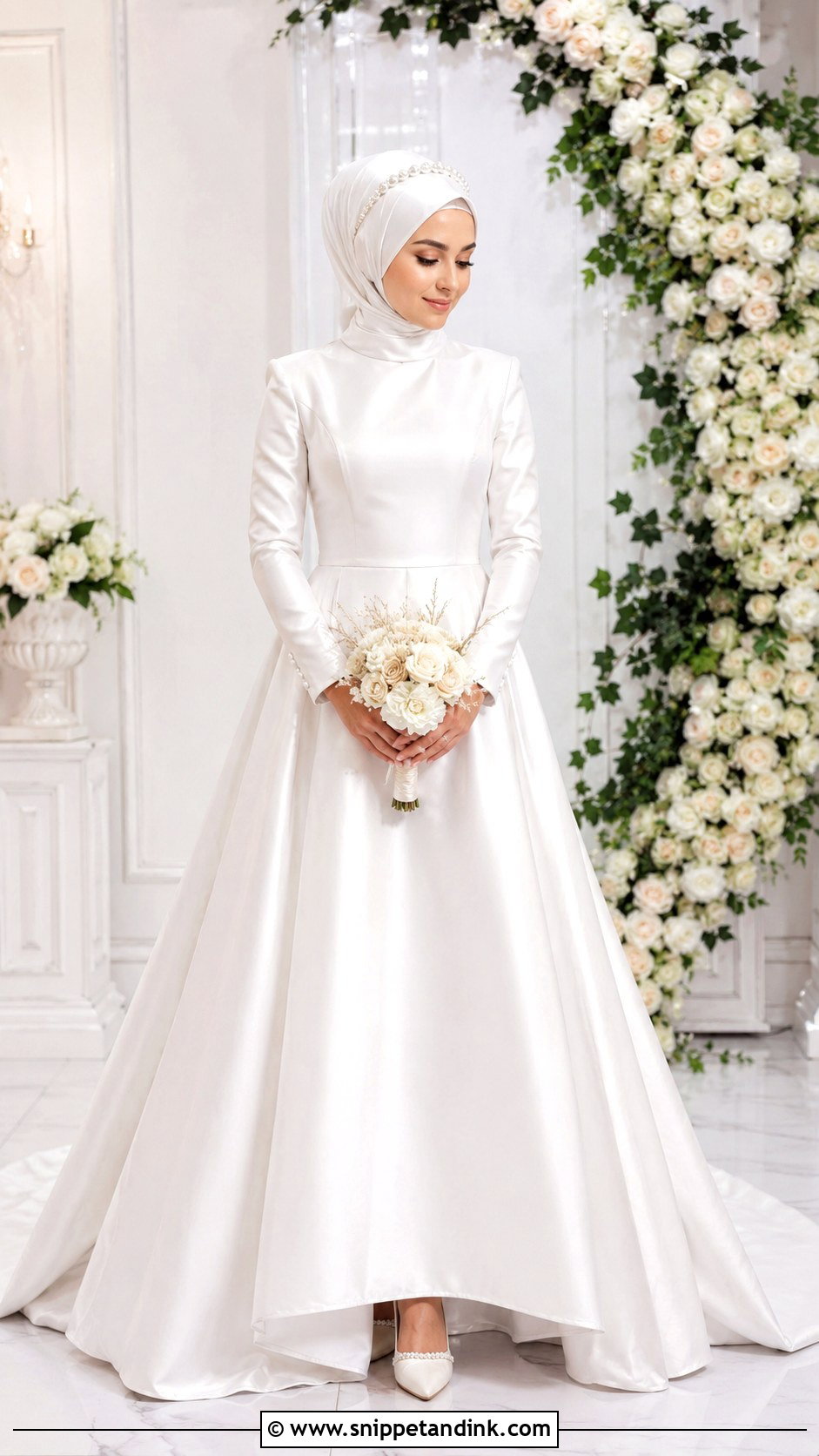
Bright white satin is the least forgiving fabric on this list, so I always look at it in daylight first. It shows every crease, and the lap will wrinkle the first time you sit through the ceremony, which is why a heavier duchess satin with a softly flared skirt holds up far better than a thin polyester one. A matching satin hijab looks coordinated, but satin slides on satin; I put a cotton or jersey underscarf beneath it so the pins have something to grip. Pearl studs and an ivory bouquet are enough.
2. Lace Sleeve Muslim Wedding Dress
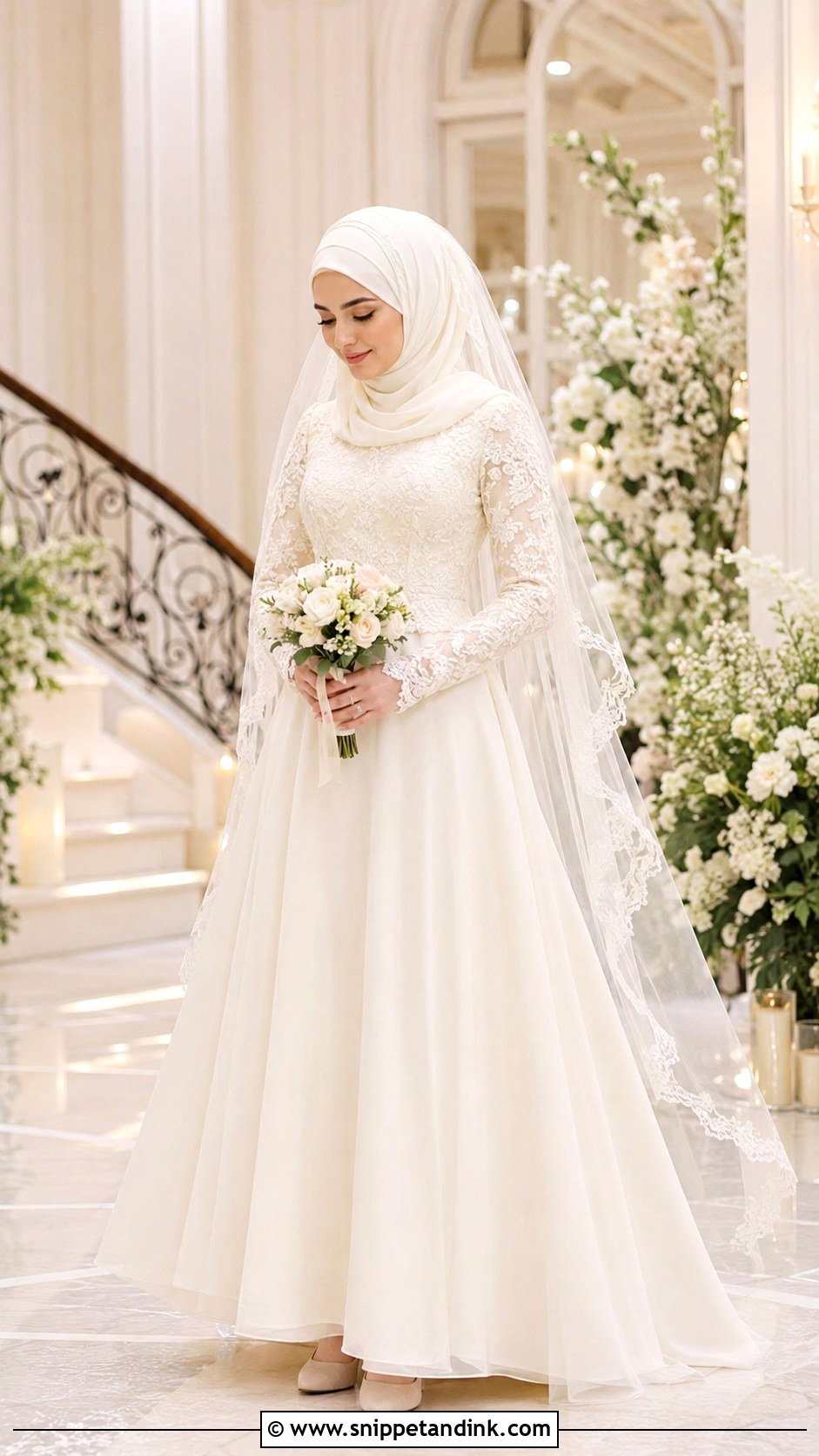
Lace sleeves are usually built on illusion mesh, and that’s the part I ask brides to inspect, because mesh that reads as skin-tone in the shop can look bare under a camera flash. Ask for an opaque lining under the lace, or lace backed with matching crepe. A plain chiffon hijab keeps the texture from crowding your face. Keep any headpiece small; lace near the temples is already plenty of detail.
3. Chiffon Muslim Wedding Dress
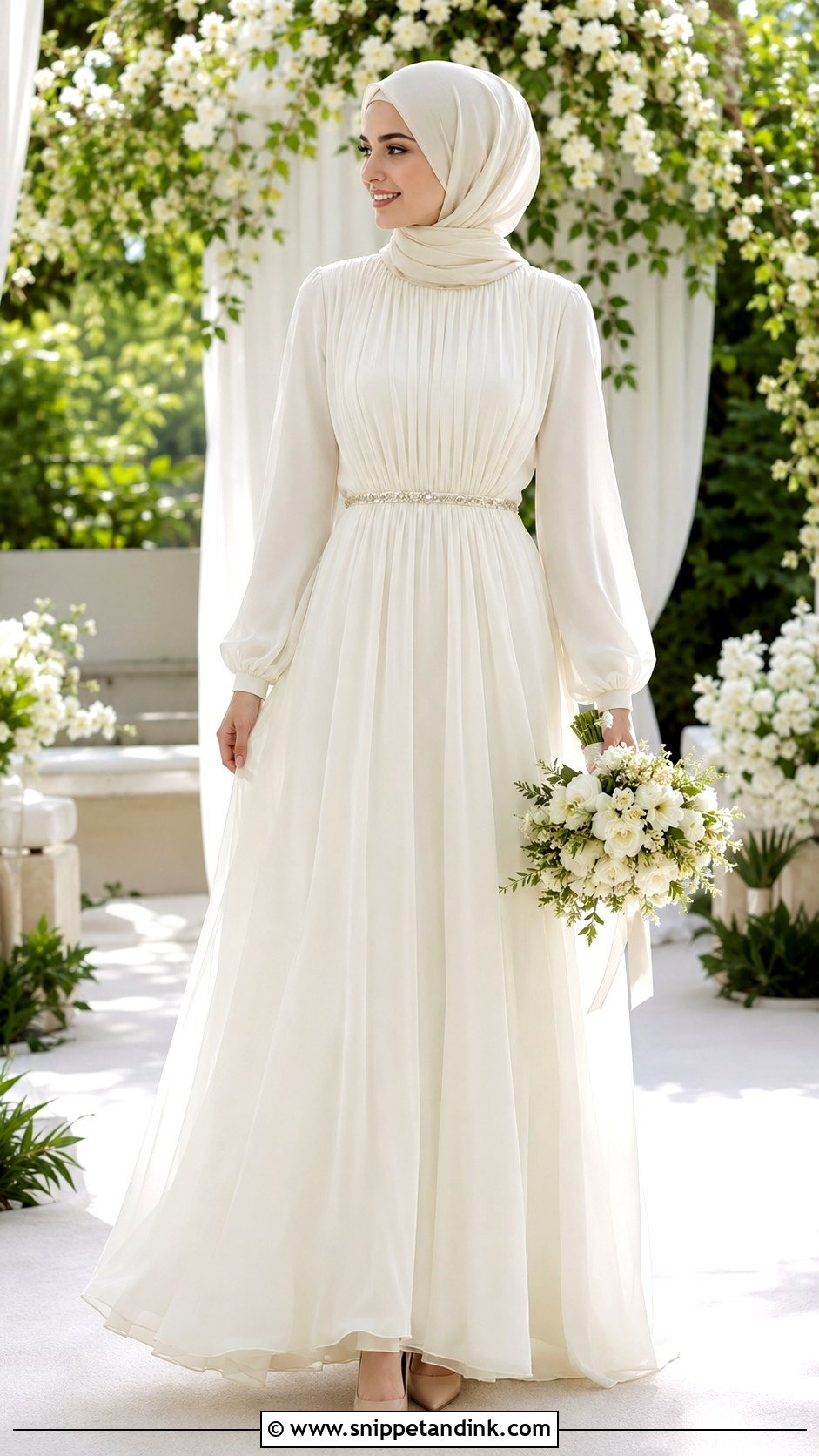
Chiffon is what I suggest for an outdoor or summer nikah because it breathes and moves, but on its own it’s see-through, so a full lining isn’t optional. A gathered waist hides the lining seam well. Pin a matching chiffon hijab over a snug underscarf, since chiffon shifts the moment you turn your head. It also snags on bouquet wire and crystal belts, so I have the florist wrap the stems in ribbon for chiffon brides.
4. Crepe Muslim Wedding Dress
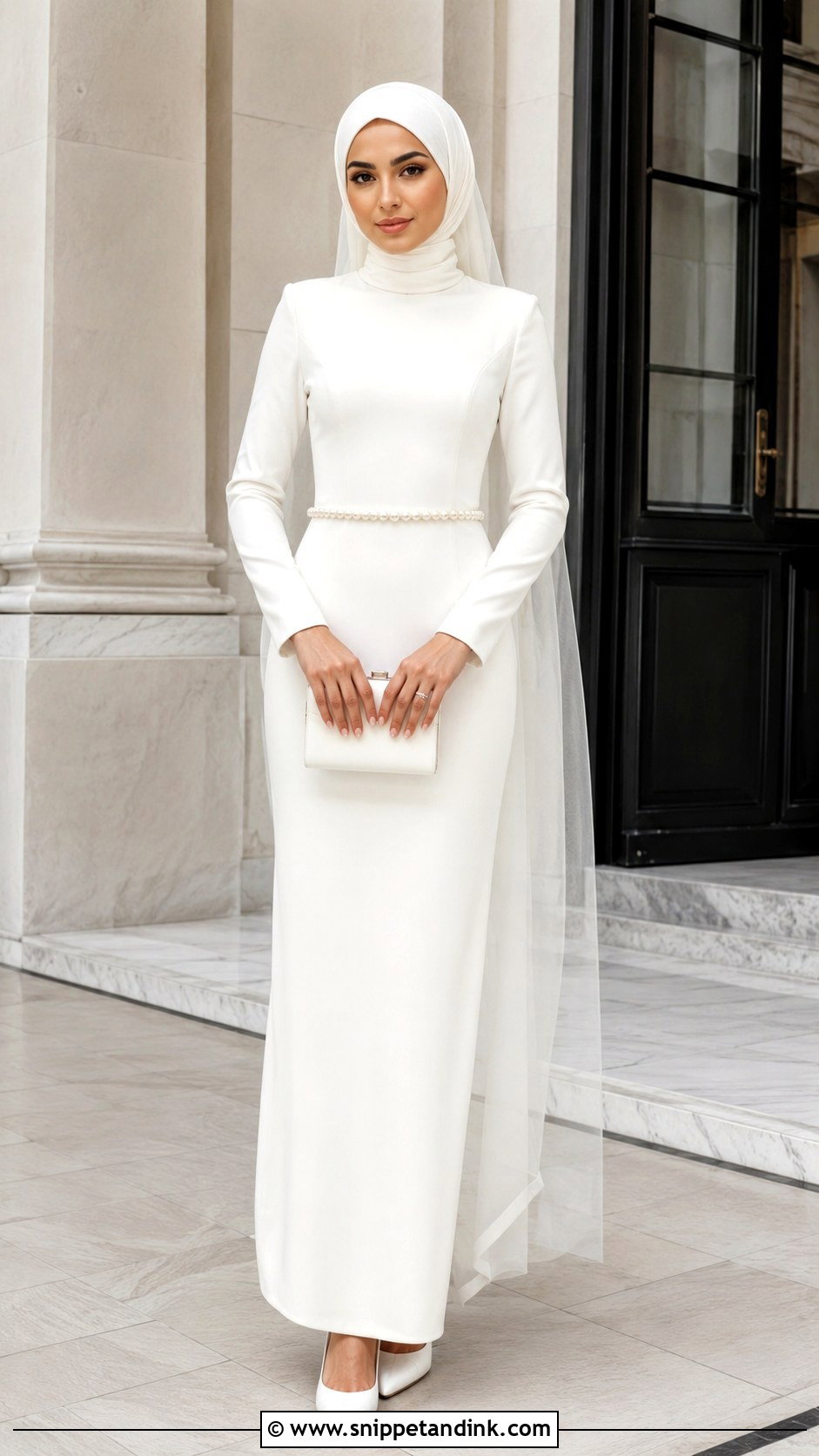
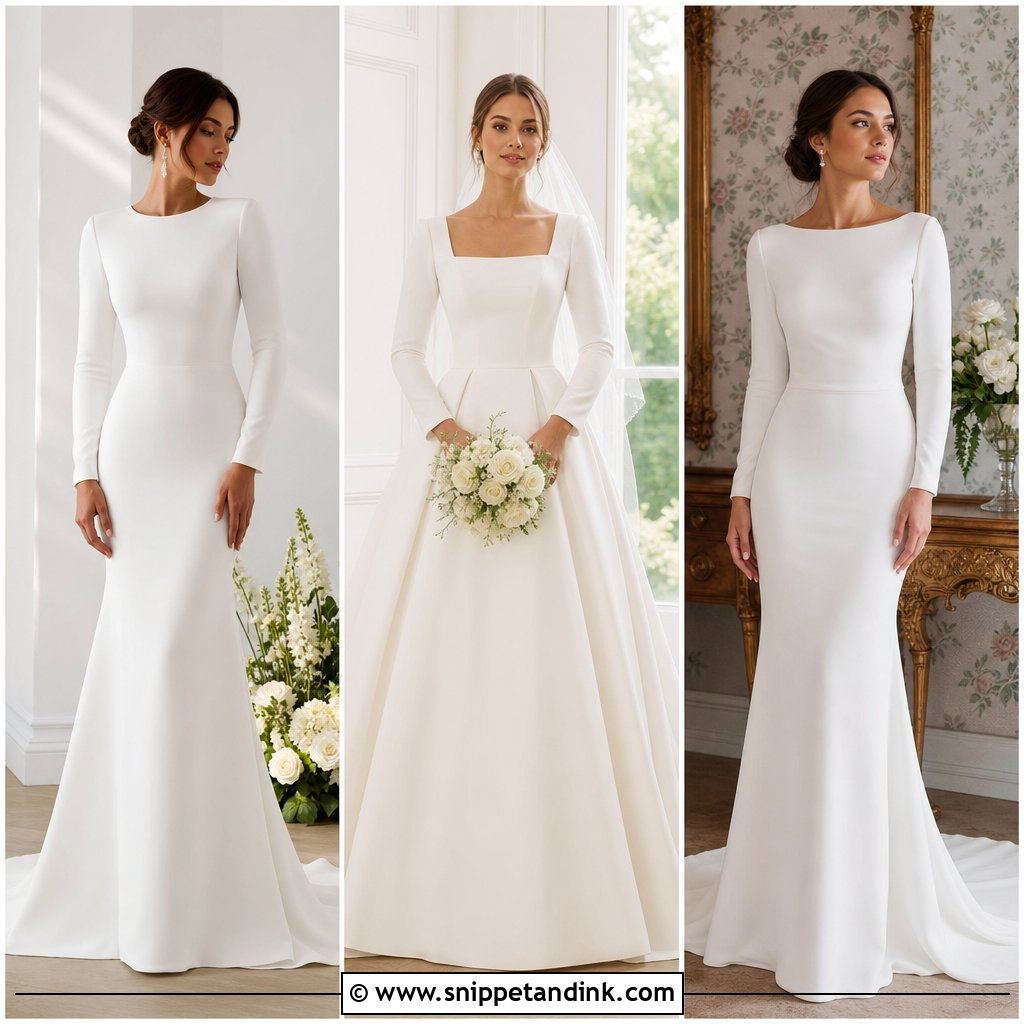
I reach for crepe when a bride wants sharp, tailored lines. It drapes heavily and hides seams well, but it also follows the body, so a crepe column can cling at the hip more than she expects. That’s why I often steer crepe brides toward a soft A-line instead. A structured hijab in matte crepe or chiffon matches its flat finish, and a pearl belt is the only shine the outfit needs.
5. Pearl Muslim Wedding Dress
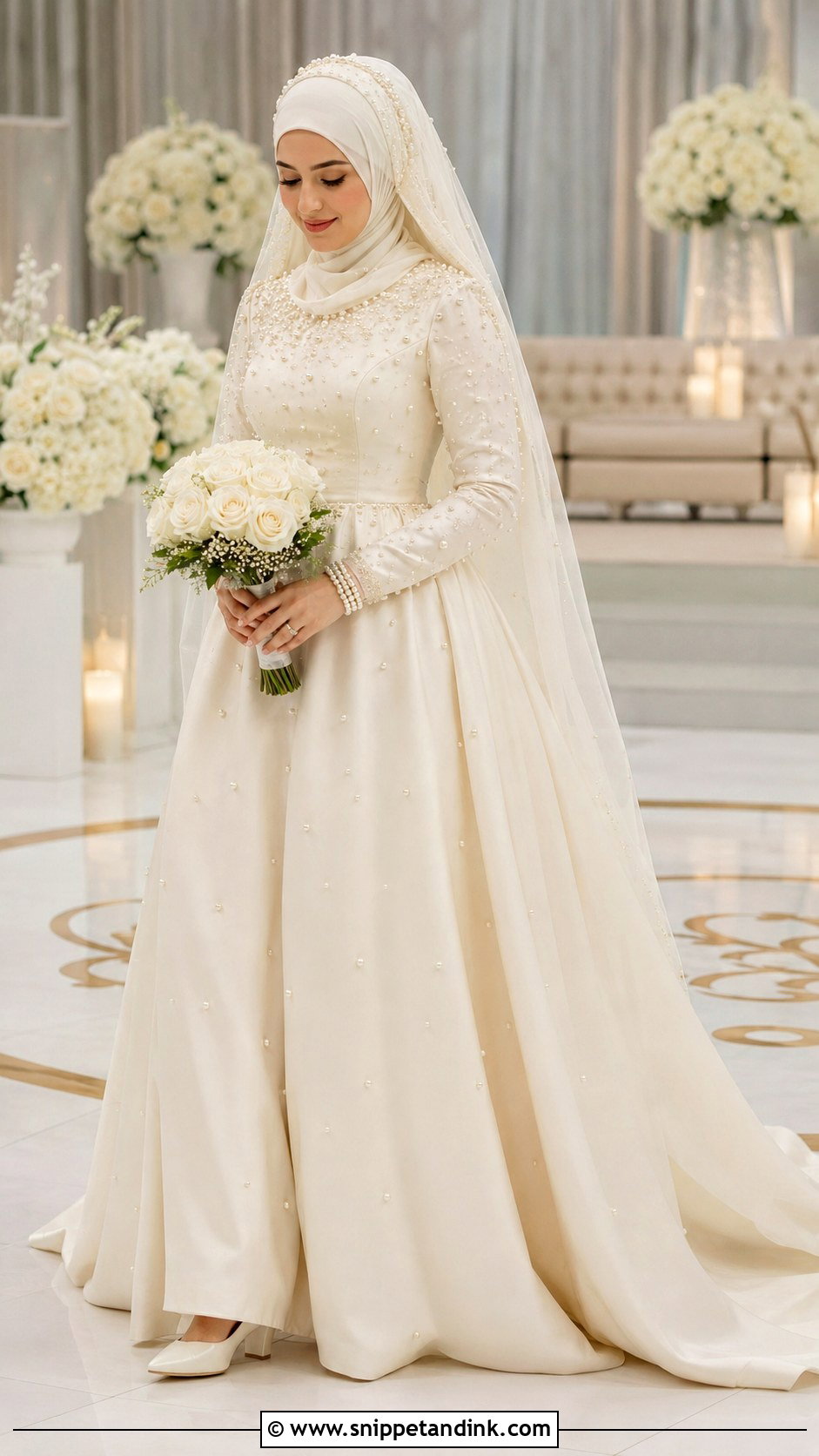
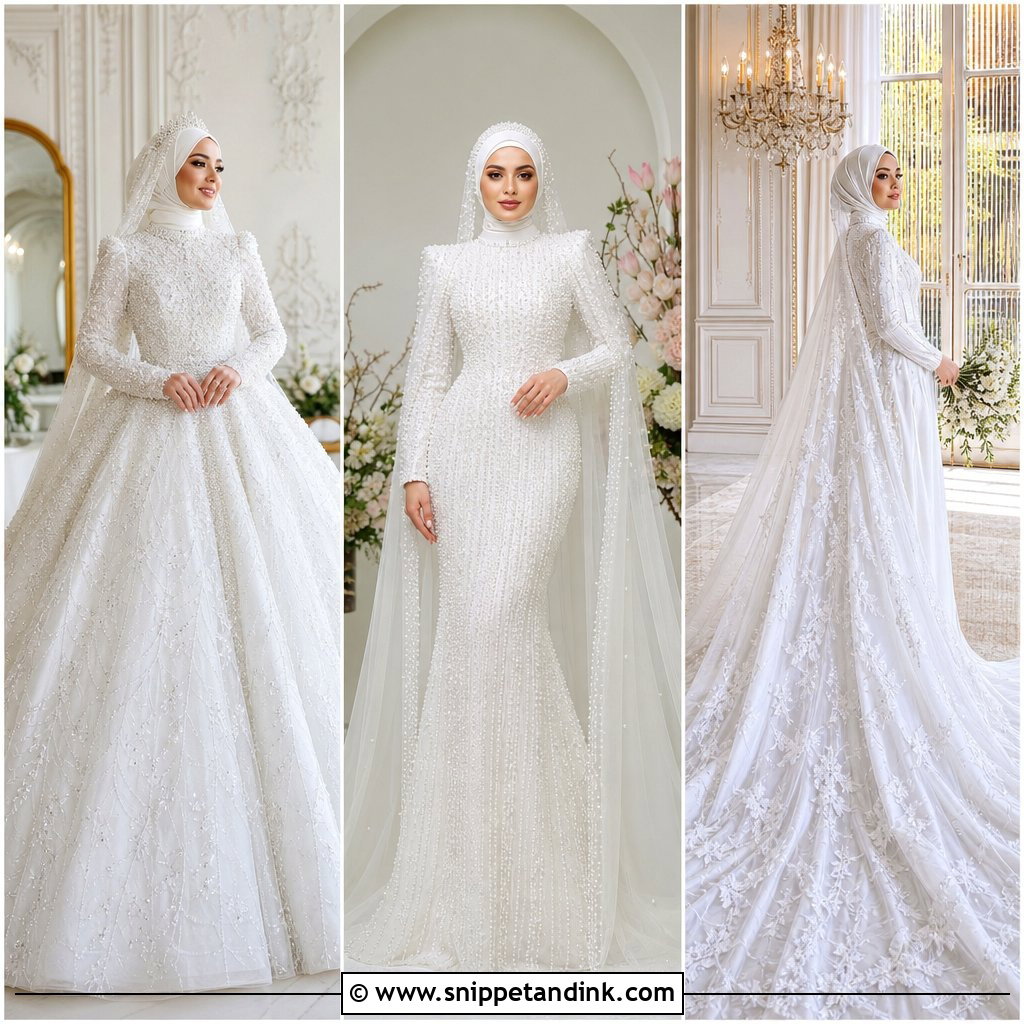
Pearl detailing is all about placement. Scattered over the cuffs and shoulders, pearls catch light near your face; scattered across the skirt, they mostly vanish in photos and just add weight. I always ask how they’re attached, because glued pearls can pop off during a day of hugging relatives while hand-stitched ones stay put. Pearl hijab pins finish it without adding anything else.
6. A Line Muslim Wedding Dress
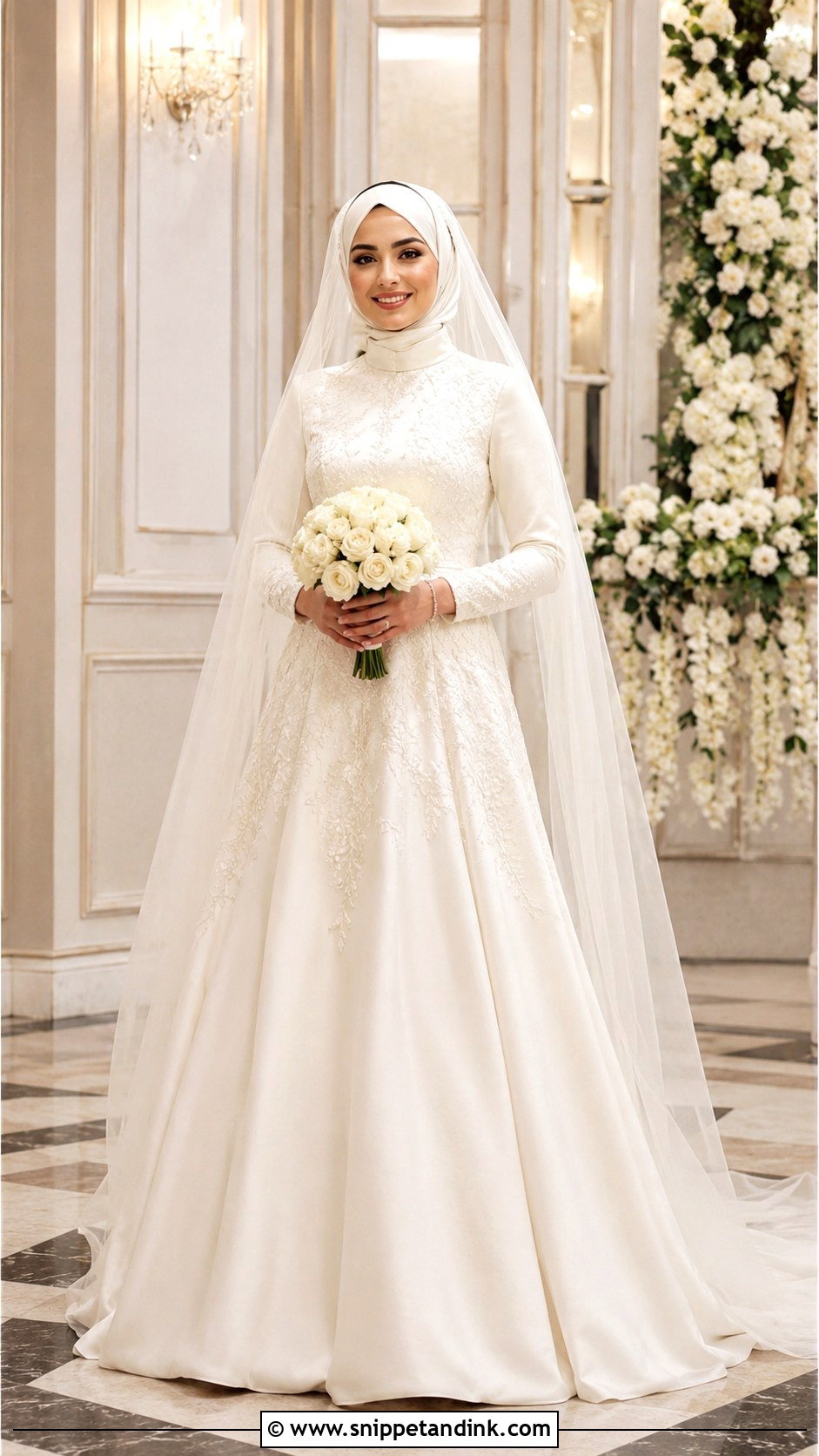
When a bride has no idea where to start, I put her in an A-line first. The skirt skims the hips, the waist seam gives shape without pressure, and you can sit on a low cushion or a chair without the hem pulling. What I check is where that waist seam lands: too high and it reads as a nightdress, too low and it shortens your legs. A soft veil pinned at the crown over the hijab is all the dressing it needs.
7. Ball Gown Muslim Wedding Dress
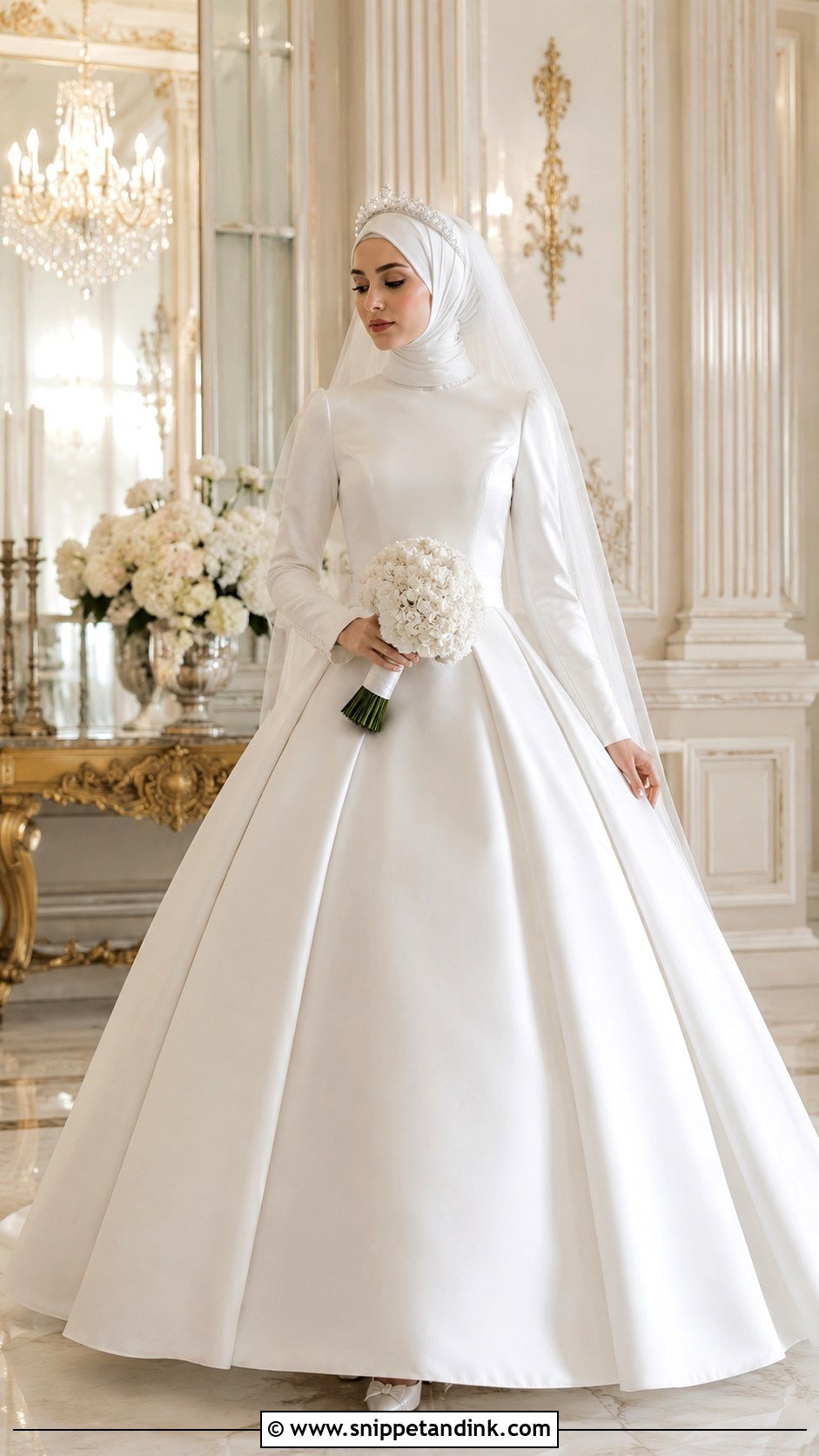
A ball gown only stays simple if the skirt is plain. Mikado and heavy satin hold their shape on their own, so you don’t need layers of crinoline or beading to get volume. The trade-off is space. A full skirt needs room in the car, at the nikah table and through a mosque doorway, so ask about the venue before you fall for the width, then balance it with a plain hijab and a small tiara.
8. Modest Mermaid Muslim Wedding Dress
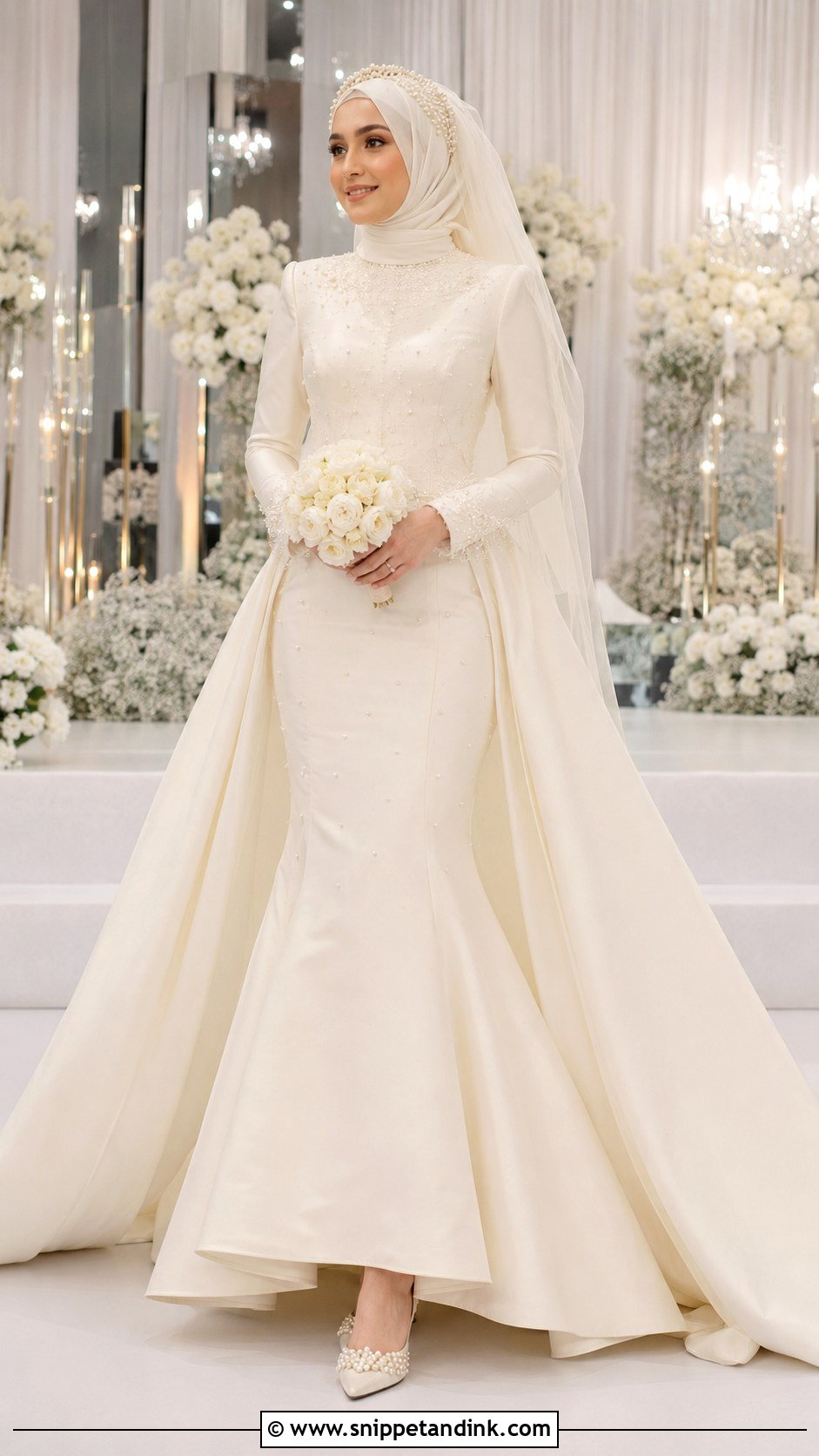
This is the silhouette I’m most cautious about for a modest wedding. Even in a thick fabric, a fitted knee limits how you sit, kneel and climb stairs, and some brides discover they can’t sit cross-legged at a floor-seated nikah. If you love the shape, choose a trumpet flare that opens higher, around mid-thigh, and add a detachable overskirt for the ceremony. Walk, sit and bend at every fitting.
9. Cape Muslim Wedding Dress
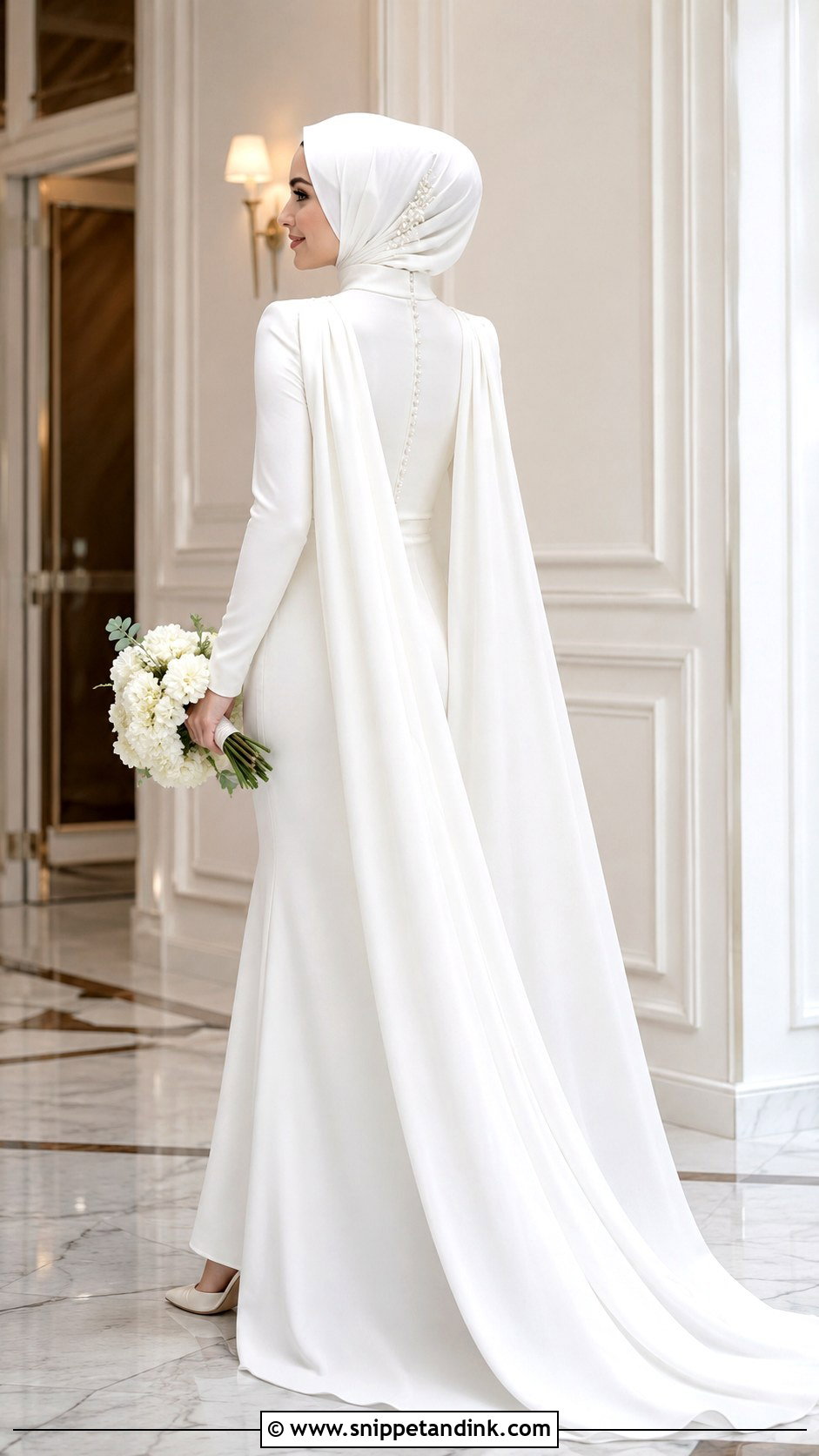
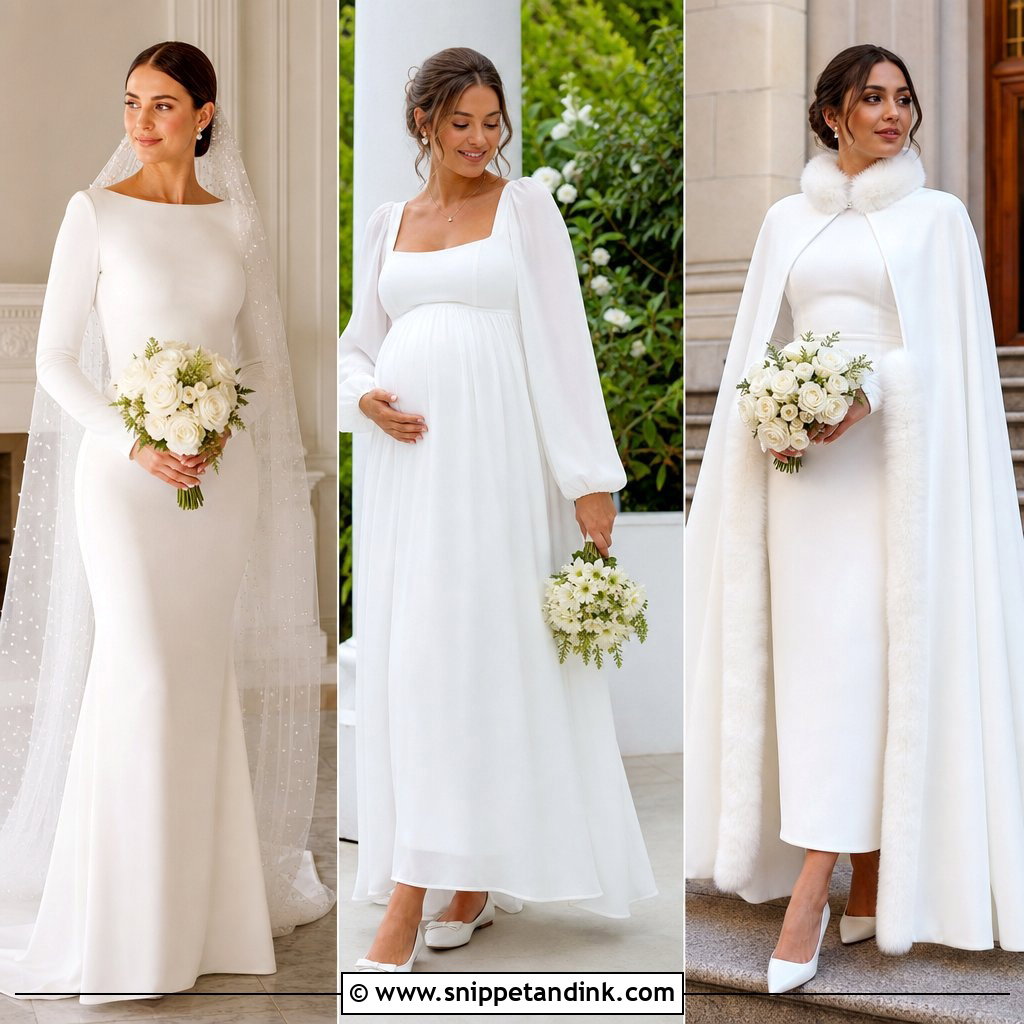
A cape gives you movement and back coverage, which means the gown underneath can stay very plain. Where it attaches matters more than people think. A cape stitched into the shoulder seams stays steady, while one fastened at the neckline can tug the hijab backward every time you turn, so I pair capes with a fitted hijab. Georgette and chiffon capes float in photos; satin ones fall straight down.
10. Abaya Muslim Wedding Dress
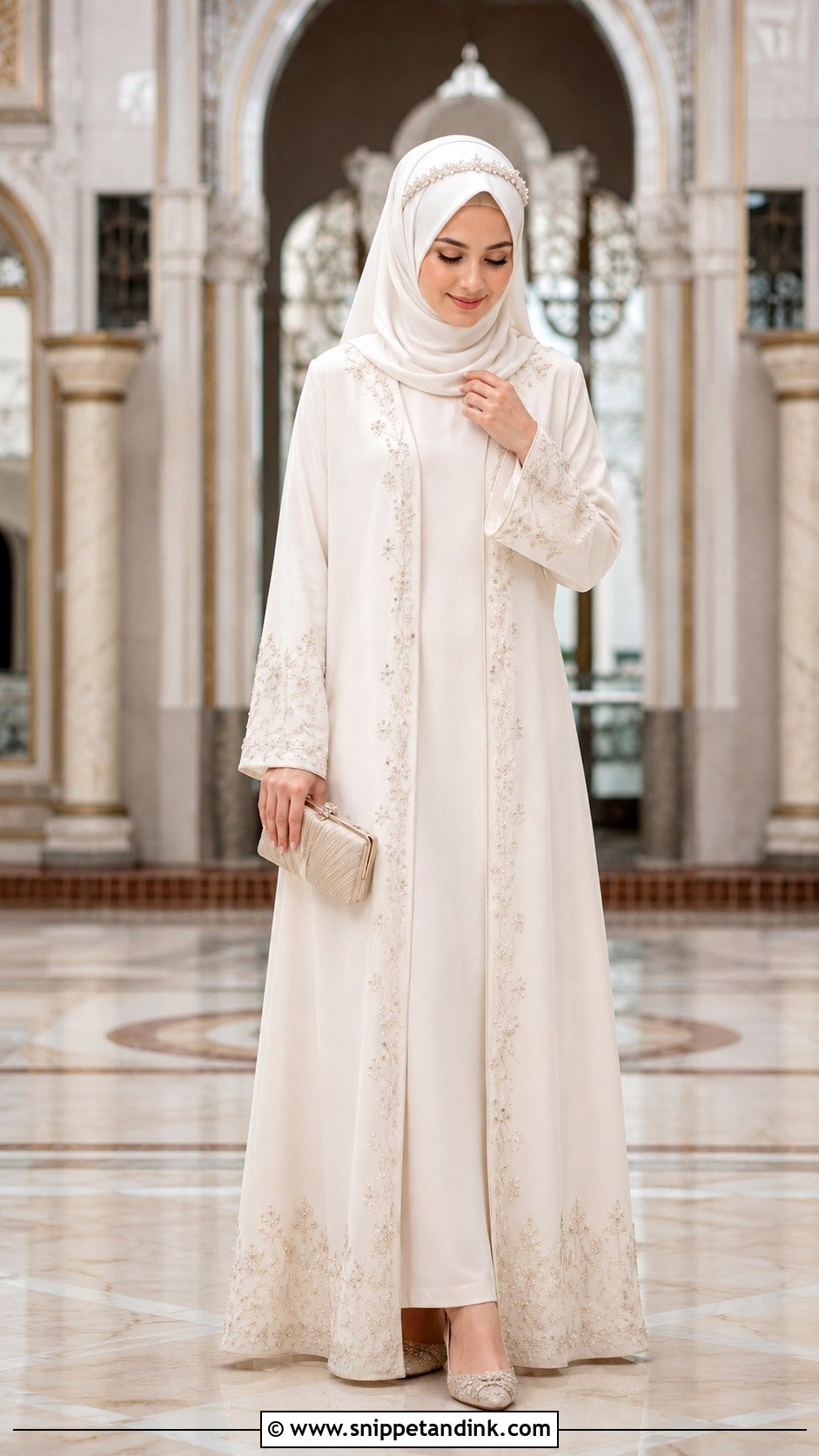
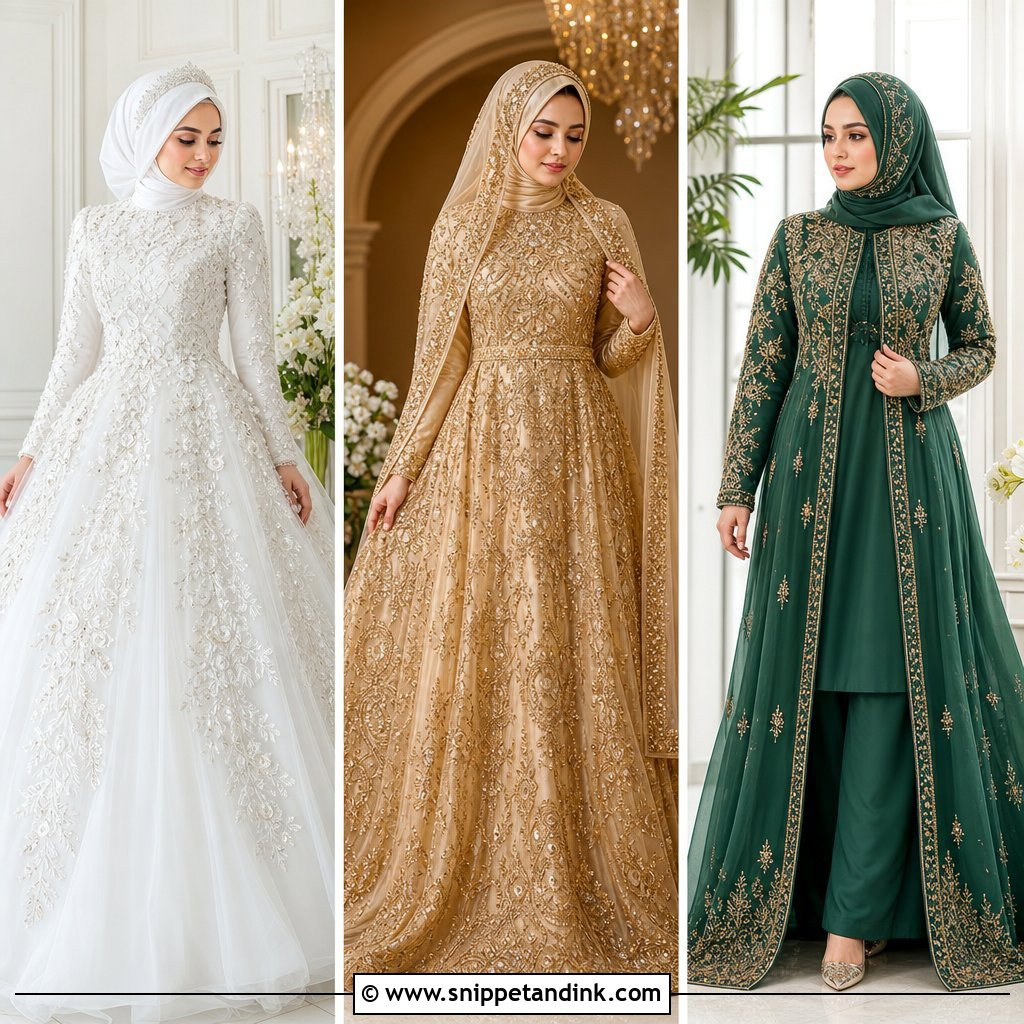
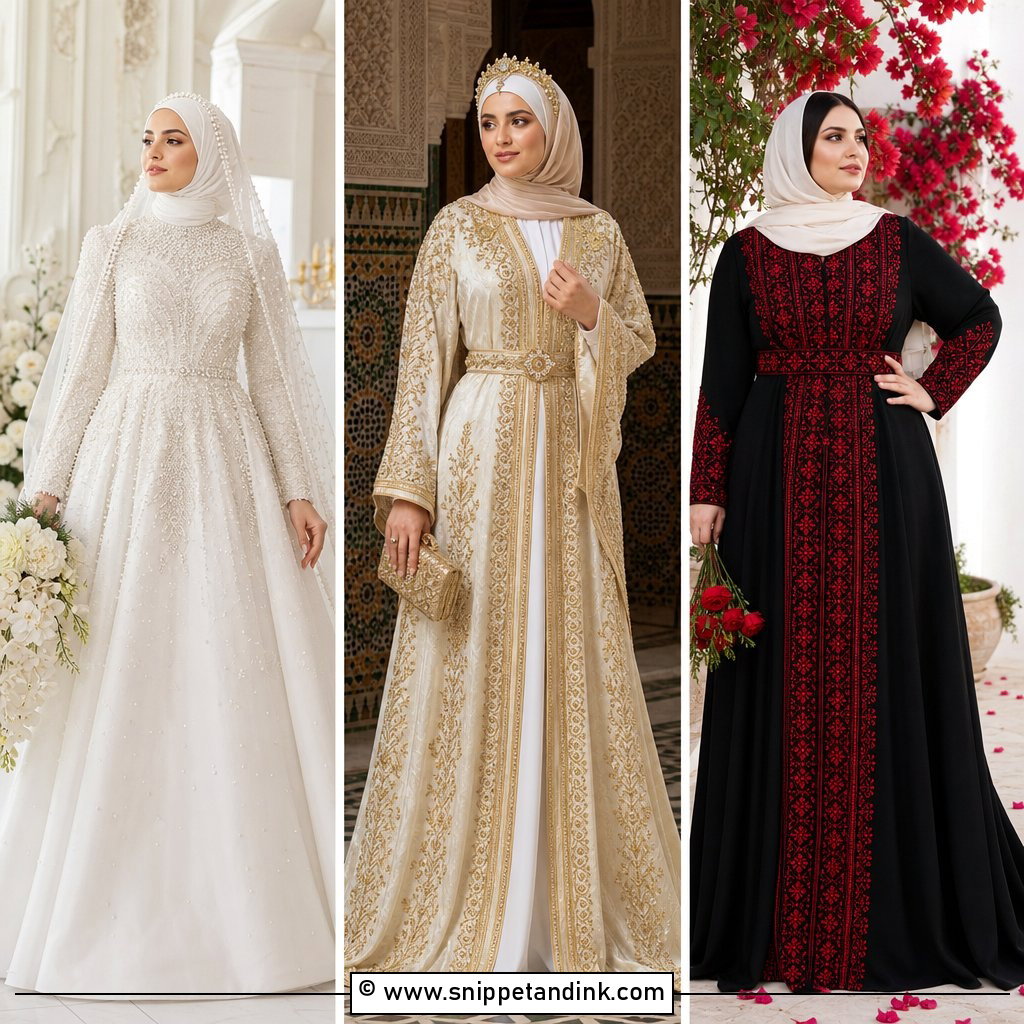
An abaya Muslim wedding dress gives the most coverage with the least fitting stress, since the loose cut is the whole point. I always ask for the inner slip dress in exactly the abaya’s shade, because a mismatched lining shows at the sleeves and hem. Embroidery along the cuffs and neckline is the classic placement. Flats or low heels make sense here, as abaya brides tend to spend hours standing and greeting.
11. Kaftan Muslim Wedding Dress
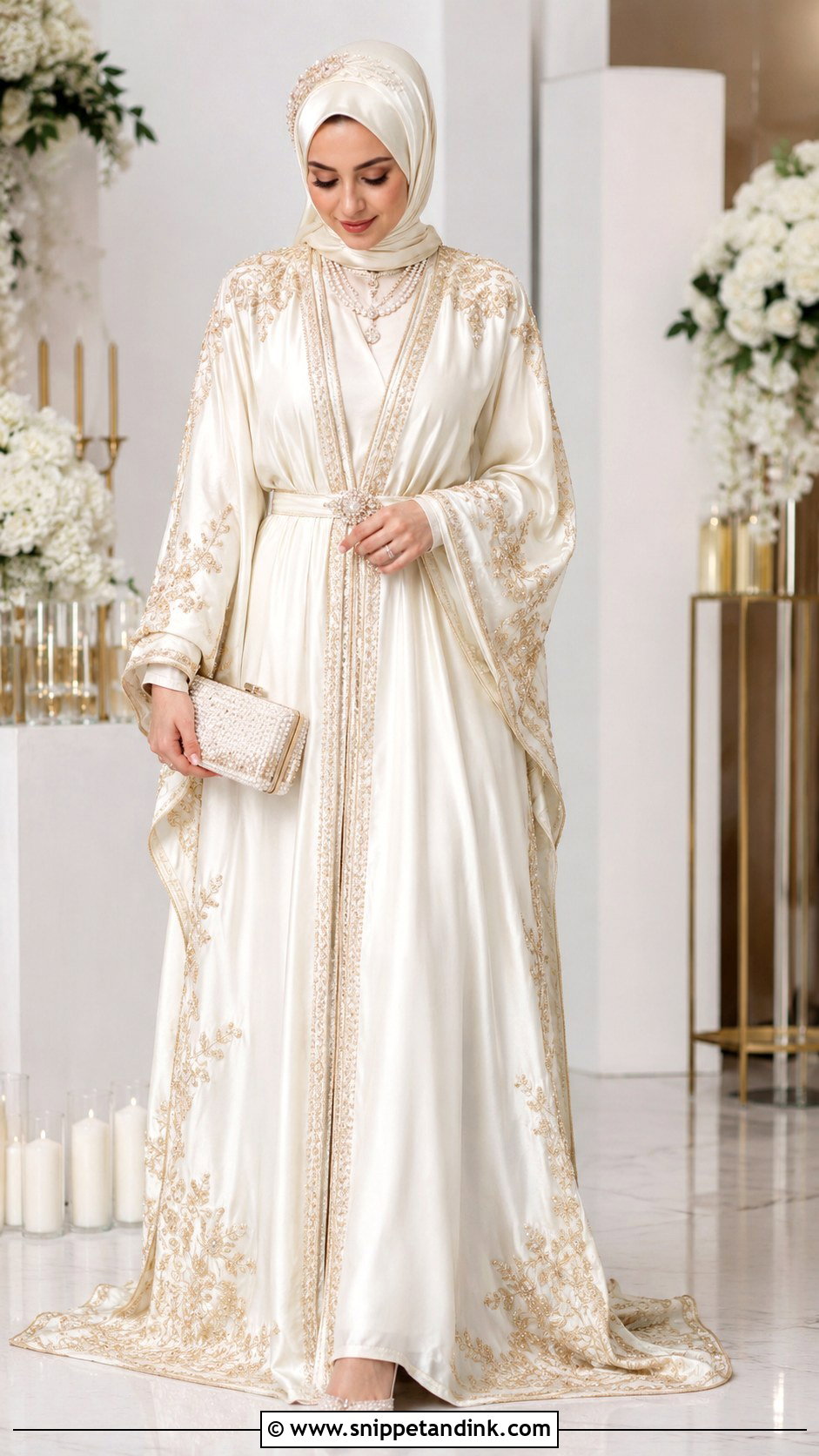
I suggest a floor-length bridal kaftan most often to brides facing a long evening on their feet. Silk blends and satin carry embroidery at the neckline and cuffs better than thin chiffon. Because the cut is wide, the belt does real structural work, so try it with the actual kaftan rather than a sample. Gold jewelry warms up the champagne and ivory versions.
12. Embroidered Muslim Wedding Dress
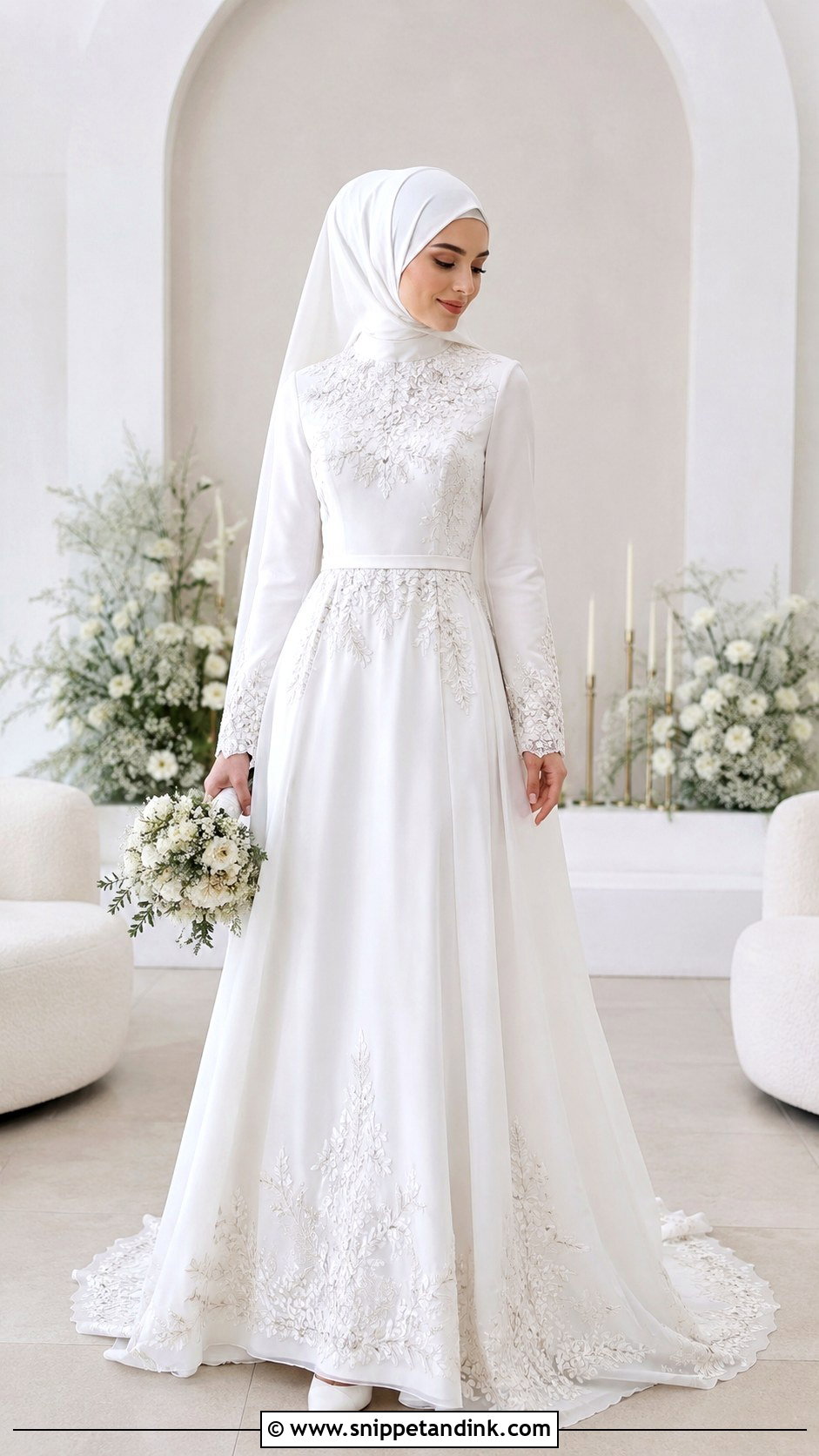
With embroidery, turn the sleeve inside out and look at the back of the work. Dense machine embroidery can stiffen a sleeve until bending your elbow feels awkward, while hand embroidery on a lighter base moves with you. Florals soften a plain gown and geometric work reads as more modern. Keep the hijab completely plain, or the eye won’t know where to land.
13. Beaded Muslim Wedding Dress
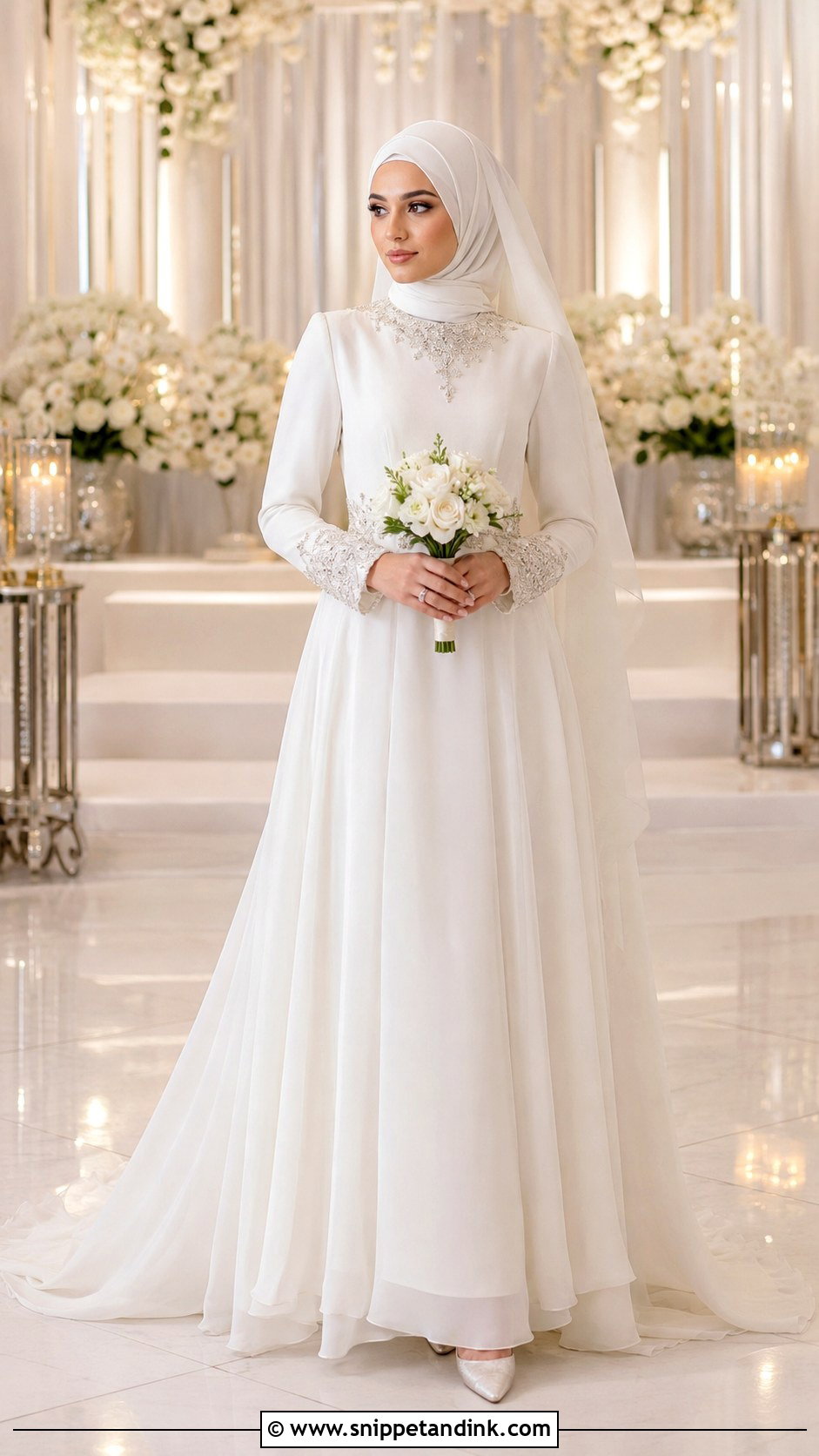
Light beading at the cuffs or neckline gives shine without weight. Heavy beading is the one I’d steer you away from if a long line of relatives is waiting to hug you, because beads catch on hijab chiffon and on other people’s clothes. A matte chiffon hijab softens the sparkle near your face. Check inside the bodice as well; beadwork should be backed so it doesn’t scratch.
14. Tulle Muslim Wedding Dress
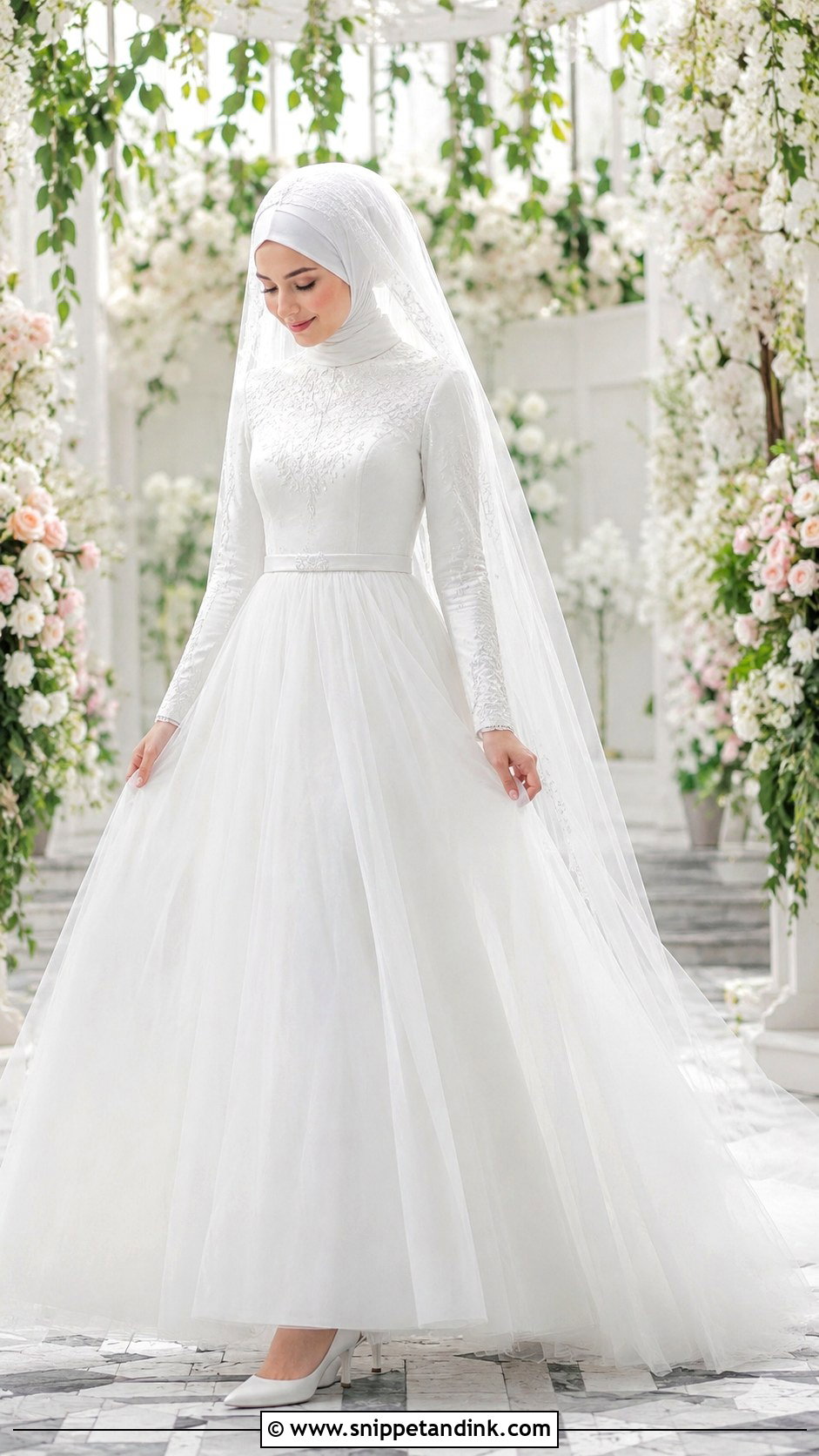
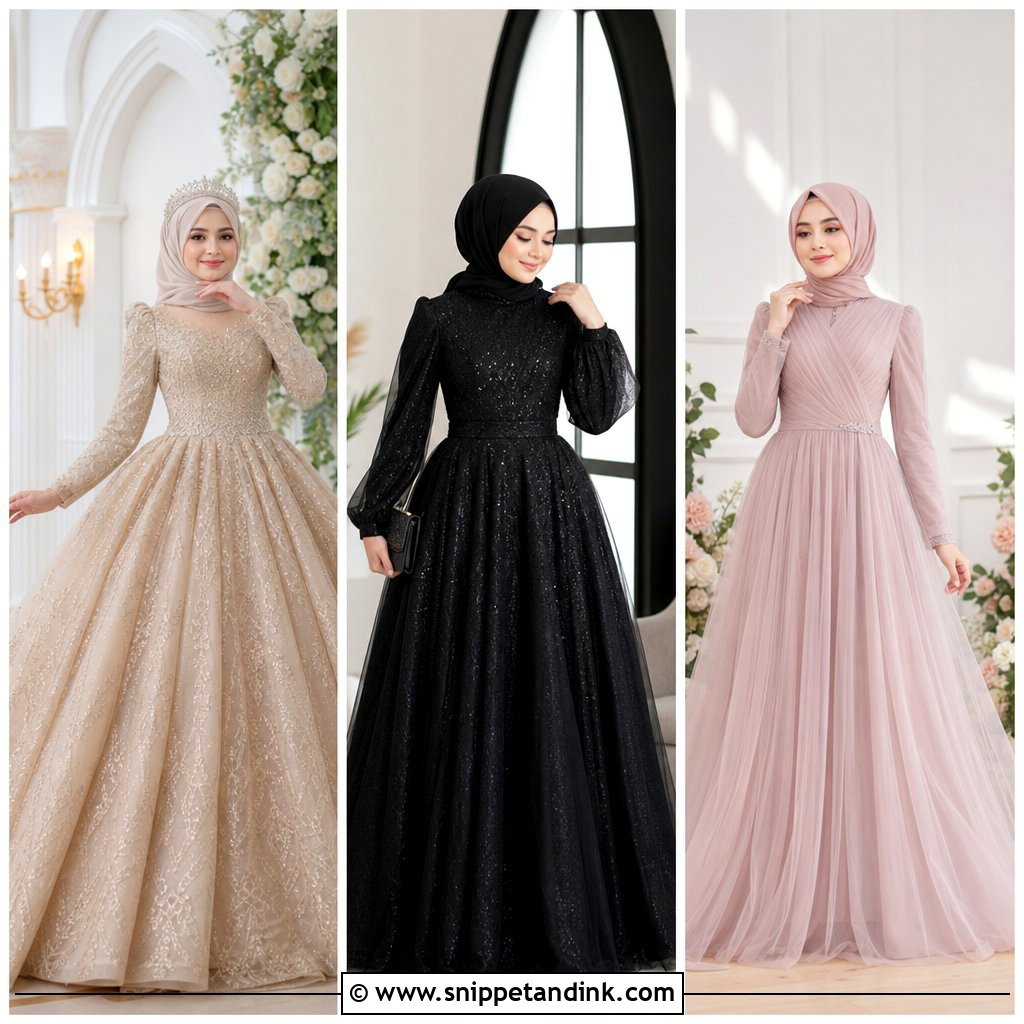
Tulle builds volume for almost no weight, which suits a bride who wants a fuller skirt but hates heavy fabric. Pile on too many layers, though, and it starts to look like a petticoat, so I usually suggest two or three over a satin lining. Tulle also snags on hijab pins, bracelet clasps and beaded belts. A thin satin belt and low heels keep it gentle.



15. High Neck Muslim Wedding Dress
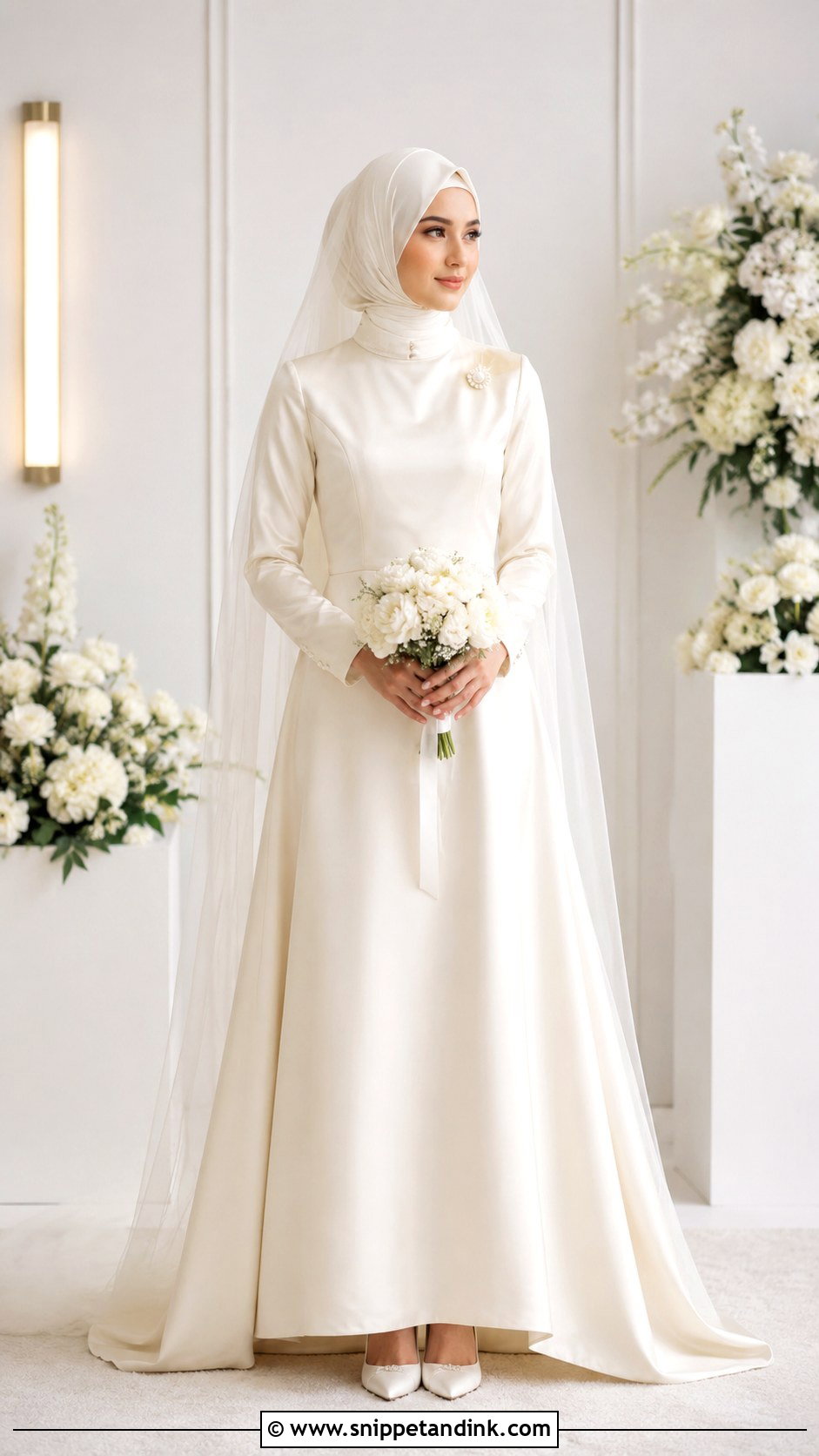
A high neckline does most of the coverage for you and leaves the hijab free to stay simple. My one check is collar height against your wrap: a tall lace collar plus a tightly wrapped hijab can feel crowded under the chin. A neat wrap that sits just over the collar works best, and a small brooch at the side can hold the drape and act as your bridal accent at the same time.
16. Long Sleeve Muslim Wedding Dress
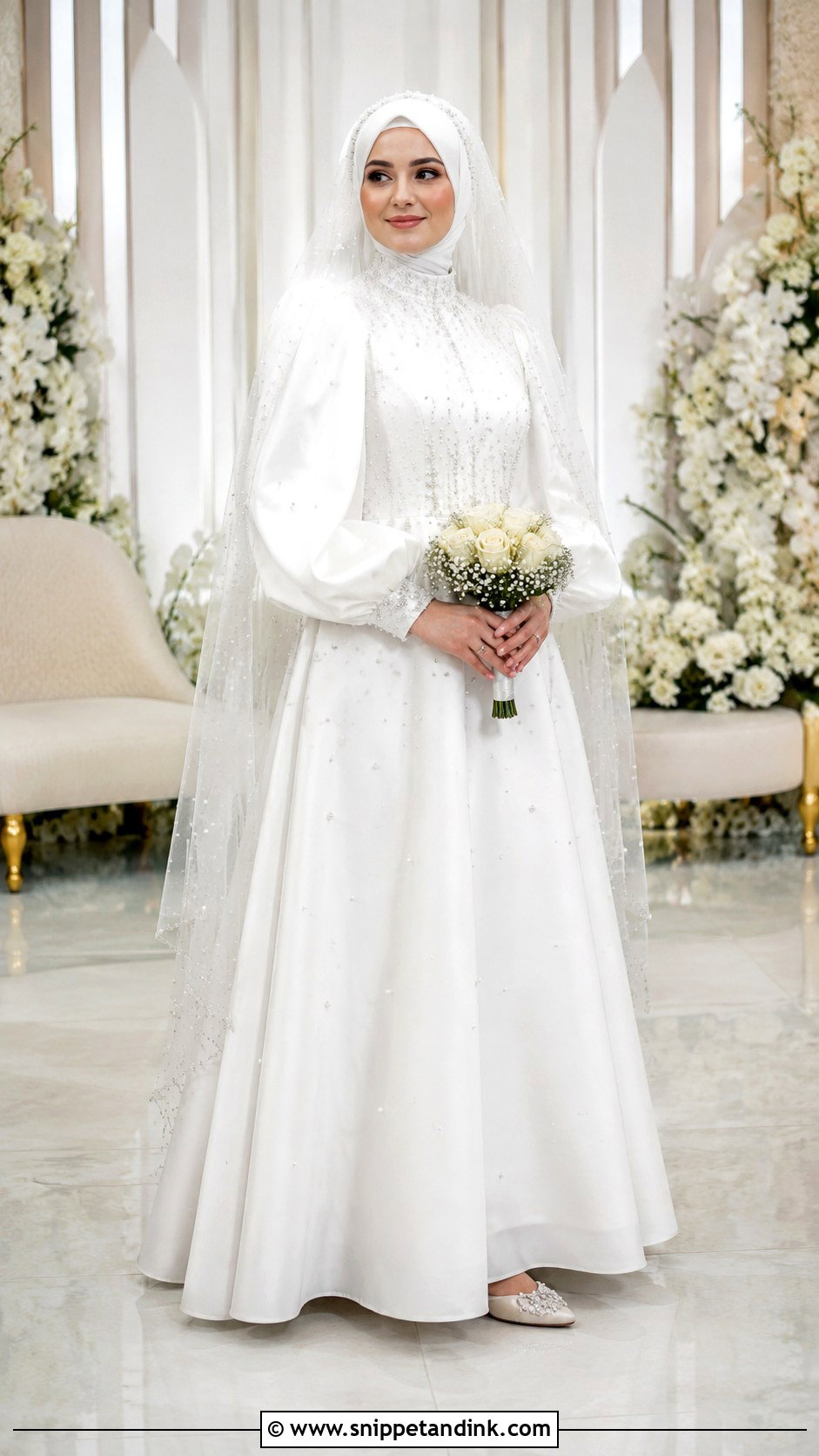
Sleeves are the part of a modest gown that gets altered most, so look at the cuff before the shape. A skin-tight sleeve looks sleek but is hard to push up for wudu; a cuffed sleeve with hidden buttons, or one cut with a little ease, solves that. If the sleeves carry detail, keep the hijab plain. If they’re plain, let a pearl veil or an embroidered belt bring the texture.
17. Blush Muslim Wedding Dress
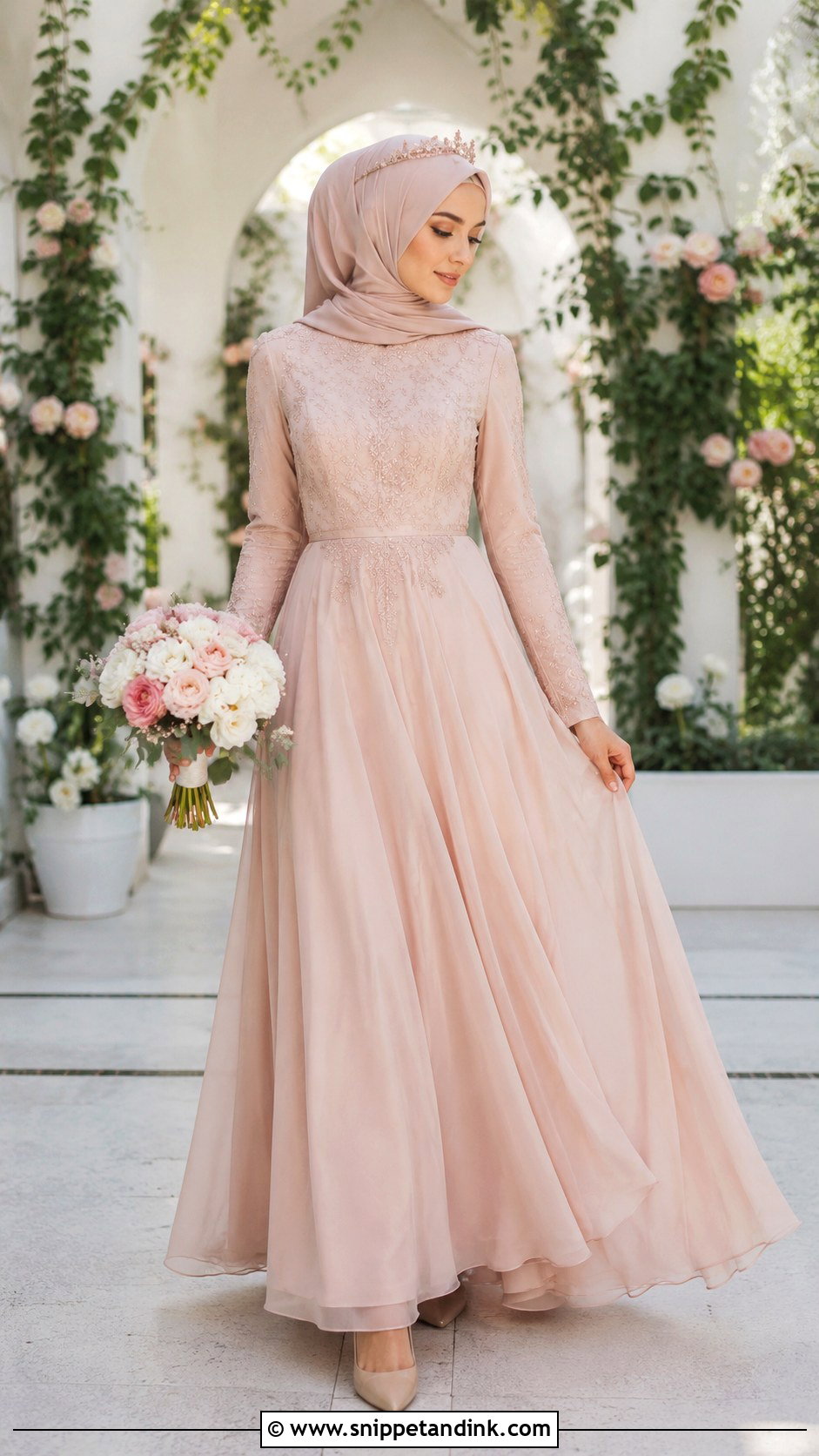
Blush works well for a bride who doesn’t want stark white, but the shade varies hugely between makers, and some blush fabrics turn almost beige against warm skin. I hold the swatch up to the bride’s face in daylight before anyone orders. Pair it with a blush or soft ivory hijab and keep the metals warm, like rose gold. It sits most naturally at a spring or summer wedding.
18. Champagne Muslim Wedding Dress
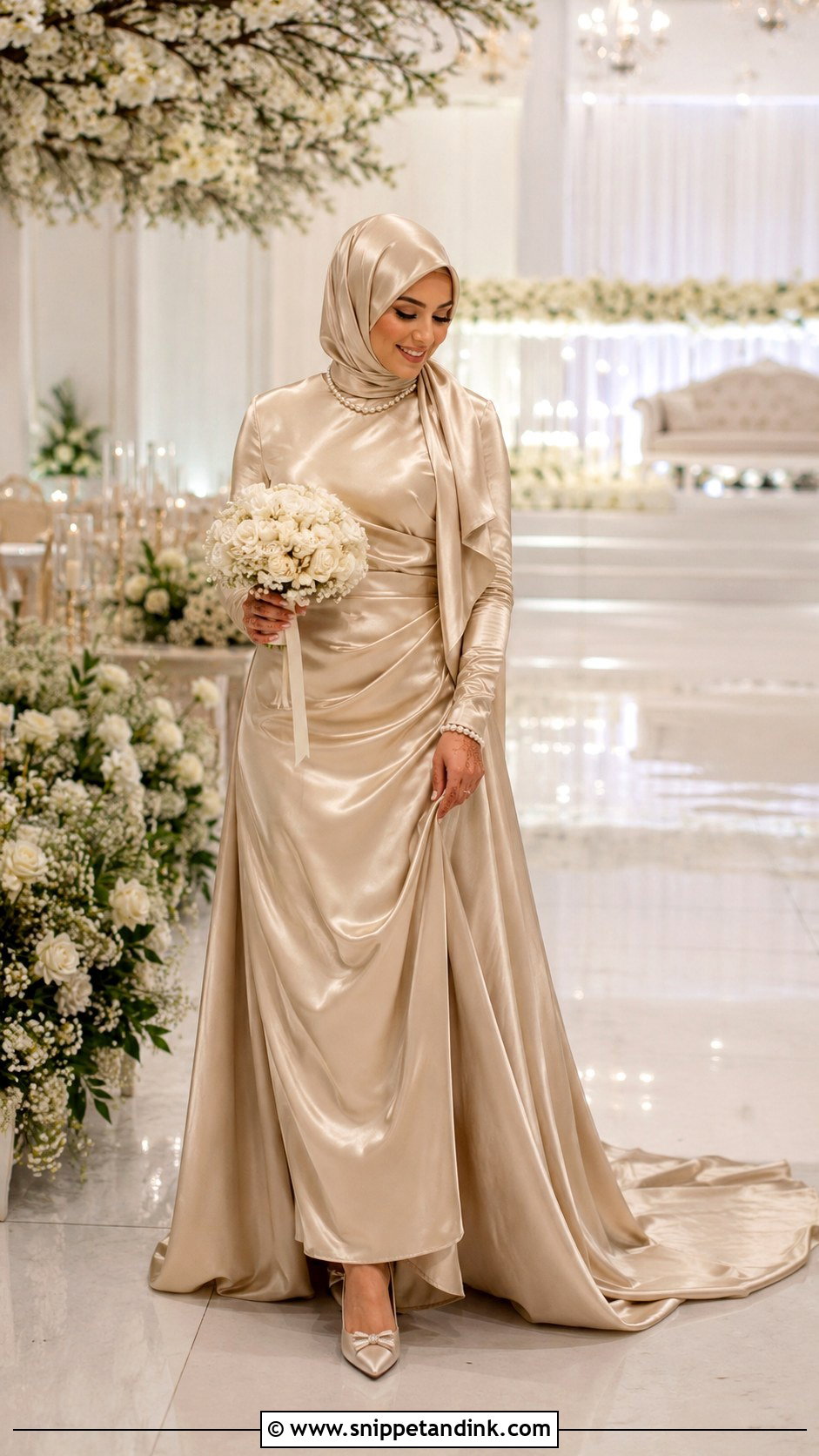
Champagne flatters warm and deep skin tones especially well, and it hides the faint marks a long day leaves on bright white. It shifts a lot under different light, though. Warm hall lighting can push it golden and cool daylight can make it look grey, so see it in both before deciding. A champagne hijab, ivory shoes and pearls keep it bridal.
19. Ivory Muslim Wedding Dress
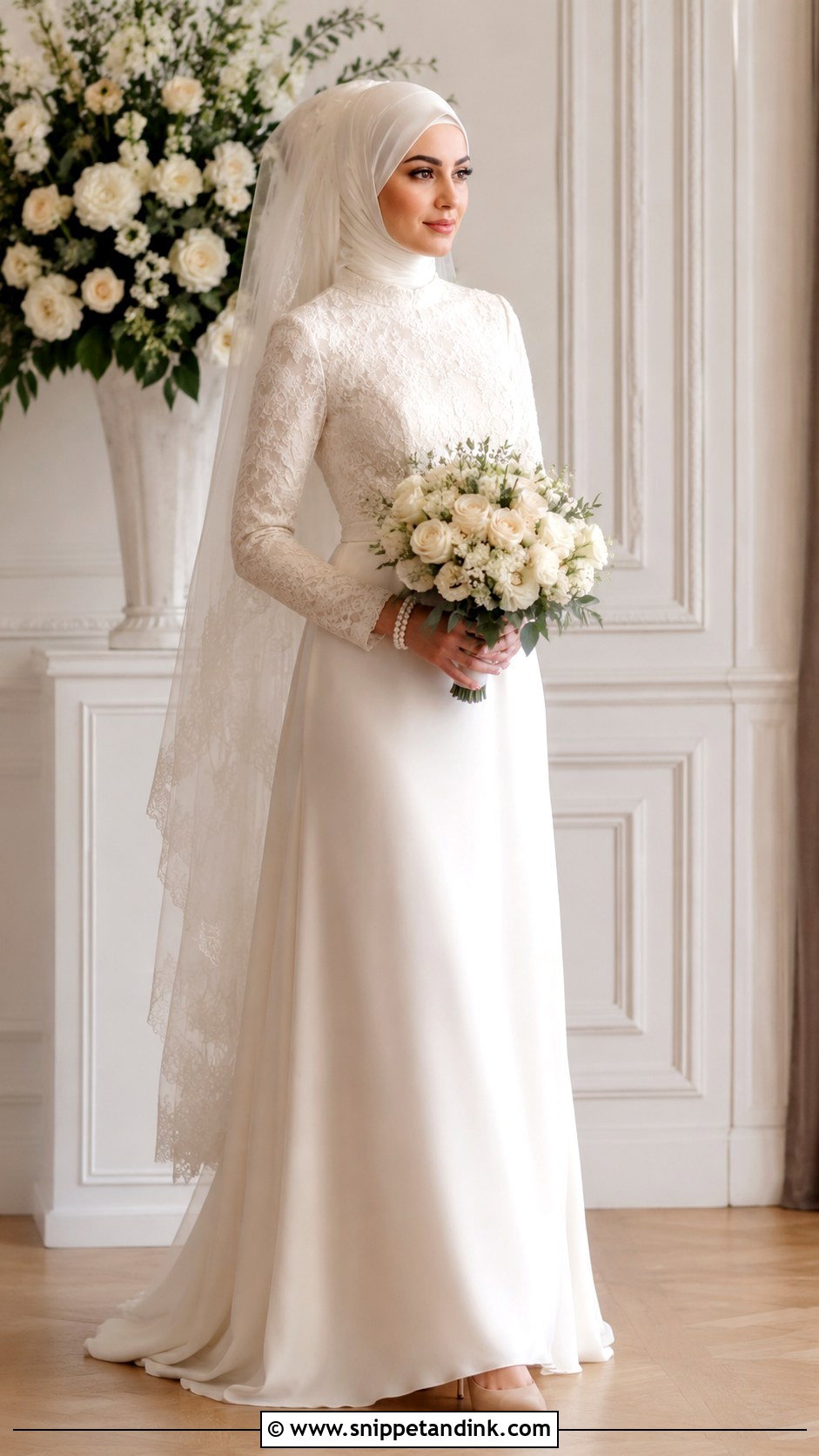
Ivory is the shade I recommend most, because pure white can look harsh beside many complexions and makes ivory accessories look dingy next to it. Ivory satin, lace and crepe all sit easily with pearls and cream flowers. For a traditional finish, a veil over the hijab falling behind the shoulders is enough. Match your shoes to the hem, since the two end up side by side in photos.
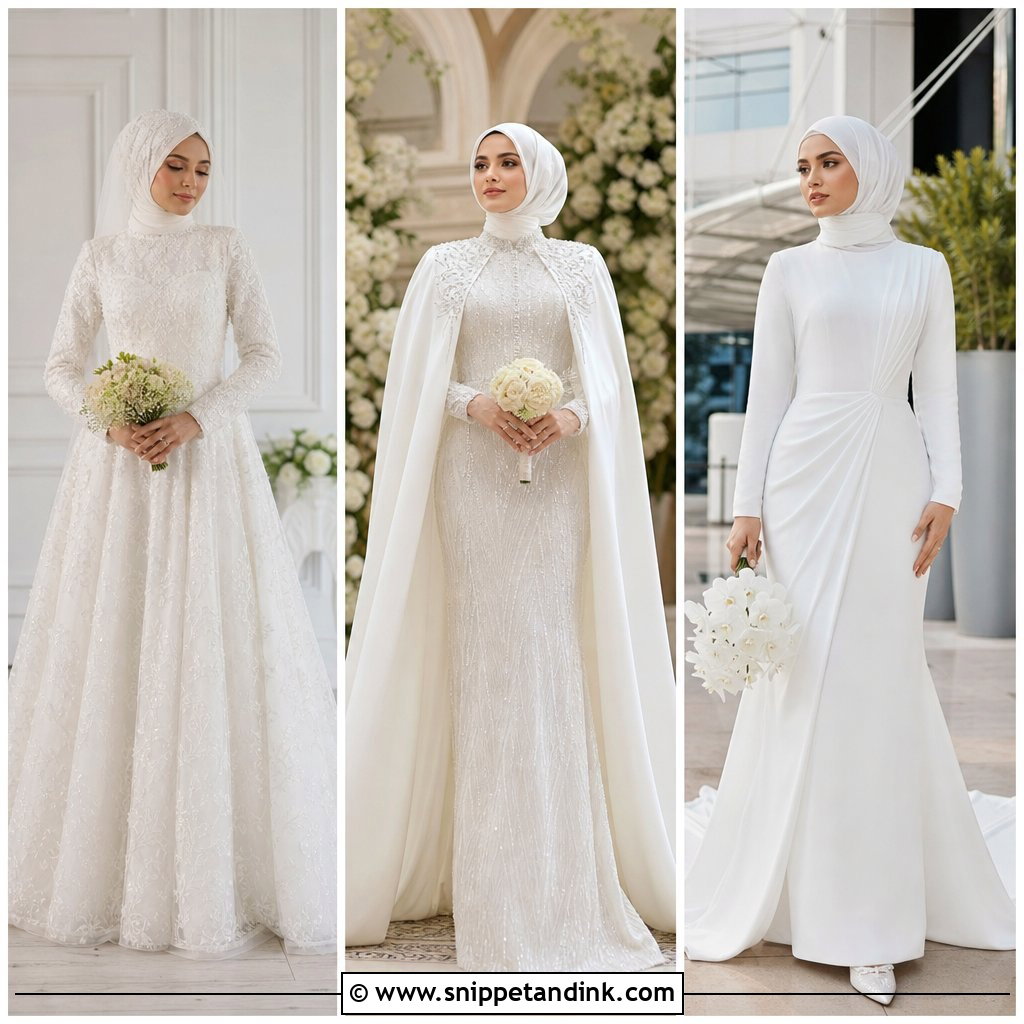


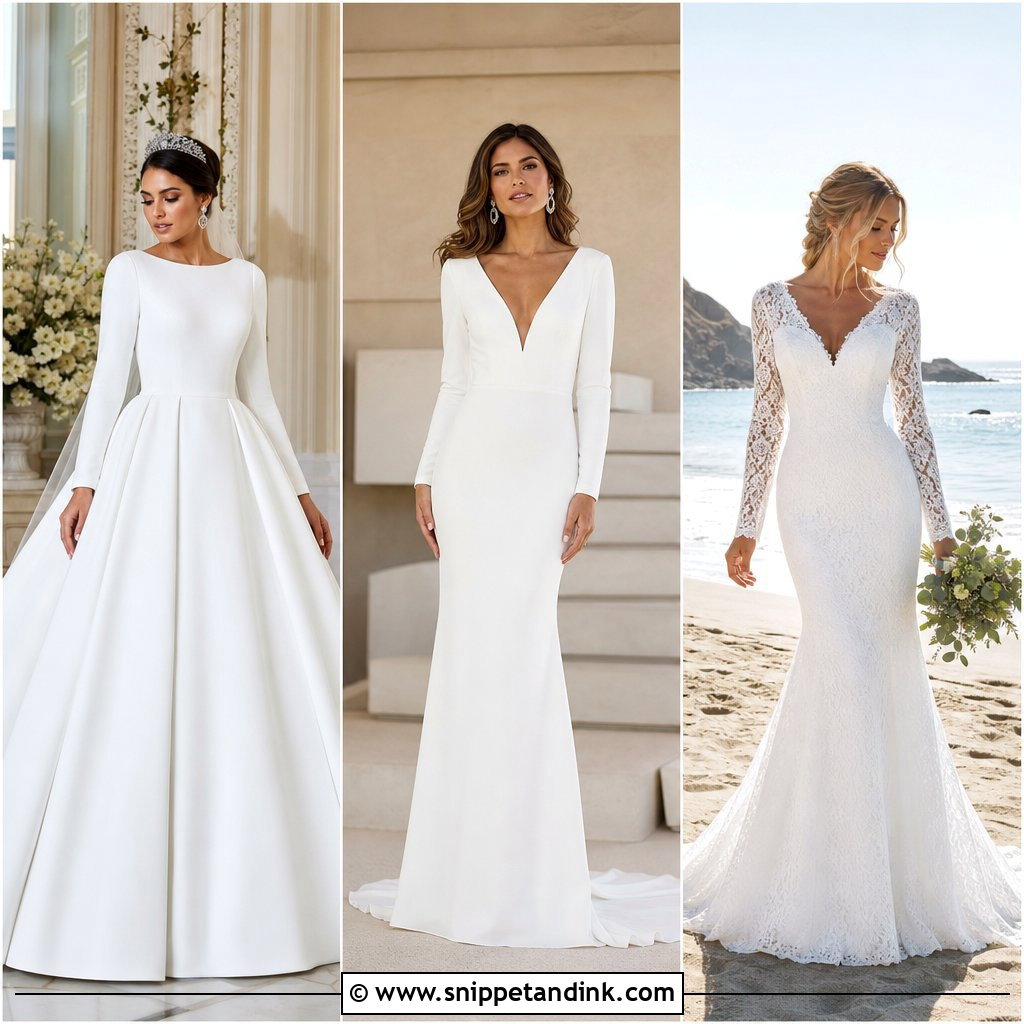
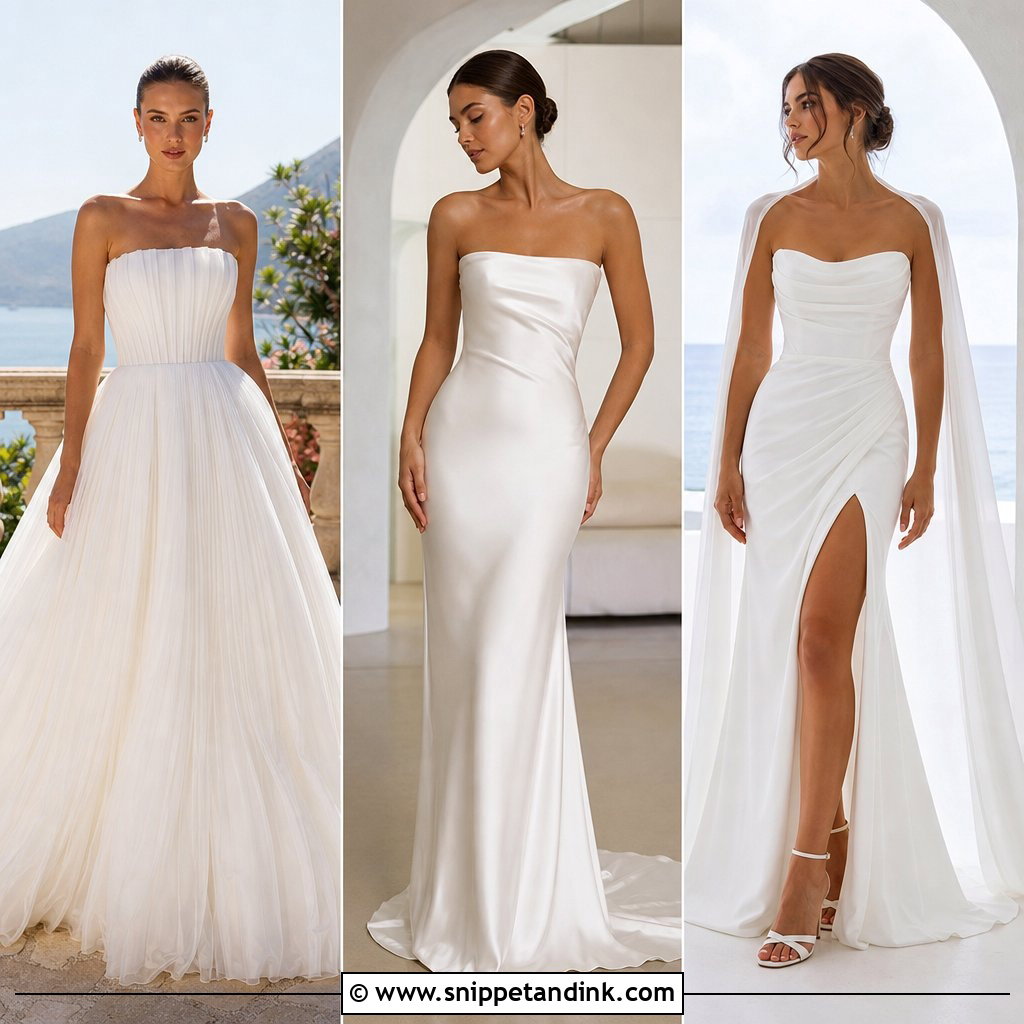
20. Minimalist Muslim Wedding Dress
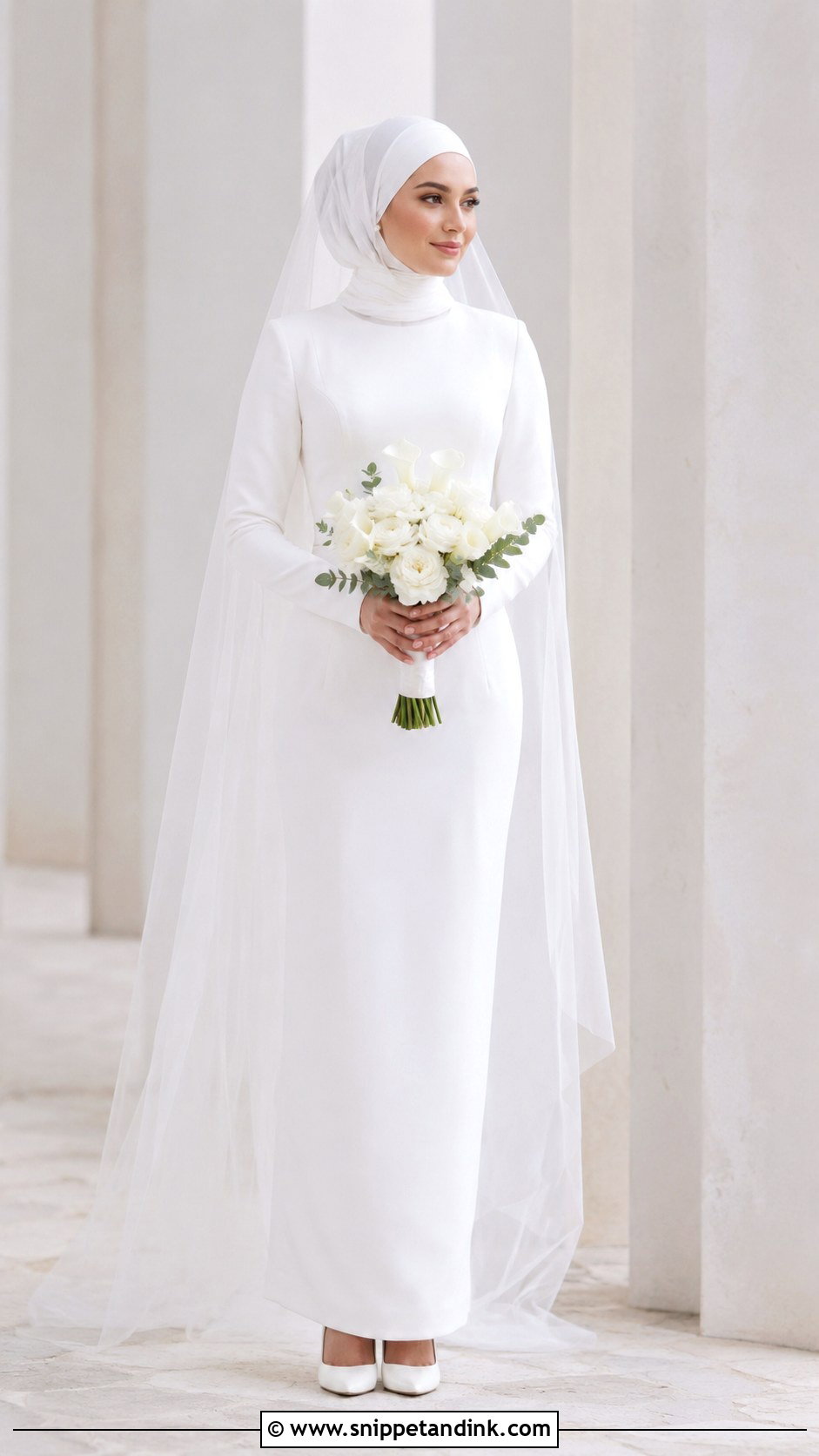
A minimalist gown has nowhere to hide. Every seam and every pucker at the zip shows on plain fabric, so I plan more fitting time for a plain dress than for a beaded one, not less. A column or smooth A-line with a high neck and long sleeves, a matching hijab, pointed pumps and pearl studs is the entire look, and it suits brides who find busy dresses tiring to wear.
21. Two Piece Muslim Wedding Dress
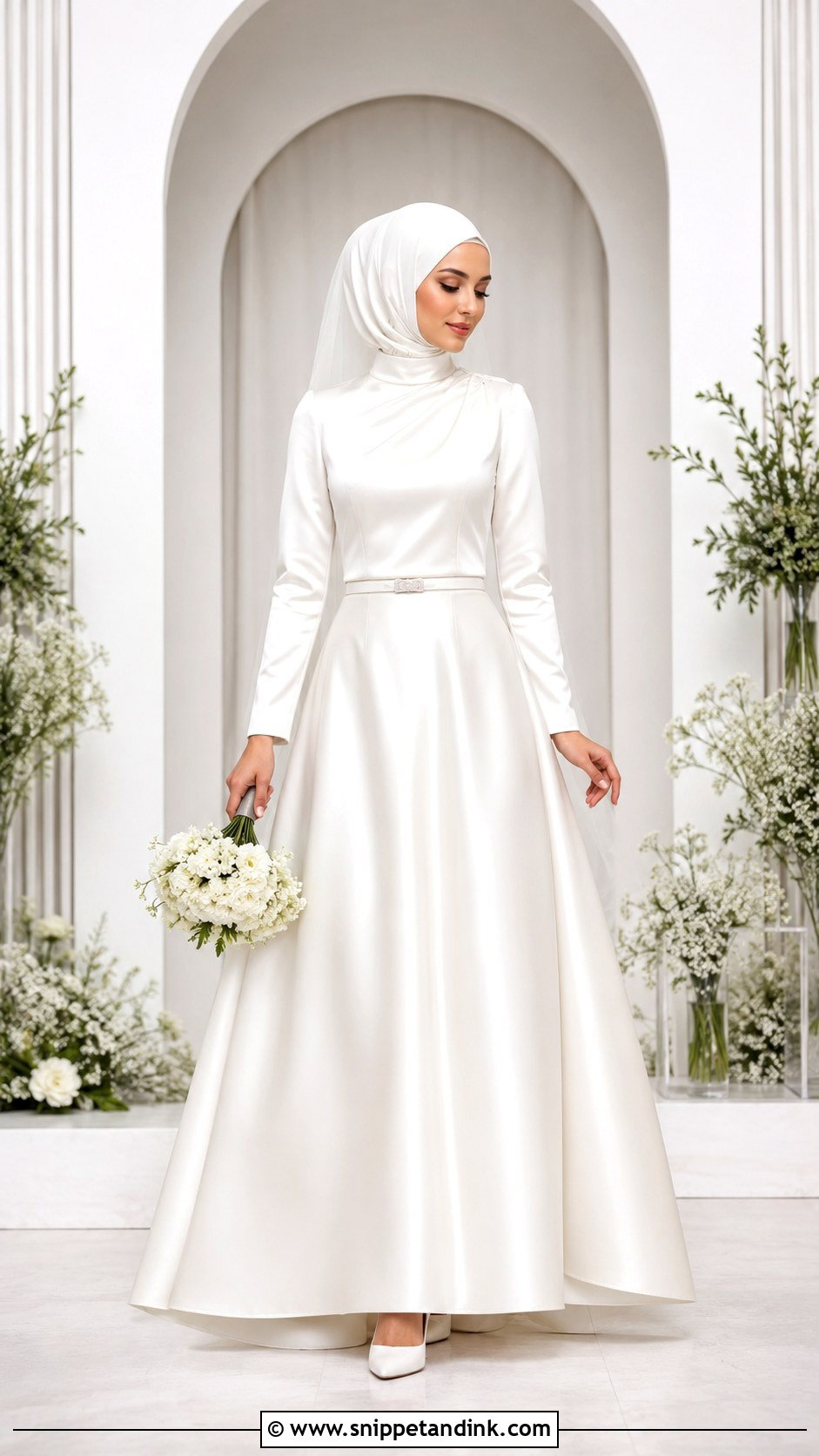
Two-piece sets are practical in ways people underestimate: the top and skirt can be altered separately, and a separate top is easier to manage for wudu. My non-negotiable is the overlap. Raise your arms, sit down and lean forward at the fitting, and if any skin shows between top and skirt, ask for a longer top or an inner tie. A satin top over a chiffon skirt mixes well as long as the shades match exactly.
22. Pleated Muslim Wedding Dress
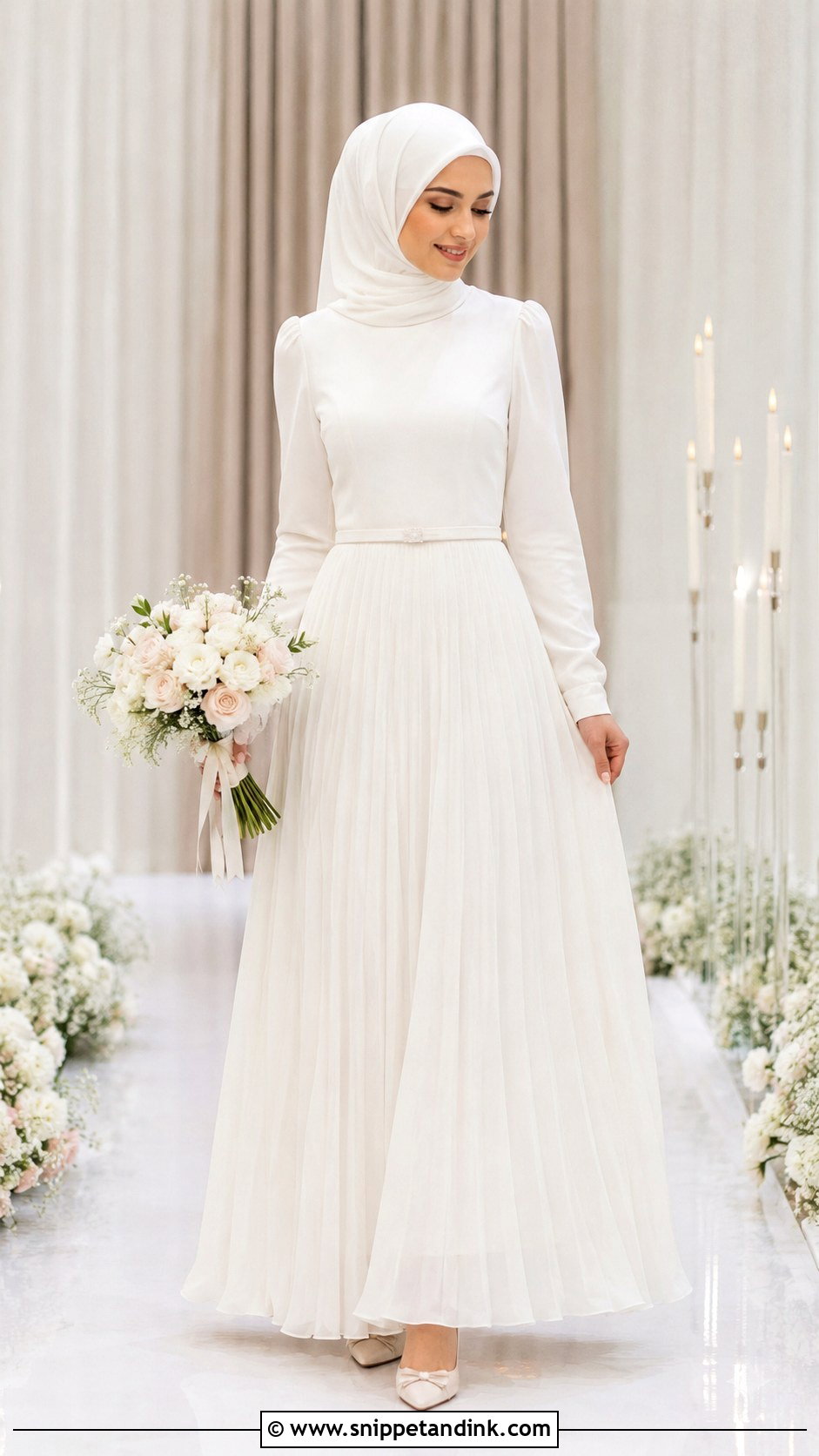
Pleats add interest to a modest gown because the texture comes from the fabric itself, not from decoration. Chiffon pleats swing with every step; satin pleats look more formal and hold their line. The catch is that pleats crush in a suitcase or a car seat, so ask whether they’re heat-set and plan for a steamer at the venue. A plain hijab keeps the attention on the skirt.
23. Belted Muslim Wedding Dress
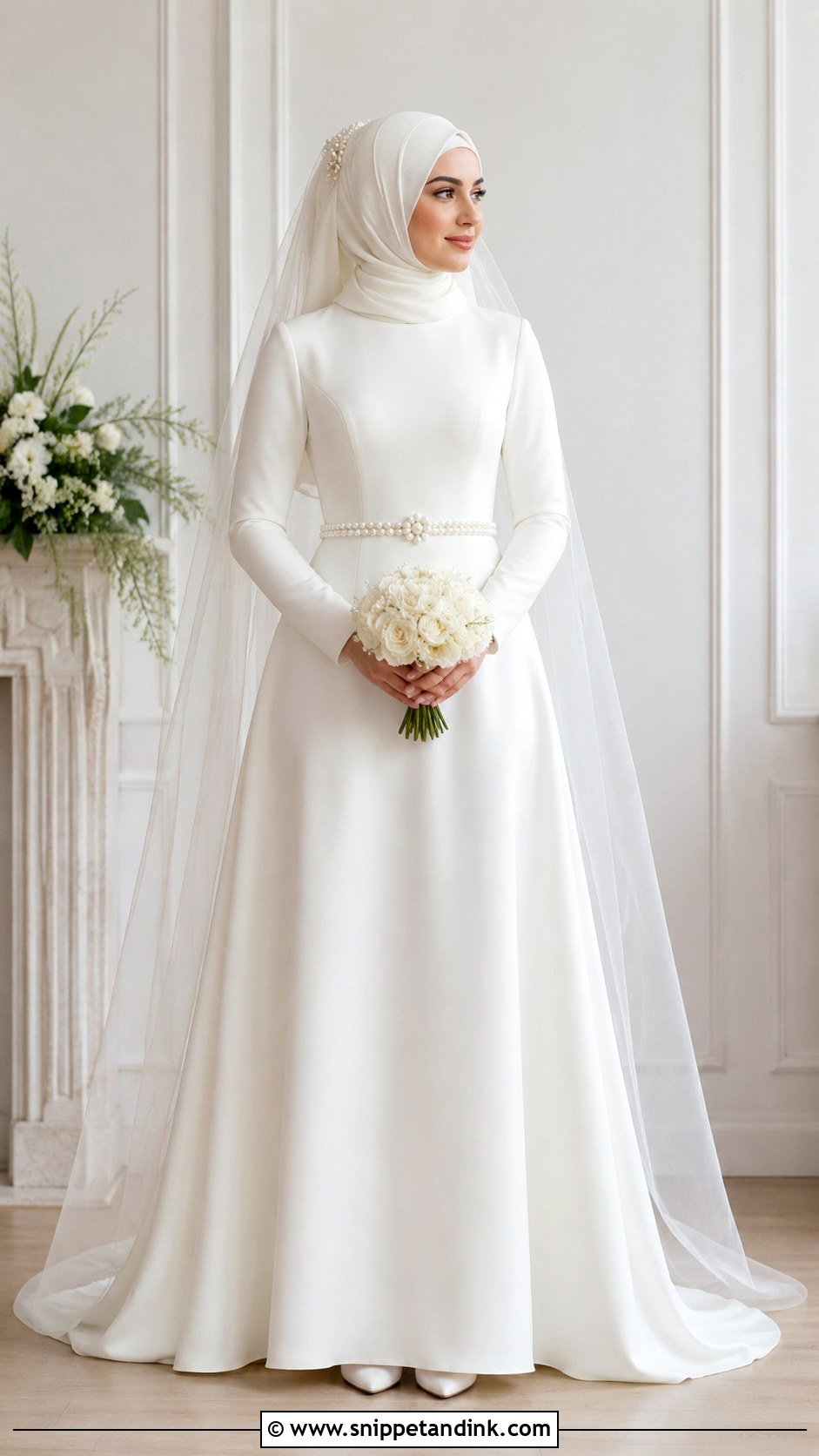
A belt gives a loose gown a waist without making it tight. Try it at the fitting instead of adding it later, because a belt sitting even slightly off your natural waist makes a long-sleeve gown look boxy. Pearl or crystal belts also tie the hijab pins, shoes and jewelry together, so when the belt is the detail, keep everything else quiet.
24. Simple Nikah Muslim Wedding Dress
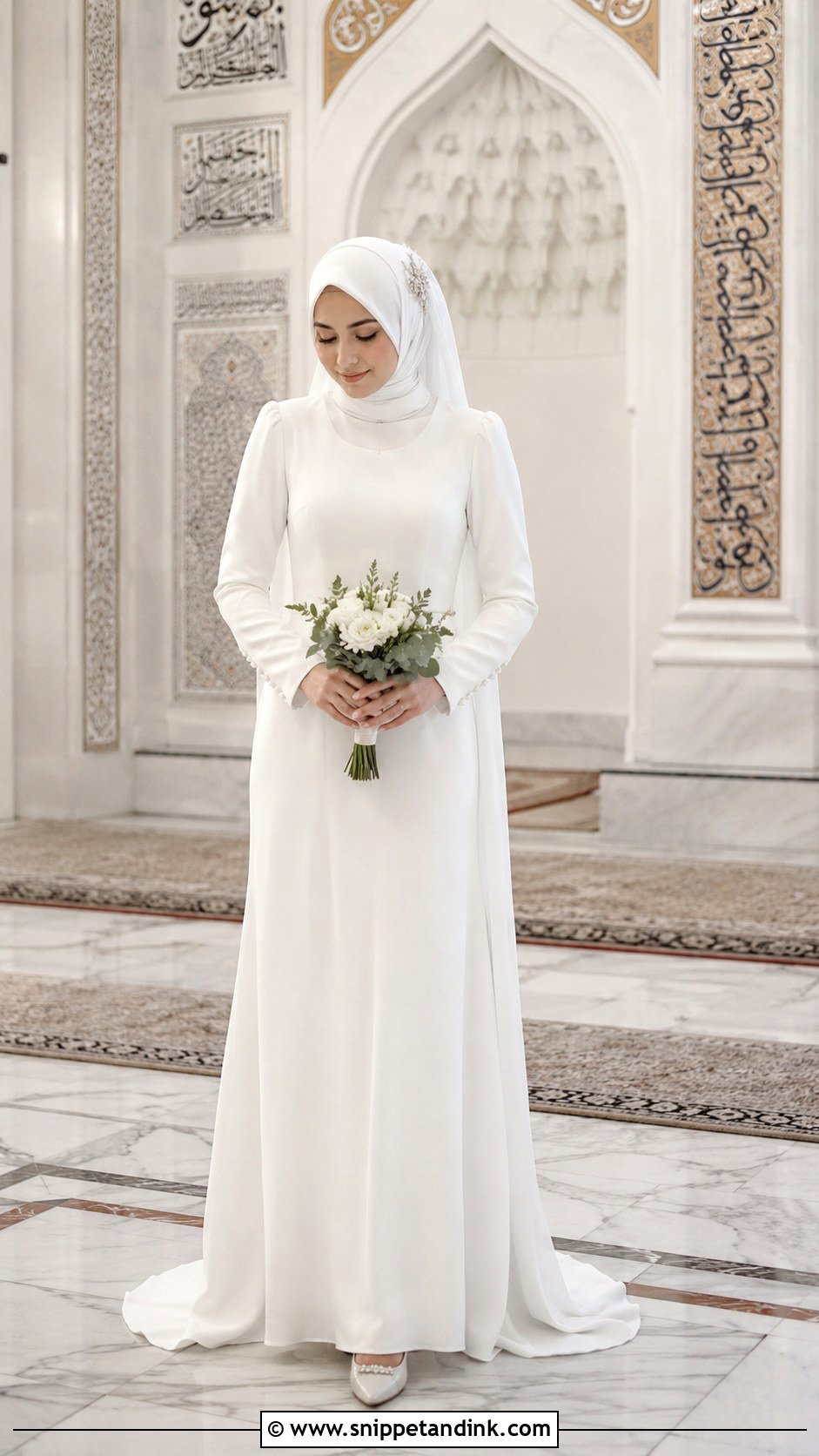
For the nikah itself, think first about where you’ll sit. Many ceremonies happen on the floor or on low cushions, so a skirt with room to sit modestly and a fabric that doesn’t crush matter more than the bodice. Ivory or white crepe and chiffon both cope well. Your pins need to survive dua and a lot of embraces, and a small handful of flowers is plenty for a mosque or home ceremony.


25. Reception Muslim Wedding Dress
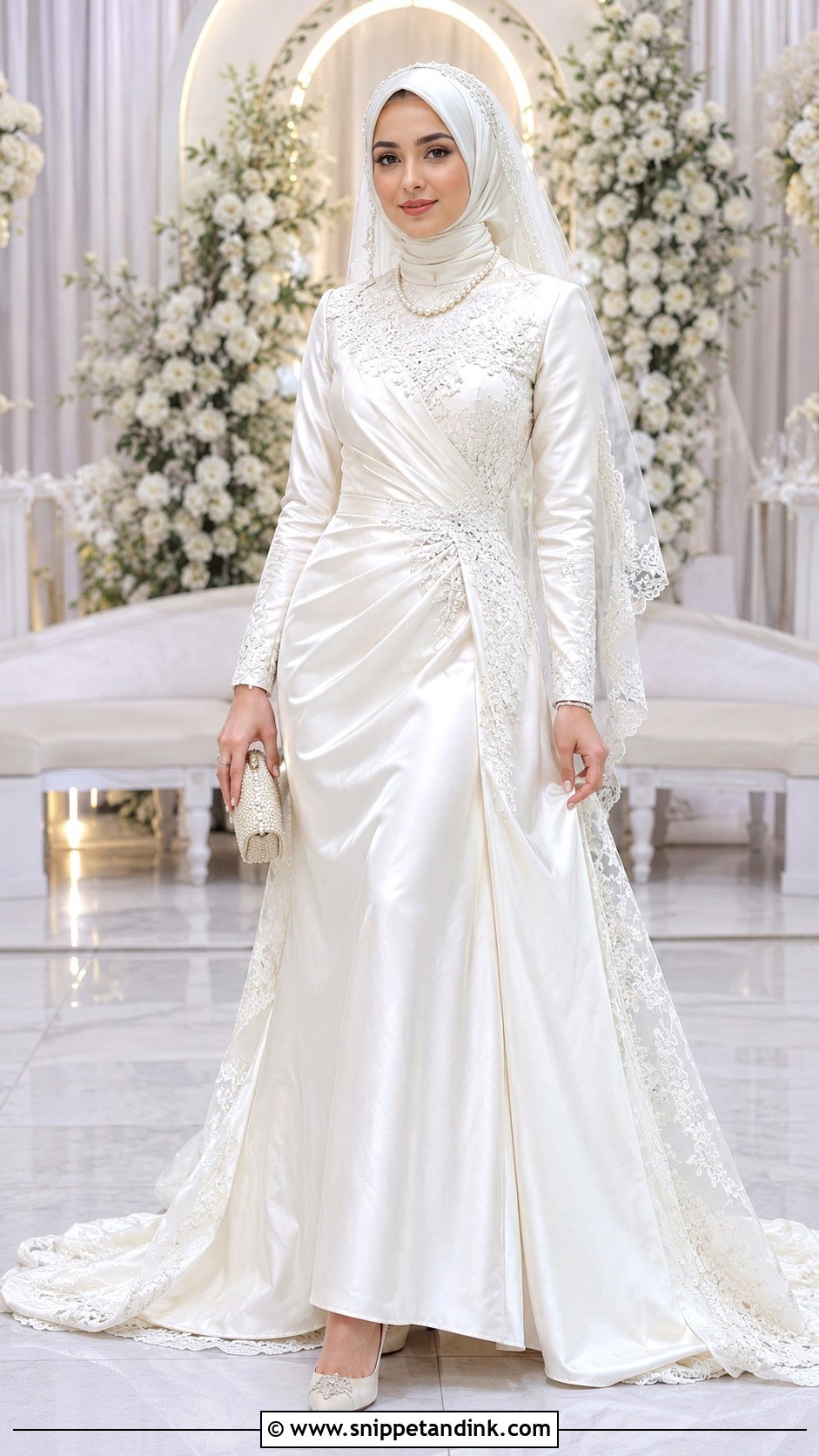
Many brides I dress change for the reception, and that’s the moment for the shine you skipped at the nikah: a soft train, embroidered cuffs, pearls along the neckline. Satin and crepe look smooth under hall lighting. If you’ll be greeting guests, bustle the train before your entrance, because a loose train gets stepped on within minutes. Match the clutch and jewelry to the gown’s detail.
Planning for Prayer, Wudu and a Floor-Seated Nikah
Dress shopping happens standing in front of a mirror, yet much of the day is spent sitting, kneeling and greeting. At the final fitting I ask modest brides to rehearse these moments in the actual dress.
Wudu without undressing
Fitted sleeves are the usual obstacle. Look for sleeves with enough ease to roll above the elbow, buttoned cuffs, or detachable sleeves over a plain base layer. Practice rolling them once at home so you know the fabric won’t stretch out.
Salah in a structured gown
Prostrating in a mermaid or a stiff ball gown is genuinely difficult. If a prayer time falls during the reception, keep a loose prayer garment in the bridal room and bustle or remove the train first. It protects the gown and keeps your hijab from being pulled out of place.
Sitting on the floor
For a floor-seated ceremony, sit cross-legged in the dress at the fitting. If the skirt pulls tight across the knees or the hem rides up your ankles, you need more ease in the skirt before the day, not a safety pin on it.
Pins that last until the last guest
Count the pins your hijab style needs, then pack the same number again. Embraces pull at the drape all day, and a small pouch with spare pins, a second underscarf and a lint roller fixes nearly everything that goes wrong.
Fabric Decides More Than the Silhouette Does
Start with fabric, because it decides how the dress behaves when you sit, pray and hug your relatives. A plain gown in good satin, crepe or chiffon rarely looks plain once the hijab, veil and pins are right. Bring your hijab to every fitting, sit down in the dress at least once, and pick the version you feel covered and comfortable in at the end of the night, not only in the mirror.
You'll Like These Ideas:









Leave a Reply