
Simple cakes are the ones I find hardest to fake. With no sugar flowers or heavy piping to hide behind, the finish, the stacking and the flavor carry everything, which is exactly why a well-made plain cake looks so confident on a table. A small buttercream cake, a lightly scraped naked cake or a clean two-tier can sit just as happily in a backyard as in a ballroom. Below are thirty finished looks, each with the practical notes I’d give a couple sitting across from me at a tasting.
Plain Icing Shows Every Flaw, So Brief Your Baker on the Finish
When a couple asks me for something simple, the first thing I clarify is which kind of simple. Smooth with razor edges, softly textured and rustic are three very different jobs, and they behave differently in a warm room. A sharp-edged finish usually means ganache under fondant or a firm buttercream that has been chilled between coats. A rustic finish is far more forgiving if your venue has no air conditioning.
Bring a photo of the finish you like, not just the overall cake, and zoom in on the edges. I’d also ask your baker these things at the tasting:
- What is under the outer coat, and how long can it sit out at the room temperature you expect?
- Who supplies any fresh flowers, and how are stems kept away from the cake?
- Is the cake delivered fully stacked, or assembled at the venue?
- How many servings does each tier give at the slice size they cut?
Counting servings before you count tiers
Most of the simple cakes in this list look best at one or two tiers, which won’t feed a large guest list on its own. Rather than adding tiers you don’t want, I usually suggest a display cake sized for the look plus a plain kitchen cake in the same flavor. It keeps the design as minimal as you pictured and is often cheaper per slice.
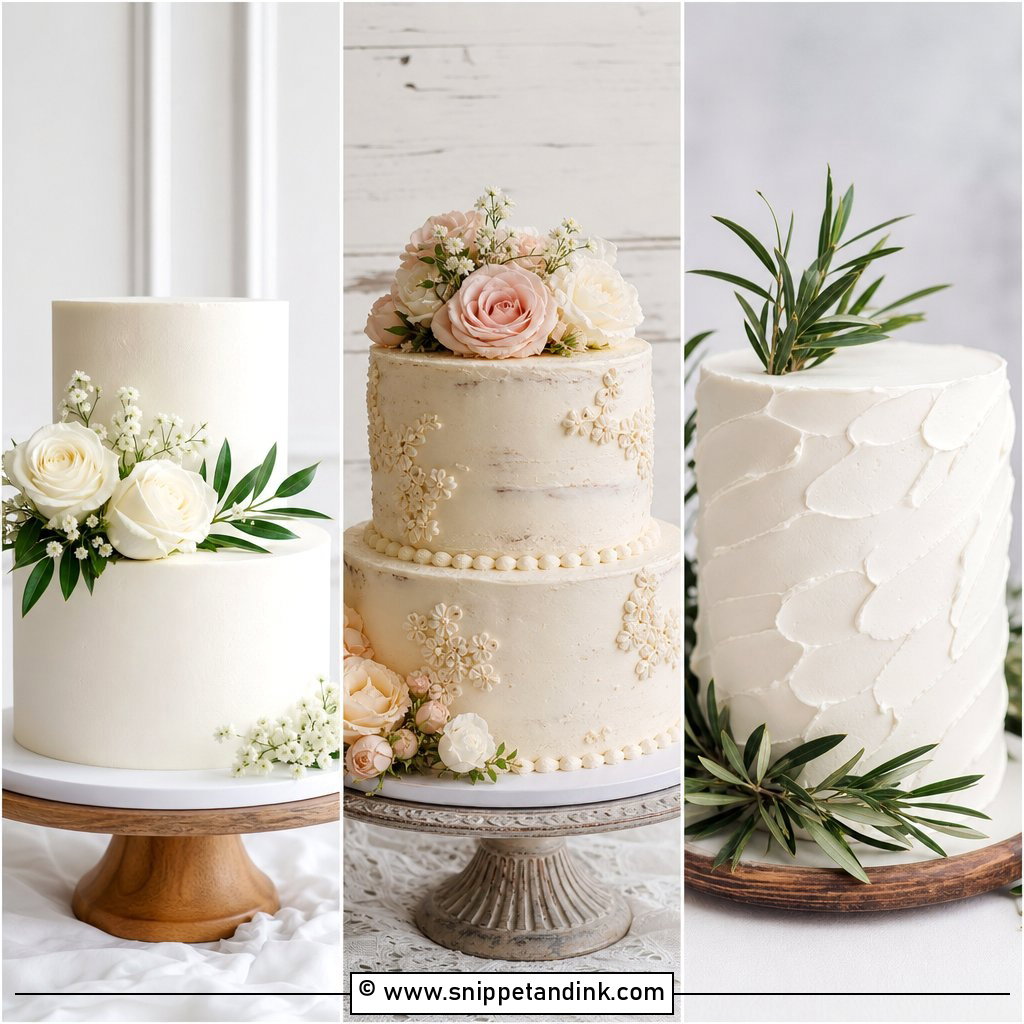
1. Simple Buttercream Wedding Cake
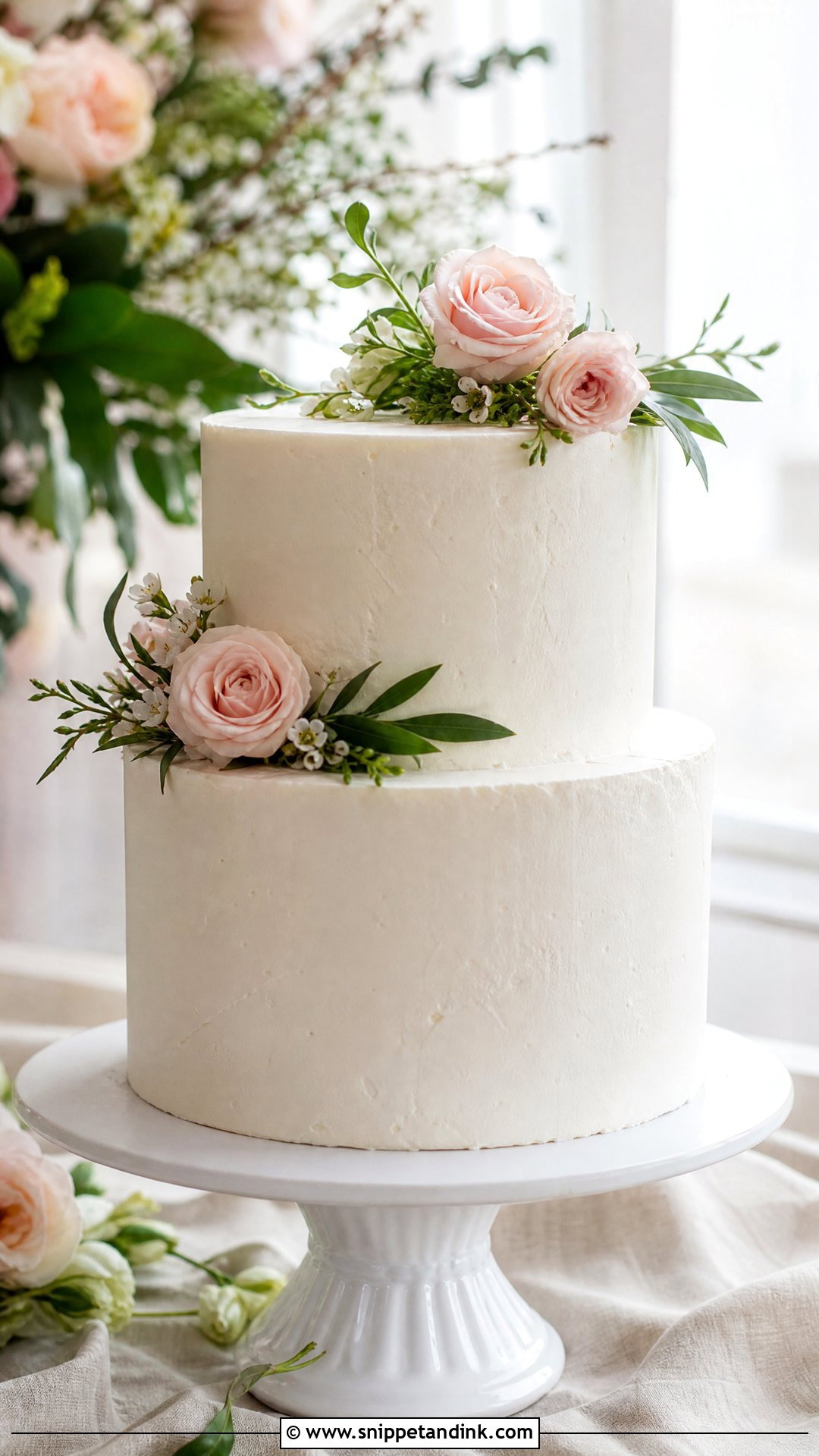
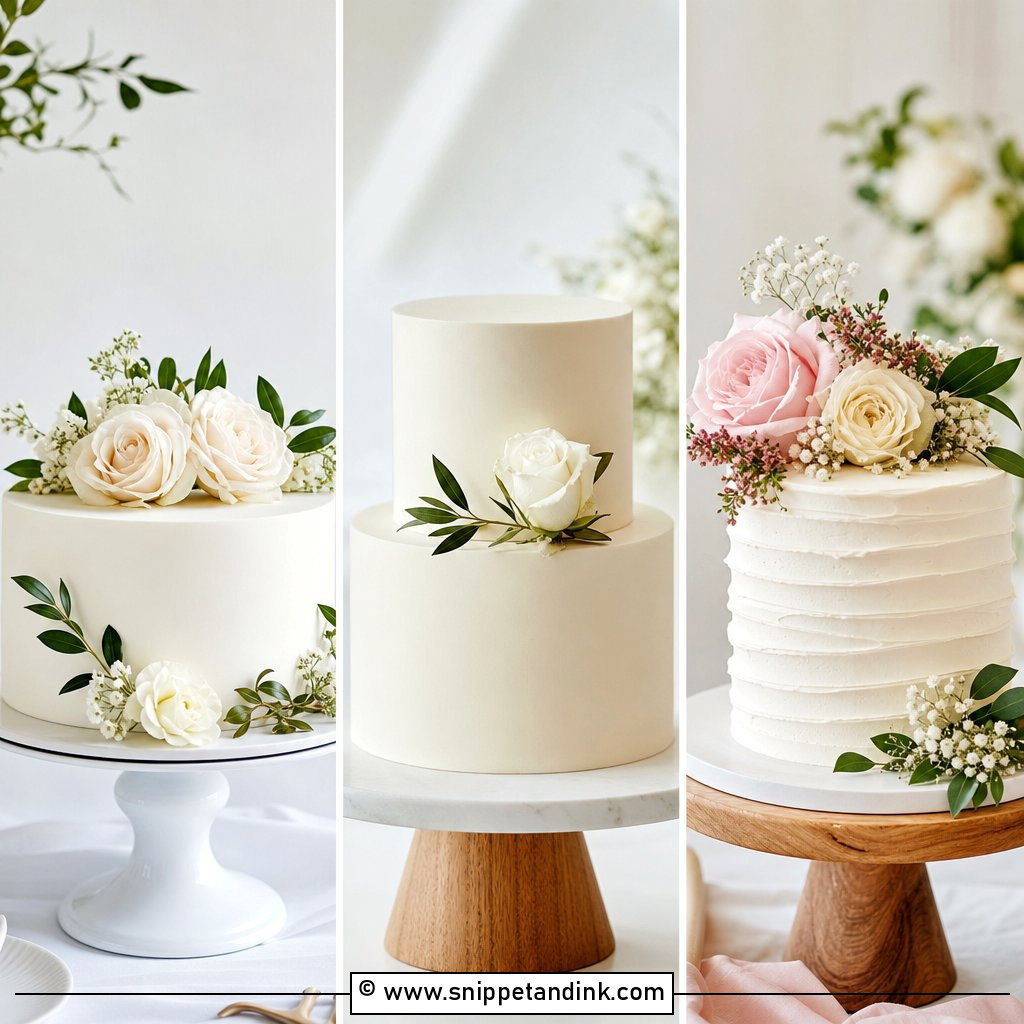
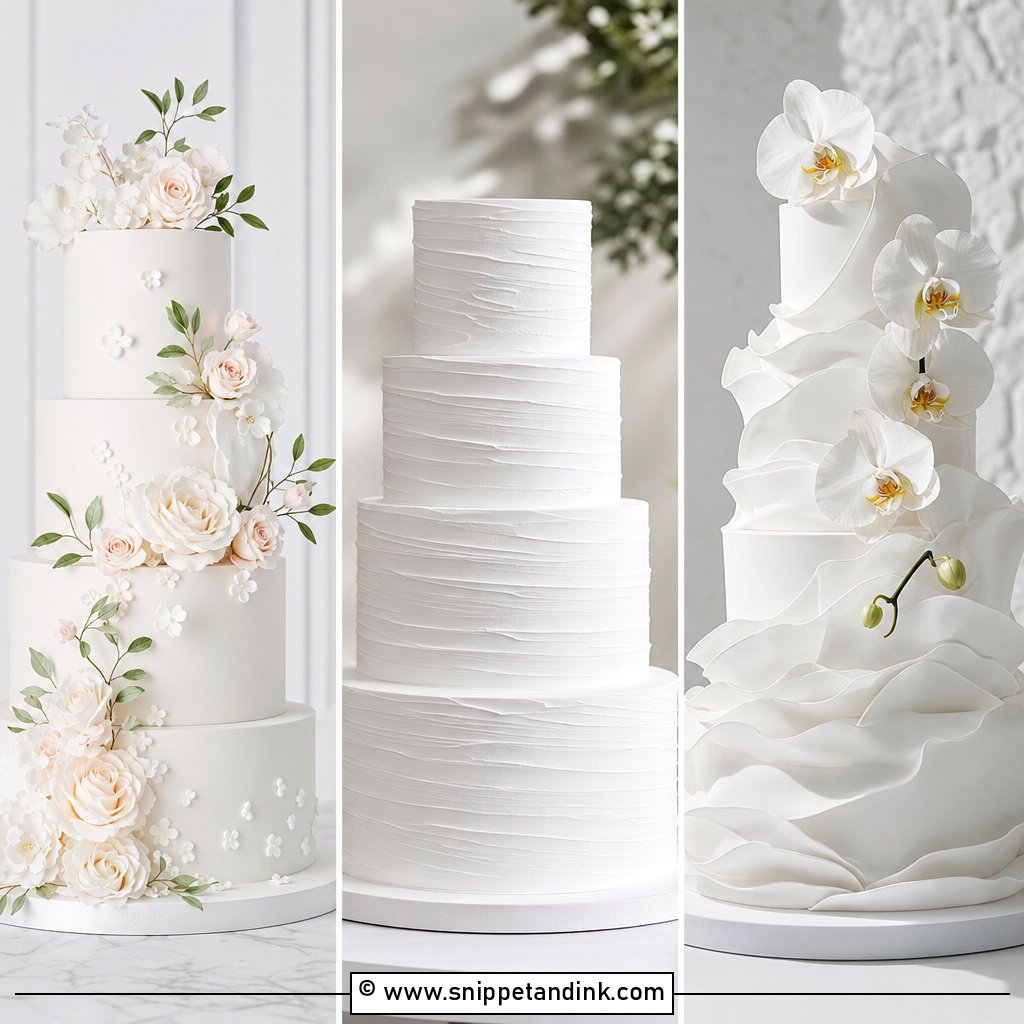
Plain white buttercream is my default starting point because it forgives a warm room better than most people expect, as long as it’s a crusting or meringue-based recipe rather than a soft whipped frosting. I chill each tier until the coat is firm before I go back in with a hot scraper for the final pass, and that second pass is what gives the clean edge. Vanilla, almond, lemon and strawberry fillings all sit well under it. Keep the decoration to one small floral cluster; a cake covered edge to edge stops reading as simple.
2. Two Tier Wedding Cake
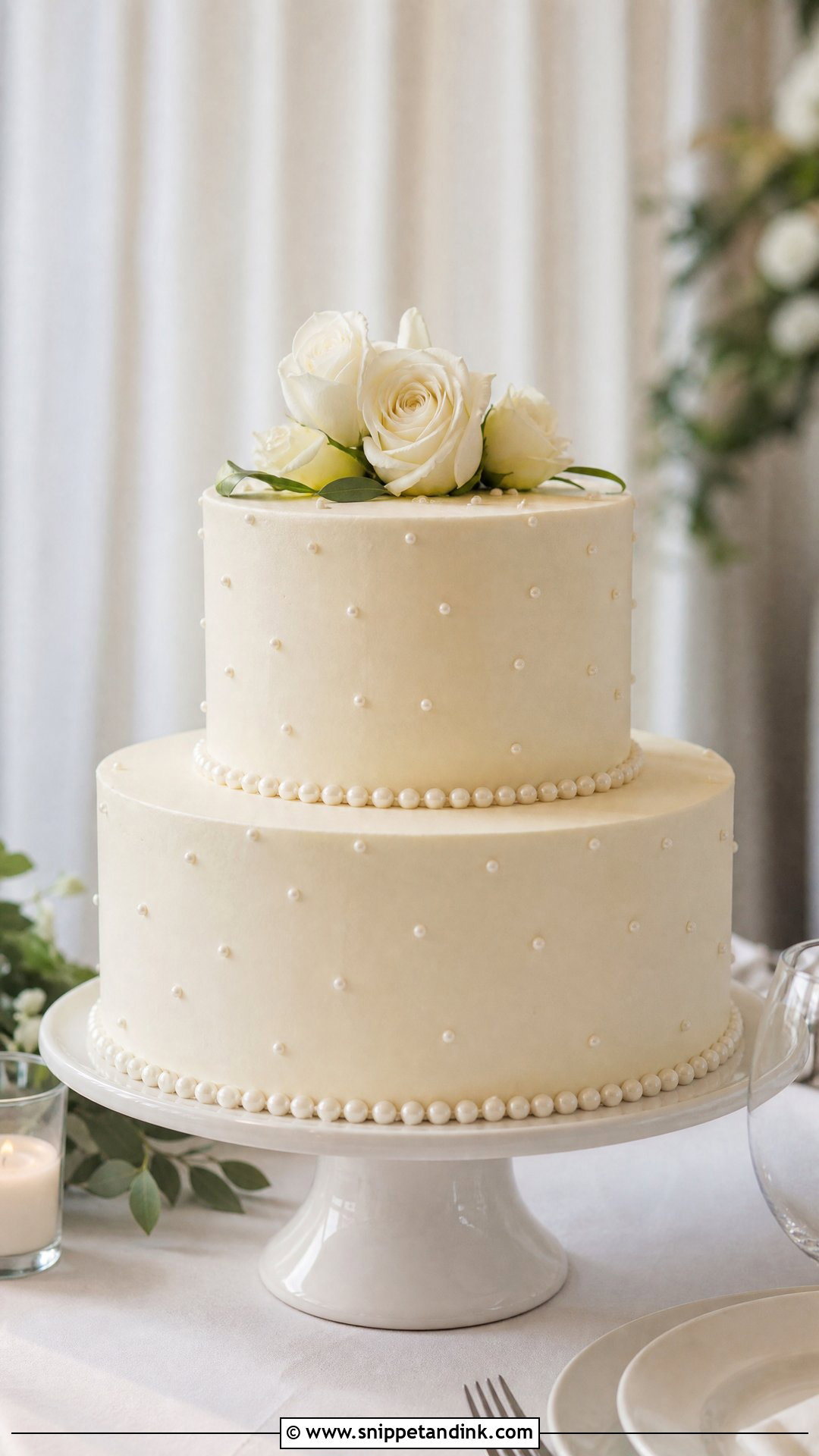
Two tiers give you the shape people picture when they hear “wedding cake” without the cost and structure of three or four. Because there’s so little decoration, the stacking has to be dead level and centered, so I always dowel the bottom tier even when the top one is light. Smooth buttercream or fondant both let the silhouette do the work, and fresh roses, pearl dots or a small topper are plenty. I like giving each tier its own flavor: vanilla up top and chocolate, lemon or almond underneath means guests get a small surprise at serving.
3. Single Tier Wedding Cake
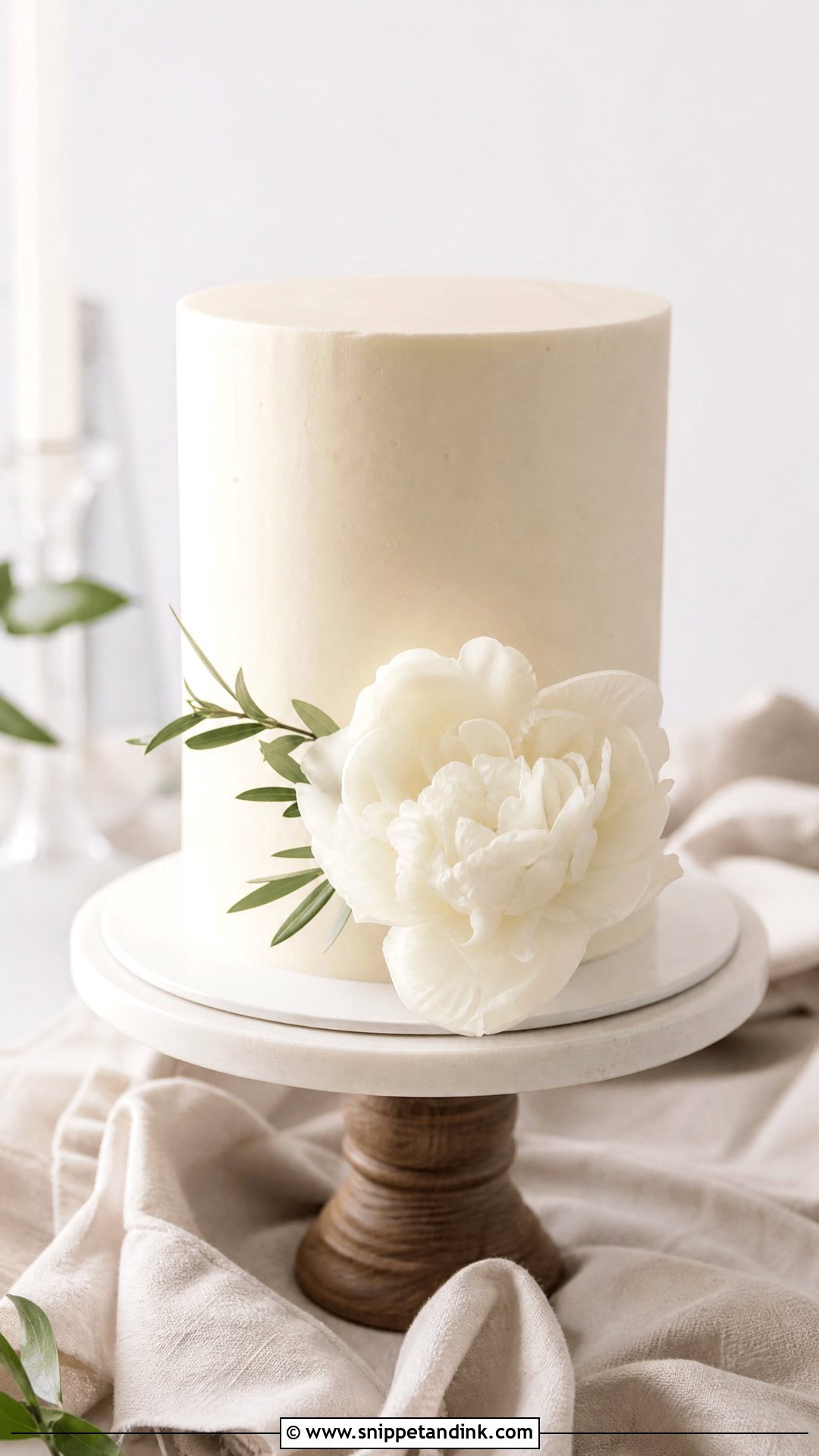
For an elopement or a dessert table shared with other sweets, a single tier is usually all you need. Height changes the mood more than anything else: a tall, extended tier of four or five layers looks deliberate, while a short one feels relaxed and homey. I’d keep the surface to smooth buttercream or a soft spatula texture and add one large bloom or a few berries. It sits nicely on a pedestal stand and gives you a proper cutting cake moment without paying for a centerpiece you don’t need.
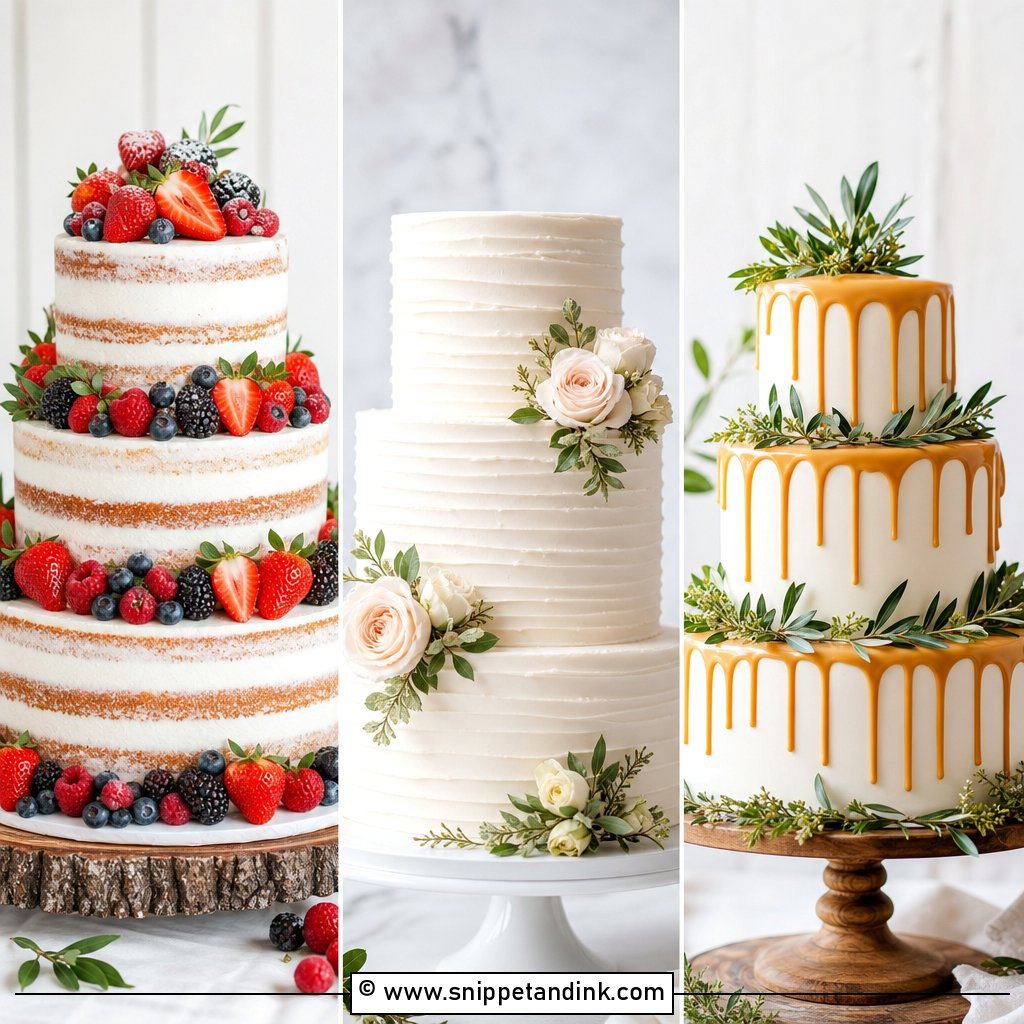
4. Naked Wedding Cake
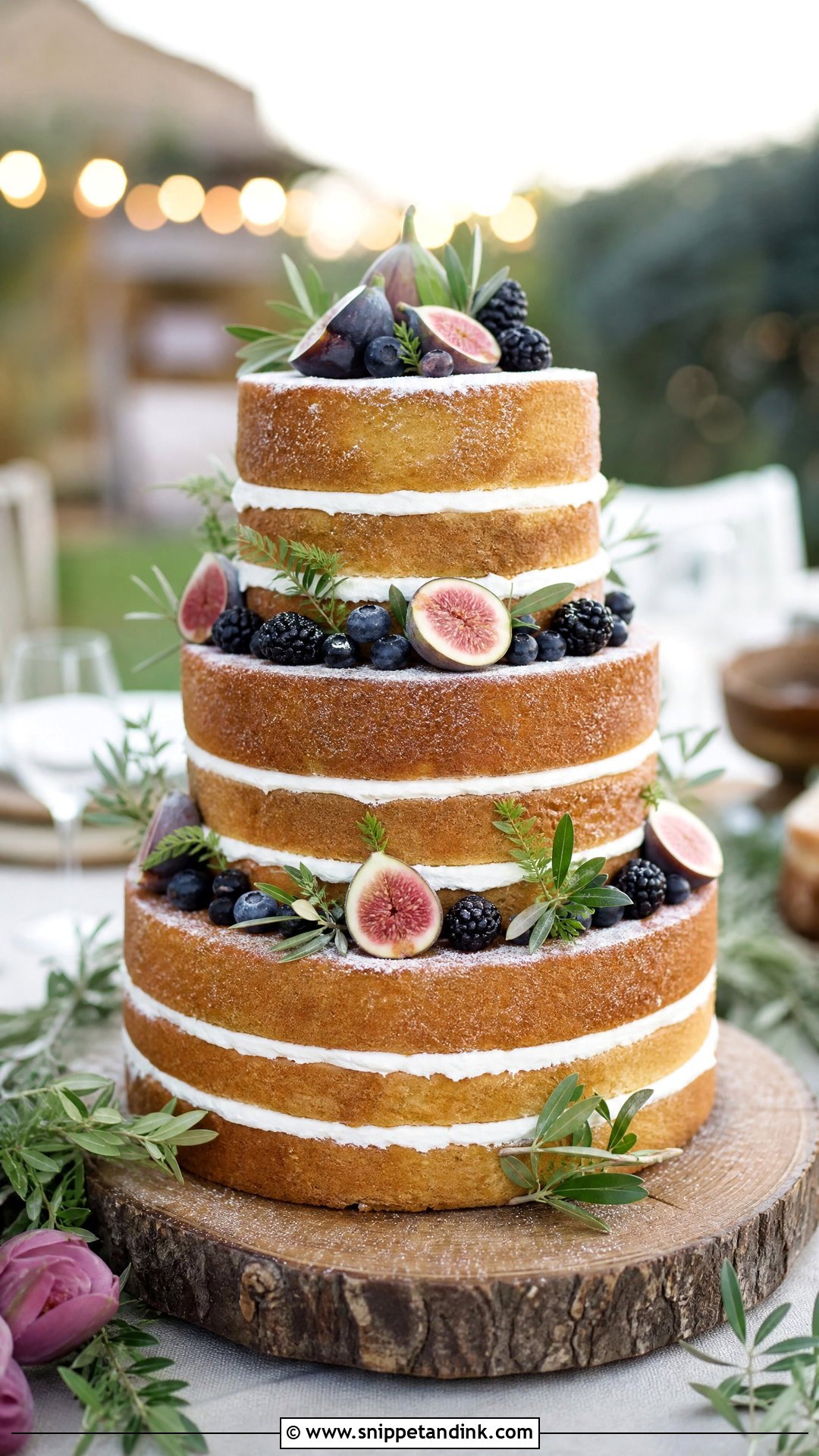
With a naked cake the sponge itself is on show, so there’s nowhere for a dry crumb to hide. That’s the first thing I warn couples about: exposed layers lose moisture faster than frosted ones, and on a hot afternoon they can look tired within a couple of hours. I brush each layer with syrup and stack it as close to delivery as possible. Vanilla, lemon, almond, carrot and chocolate all suit it, and fresh berries, figs or greenery finish it without covering the cake. I’d steer you away from this style for a long outdoor display in full sun.
5. Semi Naked Wedding Cake
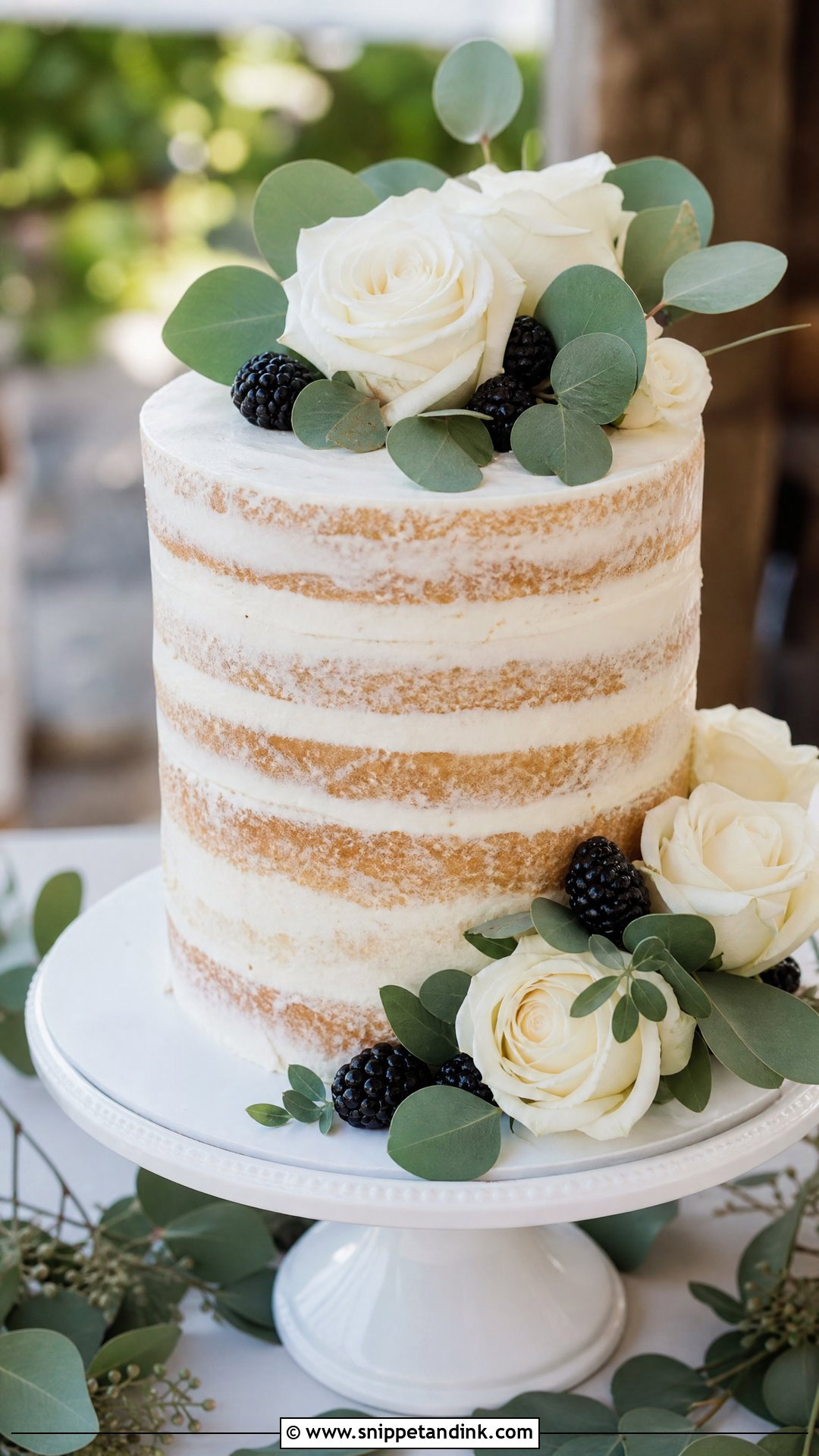
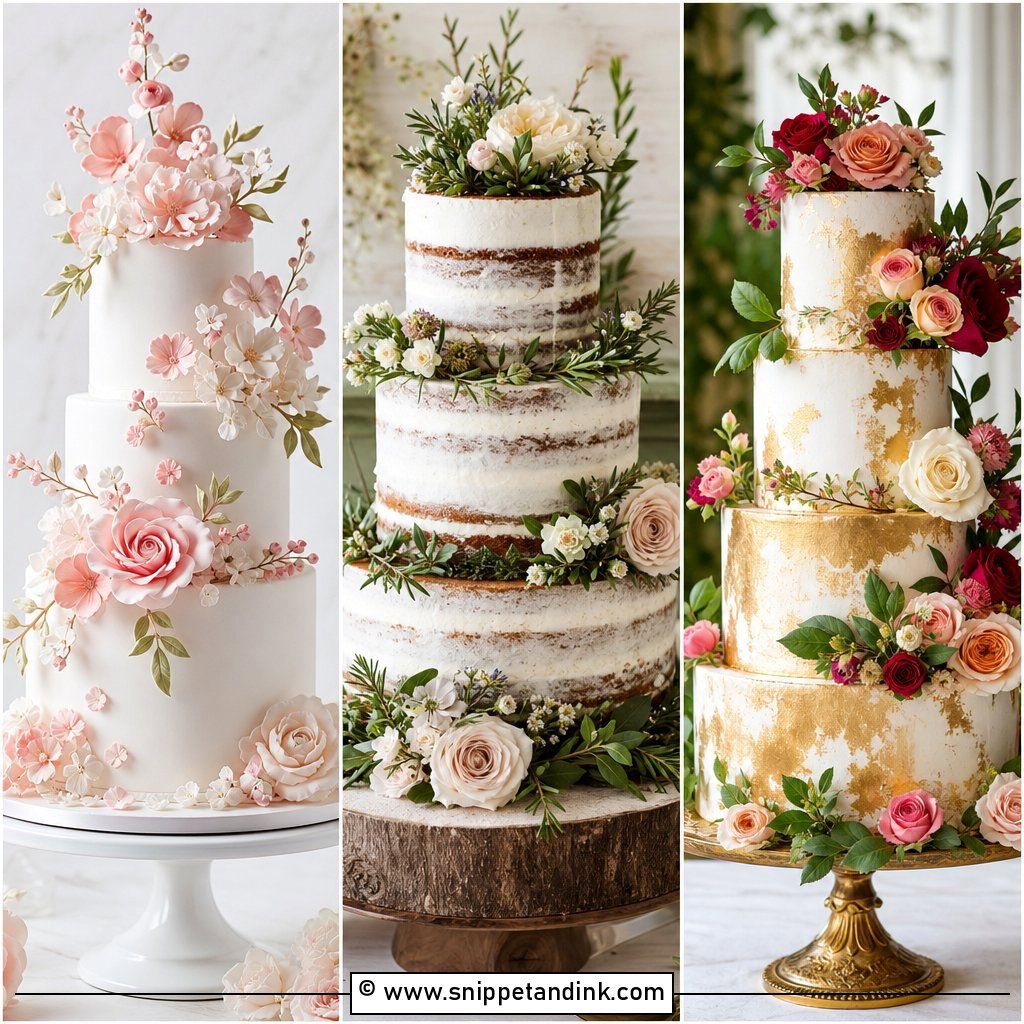
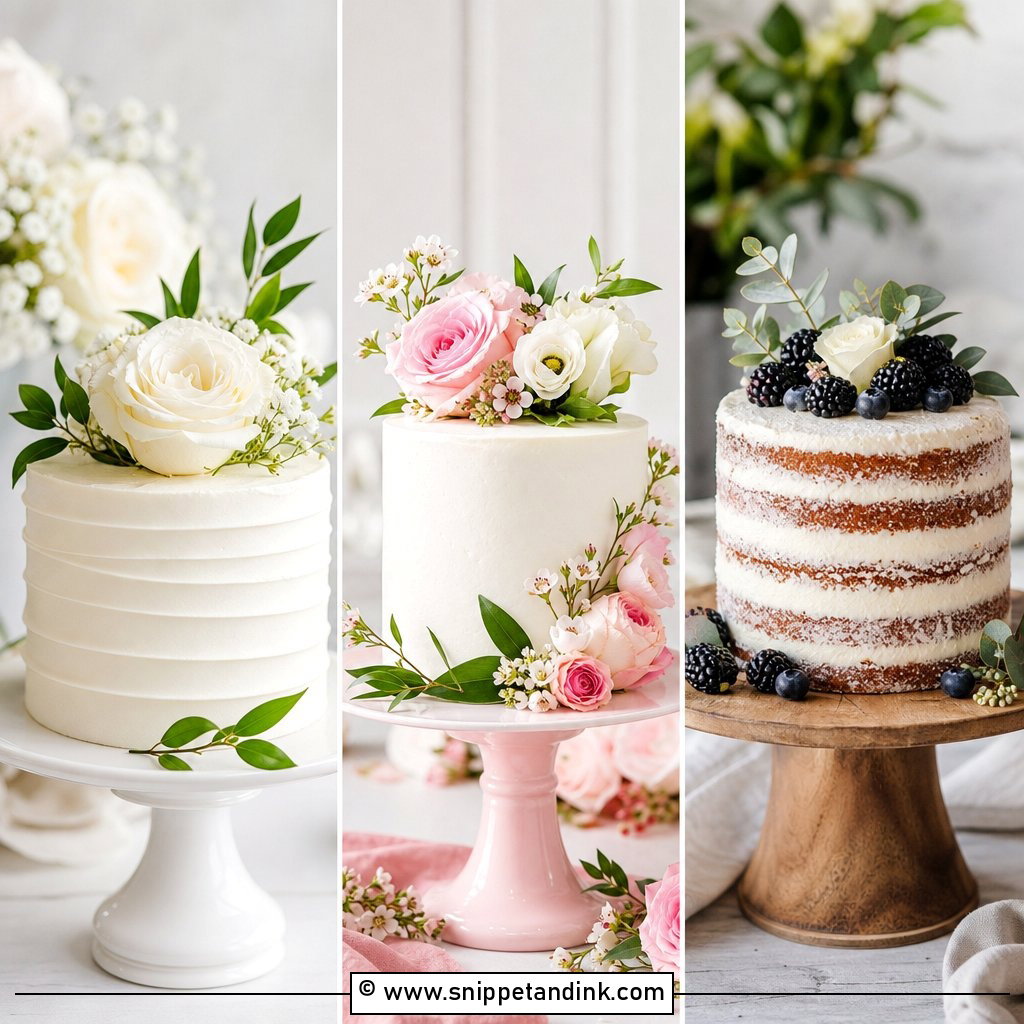
A semi naked finish is what I suggest when someone loves the rustic look but worries about dryness. A thin scraped coat of buttercream seals the sides while still letting the layers show through, and that partial coverage protects the sponge much better than leaving it bare. The scraping marks give the photos some movement without looking messy. Herbs, berries or a light dusting of powdered sugar are all it needs, and it holds up in one, two or three tiers with vanilla bean, lemon, almond or spice.
6. White Wedding Cake
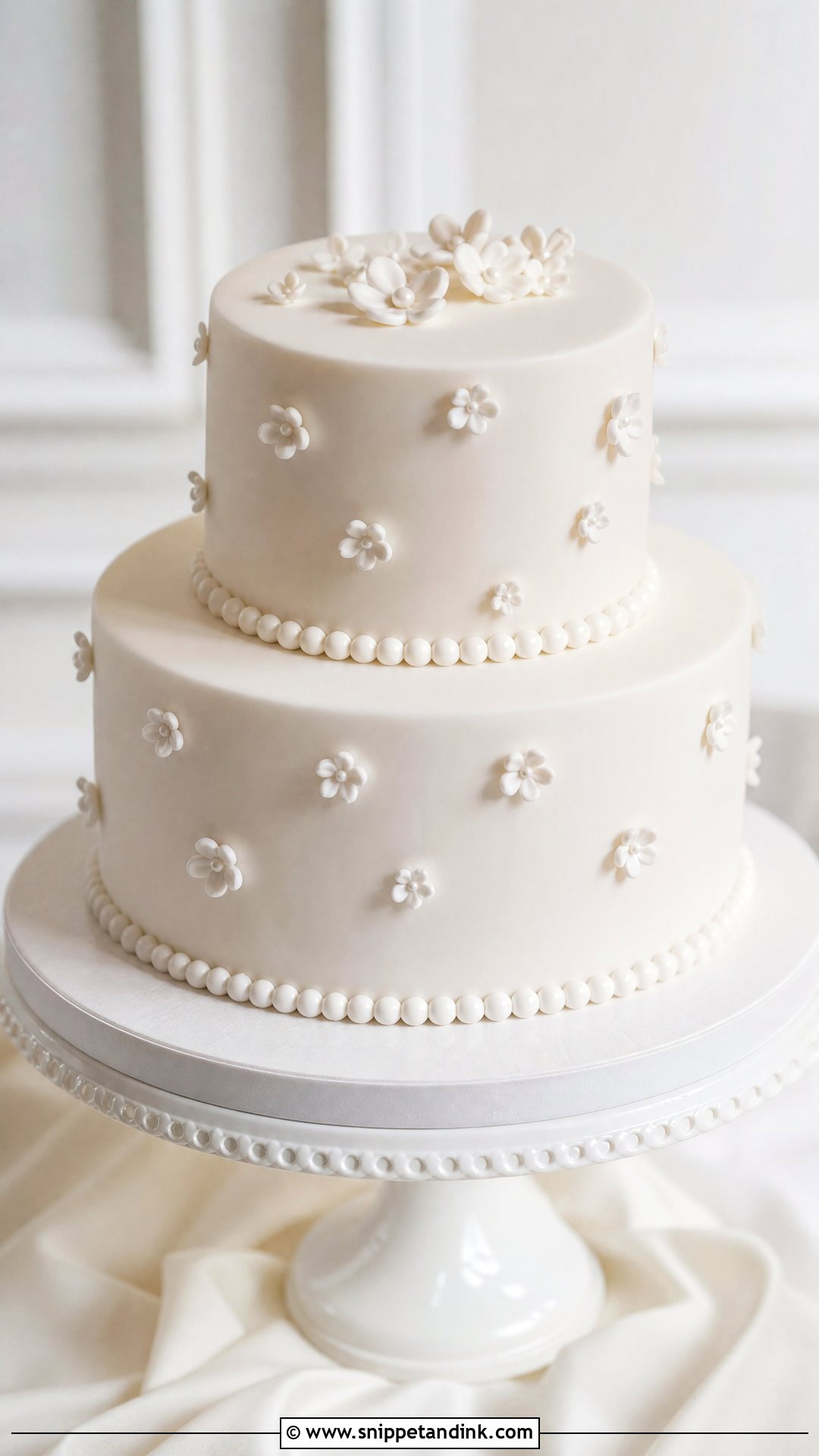
All-white is calmer than it sounds, but it does show every crumb and bubble, so I crumb coat, chill and then apply the final layer rather than trying to finish in one go. Subtle piping, a few pearls or soft buttercream strokes add texture if a completely flat surface feels too stark. White also makes whatever sits on it, flowers or a gold stand, read more strongly. Because the outside is quiet, I push couples toward a filling with personality, such as raspberry, lemon curd or cream cheese.
7. Small Wedding Cake
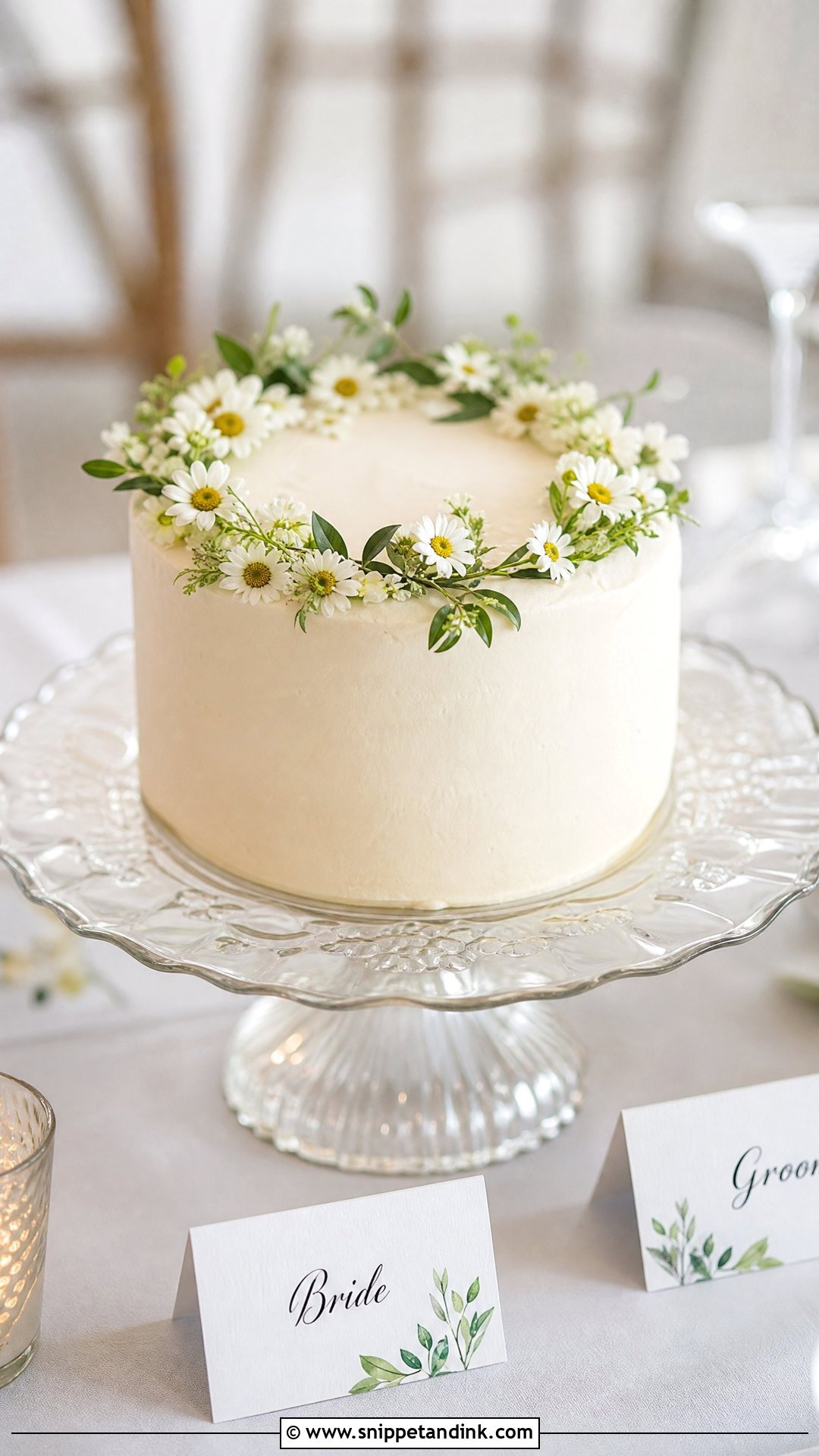
Small cakes need a reason to be small, or they look like an afterthought. Put it on a raised pedestal so it sits at eye level, tuck a little greenery or a linen napkin around the base, and it suddenly looks like the centerpiece it is. One honest advantage: when you’re not paying for a large structure, the budget often stretches to better ingredients, real vanilla, a cultured butter or a fruit curd made in-house. Micro weddings and courthouse dinners suit this size especially well.
8. Rustic Wedding Cake
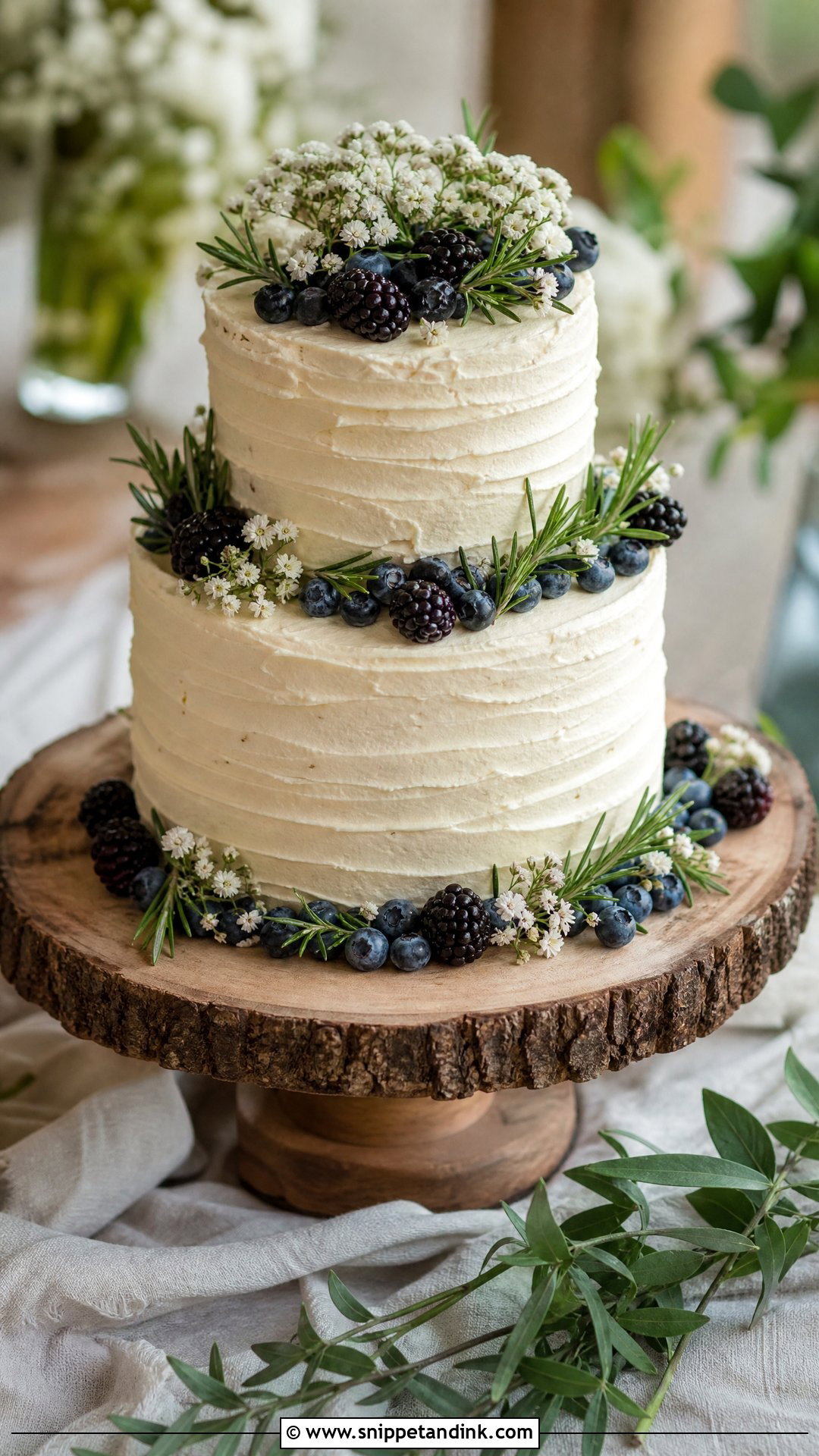
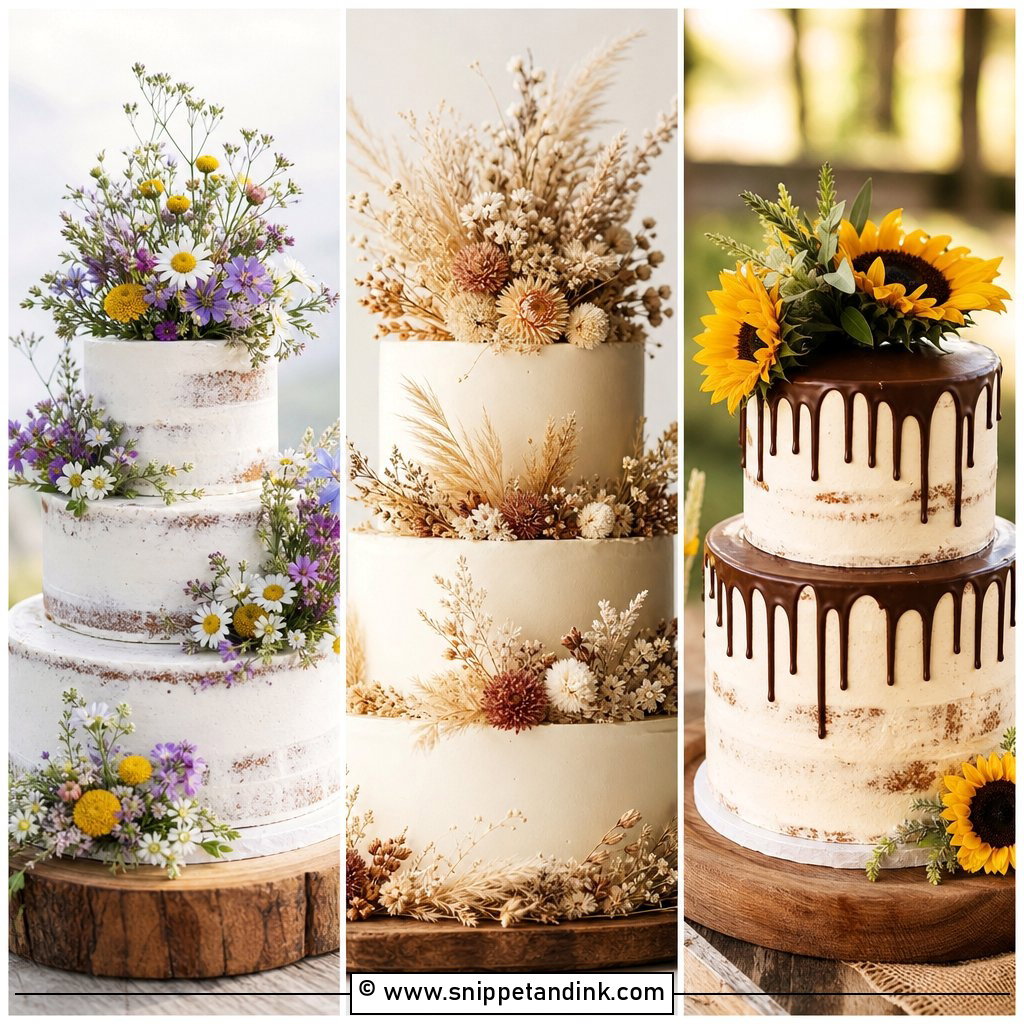
Rustic is the one style where I tell couples to stop worrying about sharp edges. Rough buttercream texture, a semi naked coat, seasonal fruit and greenery all belong here, and they sit happily on wood stands and linen runners outdoors. Carrot cake, honey vanilla, spice cake and berry fillings fit the mood. The mistake I see most is piling on everything at once, so I’d pick one main decoration, berries and herbs or one flower cluster, and let it be enough.
9. Elegant Wedding Cake
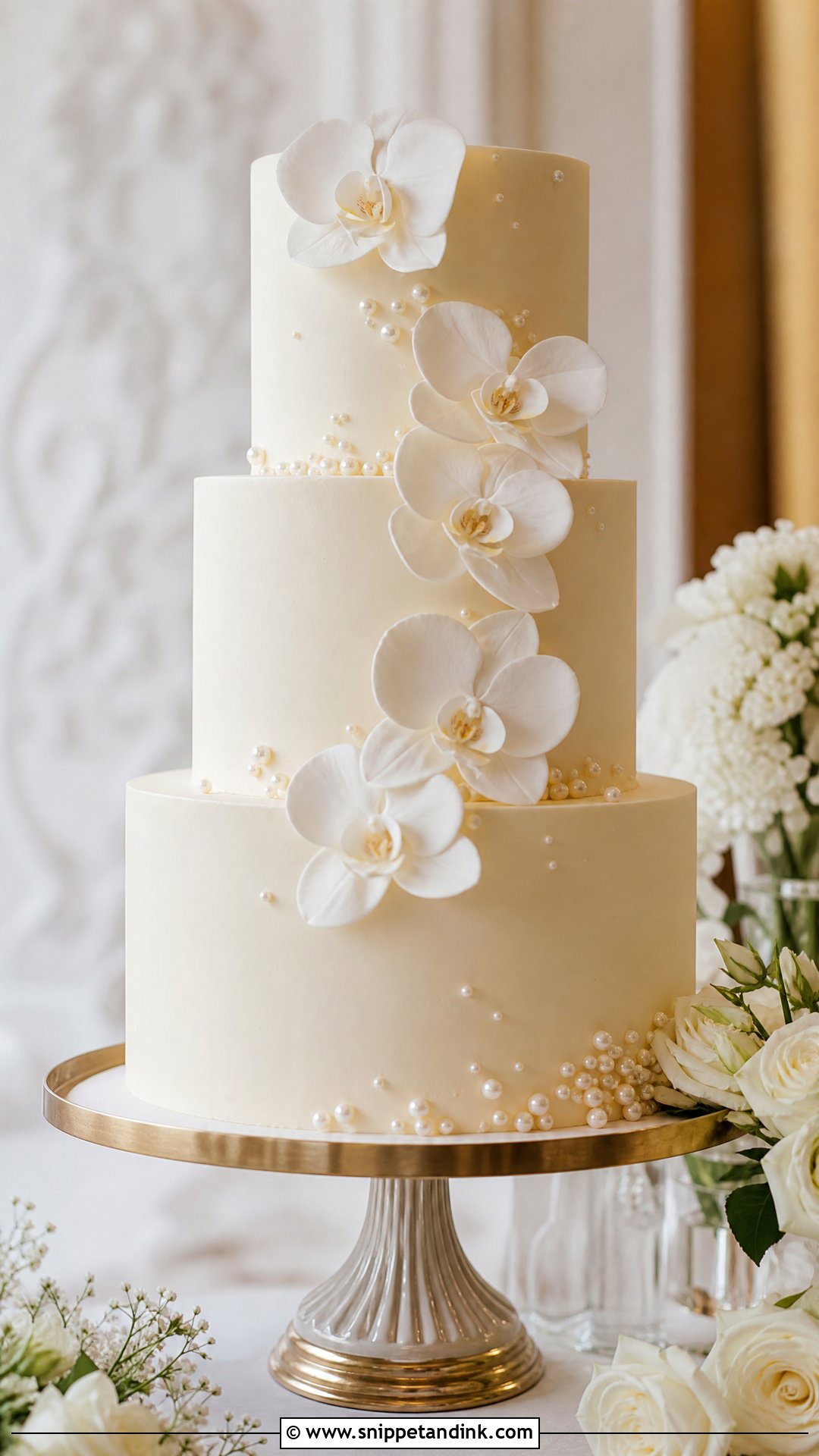
Elegance on a cake is mostly proportion. A smooth two-tier with a few fresh flowers often looks more refined than one covered in detail, provided the tiers step down evenly and the flowers sit in one considered place. Ivory buttercream, white fondant and fine piping all help. I always ask to see the dress and the flowers before sketching, because the cake shouldn’t compete with them. Vanilla almond, lemon raspberry or chocolate ganache keep the flavor as polished as the outside.
10. Minimalist Wedding Cake
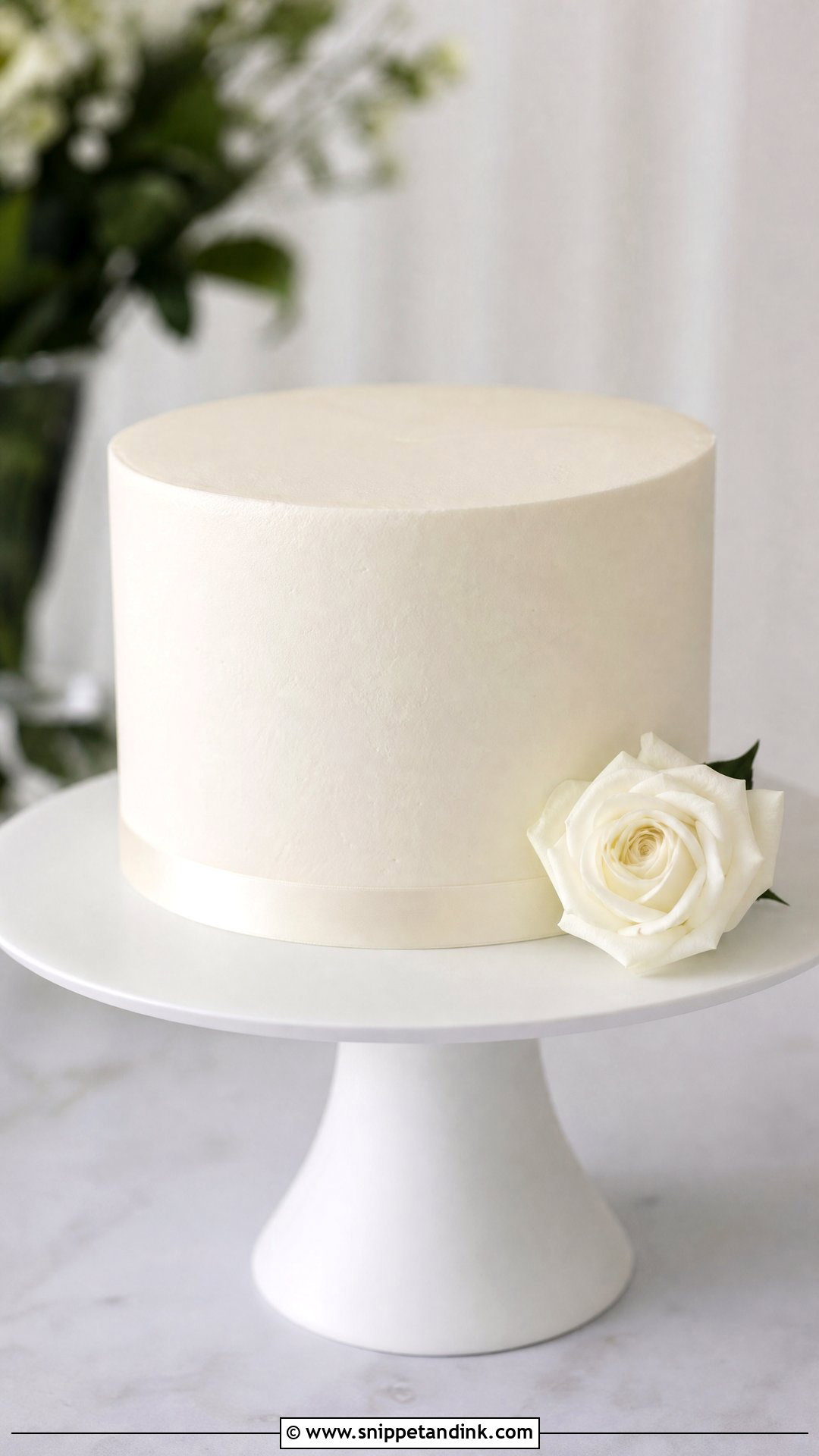
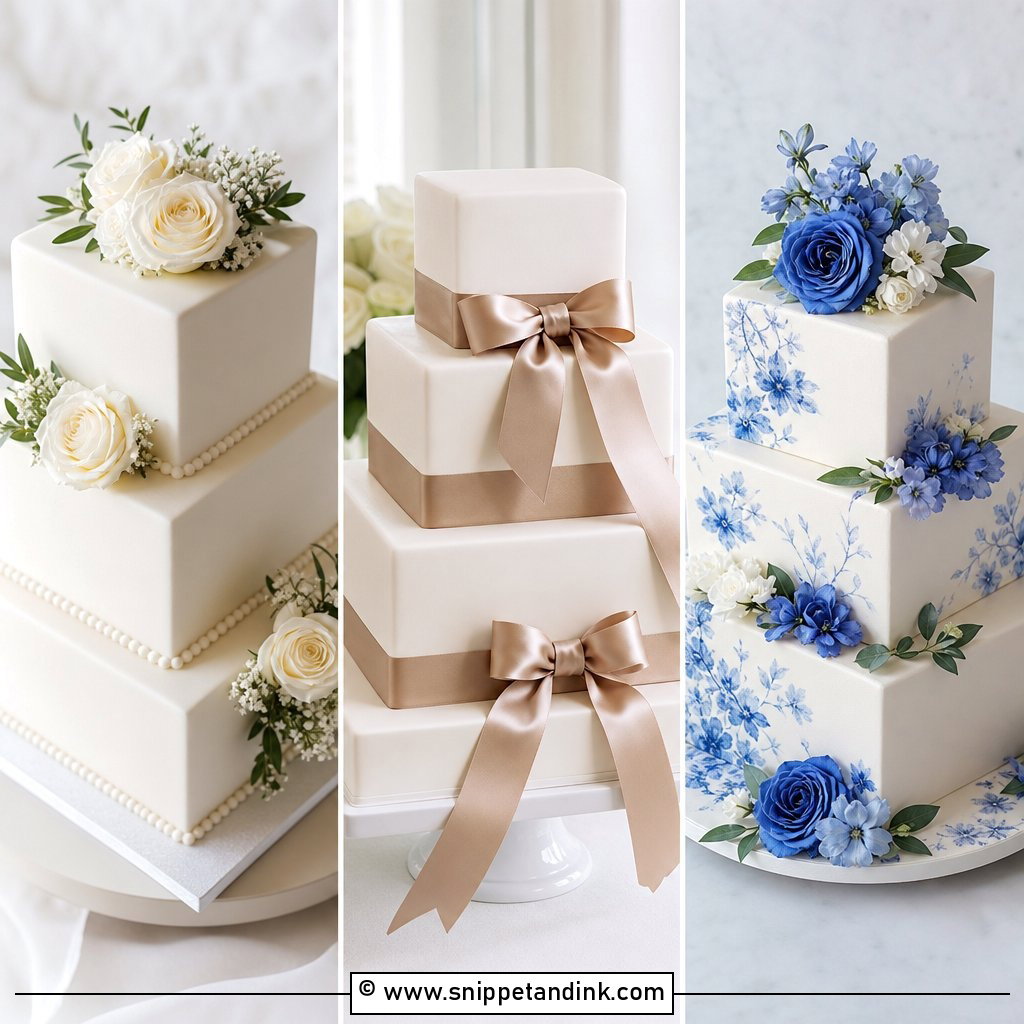
Minimalism leaves no room for an uneven board edge or a bulging seam, so this is the design where I take the most time on the finish. One white tier with a single flower, a two-tier with a thin ribbon, or a smooth cake with tiny pearl dots is the whole brief. Pale shades like ivory, beige, blush or soft gray keep it modern. For the inside I like something bright, vanilla bean or lemon or coconut, so the flavor isn’t as quiet as the design.
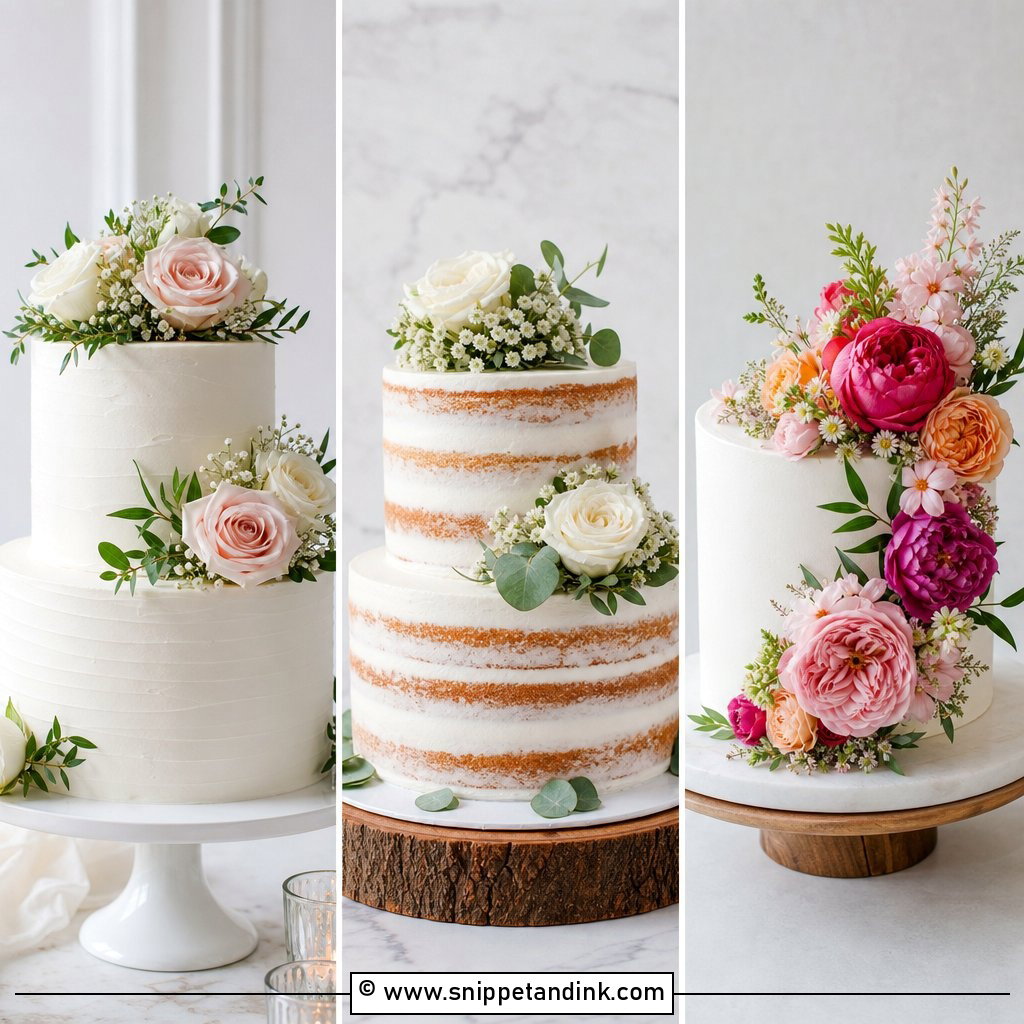
11. Floral Wedding Cake
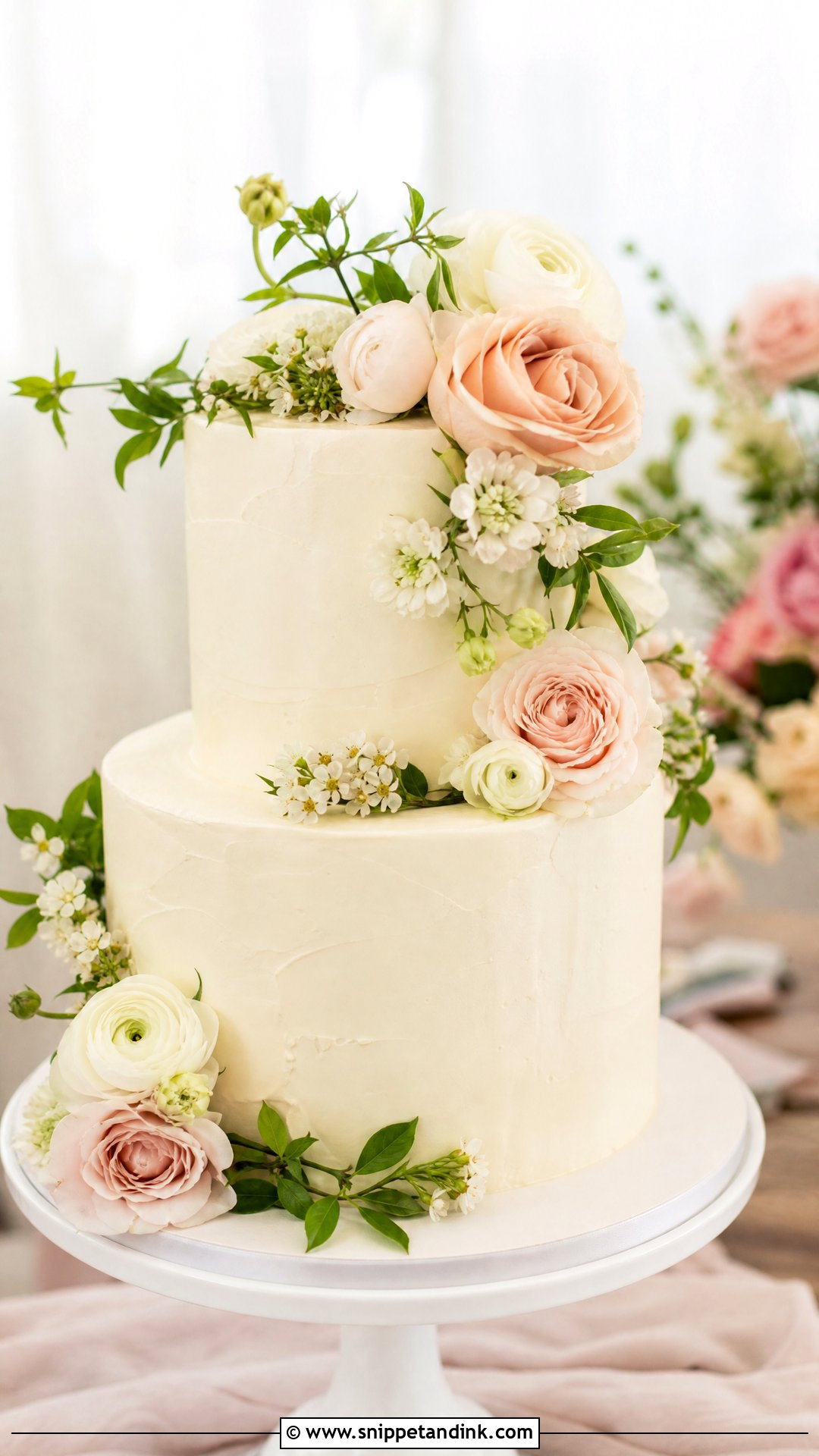
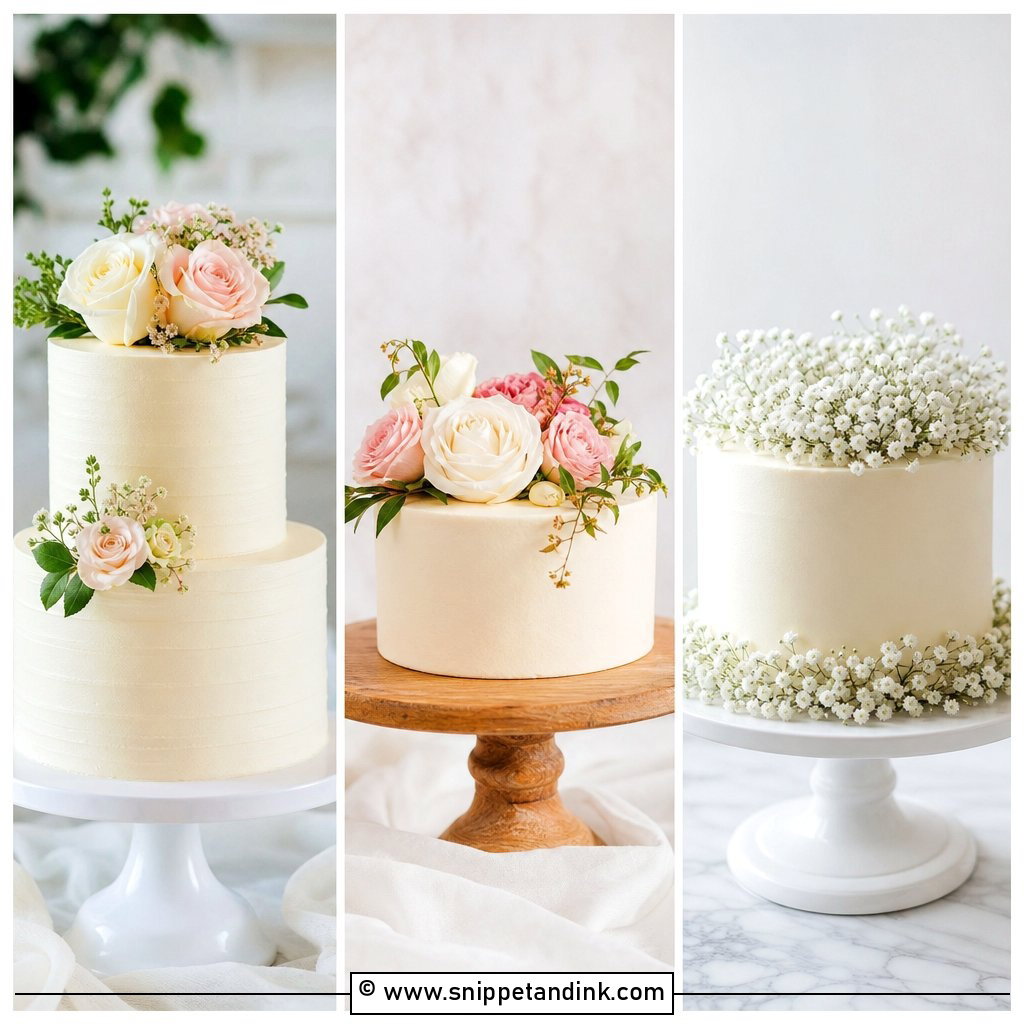
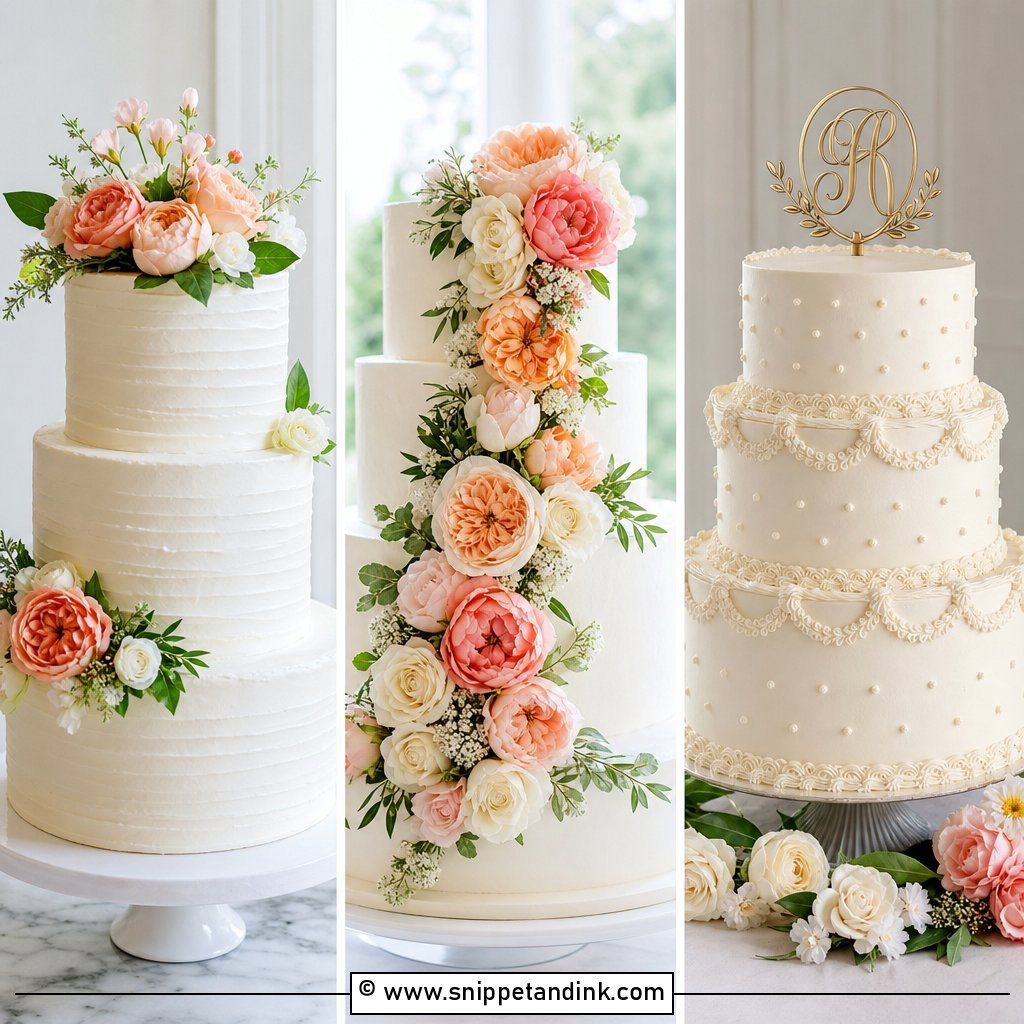
Flowers are the quickest way to warm up a plain cake, and buttercream is my favorite base for them because it reads soft next to petals. Roses, ranunculus, peonies and small garden blooms all work depending on what’s in season. I keep them in one or two clusters for a clean look, or let them wander around the tiers for something more garden-like. Matching the bouquet ties the cake into the room, so I usually ask the florist to set aside a few stems for me.
12. Fresh Flower Wedding Cake
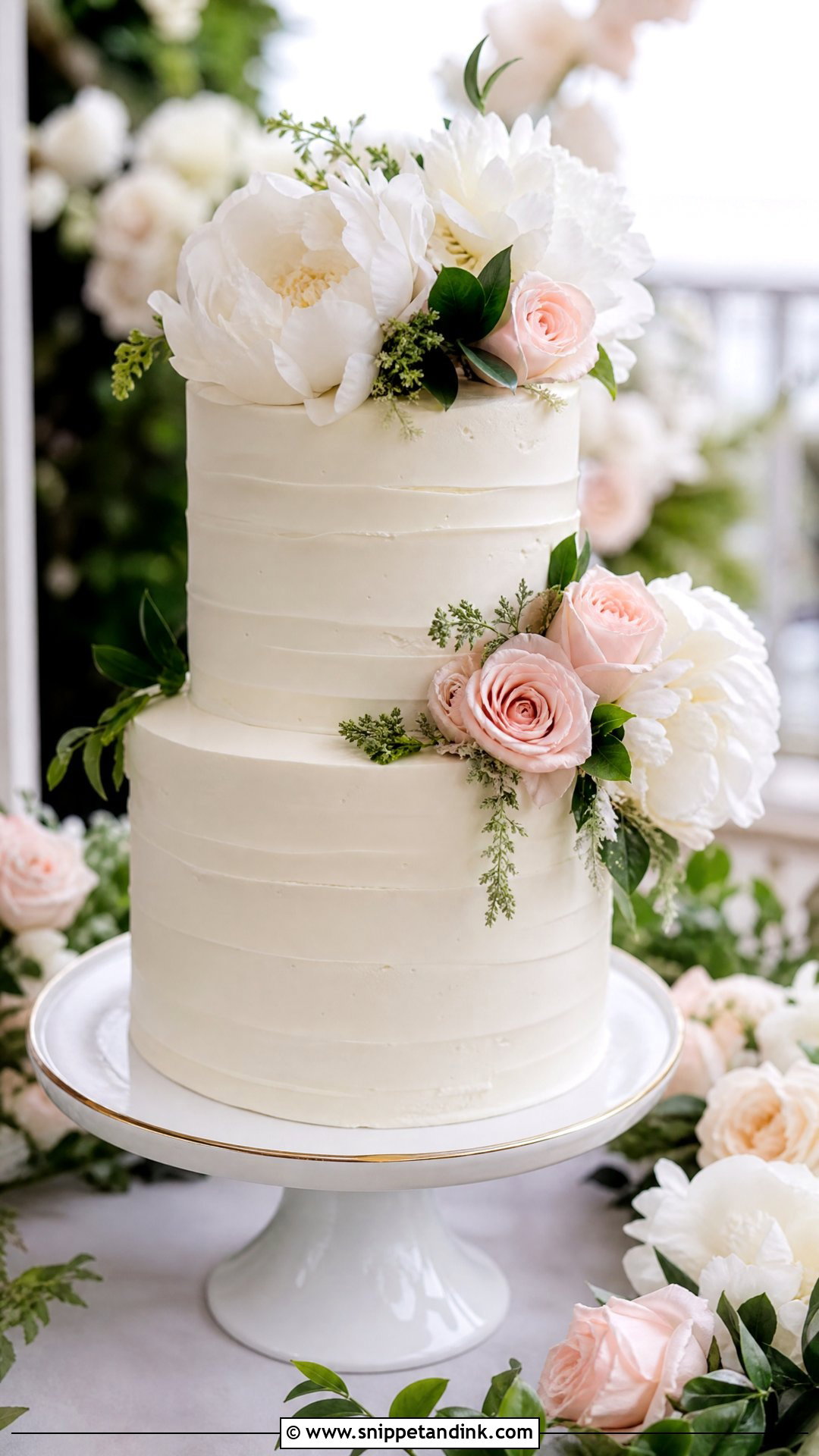
Real flowers on a cake need some care that pictures never show. Many common wedding flowers aren’t food safe, and some, like hydrangea and lily of the valley, are toxic, so I wrap stems in floral tape and insert them into straws or picks so nothing touches the cake directly. Choose blooms that echo the bouquet and keep the placement light: a few on top and one small side cluster is enough. White buttercream or ivory fondant gives the color somewhere to land. Ask your baker and florist to agree in advance who is supplying and placing the flowers.
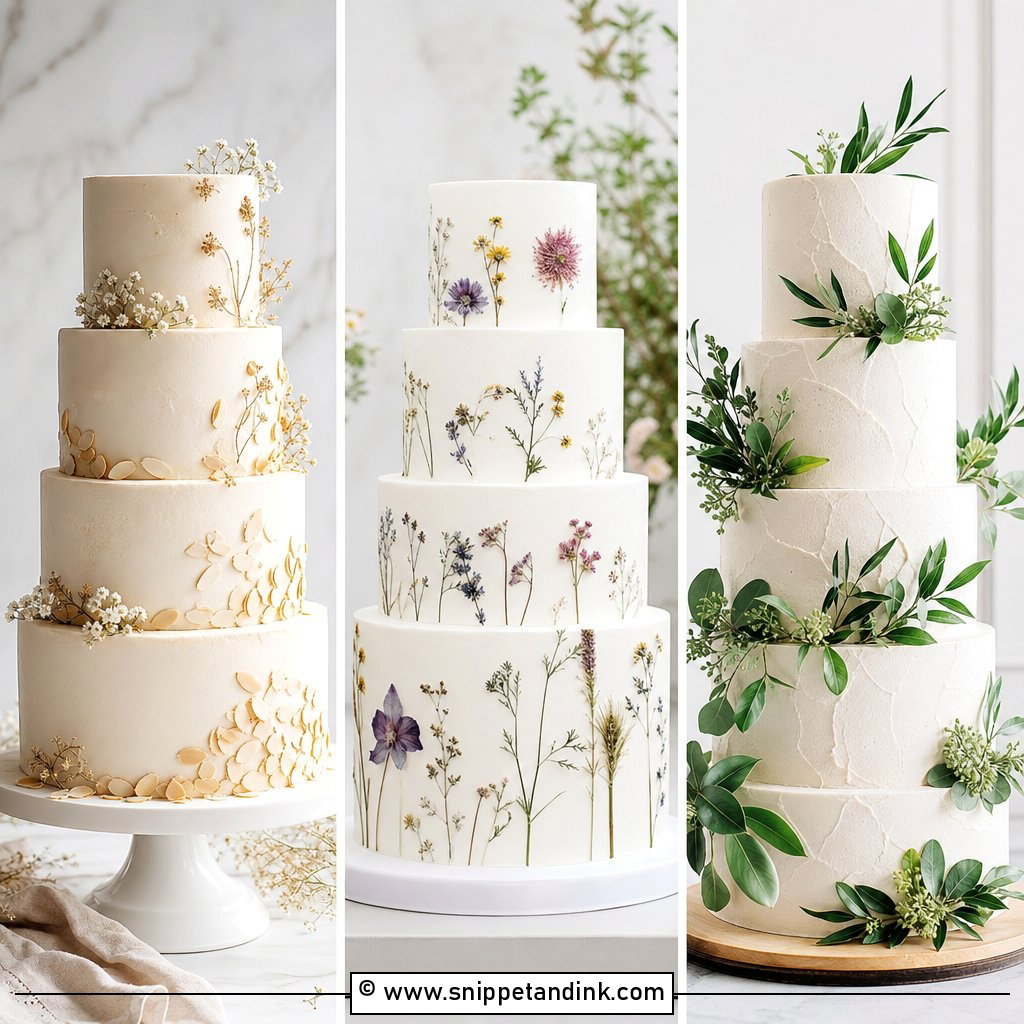
13. Greenery Wedding Cake
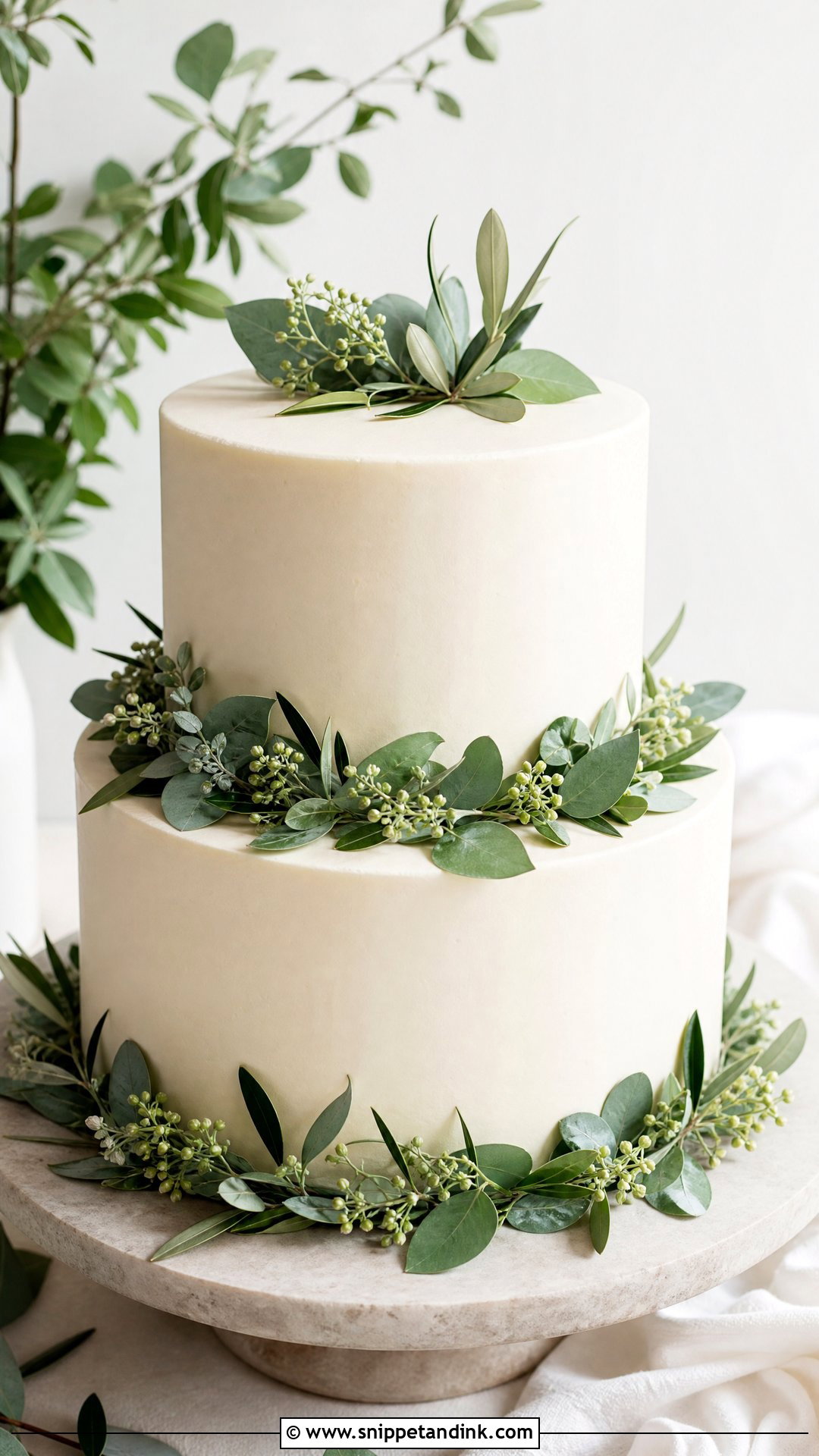
Greenery on its own suits couples who want a natural look without a lot of color. Eucalyptus, olive leaves and soft herbs can wrap the base, trail down one side or sit between tiers. I’d check what you’re using, though: eucalyptus is lovely to look at but shouldn’t touch the frosting, so I back it with wafer paper or a barrier. Neutral palettes suit this best. Vanilla, lemon, almond or honey cake underneath, with a smooth or lightly textured coat so the leaves stay the main detail.
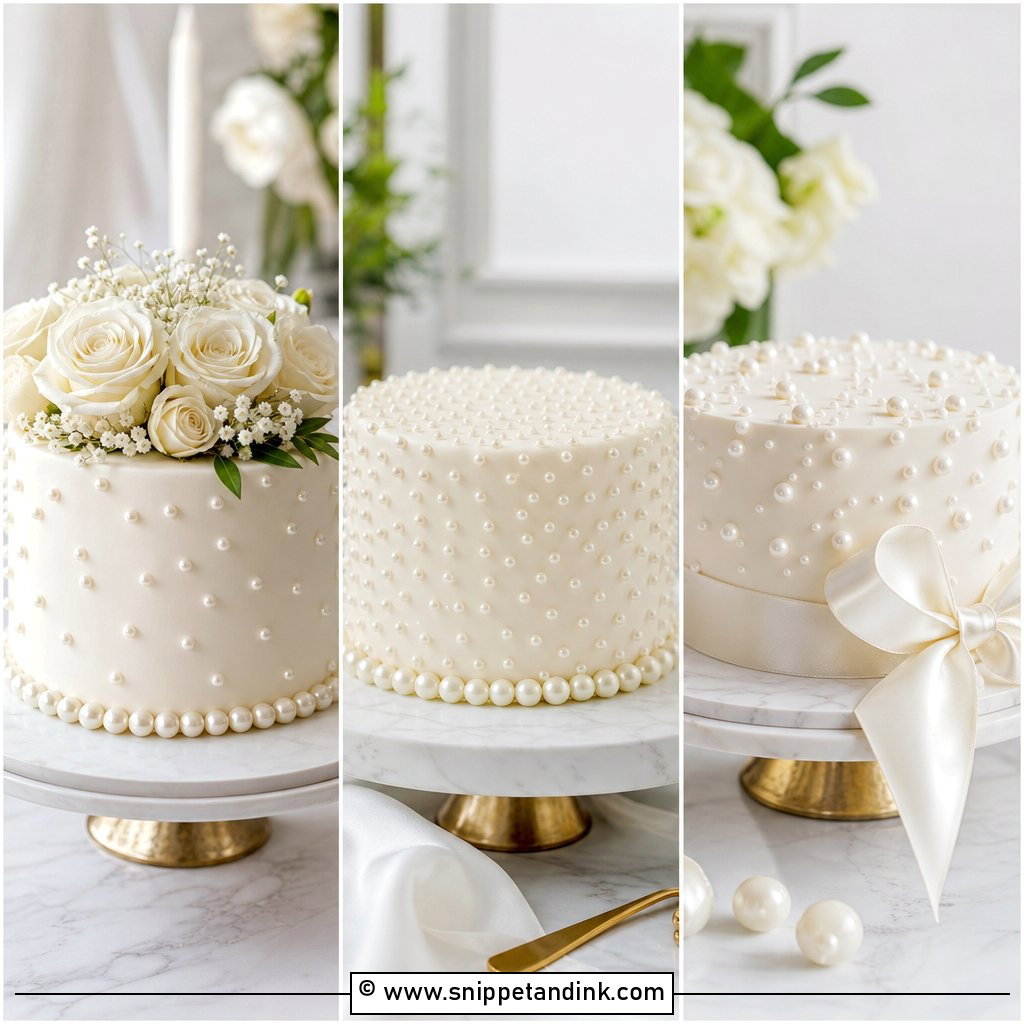
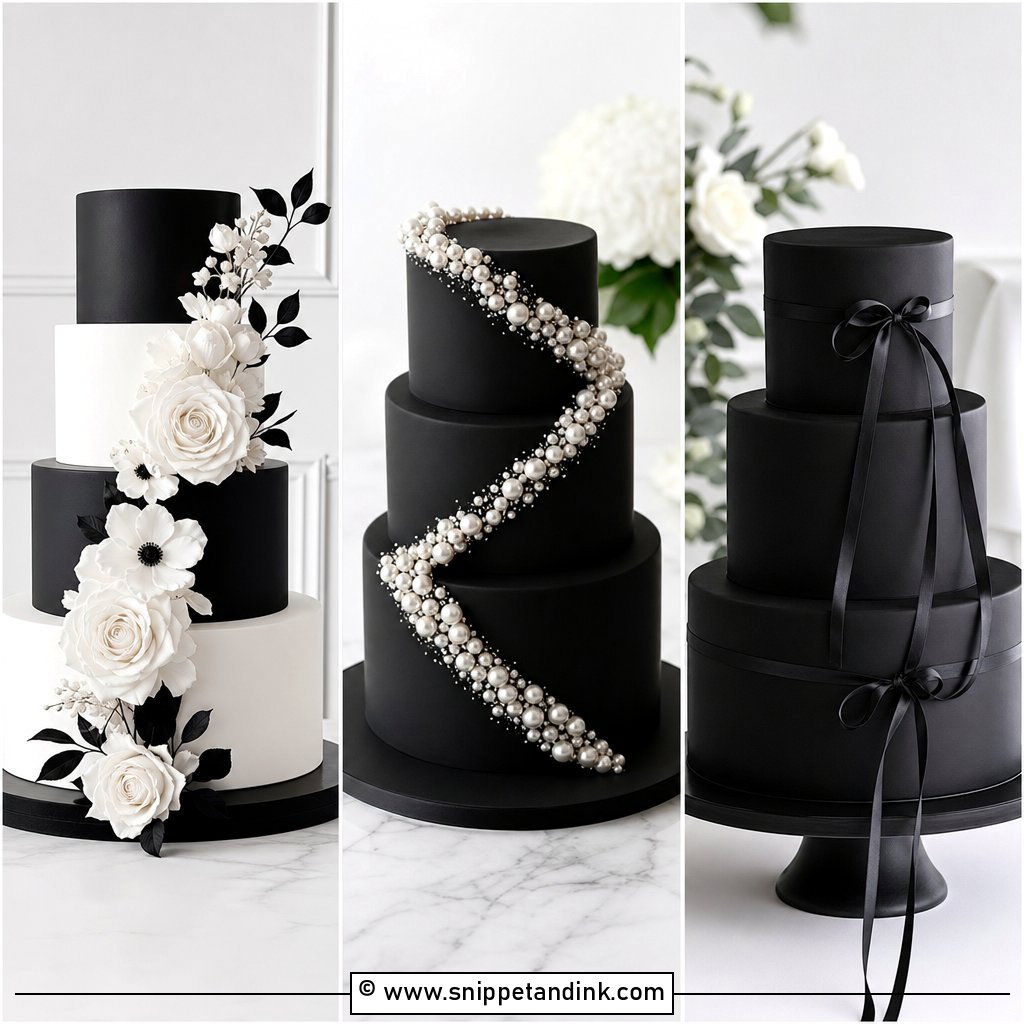
14. Pearl Wedding Cake
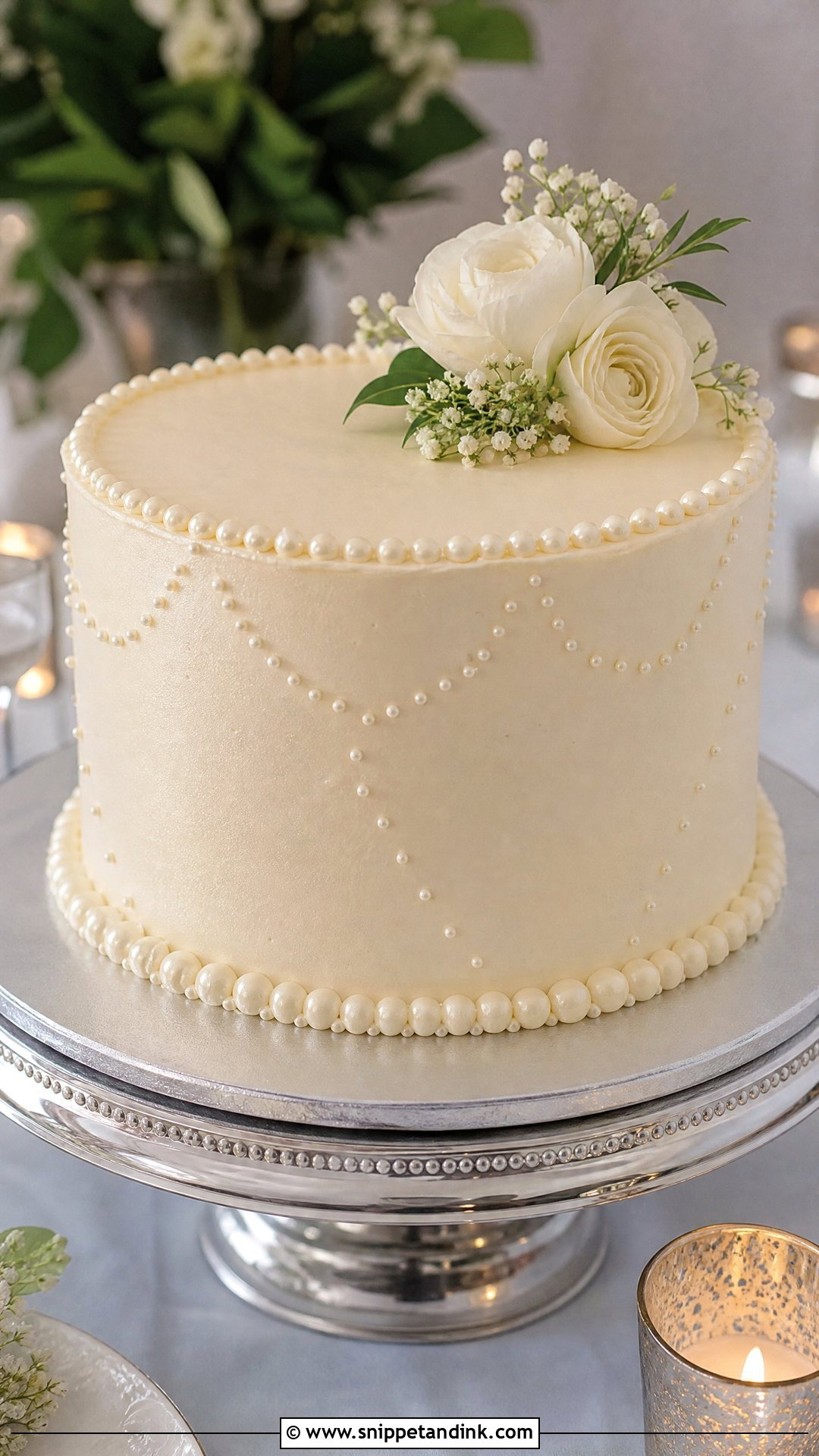
Pearls give a plain tier a soft, finished edge. I set edible sugar pearls one at a time with a dab of piping gel around the base of each tier, or scatter them lightly across the surface. They show up best against white, ivory, blush or champagne buttercream. One small floral accent alongside them is enough; add more and the pearls start to look like clutter. Keep the piping minimal so they have the stage. The hard sugar pearls can be tough on teeth, so I tell couples to expect a few left on plates.
15. Vintage Wedding Cake
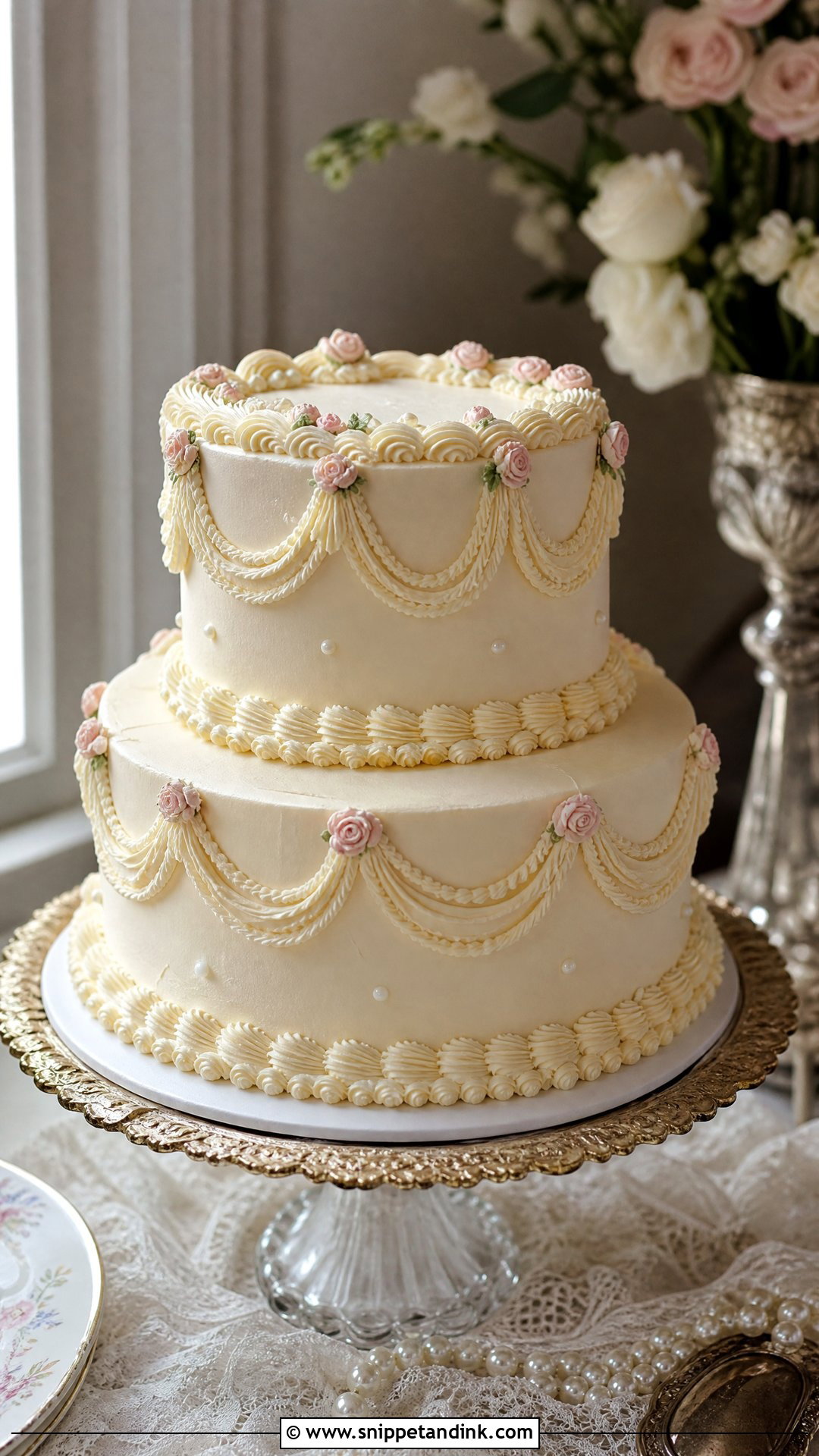
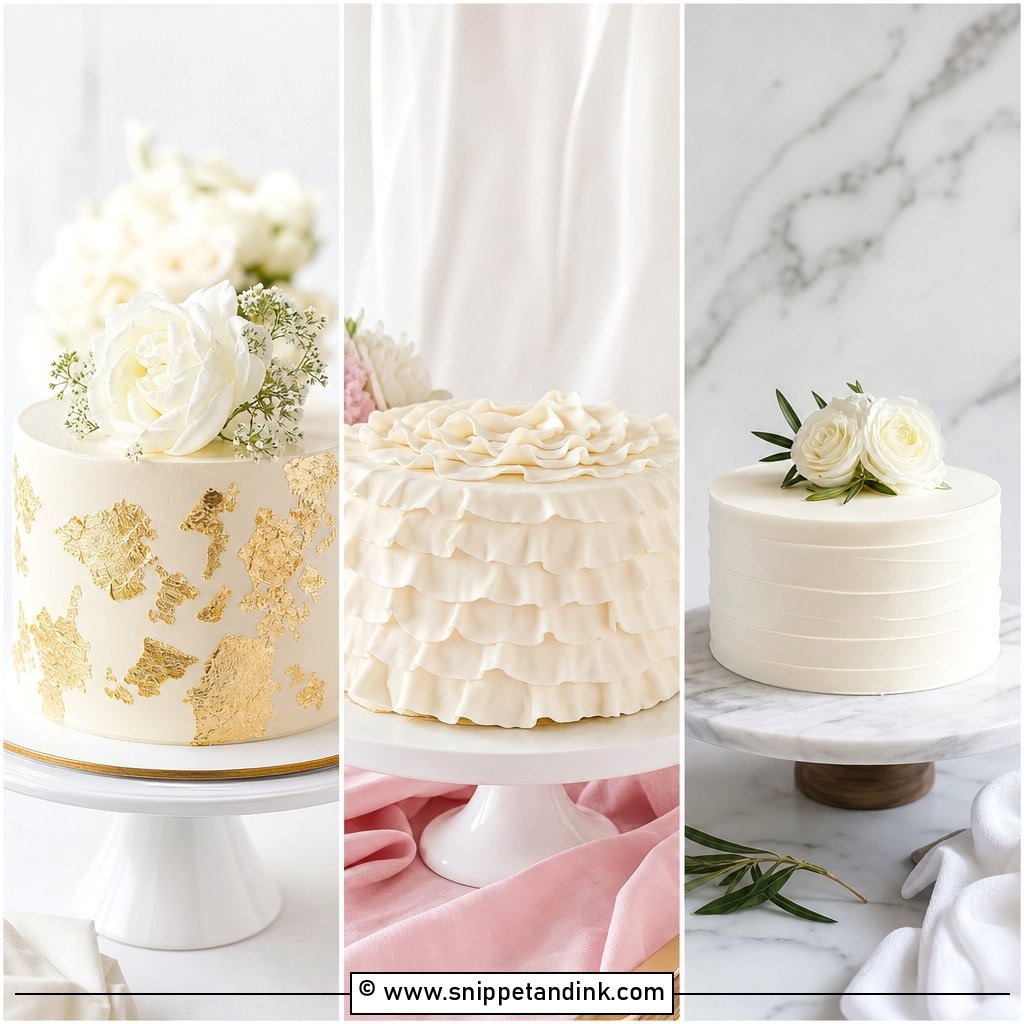
Vintage can still be simple if the piping is disciplined. I’d choose delicate shell borders, small buttercream swags or a single piped edge per tier rather than covering every surface. Ivory, blush, pale blue or soft butter yellow give the nostalgic feel without looking dated. Old-style piping needs a stiffer buttercream than smooth finishes do, so in summer I firm the recipe so the shells don’t slump. Butter cake, almond and vanilla suit the mood, and a few small flowers or cherries add a sweet retro touch.
16. Modern Wedding Cake
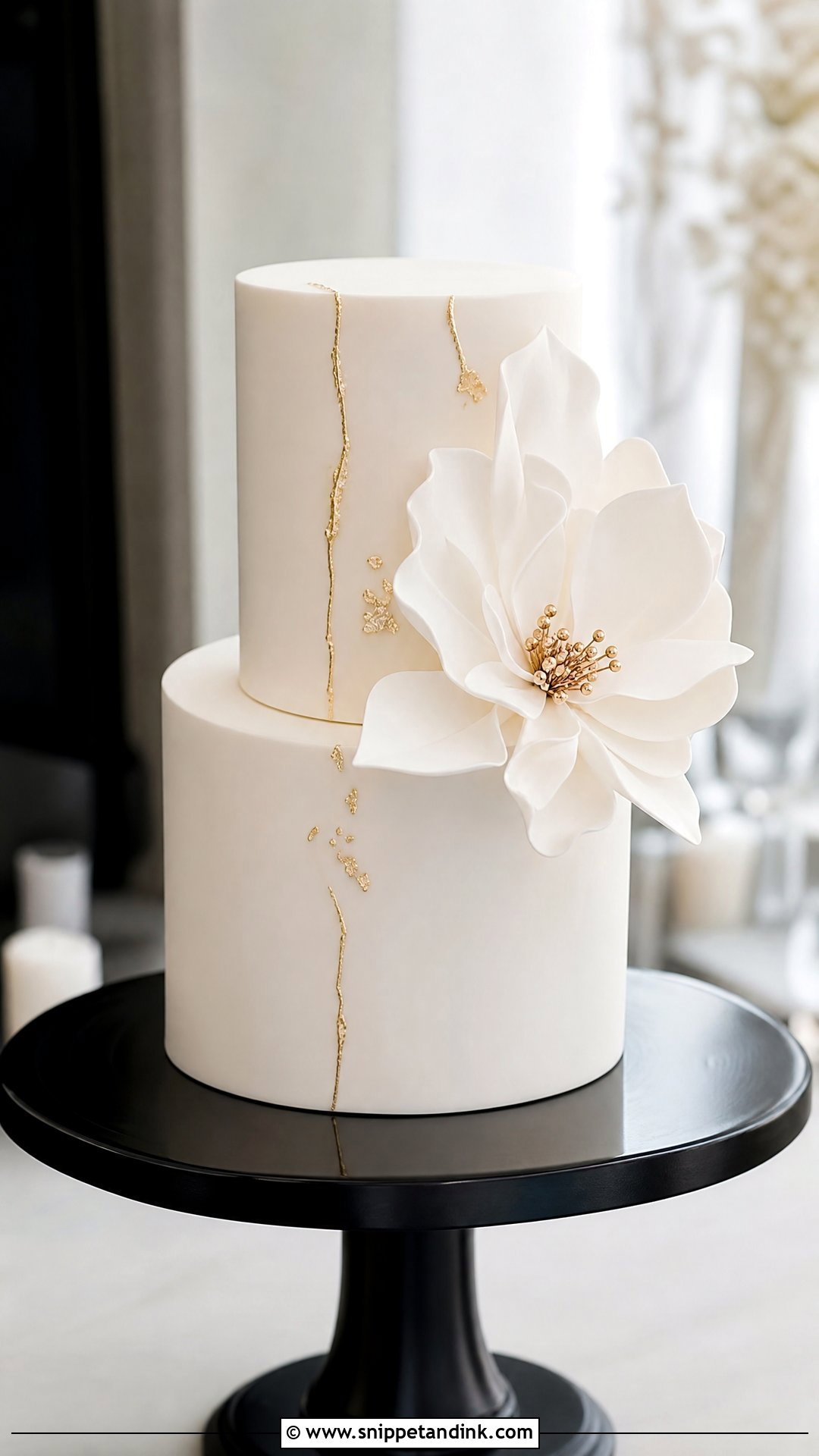
Modern cakes usually come down to clean shape, restrained color and one strong detail. That might be a sharp-edged white cake, an offset tier or a soft square with almost nothing on it. Negative space is the point, so I resist the urge to fill blank sides. Sharp edges are easier on ganache under fondant than on buttercream in a warm venue, which is worth telling your baker if your reception is in summer. Vanilla bean, chocolate espresso or lemon keep the inside as considered as the outside.
17. Square Wedding Cake
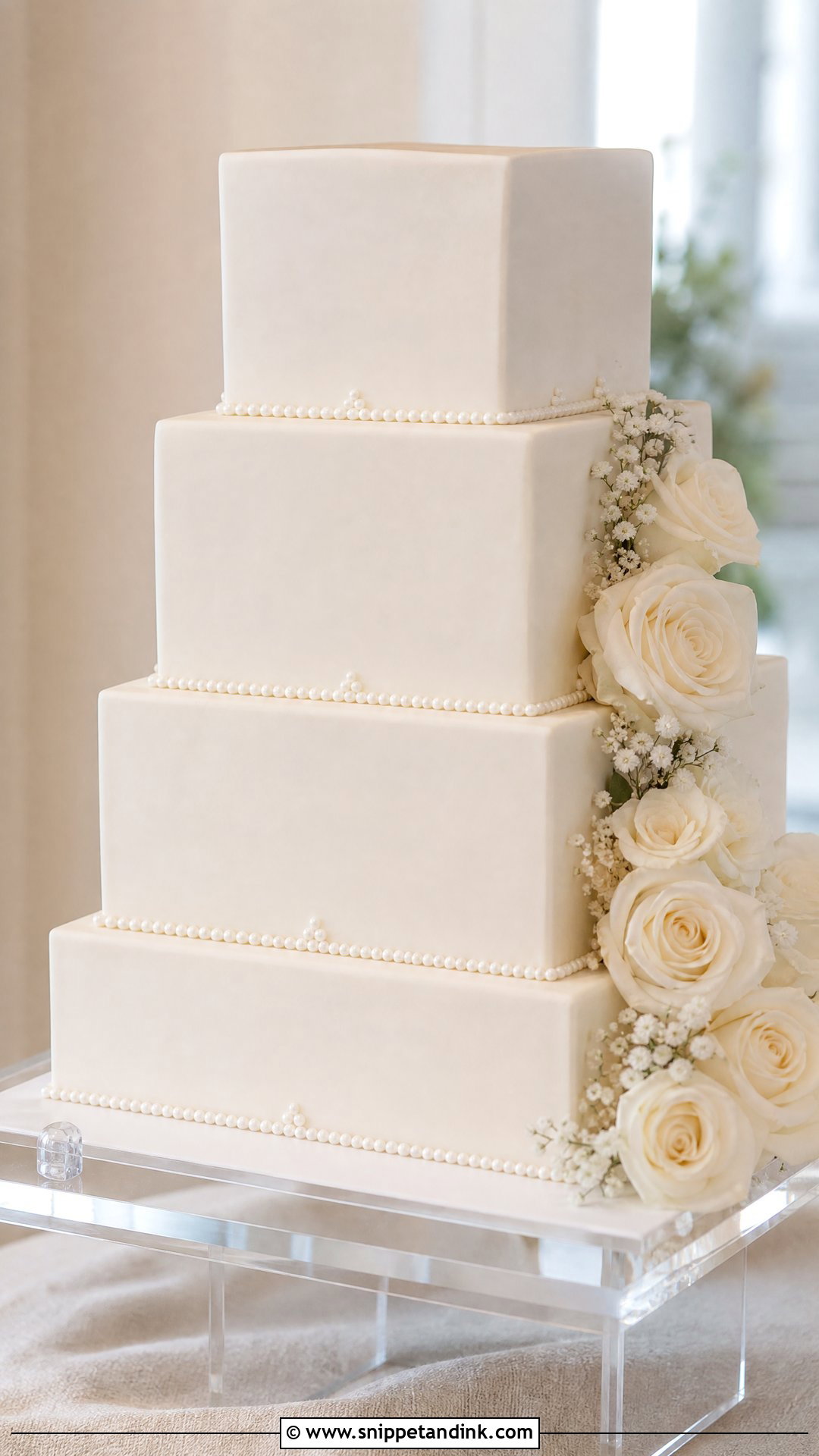
Square tiers immediately read more modern than round ones. They’re also harder to finish: every corner has to be sharp and every side flat, and fondant tends to tear or pleat at the corners if it’s rolled too thin. Stacking two squares evenly is classic; turning the top tier slightly softens it. Minimal flowers, a thin ribbon or a few pearls are plenty since the shape already does the talking. Keep to white, ivory, blush or pale gold for hotel and city venues.
18. Round Wedding Cake
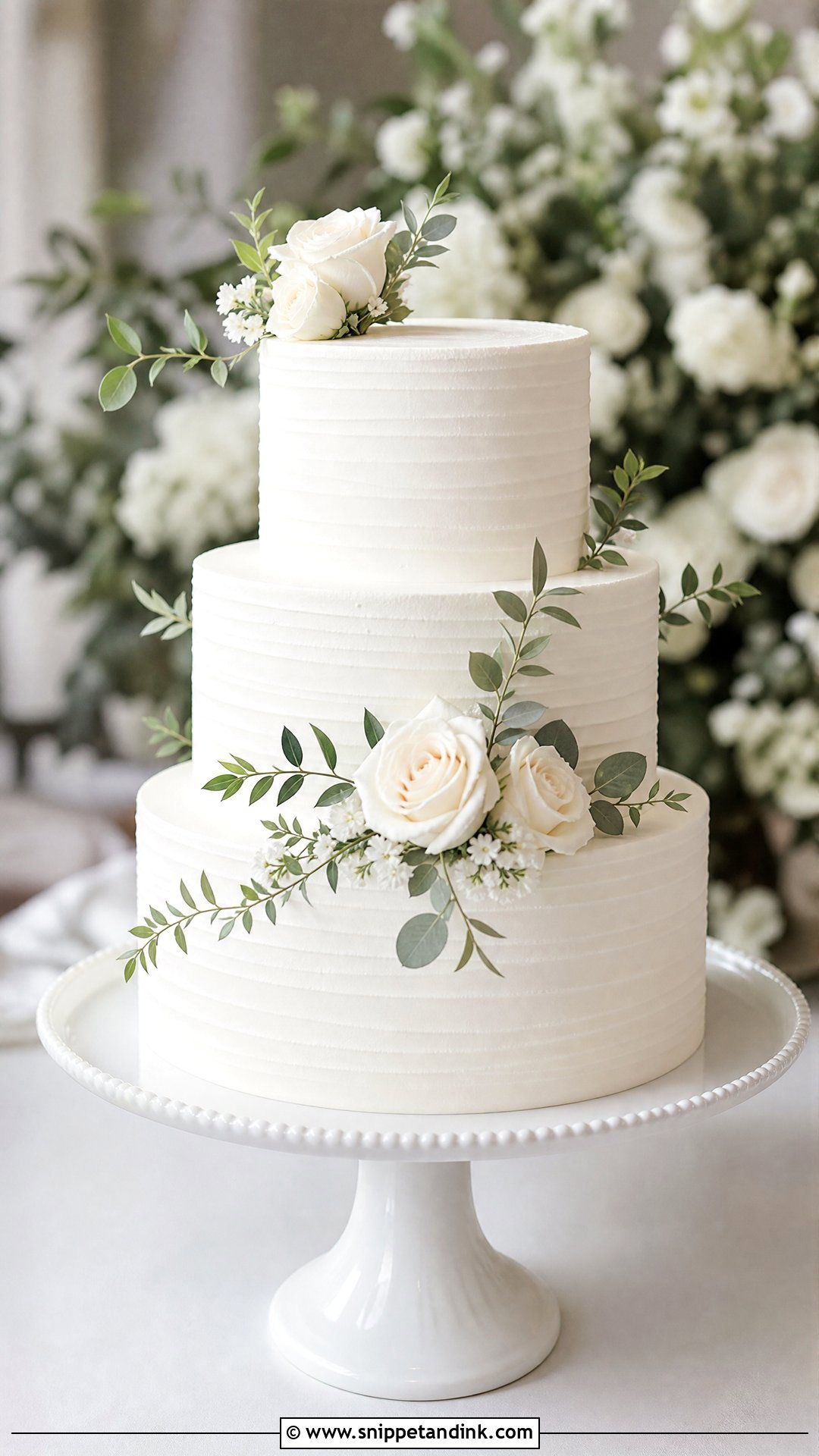
Round is the shape I can adapt to almost any style, from rustic to formal, depending on the finish. It’s also the easiest to size, because round servings are predictable and the tiers stack without the alignment worries of squares. For a simple look I’d choose smooth buttercream, a clean border and a single decoration theme: flowers, greenery, pearls or berries, not all four. If you’re undecided on everything else about the cake, start here.
19. Drip Wedding Cake
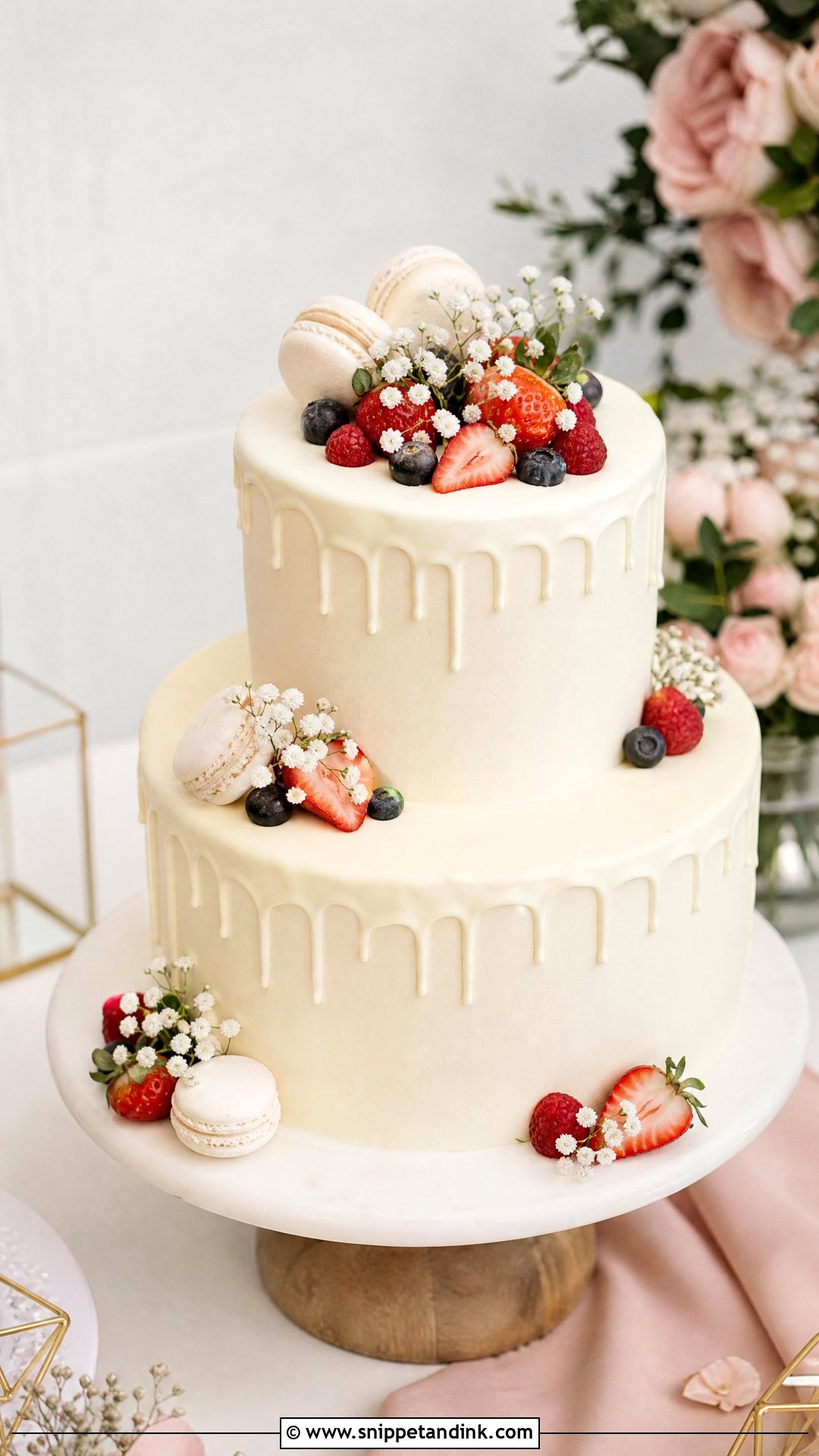
A drip adds movement without adding much clutter. White chocolate, caramel, ganache or a tinted glaze all work, but temperature is everything: too warm and it runs to the board, too cool and it stops short in stubby blobs. I test one drip down the back of the cake before doing the front. Keep the base buttercream clean and the top light, a few flowers or berries rather than a pile of macarons, and soft colors will keep it looking like a wedding cake rather than a birthday one.
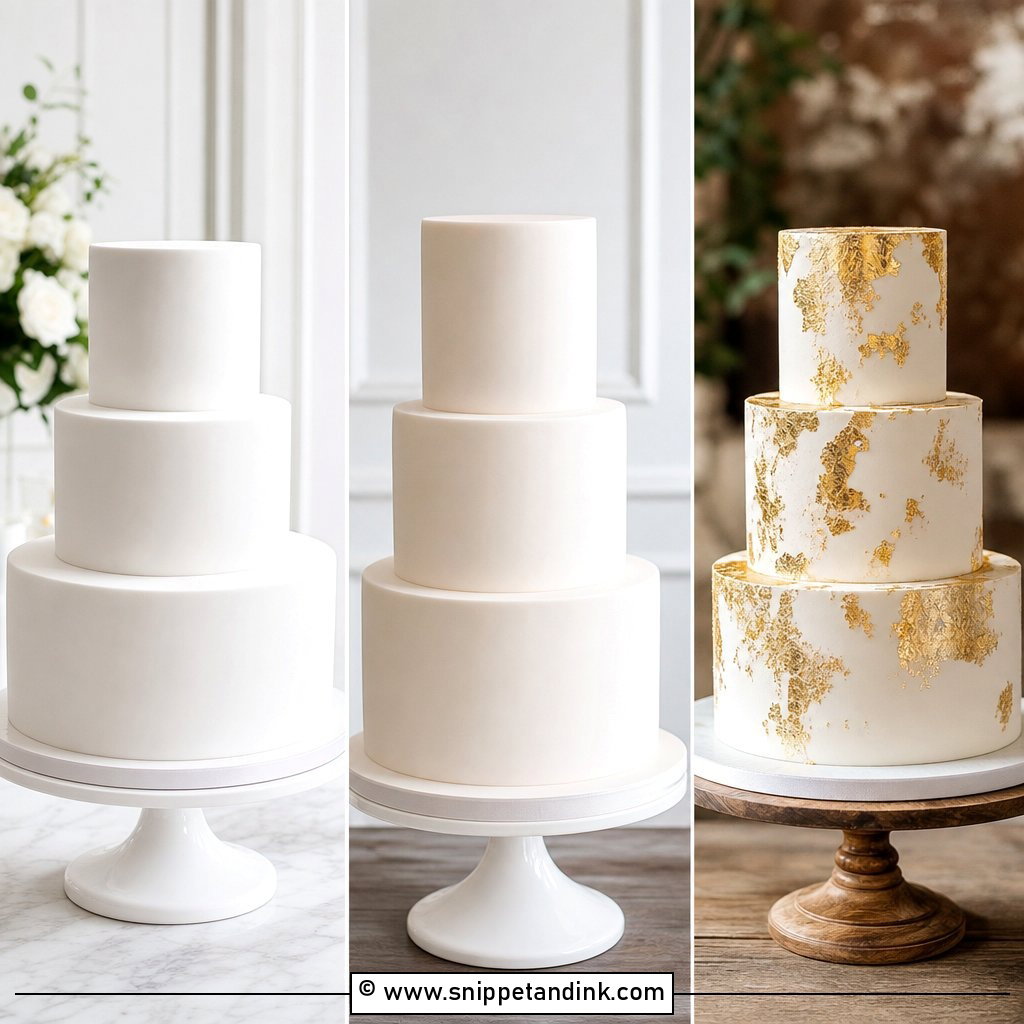
20. Gold Leaf Wedding Cake
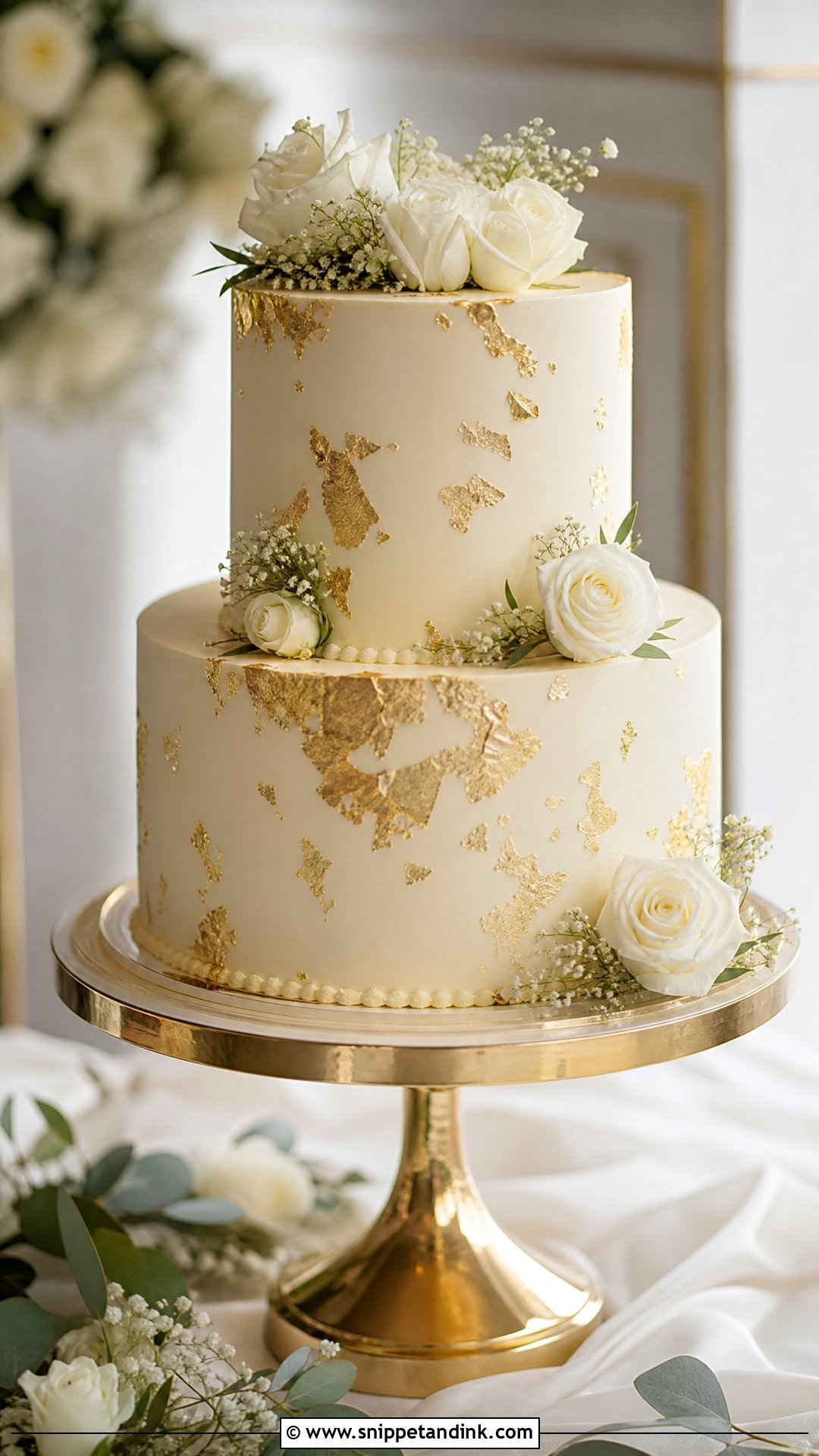
Edible gold leaf is so thin that it lifts with a breath, so I apply it with a dry brush onto chilled buttercream or fondant where it grips the surface. A few accents on one side or a light scatter across the tiers is enough shine. It pairs well with white, ivory, blush, sage and champagne. If you’d like a small luxury detail on a modest cake, this is a good place to spend, but keep flowers minimal so the gold isn’t fighting them for attention.
21. Textured Buttercream Wedding Cake
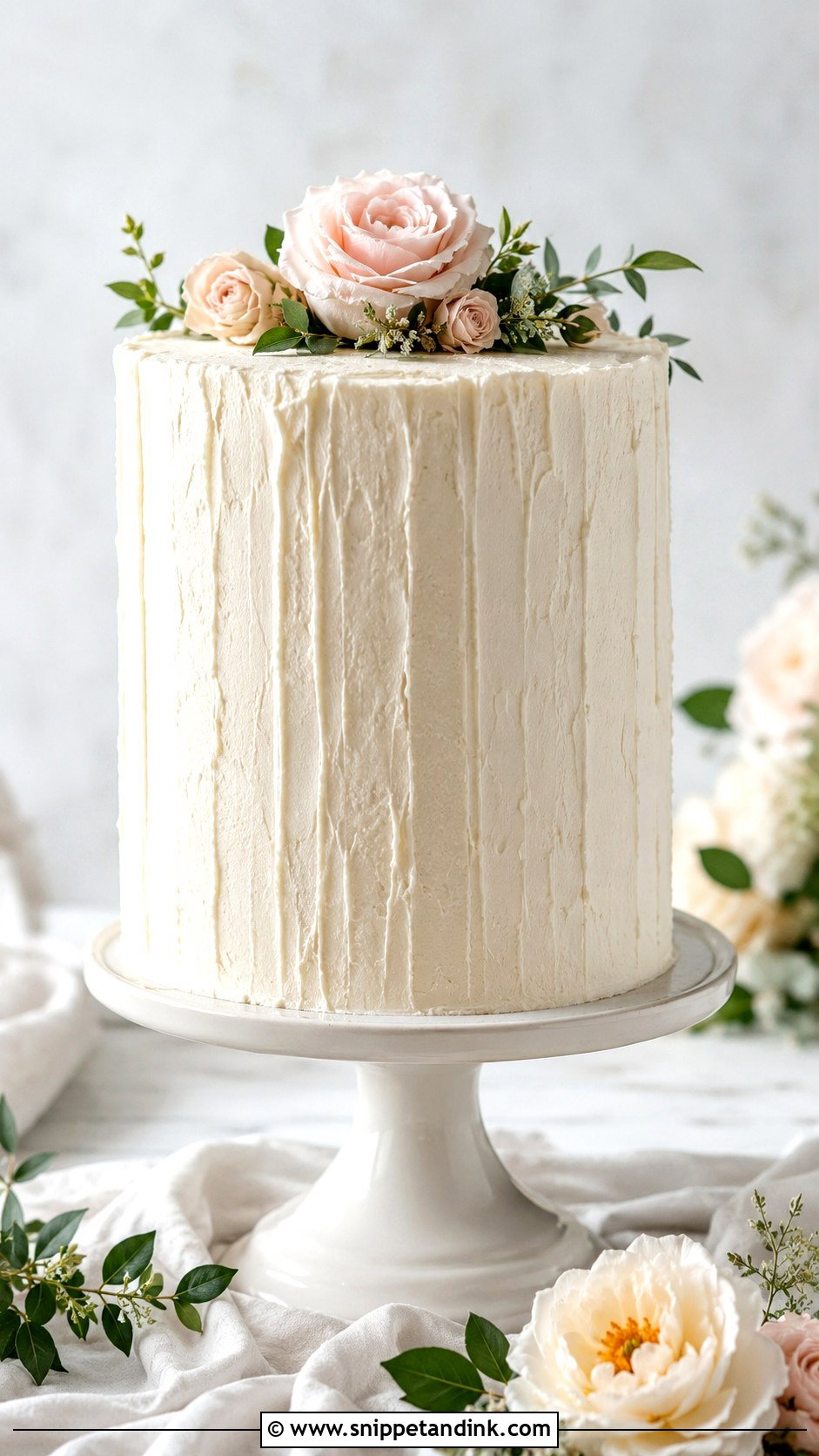
Textured buttercream is the finish I recommend when a couple loves the look of smooth but is nervous about a hot venue. Horizontal lines, spatula strokes or a ridged comb finish all hide small marks that a flat coat would show, which makes it a forgiving choice. It works on single and tiered cakes and needs very little decoration, perhaps a few flowers or sprigs of greenery. The ridges catch light, so the texture shows up well on camera. Vanilla, lemon, almond and strawberry keep it crowd-friendly.
22. Smooth Fondant Wedding Cake
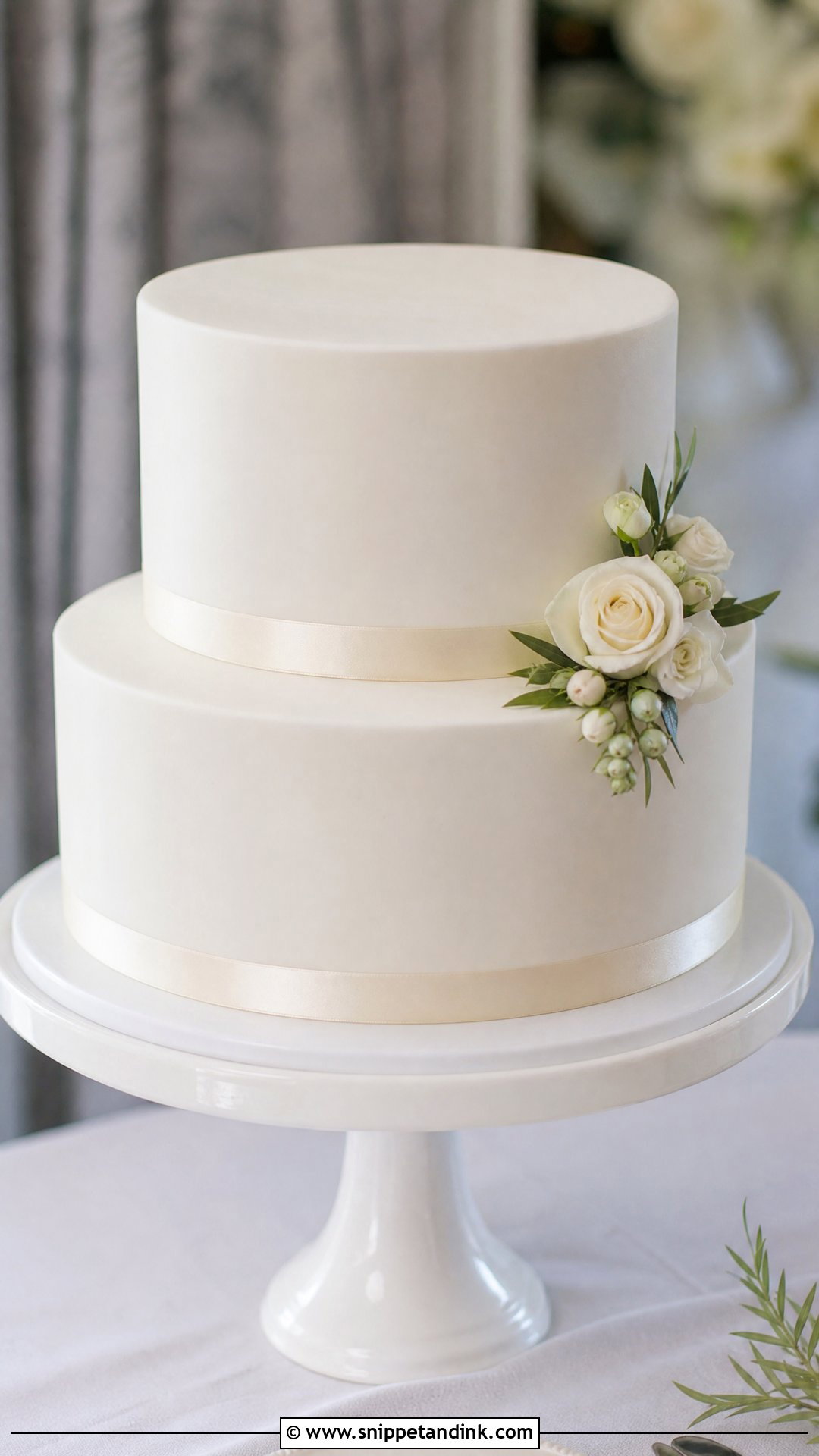
Fondant gives the cleanest, sharpest finish of anything on this list, which is why I reach for it for formal venues. It’s also the best choice for a long display in a warm room, because it shields the buttercream or ganache underneath. A plain white fondant cake with one flower cluster or a satin ribbon around each tier base looks polished and calm. Many guests peel fondant off, so I always put the flavor effort into the filling: raspberry, lemon, chocolate ganache or vanilla cream.
23. Pressed Flower Wedding Cake
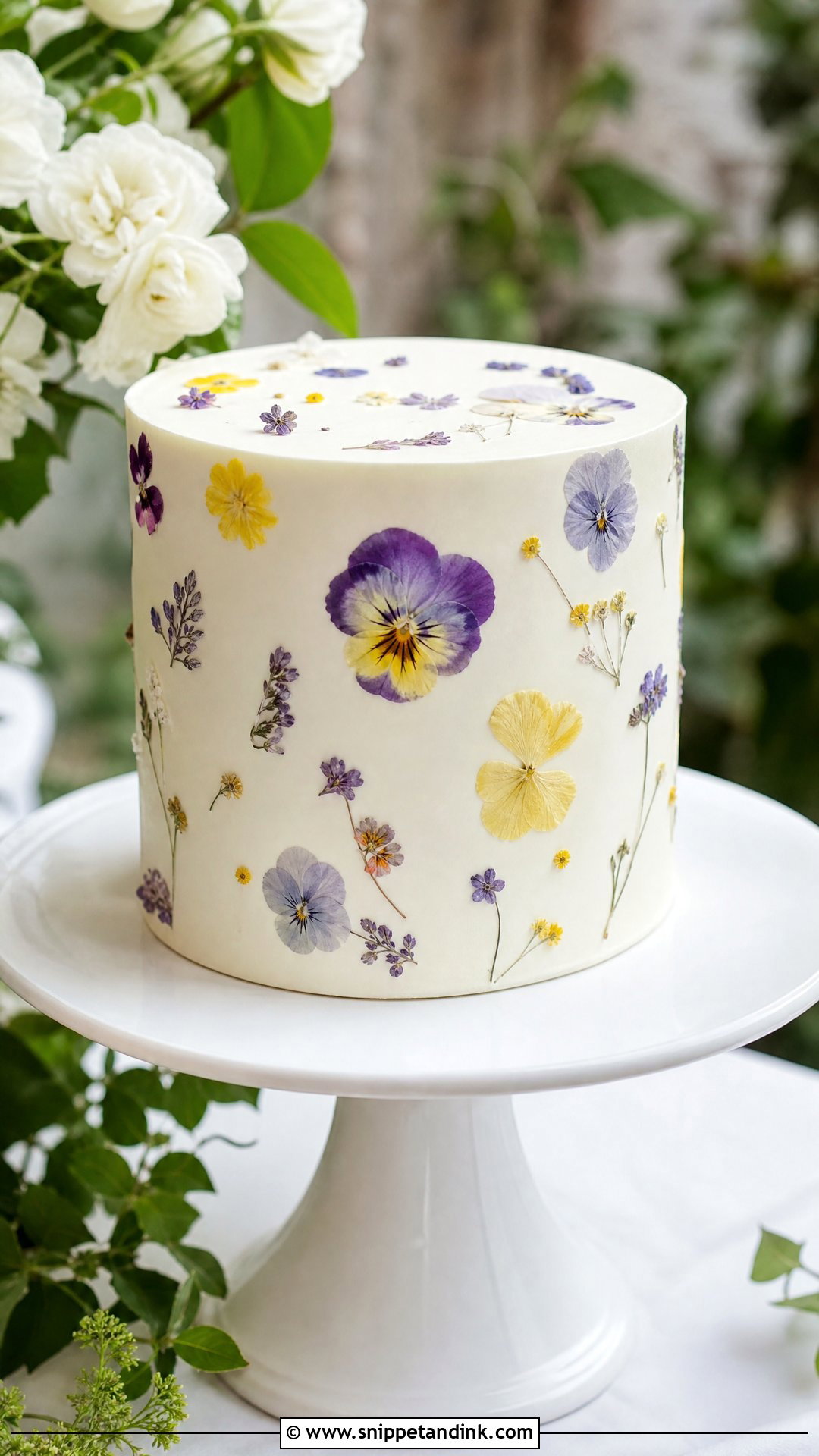
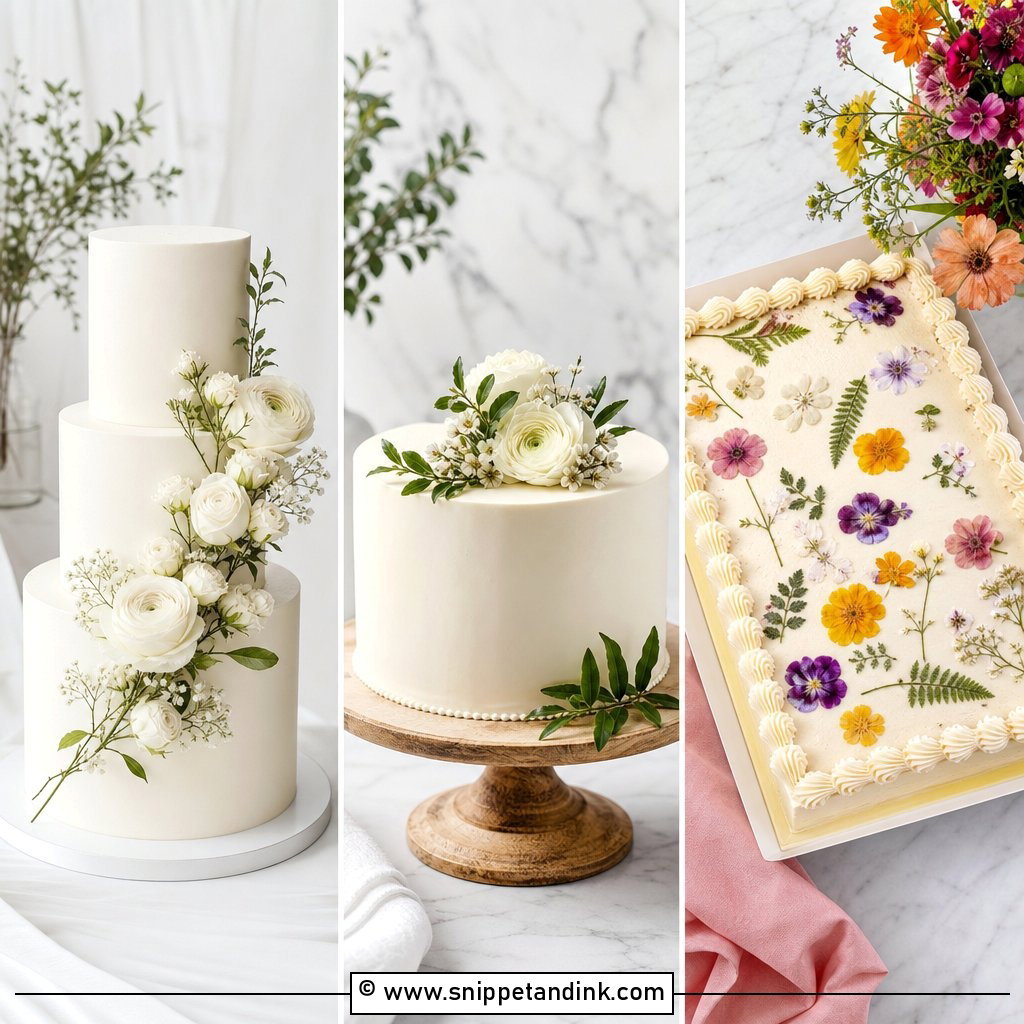
Pressed flowers lie flat against the frosting, so you get a garden look without bulky arrangements. They show best on smooth buttercream or fondant, where every petal outline is visible. I only use edible varieties, pansies, violas, cornflowers and calendula among them, pressed until fully dry so they don’t bleed color into the icing. Soft shades like lavender, yellow, blush and white keep it delicate. A single tier looks charming; two tiers feel more formal. Keep the table around it bare enough for the petals to show.
24. Fruit Wedding Cake
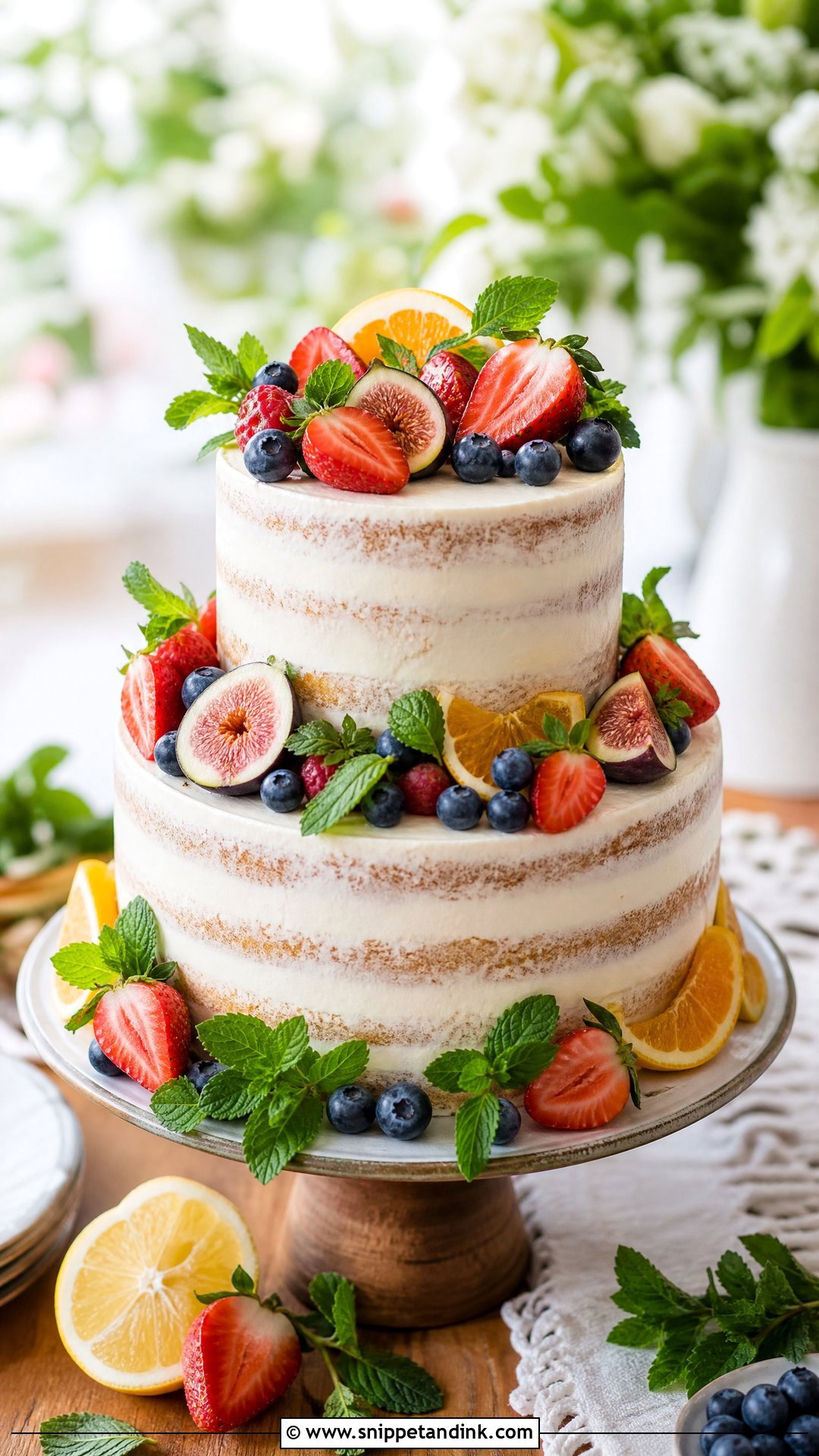
Fruit turns a plain cake into something seasonal, but cut fruit weeps juice, so I place it as close to serving as possible and glaze berries lightly to slow that down. Berries, figs, citrus slices, grapes and stone fruit all work, especially on naked, semi naked or lightly frosted buttercream. Arrange it on top, between tiers or around the base. Match it to the season and it tastes better as well as looking right: lemon cake with berries, vanilla with figs, almond with peaches. A few herbs tie it together.


25. Lemon Wedding Cake
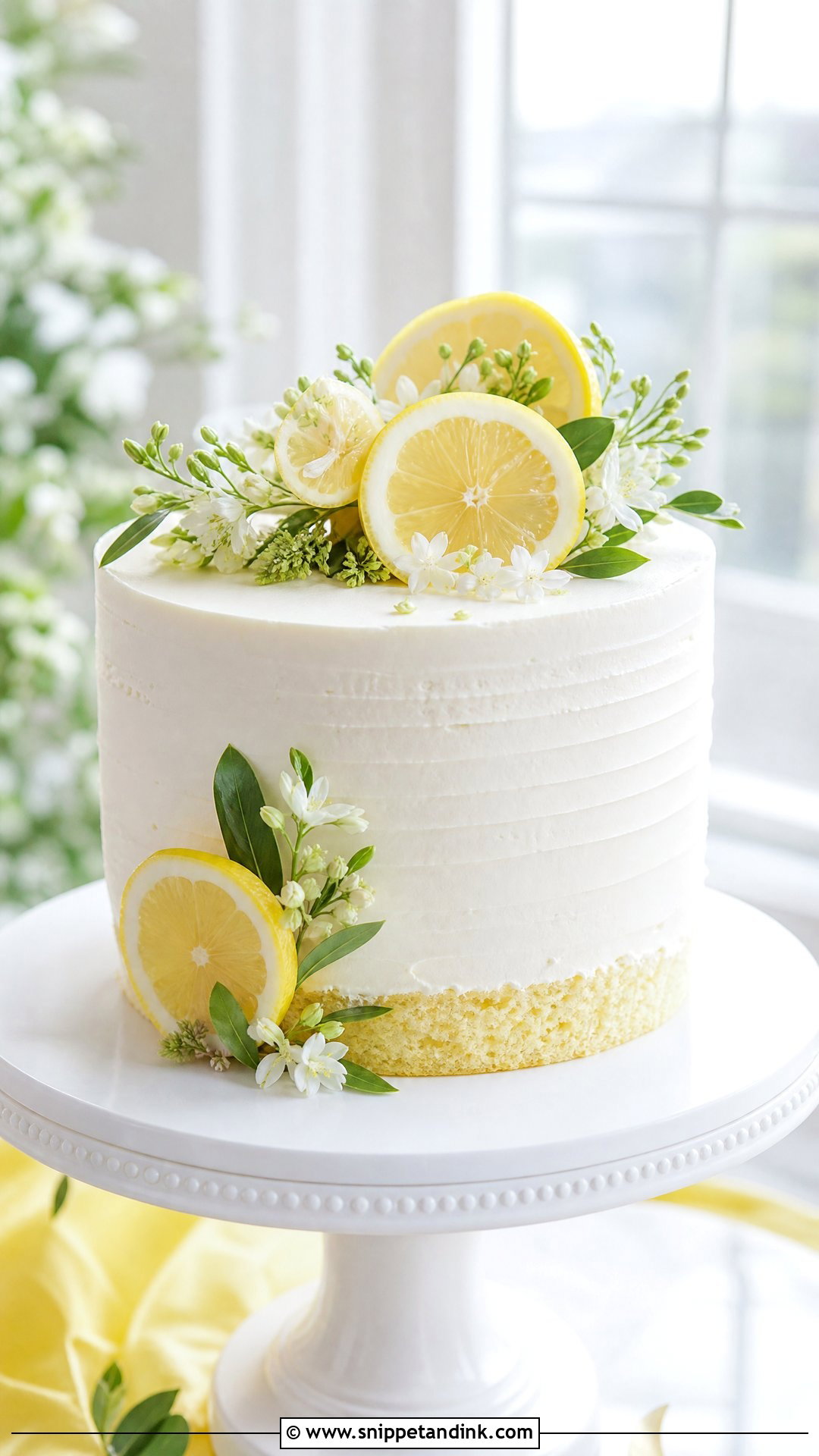
A lemon wedding cake is one of the flavors I suggest most for warm months because it tastes fresh even after a heavy meal. White or pale yellow buttercream keeps the outside simple. Raspberry, blueberry, elderflower and cream cheese fillings all suit it, though I keep curd fillings well chilled since they’re softer than buttercream and can bulge between layers. Thin candied lemon slices or tiny white flowers finish it. Brunch receptions and garden parties suit it best.
26. Chocolate Wedding Cake
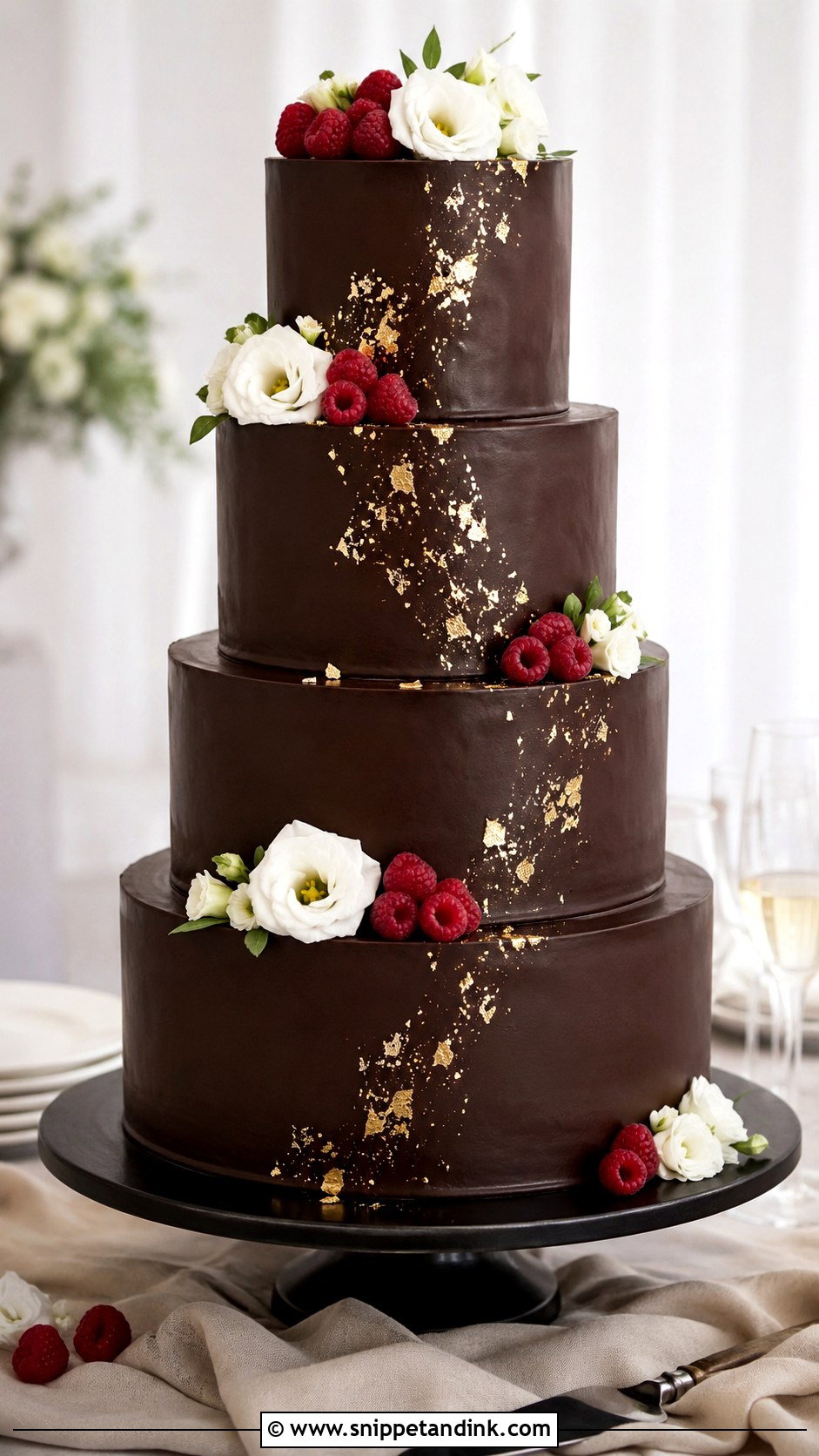
Chocolate can be the design as well as the flavor. A smooth ganache coat has a deep, satiny finish that needs almost no decoration, and it sets firmer than buttercream, which helps in a warm room. Chocolate buttercream or a white exterior with a chocolate filling are gentler options if a dark cake doesn’t suit your palette. Fresh berries, white flowers or a touch of gold leaf lift it. I find it’s the cake guests go back for, so consider ordering a few extra servings.
27. Strawberry Wedding Cake
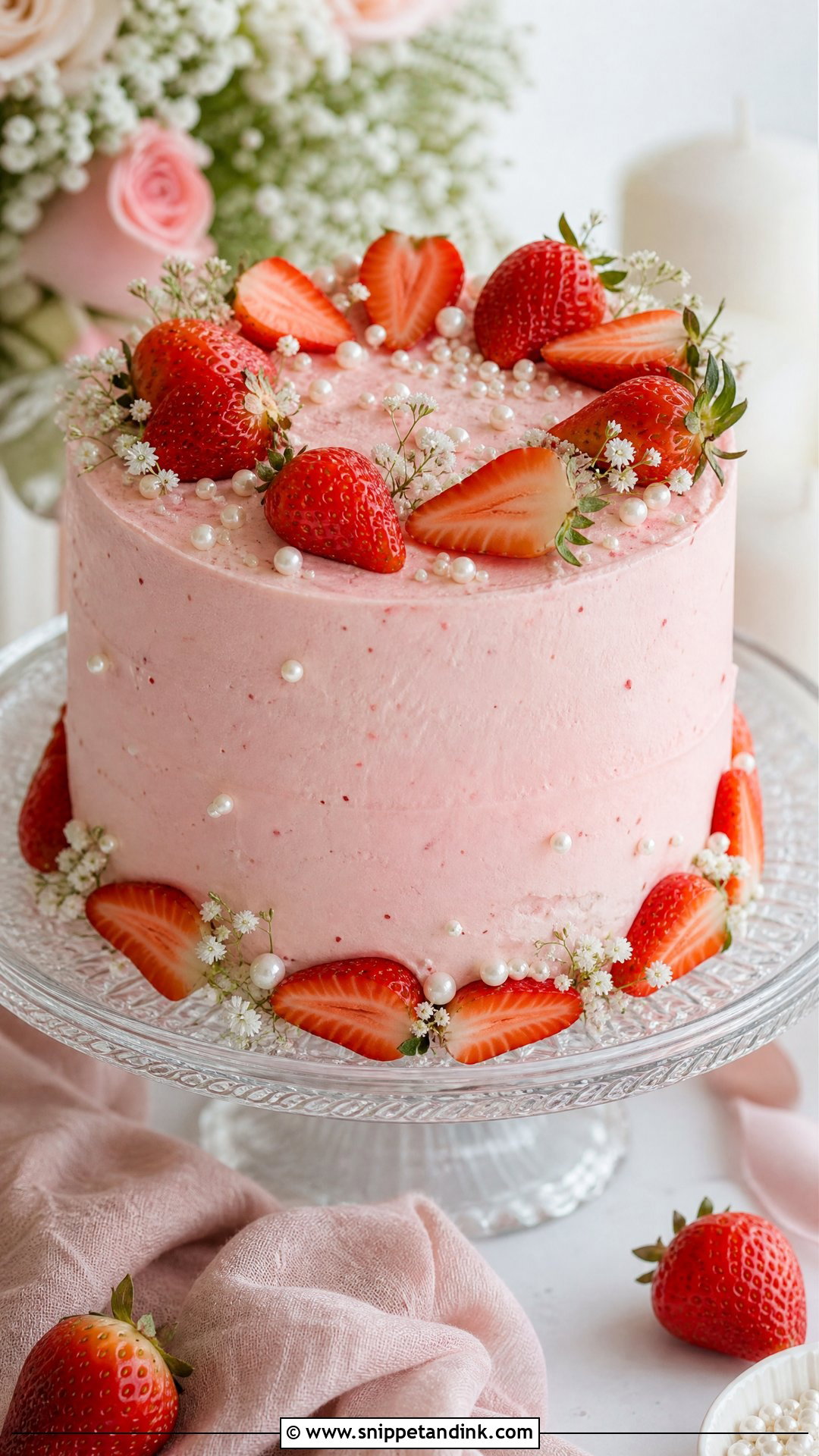
Strawberry is familiar and light, which makes it an easy crowd-pleaser in spring and summer. It can be a strawberry sponge, a strawberry filling, or vanilla layered with preserves. Fresh strawberries inside a cake release liquid as they sit, so I use a cooked filling or jam between layers and save the fresh fruit for the top. Pale pink buttercream or white frosting with a small strawberry and flower topping keeps it simple, smooth for modern or textured for relaxed.
28. Almond Wedding Cake
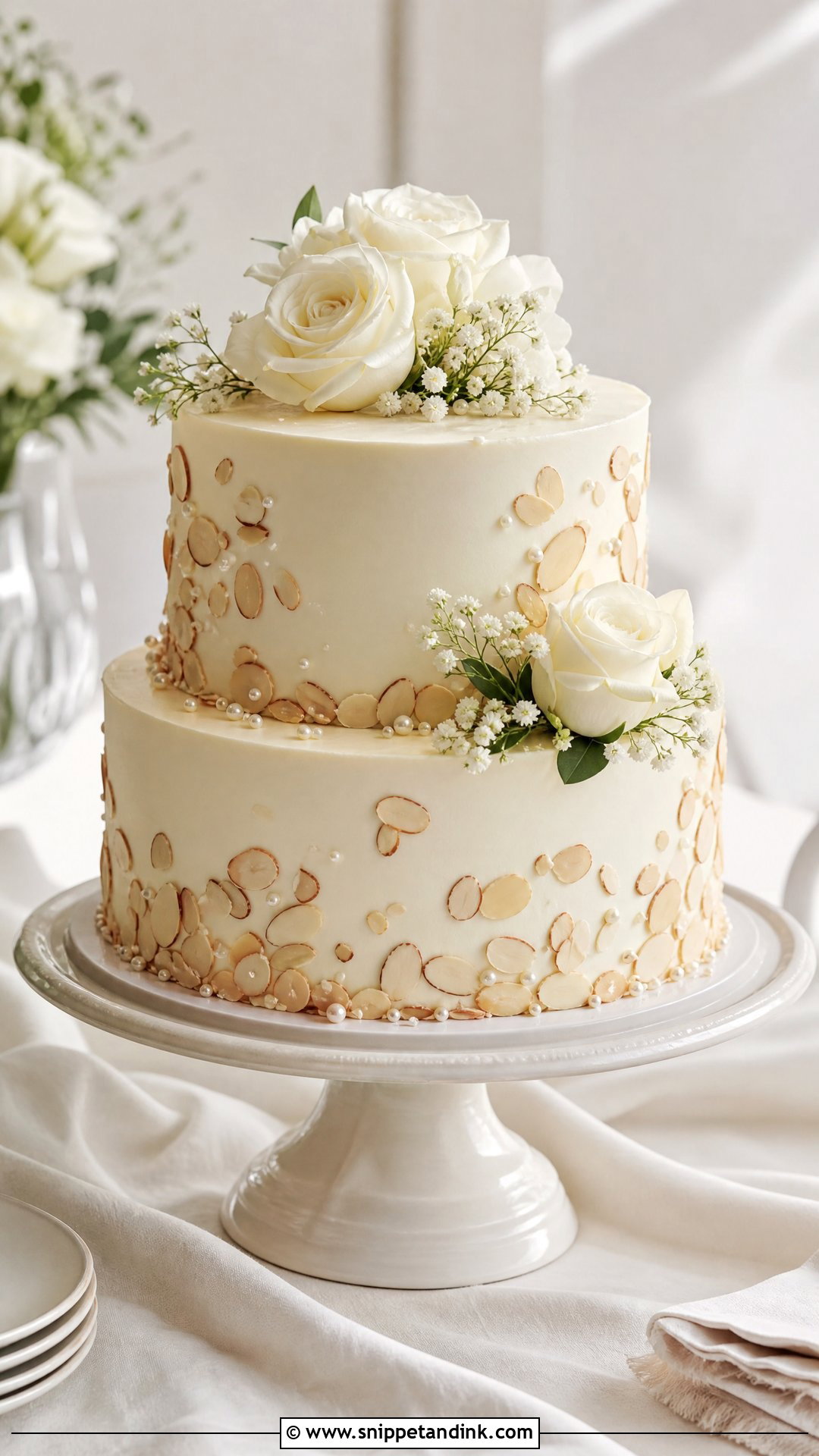
Almond has a quiet flavor that most guests enjoy without having to think about it, which is why it’s been a wedding standby for so long. The outside can be white buttercream, smooth fondant or a light texture. Raspberry, apricot, cherry and cream cheese fillings all pair well. One practical check: if anyone at the wedding has a nut allergy, tell your baker early, since almond flour and extract can travel in a shared kitchen. Small white flowers, sliced almonds or a thin ribbon are plenty.
29. Cupcake Wedding Cake
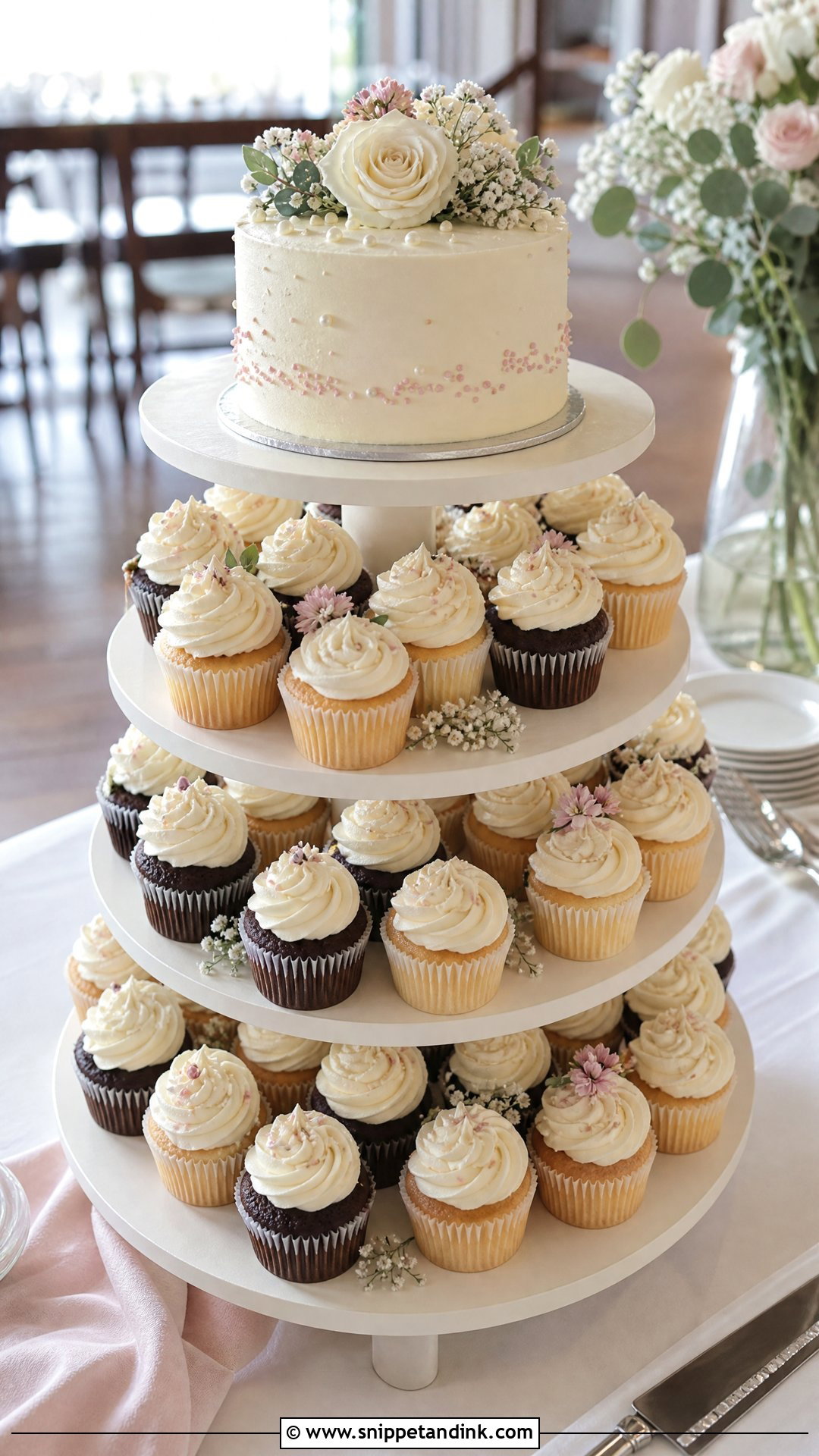
Cupcakes solve the serving problem: no cutting, no plates, no staff time at the end of the night. Arranged on a tiered stand they still give height, and a small cutting cake on top keeps the traditional moment. Keep the cupcake frosting simple with white buttercream swirls and a few tiny flowers or pearls. I’d limit yourself to three or four flavors so the display stays tidy. Outdoor receptions and relaxed dessert tables suit them best.
30. Sheet Cake Wedding Cake
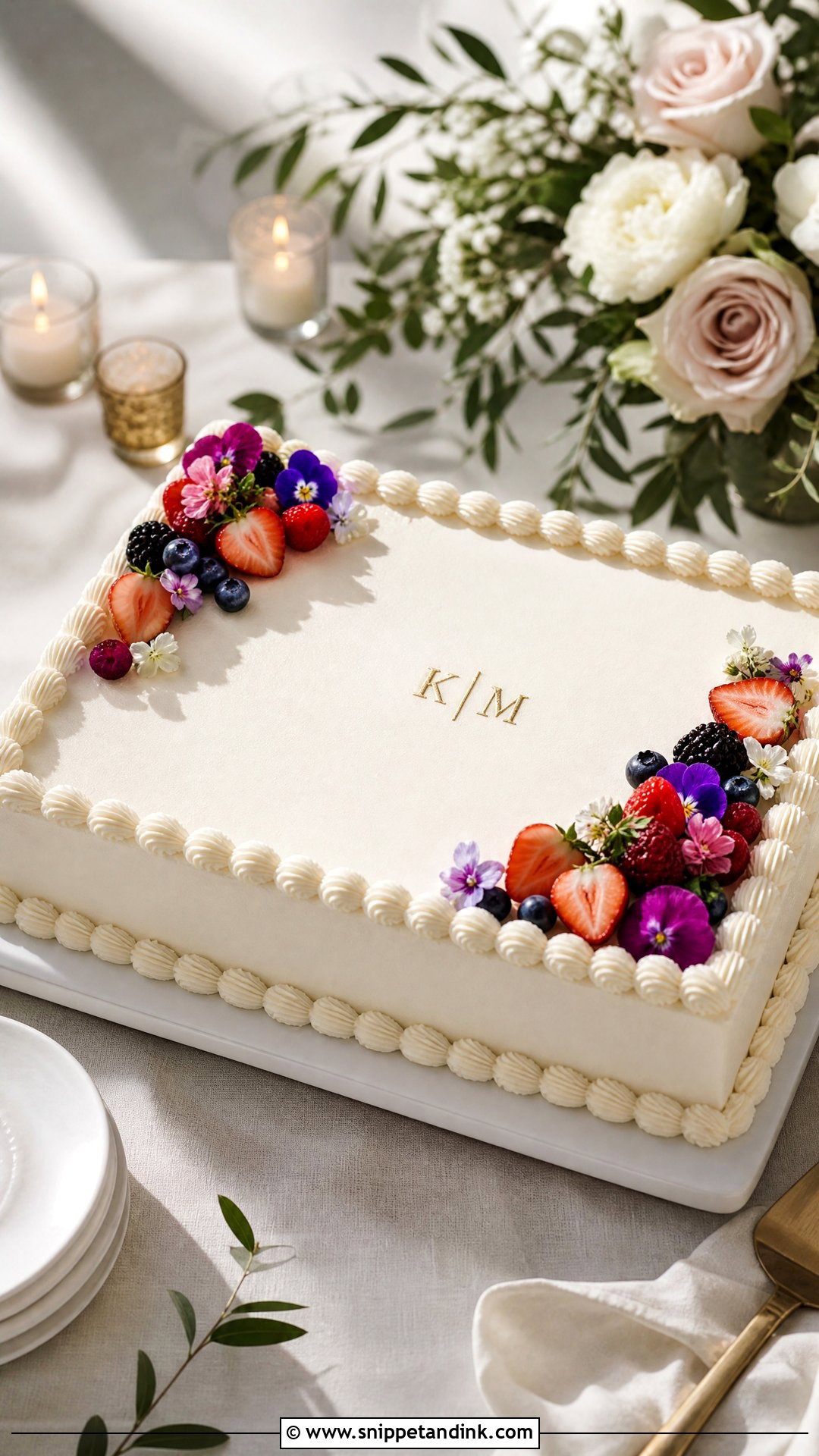
A sheet cake wedding cake is the most honest budget choice there is, and I don’t think couples should feel shy about it. It serves neatly and quickly, which matters with a big guest list. Smooth buttercream, clean piped borders, fresh berries or a small monogram are enough to make it look finished. The common trick is a small display cake for the cutting photo while the sheet cakes are sliced in the kitchen; guests rarely know or care. Vanilla, chocolate, lemon and almond are reliable picks.
The Last Two Hours Before Anyone Cuts It
Most cake trouble happens after delivery, not in the kitchen. A smooth buttercream cake that came out of a cold van into a humid room can bead with condensation, and you’ll see it first as a dull, sticky surface. I leave it alone to settle rather than touching it, because wiping the moisture away takes the finish with it.
Placement matters as much as the recipe. Keep the cake table away from windows, heaters, the dance floor and candles. In summer, ask the venue to set it out as late as they reasonably can and to keep it in the coolest room until then. Fresh fruit and loose flowers should go on last, ideally by the baker or florist on site.
If the top tier is being saved for an anniversary, wrap it well in plastic, then foil, and freeze it within a day. Remove flowers and any non-edible decoration first. Plenty of couples skip this altogether and order a small fresh cake in the same flavor a year later, which honestly tastes better.
A Plain Cake Still Has to Taste Like Something
A plain cake has to earn its place with a clean finish and a flavor people remember, which is exactly why I enjoy making them. One good decoration, the right shape for your guest count and a filling you genuinely love will take you further than any amount of extra detail. Taste before you decide on looks, keep the brief short, and let the cake sit comfortably in the rest of your celebration.
You'll Like These Ideas:




Leave a Reply