
Most brides I dress for a temple sealing are shopping with two lists: what they love, and what the temple asks for. Those lists overlap more than people expect. Modest gowns now come with real sleeves, high backs and lined lace built in rather than added as an afterthought, and many off-the-rack dresses can be made modest with a sleeve or a lining from a skilled seamstress. Some brides want one white gown for the temple and the reception; others wear a simple sealing dress and change into something with more detail later. Below are the styles I’d show you, with the fit and coverage questions I’d raise for each.
Will This Dress Pass at the Temple Door?
If the dress will be worn for a sealing, check it against the temple’s expectations before you fall too far in love. These are the points I go through with every LDS bride in the fitting room:
- Color: white. Hold a swatch next to plain printer paper in daylight. Ivory and champagne that look white on their own will show cream beside it.
- Sleeves: long or three-quarter. Short and cap sleeves need a matching sleeve or jacket for the ceremony.
- Sheer fabric: lined. Illusion necklines, lace sleeves and tulle yokes all need an opaque layer underneath.
- Garment coverage: if you wear the temple garment, wear it to every fitting so the neckline, sleeves and hem are measured over it.
- Train: pinned up or removed for the sealing, so the bustle has to be finished before the day.
- Ornament: restrained. Heavy beading and crystal work are better saved for a reception dress.
Each temple applies these, so ask yours directly if a detail is borderline. If time runs short, the temple can provide a dress, which takes a lot of pressure off.
1. Long Sleeve Lace LDS Wedding Dress
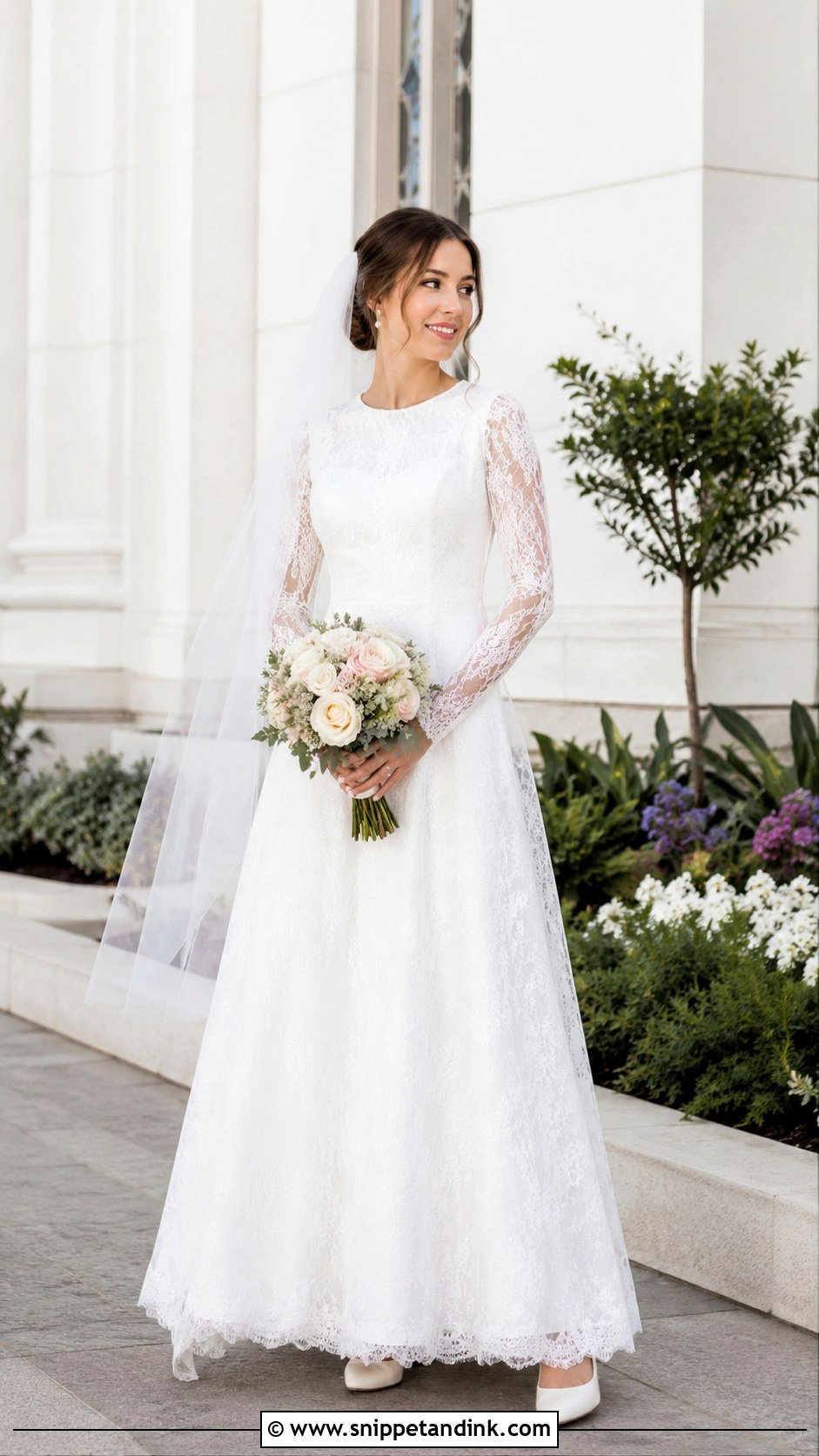
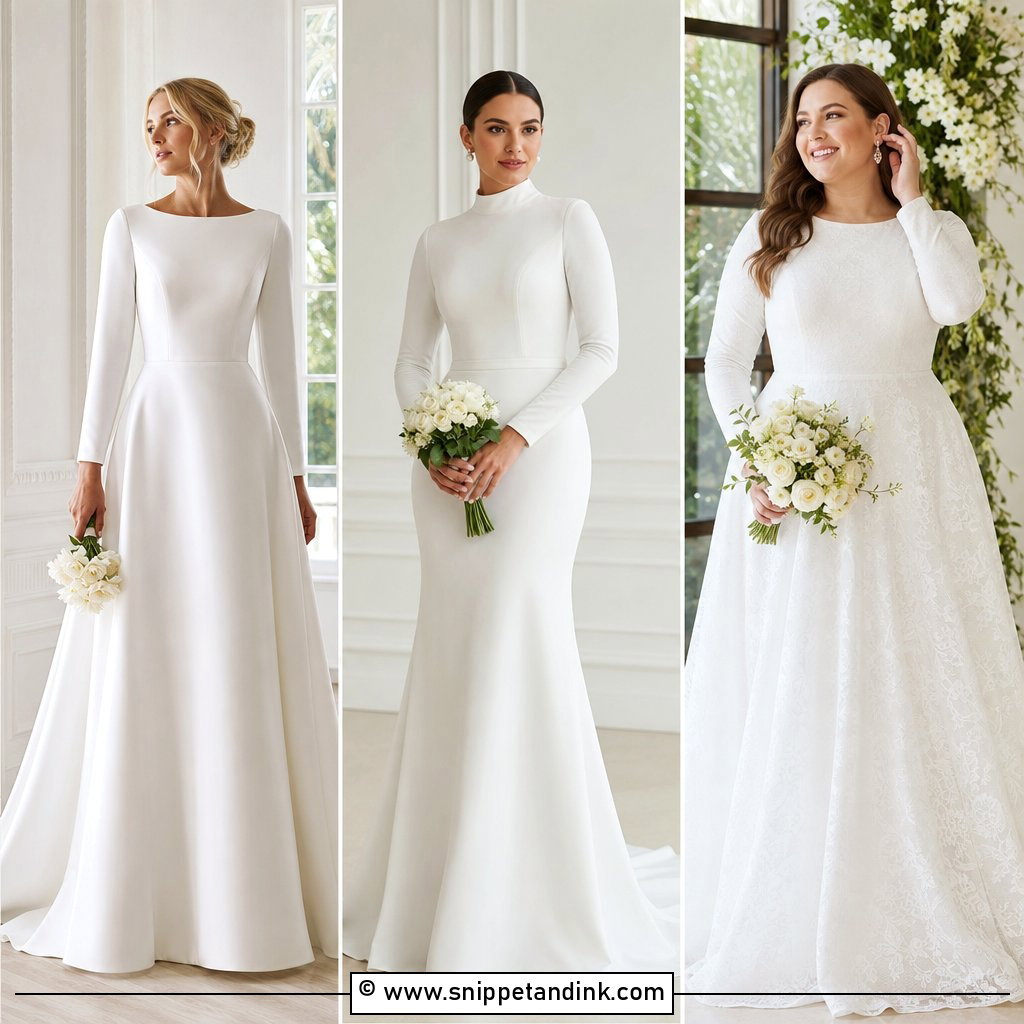
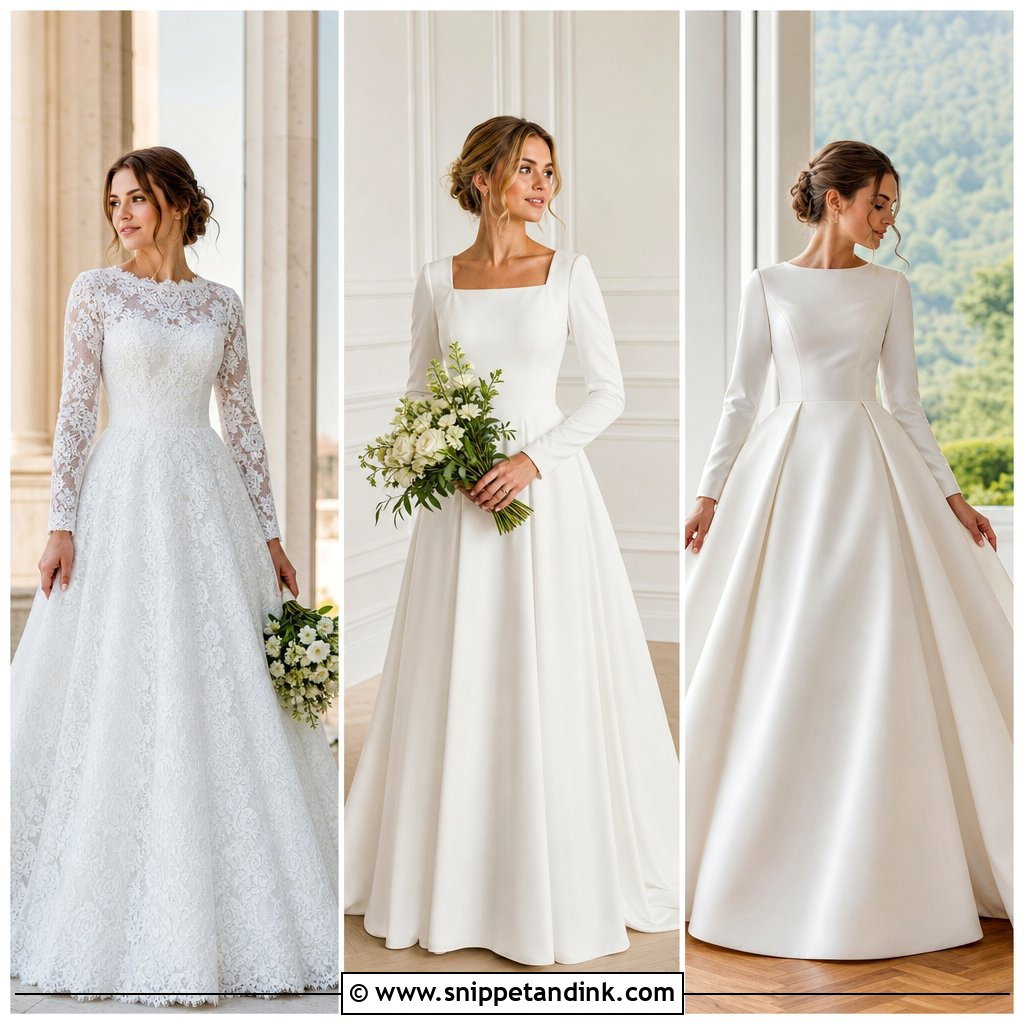
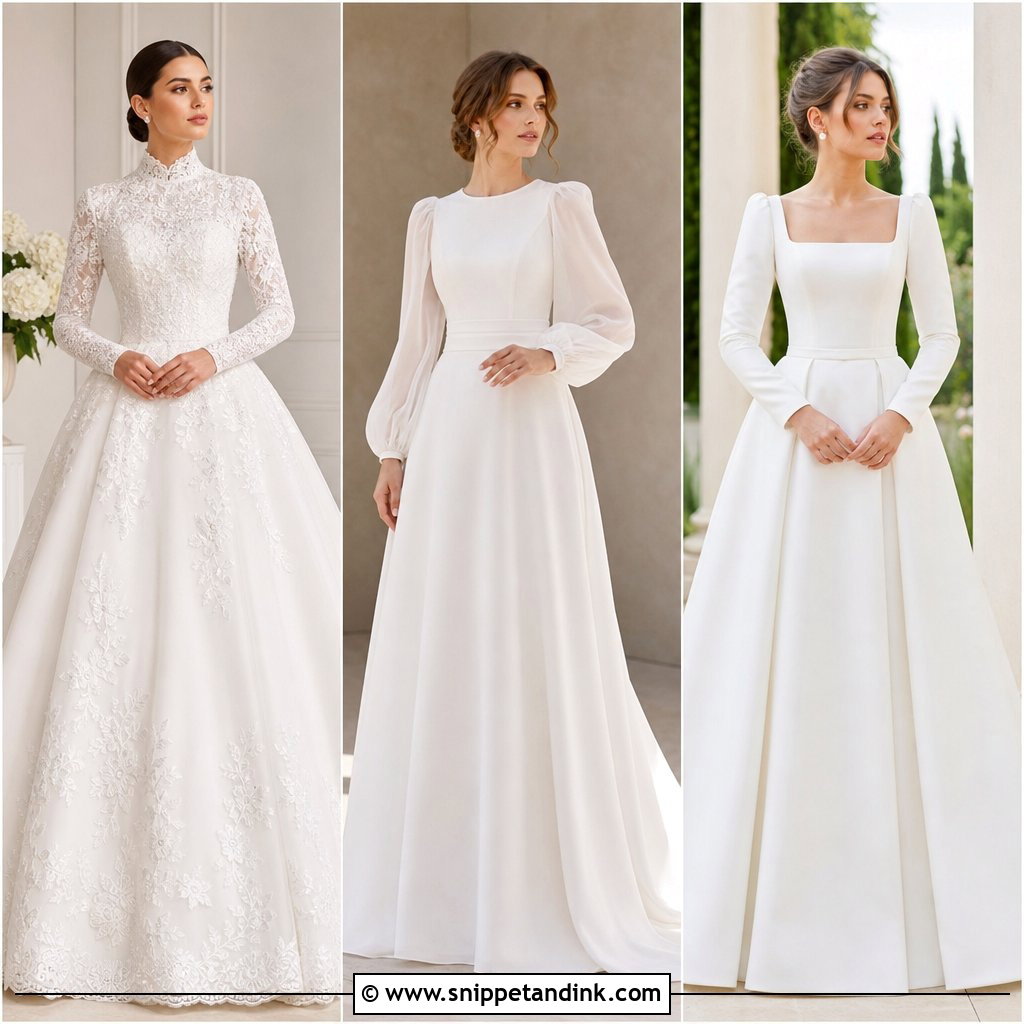
Long lace sleeves are the most requested modest detail I see, and the one that needs the most care at fittings. Lace has a direction and a scalloped edge, so a good seamstress finishes the cuff on a scallop instead of cutting through the motif. Check that the bodice is fully lined, because unlined lace reads sheer under camera flash. An A line or fit-and-flare skirt keeps it easy to move in. With detailed lace I keep everything else quiet: pearl earrings, a simple veil, low block heels.
2. Simple Satin LDS Wedding Dress
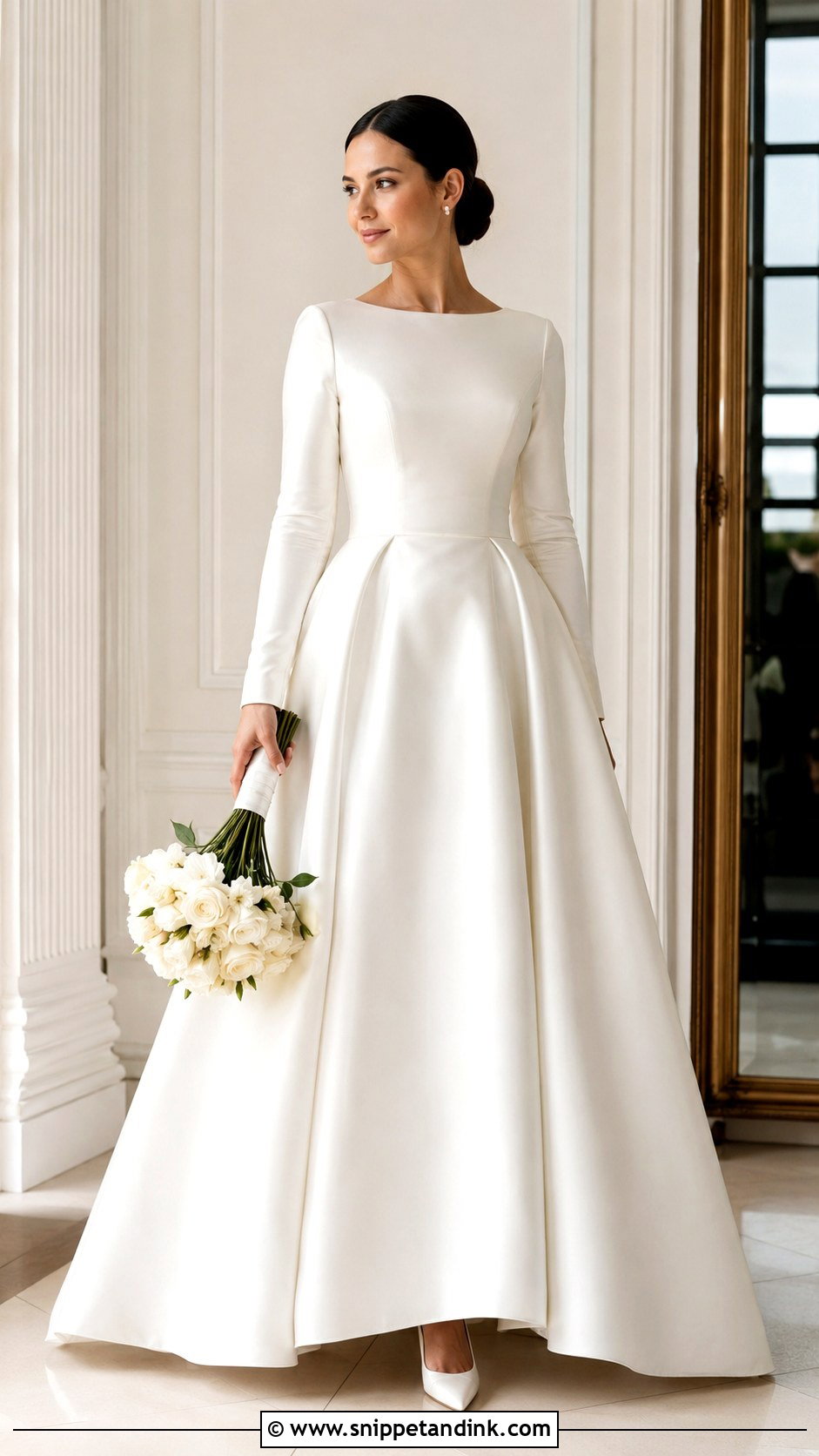
Satin does a lot with very little, which is why a modest satin gown with long sleeves and a jewel neckline can look formal without any lace at all. The catch is that satin shows everything, from a pull across the shoulders to a ripple beside the zip. If you go structured, the bodice should be boned so it stays smooth when you sit; softly draped satin is more forgiving on curves. A cathedral veil makes it formal and a fingertip veil keeps it simple. Plain white satin also tends to pass the white test more easily than ivory lace.
3. A Line LDS Wedding Dress
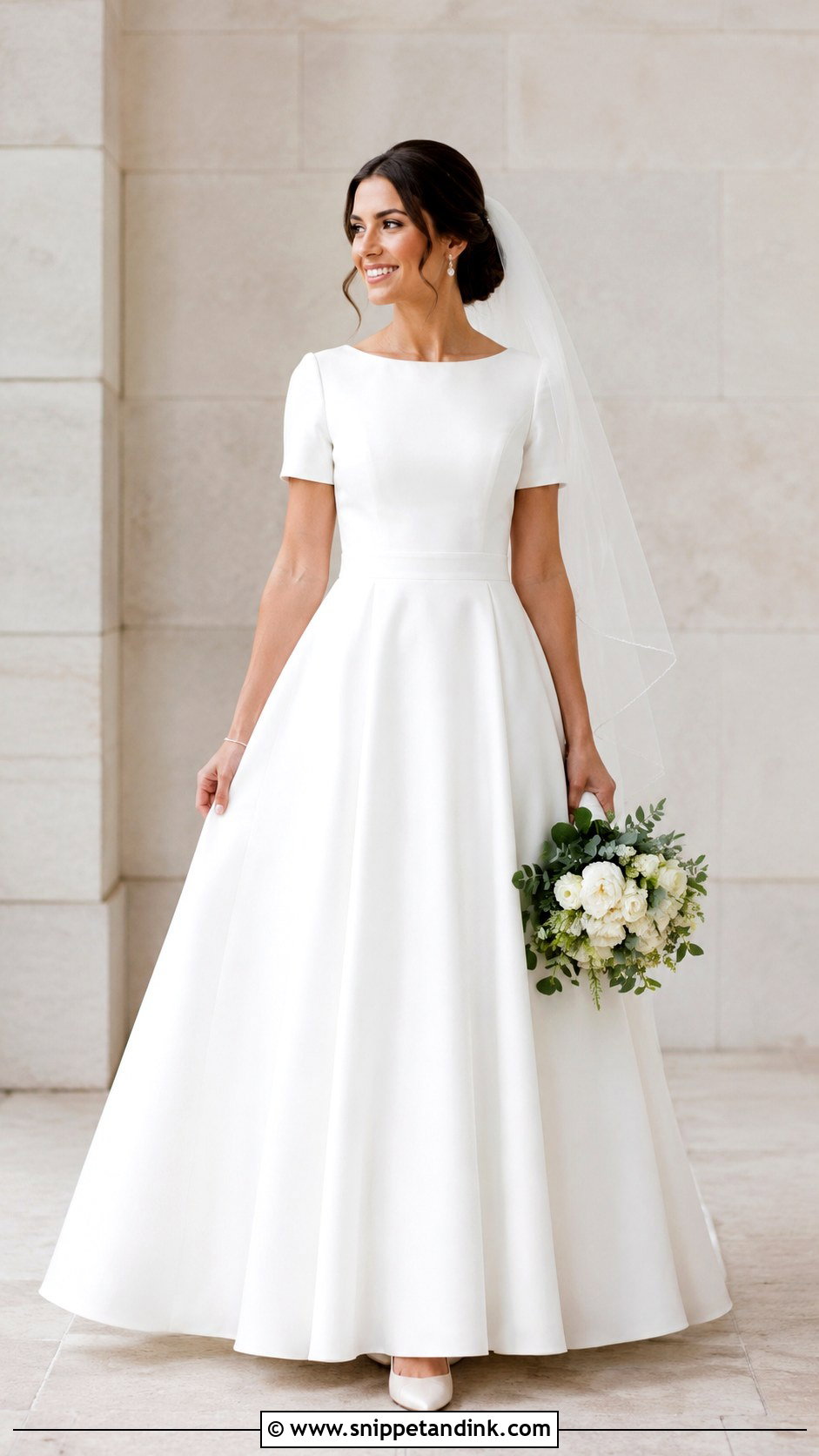
An A line defines the waist and falls away from the hips, which is why it flatters so many figures. For modesty, the real questions are about movement. Does the neckline stay put when you lean in to hug a grandparent? Does the back gape when you sit? Test both in the fitting room. A soft tulle or organza skirt keeps it light, while satin or mikado gives more structure.
4. High Neck LDS Wedding Dress
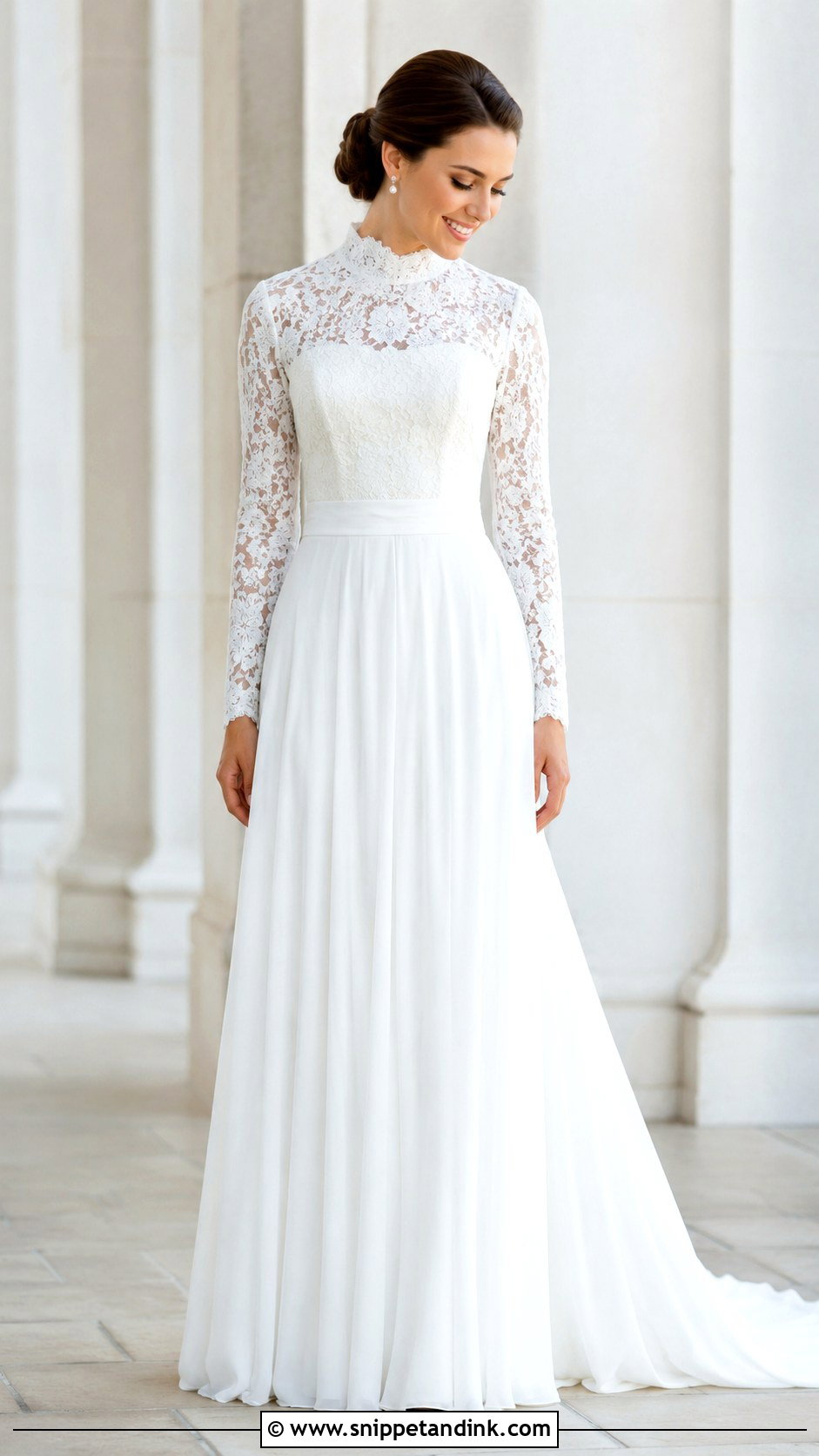
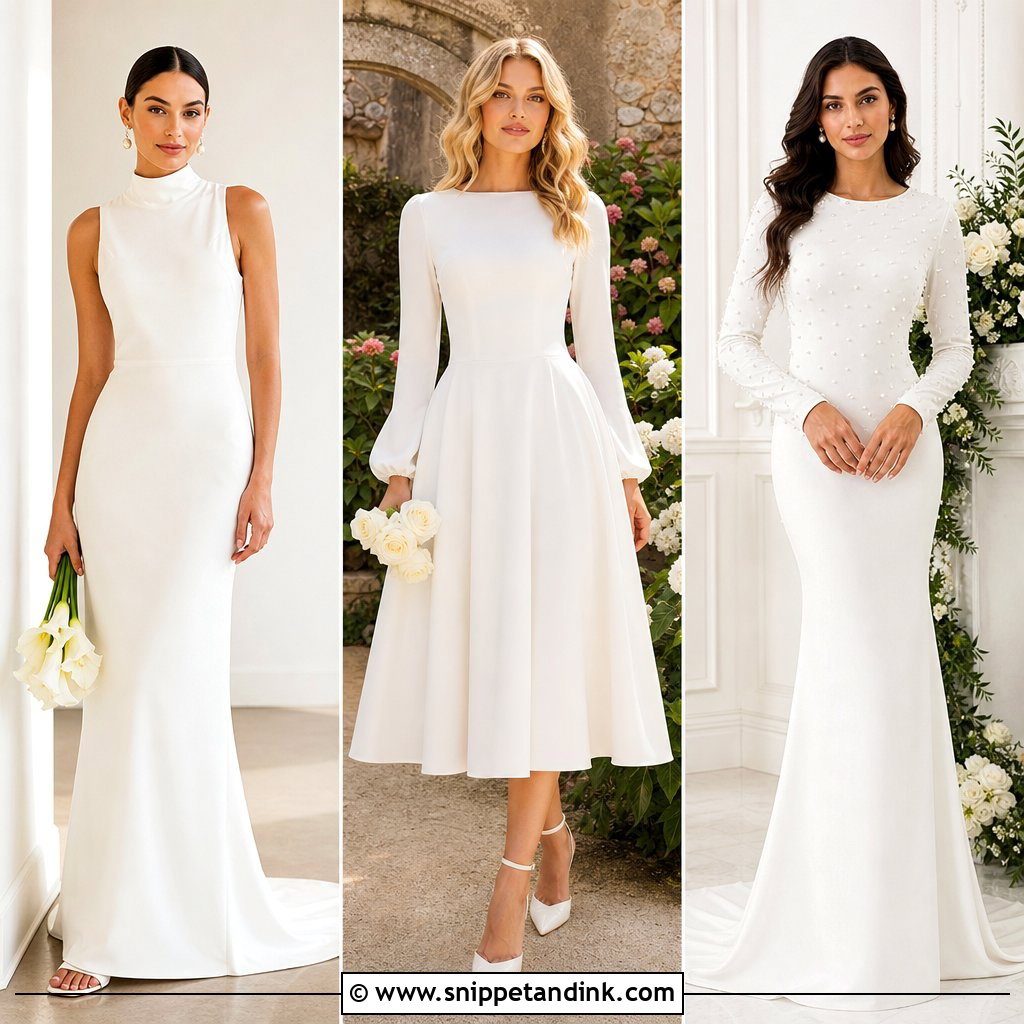
A high neck settles the neckline question completely and looks polished in portraits. It pairs with long sleeves or three-quarter sleeves, depending on the coverage you need. The risk is looking severe, especially on a shorter neck, so I soften it with lined illusion mesh at the yoke or a row of tiny buttons. A neat updo shows the neckline off, and small pearl studs are enough.
5. Square Neck LDS Wedding Dress
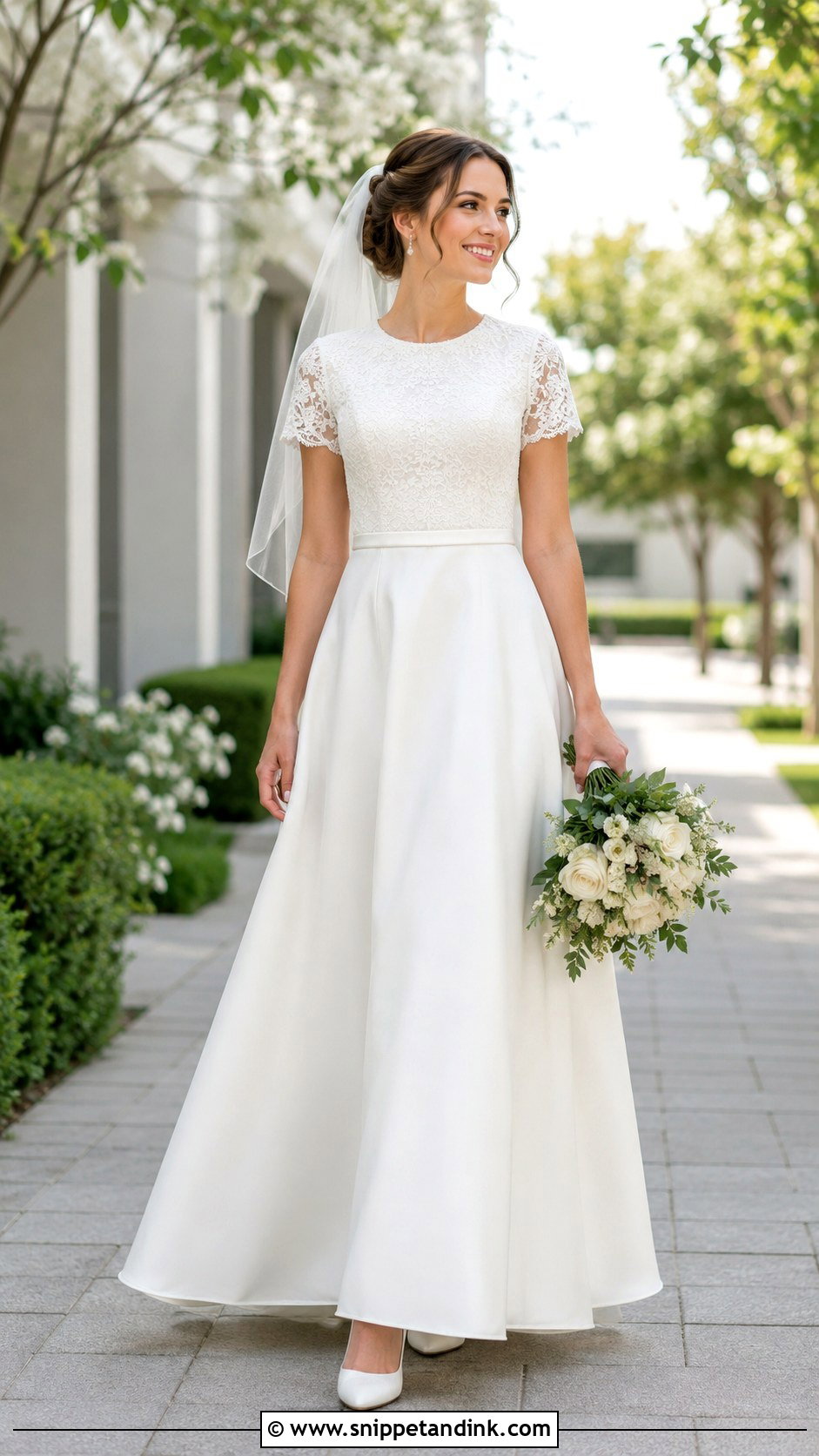
A square neck frames the collarbone with straight lines, and it can be modest if it sits high enough. That’s the fitting question. Have the seamstress set the line where it still covers what you need when you bend forward, not only when you stand upright. Satin and crepe hold a square neck crisply, while soft lace can collapse at the corners unless it’s stabilized underneath. A flowing skirt and a small floral comb finish it.
6. Boat Neck LDS Wedding Dress
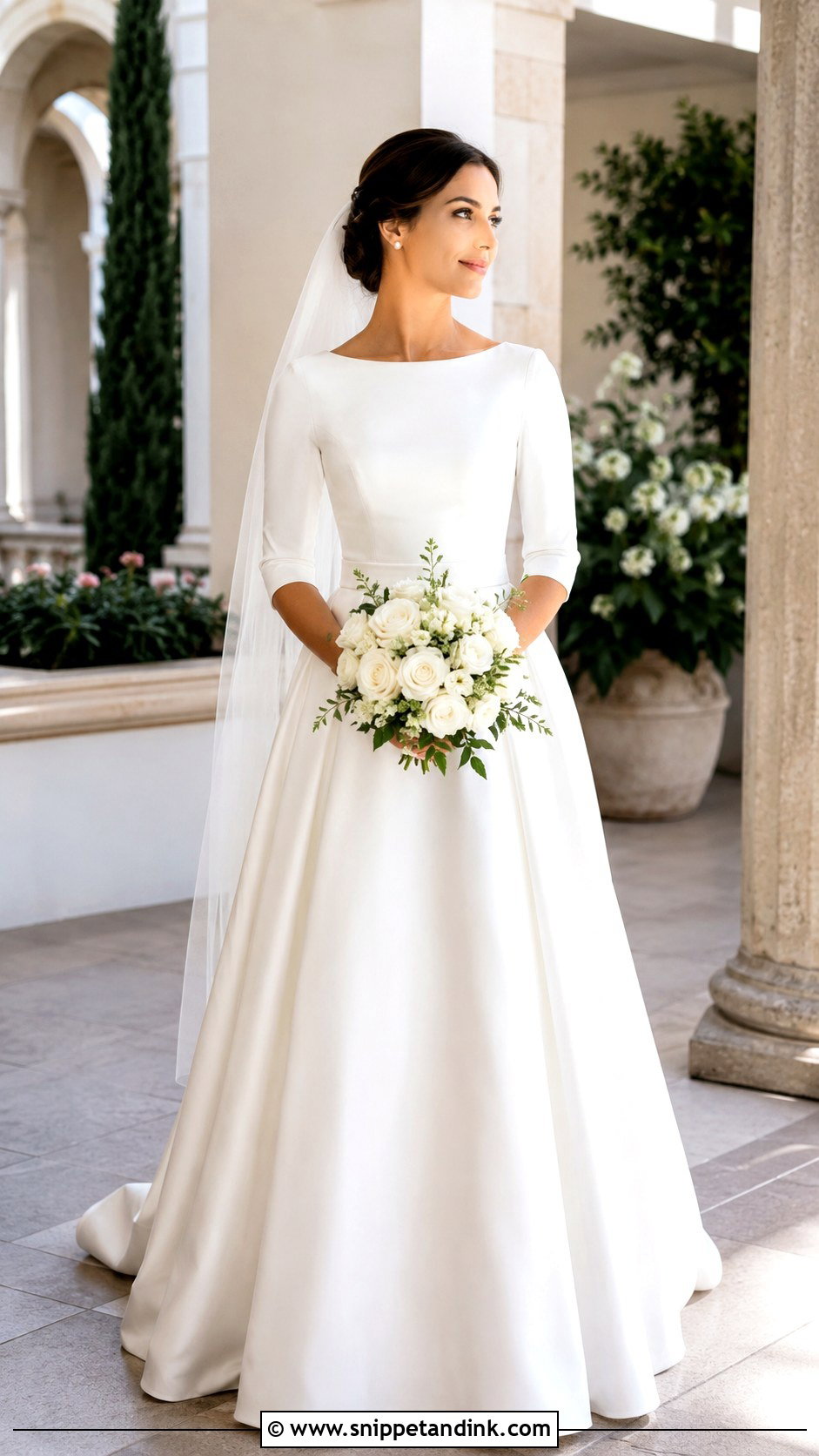
A boat neck runs almost straight from shoulder to shoulder, close under the collarbone. It looks calm and refined, but on narrow frames it can slide toward the edge of the shoulder, so I always check it with the arms raised. Three-quarter or long sleeves suit it. Slim crepe looks modern and a fuller skirt more traditional. Skip chunky necklaces, because the neckline is already the feature; pearl studs and a low chignon will do.
7. Three Quarter Sleeve LDS Wedding Dress
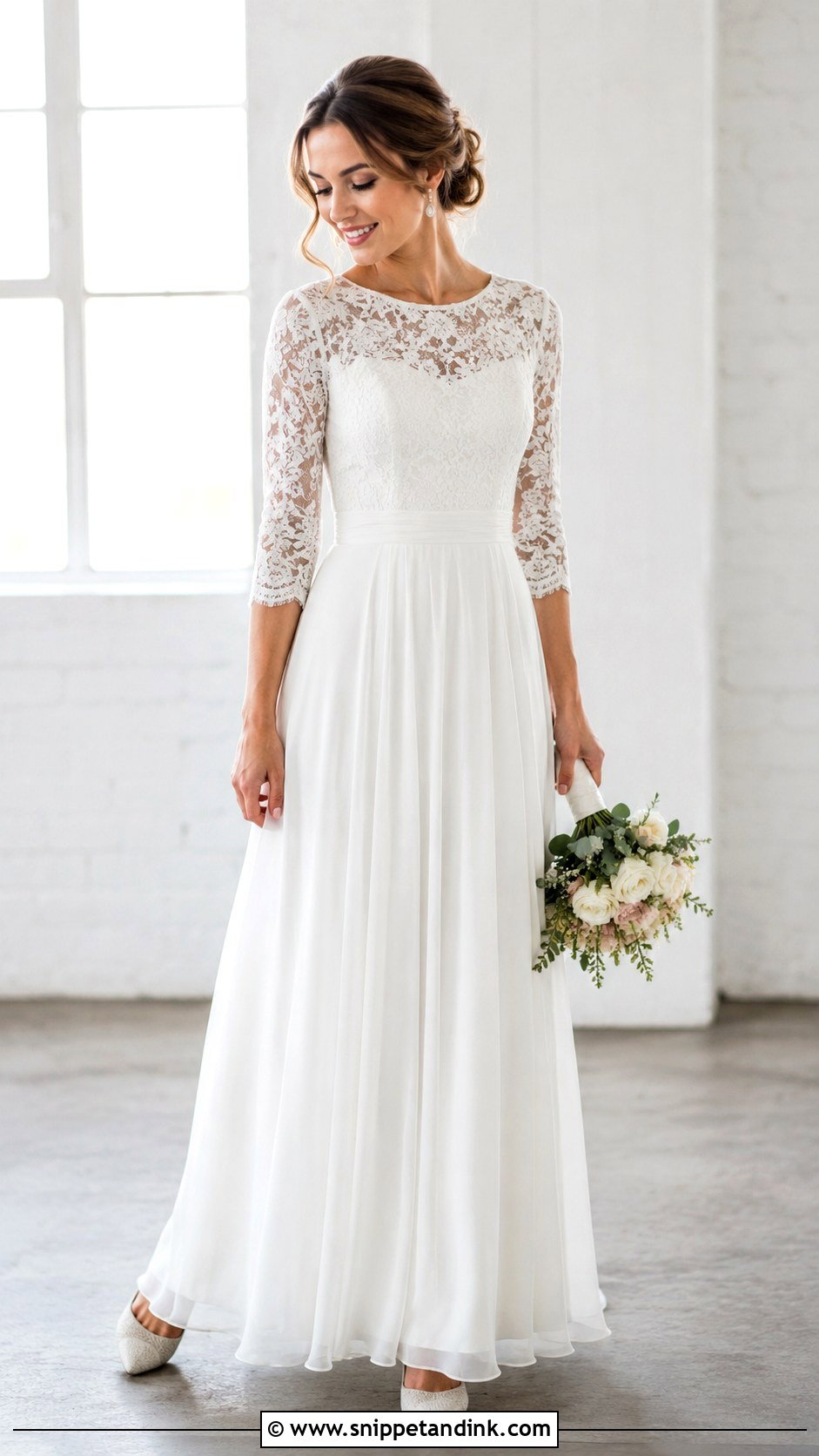
A three quarter sleeve LDS wedding dress gives coverage while keeping the arms lighter than a full sleeve, and it’s accepted for temple wear alongside long sleeves. Lace, satin, crepe and chiffon all work. Measure the sleeve with your arm bent. One that sits right with the arm straight can ride up to the elbow the moment you hold a bouquet. Keep the wrists bare except for a delicate bracelet.
8. Short Sleeve LDS Wedding Dress
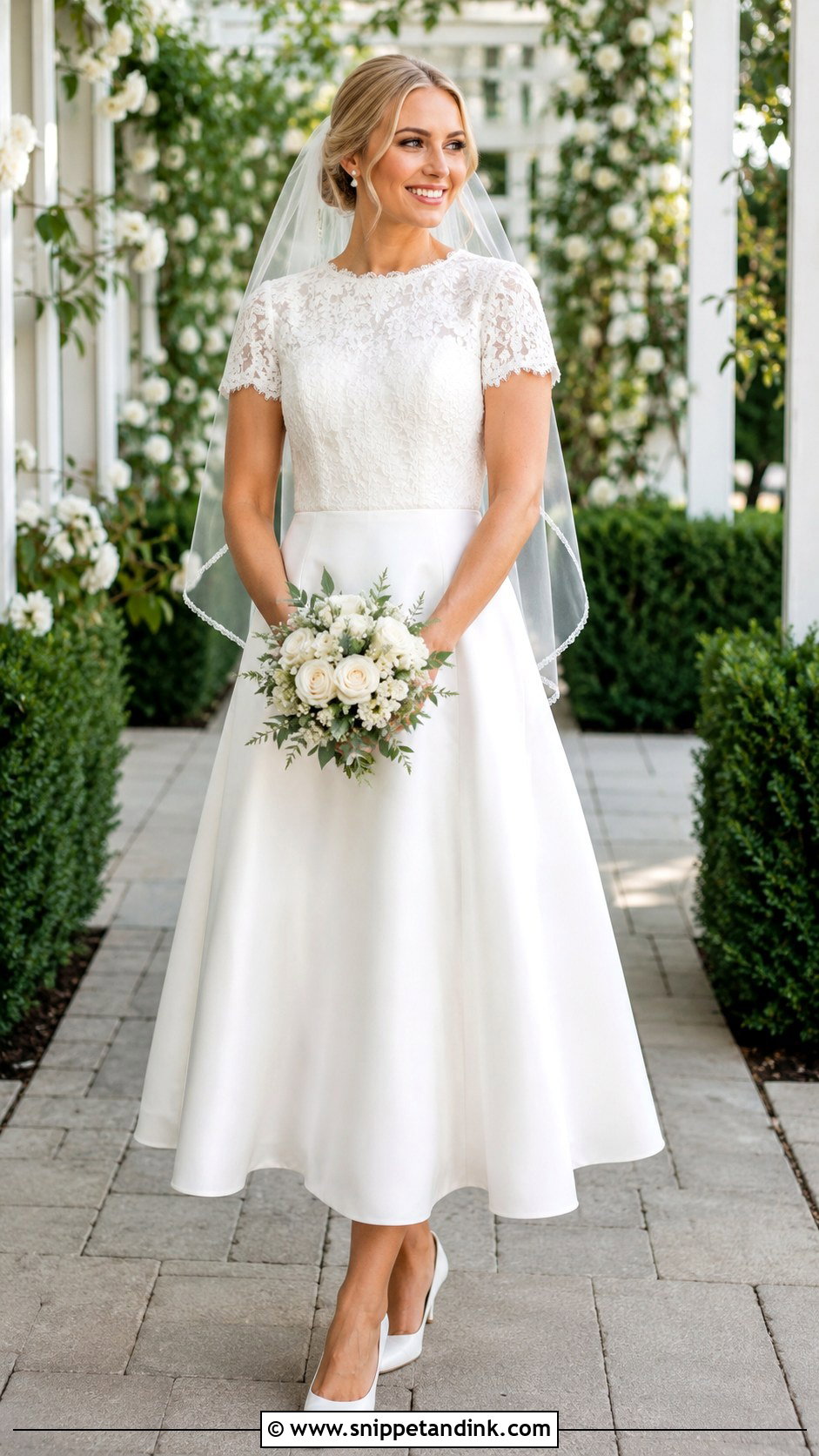
Short sleeves are cooler for a summer reception, but they won’t meet the sleeve guideline for a temple sealing, which asks for long or three-quarter sleeves. Brides usually solve this by wearing the short-sleeve dress for the reception and photos, or by having matching sleeves made that attach for the temple. If you choose short sleeves, check that they cover the shoulder fully and that the back sits high. Pearl earrings and low heels keep it fresh.
9. Cap Sleeve LDS Wedding Dress
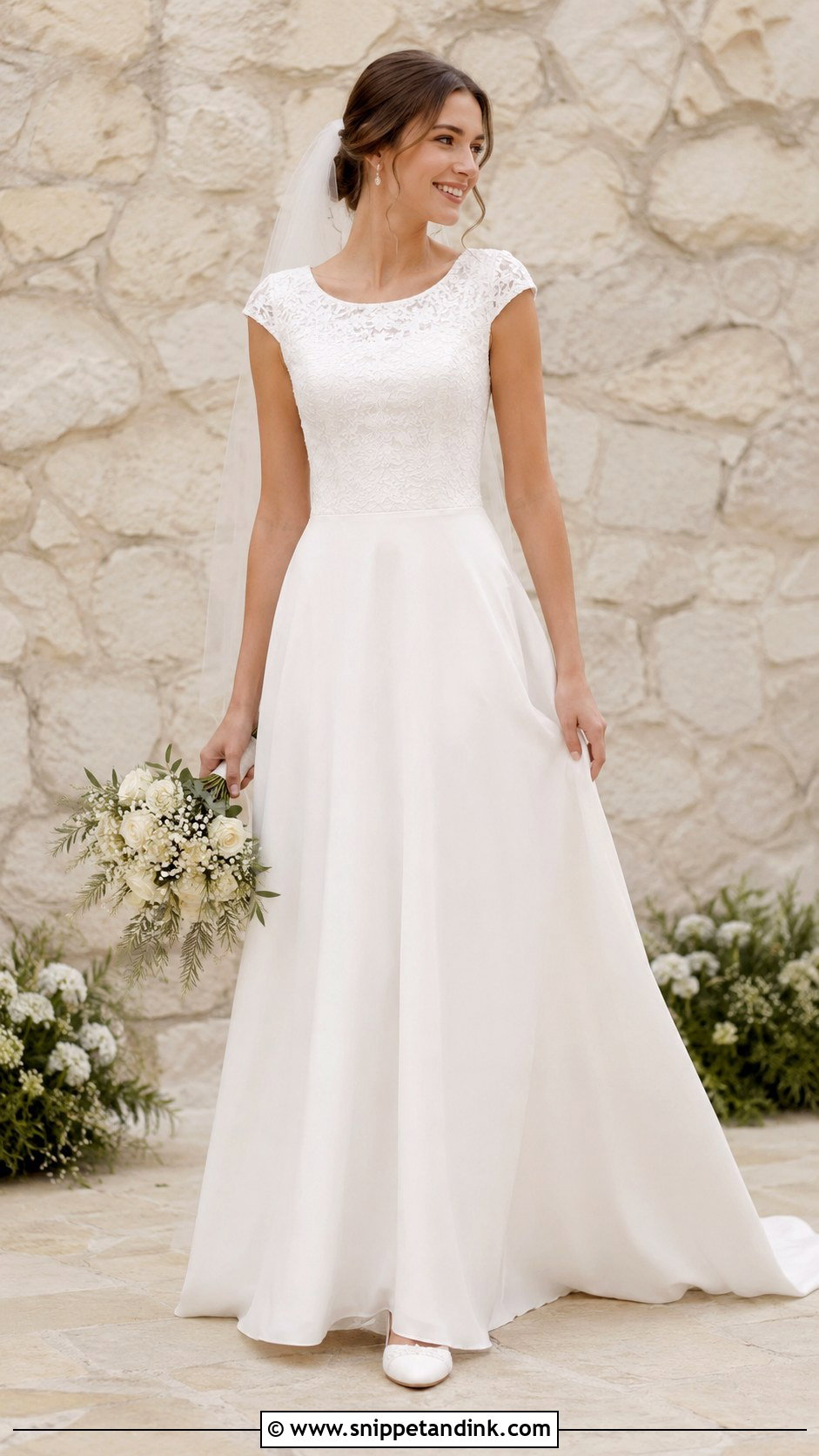
Cap sleeves are the trickiest option here for modesty. They sit right on the shoulder edge and lift when you move, so on their own they rarely give enough coverage for a bride who wears the temple garment. I treat a cap sleeve dress as a reception or civil ceremony dress, or plan a matching bolero for the sealing. If you love the look, insist on a lined lace bodice and a modest scoop that stays in place when you bend.
10. LDS Wedding Dress With Jacket
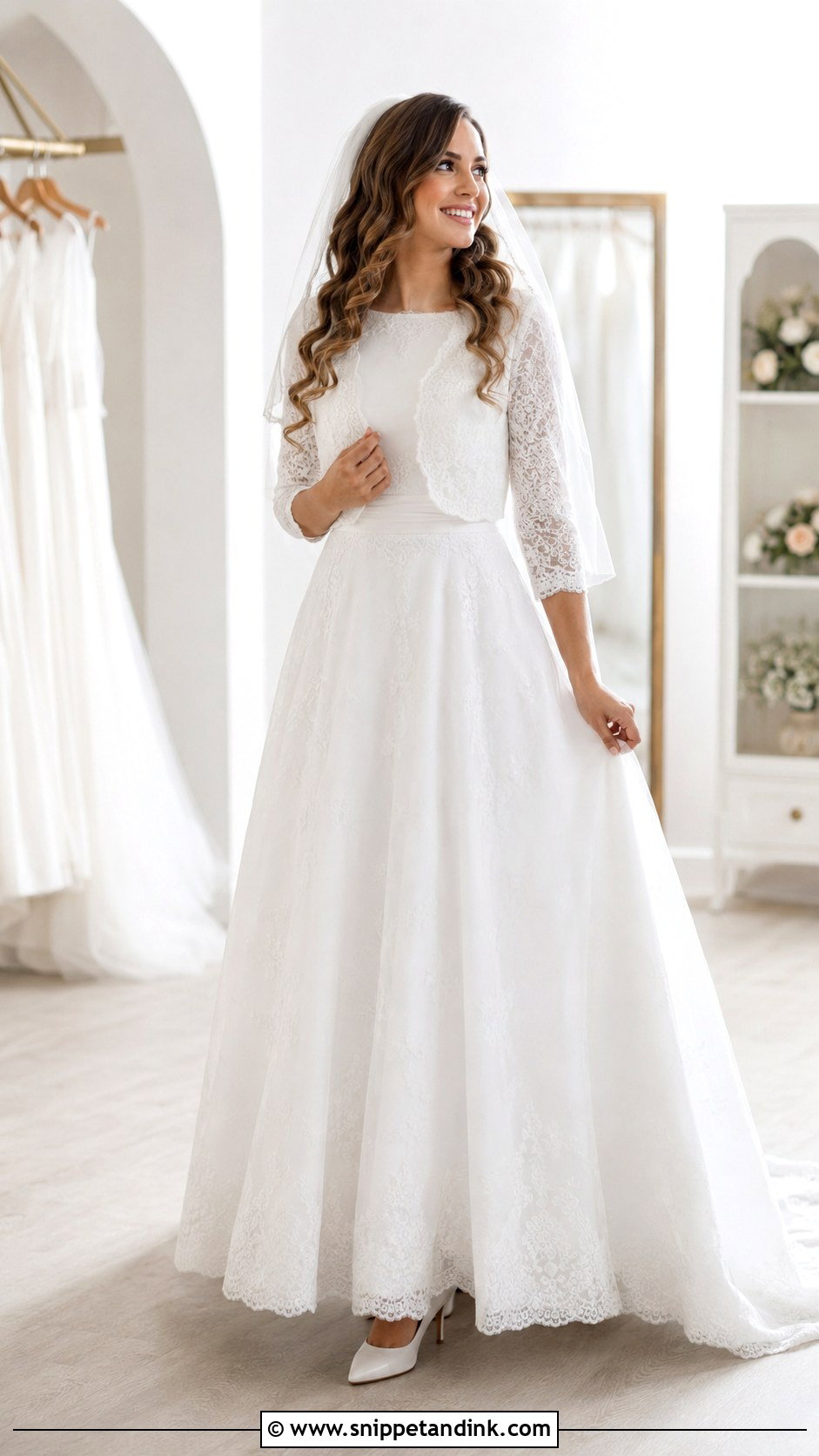
A jacket is the easiest way to make a dress you already love work for the whole day. A lace jacket, satin bolero or crepe topper raises the neckline and covers the shoulders without altering the gown itself. The color has to match closely, because white and ivory side by side look like two different outfits. Have the jacket fitted at the same appointment as the gown so the shoulder seams line up. You can take it off for the reception if that suits your standards.
11. LDS Temple Ready Wedding Dress
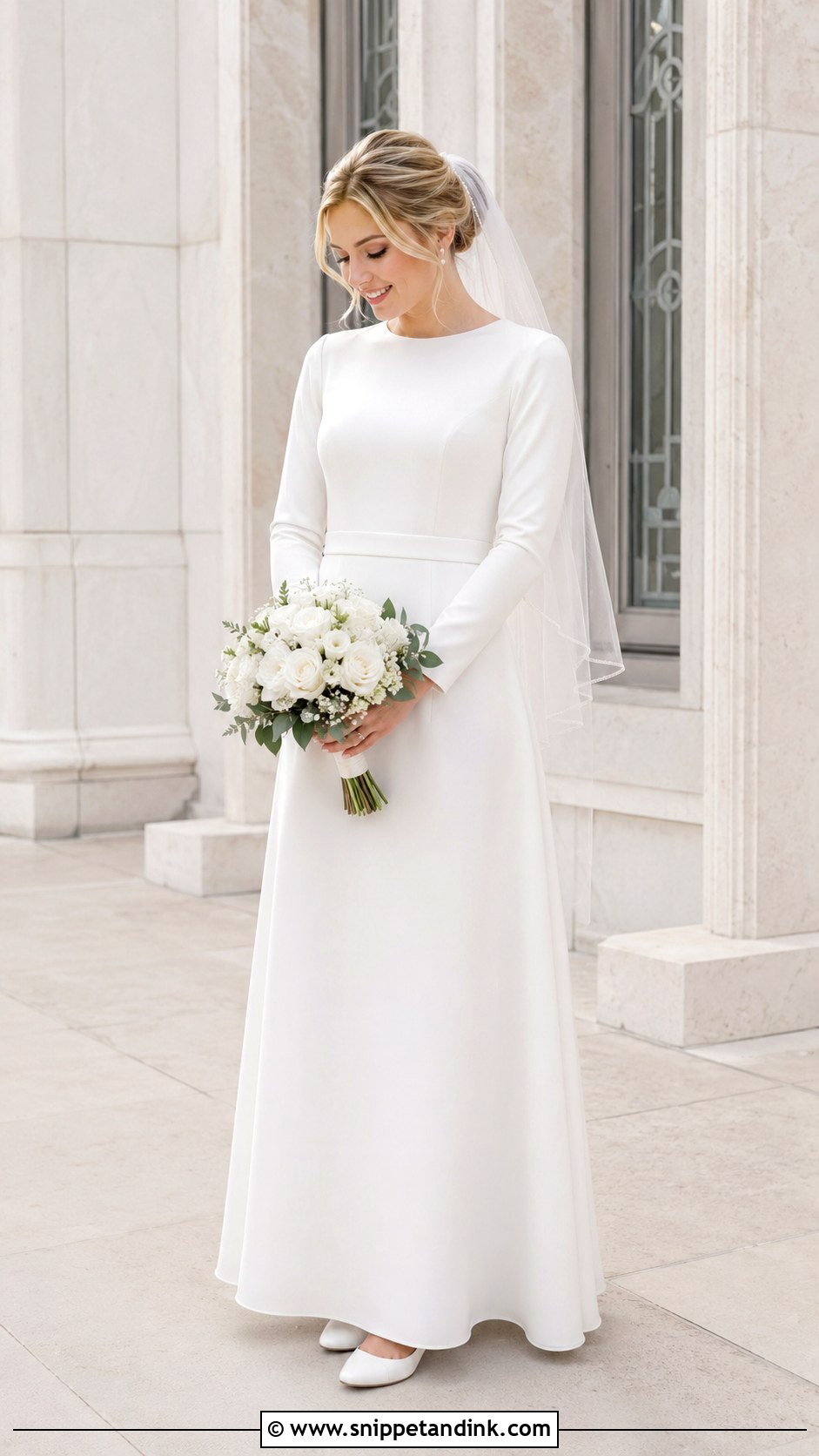
A temple-ready dress is white, modest in design and fabric, and plain rather than heavily ornamented. It should cover the temple garment and have long or three-quarter sleeves, and any sheer fabric needs a lining. A train isn’t worn loose in the sealing room, so it must pin up or come off. White is stricter than it sounds: some fabrics look white alone but read cream next to a sheet of printer paper, so test a swatch that way. Each temple applies these expectations, so confirm with yours before final alterations. If nothing works out in time, temples can provide a dress.
12. Modest Ball Gown LDS Wedding Dress
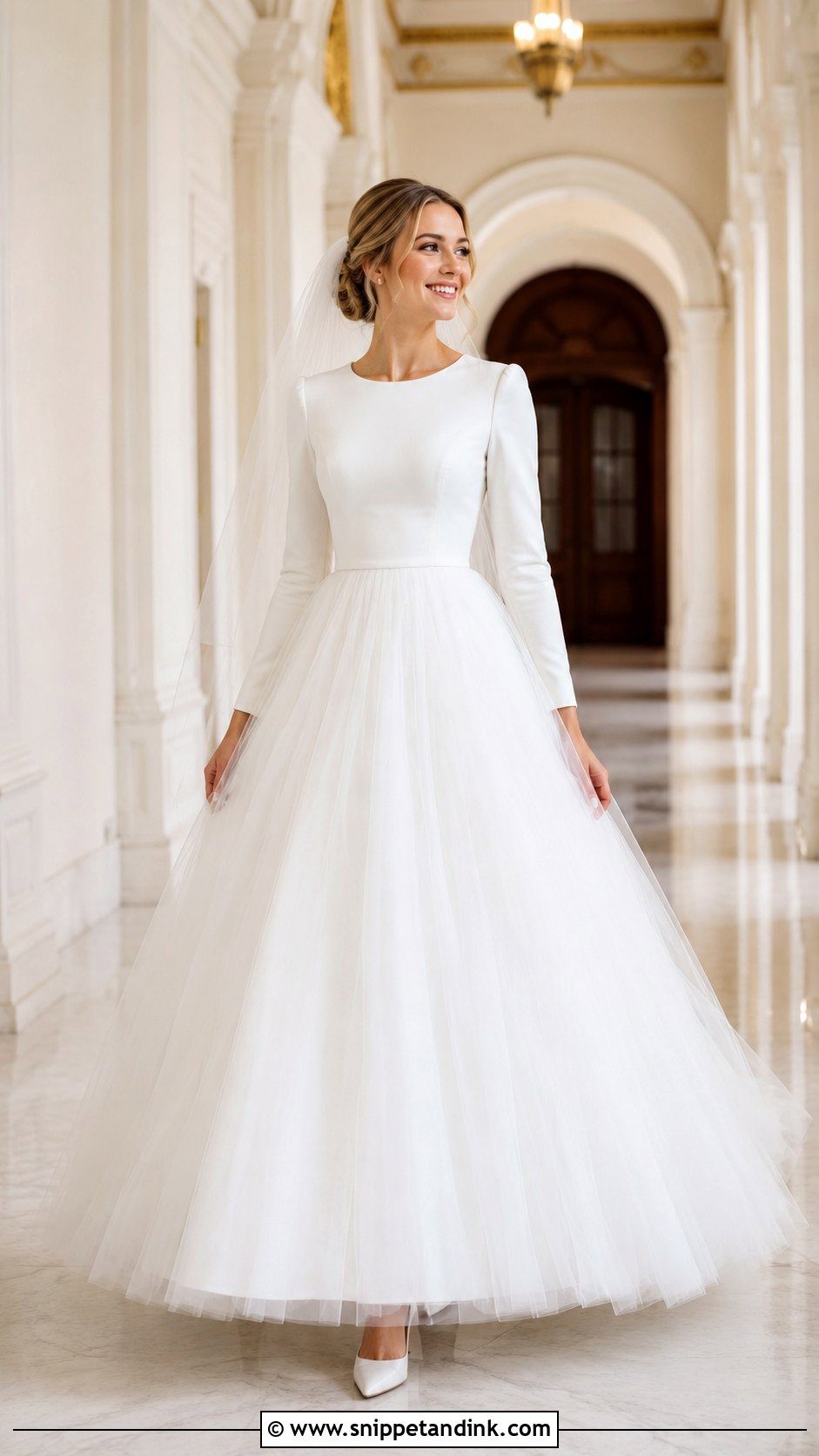
A modest ball gown LDS wedding dress gives you the full-skirted moment with a covered bodice and sleeves. The waist has to be clearly defined, or the volume swamps you. Tulle is soft and cloud-like; satin is more regal. Think about logistics before you fall for one, though. A huge skirt is hard work in a temple dressing room and in the back of a car.
13. LDS Wedding Dress With Train
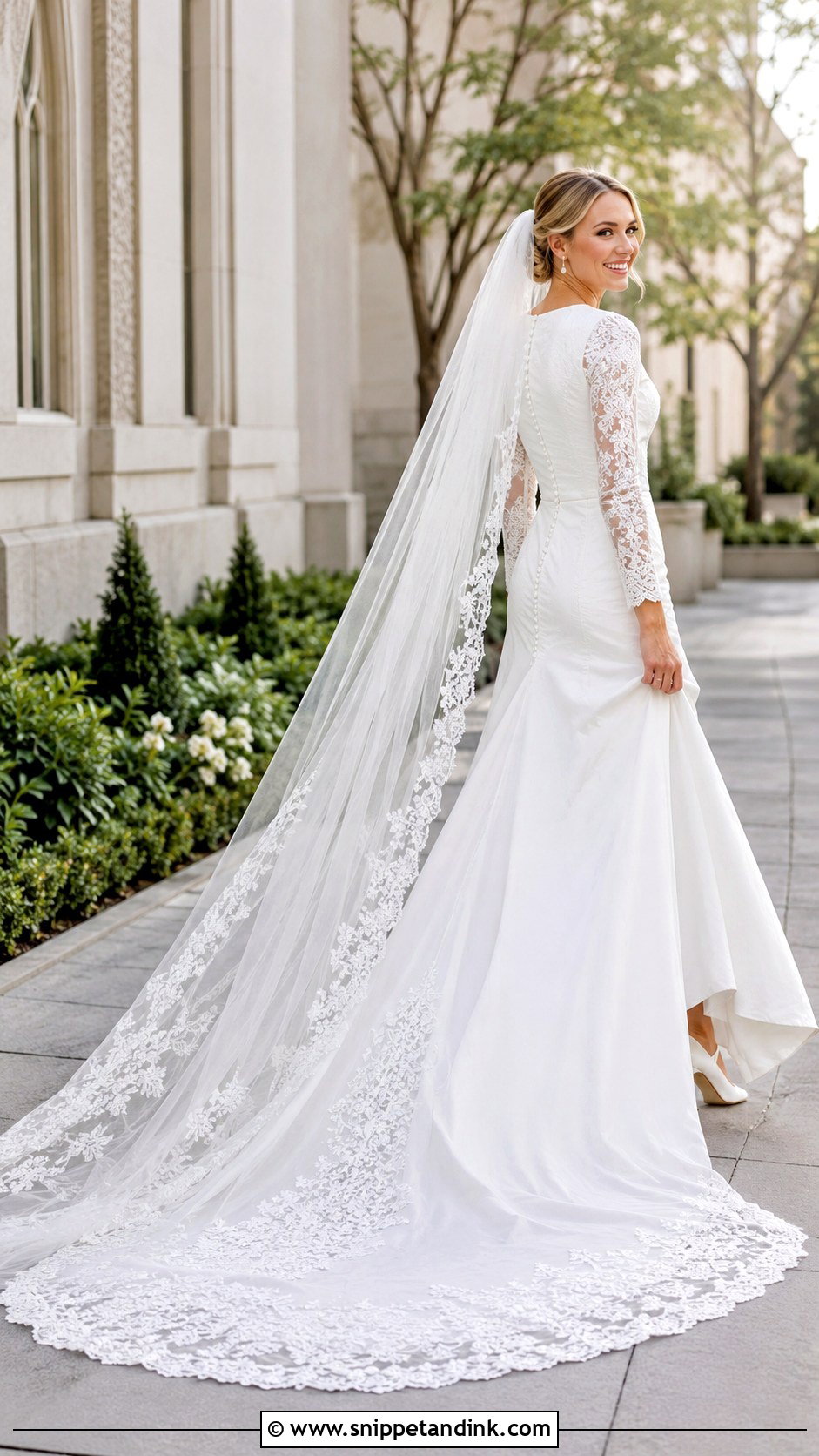
A train adds movement to walking shots and portraits, but for a sealing it must be pinned up or removable, so plan the bustle from the start. Chapel length looks formal and is still easy to manage outdoors; anything longer needs a strong bustle and a helper who knows it. Lace trains look romantic and satin trains sleek. Choose a veil that’s clearly shorter or longer than the train, never the same length, so the two don’t blur into one tangle.
14. LDS Wedding Dress With Buttons
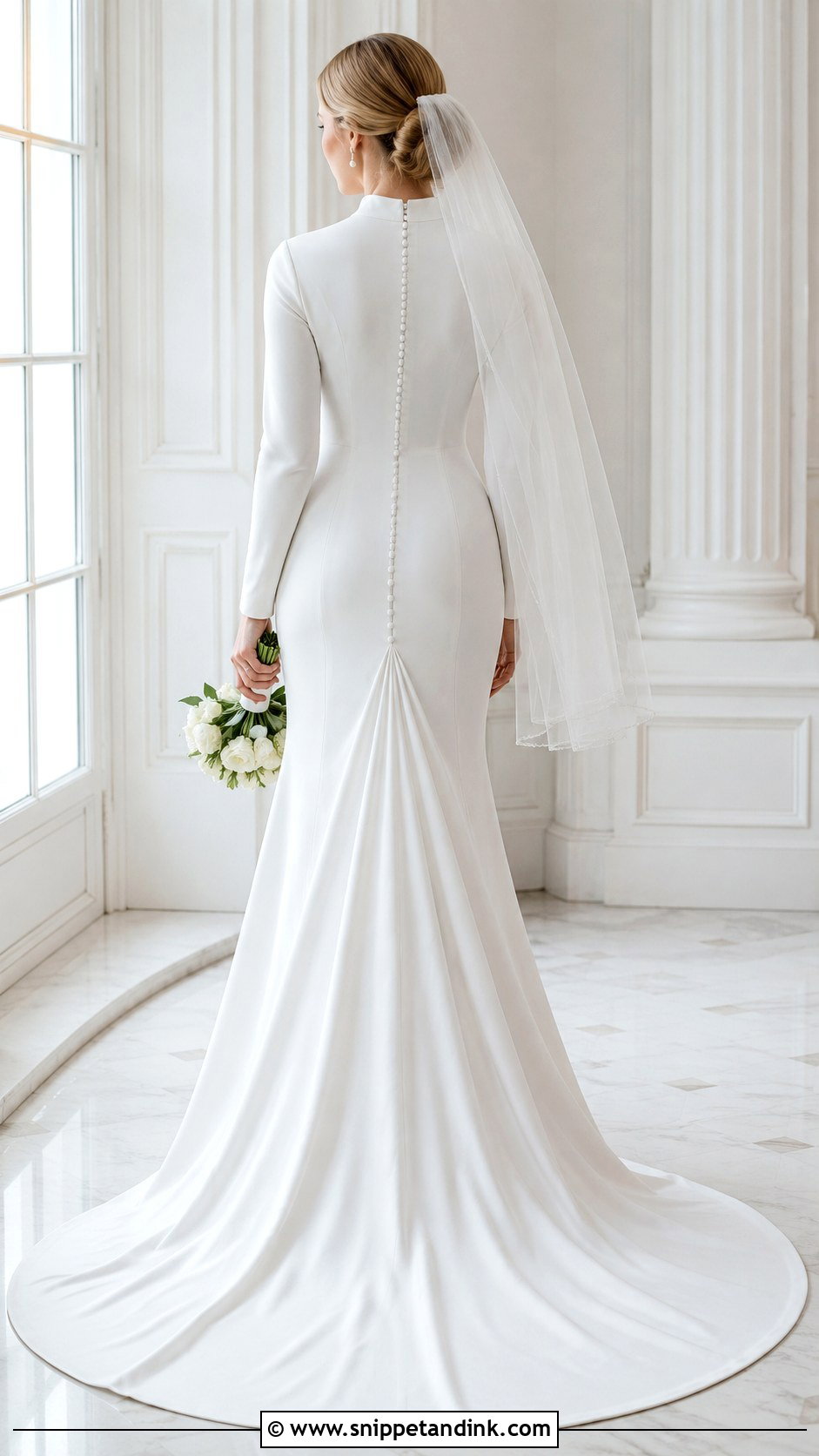
Covered buttons down a high back make even a simple gown look finished from behind. They’re often decorative over a zip, which is worth knowing: real button loops take ten minutes to fasten and need a patient helper. On a modest gown the back stays covered and the buttons give it interest. Wear an updo or half-up style so they show in photos.

15. Crepe LDS Wedding Dress
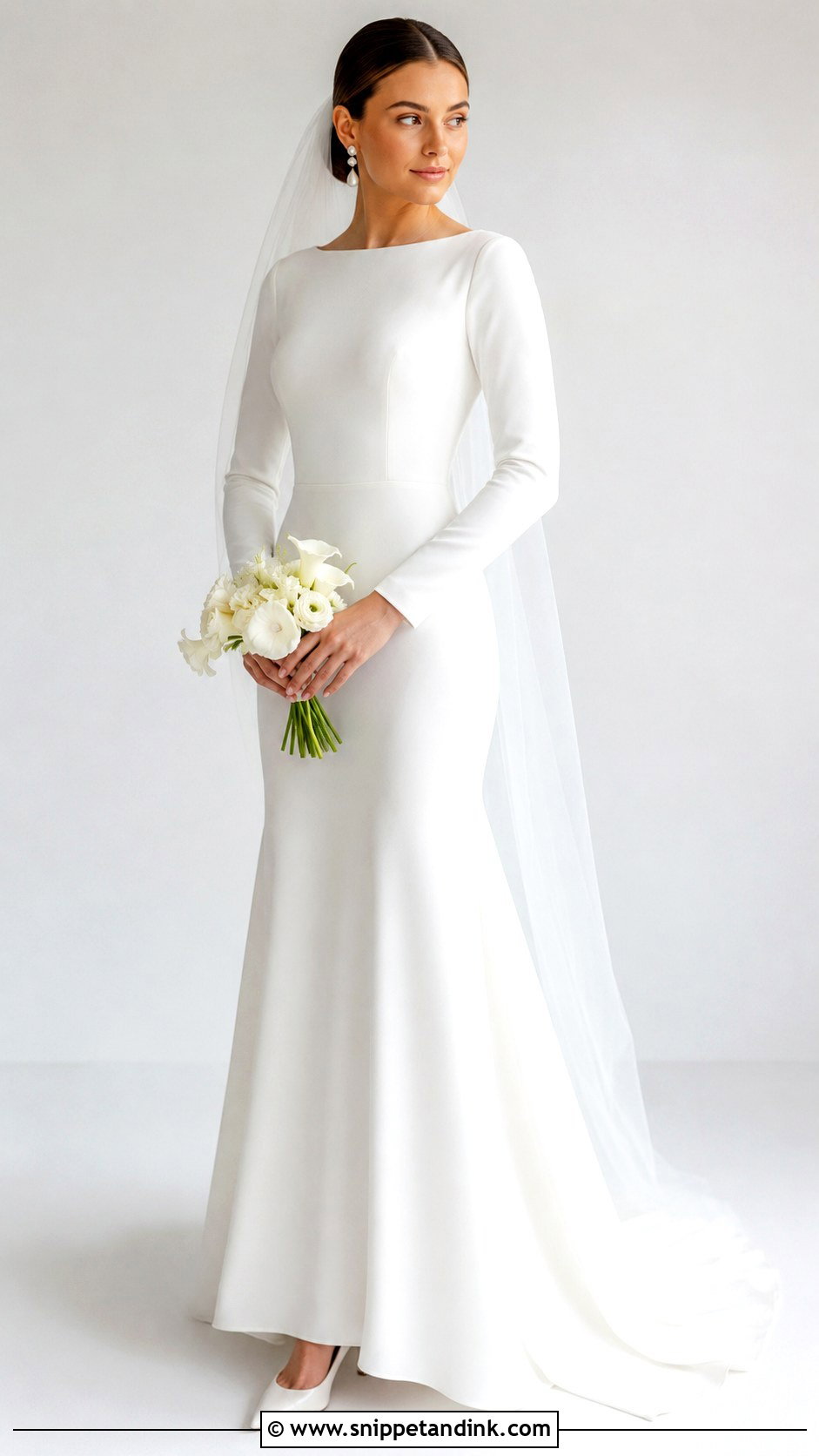
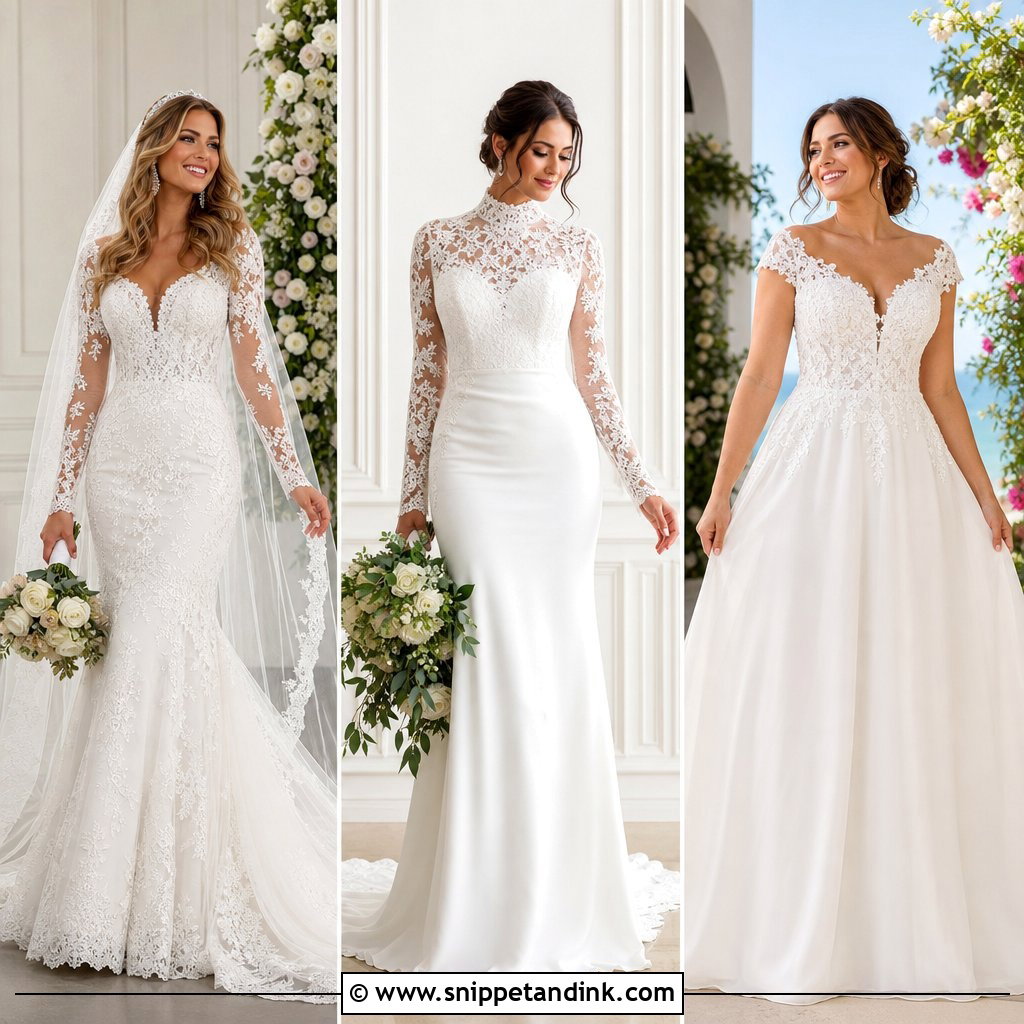
Crepe has a matte surface and a little stretch, so a modest crepe gown can look tailored without feeling stiff. With no lace or beading to distract the eye, fit is everything. A crease at the hip or a pulled sleeve shows straight away. Sheath and fit-and-flare shapes suit it, while a crepe A line moves more. Pointed heels and sculptural pearl earrings keep it clean.
16. Tulle LDS Wedding Dress
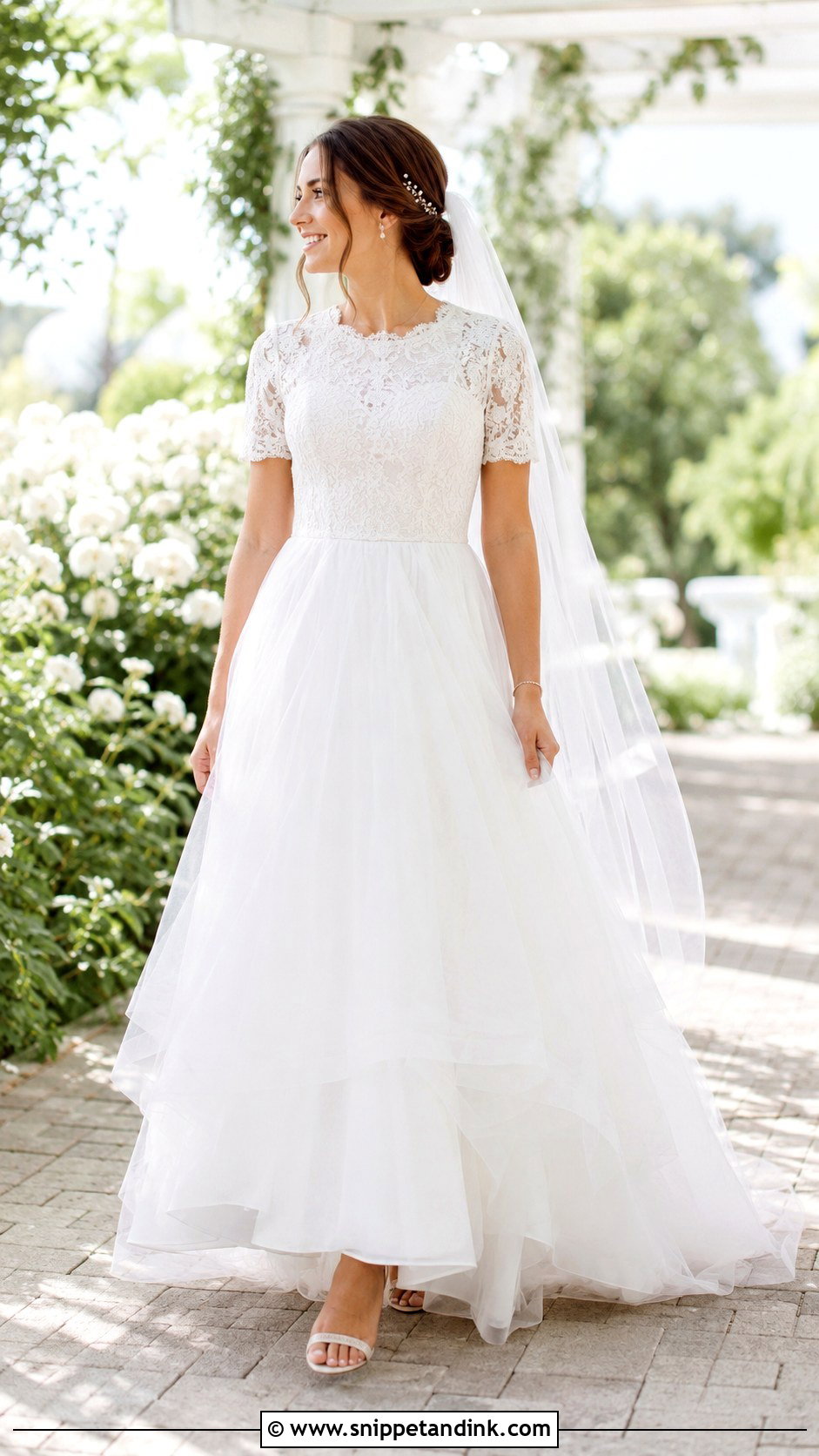
Tulle gives volume without much weight, and over a lined lace bodice it builds a soft, modest gown. For temple wear the bodice lining is what I check first, since tulle and illusion mesh are see-through on their own. With several tulle layers in the skirt, keep the veil plain. Soft waves and pearl hair pins suit it, and it comes alive in outdoor portraits.
17. Chiffon LDS Wedding Dress
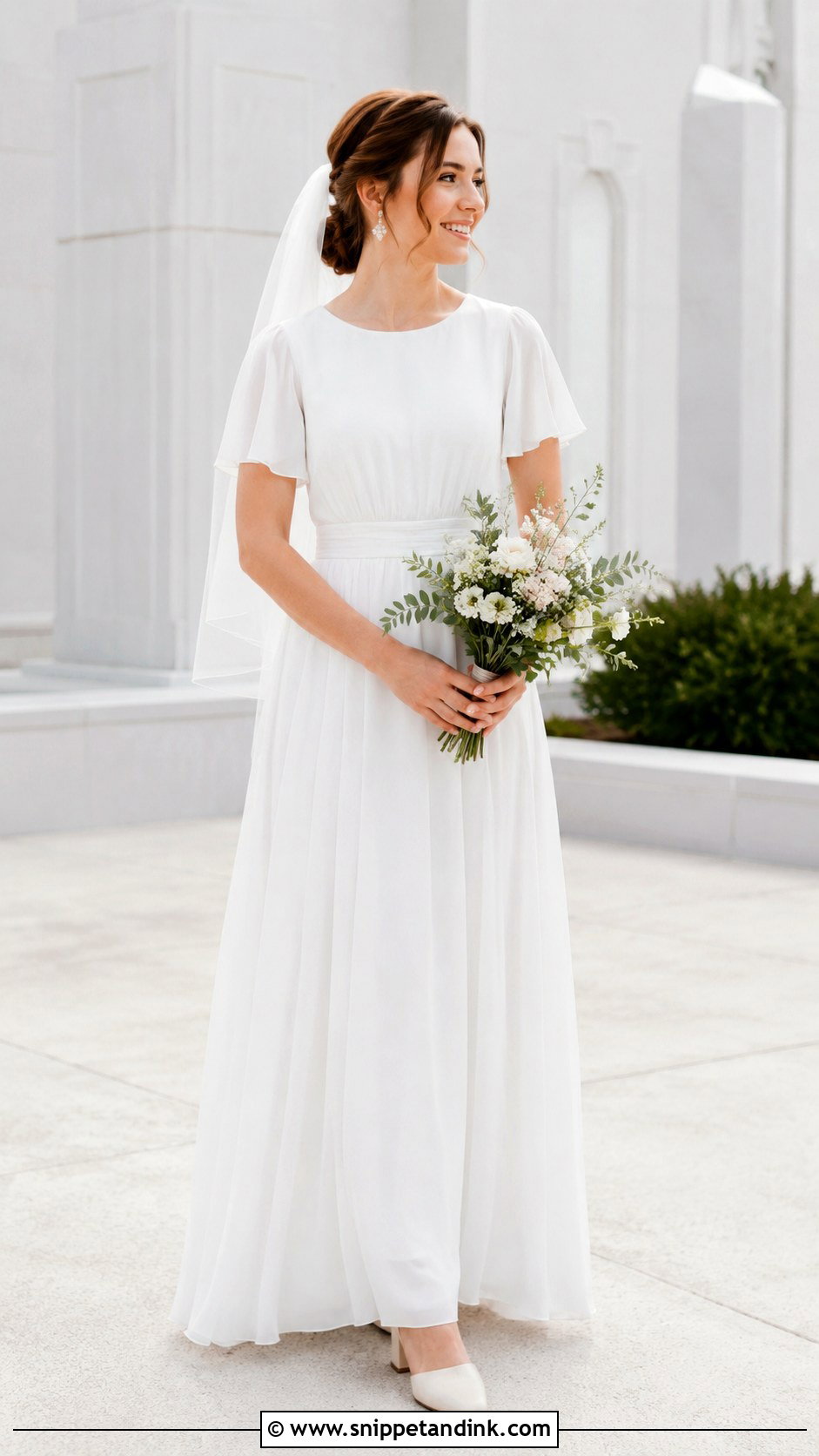
Chiffon is the most comfortable fabric here for a long day, light and flowing, with less structure than satin or crepe. A modest chiffon gown can carry flutter sleeves, lined short sleeves or long sheer sleeves over a lining. An empire or gathered waist is kind to anyone who’ll be standing in a greeting line for hours. Chiffon snags easily, so watch for rough bracelets and bouquet wire.
18. Vintage LDS Wedding Dress
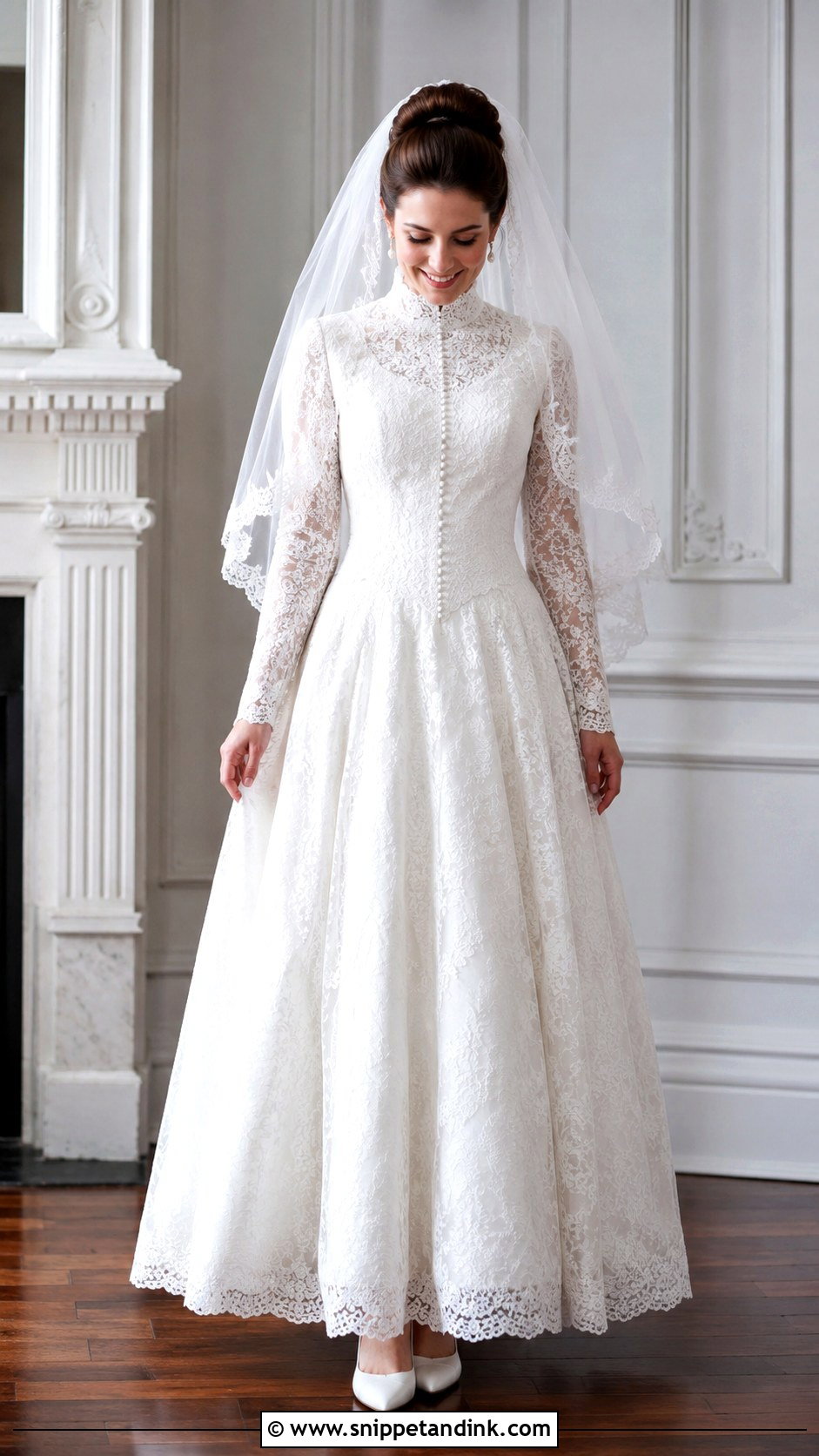
Vintage done well means one or two old details, not a costume. A high lace neck, covered buttons or a tea-length skirt is plenty; keep the rest clean. If you’re wearing a mother’s or grandmother’s dress, it was probably ivory to begin with or has yellowed with age, so if it’s for the temple, test it beside white paper early and leave time for a specialist cleaner. A soft updo and a short lace-edged veil suit it.
19. Modern LDS Wedding Dress
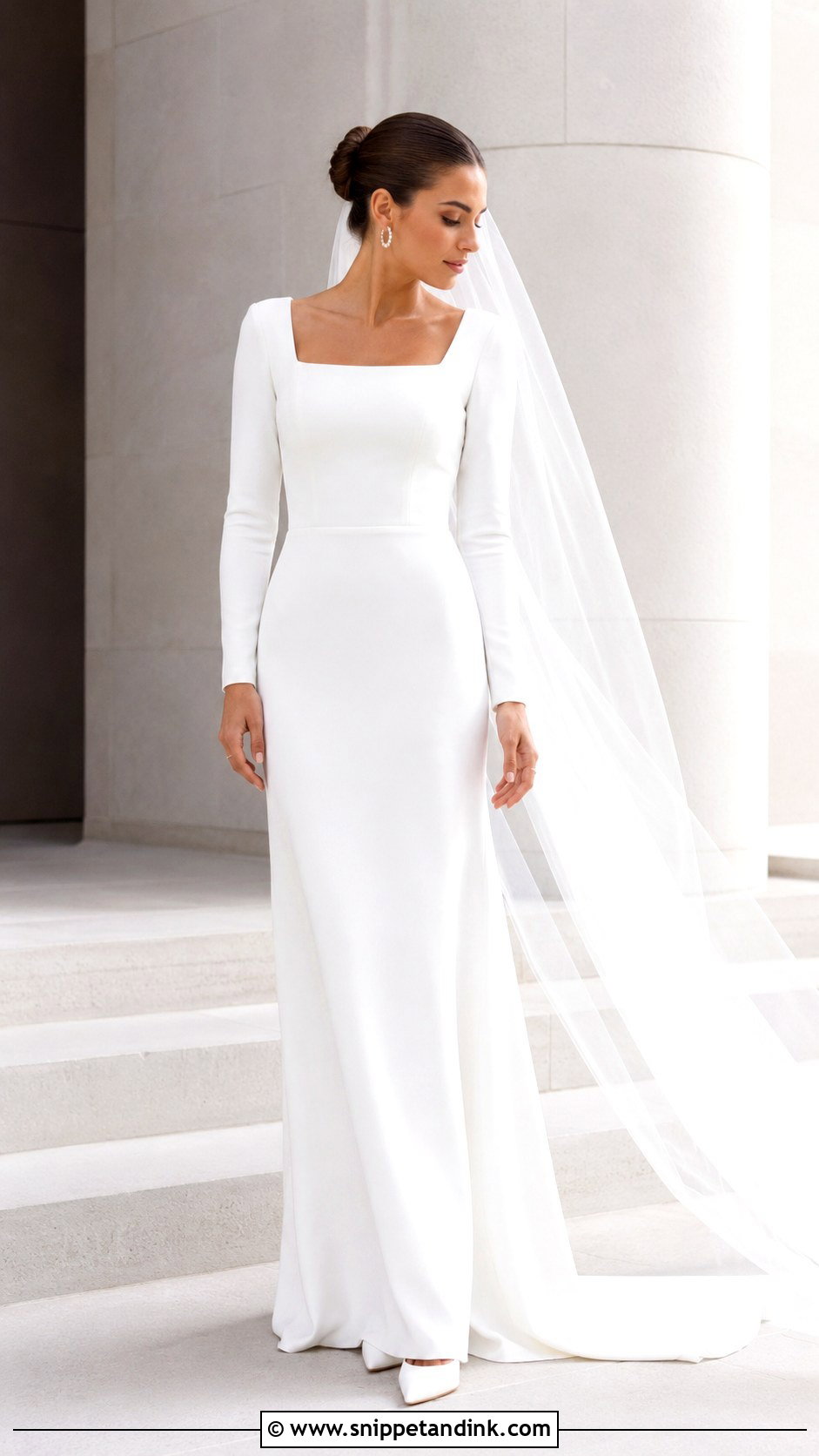
Modern modest dressing relies on fabric and tailoring: crepe or satin, long fitted sleeves, a square or bateau neck and almost no embellishment. Long fitted sleeves have to be cut with room at the elbow, or you won’t be able to bend your arm to hold the bouquet. A sleek A line or sheath under a long plain veil reads current. Keep the flowers simple in white and green.
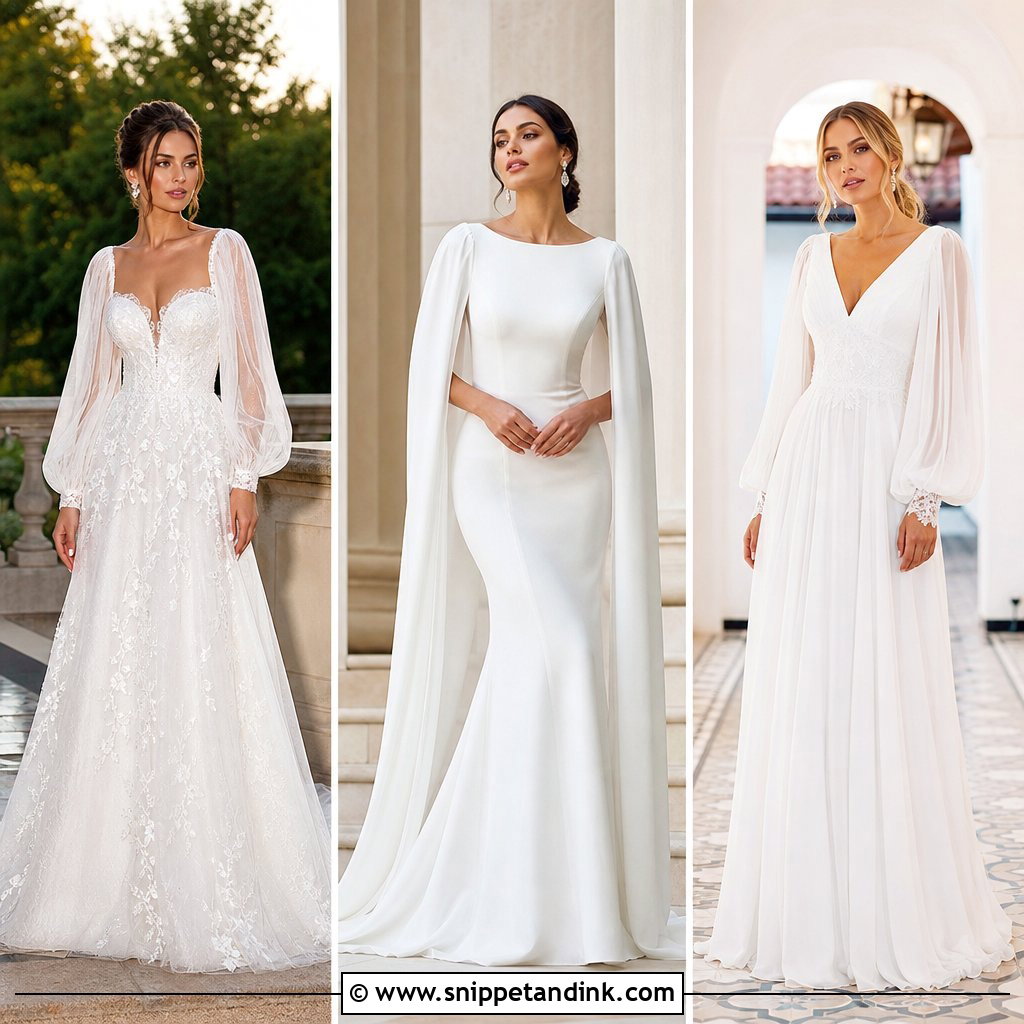
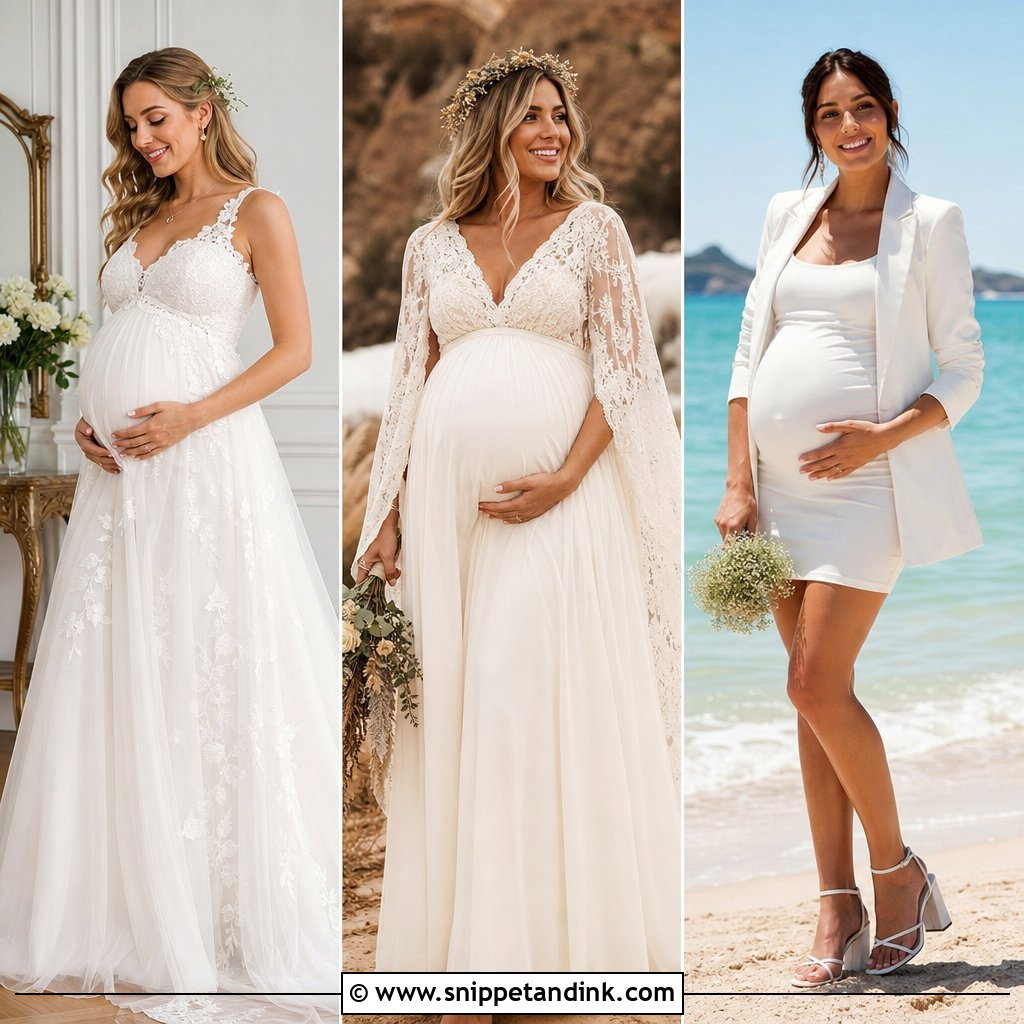


20. Plus Size LDS Wedding Dress
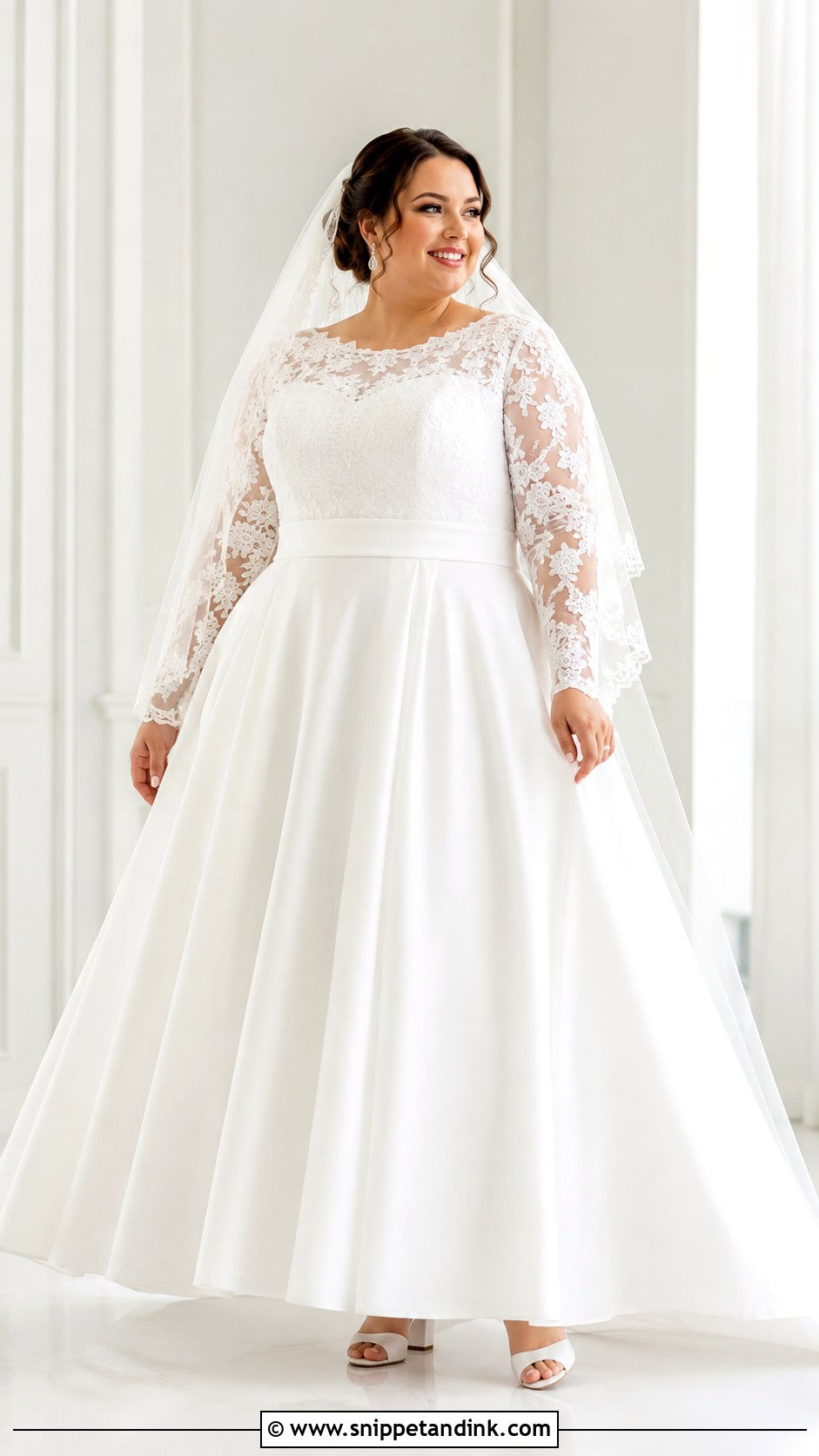
Plus size modest gowns should support you, not hide you. Strong construction, a defined waist and sleeves set properly into the armhole make the biggest difference. A-line is popular, but fit-and-flare and ball gowns flatter too when they’re tailored well. Sleeves are the most common fitting problem I see, because off-the-rack sleeves are often cut narrow, so ask whether there’s extra fabric to let them out. Don’t settle for a gown that merely covers you. A modest dress can and should fit.
21. Petite LDS Wedding Dress
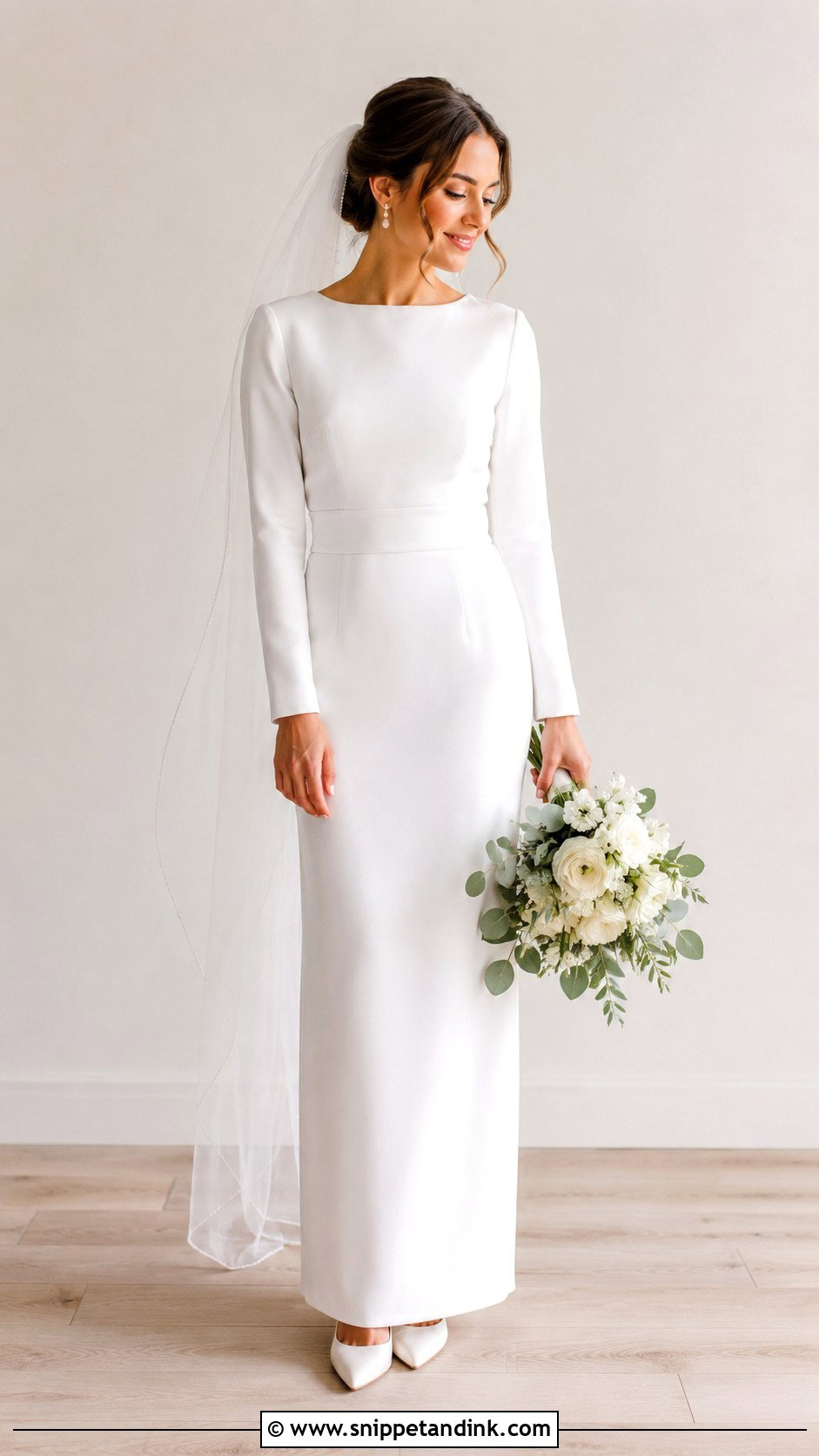
Petite brides need a dress that lengthens rather than swallows. Simple lines, a slightly higher waist and light fabric all help. Long sleeves usually need shortening at the shoulder or cuff, since sleeves that bunch at the wrist cut the arm and make you look smaller. End the veil at the fingertips or the floor, not mid-back. I’d skip a heavy train, which is real work to manage at your height.
22. Winter LDS Wedding Dress
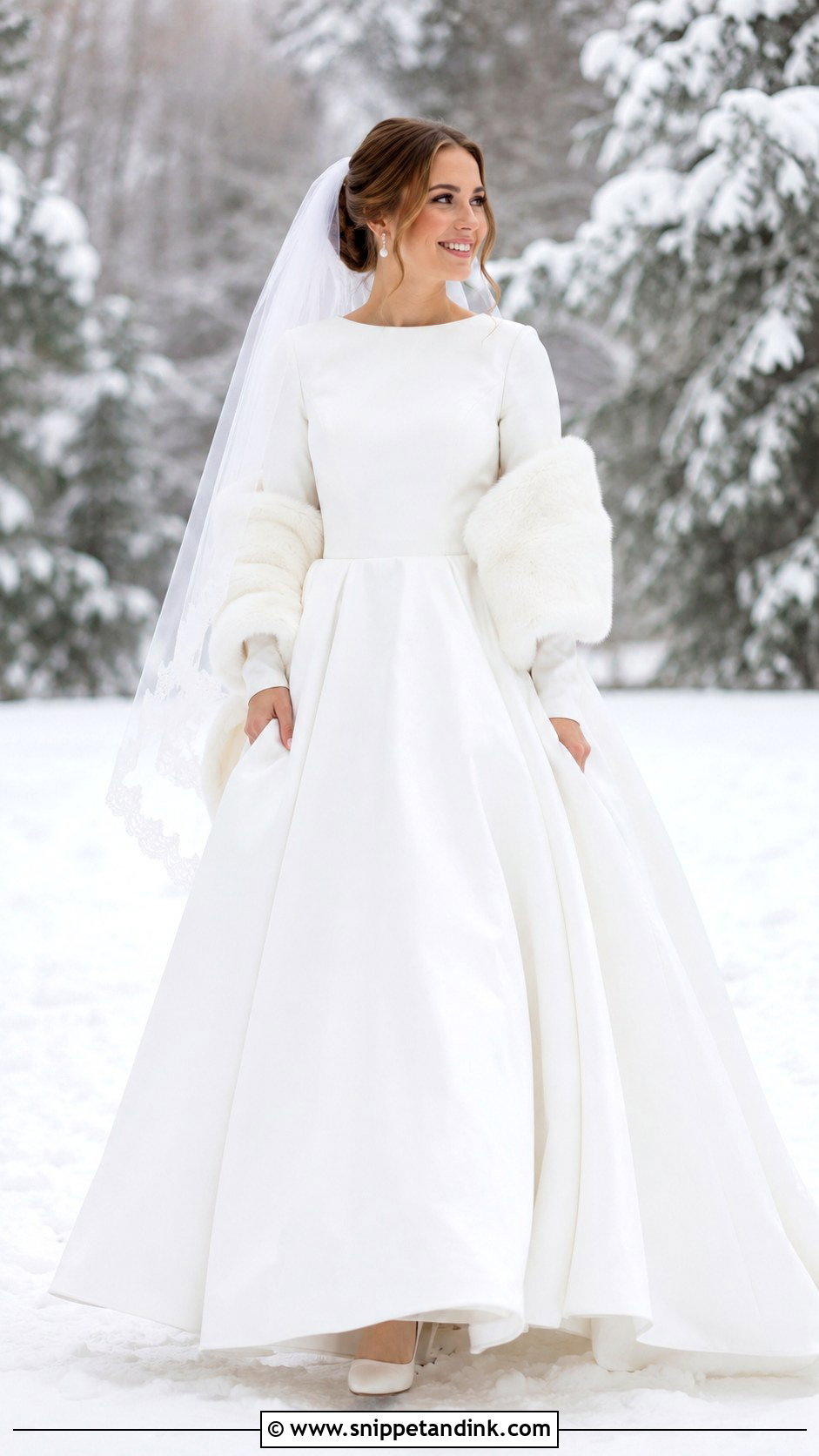
Winter favors long sleeves, which makes modest dressing easier. Satin, crepe, mikado and heavier lace hold both warmth and shape. A white coat or faux-fur wrap is worth buying for outdoor photos, as long as it’s the same white as the gown. Snow reflects a lot of light, so photographers will often move you into open shade to keep the dress from losing its detail. A long veil against a winter backdrop is hard to beat.
23. Summer LDS Wedding Dress
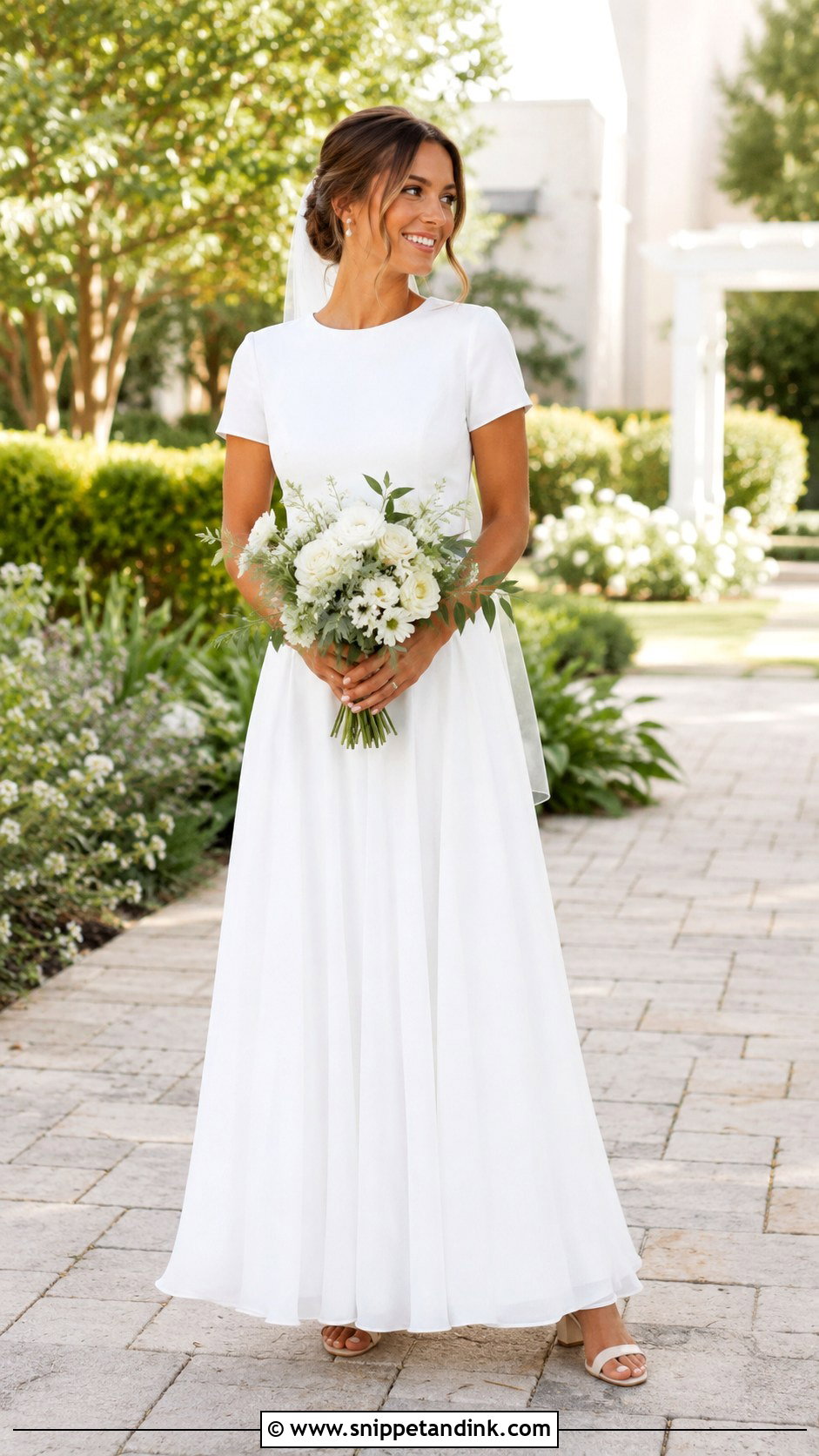
Summer is the real challenge for modest dressing, because sleeves and lining both add heat. Choose lighter fabrics such as chiffon, organza or lightweight lace, and ask for a breathable lining rather than polyester. Three-quarter sleeves are the coolest temple-appropriate option; short or flutter sleeves suit the reception. Leave heavy beading for indoor events, since it holds heat in the sun.
24. LDS Wedding Dress For Reception
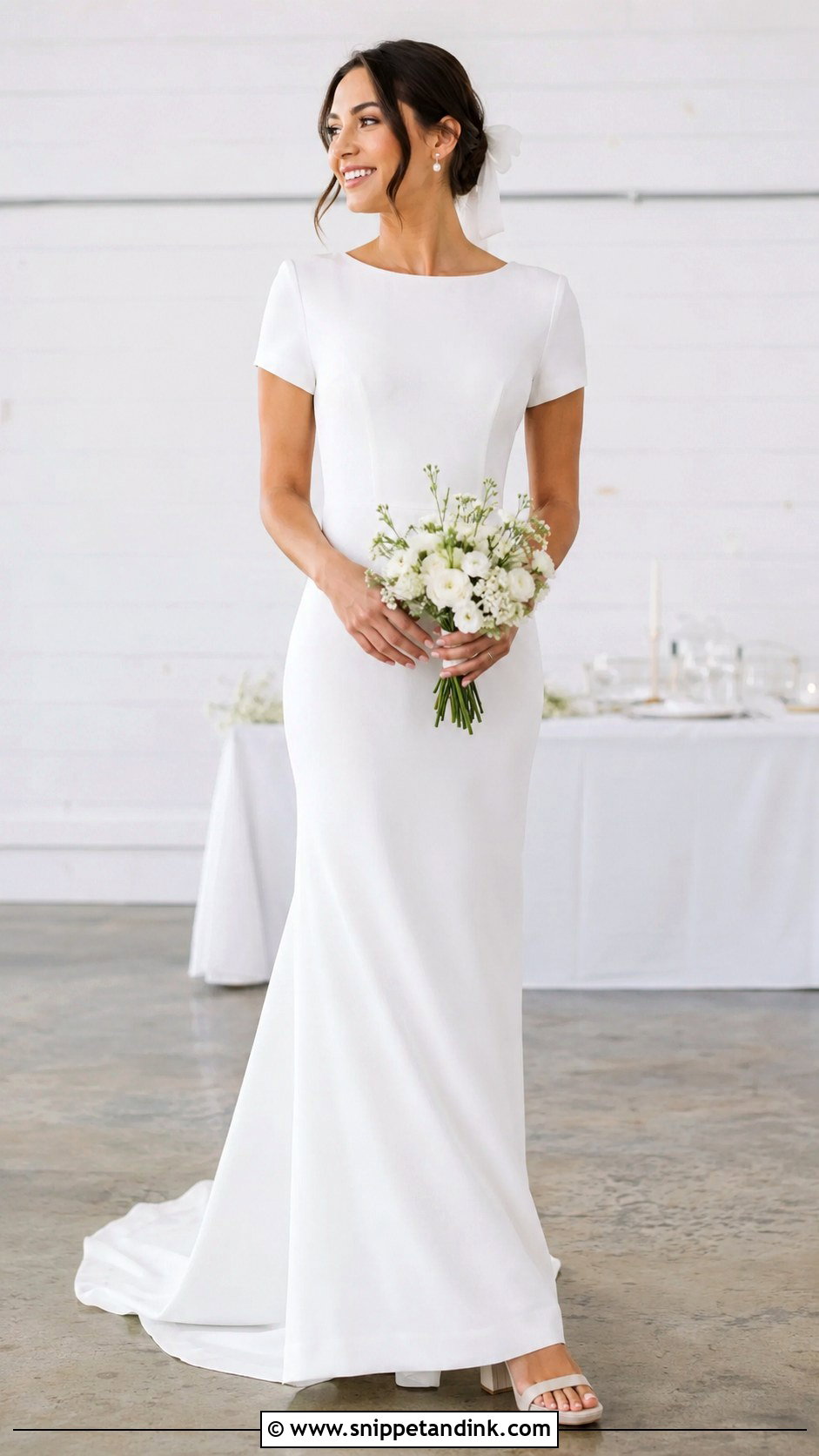
Many brides change into something they can dance in. A modest crepe sheath, lace A line or white tea-length dress all work, depending on how formal the evening is. Because it isn’t going into the temple, this is where shorter sleeves or a little ivory can be fine if they sit within your own standards. Keep it coordinated with your main look so the photos feel like one day.

25. LDS Wedding Dress With Veil
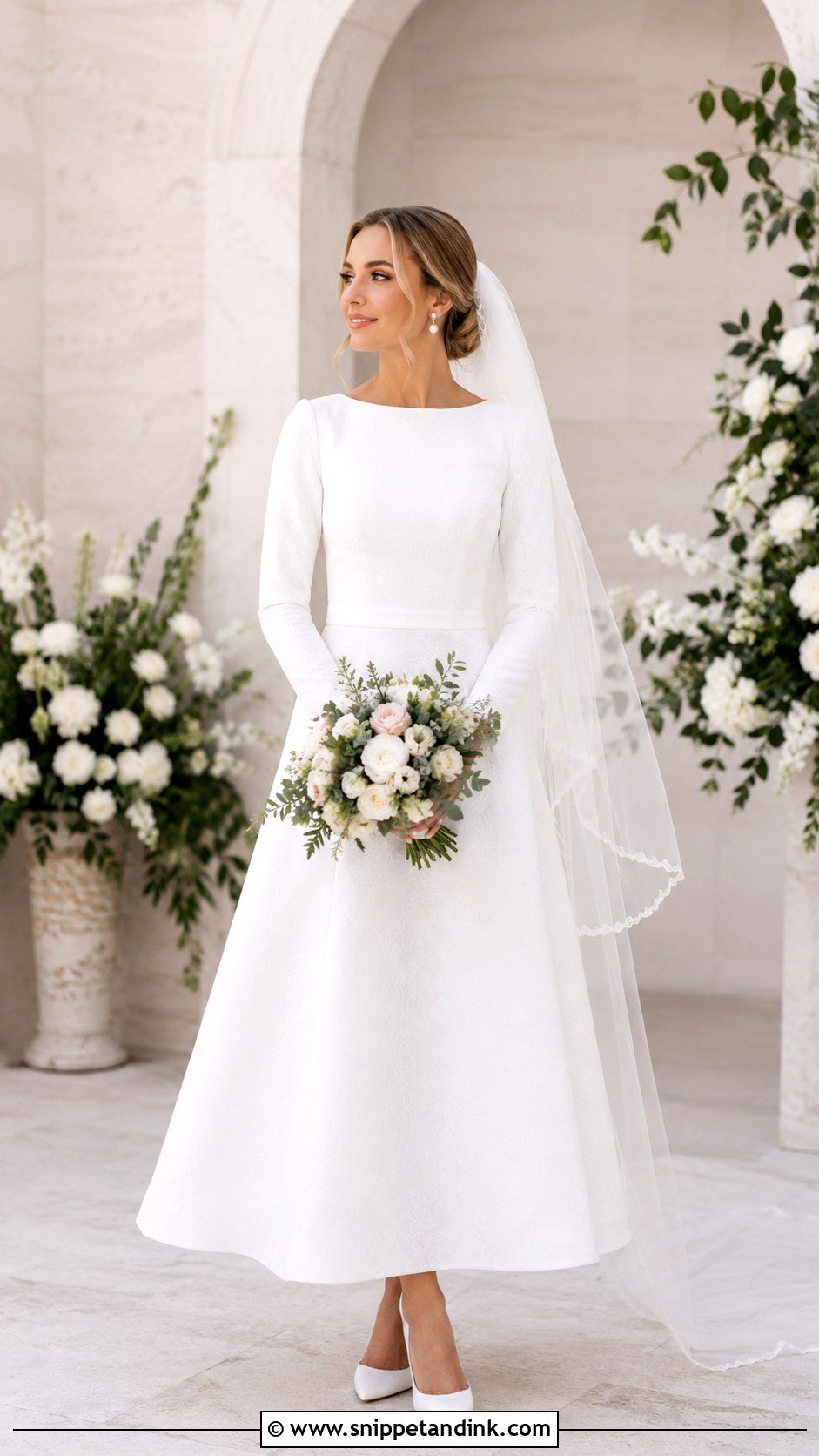
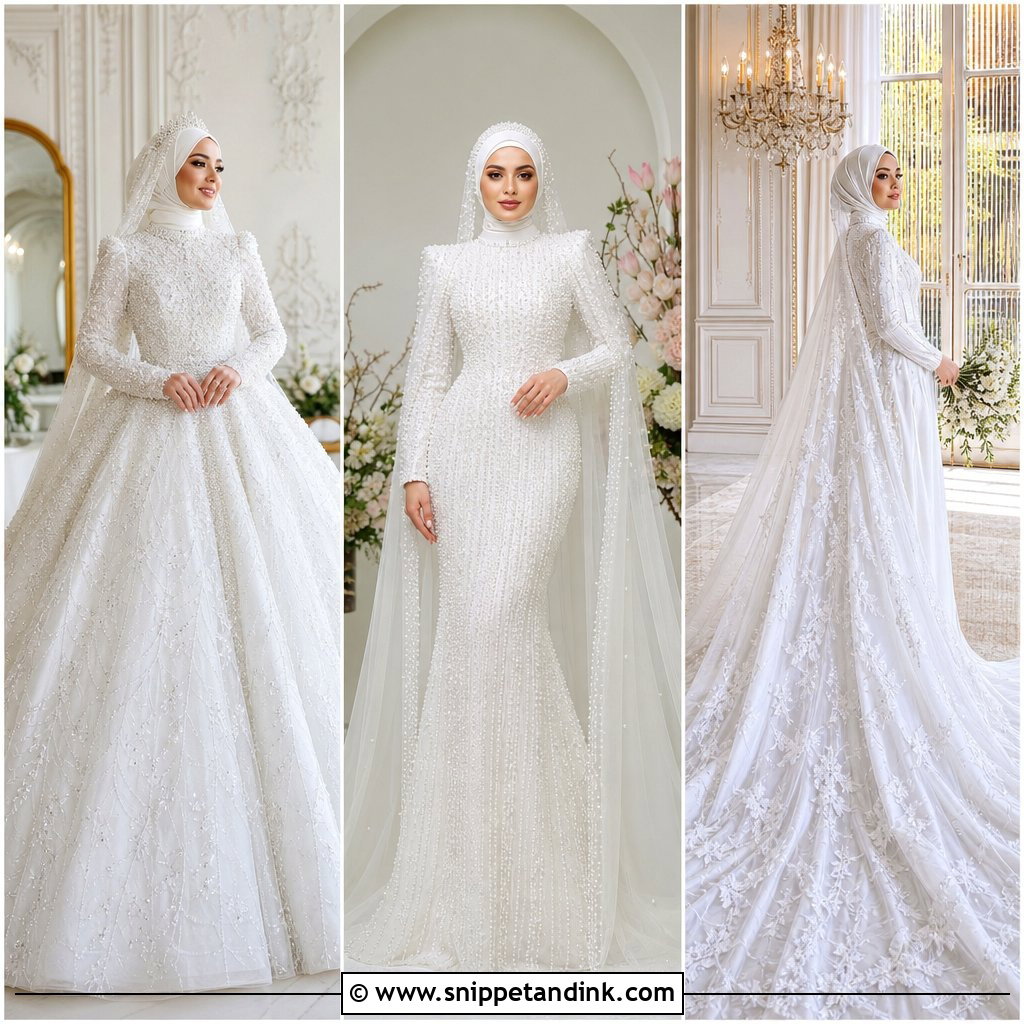
The veil should finish the dress, not compete with it. A lace gown wants a plain veil; a plain satin or crepe dress can take a lace edge or scattered pearls. With sleeves and a high neck, fingertip or chapel length usually balances best. Look at the back in the mirror, because a veil over buttons or a train should let them show through. Set the comb just above an updo so it sits steady when people hug you.
Turning a Strapless Favorite Into a Modest Gown
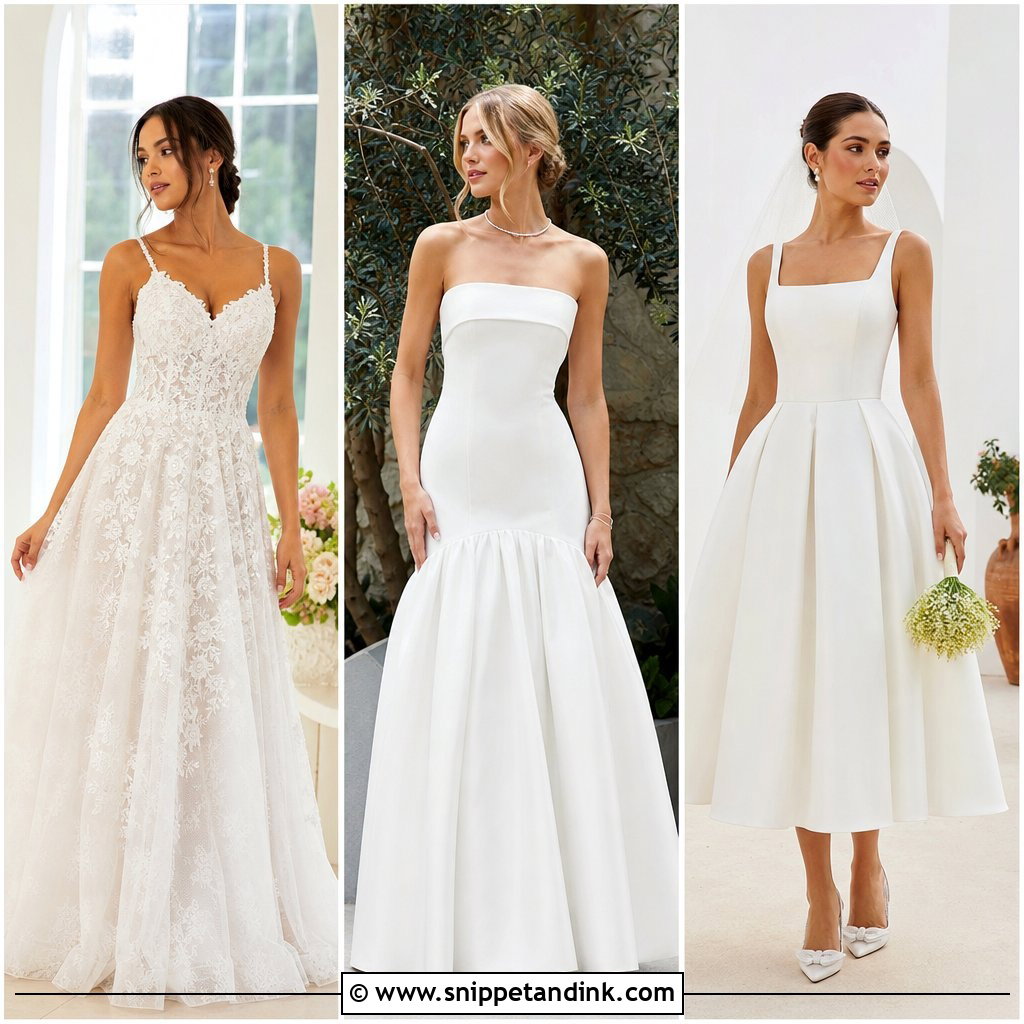
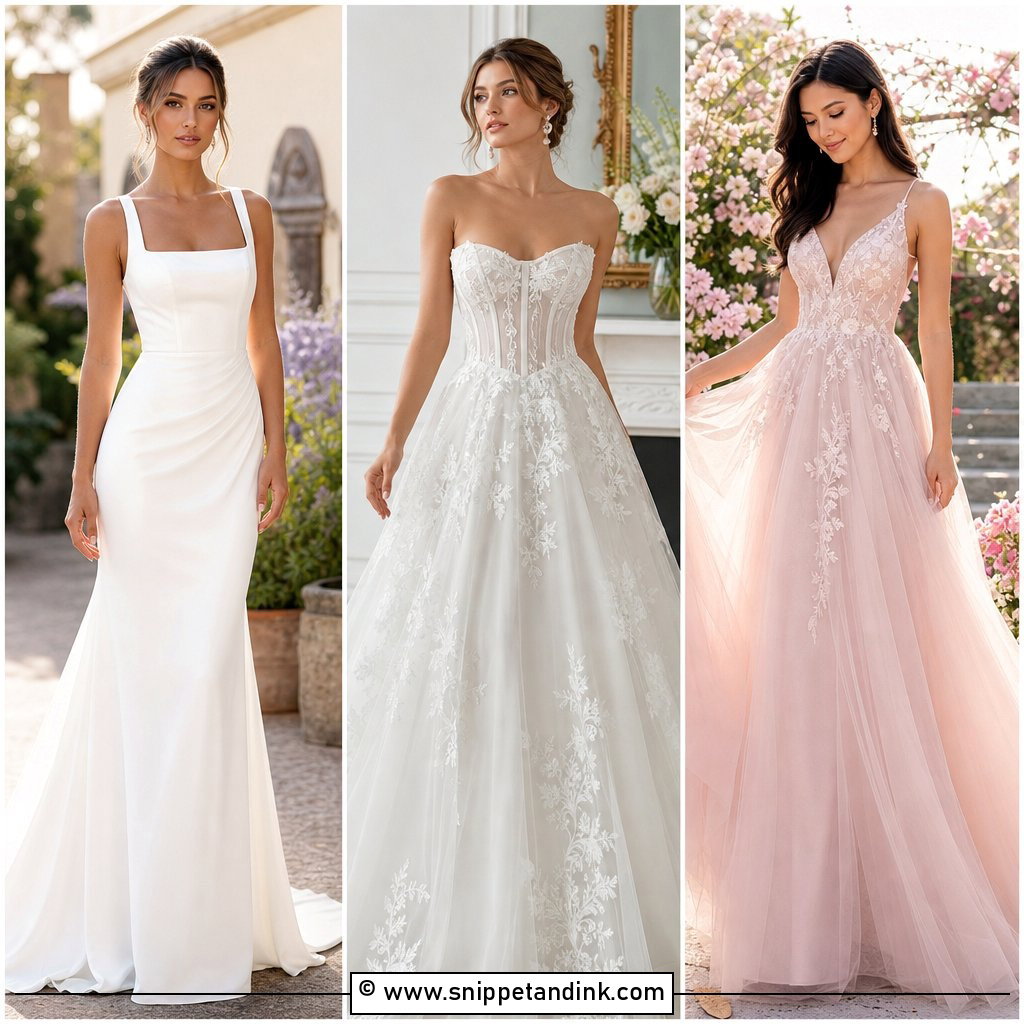
Plenty of brides find the dress and then realize it’s strapless. That isn’t the end of it. A seamstress can add sleeves cut from matching lace, build a higher back panel, fill a low neckline with a lined illusion yoke or line sheer lace. The best results come when the shop orders extra fabric or lace along with the dress, so ask at the moment you order; matching it months later is often impossible.
Allow time. Adding sleeves and a back panel is far more work than a hem and usually takes two or three fittings, so start alterations around two to three months before the wedding. Wear the shoes and undergarments you’ll actually wear to every one of them.
One dress or two?
Some brides wear a simple white dress for the sealing and change into a reception gown, which frees them to choose shorter sleeves or a softer ivory later. Others want one dress from morning to night. Neither is better, but two dresses mean two sets of fittings, so decide early.
Dressing for the Sealing Room and the Dance Floor
Modest wedding dresses don’t have to be plain. Sleeves, higher backs, careful necklines and lined fabrics can be built into a gown that suits your shape and your setting. Start with what the temple asks, test the white, and begin alterations early. Then follow the fabric and silhouette you love most. A dress that lets you hug, sit and kneel without a second thought is the one to keep.
You'll Like These Ideas:






Leave a Reply