
Champagne is the shade I reach for when a bride tells me bright white makes her look washed out. It sits between ivory and gold, and the range is wider than most people expect: some champagne gowns read almost beige, others lean honey or faintly pink. Fabric shifts it again. Satin throws the colour back as a warm sheen, while lace, chiffon and tulle diffuse it into something quieter. Below are twenty gowns I’d happily put a bride in, each styled from veil to shoes, with notes on what I check at the fitting and where each one can trip you up.
Testing Champagne Against Your Skin Before You Fall for a Silhouette
Champagne isn’t one colour. Bridal labels use the name for everything from pale oyster to rich gold, and some collections call a pinkish blend champagne too. Before I let a bride fall in love with a shape, I check the shade against her skin, because the wrong champagne can make anyone look tired.
What I do at the first appointment
- Hold the fabric against a bare forearm or a clean jawline, so foundation doesn’t skew what you see.
- Put an ivory sample and a champagne sample under your chin side by side. If the champagne makes your skin look grey or yellow, try one with more pink and less gold.
- Look near a window in daylight, then under the shop’s lights. Many salons are lit warm, which flatters champagne more than plenty of venues will.
- Take a phone photo with the flash on. Flash bleaches pale champagne toward white and can make a nude lining read as bare skin.
Fair skin with pink undertones usually does well with champagne that carries a hint of blush. Olive and deeper skin tones often carry the golden versions, which can look flat on very fair skin. These are tendencies, not rules, which is why I look rather than guess.
1. Champagne Satin A-Line Bridal Dress
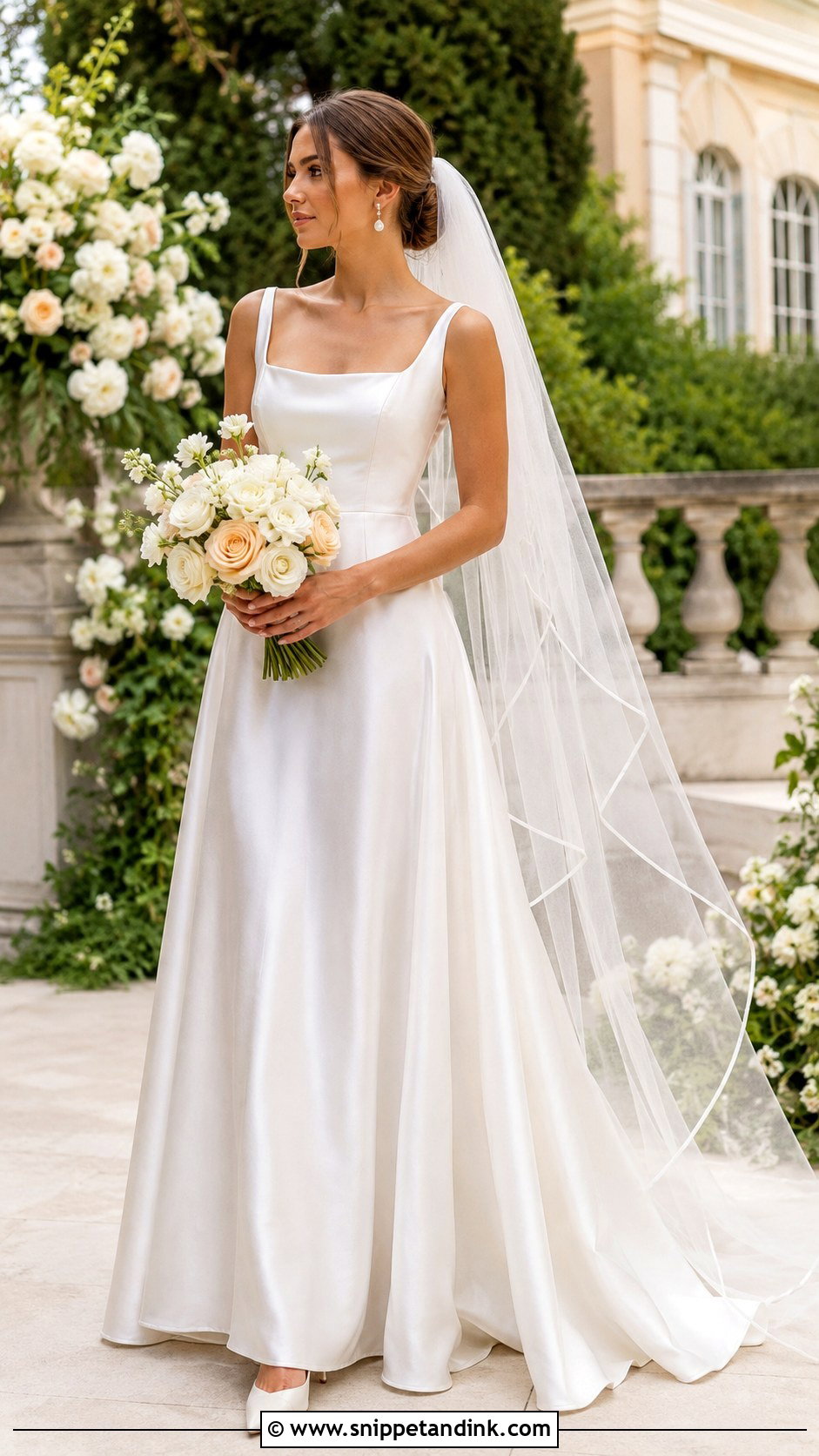
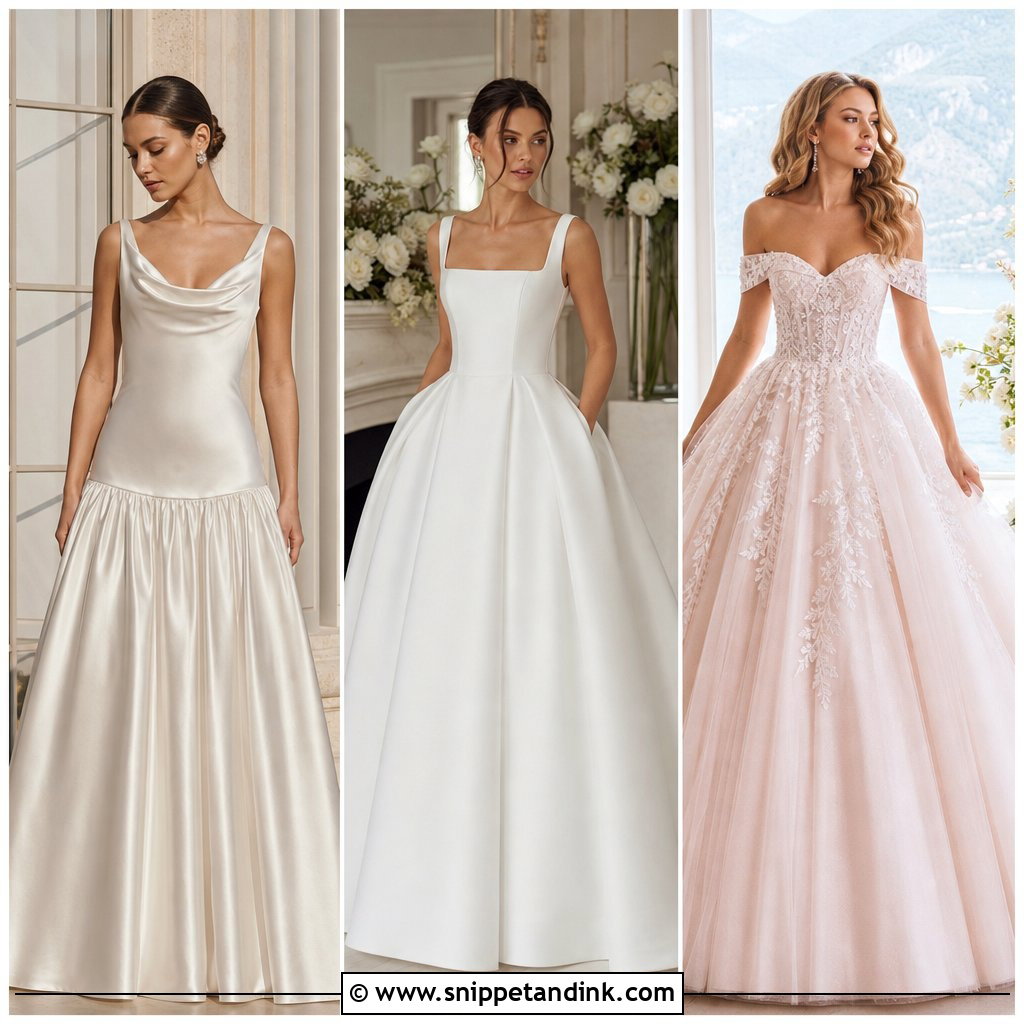
Satin A-lines are the gowns I trust most for a first champagne try-on, because the skirt falls straight from the natural waist and hides very little about how the colour sits on your skin. Wide straps or a soft curve at the neckline keep the bodice secure without boning digging in. The catch with satin is that it shows every seam and every crease from the car ride, so I always book a steam at the venue. Keep embellishment minimal and let the light do the work. Pointed ivory pumps, pearl drops and a fingertip veil edged in narrow satin ribbon finish it, with a sleek low bun to keep the neckline clear. White roses mixed with pale peach blooms pick up the warmth of the fabric.
2. Champagne Lace Ball Gown Bridal Dress
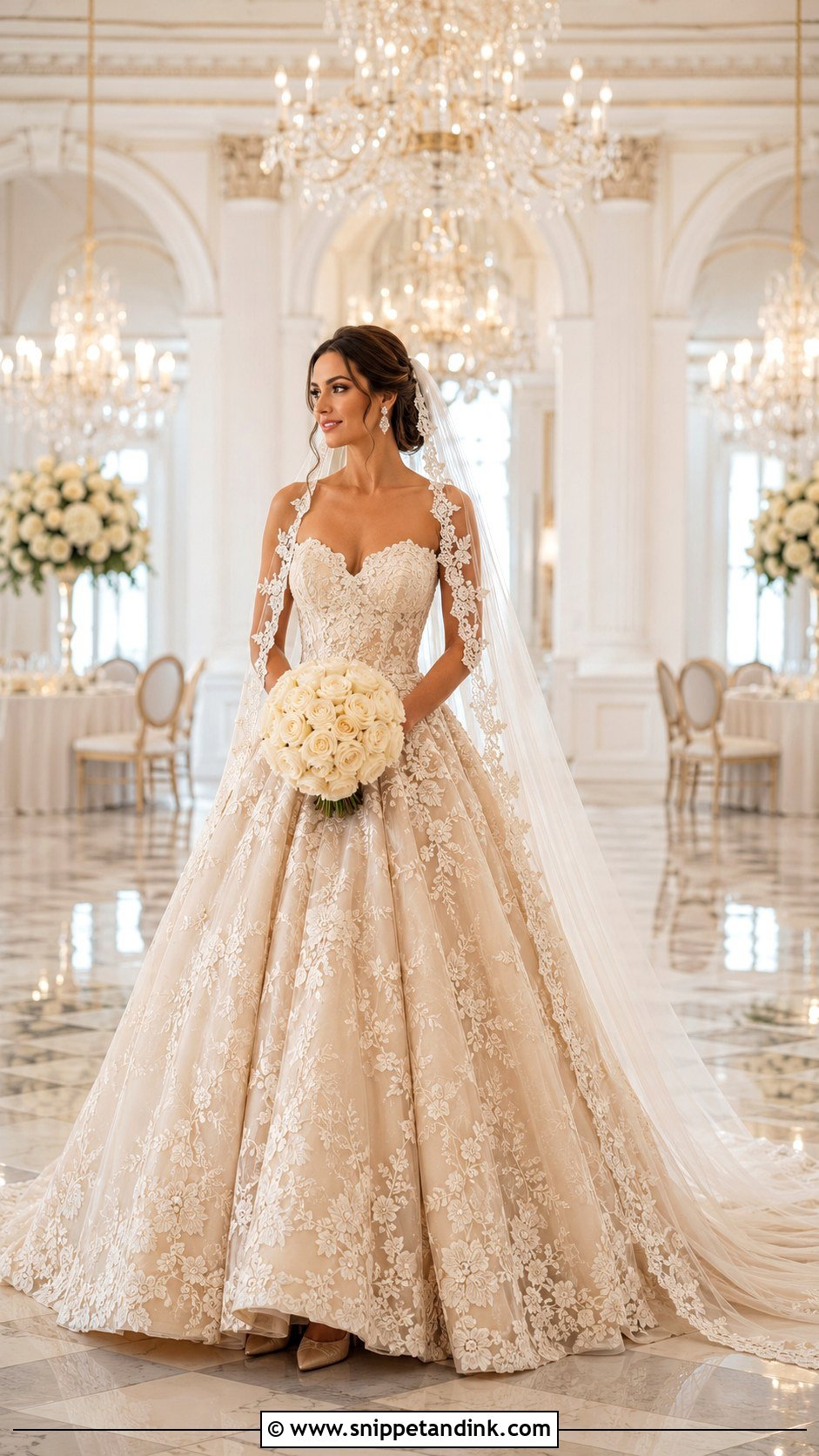
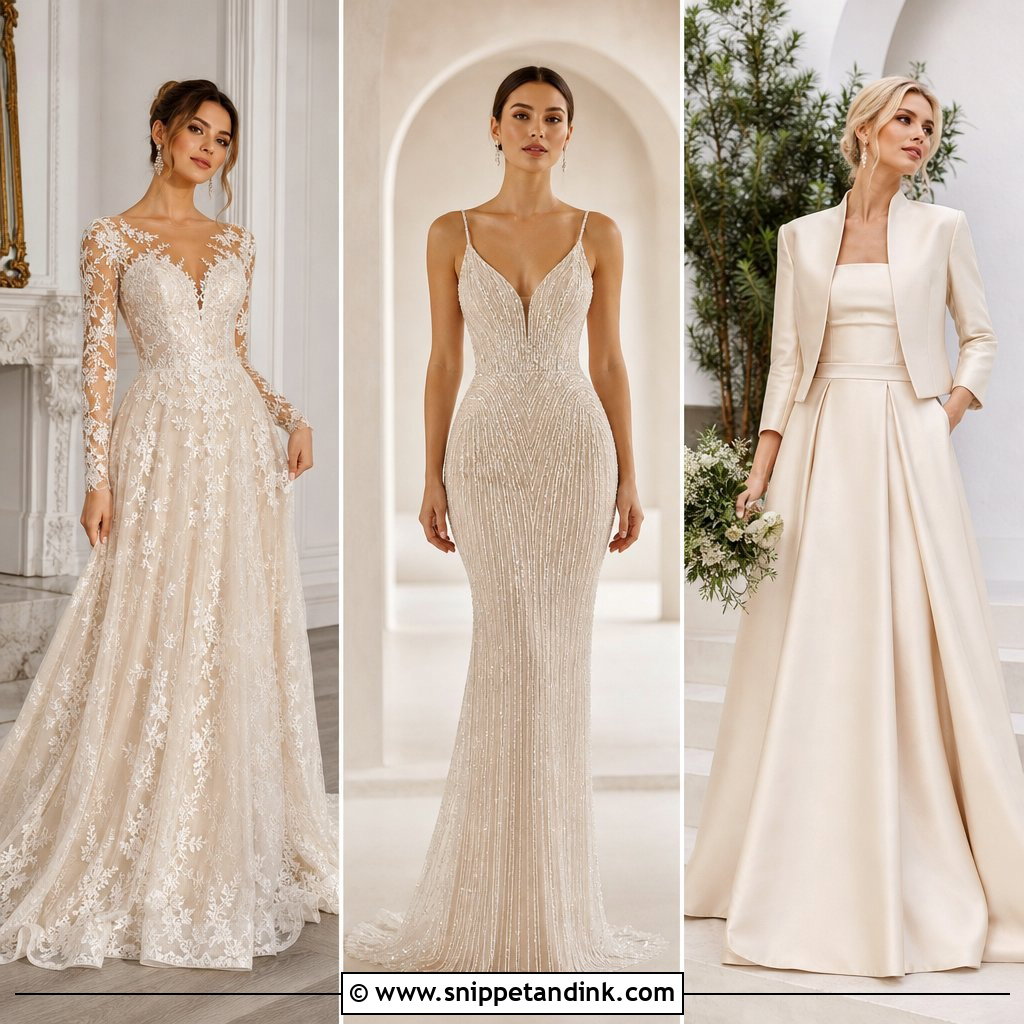
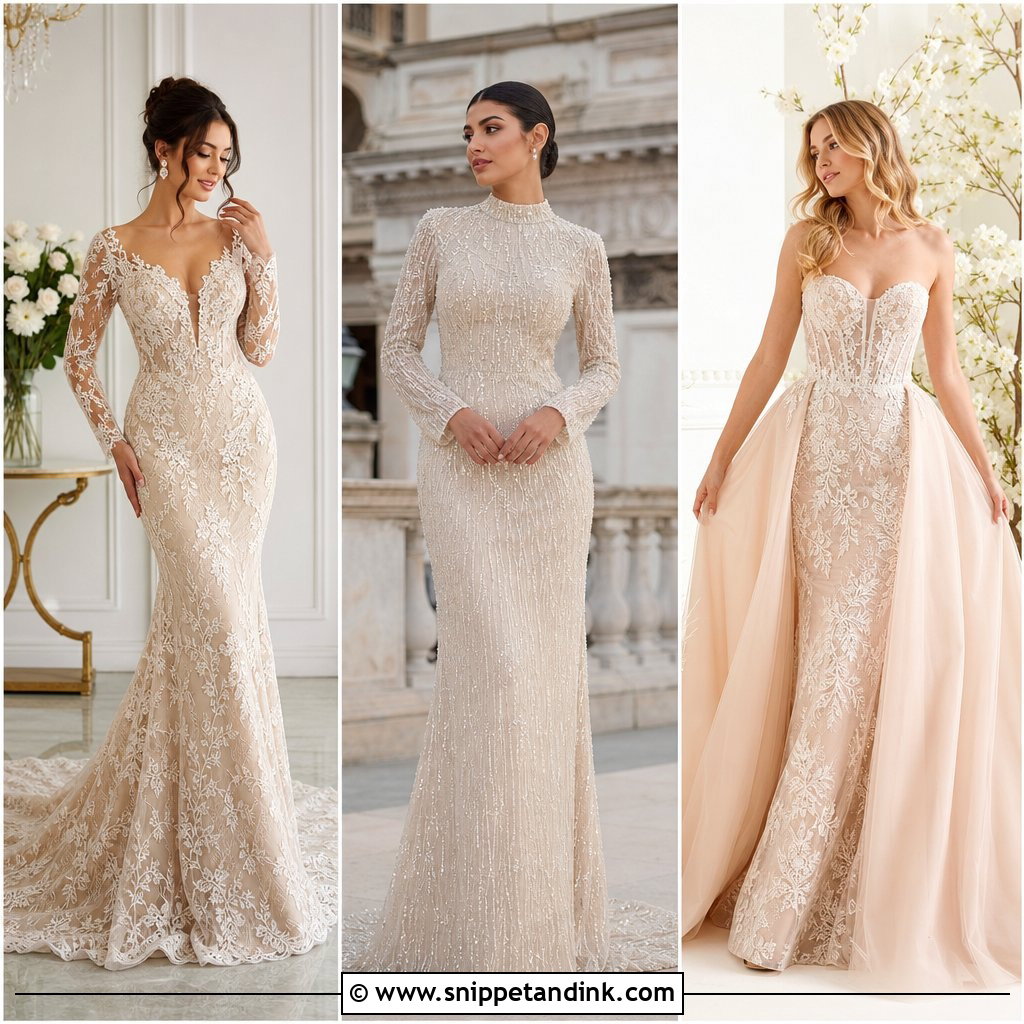
Ivory lace laid over a champagne lining is one of my favourite tricks, because the darker underlayer makes every floral motif readable from across a room. In a ball gown with a fitted bodice and full skirt, that contrast gives depth without any sparkle at all. A sweetheart or soft scoop neckline and a structured waist hold the shape. What I watch at fittings is skirt weight: lace over several layers of netting gets heavy by the reception, so ask for a bustle that genuinely lifts the train off the floor. Crystal studs, champagne heels and a cathedral veil edged in matching lace suit it, with a neat chignon and a round bouquet of cream roses and white ranunculus.
3. Champagne Strapless Mermaid Bridal Dress
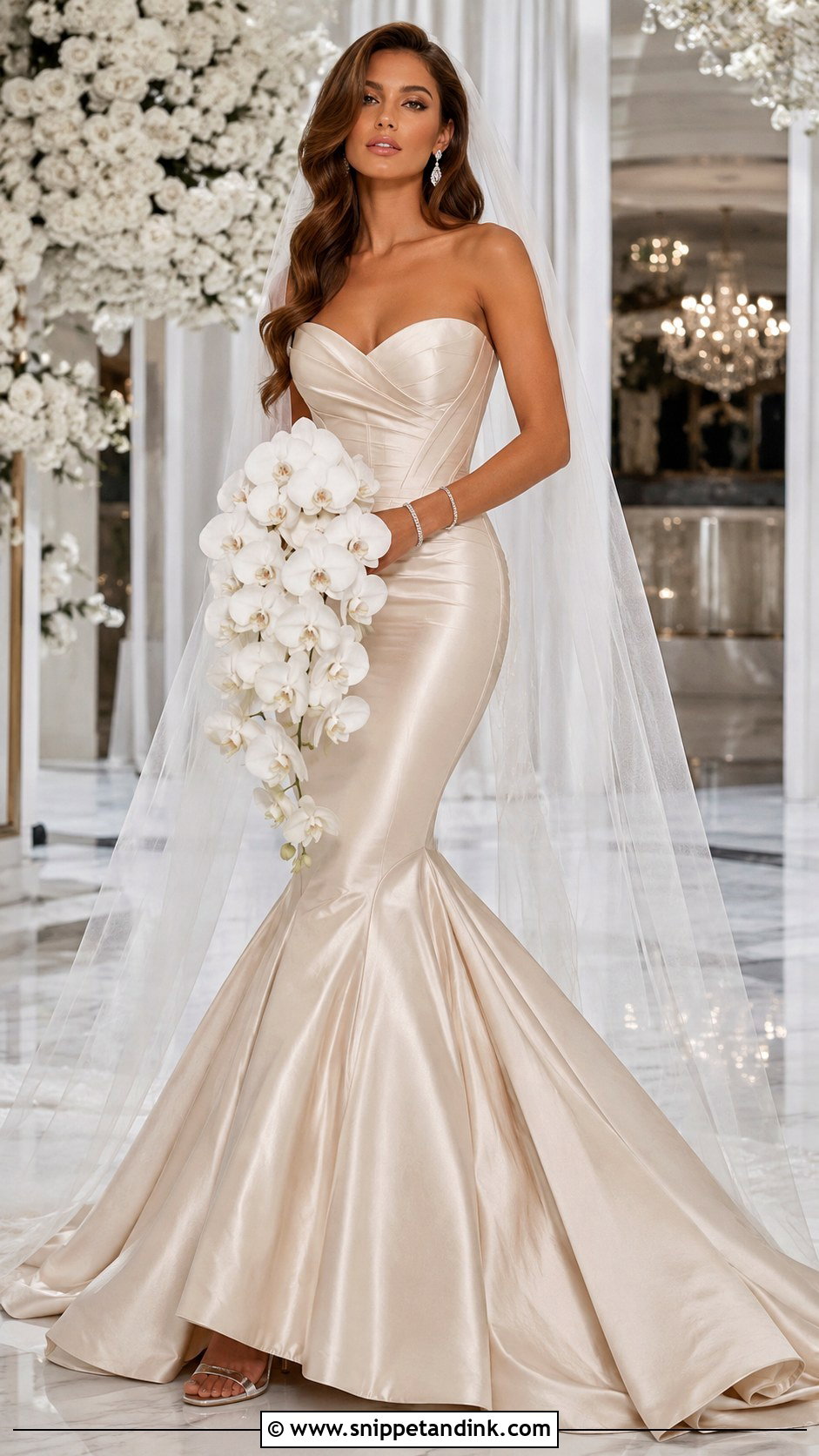
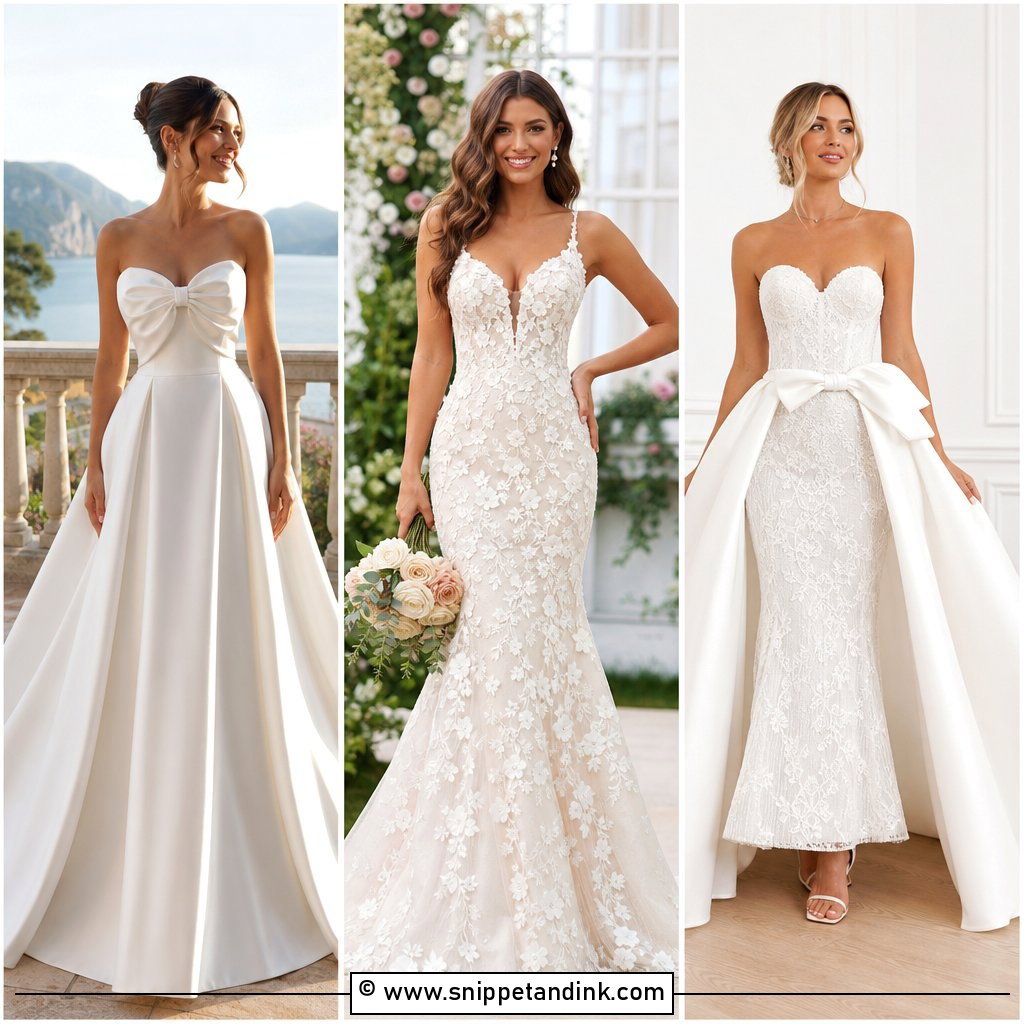
A strapless mermaid only works when the corset is doing its job. I look for internal boning and a waist stay that let the bodice hold itself up, because if you’re tugging at the neckline during the first dance, the fit is wrong, not your posture. The gown follows the body to the knee before it flares, so stairs and sitting take practice; walk in it at your final fitting rather than discovering it on the day. Satin gives a sculpted line, while lace or beading adds texture that disguises small fit wrinkles. Metallic sandals, a slim tennis bracelet and medium drop earrings keep the shoulders open, and a sheer cathedral veil softens the fitted shape. Smooth waves over one shoulder and a cascade of ivory orchids suit a ballroom with a formal dress code.
4. Champagne Long Sleeve Bridal Dress
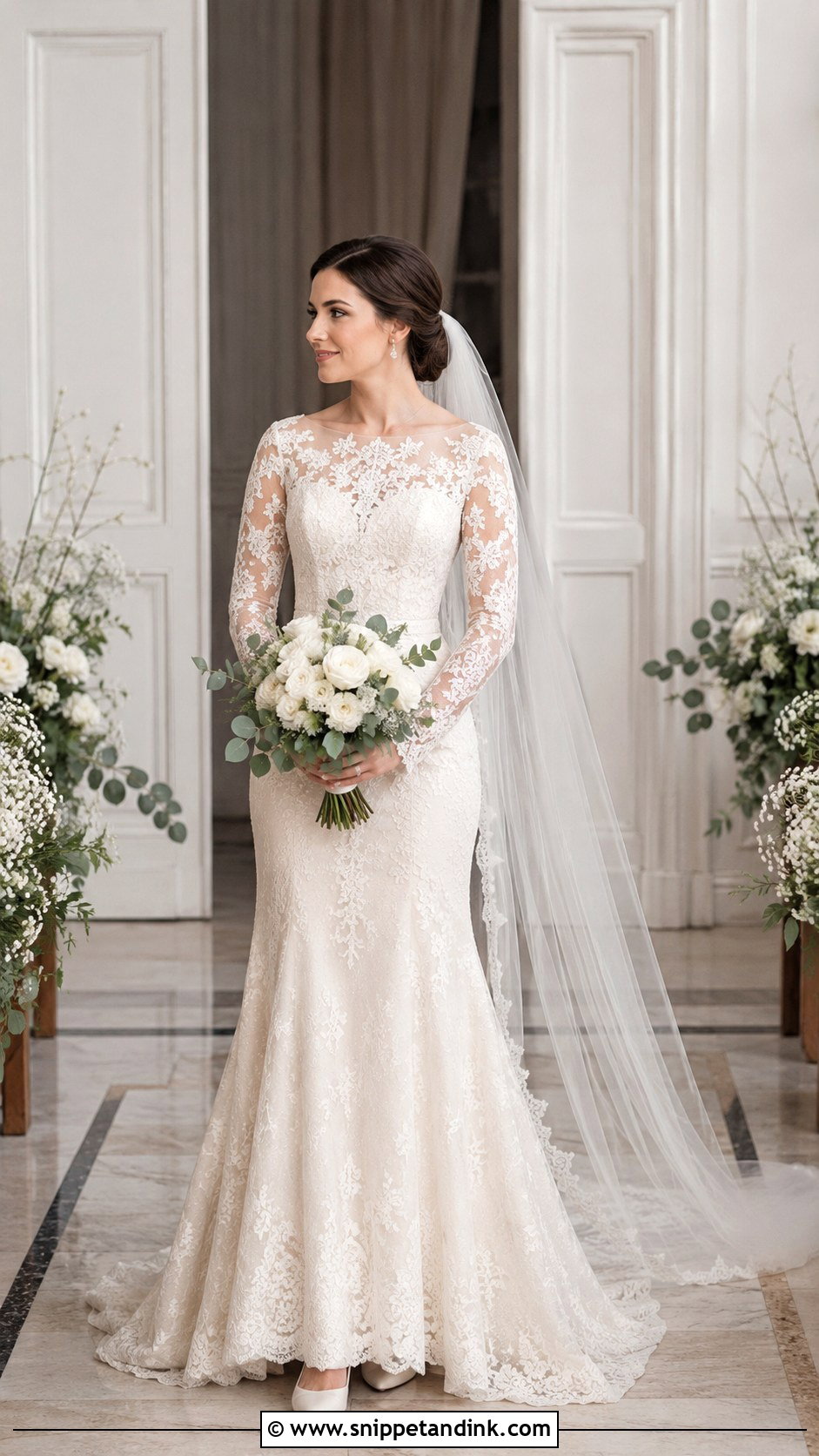
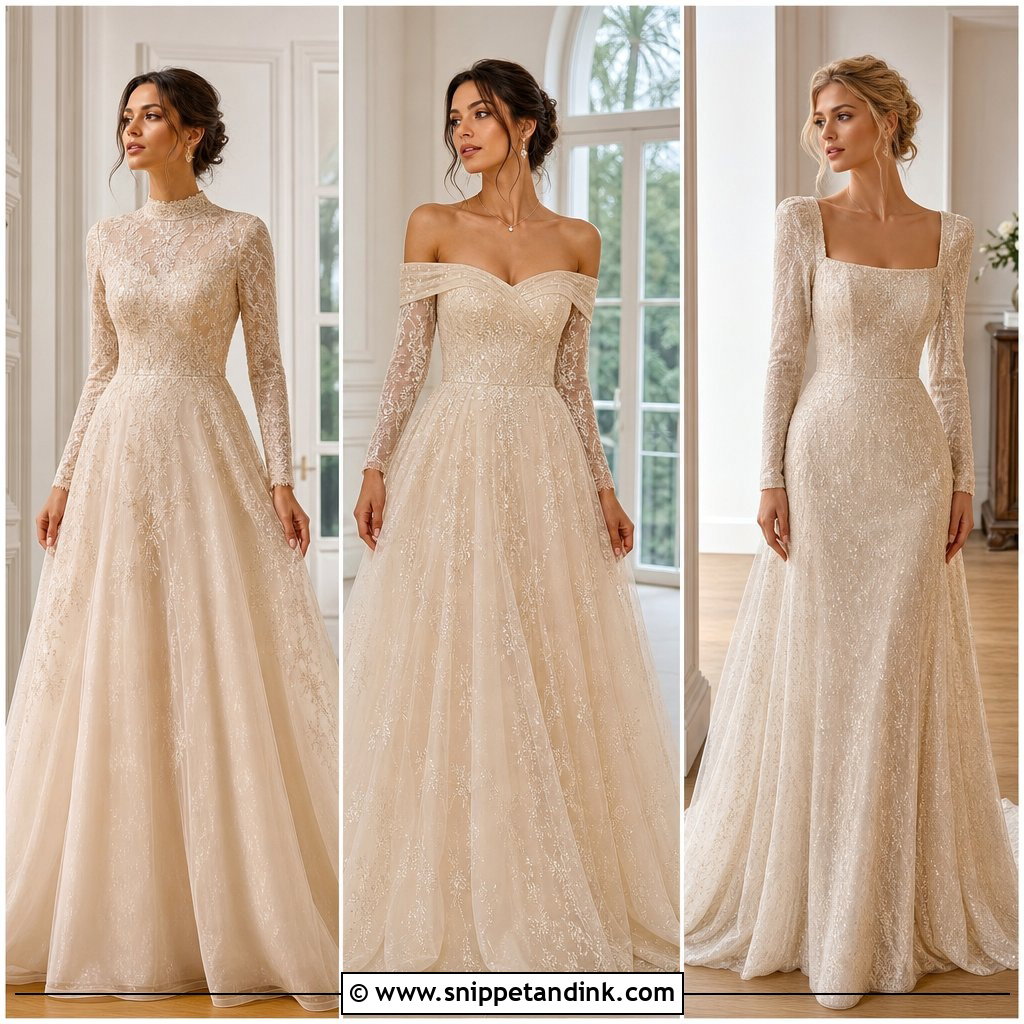
Sleeves change how a gown moves more than brides expect. Sheer lace sleeves feel light, but fitted crepe sleeves need room for you to lift your arms, so I ask every bride to hug me at the fitting before we sign off on them. A defined waist and softly flared skirt balance the covered top half. Fabric-covered buttons down an open back, or an illusion panel, give the photographer something to work with from behind. Closed-toe champagne pumps, small pearl earrings and a chapel veil complete it, and a low twisted bun keeps the lace visible at the neck. In autumn, winter or a church that asks for covered shoulders, this is the one I’d suggest first.
5. Champagne Off The Shoulder Tulle Bridal Dress
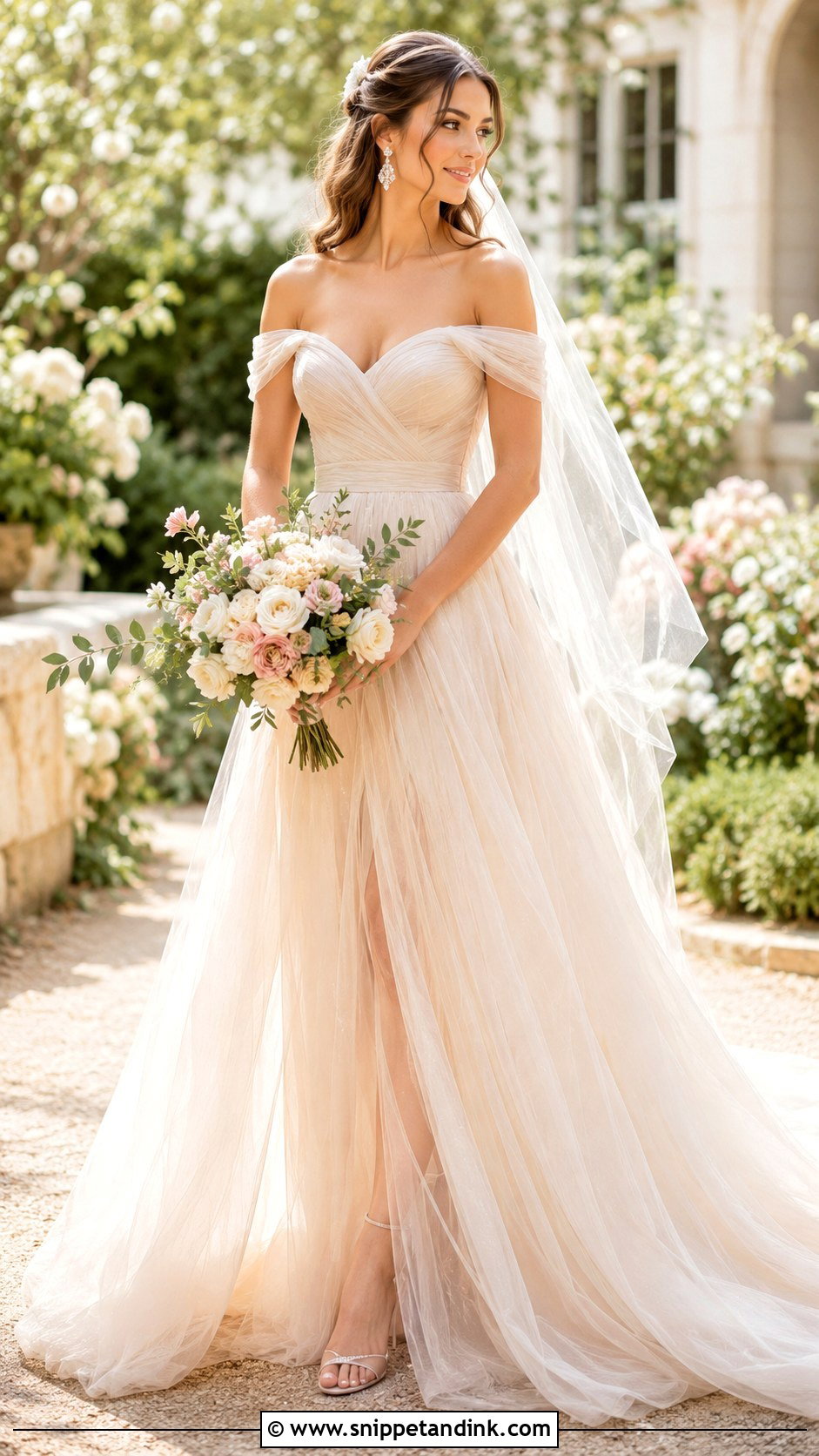
Champagne tulle catches daylight in a way I find hard to beat at outdoor ceremonies. The off-the-shoulder line frames the collarbone, but how those bands are cut decides whether you can raise a glass. Draped sleeves or narrow tulle bands should rest on the upper arm without pinning it to your side. Tulle layers also snag on gravel, bark and bouquet wire, so I check the hem before garden portraits. Crystal earrings, pale champagne heels and a light veil that blends into the skirt keep the colour continuous. A half-up style suits the neckline and stays put longer than loose waves, and ivory roses with trailing greenery sit right on an estate lawn.
6. Champagne Silk Slip Bridal Dress
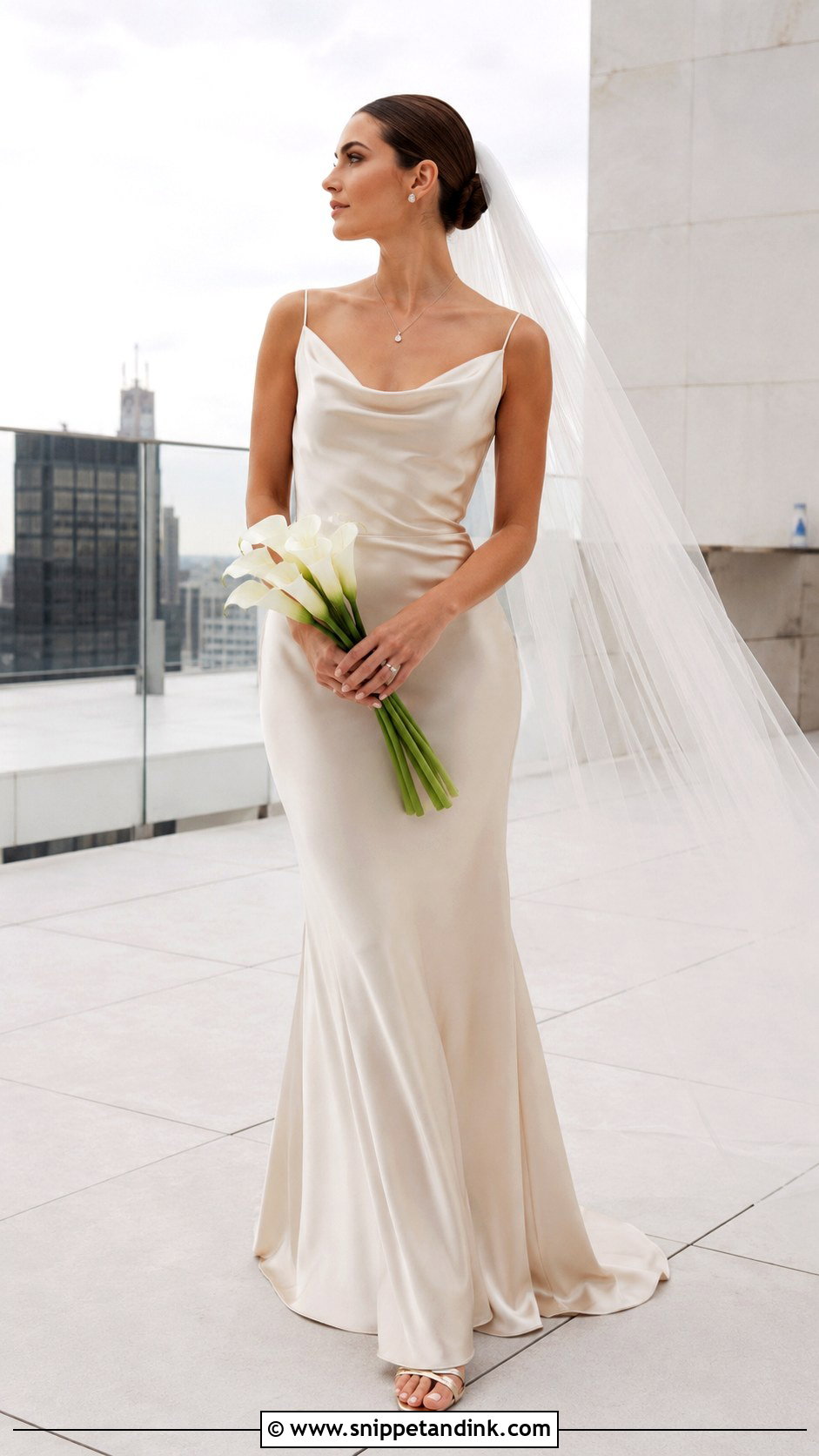
There is nowhere to hide in a slip dress, and that’s the honest trade-off. Bias-cut silk skims rather than clings when it’s cut well, but it shows underwear lines and marks if you sit on a damp chair. I send brides to the fitting in the exact underwear they plan to wear, and I often suggest a built-in cup. A cowl or square neckline keeps it modern. Narrow metallic sandals, a fine pendant and small crystal earrings are plenty, and a floor-length sheer veil adds the ceremony moment. A smooth bun with a compact bunch of calla lilies suits a rooftop, a city registry or a small destination wedding.
7. Champagne Basque Waist Bridal Dress
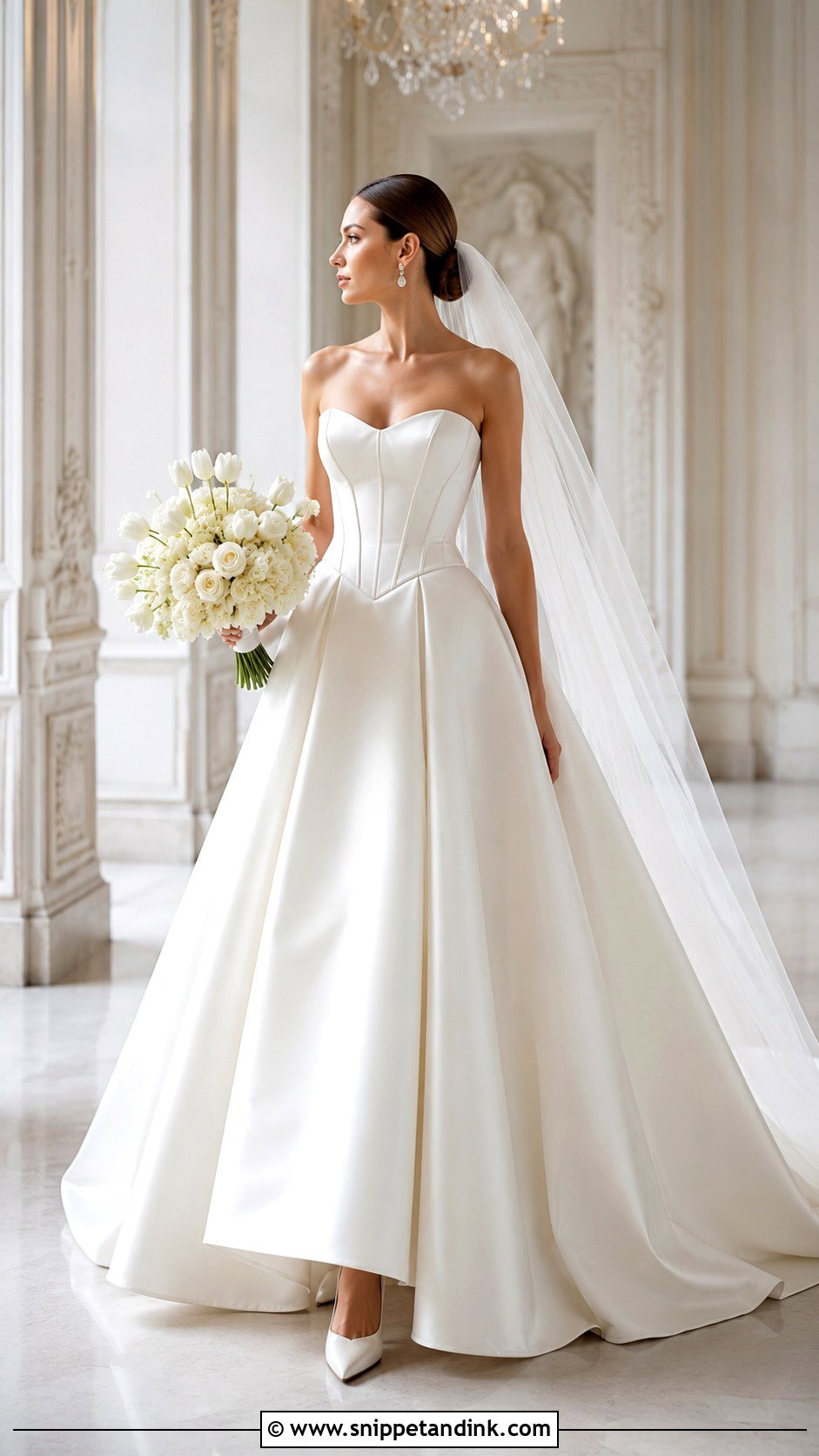
The pointed V of a champagne basque waist bridal dress lengthens the torso, but only when the point sits exactly at your natural waist. I mark that spot with a pin at the first fitting, because even a centimetre too high or low changes the whole proportion. Matte satin or mikado shows the construction far better than soft fabric. Pointed satin pumps, pearl and crystal earrings and a long veil tucked beneath a smooth bun carry the vintage line. Gloves add formality; keep them plain so the waist stays the focal point. A structured bouquet of ivory roses and cream tulips fits a stately home.
8. Champagne Square Neck Bridal Dress
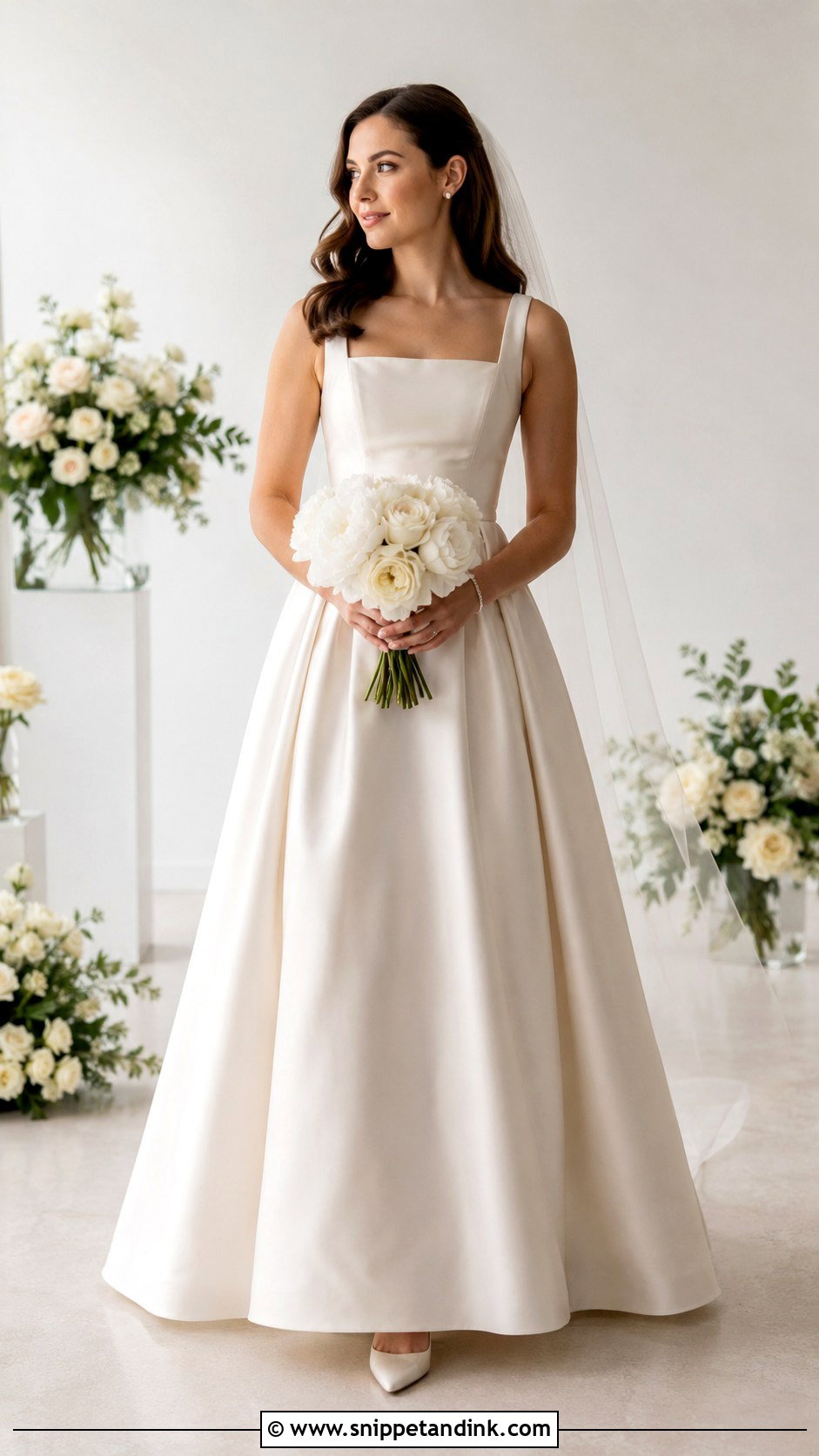
A square neckline needs firm fabric, otherwise the corners collapse and the shape turns into a scoop by mid-afternoon. Mikado, satin or structured crepe keeps it crisp. Wide straps help, and at the fitting I check they don’t slide toward the shoulder edge when you reach forward to sign the register. A smooth A-line or pleated skirt sits well under it. Pearl studs, a delicate bracelet and closed-toe pumps leave the neckline uncluttered, and the veil should anchor at the back of the head rather than the crown. White peonies and olive-toned greenery bring out the warm side of the colour.
9. Champagne High Neck Beaded Bridal Dress
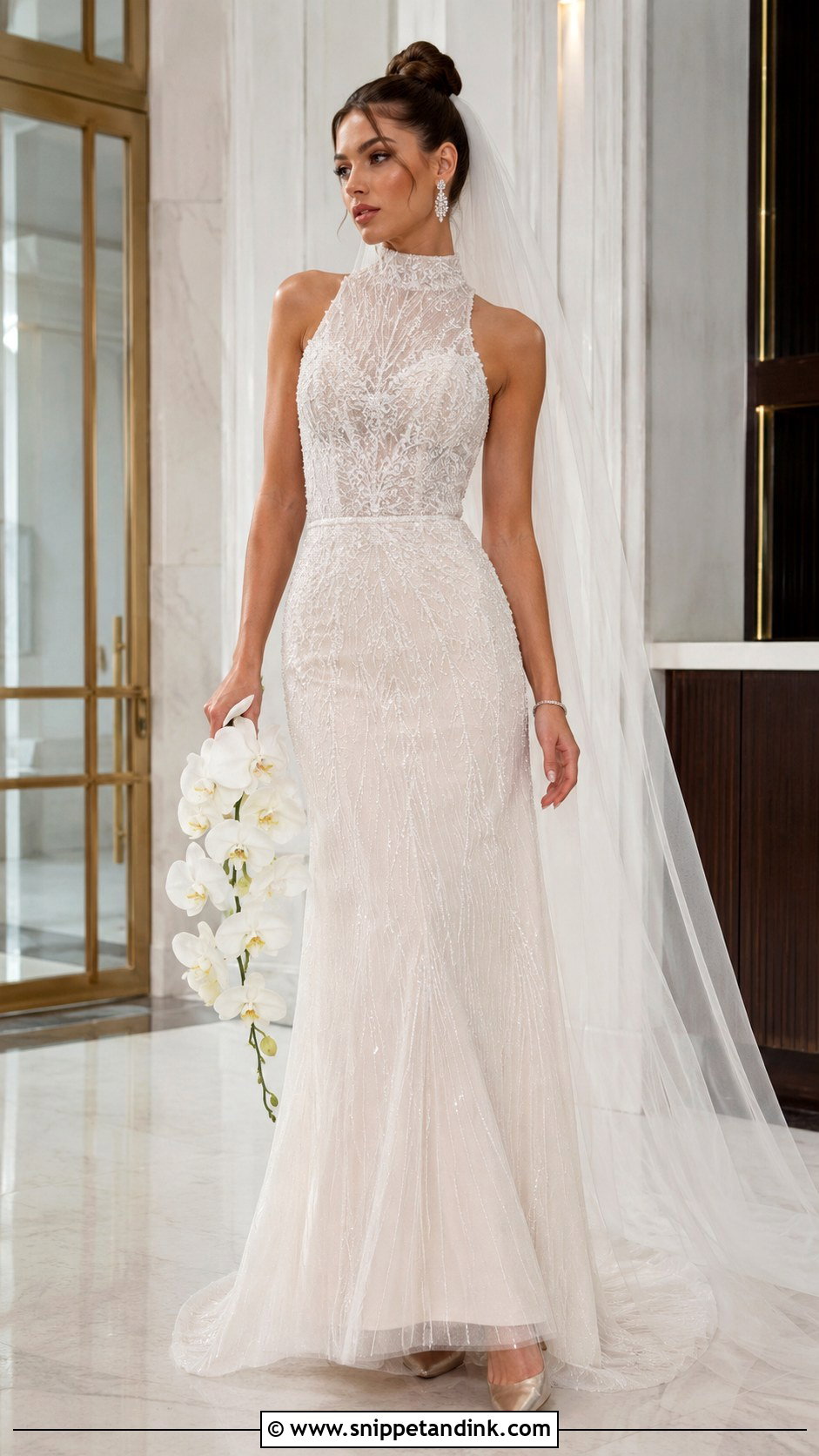
With a high neck, the beading sits right under your face in every close-up, so I inspect it under a phone torch in the shop. Fine beads and embroidered tulle sparkle evenly; dense, heavy beading can pull the neckline forward and scratch the inside of your arms by evening. Sleeveless keeps it fresh, and an open or keyhole back gives contrast. Skip the necklace entirely. Crystal earrings, metallic pointed heels and a bracelet are enough, with a plain veil that doesn’t fight the bodice. A sleek high bun lengthens the neck, and a narrow bouquet of white orchids suits an indoor evening reception.
10. Champagne Tea Length Bridal Dress
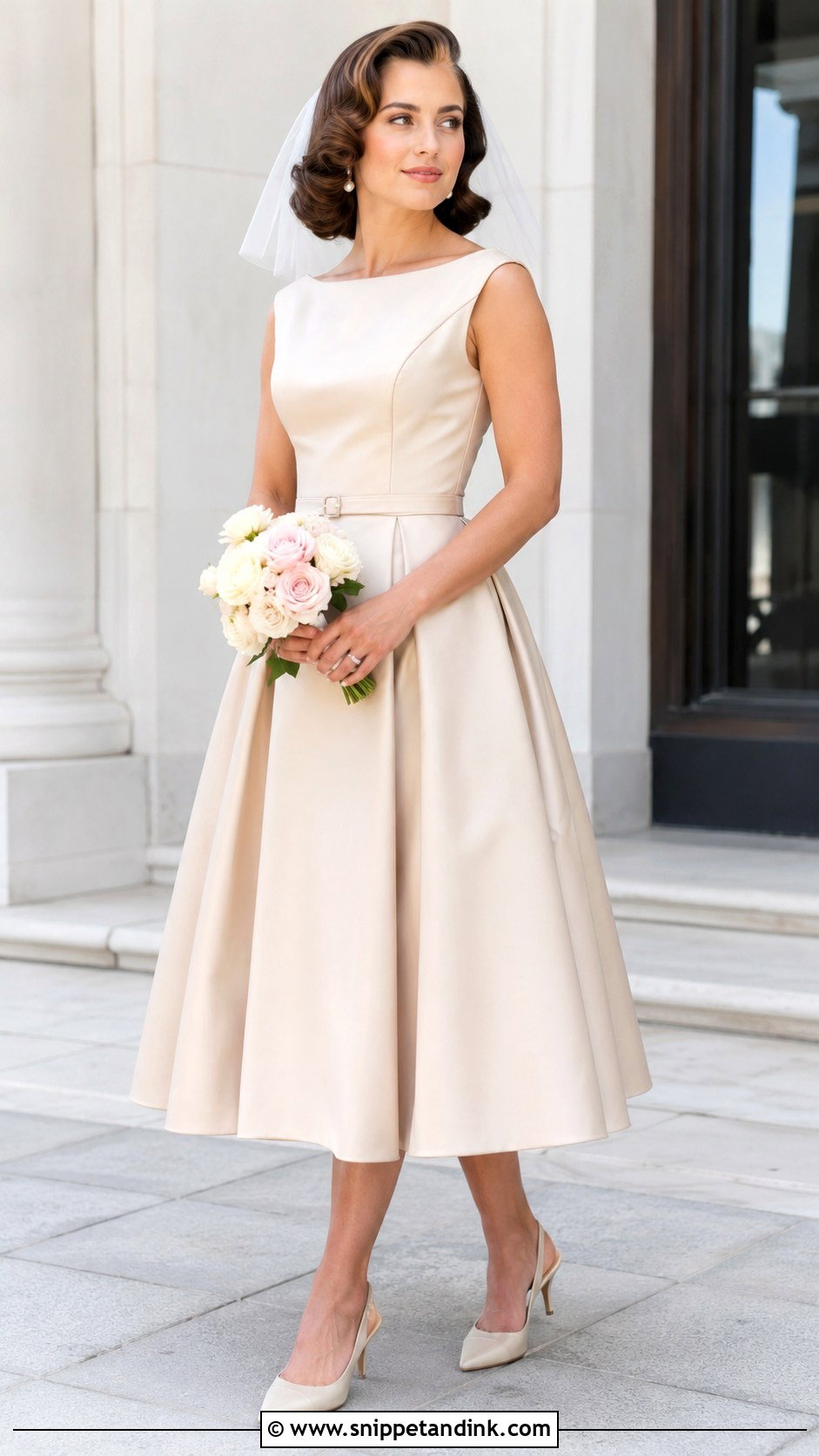
Tea length puts your shoes in every photo, so choose them first and bring them to fittings. The hem should land between knee and ankle, and I pin it with the bride standing in her actual heels, because a hem set in flats looks too short later. Satin, jacquard or layered tulle gives the shorter skirt enough structure to feel bridal. Pointed slingbacks, pearl earrings and a birdcage or shoulder-length veil carry the retro mood, and a thin sparkling belt adds a little shine at the waist. A compact bouquet of cream roses is the right scale. I’d point a courthouse bride or a daytime party straight to this one.
11. Champagne Chiffon Beach Bridal Dress
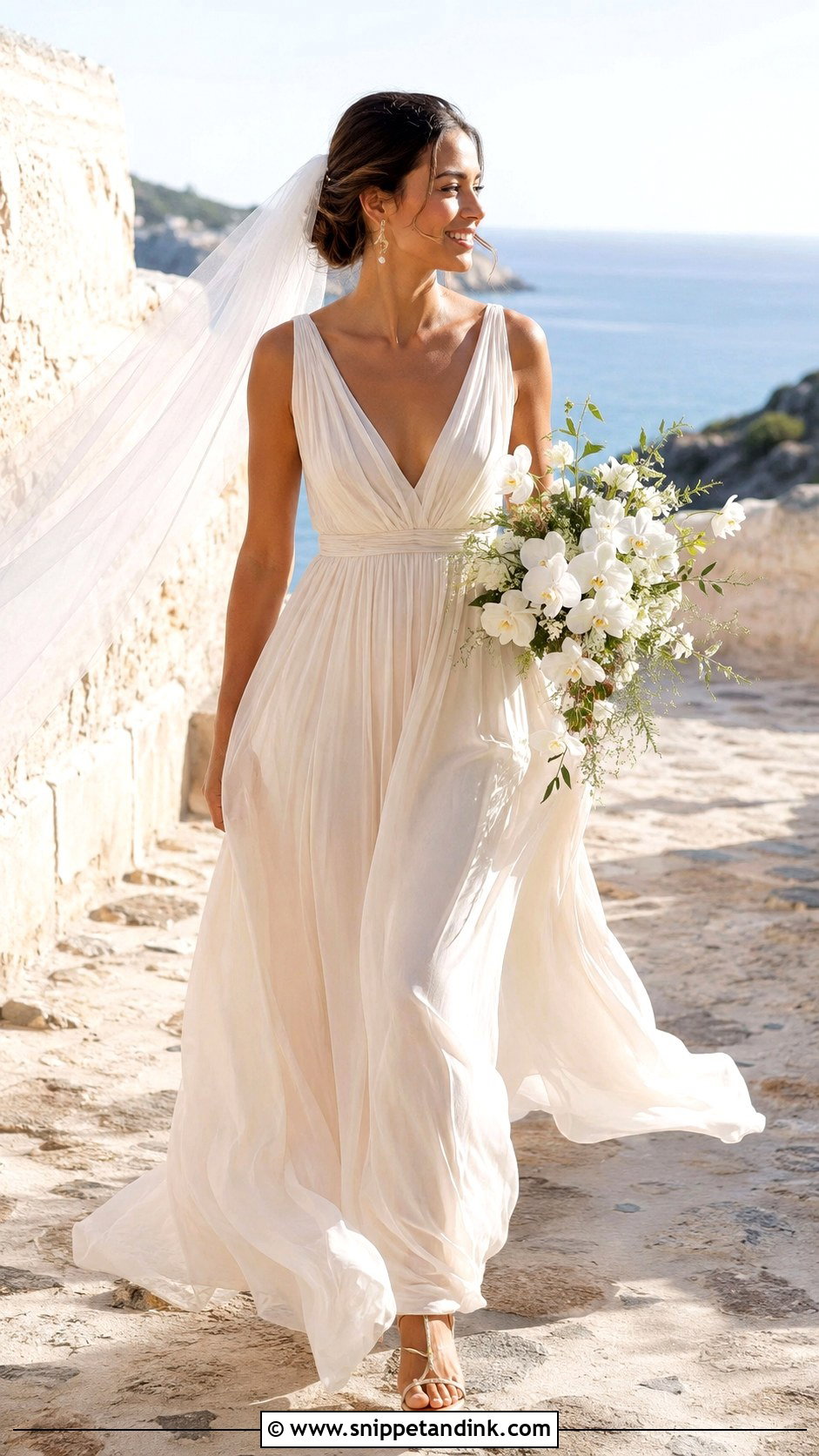
Chiffon moves in the slightest breeze, which is exactly why I like it near water. A flowing A-line or empire waist with a minimal train is far easier on sand than anything with weight at the hem. Ask for a bodice with real support, since chiffon alone won’t hold you in. Pale champagne can also turn see-through in strong backlight, so stand in front of a window at the fitting and check the lining. Flat metallic sandals, small earrings and a fingertip veil you can pull out when the wind picks up keep it practical. Loose waves or a textured low bun and a bouquet of white orchids suit a waterfront ceremony.
12. Champagne Boho Lace Bridal Dress
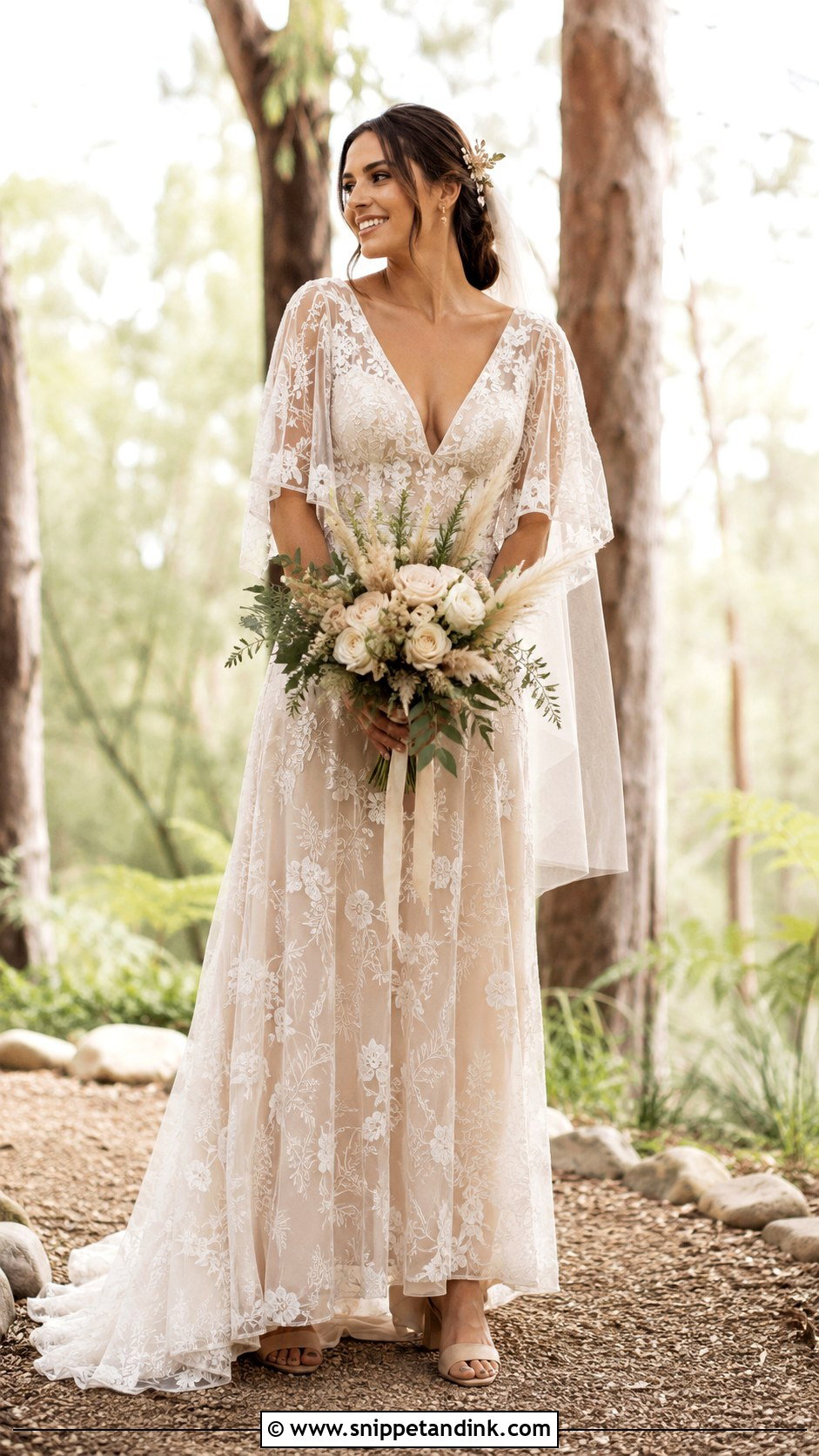
Boho lace should fall softly rather than hold a rigid shape, so I look for botanical lace on a light lining with no heavy netting underneath. Bell sleeves, narrow straps or a modest V reinforce the laid-back aesthetic. Open lace catches on twigs and dried grasses at woodland venues, so I carry a needle and matching thread and fix any pull right away. Neutral block heels sink into grass far less than stilettos. Small gold earrings, a floral comb and a plain veil keep the mood relaxed, and loose waves or a gentle braid sit well with an asymmetrical bouquet of cream flowers and dried grasses.
13. Champagne Plus Size Empire Waist Bridal Dress
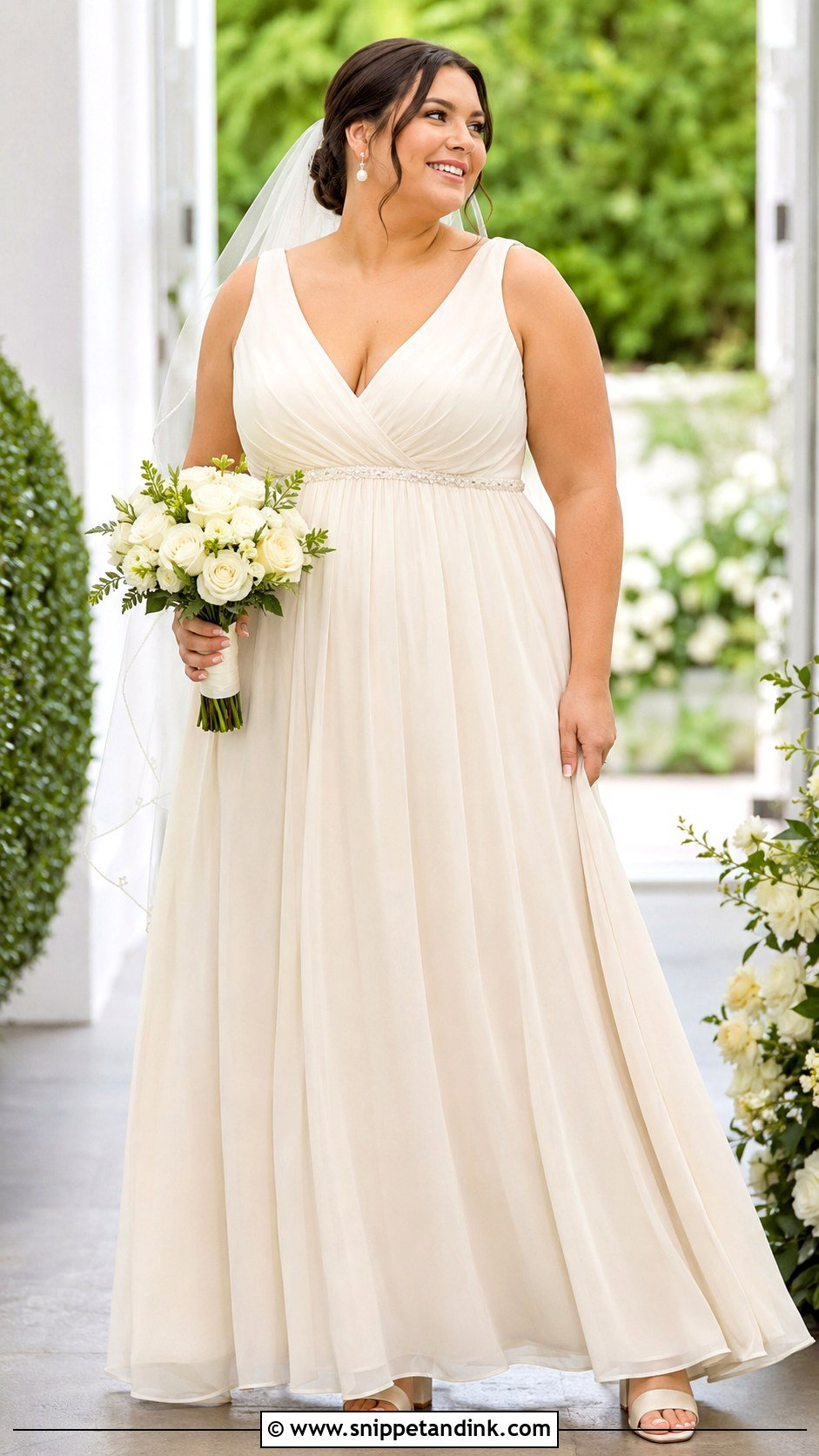
An empire waist starts the skirt just below the bust, so the bodice decides everything. I ask for wider straps or a V-neck with real internal structure, because chiffon on its own won’t support a fuller bust through a long day. The skirt should drop cleanly from the seam without gathers bunching at the hip. Chiffon, soft tulle and light satin give movement without bulk. Cushioned block heels and statement pearl earrings balance the proportion, and a fingertip veil anchors well in a secure low updo. A subtle beaded under-bust band defines the shape. Pair it with white roses and lisianthus.
14. Champagne Petite Sheath Bridal Dress
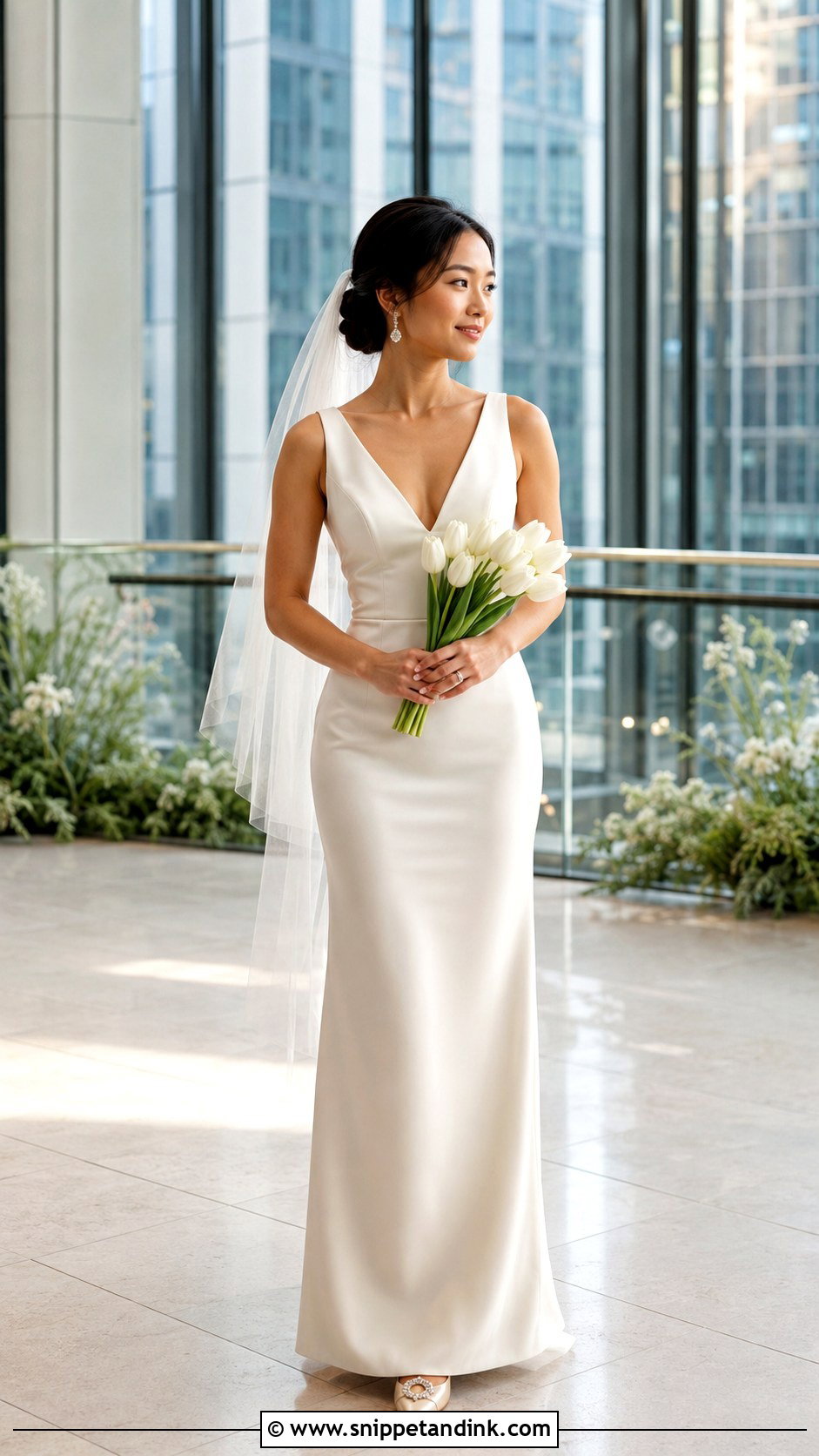
On a petite frame, a sheath works because it keeps one clean vertical line. Where the waist seam lands matters more than the neckline, and I often have it raised slightly so the legs read longer. A V-neck or narrow square neckline extends the line further. Keep embellishment around the bodice; scattered detail on the skirt breaks up your height. Petite brides should also budget for a bigger hem alteration than they expect. Pointed champagne heels, small drops and a narrow chapel veil suit it, with a sleek updo for height and a compact bouquet of white tulips.
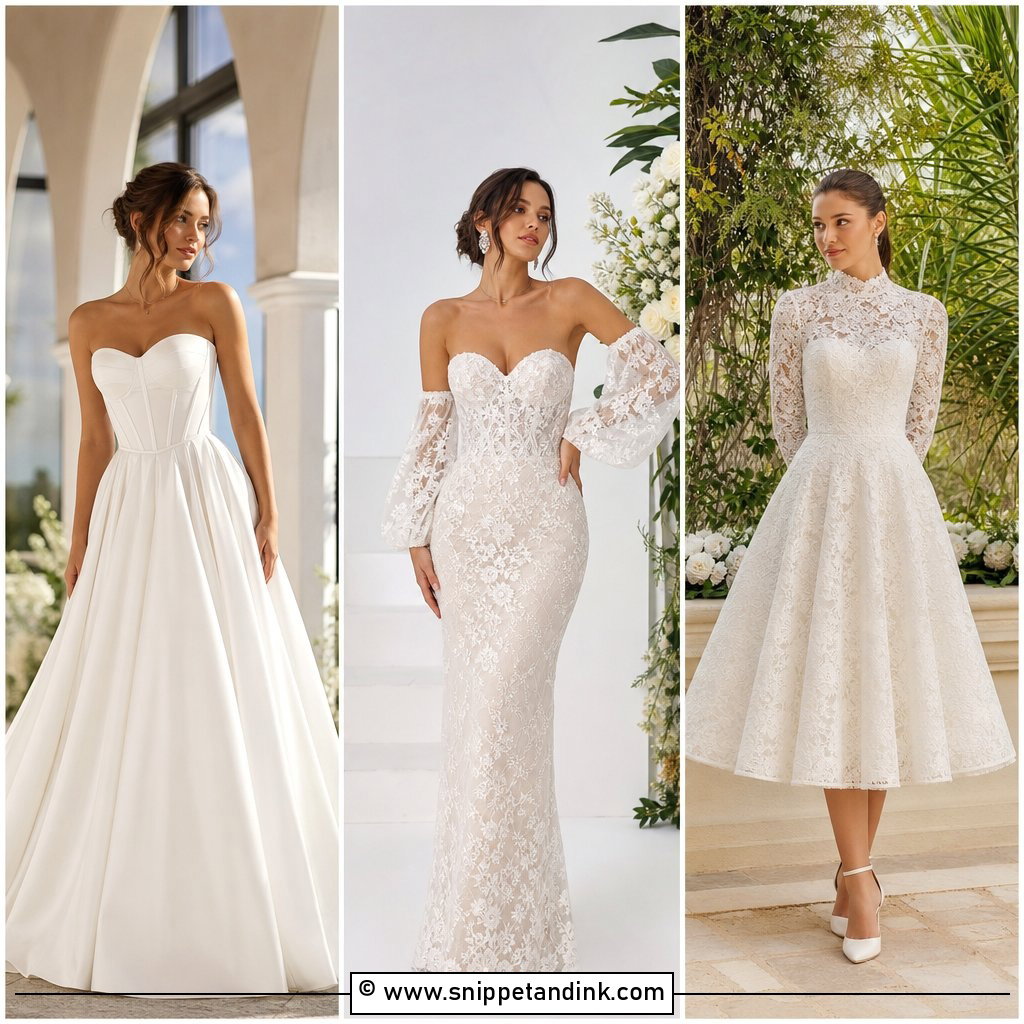


15. Champagne Floral Applique Bridal Dress
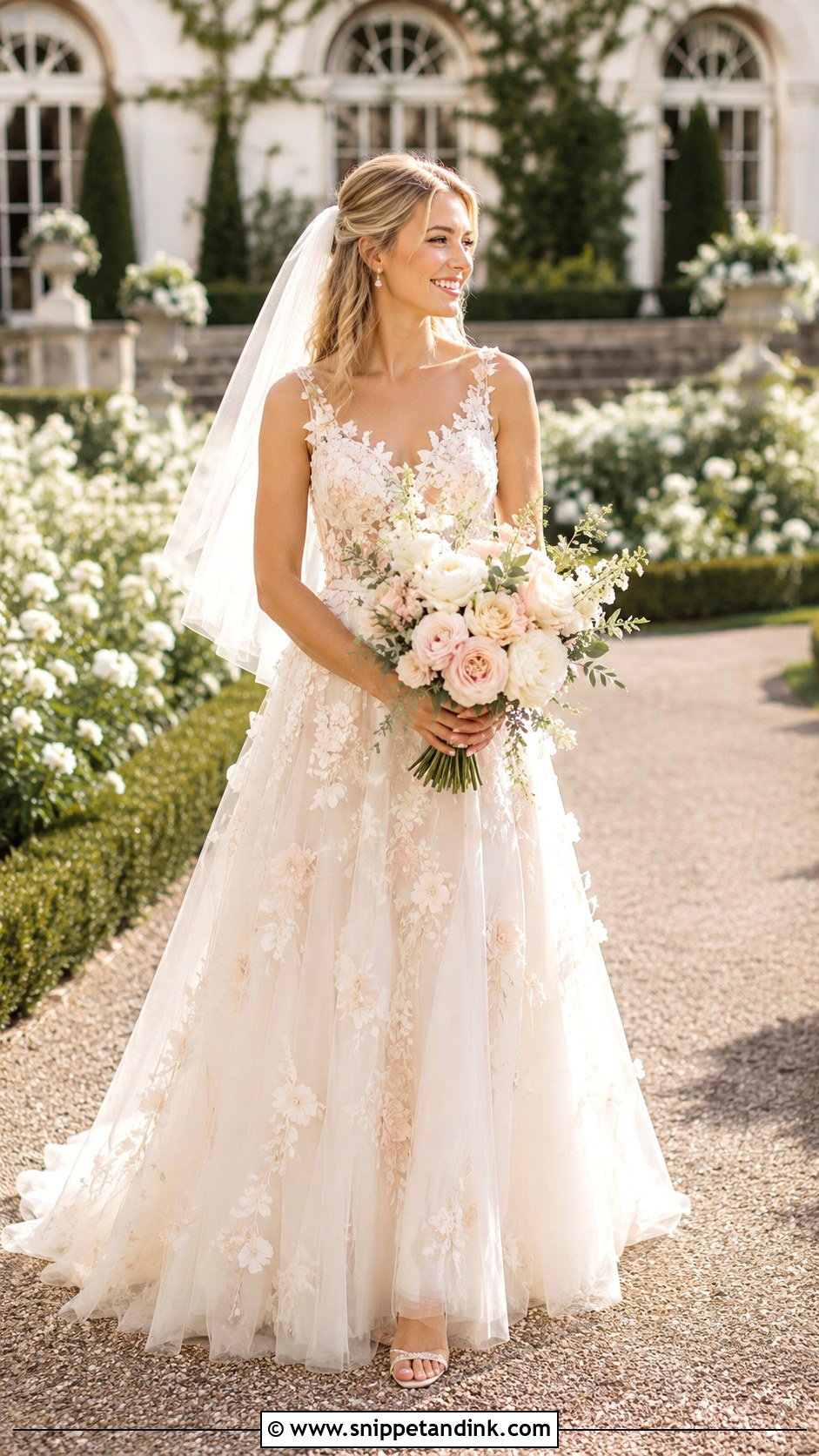
Appliqués are romantic, but their placement is the first thing I check. Flowers concentrated on the bodice and thinning across the skirt define the top and leave the hem light. Dense appliqués on a full skirt can hook onto each other as you walk. Ivory, blush and pale gold flowers all sit on a champagne base, though pale gold tends to vanish in daylight, so ask to see the gown near a window. Keep the veil plain so the details stay visible, with pearl earrings and champagne sandals. A half-up style shows off the back, and garden roses with pale blush blooms can echo the appliqué colours.
16. Champagne Cape Sleeve Bridal Dress
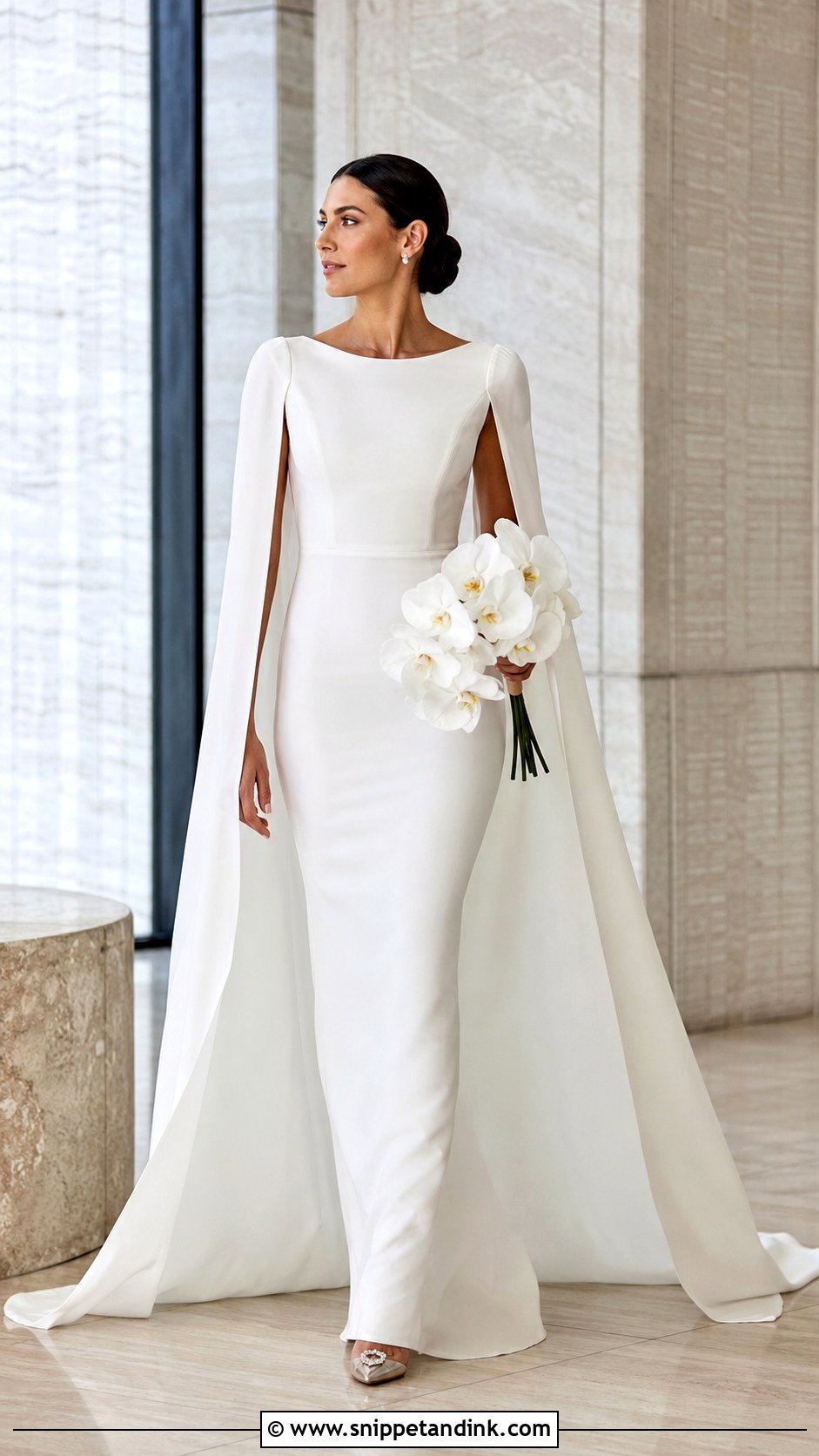
A cape moves every time you turn, and it covers the shoulders without the restriction of sleeves. Chiffon floats, while crepe gives a more architectural edge. I always check where the cape is attached: fixed at the shoulder seam, it can drag the neckline backward when you sit down. Keep the bodice simple so the cape is the one detail people notice. Pointed metallic heels, crystal studs and a sleek low bun work well. If the cape runs into a train, skip the veil; otherwise a short one sits happily with it. Structured orchids suit a modern indoor venue.
17. Champagne Bridal Dress With Detachable Overskirt
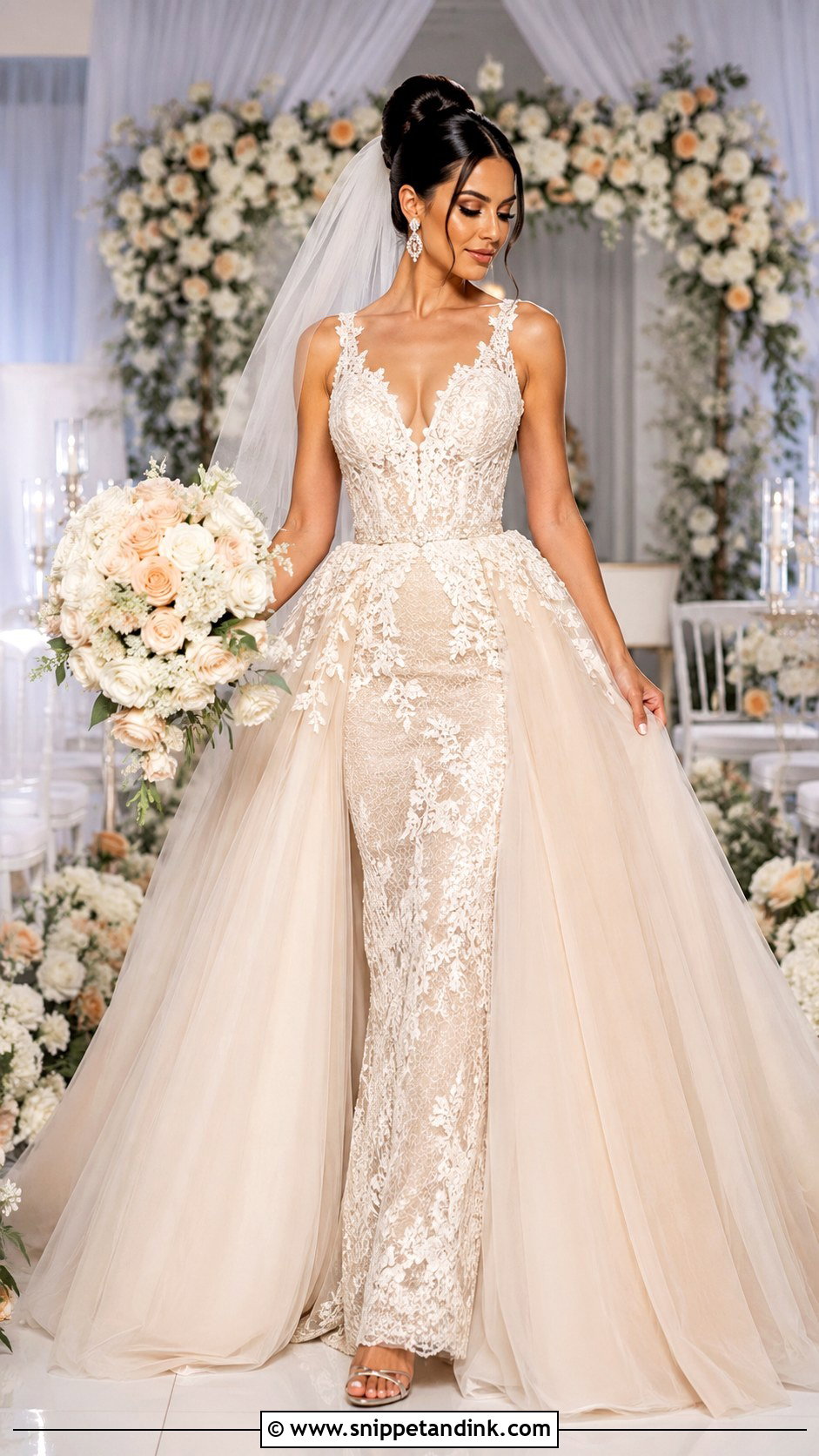
A detachable overskirt gives you two silhouettes without a full outfit change. Start with a fitted gown in lace, satin or crepe, then add a full tulle or satin overskirt for the ceremony. The part I always rehearse is the removal: the fastenings, who undoes them and where you’ll stand, because most overskirts need a second pair of hands and a few quiet minutes. Give that person a practice run at the final fitting. Comfortable metallic heels, statement earrings and a long veil suit the ceremony volume, and a polished updo stays consistent once the skirt comes off. Ivory roses and pale peach flowers suit both halves of the day.
18. Champagne High Low Bridal Dress
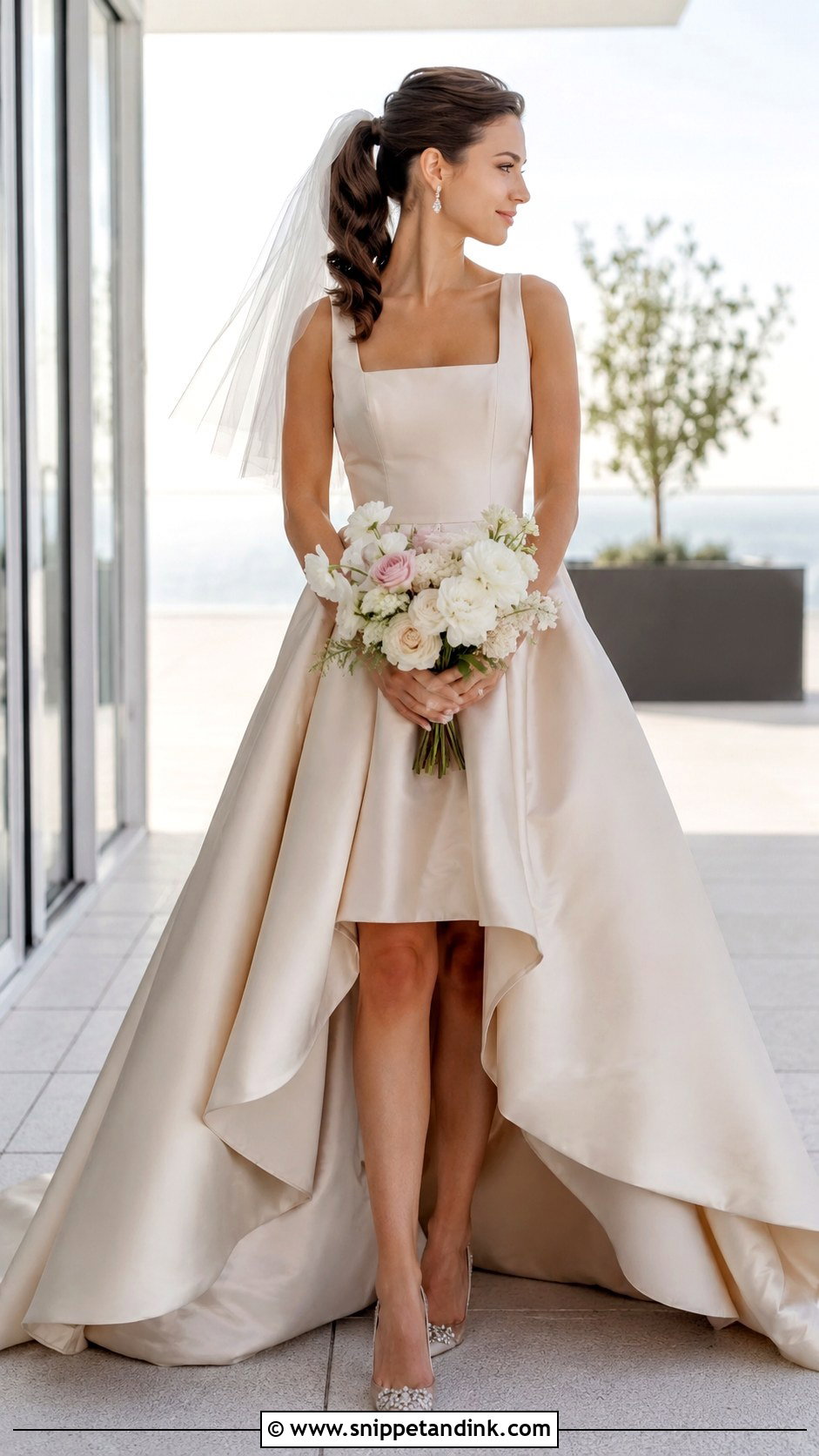
A high-low hem shows your shoes in front and keeps a train behind. The dip from front to back should be gradual; too steep a drop looks unfinished in photos taken side-on. A fitted strapless or square-neck bodice grounds the unusual hemline. Remember that your ankles are on show all the way down the aisle, so the shoes need to be comfortable and already broken in. Embellished pointed pumps, crystal earrings and a short veil that won’t tangle with the train complete it. A curled ponytail and a medium bouquet of white and pale blush flowers balance the skirt.
19. Champagne Sequin Bridal Dress
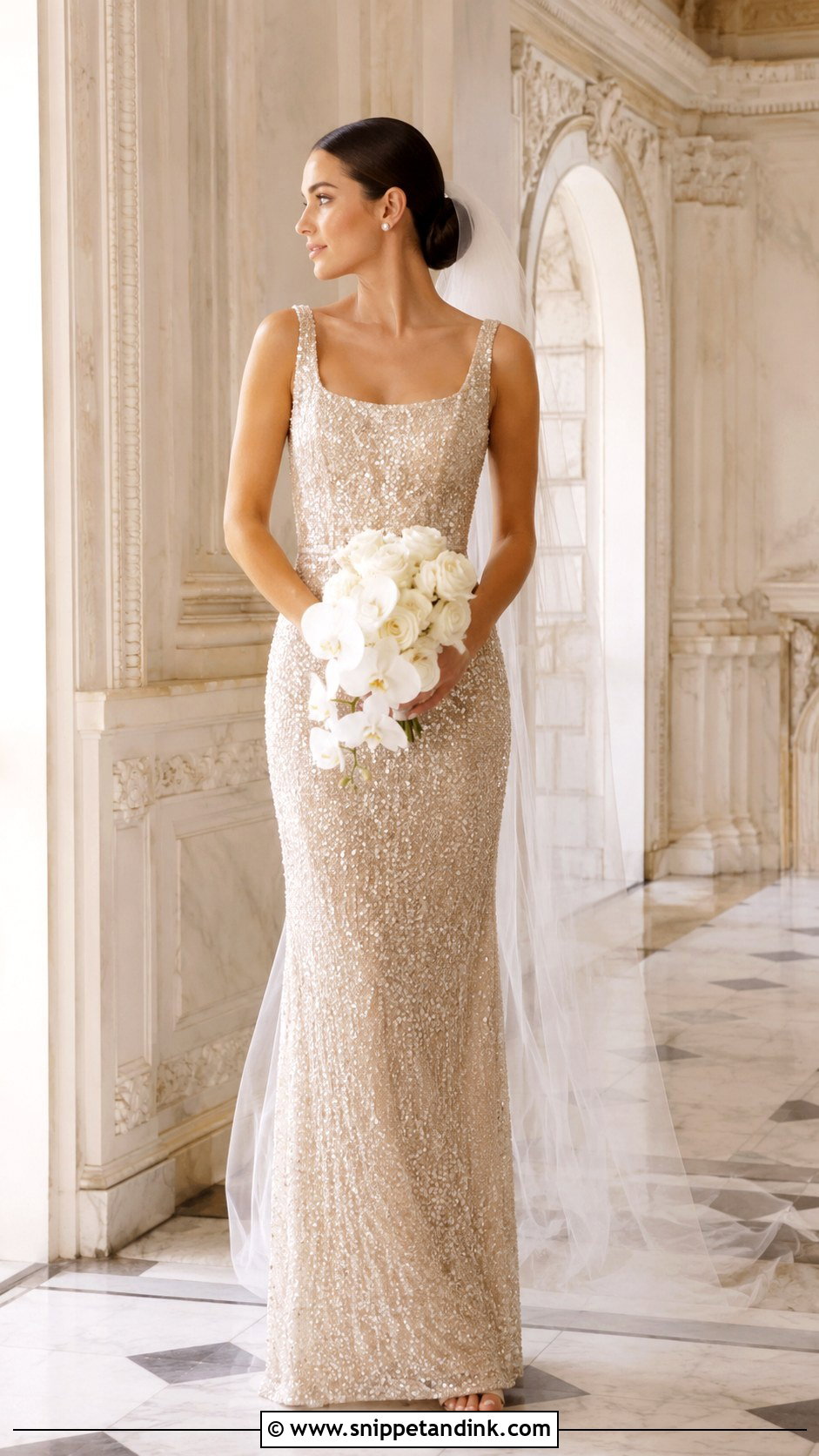
A champagne sequin bridal dress gives shimmer without bright white. I prefer fine tonal sequins or scattered beadwork, because large sequins flash hard under a camera flash and can look spotty. Sequins also scratch bare arms and snag the lace sleeves of everyone who hugs you, which is worth knowing before the receiving line. A column or soft A-line keeps the surface from feeling busy. Champagne heels, small diamond studs and a sheer veil are enough; leave the necklace at home if the bodice is heavily embellished. A clean low bun and a restrained bouquet of white roses suit an evening venue.


20. Champagne Minimalist Crepe Bridal Dress
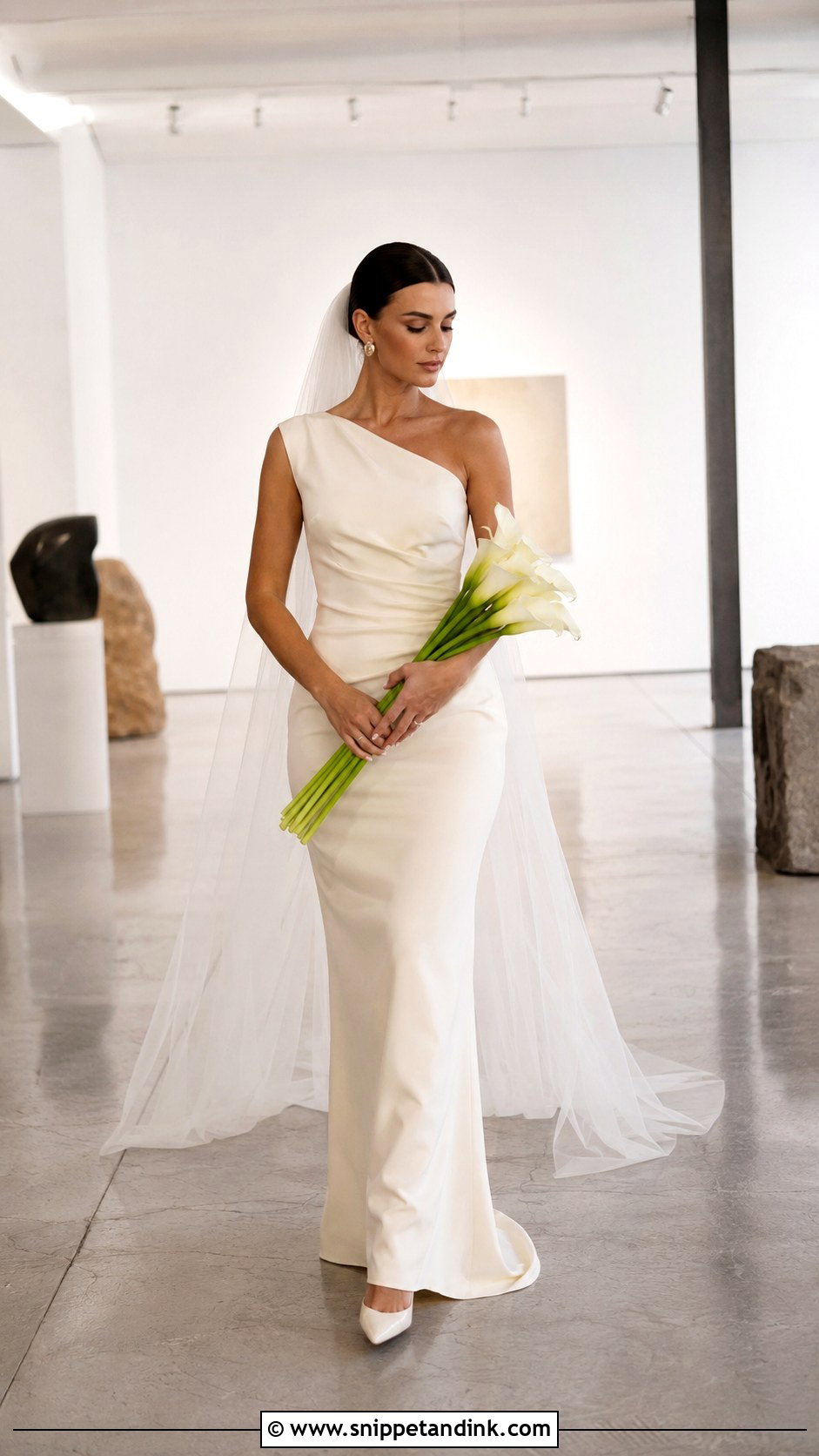
With no lace or beading to distract, tailoring is everything in a crepe gown. I’d rather a bride spend on an extra fitting than on embellishment here, because one pulled seam or a slightly loose waist shows immediately. A column or softly fitted cut with a bateau or asymmetric neckline lets the colour lead. Pointed ivory pumps, sculptural gold earrings and a single-layer cathedral veil keep it modern, and a centre-parted bun echoes the clean lines. A few long-stemmed calla lilies tied with champagne ribbon belong in a gallery or a modern hotel.
Bright White Veils, Shoes and Pearls Make Champagne Look Dingy
The most common problem I see with a champagne gown isn’t the gown, it’s what sits next to it. A stark white veil makes the dress look grubby by comparison, and so does a white shoe peeping out from the hem. Order the veil from the gown’s maker, or take a fabric swatch to the veil shop and match ivory or champagne tulle to it in daylight.
Pearls vary as well. Cream pearls sit warmly against the bodice, while very white ones can look cold. I also ask florists for cream, ivory and pale peach rather than pure white, so the bouquet looks intentional rather than accidentally brighter than the dress.
Caring for a Warm-Toned Gown Before and After the Wedding
Champagne hides light marks slightly better than white, but grass, red wine and venue dust still show at the hem. Keep the gown in a breathable cotton bag, never plastic, which traps moisture and can yellow fabric over time. Hang heavy gowns from the inner loops rather than the shoulders so the weight doesn’t stretch the straps.
- Steam satin and crepe from the inside, held at a distance, instead of ironing the face of the fabric.
- Blot spills with water and a white cloth. Rubbing lifts dye and roughens silk.
- Book professional cleaning within a few weeks of the wedding, before sugary spills like champagne and cake oxidise into brown marks that won’t lift later.
If you want to keep the gown, ask the cleaner to pack it with acid-free tissue in an acid-free box, and store it somewhere cool and dark.
Champagne Reads Differently in Every Room
The same champagne can look warm, vintage or crisp depending on the fabric, so compare satin, lace, tulle and crepe side by side before you settle on a cut. Try your favourites in daylight and again under warm indoor bulbs, since a gown that glows gold in one can turn faintly grey in the other. Bring your wedding shoes to every fitting, judge accessories against the real dress rather than a screenshot, and leave room in the calendar for alterations. Then go with the gown you can sit, dance and hug in, because that comfort shows in every photo.
You'll Like These Ideas:








Leave a Reply