
Fruit colours are the most cheerful thing I get to mix in the kitchen, and they’re also the ones that misbehave most. Peach, mango, raspberry, lemon, melon and mint all read fresh on a summer terrace or at a beach reception, but each pigment reacts differently to butter, heat and daylight. The upside is range: a sorbet palette can lean playful or formal depending on the shape, the texture and the flowers around it. Below are twenty sorbet-toned cakes, with what I’d watch for in each one, from fillings that weep to pinks that fade by the first dance.
Why Fruit Shades Shift Between the Mixing Bowl and the Reception
Buttercream isn’t a white canvas. Butter has a yellow cast, and that changes every colour I add to it, which is why a sorbet sample can look different on the day than it did at the tasting. A few things I plan around:
- Blues and mints drift green in yellow butter, so I whiten the base before tinting.
- Gel colours keep deepening for hours, so I mix the day before and judge the shade the next morning.
- Pinks, purples and oranges fade in direct sun. A cake set up in a sunny window can lose a shade before it’s cut.
- Freeze-dried fruit powders give softer, more natural tones and add real flavour, but they can’t reach a strong colour.
If your palette has to match exactly, send me a fabric swatch or a paint chip rather than a phone photo. Screens shift colour, and a swatch held against the icing in daylight is the only fair test.
I also ask where the cake will stand. A shaded corner of a marquee and a table under a skylight need different mixes, and I’d rather tint for the real spot than for my kitchen.
1. Peach Sorbet Wedding Cake
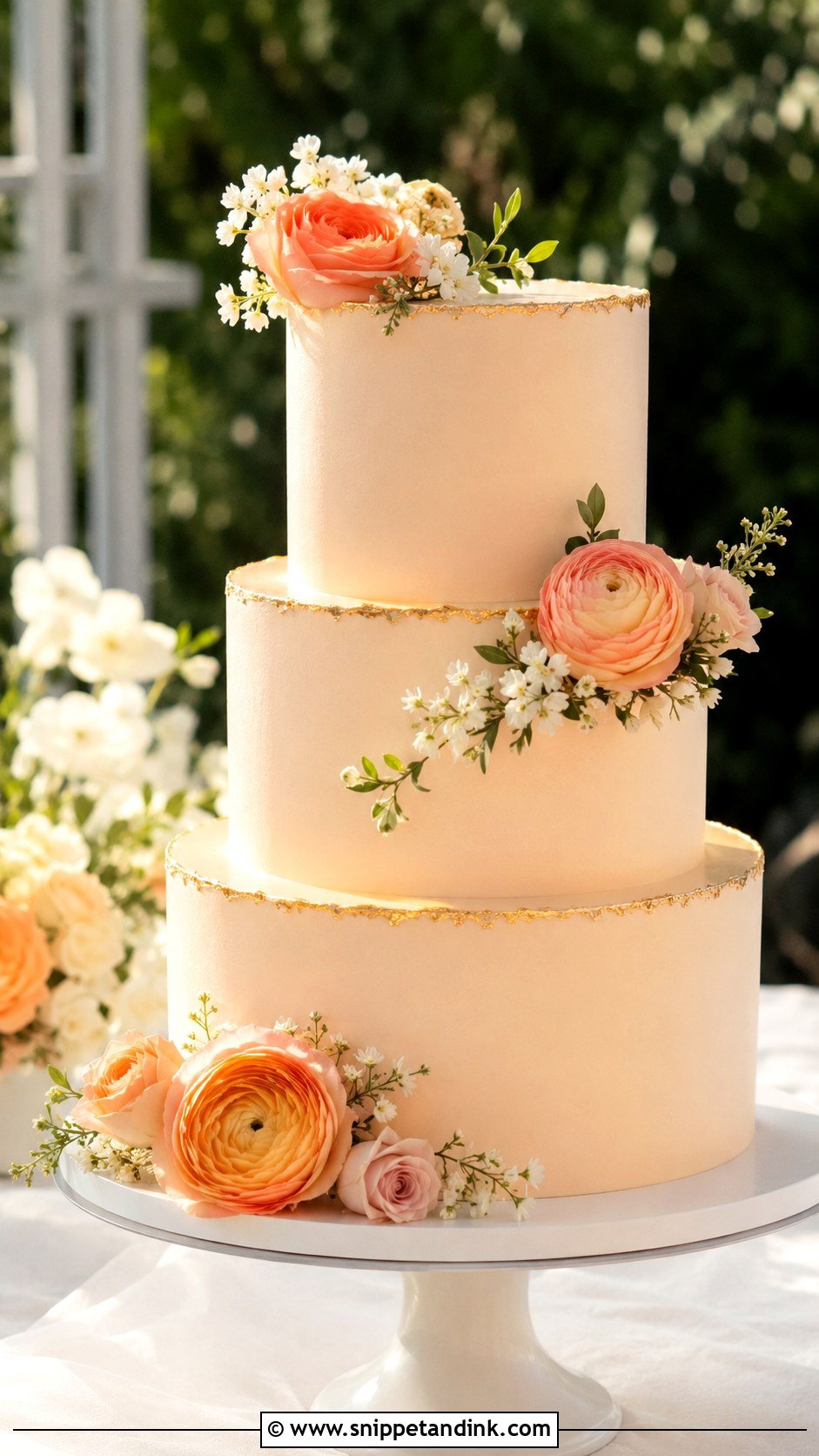
Peach is the friendliest sorbet shade to work with because it sits close to the natural colour of butter, so it rarely turns muddy. I tint the outer coat a pale peach over an ivory base, which gives that sunlit glow rather than a flat orange. Smooth or lightly palette-knifed both suit it. Peach roses, ranunculus and a few tiny white blossoms keep it bridal, and if you want a gold edge, keep it to a fine line.
2. Raspberry Sorbet Wedding Cake
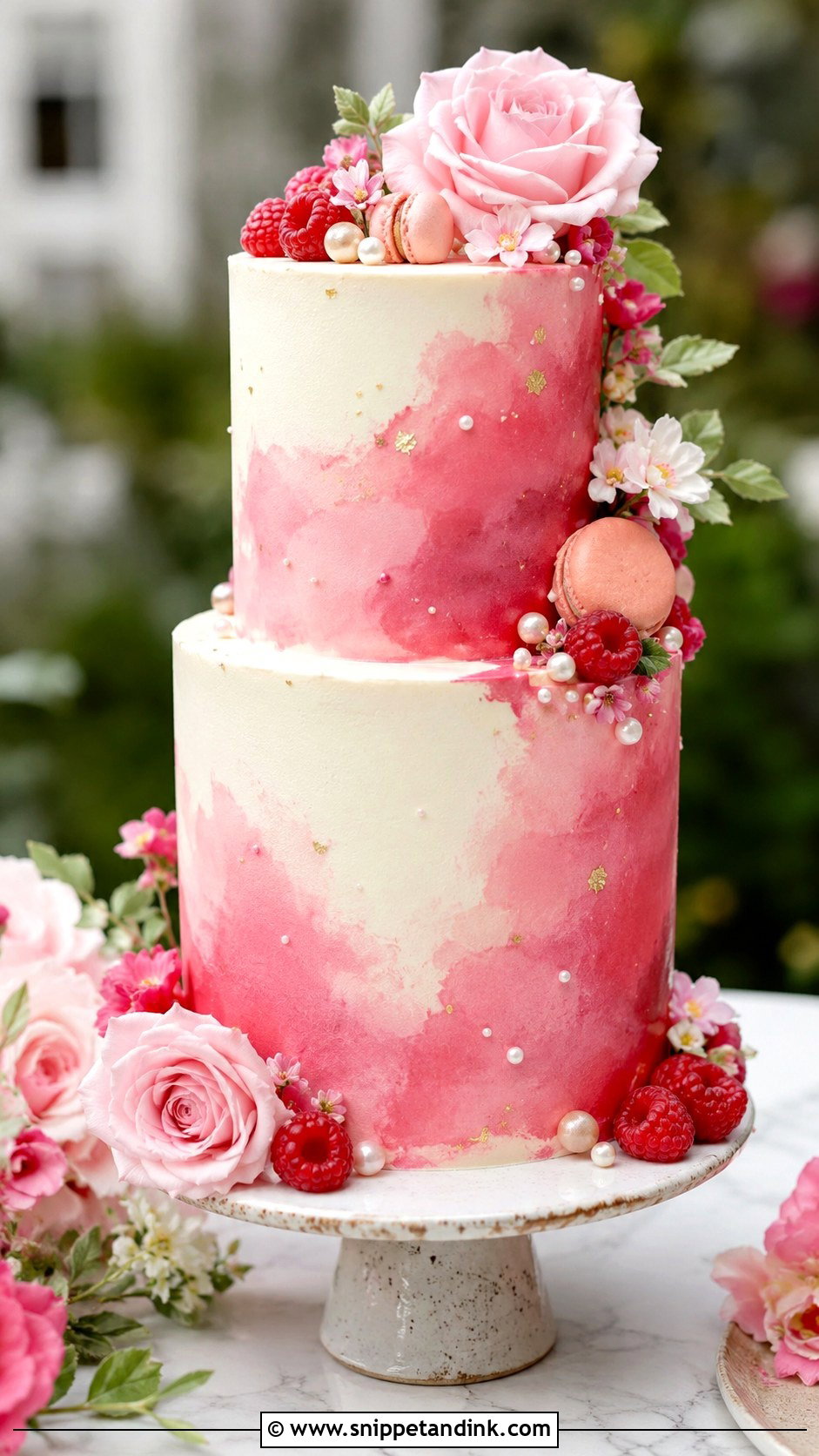
Raspberry can go anywhere from soft berry pink to a deep jewel tone, which makes it easy to match to bridesmaid dresses or stationery. The deeper shades need a lot of colouring, so I prefer to use them as a watercolour wash or an ombre over ivory rather than covering whole tiers. Freeze-dried raspberry powder gives a softer, truer pink and a real tang in the buttercream. Vanilla, almond or lemon sponge with a berry filling carries the theme inside, and piped pearls or a few sugar flowers add texture.
3. Lemon Sorbet Wedding Cake
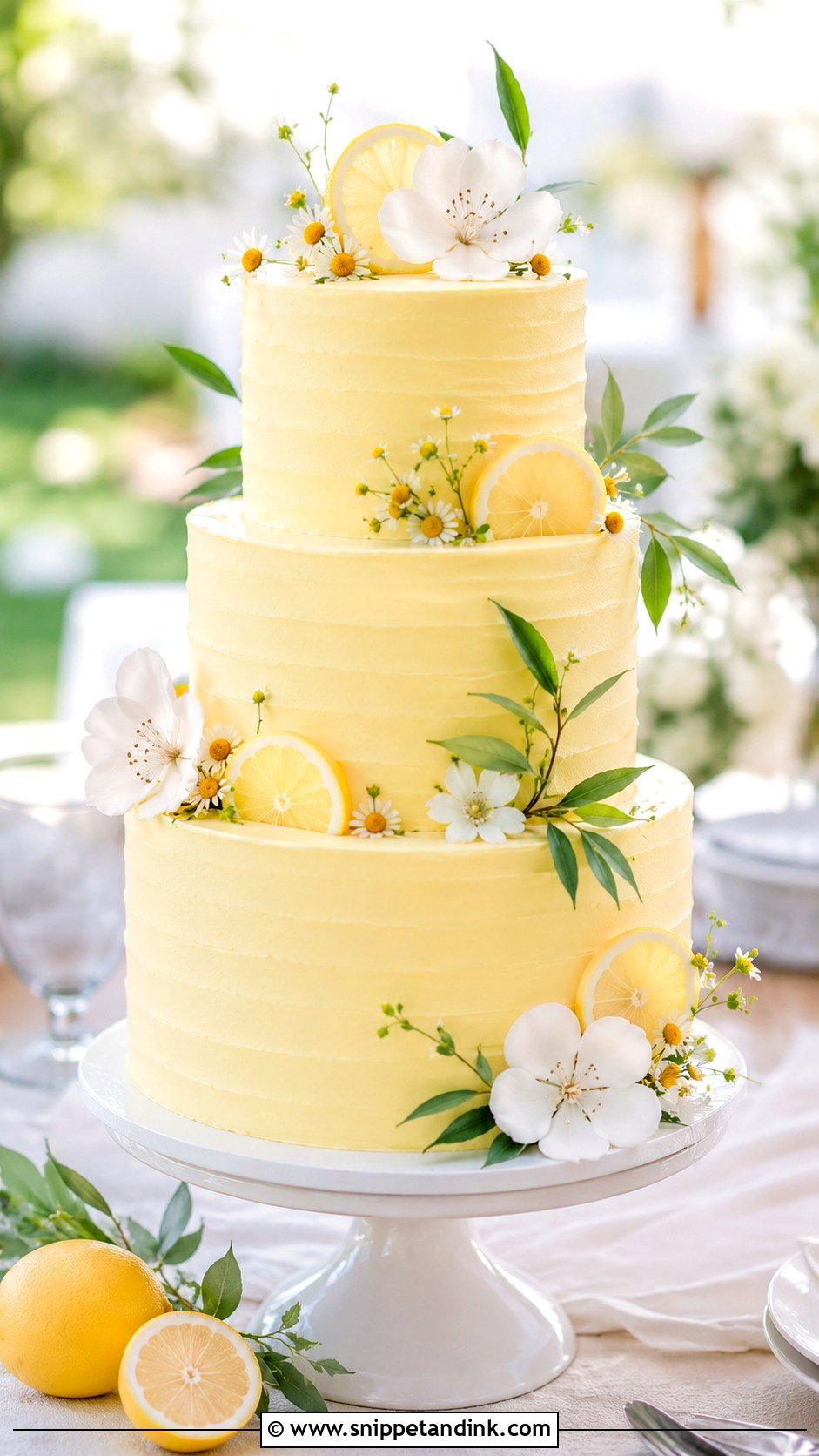
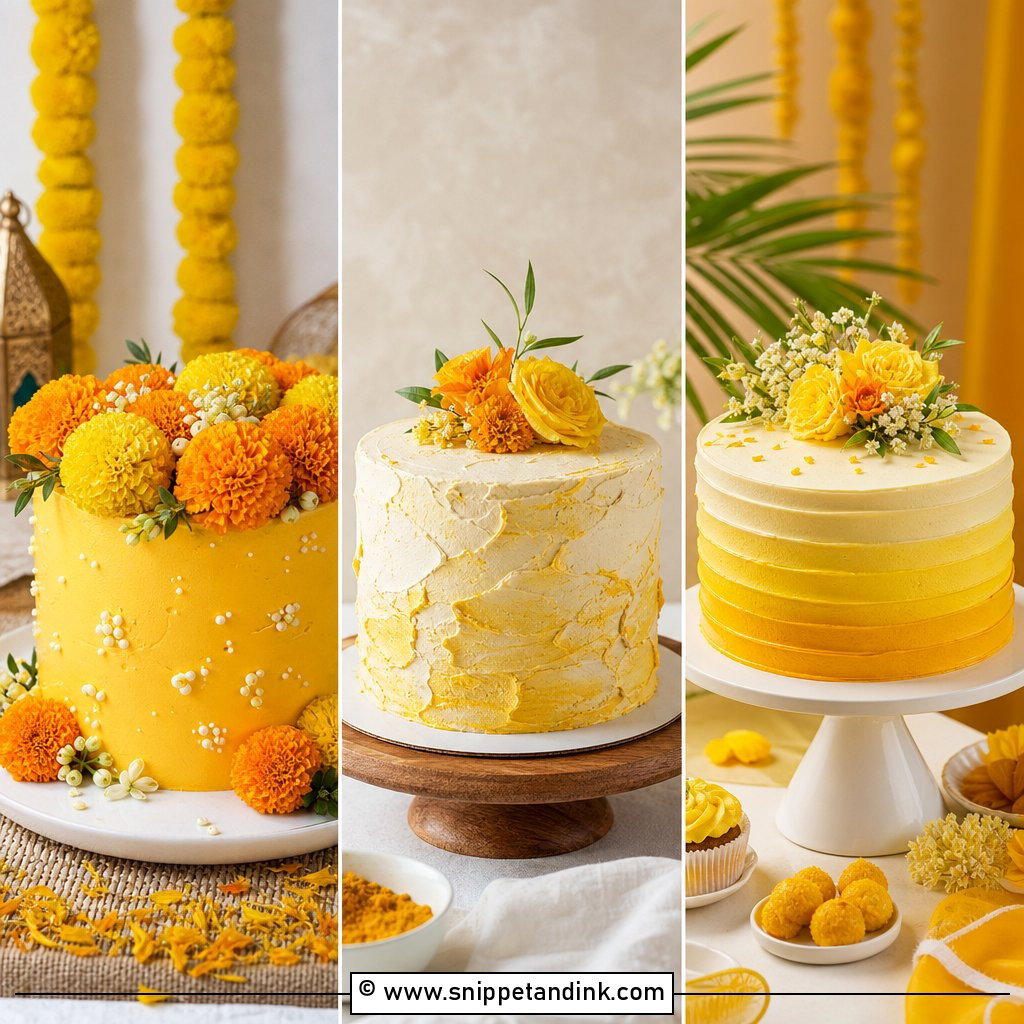
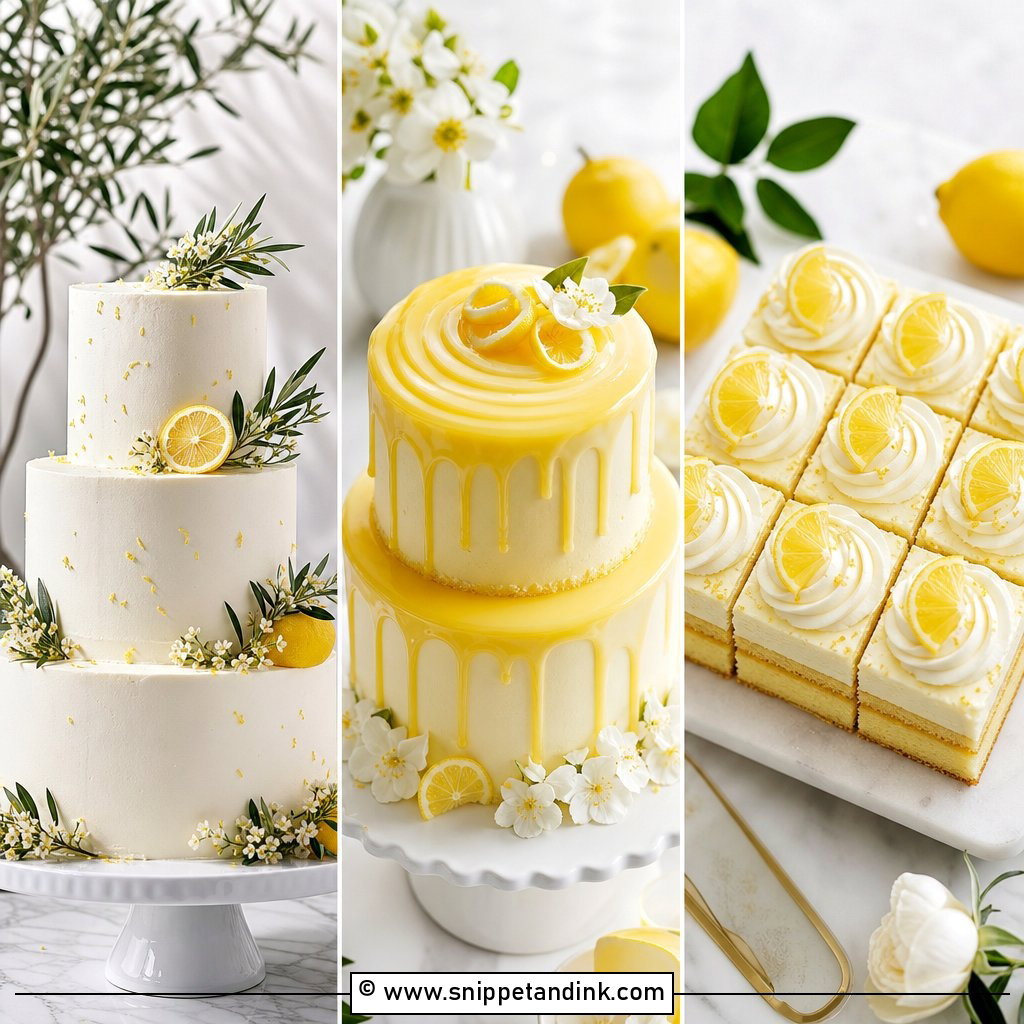
Yellow is the colour I mix most cautiously, since a strong lemon on a three-tier cake quickly looks like a novelty. Pale lemon buttercream used in washes, borders or on one statement tier keeps it bridal. Lemon sponge with lemon curd is the obvious pairing; vanilla cake with citrus buttercream is lighter for guests who find curd too sharp. White florals, chamomile-style sugar flowers or thin candied lemon slices finish it, and a white stand ringed with greenery suits it well.
4. Mango Sorbet Wedding Cake
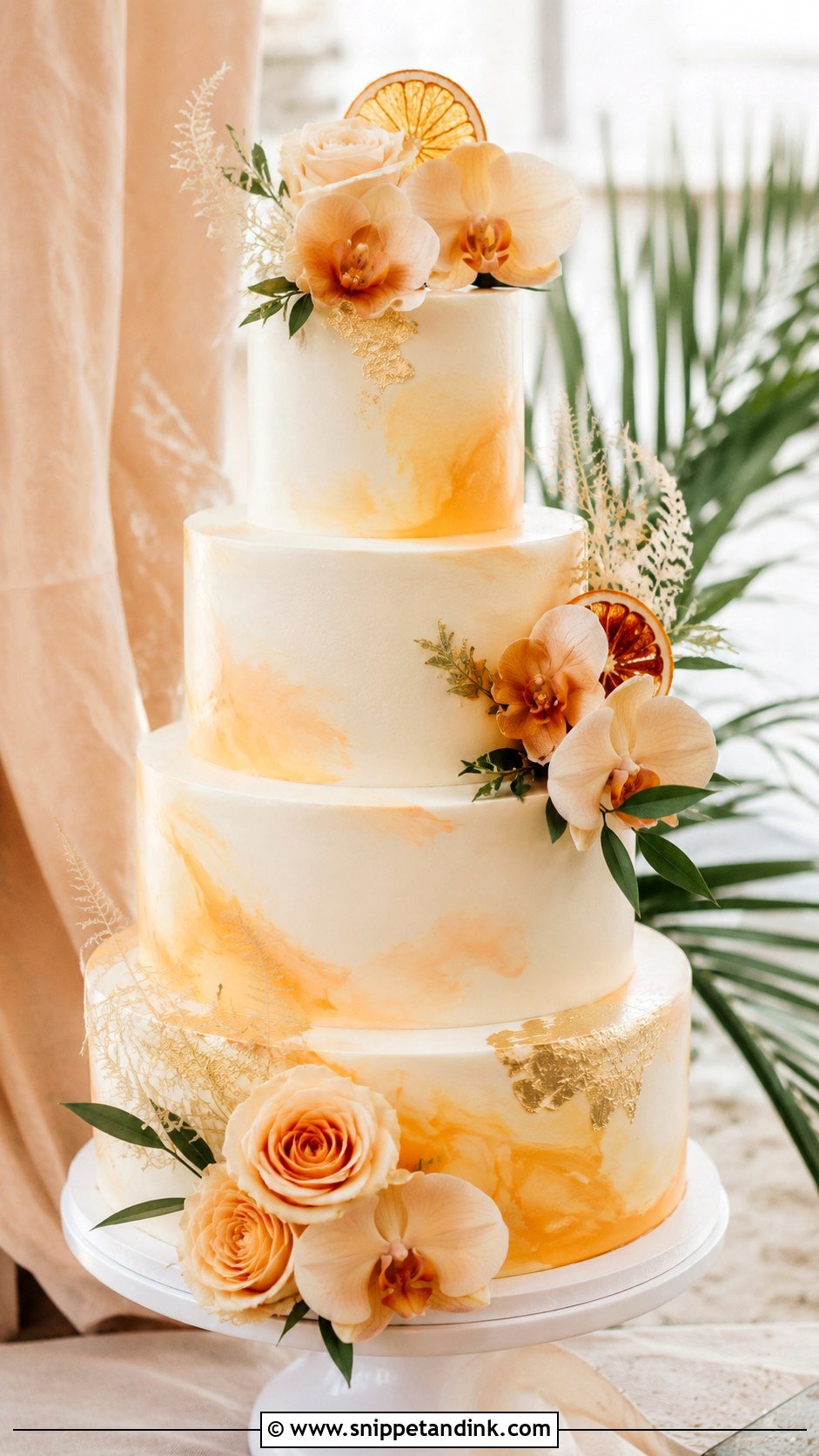
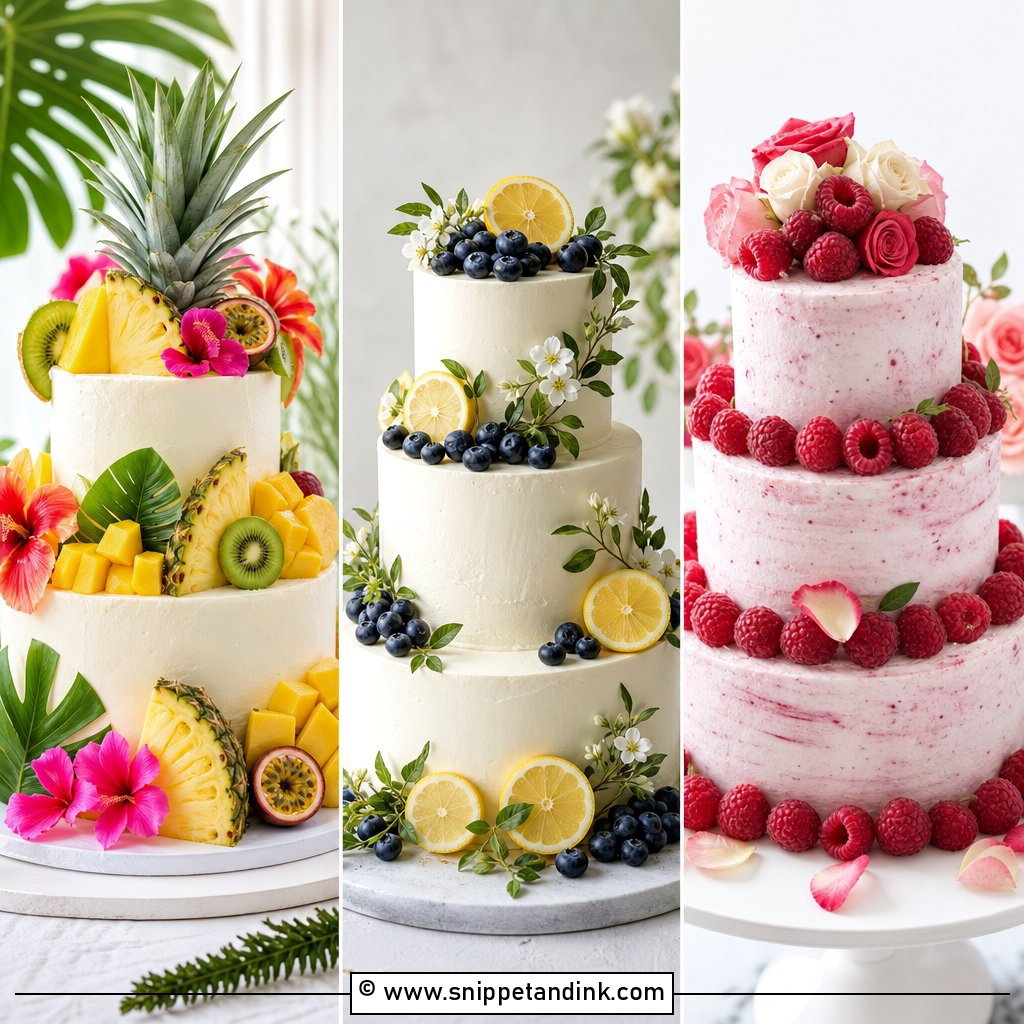
Mango and apricot tones have a tropical warmth that feels at home in a beach tent or a destination celebration. I’d keep the cake tall and the finish smooth so the colour does the work, then add sugar orchids, peach roses or dried citrus wheels. Mango curd or passion fruit filling carries the theme inside, but both are soft and wet, so they need a firm buttercream ring around each layer to stop them pushing out the sides on a hot day.
5. Strawberry Sorbet Wedding Cake
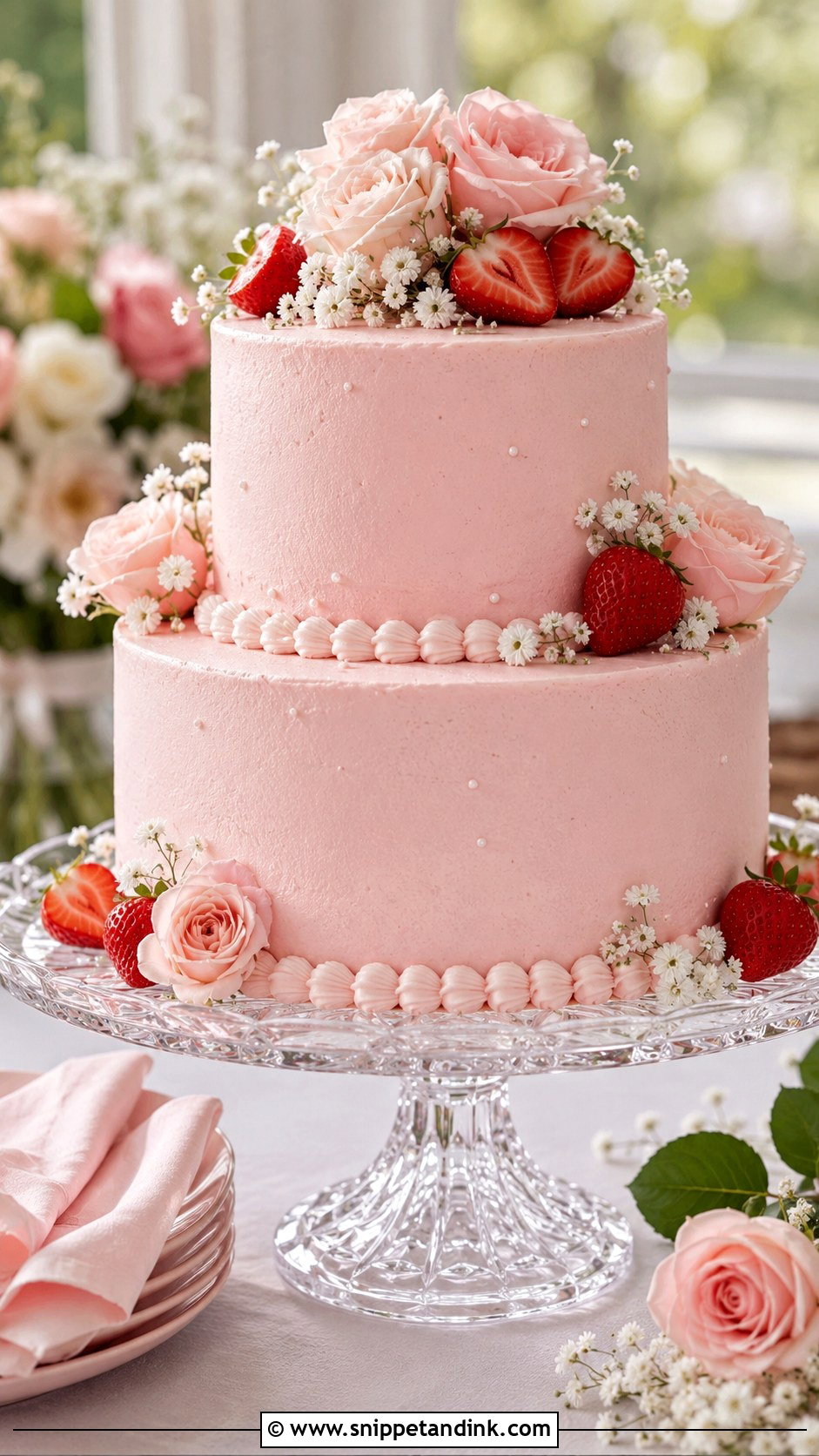
Strawberry pink is familiar and easy to love; the challenge is keeping it from looking like a child’s birthday cake. Smooth sides, fine piping and a faint ombre from ivory to blush do that. I’m careful with fresh strawberries on the outside: cut ones bleed juice onto the icing within an hour or two, so I use whole berries, added close to serving. Inside, white sponge with strawberry compote and whipped vanilla filling is a crowd pleaser. Two tiers feel intimate; a taller cake turns it into a centrepiece.
6. Orange Sorbet Wedding Cake
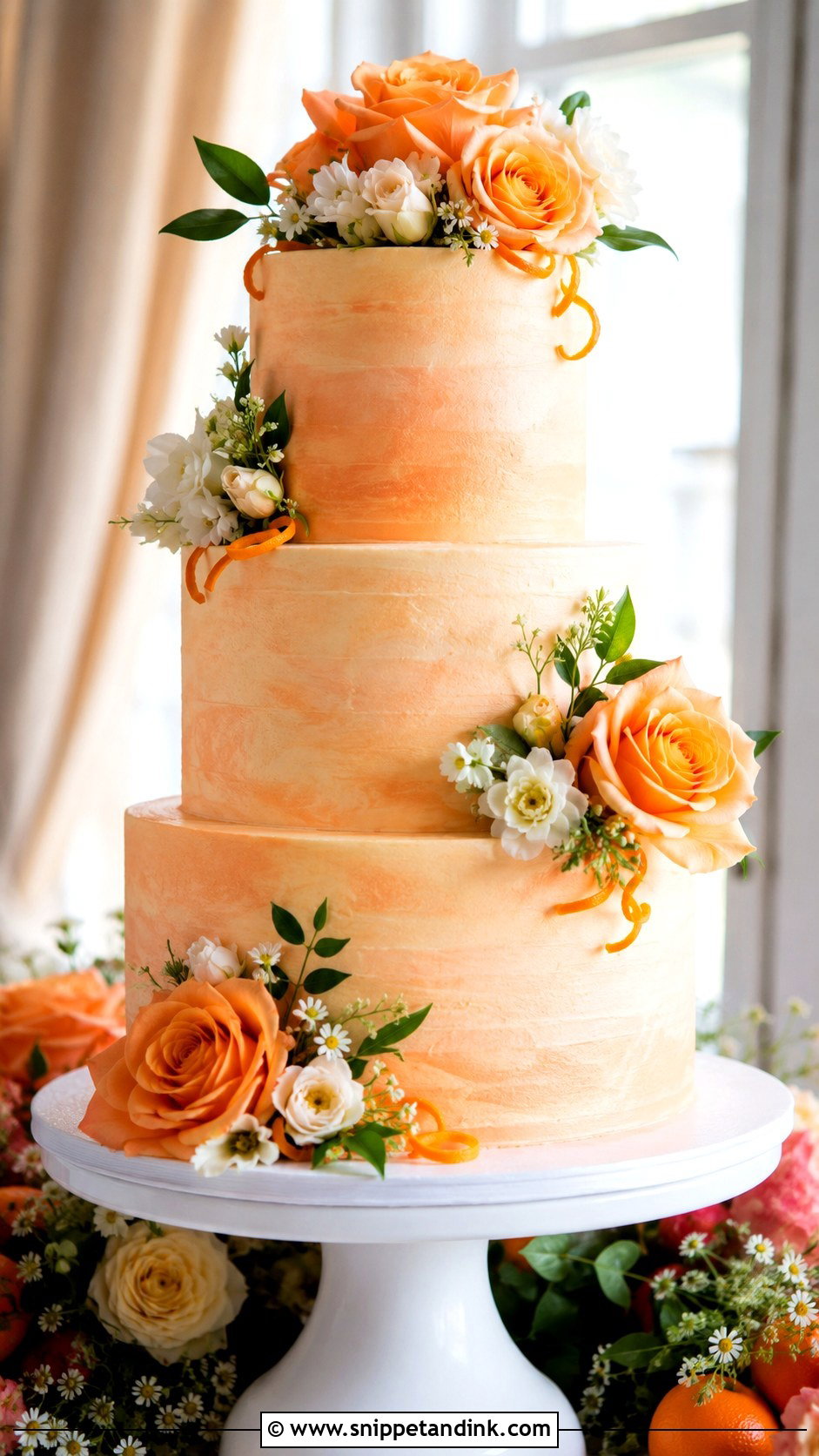
Skip neon. Tangerine, coral and creamsicle tones look happy without shouting, and they sit well beside white florals, peach roses and greenery. Orange is also one of the shades most likely to fade under strong sun, so for an outdoor display I mix it slightly deeper than the sample and keep the cake shaded. Almond sponge with orange curd or vanilla with a citrus filling suits it. A semi-smooth finish feels relaxed; fondant gives a sharper edge.
7. Watermelon Sorbet Wedding Cake
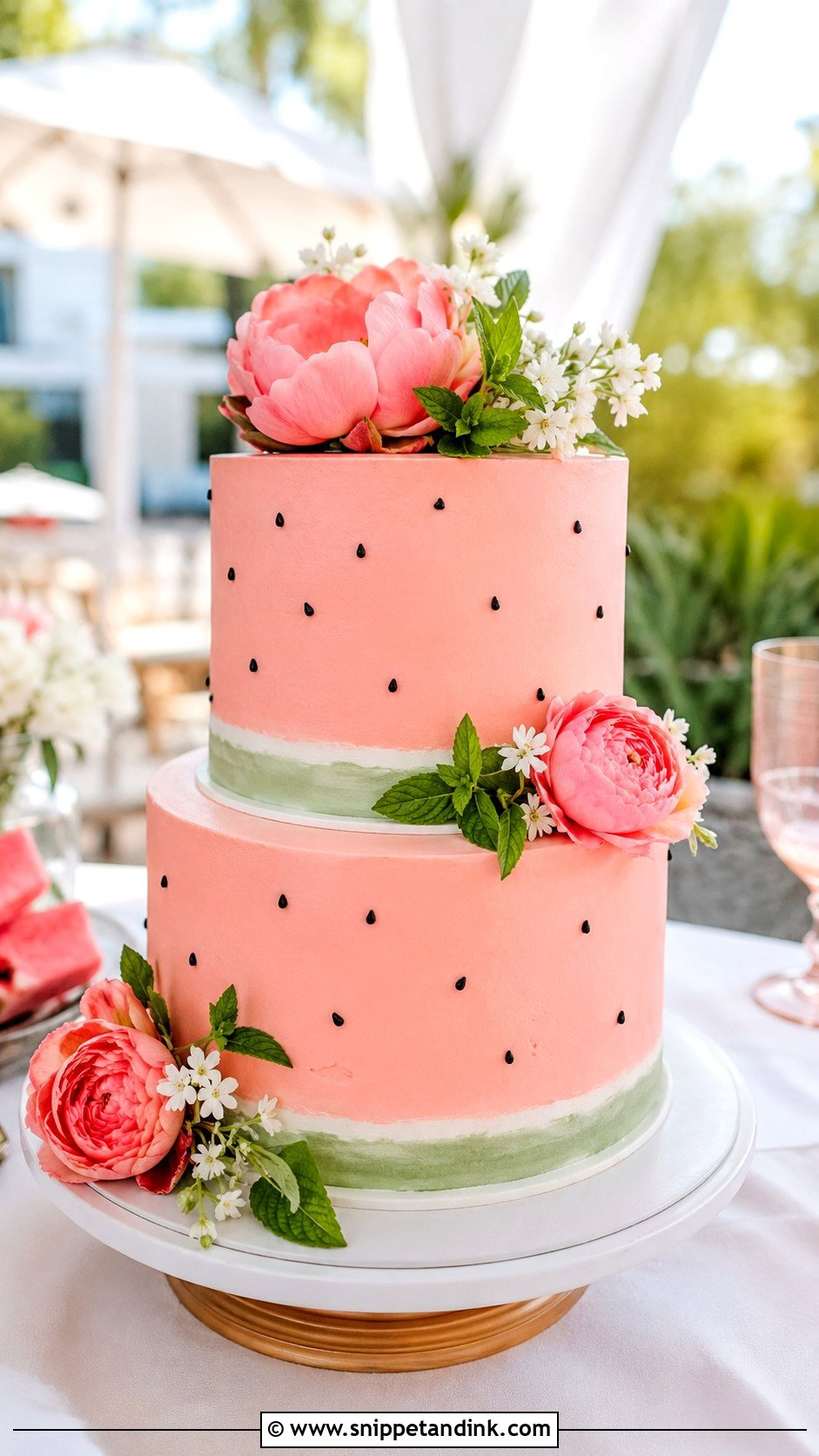
Watermelon walks a fine line between fresh and novelty, so I keep it subtle: a blush upper tier over a soft green base tier, smooth frosting, maybe a few tiny dark dots piped low as a nod to the seeds. The greens are the tricky part, as butter’s yellow cast pushes them towards lime, so I whiten the base first. Strawberry, vanilla or a lime filling echoes the flavour. It suits outdoor summer receptions with plenty of natural light.
8. Lime Sorbet Wedding Cake
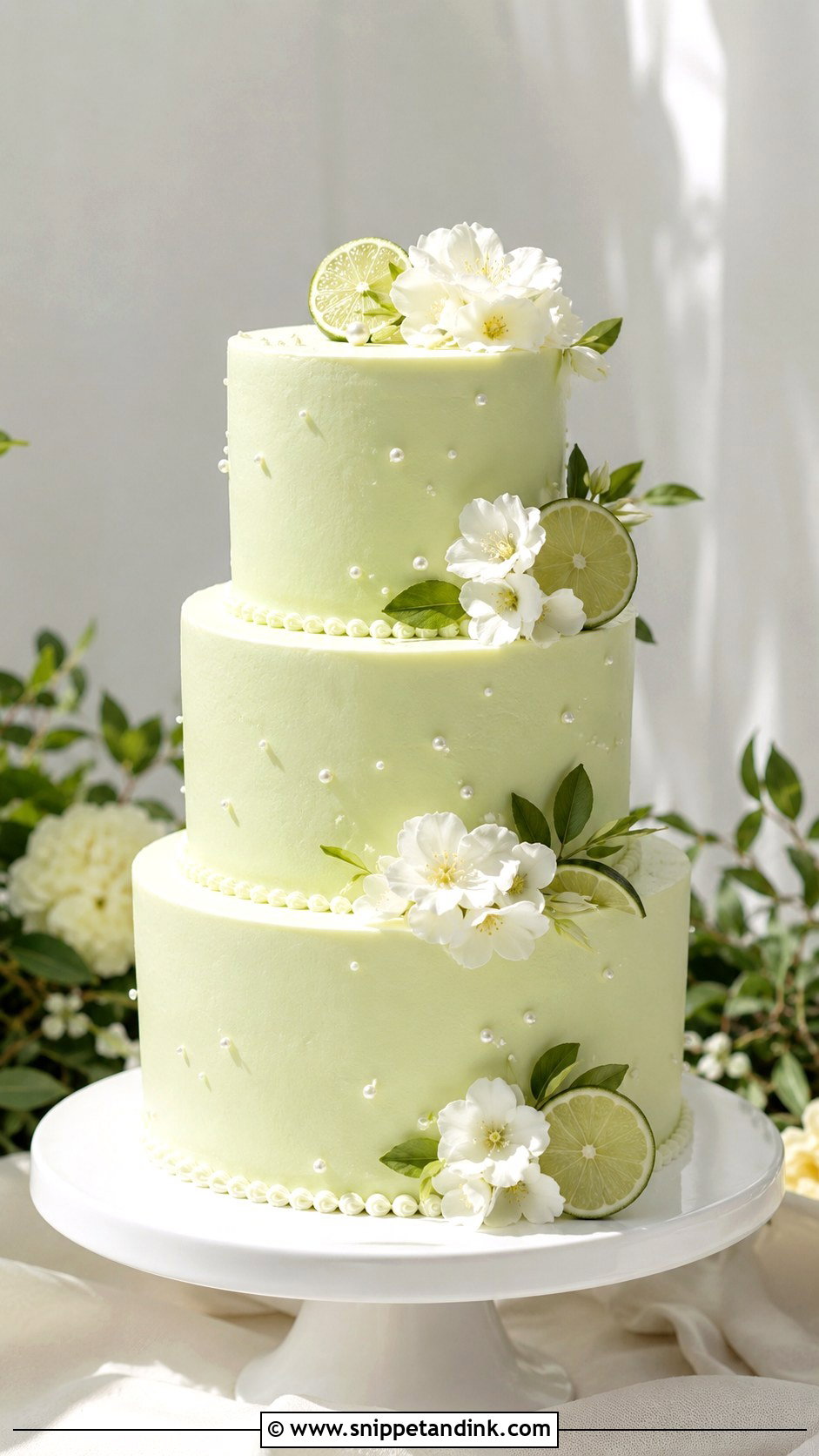
Lime green is crisp and modern, but on its own it can look sharp next to skin tones in photos. I soften it with ivory, pale yellow or white flowers. Fondant makes the colour look sleek; textured buttercream turns it into a garden-party cake. Lime curd, coconut sponge or vanilla with citrus buttercream all fit. Keep decoration delicate, with sugar flowers, thin piped borders or scattered pearls, rather than anything heavy.
9. Mint Sorbet Wedding Cake
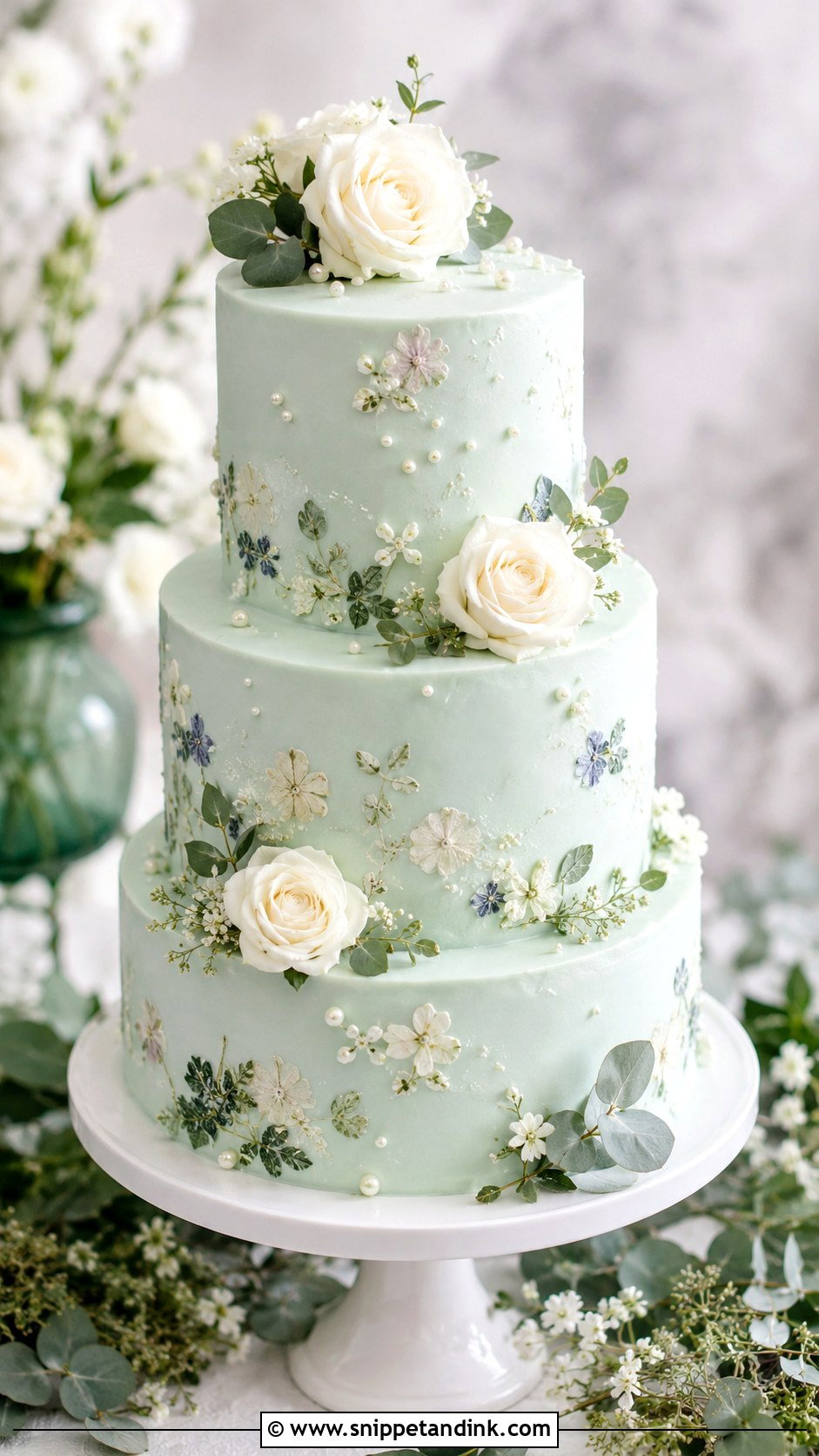
Mint is a calmer alternative to blue or sage, and it’s easy to overshoot. A drop too much blue and it turns teal, so I build it up in tiny additions and check it in daylight, not under kitchen lights. Use it on one statement tier, as a wash, or across all tiers as a pale base. Pistachio or coconut fillings suit it; chocolate-mint works if the couple likes it, but it splits a room. White roses, pearls or pressed edible flowers finish it, and if you want eucalyptus, it needs a barrier, not a direct push into the icing.
10. Blueberry Sorbet Wedding Cake
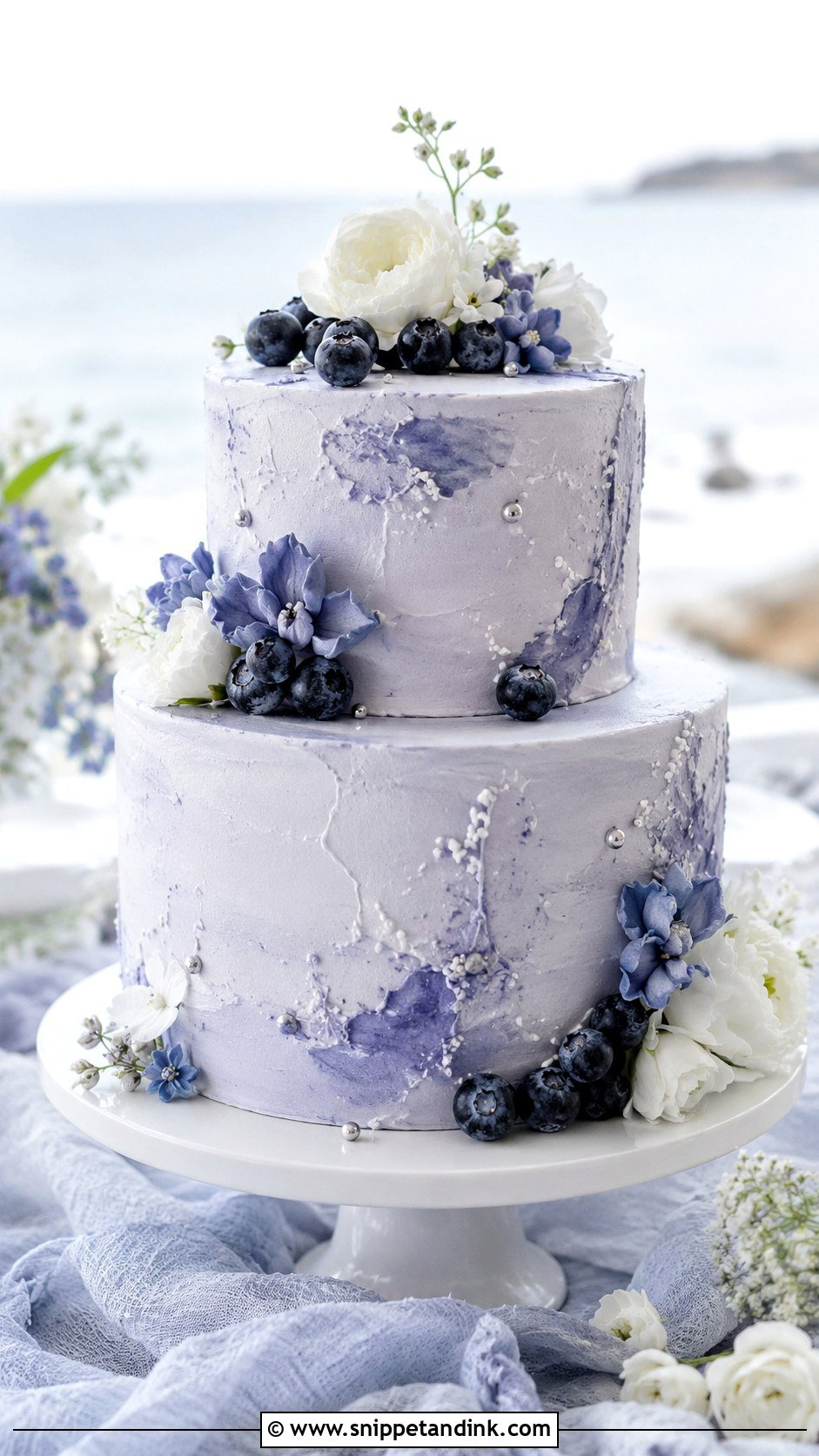
Blue-purple from blueberries is a subtle way to carry “something blue” onto the cake. Real blueberry juice in buttercream turns a dull lilac-grey rather than blue, so the colour on the outside usually comes from careful tinting while the fruit goes into the filling. Pale blueberry buttercream, a lavender-blue wash or a smooth periwinkle fondant finish all work. Lemon blueberry or almond with berry compote are my favourite pairings. Keep the decoration airy, with white flowers or silver-toned pearls, so the blue never feels heavy.
11. Blackberry Sorbet Wedding Cake
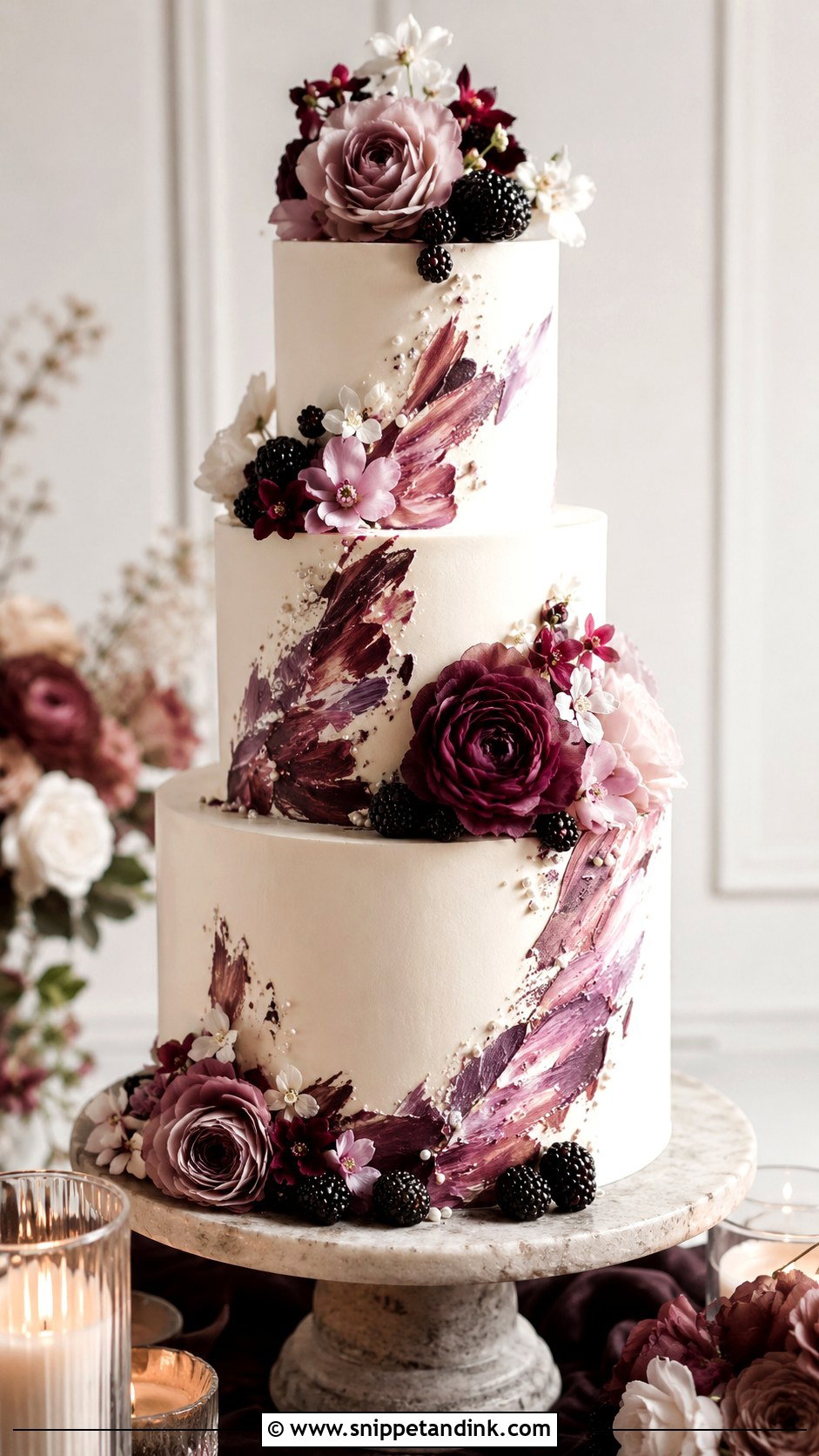
Blackberry is the moodiest of the sorbet shades, which makes it a good fit for late summer and venues with rich florals. I’d steer away from dark purple icing on whole tiers, because it photographs almost black under low light. Dusty mauve and muted berry brushstrokes over ivory read richer and softer. Blackberry compote between vanilla or lemon layers gives a deep flavour, and a few fresh blackberries placed with care, plus sugar flowers, finish it beside candles.
12. Rainbow Sorbet Wedding Cake
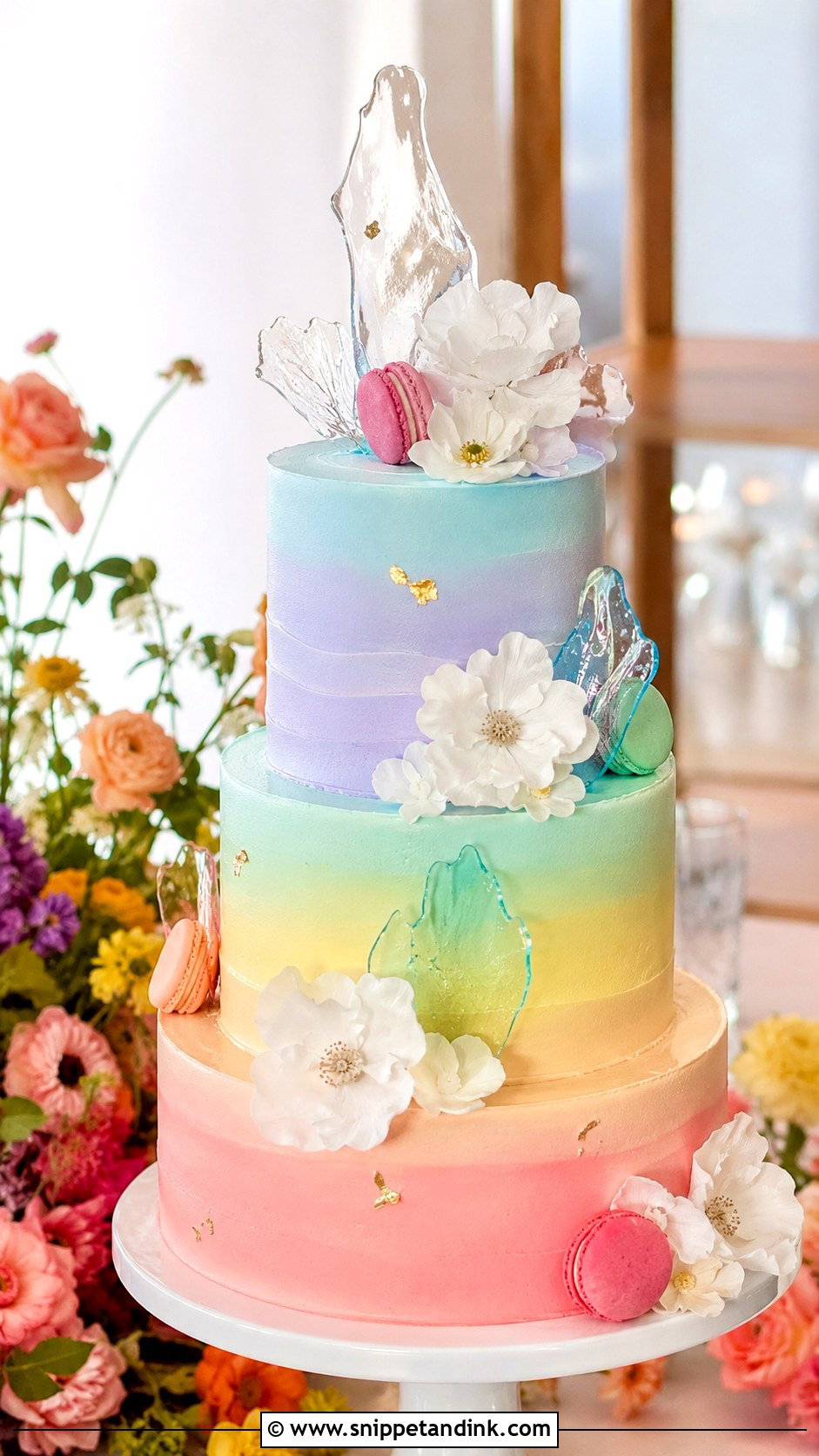
A rainbow sorbet wedding cake stays grown-up only if the shades are pastel and closely matched in strength. If one colour is louder than the rest, it takes over. Peach, lemon, raspberry, mint and blueberry can fade across tiers in an ombre or a wash. I keep the frosting smooth and top it simply, with white sugar flowers, clear sugar sails or a few pastel macarons. A different fruit filling in each tier is fun, but tell the venue so they can label slices for guests with allergies.
13. Ombre Sorbet Wedding Cake
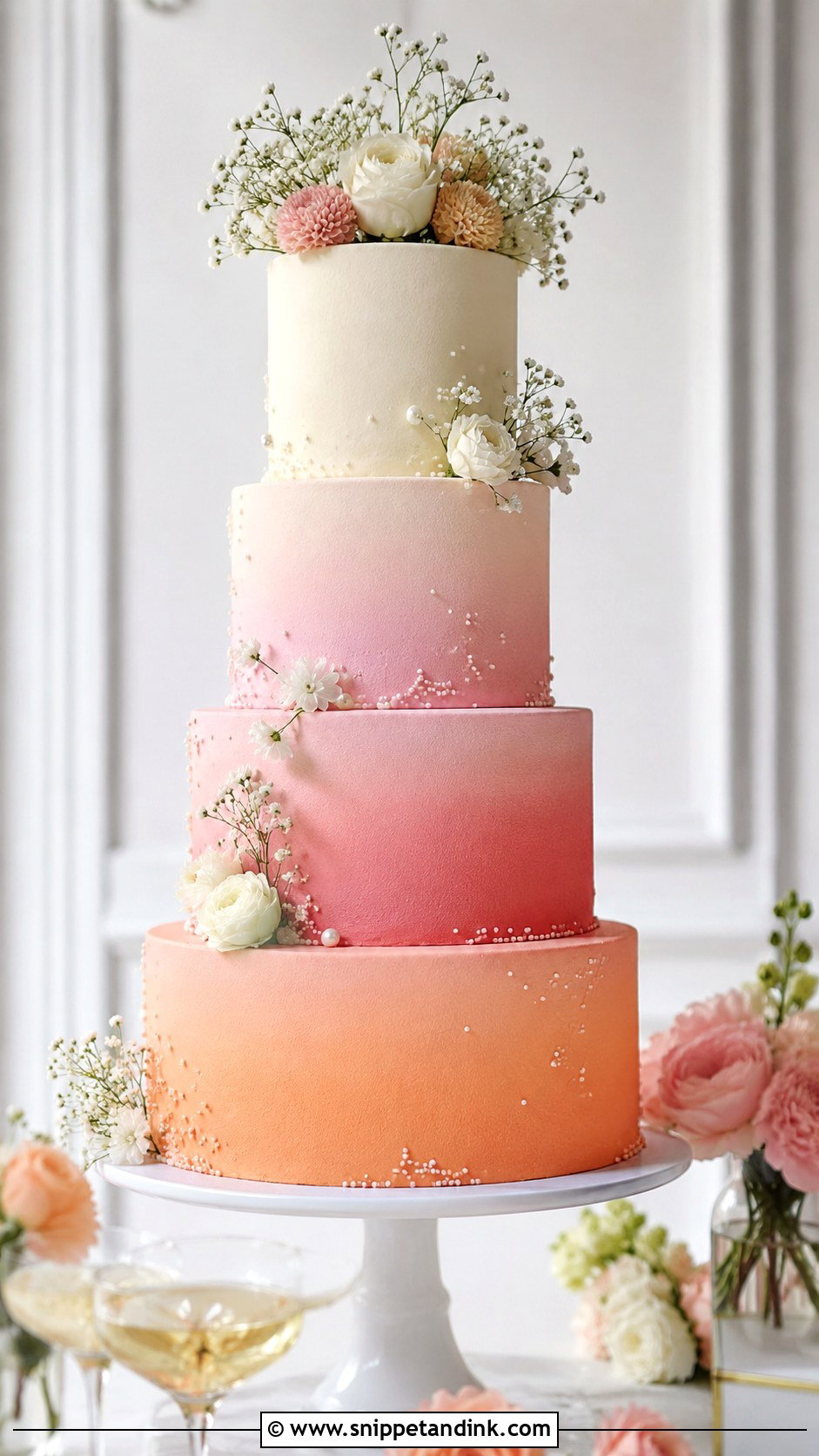
Ombre is the easiest way to use colour with restraint, because the shades step gradually and the cake never looks busy. I mix the deepest shade first and lighten it with white buttercream for each band, which keeps the steps even. Ivory to peach, raspberry to blush and lemon to soft orange are all reliable. Buttercream gives a creamier fade than fondant. Minimal flowers and a clean stand keep the eye on the gradient, and it fits almost any setting.
14. Watercolor Sorbet Wedding Cake
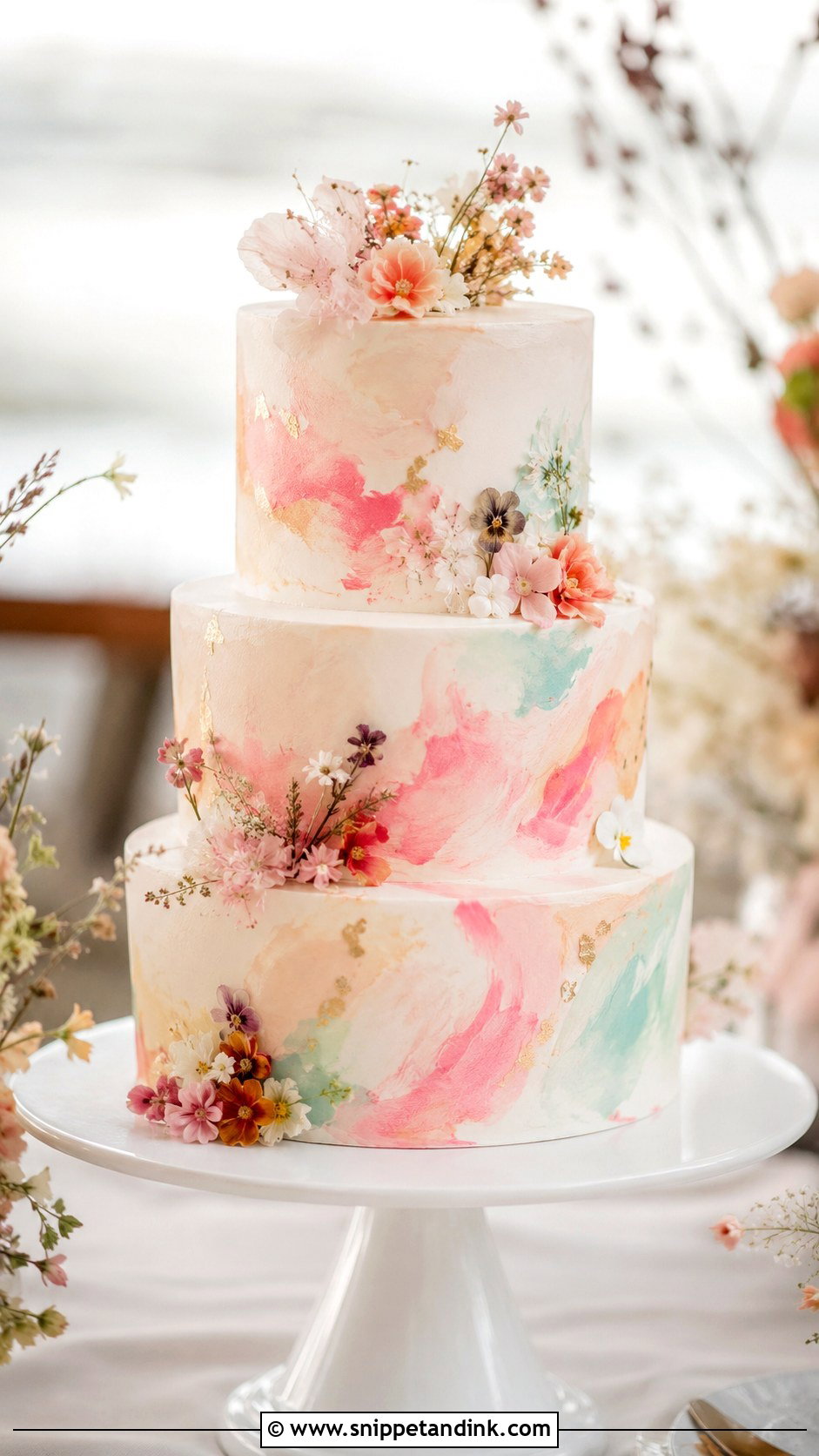
A watercolour cake is made by swiping several shades onto a white base and smoothing them together, so each tier is a little different, which is the point. Peach, pink, yellow, mint and berry melt into each other and give the cake movement. The risk is mud: too many colours touching each other turns them brown-grey, so I keep each colour in its own area and only blend the edges. Gold leaf, pressed flowers or a few sugar blooms finish it, and light flavours like lemon or strawberry suit the look.

15. Sorbet Floral Wedding Cake
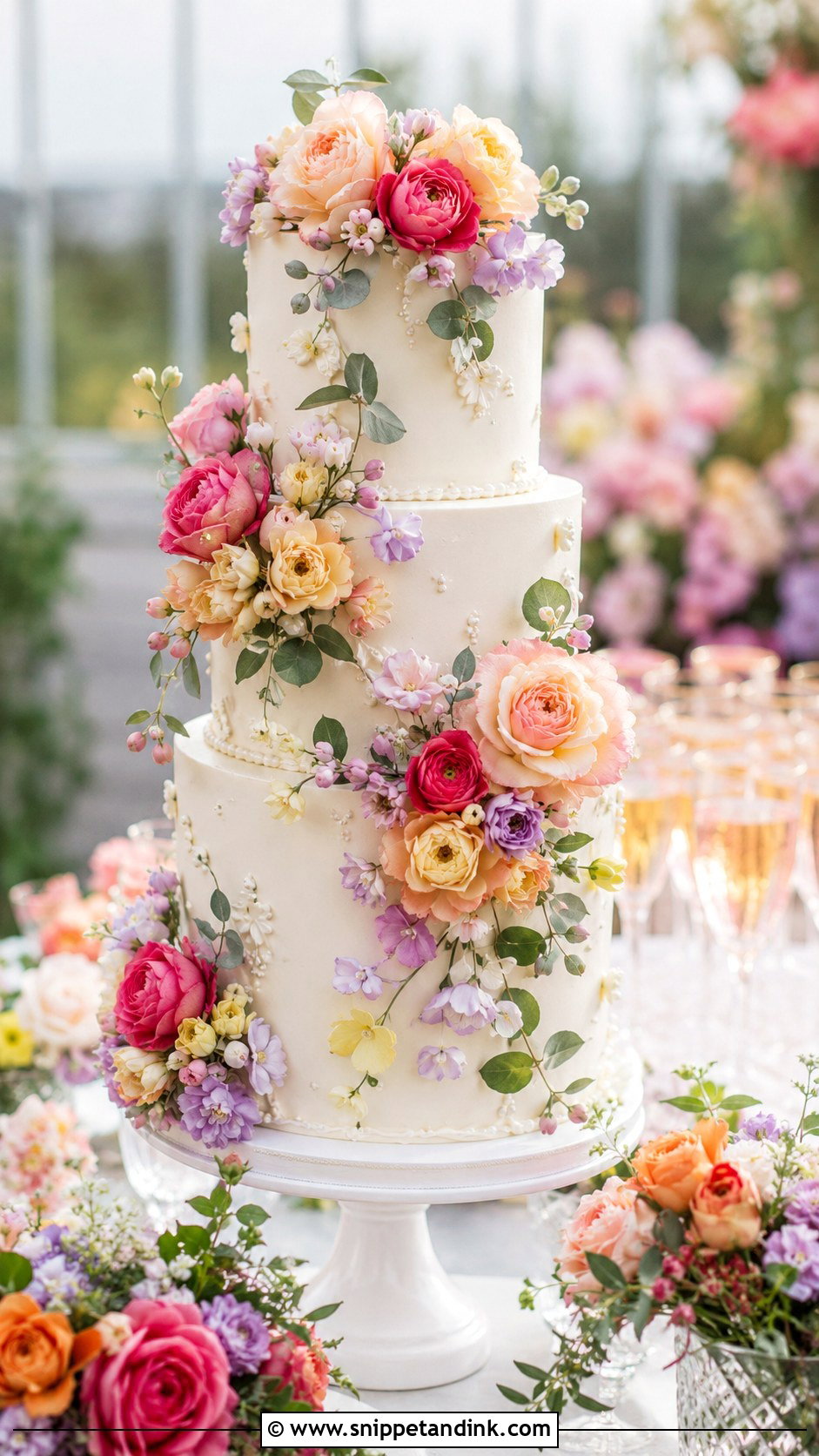
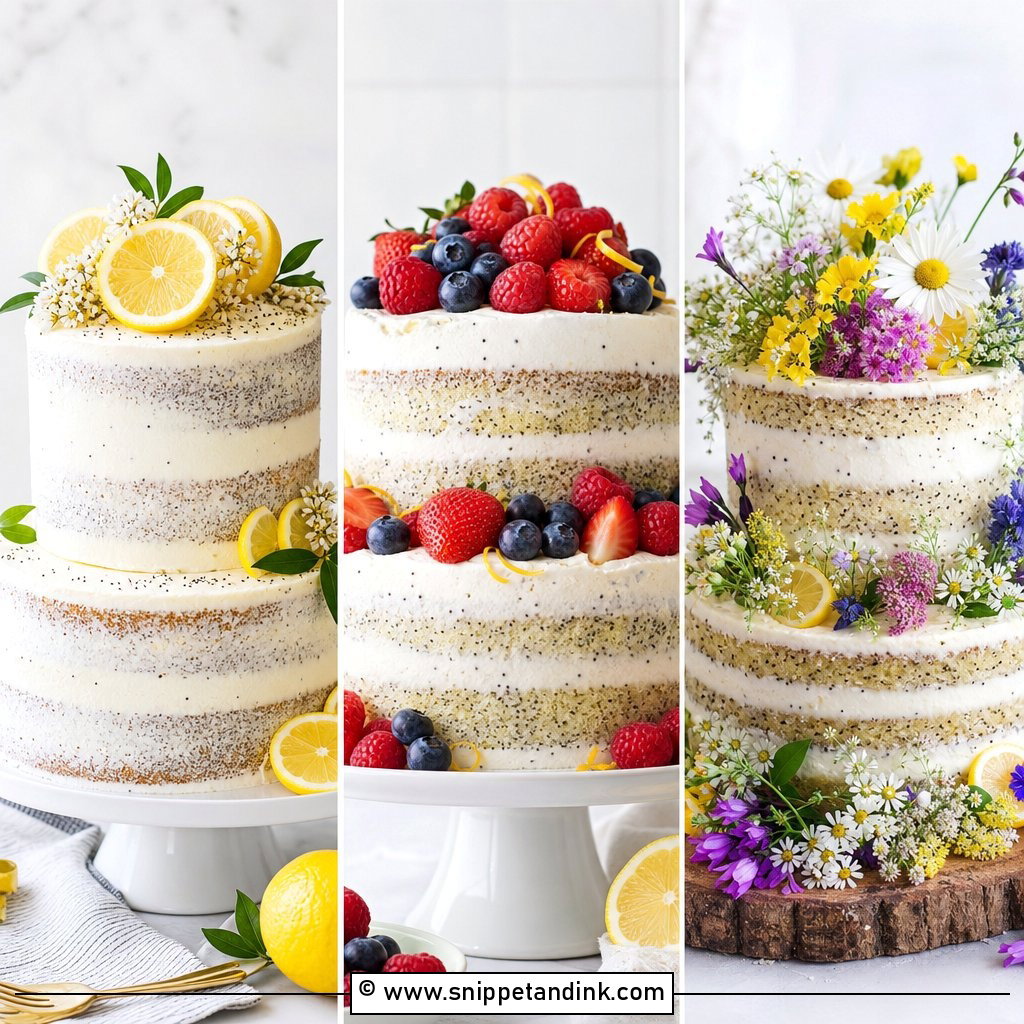
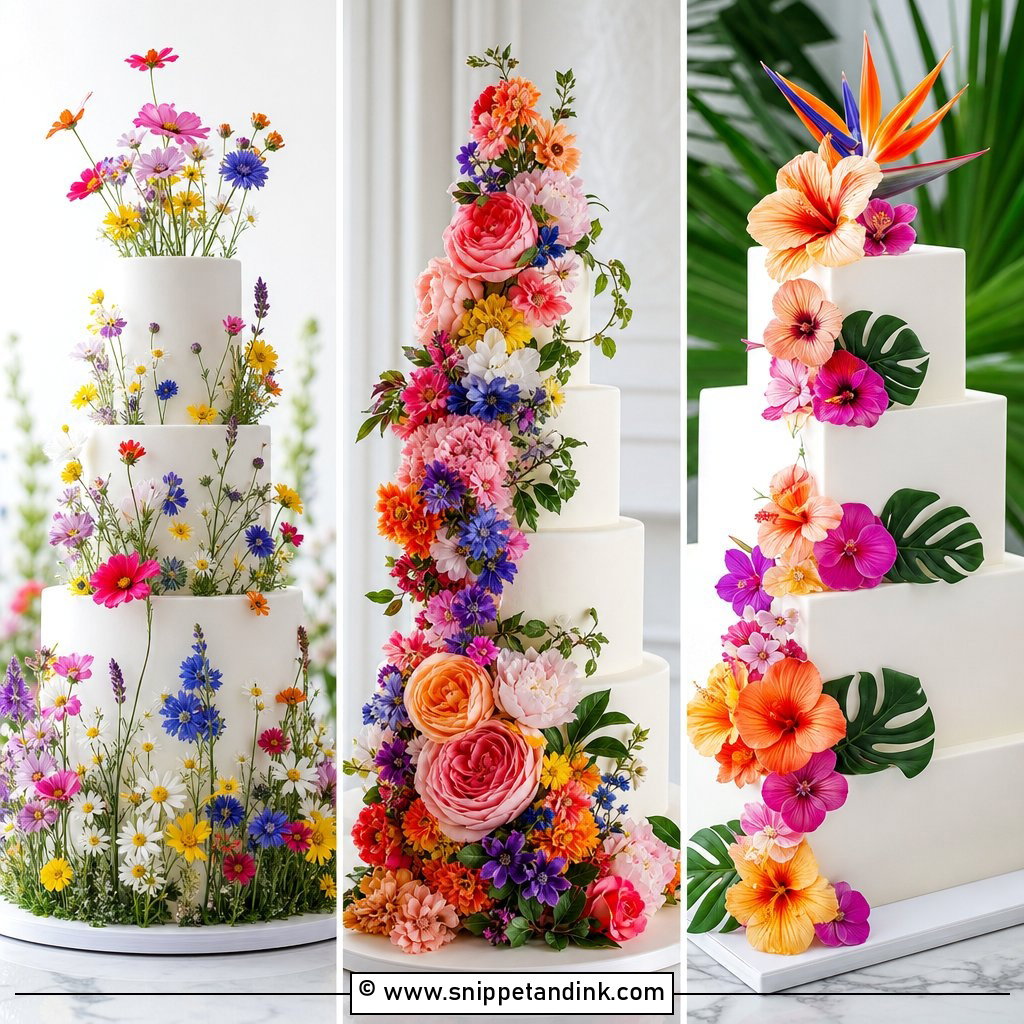
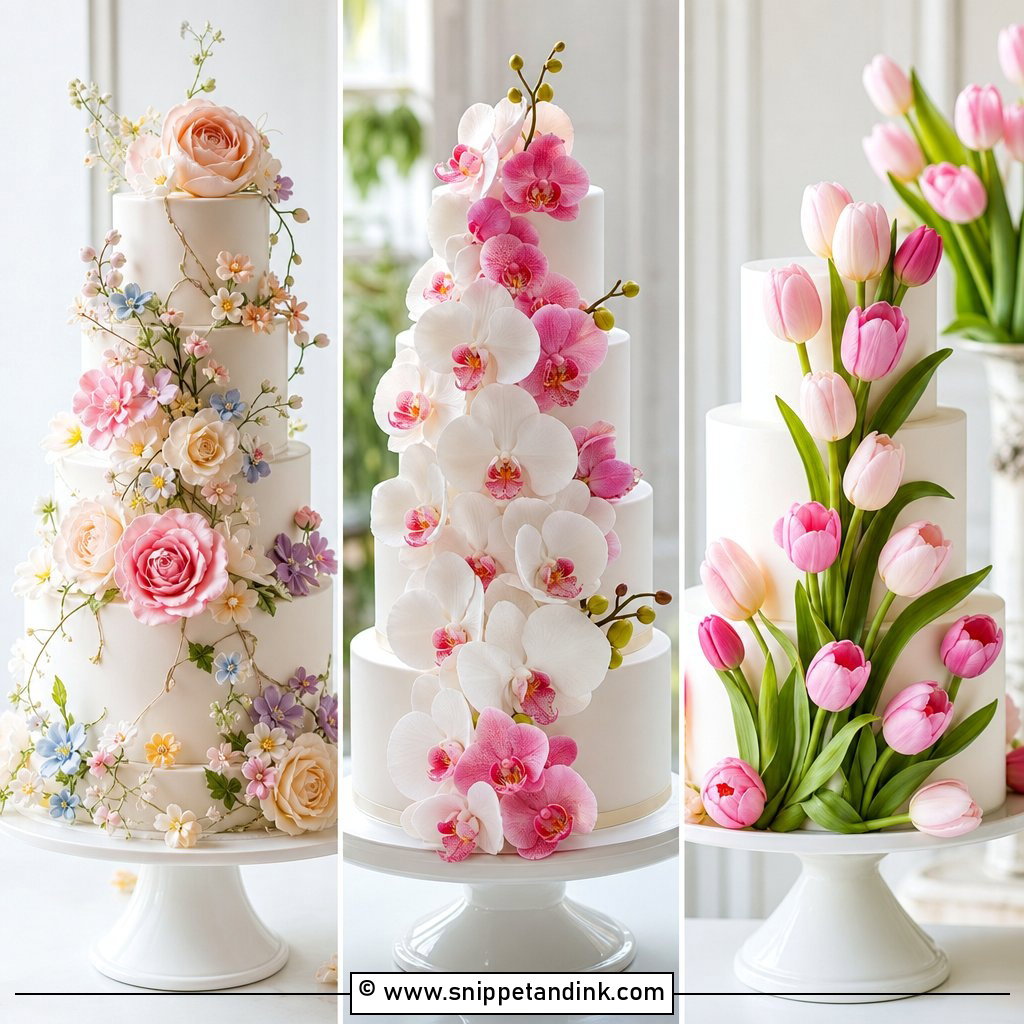
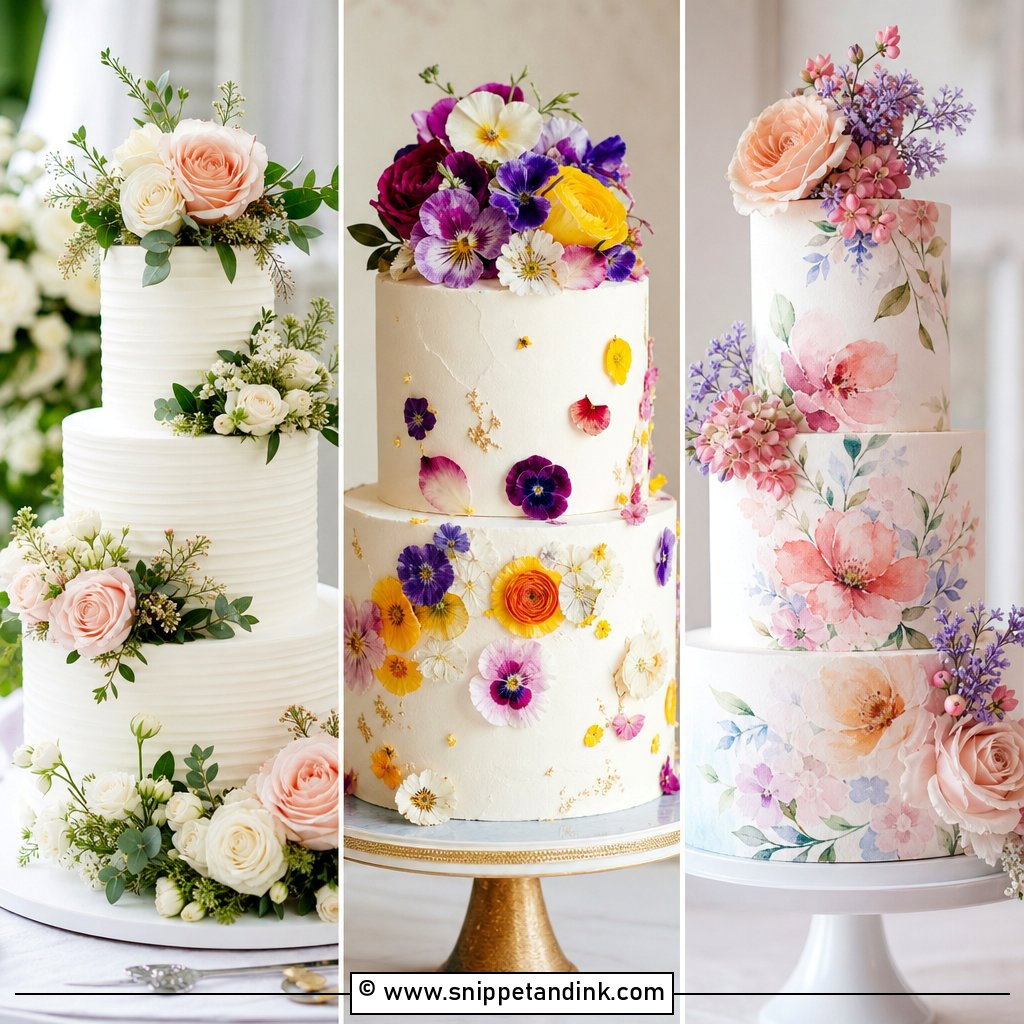
Putting the colour into the flowers instead of the icing is the safest route if you’re nervous about a coloured cake. Ivory buttercream or fondant carries cascading blooms in peach, raspberry, lemon, mint and lavender. Fresh flowers, sugar flowers or wafer-paper petals all work; I’d choose sugar or wafer for a hot outdoor venue, since fresh blooms wilt out of water. The white base also makes it simple to coordinate with the bouquet, because every flower stands out against it.
16. Sorbet Drip Wedding Cake
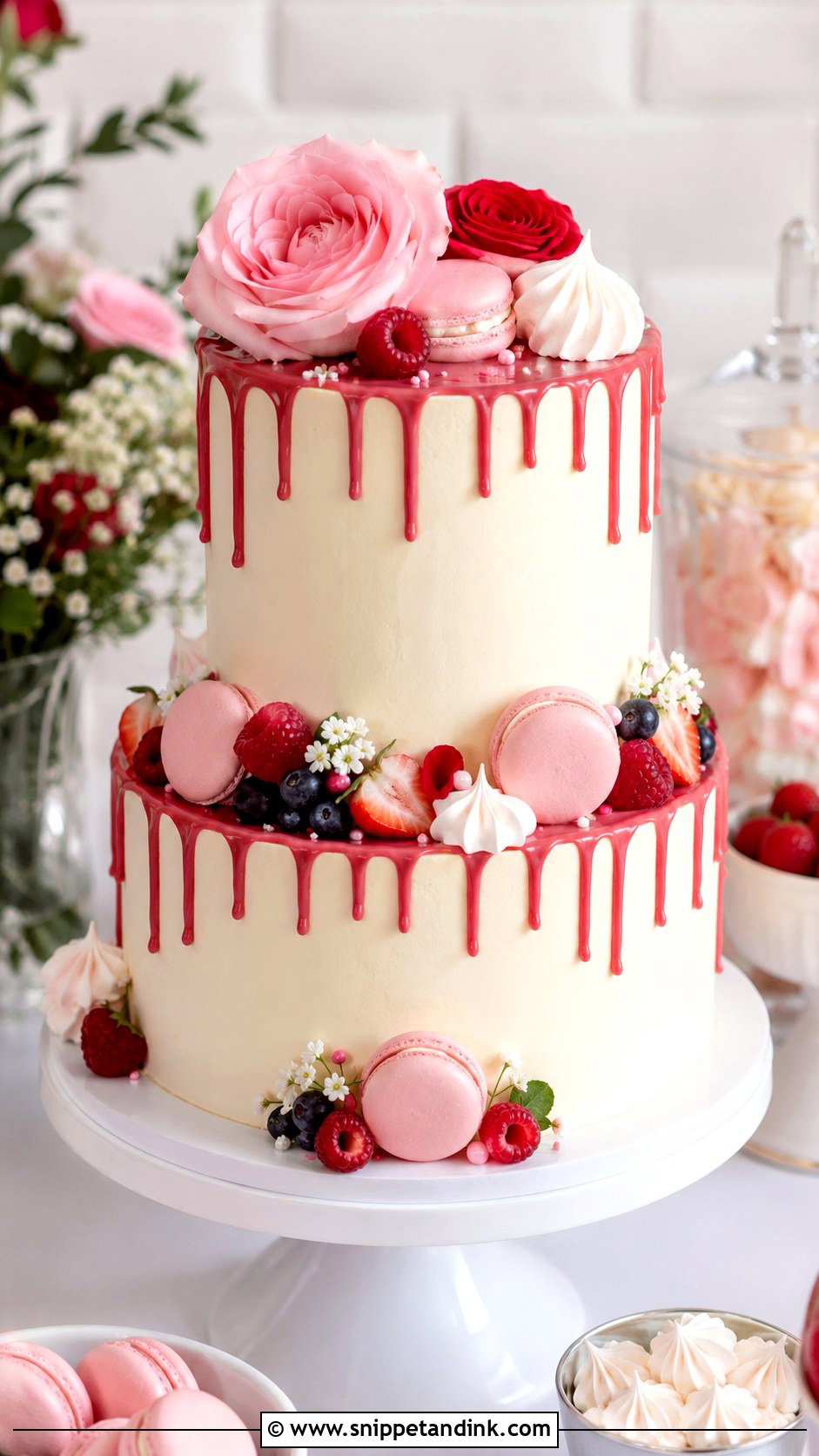
Drips are where wedding cakes go a little playful. The drip can be pale raspberry, lemon or white chocolate tinted with a sorbet shade. Temperature is everything here: I chill the cake hard and test one drip on the back before doing the front, because ganache that’s too warm runs straight to the board. Top it with macarons, meringue kisses or a few sugar flowers, but don’t overload it. It suits intimate weddings and dessert tables.
17. Sorbet Marble Wedding Cake
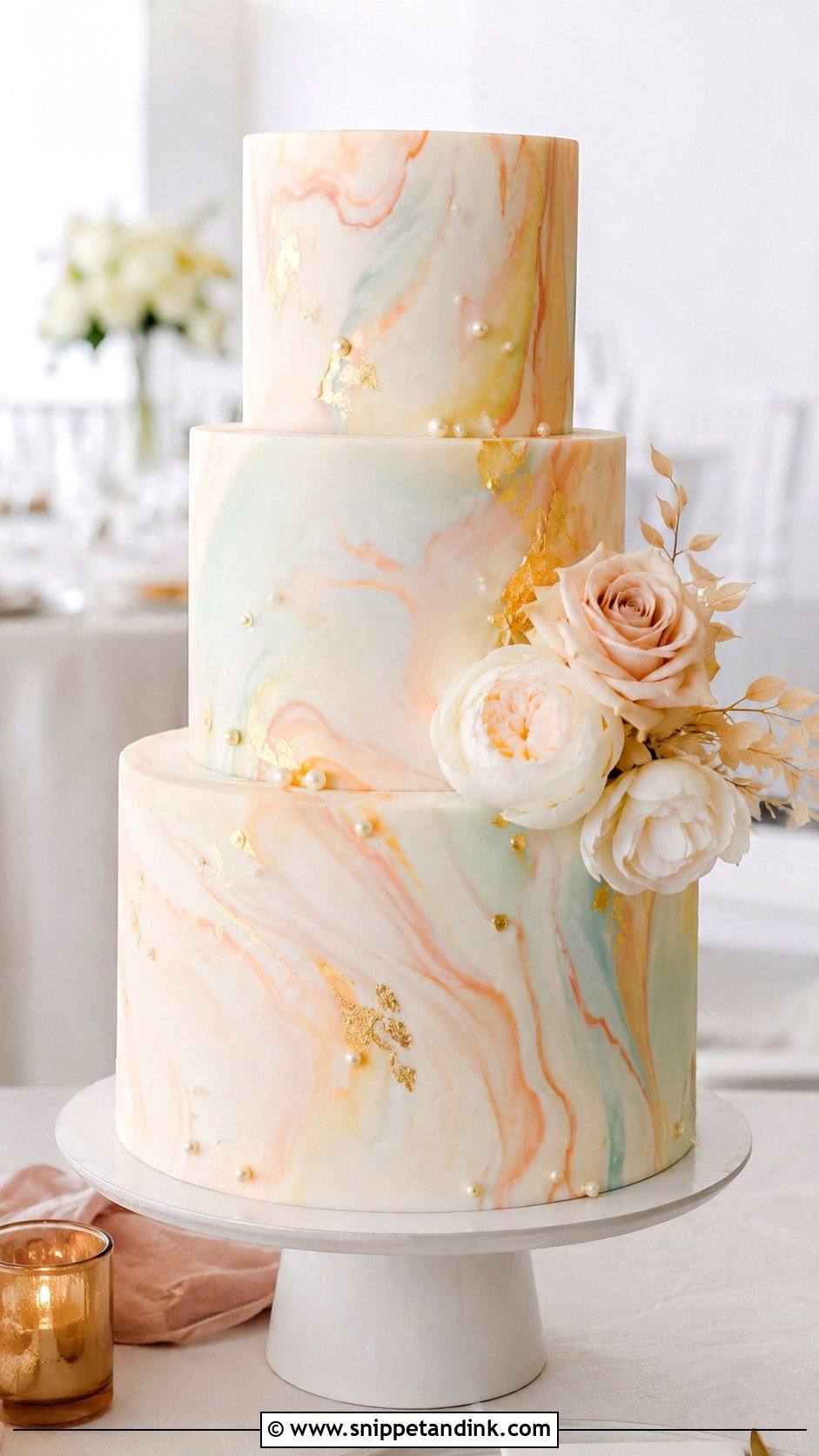
Marbled fondant, folded with ivory and one or two sorbet shades, gives a soft stone effect; buttercream marbling is looser and more handmade. I keep the veining fine so peach or mint reads as a whisper, not a swirl. A touch of edible gold or a pearl line finishes it without fuss. Tall tiers with clean edges and one floral cluster for balance suit modern venues and hotel receptions where you want colour that stays sophisticated.
18. Sorbet Ruffle Wedding Cake
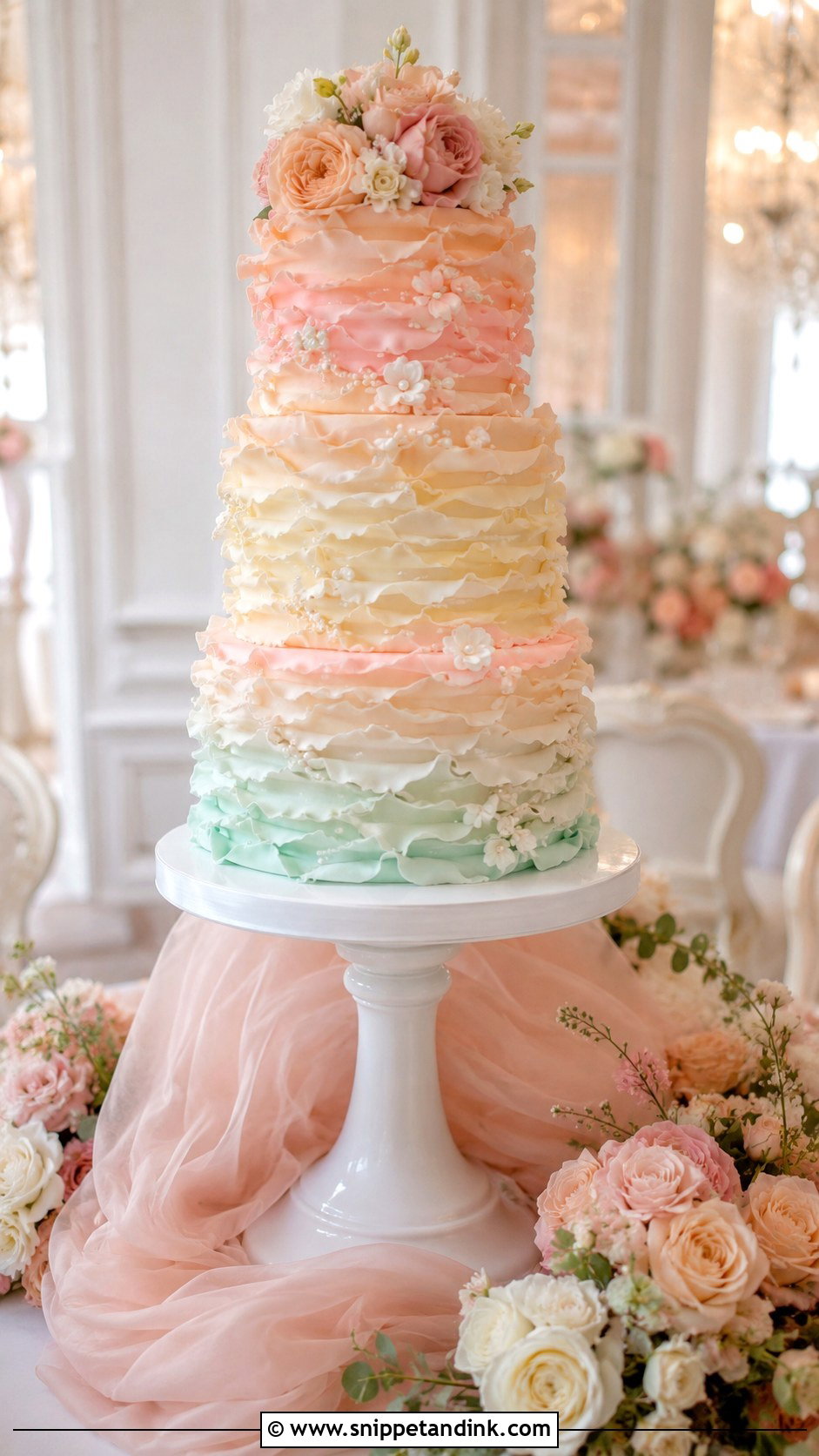
Ruffles in peach, pink, lemon and mint look like layers of petals or chiffon. Each ruffle is a thin strip frilled at the edge, so the work adds up fast, and I often ruffle one or two tiers and leave the rest smooth. Humidity is the enemy: thin fondant ruffles droop in a damp tent, so they’re happiest indoors. With that much texture, keep the extras to a few sugar flowers or pearls. It pairs well with a gown in soft, layered fabric.
19. Sorbet Pressed Flower Wedding Cake
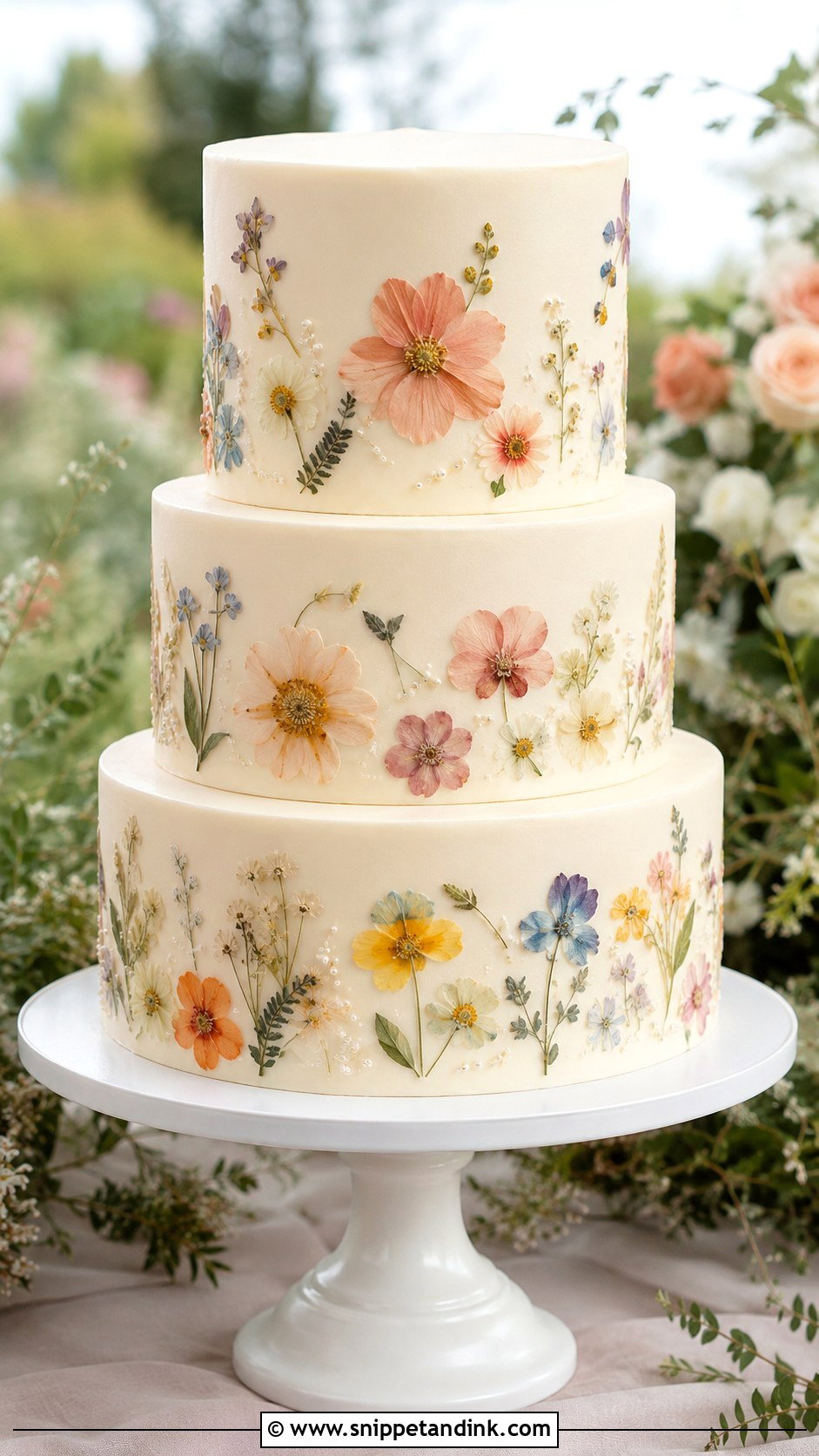
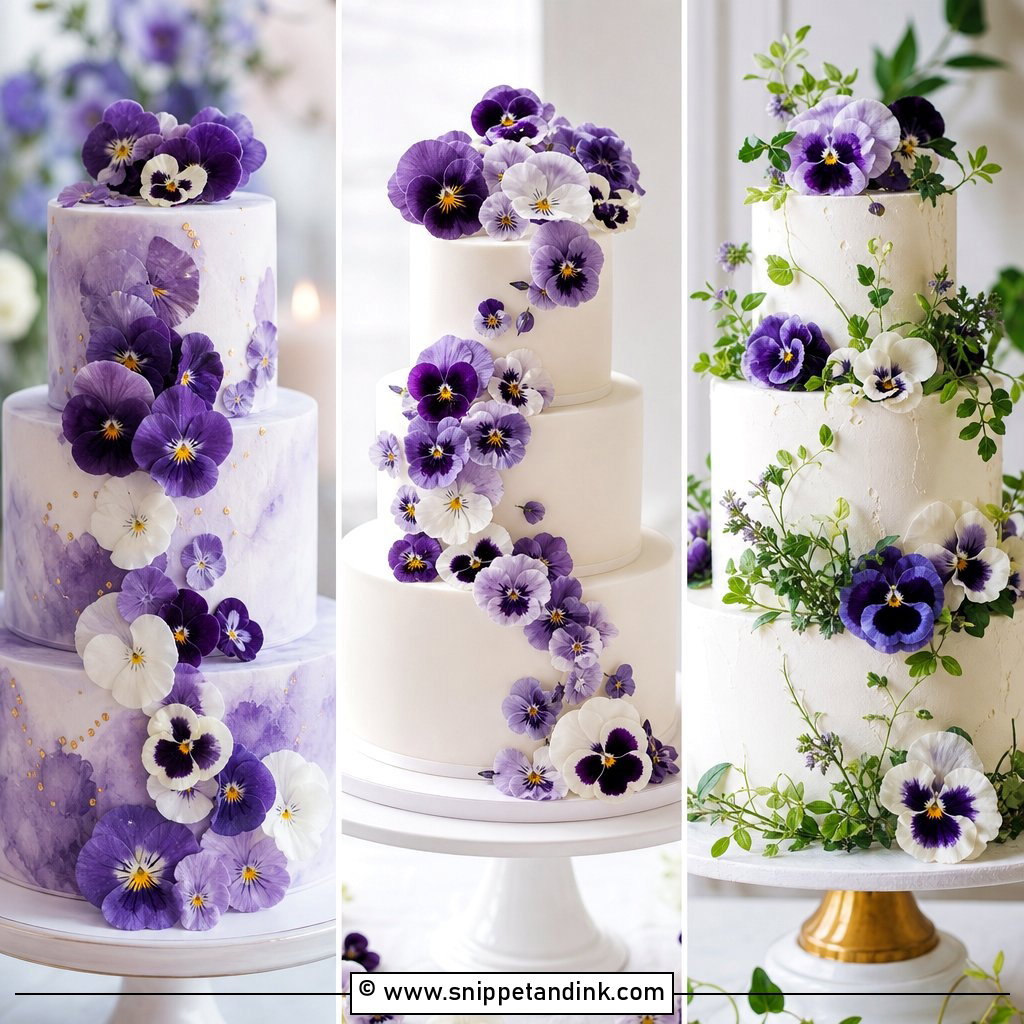
Pressed flowers sit flat against smooth ivory buttercream, in peach, pink, yellow, mint and lavender, and give a botanical, cottage-garden look. The flowers must be food-safe and grown for eating, such as violas, pansies, cornflowers and calendula, not florist stock. I press the edible pressed flowers onto chilled icing so they stay flat, and I place them in loose drifts rather than evenly spaced dots. Vanilla, lemon, almond or honey sponge suits the gentle look.



20. Sorbet Macaron Wedding Cake
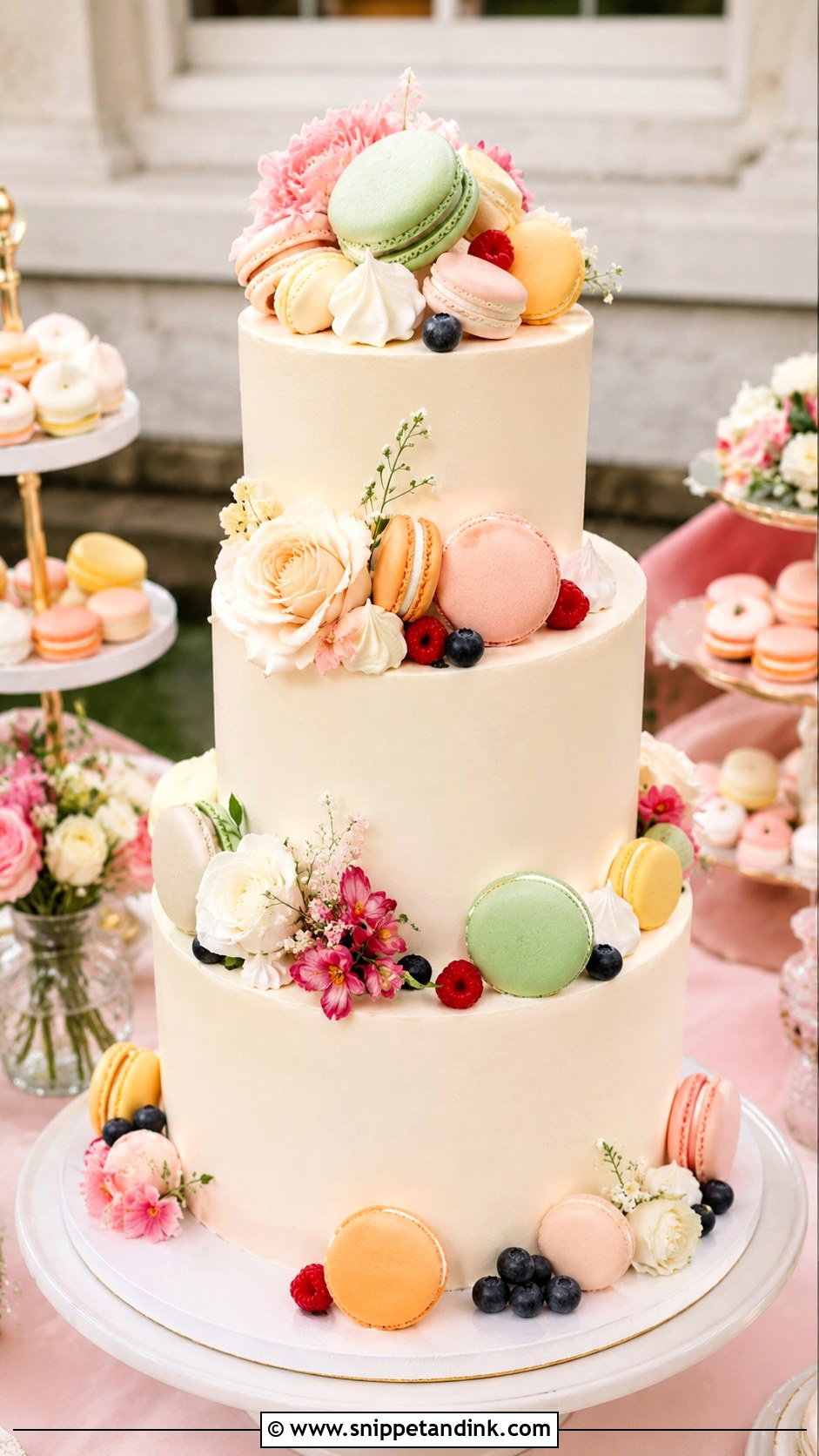
Macarons give a cake height, colour and texture without crowding the icing, so the cake itself can stay ivory or blush. Peach, raspberry, lemon, mint and blueberry shells can climb the tiers or sit in a ring at each base. They do pick up moisture from buttercream, so I attach them as late as I can, ideally on site, or they soften and slide. Matching the filling flavours inside the cake, like lemon curd or berry cream, ties it together and gives guests a preview of the dessert table.
Fruit Fillings That Stay Put Through a Summer Reception
Sorbet flavours mean curds, compotes and fresh fruit, and all of them are wetter than plain buttercream. Inside a stacked cake, a soft filling can bulge out between layers under the weight of the tiers above, especially once the room warms up. This is how I build them so they hold:
- Pipe a stiff buttercream ring around the edge of each layer before the curd or compote goes in.
- Cook fruit fillings down until thick, rather than using raw sliced fruit, which keeps releasing juice.
- Chill the filled cake overnight so everything sets before the outer coat goes on.
- Add any fresh fruit decoration on site, as close to serving as possible.
Curd and cream fillings are perishable, so ask the venue how long the cake will sit out before cutting. For an outdoor summer reception, I’d plan for it to go on display late and be cut early, with the kitchen keeping any extra cake chilled until it’s served.
Bring a Fabric Swatch to Your Tasting
Colour on a wedding cake works when it’s balanced. Peach warmth, lemon brightness, berry depth, mint calm or a full rainbow can all look refined if the shapes stay clean, the flowers are chosen with care and the fillings match the shades on the outside. Before your tasting, hold your favourite pictures up against your bridesmaid fabric and your flowers, then bring the closest two or three to your baker with a swatch. Seeing the real colours side by side settles more questions than any mood board.
You'll Like These Ideas:




Leave a Reply