
Stars are one of the few cake themes I can push in almost any direction. The same idea can be navy and dramatic, ivory and quiet, or blush with a little gold catching the light. What changes is the base colour, the metal you choose and how much of the surface you let the stars take over. Below are twenty directions I’d actually build, with notes on how each one behaves in the kitchen and on the cake table, so you can walk into a tasting knowing what to ask for.
Real Gold, Lustre Dust and the Difference Your Guests Can Taste
Almost every idea below relies on metallic stars, so it’s worth knowing what that shine is made of. Edible gold and silver leaf are thin sheets of pure metal that are safe to eat in the tiny amounts used on a cake. Edible metallic paints and dusts are a different product, and many shimmer dusts are sold as non-toxic or for decoration only. Those are fine on a topper or a removable plaque. They should not go on icing that guests will eat.
When I quote a star cake, I’m deciding which stars are edible and which are props. Ask your baker the same question directly, and ask to see the label on anything that goes onto a sliced tier.
Why dark cakes need more lead time
Navy, black and deep purple can’t be rushed. Dark buttercream needs a lot of colour, and it deepens for several hours after mixing, so I make it a day ahead and judge it the next morning. Many bakers start black icing from a cocoa base so less dye is needed. If your design is dark, book a baker who does these colours regularly and ask how they keep the taste clean.
1. Navy Star Wedding Cake
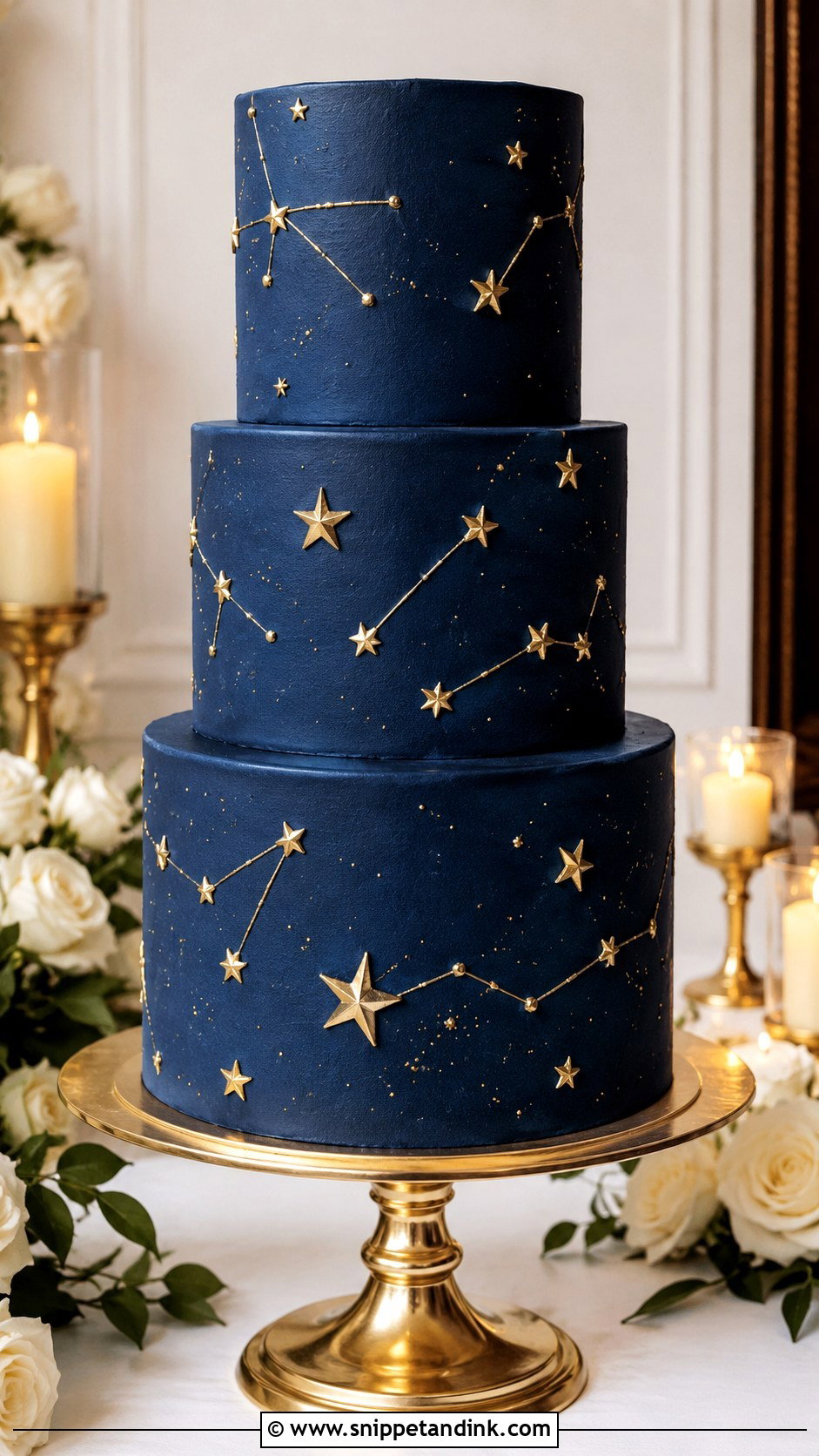
A navy star wedding cake gives you the truest night-sky contrast, and gold stars read clearly against it from across a room. Getting a deep navy is the hard part. I colour the buttercream a day ahead because dark shades keep developing as they rest, and mixing to full depth on the spot means using so much gel that the icing tastes bitter. Three or four tiers suit it, since the dark base gives each small star space. Keep flowers to a few white roses or ivory blooms so the colour stays the focus.
2. White Star Wedding Cake
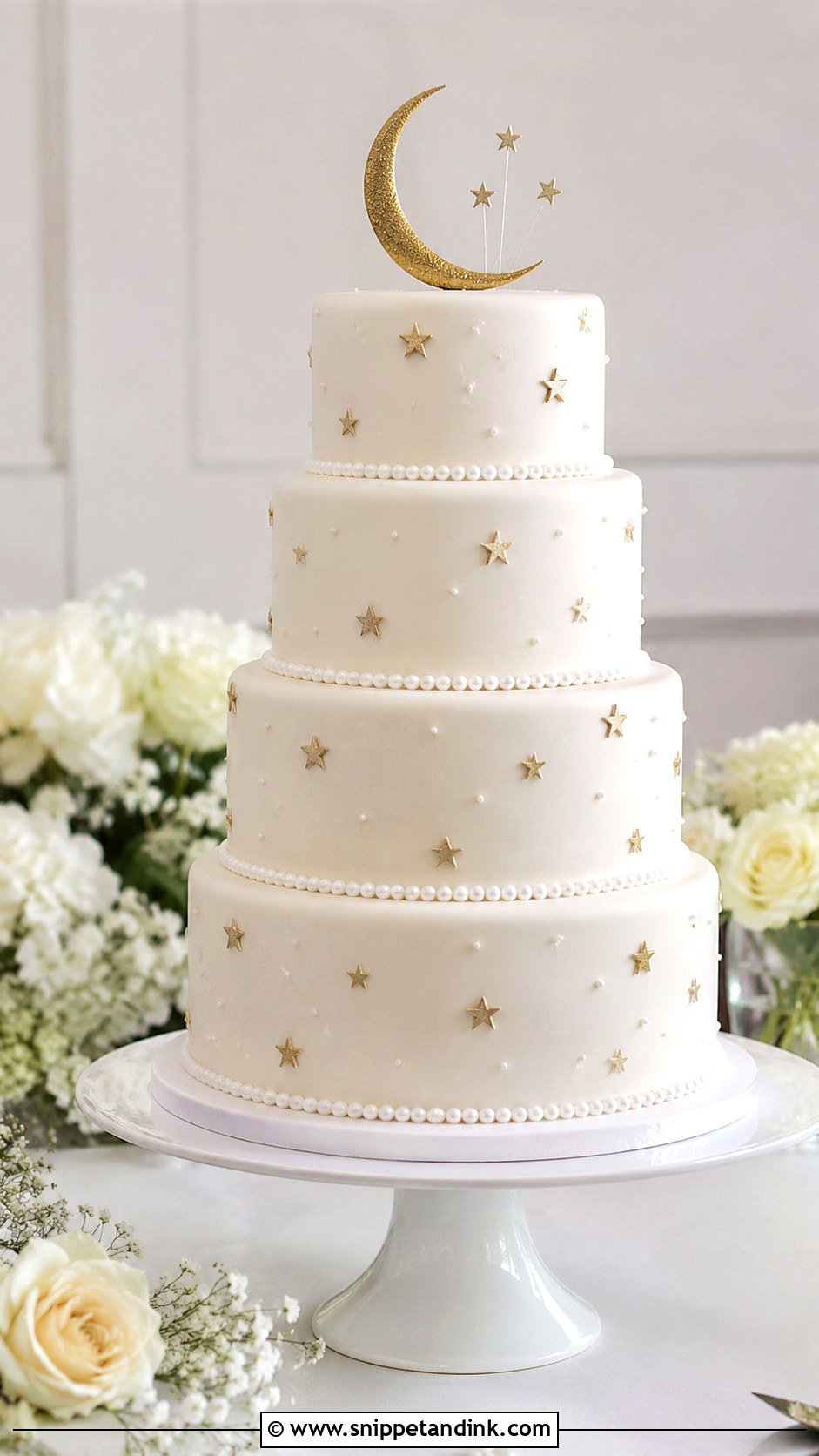
An ivory base with pearl accents and small gold or silver stars is the version I suggest when a couple loves the theme but their families expect a classic cake. Raised fondant stars cast tiny shadows on white, which gives the design depth in daylight without any colour at all. Go for a crescent topper or a light sweep of edible glitter, not both. This one fits nearly any venue.
3. Gold Star Wedding Cake
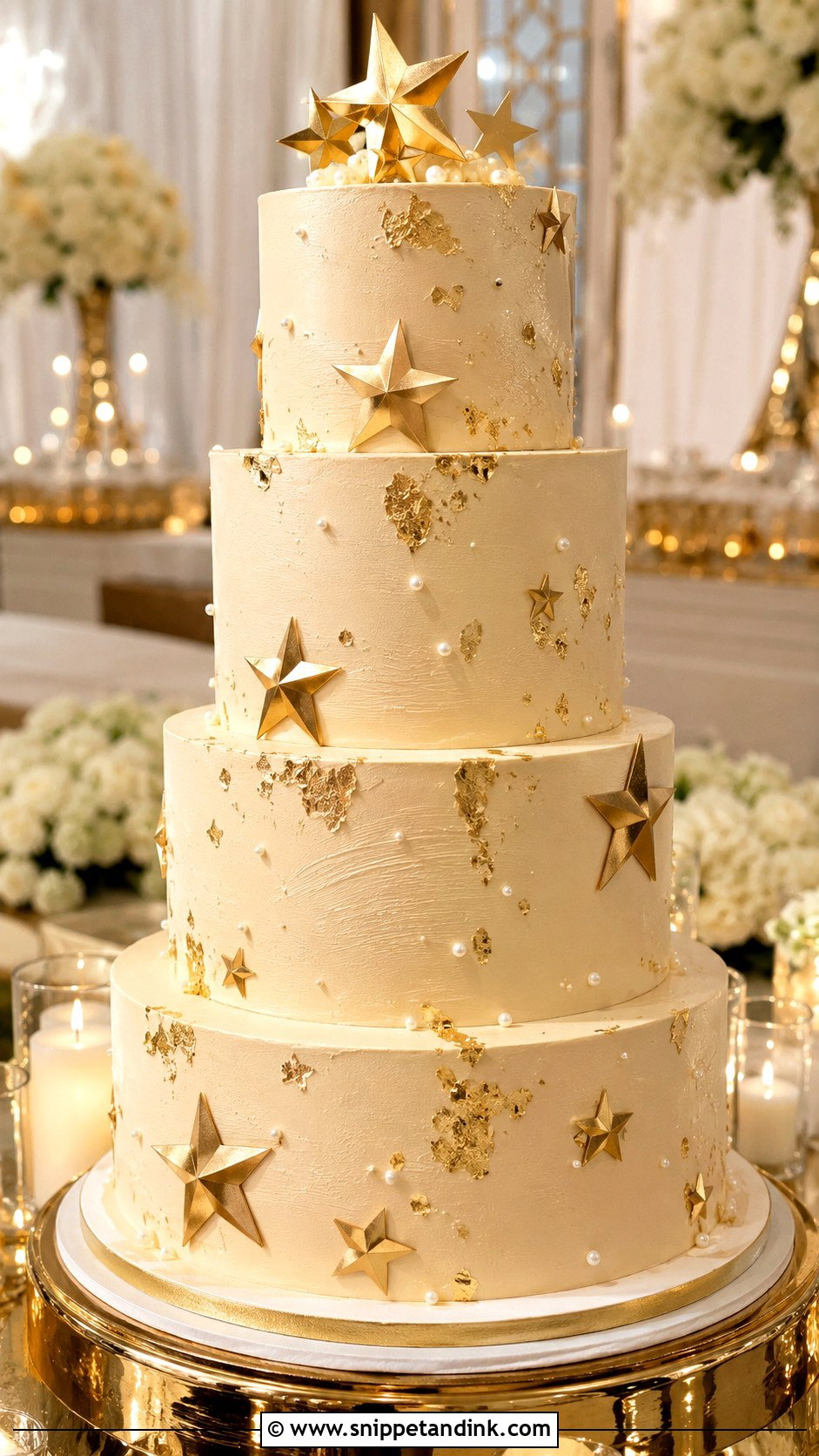
Gold is the warmest way to do stars. I usually start from ivory, cream, blush or a soft champagne and let the metal do the work, either scattered lightly or clustered up one side of the tiers. Gold leaf looks handmade because it wrinkles and breaks as it’s laid, and no two patches come out alike. It glows under candlelight and near mirror trays, so keep the tier shapes plain. Once you add ruffles or heavy piping under the shine, the eye has nowhere to rest.
4. Moon And Star Wedding Cake
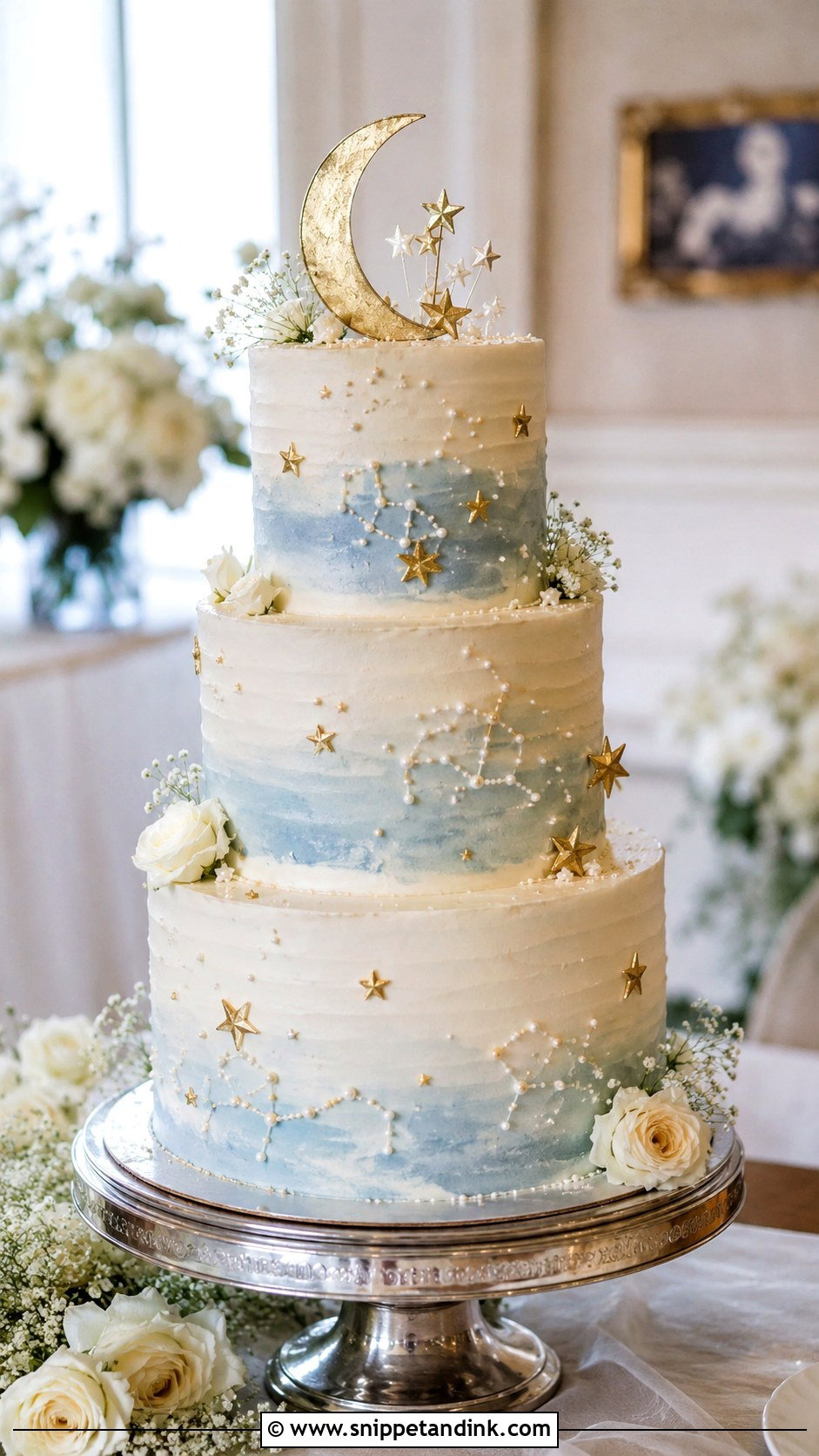
A moon and star wedding cake is easy to make personal. The moon can be a topper, a painted crescent or a fondant cut-out wrapped along the side, with stars around it in gold, silver, white or pastel. I prefer round tiers here because the curve of the cake follows the curve of the moon. Ivory buttercream, a touch of soft blue and a few pearls keep it grown-up. The thing I watch for is scale: a moon that’s too large and cartoon-bright pushes it toward a baby shower.
5. Constellation Wedding Cake
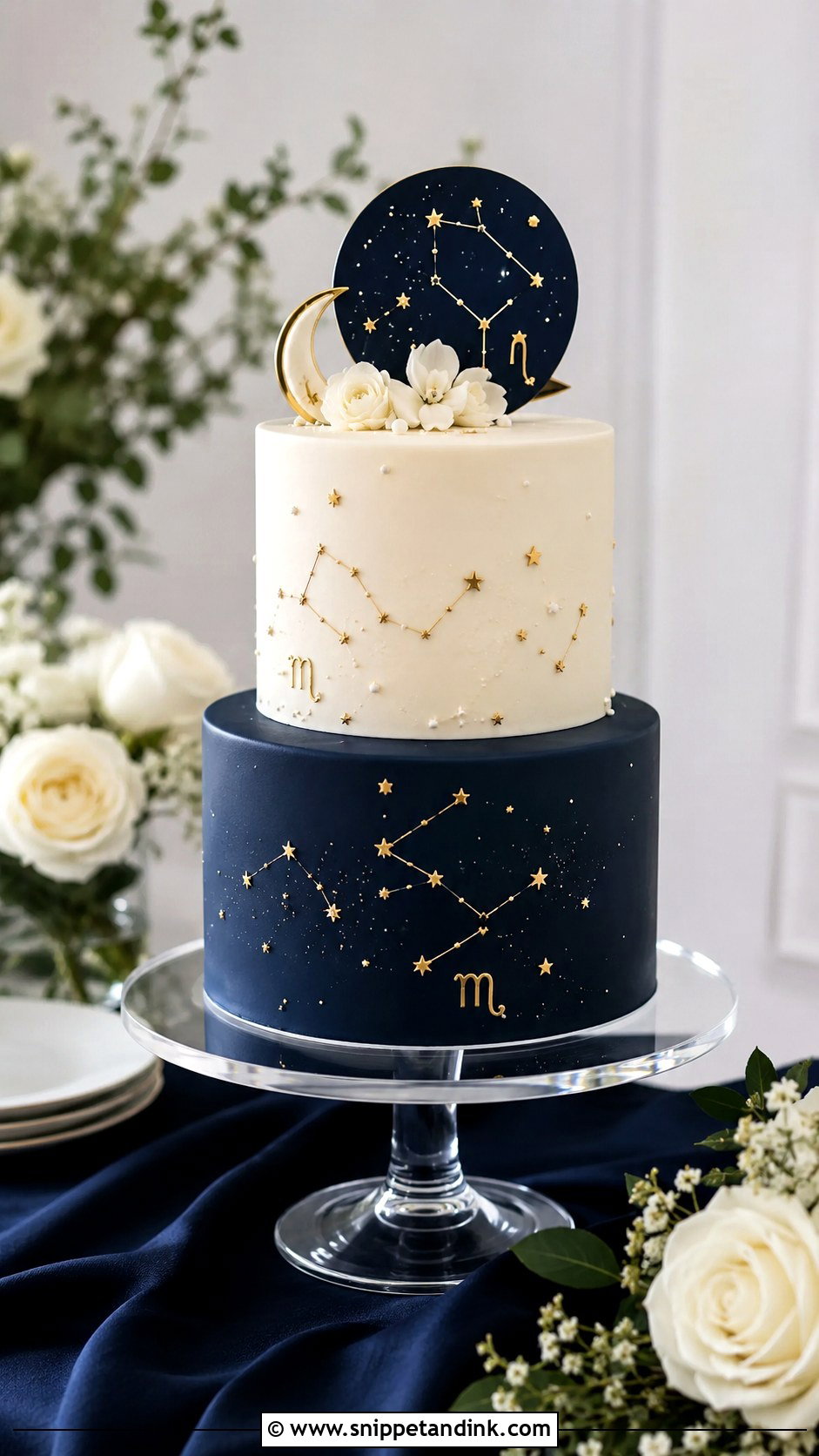
Constellation designs are where a star cake gets meaningful. You can use zodiac signs, a star map for your date, or the sky above your venue, with fine lines joining small edible stars. Those lines need a smooth, firm surface, so I pipe or paint them onto chilled fondant or very cold buttercream; a soft surface lets the brush drag. Navy, black, ivory and dusty blue all hold the lines well. Putting each partner’s sign on a separate tier is a small detail guests do come over to read.
6. Galaxy Wedding Cake
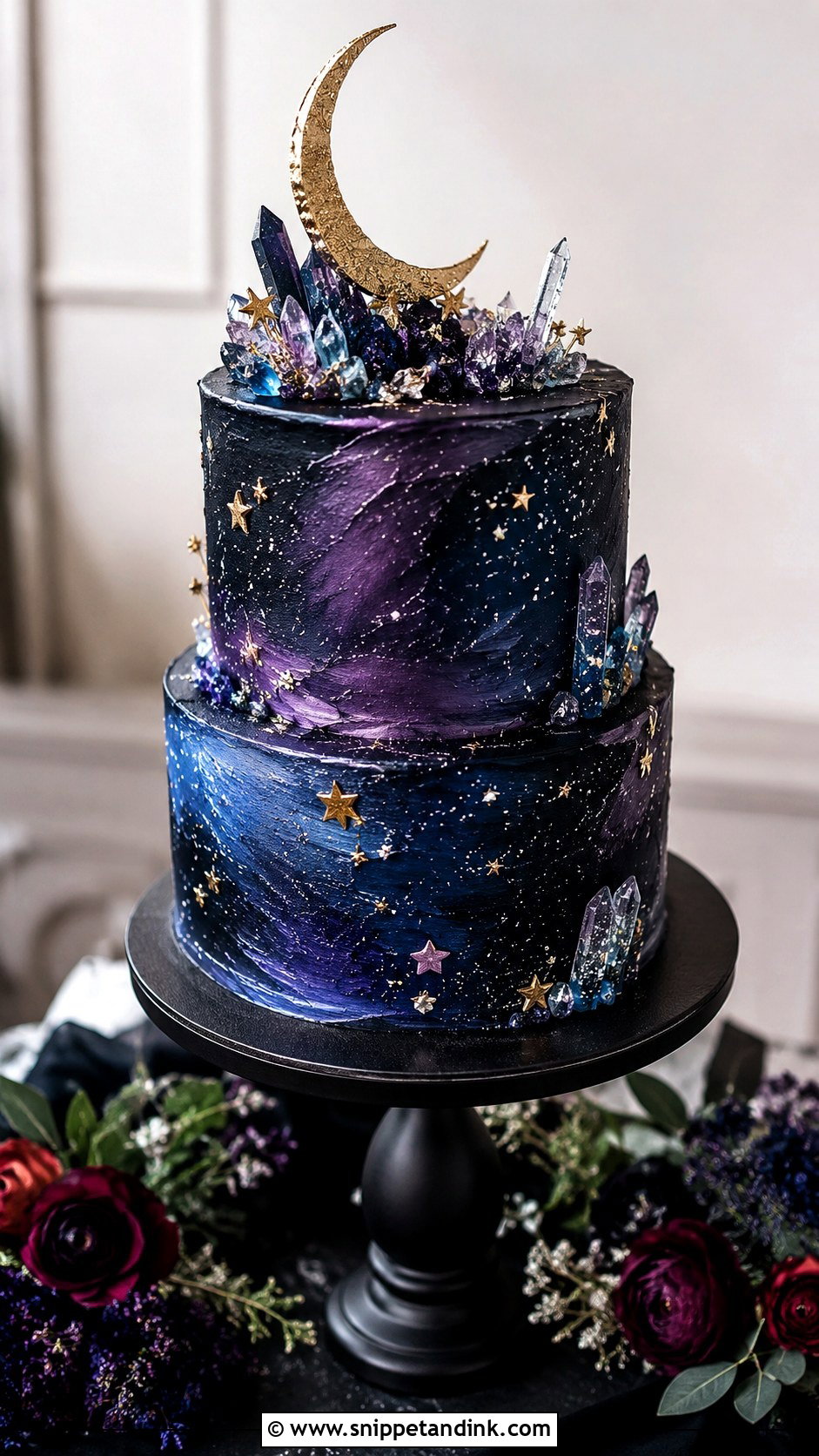
Galaxy cakes are showpieces. The look blends blended shades of navy, purple, black, blue and sometimes pink into a painted space effect, finished with gold splatter, tiny stars and a soft shimmer that picks up the reception lights. Because the colour is already busy, I keep the structure disciplined: a tall three-tier or a sleek two-tier, one crescent topper, maybe a few crystals. Be aware that heavily coloured icing can tint lips and teeth, so I often keep the inside tiers in a lighter shade.
7. Starry Night Wedding Cake
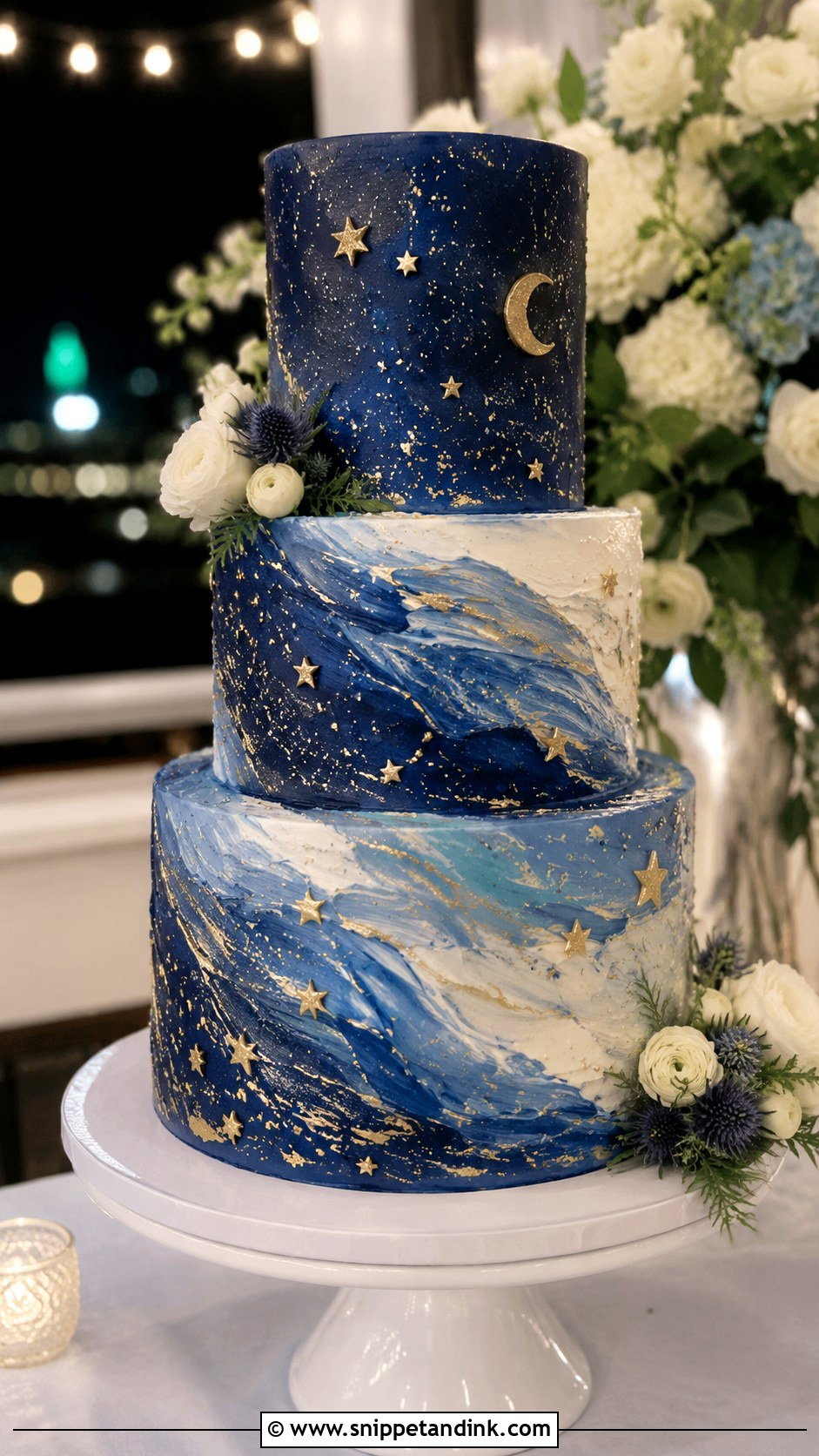
This one is painterly rather than flat. I brush swirls of blue, navy, white and gold over buttercream with a palette knife, and the texture of the icing creates the cloud-like movement that fondant can’t. Small gold stars and a little moon keep the theme readable among the strokes. It sits well at a garden or fine-art style wedding in the evening, and since every stroke is by hand, the cake looks made rather than manufactured.
8. Black Star Wedding Cake
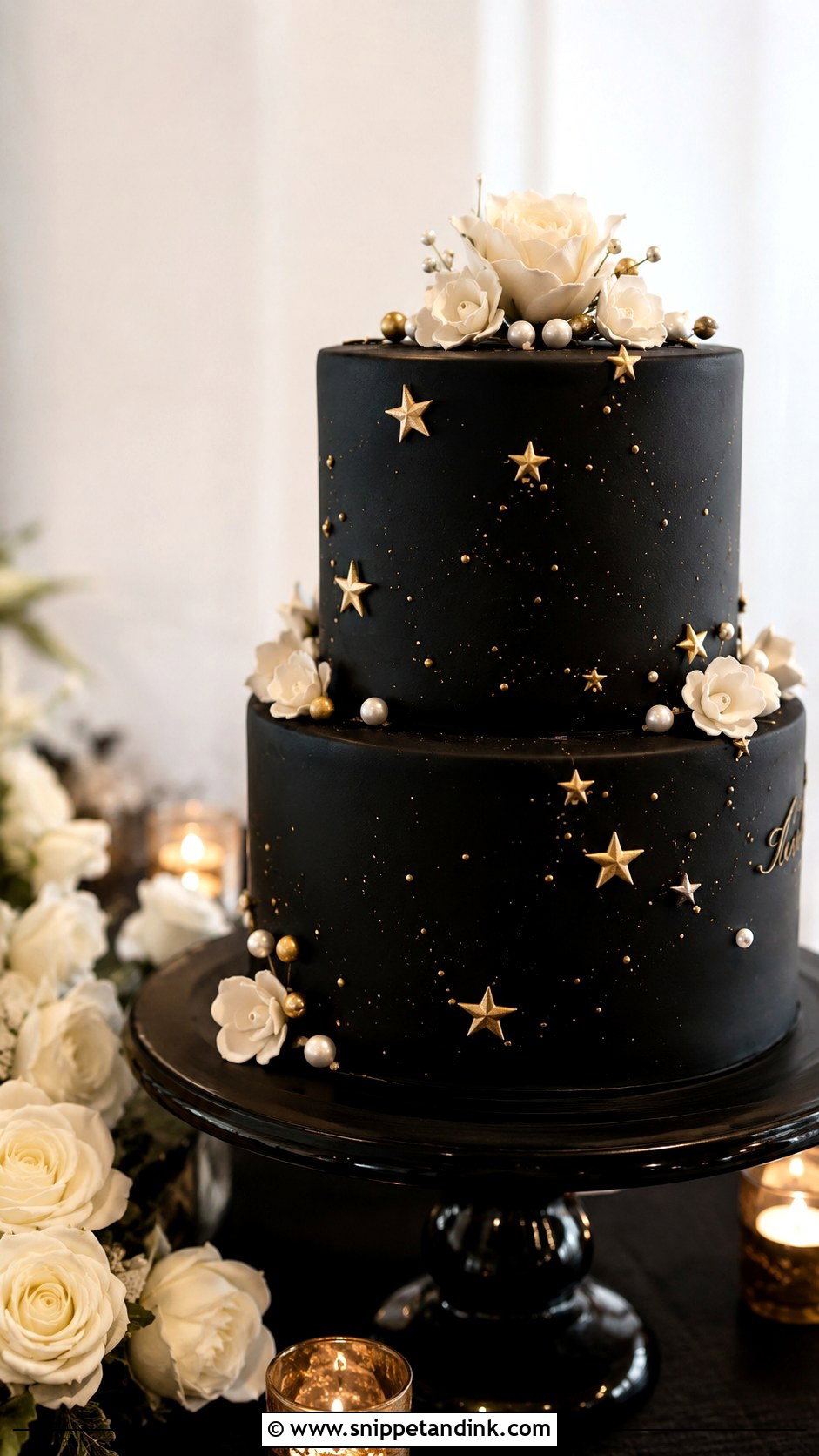
Black is bolder than most couples expect, and also more forgiving to style. The key is contrast: matte black with gold stars, white sugar flowers and a few pearls. Black fondant shows every speck of icing sugar and every fingerprint, so I finish it with a light steam to set a clean matte surface before decorating. Don’t crowd the tiers. One ivory floral cascade or a gold moon topper softens it enough for a wedding table.
9. Silver Star Wedding Cake
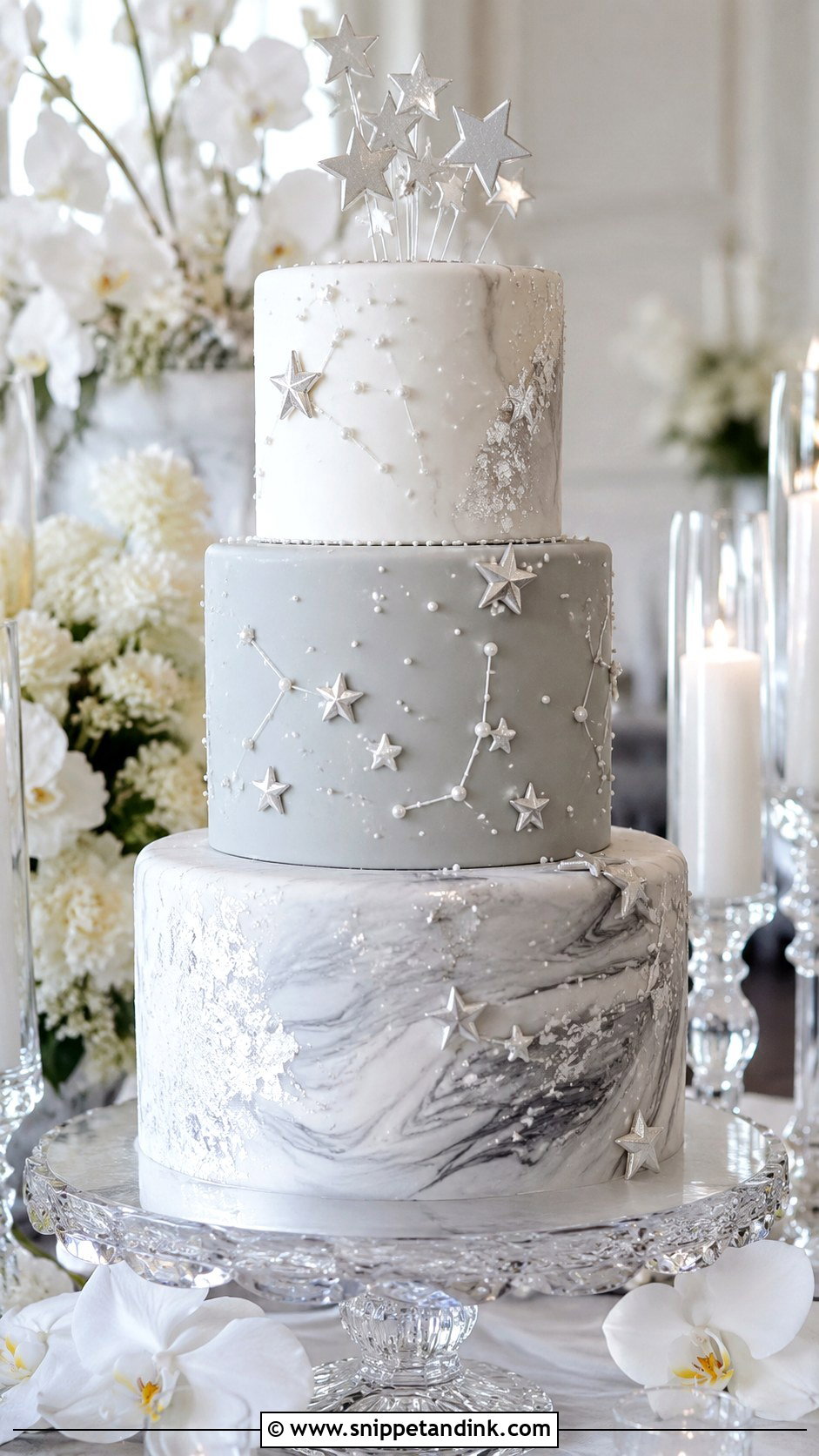
Silver gives a cooler finish, and I recommend it when gold fights with the rest of a palette, especially grey, pale blue or cool white schemes. It suits white, grey, pale blue or marble icing, using silver leaf, metallic toppers, pearl dots or fine constellation lines. One caution: silver leaf tarnishes faster than gold once it meets moisture, so I apply it as late as possible. Crystal stands and clear candle holders echo it nicely. Leave plenty of plain space so the silver looks light, not heavy.
10. Blush Star Wedding Cake
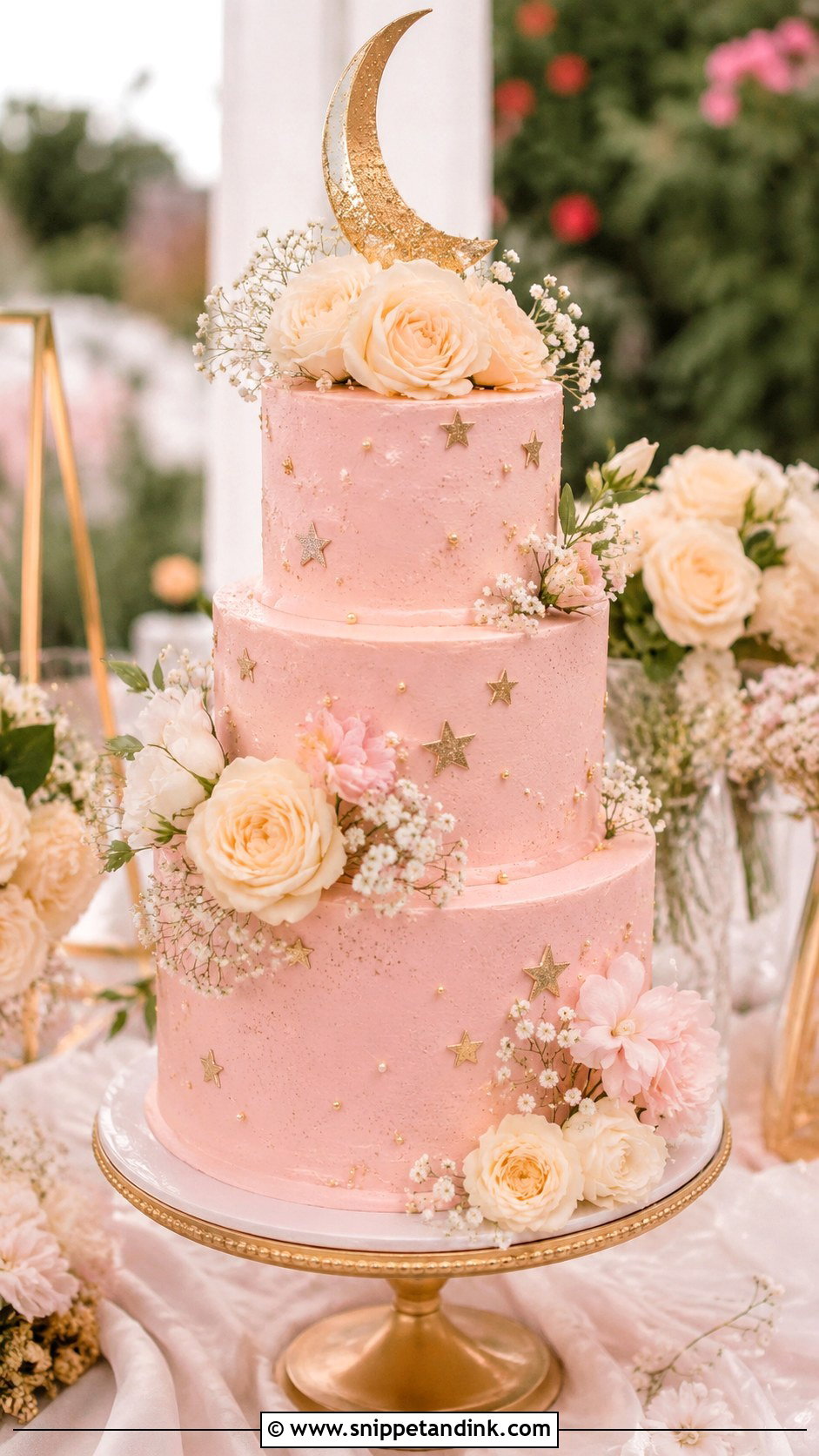
Pale pink takes the theme somewhere softer. I pair blush icing with champagne tones, ivory flowers and small gold stars, and the result feels warm in natural light rather than night-time. The base can be smooth, textured or lightly marbled. A slim crescent topper and a ring of stars around the tiers is all it needs. Roses, ranunculus or baby’s breath push it even gentler, which suits spring and garden receptions.
11. Marble Star Wedding Cake
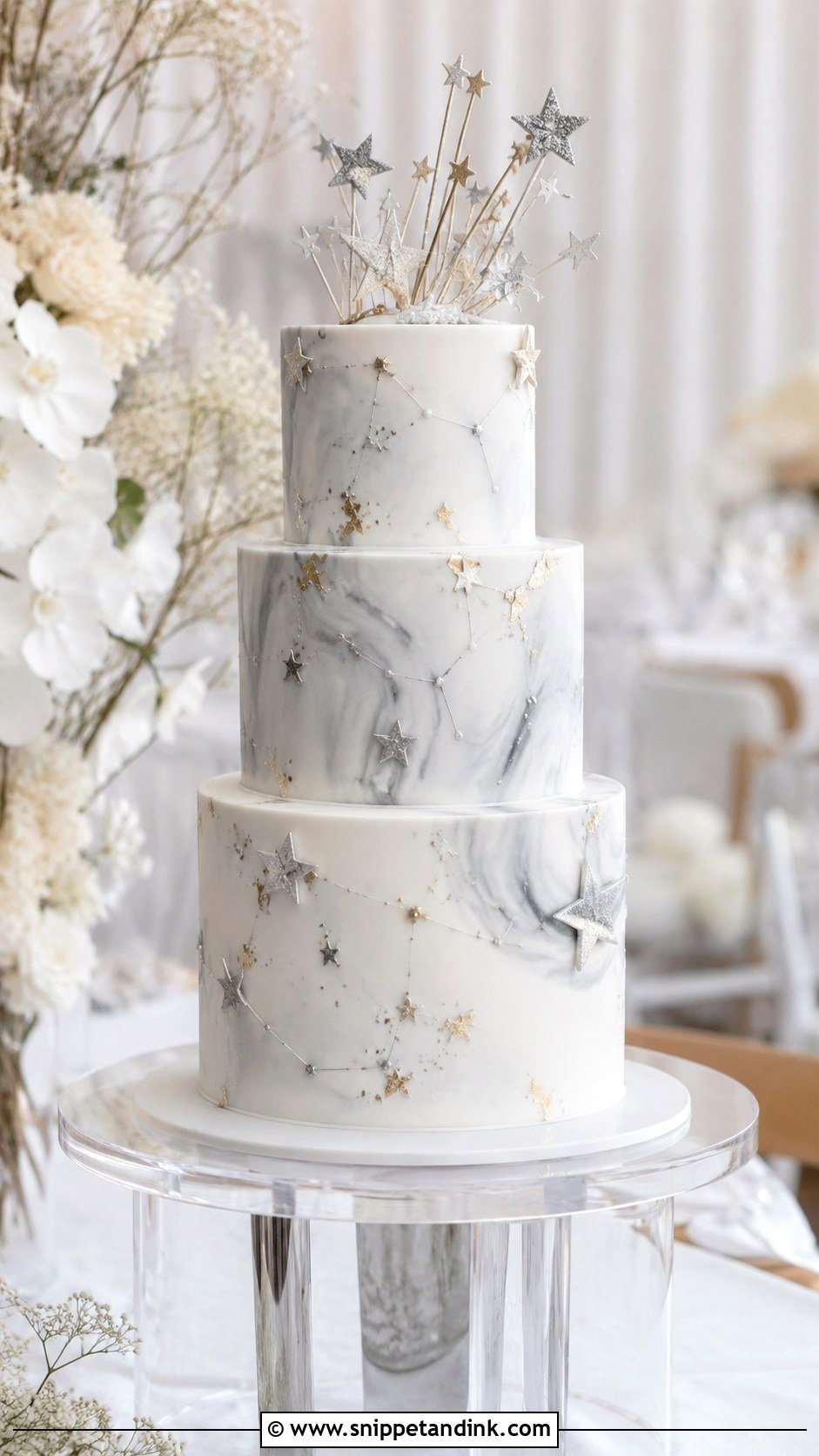
Marbled icing already has movement in it, so with this style the stars have to work around the veining instead of on top of it. White and grey, navy and white, or blush and ivory all marble well. I place gold leaf, silver stars or thin constellation lines along the natural streaks, which makes the pattern look intentional. Stop sooner than you think. A clear acrylic stand or plain white pedestal keeps attention on the cake itself.
12. Celestial Star Wedding Cake
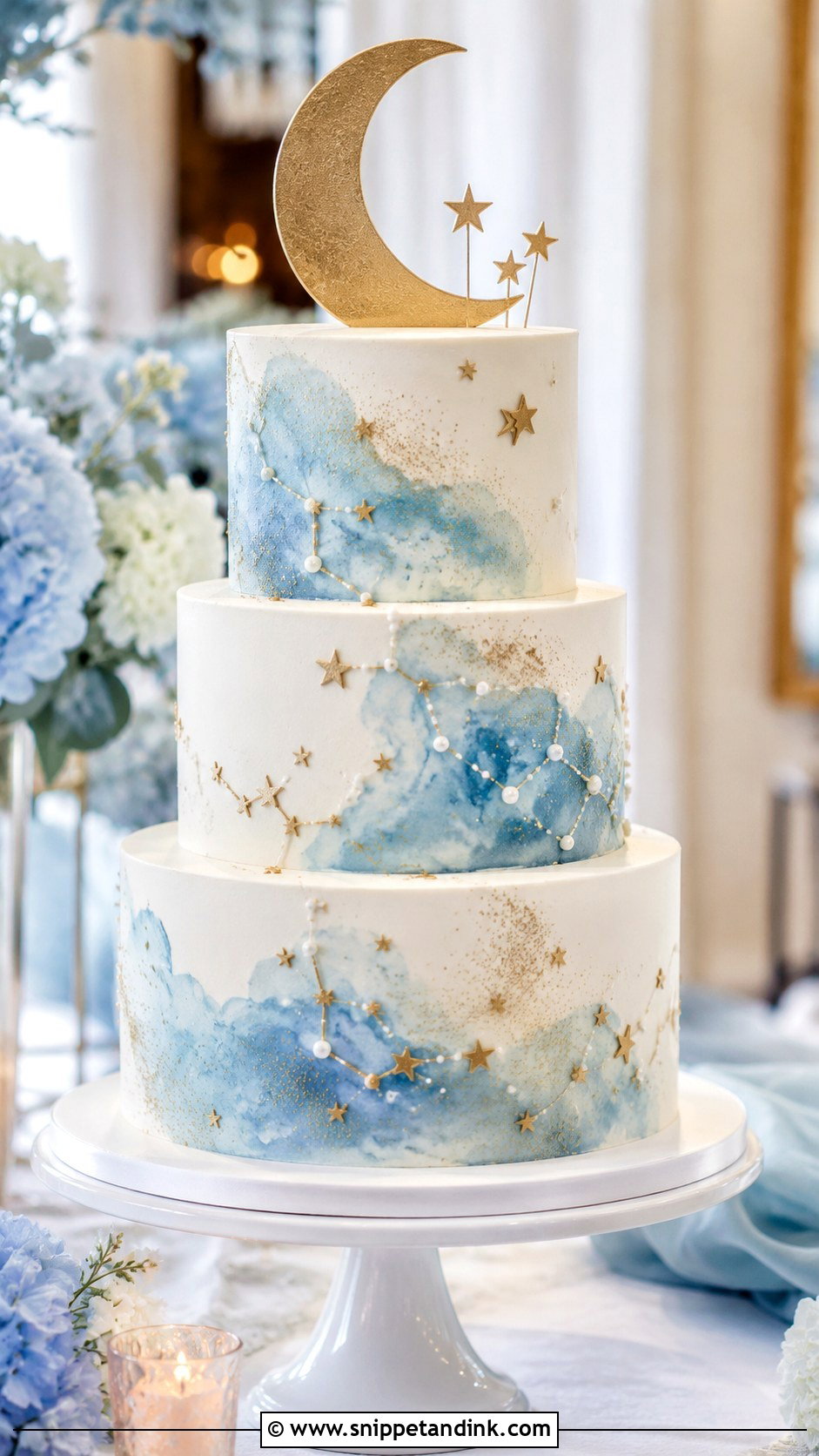
A full celestial cake brings stars, moons, shimmer and sky colours together, and the risk is that each tier ends up telling a different story. I plan it as one continuous sky from top to bottom. One version is ivory buttercream with gold stars, a crescent topper and pale blue watercolor accents; another runs midnight blue with silver constellations and pearls. Either way, I mix star sizes on purpose. Equal stars in neat rows look like wrapping paper.
13. Minimal Star Wedding Cake
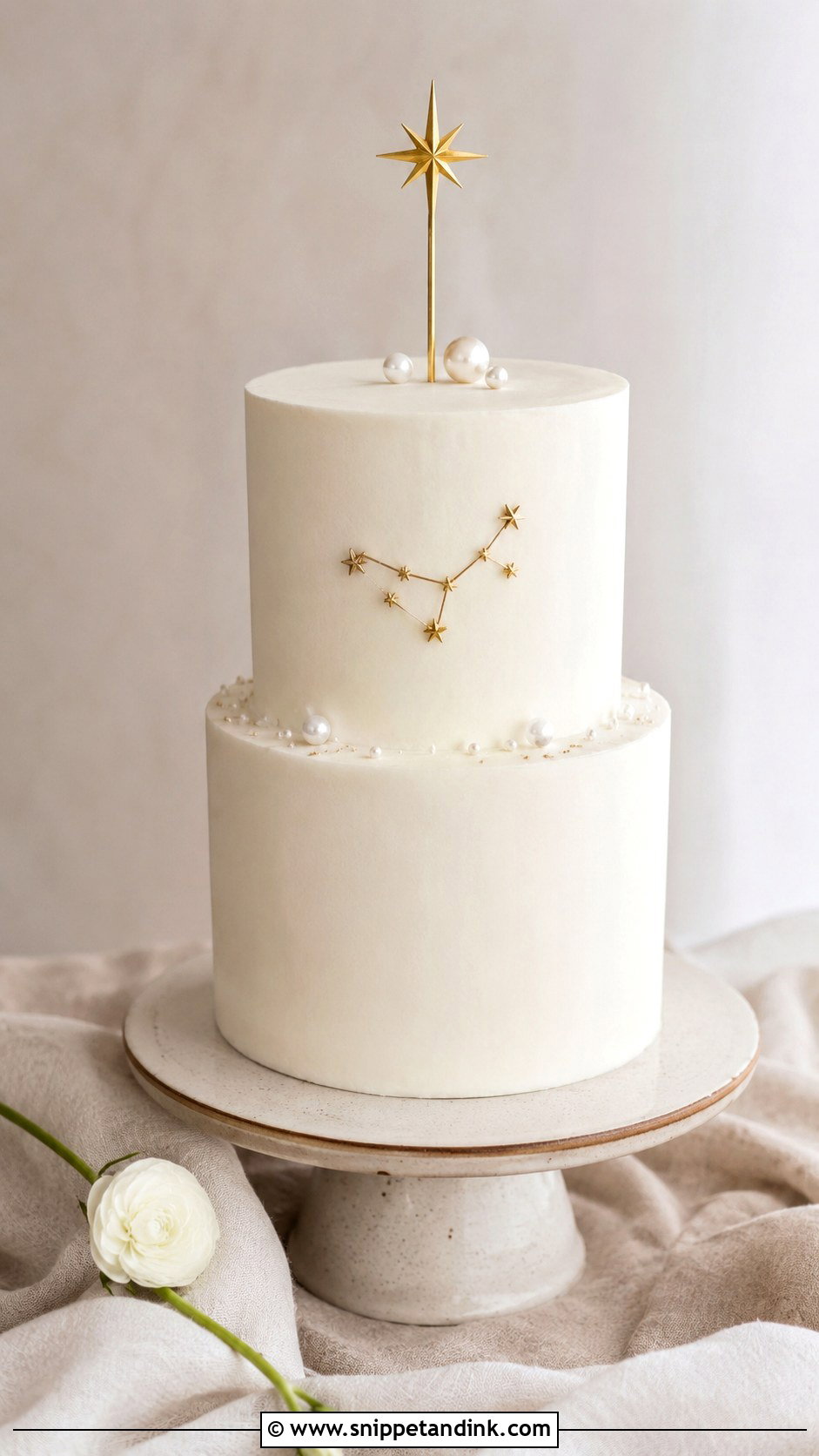
The minimal version is my favourite to make, partly because there’s nowhere to hide. A smooth white, ivory or pale grey cake carries a single star detail: one cluster of gold stars, one constellation or one slim metal topper. The edges and finish have to be sharp, since flaws show on a plain surface. A single flower stem, a satin ribbon or a fine pearl border adds softness if needed. Courthouse receptions and modern venues suit it well.
14. Boho Star Wedding Cake
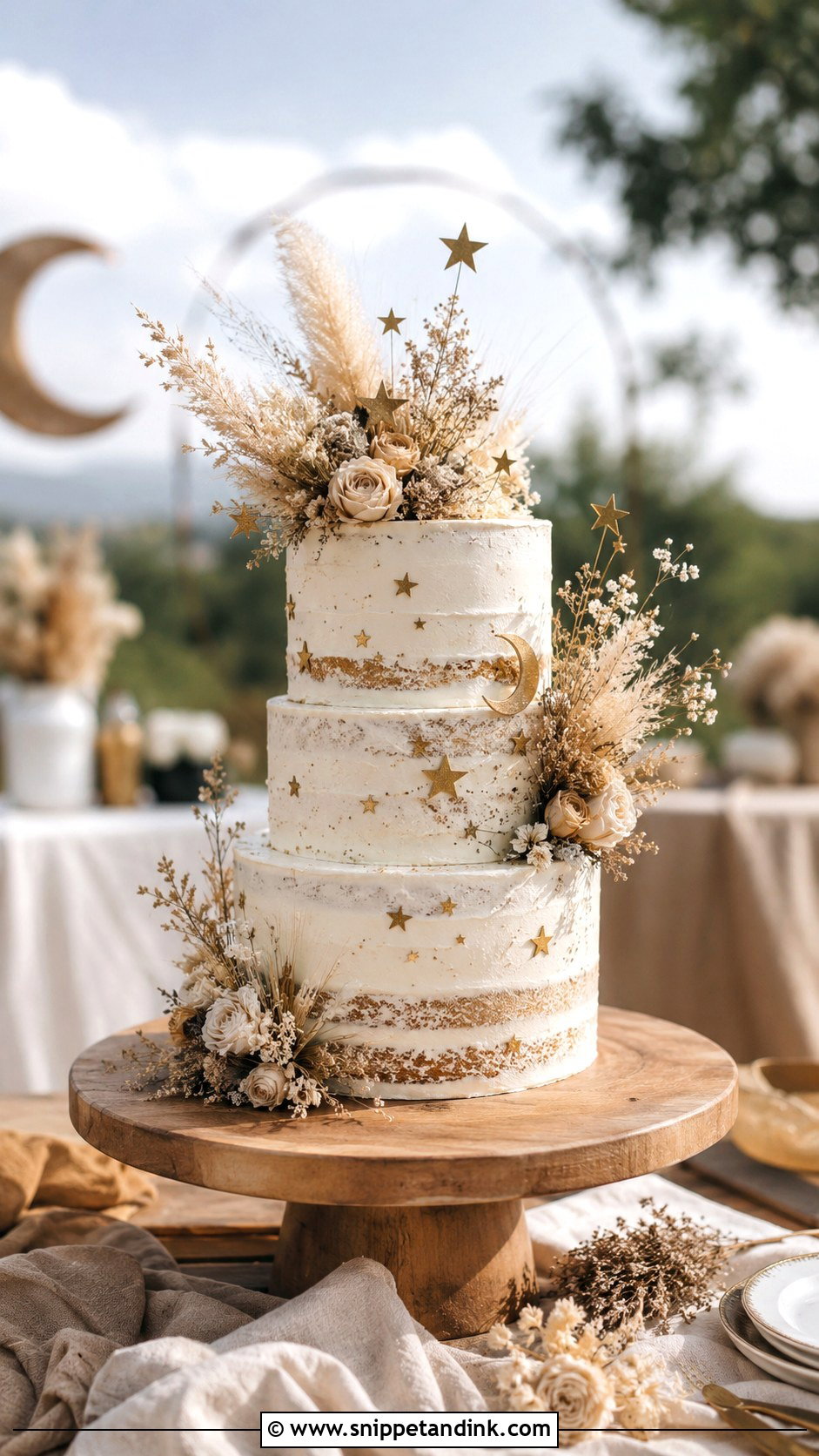
For a boho reception, the stars sit among texture. Neutral buttercream, dried flowers, pampas grass, pressed petals and gold stars go on a lightly textured or semi-naked finish. If you use dried stems, ask that they’re wrapped or sit on a barrier, since not every dried flower or its dye is food safe. Cream, tan, rust and champagne keep it earthy, and a wooden or brass topper with a few small moons finishes it for a desert or barn setting.
15. Pearl Star Wedding Cake
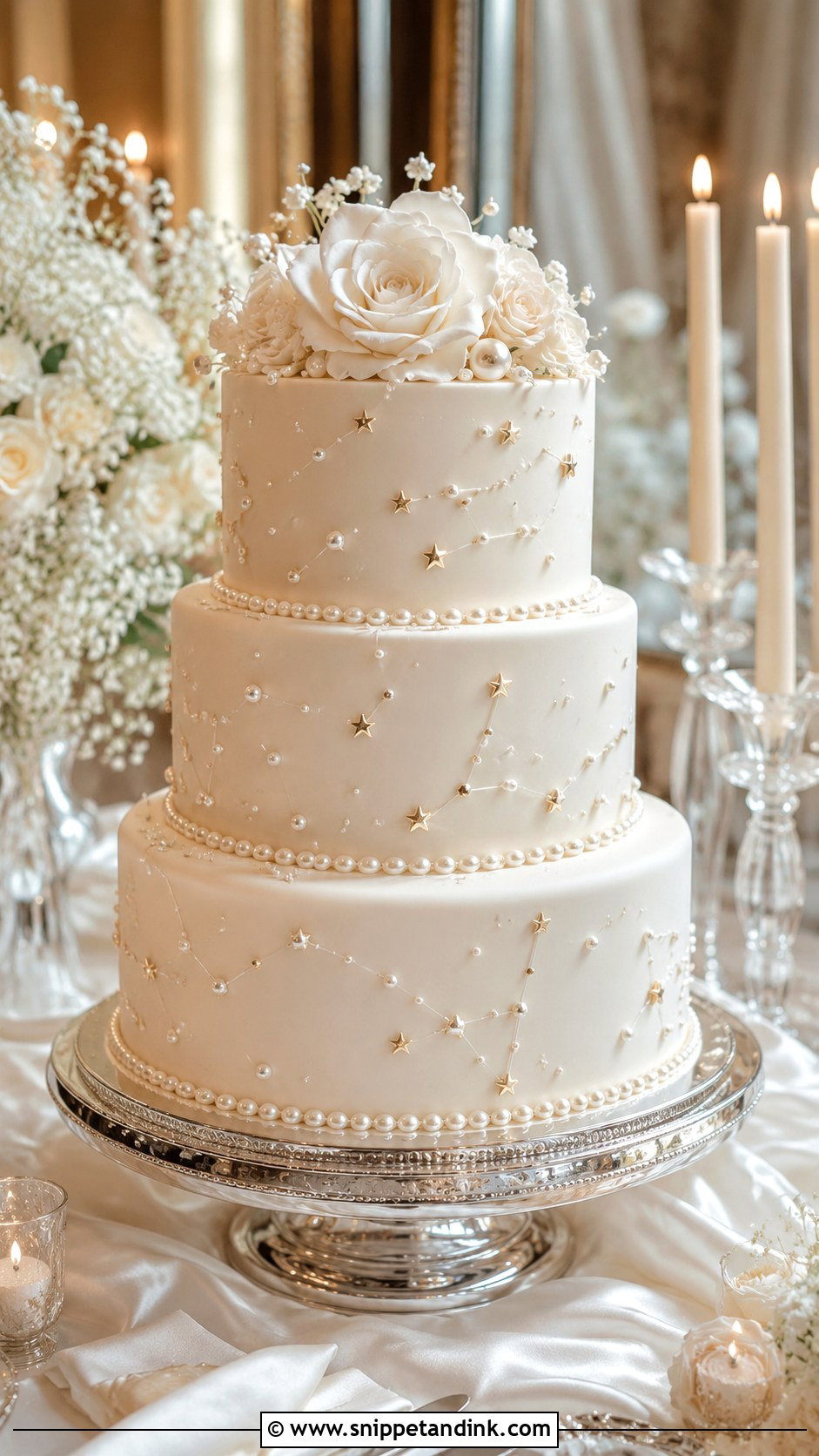
Pearls take the edge off metallic stars and make the cake look bridal rather than themed. I lay them on ivory, white or pale champagne: beads around each tier’s base, scattered with gold stars, or used as the points of a constellation. Sugar pearls are firmer than people expect, so I keep them to the outside and away from the cutting line. Fondant gives the crispest finish; buttercream reads softer. Satin linens and white roses suit a formal room.
16. Blue Star Wedding Cake
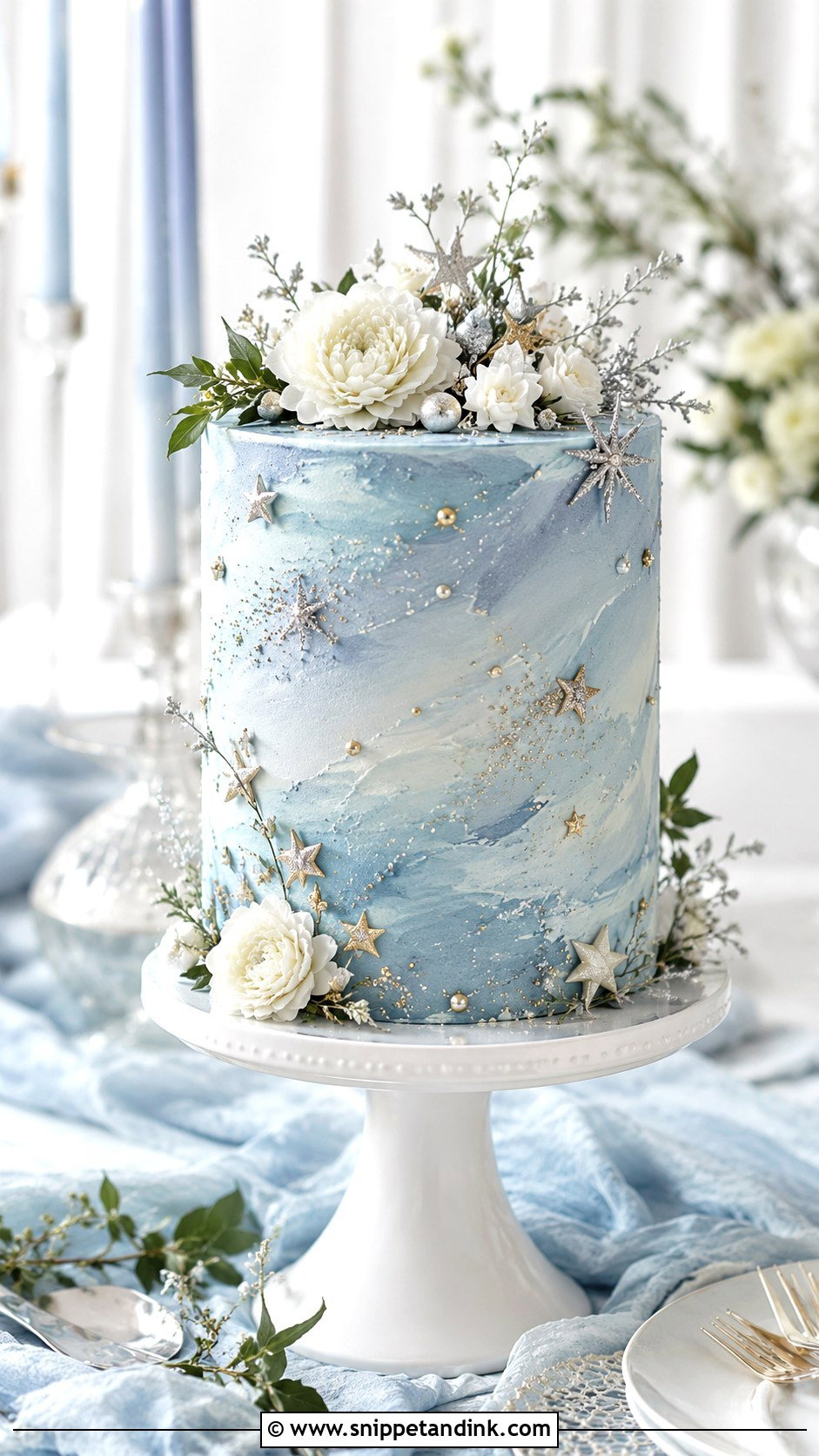
Blue covers a lot of moods depending on the shade. Dusty blue is calm, sky blue is cheerful, and a deeper blue gets closer to the night sky, so this is the lighter alternative to navy. White flowers, silver stars or a few gold accents give contrast. My favourite way to do it is a watercolour finish, which gives a sky effect without going dark. It’s an easy fit for coastal weddings and airy spring venues.
17. Purple Star Wedding Cake
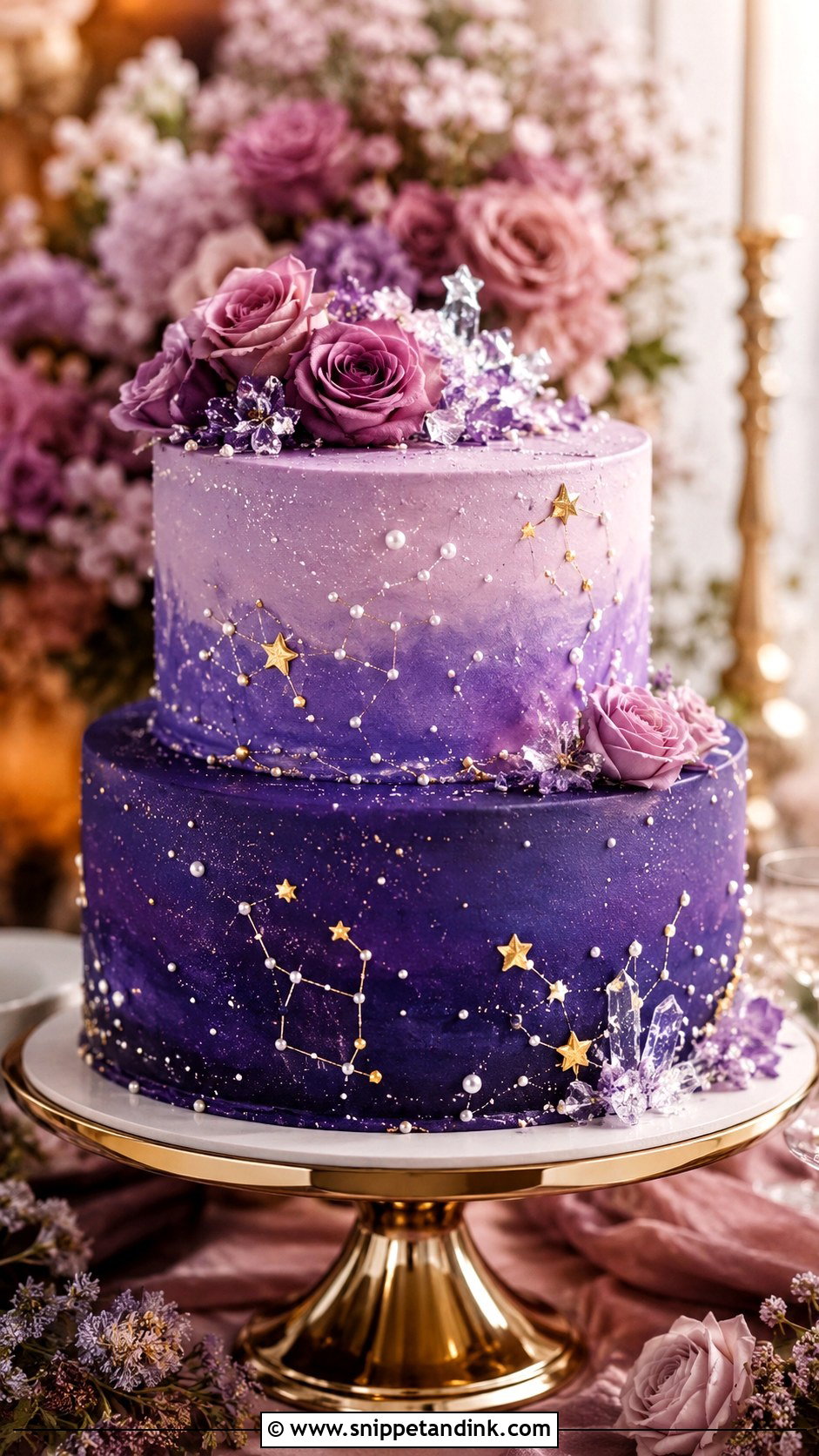
Purple is the colour I warn people about most. Lavender looks delicate and plum looks dramatic, but purple icing can drift toward grey or blue under certain venue lights, so I test a swatch under warm and cool bulbs before committing. Blended with navy, blush or silver, it gives depth across the tiers. Stars work best in gold or pearl white, scattered lightly. Mauve, ivory and dusty rose flowers keep it from looking like a party cake, and amethyst or crystal accents suit it.
18. Star Topper Wedding Cake
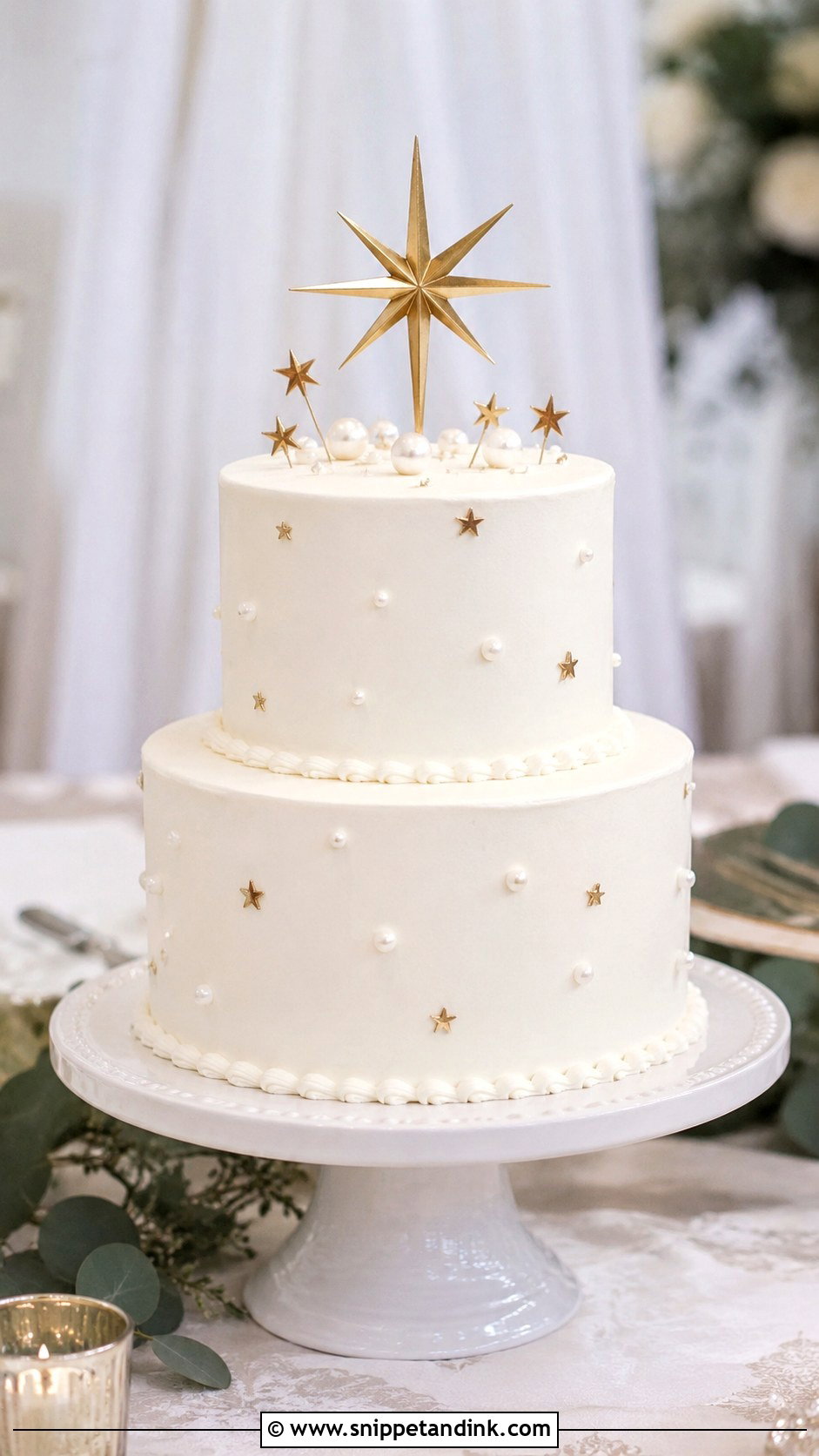
If your venue, flowers or dress already carry a lot of detail, let the topper hold the theme on its own and keep the tiers simple. A gold metal star, a cluster of acrylic stars or a custom topper with your names will do it. I like a white buttercream cake with soft piping under one strong topper, plus a few small stars on the bottom tier so the idea runs from top to bottom. Ask for food-safe supports under a metal topper; it shouldn’t sit straight on the icing.
19. Star Shaped Wedding Cake
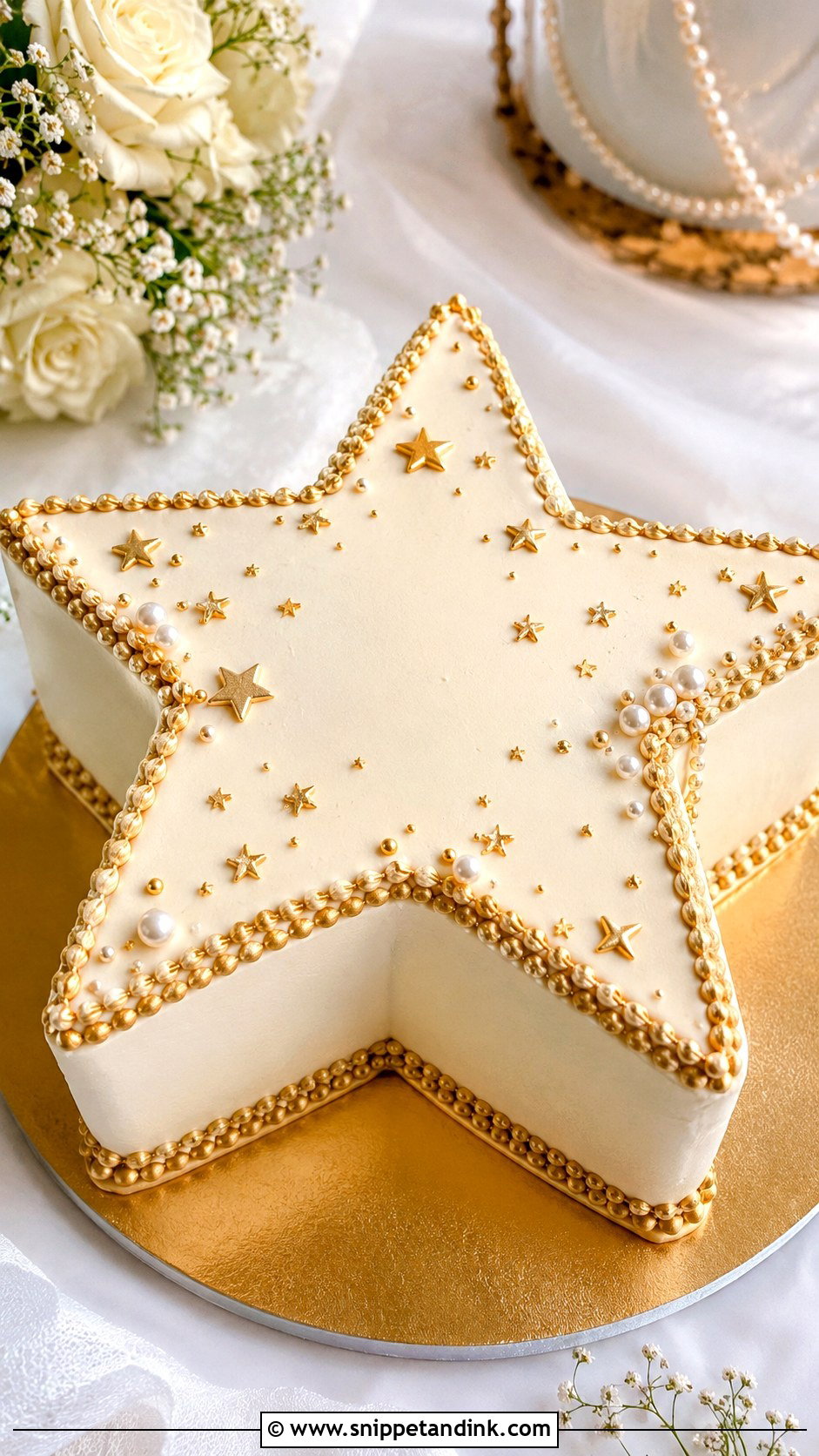
Here the cake itself becomes the star. It can be baked in a star tin or carved from a larger cake, then shown as a single tier or stacked. The points are the weak spots: they dry and crumble first, so I crumb coat and chill before the final layer. With a shape this bold, keep the finish smooth. Ivory buttercream with gold edging looks elegant, and navy with silver stars is more dramatic. It suits smaller receptions, dessert tables, or a second cutting cake.
20. Star Wedding Cake With Flowers
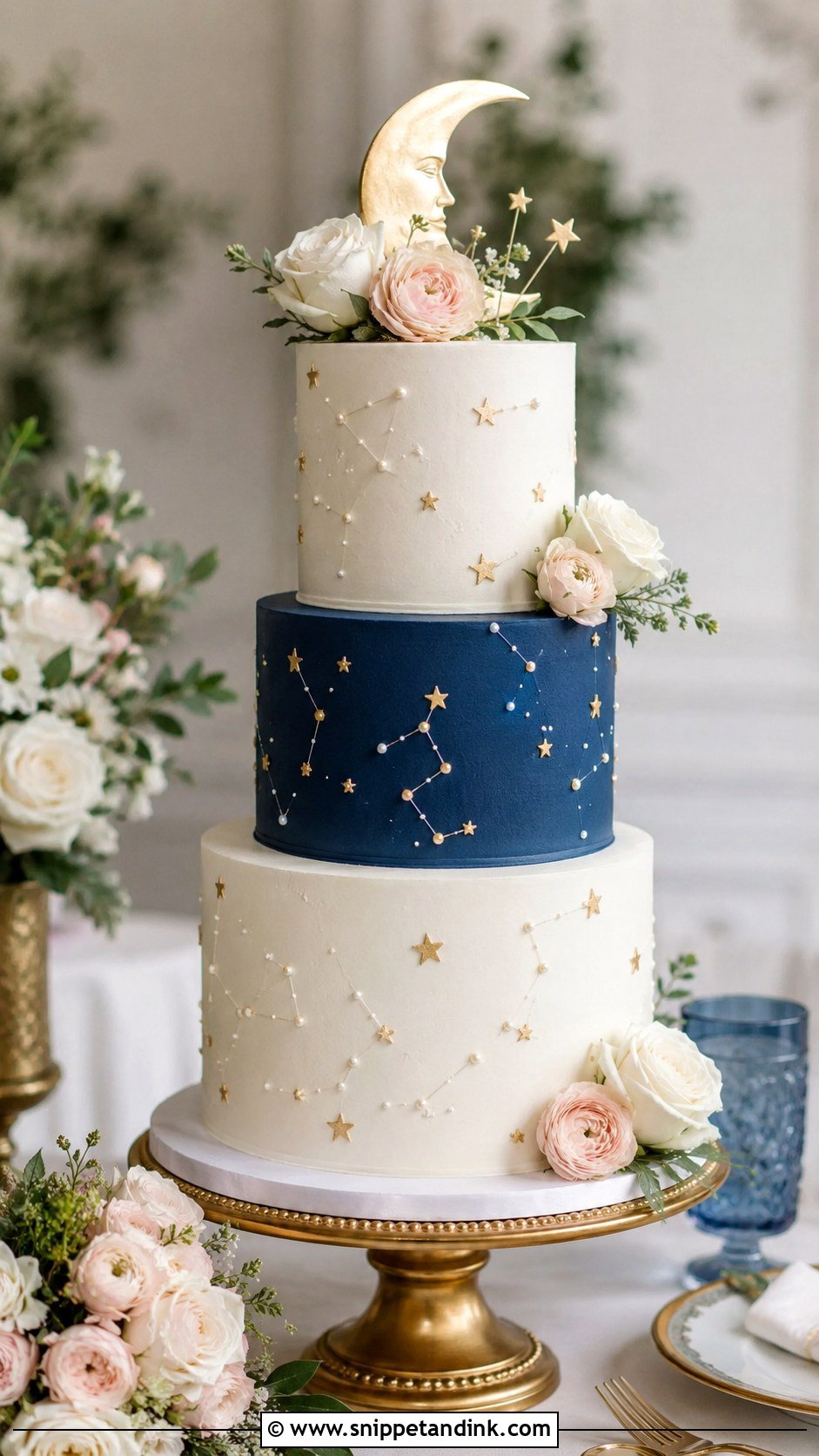
Flowers stop stars from looking like a costume. Start with white, blush, blue or navy, then match the blooms to your bouquet and tuck small gold or silver stars between them, across the tiers or around a moon topper. Roses, orchids, ranunculus and baby’s breath all work, depending on the mood. Fresh stems need their ends wrapped or set in picks before they touch the cake, and some popular flowers aren’t safe in contact with food, so let your florist and baker agree on the list early.
What Happens to a Star Cake Between the Kitchen and the First Slice
Most problems with these cakes show up after delivery, not in the studio. A fondant cake moved from a cold van into a warm room will sweat, and beads of condensation sitting on gold paint can make it streak. I let it come up to room temperature undisturbed and tell the venue not to wipe it.
- Keep a dark buttercream cake out of direct sun and away from uplighting that throws heat. Deep colours absorb warmth and soften faster than ivory.
- Ask the venue to cut with a hot, wiped knife. Dark icing smears into the white sponge otherwise, and the slices look muddy in photos.
- If you’re using fairy lights near the cake table, keep battery packs and bulbs off the cake board itself.
- Plan where the topper goes once the cake is cut, especially a metal or engraved one you want to keep.
Giving Your Baker a Star Map That Can Actually Be Piped
If you want the real sky from your wedding night or the night you met, send the date, the approximate time and the place. Star-map tools will generate the pattern, but a full map has far too many points for a cake. I pick out the brightest stars and the constellations people recognise, then simplify so the design still reads from a few feet away.
Bring a printout or a screenshot to the tasting, not just a description. It also helps to say which tier should hold it, since the curve of a tall tier stretches a pattern differently than a flat top. Give your baker this a few weeks before the final order so there’s time to test it on a dummy tier.
One Sky, One Metal, Then the Details
A star cake works with almost any style, from black fondant and galaxy colours to white buttercream with pearls and a scattering of gold. The cakes I’m proudest of always had one clear direction set early. Decide your base colour first, then your metal, then how much of the surface the stars should take. A formal room usually wants a clean, polished finish; an outdoor or boho day can take texture and natural flowers. Bring those three decisions to your tasting and the rest falls into place.
You'll Like These Ideas:




Leave a Reply