
A night-sky cake is mostly a painting problem. Midnight color, a soft shimmer, a moon, a few constellations: each one is simple, and the skill is in how they sit together without tipping into a kid’s birthday cake. The versions here range from full galaxy tiers to ivory with a little gold, and a modern black cake with tiny metallic points. I’ve added what I think about while making each, because the finish you pick decides how the sky can be painted.
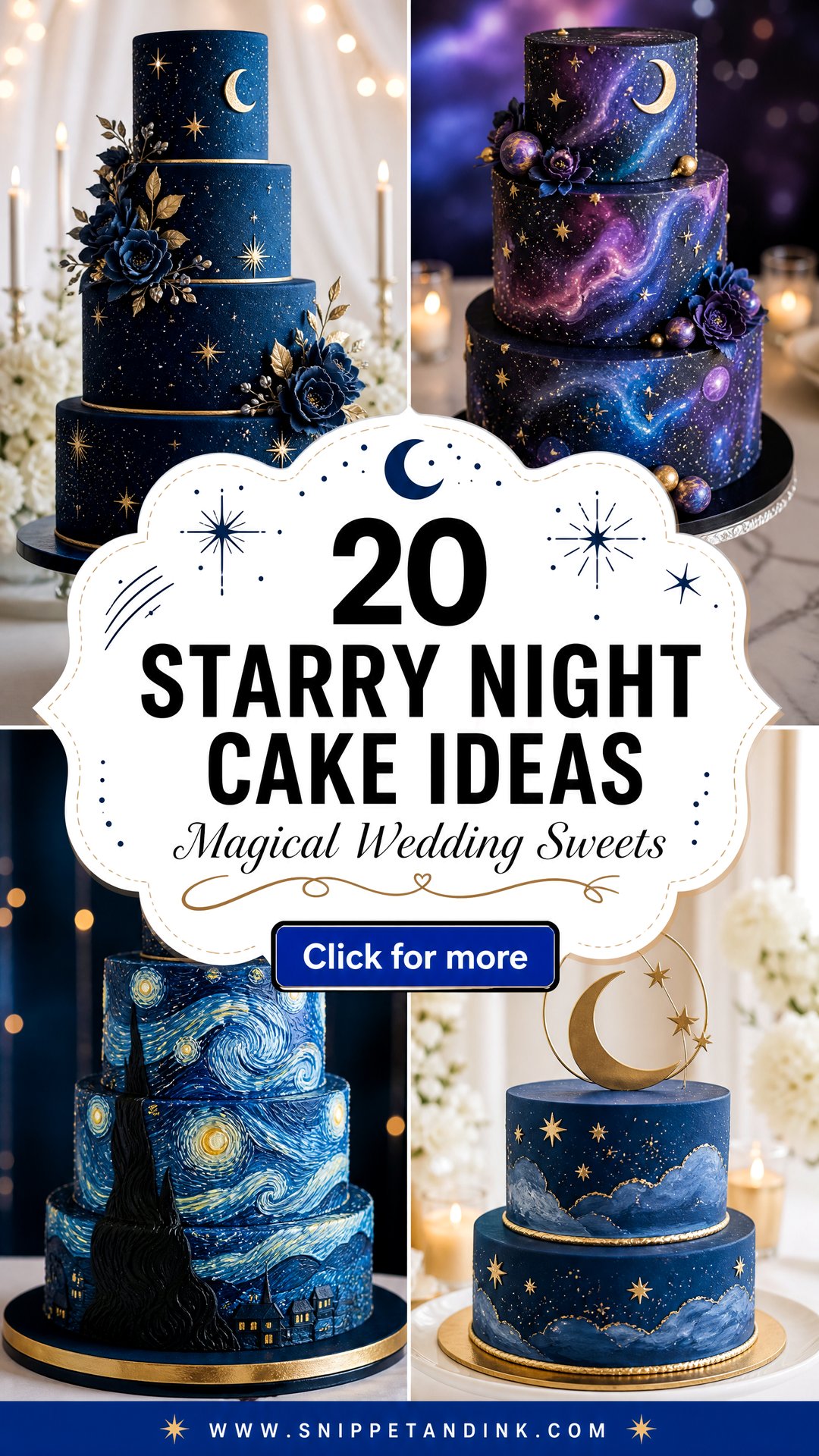
Which Icing Can Carry a Painted Sky
Before color, decide on the surface. It quietly decides which of these designs are possible at your venue.
Fondant
The smoothest canvas for brushwork, gold leaf and hairline constellations. It copes with a warm room better than buttercream. The downside is taste and texture; plenty of guests leave it on the plate.
Buttercream
Softer to eat and lovely for blended ombré or cloudy swirls. Fine painted detail is harder, and in heat it slumps. Swiss or Italian meringue buttercream tastes lighter but softens sooner than a firmer American-style icing.
Ganache
Chocolate ganache sets very firm, gives sharp edges and stands up to summer receptions. It’s a natural base for black or navy because it starts dark. White chocolate ganache can be tinted, though it takes color less evenly.
Tell your baker the season, whether the reception is indoors, and how long the cake will be on display. Those three facts usually settle it.
1. Navy Starry Night Wedding Cake
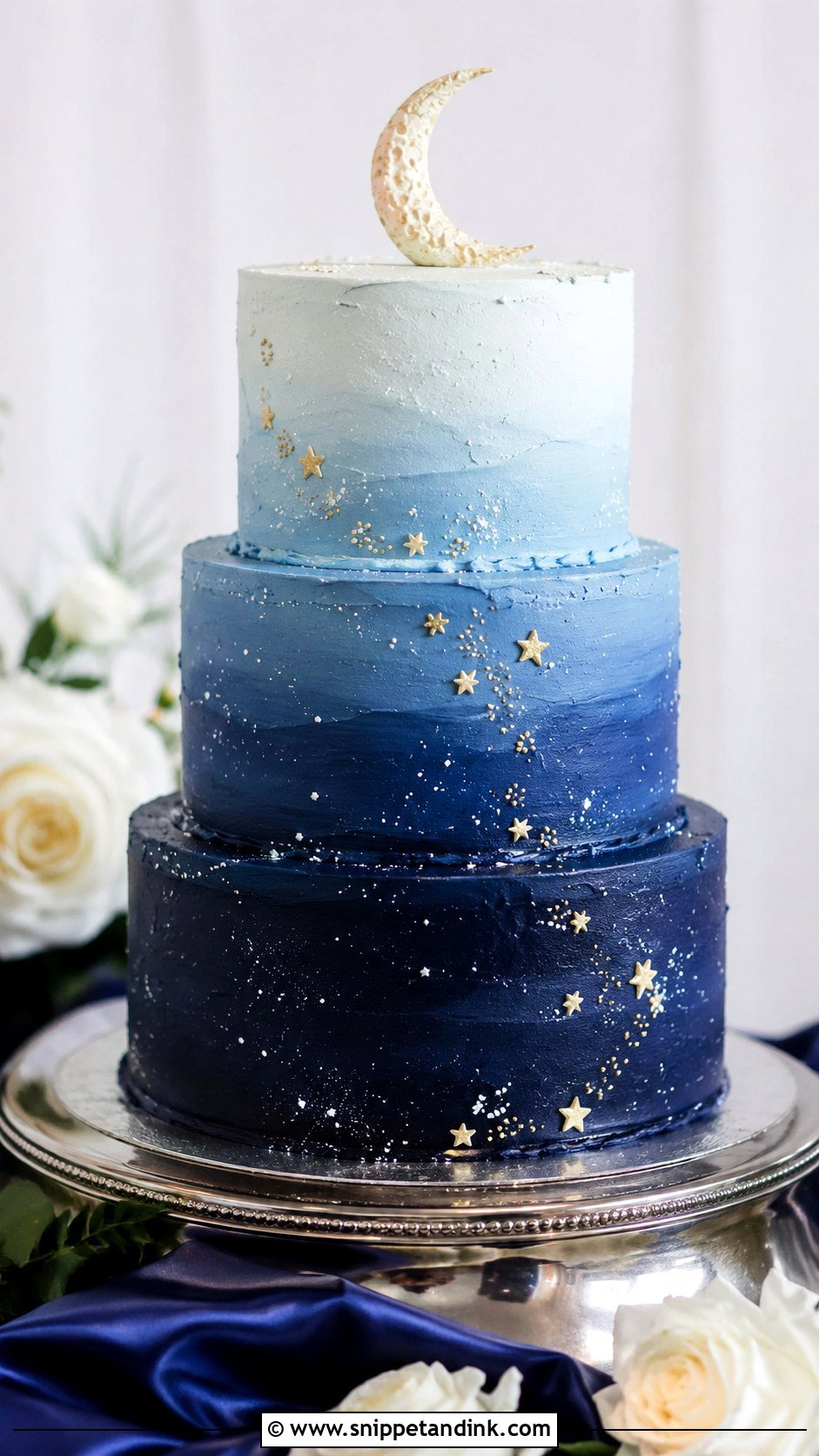
Start here if you’re unsure. A navy starry night wedding cake reads as formal straight away, in smooth buttercream or fondant, with gold or silver stars scattered over each tier and a crescent topper as the focal point. Flat navy can look like a painted wall, though. I airbrush a slightly darker shade near the top edge of each tier so the color shifts the way a real evening sky does. Ivory flowers and candlelight do the rest.
2. Galaxy Wedding Cake
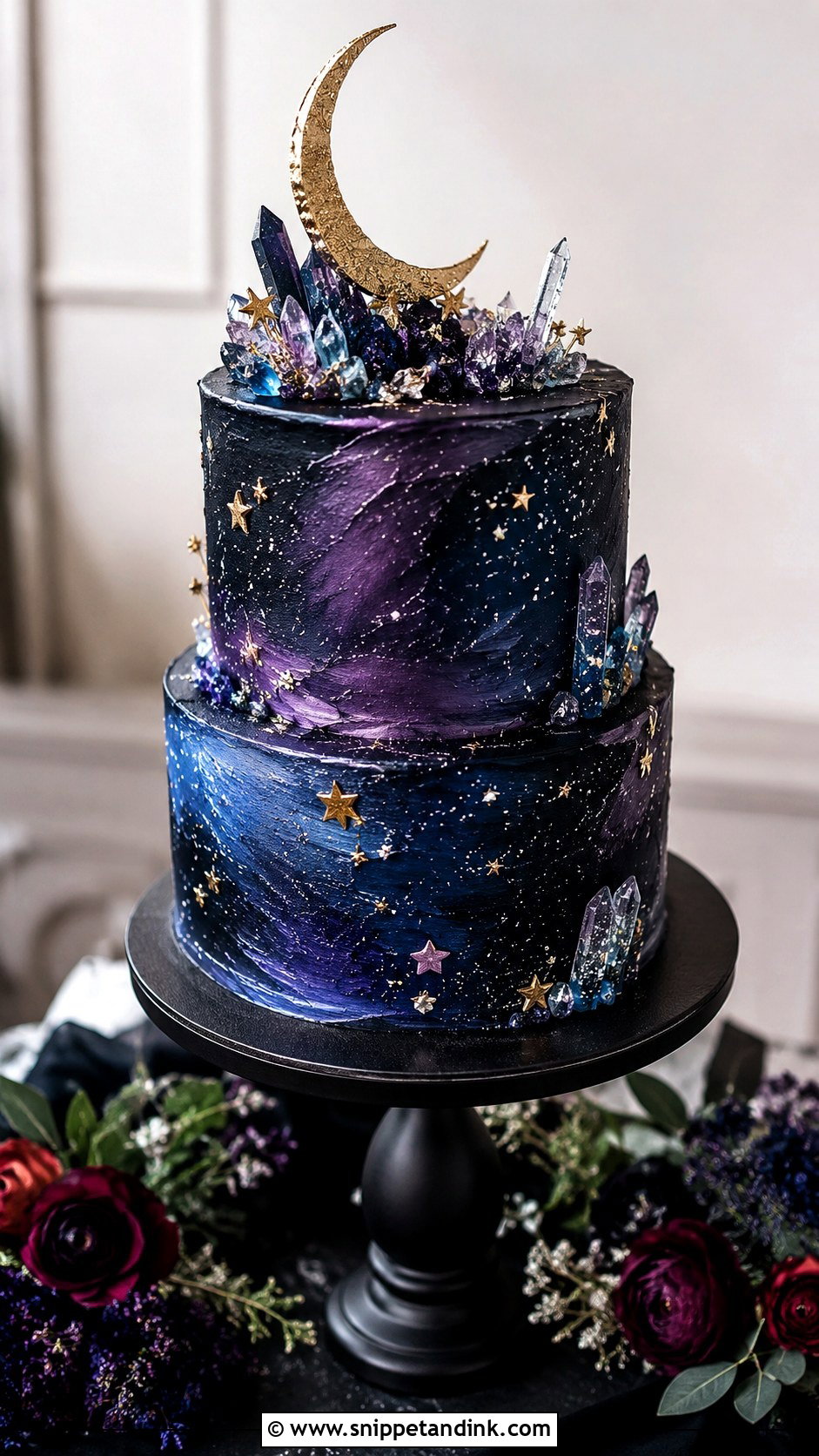
Galaxy effects are built in layers: midnight blue, black and purple first, then a little teal, then fine white speckles flicked off a brush for distant stars, and edible shimmer last. I keep the tiers sharp and the piping minimal, because once the surface is that busy, any extra decoration turns it into noise. Three or four tiers give the color room to travel. Ask to see a sample board first; galaxy work varies a lot from one baker’s hand to the next.
3. Moon And Stars Wedding Cake
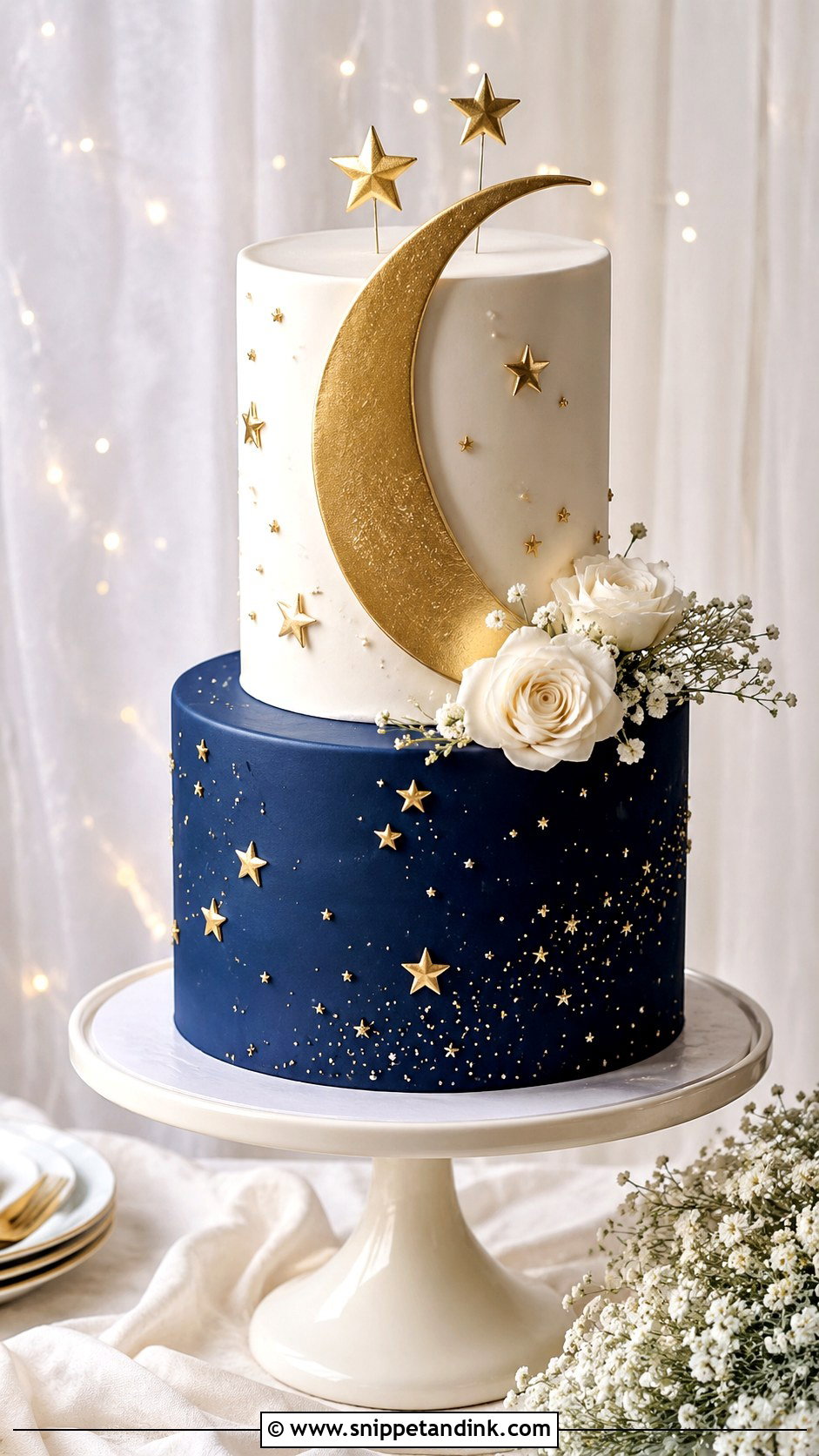
One crescent moon tells the whole story, so this design can stay calm. The base is usually smooth ivory, navy or black, with a trail of tiny stars curving around the tiers. Gold makes it warm; silver makes it feel moonlit and cooler. I like this for couples whose families are more traditional, since it’s symbolic without being loud, and it reads clearly in both daylight portraits and evening reception light.
4. Black Star Wedding Cake
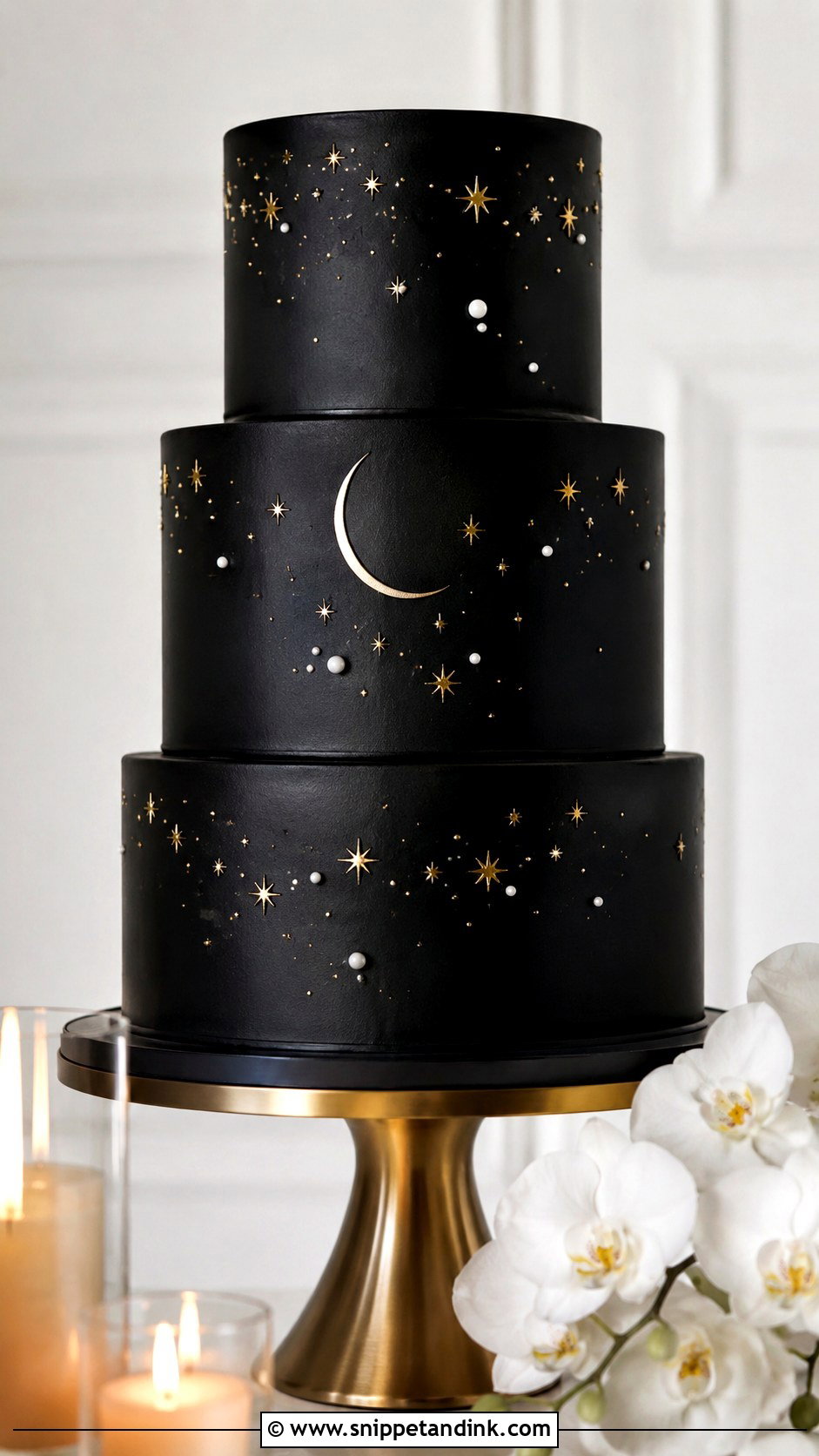
Black gives metallic stars more contrast than any other base, so even tiny details hold up in photos. I’d choose ganache over fondant for a black cake when the room will be warm, as it sets firm and is far less likely to sag. Add gold leaf, pearl stars or a thin crescent topper to soften it. The danger with black is crowding. Two or three star clusters, crisp tier edges and one floral accent is plenty.
5. White Celestial Wedding Cake
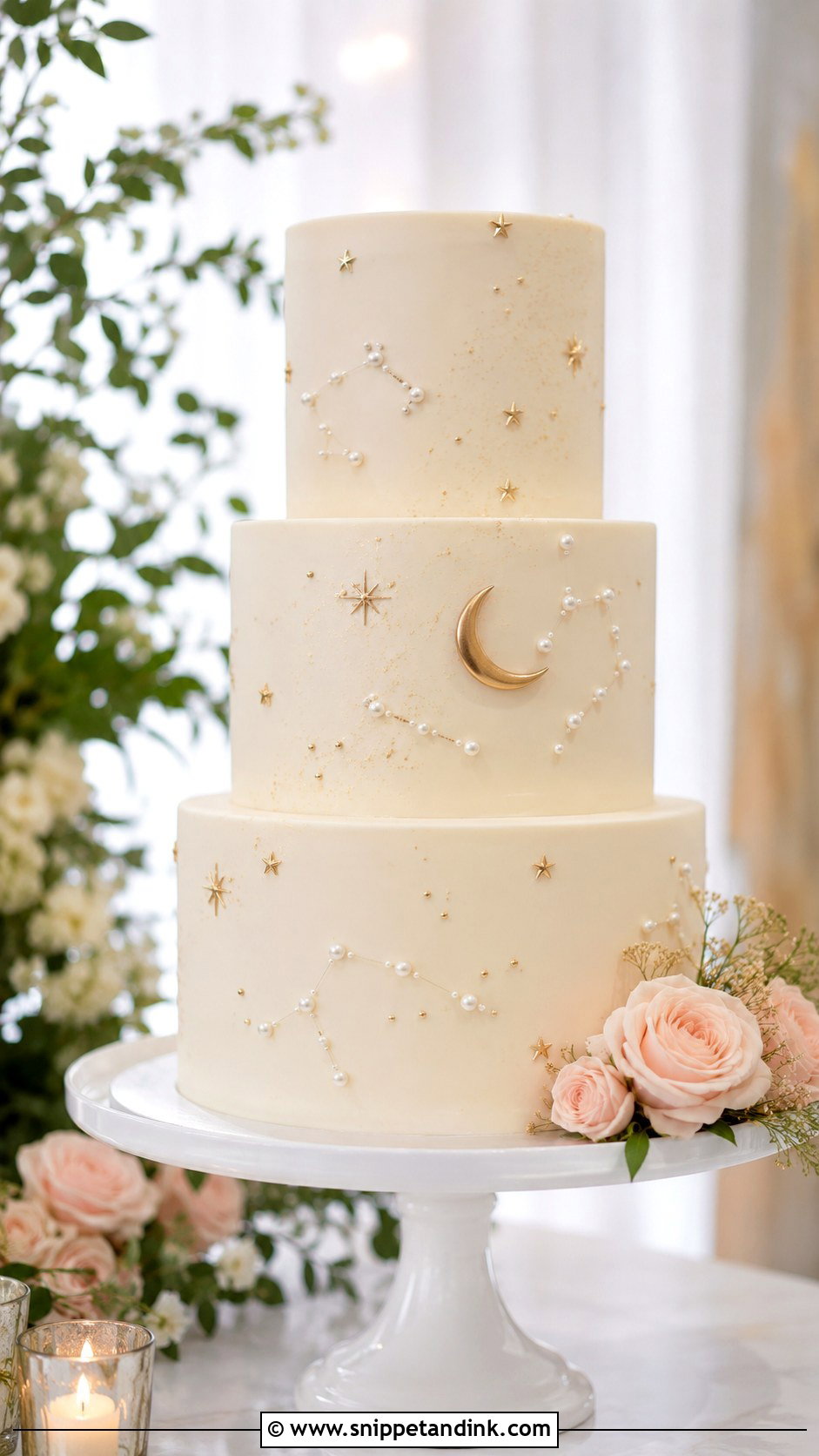
No dark colors needed here. The base stays bridal, in ivory fondant with a sweep of pearl dust, and the night sky arrives through small gold stars, moon charms and very fine constellation lines. It’s the compromise I suggest most often when one partner wants a traditional white cake and the other loves the celestial idea. White roses, orchids or a little baby’s breath suit a ballroom or garden setting. Check that any charms are food-safe or removable before they touch the icing.
6. Gold Star Wedding Cake
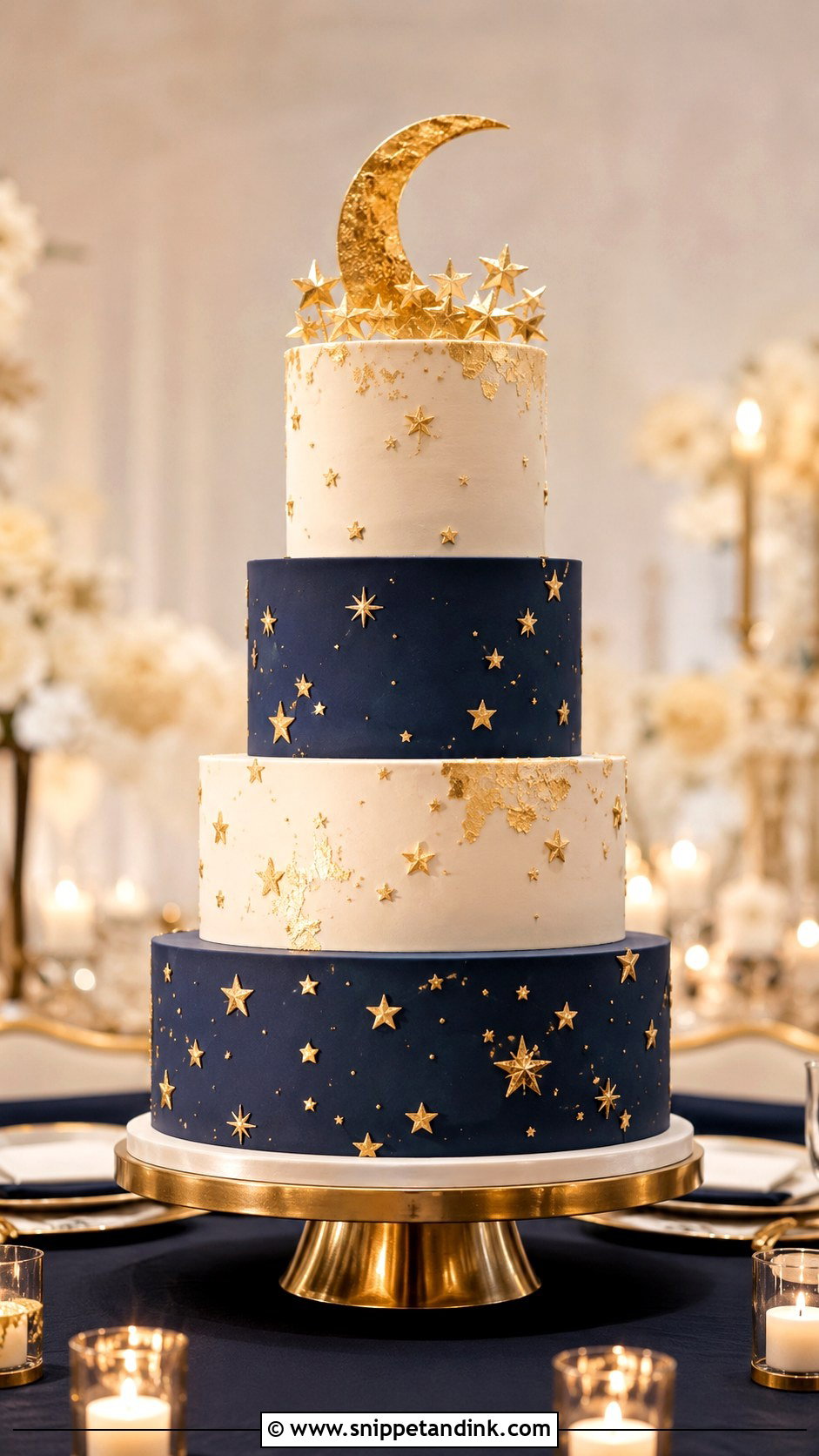
Gold works on navy, ivory, black or soft gray, but it has to be the lead. I choose one gold element, maybe stars, a crescent or a constellation, and repeat it rather than mixing all three. Candlelight and warm reception lighting make gold glow; under cool LED wash it can look flat and brassy, so ask your venue what lighting they use. A clean tiered shape with clusters of gold stars is enough.
7. Constellation Wedding Cake
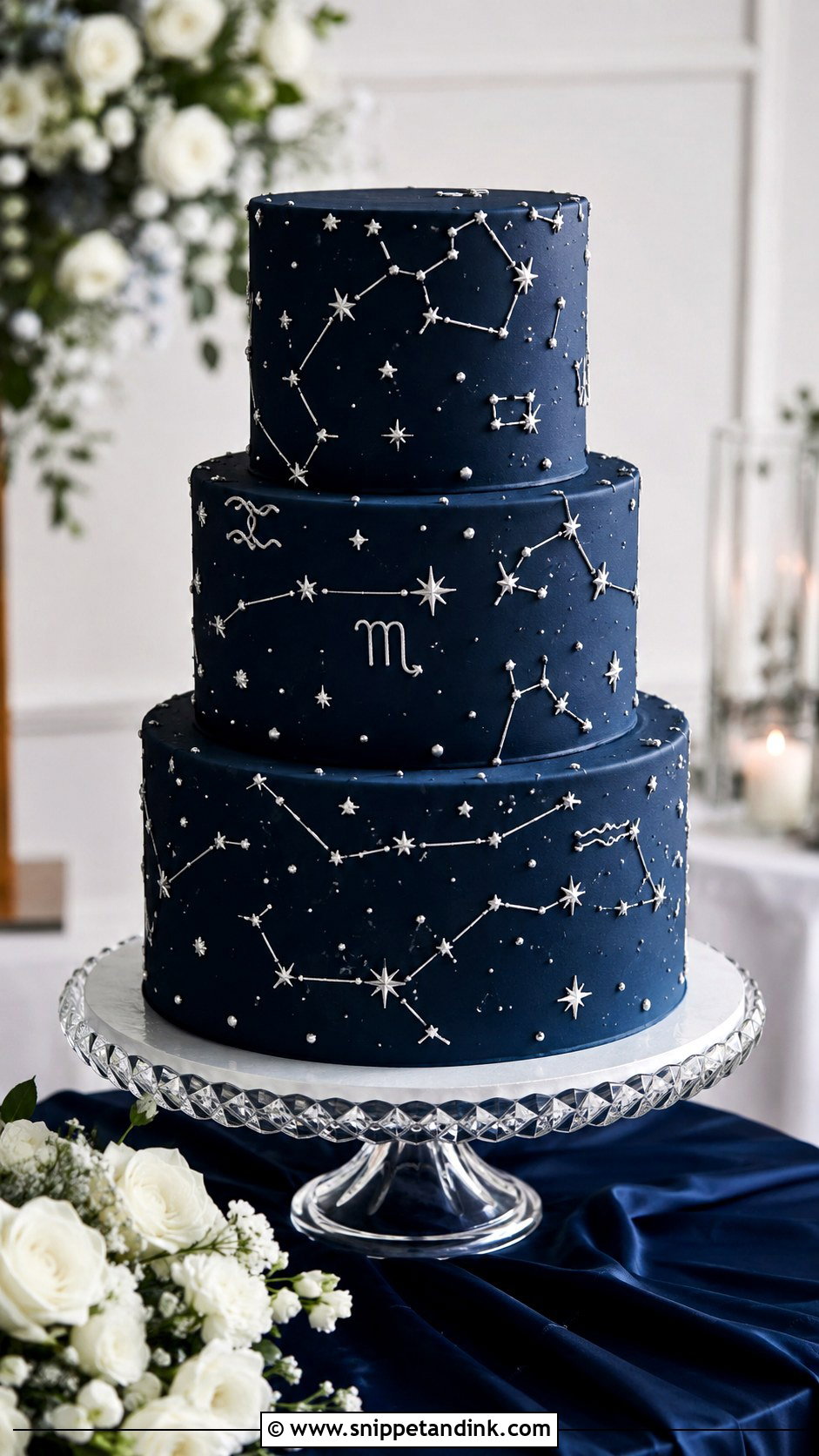
Personal without shouting it. Zodiac signs, your birth constellations or a star map from the wedding date all work on navy, black, deep purple or ivory, joined by fine piped lines or edible metallic paint. Keep the stars small; oversized dots make a constellation look like a dot-to-dot puzzle. Guests won’t catch every meaning at a glance, which is part of the charm. Close-up photos will.
8. Crescent Moon Wedding Cake
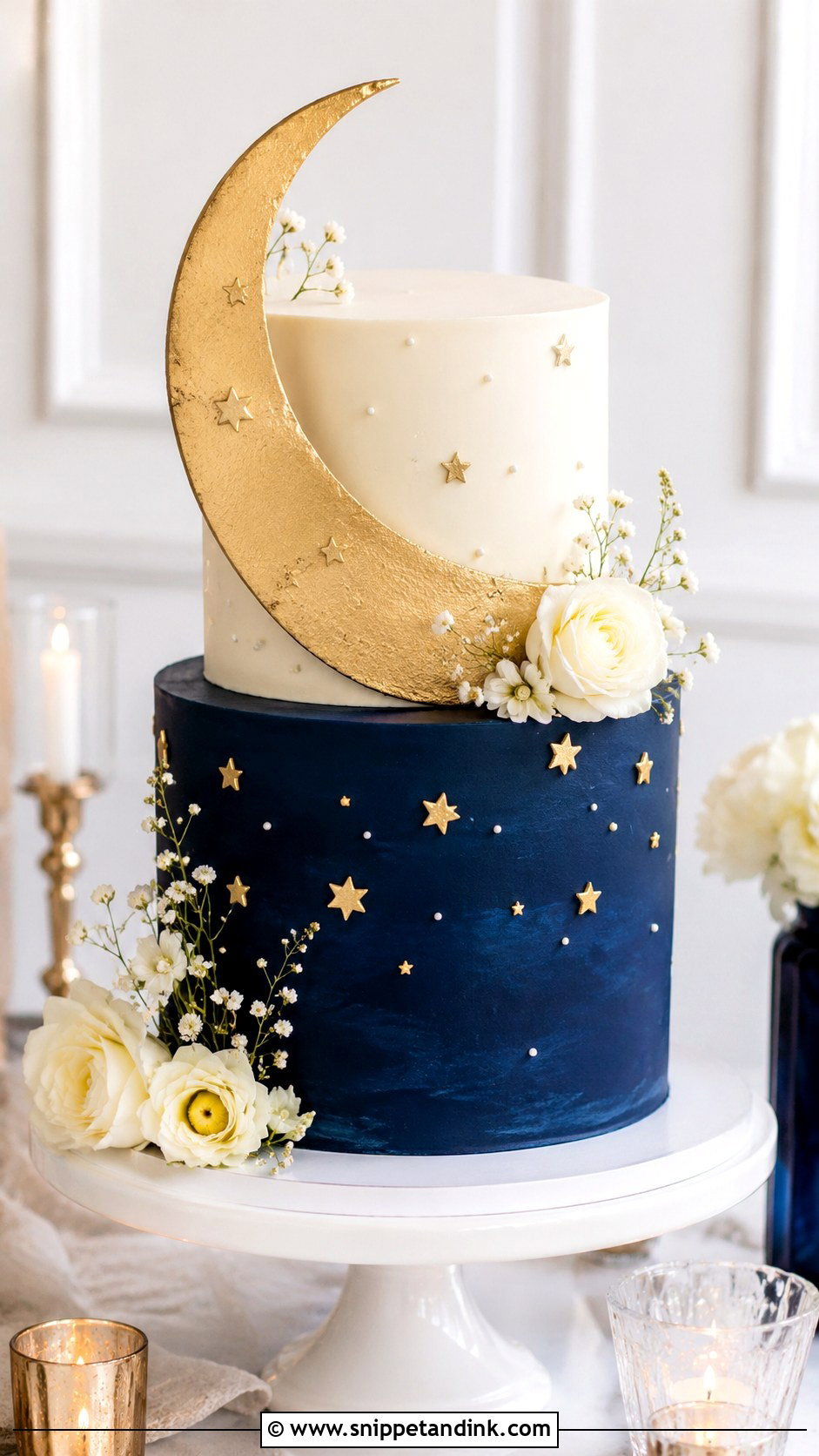
A crescent can be a topper, a pressed fondant shape on the side, or a floral moon wrapped around one tier. The floral version is the one I enjoy building: flowers set into a curved foam or wire frame on a separate board, then placed against the cake so stems never touch the icing. White frosting, deep blue fondant or a soft ombré all suit it. Add a few stars around the moon so the tier doesn’t look half-finished.
9. Blue Ombre Star Wedding Cake
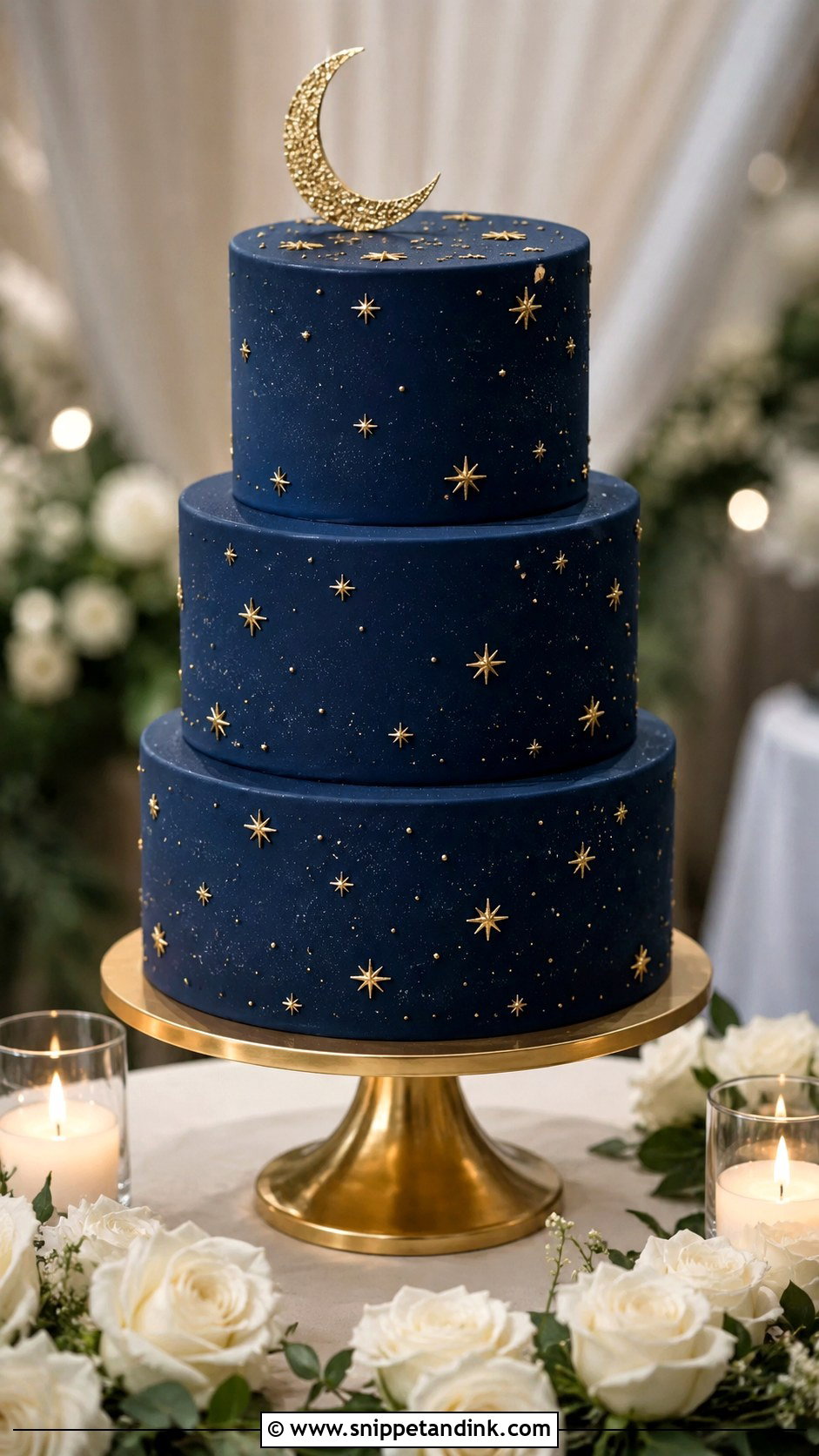
Ombré is twilight turning into midnight, pale blue at the base deepening to navy on top, or reversed for a lighter feel. Buttercream blends this most naturally because the colors can be scraped into each other on the turntable. Small white and gold stars stitch the shades together. It’s also the easiest night-sky design to match to bridesmaid dresses and stationery, since you can hand your baker swatches of the exact blues.
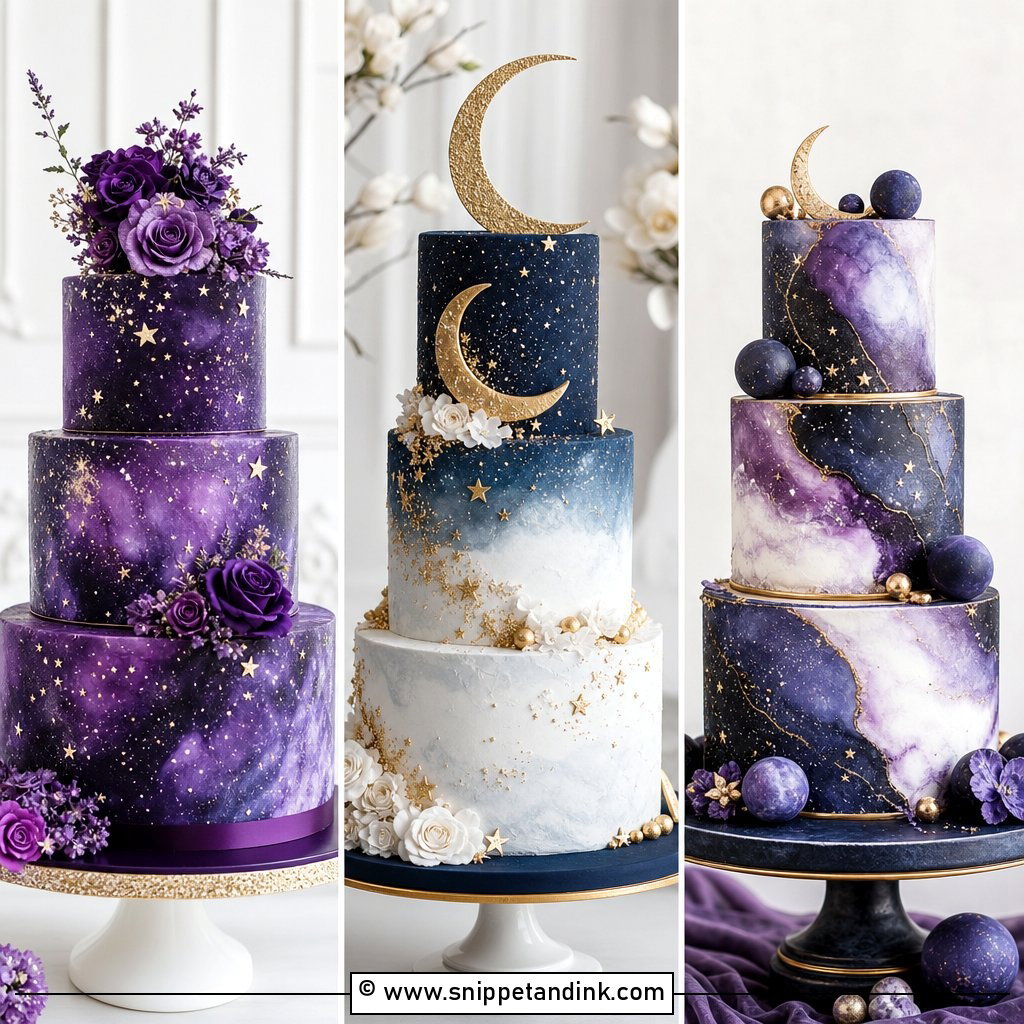
10. Purple Galaxy Wedding Cake
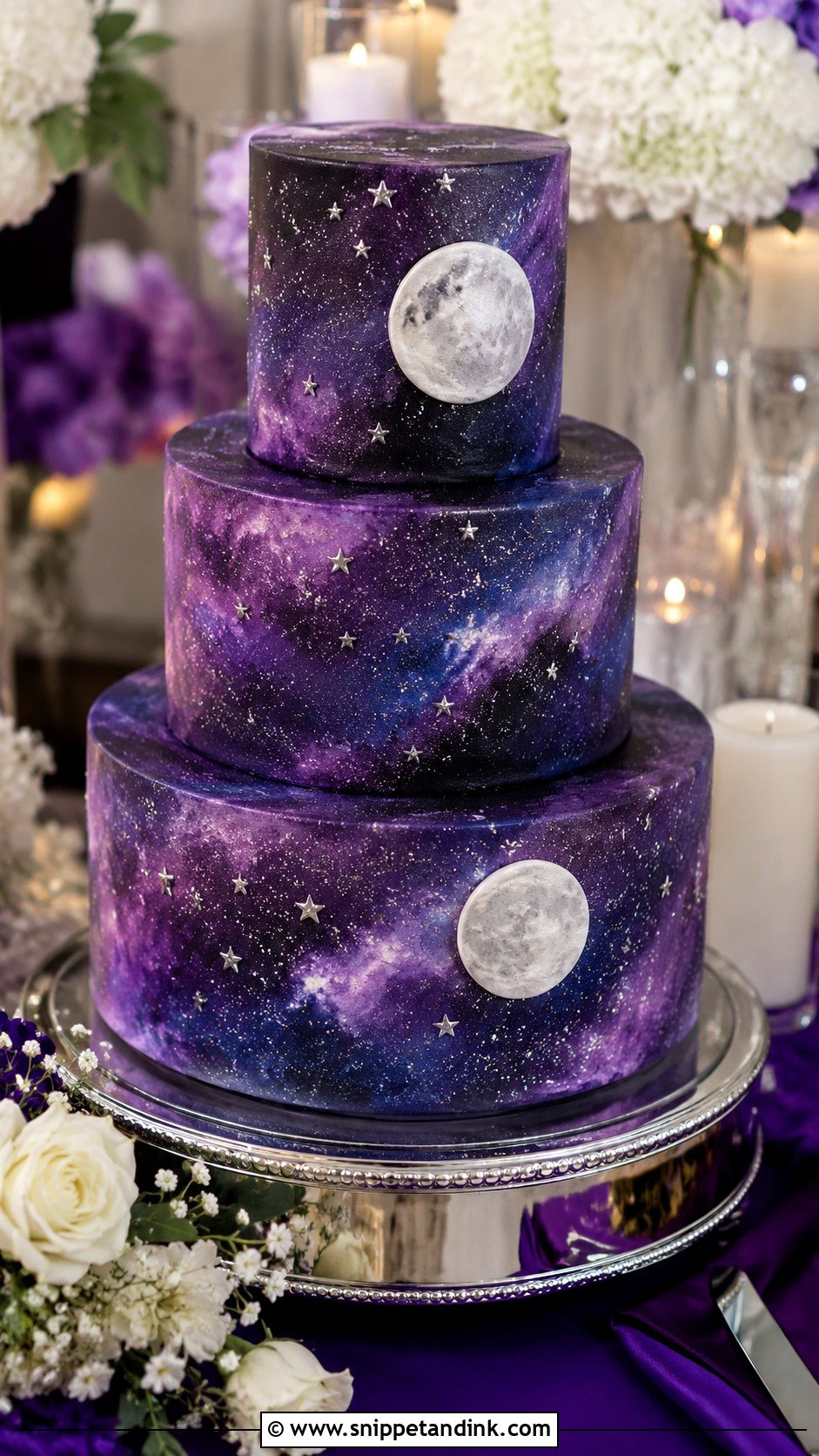
Purple runs from lavender to deep plum, with black, blue and silver blended in for depth. I’d test it under the venue’s light before the final order, because purple shifts more than any other color I work with; warm bulbs can push it brown and cool ones toward blue. Silver stars, white moon details and a fine edible glitter suit it. Neat tiers and controlled blending keep it on the wedding side of fun, and white flowers calm the background.
11. Starry Night Drip Wedding Cake
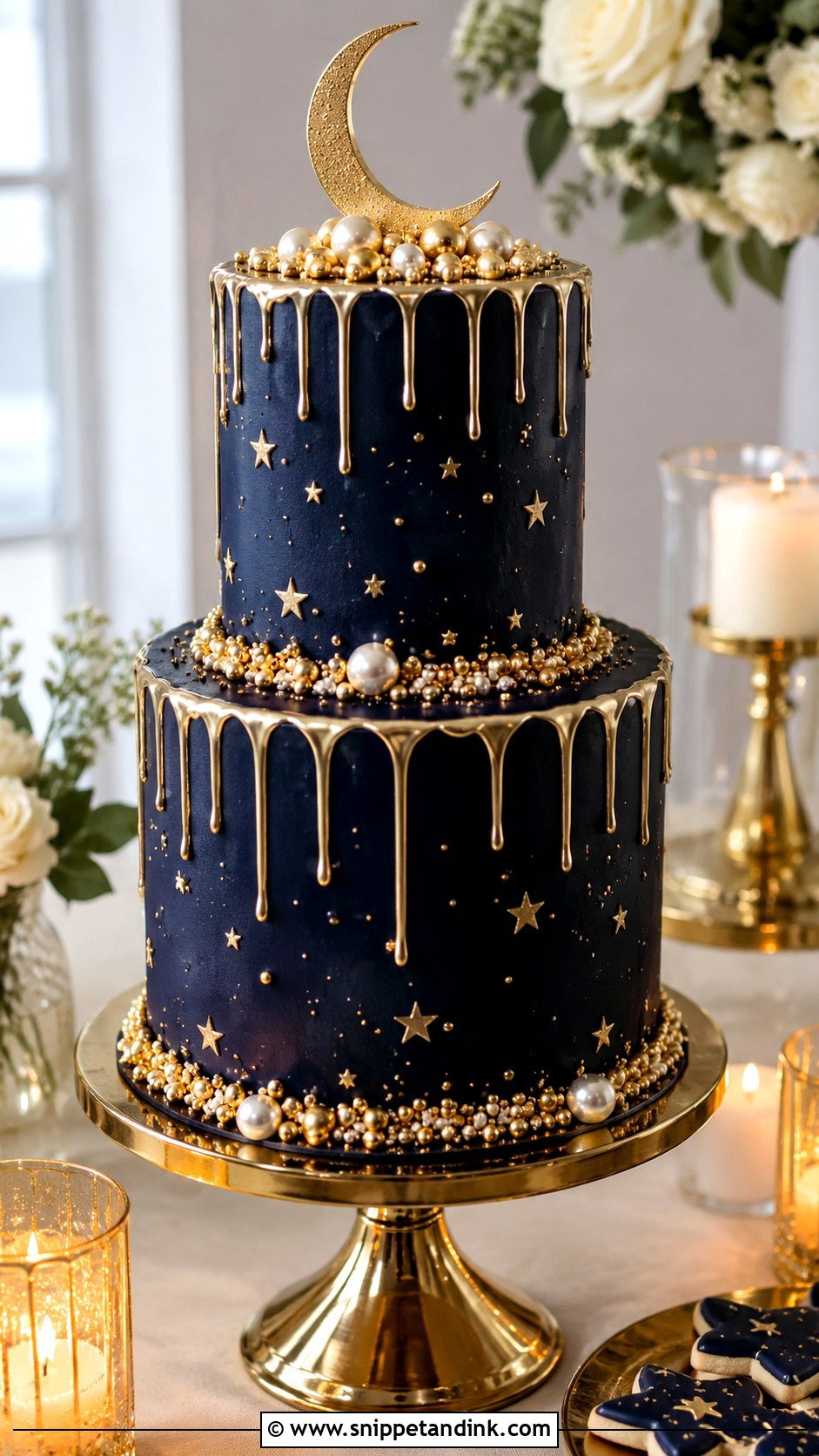
A drip adds movement and texture on a navy or black buttercream base, in metallic gold, silver or white chocolate. Drips are temperature-sensitive: too warm and they run to the board, too cool and they stop in stubby blobs. I test one drip down the back before going around the tier. For a wedding, keep the drips short and even. A heavy, uneven drip turns casual fast. Stars, a moon topper or sugar pearls finish the top.
12. Starry Night Buttercream Wedding Cake
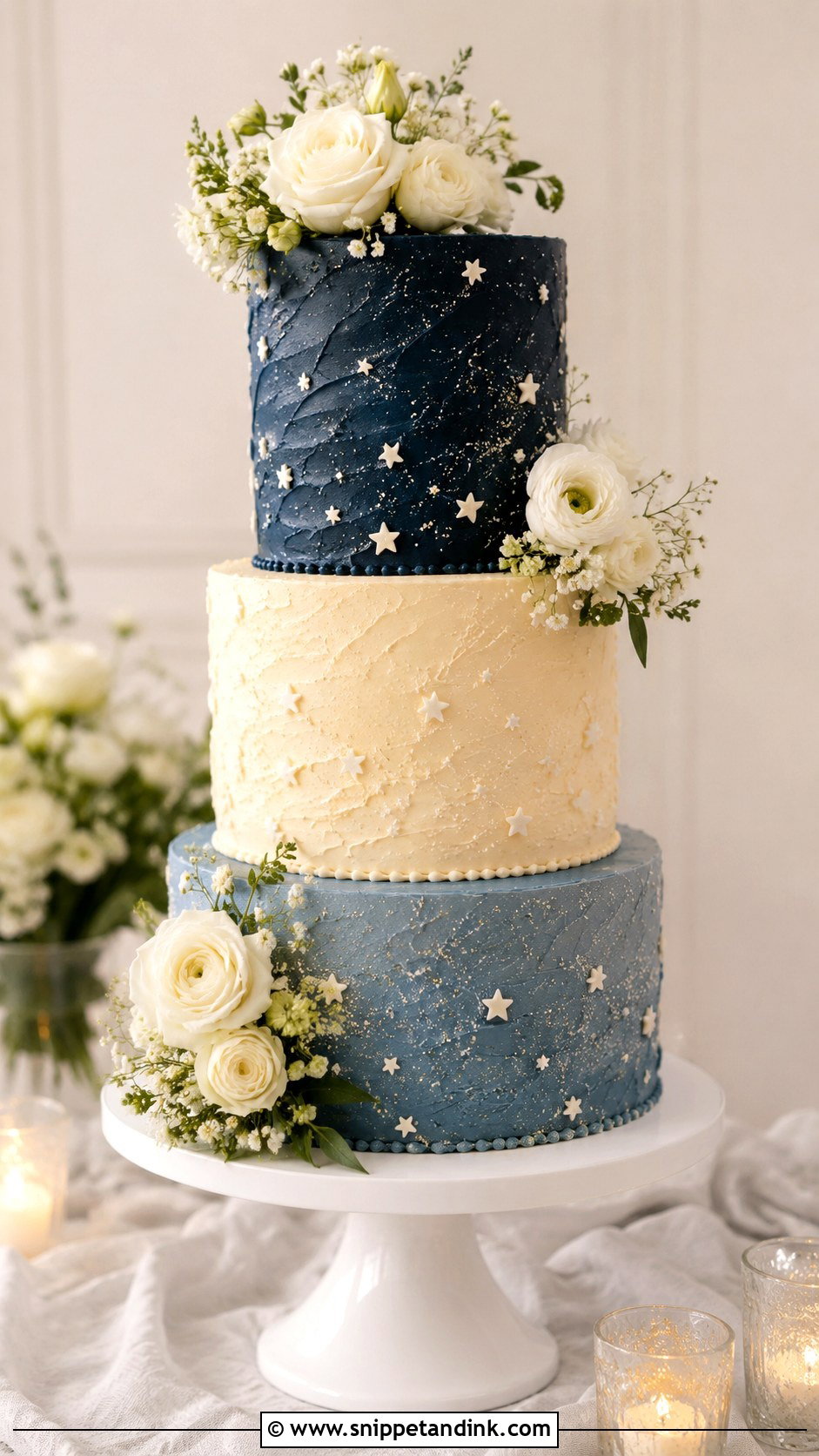
Buttercream gives you texture that fondant can’t, smoothed clean or swirled lightly into clouds. Navy, slate blue or deep purple buttercream all take tiny piped stars and a touch of shimmer well. The trade-off is heat. Buttercream softens in a warm tent or a sunny window, so this one belongs at an indoor or shaded reception. It suits rustic, garden and smaller weddings, finished with fresh flowers or a single crescent.
13. Starry Night Fondant Wedding Cake
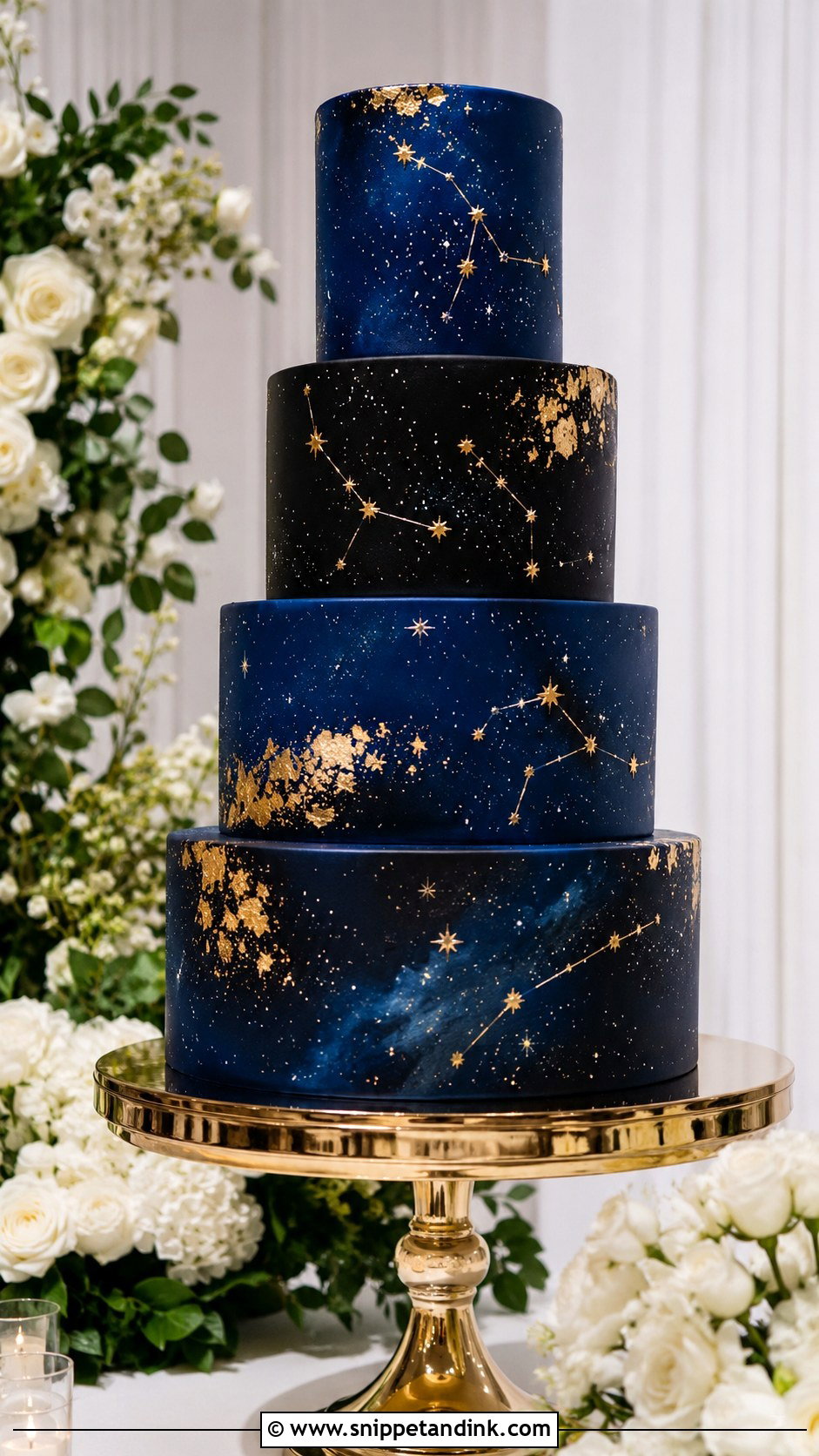
If your design depends on fine detail, fondant is the surface I’d paint on. It holds painted stars, gold leaf, galaxy shading and precise constellation lines with a sharpness buttercream can’t match, and its even surface catches light without patchy shadows. The base can be navy, black, ivory or ombré. Plain tier shapes leave room for the artwork. Do ask what sits under the fondant; many guests peel it off, so the flavor needs to stand on its own.
14. Starry Night Floral Wedding Cake
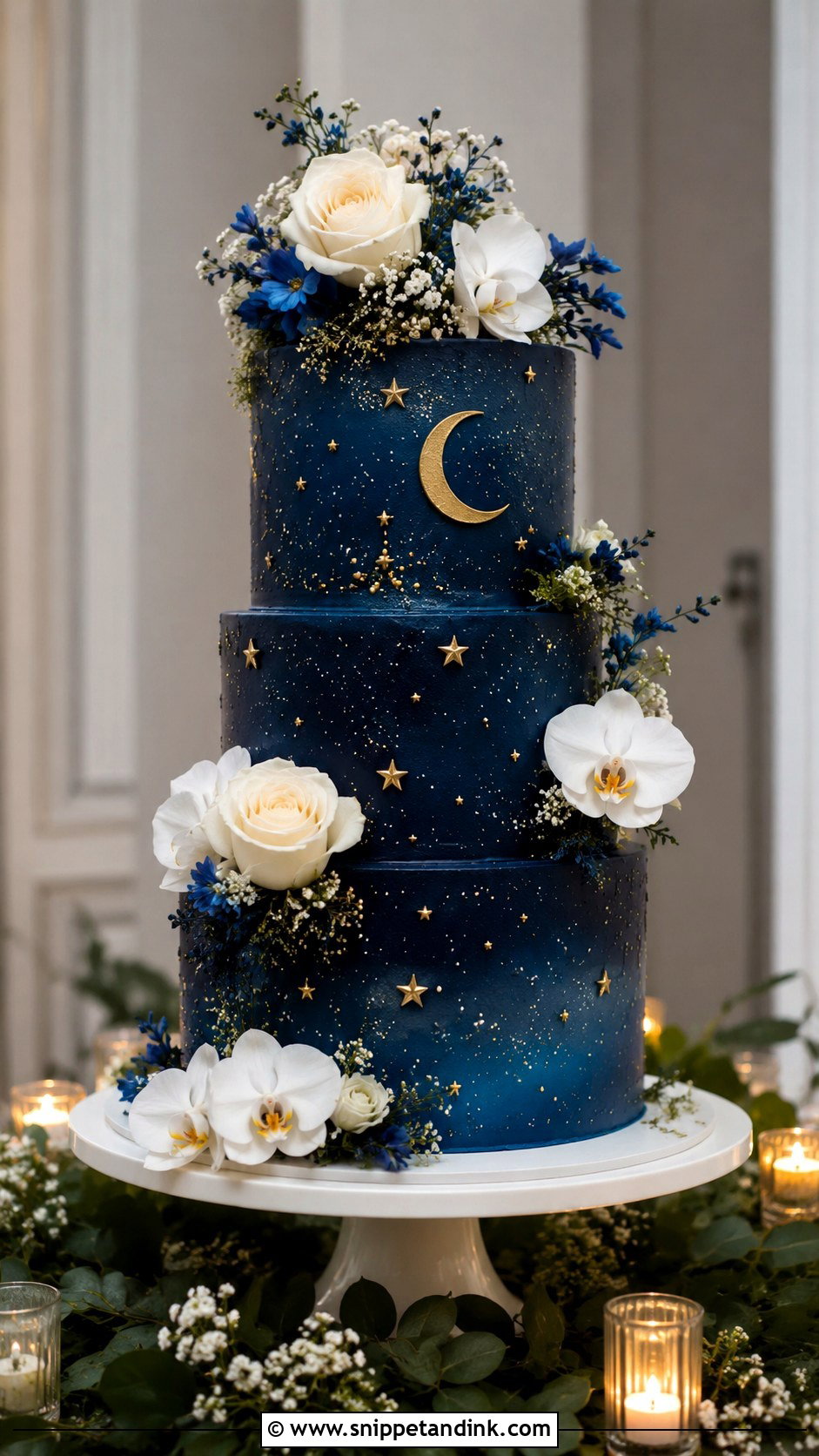
Flowers keep a dark design from going graphic. On a deep blue or ivory base, I’d tuck fresh or sugar flowers around the tiers with star accents between them: white roses, orchids, ranunculus and small blue blooms all sit well. A crescent moon set into the flowers makes a quiet focal point. Sugar flowers cost more in labor but won’t wilt under lights, which matters if the cake is on display for hours before cutting.



15. Starry Night Tiered Wedding Cake
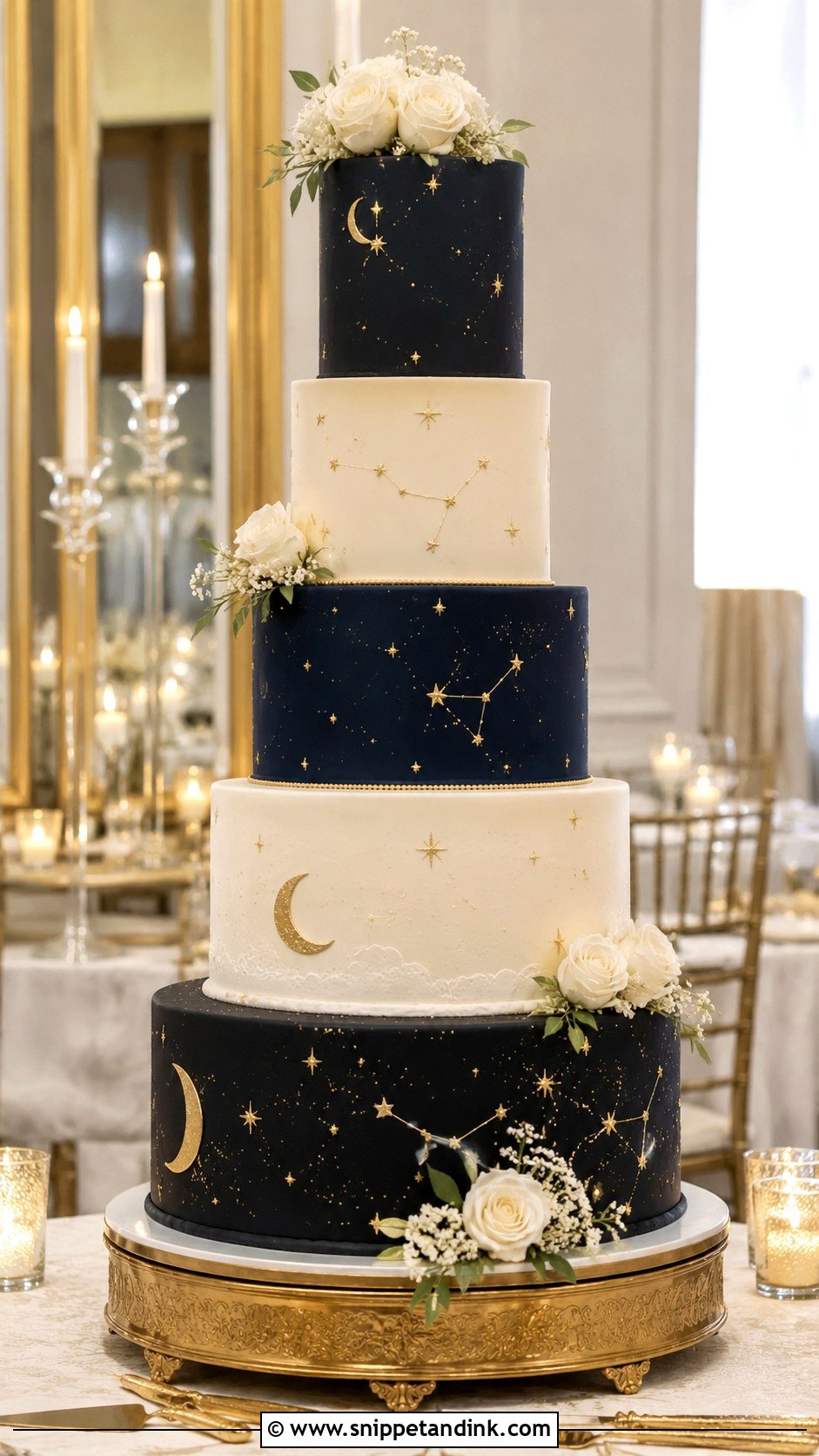
Several tiers let me tell the night sky as a sequence: one navy with stars, one with constellations, one carrying the moon or a metallic texture. The risk is that it looks like three separate cakes. I tie it together by repeating one color and one finish across every tier. On a raised stand with candles nearby, a tall cake reads from across a large room and still rewards anyone who walks up close.
16. Small Starry Night Wedding Cake
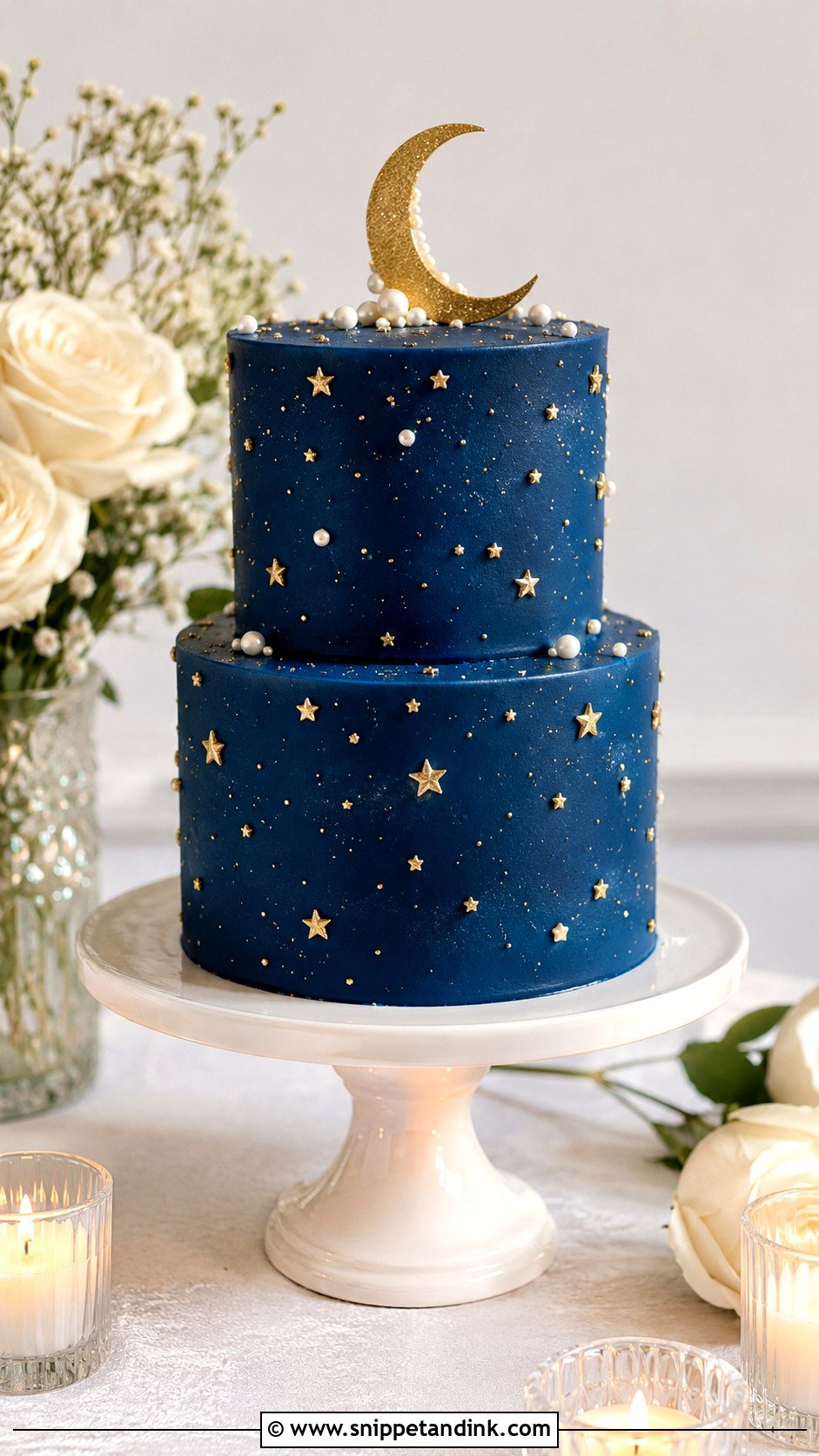
For an elopement or micro wedding, one or two tiers is plenty, especially with other desserts alongside. Small cakes have less canvas, so pick one detail and do it well: a deep blue base with tiny gold stars and a crescent topper, or simply smooth buttercream with star clusters. A good stand and a few candles or dark florals make it feel finished rather than modest.
17. Starry Night Watercolor Wedding Cake
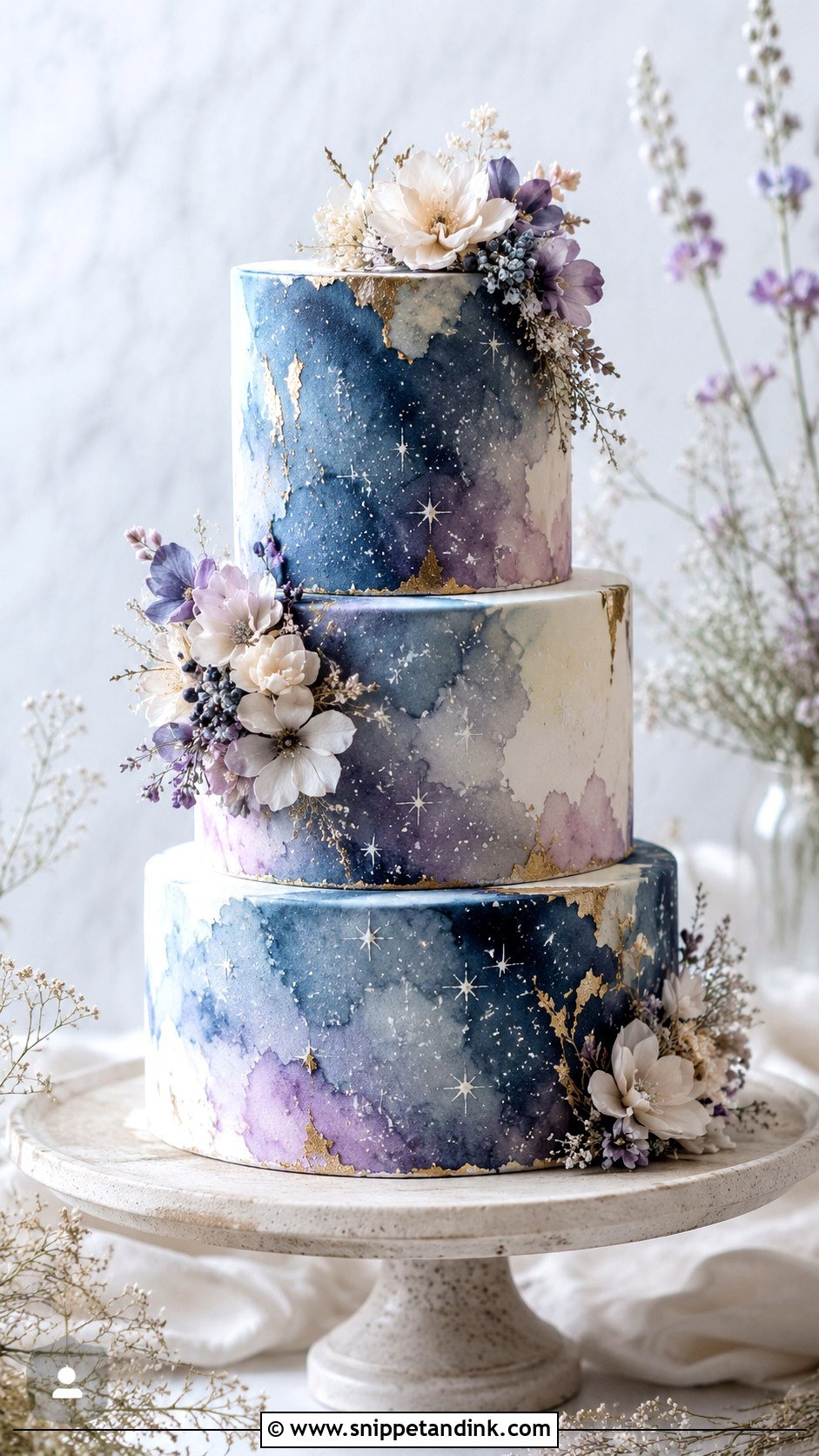
Watercolor is the gentle option. Washes of blue, purple, gray and ivory blend into a painted evening sky, finished with tiny white stars or gold flecks. I paint it on fondant with diluted gel color and a soft brush, working quickly so the edges bleed into each other rather than drying in hard lines. A few sugar flowers or a small moon topper are enough; covering the painting defeats the point.
18. Starry Night Pearl Wedding Cake
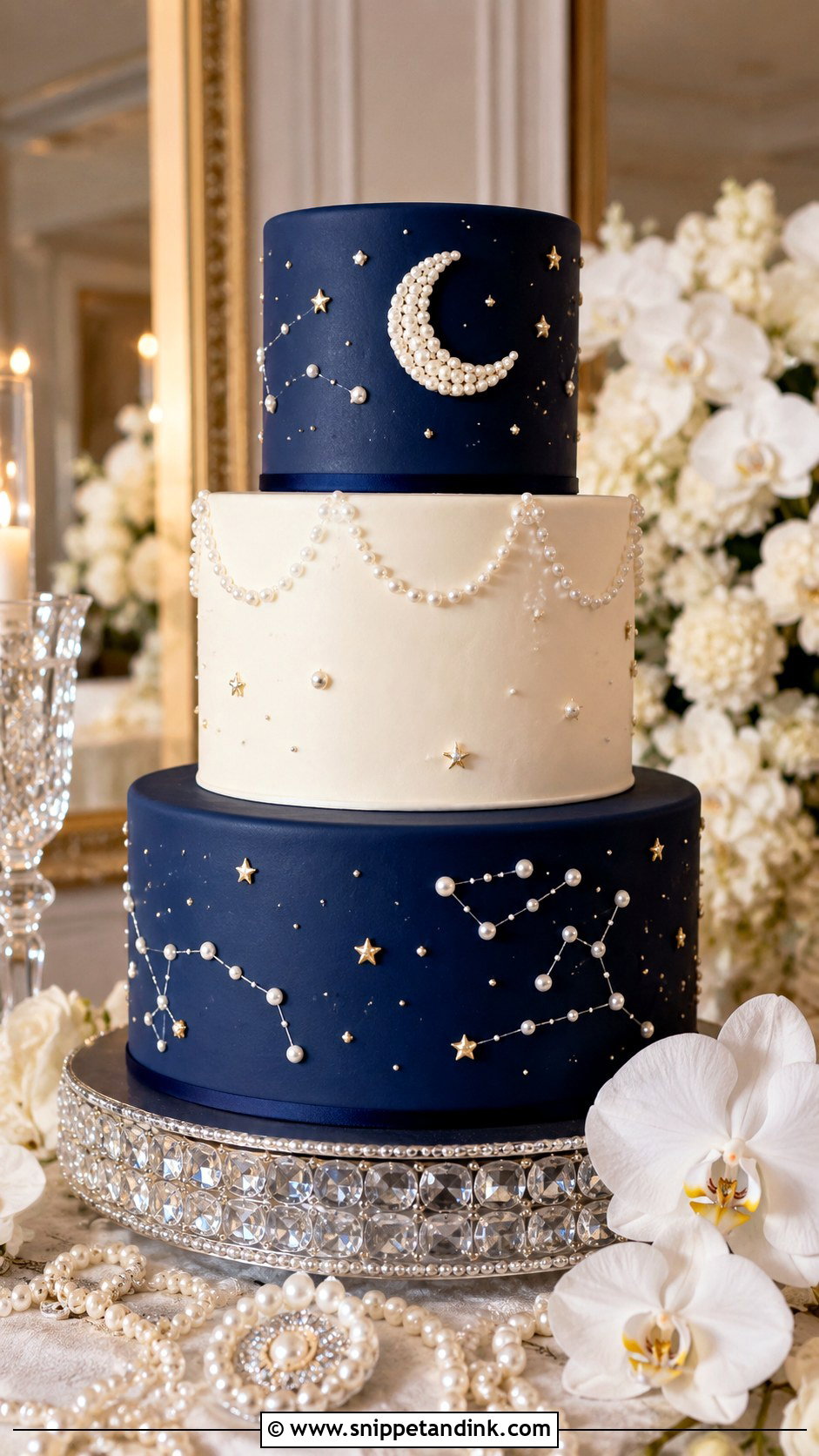
Pearls catch light like tiny moons on a navy, ivory or black base, and mixed with metallic stars on satin-smooth icing they look luxurious. Placement is everything. I mark positions lightly before applying, because scattered pearls look accidental while a planned border, constellation or pearl-dotted crescent looks deliberate. This is the one to choose if your own styling leans classic, with pearl jewelry and formal tables.
19. Starry Night Cake With Gold Leaf
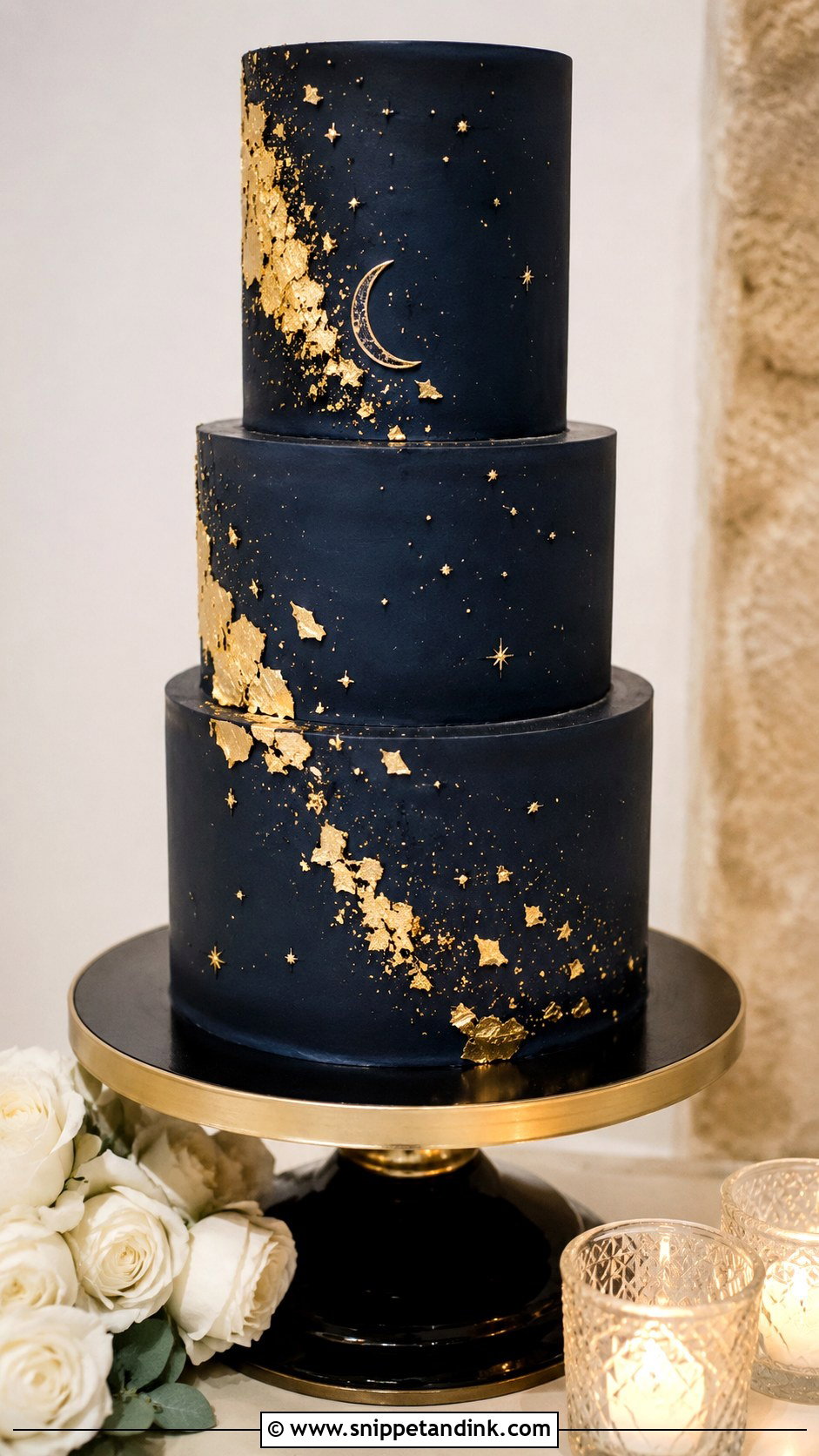
Gold leaf on navy or black looks like broken starlight; on ivory it turns brighter and more classic. Controlled placement is what makes it look expensive. I lay it on one side of each tier or around a crescent detail, never all over. Pair it with small stars, simple flowers or a clean topper. Leaf is fragile and lifts if touched, so it’s applied last, ideally after the cake is set up.


20. Starry Night Cake With Cake Topper
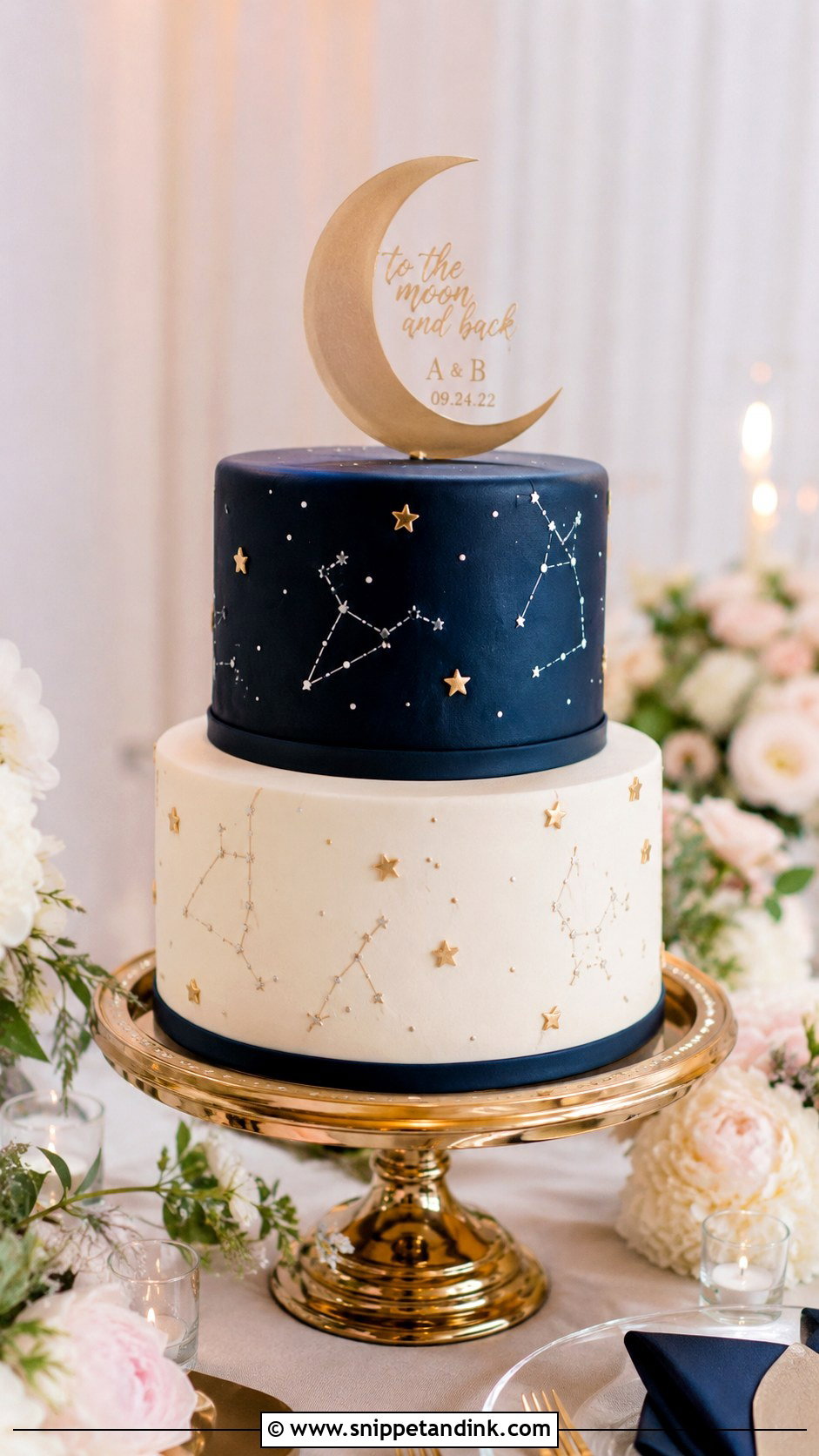
A topper makes the theme obvious and easy to personalize: a crescent moon, a pair of stars, your names, or a “to the moon” style phrase. Keep the cake underneath clean so the topper looks intended. Navy buttercream, ivory fondant and black ganache all carry it. A few small stars around the lower tiers connect top and bottom. This is also the friendliest approach if you’re ordering a simpler bakery cake and dressing it yourself.
A Midnight Cake Can Disappear in an Evening Room
This is the part couples don’t expect. A navy or black cake that looked rich at the tasting can turn into a dark shape in a dim reception, because the room is lit for mood, not for detail. The stars are still there; the camera and your guests just can’t see them.
- Ask for a small spotlight or pin light aimed at the cake table, or place it near a warm wall light. Overhead light rakes across metallic stars and makes them sparkle.
- Set candles around the base, not on the cake board, so the flames light the lower tiers without dripping wax onto icing.
- Avoid placing a dark cake against a dark backdrop. A light linen or pale wall behind it gives the silhouette an edge.
- Tell your photographer the cake is dark. Most will grab details before the room dims, while there’s still daylight.
When the Display Cake Is Smaller Than Your Guest List
Painted and gold-leafed tiers take hours of handwork, so many couples keep the showpiece small and order plain kitchen cakes in the same flavor, iced simply and sliced out of sight. Guests get the same cake, and you aren’t paying for artwork nobody sees. If you go this way, ask the venue to plate it in the kitchen so slices arrive looking identical. Confirm the cake-cutting fee too, since some venues charge per slice for cake brought in.
Is Your Sky Dark, Light or Somewhere in Between?
Dark navy and black give the strongest night-sky effect, while white, pearl and gold read more bridal. Painted galaxies, constellations, moons, metallic stars, flowers and toppers are just different ways of telling the same story. Match the cake to your venue, dress code and the light in the room at cutting time. A grand tiered cake or a small celestial one, the starry night theme rewards one clear decision about how dark you want to go, made early.
You'll Like These Ideas:







Leave a Reply