
The cakes couples brought to me in 2024 had more personality than in years: Lambeth piping, fresh flowers, bows, pearls, sculpted buttercream and flavors that moved past plain vanilla into citrus, pistachio and lavender. What I liked most was that people stopped treating the cake as a white tower and started treating it as part of the room. Below are twenty of the designs I’d still happily make, each with a flavor pairing, the finish it needs and a note on what to ask your baker so the cake you get matches the picture you saved.
Buttercream, Fondant or Ganache? Your Venue Has a Vote
The finish you fall in love with in a photo has to survive the temperature of your actual reception. This is the conversation I have before any sketch, because a design that’s wrong for the room is a cake I’d rather not make.
Swiss and Italian meringue buttercream
Silky, not too sweet and easy to pipe, which is why most of the textured and wavy designs below use it. It softens as the room warms, so in a hot tent or a sunny window it slumps and loses its sharp edges. Keep it in air conditioning or shade.
Crusting American buttercream
Sweeter and firmer, with a surface that sets slightly dry. It holds Lambeth piping and outdoor heat better, though the taste is more sugary.
Ganache under fondant
The most stable option for tall cakes, sharp edges and warm venues. Fondant has one quirk: a chilled cake moved into a warm, humid room gathers condensation and looks wet until it comes back to room temperature. Don’t wipe it, just let it settle.
1. Vintage Lambeth Wedding Cake
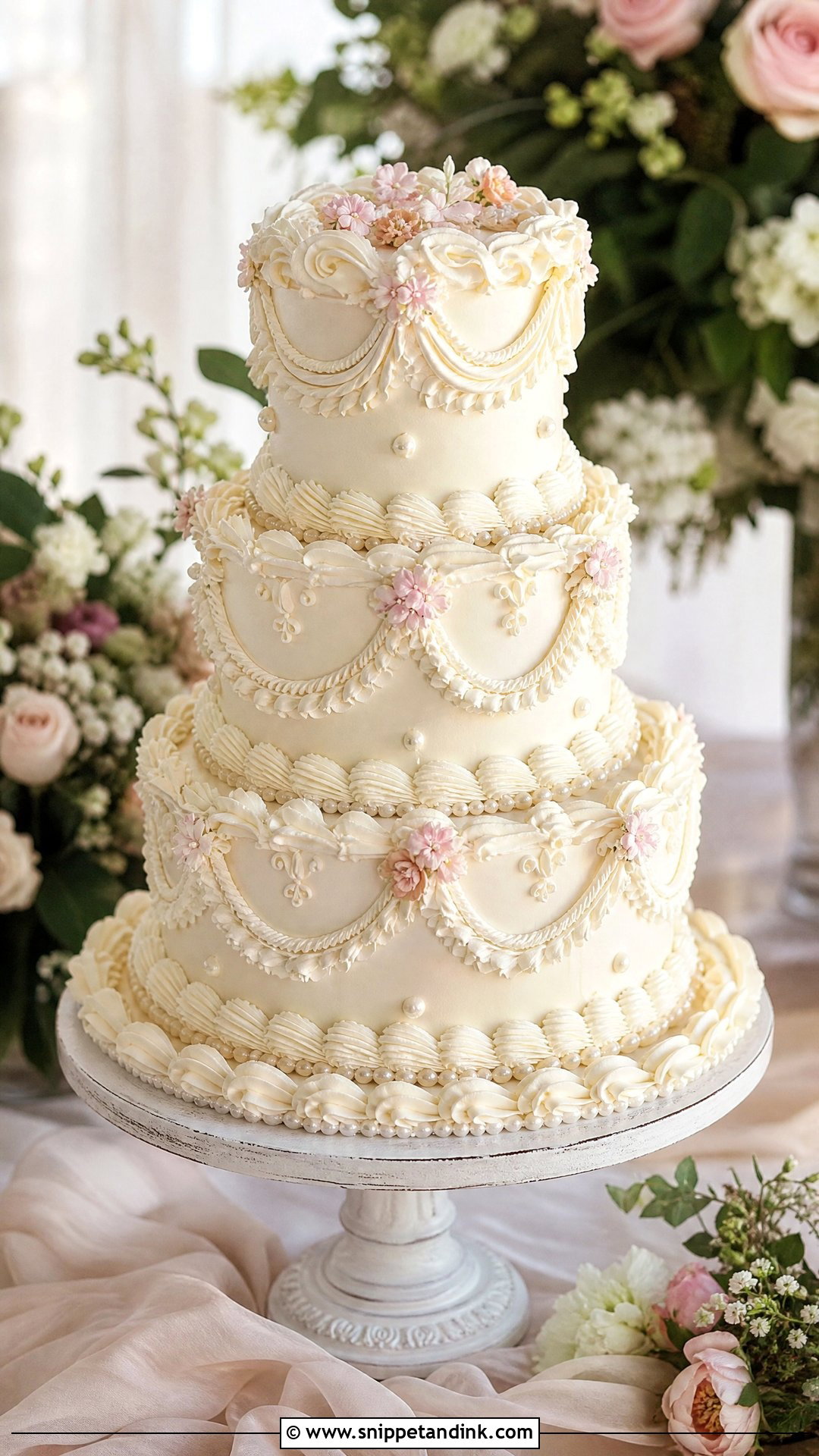
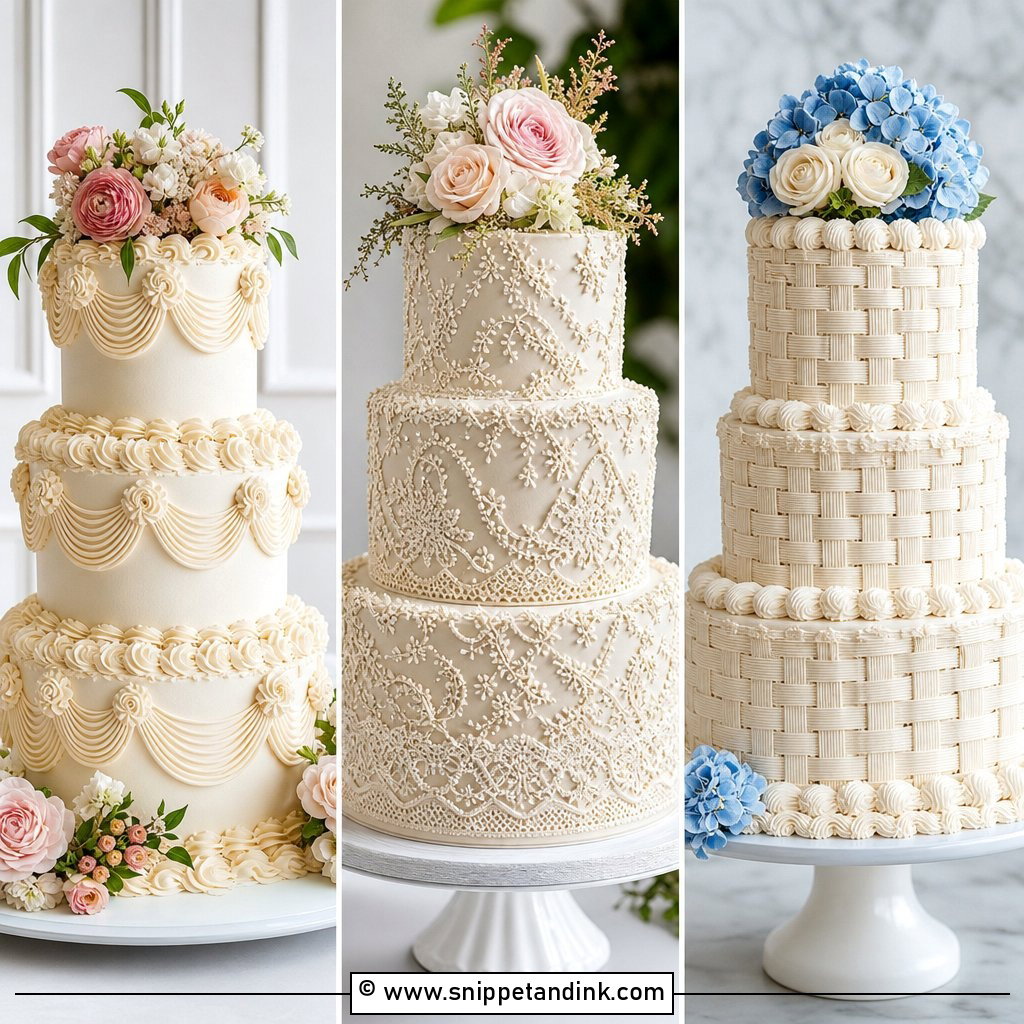
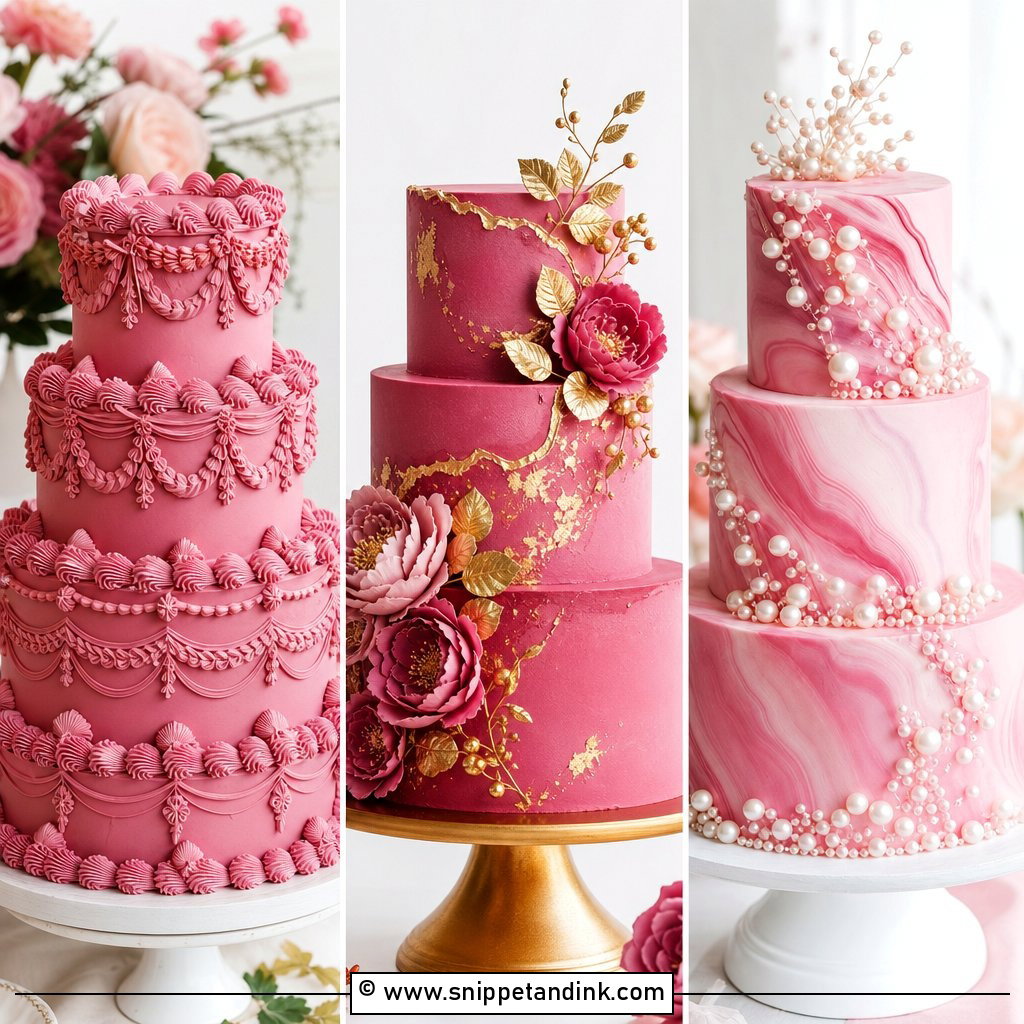
Lambeth piping is layered buttercream work: shells, swags, scrolls and over-piped borders built up in tiers of detail. It takes hours, and it’s the part of the quote that surprises people. It needs a firm, crusting buttercream or a stable meringue buttercream to hold sharp edges, so it isn’t the right choice for an outdoor July reception without shade. Ivory on ivory with vanilla almond sponge is the classic. When I draw these up, I leave some smooth space between the piped bands, because a cake covered edge to edge in detail reads as busy rather than rich from across a room.
2. Heart Shaped Wedding Cake
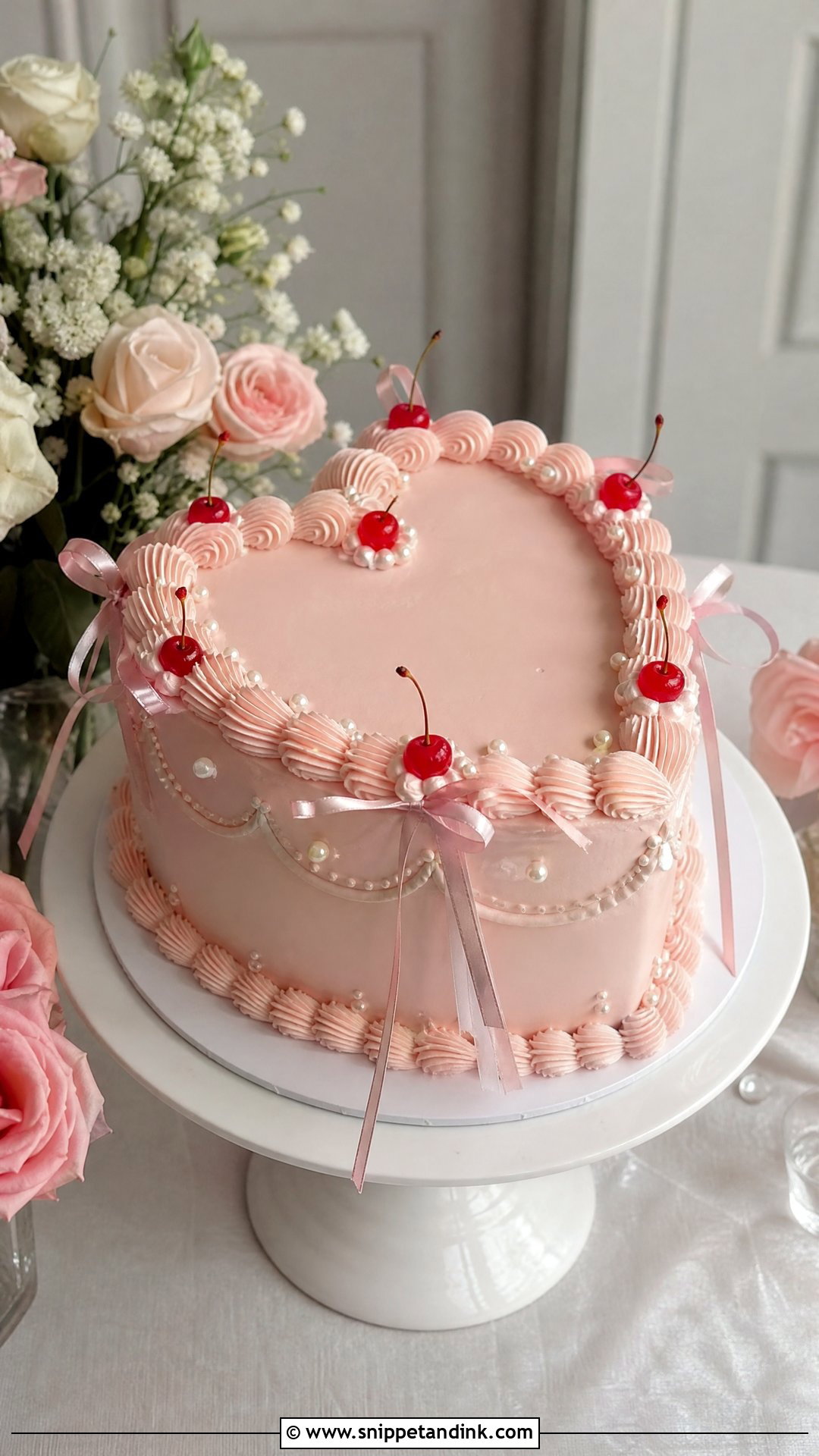
Heart cakes are usually single-tier, so I suggest them as a cutting cake for the sweetheart table with a kitchen sheet cake behind the scenes to feed everyone. Pale pink buttercream, piped borders and a few glossy cherries or edible pearls keep it sweet rather than childish. Raspberry filling with vanilla sponge is the pairing I’d reach for. One practical note: a heart pan has a deep point that bakes faster than the lobes, so a good baker trims and levels carefully, and the shape should look crisp at the tip.
3. Bow Wedding Cake
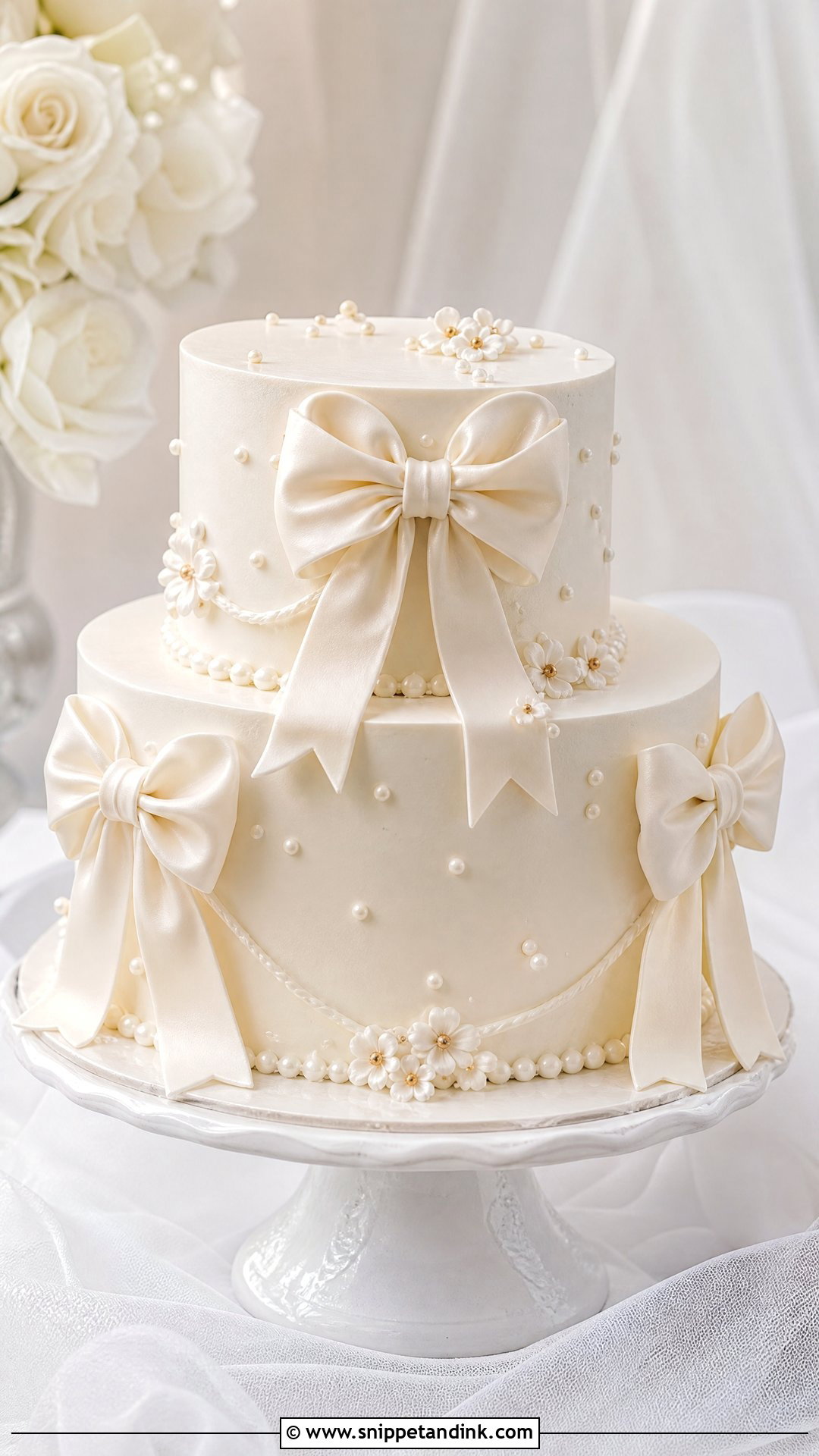
Bows can be made from fondant, wafer paper, piped buttercream or real ribbon. Real ribbon needs a barrier strip of acetate or a fondant band underneath, otherwise the fat from buttercream soaks through and leaves greasy marks within an hour. Fondant bows hold their loops best, while wafer paper looks the most like fabric but softens in humidity. A two-tier ivory cake with one satin-style bow and tiny pearl dots is restrained enough to suit a hotel ballroom or a garden. Keep the sponge light here: lemon, almond or vanilla bean.
4. Pearl Wedding Cake
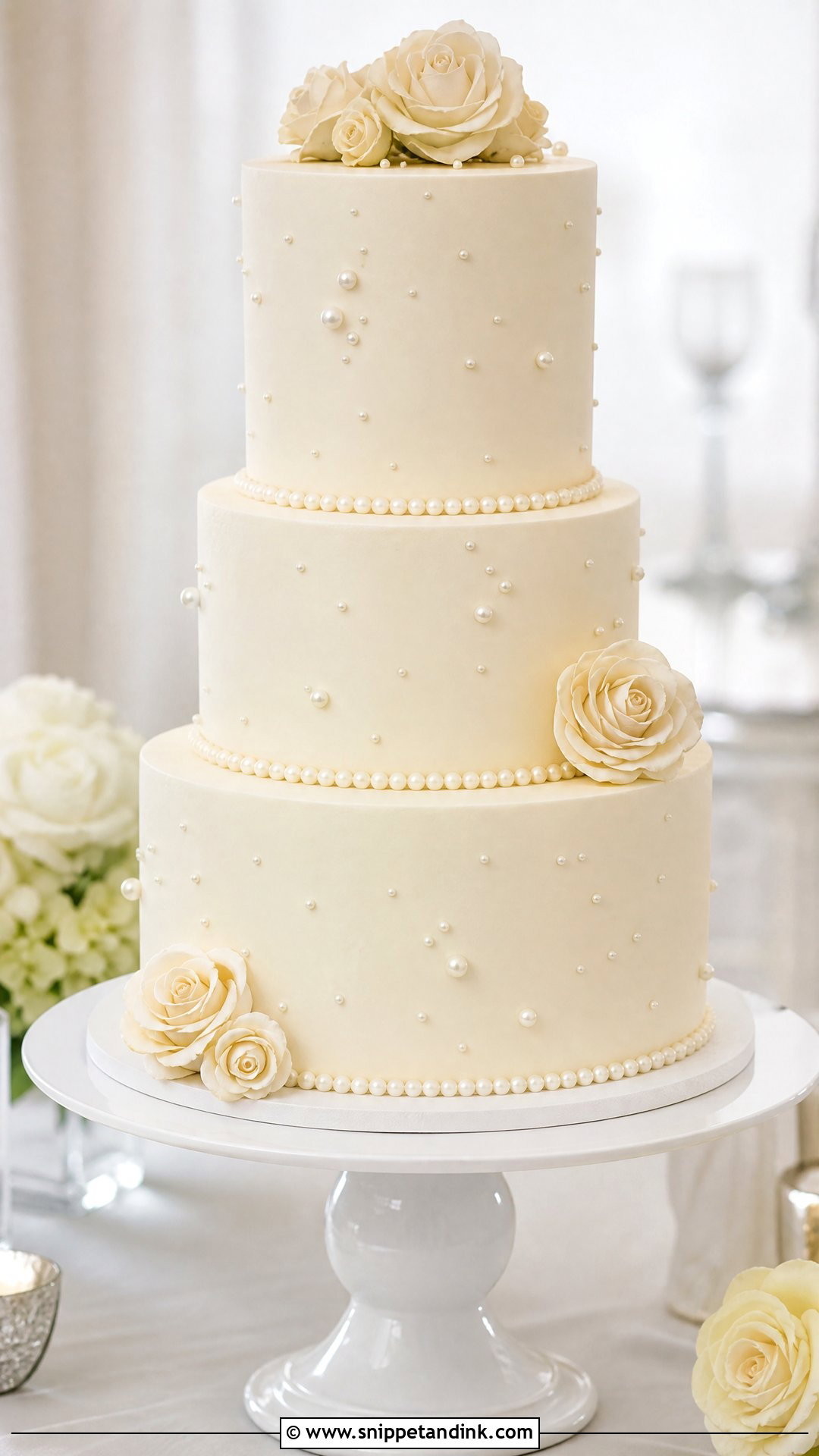
Edible pearls are sugar dragées, and they’re hard enough that I warn guests about them on the day; a row of them can surprise a tooth. Used in clean lines or around the base of each tier, they add shine without florals. Restraint matters. A single border reads as jewelry, a full scatter reads as sprinkles. My preferred version is white almond sponge, vanilla buttercream, pearl borders and a couple of sugar flowers, on a plain white stand.
5. Garden Flower Wedding Cake
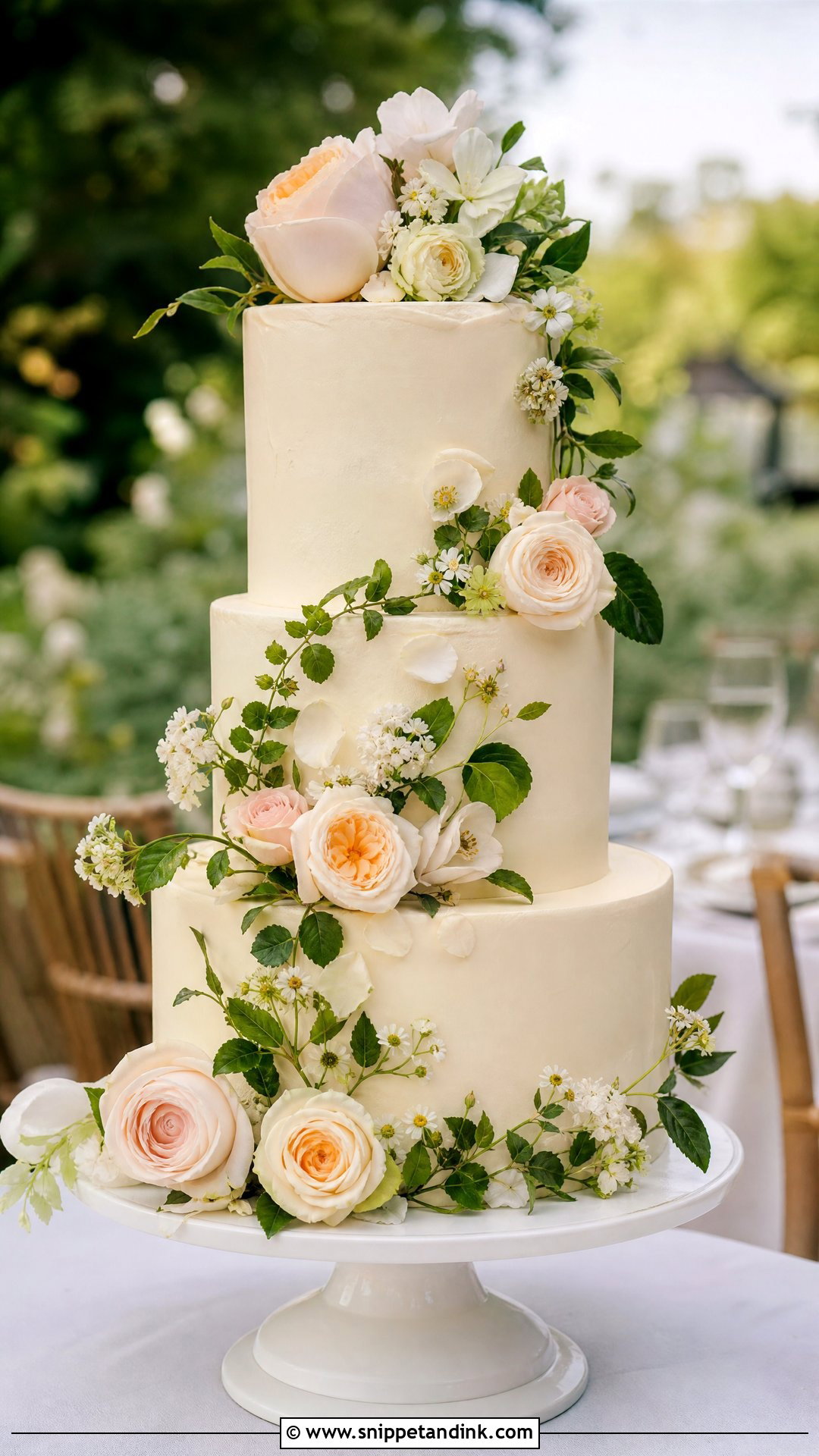
Flowers that appear to grow up the tiers are the most natural floral treatment I know, but they need coordination between baker and florist. Not every bloom is food-safe, and some common wedding flowers, like hydrangea and lily of the valley, should never touch a cake. Stems get wrapped in floral tape and set into food-safe picks or straws, and petals that touch frosting need to come from a pesticide-free grower. Lemon elderflower with Swiss meringue buttercream and garden roses suits tents and outdoor spring receptions, as long as the table is shaded.
6. Wavy Piping Wedding Cake
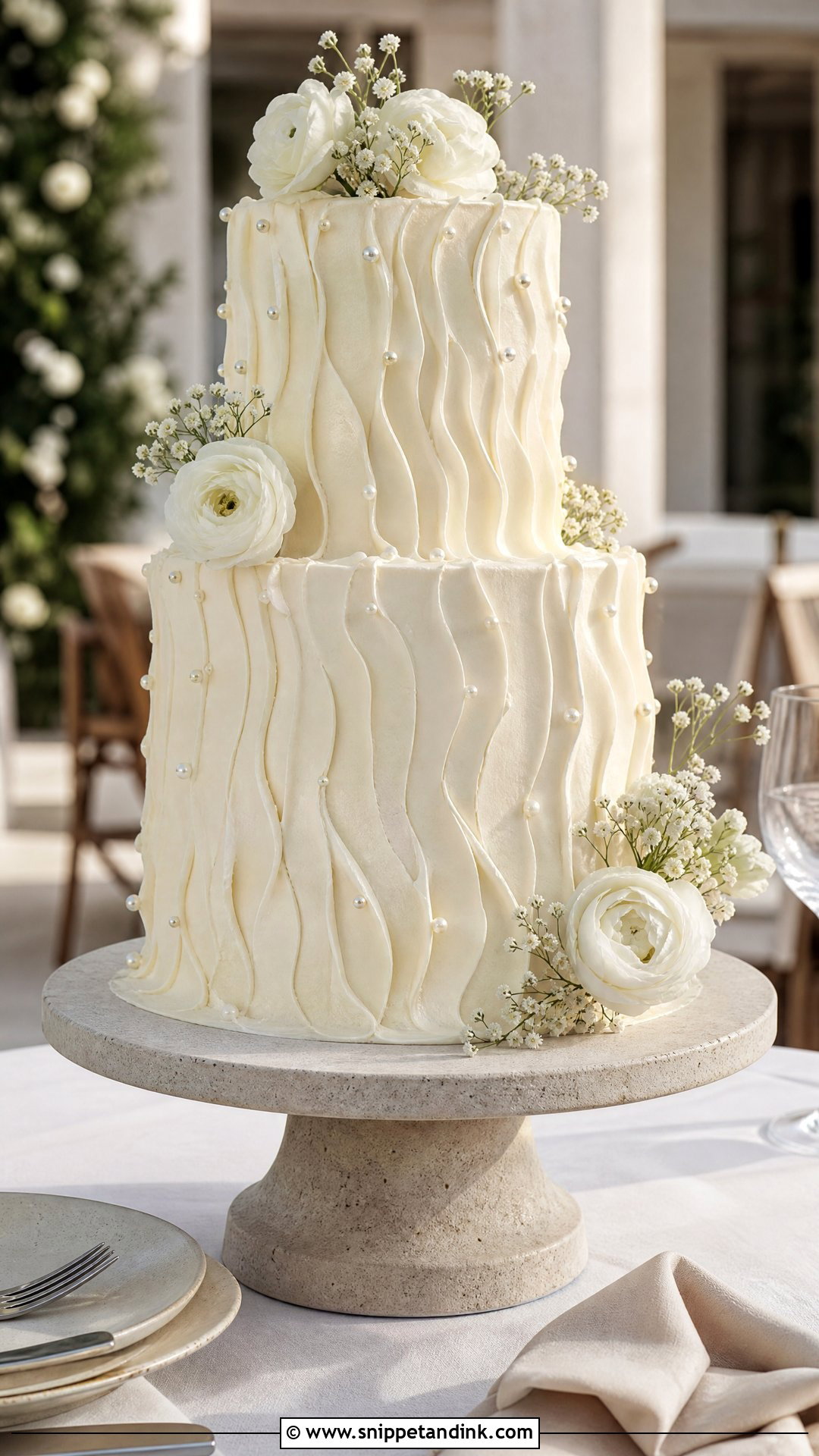
Wavy piping builds movement with a petal or round tip, worked in vertical waves or loose ruffles around each tier. The texture depends on shadow, so pale colors like ivory, butter yellow or pale blue show it best; a deep color flattens it in photos. I make this one in a meringue-based buttercream, which pipes smoothly and holds a soft edge. Passion fruit filling with vanilla sponge gives it a bright flavor. Keep the decoration to a few pearls so the frosting stays the feature.
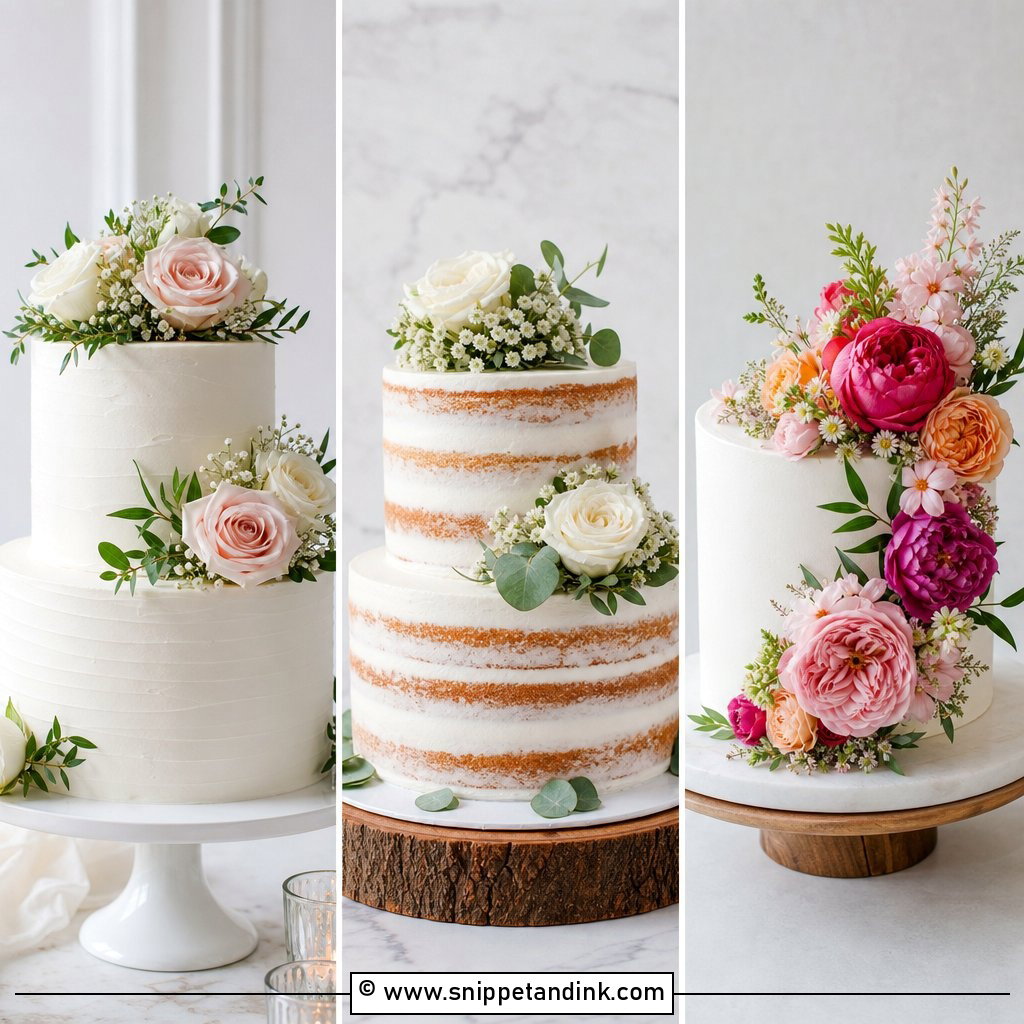
7. Textured Buttercream Wedding Cake
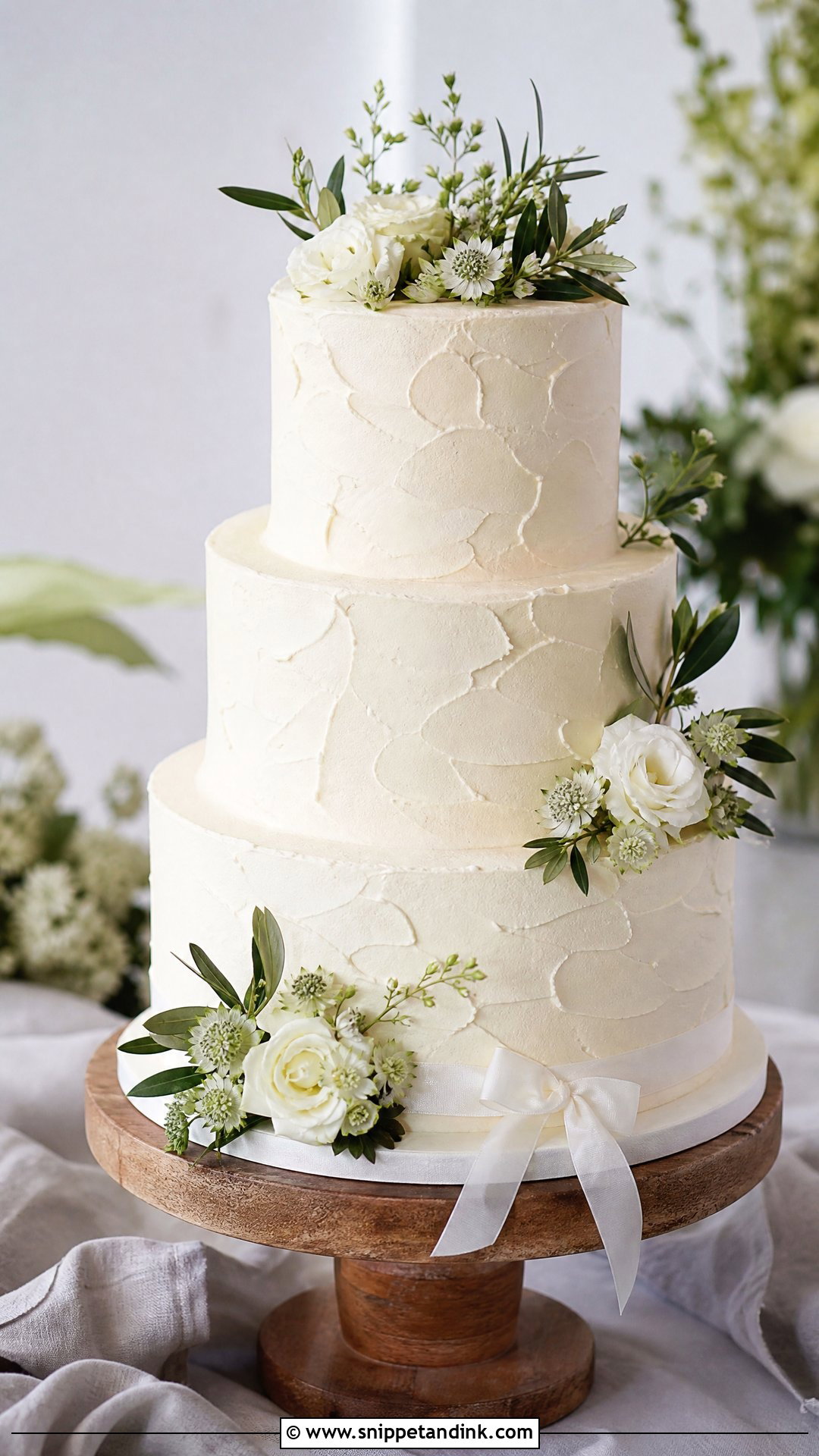
Textured finishes are more forgiving than a perfectly smooth coat, which is why I recommend them for couples worried about a cake looking flawless after a car ride. Spatula strokes, pleats, ridges or a stucco finish all hide small bumps from transport. They also look warm in natural light on stone, wood or linen. A two or three-tier vanilla bean cake with strawberry compote and a lightly textured coat is the one I’d suggest for a crowd with mixed tastes. One seasonal bloom or a ribbon finishes it.
8. Extra Tall Wedding Cake
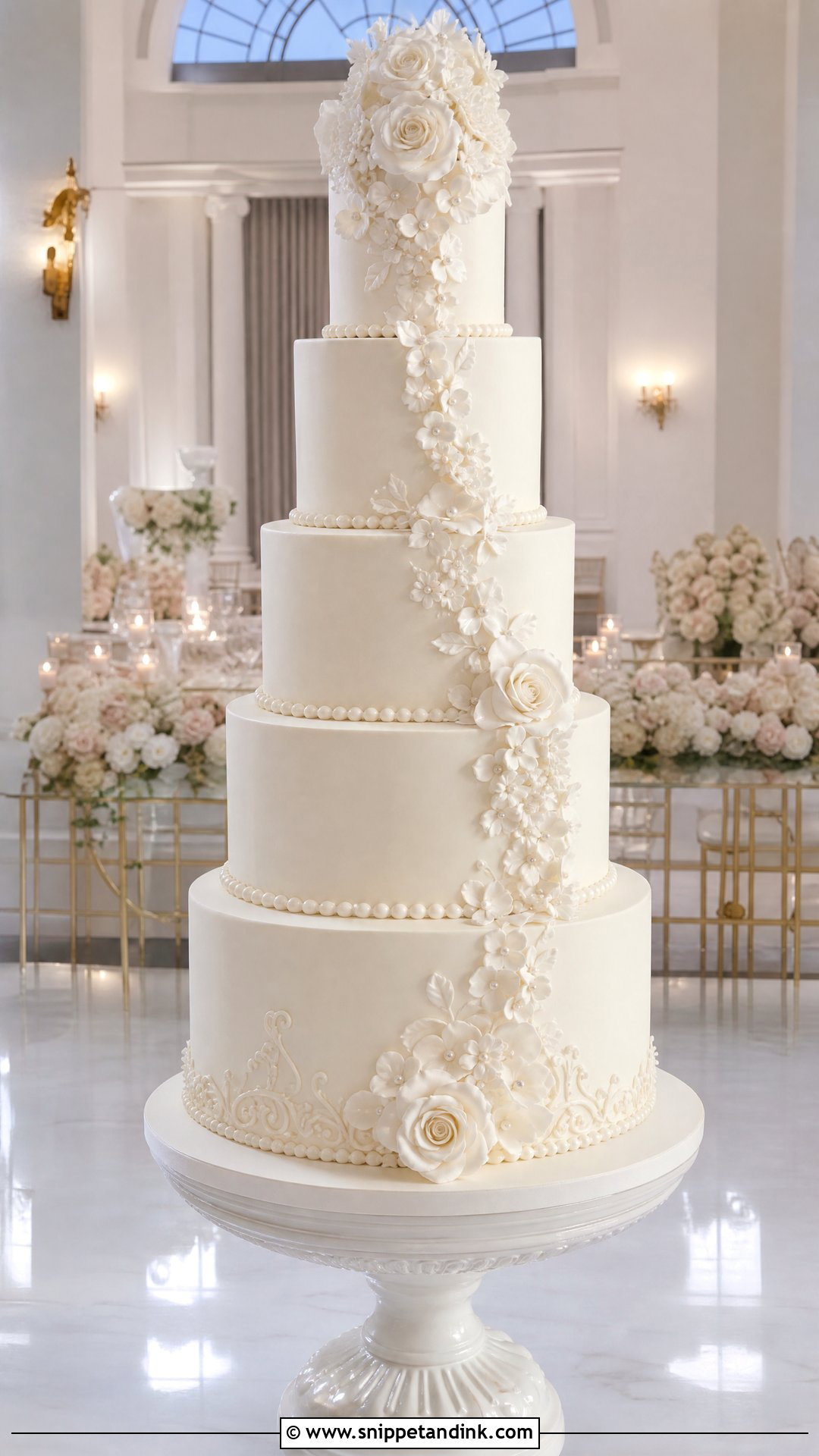
Height costs money, but not always in cake. An extra tall design can mean four tiers, five tiers or double-barrel tiers that are twice the usual depth. Tall tiers need internal dowels and a center rod, and they’re delivered in sections and stacked at the venue, so plan for setup time and a sturdy, level table. If your guest list is small, I’d mix real tiers with one or two styrofoam dummy tiers dressed in the same buttercream. A tall white cake with clean borders and cascading sugar flowers needs nothing else.
9. Wedding Sheet Cake
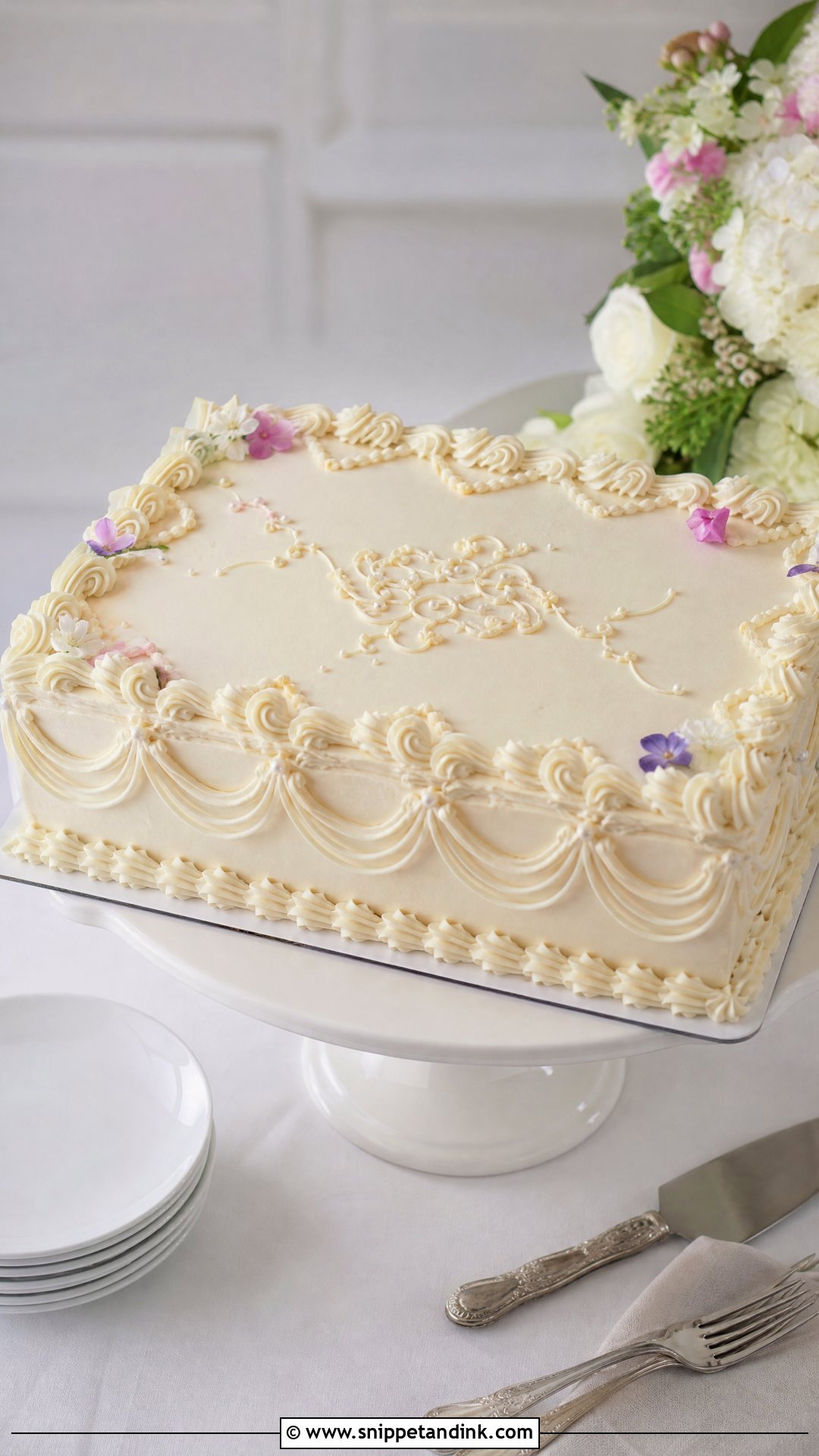
Sheet cakes stopped hiding in the kitchen in 2024, and I think that’s healthy. A rectangle gives me a large flat surface for vintage piping, petals or pearl borders, and it slices into neat, even portions far faster than tiered cake. A vanilla and berry sheet with buttercream swags can look every bit as considered as a tier. I’d set it on a raised platter with a few flowers around the base so it looks like a centerpiece rather than a backup plan.
10. Floral Sheet Wedding Cake
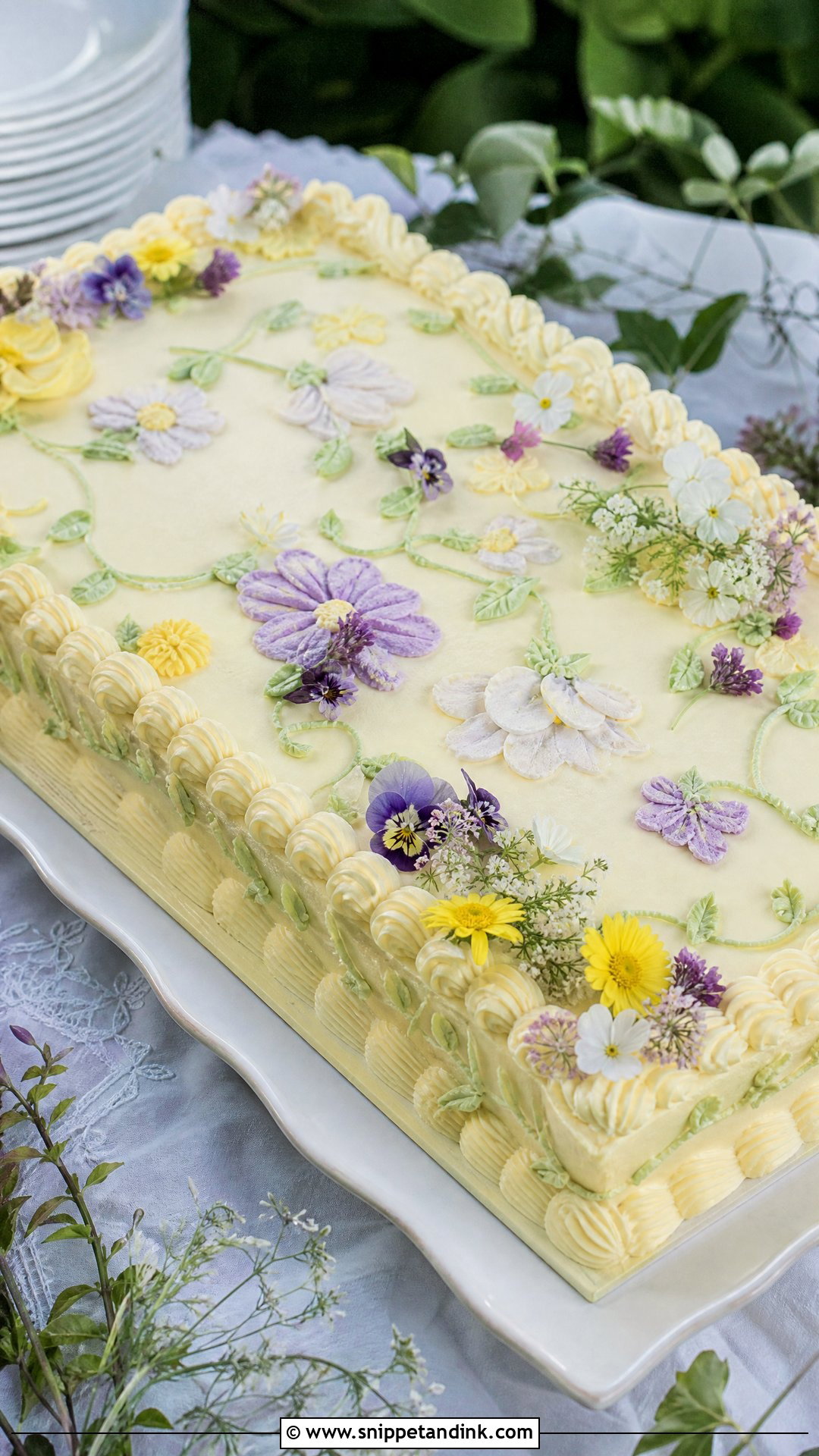
A floral version takes the sheet cake trend further, using the whole top as a canvas for piping and flowers. It suits garden receptions and brunch weddings, and it’s the cake I’d steer smaller celebrations toward when a tiered cake feels formal. A light sponge with fruit curd or berry filling works best. Edible flowers like violas or pansies pressed into the buttercream look loveliest from above, which is how most people will see it.
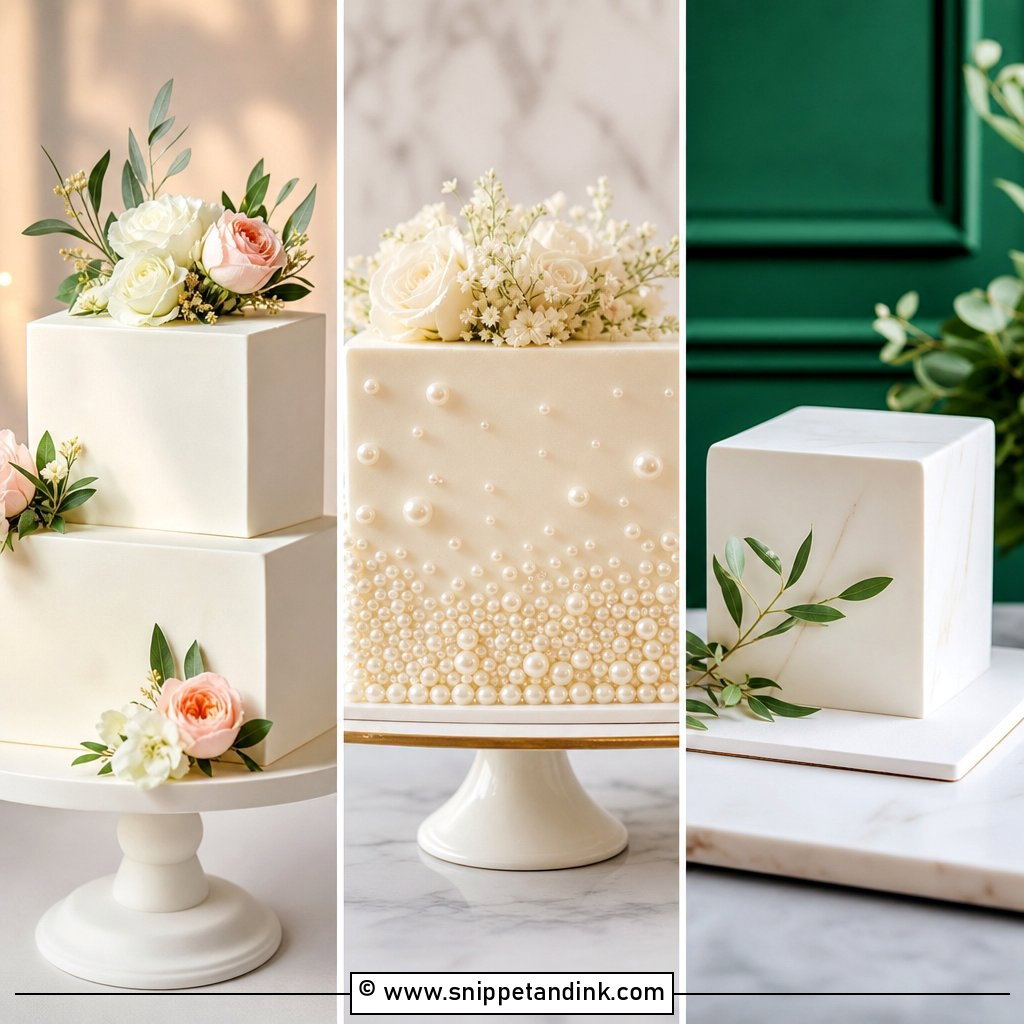
11. Minimalist Wedding Cake
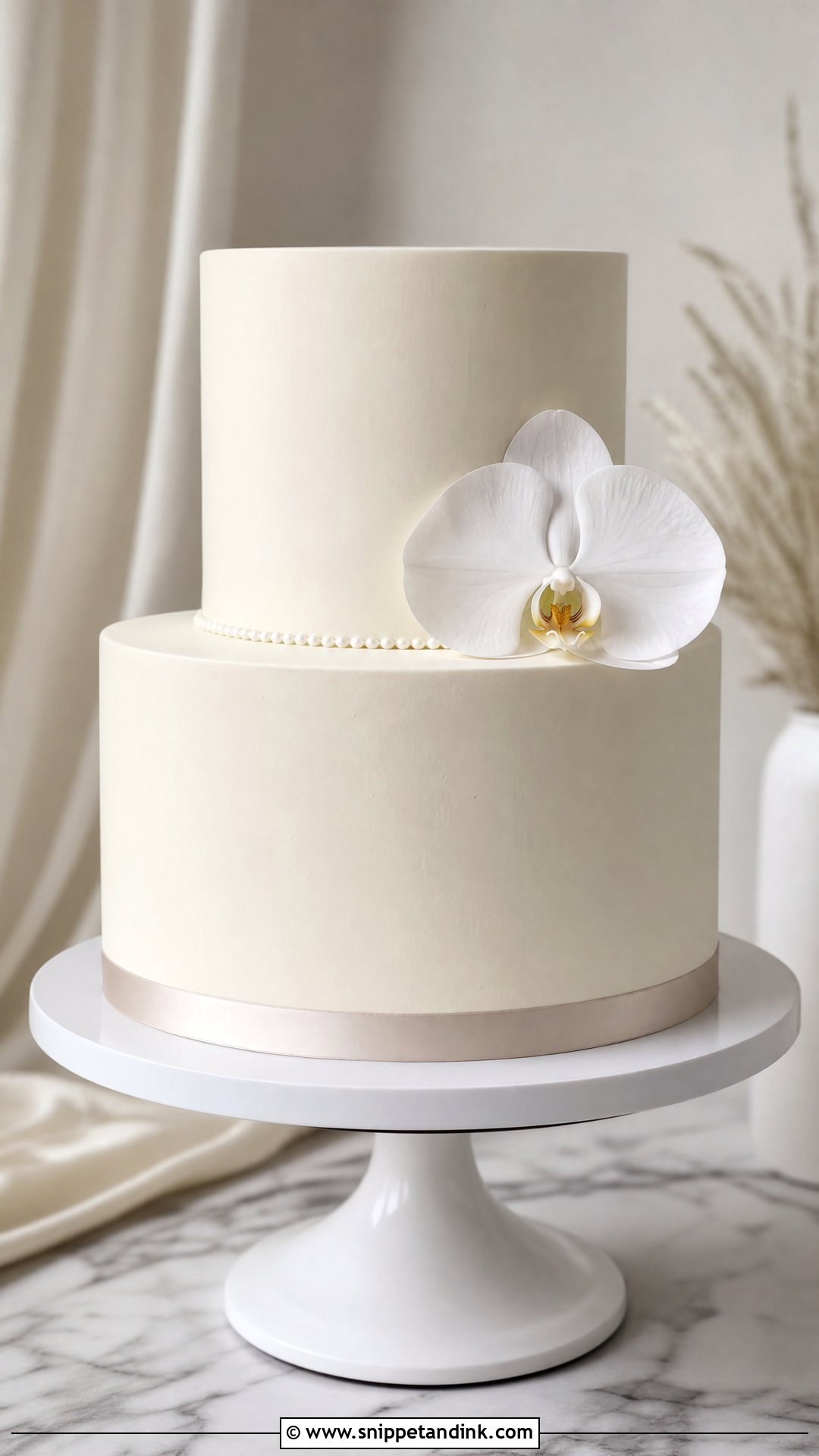
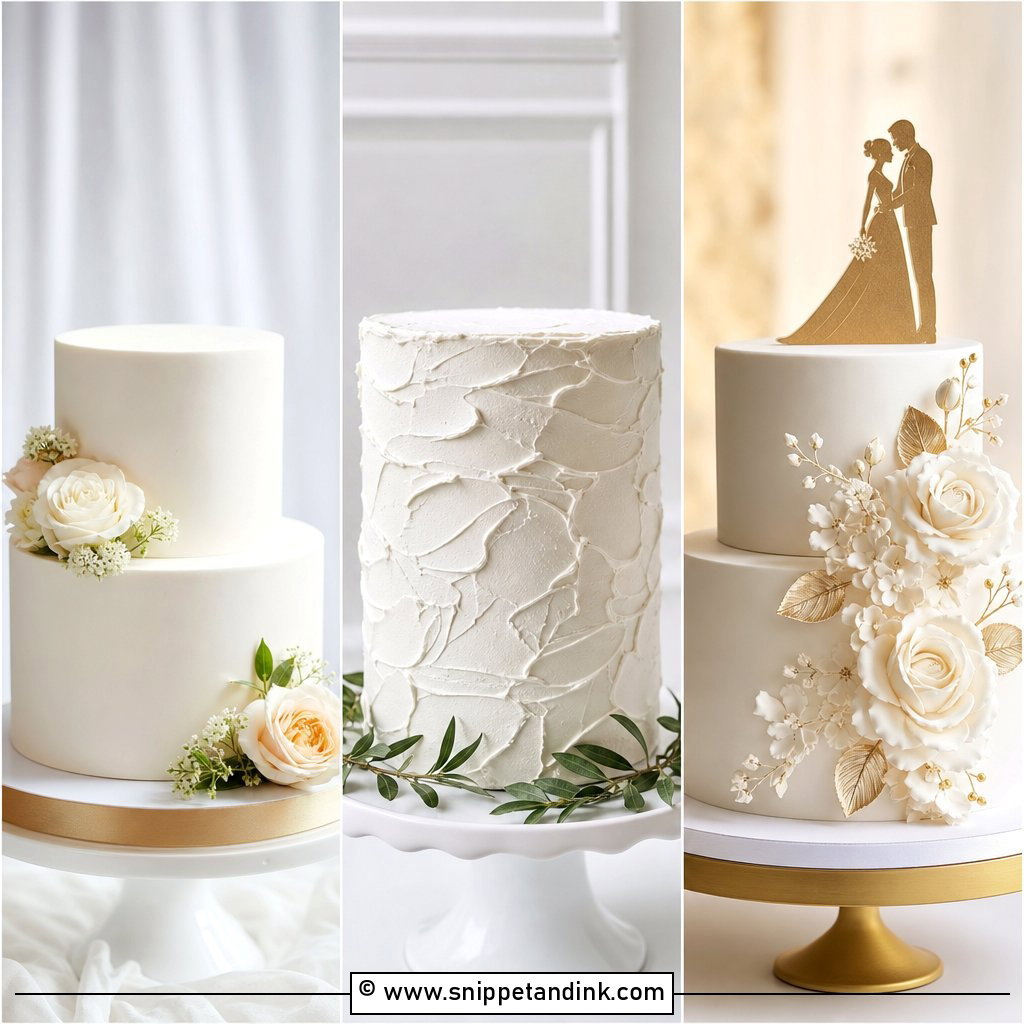
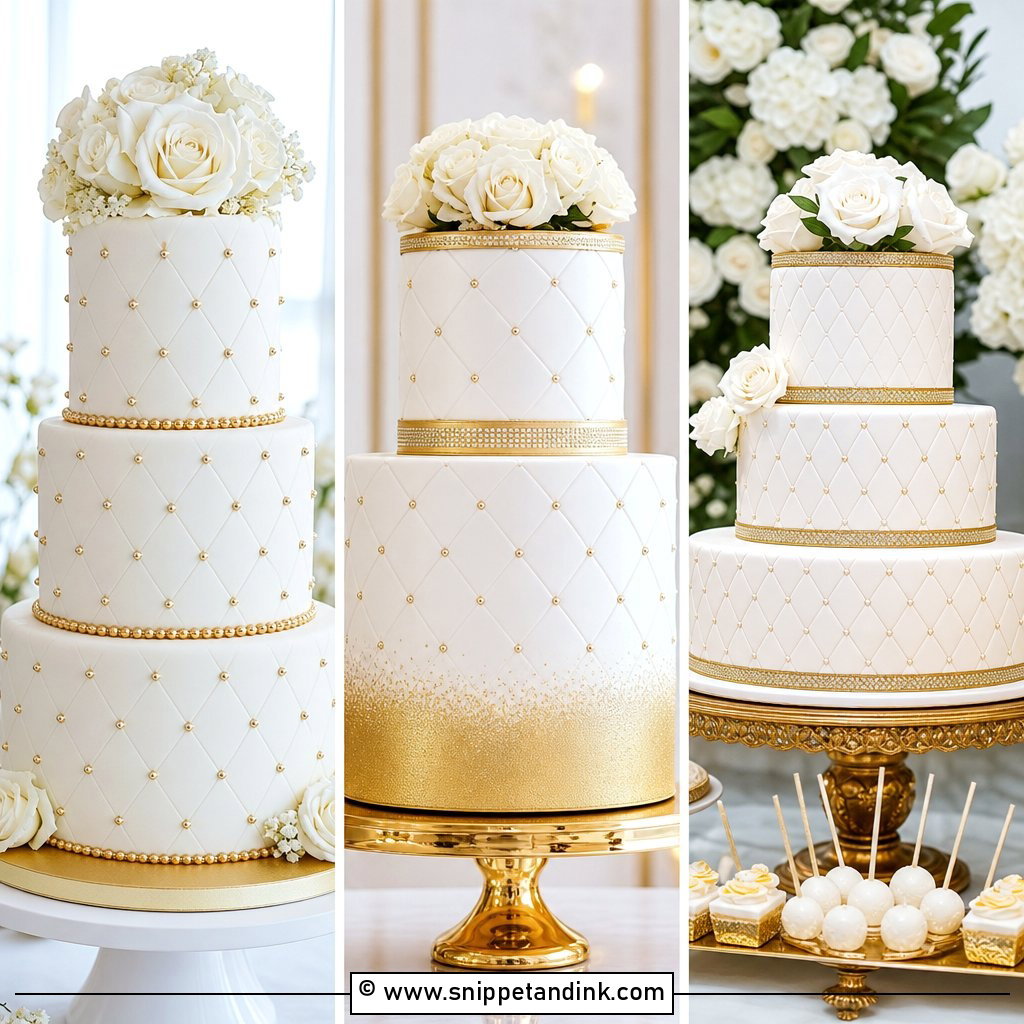
A minimalist cake has nowhere to hide, so the finish has to be perfect: smooth sides, sharp top edges and tiers sized in clean proportion to each other. That takes more skill than people expect. I add one deliberate accent, a ribbon, a single bloom or a line of pearls, and leave the rest bare. Vanilla bean sponge with mascarpone filling inside an ivory buttercream coat tastes rich enough that the outside can stay simple. A good stand finishes it; a plain cake on a cheap plastic board looks unfinished.
12. Colorful Flower Wedding Cake
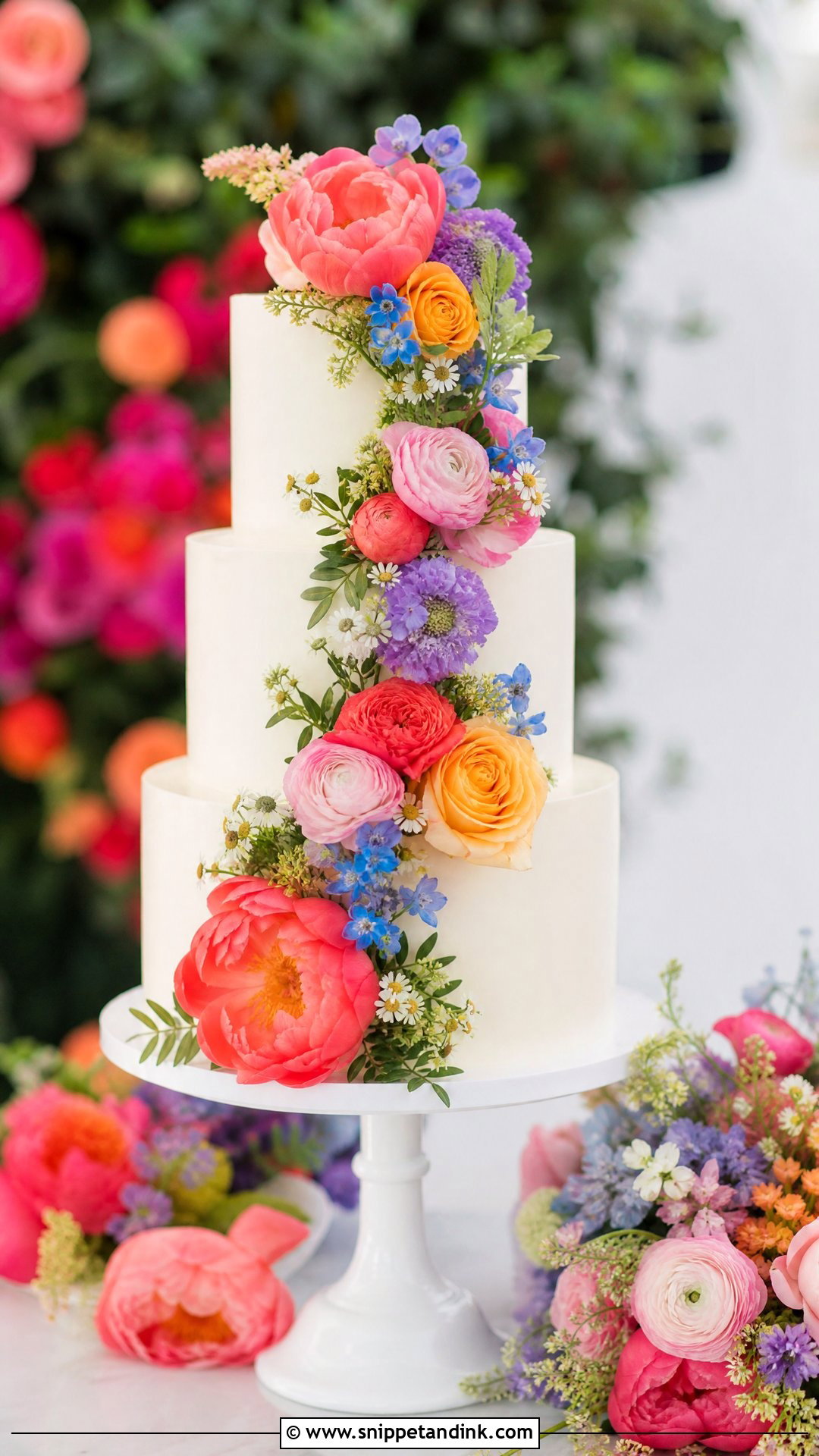
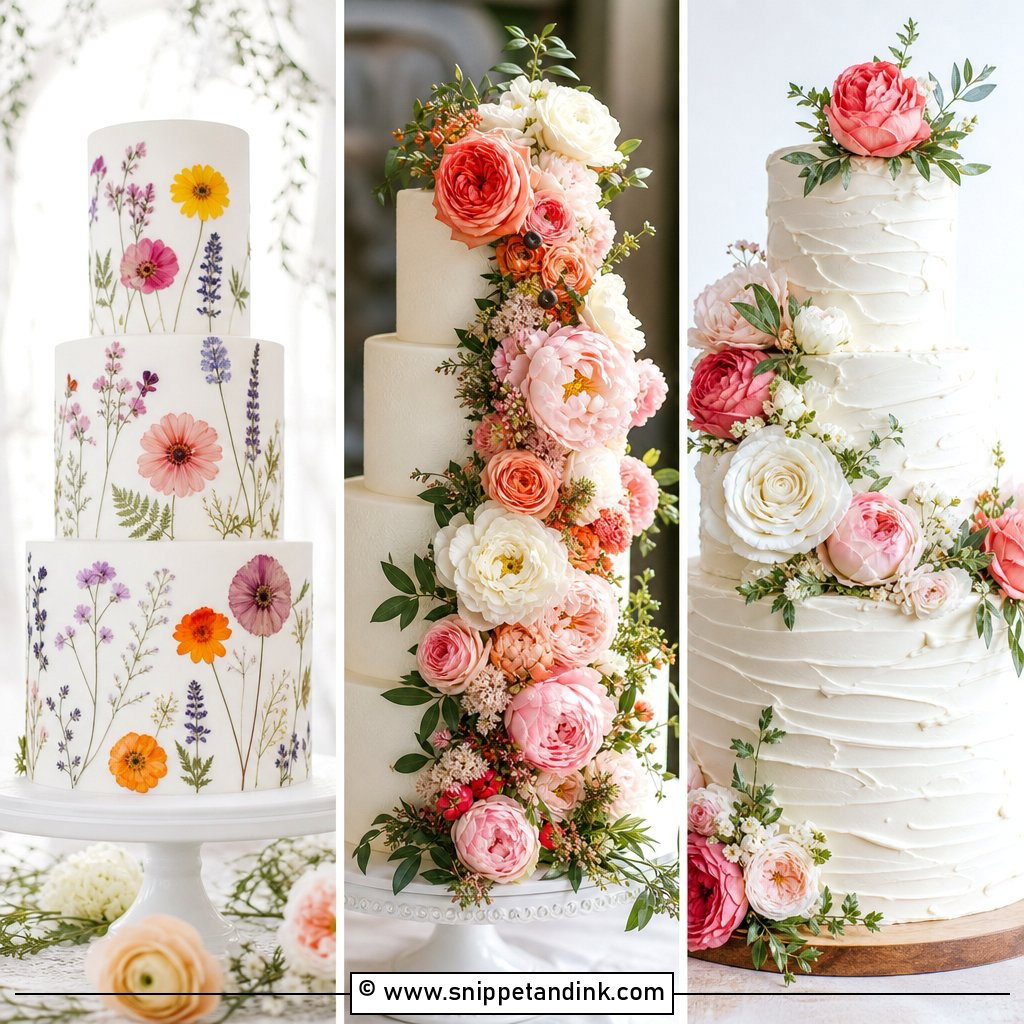
The trick with colorful flowers is to keep the cake white or ivory and let the blooms carry the color. A pistachio cake with vanilla buttercream and coral, pink or yellow garden flowers is the version I’d suggest. Arrange them in one diagonal trail or two clusters rather than dotting them all over. I always ask couples to bring a photo of the bouquet to the tasting, because repeating two or three shades from it ties the table together.
13. Buttercream Flower Wedding Cake
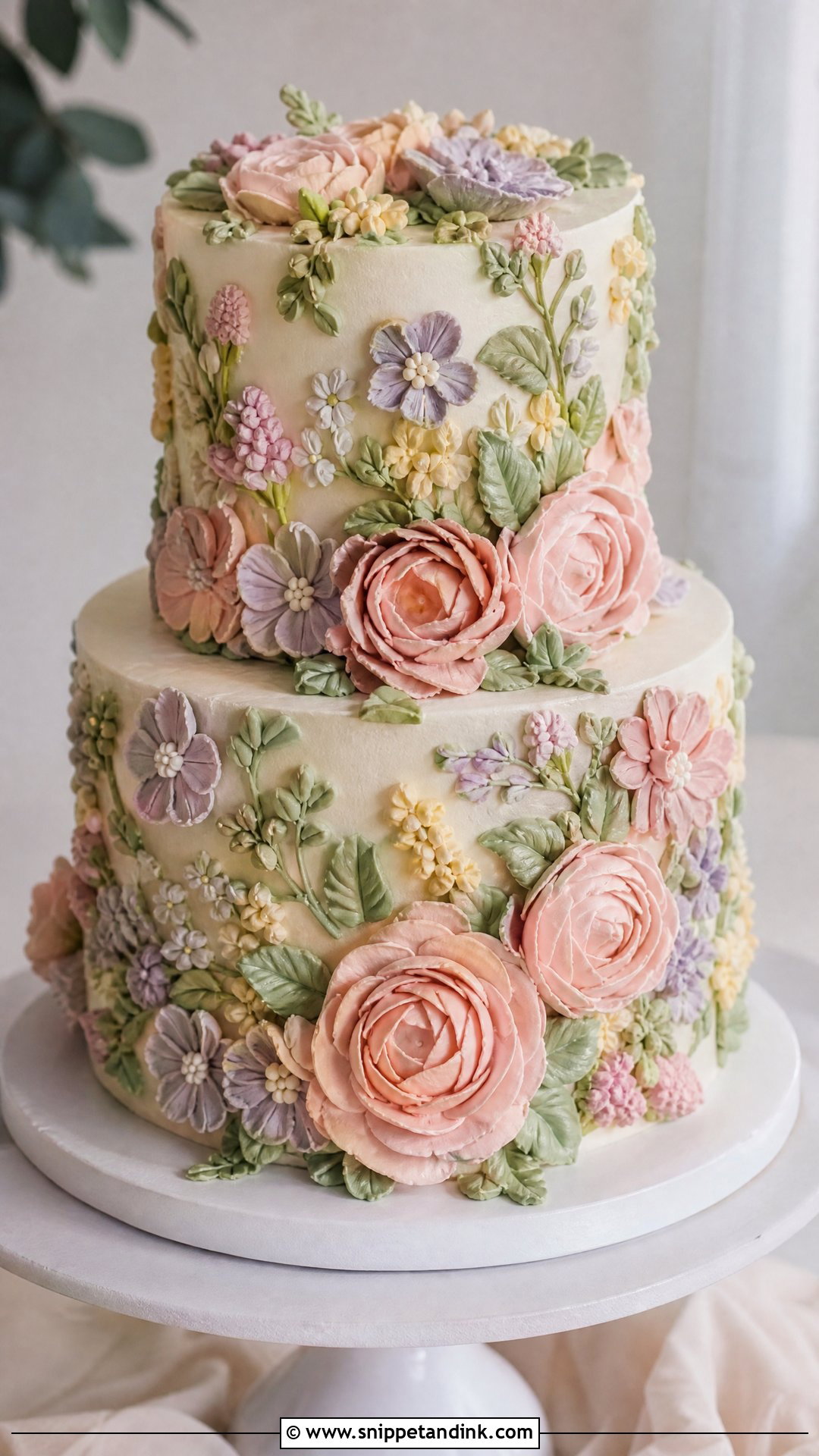
Piped buttercream flowers are entirely edible, which is their big advantage over fresh blooms. They’re piped onto a flower nail, chilled until firm and then placed on the cake, so they hold a clean petal shape. Heat is their weakness; a warm room softens the petals into a smudge. White cake with lavender filling and pastel piped flowers suits a smaller tiered cake. Keep the palette to three colors, such as blush, sage and pale yellow.
14. Sugar Flower Wedding Cake
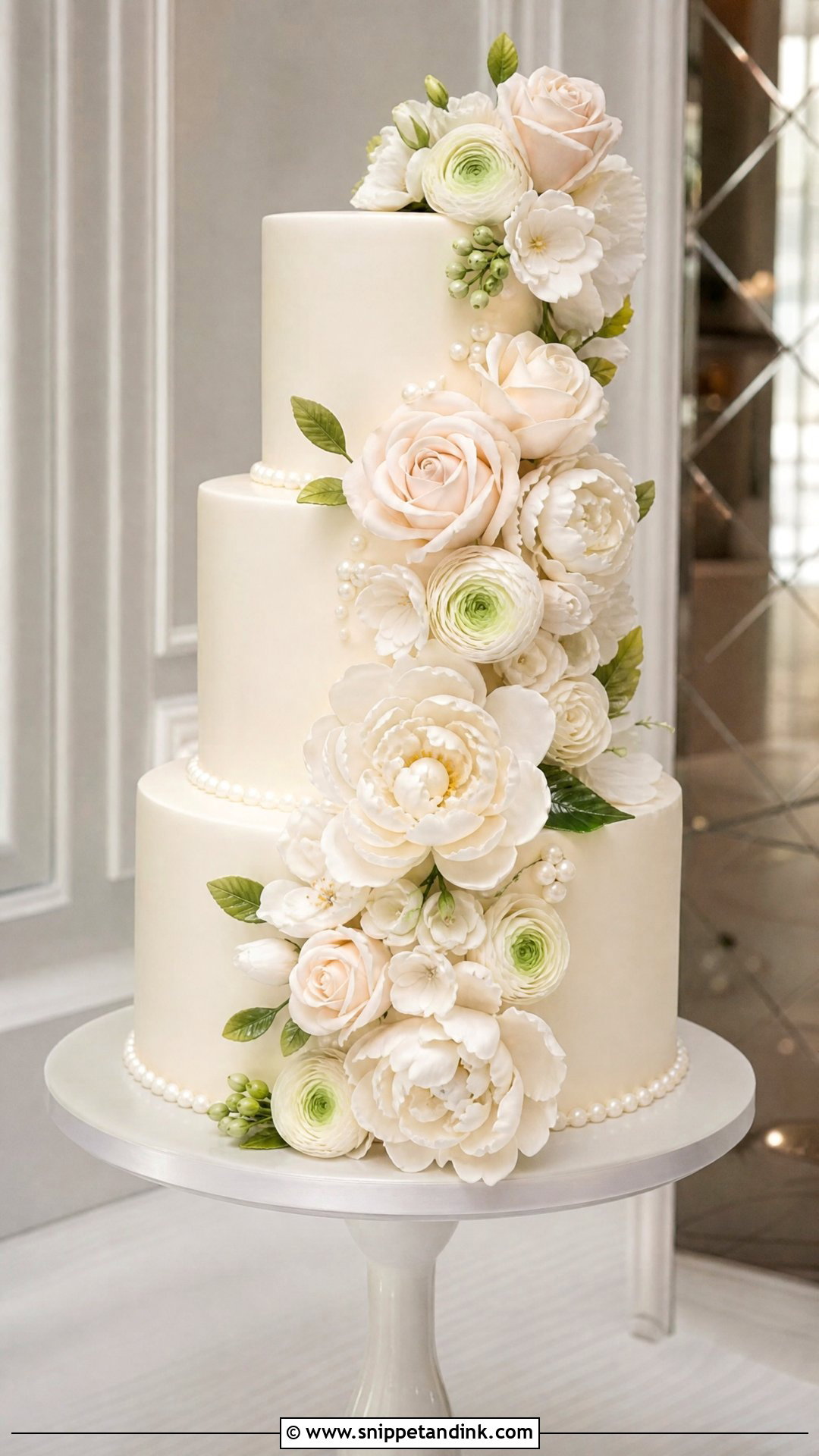
Sugar flowers are made petal by petal from gum paste, wired together and dried for days, so they’re one of the most labor-intensive things on a cake and priced accordingly. In return, they don’t wilt and they’re safe even when the real flower isn’t. They can be shaped as roses, peonies, orchids, ranunculus, or wildflowers. Arrange them with space between them rather than packed tight. Humidity softens gum paste, so I keep sugar flowers off the cake until the last moment at outdoor venues.
15. Pressed Flower Wedding Cake
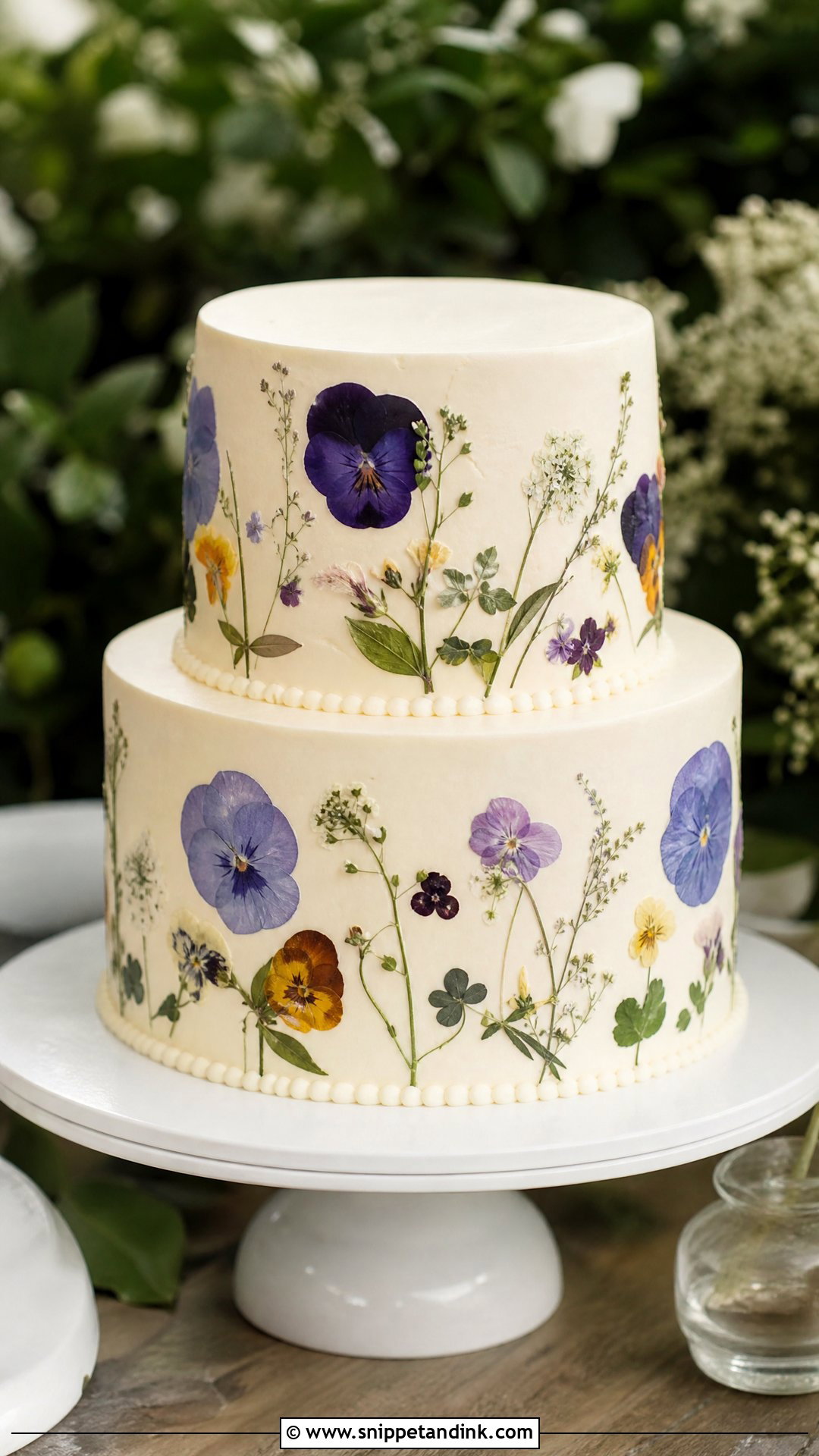
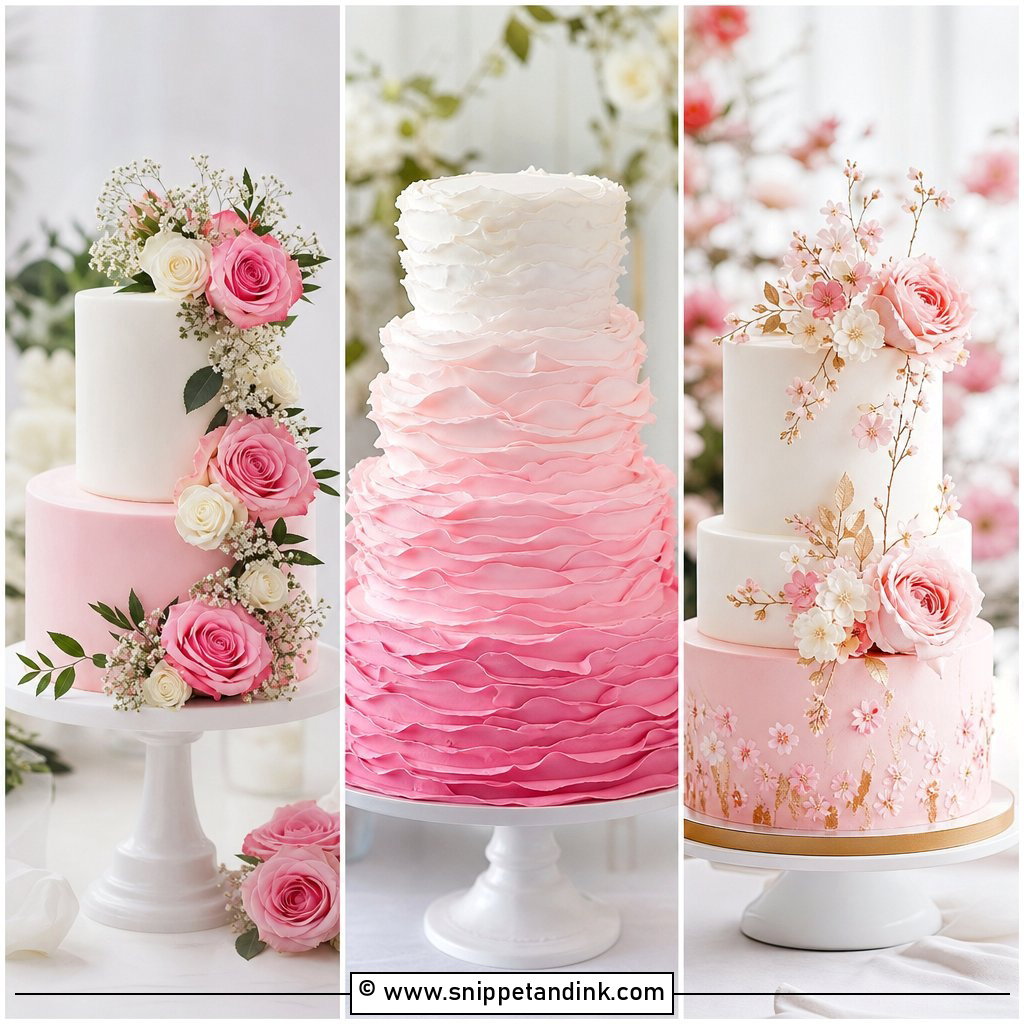
Pressed flowers sit flat on smooth buttercream like a botanical print. They need to be edible varieties, such as violas, pansies or herbs, pressed and dried for this purpose, and bright pressed petals can fade if the cake sits in direct sunlight for hours. Lemon sponge with honey buttercream is the pairing I’d use. One or two tiers is plenty, since the flowers are the decoration.
16. Monochrome Wedding Cake
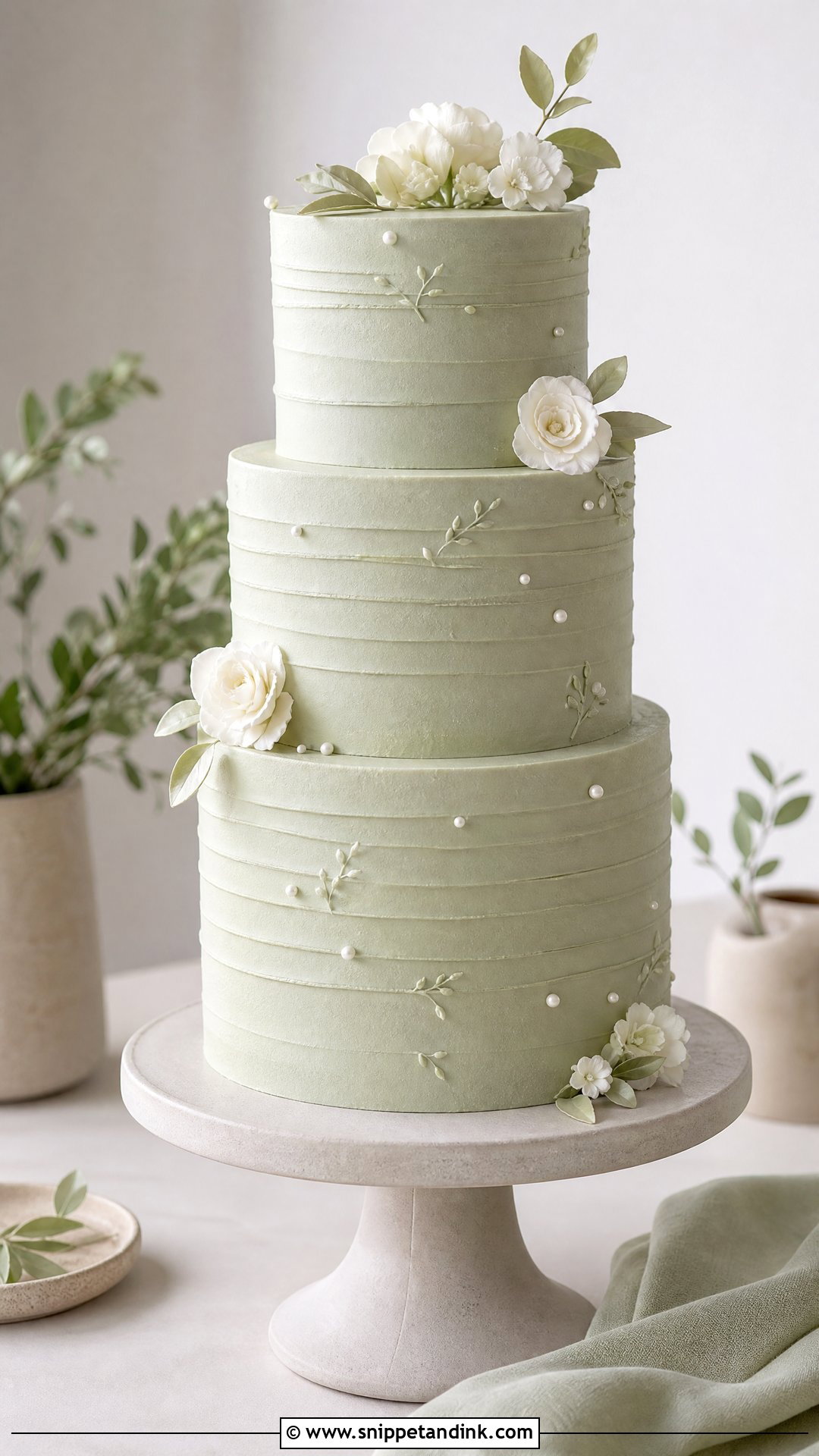
A single color from top to bottom makes the texture do the talking, so I pair this approach with pleats, ruffles or tonal piping. Sage green, butter yellow and blush are easier to get right than you’d think; deep colors need a lot of gel coloring, which can taste bitter and stain teeth. A sage pistachio cake with matching buttercream and a few pearls looks modern without shouting. Check the shade under your venue’s lighting, because warm bulbs make sage look grey.
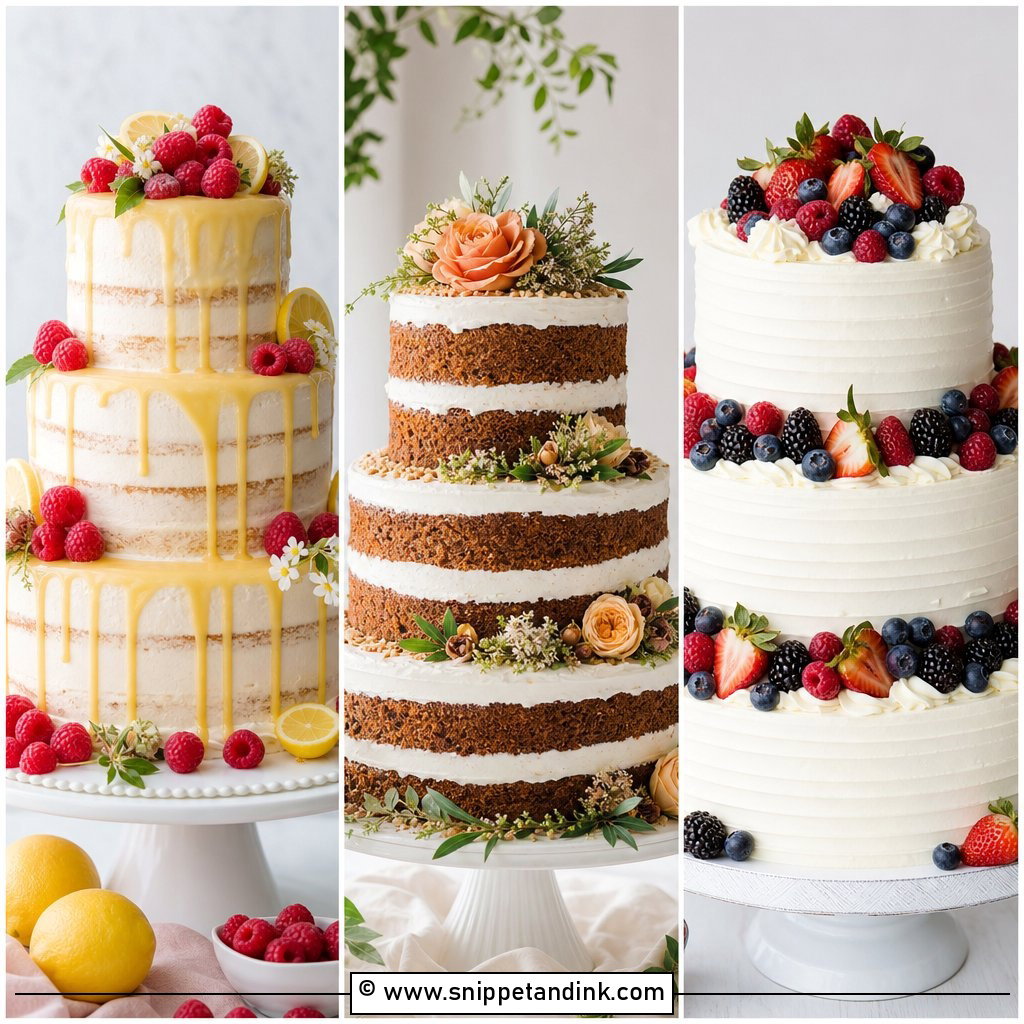
17. Citrus Wedding Cake
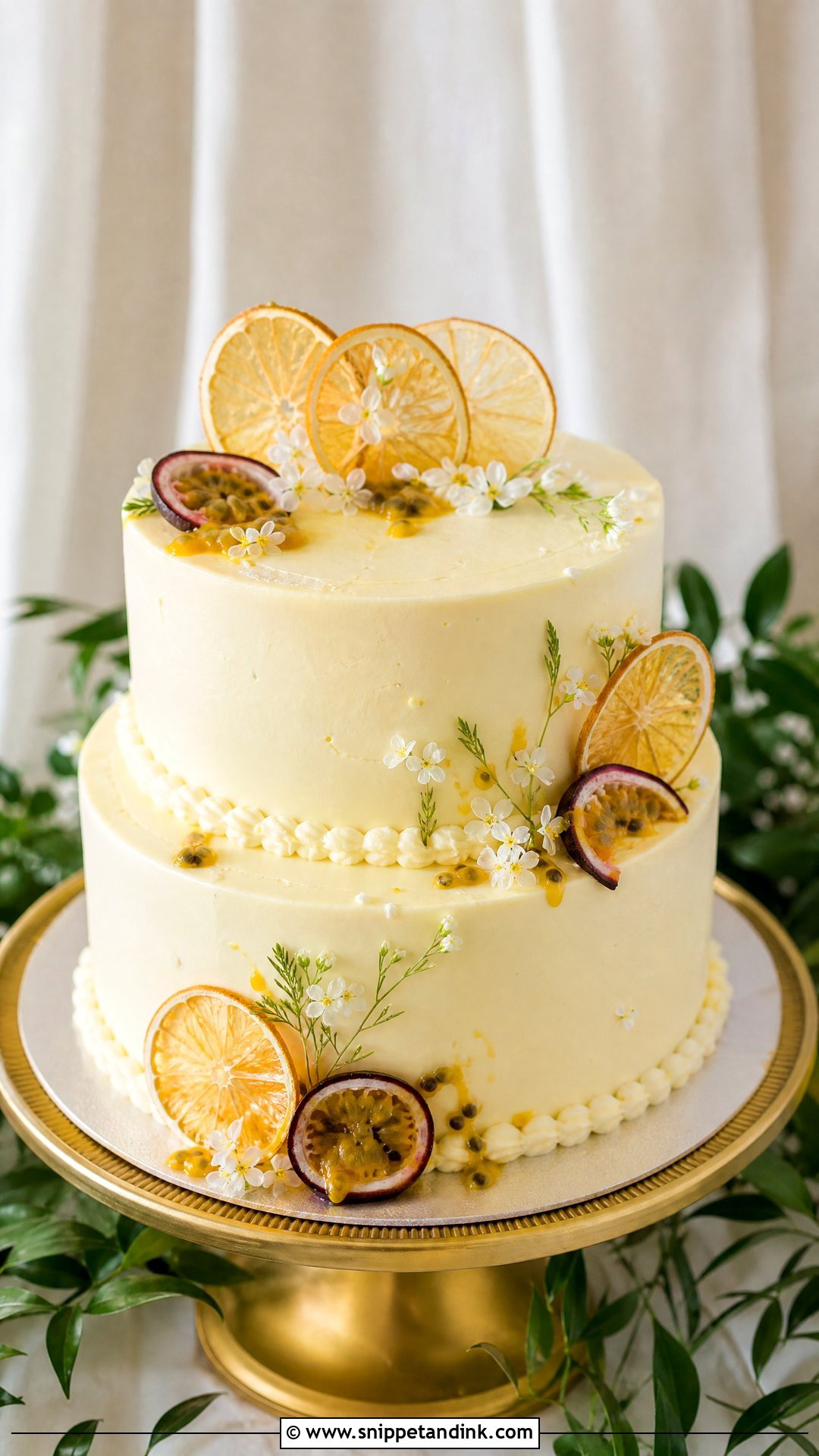
Citrus is the flavor I recommend most for summer weddings, because it reads as light after a big meal. Lemon, yuzu, orange blossom and passion fruit all work. My favorite combination is lemon sponge, passion fruit curd and vanilla Swiss meringue buttercream. On the outside, a pale yellow coat with thin dried citrus slices or tiny blossoms keeps it refined. Fresh cut citrus weeps juice onto buttercream, so I always use dried slices for decoration.
18. Pistachio Wedding Cake
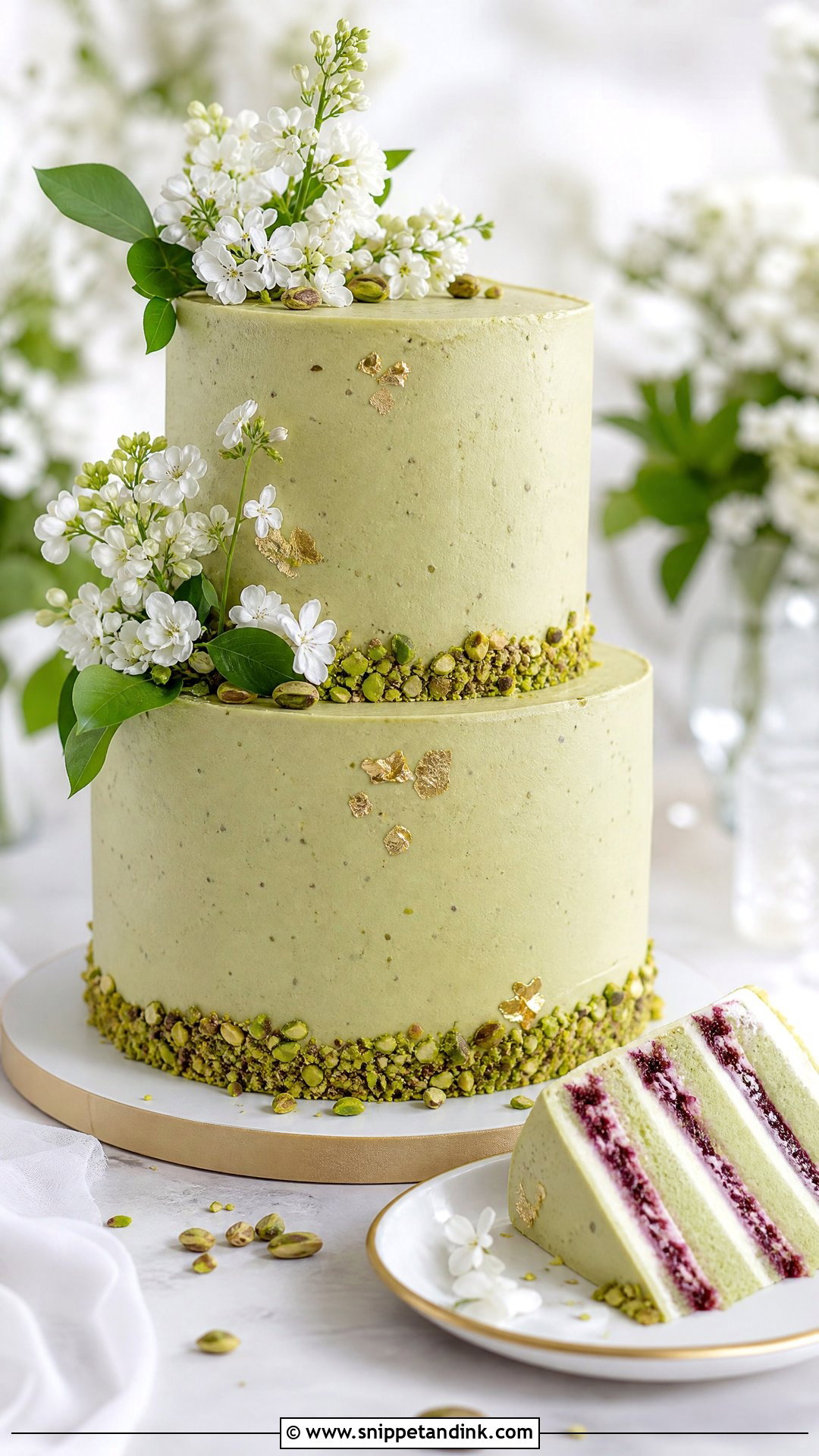
Pistachio has become a favorite because it tastes richer and more interesting than vanilla while still pairing with raspberry, almond and rose. The sponge has a soft green tone that looks lovely when the cake is cut. I’d fill it with raspberry. Cream cheese buttercream is the classic partner and tastes great, but it’s softer and needs refrigeration, so for a stacked tier I’d usually suggest a stable buttercream outside and keep the cream cheese for the filling. Pale green frosting, chopped pistachios and small white blooms finish it.
19. Black And White Wedding Cake
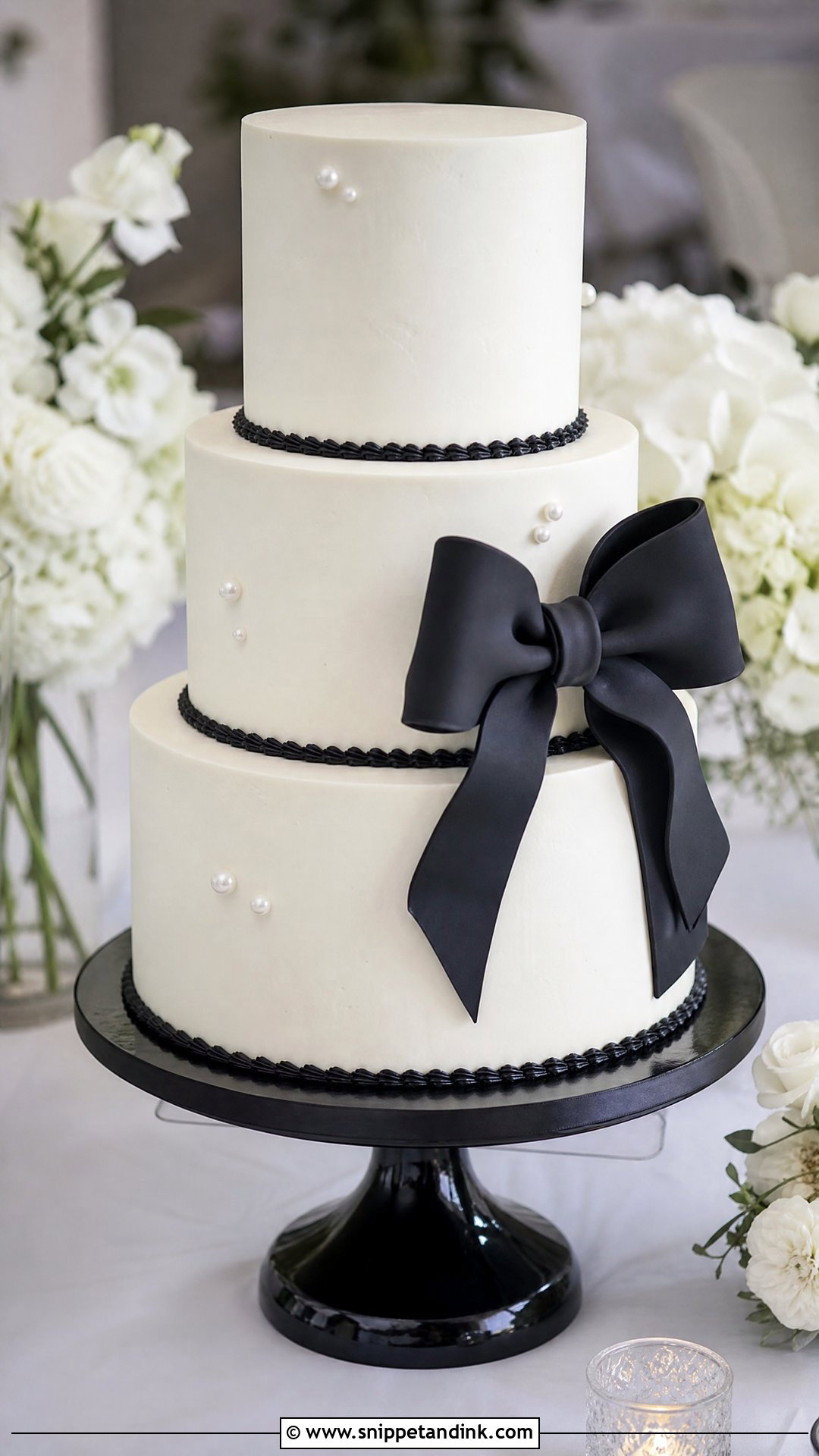
Black and white works when the black is used like a pen line: thin piping, a single ribbon band or one sharp bow on white tiers. Black icing takes a lot of coloring, so I keep it to small details where the taste won’t matter and stain won’t show in smiles. A vanilla cake with dark chocolate ganache filling gives a matching contrast when sliced. Too much black looks heavy; a few precise accents look formal.

20. Small Two Tier Wedding Cake
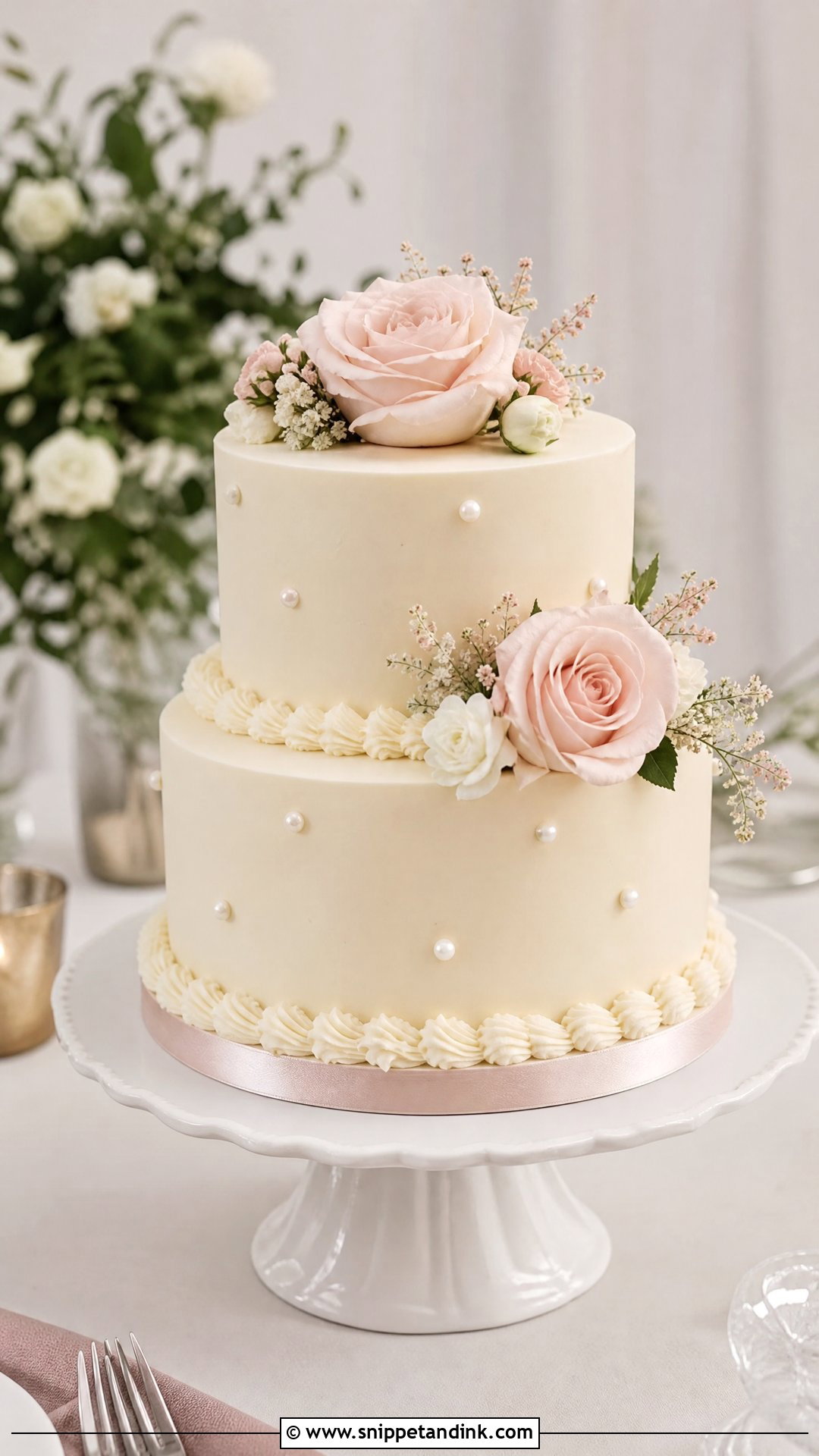
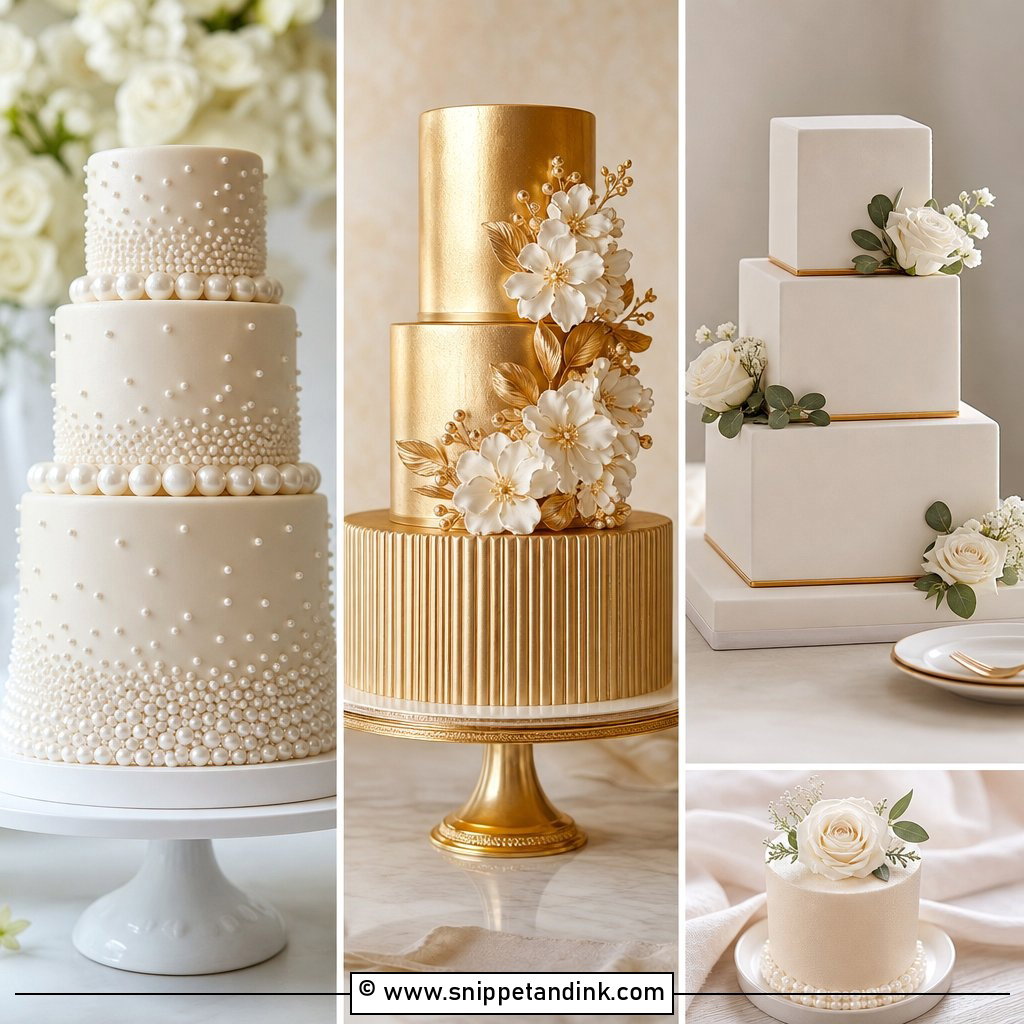
A two-tier cake suits intimate weddings, courthouse celebrations and elopements, or couples serving several desserts. Small cakes can still carry Lambeth piping, pearl borders or a bow. The size keeps the cake budget friendlier and still gives you a real cutting moment. Vanilla almond with raspberry filling and blush flowers is the classic. Give it a tall stand, because a small cake on a big table disappears in photos.
From Tasting to Delivery: How a Cake Order Comes Together
Popular bakers fill their summer and autumn weekends early, so I’d start conversations about six to nine months ahead for a detailed design, and a little sooner if you want sugar flowers or a tall cake. Smaller and simpler cakes can often be arranged in less time, but you’ll have fewer bakers to choose from.
- Tasting: bring your guest count, venue, date, color palette and photos of the dress and flowers. Flavor choices come first; decoration follows.
- Sizing: wedding slices are cut narrower than party slices. As a rough guide, a three-tier round of six, eight and ten inches gives around seventy wedding-size servings, but ask your baker for their own chart.
- Final details: confirm delivery time, setup location, cake table size and who supplies the knife, stand and any fresh flowers.
- The day: the cake should arrive after the room is set and the air conditioning is running, and stay away from windows, heaters and the dance floor speakers.
Ask your planner or venue who will cut and serve, too. A cake cut by someone who has never sliced a tiered cake gives you uneven portions and half the servings you paid for.
A Cake Built for Your Room, Not Only Your Mood Board
The best cake from this list is the one that fits your room as well as your taste. Lambeth piping, heart shapes, bows, pearls, garden flowers, tall tiers and decorated sheet cakes all gave couples more ways to make dessert personal, and flavors like citrus, pistachio and berry gave guests something worth finishing. Bring your inspiration photos to the tasting, along with your venue details and guest count, so your baker can tell you honestly which designs will travel and hold. A cake should taste good, survive the room and look like it belongs there.
You'll Like These Ideas:







Leave a Reply