
Brides who bring me screenshots of necklines usually leave with a different gown than they expected. A sleek dress is judged as a whole outfit: silhouette, shoes, veil and how it moves once you stop posing. Strapless necklines, corseted bodices, pointed basque waists, lace and soft draping are all strong in fitted gowns right now. Underneath the trend, though, the right one supports your body without effort, suits the venue and still lets you walk, sit and dance. The twenty looks below run from plain crepe columns to romantic lace mermaids, each styled head to toe. Keep the ones that catch your eye and bring them to appointments as a starting point for fittings and accessory shopping.
Crepe, Satin, Mikado or Lace on a Close Fit
On a fitted gown, the fabric matters as much as the cut. A loose ballgown can hide a lot; a sleek dress cannot. Here’s how each common fabric behaves once you’re actually wearing it.
Crepe
Matte, fluid and the most modern-looking. Stretch crepe is comfortable for a long day, but lightweight crepe clings and creases across the lap after dinner. Hold it to a window: if you can see your hand clearly, it’s too thin for a close fit.
Satin
Reflects light, so every seam, ripple and underwear line shows. Heavier duchess satin holds structure better than thin, slippery satin. It’s warm, which suits cooler months more than outdoor summer ceremonies.
Mikado
Stiff with a slight texture, so it holds architectural seams and resists wrinkling better than most. That stiffness also makes sitting and stairs harder in a mermaid cut. I’d pair it with a column or a gentle trumpet.
Lace
The most forgiving on a fitted shape, because the pattern breaks up the surface and hides small fit issues. Ask what’s underneath, though: lace over stretch lining moves well, while lace over rigid lining can feel tight once you sit.
1. Strapless Satin Mermaid Wedding Dress
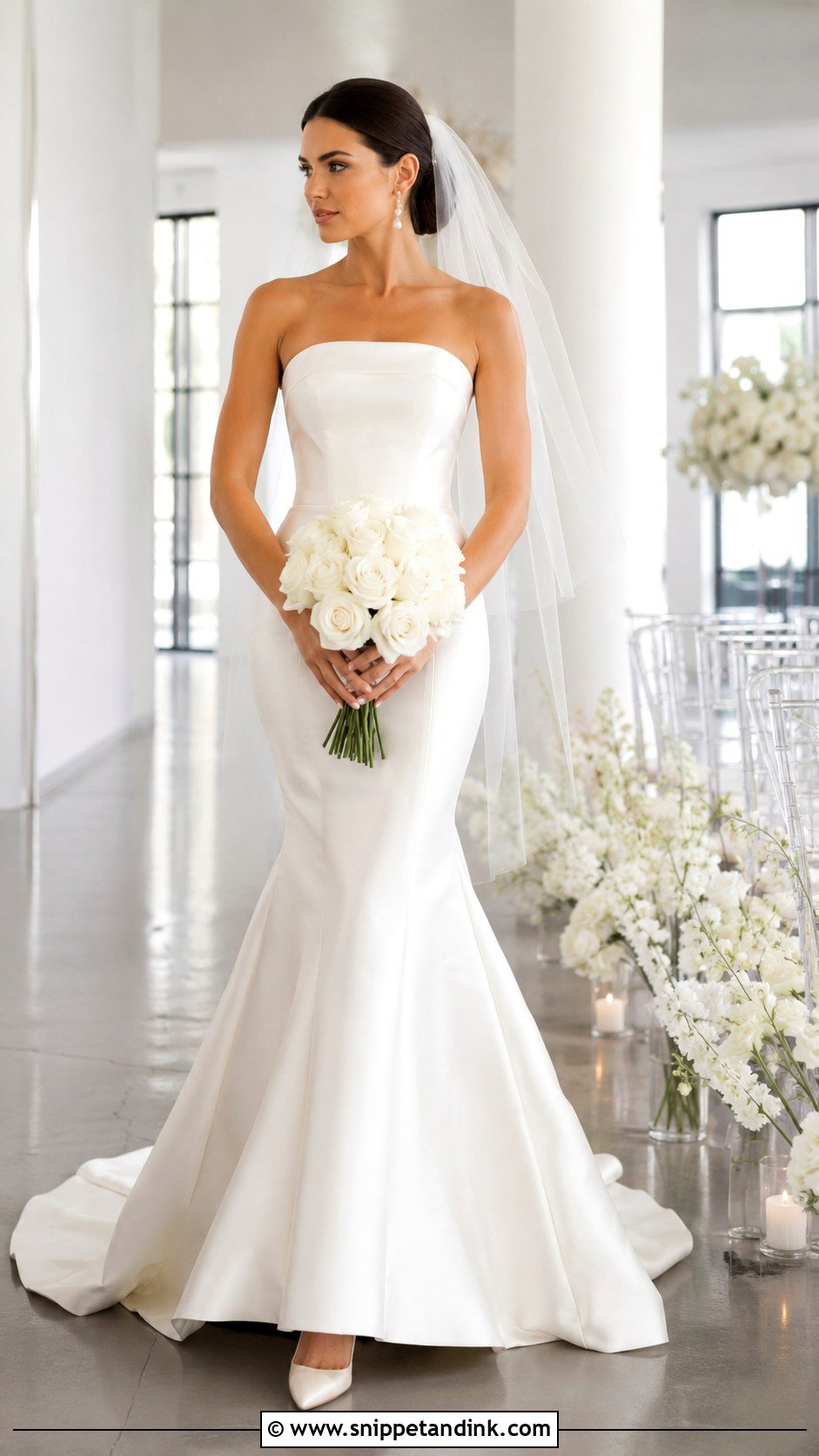
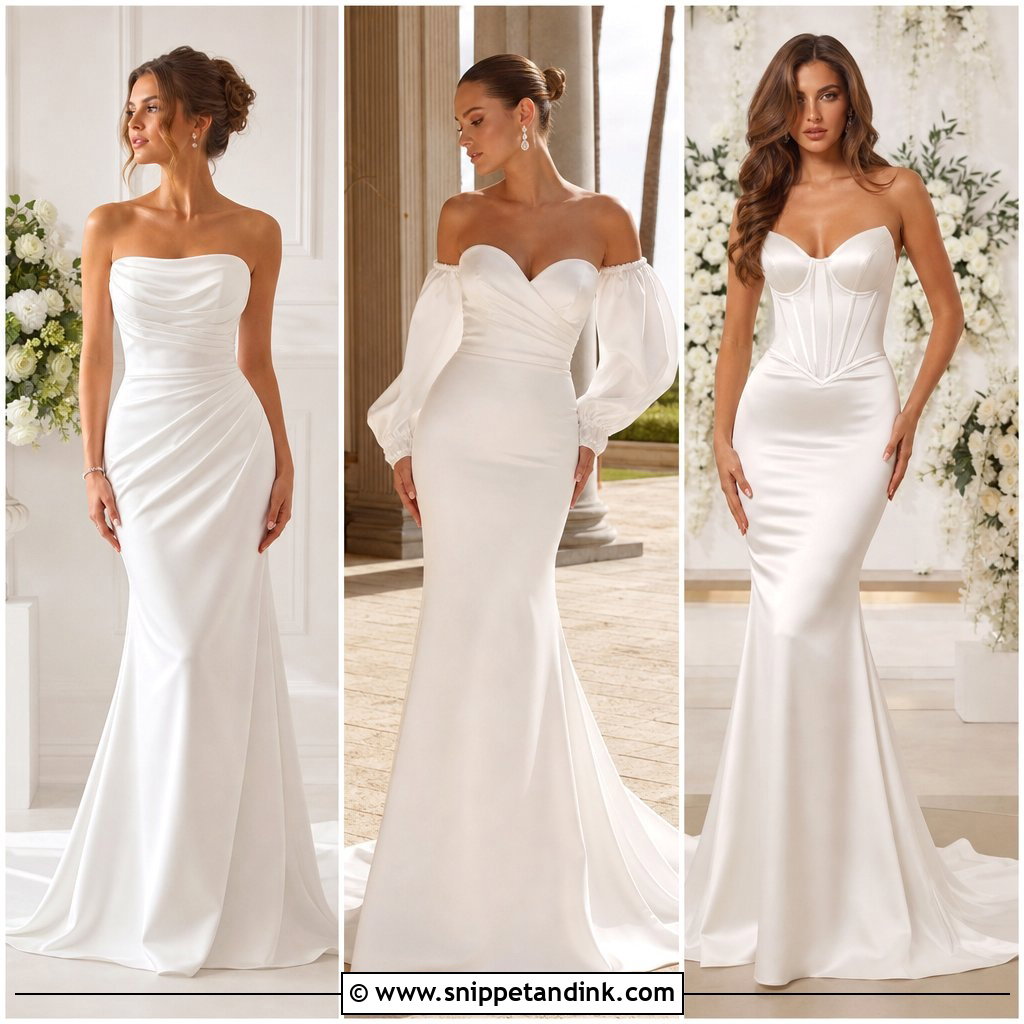
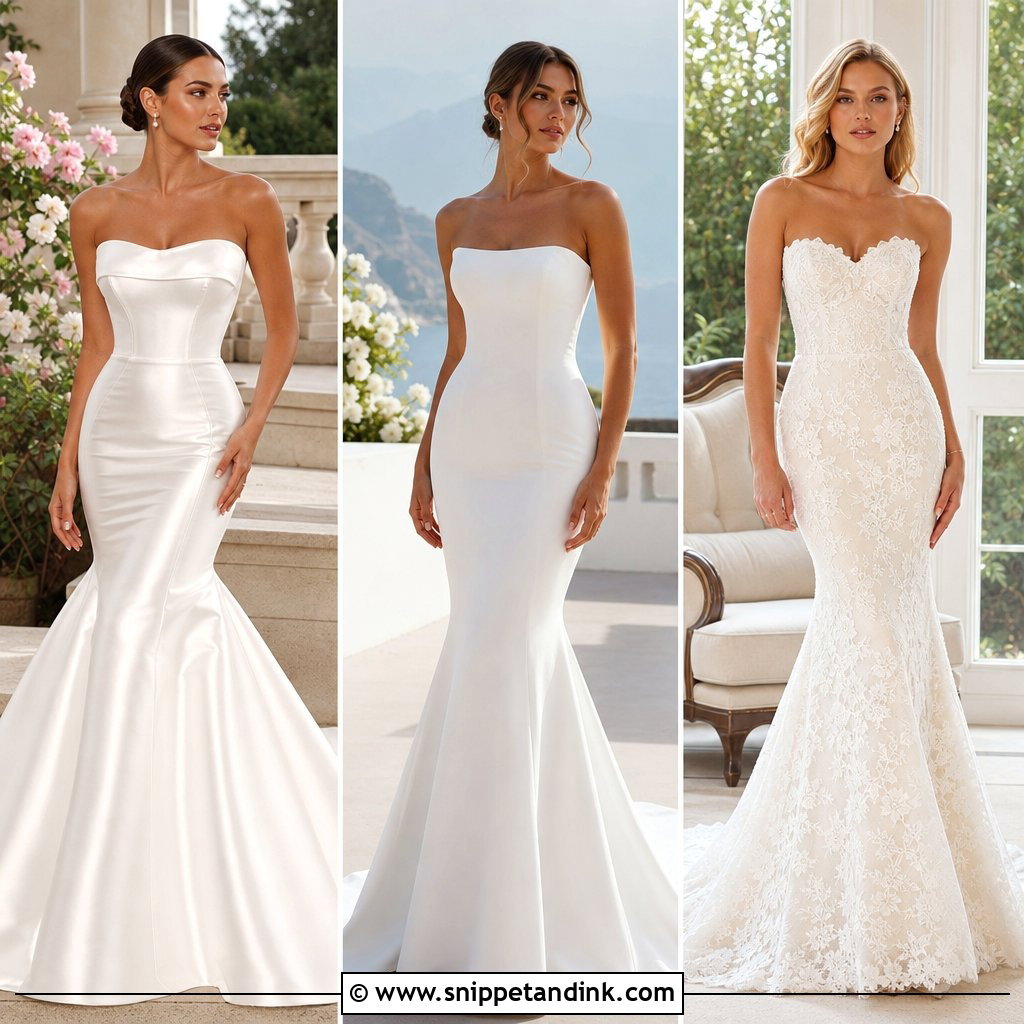
Strapless satin mermaids are glamorous with almost no decoration, which is exactly why they’re demanding. Structured satin needs internal boning so the bodice stays up and the waist holds its shape. The skirt should follow the hips and open near the knee. I always have brides sit down and take a few long steps before alterations are signed off, because a knee flare that’s cut too narrow turns every step into a shuffle. Pointed ivory pumps, pearl drops, a fingertip veil with a narrow satin edge and a compact bouquet of white roses or callas keep it polished. Smooth underwear and careful hemming matter here, since satin shows every line.
2. Long Sleeve Lace Mermaid Wedding Dress
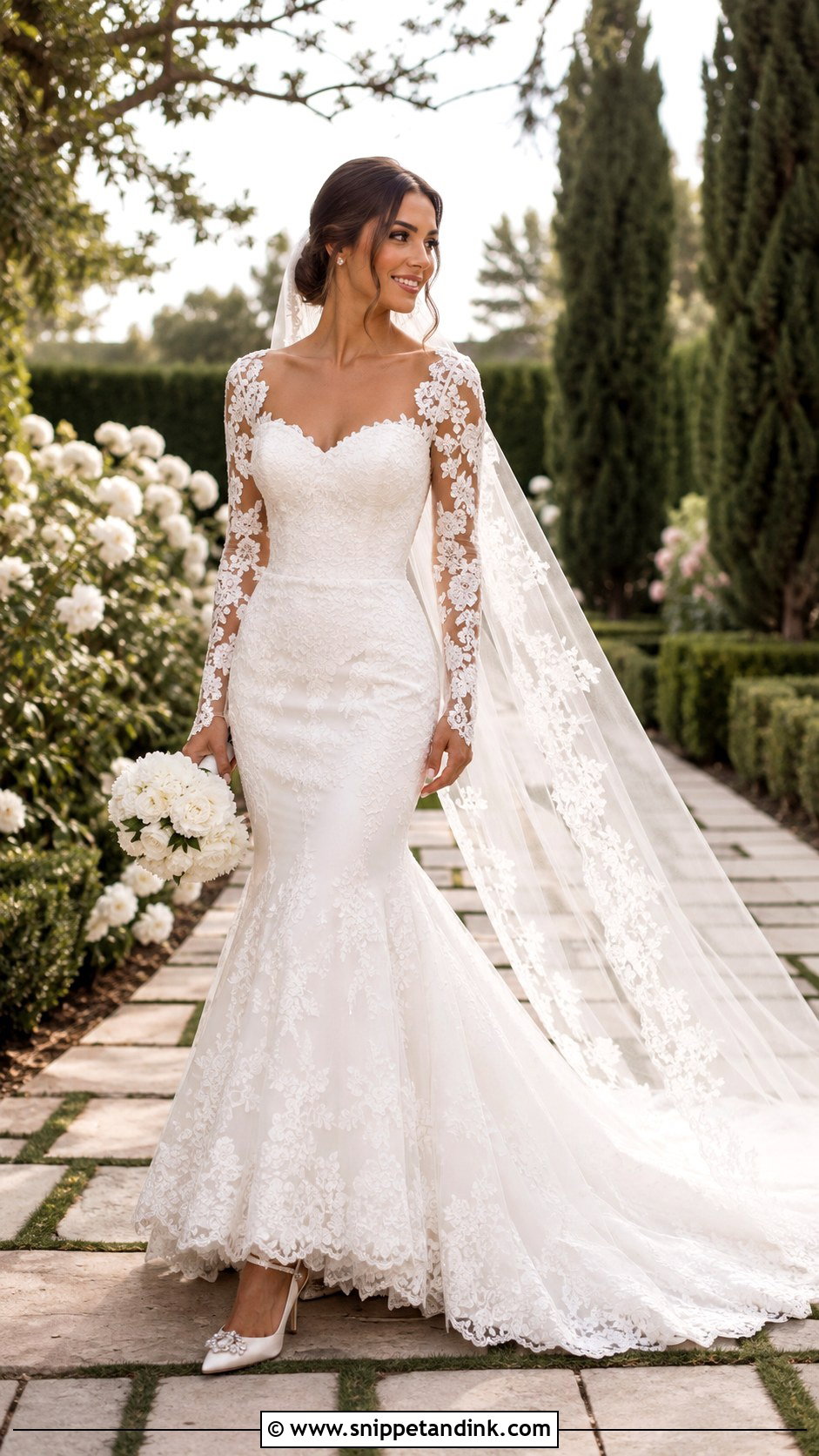
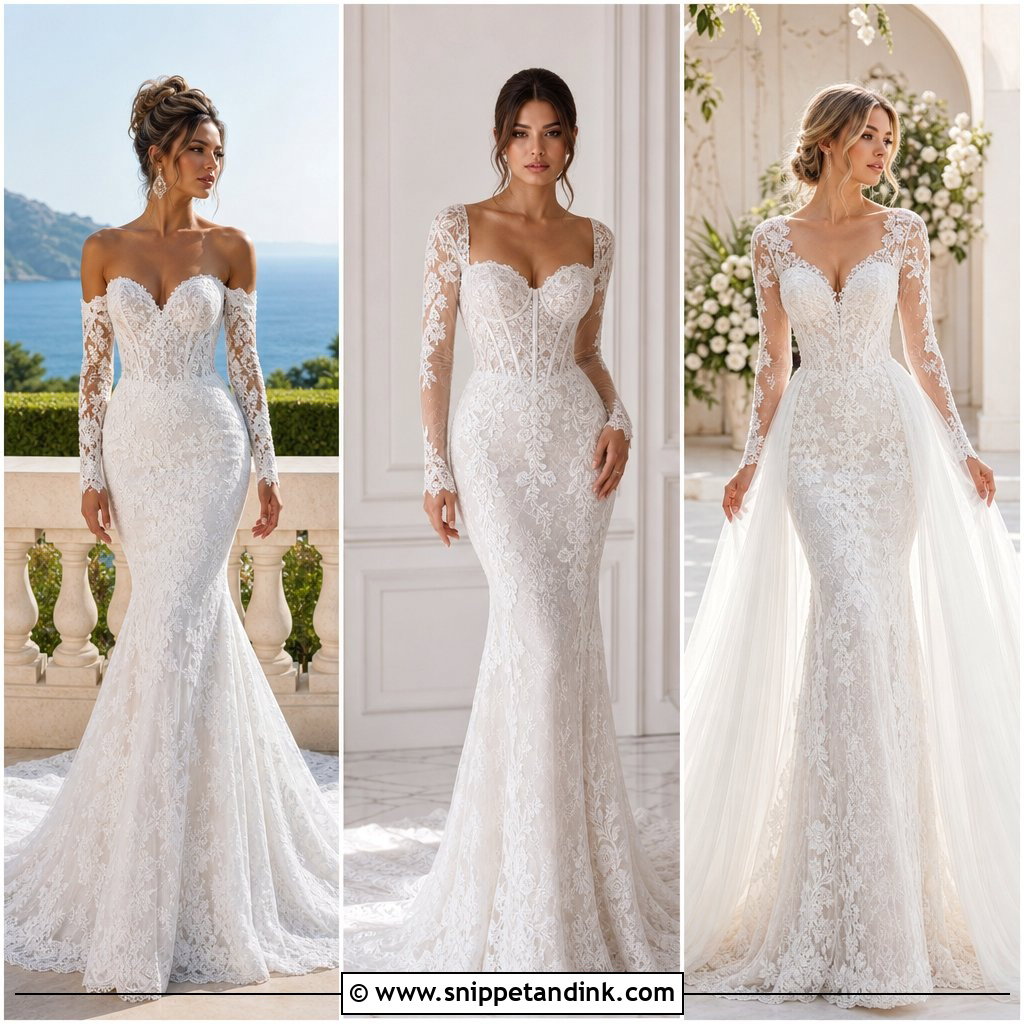
Lace softens a strong mermaid shape, and long sleeves are where I’d focus the try-on. They need some stretch, or illusion panels at the elbow and shoulder, so you can bend your arms. A lightly lined bodice gives coverage while letting the pattern show. Ivory slingbacks, small diamond or crystal studs and a chapel veil trimmed in matching lace finish it; a loose bouquet of garden roses and a little greenery suits the mood. With detailed sleeves, skip the bracelet. Ask your tailor to check arm movement, neckline placement and the fit across your back, because hugging guests is the moment a tight lace back gives itself away.
3. Square Neck Crepe Wedding Dress
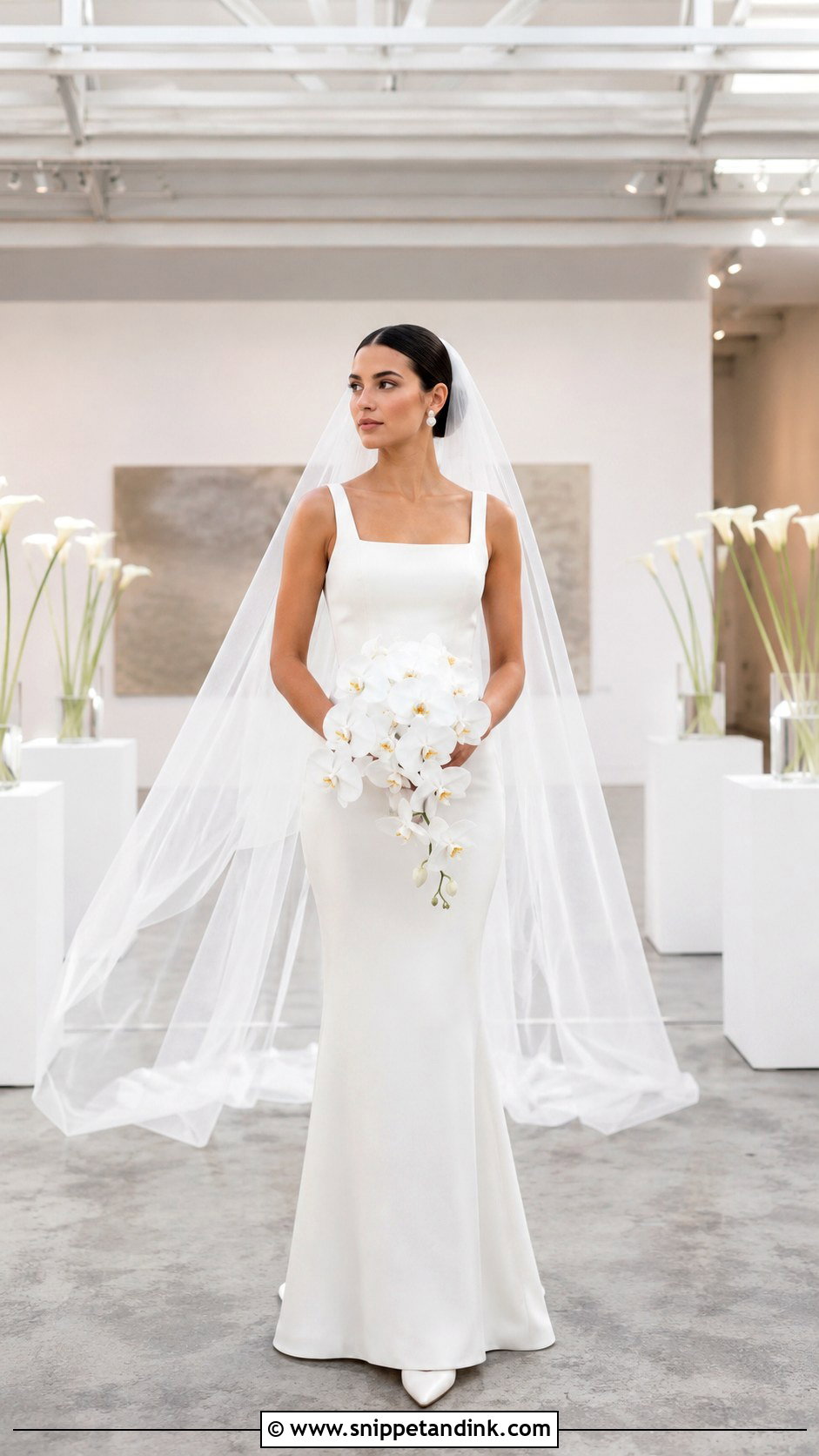
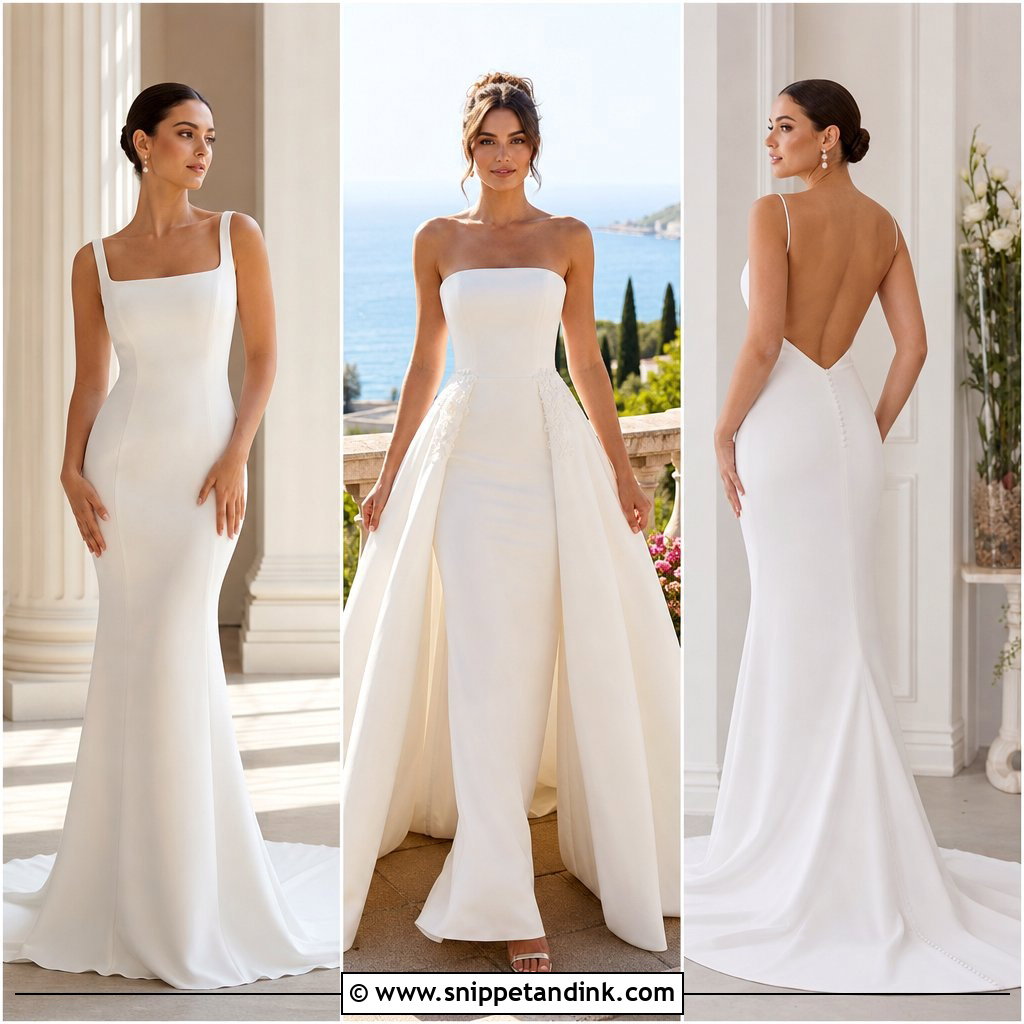
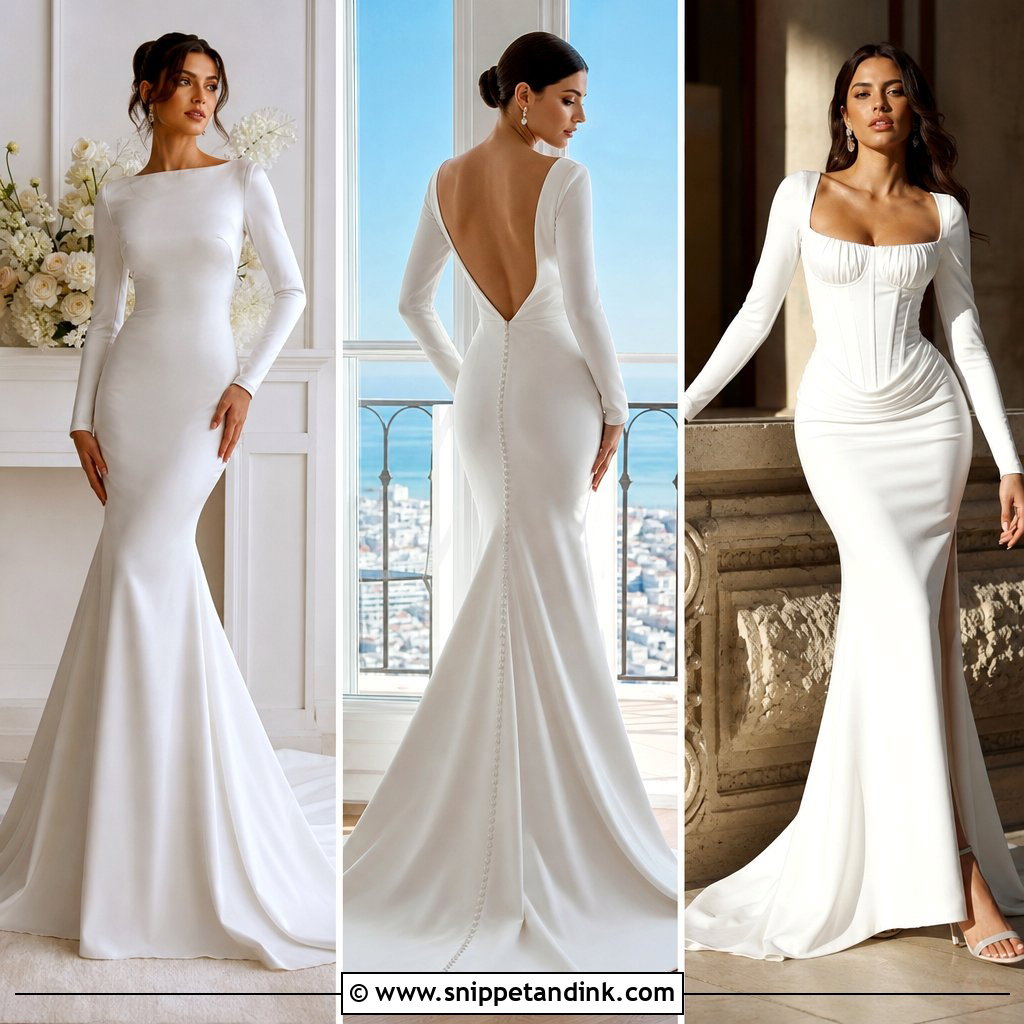
Square-neck crepe is the gown I’d describe as quietly confident. The neckline frames the collarbone, and wide straps give more support than spaghetti straps. Medium-weight crepe is the sweet spot: heavy enough to skim, light enough not to feel stiff. A fitted column or subtle fit-and-flare skirt keeps the line clean. Closed-toe ivory heels, small pearl earrings, a structured cathedral veil and a low bun suit the geometry, with a single white orchid bouquet for a modern finish. Crepe’s flat surface shows tailoring clearly, so check the waist, hip and hem in daylight before you approve the final alterations.
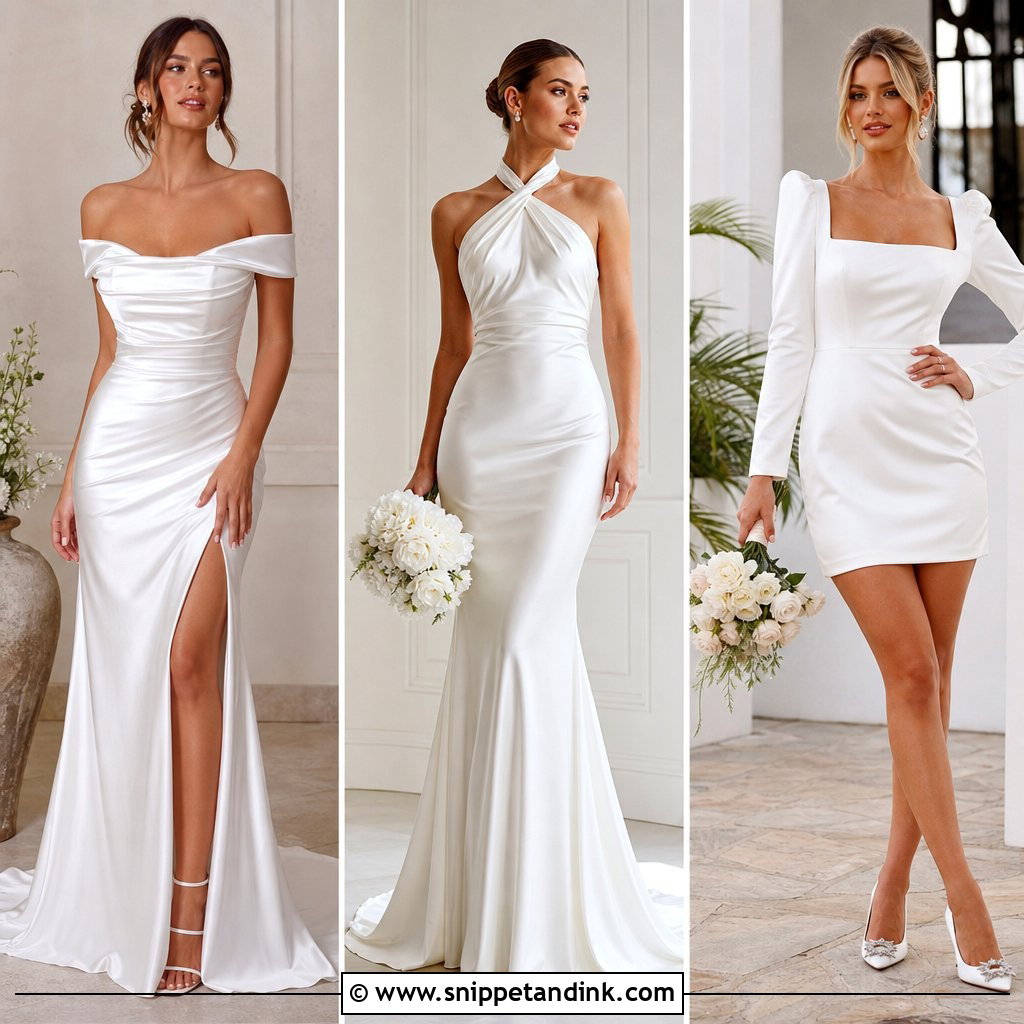
4. Off Shoulder Fit And Flare Wedding Dress
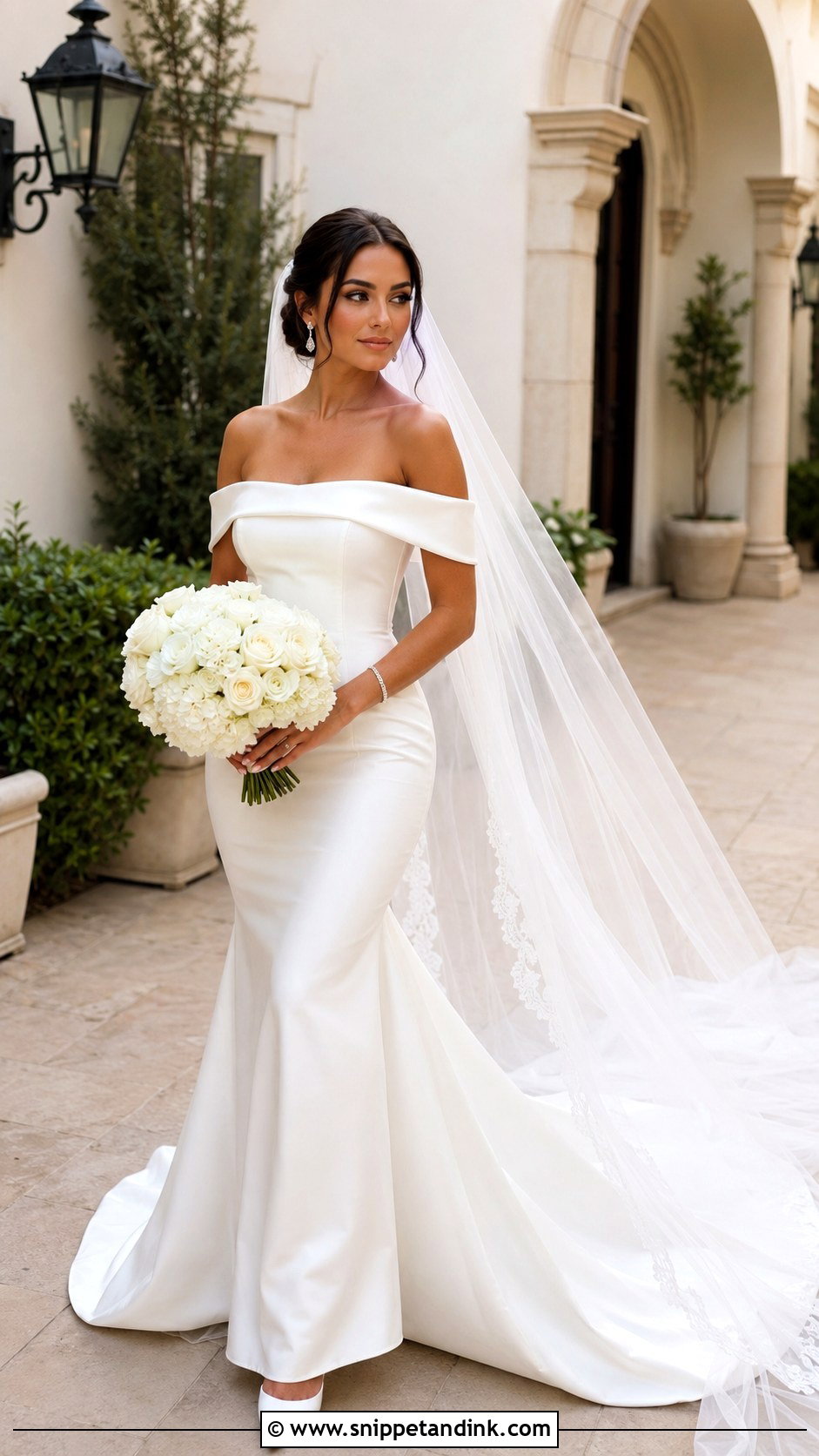
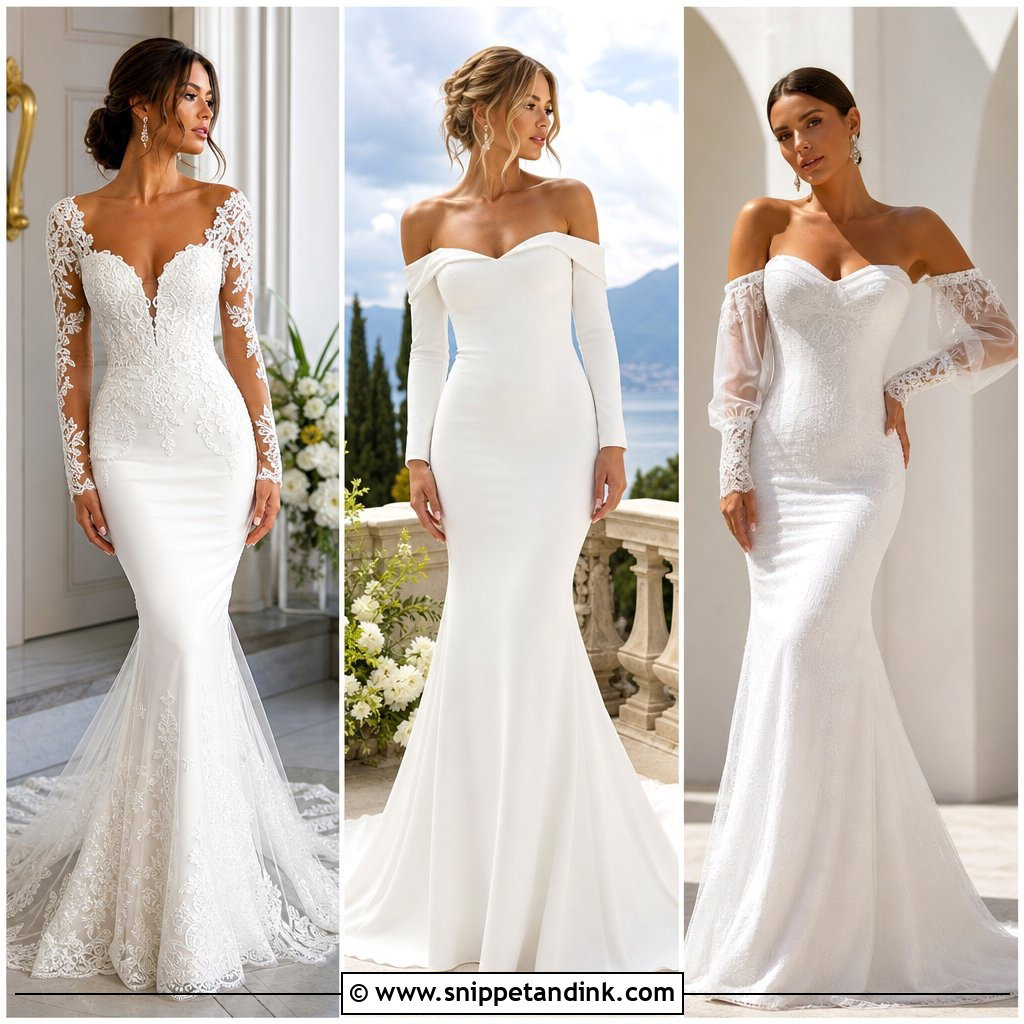
An off-the-shoulder fit-and-flare balances structure and softness. The neckline shows the shoulders while the bodice defines the waist and hips. A folded satin band feels classic; lace sleeves feel more romantic. Teardrop earrings, a fine tennis bracelet, pointed ivory satin pumps, a low chignon and a cathedral veil complete it. Raise and rotate your arms at the fitting. If the neckline stays in place without digging, it’s right. I’d also ask for a small wrist loop sewn under the train, which lets you carry it off the floor after the ceremony if there’s no bustle.
5. Sweetheart Corset Wedding Dress
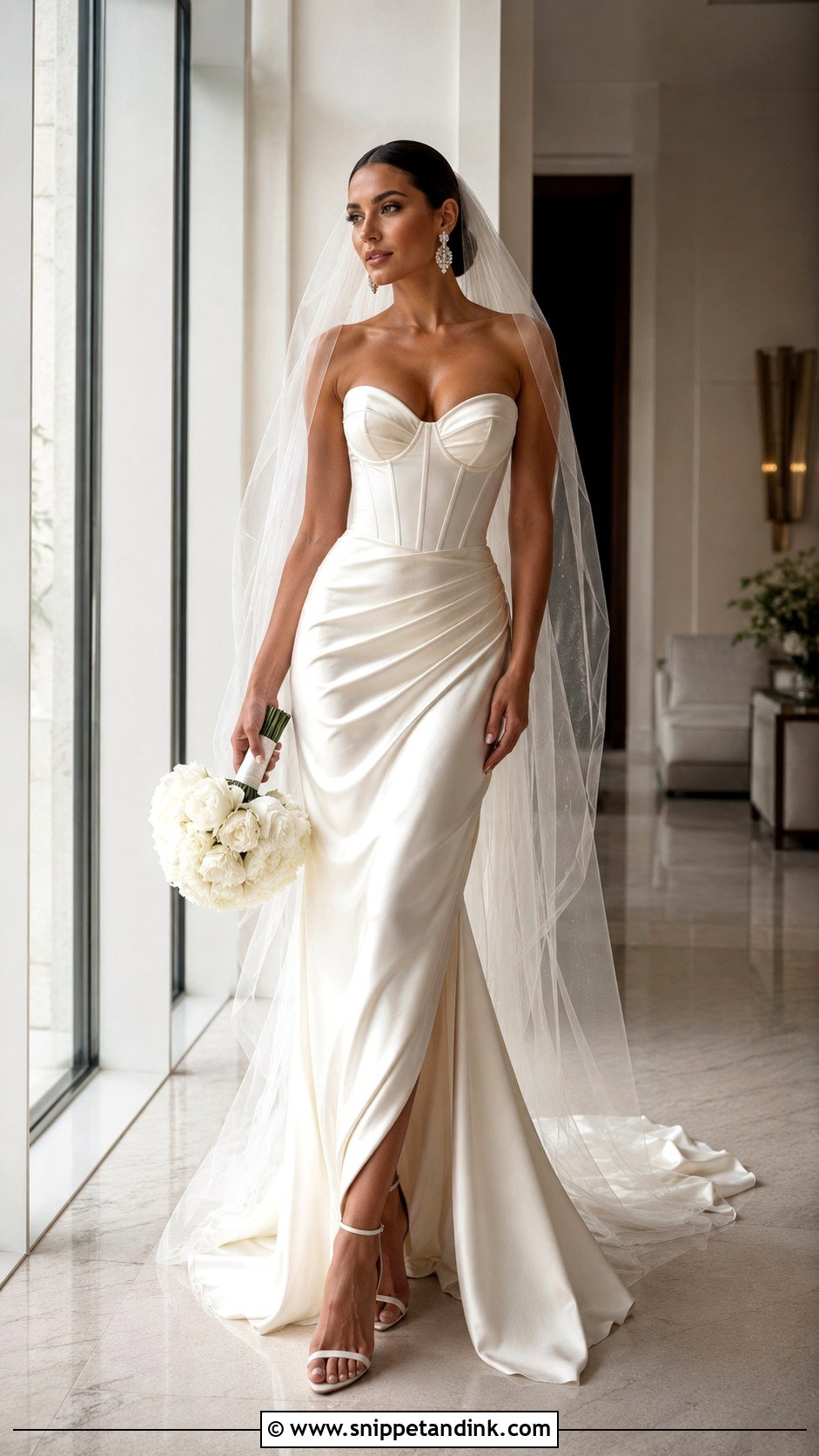
A sweetheart corset sculpts the body, and the curved neckline keeps it soft. The details I check are boning, cup placement and a bodice that ends at your natural waist, not above or below it. Satin looks sleek; embroidered lace makes the corsetry feel lighter. Crystal drop earrings, ivory ankle-strap heels, a sheer veil without a heavy border and a rounded bouquet of peonies or roses all suit the curve. Don’t layer necklaces over the bodice; one fine pendant or none looks cleaner. A corset should support you, not squeeze. Take a deep breath, sit and bend forward before the final fitting is done.
6. Basque Waist Satin Wedding Dress
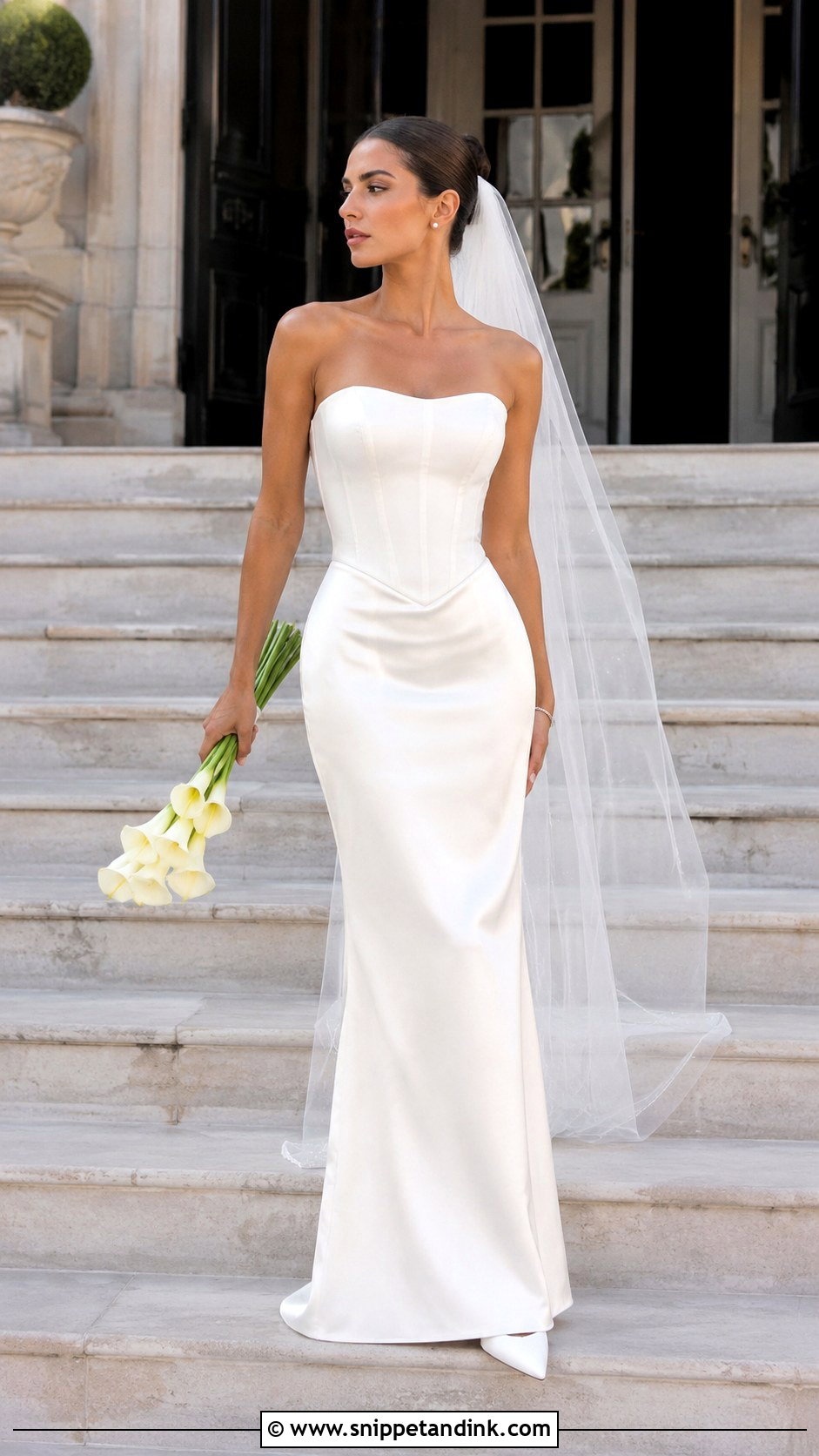
A basque waist dips into a point below the natural waist, and that point visually lengthens the torso. It works best with a strapless or softly draped neckline, since a plain upper bodice lets the waist construction do the talking. Basque waists and long-line corsetry are showing up on fitted and full silhouettes alike. Pearl studs, pointed ivory heels and a long sheer veil beneath a polished bun keep it elegant, with a narrow bouquet of calla lilies to echo the long line. The point is my main concern at fittings. When you sit, it can flip upward, so I check it seated and ask for it to be shaped or boned to lie flat.
7. Draped Satin Fitted Wedding Dress
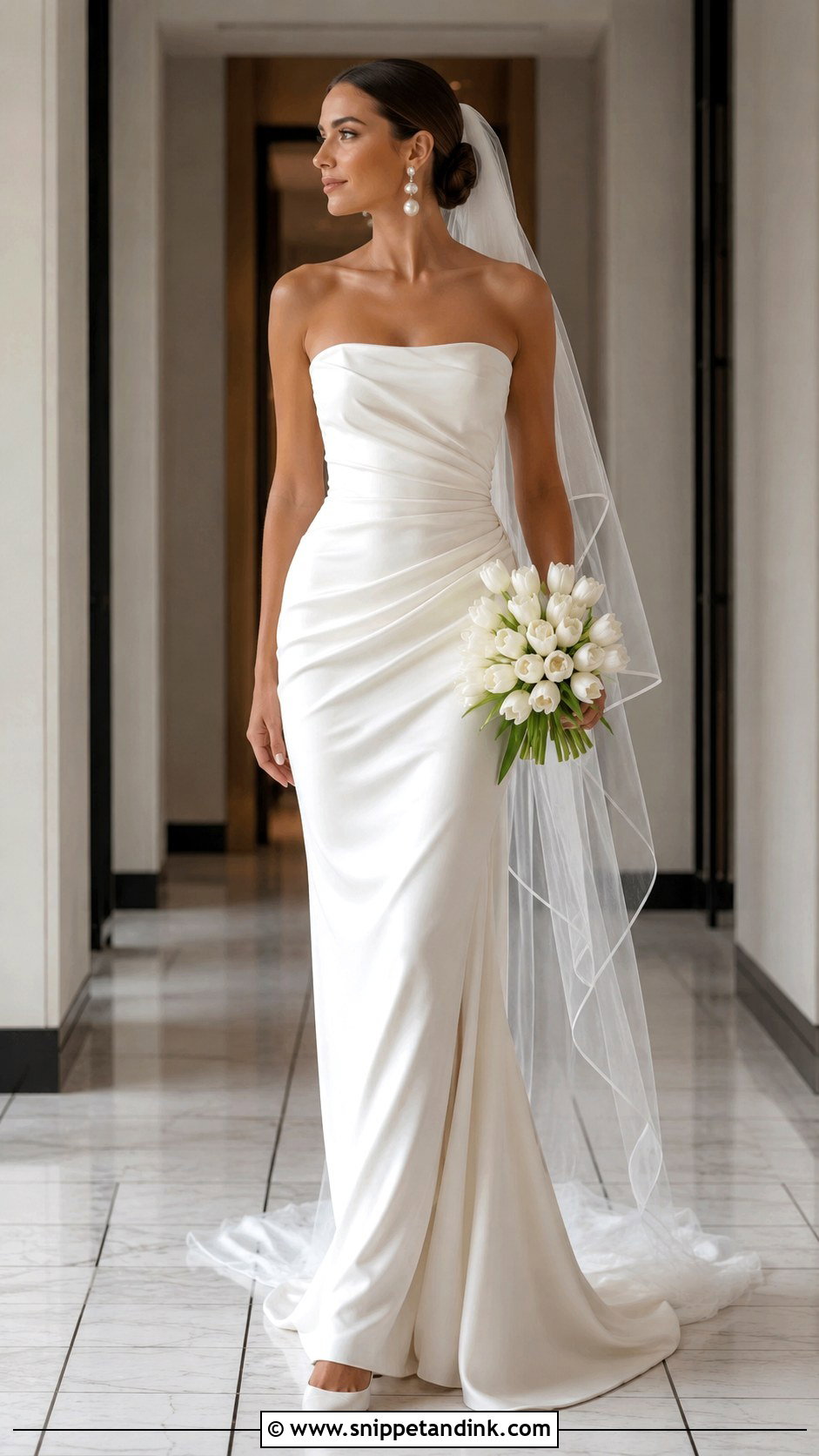
Draping is the kindest detail on a fitted satin dress. Diagonal folds across the waist or hips add texture and give a little forgiveness over the stomach, provided they don’t add bulk. Strapless keeps it formal; off-the-shoulder frames the face more softly. Sculptural pearl earrings, sleek ivory pumps, a light tulle chapel veil and a loose bouquet of white tulips suit the flowing fabric, and other accessories can stay minimal. At the fitting, I check that every fold is tacked in place from inside and falls naturally from the side and back. Satin should glide over the body. If it pulls across the seat, the gown needs letting out there.
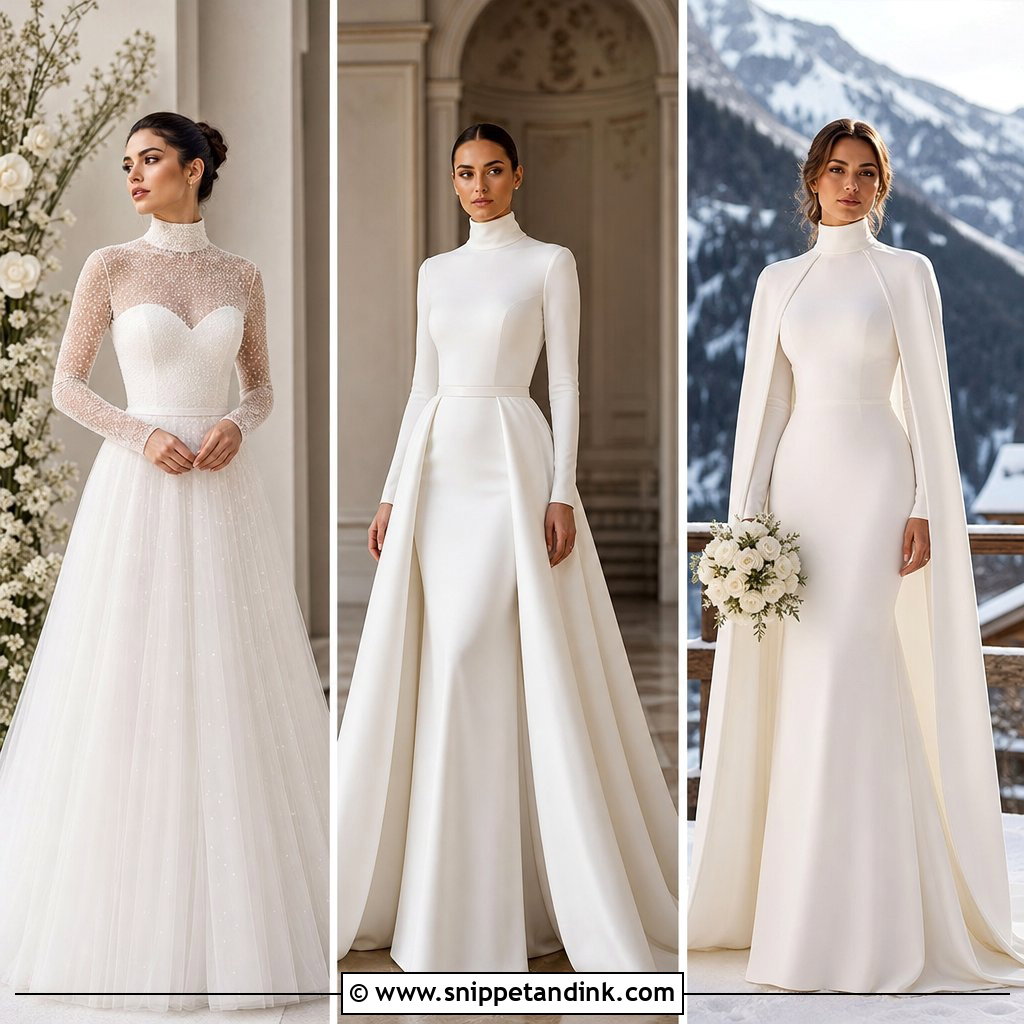
8. High Neck Lace Wedding Dress
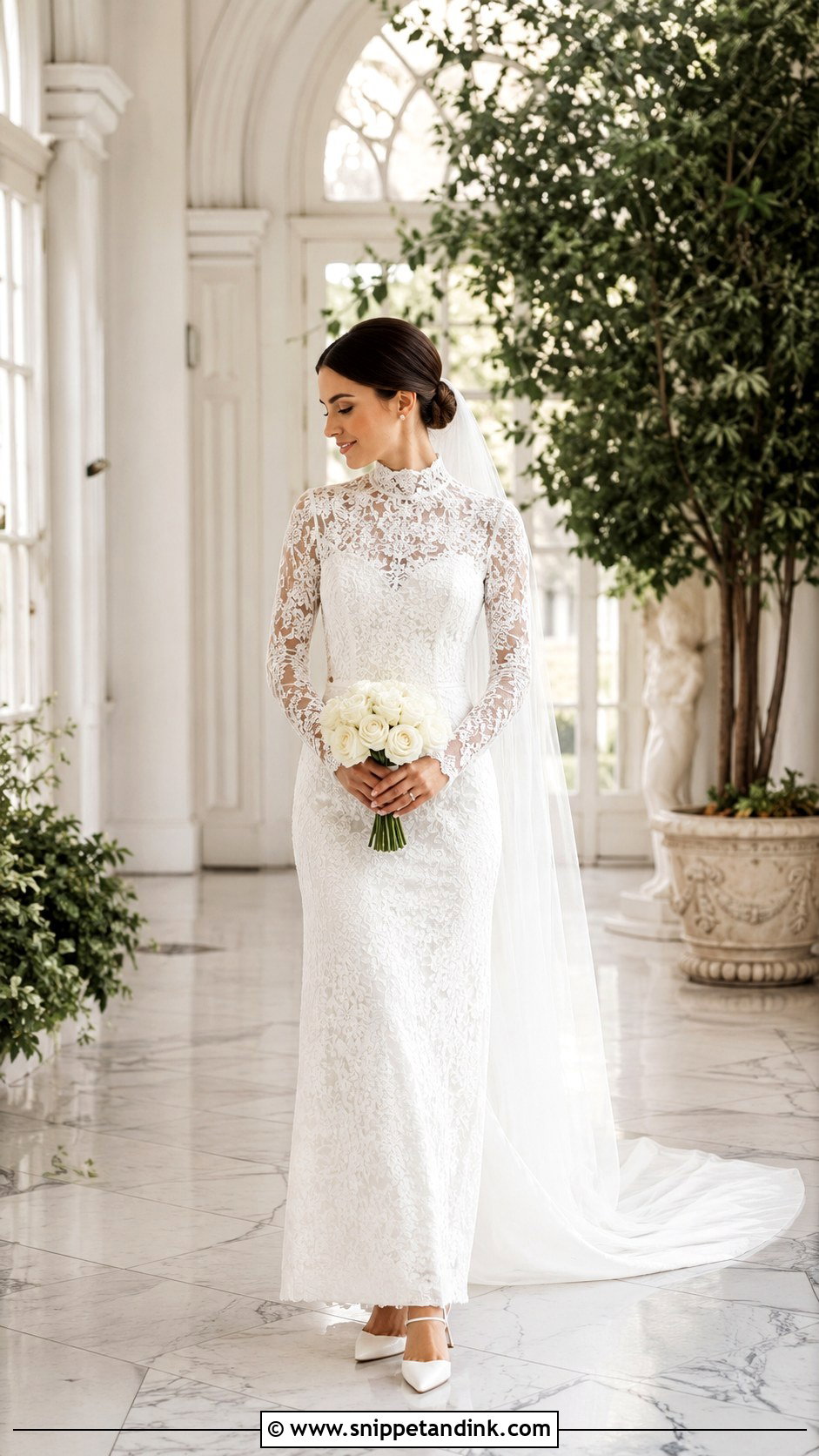
High-neck lace gives coverage while keeping a fitted, feminine shape. Fine floral lace over a supportive lining works best, with illusion fabric around the collar if you’d like the pattern to look like it sits on the skin. A slim column or fit-and-flare skirt keeps the covered top from feeling heavy. Pearl studs, ivory slingbacks and a low bun with a simple comb are all you need. Skip the necklace. A plain cathedral veil contrasts well with detailed lace, and a small white rose bouquet keeps the outfit balanced. Turn your head side to side at the fitting; a collar that rubs at minute one will be raw by the speeches.
9. Halter Neck Fitted Wedding Dress
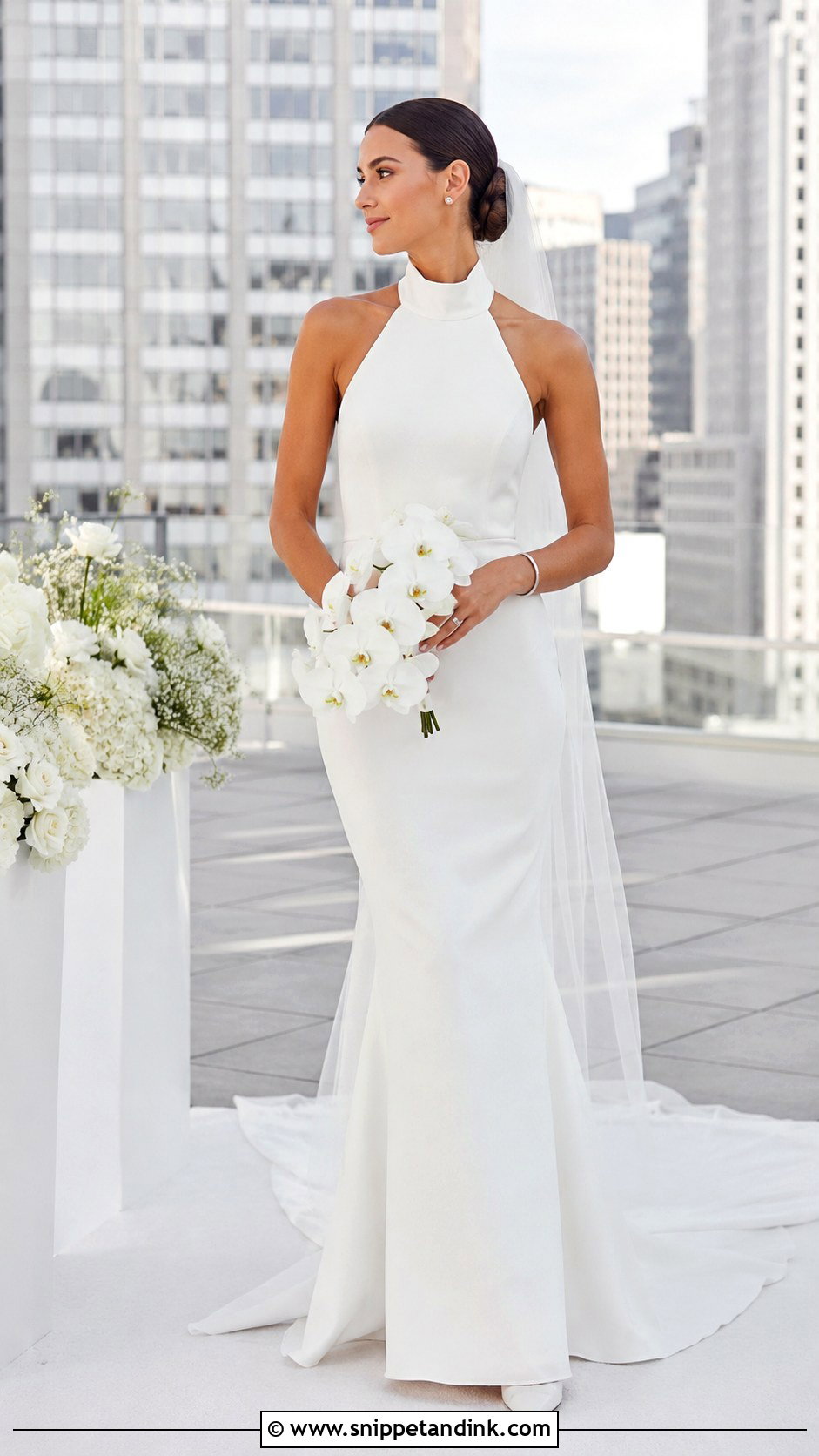
A halter-neck fitted gown pulls attention to the shoulders and gives a long, clean upper line. Crepe, satin or a silk-like fabric keeps the neckline sharp. A column skirt reads minimal; a trumpet hem adds ceremony drama. Small diamond studs, a sleek cuff bracelet, pointed ivory heels and a neat bun or high twist suit the shape, with the veil fixed below the hair. My caution with halters is weight. If the bodice doesn’t support itself, the strap ends up carrying the gown and presses on the back of the neck all day. The structure should do the lifting, not the halter.
10. Scoop Neck Column Wedding Dress
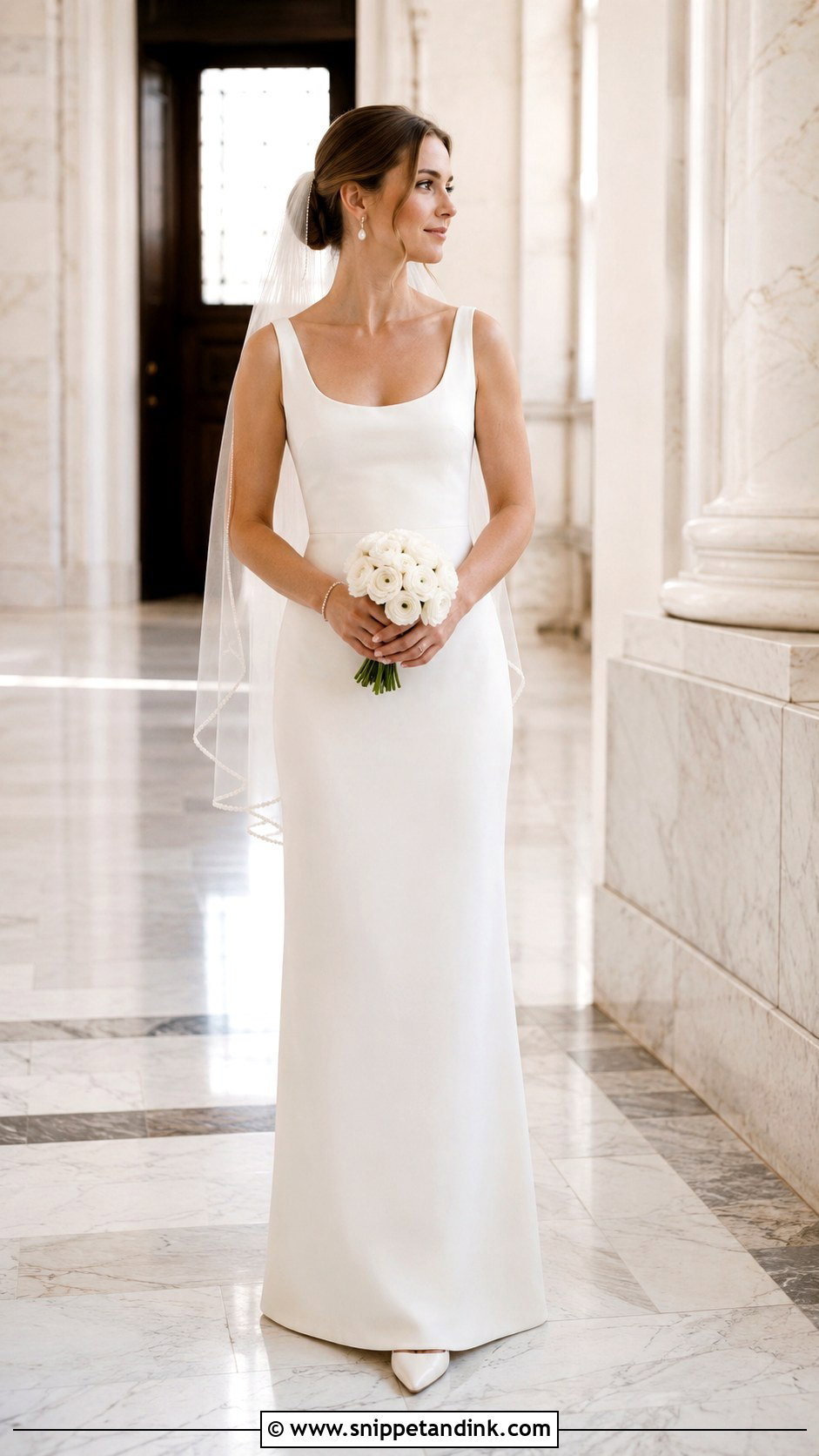
Scoop-neck columns are the friendliest version of a minimalist gown. The rounded neckline frames the collarbone softly, and the narrow skirt follows the body without a mermaid’s flare. Lined crepe or matte satin gives structure and smooth coverage. Pearl button earrings, a delicate bracelet, closed-toe ivory pumps and a fingertip veil feel light and in proportion for courthouse, garden or small indoor ceremonies, with a compact bouquet of white ranunculus. A column should skim rather than cling, so I watch the fabric over the waist and hips while the bride walks. A discreet back slit adds stride without changing the line.
11. One Shoulder Fitted Wedding Dress
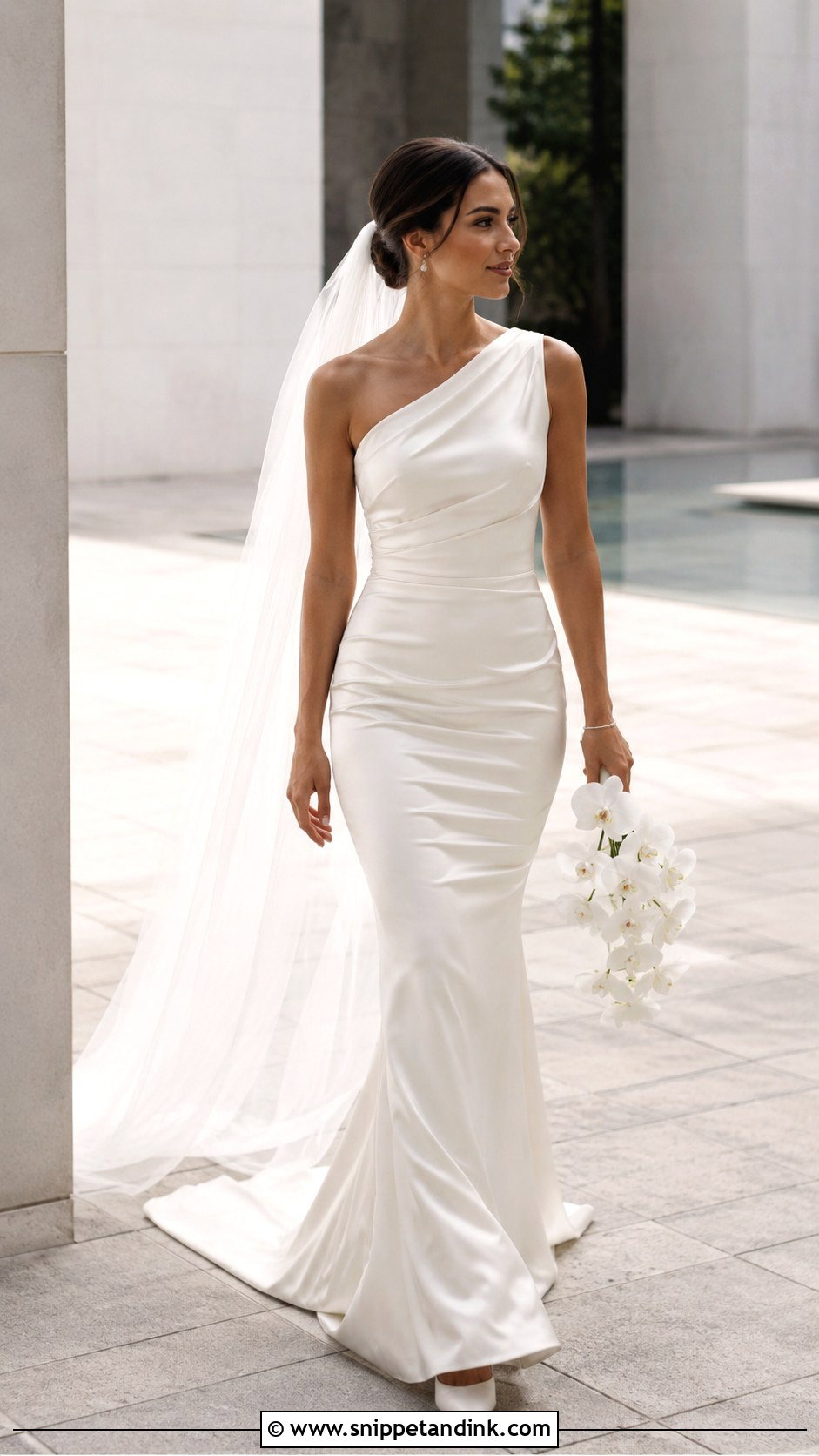
One shoulder changes a plain fitted gown into something sharper and more modern. It needs internal structure, because a single strap can’t hold a bodice level on its own. A diagonal drape softens the neckline, and a sculpted shoulder makes it more dramatic. Small earrings and a slim bracelet on the bare arm keep balance, with ivory pointed pumps and no necklace to break the asymmetric line. A sleek low ponytail or side-parted bun keeps the shoulder visible, and a plain chapel veil and narrow orchid bouquet finish it. At fittings I look at the opposite underarm. That’s where the bodice tends to drop if the strap is doing too much work.
12. Pearl Beaded Fitted Wedding Dress
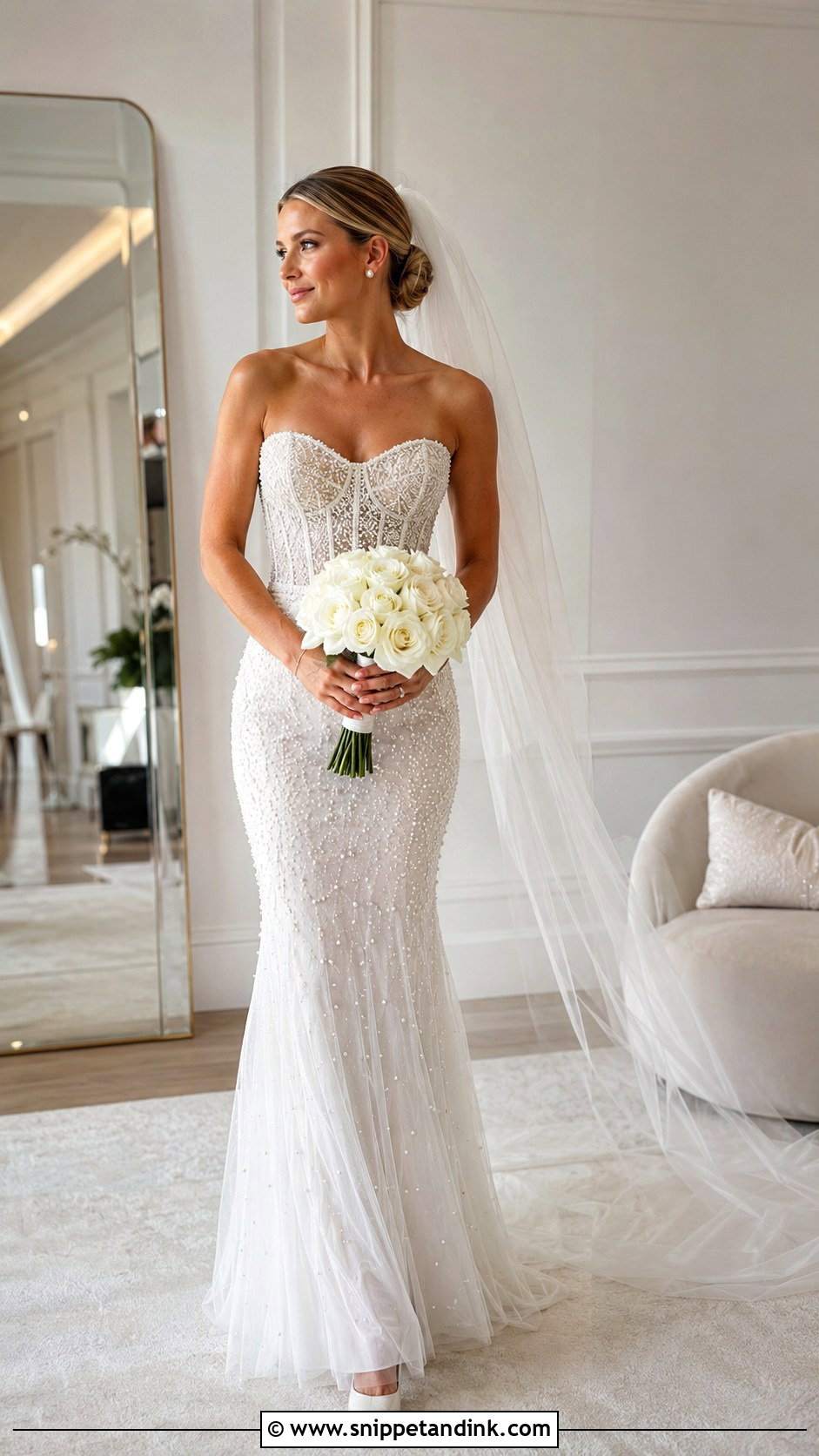
Pearl beading adds depth to a fitted gown while keeping the look soft. The best versions space the pearls along the bodice, neckline or back rather than covering everything. A fitted tulle, crepe or lace base keeps the shape refined. Pearl studs, satin pumps, a plain veil, a low twisted bun and a fresh white rose bouquet complete it. Loose pearls catch on tulle and upholstery, so I go over the beadwork at every fitting and have anything loose secured. A heavily beaded gown can also feel warm and weighty by evening, and some brides change into a lighter reception dress for that reason.
13. Illusion Lace Fitted Wedding Dress
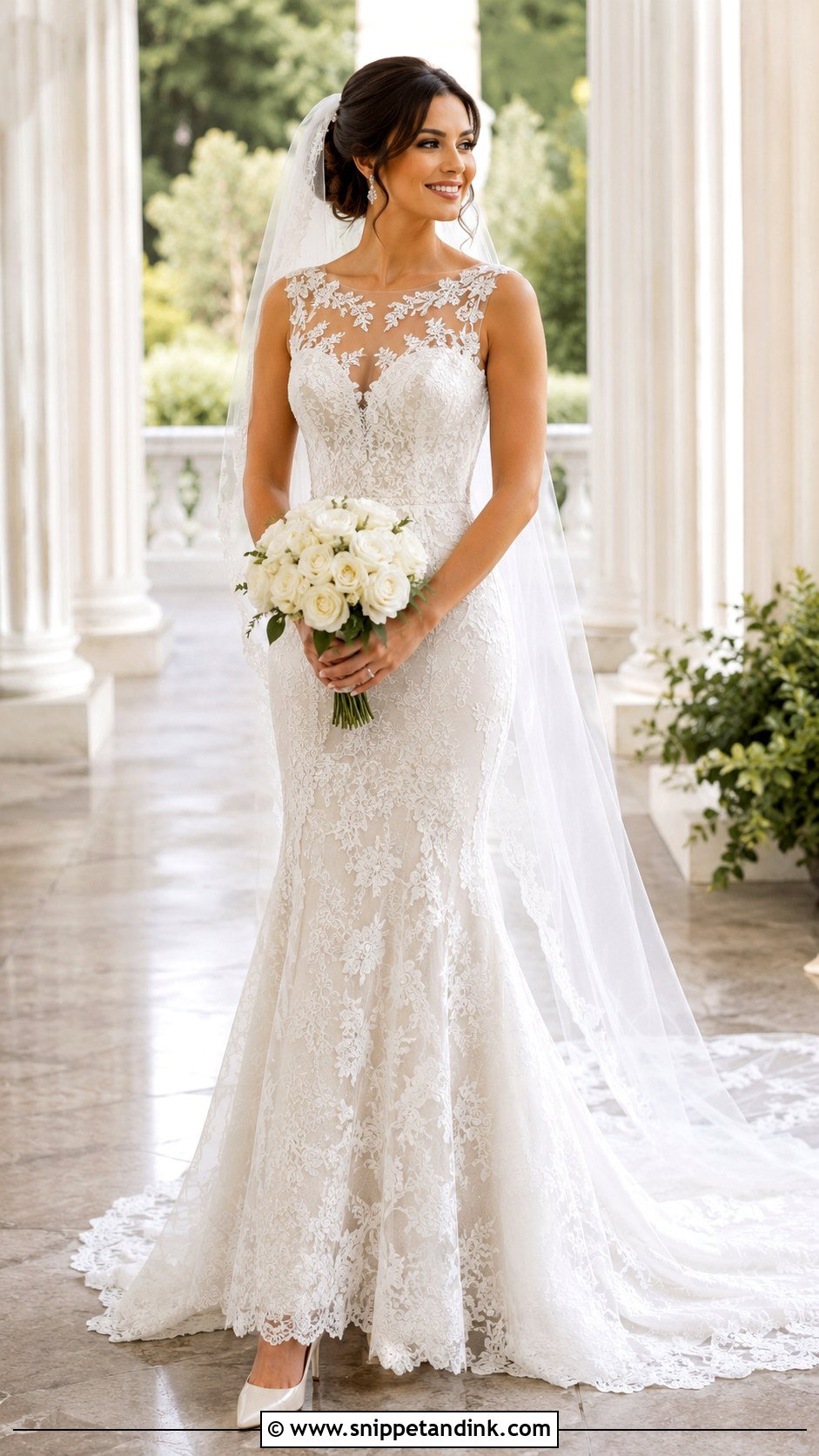
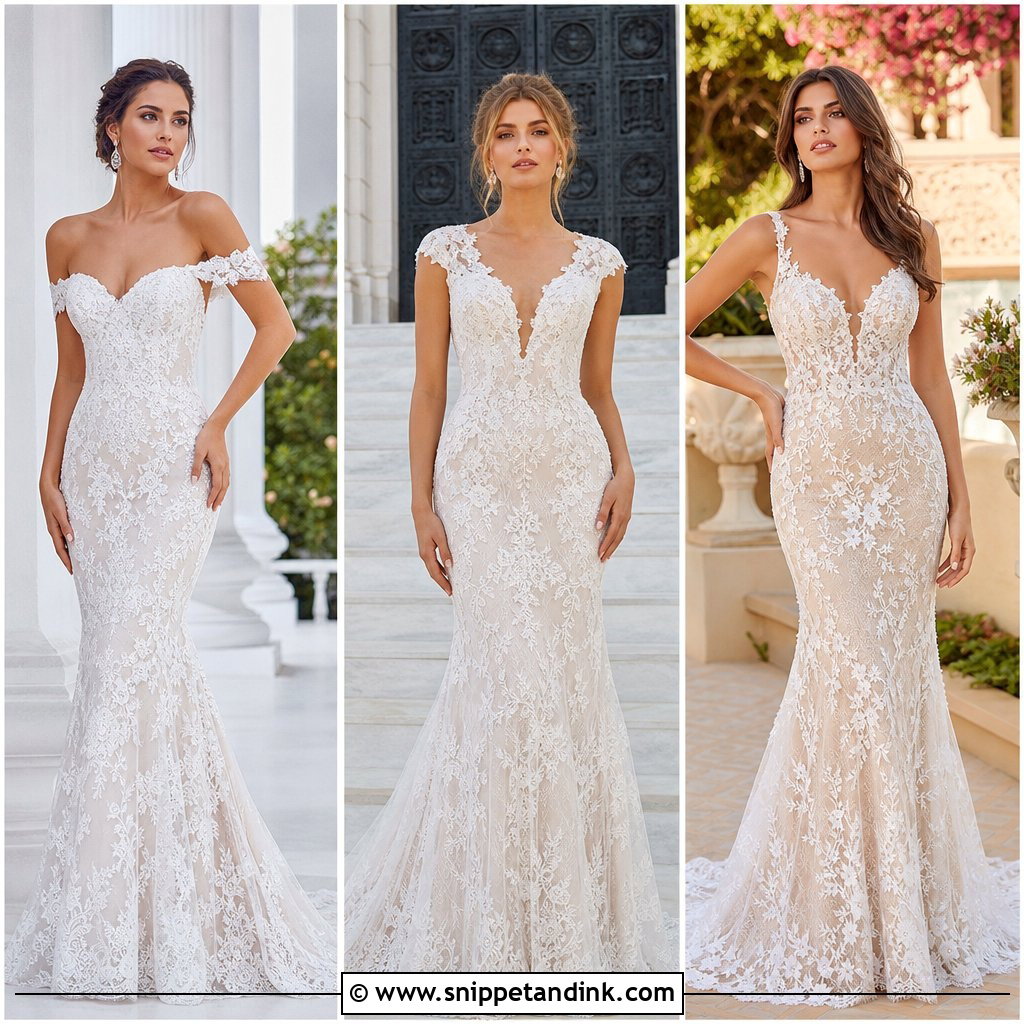
Illusion lace makes embroidery look as if it’s floating on the skin across the neckline, sleeves or back. The mesh color is the detail people overlook. Choose one that closely matches your skin tone, and make sure the lace motifs continue cleanly into the lined bodice. A fitted trumpet skirt gives shape without making the top feel overdone. Crystal studs, ivory pumps, a veil set beneath softly pinned hair and white roses with little greenery keep it light. I’d look at the illusion panels under both window light and indoor bulbs before finalizing, since mesh can read lighter or greyer than your skin in photos. It should lie flat without rippling or cutting into the shoulders.
14. Low Back Fitted Wedding Dress
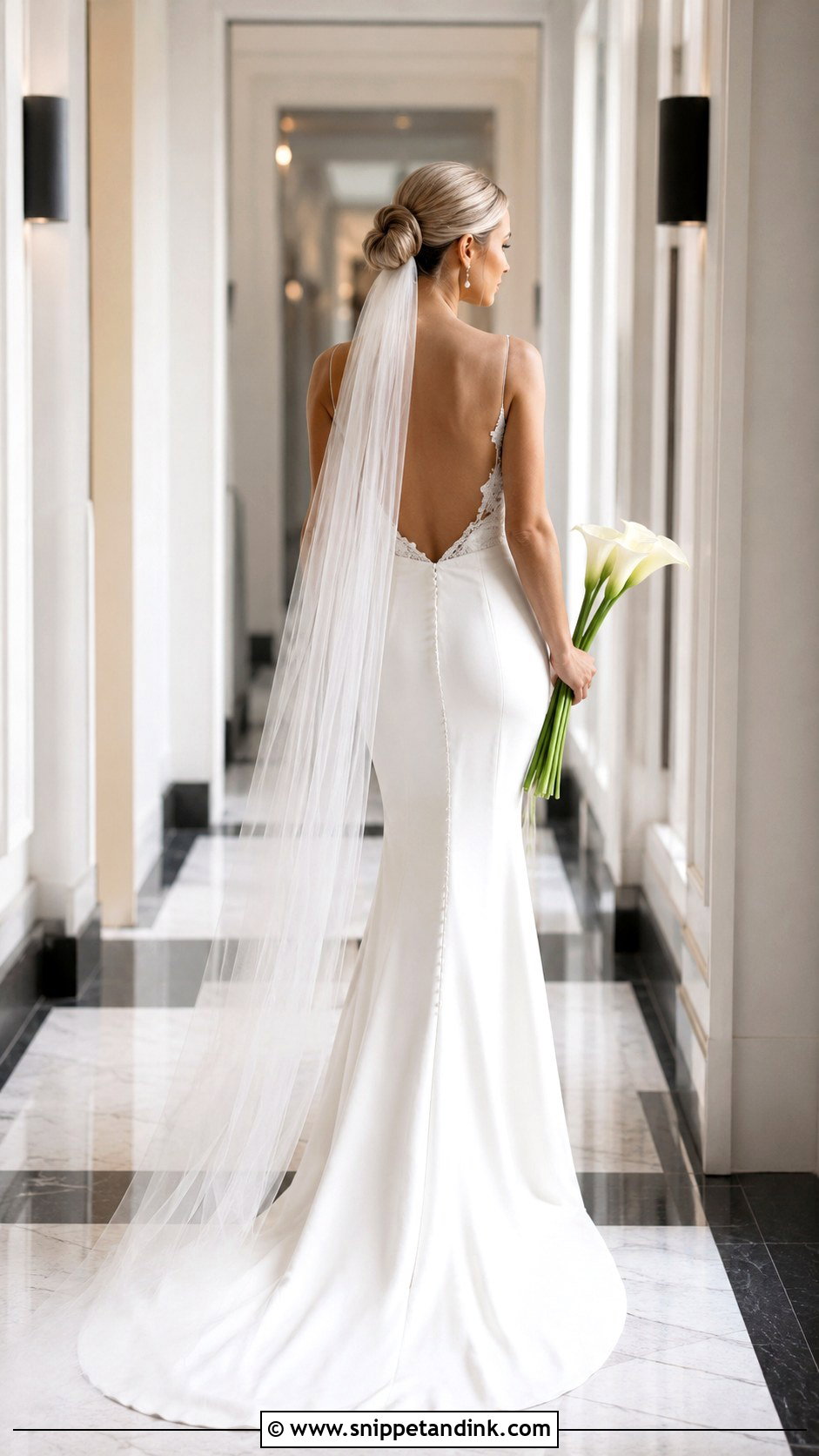
Low backs on fitted gowns look sleek during the vows and in portraits, but the support has to come from the sides and the waist. Look for secure side panels, internal structure and a back edge that stays flat as you move. Crepe and satin feel modern; lace edging feels romantic. Drop earrings, a low bun, ivory heels and a sheer veil beneath the hair keep the back visible. Back jewelry is optional, and the gown often looks cleaner without it. A standard bra won’t work with most of these, so talk about underwear before you buy. Sewn-in cups and careful adjustments around the waist and zip usually solve it.

15. Detachable Overskirt Wedding Dress
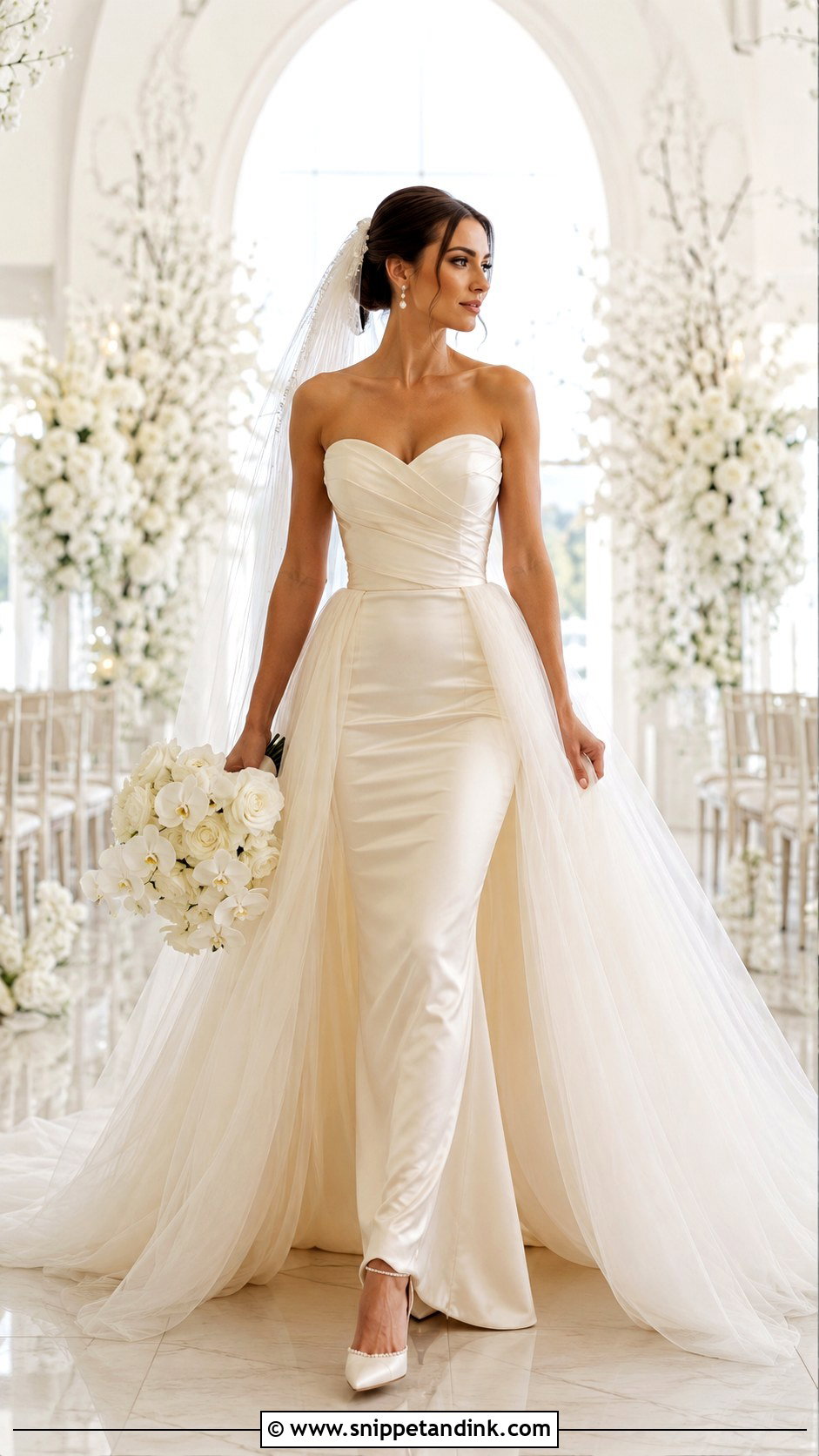
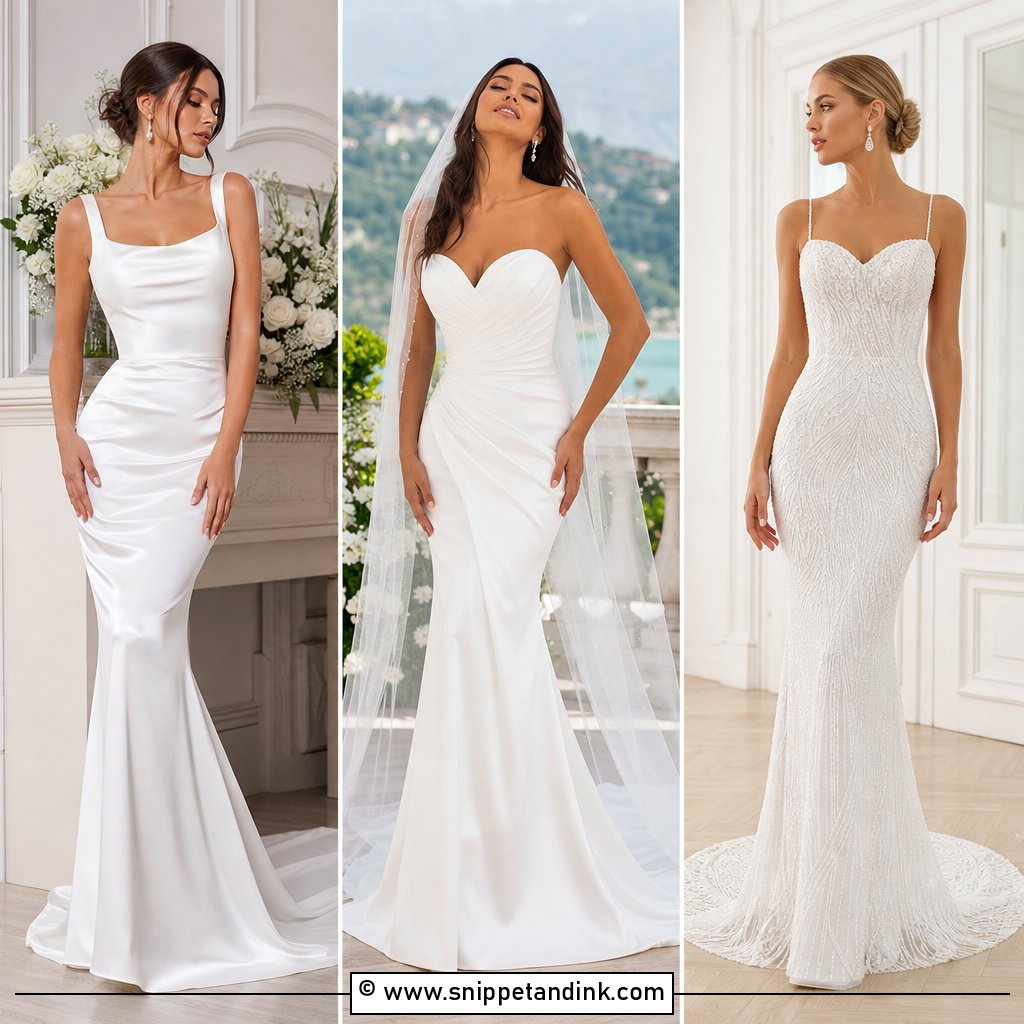
A detachable overskirt gives you two bridal looks without a full outfit change. Wear it for the ceremony for volume, then remove it to reveal a slim gown for the reception. Matching satin makes the change subtle; airy tulle gives more contrast. Pearl earrings, pointed ivory heels and a cathedral veil suit the ceremony, and a smaller hair accessory takes over afterwards. Bustle the remaining train once the overskirt is off. I ask brides to check the base dress without the overskirt at a fitting, because the waistline underneath needs to look finished on its own, not like a lining.
16. Cap Sleeve Lace Wedding Dress
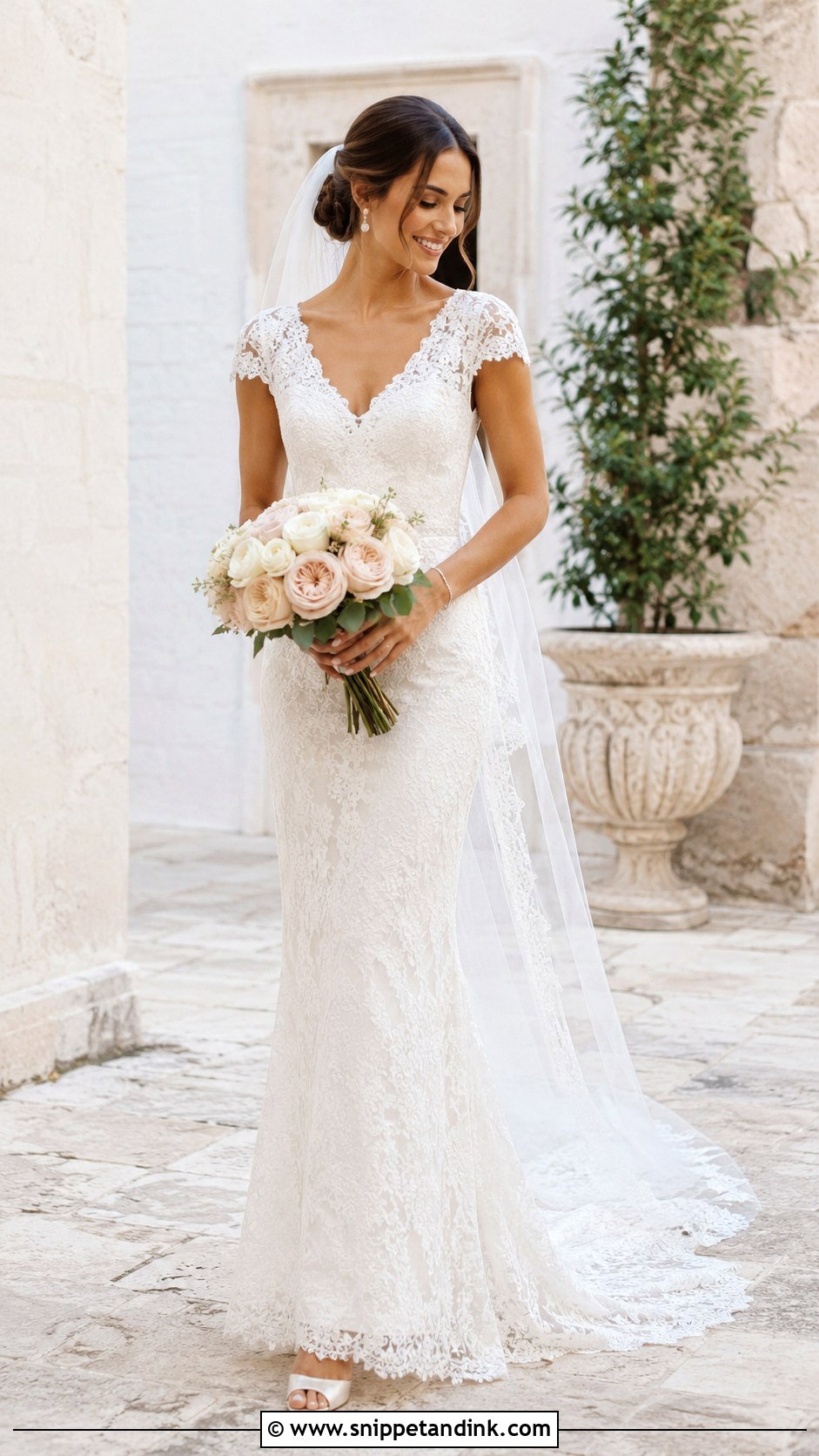
Cap sleeves cover just the top of the shoulder, which keeps a fitted lace gown light. The edge is what I watch: it should sit smoothly when your arms relax, not flare outward. A V-neck or soft scoop pairs well with a fitted trumpet skirt. Pearl drops, a narrow bracelet, ivory slingbacks, a chapel veil and a soft updo that shows the lace at the shoulder complete the look, with a white garden rose bouquet. Move your arms forward and up during alterations. Cap sleeves shouldn’t dig into the underarm, and a proper lining stops textured lace scratching over a long day.
17. Plunging V Neck Wedding Dress
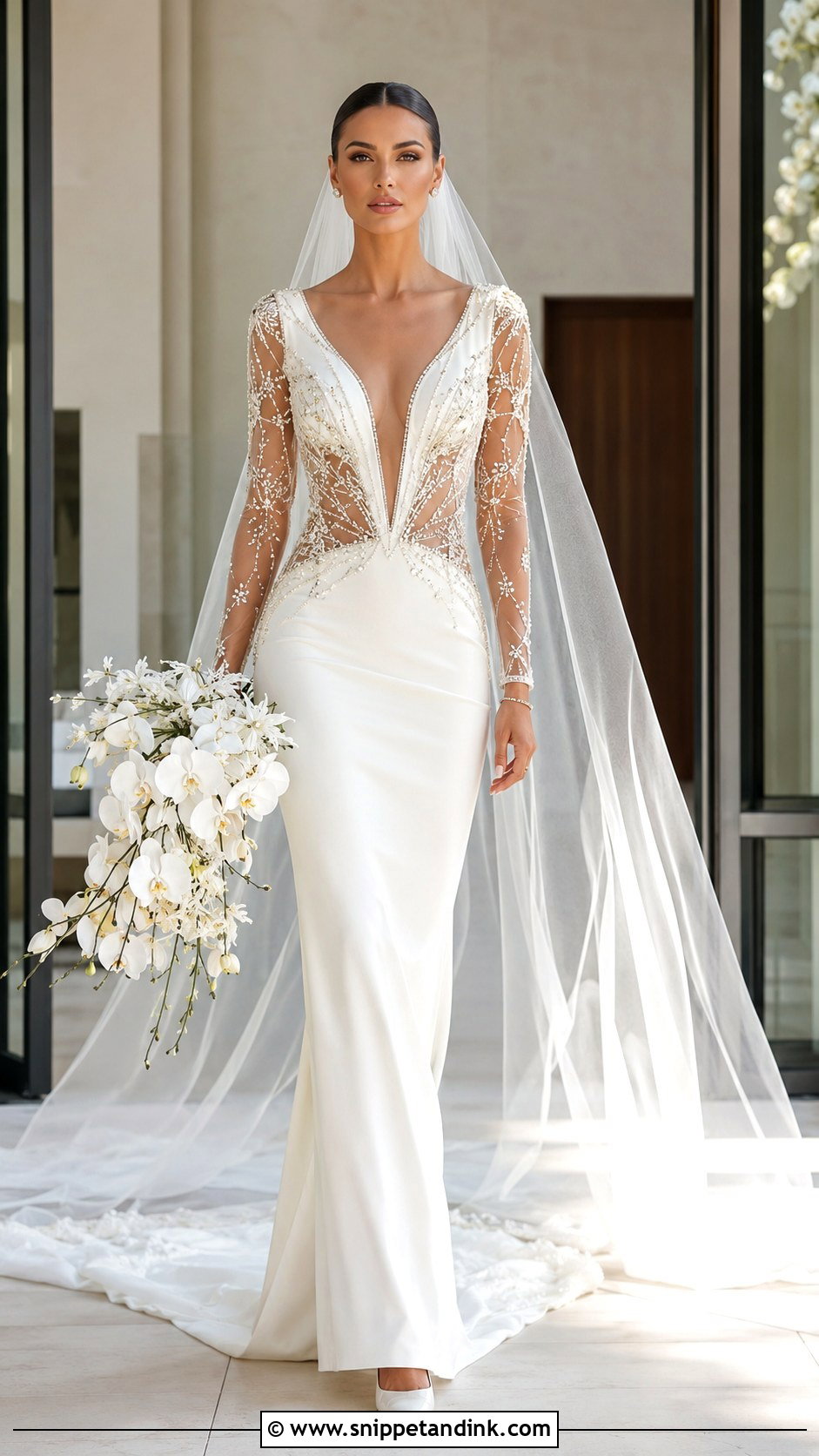
A plunging V can look refined when the bodice is engineered for it. That means discreet illusion mesh, supportive side panels and secure cups. Long sleeves add coverage; wider straps give a modern frame. Keep accessories restrained with small diamond earrings, a fine bracelet and ivory pointed heels, plus a plain cathedral veil and an architectural bouquet of orchids or callas. Lean forward, sit and move naturally at fittings. Fashion tape is a backup I keep in my kit, but it’s there to reassure a well-fitted neckline, never to rescue one that’s simply too loose.
18. Minimalist Strapless Column Wedding Dress
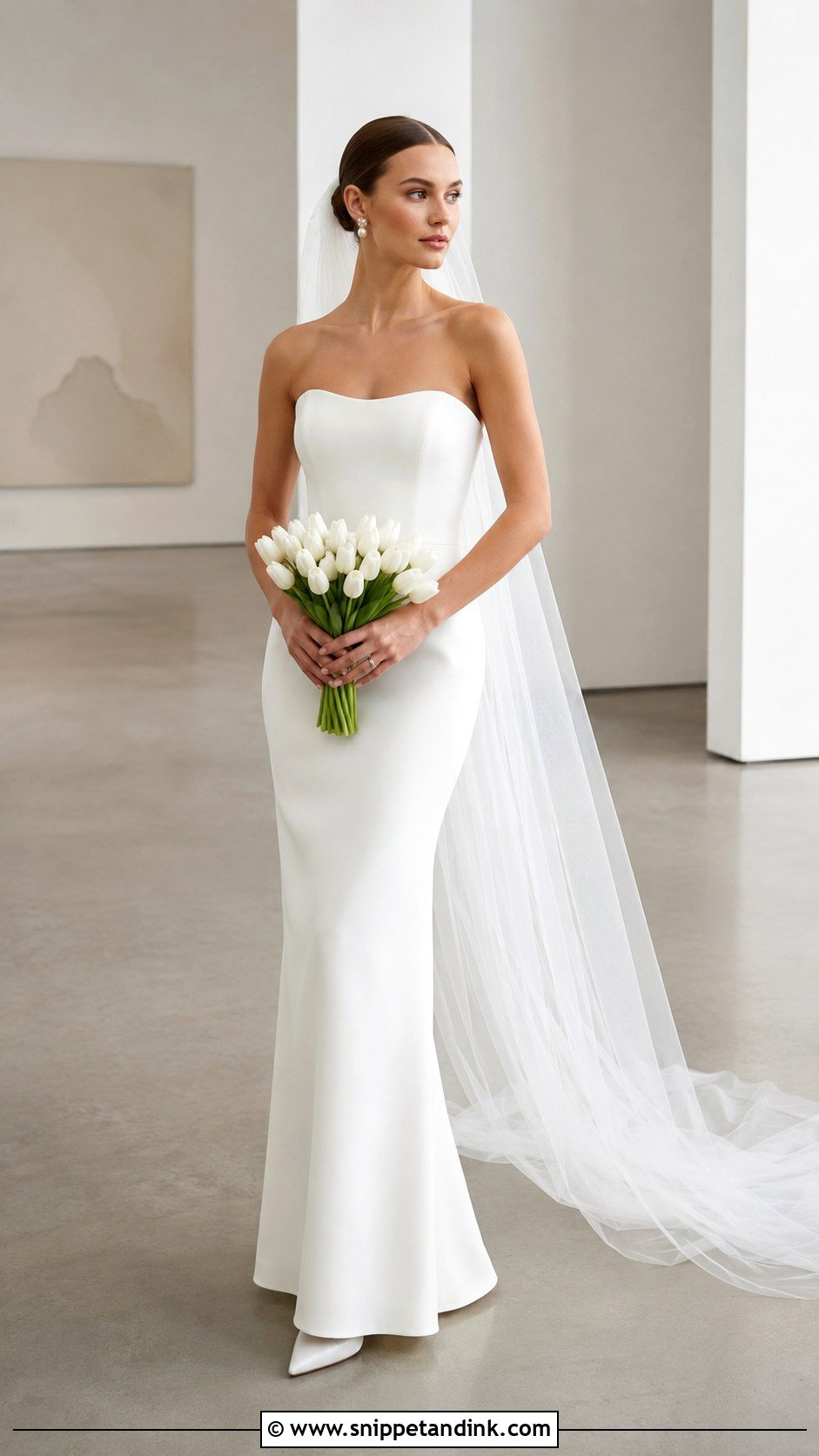
A strapless column is minimalism at its most exposed. Substantial crepe, satin or mikado with a structured bodice and an unbroken skirt is the foundation, and a straight or gently curved neckline keeps it polished. Sculptural pearl earrings, a sleek bun, pointed satin heels and a long sheer veil add controlled drama; a single-variety bouquet, white tulips for instance, keeps it uncluttered. Because there’s almost no decoration, tailoring becomes the design. The neckline should sit securely, side seams should hang straight, and the hem should just clear the floor in your shoes. A detachable scarf or gloves for the ceremony can come off for the reception.
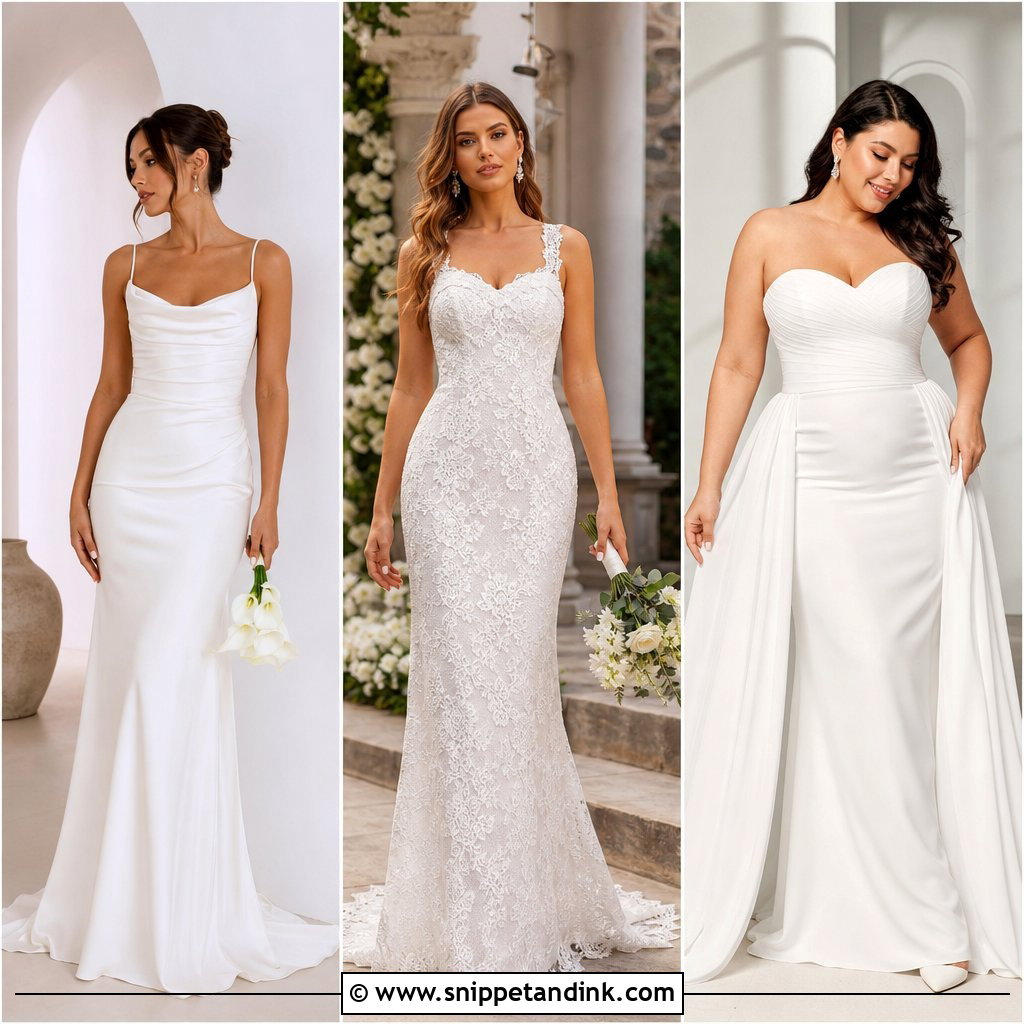
19. Plus Size Ruched Wedding Dress
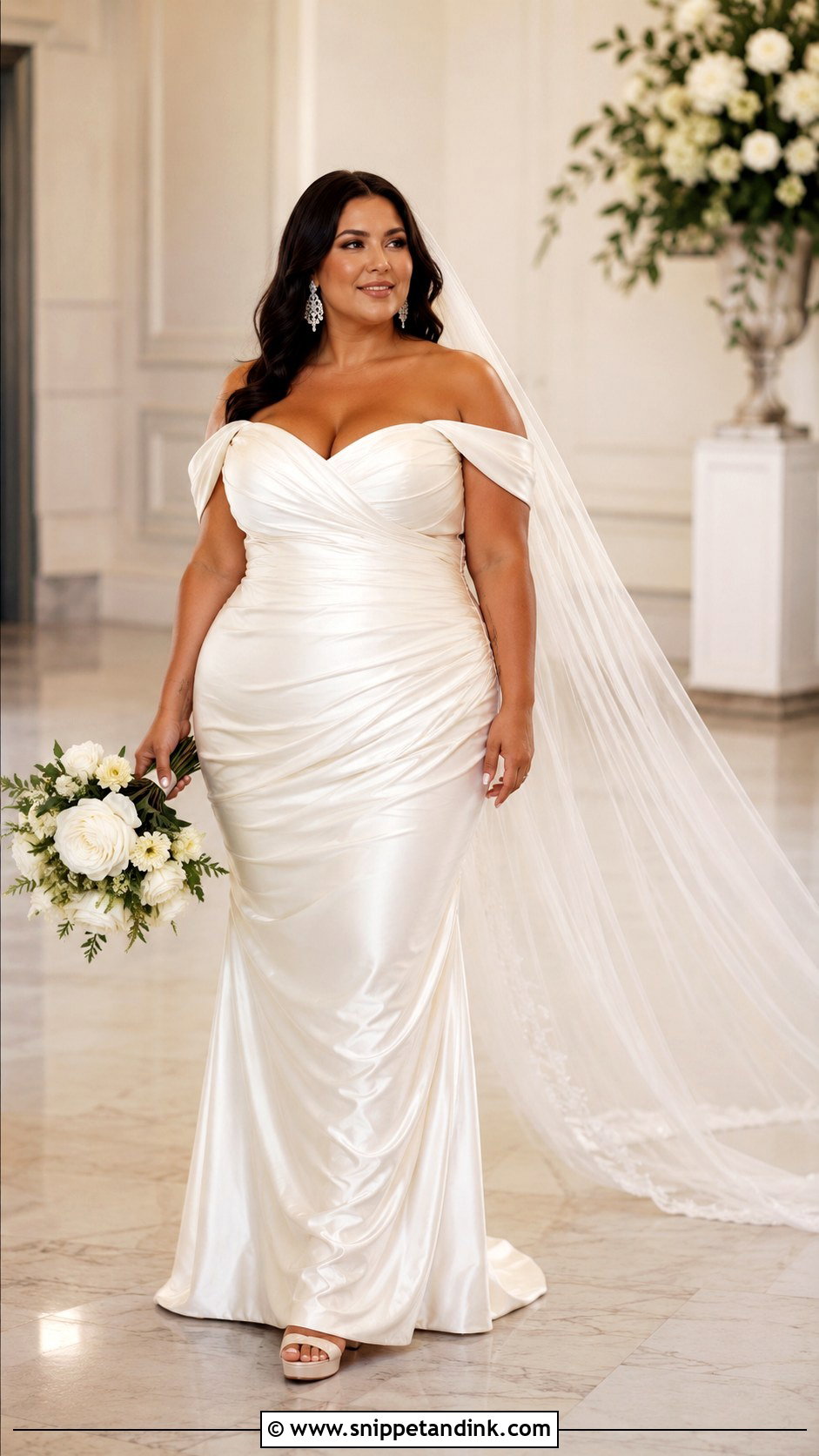
A ruched fitted gown gives structure and definition across a wide range of sizes. I look for diagonal or gathered draping around the waist and hips, sitting over a well-built bodice. Ruching should create a smooth, intentional fit, not hide the body. A sweetheart or off-the-shoulder neckline suits the soft folds. Crystal earrings, supportive block heels and a chapel veil that falls cleanly behind the dress finish it, with a medium bouquet that’s comfortable to hold. Ask for a sample close to your measurements. In alterations, insist on even draping on both sides, secure bust support and enough room to breathe, sit and dance.
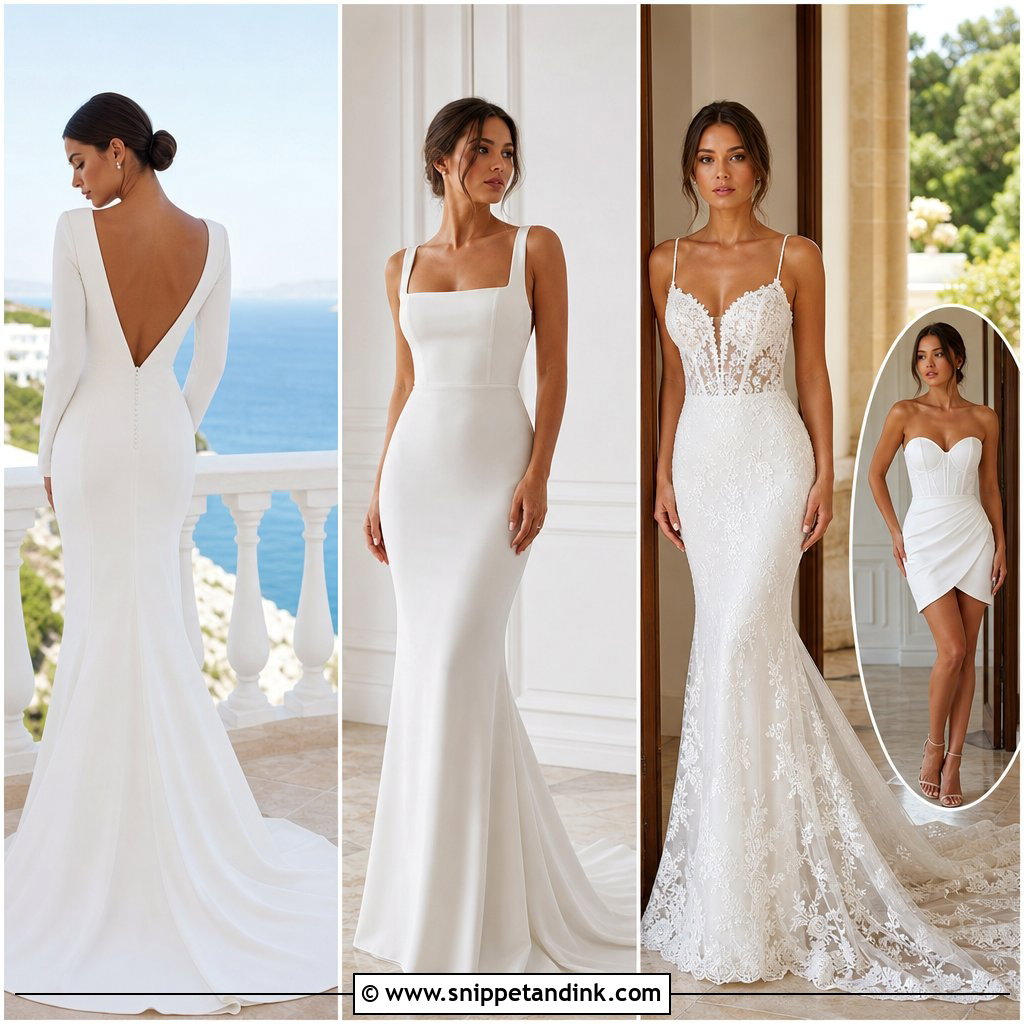
20. Petite Trumpet Wedding Dress
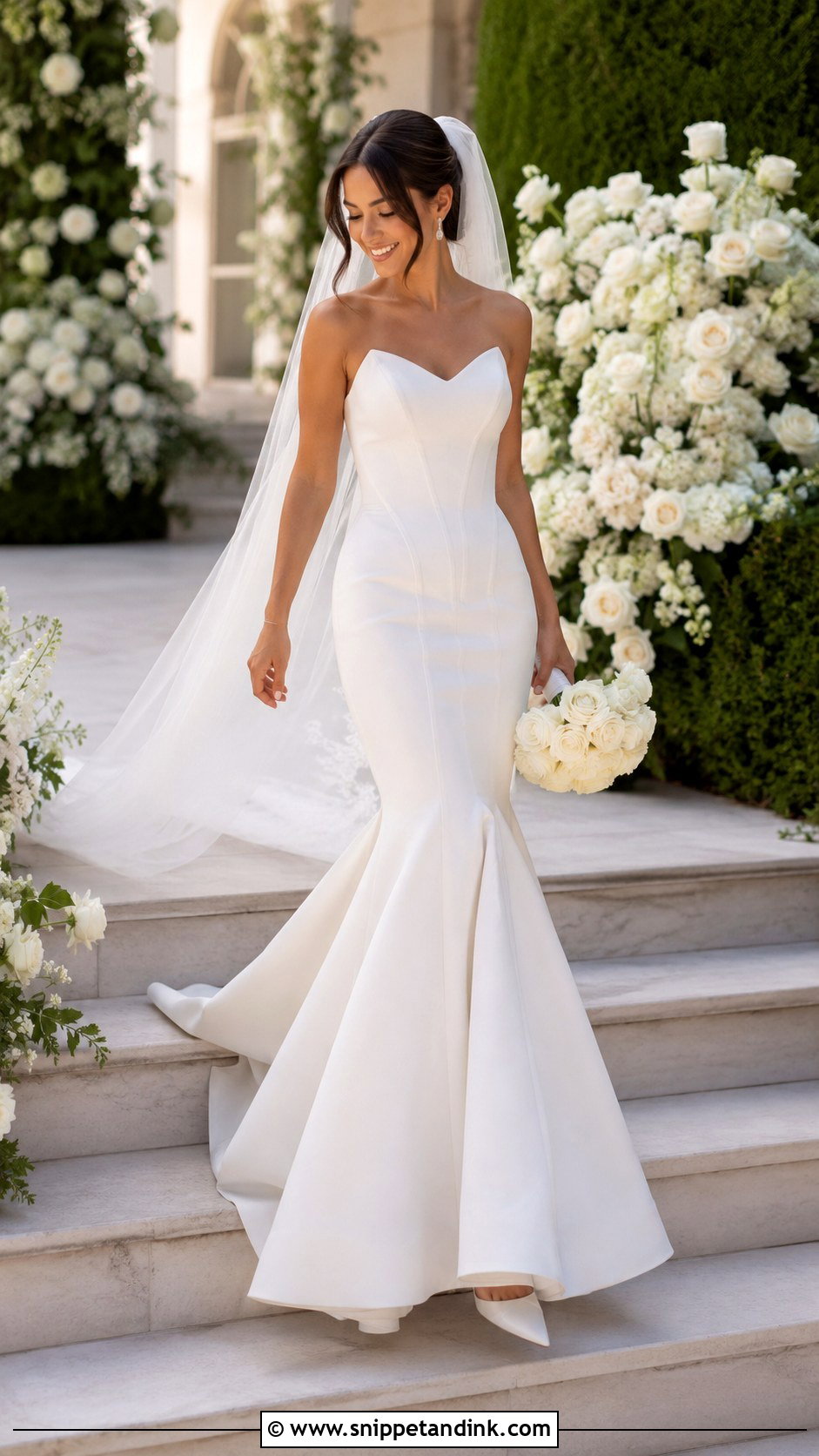
A petite trumpet gown gives definition without a skirt or train that swamps a smaller frame. A raised flare point, vertical seams and a bodice scaled to your torso are what I look for. Square, sweetheart and soft V-necks all lengthen the line. Pointed ivory heels, small drop earrings, a narrow fingertip or chapel veil and a compact bouquet of white roses keep proportions balanced. Avoid extra fabric at the hip and lace motifs that look oversized on you. Hemming a trumpet is skilled work, because taking length from the bottom changes where the flare sits. Ask your tailor to keep the original shape and take the length from the waist if needed.
The Champagne Stain You Can’t See Yet
Every gown comes home with marks. The obvious ones are the hem, which picks up grass, dust and dance-floor grime, and makeup at the neckline. The ones I worry about more are invisible: splashes of champagne, white wine or anything sugary. They dry clear, then oxidize and turn yellow-brown months later, by which point they’re much harder to lift.
What I tell brides after the wedding:
- Take the gown to a cleaner who specializes in bridal wear within a few weeks, and point out every spot where a drink may have landed, even if you can’t see it.
- Don’t rub stains on the night with water or wipes. On satin and silk this can leave a ring that’s worse than the stain.
- Store it in a breathable cotton bag or an acid-free box with acid-free tissue, never in the plastic it came home in, which traps moisture.
- Heavily beaded or long fitted gowns are better folded in a box than hung for years, as the weight stretches the shoulders and straps.
- Keep it somewhere dark, dry and temperature-stable, such as a closet shelf rather than an attic or basement.
If you think you might alter the dress later, for a vow renewal or to pass it on, mention it to the cleaner. Some will stitch a loose seam or bead back before boxing it.
Photograph Every Contender From the Side
The fitted look that stays with people is the one the bride clearly feels at ease in. Use the gowns above as a starting point, then compare necklines, fabrics, support and movement in person. Photograph each gown from the front, side and back at appointments; the side view shows posture and fit in a way mirrors don’t. Sit, walk, raise your arms and imagine several hours in it. Good tailoring matters more than the size on the label or any passing trend. Keep the final look balanced, with the dress as the lead and accessories in support, and you’ll have a gown you can enjoy wearing all evening.
You'll Like These Ideas:







Leave a Reply