
Sage is the green I mix most for weddings, because it’s quiet enough to sit beside ivory, gold, blush and pearls without fighting any of them. It suits gardens and barns, hotels and beach tents, and it changes character with the finish more than almost any color I work with. Smooth and matte, it looks modern. Textured with eucalyptus, it goes rustic. Piped in ivory, it turns vintage. Below are twenty sage cakes, with what I’d tell you about each one if you were sitting across from me at a tasting.
Sage Changes Color Under Reception Lights
The sage you approve at a tasting is not quite the sage your guests will see. Warm evening bulbs and candles push it toward olive and yellow. Cool daylight or LED uplighting makes it look greyer and flatter. A shade that reads delicate under a window can almost disappear next to white flowers in a dim barn.
So I ask where and when the cake will be displayed before I mix anything. For an evening reception, I go slightly bluer and a touch deeper than you’d expect. For a daylight garden party, I keep it paler. If you can, look at the swatch under light similar to your venue’s, or send me a photo of the room at the time of your reception.
- Candlelit or warm-bulb rooms: choose a cooler, slightly deeper sage
- Bright daylight and white tents: a paler sage holds its color
- LED uplighting in purple or blue: expect the green to shift, and test it if you can
1. Sage Green Buttercream Wedding Cake
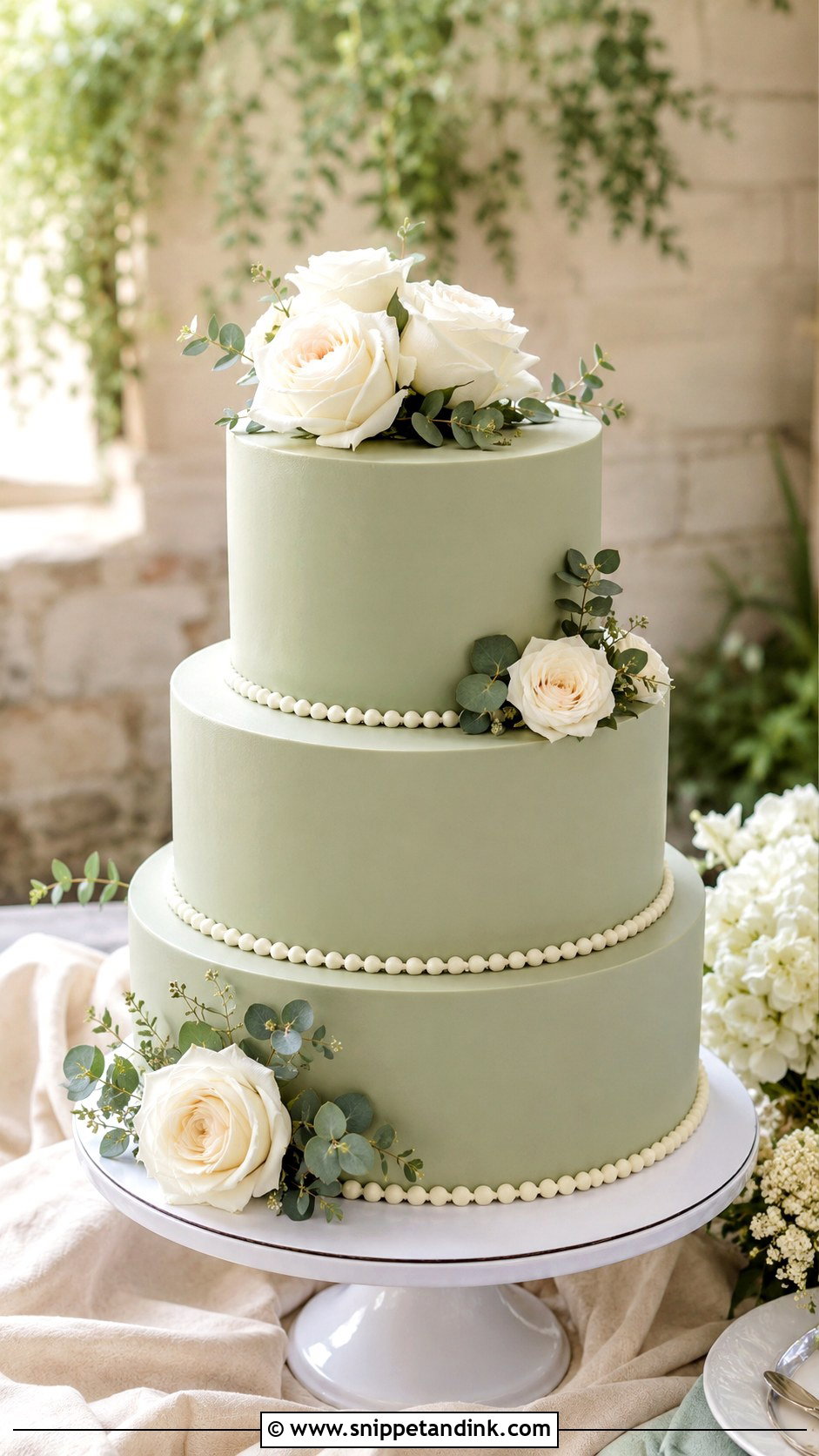
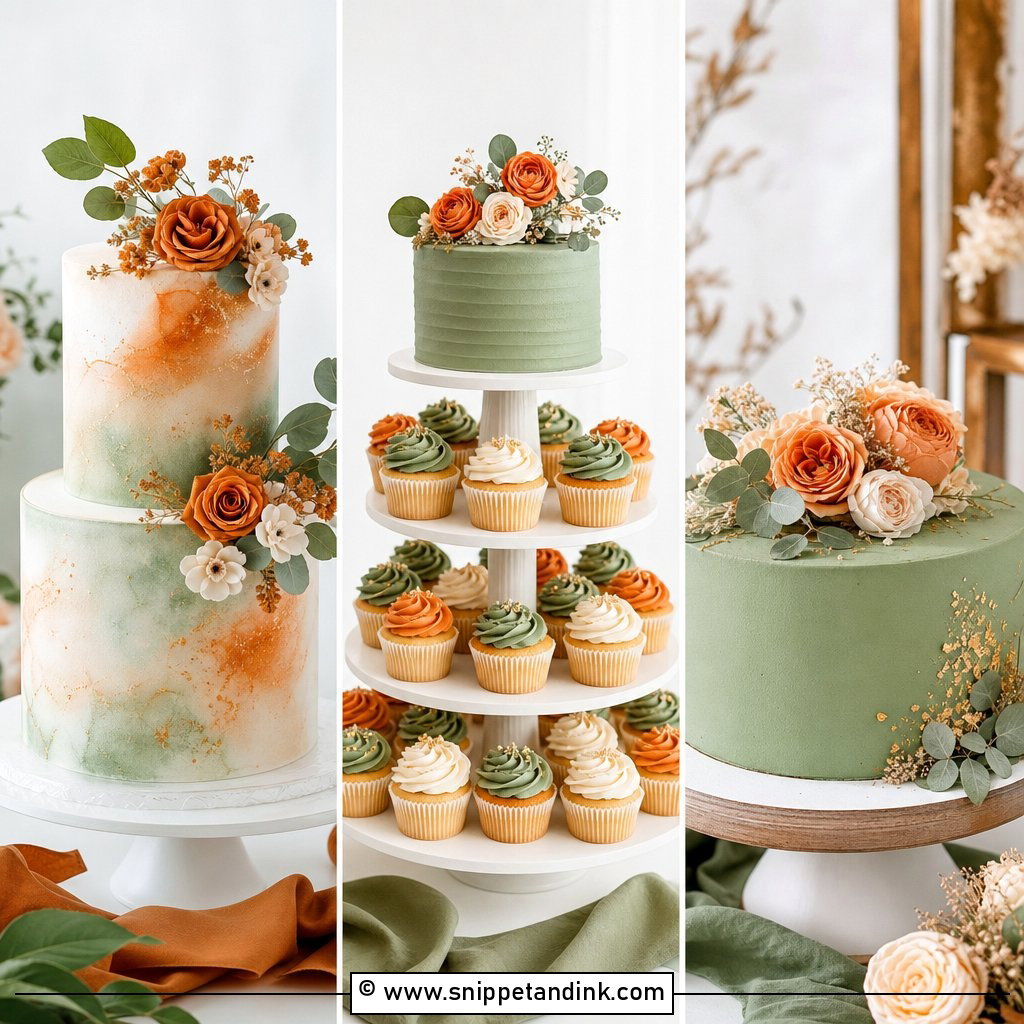
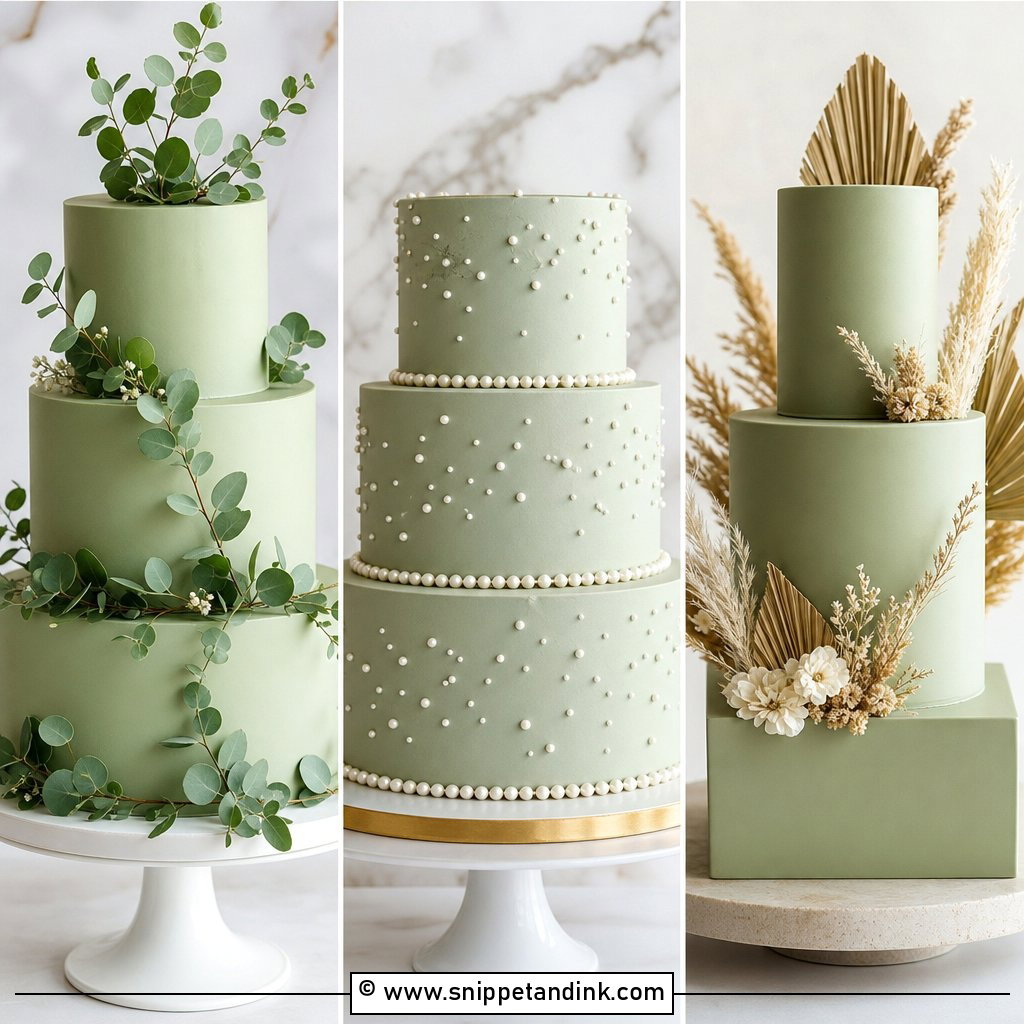
This is where I’d start most couples. Smooth buttercream gives you a clean surface that still looks softer than fondant, and the butter warms sage slightly, which is flattering. You can keep one tone on every tier or lighten the top tier a shade for a gentle fade. Getting sharp edges takes a well-chilled cake and a hot scraper, so ask your baker to show you a photo of their smooth work. White roses, a few greenery sprigs and a pearl border finish it.
2. Sage Green And White Wedding Cake
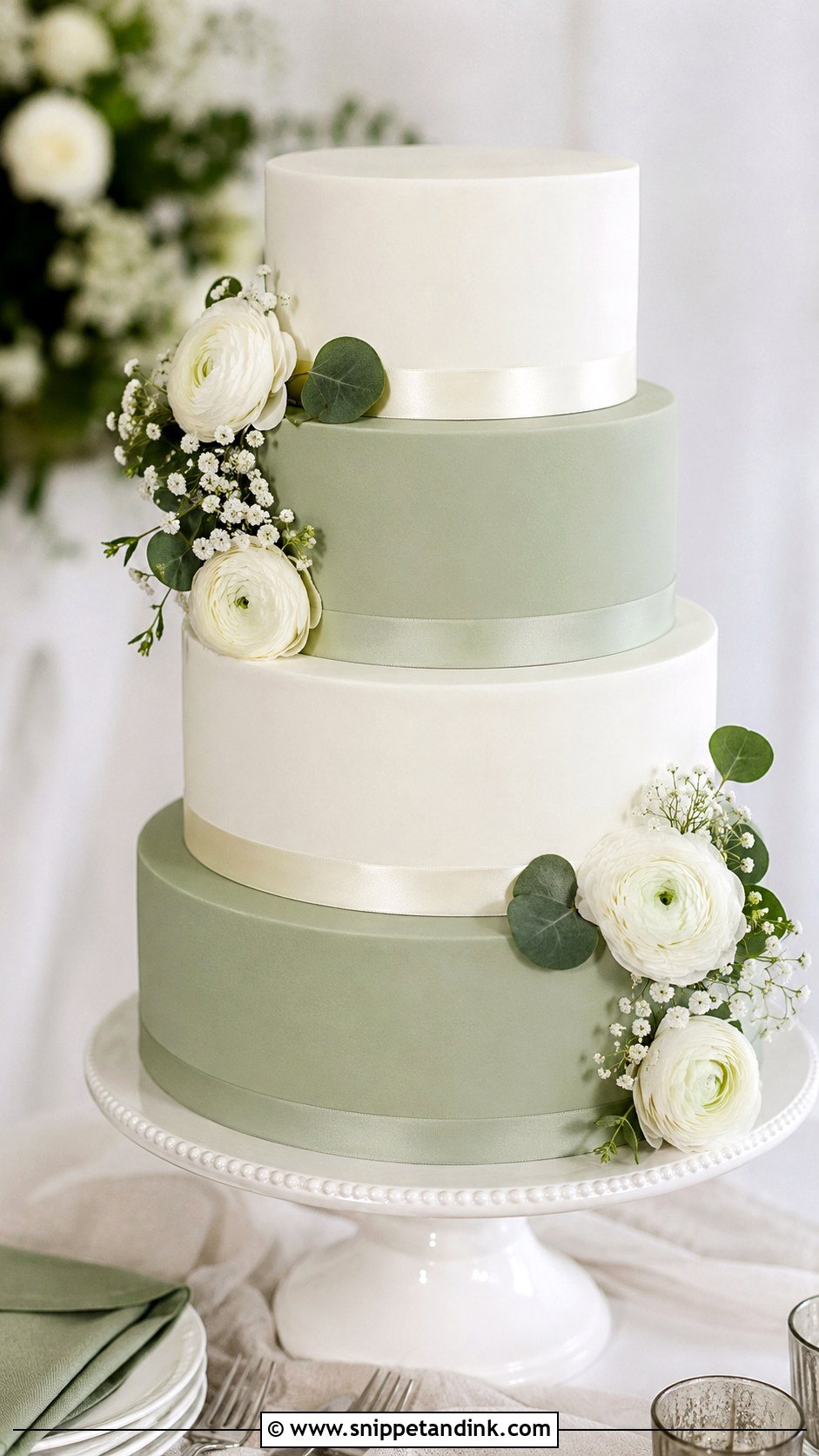
If a full green cake feels like too much, put sage in the details and let white carry the structure. I’d use ribbon bands, piped leaves, a painted panel or a single sage middle tier. White ranunculus, garden roses and eucalyptus stand out clearly against the pale tiers. One thing to know: pure white buttercream is hard to achieve because butter is yellow, so most bakers deliver a soft ivory unless they use a whitening agent or an all-shortening recipe. Ask which you’re getting.
3. Sage Green And Gold Wedding Cake
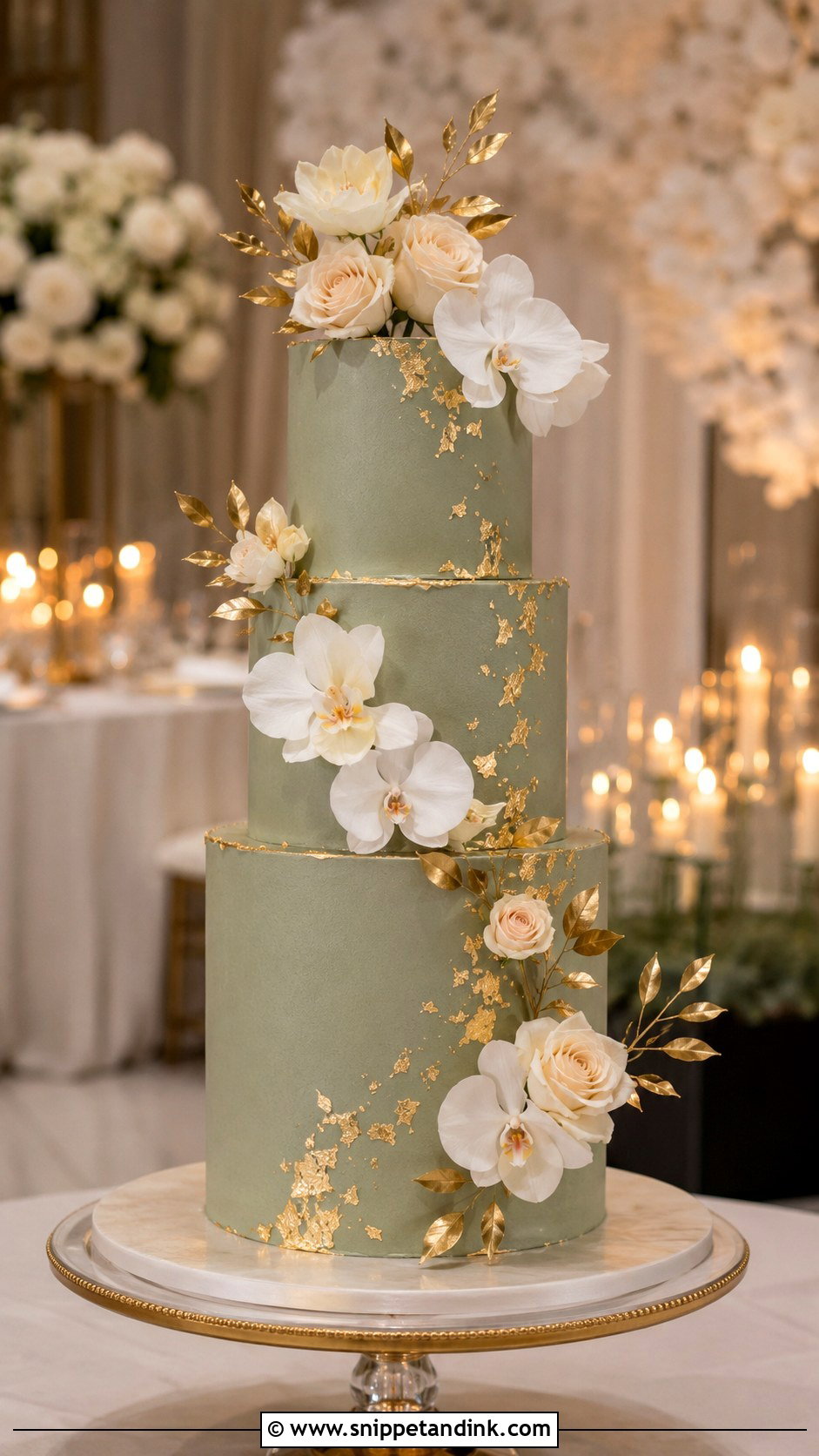
Gold turns sage formal. I’ll gild tier edges, paint a band or use metallic separators, and the color behind it needs to be very smooth or the gold looks patchy. Edible gold leaf goes on last, often at the venue, because it tears if it’s handled. Keep the flowers restrained: white orchids, cream roses or small sugar blossoms. It suits ballrooms and evening receptions, where warm lights catch the metal.
4. Sage Green Floral Wedding Cake
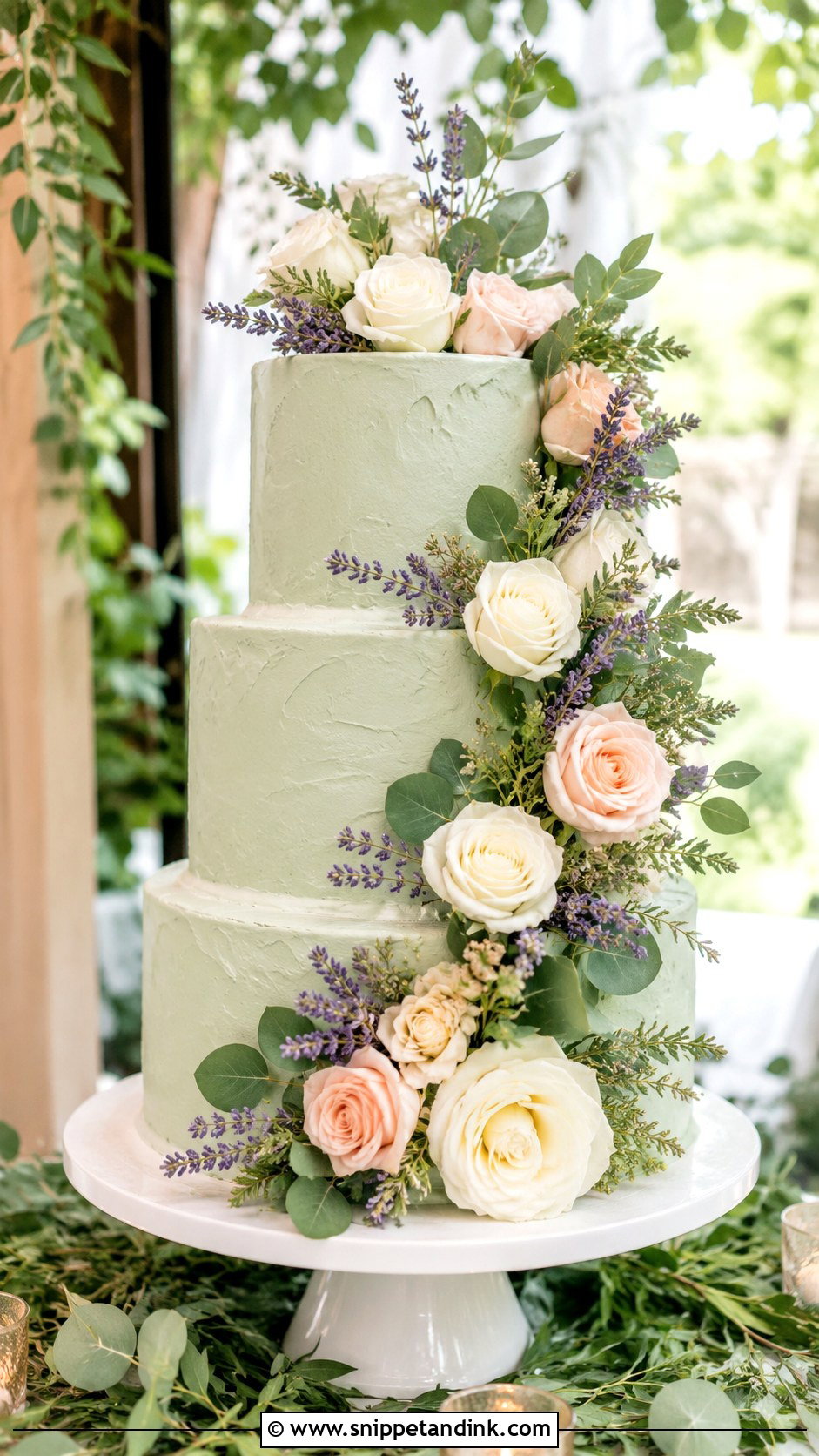
The cake can be fully sage or mostly ivory with sage touches, and the flowers should come from your bouquet list so the table matches. White blooms, blush roses, lavender and eucalyptus all sit well against this green. Sugar flowers cost more because each petal is made by hand, but they don’t wilt and they can be kept afterwards. Flowers are also useful: they hide the seams between tiers. For an outdoor tent, I’d lean toward sugar over fresh.
5. Sage Green Eucalyptus Wedding Cake
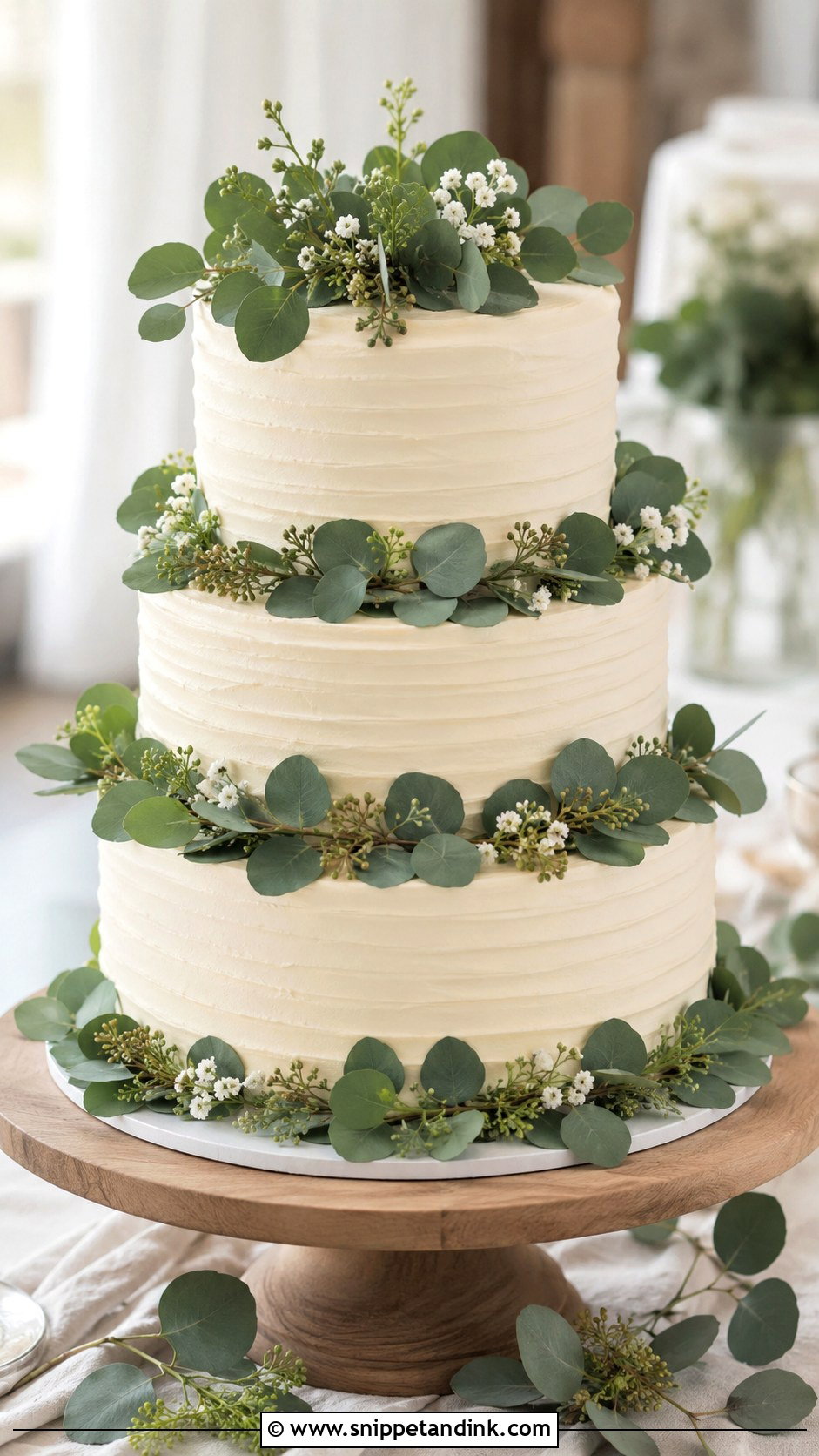
Eucalyptus is the natural partner for sage because its blue-grey leaf sits in the same family. Wrapped around white tiers it looks classic; as garlands on a sage cake it looks more current. Here’s the part I’m firm about: eucalyptus isn’t food-safe, so it should never touch the frosting directly. I lay it on a barrier or use leaves that have been sealed, and it comes off before cutting. Greenery-only is a calm, minimal option for rustic and garden venues.
6. Sage Green Rustic Wedding Cake
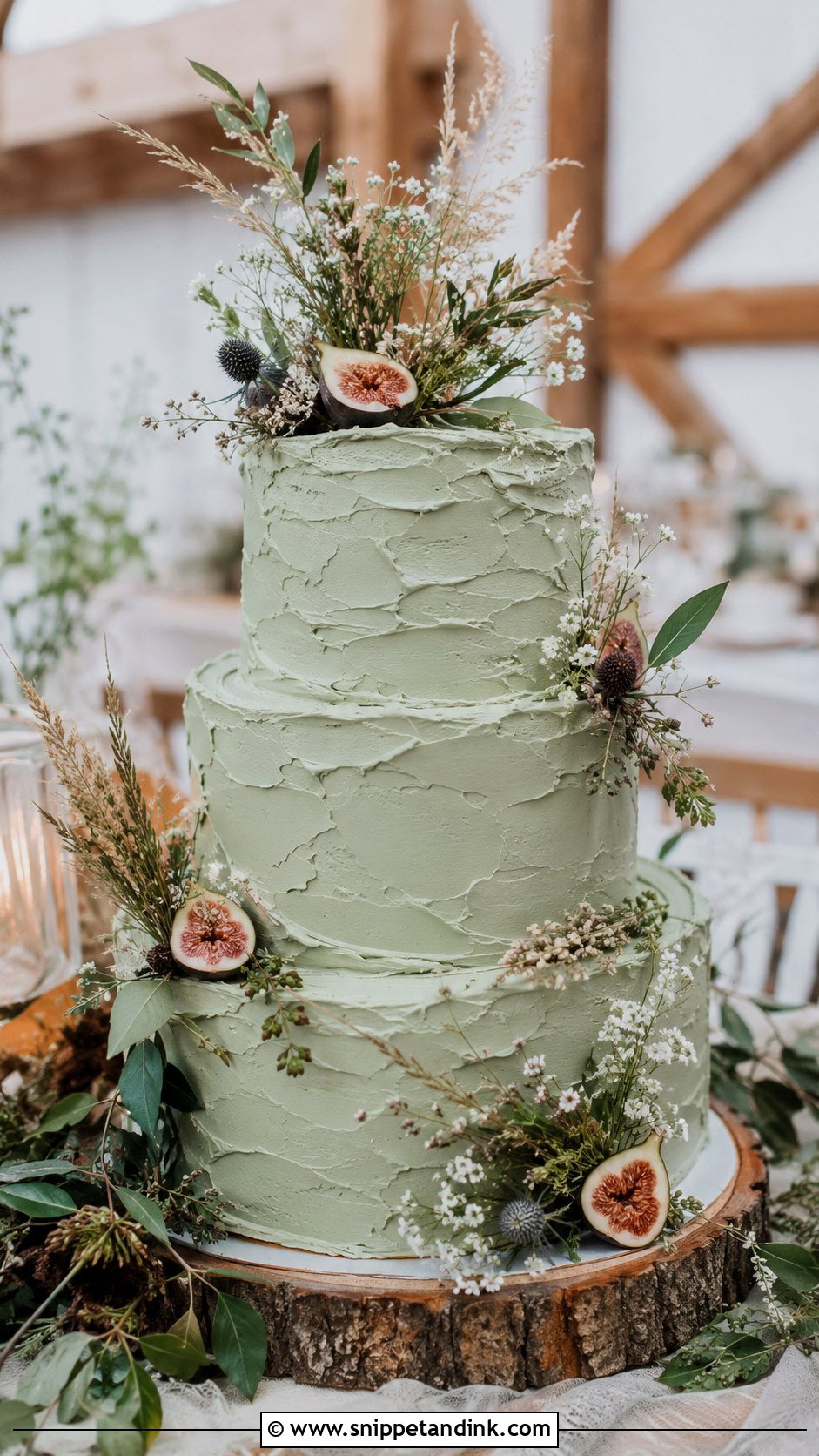
Rustic should look relaxed, not unfinished. A sage green rustic wedding cake works with lightly textured buttercream, a semi-naked coat or loose palette knife strokes, and sage can show up as frosting, ribbon or hand-painted greenery. Dried grasses, small white flowers, figs and herbs add the cozy layer. I’d put it on a wooden stand for barns and outdoor receptions. Texture also forgives small dents from transport, which is a quiet advantage.
7. Sage Green Naked Wedding Cake
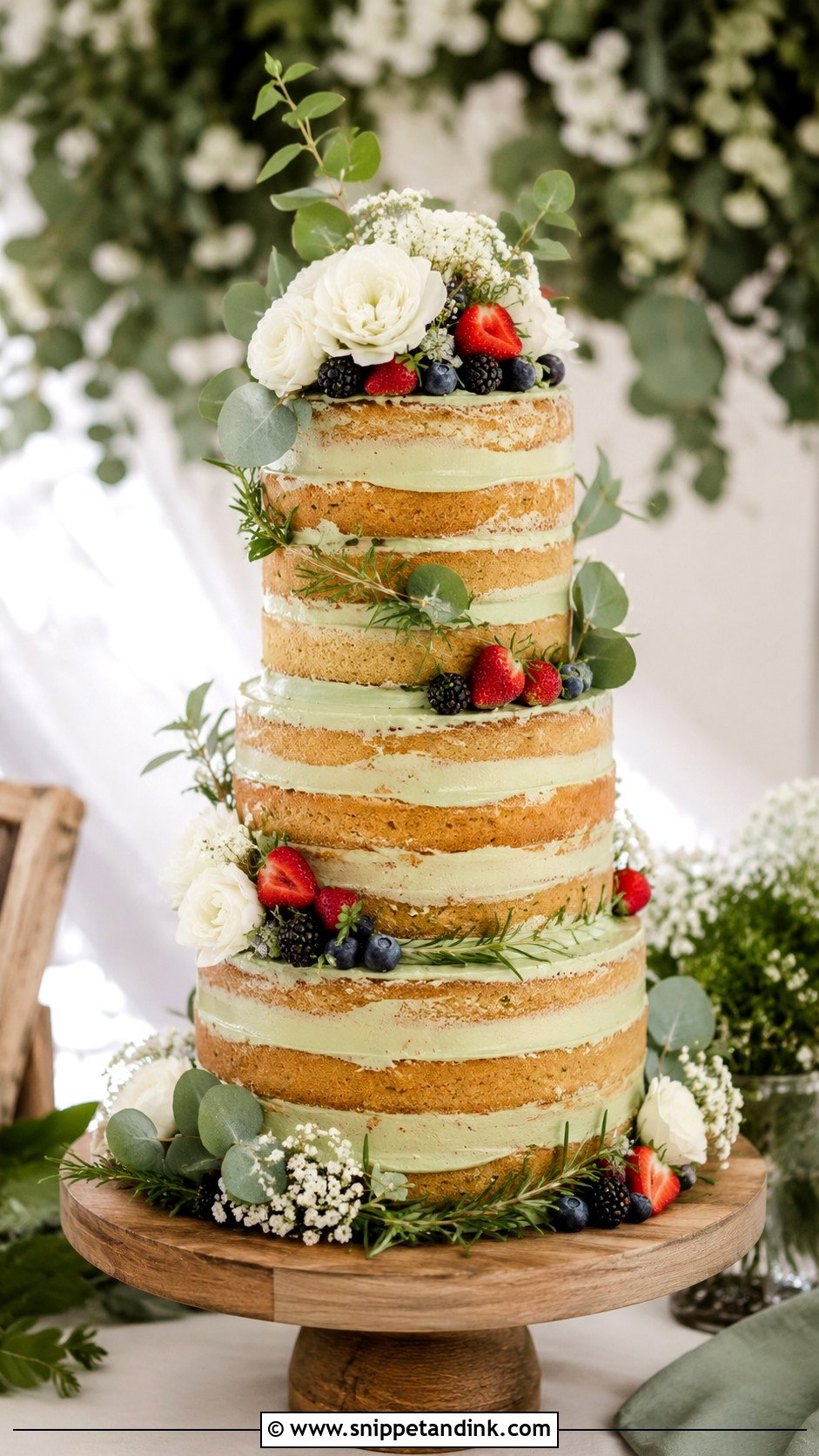
A naked cake gives you a natural, homemade-inspired look, and sage arrives through the filling, eucalyptus around the tiers or a ribbon at the base. Exposed sponge dries out quickly, so I brush the layers with syrup and keep the cake wrapped until it’s set out. Berries and small herbs finish it. It’s best indoors or in deep shade, on a wood slice or a plain white pedestal.
8. Sage Green Vintage Wedding Cake
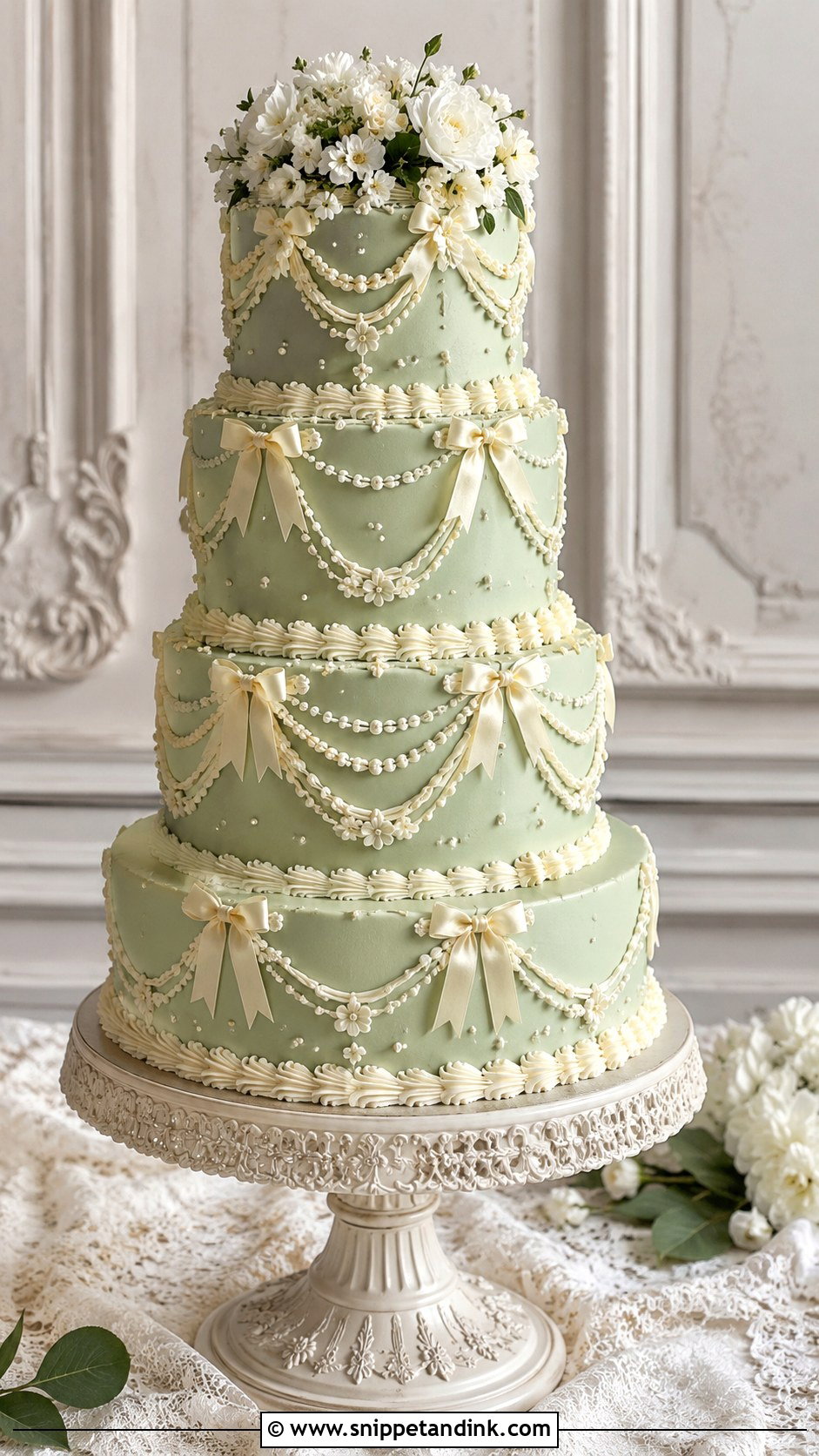
Lambeth-style piping is slow, layered work: shells, overpiped borders, pearl dots, ruffles and bows, all in muted sage or ivory over sage. It’s beautiful, and it’s priced for the hours it takes, so expect it to cost more than a smooth finish. Keep the green soft, because bright green piping reads like a birthday cake. One tier suits an intimate wedding; stacking it taller gives you a showpiece for a historic venue or a garden party.
9. Sage Green Pearl Wedding Cake
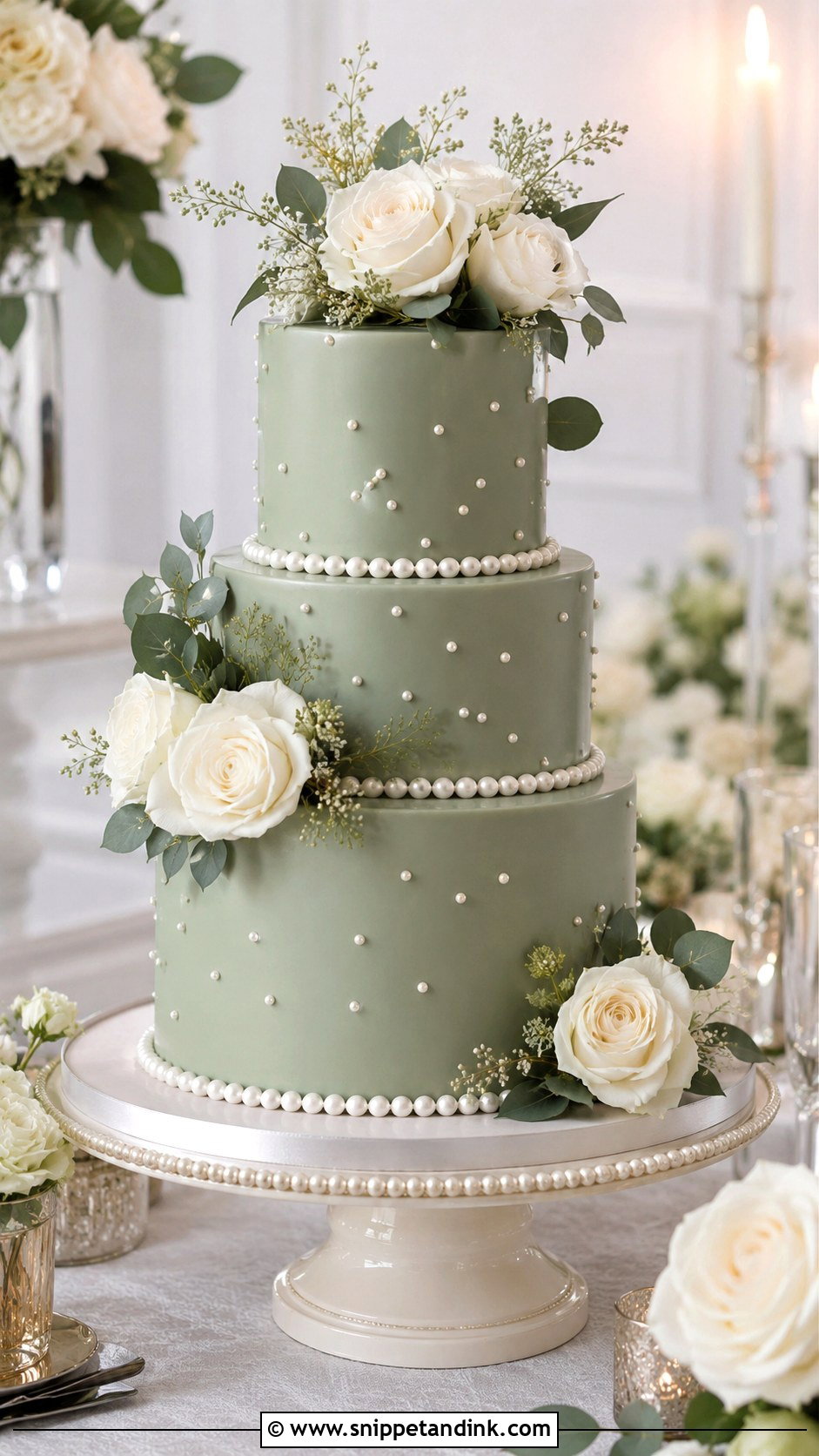
Pearls add shine without the hardness of metallic, which is why they sit so well on sage. I use edible sugar pearls, placed one by one along borders, scattered across a tier or packed onto separators. On buttercream, the pearls need to go on while the surface is slightly tacky or they fall off in transport. If your dress, veil or earrings have pearls, this cake echoes them nicely. White flowers and a little greenery are all it needs.
10. Sage Green Pressed Flower Wedding Cake
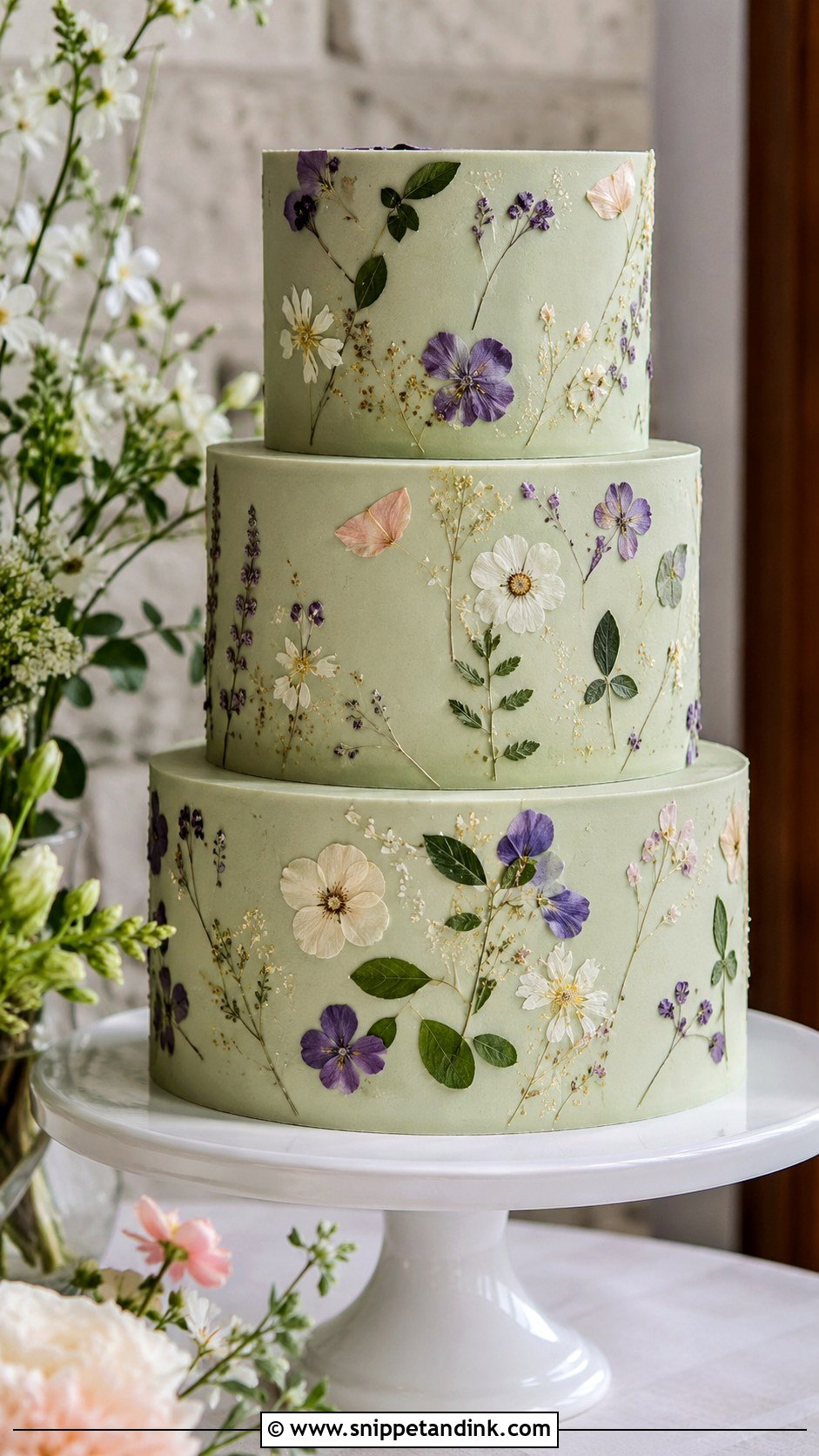
Pressed edible flowers look best against pale sage or ivory with sage accents, and I keep them in white, blush, lavender, pale yellow or soft blue. A sage green pressed flower wedding cake can have petals scattered lightly or climbing across the tiers. The frosting must be very smooth, since pressed petals lift off any ridge. Pressed flowers also fade in strong light, so I add them close to the event. It suits spring, cottage and garden weddings.
11. Sage Green Watercolor Wedding Cake
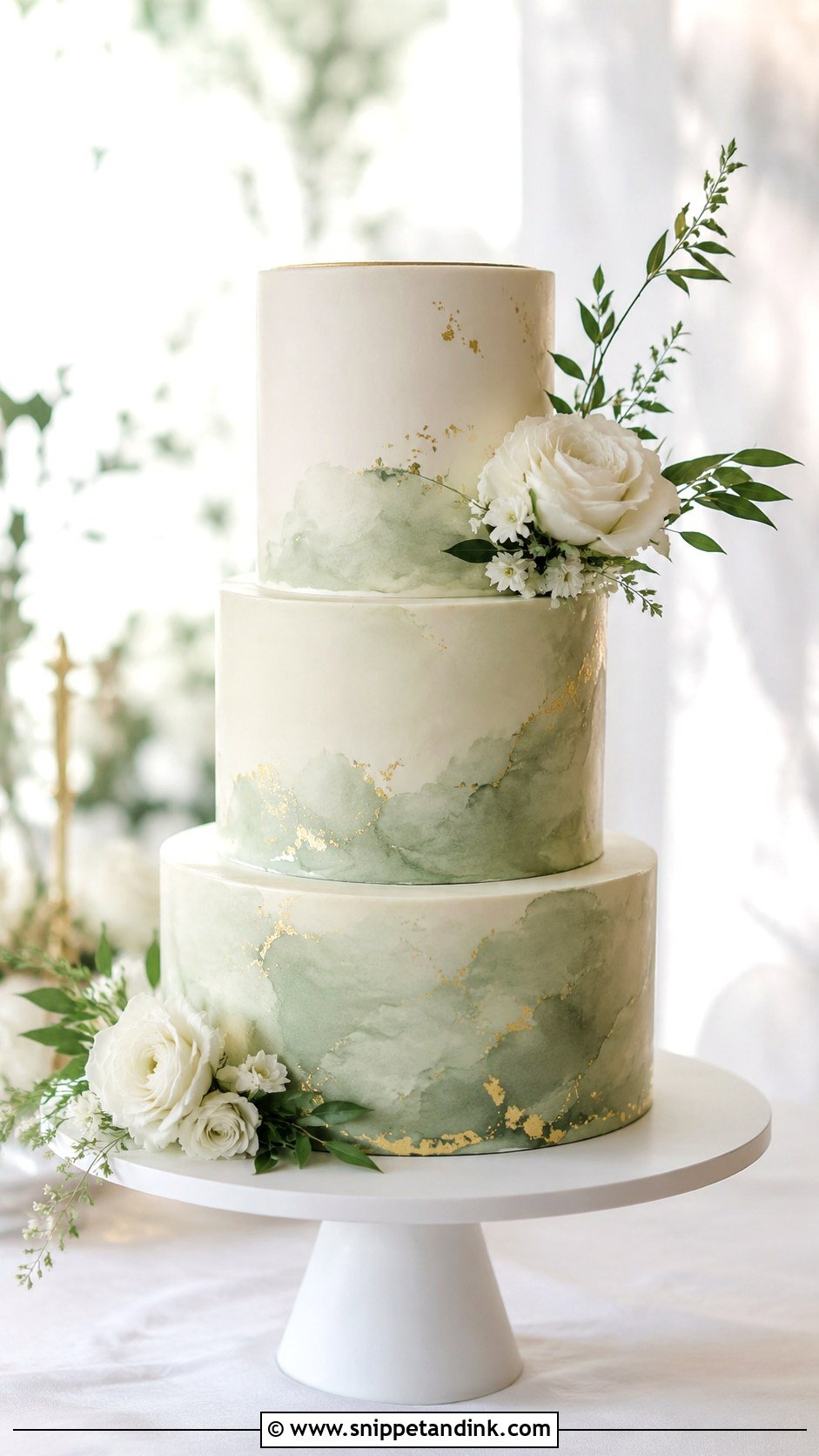
Watercolor blends pale sage, ivory and a deeper green across the tiers instead of one flat shade. I work it on chilled buttercream with a palette knife and a little thinned color, and the trick is stopping before the tones turn muddy. Gold flecks, white flowers or greenery finish it. Keep the topper small so the painting stays visible. It reads best in bright daylight and pale rooms.
12. Sage Green Marble Wedding Cake
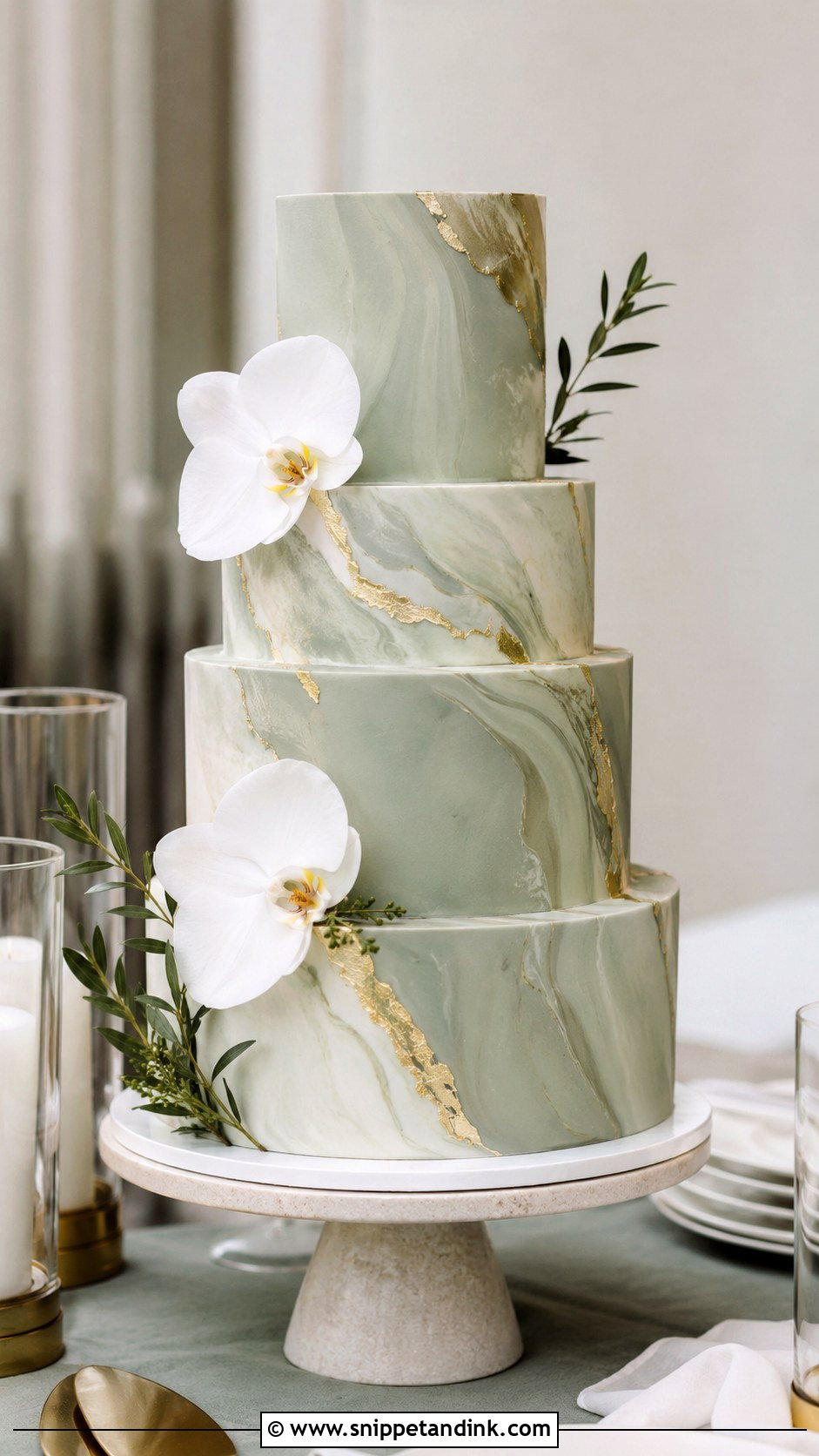
Marble needs fondant, really. I twist sage, ivory and white paste together and roll it so the veins stretch naturally, and no two tiers come out the same, which is part of the appeal. Simple round tiers, two or three, keep the pattern from looking busy. A few white flowers or a touch of gold leaf balance it. Hotels, gallery spaces and minimal décor suit it best.
13. Sage Green Drip Wedding Cake
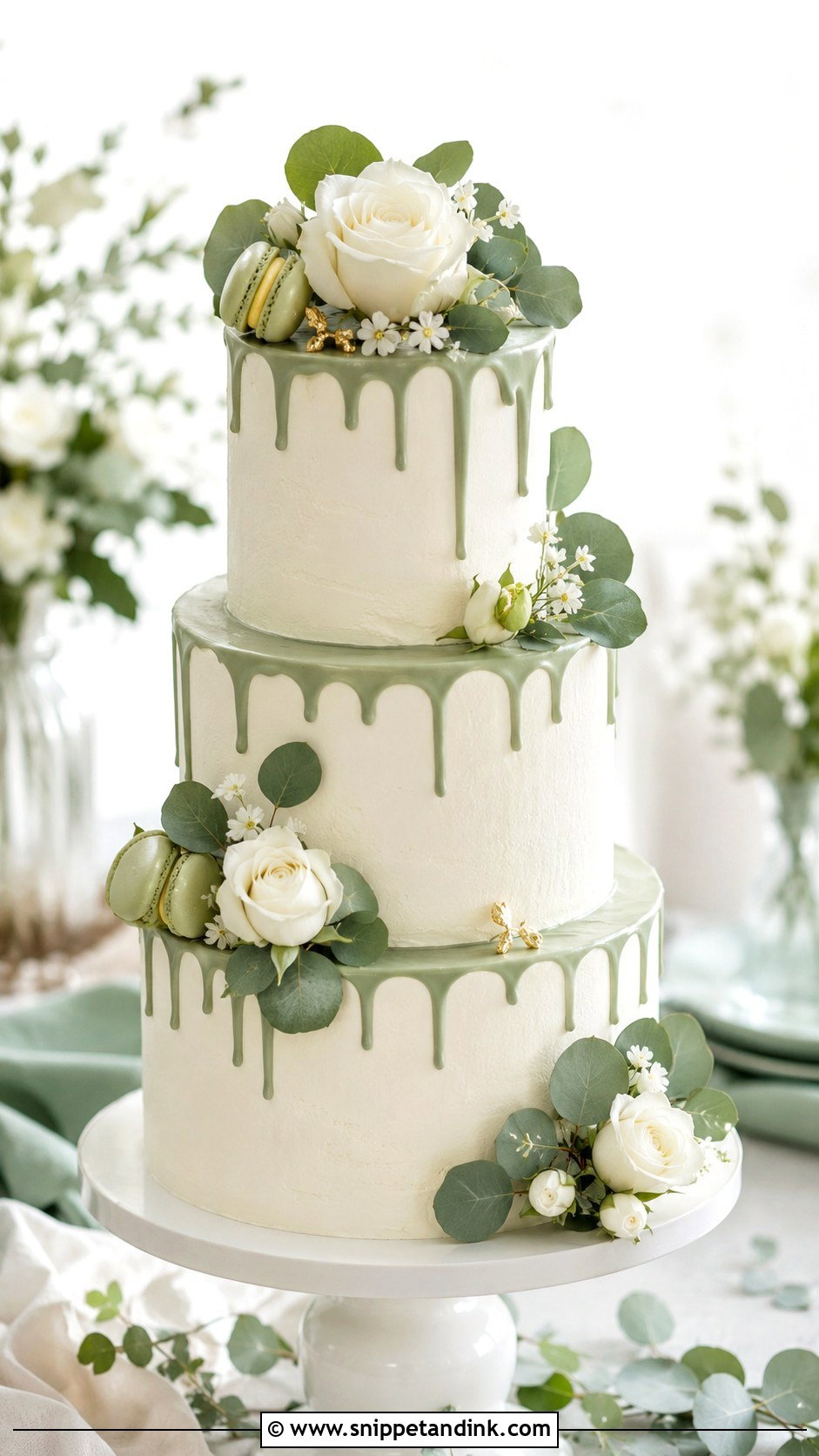
Reverse the usual drip: sage frosting with a white chocolate drip looks fresher than a green drip on white, in my eyes. Either way, the cake has to be cold and the ganache at the right temperature, or the drips run to the board. I keep the lengths uneven but controlled. Macarons, white roses, eucalyptus or small sugar flowers on top add height. It suits brunch weddings and relaxed modern receptions.
14. Sage Green Ombré Wedding Cake
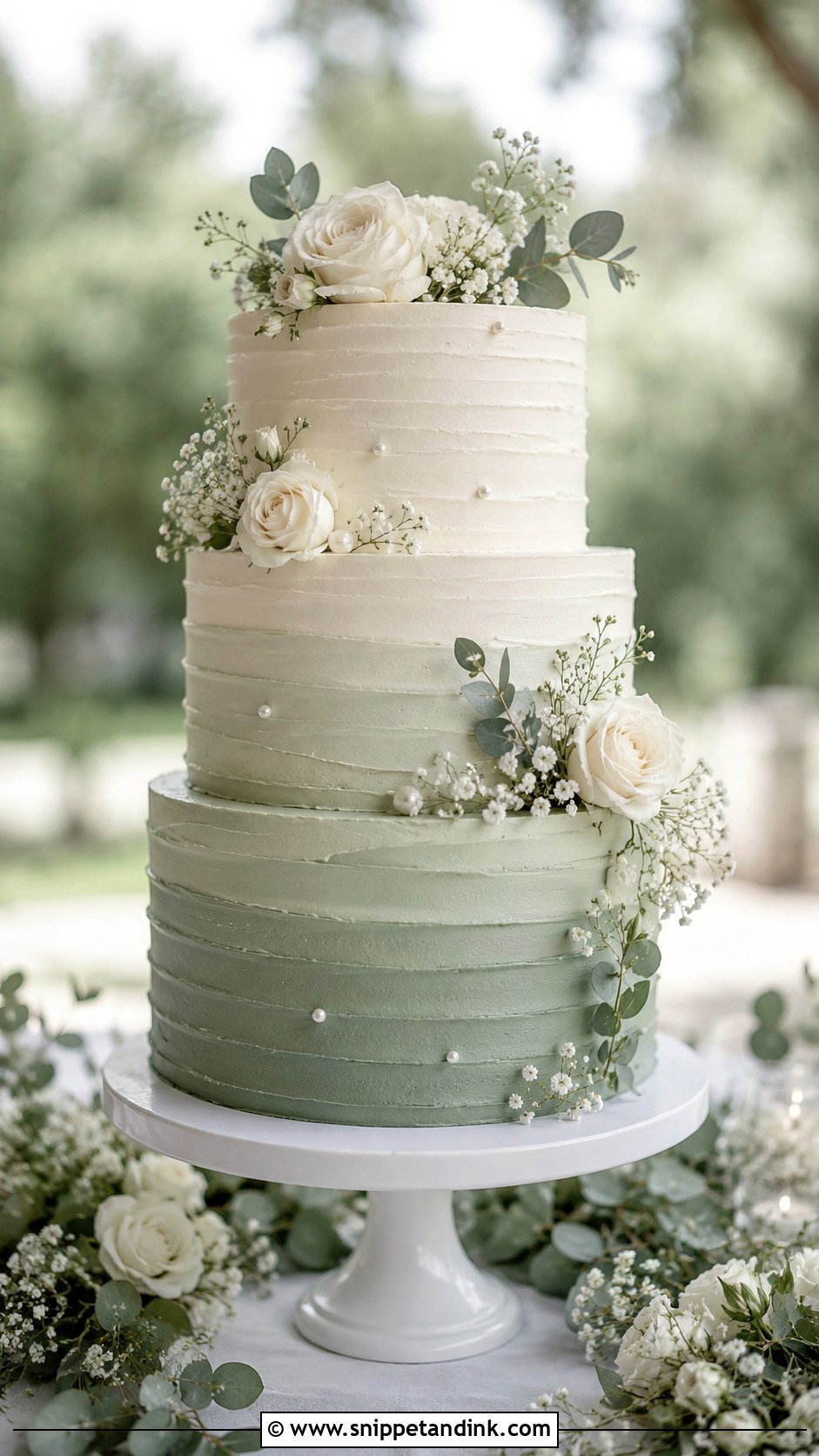
An ombre runs ivory to pale sage to a deeper green, and it’s the easiest way to use color without a solid green cake. Buttercream blends better than fondant for this, because I can feather the shades into each other with a scraper. Put the deepest tone at the bottom; the eye travels upward and the cake looks taller. White flowers and greenery or a few pearl details are enough. Outdoor spring and summer weddings suit it.

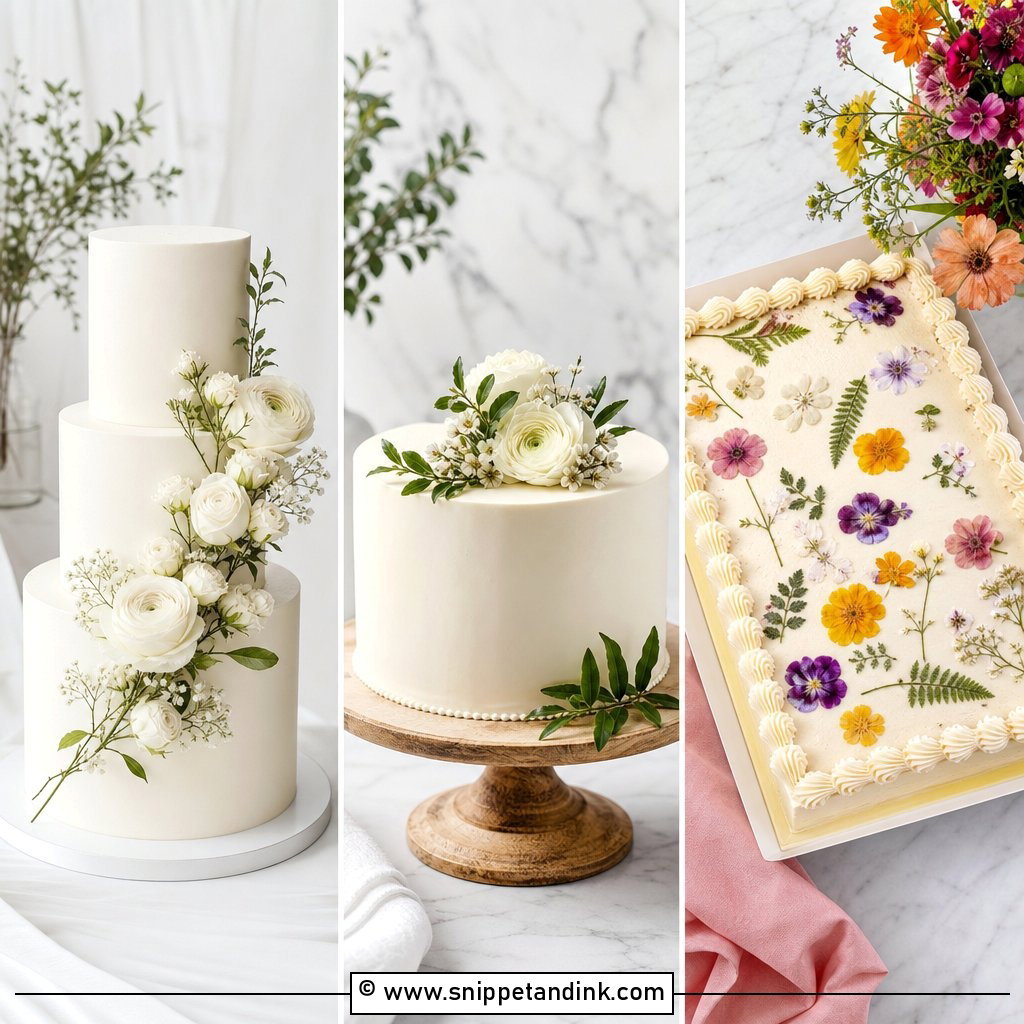
15. Sage Green Two Tier Wedding Cake
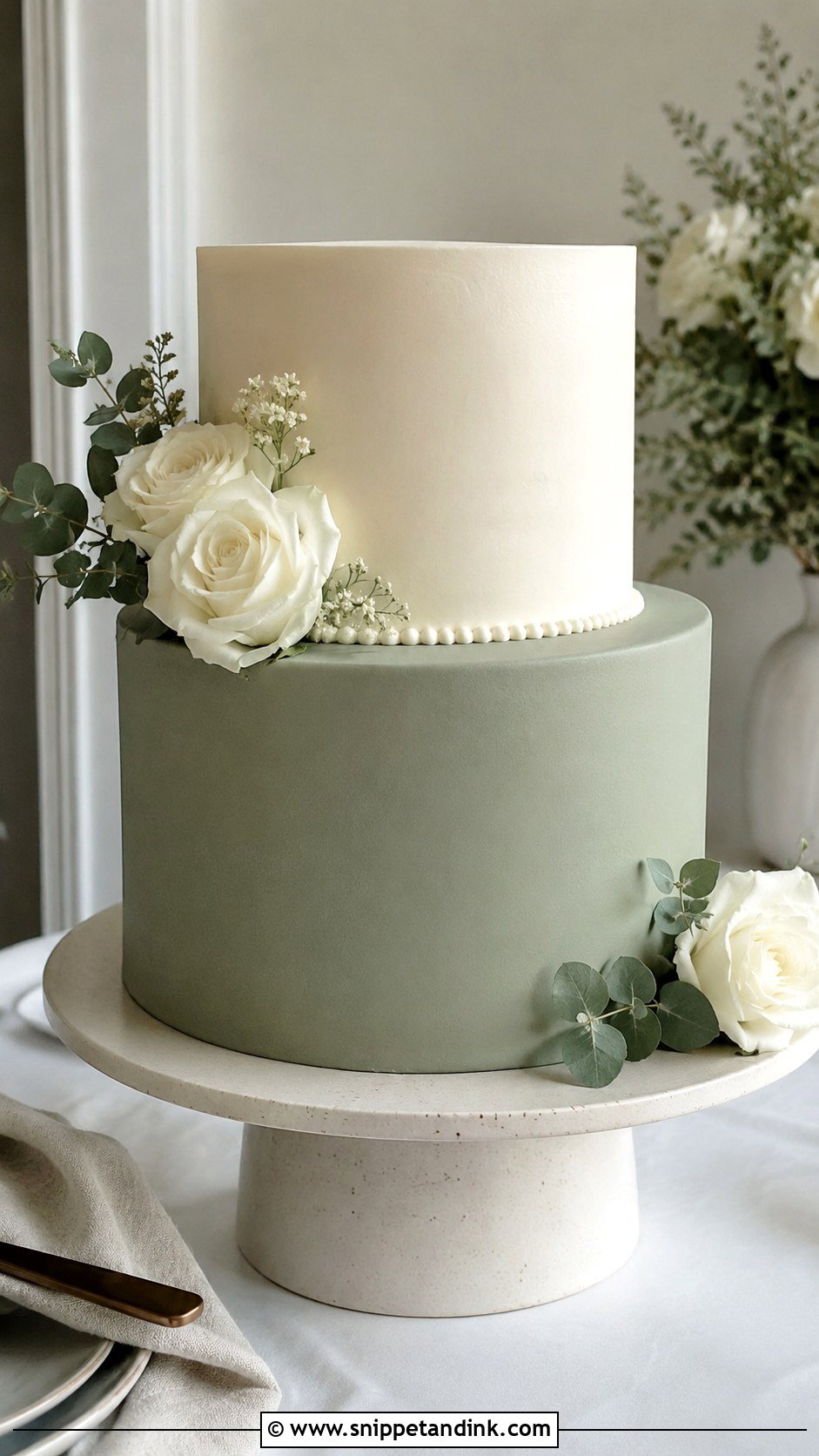
Two tiers can feel complete when the proportions are right. A sage green two tier wedding cake with a smooth sage bottom and ivory top looks balanced, and making the tiers extra tall gives it presence on a big table. Add a few flowers between the tiers or one cluster on top. Ribbed buttercream or soft ruffles add detail. I make this size most often for elopements, bridal lunches and small receptions.
16. Sage Green Three Tier Wedding Cake
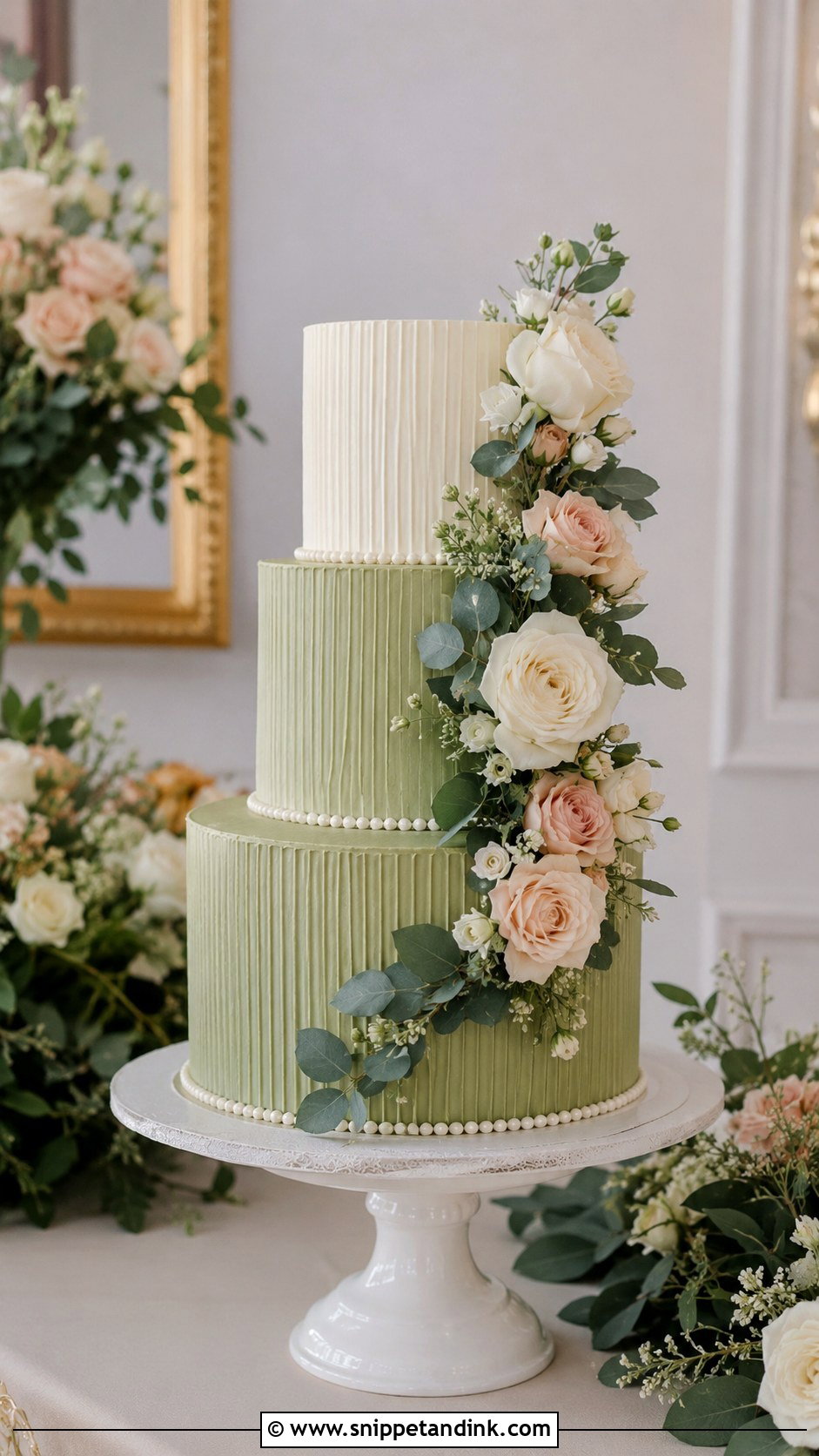
Three tiers is the size where a cake starts to hold its own in a medium or large room. You can go all sage, which reads bold but still soft, or alternate sage and ivory. I’d trail flowers from the top tier down one side rather than placing them evenly. Ribbed buttercream, pearls or gold edging add texture. Stacked tiers need internal dowels and a central support, so it’s worth asking how your baker transports a cake this size.
17. Sage Green Square Wedding Cake
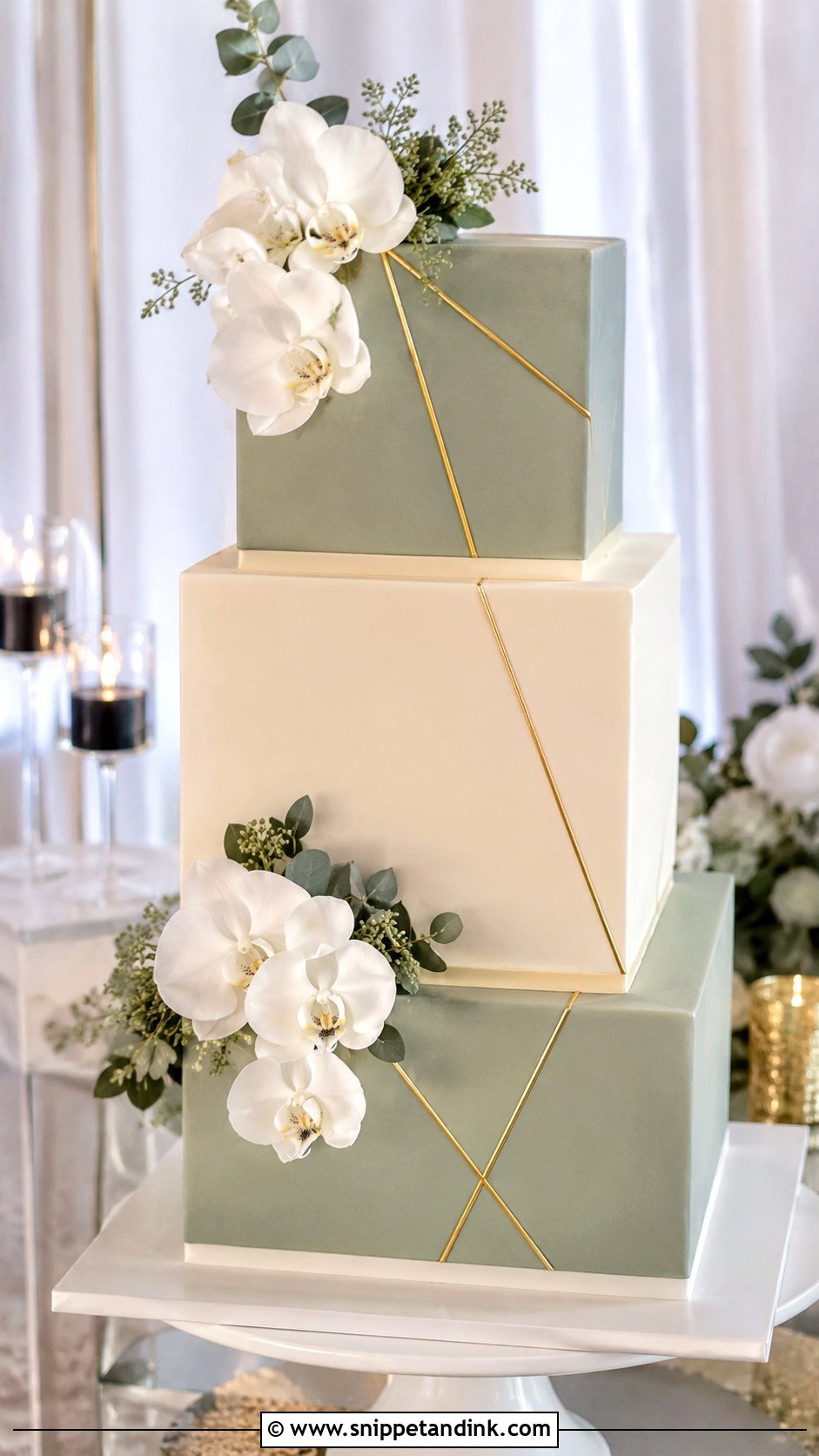
Square tiers make sage look crisp, and they’re harder to make than they look: every corner has to stay sharp, which is why I usually cover squares in fondant. Stack evenly for a classic shape or rotate the tiers slightly for something contemporary. White orchids, thin gold lines or a little greenery soften the structure. It’s a good fit for hotels and minimal venues.
18. Sage Green Boho Wedding Cake
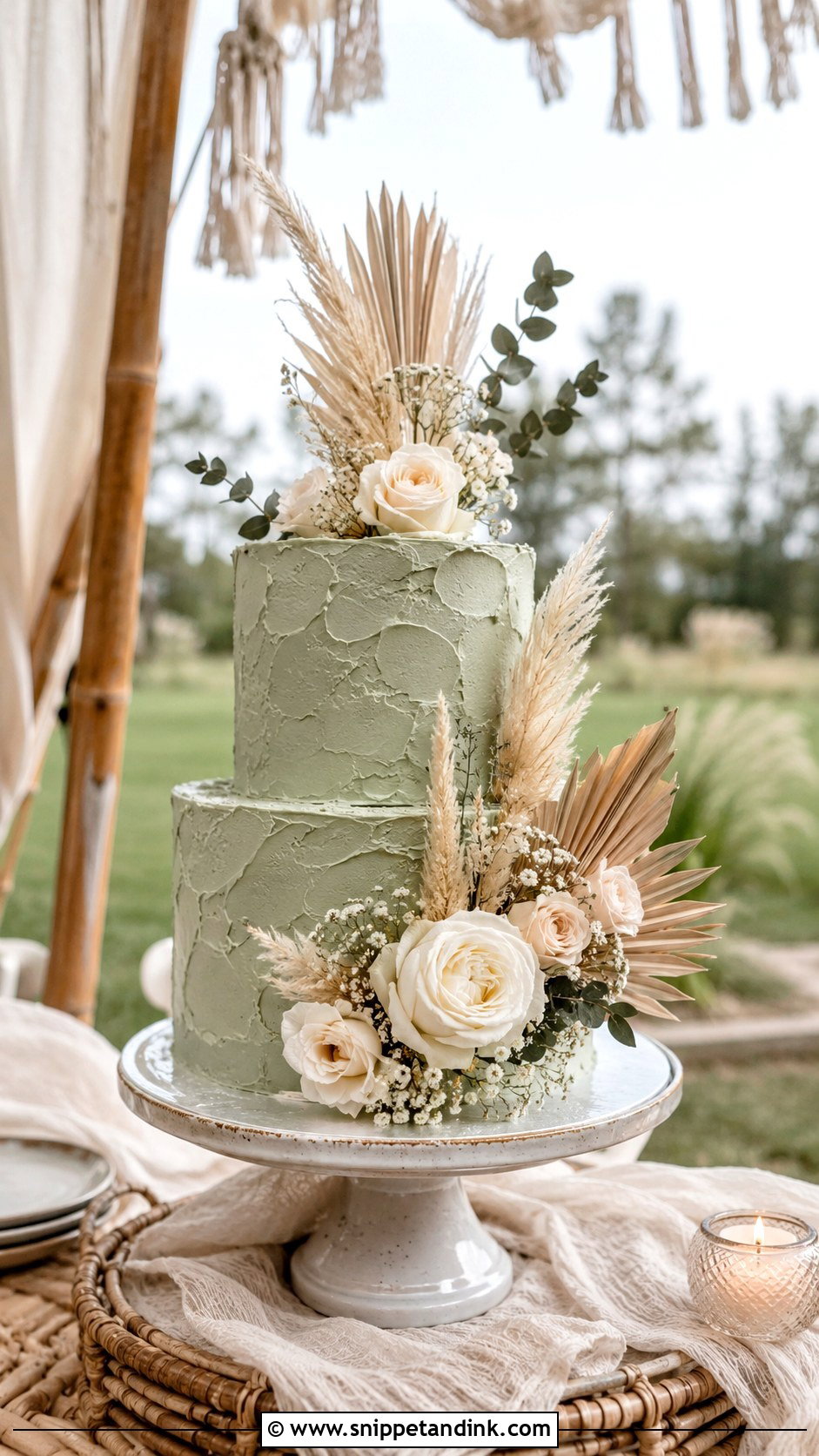
Boho on sage comes down to dried material: pampas, bleached grasses, dried palms and small cream flowers. A sage green boho wedding cake can be textured sage buttercream or ivory with painted sage accents. Dried pieces shed and some are brittle, so I add them at the venue. Keep gaps between them; crowded boho looks messy fast. A ceramic stand or a wooden pedestal suits desert, beach and outdoor weddings.
19. Sage Green Minimalist Wedding Cake
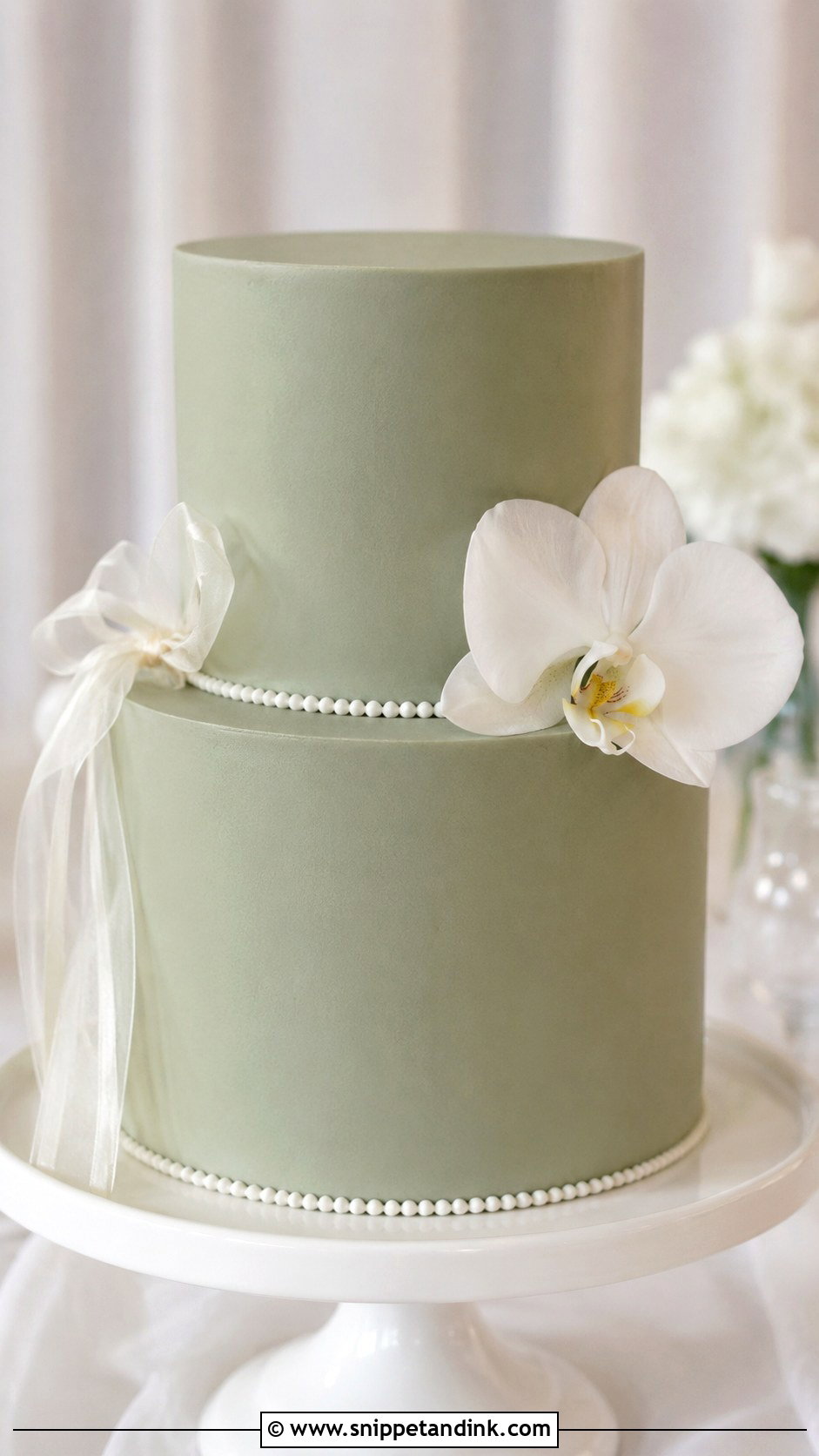
Minimal cakes leave nowhere to hide. With one tiered sage cake, a single white flower, a thin ribbon or a small pearl border, every edge and every air bubble shows, so this is a style where your baker’s finishing skill matters most. Matte frosting looks more refined than shiny. Courthouse weddings, small receptions and clean modern rooms suit it.
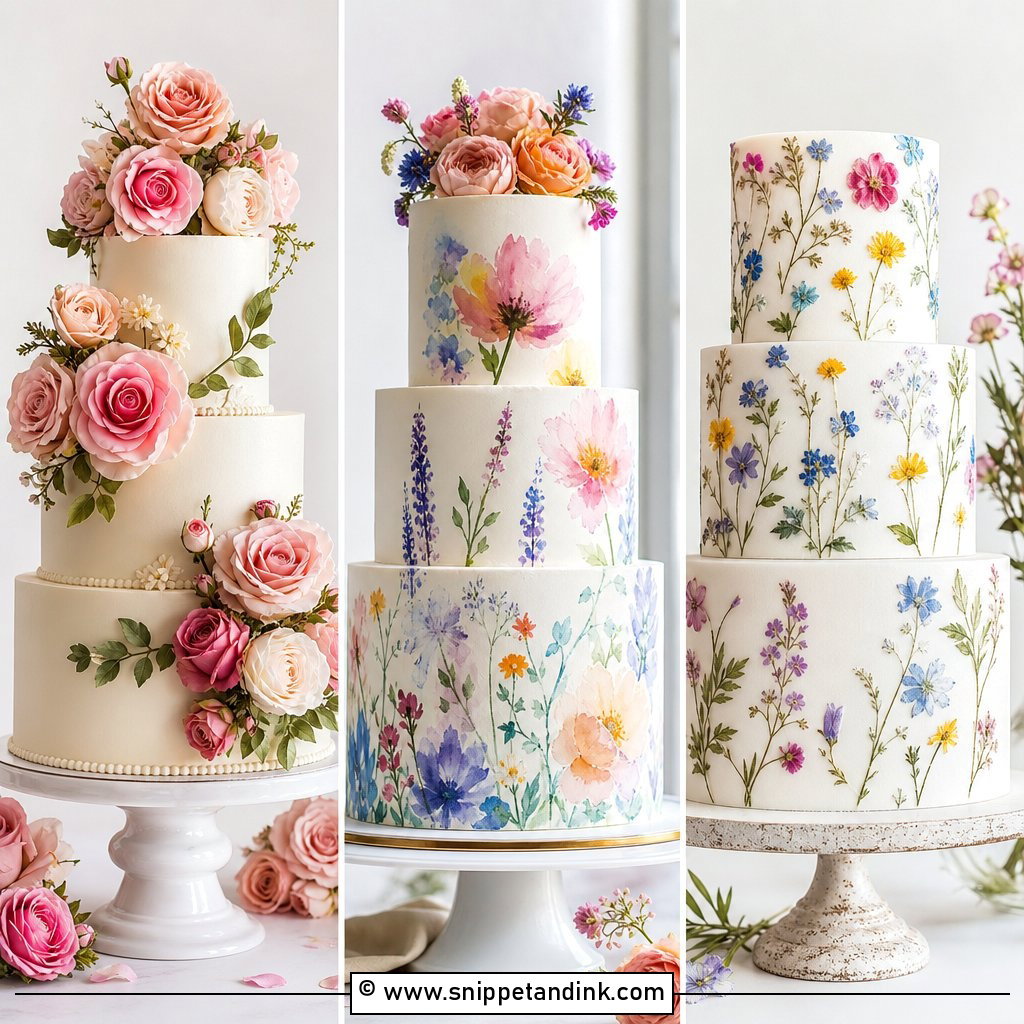
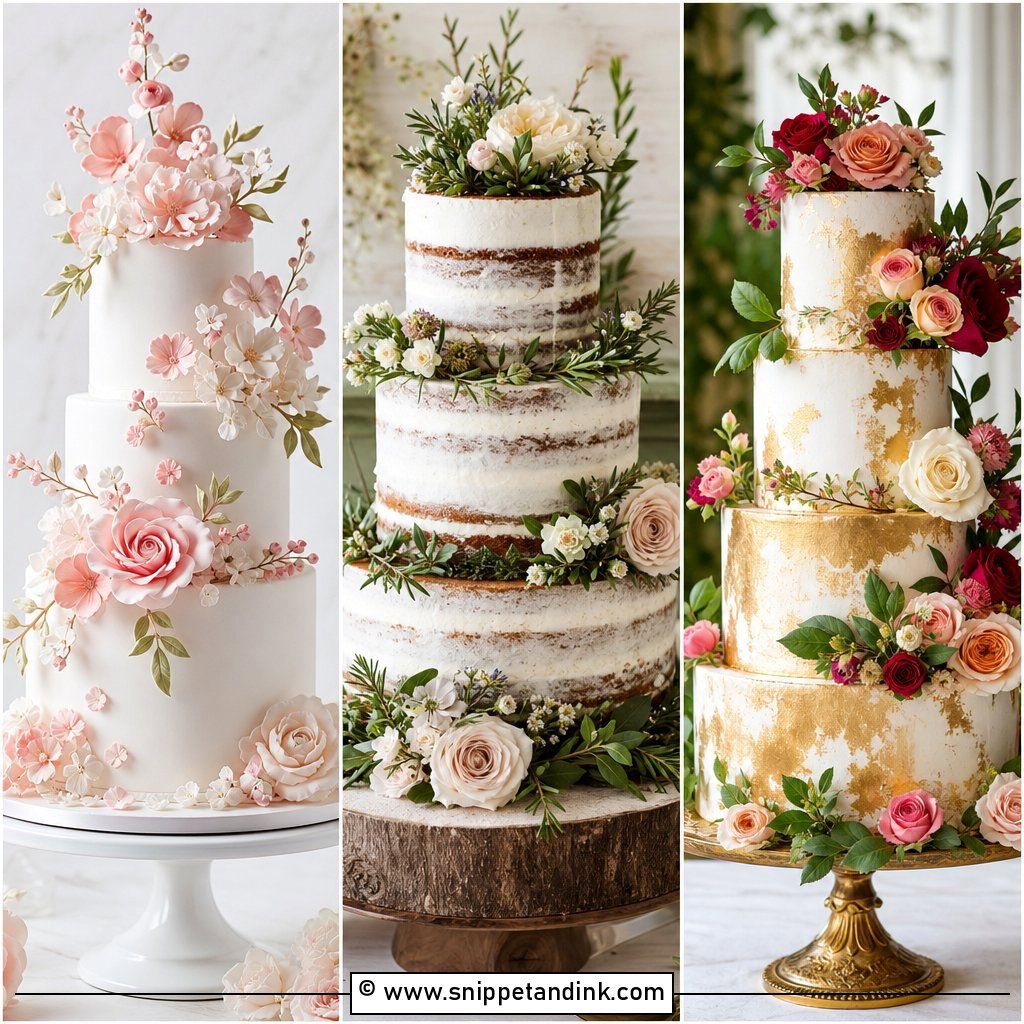

20. Sage Green Garden Wedding Cake
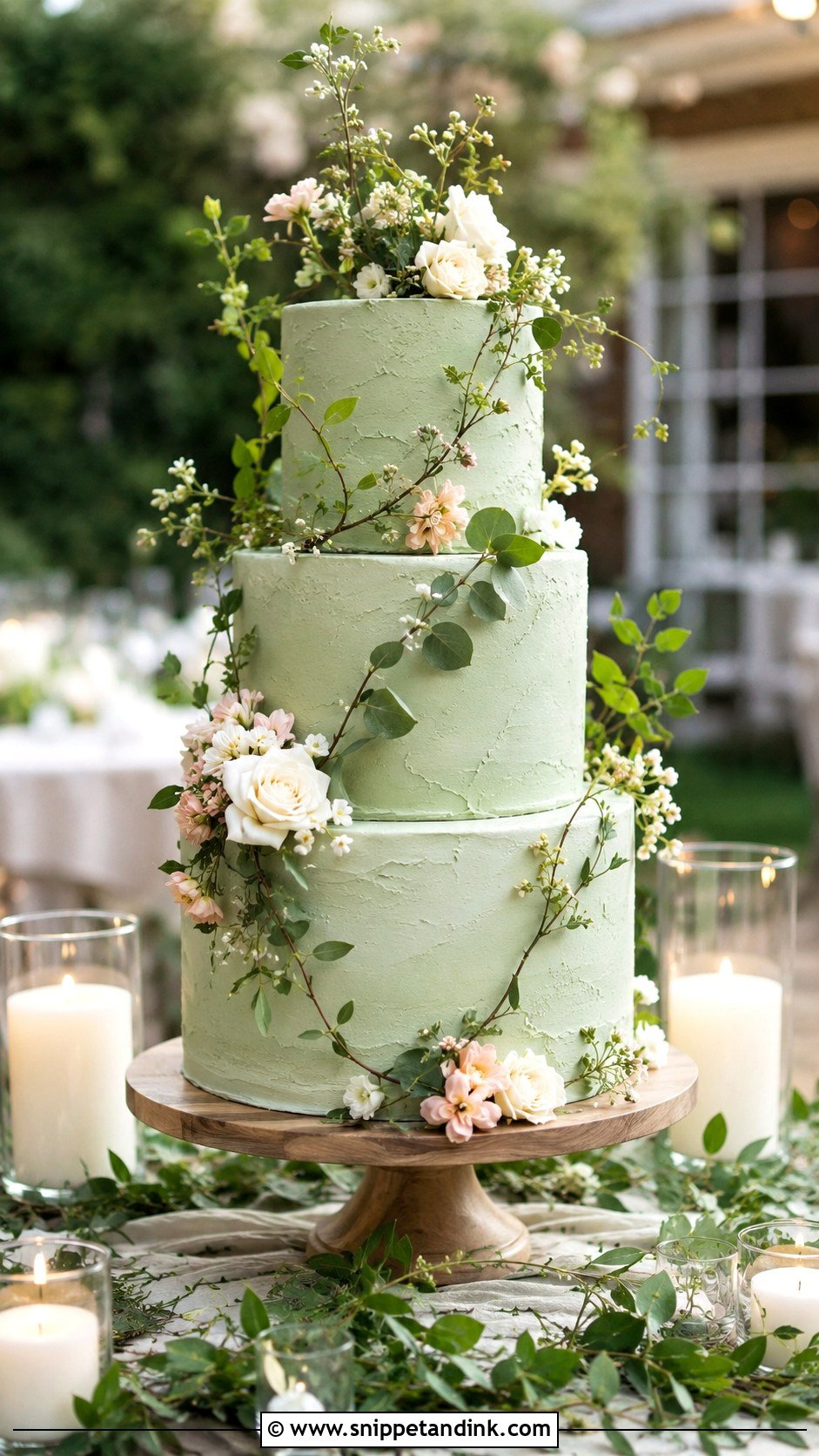
A garden cake combines soft green frosting with flowers, vines and leaves climbing the tiers. I’d use white roses, blush blooms, tiny wildflowers and eucalyptus kept off the frosting, either on a smooth cake or a lightly textured one. Hand-piped or painted vines last better than fresh stems in a warm tent. Set it on a pedestal with greenery and candles around the base for outdoor ceremonies and tented receptions.
How Many Guests Each Tier Count Feeds
Couples often choose a tier count from photos and then find it doesn’t feed the room. Wedding portions are cut as tall, narrow fingers, smaller than a party slice. As a rough guide, a 6 inch round gives about 12 wedding portions, an 8 inch about 24, a 10 inch about 38 and a 12 inch about 56. Bakers cut differently, so treat these as starting points.
- Two tiers, 6 and 8 inch: roughly 35 guests
- Three tiers, 6, 8 and 10 inch: roughly 70 to 75 guests
- Four tiers, 6 to 12 inch: roughly 130 guests
If you love a two tier design but are feeding 150, I’d suggest a display cake plus a plain sheet cake in the same flavor, cut in the kitchen. Guests can’t tell, and you get the look you want. Extra-tall tiers also add servings without changing the silhouette much.
When to book
Many cake makers only take a set number of weddings each weekend, so popular dates fill early. I’d reach out several months ahead, have the tasting once your guest count is roughly known, and confirm the final number a few weeks before the day.
Does Sage Suit Your Wedding Palette?
Sage is easy to live with on a cake. It goes rustic with naked layers and eucalyptus, formal with pearls and gold, modern with marble or square tiers, and romantic with pressed flowers. If your palette already includes ivory, cream, blush, champagne or soft neutrals, it will slot in quietly. Decide how much color you want on the frosting itself, then let your venue and season guide the texture.
You'll Like These Ideas:





Leave a Reply