
Lemon is one of the flavors couples ask to taste most, and it earns the spot: nothing cuts through buttercream sweetness quite like it. On the outside, a lemon theme can go garden-style with real fruit and leaves, or modern with clean tiers and a single pale yellow detail. Inside, lemon gets along with raspberry, blueberry, elderflower, lavender, vanilla, olive oil and herbs, so the slice can be as memorable as the cake table. Below are twenty designs I’d happily build, each with a note on how it actually behaves once it leaves my kitchen.
Real Lemons on a Cake Need More Prep Than You’d Think
Almost every design below uses citrus as decoration, and fruit is the part couples underestimate. Supermarket lemons are usually coated in wax, so I scrub them in warm water or buy unwaxed fruit before anything touches the icing. Cut slices start drying and curling at the edges within a few hours, and their juice weeps into buttercream and leaves pale wet patches. That’s fine for a cake served within the hour, but not for one that stands through a long dinner.
Three kinds of lemon slice, and when I use each
- Fresh slices: brightest color, but only for cakes set up shortly before cutting. I blot them on paper towel first so they don’t leak.
- Candied slices: simmered in sugar syrup and dried, they turn glossy, hold their shape for days and taste good enough to eat.
- Sugar lemons: modelled from gum paste, they never wilt or weep, which makes them the choice for a hot venue or a top tier you plan to freeze.
Whole lemons, branches and leaves are decoration, not food. I set them on the cake board or a tray around the base rather than pushing anything into the sponge, and any stem near frosting gets wrapped first.
1. Lemon Buttercream Wedding Cake
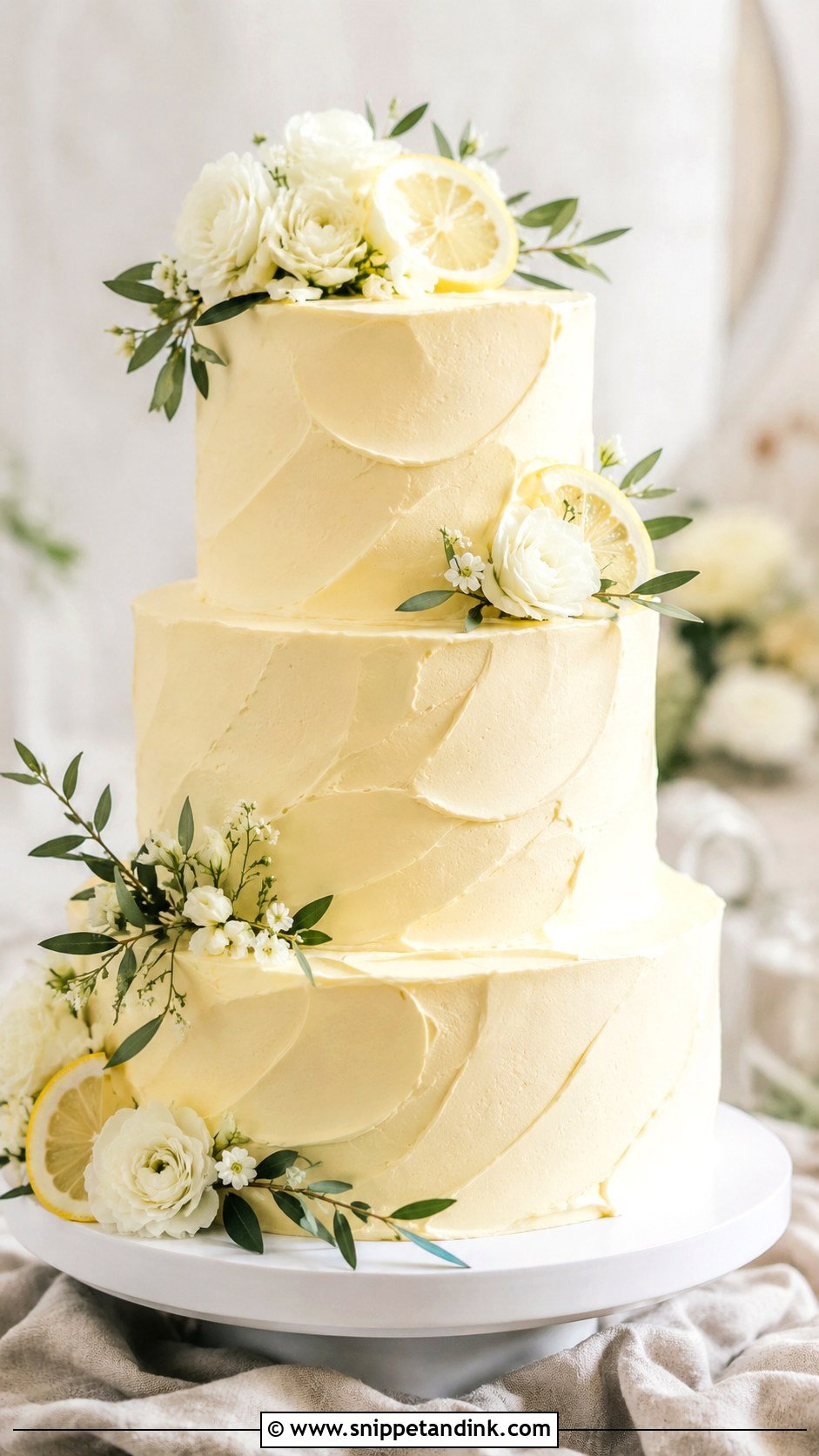
Ivory buttercream with pale yellow accents is where most of my lemon conversations start, because the citrus can live inside the cake while the outside stays classic. I flavor the buttercream with zest rather than juice; too much juice splits the butter and leaves the finish looking curdled. Thin lemon slices, tiny white flowers and a few green leaves give it a garden edge. My usual build is lemon sponge, lemon curd and vanilla buttercream, which keeps the sourness in the middle of each bite instead of coating your whole mouth.
2. Lemon Elderflower Wedding Cake
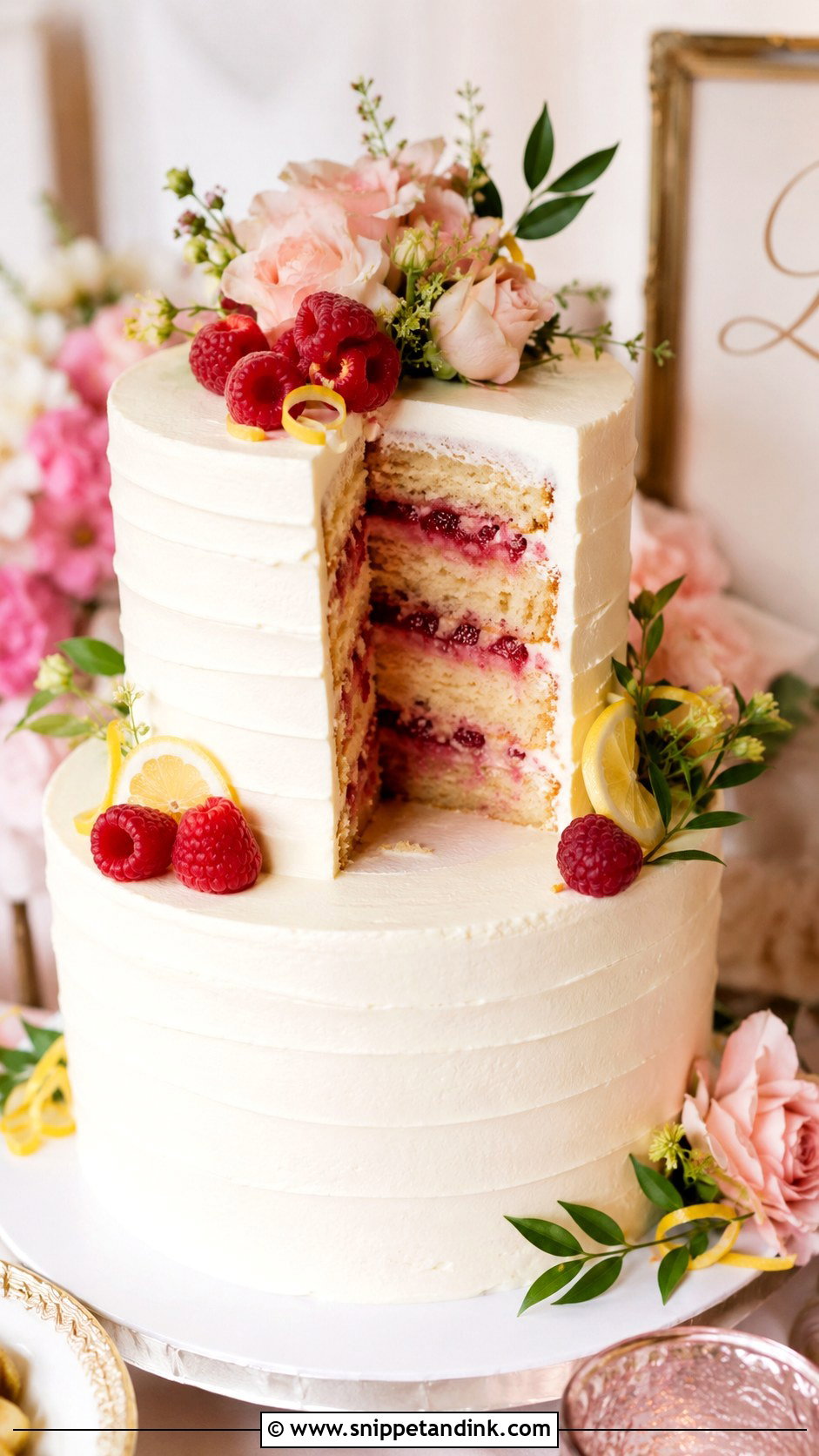
Elderflower is easy to overdo. Brushed between lemon sponge layers as a light syrup, it adds moisture and a faint floral note guests enjoy without quite naming; poured on heavily, it starts tasting like hand soap. I keep the decoration as restrained as the flavor, with smooth buttercream, fresh white flowers, a couple of small lemon accents and soft greenery. Garden receptions and estate venues suit it because the cake doesn’t have to fight a busy room.
3. Lemon Raspberry Wedding Cake
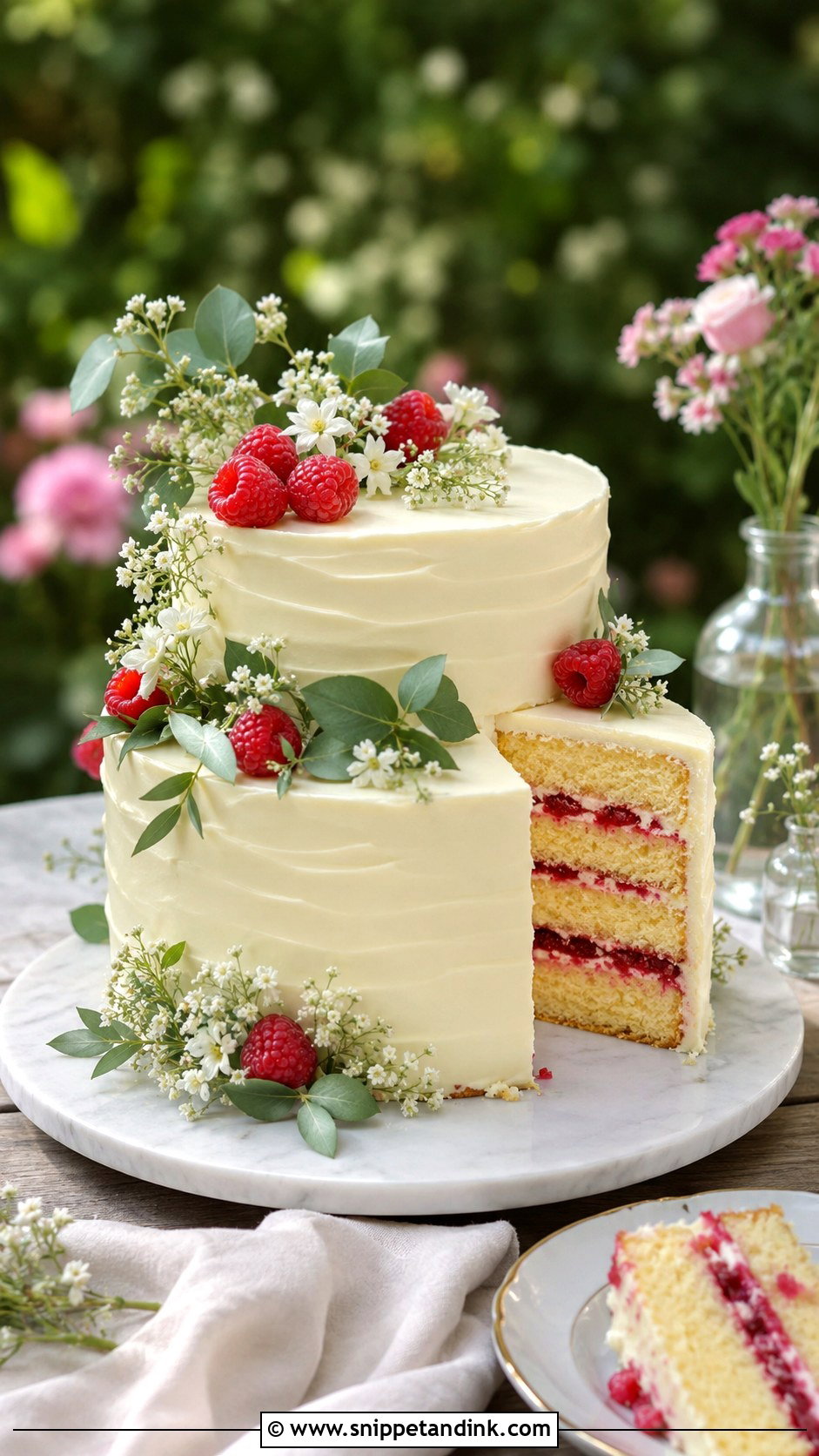
What sells lemon and raspberry is the cut. Slice into it and a pink stripe of filling shows against yellow sponge, which is exactly the shot photographers wait for. White buttercream keeps the outside formal, with fresh raspberries, lemon slices and blush flowers on the tiers. One caution from the workbench: fresh raspberries bleed onto white buttercream after a couple of hours, so I place them as late as possible or sit them on a small disc of white chocolate. It’s an easy flavor for a mixed crowd, since almost nobody finds it too unusual.
4. Lemon Blueberry Wedding Cake
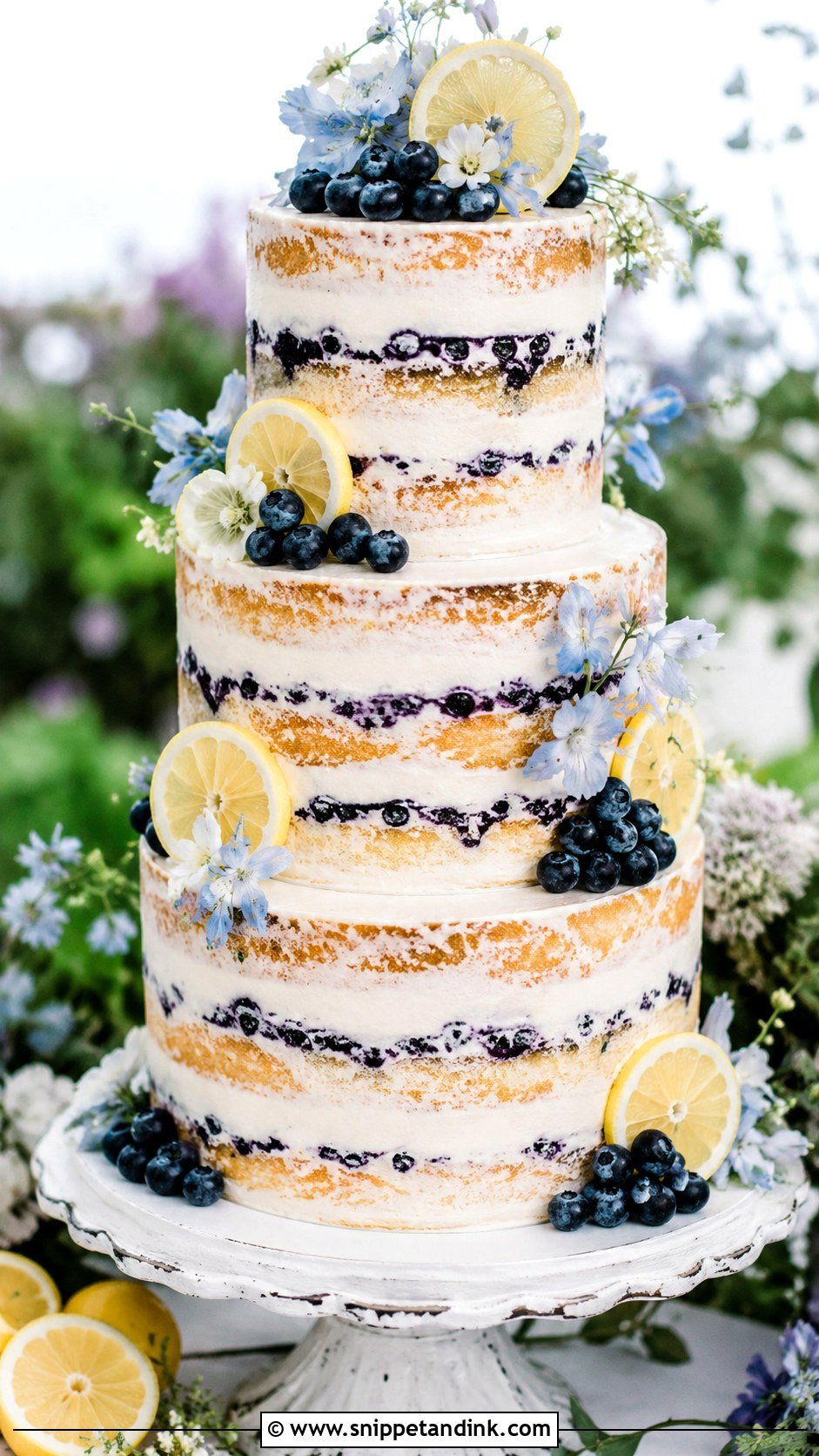
Blue and yellow can look like a nursery if both colors are loud, so I mute them: smooth white frosting, tiny blueberries, lemon curls and dusty blue flowers. Between blueberry compote and blueberry buttercream, I’d pick compote every time. It stays juicy and gives a deeper purple in the slice, though it needs a stiff buttercream dam so it doesn’t push out the sides. A semi-naked finish with berries tucked between the tiers relaxes the whole thing for backyard and summer garden weddings.
5. Lemon Lavender Wedding Cake
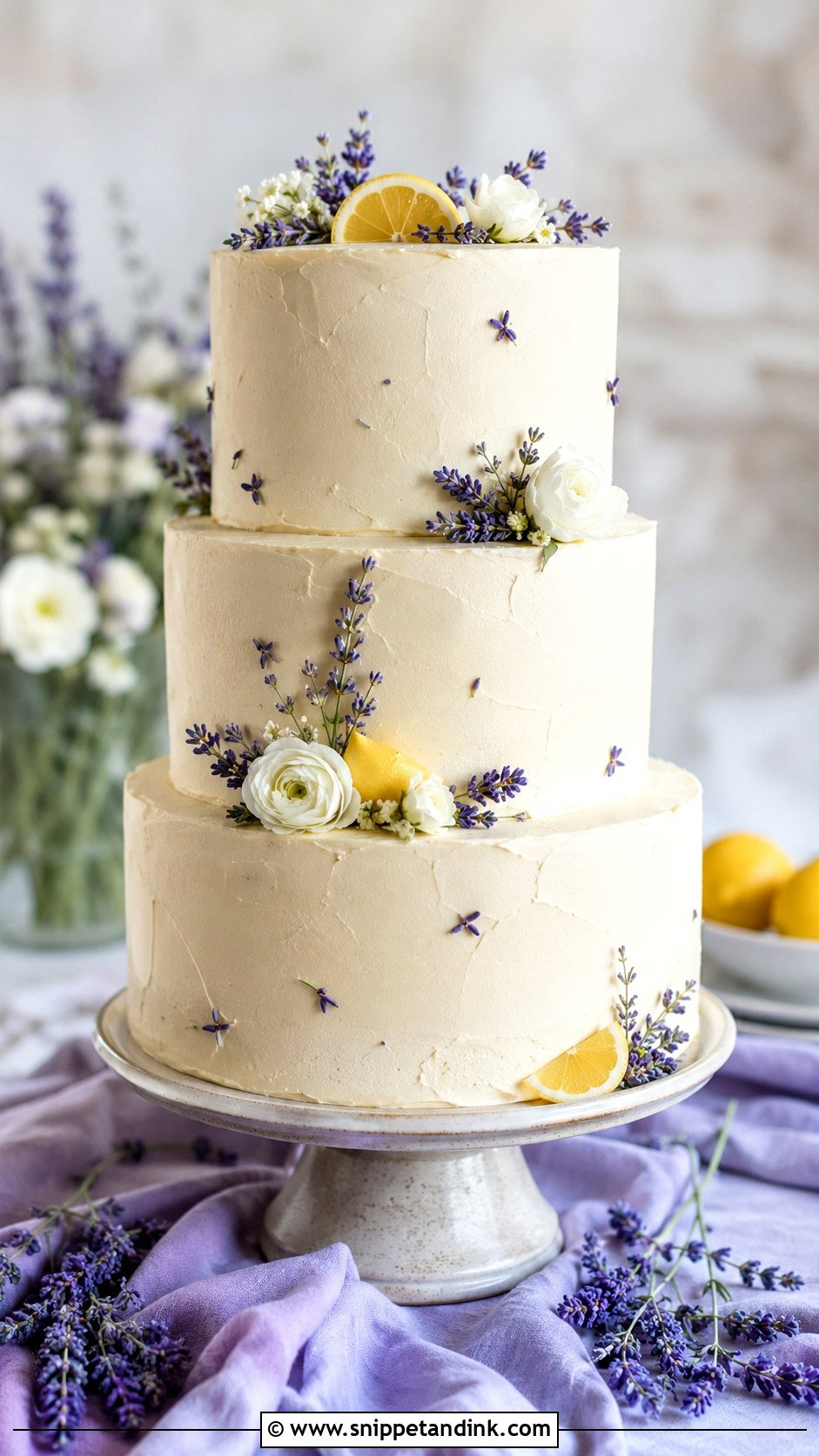
Lavender is the flavor I handle most carefully. A small amount steeped into the syrup reads as floral; a little too much tastes medicinal, and I’d rather a couple under-flavor it at the tasting than wince at the reception. Smooth ivory buttercream, pale lavender piping and tiny edible flowers keep the palette calm. Dried sprigs should be culinary lavender and sit as decoration, not baked into every layer. A few small lemon touches keep the citrus theme readable for countryside venues and late spring dates.
6. Lemon Olive Oil Wedding Cake
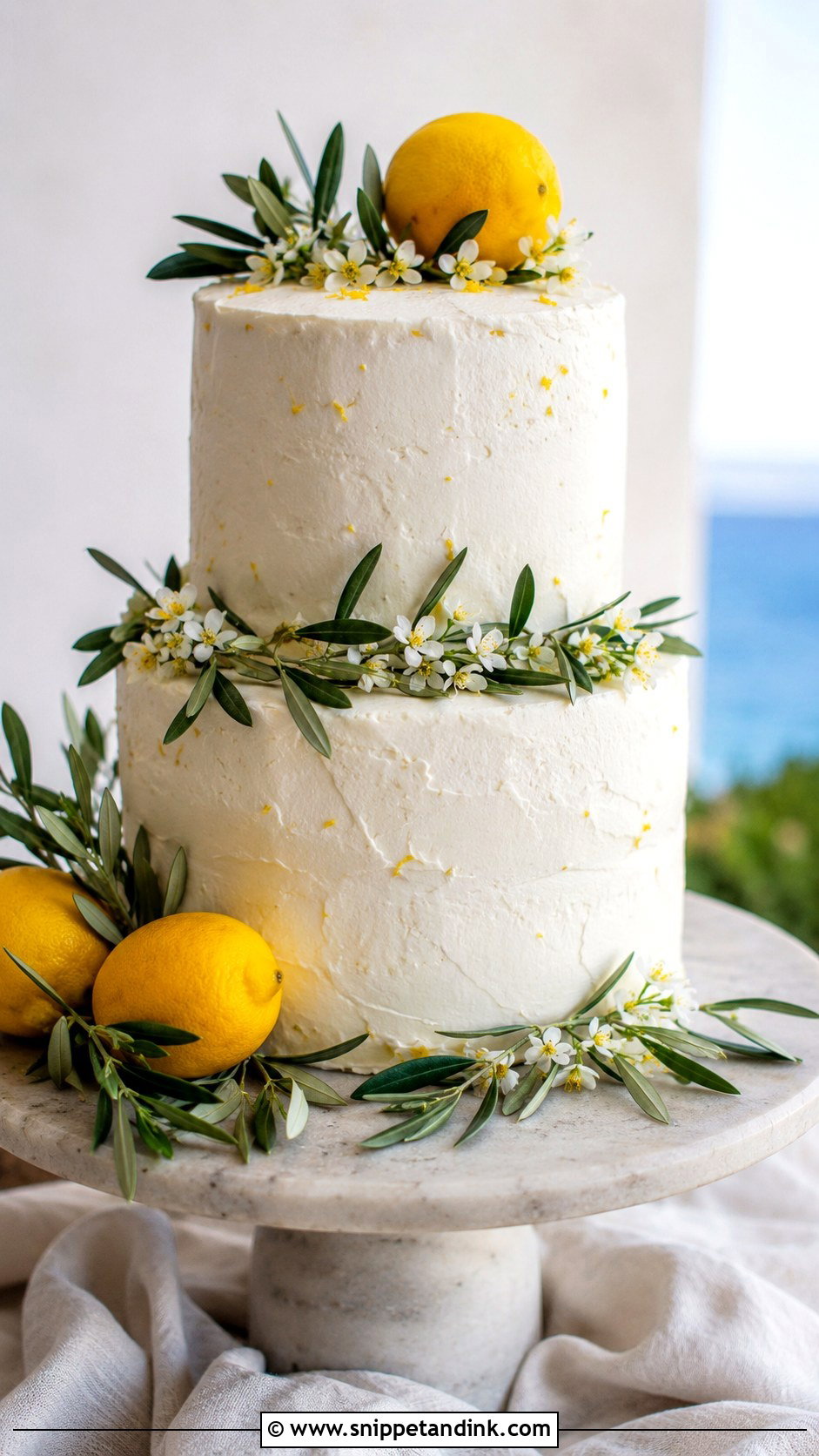
Olive oil sponge has a tender, slightly dense crumb that stays moist longer than a butter sponge, which makes it forgiving on a long day. Lemon zest lifts it. I finish it simply, with a semi-naked coat or a thin glaze, and decorate with fresh lemons, olive leaves and white blooms on a plain stand. The trade-off is structure: an oil cake is softer, so for three or more tiers I dowel it carefully and chill it well before stacking. Its grown-up, slightly Mediterranean taste fits outdoor dinners and coastal venues.
7. Lemon Poppy Seed Wedding Cake
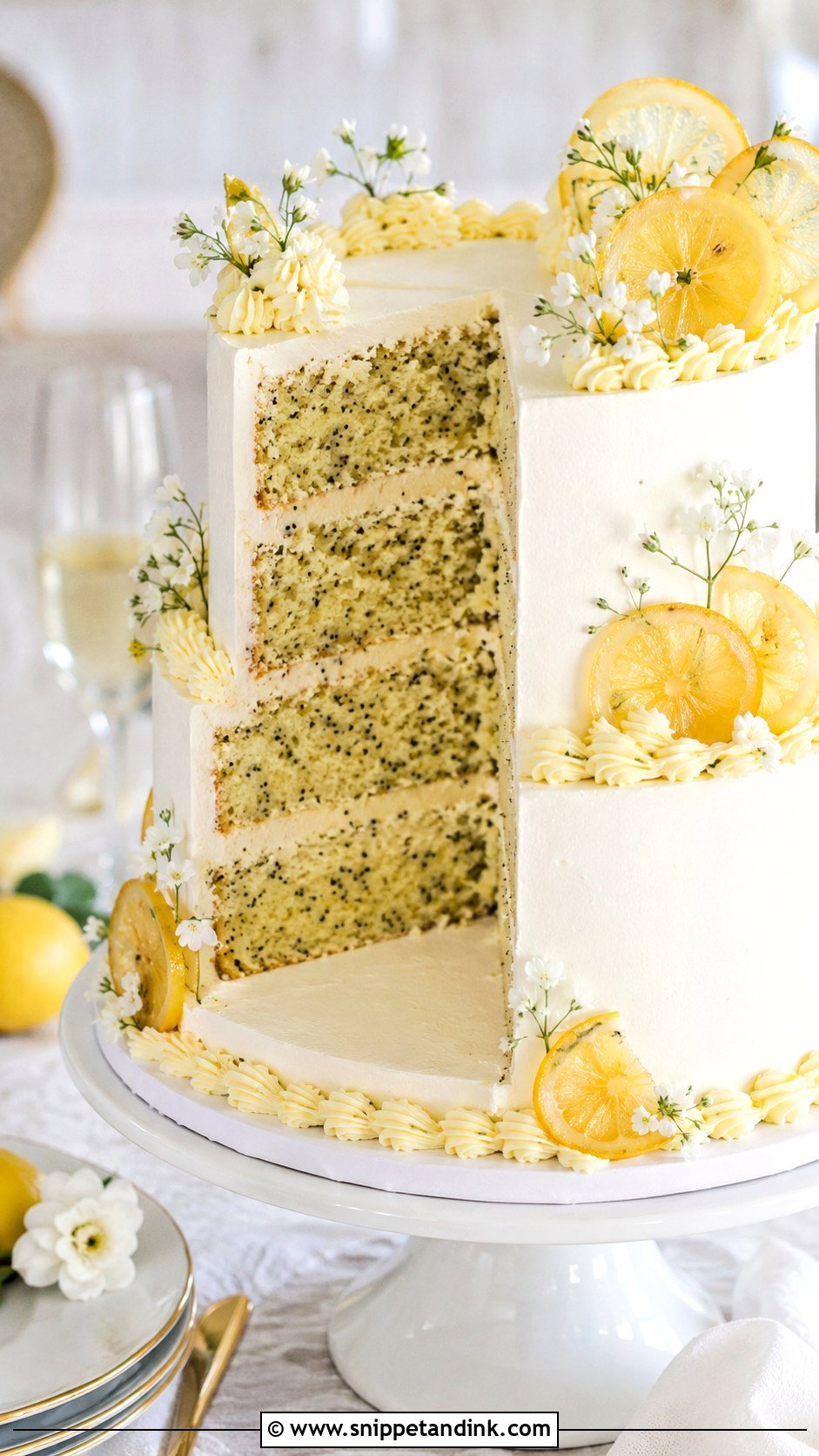
Couples who like texture in a slice tend to land here. The seeds speckle the crumb, which shows nicely when the cake is cut, and they bring a faint nutty note. I keep the outside wedding-ready with smooth white buttercream, pale yellow piping and thin lemon wheels or candied pieces. Small practical warning: poppy seeds stick in teeth, so keep a compact mirror near the cake table if photos follow the cutting. Brunch weddings and garden parties suit it best.
8. Lemon Meringue Wedding Cake
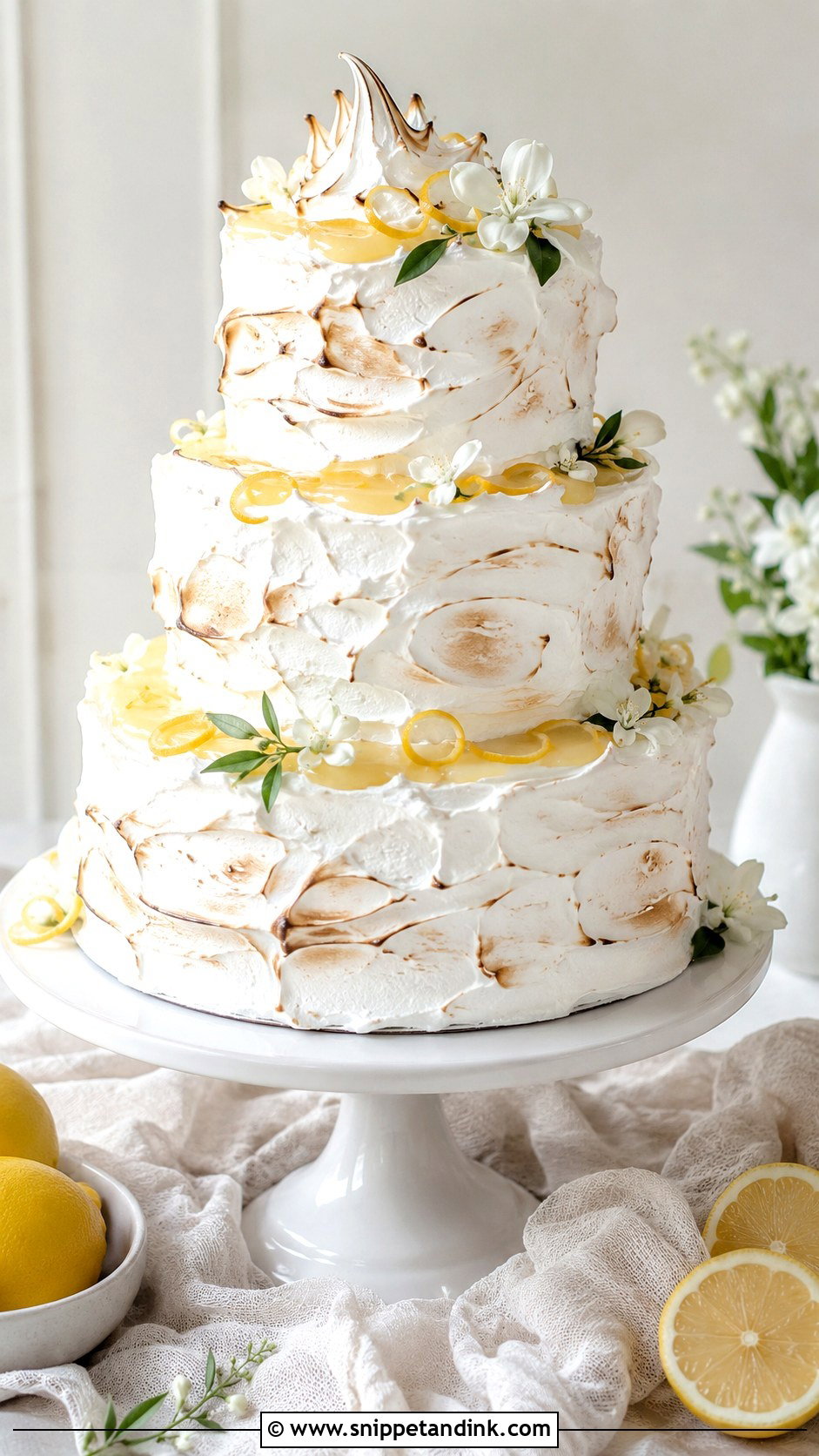
Think lemon pie, stacked: lemon sponge, lemon curd and a Swiss or Italian meringue finish toasted at the tips. Torched peaks look fantastic, but meringue hates humidity, and in a hot, damp room it starts to weep within a few hours. For outdoor summer weddings I usually suggest buttercream on the main tiers and toasted meringue only on the top tier or on individual tarts nearby. Lemon zest curls and a few glossy slices are all the decoration it needs.
9. Lemon Curd Wedding Cake
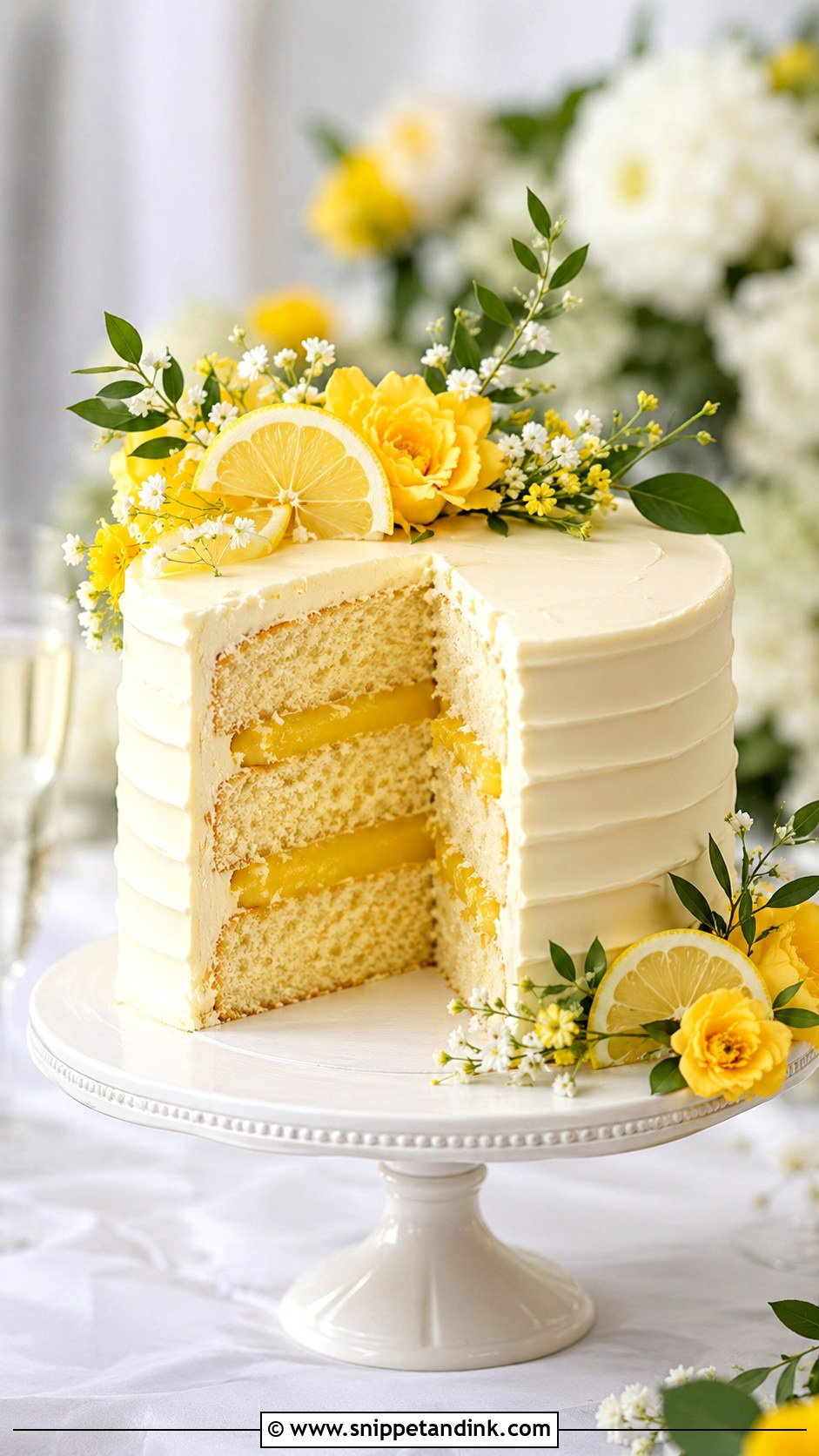
Here the filling does the talking. Sponge can be vanilla, lemon or almond, but the curd should be thick and properly tart. I pipe a stiff buttercream ring around each layer before spooning in curd, because curd is soft and will bulge out of the sides of an uncontained cake. Outside, white tiers with yellow flowers and a neat ring of lemons at the base keep the theme quiet. Ask your baker how sharp they make it, since curd can swing from candy-sweet to puckering. It also needs to stay cold, so this cake shouldn’t sit out for hours before serving.
10. Lemon Drip Wedding Cake
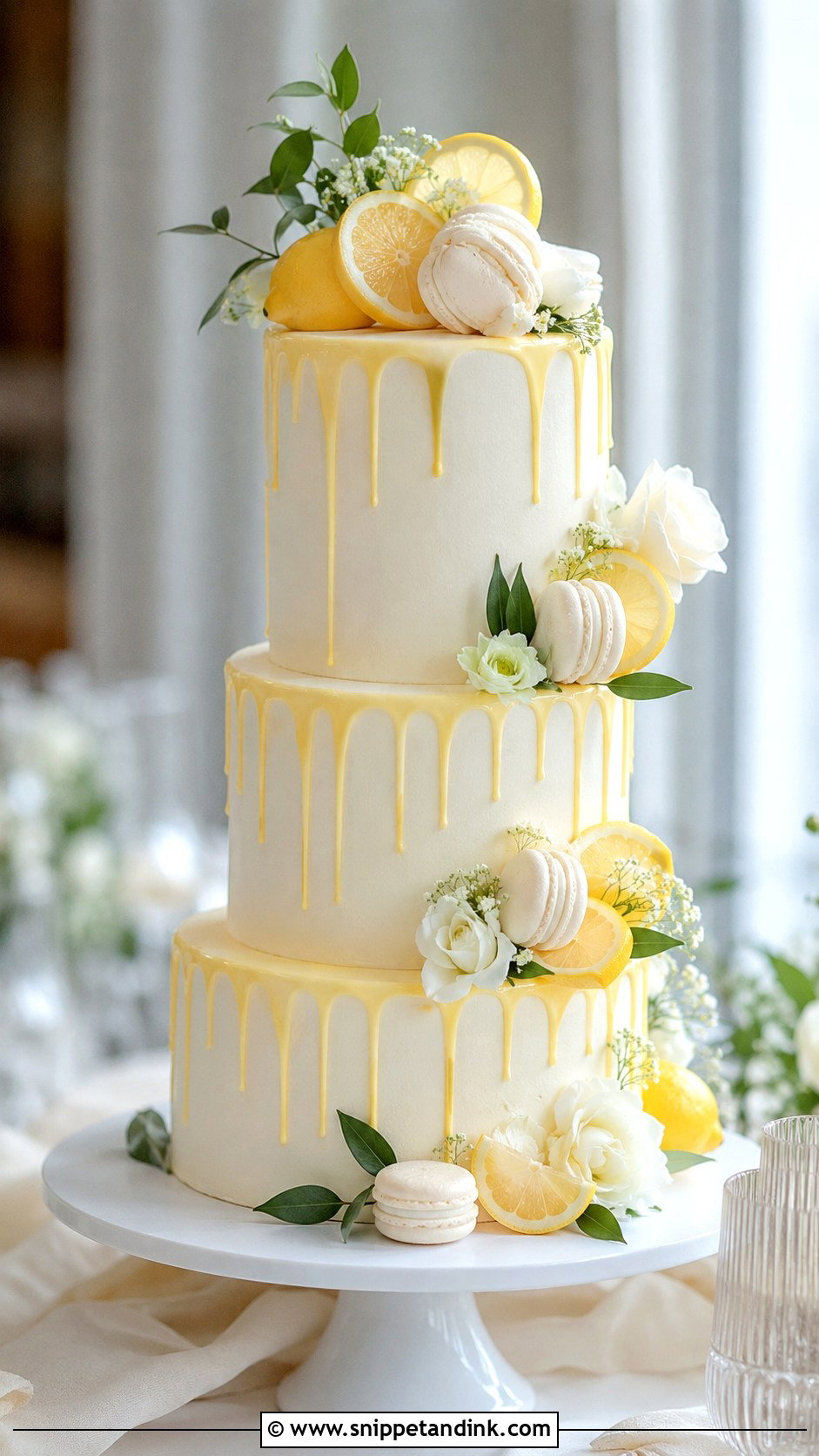
A pale lemon glaze, or white chocolate tinted soft yellow, is a fresher alternative to the usual dark drip. Drips only look deliberate on a well-chilled cake; on warm buttercream they run straight to the board. I test the first one on the back of the tier to check consistency, then work around. Fresh lemons, macarons, white flowers and greenery crown the top. Because the drip is already loud, I keep everything below it plain. Dessert tables that need to read from across the room are where this one shines.
11. Lemon Naked Wedding Cake
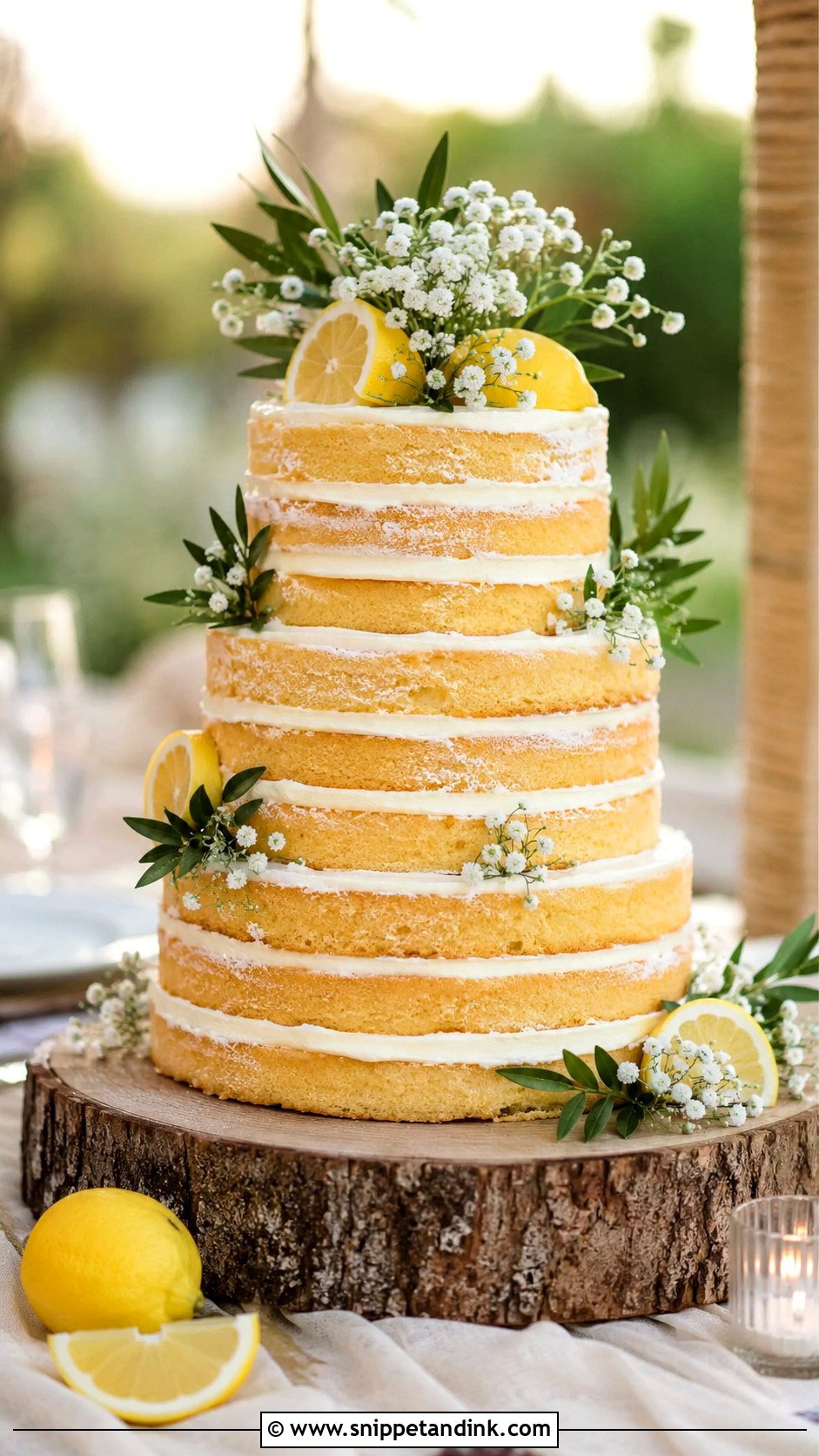
With no frosting to hide behind, the bake has to be flawless: even layers, a level crumb, no domes. Lemon sponge has a pale golden color that looks warm through the gaps. The real risk is drying out, since bare sponge loses moisture to the air quickly, so I soak each layer with lemon syrup and assemble as close to the event as I can. Fresh lemons, greenery and small white flowers suit it, with curd, vanilla cream or berry filling inside. Set it on wood, linen or stone and it looks at home.
12. Lemon Semi Naked Wedding Cake
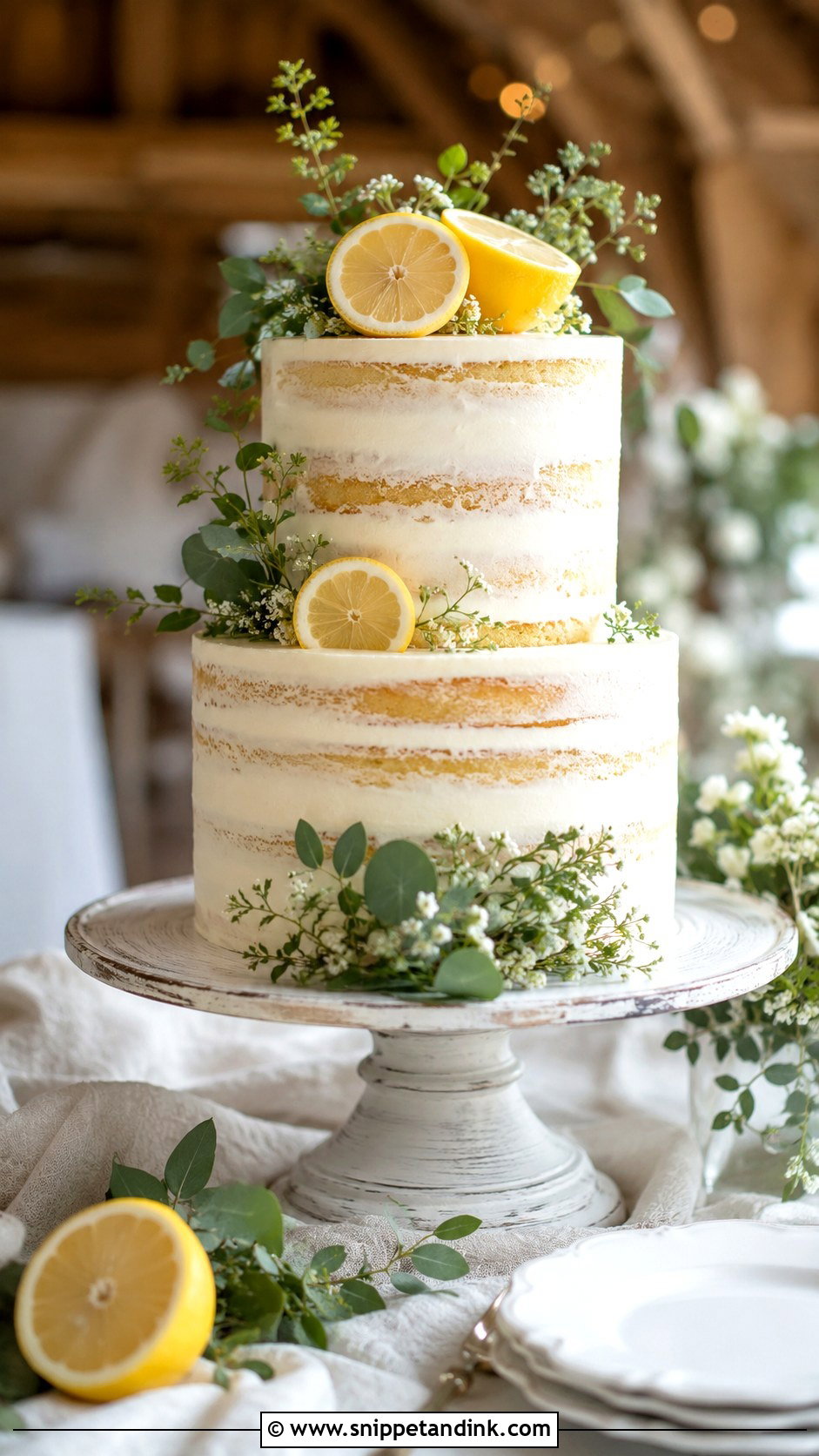
This is my go-to for barn and garden receptions. A thin scraped coat hides crumbs but lets golden sponge peek through, so it looks finished without trying hard, and it holds moisture better than a fully naked cake through a long cocktail hour. Fresh lemons, eucalyptus and white flowers are the classic trim; eucalyptus isn’t a food plant, though, so I wash it and wrap every stem before it touches the cake. Fill it with lemon curd, raspberry jam or whipped vanilla cream, remembering that whipped cream needs to stay cool.
13. Lemon Floral Wedding Cake
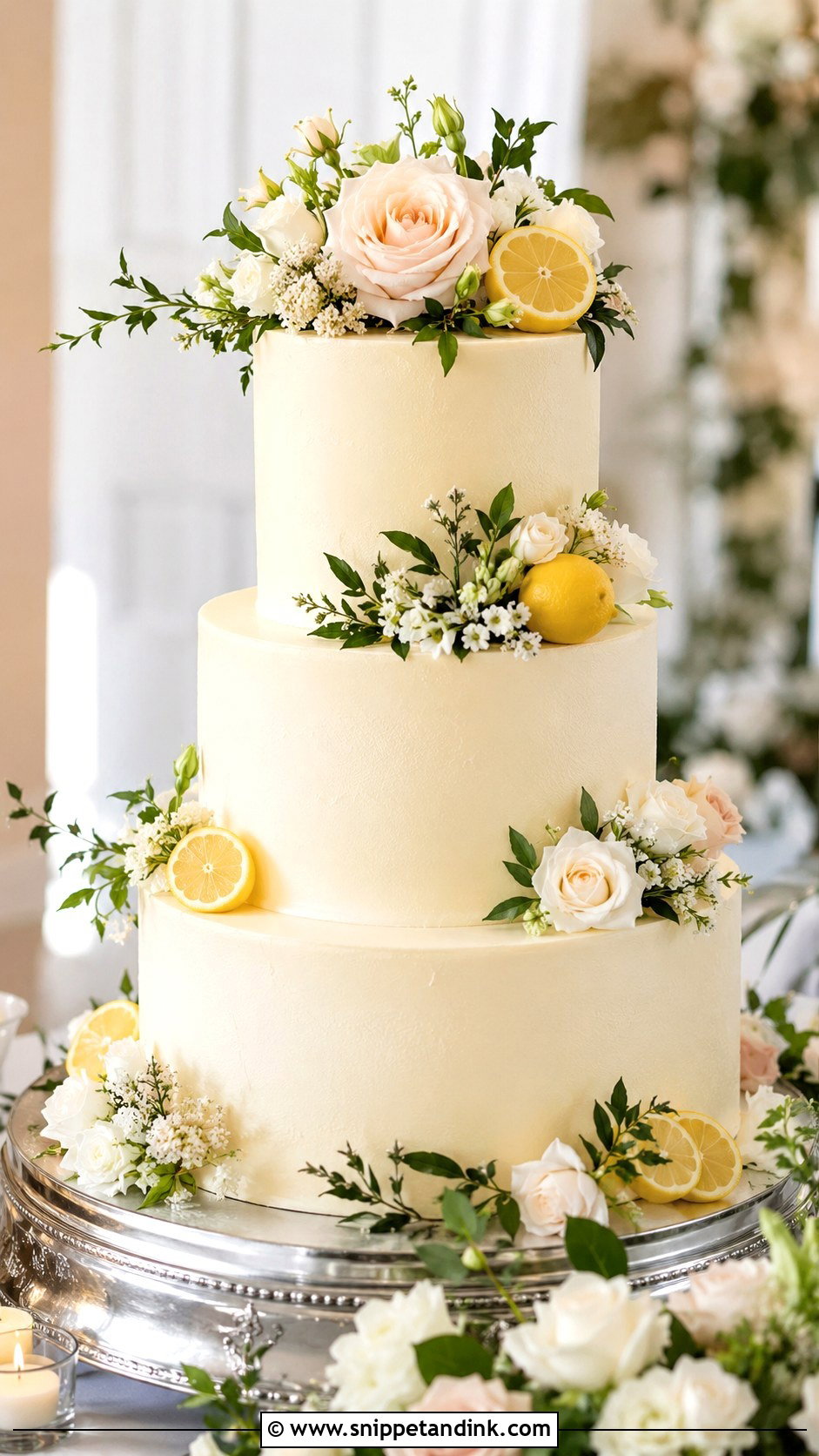
Flowers are what turn lemon from playful to romantic. I cover the tiers in smooth ivory buttercream and pull one or two colors from the bouquet, white with pale peach for instance, then tuck small lemons or slices between the blooms so the citrus looks intentional. Any flower going onto a cake should be pesticide-free with its stem wrapped and taped, which I sort out with the florist well ahead of the day. Lemon sponge with vanilla buttercream is the safe filling; elderflower or berry layers give adventurous guests something more.
14. Lemon Greenery Wedding Cake
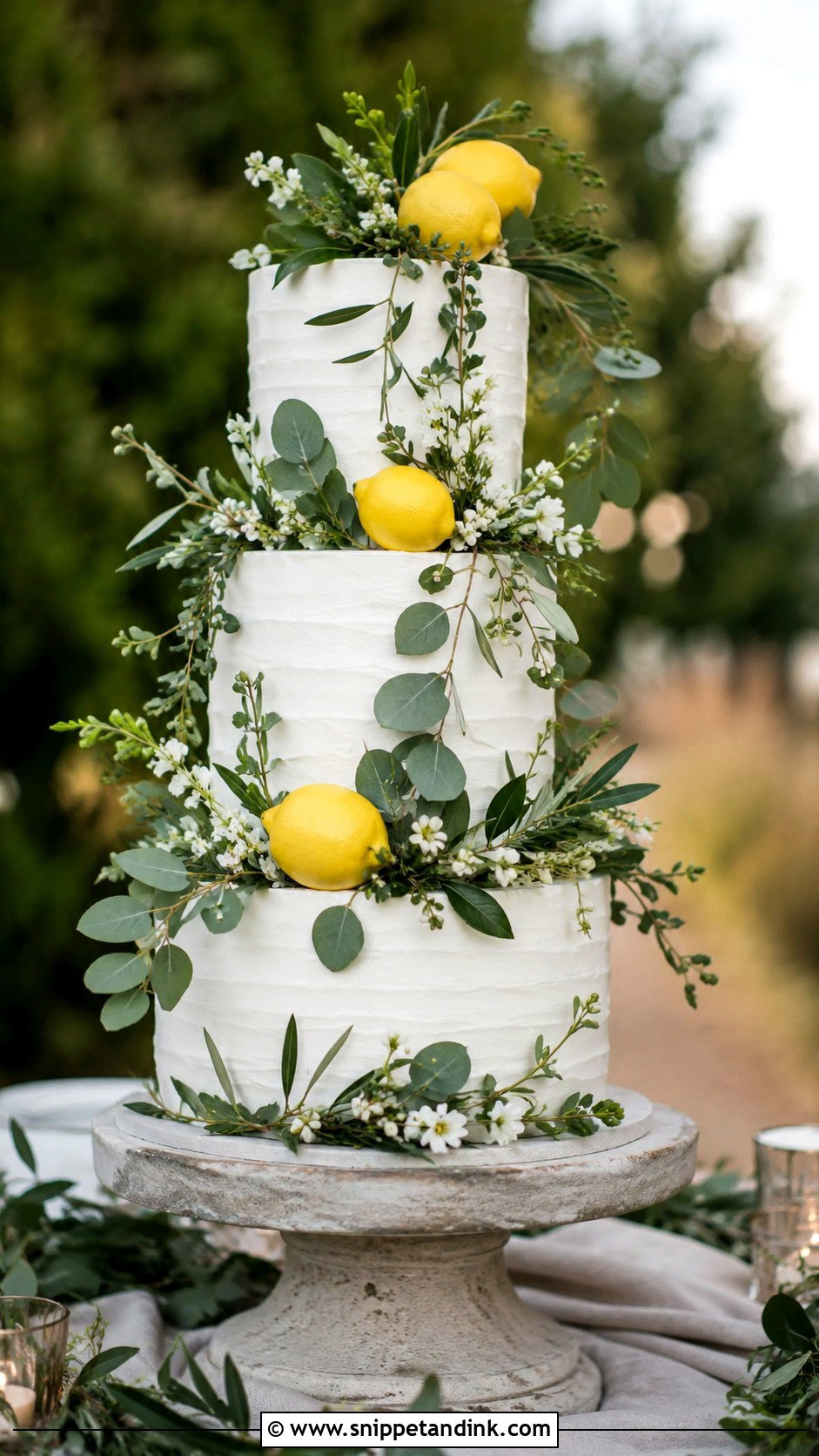
For couples who don’t want many flowers, greenery and whole fruit do the decorating. Smooth white buttercream or fondant gives a bright base, and lemon branches, olive leaves or small vines add movement up the tiers. Whole lemons clustered at the base look market-fresh, but they’re heavy, so I keep them on the board and never press them into soft tiers. Venues with lots of natural light suit it best, and holding the palette to white, yellow and green stops it getting busy.


15. Lemon Tiered Wedding Cake
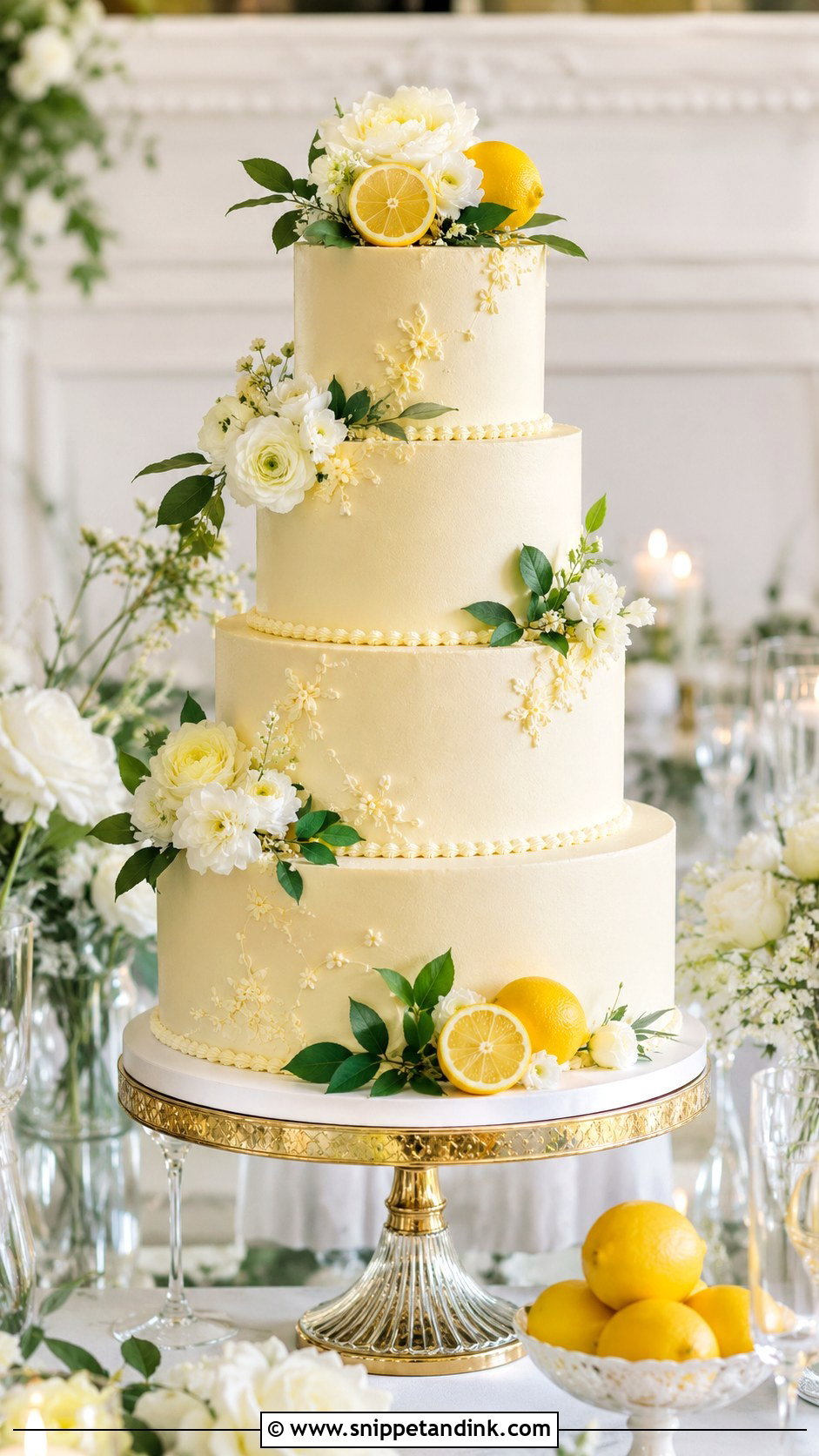
Three or four tiers give a lemon cake real presence at a traditional cake cutting. Height also means weight, so every tier sits on its own board with dowels underneath, and soft fillings like curd need that support most of all. Smooth buttercream, delicate piping, fresh lemons and soft flowers keep it classic. I often vary the filling by tier, lemon raspberry in one and lemon elderflower in another, so guests get a choice. A tall stand helps it hold its own in a large ballroom.
16. Lemon Square Wedding Cake
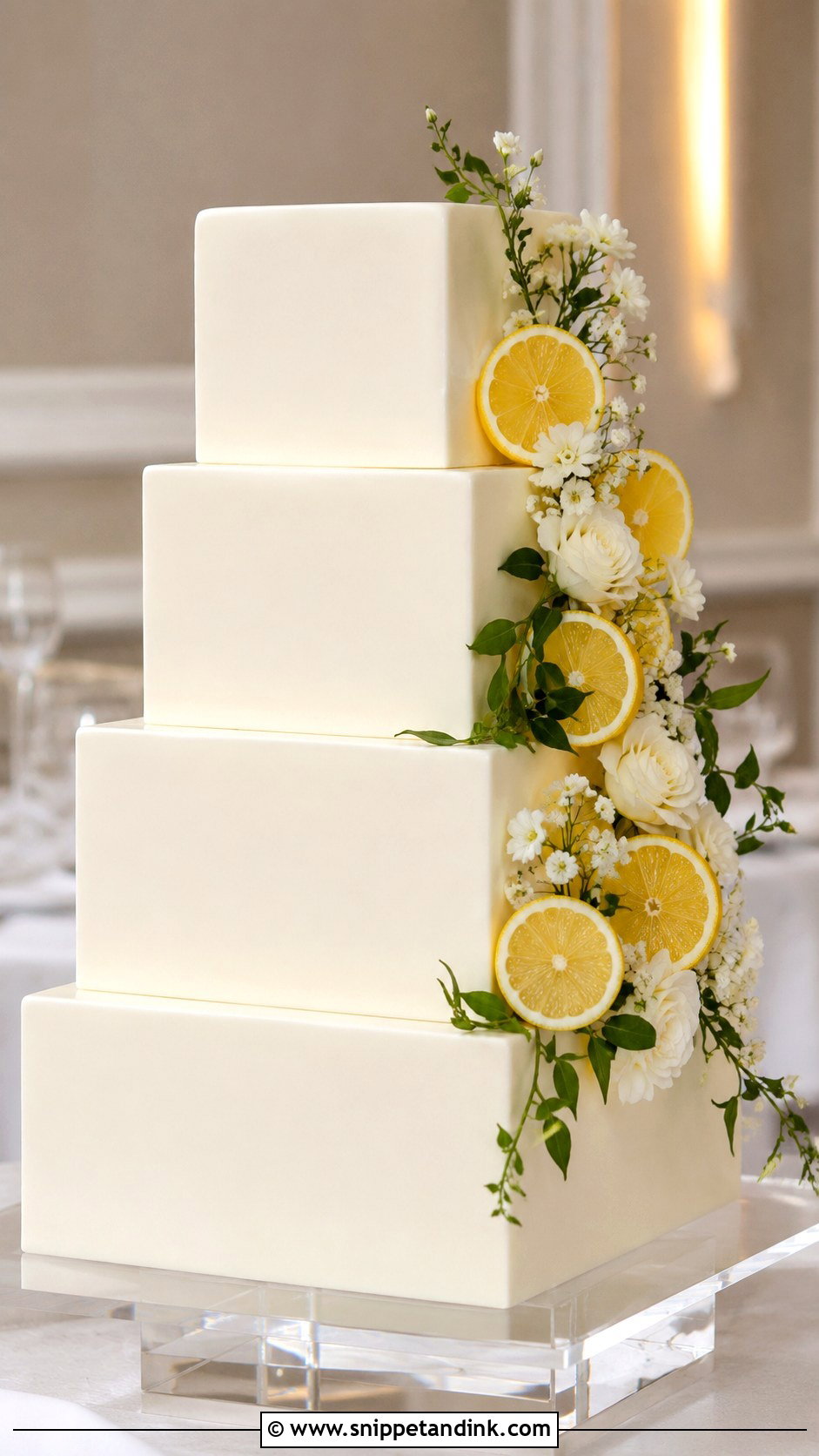
Square tiers are harder to finish than round ones. Getting crisp buttercream corners takes repeated chilling and scraping, which is why many bakers quietly prefer fondant for this shape. The payoff is a modern, architectural cake for rooftop and minimalist venues. I place lemons and greenery along one corner to soften the lines and keep the color story to two shades plus green. Lemon sponge with curd or vanilla cream goes inside, and the shape cuts into neat, even portions that caterers love.
17. Lemon Heart Wedding Cake
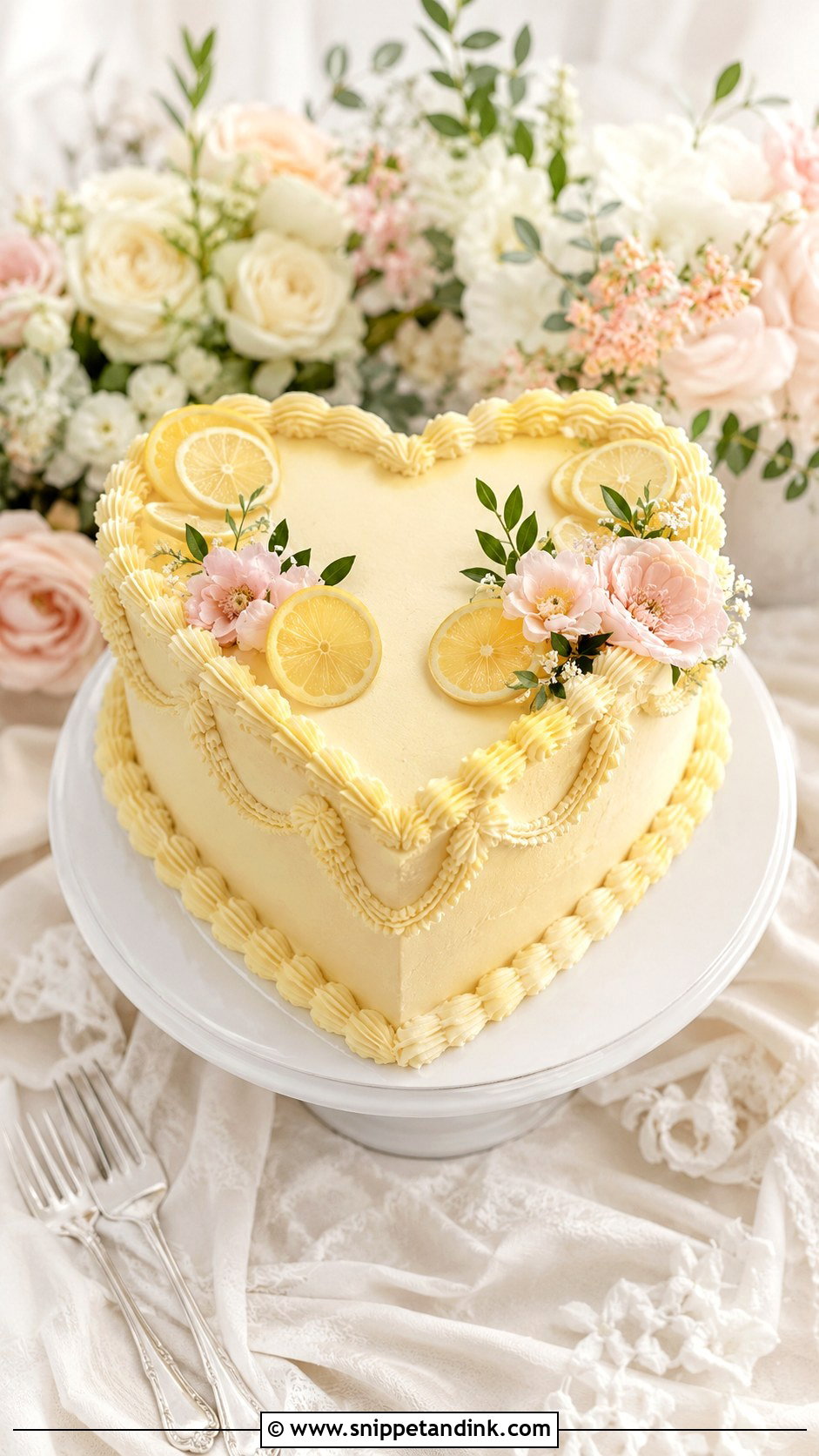
A heart can tip into cute very quickly, so I keep the finish refined: smooth buttercream, a fine piped border, small flowers and pale yellow accents, with vintage-style piping in matching white if you want it to feel bridal. Heart tiers don’t stack as tall as rounds, which makes this better for smaller weddings and bridal luncheons than a big reception. Lemon sponge with raspberry filling gives a pink-and-yellow slice to match the mood.
18. Lemon Sheet Wedding Cake
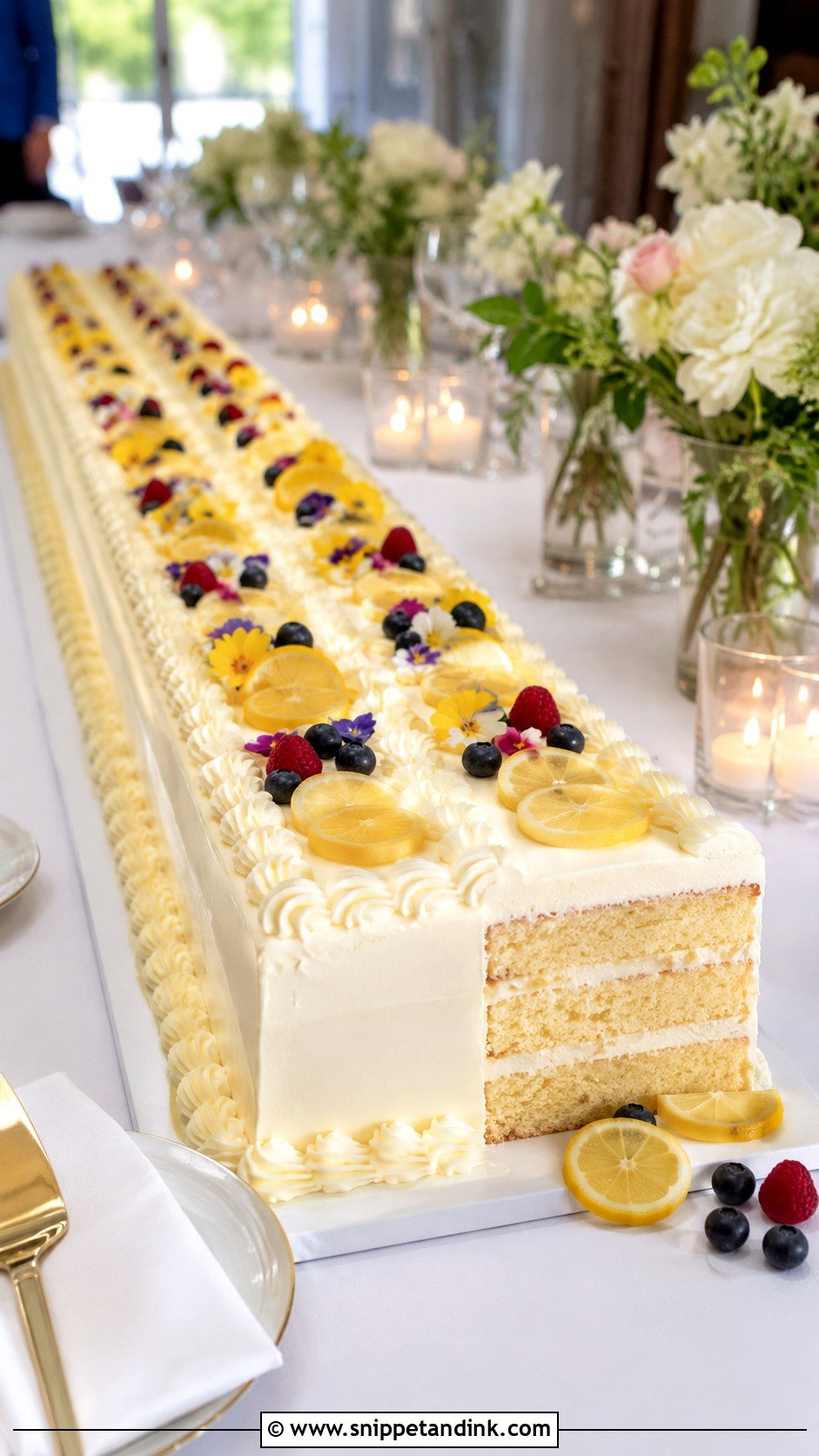
Feeding a big guest list is where a lemon sheet wedding cake earns its place. Plenty of couples order a small display cake for the cutting plus a sheet cake kept in the kitchen, which the catering team can portion quickly and usually costs less per slice. If the sheet goes on show, I pipe it properly, with curd swirls, fresh flowers and thin lemon slices along clean edges, so it looks planned rather than hidden. Lemon buttercream, vanilla cream or berry compote all work as the topping.
19. Lemon Mini Wedding Cake
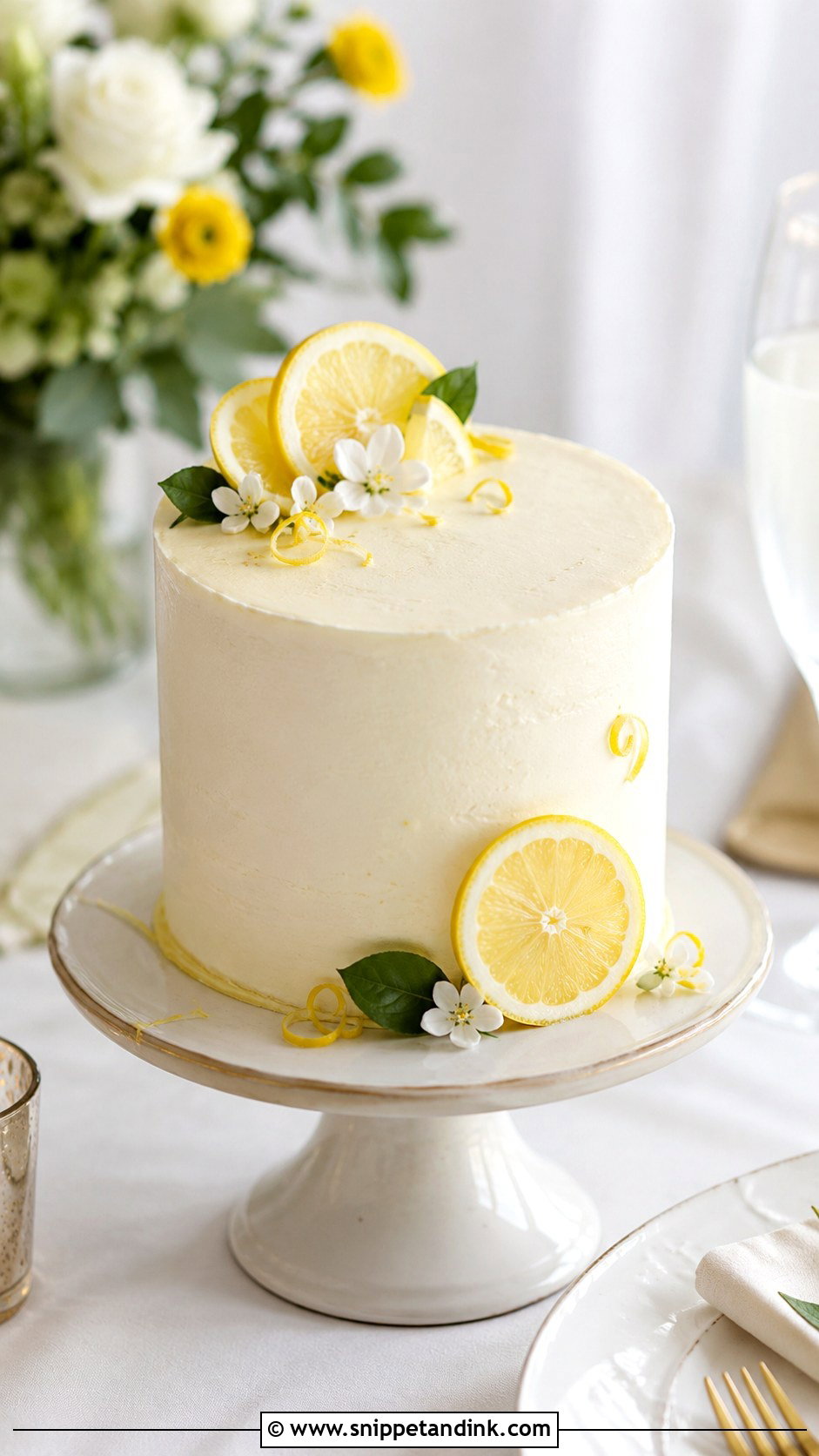
Small weddings get away with very little decoration. One tier with smooth buttercream, a few lemon slices, white flowers and a good stand is plenty for an elopement or micro wedding. You can also skip a shared cake and set mini cakes for individual servings at each place; they travel in individual boxes and take far more hands-on time than one cake, so I’d only suggest them for a short guest list. Lemon sponge with curd or lemon vanilla filling keeps each little bite bright.



20. Lemon Cupcake Wedding Cake
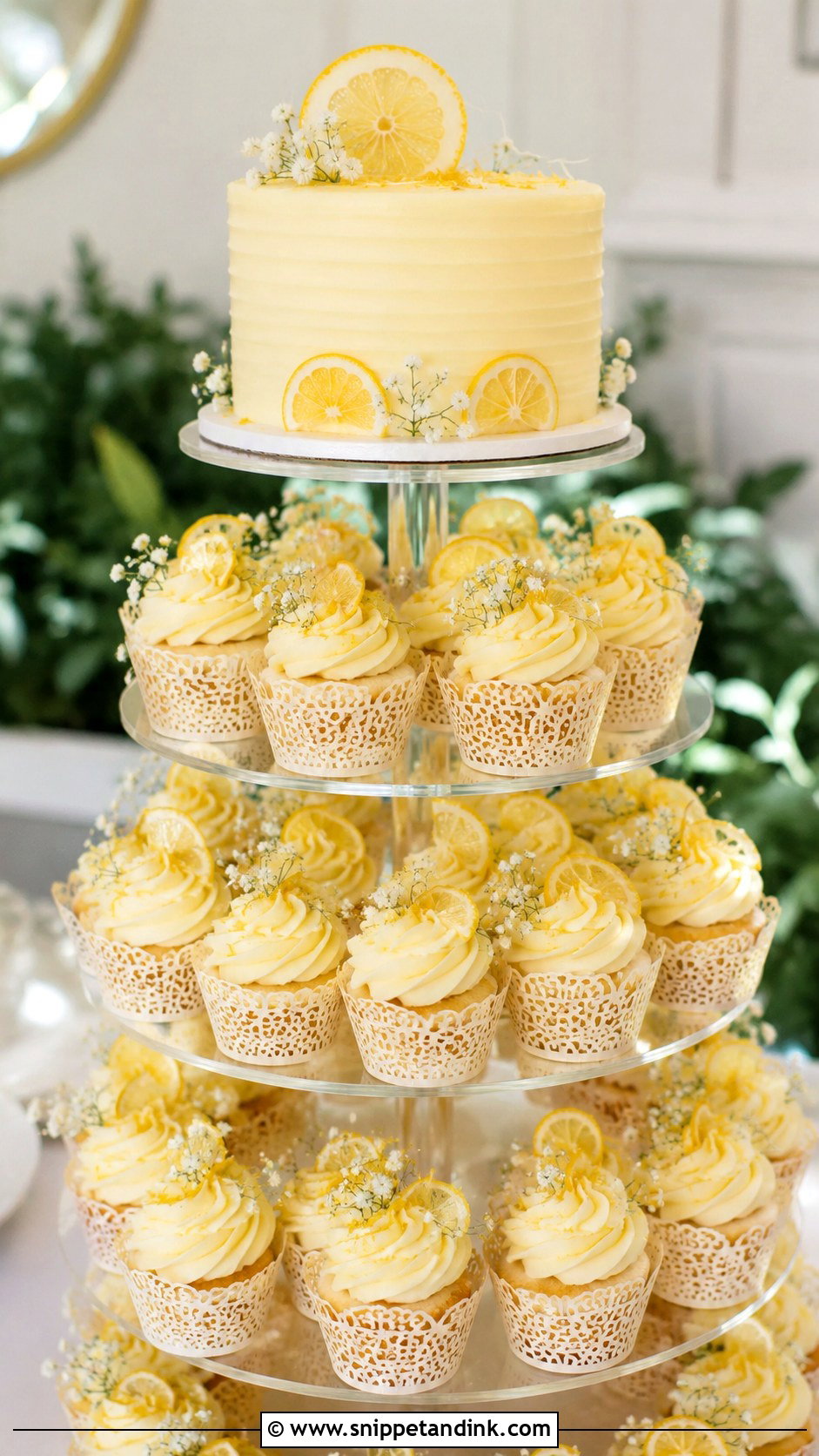
Cupcake towers suit outdoor receptions because guests serve themselves and nobody waits for a slice. I top the stand with a small cutting cake so you still get the moment with the knife. Each cupcake can carry lemon buttercream, a tiny flower, zest or a piece of candied lemon, and you can mix flavors across the tower. Match wrappers to frosting, or the display starts to look like a bake sale. Frosted cupcakes soften fast in direct sun, so give the stand some shade.
A Citrus Cake on a Hot July Afternoon
Lemon is a warm-weather flavor, and warm weather is hard on cake. Curd, whipped cream and cream cheese fillings need to stay chilled, so a curd-filled cake shouldn’t sit on a sunny table for hours before it’s cut. Buttercream softens as the room heats up, and Swiss meringue buttercream slumps faster than the stiffer sugar-heavy American style.
Fondant brings its own problem. Take a fondant cake straight from a fridge into a humid tent and it beads with condensation, which makes yellow details streak. When I deliver in summer, I ask the venue for a shaded indoor spot, set up as close to the reception as the schedule allows, and agree with the planner on a cutting time that doesn’t drift two hours late.
What I’d Ask Your Baker at the Lemon Tasting
- Where does the lemon flavor come from: zest, juice, curd or extract? Zest and curd taste brighter; extract alone can taste like a cleaning product.
- Can each tier carry a different filling, and does that change the price?
- Will the fruit on the outside be fresh, candied or sugar, and who places it on the day?
- How long can the finished cake stand at room temperature before the fillings need the fridge?
- Can the top tier be wrapped for the freezer? Curd and buttercream freeze well; fresh fruit and meringue don’t.
How Sour Should a Wedding Cake Really Taste?
The look matters, but the tasting decides a lemon cake. Try the curd on its own and then with sponge and buttercream, because a curd that tastes sharp alone often reads just right once sweetness surrounds it. Smooth buttercream with curd stays classic, a drip or heart shape leans more playful, berries bring color and elderflower softens everything around it. From a grand tiered cake to a single tier for a dinner of twelve, tell your baker how much pucker you like and let the decoration follow the flavor.
You'll Like These Ideas:







Leave a Reply