
Gold on a wedding cake can be a whisper or a shout. A little shimmer brushed over ivory buttercream reads as quiet luxury, while full gold leaf tiers belong at a black-tie reception under chandeliers. What I see couples asking for right now is texture: sculpted tiers, vintage piping, pearl finishes and real flowers, with gold used to catch the light rather than cover everything. Below are twenty directions I’d happily build, with notes on the frosting, the flavor and the practical side of each, so you can walk into a tasting knowing what to ask for.
Edible Leaf, Luster Dust and Gold Paint Are Not Interchangeable
When couples say they want a gold cake, they usually mean a look, not a material. There are really three ways I get gold onto a cake, and each one gives a different finish and price.
Gold leaf
Thin sheets or flakes of high-karat gold, laid on with a soft brush. It gives the real metal shine and is the priciest option. It sticks best to a firm, slightly tacky surface, so chilled buttercream or fondant.
Luster dust and highlighter
Brushed on dry for a soft shimmer, or mixed with alcohol to paint. Here’s the part many couples don’t know: a lot of glittery dusts are sold as non-toxic or for decoration only, which is not the same as edible. I only use products clearly labeled edible on anything a guest will eat, and anything else goes on removable pieces like toppers. Ask your baker directly which they use.
Metallic paint
Dust suspended in alcohol or a ready-mixed edible paint. It gives the most solid gold color for lines, panels and whole tiers. It dries quickly on fondant and is trickier on soft buttercream, where brush marks show.
A cake can mix all three. My usual approach is leaf where it’ll be seen up close, paint for crisp details, and dust to tie the tiers together.
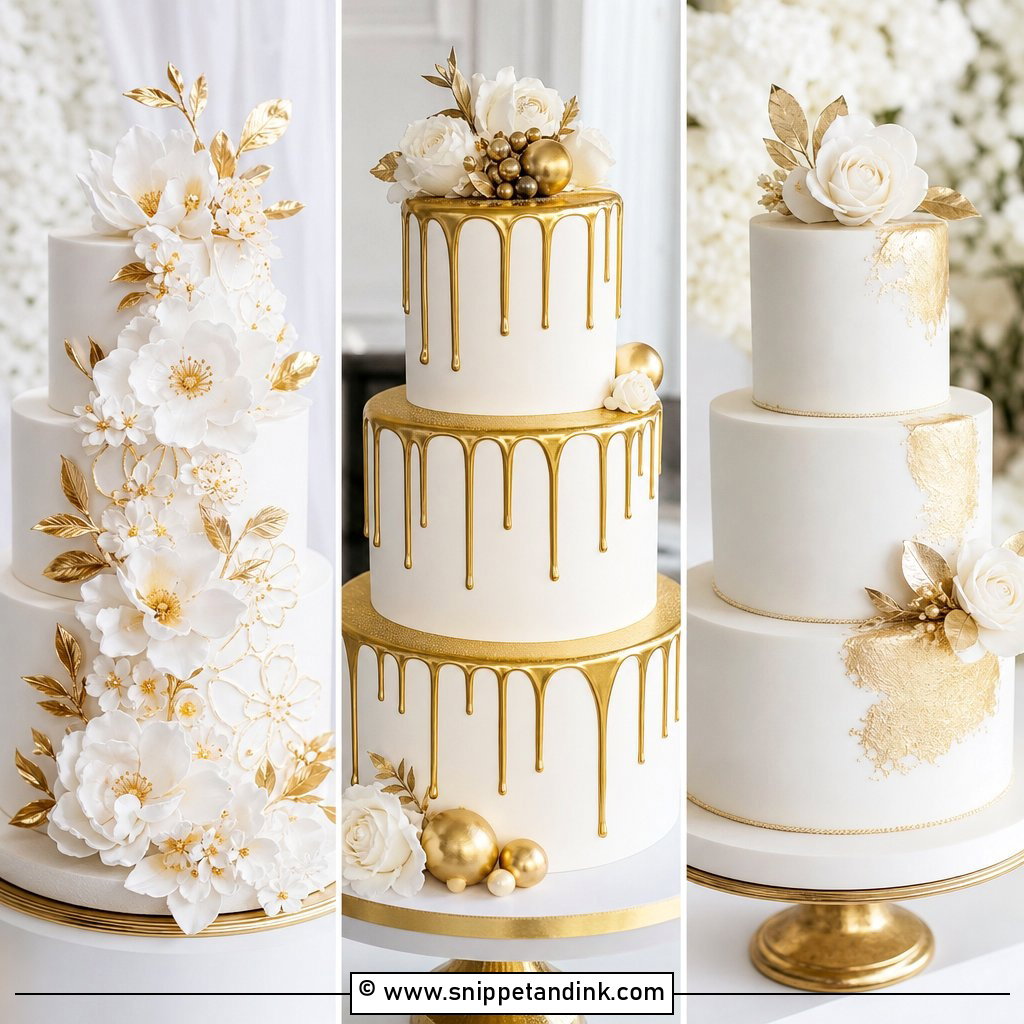
1. White And Gold Wedding Cake
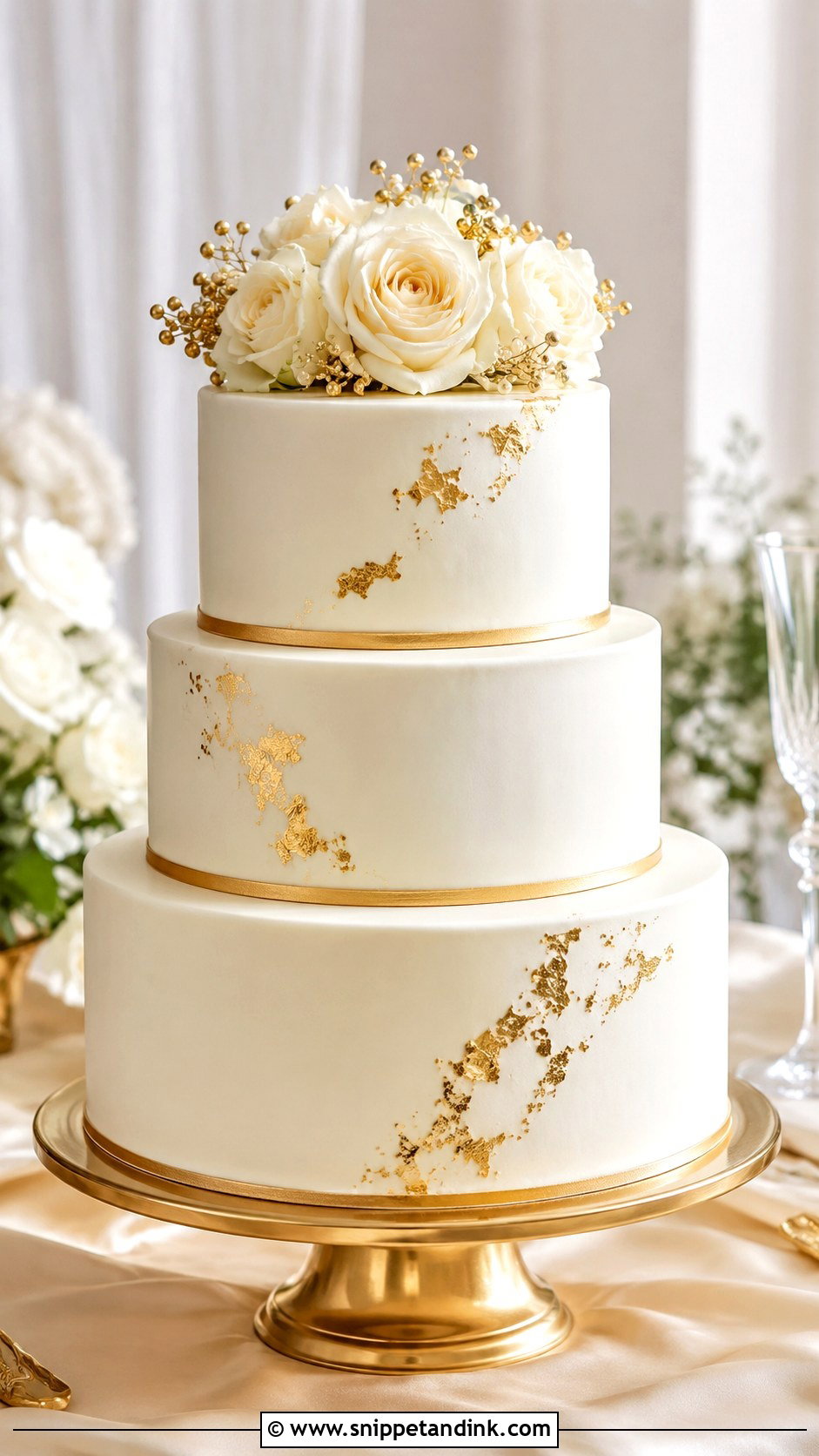
If you’re unsure where to start, start here. A white base keeps the cake bright and matches almost any room, and gold leaf, gold piping or a slim metallic edge adds shine without weight. It works as tall round tiers, crisp squares or a simple two-tier cake for a smaller guest list. I finish these in a very smooth buttercream or fondant, because gold sits on top of the surface and every bump underneath shows through it. Vanilla, almond, lemon or champagne sponge suits the clean look inside.
2. Gold Leaf Wedding Cake
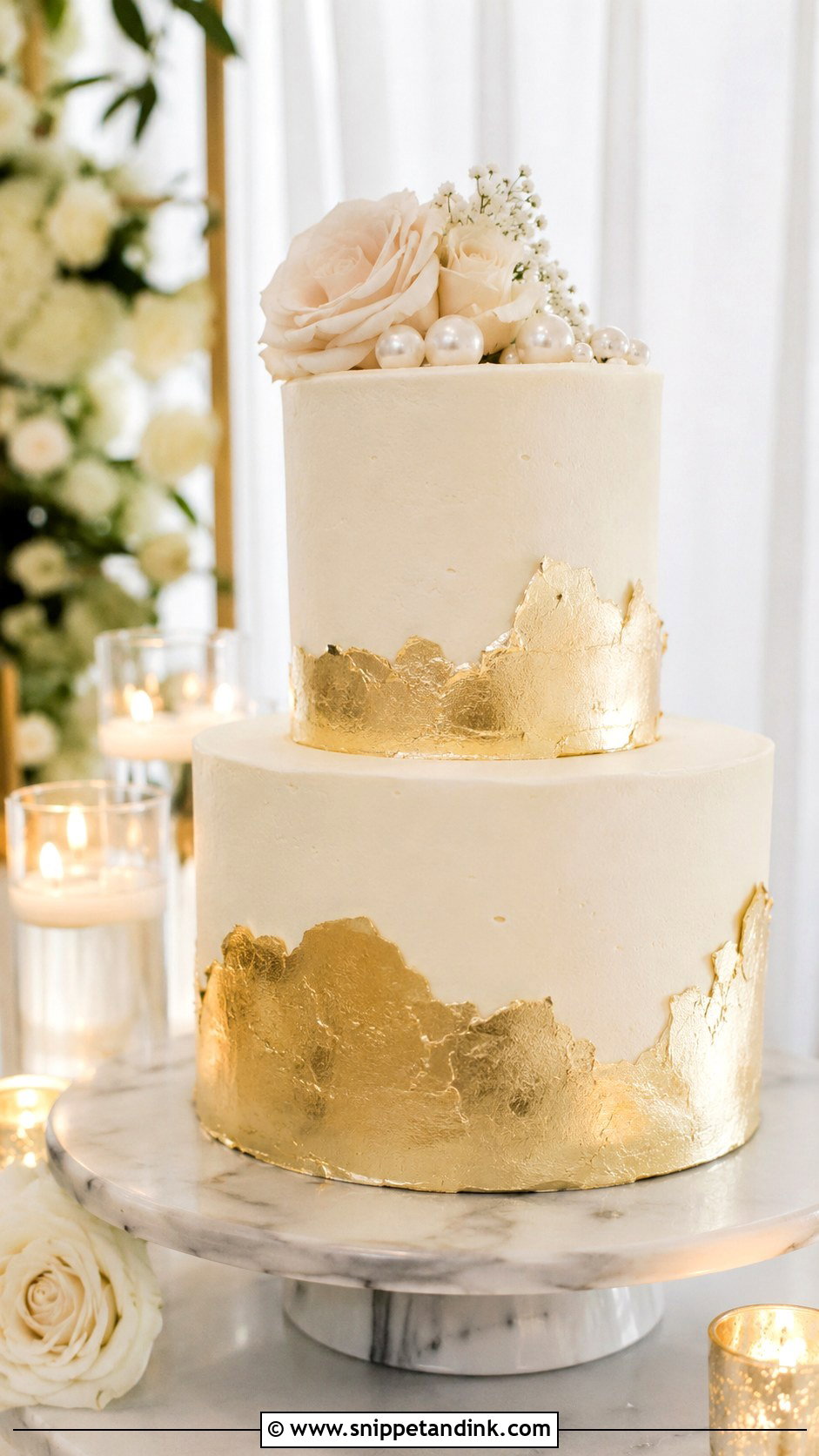
Real edible gold leaf is so thin it tears if you breathe on it, which is exactly why I apply it in uneven patches rather than trying to make a neat stripe. Broken, organic edges look intentional; a wobbly straight line looks like a mistake. It can go across one tier, around the base, or over textured buttercream where the ridges catch it. You don’t need much else on the cake. Ivory frosting, a few blush flowers or a clear acrylic stand is enough, and the leaf will pick up every candle in the room.
3. Black And Gold Wedding Cake
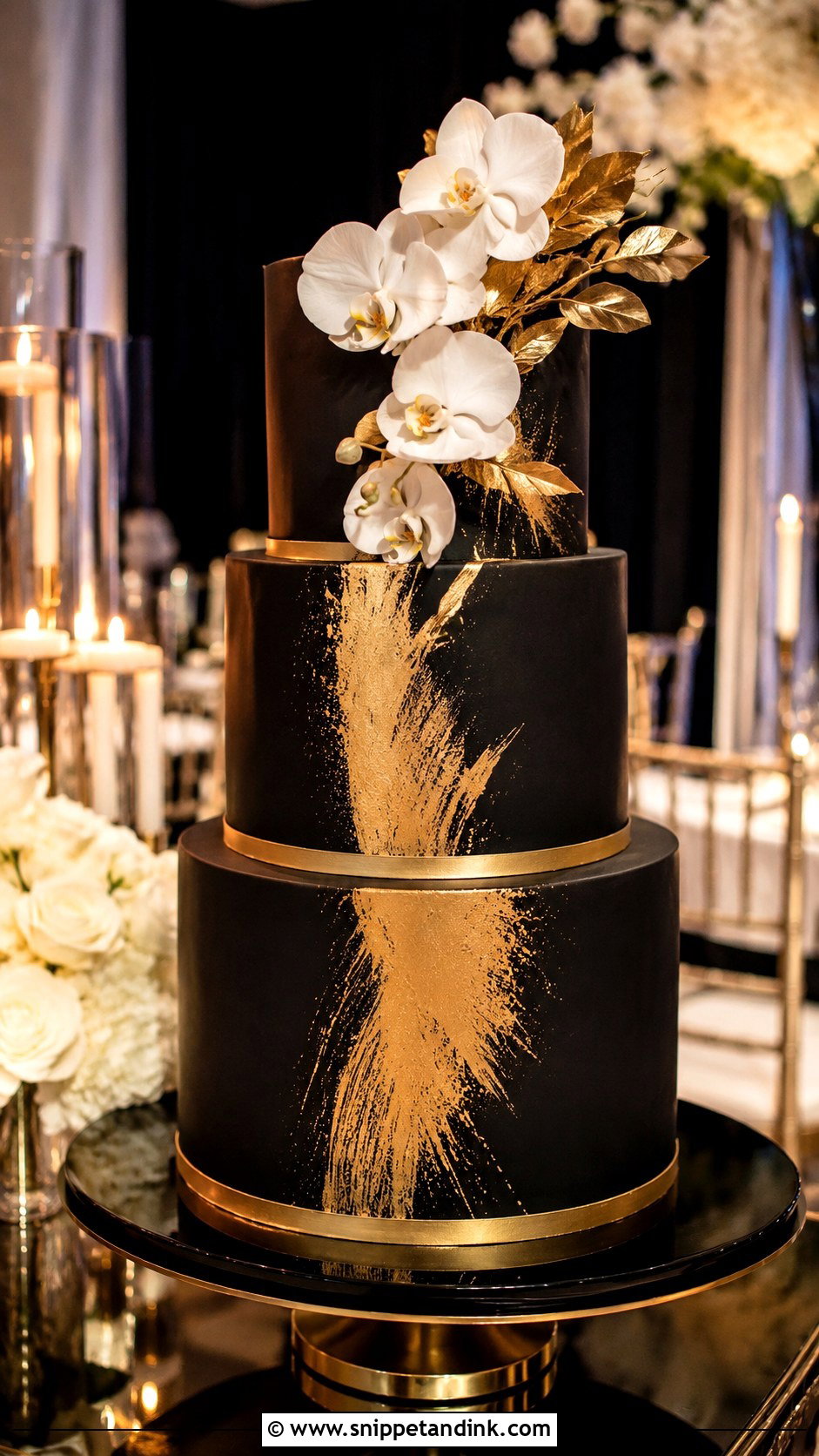
Black and gold is an evening cake, and it needs a confident room around it: a city venue, a ballroom, dark linens. I’d use matte black fondant or a dark cocoa buttercream, then add gold leaf, brushstrokes or fine borders. Fair warning about black: it takes a lot of coloring to get there, and black buttercream can stain lips and teeth, which is one reason many designers do the black in fondant over a lighter frosting. White roses, orchids or sugar flowers soften the contrast. Chocolate, espresso or black cocoa sponge suits the mood, and the shape should stay simple because the palette is already doing plenty.
4. Navy And Gold Wedding Cake
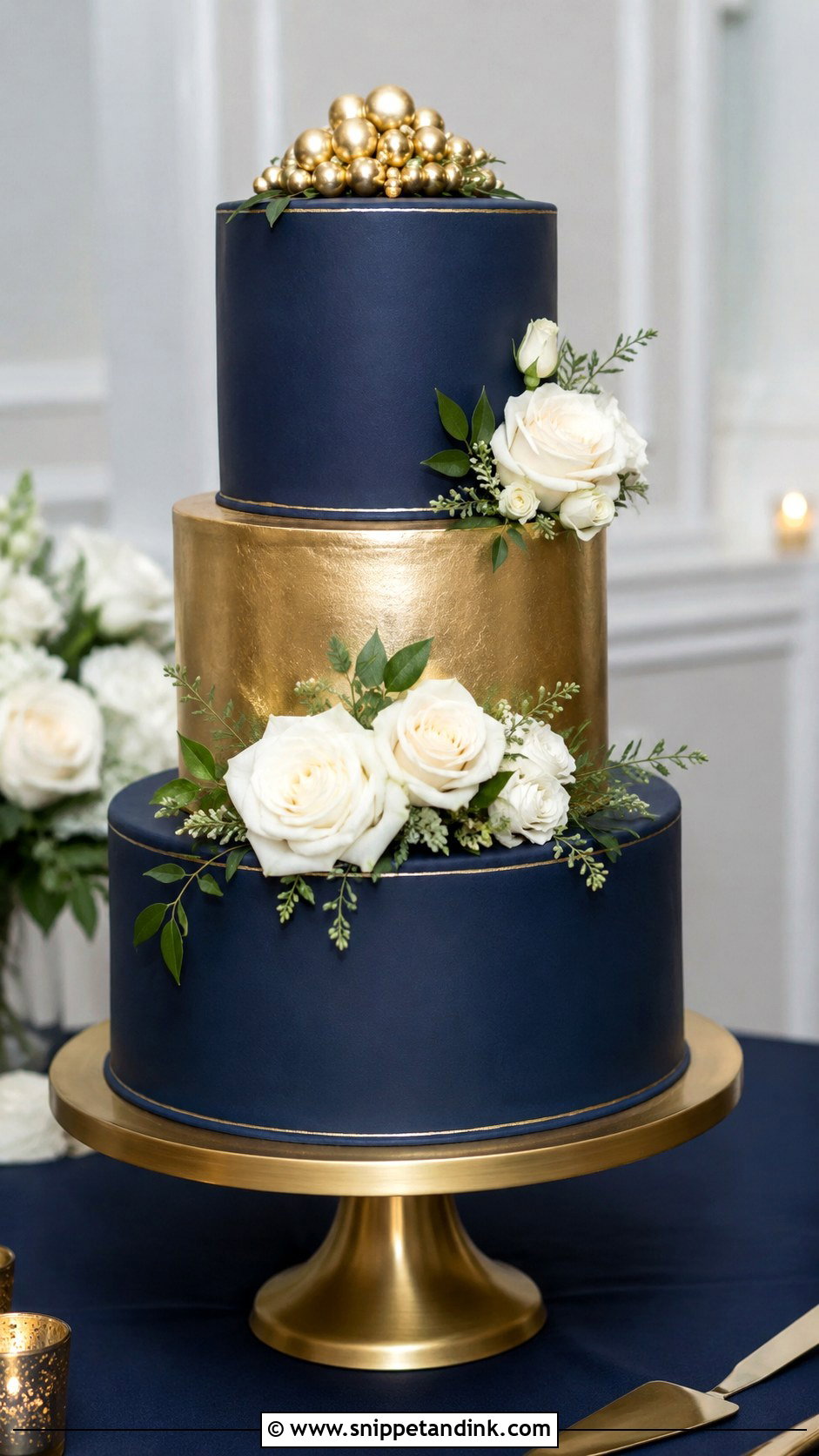
Navy gives you the drama of black and gold with more warmth, and it’s a little less expected. Gold can go on as painted strokes, fine piping, metallic seams or an entire gilded middle tier. Ivory flowers and deep green leaves look rich against it, and a single burgundy bloom adds contrast. Navy is easier to hit evenly in fondant. A smooth navy buttercream is possible and tastes better, but it needs a skilled hand and a lot of color, so ask to see one your baker has already made. Vanilla bean with berry, lemon elderflower or chocolate ganache all sit well inside.
5. Blush And Gold Wedding Cake
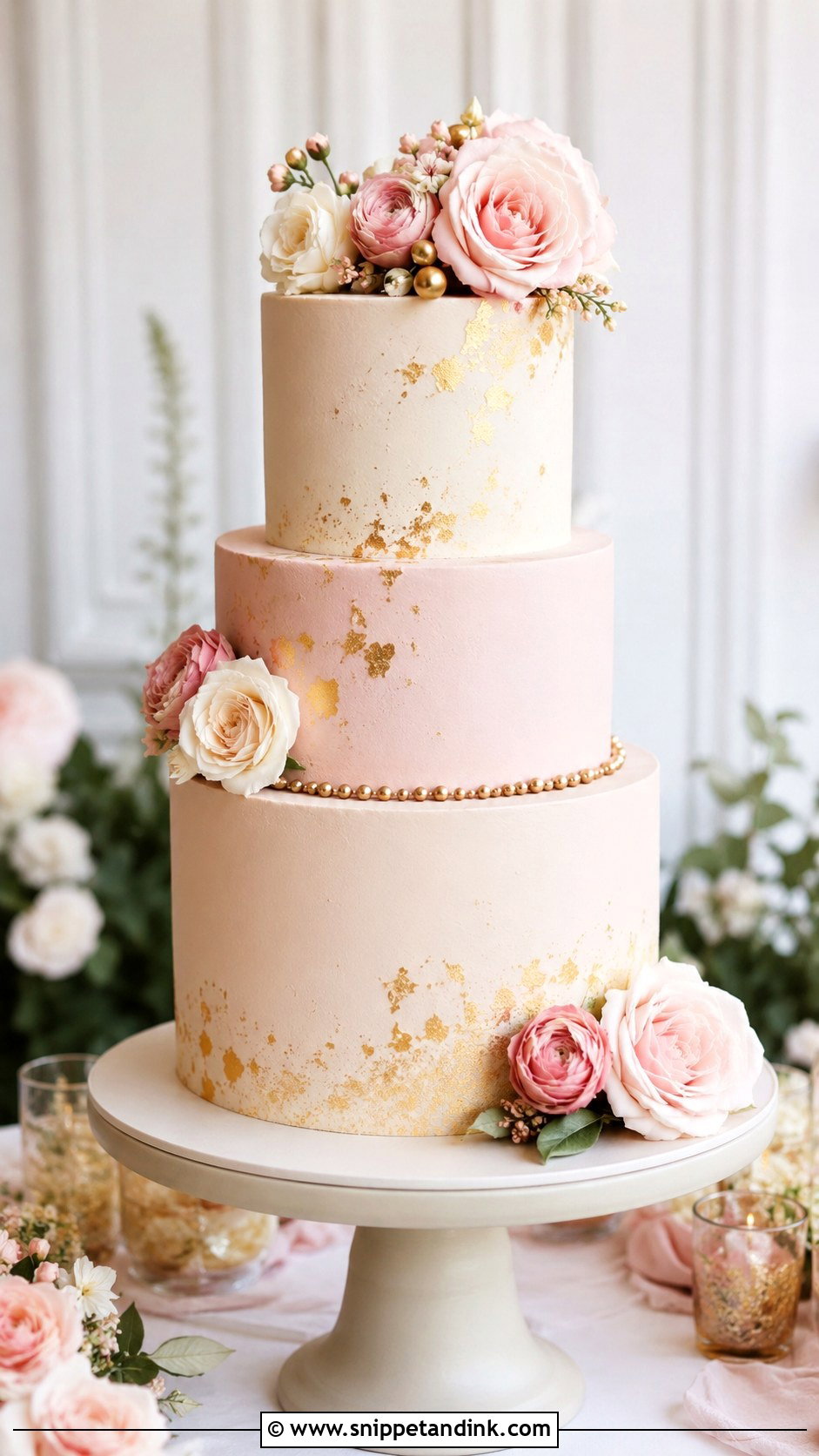
Blush can mean barely-there pink, dusty rose or a warmer peach, and I always match it to a real petal from your florist rather than a screen color, because pinks shift a lot between phone and daylight. Gold leaf glows against it without taking over. Roses, ranunculus, peonies or sugar flowers in the same tones finish it. Smooth buttercream keeps it modern; piped borders tip it toward vintage. For flavor, vanilla almond, strawberry cream or champagne with raspberry fit the color story.
6. Gold Drip Wedding Cake
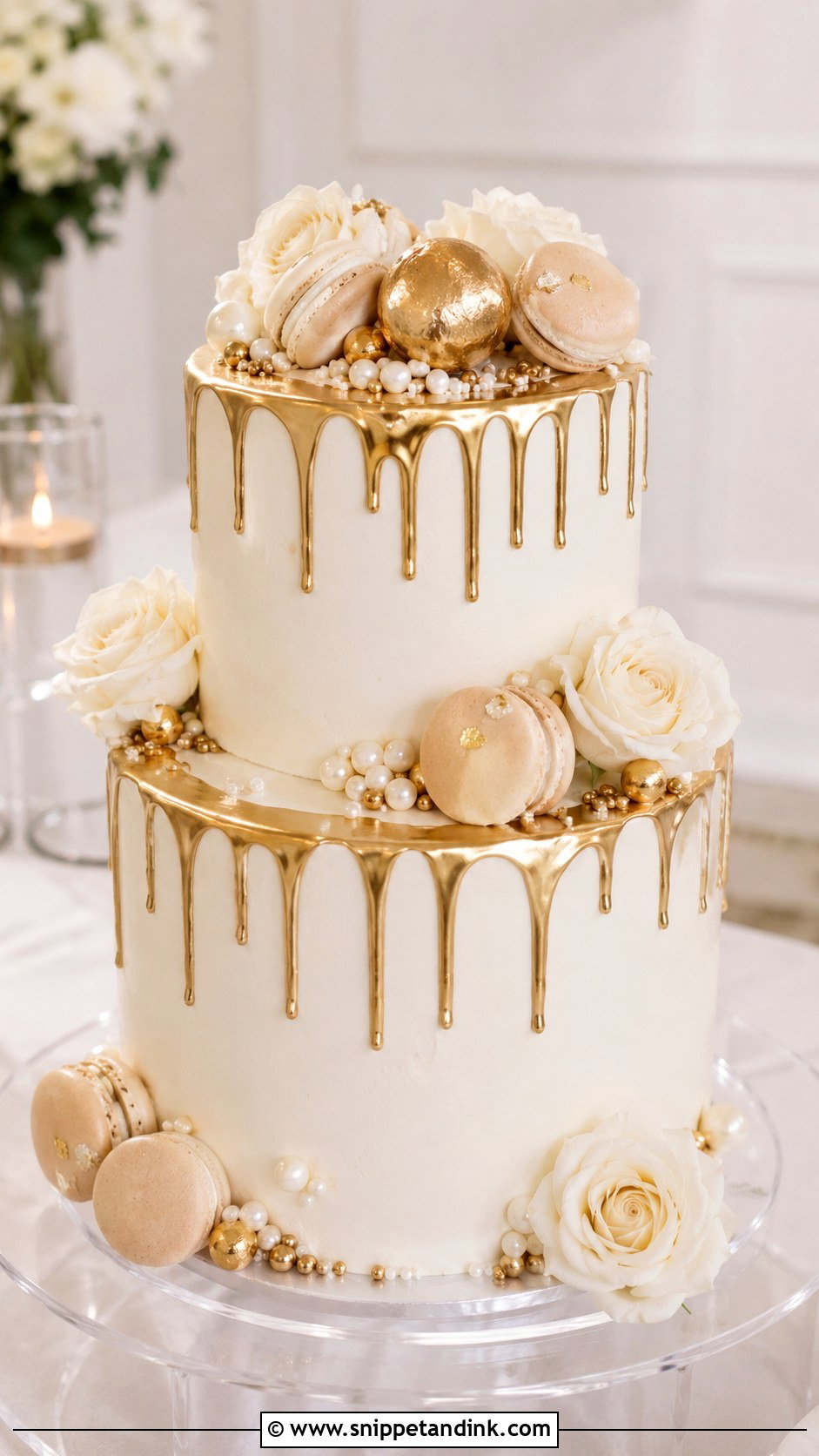
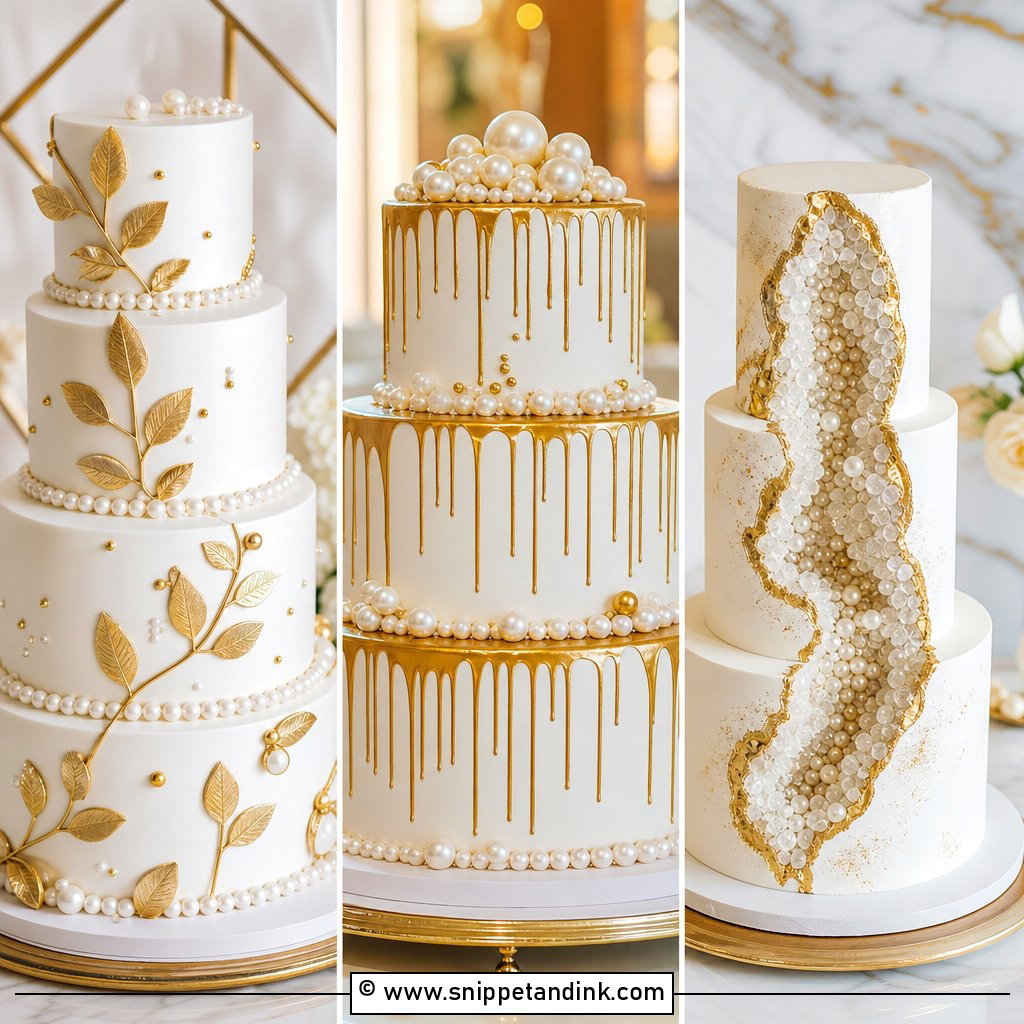
A drip turns a plain tiered cake into something with a bit of fun. Most gold drips are a white chocolate ganache or glaze that’s set and then painted with edible luster, so the shine is a surface coat, not the drip itself. That matters on a hot day, because ganache softens and the painted layer can smudge if anyone touches it. A thin drip looks refined, a heavy one more playful. It shows up best over white, ivory, blush, emerald, black or navy. Macarons, flowers, pearls or sugar spheres on top add height.
7. Gold Buttercream Wedding Cake
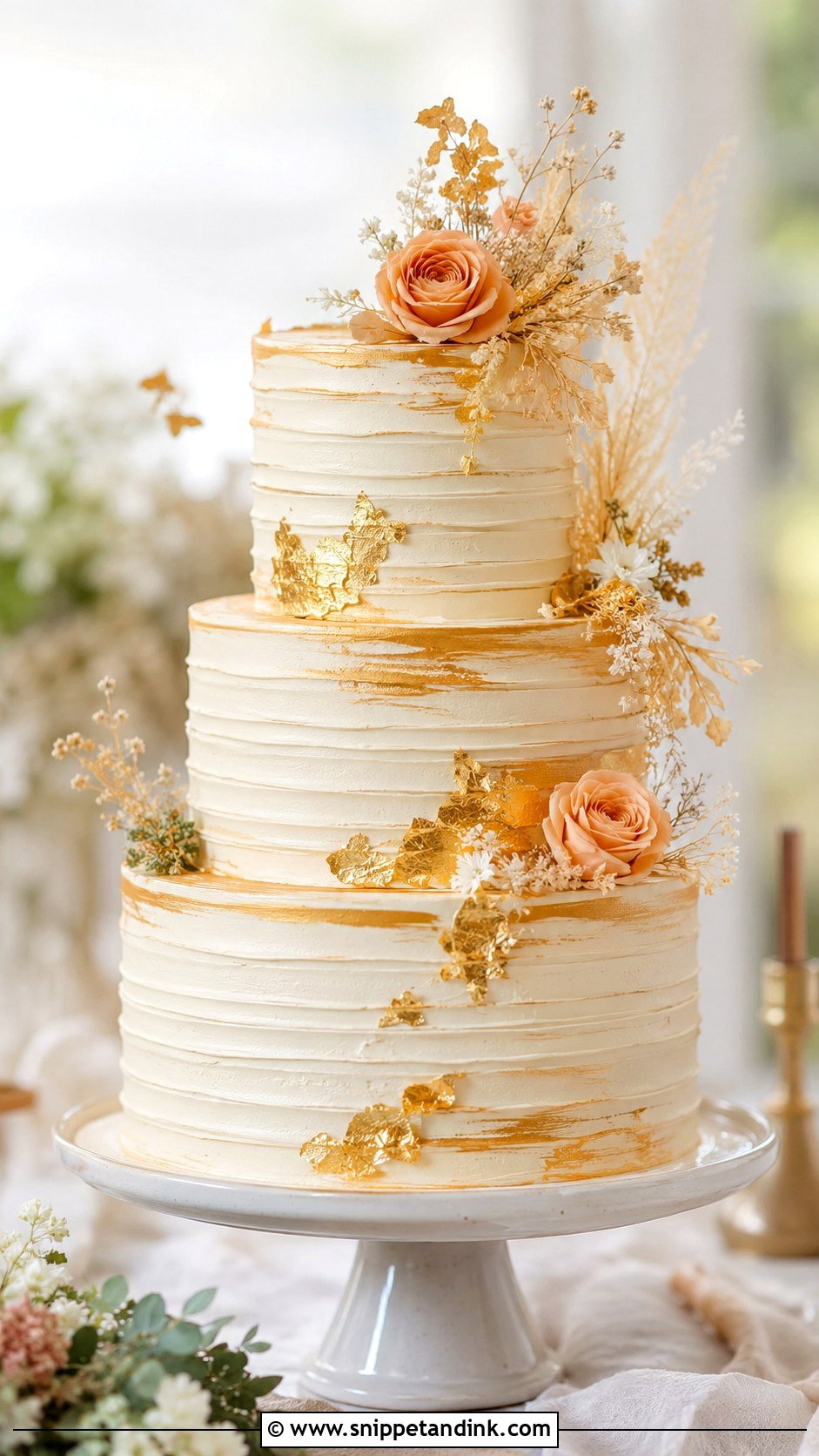
Buttercream gives you texture that fondant can’t: swirls, combed ridges, palette-knife strokes. Gold then comes in as brushwork, pearl dust, stencils or torn leaf. It reads warmer and more handmade, which suits barns, gardens and relaxed but elegant receptions. Painting metallic onto buttercream is fussier than onto fondant, though. I chill the cake first so the surface is firm, and I use an alcohol-based paint that dries fast rather than one that soaks in. Plain vanilla buttercream, Swiss meringue buttercream or cream cheese frosting can all take gold this way, with cream cheese being the softest and least forgiving in warm rooms.
8. Gold Fondant Wedding Cake
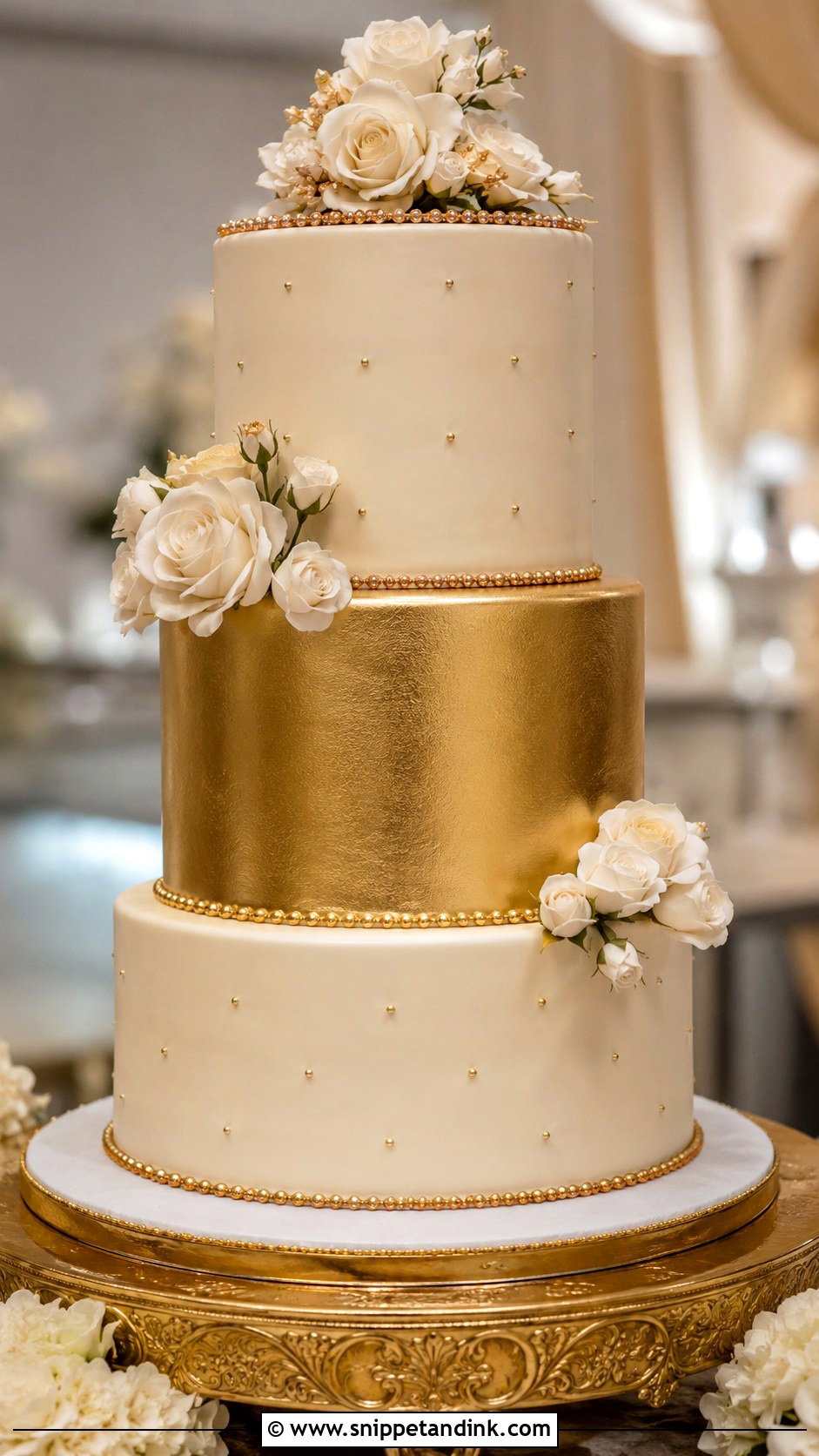
Fondant is my first choice when the design depends on crisp gold lines. It gives sharp edges, smooth sides and a firm surface for embossing, molded details and painting. You can do one fully gold tier or keep it ivory with trim. It also supports geometric shapes, quilted textures and sculptural work that buttercream would slump under. Plenty of guests peel fondant off, so spend your effort on the inside: almond raspberry, lemon cream or chocolate caramel. Sugar flowers or a little piping stop it from looking too stiff.
9. Gold Pearl Wedding Cake
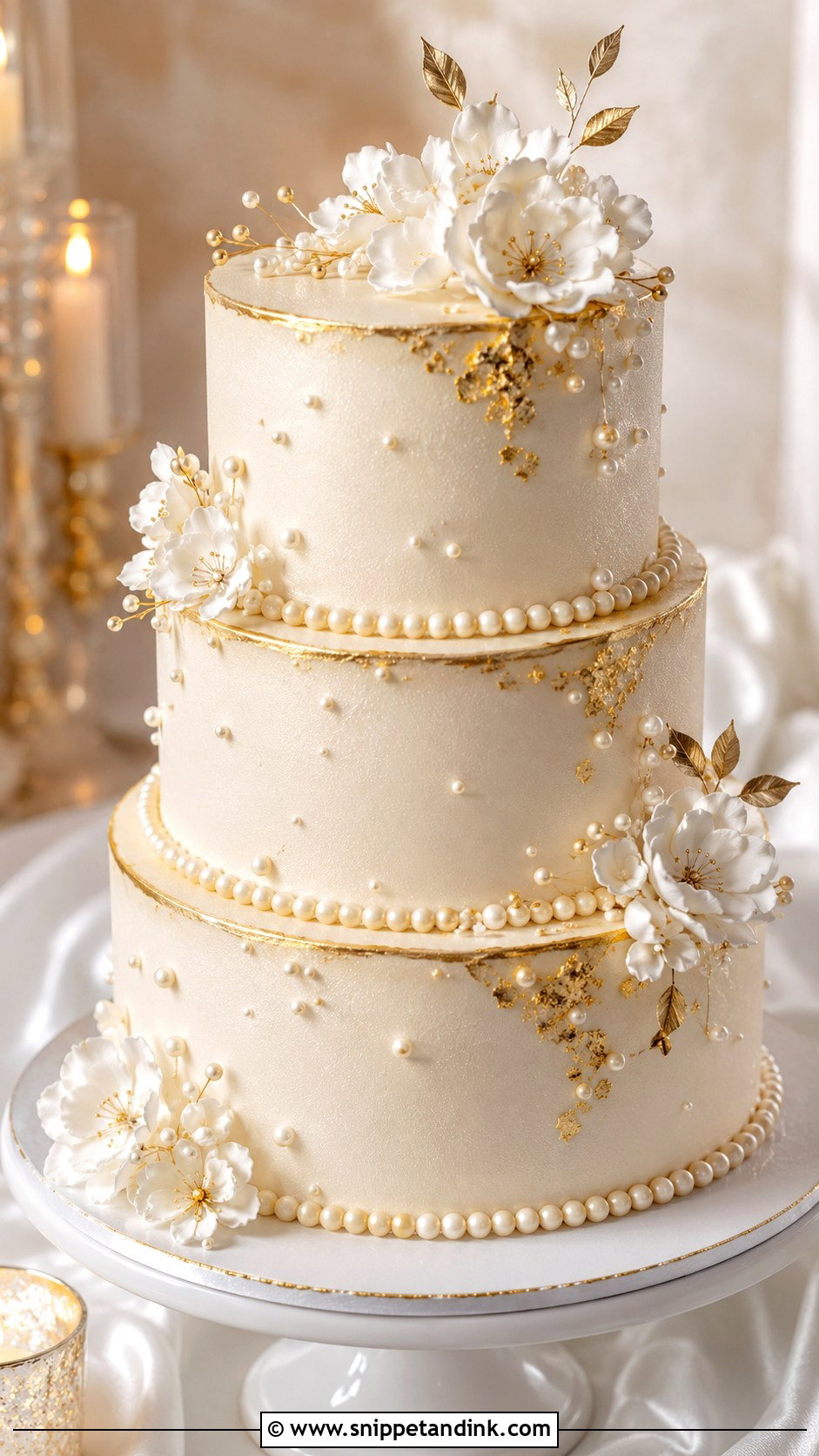
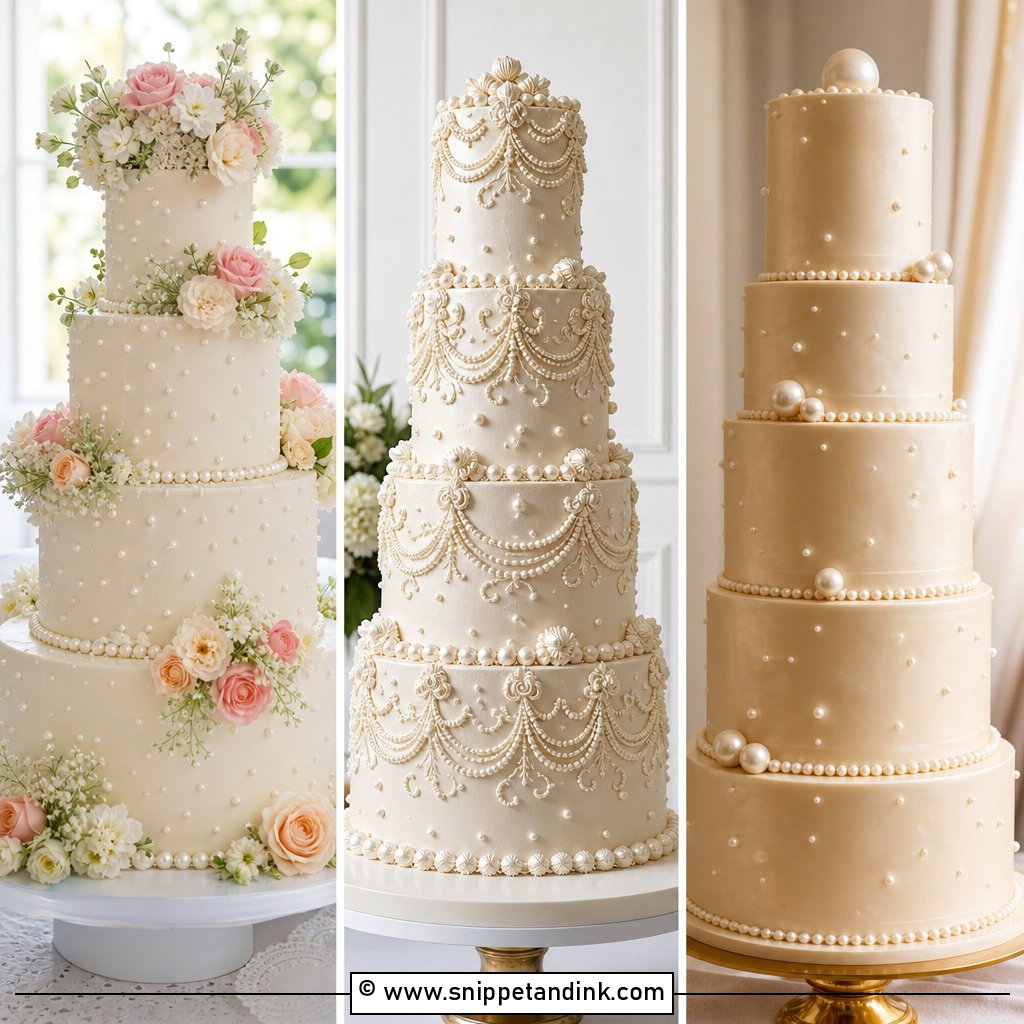
Pearls take the edge off gold and make the cake feel bridal rather than flashy. I use tiny sugar pearl borders, scattered edible pearls or pearlized frosting with a soft gold shimmer over ivory buttercream. One practical note: hard sugar pearls are crunchy, and some guests won’t expect that, so I keep them to borders rather than covering whole tiers. This cake looks right in a hotel ballroom or a candlelit room, beside a satin gown and pearl jewelry. Vanilla bean, coconut cream or white chocolate raspberry suits it. Keep the flowers simple so the pearls stay the main detail.
10. Gold Floral Wedding Cake
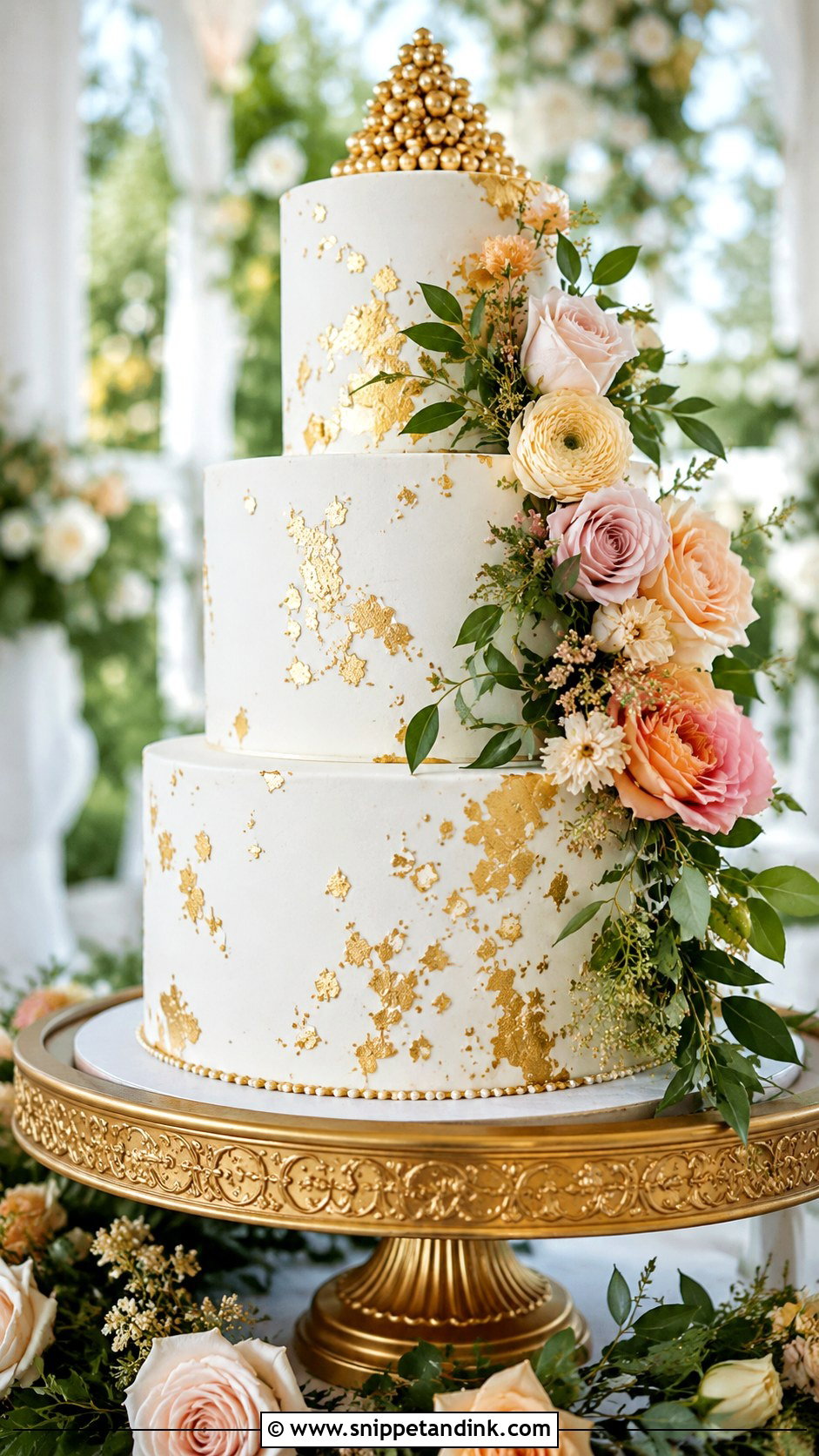
Gold and flowers together is the most requested combination I get, and it’s the one that needs the most coordination with your florist. Fresh flowers have to be food-safe and pesticide-free, and stems should never go straight into the sponge; I wrap them or use picks. Sugar flowers avoid all of that, can match your bouquet exactly and keep for years if you want a souvenir. Gold works best here as brushed edges or a little leafing so the blooms stay the focus. Ivory, blush, peach, mauve and deep red all sit well with it. Pick a seasonal flavor: lemon berry for spring, almond cream for summer, brown butter caramel when it’s colder.
11. Gold Geode Wedding Cake
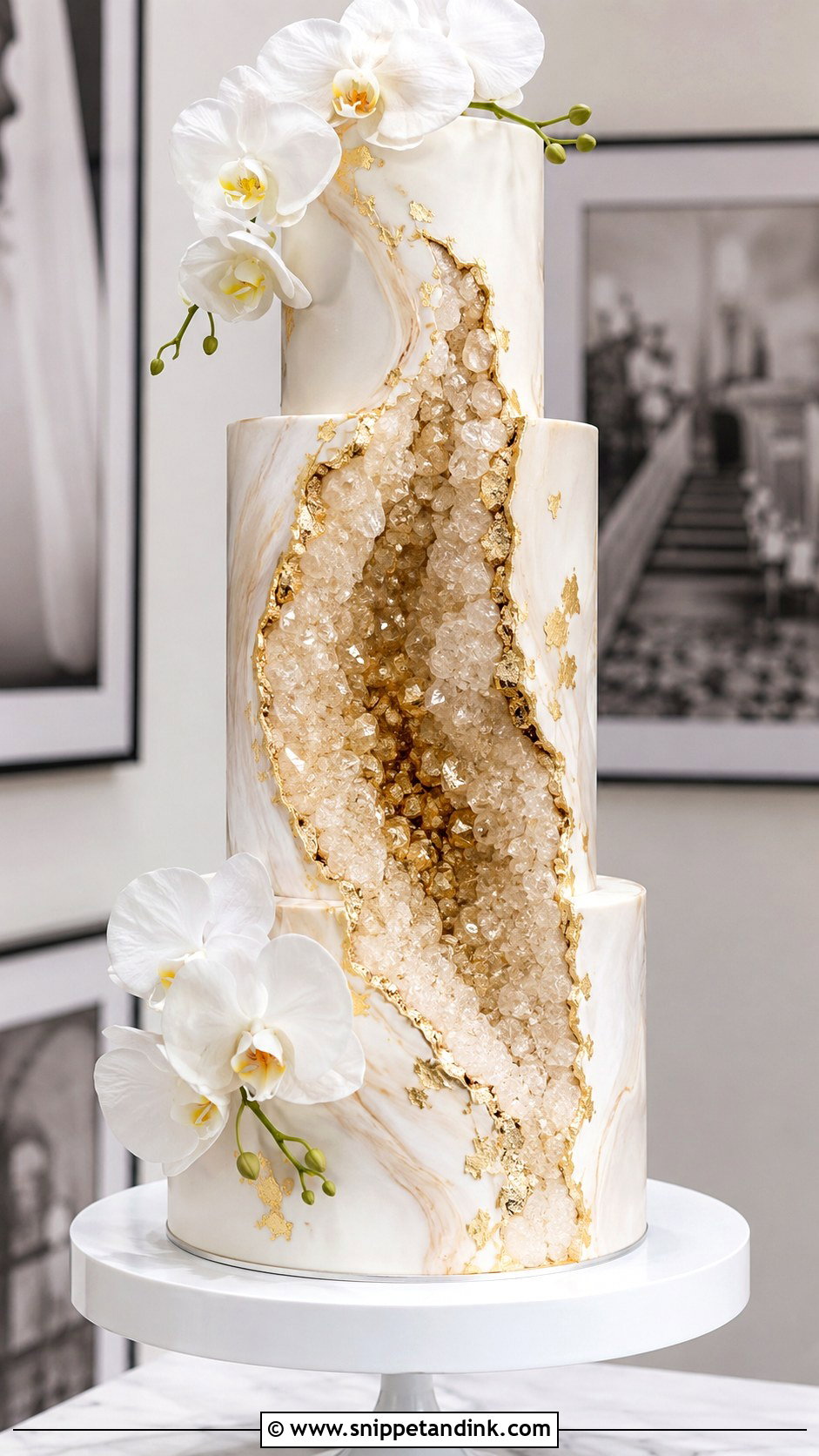
The geode is carved into one tier and filled with rock candy, sugar crystals or isomalt, then edged in gold leaf or gold paint. That carved section changes how the cake is cut, so I plan it on a tier that won’t need to be served first. Keep the rest of the cake quiet so the crystal panel has the stage to itself. White, grey, blush, black or marbled frosting all frame it. It fits gallery spaces and modern hotels. Vanilla bean, champagne or dark chocolate pairs nicely. Isomalt is also humidity-sensitive and can turn cloudy, so it’s one to assemble close to the day.
12. Gold Marble Wedding Cake
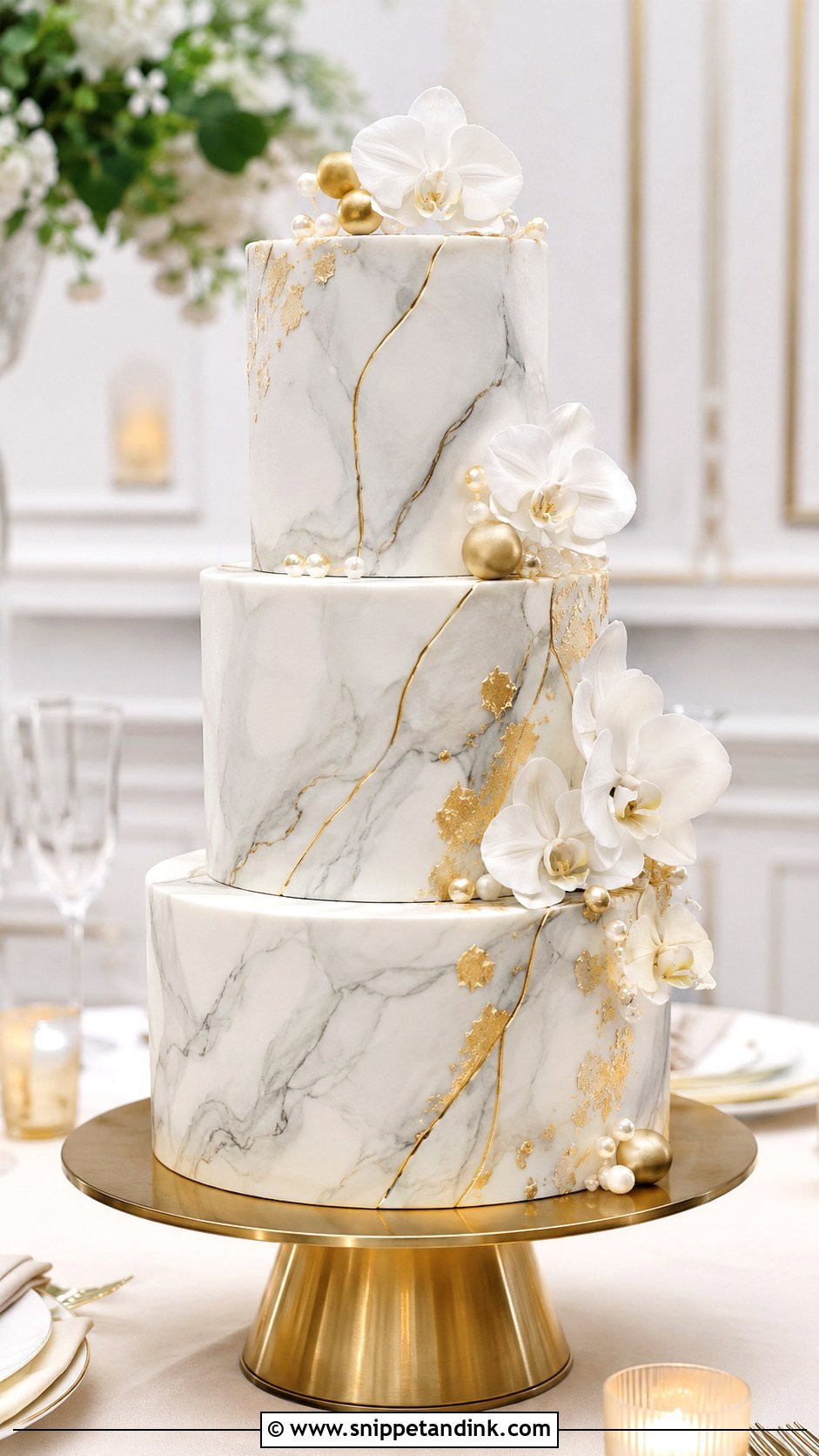
Marble gives a stone look that still feels warm when the base is ivory, beige or blush instead of cold grey. I mix the veins into the fondant before rolling, then hand paint a few lines in gold so they look like they’re running through the rock. Fondant gives the clearest pattern; buttercream marbling is softer and blurrier, which some couples prefer. White orchids, roses or a little greenery are all it needs. Vanilla with lemon curd, almond with raspberry or chocolate with salted caramel inside, and a gold stand underneath.
13. Gold Vintage Wedding Cake
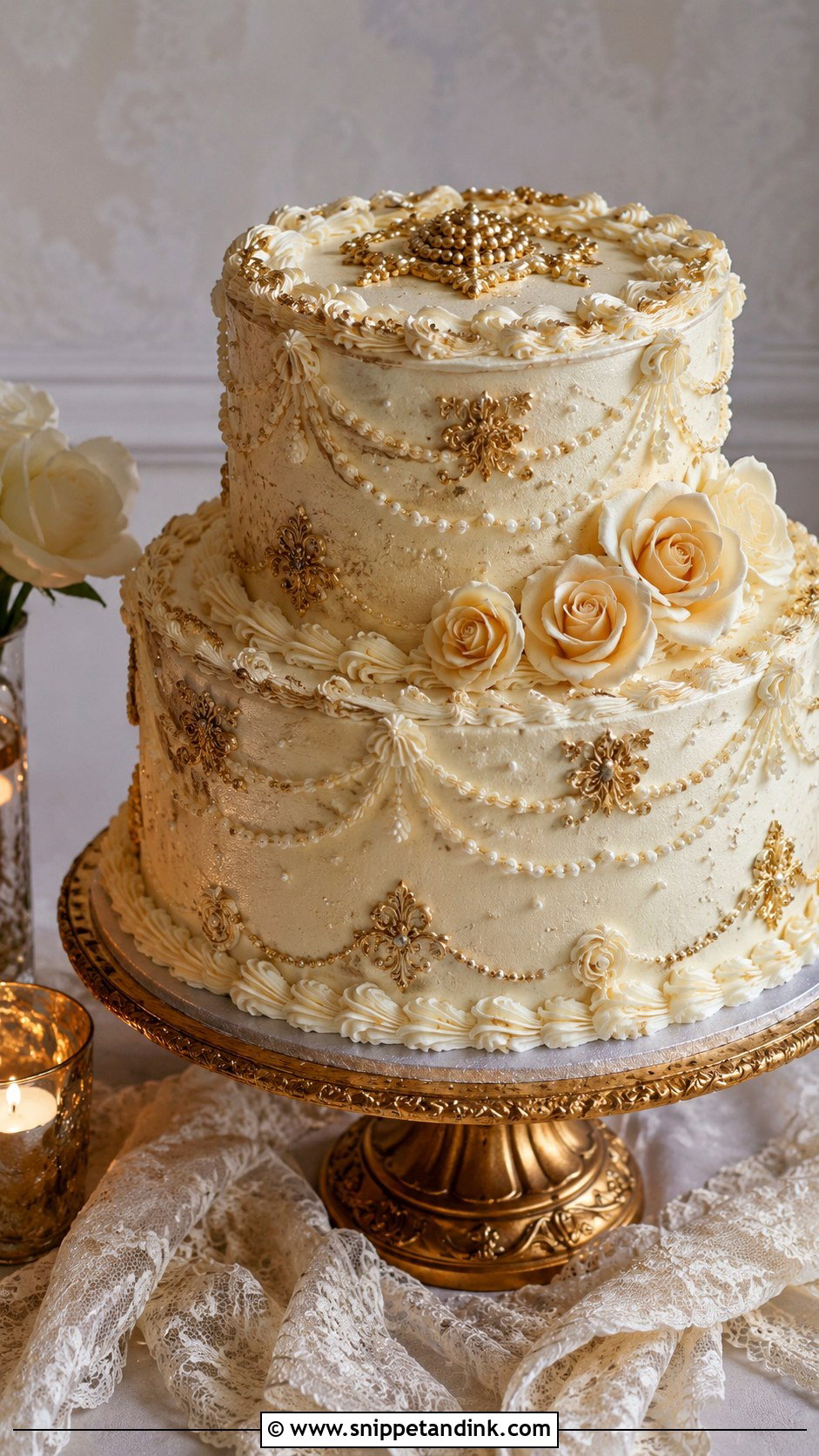
This is the piped, nostalgic bakery cake: Lambeth layers, shell borders, swags, rosettes and pearl dots. It’s time-consuming, because every layer of piping has to crust before the next goes on, so it’s a design to order early. Gold comes in as tiny painted edges, pearl luster on the dots or an antique gold topper. Buttercream is the right medium for that soft texture. It belongs with lace, satin, bows and candlelight. Vanilla cream, almond, pistachio or raspberry fillings, and keep the palette to ivory, champagne and soft gold.
14. Gold Minimalist Wedding Cake
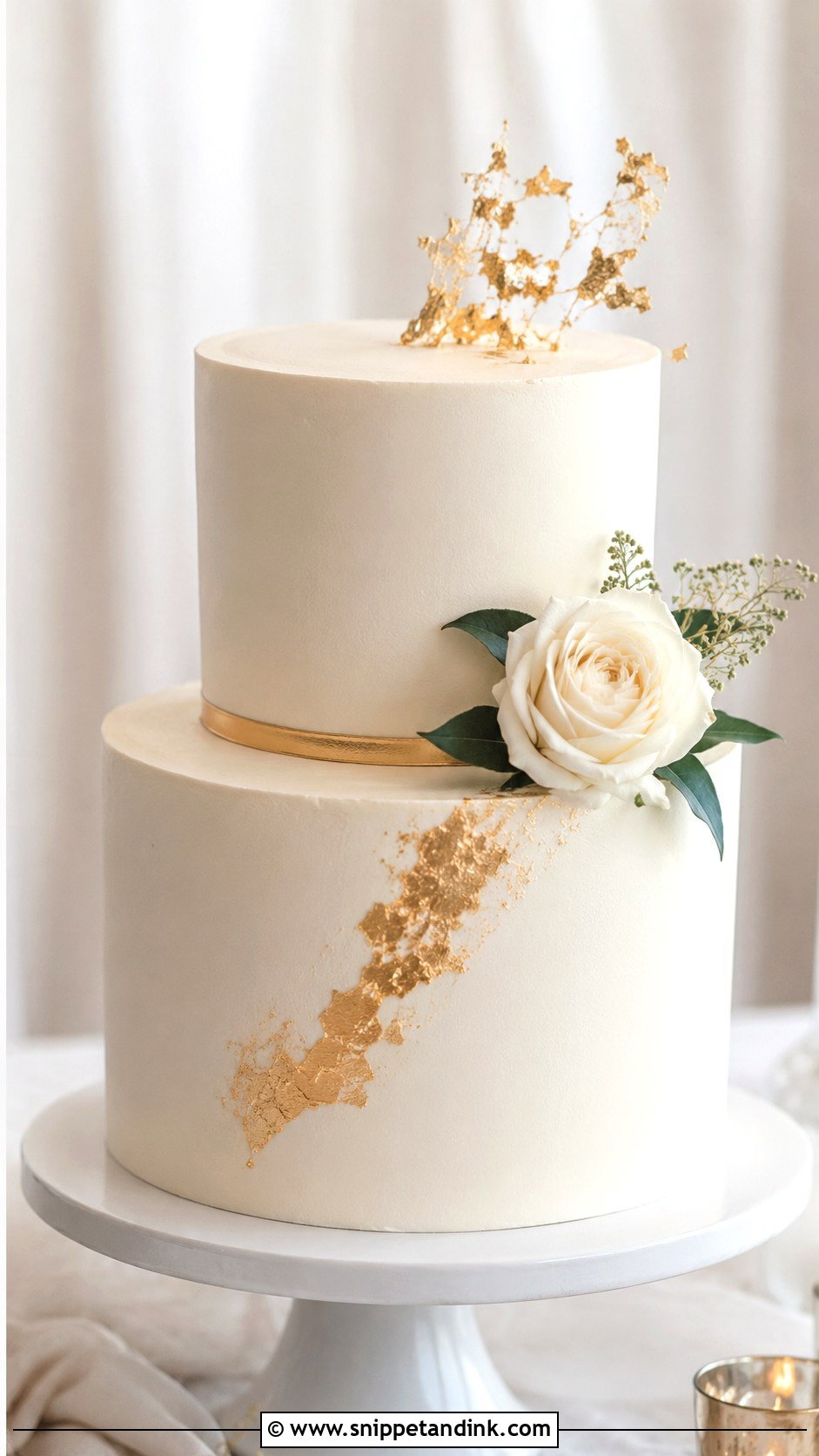
Minimal cakes look simple and are anything but. With only one gold detail on a smooth ivory finish, whether that’s a painted line, a single leaf patch or a metallic edge, there’s nowhere for a lumpy side or a soft corner to hide. Precision is the whole design. A two-tier cake can look just as strong as a tall one when the finish is that clean. It suits modern rooms, rooftops and small weddings. Lemon vanilla, almond cream or coconut with lime keeps it fresh.

15. Gold Ruffle Wedding Cake
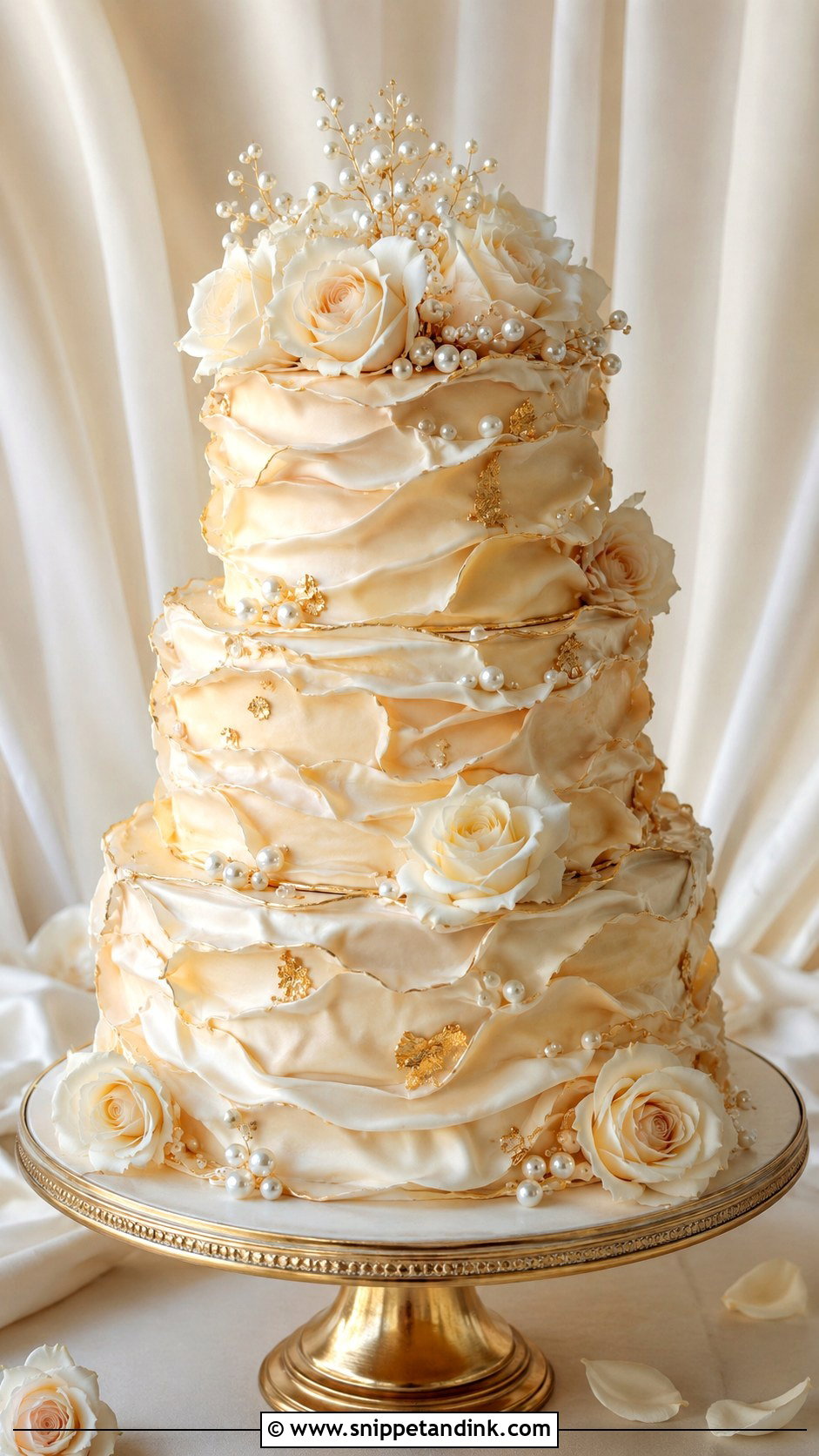
Ruffles are layered strips of fondant or piped buttercream that move around the tier like fabric or petals. The risk is overdoing it, so I keep the gold to small touches: gilded ruffle edges, a band of leaf between tiers or a light champagne shimmer over the folds. Ivory, blush, champagne or pale beige frosting suits the texture. Buttercream ruffles are heavier than they look and want a cool room. Vanilla bean, rose pistachio or white chocolate raspberry match the soft look well.
16. Gold Champagne Wedding Cake
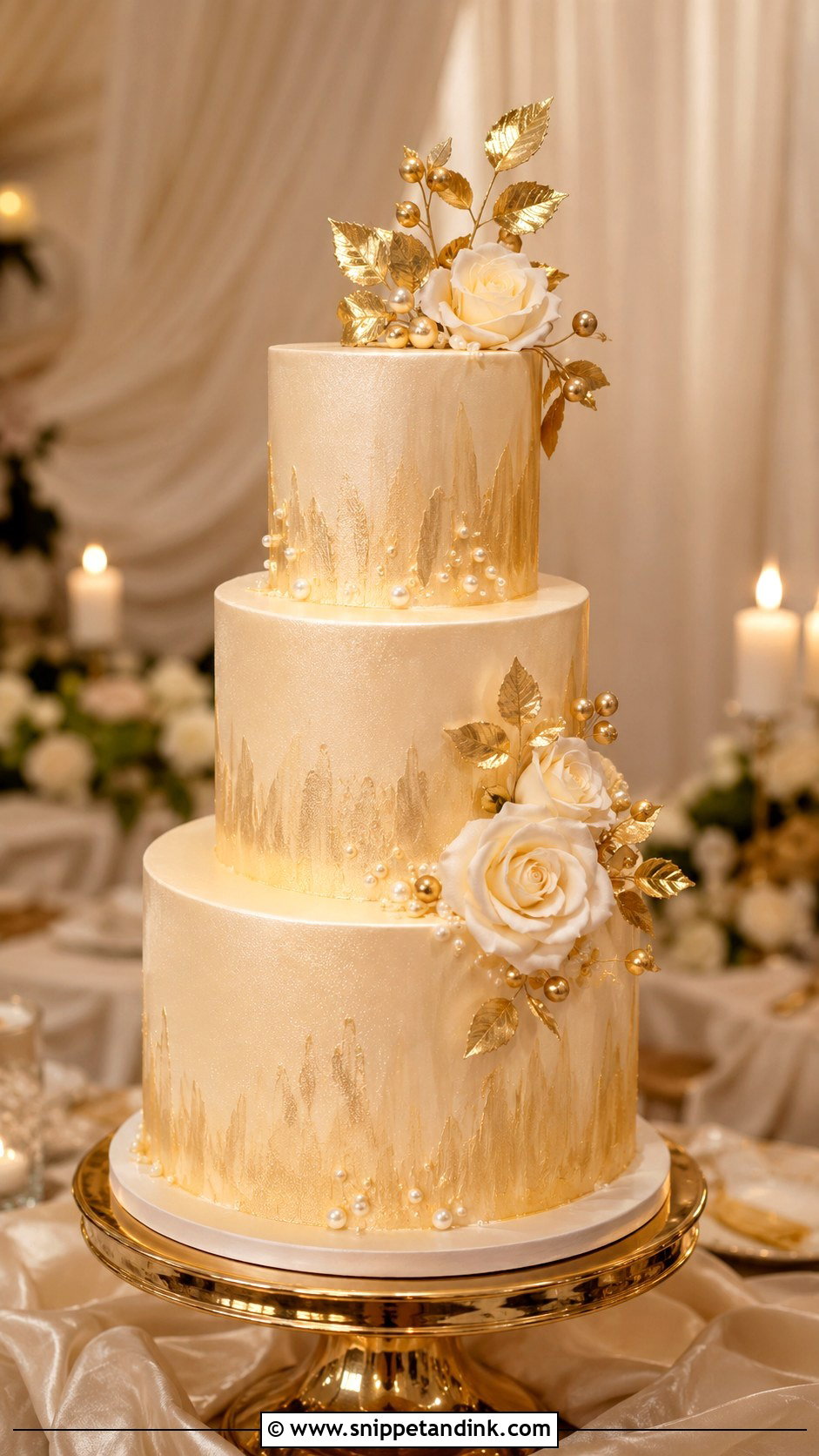
Champagne frosting sits between ivory and pale gold, so it glows without being bright. I finish it smooth, textured, pearlized or with metallic brushstrokes. If you like the idea of the inside matching the outside, a champagne sponge with vanilla buttercream and strawberry or raspberry filling does that. Sugar pearls, ivory roses or delicate gold leaves decorate it. The color is soft enough for any season and looks warm next to candlelight, gold flatware and cream linens.
17. Gold Ombre Wedding Cake
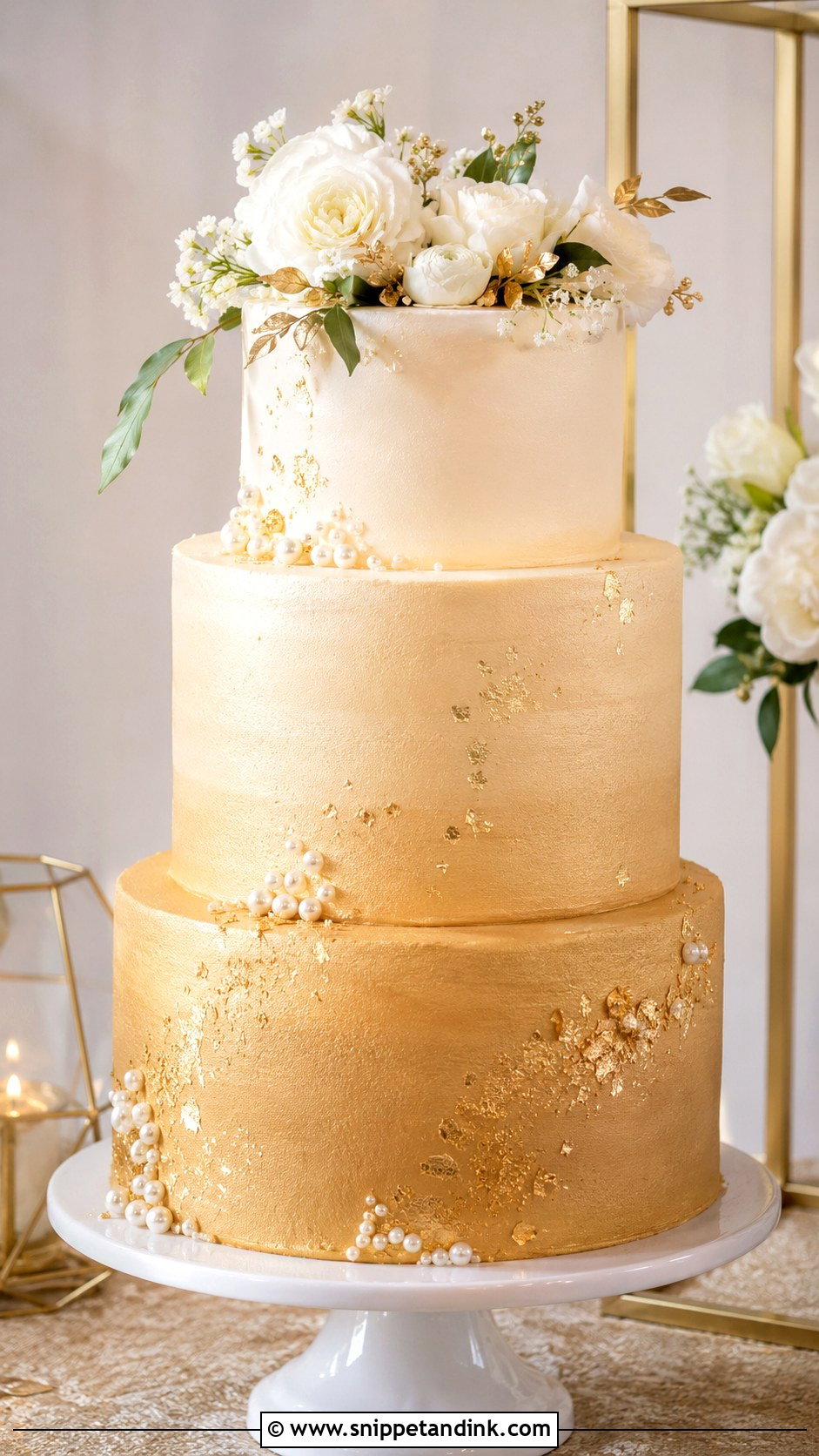
The fade usually runs from ivory at the top to champagne, beige or deep gold at the base. Darker at the bottom keeps the cake looking grounded; reversing it can make a tall cake look top-heavy. In buttercream I blend the shades on the tier with a scraper, which gives a soft transition. Fondant ombre is done tier by tier, so the change is more stepped and graphic. A few gold leaf pieces, pearls or fresh flowers finish it. Caramel vanilla, honey almond or lemon cream suit the warm palette, and a plain white or gold pedestal keeps attention on the color.
18. Gold Square Wedding Cake
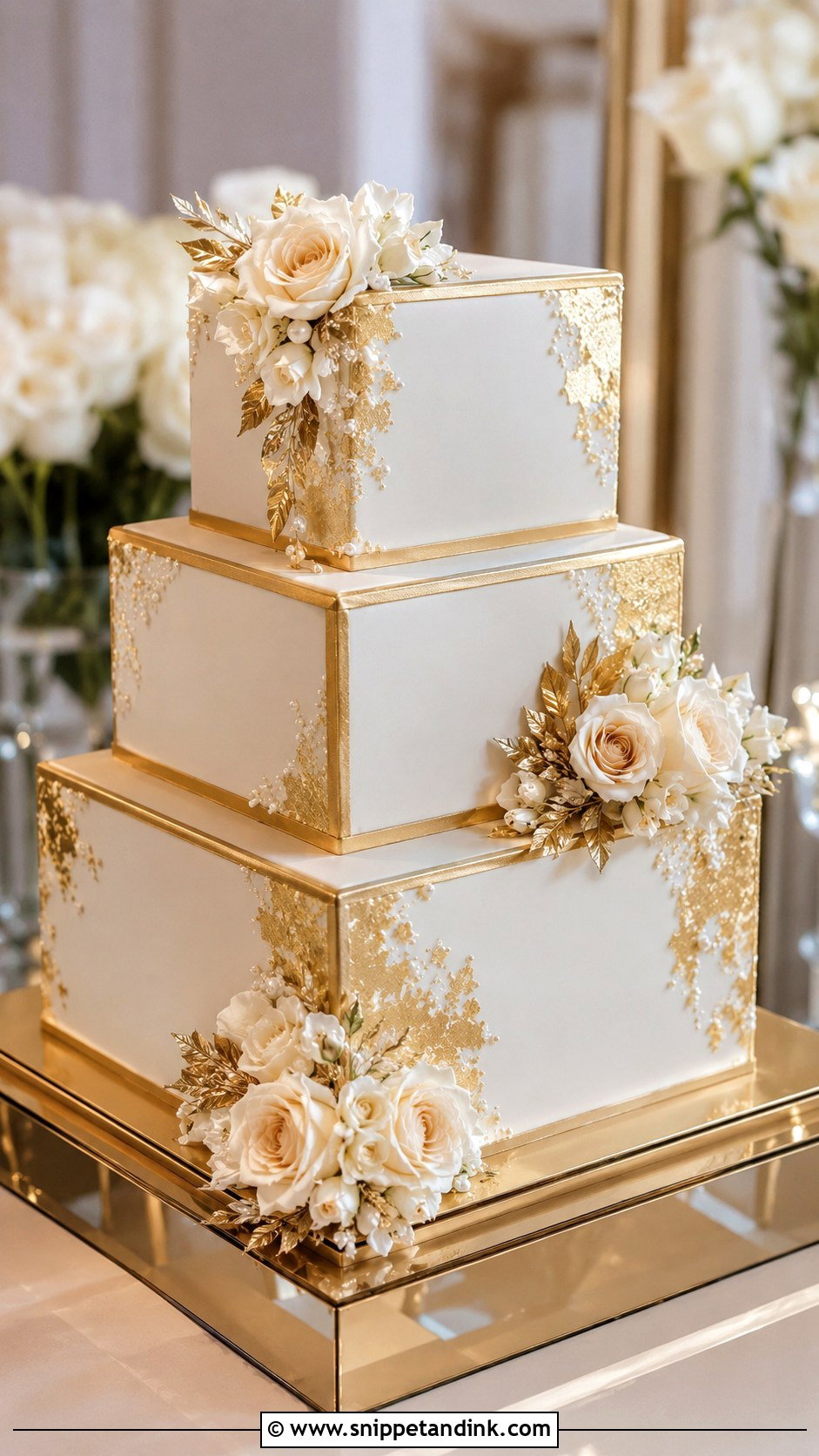
Square tiers are harder to frost than round ones, and the corners are where a cake shows whether the baker has the skill. Done well, they make gold borders, panels and painted lines look sharp and architectural. All white with gold edges is the restrained version; one full metallic tier is the dramatic one. Flowers set at the corners soften the shape. Fondant is the easier way to get crisp corners. Square cakes also give more portions per tier than round ones of the same width, which helps with a big guest list. Almond, vanilla bean, chocolate or champagne cream inside.
19. Gold Semi Naked Wedding Cake
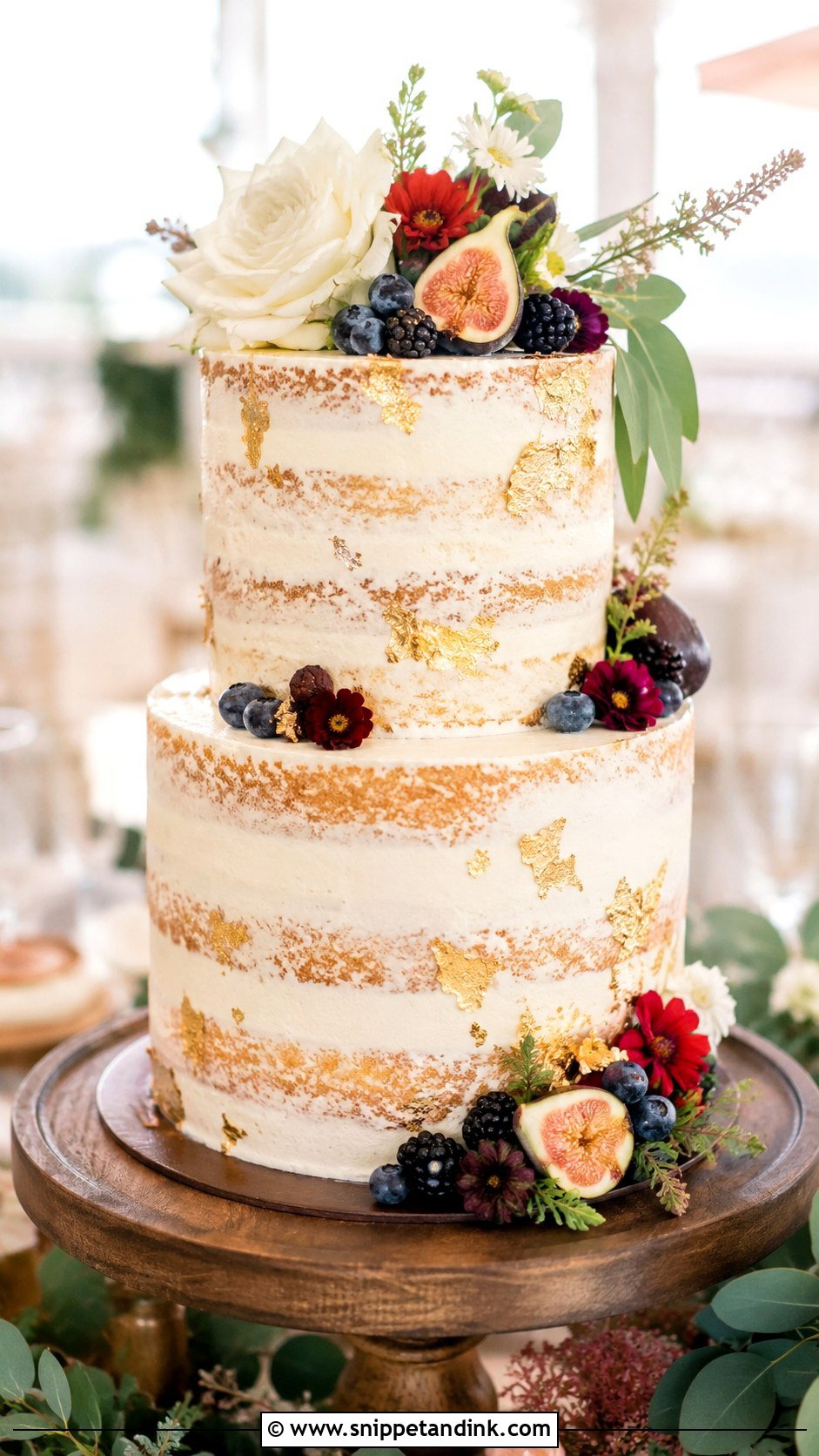
With a thin scraped coat, the sponge layers show through, and gold leaf on the edges adds polish to an otherwise rustic look. Because the crumb is on display, a gold semi naked wedding cake needs a flavor with a pretty, even texture, such as vanilla, honey, spice or almond. The honest drawback is that semi naked cakes dry out faster once they’re on display, so I’d keep it out of direct sun and serve it within a few hours. Fresh berries, figs, edible flowers or greenery bring color, and they suit gardens, barns and outdoor tables.

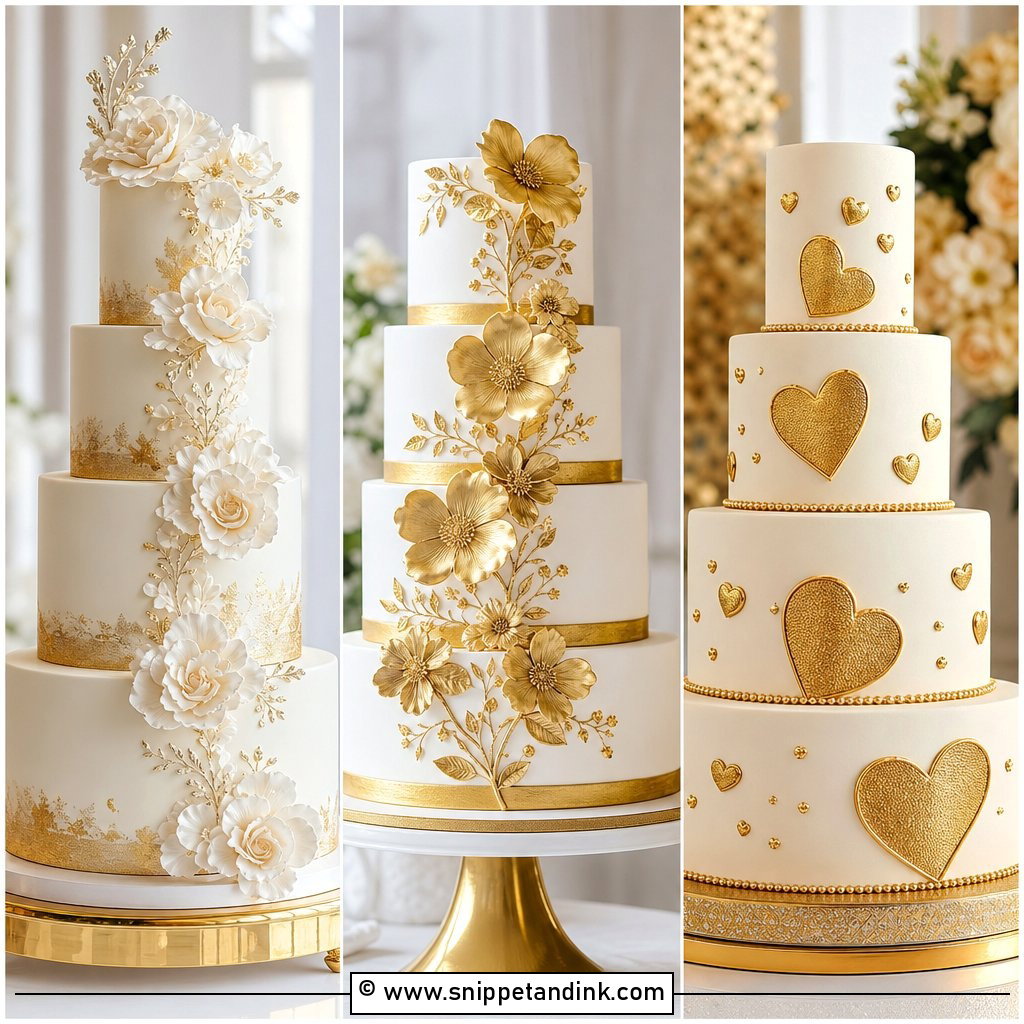
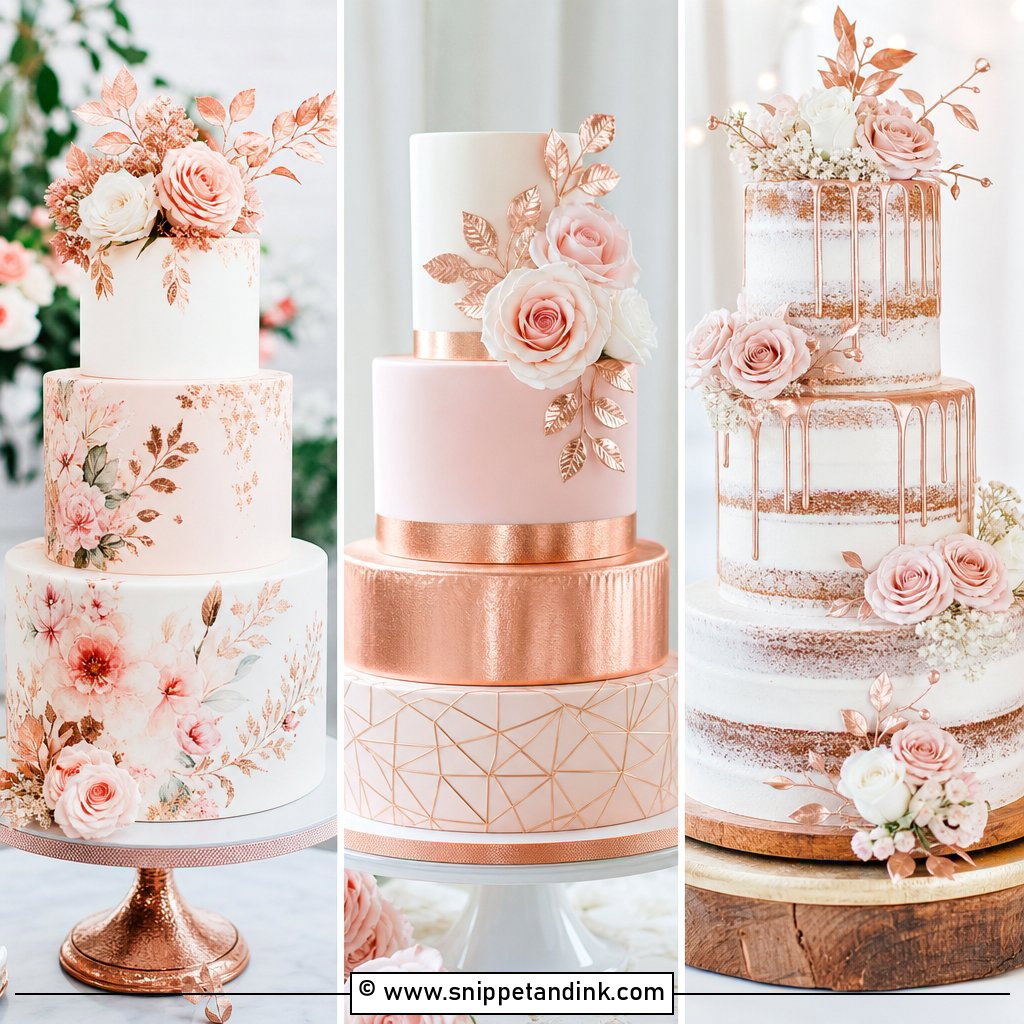
20. Gold Tall Wedding Cake
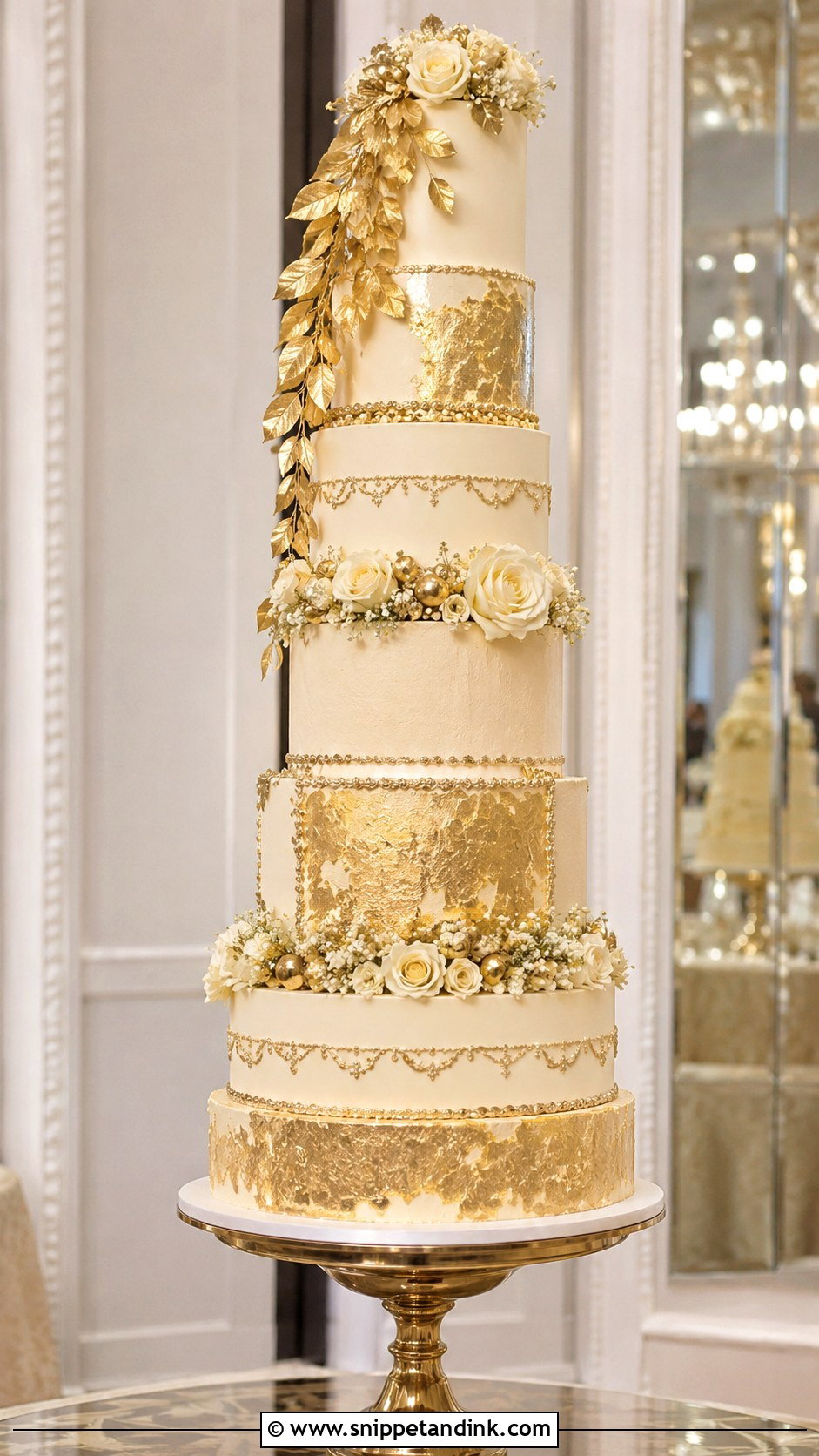
Height is what makes a cake read from the back of a large room. That can come from more tiers, extra-tall tiers or separators between levels. Every tier needs internal dowels and a central support, and a tall cake usually travels in sections and is stacked on site, so ask your baker how they deliver and set up. I spread the gold so it doesn’t repeat on every level: leaf on one tier, painted trim on another, flowers between. It suits ballrooms and big hotel weddings. Vanilla raspberry, lemon cream, chocolate ganache or almond buttercream are reliable choices that slice cleanly.
Why Gold Detailing Smudges in a Warm Marquee
Gold is only ever a surface layer, so anything that disturbs the surface shows up on it. The biggest enemy is moisture. A fondant cake moved from a cold fridge into a warm, humid room will sweat, and beads of condensation can make painted gold streak or lift. I let cakes come up to room temperature in their boxes so the water forms on the box, not the cake.
Heat is the second problem. Buttercream softens in a summer tent, and once it moves, gold leaf cracks and paint smears with it. For an outdoor or marquee wedding I’d suggest:
- Fondant or a firm ganache coating under the gold rather than a soft frosting.
- A cake table in the shadiest, coolest corner, away from the dance floor and heaters.
- Setting the cake out as close to cutting time as your planner allows.
- Candles kept a hand’s width from the tiers, since the warmth softens the side facing them.
On timing: designs with heavy piping, sugar flowers or many gilded panels take days of work, so most designers I know want the order settled a few months out and the final details confirmed two to three weeks before. If your date is in peak season, book earlier than you think you need to.
Bring Your Venue Lighting Into the Tasting Conversation
Every one of these cakes can be pushed bolder or softer. Black and gold for drama, blush and gold for romance, champagne for warmth, or a plain white cake with one metallic detail. What matters most is that gold supports the shape, texture, flavor and flowers instead of hiding them. Tell your baker about the room: warm candlelight, cool LEDs or bright daylight will all change how the gold reads. Bring reference photos, your guest count and your season to the tasting, and ask what will hold up on the day for your budget. That conversation does more for the final cake than any trend.
You'll Like These Ideas:








Leave a Reply