
Pink on its own can tip sugary. Put it on a rough, hand-finished cake and it calms down into something warm and grown-up. That’s the balance I aim for with rustic pink: blush or dusty rose buttercream, semi-naked layers, palette-knife texture, a wood stand, dried blooms, berries and a little greenery. These cakes suit barns, gardens, countryside venues and outdoor receptions from spring through fall. Below are twenty ways to do it, with notes on how each one behaves once it leaves my kitchen.
Scraped, Stucco or Palette Knife? Name the Finish
“Rustic” means something different to every baker, and it’s the word I hear most often with the least agreement behind it. Before we talk color, I show couples the actual finishes, because each one looks and behaves differently.
- Semi-naked: a thin scraped coat with the sponge showing. Lightest look, but the sponge dries fastest.
- Rough scraped: full coverage with visible scraper lines. Reads rustic but still neat.
- Palette knife: swept, overlapping strokes. Hand-made and textured, and it hides small bumps.
- Stucco: a slightly pitted, plaster-like surface. Very earthy; takes dusty pinks well.
- Combed or ridged: even horizontal lines. More structured, closer to modern.
Save one photo of the finish you like, separate from the flowers and color. It’s the clearest single instruction you can give a baker.
Texture also changes how pink reads. A deeply ridged or stucco surface throws small shadows, so the same blush looks a little darker and dustier than it does on a smooth coat. If you fell in love with a shade on a smooth cake, expect it to deepen slightly once the finish is rough.
1. Rustic Pink Semi Naked Wedding Cake
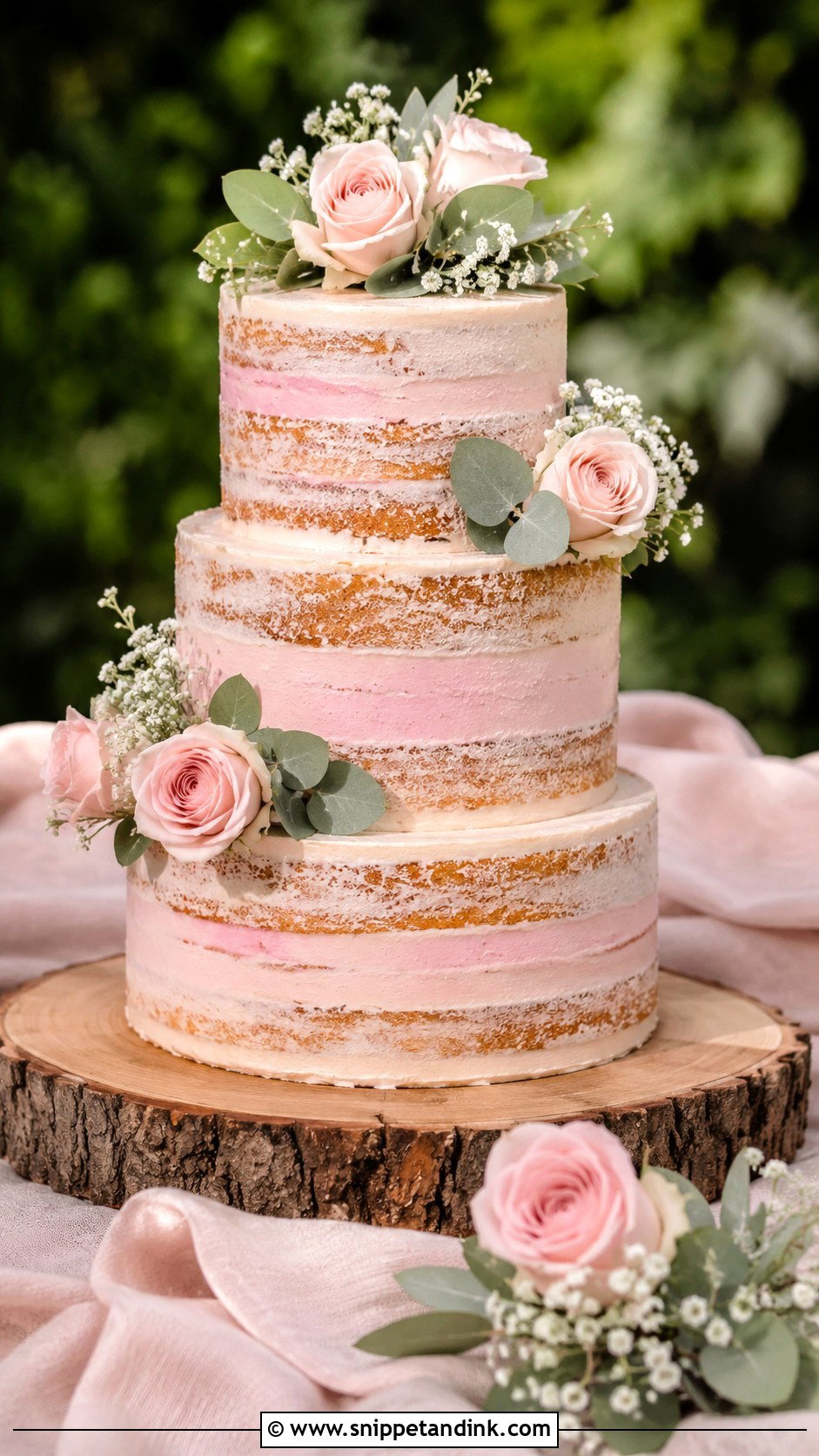
Semi-naked is the finish I’d start with if you can’t decide. A thin scrape of blush buttercream lets the layers show through, so it looks relaxed without looking unfinished. Pale sponges, vanilla, almond, strawberry or champagne, keep the stripes soft against the pink; chocolate would read much heavier. Roses, baby’s breath and eucalyptus suit it, with the eucalyptus laid on the board rather than pushed into the cake. Because so little icing protects the sponge, I syrup each layer and set it out late.
2. Rustic Pink Buttercream Wedding Cake
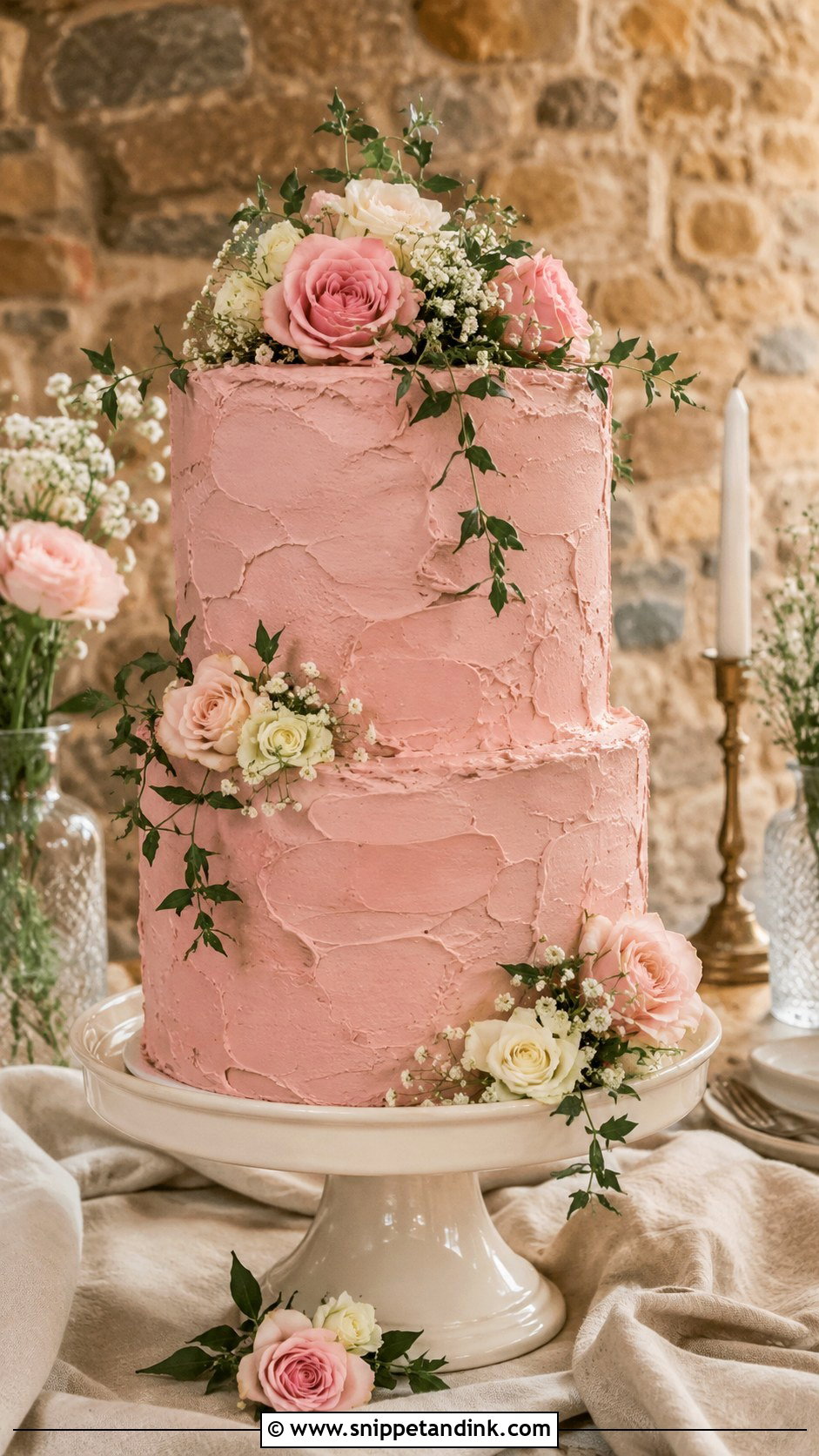
Full buttercream gives you texture and color without fondant. I’ll swirl it, scrape it lightly or spread it with a palette knife, depending on how handmade you want it to look. Dusty pink is the safer shade if your palette is muted; a warmer blush suits peach, ivory or taupe. Small flower clusters look better on textured buttercream than heavy arrangements, which hide the work. The ridges catch light, so texture shows well in photos even on a plain table.
3. Rustic Pink Rose Wedding Cake
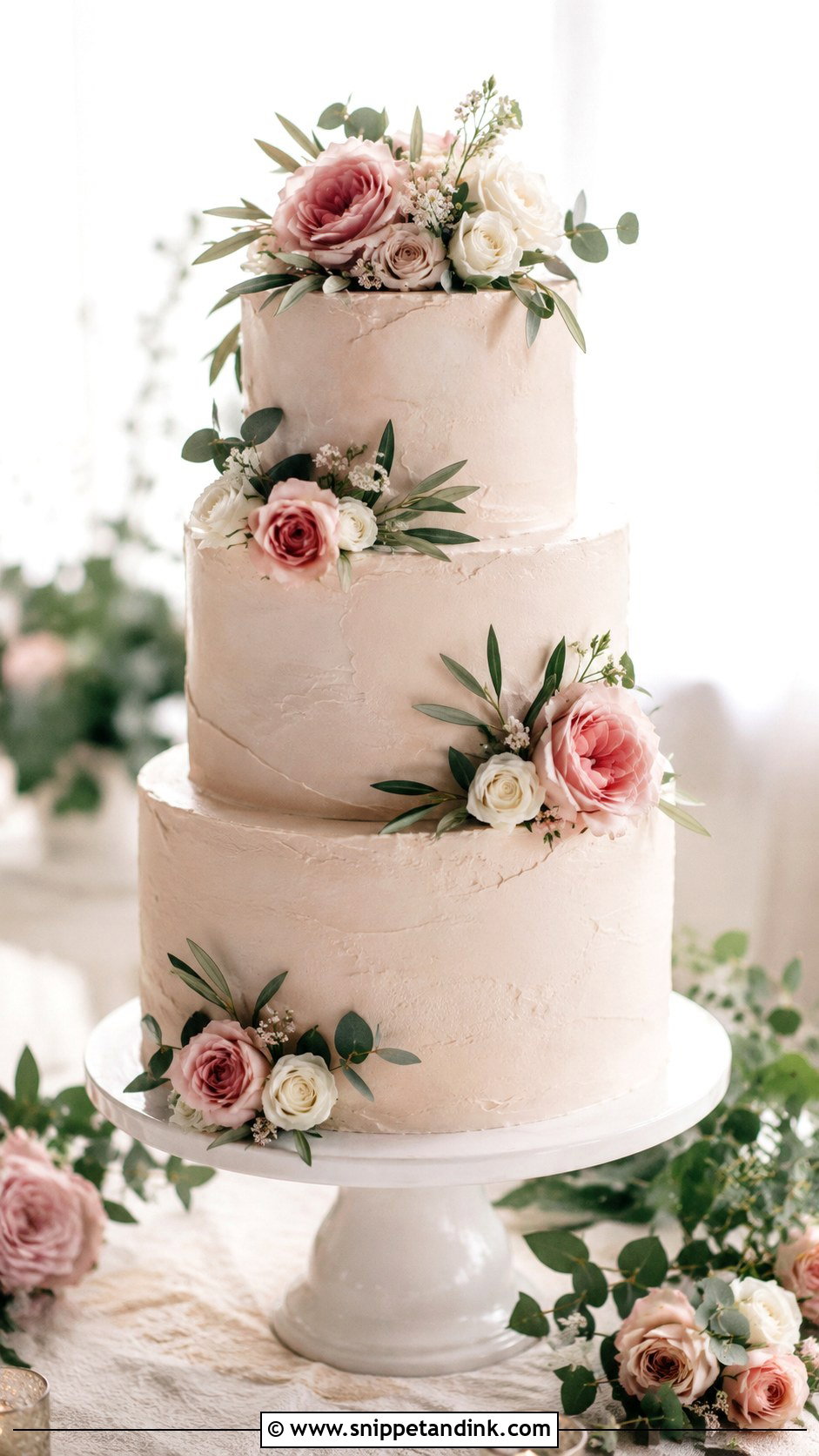
Roses are classic, so the styling has to do the relaxing. I use blush and dusty rose blooms in loose clusters rather than a formal cascade, and I always ask for mixed sizes: full open heads, half-open blooms and a few buds. Even sizing is what makes rose cakes look stiff. Soft buttercream or exposed edges keep it casual, and small fillers, olive leaves or eucalyptus add a garden feel. It fits a barn, a backyard or a country house.
4. Rustic Pink Naked Wedding Cake
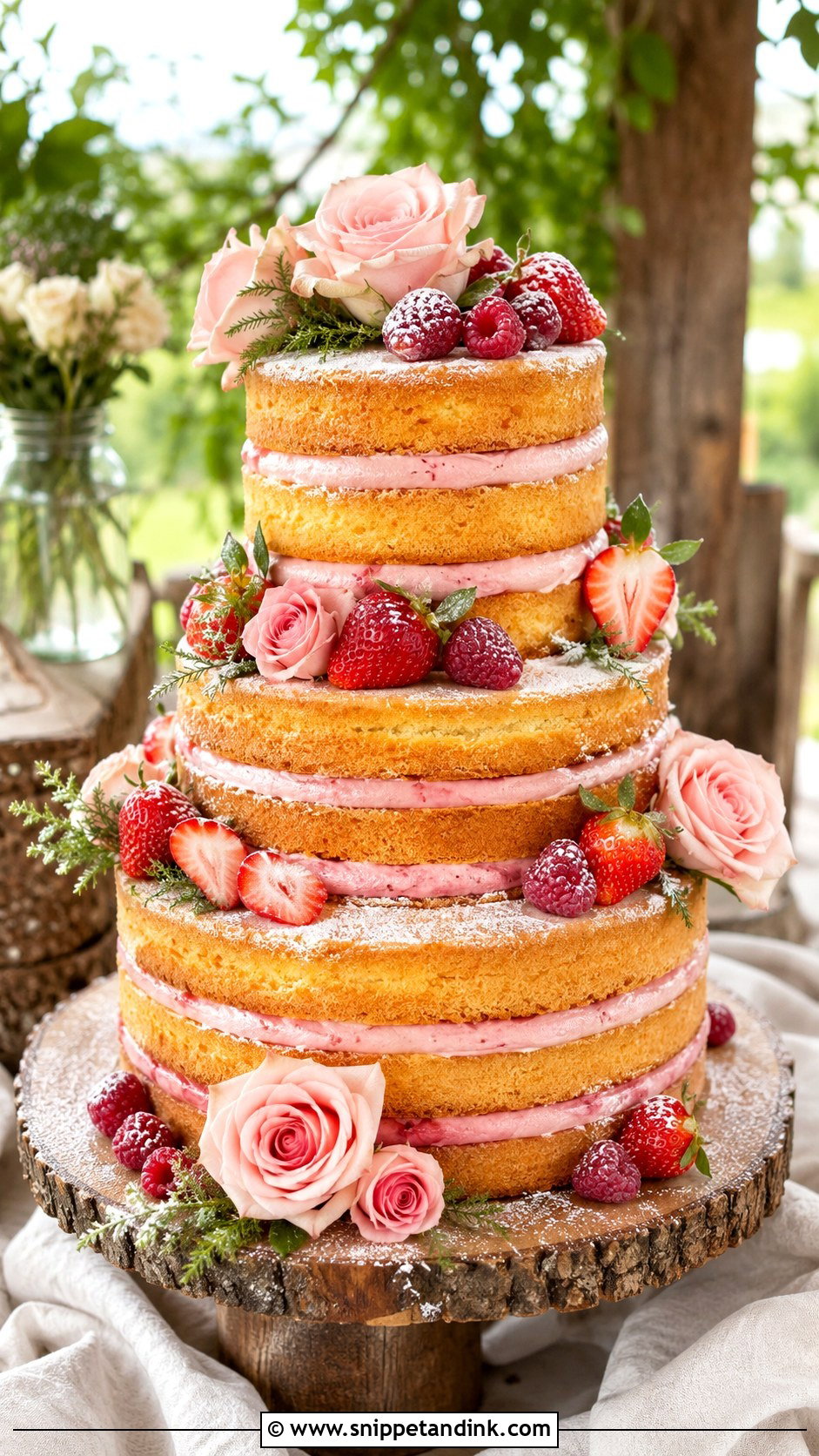
With a naked cake, the structure is the decoration, so the layers have to be dead level. I trim every sponge flat and pipe the filling to an even depth, because one wonky layer shows from across the room. Pale pink filling peeking between the layers is the only color. Berries, blush roses and greenery freshen it, and a sift of powdered sugar gives a bakery look, though it dissolves on damp fruit, so it goes on last. Choose this if you’d rather eat cake than frosting.
5. Rustic Pink Two Tier Wedding Cake
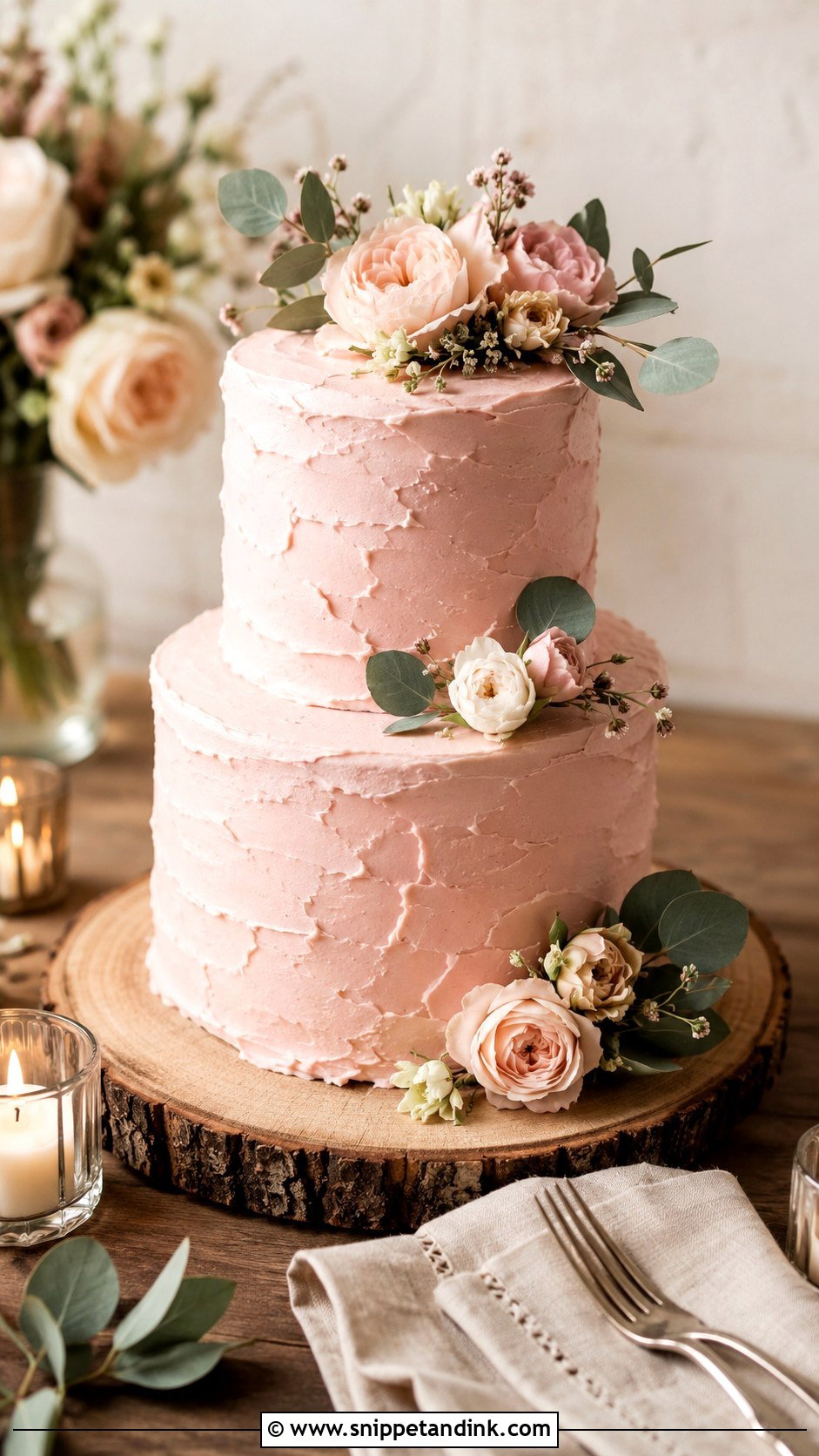
Two tiers give height without overpowering a small reception table. Rough-edged blush buttercream suits the scale, with a few pink flowers on top and a small cluster at the base for balance. A wood slice stand, linen napkins and candles complete it. If you need more slices than two tiers can give, I bake a kitchen sheet cake in the same flavor; guests can’t tell, and you pay far less than for a third display tier.
6. Rustic Pink Three Tier Wedding Cake
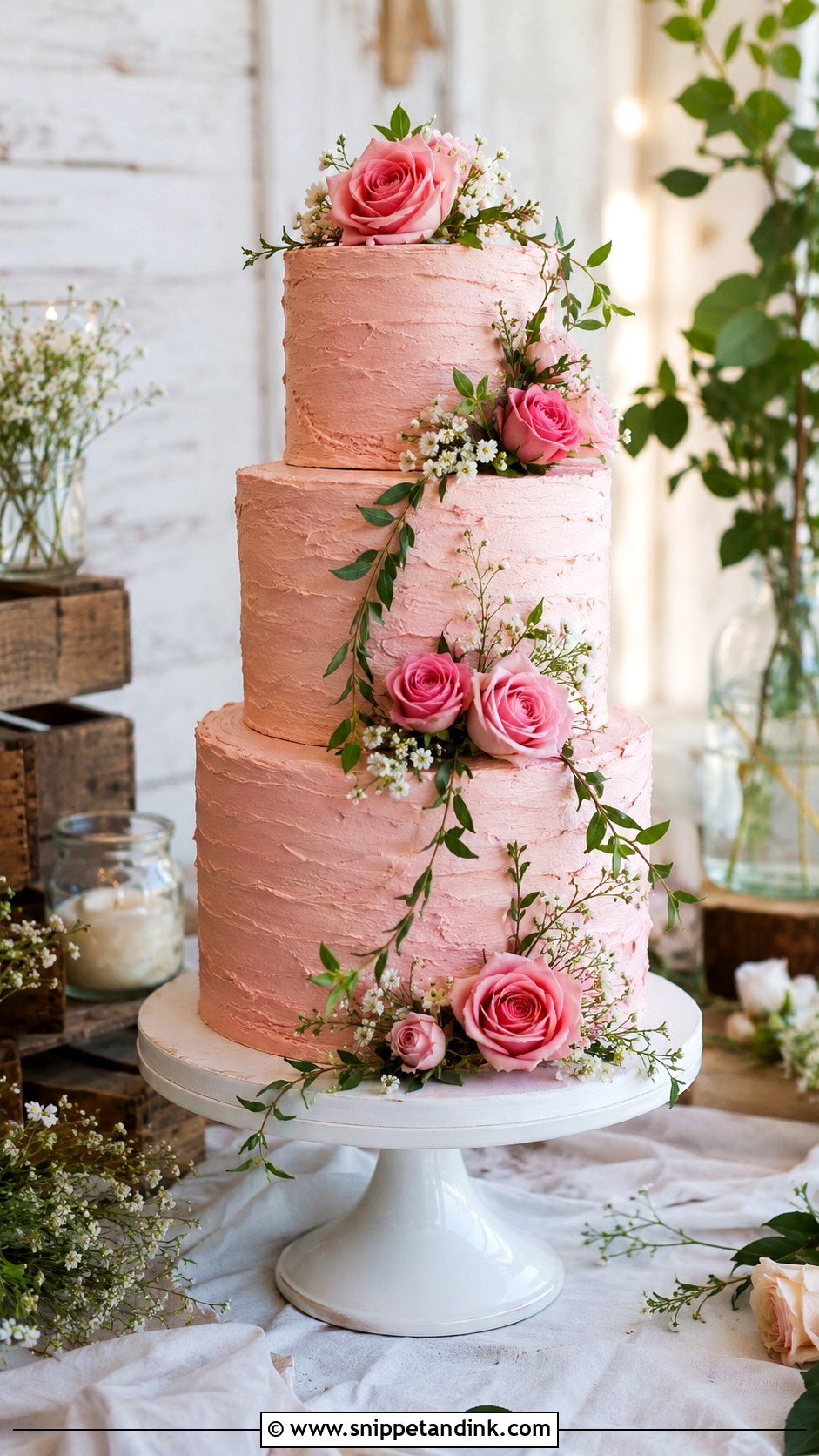
A rustic pink three tier wedding cake gives you a real focal point and more room for texture. Keep all three tiers one dusty pink, or lighten them slightly as they rise. Rough buttercream, semi-naked frosting or a stucco texture all work. Blush roses, small white flowers and trailing greenery soften the height. If the tiers are different shades, I mix them from one master batch, since separately mixed pinks almost never sit together right. It suits medium and larger weddings.
7. Rustic Pink Ombre Wedding Cake
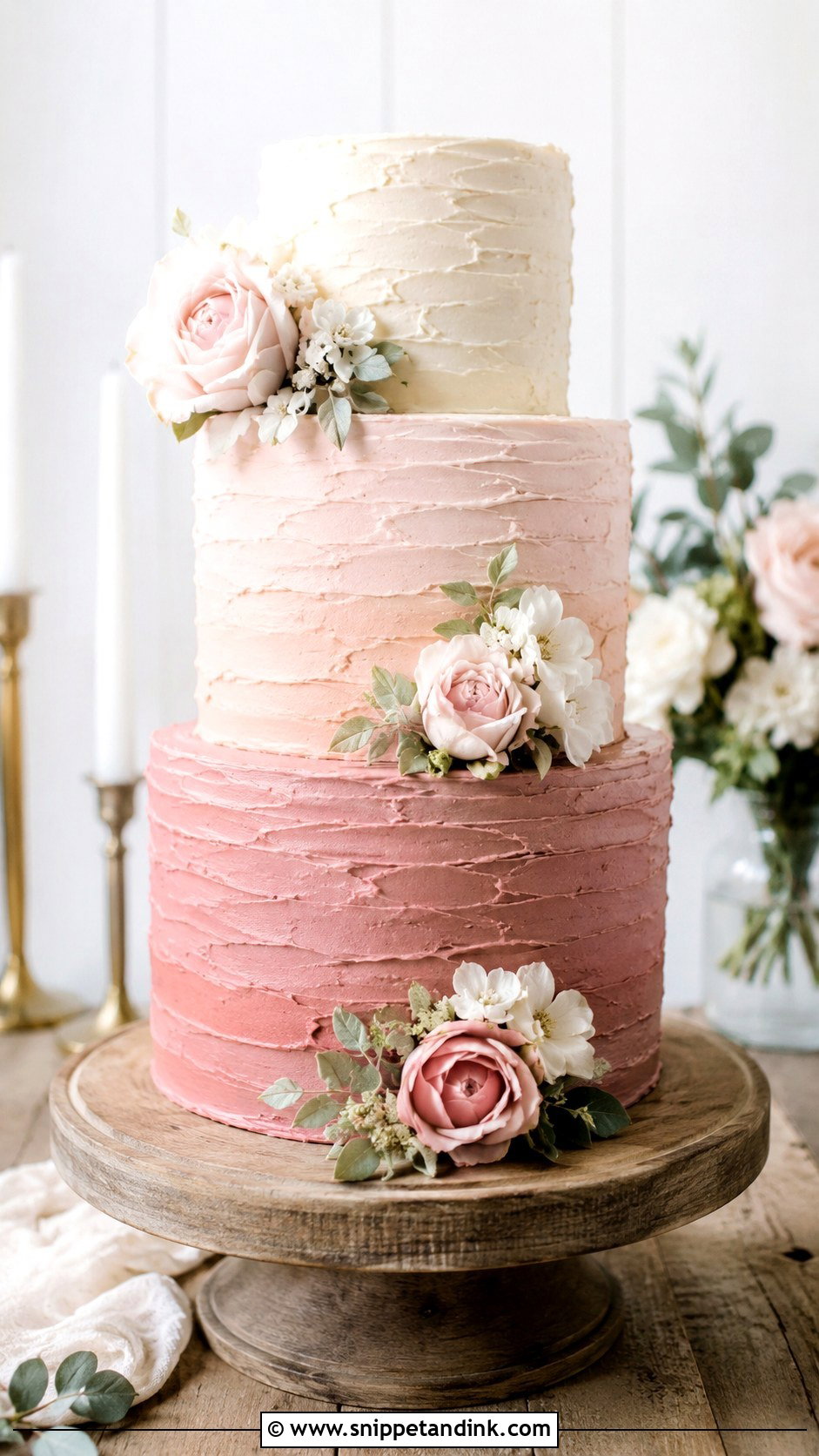
Ombré is the gentlest way to add movement. Deep rose at the bottom fading to pale blush at the top is the usual direction, because the heavier color visually anchors the base. On a rustic cake I blend it in textured buttercream rather than a smooth fondant fade. A few flowers can sit where the shades meet, but not so many that they hide the gradient. Strawberry, vanilla bean, almond or lemon layers suit it, and a plain white or wooden stand keeps the color in charge.
8. Rustic Pink Drip Wedding Cake
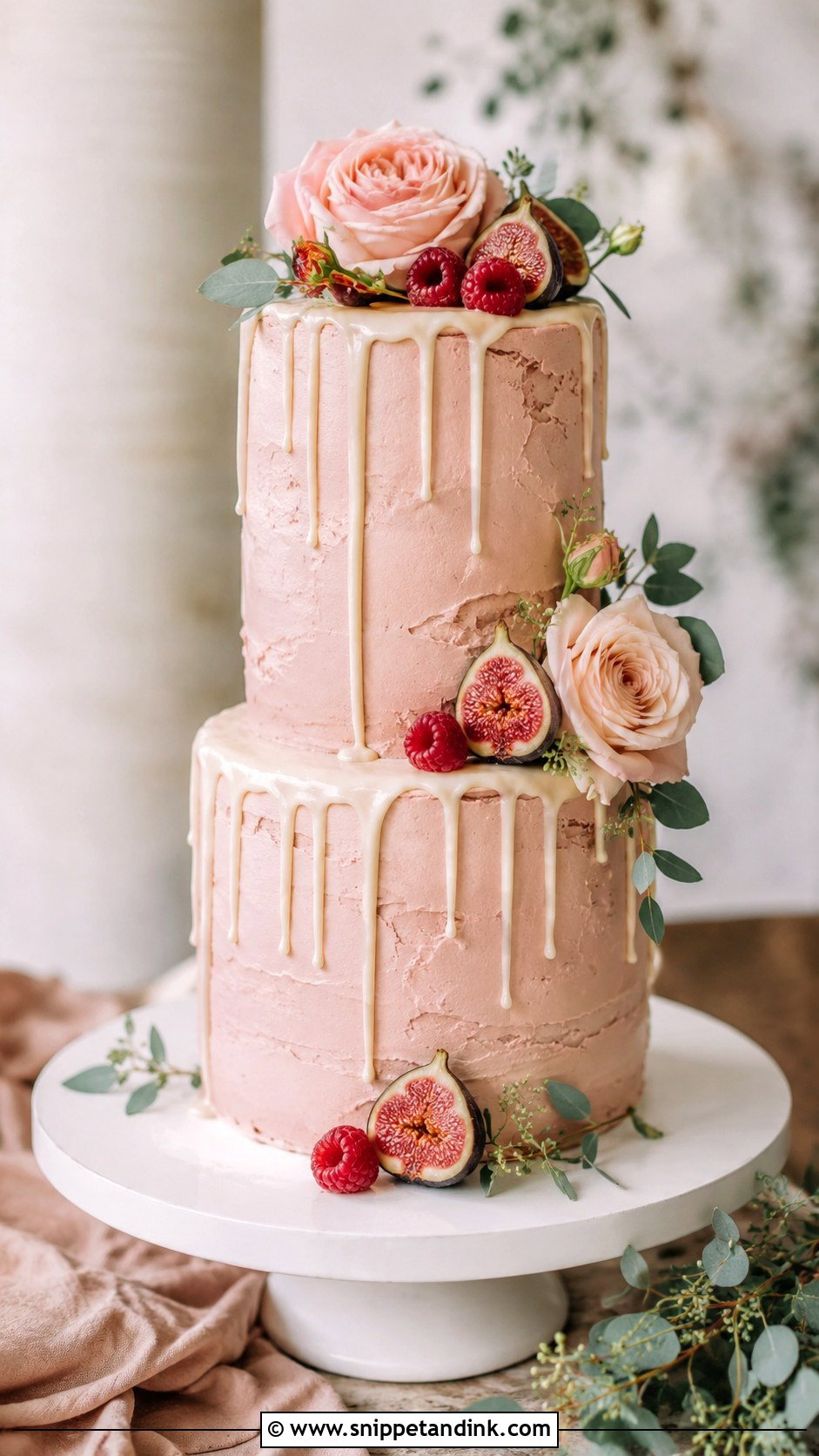
Drips usually read modern; here they need to stay quiet. On blush buttercream, I use a white chocolate drip or one a shade deeper than the cake, and stop it short so it doesn’t run halfway down. The ganache has to be just warm enough to flow, or the drips end up as thick stubs or thin puddles on the board. Berries, roses, figs and greenery bring it back to rustic, and a textured base keeps it from looking like a birthday cake.
9. Rustic Pink Floral Wedding Cake
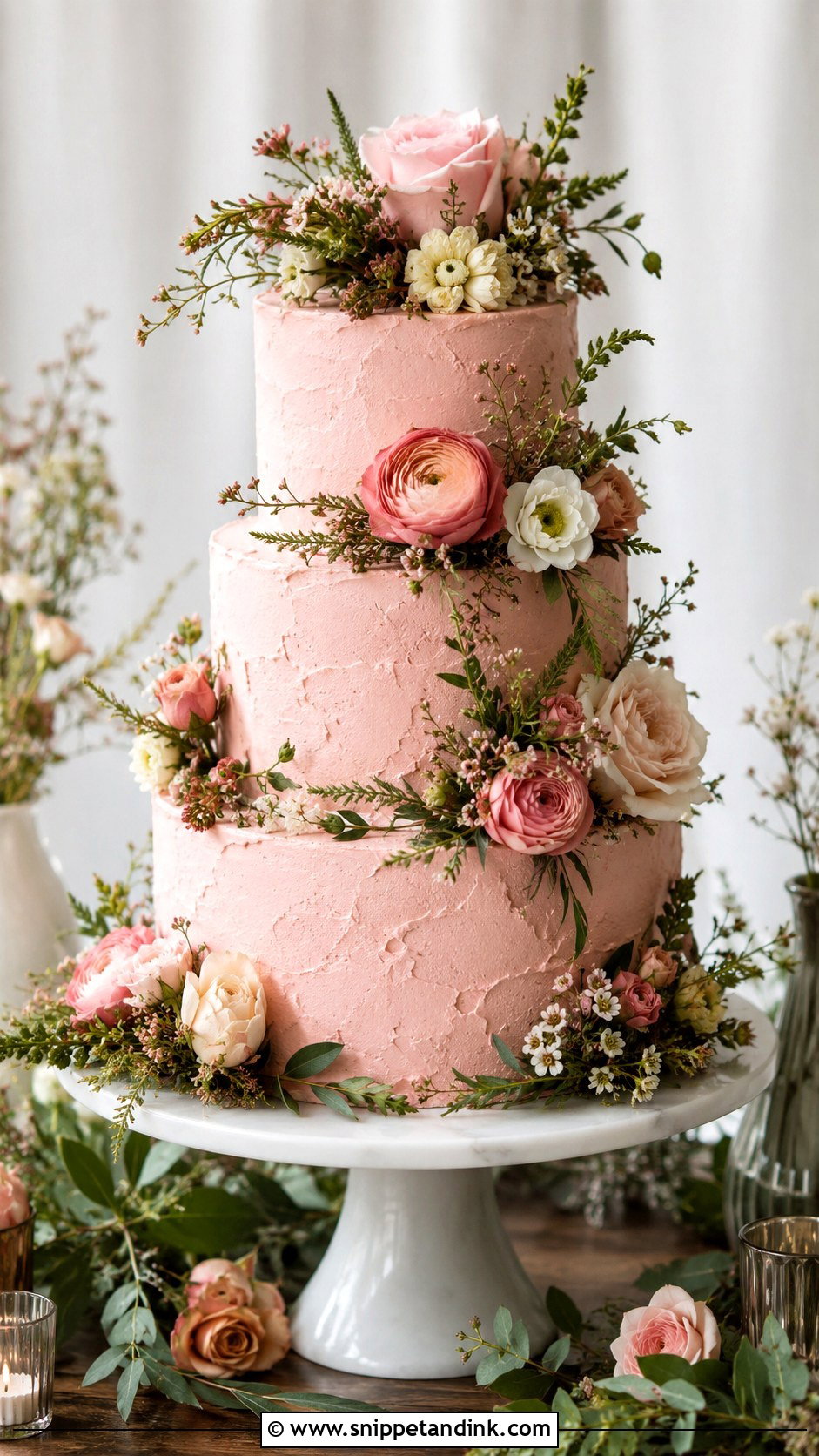
If flowers run through your whole wedding, let the cake carry them too, loosely and never in rows. Blush roses, dusty pink garden flowers, small white blossoms and greenery can wind around the tiers. A pale pink base keeps the cake from fighting the flowers. Pick one main pink and let the greenery give contrast; three competing pinks look busy up close. I’d talk to your florist so the cake flowers come from the same order as the centerpieces, which keeps the colors matched.
10. Rustic Pink Wildflower Wedding Cake
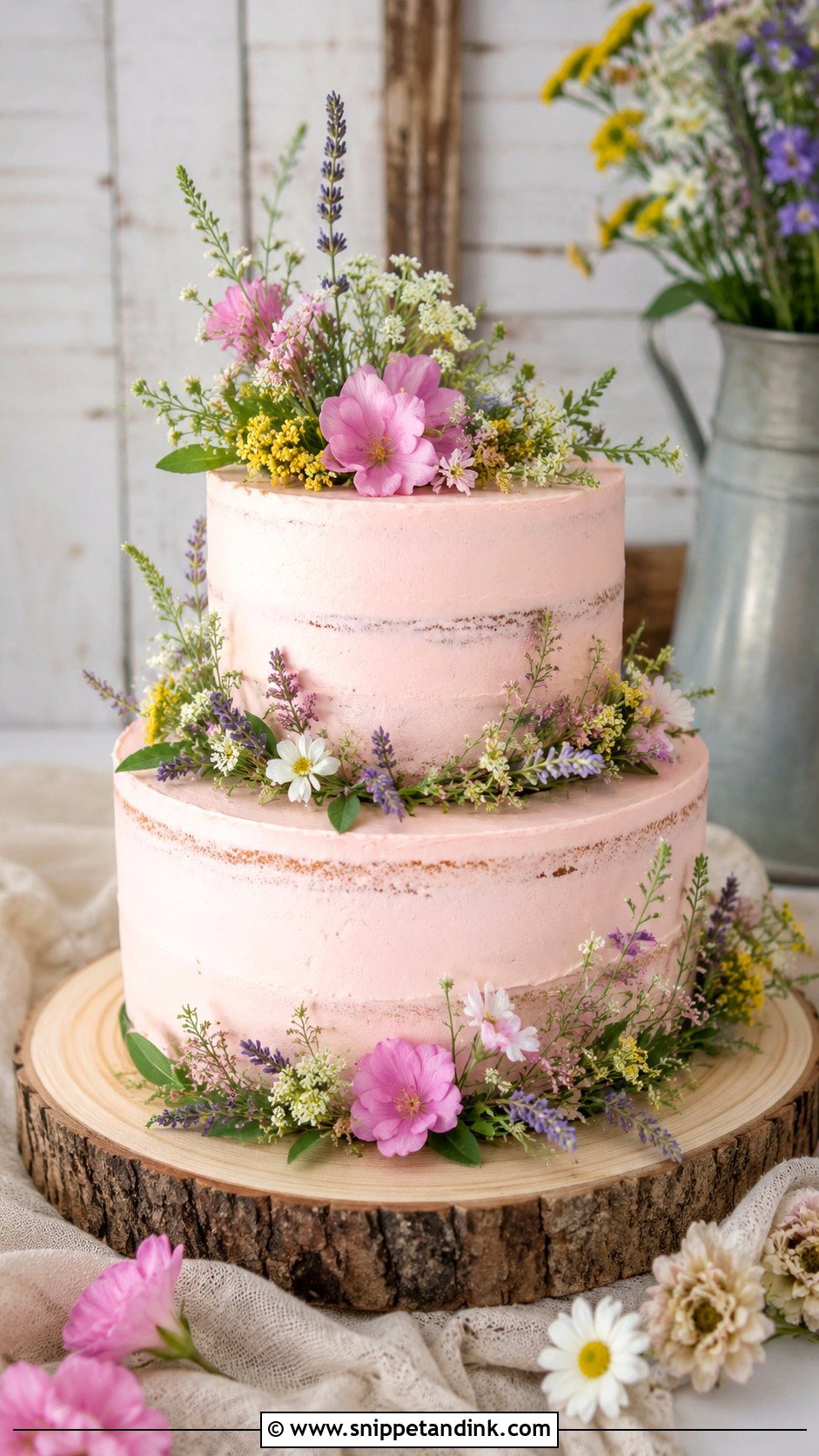
A rustic pink wildflower wedding cake should look like the flowers were gathered from a meadow on the way to the venue. Start with blush buttercream or a semi-naked base, then add small edible or food-safe blooms in soft pink, ivory, lavender and pale yellow. Wildflowers wilt faster than roses, so edible pressed flowers or sugar versions last better through a long reception. Keep it airy. It belongs in spring and summer, on a wood slice or a simple ceramic stand.
11. Rustic Pink Eucalyptus Wedding Cake
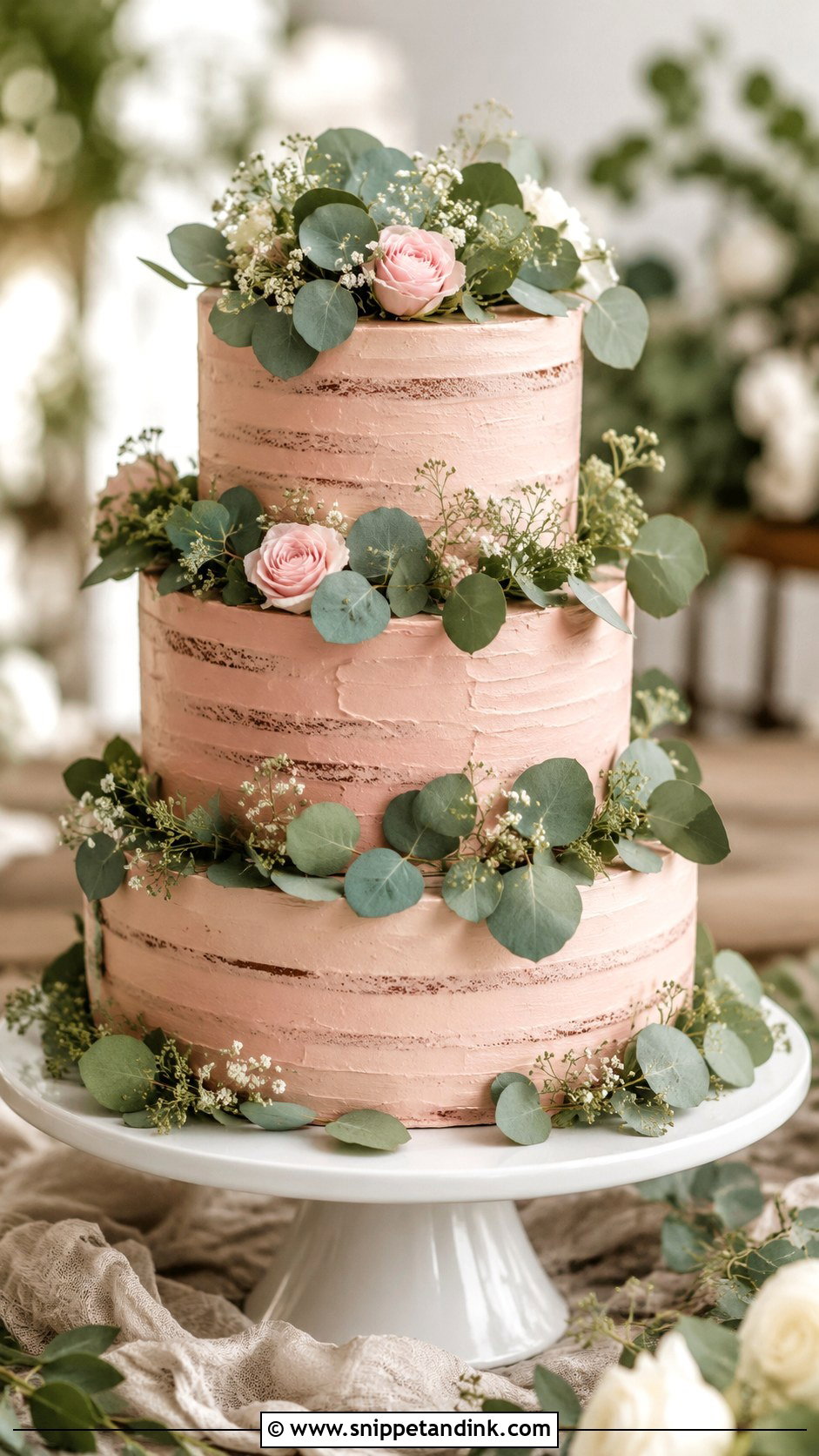
Eucalyptus stops pink from tasting too sweet to the eye; its silvery green cools the blush. A semi-naked or textured base makes the greenery look intentional. I add small pink roses or ranunculus blooms for softness, but eucalyptus stays the main accent. It isn’t edible, so it rests on parchment or wrapped stems, never straight in the sponge. Barns, outdoor receptions and garden weddings with neutral linens and wood all suit it.
12. Rustic Pink Ruffle Wedding Cake
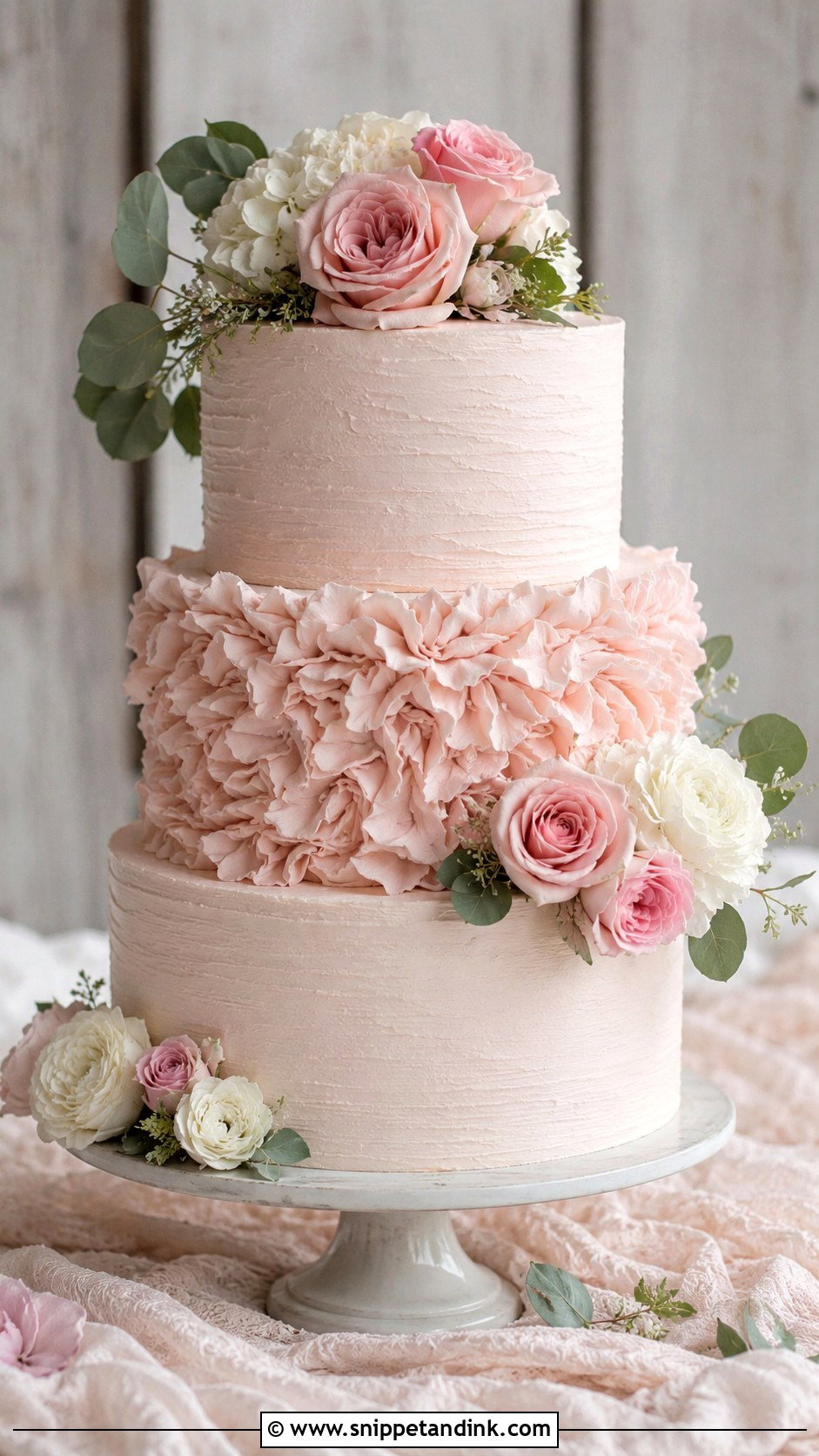
Ruffles are where rustic and romantic meet. I pipe them in buttercream or shape them in fondant, keeping the edges uneven and hand-made rather than machine-regular. One ruffled tier between smoother textured tiers stops it looking formal. A few pink roses and small ivory flowers at the base or top are enough. Buttercream ruffles are soft and dent if bumped, so this cake should travel boxed and be handled as little as possible.
13. Rustic Pink Vintage Wedding Cake
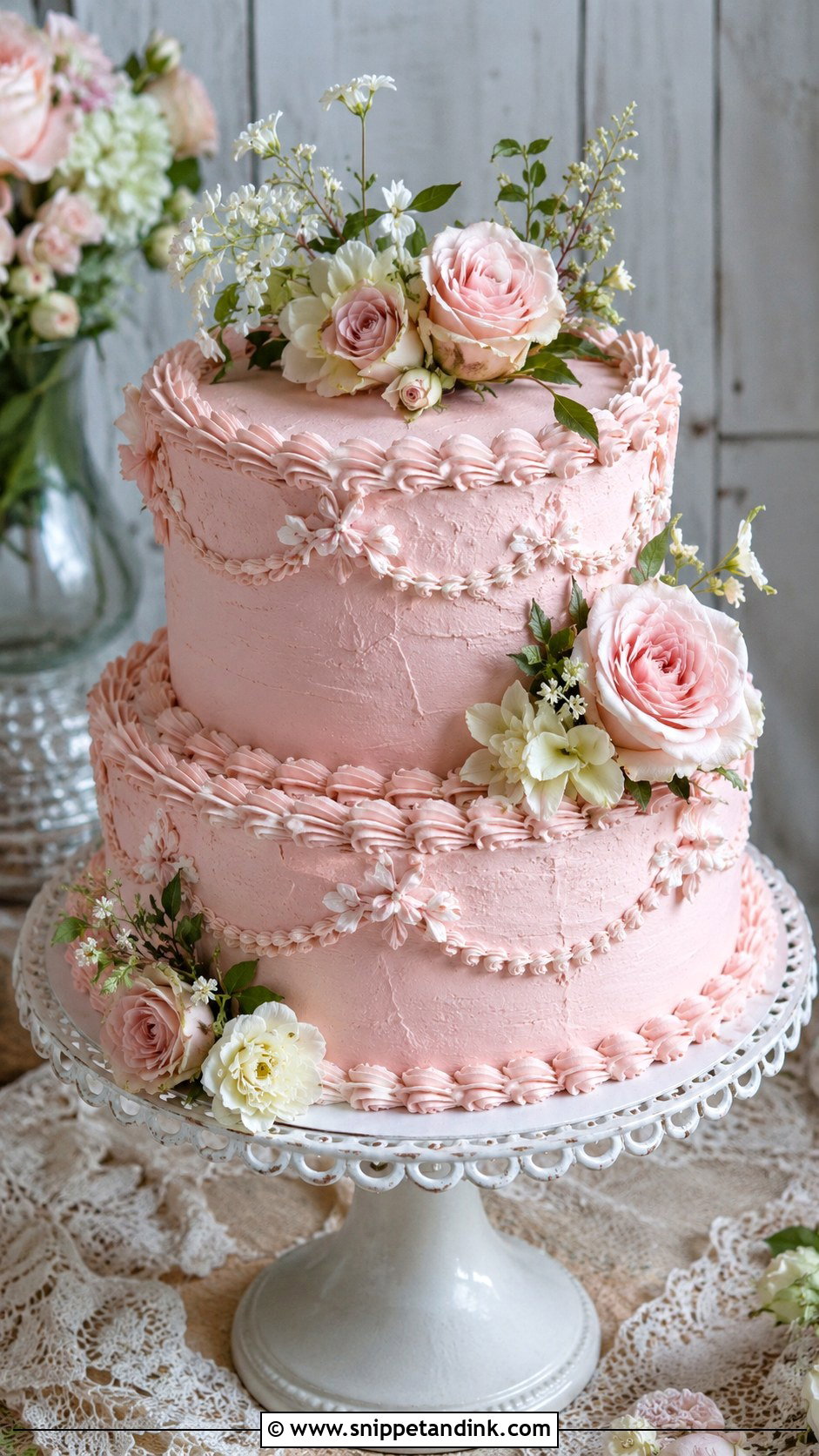
Vintage piping gives old-fashioned charm: soft pink buttercream, shell borders, small swags and delicate floral accents. The rustic version is less glossy and less exact, with a muted pink, a slightly textured base and a few fresh flowers softening the piping. A simple pedestal, lace-style linens or antique serving pieces suit it. Piping buttercream must be stiffer than coating buttercream, or the shells slump within an hour in a warm room.
14. Rustic Pink Pearl Wedding Cake
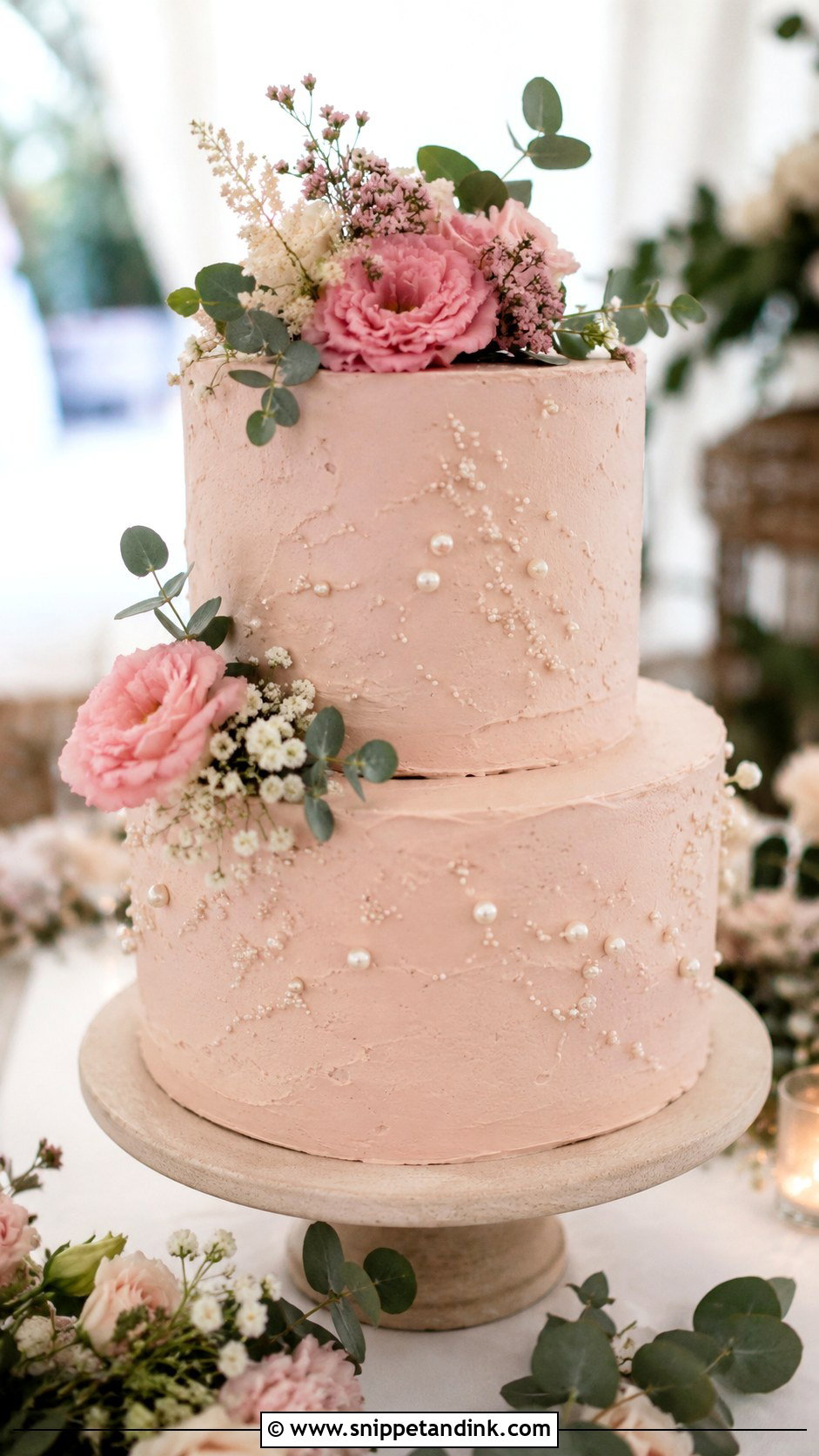
Edible pearls dress up a country cake without changing its mood. I scatter them in a loose, uneven pattern on textured dusty pink buttercream, the opposite of the neat rows you’d see on a formal cake. Fewer is better; they’re highlights. Fresh blush flowers and greenery keep it natural. Hard sugar pearls are tough to bite, so I use the soft kind anywhere guests will eat. A matte stand and warm table styling suit it.
15. Rustic Pink Gold Leaf Wedding Cake
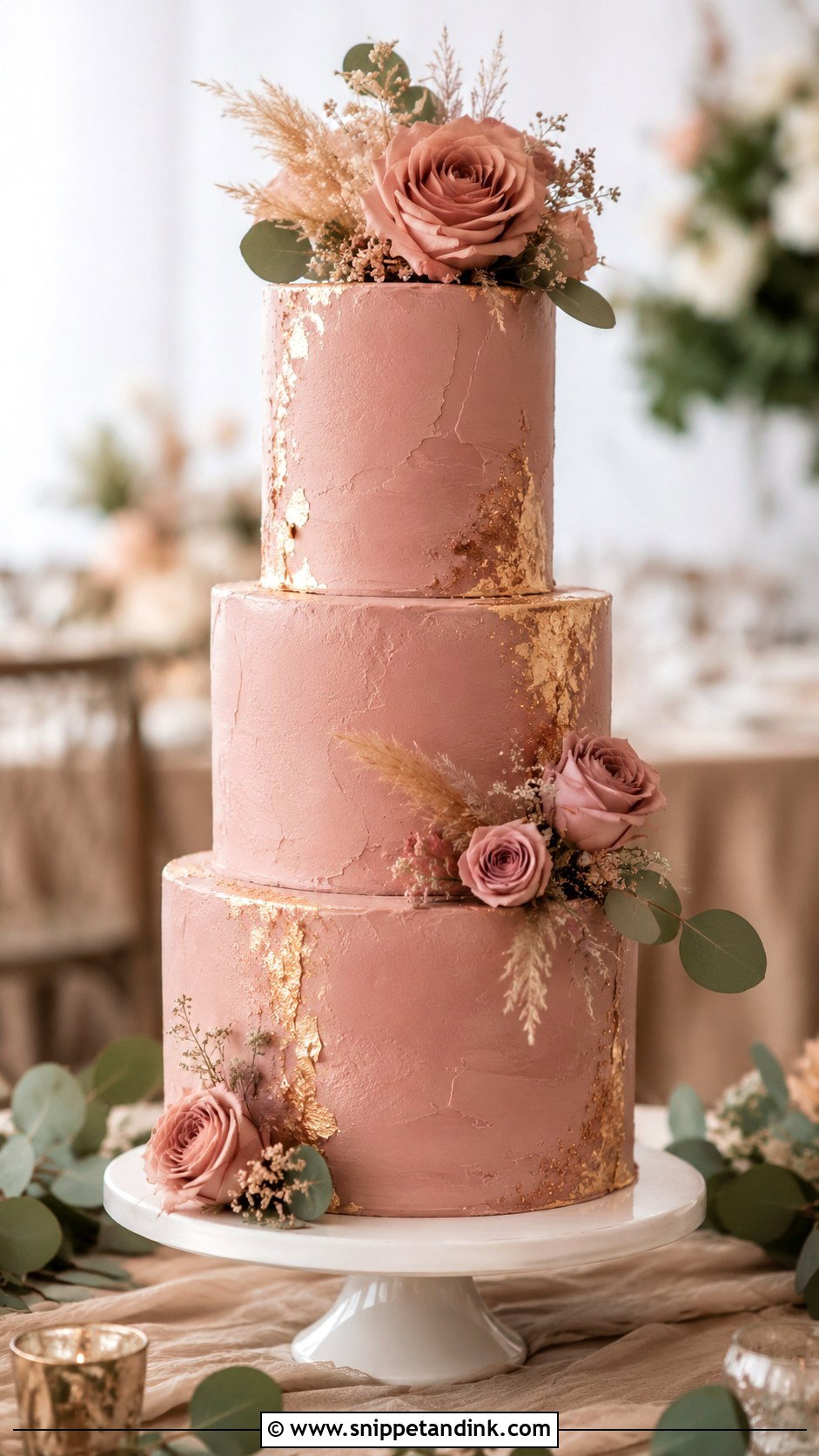
Gold leaf on dusty rose looks quietly rich, never flashy, and it’s the dusty tone that makes it work. I tear small pieces and press them along textured edges or near floral clusters, not all over. Roses, dried grasses or eucalyptus keep the rustic mood. It is made for an evening reception where candlelight catches the edges. Apply leaf with tweezers or a dry brush; fingers leave prints and the leaf sticks to warm skin.
16. Rustic Pink Succulent Wedding Cake
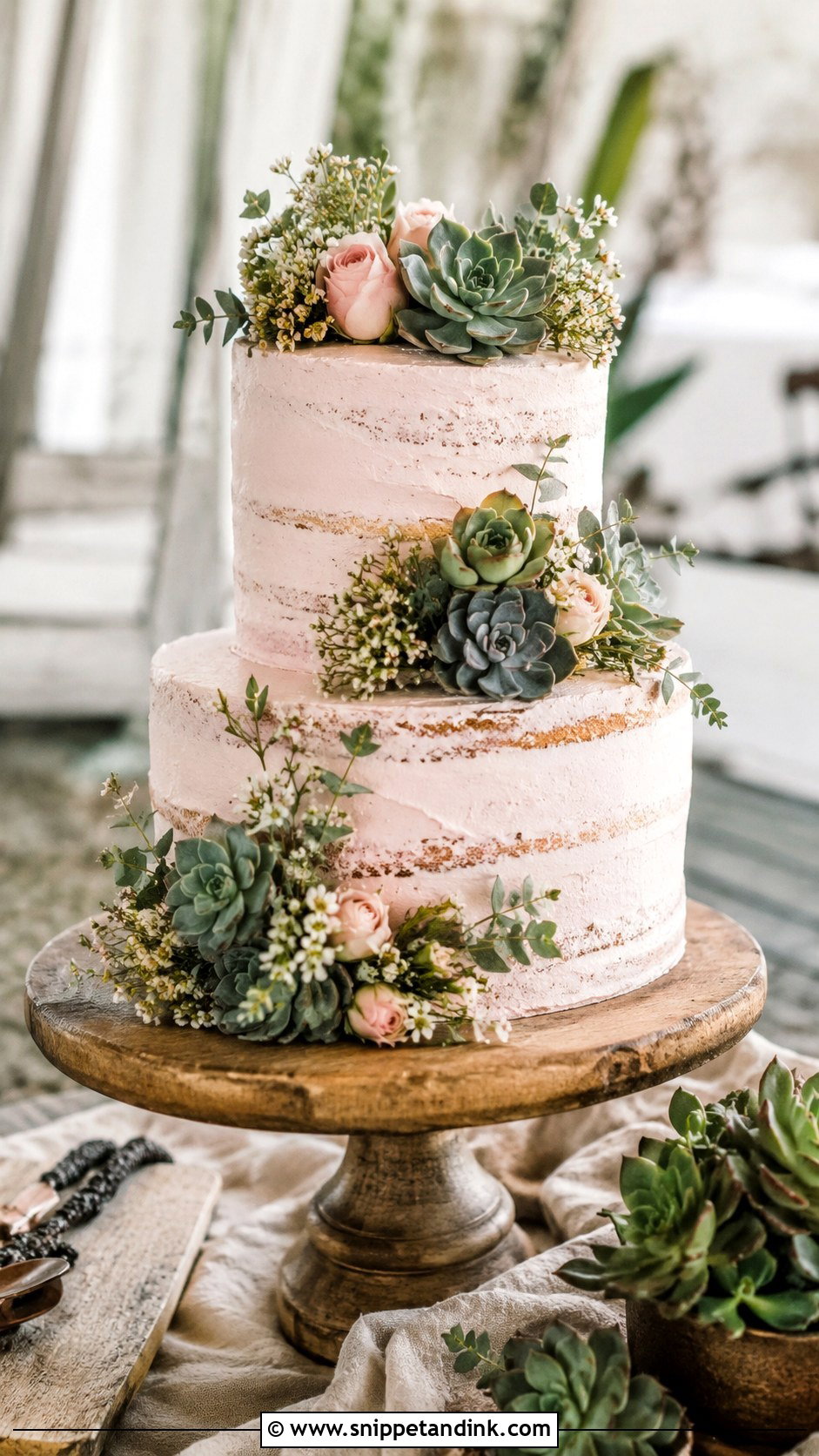
Succulents look right on a blush cake because their green and blue-green tones are the natural opposite of pink. A semi-naked or lightly textured finish lets them stand out, with a few small pink flowers linking back to the palette. Real succulents come with roots and soil, so I clean and wrap their bases or make sugar ones, which won’t wilt. Outdoor, desert-style and farm venues suit it, and it’s a refreshing change from all-floral cakes.
17. Rustic Pink Berry Wedding Cake
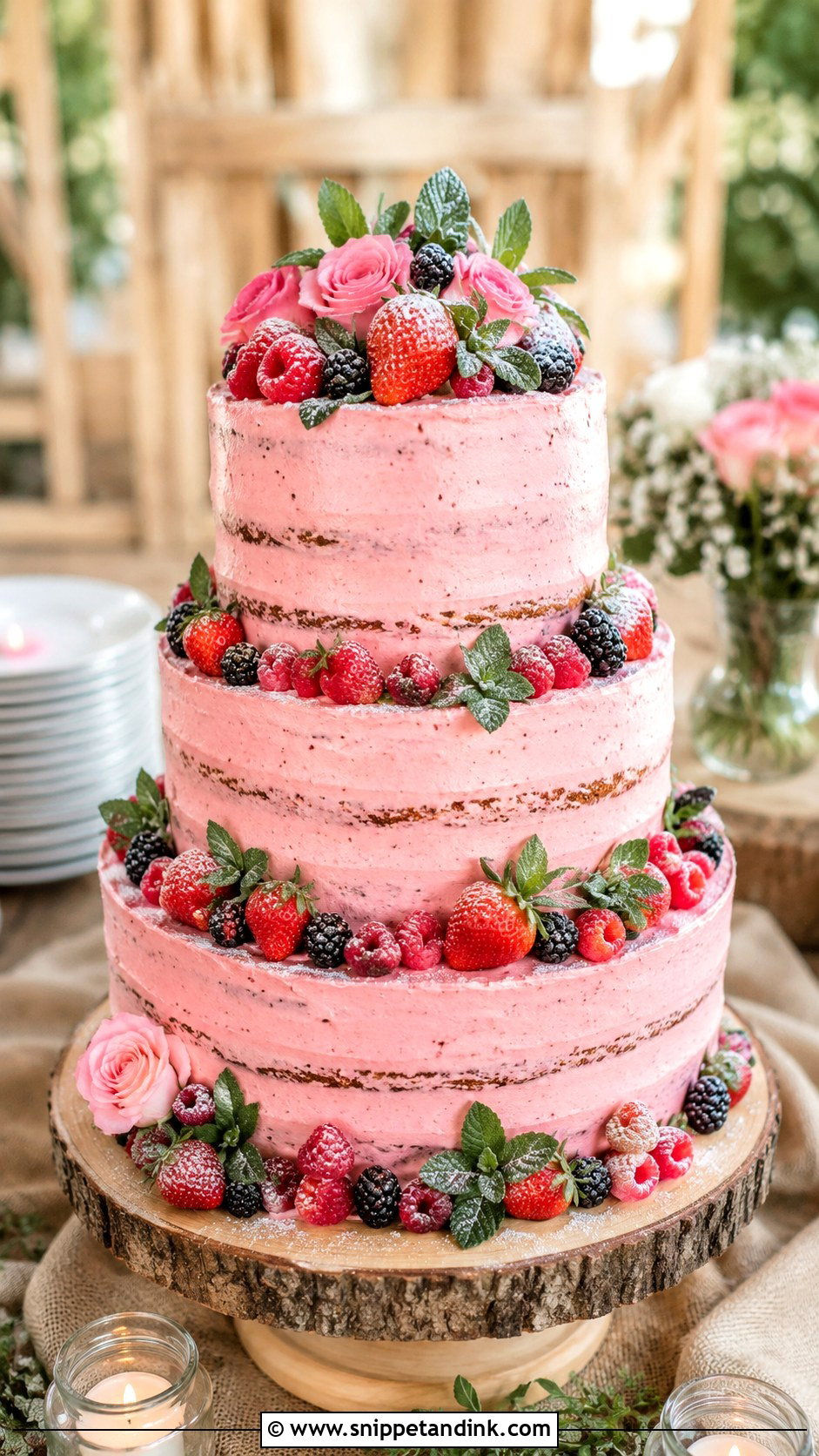
Berries make a cake feel homemade and generous. On blush buttercream or with pink-tinted filling, strawberries, raspberries, blackberries and a few flowers give natural color. A semi-naked finish lets the fruit look casual. Fruit is where timing matters most: cut strawberries bleed, and washed berries that aren’t fully dry make the icing weep, so I place them at the venue. A dusting of powdered sugar or a few mint leaves finish it. It suits summer and daytime receptions.
18. Rustic Pink Single Tier Wedding Cake
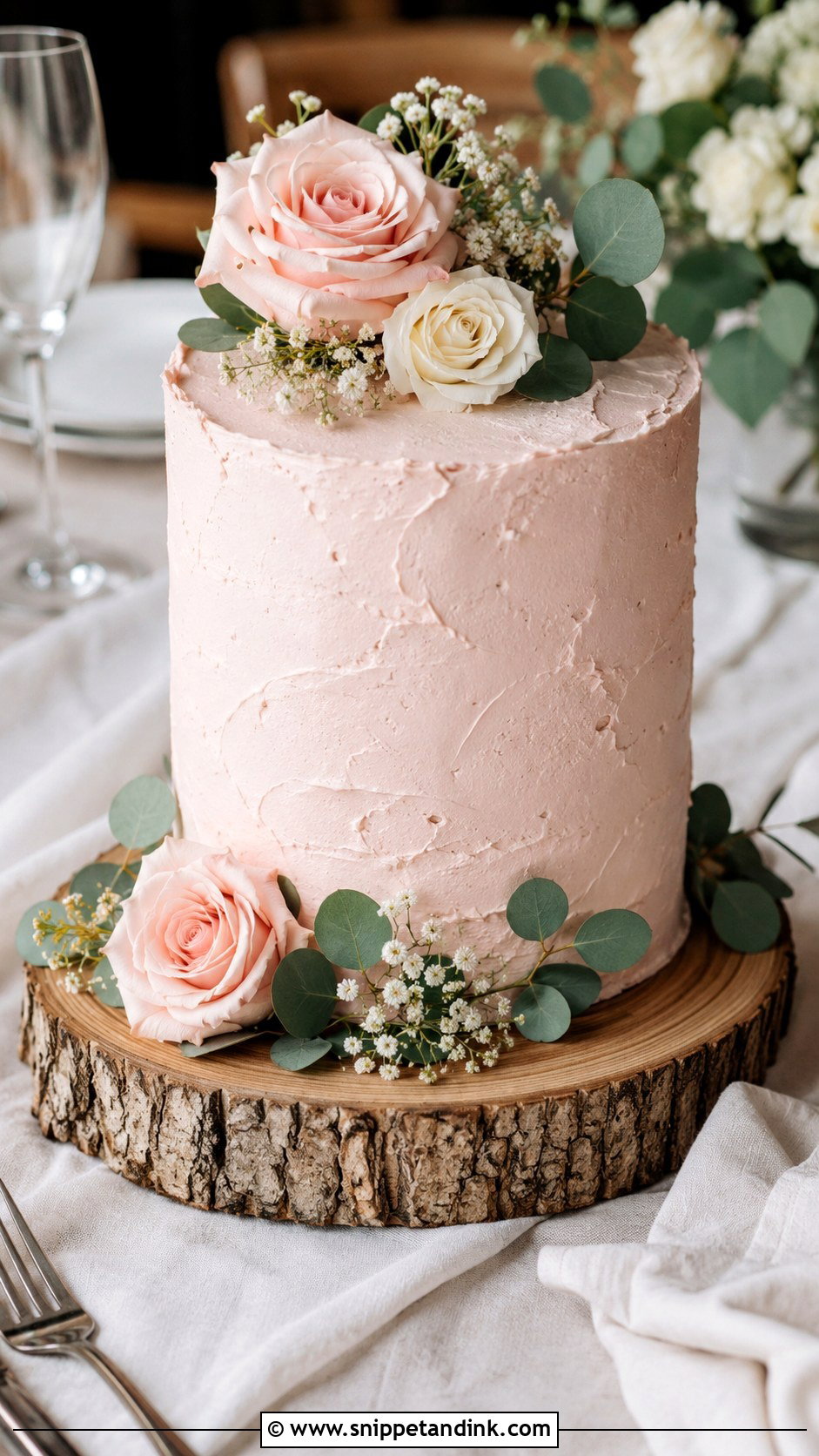
One tall tier is enough for an elopement, a micro wedding or a bridal brunch. Height gives it presence, so I build it four layers deep rather than two. Rough-textured blush buttercream and a few fresh flowers make it a wedding cake rather than a party cake. Set it on a wood slice, ceramic plate or simple pedestal. If you need more servings, cupcakes or small desserts around it fill the gap. Tall single tiers need a central dowel to stay straight.
19. Rustic Pink Square Wedding Cake
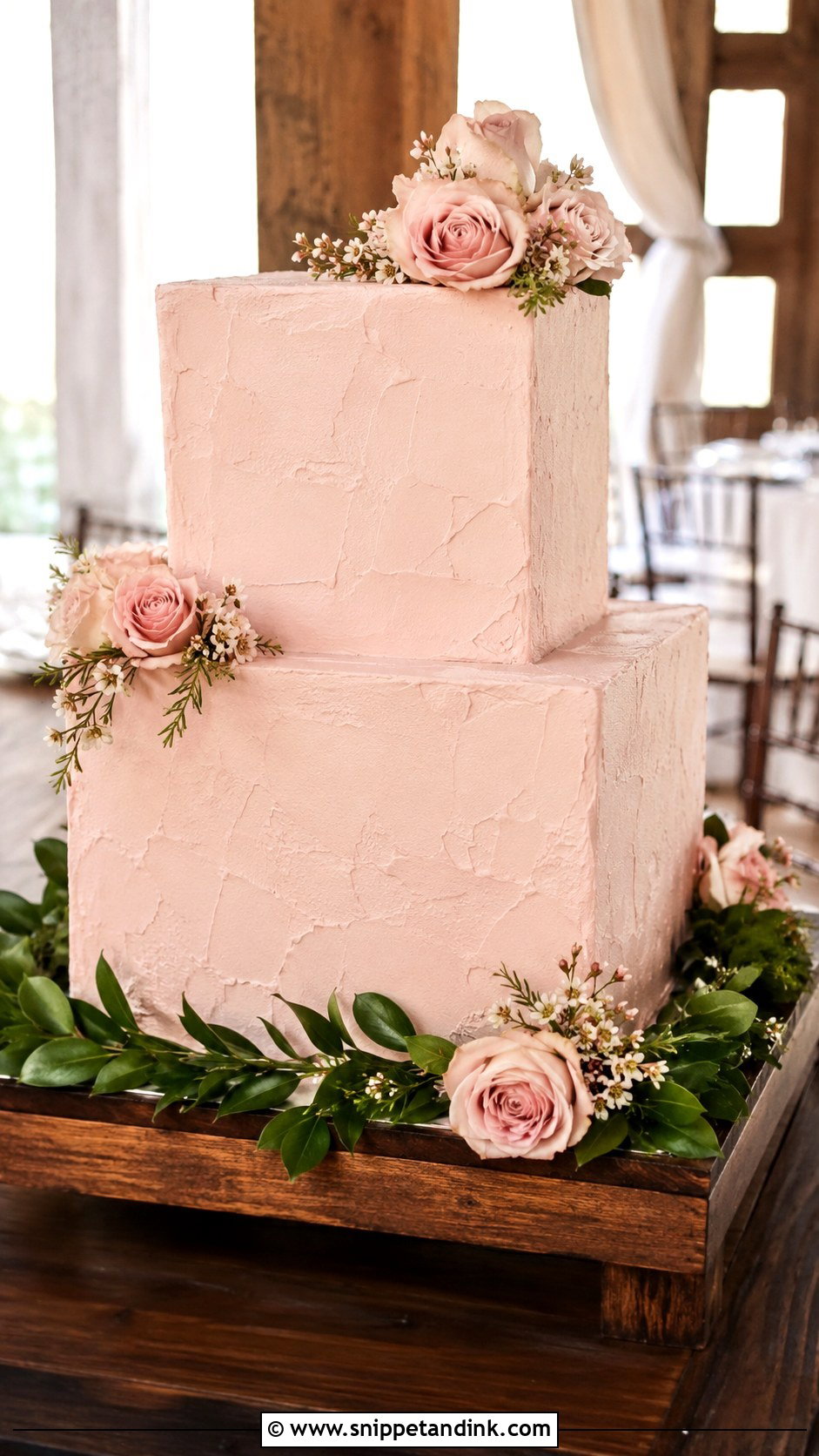
Square tiers make a familiar palette look newer. The clean edges give structure while textured blush buttercream keeps the finish soft. Flowers on the corners rather than in a cascade suit the shape; greenery along the base or between tiers softens the lines. Square cakes are harder to texture evenly at the corners, so look at a baker’s previous squares before you commit. Barn, garden and outdoor receptions all take it well.

20. Rustic Pink Macaron Wedding Cake
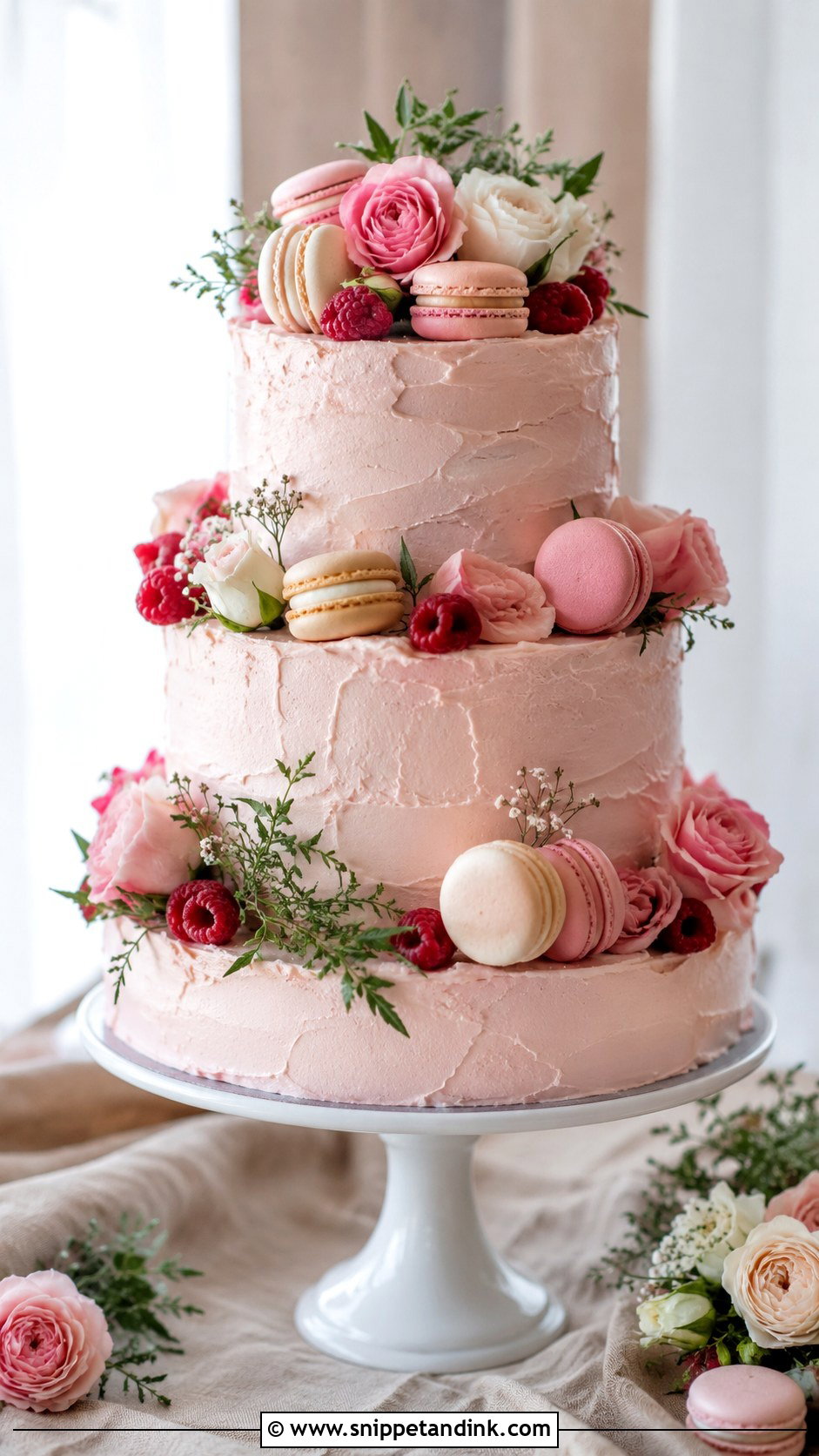
Macarons add a playful second treat to the cake. I tuck pink and ivory macarons around the tiers or in small clusters near the flowers, on a scraped or textured blush base so the cake stays relaxed. Roses, berries and greenery tie it together. Macarons soften quickly when they sit on moist buttercream, so I attach them close to the reception, ideally with a dot of ganache rather than pressed straight in.
Why Pink Icing Fades on a Sunny Table
Pinks and purples are the colors most likely to fade in light. A blush cake left in direct sun or under bright fluorescent tubes for a few hours can come out paler and slightly yellowed on the side facing the light, while the back stays pink. In photos, that patchiness is obvious.
There are a few practical ways round it:
- Place the cake table in shade, and away from windows that get afternoon sun.
- Have the baker deliver as close to the reception as the venue allows.
- Choose dusty or muted pinks; they shift less visibly than pale baby pink.
- In a sunny marquee, ask for the cake to be boxed or covered until the room is set.
Butter matters too. A real-butter buttercream has a yellow cast that warms pink toward peach, so a cool, rosy pink needs a whiter base or a little violet to correct it. Ask to see a sample in daylight before the day.
A Barn, a Blush Cake and Nothing Overdone
Rustic pink wedding cakes can be simple, floral, textured, modern or vintage, and the right one depends on your venue, season and guest count. A relaxed wedding suits semi-naked tiers with blush flowers. For more polish, try ombré, gold leaf, pearls or ruffles. Outdoors, berries, eucalyptus, wildflowers and succulents look at home. Keep the pink muted and the texture honest, and the cake will feel like part of the day rather than a display.
You'll Like These Ideas:







Leave a Reply