
A traditional bridal outfit carries family, region and ritual, and it also has to be worn for hours, through ceremonies where you sit cross-legged, stand for photographs and walk around a fire. I style lehengas, sarees, shararas, ghararas and regional drapes, and the questions brides bring me are rarely about color first. They’re about weight, draping and whether the jewelry will fight the dupatta. Below are twenty outfits from across South Asia, red and ivory, pink and jewel tones, heirloom and new. For each, I’ve added what I’d check at a fitting so the look survives the actual day, not just the photo shoot.
Weight, Can-Can and Lead Time: Ask the Boutique First
A heavily embroidered bridal lehenga can weigh several kilos, and most of that hangs from the waist. Brides are often so focused on the color that they never ask. I’d ask, and I’d hold the skirt up on the hanger before ordering.
- Ask for the skirt’s approximate weight, and whether the embroidery can be lighter at the back, where nobody sees it close up.
- Check how volume is created. Can-can net layers are scratchy and add heat; a softer lining or fewer net layers can keep the flare without the itch.
- Look at the closure. A broad waistband with hooks and a side zip spreads weight better than a drawstring, which digs in after a few hours.
- Ask how long it takes. Custom bridal outfits often take several months, plus time for alterations, so start early if the wedding is in peak season.
- Try the blouse with the bra you’ll wear. Many bridal blouses are padded and boned already, and doubling up looks bulky.
Sarees are a different calculation. A heavy silk saree is around five to six meters of fabric, and the weight concentrates in the pleats and pallu. A firmly tied petticoat and a blouse that fits well at the shoulder do more for comfort than anything else.
1. Red Zardozi Bridal Lehenga
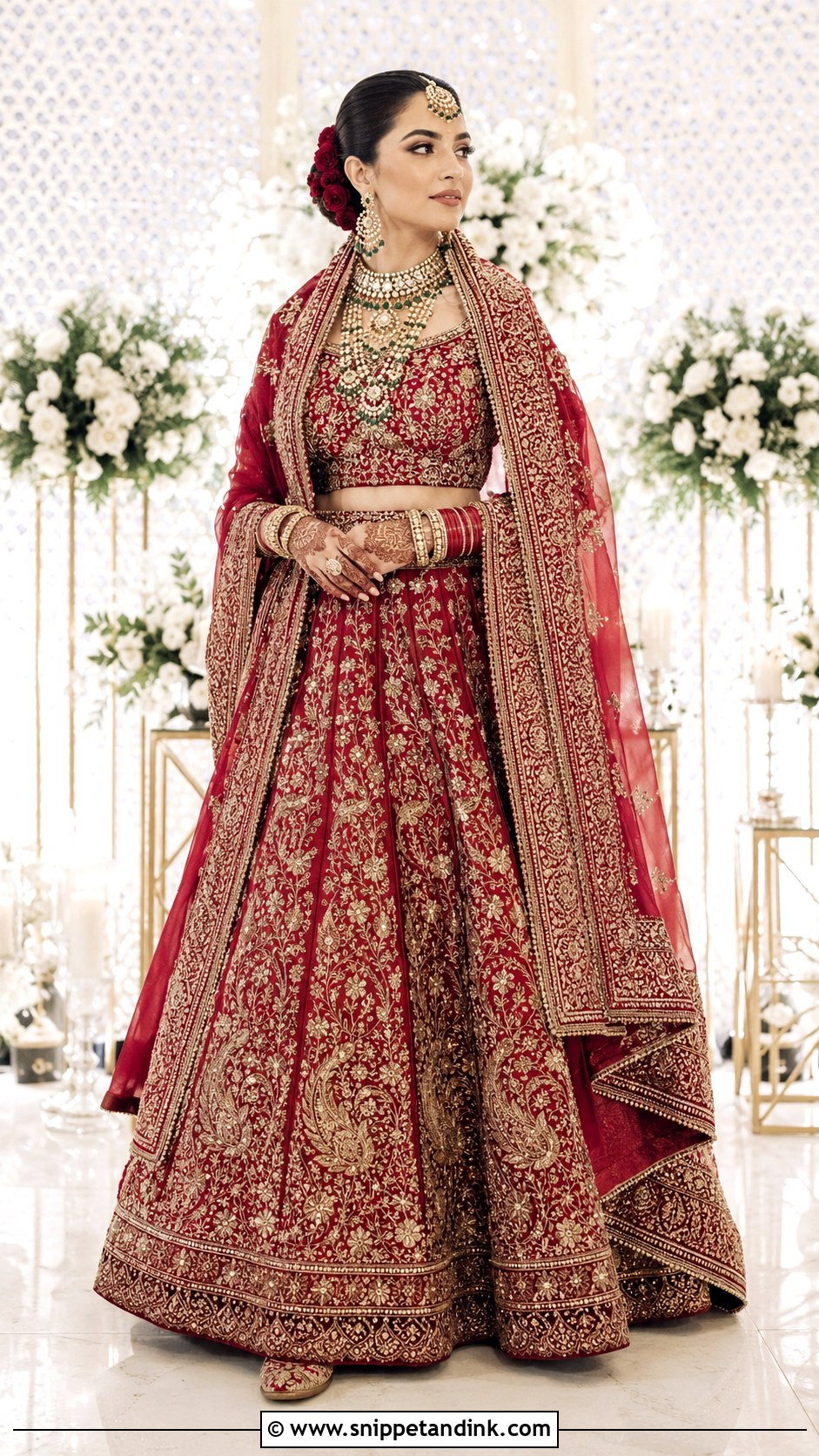
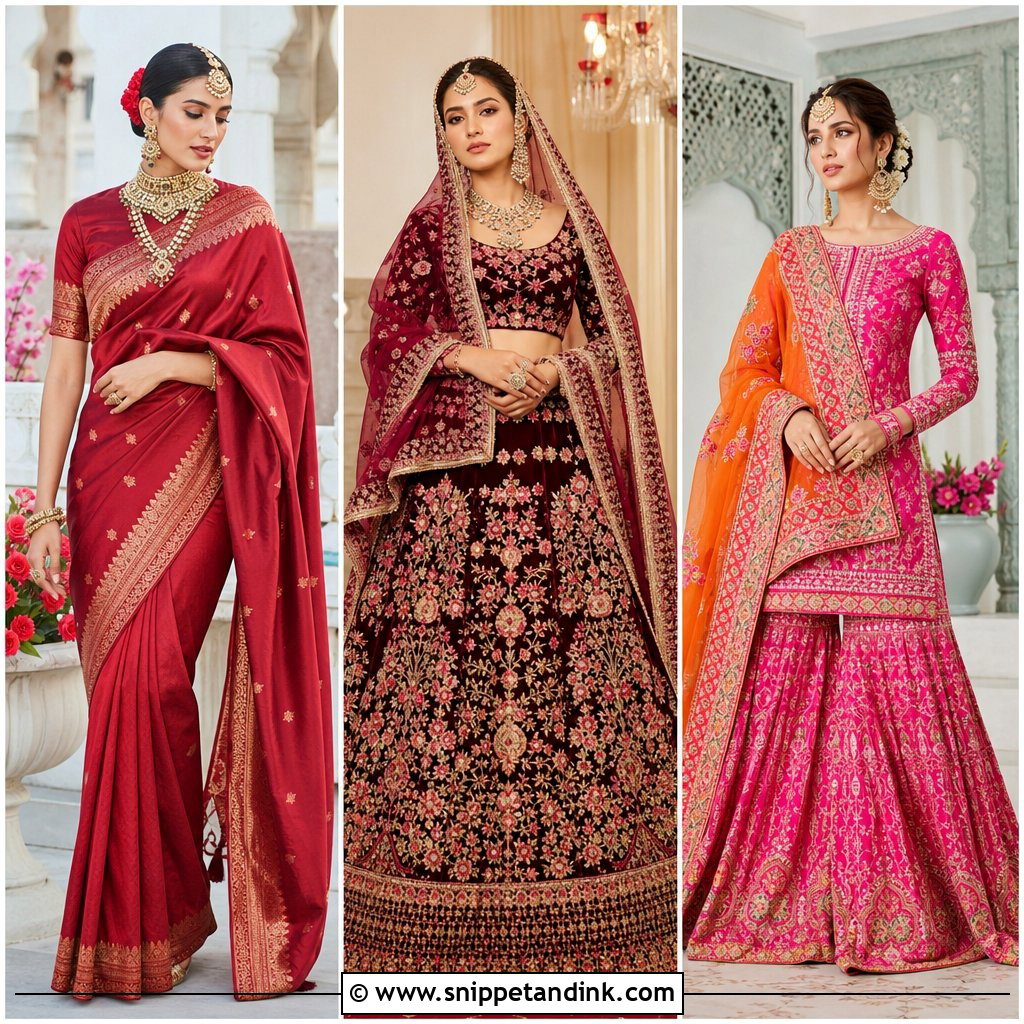
Red zardozi is the grand, classic choice for the main ceremony. A full raw silk or velvet skirt with metallic embroidery and a strong border looks right in every kind of light. Zardozi is metal thread, and dense zardozi is heavy, so I always ask a boutique how much the skirt weighs and whether the waistband has a broad, padded hook closure rather than a thin drawstring. The blouse should give real support for long rituals. One embroidered dupatta frames the face and a lighter second one crosses the shoulder. Choker, long necklace, maang tikka, bangles, juttis and a low bun with fresh flowers complete it.
2. Maroon Velvet Bridal Lehenga
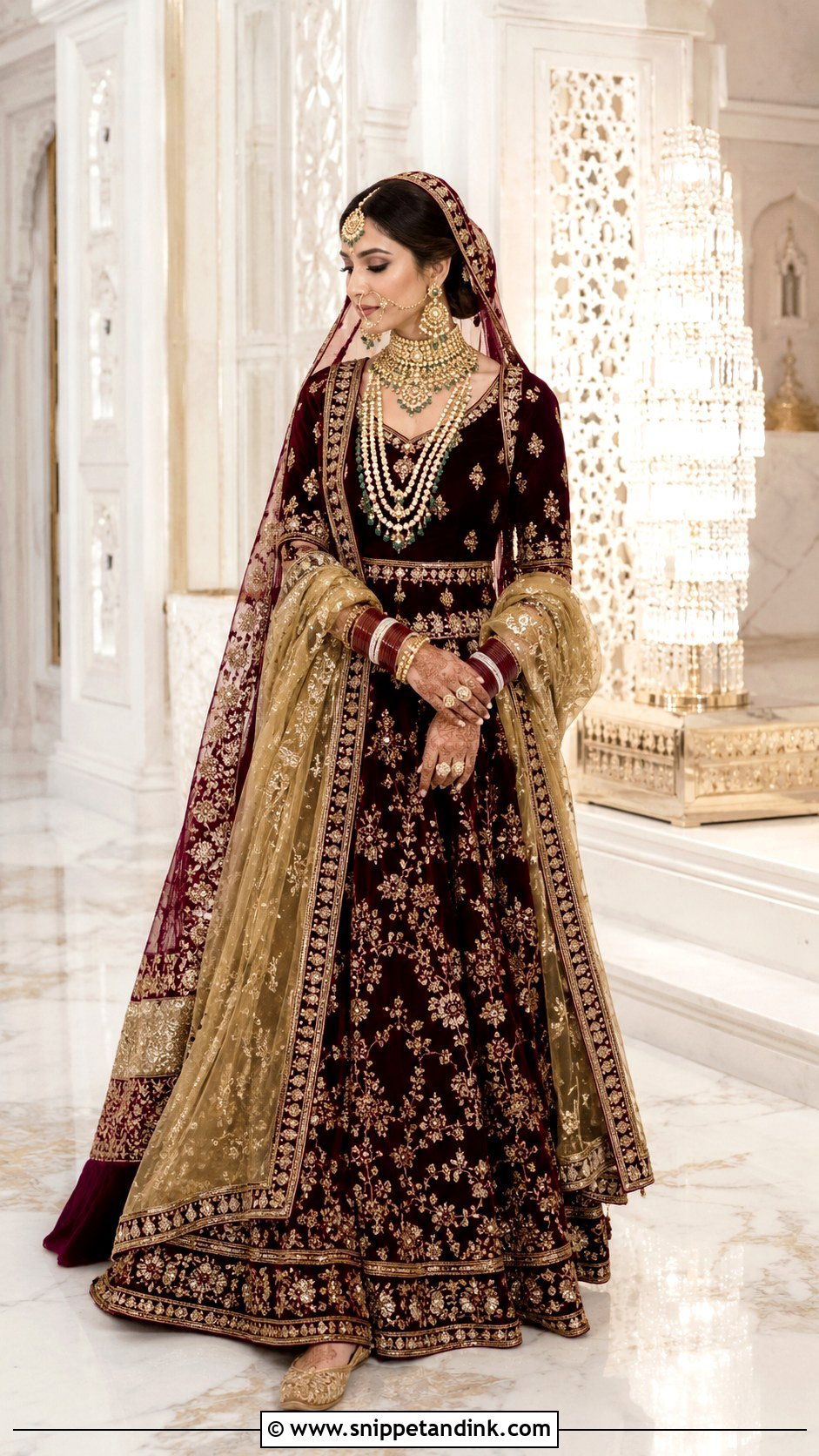
Maroon velvet is regal and warm, and it suits evening ceremonies and winter weddings far better than summer daytime ones. Antique gold embroidery and a wide hem look strong in full-length photos. A matching velvet blouse keeps it continuous; a gold brocade blouse lightens it. Velvet adds bulk wherever it gathers, so I’d keep the waist free of extra layers and ask for a lighter lining. A sheer maroon dupatta goes over the head and a gold or neutral one across the body. Kundan, stacked bangles, a nath and metallic juttis finish it, with a sleek center-parted bun.
3. Pink Embroidered Bridal Lehenga
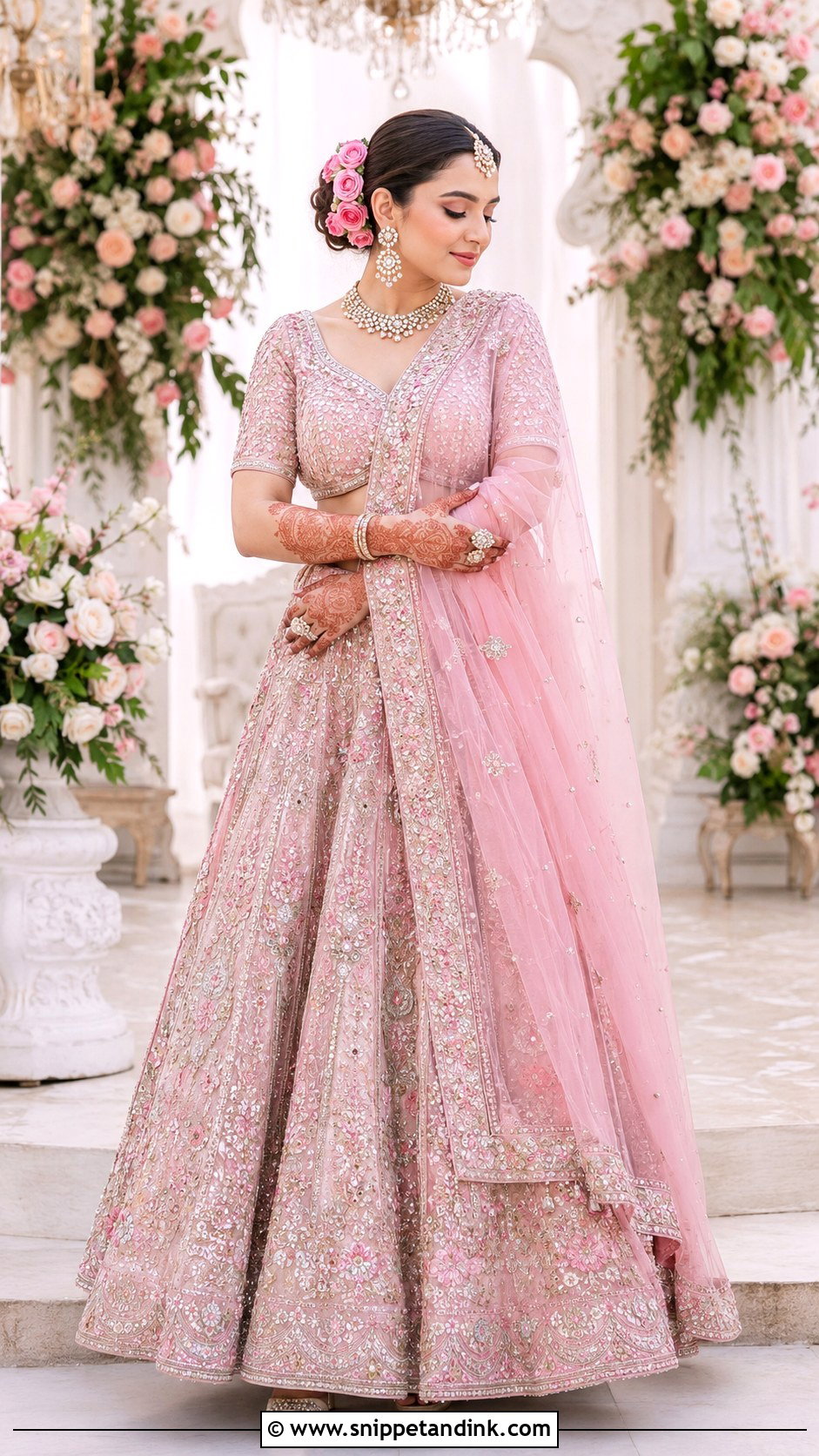
Soft pink suits daytime ceremonies and bright venues, where deep red can feel heavy. Blush, rose or dusty pink with tonal threadwork, pearls, sequins or fine gold embroidery all work. Pale lehengas can look washed out in photographs, so I’d add a deeper pink in the border or bangles to give the camera something to hold onto. The dupatta should be light enough to stay put on the head with a couple of pins. Polki and pearls, a small maang tikka, embellished sandals and fresh roses in a bun complete it.
4. Kanjivaram Silk Bridal Saree
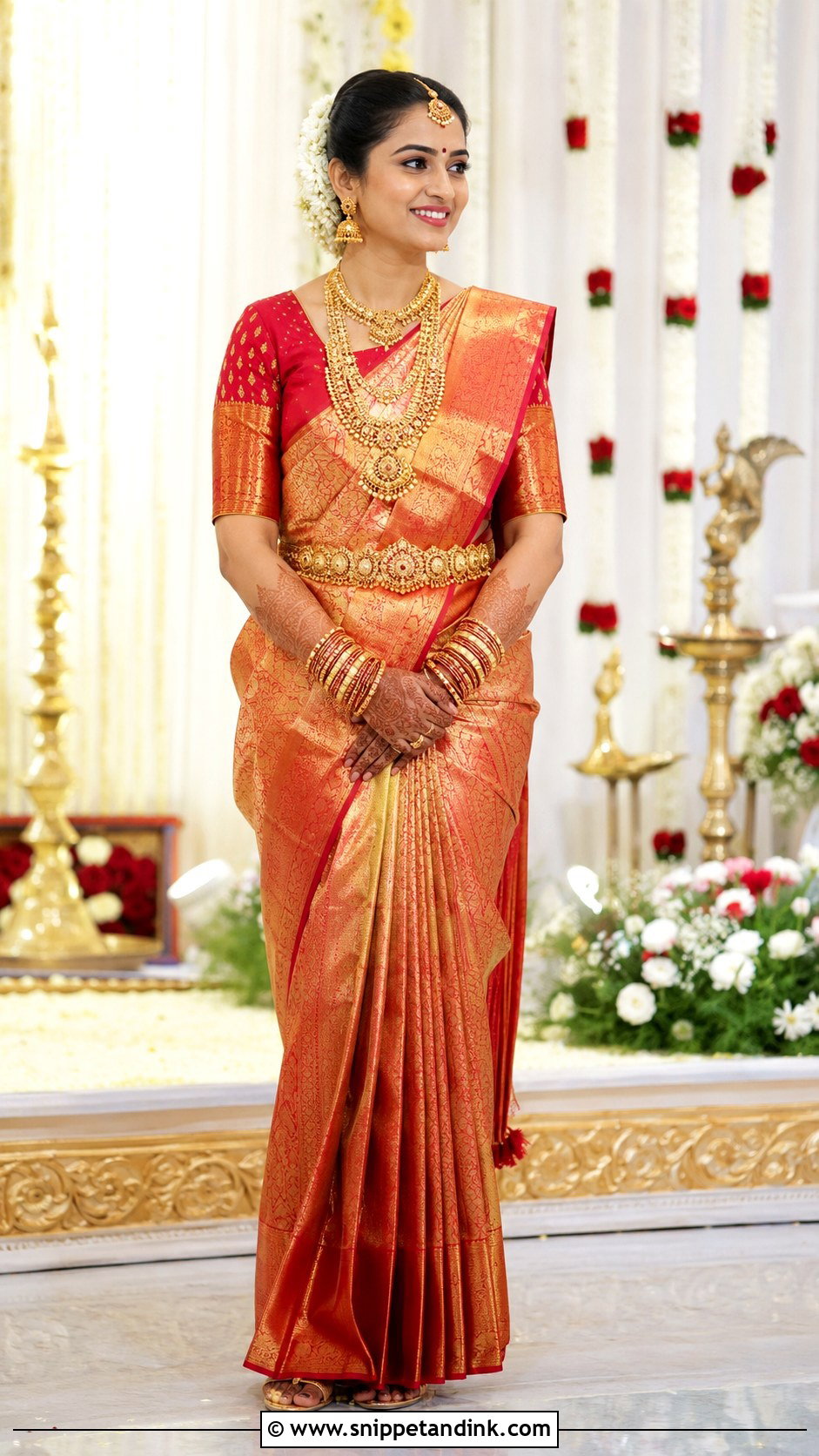
Kanjivaram silk is heavy, thick and holds its pleats crisply, which gives it real presence. Red, maroon, green or gold with a contrasting woven border is the classic look. The weight sits at the waist, so a sturdy cotton petticoat tied firmly, and good shapewear, matter more here than with lighter sarees. A fitted silk blouse with elbow sleeves suits it. Temple jewelry, layered necklaces, jhumkas, a waist belt, bangles and hair ornaments go with it, plus a center-parted braid or bun with jasmine. I’d do one full dress rehearsal with the blouse, saree and jewelry together, because the zari border can scratch where the blouse edge sits.
5. Banarasi Silk Bridal Saree
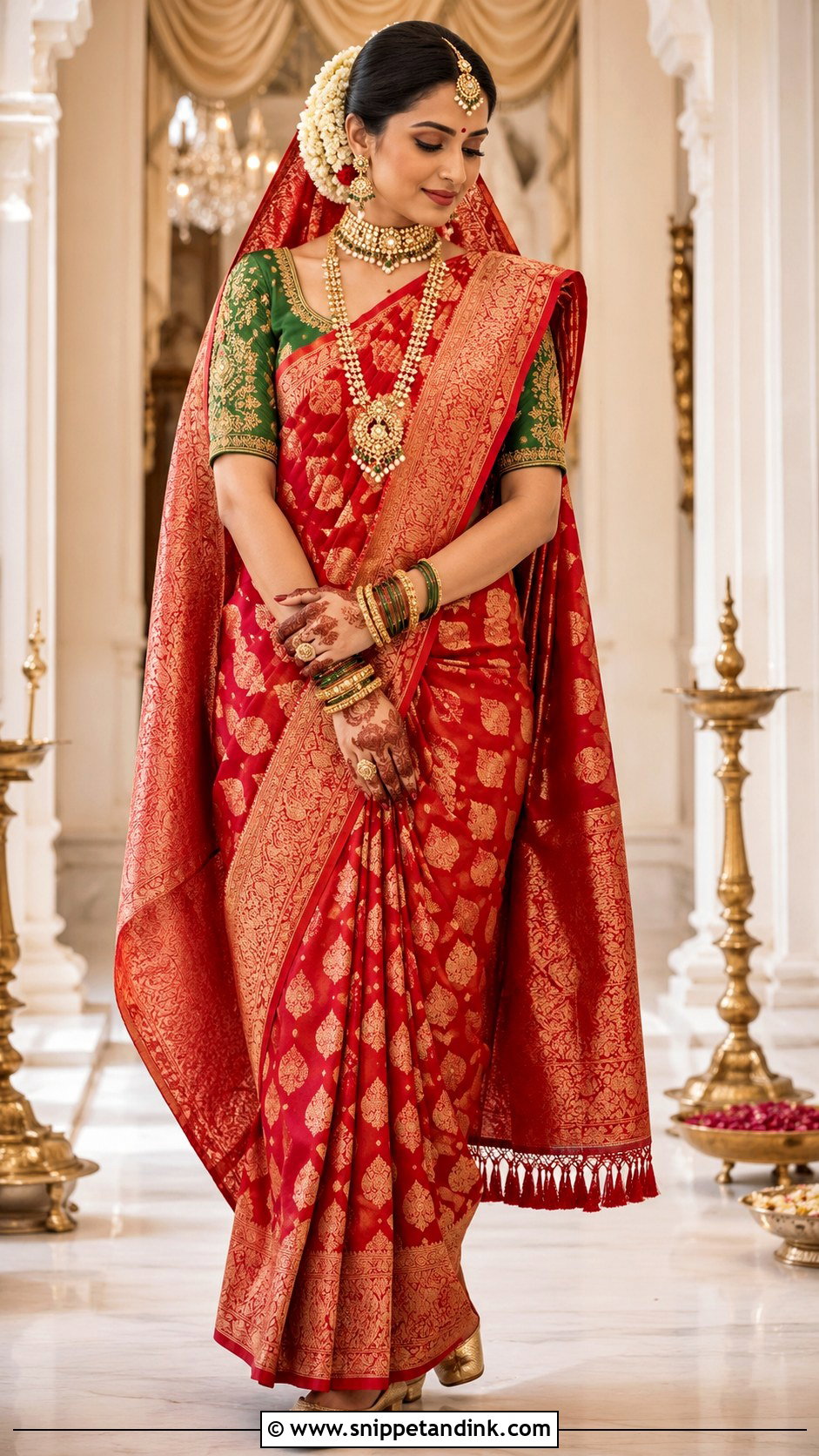
Banarasi silk catches the light with woven zari, and that is the whole appeal. Red, magenta, rust or deep purple with gold zari, paired with a matching blouse, is the traditional route; a green or gold blouse highlights the border instead. The pallu can lie over the shoulder or go over the head as a veil. If it goes over the head, I pin it to the bun, not just the hair, because Banarasi pallus are heavy and drag. A kundan choker, long necklace, statement earrings, maang tikka, bangles and waist belt complete it. Padded flats or low block heels are kinder than stilettos under a long drape.
6. Bengali Red And White Bridal Saree
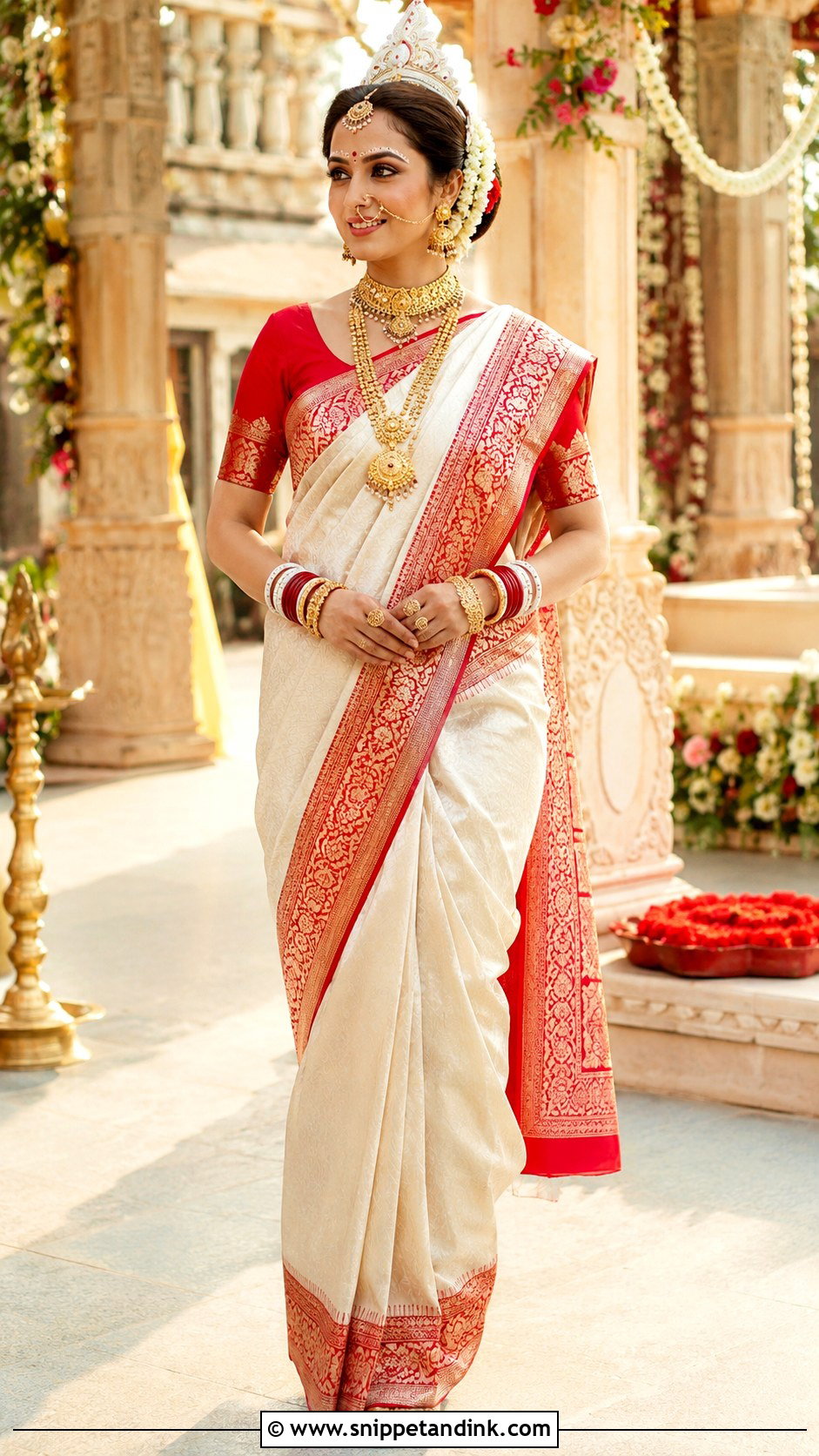
White or cream with a bold red border is a striking Bengali bridal combination. A fitted red silk or brocade blouse pairs with it, and the pallu is arranged so the border stays visible. Gold jewelry, layered necklaces, statement earrings and a decorative headpiece add richness to the light base. Red and white bangles add another coordinated element. A clean bun with fresh flowers or traditional ornaments keeps it tidy, and red forehead detailing can be added to suit personal and family custom. A white saree marks easily, so I keep alta and red makeup well away from the fabric until the bride is fully dressed.
7. Maharashtrian Paithani Bridal Saree
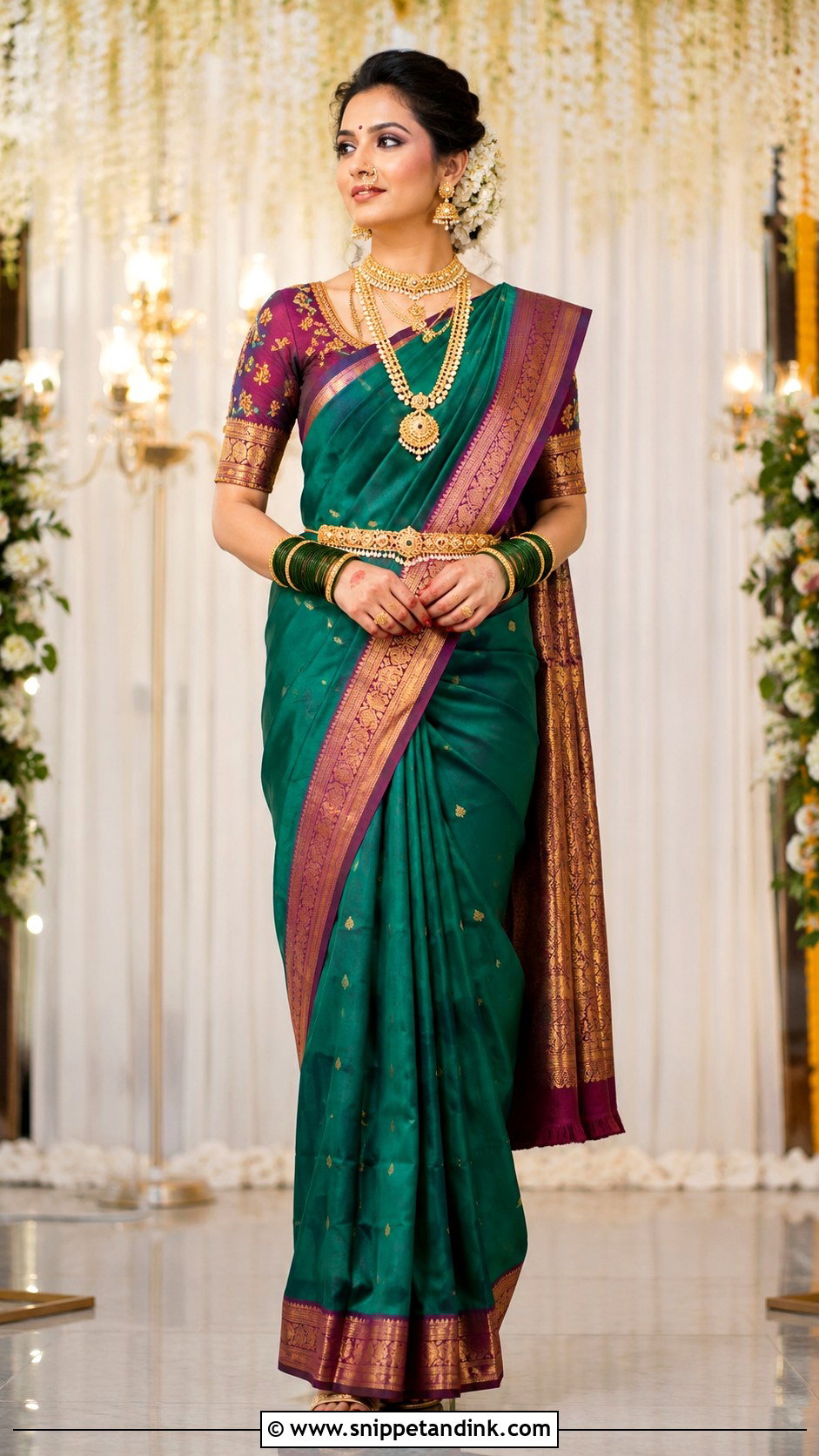
A Paithani gives saturated color, lustrous silk and that detailed pallu, the heart of a traditional Maharashtrian bridal look. Green, purple, magenta or peacock blue with a contrasting border look rich. A traditional nauvari drape gives the authentic silhouette; a standard drape is easier if you’re not used to it. Either way, practice sitting in it, because a nauvari behaves differently when you fold your legs. A nath, layered gold necklaces, green bangles, a waist belt and gold sandals finish it. Plan photos so the pallu motifs show.
8. Gujarati Panetar And Gharchola Bridal Saree
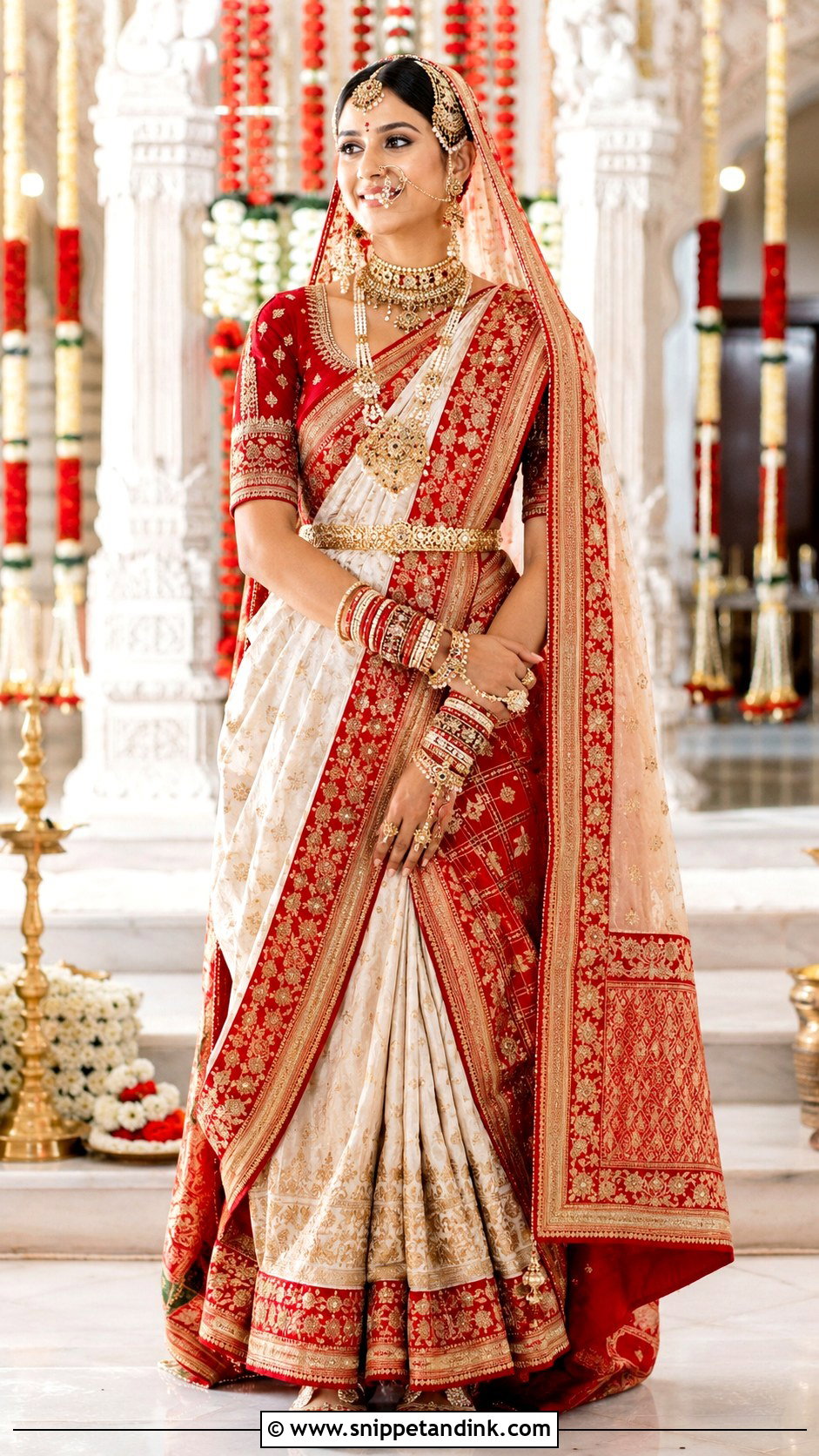
Panetar and Gharchola together make a layered Gujarati look in red, white and gold. The lighter Panetar brings brightness and the red Gharchola adds color and pattern. Two textiles mean twice the fabric at the waist, so I pleat tightly and keep the tuck flat, otherwise you get a bulge that shows in every side photo. A fitted red or gold blouse with supportive sleeves balances it. Necklace, earrings, maang tikka, nose ring, bangles, a waist belt and embroidered footwear go with it. A sleek bun or braid supports the veil and head jewelry. Walk and sit in the full drape before the day.
9. Kerala Kasavu Bridal Saree
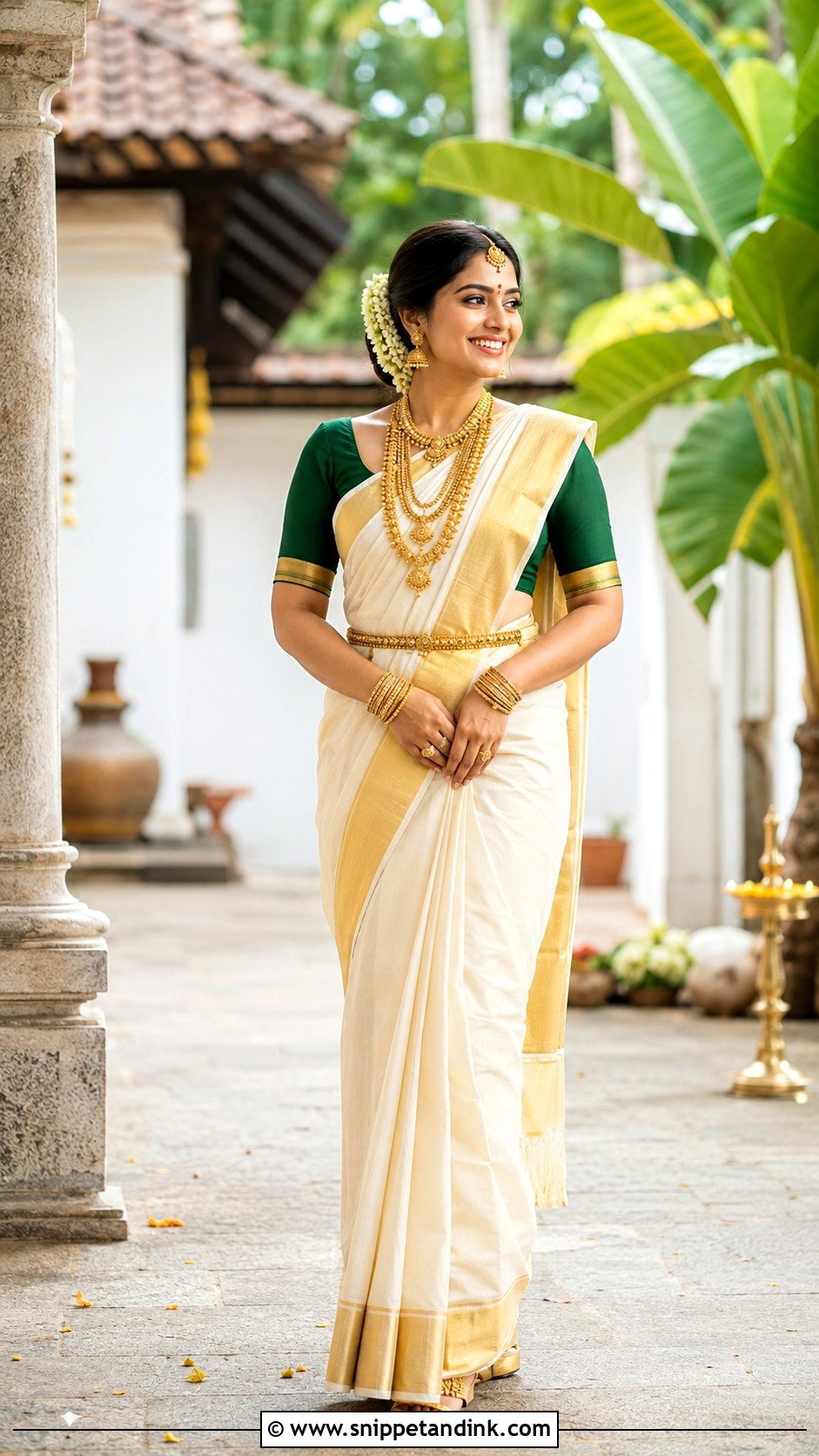
Ivory with a gold border keeps a Kerala Kasavu bride bright and understated. An ivory blouse gives a tonal look; deep green, maroon or red silk adds color. Elbow-length sleeves with subtle embroidery keep the traditional mood. Kasavu cotton creases easily and shows every uneven pleat, so I starch and press the pleats the day before and pin them before she sits. Layered gold necklaces, jhumkas, bangles, a waist belt and simple sandals complete it, with a low bun or long braid and jasmine. Fresh makeup, softly defined eyes and a red or rose lip give gentle contrast in daylight.
10. Assamese Mekhela Sador Bridal Outfit
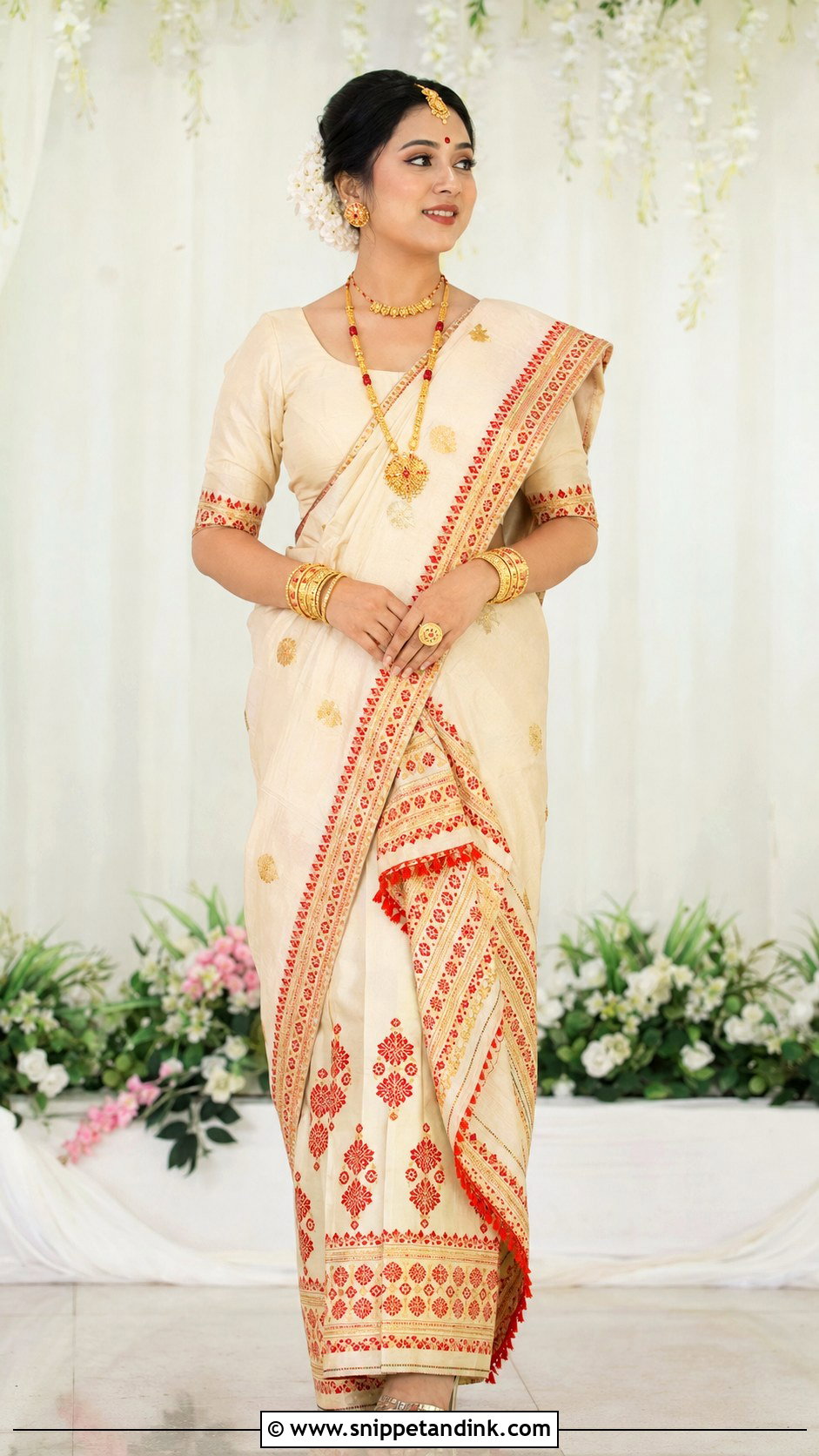
An Assamese Mekhela Sador is a two-piece drape with intricate woven detail. An ivory or cream set with red, gold, green or black motifs is classic. The blouse should match one color from the border. The sador crosses the upper body, and it slips if it’s not secured, so I pin it at the shoulder and at the waist tuck. Gold jewelry, a statement necklace, earrings, bangles and a forehead ornament add richness. A neat bun with flowers and metallic sandals finish it. If you’ve never worn one, hire someone experienced to dress you.
11. Punjabi Bridal Salwar Suit
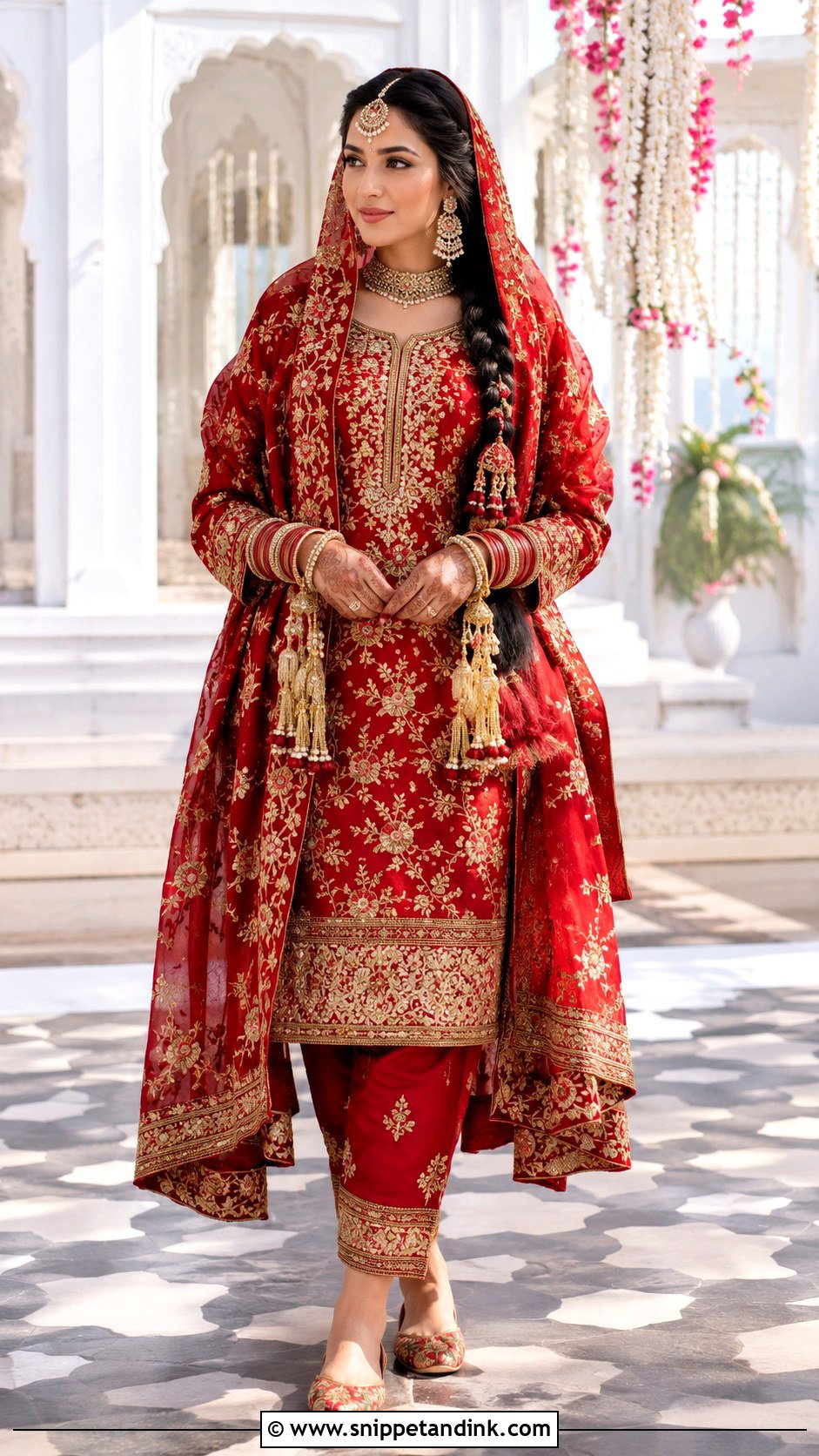
A richly decorated Punjabi salwar suit gives comfort and coverage without losing festive impact. A long or knee-length kameez in red, maroon, pink or deep orange pairs with a coordinated salwar and embroidered dupatta. Phulkari-inspired details, gota work or metallic thread add dimension. The kaleere hang from the bangles and swing, so I check that the dupatta border won’t tangle with them during the rituals. Drape the dupatta over the head and secure it at the shoulders so the border frames the face. Choker, long earrings, maang tikka and juttis complete it. Keep the salwar length practical so you don’t trip.
12. Muslim Bridal Sharara
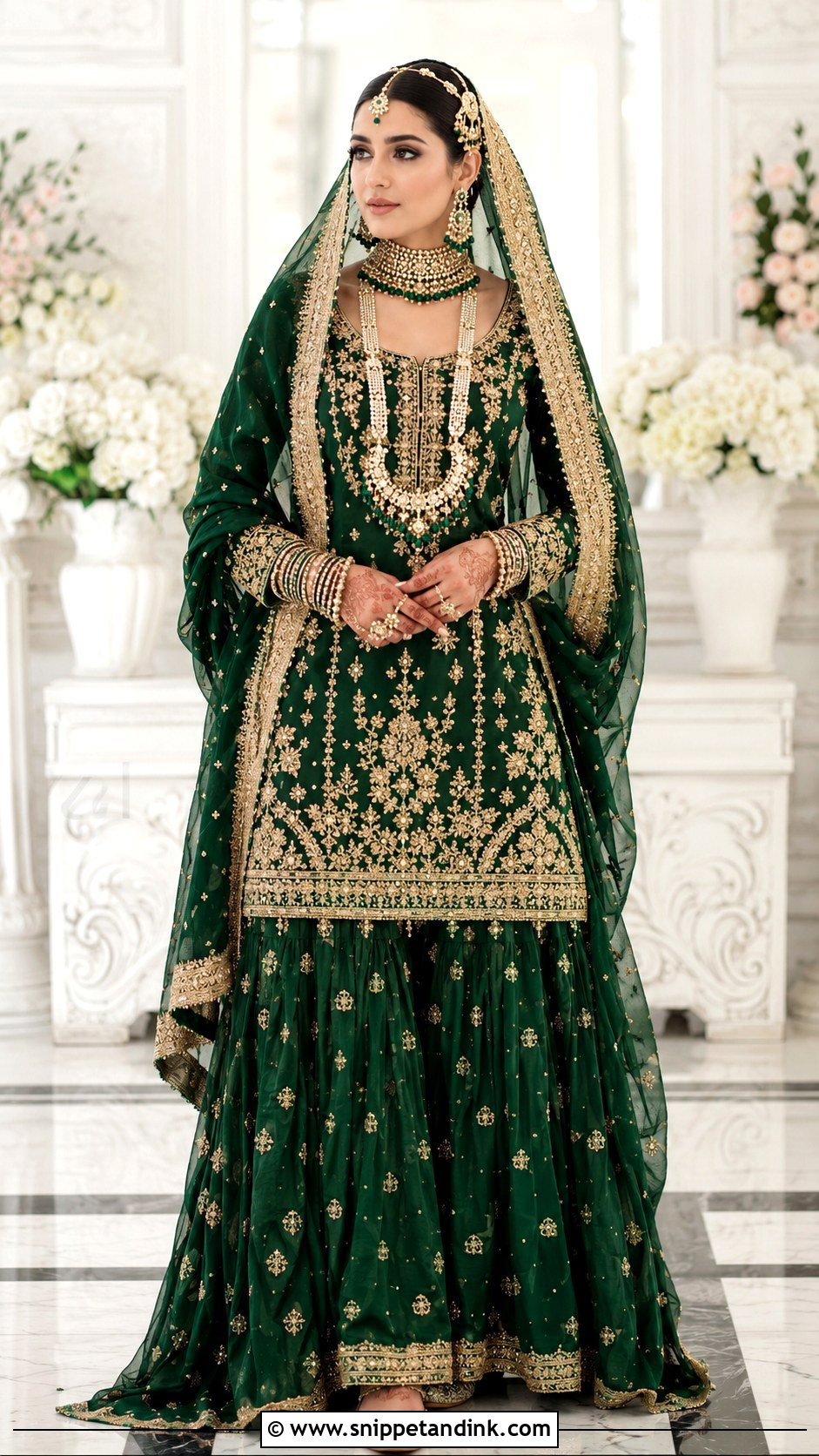
A sharara gives movement and lets you walk comfortably. Wide flowing trousers in silk, brocade or tissue pair with an embroidered kurti and coordinating dupatta. Deep red, bottle green, ivory, gold or muted rose all suit. The trousers already add volume, so a fitted or lightly structured kurti balances it. A passa sits on one side of the head, and I set it after the dupatta is pinned, otherwise the dupatta pulls it out of place every time you turn. Choker, long necklace, earrings, maang tikka, bangles and embellished flats finish it, with a center-parted bun.
13. Traditional Bridal Gharara
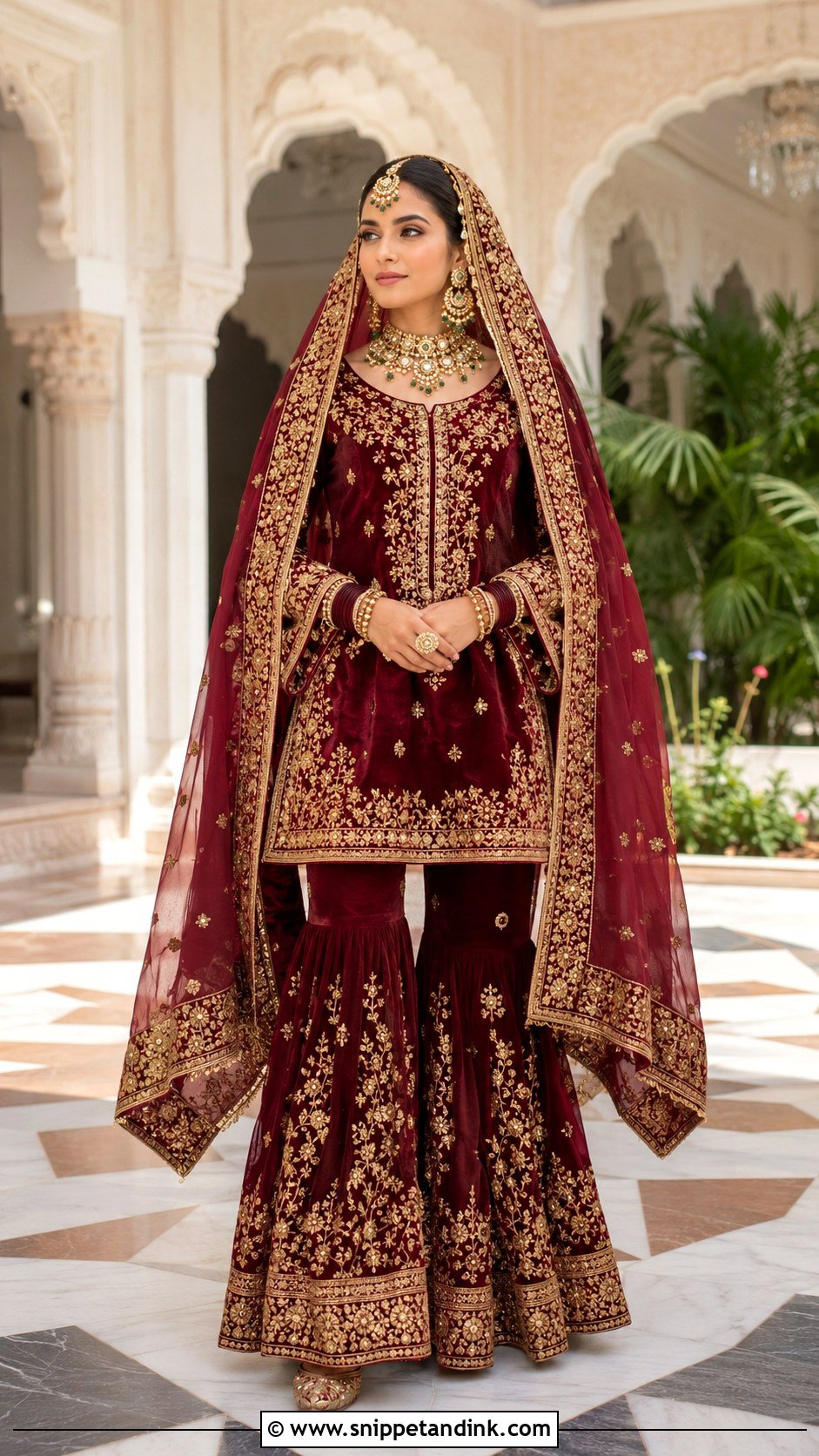
What if you want something ornate that’s still easy to move in? A gharara is fitted down to the knee, then flares out. A short embroidered kurti and a wide decorative dupatta go with it. Maroon, rust, emerald, gold or ivory with zari, gota, pearls or fine threadwork look rich. The knee seam is the critical fitting point: if the fitted section is too tight, you can’t sit on the floor for rituals. Kundan, jhumkas, a passa, bangles and juttis complete it. Put the dupatta over the head but keep the flare visible. A neat bun and soft sculpting balance the volume.
14. Floor-Length Bridal Anarkali
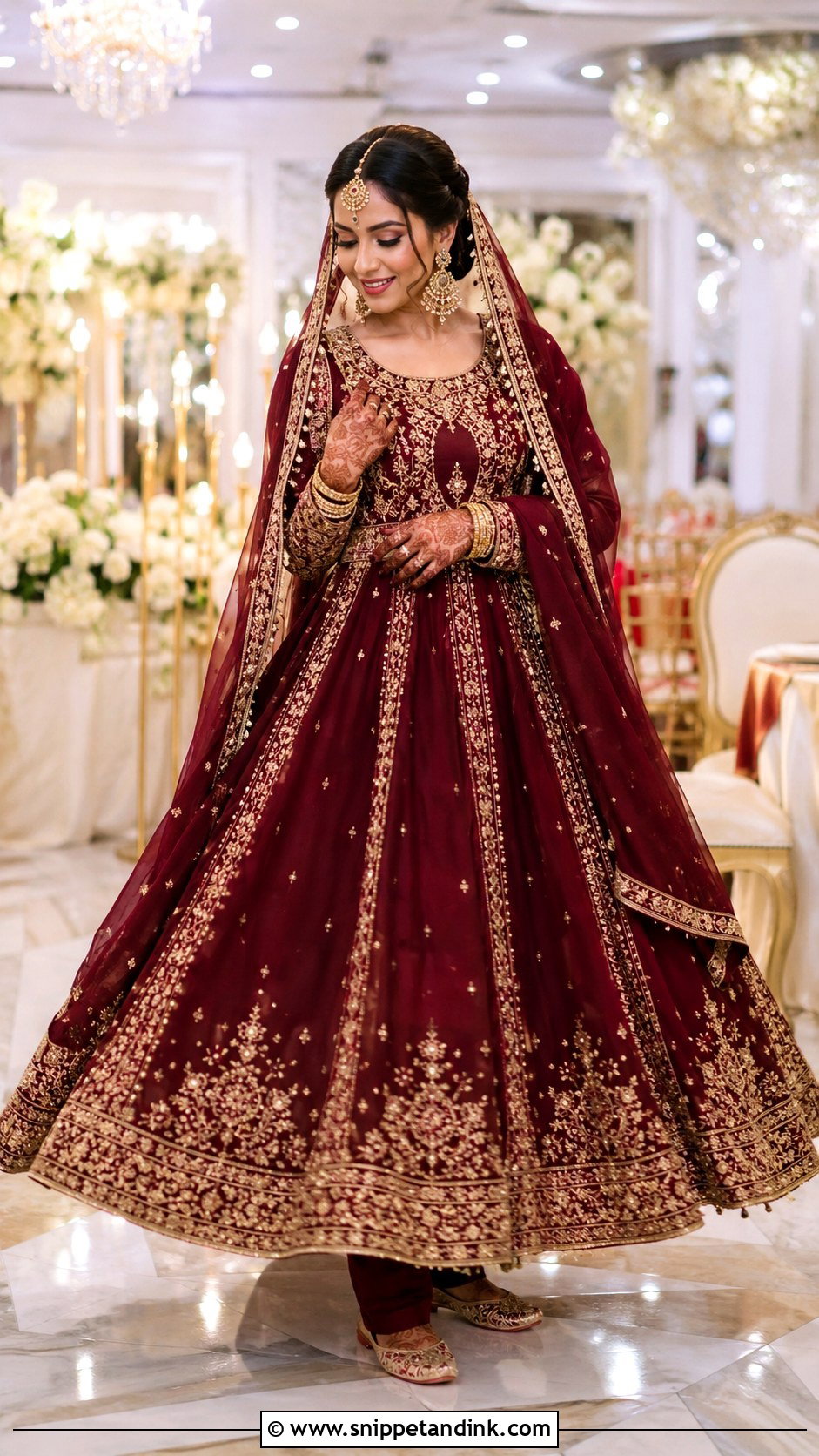
A floor-length Anarkali gives a sweeping look without a separate skirt. A fitted bodice opens into generous panels that move from every angle. Red, wine, emerald, navy, ivory or rose with embroidery at the neckline, sleeves and hem all work. Pair it with slim trousers, a coordinated dupatta and comfortable heels or embellished flats. If the neckline is heavily worked, I’d choose statement earrings instead of a long necklace. A full Anarkali can also hide your feet on stairs, so ask for a hem that clears the floor in your shoes and a moderate inner volume. A maang tikka, bangles and a low bun complete it.
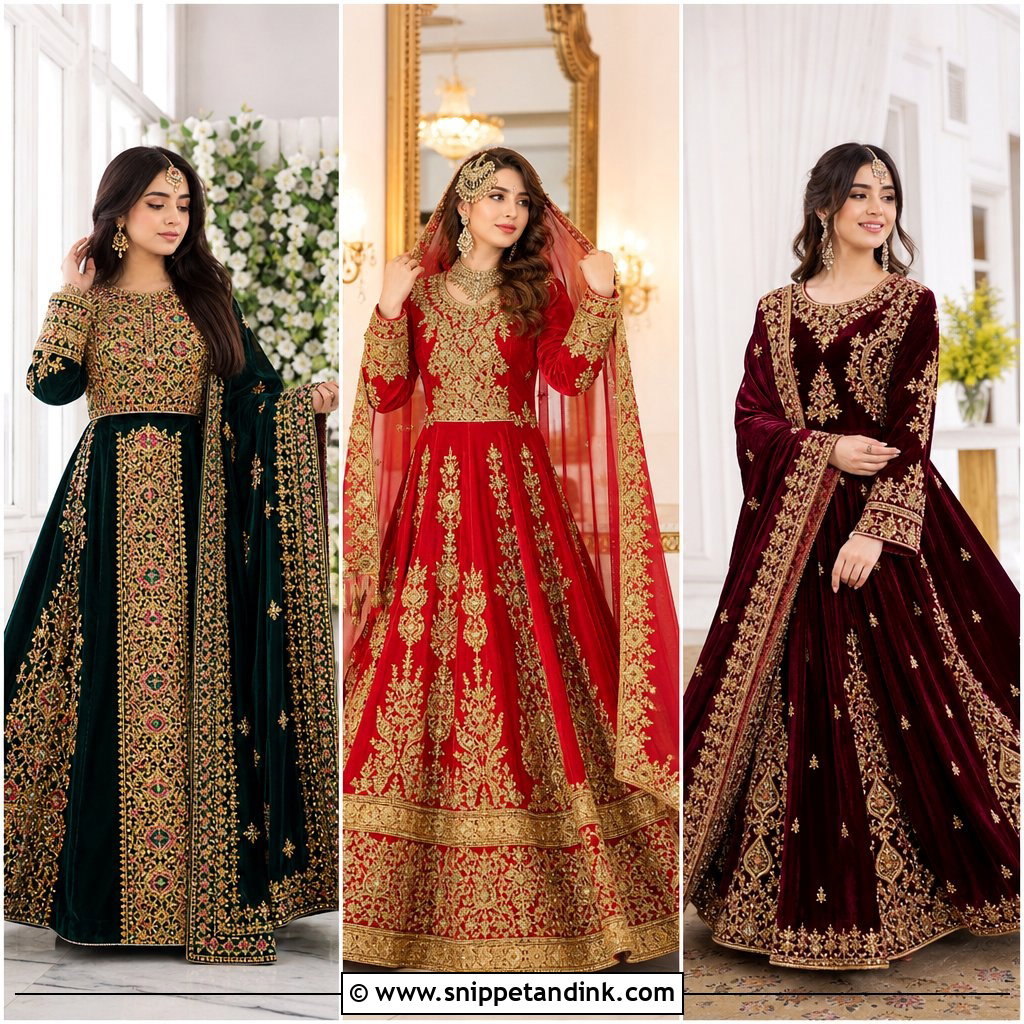
15. Rajasthani Rajputi Poshak
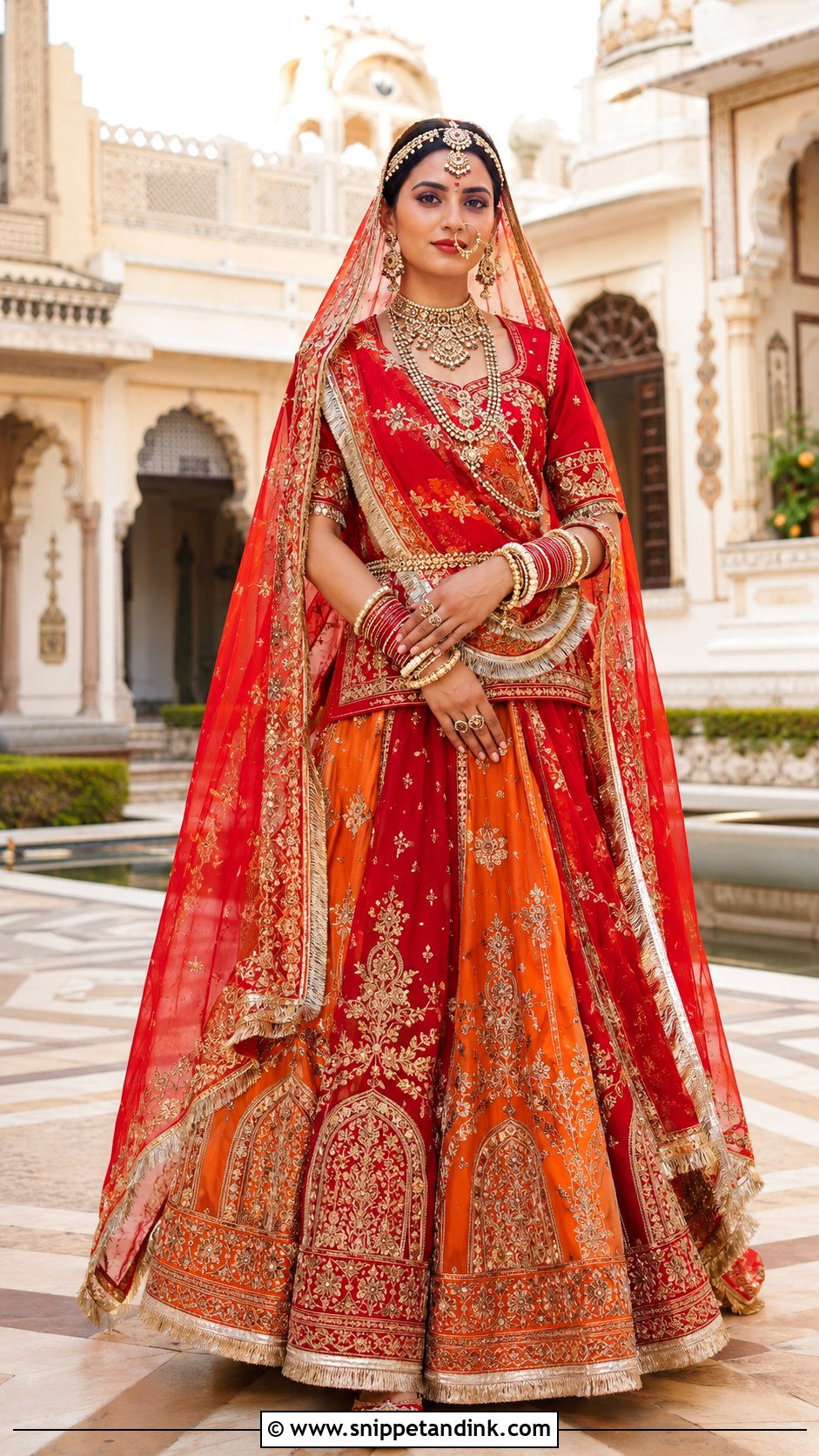
A Rajputi Poshak is layered and majestic. It generally includes a fitted upper garment, a flared skirt and an odhni arranged over the body and head. Red, orange, pink or maroon with gold borders and gota work is classic. The odhni frames the face, and pinning it to the bun under the borla keeps the edging visible. Layered necklaces, earrings, bangles, arm jewelry, waist accents and juttis complete it. With so many layers, I’d ask for breathable lining and an adjustable waistband. A smooth bun gives the veil something firm to sit on.
16. Gujarati Bridal Chaniya Choli
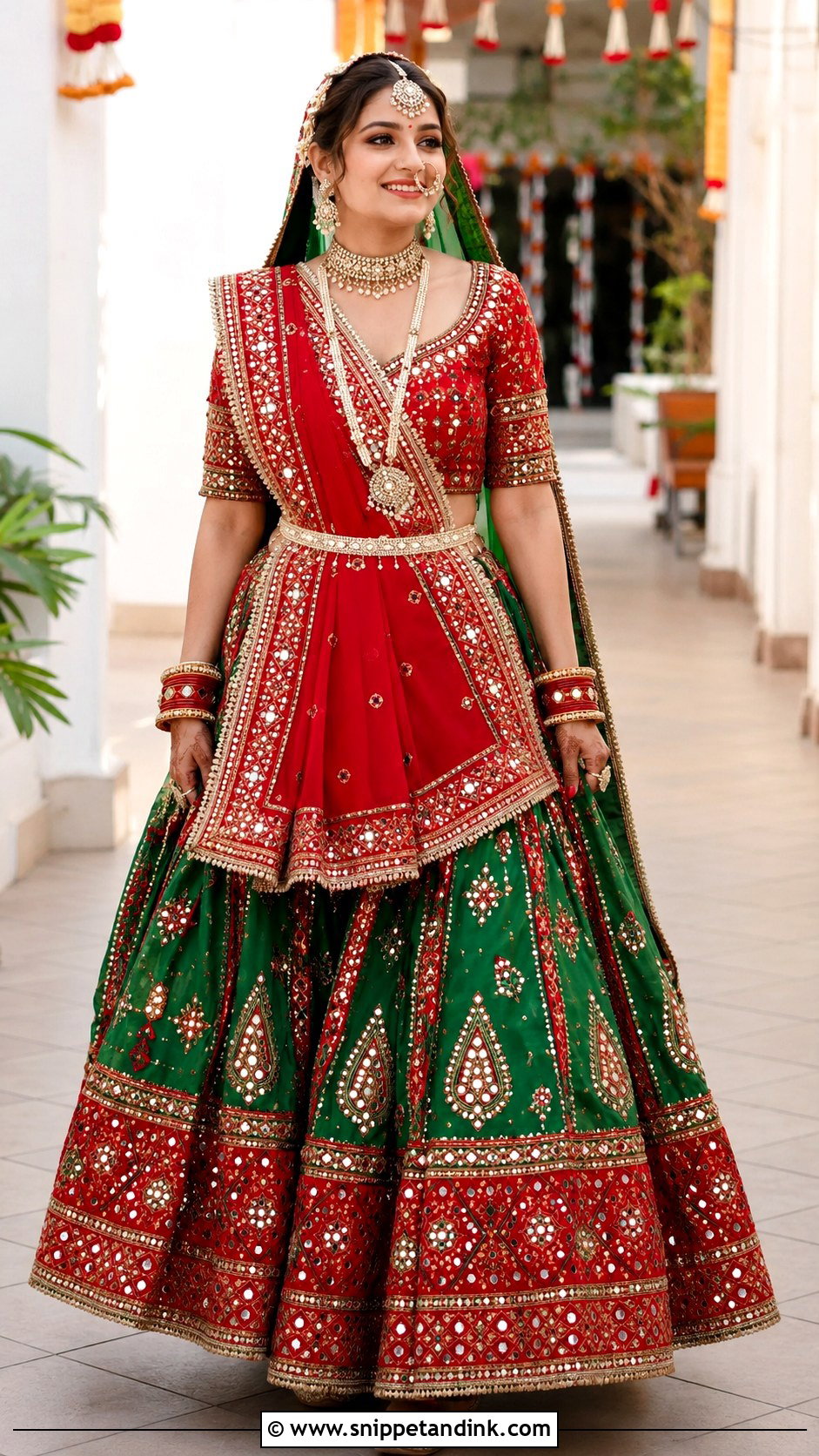
A bridal chaniya choli combines a full skirt, a fitted blouse and a dupatta. Red, green, maroon or ivory with mirror work, embroidery or woven borders all suit. Mirror work is heavier and catches on jewelry, so I lay necklaces carefully and keep the most decorative part of the dupatta clear of them. The skirt should flare enough for garba but not be so heavy it pulls at the waist. A supportive blouse with secure fastenings, a choker, long necklace, earrings, maang tikka, nose ring, bangles and waist belt complete it, with a sleek bun and flowers.
17. South Indian Half Saree Bridal Outfit
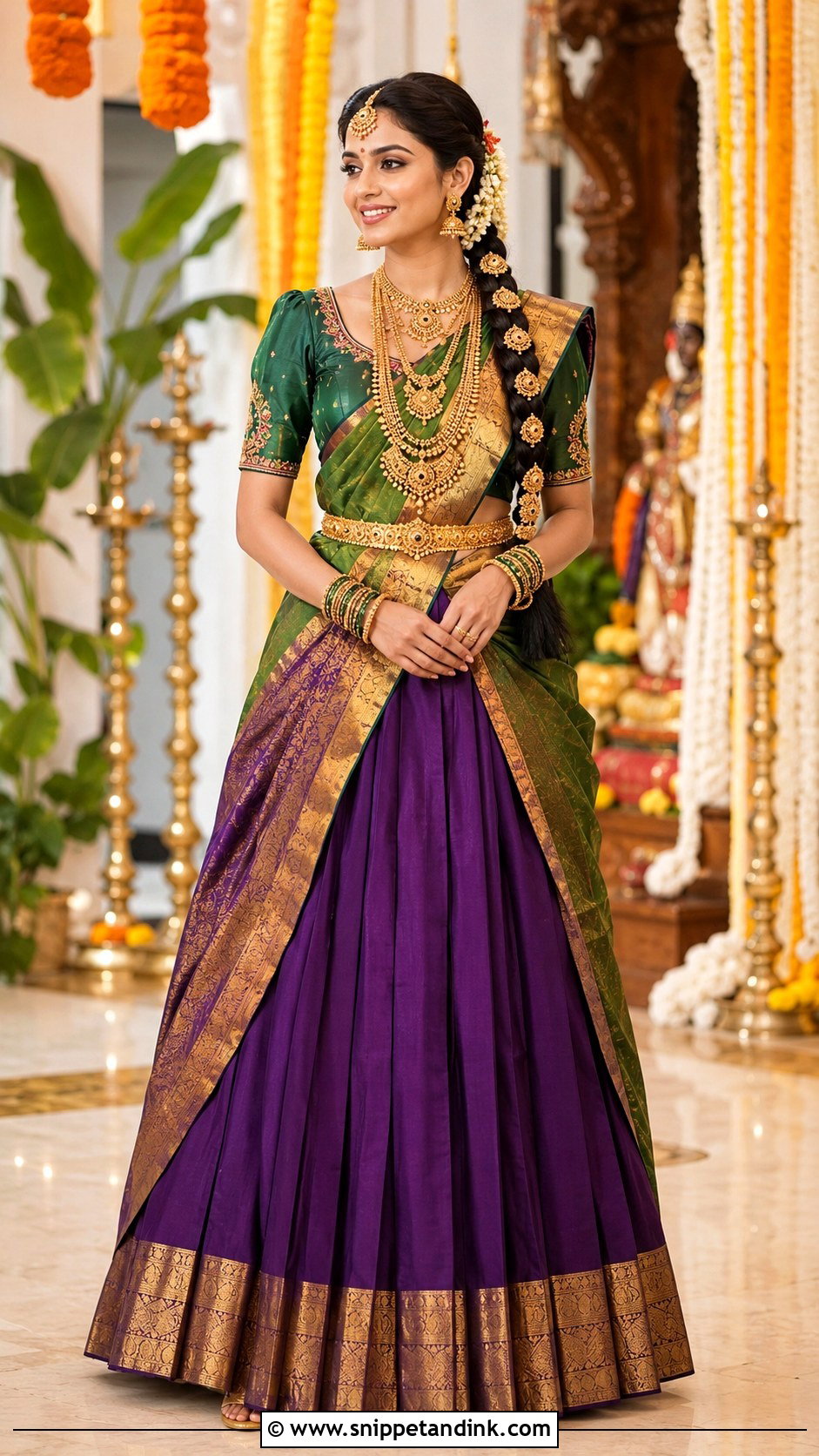
A half saree gives the look of a saree with the ease of a skirt set. A silk skirt, fitted blouse and contrasting drape in red, green, pink, purple or gold, with woven borders linking all three. The drape crosses the blouse diagonally and is pinned firmly at shoulder and waist. Keep the skirt just off the floor. A half saree is also a good choice for brides who are nervous about managing a full saree pallu all day. Temple jewelry, layered necklaces, jhumkas, a waist belt and gold sandals complete it. A decorated braid or a flower-covered bun suits it.
18. Manipuri Potloi Bridal Outfit
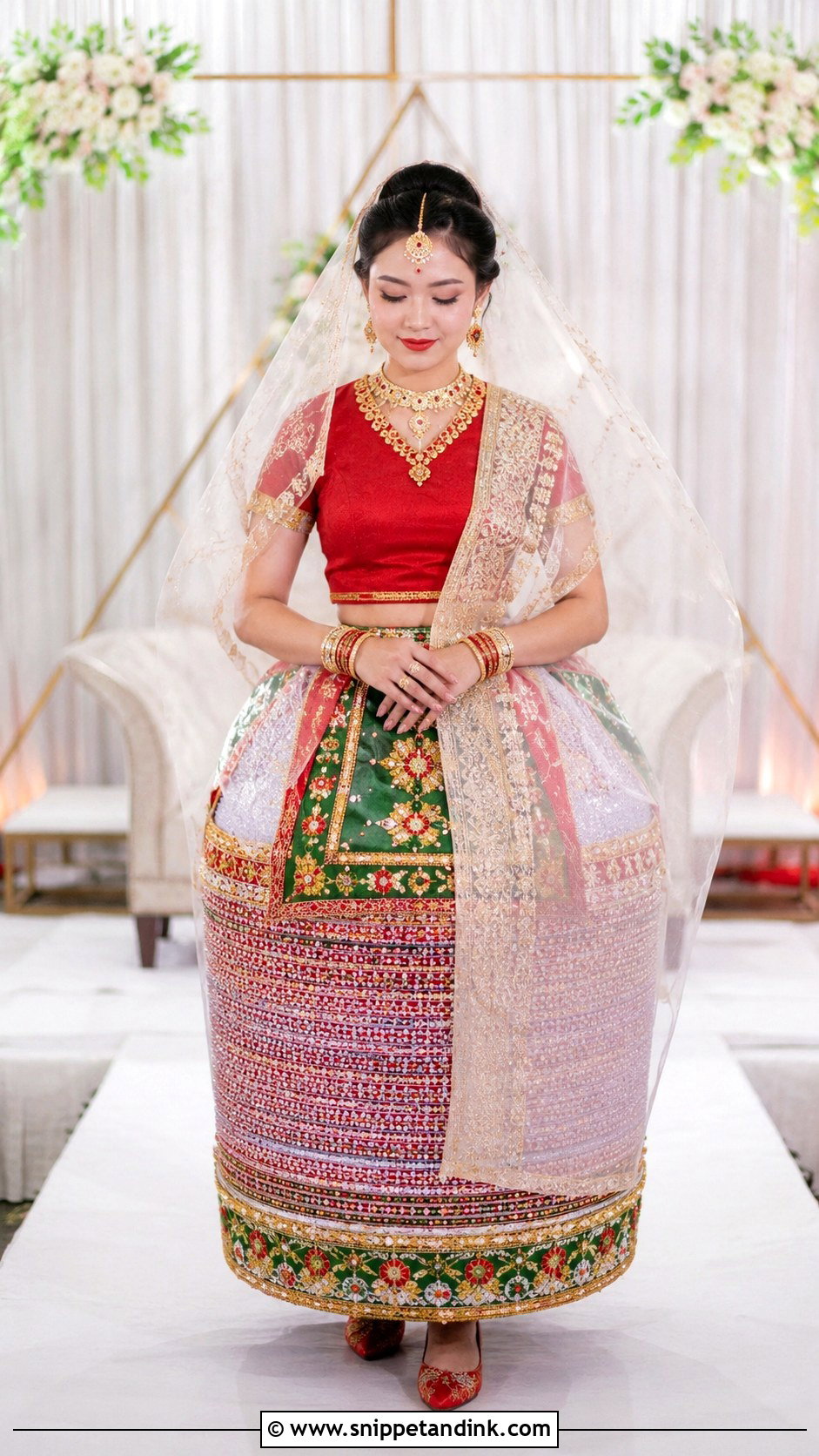
The Manipuri Potloi is unlike anything else on this list. Its stiff cylindrical skirt shapes the whole silhouette. A fitted blouse and a delicate veil or wrap are arranged according to family and ceremonial tradition. Red, green, white and metallic details make a vivid but balanced palette. Choose jewelry that refines rather than hides the decoration, and keep the hair smooth and secure under the veil. The skirt limits stride, so comfortable footwear and a walking practice are essential. Book fittings early and work with dressers who know how to assemble each piece respectfully.
19. Ivory And Gold Bridal Lehenga
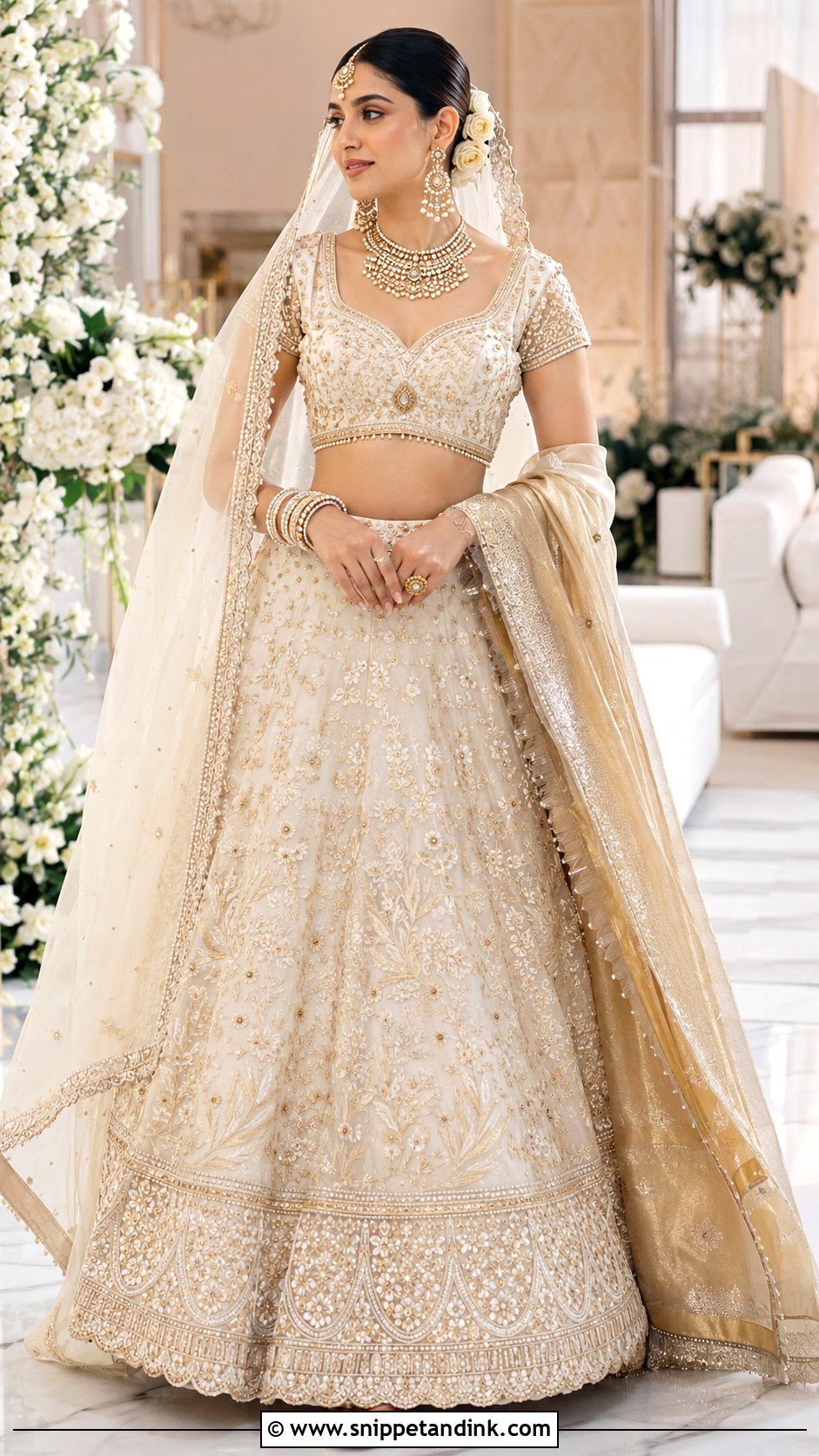
Ivory and gold glow softly for brides who prefer a neutral palette. Ivory silk, organza or brocade with gold embroidery, pearls and a defined hem works best. Plain ivory can look flat on camera, so I always look for fabric with texture or depth before committing. A sheer embroidered dupatta goes over the head, and a second in pale gold, pink or muted red adds contrast. Kundan or polki, statement earrings, a maang tikka, bangles and metallic juttis complete it. Ivory shows makeup transfer at the neckline, so the blouse goes on after foundation is set.
20. Heirloom Saree Bridal Outfit
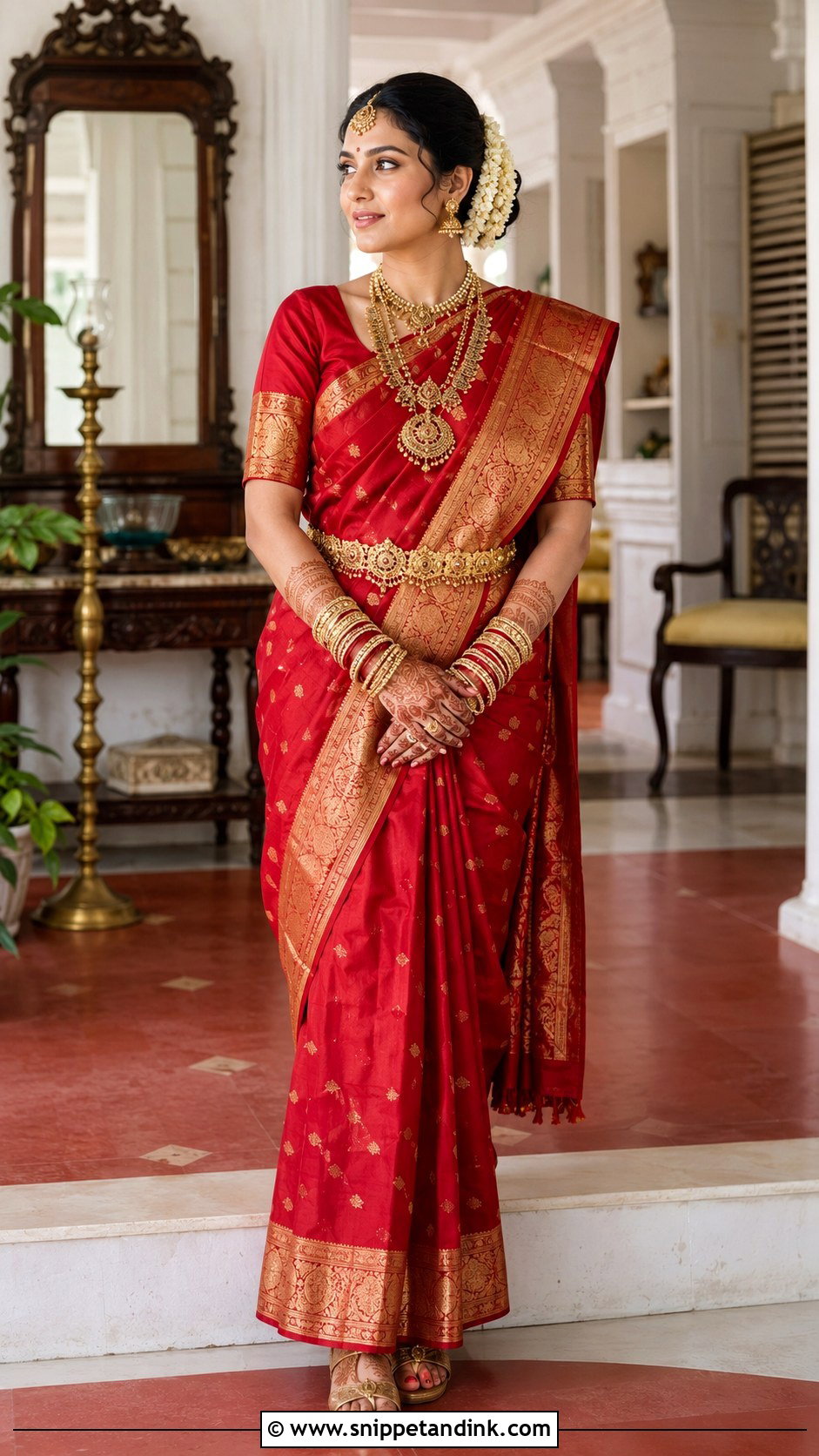
Wearing an heirloom saree from your mother or grandmother is about as personal as bridal dress gets. Have it inspected first, by a specialist if possible, for weak seams, stains and fragile borders. Old zari can be brittle where it has been folded for years, and I’d rather find that crack at a fitting than at the mandap. A new custom blouse gives modern support without altering the saree. Family jewelry, a veil, bangles, sandals and a waist belt if it suits the drape complete it. Avoid cutting the saree. If it’s too fragile to wear, its border or pallu can be worked into a new outfit.
Who Drapes You on the Morning, and With How Many Pins
Almost every outfit here depends on draping, and almost no bride does it herself. Book a professional draper, or someone in the family who has done it many times, and have her do a practice run with the real saree or dupatta and the real jewelry. A maang tikka, passa or nath changes where pins can go.
Expect a lot of pins. A pinned dupatta can need a dozen or more to sit right through a long ceremony. I ask for small safety pins in a color close to the fabric, and keep spares in the bridal bag. If you’re short on time between ceremonies, ask about pre-stitched pleats; a tailor can set saree pleats so the drape takes minutes instead of half an hour.
Looking after silk and zari afterwards
Get it cleaned by someone who works with bridal silk, not a general dry cleaner. Store it wrapped in soft cotton or muslin, never in plastic, which traps moisture. Refold it along different lines every few months, because metallic zari cracks if it sits in the same crease for years. That’s how today’s outfit becomes tomorrow’s heirloom saree.
Honoring the Tradition Without Being Weighed Down by It
The outfit that works is one that honors where you come from and still lets you feel like yourself. Lehengas, sarees, regional drapes and suit sets all suit different ceremonies and different brides. Before you finalize anything, put on the full look with jewelry, shoes, hair and veil, then walk, sit, turn and raise your arms. Good tailoring makes a heavy outfit much easier to wear. Choose and arrange cultural garments with family or experienced dressers. When the tradition, the fit and your own taste agree, you’ll stop thinking about the clothes and enjoy the ceremony.
You'll Like These Ideas:


Leave a Reply