
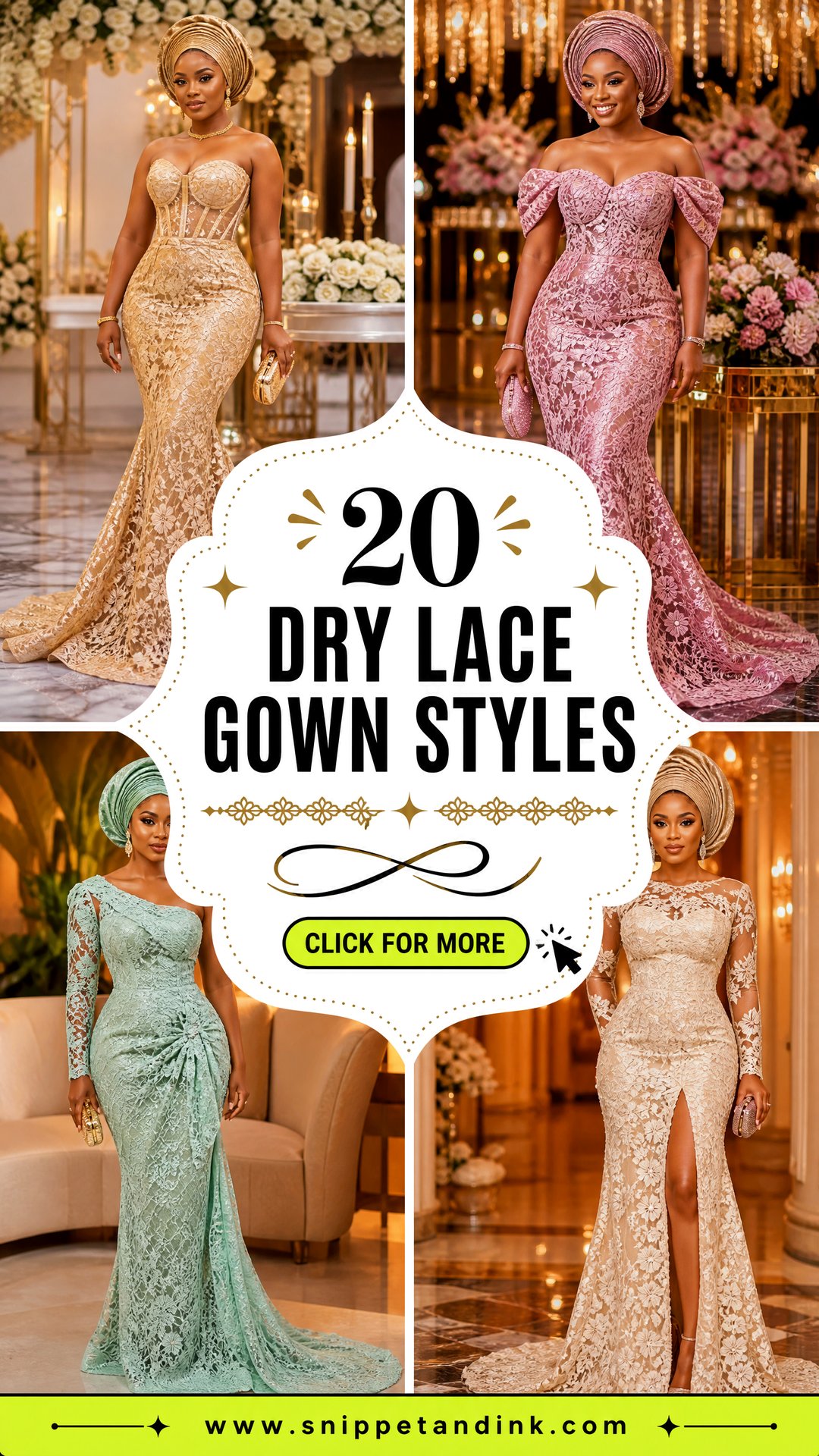
What Makes Dry Lace Behave Differently
Dry lace is the heavier, firmer lace you’ll find in Nigerian fabric markets, usually without a fine net base and without much beading or stoning. The pattern is formed by thick embroidered cord, so the cloth has body and holds a cut shape. That’s why it makes such good corsets, peplums and structured skirts.
The trade-offs are just as real. It has almost no stretch, so close-fitting styles need accurate measurements and a zip that’s set properly. It can feel scratchy against skin at cut edges, and it doesn’t drape, so very soft shapes such as cowl necks and bias skirts don’t suit it. Its open pattern also means the lining is part of the design, not an afterthought.
How much fabric to buy
- Most sellers cut lace in five-yard pieces, which usually covers a fitted gown for an average height.
- Bubu gowns, full ball gowns, cape sleeves and wrapper drapes often need more, so ask your tailor before you buy.
- Large motifs need extra fabric to line up the pattern at the seams.
- Buy all your lace from one roll if you can; colours vary between batches.
1. Dry Lace Corset Mermaid Gown
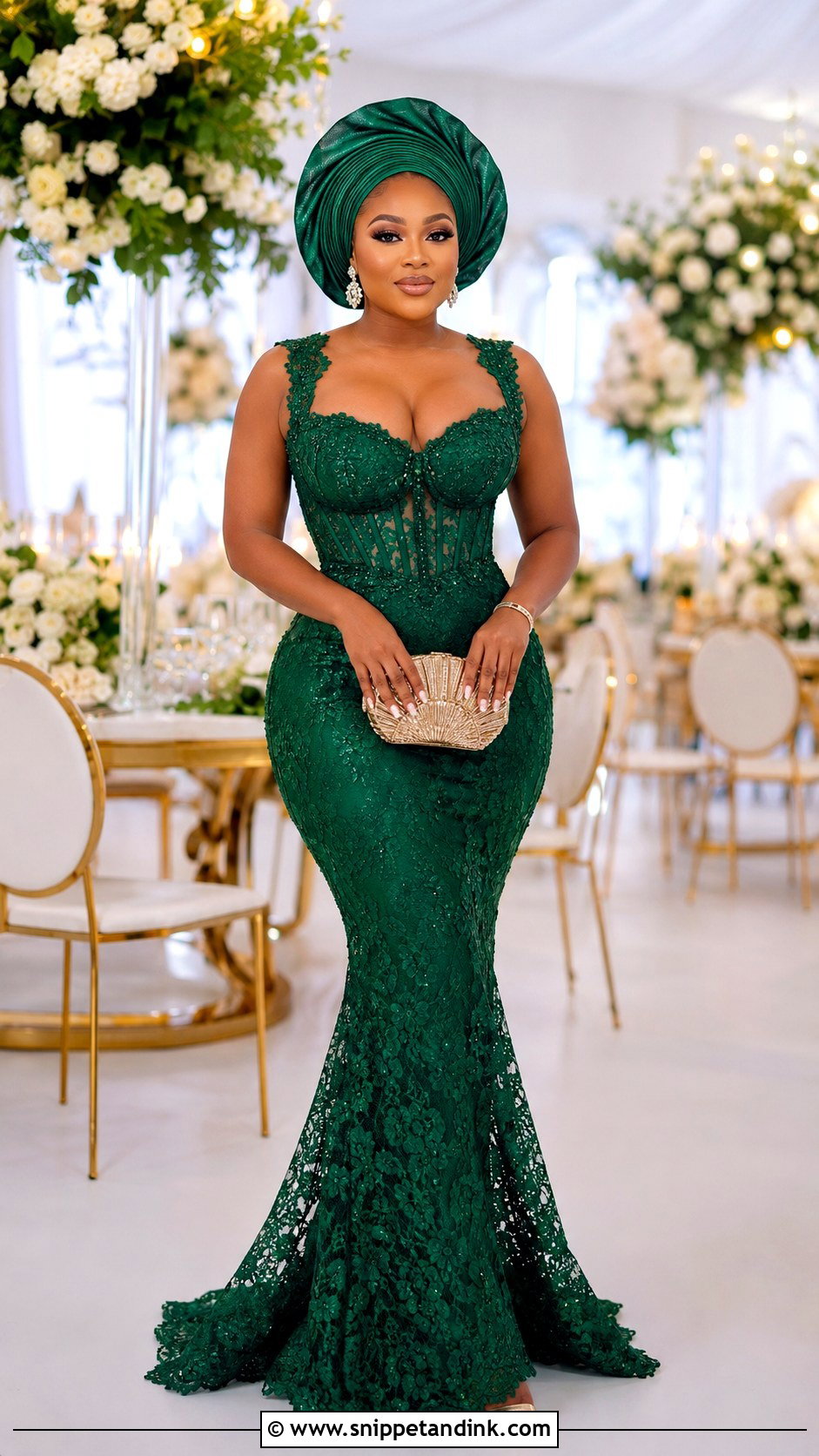
Dry lace is firm enough to hold a corset shape on its own, which is why the corset mermaid is the style I see most at Nigerian weddings. Corset lace gowns sit right at the centre of contemporary Nigerian occasion wear. The bodice pins in the waist, the skirt follows the hips and then flares near the knee. Ask the tailor for firm lining and boning placed along the seams, and a sweetheart or softly curved neckline. Metallic heels, a compact clutch, drop earrings and a neatly tied gele finish it; if the lace already carries stones, leave the neck bare. My honest advice is to keep the flare moderate. A dramatic one looks great standing and makes the dance floor and the car hard work.
2. Dry Lace A-Line Gown With Puff Sleeves
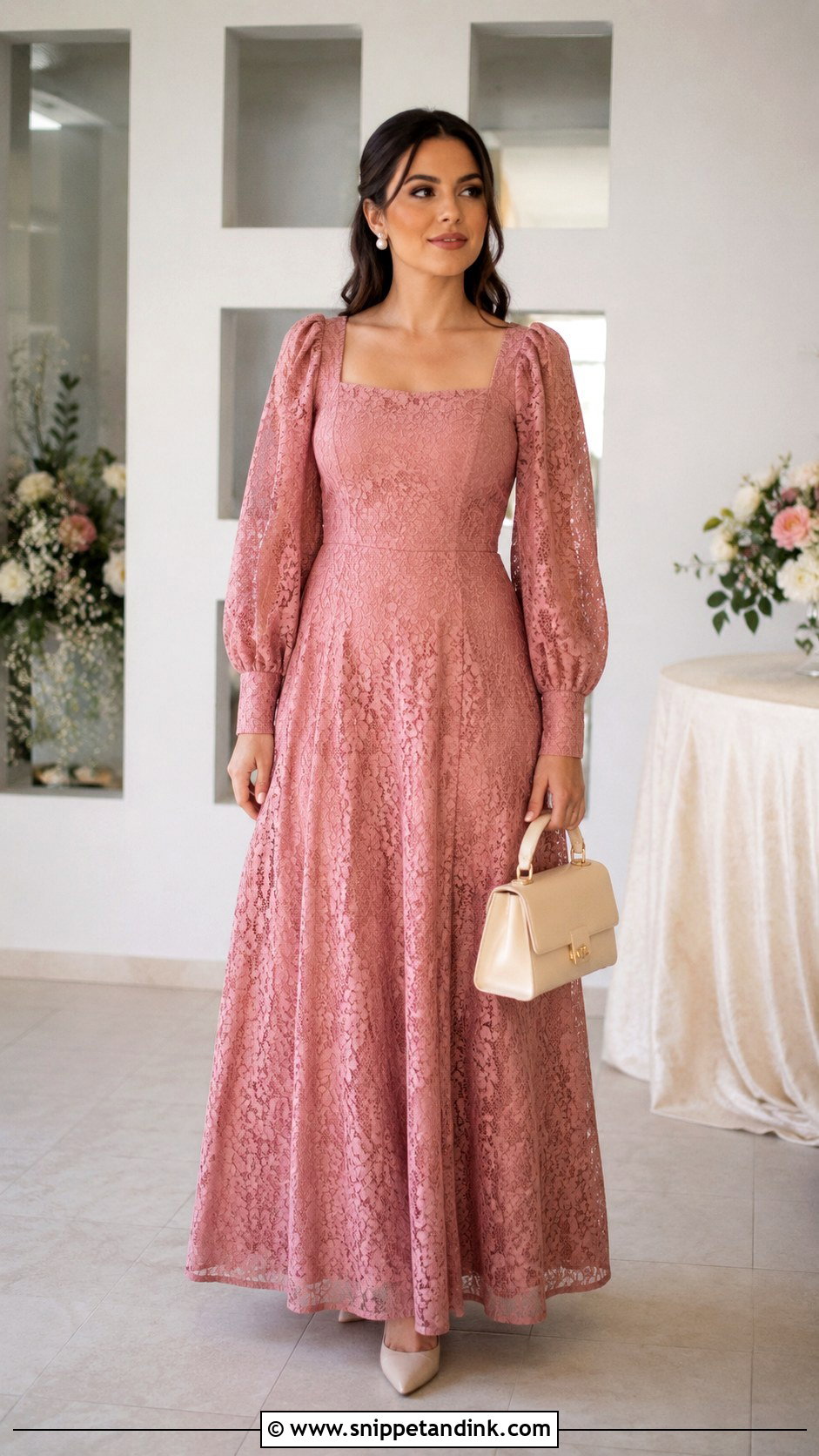
Puff sleeves on an A-line gown are a softer way to wear dry lace. The body sits neatly on top and widens slowly to the hem, so you get shape without tightness. Gather the sleeves at the shoulder and finish them with a fitted cuff, then balance the volume with a V or square neck. Pointed pumps, a structured bag, pearl earrings and a slim bracelet are enough. Have the lining dyed or chosen close to the lace colour. Dry lace has open spaces in the pattern, and a lining that’s a shade off shows through every one of them.
3. Dry Lace Bubu Gown With Gele
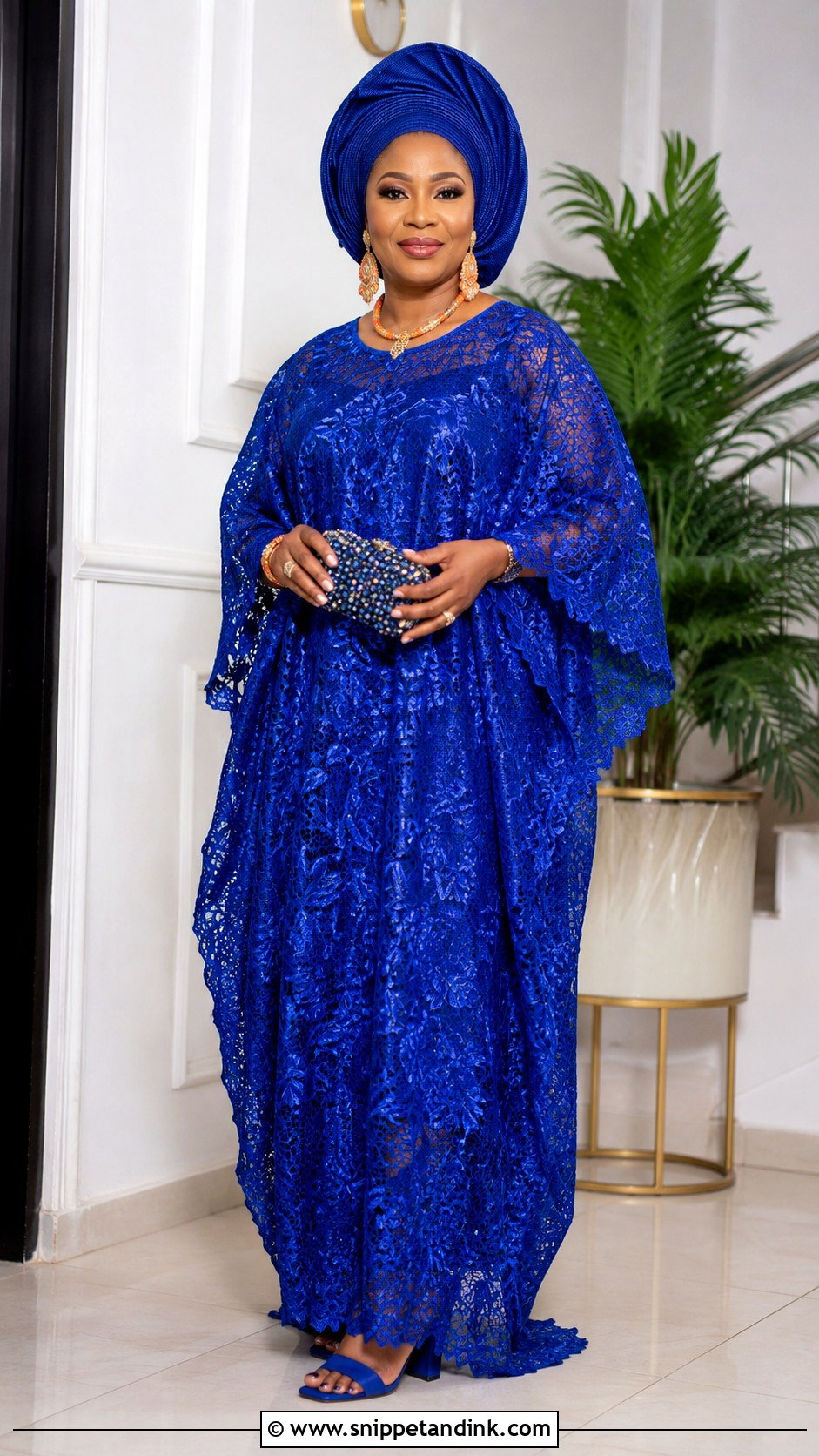
A dry lace bubu gown is the comfort choice, and it’s the style where the fabric shows best, because the wide panels leave the pattern uninterrupted. It’s a regular at weddings and parties for exactly that reason: full coverage and real presence. A matching gele, medium block heels, a beaded clutch and bold earrings turn it from loose to dressed. The risk is drowning a petite frame. Defined sleeve openings and a little side shaping help, and one colour head to toe, with a hem that just clears the floor, adds height.
4. Off-Shoulder Dry Lace Gown
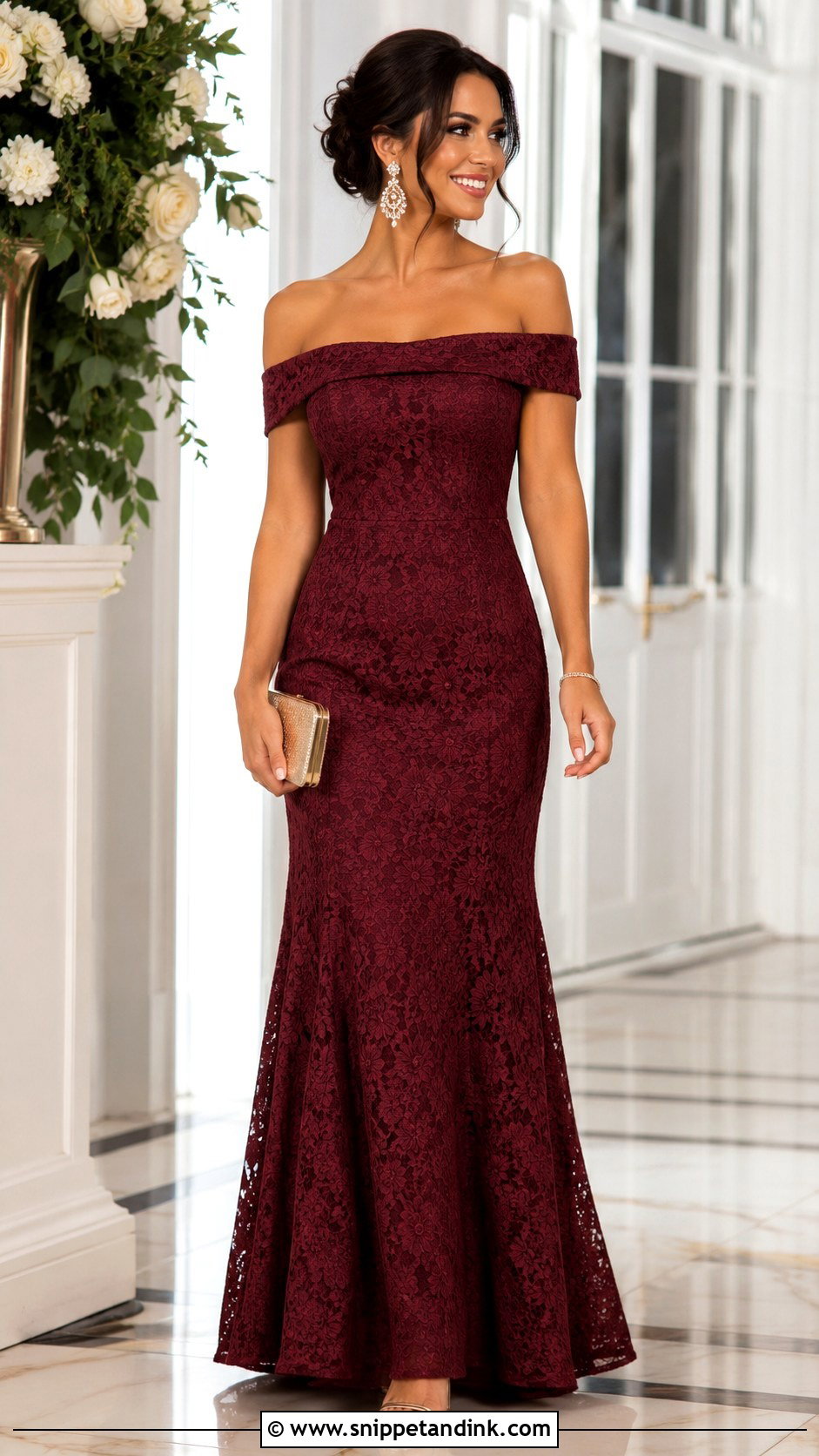
Off-shoulder necklines show the collarbone and make traditional dressing feel fresh. The cut can be straight across or folded softly above the bust. A fitted floor-length skirt looks sleek; a gentle flare is easier to move in. Dry lace is heavy, so the shoulder pieces must be decoration only, with an internal bodice doing the holding. Wear chandelier earrings, a metallic mini bag, slim heels, a simple bracelet and an updo. If you’re nervous about it slipping, a sheer lace yoke gives the off-shoulder look with straps you can actually trust.
5. High-Neck Dry Lace Long Gown
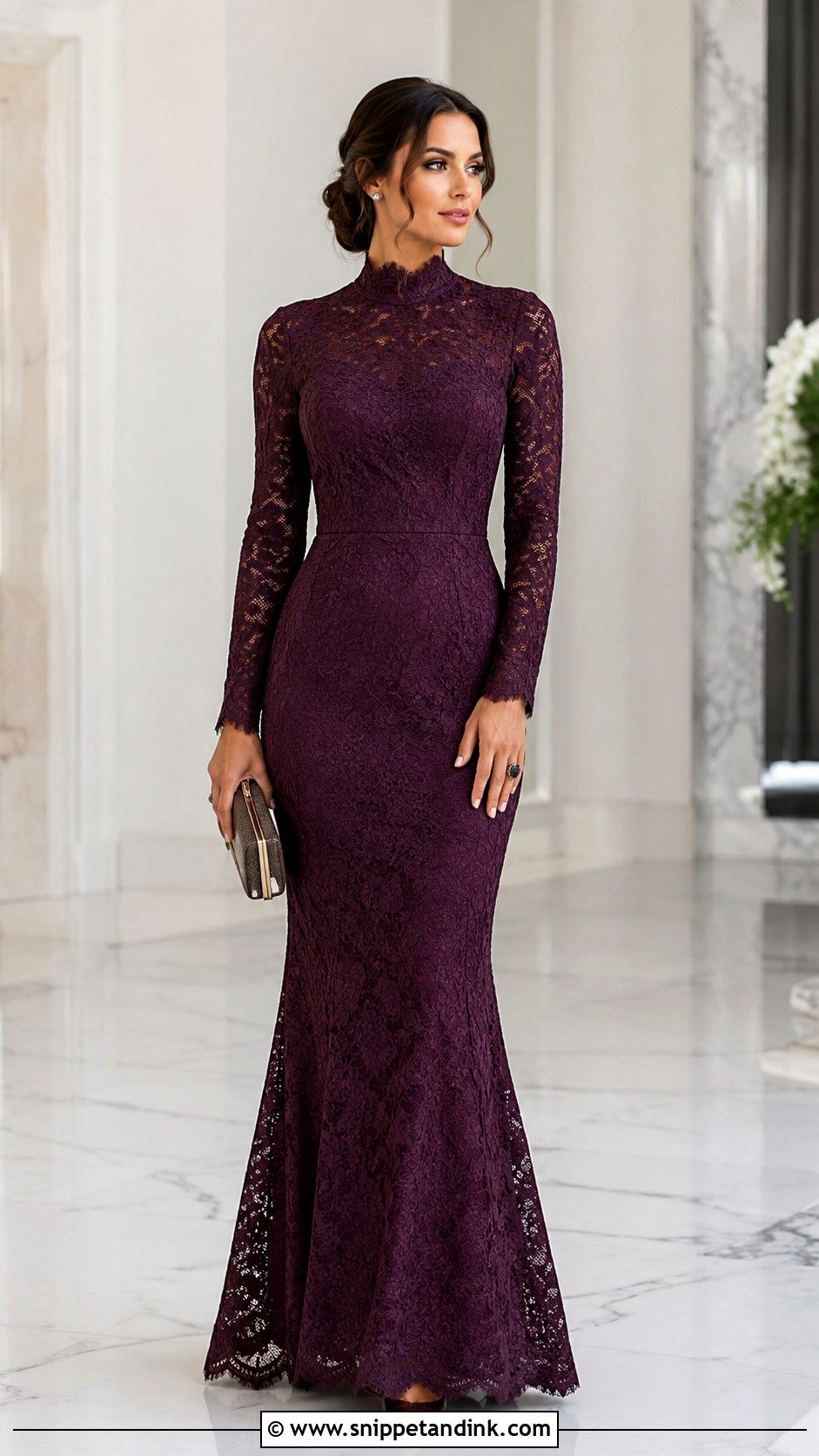
High necks let the lace texture speak, especially in deep emerald, burgundy, navy or plum. Ask for a fitted bodice, a defined waist and a straight or softly flared skirt. Long sleeves can be fully lined for coverage or half-lined so the lace pattern shows against the skin. Pointed heels, a box clutch, studs, one statement ring and a low bun or sleek ponytail finish it; no necklace. I’d mention one thing to the tailor: dry lace around the throat can feel scratchy where the cut edge meets skin, so ask for the neckline to be bound or faced in a soft fabric.
6. One-Shoulder Dry Lace Gown
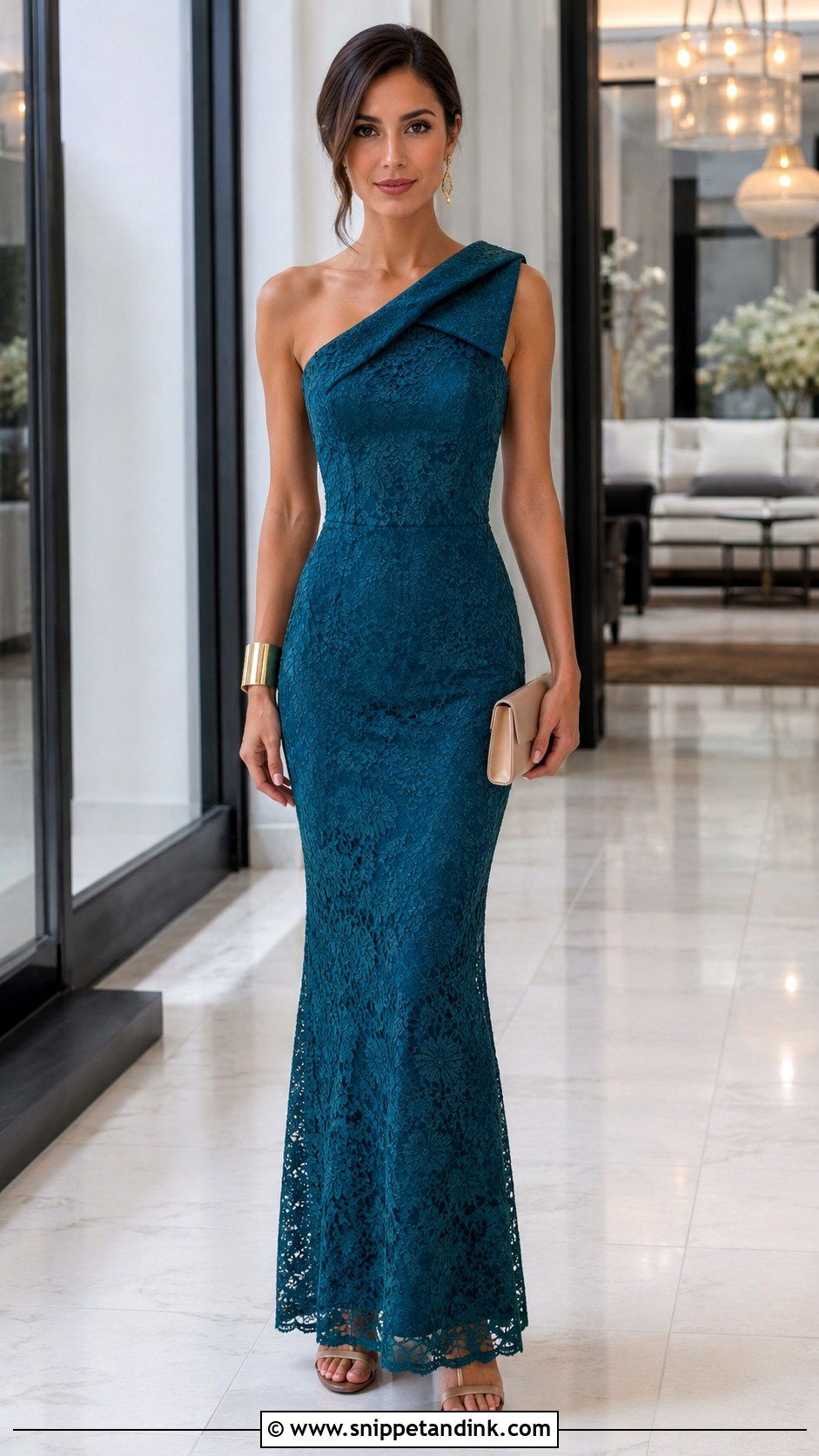
One shoulder creates interest from the neckline alone. The single side can be a fitted strap, a folded band or a short draped sleeve, and the skirt below should stay calm, such as a mermaid, column or A-line, so top and hem aren’t competing. Strappy heels, a small satin clutch, a cuff and earrings that don’t brush the shoulder detail suit it, with hair parted to the other side. Asymmetric bodices tend to slide toward the bare side. Make sure there’s real internal support and room in the armhole, and pick a lining that deepens the lace colour.
7. Peplum Dry Lace Gown
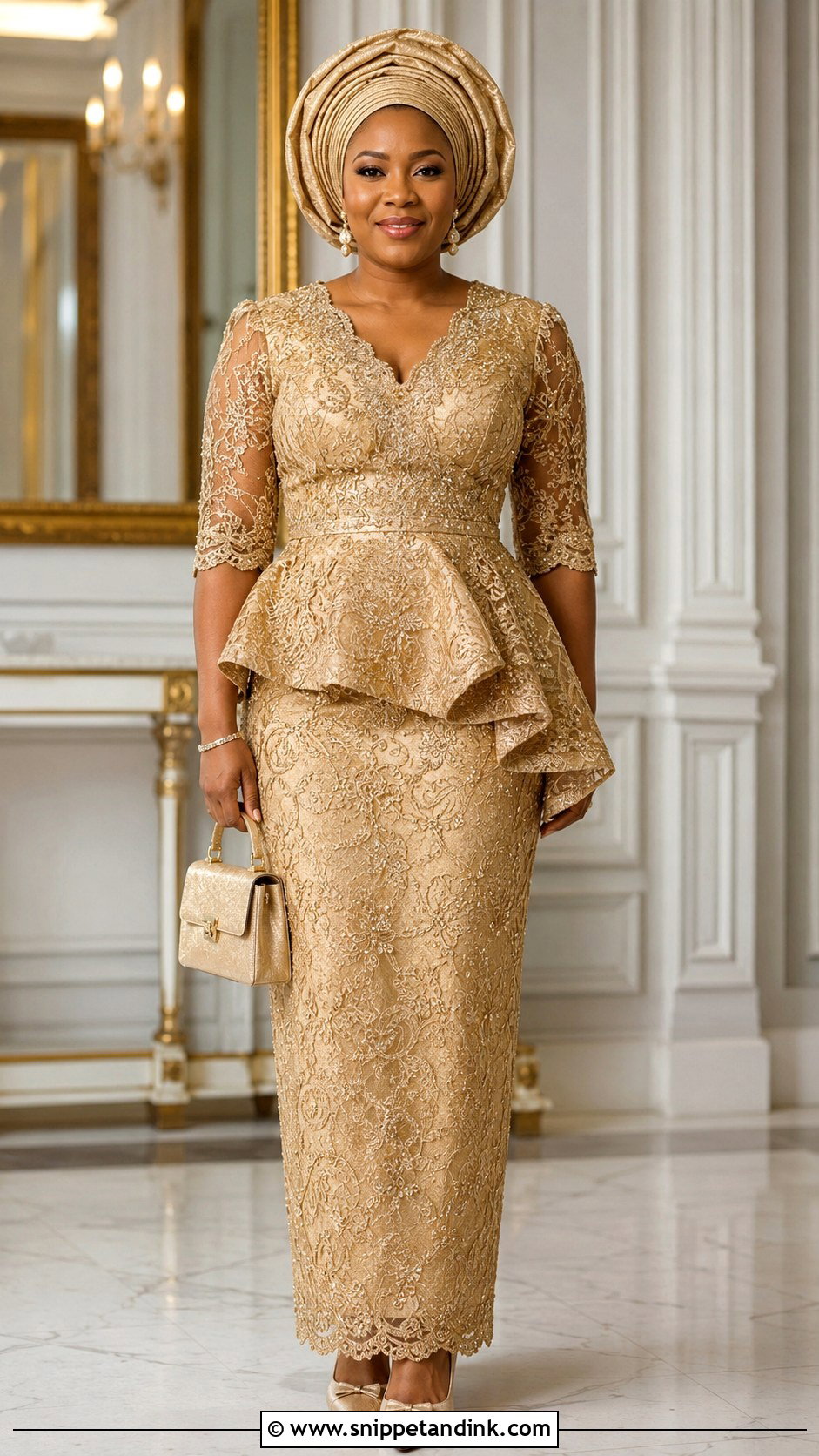
Want shape at the waist without a skin-tight dress? A peplum dry lace gown adds a flared panel between bodice and skirt, either soft and circular or stiff with an asymmetric edge. Pair it with a straight floor-length skirt and a back slit for walking, plus a modest V-neck, elbow sleeves and well-fitted shoulders. Classic pumps, a top-handle bag, pearl or crystal earrings and a coordinating headwrap finish it. Skip the wide belt. Dry lace peplums stand away from the body more than soft fabrics, which is flattering on a straight figure and can add bulk if your hips are already full.
8. Cape Sleeve Dry Lace Gown
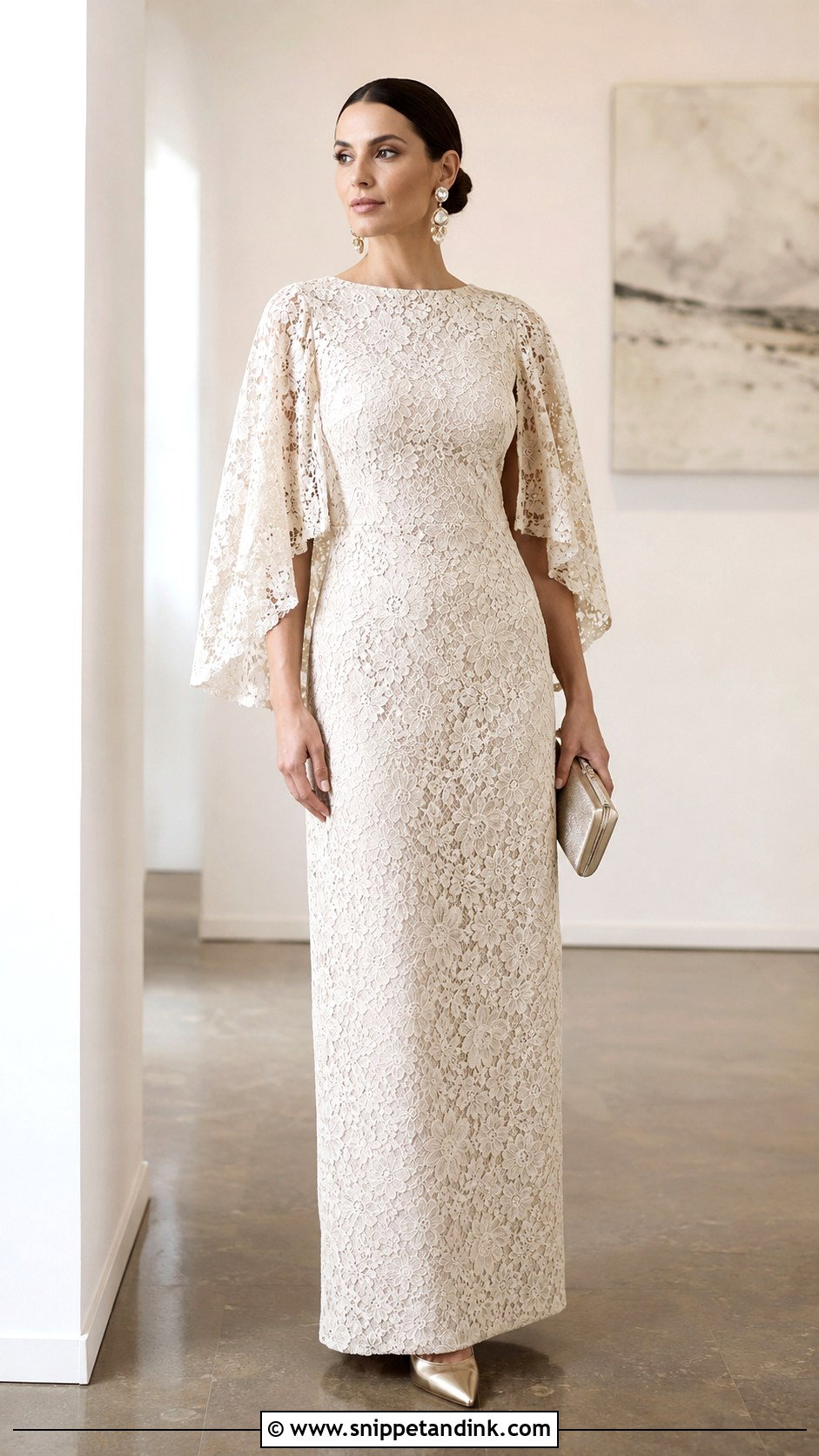
Cape sleeves add movement to a fabric that is naturally stiff. They can fall from shoulder to elbow or run toward the wrist. Keep the gown fitted through the bodice and straight in the skirt, with a round, bateau or shallow V neckline. Pointed heels, a slim clutch, statement earrings and a sleek style complete it. I’d skip chunky bracelets, which catch the lace edge every time the cape swings. If your lace is very heavy, make the cape from lighter lace or chiffon and trim only its border in dry lace; it drapes properly and still matches.
9. Dry Lace Ball Gown
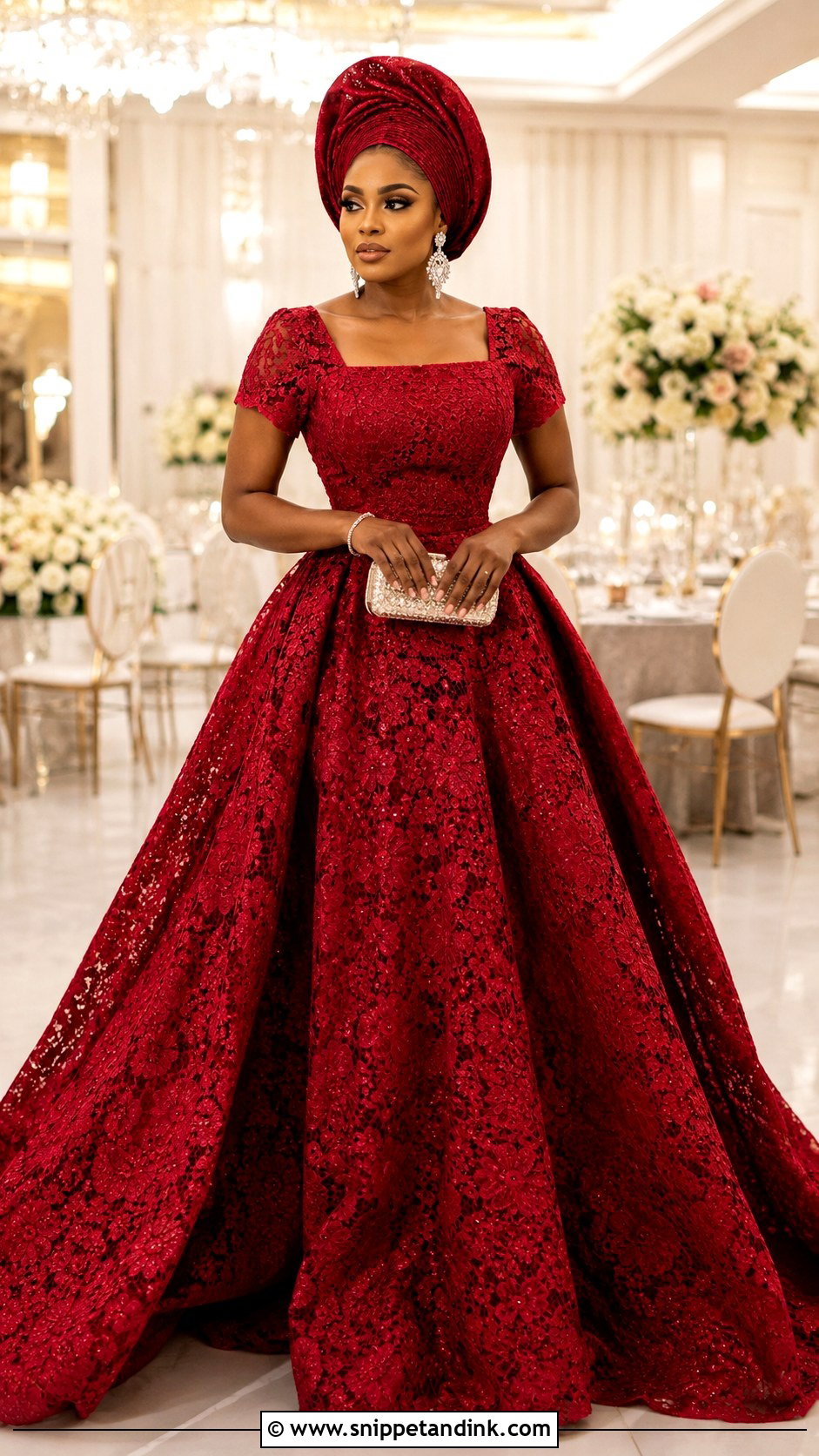
A dry lace ball gown is for the big celebrations where volume belongs. The fitted bodice and full skirt need a structured lining, light netting or a properly cut underskirt, because dry lace alone will collapse under its own weight. A square or modest sweetheart neckline and short sleeves balance the width. Hidden platform heels, a compact clutch, sparkling earrings and a neat gele finish it, with accessories kept in proportion. Get the hem right while wearing your shoes; it should hover just above the floor. A detachable overskirt gives you the drama for photos and lets you move later.
10. Wrapper Drape Dry Lace Gown
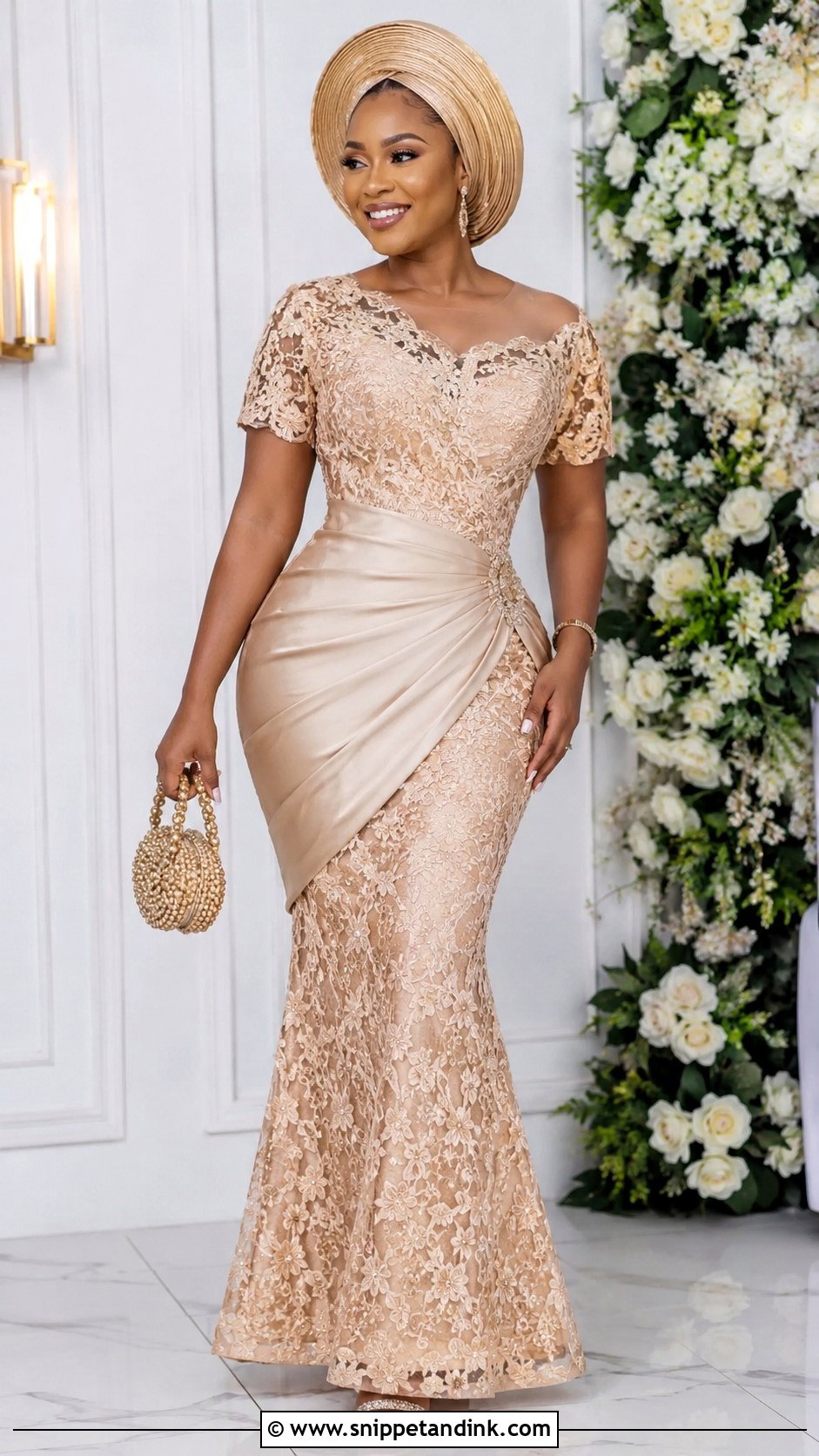
A wrapper drape brings the traditional iro silhouette into a single fitted gown. The draped panel can cross the front, gather at one hip or fall into a soft side train, and wrapper-style lower sections are a strong current direction in Nigerian lace gowns. Keep the bodice clean, with short sleeves or an off-shoulder neck, so the waist detail shows. Heeled sandals, a beaded purse, drop earrings and a matching gele or shoulder scarf suit it. The drape must lie flat. Ask the tailor to anchor it with hidden stitches at the waist so it doesn’t bunch over the stomach, and leave room in the skirt to walk.
11. Short Dry Lace Gown With Bell Sleeves
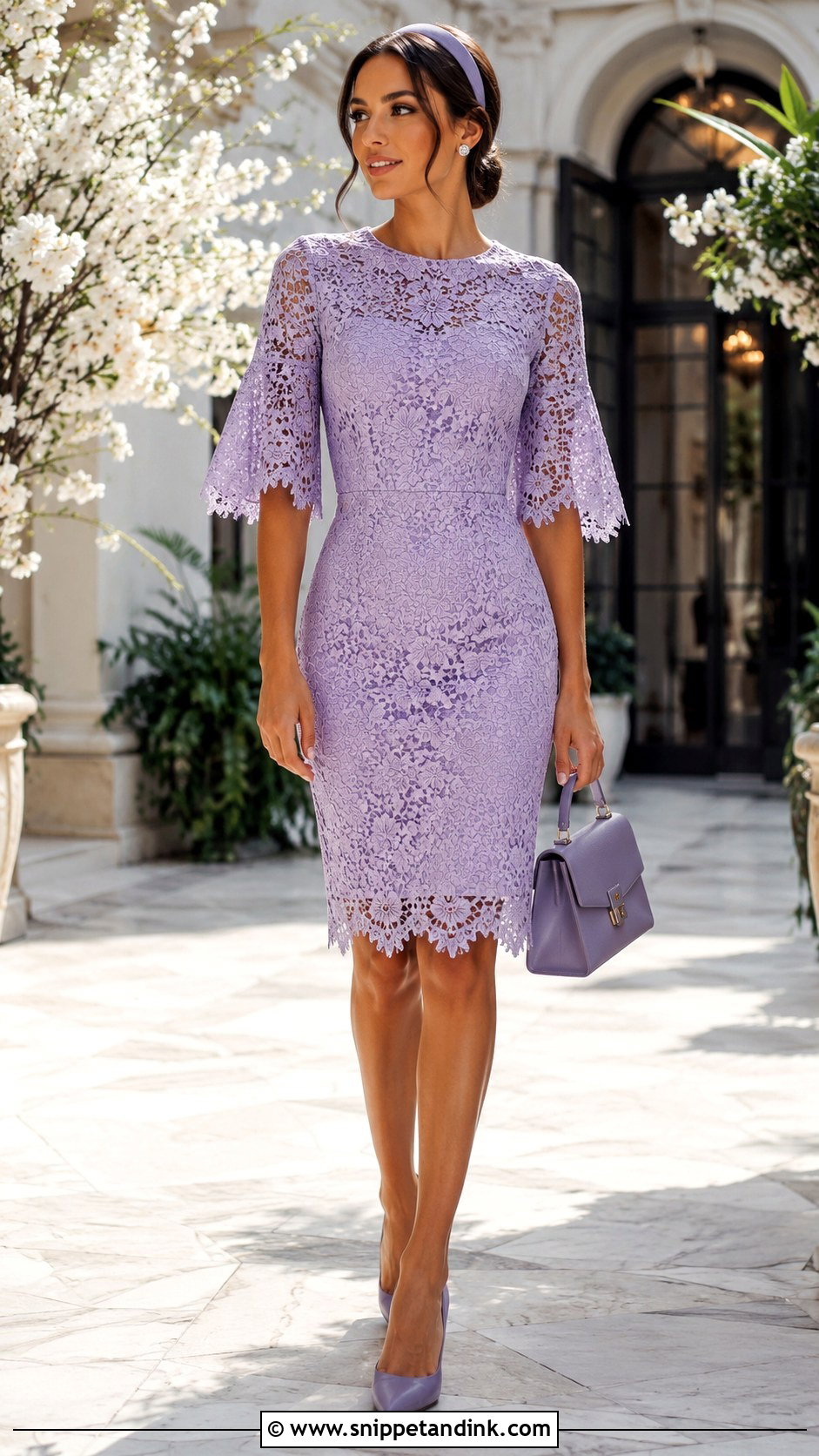
Short dry lace works when the proportions are planned. A hem at the knee or just below looks occasion-ready, with a gently fitted body to balance wide bell sleeves and a defined waist so it doesn’t turn boxy. Sleeves can end at elbow or wrist depending on how heavy the lace is. Pointed pumps, a small structured bag, studs, a fine bracelet and a simple headband or compact headwrap keep it light. A narrow skirt in stiff lace needs a back vent. It’s the right length for daytime parties and birthdays.
12. Dry Lace Midi Pencil Gown
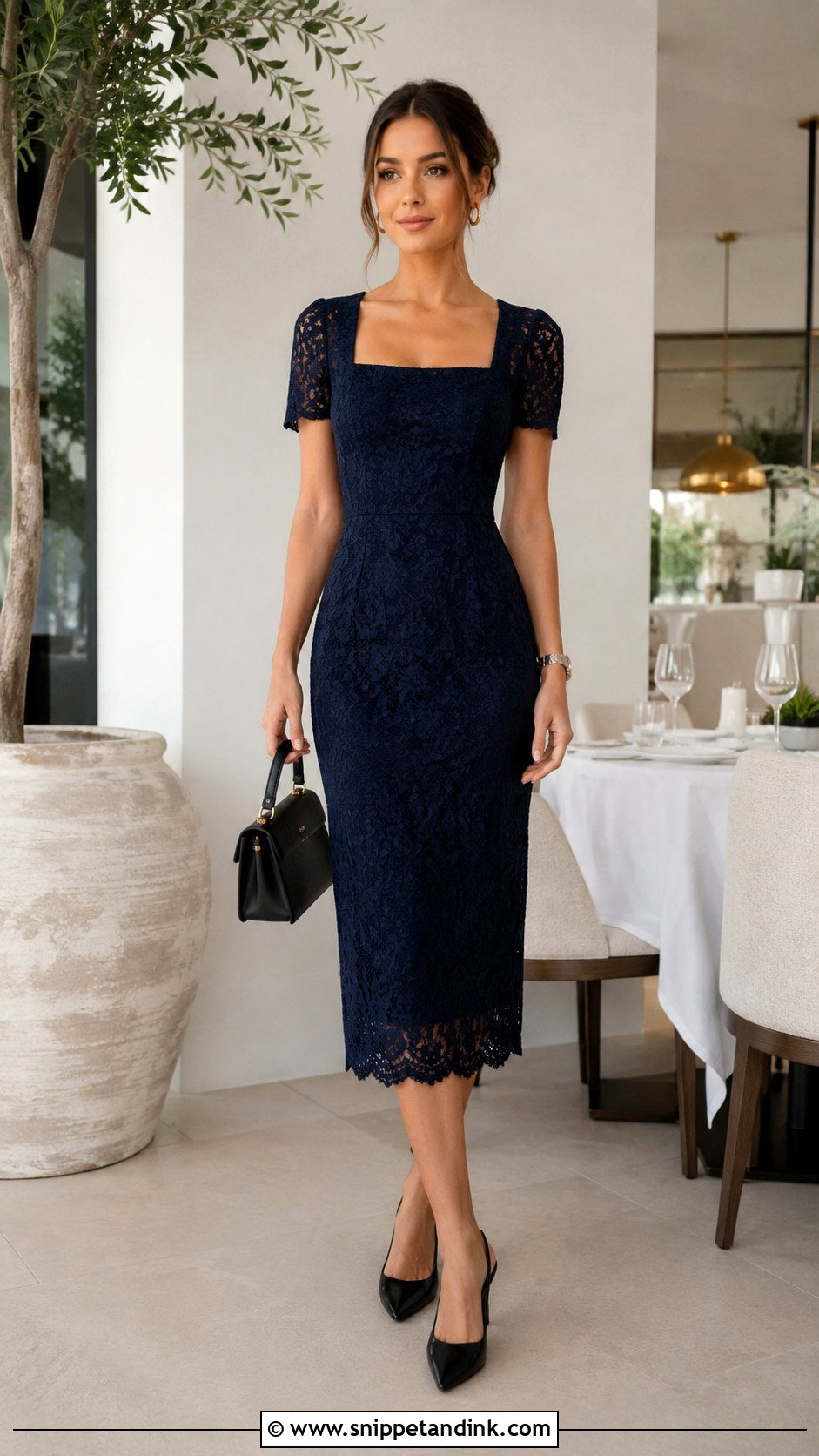
A dry lace midi pencil gown lives or dies by its tailoring. It should skim the body without pulling across the hips; a below-knee length with a back slit lets you take normal steps. A square neck, short sleeves and waist darts keep it classic. Slingbacks, a structured mini bag, small hoops and a slim watch suit it. Matching lining looks unified; nude lining makes the motifs pop. With a large-pattern lace, I ask the tailor to centre the best motifs at the neckline and hem before cutting, since there’s no room to shift them once the pencil shape is cut.
13. Empire Waist Dry Lace Gown
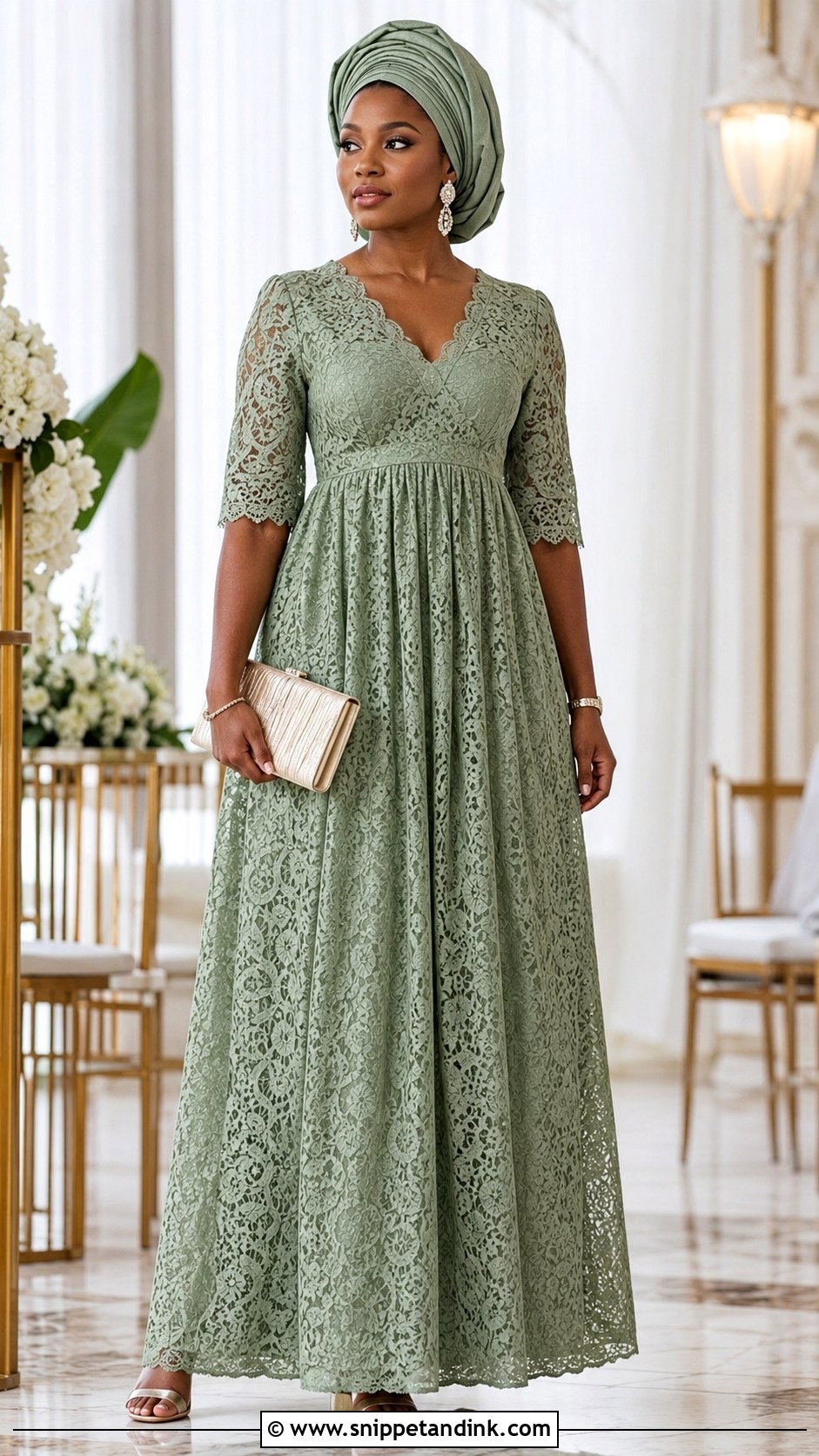
Empire waists gather just under the bust and fall loose over the middle, which is kind to anyone who’d rather not have a defined waist for eight hours. A V or round neckline, a fitted upper bodice and soft elbow sleeves work, with a straight or gently widening skirt. Block heels, a medium clutch, drop earrings and a folded headwrap finish it. Thick trim under the bust adds bulk; narrow piping or a slim satin band is better. This cut depends on an accurate bust measurement more than any other. Get that right and you can sit, eat and dance in it all day.
14. Dry Lace Kaftan Gown
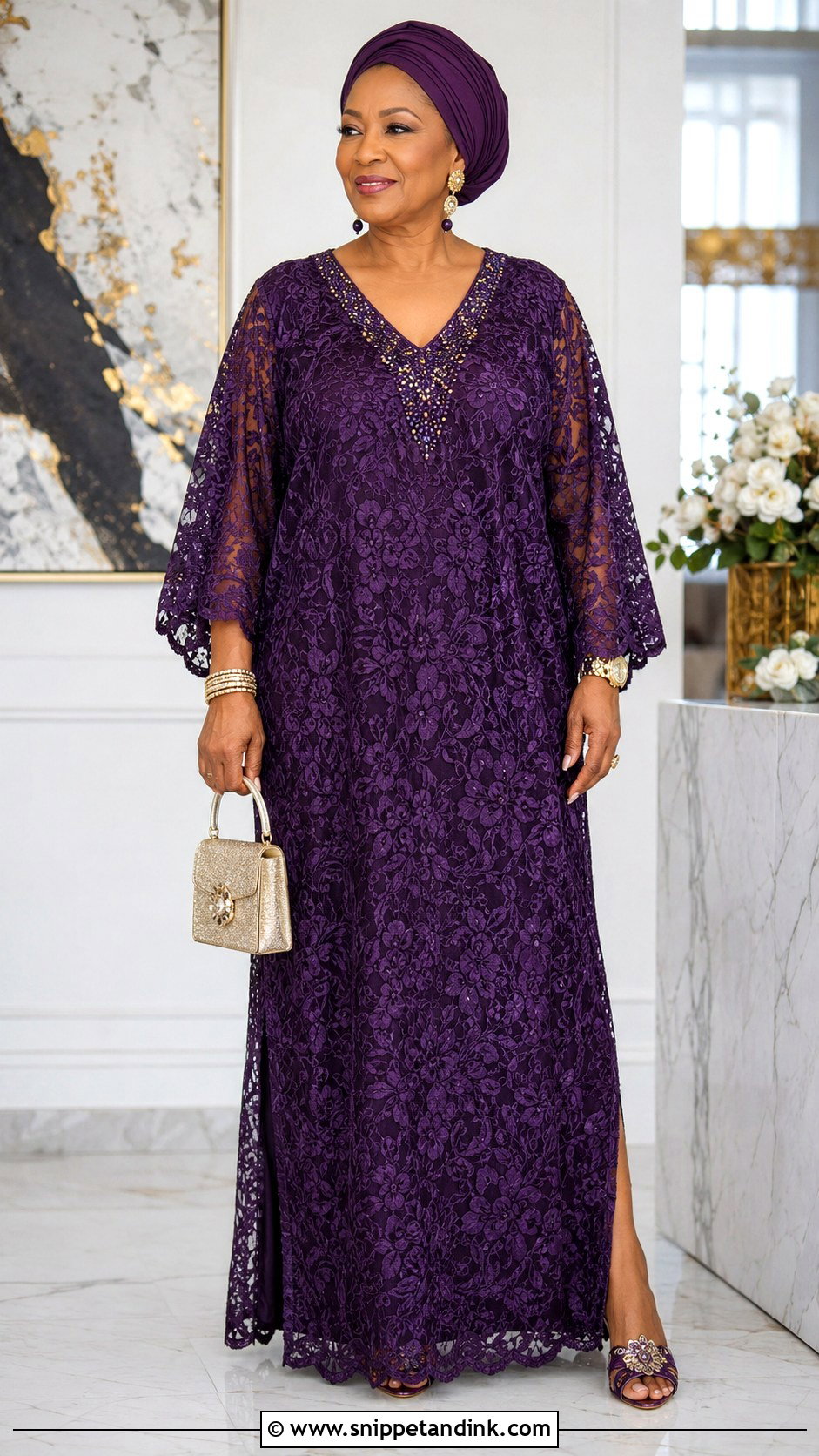
Kaftans fall straighter than a bubu and often have side seams for a little shaping, so they look more tailored while staying easy. A V-neck trimmed in beads, embroidery or contrast fabric pulls attention up. Add loose sleeves ending above the wrist and side slits. Embellished mules or low block heels, a top-handle bag, bold earrings, bangles on one wrist and a simple turban-style wrap suit the relaxed shape. Ask for a full lining down to the hem, since dry lace kaftans without it can hang stiffly and show the outline of the slip underneath.

15. Two-Tone Dry Lace Gown
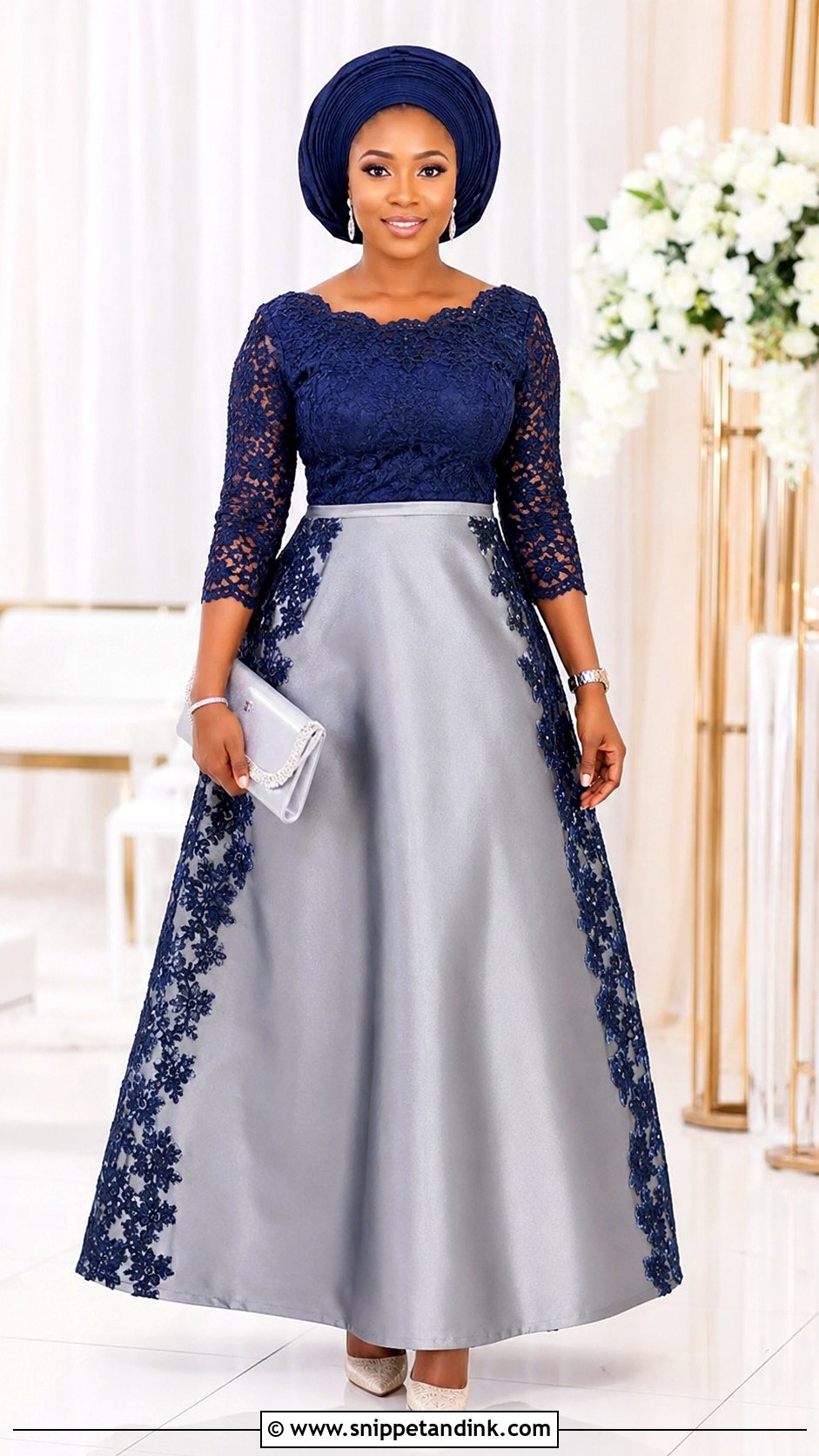
Colour blocking makes a familiar shape new. Put one shade on the bodice and another on the skirt, or add contrast panels on the sides and sleeves. Deep green with gold, navy with silver, burgundy with blush and plum with lilac all pair well. Keep the silhouette simple, such as a fitted A-line with three-quarter sleeves, and match your clutch to the smaller colour panel, with neutral heels, quiet earrings and a plain gele. Two laces from different sellers rarely have the same thickness, so feel both before buying. Mismatched weights make the seam between colours pucker.
16. Ankara And Dry Lace Gown
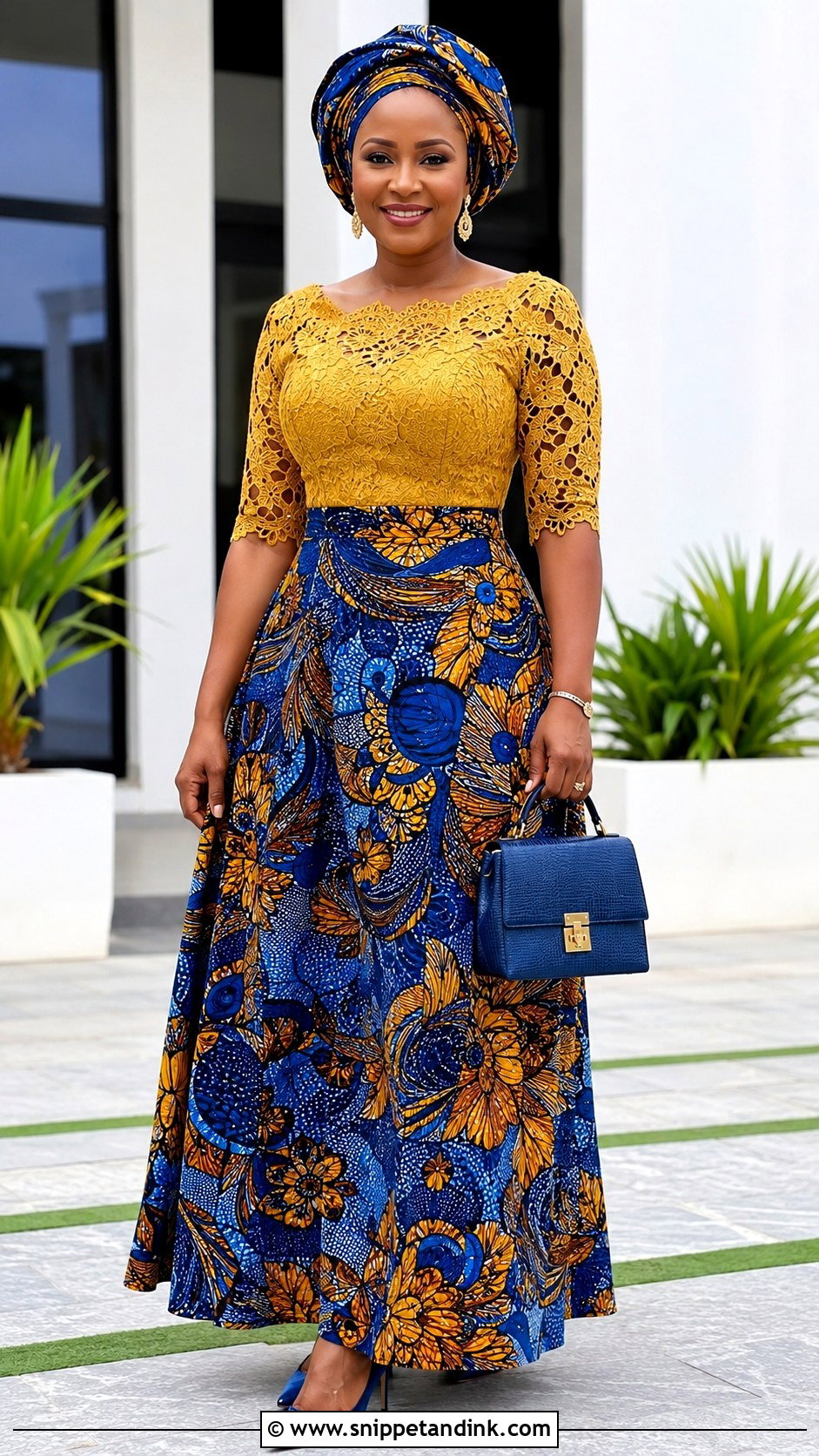
An Ankara and dry lace gown puts print and texture together. I like the lace on the fitted bodice and sleeves, with Ankara in the skirt, side panels, peplum or a wrapper drape, and one colour from the print repeated in the lace. A floor-length A-line gives both fabrics room. Solid heels, a compact bag, gold earrings and a headwrap in one of the two fabrics are plenty; another print would be too busy. Wash the Ankara before it’s cut, because cotton wax prints can shrink a little while dry lace doesn’t, and a shrunken panel will pull the seams.
17. Dry Lace Gown With Layered Bell Sleeves
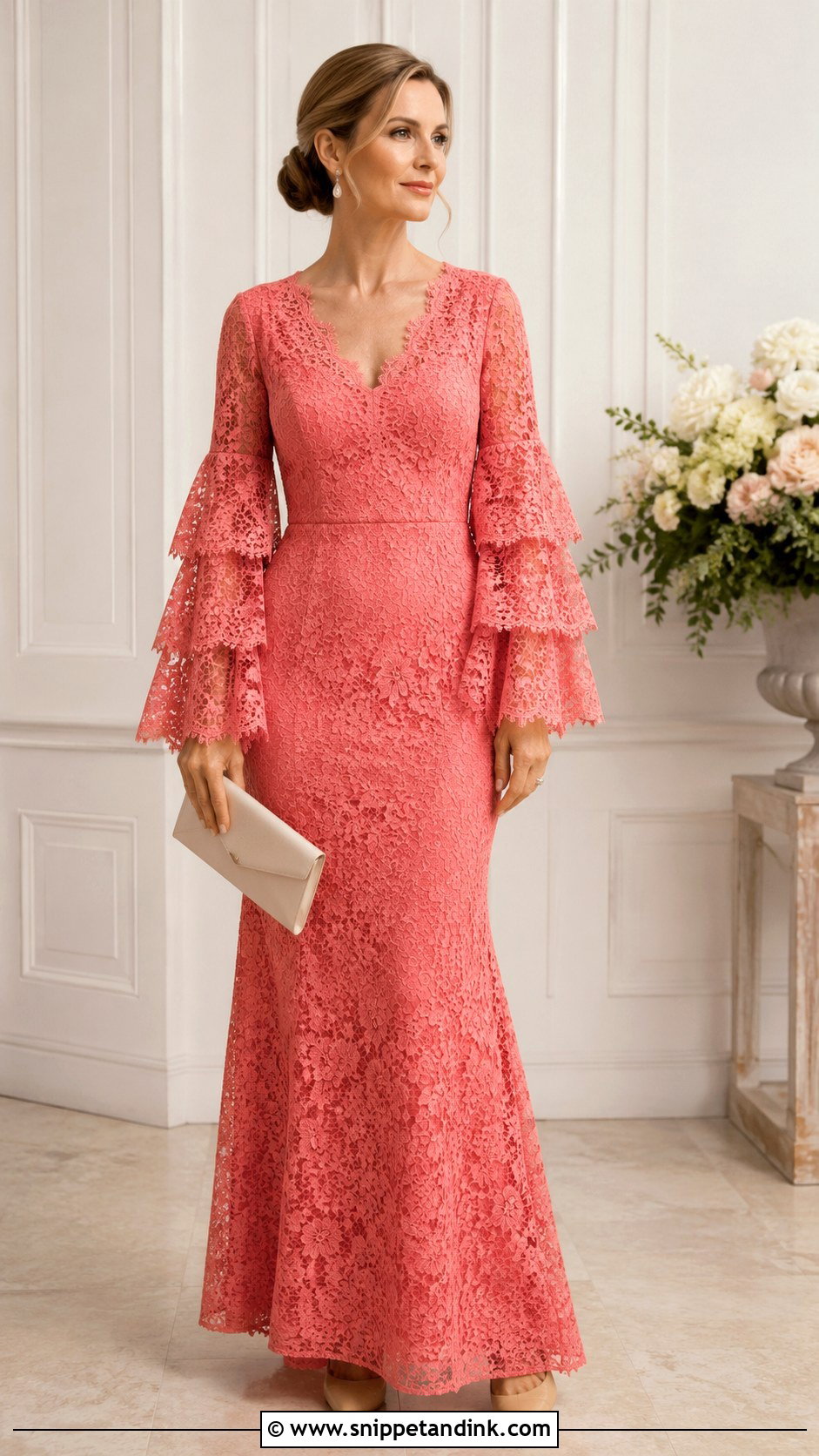
Layered bell sleeves are festive without adding volume to the body. Two or three graduated tiers starting at the elbow and falling toward the wrist do the work, so the bodice stays fitted and the skirt straight or gently flared. A shallow V or round neckline won’t compete. Sleek pumps, a small envelope clutch, simple drops and a smooth low bun suit it. Leave off bracelets and big rings; they catch the tier edges. If the lace is heavy, make the lower tiers lighter or finish them with a narrow scalloped border so they swing instead of hanging flat.
18. Ruffle Shoulder Dry Lace Gown
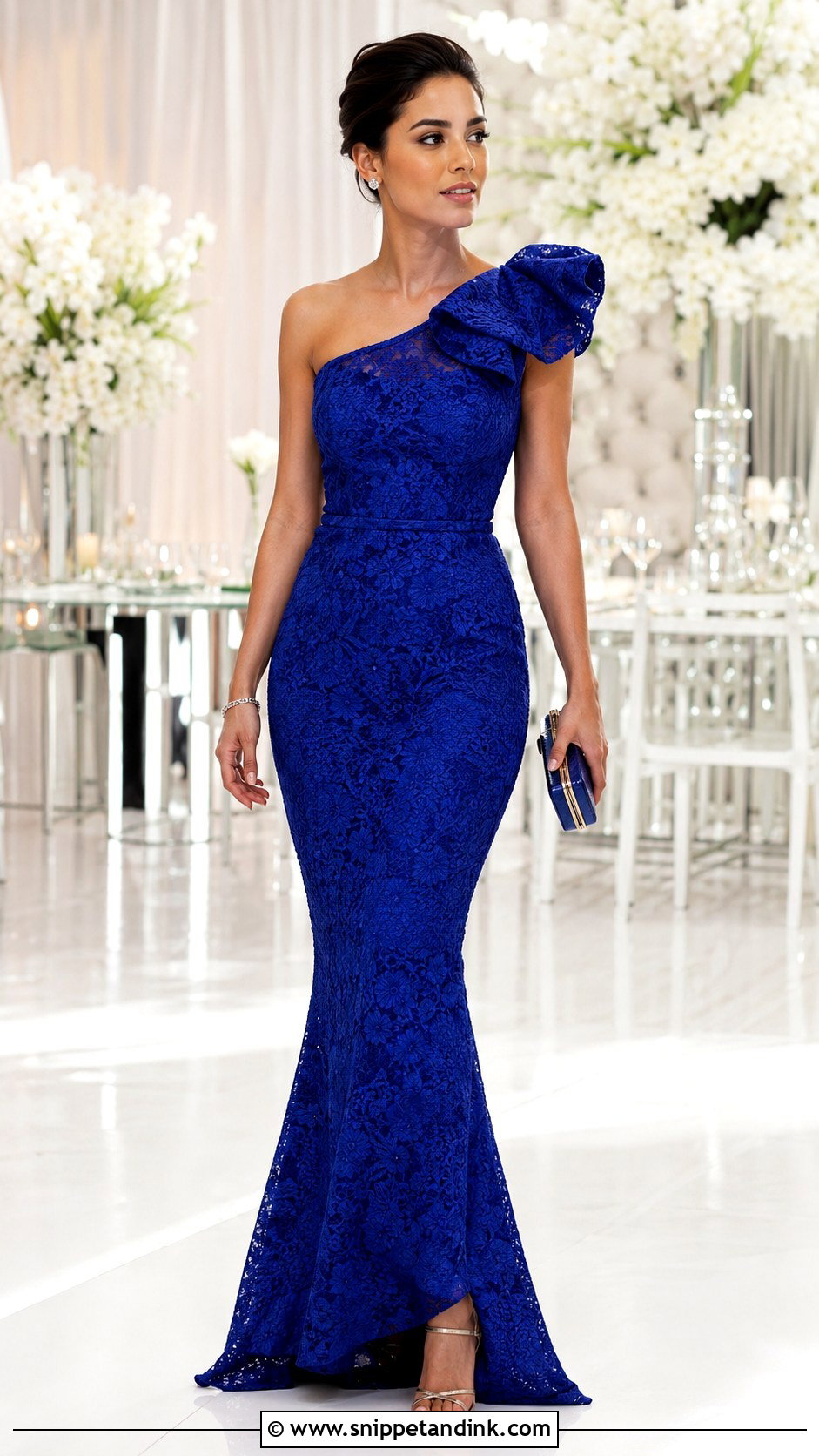
A single large ruffle across one shoulder looks modern when the rest of the gown is smooth. Pair it with a straight neckline, a defined waist and a mermaid or column skirt. With a big ruffle, skip sleeve volume, heavy beading and big trains. Slim-strap heels, a hard-case clutch, studs and a bracelet on the opposite arm keep it clean, with hair swept away from the ruffle. Dry lace ruffles need soft net or interfacing inside, otherwise they flop by the second hour. Sit in it once before the party to see whether the ruffle crushes against the chair back.
19. Front Slit Dry Lace Column Gown
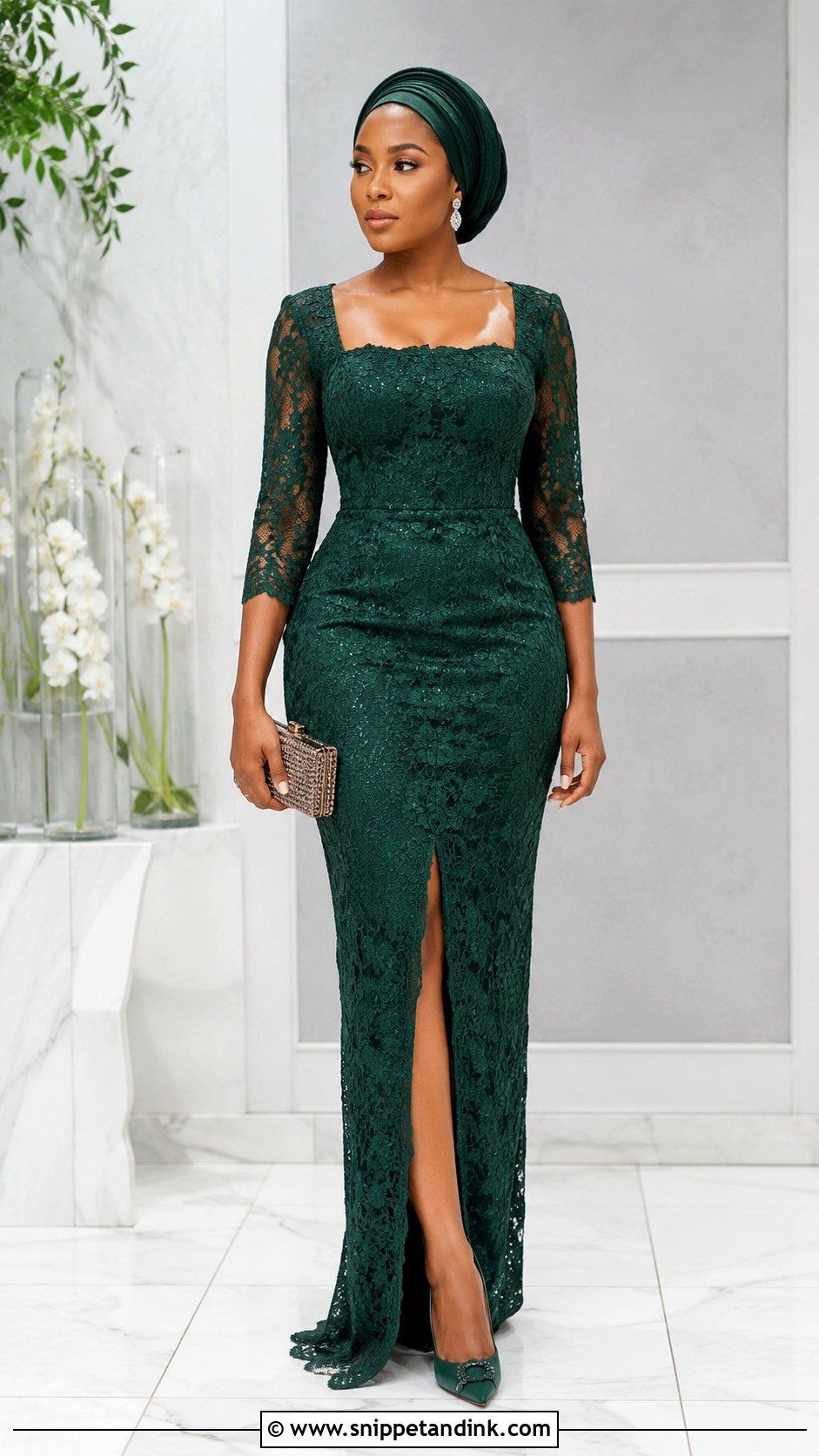
A front slit makes a column gown easy to walk in. Set the top of the slit where you can sit without worrying; that point is lower than most people expect once you cross your legs. A fitted bodice, square neckline and three-quarter sleeves with matched lining and lace create one long vertical line. Pointed heels, a rectangular clutch, crystal earrings and a sleek headwrap suit it. The lining must be stitched neatly around the slit edge, or it twists and peeks out with every step. For extra decoration, add an appliqué cluster at waist or neckline, not down the front.


20. Dry Lace Gown With Aso Oke Accents
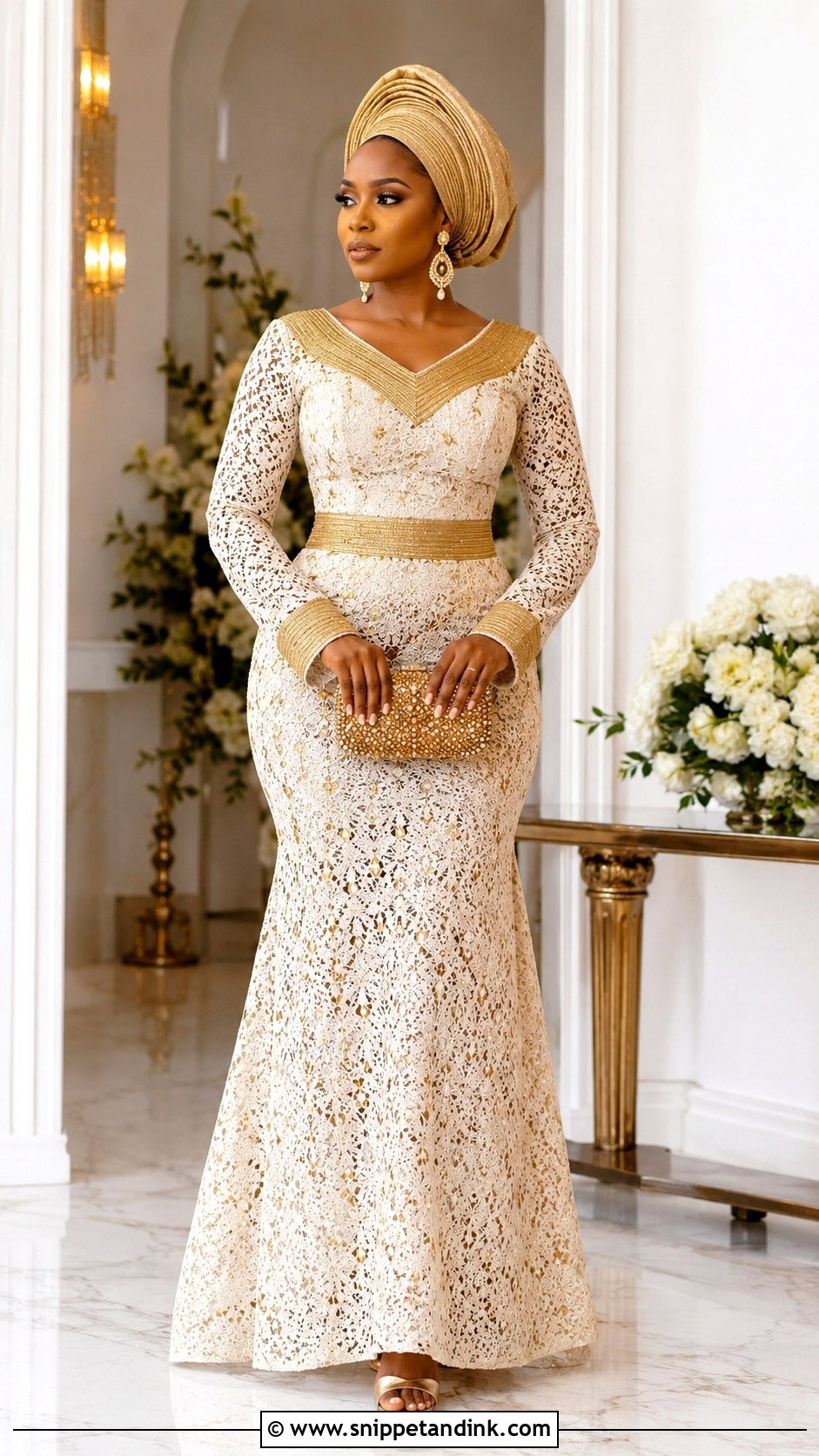
Aso oke accents give a dry lace gown a ceremonial finish while the lace stays the main fabric. Use the handwoven cloth on the neckline, cuffs, waist or peplum rather than large sections. A fitted bodice and gently flared floor-length skirt make a good base. Cream lace with gold aso oke, or teal lace with blue-green weave, are easy pairings; add a matching gele, metallic heels, a beaded clutch and drop earrings. Aso oke is thick and stiff, so seams joining it to lace need careful finishing. Keep any beading to one or two areas.
Giving Your Tailor Enough Time Before the Owambe
Aso ebi season keeps good tailors very busy, and the closer you get to a big wedding weekend, the more rushed the work becomes. I’d hand over the fabric at least four to six weeks ahead for a structured style such as a corset mermaid or ball gown, and earlier if you need it shipped.
- Bring two or three clear pictures and point out the exact details you want copied.
- Agree on the lining colour and fabric at that first visit.
- Ask for a fitting before the final hem and before stones or trim go on.
- Try it with the shoes and gele you’ll wear, and sit down in it.
- Collect it a few days early so there’s time for small fixes.
Caring for Dry Lace Between Parties
Dry lace lasts for years if you treat it gently. Hand wash it cool with mild soap, or have it dry cleaned if the gown has a corset or stones. Never wring it; press the water out in a towel and dry it flat in the shade, since strong sun fades deep colours.
Iron or steam on the reverse side through a cloth so the raised cord doesn’t flatten or shine. Store the gown folded in a cotton bag with tissue in the folds, not in plastic, and keep heavy gowns off thin hangers that stretch the shoulders.
Long Parties Reward the Comfortable Cut
The dry lace styles above share a few things: good fabric, proportions that suit the wearer, accurate tailoring and accessories that support the gown. Corset mermaids and ball gowns bring drama; A-line, empire, bubu and kaftan cuts give easier movement. Cape sleeves, wrapper drapes, peplums, ruffles and aso oke trim make each one personal. Before anything is cut, think about the lace weight, the lining colour, the venue and how many hours you’ll be wearing it. Take clear reference pictures to an experienced tailor, book at least one fitting, and pick the version you can dance in when the music starts.
You'll Like These Ideas:



Leave a Reply