
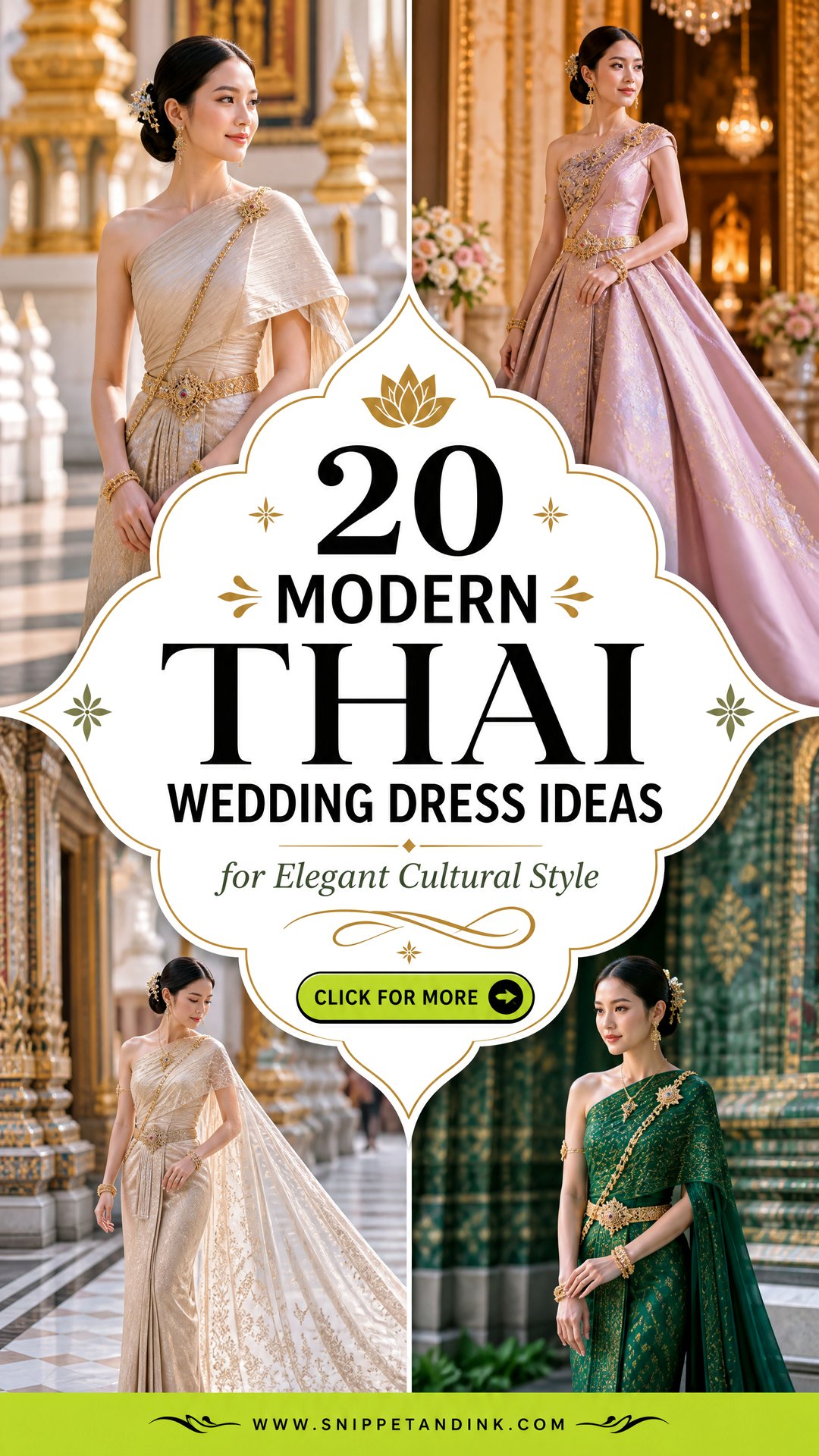
Matching the Thai Dress Style to the Morning Rituals and the Party
A Thai wedding often runs from an early merit-making with monks, through the khan maak procession and the water-pouring blessing, to an evening reception. One dress rarely suits all of it, and many brides change at least once. Before choosing a style below, I map the outfits to the day.
- Morning with monks: shoulders and upper arms covered, a hem below the knee, and fabric that lets you sit on the floor with legs folded to one side. Boromphiman, Siwalai or a long-sleeved blouse with a pha sin suit this best.
- Water-pouring blessing: you’ll sit on a low platform with hands pressed together while elders pour water over them, so sleeves should stay out of the way and the sabai must be pinned firmly.
- Reception: this is where Dusit, Chakkraphat, ball gowns and fusion dresses make sense.
Ask your families which rituals will happen and in what order before you order anything. It changes how many outfits you need and which one carries the most budget.
1. Ivory Thai Chakri Wedding Dress
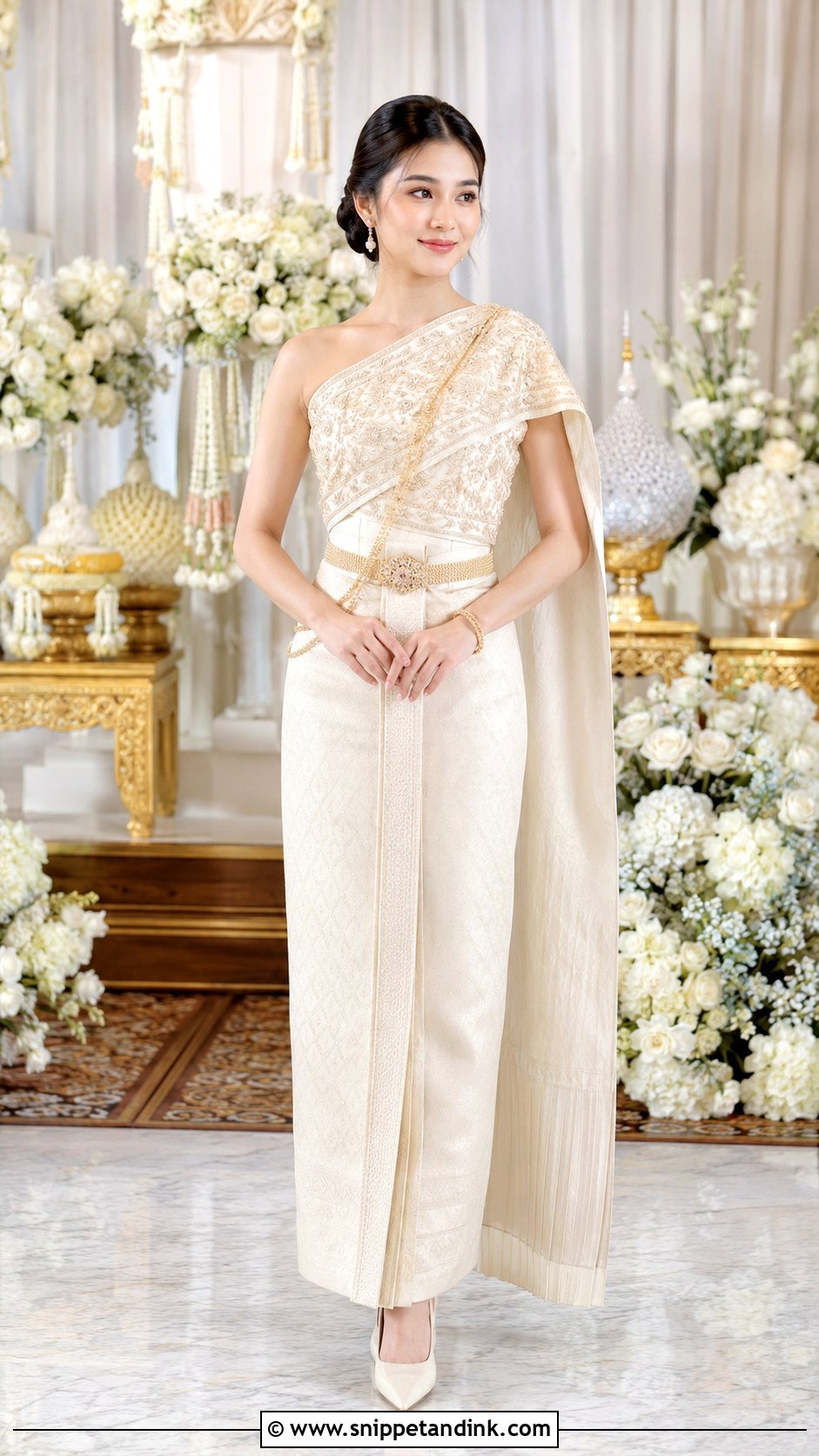
Chakri is the style most Thai brides picture first: a fitted pha sin with a front pleat, a one-shoulder bodice and an embroidered sabai sweeping diagonally across the body. In ivory, an ivory Thai Chakri wedding dress feels both bridal and traditional. The drape over one shoulder does most of the work, so I keep the skirt to subtle woven motifs. The sabai has to be pinned to the bodice at the shoulder and the back, otherwise it slides forward every time you bow your head in a wai. A slim gold belt, pearl drops, low pointed ivory heels and a low bun that keeps the shoulder clear finish it.
2. Gold Thai Siwalai Wedding Dress
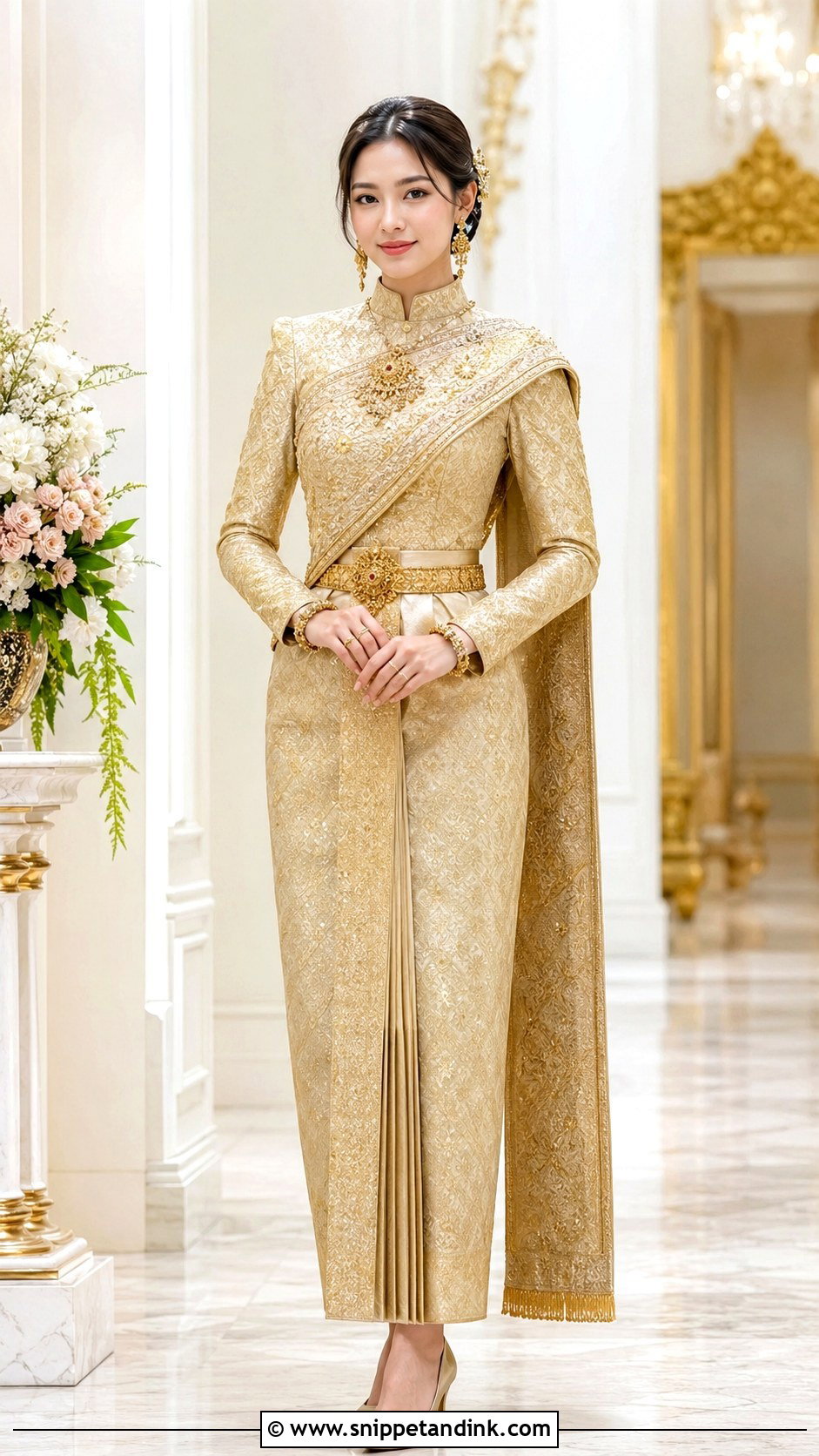
Siwalai is the most covered of the formal styles: a long-sleeved fitted blouse, an ankle-length pleated skirt and an embroidered sabai over the shoulder. That makes it a natural pick for a ceremony with monks or senior elders present. I’d modernise it through the tailoring, a softly defined waist and a blouse that follows the body without binding at the elbow. Champagne gold reads more bridal than deep yellow gold, which can look heavy in daylight. A crystal-detailed belt, small gold earrings, a traditional-style bracelet, closed-toe satin pumps and a sleek chignon with one floral pin complete it.
3. Minimal Thai Boromphiman Wedding Dress
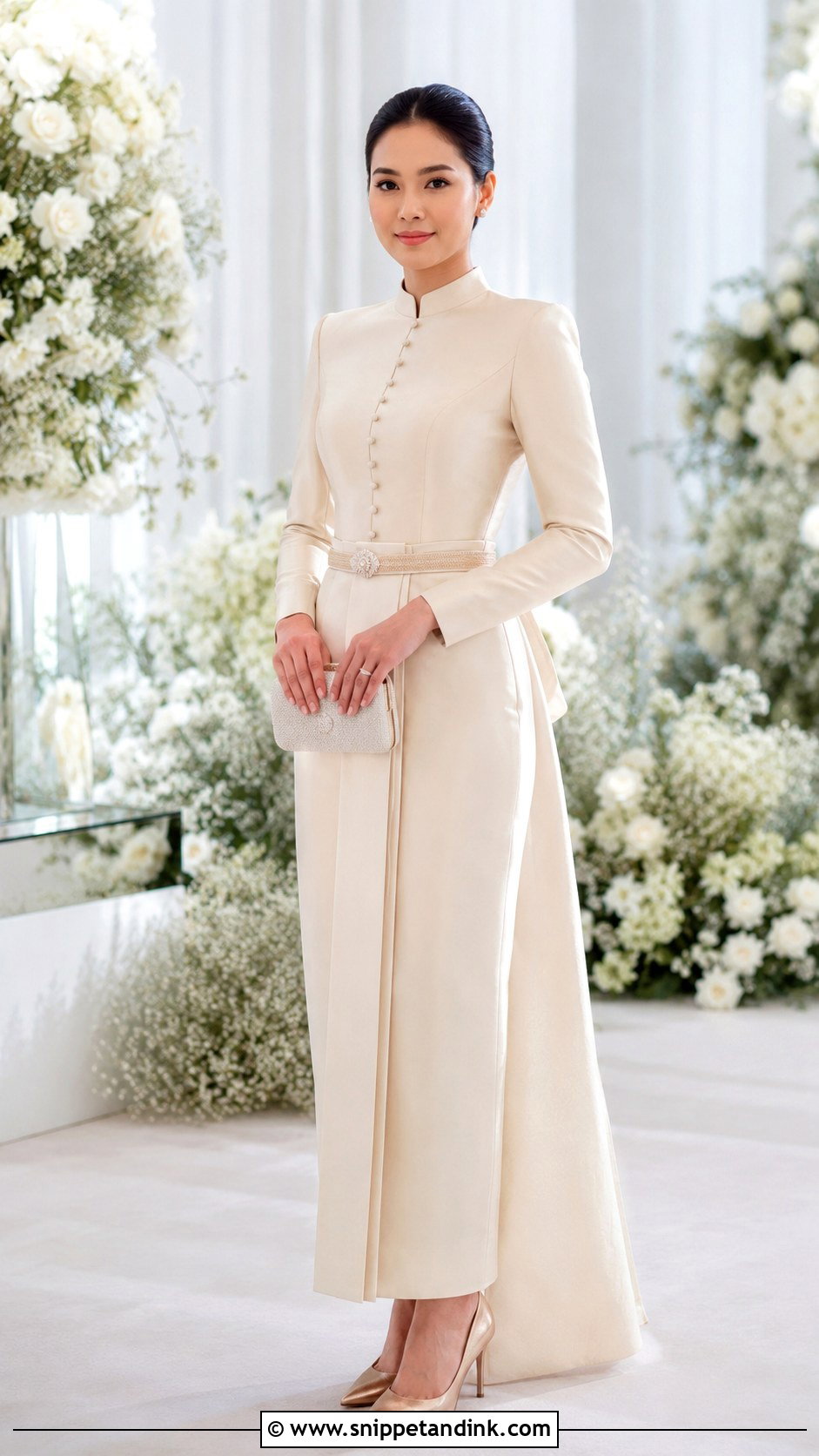
Boromphiman is the cleanest of the Thai styles, with bodice and skirt joined into one dress. A fitted long-sleeved top, a high or softly round neck and a floor-length front-pleated skirt in ivory or pale champagne silk are all you need; minimal embroidery keeps it modern. Because the pieces are joined, there’s no gap at the waist when you kneel, which is a real advantage on a long ceremony morning. Use a narrow metallic belt rather than a large jewelled buckle, then pearl studs, a small clutch, pointed satin heels and a centre-parted low bun. It suits an intimate family ceremony or a contemporary reception.
4. Blush Pink Thai Chakri Wedding Dress
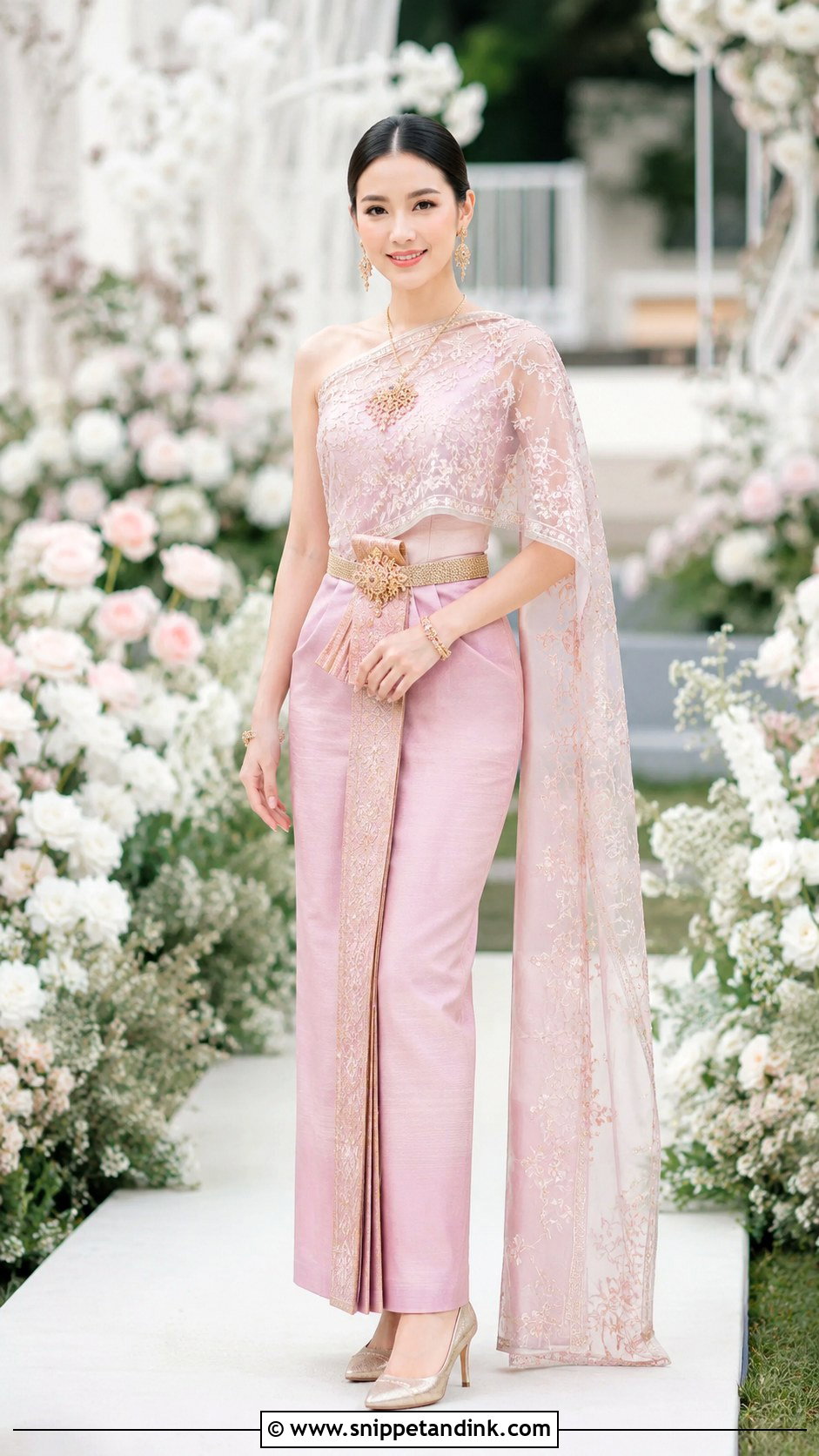
Blush is a soft way into Chakri for a bride who finds pure white too stark against her skin. Pair a fitted silk skirt with fine gold threadwork and a sharp front pleat with a one-shoulder bodice and a sheer pink sabai embroidered in tiny florals. Keep the gold light; heavy gold on blush can tip it toward costume. An antique-gold belt, small floral earrings and pale gold heels suit it. A smooth updo with a few soft face-framing strands softens the structure. Pink looks best in daylight and garden settings, where warm indoor bulbs won’t push it toward peach.
5. White Thai Silk Mermaid Wedding Dress
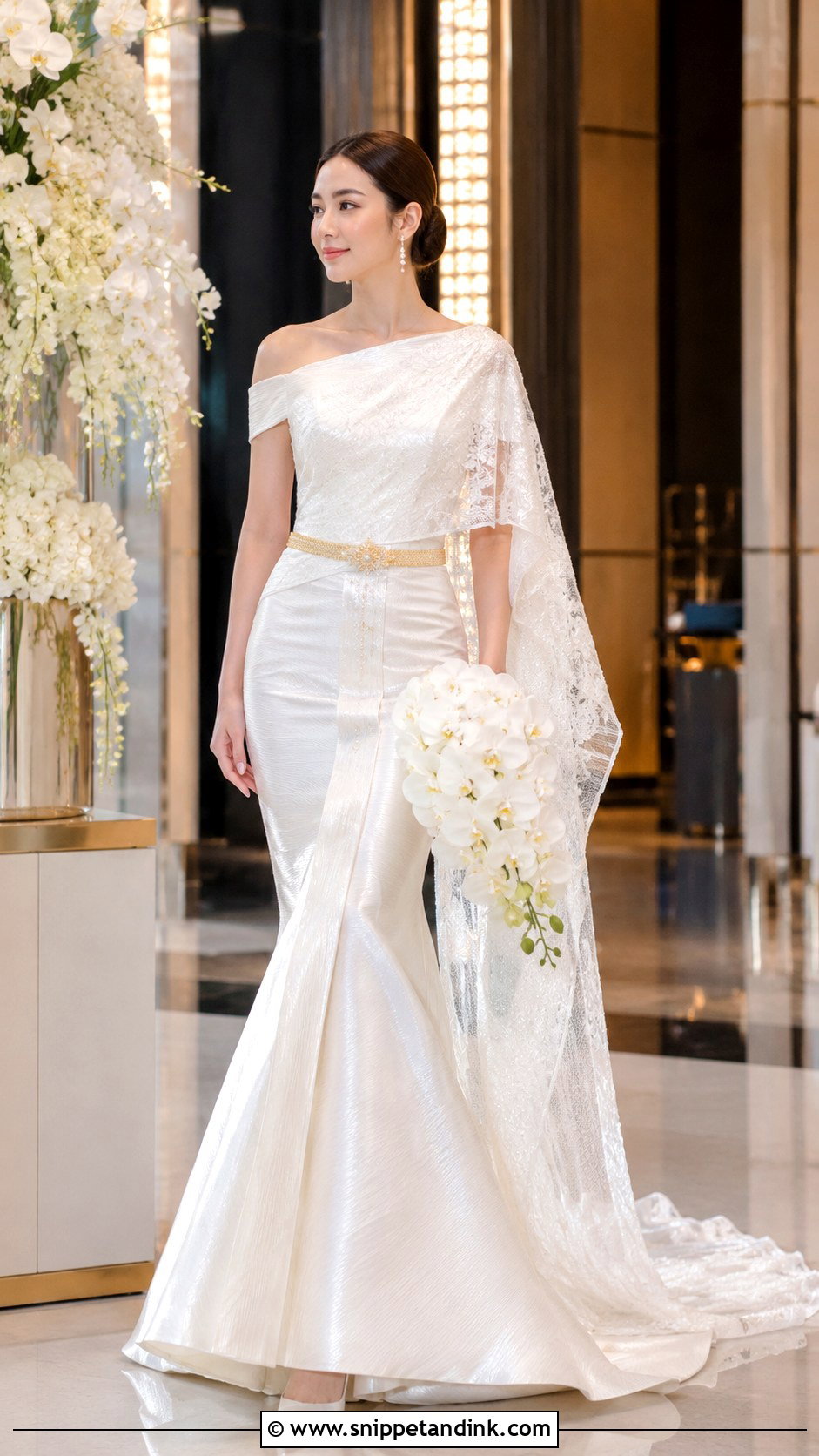
This is the fusion option: Western bridal structure cut from Thai silk. A strapless or off-shoulder bodice follows the torso and flares softly below, and silk’s natural body lets the train hold a shape without layers of petticoat. Thai silk creases sharply, though, so keep the knee flare generous enough for floor sitting at the ceremony. A detachable embroidered sabai covers the shoulders for the rituals and comes off for the reception. Add a gold belt or narrow waist detail, pearl earrings, pointed white pumps and a compact bouquet of white orchids.
6. Champagne Thai Chakkraphat Wedding Dress
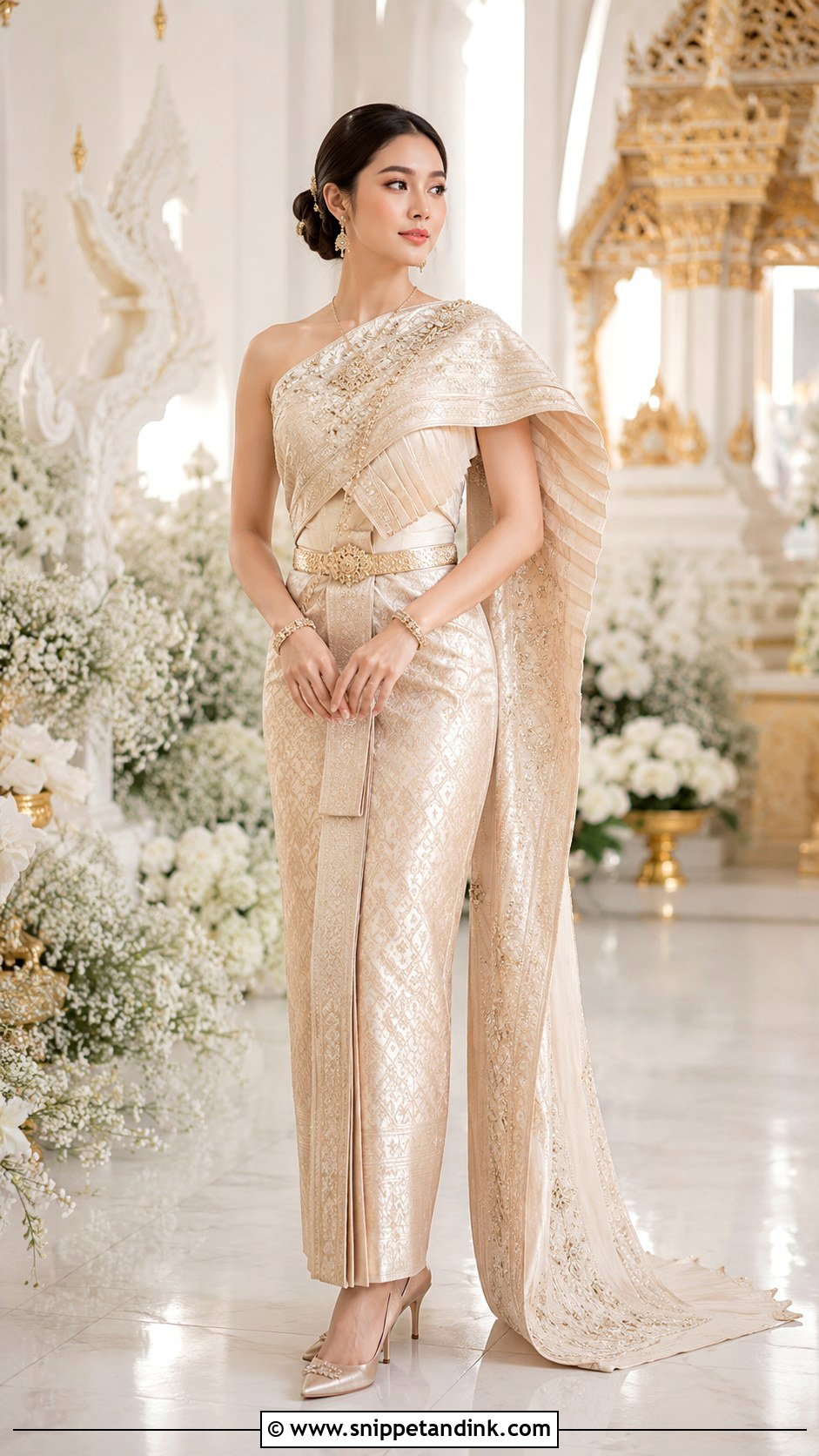
Chakkraphat is the grandest of the shoulder-draped styles, built from layers: a pleated underlayer over the shoulder, an embroidered sabai on top and an ornate bodice above a fitted, front-folded silk skirt. All those layers mean weight and heat, so I keep this one for the most formal part of the day, often the evening, and suggest something lighter for the morning rituals. A tonal palette of champagne, pale bronze and soft gold keeps it from looking heavy. One decorative belt, matching earrings and a fine bracelet are enough. Wear comfortable gold heels under the long skirt and a high bun that shows off the layered shoulder.
7. Modern Thai Dusit Wedding Dress
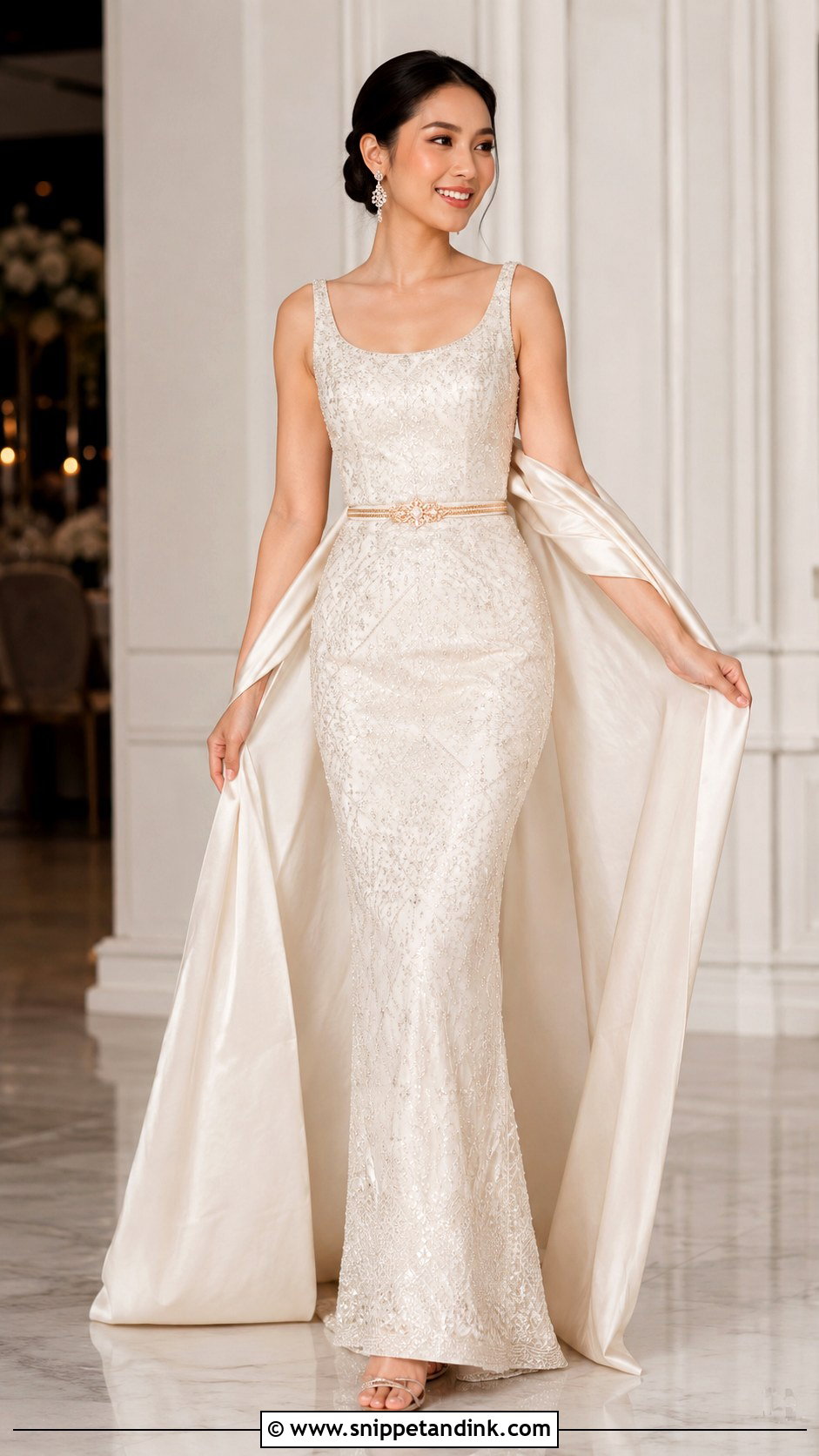
Dusit is the sleeveless formal style, usually with a decorated bodice, which makes it a strong pick for an evening reception. In ivory silk with crystal embroidery and a streamlined floor-length skirt, it feels ready for a ballroom. Choose a wide scoop that frames the shoulders without dropping low, since a deep neckline makes the beaded bodice look heavier. Add a slim gold belt, crystal drops and metallic heels, with a sleek ponytail or low bun. For any part of the day with monks or elders, bring a matching silk wrap. Bare shoulders aren’t appropriate in a temple setting, and you’ll want it ready rather than borrowed.
8. Pearl Thai Lace Wedding Dress
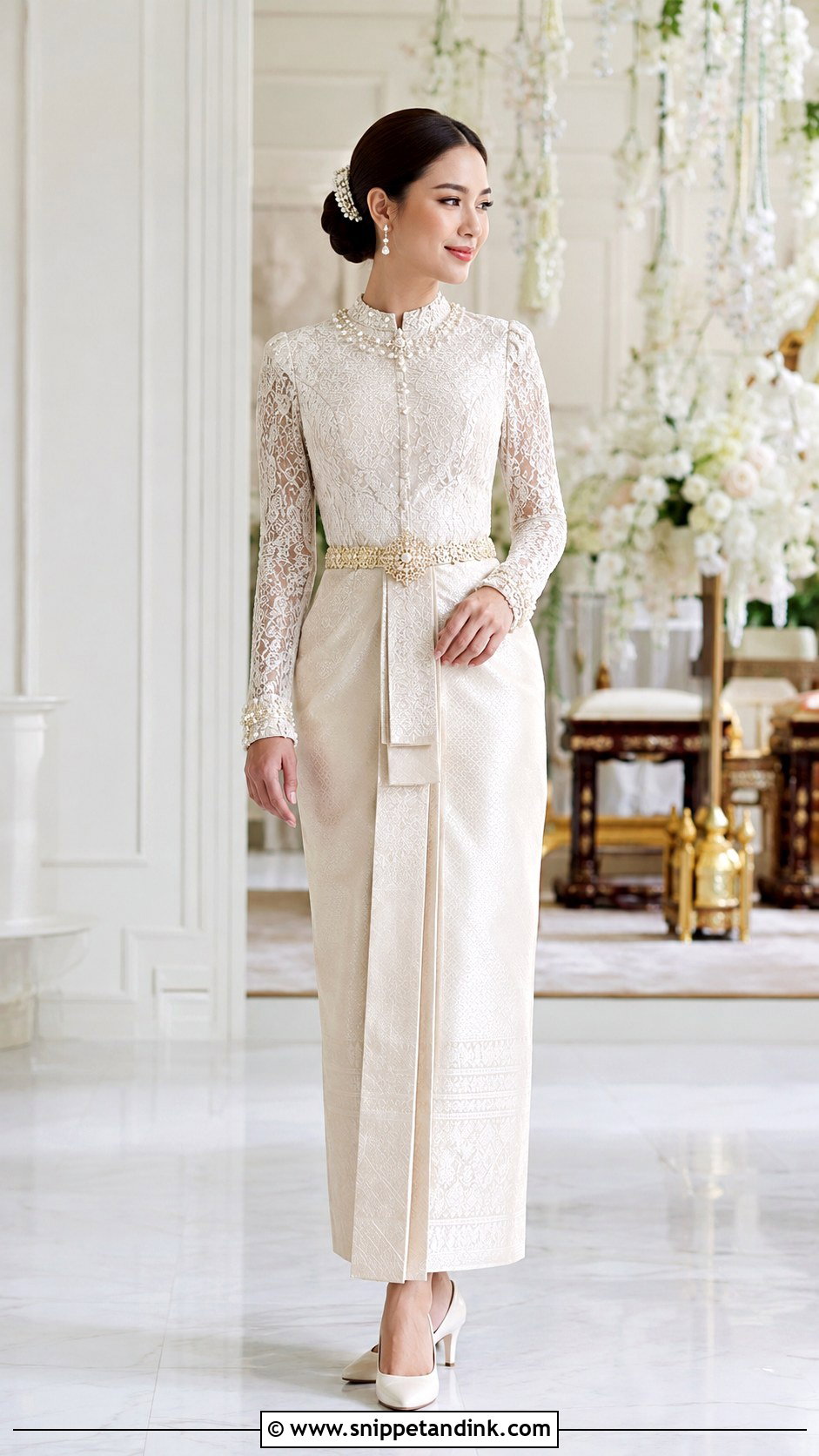
Lace with pearls is a gentle alternative to heavy metallic embroidery, and it’s comfortable for a bride who wants full arm coverage. A fitted long-sleeved lace top with a modest neck pairs with an ivory silk pha sin. Fine pearl details along the cuffs, collar and bodice add texture. Ask for the pearls to be stitched individually; strung pearls on a long thread unravel all at once if one snaps. A front pleat and narrow gold belt keep the Thai reference clear. Closed-toe ivory heels, pearl earrings, a plain bracelet and a low bun with a pearl comb tie it together.
9. Thai Silk Ball Gown Wedding Dress
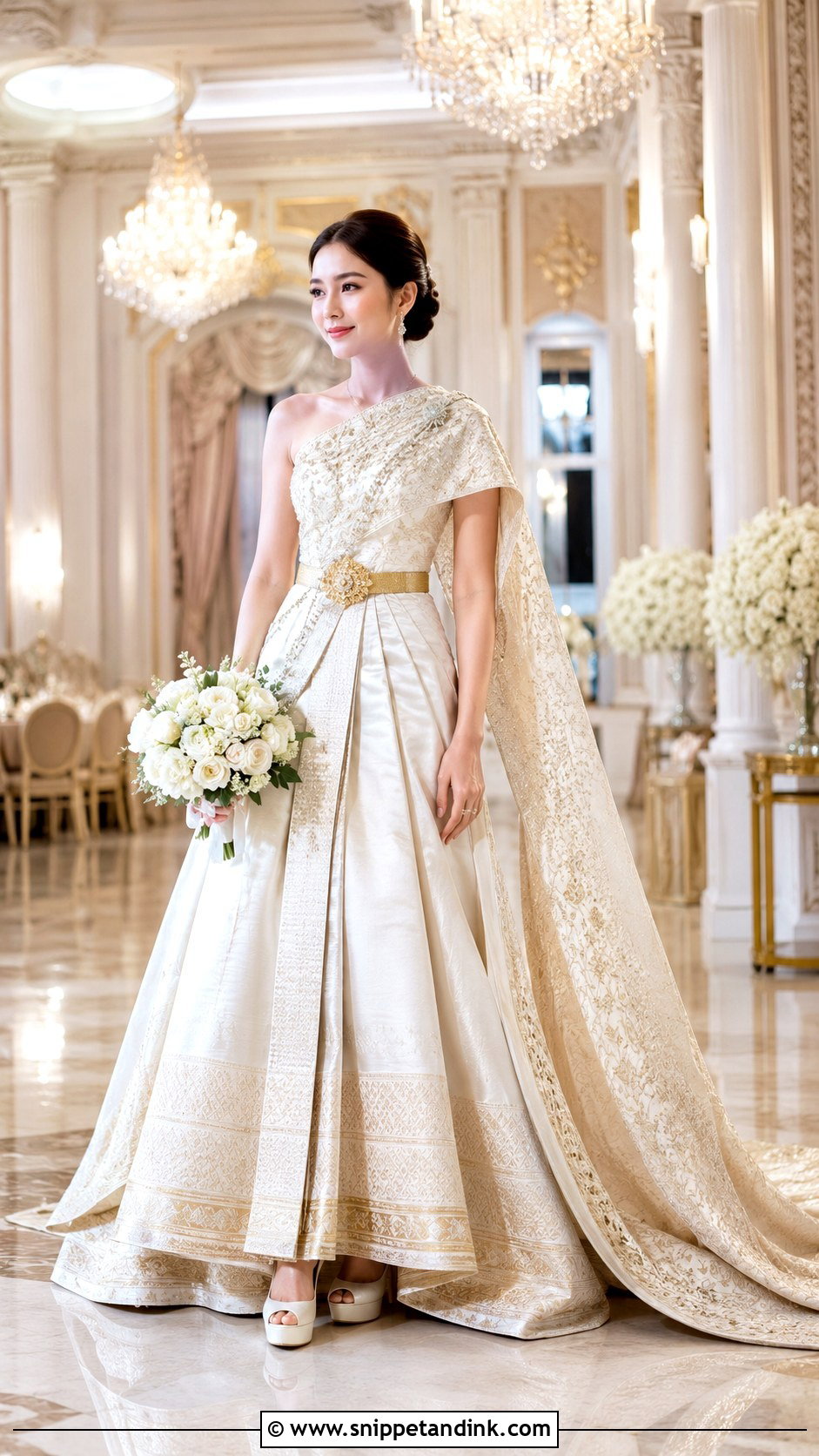
A Thai silk ball gown is for a big ballroom where a full skirt has room to turn. Keep a fitted bodice with a straight or softly curved neck, then a full pleated skirt showing woven Thai motifs at the hem, and an embroidered sabai attached at one shoulder that runs into a light train. Thai silk is crisp, so a full skirt in it stands out without a heavy crinoline, which helps in a warm room. Stay in ivory, champagne or pale gold. A defined belt, understated earrings, platform heels hidden under the hem and a smooth bun or half-up style balance the volume.
10. Thai Wedding Dress With Cape Sabai
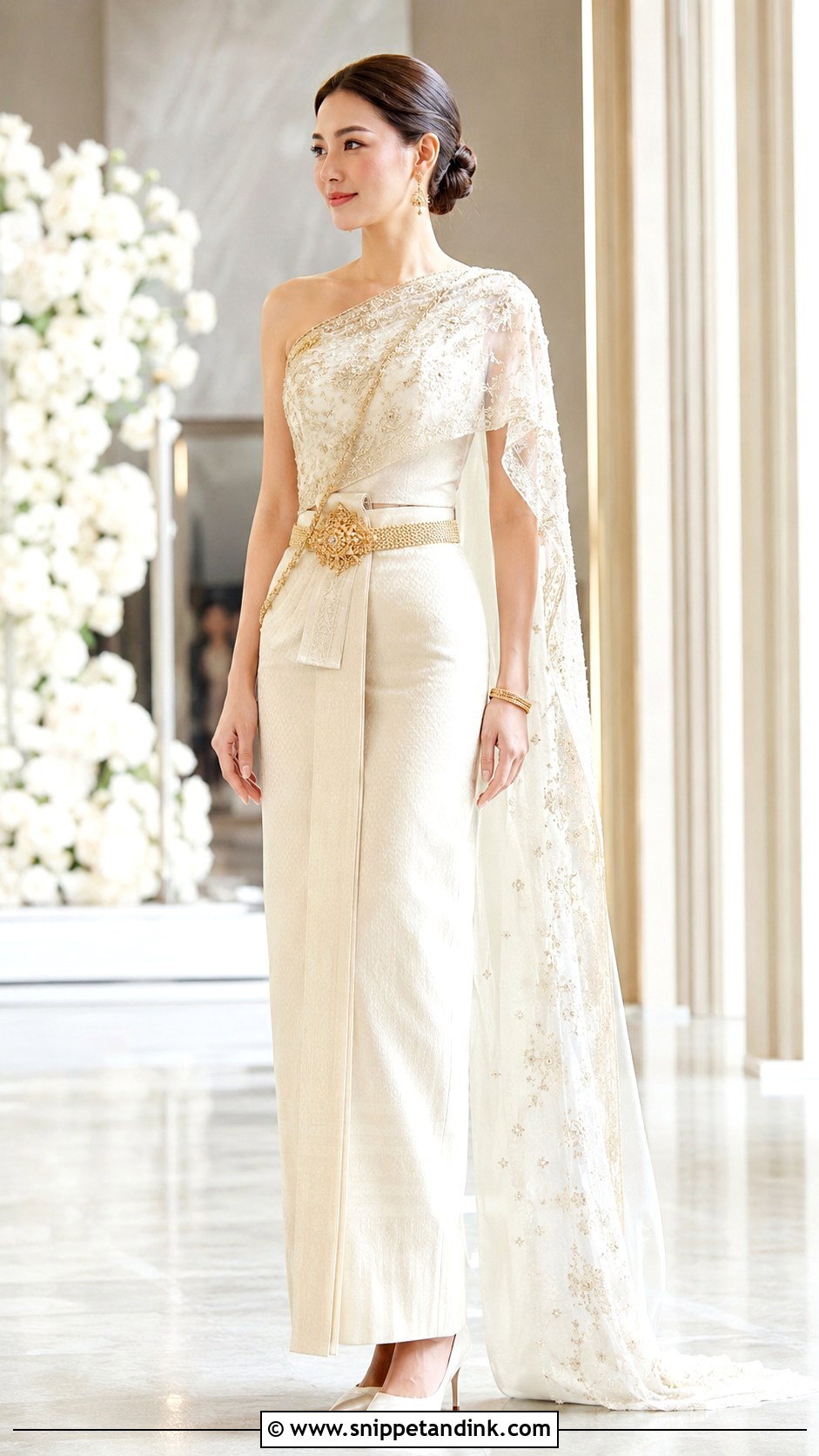
A cape-style sabai is the lightest Thai reference in the list, and it suits a bride who wants a nod to tradition without the full layered dress. Start with a simple column in ivory silk or crepe, then add a sheer embroidered cape that crosses one shoulder and falls behind you like a sabai. Keep the gown nearly plain so the cape leads. I attach the cape with a hidden hook at the shoulder and a snap at the back of the bodice; a cape held only at one point swings sideways when you walk. A narrow gold belt, fine earrings, pointed heels and a sculpted low bun finish the look.
11. Pastel Blue Thai Wedding Dress
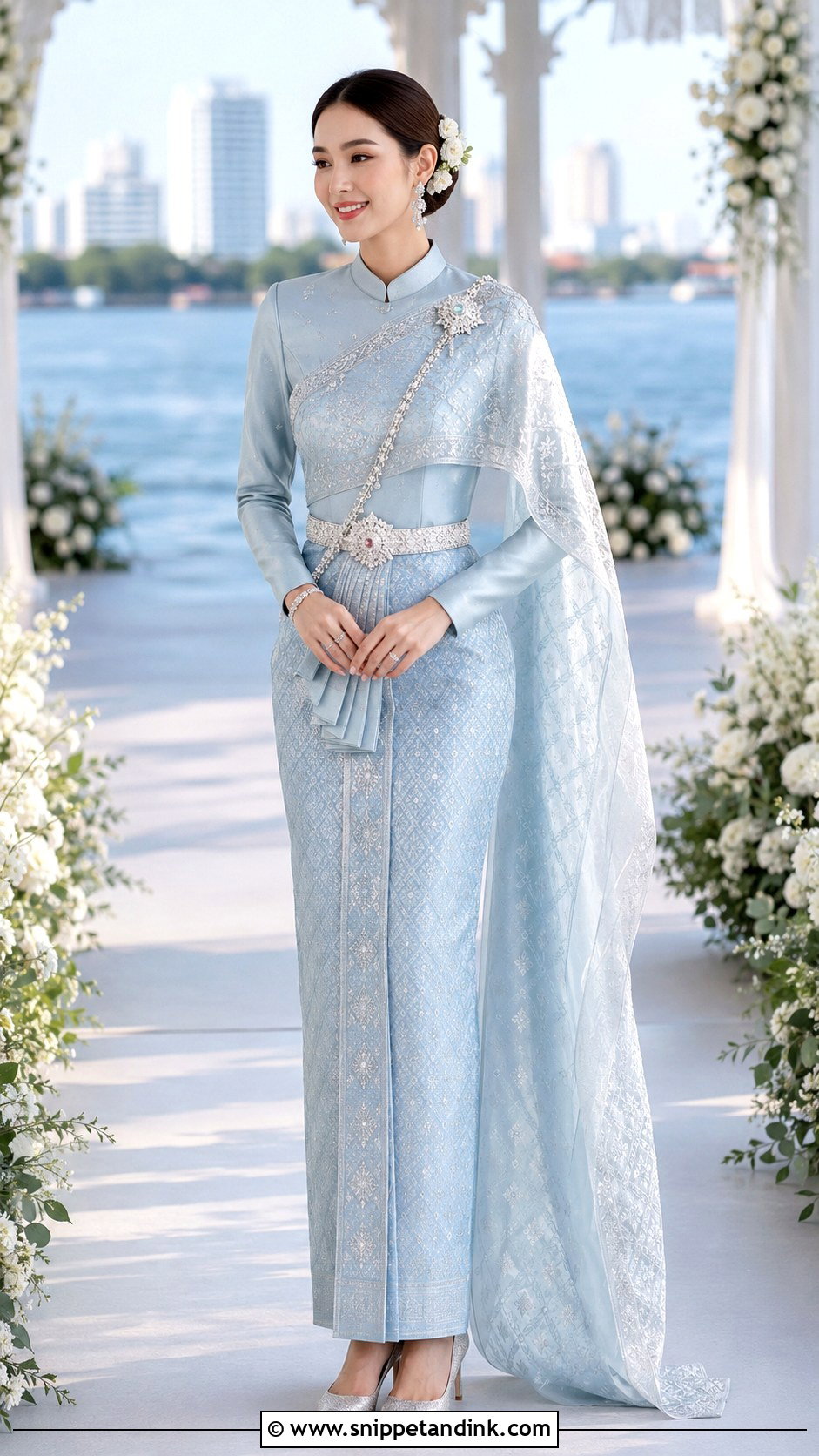
Pale blue with silver weaving is calm and cool, and it looks best in strong daylight near water or in a bright hotel room. A fitted silk pha sin with silver motifs, a matching structured blouse and a light organza sabai in pale blue keep the upper body airy. Stick to silver or white-gold metals throughout; one warm gold piece makes the blue look dull. Small crystal earrings, ivory or pale silver heels and a polished bun with fresh white flowers at the back finish it. It’s a good choice for a bride who likes colour but not strong jewel tones.
12. Emerald Green Thai Wedding Dress
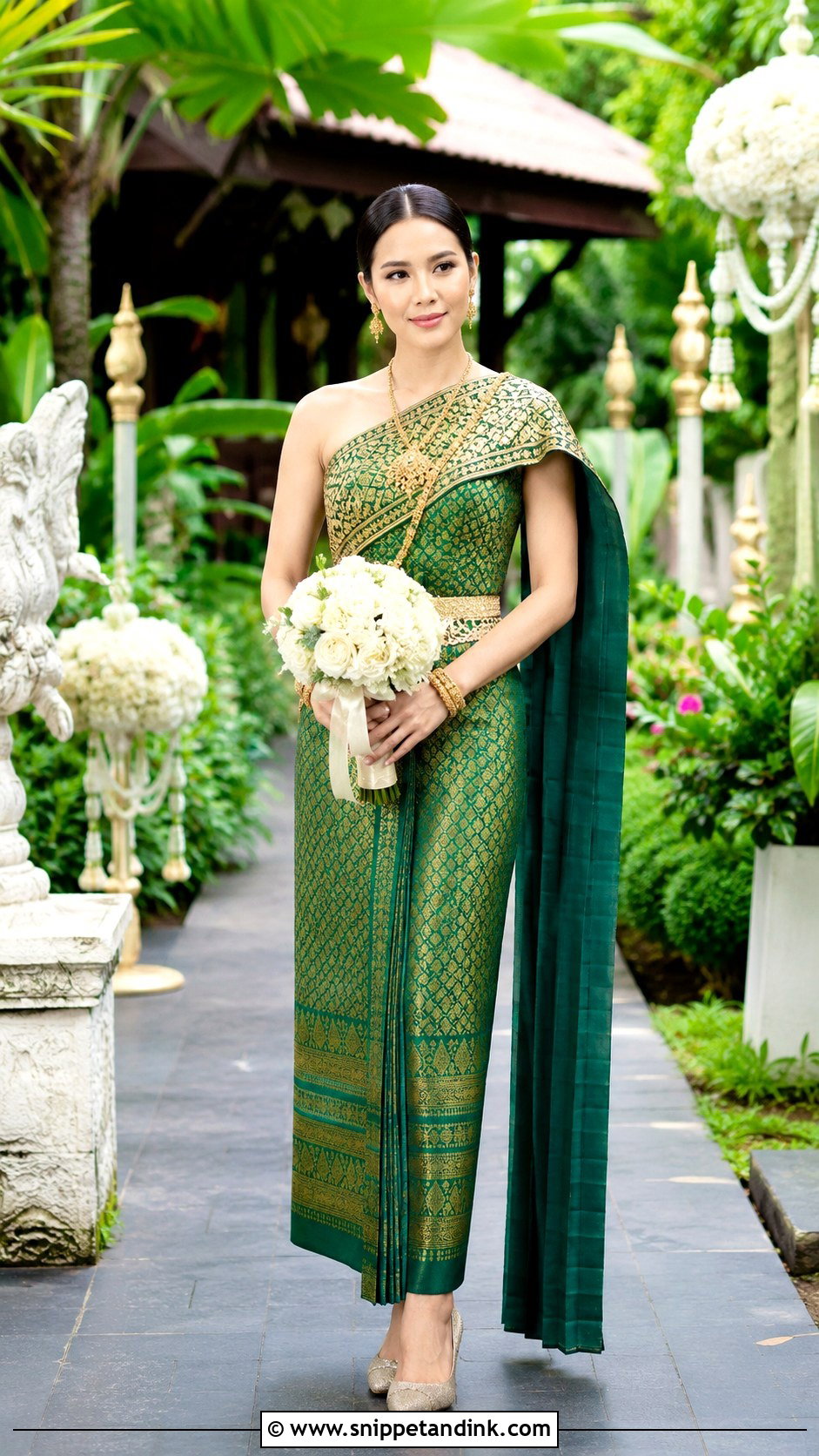
Emerald with gold patterning makes a confident, saturated bridal outfit. A fitted silk skirt, a structured bodice and a matching sabai across one shoulder are enough shape. Keep the silhouette streamlined, because bold colour plus volume overwhelms quickly. A polished gold belt highlights the waist, and compact gold earrings echo the woven pattern. Neutral gold heels and a small cream bouquet brighten the dark fabric, with a smooth bun or low ponytail. Deep green holds up well in ornate interiors and against tropical greenery, though in a dim room it needs good lighting to keep its richness.
13. Rose Gold Thai Wedding Dress
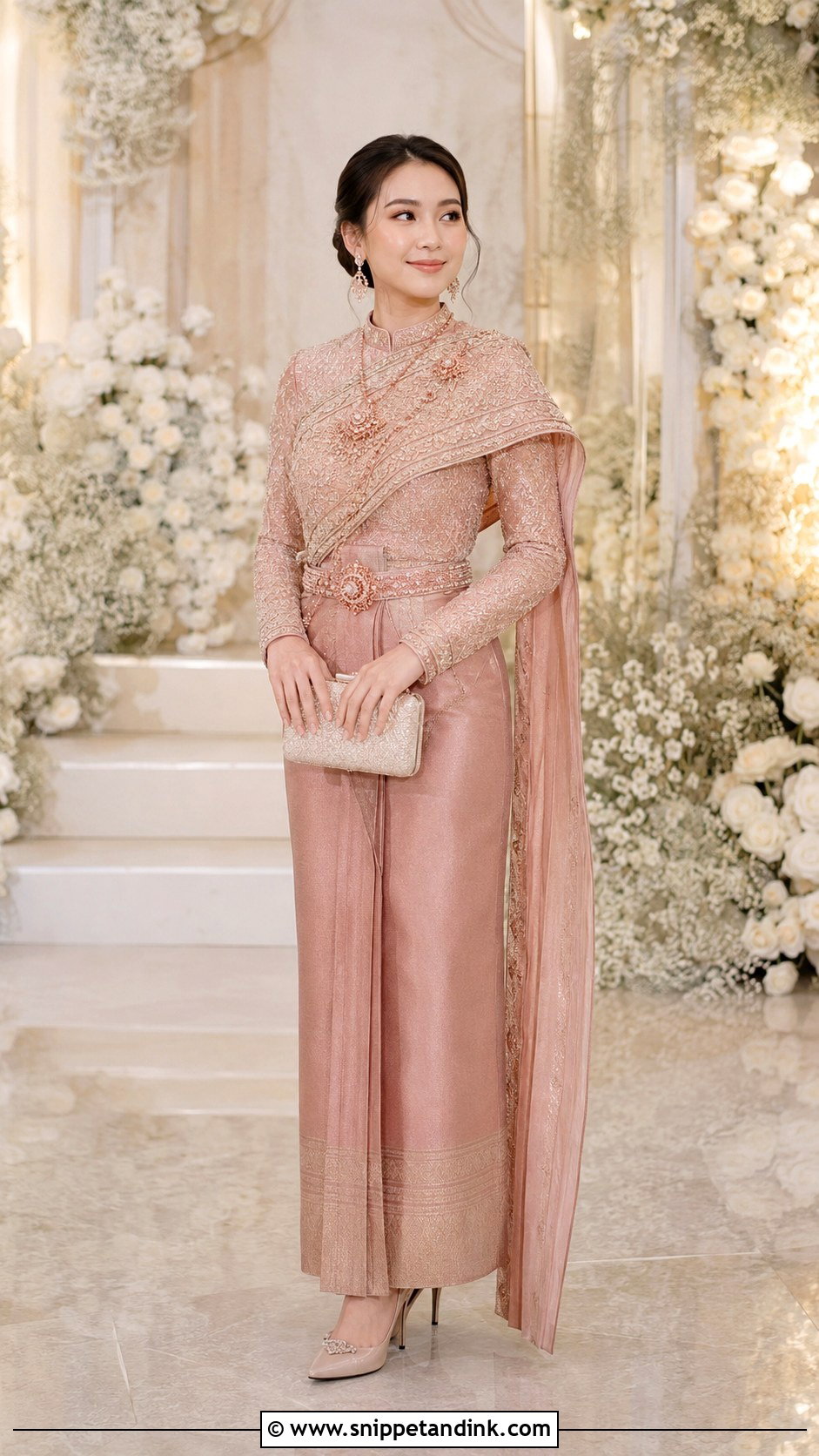
Rose gold is warm and modern, and it works because the metallic thread does the ceremonial work, not the colour. Start with a dusty rose silk skirt with fine metallic thread and a front fold, then a fitted long-sleeved bodice or one-shoulder top a shade lighter, joined by a rose-gold embroidered sabai. A belt with a modest buckle, crystal earrings, blush heels and a small ivory clutch suit it. Keep makeup soft and hair in a low textured bun. It looks its best in late afternoon light and softly lit receptions with blush, champagne or cream decorations.
14. Thai Wedding Dress With Peplum Top
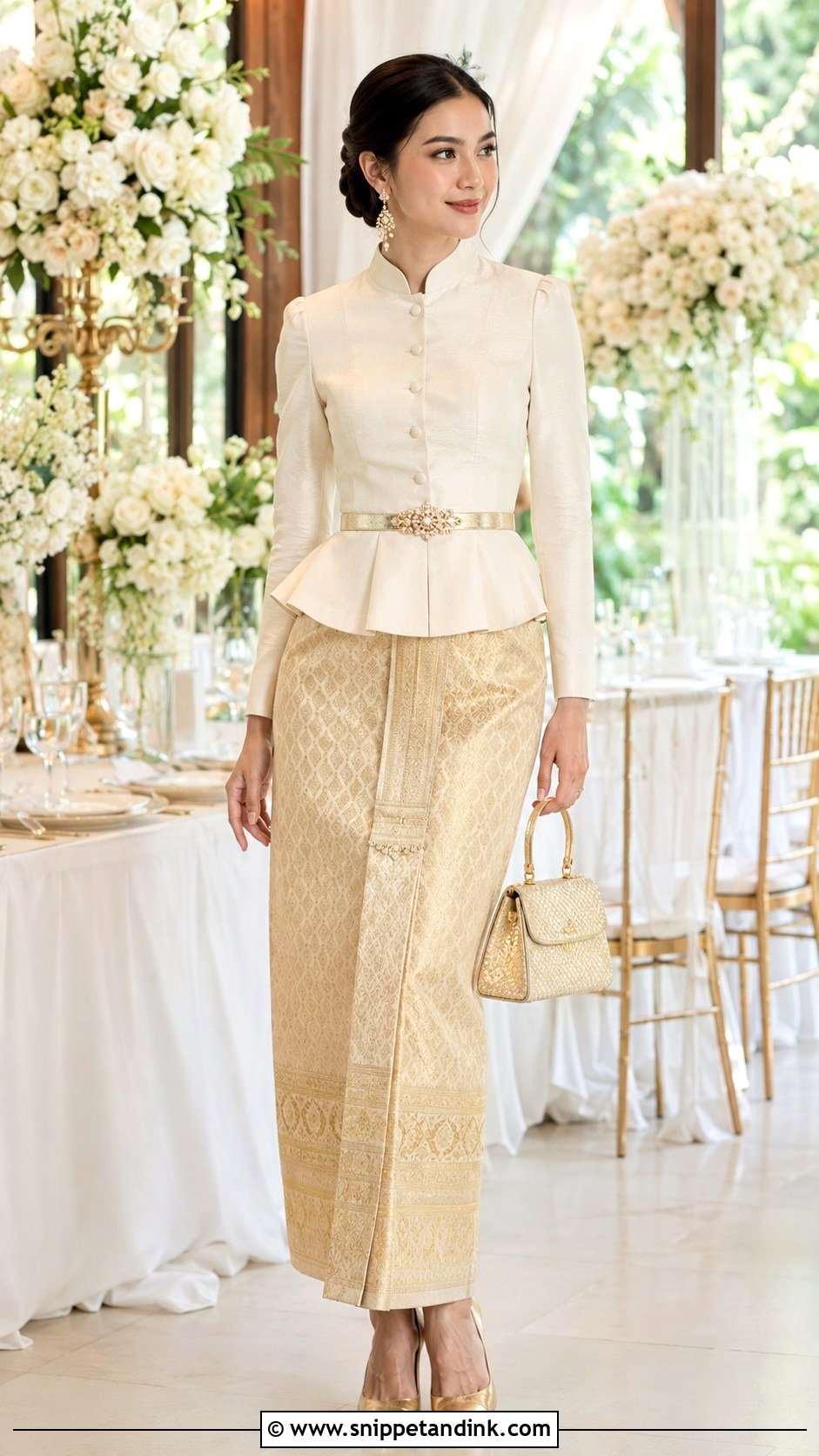
A peplum top over a Thai silk skirt gives you a defined waist with an easy, modern feel. Pair a structured ivory blouse with an ankle-length front-pleated skirt in subtle gold. The peplum must start at the natural waist and stay close; a wide one sitting on top of a front pleat adds bulk at the hips. Short sleeves, a bateau neck or a modest V keep it wearable. A slim belt where top meets skirt hides the join. Gold pumps, pearl-and-gold earrings, a compact top-handle bag and a sleek low bun suit a morning ceremony followed by a wedding lunch.
15. One-Shoulder Thai Wedding Dress
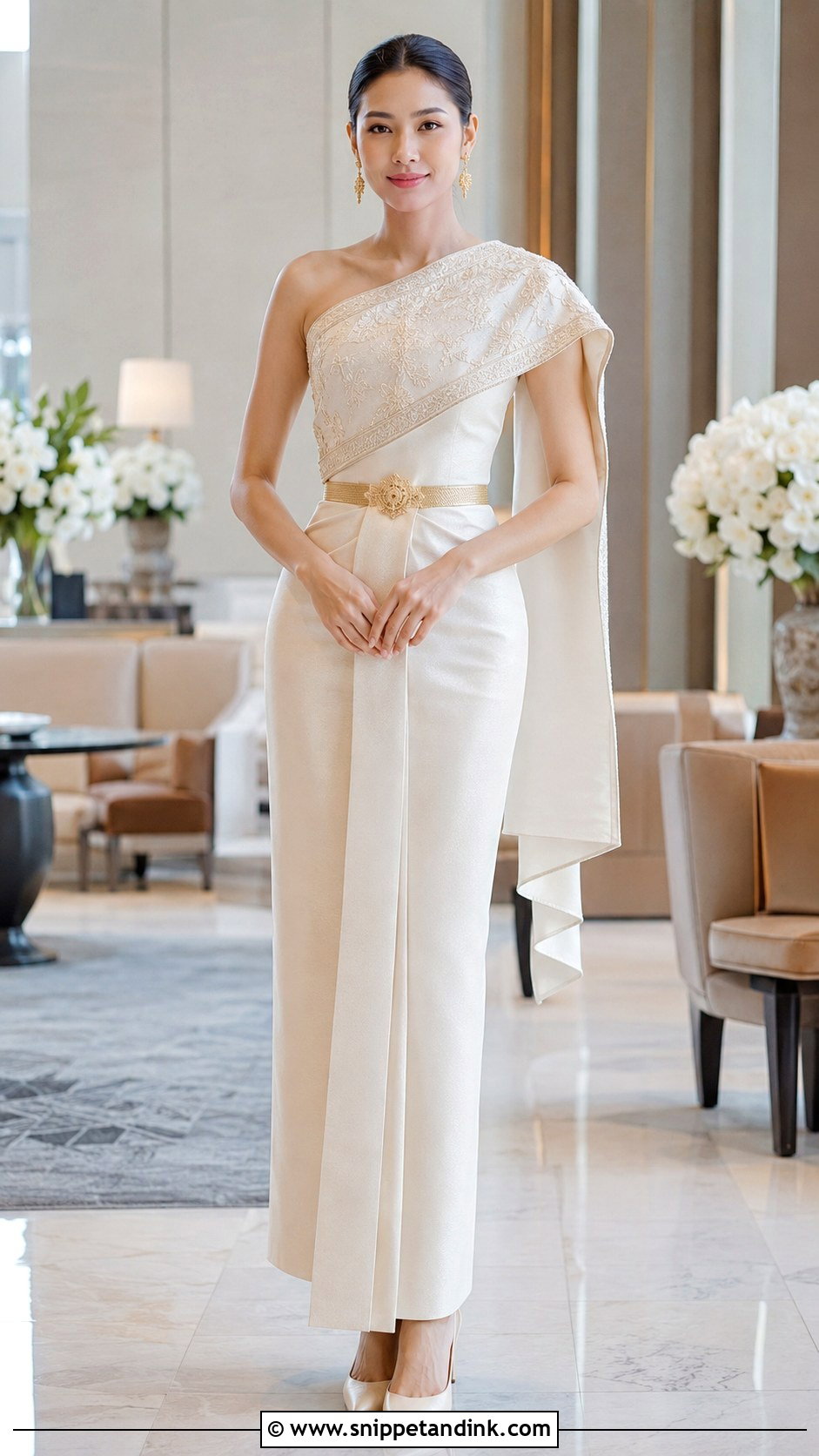
I suggest this one when a bride wants a single dress for the whole day. A fitted ivory column with one structured shoulder and a softly folded neckline has a sabai-style panel sewn right into the bodice, so there’s no loose shawl to pin or adjust. Let the panel cross the body or fall into a short back drape, and add a subtle front pleat to the skirt. Finish with a gold waist accent, fine drops and pointed satin heels. Put the bun on the side opposite the shoulder for balance. For the monk blessing you’ll still want a light wrap over the bare shoulder.
16. Off-Shoulder Thai Silk Wedding Dress
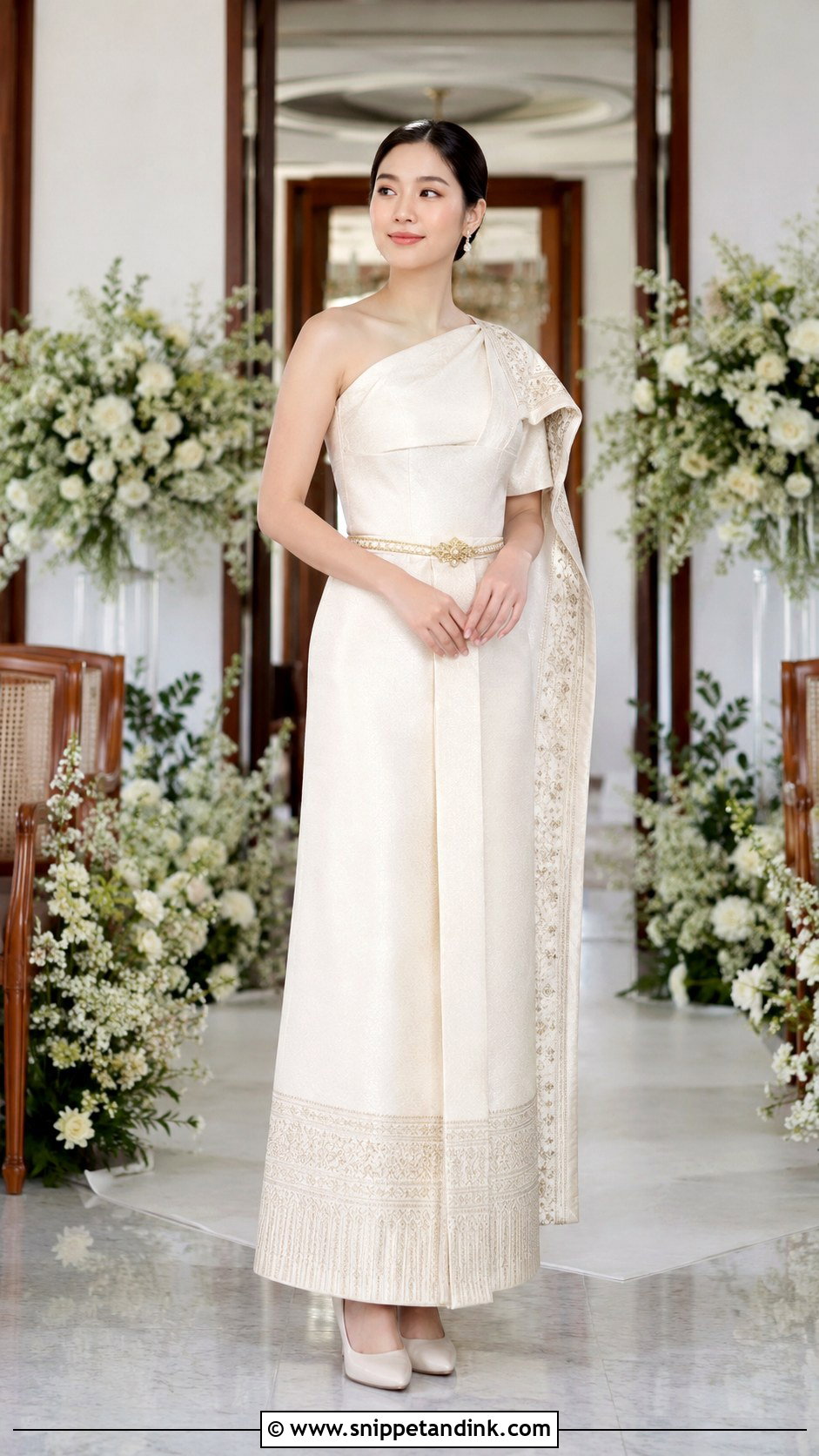
An off-shoulder bodice in ivory or light champagne silk needs to sit securely without constant tugging, which means internal boning and a waist stay rather than just elastic. Pair it with a floor-length pha sin-style skirt with a central pleat and a lightly woven border. Add a detachable embroidered shoulder drape for the ceremony and remove it for the reception. A narrow gold belt, pearl earrings and low block heels keep it comfortable, and a soft updo shows the neckline. The skirt can be cut straight, gently flared or as a soft A-line, so it adapts to most figures.
17. Thai Wedding Dress With Detachable Train
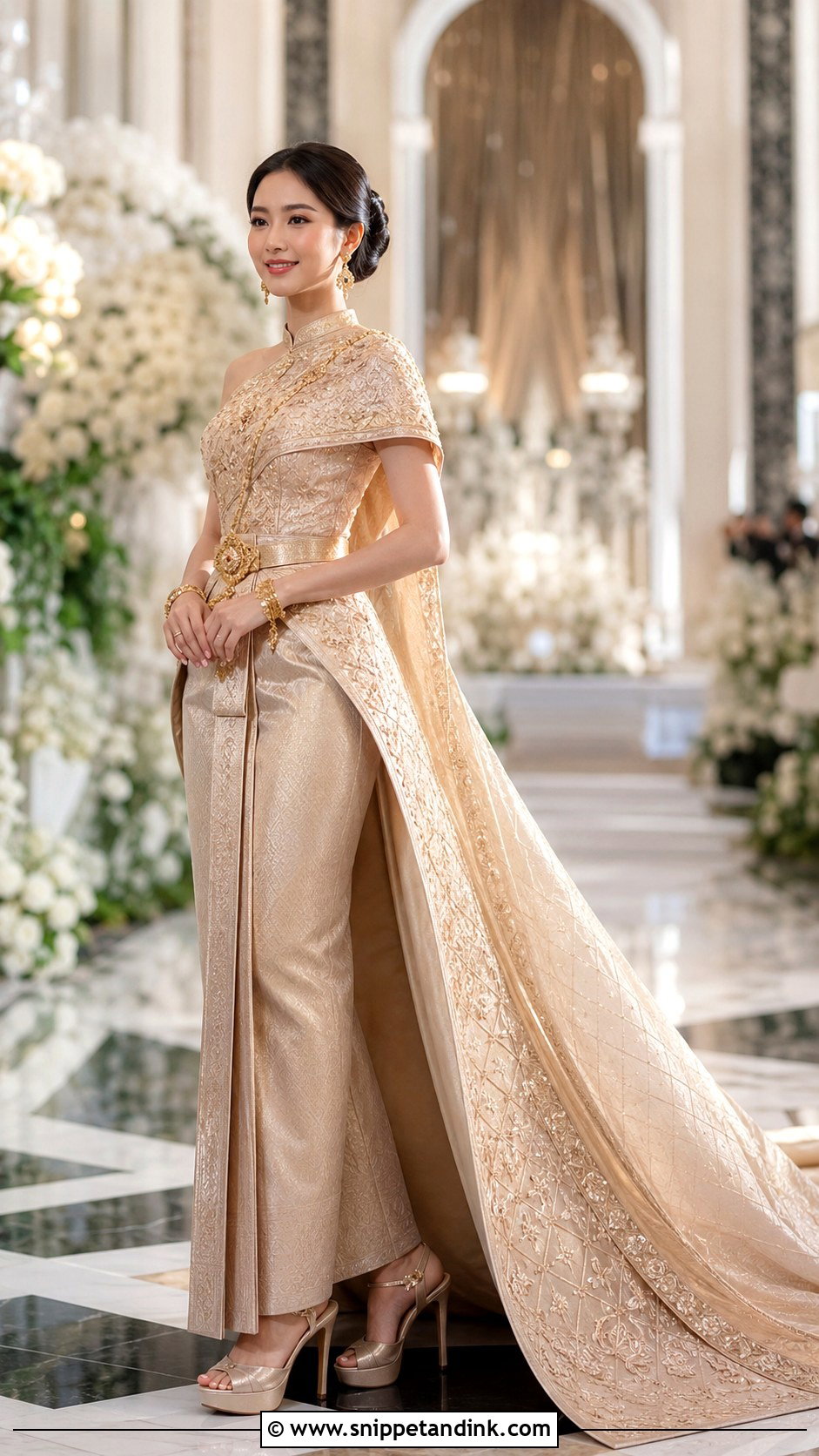
A detachable train lets a fitted Thai dress change mood without a full outfit change, which saves time on a day that already has several. Start with a silk gown or two-piece with a structured bodice, defined waist and front-pleated skirt, then attach an embroidered overskirt or train at the back of the belt for the ceremony. Woven motifs, gold edging or soft florals can match the main fabric. Have someone practise unhooking it before the day; fiddly hooks behind your back take far longer than you think. Comfortable heels, gold earrings and a neat bun work for both looks.
18. Thai Wedding Dress With Long Sleeves
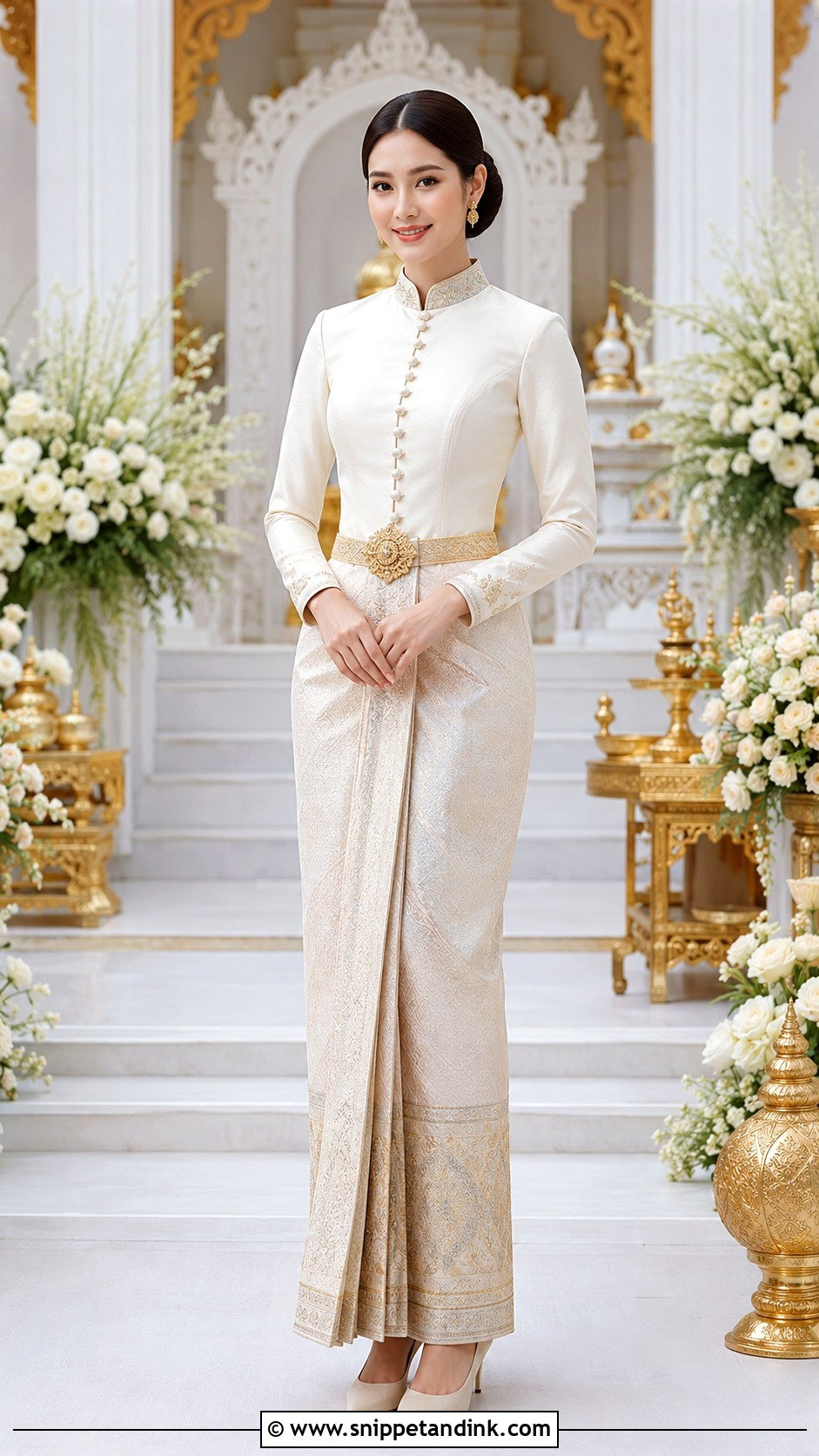
Long sleeves make a modest dress that suits most ceremonies and settings. A fitted silk bodice with a high neck, covered buttons and wrist-length sleeves pairs with an ankle- or floor-length pha sin in ivory, champagne or soft gold. Keep embroidery to the cuffs and collar. Thailand’s heat is the real challenge here, so ask for a breathable cotton or silk lining and a little ease in the sleeve; tight silk sleeves trap heat and show sweat marks quickly. A traditional-style belt, small earrings, closed-toe heels, a smooth chignon and natural makeup keep it from looking severe.
19. Thai Wedding Dress With Floral Embroidery
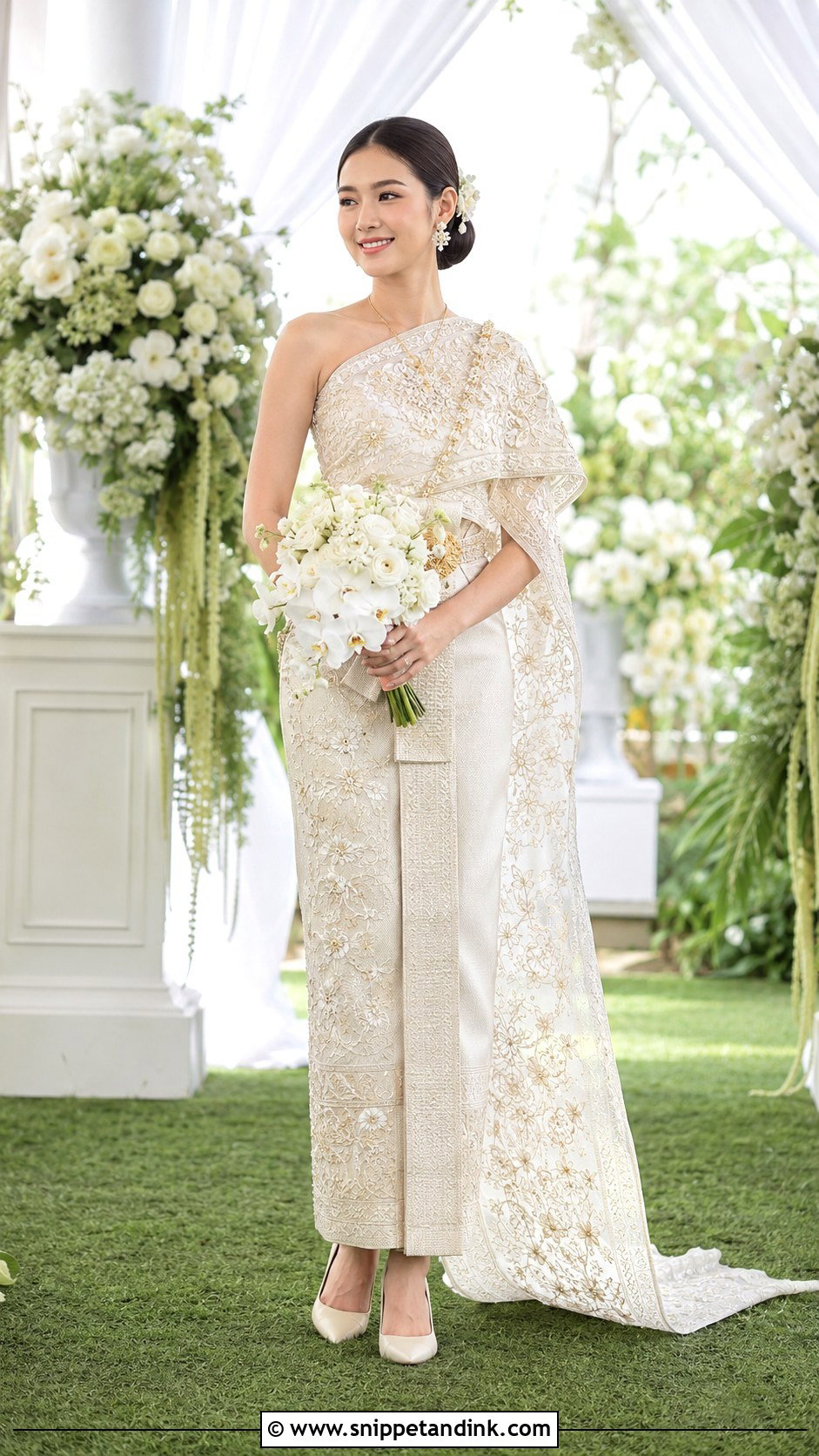
Floral embroidery adds a story to the dress, and jasmine, lotus and orchid motifs all carry meaning in Thai settings. I’d place tonal flowers on an ivory silk skirt and fitted bodice only along the sabai, waist, cuffs or skirt border so the pleats and weave stay visible. A pale gold belt separates bodice from skirt. Floral earrings, ivory heels and a small bouquet that repeats the stitched flowers tie it together, with a low bun with one understated floral accent. Fresh jasmine wilts within hours in heat, so ask the florist to wire it at the last moment.
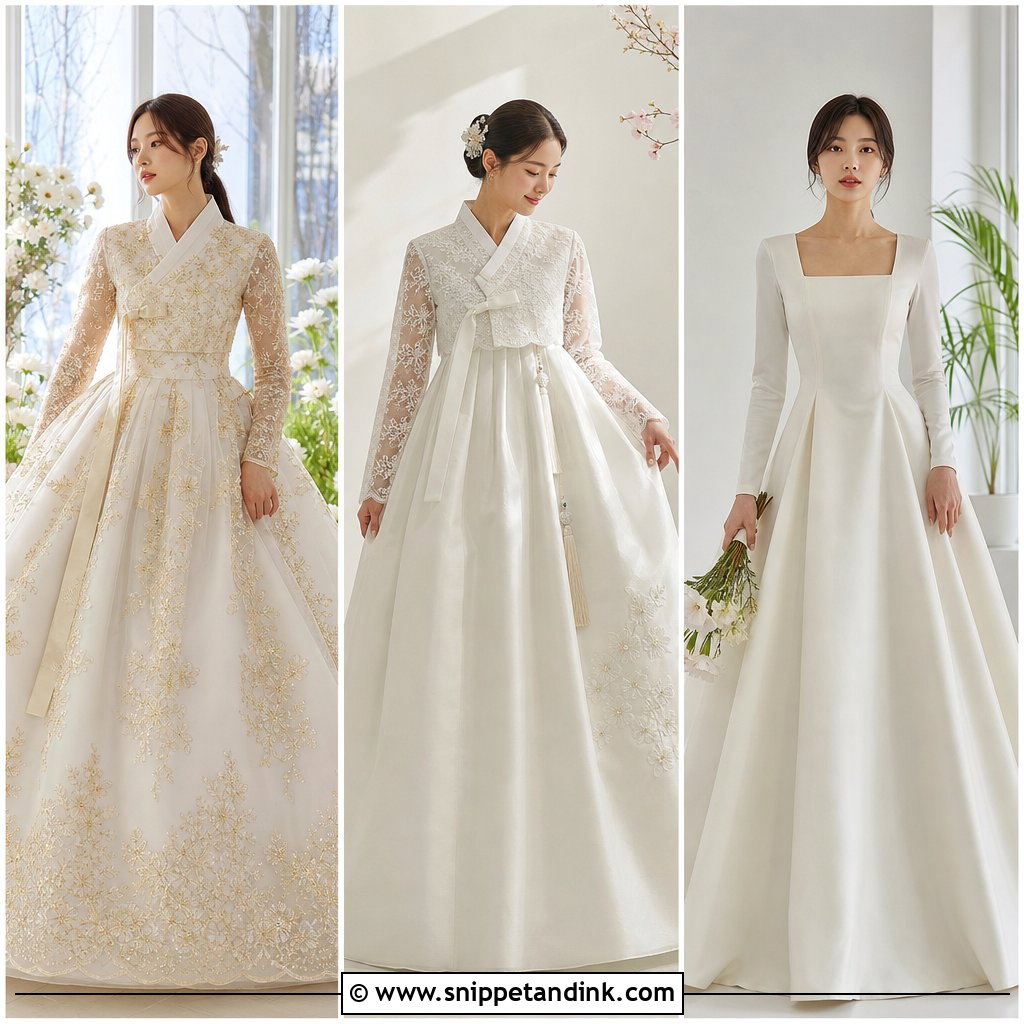
20. Modern Lanna Thai Wedding Dress
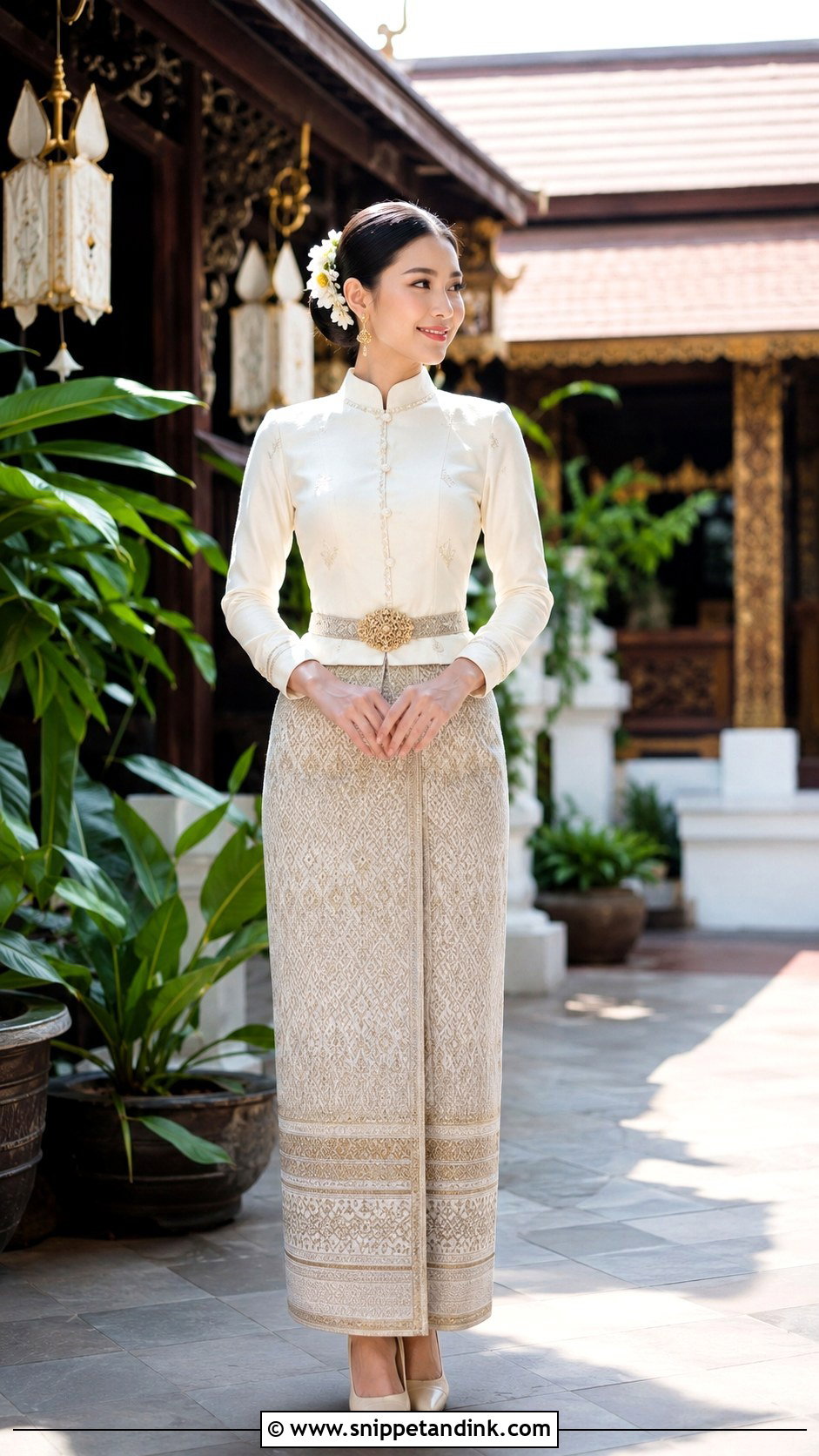
Lanna dress comes from Northern Thailand, and a modern Lanna Thai wedding dress keeps the patterned woven sinh as its anchor. Pair a fitted ivory or pastel blouse with long sleeves, a modest neck and fine regional embroidery with a high-waisted ankle-length sinh. The sinh is a tube skirt that is wrapped and tucked, so ask whoever dresses you to secure it with a hidden hook or a belt; a tuck alone loosens after hours of sitting. A narrow metallic belt or waist clasp, small gold earrings, closed-toe shoes and a smooth bun with fresh white flowers keep the woven skirt the focus.
Can You Sit Folded on the Floor in It? Test the Pha Sin
Thai silk is crisp and beautiful, and it has no stretch. A front-pleated pha sin that looks perfect standing can pull tight across the thighs once you sit with your legs tucked to the side, which is how women sit before monks. At the fitting, sit on the floor, stay there for a few minutes and stand up again without using your hands.
If the skirt strains, ask for a little more ease through the hip or a deeper front pleat rather than a slit, which isn’t suitable for the morning rituals. Watch the pleat too. Silk creases where it folds, so stand up slowly and smooth the pleat down before the photographs start.
Keeping the Sabai in Place Through a Humid Day
- Pin the sabai at three points: the shoulder, the back of the bodice and the hip where it ends. Use flat safety pins hidden in the drape, not straight pins.
- A light organza or chiffon sabai stays cooler than a fully embroidered silk one; keep the heavy version for the evening.
- Ask your dresser to stay for the first ritual. Re-pinning after you’ve been bowing and sitting is normal, not a sign something is wrong.
- Steam the silk the night before, not the morning of, so the fabric has time to dry and settle in the heat.
Thai Silk That Honours the Elders and Survives the Reception
Thai bridal dress gives you a lot of honest options. You might choose the shoulder drape of Chakri, the full coverage of Siwalai, the clean shape of Boromphiman or a gown cut from Thai silk. Let the colour, fabric weight, ceremony and your comfort decide. A sabai-style cape, front-pleated skirt, decorative belt or woven border can carry the cultural connection without overwhelming you. Above all, the finished outfit should feel respectful to your families and comfortable through the rituals. With careful tailoring and accessories that work together, it will look modern and still carry its meaning.
You'll Like These Ideas:






Leave a Reply