
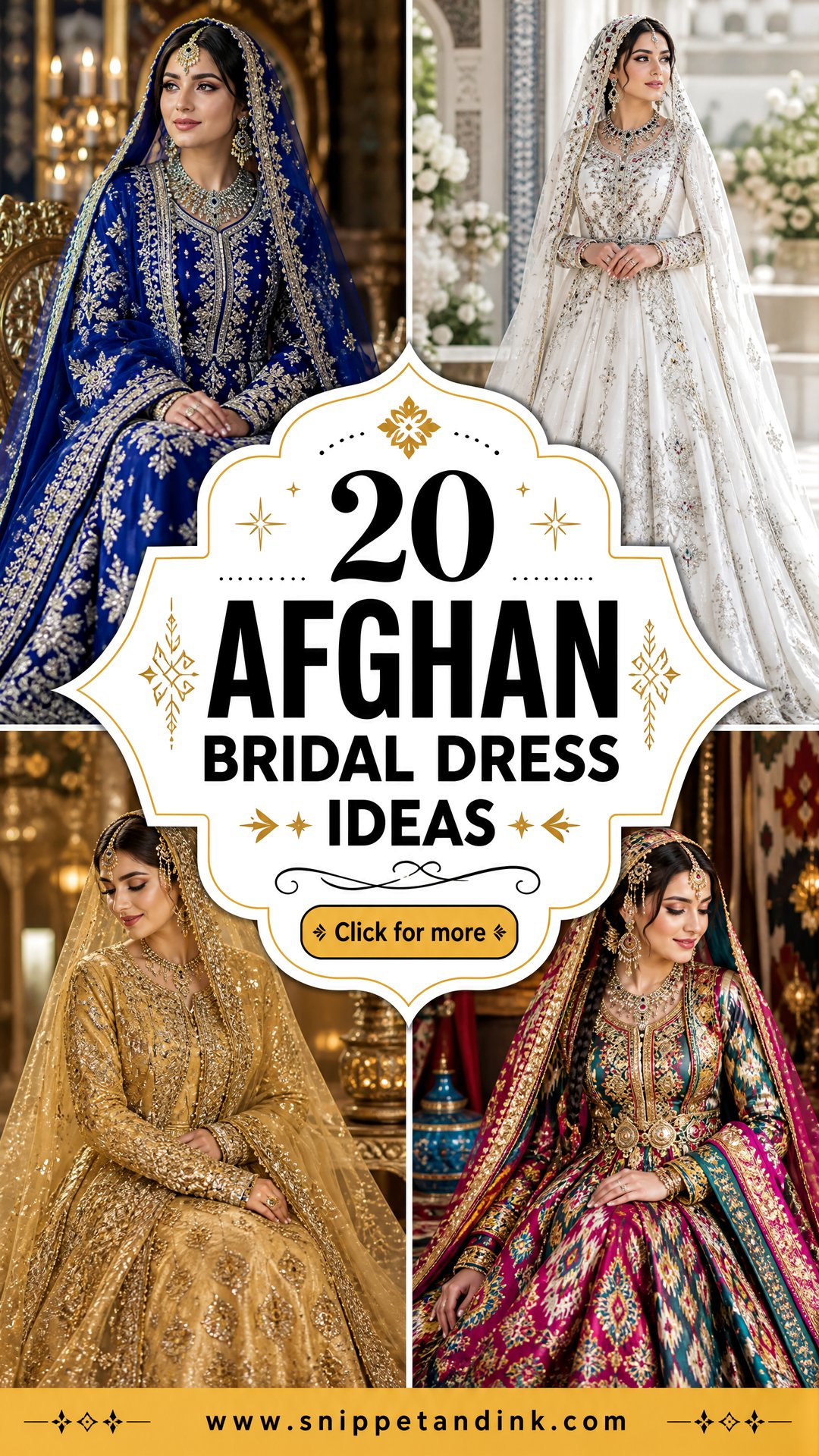
An Afghan bride rarely wears just one outfit. There is usually the nikah, a henna night, the reception and sometimes a mirror ceremony, and each one asks something different of the clothes. Afghan bridal clothing has a recognizable backbone: a full-length dress worn over matching trousers, a long head covering, heavy hand embroidery and bold borders. Within that, details shift by region, community and family. Many of the brides I dress now keep that backbone and soften the palette or simplify the jewelry. The 20 dresses below are built head to toe, and I’ve noted where each one actually works on the day.
Planning Three or Four Afghan Outfits Without Them Clashing
Most Afghan weddings I work on have at least three dressing moments, and the outfits get bought one at a time, often by different relatives. That is how a bride ends up with a green henna dress, a red reception dress and a gold nikah outfit that each work alone but look chaotic side by side in the album. I sit down with the whole schedule first.
- Write down each event, its time of day and whether it is indoors. Daylight favors pale silks and pastels; evening halls with warm lighting favor velvet and deep jewel tones.
- Give each night its own color family, then pick one thread that runs through all of them, often the metal of the jewelry. Gold throughout, or silver throughout, ties the week together.
- Put the heaviest dress where the bride sits most. A fully embroidered velvet set suits a seated stage moment; a dancing-heavy henna night needs something she can spin in.
- Plan the change itself. A long velvet dress, trousers and a pinned dupatta take a good twenty minutes to swap with help, longer if the hair has to be re-pinned for a new headpiece.
For custom pieces, order early. Hand embroidery on a full bodice is slow work, and I like the final fitting to happen a few weeks before the first event so there is time to fix a sleeve or a hem without rushing the maker.
1. Red Afghan Bridal Dress With Gold Embroidery
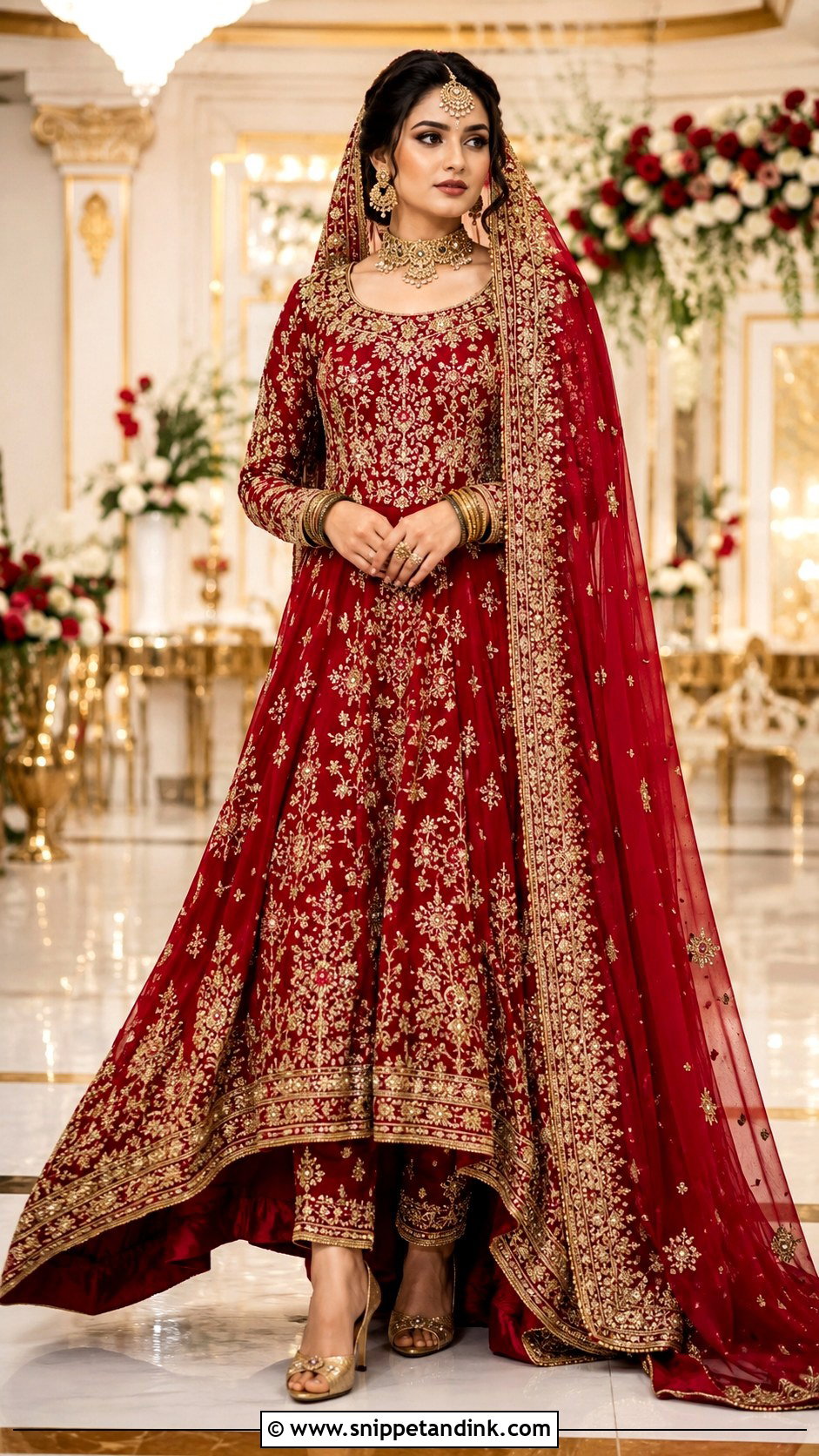
Deep red with gold zardozi is the dress most Afghan grandmothers picture, and there’s a reason it lasts: metallic thread on red reads clearly from the back of a hall. Ask for embroidery across the bodice, sleeves and skirt border, a fitted upper section and a generous flare below. Zardozi is heavy, so I always check how the sleeve seams sit after the bride has raised her arms a few times; a stiff armhole is the first thing to ache by midnight. Pair it with a red dupatta edged in metallic work, a choker, drop earrings, a forehead ornament and stacked bangles. Keep the bag small and structured, and let a deep red lip do the rest.
2. Green Afghan Bridal Dress For Henna Night
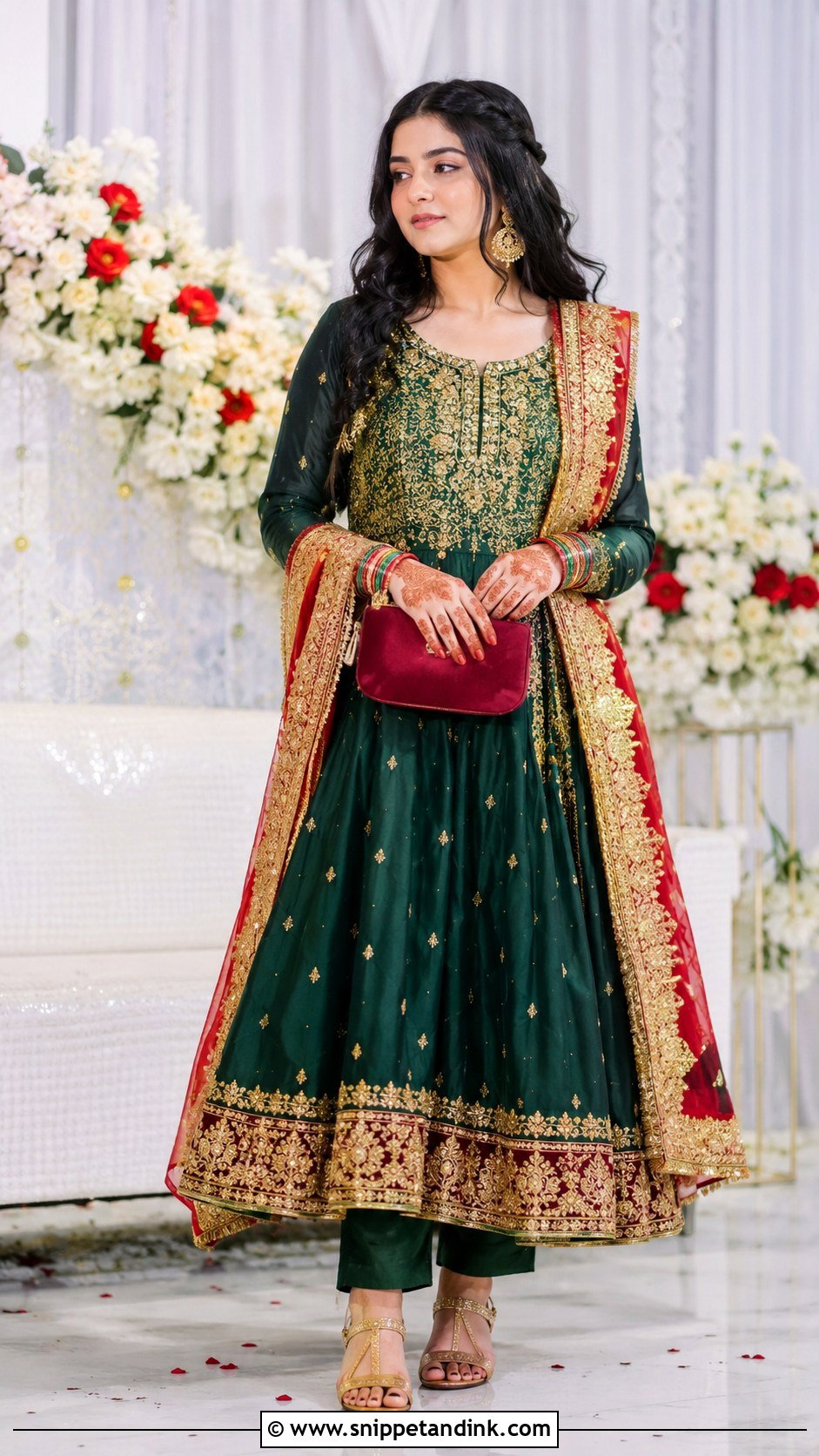
Green has long belonged to the henna night in many Afghan families, and an emerald or forest dress with a fitted embroidered bodice and a skirt that swings when she dances is the classic way in. Gold thread, small mirrors and a few red accents add depth without clutter. For an Afghan henna-night outfit, I look hard at the cuffs. Henna is applied to the hands that evening, and tight embroidered cuffs smudge wet paste and rub the stain. A shorter or flared sleeve solves it. Finish with matching trousers, a light green dupatta, gold sandals, coin earrings and a small burgundy clutch.
3. Ivory Afghan Bridal Dress For Nikah
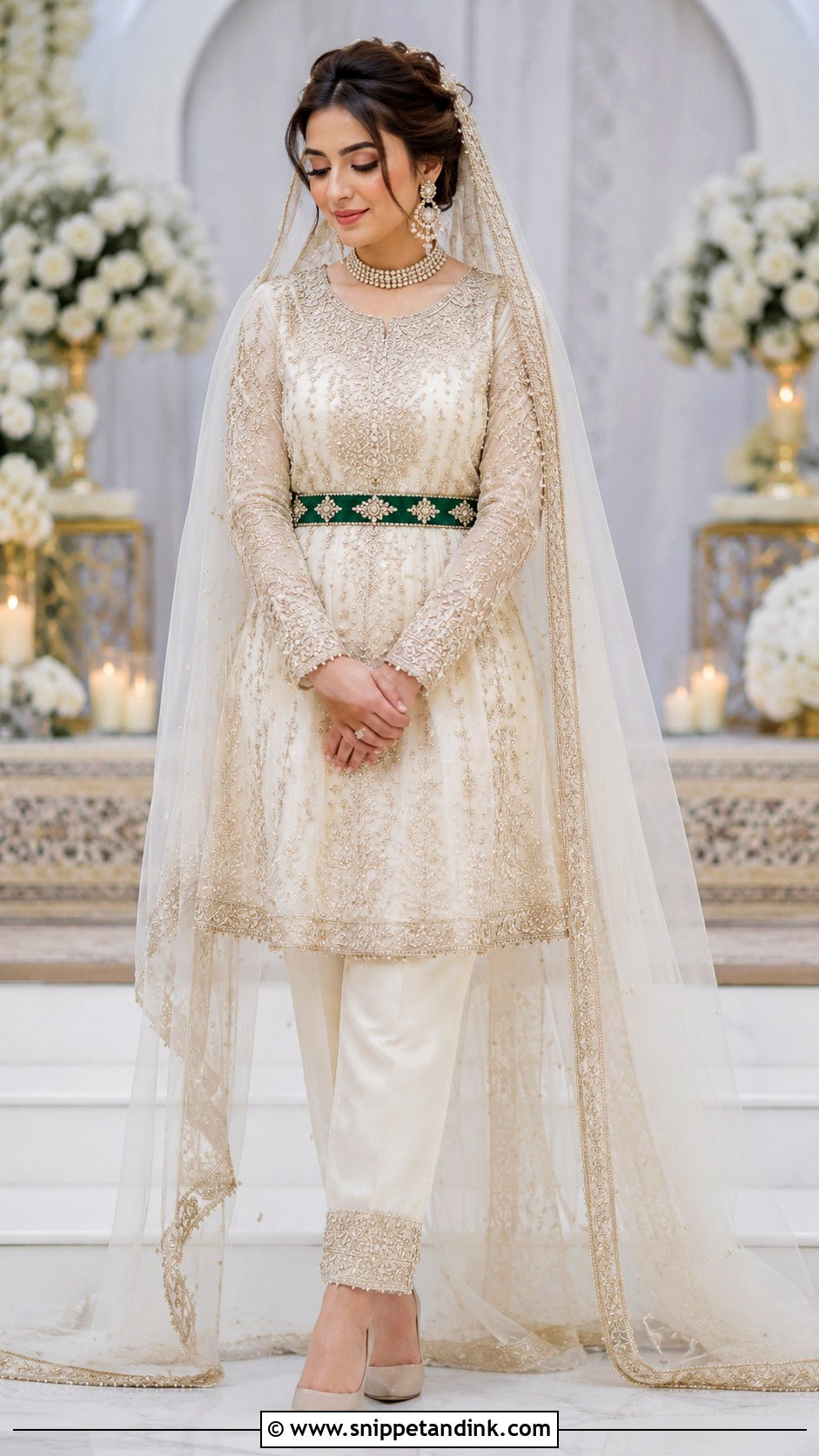
Ivory suits a nikah because the ceremony is quiet and close, and guests are standing right next to the bride. Choose a full-length dress with a modest neckline, fitted long sleeves and fine gold or pearl work on the bodice and cuffs, plus a skirt soft enough to sit in comfortably on a floor cushion or low chair. Ivory trousers, a sheer dupatta with a thin metallic edge and closed-toe champagne heels keep it calm. Some families add a green sash or belt as a nod to tradition, and against ivory it gives the eye a resting point. I keep jewelry to pearl drops, a light choker and one bracelet, and pin a neat low bun so the dupatta sits flat.
4. Emerald Velvet Afghan Kuchi Bridal Dress
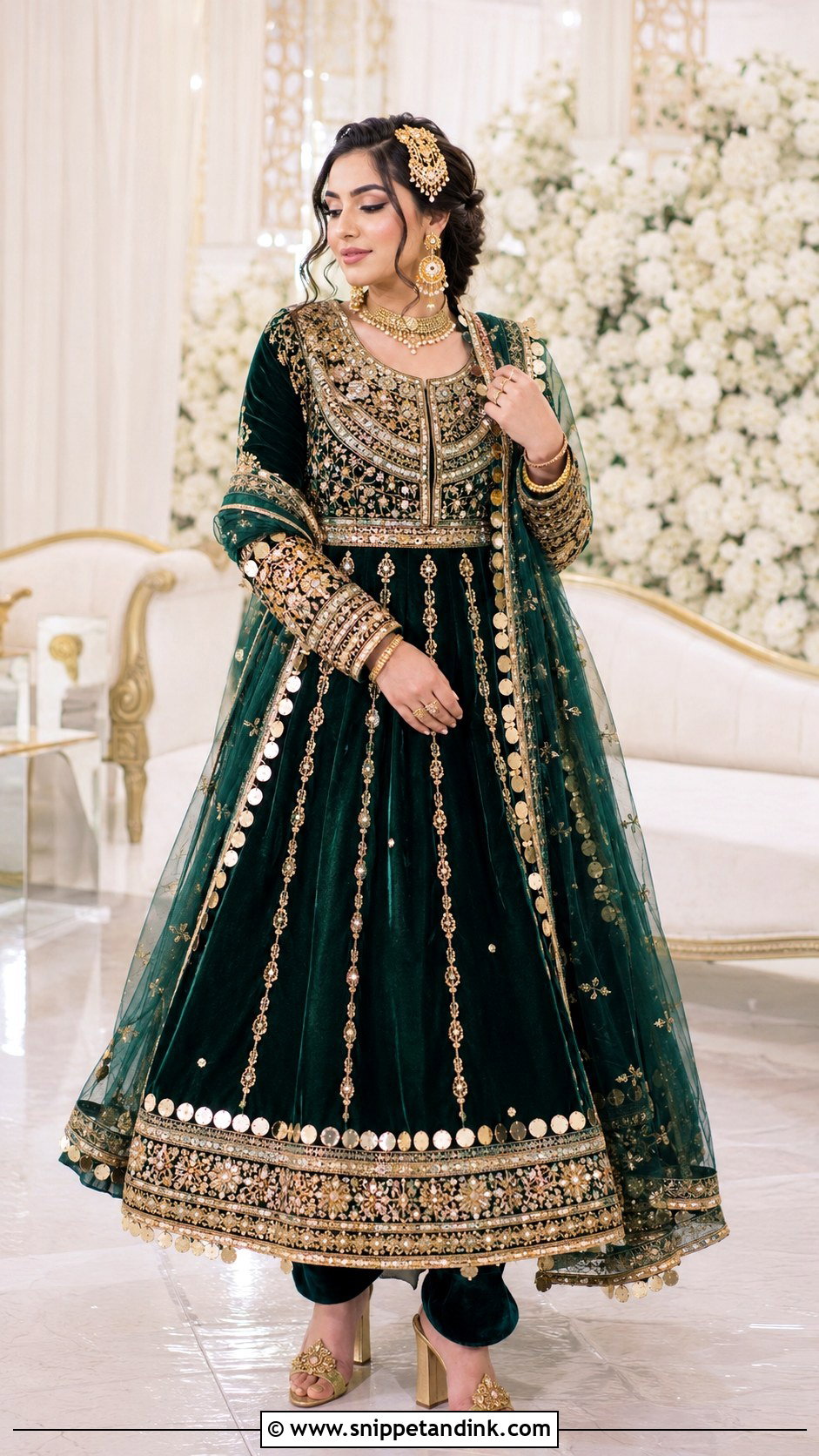
Velvet holds embellishment better than any other base, which is why an emerald Afghan Kuchi bridal dress can carry gold thread, mirrors, beads and little coins without sagging. Kuchi bridal sets usually come as three pieces: the long dress, trousers and dupatta, with the heaviest work across the chest and shoulders. That weight is the catch. A fully worked Kuchi bodice can be several pounds of metal, so I have the bride wear it for an hour at the last fitting before anyone agrees it is finished. Block heels, a lightweight scarf and a structured hairstyle that keeps the neckline clear are all it needs. Skip a big bag; there is nowhere left to put the eye.
5. Maroon Afghan Bridal Dress With Mirror Work
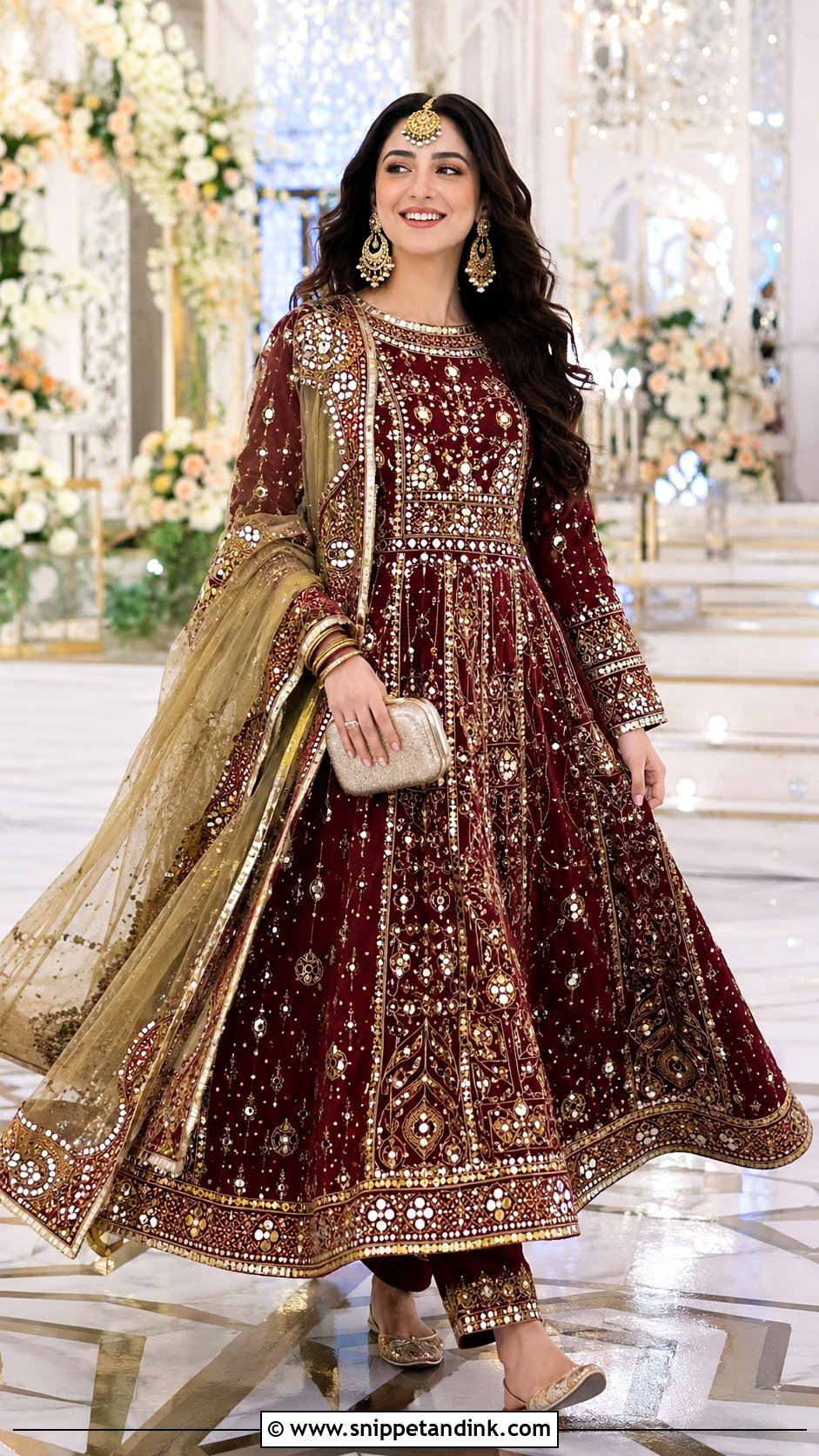
Maroon gives you red’s warmth with less glare under flash, which I appreciate at evening receptions. A maroon Afghan bridal dress with mirror work on the bodice, repeated on the sleeves and hem, comes alive when the embroidery around those mirrors includes teal, saffron and pink. Dark grounds swallow small detail in photos, so that color is doing real work. Add maroon trousers and a dupatta in antique gold or muted green. If she plans to dance, metallic flats; for a formal entrance, a low block heel. Keep the necklace slim. Mirrors already throw light up into the face.
6. Royal Blue Afghan Bridal Dress With Silver Embroidery
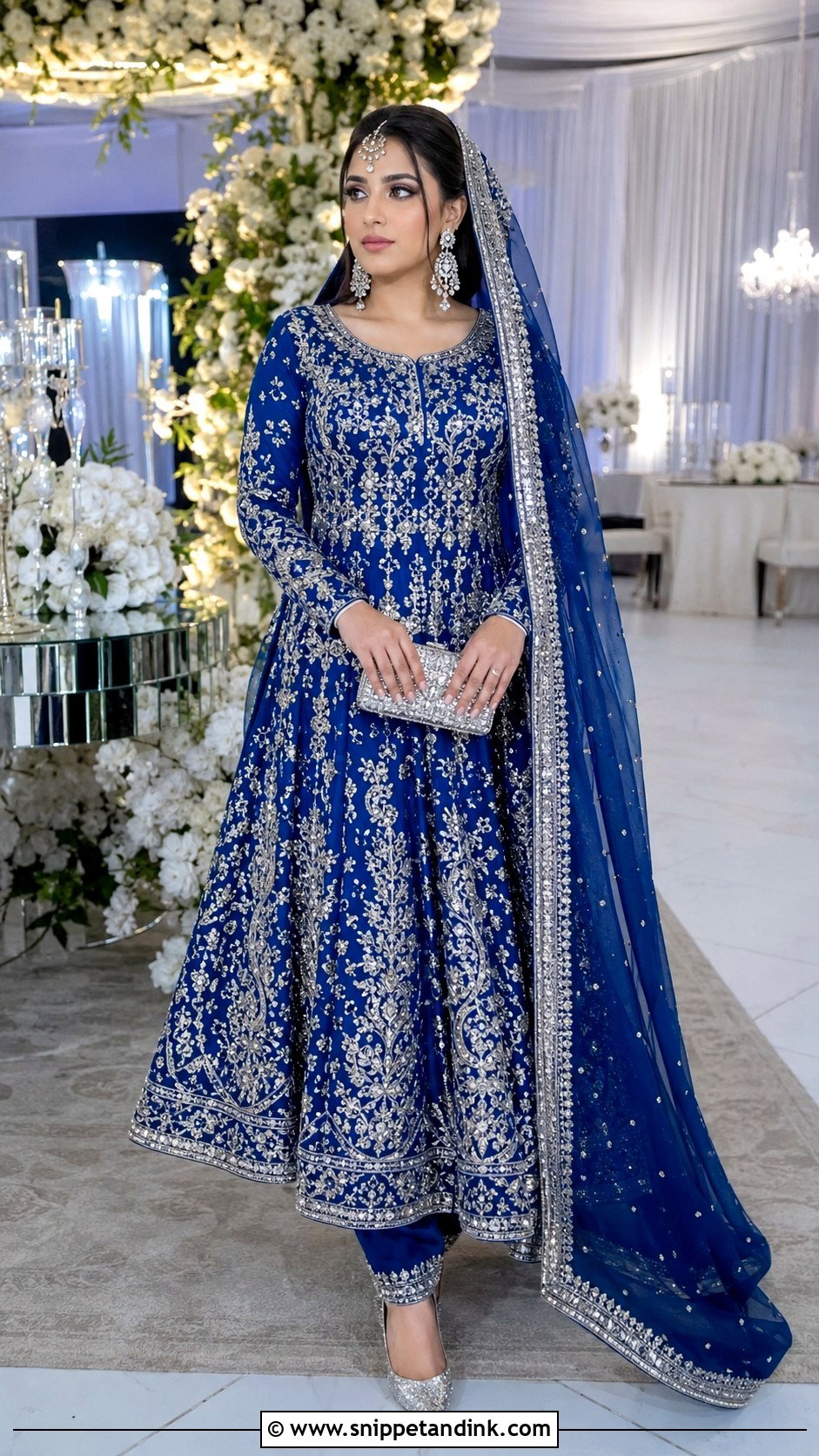
Royal blue with silver is what I suggest to a bride ready to step away from red and green without losing formality. A high round neckline and fitted sleeves give the silver embroidery and crystal beadwork a clean frame. Match blue trousers with a sheer dupatta finished in a silver scalloped border, then stay cool all the way through: silver pumps, crystal drops, a fine forehead chain. One warning from fittings: royal blue dye lots vary, so I get the trousers and dupatta cut from the same bolt as the dress or brought to the fitting together. Mismatched blues look obvious under bright reception lights.
7. Blush Pink Afghan Bridal Dress With Pearls
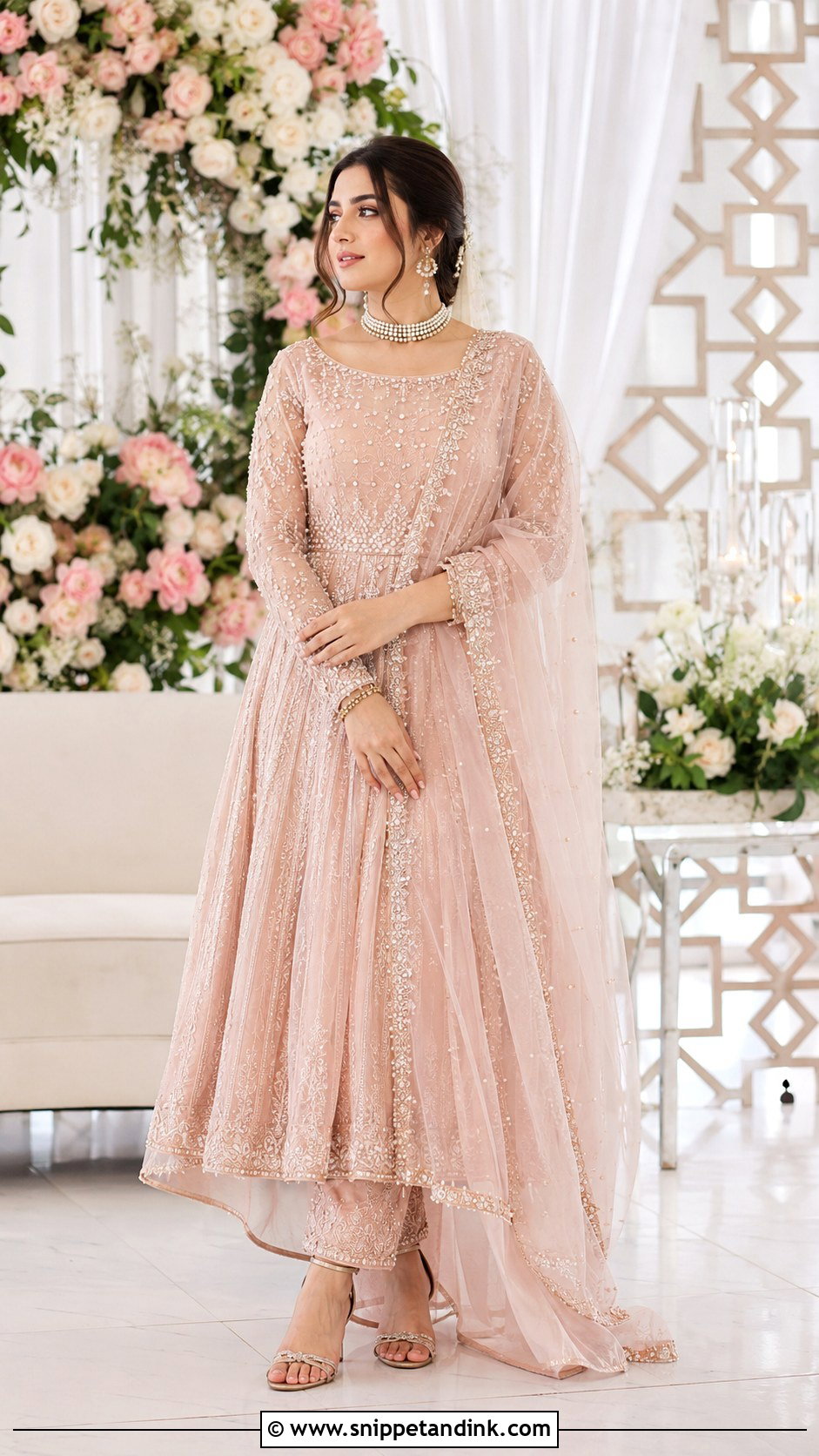
Blush pink needs some help to stay festive. On its own a pale dress can wash out under warm indoor light, so I ask for a little gold thread mixed into the pearl embroidery at the neckline, waist and hem. A layered skirt adds movement. Matching trousers, a sheer blush dupatta with tiny scattered pearls, champagne heels and a pearl choker keep the palette soft. Pearls are heavier than they look when sewn densely, so check the dupatta drapes rather than pulls at the pins. It’s a daytime dress at heart, best for a nikah or an intimate family gathering.
8. White Afghan Fusion Bridal Gown
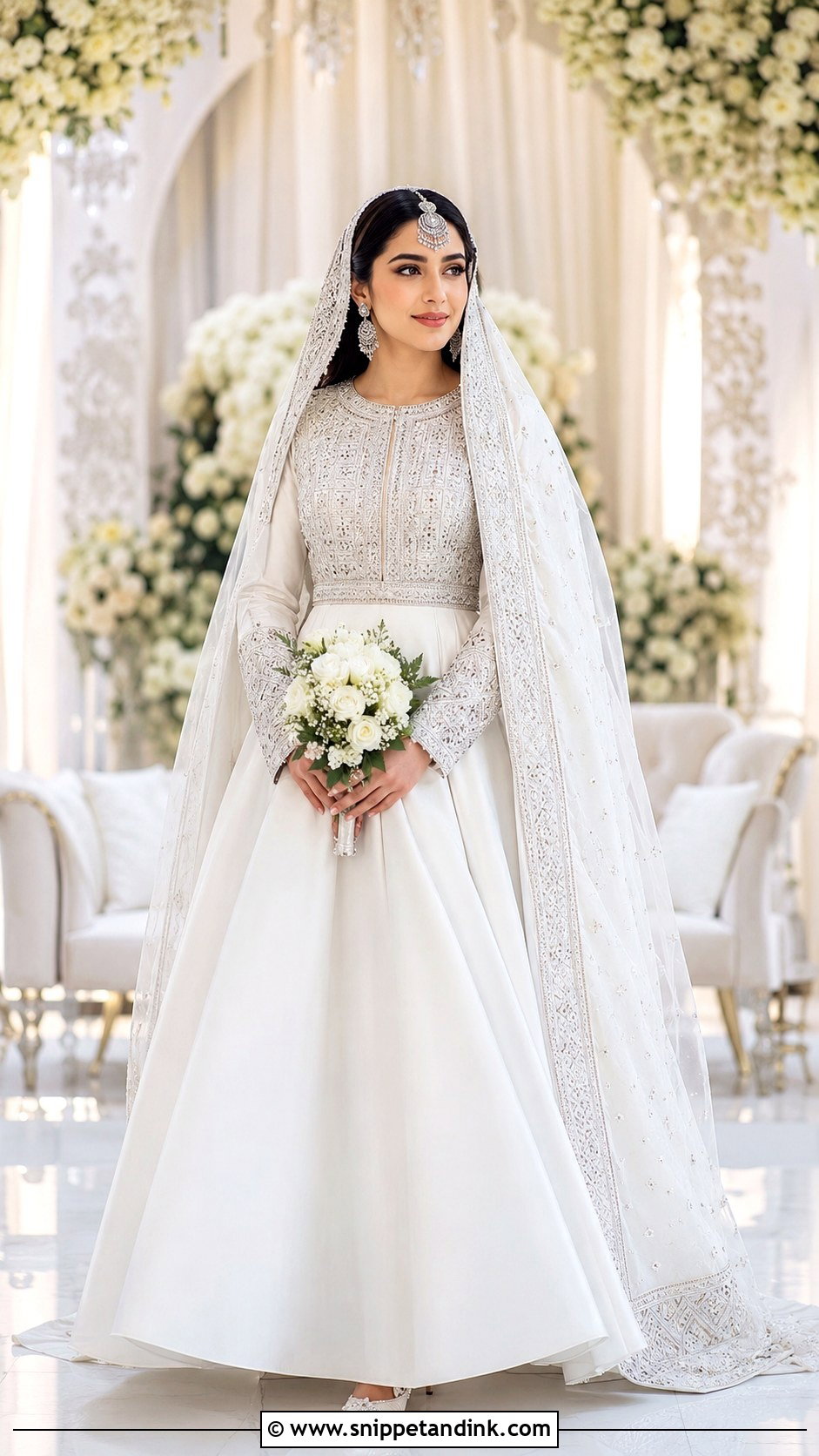
The fusion gown is a Western bridal shape, an A-line or ball gown with long sleeves and a modest neckline, carrying Afghan hand embroidery on the bodice, cuffs and lower skirt. Plenty of Afghan designers now pair traditional embroidery and jewelry with reworked skirts and modern color, and the version I like best keeps the handwork in a few concentrated places instead of everywhere. A white embroidered dupatta or veil, ivory heels and silver jewelry finish it. If the gown has a train, I fit the bustle before the embroidery is final so no hook lands in the middle of a motif. Keep the bouquet small; it otherwise hides the skirt border in full-length shots.
9. Burgundy Afghan Bridal Dress With Long Sleeves
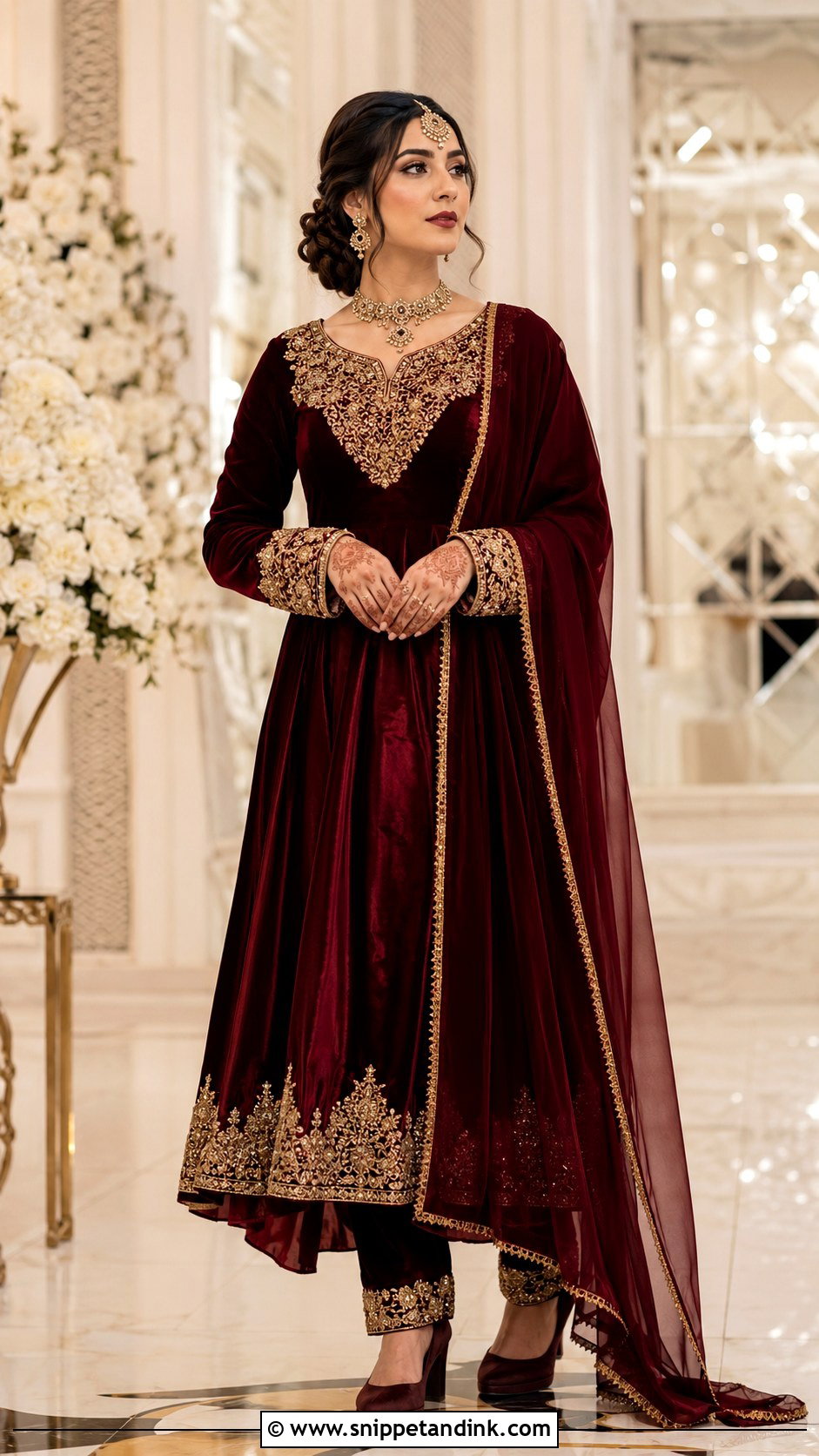
Burgundy long sleeves feel rich without needing sparkle. Velvet, silk or a velvet bodice on a silk skirt all work, with gold embroidery framing the collar, chest, cuffs and hem and lighter panels lower down. My one fitting note: velvet sleeves need a little more ease than you think, because the pile grips the lining and the arm. If she can’t lift a glass comfortably, let the sleeve out before the cuffs are finished. Matching trousers, a burgundy dupatta with a narrow gold border, antique-gold earrings and a layered necklace complete it, with closed-toe block heels underneath.
10. Teal Afghan Bridal Dress With Colorful Embroidery
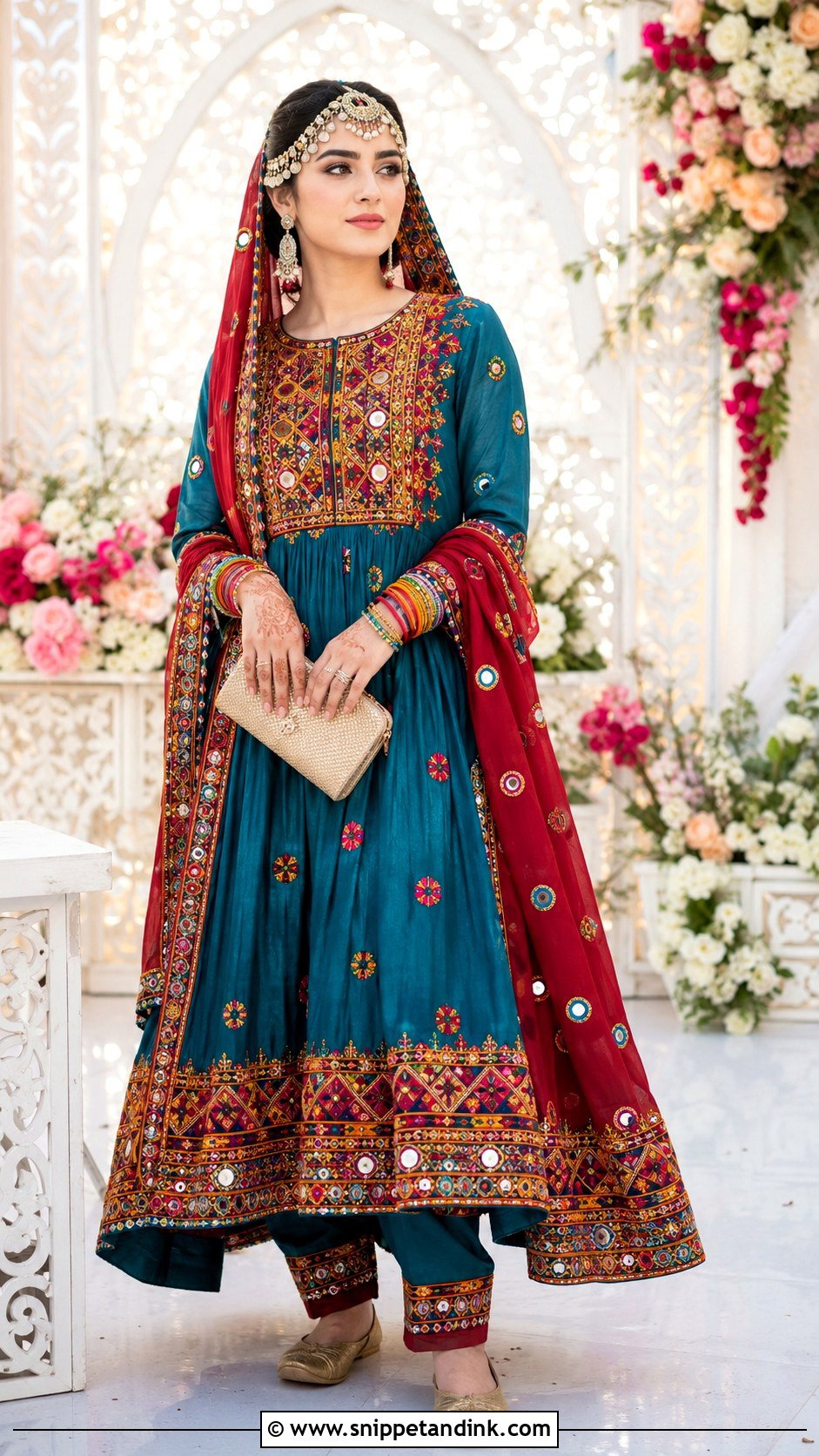
Teal is a strong ground for the multicolored embroidery Afghan dress is known for: crimson, orange, yellow and blue motifs around the neckline and sleeve panels. Geometric and floral patterns both have deep roots, but where they sit on a garment and how they are stitched can carry regional meaning, so I’d rather the bride’s family looks at a design before it’s ordered. Pair the dress with teal trousers and a crimson dupatta picking up one embroidery thread. Gold flats, colored bangles and a coin headpiece fit the mood. With that many colors already in play, the bag should be neutral and the hair sleek.
11. Purple Afghan Bridal Dress With Gold Details
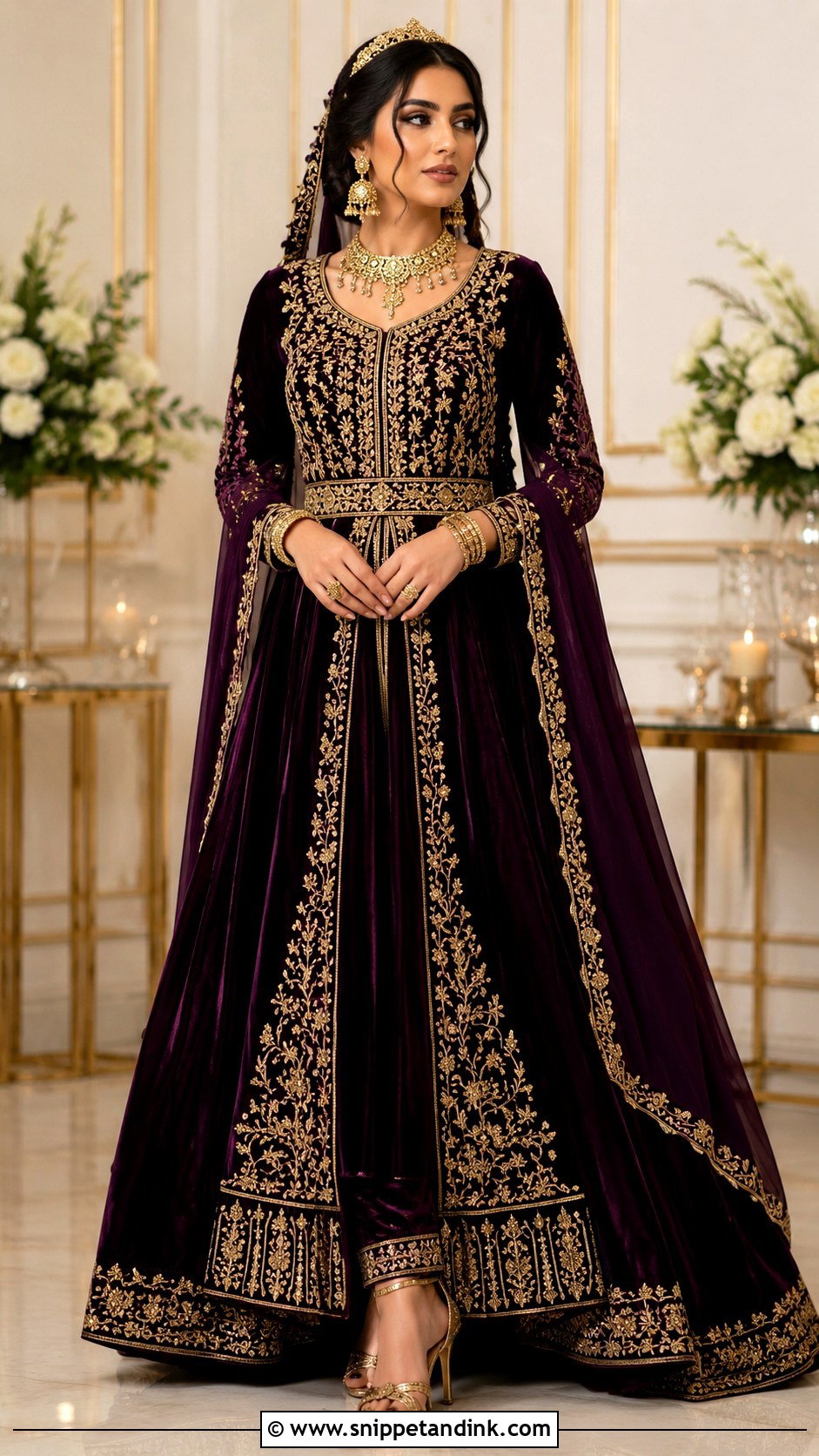
Deep violet or eggplant velvet has the richness of burgundy and photographs warmer than you’d expect. Gold threadwork on the bodice, shoulders and cuffs, a fitted waist and a wide skirt balance the weight of the fabric. Matching trousers and a gold-edged purple dupatta carry the color from head to toe. If you add a decorative belt, try it on over the finished embroidery. Raised beadwork crushes under a tight belt and loses its shape after a few hours of sitting. Antique-gold heels, a statement necklace and a berry lip suit an evening reception or a cultural entrance.
12. Gold Afghan Bridal Dress With Matching Dupatta
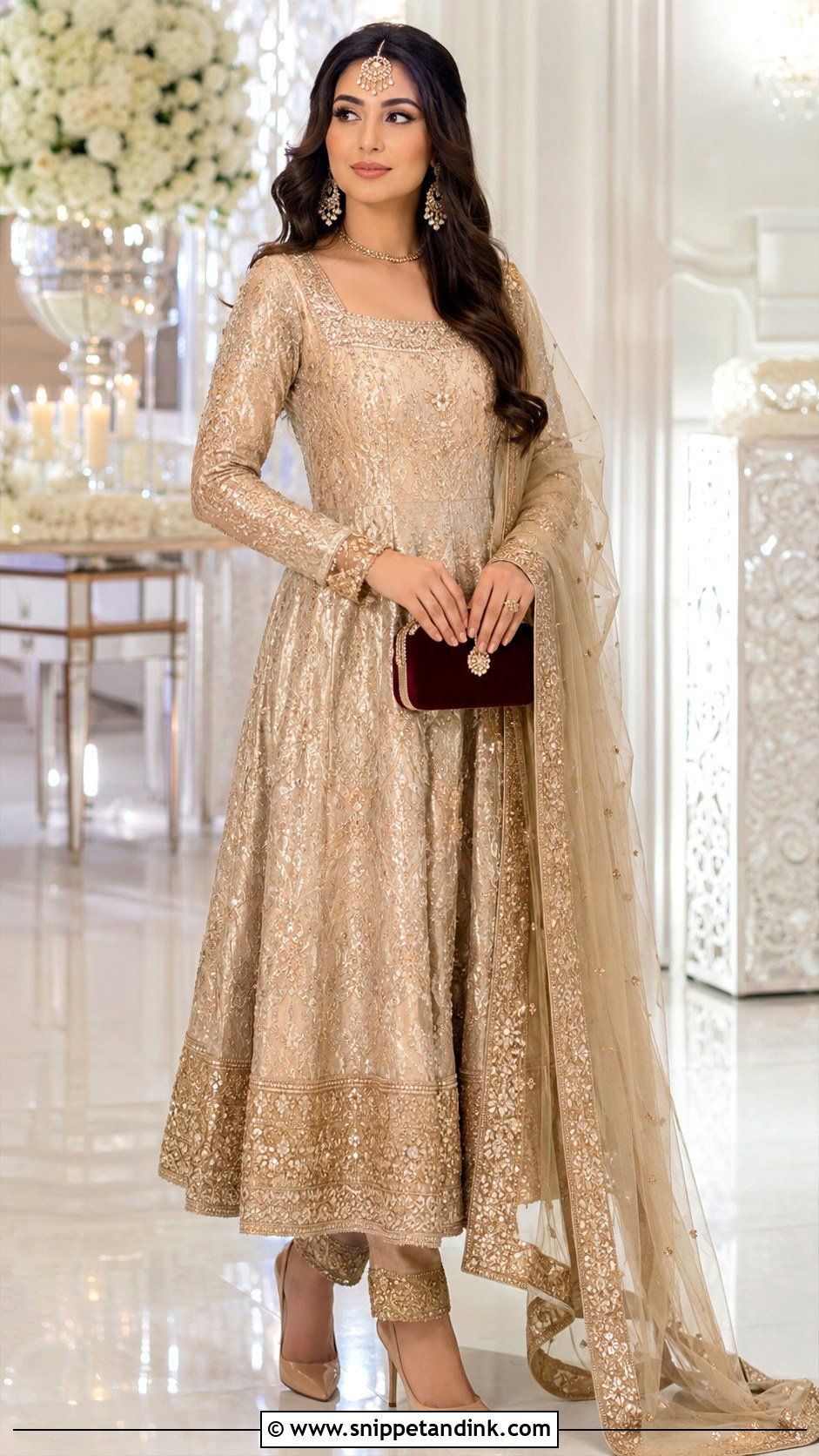
An all-gold dress is the hardest one to get right, because a single metallic surface looks flat in photos. I ask for a champagne base with embroidery, beads and sequins set in defined panels, so matte and shiny areas sit side by side. A flared floor-length skirt, a fitted long-sleeve bodice and matching trousers give the structure. The sheer gold dupatta can rest over the head or both shoulders. Allow exactly one accent, usually a deep red lip or a burgundy clutch, and stop there.
13. Pastel Blue Afghan Bridal Dress For Daytime Nikah
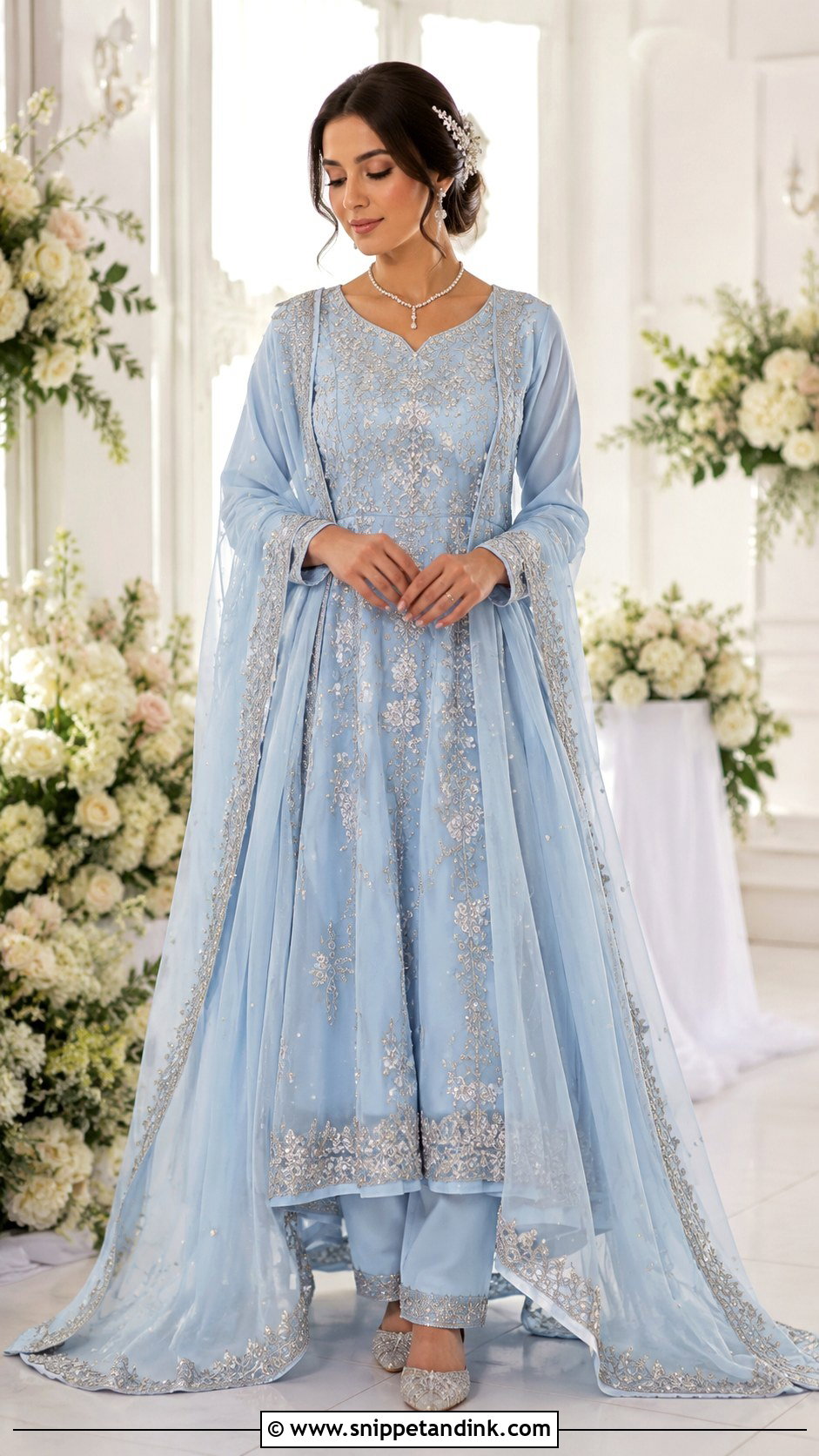
Powder blue is a daylight color. Under evening tungsten it can turn grey, so I keep it for a morning or afternoon nikah. Silver embroidery, small pearls and a few floral motifs around the neckline and hem are enough. Lined chiffon or soft silk moves well, and the lining matters: unlined pale chiffon shows the trousers through it in sunlight. A light dupatta with a slim silver edge, pointed silver flats, pearl earrings and a single crystal hair accessory keep the weight down, with soft curls or a low bun under the dupatta and a pale pink lip.
14. Crimson Afghan Bridal Dress With Traditional Jewelry
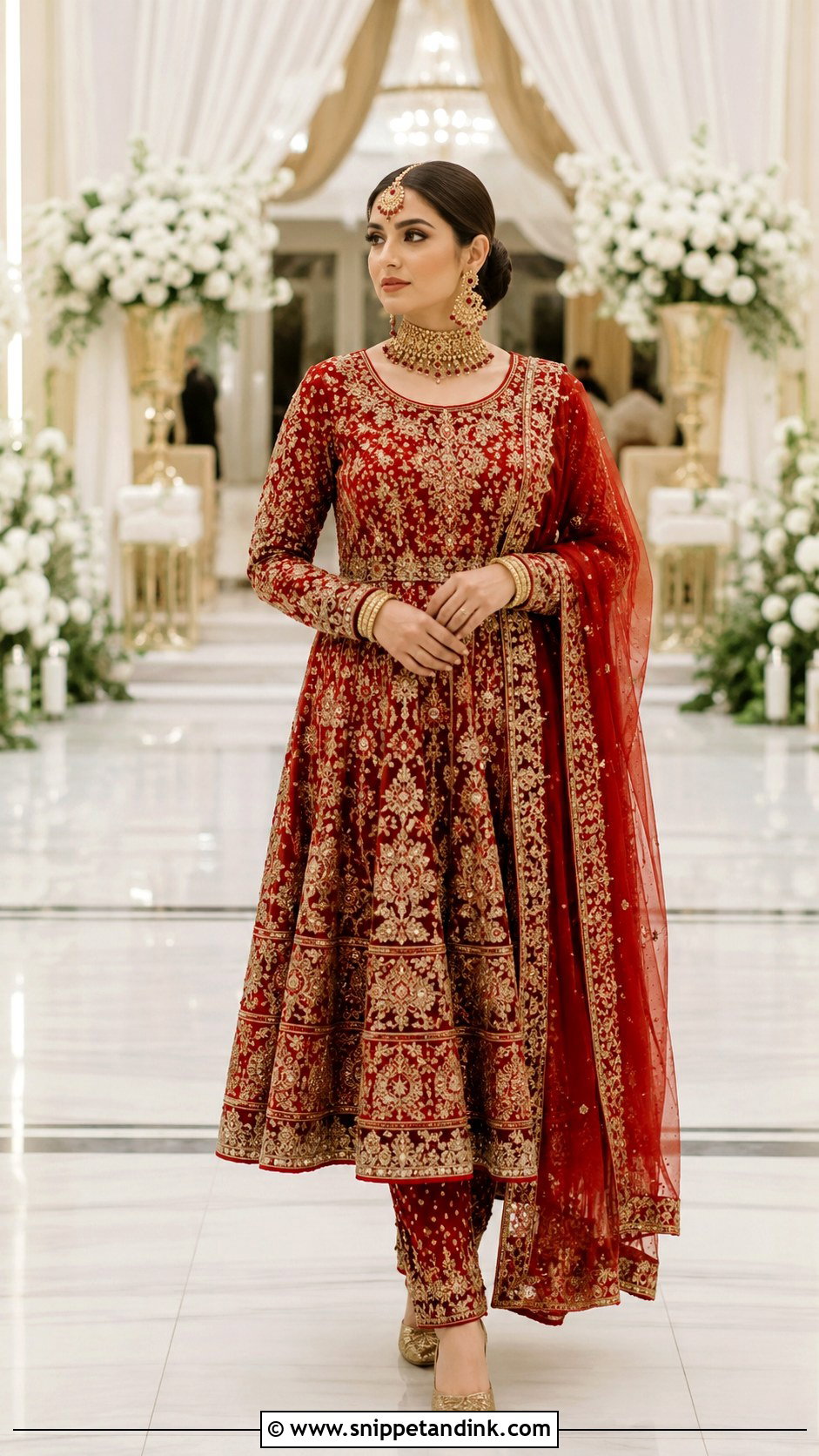
Plan the jewelry with a crimson dress, not after it. A richly embroidered bodice with full sleeves and a wide skirt can carry a full traditional set: choker, longer necklace, earrings, forehead ornament and bangles. The neckline decides how many of those you keep. If the bodice is heavily worked, I take the long necklace away first, since it tangles in raised embroidery and hides the best part of the dress. Gold and green details sit well against crimson. A red dupatta, comfortable gold shoes and a center-parted bun keep the face clear under the headpiece.

15. Herati Inspired Afghan Bridal Dress With Floral Embroidery
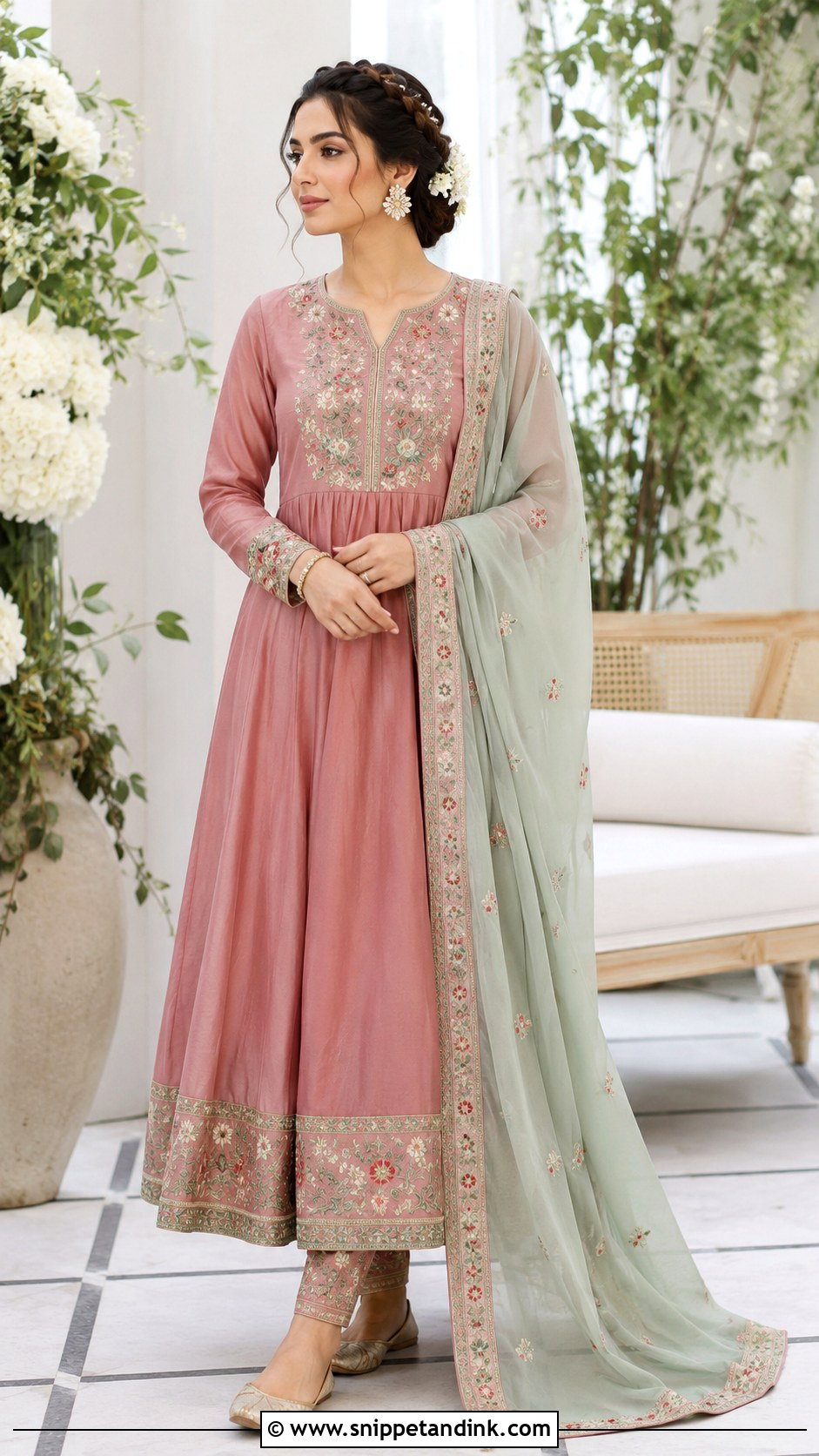
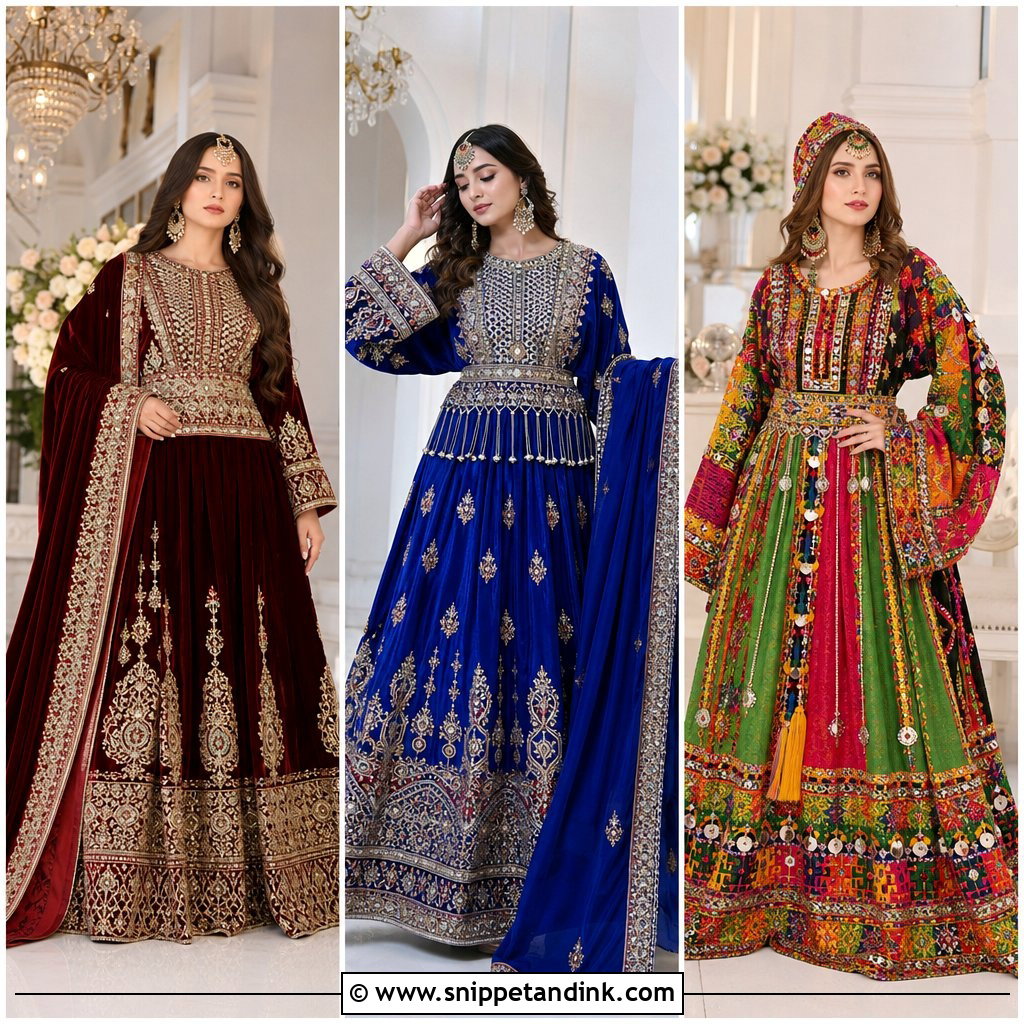
Herati-inspired dresses are about floral embroidery on a calm ground: ivory, dusty rose or pale green with colored flowers across the bodice, cuffs and lower skirt. Regional embroidery carries cultural context and shouldn’t be treated as generic decoration, so I’d involve an Afghan artisan or a knowledgeable dressmaker when the pattern is chosen. Pick a dupatta that repeats one shade from the flowers, and skip a jeweled belt, which cuts straight through the stitching. Gold flats, floral earrings and a soft braided updo suit a nikah or daytime family gathering.
16. Kandahari Inspired Afghan Bridal Dress With Geometric Embroidery
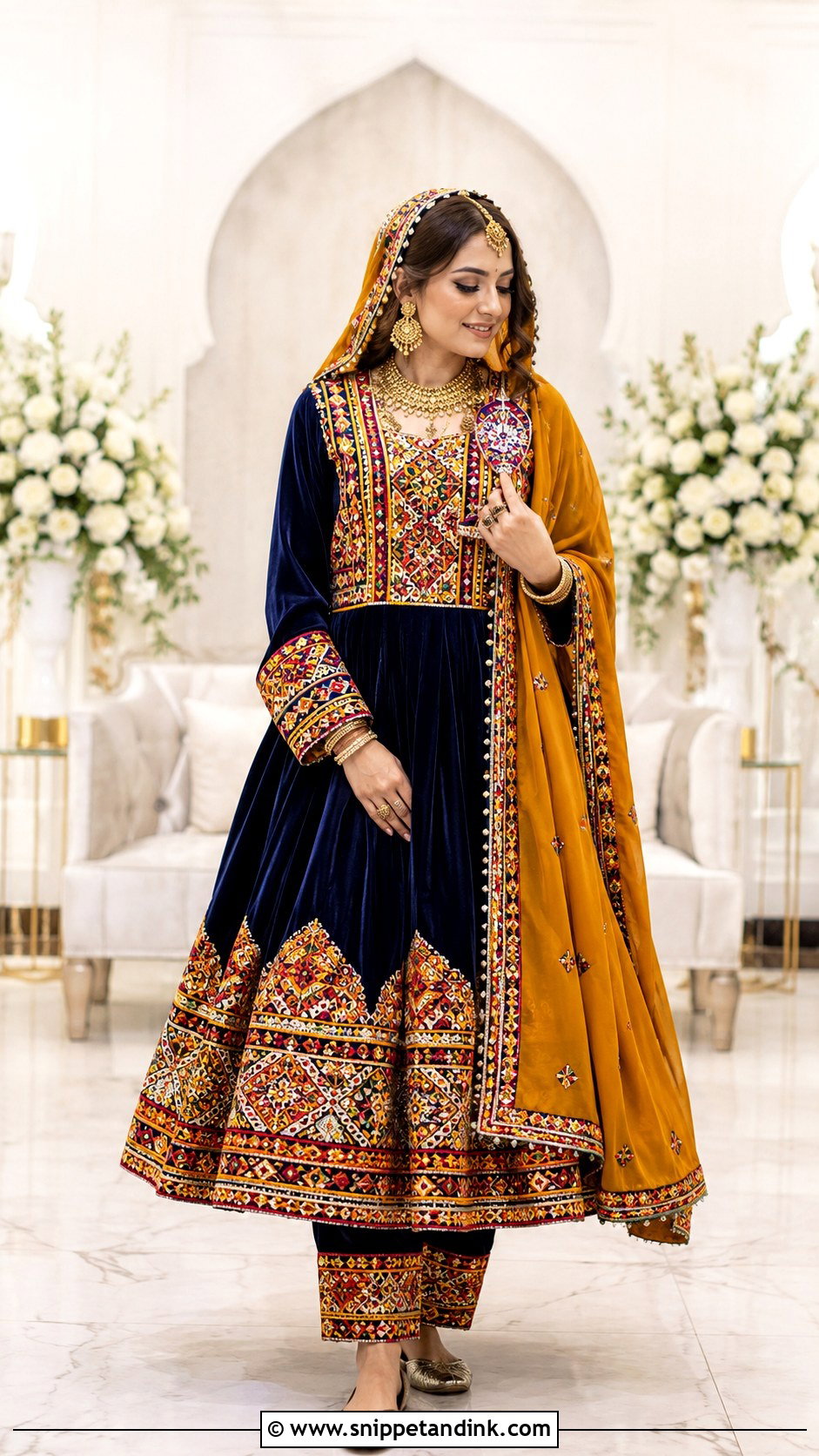
Kandahari-inspired embroidery is built on tight geometric repeats, and the rhythm is what you notice from across a room. A deep red, navy, green or black velvet base with colored stitching around the neckline, chest, sleeves and skirt panels shows it off. Motifs, technique and placement can be specific to families and occasions, so confirm the design with an Afghan artisan who knows the tradition. A contrasting saffron or emerald dupatta, gold earrings, a traditional necklace and stacked bangles carry the pattern. Simple metallic flats keep attention on the hem, which is often where the best work sits.
17. Hazaragi Inspired Afghan Bridal Dress With Bright Colors
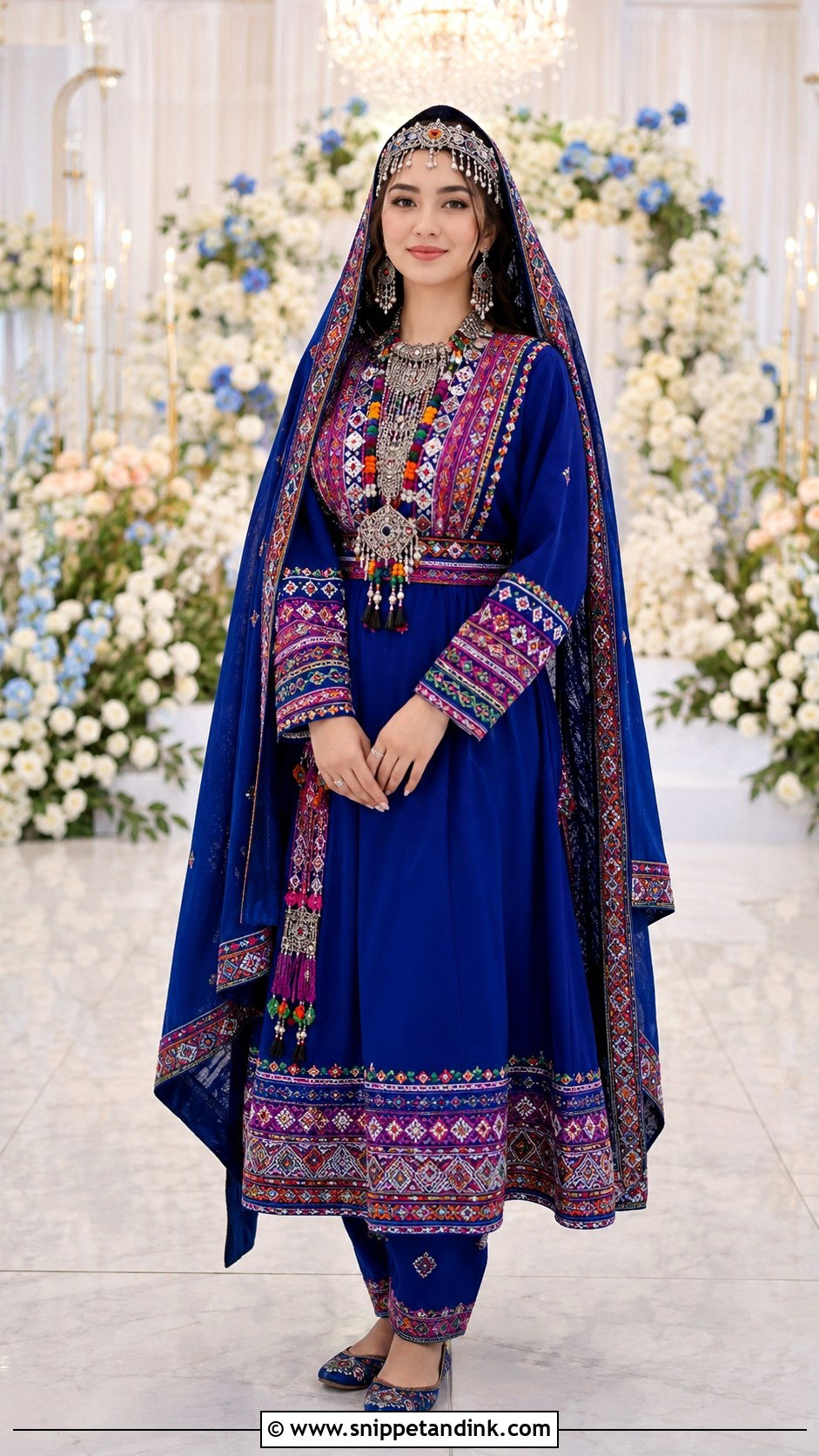
A Hazaragi-inspired dress leans on bright embroidered bands across the bodice, cuffs and skirt of a modest, full-length jewel-toned dress. It is easy to get wrong by mixing motifs from different traditions, so I ask the bride to bring a family member or a Hazara artisan to the design meeting. Coordinated trousers, an embroidered head covering and closed-toe flats form the base. Silver, colored beads or a structured headpiece can be added where the family considers it appropriate. A defined waist and a flowing skirt keep it easy to move in all evening.
18. Afghan Uzbek Bridal Dress With Patterned Silk
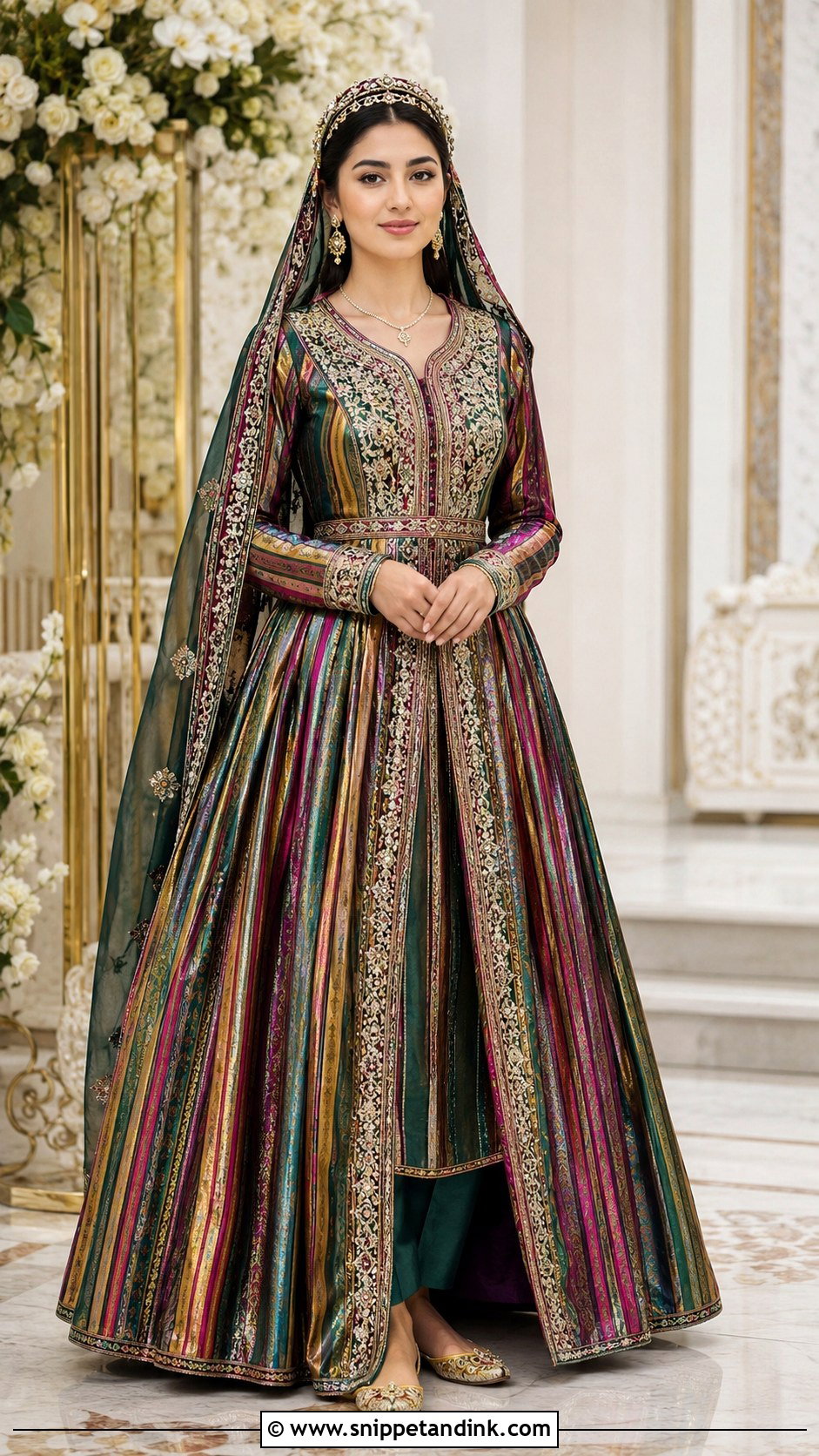
Ikat-style and striped silks already move on their own, so an Afghan Uzbek bridal outfit needs less embroidery than you’d think, usually just the neckline, front panel and cuffs. A fitted bodice and an unlayered skirt let the textile show. Before cutting, I lay the pattern out on the table with the maker and decide where the stripes meet at the side seams; a mismatched seam on patterned silk is impossible to unsee. Matching or solid trousers, an embroidered scarf, gold flats and drop earrings finish it. A relative or Afghan Uzbek maker who knows the textiles is worth more than any styling advice here.
19. Modern Minimalist Afghan Bridal Dress
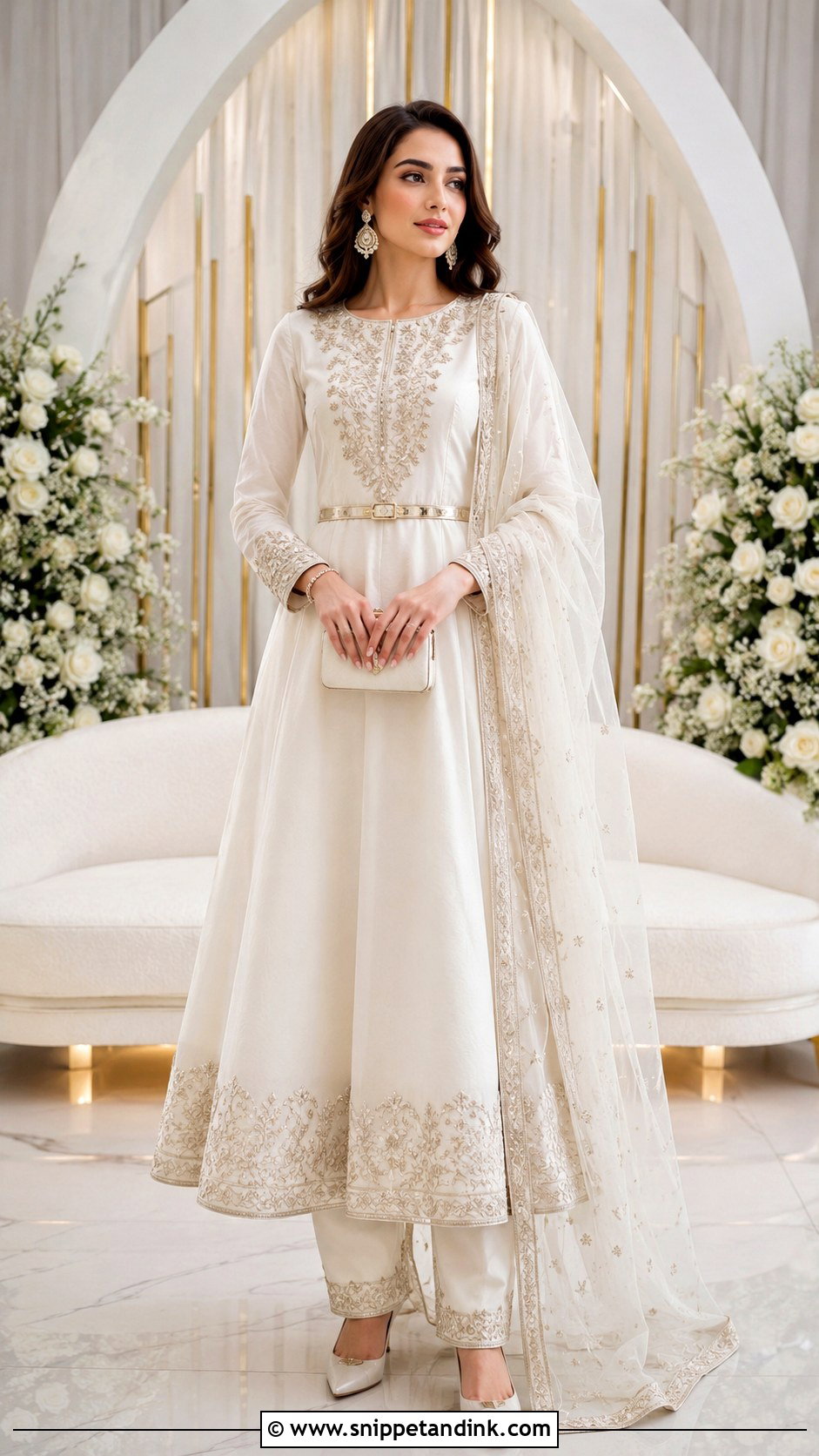
A minimalist Afghan dress works when the few details left are worth looking at. An ivory, emerald or burgundy A-line with long sleeves and a clean neckline, embroidery limited to the bodice, cuffs and one hem border, and a sheer dupatta repeating that stitch. A narrow metallic belt defines the waist. With handwork at the neck, I take the necklace off altogether and let sculptural earrings and one bracelet carry the jewelry. Smooth hair and a compact clutch keep it pared back. I’d steer away from this if the family expects a heavily dressed bride; it reads as quiet, on purpose.
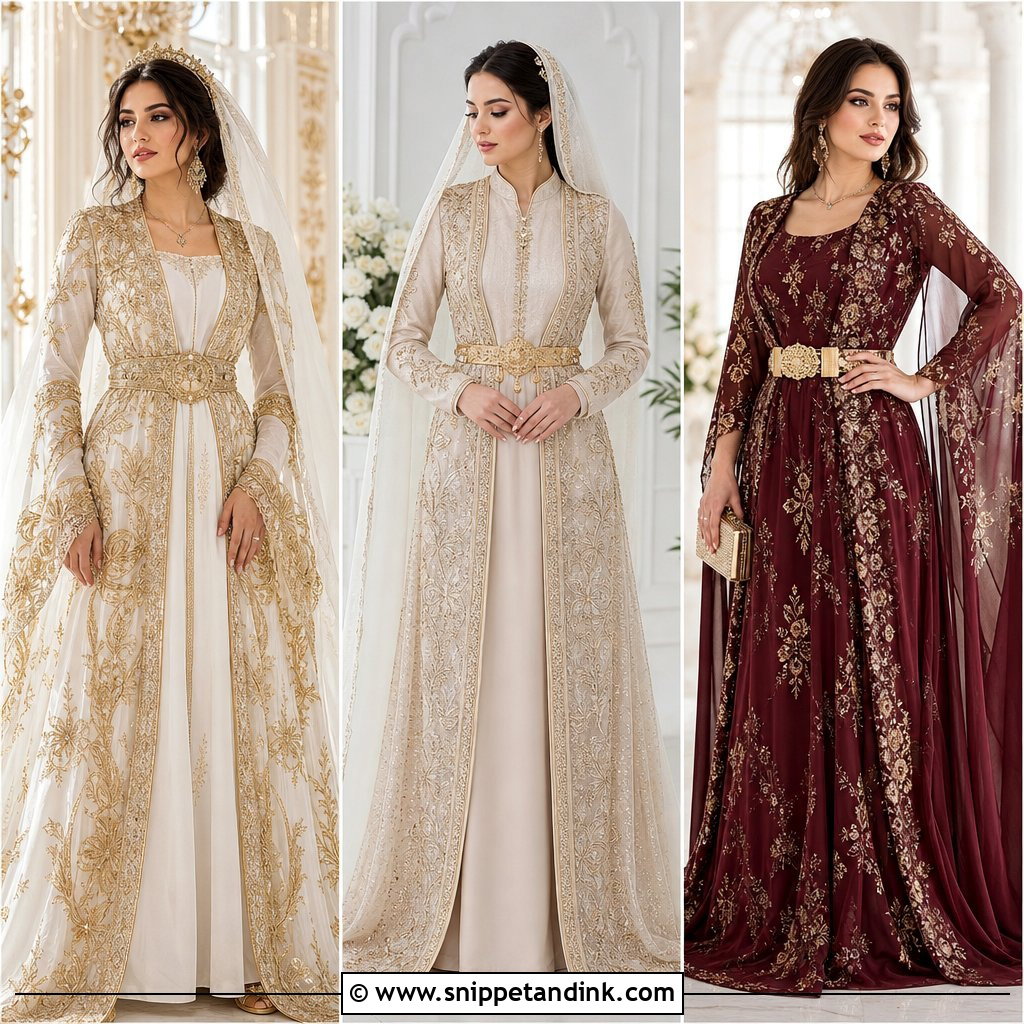
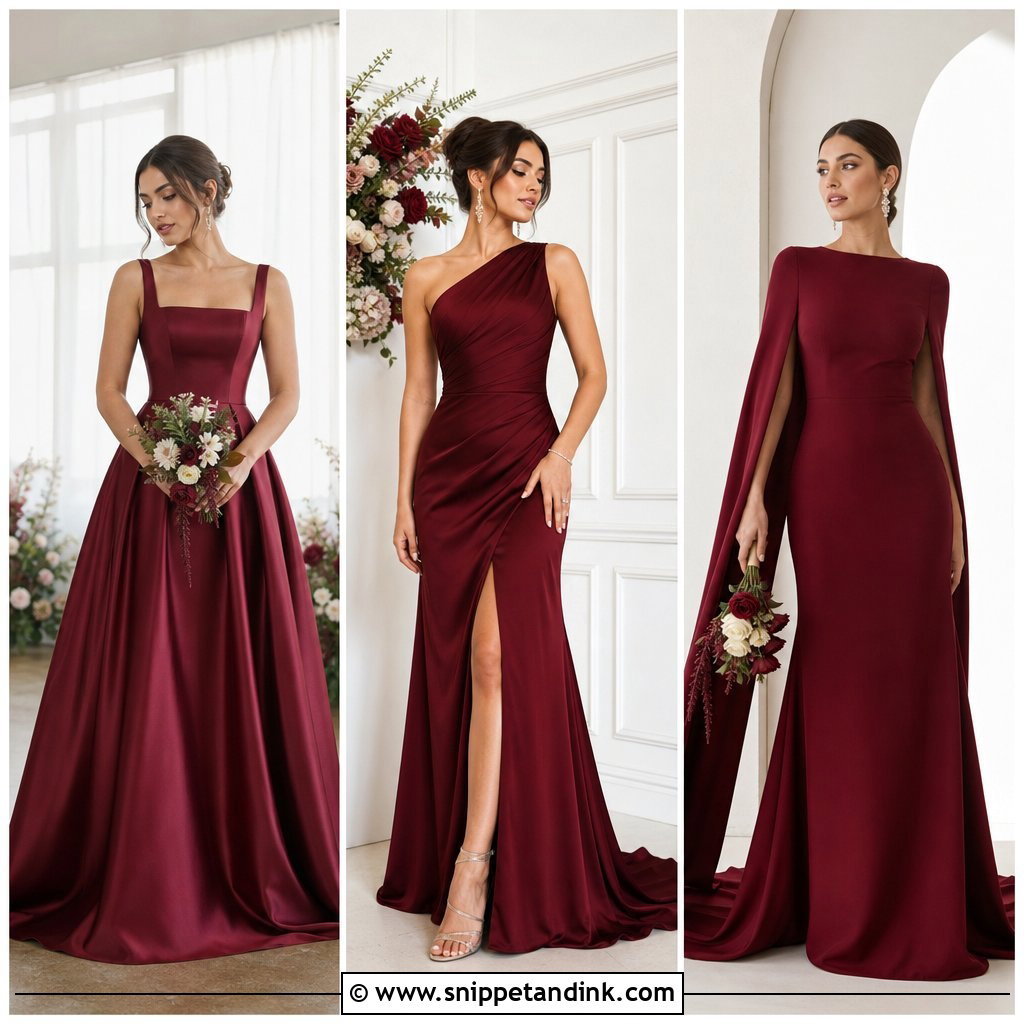

20. Custom Afghan Bridal Dress With Heirloom Embroidery
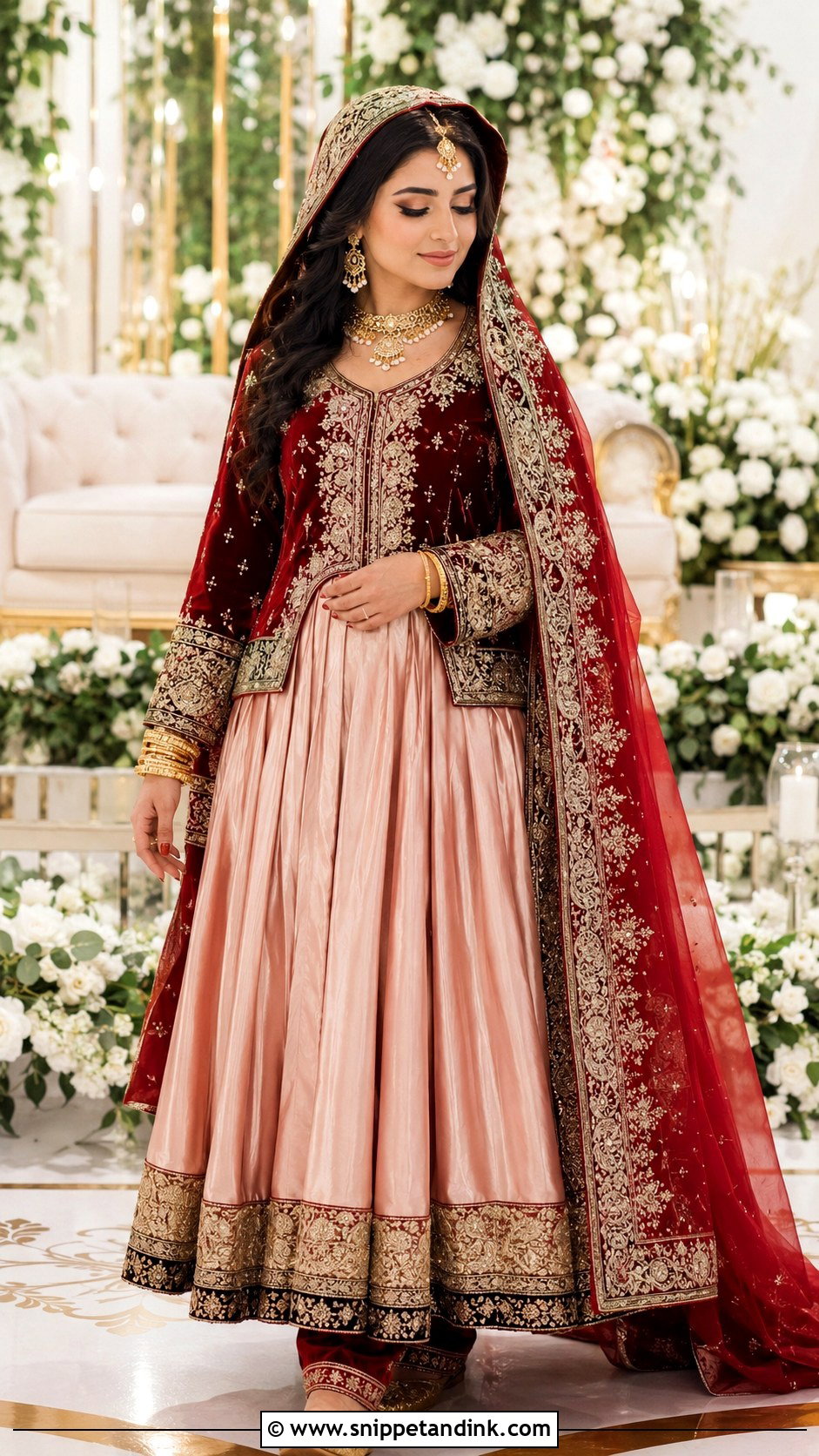
An heirloom piece makes the most personal dress. Start from an embroidered panel, a border, a scarf or a jewelry piece and have an experienced Afghan dressmaker build around it: perhaps a red velvet bodice, a silk skirt, full sleeves, trousers and a dupatta trimmed with the restored family embroidery. Repeat only a couple of colors from the old work so new and old belong together. Old embroidery is fragile, so I have it assessed and stabilized before anyone cuts into new fabric, and I build in extra fittings for handwork. Small irregularities in hand embroidery are the mark of the person who made it, not a fault.
How Heavy Embroidery Feels by Midnight
Velvet, metal thread, mirrors and coins add up. A dress that feels fine at a ten-minute fitting can pull on the shoulders after four hours, and that is when brides start hunching in photos. I ask for these things before a heavy outfit is signed off:
- A firm inner waist stay, so the skirt hangs from the waist instead of dragging on the shoulders.
- Wide, soft shoulder seams and an armhole cut high enough to lift a hand for greetings.
- Trousers with a comfortable waistband; a tight drawstring under a heavy skirt is what she will notice first.
- A dupatta pinned to the hair with enough grips that it doesn’t slide every time she turns her head, and a lighter backup dupatta for dancing.
Shoes matter more with a floor-length skirt than people expect, because the hem needs to be finished at the height of the shoes she will actually wear. I have brides bring the wedding shoes to every fitting.
Storing Velvet and Zardozi Once the Celebrations End
Embroidered velvet is easy to ruin in a closet. Hanging lets the weight of the bodice stretch the shoulders, and plastic bags trap moisture that tarnishes metallic thread. I advise folding the dress flat with acid-free tissue in each fold, wrapped in clean cotton or muslin, and refolding it along different lines every few months so no crease sets. Keep it somewhere cool and dark. Never press velvet flat with an iron; steam it from the back if the pile is crushed. Mirrors and coins should be wrapped in tissue so they don’t scratch neighboring embroidery. If the outfit might become someone’s heirloom later, a specialist cleaner who handles hand embroidery is worth the extra care.
Which Dress Belongs to Which Night
Afghan bridal dress is a wardrobe across several days, not one gown. Red velvet, a green henna dress, an ivory nikah outfit, a Kuchi set or a fusion gown can all sit in the same wedding. Start from the event, the season and what your family expects, then look at the craft. When a design draws on regional embroidery or community-specific accessories, bring in relatives or Afghan artisans who know it. Every outfit still needs proper trousers, a dupatta that stays put, shoes you can stand in and jewelry that leaves room for the handwork. If you can sit, eat and dance in it, you’ll recognize yourself in the photographs.
You'll Like These Ideas:


Leave a Reply