
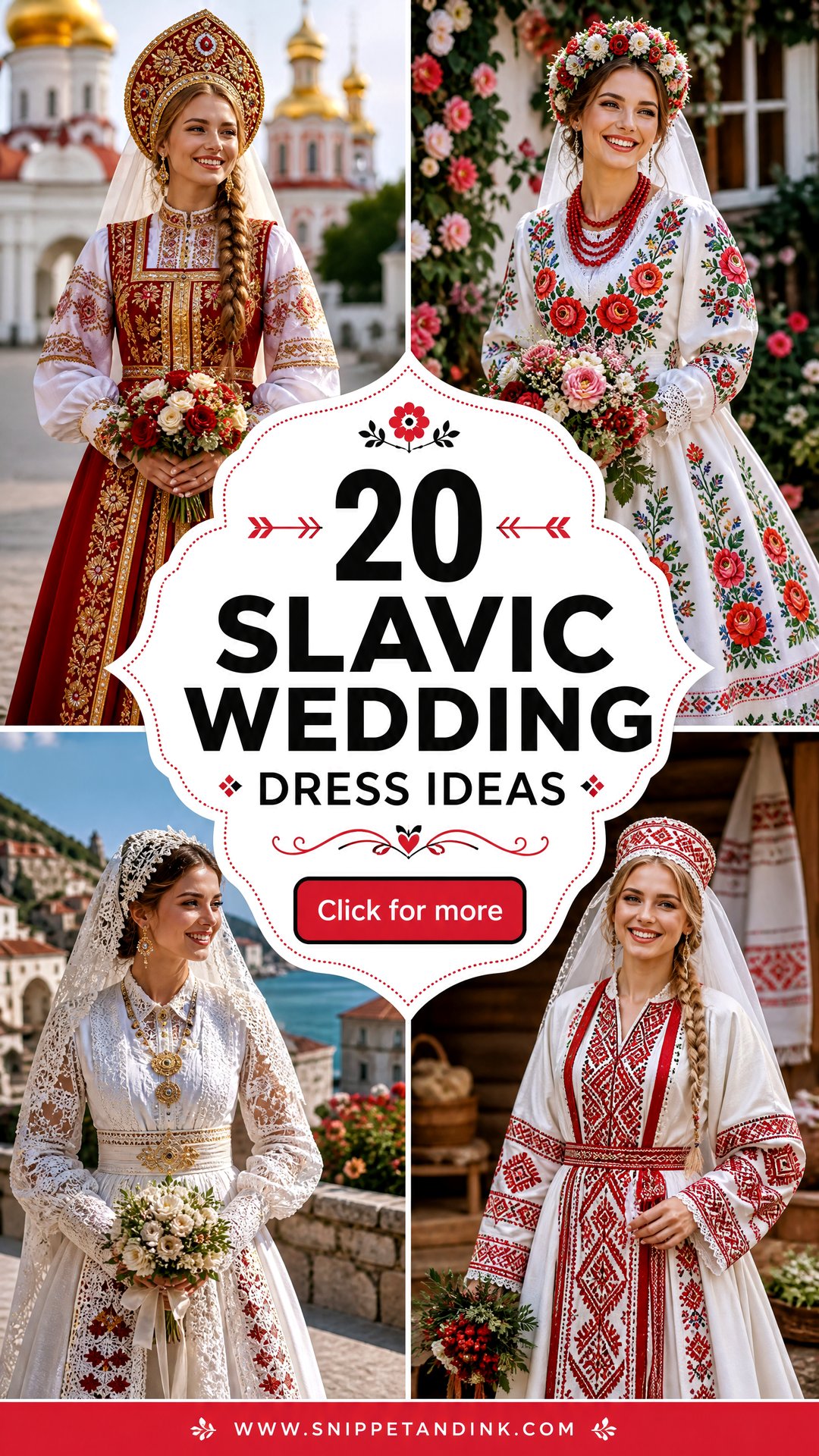
Slavic bridal dress is not one tradition. Ukrainian, Polish, Czech, Slovak, Serbian, Croatian, Bulgarian, Belarusian, Montenegrin and many other communities each have their own garments, colors and stitching, and they often differ from one village to the next. What modern gowns borrow from them is usually a handful of elements: embroidered sleeves, woven belts, fitted vests, floral wreaths, metal threadwork and striking headpieces. Ukrainian embroidery now turns up on soft silk gowns, and Russian-inspired looks often layer a sleeveless overdress over a long underdress. When a bride brings me a Slavic brief, my first question is always where her family comes from, because the most meaningful details are the ones tied to a real place. The twenty looks below are a starting point.
Ask Your Grandmother Before You Ask a Designer
Embroidery in Slavic dress changes from region to region in color, motif and even in which side of the cloth the stitching sits. Relatives who grew up with it often recognize a pattern at a glance. That knowledge is more useful to your designer than any photo from the internet, so gather it first.
- Look for old family wedding photos and note where the embroidery sits: collar, sleeves, apron, hem.
- Ask if any original garment, towel or blouse survives. Even one embroidered cloth gives a maker real motifs and colors to work from.
- Find out the village or region, not just the country. A pattern from the mountains can look nothing like one from the plains.
- If nobody remembers, a regional museum or cultural society can point you toward patterns from that area.
Bring whatever you find to your first appointment. I’d rather work from a single faded photograph than from a mix of motifs that don’t belong together.
1. Ukrainian Embroidered Wedding Dress
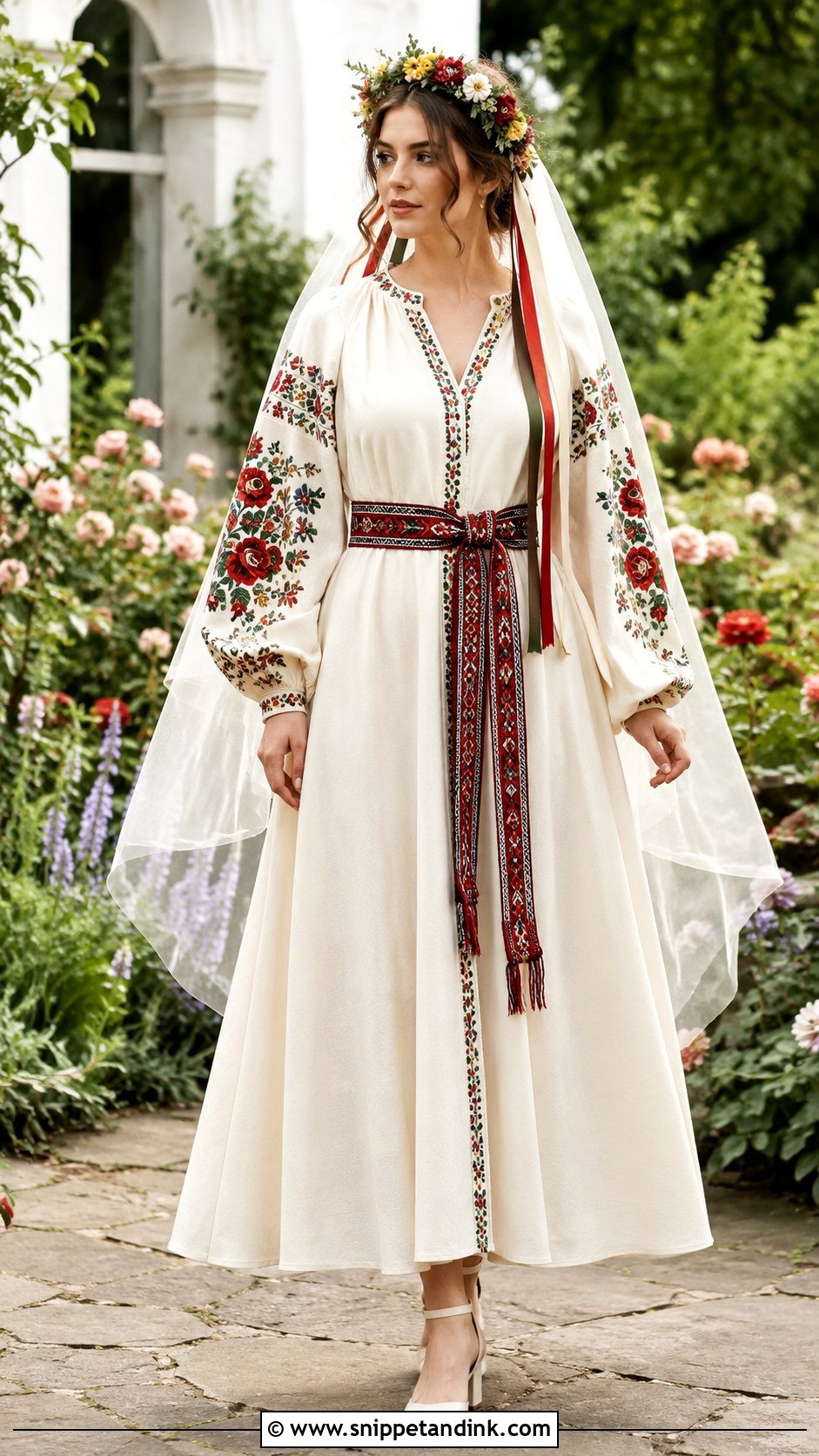
A Ukrainian embroidered wedding dress works best when the embroidery sits where a vyshyvanka would carry it: neckline, cuffs, waist and hem. Start with an ivory A-line, and choose red, black, blue or multicolor stitching. Long bishop sleeves give the embroidery room to show as you move. A woven sash or slim red belt defines the waist, and ivory block heels keep you steady. I’d swap the tiara for a floral wreath with trailing ribbons, then add a plain tulle veil so it still reads bridal. A loose bouquet of white flowers, greenery and a few red stems completes it. Designers now set this kind of stitching on light silk, which keeps the gown soft rather than heavy.
2. Red And White Slavic Wedding Dress
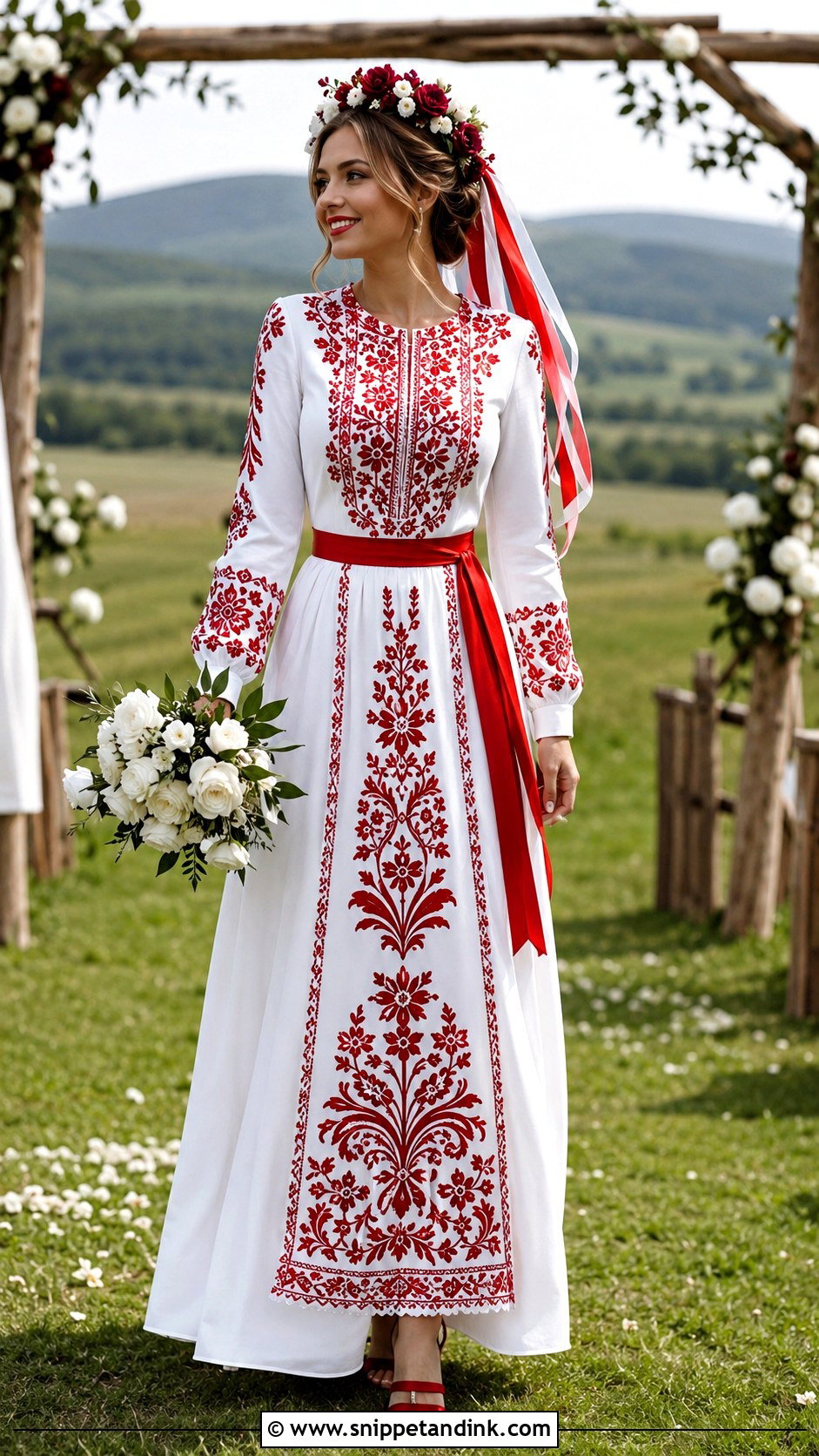
Red on white is the combination most people picture first, and it’s bold enough that the rest of the dress has to stay calm. Put the red embroidery on the bodice, sleeves, cuffs and hem of a flowing white gown, and keep the shape to an A-line or column. A narrow red sash with stitched ends defines the waist. Red leather pumps or low block heels carry the color down, and pearl earrings soften the contrast. Top it with a white floral crown woven with small red flowers and ribbons. White roses, red berries and greenery keep the bouquet simple. Do a colorfastness test on red thread before any spot-cleaning; a damp cloth on red cross-stitch can bleed pink into the white.
3. Russian Sarafan Wedding Dress
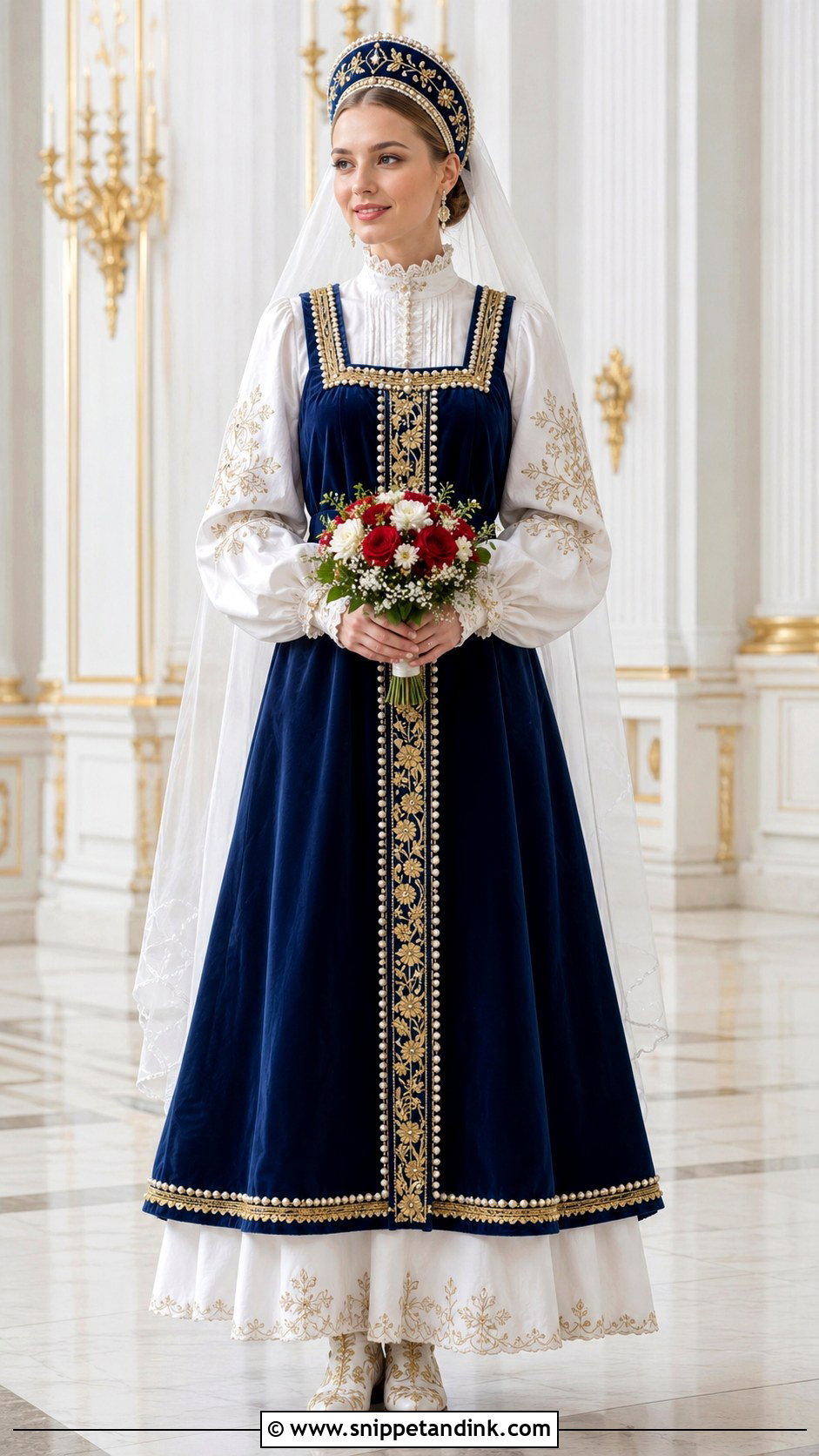
A Russian sarafan-inspired wedding dress gives a layered, regal effect without turning into a historical costume. The base is a high-neck white linen or silk underdress with long embroidered sleeves. Over it goes a sleeveless overdress in ivory, red or deep blue, fitted at the top with a long, gently flared skirt. Gold trim, pearl detail and small floral motifs make it ceremonial. Embroidered ankle boots or low velvet shoes are more comfortable than heels under all that length. An ornate headband inspired by traditional headwear becomes the focal point, with a sheer veil behind. Two layers get warm, so I’d keep the underdress in linen or light silk for anything above room temperature.
4. Kokoshnik Wedding Dress
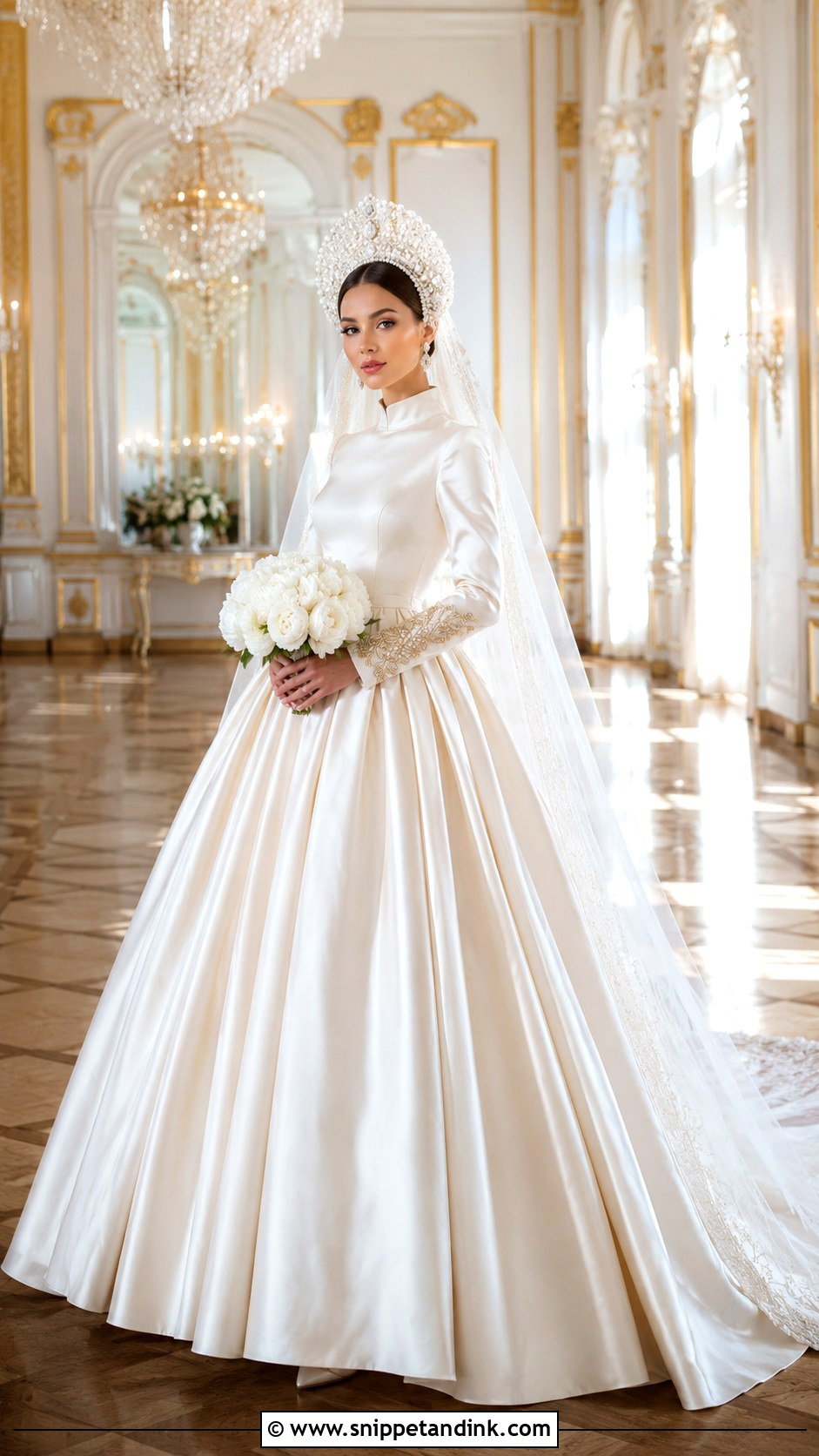
A kokoshnik-style headpiece is so strong that the gown under it should be quiet. I’d pair it with a long-sleeve satin ball gown with a fitted bodice, high neck, full skirt and a little gold embroidery at the cuffs and waist. Pearl or metal-embroidered headpieces frame the face; attach a soft cathedral veil behind it, never over it. Pearl drops, a structured white clutch and closed-toe ivory heels complete the look, with white peonies and greenery. Have your hairstylist build a firm base, such as a low bun, for the headpiece to anchor into, and wear it for a full hour at the trial. Tall headpieces press on the scalp more than brides expect.
5. Polish Floral Embroidered Wedding Dress
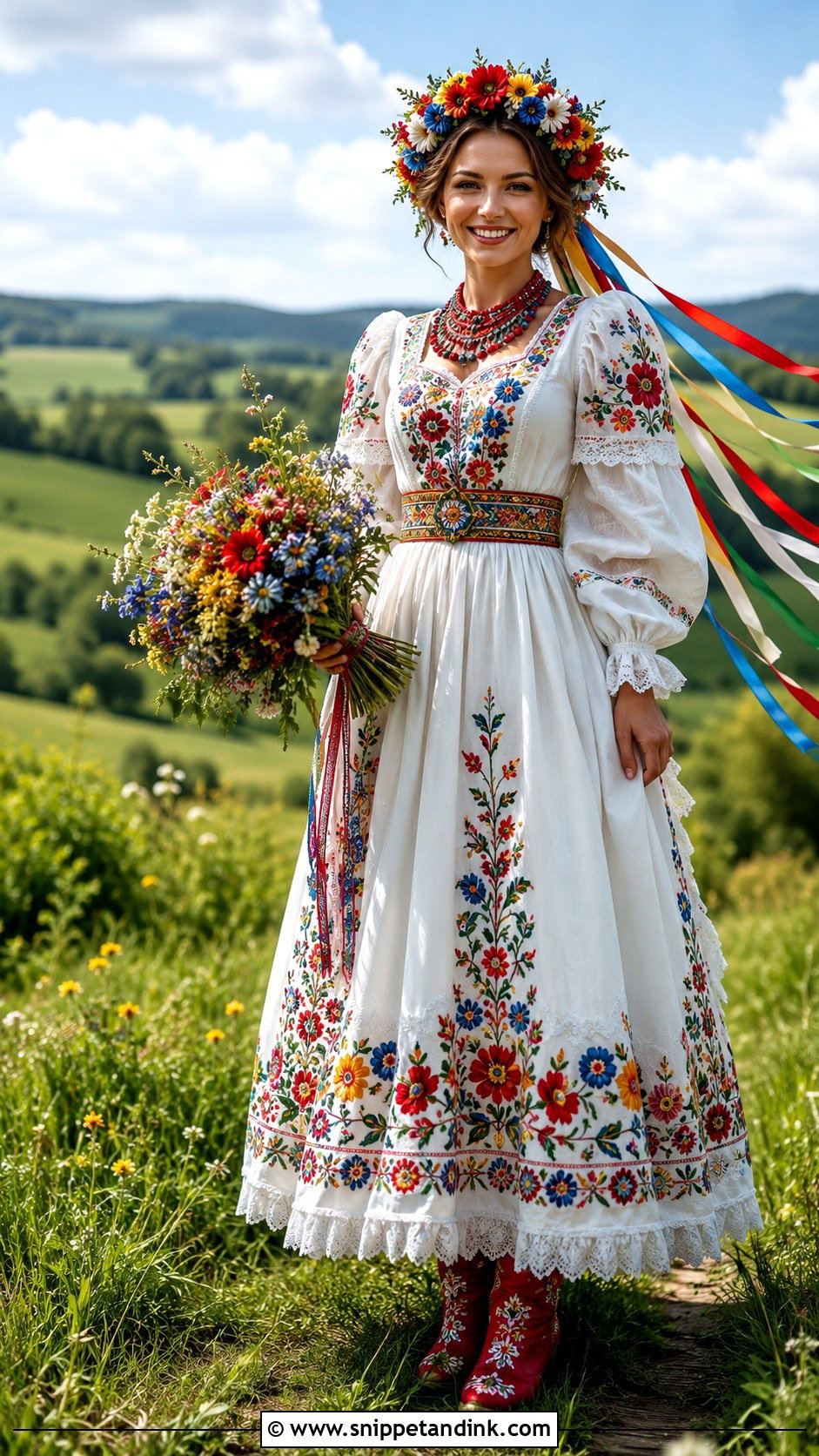
Bright flowers in red, blue, green, yellow and pink give a Polish-inspired wedding dress a handmade, joyful look. A white midi or ankle-length dress with a fitted waist, gathered skirt and puffed sleeves carries the embroidery at the bodice, cuffs and lower skirt. The shorter hem shows off embroidered red boots or low leather pumps. A wide patterned belt shapes the waist. A colorful floral crown with ribbons can replace the veil, or you can wear a short shoulder-length one. Repeat the dress colors in a small bouquet. It’s at home in a garden or a countryside barn, and you can dance in it all night.
6. Polish Folk Vest Wedding Dress
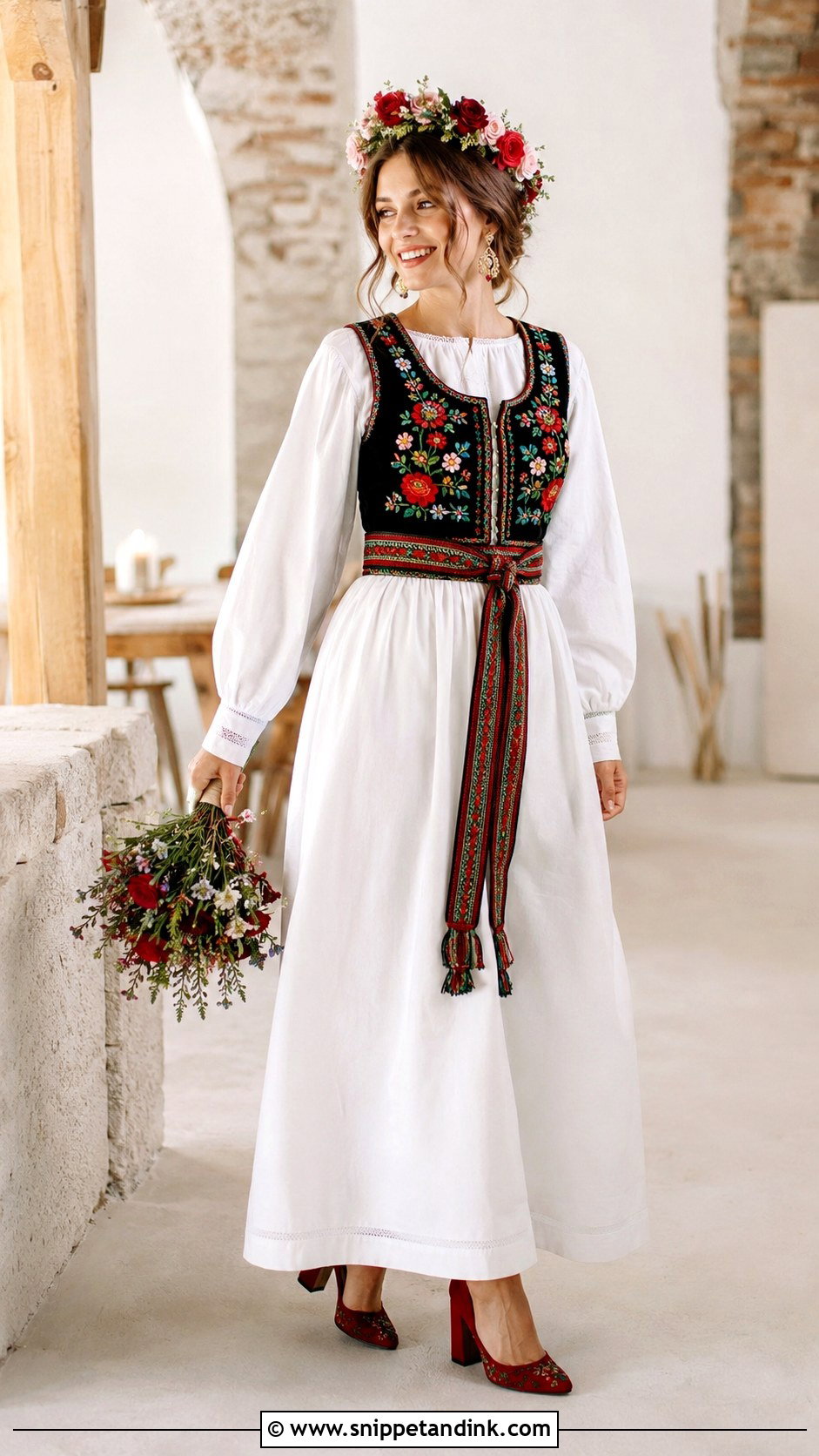
The vest is what turns a plain white dress into something recognizably Polish folk. Start with a crisp cotton or linen maxi, square neck, full sleeves and a gathered skirt, then layer a structured black, red or deep green vest with floral embroidery and neat front fastenings. A striped or floral woven sash adds to the waist. Red block heels, a small floral crown and fine gold earrings complete it. Pull the bouquet colors from the embroidery, three or four at most. I like that the vest comes off for dancing; it gives you a second look and cools you down at the same time.
7. Slovak Kroj Wedding Dress
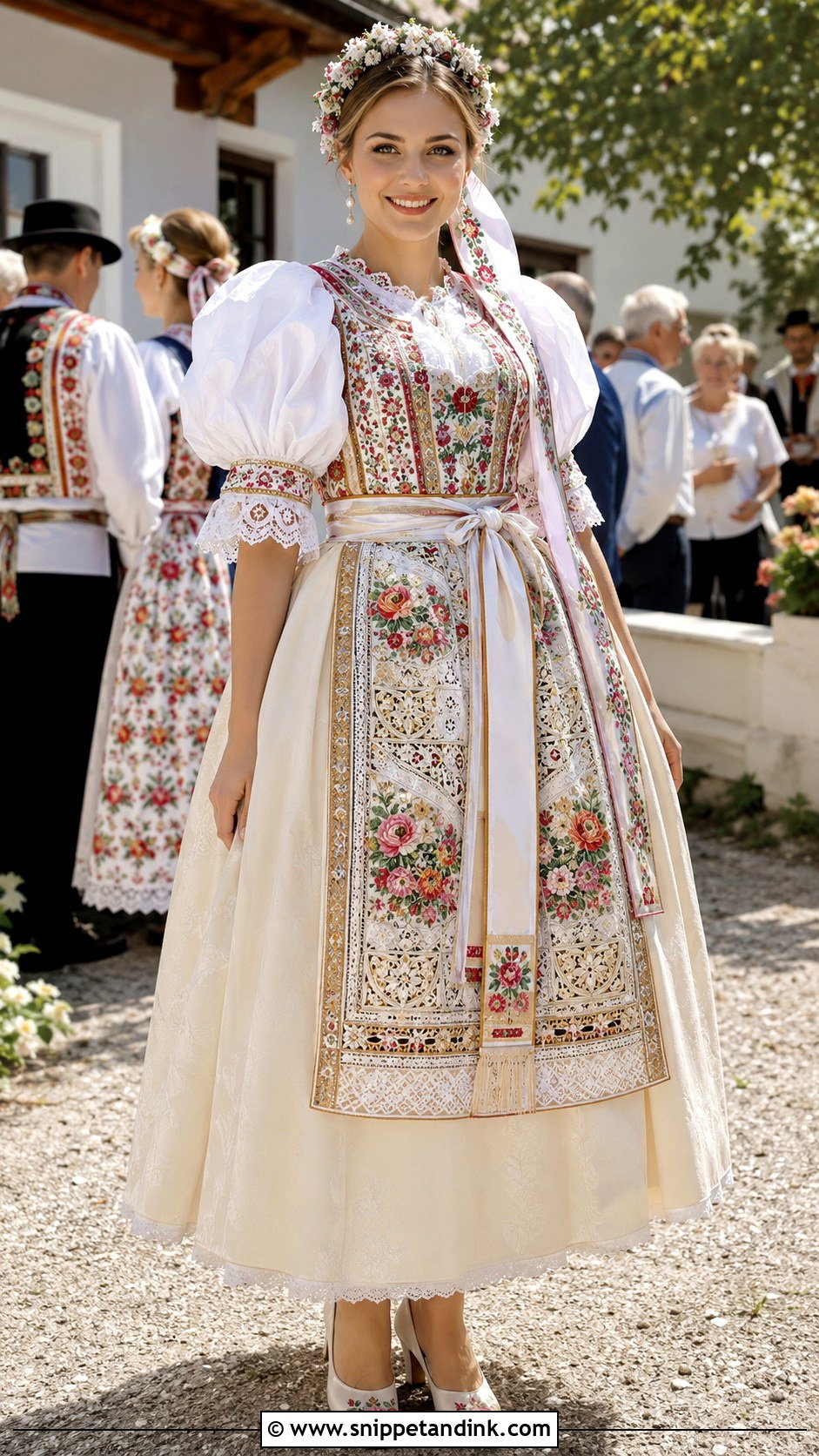
Kroj varies so much between Slovak regions that I’d never copy one outfit wholesale. Instead, combine a white embroidered blouse, a full ivory skirt and a fitted decorative bodice. Puffed sleeves, gathered cuffs and a modest square or round neck suit it. A richly patterned apron over the front of the skirt adds ceremony, and it can come off for the reception. Add a wide ribbon belt, embroidered pumps and a neat floral headpiece with long ribbons down the back, with small pearl earrings. For the embroidery and colors, ask relatives or a maker who knows your family’s region. They’ll spot a mismatched motif instantly.
8. Czech Folk Wedding Dress
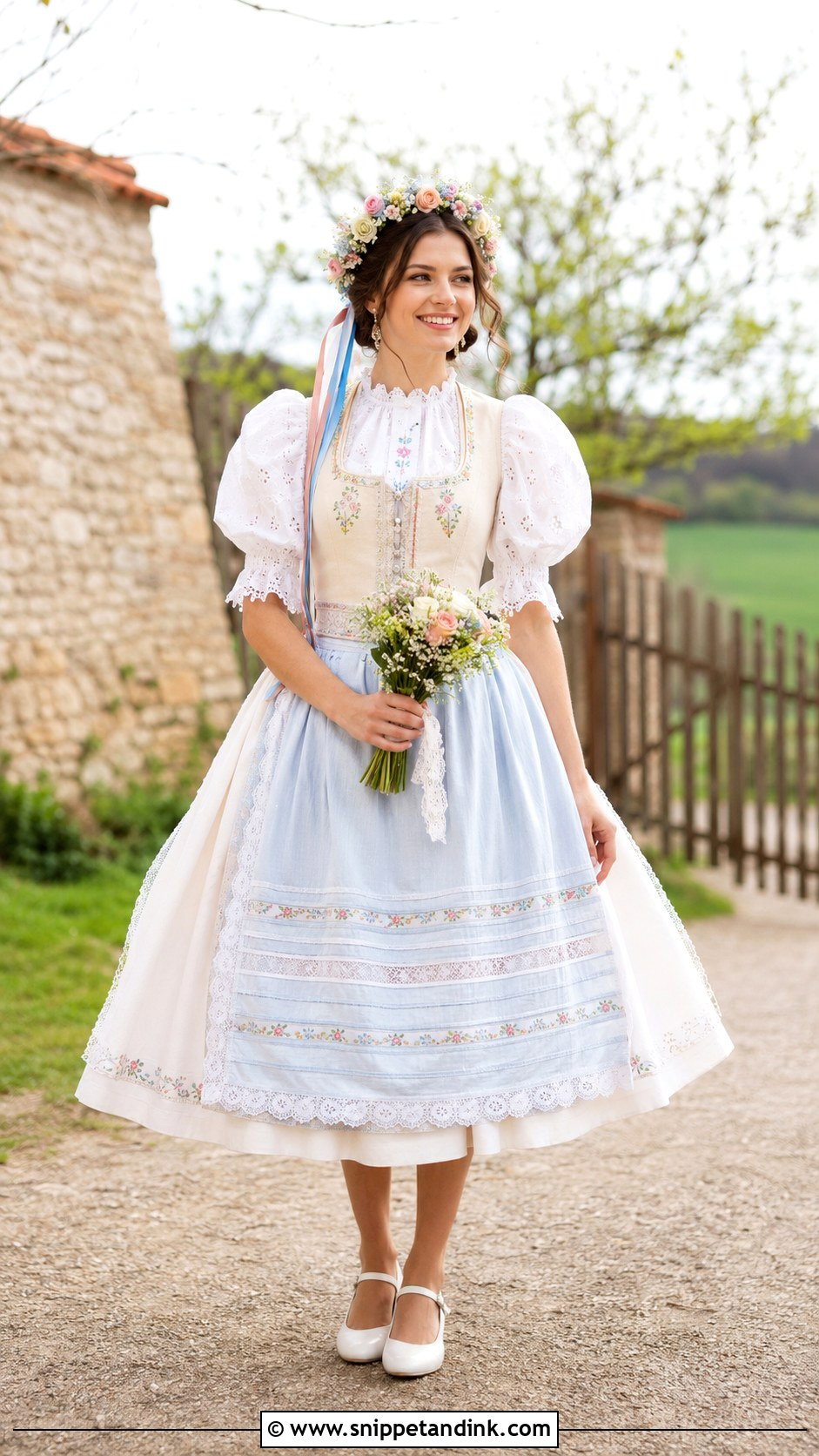
Czech folk dress has a lot of volume, and the trick is to keep it in a bridal palette. Pair a white blouse with elbow-length puff sleeves and fine neckline embroidery with a fitted ivory bodice and a full tea-length skirt that swings when you dance. A lightly embroidered apron in white, pale blue or soft red adds gentle contrast. Low Mary Janes suit the shorter length and stay comfortable all day. A small floral wreath with ribbons and a compact hand-tied bouquet are all you need; the sleeves, bodice and apron already carry the detail. Starch the puff sleeves lightly the day before, or they flatten under a wreath’s ribbons by the evening.
9. Serbian Jelek Wedding Dress
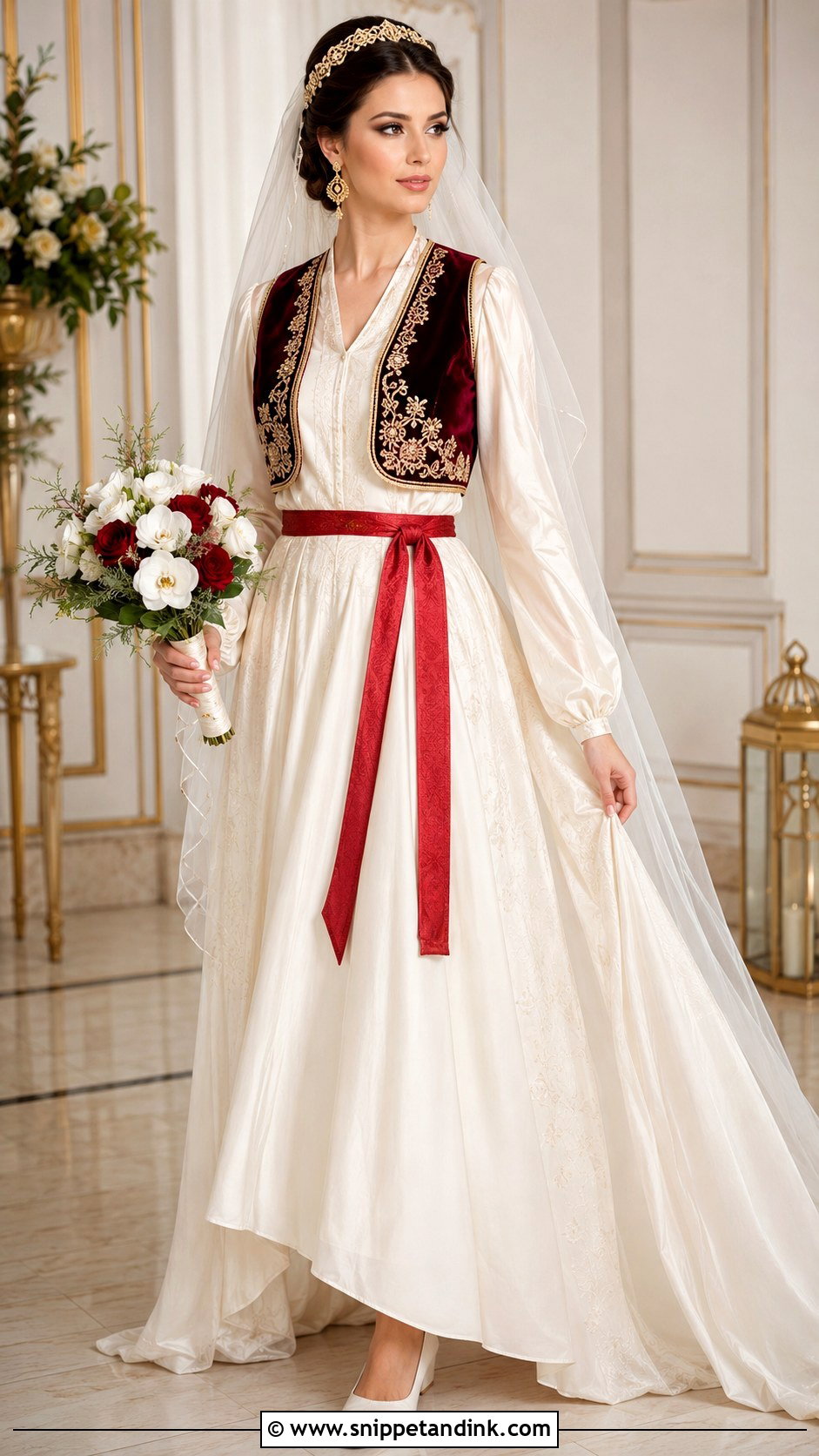
Everything in a Serbian jelek-inspired look comes back to the vest. Wear a cropped velvet vest in burgundy, black or deep blue, edged with gold braid or restrained metal embroidery, over a long ivory dress with wide sleeves and a light skirt. A narrow red sash links the colors at the waist. Gold earrings, ivory leather shoes and a simple veil anchored below a decorative headband complete it. Keep the dress plain so the vest’s craft stands out. Velvet marks easily, so I’d hang it separately and keep it away from the steamer. Work with a Serbian maker or a family member who knows the regional patterns and how the vest should be cut.
10. Croatian Lace Wedding Dress
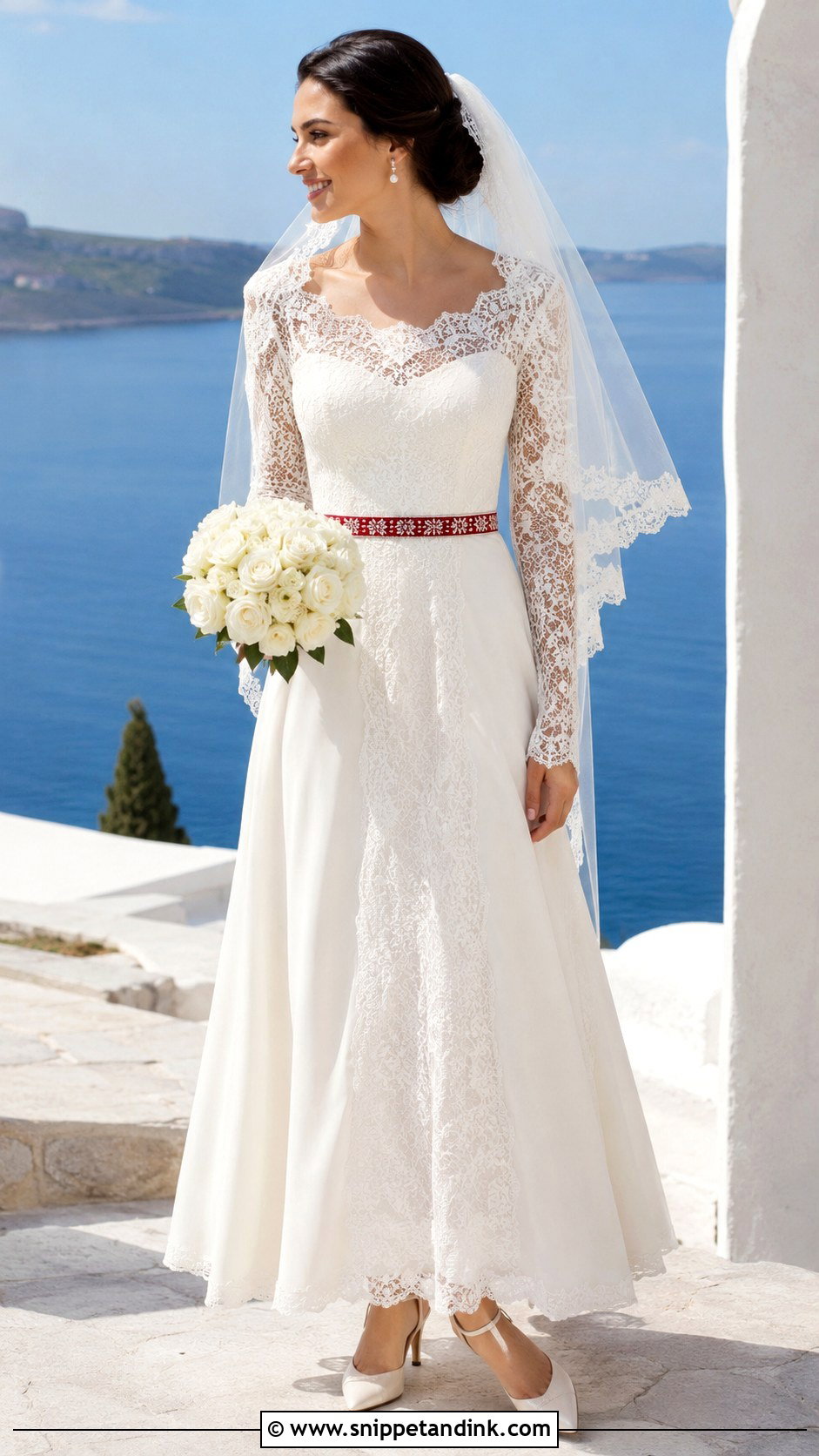
Lace gives a softer take on Slavic style, and a Croatian lace wedding dress leans on handmade-looking lace at the sleeves, neckline and skirt panels. An ivory column or A-line with a fitted bodice and a lightly flared hem shows it well, and long sheer sleeves display the lace best. A slim red or gold belt adds a heritage accent if you want one. Ivory slingbacks, pearl drops and a lace-edged veil complete it, with white roses, herbs and greenery. For a coastal summer, choose linen, cotton lace or light silk; heavy lace in Adriatic heat is hard going. It reads as refined rather than costume.
11. Bulgarian Embroidered Wedding Dress
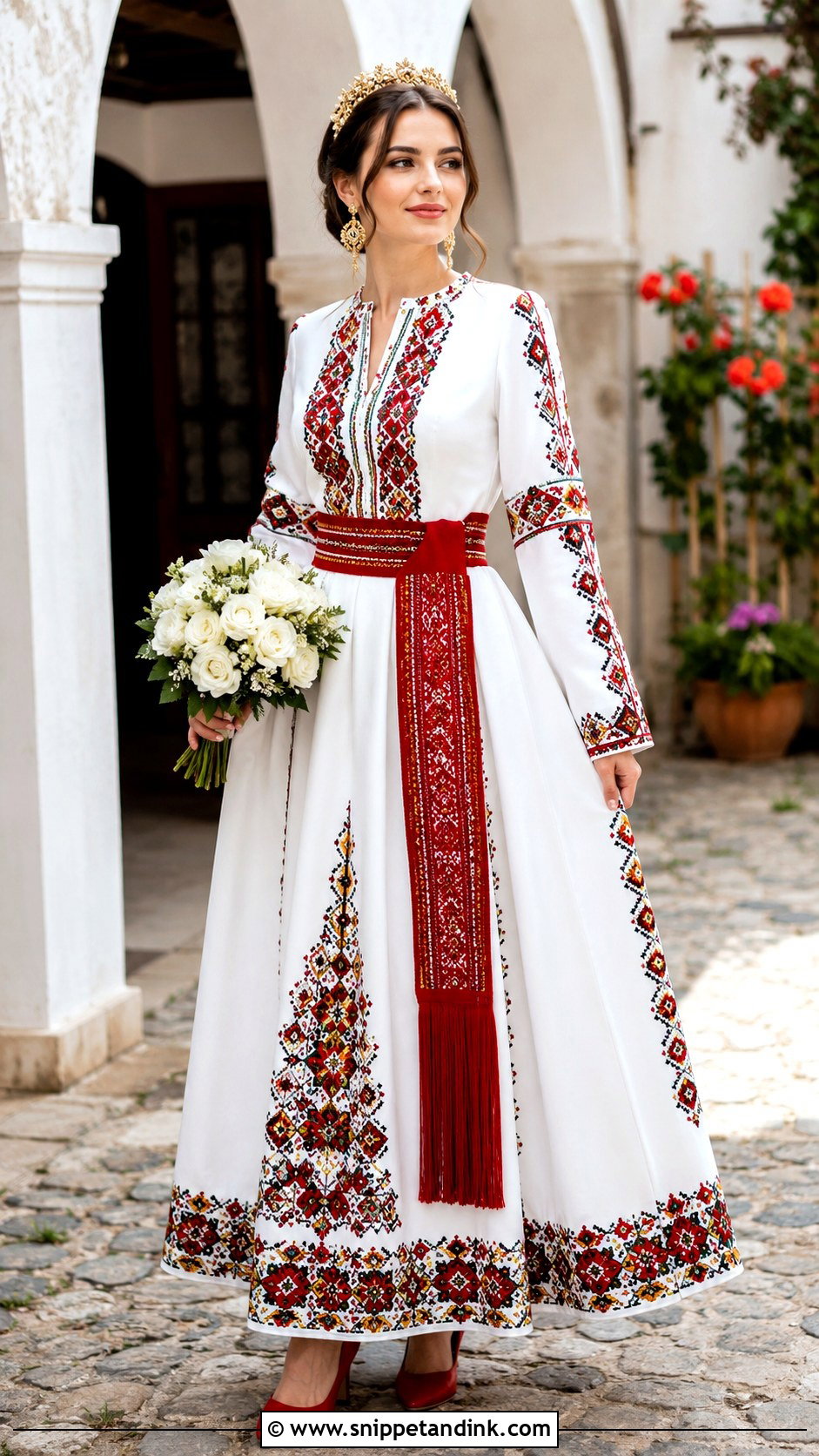
Strong geometric borders give a Bulgarian-inspired dress its shape. Choose a white linen or crepe gown with a fitted waist, long sleeves and a full ankle-length skirt, and place red, black, green and gold embroidery at the neckline, cuffs, belt and hem. Keep the middle of the dress white so each border reads clearly. A red woven sash, black or red low heels and gold statement earrings suit it, with a headband of small flowers and metal details. Carry white blooms with dark greenery and red accents. Because the borders outline the body, I fit these slightly more carefully at the waist; a band of embroidery sitting crooked is obvious from across the room.
12. Slovenian Alpine Wedding Dress
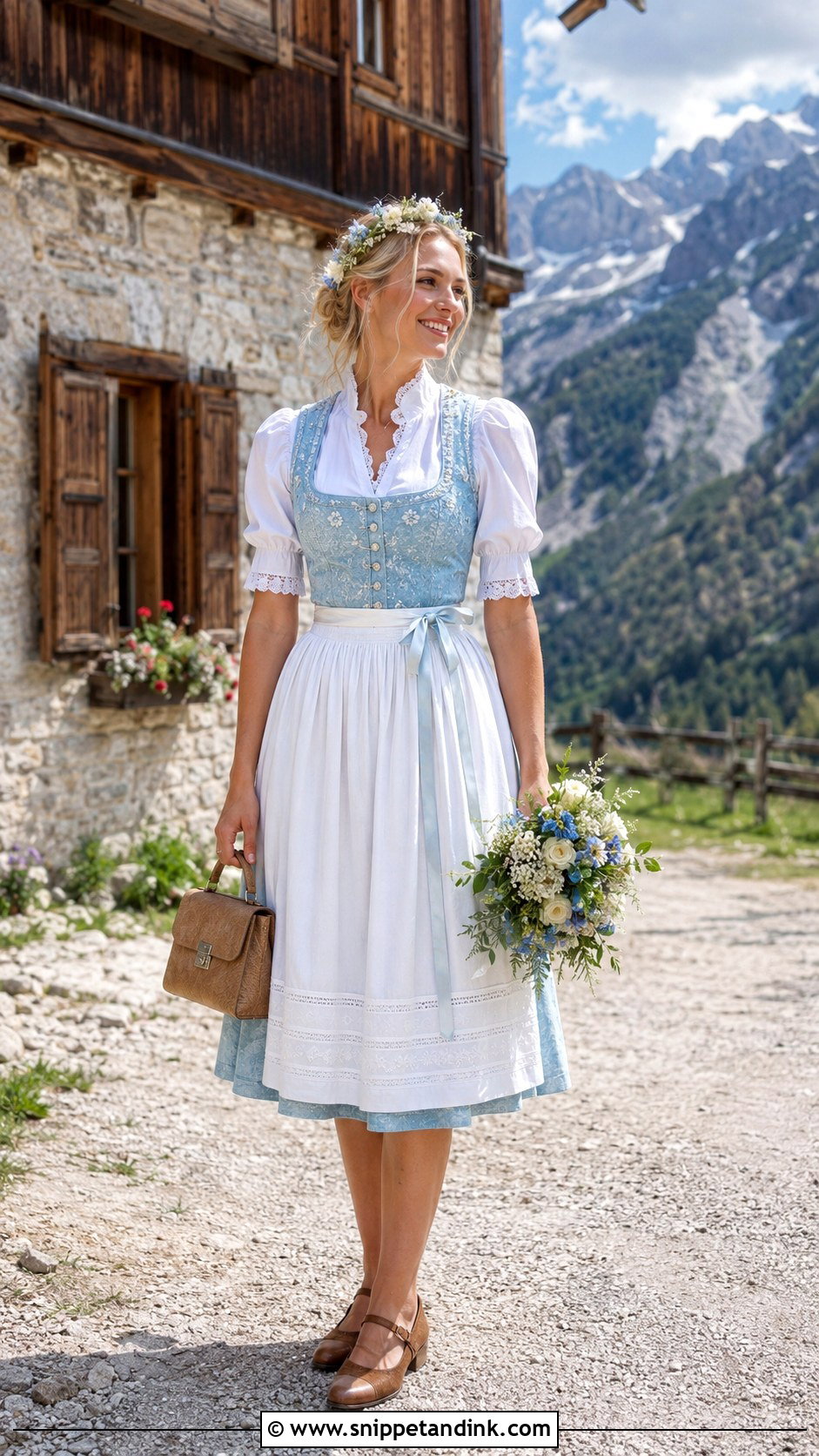
Alpine layers are practical as well as pretty. Start with a white midi dress with a fitted bodice, puffed sleeves and a flared skirt, then add a pale blue, green or burgundy embroidered vest and a white apron edged in fine lace, tied with a narrow ribbon. White or tan leather shoes, a small structured bag and a delicate flower crown finish it. For a chilly mountain evening, a cropped wool jacket keeps you warm without covering the vest. Meadow flowers and greenery suit the setting. Choose shoes with a grippy sole if the ceremony is on grass or a slope.
13. Bosnian Gold Embroidered Wedding Dress
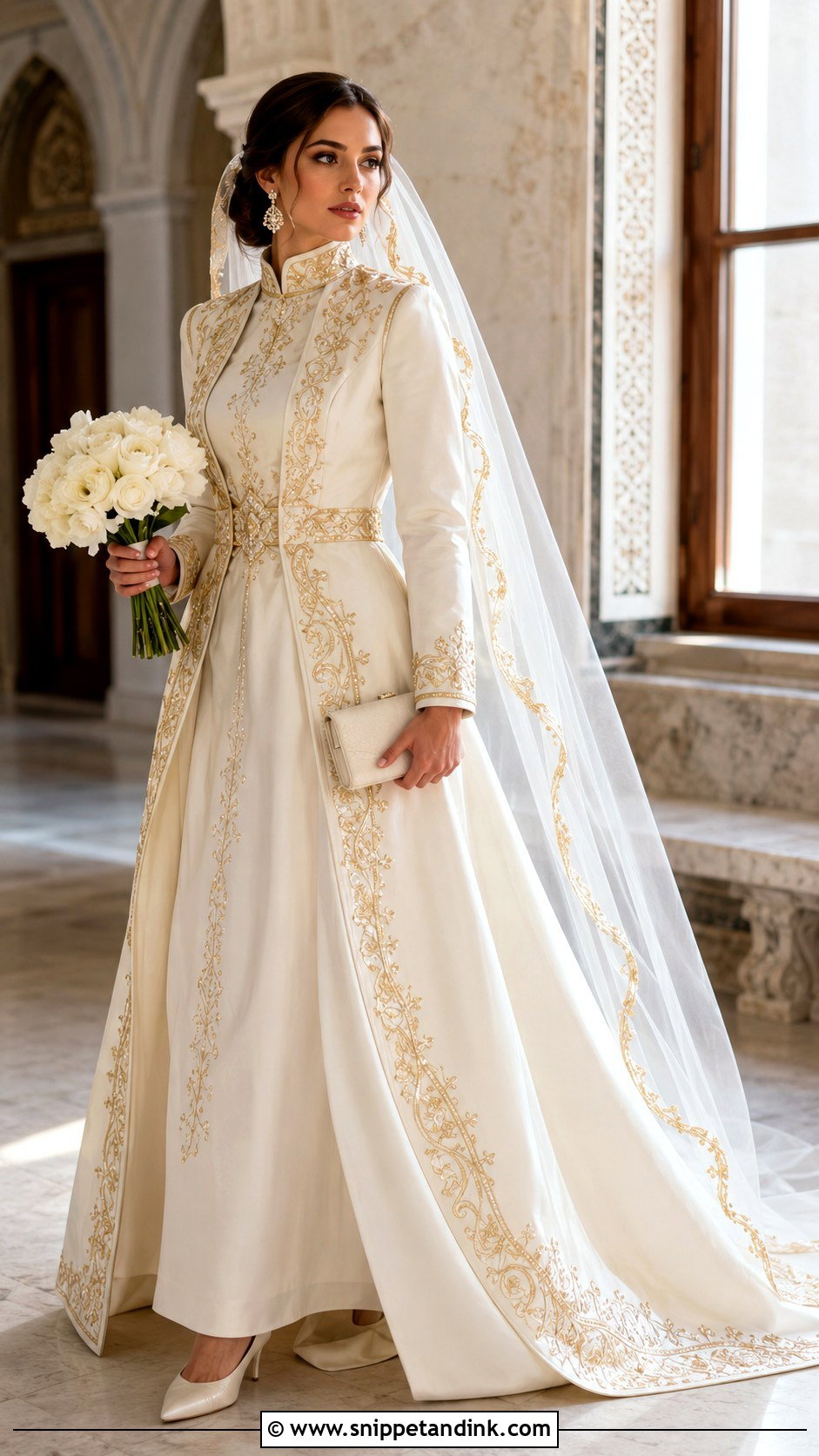
Gold threadwork gives a Bosnian-inspired gown real richness, as long as it frames the dress rather than covering it. I’d put it at the front opening, cuffs, collar and waist of a long ivory gown with a high neck, fitted bodice and soft skirt. A short structured jacket or embroidered vest for the ceremony can come off later. Pointed ivory heels, gold drops and a small cream clutch suit it, with a sheer veil edged in gold. White roses and glossy greenery keep the bouquet elegant. Metal thread is scratchy on the inside, so check that it’s lined at the cuffs and collar, where it touches skin.
14. Montenegrin Red And Ivory Wedding Dress
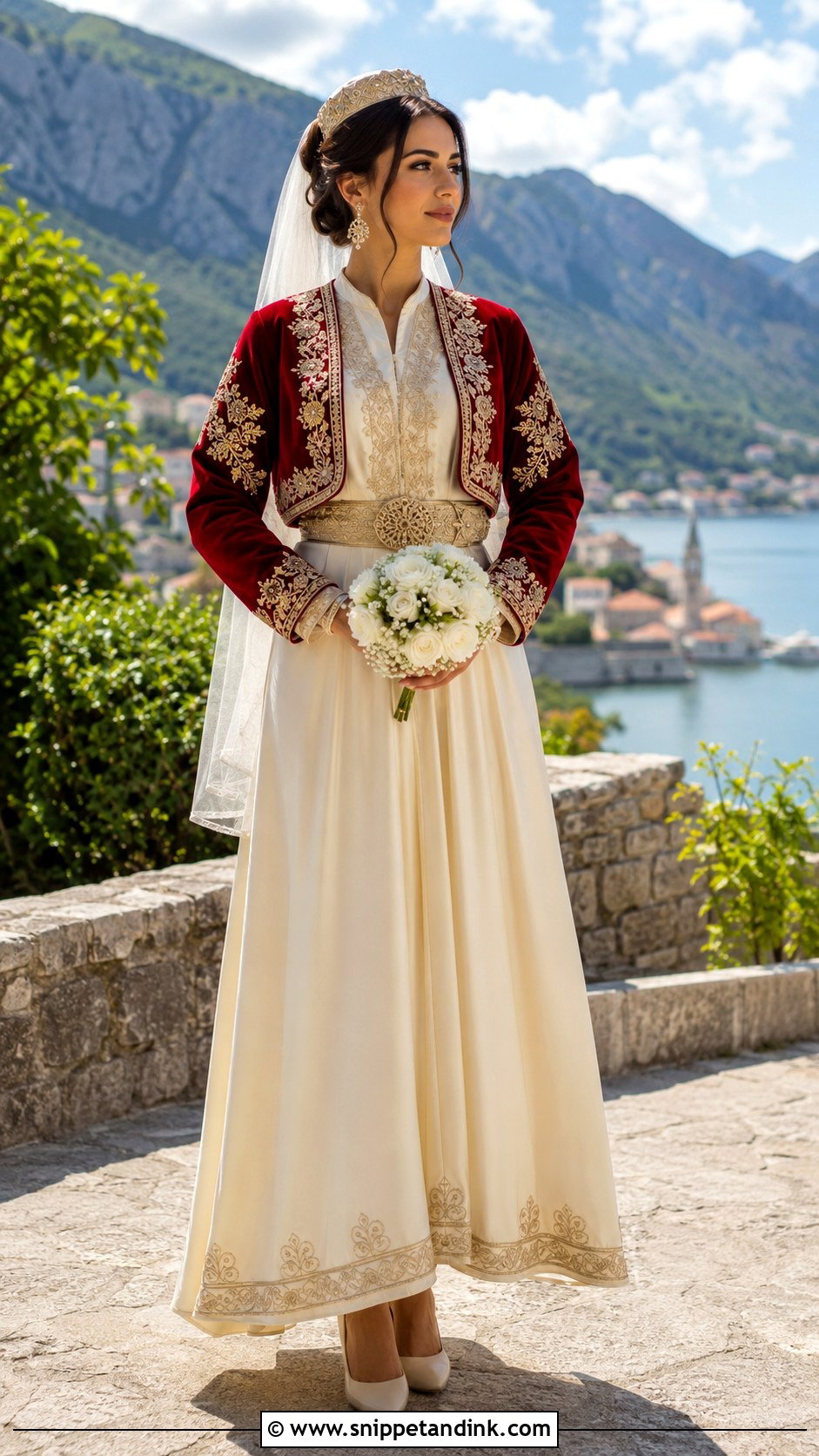
Deep red, ivory and metal embroidery make a dramatic Montenegrin-inspired look. Start with an ivory long-sleeve gown fitted through the bodice with a full skirt. Add a cropped red velvet jacket or fitted vest with gold or silver work, and a red belt for a strong waistline. Ivory closed-toe heels, metal earrings and a decorative headpiece above a sheer veil complete it, with a compact bouquet of white flowers and dark leaves. Red and metal decoration do appear in historic Montenegrin bridal dress, but the specific garments differ from one community to another. Treat this as inspiration, and check with family or a knowledgeable maker before you commission anything.

15. Belarusian Geometric Wedding Dress
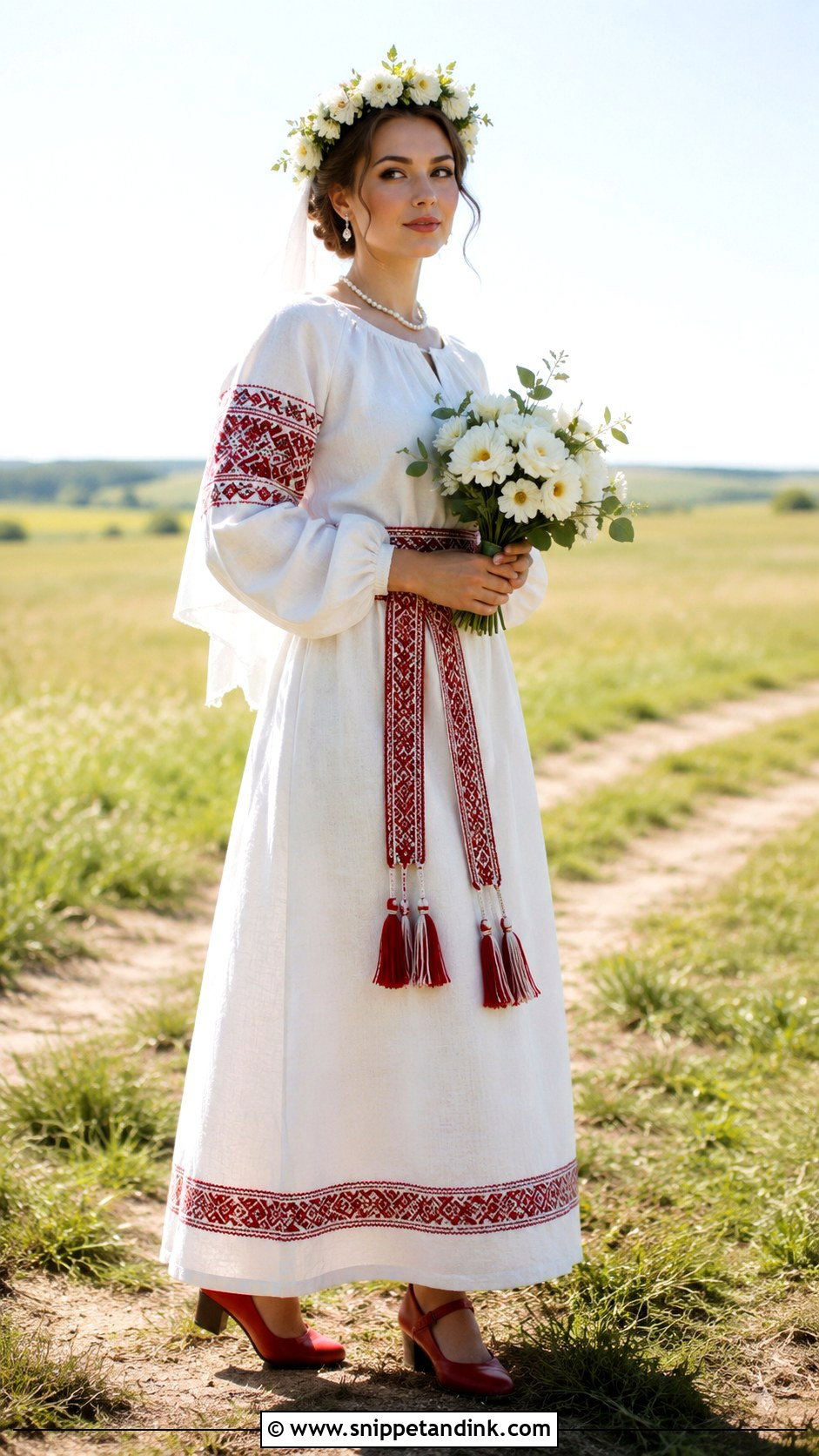
Restraint is what makes red geometric embroidery look crisp on a Belarusian-inspired dress. A white linen maxi with a straight neck, full sleeves and a softly belted waist is the base. Place red stitched bands down the sleeves, around the cuffs and along the lower skirt. A matching woven belt with long tasselled ends adds movement. Red leather flats or block heels, pearl earrings and a white floral wreath suit it, and a light veil can attach at the back of the wreath. Linen creases the moment you sit, so I’d accept a little texture or pick a linen blend if wrinkles will bother you in photos.
16. Modern Slavic Wedding Dress
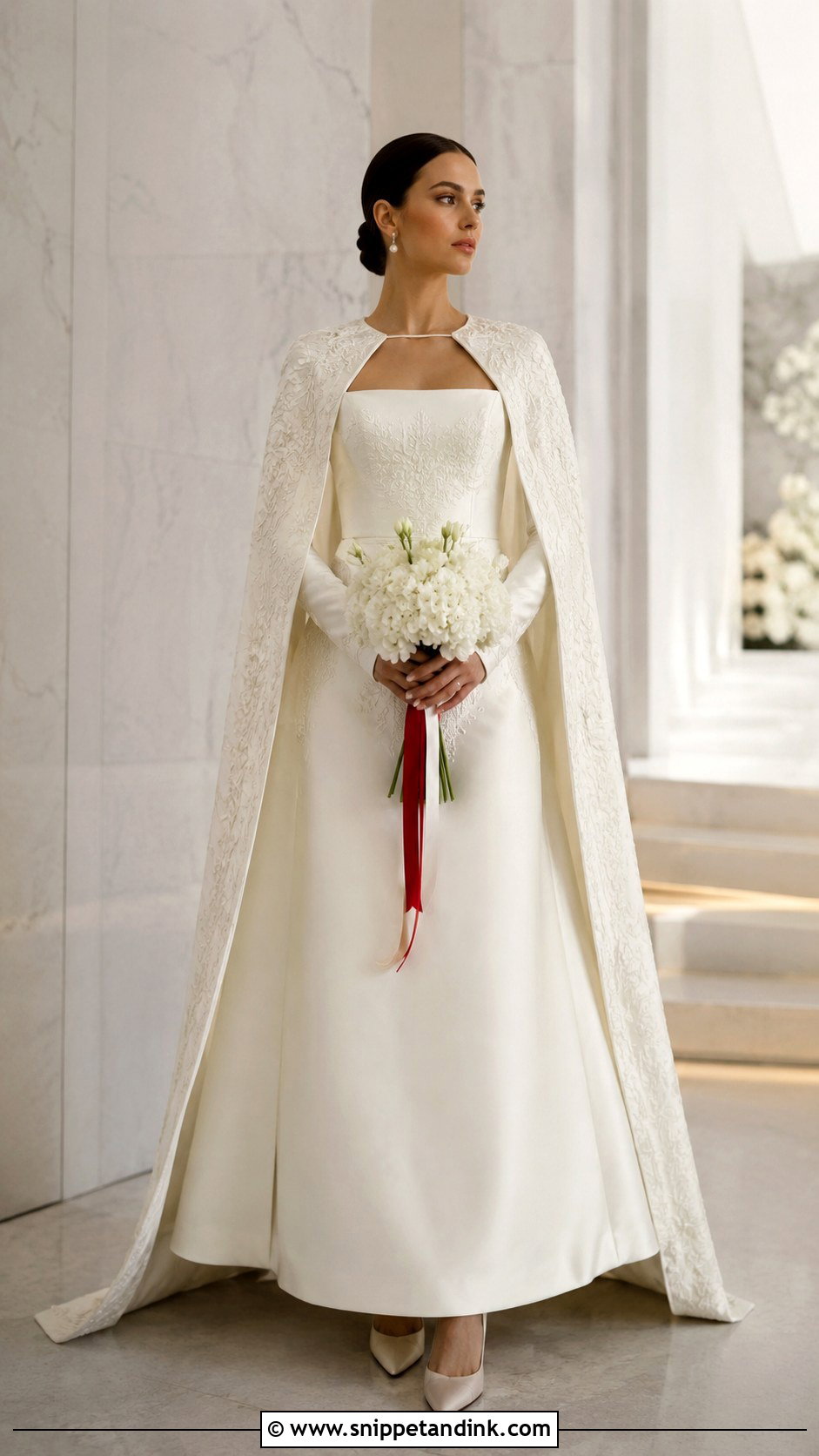
For a bride who wants heritage without heavy decoration, I’d start from a clean ivory silk A-line with a square neck and long fitted sleeves. Tone-on-tone embroidery at the cuffs, waist and upper back reveals itself slowly, mostly in close-up photos. A detachable embroidered cape adds drama for the ceremony and leaves the simple gown for the reception. Ivory pointed heels, pearl earrings and a sleek low bun keep it modern. Weave a narrow red ribbon into a bouquet of white roses or calla lilies for a quiet color accent. The tonal stitching is easier to commission than full color, as there’s no risk of dyes bleeding.
17. Slavic Boho Wedding Dress
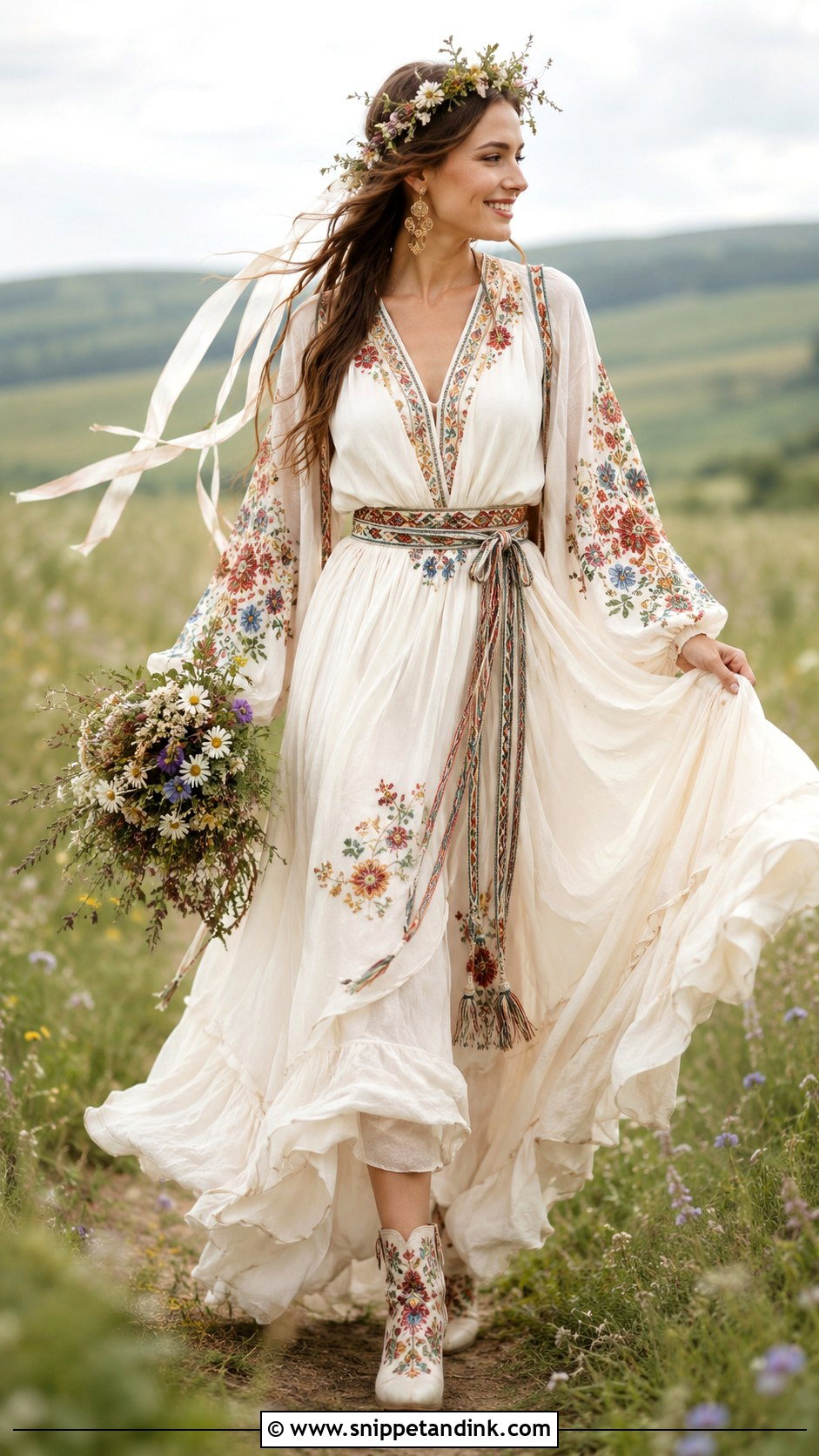
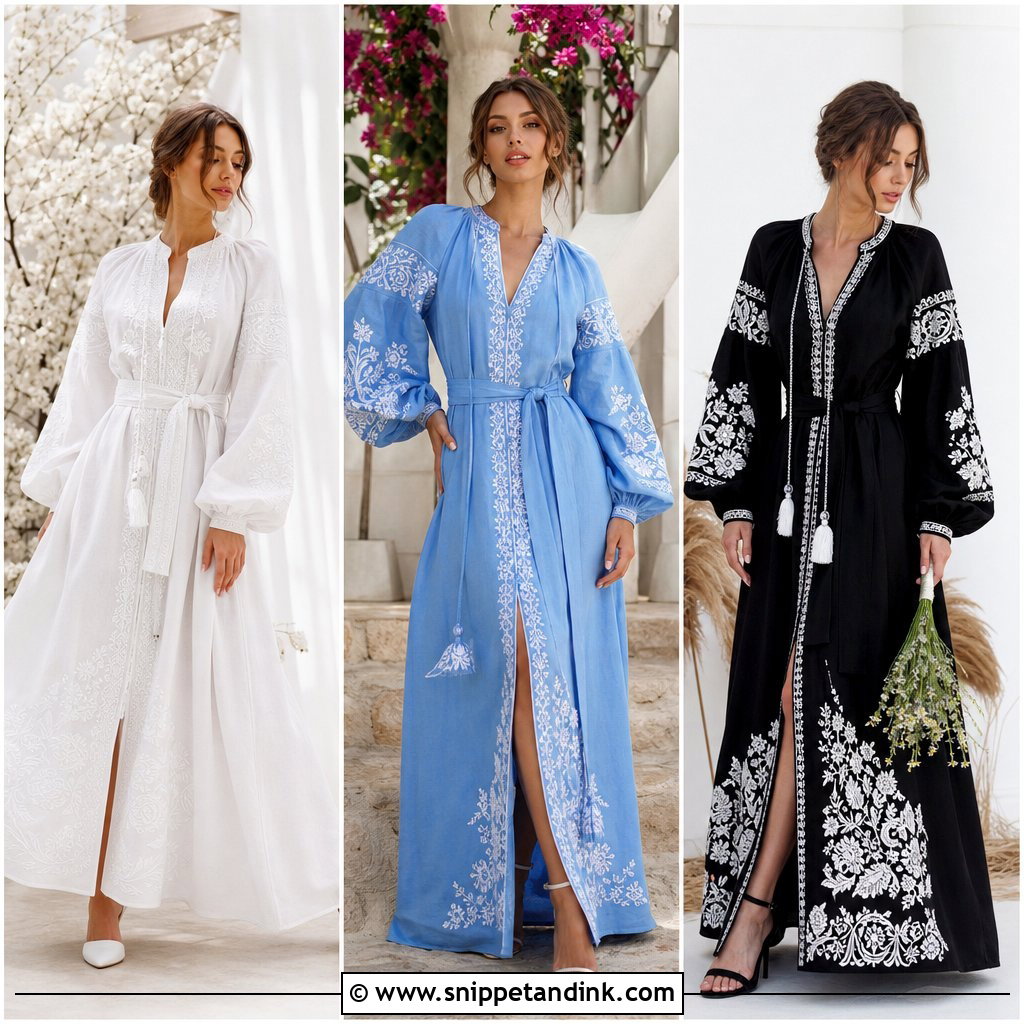
Boho and Slavic embroidery mix well outdoors, as long as the stitching stays visible against the softness. Choose a flowing ivory gown with a soft bodice, open neckline, full bishop sleeves and a layered chiffon skirt, with colorful floral or geometric stitching at the neck, cuffs and waist. A woven belt gives the loose shape some structure. Embroidered ankle boots, a floral crown and long ribbons that catch the breeze complete it. Skip heavy jewelry for small gold hoops or pearl drops. A wildflower and herb bouquet suits a meadow, woodland, farm or garden venue. Bring a lint roller; chiffon layers pick up grass seeds.
18. Slavic Winter Wedding Dress
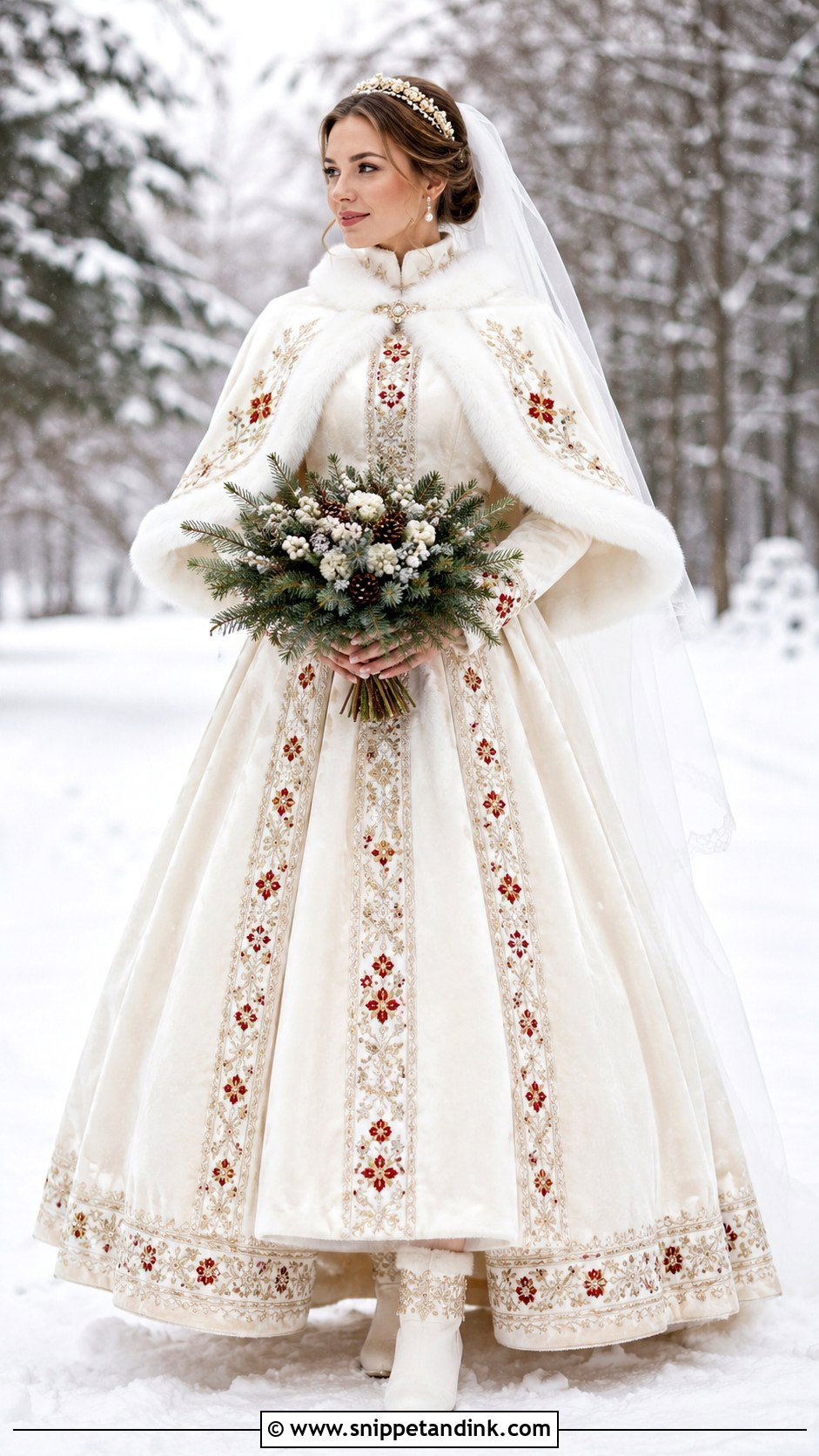
Winter is when the richest fabrics make sense. Choose an ivory velvet or heavy satin gown with long sleeves, a high neck and a full floor-length skirt, with red and gold embroidery at the cuffs, collar, waist and train. A white faux-fur cape fastened with a brooch keeps you warm for outdoor photos. Lined ivory ankle boots, pearl earrings and a structured velvet clutch suit it, with a jeweled headband above a long plain veil. White flowers, evergreen and red berries complete the bouquet. Brooch pins can tear velvet, so pin through the cape’s own fabric or ask for a sewn-in loop to hook onto.
19. Slavic Two-Piece Wedding Outfit
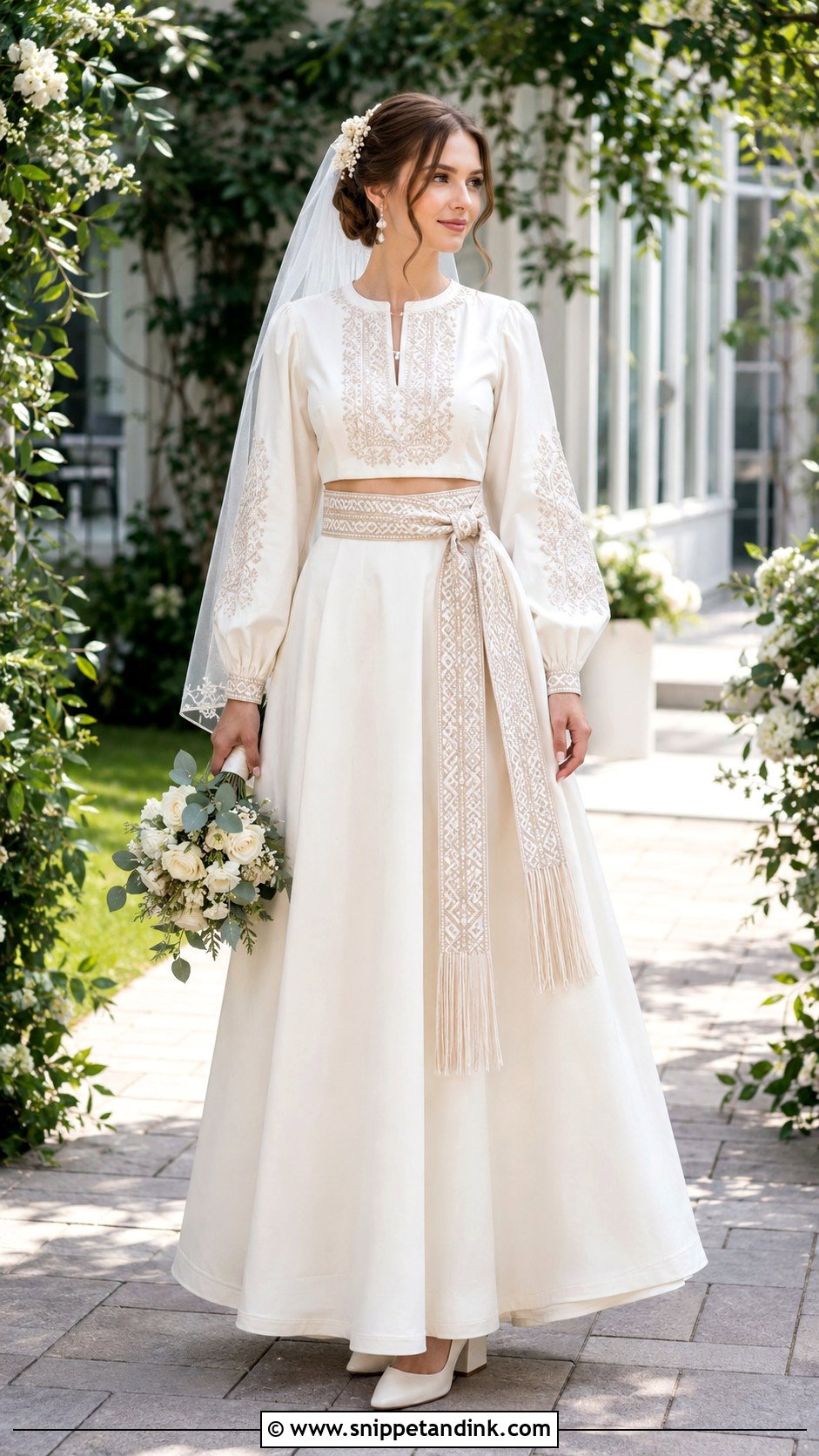
A two-piece puts the embroidery right where the camera looks, on the blouse. Pair a cropped ivory blouse, modest neck, full sleeves and gathered cuffs, embroidered across the shoulders and front, with a high-waisted floor-length A-line skirt. Keep the skirt mostly plain with a narrow embroidered border at the hem. A wide woven sash joins the pieces and covers the waist. Ivory block heels, pearl earrings and a floral comb under a fingertip veil complete the outfit, with a bouquet in colors taken from the embroidery. Afterwards, the blouse alone becomes something you’ll actually wear again to family celebrations.
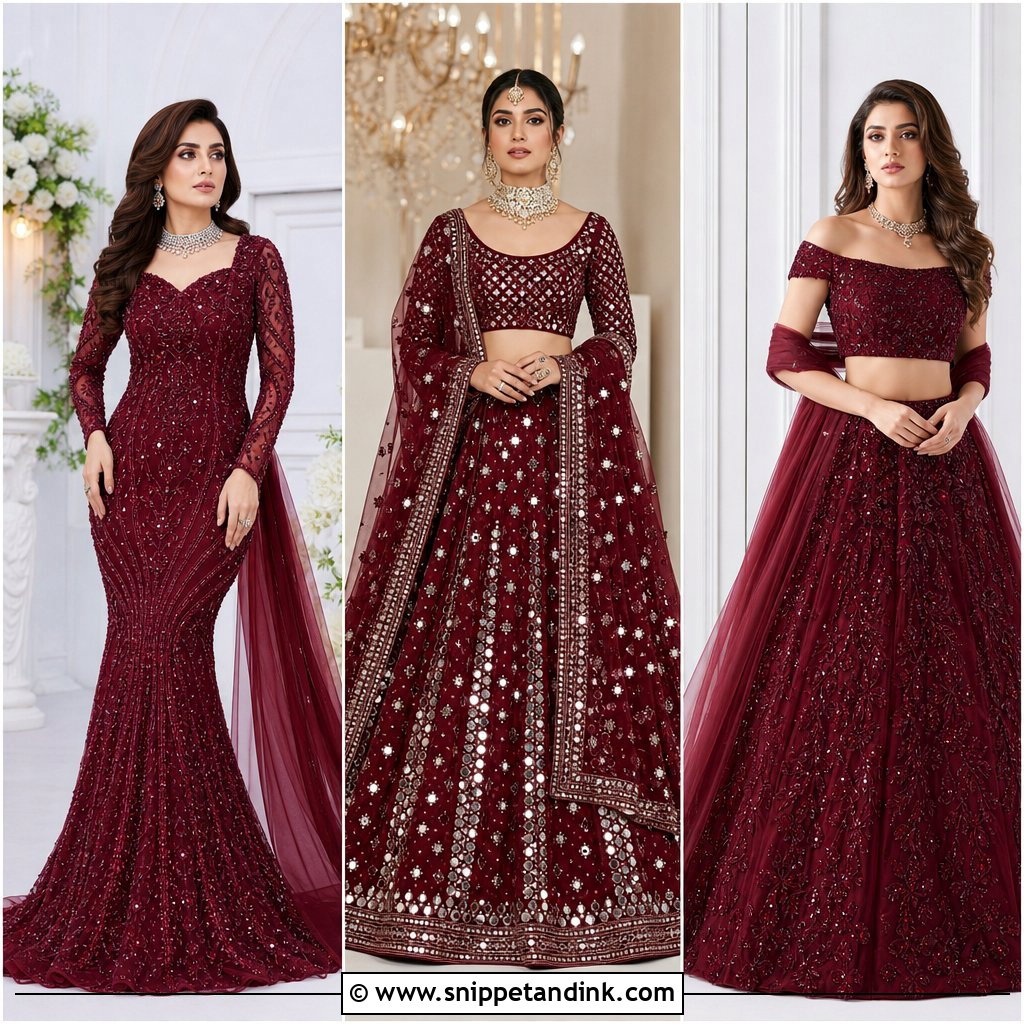
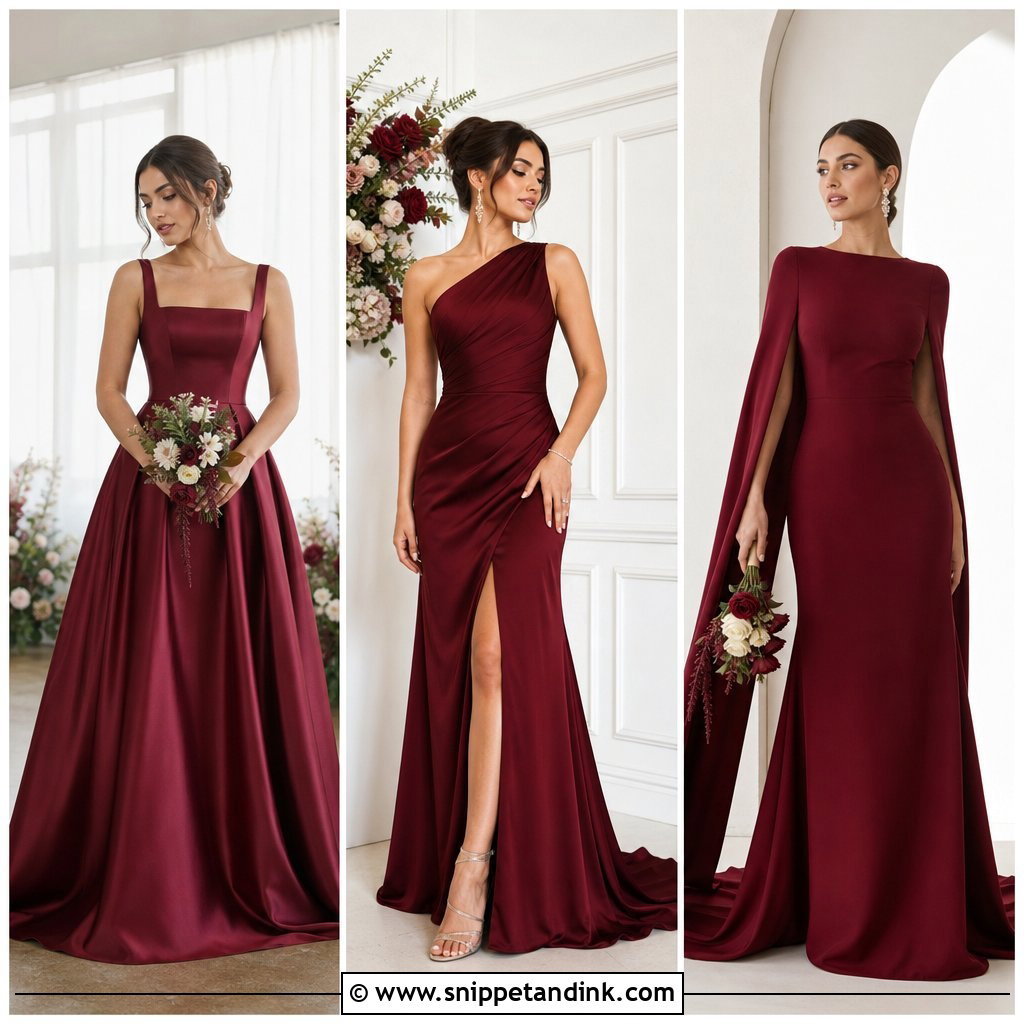
20. Slavic Reception Wedding Dress
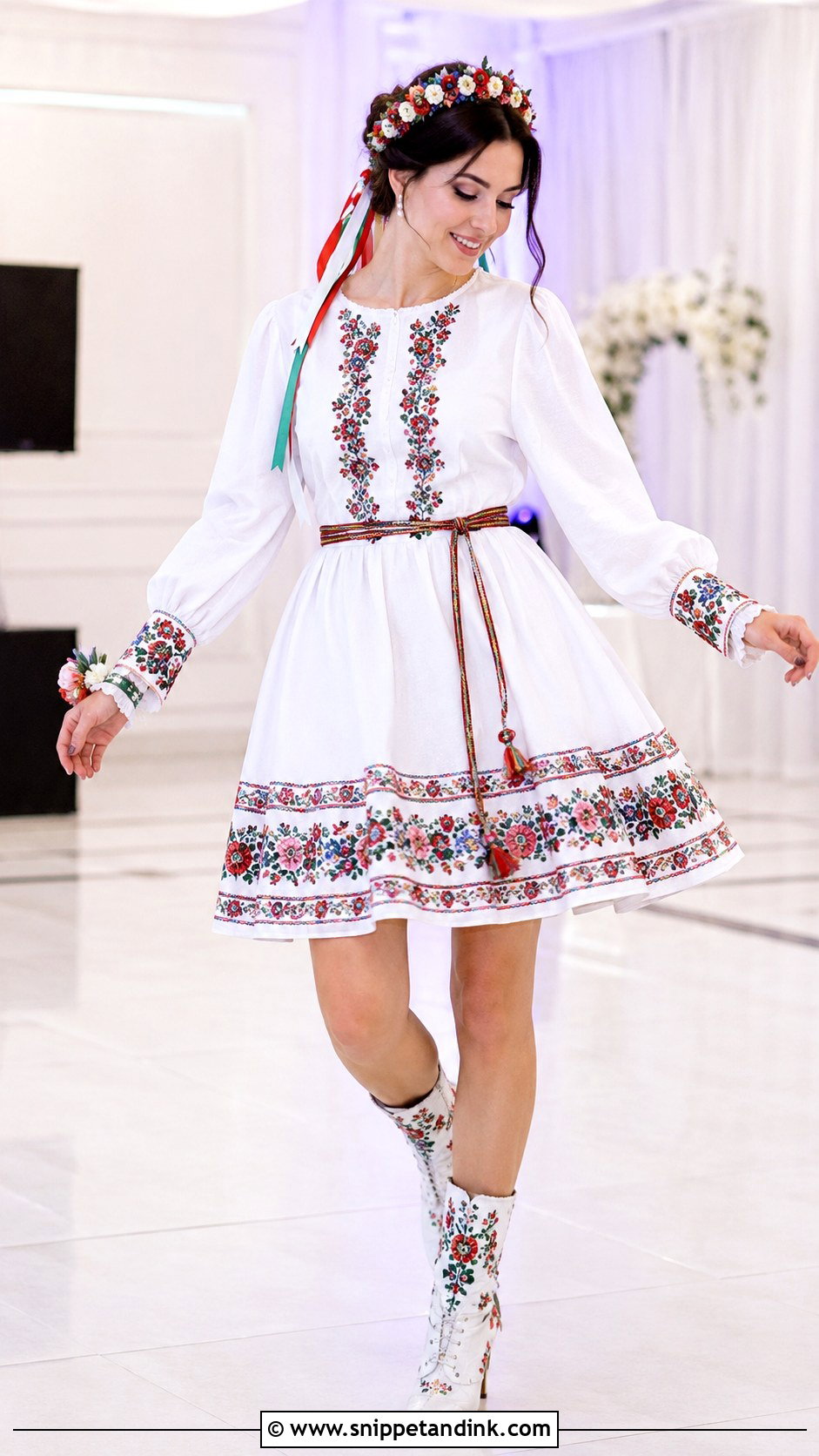
A short reception dress keeps the theme going while freeing you to dance. Choose a white or ivory mini with a fitted waist, full sleeves and a lightly flared skirt, embroidered in red, blue or multicolor at the neckline, cuffs and hem. Decorative ankle boots or low red heels are easy to move in. A slim woven belt, pearl earrings and a ribboned floral headband keep it festive. Swap the bouquet for a wrist corsage or a single flower. You can wear a detachable overskirt for your entrance and drop it before the first dance. Plan the change with your planner; ten minutes is realistic if someone helps with the fastenings.
Hand Embroidery Runs on a Long Clock
Full hand embroidery on sleeves, bodice and hem can take a skilled maker many weeks, and good makers often have a queue. Machine embroidery is far quicker and cheaper, but it reads flatter close up. I tell brides who want handwork to commission it as early as they’d order the gown itself, and to agree on a delivery date in writing.
- Ask the maker to prewash linen or cotton before stitching. Unwashed linen can shrink and pucker the embroidery the first time it’s cleaned.
- Check that red and dark threads are colorfast; ask for a test patch if you’re unsure.
- Have embroidered pieces cleaned only by someone used to handwork, and never in hot water.
Wearing a Wreath, Ribbons and a Veil Together
A floral wreath sits on top of the head, so the veil has to anchor underneath it, usually with a comb pushed into a low bun or a braid at the crown. Fresh flowers in a wreath wilt within a few hours in warm weather, which is why many brides choose preserved or silk flowers, or order a fresh wreath made with hardy blooms and keep it chilled until the last minute. Keep the ribbons to a length that ends above your waist, or they tangle with the veil and get sat on at dinner.
Start With Your Family’s Region, Then the Dress
Embroidered gowns, folk vests, woven belts, floral crowns, layered skirts, velvet jackets and ornate headpieces can all go into a Slavic bridal look. The details mean the most when they come from a real place, so learn which region your family is from before mixing motifs. A specialist maker, a relative who remembers, a museum collection or a cultural society can help you choose the right colors and stitching. Once you know those, fit them to a shape that suits your body, venue, season and comfort. The dress should honor where you come from and still feel like you.
You'll Like These Ideas:



Leave a Reply