
A gown for a Jewish wedding has to answer to more than taste. Communities differ a great deal: some families are relaxed about necklines and sleeves, while others expect covered collarbones, elbows and knees and fully opaque fabric. The first thing I ask a bride is what her rabbi, synagogue or family expects, because that answer decides which samples are worth trying and which alterations will be needed. The designs below run from traditional lace to plain crepe, each styled with shoes, veil and jewelry, and each with the fitting points I’d check. Use them as a starting point for a salon appointment or a custom order.
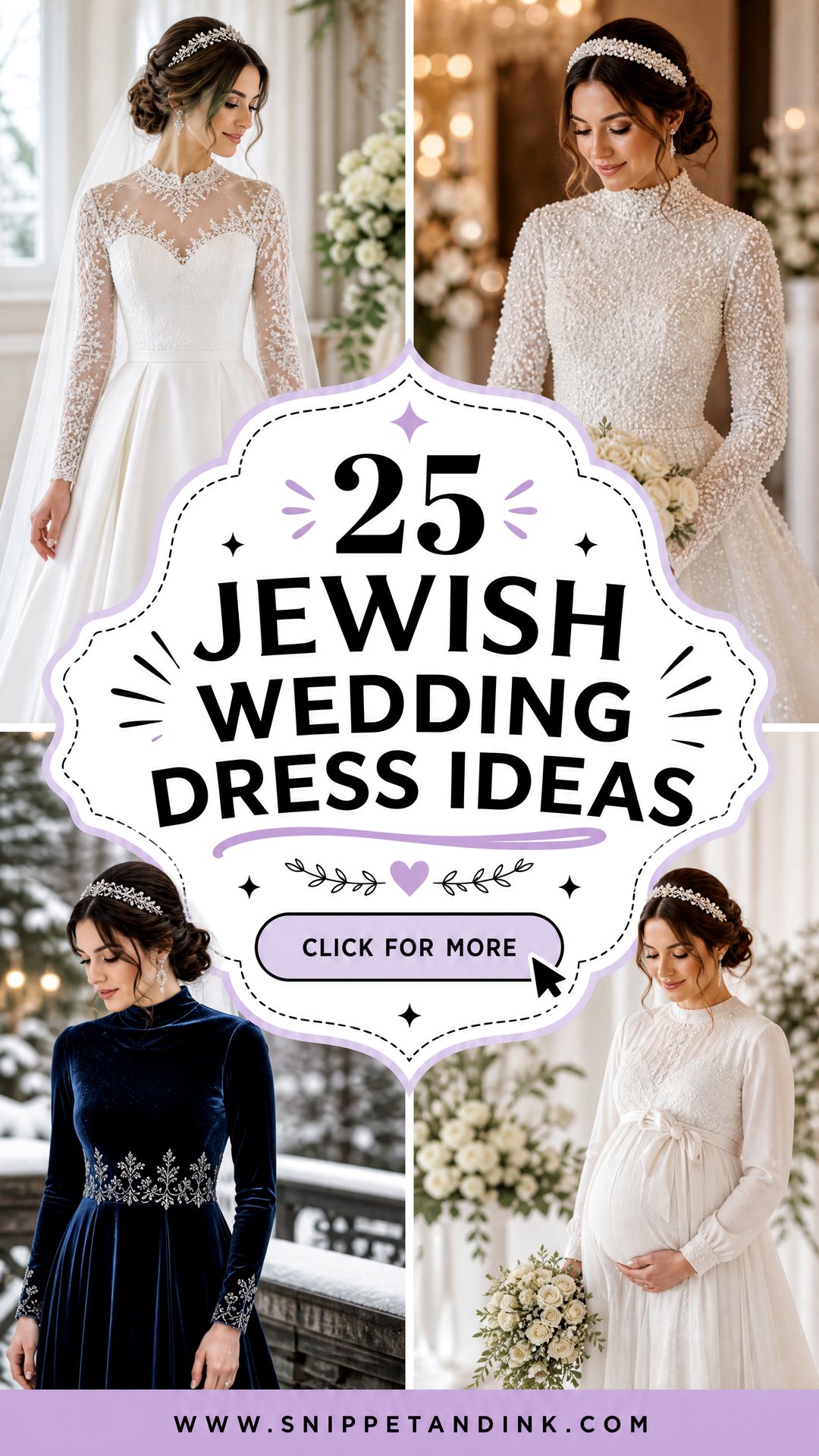
From Bedeken to Hora: What the Gown Has to Survive
A Jewish wedding asks a dress to do things a salon fitting never tests. Customs vary between Ashkenazi, Sephardic, Orthodox and liberal communities, but these are the moments I plan the gown around.
- The bedeken. Before the ceremony, in many families the groom lowers the veil over the bride’s face. That needs a blusher layer at the front and a comb anchored firmly enough to stay put when the veil is lifted and lowered again.
- The circles. In many Ashkenazi ceremonies the bride circles the groom, often seven times, under the chuppah. A long train in a small space wraps around your feet; a bustle or someone guiding the hem keeps it smooth.
- Yichud. A few private minutes together straight after the ceremony is often the only chance to eat, fix makeup and bustle the train. Have the person who knows the bustle waiting outside the door.
- The hora. Being lifted on a chair is a joyful moment and an awkward one in a full skirt. Gather the skirt over your knees before you go up, hold the seat, and consider fitted shorts underneath for peace of mind.
Shoes matter more than usual. Between the ceremony, the hora and long circle dances, most brides end up dancing for a good part of the evening. Low block heels or a second pair of flats saves the night.
1. Long Sleeve Lace Jewish Wedding Dress
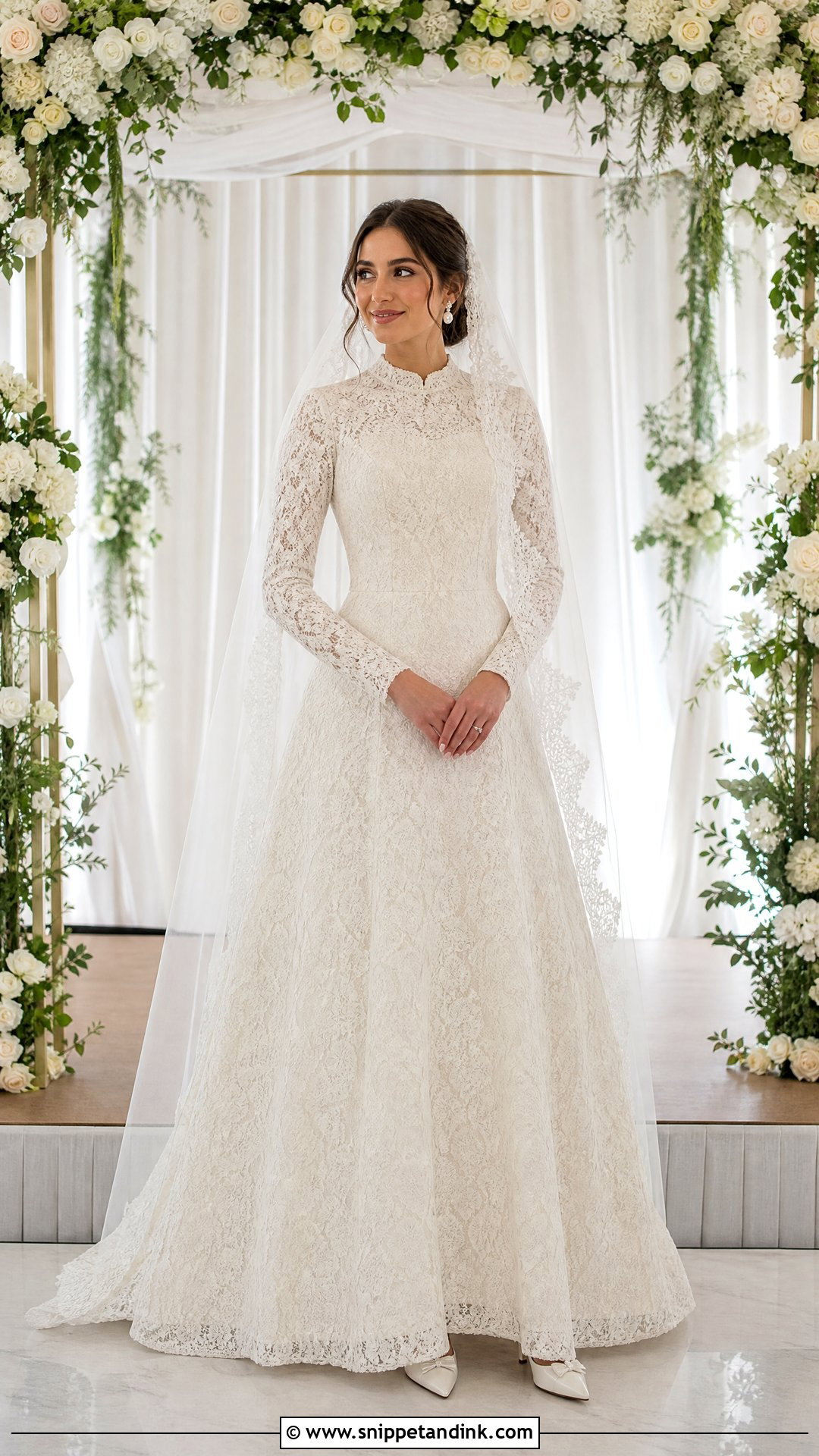
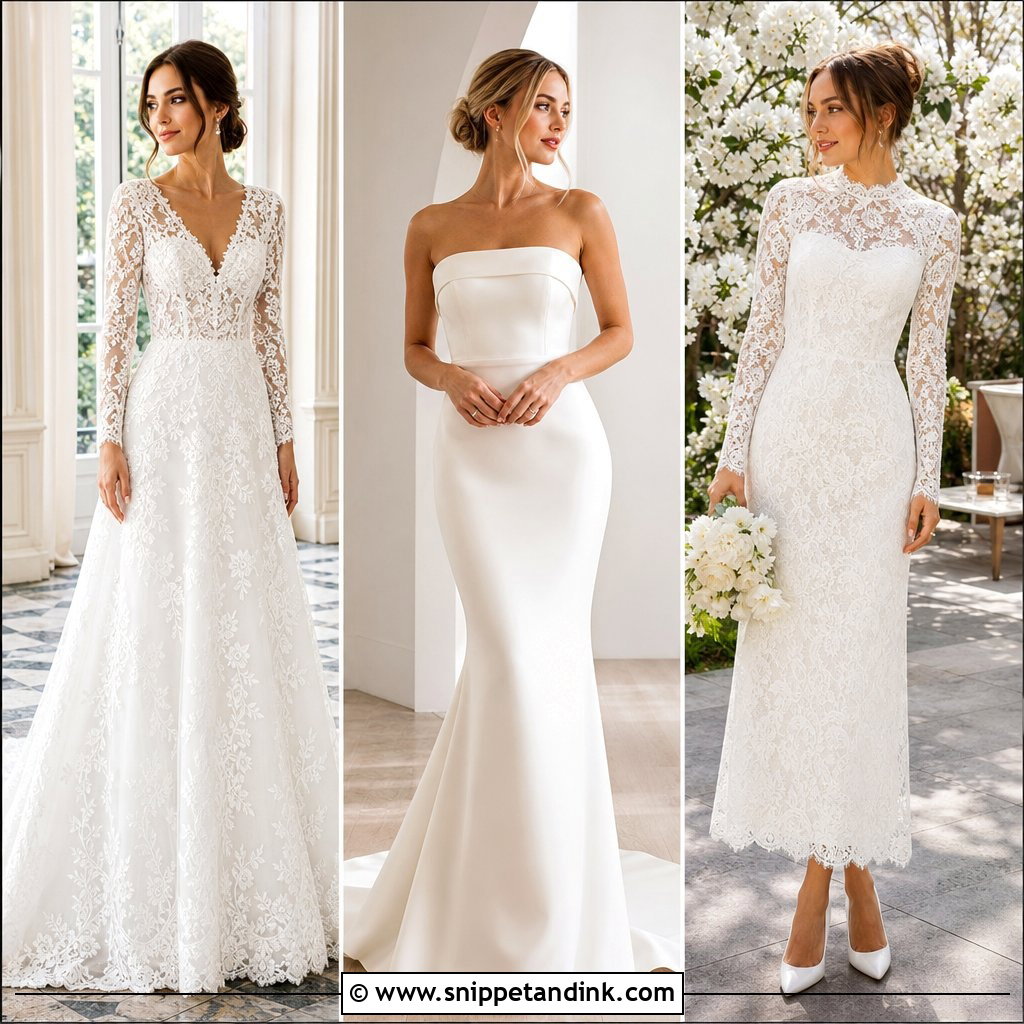
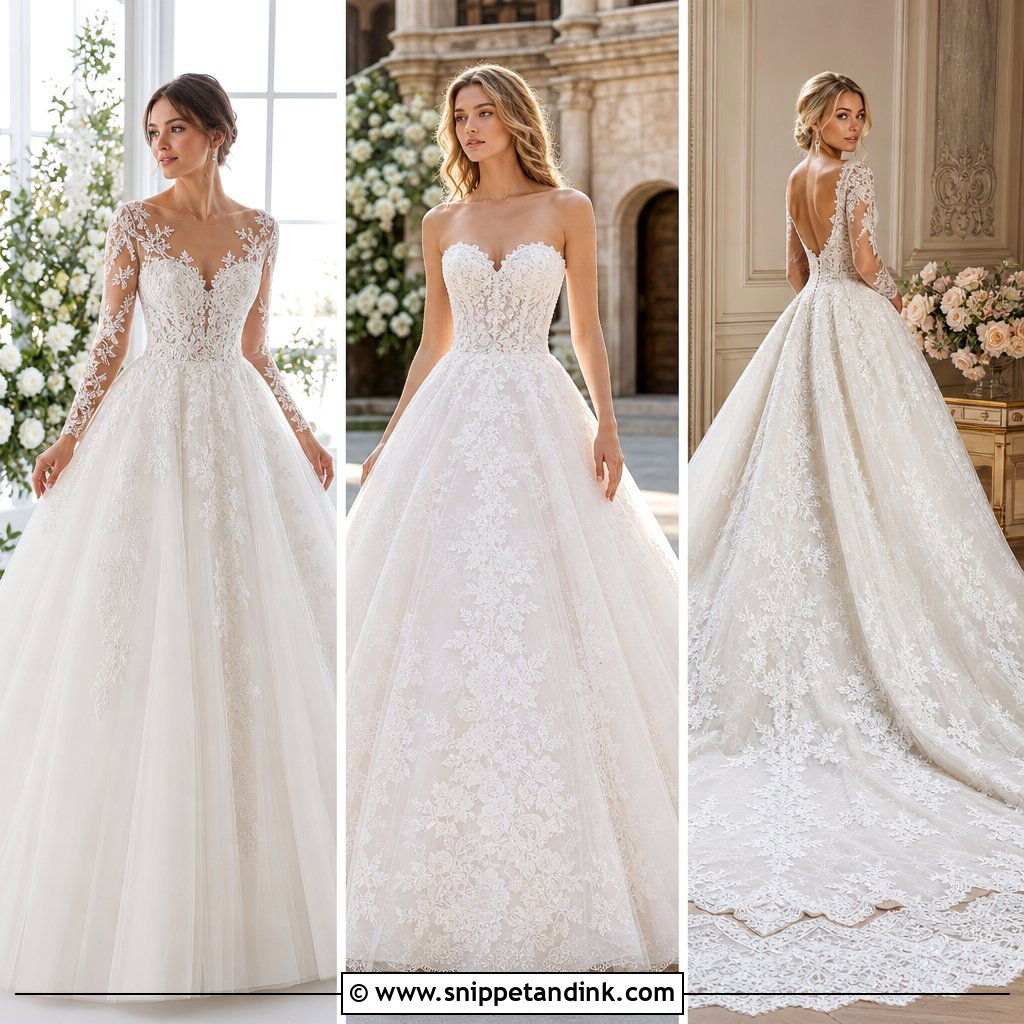
Long lace sleeves are the classic starting point, and an A-line with opaque lining beneath the bodice, sleeves and skirt suits nearly everyone. Choose a delicate floral lace so the dress stays light, a neckline reaching the collarbone, and a defined natural waist. Ivory pointed pumps, pearl earrings and a chapel-length veil edged in matching lace complete it, with a low bun to keep the neckline clear. My one non-negotiable test: photograph the dress with flash before you order. Linings that look solid in the salon mirror can turn see-through under a camera flash, especially in nude tones.
2. High Neck Satin Jewish Wedding Dress
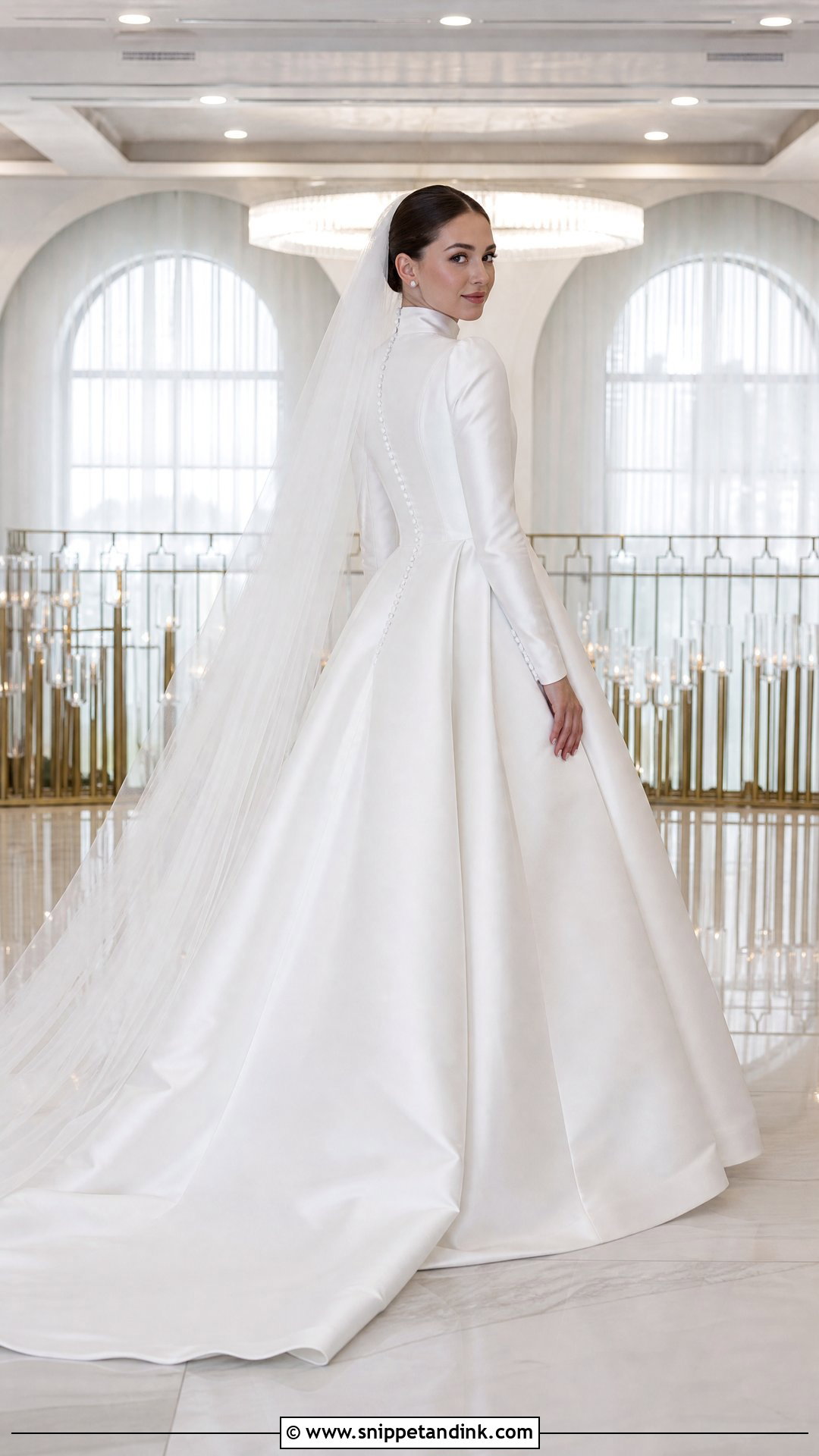
Satin gives structure, and a high neck with a full ball gown skirt looks regal under the chuppah. Long fitted sleeves keep it clean, and covered buttons at the cuffs and down the back add a traditional finish. Satin block heels, a structured mini bag for portraits, small crystal studs and a plain cathedral veil keep it simple. The fabric shows every pull, so alterations at the shoulders, bust and waist need to be exact. I have brides reach forward, raise a glass and sit during the fitting; fitted satin sleeves with no stretch can lock the arms if they’re cut too narrow.
3. Modest Illusion Neckline Wedding Dress
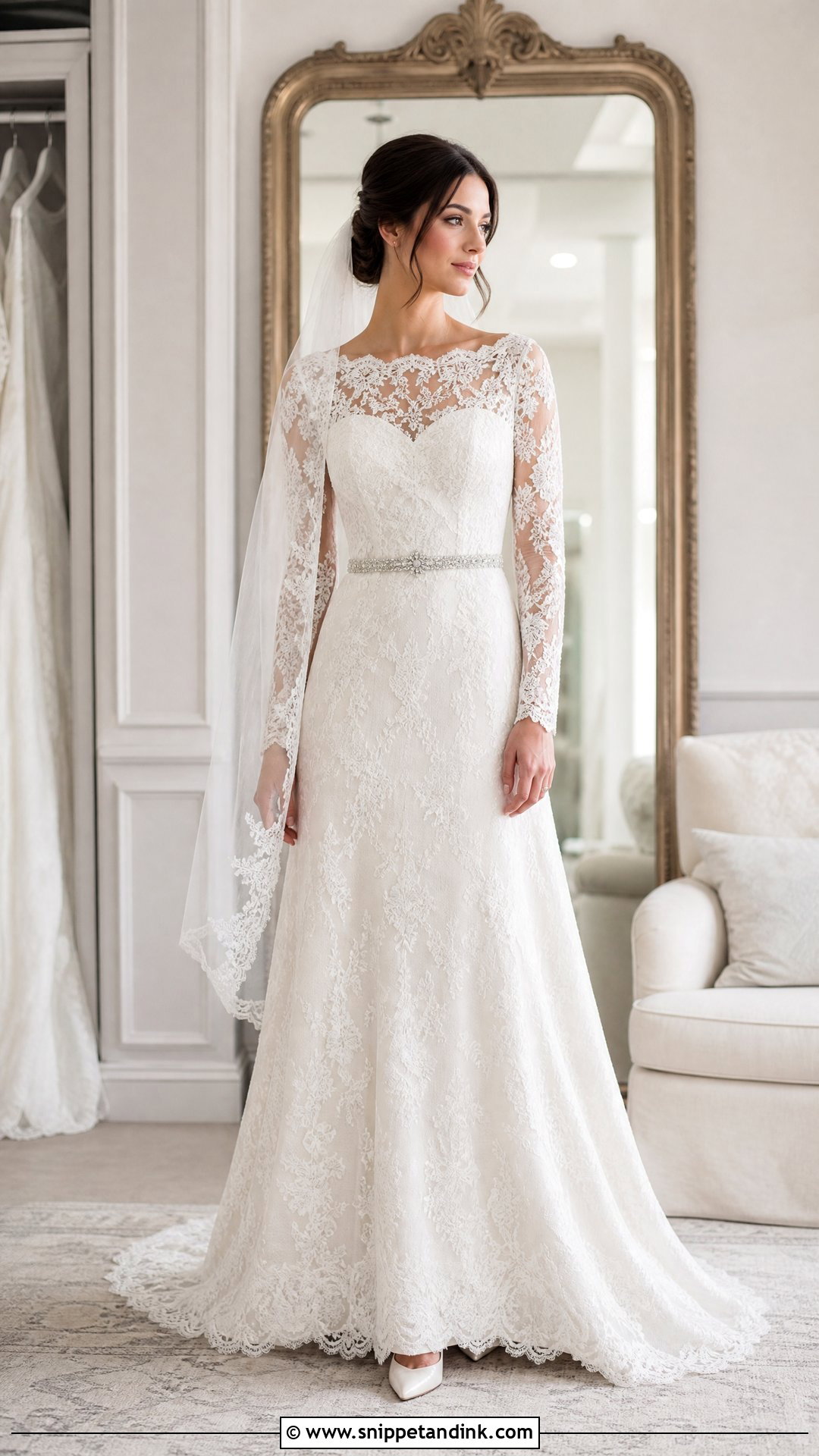
An illusion neckline can still meet a strict standard if the sheer-look lace is backed by an opaque panel in skin tone or ivory. You get the layered look while the neckline, shoulders and upper chest stay covered. A softly flared skirt and long lace sleeves balance the bodice, with closed-toe ivory heels, a narrow crystal belt and a fingertip veil. Keep jewelry subtle. At fittings, lift your arms, bend and turn: if the backing panel shifts or gapes at the edges, the tailor needs to tack it to the lace in more places. Skin-tone backing has to match your actual skin, so check it in daylight.
4. Mikado Ball Gown Jewish Wedding Dress
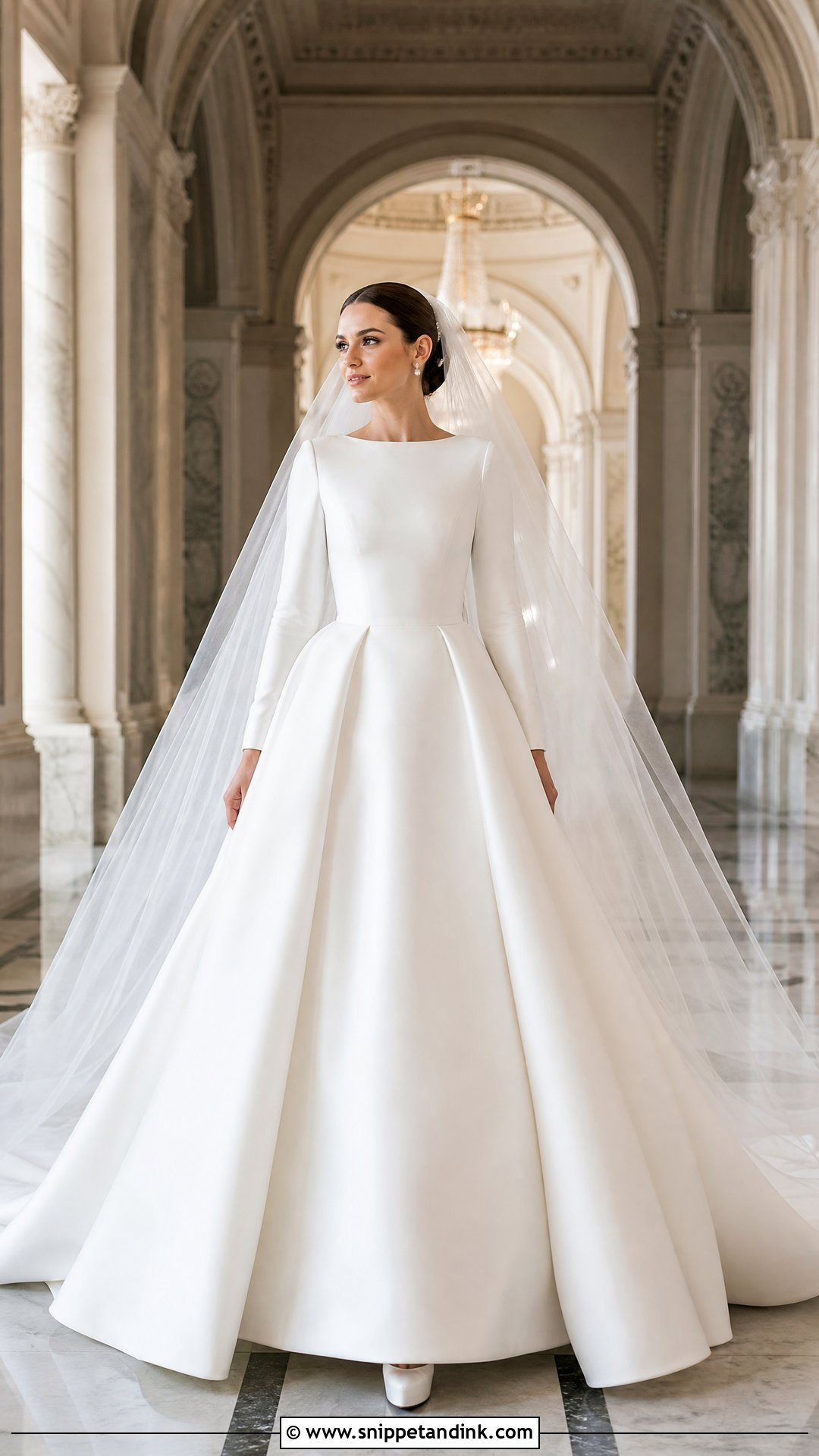
Mikado is a stiff, slightly ribbed silk blend that holds a full skirt without layers of petticoat, which keeps the dress from getting hot. You get real drama with no heavy beading. Look for a high bateau neckline, long sleeves, a fitted waist and a sweeping train, with covered buttons down the back. Platform pumps hidden under the skirt, pearl drops and a long tulle veil finish it, plus a bouquet of white flowers and greenery. Ask the tailor for wrist loops or a strong bustle. Mikado is heavy, and when the hora starts, a weak bustle tears first.
5. Minimalist Crepe Jewish Wedding Dress
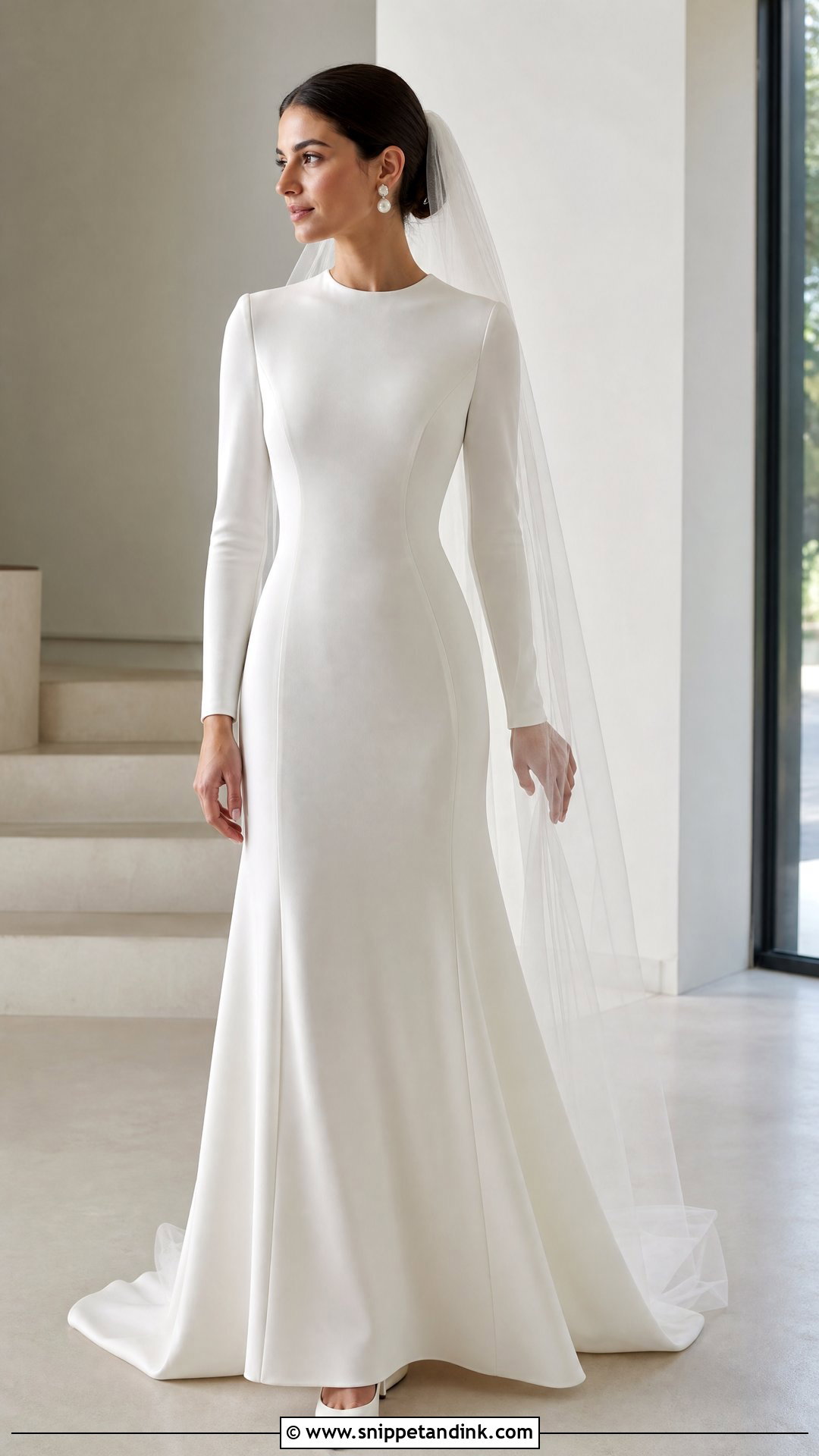
Crepe is my pick for a bride who wants no decoration at all. Long sleeves, a high neckline and a softly fitted shape with princess seams give it all the structure it needs, and a gentle trumpet skirt adds movement while staying walkable. Sleek ivory pumps, sculptural pearl earrings and a plain veil falling beyond the train finish it, with a polished low bun. Crepe should skim, not cling; if it shows the outline of your underwear, the fit is too tight or it needs a full lining. Discuss both with your seamstress at the first fitting.
6. Pearl Beaded Jewish Wedding Dress
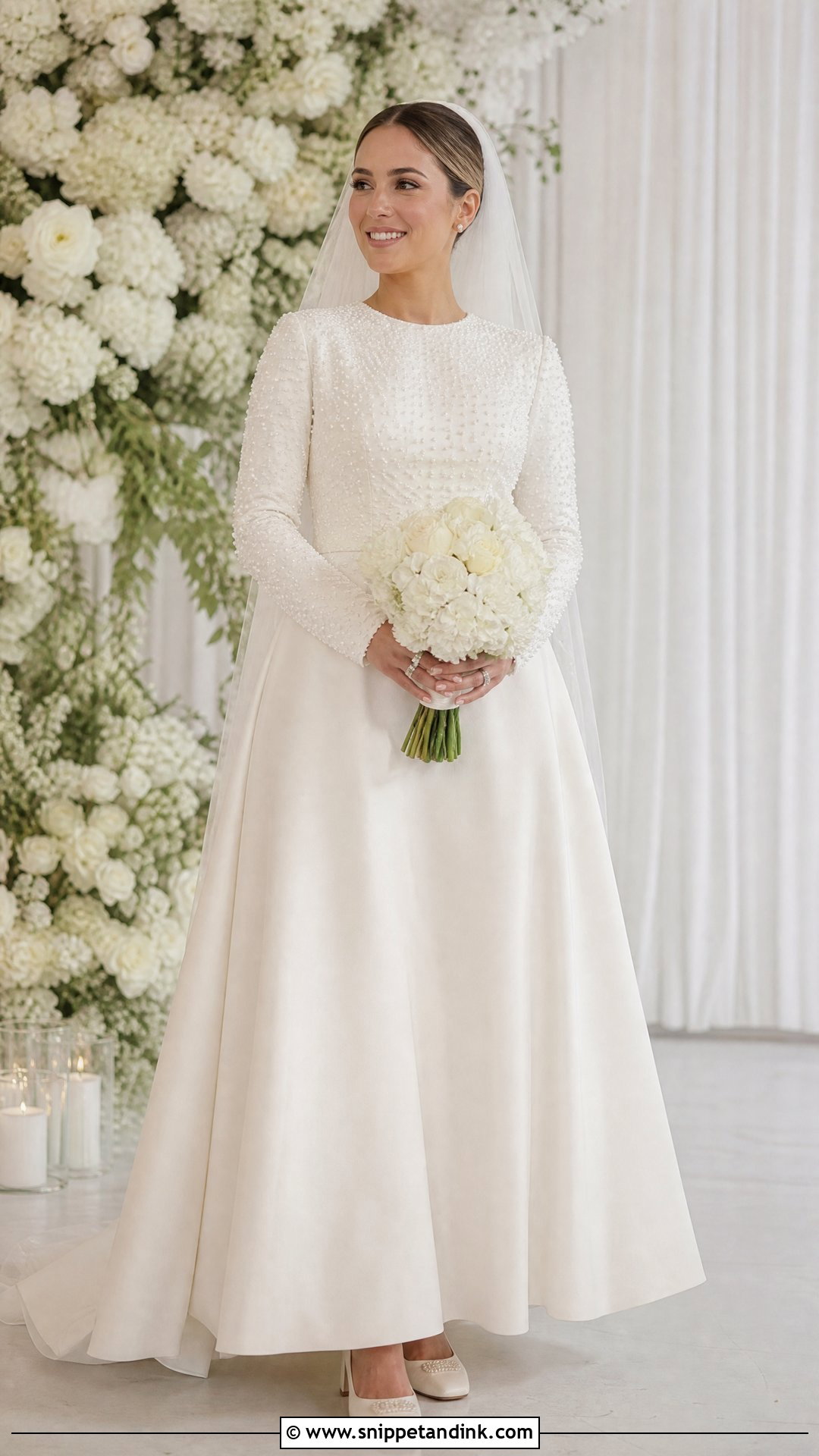
Pearls in graduated sizes give a covered gown a soft glow. Choose long sleeves, a jewel neckline and an A-line skirt scattered with pearls over an opaque base, so the embellished tulle doesn’t read as sheer. Keep the rest quiet: pearl studs, ivory slingbacks and a plain chapel veil, with a tidy chignon or low waved ponytail. Watch the inner arms; pearls sewn there rub against the bodice and can snag a fine veil. Embellished skirts also get heavy, so ask for a reinforced bustle.
7. Vintage Lace Jewish Wedding Dress
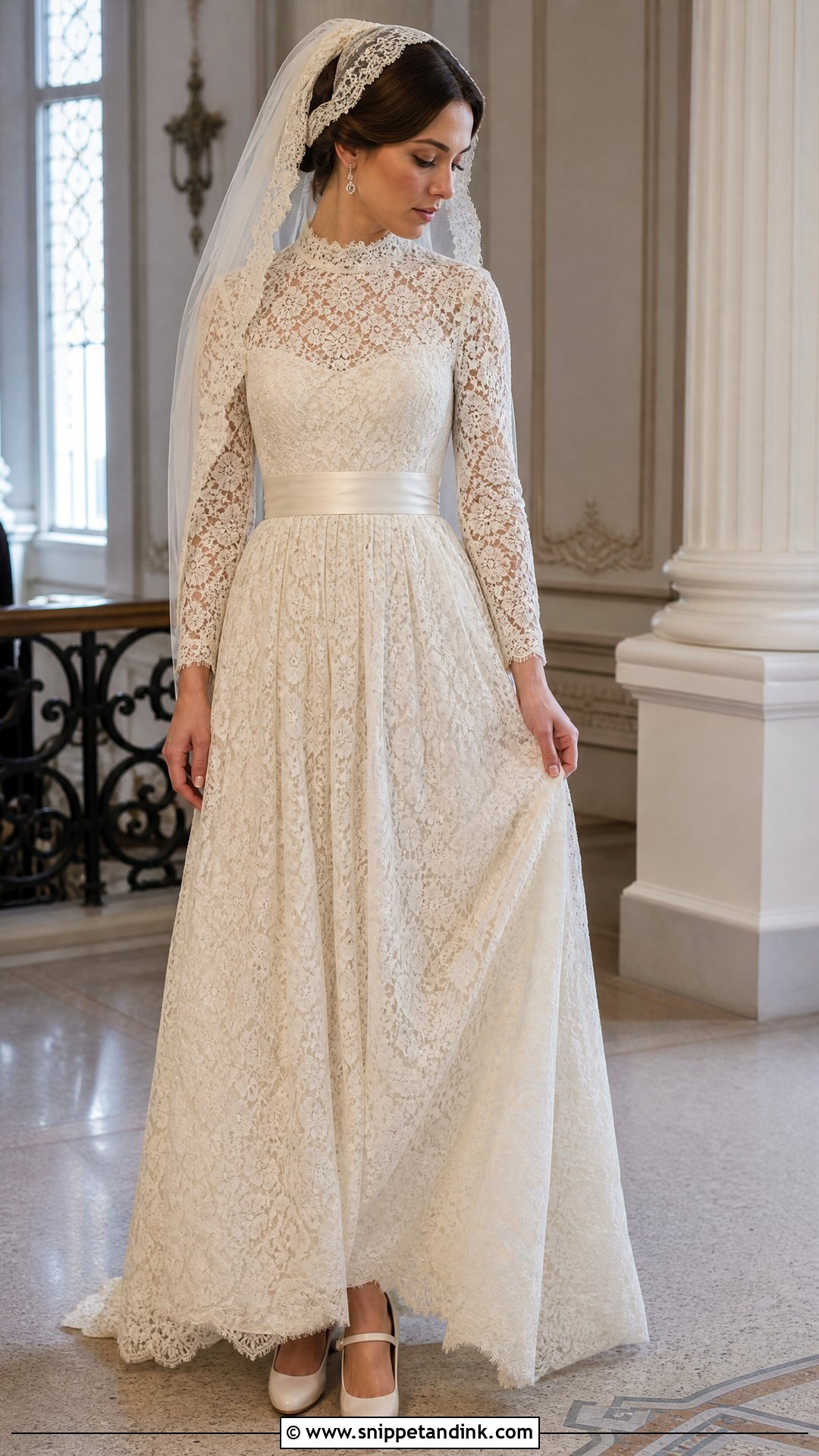
Vintage lace gowns tend to have the coverage modest brides want already built in. Look for a softly raised neckline, fitted sleeves with covered wrist buttons and a skirt shaped by gentle pleats. Chantilly-style lace is fine and delicate, so a substantial lining is what keeps it modest. Ivory Mary Janes, heirloom pearl earrings and a lace-edged veil over a low bun complete the outfit, with a narrow satin waistband if two lace patterns meet. I’d stop at one or two vintage accessories; more turns it theatrical. Tailor the neck and sleeve openings carefully, since vintage cuts often run small there.
8. Boho Chiffon Jewish Wedding Dress
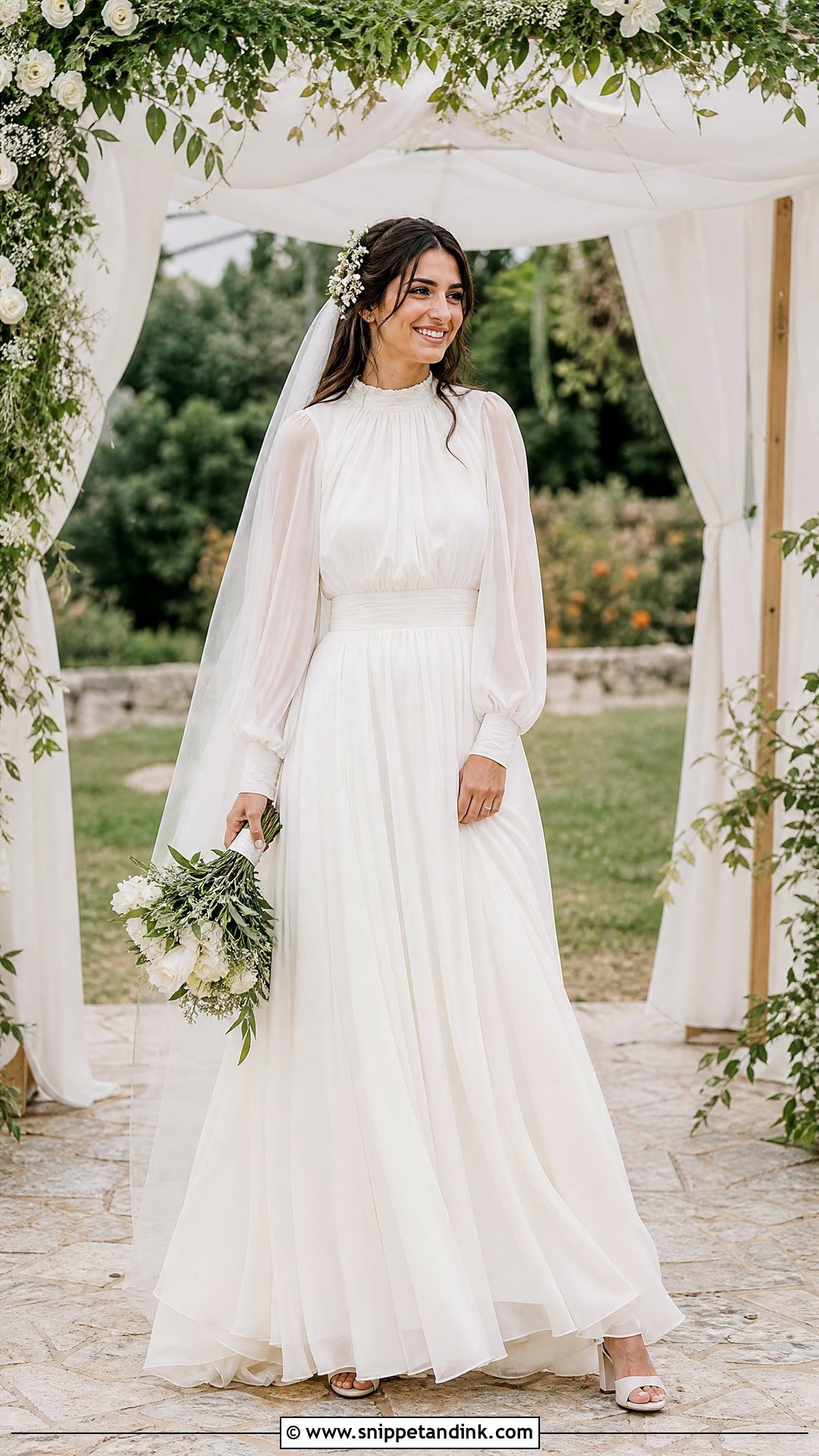
Chiffon suits an outdoor or relaxed ceremony because it breathes. Choose a fully lined A-line with a high gathered neckline, bishop sleeves, and fitted cuffs, plus a softly defined waist so the layers don’t swamp you. Ivory block-heel sandals or closed-toe shoes, depending on the venue’s standard, and a light veil with minimal trim finish it. Fresh flower pins work well in a low braided bun. Check that the lining runs through the bodice and skirt with no gaps, because chiffon is see-through on its own. On grass, a short sweep train is far easier than a long one.
9. Embroidered Tulle Jewish Wedding Dress
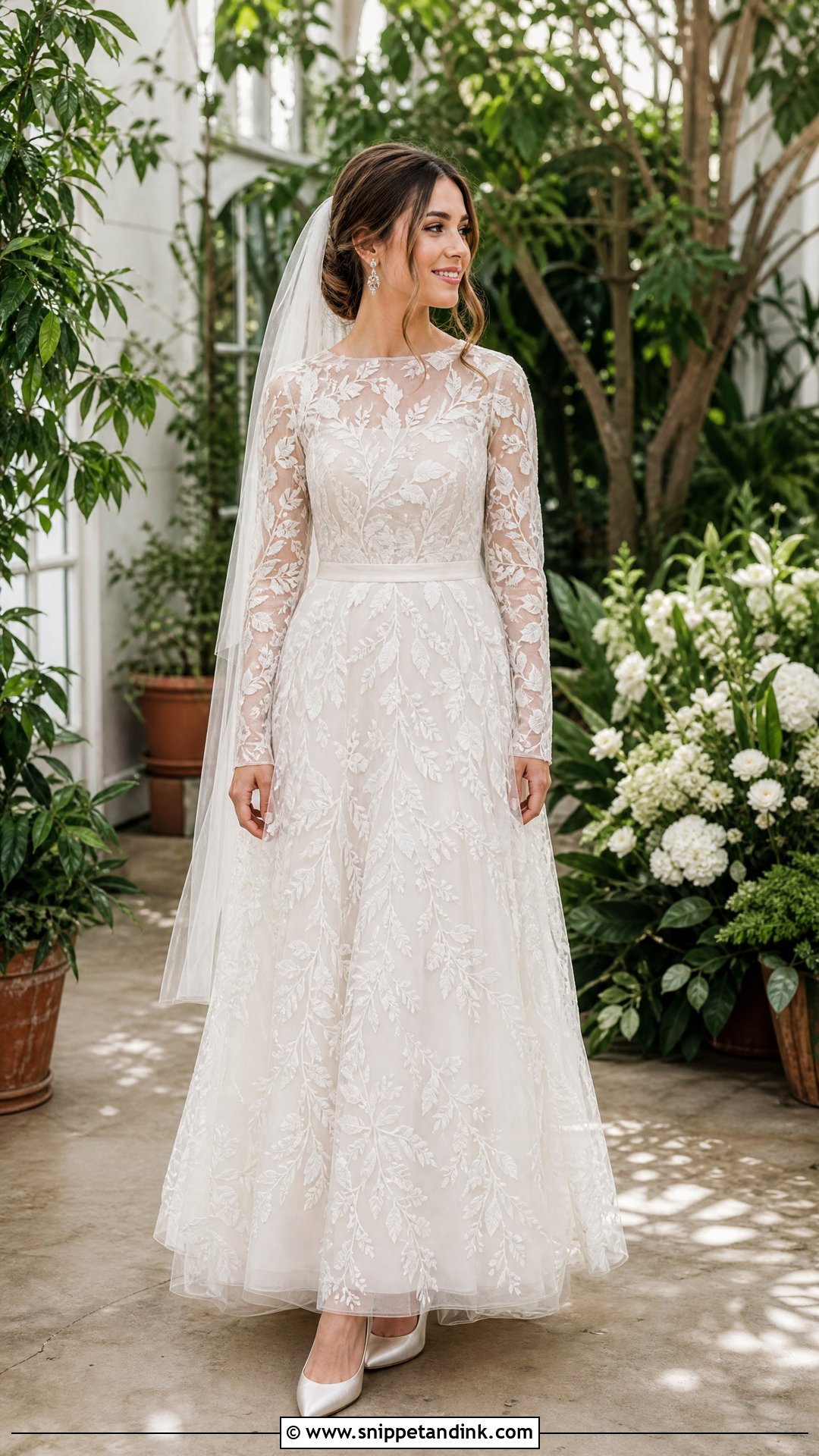
Botanical embroidery on tulle gives detail without weight. Look for it across a high bodice, full-length sleeves and a gently layered skirt, over an opaque lining that meets your coverage standard. Neutral ivory pumps, delicate gemstone earrings and a single-layer veil that doesn’t compete with the pattern finish it, with a defined waistband for structure. I always ask the seamstress to center the main motifs at the neckline and waist during alterations. A large flower that ends up off-center after the bodice is taken in looks like a mistake in every close-up.
10. Square Neck Jewish Wedding Dress
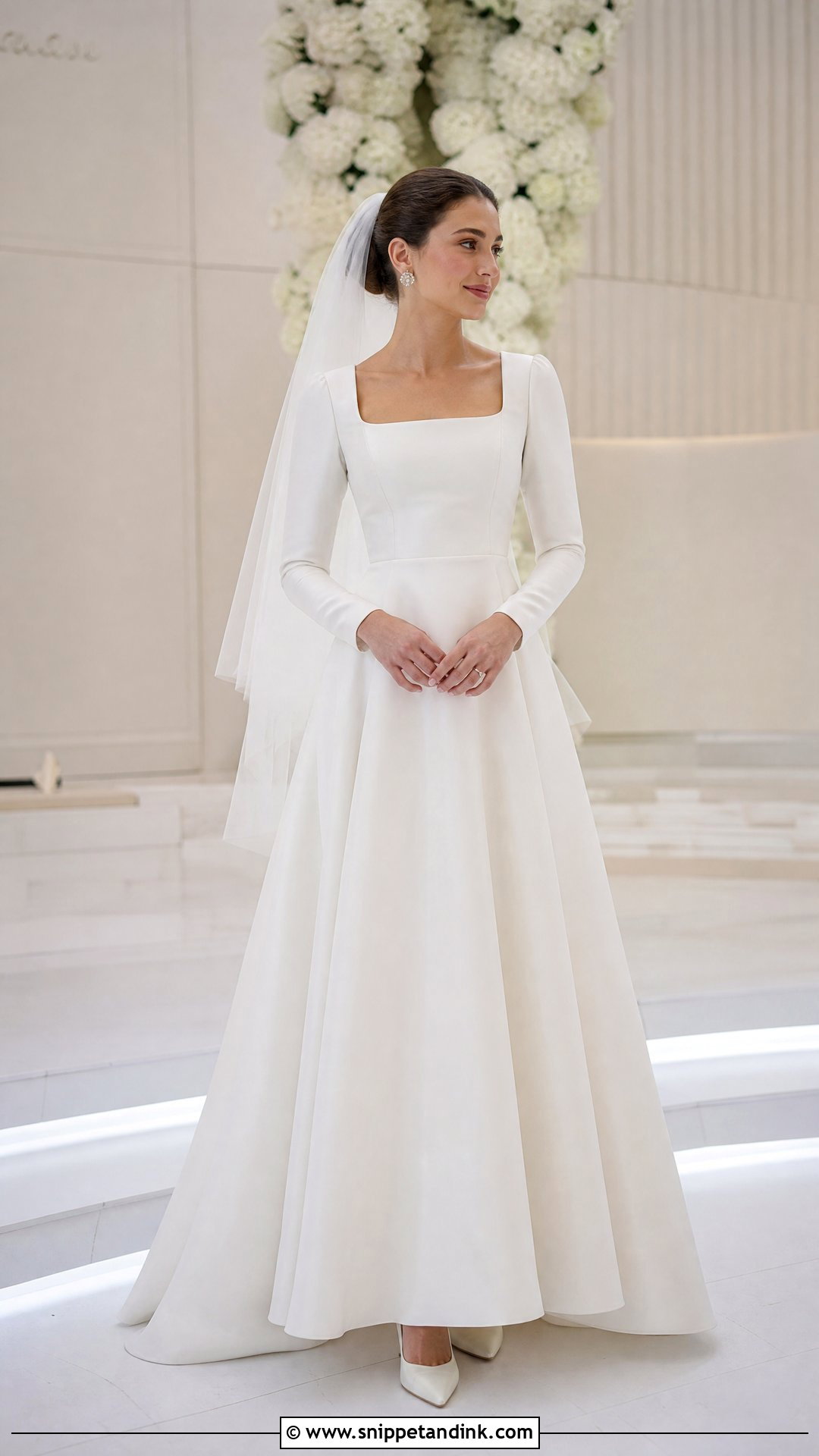
A square neckline frames the face differently from a jewel neck, and it can be modest if the cut sits high, near the collarbone. Long fitted sleeves and a structured A-line skirt give balance. Pearl cluster earrings, low ivory pumps and a simple veil under a smooth bun complete it, with a subtle waist seam or narrow belt to echo the neckline’s lines. Square necks tend to gape at the corners when you sit forward. Check it from the side and seated, and if it opens, the tailor can raise it or add an opaque inset.
11. Cape Sleeve Jewish Wedding Dress
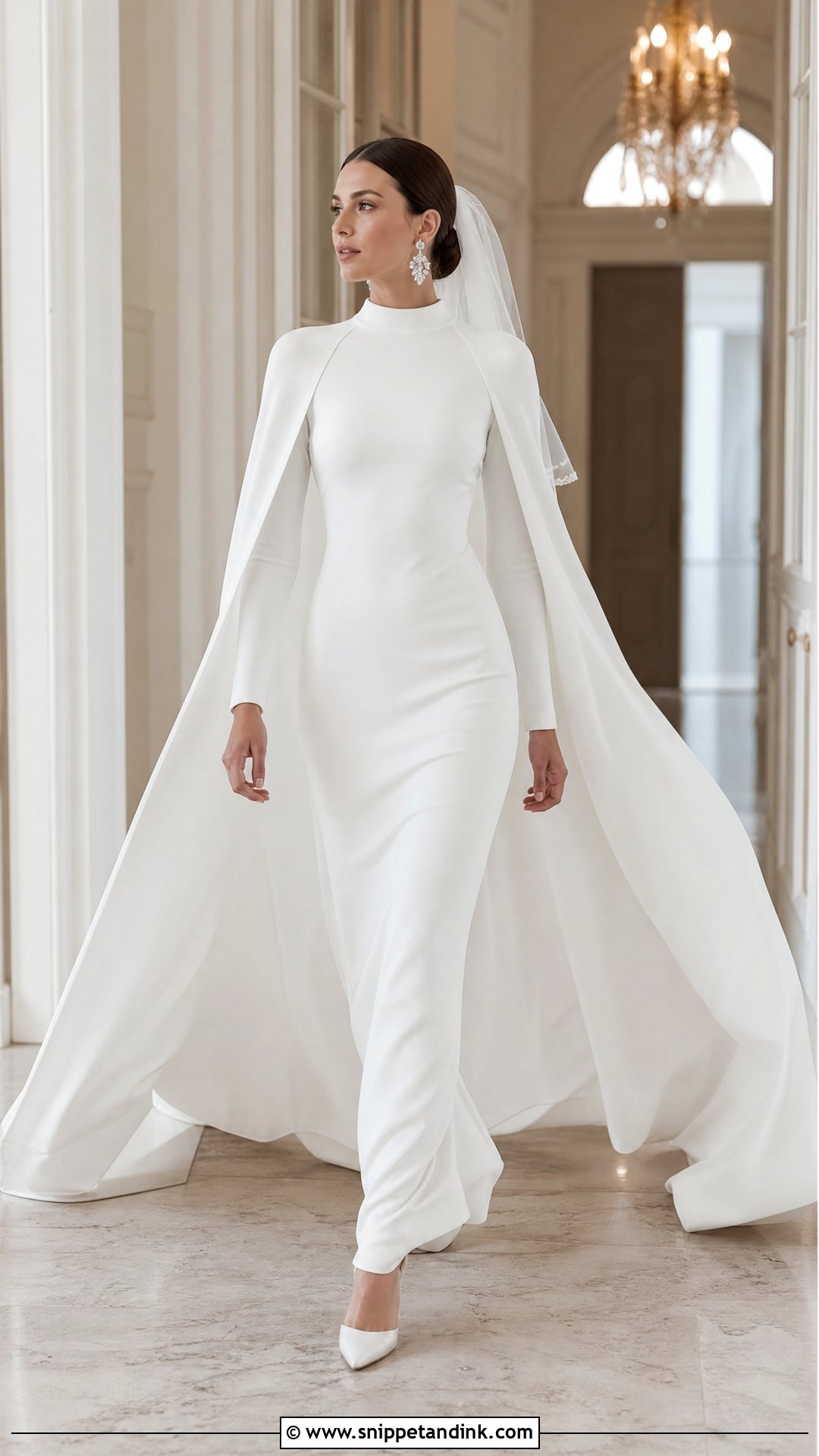
A cape gives coverage and movement at once. Start with a fully lined, high-neck gown with a straight or softly flared skirt, then add a floor-length cape from the shoulders, attached or removable. Long fitted sleeves underneath keep you covered when the cape comes off for dancing. Pointed heels, small crystal earrings and a neat low bun finish it. A long veil and a long cape tangle, so I’d choose a shorter veil or a headpiece instead. Walk, turn and sit in the full combination before the day to make sure nothing drags at the neck.
12. Detachable Overskirt Jewish Wedding Dress
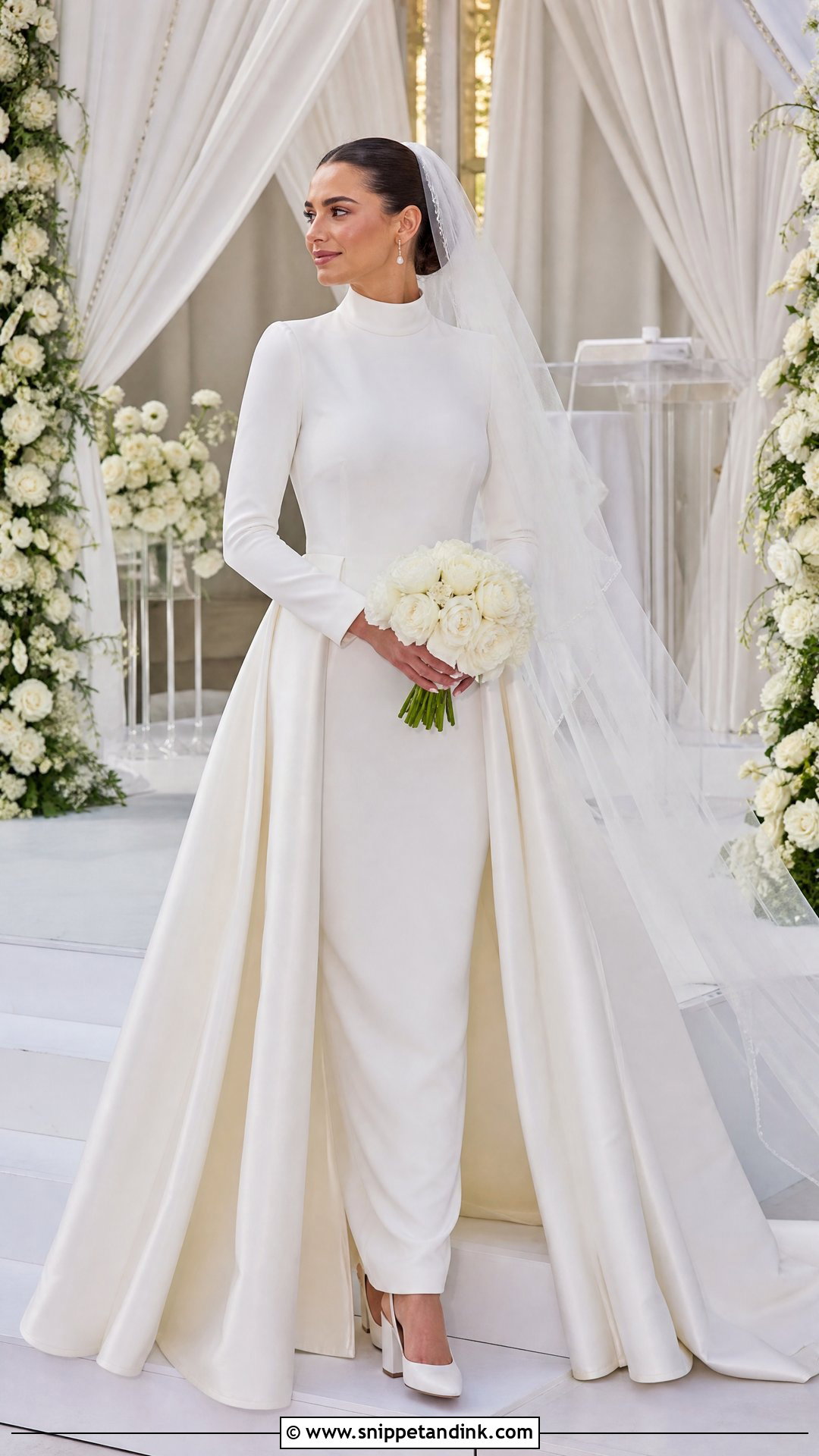
A detachable overskirt gives you a full skirt for the ceremony and a sleek column for the hora. Start with a high-neck, long sleeve column in crepe, satin or Mikado, and keep both layers opaque. Block heels, understated drops and a chapel veil for the ceremony complete it, with covered buttons or a satin waistband hiding the fastening. Practice taking the overskirt off before the wedding, and assign one person who knows the hooks. In the rush after yichud, nobody else will remember how it fastens.
13. Three Quarter Sleeve Jewish Wedding Dress
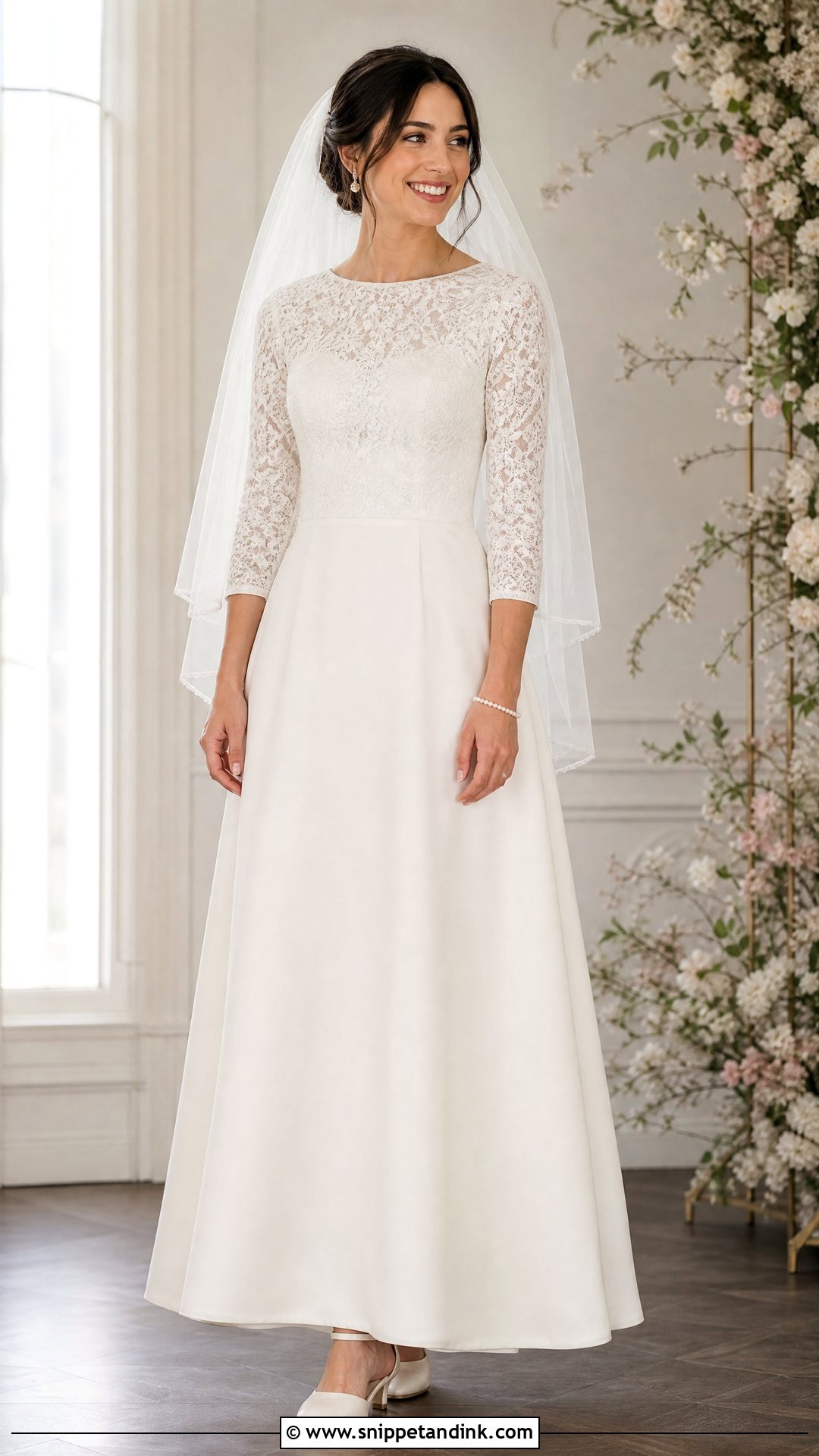
Three-quarter sleeves feel lighter than full sleeves and suit brides whose community requires elbows covered but not wrists. Pair them with a high bateau neckline and a tea-length or floor-length A-line skirt. Lace sleeves add texture against an opaque satin or crepe bodice. Pearl bracelets, ivory ankle-strap shoes and a fingertip veil finish it. Measure the sleeve with your arm bent: a sleeve that covers the elbow when straight can ride up above it when you lift a cup or hug a guest. A lightly structured waist keeps shape through a long day.
14. Basque Waist Jewish Wedding Dress
A basque waist gown has a V-shaped seam dipping slightly below the natural waist, which lengthens the torso. To keep it modest, choose a high neckline, opaque fabric and fitted long sleeves, with a full satin or Mikado skirt. Closed-toe pumps, crystal studs and a cathedral veil with minimal edging complete it. Structured bodices need professional fitting; ask for flexible boning and a smooth interior rather than a tight fit. You need to breathe through the ceremony, sit through dinner and dance, and a basque cut too snug presses on the hips when you sit.
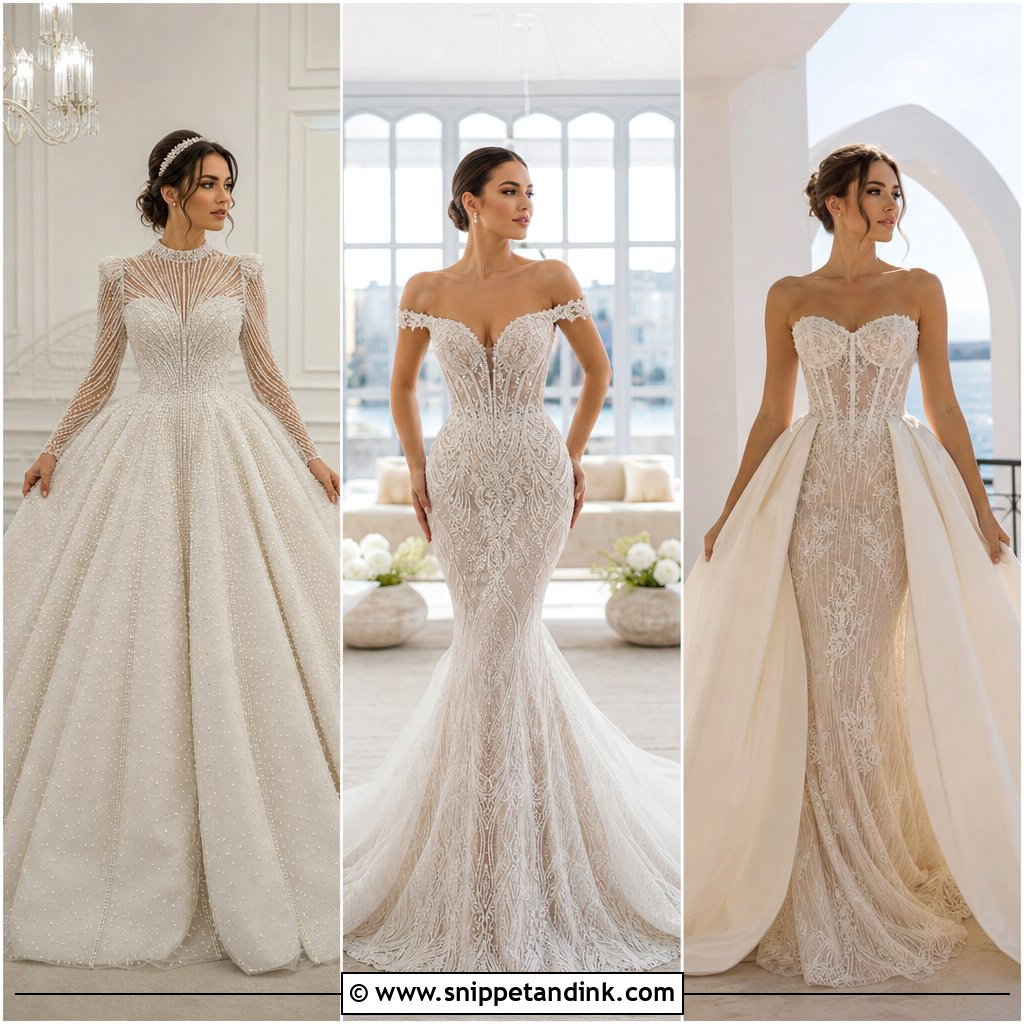
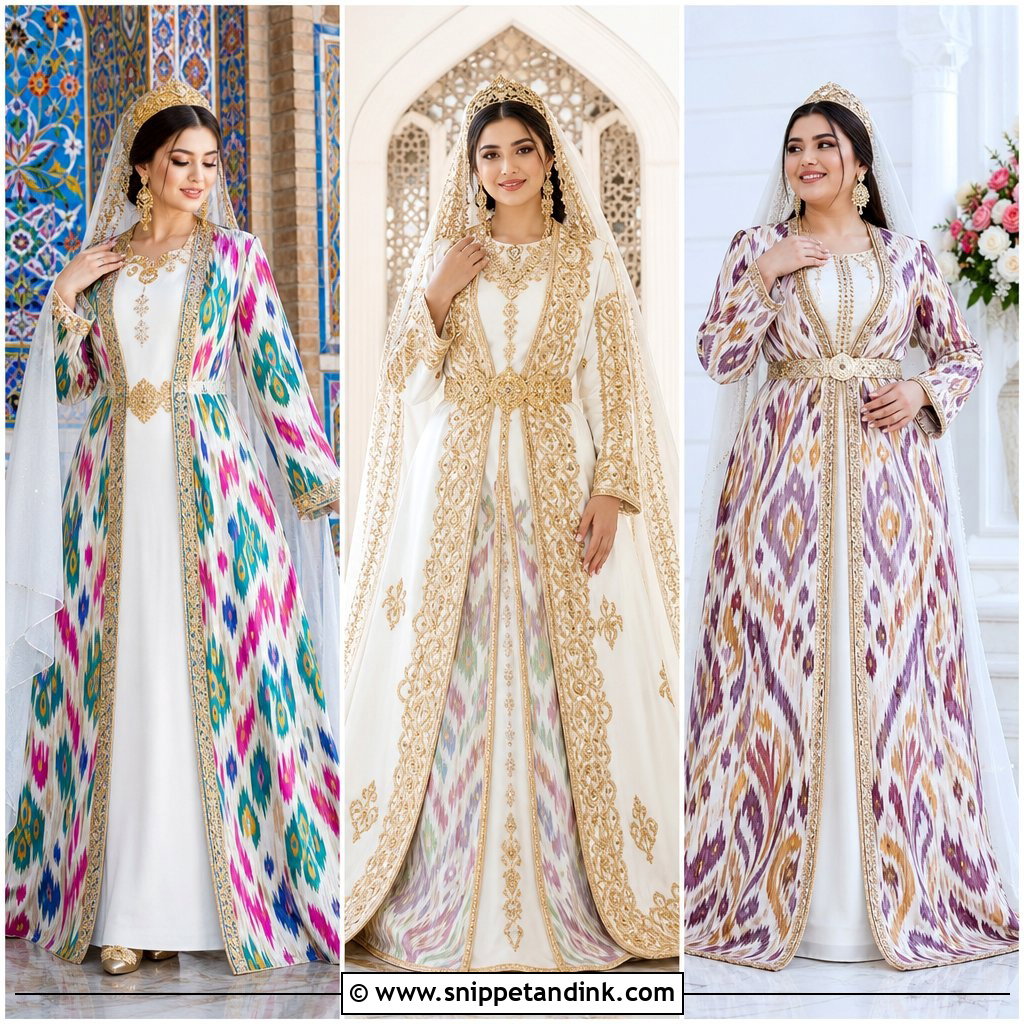
15. Drop Waist Jewish Wedding Dress
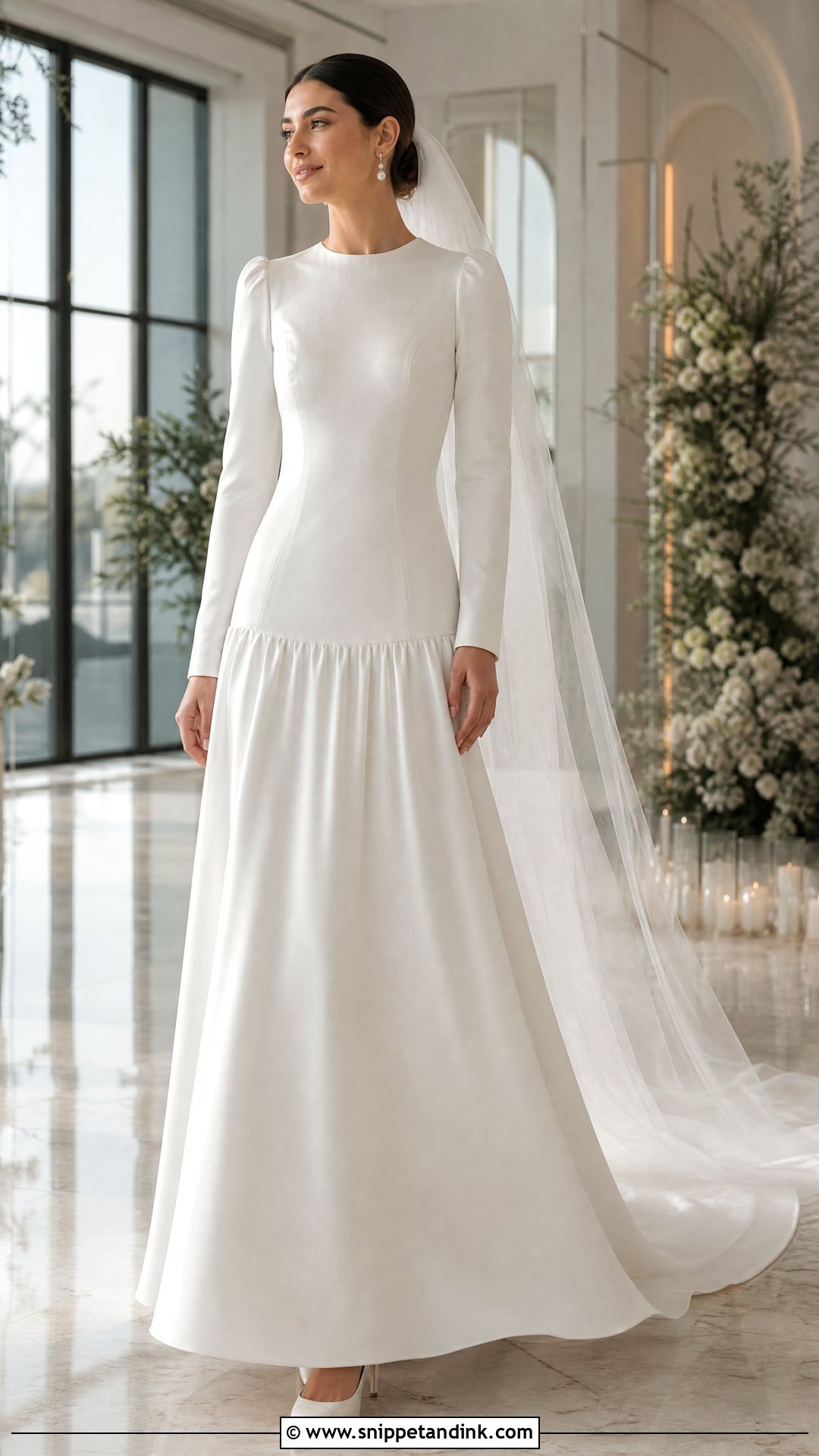
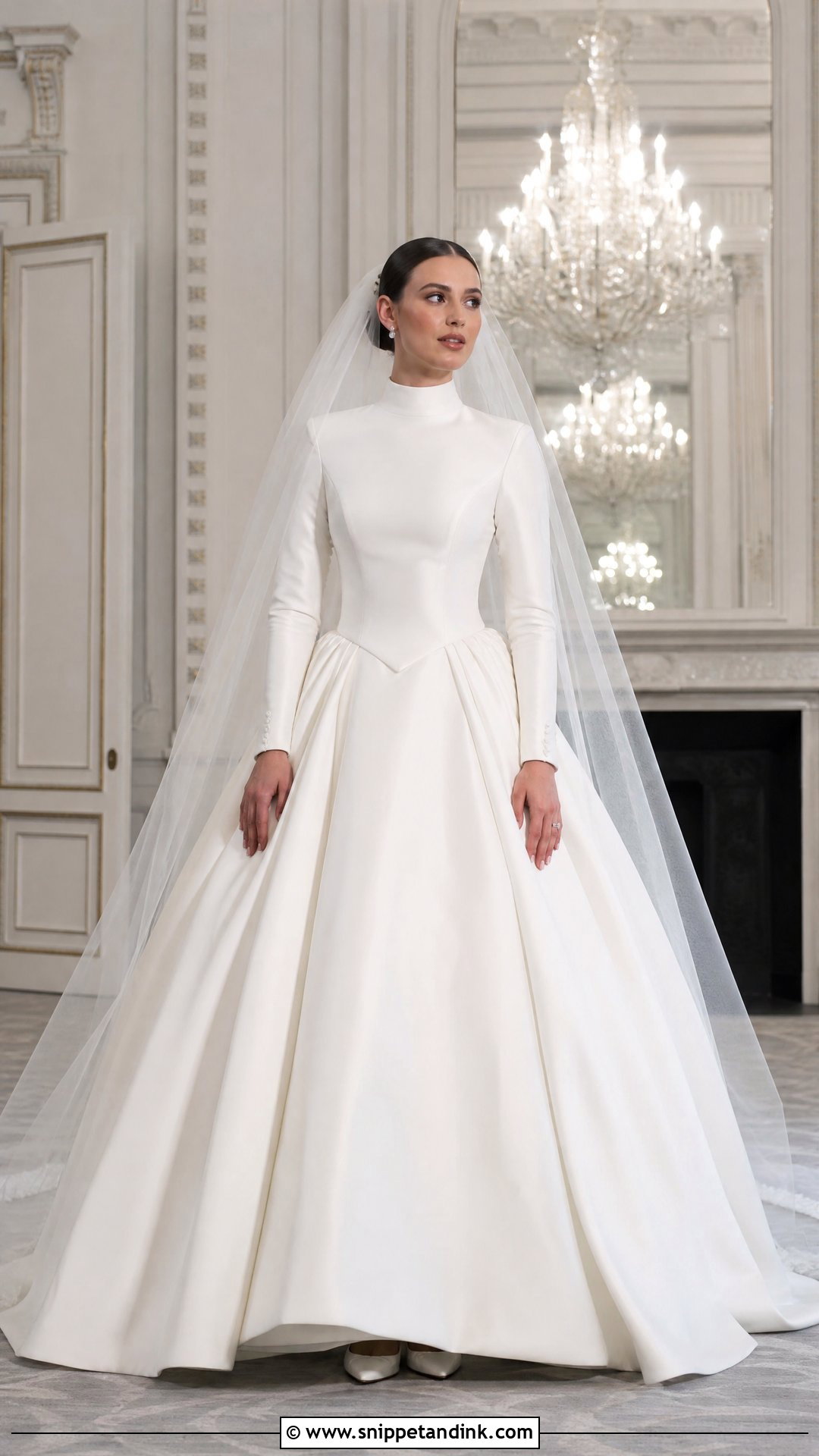
A drop waist creates a long line from shoulder to hip before the skirt opens. Choose a high rounded neckline, long sleeves and opaque satin or crepe, with seam work instead of heavy embellishment. Sleek ivory heels, pearl drops and a plain veil set beneath a polished bun complete it. Longer torsos often suit it best, but I judge it in the mirror rather than by rules. The thing to test is sitting: a lowered seam sits right at the hip crease and can dig in at a long dinner, so make sure there’s ease there.
16. Pleated Satin Jewish Wedding Dress
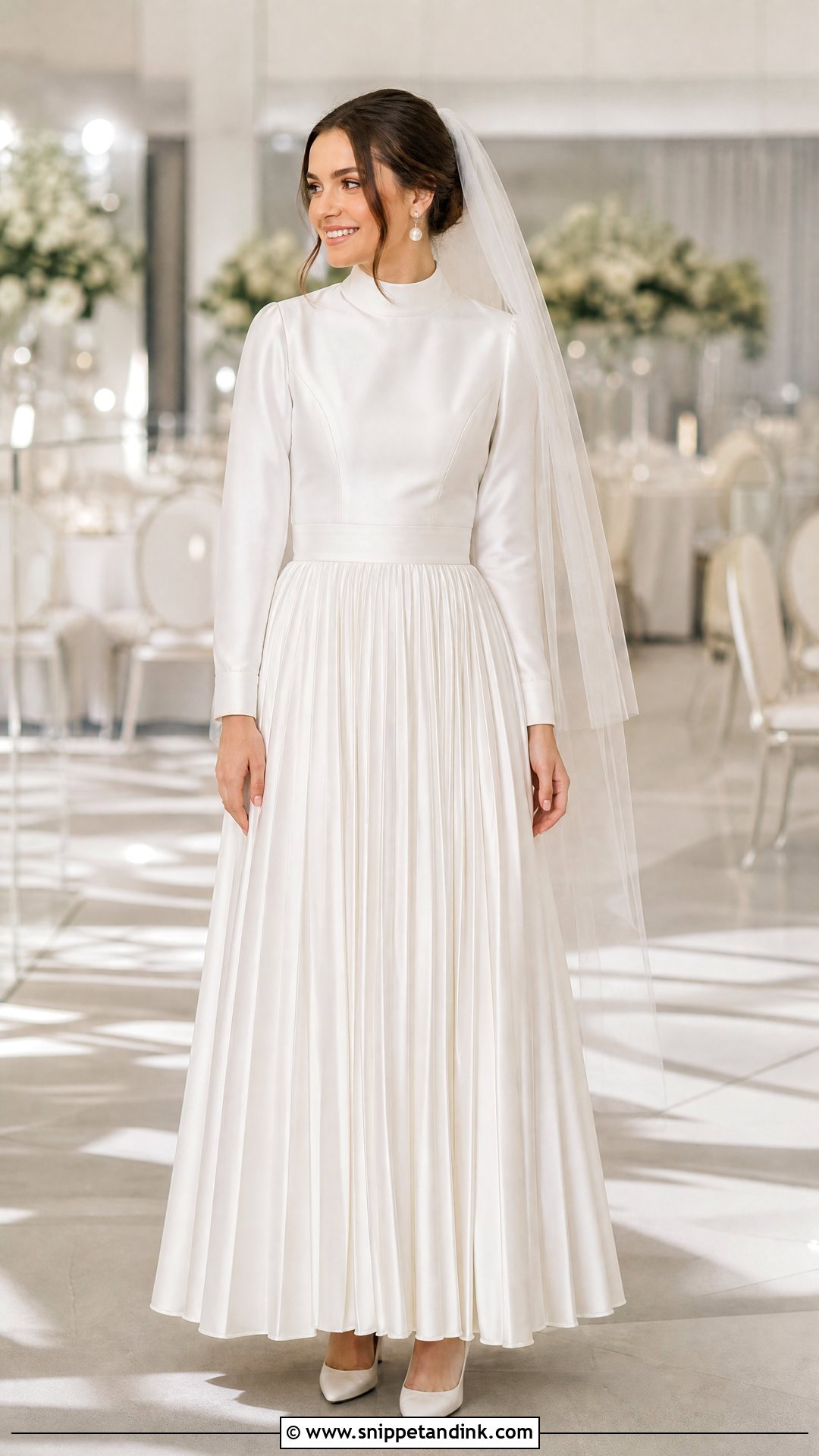
Pleats keep satin from looking stiff. Choose a high-neck bodice with long sleeves and a defined waist opening into a pleated A-line. Narrow pleats give controlled movement, wider ones a fuller and more formal shape. Satin pumps, small pearl earrings and a light veil that won’t flatten the skirt finish it, with a simple bun or waved updo. Ask your tailor to stitch the pleats down for a few inches below the waist; left loose, they add bulk exactly where you don’t want it. The dress moves well for walking the circles under the chuppah and for dancing.
17. Floral Applique Jewish Wedding Dress
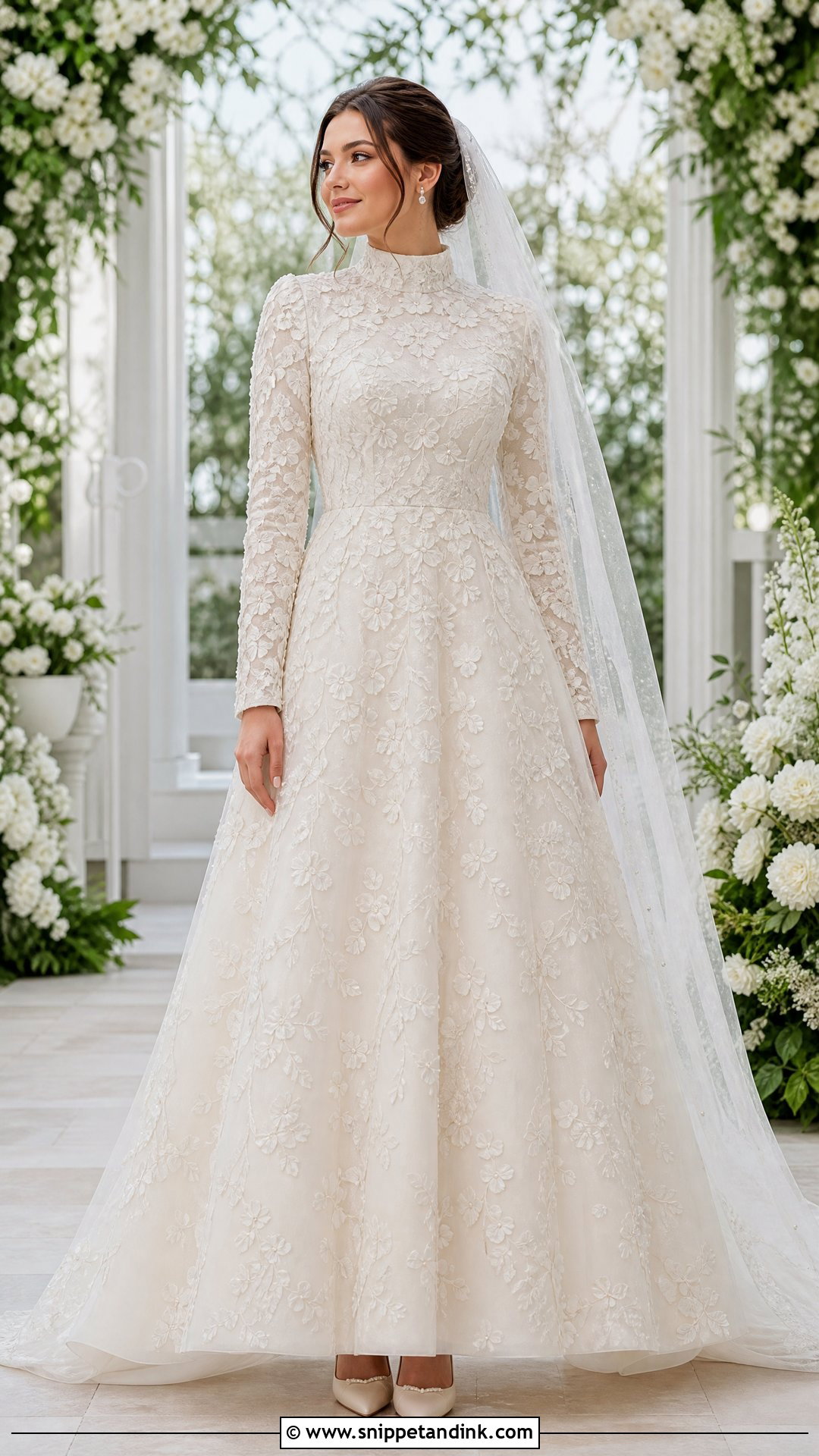
Three-dimensional appliques give a modest gown depth without relying on a low neckline or open back. Look for a long sleeve A-line with appliques gathered at the bodice, cuffs, waist and lower skirt, over an opaque ivory lining. Simple closed-toe heels, tiny pearl studs and a sheer veil with a few matching flowers near the edge complete it, with a smooth hairstyle. Raised flowers under the arms are a common problem: they rub and catch on the veil. Ask for those to be moved or removed during alterations.
18. Velvet Winter Jewish Wedding Dress
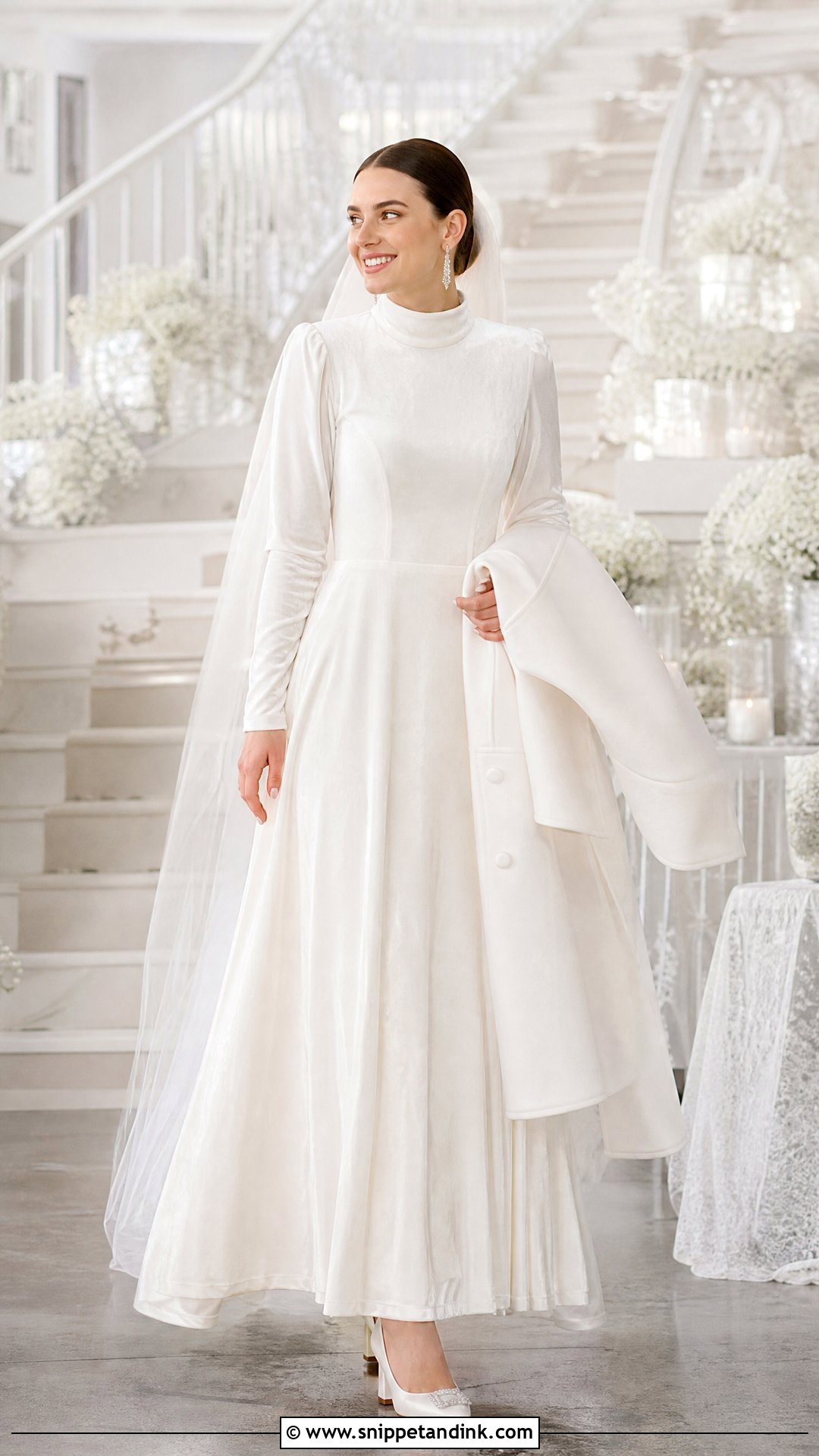
Velvet only makes sense for a cold-weather wedding. An ivory velvet gown with long sleeves, a high neckline and a gently flared skirt is warm and rich, and it needs a streamlined cut because the fabric already has strong texture. Closed-toe block heels, pearl or crystal earrings and a simple tulle veil complete it, plus a white coat for outdoor portraits. Velvet has a nap, so every panel must be cut facing the same direction or the color looks patchy in photos. A breathable lining helps, because a heated hall and a crowded hora make velvet warm fast.
19. Organza Summer Jewish Wedding Dress
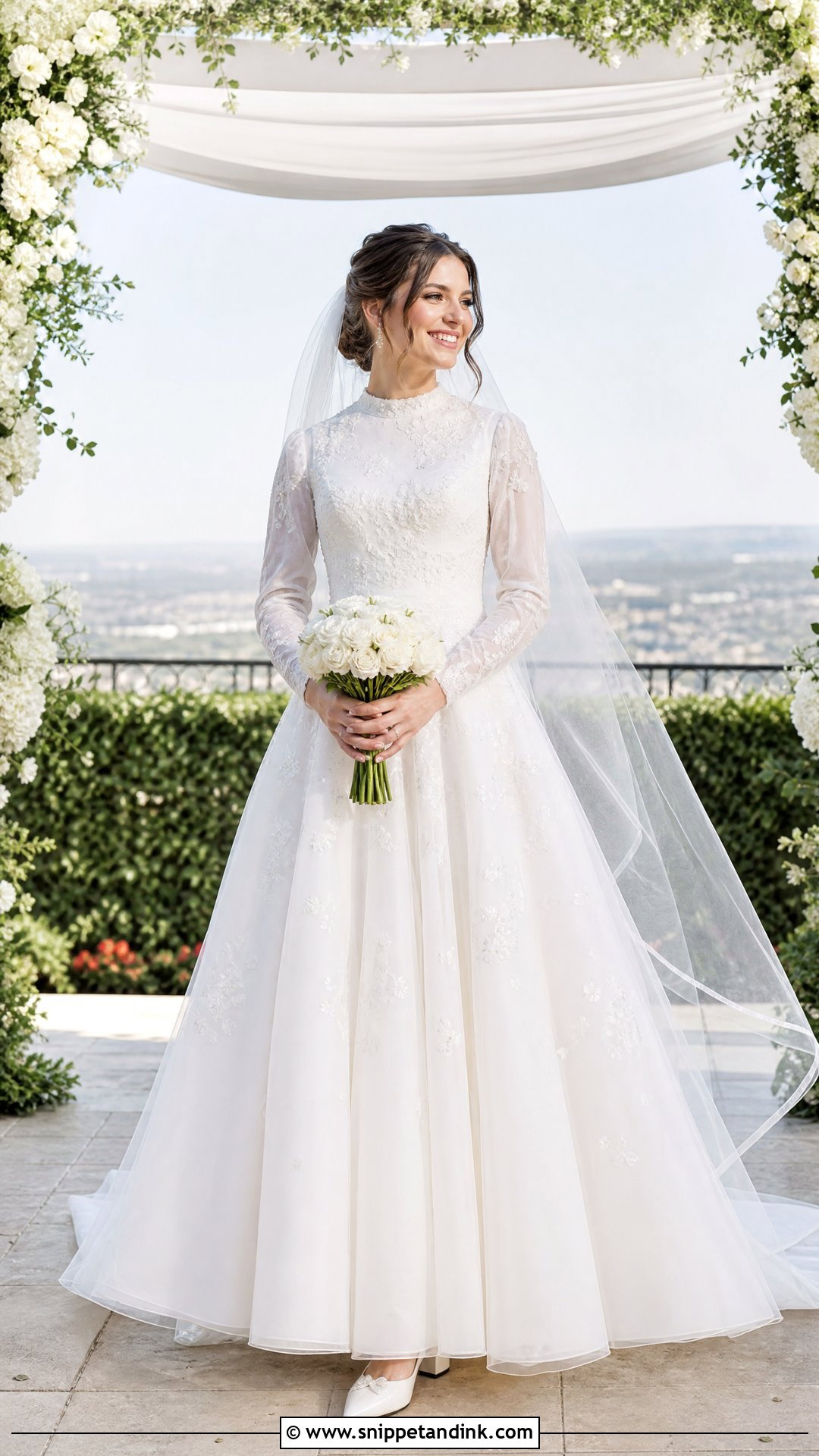
Organza gives volume without the weight of heavy satin, so it’s my choice for summer. Choose a fully lined gown with a high neckline, light long sleeves and an A-line or ball gown skirt; narrow satin trim or subtle floral embroidery defines it. Low block heels, delicate earrings and an airy fingertip veil finish it, with a secure low bun keeping hair off the neck. Ask about breathable bodice construction and soft sleeve lining for an outdoor ceremony. Organza is crisp and can feel scratchy on bare skin at the cuffs and neckline, so the lining matters more here than in most fabrics.
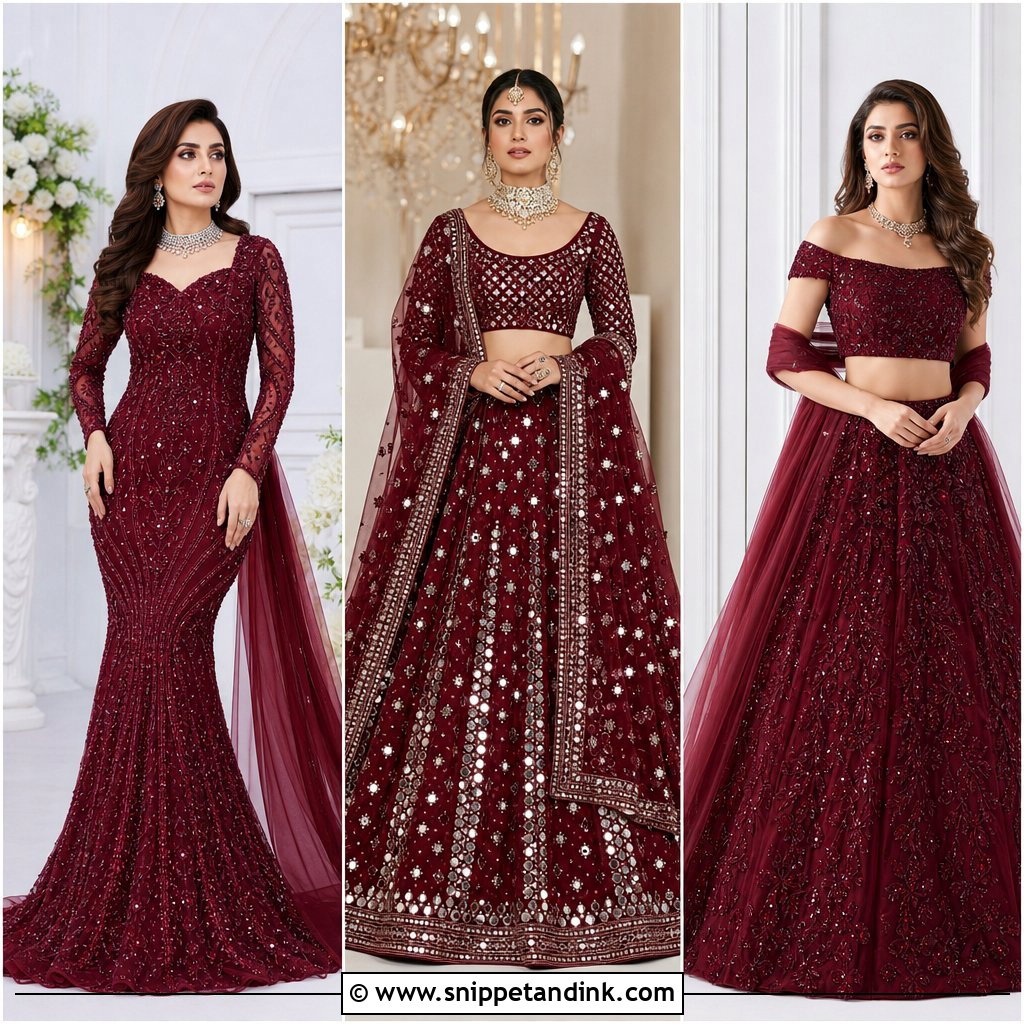
20. Petite Jewish Wedding Dress
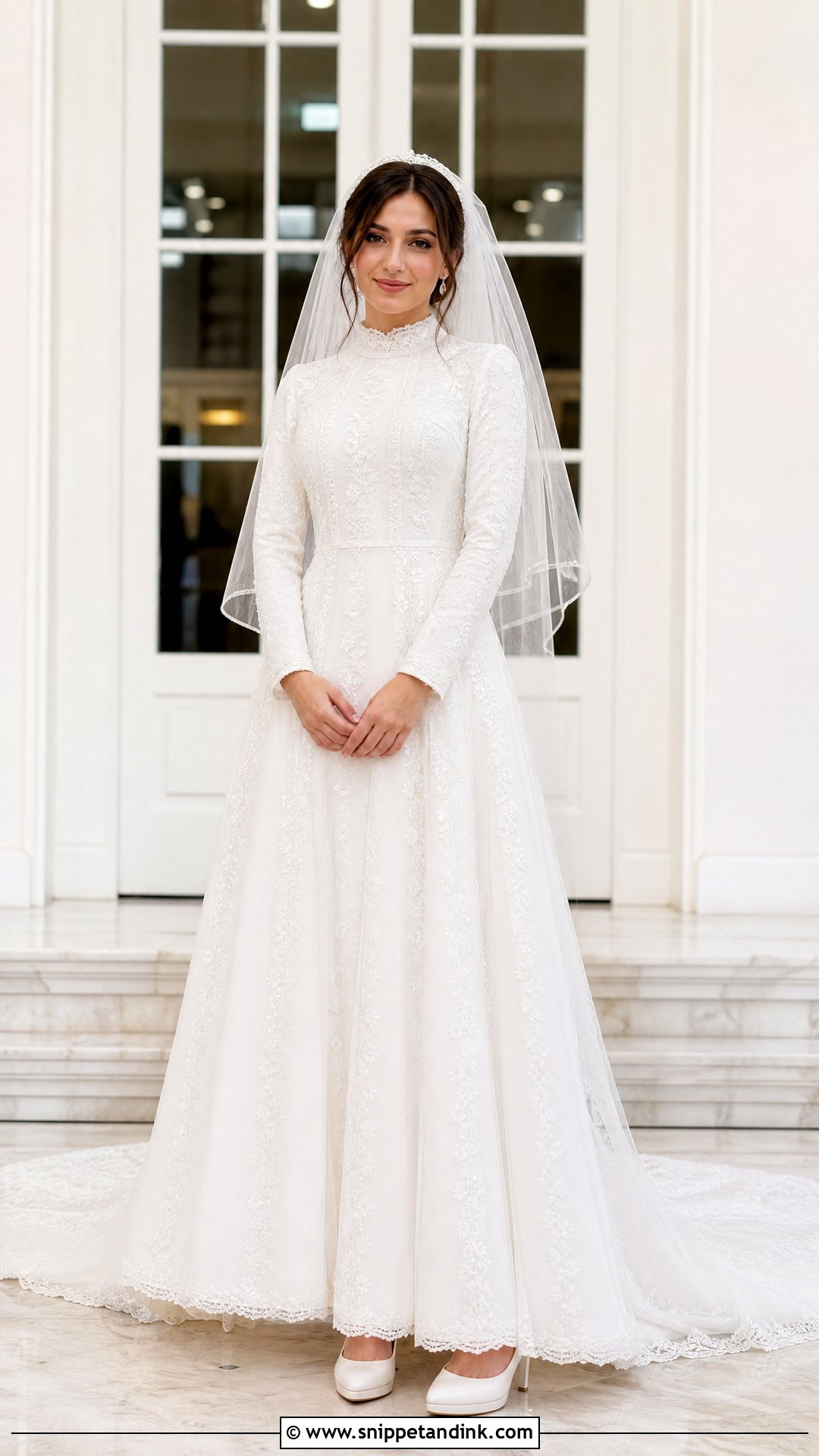
Petite brides look longest in a clean A-line with small, well-placed details. Choose a natural or slightly raised waist, a high neckline and fitted long sleeves. Vertical seams and smaller lace motifs keep things in proportion, and a moderate train looks formal without swamping you. Low-platform pumps, delicate earrings and a fingertip veil suit better than a very wide cathedral, and a smooth updo adds height. Order by your measurements rather than assuming a petite size will fit. Most of the work happens at the hem, sleeve length and shoulders, where standard samples run long.
21. Plus Size Jewish Wedding Dress
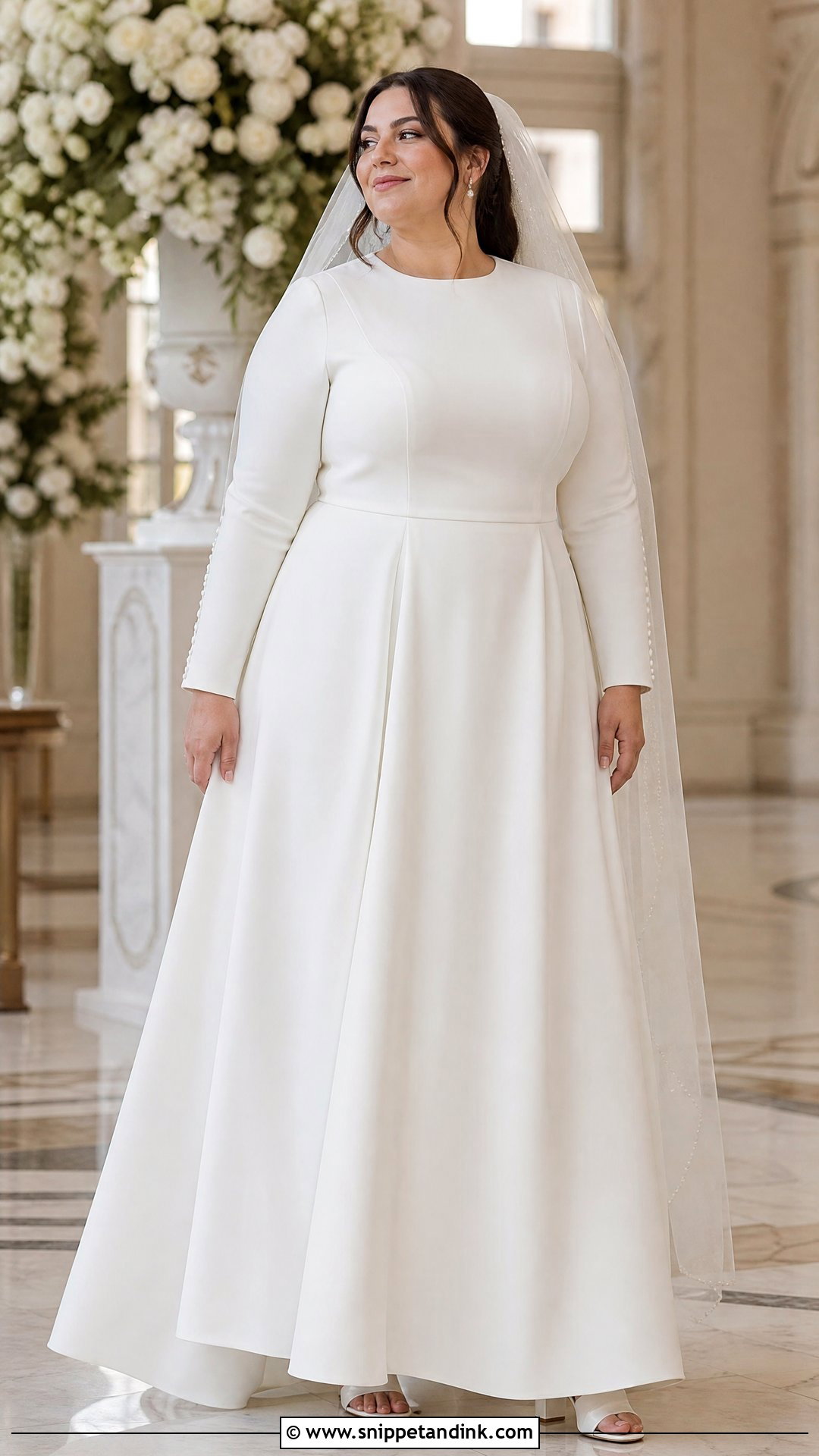
Good support makes a plus-size gown look relaxed to the guests and feel comfortable to the bride. Consider a structured A-line with a high V or rounded neckline, long sleeves and opaque lining, with princess seams shaping the body. Block heels, statement pearl earrings and a veil beneath a low updo finish it. Internal boning, a built-in bra solution and flexible waist construction work far better than tight compression. Sleeves are where I see the most problems: fitted sleeves often need extra room at the upper arm, so ask for it before the dancing, not after.
22. Maternity Jewish Wedding Dress
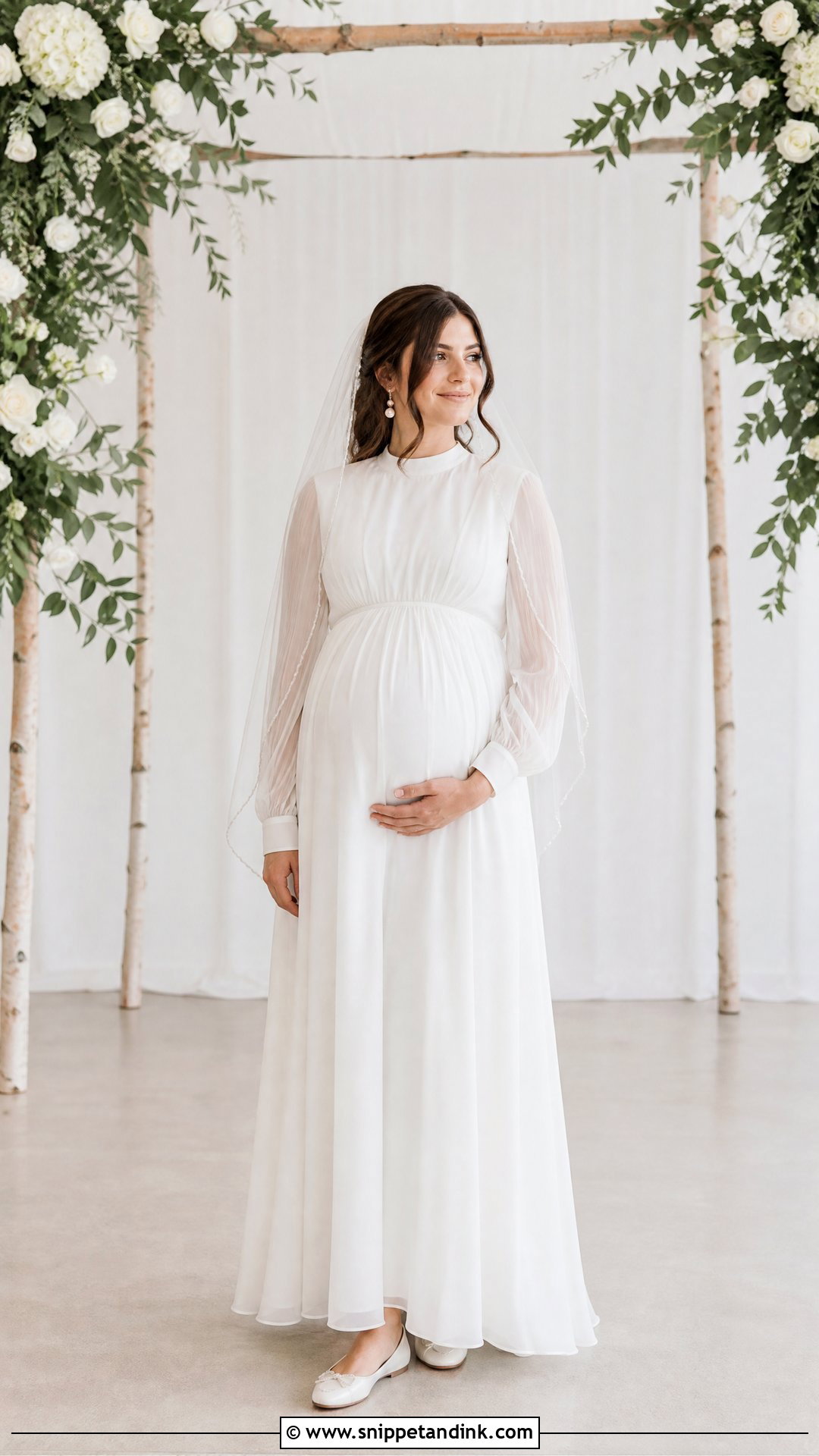
A maternity gown should give room without hiding you in fabric. An empire waist above the bump with a chiffon or soft crepe skirt works well, plus a high neckline, opaque lining and relaxed long sleeves with fitted cuffs. Low block heels or flats, light earrings and a simple fingertip veil complete it. Avoid heavy beadwork, which pulls on the bodice and tires you out. Schedule the final fitting as close to the wedding as the seamstress allows, and ask her to leave extra allowance in the side seams so it can be let out in the last week if needed.
23. Wedding Dress With Bridal Jacket
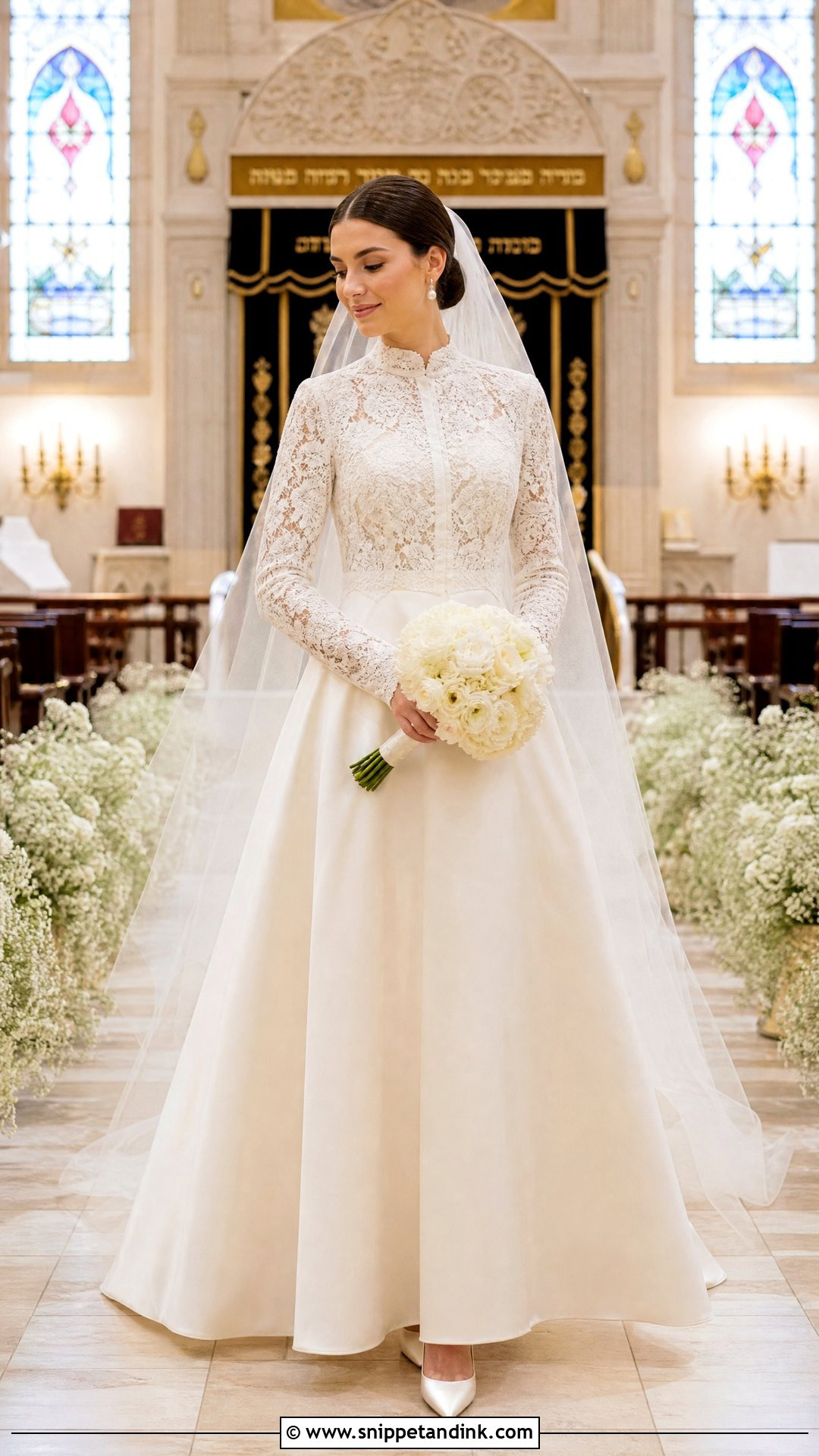
A bridal jacket is the most practical way to bring a sleeveless or short-sleeved gown up to a modest standard. Choose a long sleeve lace or satin jacket with a high neckline that buttons over an opaque A-line, so it looks like one design. Only go this route if the jacket can stay on whenever coverage is needed. Ivory pumps, pearl earrings and a veil that falls cleanly behind the jacket complete it. Ask the tailor to anchor the jacket to the dress at the shoulders and waist. Match the ivories in daylight; two shades from different makers can look noticeably different side by side.
24. Sephardic Inspired Jewish Wedding Dress
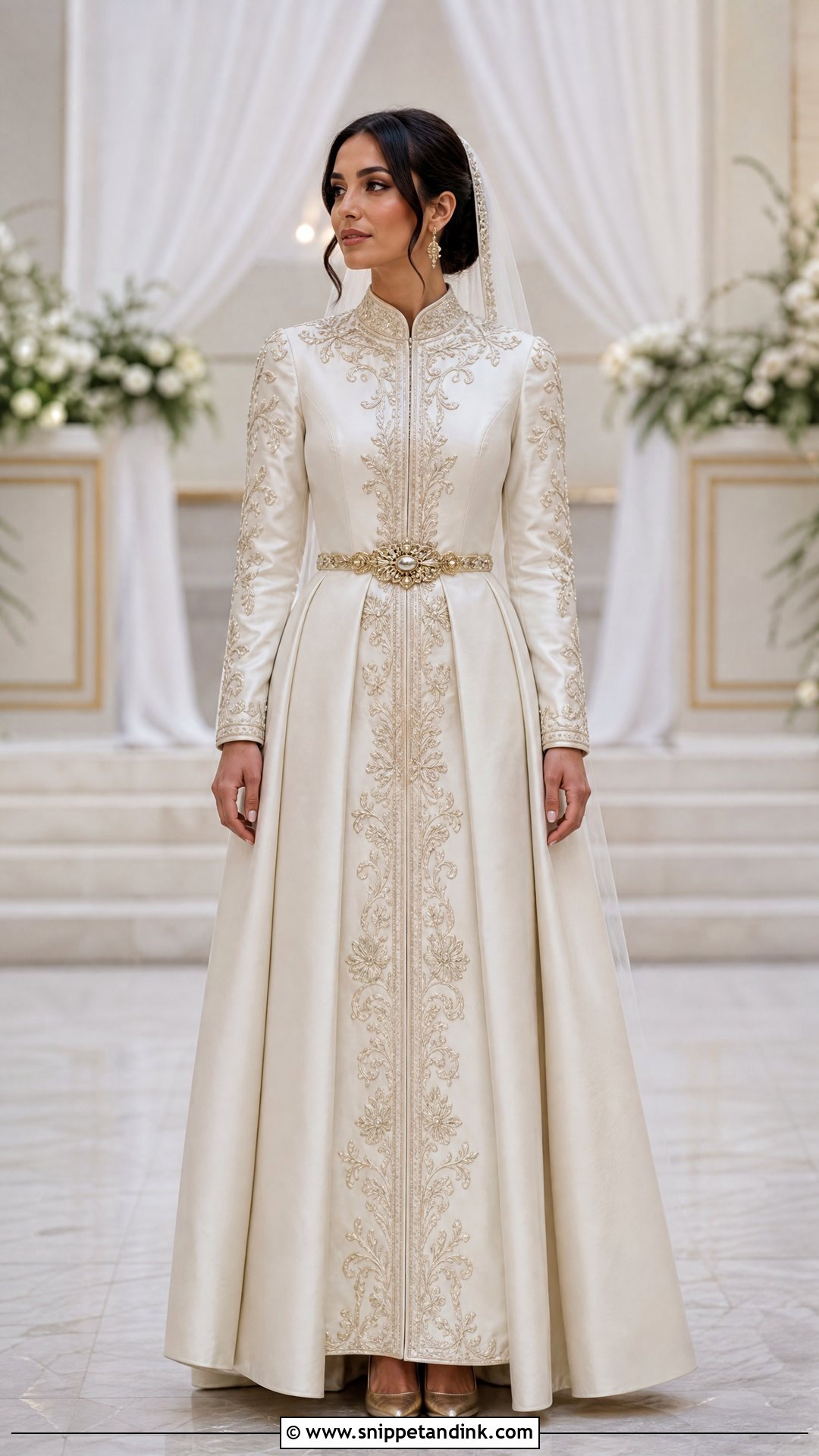
A Sephardic-inspired look draws on ornate embroidery, luminous fabric and family detail, and it works best when it’s rooted in the bride’s own heritage rather than a general idea of it. Consider a high-neck satin gown with long sleeves, gold-toned embroidery and a softly structured skirt, with patterns drawn from family history, regional traditions or heirloom textiles. Understated metallic shoes, small gold earrings and a veil that lets the embroidery show complete it. An inherited belt or piece of jewelry adds meaning. Talk to relatives and a designer who knows the motifs before choosing specific traditional patterns.
25. Classic Jewish Wedding Dress With Veil
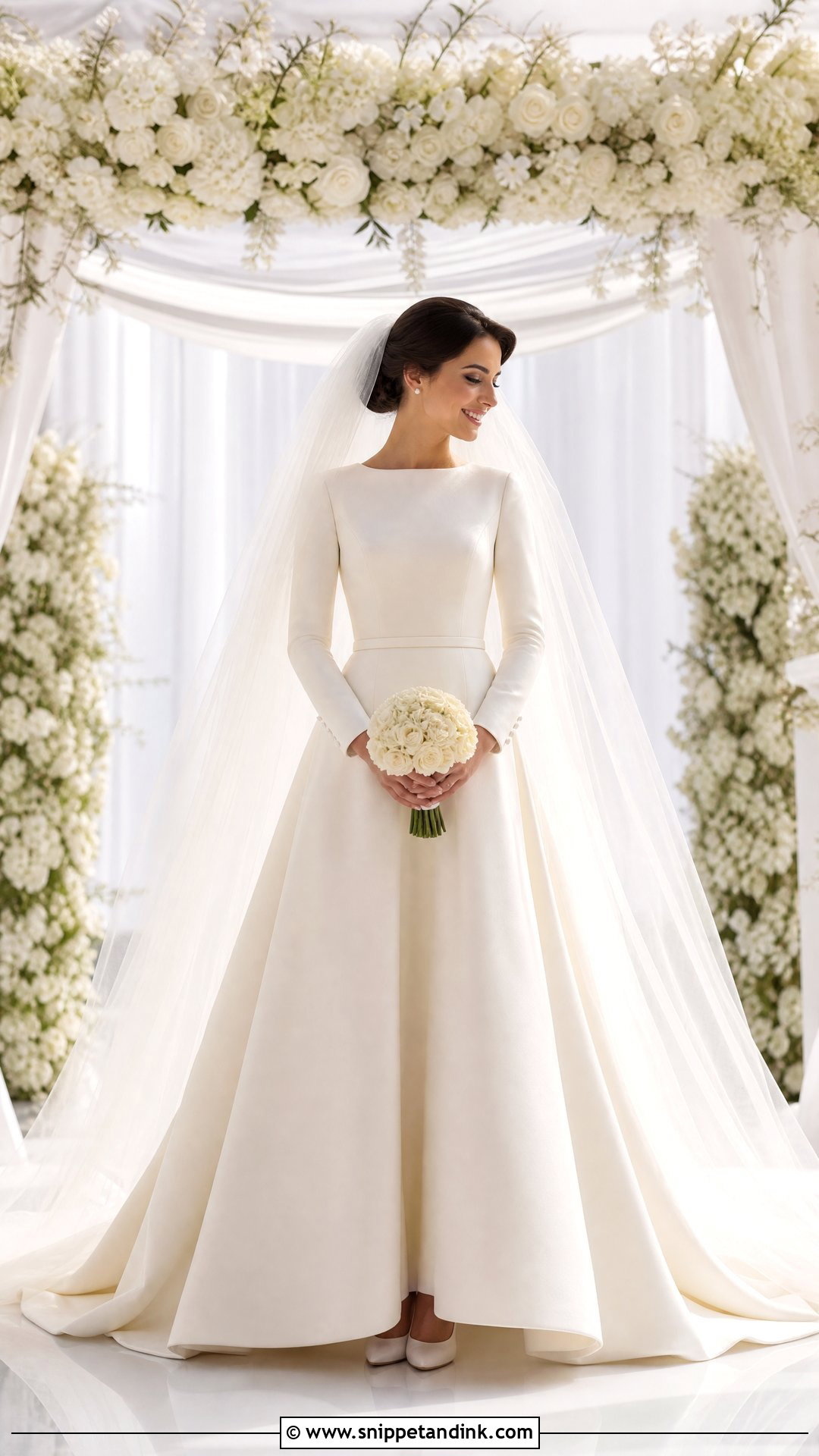
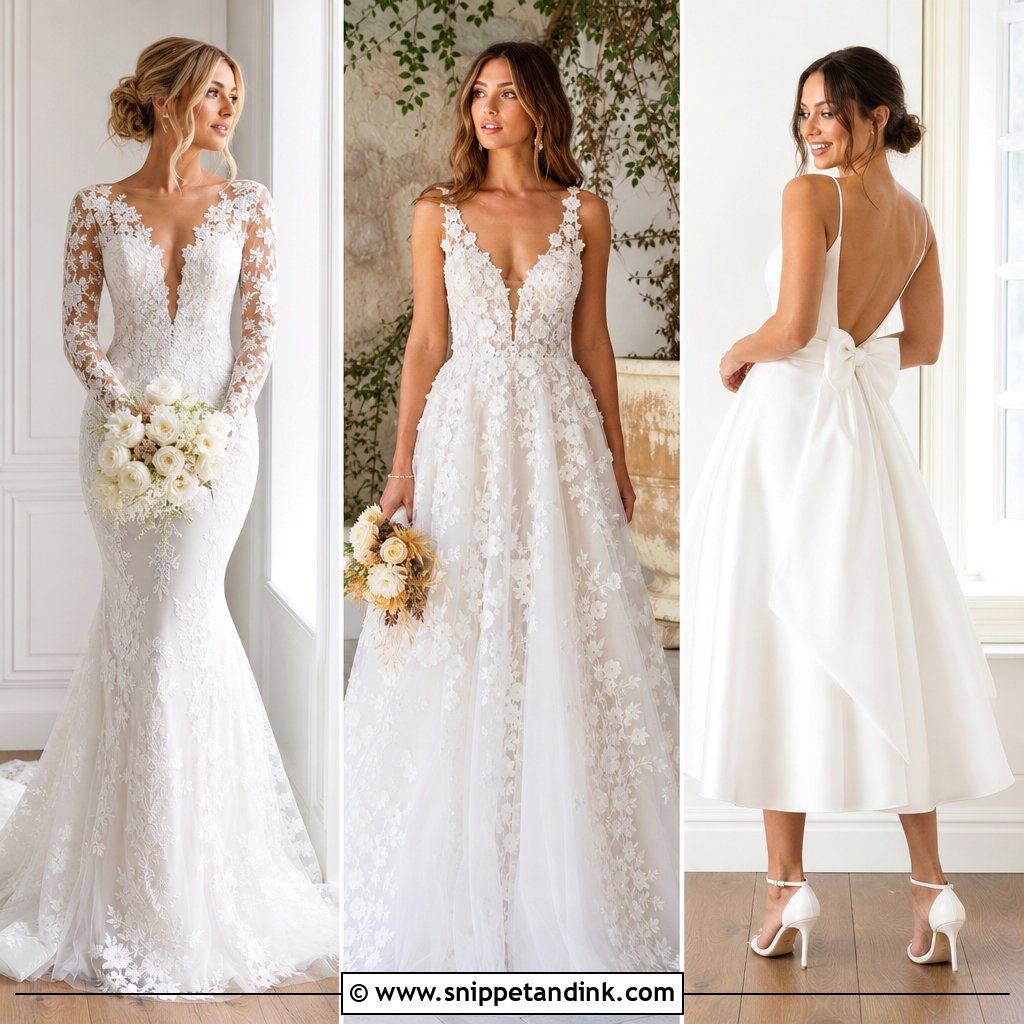
Classic gowns last best in photographs. Start with an opaque A-line with a neckline covering the collarbone, long sleeves, a fitted waist and a soft sweeping train. The veil should complement rather than repeat: plain tulle with an embellished gown, lace edging with a simple one. Closed-toe ivory shoes, pearl studs and a smooth chignon complete it. Talk to your rabbi or family about veil placement and ceremony customs, then practice walking, turning and handling the veil at home. The bedeken in particular needs a veil that can be lowered over your face easily.
Can a Salon Sample Be Made Modest?
Often, yes. Most bridal designs are made with open necks and short or no sleeves, and a skilled seamstress can add coverage that looks original. It just takes planning.
How I brief the salon
Write your coverage requirements down before the appointment: neckline, sleeve length, hem length, opacity. Hand the list to the consultant so she pulls samples that can be adapted, and ask whether the designer offers sleeves, higher necklines or full linings as factory options. Ordering them with the dress is usually cleaner than adding them afterward.
When the seamstress adds coverage
- Ask for extra fabric from the manufacturer at order time. Matching lace or satin later is difficult.
- Allow more time than for standard alterations. Added sleeves and raised necklines usually need an extra fitting.
- Try a modest shell underneath only as a last resort. A visible layer under a sleeveless gown rarely looks intentional in photos.
If you’ll cover your hair after the wedding, plan the head covering with your hairstylist too. A sheitel or tichel worn for the reception changes how the veil comb sits and what kind of updo will lie flat underneath it.
Your Community’s Standard, Your Own Taste
The right gown suits your personality and lets you feel properly dressed for your community. The looks here cover traditional lace, structured satin, airy chiffon, plain crepe, adaptable layers and options for different seasons and body types. Treat them as starting points, not rules. Expectations differ a lot between families and communities, so confirm the important details before you buy or alter anything. Then focus on what makes the day comfortable: opaque fabric, sleeves that move, a neckline that stays put, good support and shoes you can dance in. With careful tailoring, a covered gown can feel completely your own.
You'll Like These Ideas:


Leave a Reply