
Elegance in a wedding dress usually comes from one well-judged detail, not from piling on decoration. The gowns here each have one: a pointed waist, sculpted drape, raised flowers, an unusual neckline, a skirt that comes off for the party. Bridal designers have been mixing older shapes with modern corsetry and convertible pieces for a while now, which gives you far more choice than a row of strapless A-lines. As you look, think about your venue, how much you’ll move, your proportions and what you can tolerate wearing for twelve hours. I’ve added notes on how each fabric photographs and what to check at fittings, since that’s where most elegant dresses succeed or fail.
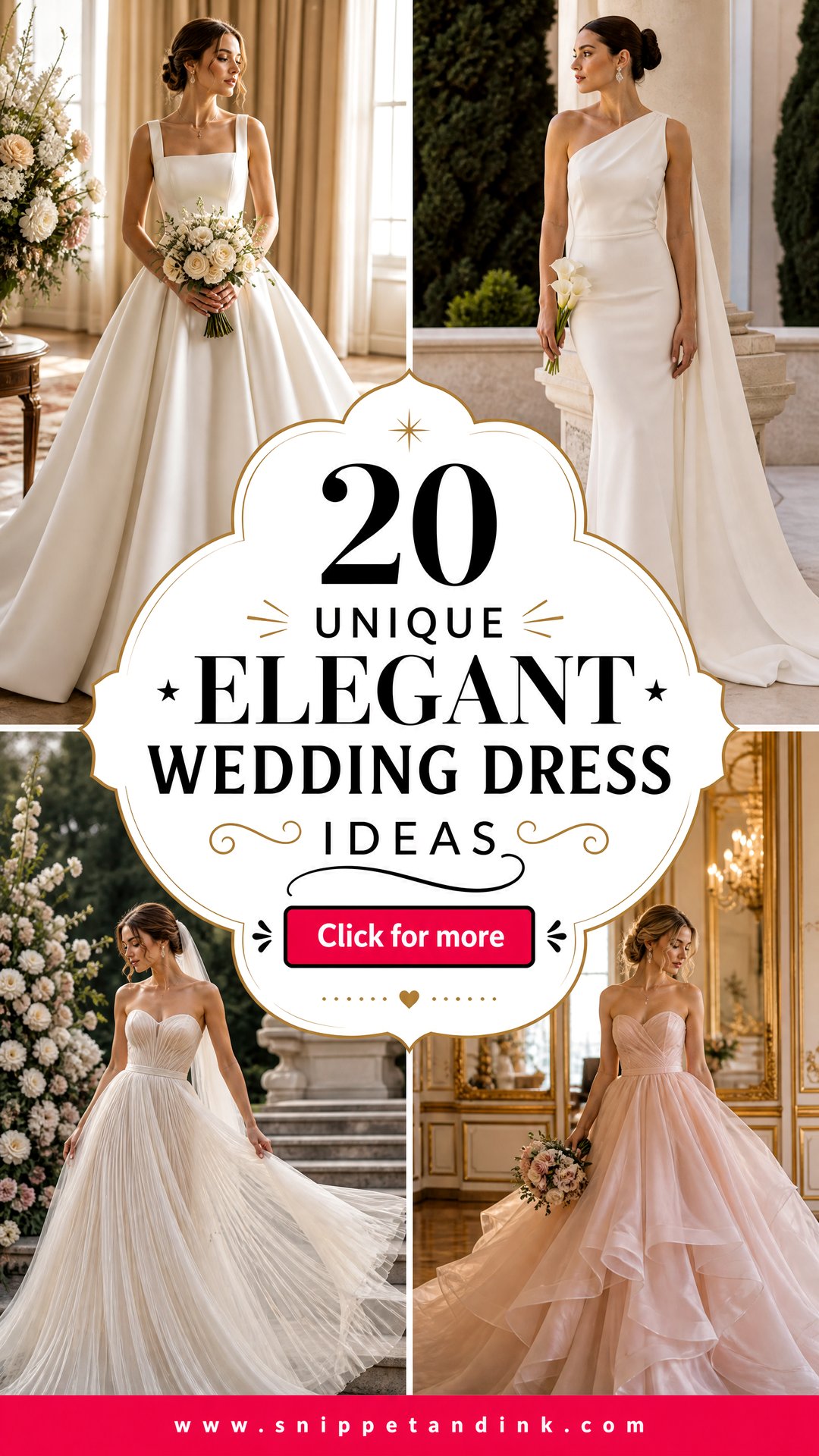
Mikado, Crepe or Organza? How Each Fabric Behaves on the Day
Almost every dress below is defined by its fabric before its shape. Two gowns with the same silhouette look and feel completely different in satin and in tulle, so it helps to know how each one behaves before you fall for a photo.
- Mikado and faille are heavy, crisp silks or silk blends. They hold folds, bows and cuffs well and creases fall out quickly, but they’re warm to wear.
- Crepe is matte and fluid. It suits columns and high necks, flatters most figures, and is forgiving of creasing, yet it shows lumpy undergarments.
- Satin reflects light, so it photographs rich and highlights every seam. Shinier satins show sitting creases more than matte ones.
- Organza and tulle give volume without much weight. Organza creases easily; good tulle recovers after sitting, cheap tulle doesn’t.
- Brocade and jacquard have the pattern woven in. They’re durable and hide wear well, but they’re heavy and best for cooler months.
My rule when a bride tries a sample on: sit for five minutes and stand up again. Whatever the fabric does then is what your photos will show after the ceremony.
1. Basque Waist Ball Gown Wedding Dress
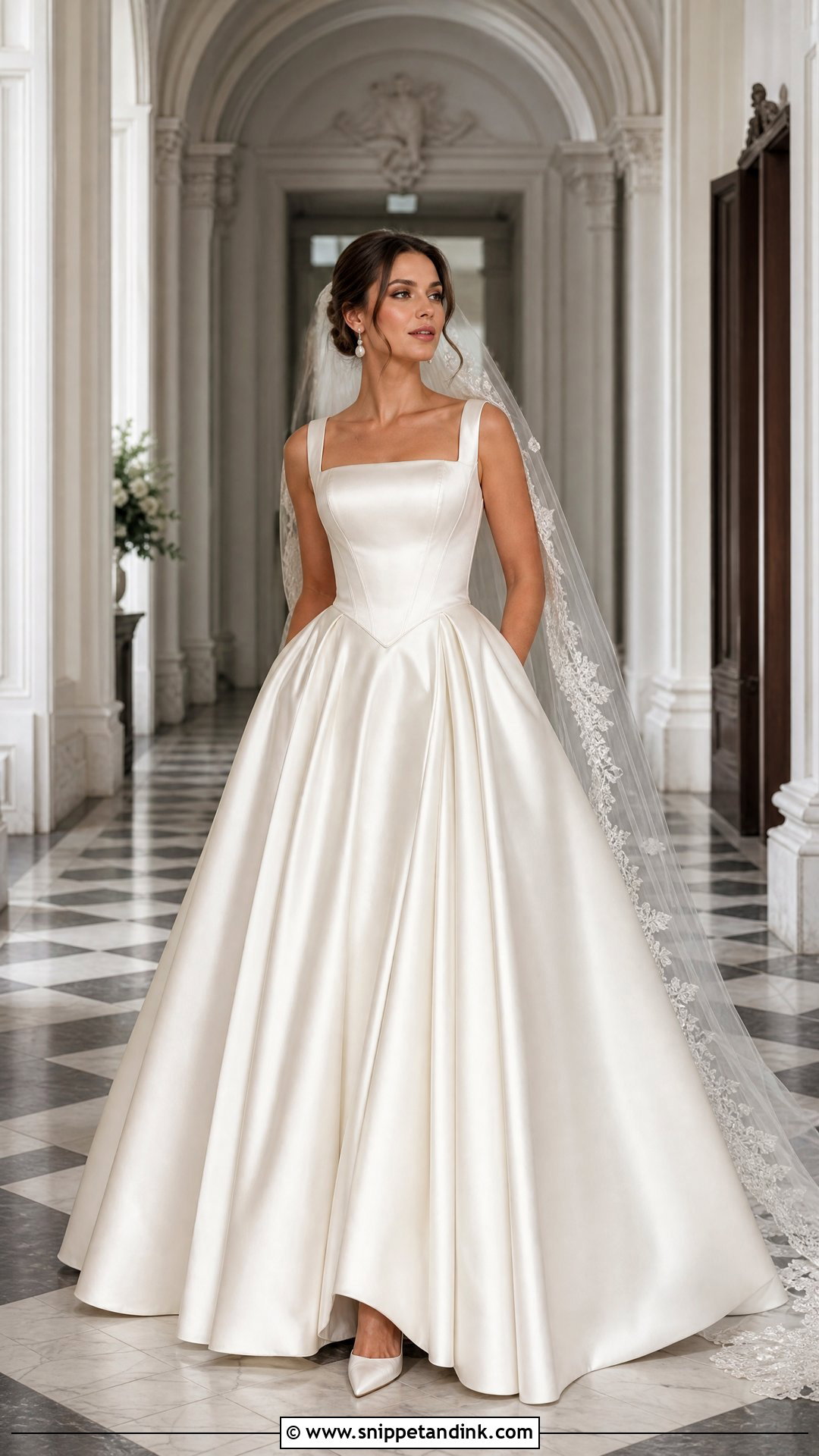
A basque waist ball gown carries the bodice down into a soft V below the natural waist, and that point is what makes a full skirt look graceful rather than heavy. Structured satin or matte mikado keeps the line crisp. A square or gently curved neckline balances the volume. Pearl drops, ivory pointed pumps and a clean-edged cathedral veil are all it needs. Fuller busts are better supported by wider straps and internal corsetry than by tightening the bodice. The adjustment I make most often is raising the waist point; set too low, it shortens the legs and digs in when you sit. It suits ballrooms and formal estates and needs no heavy beading.
2. Drop Waist Satin Wedding Dress
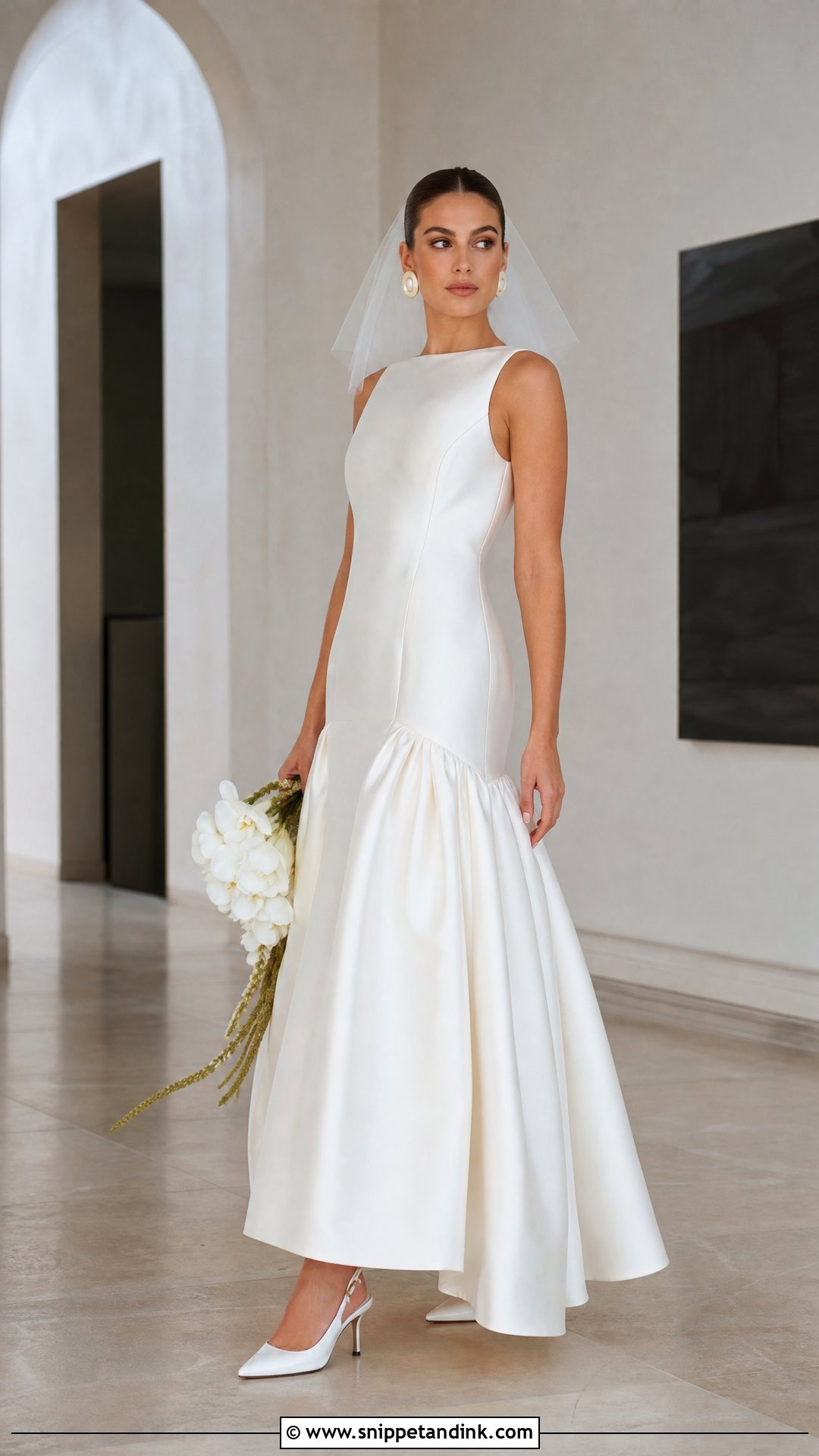
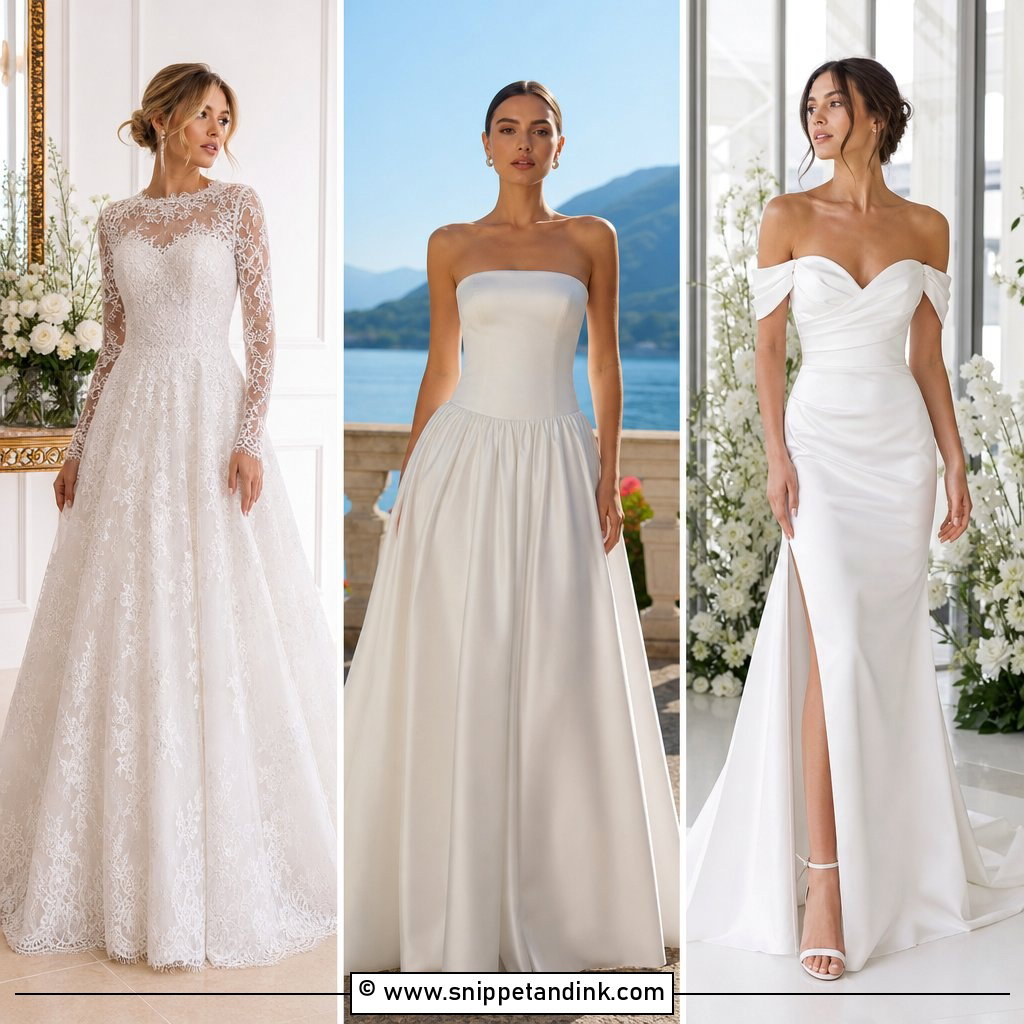
A dropped waist lengthens the torso, then lets the skirt open below the hips. It’s modern and slightly fashion-led, and it depends on fit more than most styles because the seam sits across the widest part of many figures. Shiny satin shows the silhouette strongly; matte satin is softer on camera. Keep the styling spare: sleek hair, sculptural earrings, a short tulle veil and pointed slingbacks. Allow extra time for alterations, and ask whether the seam can be shaped. A slightly curved seam is kinder to most hips than a ruler-straight one. Galleries, modern hotels and clean architectural spaces suit it best.
3. Square Neck A-Line Wedding Dress
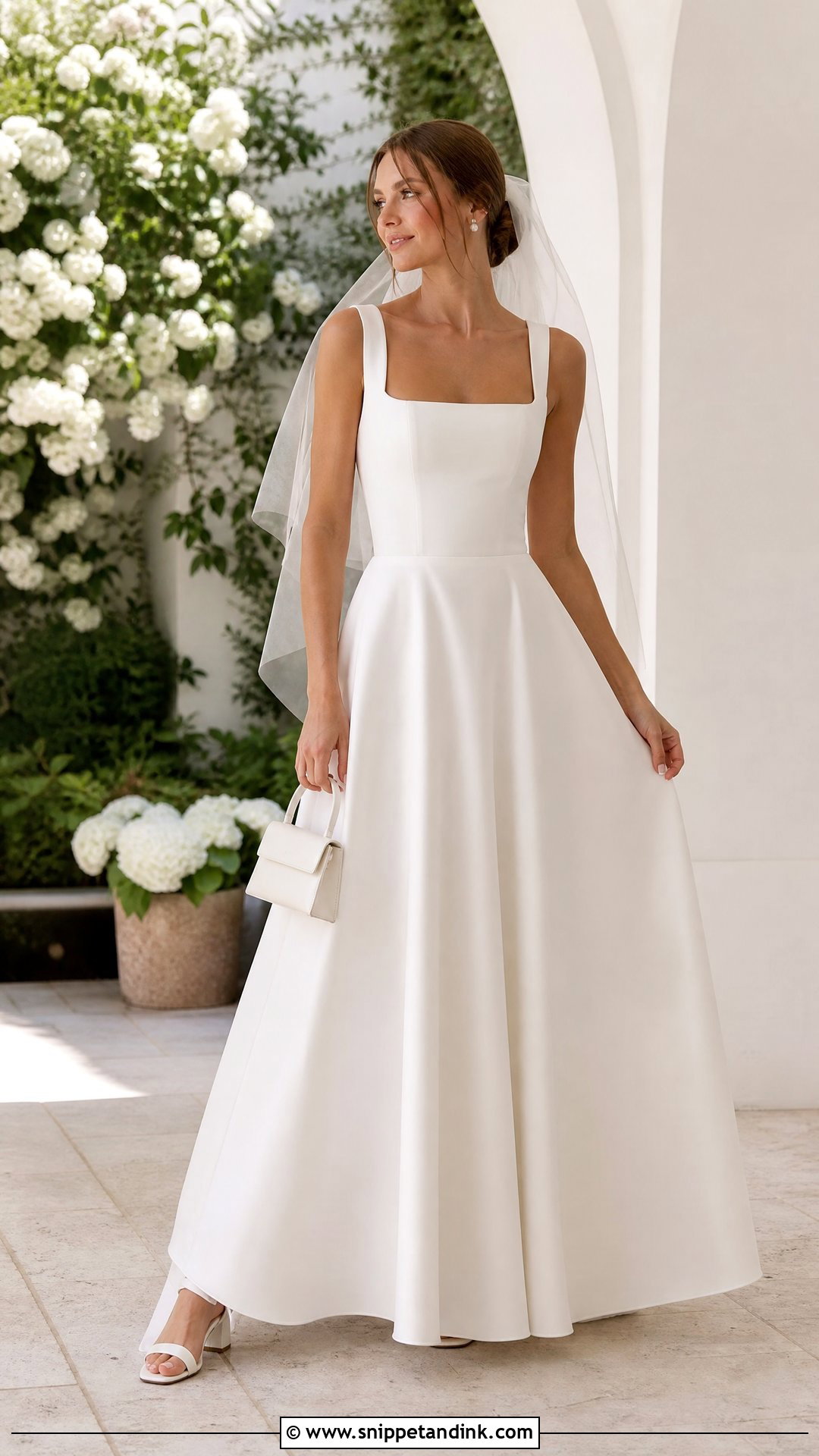
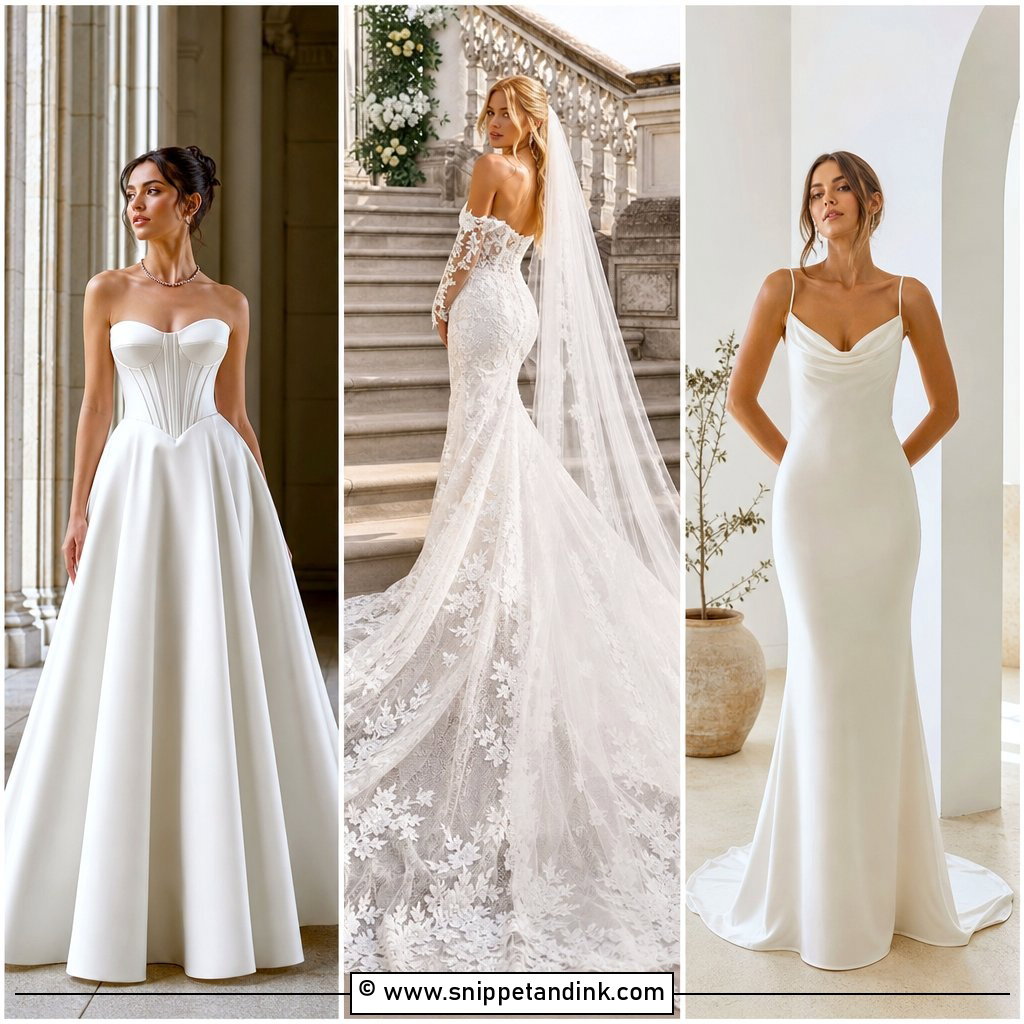
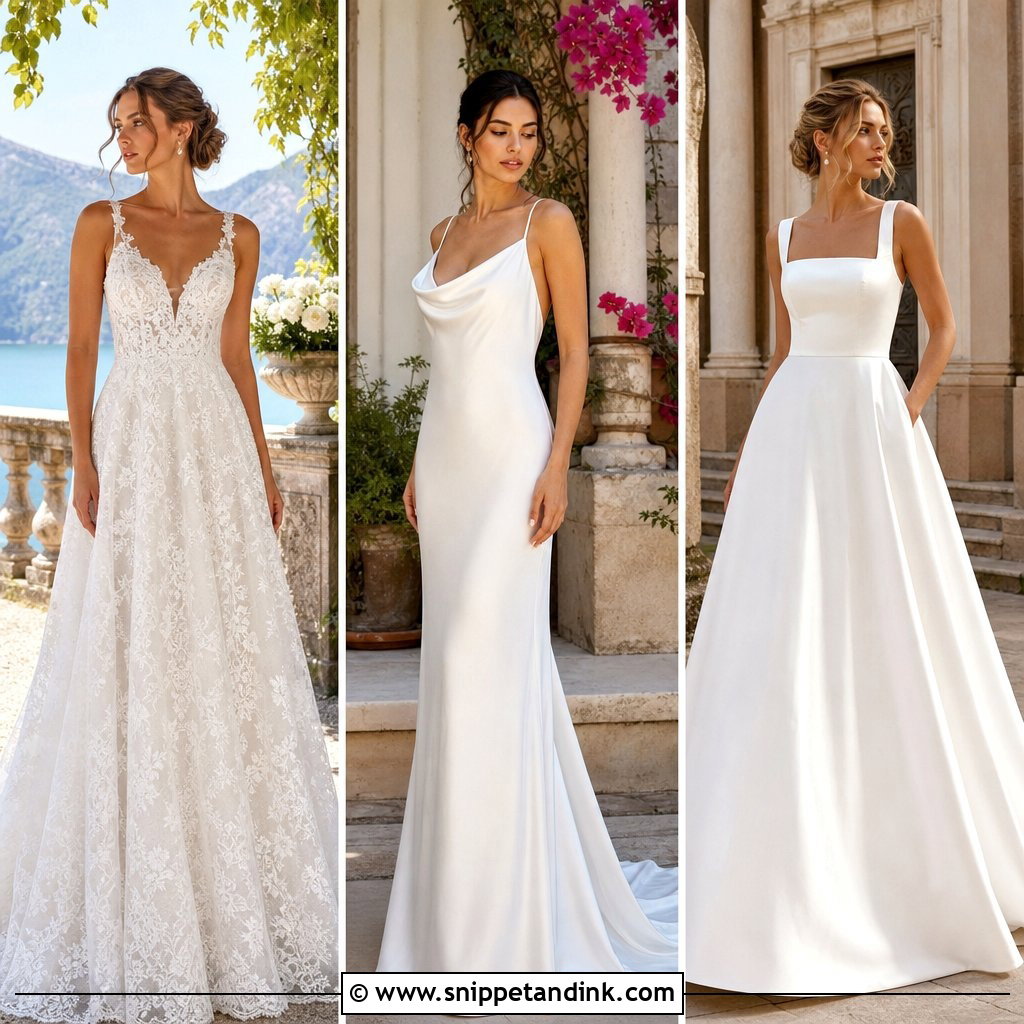
Would you like a classic dress that doesn’t feel predictable? A square neck on an A-line frames the collarbones and lets the skirt fall freely from the waist. Silk faille, satin or lightweight mikado hold that crisp neckline; softer fabrics let the corners droop. Wide straps support most bust sizes well. I’d add a fingertip veil, pearl studs, a structured mini bag and low block heels. A defined waistband marks the waist, while a dress with no waist seam gives a longer line, so try both if you’re unsure. Wear a neat bun or pinned waves so the straight neckline stays visible from the aisle.
4. Draped Corset Wedding Dress
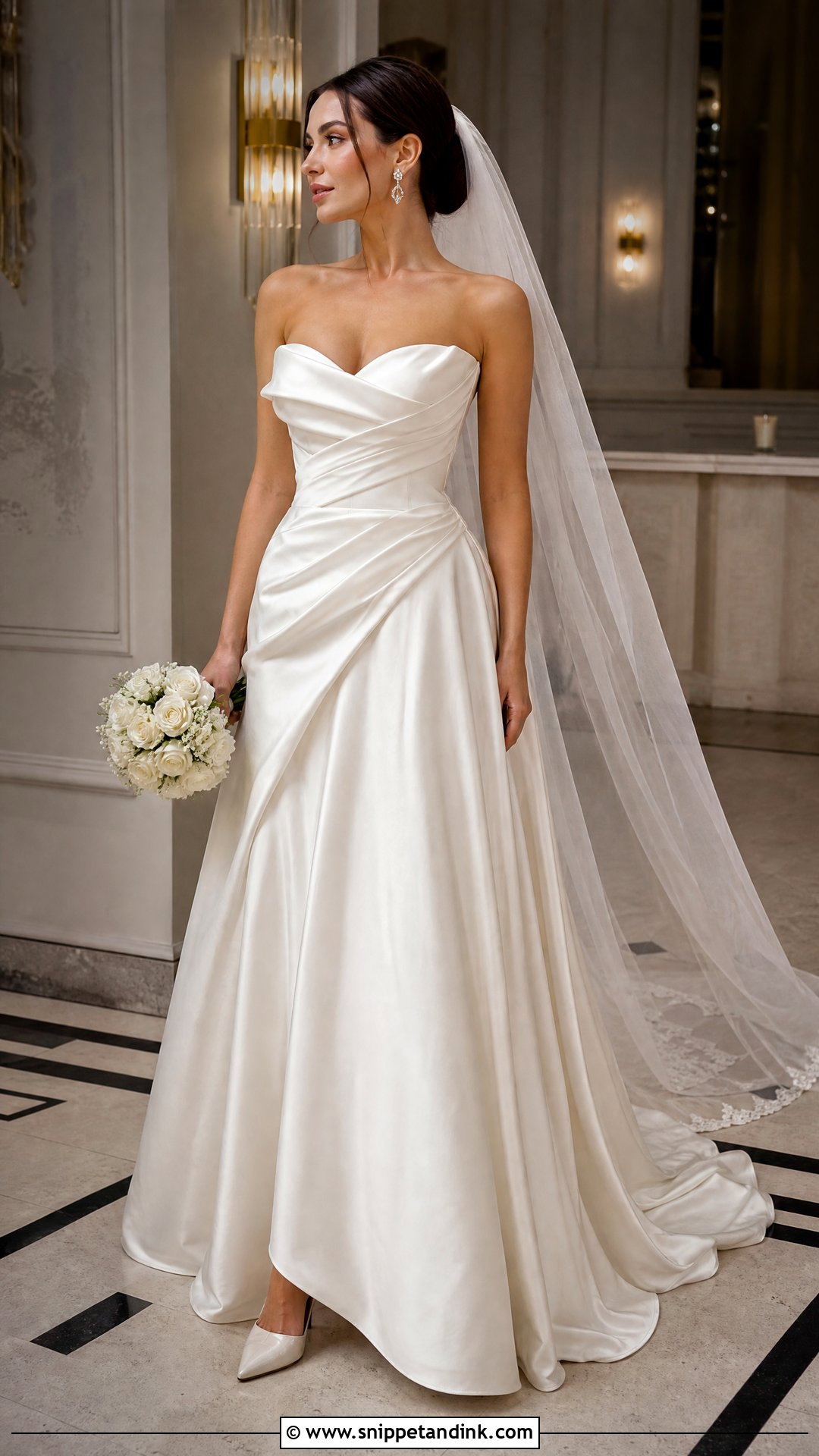
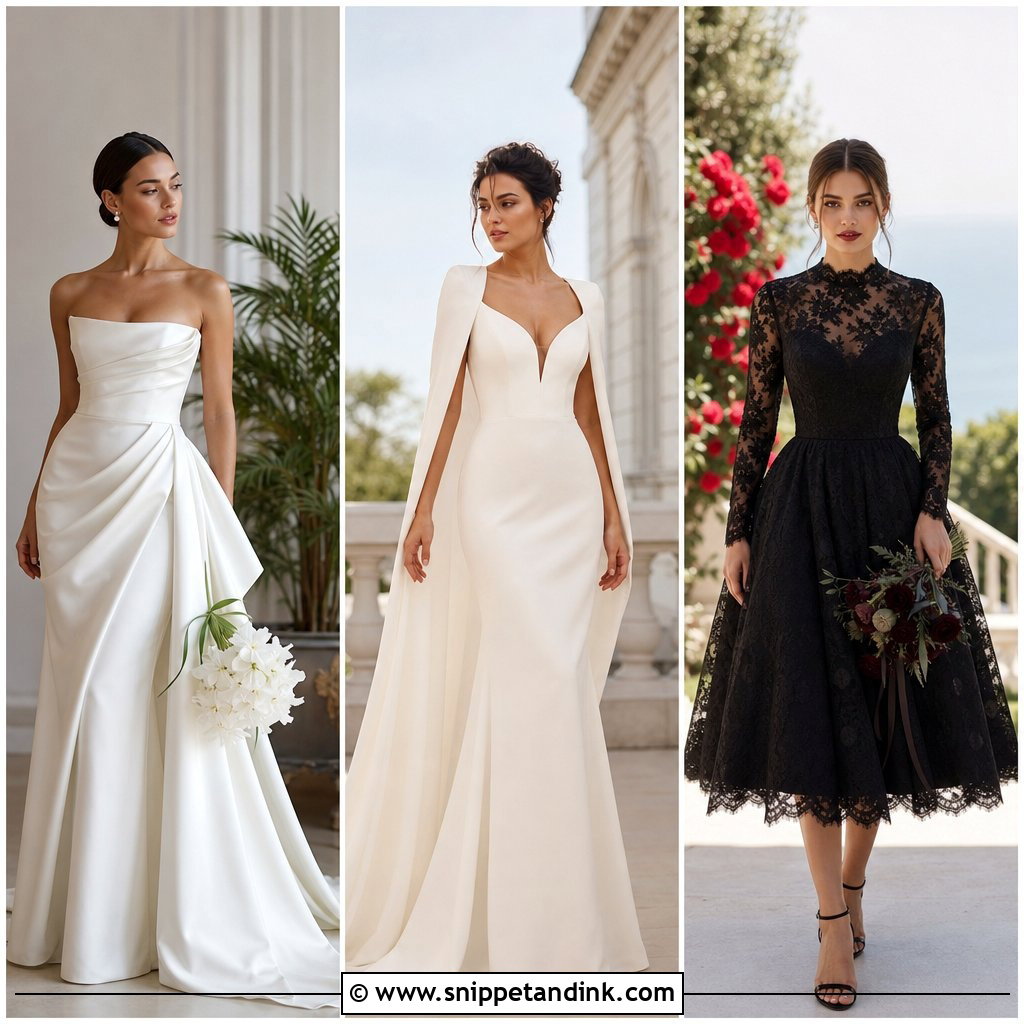
Draping gives a corset movement without sparkle, and it’s one of the hardest effects to fake. The folds should look poured, which only happens in silk satin, crepe or chiffon; stiffer fabrics make drape look pleated and fussy. Balance the bodice with an A-line, fit-and-flare or gently gathered skirt. A sheer chapel veil, crystal studs, satin pumps and a compact bouquet finish it. Corset fit is where I’m strictest. You should be able to sit, eat and take a deep breath without the boning pressing into your ribs or the top edge biting under the arms. Removable off-shoulder straps or a sheer draped panel add coverage if you want it.
5. Floral Appliqué Wedding Dress
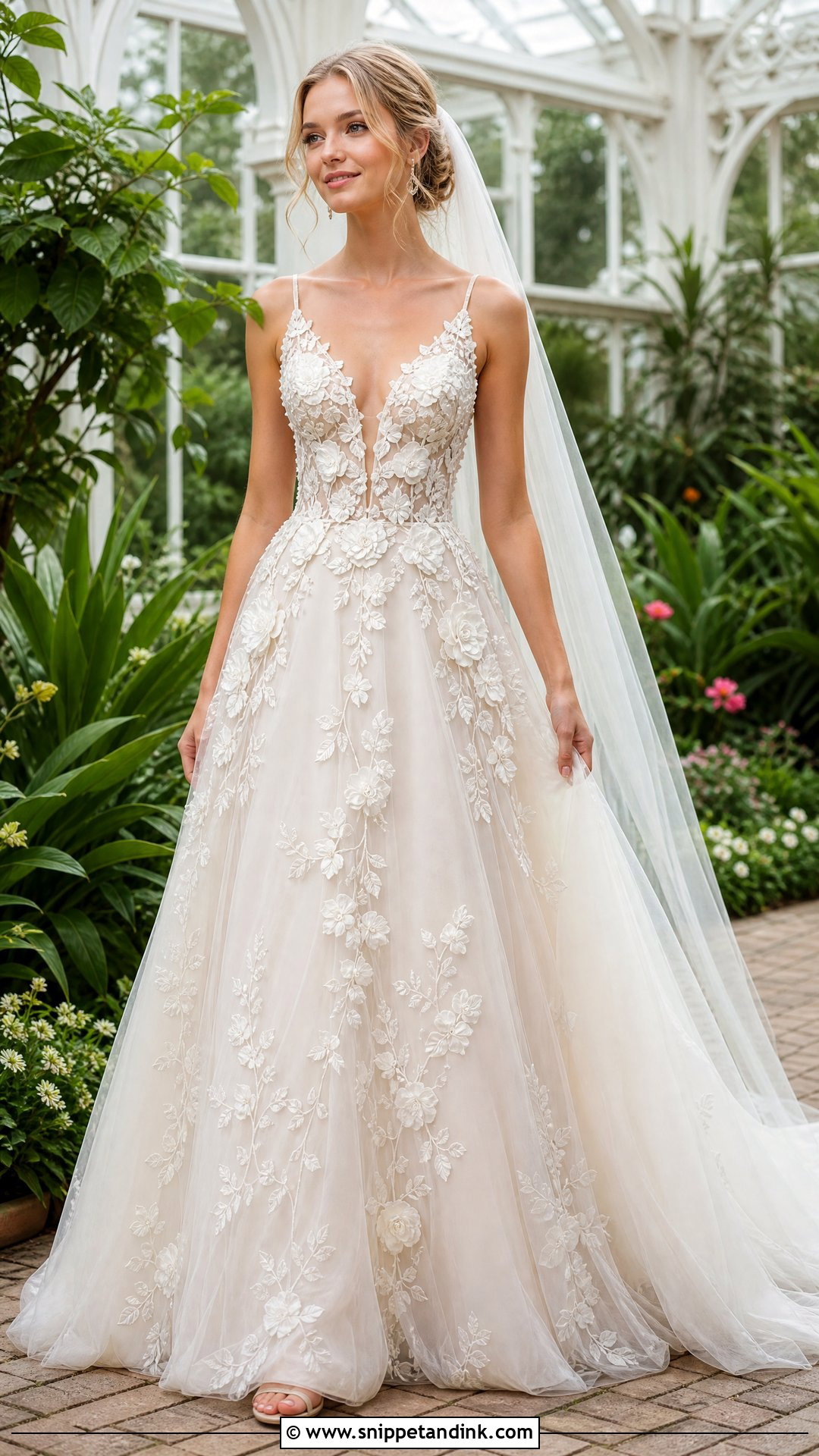
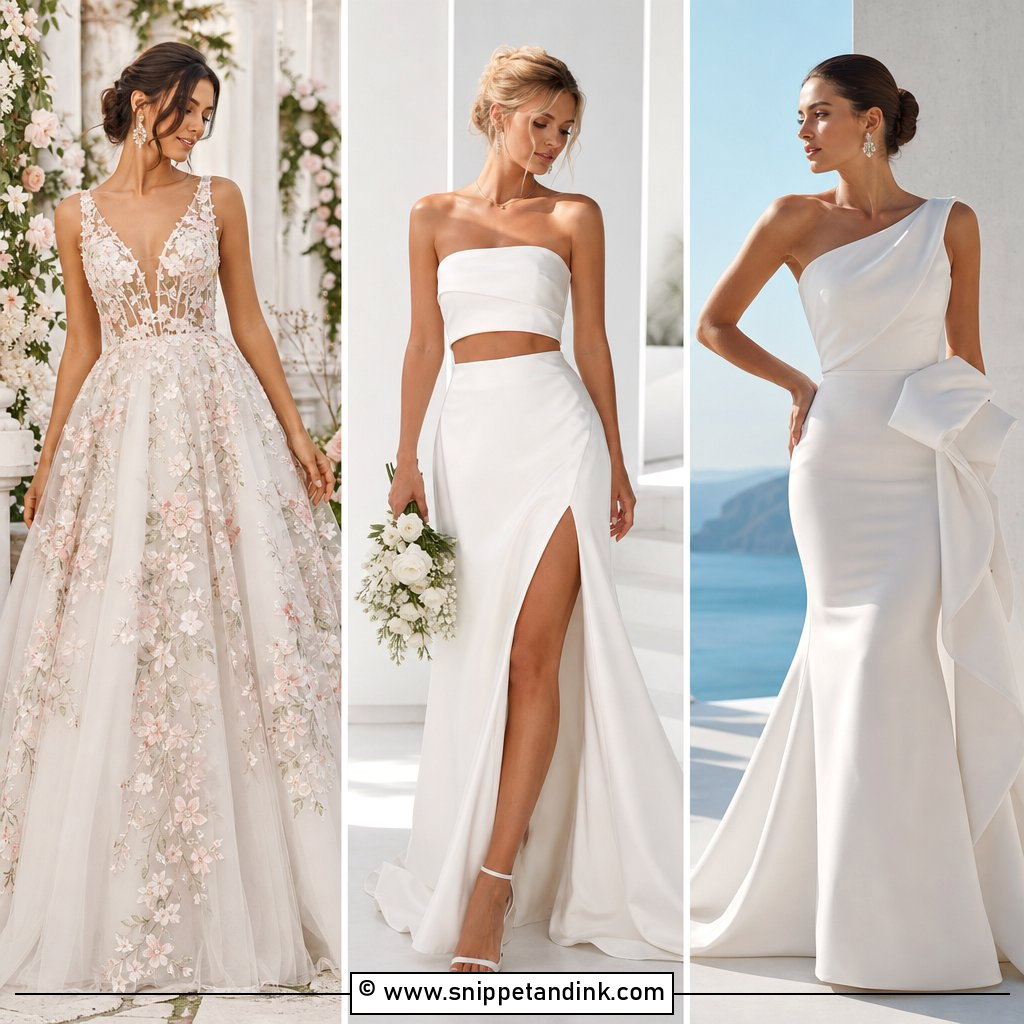
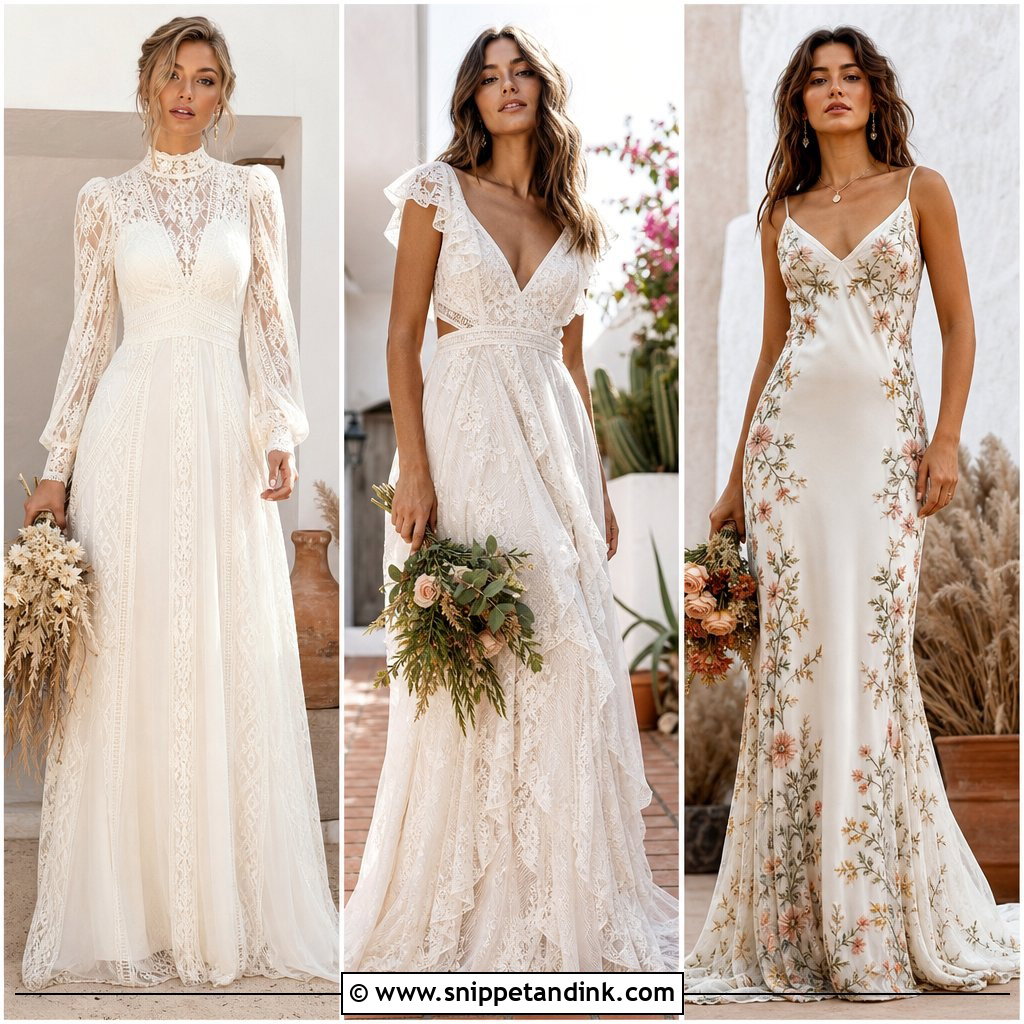
Appliqué flowers look elegant when they follow the dress’s construction, gathering along the neckline, waist and hem, rather than landing at random. Over a sheer tulle layer, embroidered petals look almost suspended. Simple drop earrings, ivory sandals and a plain veil leave the texture alone, and a low bun or half-up style keeps things soft. If you’re marrying outdoors, think about what the hem will touch. Raised petals snag on gravel, brick and rough wooden decking, and lifted appliqués near the floor are the first thing I see damaged after a garden wedding. A hem guard or a slightly shorter front helps.
6. Long Sleeve Lace Wedding Dress
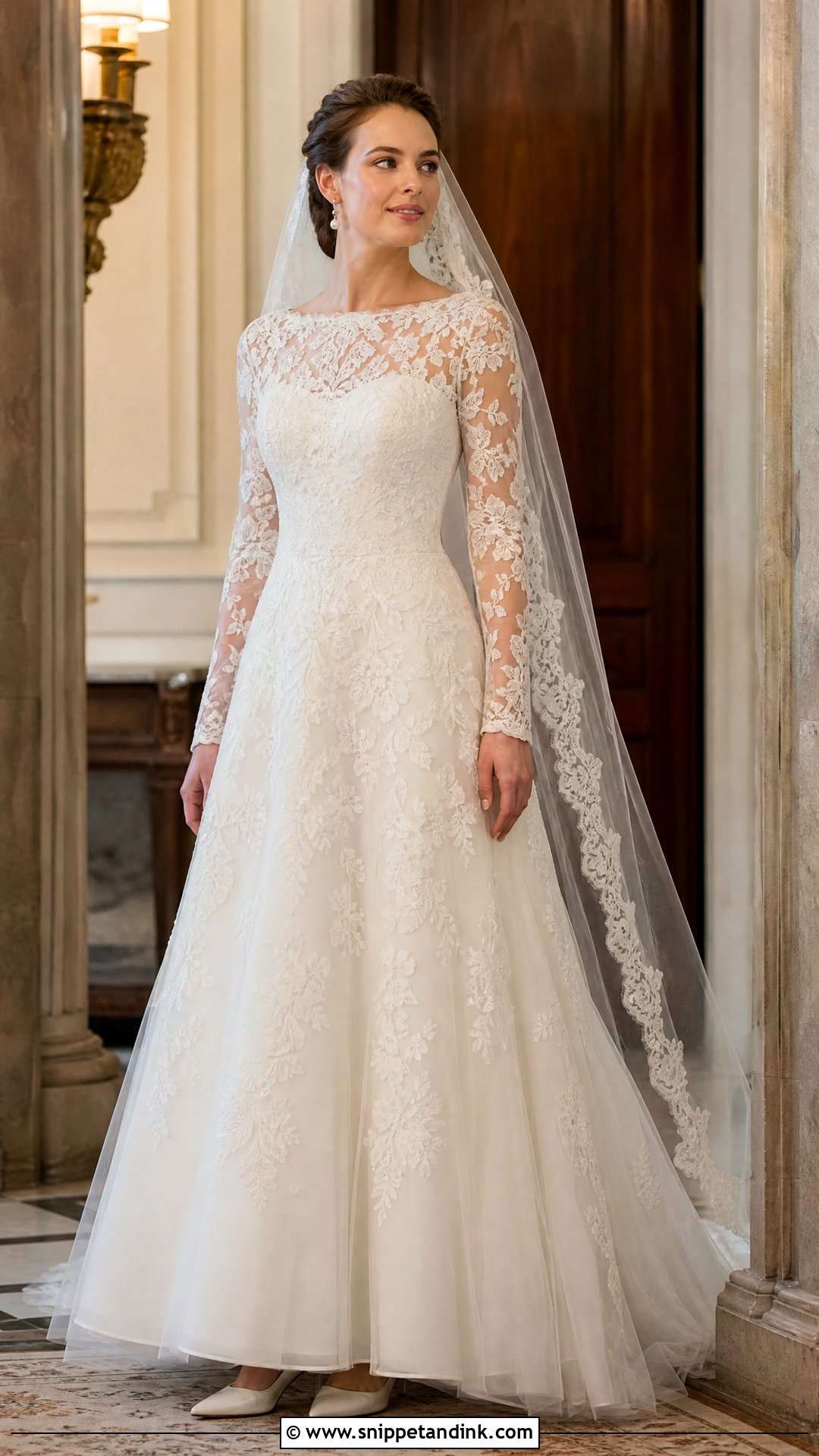
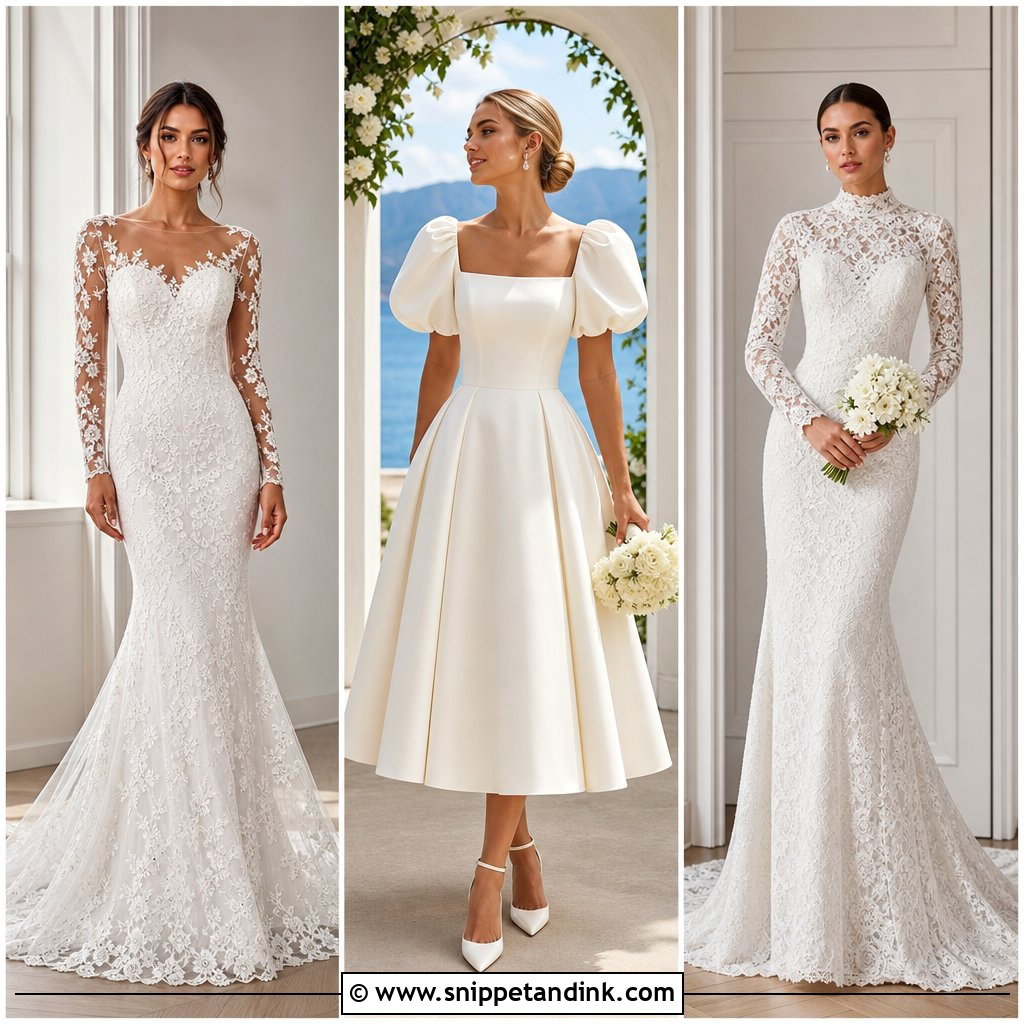
Long lace sleeves give coverage and texture together. Scale the lace to your frame: small motifs look delicate, big botanical ones make a stronger statement and suit taller brides. A lightly lined bodice with sheer sleeves keeps it from feeling heavy. Closed-toe pumps, pearl earrings and a lace-edged veil in a matching pattern work well; mixing unrelated laces looks messy in close-ups. Sleeves are the first thing I check at a lace fitting. Bend your elbows and hug someone. Lace has little stretch, and sleeves cut too close pull across the back of the shoulders the moment you raise your arms. An A-line skirt is romantic, a crepe column cleaner, and either suits fall weddings and historic venues.
7. Off Shoulder Mikado Wedding Dress
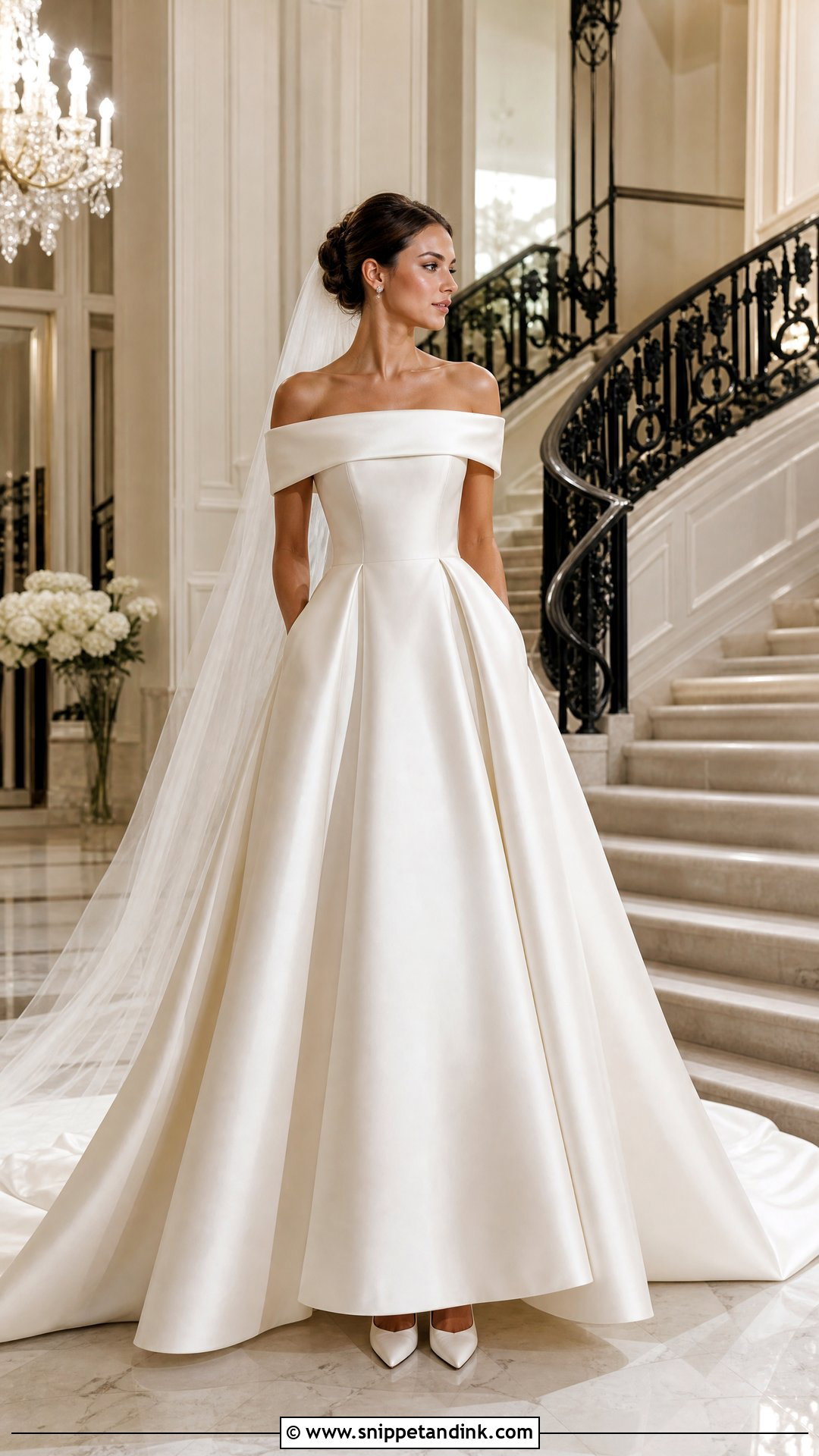
Mikado has enough body to hold pleats, a folded cuff neckline and a structured skirt, so even an undecorated off-shoulder gown looks grand. The neckline is the risk. An off-shoulder band that’s too tight pins your arms down; too loose and it slides. Ask for silicone gripper inside the band and test it by lifting both arms. A clean cathedral veil, diamond-style studs, pointed pumps and a structured bouquet complete it, with an updo that leaves the shoulders bare. Pockets are worth asking for if they don’t distort the skirt. It looks best on grand staircases, in formal ballrooms and at winter weddings.
8. One Shoulder Column Wedding Dress
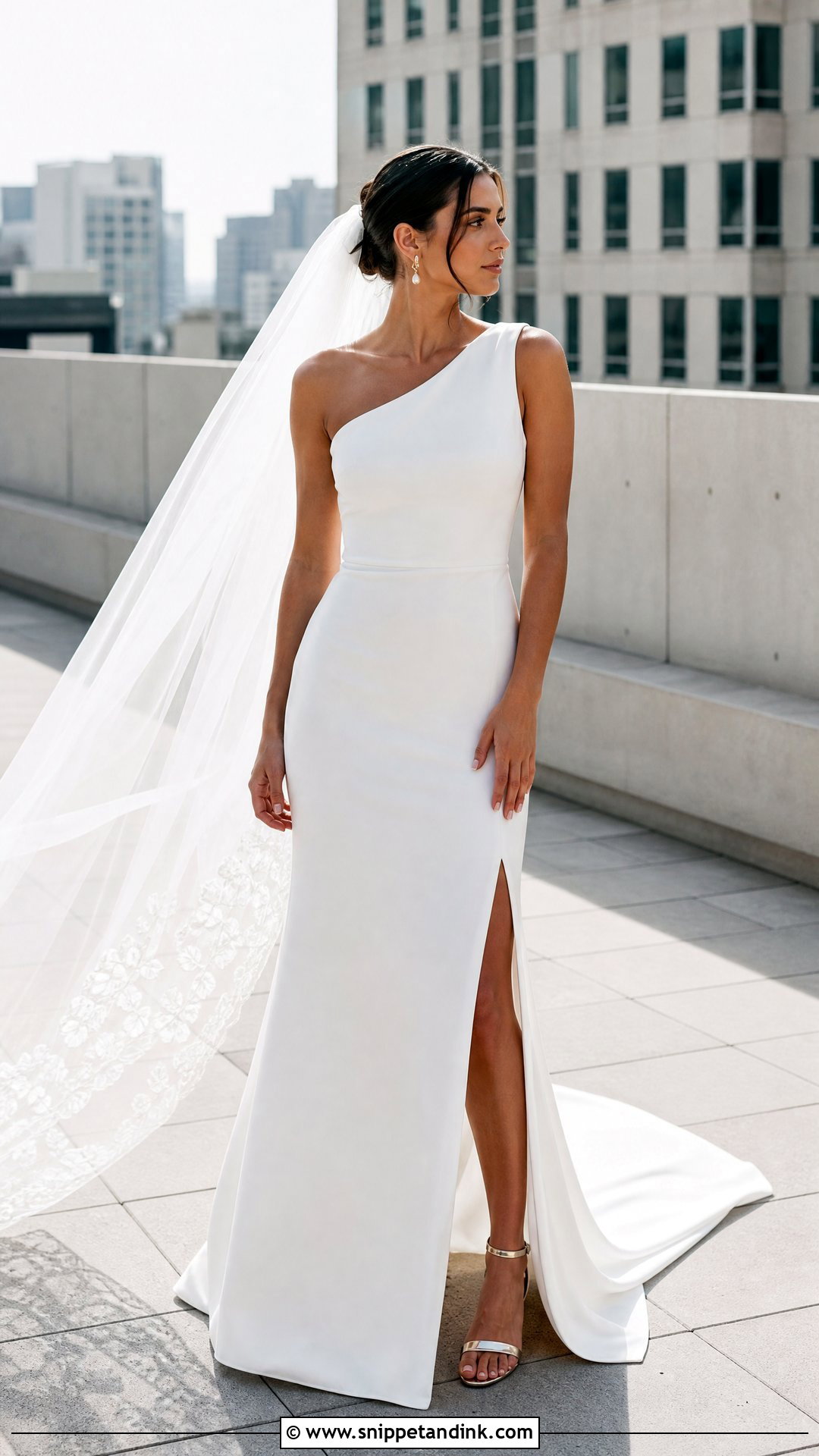
A one-shoulder column gives you asymmetry with no embellishment at all. The narrow line follows the body, and the diagonal neckline leads the eye up to the face. Choose substantial crepe, silk cady or matte satin; thin fabrics cling and show every undergarment line. A sleek low bun, one statement earring or small studs, metallic sandals and a chapel veil below the hairstyle are enough. Skip bracelets. A slit makes walking easier, but test its height sitting down, because a slit that looks modest standing can open far higher on a chair. A short train adds ceremony drama. Rooftops, city venues and galleries suit it.
9. High Neck Crepe Wedding Dress
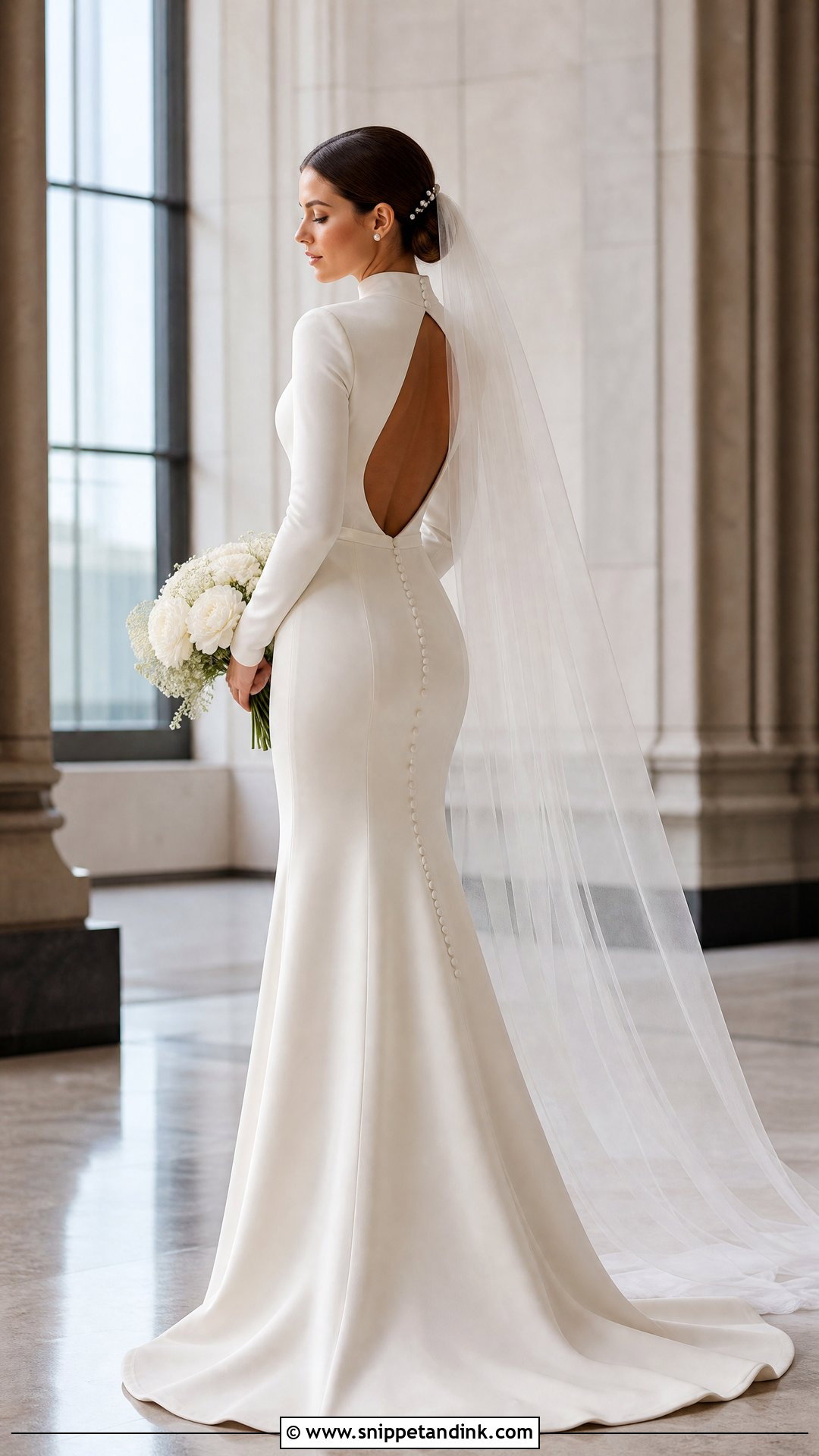
High-necked crepe looks quiet from a distance and sophisticated close up. A mock neck, a bateau-inspired high neckline or a gently gathered collar all cover while framing the face. Choose medium-weight crepe with a smooth lining; thin crepe shows seam allowances through the fabric. A column skirt is modern, a soft flare easier to move in. Style it with a low chignon, pearl pins, closed-toe heels and a dramatic veil under the bun, and leave the neck bare. A keyhole or open back adds contrast behind. Sit and turn your head at the fitting; collars that fit standing often press against the throat when seated.
10. Cape Sleeve Wedding Dress
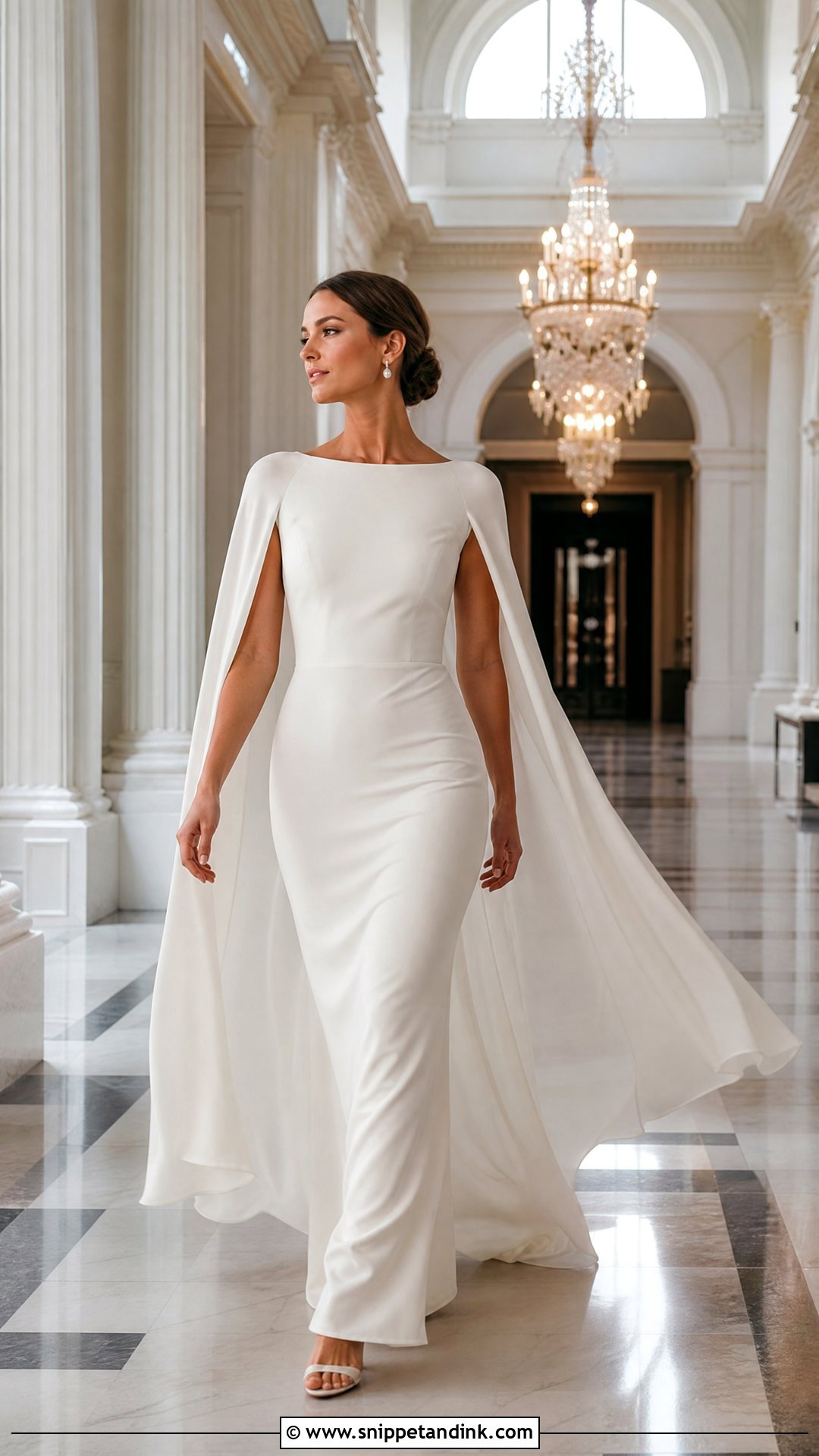
A cape moving down a long aisle has real presence. It can fall from the shoulders, attach at the neckline or replace the veil entirely. Chiffon floats; crepe holds a sharper, architectural shape. Underneath, a column or slim A-line stops the silhouette going bulky. Keep earrings understated, heels sleek and hair in a low bun. If the cape is heavily worked, the dress beneath should be plain. A detachable cape gives you a cleaner reception look. I check its length against the venue: a floor-sweeping cape picks up leaves and catches on stone steps, so outdoor brides may want it an inch shorter than the dress.
11. Detachable Overskirt Wedding Dress
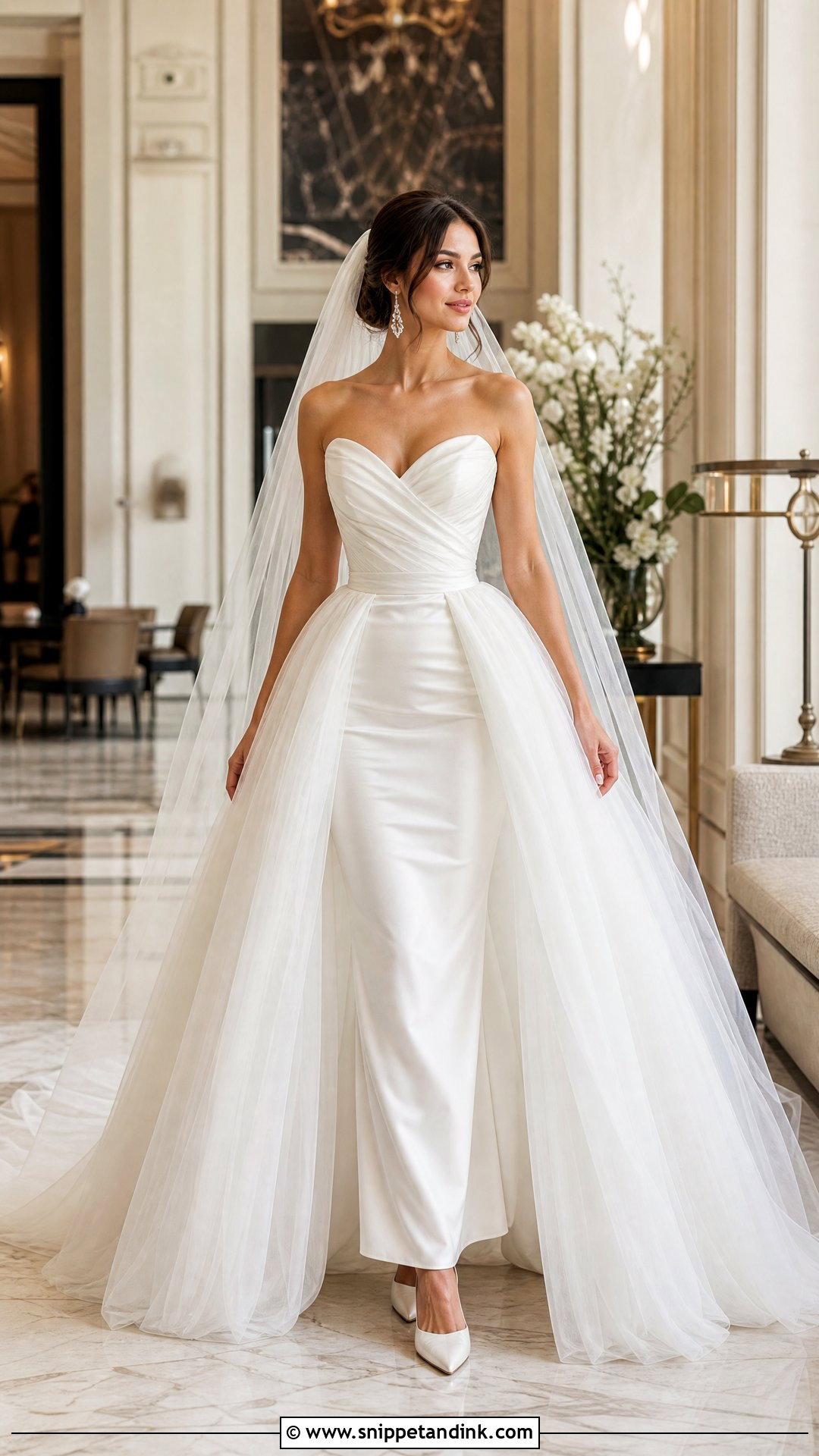
An overskirt gives you two silhouettes without a full outfit change. The base is a fitted crepe, lace or satin gown; over it goes a full tulle or mikado skirt for the ceremony. Wear a long veil, classic pumps and refined earrings first, then remove the overskirt, switch to comfortable heels and add a bolder hair piece for the party. The waistband closure must sit flat and invisible from the back as well as the front, and the skirt should come off without dragging on the base dress. This works best when ceremony and reception share a venue, so there’s a room nearby to make the change.
12. Pearl Embellished Wedding Dress
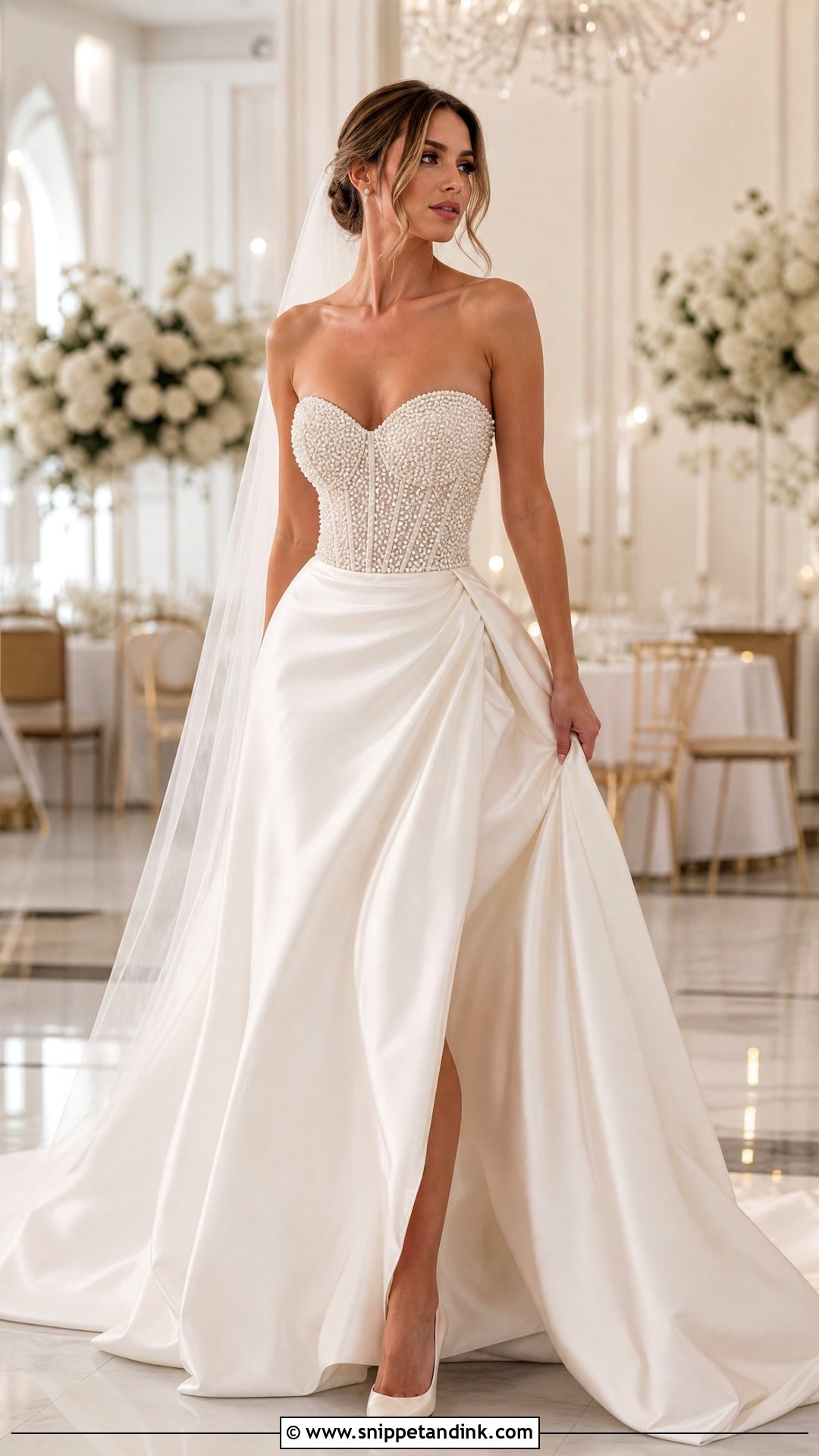
Pearls give a softer glow than crystals, whether scattered over tulle, lace or a structured bodice. Look for even, firmly stitched placement; patchy pearls read as damage in photos. A pearl corset with a plain satin skirt is balanced, while an all-over pearl tulle layer feels airier. Small pearl studs, satin heels and an unembellished veil are enough, because matching pearls everywhere quickly looks like a costume. I always ask brides to lift their arms at the fitting. Pearls stitched under the arm or along the side seam rub skin over a long day, and a soft lining behind them makes a real difference. Hotel ballrooms and evening weddings show the glow best.
13. Pleated Tulle Wedding Dress
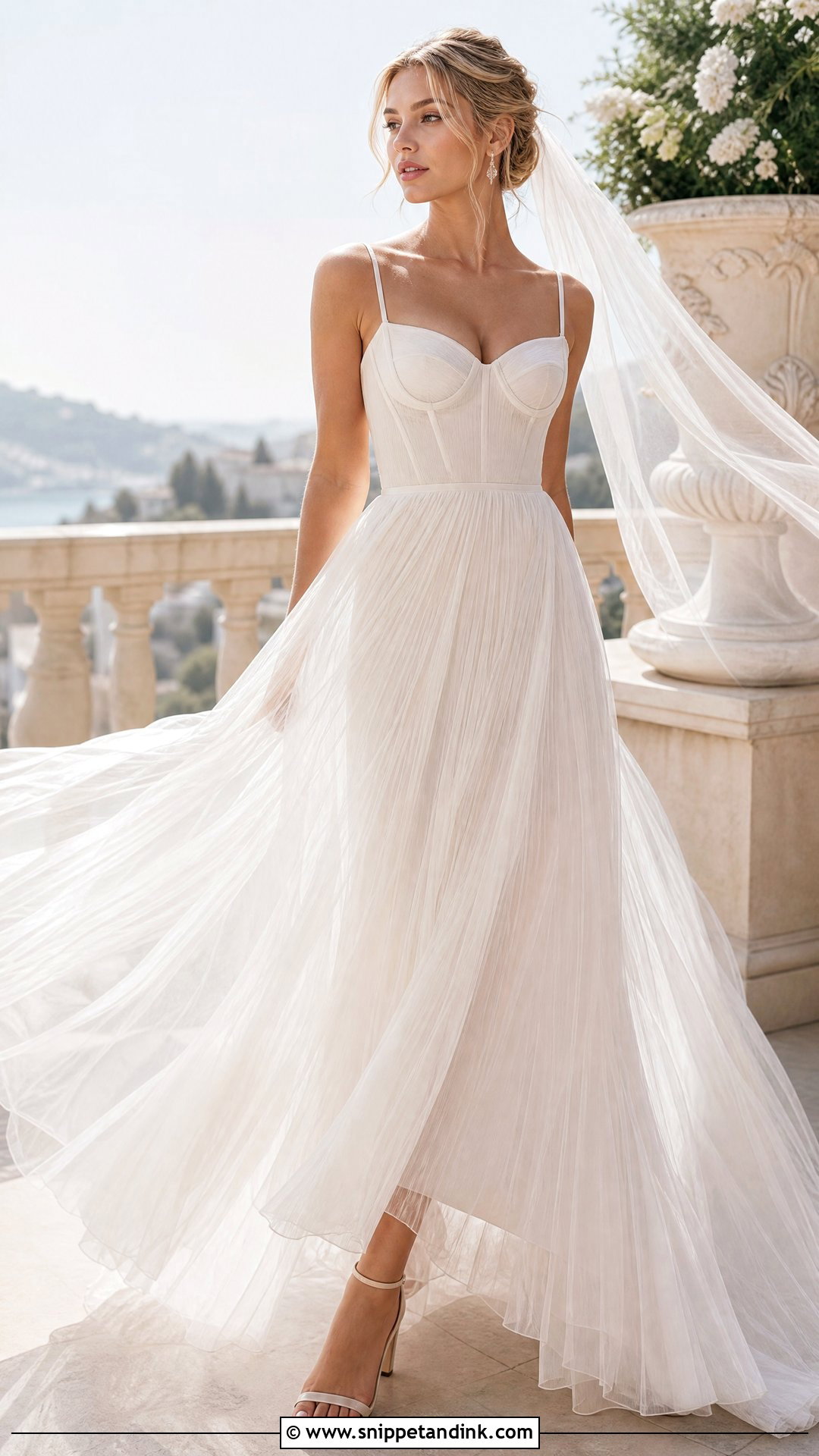
Fine pleats give tulle movement without the weight of a layered ball gown. A fitted bodice may open into narrow sunburst pleats, or the whole dress can fall in soft vertical folds that lengthen the figure. Quality matters a lot here; cheap tulle feels scratchy and doesn’t recover after sitting. Slim ankle-strap heels, delicate earrings and a light veil that moves with the skirt suit it, and a satin belt is optional. Keep the bouquet compact. Pleats are fragile in transit. Ask the shop how to steam and pack the dress, and never press pleated tulle with a hot iron, which flattens the pleats permanently. It’s a good choice for warm-weather ceremonies.
14. Sculptural Bow Wedding Dress
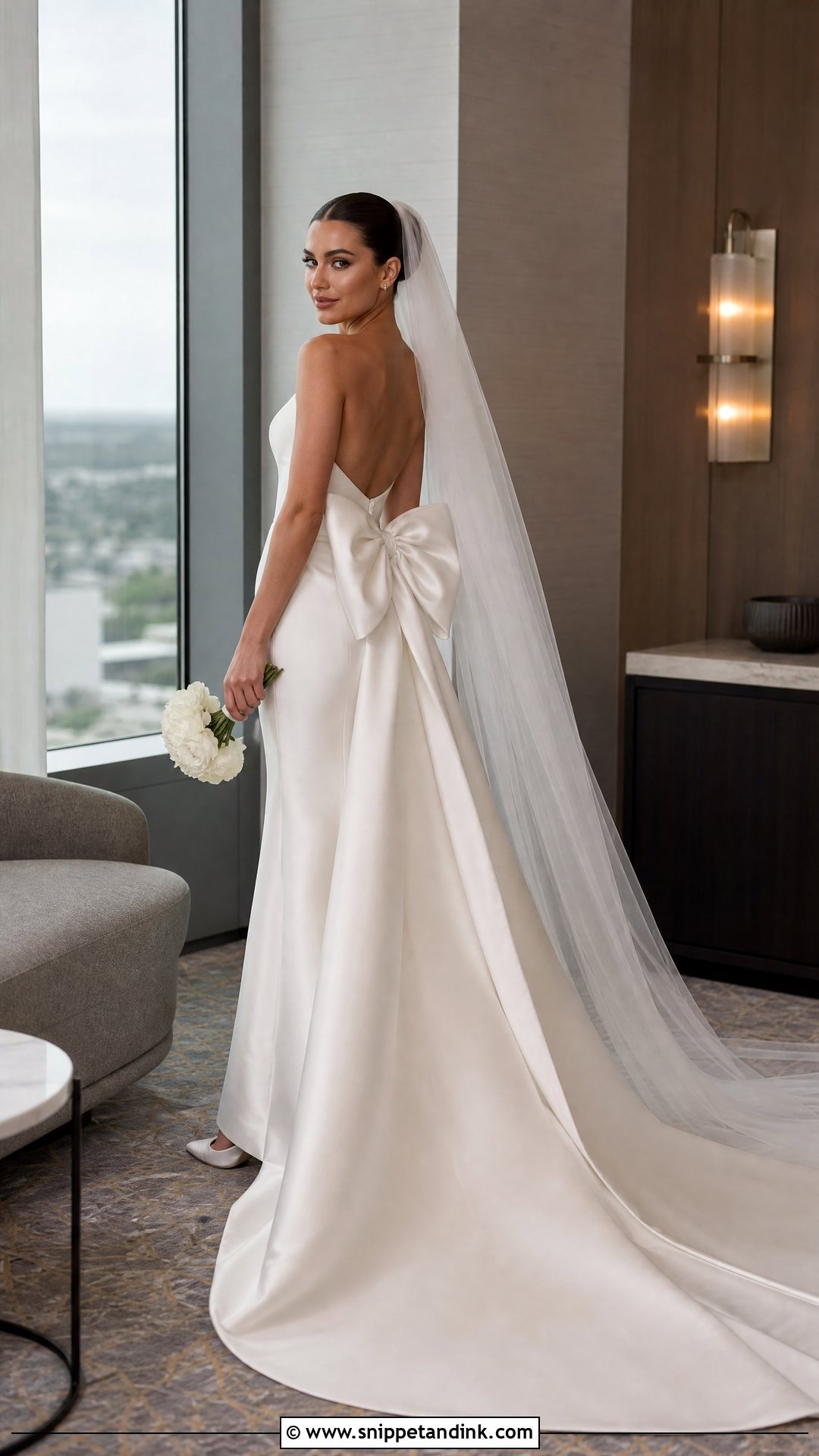
A single big bow, placed well, gives a plain gown its whole personality. At the back it emphasizes the train; on one shoulder it’s asymmetric; at the waist it defines a clean silhouette. Structured satin, mikado or faille keep the loops standing; soft satin bows droop by evening. Add a plain veil, polished pumps and small studs, and avoid an oversized bouquet. A detachable bow can come off after portraits. View the dress from the side as well as front and back during fittings, since bow size should relate to your frame, and a bow that looks right in a mirror can overpower a petite bride in profile. Formal venues and modern hotels suit it.
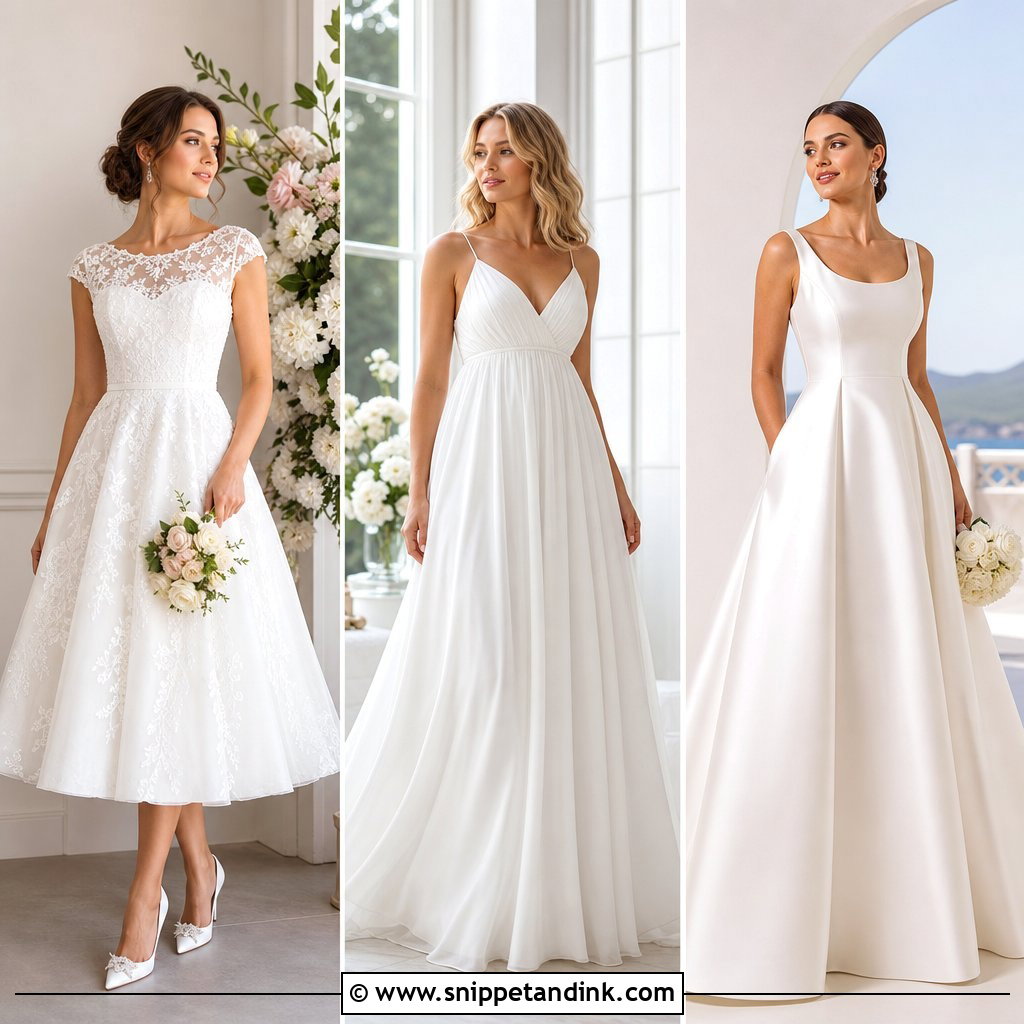
15. Tea Length Wedding Dress
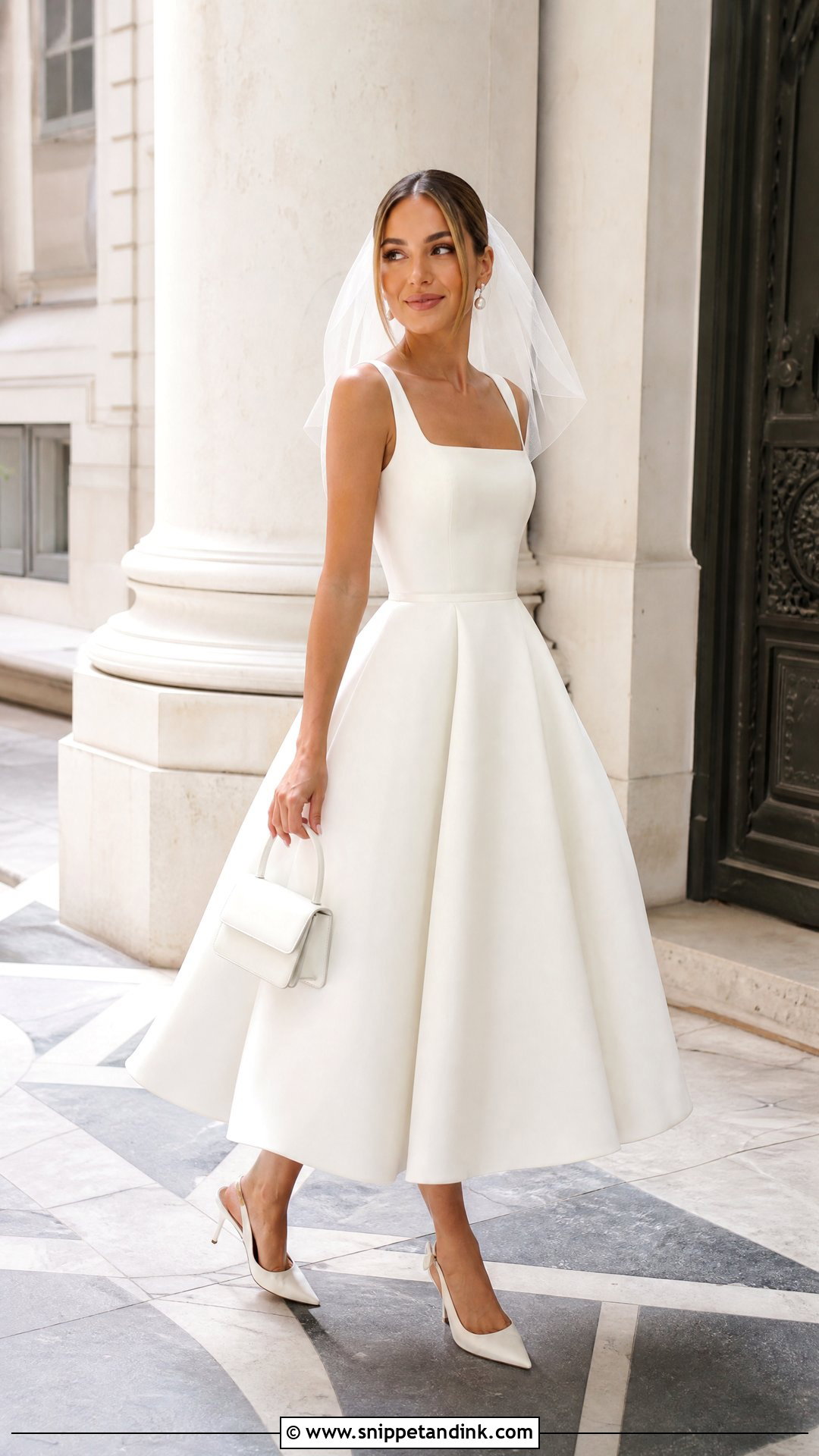
Tea length usually falls between knee and ankle and offers an alternative to a floor-length gown that feels considered rather than casual. A structured bodice and full skirt look vintage; a narrower crepe or satin cut looks modern. Your shoes will be seen, so choose pointed slingbacks, embellished pumps or ankle-strap heels you like. A short veil, pearl earrings and a small top-handle bag complete it. Where the hem lands is everything, and I never set it by eye. Mid-calf is often the least flattering point, so try the hem pinned at a few heights with your wedding shoes on. It’s a smart choice for a courthouse ceremony, a daytime party or a reception change.
16. Short Wedding Dress With Veil
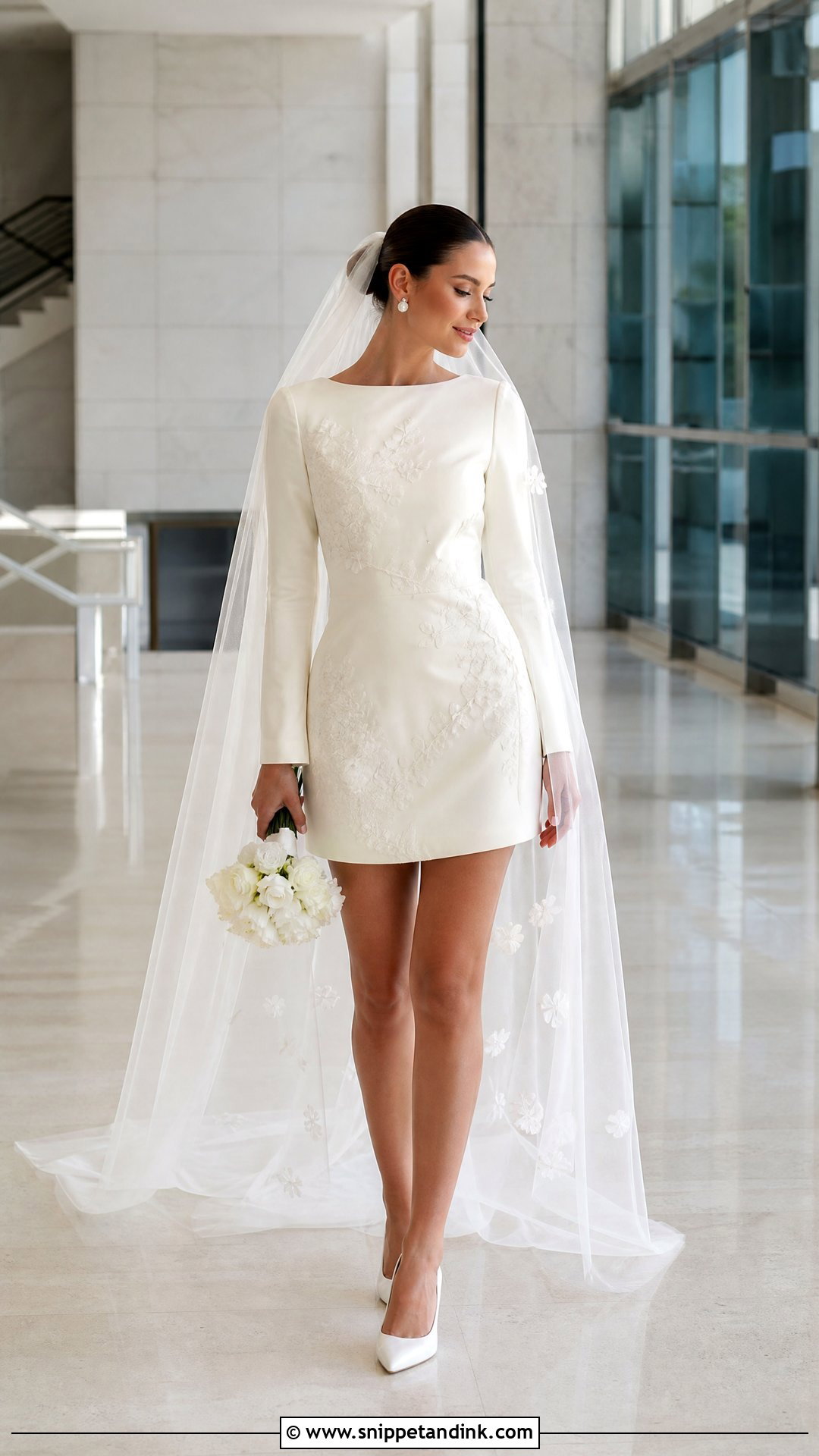
A short dress reads as bridal when the veil and shoes are clearly chosen for it. Start with a tailored mini or knee-length dress with a structured neckline, raised flowers or a soft flare. Refined shoes, closed-toe pumps, slingbacks or elegant block heels, balance the short hem, and a fingertip or chapel veil adds contrast and movement in photos. Pearl studs and a small bouquet are enough. Check it walking, sitting and climbing steps; short dresses ride up more than you think on stairs. A smooth lining or hidden shorts helps. Long sleeves balance a mini hem, while sleeveless knee-length feels lighter. Courthouse weddings and daytime ceremonies suit it.
17. Blush Organza Wedding Dress
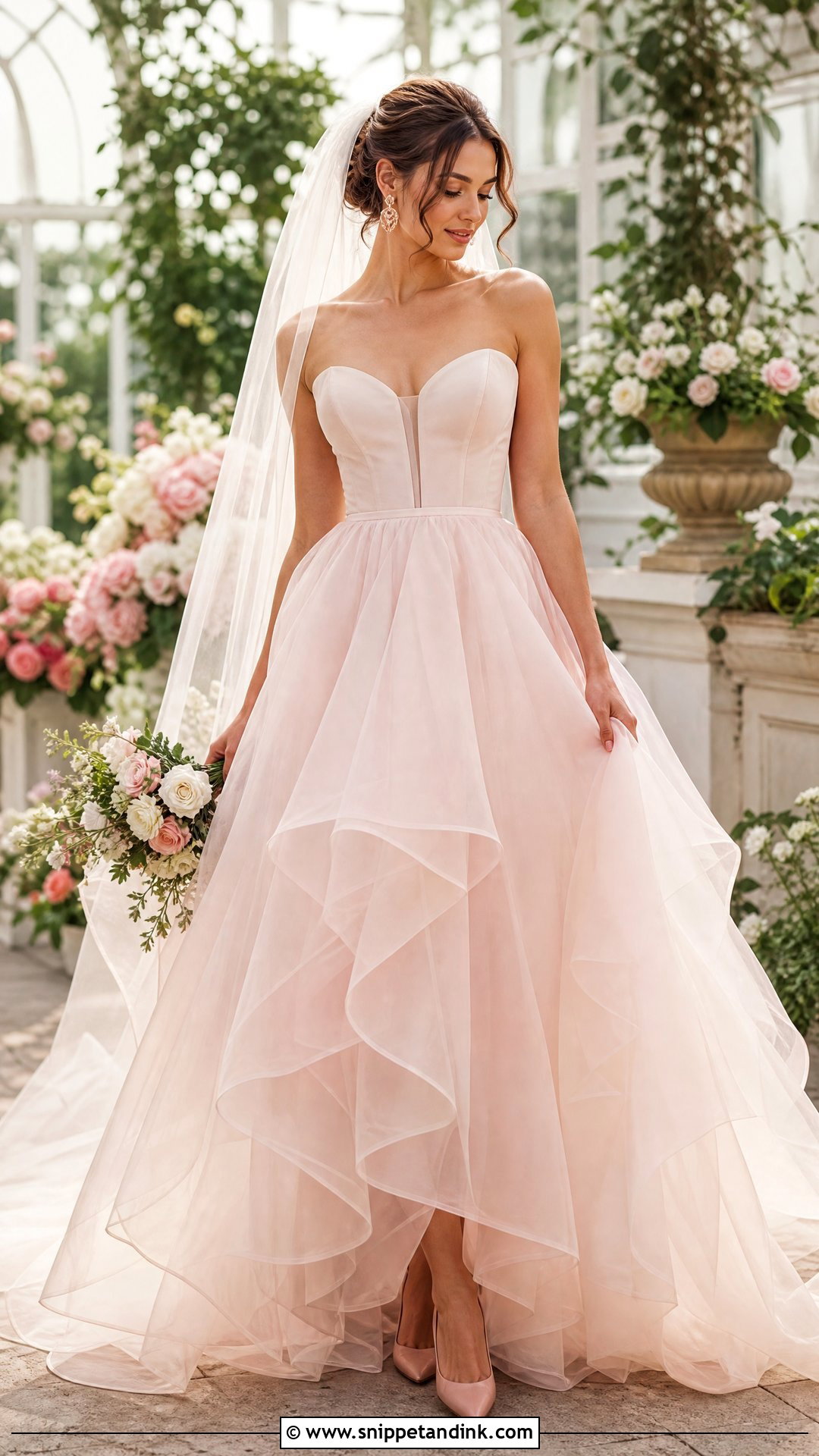
Blush is the gentlest way into color, and organza is a good fabric for it because it gives airy volume with a slight sheen. Pale blush and shell pink show best layered under ivory or neutral tulle, which softens the tone. Neutral pumps, rose-gold earrings and a sheer ivory veil let the color come through. Keep the flowers muted so the pink doesn’t look exaggerated. Organza also creases easily, especially in a car, so plan to steam it at the venue. View swatches outdoors, indoors and through a phone camera; a blush that looks right in a shop can read flesh-toned in photos. A structured bodice keeps the color from feeling sugary.
18. Brocade A-Line Wedding Dress
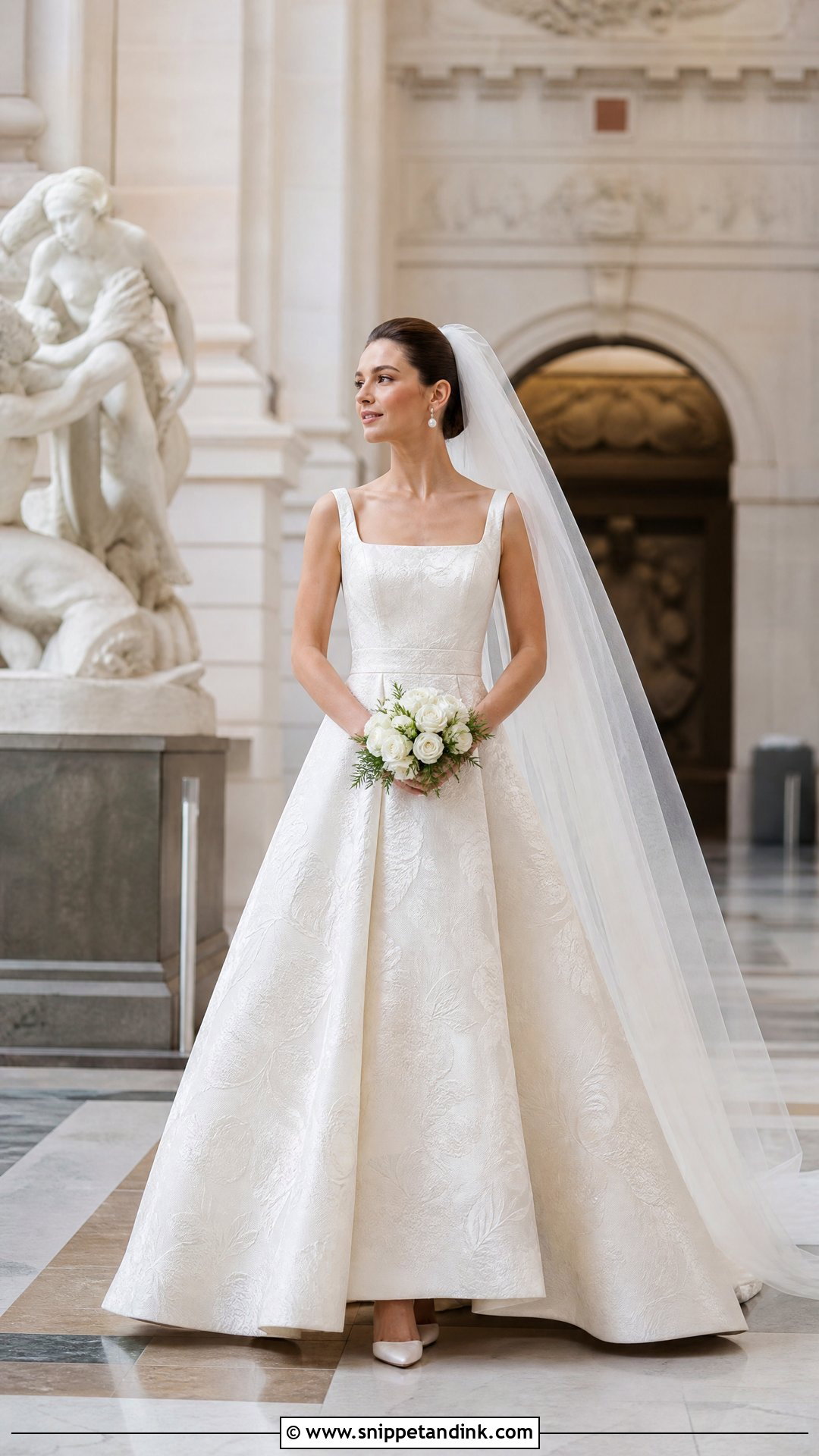
Brocade has its pattern woven into the cloth, so even a simple A-line has rich texture without beads or appliqué to fall off. Look for subtle floral, vine or geometric motifs in ivory. A square neck, fitted waist and gently widening skirt keep the fabric as the focus. Pearl drops, satin pumps, a structured bouquet and a plain cathedral veil finish it. I’d steer you away from brocade for a hot summer date; it’s heavy and doesn’t breathe much, so it’s best for cool seasons or air-conditioned venues. It also doesn’t drape softly, which means a skilled tailor matters, and a slightly shorter train makes it easier to manage. Museums, historic estates and formal indoor venues suit it.
19. Backless Cowl Wedding Dress
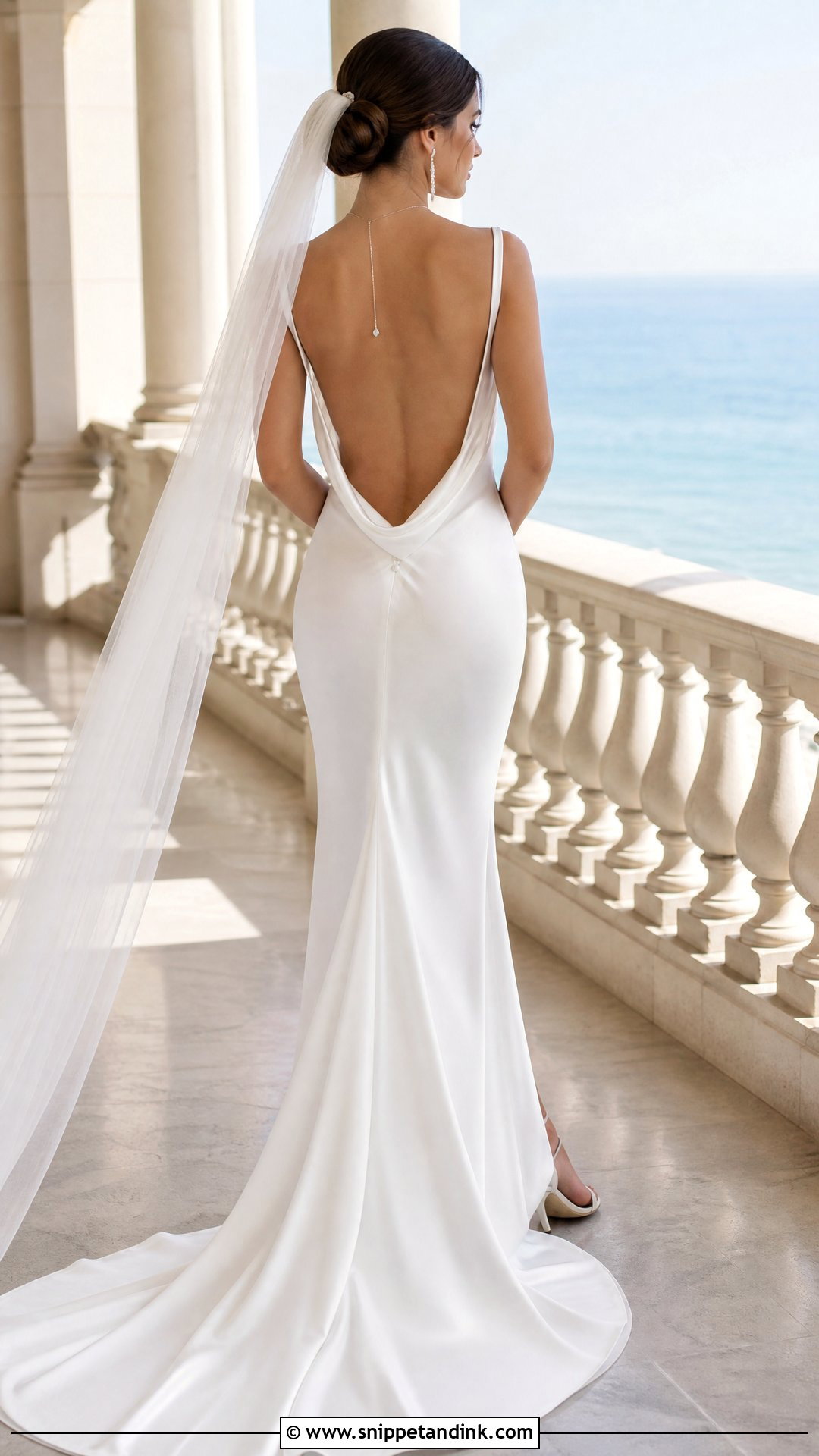
From the front, a backless cowl wedding dress looks understated. Turn around and soft folds frame an open back. Silk satin or light crepe falls naturally without stiff creases. A low bun, a delicate back-drop chain, simple earrings and slim heels suit it, and a veil attached under the hair shows more of the back once removed. Bring up support and underwear at the very first fitting, before any cutting: options are limited with a low back, and the tailor may need to build cups into the bodice. Walk around the room to see whether the cowl swings or stays put. Sheer illusion fabric across the opening adds coverage if you need it.
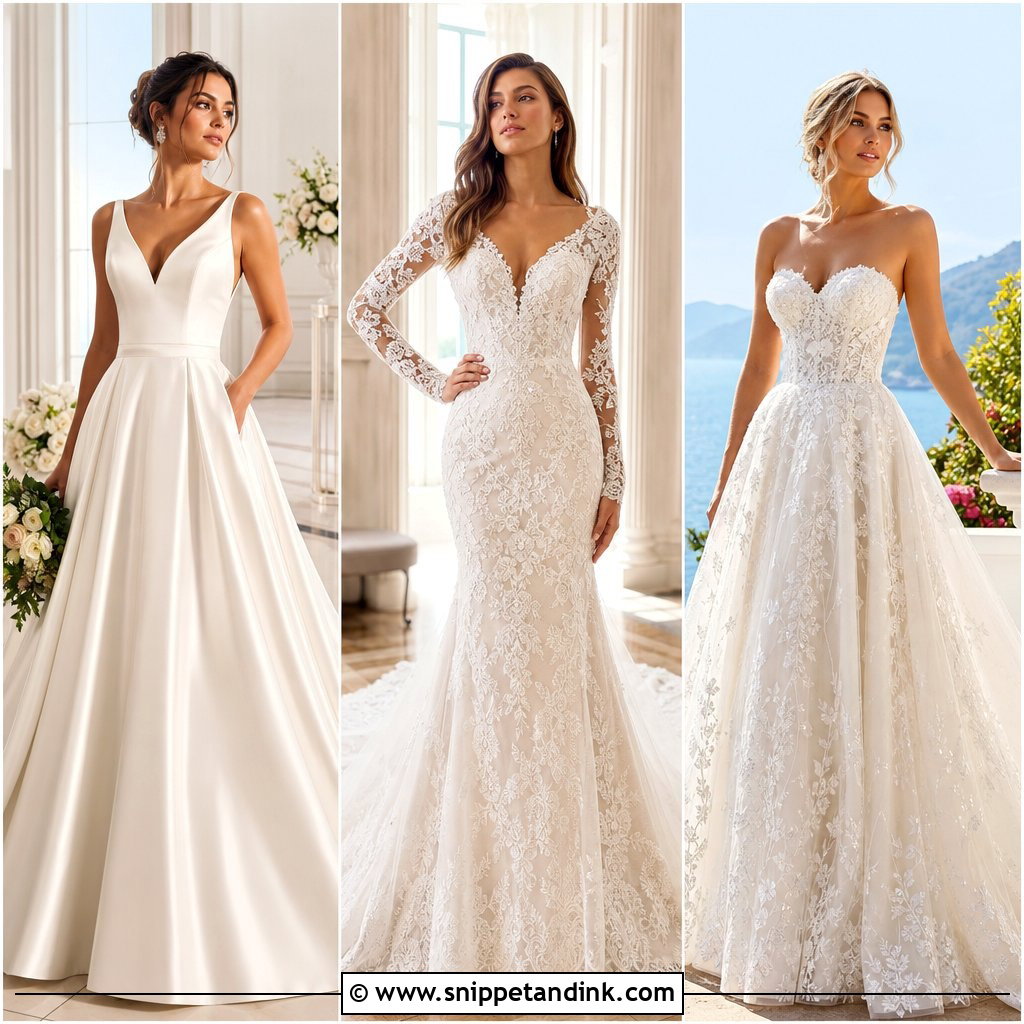


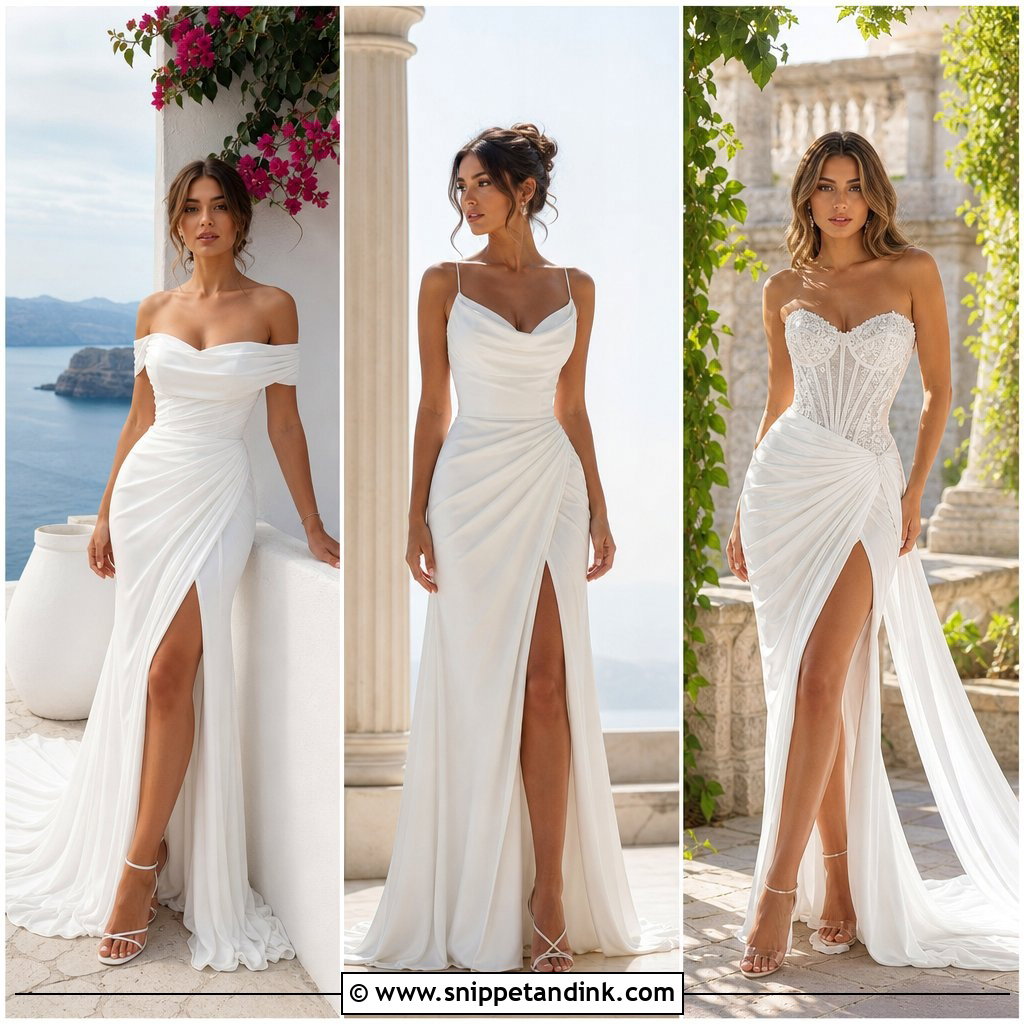
20. Convertible Ceremony To Reception Wedding Dress
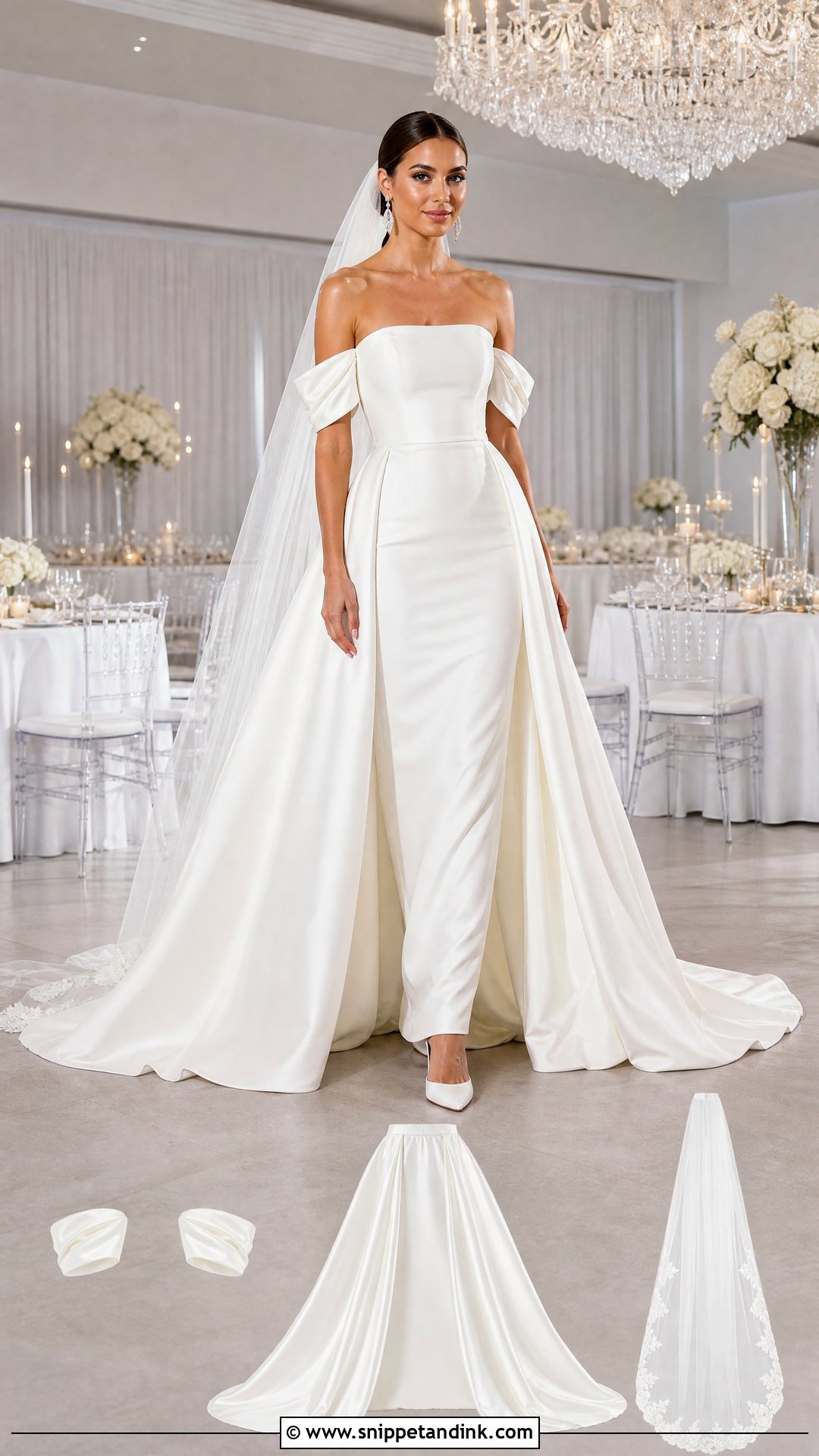
Why pick one silhouette when a convertible ceremony to reception wedding dress can give you several? Start with a fitted base gown and add detachable sleeves, a dramatic train, a cape or a full overskirt for the ceremony. Remove them later for a lighter dress to greet guests and dance in. Keep the same earrings and hair throughout, and change into supportive block heels if you like. Every closure should be discreet and easy for a helper to manage under pressure. Practise the change beforehand, and put a labeled garment bag in the getting-ready room for the removed pieces, which otherwise end up in a heap on a chair. Both versions should look complete on their own.
What to Bring to Your First Fitting
Alterations are built around what you wear under and below the dress. A hem set for flat sample shoes will be wrong in heels, and a bodice fitted over the wrong bra has to be redone. Bring these from the first appointment:
- Your actual wedding shoes, or shoes with the exact heel height.
- The underwear and shapewear you plan to wear, including any stick-on or built-in support for low backs and plunging necklines.
- Any jewelry that sits near the neckline, so the seamstress sees how earrings and necklaces meet the fabric.
- One person whose opinion you trust, not a crowd.
Testing the dress like a wedding day
Ask for a few minutes to move freely. Sit on a hard chair, walk up a step, raise a glass, hug the friend you brought, and bend to pick something up. Straps that slip, necklines that gape and hems that catch all show up in those moves, and they’re far easier to fix at the first fitting than the last.
Elegance Usually Comes Down to One Detail
The most elegant gown is often the least decorated one. A precise waistline, a textured fabric, a removable layer or a well-cut neckline gives enough personality on its own. Use these dresses as a starting point, then judge every option on fit, movement, support and how you feel in the mirror. Take your real shoes and underwear to every fitting, look at the gown in more than one kind of light, and ask someone to photograph you from the back and side. Then choose the one that matches how you dress the rest of the time, so you can walk, sit and celebrate in it without thinking about it.
You'll Like These Ideas:







Leave a Reply