
Silhouette, Waistline, Fabric: Three Separate Decisions
The styles below mix several kinds of choices, and it helps to know which is which before you shop. A mermaid, a sheath and a ball gown are silhouettes. Empire, drop and basque are waistlines. Lace, satin and tulle are fabrics. Bows, capes and detachable skirts are details. One dress combines all four.
When a bride tells me she hates a gown, I try to work out which layer she’s reacting to. Often she loves the shape and dislikes the fabric, or loves the lace and dislikes where the waist sits. Separating those reactions saves a lot of trying on.
- Silhouette decides how you move, sit and get through doorways.
- Waistline decides where the eye reads your proportions.
- Fabric decides how the dress creases, breathes and holds up in heat or cold.
- Details can usually be added, removed or altered later.
1. A-Line Wedding Dress
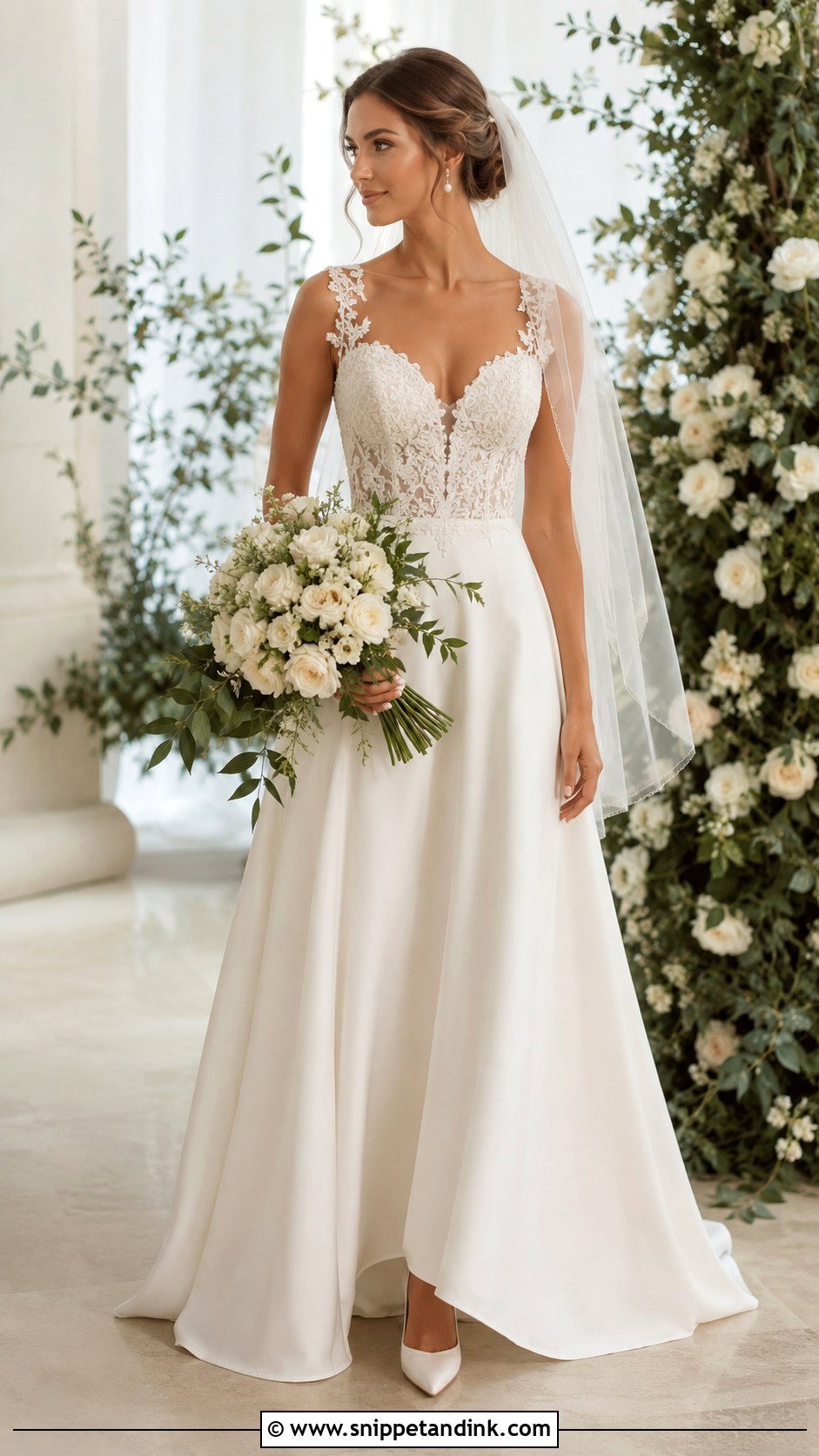
If I could put only one silhouette on every bride for her first try-on, it would be an A-line. The bodice fits close, the skirt opens from the natural waist, and that simple shape suits petite, tall, curvy and plus-size frames alike because it defines the waist without gripping the hips. Fabric changes the mood completely: satin looks crisp, lace looks romantic, tulle looks soft. It’s also the easiest gown to sit, dance and climb stairs in. Pearl earrings, pointed heels and a simple veil are all it needs.
2. Ball Gown Wedding Dress
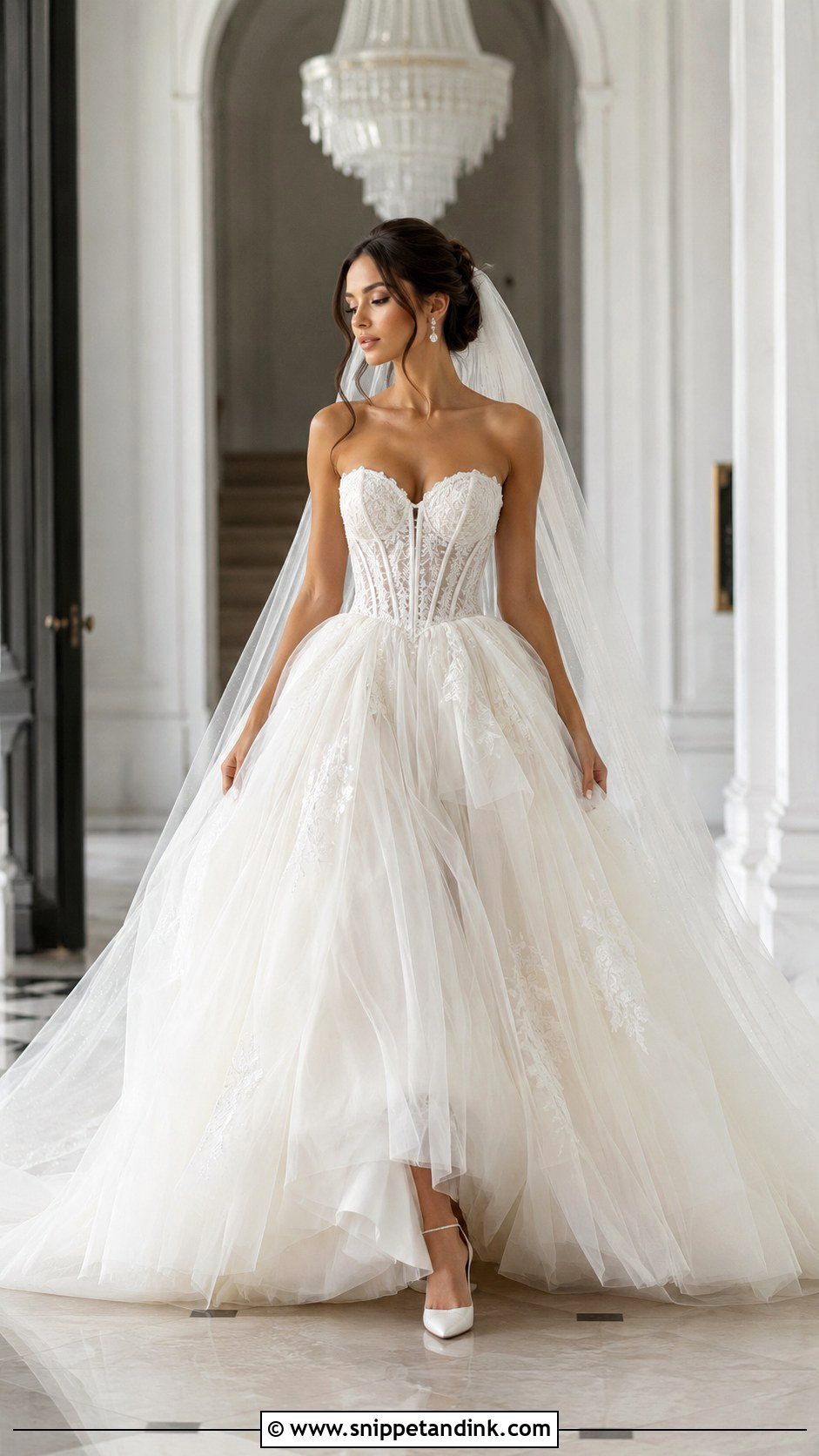
Ball gowns are heavier than they look. A full skirt over layers of petticoat can weigh a surprising amount, and most of it should hang from a firmly boned bodice and waist, not your shoulders. I’d look at tulle or organza layers rather than heavy satin if you plan to wear it all evening. A corset bodice adds structure and a defined waist. Pair it with a cathedral veil, delicate drop earrings and sleek heels, and check the skirt fits through your venue’s doorways. It suits large, formal rooms best.
3. Mermaid Wedding Dress
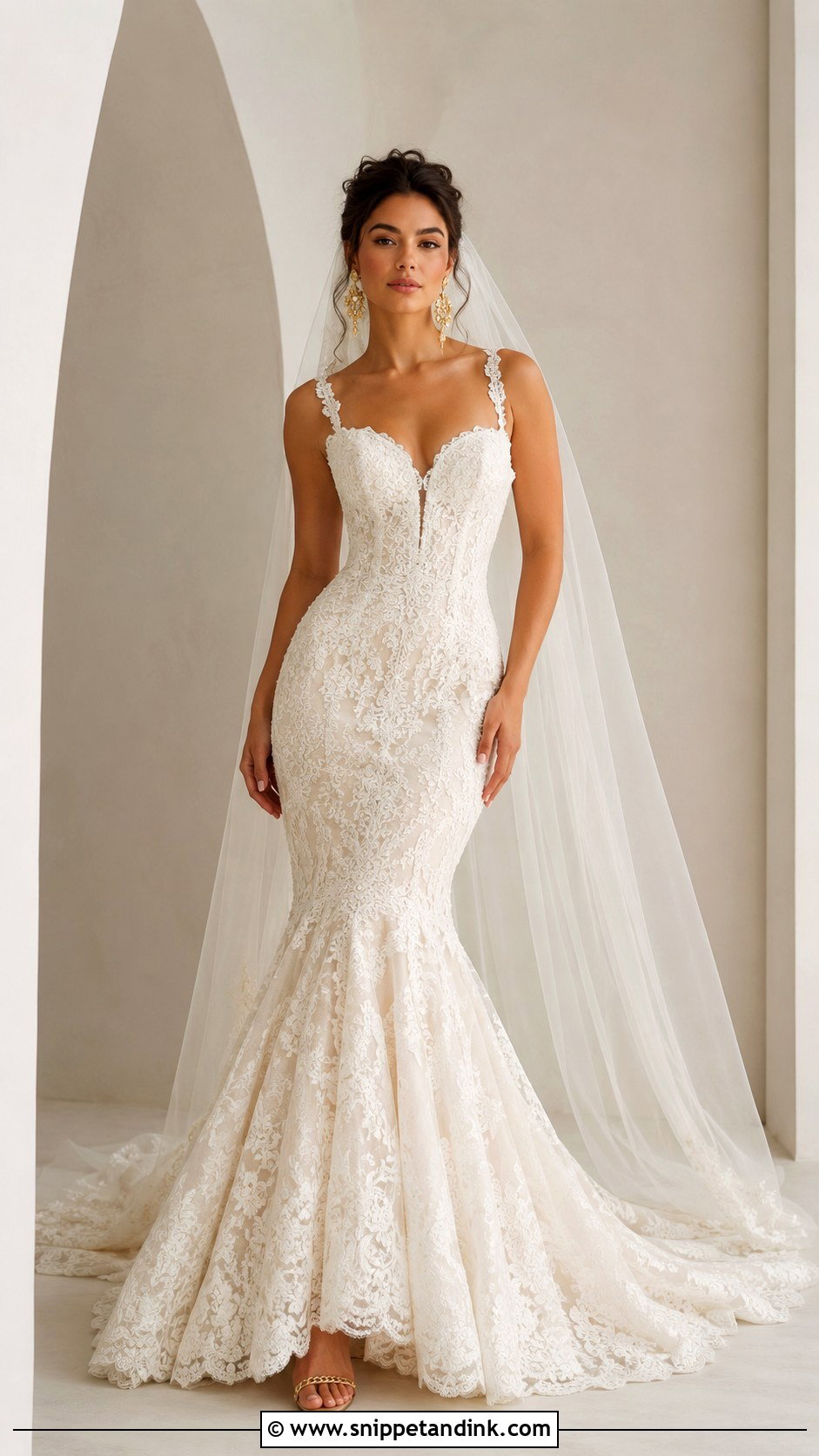
A mermaid hugs the body down through the hips and thighs and only flares near the knee, which is what gives it that glamorous shape and also what limits your stride. At every fitting I ask the bride to walk briskly, sit on a low chair and climb a step. Stretch crepe gives a sleek finish with more give; heavy lace or beading looks rich but moves less. Sculptural earrings, a long veil and heeled sandals balance the fitted line.
4. Trumpet Wedding Dress
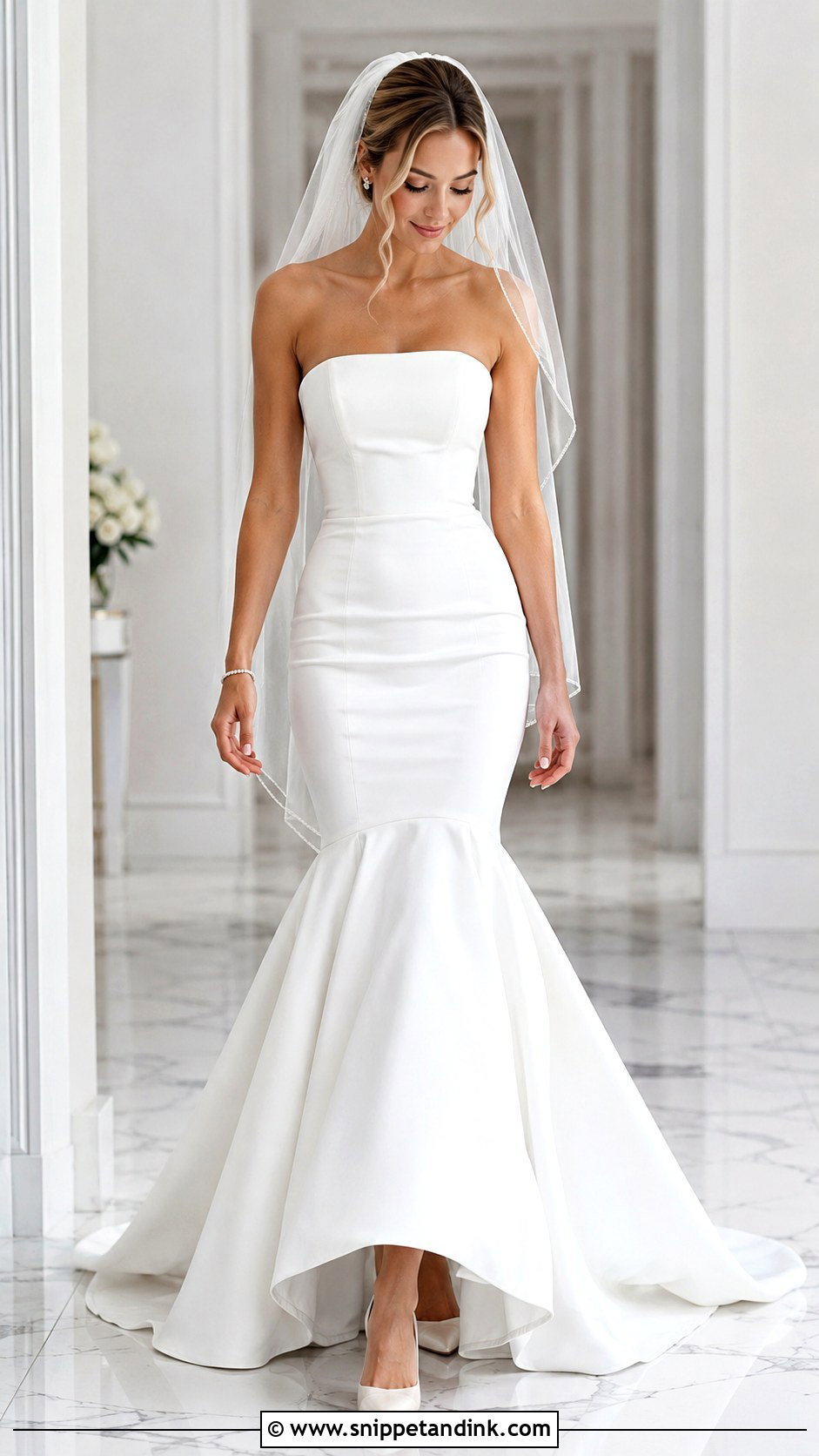
Think of a trumpet wedding dress as a mermaid with a kinder flare. It opens around mid-thigh instead of the knee, so you get the sculpted waist and hips but can actually walk at a normal pace. That makes it my usual suggestion for a bride who loves the mermaid look and dances a lot. Strapless reads modern; long lace sleeves read romantic. A fingertip veil, simple bracelet and classic pumps finish it for indoor or evening venues.
5. Sheath Wedding Dress
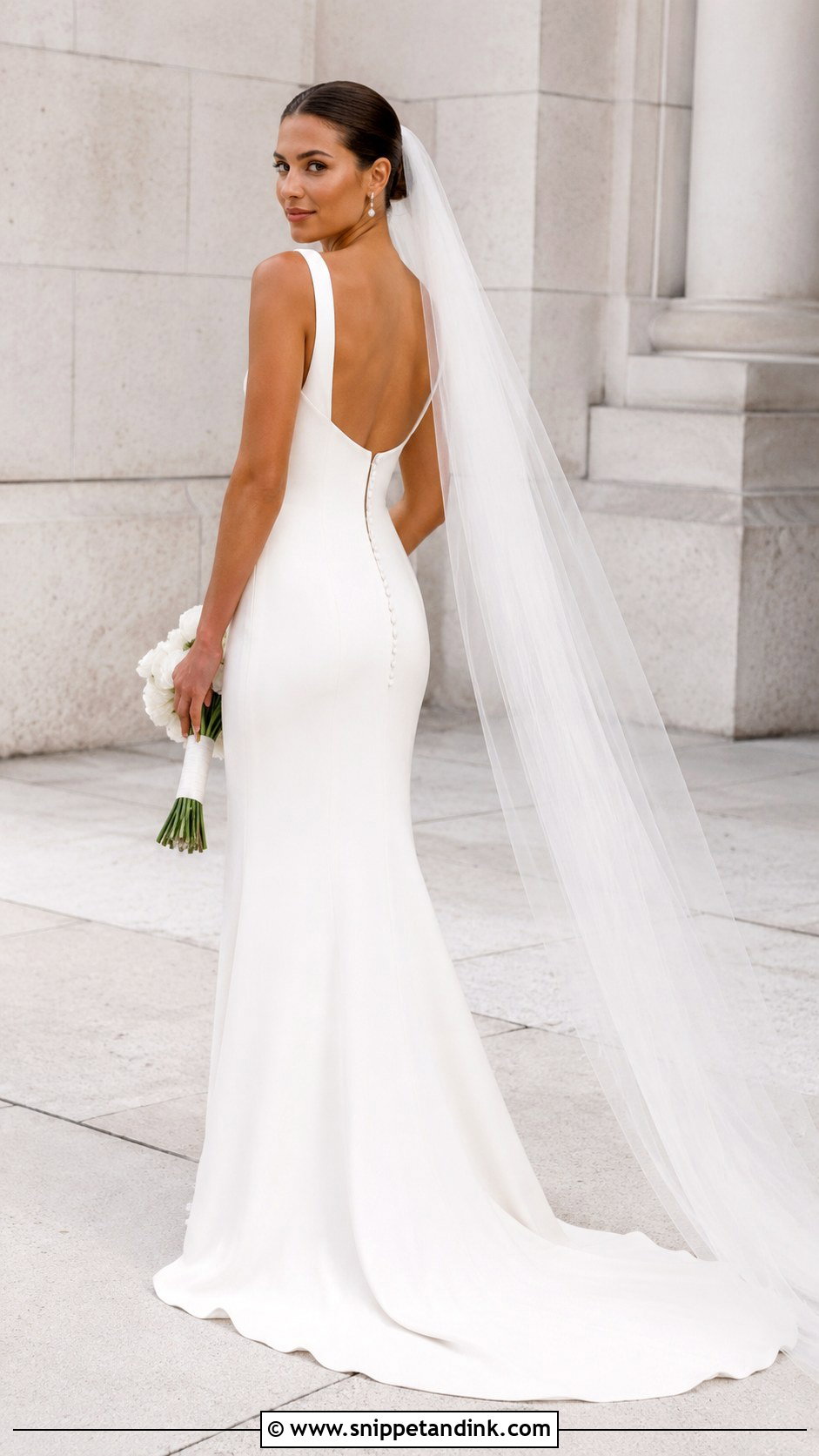
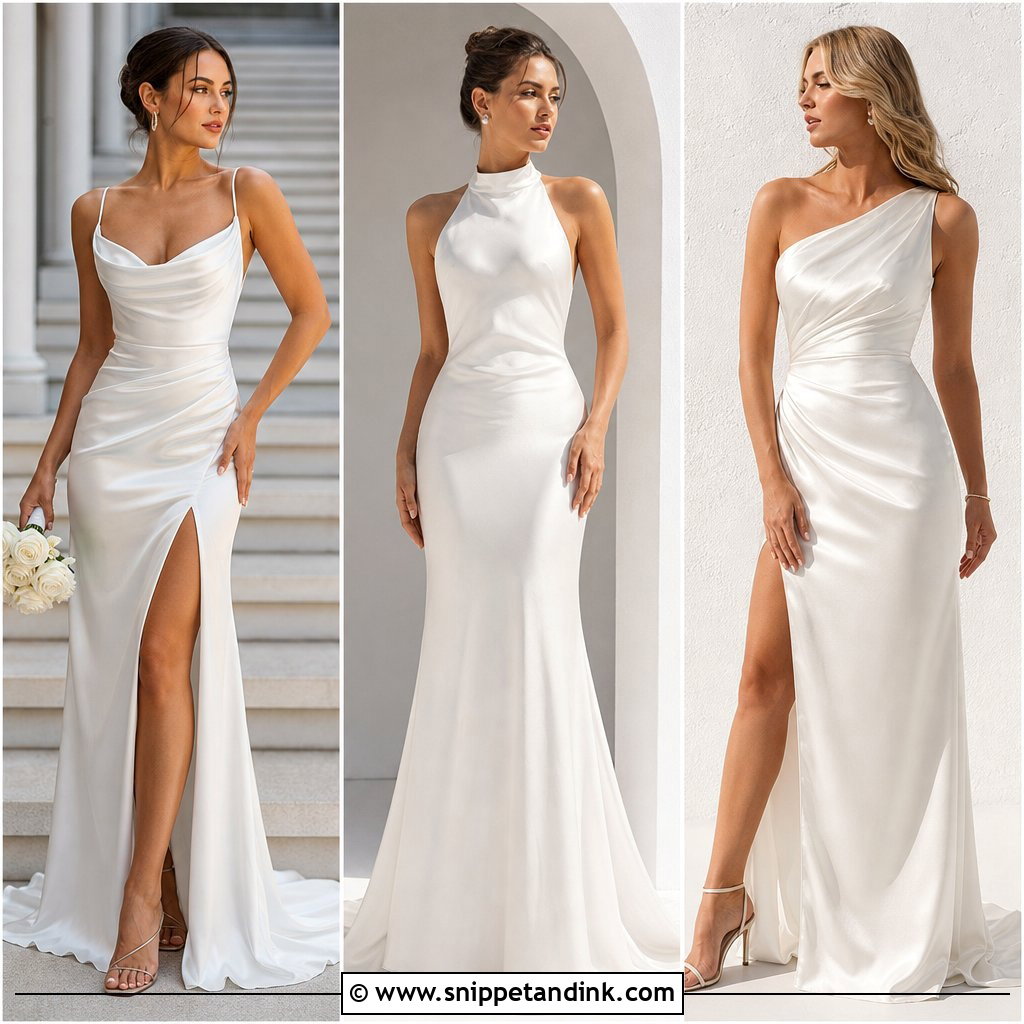
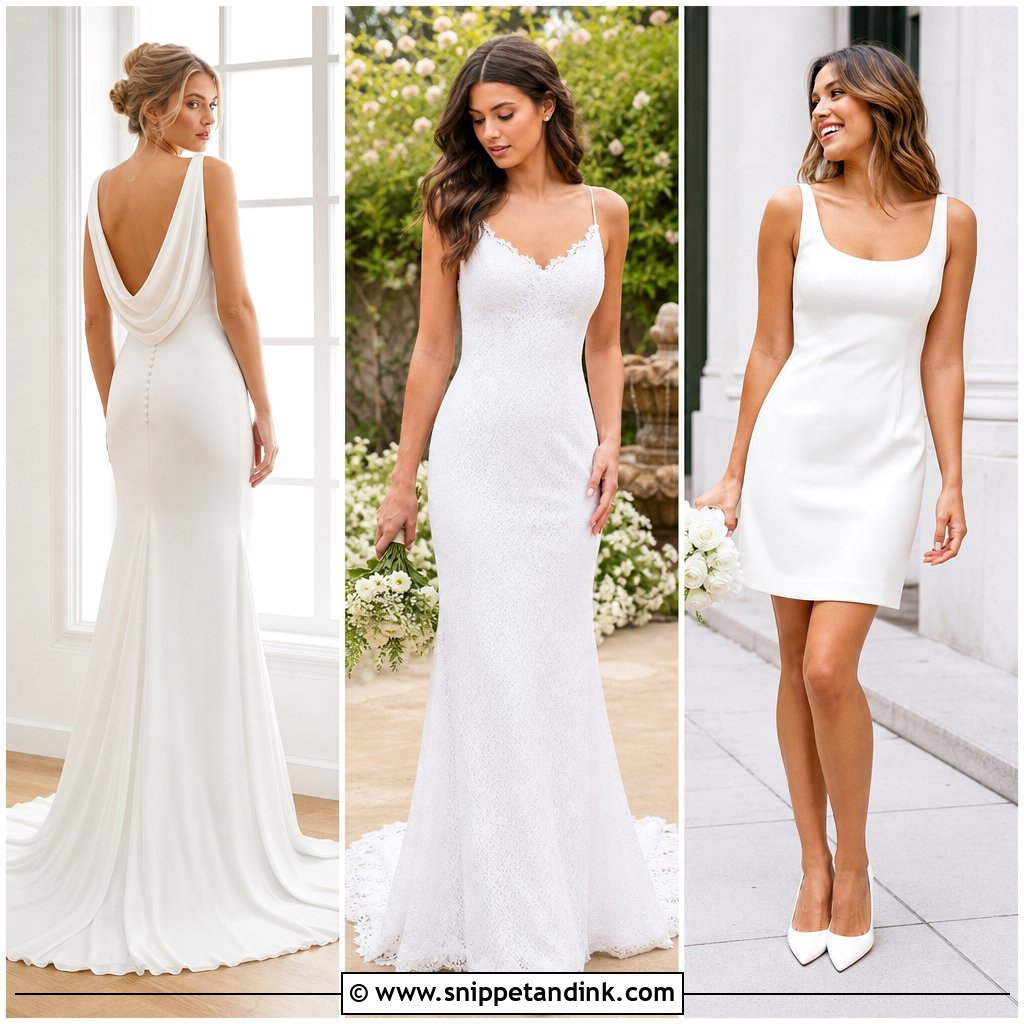
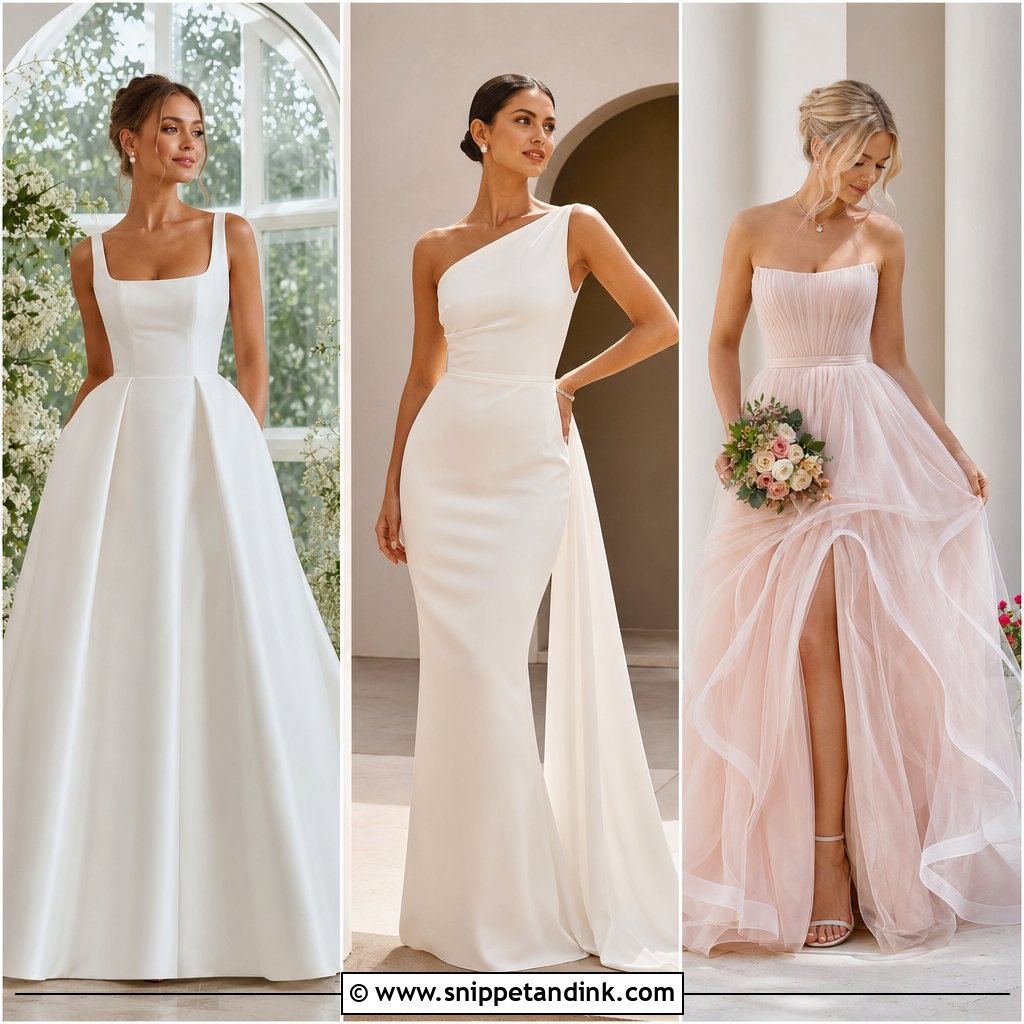
A sheath wedding dress is slim, simple and follows your natural line without a full skirt. That honesty is its strength and its challenge: crepe, silk, charmeuse and satin all show what’s underneath, so I sort out smooth, line-free undergarments before the first fitting. Small details carry the whole design here, whether a square neckline, a low back, a side slit or a row of pearl buttons. Keep the styling quiet with sleek hair and barely-there heels. It suits city venues, beaches and small weddings.
6. Slip Wedding Dress
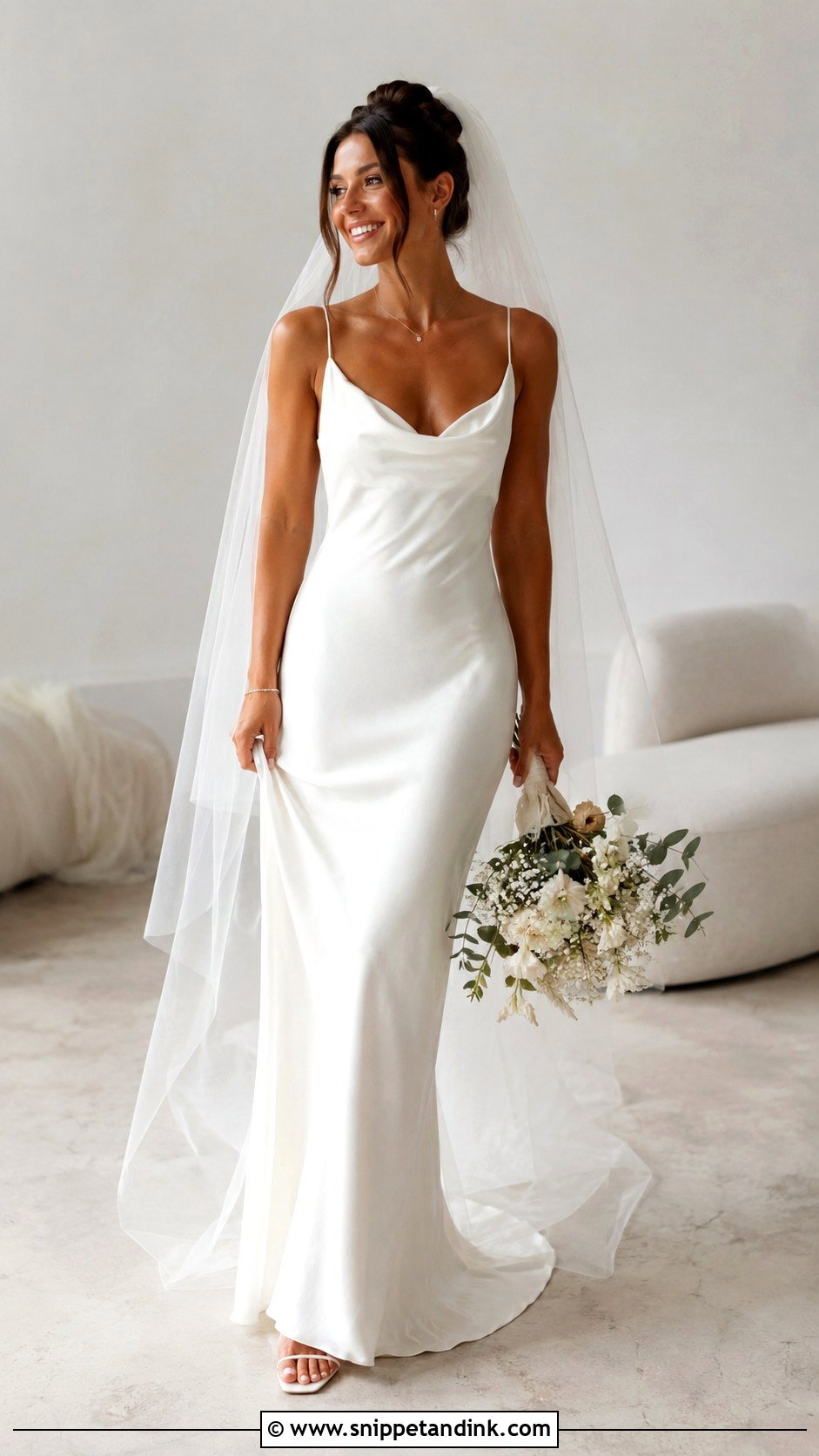
Slip dresses are cut on the bias, which is why they skim the body so softly and also why they cling to every bump and ripple. Silk and charmeuse need the most precise fit of any gown here, and I usually suggest a slightly heavier satin to anyone wanting the look with a bit more forgiveness. Thin straps, a cowl neck or a low back keep it in that 1990s minimal mood. A sheer veil and strappy heels finish it, and a cape or tailored blazer adds coverage for a church ceremony.
7. Column Wedding Dress
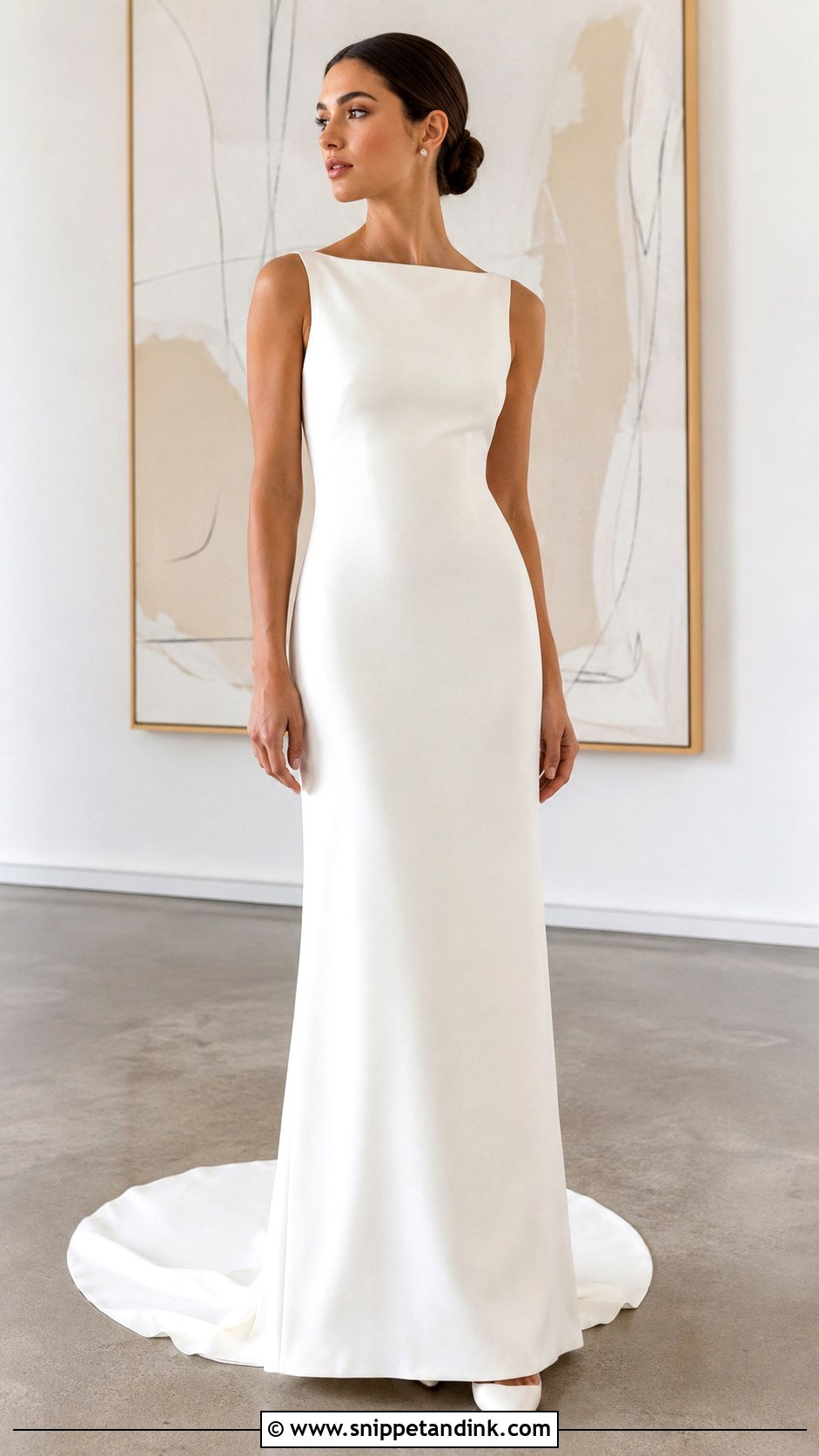
People mix up column and sheath, but there is a real difference. A column falls in a straight line from shoulder to hem and stands slightly away from the body, usually in a firmer fabric like mikado, structured crepe or satin. That gives it an architectural feel. A bateau or square neckline, a subtle train or a dramatic back adds interest. Accessories set the mood: pearl studs for classic, bold earrings for fashion-forward. It reads clean and modern.
8. Empire Waist Wedding Dress
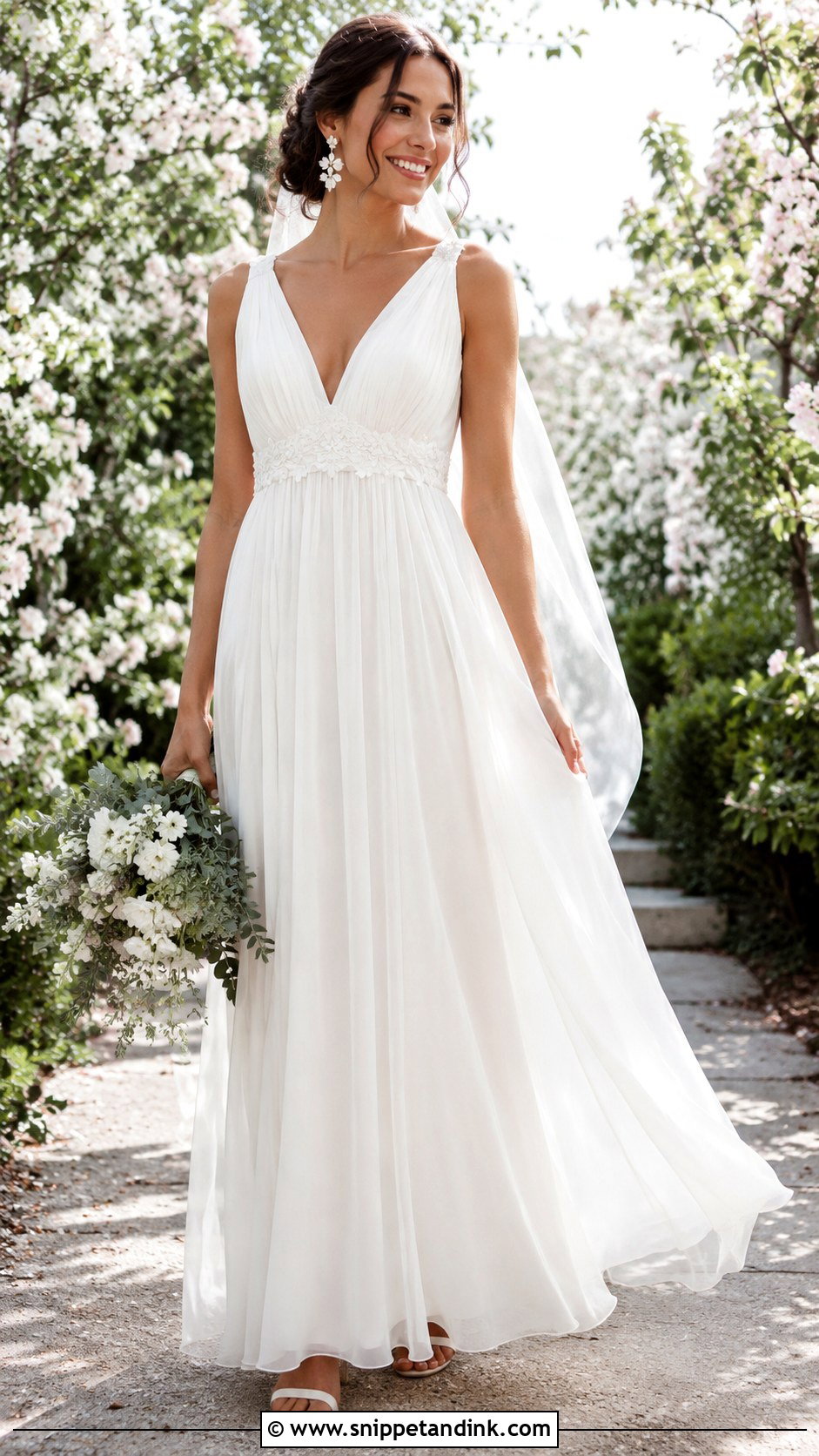
An empire waist sits just under the bust and lets the skirt fall from there, so nothing grips at the natural waist. That makes it one of the most comfortable shapes for a long, hot day. Chiffon, tulle and silk move easily with it, and the high line can flatter petite brides by lengthening the leg. I’d check that the under-bust seam sits exactly under the bust, because even a small gap reads as maternity wear. Delicate sandals and a soft veil suit a garden setting.
9. Drop Waist Wedding Dress
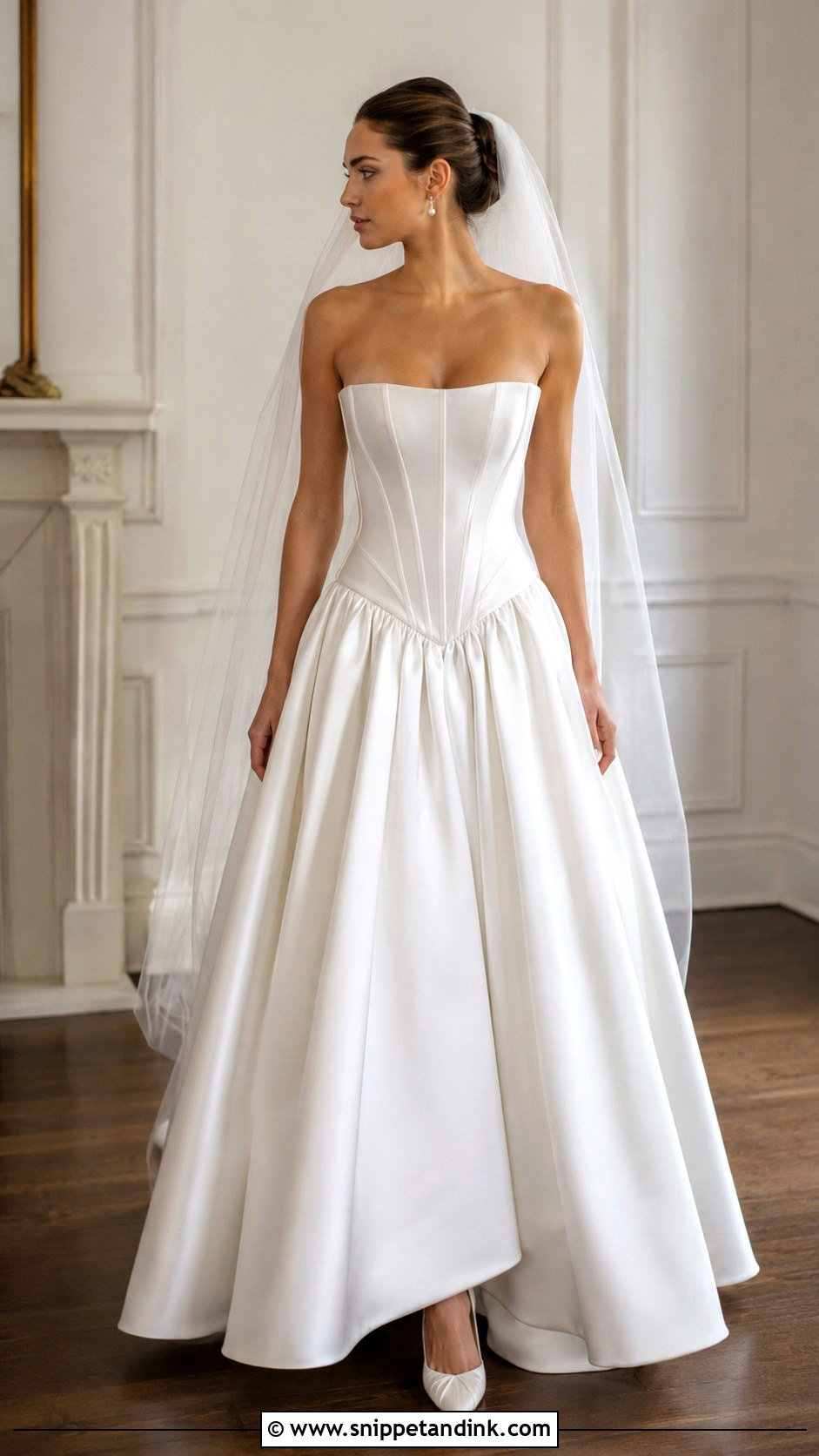
The drop waist moves the seam down onto the hips, which lengthens the torso and gives the dress a vintage-meets-modern feel. It appears on fitted gowns, full skirts and corset styles. My caution: if the seam sits too low it shortens the legs, so I’d mark it at the top of the hip bone and judge it in a full-length mirror from the side. Clean seams and a fabric that holds its shape matter. Keep the veil simple and the jewelry minimal so the line does the talking.
10. Basque Waist Wedding Dress
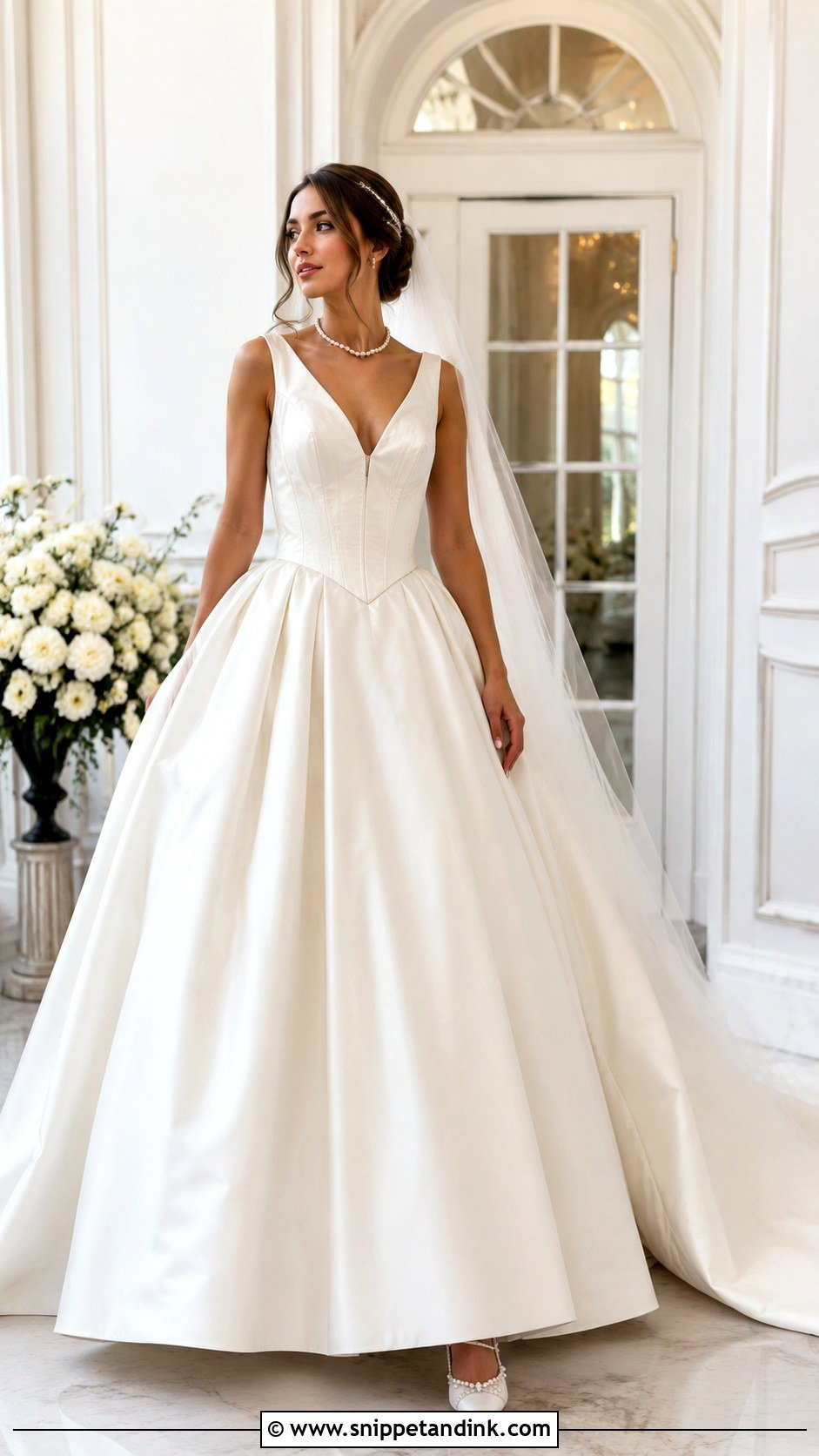
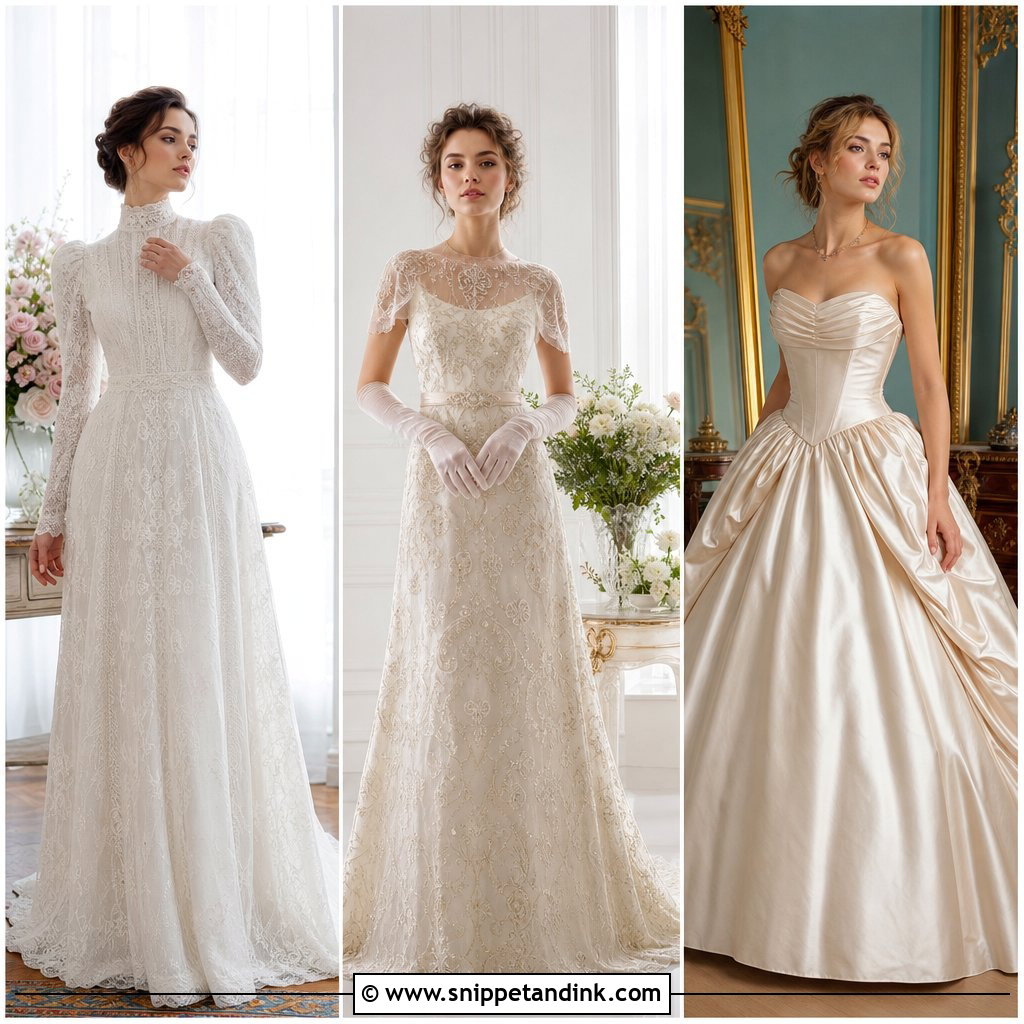
A basque waist dips into a soft V at the front, drawing the eye downward and lengthening the torso. You’ll see it on ball gowns and A-lines, and occasionally on slimmer shapes. The point of the V needs to land at your centre, so it has to be fitted with your real shoes and posture, otherwise it twists to one side. Satin makes it regal, lace softens it and tulle gives a dreamy finish. A long veil, pearl necklace and classic heels suit its old-world charm.
11. Corset Wedding Dress
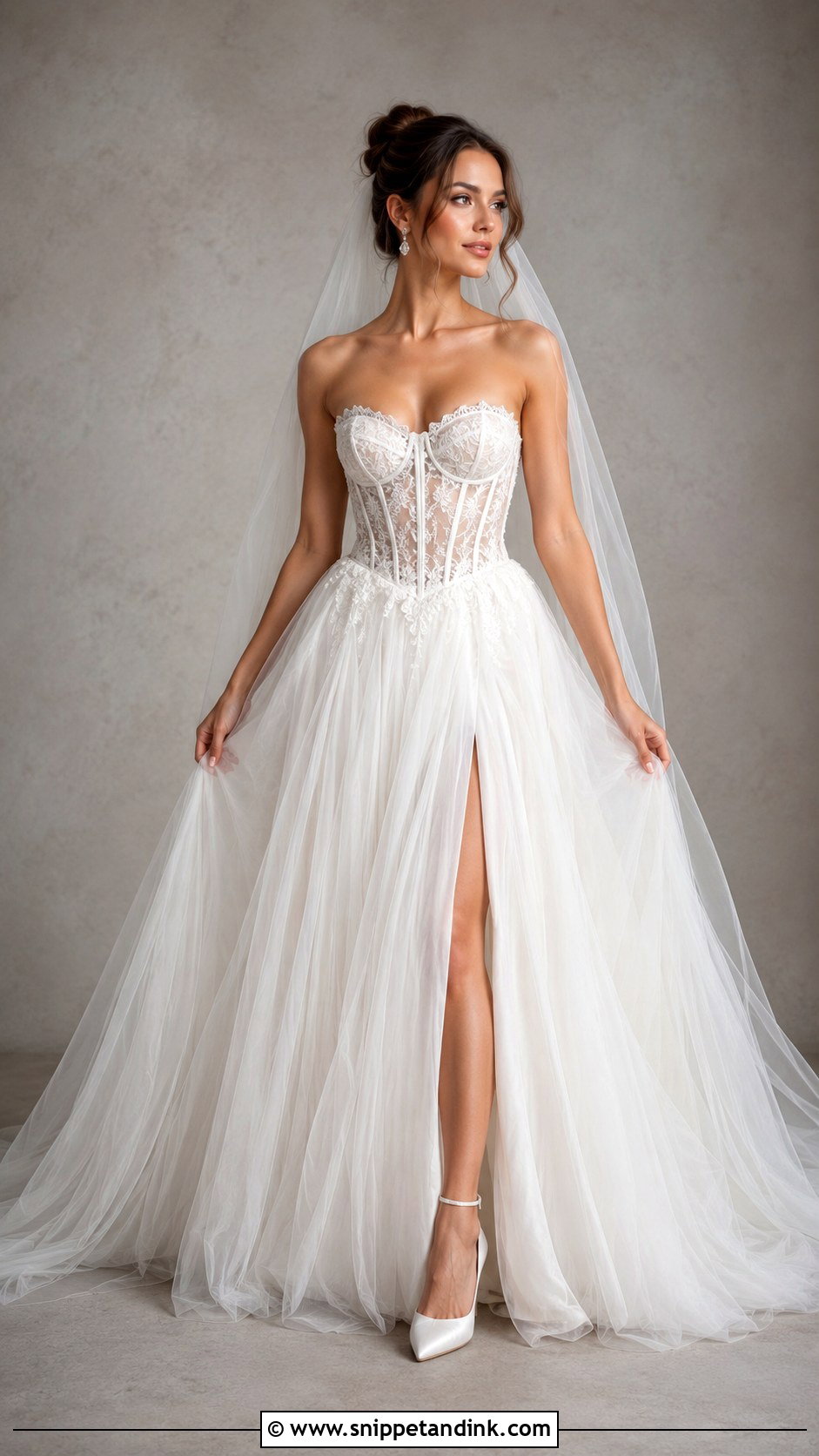
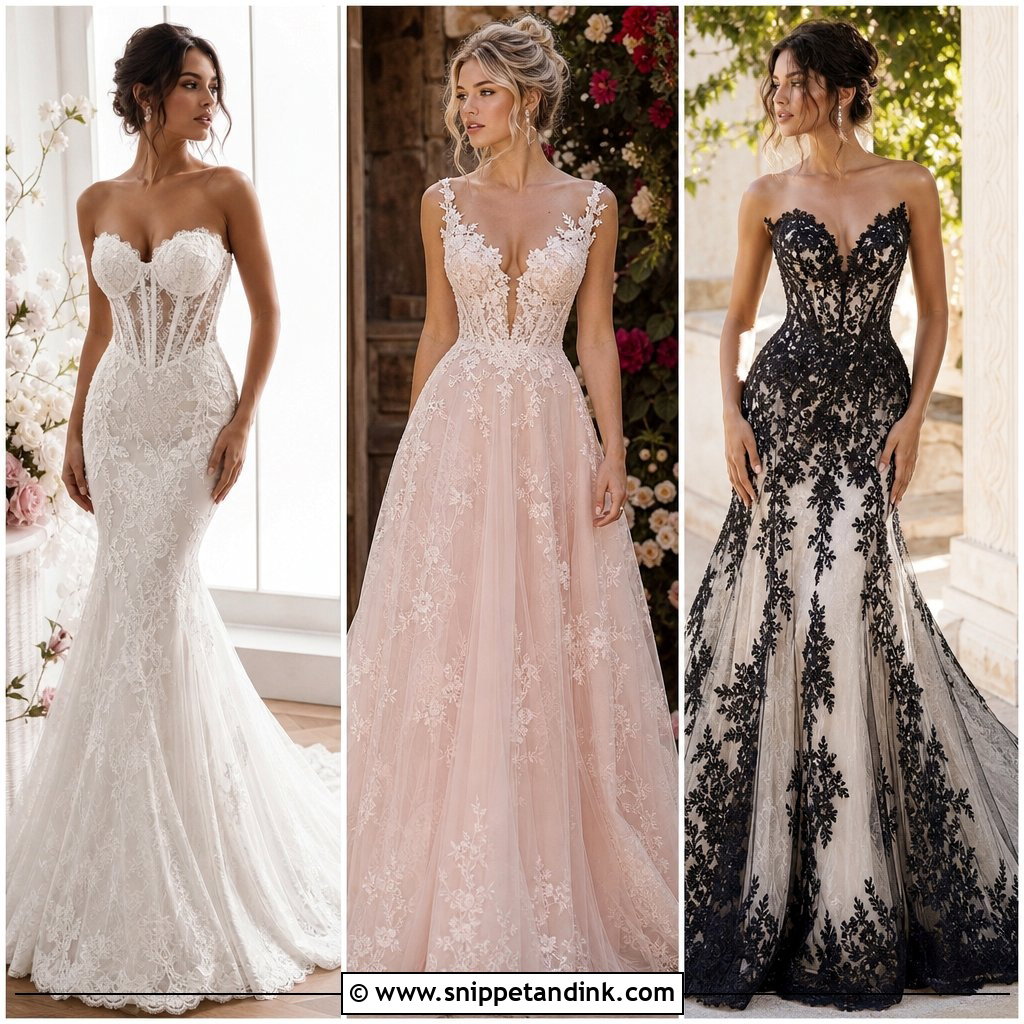
Corsets can mean visible boning, lace-up backs, sheer panels or a sculpted sweetheart, and they pair with almost any skirt. Balance is the rule I follow. A detailed corset wants a plain skirt and a quiet veil; a simple corset can take a dramatic veil or statement earrings. Good construction also gives real support, so many brides skip a bra entirely. Make sure you can breathe deeply and sit down to eat before you sign off on the fit.
12. Off Shoulder Wedding Dress
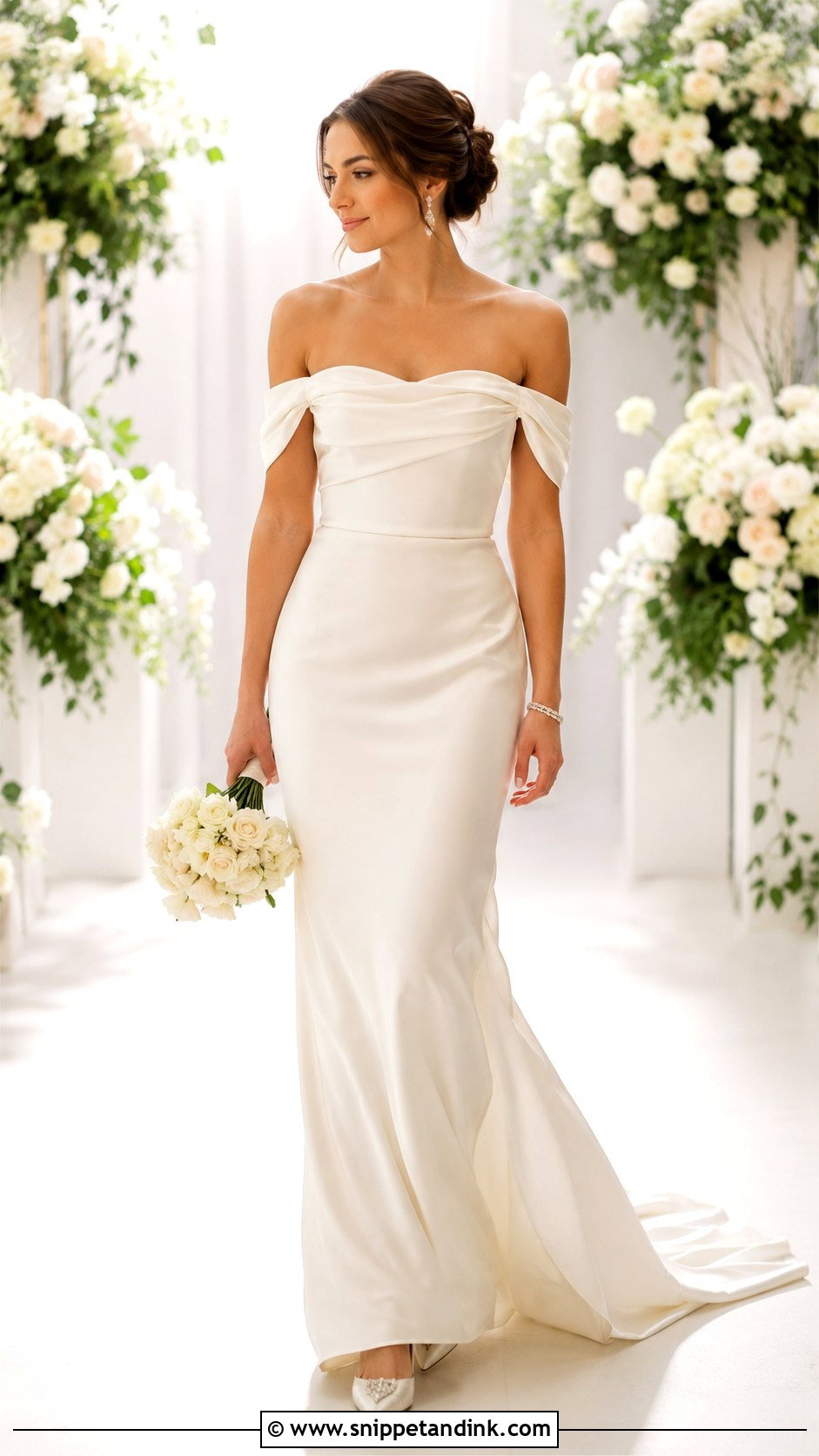
Off shoulder necklines frame the collarbone and look different by fabric: fitted crepe reads sleek, lace or tulle reads delicate. The sleeves are either structured, which hold their shape, or draped, which fall across the arm. Draped ones slip more, so I always check that the bodice holds itself up without them. Hair usually goes up to keep the neckline open. Drop earrings, a simple bracelet and elegant heels are enough.
13. Long Sleeve Wedding Dress
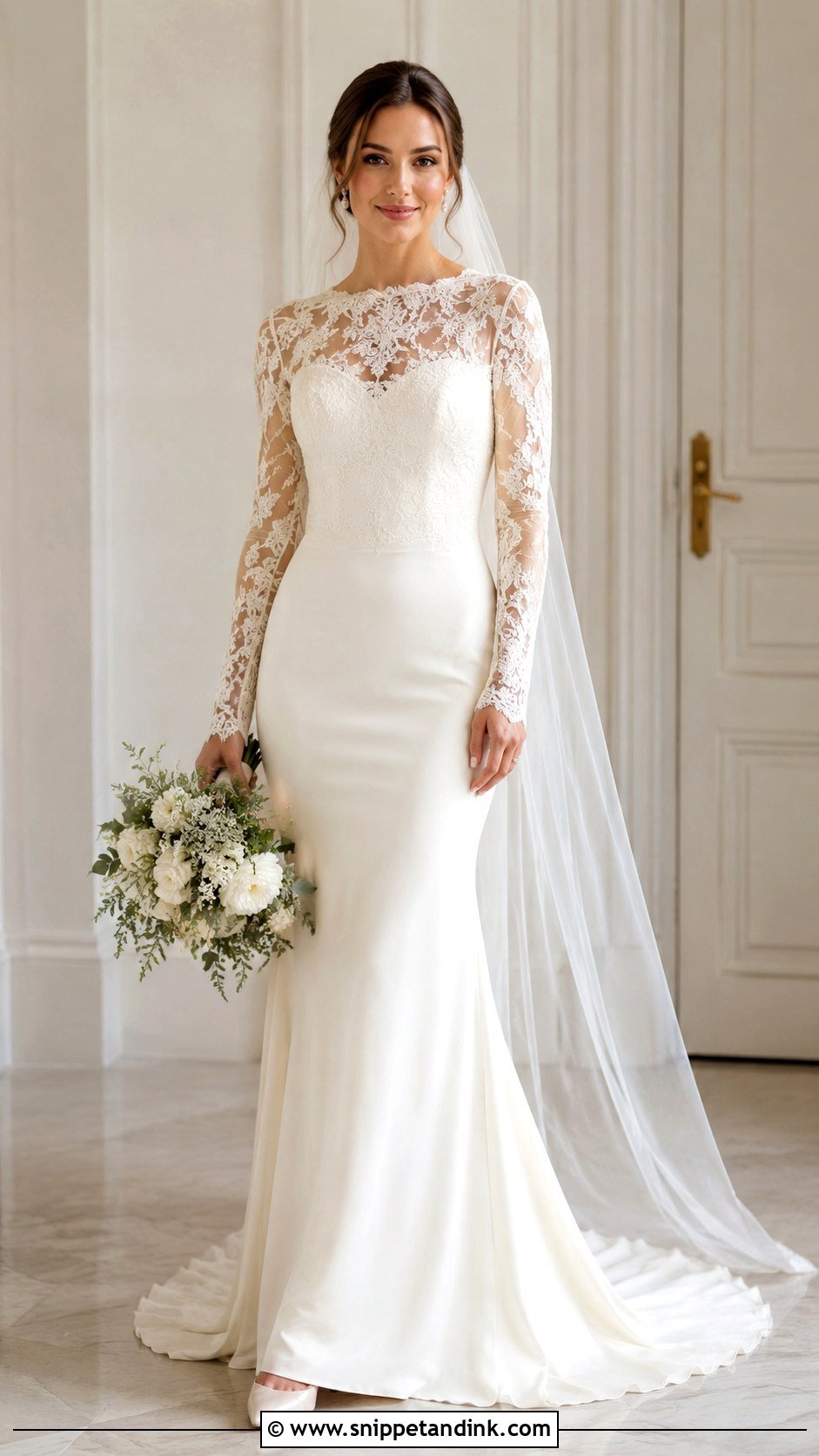
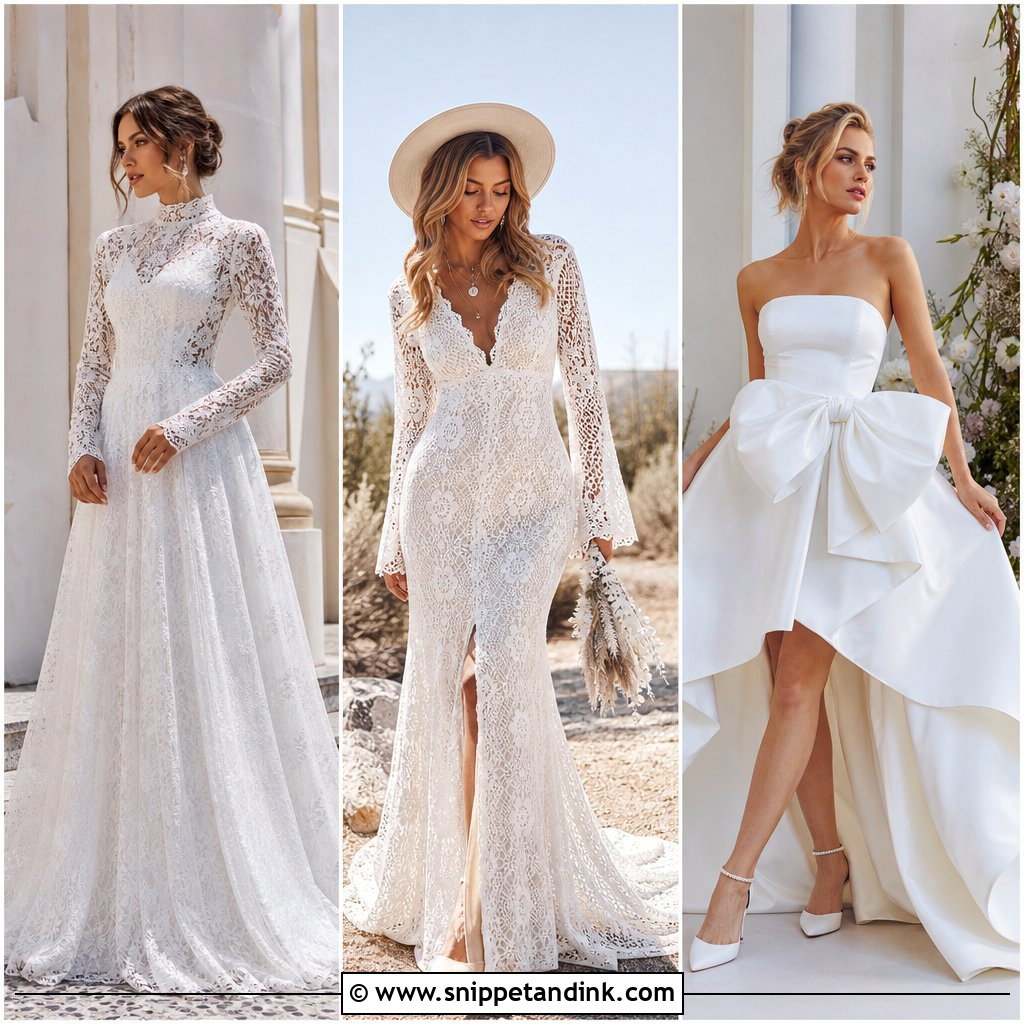
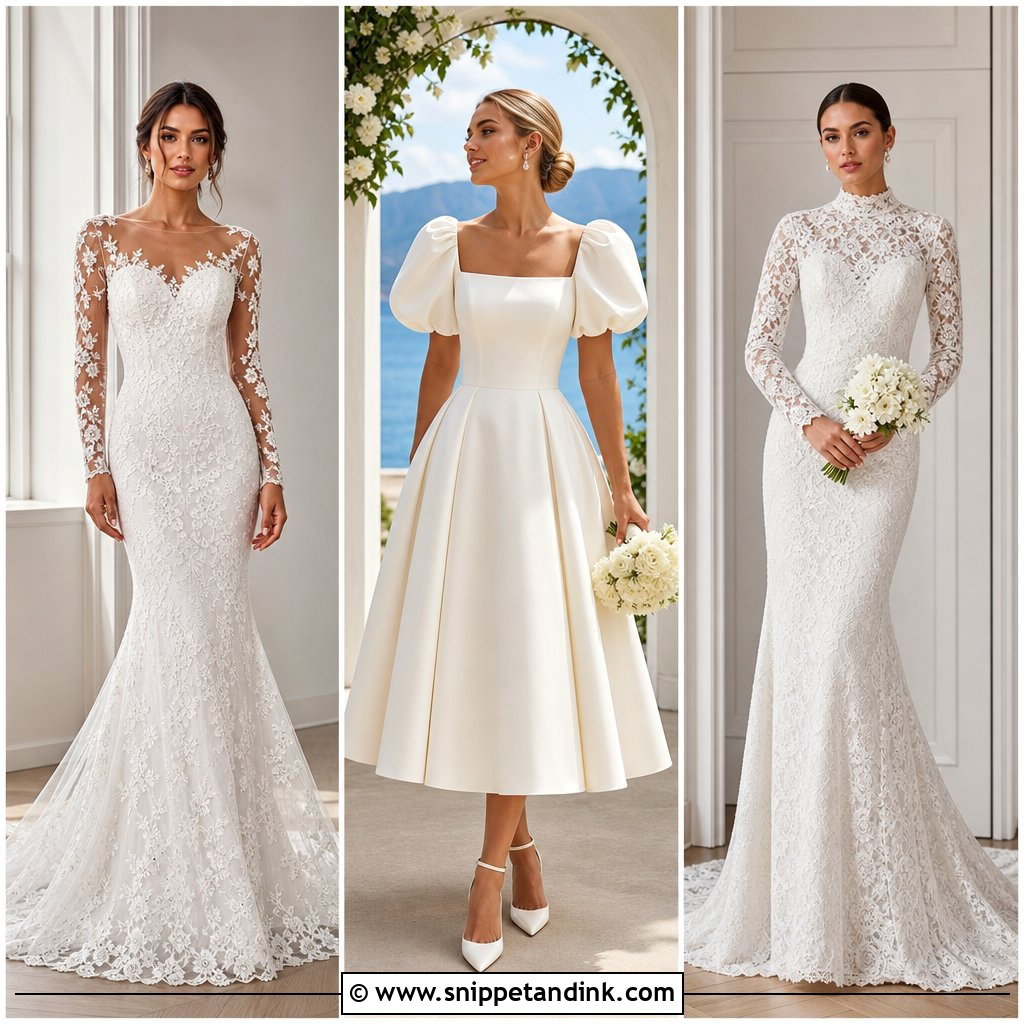
Sleeves come in more shapes than people realize: sheer, lace, fitted, puffed, bishop or plain. The most common problem I see is a fitted lace sleeve with no stretch, which stops you raising your arms to hug anyone or reach for a glass. Ask for stretch lace or illusion mesh, then test it at the fitting. Detailed sleeves call for small earrings and a simple veil; a plain long-sleeve gown can take a bold veil or a sleek bun. Suits cooler weather and formal ceremonies.
14. Short Wedding Dress
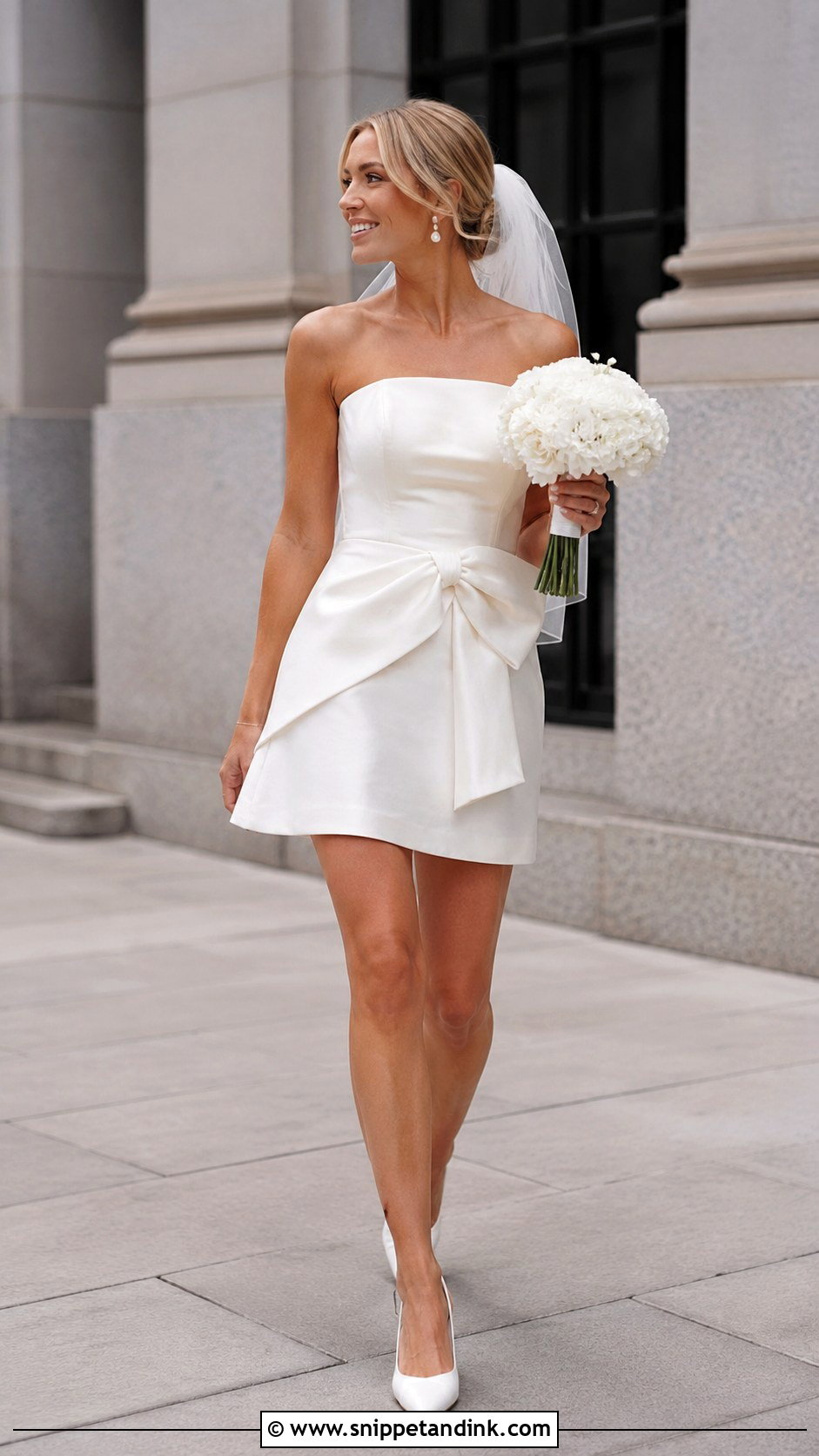
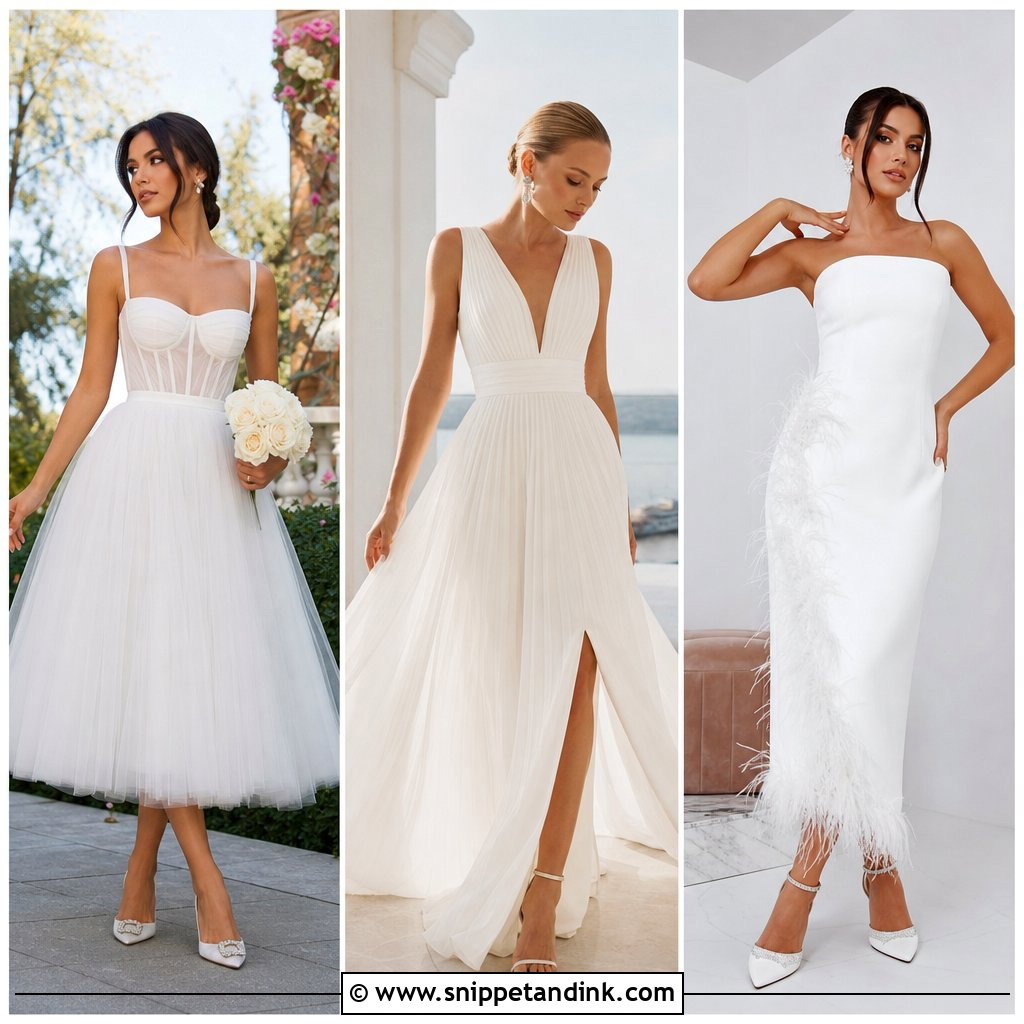
Short dresses are the practical choice for courthouse weddings, receptions, elopements and after-parties. Hems run from mini to knee to tea length, and the shorter you go, the more your shoes become the outfit. Pointed pumps, embellished heels or sleek slingbacks all suit. I’d always do the sit test: a hem that looks right standing can ride up a lot in a chair. A structured mini with a bow looks polished; lace looks sweet and vintage. Add a birdcage veil or pearl earrings.

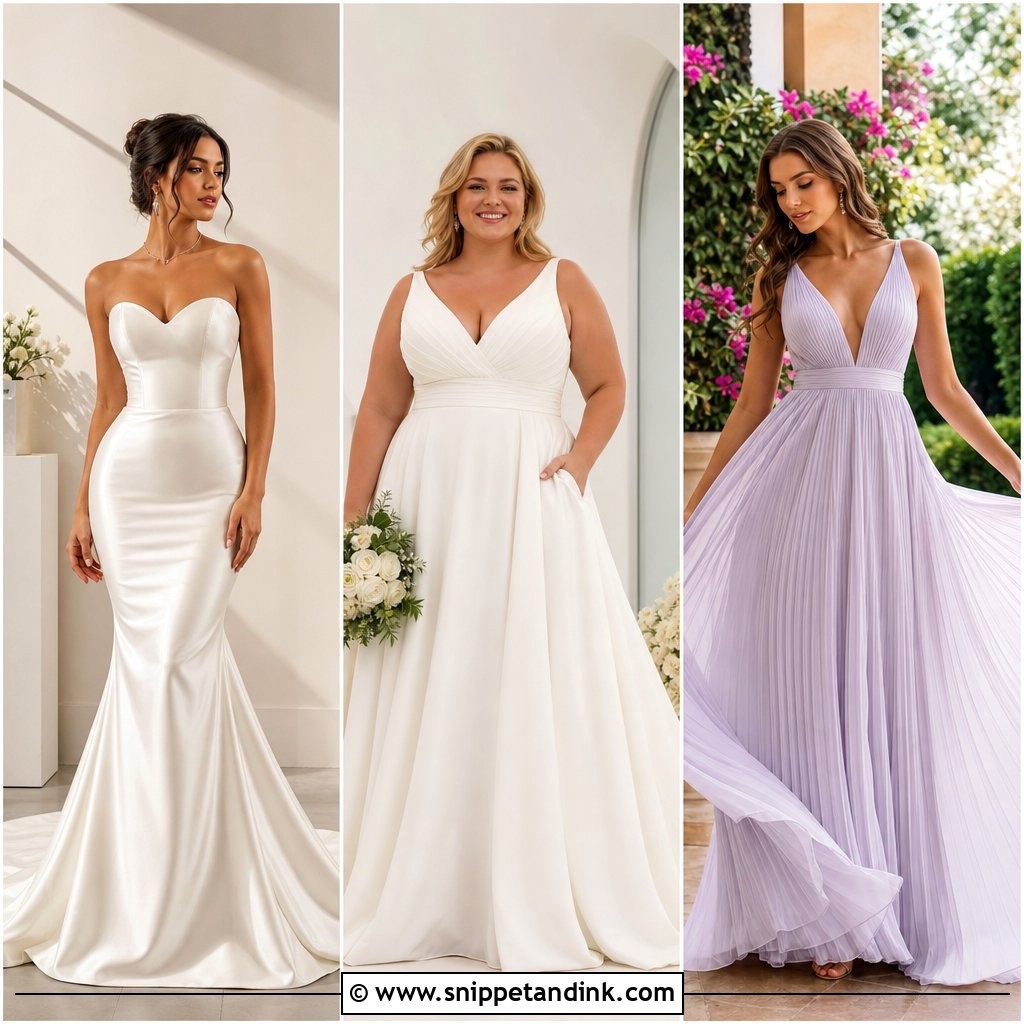
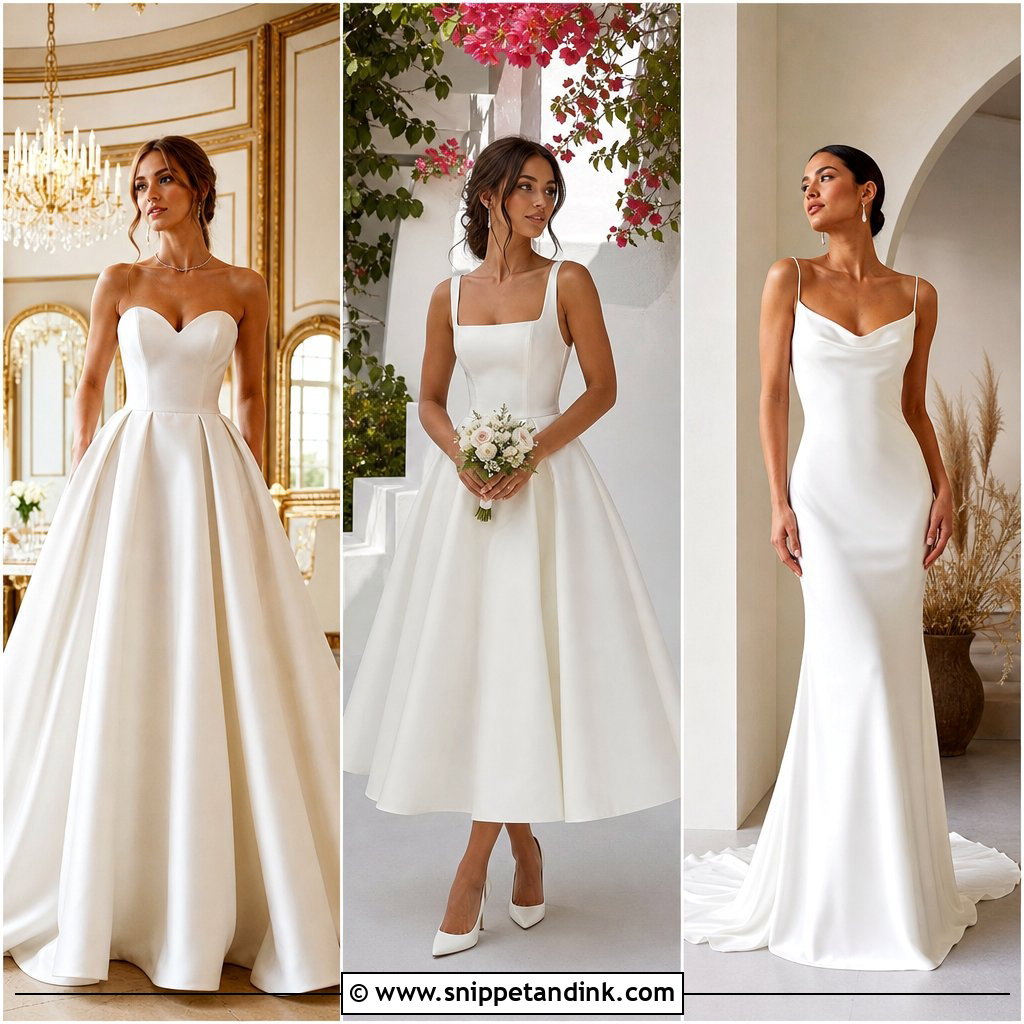
15. Tea Length Wedding Dress
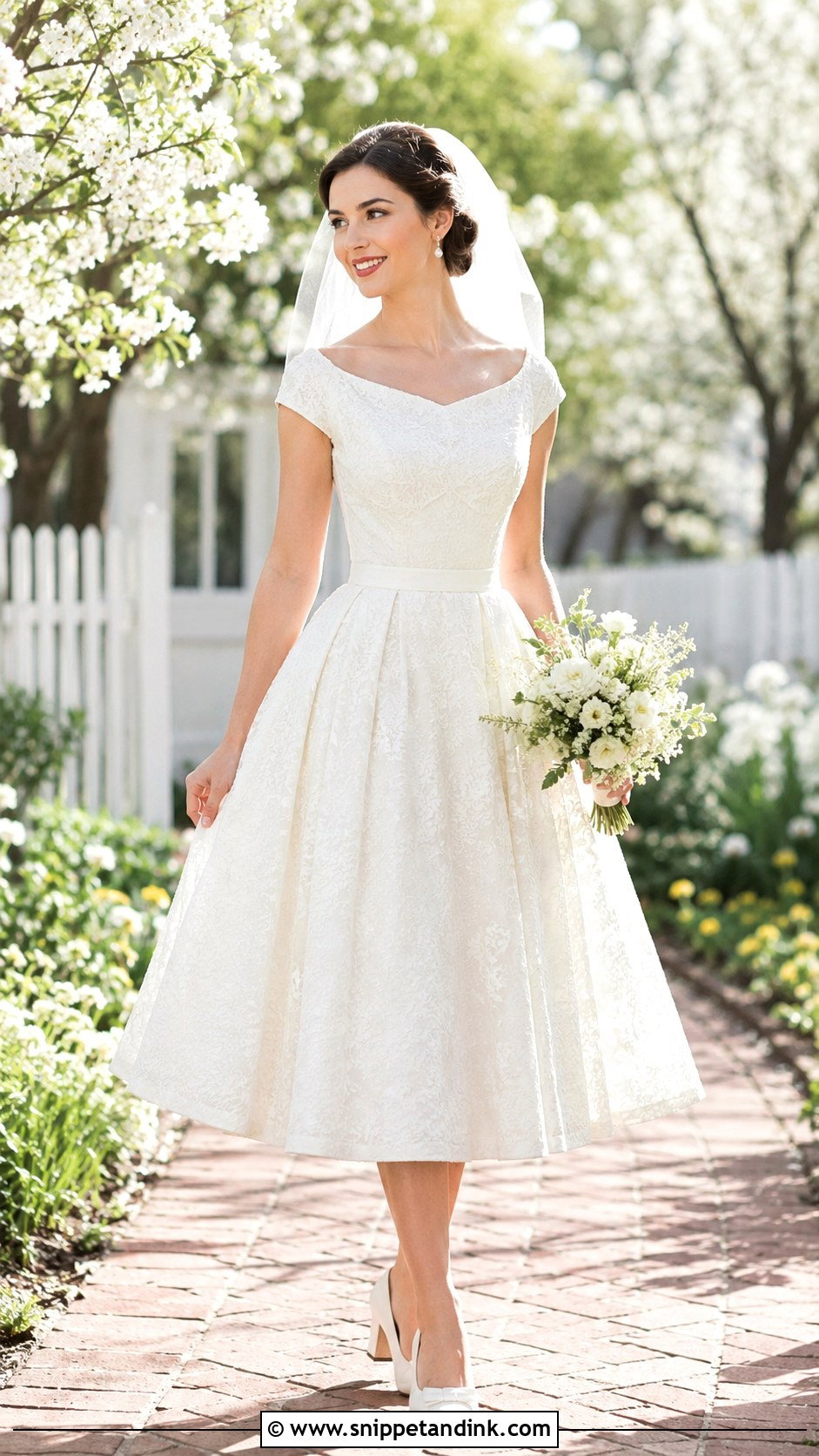
Tea length falls between knee and ankle, so you can dance freely and nobody steps on your hem. Full skirts, fitted bodices, lace overlays and satin all suit it. Because the ankles show, the hem has to be set while you wear your actual shoes, and a few centimetres change the whole proportion. Block heels, Mary Jane pumps or embellished sandals give it personality, with a short veil or hair bow on top. Spring, summer, courthouse and garden weddings are its natural home.
16. Lace Wedding Dress
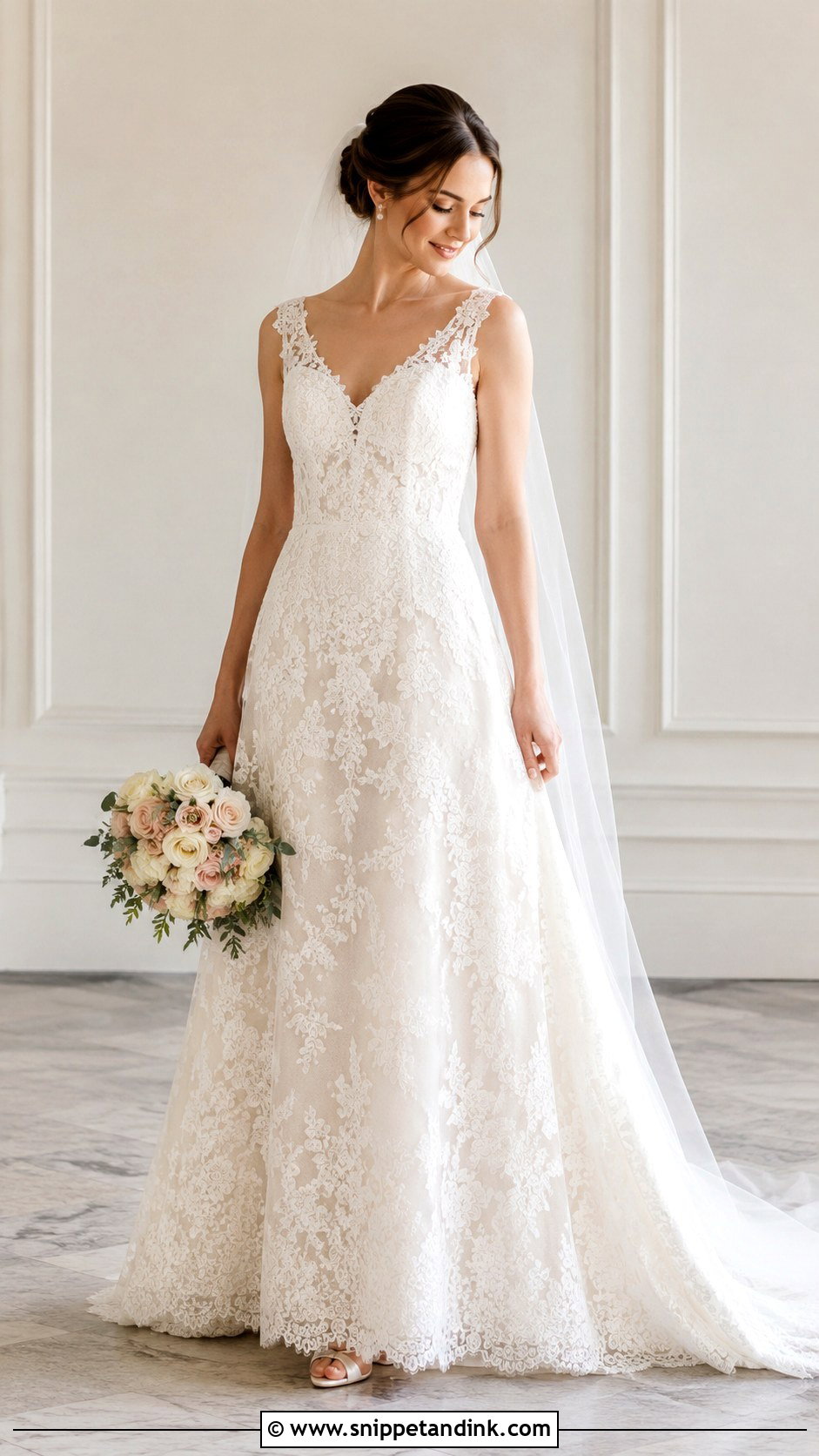
Lace varies far more than most brides expect. Chantilly is fine and soft, Alençon has a corded outline that gives it depth, and guipure is heavier and more sculptural. Laid over nude lining it shows more dimension. A fitted lace gown feels glamorous, an A-line lace dress feels classic. I’d keep accessories plain so the pattern reads: a simple veil, pearl studs, satin heels. Oversized motifs or a lace bodice over a crepe skirt make it feel more current.
17. Satin Wedding Dress
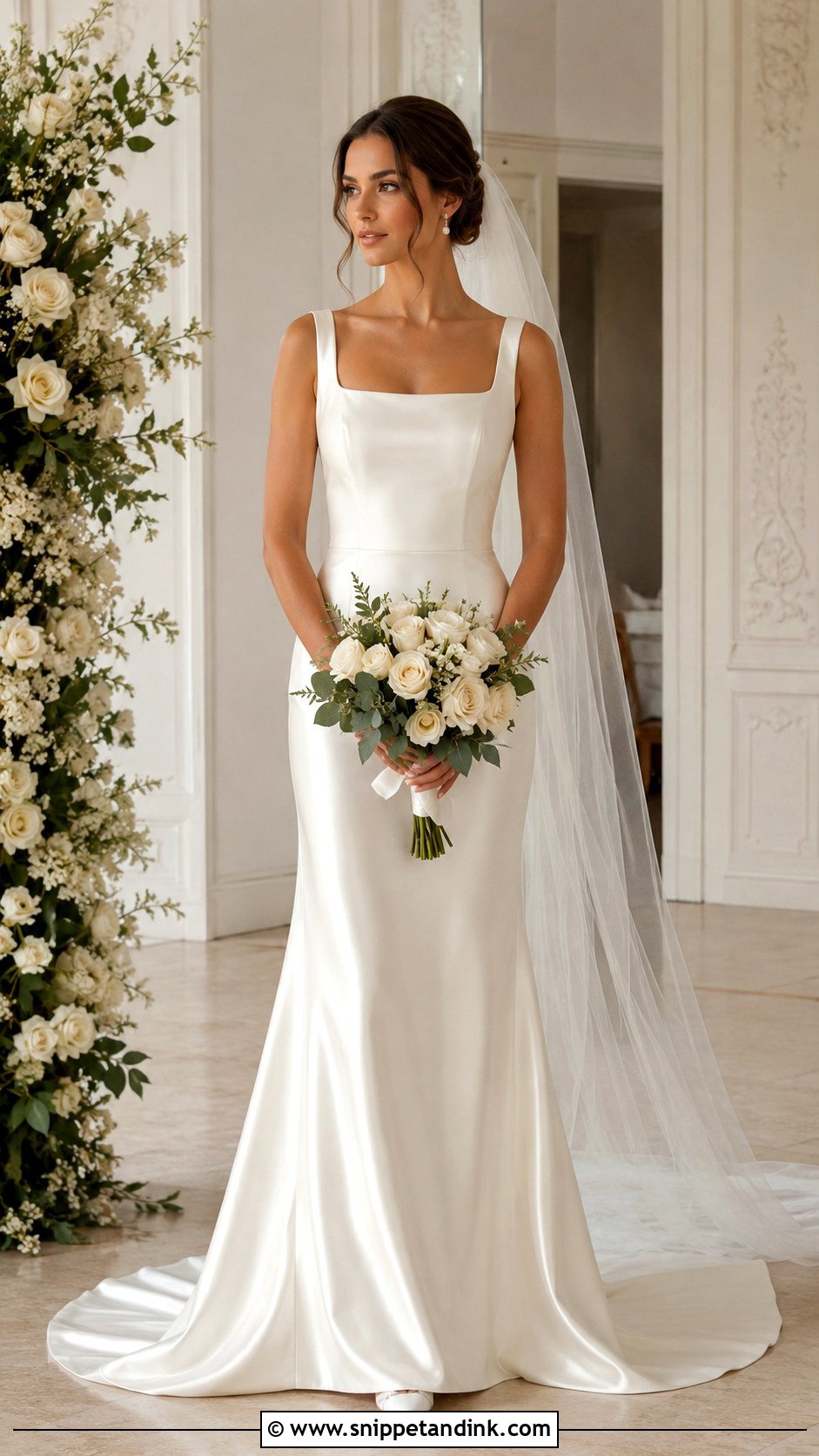
Satin reflects light, so a simple shape can look rich with nothing added. The flip side is that it shows every pull and crease, which means tailoring has to be precise. Ask to see how the fabric looks after you’ve been sitting in it for ten minutes; heavier satins recover, thin ones keep the lines. It suits ball gowns, A-lines, slips and columns. A long veil, pearl earrings and closed-toe heels give a classic finish, while a square neck, high slit or sculptural bow makes it modern.
18. Tulle Wedding Dress
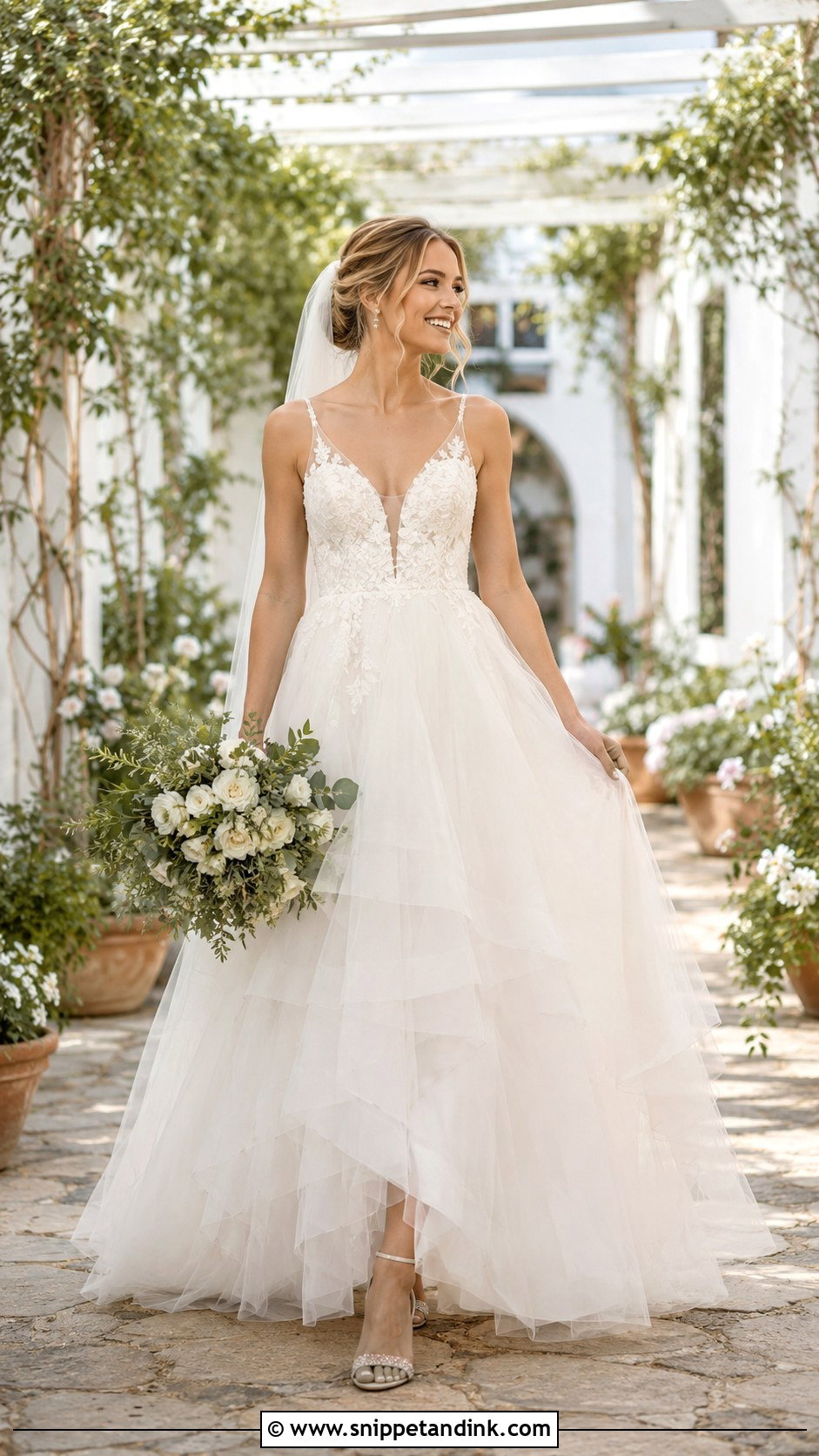
Tulle gives volume without much weight, which is why a full tulle skirt moves so freely. Plain tulle looks clean, glitter tulle adds a soft shimmer, and embroidered tulle brings texture. One honest warning: tulle snags on beaded shoes, bracelets and rough venue floors, so I’d keep jewelry smooth and check the hem after outdoor photos. It suits A-lines, ball gowns and short skirts alike. Delicate heels and a soft veil keep it airy for outdoor and spring weddings.
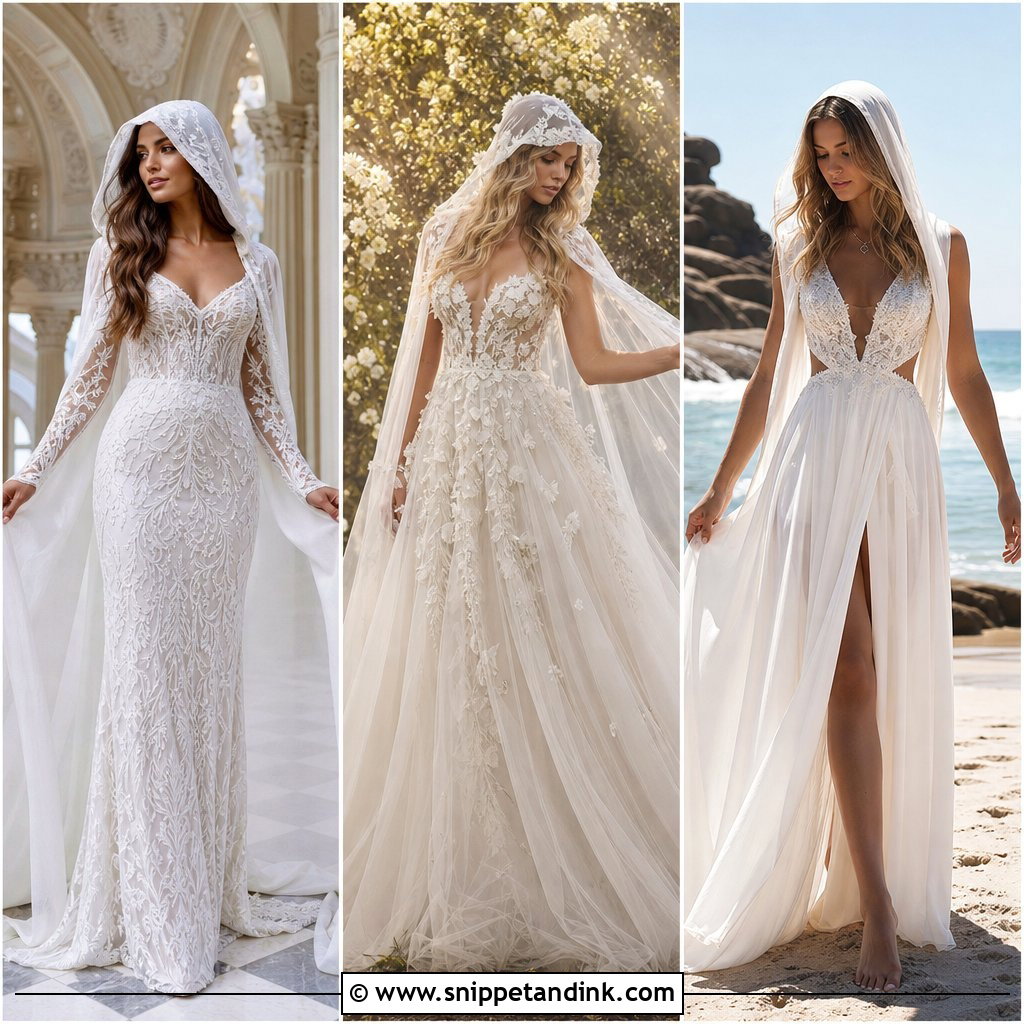
19. Floral Wedding Dress
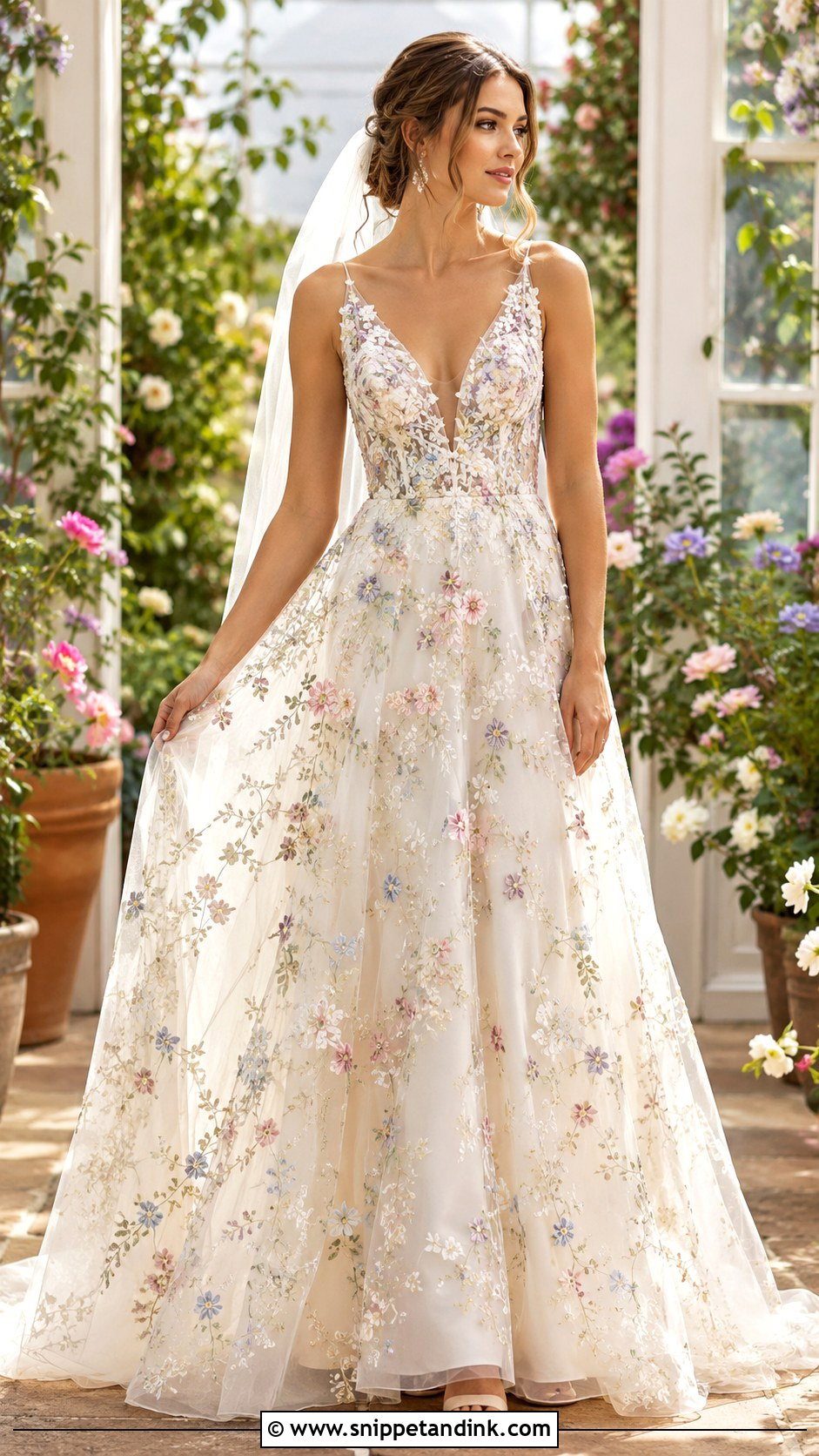
Floral details can be lace, embroidery, appliqué, beading or printed fabric. White-on-white flowers stay subtle; pastel florals look more artistic. When the gown already has bold flowers, I ask the florist to keep the bouquet simple so the two don’t compete. Soft curls, delicate earrings and neutral heels finish it. It suits garden and spring weddings, and gives a classic gown a creative twist.
20. Beaded Wedding Dress
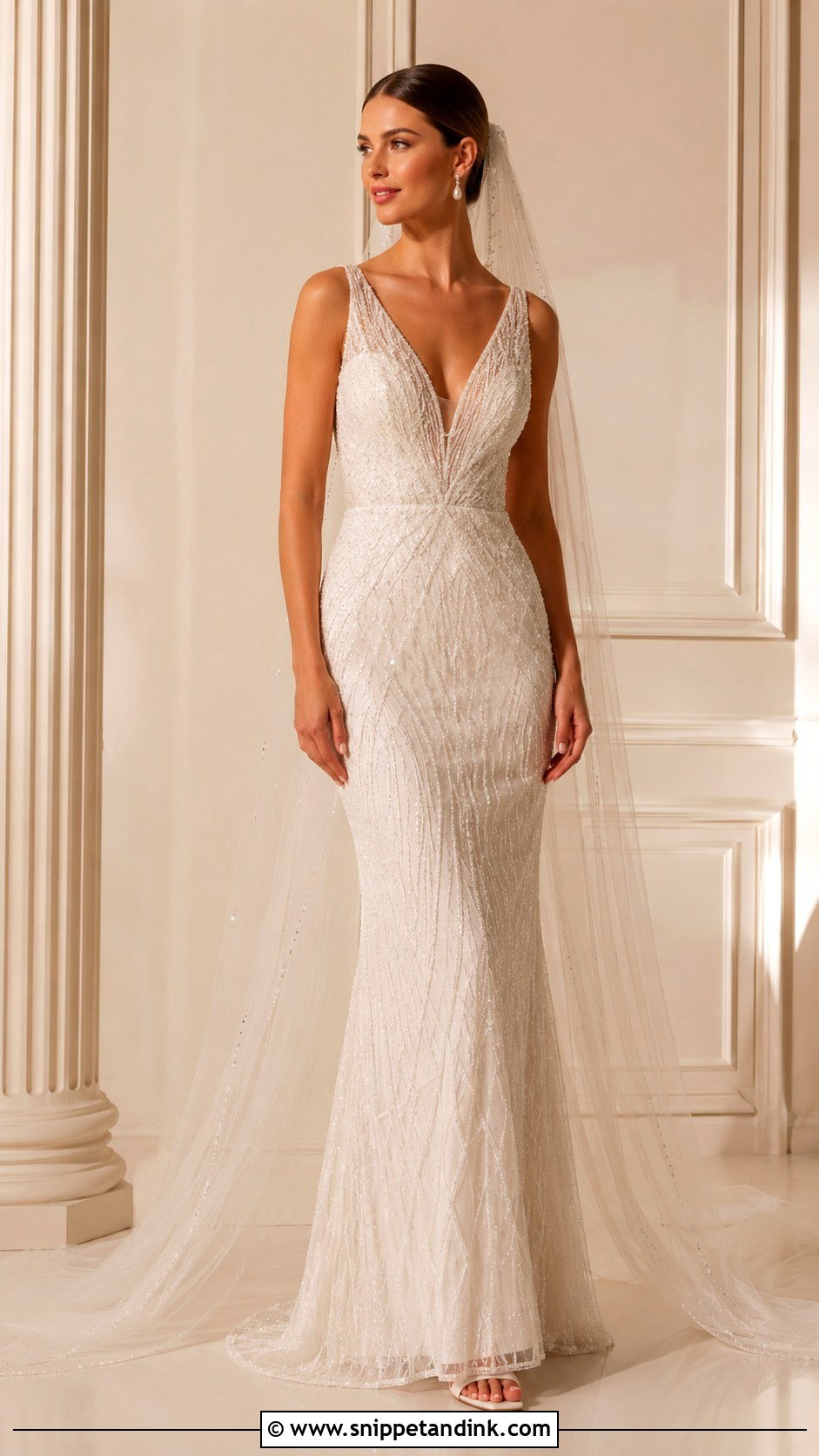
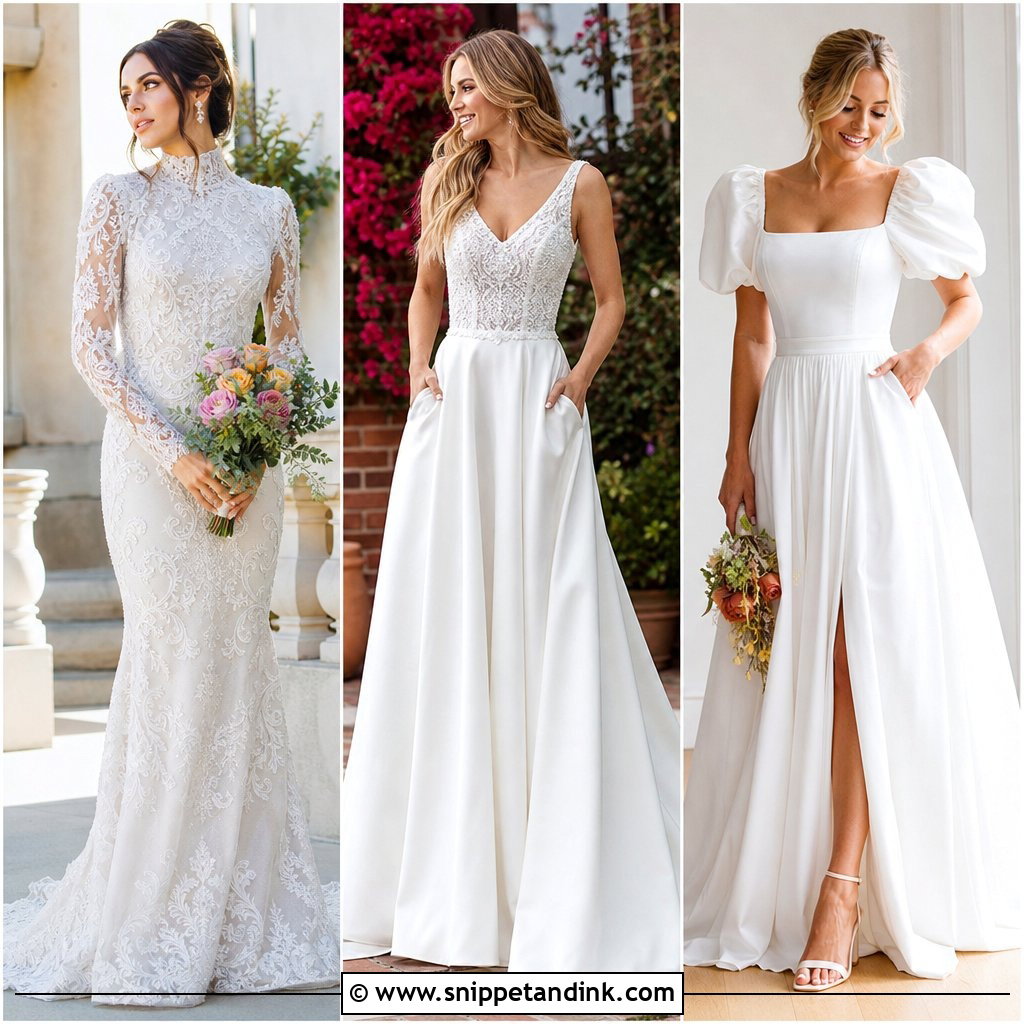
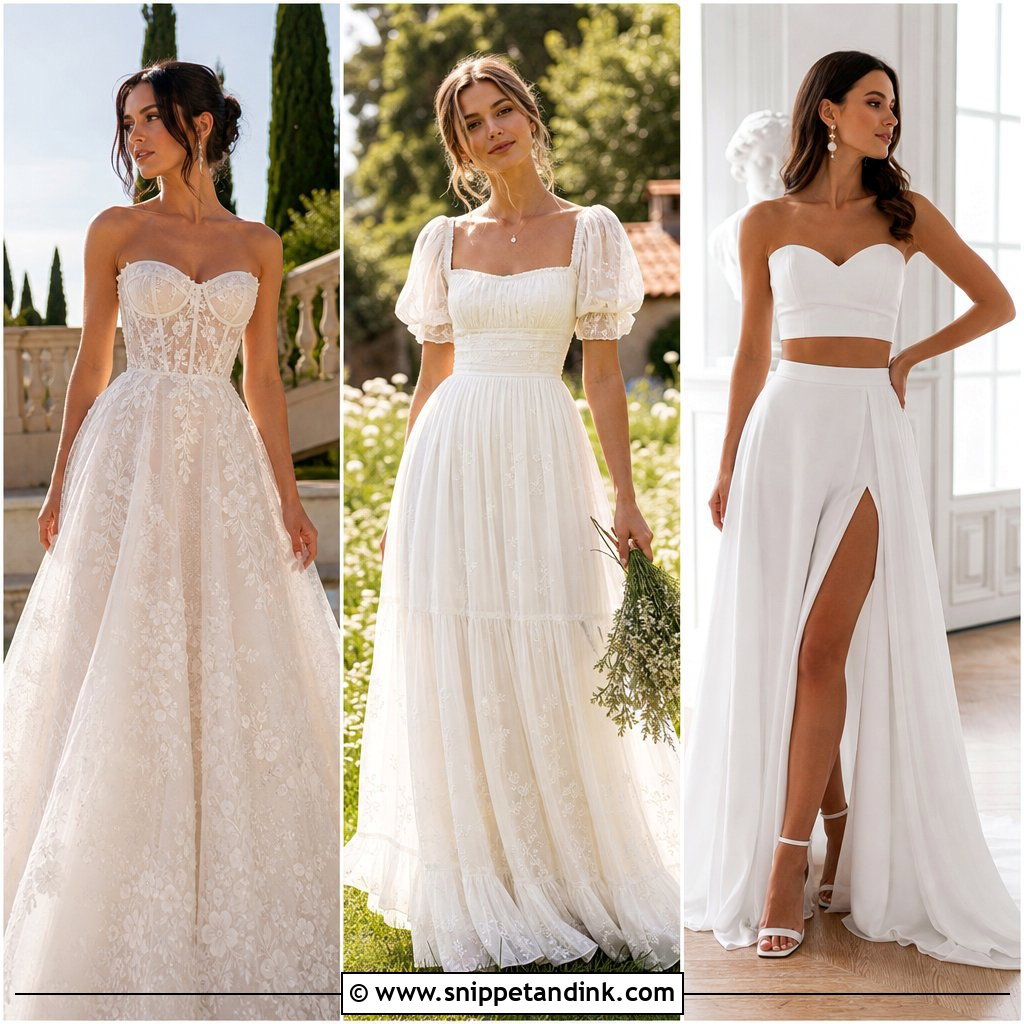
Beading adds dimension and weight in equal measure. Full-coverage beading on a long gown can be genuinely heavy, so I always have brides wear it for a while at the fitting and notice their shoulders. Concentrated beading on the bodice, sleeves, waist or train gives the sparkle with less load. Since the gown already shines, choose simple jewelry and clean shoes. A sleek veil, or none, keeps it modern for an evening or formal venue.
21. Bow Wedding Dress
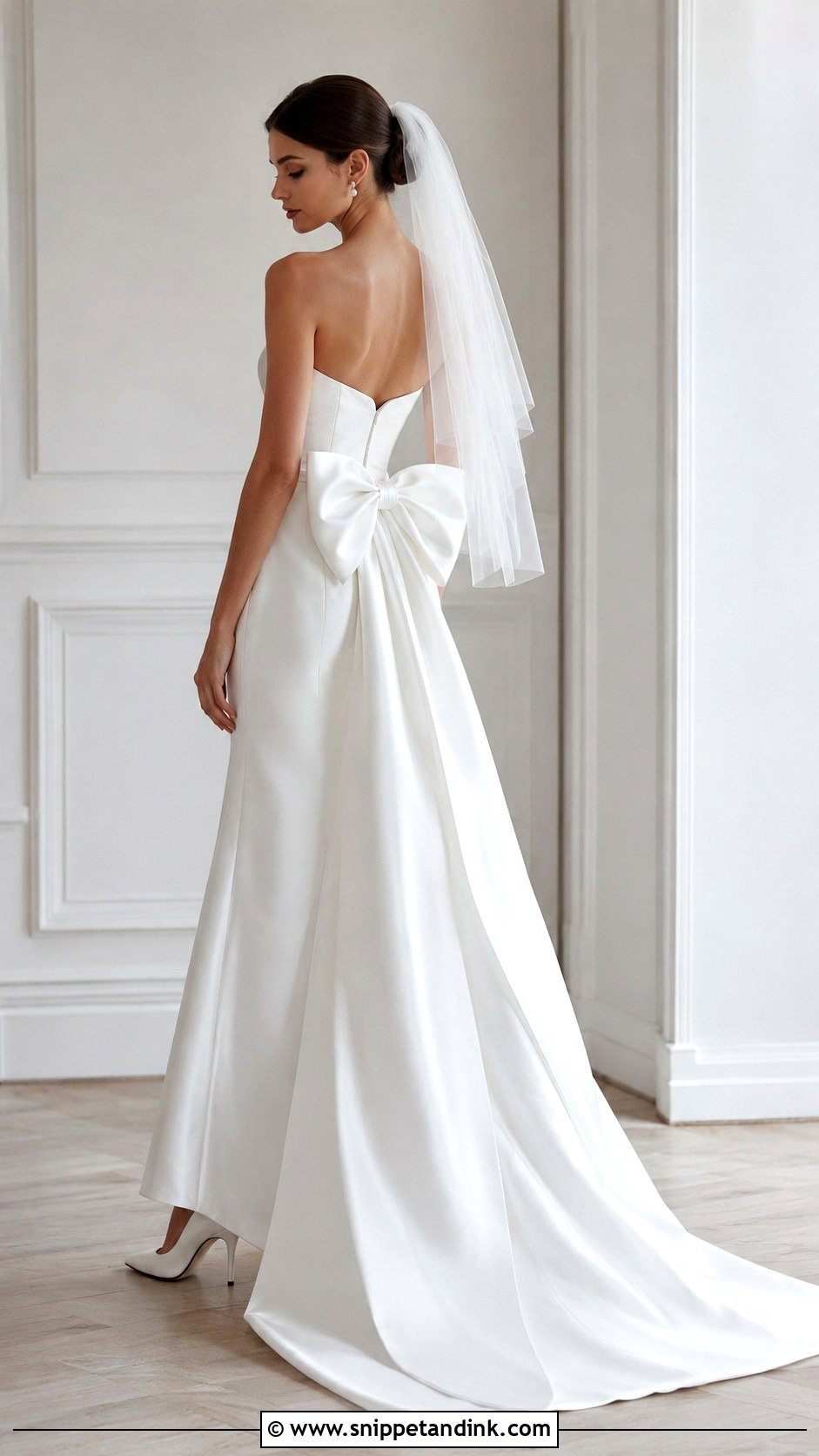
A bow is one detail doing a lot of work, so placement matters. A large back bow makes the exit, small shoulder bows feel sweet, and a bow at the waist marks your shape. Satin, mikado, crepe and organza hold a bow crisply; soft chiffon lets it droop by evening. With an oversized bow, I keep jewelry minimal and the veil simple. A small bow can take pearl accessories or a hair ribbon.
22. Cape Wedding Dress
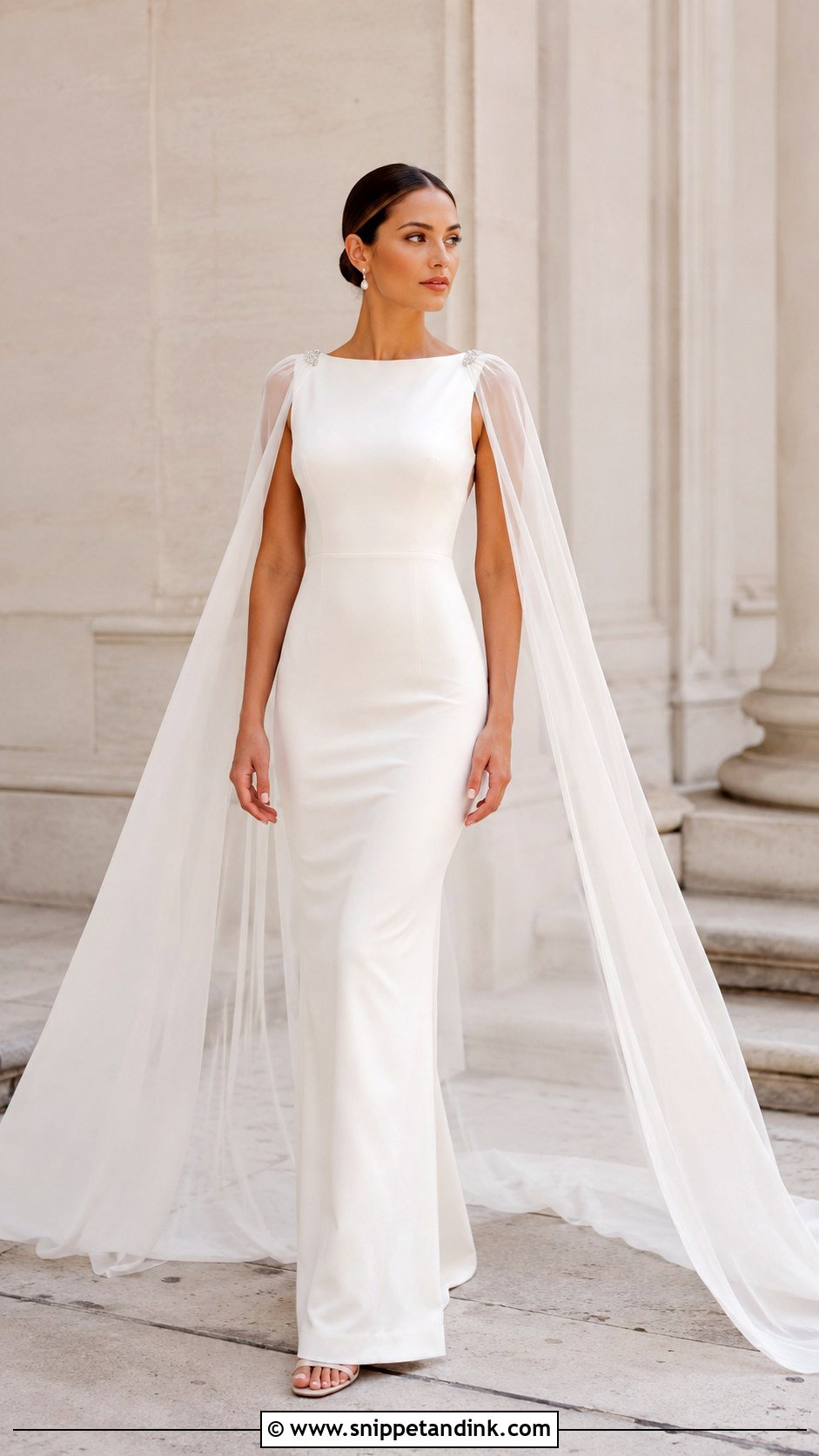
A cape replaces the veil and moves behind you when you walk. It can be sheer, lace, tulle, beaded or satin, attached at the shoulders, neckline or back. The attachment point decides how it falls, so try a few. Pair it with a simple column, sheath or fitted crepe gown so the two don’t compete. A detachable cape covers shoulders for a religious ceremony and comes off for the reception. Keep hair sleek so the line stays visible.
23. Detachable Skirt Wedding Dress
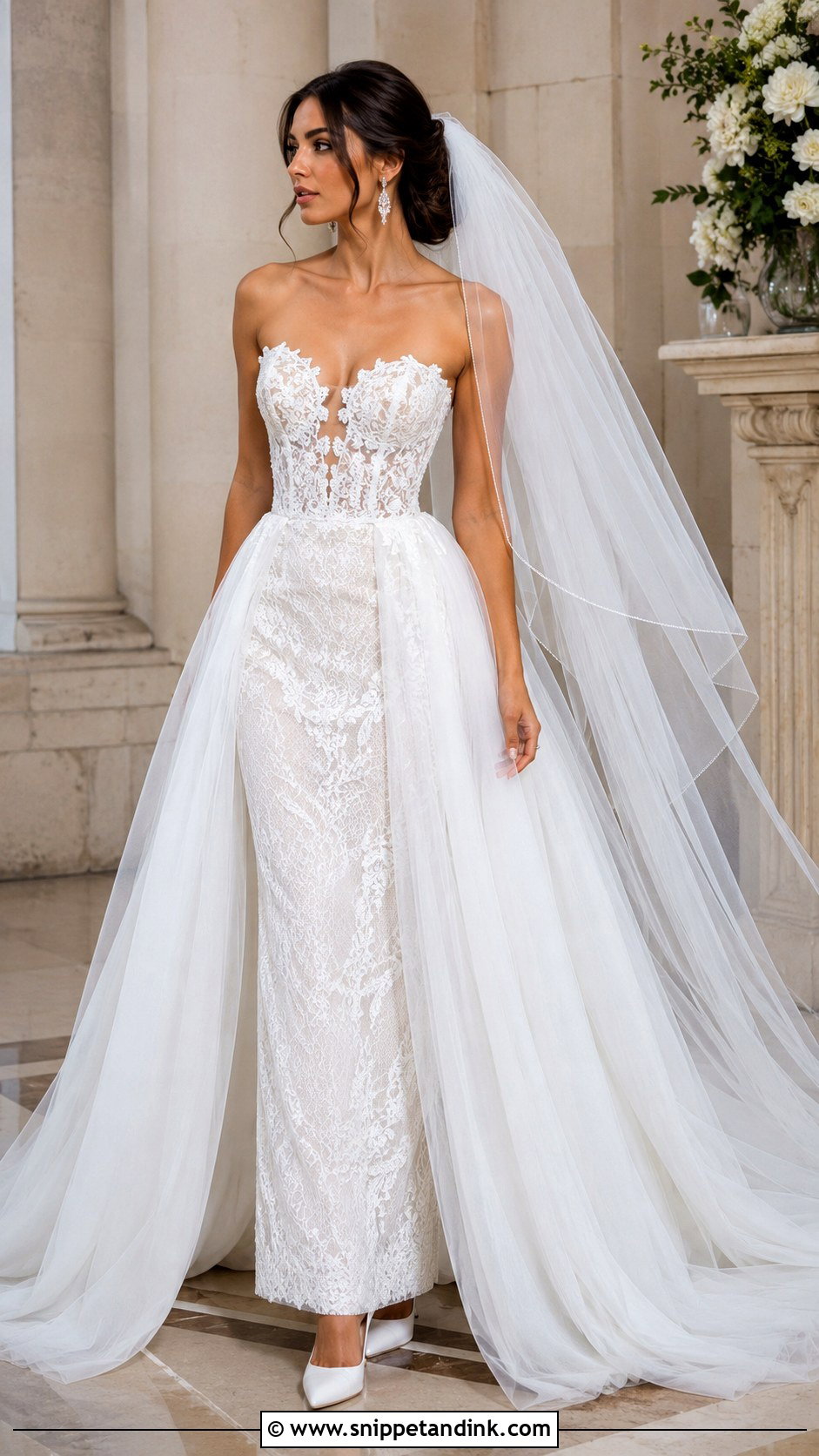
A detachable overskirt gives you a formal entrance and an easy reception dress in one. The base can be a sheath, mermaid, mini or fitted lace gown, with an overskirt in tulle, satin, organza or lace. I’d practise removing it with whoever will help on the day, because hooks and hidden zips are fiddly in a crowded bathroom. Convertible extras such as removable sleeves or a shorter second veil complete the change.
24. Colored Wedding Dress
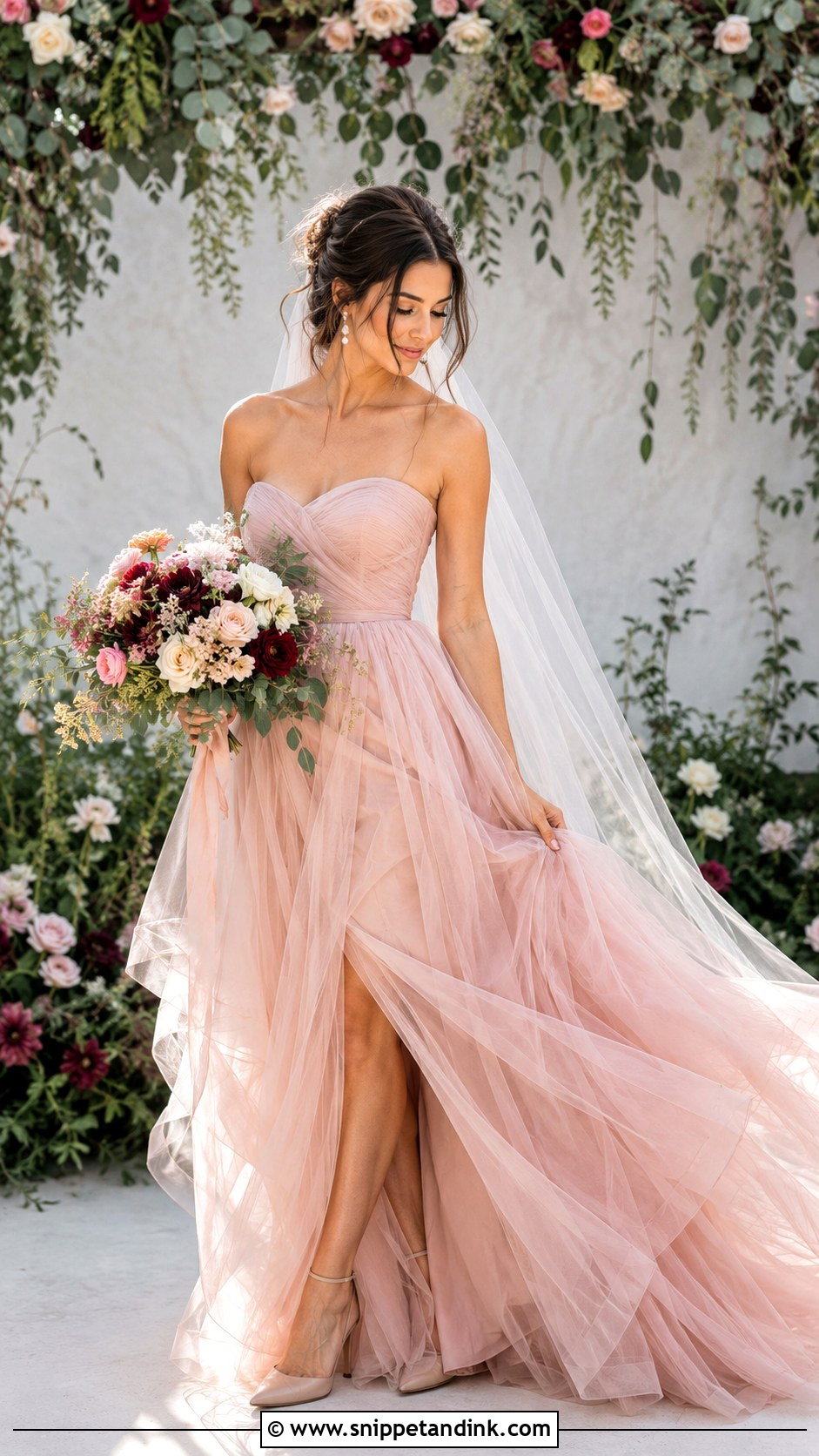
Colour is a personal choice and it can still feel bridal. Blush, champagne, pale blue, lavender, silver and pale gold all sit softly next to skin. It can come in through lining, embroidery, appliqués or the whole fabric. I look at colour swatches against the bride’s face outdoors, because shop lighting warms everything. Keep accessories neutral so the colour stays refined: metallic heels, pearl earrings and a simple veil.
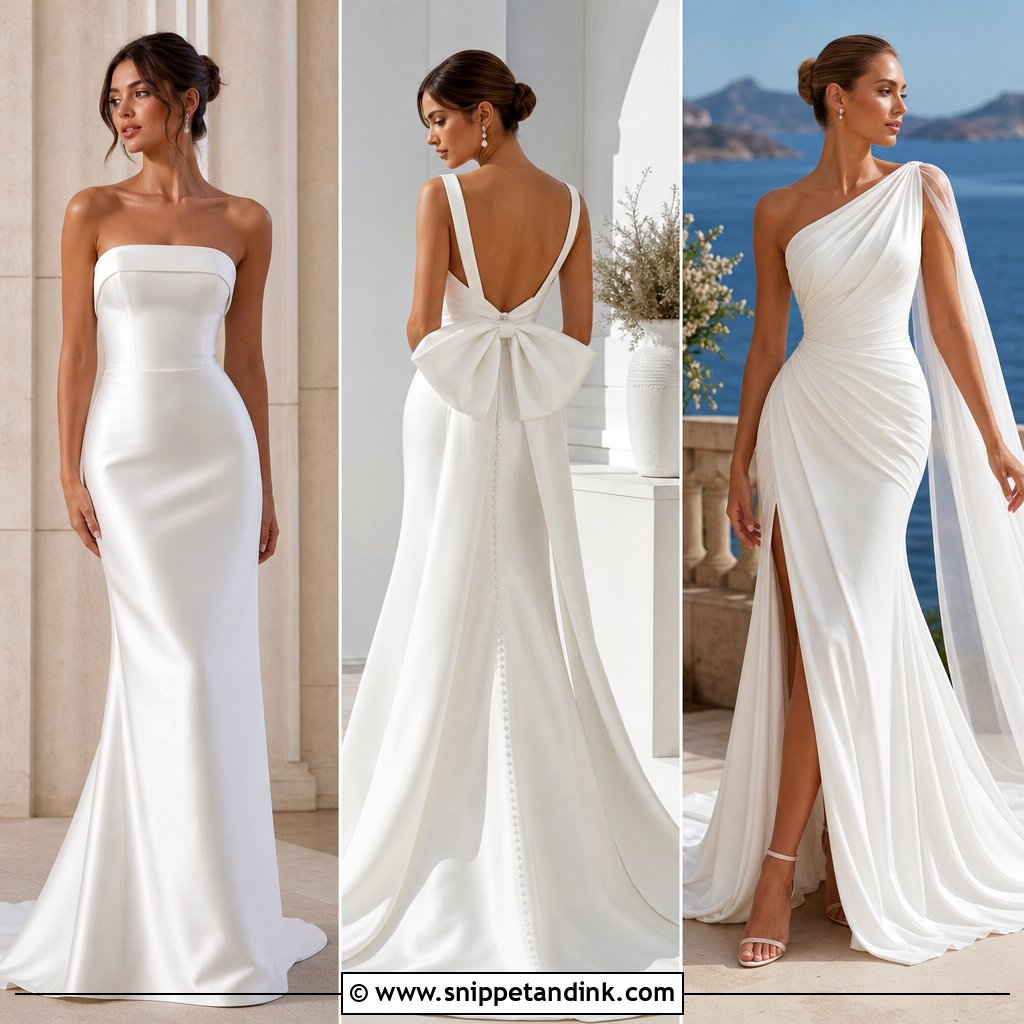


25. Two Piece Wedding Dress
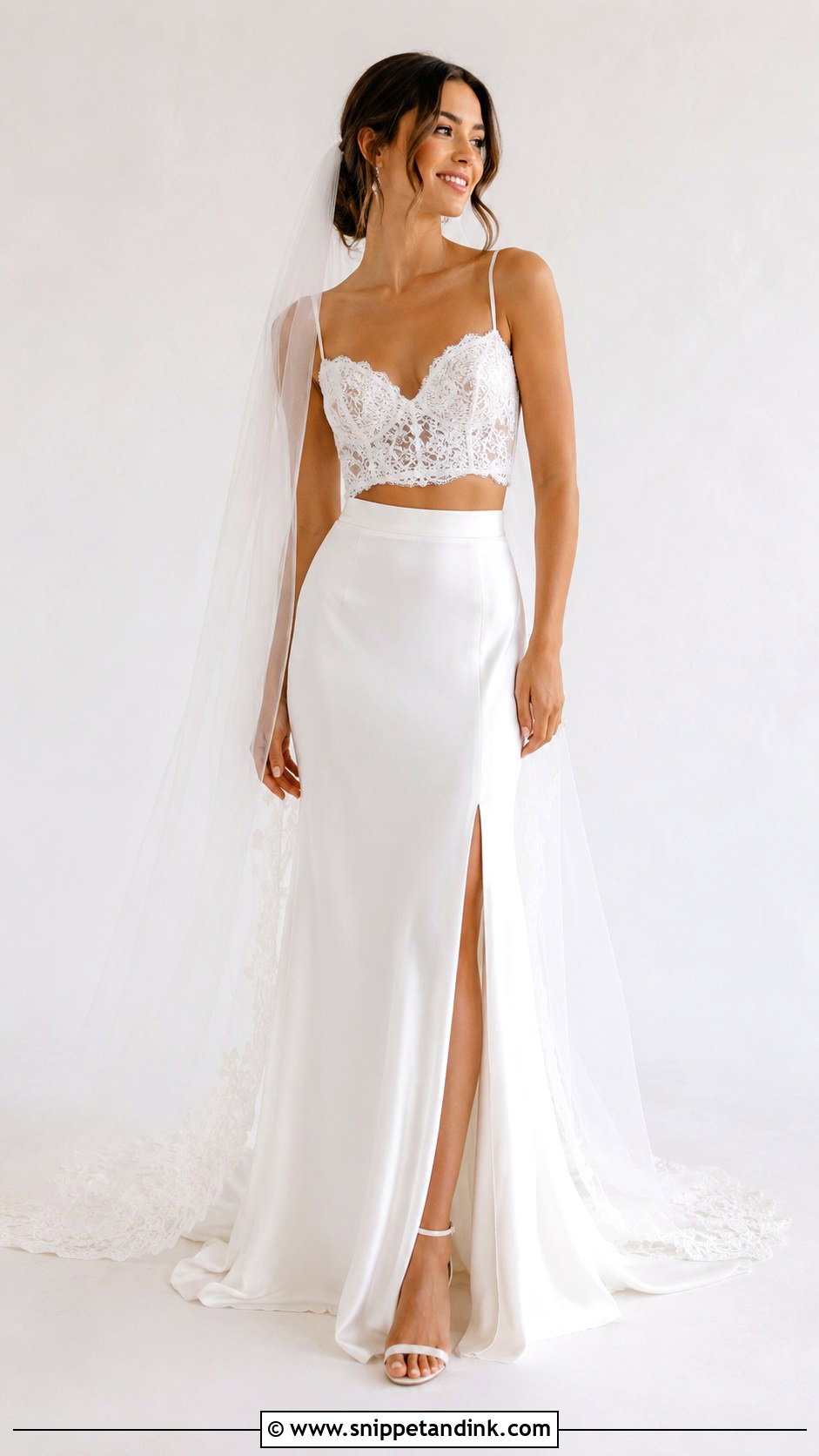
Separates let you build a gown from a separate bridal top and skirt, like a lace crop with a high-waist skirt or a structured corset over a satin maxi. You can also buy each piece in a different size, which helps when your bust and hips sit in different size ranges. Mix textures and necklines freely. A long veil makes it formal, minimal jewelry keeps it fresh. Pick a skirt with movement for a long day.
An Appointment Order That Saves Hours
Most bridal appointments last around an hour to ninety minutes, and it goes faster than you think. I run them in a set order so we learn something from every dress.
- Start with an A-line in a plain fabric. It’s the neutral baseline you compare everything else against.
- Then the opposite extreme: a ball gown, then a sheath or slip. Your reaction to each tells us more than the dress itself.
- Once you’ve narrowed the shape, try the same silhouette in two fabrics, such as satin and lace.
- Only then look at details like sleeves, capes and bows, since those can often be added by a seamstress.
Wear nude, smooth underwear and bring shoes close to the height you’ll wear on the day. Keep your group small; two or three honest people help more than six opinions. Take photos from the front, side and back, because you’ll forget the details by the next shop.
Timing matters too. Made-to-order gowns commonly take several months to arrive, and alterations need more time after that, so I’d start shopping about nine months to a year before the wedding if you can. Ask each shop for its current lead time, since they vary.
Try the Shape You Expect to Hate
Most brides arrive certain that one silhouette won’t suit them, and now and then that’s the one they end up buying. The styles above run from classic shapes to modern cuts, romantic details and bold alternatives, and comparing them side by side is the fastest way to learn your own taste. Try different waistlines, fabrics and necklines, then walk, sit and turn in each. Think about your venue, season, shoes and veil. The right dress is the one you’re still comfortable in when the band starts.
You'll Like These Ideas:




Leave a Reply