
Brides with an inverted triangle shape usually tell me what they want to hide before they tell me what they love. I’d rather start the other way around. Shoulders or a bust that read wider than the hips are a strong frame, and a good gown simply adds weight below the waist so the whole line balances. That’s why A-lines and ball gowns dominate the twenty dresses below: their skirts build dimension at the hips while a V or scoop neck draws the eye down through the bodice. There are classic, romantic, modern and relaxed options here. Use them to narrow your shortlist, then trust the one you keep wanting to put back on.
Is the Width in Your Shoulders or Your Bust?
Two brides can both be called inverted triangles and need quite different gowns. Stand in front of a mirror in a fitted top and look at where the widest point really sits.
Broad Through the Shoulders
Athletic or naturally wide shoulders with a moderate bust suit V-necks, halter-adjacent straps set inward, one-shoulder drapes and soft cowls. You can skip heavy boning if the gown fits well, and you’ll often look better in lighter fabrics on top.
Wide Because of the Bust
When a full bust creates the width, support is the first priority and the neckline second. Strapless styles need serious boning and cups, so wide straps, wrap bodices and corset A-lines usually serve better. A deep plunge can look top-heavy; a moderate V or scoop gives the same lengthening effect with security.
In both cases the hip is the narrower point, so bridal sizing will usually be set by the bust or shoulder measurement. Expect the skirt and hip area to be taken in rather than the bodice let out.
1. V-Neck A-Line Wedding Dress
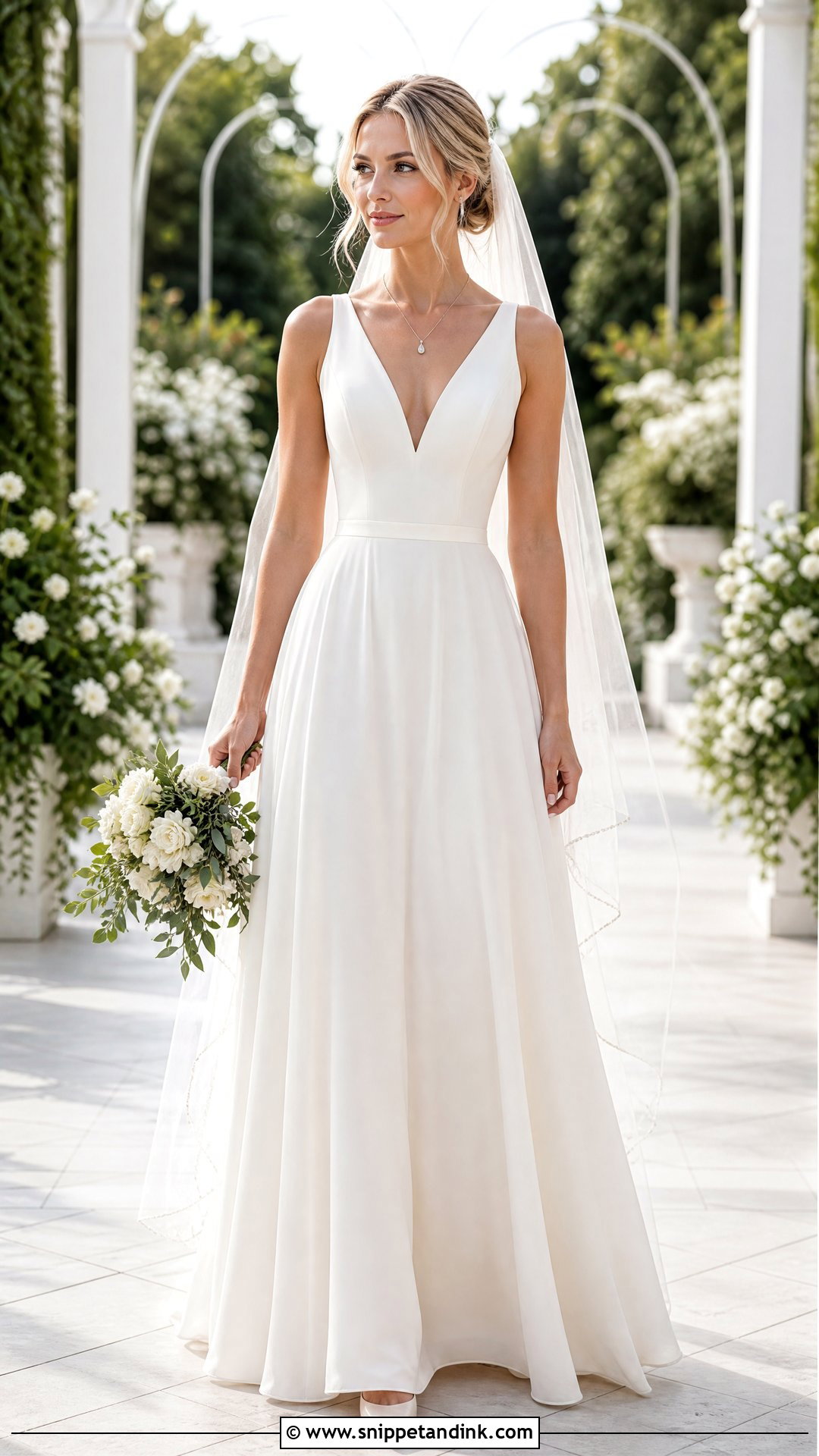
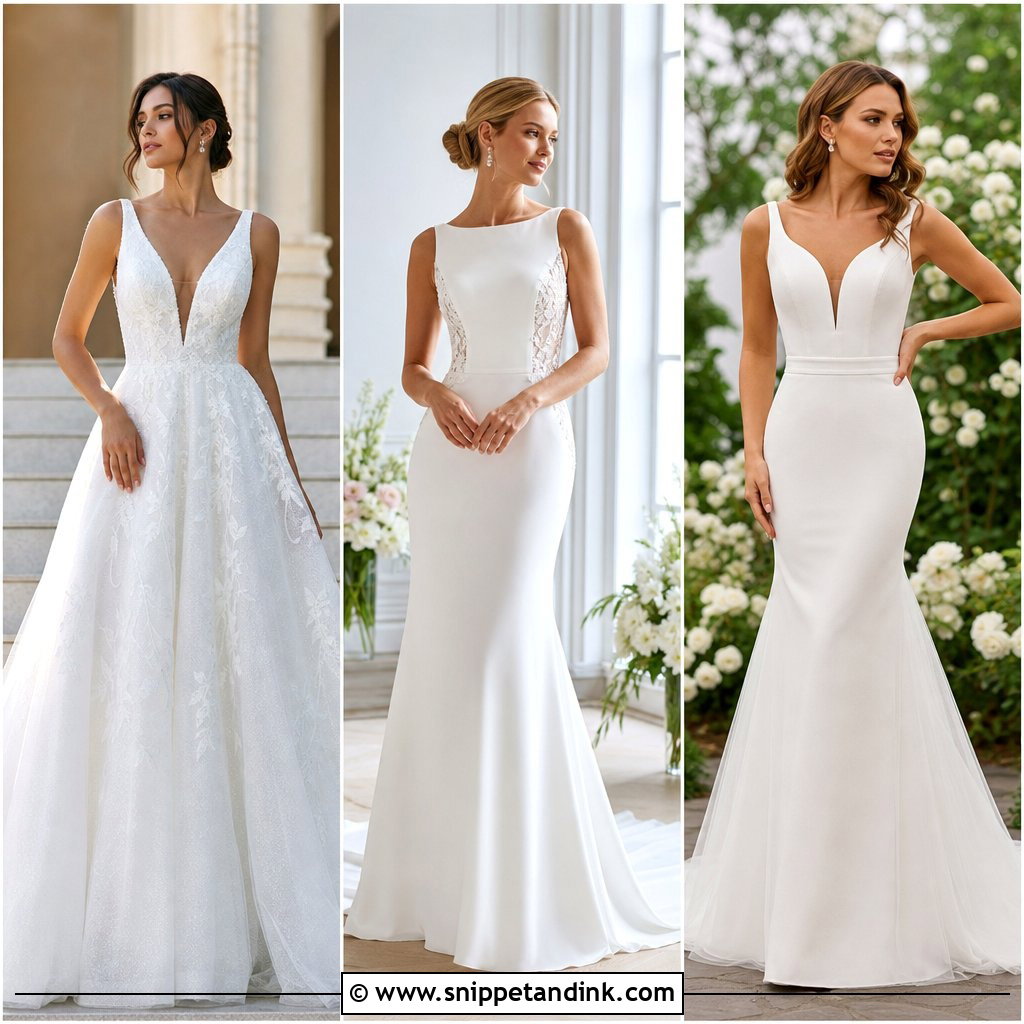
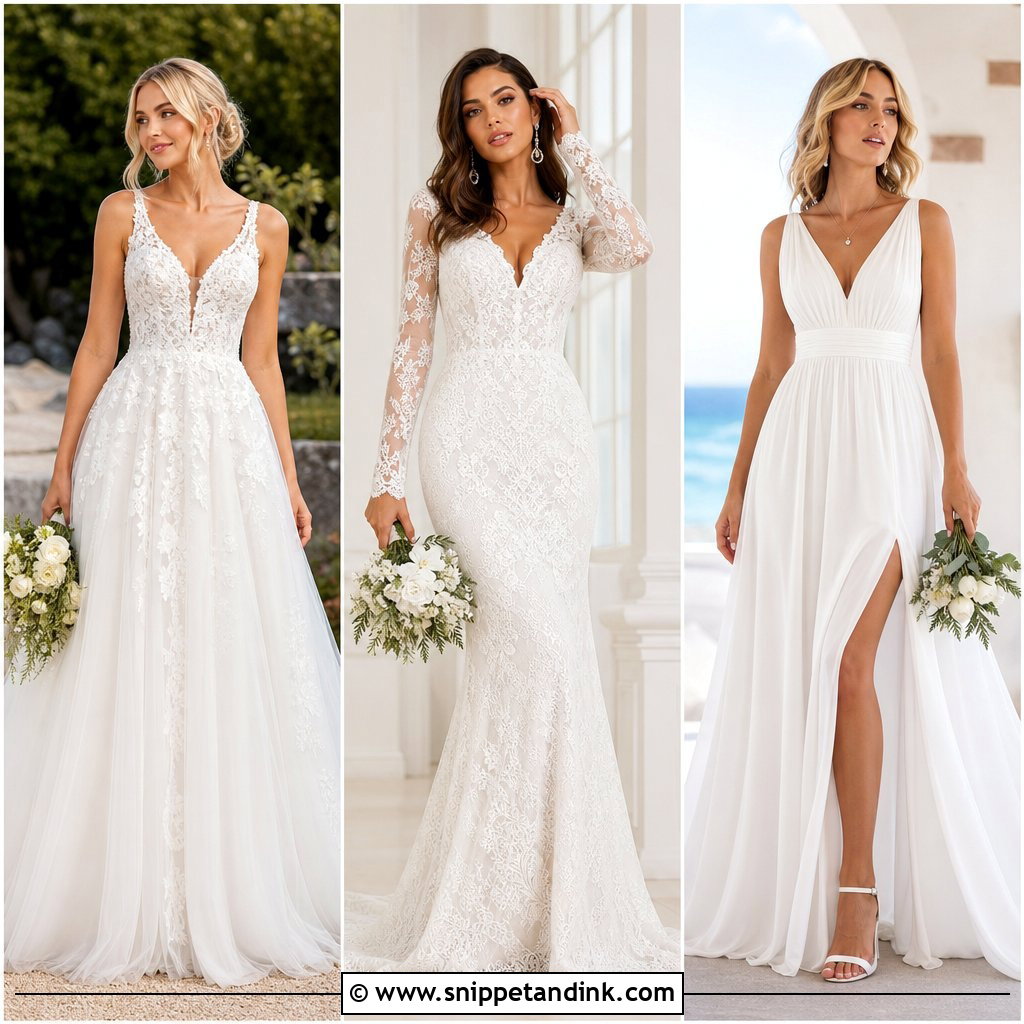
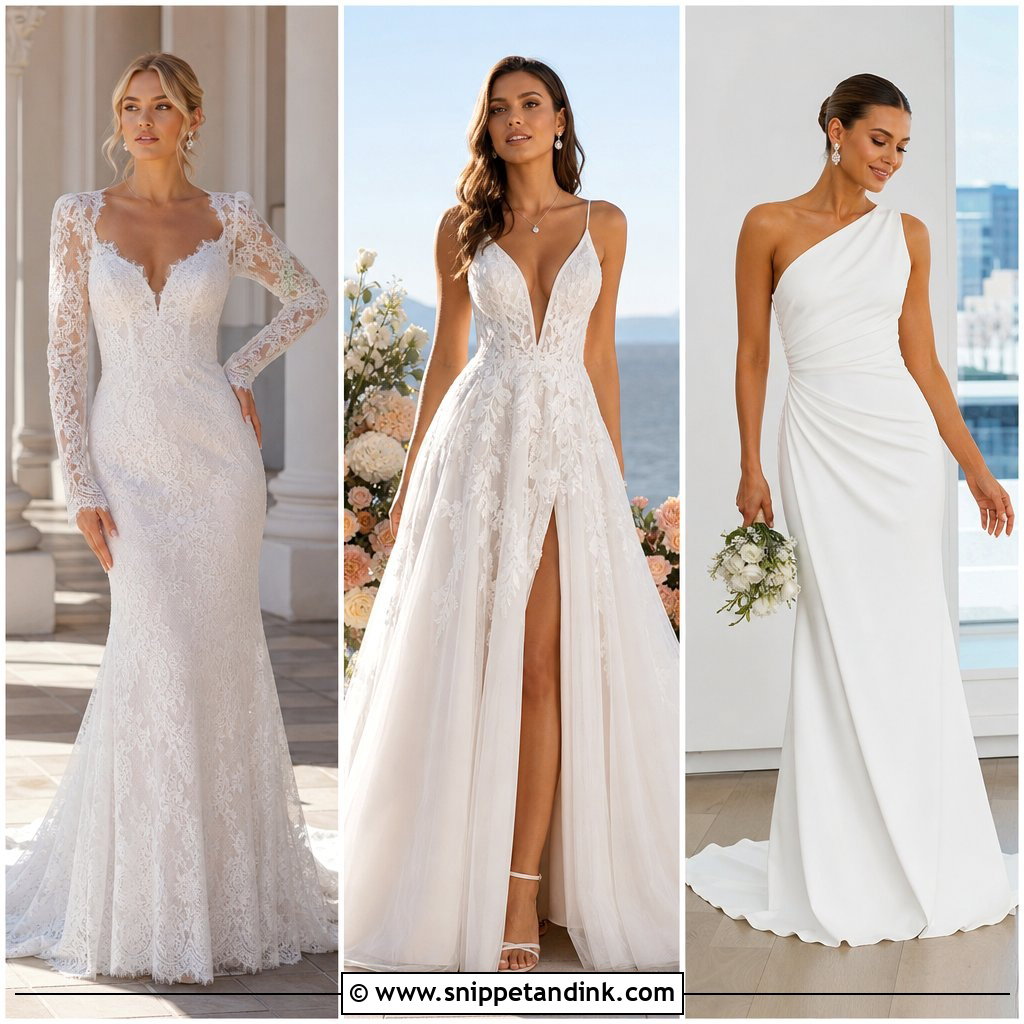
If an inverted triangle bride asks me for one safe starting point, this is it. The V cuts a vertical line through the bodice, and the skirt widens steadily from the natural waist, so shoulders and hem end up visually even. Keep the bodice smooth or lightly laced; beading on the shoulders undoes the effect. Chiffon, mikado or soft tulle all give movement without bulk. Pointed pumps, a fingertip veil and a small pendant sit inside the V rather than across it. Wear the hair low or loose so the neckline stays open. It travels well between ballroom, garden and coastal ceremonies.
2. Scoop-Neck Ball Gown Wedding Dress
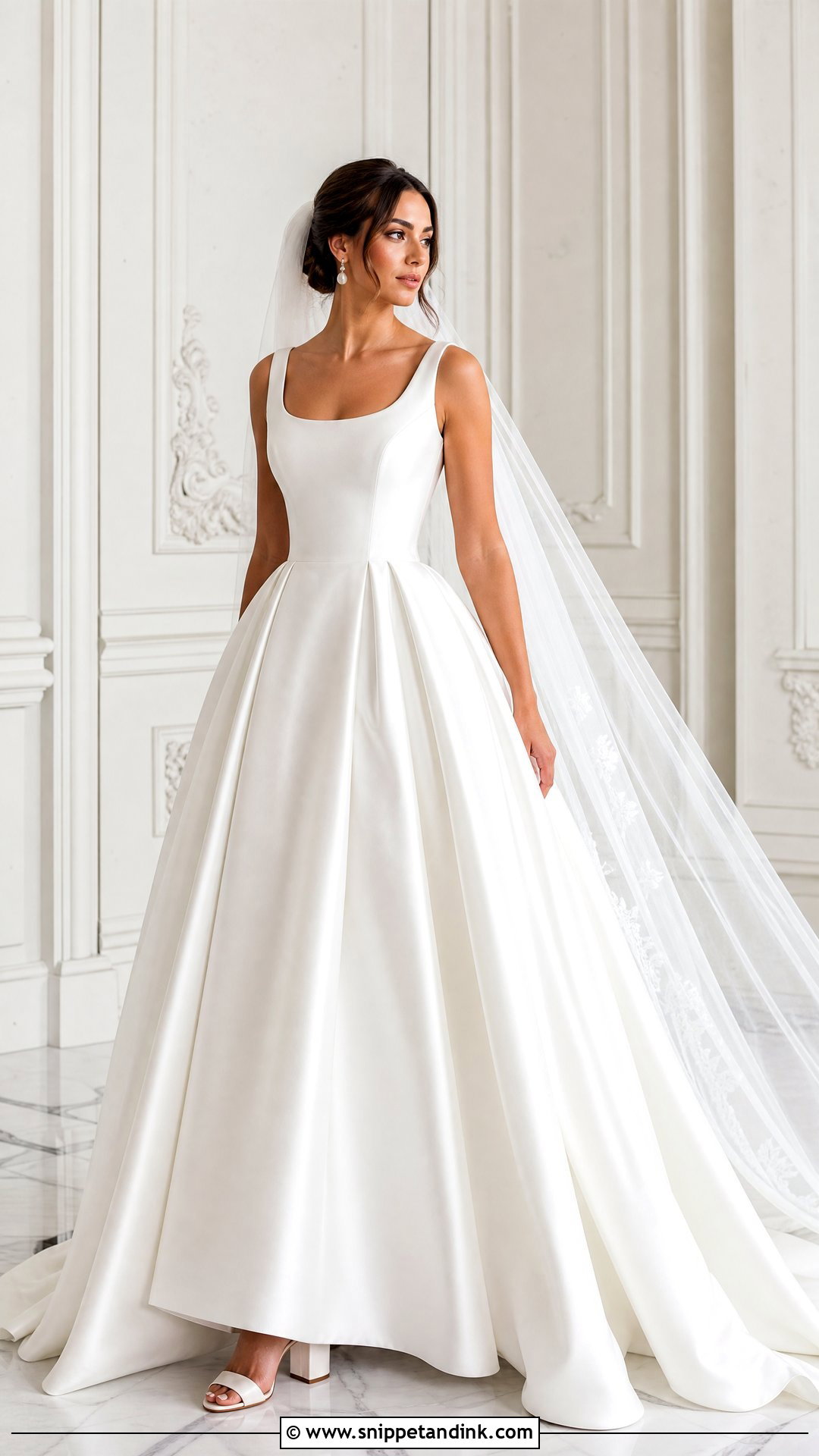
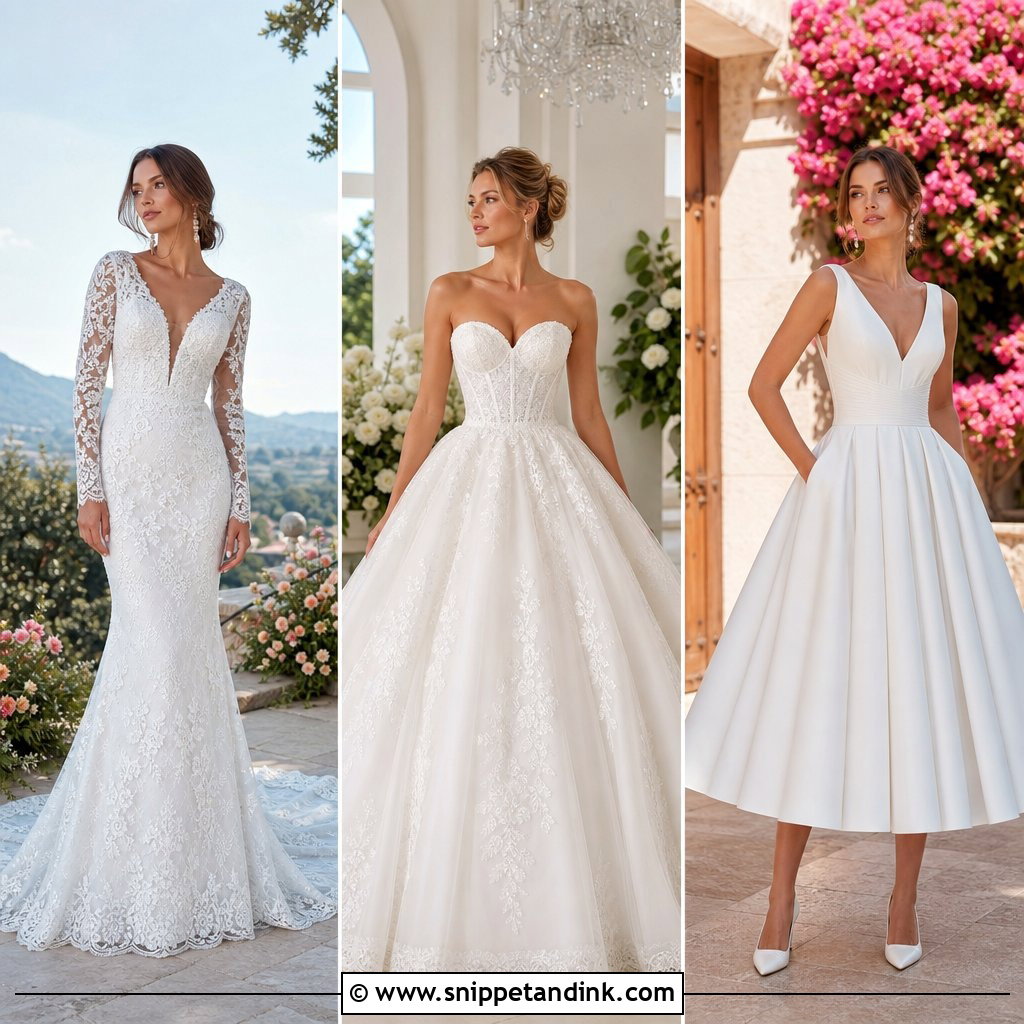
A scoop neck curves instead of cutting straight across, so it softens the shoulders where a bateau or straight neckline would widen them. Under a full ball gown skirt, the hips gain real volume and the waist looks smaller by contrast. Wide straps that sit comfortably on the shoulder are worth insisting on; thin ones slide outward and visually stretch the frame. Box pleats, layered tulle or structured satin each set a different mood. I keep the top quiet so the skirt does the talking: pearl earrings, a cathedral veil, satin block heels. It has the structure to hold a larger bust securely all day.
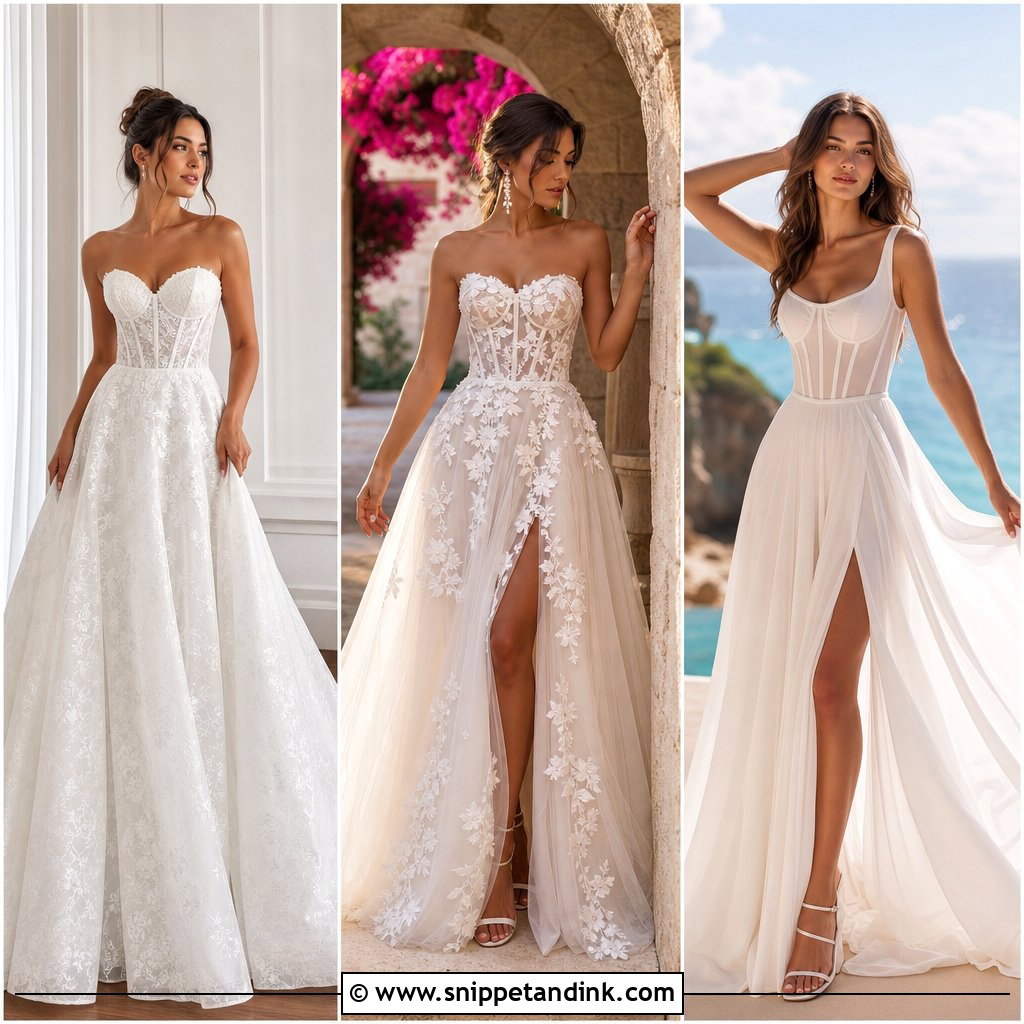
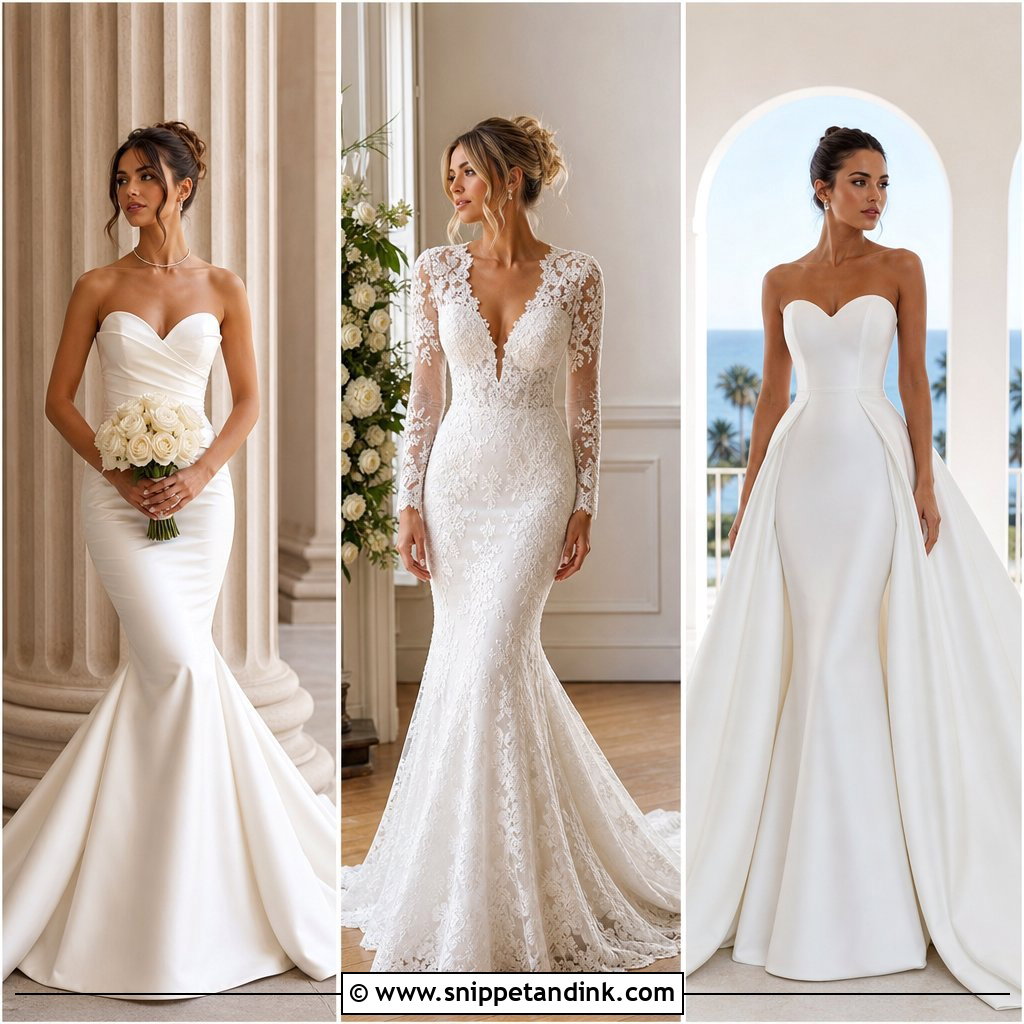
3. Sweetheart A-Line Wedding Dress
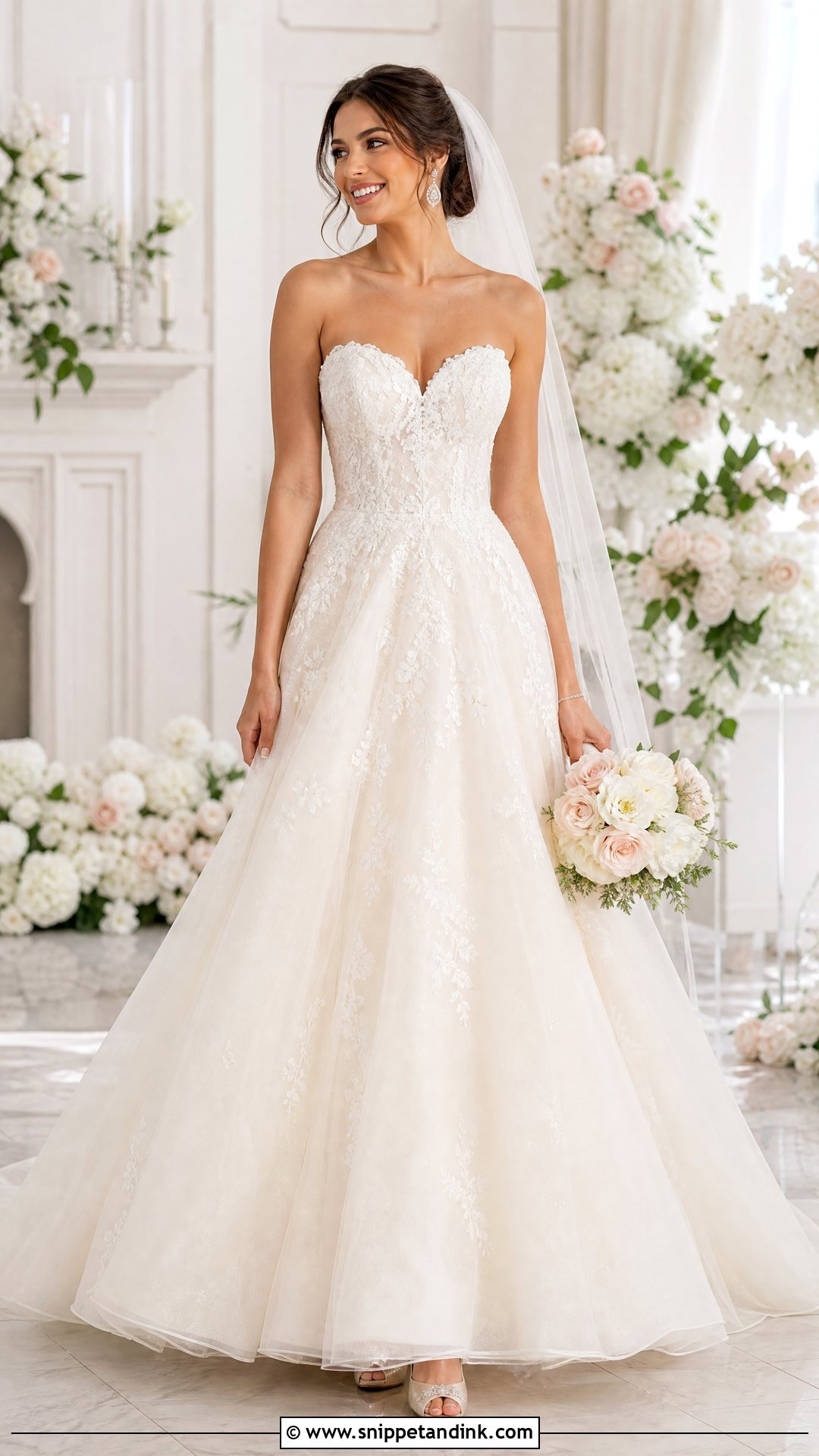
Width is the thing to watch with a sweetheart neckline. A wide, deeply curved sweetheart runs out toward the shoulder points and makes them look broader; a moderate one with a gentle dip keeps the focus on the collarbone. Below it, an A-line that starts at the natural waist, with clean corset seams in the bodice, pulls attention down. Satin feels modern, floral lace more romantic. I only add a sash if it’s part of the gown’s design rather than a contrasting band tied on later. A simple veil, drop earrings and low embellished heels complete it.
4. Wrap Bodice Wedding Dress
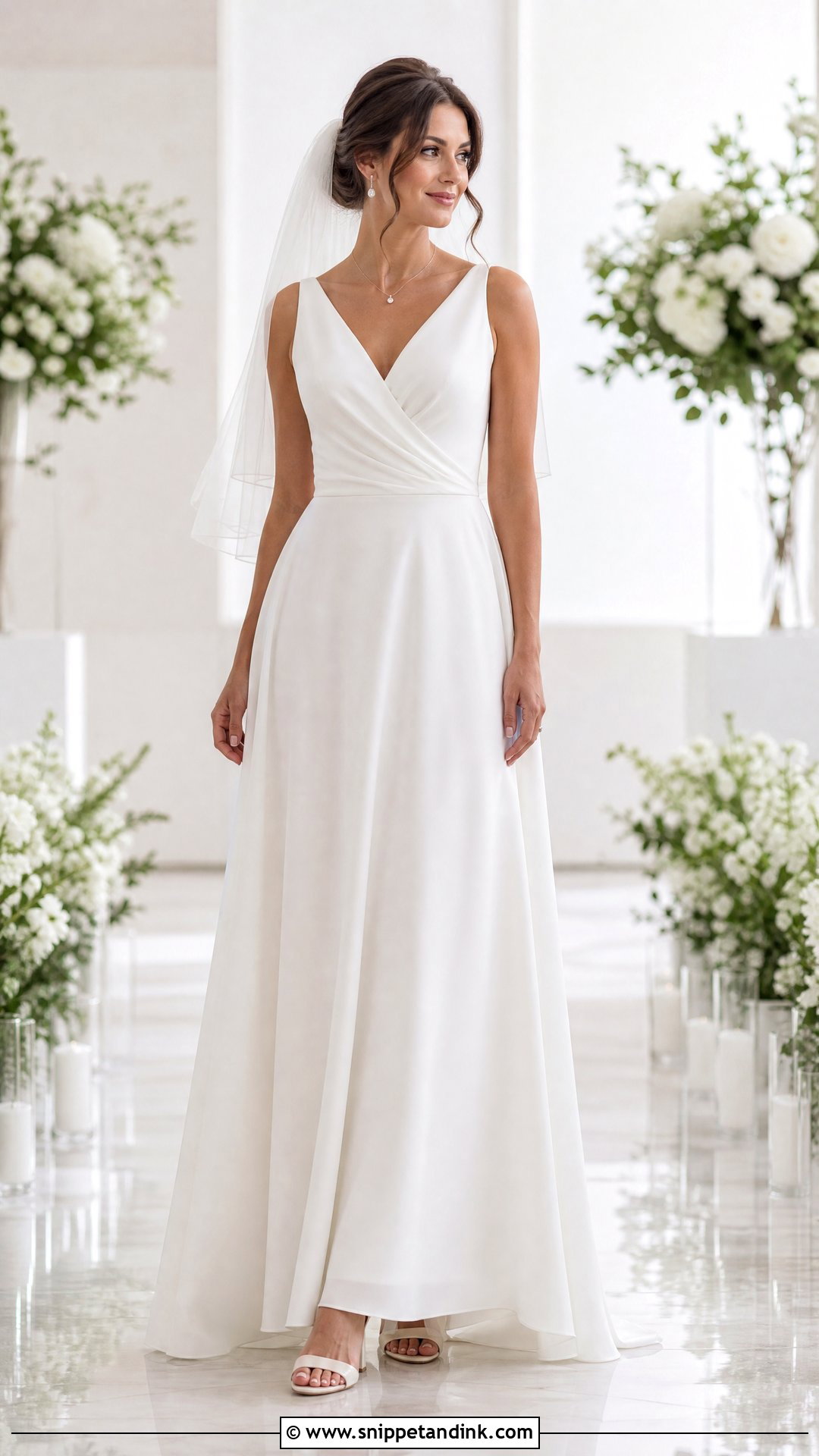
Diagonal lines are the inverted triangle bride’s best friend, and a wrap bodice is made of them. The crossover points inward toward the waist, and because it wraps, a seamstress can adjust the bust shaping more easily than on a seamed bodice. Pair it with a flowing A-line or a softly pleated skirt. Fabric matters: crepe, chiffon and silk blends drape; stiff taffeta in a wrap juts out at the shoulders. The risk is the neckline gaping when you lean forward, so have it secured at a fitting with a hidden snap. A slim pendant, a soft updo, an elbow-length veil and slingback heels keep the mood relaxed.
5. Pleated Skirt Wedding Dress
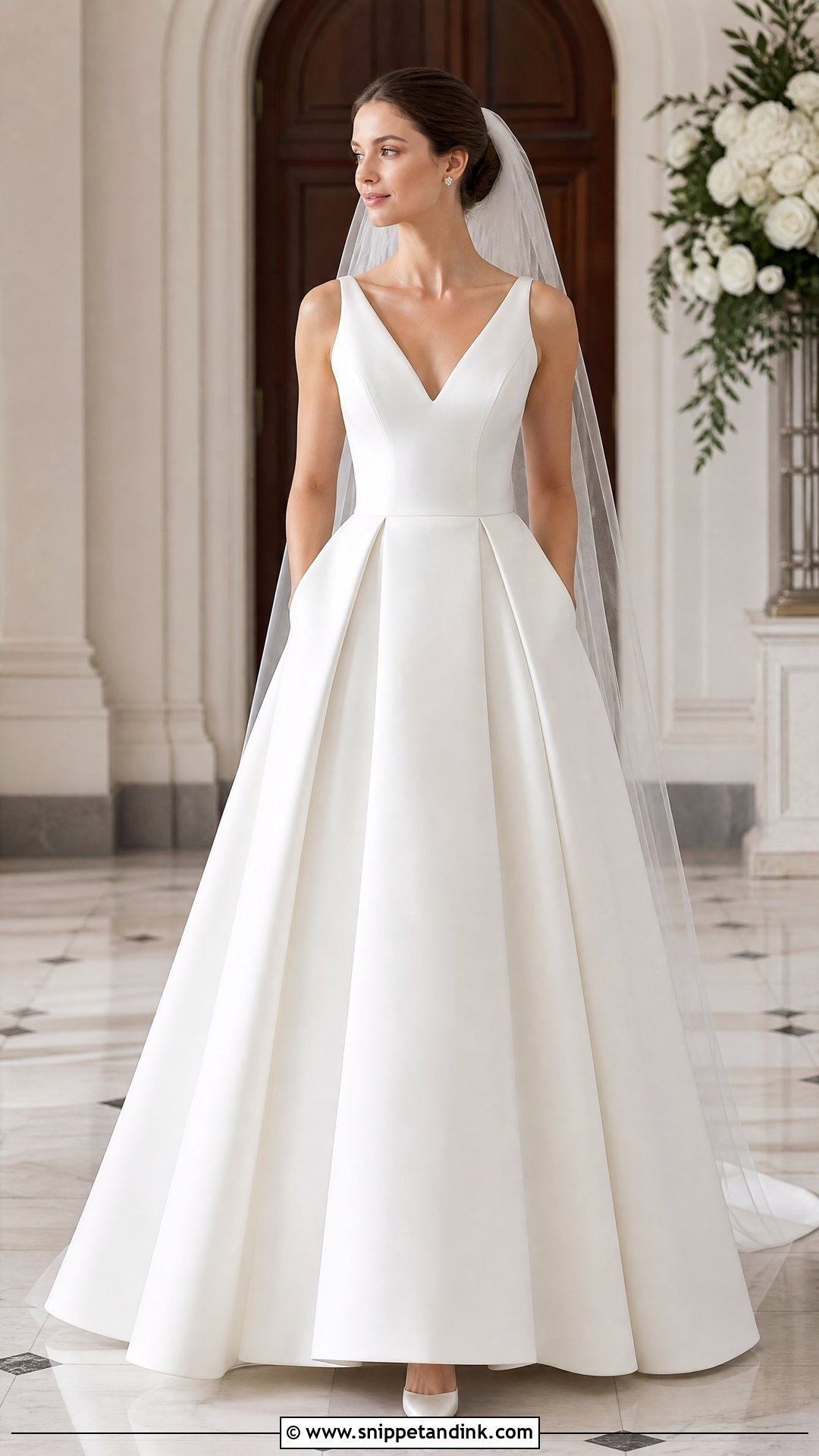
Pleats add width below the waist without layers of fabric, which is exactly what broader shoulders need. I check where they start. Pleats stitched down at the natural waist and opening over the hips give fullness without bulk at the stomach; pleats released at the waistband puff out everywhere. Pair them with a fitted, plain bodice and a V, scoop or narrow sweetheart. Mikado and structured satin hold sharp pleats, while chiffon gives softer folds. Pockets are a bonus. A chapel veil, small studs and pointed satin pumps finish a gown that feels formal yet lighter than a full ball gown.
6. Tiered Tulle Ball Gown Wedding Dress
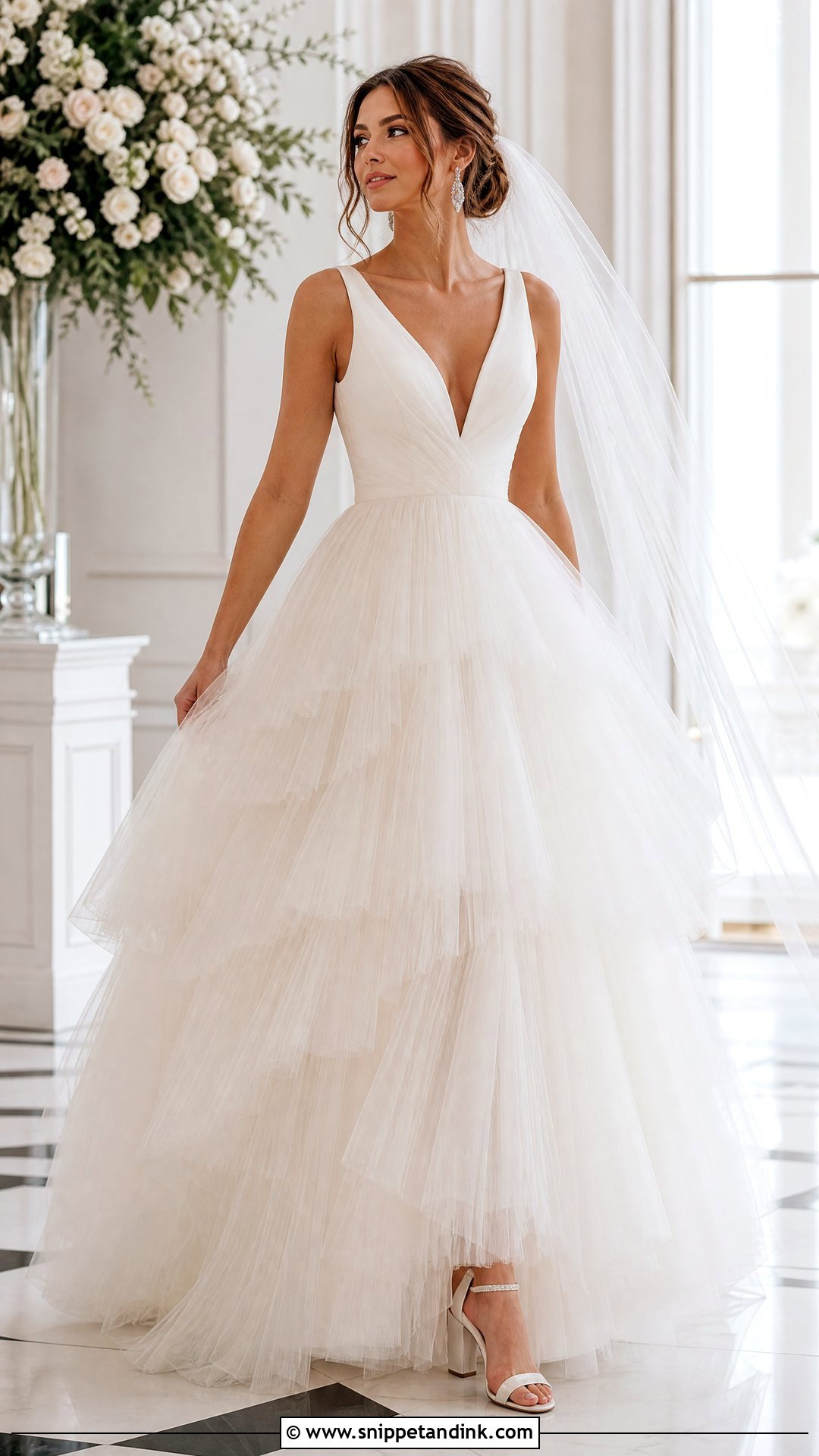
Tiers of tulle put movement and volume squarely in the lower half. The placement of the first tier decides whether it works: it should start at the waist or upper hip. A tier at bust level adds a horizontal line exactly where you have the most width already. Keep the bodice streamlined with wide straps or a clean V so it doesn’t compete. A simple tulle veil, crystal studs and stable block heels under the skirt are plenty, and a smooth bun keeps the head from looking busy above all those layers. It suits a grand indoor venue or an evening garden party.
7. Empire Waist Wedding Dress
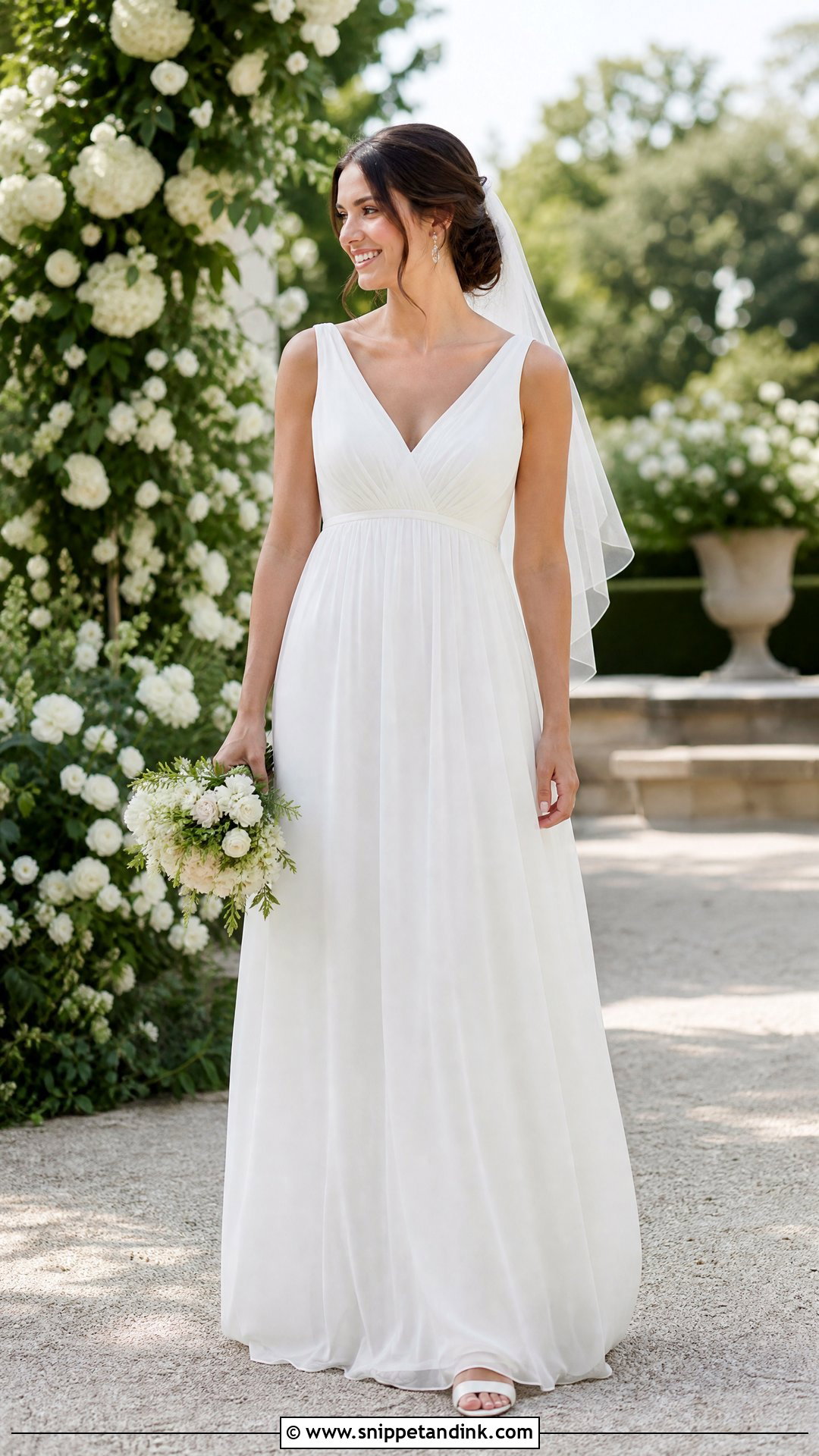
With the seam raised to just under the bust, an empire waist lengthens the legs and frees the stomach completely, which brides who dislike tight waistbands appreciate. The trap for an inverted triangle is a narrow column skirt that makes the top look heavier. Choose an empire gown with real width through the skirt. A modest V or soft scoop sits naturally with the high seam. Chiffon, georgette and light crepe drape well in warm weather. If you need bust support, look for boning, secure straps and fitted cups; soft fabric alone won’t hold you for a whole day. Drop earrings, low sandals and a light veil suit it.
8. Tea-Length Fit-and-Flare Wedding Dress
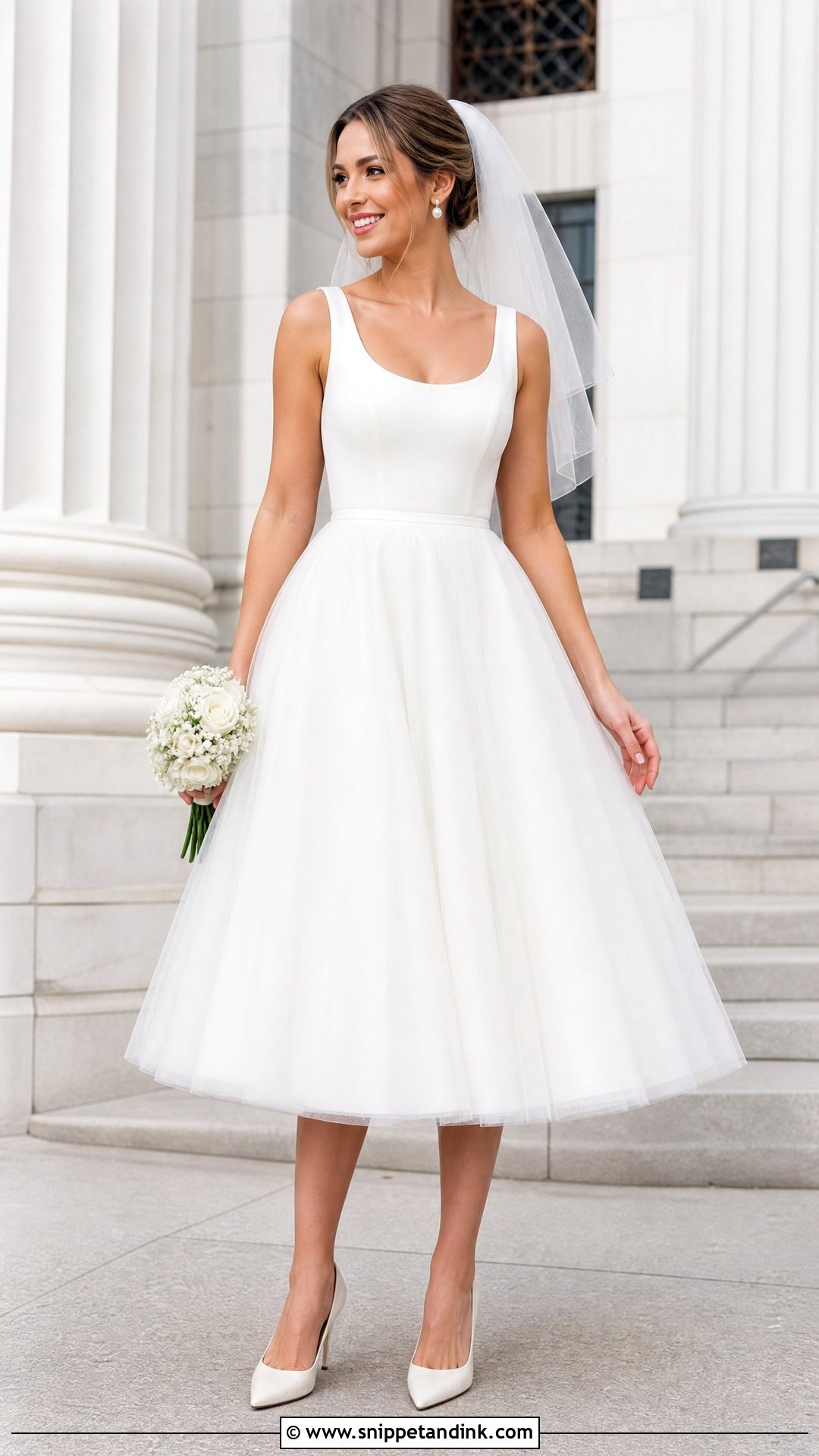
A tea-length fit-and-flare pulls the eye down to legs and shoes, which helps balance a strong upper body. The skirt needs its own volume: pleats, tulle layers or a circle cut. A V or narrow scoop keeps the top streamlined. I’d suggest this for courthouse weddings and daytime receptions where a floor-length gown feels like too much. For petite brides, keep the skirt volume modest and the waist seam exactly at your natural waist, or the proportions shorten quickly. Pointed pumps, a short veil, pearl earrings and a compact bouquet finish it.
9. Basque Waist Ball Gown Wedding Dress
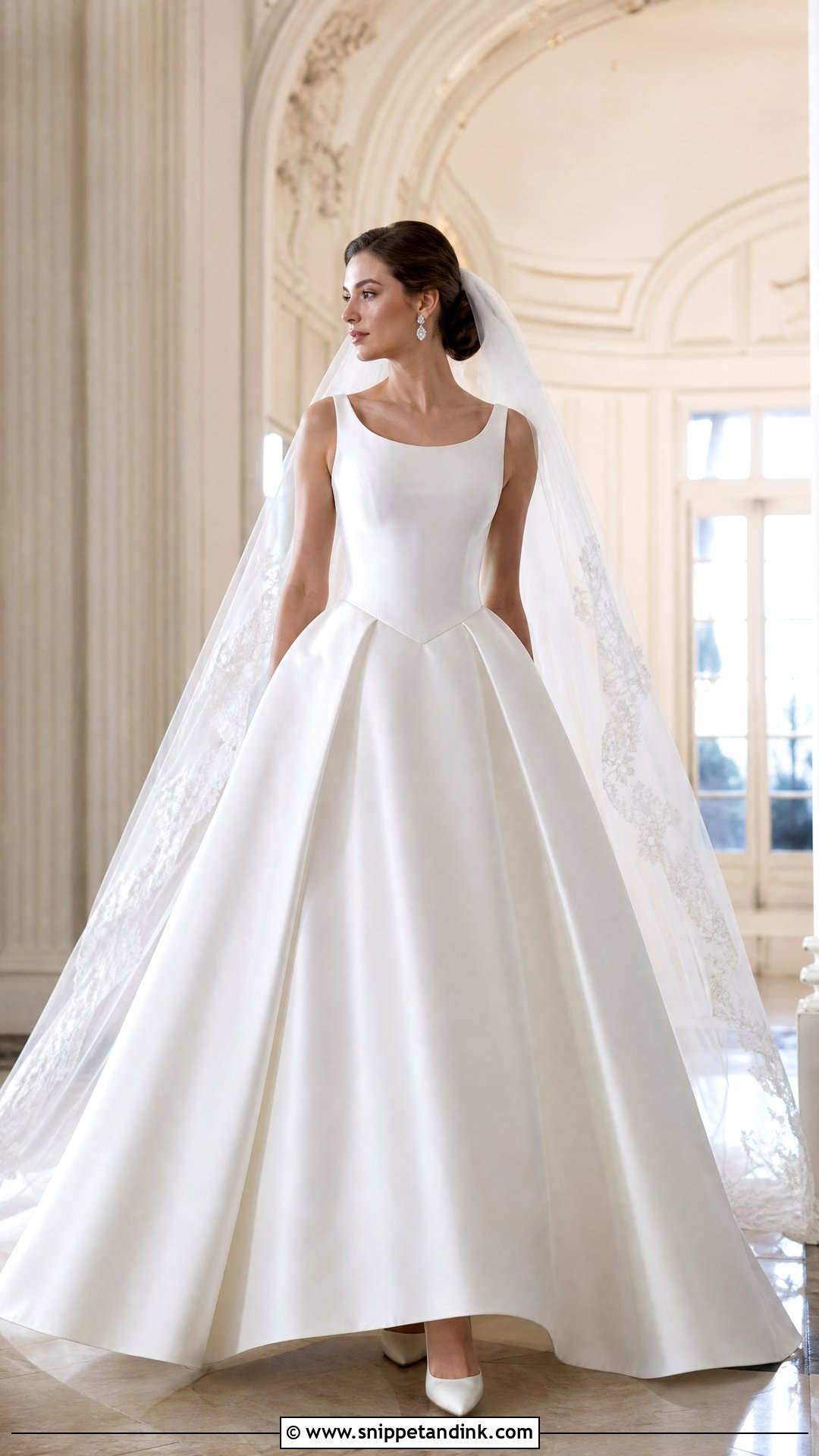
The center point of a Basque waist draws the eye inward and down, and paired with a full skirt it gives the lower half plenty of visual weight. Keep the neckline clean and the shoulders bare of detail. Satin, mikado or layered organza emphasize the sculpted waist and support a dramatic skirt. This is one seam I never let a bride buy off the rack without a fitting: if the point lands even an inch off your actual waist, the skirt bunches above the hip. Secure but not tight is the goal. A cathedral veil, simple earrings and classic pumps finish it.
10. Asymmetrical Neckline A-Line Wedding Dress
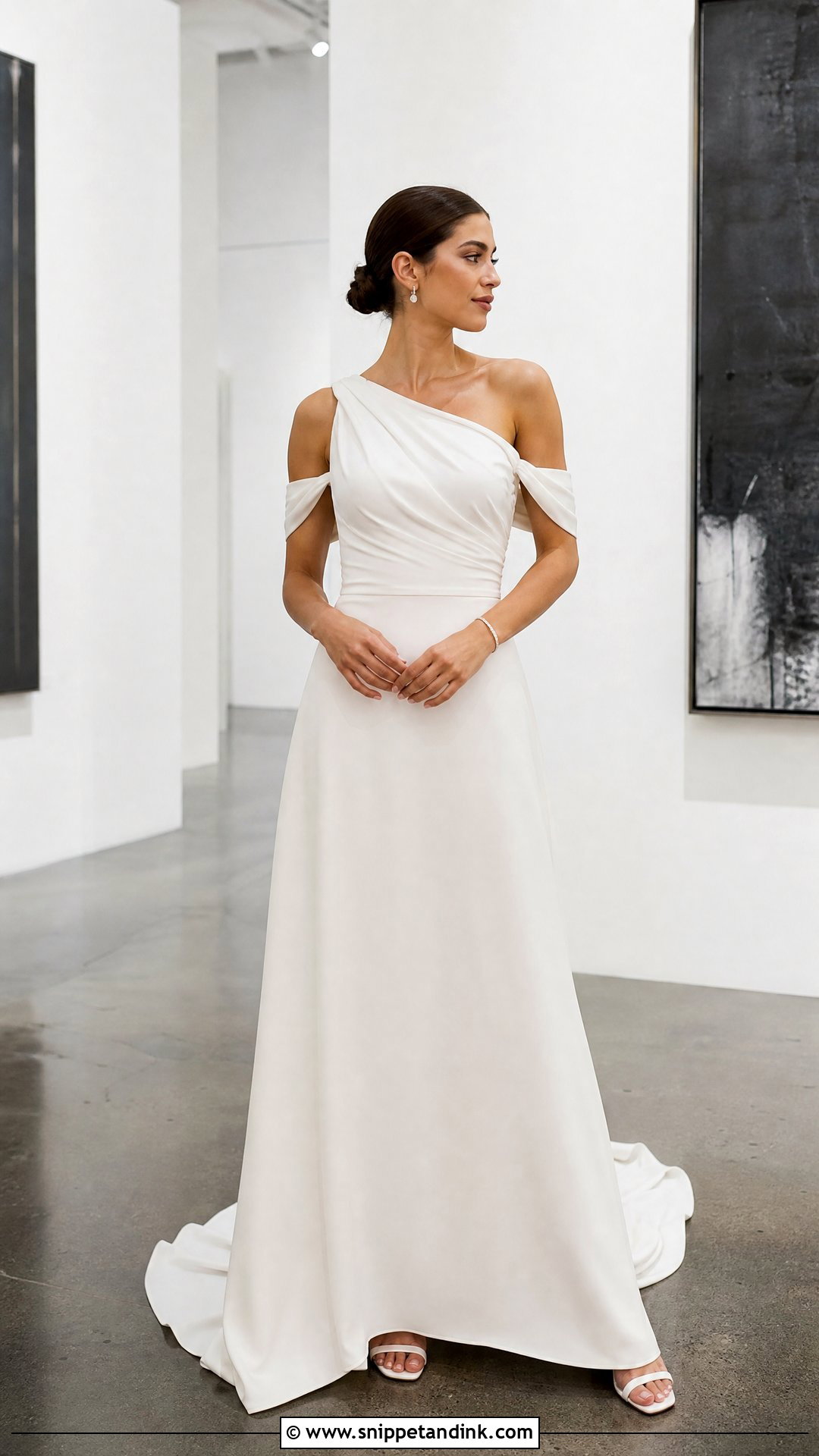
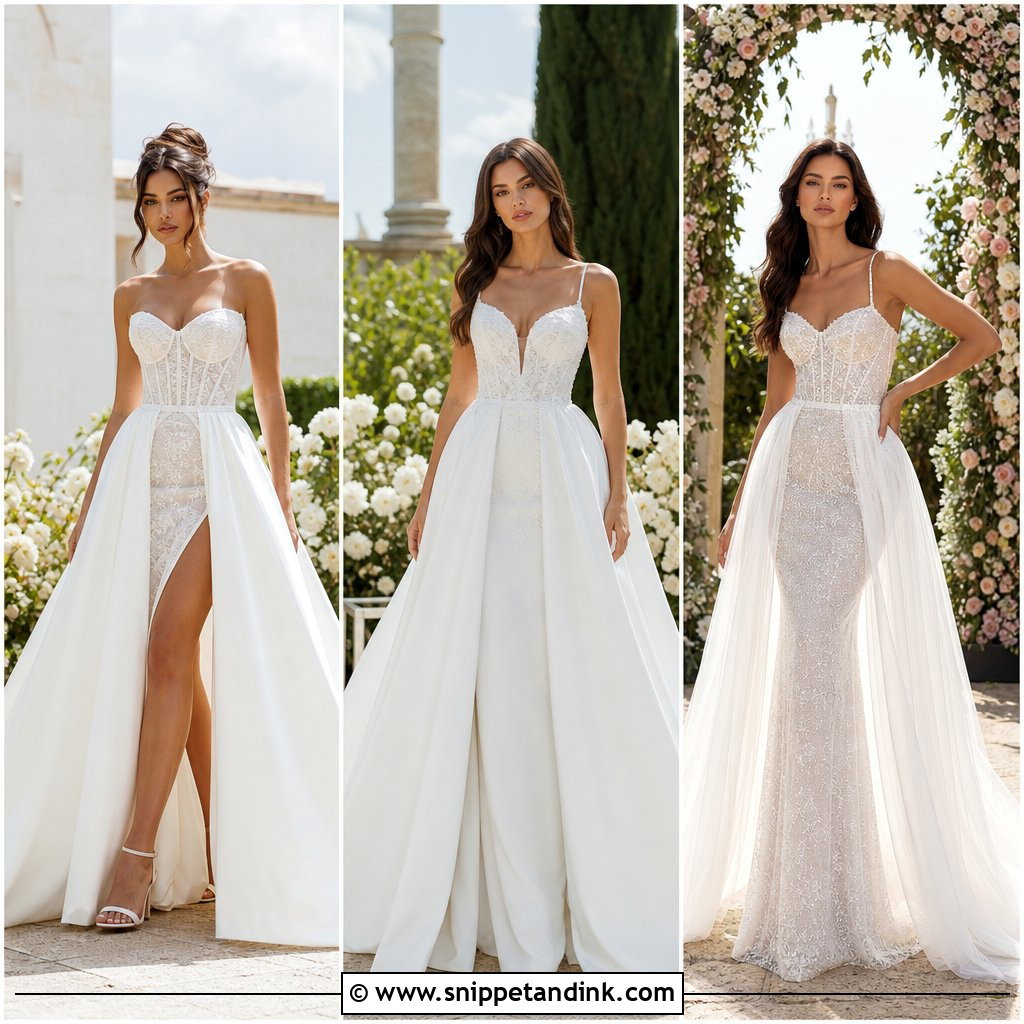
One bare shoulder breaks the width of the upper body into a diagonal, and it reads modern without any embellishment. Soft draping is the right detail; a big bow or flower on the shoulder adds exactly the bulk you’re trying to avoid. The A-line skirt, in crepe, satin, chiffon or organza, should widen enough below the waist to counterweight the top. Attach the veil at the back of the hair so it doesn’t tangle with the neckline. A sleek bun, small earrings, a fine bracelet and minimal heels suit a rooftop, gallery or modern indoor ceremony.
11. Wide-Strap Wedding Dress With Full Skirt
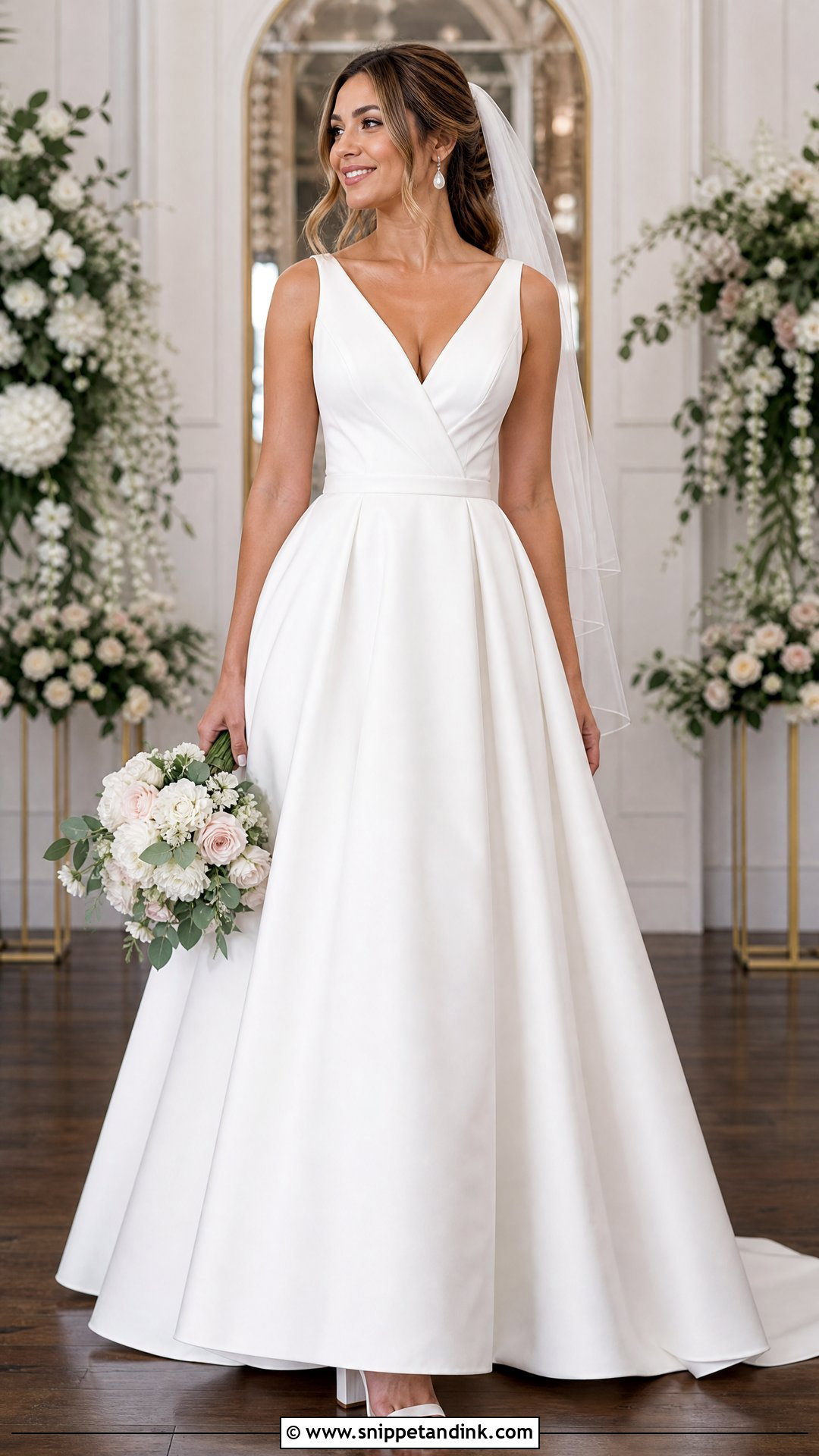
Strap placement changes how wide the shoulders look more than strap width does. I want straps sitting about midway between neck and shoulder point; set too far out, they frame the full width. On a broad-shouldered or fuller-busted bride, wider straps also carry support comfortably and hide bra-compatible alterations. Pair them with a V or scoop and a full A-line, smooth on top and pleated or layered below. Have strap length checked carefully: too short, and the neckline rides up and pulls under the arms. A medium veil, pearl drops and block-heel pumps complete it.
12. Long-Sleeve V-Neck Wedding Dress
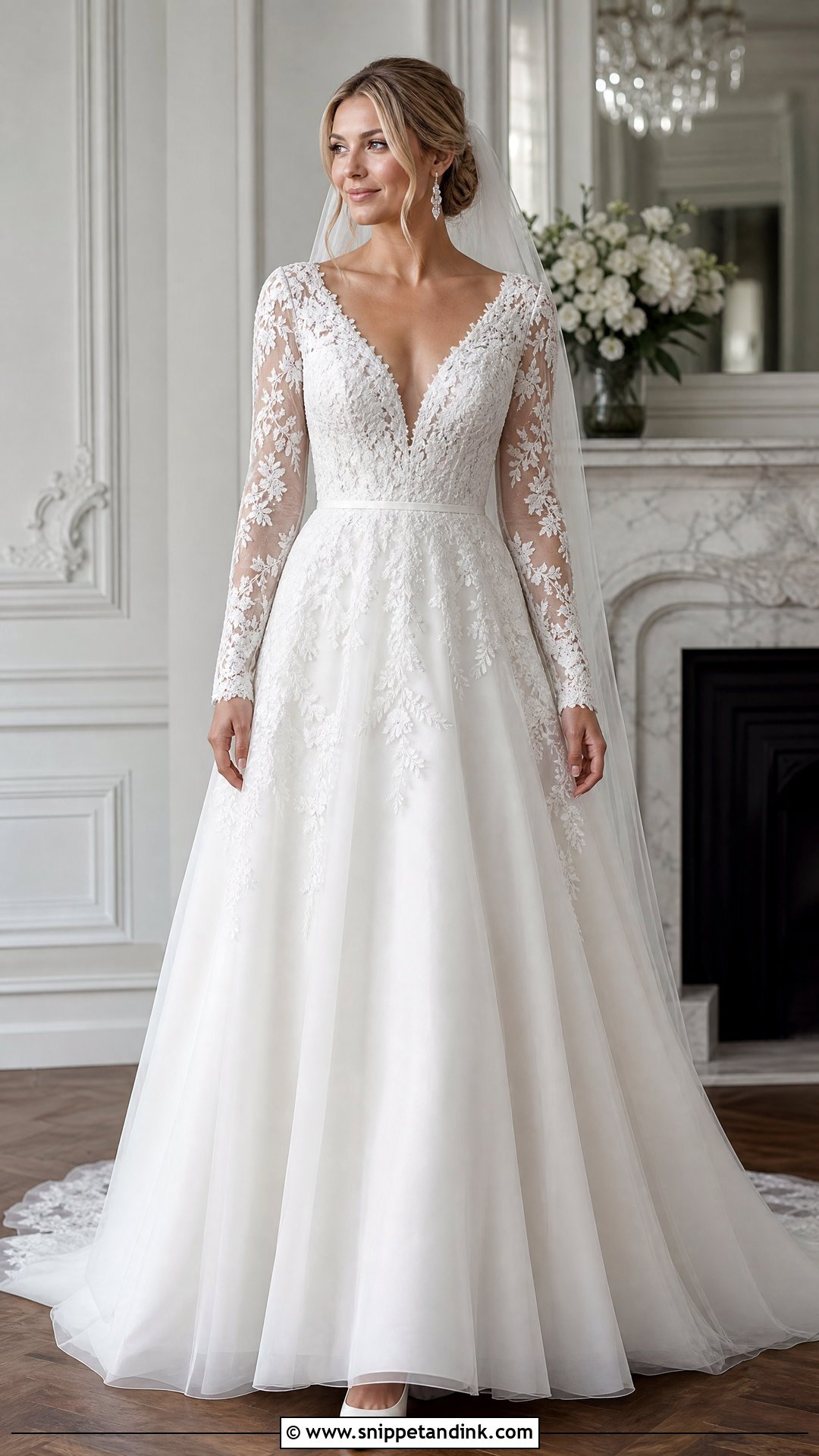
Sleeves can work on an inverted triangle, as long as they’re narrow and soft through the shoulder. A pronounced shoulder cap, a stiff puff or dense appliqués at the upper arm all add width. Sheer lace sleeves give romantic texture; fitted crepe sleeves look minimal. Keep the V-neck open and the A-line skirt full enough to balance. Test the sleeves by reaching forward and wrapping your arms around someone, since lace set too tight at the armhole restricts every hug. A low chignon, drop earrings, a simple veil and closed pumps suit cooler weather and formal rooms.
13. Flutter-Sleeve A-Line Wedding Dress
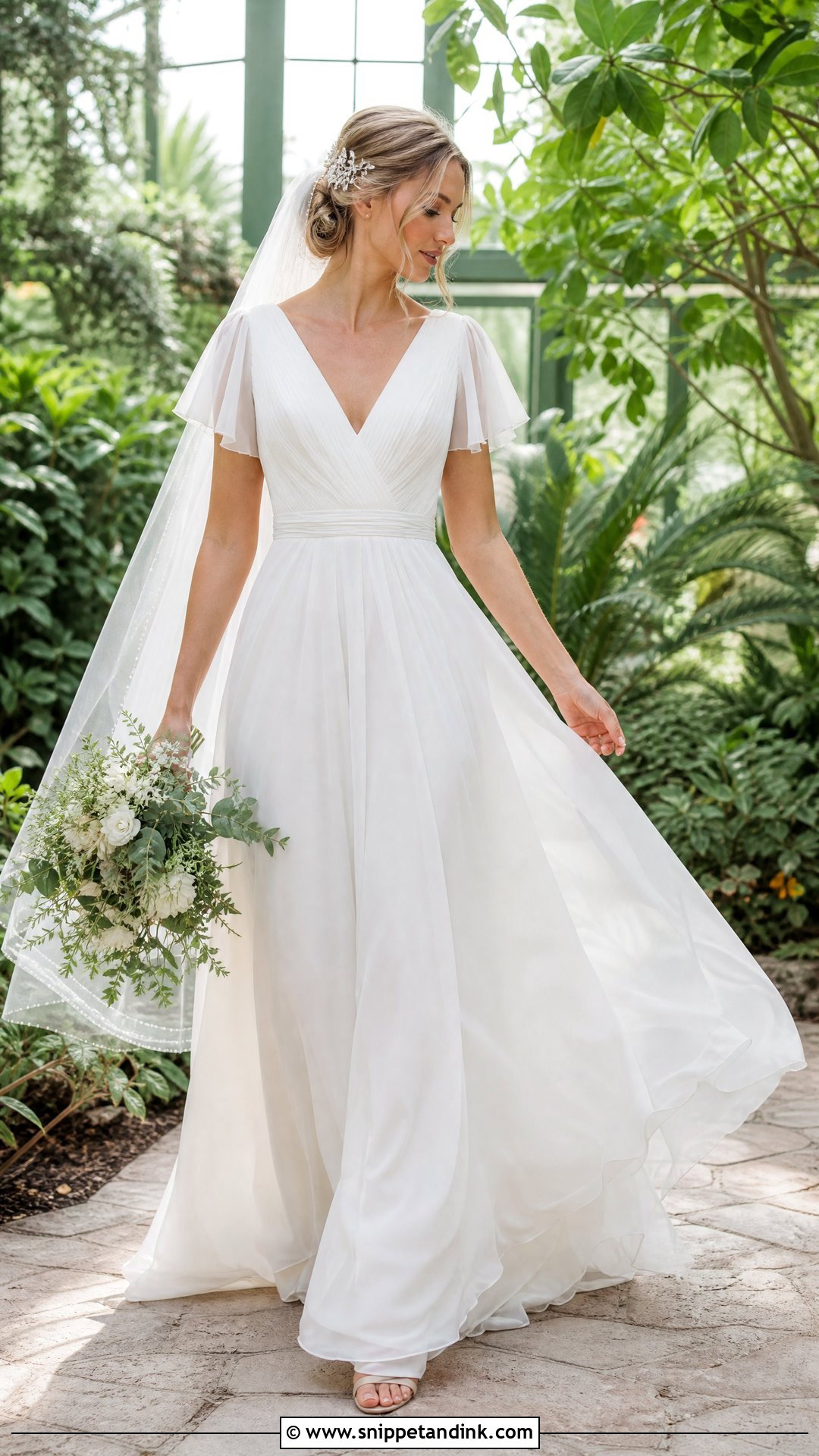
Flutter sleeves either float or flare, and the difference is the fabric. Fine chiffon or tulle falls away from the arm; stiff layers stand out and broaden the shoulder line. Choose the soft kind, paired with a V-neck and a flowing A-line so the whole gown keeps a downward direction. A defined natural waist stops all that soft fabric from swallowing your shape. Put any lace or beading at the waist or skirt, never on the sleeve edges. Delicate earrings, a fine hair comb, simple sandals and a fingertip veil suit garden, coastal and warm-weather weddings.
14. Corset A-Line Wedding Dress
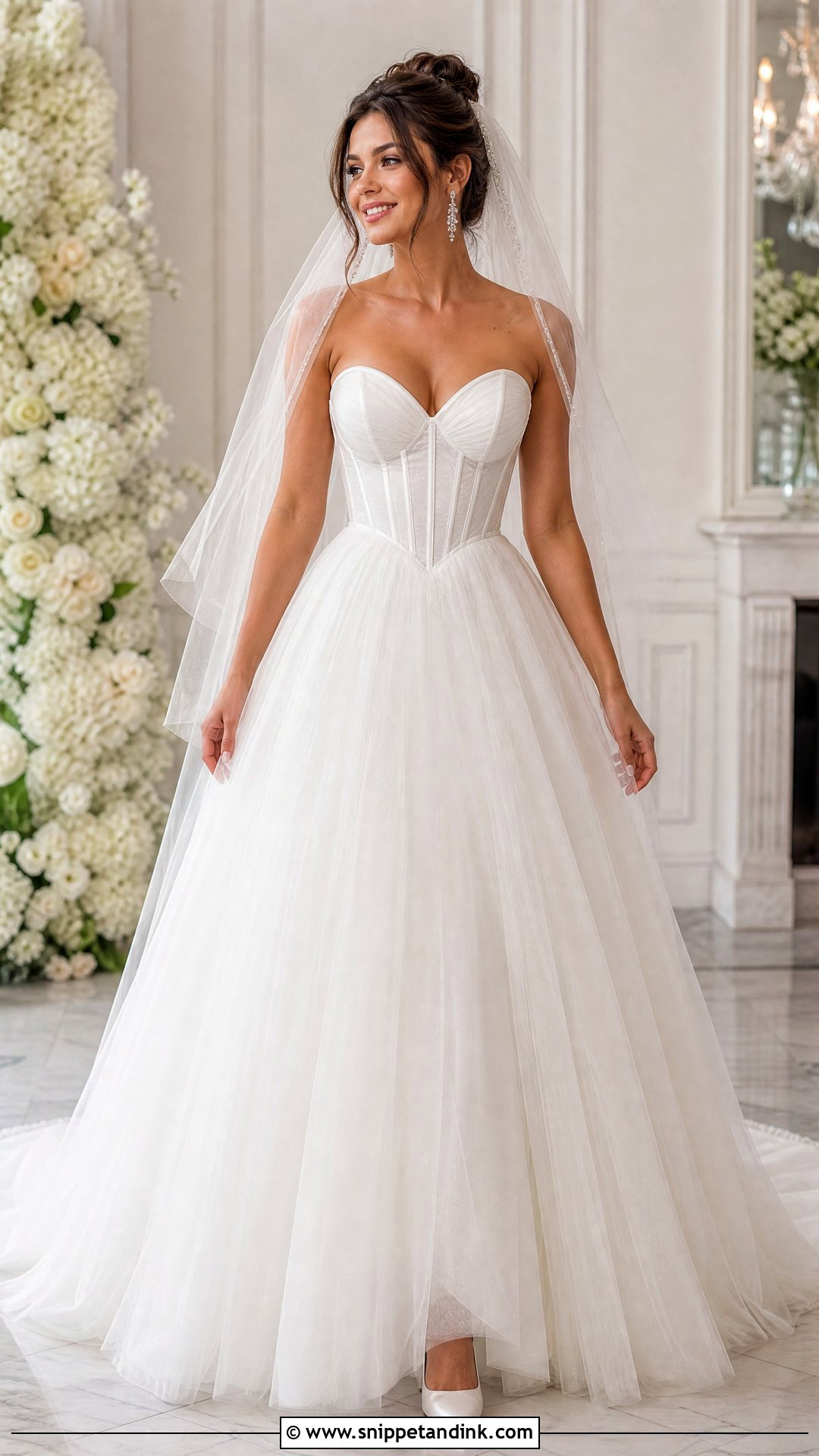
A corset bodice gives a strong frame real support, and it pulls the waist in so a generous A-line can flare out. Look for vertical boning, a moderate sweetheart or V and cups that fit rather than push the bust high, which would only add volume up top. Smooth shaping, not compression. Pleats, tulle layers or appliqués near the hips strengthen the balance. If the corset lines show, keep them plain rather than decorated across the shoulders. Sit, bend and breathe deeply at each alteration. A sheer veil, small crystal earrings and satin pumps finish it.
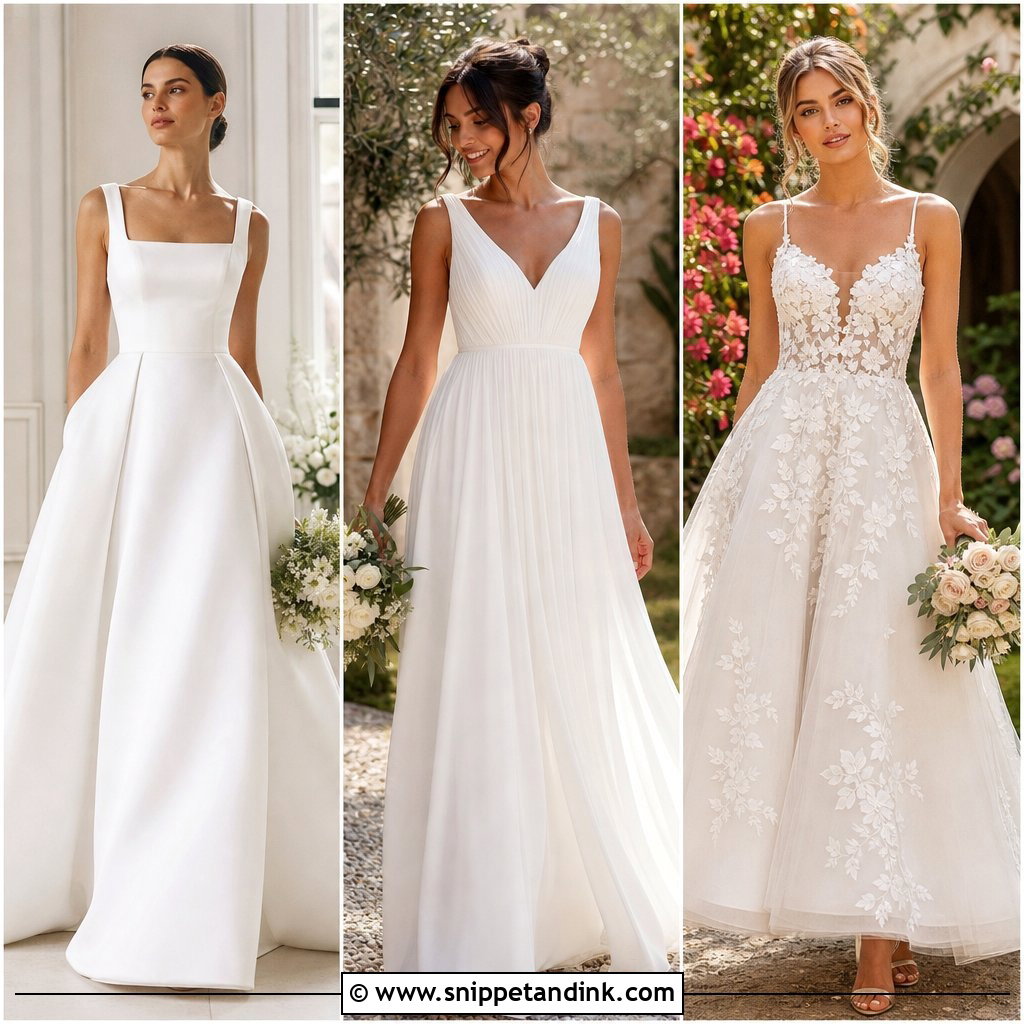
15. Lace Bodice Chiffon A-Line Wedding Dress
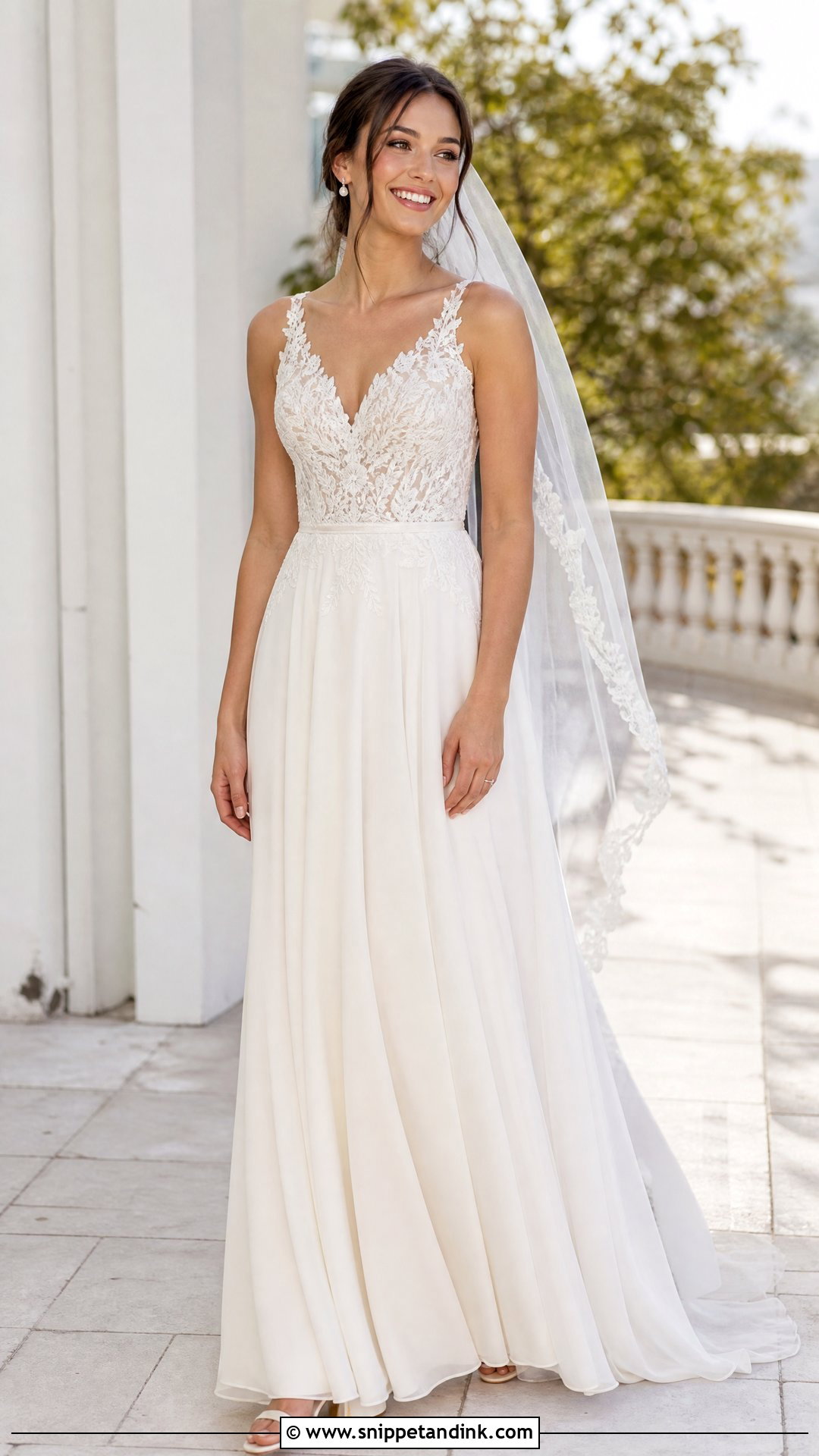
A fitted lace bodice over a floating chiffon skirt works when the lace pattern runs vertically and stays inside the shoulder line. Dense appliqués that spread to the outer shoulders widen everything. Choose a V or narrow scoop. The chiffon below has to be generous, either several layers or a wide A-line, because chiffon cut narrow just hangs against the legs and leaves the top looking heavy. A subtle waistband clarifies where texture meets drape. Check that the lining suits your coverage and your undergarments. A lace-edged veil, pearl earrings and low block heels suit an outdoor ceremony.
16. Satin V-Neck Ball Gown Wedding Dress
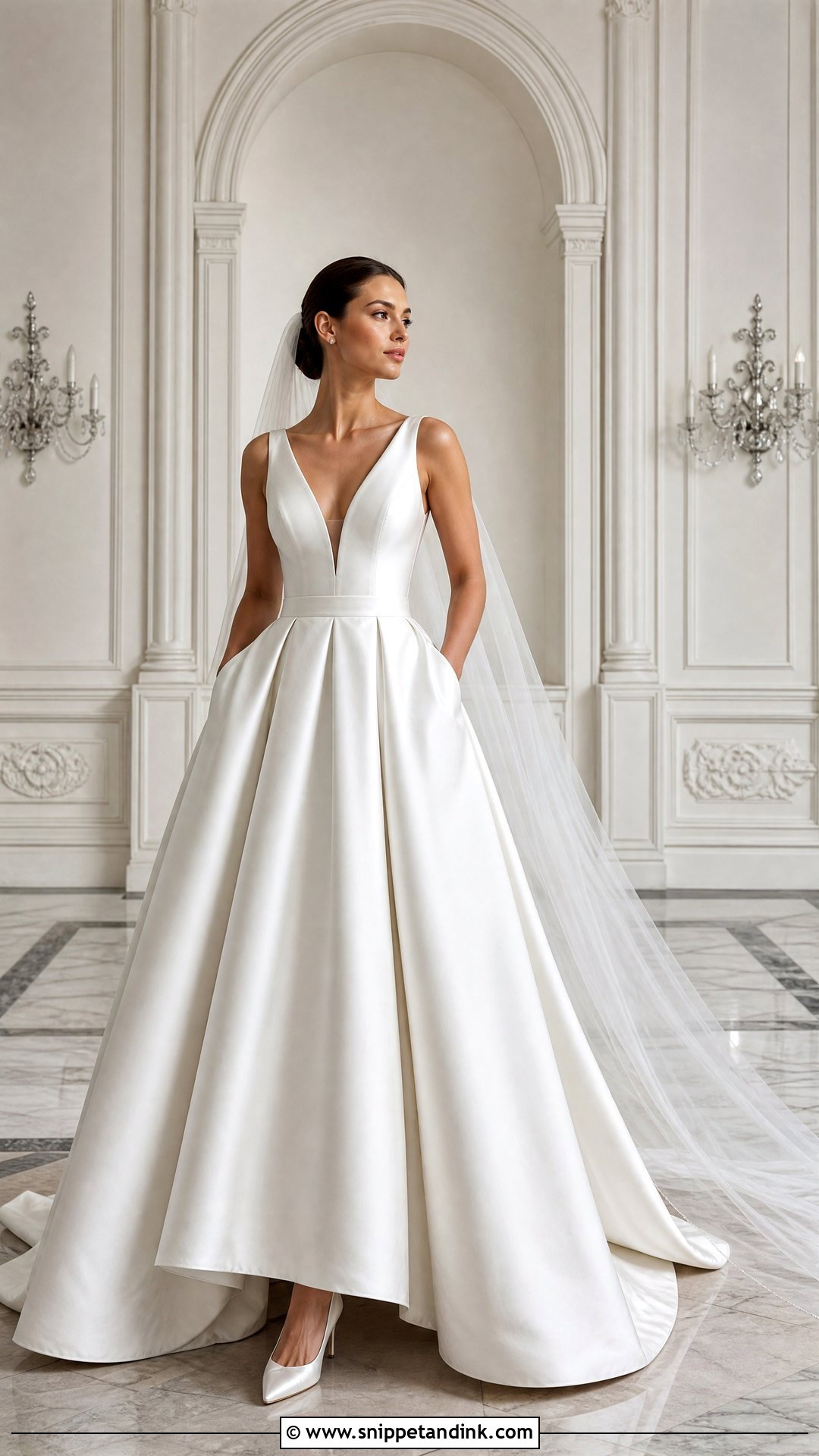
Plain satin makes a ball gown look luminous and clean, with the V-neck as the single focal point and a full skirt balancing broad shoulders below. Princess seams or light boning define the torso without bulk. Box pleats and hidden pockets give the skirt structure. Satin shows every pull, so I check fit in three positions: standing, seated and mid-stride. Any diagonal creases from the bust to the waist mean the bodice needs adjusting. Pointed pumps, a long plain veil, pearl or diamond studs and a polished bun keep it formal and minimal.
17. Organza A-Line Wedding Dress With Pockets
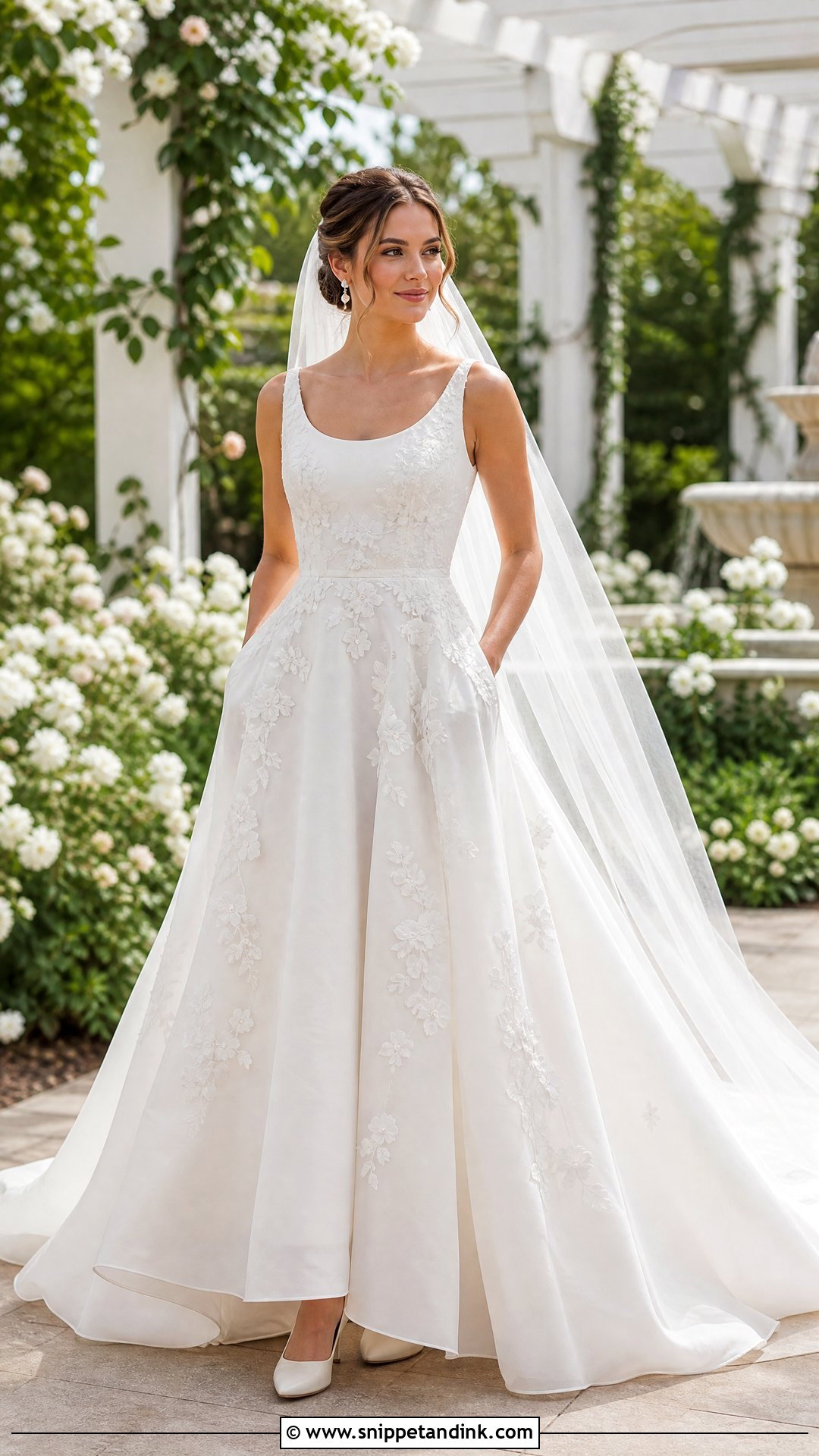
Organza builds volume without looking heavy, so an organza A-line widens the lower half and still feels light. Keep the bodice simple, a V, scoop or soft curve, and let the skirt carry the decoration. Appliqués that start at the waist and scatter downward draw the eye toward the hips and hem, which is exactly the direction you want. Pockets give your hands somewhere natural to rest in photographs. Organza is slightly sheer, so look at the lining in daylight and make sure it covers fully while leaving the outer layers free to move. A chapel veil, small earrings and cushioned heels suit it.
18. Peplum Wedding Dress With A-Line Skirt
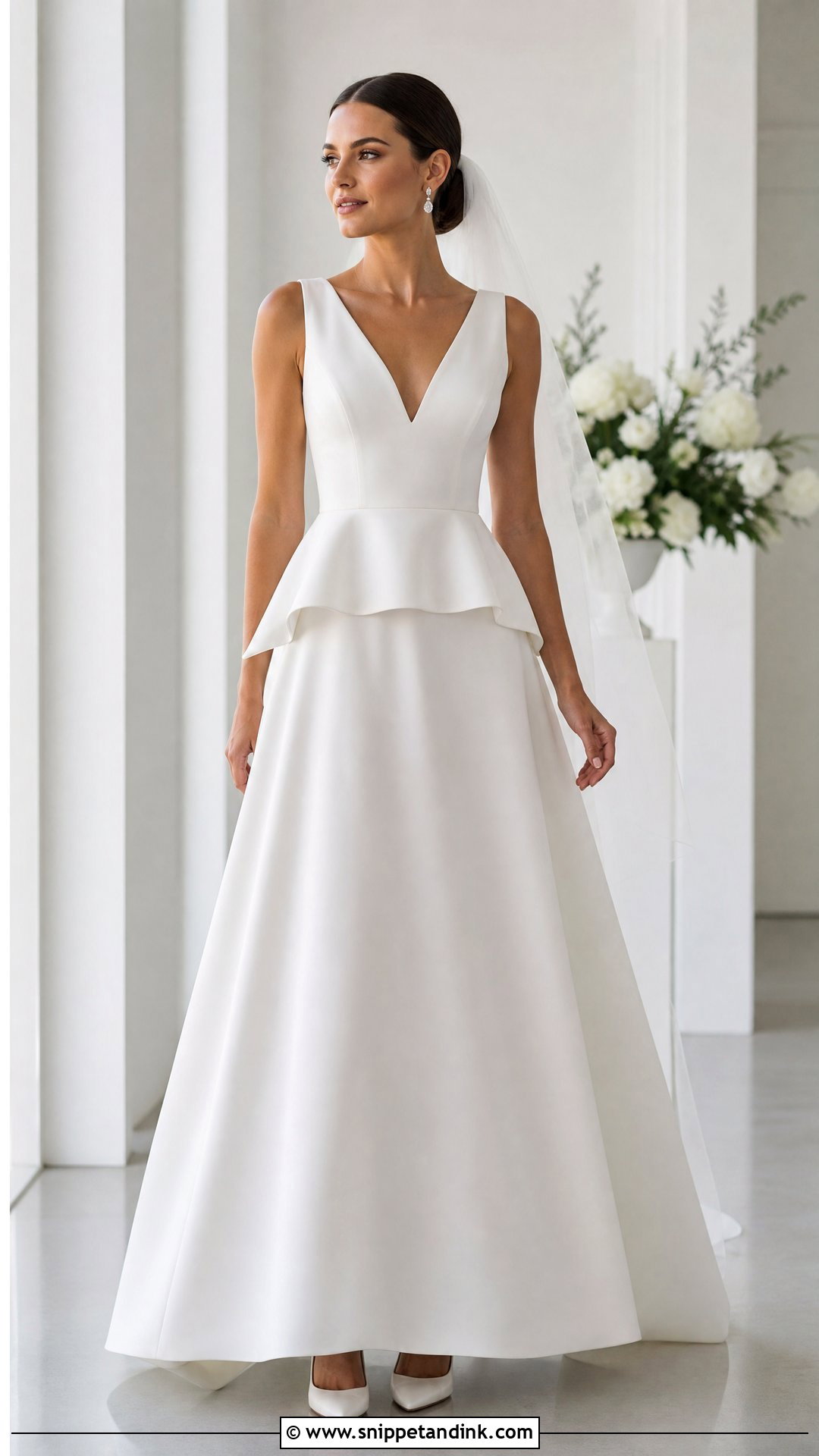
A subtle peplum adds dimension right at the waist and upper hip, the very spot an inverted triangle needs it. Choose a soft peplum integrated into the seams; a stiff shelf of fabric looks like an add-on and can widen the waist itself. It should flow into an A-line under a clean V or scoop bodice. Crepe, satin and lightweight mikado hold the shape. No ruffles at the neck or shoulders, so the peplum stays the one detail. In the fitting, look at yourself from the side as well as the front; where the flare starts matters more there. A simple veil, drop earrings, pointed pumps and a sleek hairstyle finish it.
19. Drop-Waist Ball Gown Wedding Dress
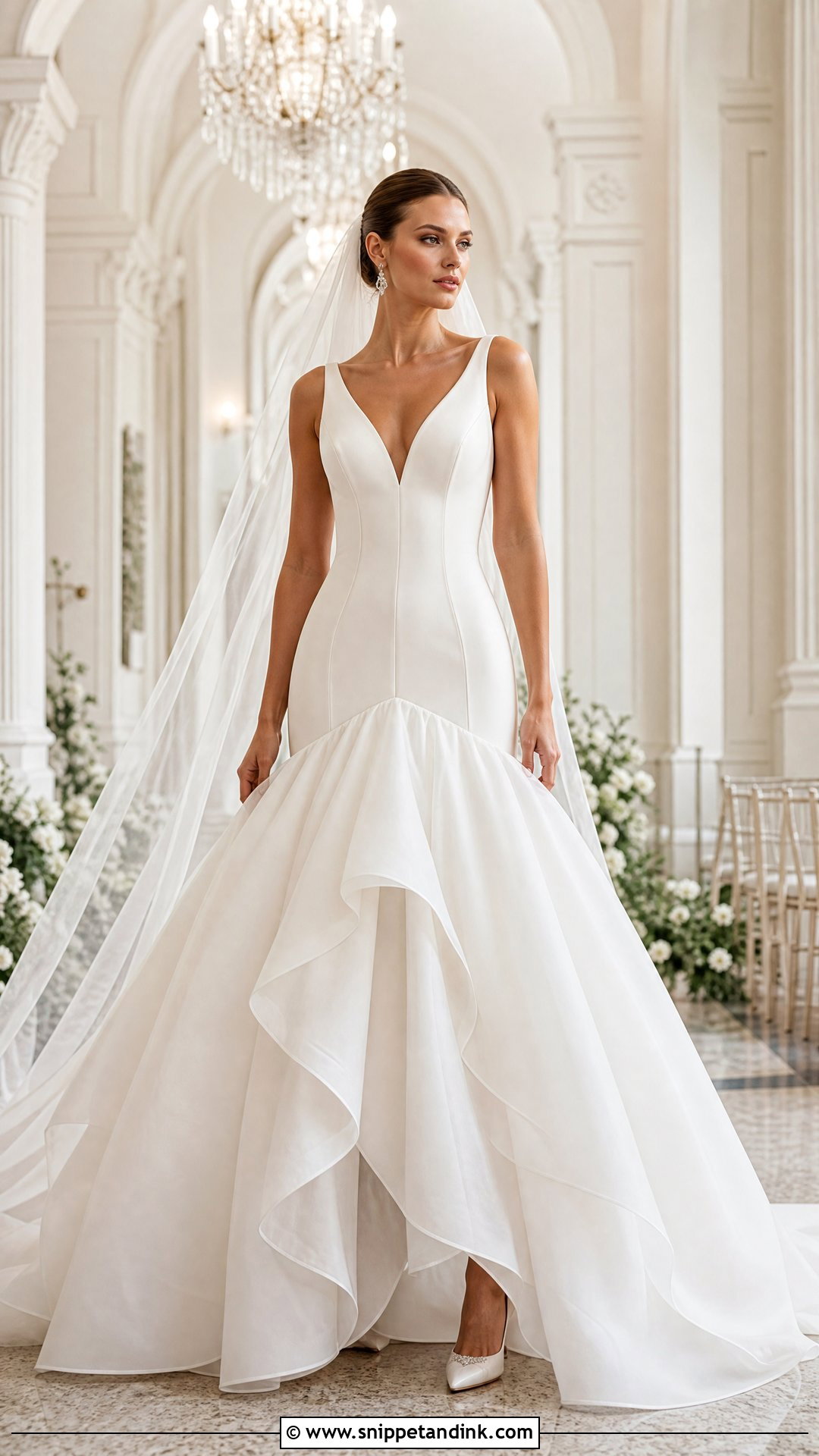
The drop waist runs the bodice past your natural waist, then the skirt bursts out near the hip. That puts volume where an inverted triangle wants it, with a long sculpted torso above. It is also the riskiest cut here for petite brides, because a skirt that starts too low shortens the legs. Try more than one drop position before ordering. A soft V or narrow scoop keeps the top streamlined. Use a smooth bodice with vertical seams and save the tulle, organza or satin for the skirt. A long veil, refined earrings and simple heels finish it.
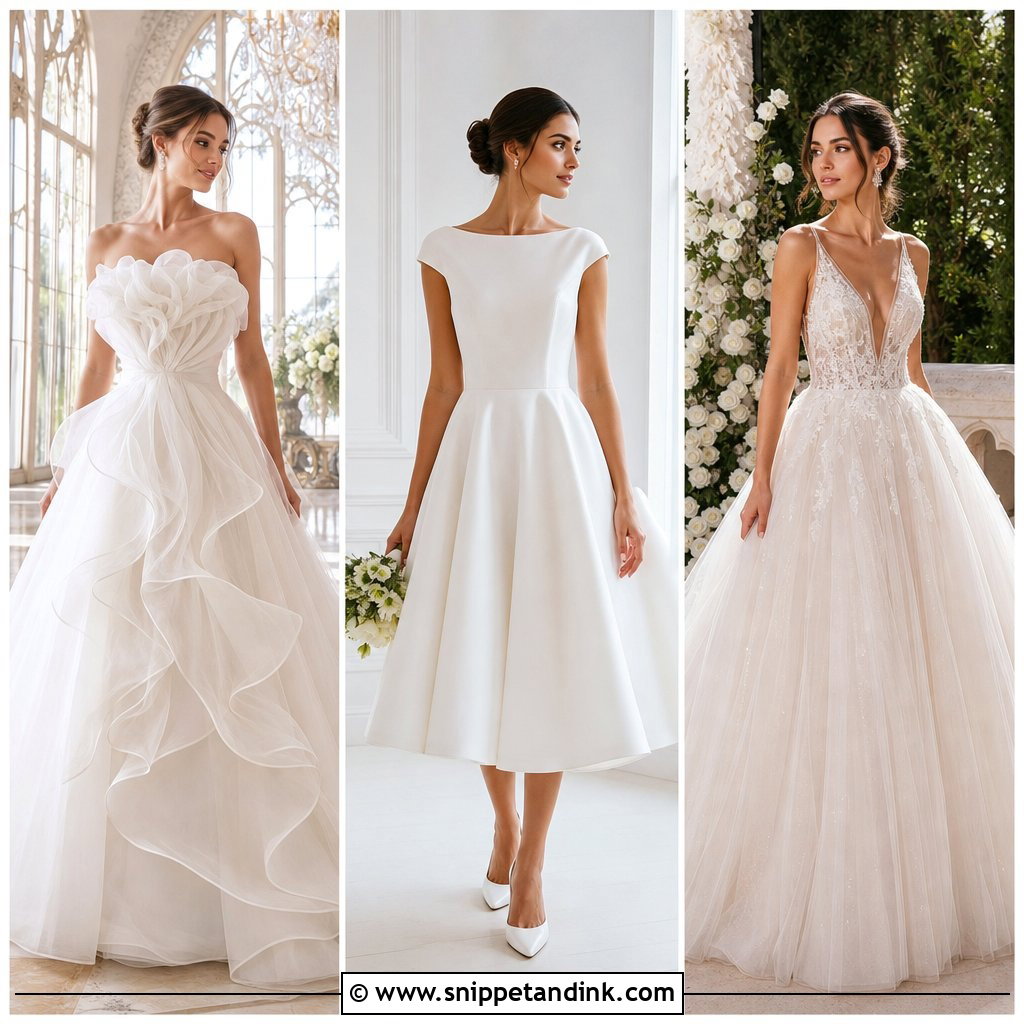
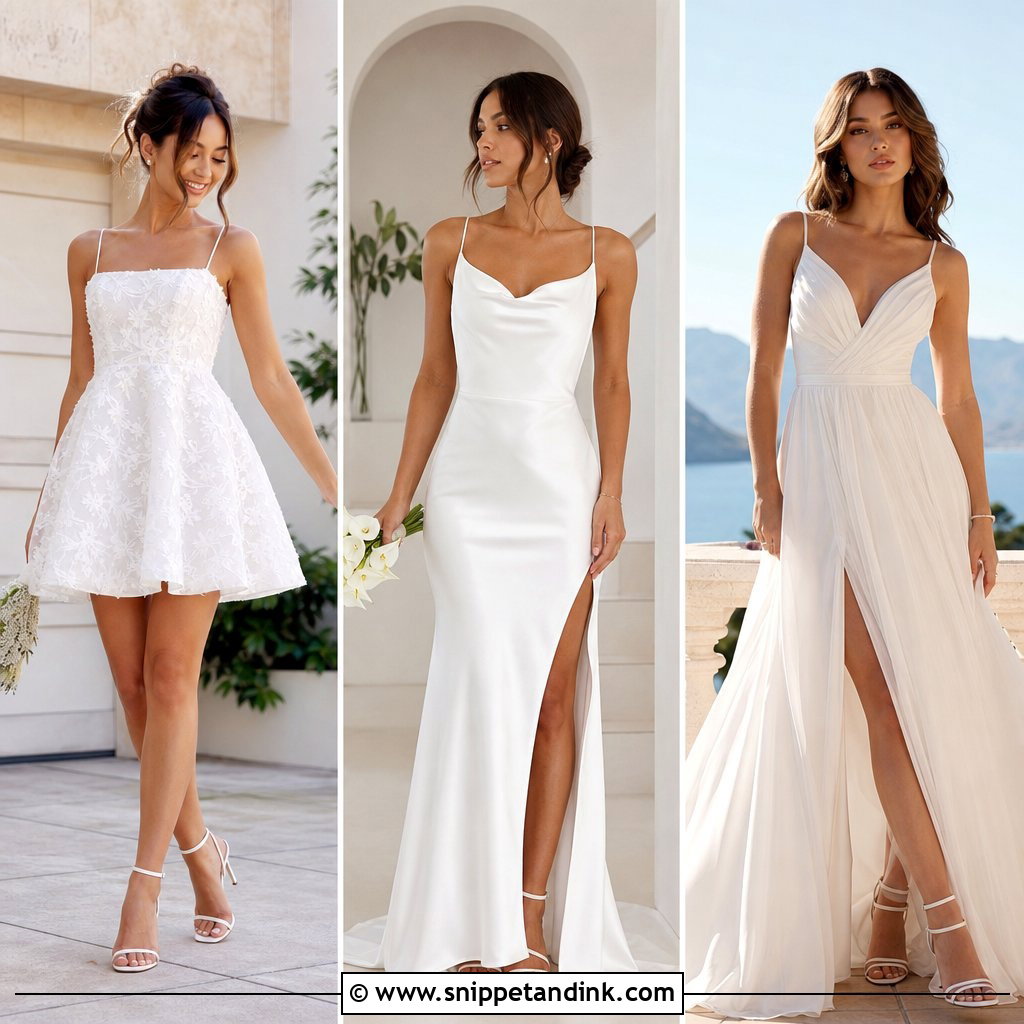
20. Cowl-Neck A-Line Wedding Dress
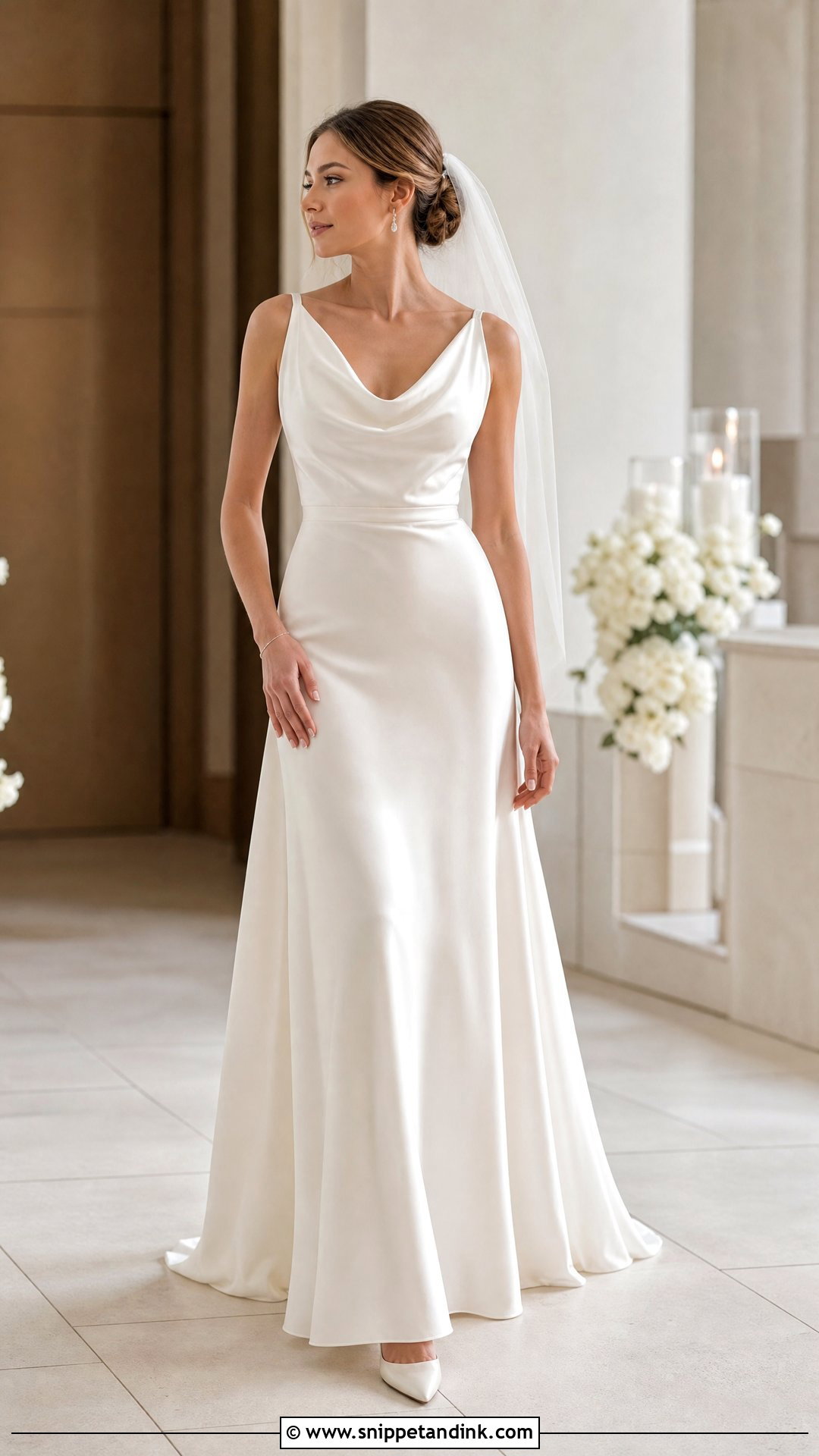
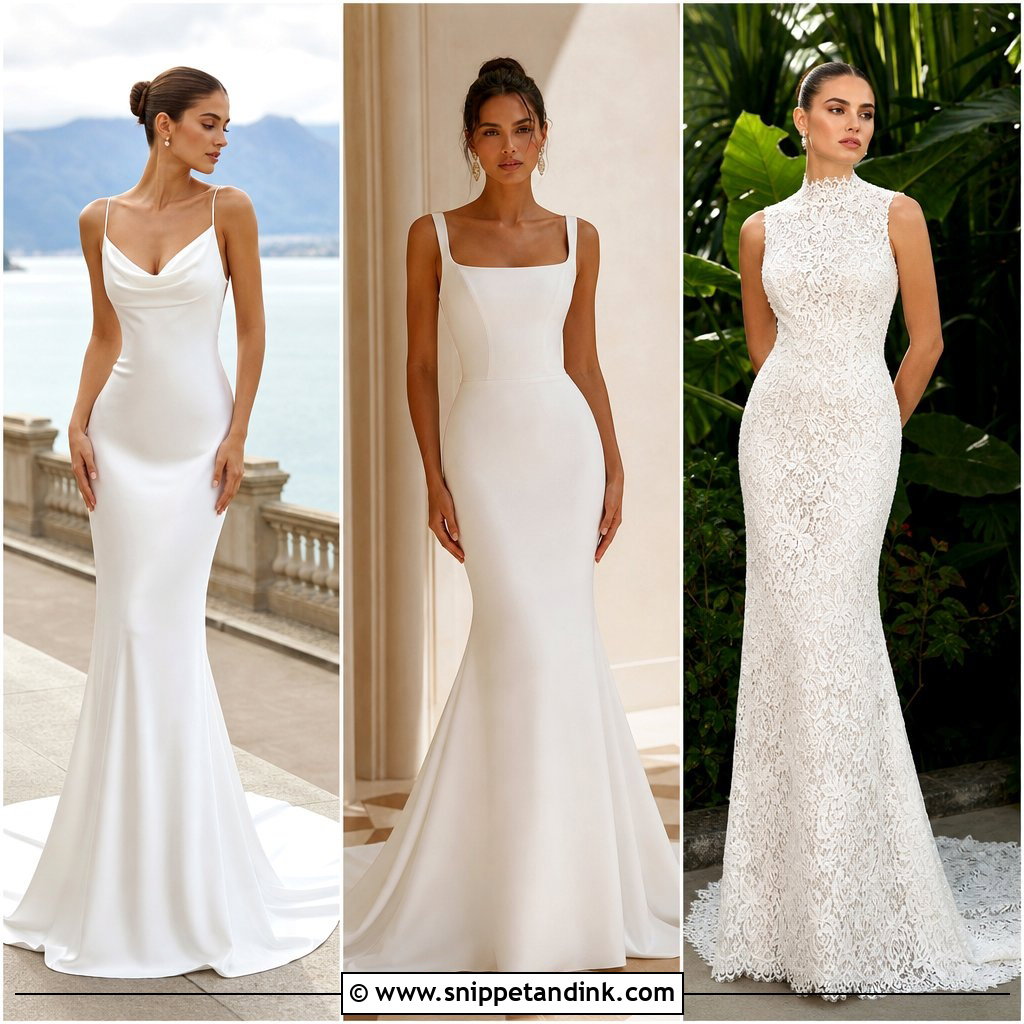
A cowl drapes in soft vertical folds at the chest, which can soften a strong shoulder line when it’s controlled. An oversized cowl does the opposite and piles fabric exactly where you have the most width. Pair a modest drape with a defined waist and a fluid A-line that moves around the hips. Silk, satin and matte crepe drape properly. Attach a simple veil behind the hair so the neckline stays visible. A low bun, fine drop earrings, a slim bracelet and pointed heels are all it takes for a quiet, contemporary look.
Hair, Veil and Bouquet Do Half the Balancing
Brides spend months on the gown and then choose accessories that undo it. With a wide upper frame, the details around your head and hands can either add width or pull the eye down.
- Keep hair volume moderate at the sides. A low bun or soft waves past the shoulder look balanced; a wide, high-volume updo makes the shoulders look broader beneath it.
- Choose a veil that falls below the hip. Fingertip, chapel and cathedral lengths draw a long vertical line, while a shoulder-length or blusher veil ends right at your widest point.
- Wear necklaces that make a V or a drop. Chokers and wide collars repeat the horizontal line of the shoulders.
- Hold the bouquet low, at or just below the hip bone, so it adds visual weight to the lower half in photos. A cascading or trailing shape helps further.
Altering a Gown Ordered to Your Bust Size
Because the bust or shoulder measurement usually sets the size, the waist and hips of the gown often arrive loose. Taking in a skirt at the side seams is common work, but a full ball gown or tiered skirt is more involved because every layer has to be adjusted, so ask for a quote early.
The other frequent job is the armhole. Wide shoulders can make standard armholes cut in, and some gowns have little spare fabric there. Raise it at the first fitting so there is time to source matching lace or lining if a gusset is needed. Plan for two or three fittings across the last couple of months, and keep your weight-bearing shoes and undergarments the same for every one.
Balance Comes From the Skirt, Not From Hiding Your Shoulders
The gowns that work best on an inverted triangle share a few things: an open or vertical neckline, a clear waist, real support in the bodice and a skirt with movement or volume. A-lines and ball gowns are the dependable picks, though empire, tea-length, peplum and drop-waist cuts can be just as good once they’re fitted to you. Don’t judge any of them on the hanger. Bring your ceremony shoes and undergarments to fittings, then walk, sit and lift your arms. Proportion guides the shortlist; comfort and confidence decide the gown.
You'll Like These Ideas:


Leave a Reply