
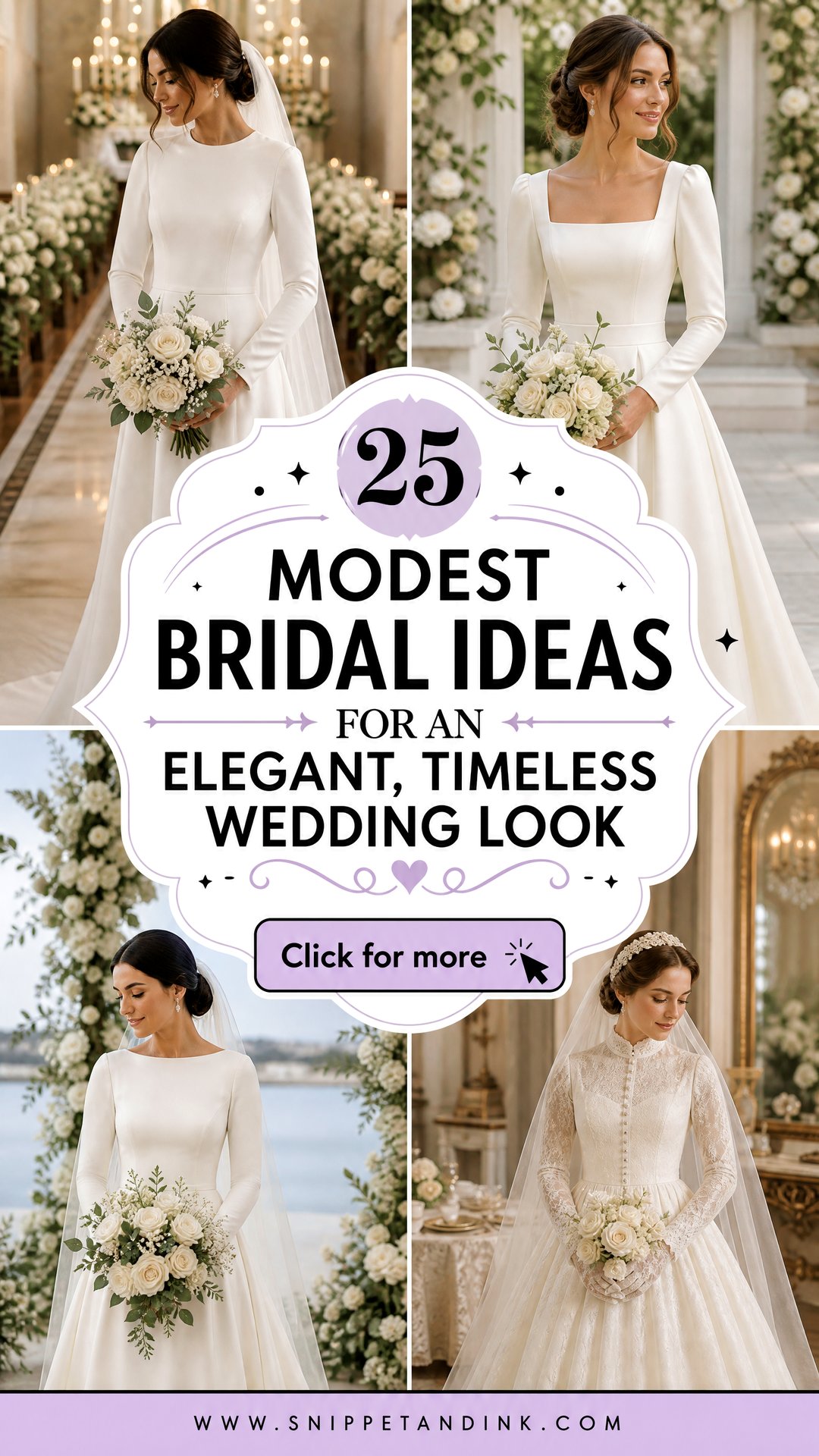
Covering up no longer means giving up shape or personality. The modest brides I dress choose from high necklines, long sleeves, covered backs, capes, separates and sharp tailoring, in fabrics from soft lace to clean satin. What separates a good covered look from a frumpy one is almost always fit and lining, not the amount of skin shown. Below are 25 looks across classic, minimal, vintage and modern tastes, with what I’d watch for in each when you try it on.
Can a Strapless Gown Be Made Modest?
Often, yes. Plenty of brides fall for a dress that’s cut lower than they want, and a good bridal seamstress can add coverage without it looking like an afterthought. The best results come from using fabric that matches the gown, which is why I ask the shop for spare lace or tulle when the dress is ordered.
- Sleeves and a high neck can be built from matching lace laid over an opaque lining, so the addition looks original.
- A modesty panel fills a deep V neckline with tulle and lace, or with solid fabric if you want no sheerness at all.
- Illusion backs can be lined in a skin-toned or ivory fabric so they stop reading as bare skin in photos.
- A separate lace topper or bolero is the quickest fix and can come off later, but it needs to be fitted, not bought loose.
These changes take longer than a hem. Leave a couple of extra months for alterations on top of the gown’s own production time, and bring the exact undergarments and shoes you’ll wear to every fitting.
1. Long Sleeve Lace Wedding Dress
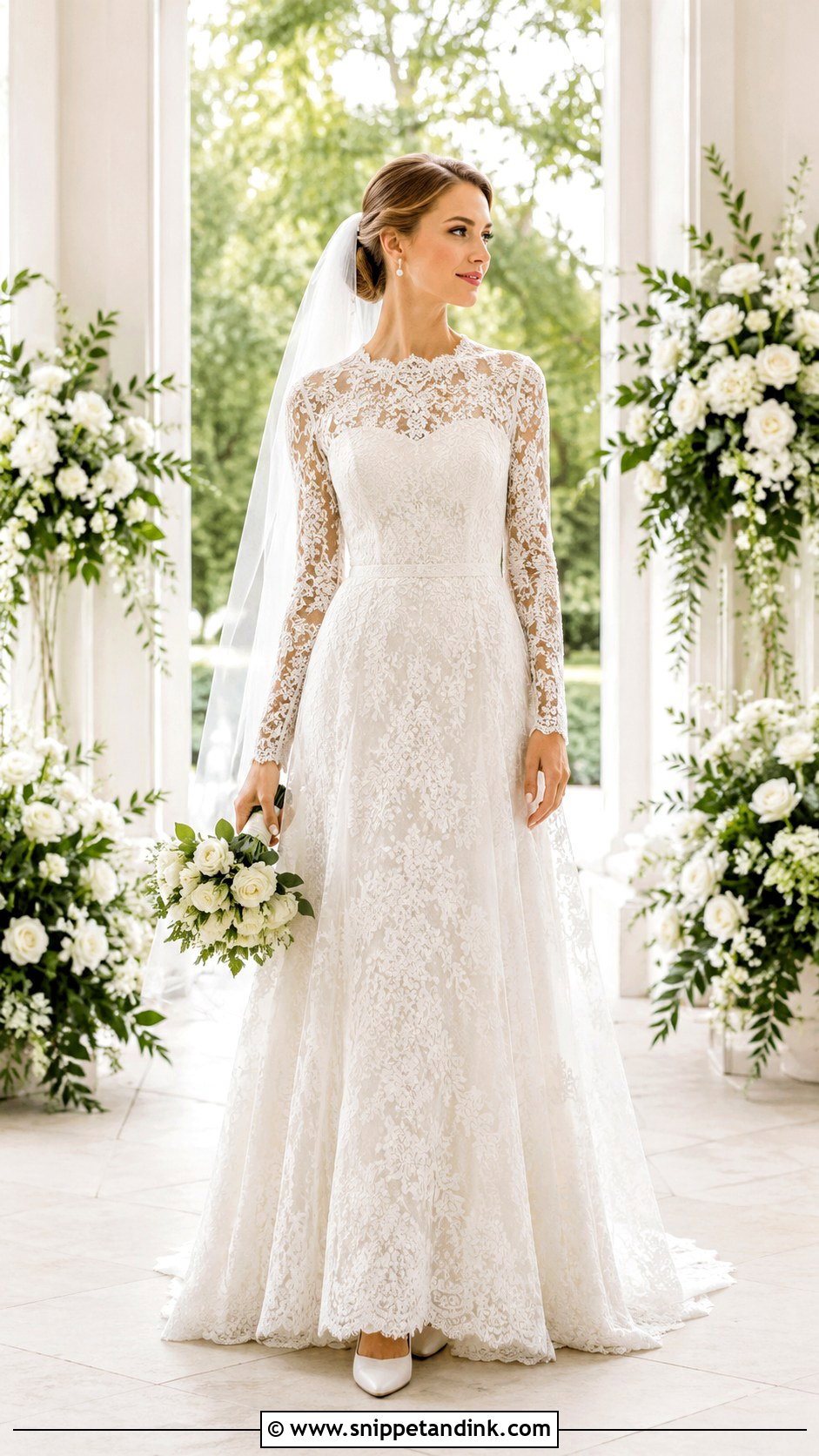
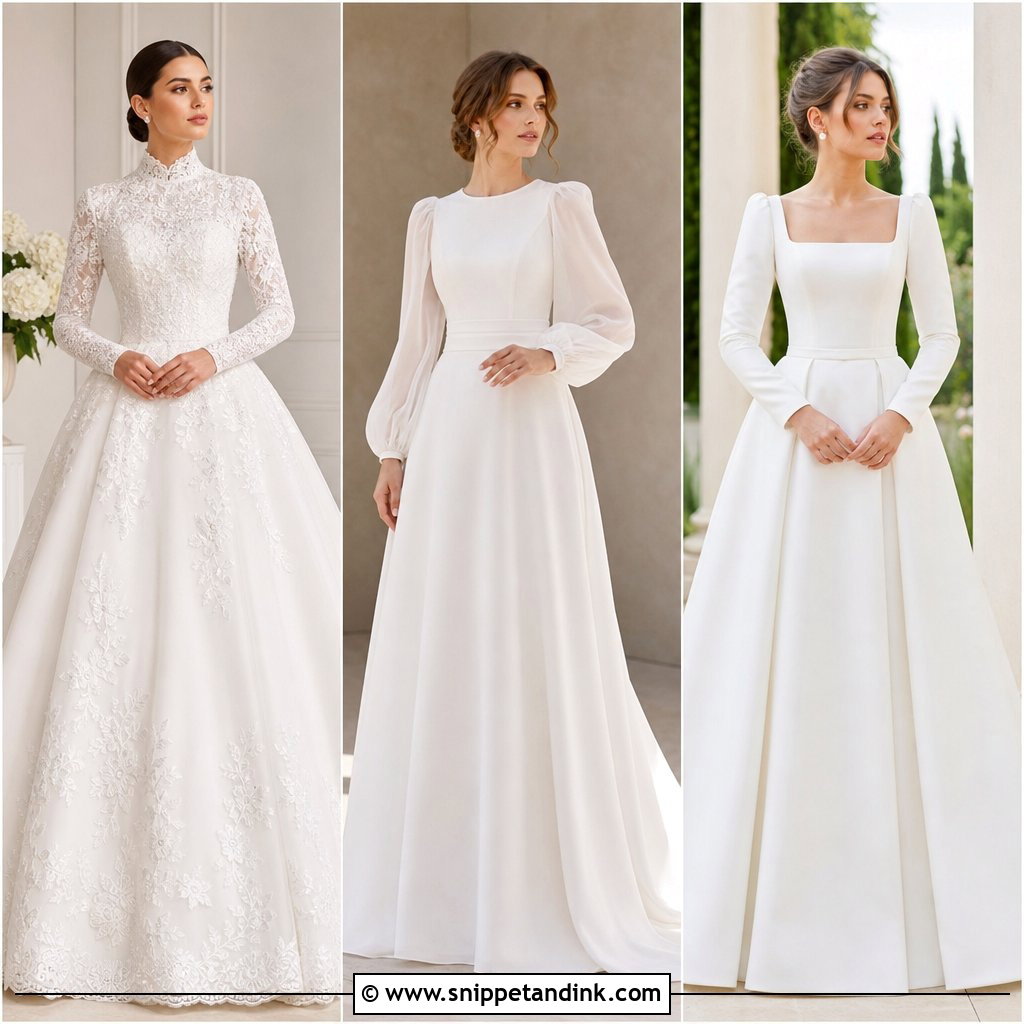
Long lace sleeves remain the most requested modest detail I see, and for good reason: they cover without looking heavy. Ask for a lined bodice and a covered back, then pick an A-line or fit-and-flare skirt to balance the sleeve. The thing I check first is the sleeve lining. Many gowns put lace over sheer illusion tulle, which shows skin under flash, so if full coverage matters, request an opaque nude or ivory lining behind the lace. Pearl earrings, a simple veil and closed-toe pumps are all it needs.
2. High Neck Satin Wedding Gown
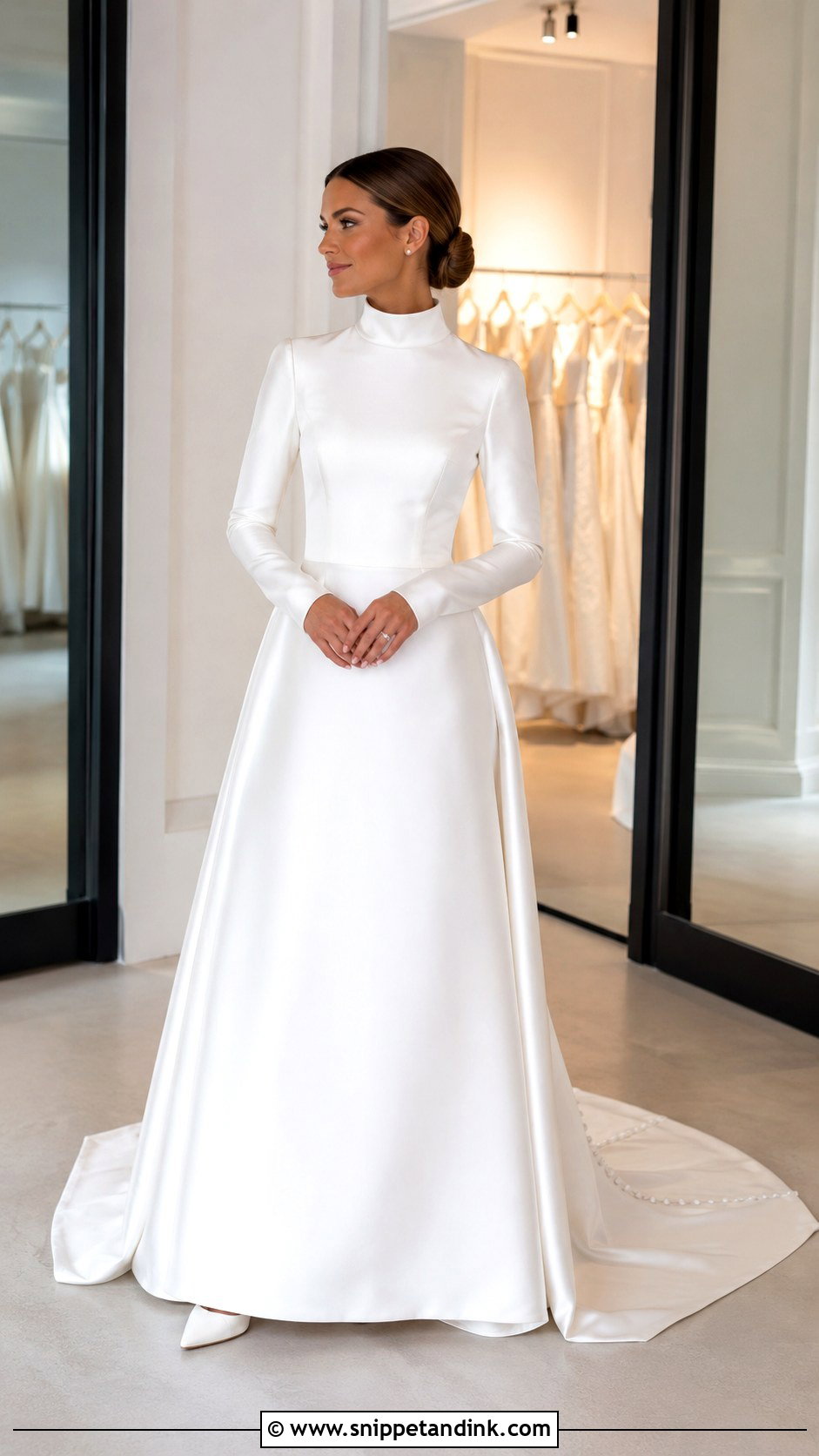
A high neck in satin does most of the work on its own. The neckline frames the face and the fabric gives a smooth, formal finish, so accessories can stay tiny: pearl studs, a sleek bun, satin heels. A fitted bodice with a soft A-line skirt reads classic; a column cut reads modern. Satin is unforgiving at a high neck, though. If the collar is even slightly loose, it buckles when you turn your head, so I have it fitted with the bride looking left and right, not just straight ahead. Buttons down the back give the rear view something to say.
3. Modest A Line Wedding Dress
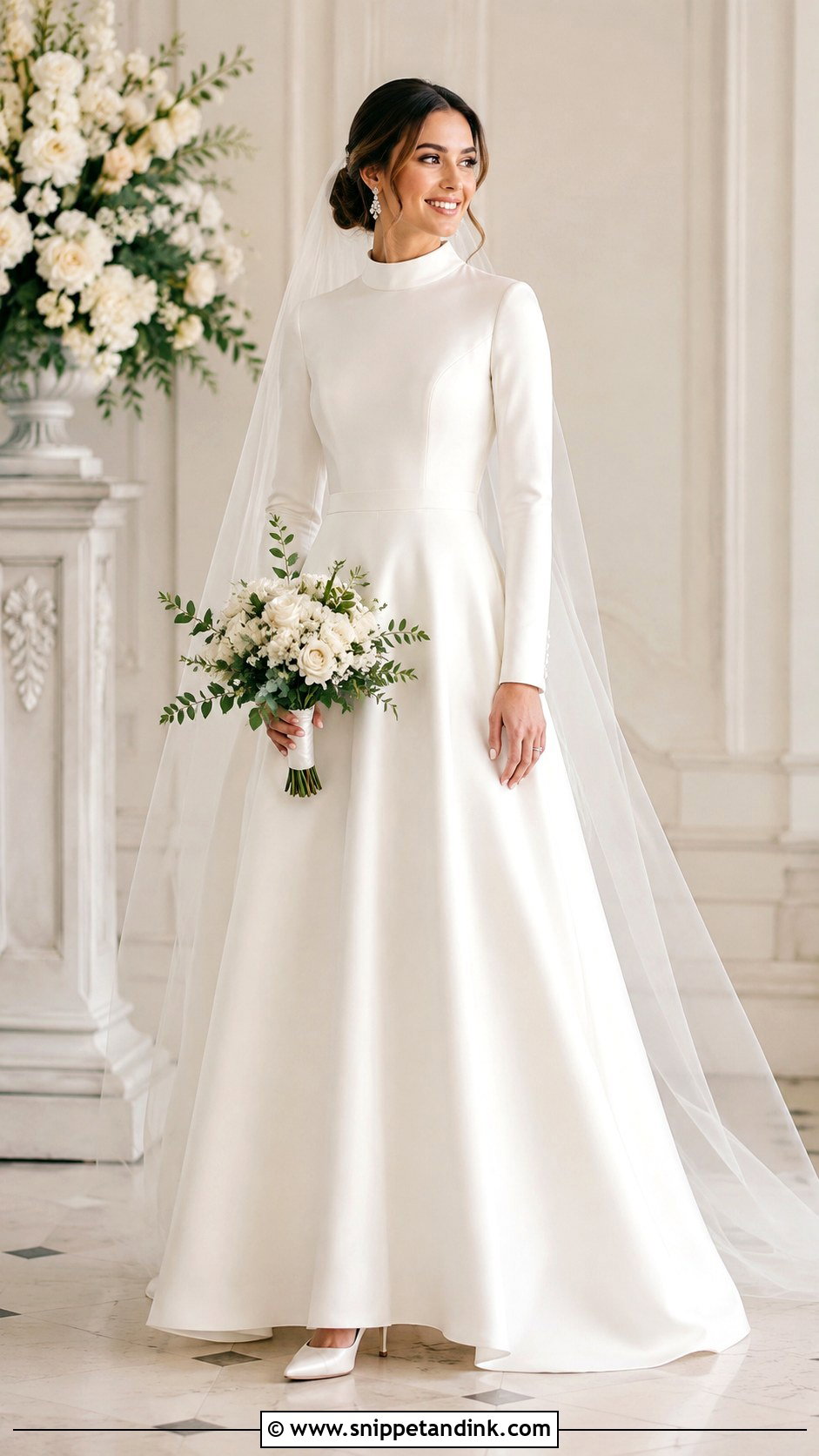
The A-line suits more body types than any shape I fit, because it defines the waist and then lets the skirt fall away. For coverage, pair it with a higher neckline and long or three-quarter sleeves. Crepe, satin, tulle and lace all hold the line. It’s also the easiest silhouette to sit, walk and dance in, which matters more by hour eight than it does in the shop. Low block heels, a waist-length veil and soft jewelry keep it grounded.
4. Long Sleeve Crepe Wedding Dress
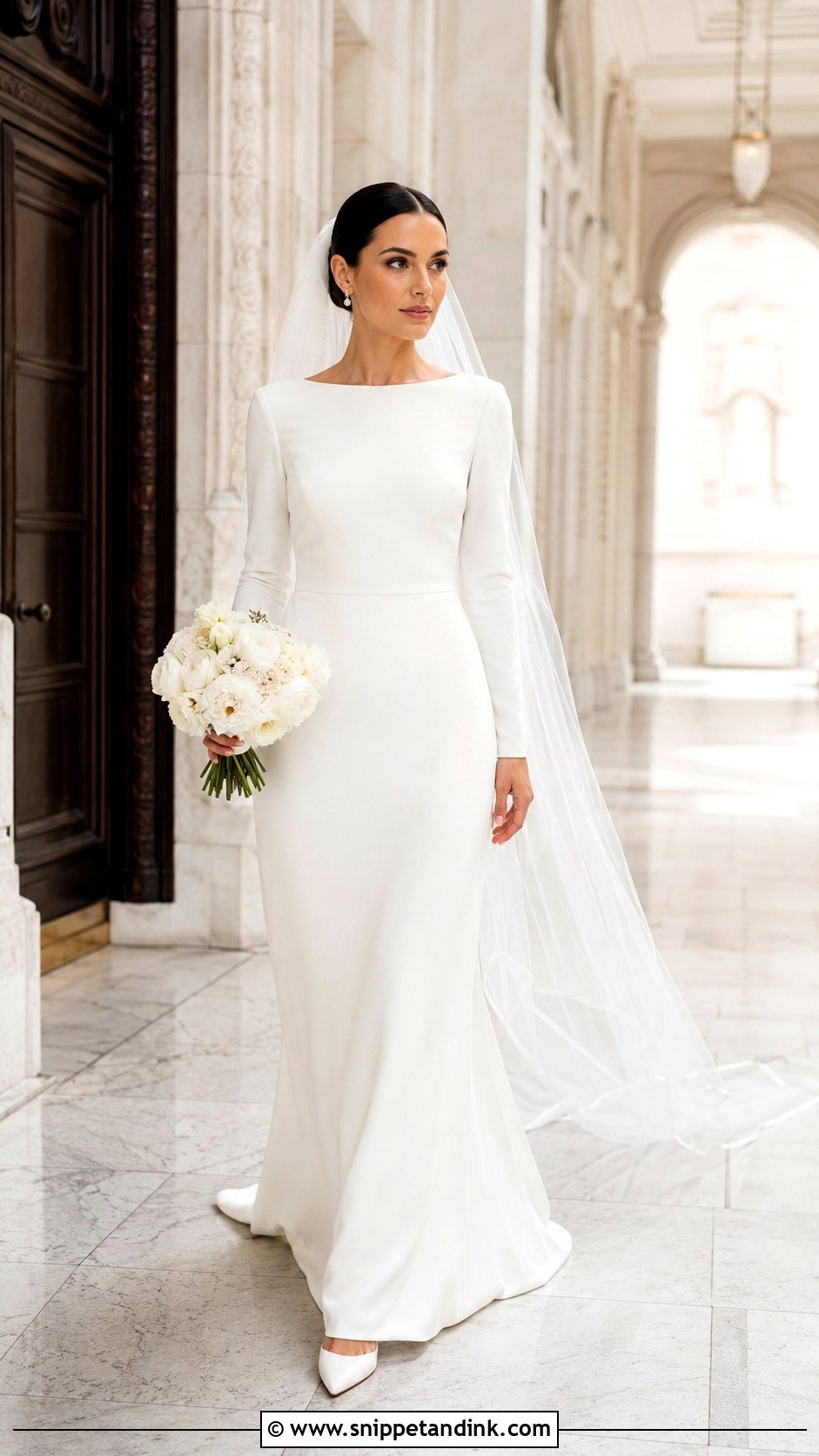
Crepe gives structure without stiffness. It skims rather than clings, so it suits sheath, column and fit-and-flare shapes, and with long sleeves it looks quietly expensive. A boat neck, jewel neckline or modest square neck all work. Heavier crepe also hides underwear lines far better than satin, which is a real reason I suggest it to brides worried about a smooth fit. Wear a chapel veil for the ceremony, take it off for the reception, and finish with minimal earrings and a low chignon.
5. Modest Ball Gown Wedding Dress
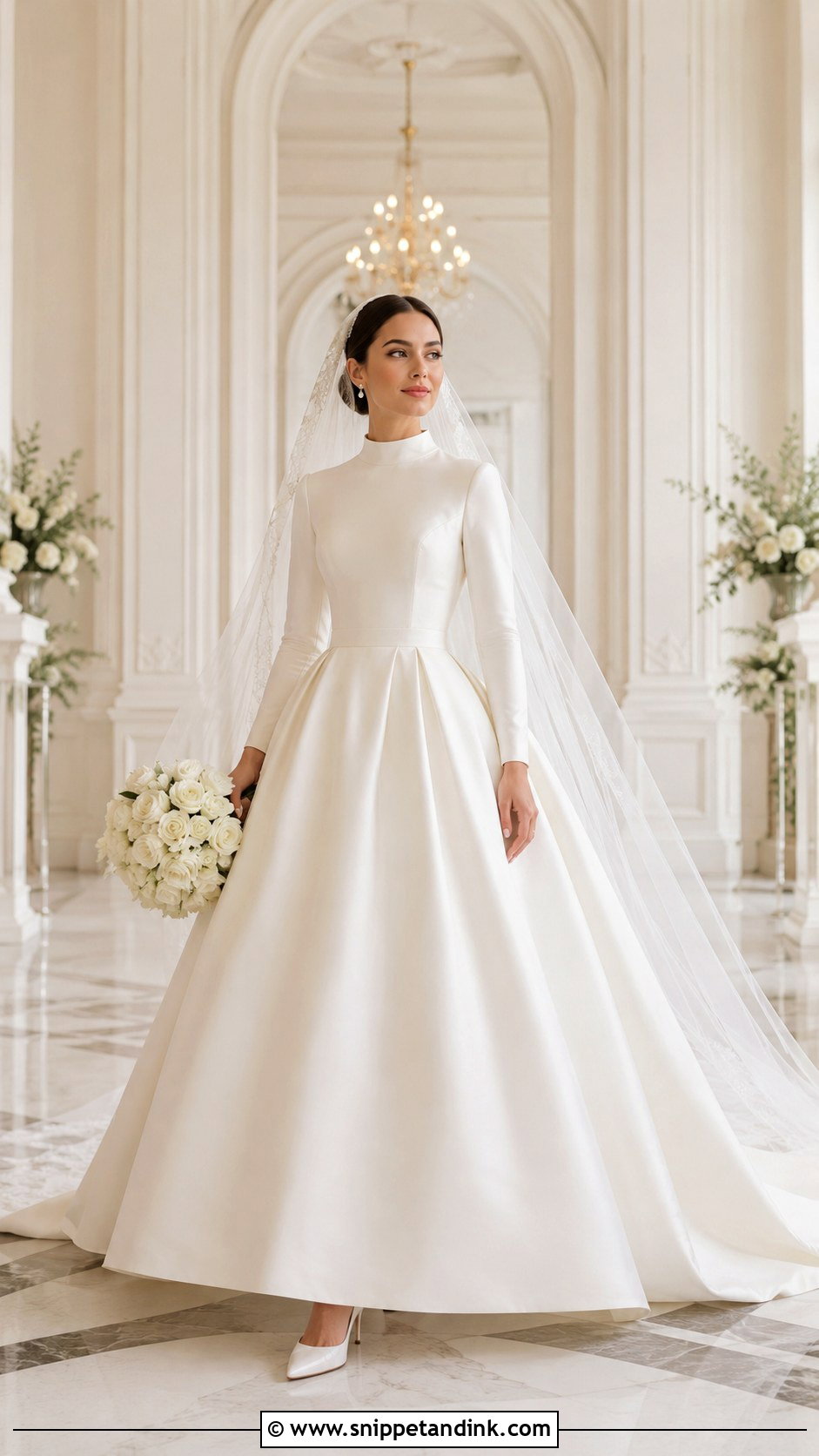
Full drama and full coverage can live in the same dress. With a ball gown, the bodice needs real structure, a secure neckline and sleeves strong enough to balance the skirt, otherwise the top half looks small and lost. Satin feels regal; lace or tulle softens it. For a modern version, I’d lean on covered buttons and a clean high neck rather than heavy beading. A cathedral veil, pearl drops and simple heels suit a grand hall or formal venue.
6. Modest Mermaid Wedding Dress
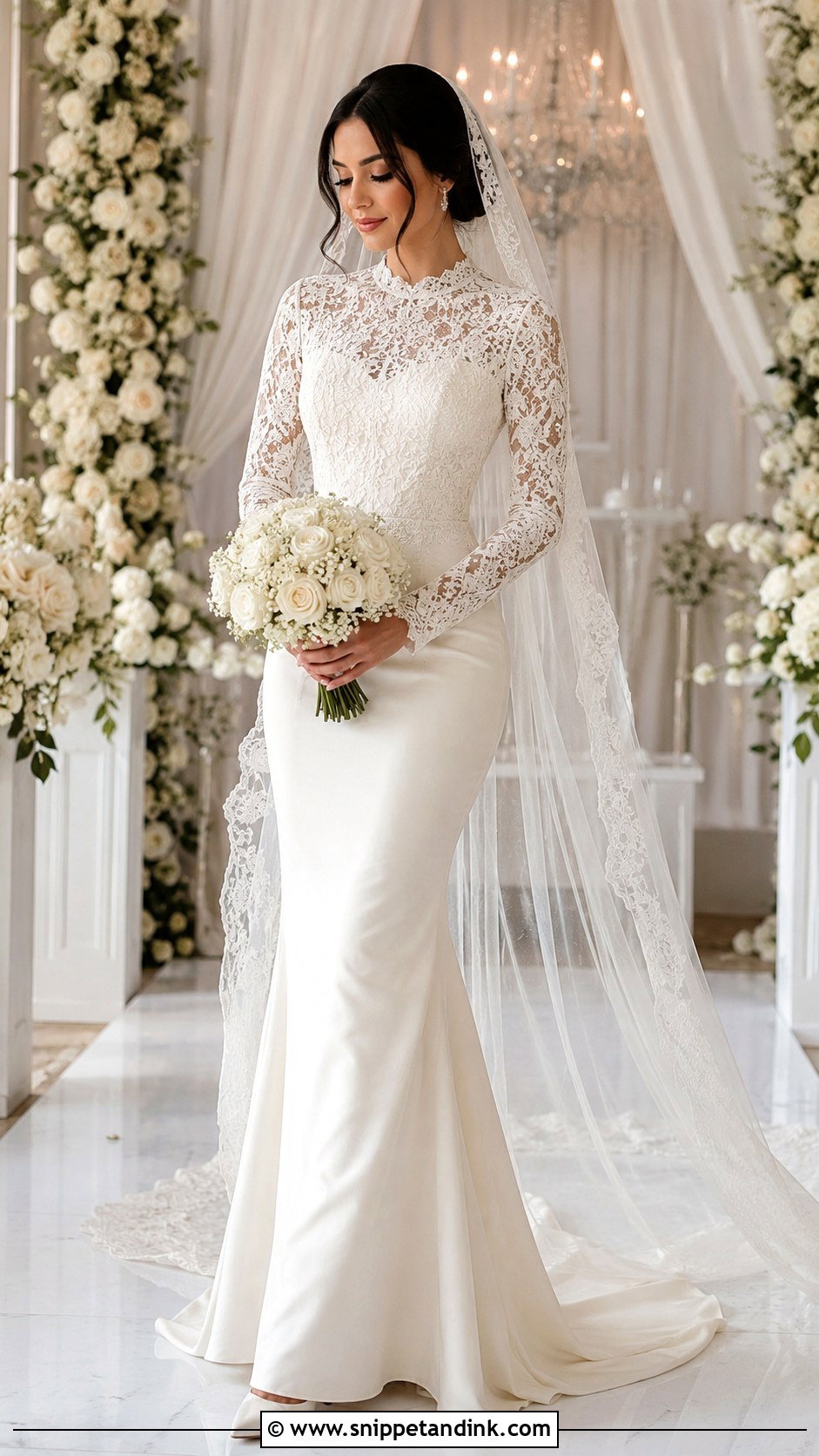
Mermaid and modest aren’t opposites. Long sleeves, a lined bodice, a higher neckline and a covered back keep it refined, while stretch crepe, lace or satin hold the curve smoothly. The fit should feel secure, not tight; if you can’t sit comfortably, the flare is set too high or the hips too snug. I usually prefer a flare starting at the knee or just below for brides who plan to dance. A long veil, sleek earrings and elegant heels finish it.
7. Modest Wedding Dress With Cape
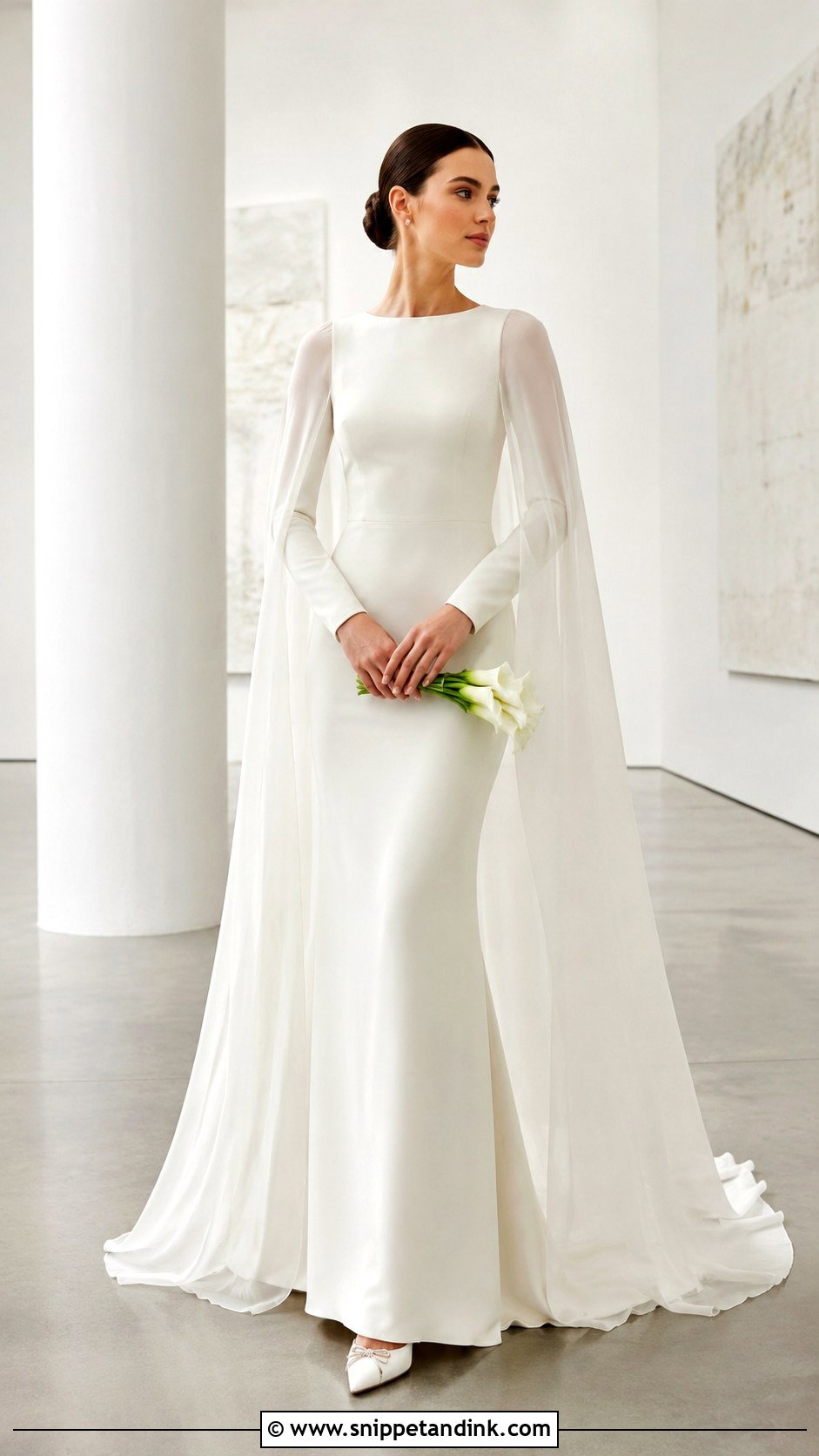
A cape gives you shoulder and back coverage without committing to sleeves, and it moves when you walk down the aisle. A crepe column with a sheer cape looks clean; a lace-edged cape looks softer. Keep the base dress fitted or lightly A-line so the layers don’t pile up. Check where the cape attaches. If it’s sewn at the neckline only, it can swing open in wind; small hidden snaps at the shoulders keep it where it should be. Simple heels and small earrings let the fabric do the talking.
8. Modest Tea Length Wedding Dress
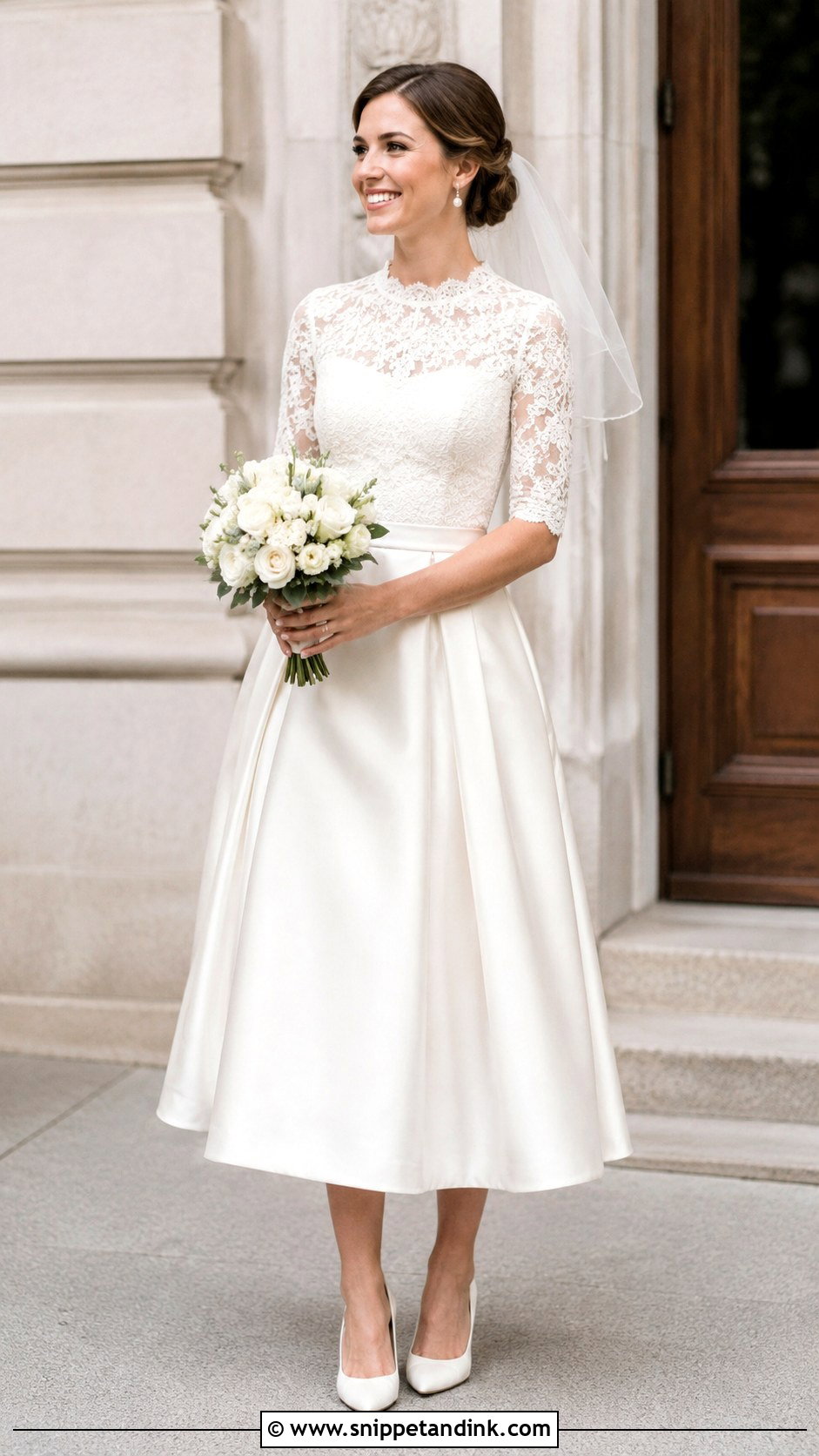
Tea length sits between the knee and ankle, so walking is easy and your shoes get seen. Keep it covered with sleeves, a high neck or a lined lace bodice. It suits courthouse weddings, brunch receptions and garden venues, and it’s a good second look. The risk with tea length is costume: a full petticoat plus puff sleeves plus a birdcage veil can tip into fancy dress, so I pick one vintage detail and keep the fabric and tailoring clean. Closed-toe heels, a short veil and pearls finish it.
9. Modest Bridal Jumpsuit
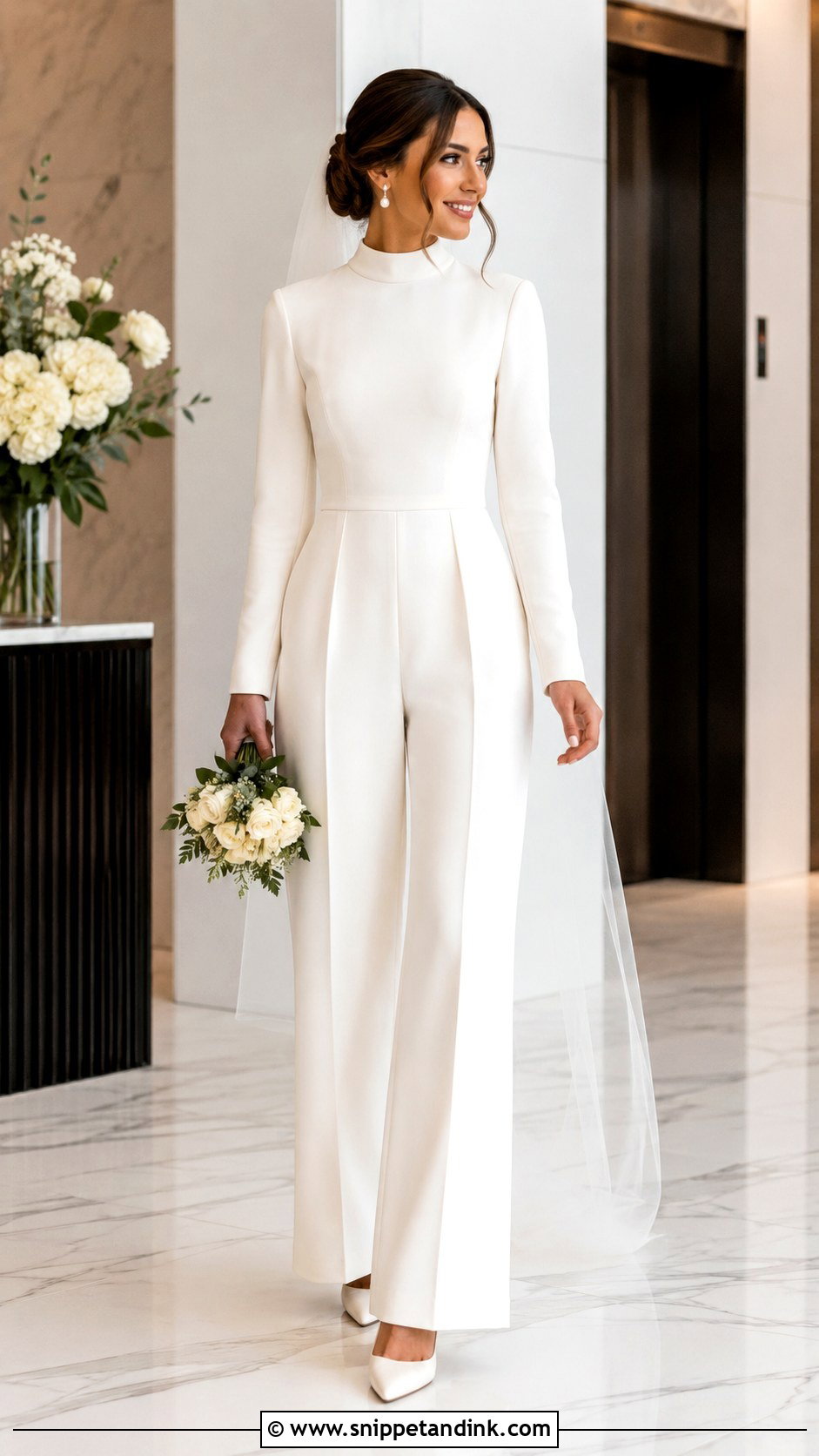
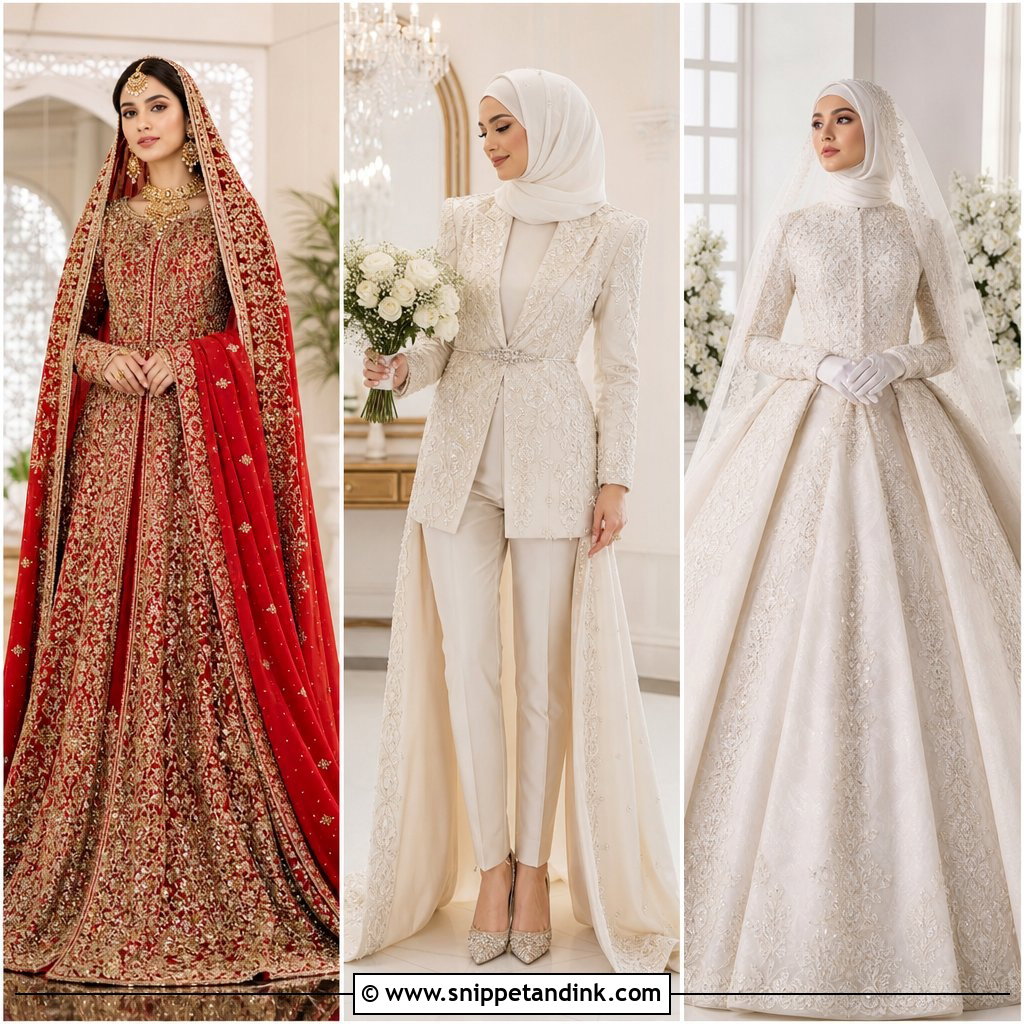
Jumpsuits suit brides who want to move freely and look sharp doing it. Look for wide-leg trousers, long sleeves, a covered bodice and a defined waist. Crepe and satin both look formal. One practical point brides rarely think about until the day: bathroom trips. Ask for a back zip that you can reach or a bodice that separates, because a one-piece with fifteen buttons is hard without help. A detachable overskirt adds ceremony, and pointed heels and pearl earrings keep it polished.
10. Modest Two Piece Bridal Set
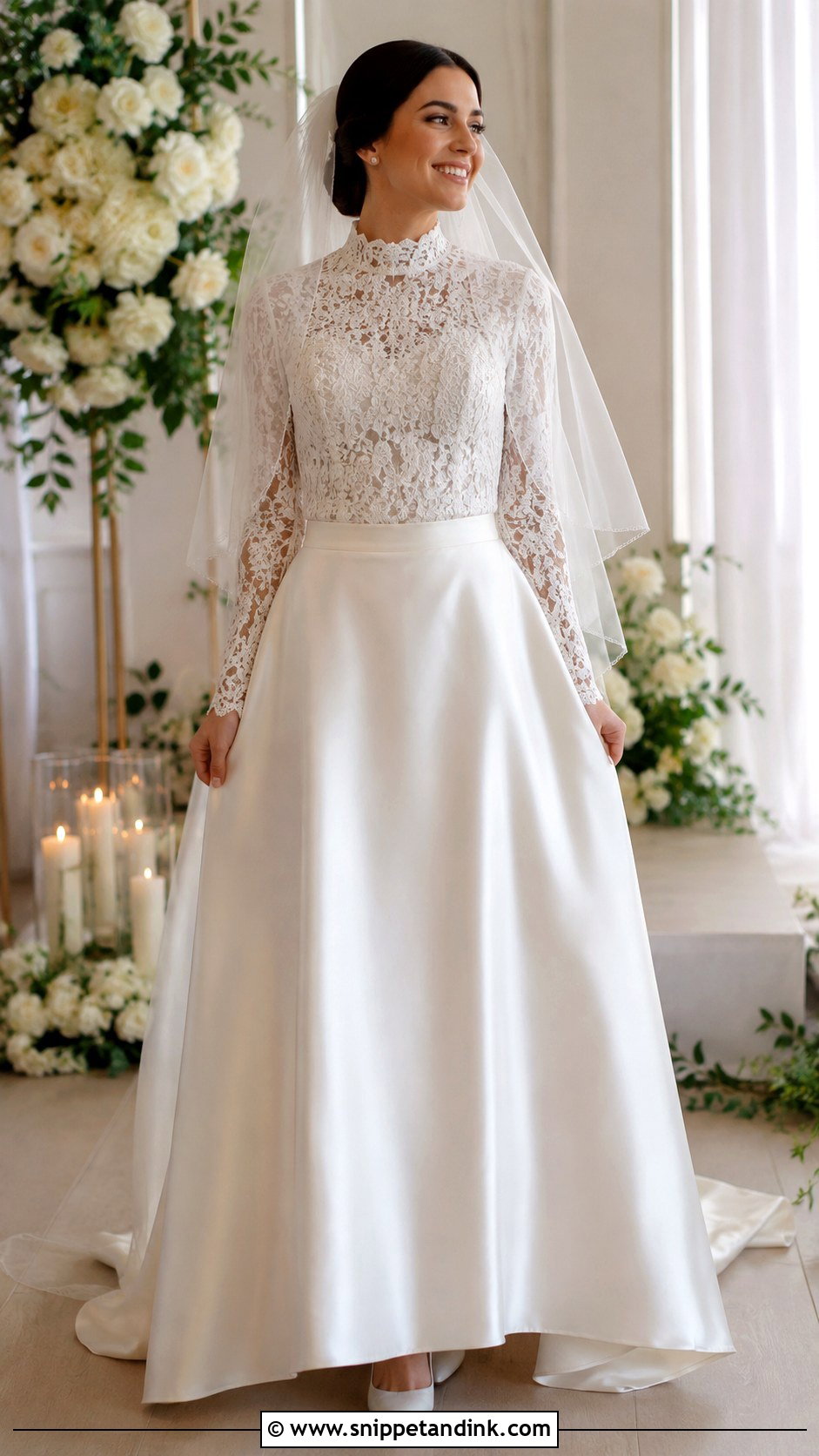
Separates give you flexibility, but they need to look deliberate rather than casual. A high-neck lace top over a full skirt feels romantic; a satin blouse with a tailored skirt feels modern. My main worry with two pieces is the gap: a top that rides up when you raise your arms shows skin at the waist. A longer top tucked into a high-waisted skirt, or a small hidden hook joining them, solves it. Long sleeves and lined fabrics keep it modest, and both pieces can be altered and worn again.
11. Modest Wedding Dress With Detachable Sleeves
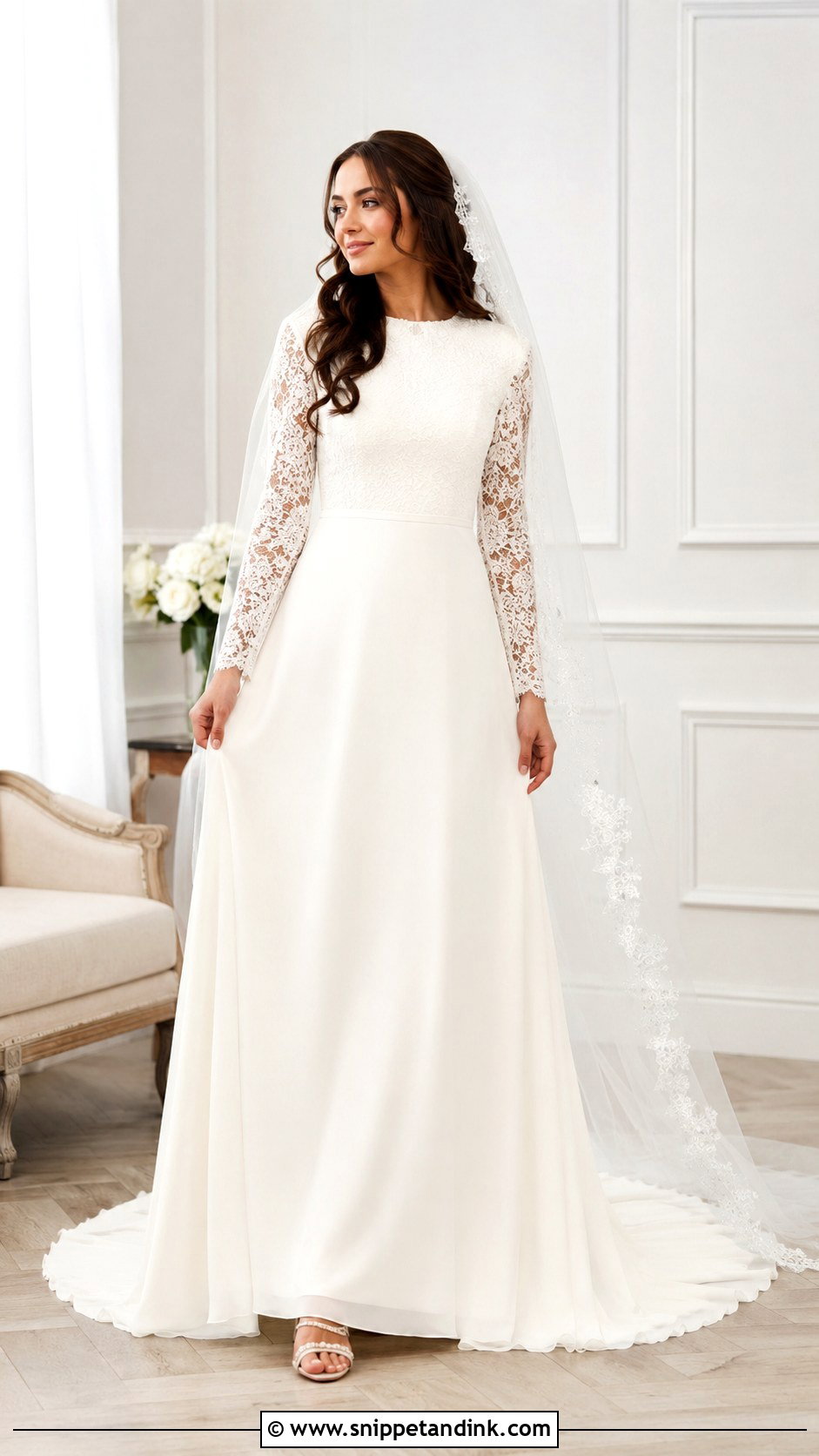
Detachable sleeves give you two looks without a full change: covered for the ceremony, lighter for the reception. They can be lace, satin, tulle or crepe to match the gown. Make sure they attach cleanly at the shoulder and are cut from the same fabric lot, because a slightly different ivory shows in close-up photos. A simple A-line or fitted gown works best with this detail. If the reception venue is cooler, you may decide to keep them on anyway, so plan your styling around both versions.
12. Modest Square Neck Wedding Dress
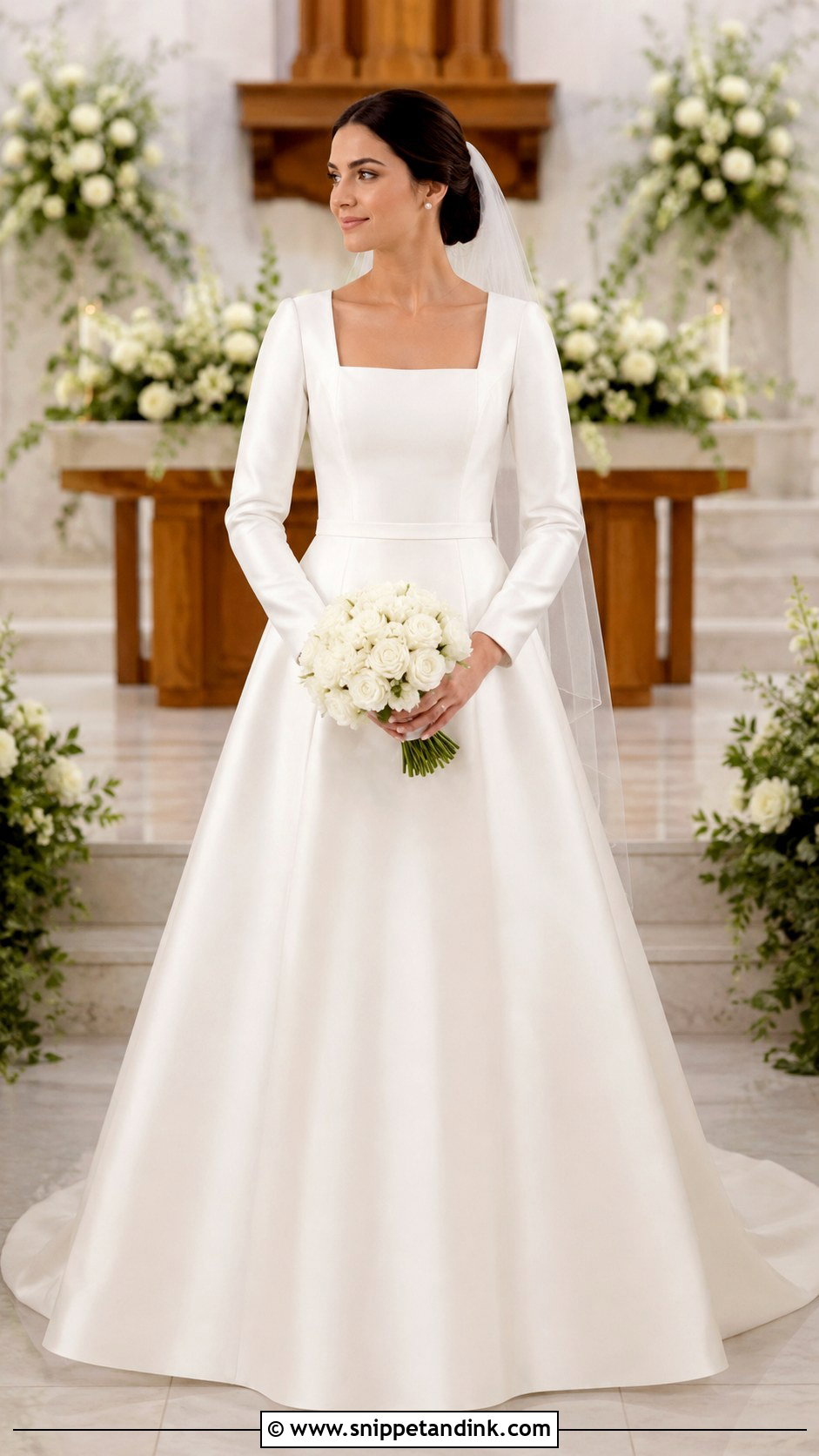
A square neck opens the upper body a little without exposing much, especially with long sleeves or a covered back. It works on satin, crepe, lace and mikado. This neckline relies entirely on structure; if the bodice isn’t fitted precisely across the chest, the corners gap the moment you lean forward. I check it with the bride bending to sign something, since that’s exactly what happens at the registry. A low bun, pearl studs and a medium-length veil balance it.
13. Modest Boat Neck Wedding Dress
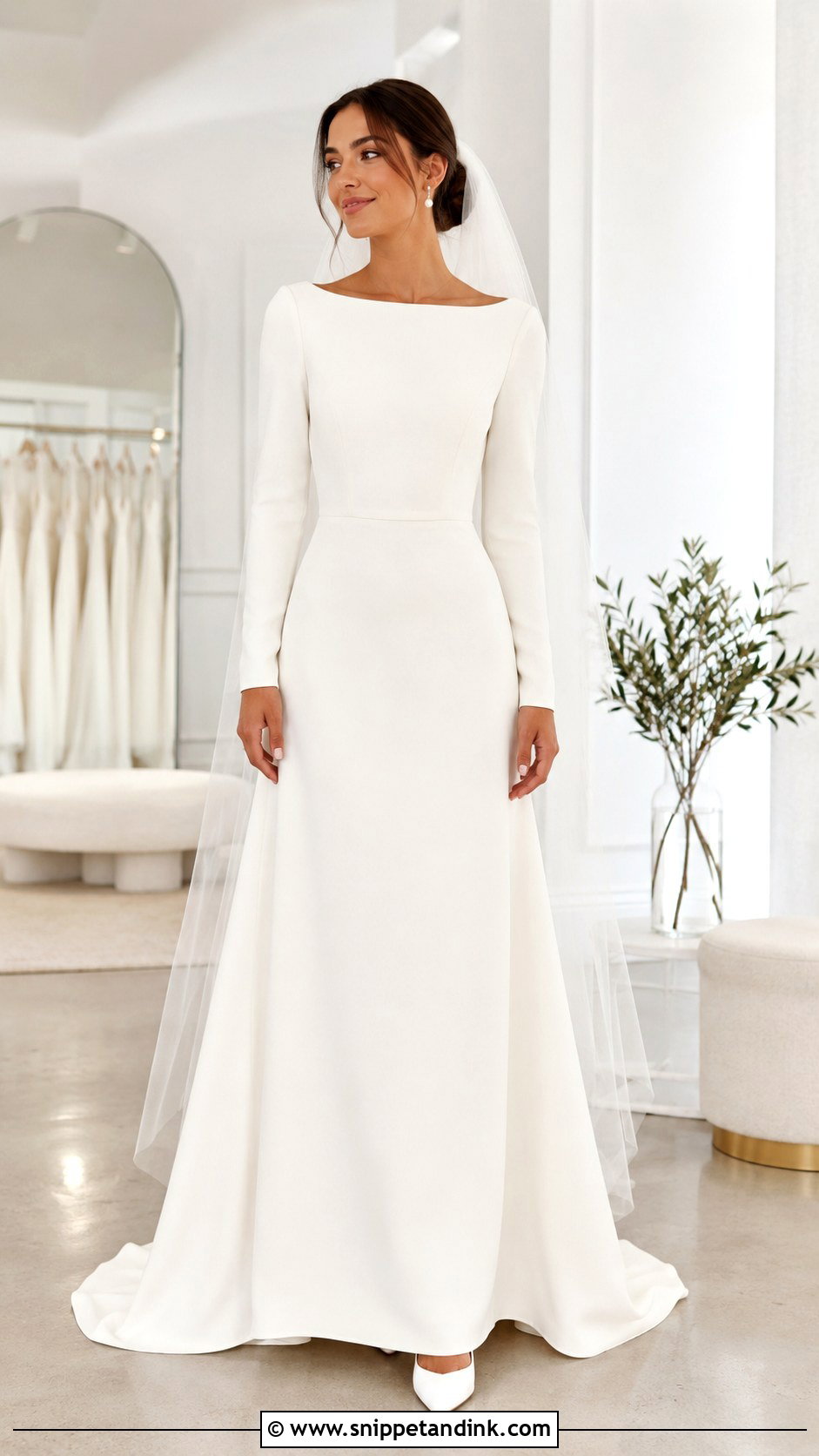
A boat neck wedding dress runs across the collarbone, covering the chest while drawing the eye to the face and shoulders. It pairs naturally with long or three-quarter sleeves and smooth fabrics like crepe or satin. Because the line is so clean, skip heavy necklaces; they crowd it. Earrings, a veil or a textured bouquet carry interest instead. A wide boat neck can slip off narrow shoulders, so on slim frames I ask for a slightly narrower cut or a hidden strap keeper.
14. Modest Tulle Wedding Dress
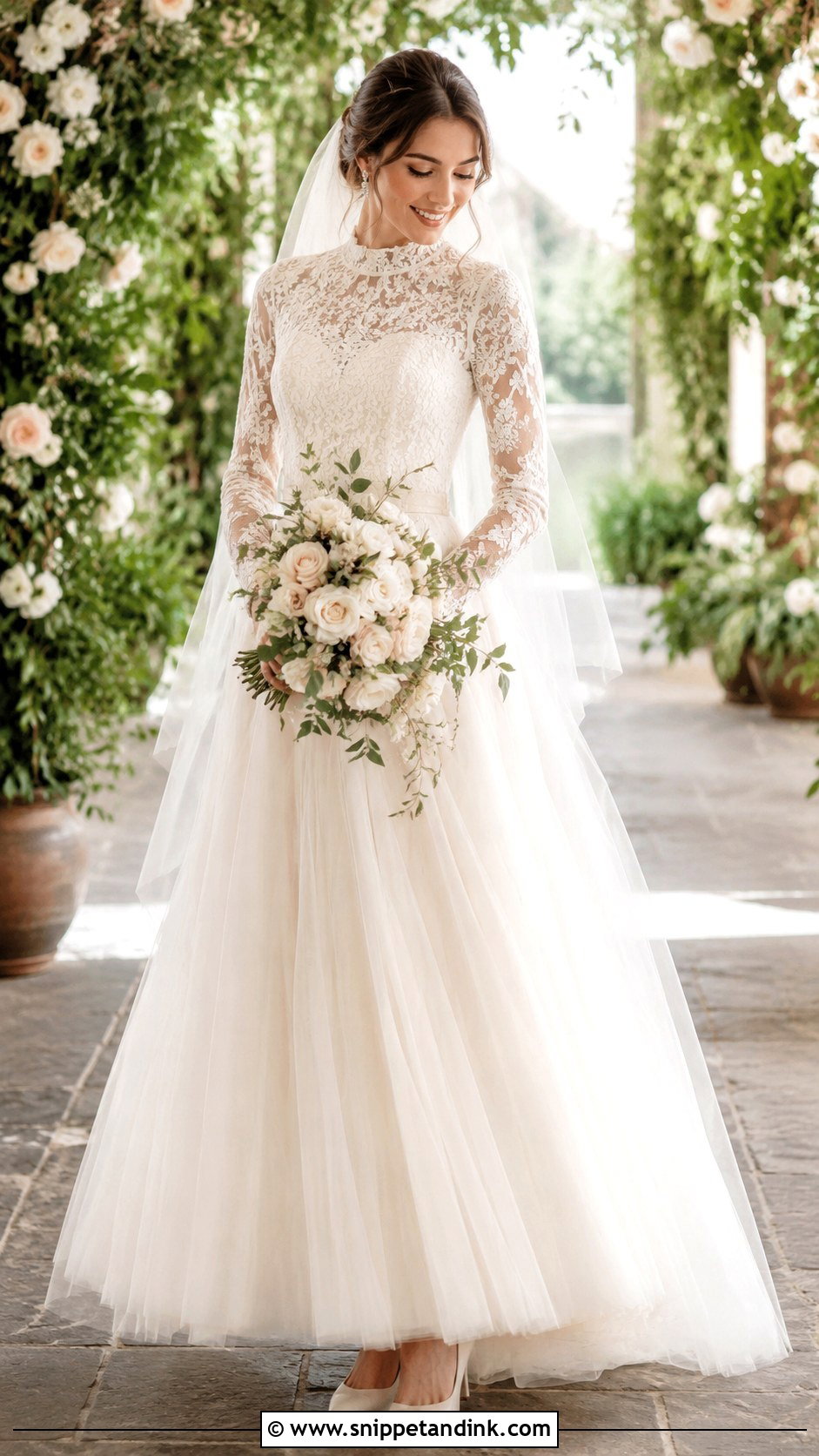
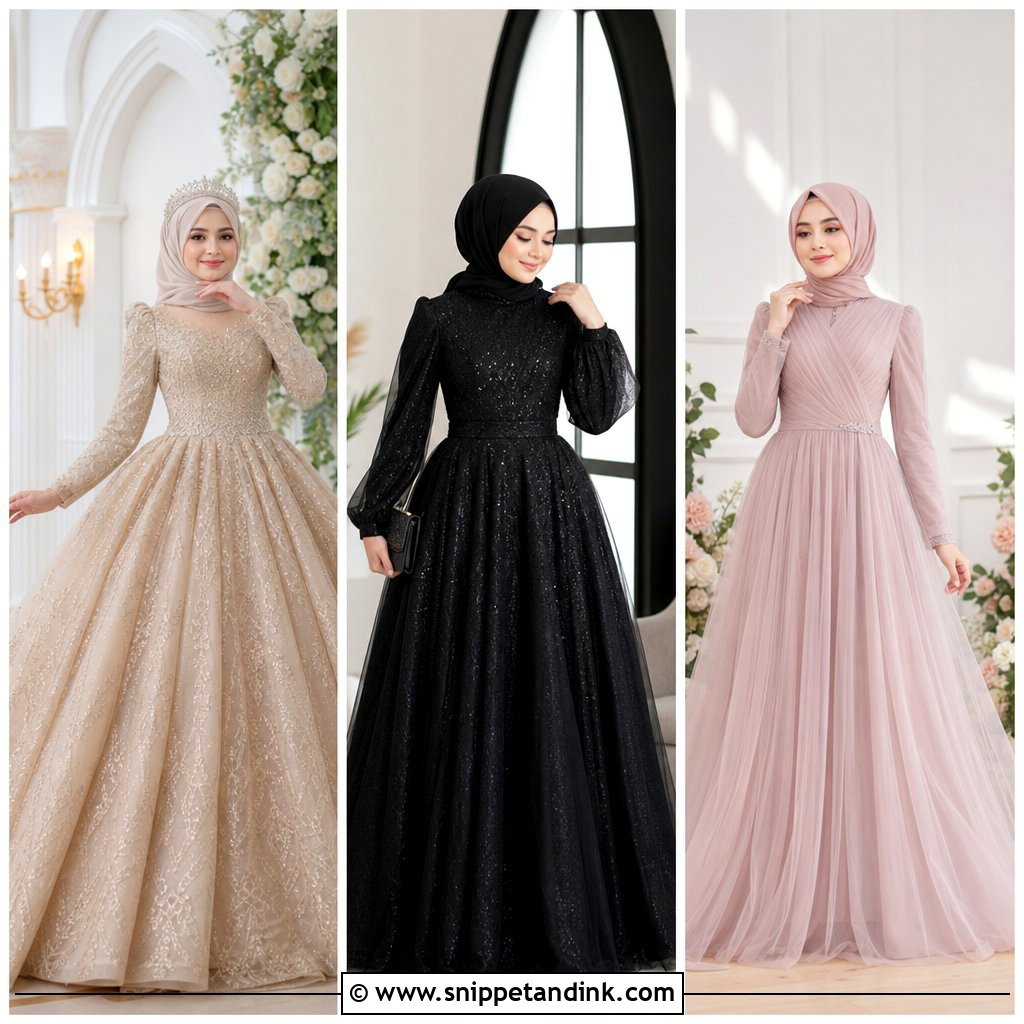
Tulle brings softness and movement, and paired with a lined bodice, a higher neck and sleeves it stays modest. Lace appliqué over tulle reads romantic; plain tulle reads lighter. Tulle adds volume quickly, so match the skirt to your height and the venue: several layers can swamp a petite bride in a small room. Tulle also snags on rough paving and heel tips, which is worth thinking about at an outdoor venue. Simple heels, a soft veil and dainty earrings keep it airy.

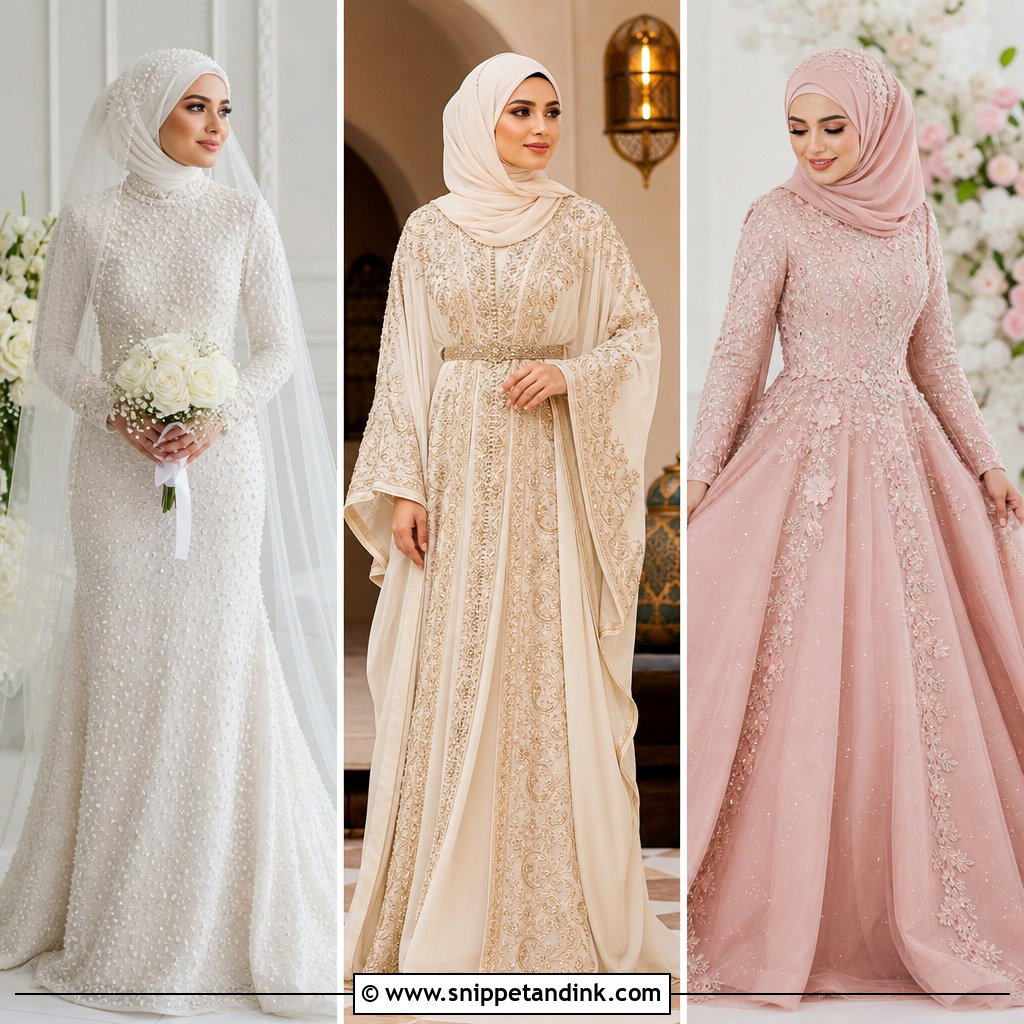
15. Modest Wedding Dress With Embroidery
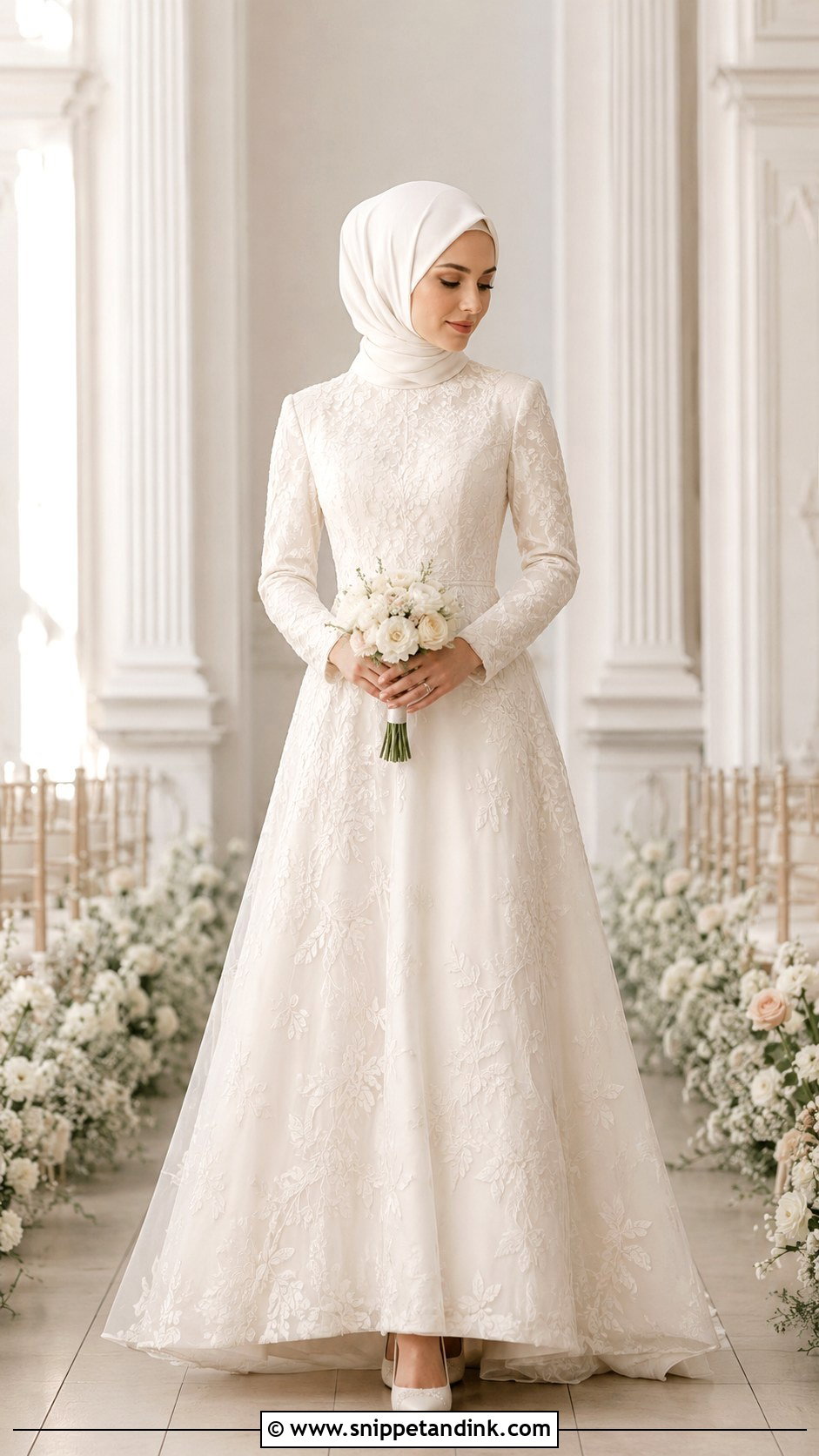
Embroidery lets a covered gown carry detail where you want it: sleeves, bodice, hem or veil. Florals are common, but vines, leaves, pearls and tone-on-tone patterns all work. Ivory thread on ivory fabric is the subtle route; blush, champagne or silver thread adds dimension. Keep the silhouette simple so the handwork isn’t fighting the shape. Hand embroidery adds weeks to production, so if it’s custom, order early. Minimal jewelry and a bouquet that echoes the motifs complete it.
16. Modest Satin Ball Gown
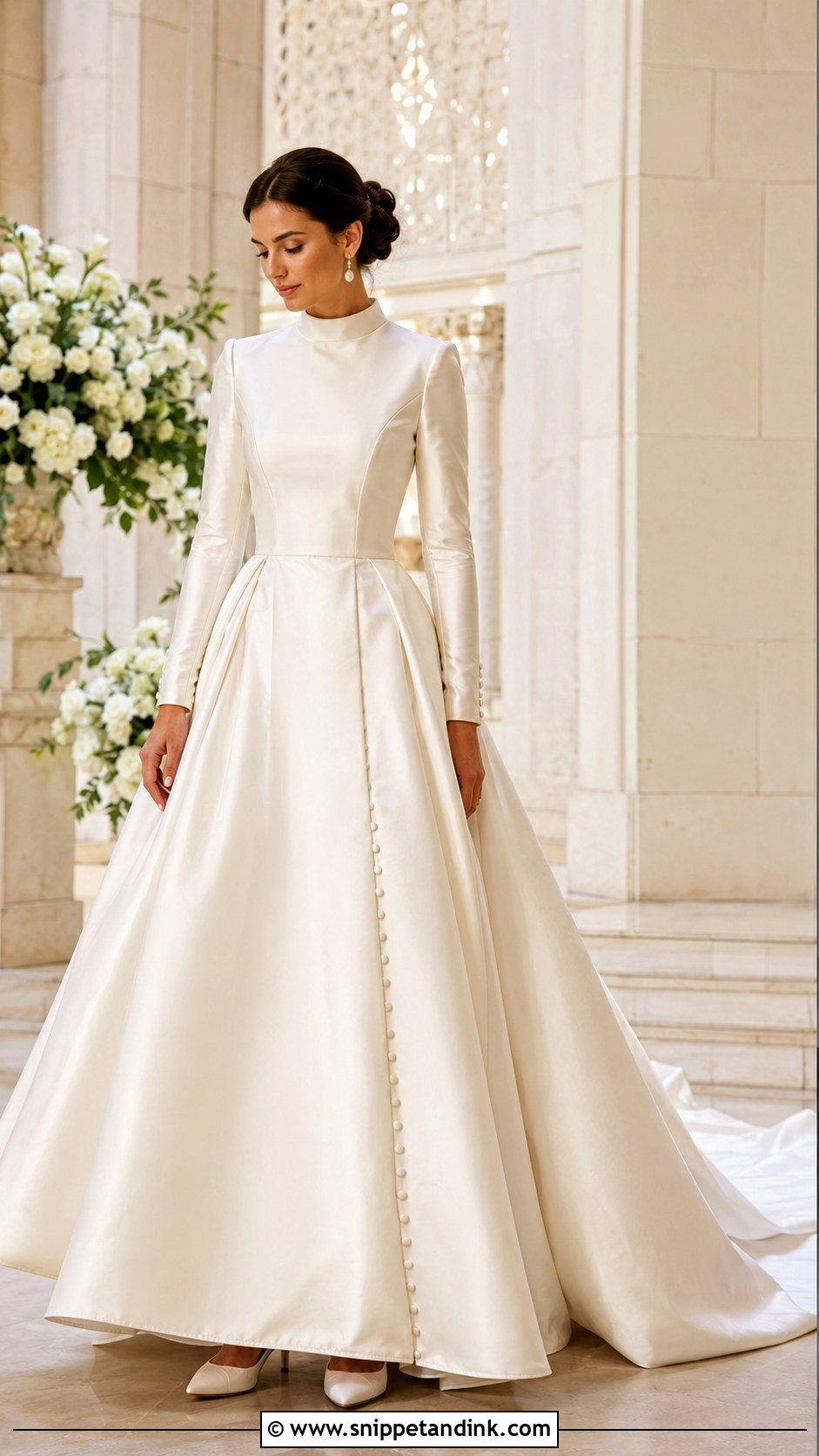
Satin has enough body to hold a full skirt without layers of netting, so a satin ball gown looks the same in person as it does in photos. A high neckline, long sleeves and a covered back keep it refined. Covered buttons, a waist bow or a chapel train add detail if you want it. Satin creases where you sit, though, so expect some lines across the lap by the reception; a quick steam between ceremony and portraits helps. Pearl earrings, a smooth veil and satin pumps suit ballrooms and historic venues.
17. Modest Sheath Wedding Dress
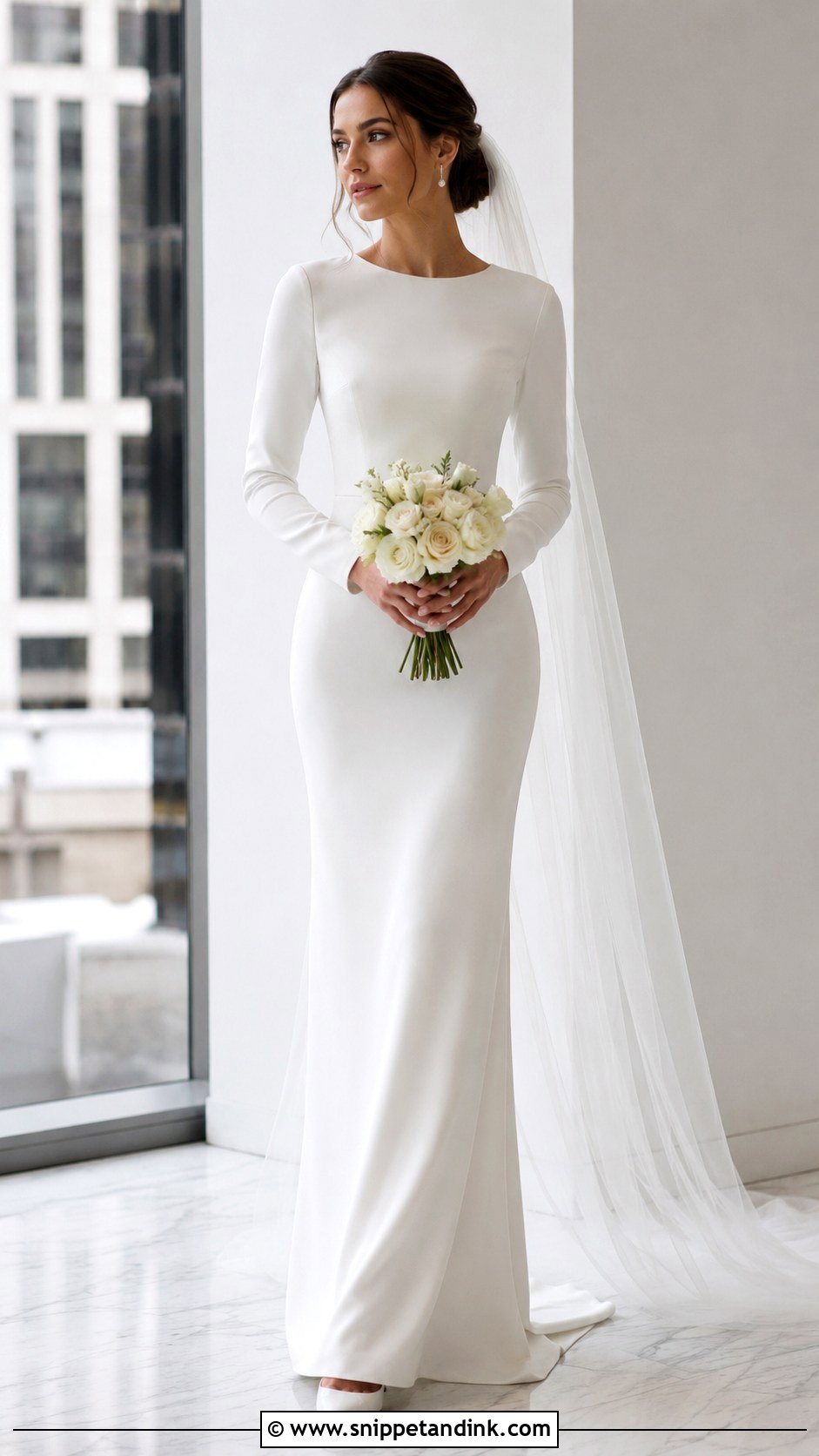
For a slim silhouette with no volume, the sheath follows the body in one clean line. Long sleeves, a jewel neckline and a covered back keep it modest, and crepe falls smoothly enough that it needs no decoration. A lace overlay softens it if plain crepe feels too stark. Sheaths need a walking slit or a little ease at the knee, so check the stride before final alterations. Pointed heels, a long veil and simple drop earrings suit a city wedding or intimate venue.
18. Modest Vintage Wedding Dress
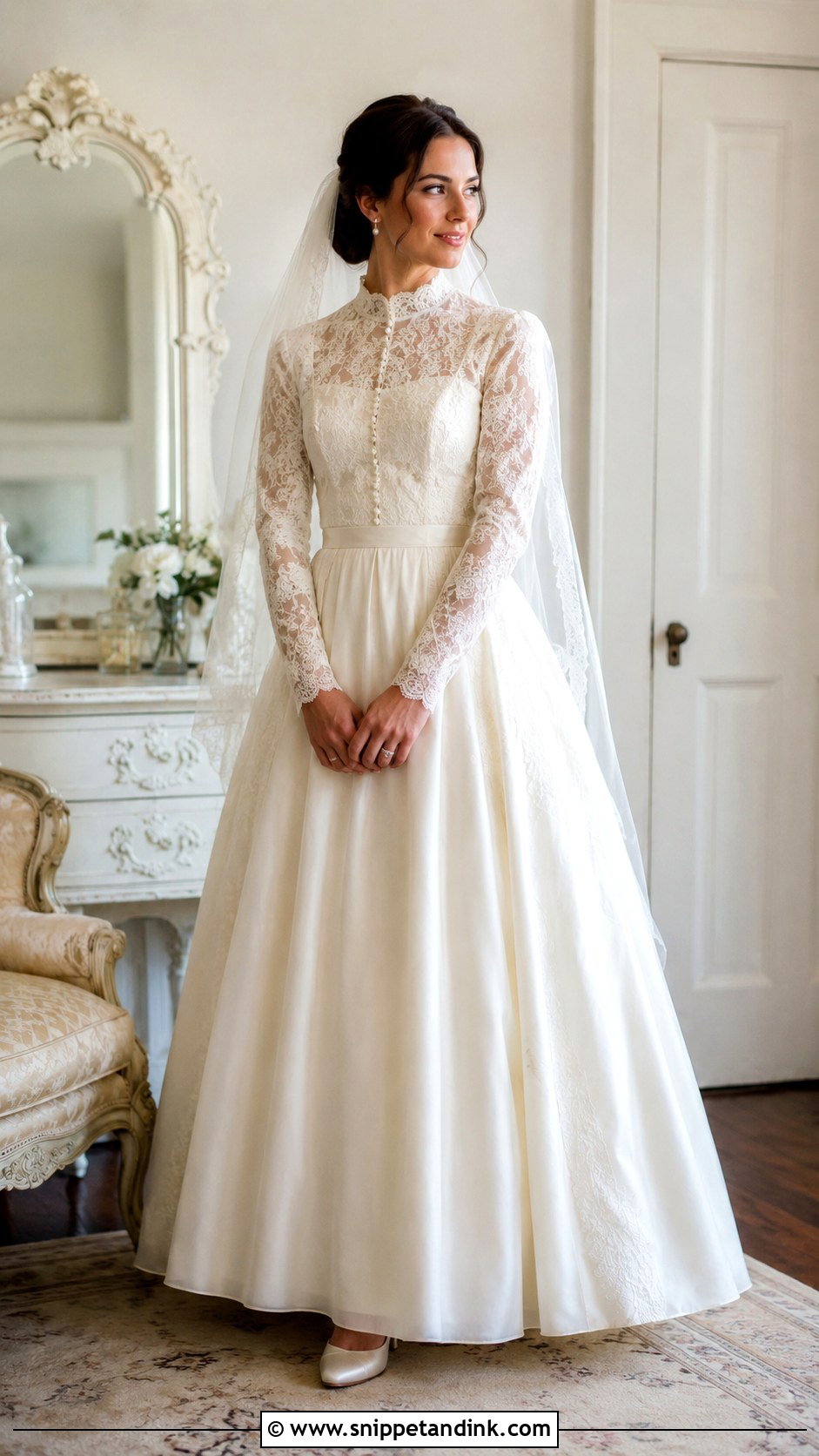
Vintage feels romantic rather than dated when you pick one or two period details and stop there. Lace sleeves, covered buttons, a tea-length hem, a high neck or soft puff sleeves all qualify. A lace high-neck gown with a plain skirt looks classic; a tea-length dress with sleeves is sweeter. If you’re wearing a genuinely old gown, have the seams and lace checked before any alteration, since aged fabric can tear at stress points. Pearl earrings, satin shoes and soft, polished hair keep it current.
19. Modest Boho Wedding Dress
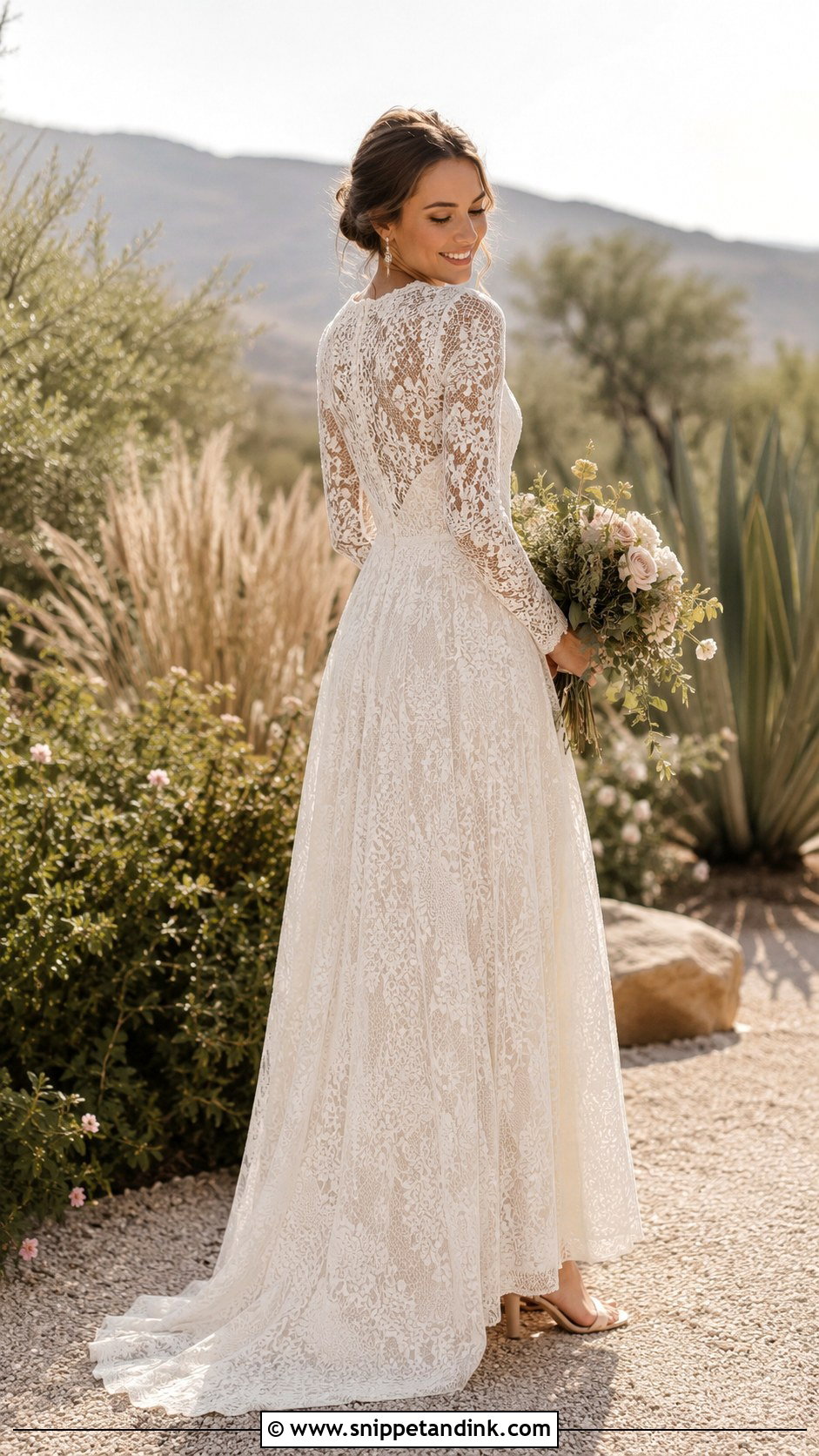
Boho doesn’t need deep necklines or open backs. Long lace sleeves, a lined bodice, a soft skirt and a covered back give the same relaxed mood. Lightweight lace, chiffon and embroidered tulle suit outdoor settings, and a gentle A-line keeps it comfortable. Watch the scale of the accessories: an oversized floral crown or a heavy fringe can make the outfit look messy. Soft waves, delicate earrings, low heels and a natural bouquet suit garden and desert venues.

20. Modest Minimalist Wedding Dress
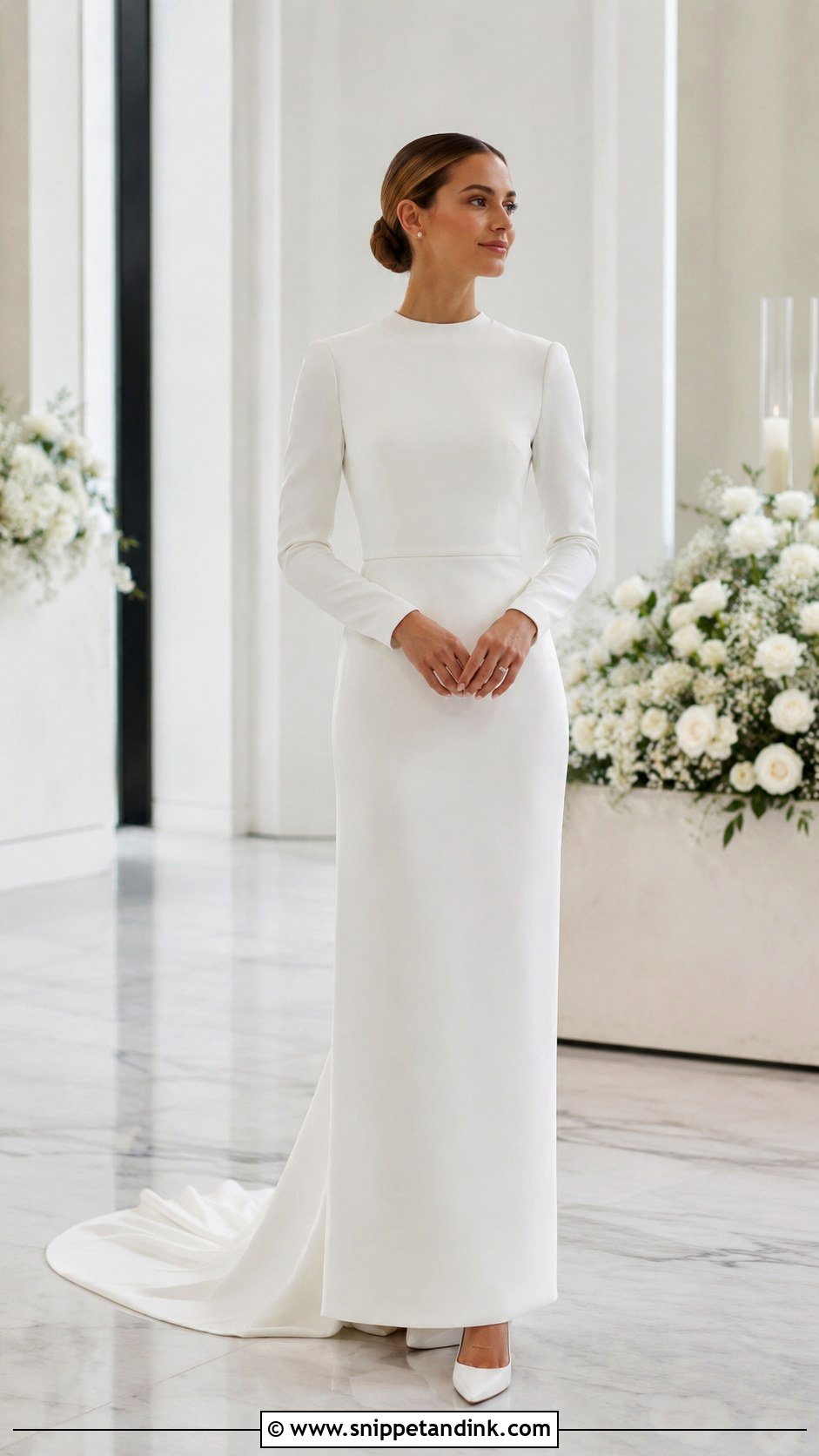
Minimal gowns live or die on fabric and fit. With long sleeves, a high or boat neckline and a smooth skirt, there’s nothing to distract the eye, so every seam shows. Crepe, satin and mikado give structure. A small train, covered buttons or a sculpted waist add just enough detail. This is where I’d spend money on tailoring rather than embellishment. Pearl studs, a sleek veil, white pumps and a smooth bun complete it.
21. Modest Bridal Suit
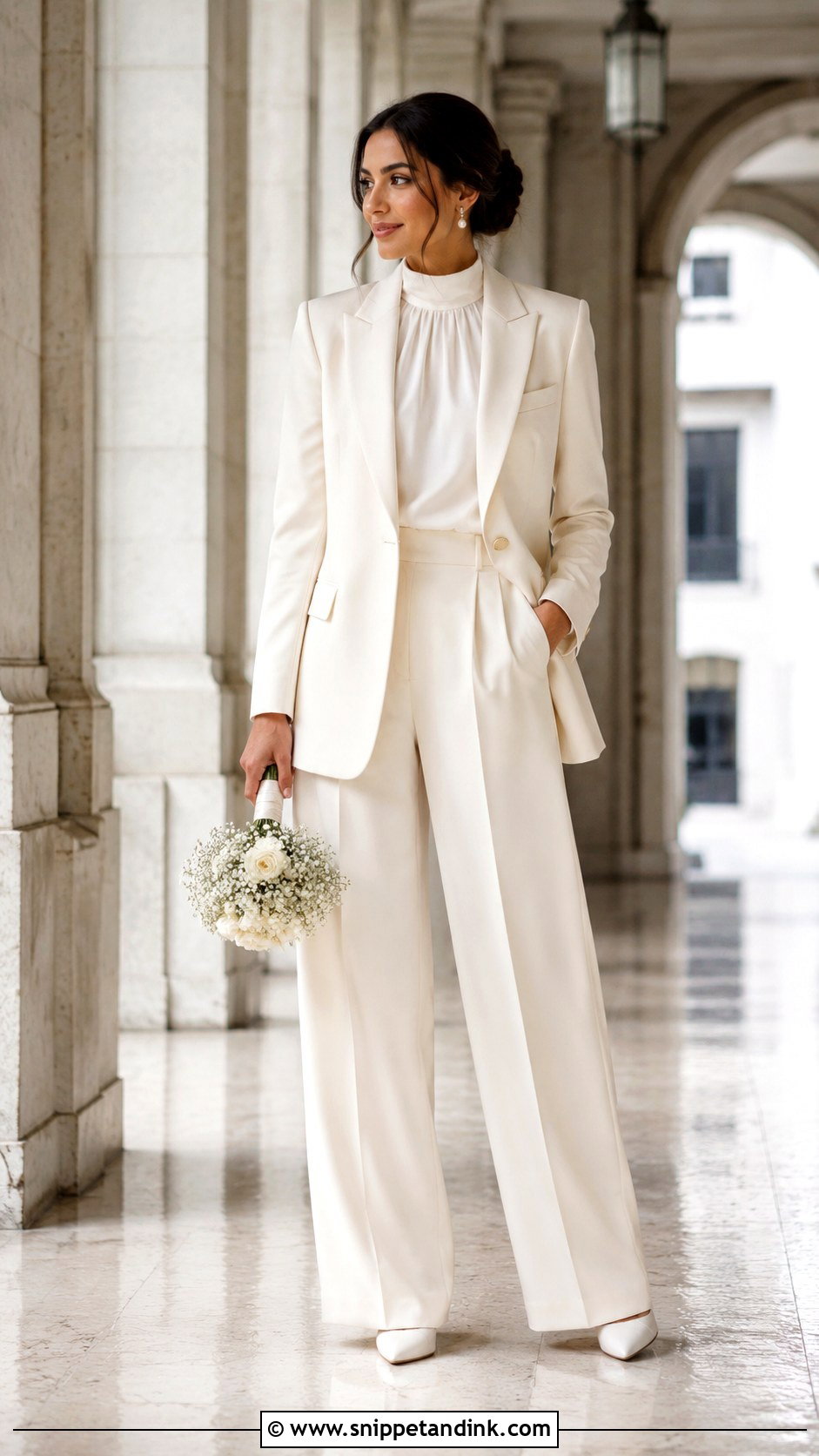
A suit is the most structured way to stay covered. Pair a tailored blazer with wide-leg or straight trousers and a high-neck blouse or silk shell underneath. Ivory, cream and pale champagne all read bridal. Off-the-rack suits almost always need tailoring at the shoulders, sleeves, waist and hem, and the trouser length has to be set with your wedding shoes on. A clean veil or hair bow softens it, and it suits courthouse weddings and elopements especially.
22. Modest Wedding Dress With Overskirt
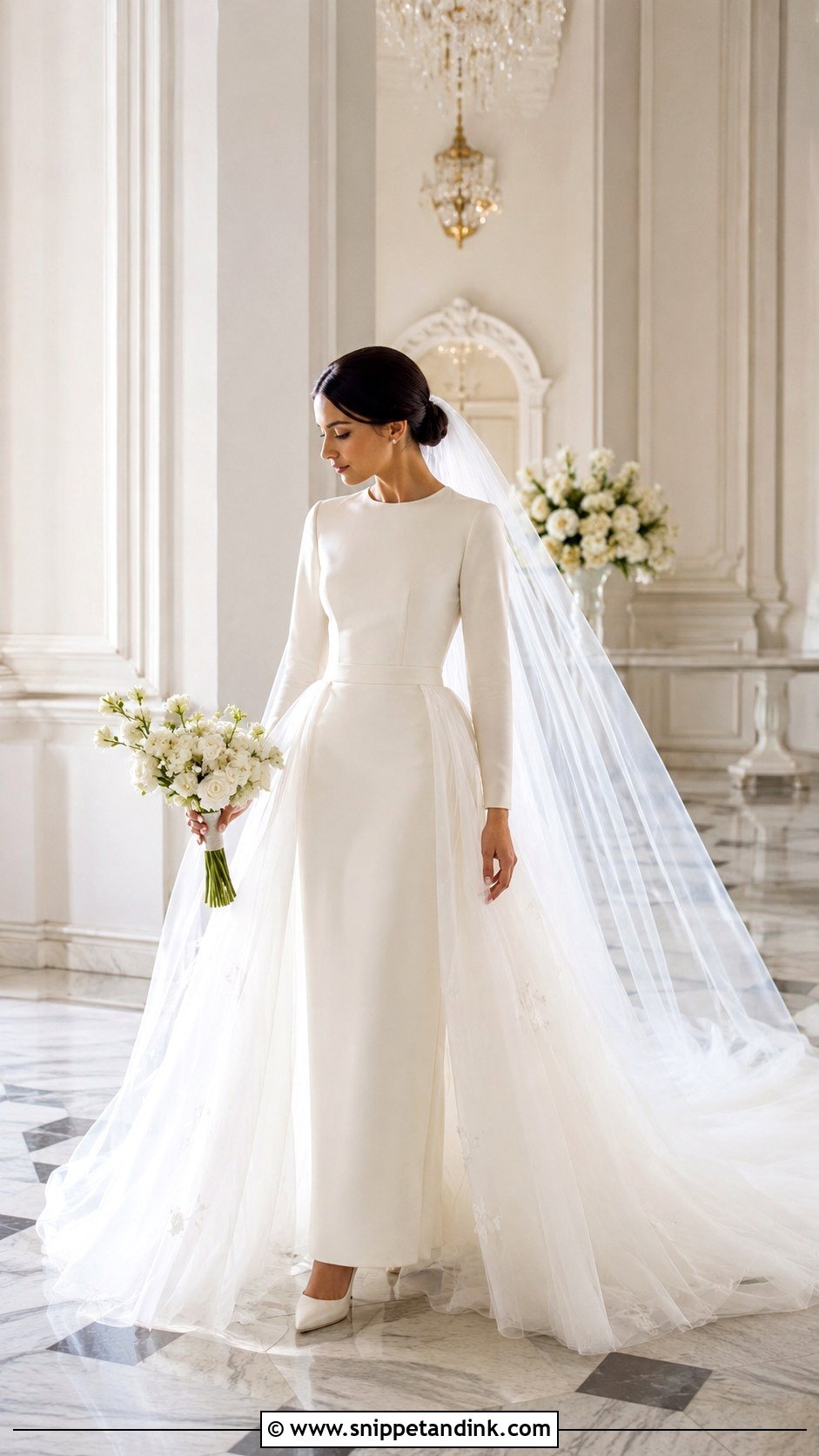
An overskirt gives ceremony volume and reception freedom in one outfit. The base is usually a sheath or column with long sleeves and a covered neckline; the overskirt adds fullness for the aisle and comes off after portraits. Matching fabric looks unified, while tulle feels softer. Practice taking it off before the day. Overskirts fasten with hooks, snaps or ties at the waist, and it takes a helper a couple of minutes, so name someone for the job. A long veil, classic heels and small earrings are enough.
23. Modest Chiffon Wedding Dress
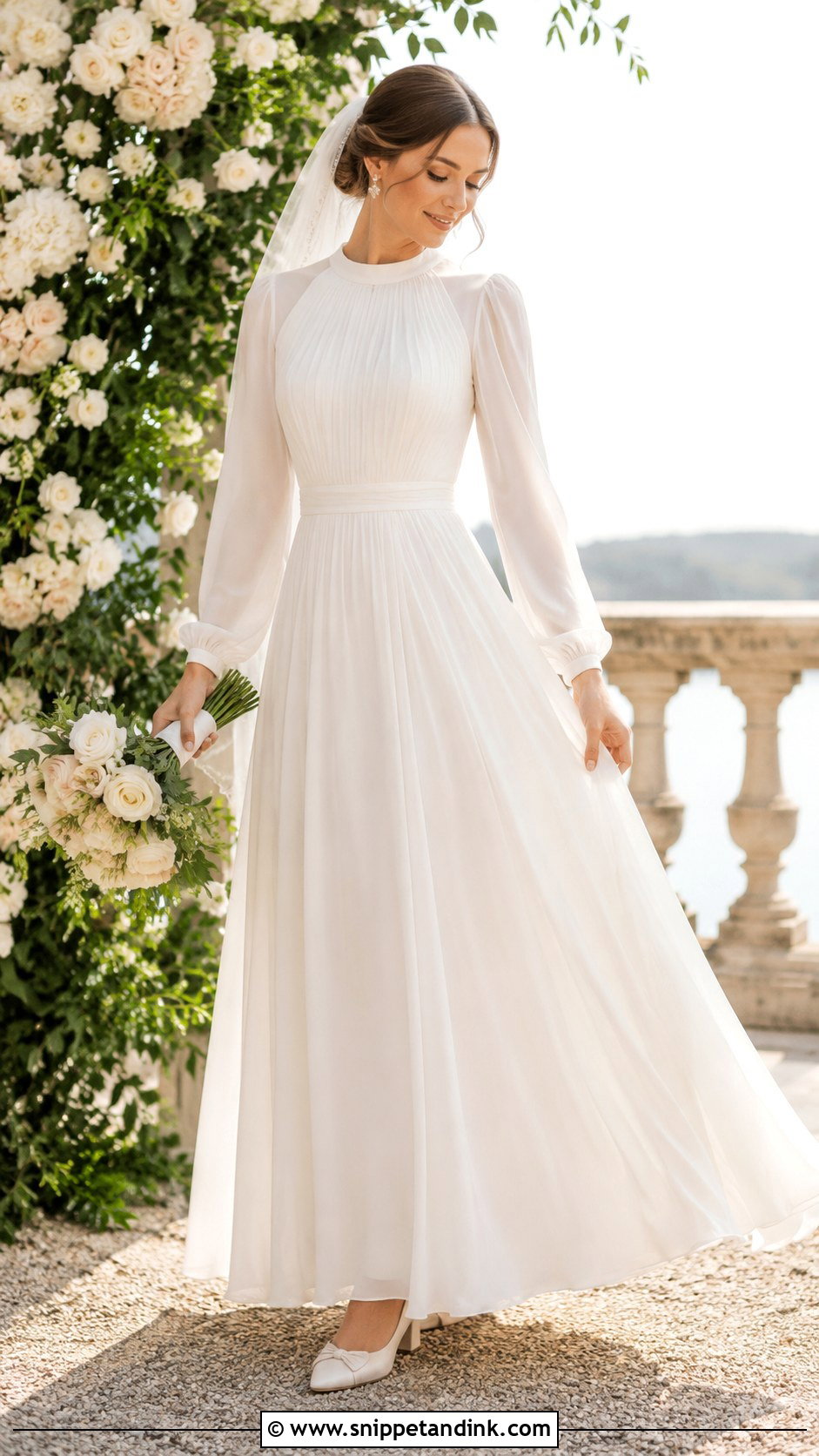
Chiffon floats, breathes and moves with every step, which makes it my go-to for warm-weather and outdoor weddings. For coverage, look for long sheer sleeves lined where needed, a high neckline and an A-line or full skirt. Chiffon is delicate: it frays easily and pulls if a bracelet or ring catches it, so I keep jewelry smooth and simple. A simple veil and low block heels finish a gown that stays comfortable from ceremony to reception.
24. Modest Pearl Wedding Dress
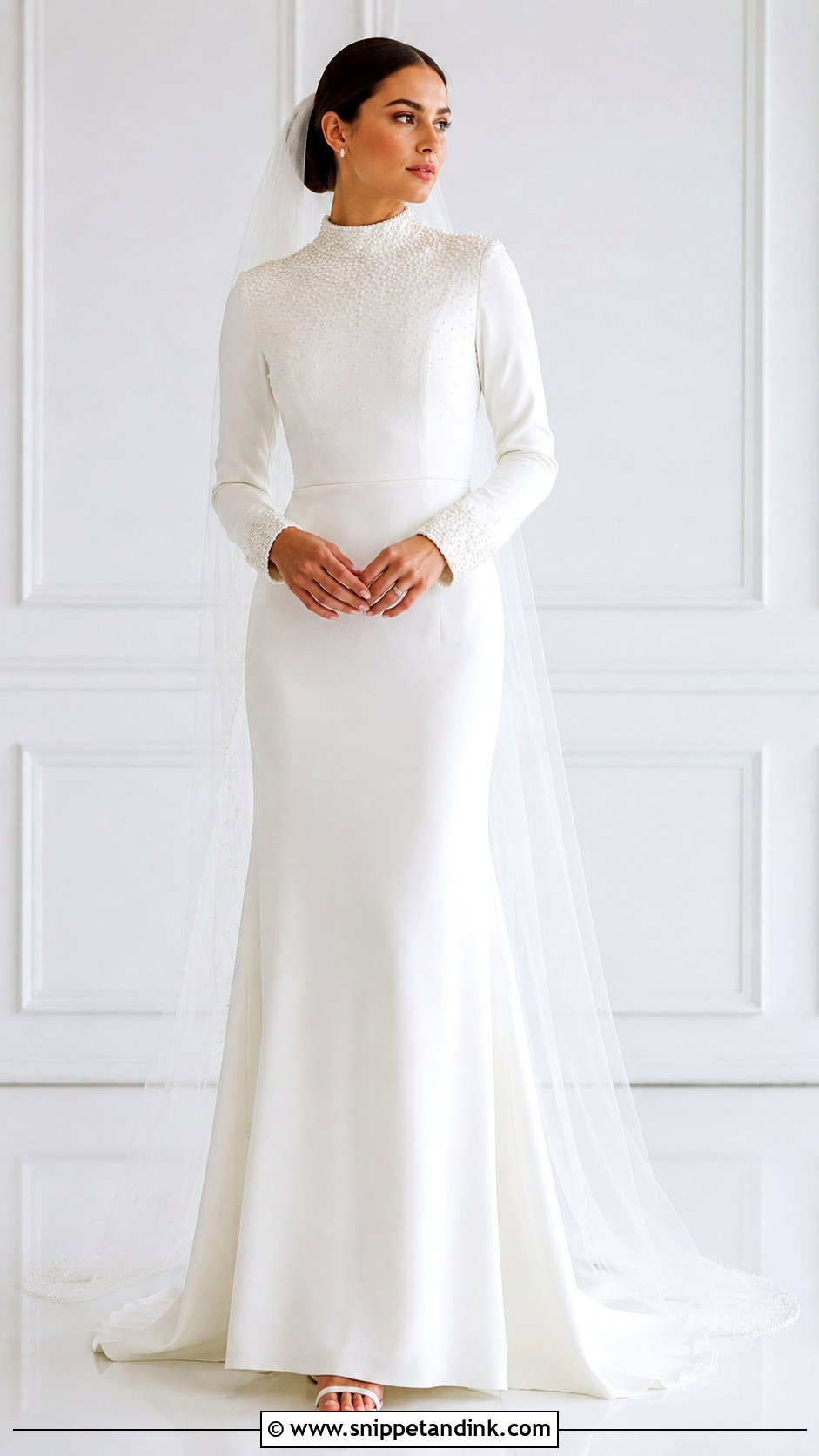
Pearls add texture and glow without the flash of crystals. They can sit on sleeves, the bodice, the skirt, the veil or the waist, and they look best used sparingly. A high-neck crepe dress with pearl-trimmed sleeves looks modern; a tulle gown with scattered pearls looks romantic. Sewn pearls are heavier than sequins, so a densely beaded sleeve can drag; I check the shoulder seam doesn’t pull. Keep the rest simple: pearl studs, satin heels and a clean veil.

25. Modest Reception Wedding Dress
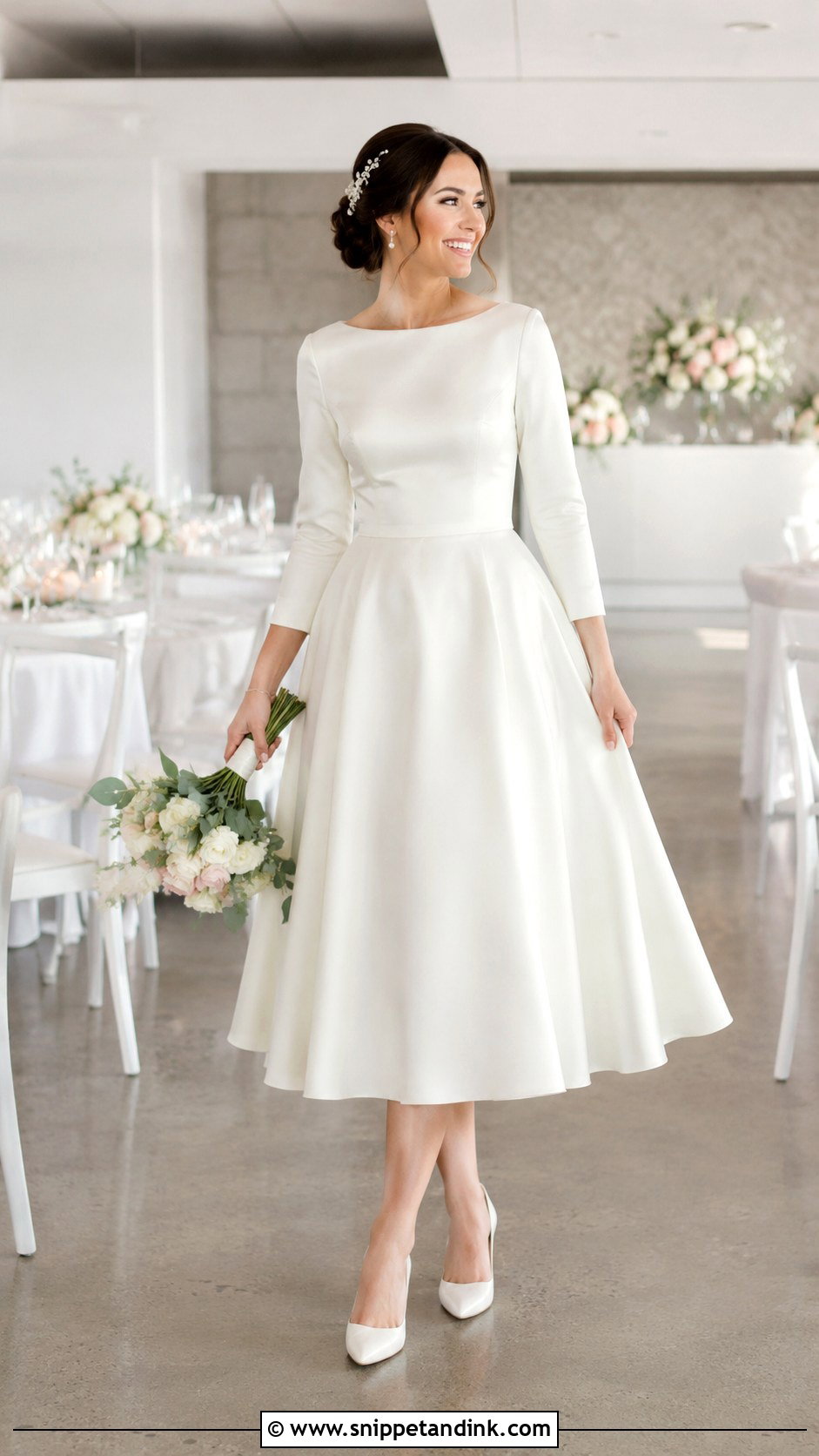
A second dress for the reception lets you move and still look bridal. Many brides go shorter, lighter or simpler for the party. A tea-length satin dress with sleeves, a crepe midi or a bridal jumpsuit all suit the change. Keep the neckline secure and the fabric polished so it still reads formal. Plan the change itself, too: allow at least fifteen minutes with help, and leave the ceremony hairstyle intact so you aren’t redoing hair as well. Comfortable heels and pearl earrings finish it.
Long Sleeves in Summer Heat
Coverage and comfort clash most in warm months. A long sleeve in heavy satin will feel hot by mid-afternoon, so for summer weddings I steer modest brides toward lace, chiffon or a light crepe, lined in a breathable fabric rather than polyester. Ask for the armhole to be cut fairly high: a low armhole looks fine standing still, but the whole bodice lifts when you raise your arm to hug someone or throw the bouquet.
Sleeve length matters too. A sleeve that ends at the wrist bone stays clean while you hold the bouquet; one that covers the hand gets marked by makeup and food. Buttoned cuffs look lovely but slow you down when you need to wash your hands, so a hidden elastic loop or a zip is often the kinder choice.
Pairing a Hijab or Head Covering With the Gown
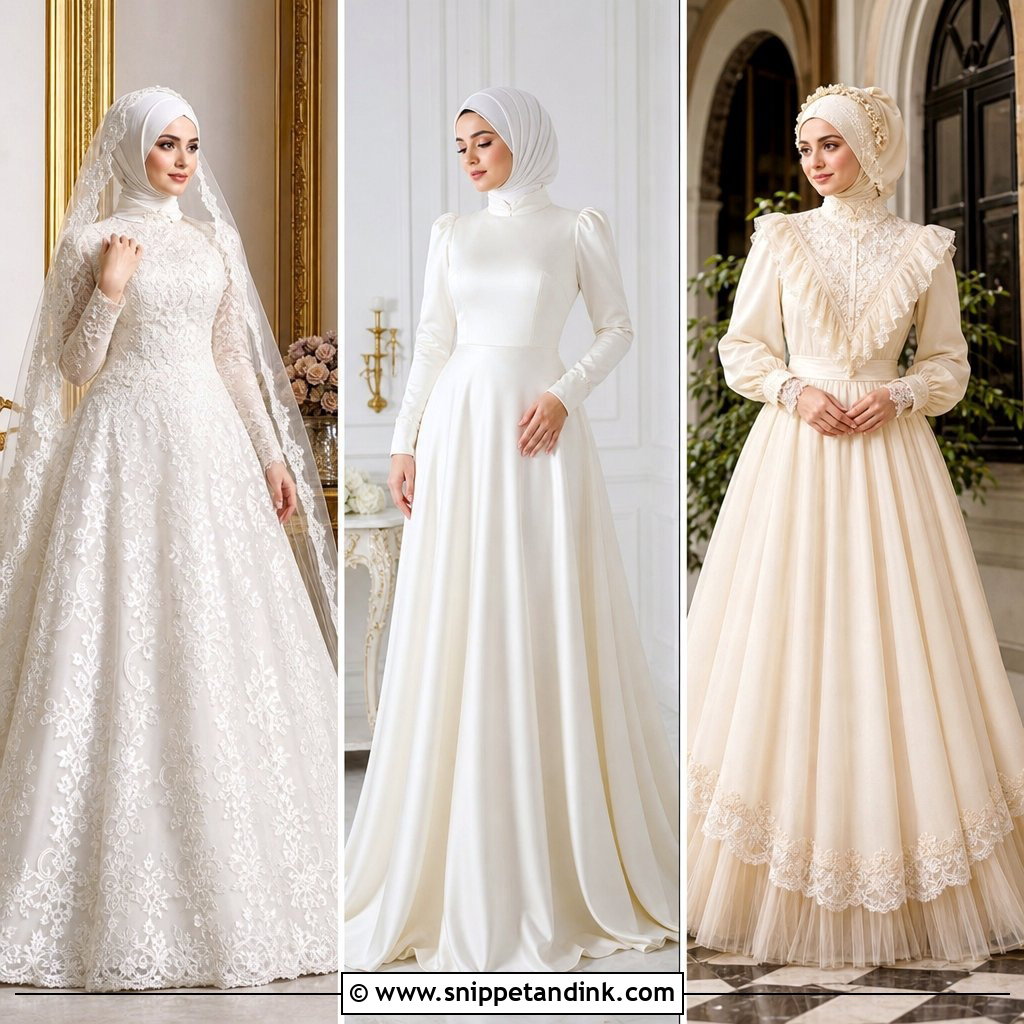
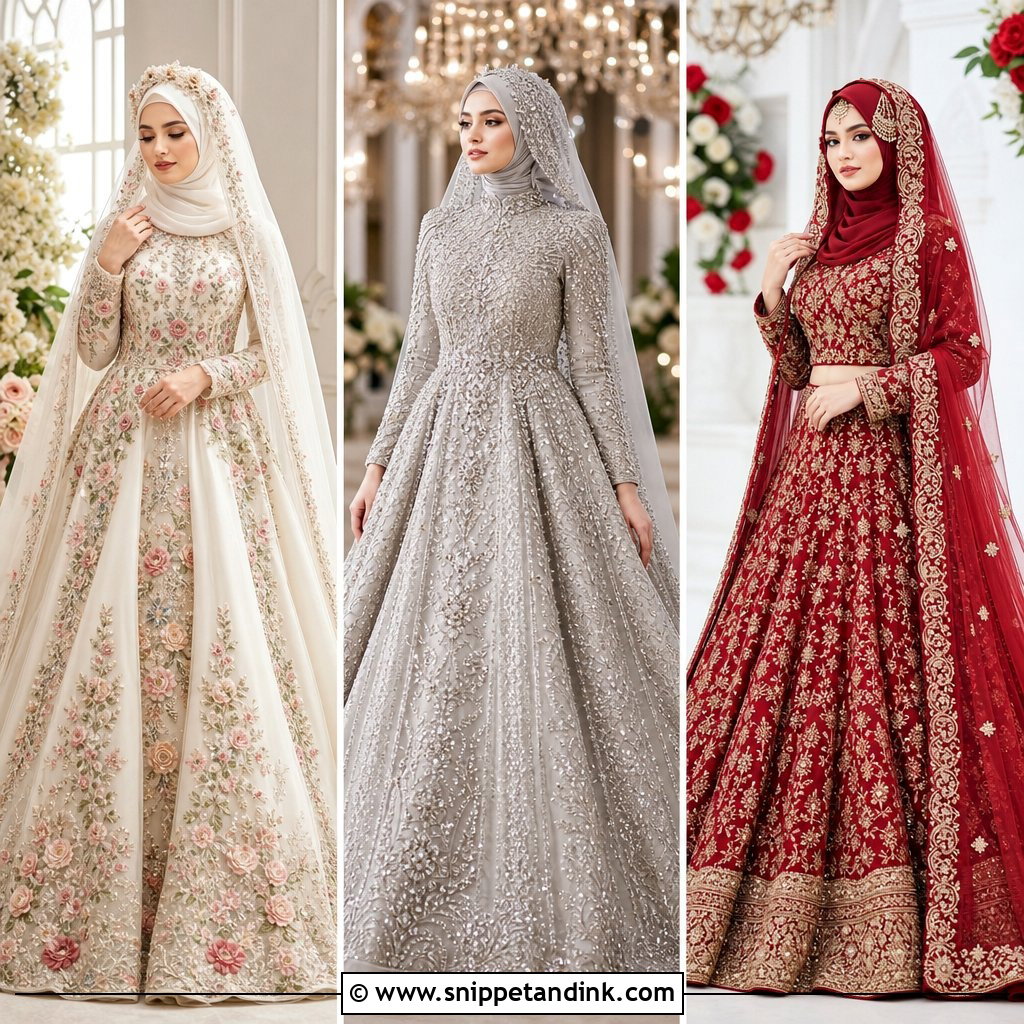
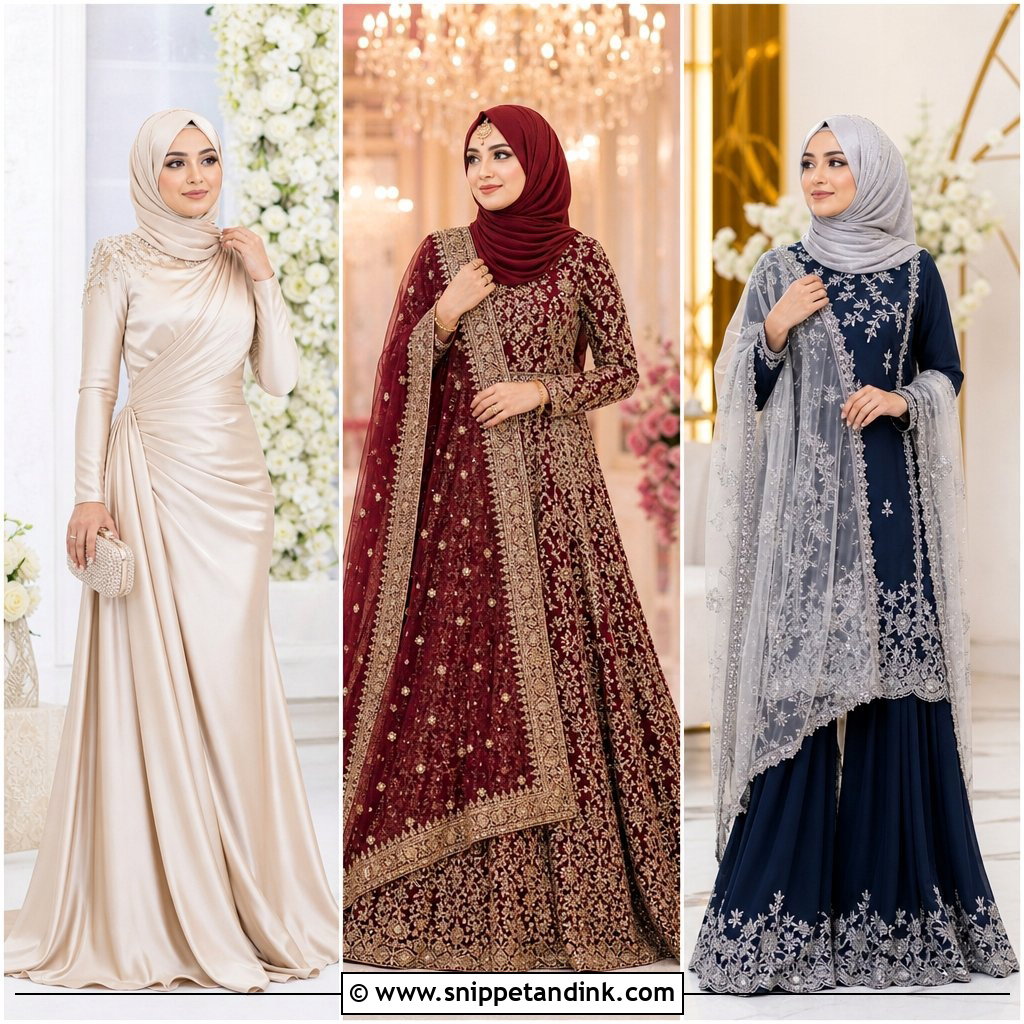
For brides who cover their hair, the hijab is part of the dress, not an accessory added on the morning. I match it to the gown’s exact shade of ivory using a fabric swatch, since white chiffon beside an ivory satin dress looks grey in photographs. A breathable underscarf holds everything in place, and pins should sit where the veil or a hairpiece will hide them.
If you’re adding a veil over the hijab, choose a lighter tulle and anchor it with a comb or pins into the underscarf rather than into the outer layer, which tends to slip under the weight. Practice the full wrap at your trial, with the veil on, and take photos from the back.
Covered, Comfortable and Still Unmistakably Bridal
Modest bridal dressing comes down to necklines, sleeves, fabric and silhouette, and how you combine them decides whether the look feels soft, sleek, classic or modern. Long lace sleeves suit a traditional ceremony, satin gowns read polished, capes add drama and suits feel fresh. Tailoring, lining, shoes and the veil decide whether any of it works on the day. Take any of these looks as a starting point and adjust it to your venue, season and body; coverage and personality can absolutely share the same dress.
You'll Like These Ideas:








Leave a Reply