
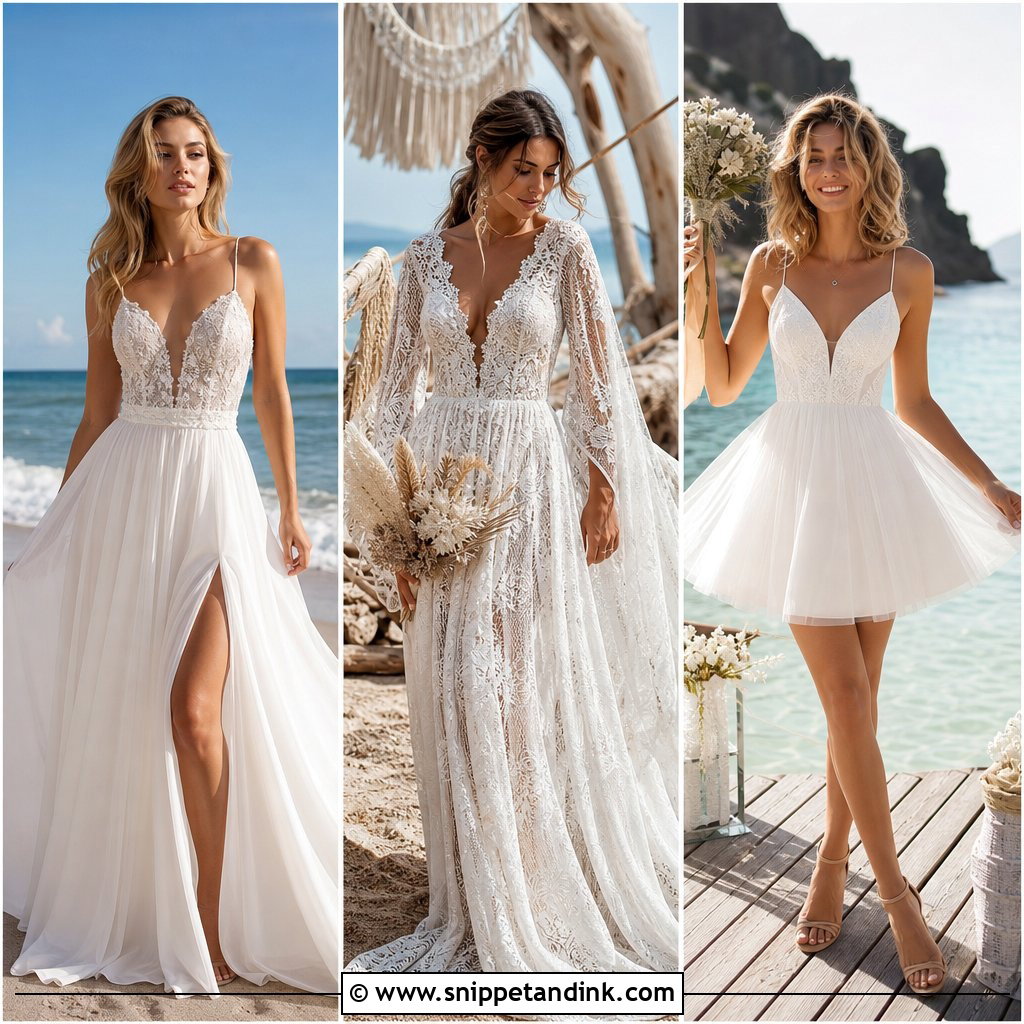
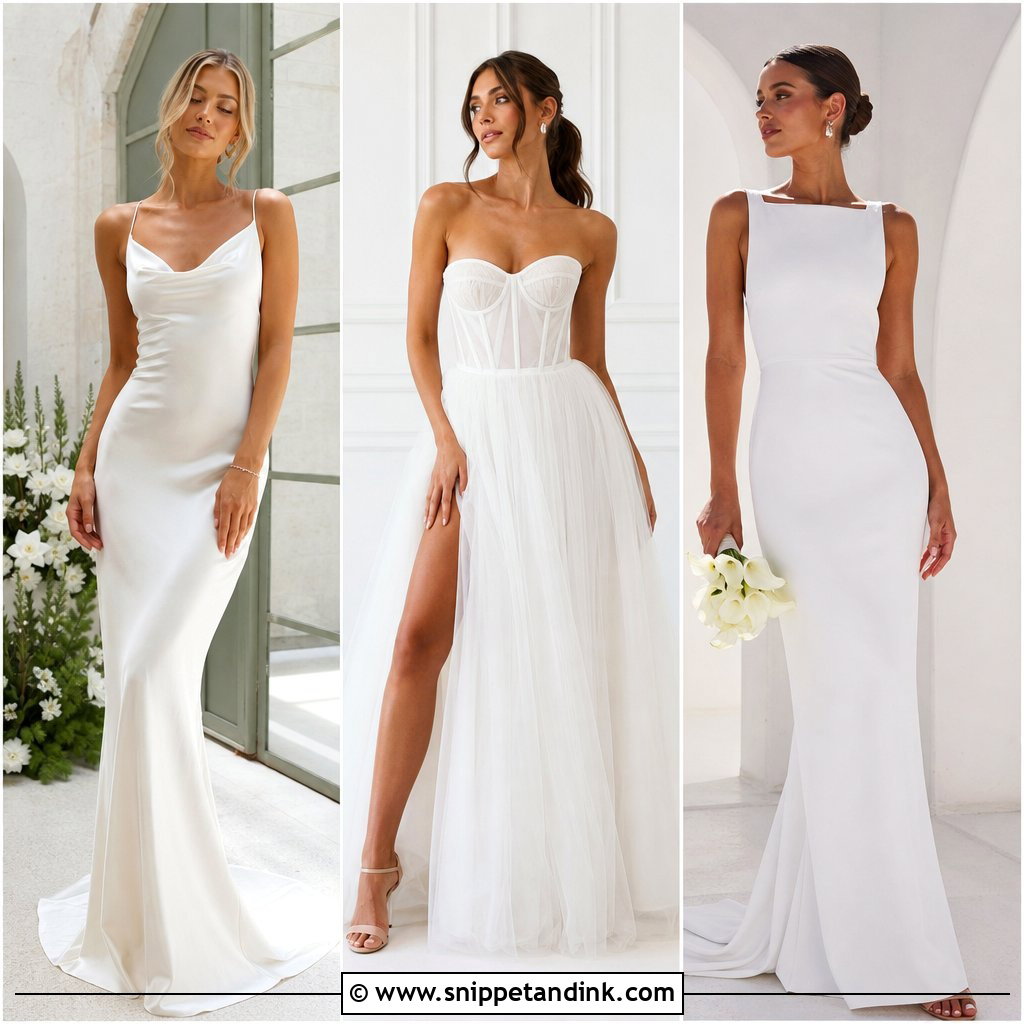
Most brides walk into a salon with a picture of one detail, a sleeve or a neckline, and leave having fallen for a completely different shape. That’s why I compare whole silhouettes first. Bridal design right now covers a wide range: lace, visible corsetry, drop waists, short hemlines, dimensional flowers and convertible pieces that change between ceremony and party. Below are twenty dresses, from formal ball gowns to courthouse minis, modest cuts and plus-size construction, each styled with shoes, veil and jewelry. I’ve added the fitting checks I’d make, because fabric weight, movement and venue matter as much as how a dress looks standing still.
Matching the Dress to the Kind of Ceremony You’re Having
Before I pull a single gown, I ask where and how the marriage is happening. The same dress that suits a cathedral can look out of place at a registry office, and a gown built for a hotel ballroom can be miserable on a cliff path.
- Civil or courthouse ceremonies: rooms are small and the ceremony is short. Tea length, minis, slim columns and suits work well, and a short veil or bow adds the bridal note.
- Religious venues: many churches, mosques and temples have expectations about covered shoulders or arms. Ask before you shop, then use a bolero, cape or detachable sleeves if your gown is strapless.
- Destination weddings: pick a fabric that survives packing. Crepe and chiffon recover from creases better than taffeta or stiff satin. Carry the dress on the plane rather than checking it, and plan to have it steamed on arrival.
- Outdoor or elopement ceremonies: lighter skirts, shorter trains and flat or block heels make walking on grass, sand or trails possible.
Once the ceremony type is settled, the list of sensible silhouettes usually shrinks by half, which makes the first appointment far easier.
1. Satin Ball Gown Marriage Dress
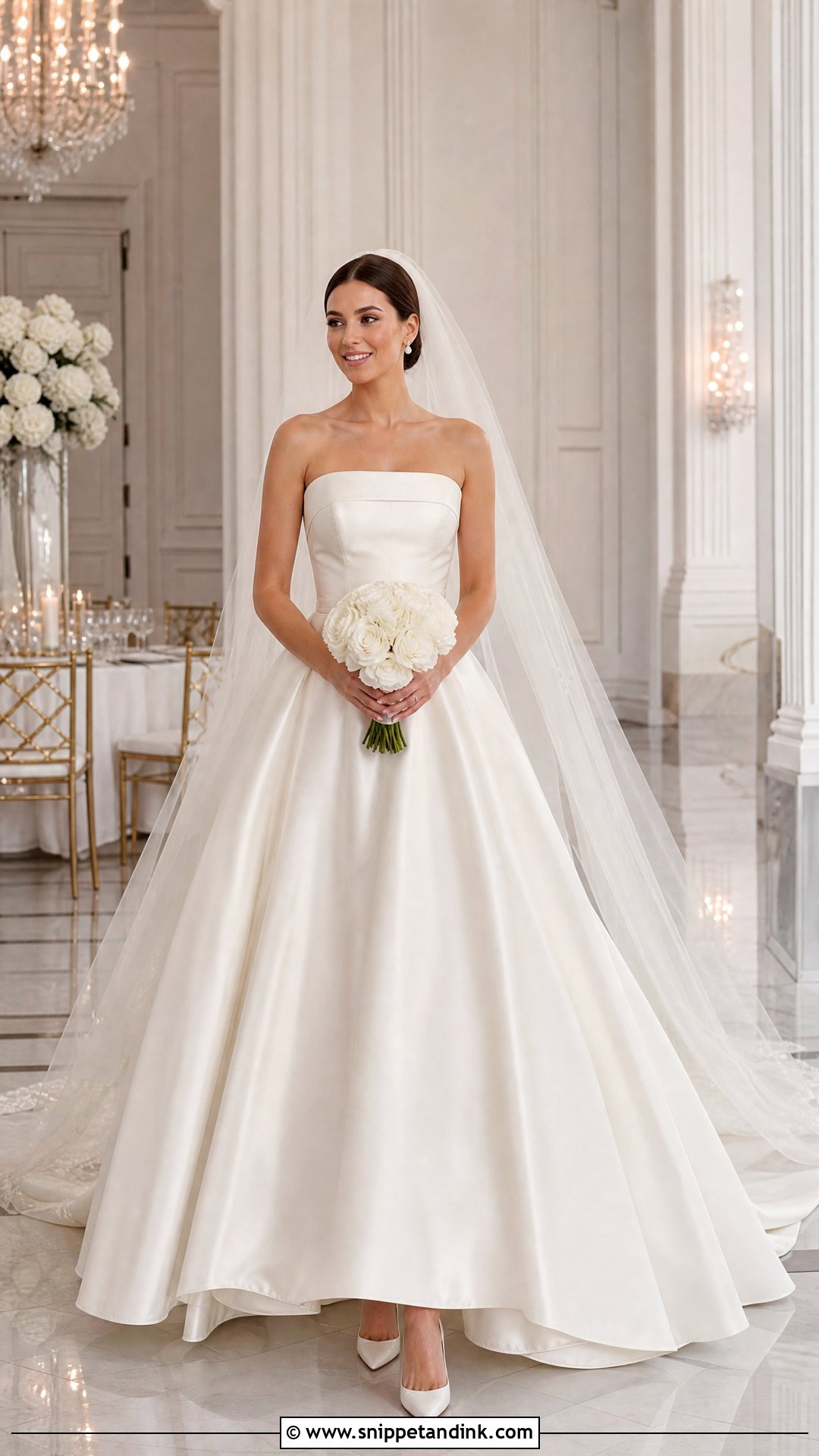
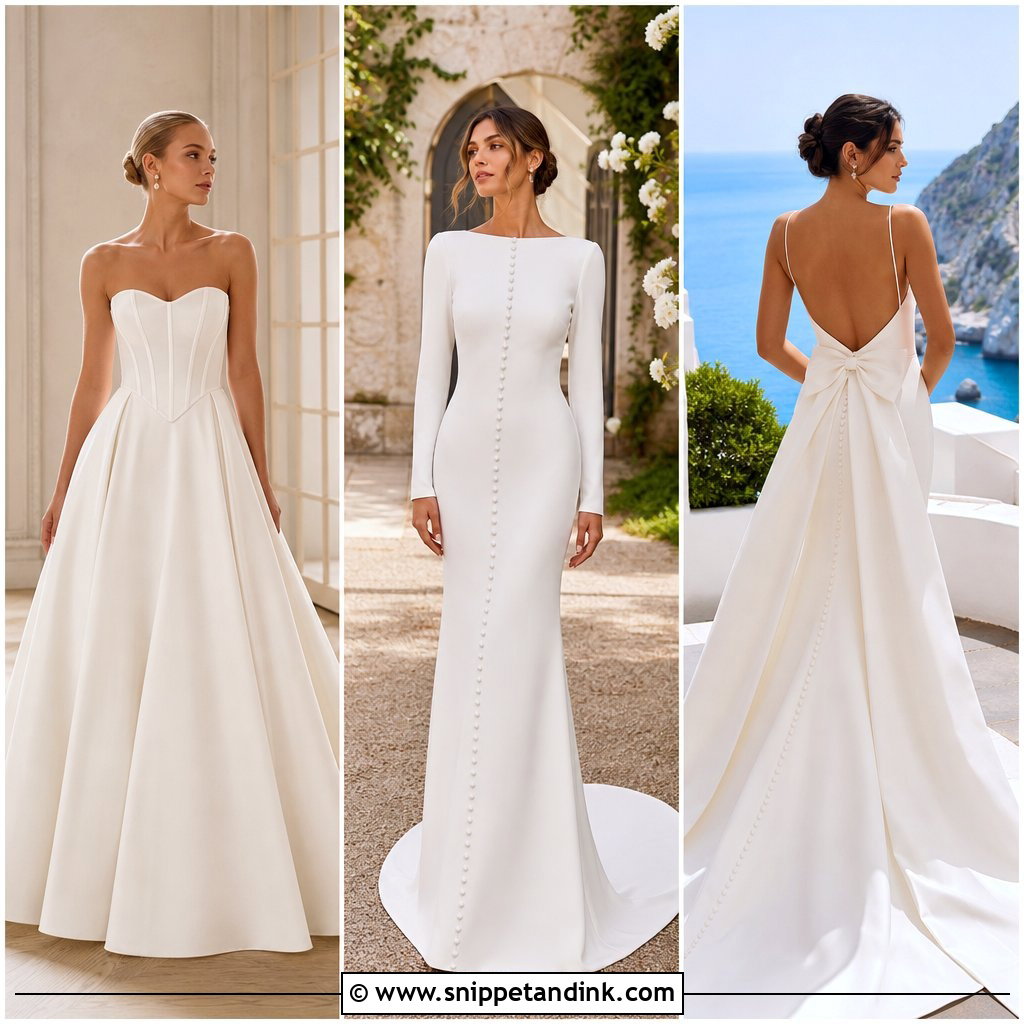
Satin reflects light, so a ball gown in it looks its richest in a ballroom or hotel with chandeliers. The shape is simple: fitted bodice, full structured skirt. Go strapless for the classic line, or add wide straps if you want support you don’t have to think about. A fuller bust usually does better with internal corsetry and a gently curved neckline than a straight one. A cathedral veil balances the skirt; pearl or crystal earrings are plenty. Pointed pumps disappear under the hem, so choose them for comfort. Keep the bouquet small. Book a proper hem and a strong bustle, or you will be lifting the skirt all evening.
2. Lace A-Line Marriage Dress
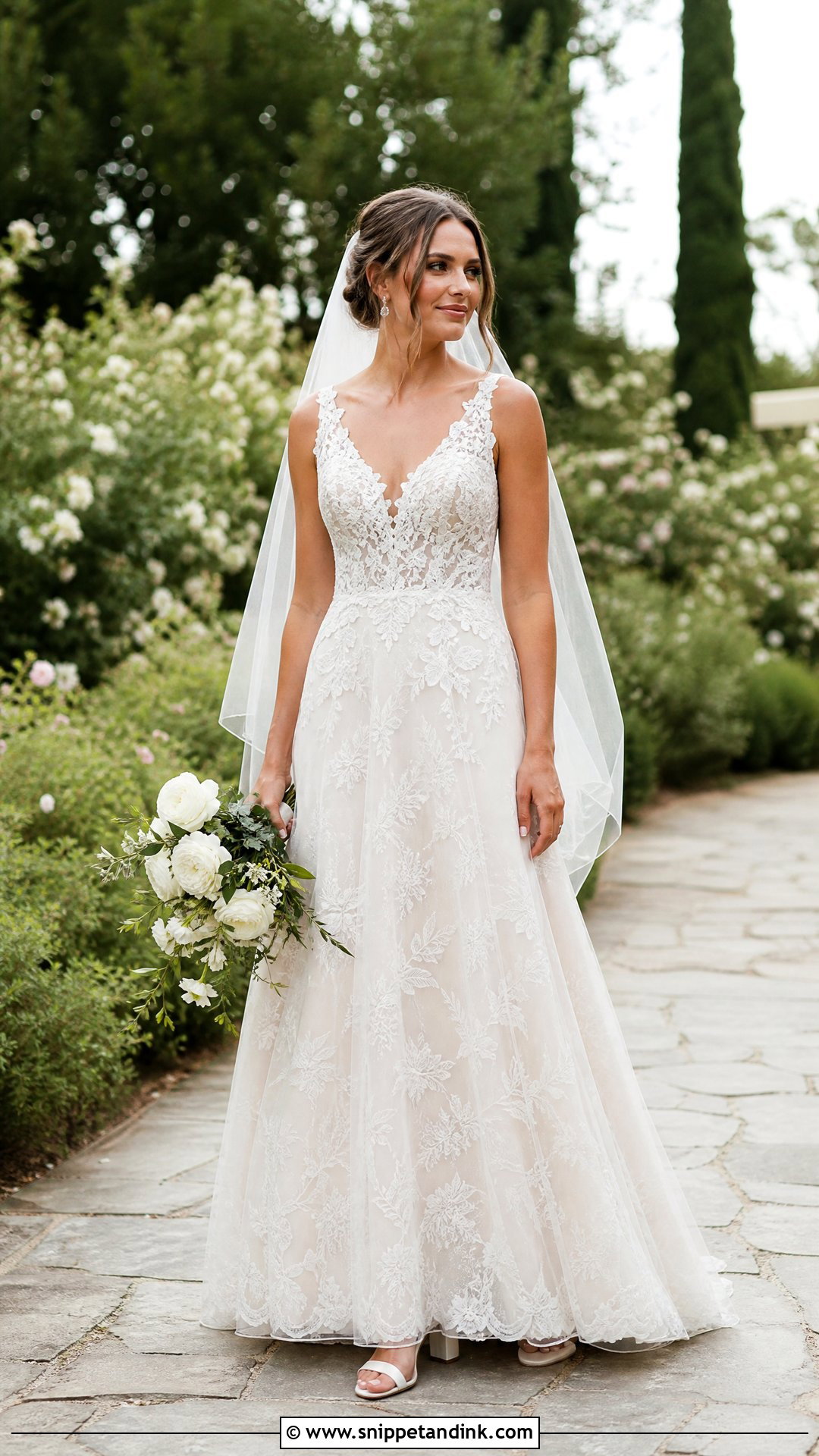
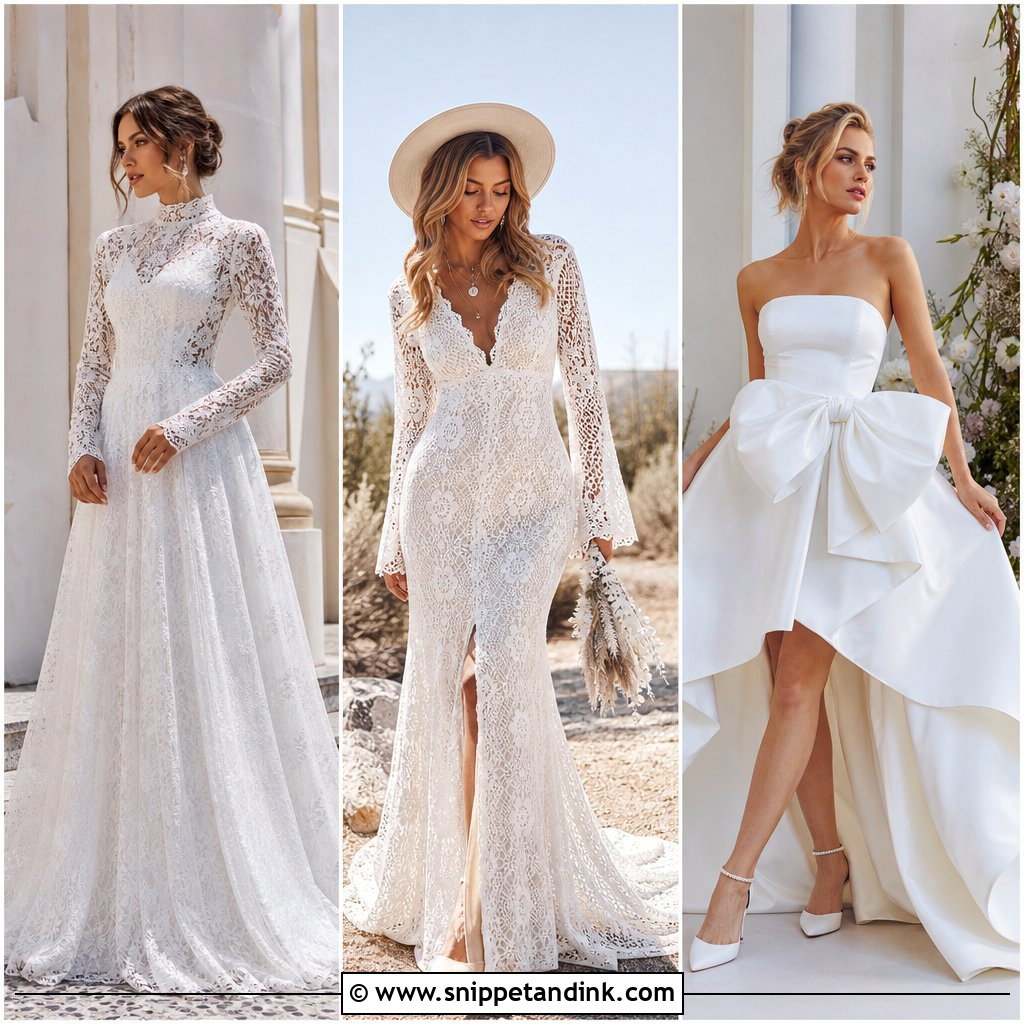
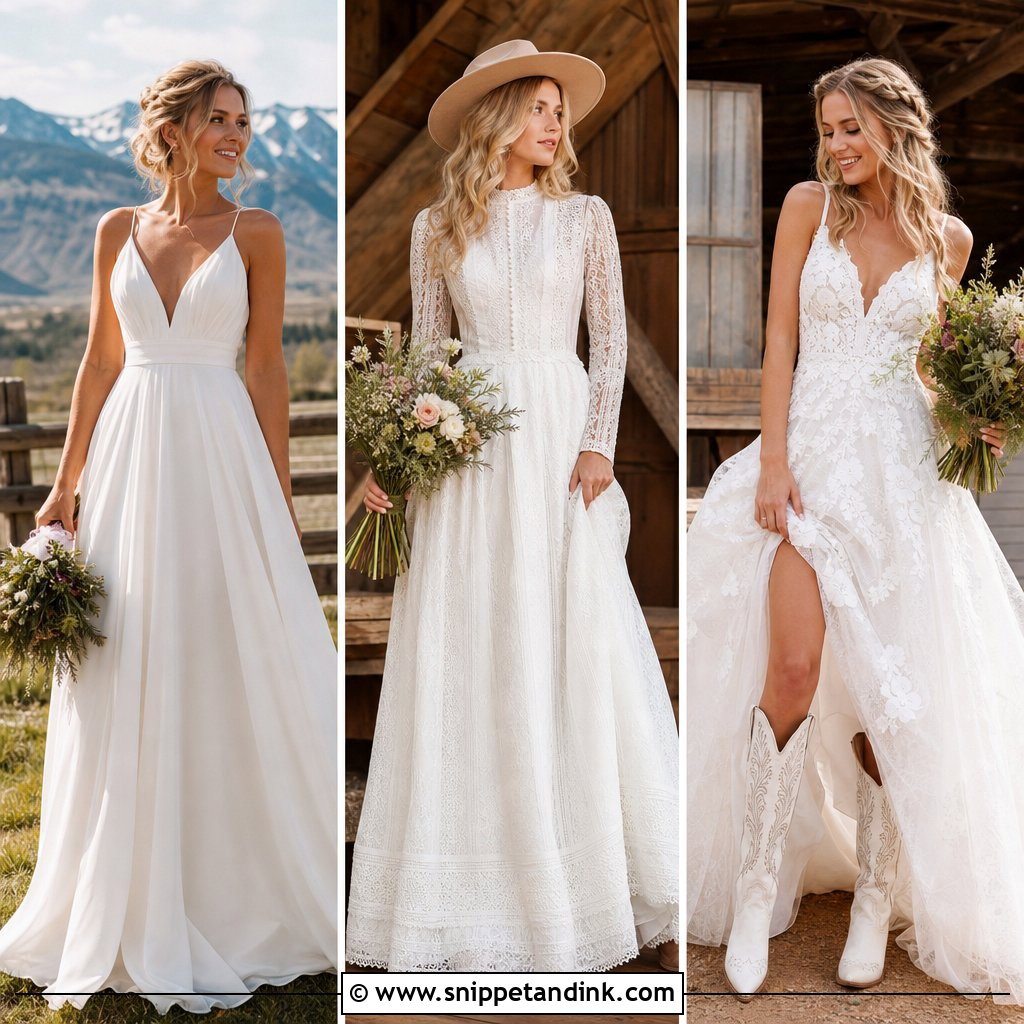
Of all the shapes I fit, lace on an A-line is the one that rarely fails. The bodice follows the torso and the skirt widens gradually, so it can flatter petite, tall, straight and curvy figures alike. Floral lace over a neutral lining shows the pattern clearly in photos. A fingertip veil, small drop earrings and ivory block heels keep it uncluttered. Outdoors, choose lace on a lighter backing and skip a long train that drags through grass. The waist seam placement is the alteration that changes everything; an inch up or down transforms the proportions.
3. Long Sleeve Marriage Dress
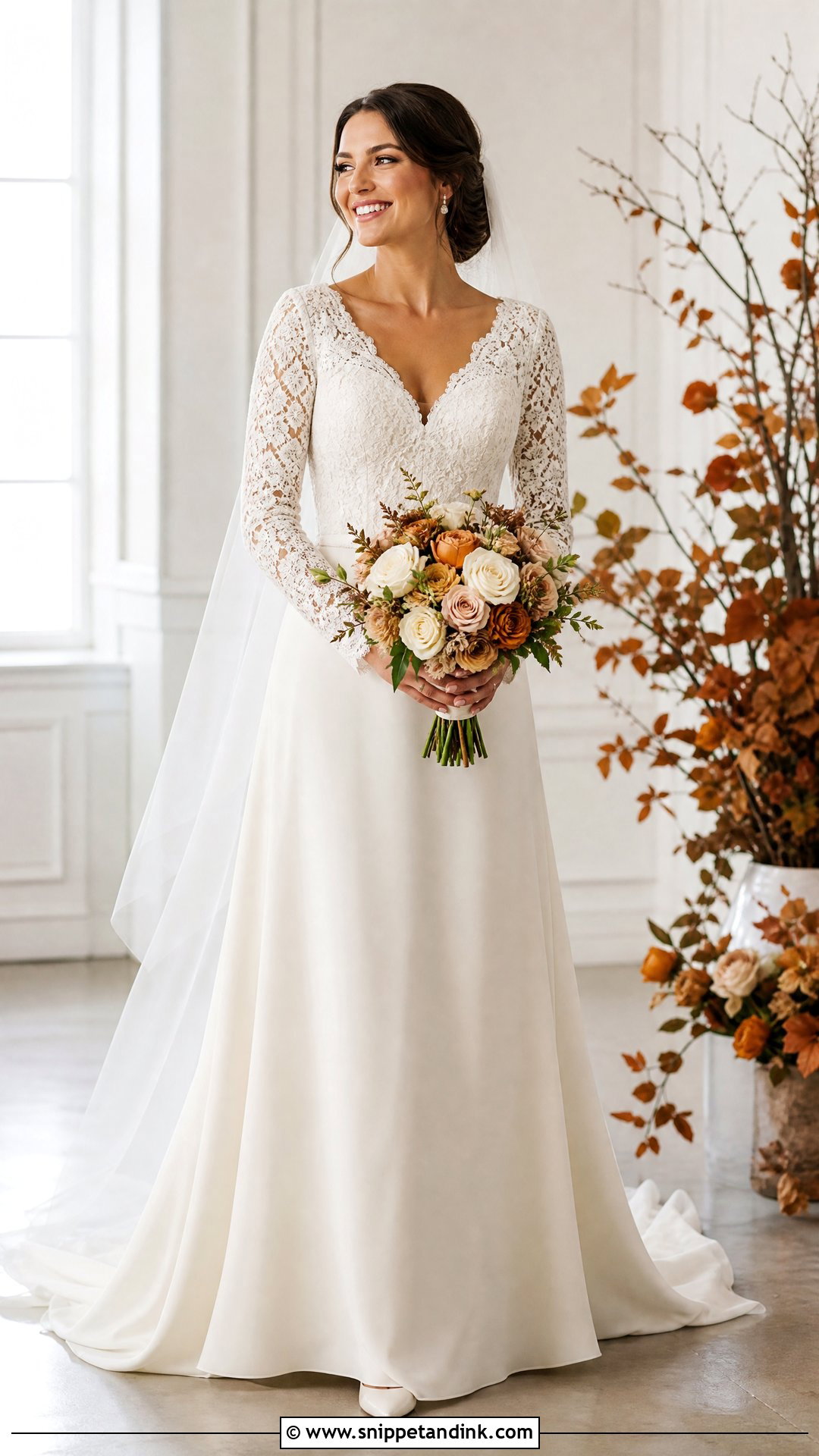
Sleeves give coverage, and the fabric decides the mood: sheer lace looks delicate, while fitted crepe or satin looks sharper. They suit fall, winter and heavily air-conditioned rooms. A V-neck, scoop or open back balances covered arms if you’re comfortable with it. Wear a low bun so hair doesn’t catch on beading or back buttons, and choose a simple veil that doesn’t hide the sleeve work. Small earrings and closed-toe heels finish it. Before buying, raise your arms, hold an imaginary bouquet and hug someone. If the fabric pulls across the back, the armhole is cut too low, and that is hard to fix later.
4. Off Shoulder Marriage Dress
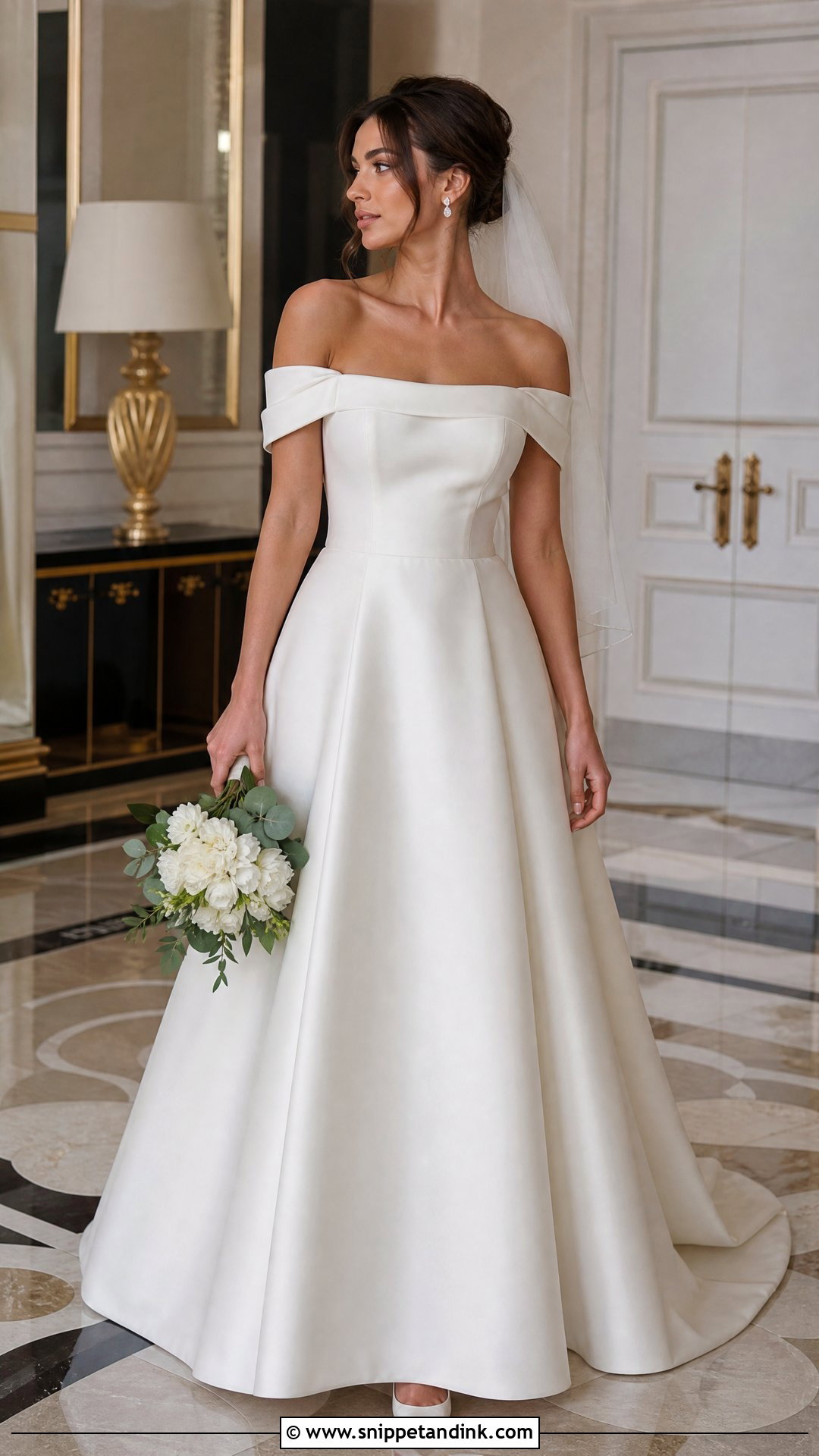
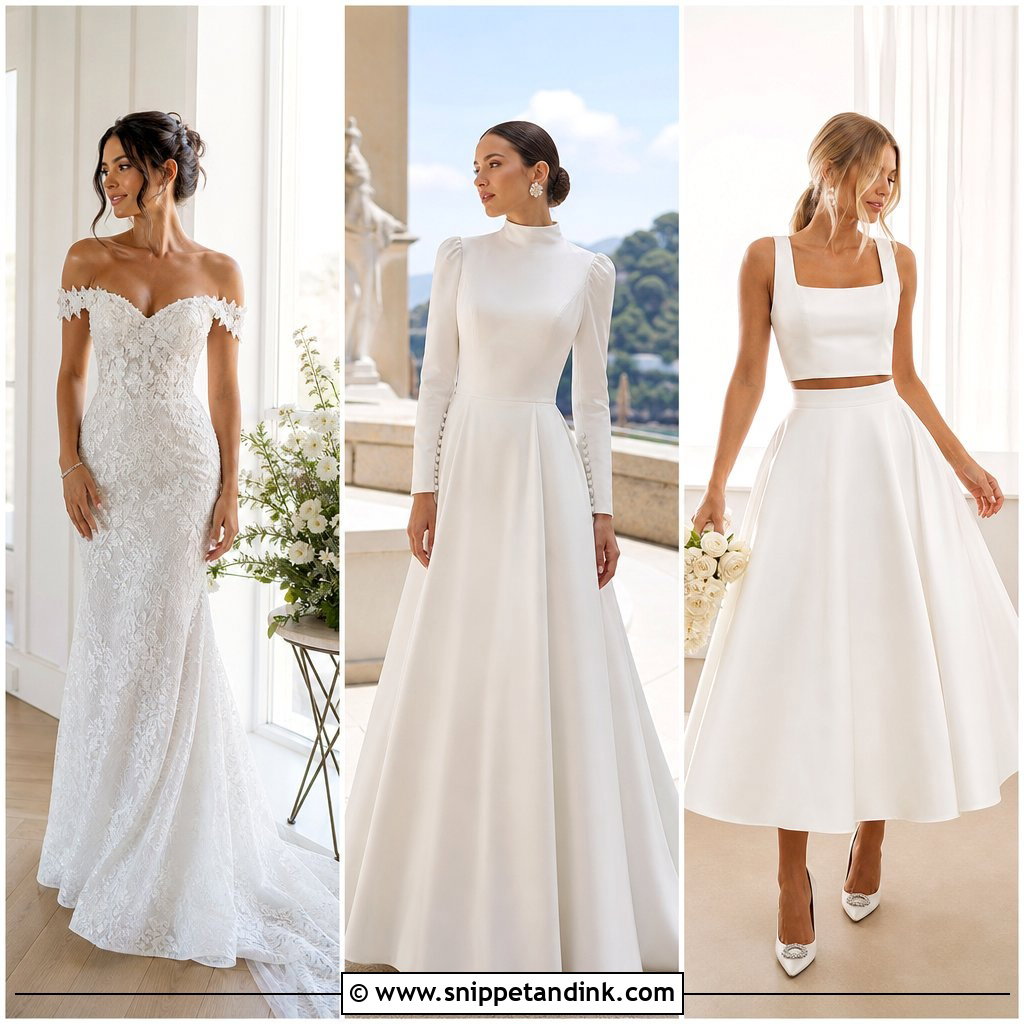
Off-the-shoulder necklines frame the collarbone and make for strong portraits. Draped sleeves, fitted bands or structured folds all achieve it. Because the eye goes straight up, a neat chignon and short statement earrings are the right partners; a heavy necklace only works if the neckline is very plain. Shapewear needs to be low-profile so nothing peeks above the neckline. Pair a fitted bodice with an A-line or ball skirt for structure, or a flowing skirt for softness. Test your arm movement during alterations. A medium-length veil, pointed pumps and a bouquet held a little below the waist finish it.
5. Strapless Corset Marriage Dress
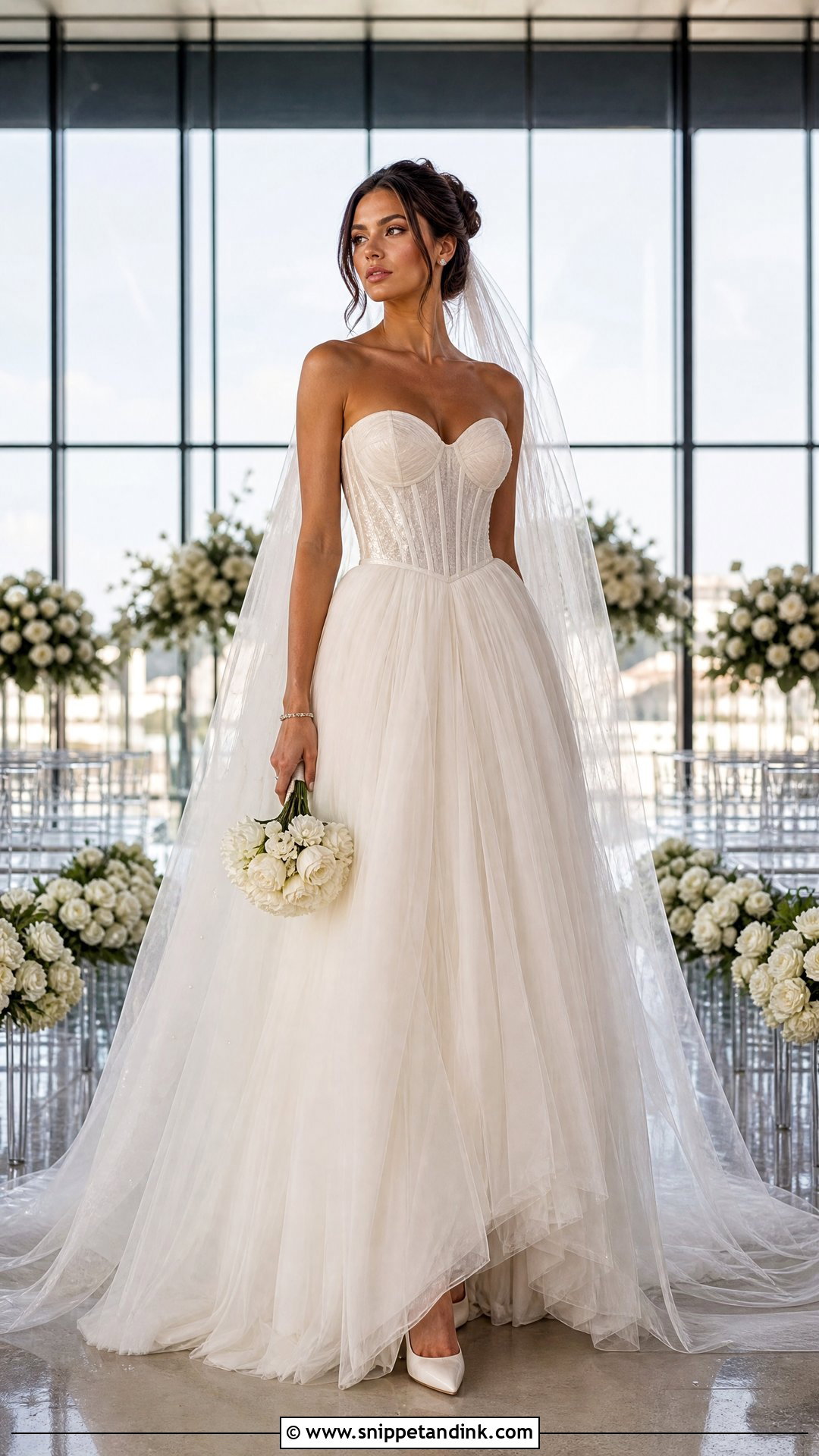
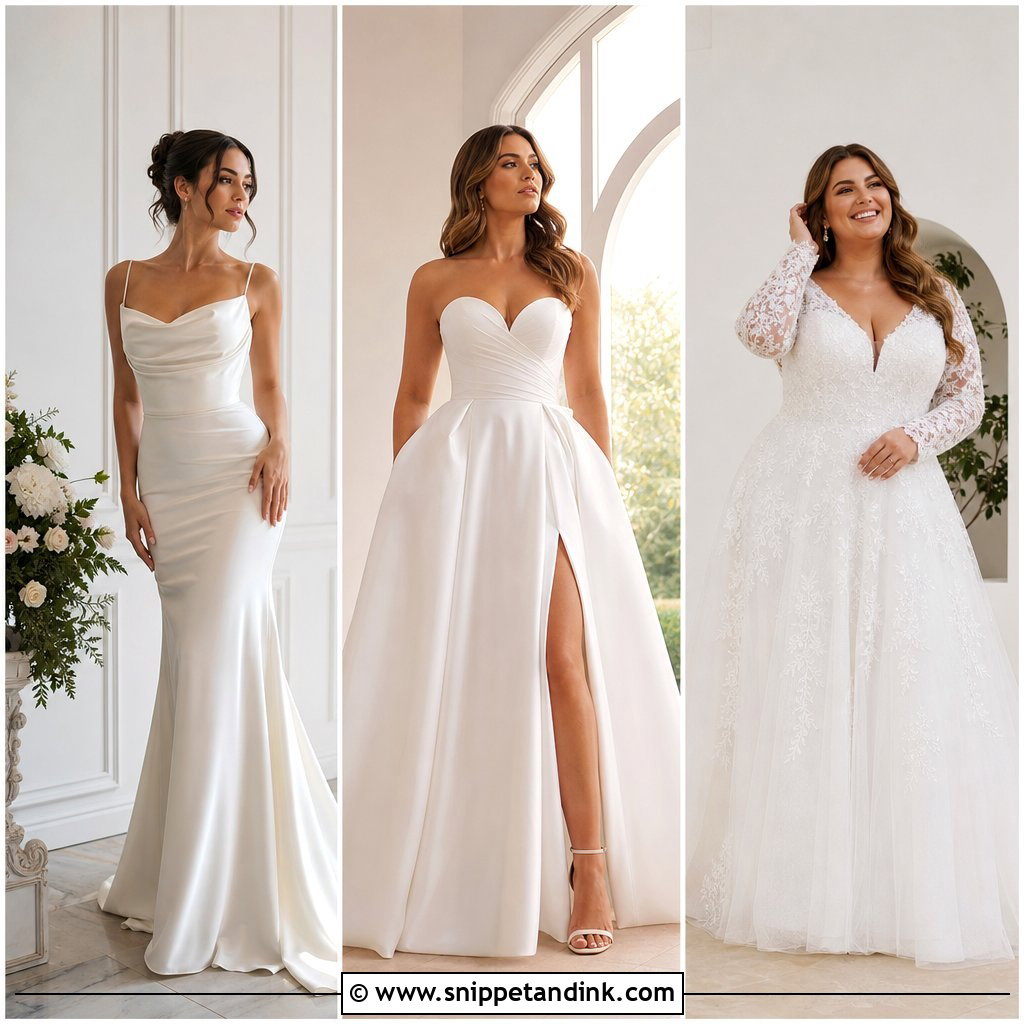
A good strapless corset grips the rib cage, not the bust. That is the single most important thing I check, because a bodice relying on the bust to stay up will slip all day. Boning shapes the torso, and a lace-up back gives some adjustment if your weight shifts before the wedding. A full tulle skirt makes it dramatic; a slim crepe skirt makes it modern. A sheer cathedral veil can come off after the ceremony. Crystal studs, a tennis bracelet and pointed heels are enough. Built-in cups, properly placed, look smoother than any strapless bra.
6. Mermaid Marriage Dress
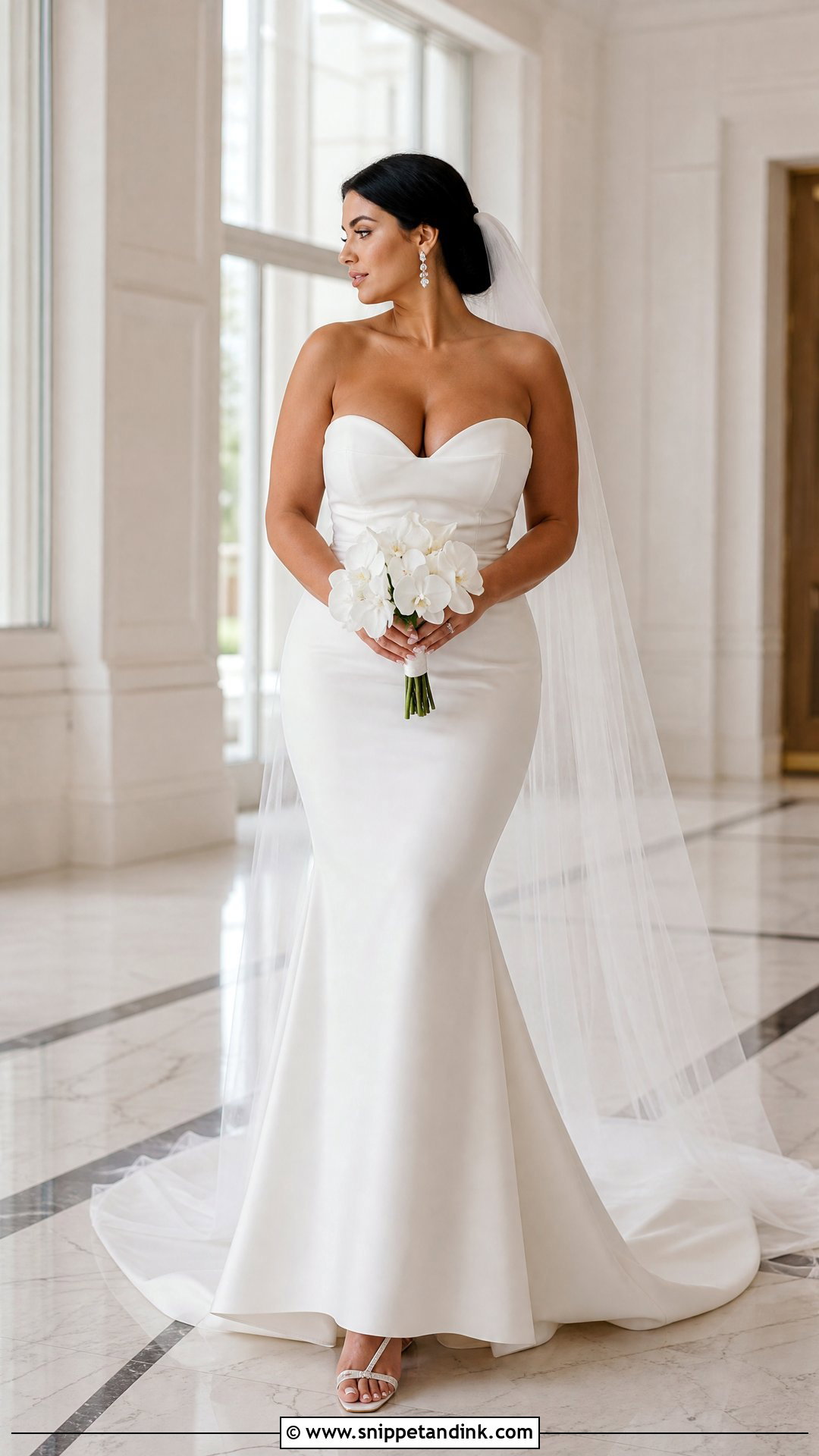
The mermaid shows off curves by following the waist and hips before flaring at the knee. Stretch crepe gives the most movement; satin and layered lace give a sculpted finish but less give. Buy your heels before the final fitting, because heel height shifts where the flare begins. A long veil that runs past the train balances the profile, with drop earrings, a sleek hairstyle and a narrow bouquet. If the thighs feel tight, a fit-and-flare variation with the flare higher gives more room. Take full strides and sit in it, and get a secure bustle for the reception.
7. Minimalist Column Marriage Dress
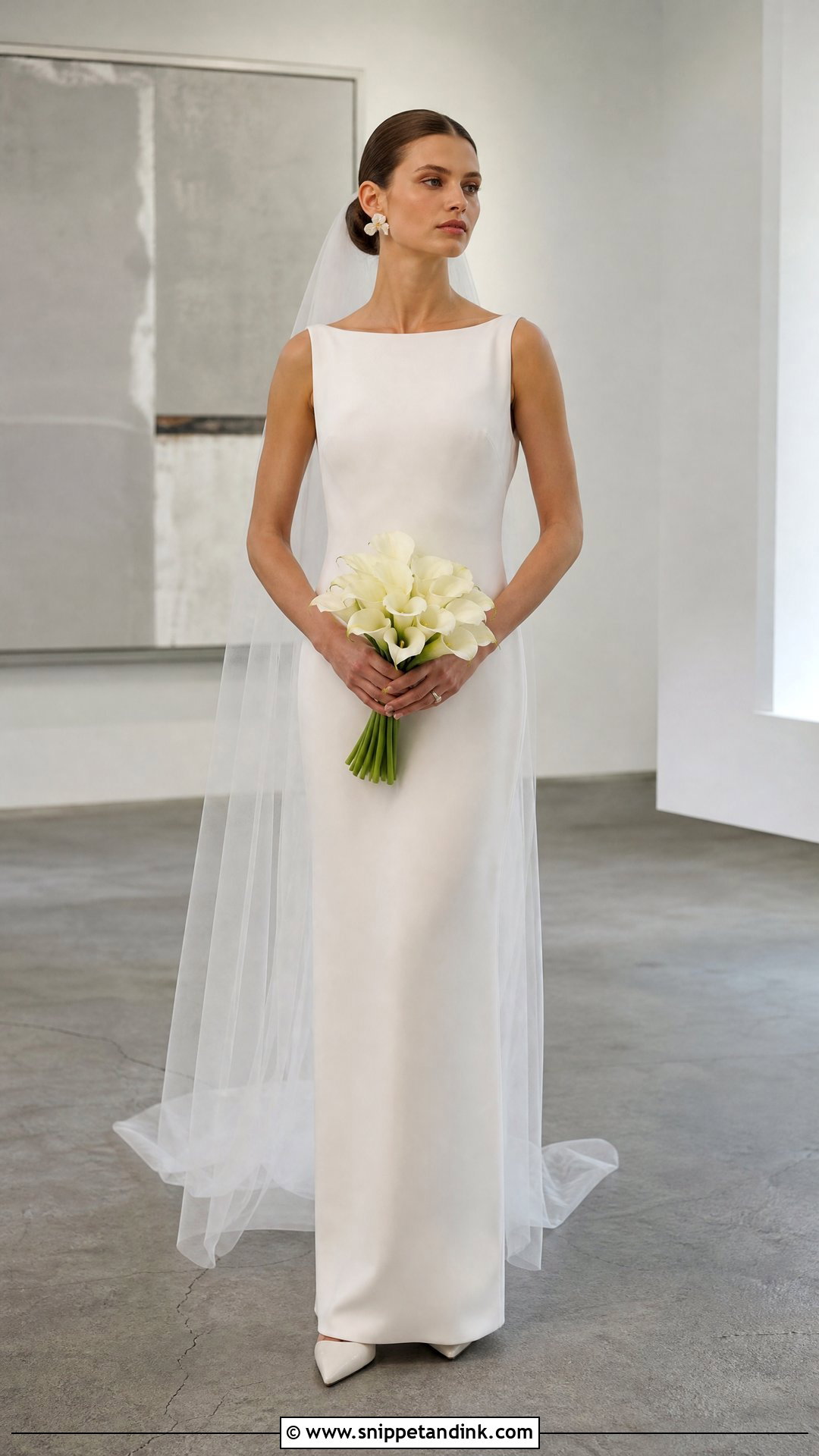
Column dresses rely completely on cut. Crepe, silk and matte satin show precise tailoring, and also show every wrinkle and seam line. A square, bateau or draped neckline adds interest without decoration. Sculptural earrings, a smooth bun and pointed pumps suit it, along with a long plain veil for some ceremony drama. Smooth, edge-free undergarments and expert alterations are not optional here. I check the skirt has enough ease to walk and sit; a column too narrow at the knee forces tiny steps. A single-variety bouquet suits modern hotels, galleries and intimate civil ceremonies.
8. Square Neck Marriage Dress
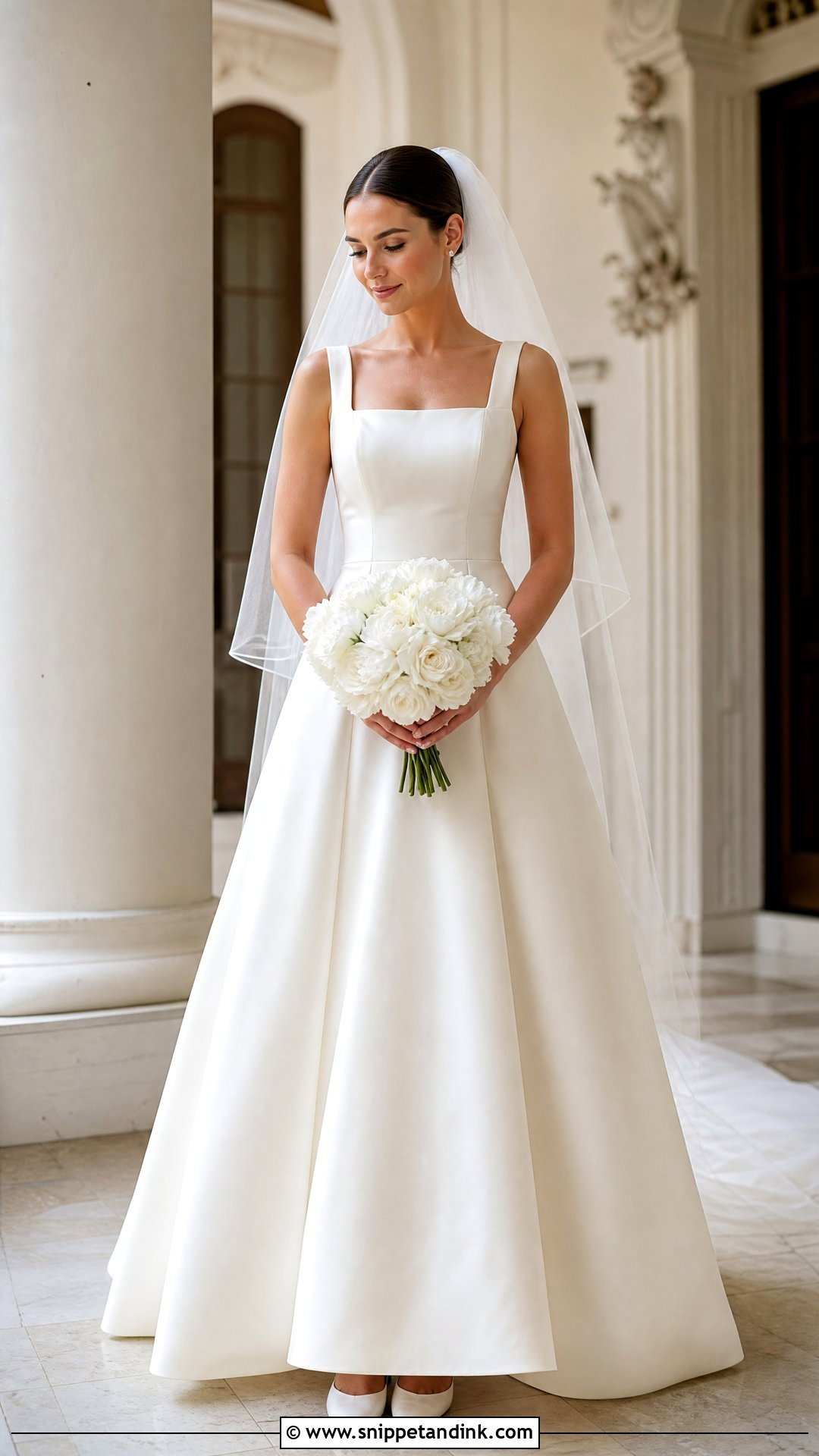
Gaping is the square neck’s weakness. During alterations, lean forward, sit and walk, and watch whether the neckline stays flat against your chest. Wide straps, cap sleeves or fitted long sleeves all suit it, so it adapts across seasons. An A-line skirt keeps it classic; a slim skirt modernizes it. A short necklace can work, though pearl studs usually keep the neckline crisper. A softly gathered veil, closed-toe heels and a structured bouquet complete it. A fuller bust needs a lined bodice with built-in cups and sturdy straps.
9. High Neck Marriage Dress
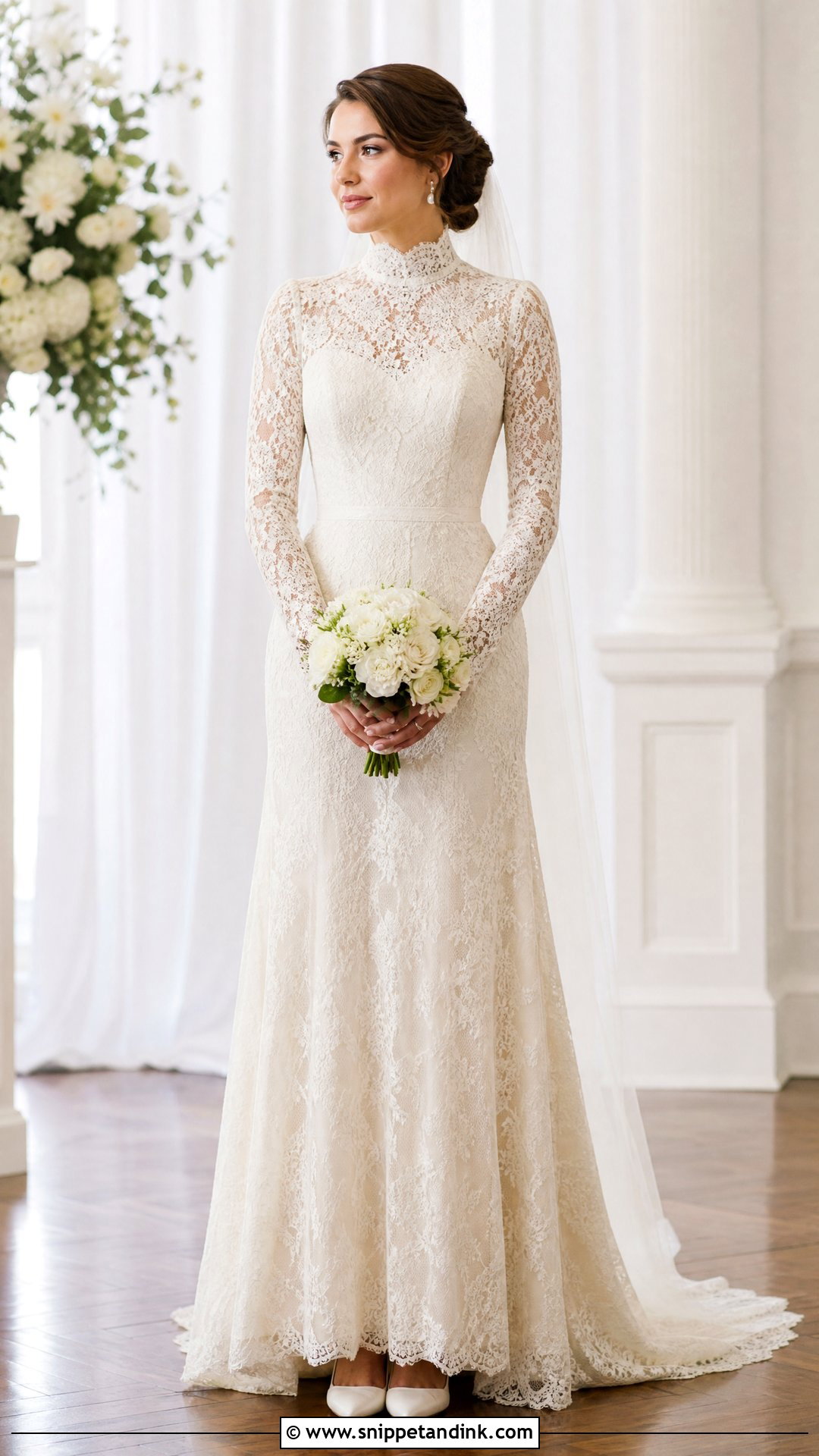
A high neck puts the focus on your face. Lace gives a vintage softness; plain crepe or satin looks architectural. Balance the coverage with a fitted waist, an open back or a light skirt so the gown doesn’t feel heavy. No necklace. Pearl drops, crystal studs or small ear climbers work, with a bun or low ponytail so the collar shows. Attach a simple veil beneath the hairstyle and wear comfortable closed-toe pumps. Sit and turn your head at fittings, since a collar that feels fine standing can press when seated. A smooth lining protects sensitive skin from embroidery.
10. Tea Length Marriage Dress
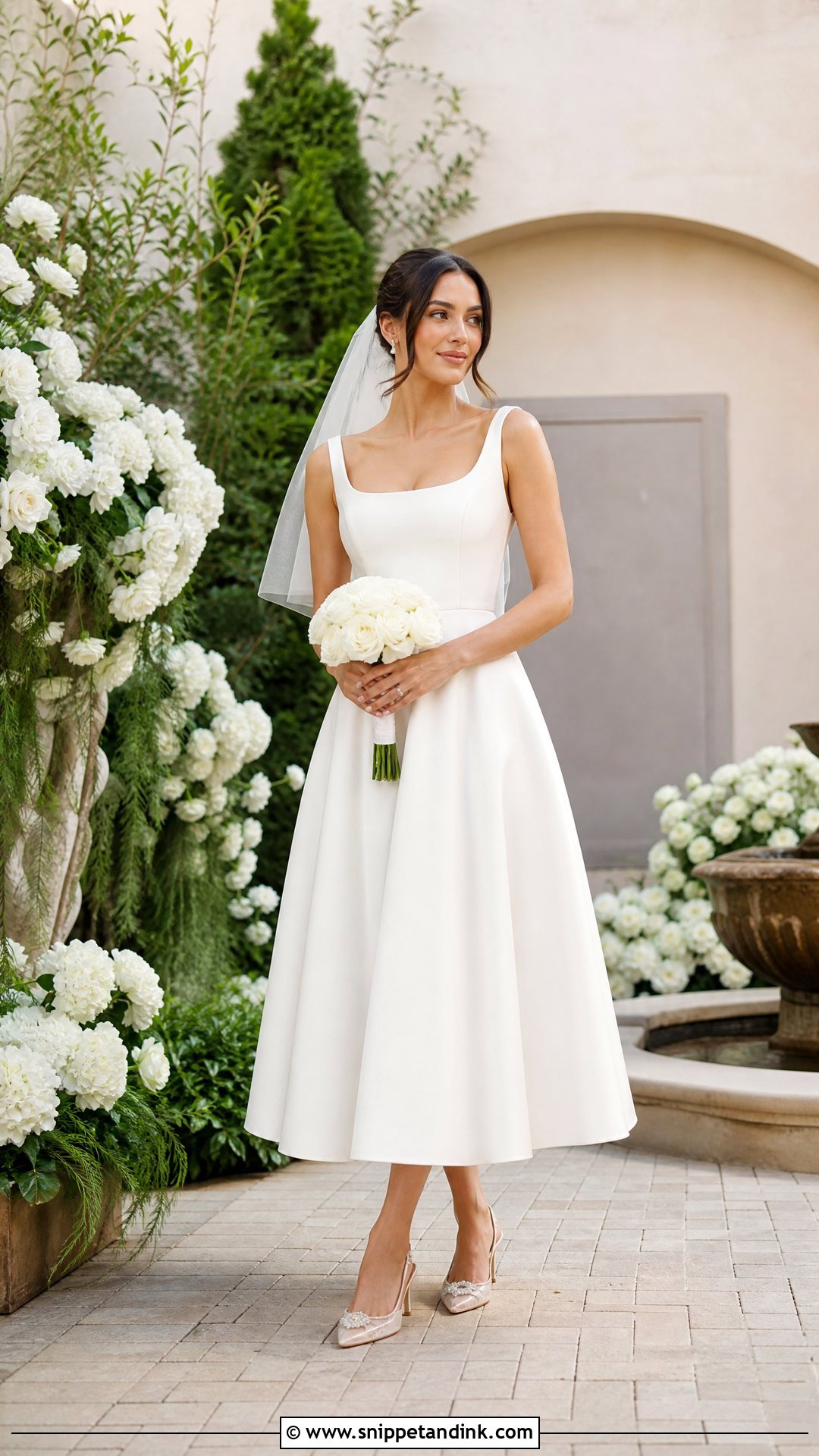
Hems between knee and ankle put your shoes in the outfit, so this is where pointed slingbacks, embellished pumps or comfortable block heels in ivory or soft metallic get their moment. A fitted bodice with a full skirt reads classic; a slim cut reads modern. Add a short veil, pearl earrings and a compact bouquet. Tea length suits civil ceremonies, garden parties and reception changes. The exact hem point matters more than with any other length. I avoid ending it at the widest part of the calf, since a hem an inch higher or lower makes the leg look longer.
11. Courthouse Mini Marriage Dress
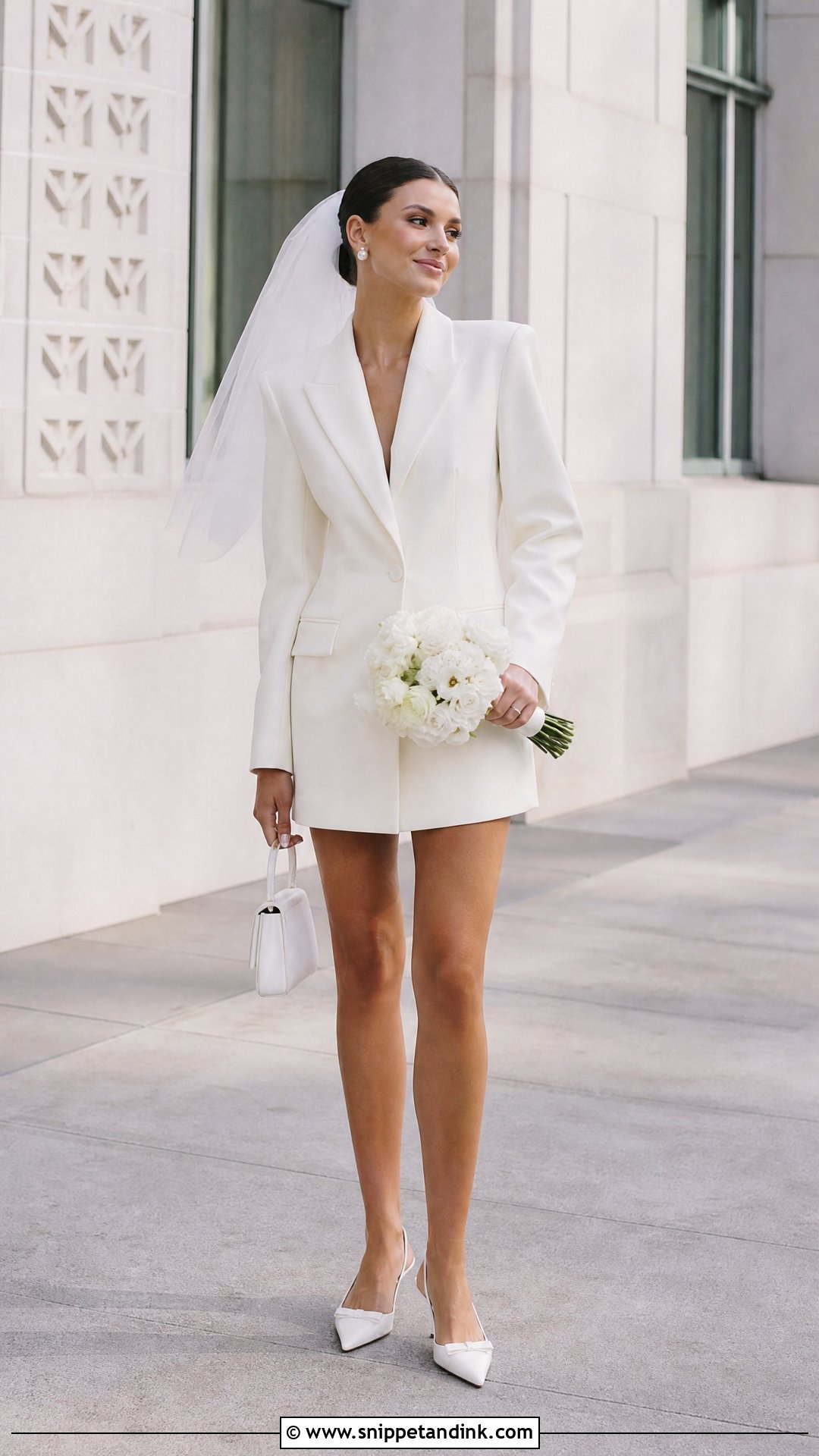
A courthouse ceremony suits a mini: a structured sheath, a tailored blazer dress or a simple A-line with enough length to sit on a hard bench. Pearl buttons, a bow, appliqués or a detachable train add the bridal note. Pointed pumps or slingbacks, a small top-handle bag and a short veil complete it. In cold weather, sheer tights and a tailored white coat are practical and look sharp. Keep jewelry refined. Sit down in front of a mirror before you buy, because a mini that’s fine standing can ride up seated. Fitted shorts underneath add confidence without showing.
12. Floral Appliqué Marriage Dress
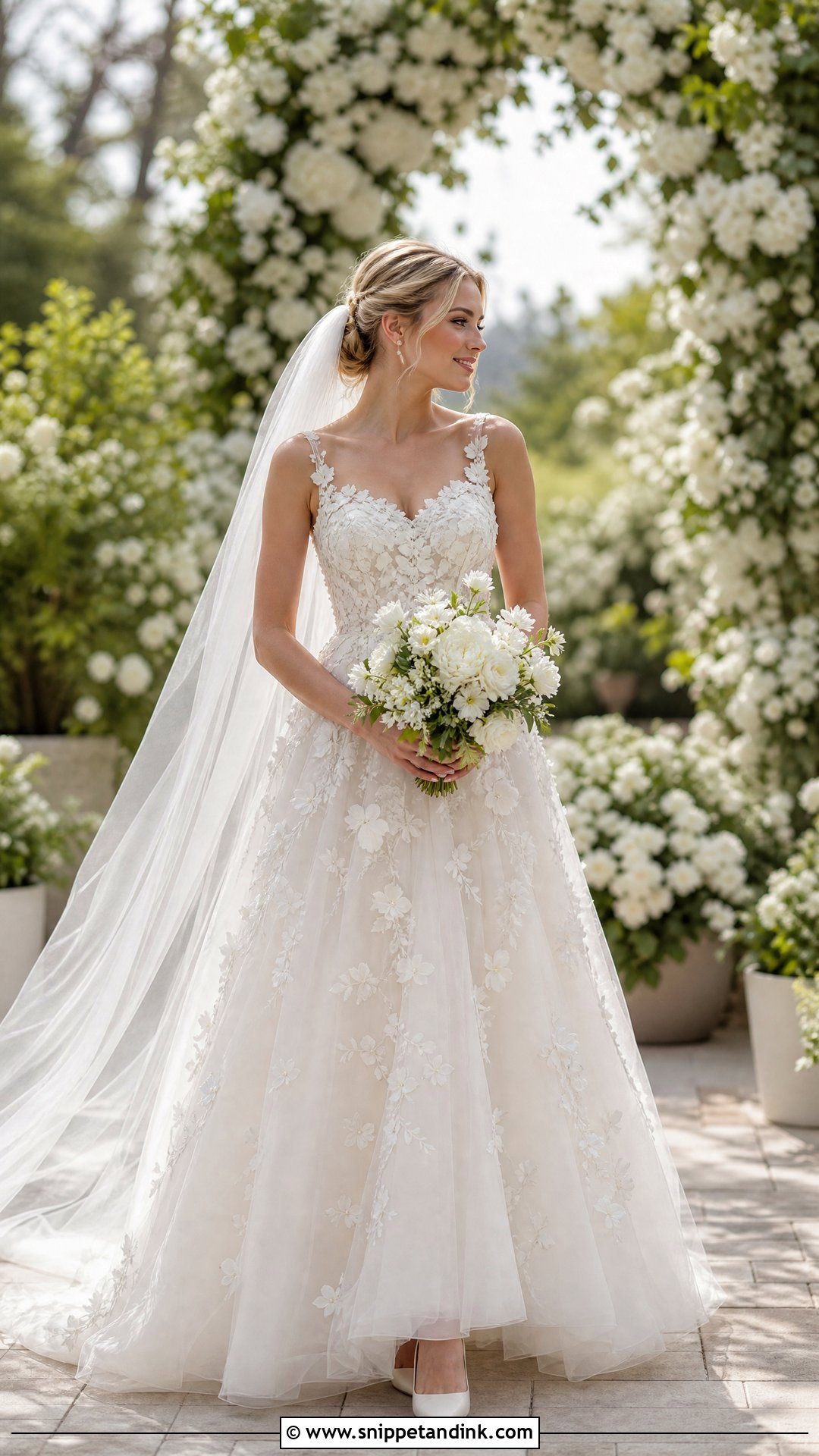
Dimensional flowers can sit at the bodice, across the skirt or along the train. With that much texture, accessories should be restrained: pearl studs, a plain veil and simple satin pumps, with a soft updo. Pick a bouquet with few flower varieties. Lighter appliqués suit warm weather; layered embroidery suits a formal indoor room. Before the wedding, I inspect every flower near the waist and underarms and have loose petals, beads or threads secured, since those spots take the most friction and anything loose will snag a veil.
13. Pearl Embellished Marriage Dress
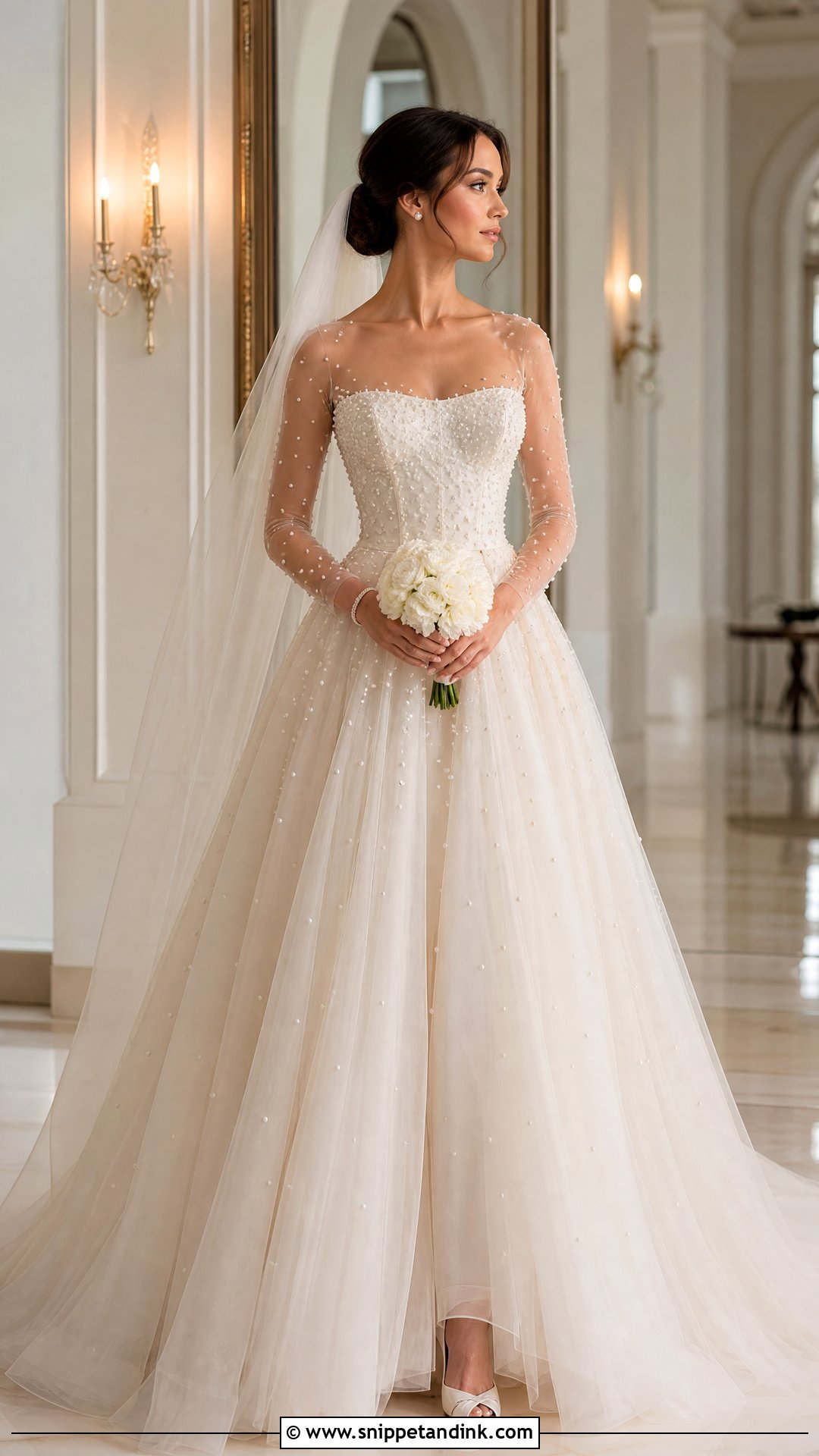
Pearls give soft shine rather than the sharp sparkle of crystal. They can cover a bodice, outline a neckline, decorate sheer sleeves or scatter over tulle. With pearls on the dress, wear plain satin shoes and minimal jewelry: studs or one bracelet. A simple tulle veil and low bun keep it neat. Heavy beadwork adds noticeable weight, which you feel after many hours, so lift the skirt before you commit. Sit, walk and raise your arms at the fitting. Ask the seamstress to reinforce high-friction areas and confirm the lining covers rough stitching.
14. Drop Waist Marriage Dress
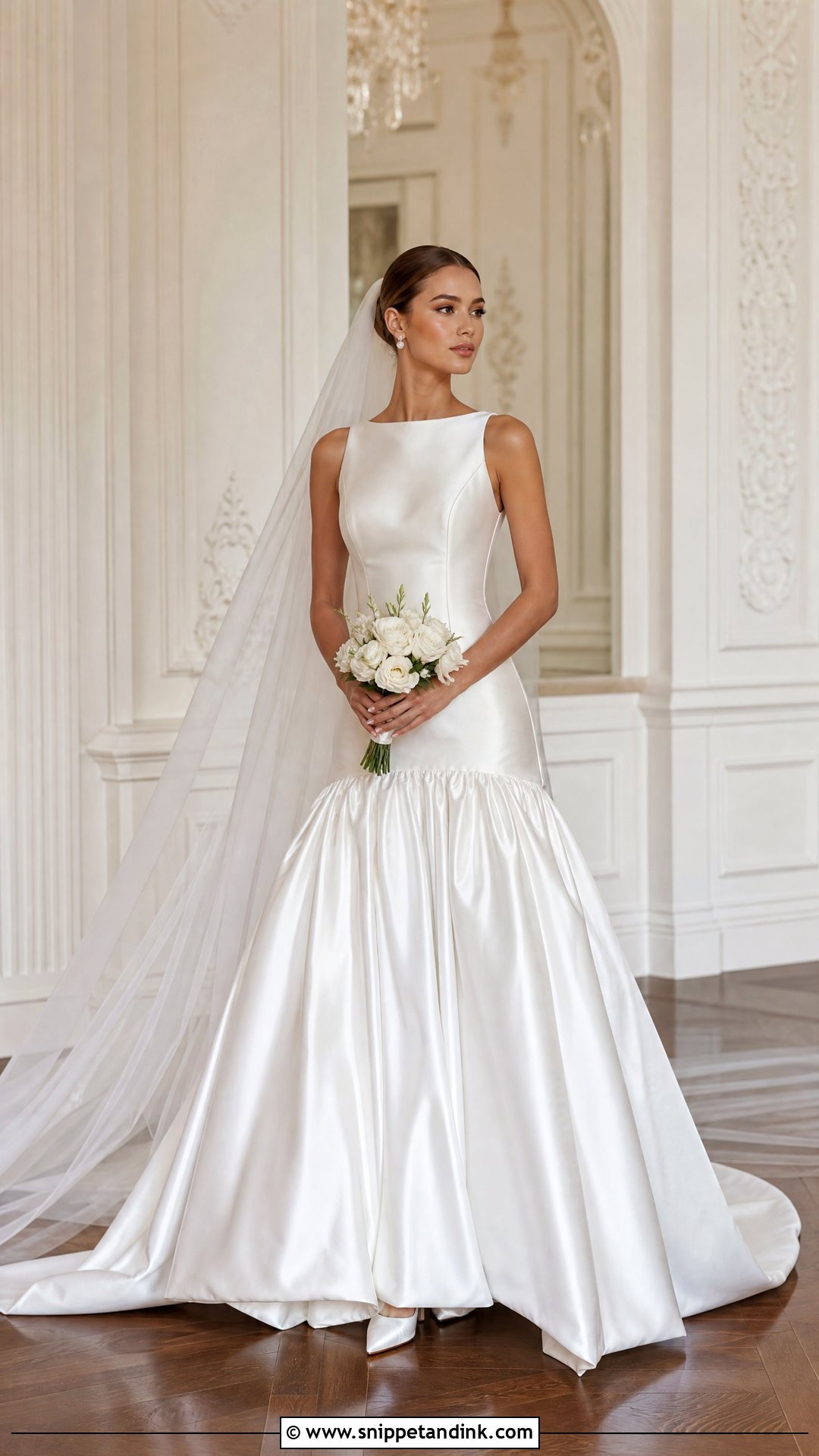
Dropping the waist below its natural point stretches the torso into a long, dramatic line, and it looks its sharpest in satin, taffeta, or structured mikado. The skirt can be softly gathered, fully pleated or a full ball gown. Keep accessories streamlined: plain veil, polished earrings, narrow pointed heels. Fit around the hips is the hard part. Any horizontal crease or pull there breaks the line straight away. Short-torsoed brides often prefer a gently dropped waist to an extreme one. Sit and climb a few steps at the fitting to check the lower bodice doesn’t dig in.
15. Basque Waist Marriage Dress
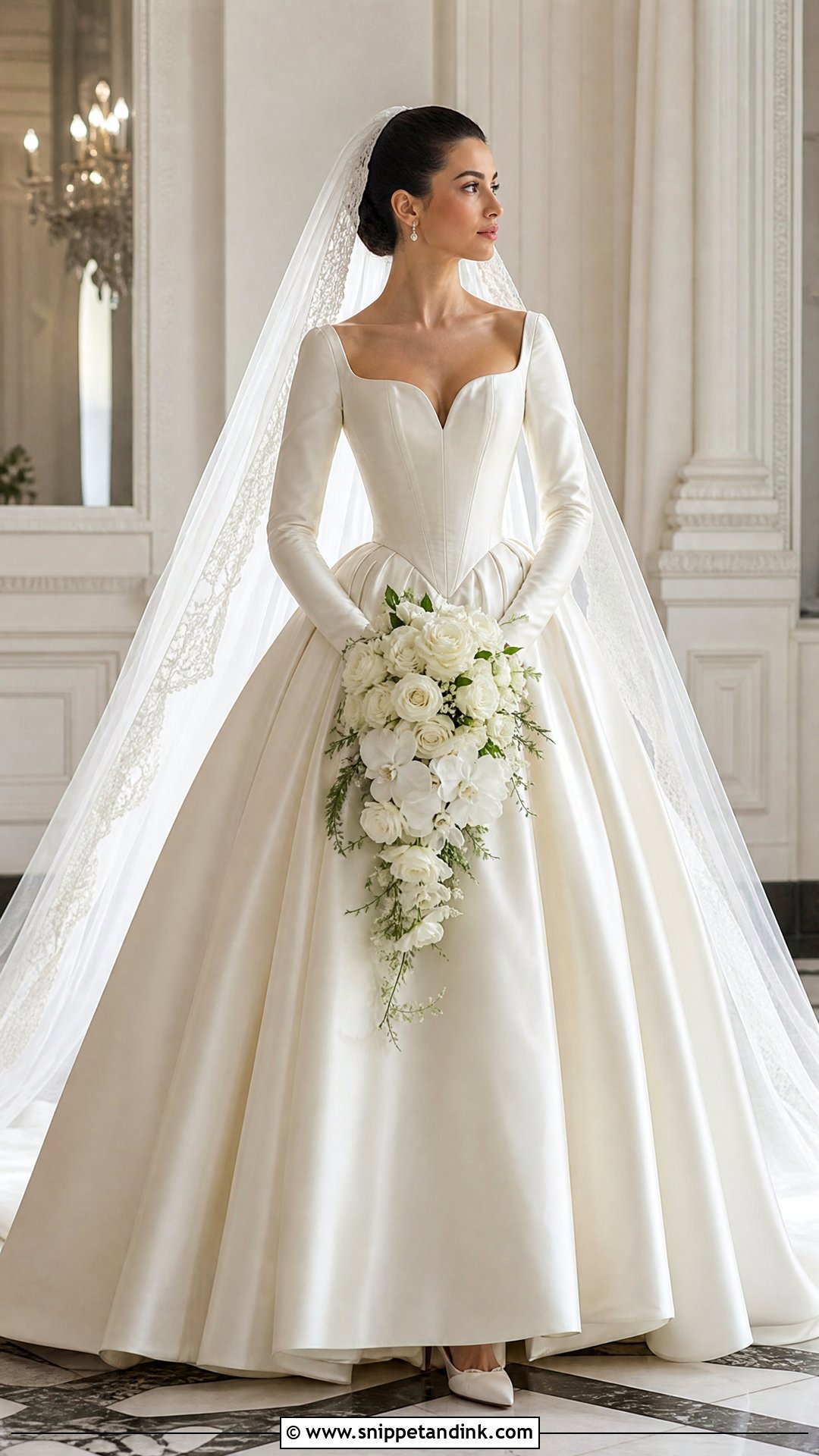
The pointed bodice of a basque waist marriage dress dips below the waist in a V and hands over smoothly to a full skirt. Smooth satin looks regal; lace and tulle look softer. A cathedral veil, small drop earrings and closed-toe pumps suit it, with an elongated bouquet held so it doesn’t cover the point. On shorter torsos, the point can sit too low and dig into the thighs when seated, so proportion is my main concern. Have the tailor check it standing, sitting and moving.
16. Cape Sleeve Marriage Dress
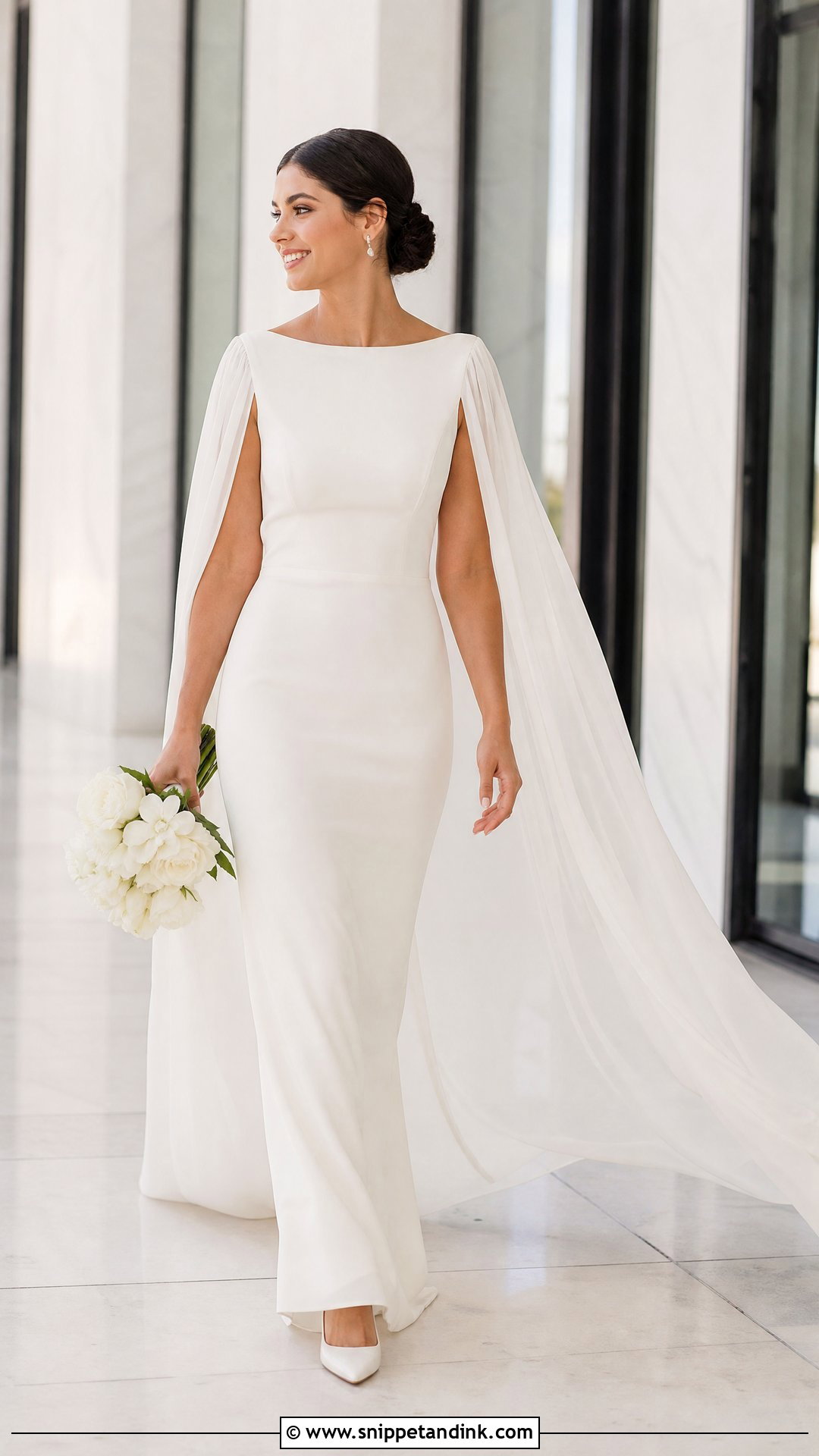
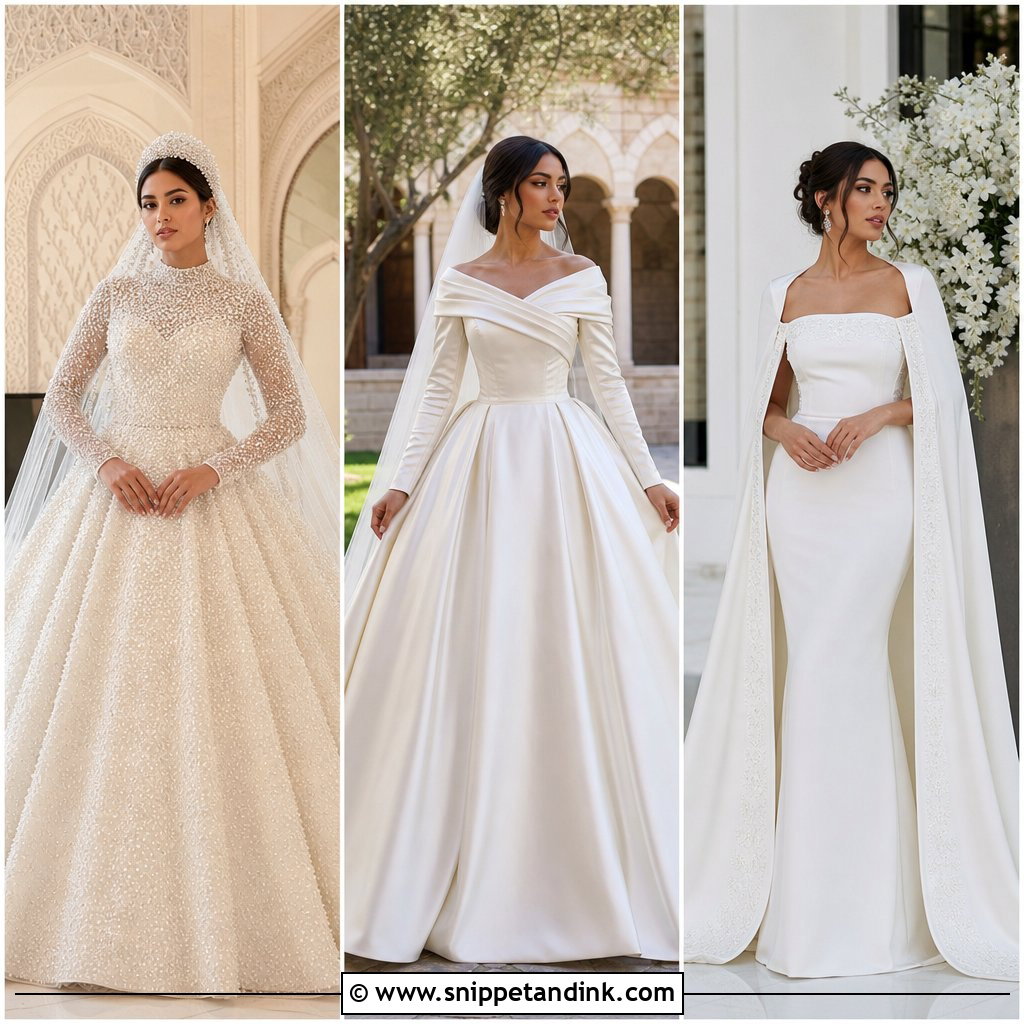
Cape sleeves give coverage and movement without the tight fit of set-in sleeves. They can fall from the shoulders, attach at the neckline or run to the floor. Chiffon suits an airy outdoor ceremony; embellished tulle or structured crepe feels more formal. Keep the gown itself streamlined. A sleek bun, small earrings and simple pointed heels finish it. A long veil usually fights the cape, so I’d choose a hair comb or short veil. Walk in different directions at the fitting to see how it swings, and confirm the cape can be bustled, shortened or removed for the reception.
17. Detachable Overskirt Marriage Dress
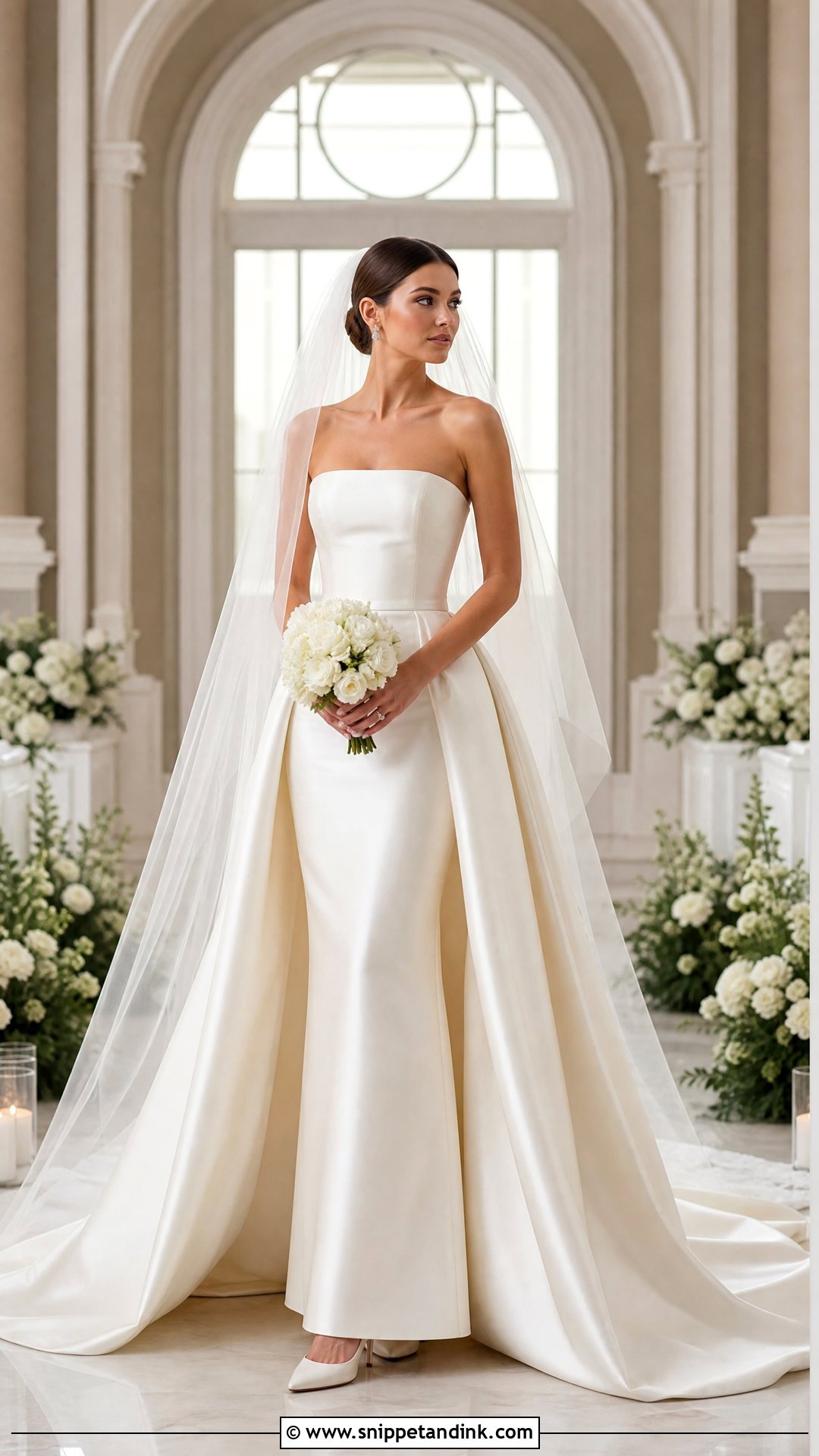
A detachable overskirt marriage dress gives you two looks with no full change. The overskirt adds volume, length or a train for the ceremony; underneath, a column, mermaid or even mini dress takes you dancing. The fabrics must match closely enough that the overskirt looks designed for the base. A long veil, understated earrings and classic pumps suit the first look, then a hair bow or bolder earrings suit the second. Practice the hooks, snaps or hidden zip with the person who’ll help you, so the swap takes minutes rather than half the first dance.
18. Two Piece Marriage Dress
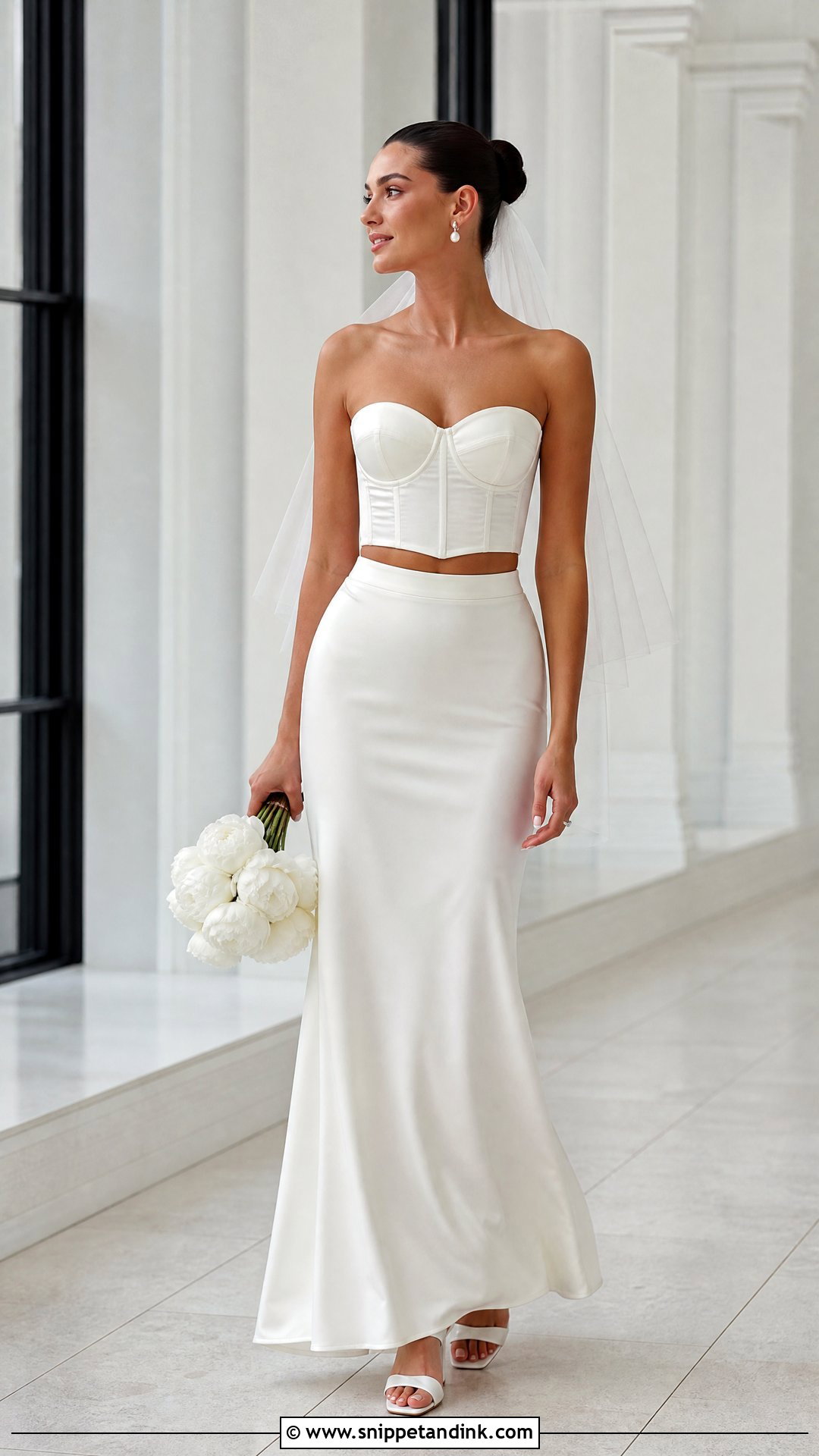
Separates let you mix structure and softness: a corset over a full satin skirt for formality, or a lace blouse with chiffon for something gentler. You can show a sliver of waist, cover the join completely or wear a bodysuit-style top that stays tucked. Whites must match. Ivory and bright white can look very different in daylight, so I compare the two pieces outdoors. Pearl earrings, a fingertip veil and block heels finish it. The top should stay put with arms raised, and the waistband shouldn’t roll. Two pieces also help when you’re different sizes top and bottom, or want to rewear one element later.
19. Plus Size Marriage Dress
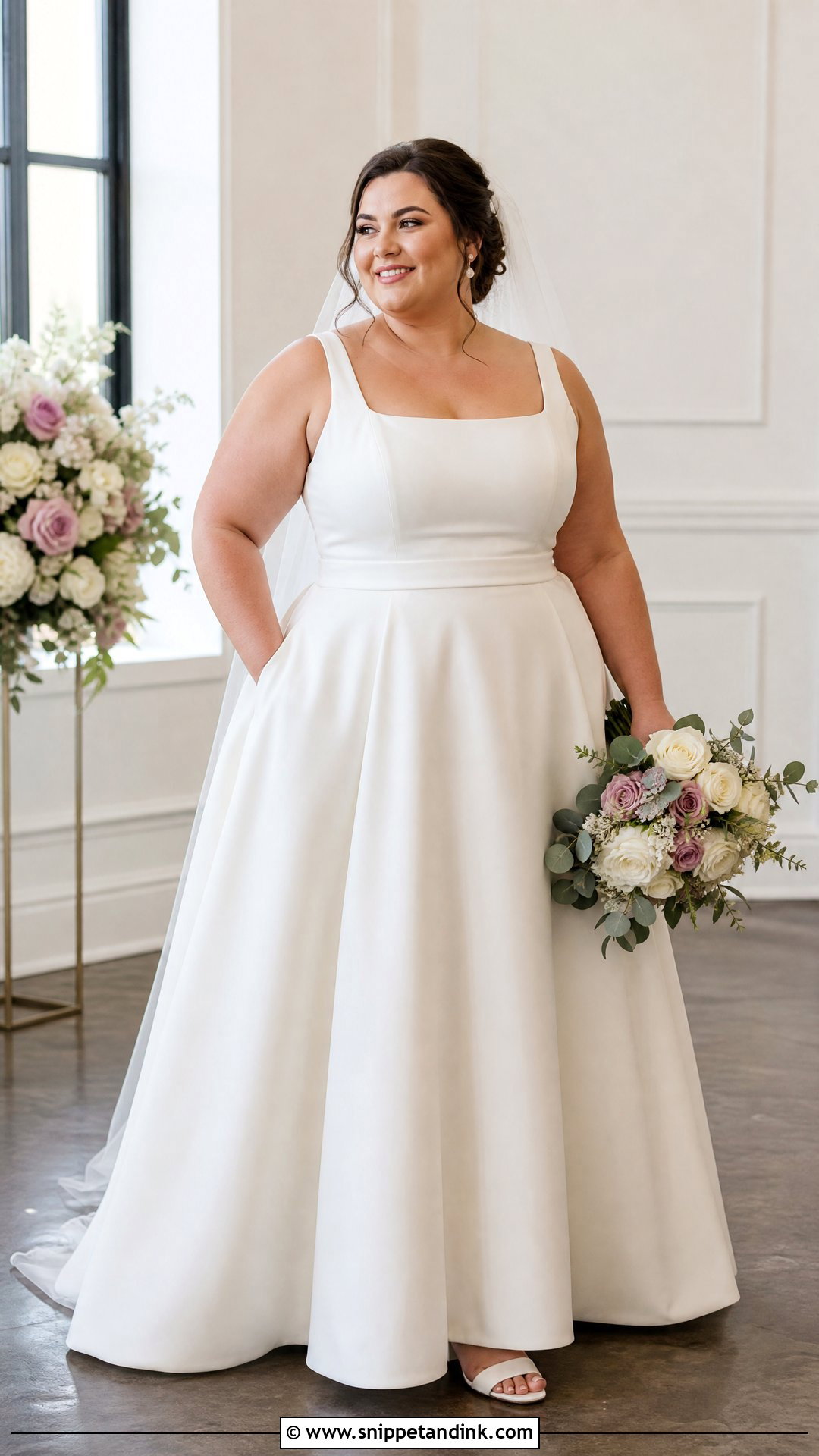
Good plus-size bridal design is about support and proportion, not about hiding. A-line, ball gown, fit-and-flare and column shapes can all work when the construction is right: supportive straps, internal boning, quality lining and a waist seam placed where you feel comfortable. A V-neck or square neck frames the face; off-shoulder sleeves show the collarbone. Choose stable shoes and wear them to every fitting. Scale the veil to the gown, add shapewear only if you want it, and wear jewelry you love. Shop where samples come in a real range of sizes; judging a gown held together with clips tells you very little.

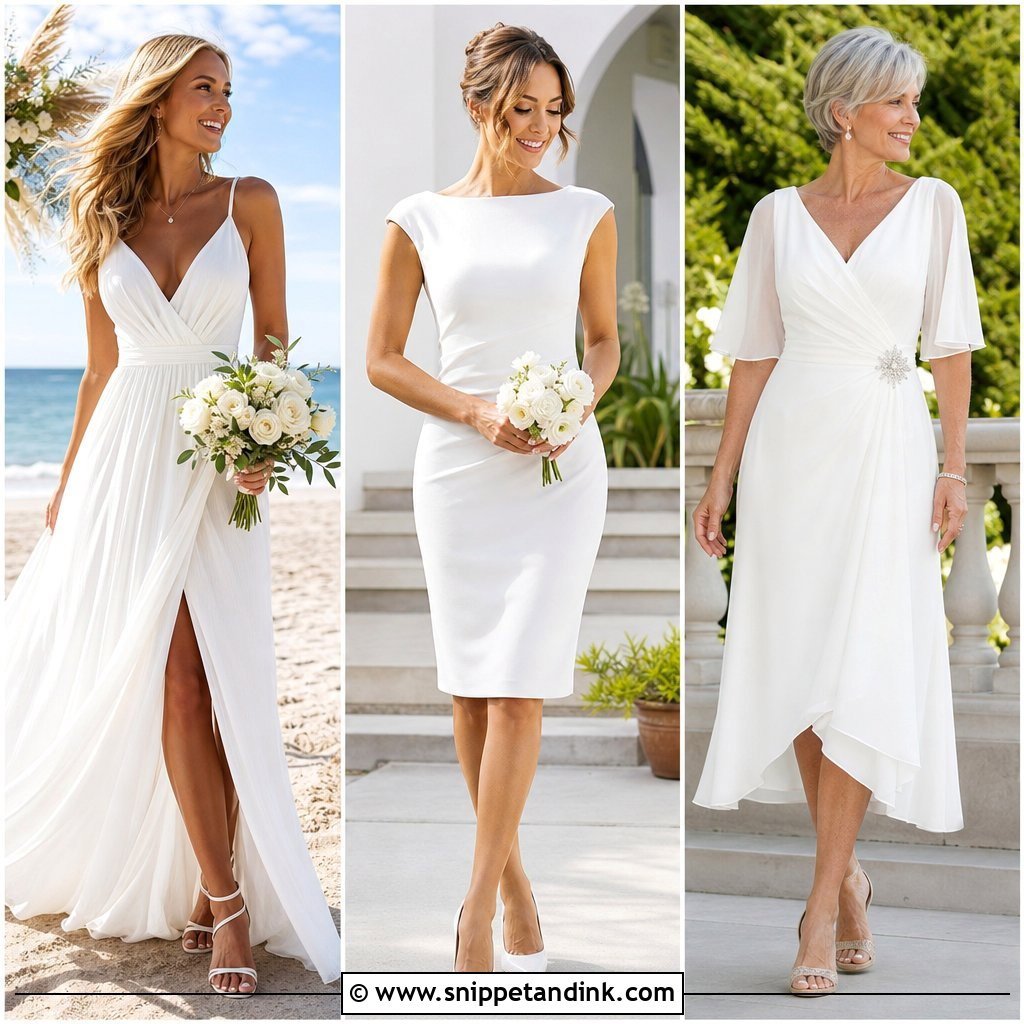

20. Modest Marriage Dress
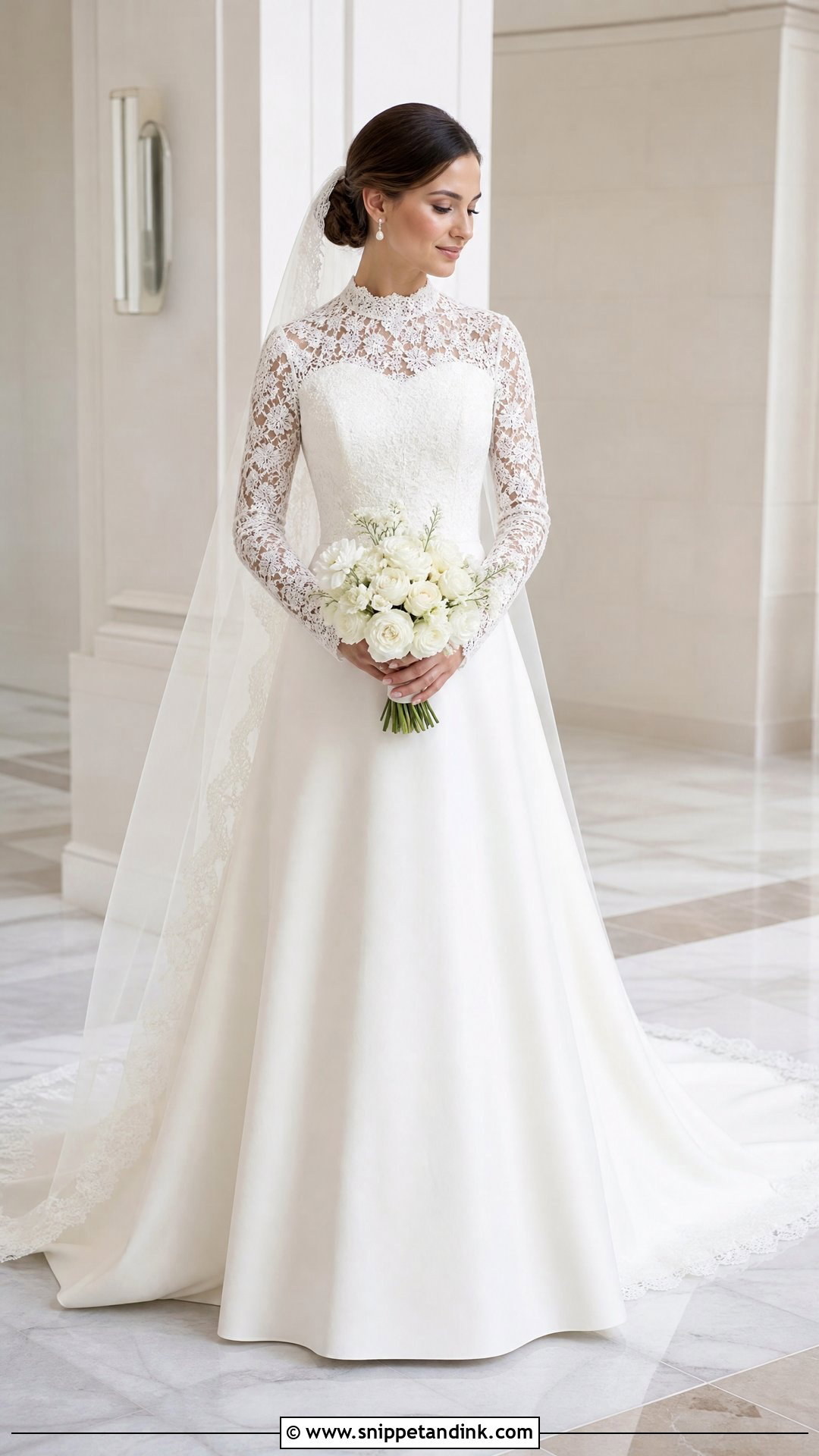
Coverage and detail aren’t opposites. An opaque bodice, higher neckline, full-length sleeves and a lined skirt can still carry lace overlays, covered buttons, pleating and textured fabric. A-line or soft ball gown shapes suit formal venues; plain crepe suits a smaller ceremony. Pearl earrings, closed-toe heels and a veil that works with the sleeve length finish it. Check the lining under strong light to be sure it covers what you expect, since some linings go sheer under a flash. If coverage is added during alterations, ask the tailor to match color and texture closely so the change doesn’t show.
Sample Gowns, Off-the-Rack and Pre-Owned Dresses
Not every bride orders a new gown months ahead, and there are honest ways to spend less or move faster. Each comes with trade-offs I’d want any client to know.
Sample sales
Sample gowns are the dresses brides try on in the shop. They’re often discounted, but they’ve been worn many times. Look closely at the neckline and underarms for makeup marks, check the hem for dirt, and count missing beads. Most marks clean, but factor the cleaning into the price. Samples usually come in a limited size range, so check how much the seams can be let out.
Off-the-rack and pre-owned
Off-the-rack gowns are ready to take home, which helps when the wedding is soon, though you still need time for alterations. Pre-owned dresses can be very good value. Ask for real photos of the inside, the bustle and any stains, and remember that a dress already altered for someone else may have little seam allowance left. A good seamstress can tell you in one appointment what is possible.
Underneath Each Neckline
- Strapless and corset bodices: built-in cups sewn into the gown give the smoothest line.
- Low or open backs: adhesive cups or a low-back longline bra, tested for a full day before the wedding.
- Fitted crepe and satin: smooth, edge-free briefs or light shapewear in your skin tone, never white, which shows through pale fabric.
- Sheer lace: a matching nude-tone slip or camisole often looks better than adding more lining.
The Dress That Passes the Sitting Test and the Mirror Test
A dress that supports your body, suits your venue and still looks like you is the right one, whatever its silhouette. From formal satin and romantic lace to courthouse minis and two-piece sets, each shape works for someone. Save the dresses you like before visiting a salon, then try at least one you’d never have picked; fabric, structure and alterations change gowns more than photos suggest. Bring the right undergarments and shoes to fittings, and sit, walk and raise your arms in every dress. You should recognize yourself in the mirror, only more dressed up.
You'll Like These Ideas:



Leave a Reply