
Judging Quality in a Gown With Nothing to Hide Behind
Beads and lace cover a multitude of sins. A plain gown has none of that, so the quality of the fabric and sewing shows the moment you put it on. I look inside a simple dress before I look at it in the mirror.
- Fabric weight: crepe and satin should feel dense and drop straight when held up. Thin satin wrinkles fast and shows pins.
- Seams: they should lie flat on the outside with no puckering. Run your hand along them.
- Lining: a full lining in a breathable fabric keeps a plain gown from clinging and stops underwear lines.
- Hem: a deep, even hem helps heavy fabrics hang; a thin rolled hem suits chiffon.
- Zip: an invisible zip that sits flat, not one that ripples down your back.
Ask to see the fabric under daylight if you can. Some satins look creamy in the shop and turn grey-white outdoors, while matte crepe stays much the same in any light.
1. Simple Satin Slip Wedding Dress
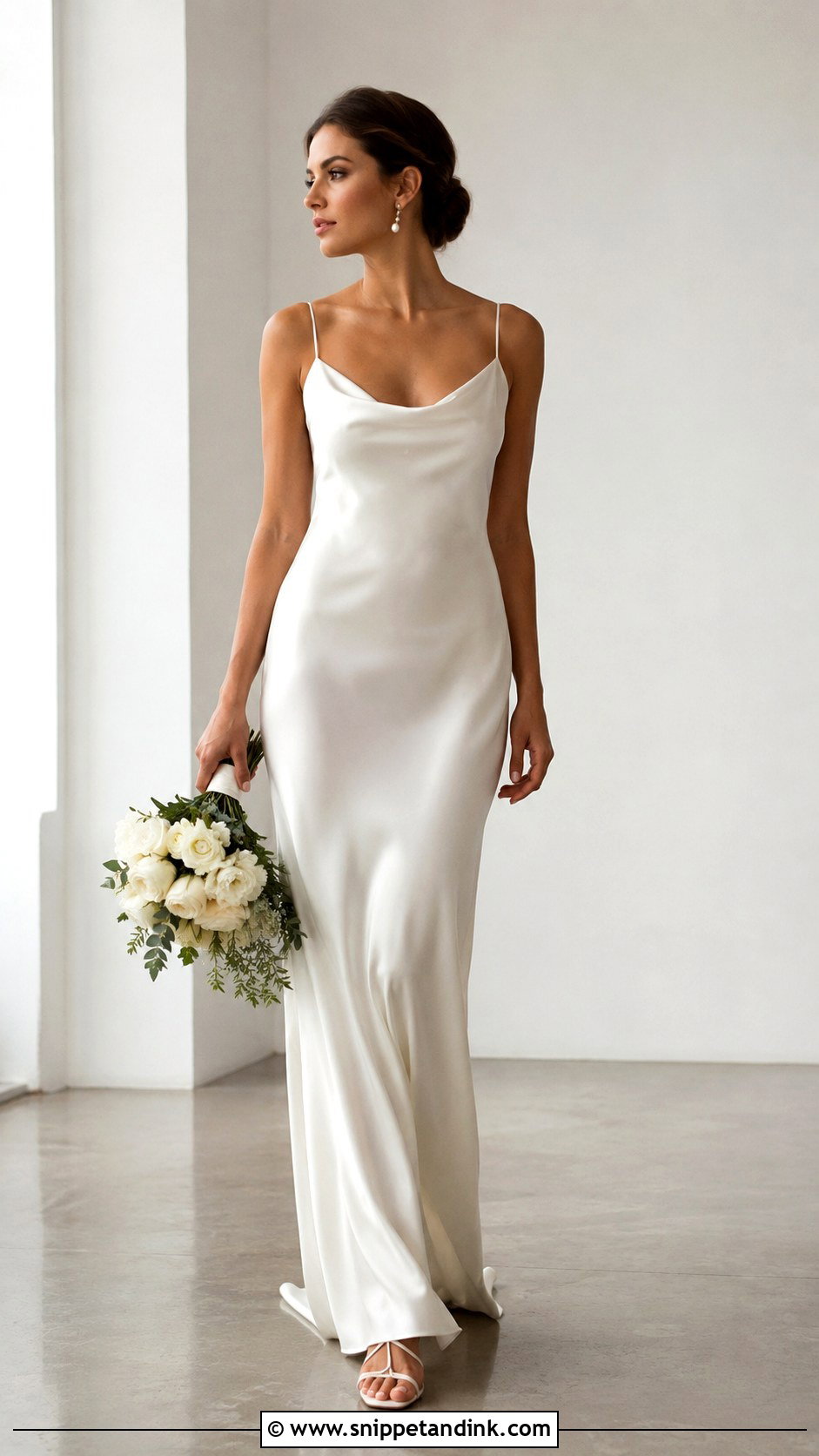
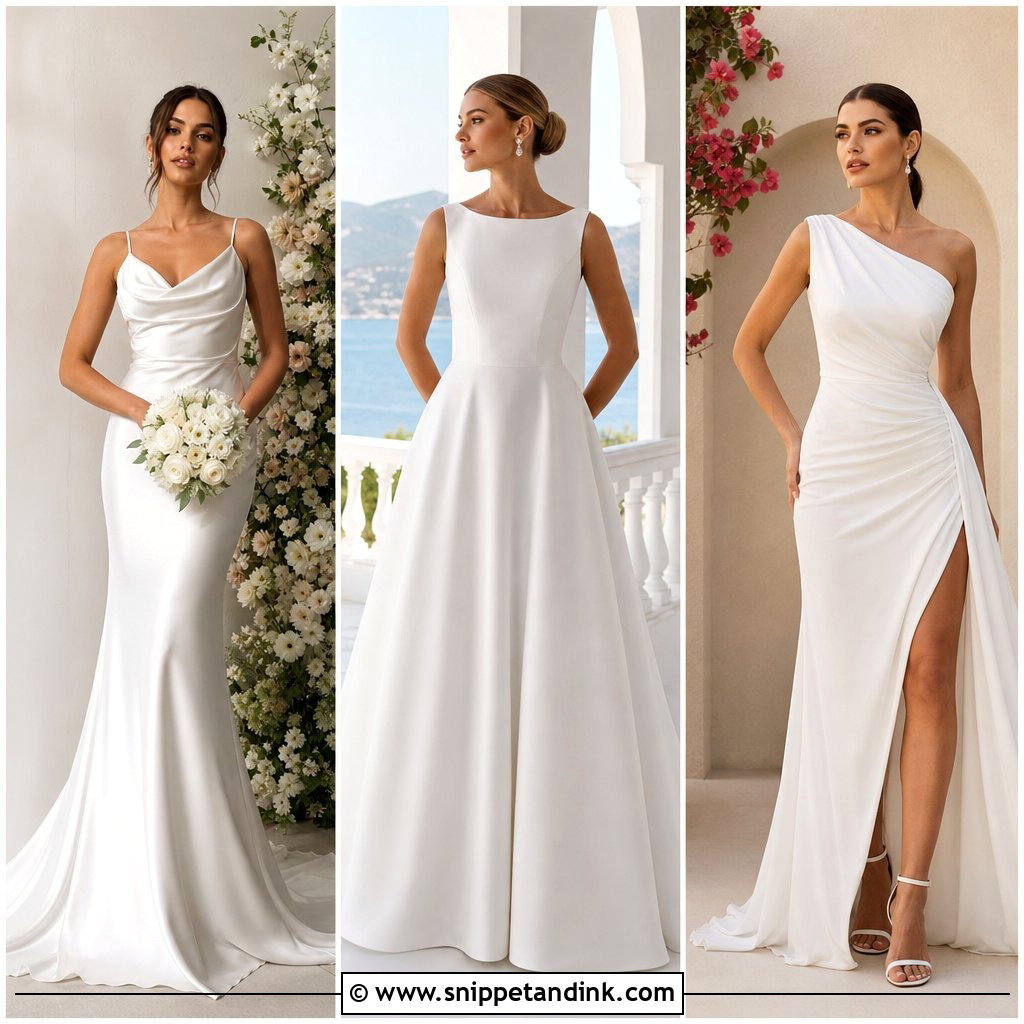
Slips live or die on the fabric. A bias-cut satin skims the body because it’s cut diagonally to the grain, which gives that liquid drape, and it also means any cheap, thin satin will twist at the side seams after an hour. I rub the fabric between my fingers in the shop; heavier silk satin or a good satin-backed crepe feels dense and falls straight. Thin straps keep it light. Pearl drops and a low bun are all it needs. Bring a sheer wrap or a tailored cape for a cool evening, and keep flowers to a single variety like white roses or callas.
2. Elegant Crepe Column Wedding Dress
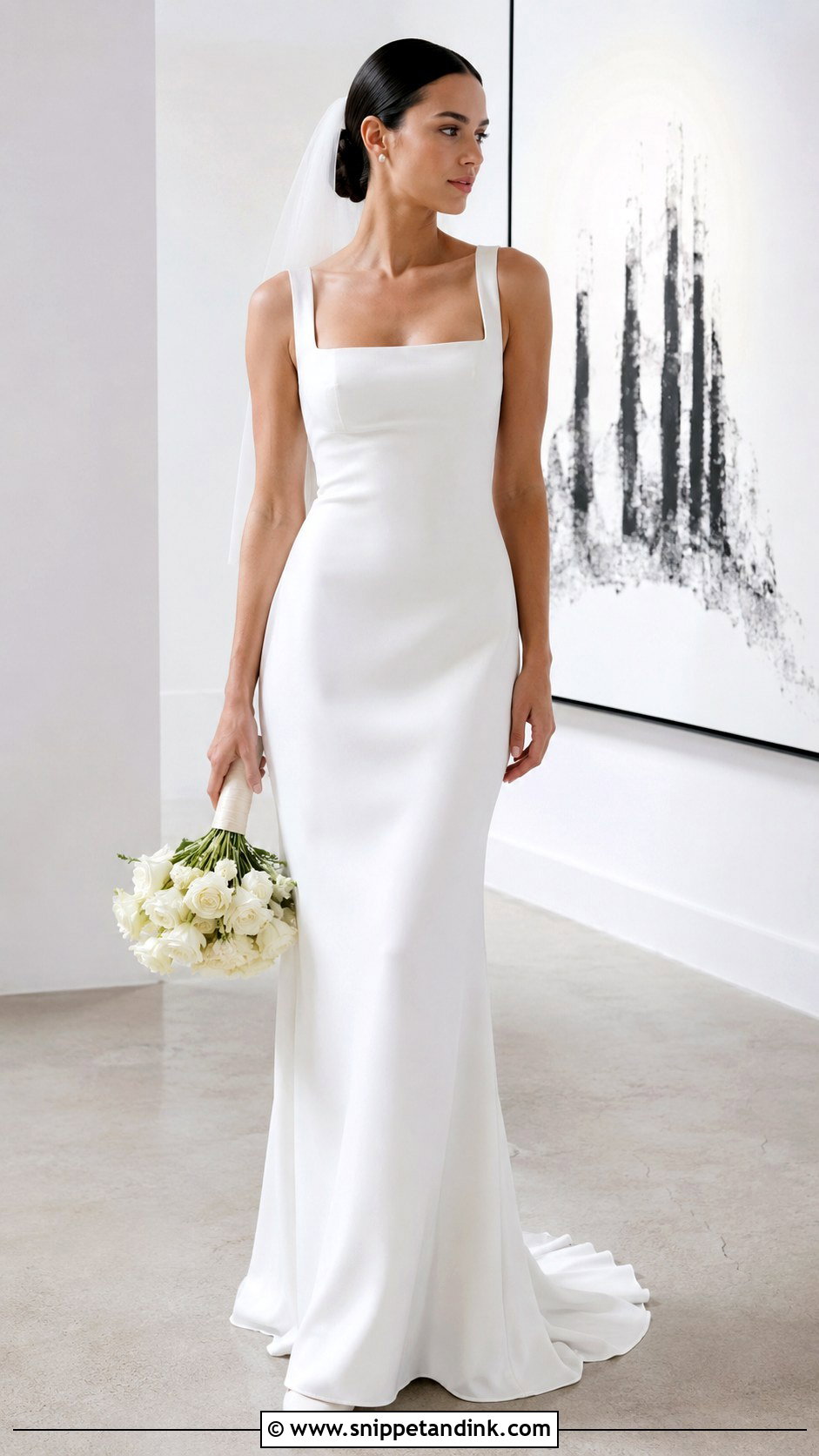
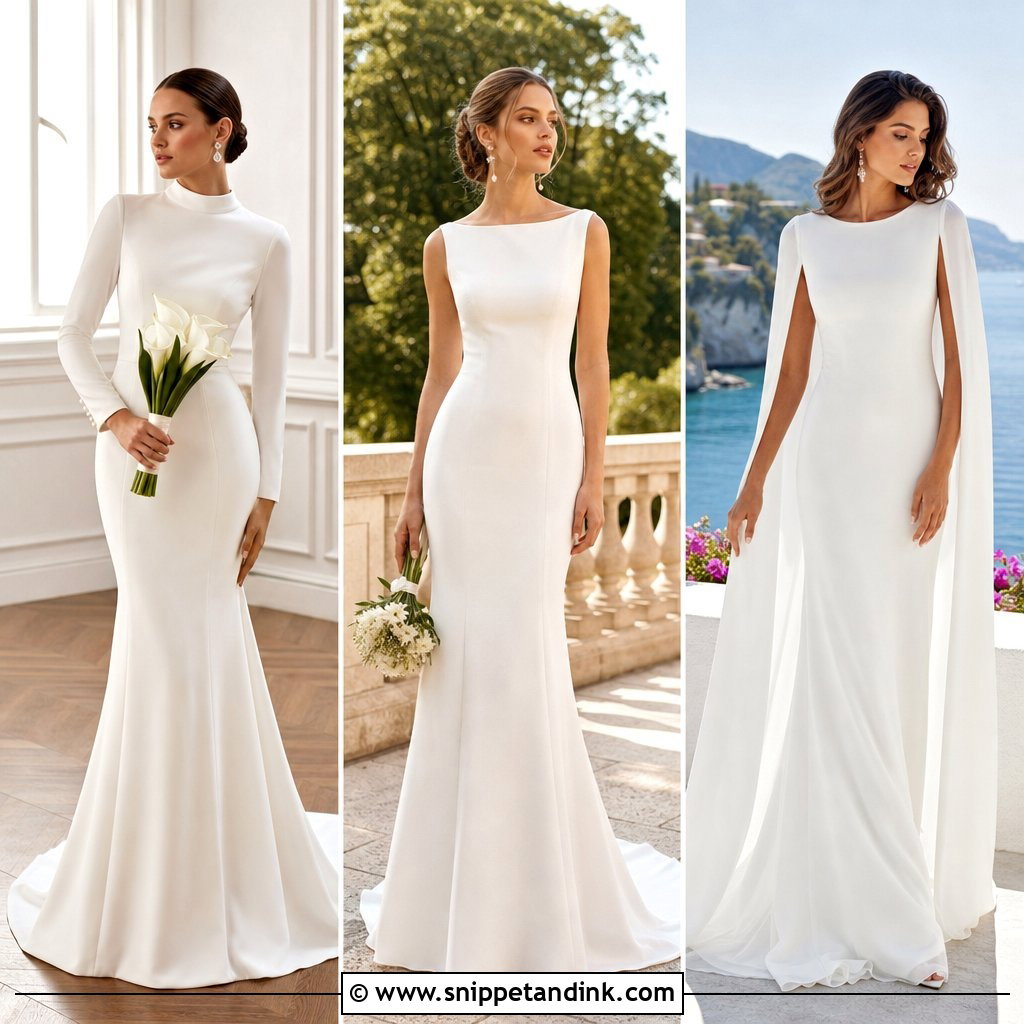
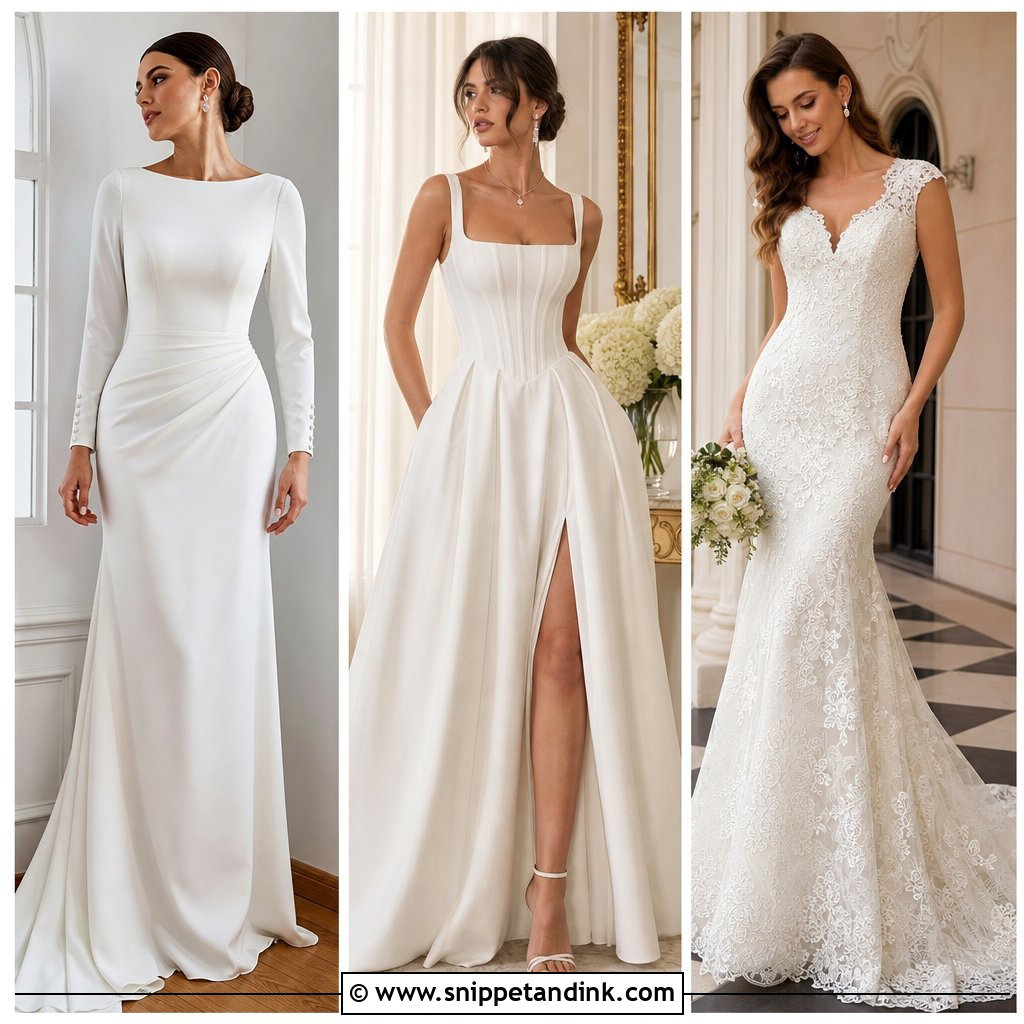
Columns fall straight from shoulder to hem, so the vertical line does the work and every inch of fit shows. Crepe is the right partner: it has body, so it doesn’t cling, and it reads matte rather than shiny under flash. Neckline choice changes the mood. A bateau feels classic, a square sharper, a scoop softer. Pointed pumps, a short veil and small studs finish it. Because there’s no embellishment to distract, I spend most of the fitting on the hem and the side seams.
3. Classy A Line Wedding Dress
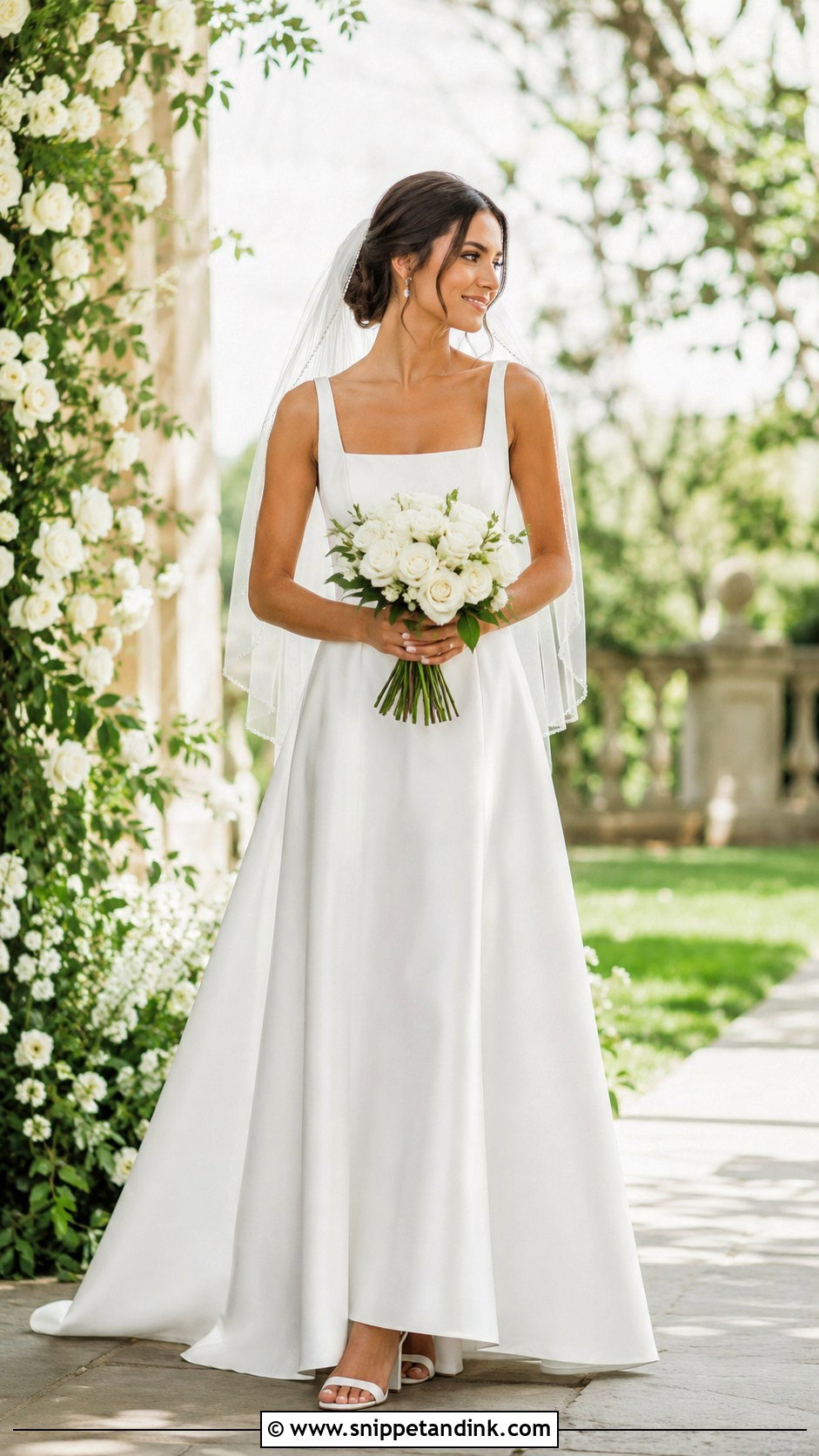
There’s a reason the classy A line wedding dress appears in nearly every bride’s shortlist. The bodice fits, the skirt opens from the waist, and it hides a lot of what people worry about through the hips. Fabric decides how simple it reads: mikado holds a crisp shape, organza floats, crepe sits flatter. I’d pick a clean bodice with one strong neckline and keep the rest plain. Block heels make it easy for an outdoor aisle on grass.
4. Minimalist Strapless Wedding Dress
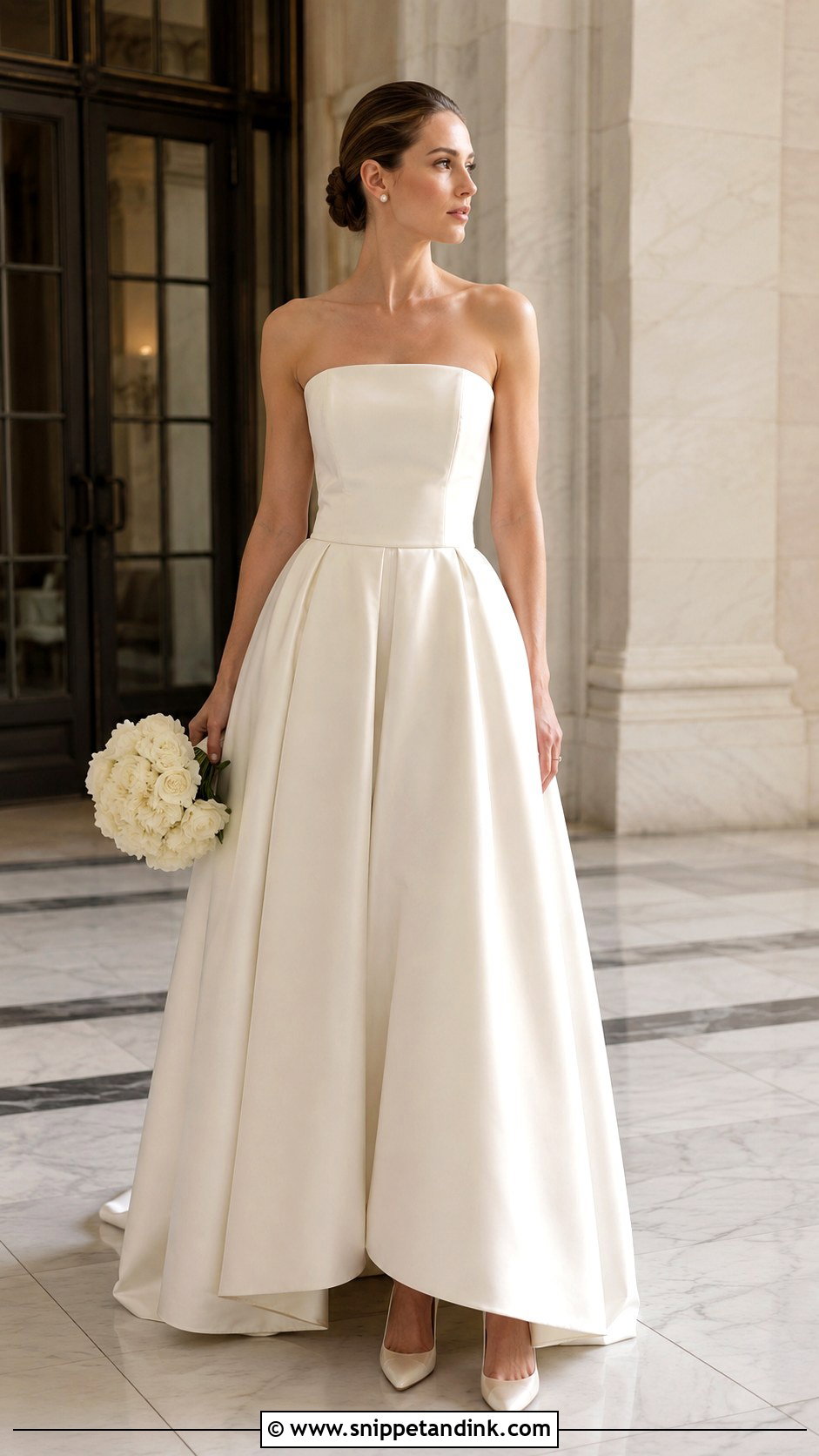
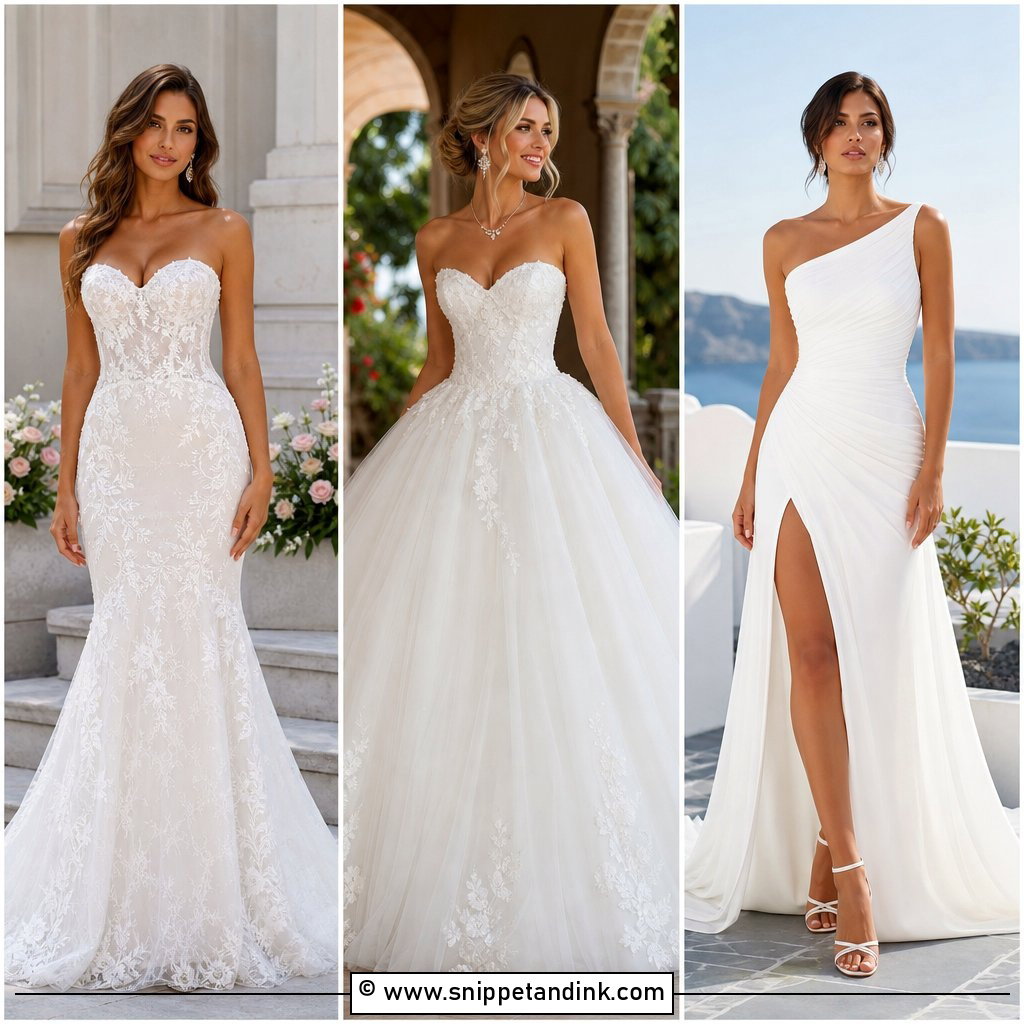
A plain strapless bodice has nowhere to hide weak construction, so this is the gown where I check the inside most carefully. Look for boning in every seam, a grip tape along the top edge and a waist stay. If the bodice moves when you twist, it’ll slip by evening. Straight necklines feel modern; a soft sweetheart is gentler. A sleek chignon shows the shoulders, and pearl studs and satin pumps keep it restrained.
5. Long Sleeve Simple Wedding Dress
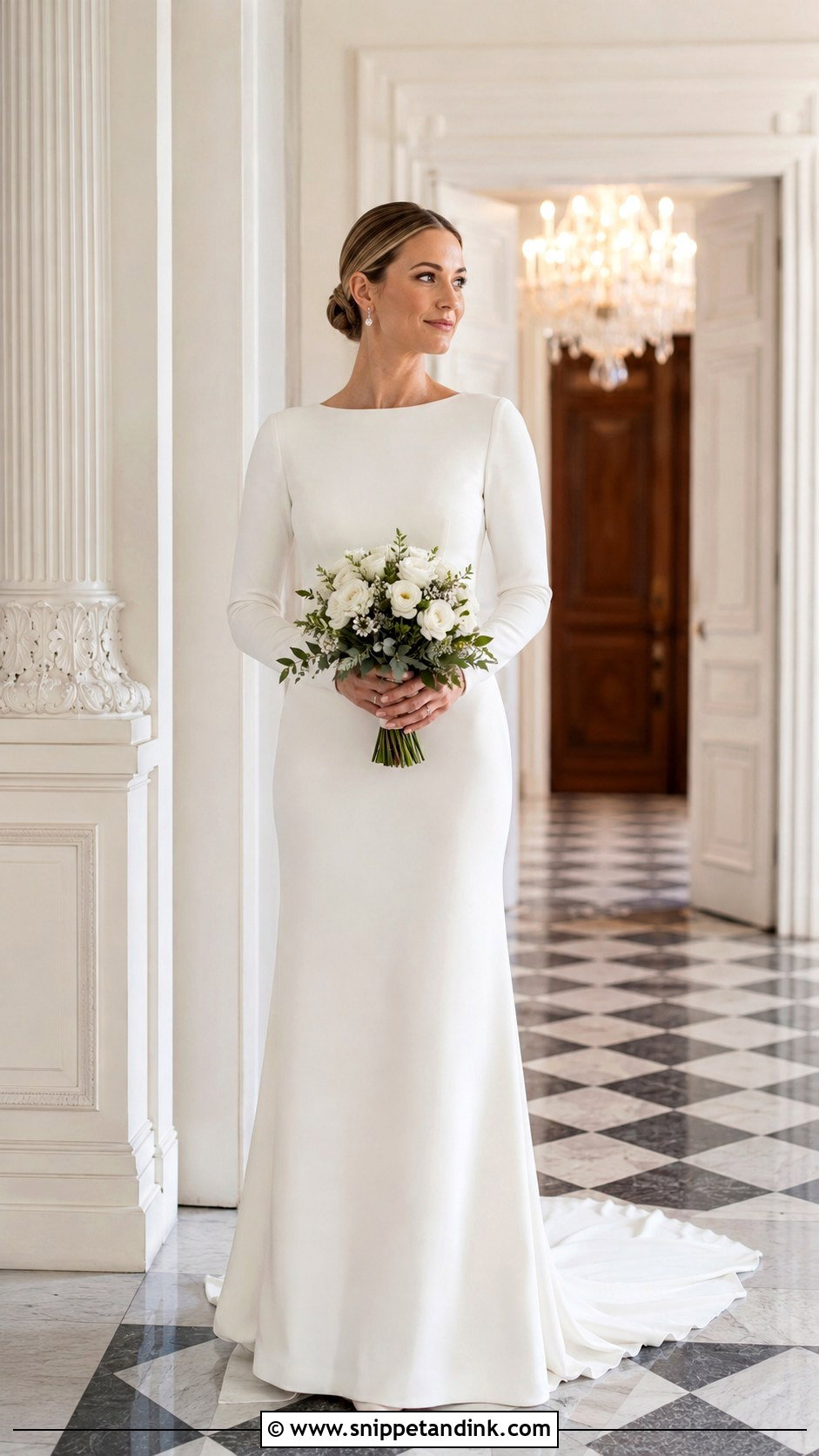
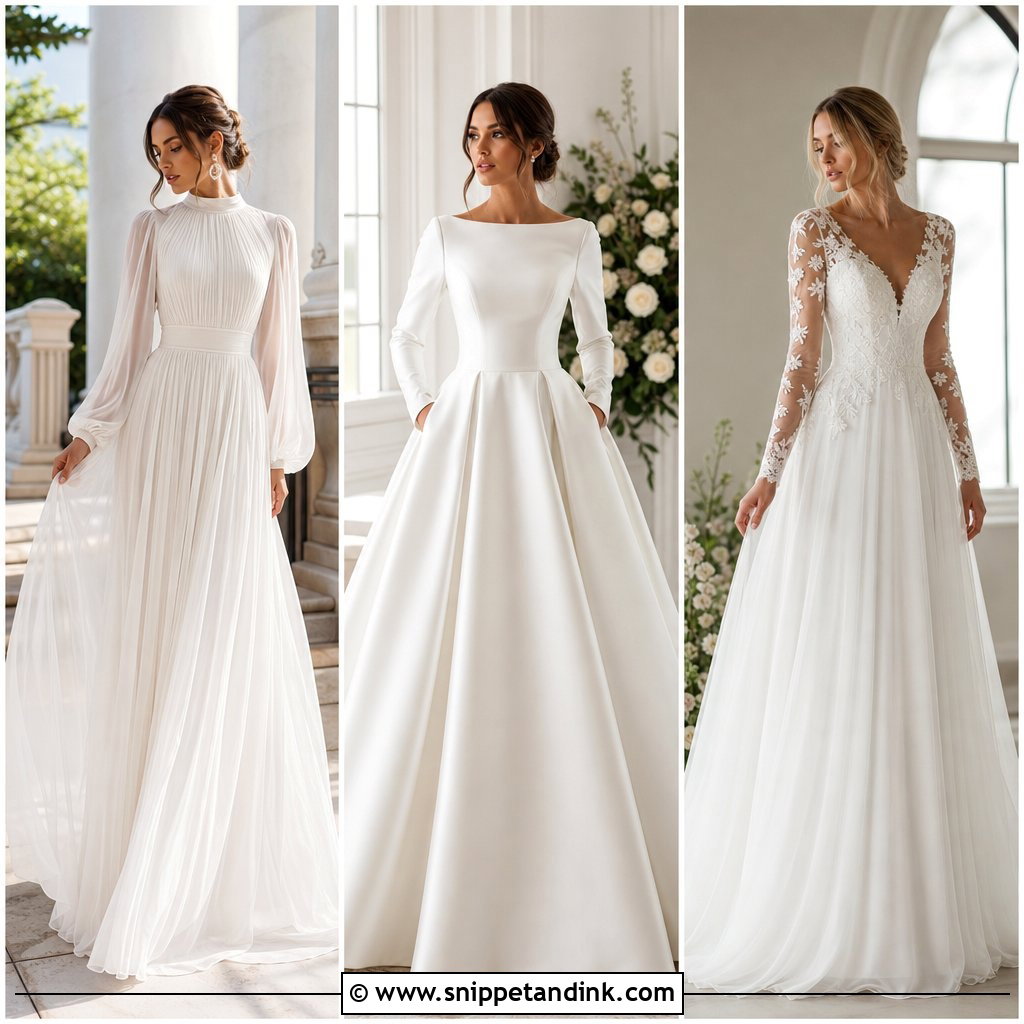
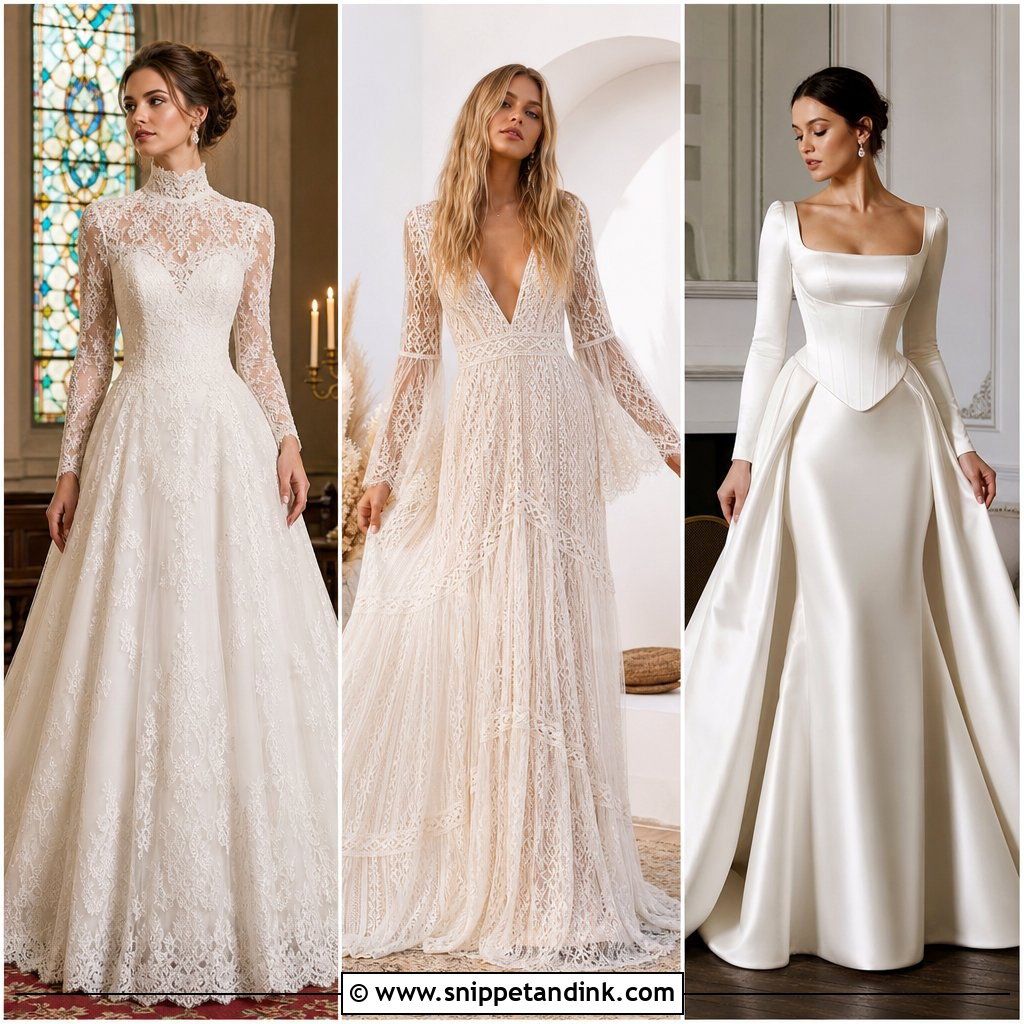
Long sleeves bring their own detail, so the rest of the gown can be very simple. Crepe sleeves look sleek; sheer sleeves soften the outline. What I pay attention to is the sleeve length. Bridal sleeves are often cut slightly long to sit at the wrist bone, and they rise when you bend your elbow, so try holding a bouquet in front of a mirror. Matte silk or crepe without beading keeps it clean. This works through autumn and winter, and in spring with a lighter fabric.
6. Square Neck Wedding Dress
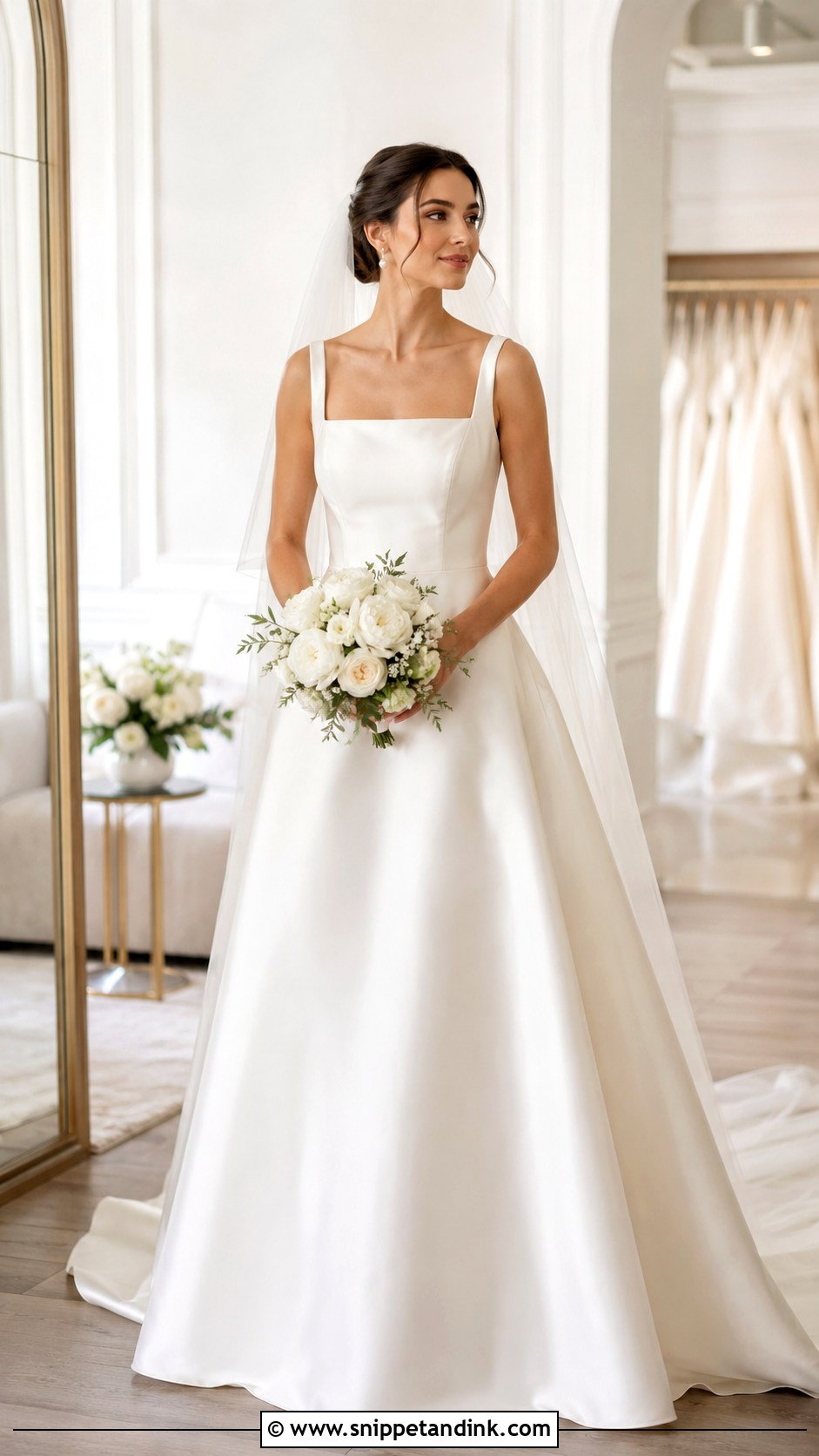
Square necks give structure without needing decoration, which is why I like them on minimal gowns. The straight line opens the chest without showing much, and it suits fitted, A-line and simple ball gown skirts. Strap width changes the support: thin straps look lighter, wider straps carry a fuller bust. Satin or crepe gives a polished finish. A neat bun and pearl earrings are enough.
7. Simple Off Shoulder Wedding Dress
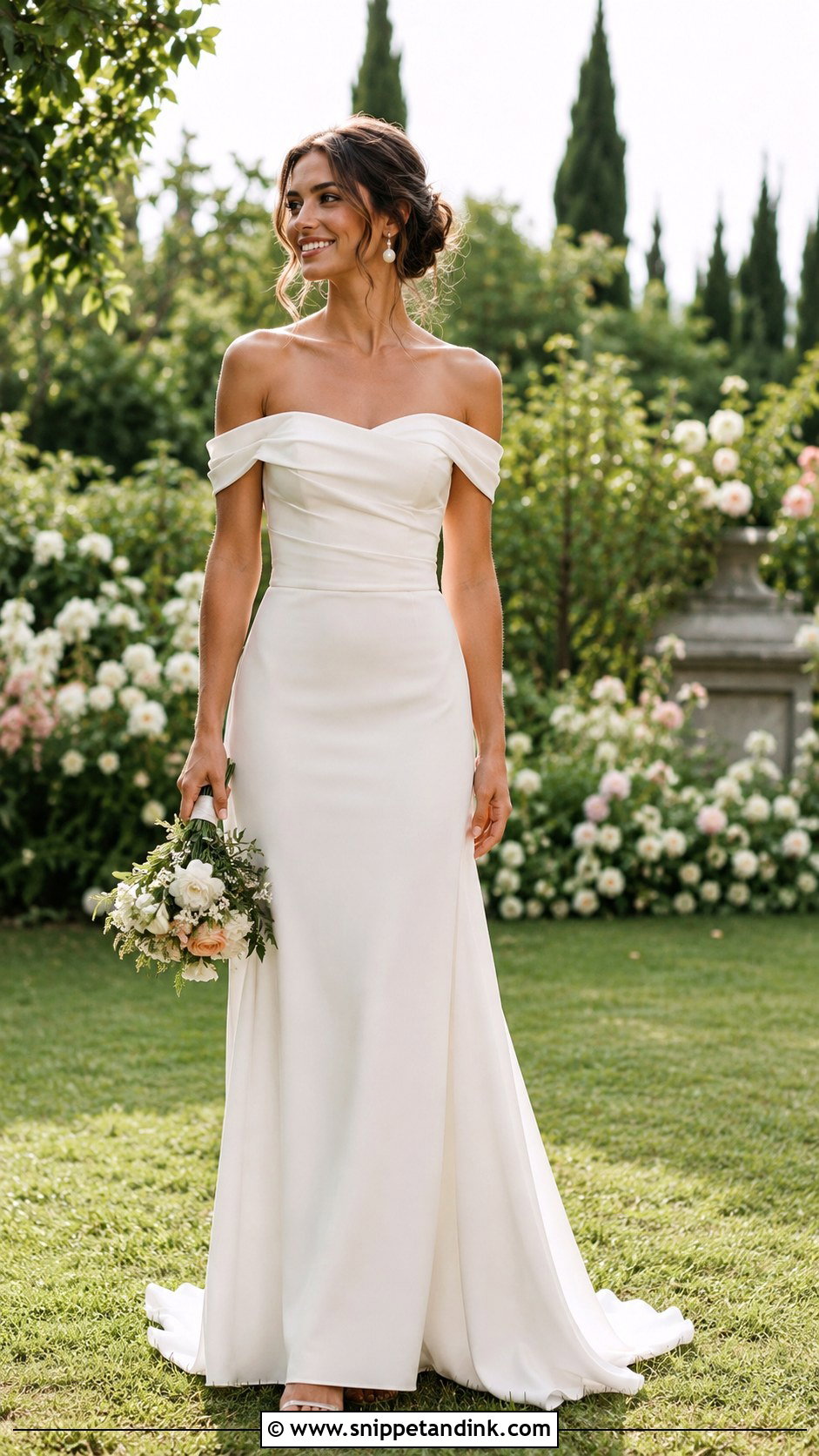
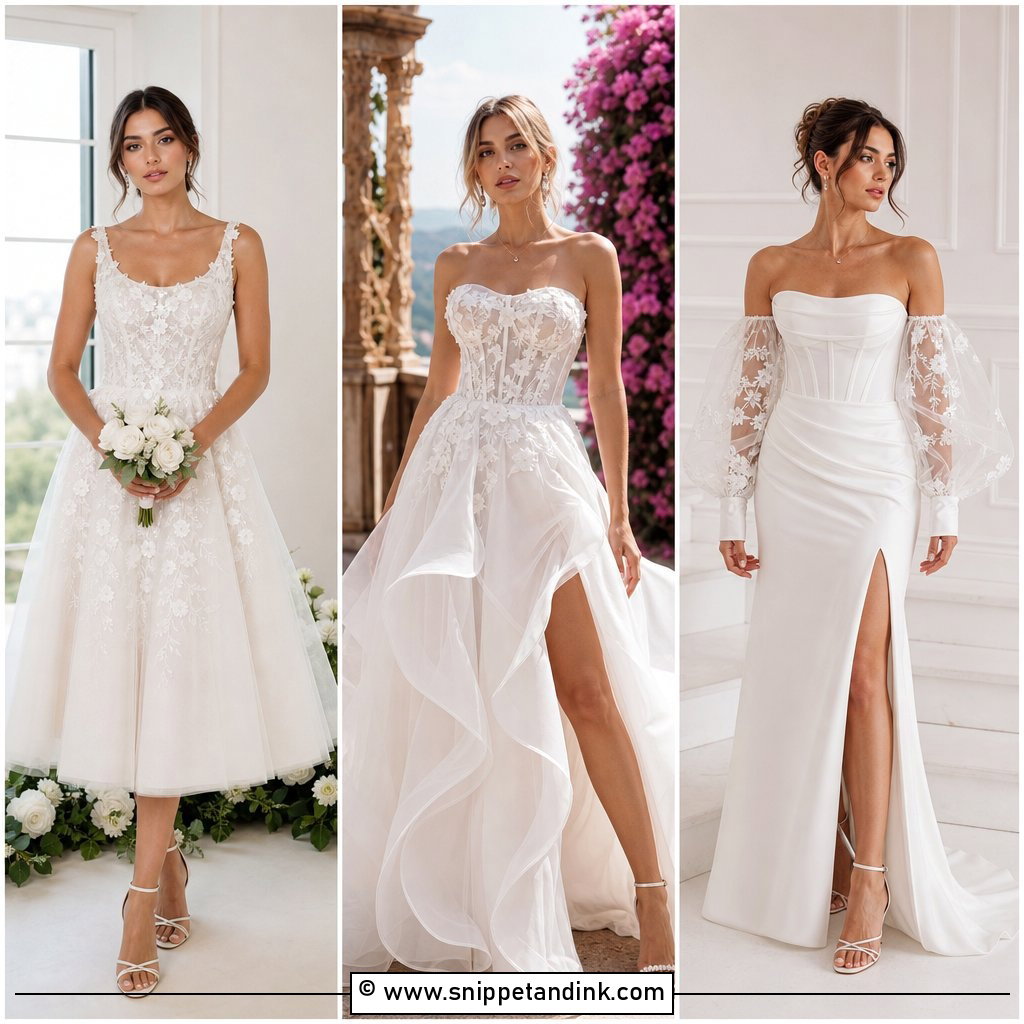
The simple off shoulder wedding dress works best with gentle draping across the neckline rather than a stiff band. A slim A-line or a column underneath keeps everything clean. Off the shoulder straps restrict how high you can lift your arms, so I test it with brides miming a hug before we finalise. A loose low bun shows the shoulder line. A chapel veil for the ceremony, then no veil for the reception, gives you two moods without changing clothes.
8. High Neck Simple Wedding Dress
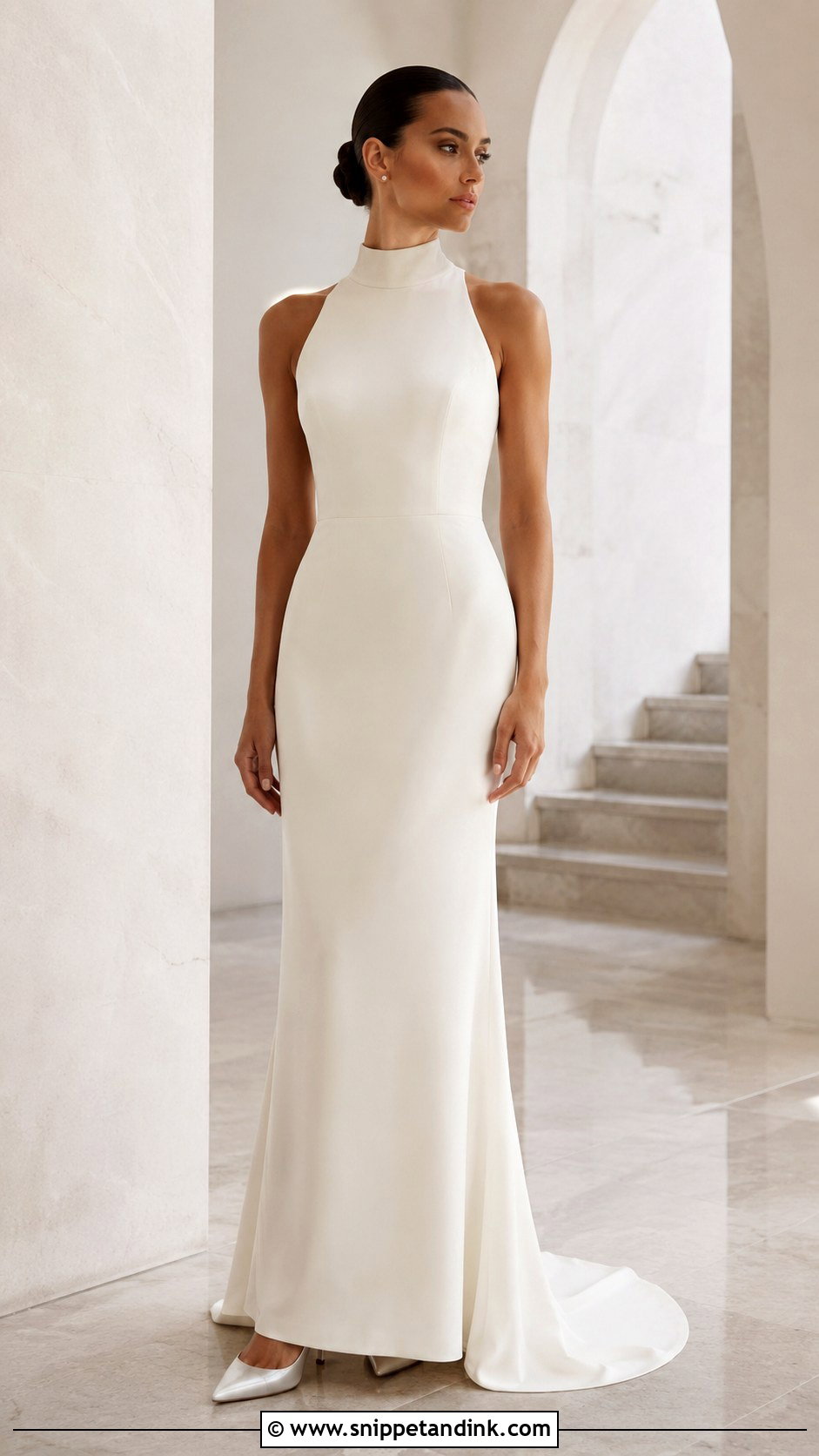
Covered necks frame the face like a collar, which is why I tell brides to skip necklaces with them. Crepe, satin or silk let the neckline itself be the detail. A slim skirt or soft A-line below keeps the long line from neck to hem. One thing to watch: high necks get warm in summer, and a lined high-neck crepe can feel stuffy by mid-afternoon. Unlined or half-lined versions are kinder. Small studs and a sleek bun keep it sharp.
9. Simple V Neck Wedding Dress
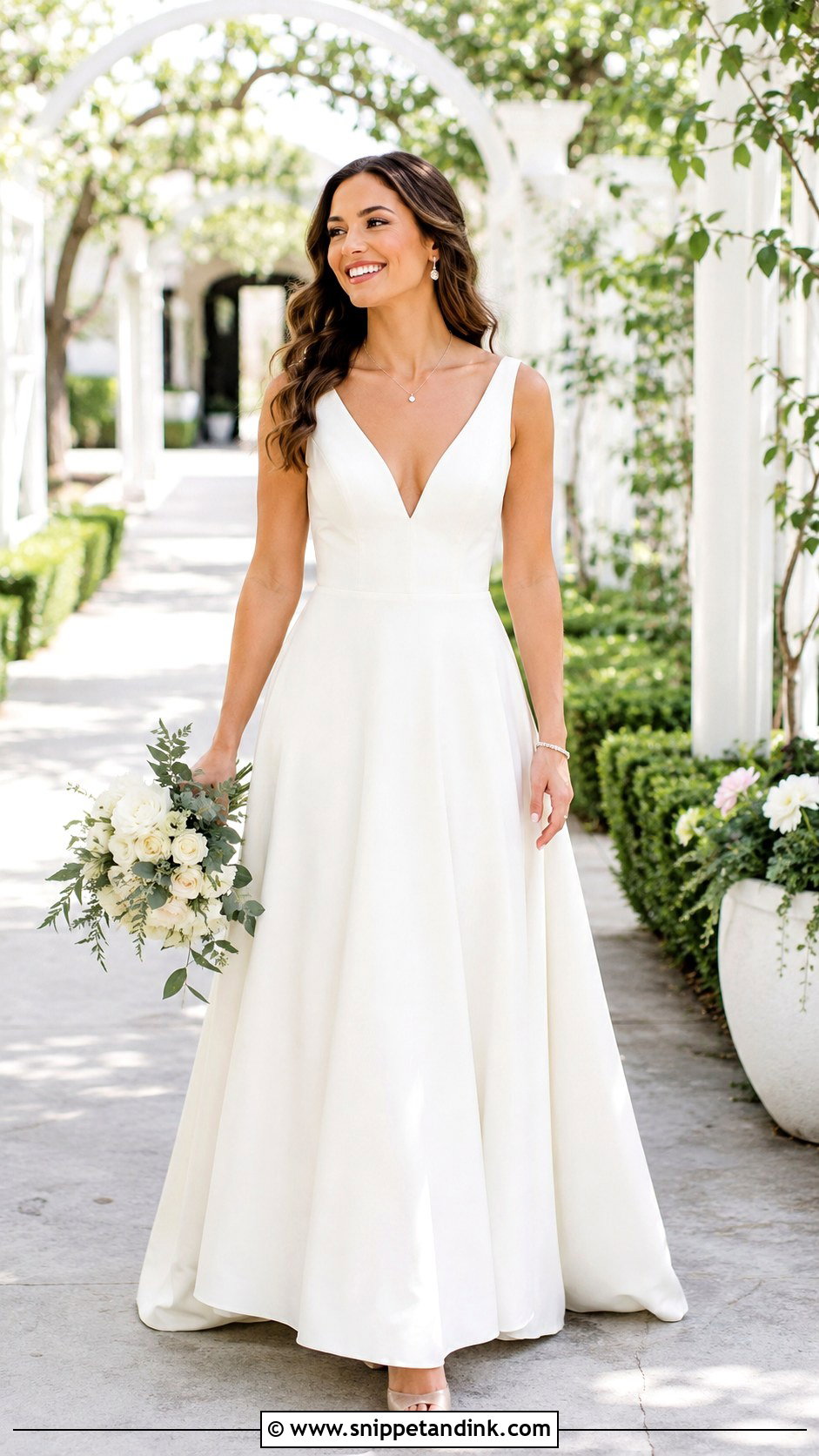
A moderate V is the version I’d recommend for a simple dress. Deep plunges need tape and fine mesh to stay in place, which takes away from the clean, easy feel. Satin, crepe or chiffon all work. The V lengthens the neck and torso, so it helps on shorter brides. A small pendant can sit within the neckline; at deeper cuts, skip the necklace. Soft waves and neutral heels suit a garden or beach ceremony.
10. Satin Ball Gown Wedding Dress
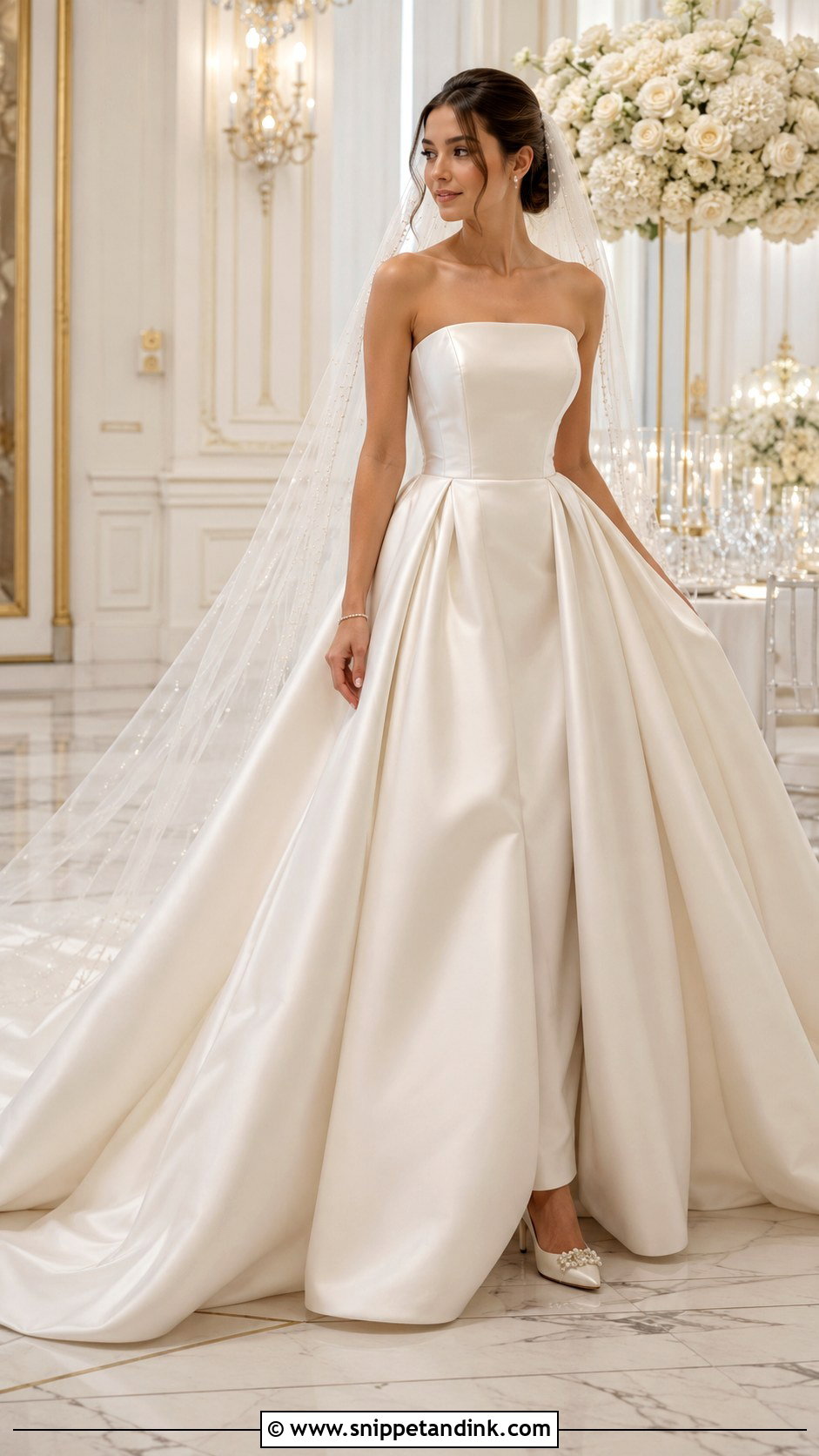
Volume can still be simple if the surface stays clean. A smooth satin bodice and a full skirt with soft pleats at the waist give you the ceremony presence of a ball gown without any beading. Heavy satin holds its pleats better than a lighter one, though it adds weight. A strapless, square or bateau neckline keeps it classic. The cathedral veil and simple pearl studs keep the balance. Ballrooms and big hotels give the skirt the space it deserves.
11. Simple Lace Wedding Dress
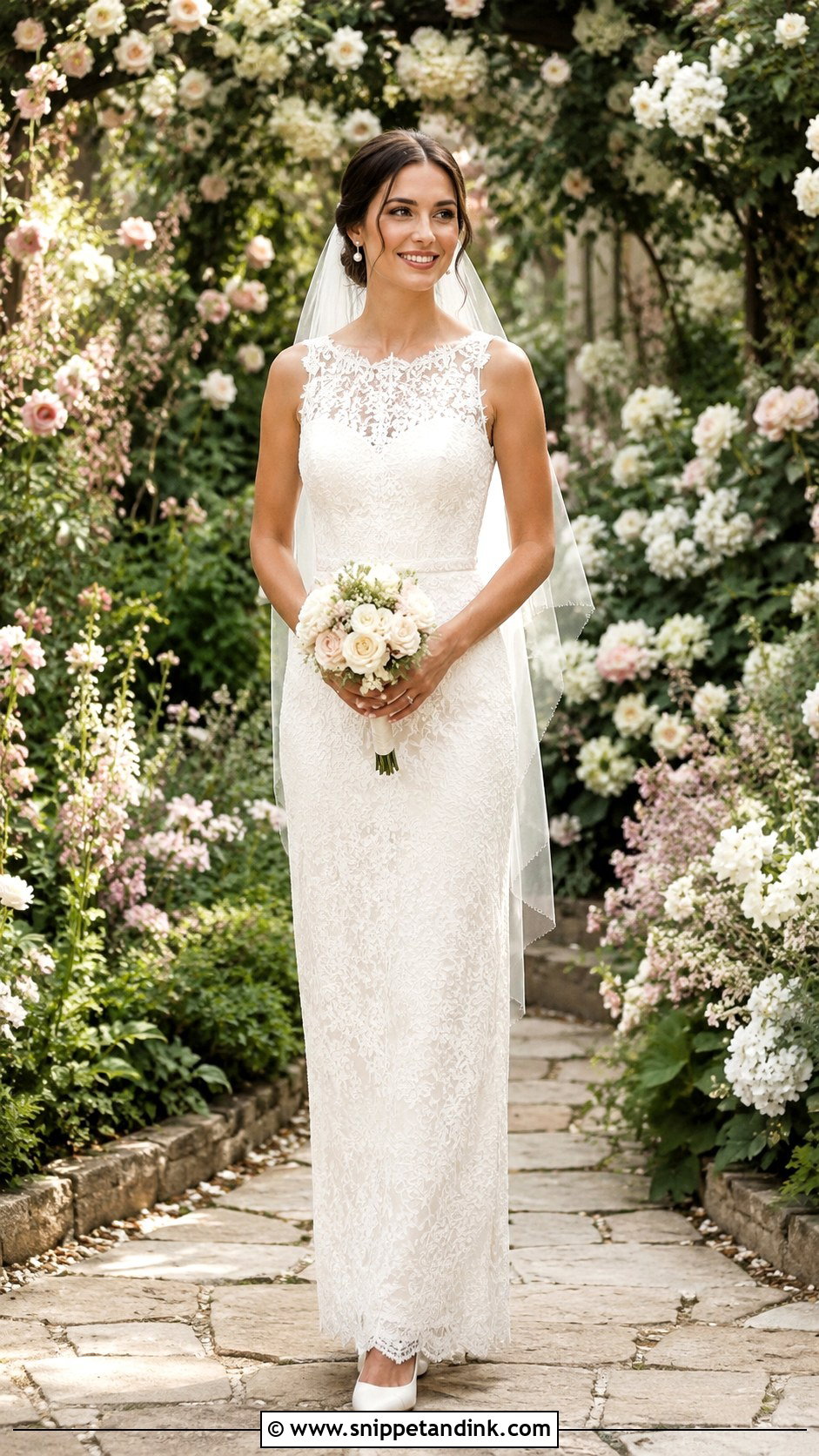
Fine lace with an open pattern looks simple; dense lace with heavy beading doesn’t. I usually suggest a lace bodice over a crepe or chiffon skirt for a bride who wants a little texture without the weight of an all-lace gown. An all-lace sheath can also look clean if the lace is a single, consistent pattern. Pearl earrings, ivory heels and a soft veil keep it understated. Outdoor and small venues suit it.
12. Short Simple Wedding Dress
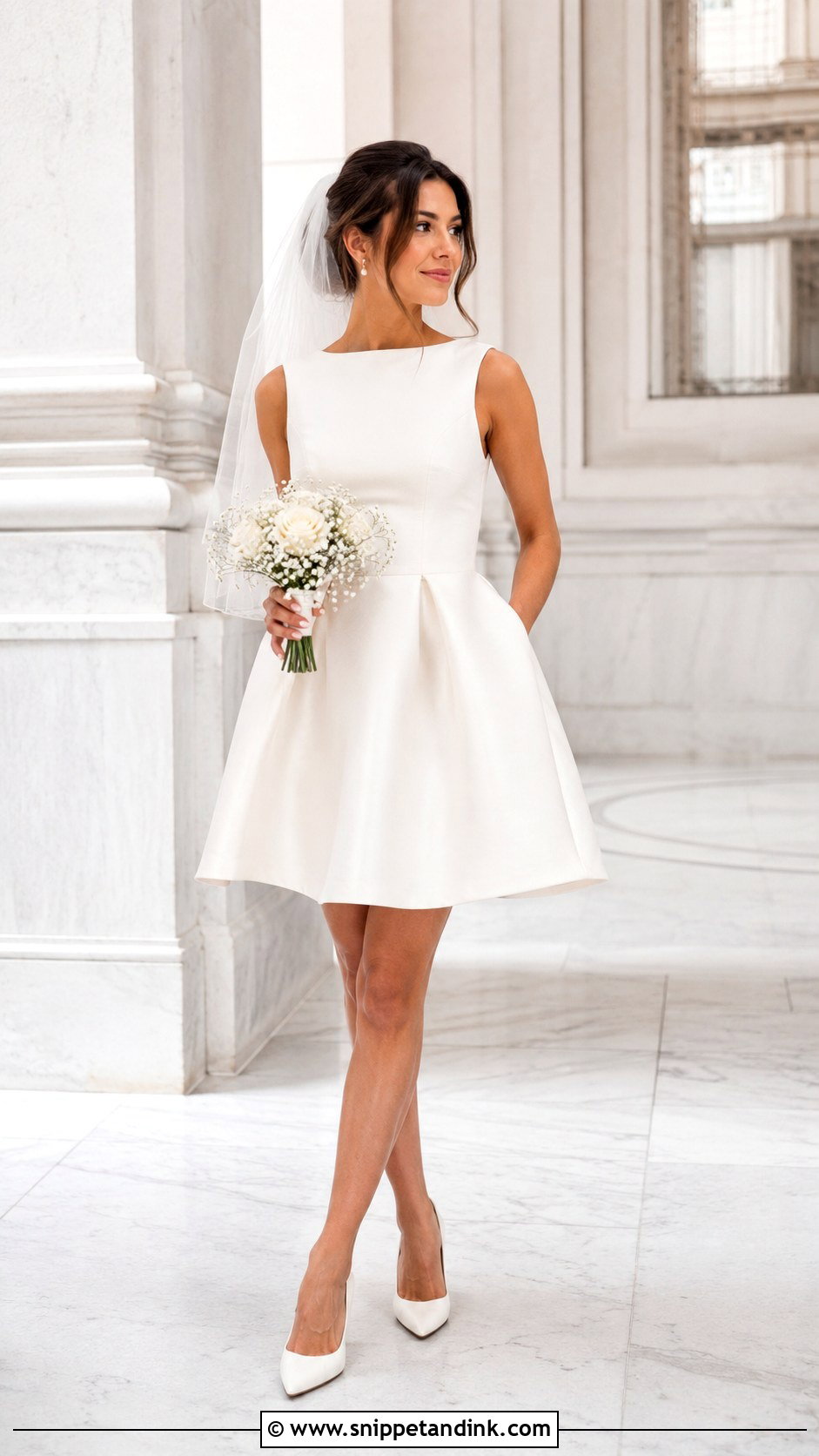
Short wedding dresses look casual only when the fabric is too soft. A knee-length or midi bridal dress in satin, crepe or structured mikado holds its shape and reads as bridal. Tailoring is very visible at this length, so I check the hem is level when you walk, not just standing still. Pointed pumps, pearl earrings and a mini veil or bow fit courthouse ceremonies, elopements and second looks. Small bouquets match the scale.
13. Simple Wedding Dress With Bow
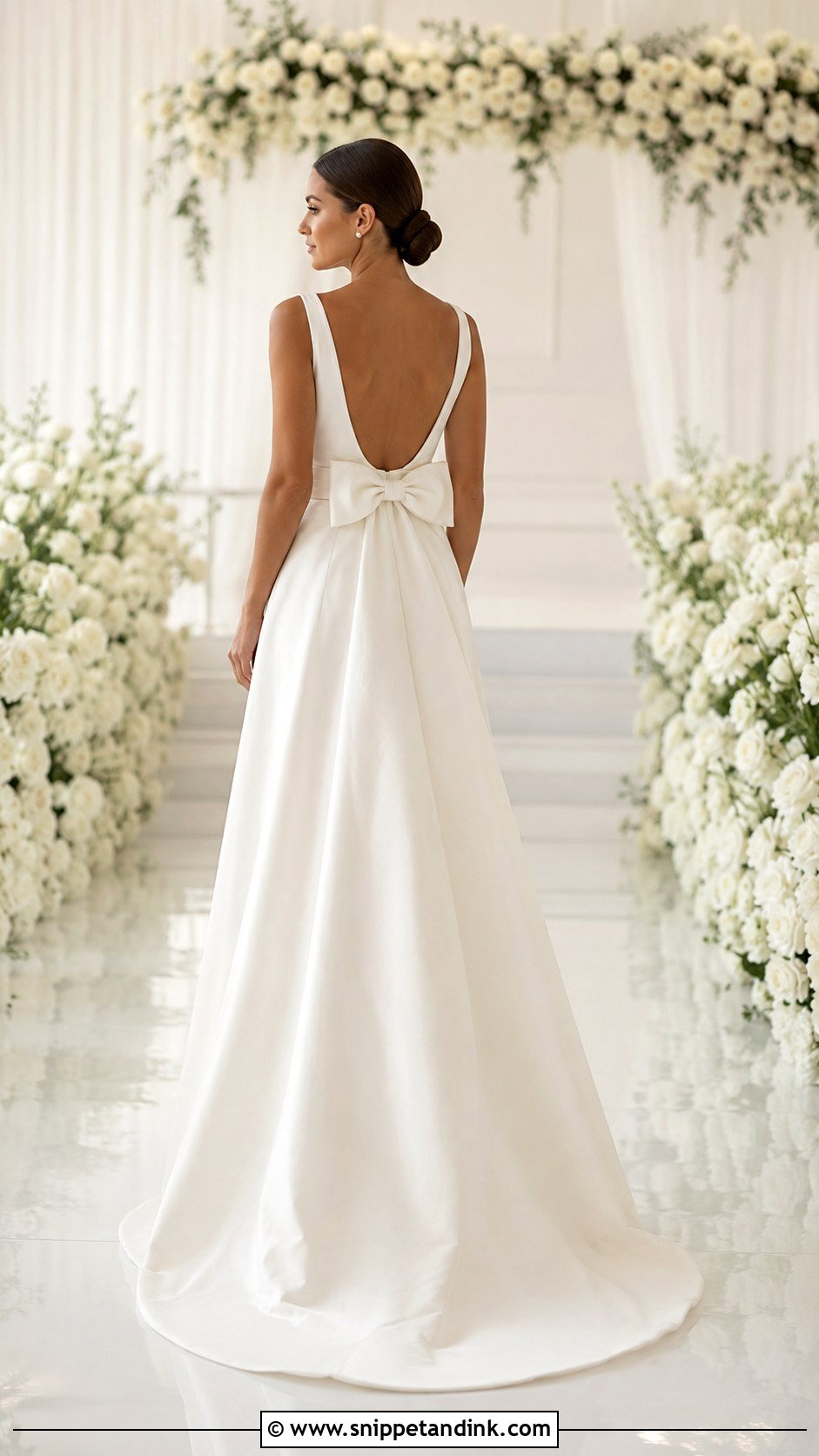
One bow is a detail, two is a theme, and more than that loses the simple look. I usually place it at the back waist, on a shoulder or at the neckline. Satin and mikado hold a bow’s shape best; a bow in thin fabric droops by evening unless it’s interfaced. A back bow catches the eye during the processional, especially with a clean train behind it. Sleek hair and small studs keep the rest of the wedding dress elegant and simple.
14. Elegant Wedding Dress With Sleeves
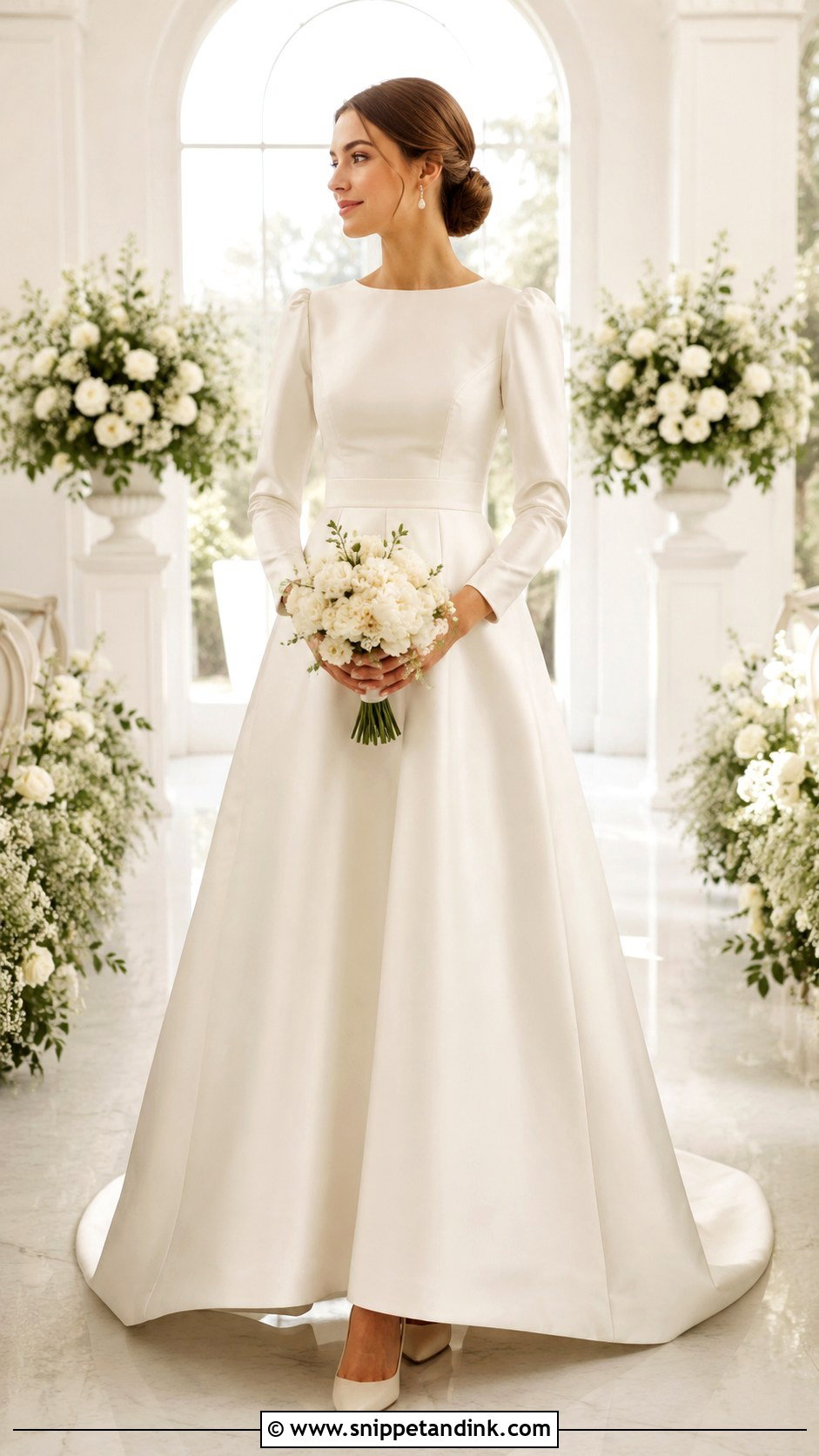
Sleeves give a plain dress shape, so you don’t need much jewellery. Fitted, sheer, flutter or softly puffed, the choice depends on the season and the room. A fitted crepe gown with long sleeves reads modern; a satin A-line with soft sleeves feels romantic. My fitting test is the same for all of them: raise both arms and reach forward. If the bodice lifts, the armholes need adjusting. A low bun and classic pumps finish it.
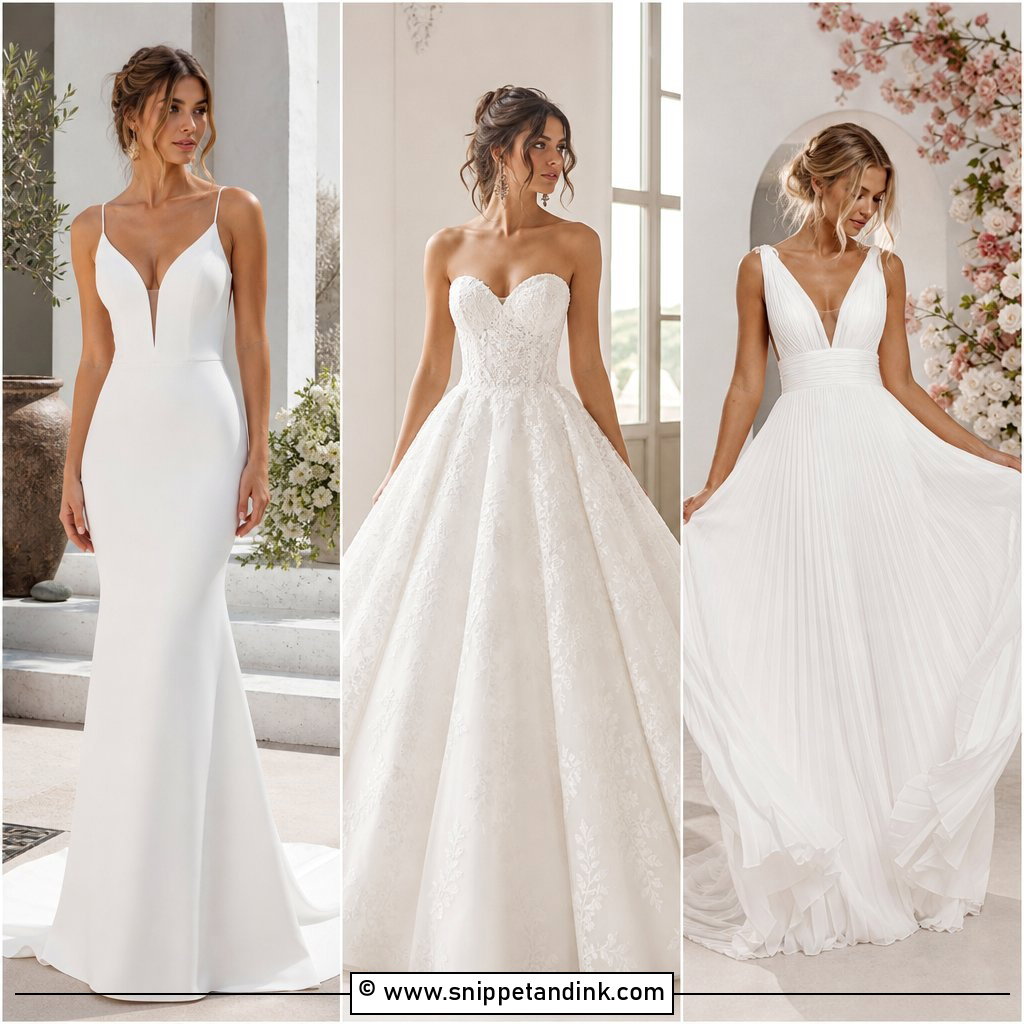

15. Simple Mermaid Wedding Dress
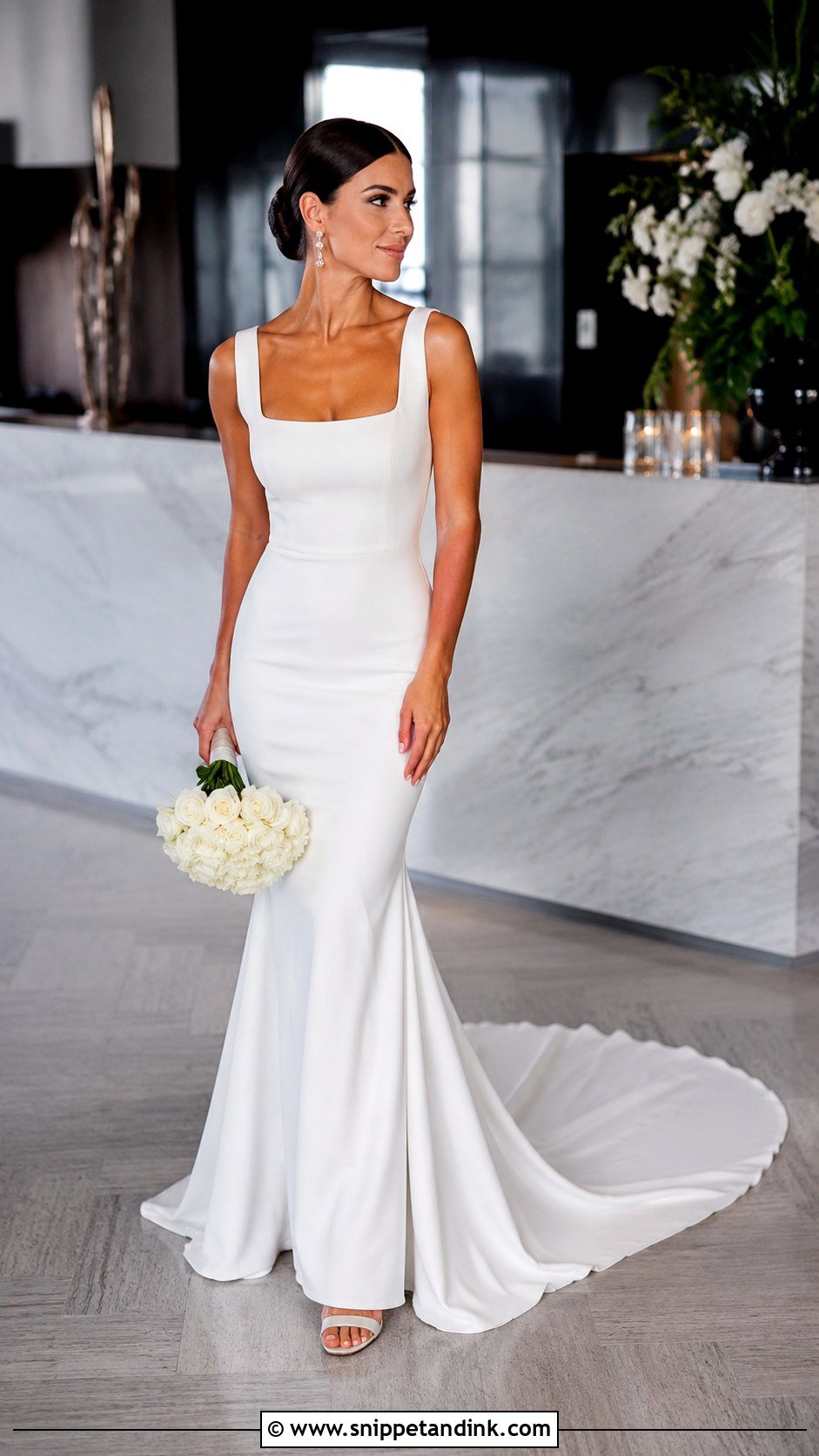
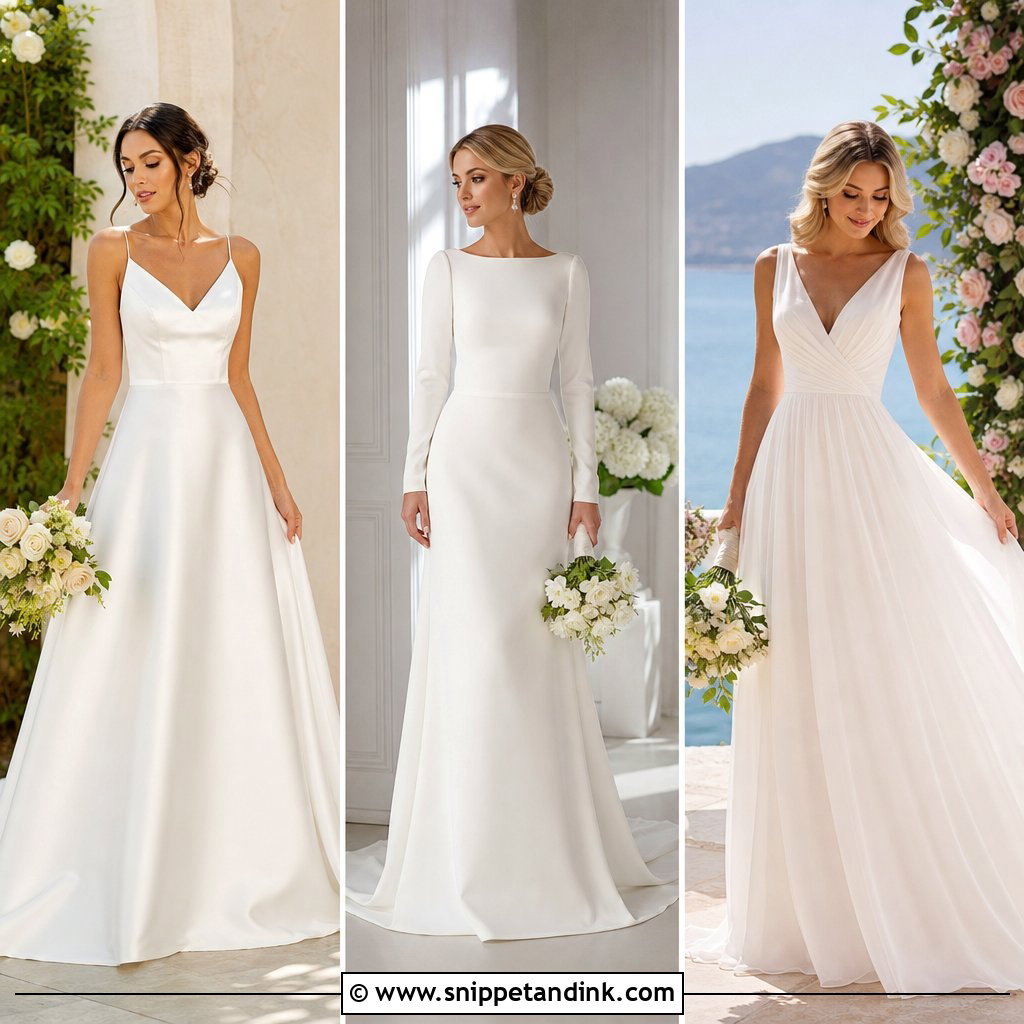
Mermaids flare below the knee, and how low the flare sits decides how easy the dress is to live in. A flare at the knee lets you walk and climb steps; one set lower looks more dramatic but restricts your stride. Smooth crepe or satin with minimal embellishment keeps it simple. Square, strapless or off shoulder necklines all suit the shape. Walk, sit and climb a step at every fitting.
16. Simple Sheath Wedding Dress
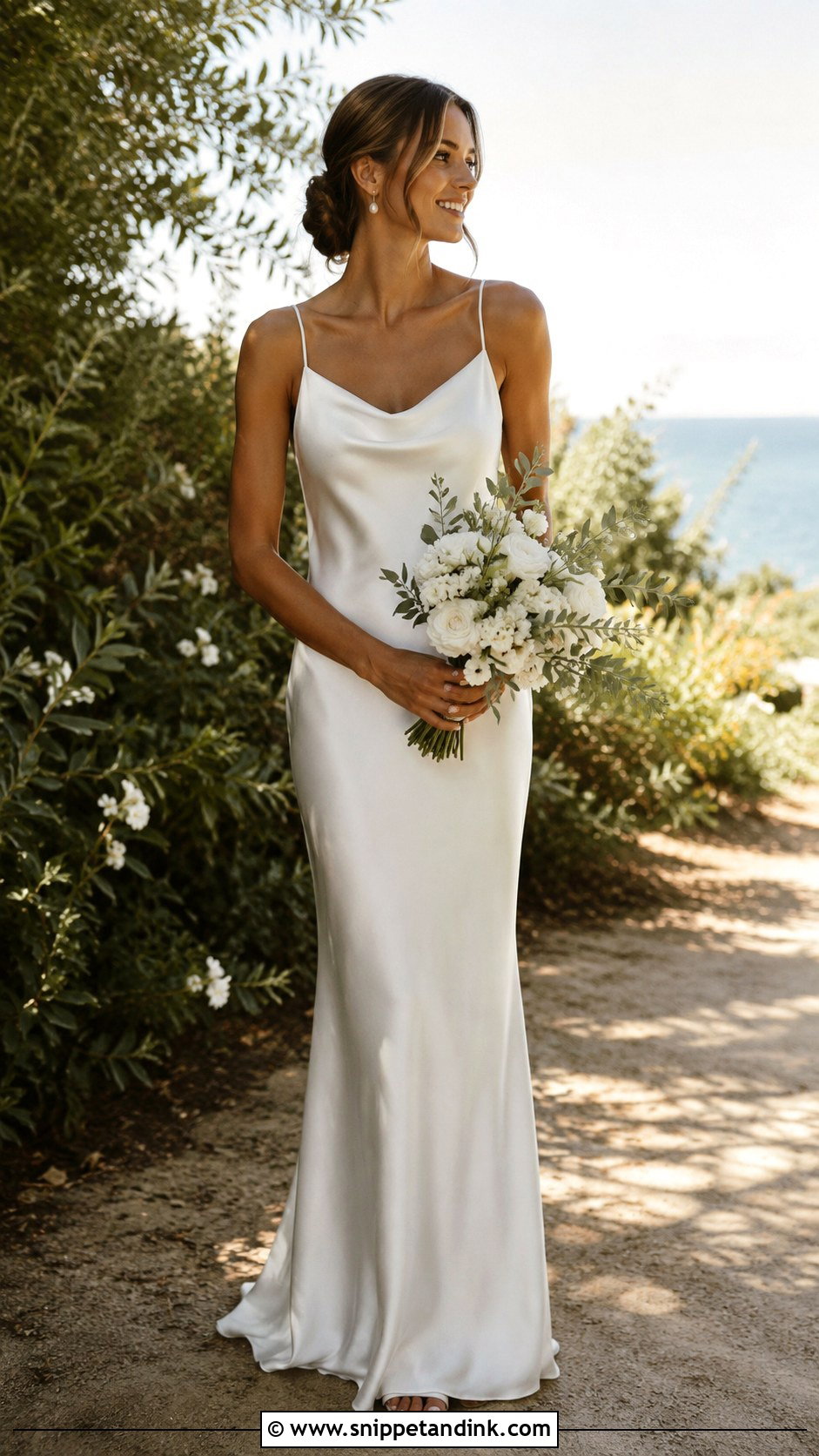
Sheaths follow the body loosely, which makes them less dramatic than a mermaid and less full than an A-line. That relaxed fit is the appeal. Light crepe, silk or satin keeps it fluid. Thin straps and a scoop or soft V suit warm weather, and minimal sandals and a loose bun keep the mood casual. I find this shape comfortable for long days, since nothing presses on the waist or hips.
17. Bateau Neck Wedding Dress
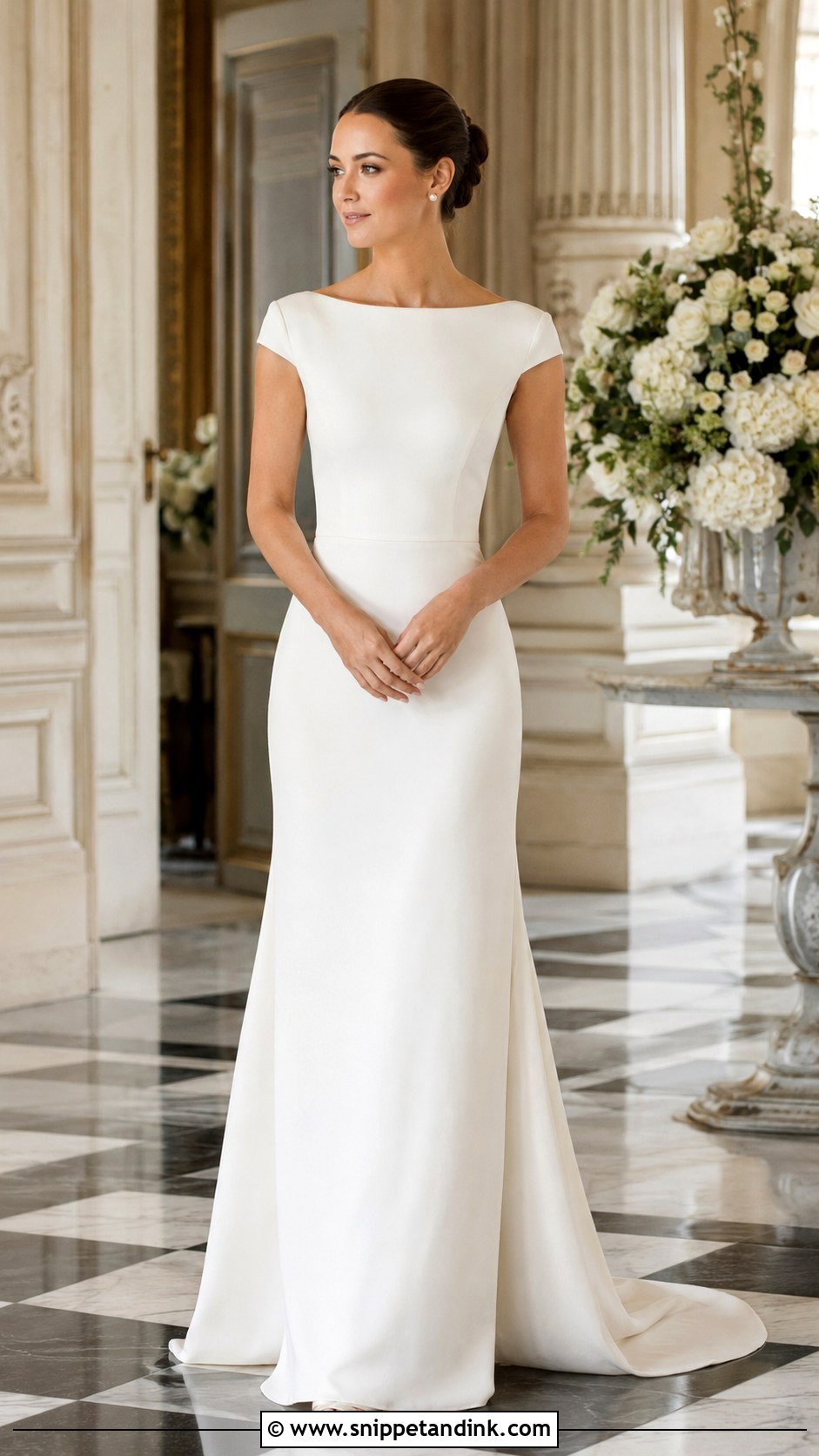
The bateau neck wedding dress runs straight across the collarbone from shoulder to shoulder, so it covers the chest while still showing the neck. It works with long, cap or no sleeves. Structured crepe, satin or mikado keep the neckline crisp; soft fabrics let it slump. Since the neckline is wide, I’d skip a necklace and choose studs. A smooth bun keeps it tidy. It suits formal ceremonies and estate venues.
18. Simple Wedding Dress With Train
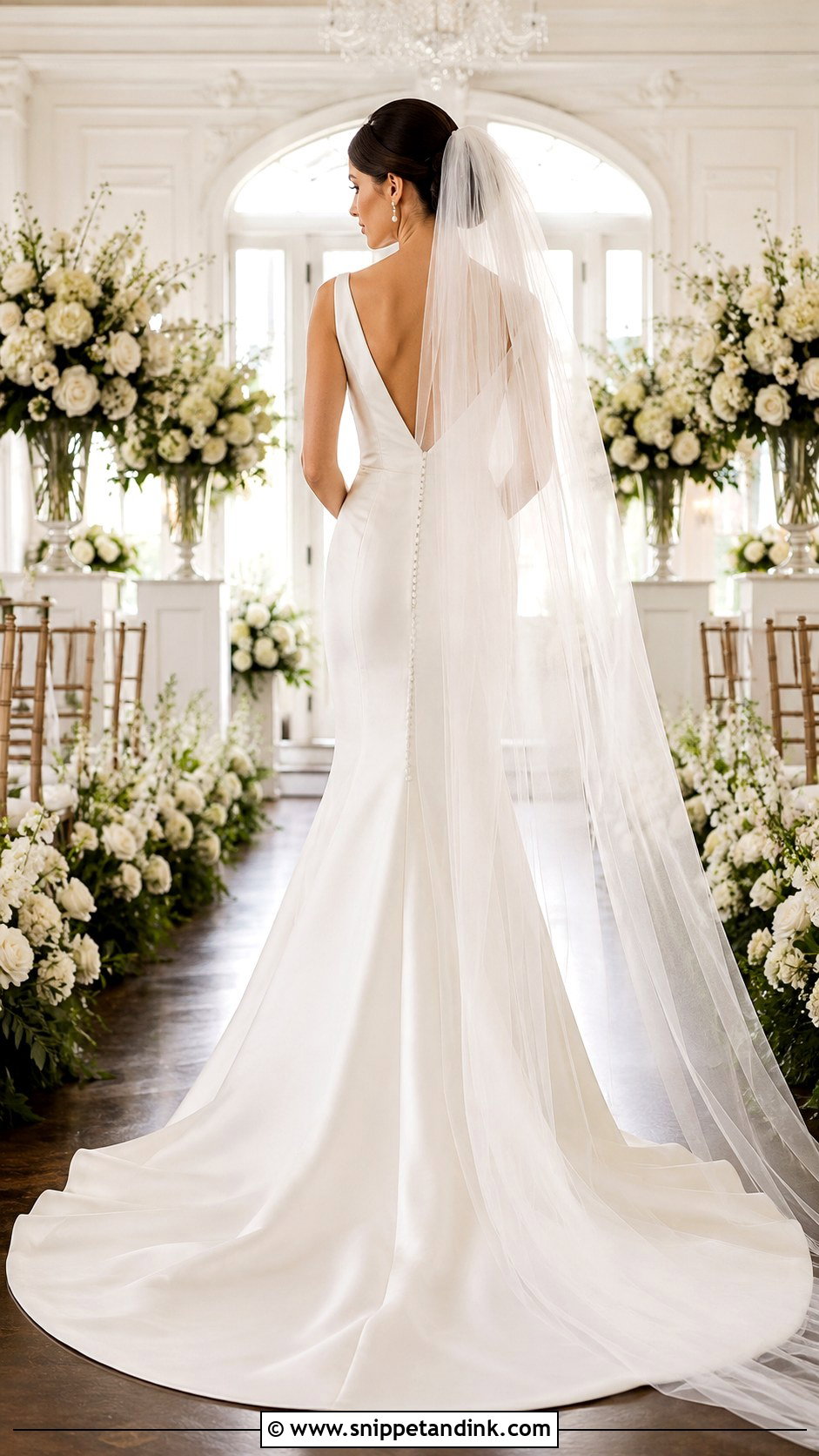
A train turns a plain gown ceremonial. Sweep trains just brush the floor, chapel trains extend a little further, and cathedral trains reach far behind you, so the aisle needs to be long enough. Bustle it for the reception; most plain gowns use a few hidden hooks to lift the train. Swap the long veil for nothing at the reception for a sleek second look. Churches, ballrooms and grand staircases show a long train best.
19. Elegant Modest Wedding Dress
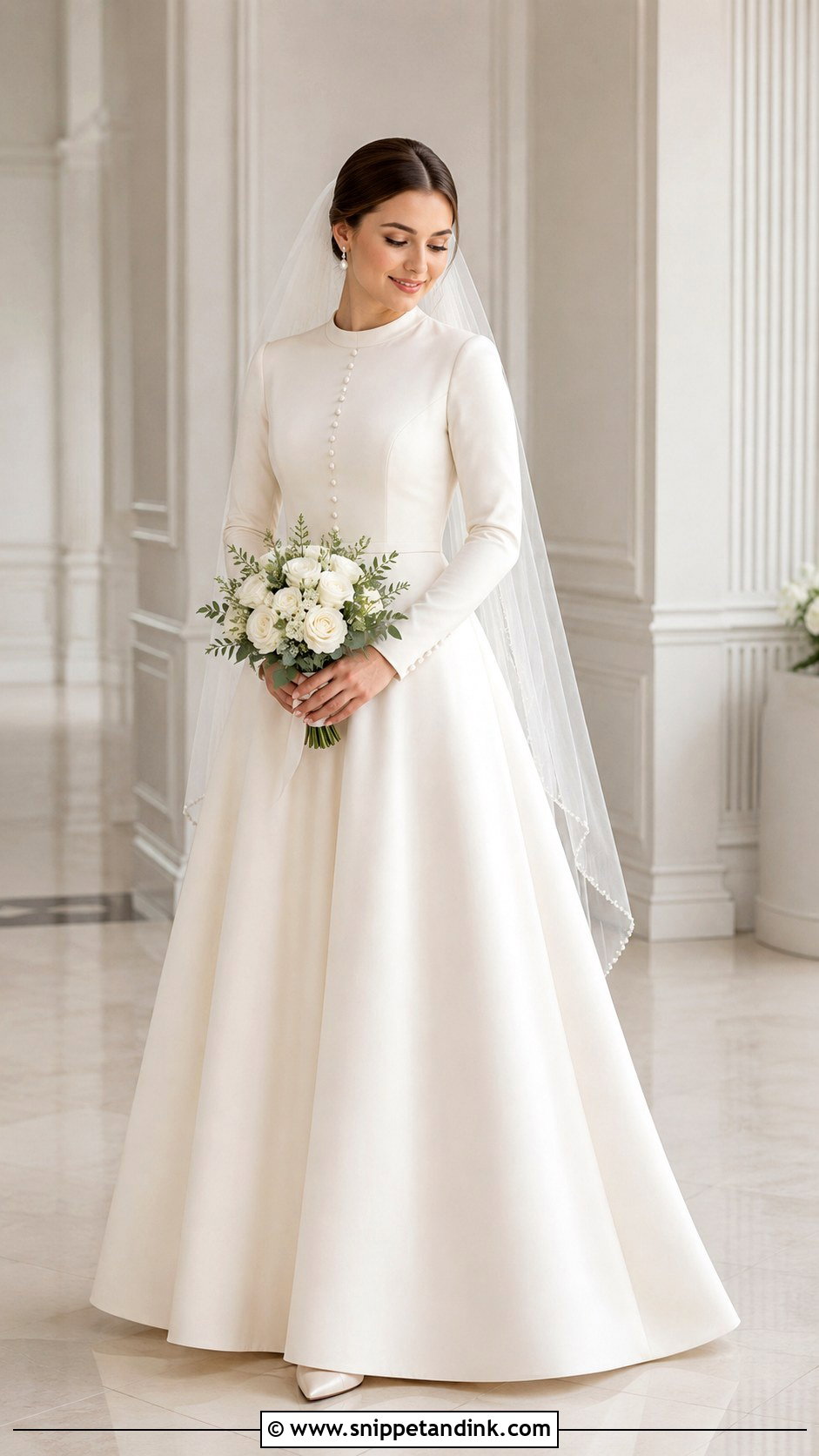
Coverage done well looks deliberate, and that starts with fit. A modest gown that’s even slightly too big reads borrowed. Higher necklines, long sleeves and lined bodices give coverage; a crepe A-line, a satin long-sleeve dress or a bateau column all look modern. I check the sleeve lining, as unlined lace or chiffon sleeves can be more see-through in sunlight than they look in a shop. Covered buttons or soft pleats add quiet detail.
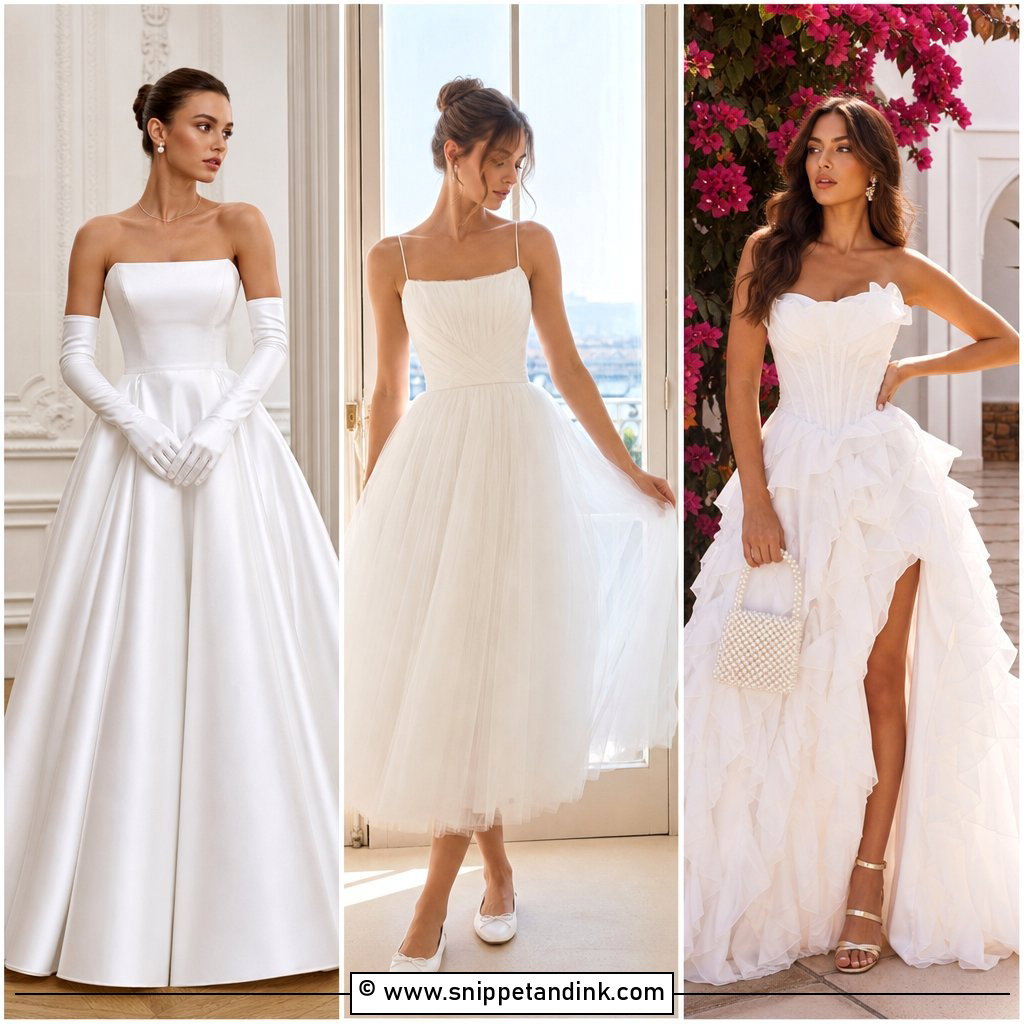
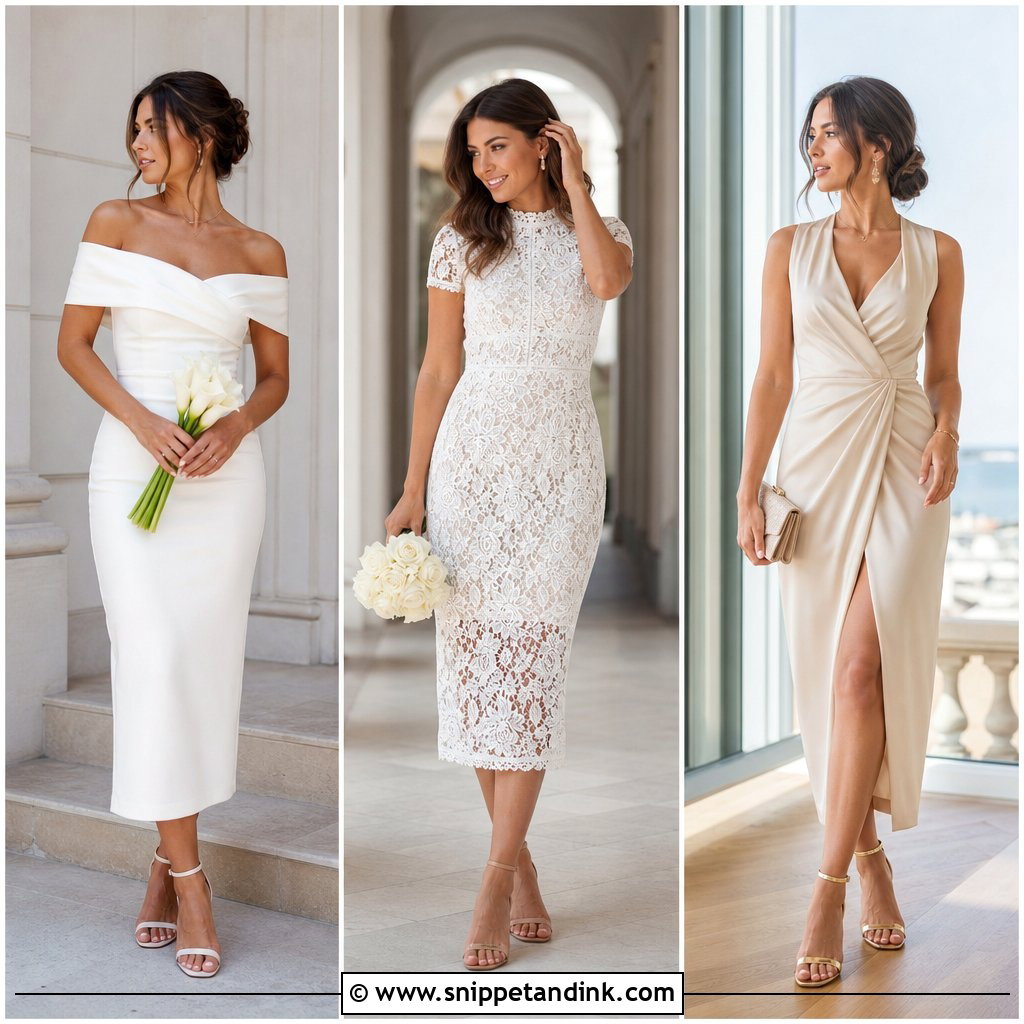

20. Simple Chiffon Wedding Dress
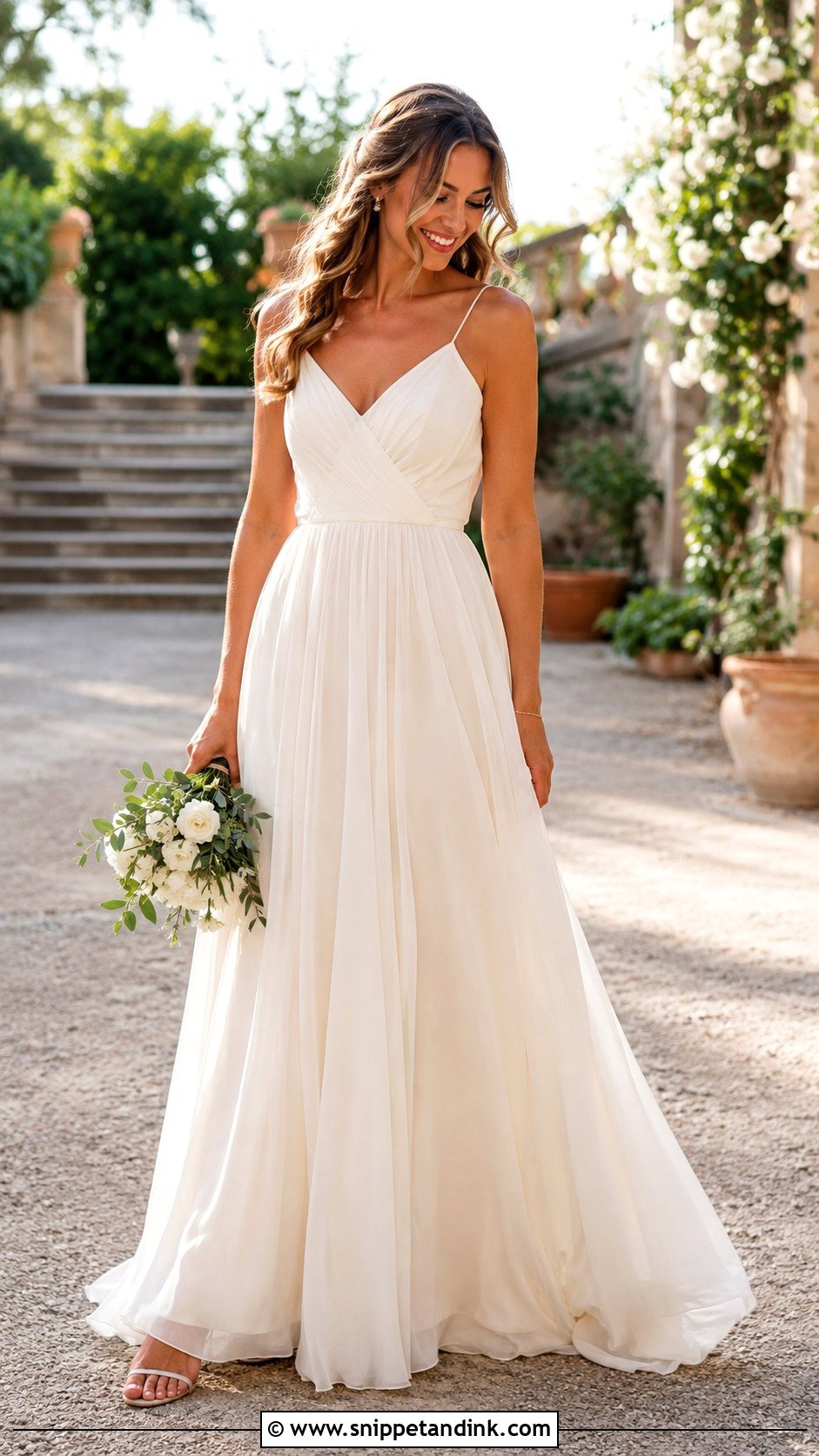
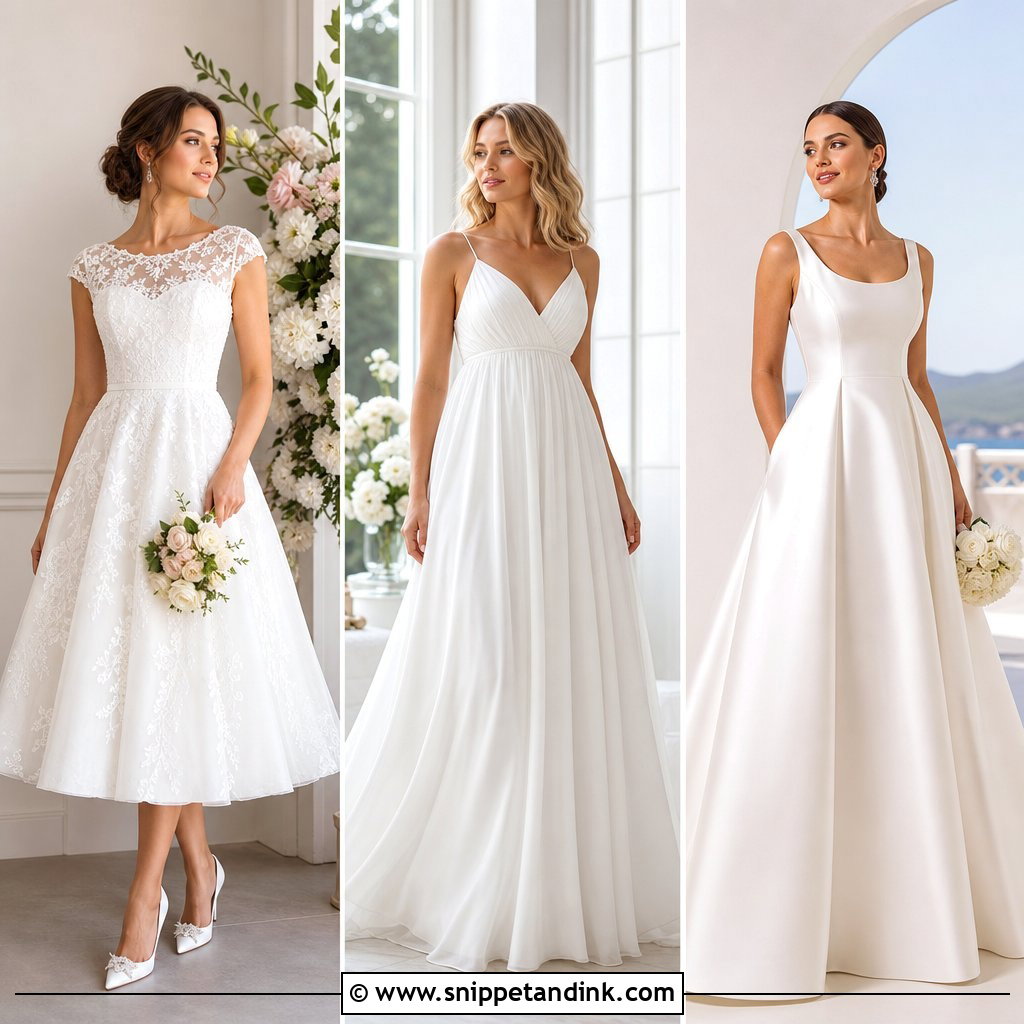
Chiffon is light and moves in the slightest breeze, which suits outdoor and warm-weather ceremonies. A flowy A-line or empire waist feels comfortable. The fabric frays at raw edges and can snag on rough surfaces, so I check that the hem has a rolled finish. Keep the bodice clean with simple straps or soft sleeves, and avoid layers that add bulk. Sandals and loose waves suit the mood.
21. Simple Tea Length Wedding Dress
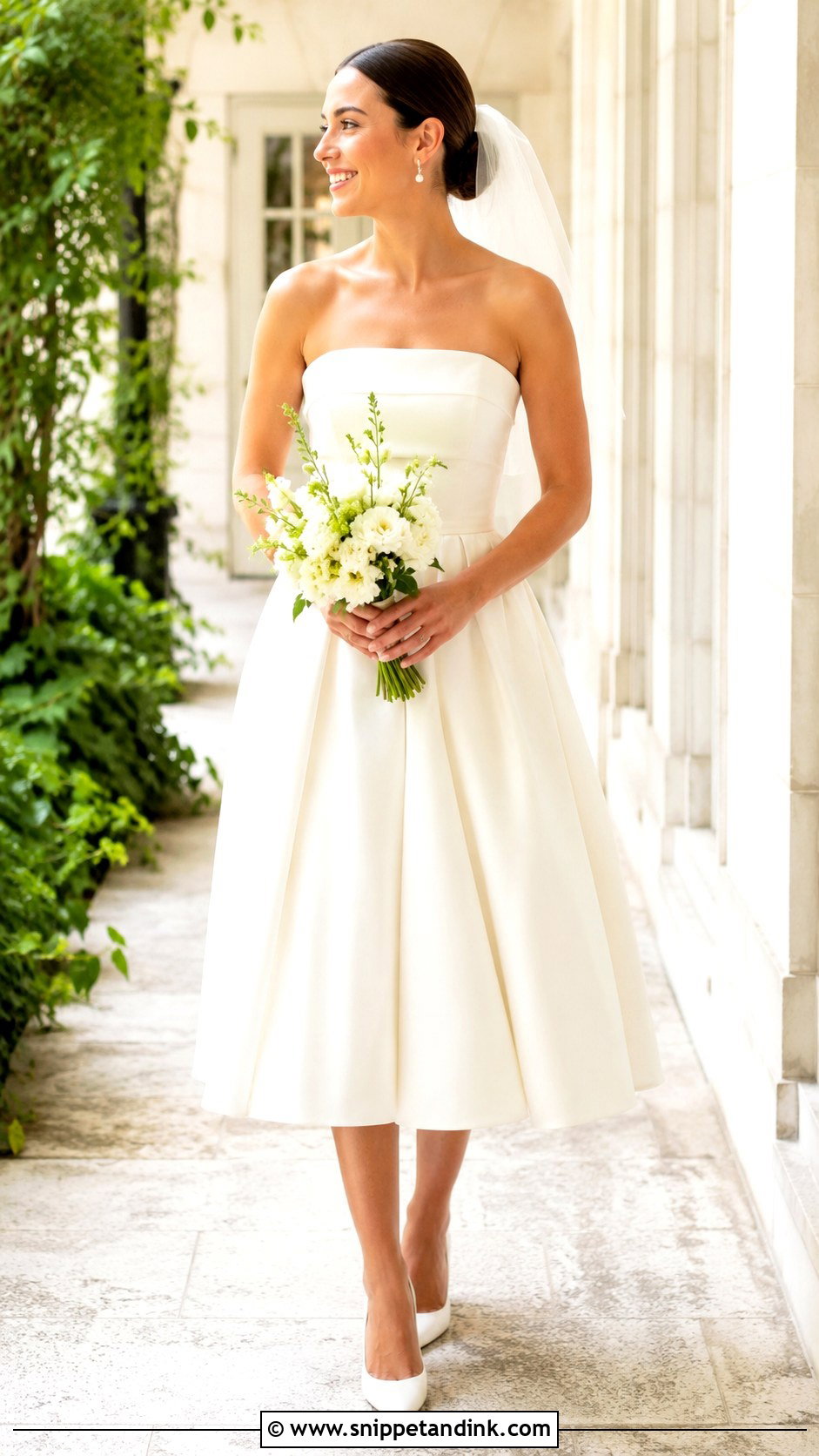
Tea length lands between knee and ankle, so it’s practical for garden lawns and courthouse steps and shows off the shoes. A structured bodice with a soft A-line skirt has a 1950s feel; satin, tulle or mikado keep it bridal. Pointed pumps, pearl earrings and a short veil finish it. Break in your shoes properly, since there’s no long hem to hide plasters.
22. Simple Wedding Dress With Cape
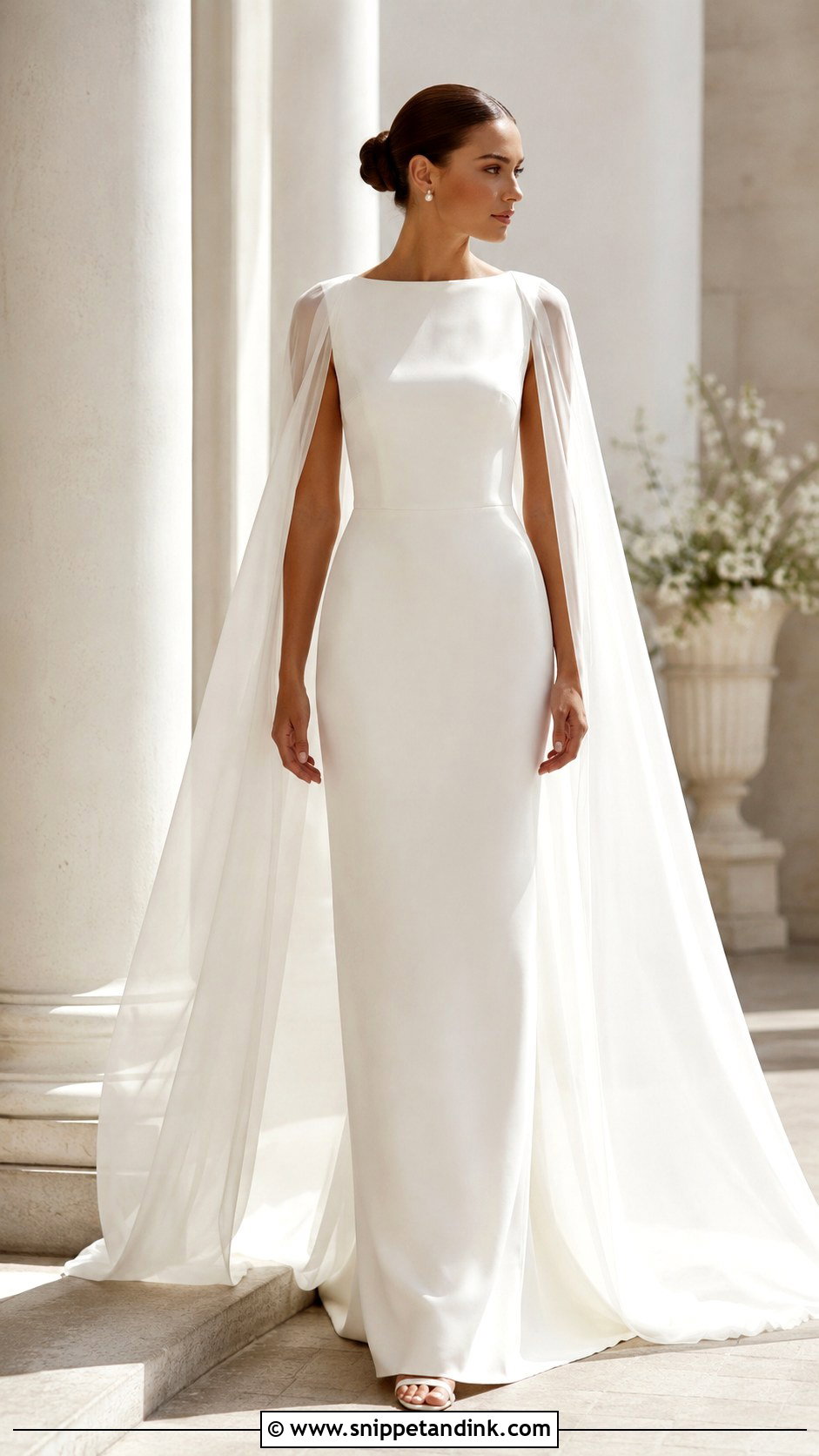
Capes add movement to a plain gown without adding embellishment, and they can replace a veil entirely. Sheer capes float; crepe capes hold a sharp, architectural line. Keep the dress underneath very clean, a column, sheath or plain A-line. Check how the cape attaches. At the shoulder seams it stays put, while a neck fastening can pull the bodice forward when you move. Small earrings and smooth hair let it lead.
23. Elegant Plus Size Wedding Dress
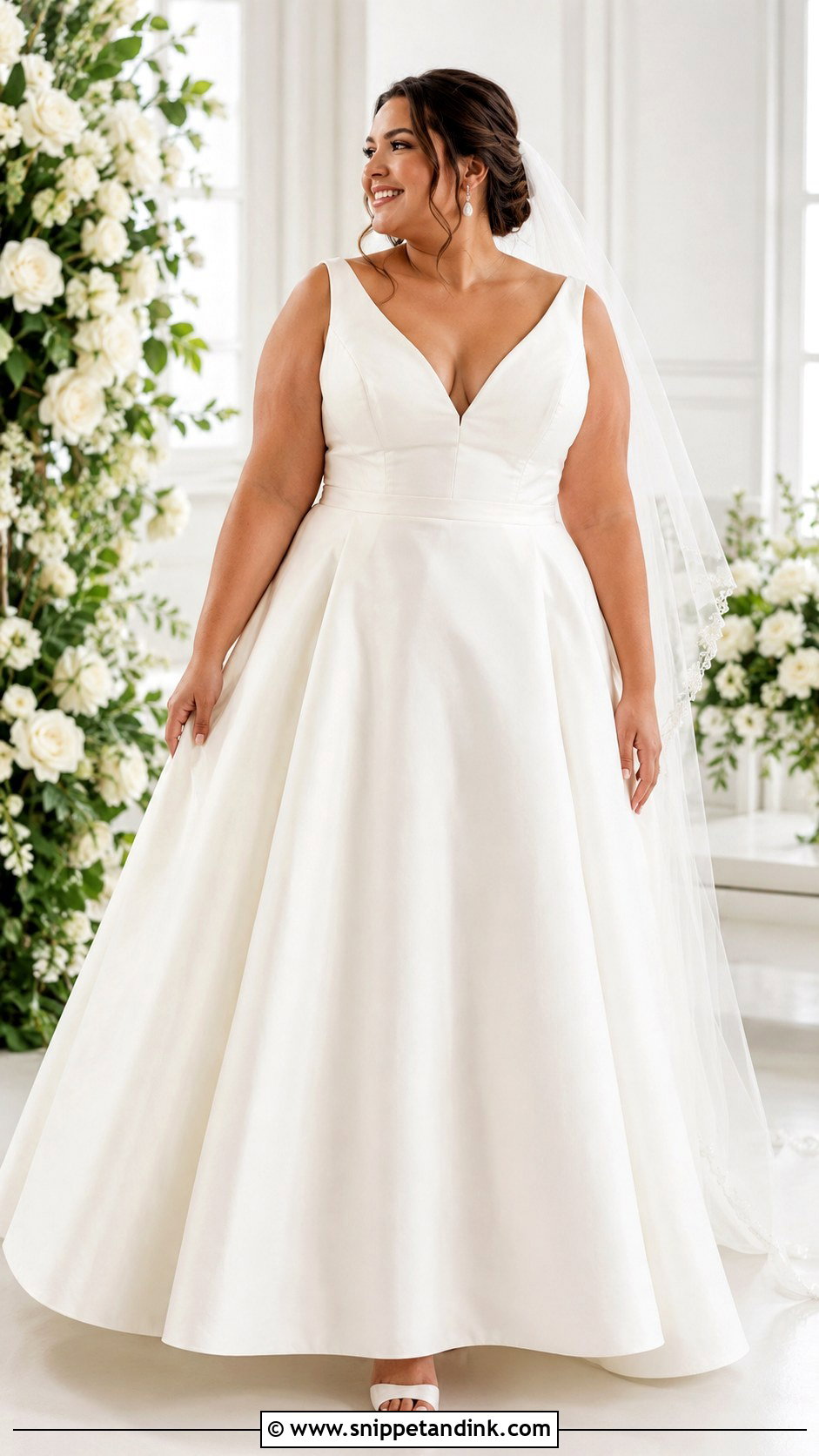
On a curvier body, a simple gown depends on construction you don’t see: a supportive bodice, well-placed seams and comfortable straps. A structured A-line, crepe fit-and-flare or satin ball gown can all look clean. I’d have the seamstress place the waist where your natural waist sits, not where a size chart puts it. A V, square or off shoulder neckline frames the face. Comfortable heels matter on long days.
24. Simple Courthouse Wedding Dress
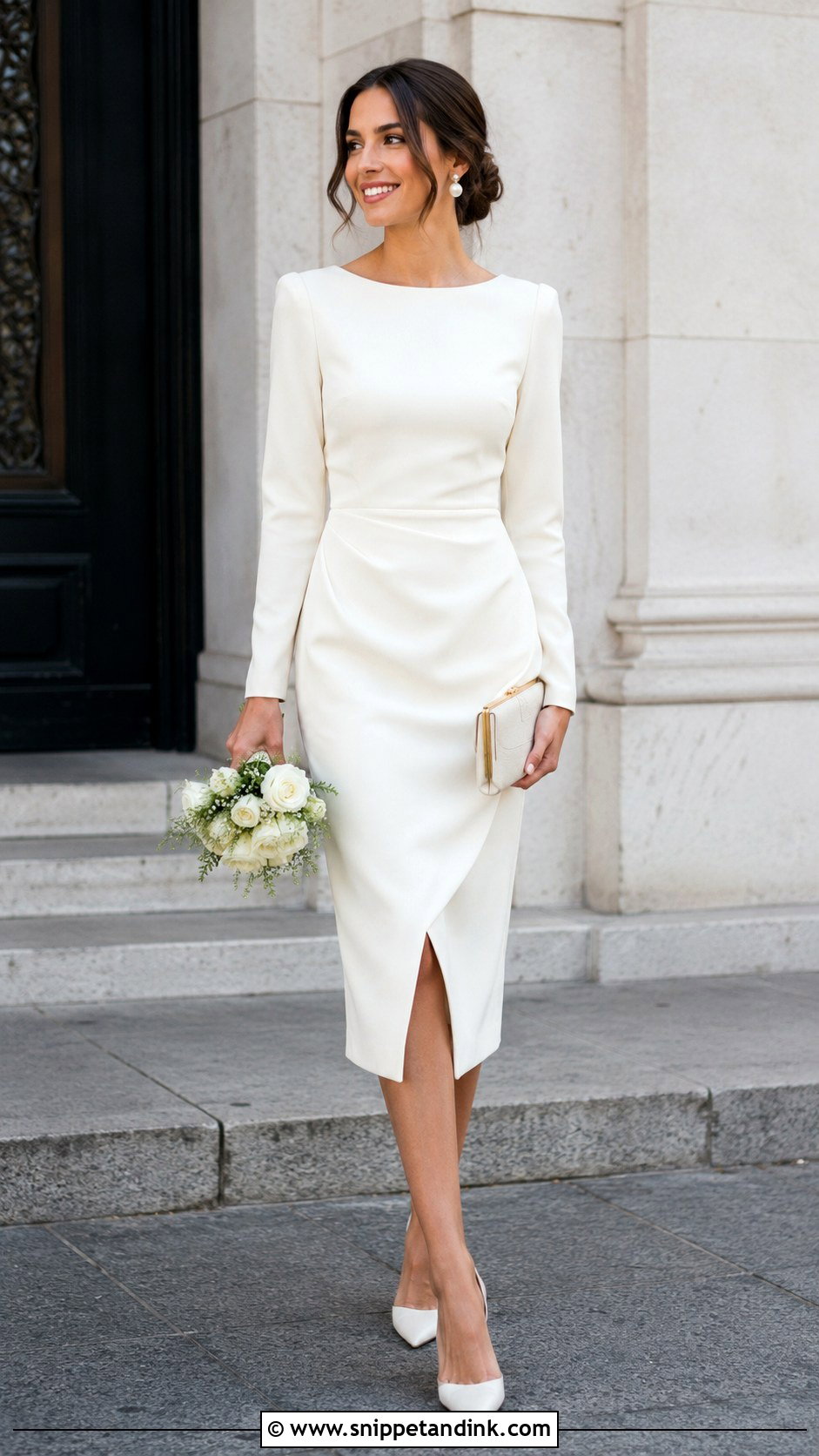
For a courthouse, I think about small rooms, hard floors and lots of standing. A satin midi, tailored crepe sheath, short dress or white suit-style dress all suit it. Sharp fit carries the outfit, since the room is small and guests are close. A birdcage veil, bow or short veil marks it as a wedding. Pointed heels, pearl earrings, a small bouquet and a structured clutch are enough.

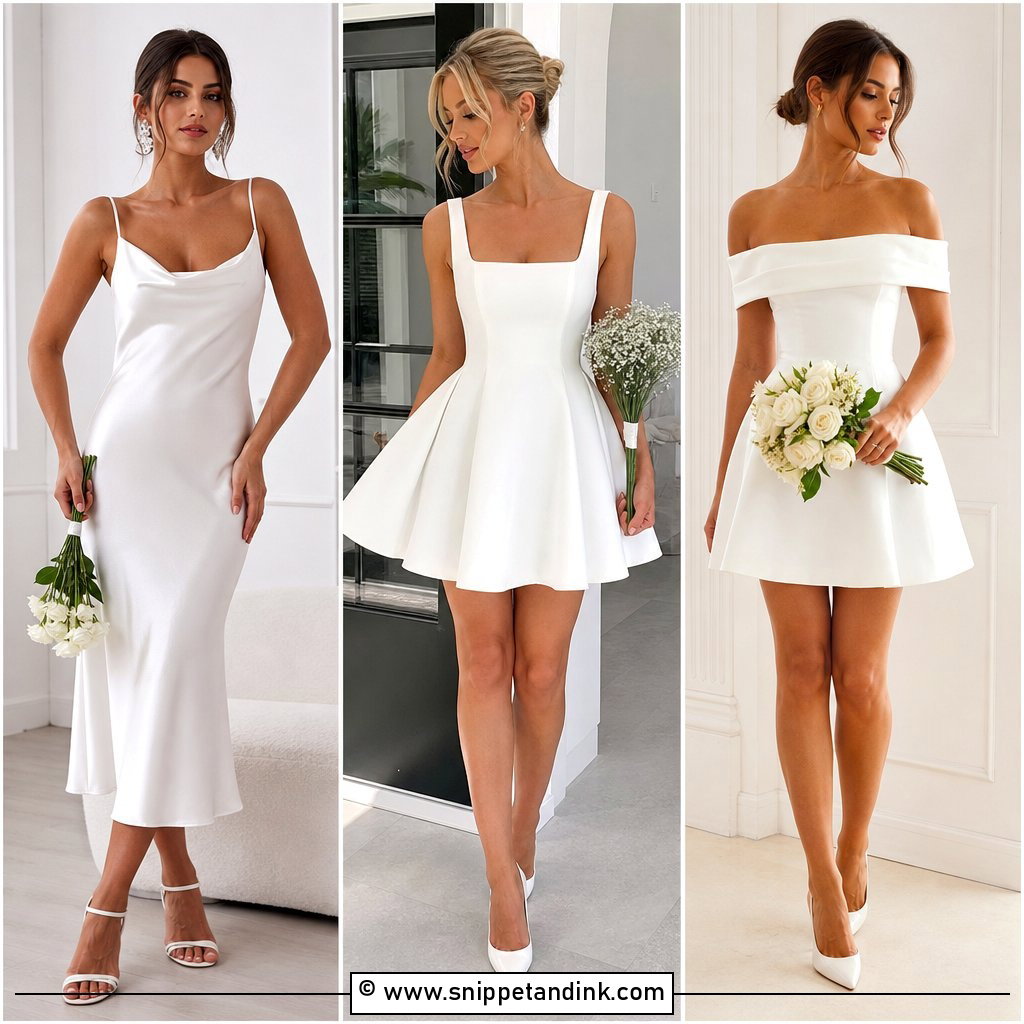

25. Simple Beach Wedding Dress
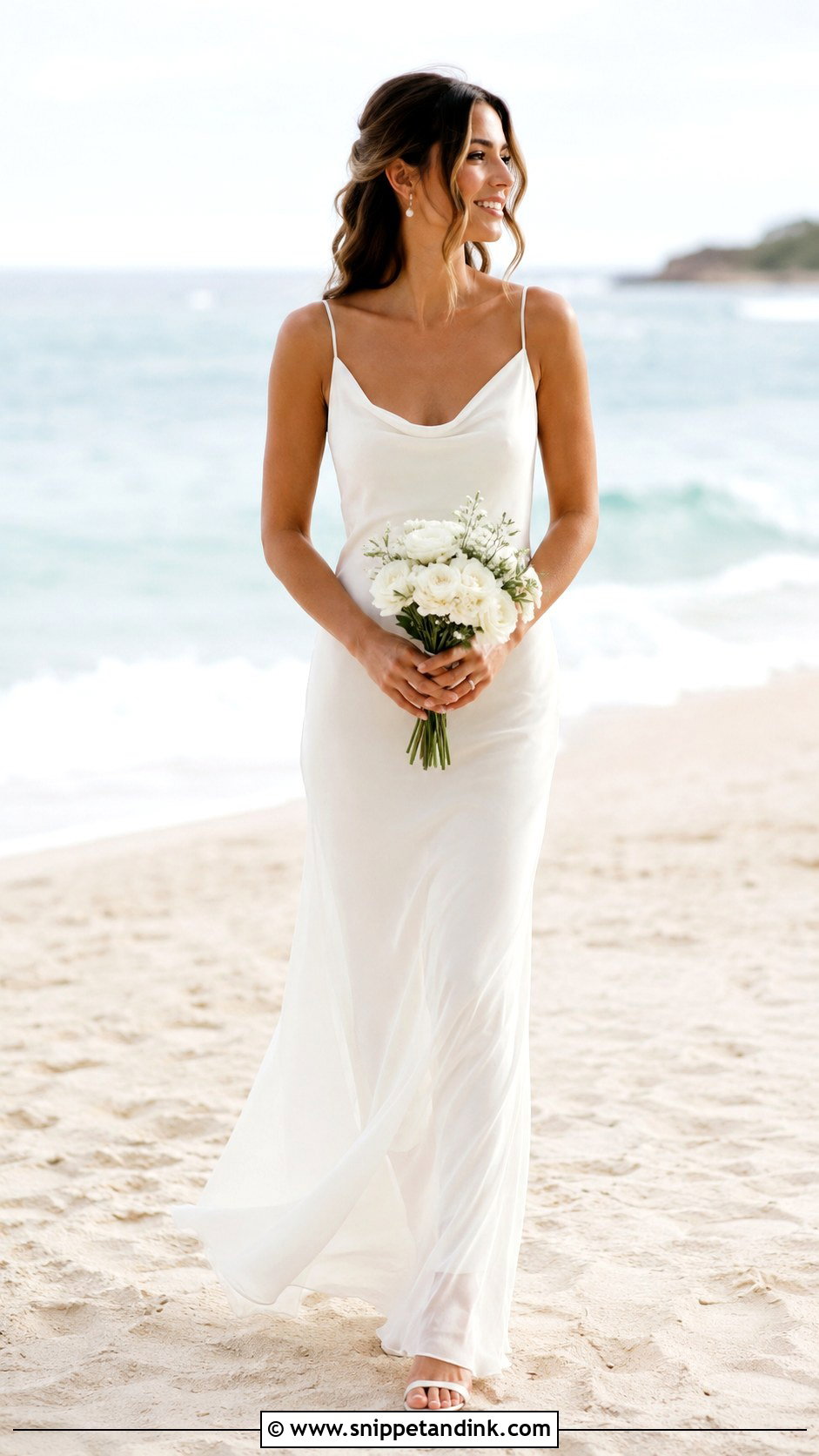
Near the water, light fabrics are a necessity rather than a style choice. Chiffon, silk, crepe or light satin breathe, while heavy fabrics trap heat. Sheath, slip or flowy A-line silhouettes move with the breeze. Skip the long train; sand gets into the hem and it’s hard to bustle on a beach. Flat sandals, loose waves and a small bouquet keep things simple. Steam it after travel, since lightweight fabrics crease badly in suitcases.
Where a Plain Gown Gets Its Personality
A simple dress can look severe if everything around it is plain too. I usually pick one accessory to carry the personality, then keep everything else quiet. That could be a long veil with a raw edge, statement earrings, a bold lip, a coloured shoe or a vintage brooch on the waist.
The trick is not to add three of these at once. One strong accessory looks intentional; three start to compete with the clean lines that drew you to the dress.
Creases, steam and the car ride
Plain satin and crepe show every crease, and the worst ones come from sitting in a car. Have the gown steamed on the morning, not the night before, and hang it from its loops rather than the shoulders. In the car, lift the back of the skirt out from under you and sit on the lining instead. Pack a small handheld steamer for the venue if there’s a gap before photos.
Plain Dresses Ask More of the Fabric and Fit
Plain gowns work because of fabric, cut and fit, not decoration. Satin slips, crepe columns, A-lines, long sleeves and courthouse minis all prove that restraint can still feel bridal. Start with the silhouette that suits your body and venue, then decide on one detail, such as a neckline, a bow, sleeves or a train. Keep the accessories quiet. Among the 25 dresses here, the right simple gown is the one that still looks right in your photos years from now.
You'll Like These Ideas:









Leave a Reply