
A Western cake should look like it belongs at a ranch party without turning into a novelty piece. In my kitchen that usually means textured buttercream, a warm desert palette and one or two details pulled from the couple’s world: tooled leather, a rope border, cowhide, turquoise, wildflowers off the property. Then there are the practical questions a barn or open-air reception raises, like heat, uneven tables and a long drive down a gravel road. The twenty designs below are ones I’d happily make, each with a note on how it’s built and where it can go wrong.
Gravel Roads, Barn Heat and Wobbly Tables Under a Tiered Cake
Before I sketch anything for a ranch wedding, I ask where the cake will stand and how long it will wait there. The answers shape the frosting, the structure and the delivery plan more than the design does.
Heat in a barn or tent
Barns and tents trap heat, and silky meringue buttercreams start to soften and slump on a warm afternoon. For a summer reception I often switch to a sturdier crusting buttercream, or cover a ganache layer with fondant, which holds sharper edges. The cake should sit away from direct sun and windows, and ideally be the last thing set up.
The drive in
Ranch roads bump. I support every tier with internal dowels on a cake board and run a central dowel through stacked tiers for anything over two. For a long or rough drive, I transport tiers separately and stack them on site. If a friend is doing delivery, expect the baker to explain exactly how to carry it, flat on a nonslip mat and never on a lap.
Uneven tables and floors
Old barn floors and rustic tables are rarely level. A slight tilt is enough to make a tall cake lean over a few hours, so I bring a small level and shim the table or stand before setting the cake down.
1. Rustic Western Wedding Cake
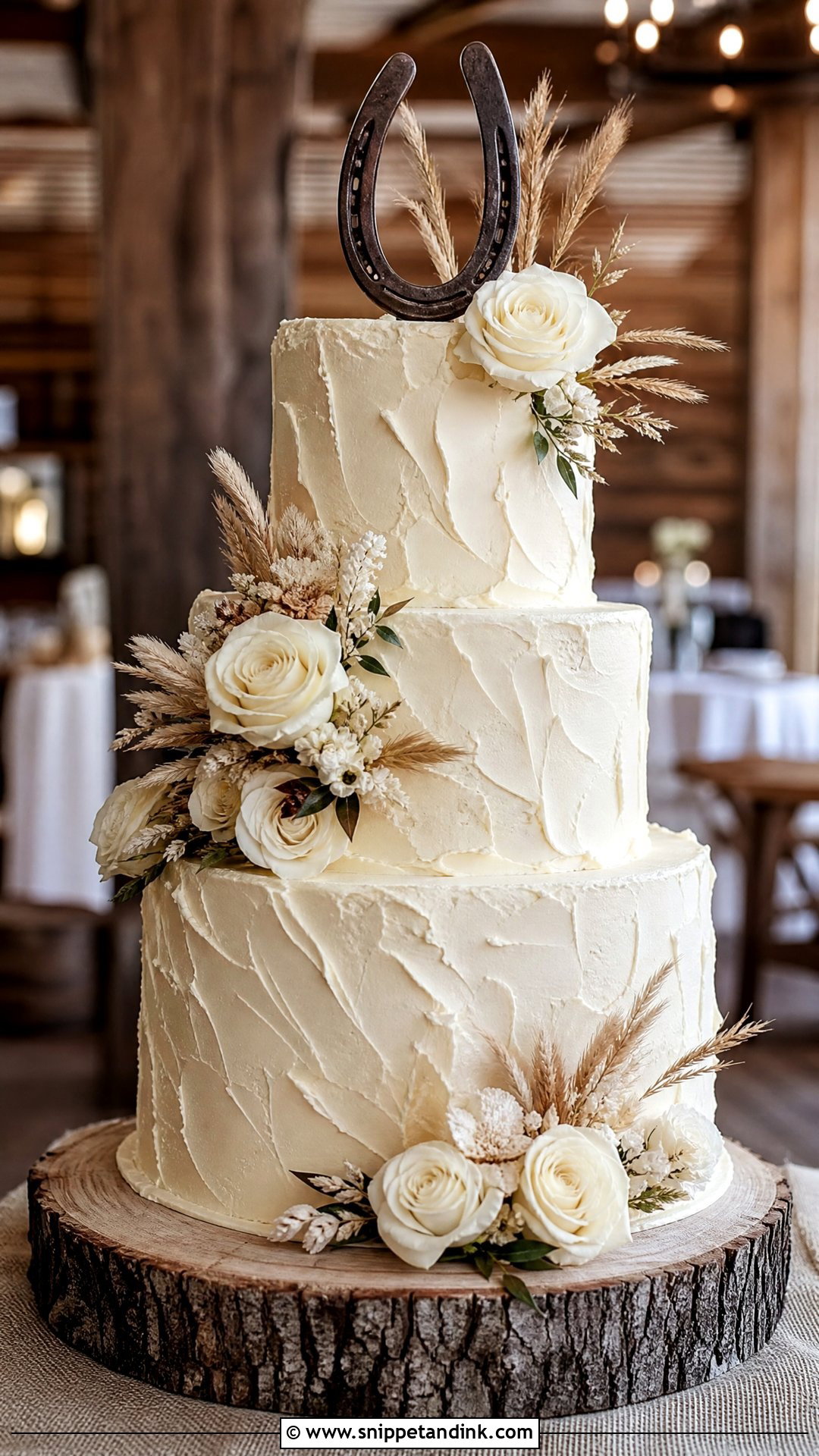
Rustic is the easiest way in, because the texture does the theming for you. I finish the tiers in ivory frosting with a palette knife or a semi-smooth scrape, so some cake shadow shows through and the edges look hand-done. Two or three tiers is plenty. Dried grasses, a few white blooms and a wood stand carry the ranch feel, and a small horseshoe topper or piped rope is all the Western detail it needs. Spread your frosting texture evenly; a scraper dragged too deep on one side makes the cake look lopsided in photos.
2. Cowboy Boot Wedding Cake
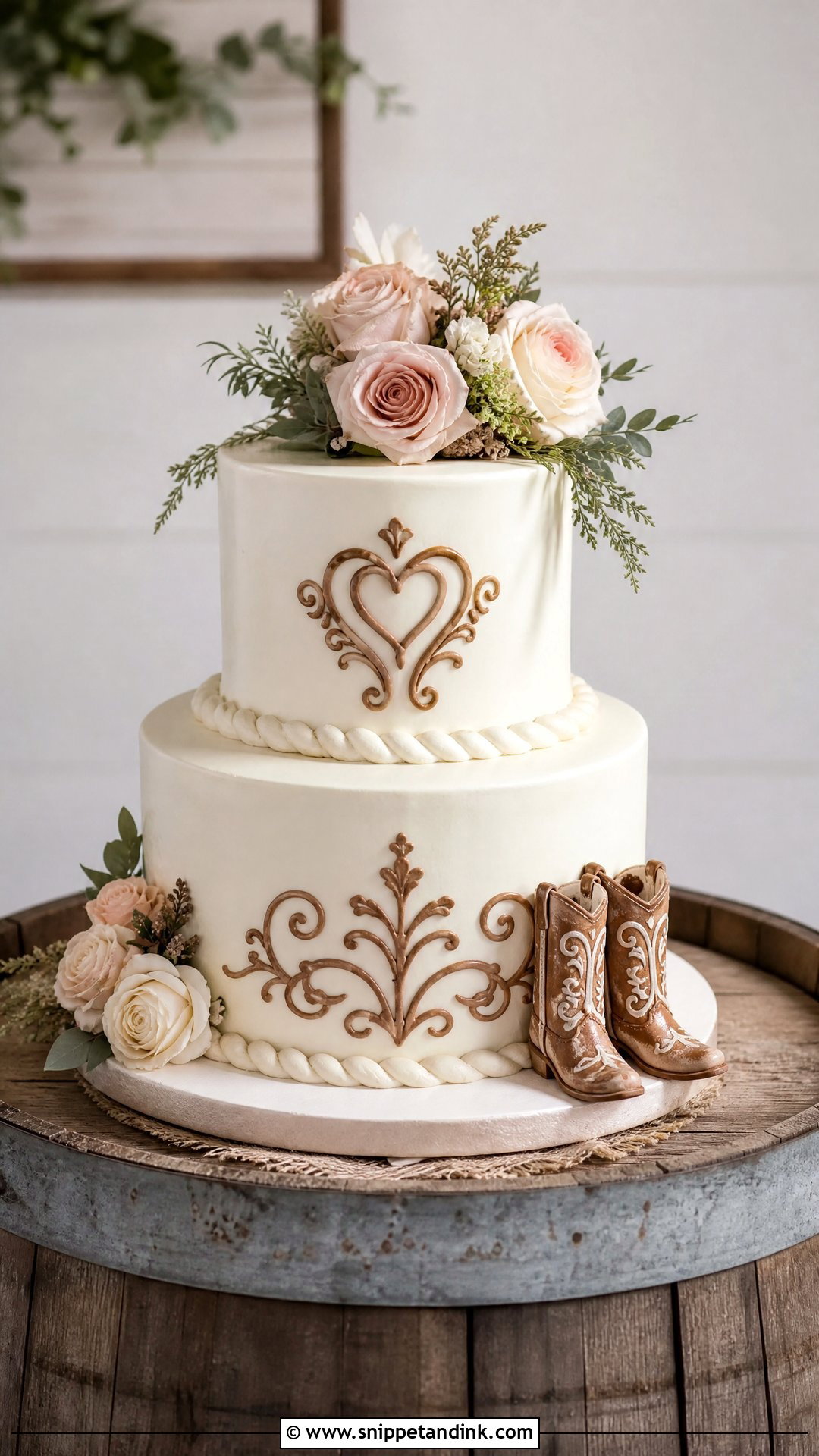
Boots are fun, but a full boot-shaped cake is a carving job that rarely looks wedding-ready. I’d keep the tiers simple and bring the boots in as small fondant pairs at the base, embossed boot stitching on one tier, or a boot topper tucked beside fresh flowers. Ivory, tan and soft brown keep it warm. Lightly textured buttercream helps the whole thing feel handmade. If you’re both wearing boots on the day, a tiny matching pair on top makes a sweet photo detail.
3. Tooled Leather Wedding Cake
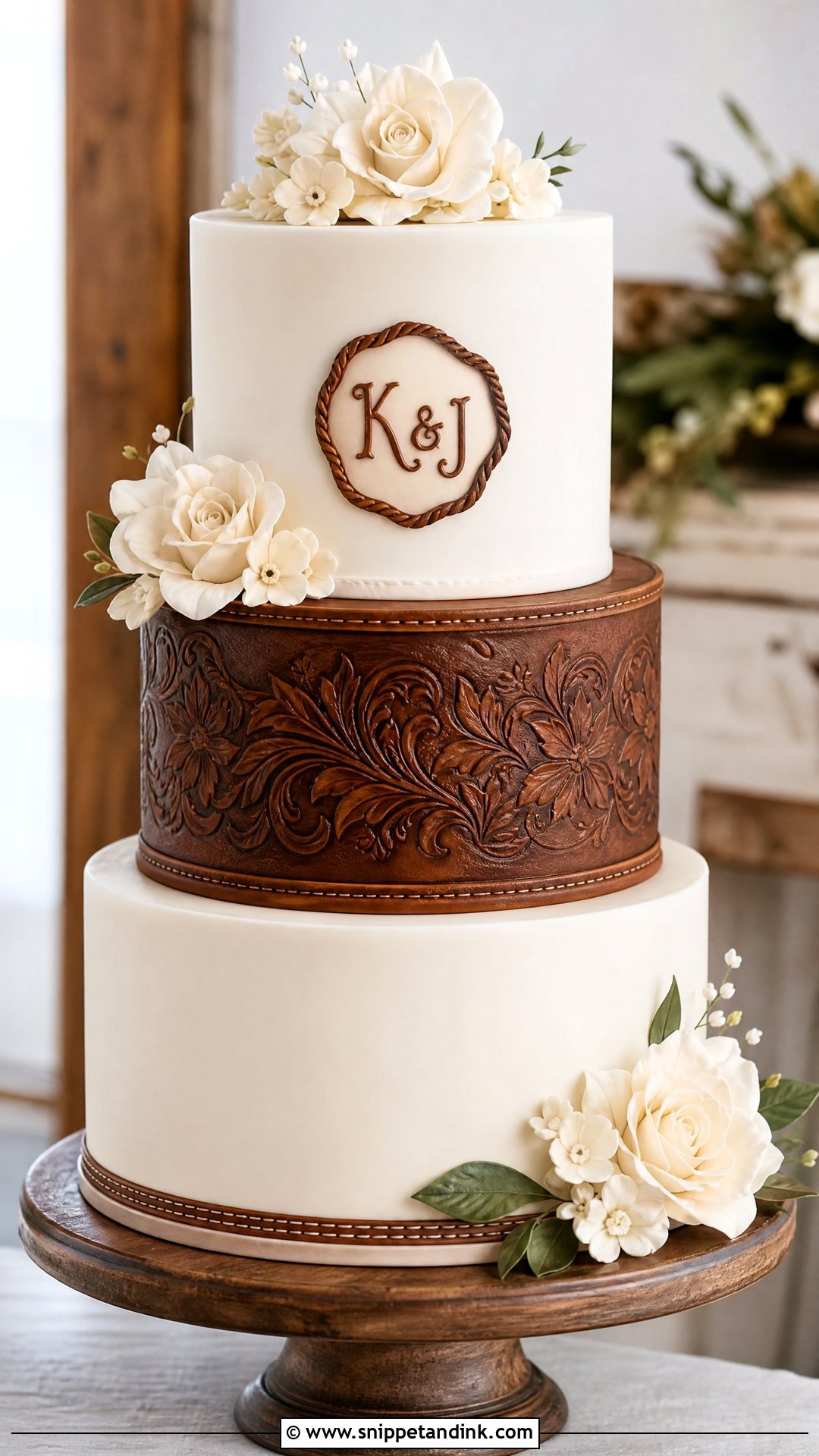
Tooled leather is one of my favorite Western techniques because it’s genuinely decorative rather than cute. I roll fondant onto a textured mat, or carve the scrollwork by hand with modelling tools, then dust it with caramel and brown petal dust so the recessed lines darken like worn leather. It works best on one or two accent tiers with the top left smooth. A few sugar flowers or a small monogram plaque soften it. Expect it to cost more than a buttercream design, since hand tooling takes hours per tier.
4. Turquoise Western Wedding Cake
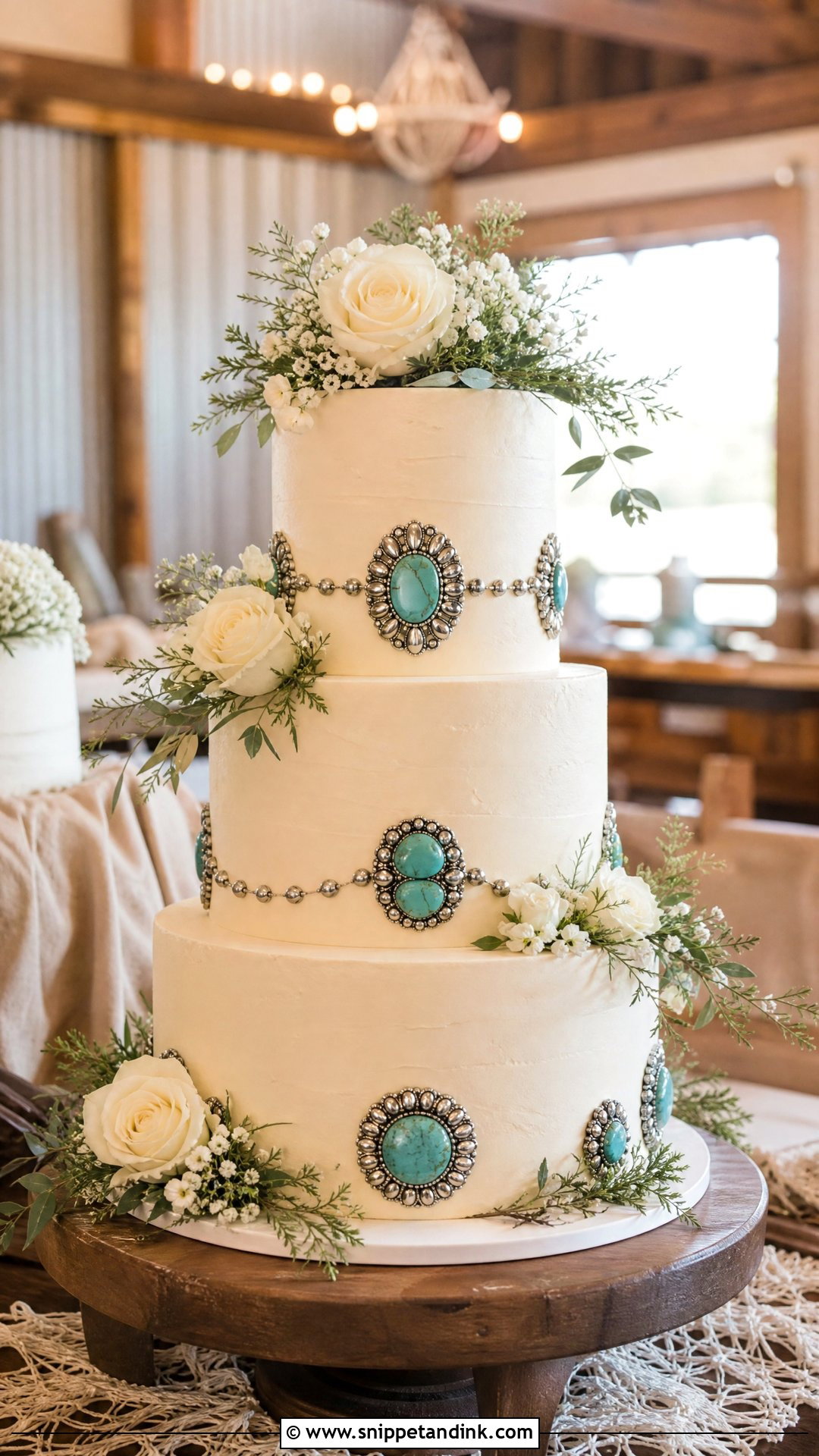
Turquoise reads best as jewelry on the cake, not as the cake itself. I make small sugar stones with a hint of veining, or paint a fondant band, then set them against ivory buttercream like conchos on a belt. Silver, tan and desert peach balance it. With white roses, baby’s breath and a little greenery, it ties nicely to a southwestern table. Food coloring in that blue-green range can shift under warm light, so I always check a sample piece next to your actual linens or jewelry before decorating.
5. Cactus Wedding Cake
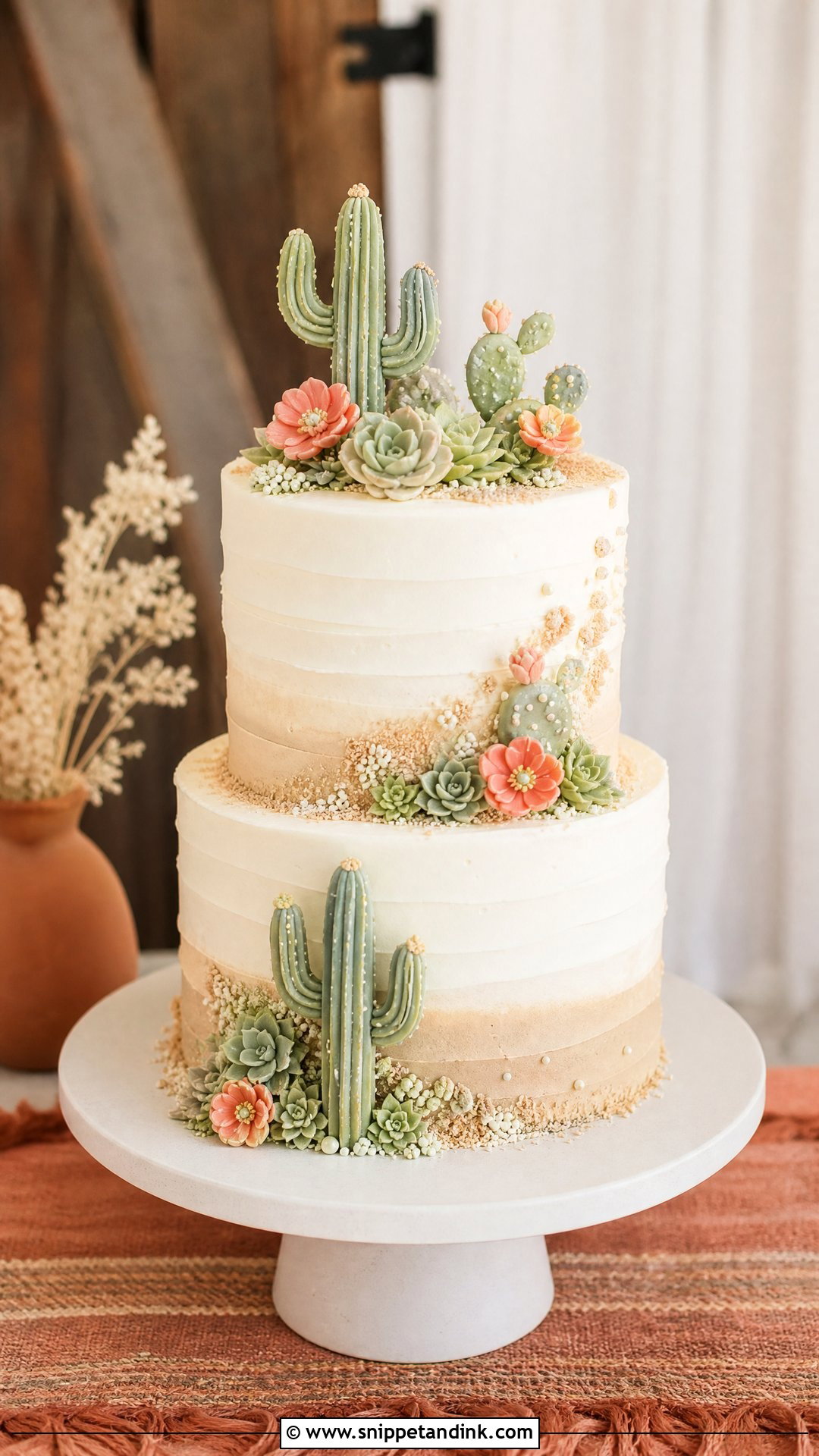
Cacti are where a Western cake can tip into childish fast. I avoid cartoon green and mix a dusty sage with a little grey, then pipe small succulents or model tiny fondant cacti so they look more botanical than playful. A smooth ivory or sandy beige base keeps it grown up, and a few sugar blooms in coral or pale yellow suggest a desert in flower. Terracotta plates and woven textures on the table finish the scene. For a hot outdoor desert reception, fondant details are a safer choice than piped buttercream ones.
6. Horseshoe Wedding Cake
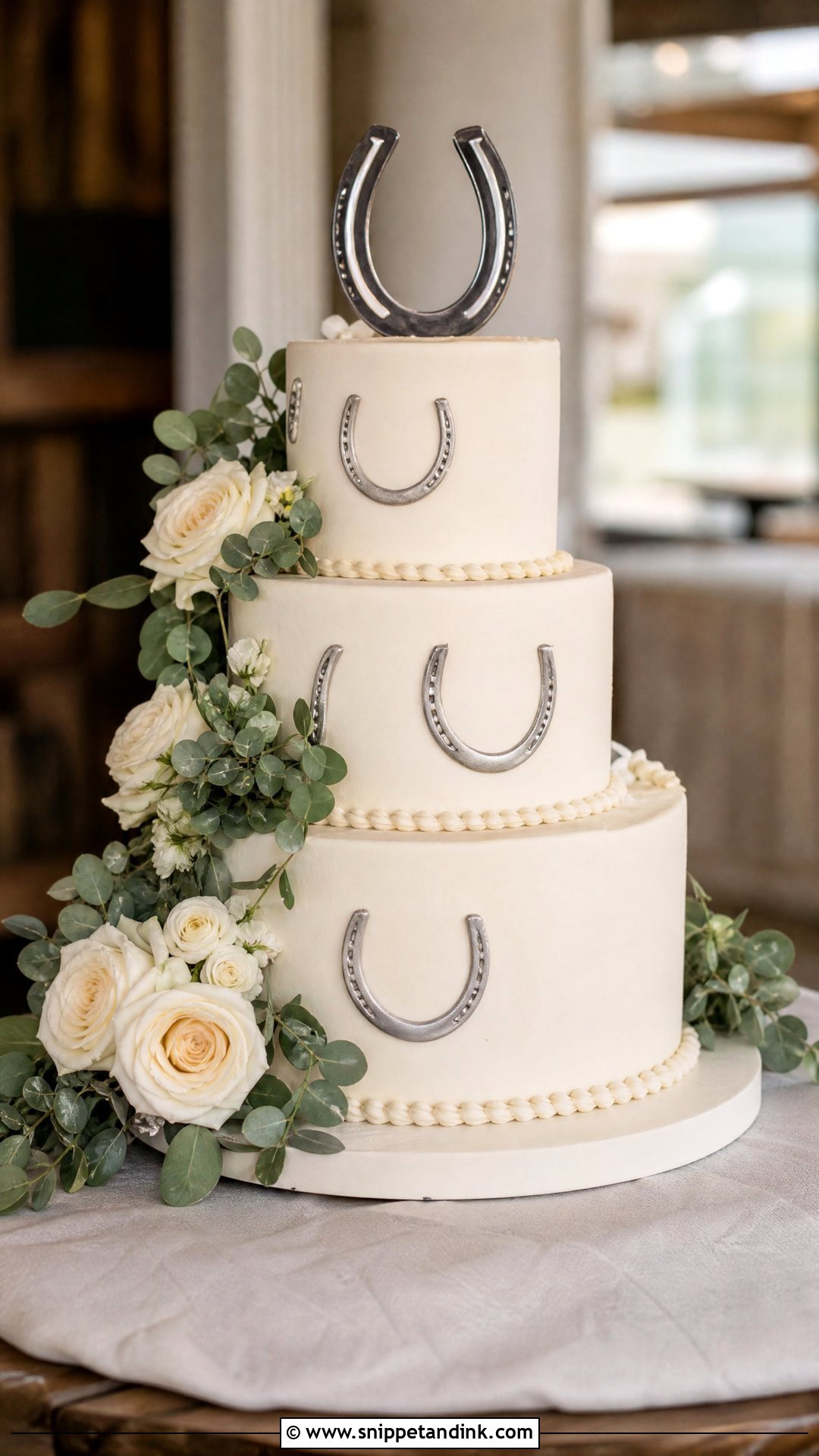
A horseshoe topper on plain ivory tiers is a quick way to carry good-luck symbolism without decorating every inch. For more detail, I make horseshoe appliqués in fondant and paint them with edible silver, bronze or antique gold, which reads metallic on white buttercream. Fresh flowers or a rope border soften the shine. If you use a real metal horseshoe as a topper, have it cleaned and set on a food-safe board so it never touches the frosting directly. Initials or the date stamped into it make a nice keepsake.
7. Barnwood Wedding Cake
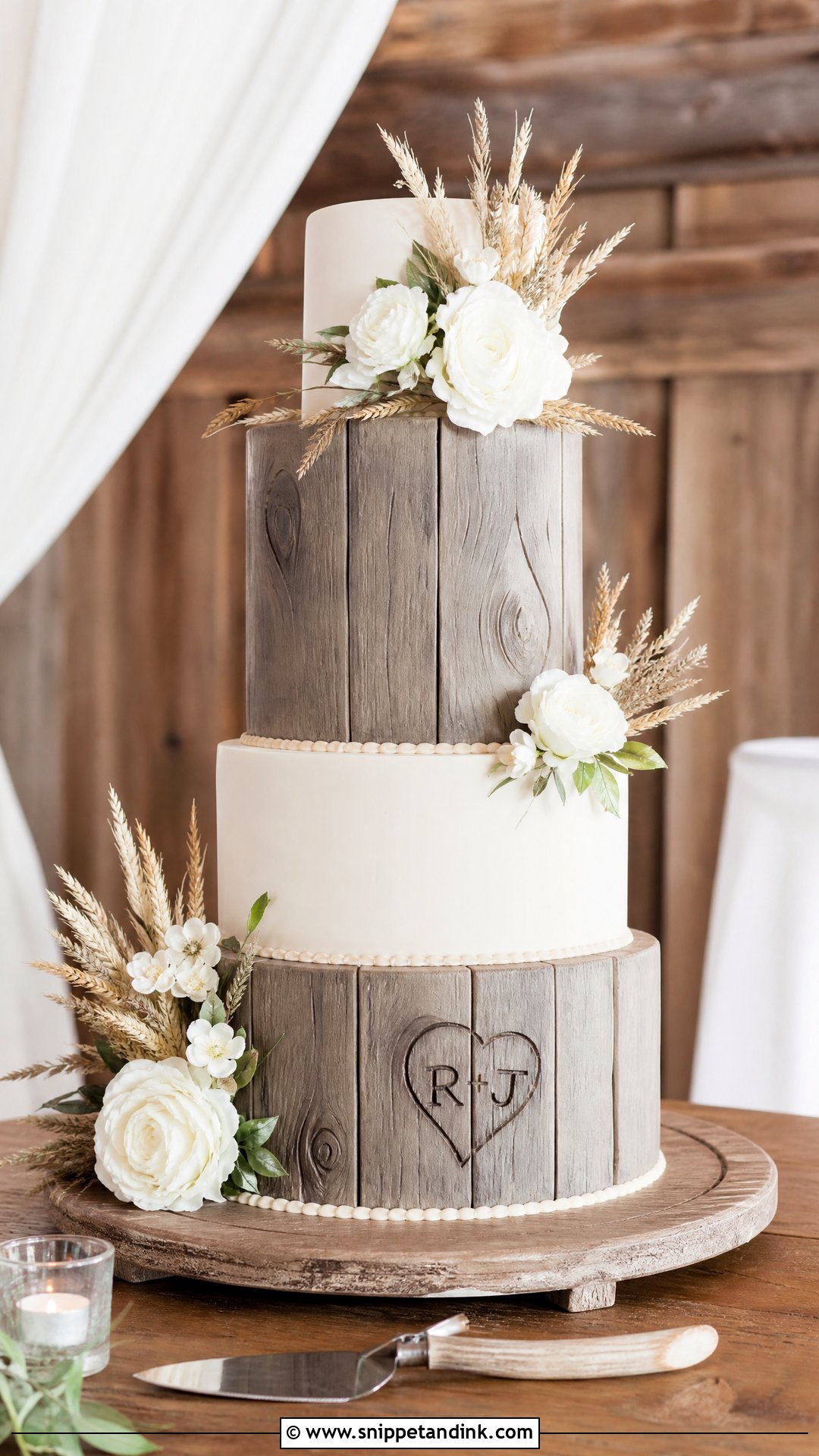
Woodgrain can be done in fondant with a texture mat or by hand-painting buttercream with diluted color and a dry brush. I keep the palette to grey-brown, taupe and cream, because dark wood tones on a cake look heavy and muddy in photos. White flowers, dried wheat or greenery give it contrast, and a small carved heart or initials add a personal note. It looks right at home on a wooden barrel or farmhouse table, especially in a venue with barn doors and exposed beams.
8. Denim Western Wedding Cake
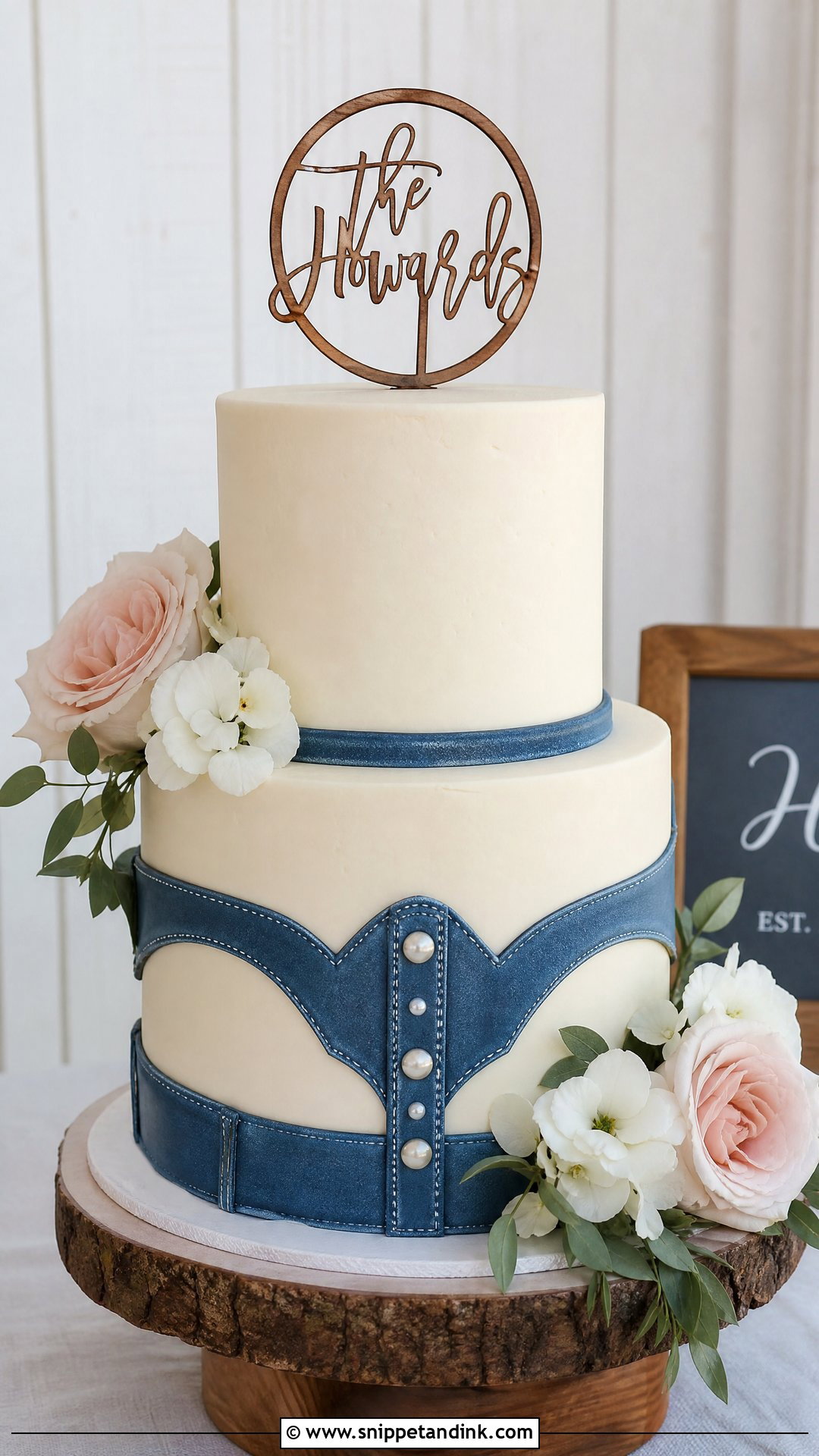
Denim works as one accent tier, with ivory or white tiers keeping the rest calm. I texture fondant with a fine fabric mat, tint it a soft blue, then pipe stitched seams and add small pearl buttons or a bandana pattern. White flowers or blush roses keep it romantic rather than casual. Getting denim blue right is harder than it sounds; too bright looks like a kid’s party, too dark looks navy, so I mix a sample and compare it against a real pair of jeans.
9. Cowhide Wedding Cake
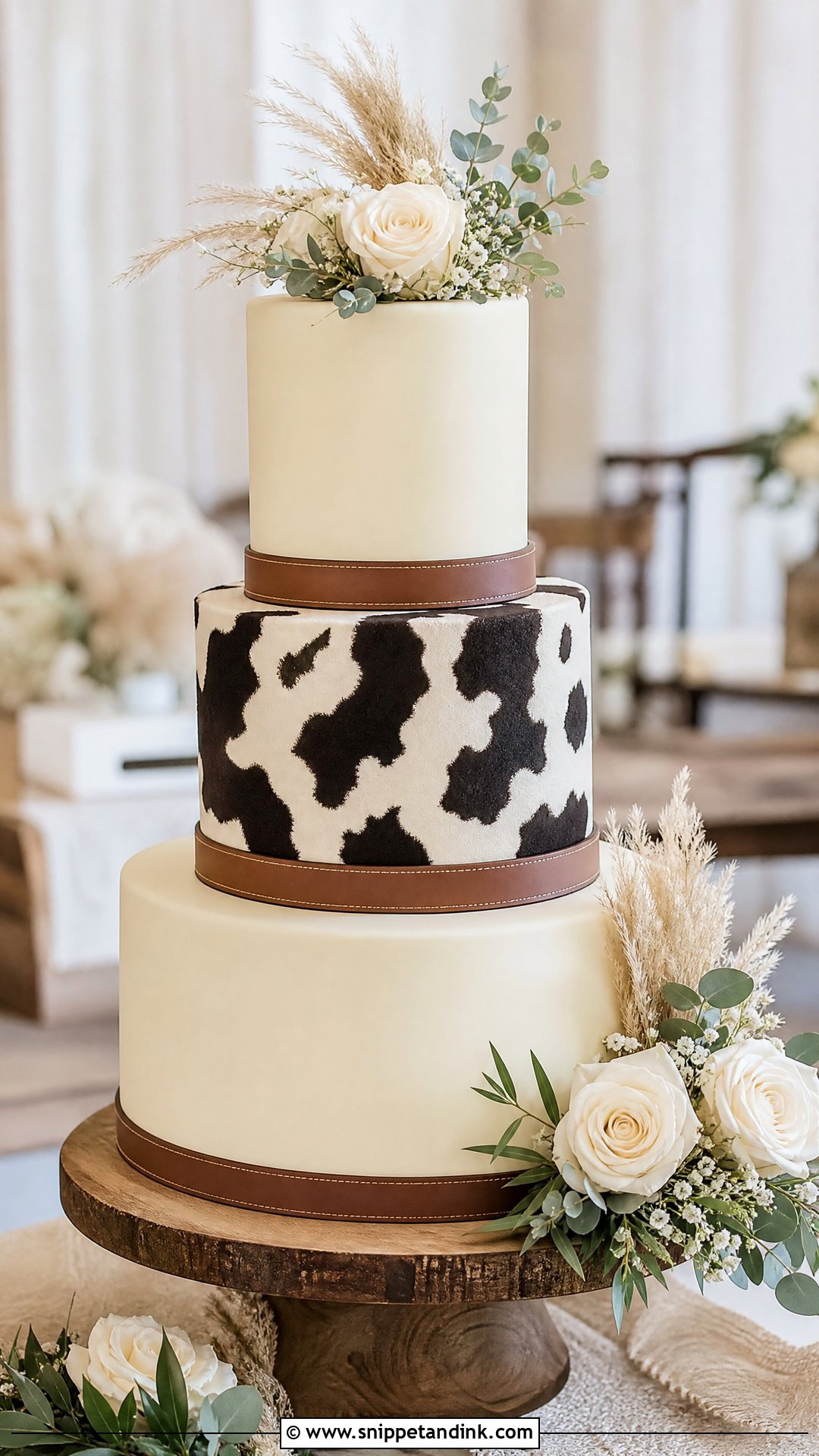
A cowhide wedding cake works best when the print covers a single accent tier. I lay irregular fondant patches onto smooth fondant or chilled buttercream and press them flat, so the spots look like hide rather than dots. Black and white, brown and cream or tan and ivory all suit different palettes. Fresh flowers or pampas soften the pattern. It sits naturally with leather, wood and neutral linens. Check your venue’s lighting before choosing black and white, because high contrast can look stark under fluorescent lights.
10. Longhorn Wedding Cake
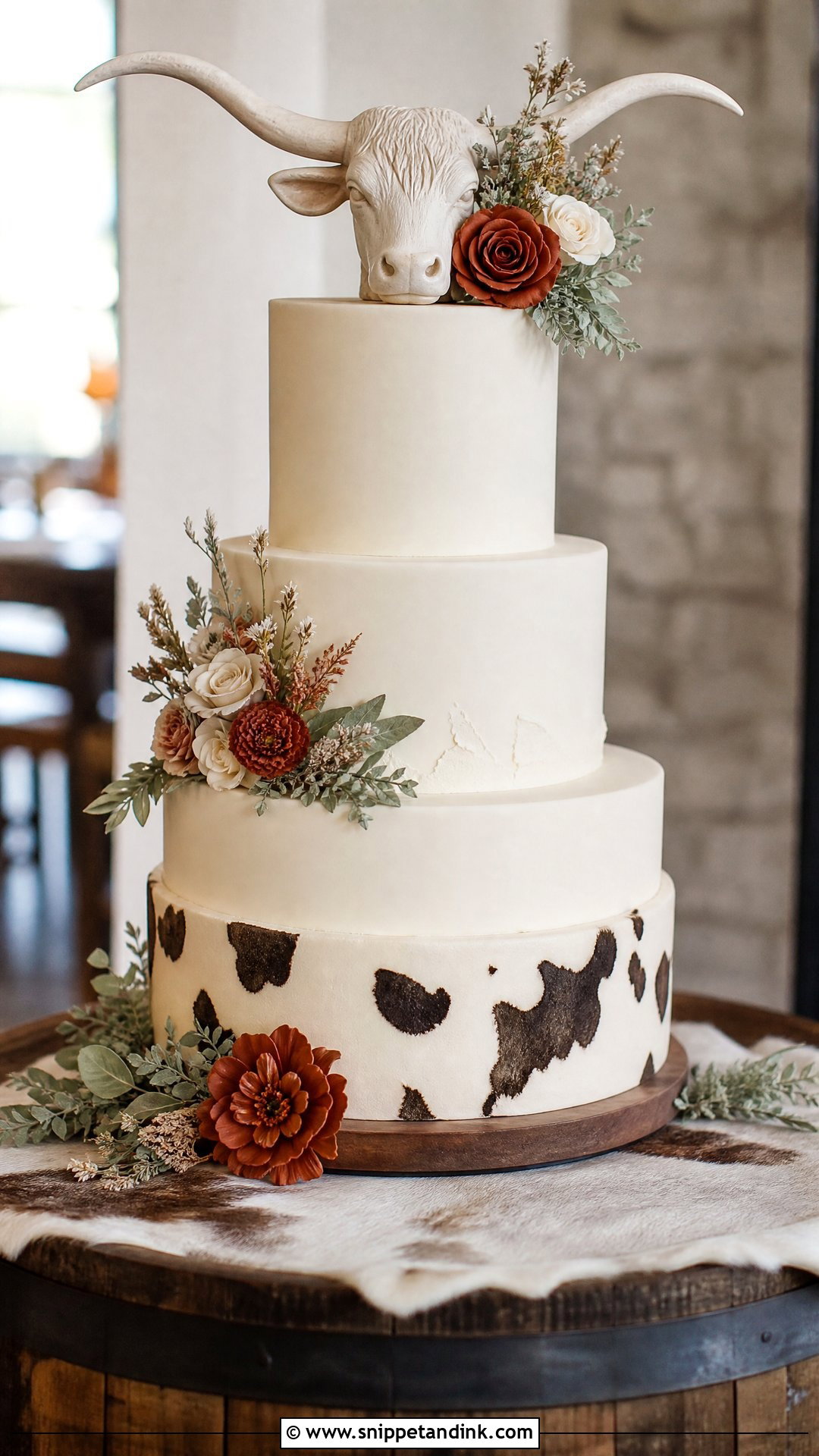
Longhorns are about scale. A clean ivory cake with a slim longhorn topper looks considered; oversized horns overwhelm a three-tier cake. I usually make the topper in sugar or source a sealed resin one, set among sugar flowers and greenery. A cowhide accent or a few desert flowers can add more. Keep the colors calm, with cream, tan, rust and sage, so the horns read clearly. It suits ranch receptions and open-field venues, and in Texas it’s a familiar nod to home.
11. Rope Border Wedding Cake
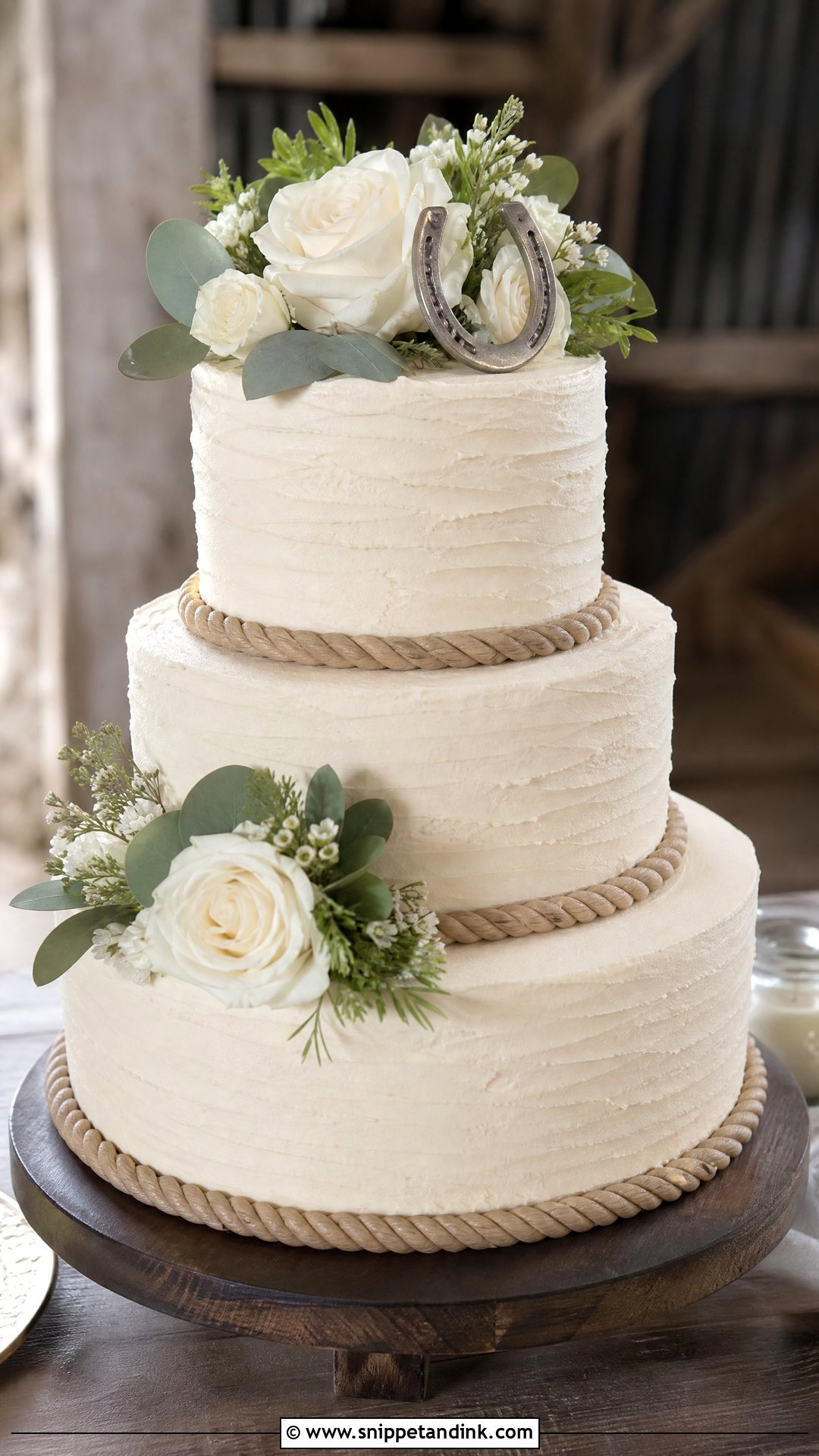
Rope borders are one of the most affordable ways to give a cake Western texture. I pipe the rope in buttercream with a star tip in a twisting motion, or roll and twist two strands of fondant together for a crisper look. Ivory buttercream with tan rope keeps it soft and bridal. Add a small horseshoe charm or a wood topper if you want more. Because the design is about shape rather than color, it suits nearly any flavor, from vanilla almond to carrot cake.
12. Desert Sunset Wedding Cake
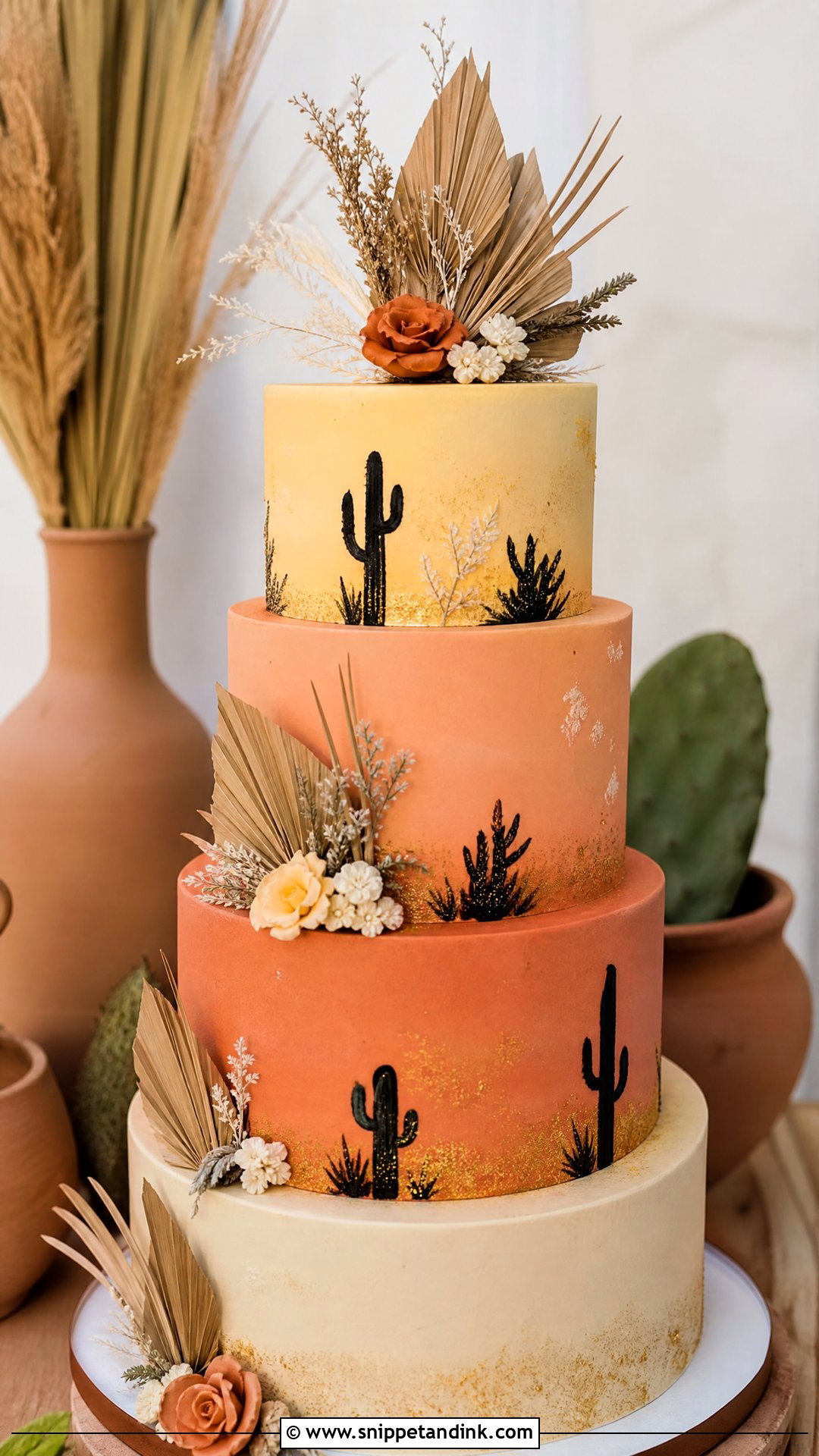
A sunset ombré is blended by hand on a turntable, with each band of peach, terracotta, dusty rose and gold buttercream smoothed into the next. The colors need to shade gradually, or the tiers look striped rather than glowing. Cactus silhouettes, dried flowers or a few sugar blooms add the desert setting. It suits late-summer weddings and receptions timed for golden-hour photos. Strong sunlight fades some food colors, so keep the cake in shade until it’s time for pictures.
13. Western Wildflower Wedding Cake
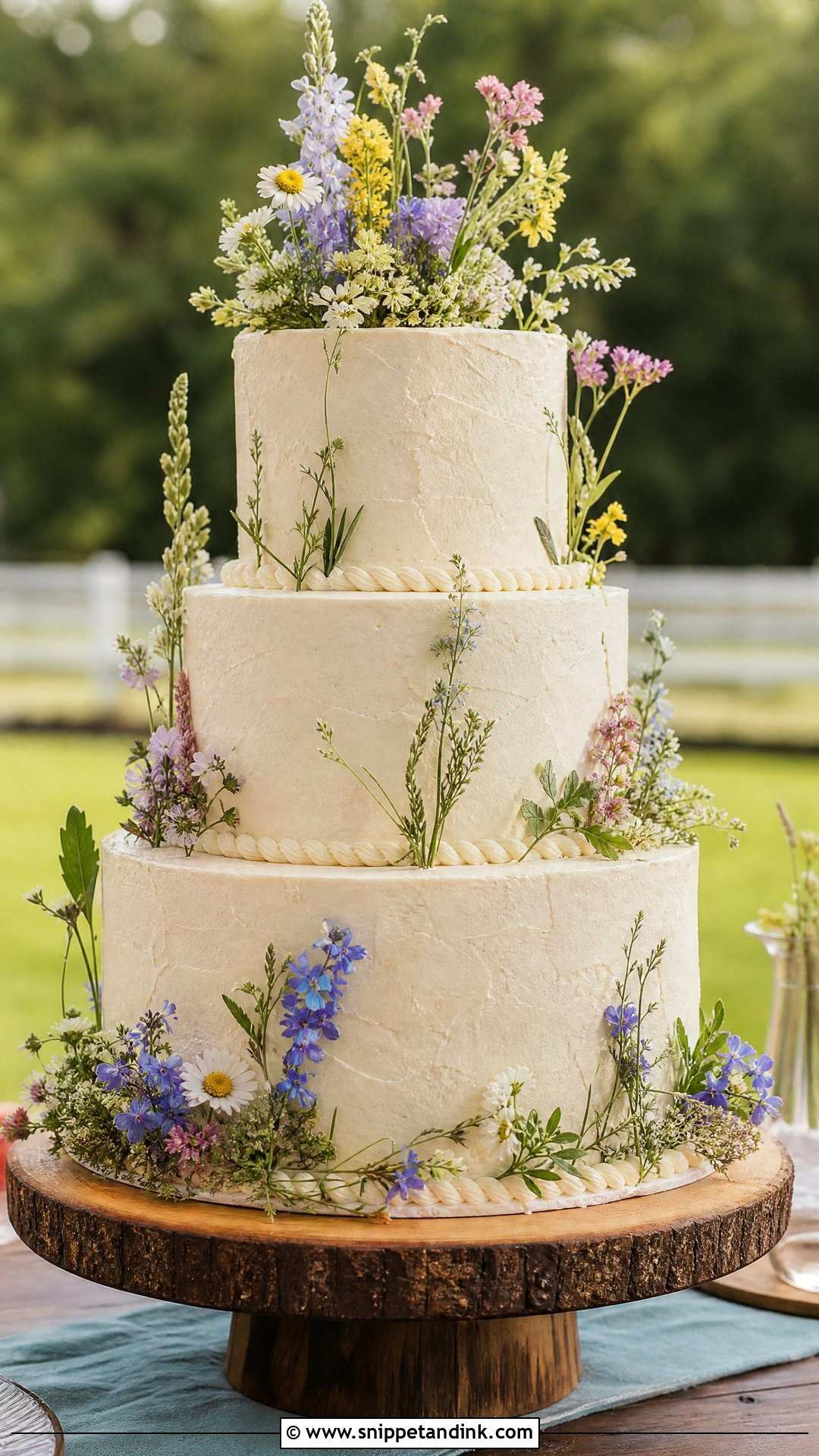
For a romantic ranch wedding, I’d steer most couples toward a western wildflower wedding cake. The flowers can be fresh, pressed, piped or made of sugar, depending on what your baker does best, and they’re scattered with a little movement as if they grew there. Pale cream frosting and natural colors keep it fresh. A tiny rope border or a wood topper adds a clear Western note. Fresh flowers have to be food safe and prepared properly; more on that below.
14. Western Naked Wedding Cake
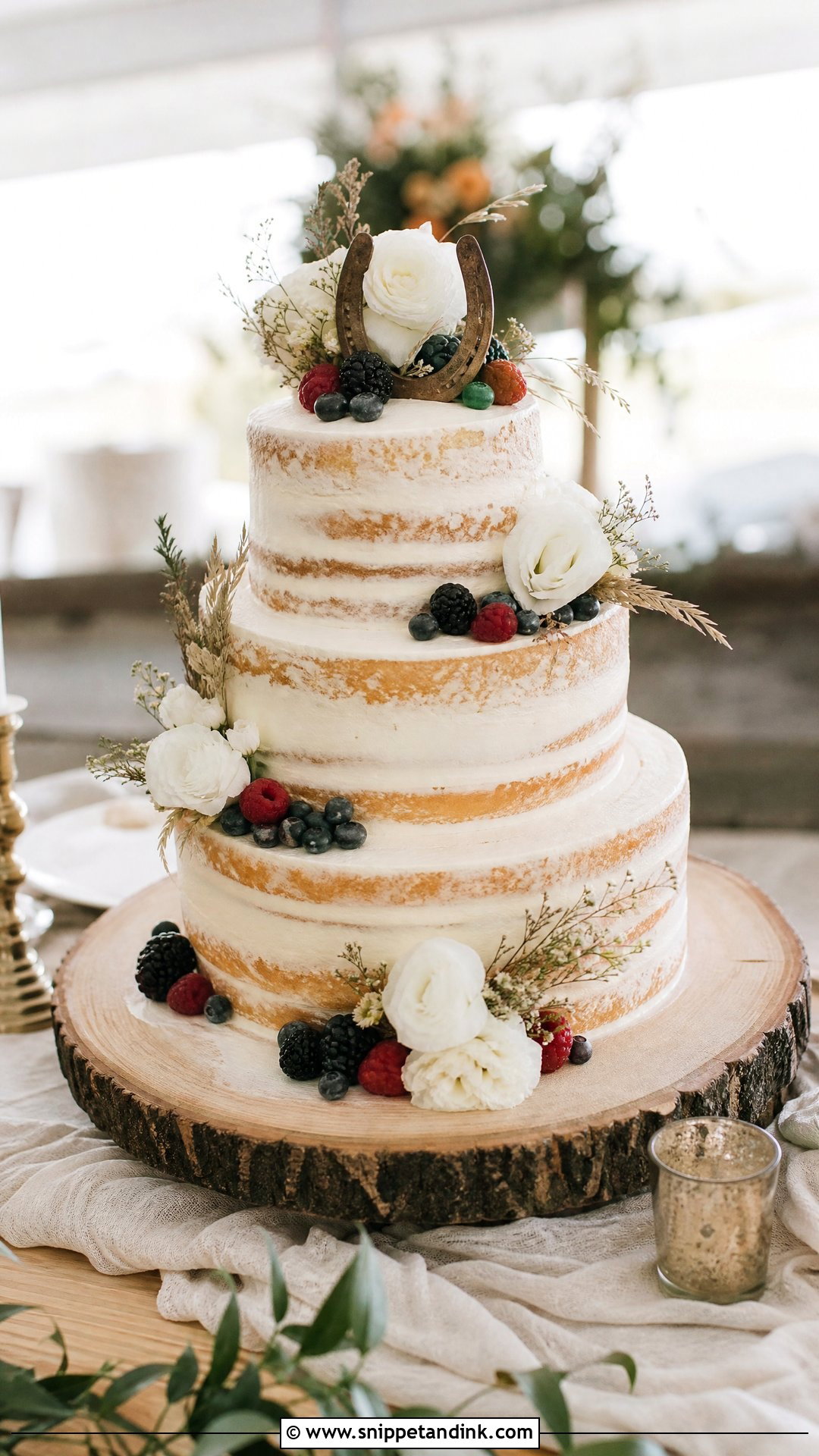
A naked cake shows the sponge through a thin scrape of buttercream, which makes it look homemade in a good way. Vanilla, almond, carrot and spice cakes all show off well, and berries, dried grasses or a small horseshoe topper finish it. The downside is that exposed sponge dries out faster, so I brush the layers with syrup and assemble it as close to the event as possible. It’s still a good choice if you want height without formality. Wood stands and candlelight suit it.


15. Western Vintage Wedding Cake
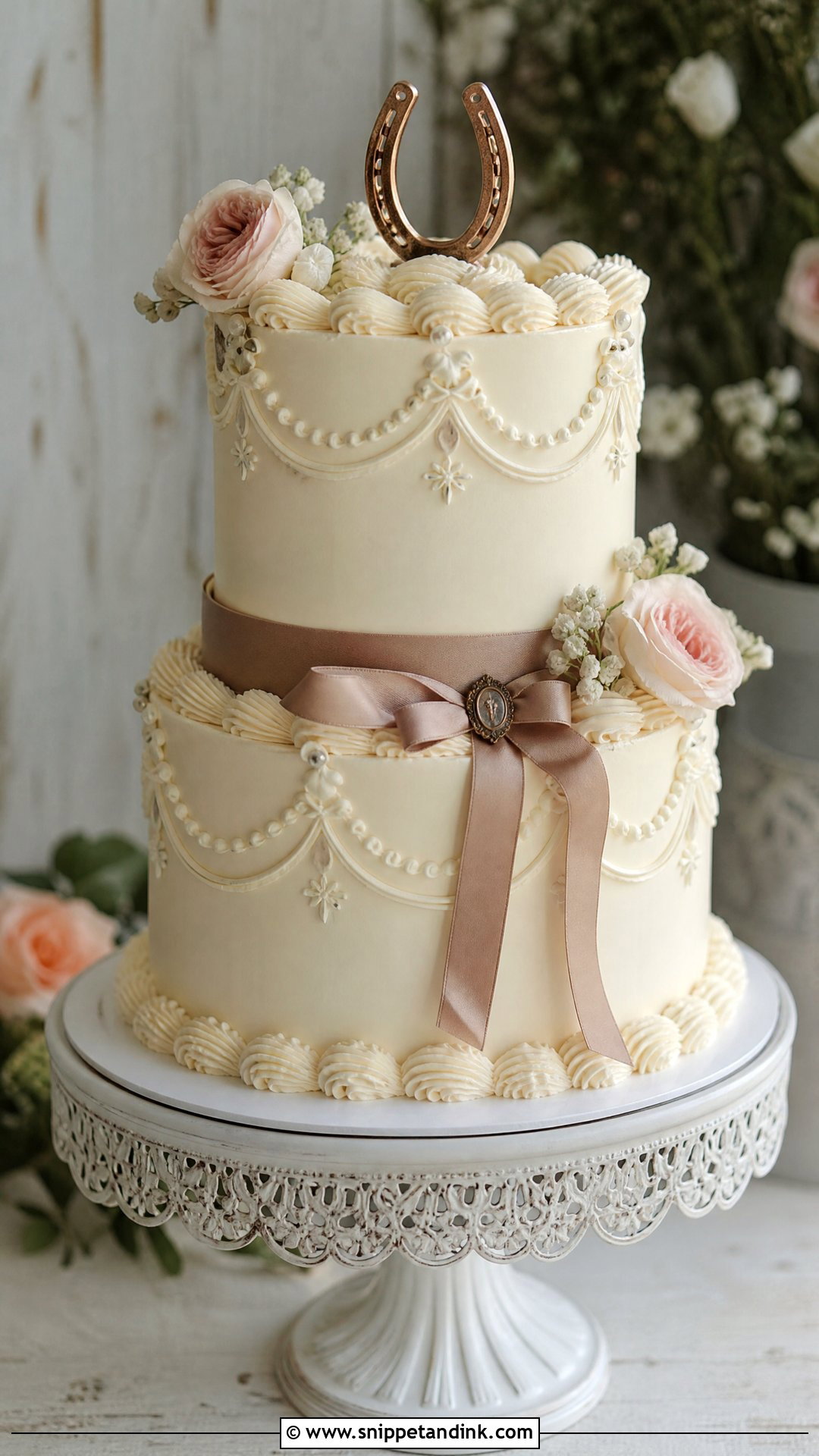
Lambeth piping is the heart of this vintage style: layered borders, swags and scrolls piped in overlapping rows, usually in buttercream. I pair it with ivory frosting, a few pearls and one Western detail, such as a horseshoe topper or a tan ribbon at the base. Cream, blush, dusty blue and warm beige all suit a vintage palette. This is detailed piping work that takes time, and heavy borders soften in heat, so it suits an indoor or shaded reception best.
16. Black And White Western Wedding Cake
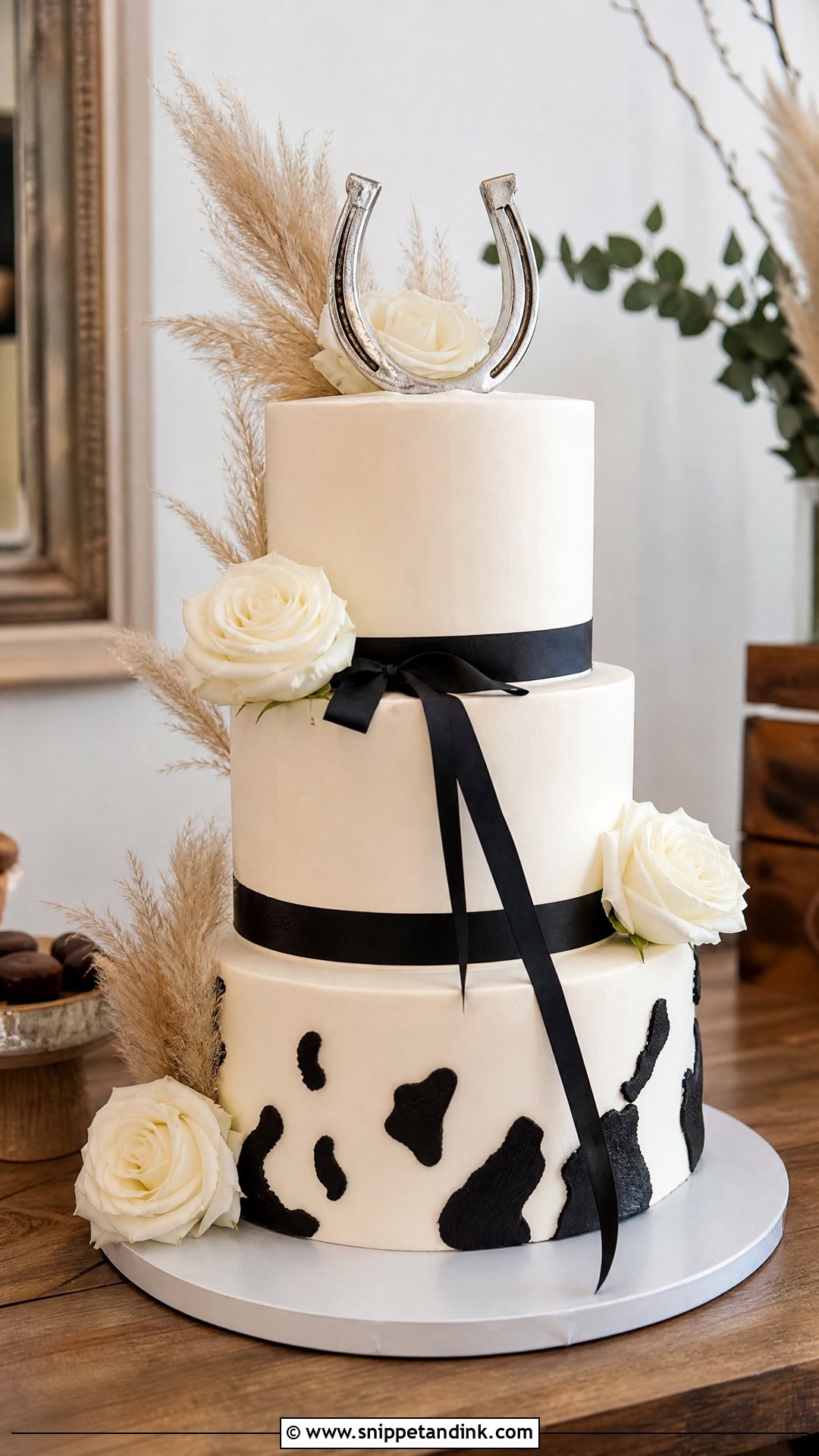
Black and white looks crisp and modern in photos. I keep a white buttercream base and use black for accents: cowhide print, a band of piping, a ribbon or a simple silhouette topper. Black frosting needs a lot of color, which can stain teeth and taste bitter, so I keep it to details rather than full tiers. White roses, an antique silver horseshoe or pampas balance it. It sits well with rustic wood, greenery and neutral florals.
17. Terracotta Western Wedding Cake
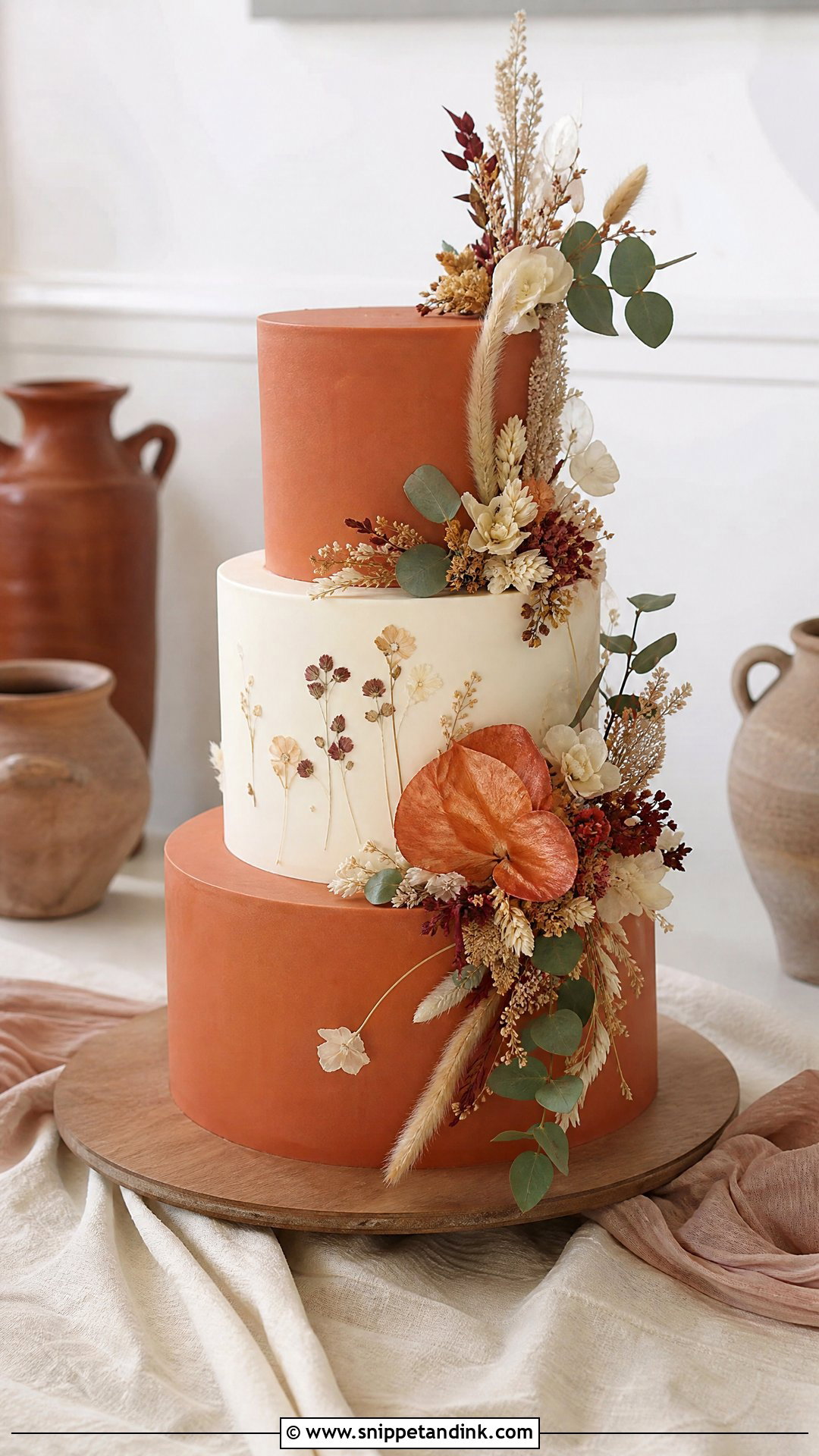
Terracotta is warm and earthy, and a terracotta western wedding cake pairs with ivory, sand, rust, copper and sage. A smooth or lightly textured finish suits it, decorated with dried flowers, pressed petals or clay-colored sugar petals. One terracotta tier among ivory ones keeps it from feeling heavy. It suits fall weddings and desert venues. Tinting buttercream this color takes a bit of patience, as it deepens over a few hours, so I mix it a shade lighter than the target.
18. Concho Wedding Cake
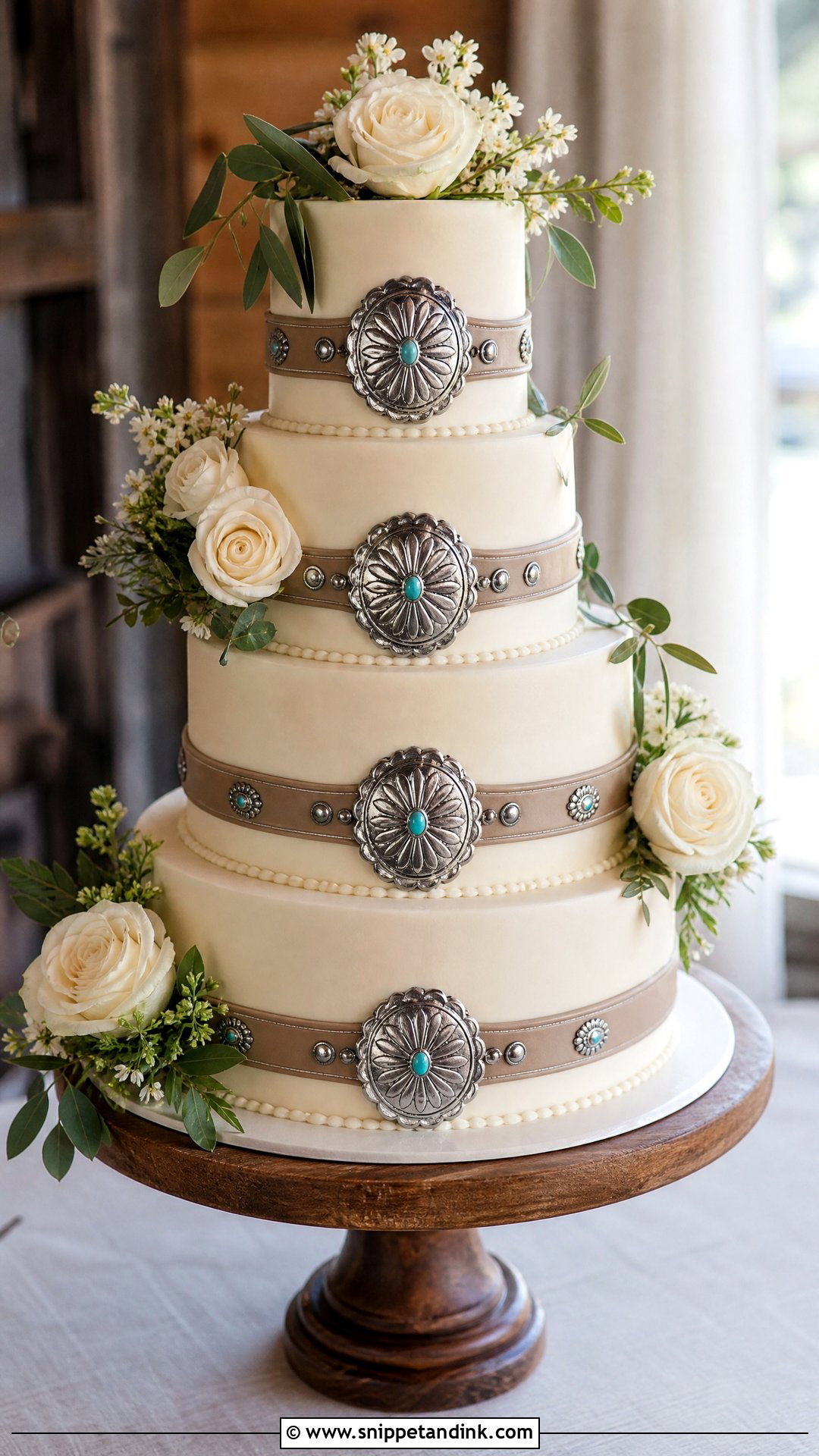
Conchos borrow from Western jewelry, and they’re easy to make in fondant with a small cutter and a texture stamp, then painted with edible silver. I place them around a tier like buttons on a belt, or in a band, against ivory frosting with a little tan or turquoise. Smooth buttercream or fondant keeps the edges crisp. White roses or greenery soften the metallic look. It’s a natural match if the couple loves belt buckles or wears conchos with their attire.
19. Wagon Wheel Wedding Cake
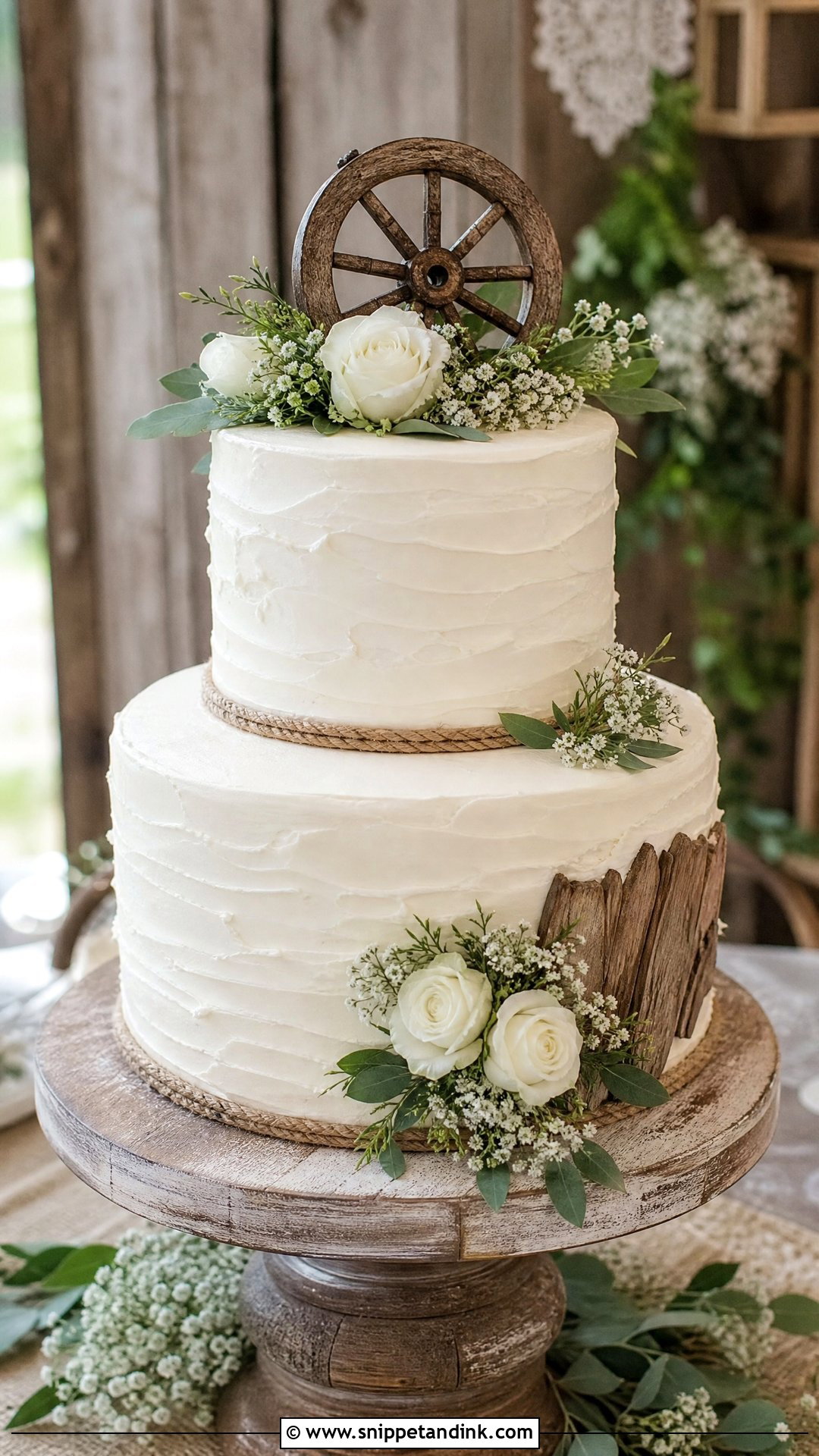
A small wagon wheel topper or side accent on simple ivory tiers gives an old-west note without clutter. I make the wheel from fondant or modelling chocolate, let it dry for several days so it holds its shape, and paint woodgrain details by hand. Buttercream texture, fresh flowers and greenery soften it. Size the wheel in proportion to the tier it sits on; too big, and it looks like it’s about to roll off. It suits outdoor ranch venues and barn receptions with vintage decor.


20. Western Mini Wedding Cakes
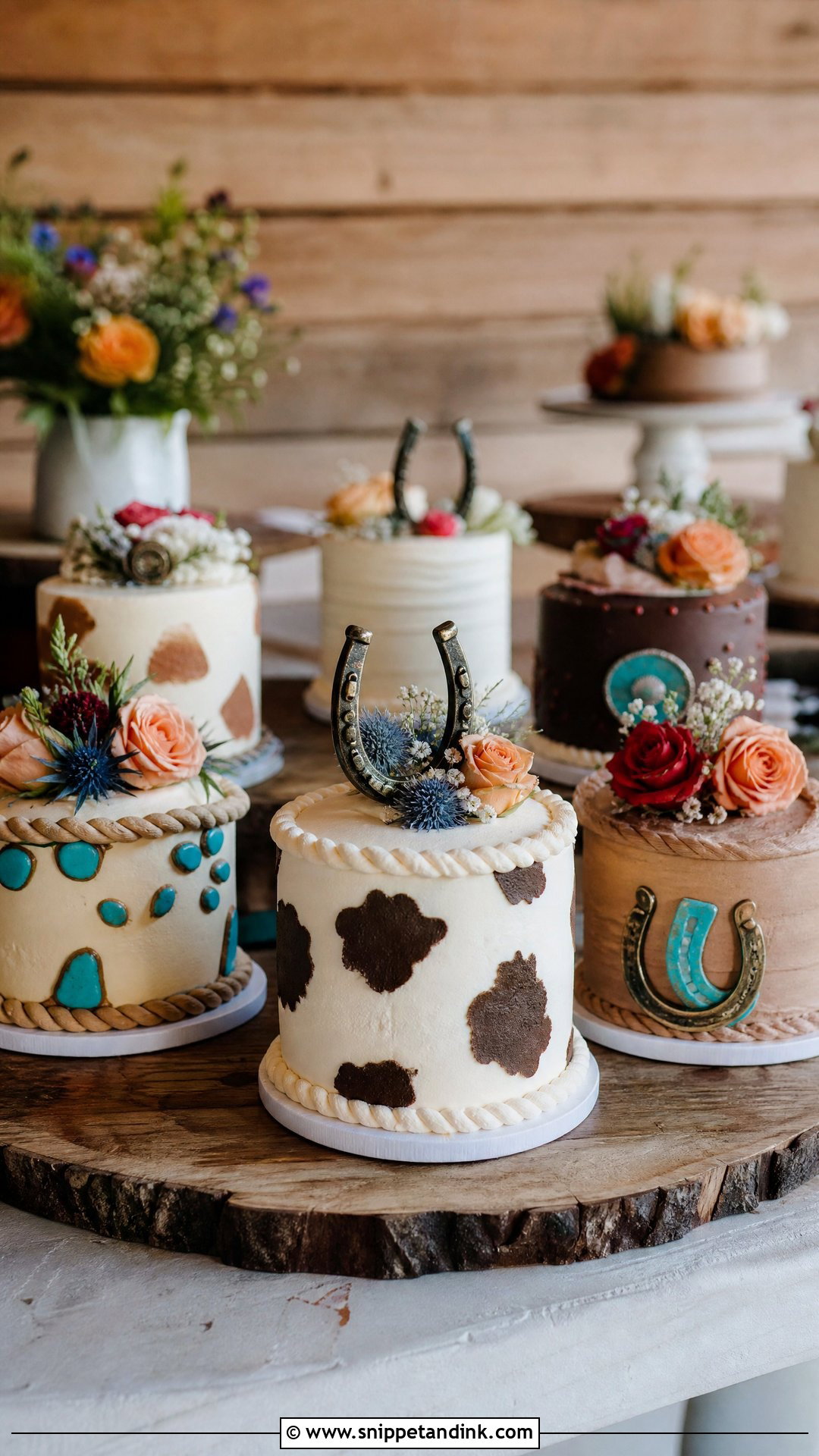
Mini cakes let you offer several flavors and give a dessert table a generous, ranch-style feel. Each small cake can carry its own detail, such as a rope border, cowhide print, wildflowers or a turquoise accent, but the palette should stay connected so they look like a set. I usually make one slightly larger cake for cutting. This works well for intimate weddings or couples who can’t agree on a flavor. Arrange them on wood stands or trays along a long table.
Wildflowers, Wheat and Wood Slices Near the Frosting
Natural decorations suit a Western cake best, but not everything from a florist or the ranch belongs on food. I treat anything that touches frosting as an ingredient.
- Use only flowers known to be non-toxic and grown without pesticides. Some popular wedding flowers, like lily of the valley and hydrangea, are not safe near food.
- Wrap fresh stems in floral tape or insert them into food-safe flower picks, so sap never touches the cake.
- Dried grasses and wheat should be clean and free of dust; brush them off before use, and lay them on top rather than pushing them into tiers.
- Raw wood slices need a food-safe barrier, like a cake board or parchment, between the wood and the cake.
Coordinate with your florist early so they know which flowers will touch the cake. Many bakers prefer to place the flowers themselves on site, which also means the blooms are fresher when guests see them.
Two Western Details on Ivory Tiers Go a Long Way
A Western cake can be as quiet or detailed as you like. Naked buttercream and wildflowers lean rustic, cowhide and longhorns lean bold, and tooled leather or conchos on ivory tiers feel more refined. Start with your venue, flowers and palette, then choose one or two Western details to lead. Book your baker early, share photos of the reception space, and taste the flavors before you commit. A clear brief is what gets you a cake that suits the day.
You'll Like These Ideas:












Leave a Reply