
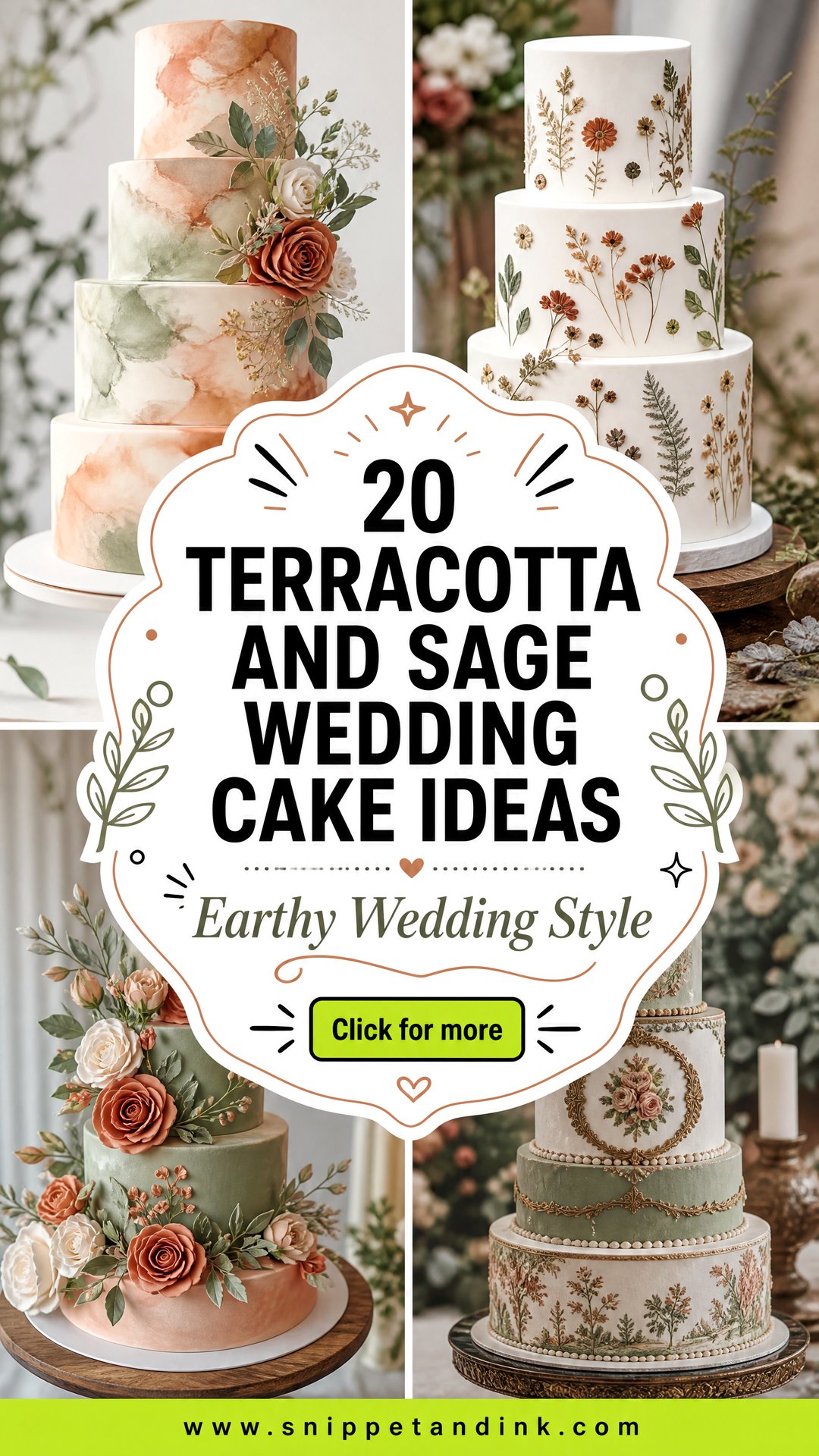
Terracotta and sage are both muted colours, which is why they sit so calmly together: clay, rust and sunset peach on one side, a soft herb green on the other. I see this palette at barns, desert venues, greenhouses and autumn receptions, and it suits a cake well because neither colour shouts. The cakes that work best in it do more than echo the flowers. They use texture, tier shape and finish to carry the colour, so the dessert table looks planned rather than matched. Here are twenty earthy cakes I’d build in this palette, with notes on how each one behaves.
Mixing Terracotta Buttercream That Doesn’t Turn Pumpkin
Both colours in this palette are harder to mix than they look. Terracotta isn’t simply orange; it’s orange pulled down with brown and warmed with a touch of red or pink. Too much orange and the cake looks like Halloween. Too much brown and it reads muddy under evening lights.
Sage has its own problem. Butter is yellow, and a soft green mixed into a yellowish buttercream drifts toward olive. I either whiten the buttercream first or use a meringue buttercream, which starts paler, before adding any green.
What helps me match your colours
- A physical swatch: a bridesmaid dress fabric sample, a napkin or a ribbon. Screens show colour differently on every phone.
- Patience: gel colours deepen as they sit, so I mix a shade lighter than the target and check it again an hour later.
- The light at your venue: a terracotta that looks right under daylight can look brown in warm candlelight. If your reception is indoors at night, tell your baker so the shade can be pushed a little brighter.
1. Terracotta And Sage Buttercream Wedding Cake
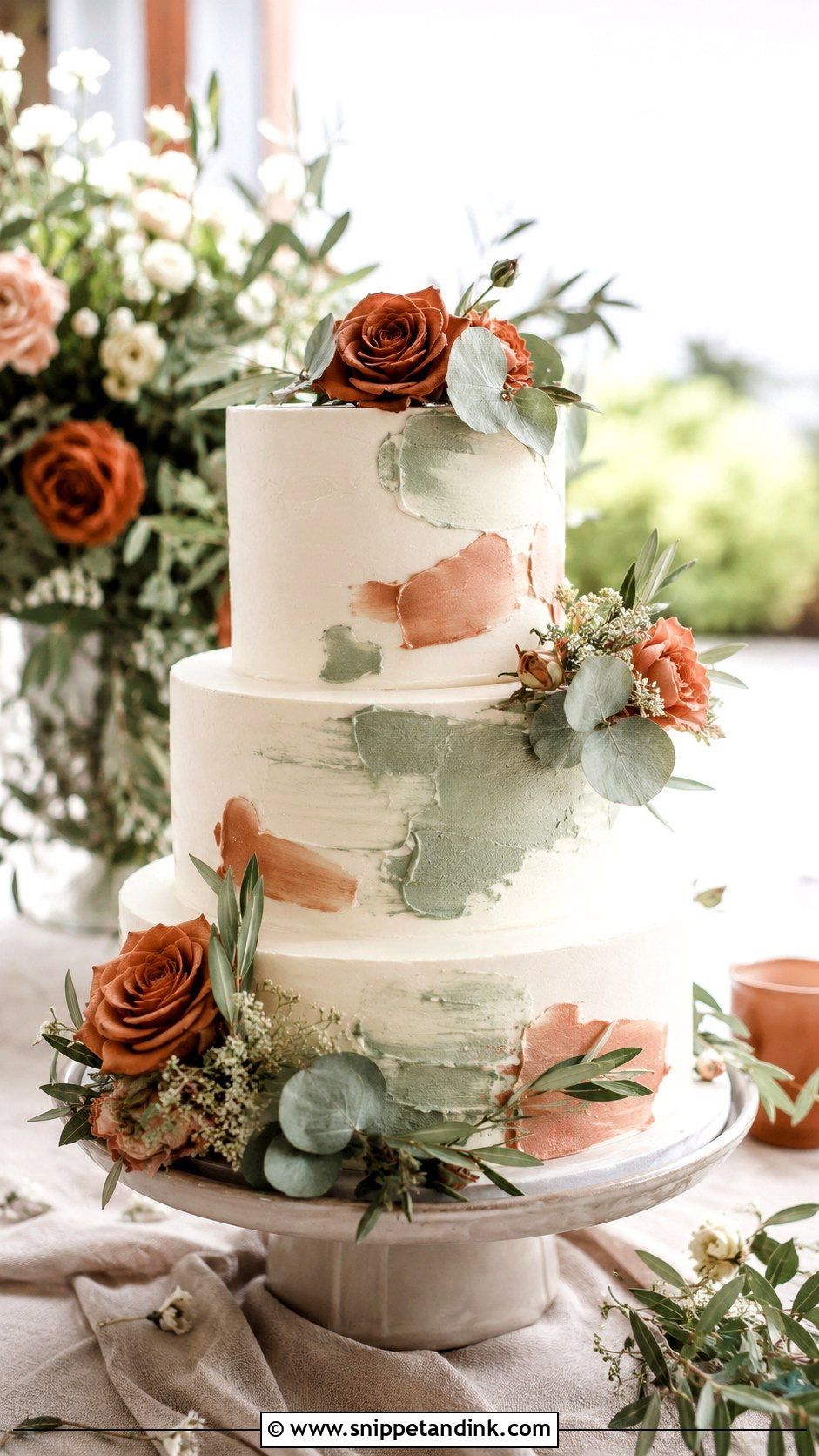
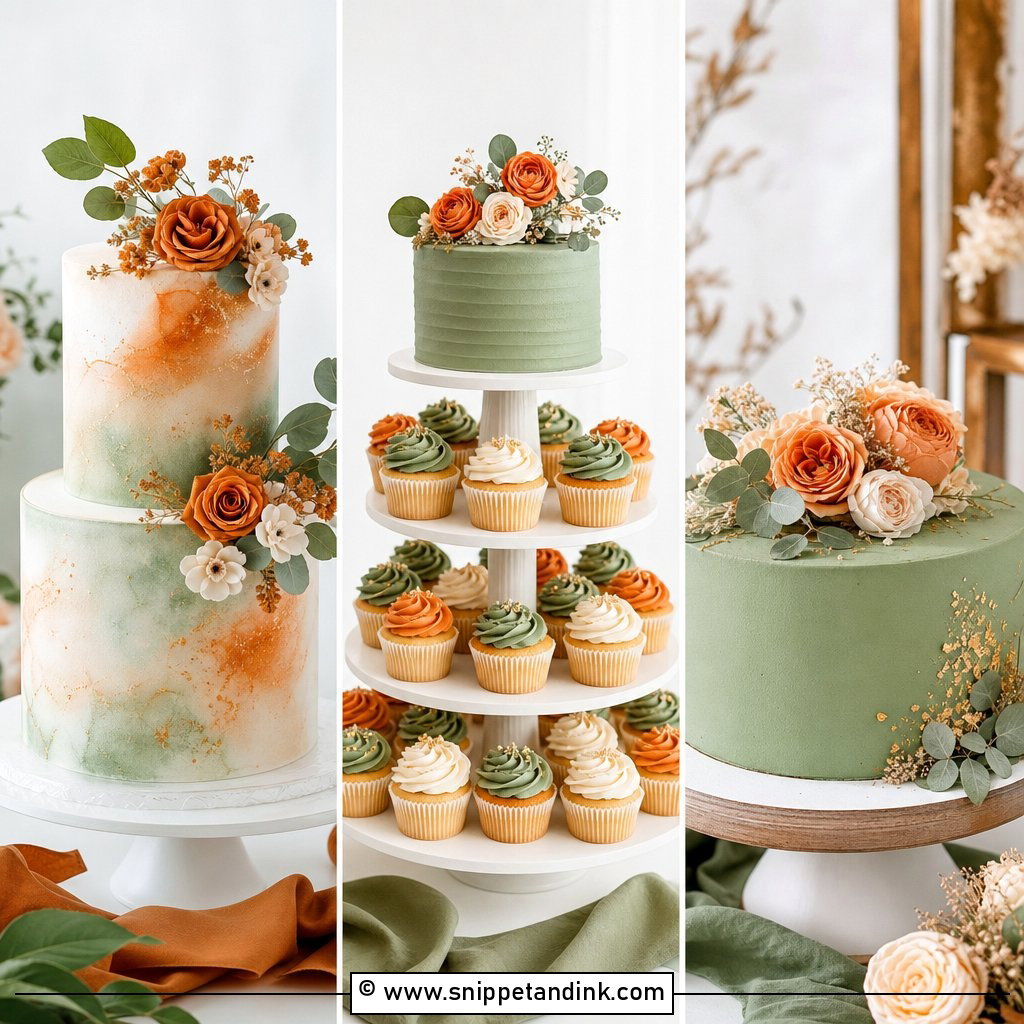
If you’re unsure where to begin, an ivory buttercream cake with painted colour is the safest version of this palette. I keep the base smooth, then add muted sage brushstrokes and small terracotta accents with a palette knife, so the colour looks applied by hand rather than poured in. Two or three tiers give the strokes space. I’d paint on a chilled cake, since warm buttercream smears the second colour into the first and you get mud. Garden roses, olive leaves or dried florals in matching tones finish it.
2. Terracotta And Sage Floral Wedding Cake
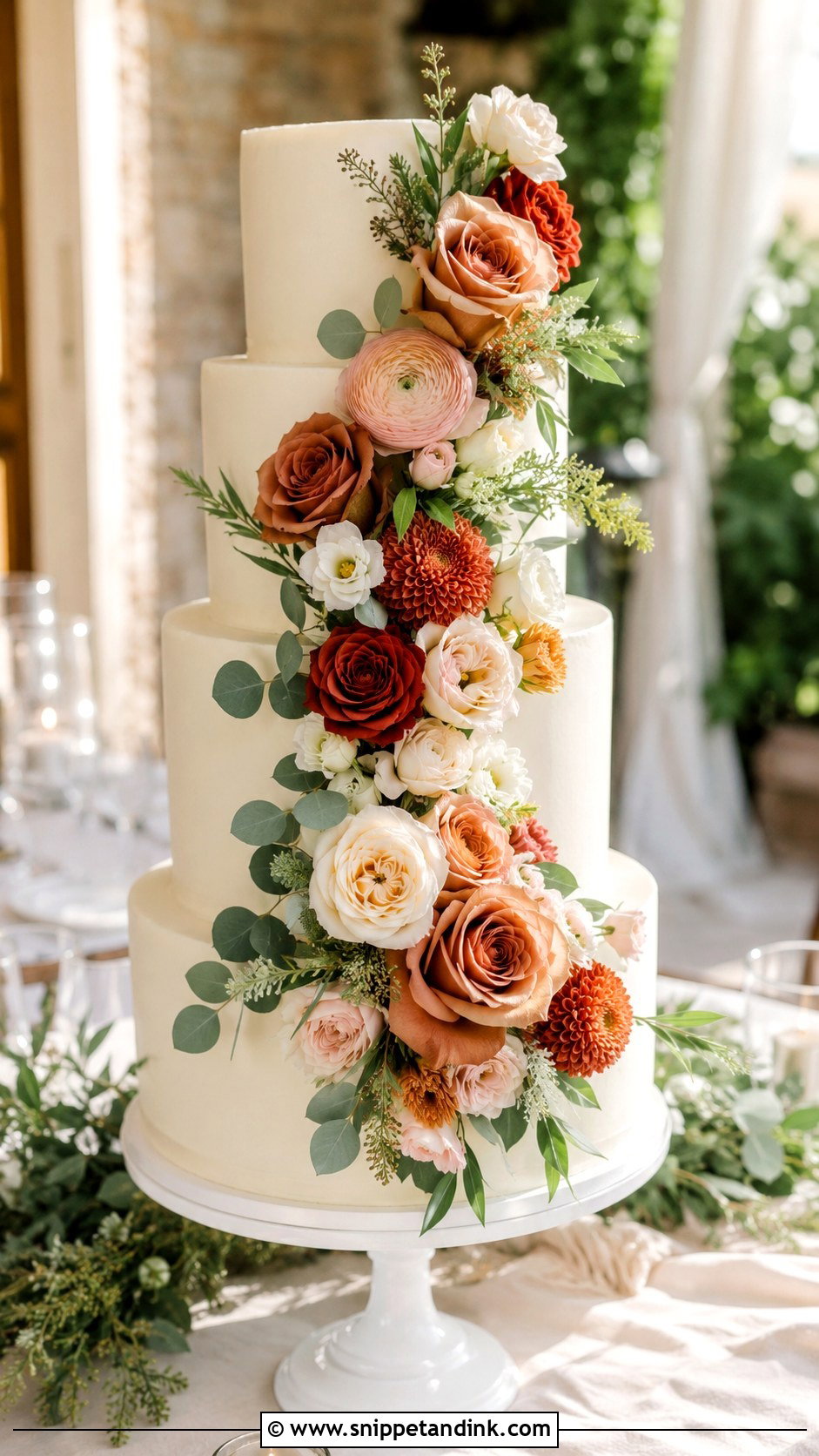
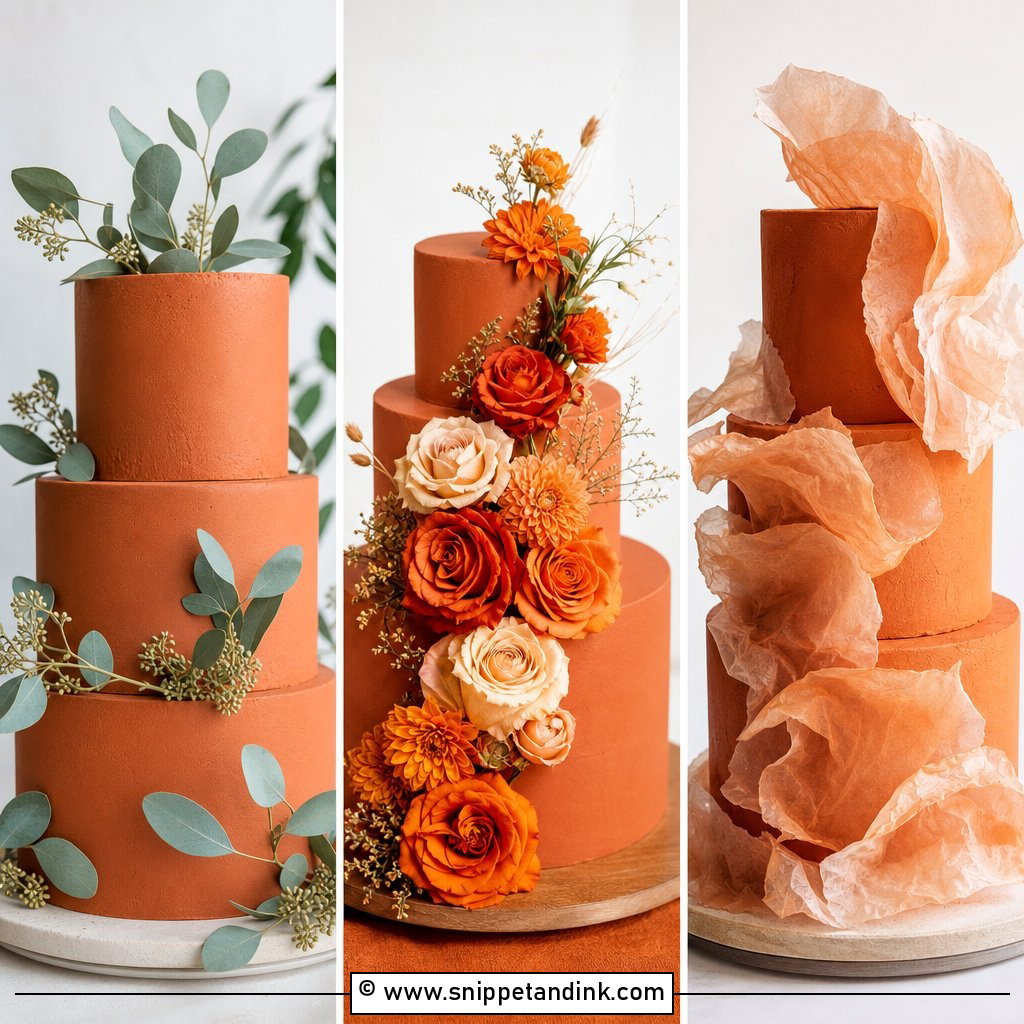
Fresh flowers in rust, peach, cream and dusty green carry the palette on their own, so the cake beneath should stay quiet. Ivory or pale cream with a smooth or lightly textured finish is enough. Roses, ranunculus, dahlias and lisianthus all come in these shades, and small filler blooms soften the gaps. A diagonal cascade gives the most movement; a ring at each tier’s base looks tidier; a cluster on top suits a smaller cake. Dahlias wilt fast in heat, so for a warm outdoor ceremony I’d ask your florist for sturdier roses instead.
3. Terracotta And Sage Semi Naked Wedding Cake
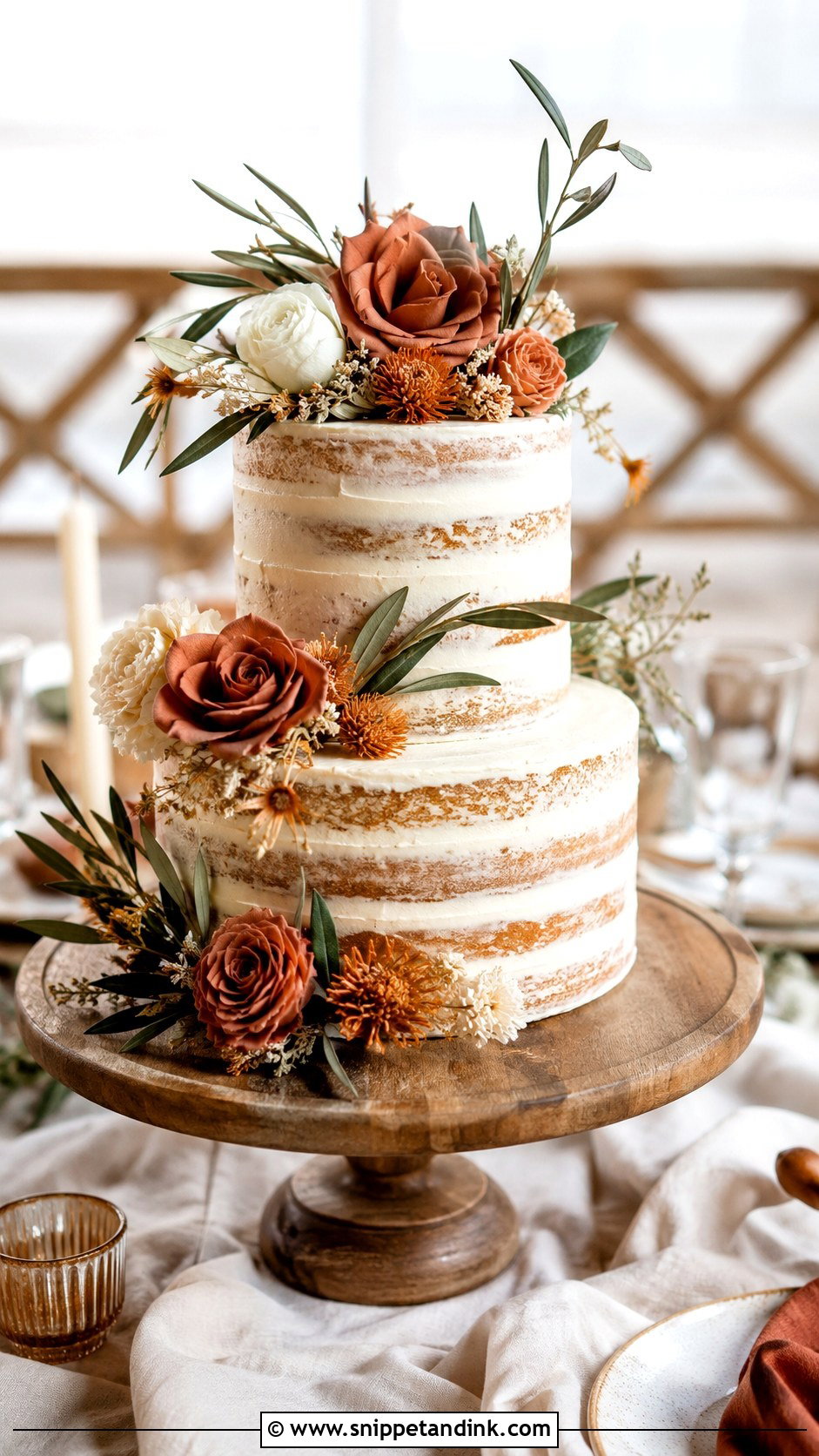
Semi-naked frosting lets the sponge itself become one of the earthy colours. A spice, carrot or almond sponge has a warm crumb that sits naturally beside terracotta, while plain vanilla looks paler and cleaner. I scrape back the buttercream until the layers show, then add sage greenery, terracotta roses, dried orange-toned flowers and a few cream blooms for balance. The thin coat dries faster than a full frosting, so this one shouldn’t sit out for hours. On a wooden stand or stone plate, it suits barns, backyards and cozy autumn celebrations.
4. Terracotta And Sage Fondant Wedding Cake
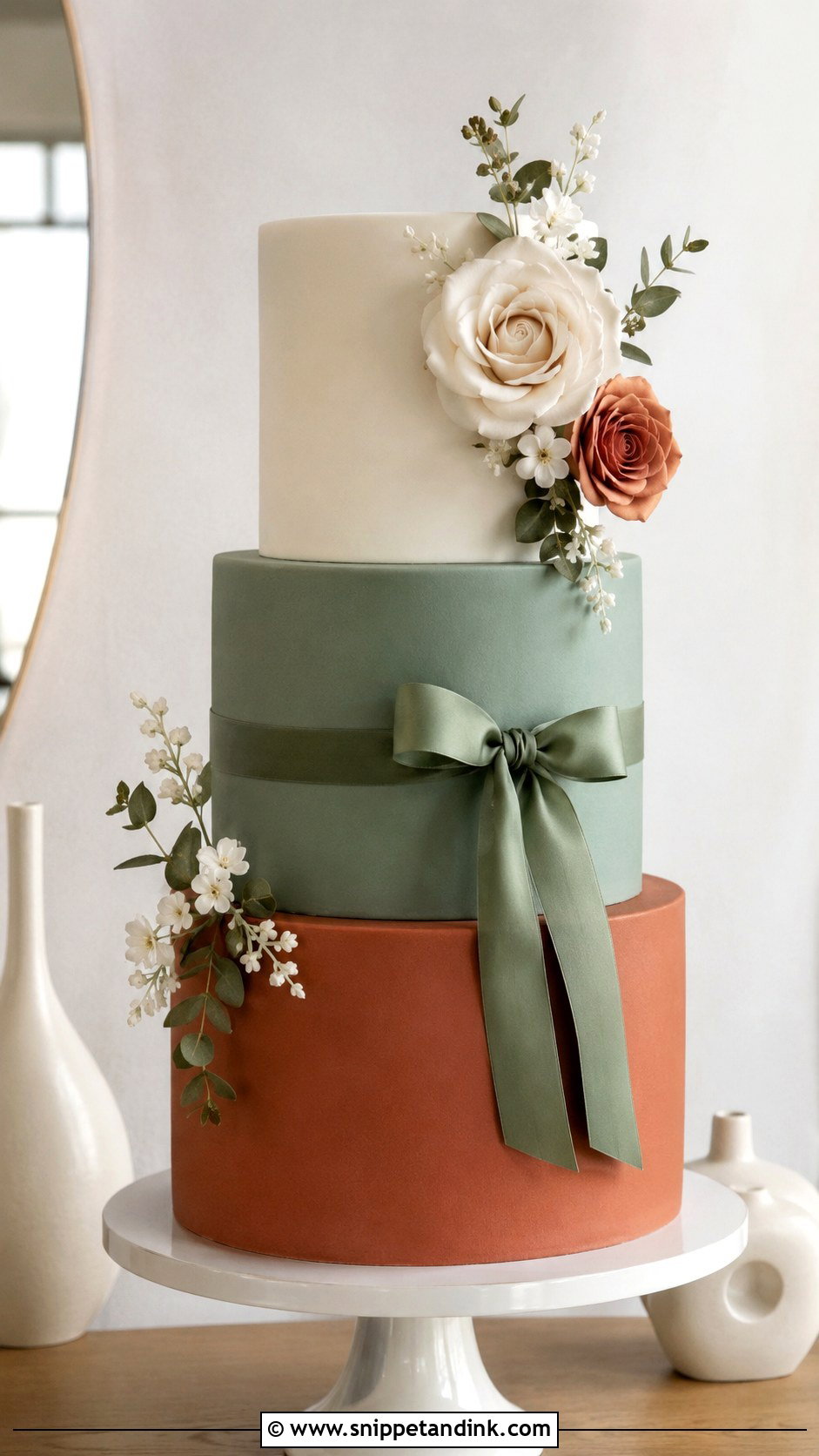
Fondant gives this palette crisp edges and precise colour blocks, which is what pulls it away from rustic and toward modern. My favourite arrangement is one sage tier, one ivory and one terracotta, stacked so the darkest colour sits at the base. Coloured fondant needs kneading time to get an even shade, and deep terracotta needs a lot of colour, which can make the paste softer to work. Fondant ribbons, pressed floral details or raised panels add texture. A small sugar flower cluster is plenty for a gallery, hotel or formal room.
5. Terracotta And Sage Textured Wedding Cake
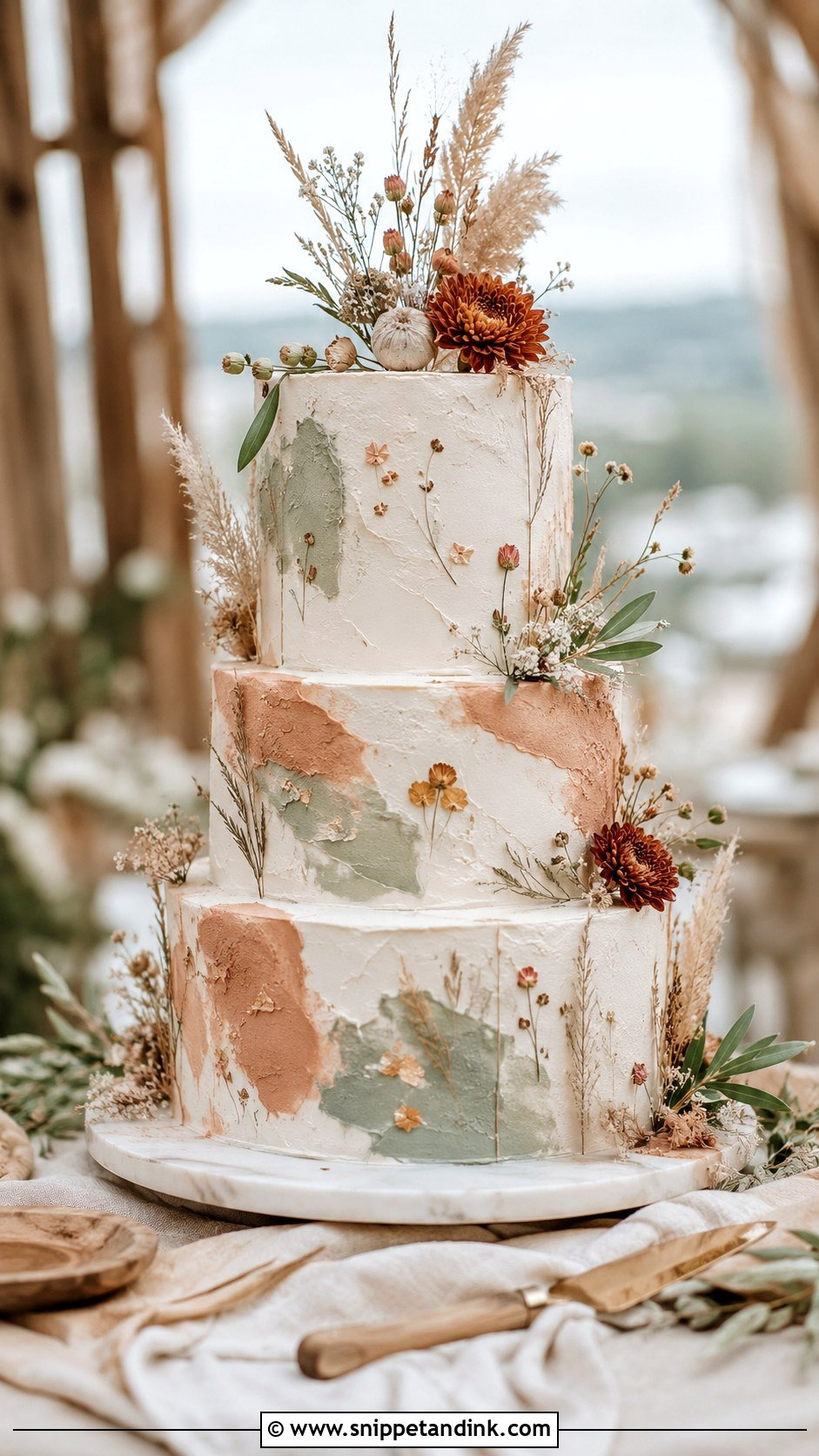
Texture is where terracotta looks most like itself, because real clay is never perfectly smooth. I use ridges, stucco, palette knife strokes or a plaster-style finish over an ivory base, then work small patches of terracotta and sage in so they blend instead of forming stripes. Blending only works while the buttercream is soft, so I do it tier by tier rather than all at once. Dried grasses, pressed edible petals or muted fresh flowers finish it. It sits naturally in rooms full of wood, linen, ceramic or stone.
6. Terracotta And Sage Drip Wedding Cake
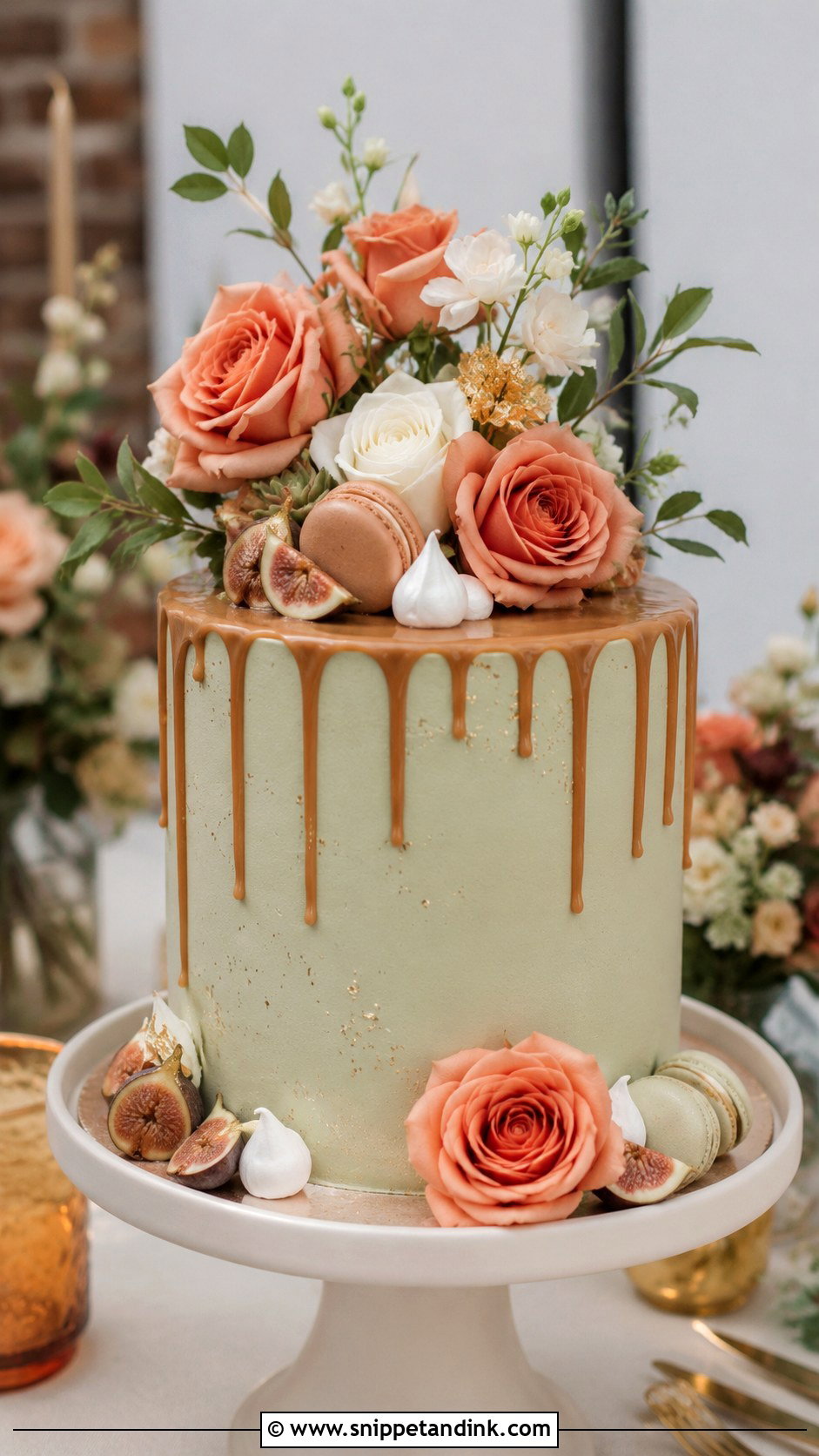
Keep a drip cake muted and it can still be elegant. Smooth sage or ivory buttercream, then a terracotta caramel-style drip around the top edge. A real caramel gives a natural rust colour without any dye, but it stays tacky in warm rooms, so for an outdoor ceremony I’d tint a white chocolate ganache instead. The drips should be short and even. Flowers, figs, small meringues or a few macarons on top, with a touch of edible gold if you want more styling. It’s a good fit for fall and desert weddings.
7. Terracotta And Sage Boho Wedding Cake
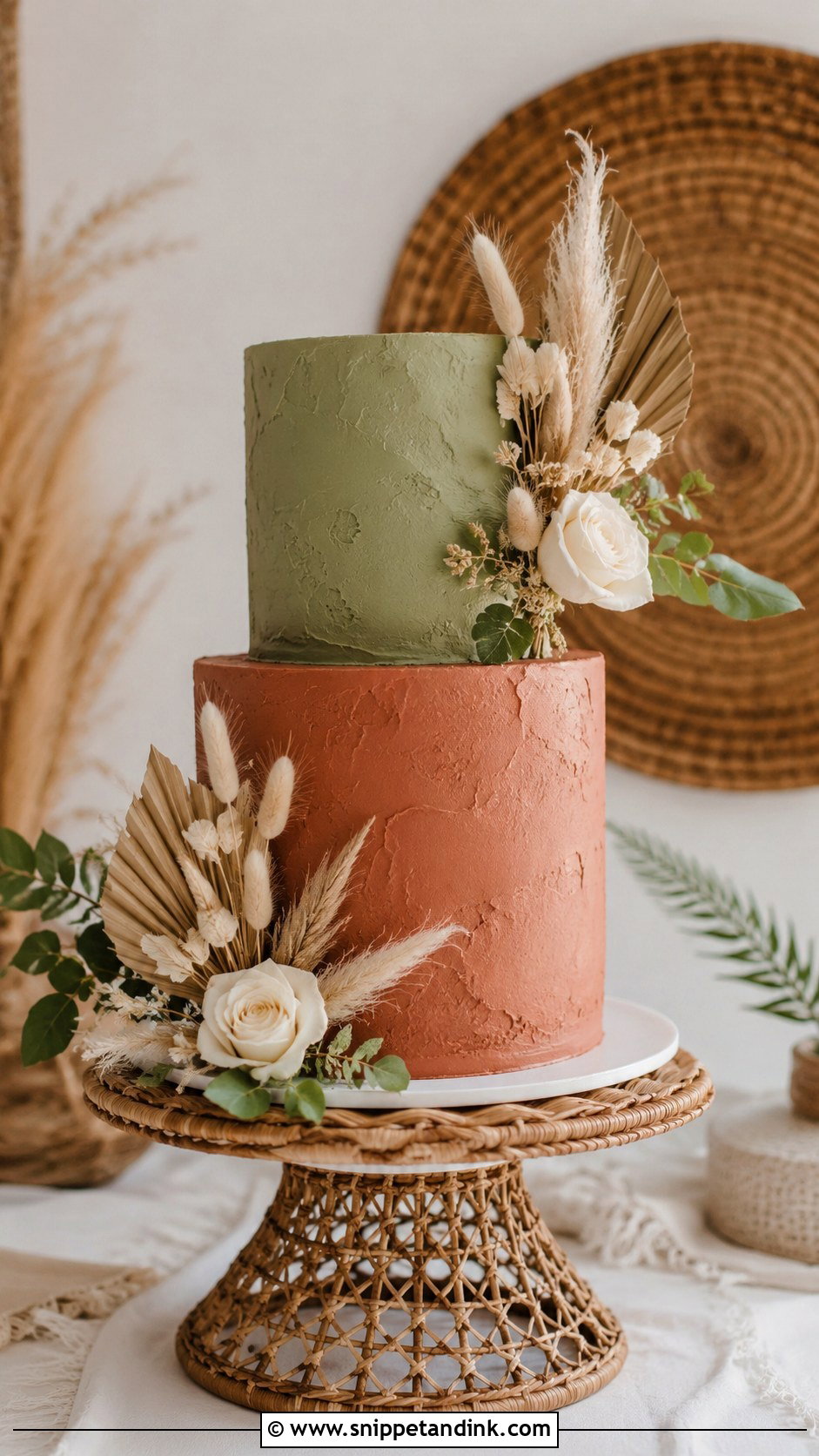
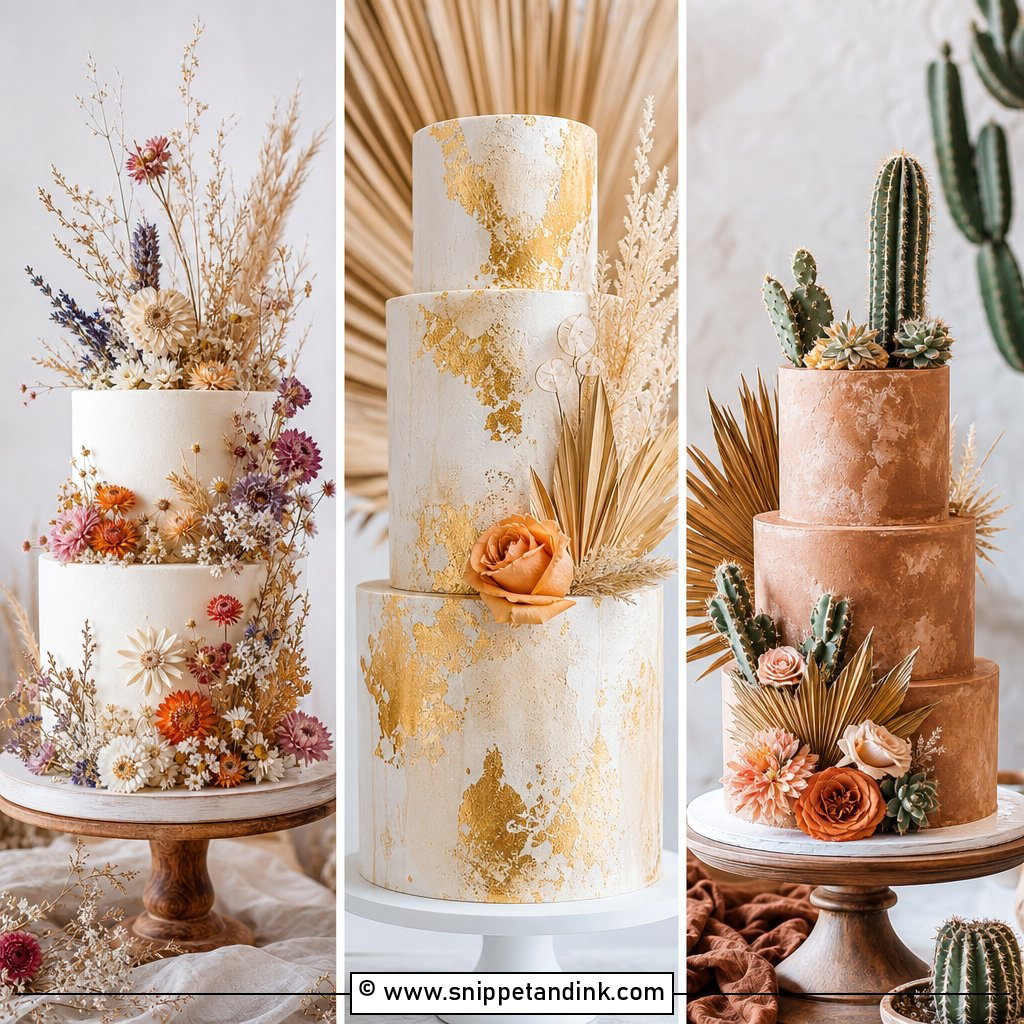
A boho wedding cake in this palette should feel airy, and the most common mistake is overloading it. Warm clay frosting, sage greenery, dried palm leaves, bunny tails, pampas and cream florals all suit the style, but three or four of them are plenty. The cake can be smooth, semi-naked or lightly textured. A two-tier on a rattan, wood or ceramic stand fits tented receptions, desert elopements and rooms full of woven decor. Many of those dried elements aren’t food-safe, which I cover further down.
8. Terracotta And Sage Rustic Wedding Cake
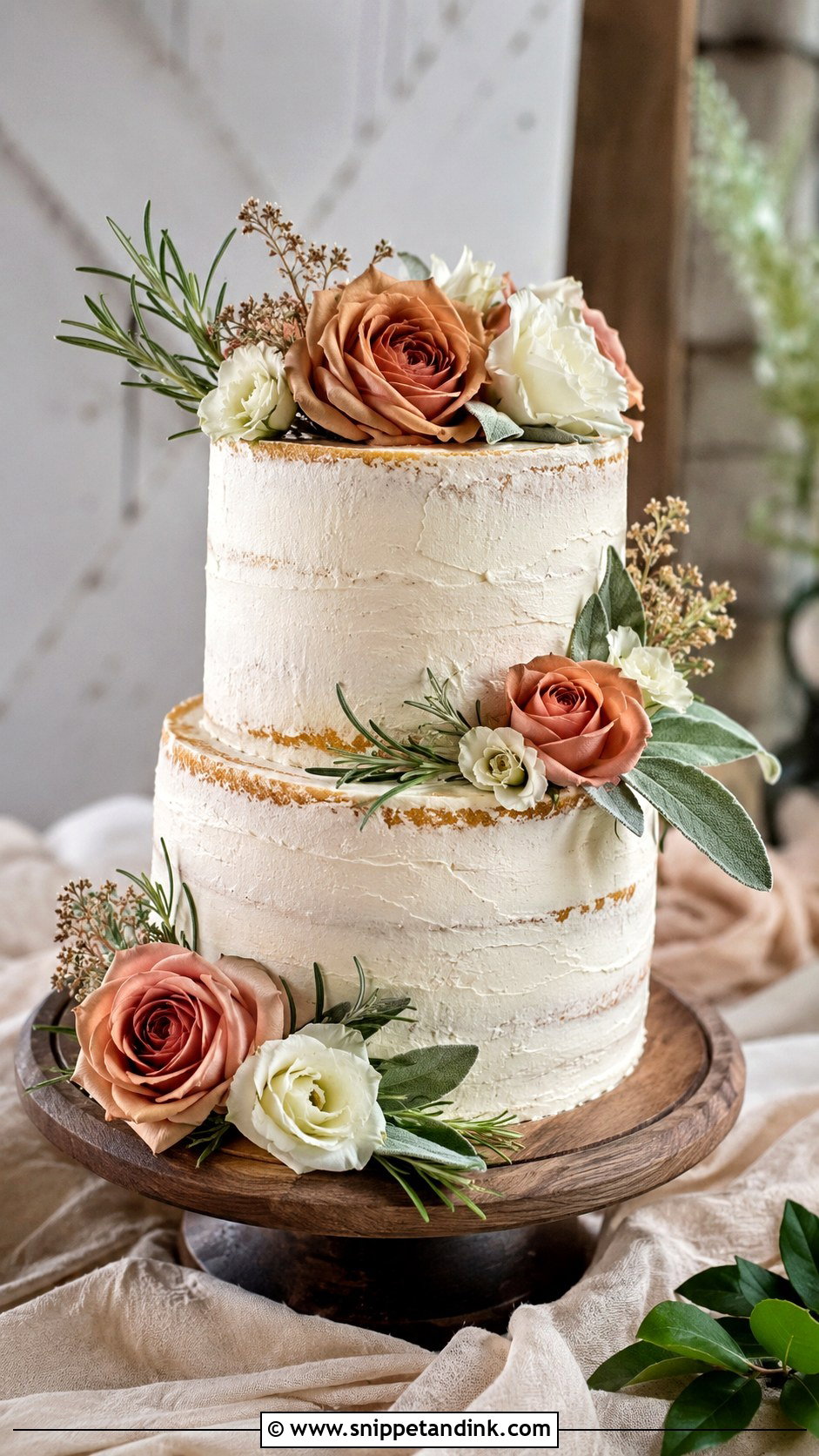
Wood beams, farm tables and stone paths call for a rustic cake. Buttercream texture, soft greenery and blooms in rust, cream and muted peach do it, either semi-naked or lightly scraped. I like real herbs here: rosemary sprigs and sage leaves are edible, smell good and hold up far better on a warm table than most flowers. Add a few small fresh or dried blooms between them. A wooden stand with a linen runner underneath finishes it without any fuss.
9. Terracotta And Sage Modern Wedding Cake
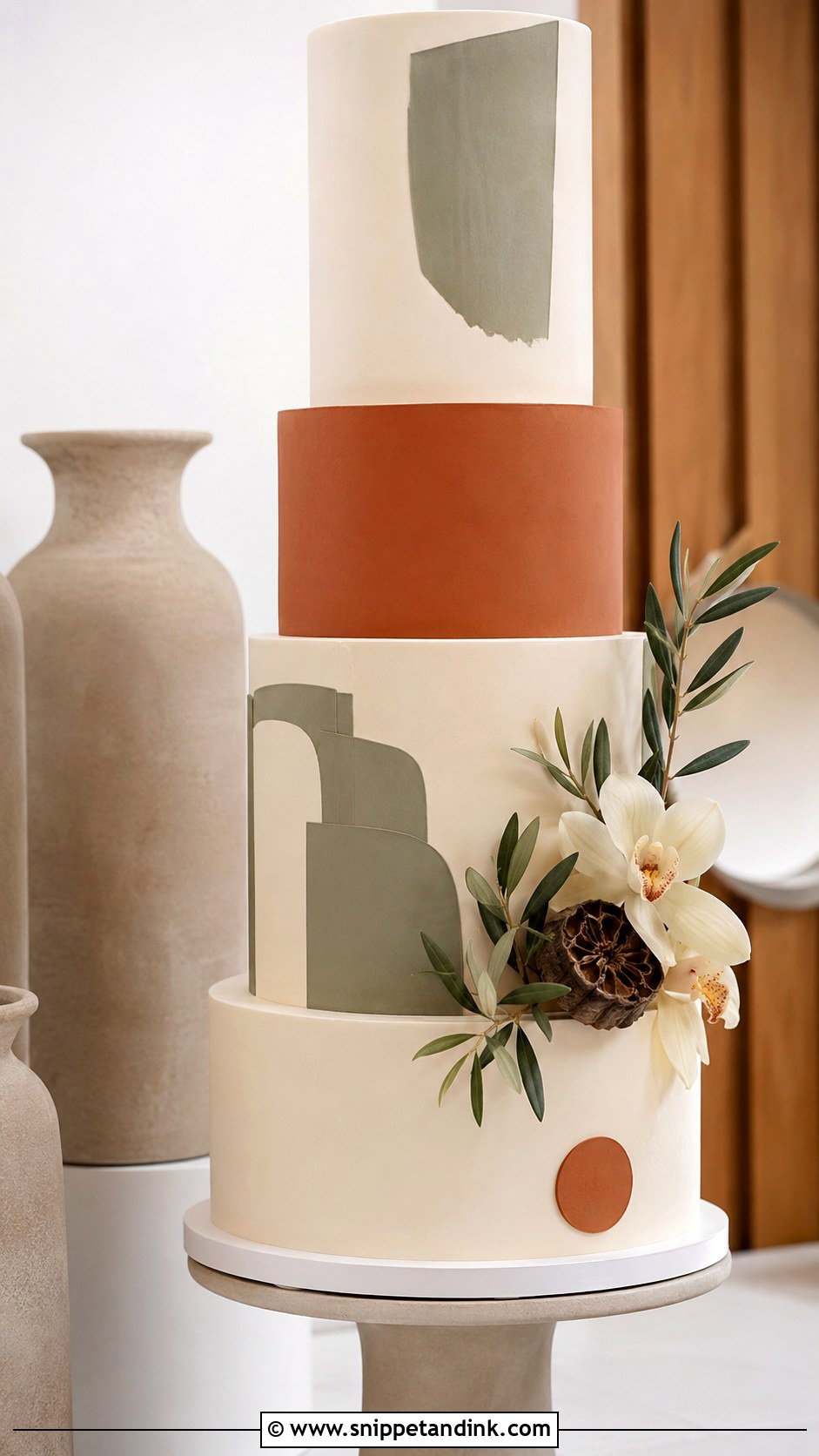
The modern version depends on restraint. Tall tiers, sharp buttercream edges and just ivory, sage and clay. Rather than a floral cascade, I’d use one sculptural arrangement, a fondant arch or abstract painted shapes. A single terracotta tier between ivory tiers gives a sleek colour-block. Sharp edges take several chilled coats and a steady hand with the scraper, which is part of why modern cakes often cost more than they look like they should. Let shape and colour do the work in rooftop, gallery and minimalist rooms.
10. Terracotta And Sage Two Tier Wedding Cake
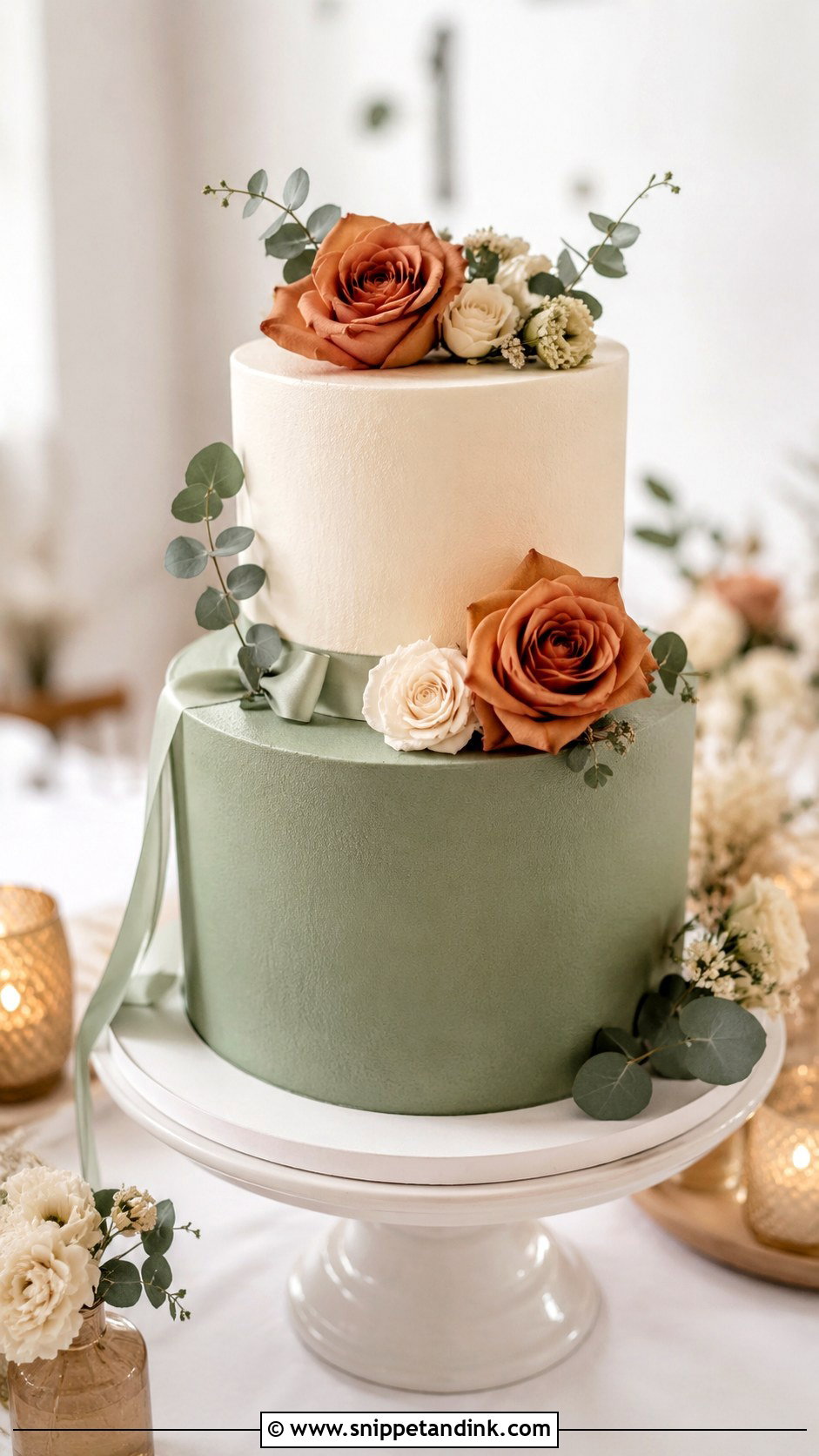
Two tiers suit small weddings, elopements and brunches, and the palette still reads clearly at that size. Try a sage bottom tier with an ivory top, linked by terracotta flowers. Or keep both tiers ivory, add a sage ribbon and some rust-coloured blooms. I build two-tier cakes a little taller than standard so they don’t look squat in photos; a deeper top tier makes the biggest difference. A simple ceramic stand with candles and greenery around the base keeps it in proportion.
11. Terracotta And Sage Three Tier Wedding Cake
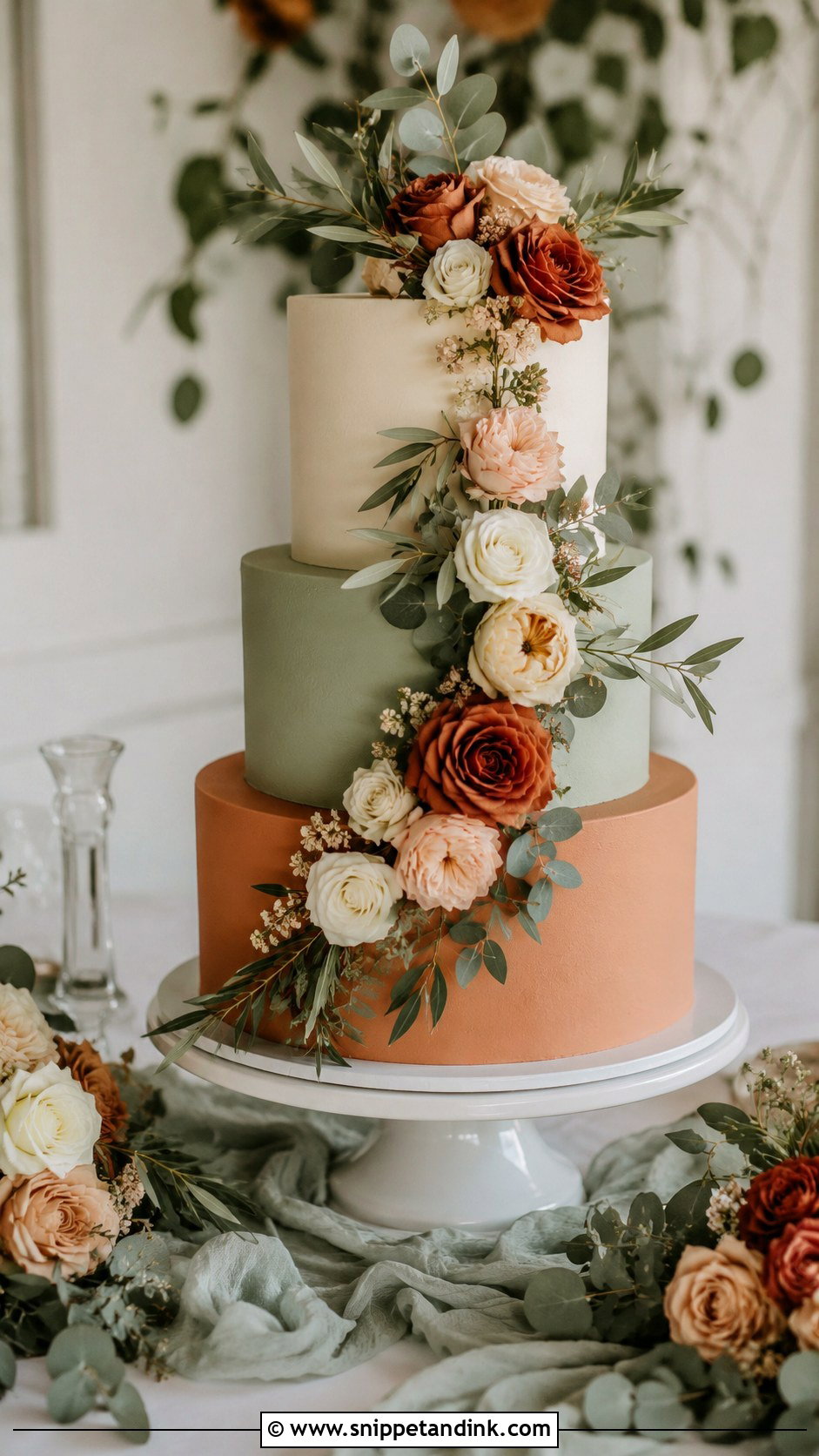
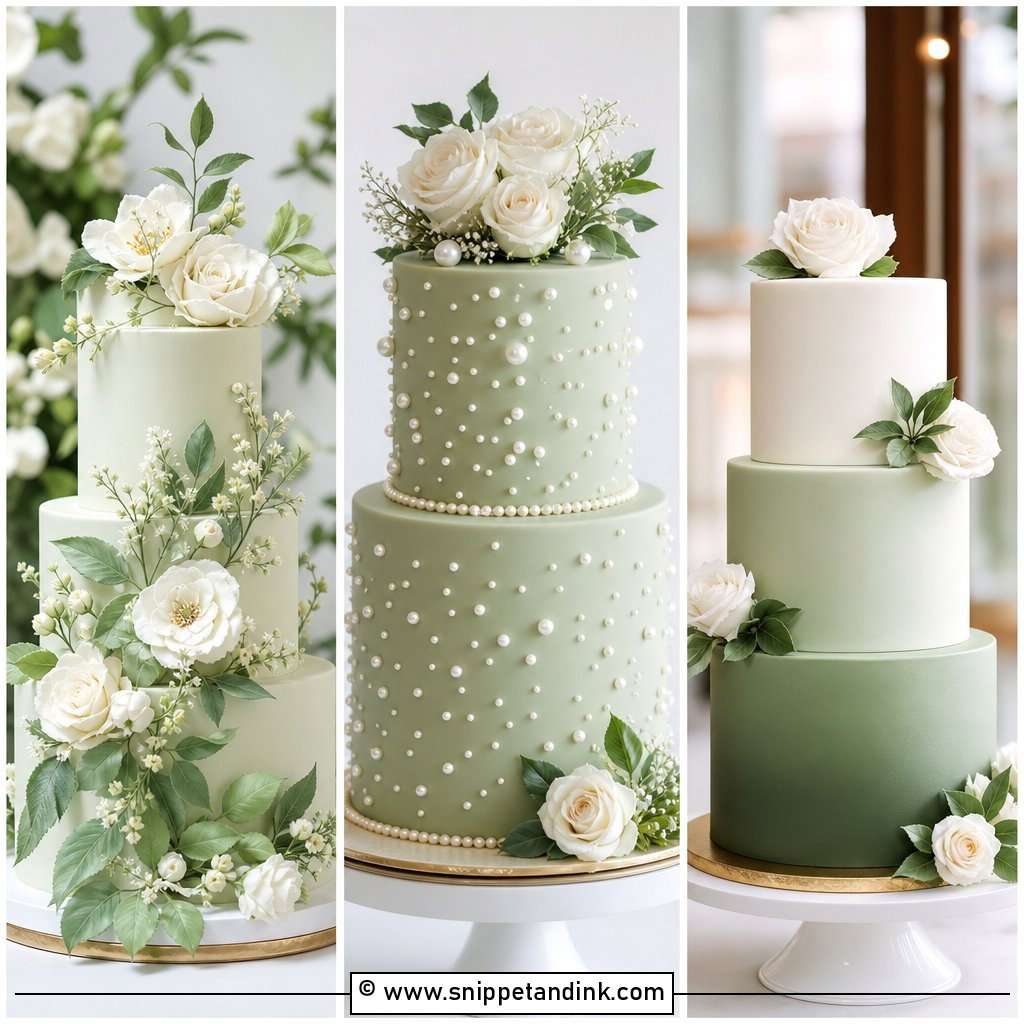
Three tiers give you room to tell the colour story from top to bottom: ivory on top, sage in the middle, terracotta at the base, with the heaviest colour lowest so the cake looks grounded. Or keep all three ivory and let flowers, painted details and greenery bring the colour. This size feels grand for a medium guest list without dominating the room. A floral cascade from the top tier down one side adds movement, and it makes a strong focal point on the dessert table.
12. Terracotta And Sage Square Wedding Cake
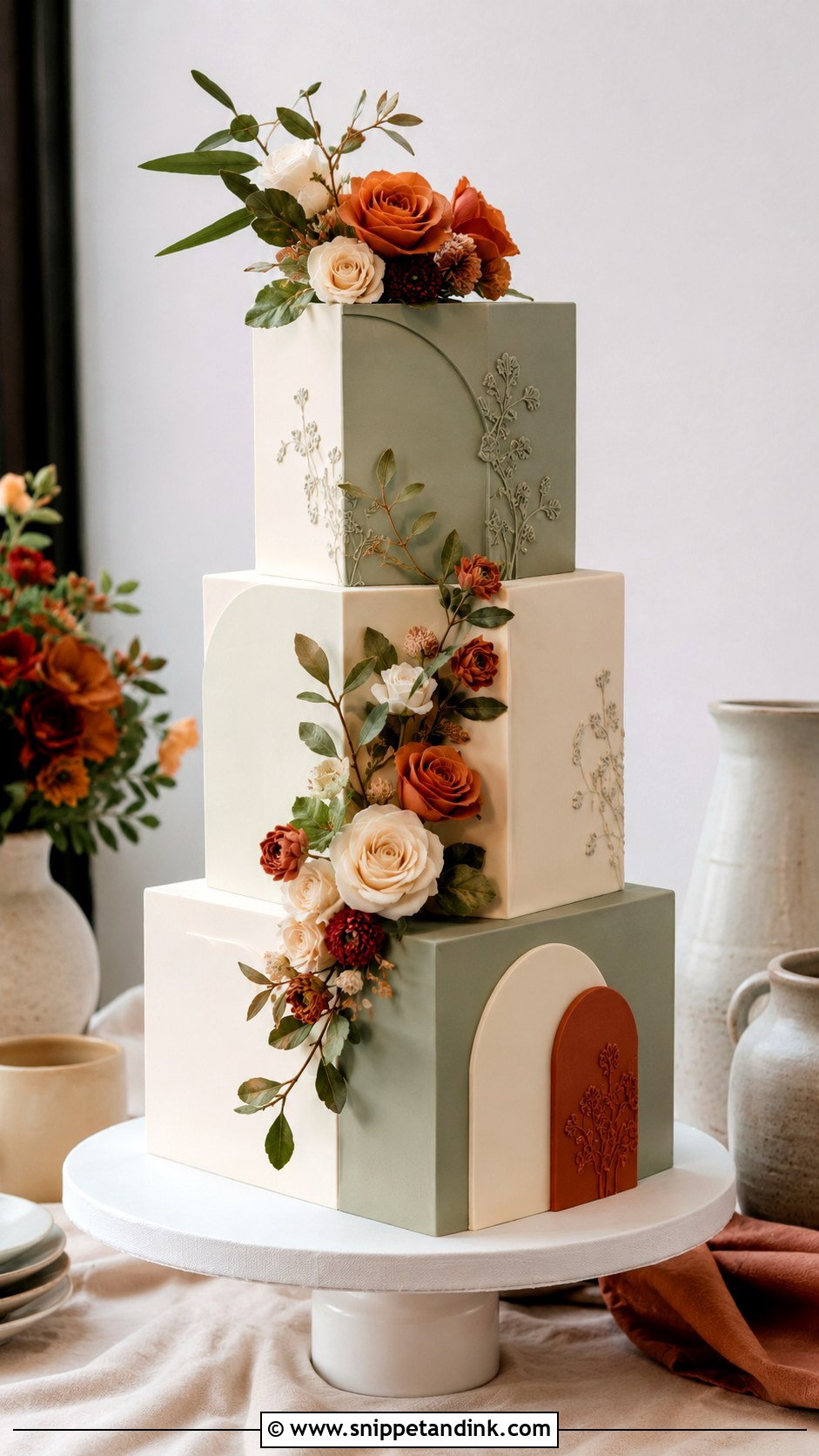
Square tiers give the palette an architectural edge, and straight sides make even small details look deliberate. Smooth fondant or buttercream shows the shape best. I’d use sage as the base colour, then put terracotta florals or painted panels at the corners where the eye naturally lands. Offsetting the tiers slightly feels more contemporary than stacking them evenly, though it needs careful doweling. Ceramic vases and modern florals nearby keep the look consistent.
13. Terracotta And Sage Watercolor Wedding Cake
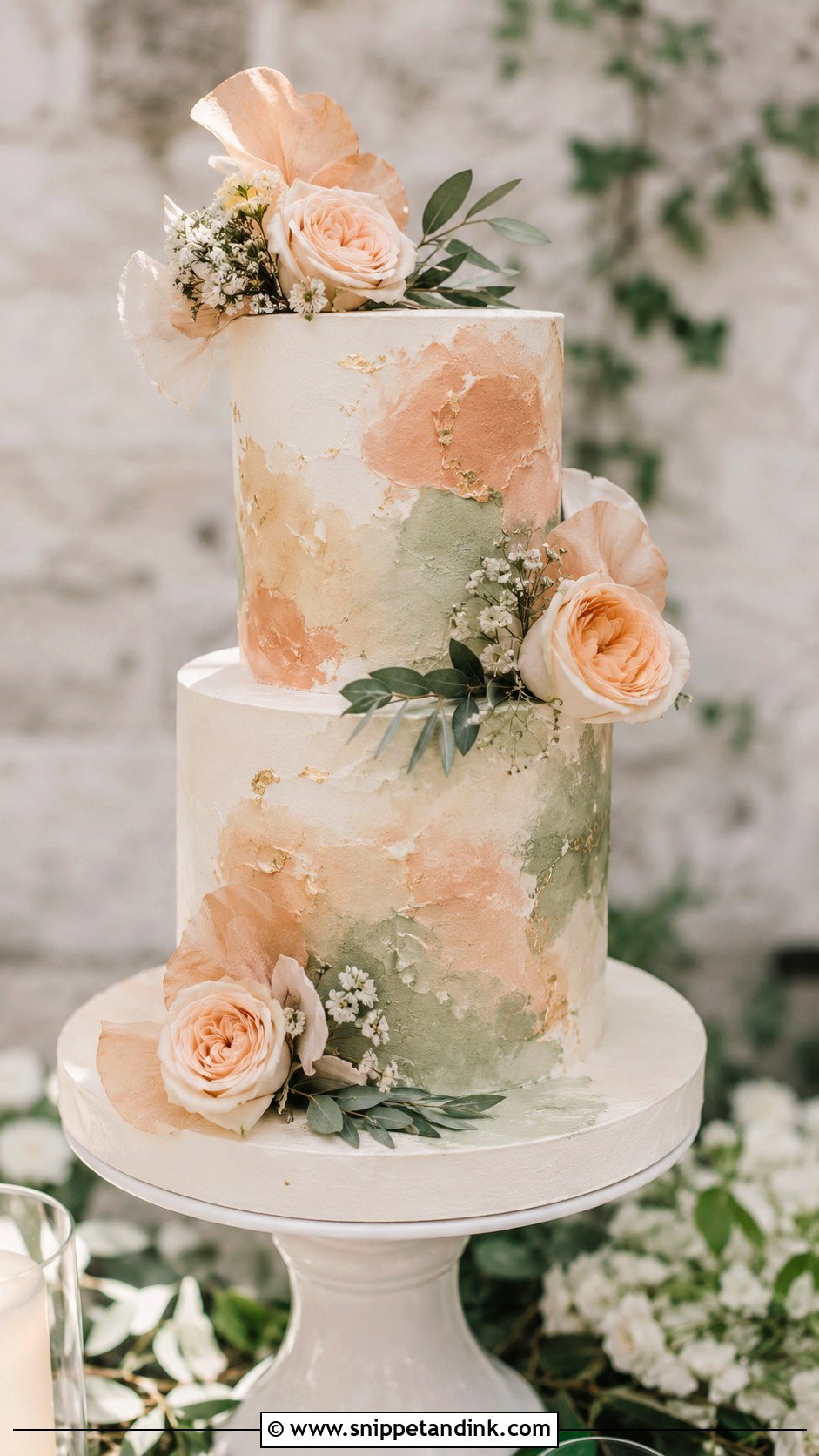
A watercolor wedding cake is the softest way to use these colours. Rather than solid blocks, I blend the tones into the buttercream like a wash: terracotta fading into peach, sage softening into pale green and ivory. The trick is applying all the colours at once and smoothing them together in a single pass; go back for a second pass and they turn grey. Keep decoration light with a few flowers, wafer paper petals or small gold accents. It suits spring through early fall, especially when the rest of the palette includes blush or dusty rose.
14. Terracotta And Sage Ombre Wedding Cake
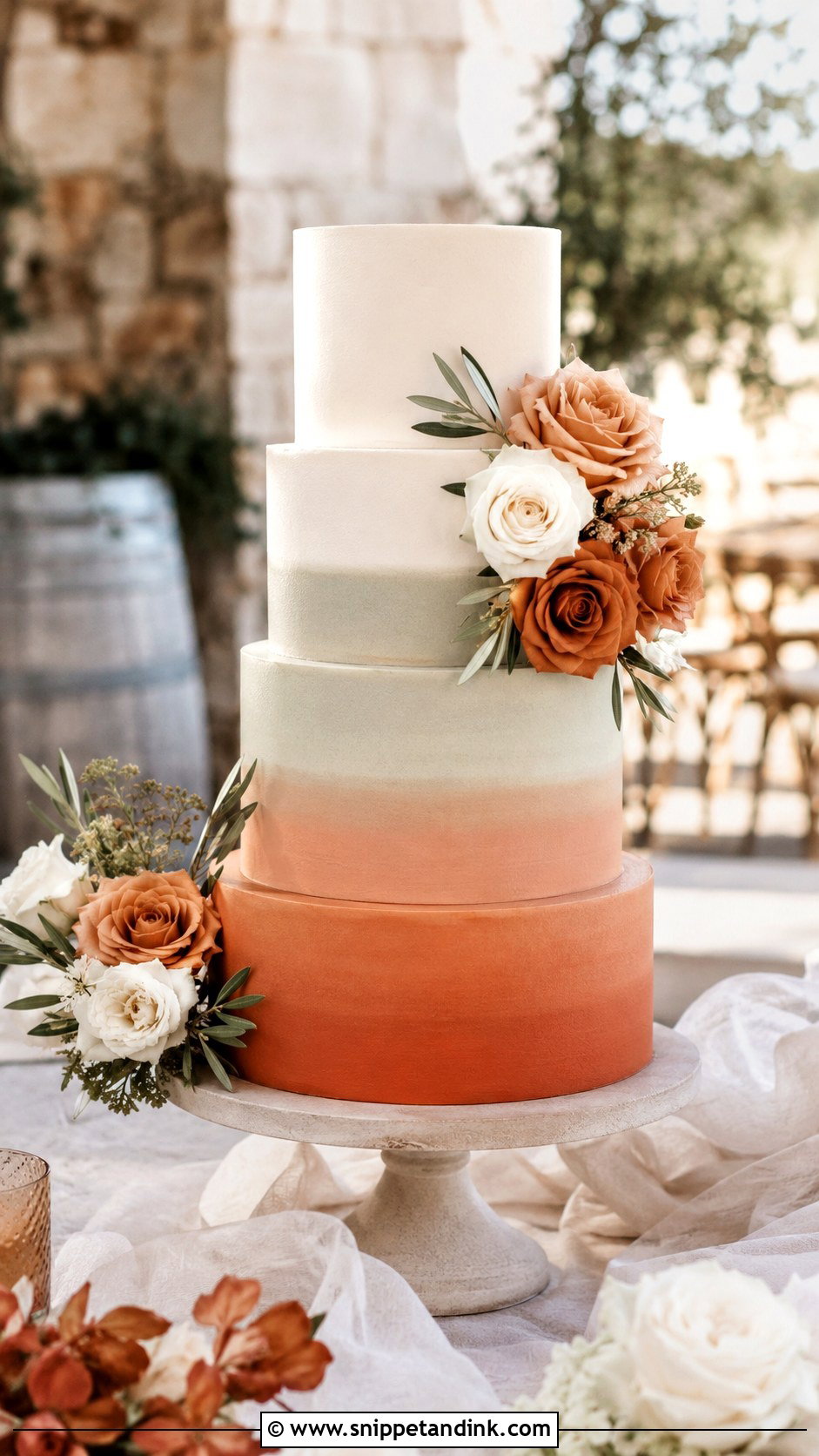
Ombre lets the colour itself be the decoration. Fade from ivory to sage, from peach to terracotta, or give each colour its own tier. Buttercream ombre is softer and more romantic; fondant ombre is cleaner. A few flowers at the top or base are all it needs. I mix every shade from one master batch, adding colour step by step, so the tiers are related rather than just similar. It reads clearly from across the room on a neutral table.

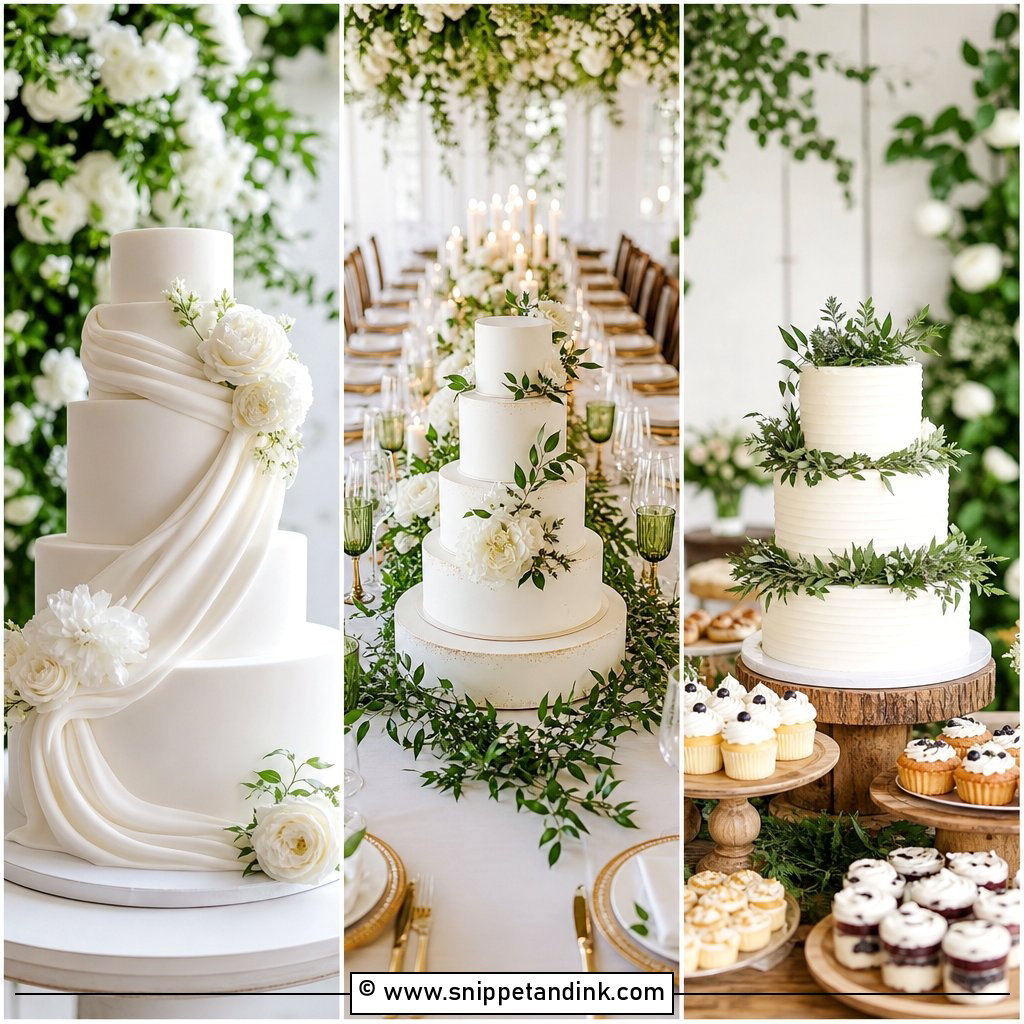
15. Terracotta And Sage Pressed Flower Wedding Cake
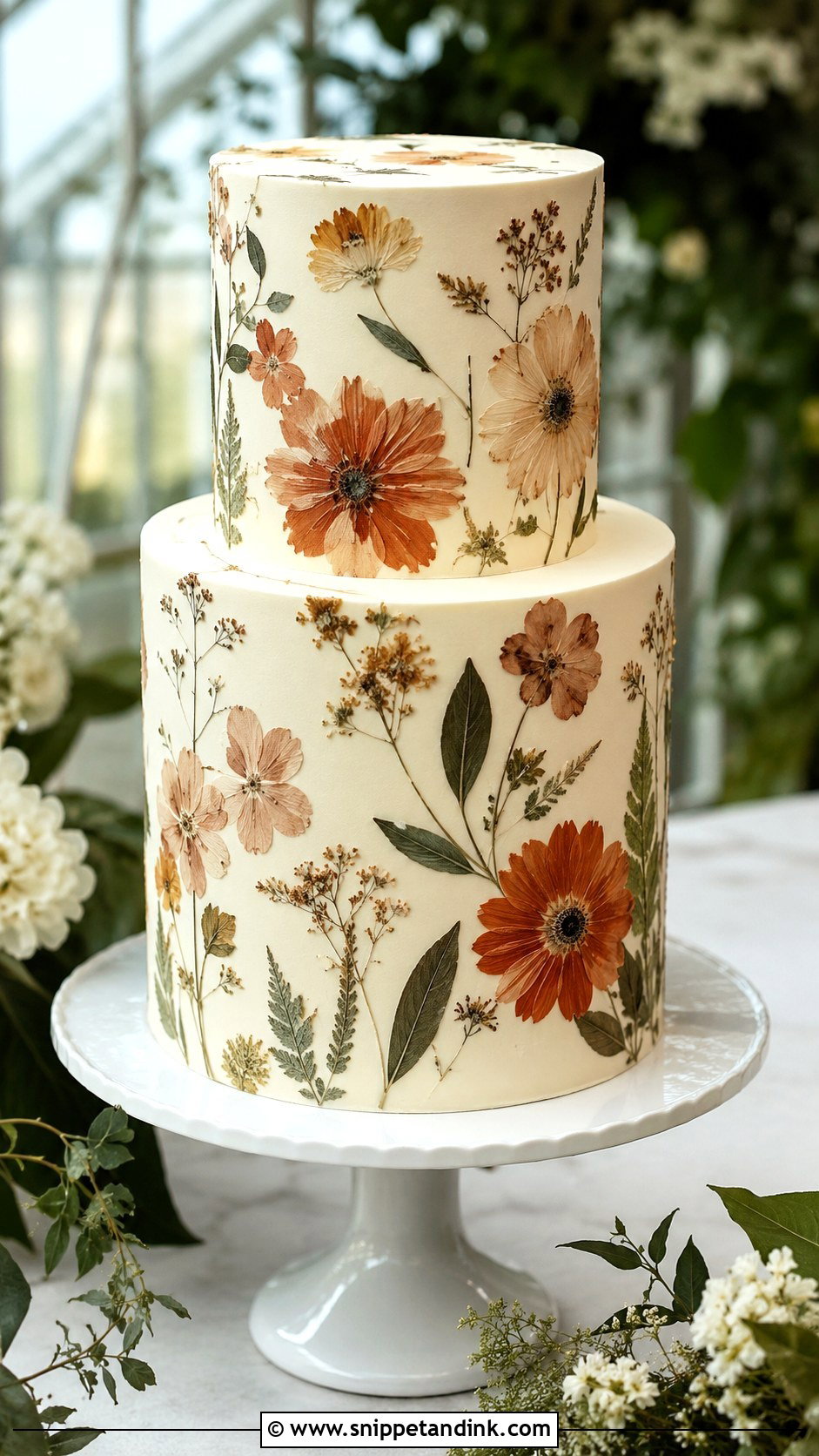
Pressed flowers show up best on a smooth ivory base, where every petal and leaf stands out. I use edible flowers in soft orange, cream, dusty peach and pale green, pressed flat and then fixed with a light brush of piping gel or water. A loose climbing pattern looks most natural; perfectly even spacing looks printed. The result feels slightly vintage and suits greenhouse, botanical and spring weddings. Pressed flowers also hold better than fresh petals on a warm table, which is useful outdoors.
16. Terracotta And Sage Sugar Flower Wedding Cake
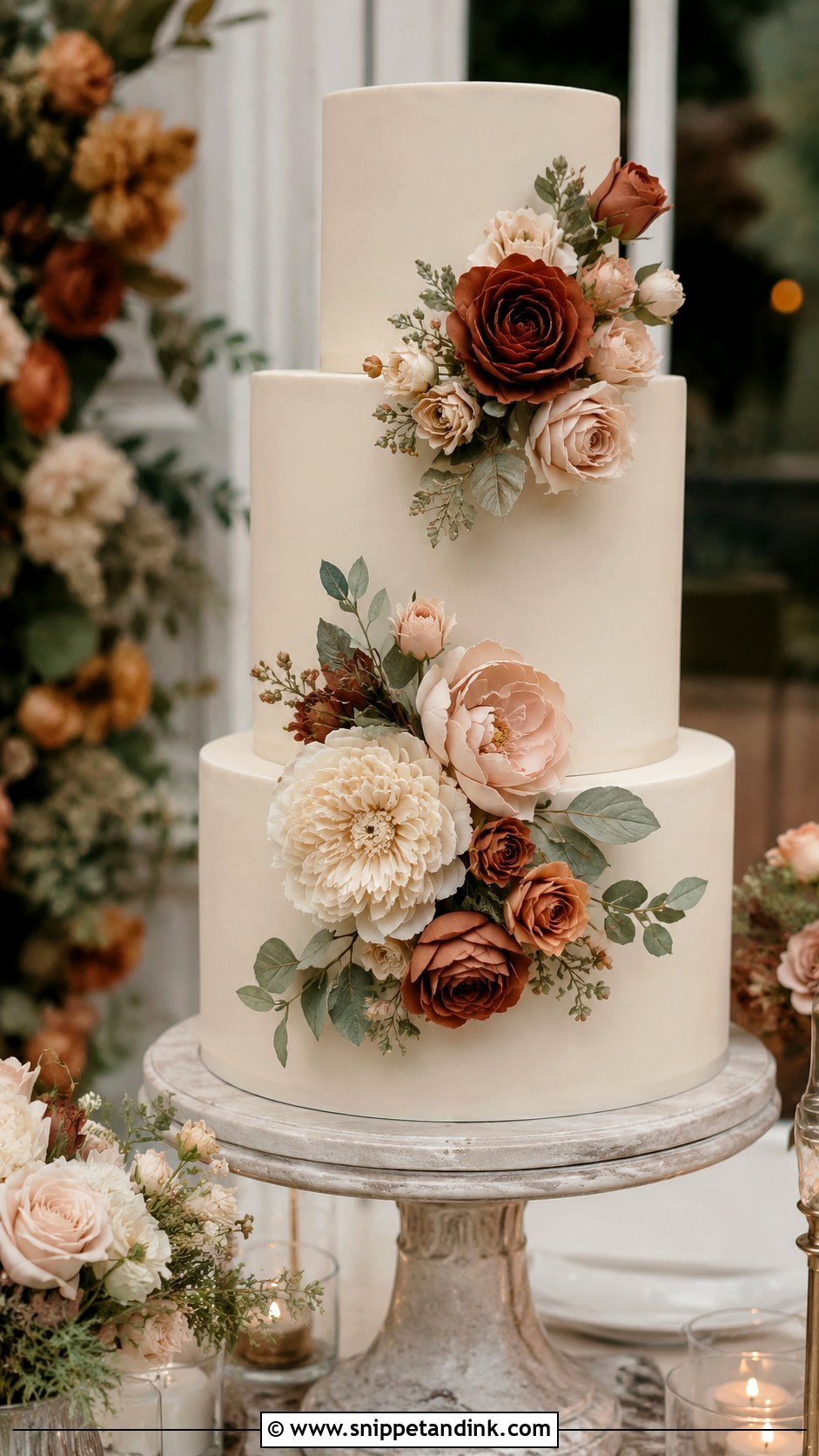
Sugar flowers let me match your colours exactly, which is hard to do with fresh blooms that come in whatever shade the season gives. Rust, clay, cream, blush and sage roses, peonies, ranunculus or anemones, set in a balanced cascade or small clusters between tiers on a smooth base. They’re made weeks ahead and need time to dry, so this design has a longer lead time than most. It’s more formal than wildflowers, yet the earthy colours keep it warm. Sugar flowers can also be kept afterwards if stored dry and out of sunlight.
17. Terracotta And Sage Pearl Wedding Cake
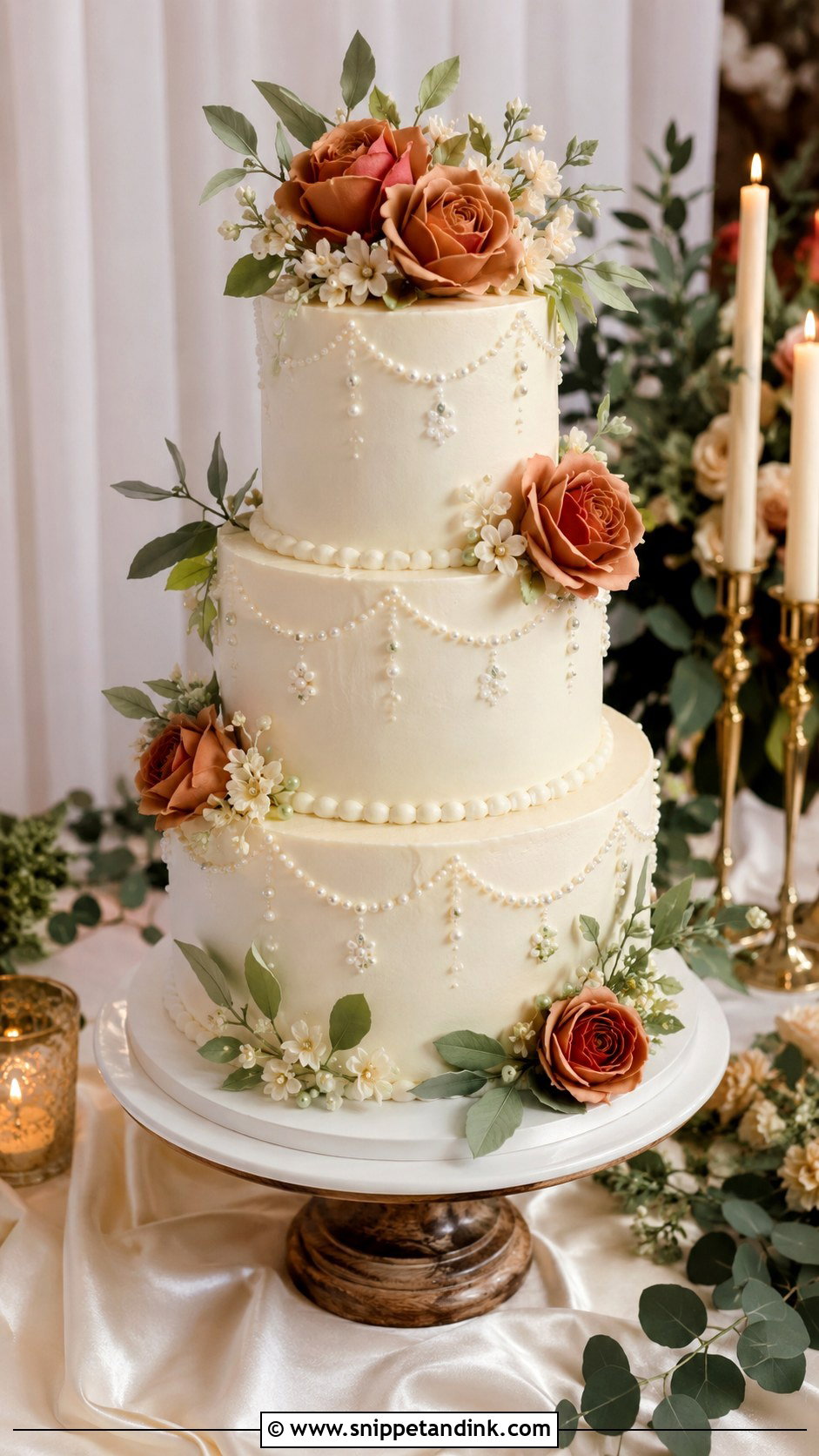
Pearls are the quickest way to take this palette toward old-world romance, but only if they stay tiny. I set small edible pearls around the base of each tier in ivory buttercream, then add sage leaves and terracotta flowers for warmth. Pearls pair well with vintage piping, too. Large pearls fight with the earthy colours and make the cake look formal in the wrong way. Satin linens, candlelight and cream flowers suit this version best.
18. Terracotta And Sage Vintage Wedding Cake
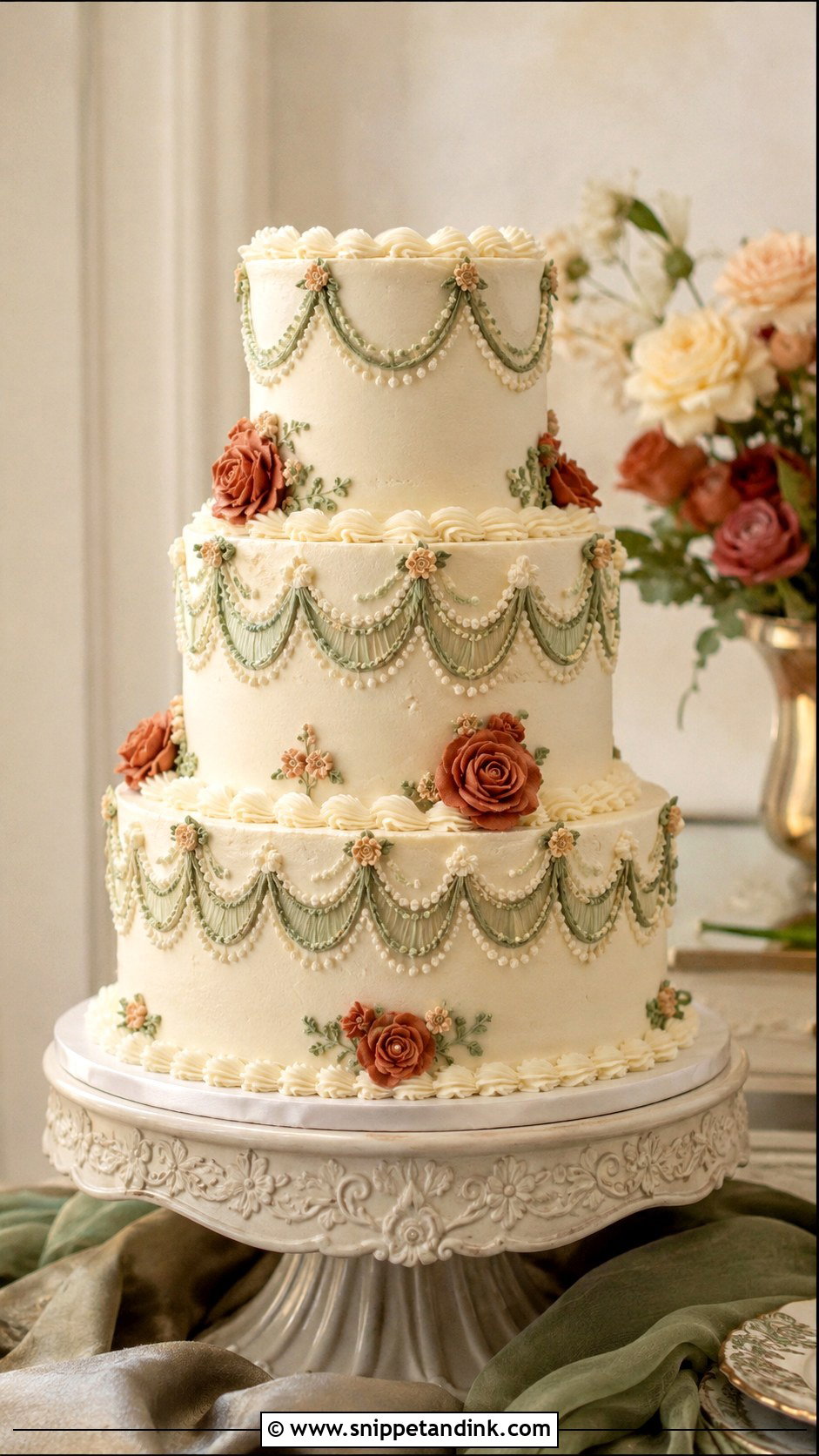
Vintage piping in this palette works best when the colours stay muted, so the details look refined rather than candy-bright. Lambeth-style borders, scallops, shells and small swags in ivory or pale sage, with terracotta roses, rust ribbons or tiny piped flowers for colour. Piped work in tinted buttercream shows every wobble, so I pipe the ivory structure first and add colour last. A heart-shaped cake feels playful for a small wedding; a tiered version reads formal. A pedestal stand with soft fabric and flowers nearby suits antique-inspired decor.
19. Terracotta And Sage Minimalist Wedding Cake
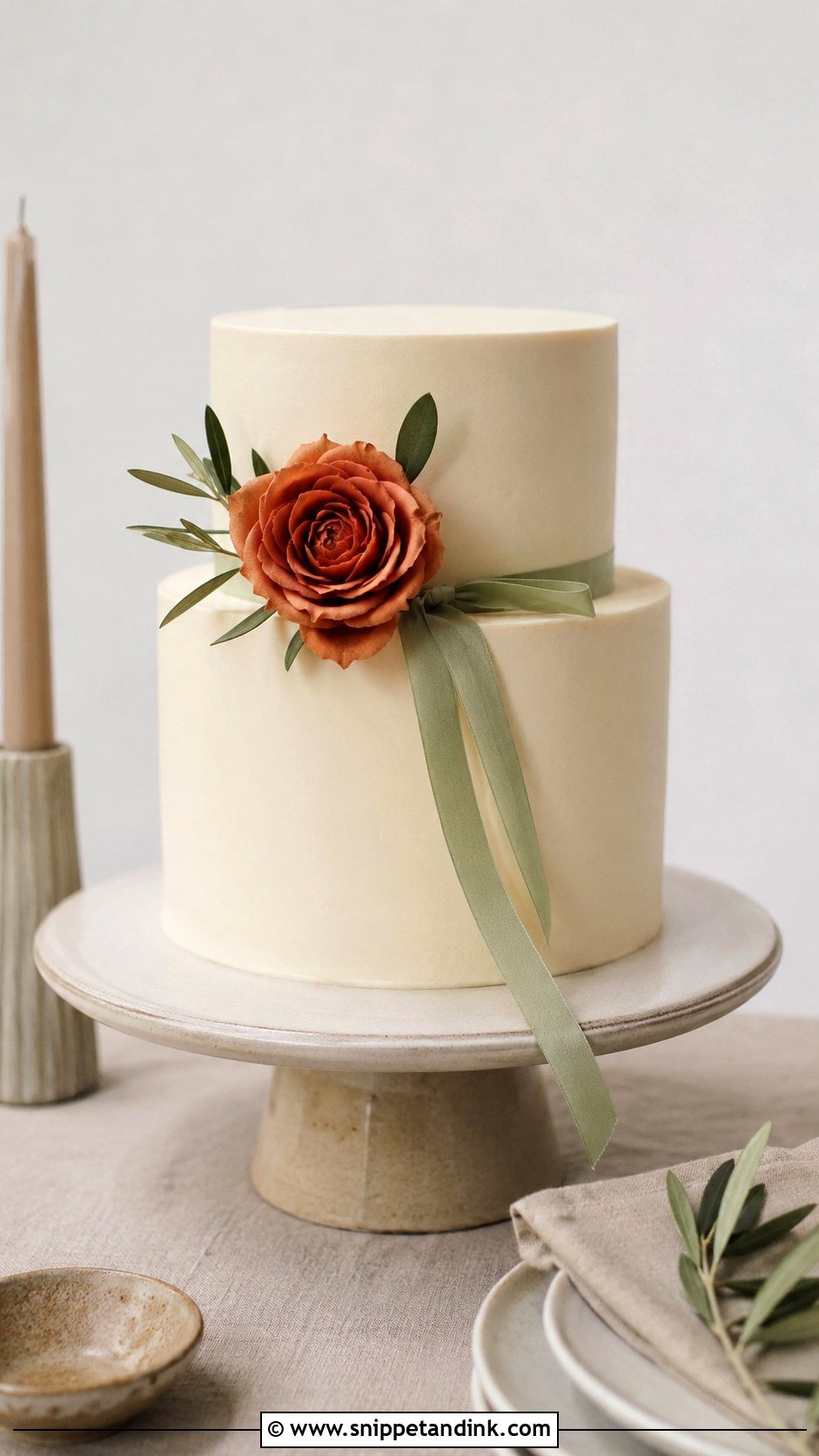
Minimalist cakes show how calm this palette can be. A smooth ivory cake with one or two details: a sage silk ribbon, one terracotta flower or a small cluster of olive leaves. I’d seal the back of any silk ribbon against the frosting with a strip of acetate or tape, because butter seeps into the fabric and leaves grease marks within an hour. Sharp edges or a soft rounded finish both suit it. It’s a natural fit for courthouse weddings, intimate dinners and stoneware table settings.
20. Terracotta And Sage Dessert Table Wedding Cake
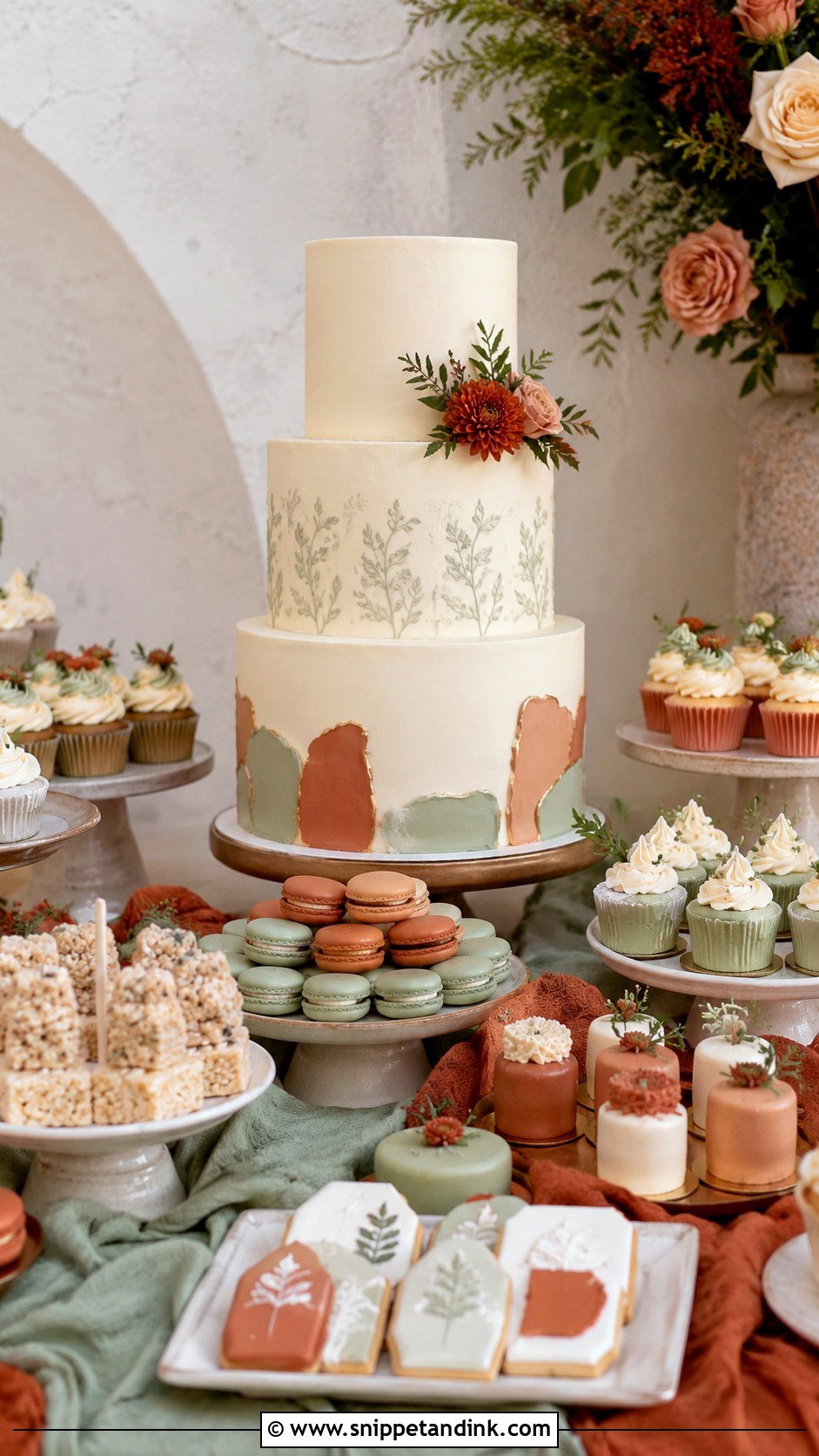
When the cake sits within a bigger sweets display, its job is to anchor the colours. I’d make a two or three tier centrepiece in ivory, sage and terracotta, then repeat those colours in cupcakes, mini cakes, macarons, cookies or dessert cups through frosting and small flowers. This gives a full table without needing an oversized cake, and it often serves more guests for the money. Linen, ceramic trays, greenery and warm florals pull it together.
Which Dried Grasses and Leaves Can Sit on a Cake?
This palette leans heavily on dried and foraged decoration, and a lot of it shouldn’t touch food directly. That doesn’t mean you can’t have it. It means it has to be handled properly.
- Eucalyptus: it’s toxic if eaten, so it must sit on a barrier and come off before cutting, or be swapped for an edible leaf.
- Pampas and bunny tails: often bleached, dyed or sprayed to stop shedding. I’d keep them on a small acetate disc or in a separate arrangement beside the cake.
- Dried palm and bleached leaves: treated with chemicals during processing, so they should never be pushed into the sponge.
- Rosemary, sage, thyme and bay: edible and sturdy. These are what I reach for when a couple wants greenery that can touch the frosting.
Ceramic and stone stands also deserve a check. They’re heavy, and some handmade ones aren’t level, which a three-tier cake will notice. Ask your baker to see the stand before the day, or let them bring their own.
How Much Clay, How Much Green?
This palette is popular because it stays warm and natural across very different settings: rustic when semi-naked, modern in fondant, romantic with flowers, artistic with watercolour and texture. The real decision is how much colour the tiers themselves carry. For a softer cake, keep ivory as the base and bring colour in through flowers. For a bolder one, give whole tiers to sage or terracotta. Either way, bring a fabric swatch and a flower photo to your tasting, so your baker can mix to the real colours rather than a screen.
You'll Like These Ideas:







Leave a Reply