
Roses are the flower I put on cakes more than any other, and they rarely look like they’re trying too hard. Change the frosting, the palette or where the flowers sit, and a rose cake can read classic, garden-picked, vintage or almost bare. The textured buttercream, pressed petals, sculptural tiers and soft ivory tones couples are asking for now all suit them, and the size can be anything from a courthouse cutting cake to a ballroom centerpiece. I’ve grouped twenty versions below with notes on how each is built, so you can walk into a tasting knowing what to ask your baker about color, tiers, texture and placement.
Fresh, Sugar or Piped Roses in a Warm Room
Before you fall for a photo, decide how the roses will be made. It changes the budget, the timing and how the cake behaves after it’s set out, far more than the color does.
- Fresh roses cost the least to add and match your florals exactly. They need wrapping and food-safe picks, and they start to relax within a few hours in a warm room.
- Sugar roses take the longest to make and usually cost the most, since each one is hand-built. They’re the most reliable in heat and the only kind you can keep.
- Piped buttercream roses sit in between. They taste like the cake, take any color, and soften if the room is warm.
For an outdoor summer wedding, I steer couples toward sugar roses on the cake and fresh ones around the base on the table, where wilting doesn’t matter. For a cool indoor evening, fresh roses are lovely and much kinder to the budget.
1. White Wedding Cake With Roses
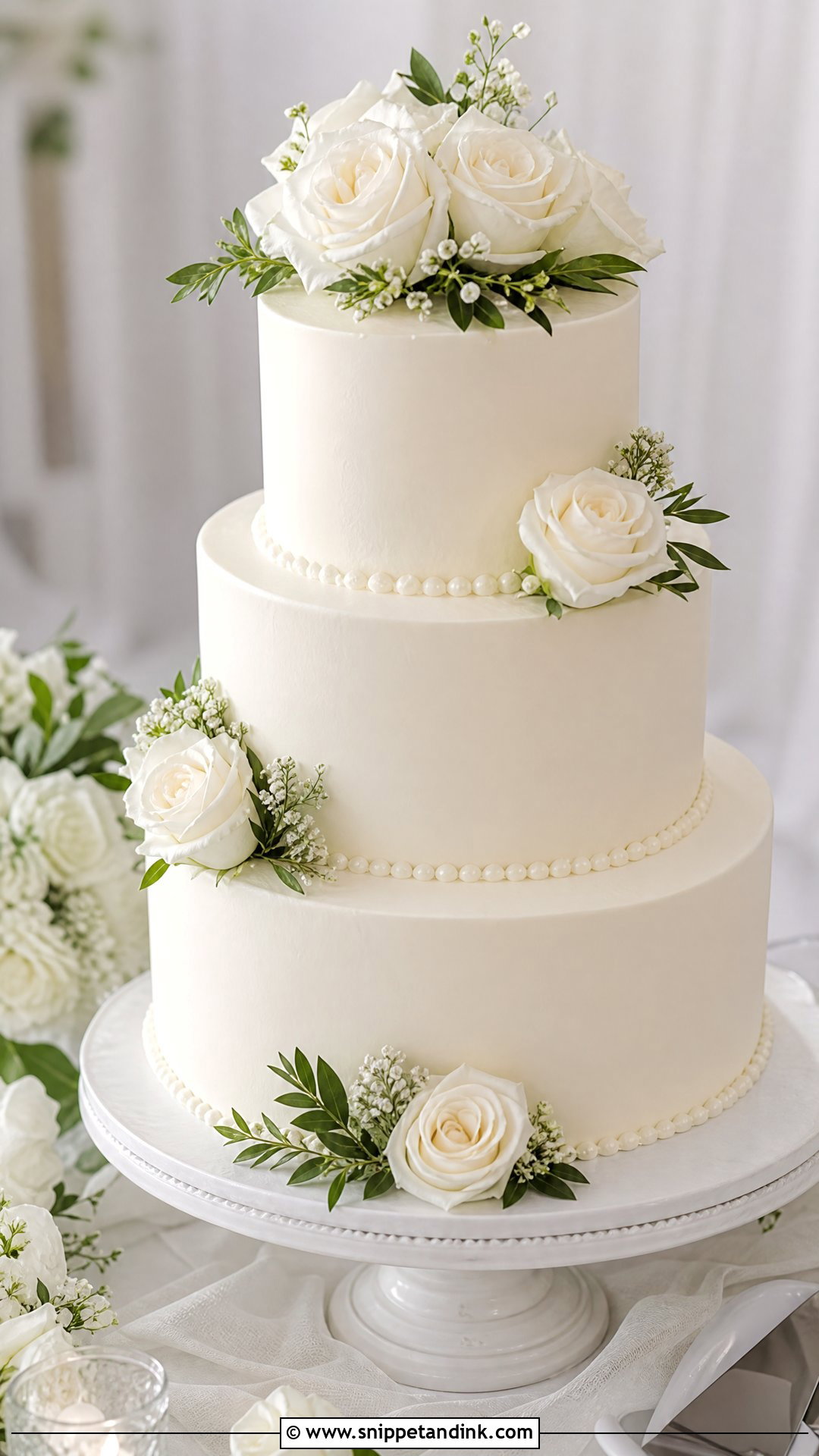
White on white is the safest rose cake there is, and it rarely dates. Smooth ivory buttercream or fondant gives a clean base, and white roses add texture without crowding the tiers. Clustered between tiers it looks traditional; set in a loose diagonal it looks current. The detail most people miss is that white roses come in many whites, from cool to cream, and a cool white rose against ivory frosting can look slightly grey, so I match the flower to the frosting rather than to the dress. A few greenery stems, pearls or fine piping are enough extra.
2. Blush Rose Wedding Cake
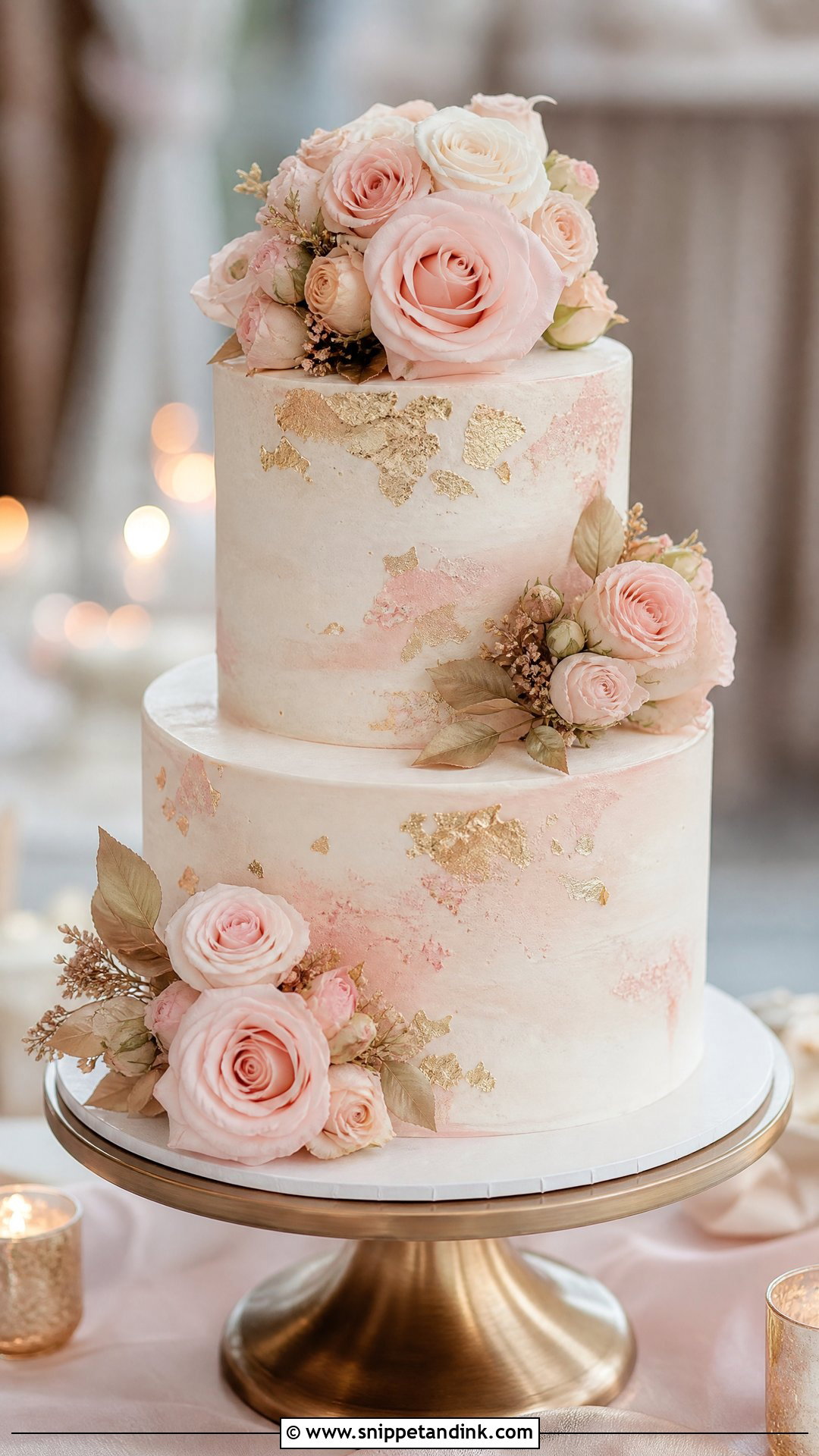
Blush adds color without asking much of the room. Soft pink roses sit naturally with ivory frosting, champagne details and pale gold, and spring and pastel palettes suit them especially well. Ask for blooms in mixed sizes, from tight buds to open heads, because roses all the same size make an arrangement look flat. A two-tier or three-tier cake looks full with roses gathered at the base and on top. For a little more, add a pale pink buttercream wash or a thin ribbon at each tier’s base.
3. Cascading Roses Wedding Cake
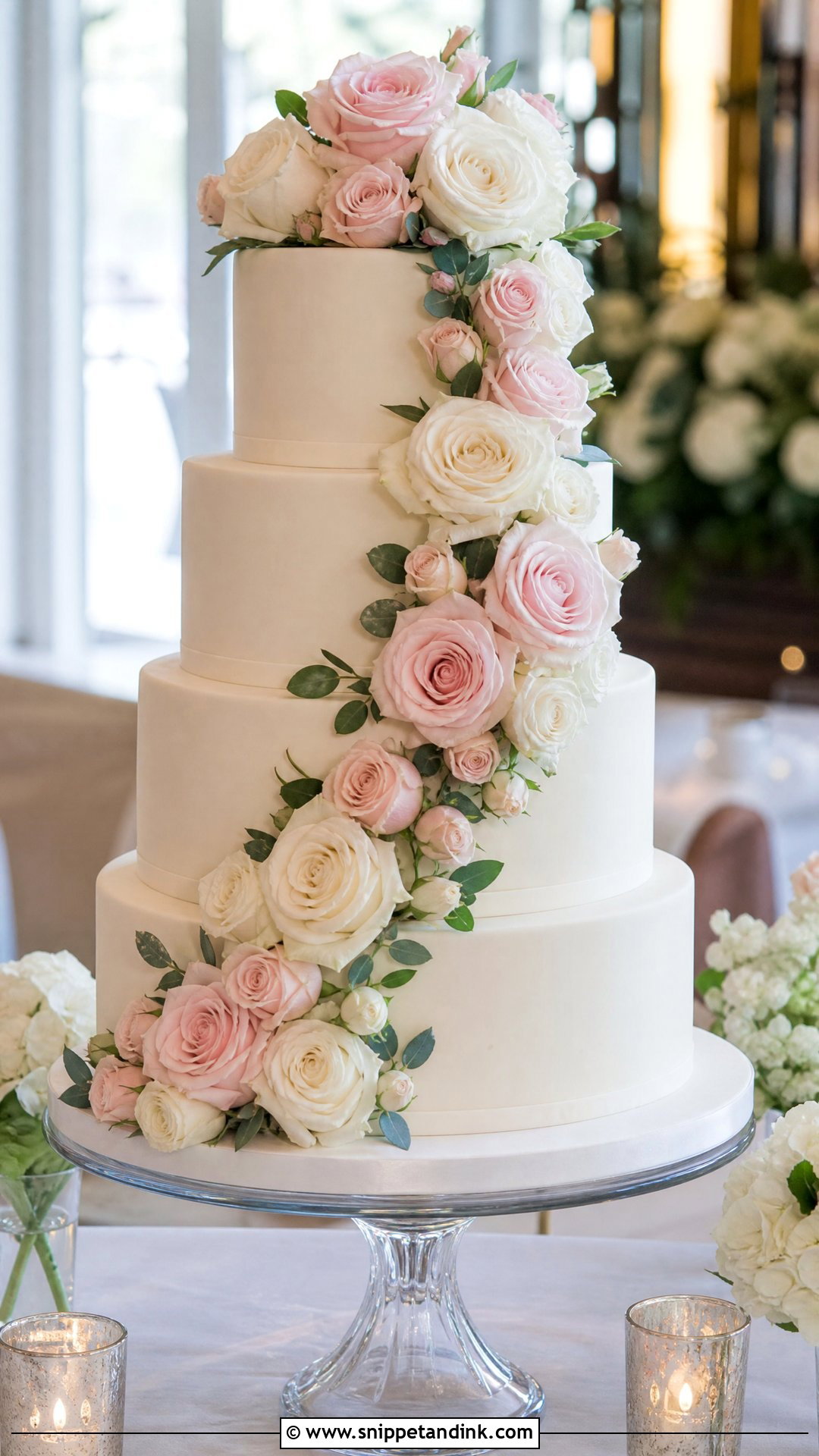
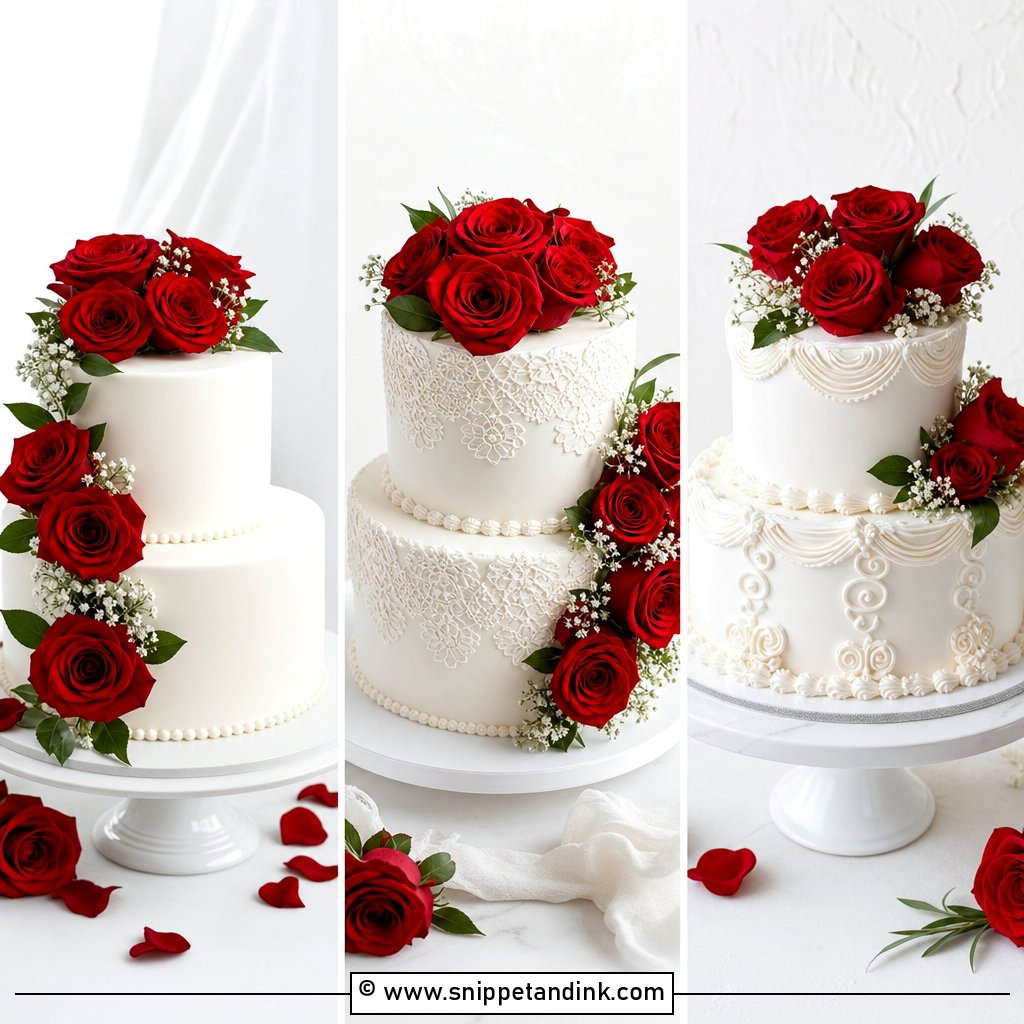
A cascade makes the flowers part of the cake’s shape rather than an ornament on top. The roses usually start near the top tier and trail diagonally down one side, which adds movement and makes the cake look taller in photos. Fresh, sugar or a mix all work; mixing lets you put sturdy sugar roses where the weight sits and fresh ones where texture matters. Keep the frosting simple so the line stays the feature. The cascade is planned before the cake is stacked, since flowers have to be anchored into each tier as it goes up.
4. Buttercream Rose Wedding Cake
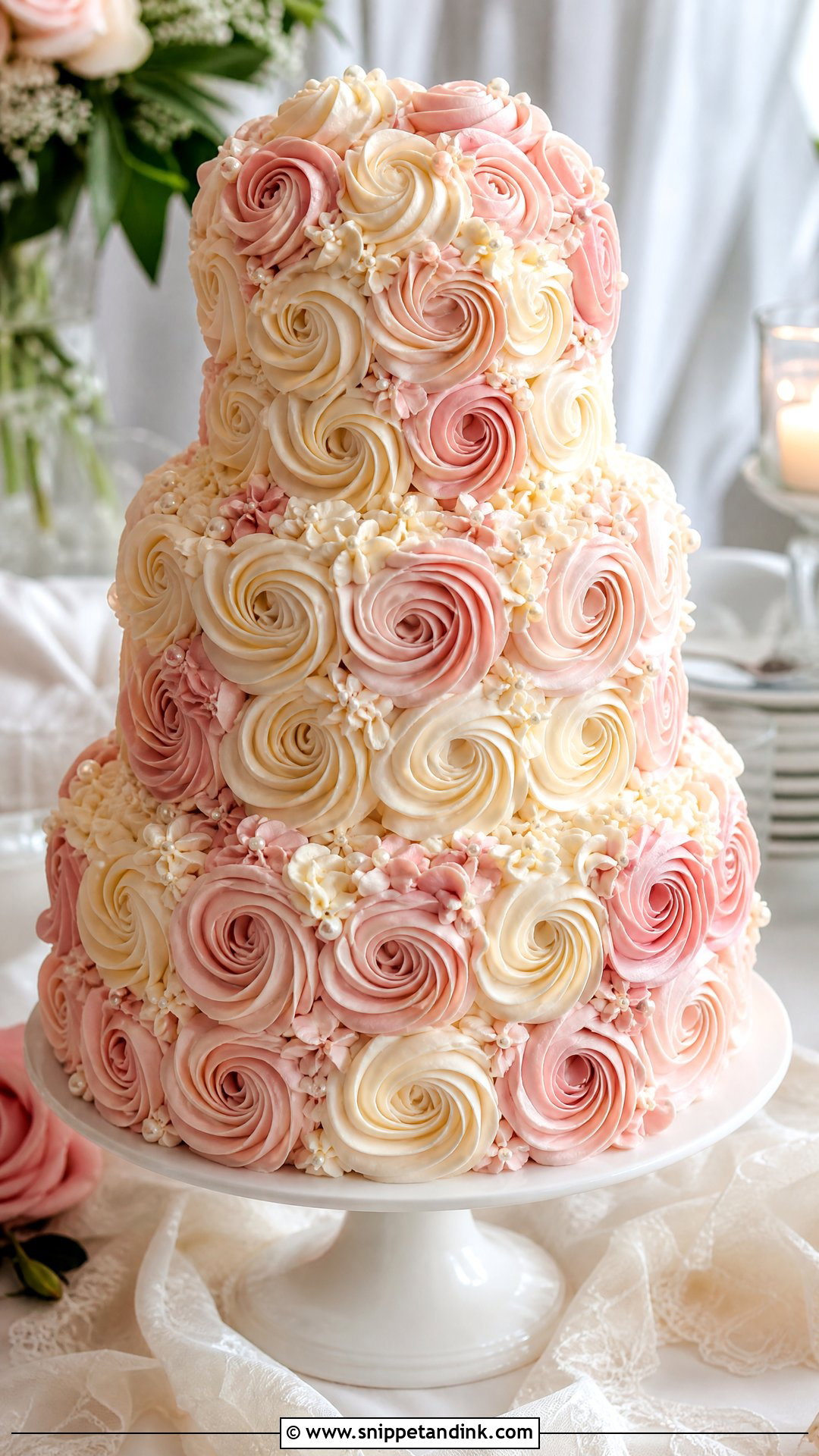
Piped roses are built petal by petal with a curved tip, usually on a flower nail, then chilled and moved onto the cake, so no real flower ever touches the frosting. Large ones covering every tier give a bouquet effect; small ones around the borders keep it light. Buttercream can be tinted to almost any shade, which makes this the easiest way to match an exact palette of blush, mauve, peach or dusty rose. The trade-off is heat. Soft buttercream roses slump in a warm room, so for a summer marquee I’d use a sturdier crusting buttercream for the flowers.
5. Fresh Roses Wedding Cake
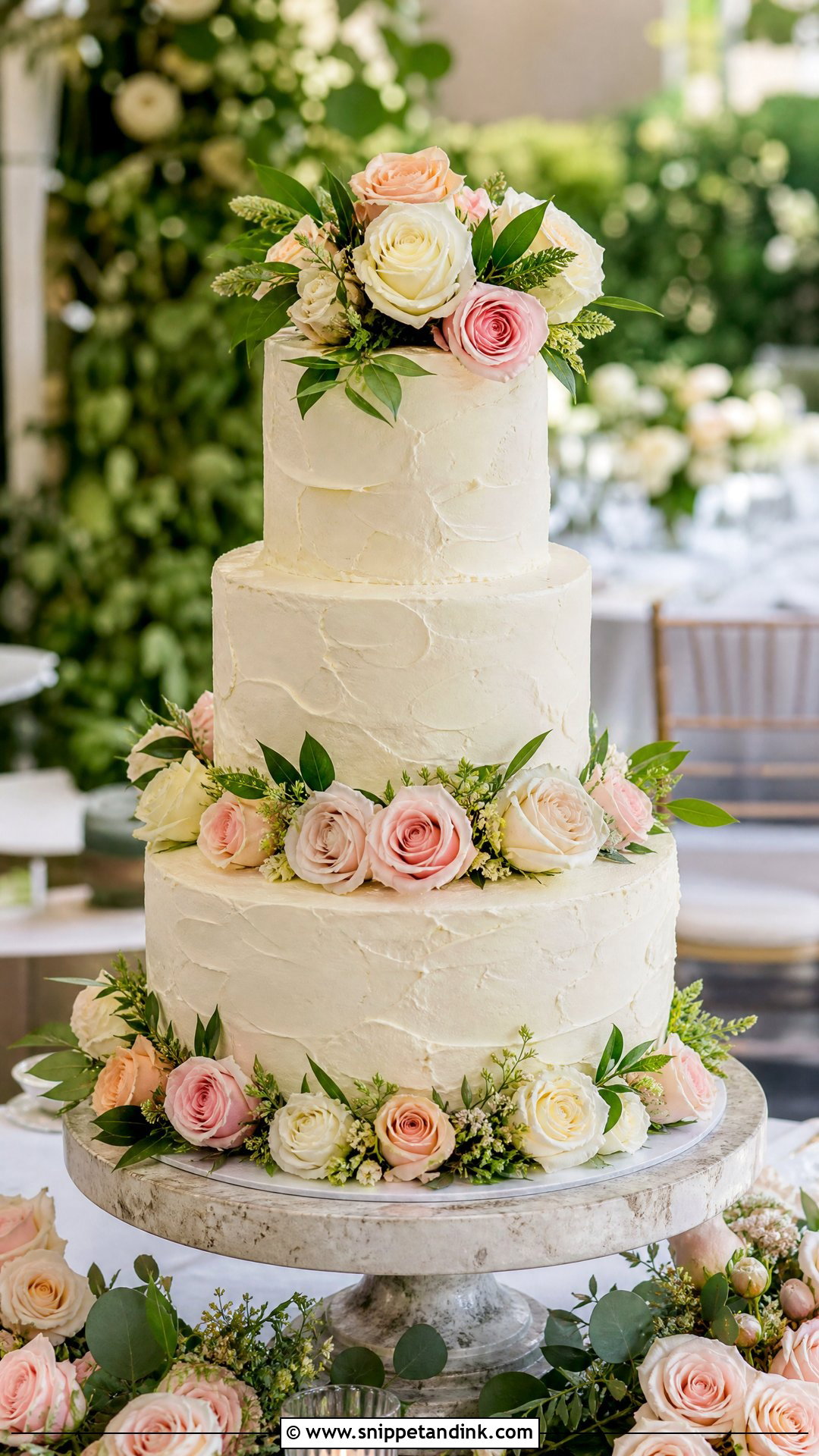
Fresh roses tie the cake to your bouquet, arch and centerpieces, which no sugar flower quite does. They need preparing properly, though. Most commercially grown roses are treated with pesticides, so stems are wrapped in floral tape and set into food-safe picks or straws, and the bloom shouldn’t rest on the frosting. Agree in writing who does it, your florist or your baker, because each will assume the other is. Fresh roses sit well on smooth buttercream, rustic frosting or tall tiered cakes. One color looks polished; white, blush, peach and mauve together feel like a garden.
6. Sugar Rose Wedding Cake
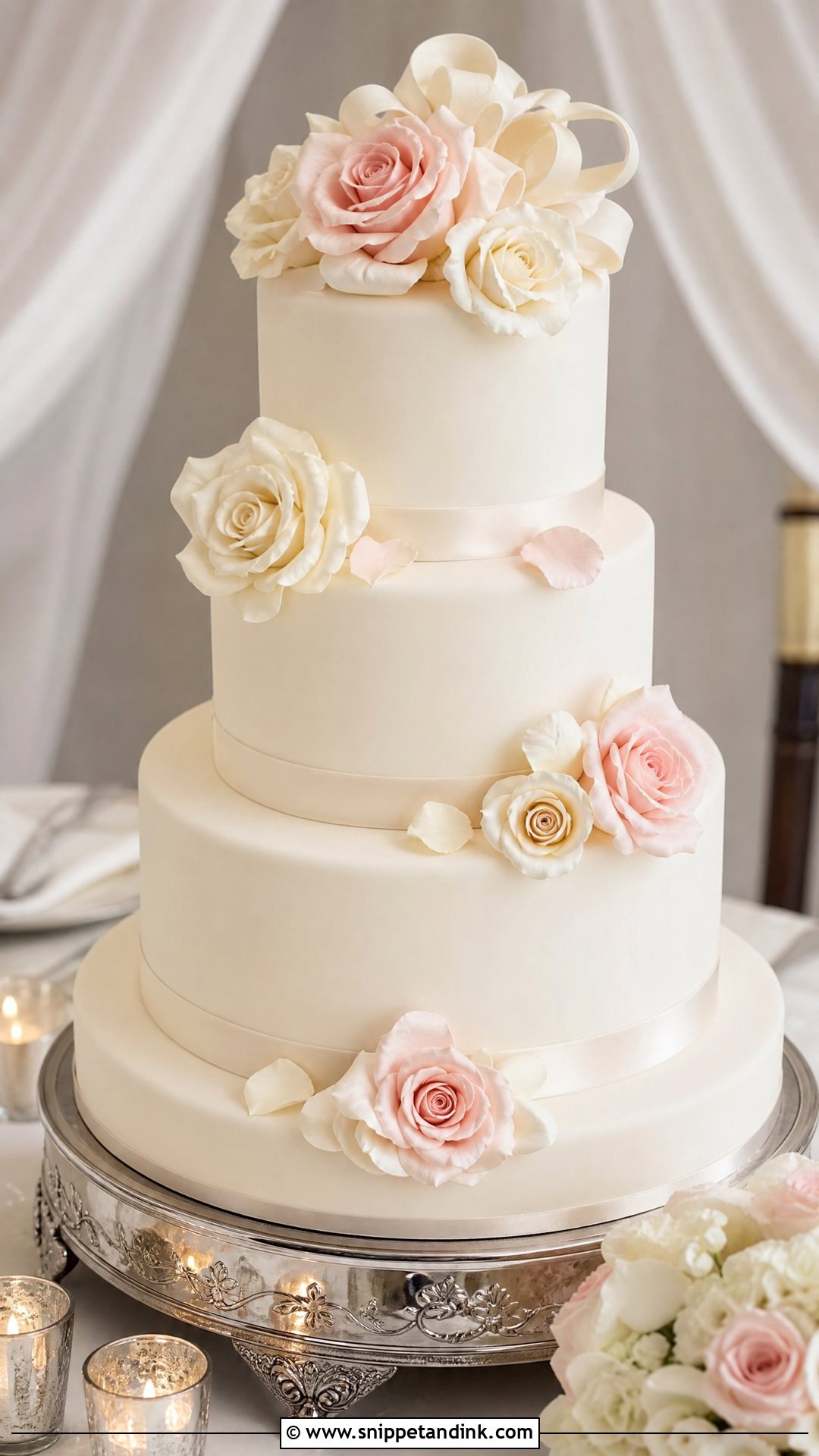
Sugar roses are made from gum paste, rolled petal by petal and wired together, then left to dry hard over several days, so they’re finished well before the wedding and won’t wilt. That makes them the answer for hot weather, long display times and formal venues where every petal needs to look exact. They aren’t really for eating, and humidity can soften them, but they keep for years afterward if you want one as a keepsake. One oversized sugar rose looks modern; a group of smaller ones looks classic. Pair them with smooth white fondant, satin ribbon or fine piping.
7. Red Roses Wedding Cake
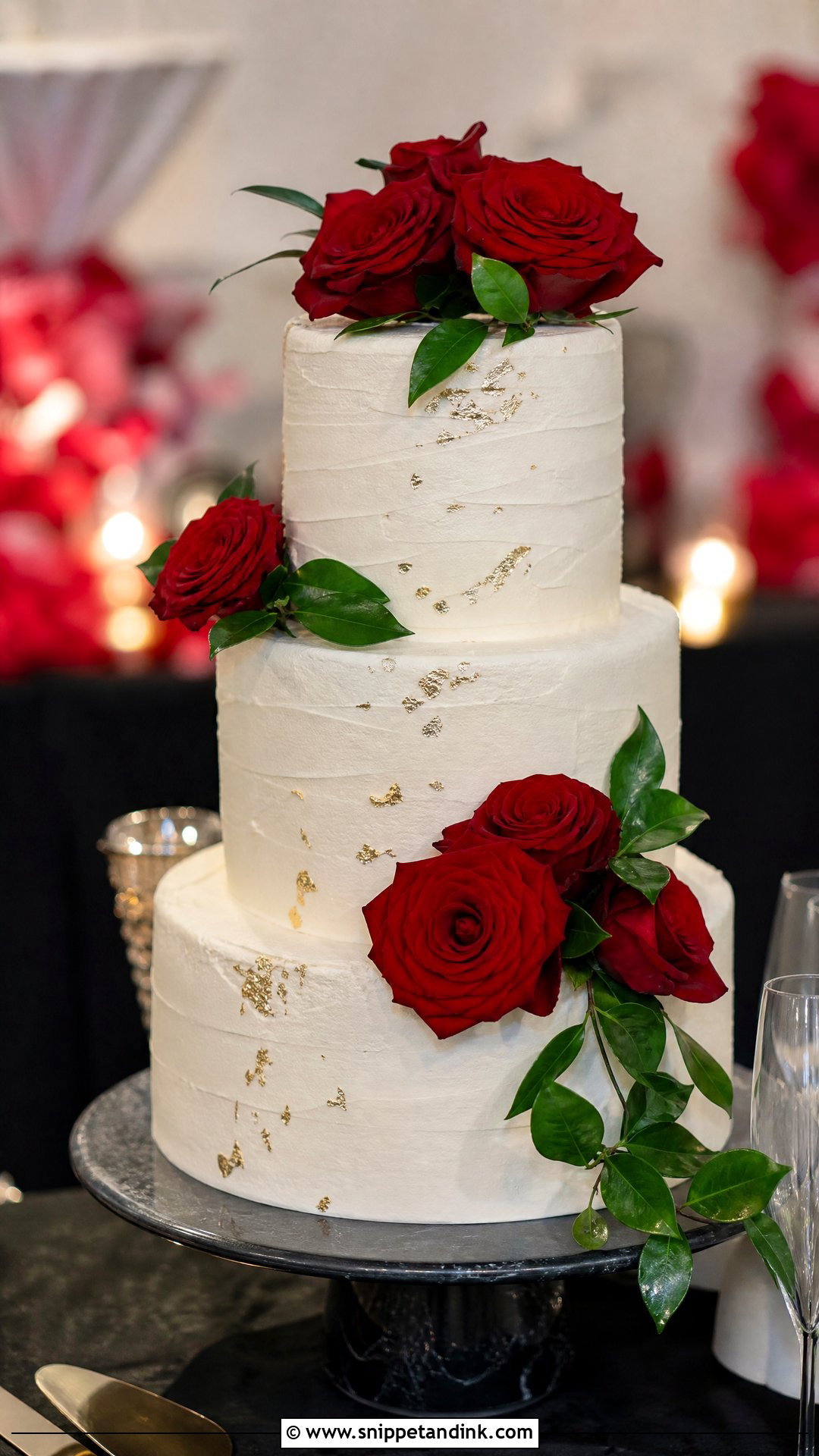
Red roses on a white cake are the most dramatic option here, and they read clearly from across a room. Formal evening receptions, black-tie weddings and deep red floral palettes suit them. Use real or sugar red roses rather than piping them; deep red buttercream needs so much coloring that it can taste bitter and stain lips and teeth. Keep the rest restrained: a little gold, a thin black ribbon or dark greenery. White, ivory or soft beige frosting gives the red the contrast it needs.
8. Pink Roses Wedding Cake
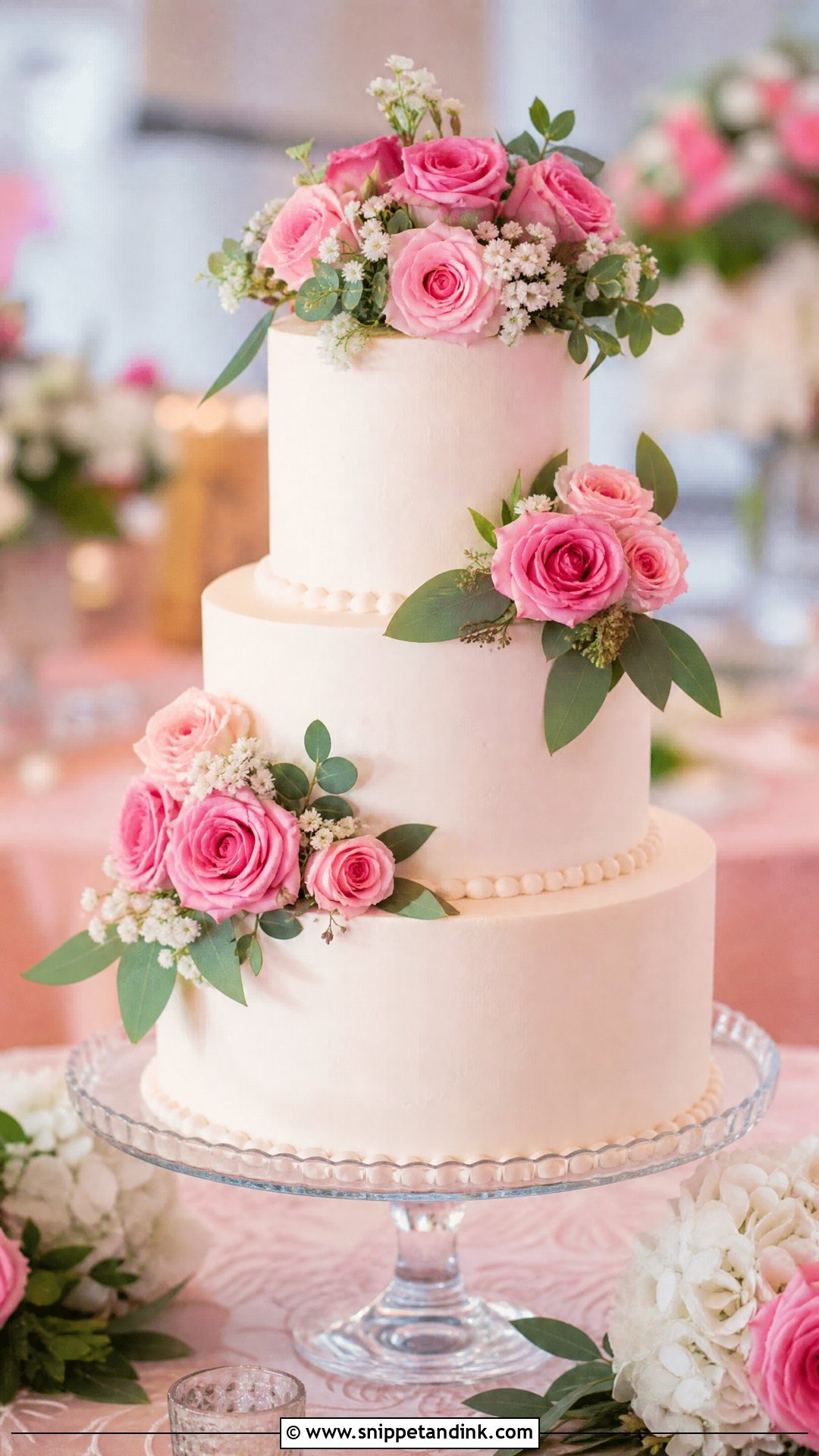
Pink covers a lot of ground. Pale pink feels delicate, while hot or deep pink feels festive, so pick the shade before anything else. Garden weddings, summer receptions and brunch receptions suit the lighter end. Vanilla buttercream, white fondant or lightly textured frosting keep it fresh. The roses can ring each tier, sit in small clusters or fall in a gentle cascade. Tiny white blossoms or soft green leaves between them keep the pink from looking flat.
9. Garden Roses Wedding Cake
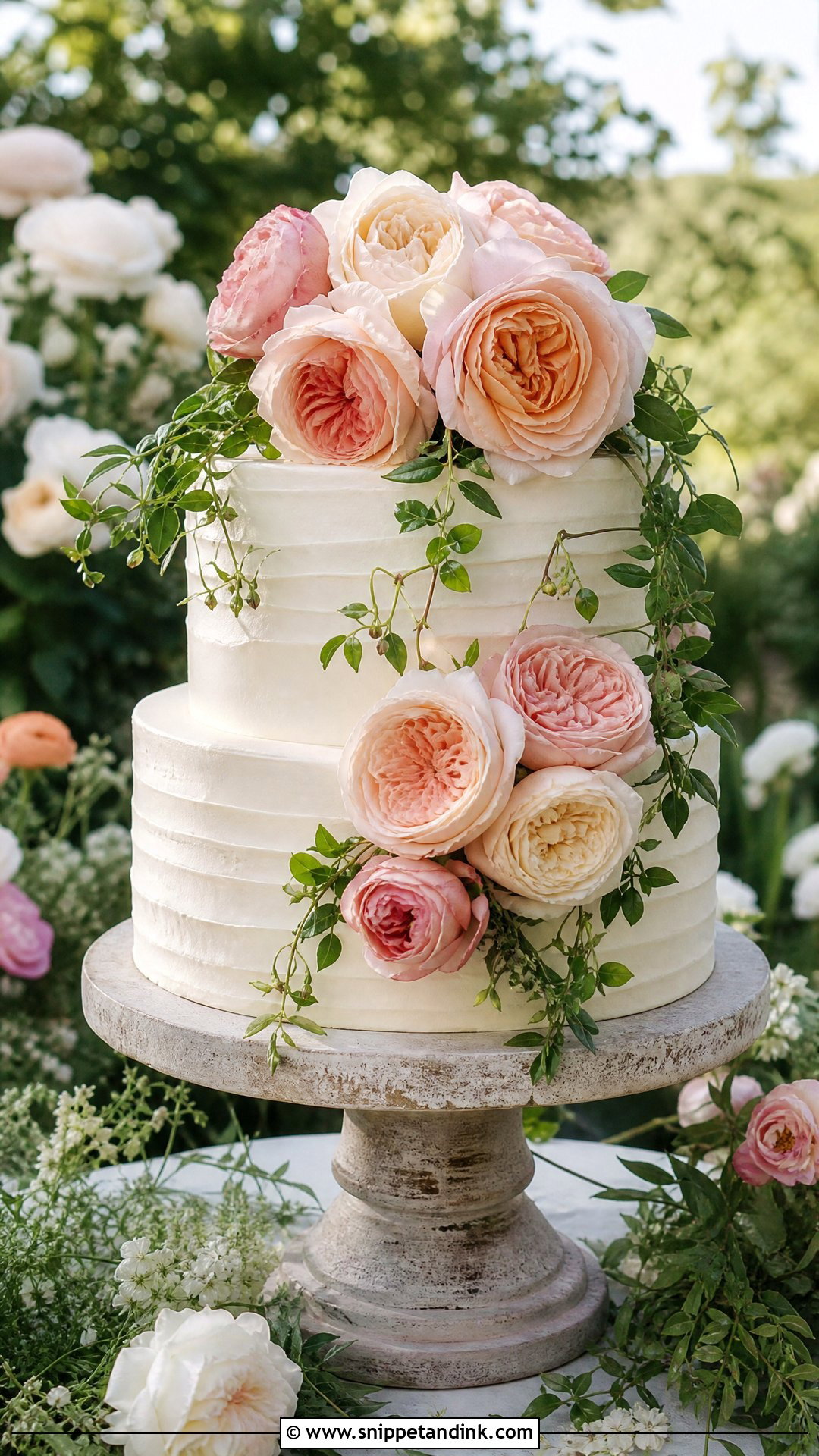
Garden roses have far more petals than standard roses, so a handful fills the space a dozen regular ones would. That’s the appeal: lush, loose and natural. It’s also the risk, because garden roses open quickly in warmth and can start dropping petals within hours at an outdoor reception. I place them as late as possible and keep the cake out of direct sun. Textured buttercream, soft ivory frosting and a little greenery give that just-picked look, and mixing blush, cream, peach and dusty pink adds depth. Leave the arrangement slightly uneven; tidy garden roses look odd.
10. Vintage Rose Wedding Cake
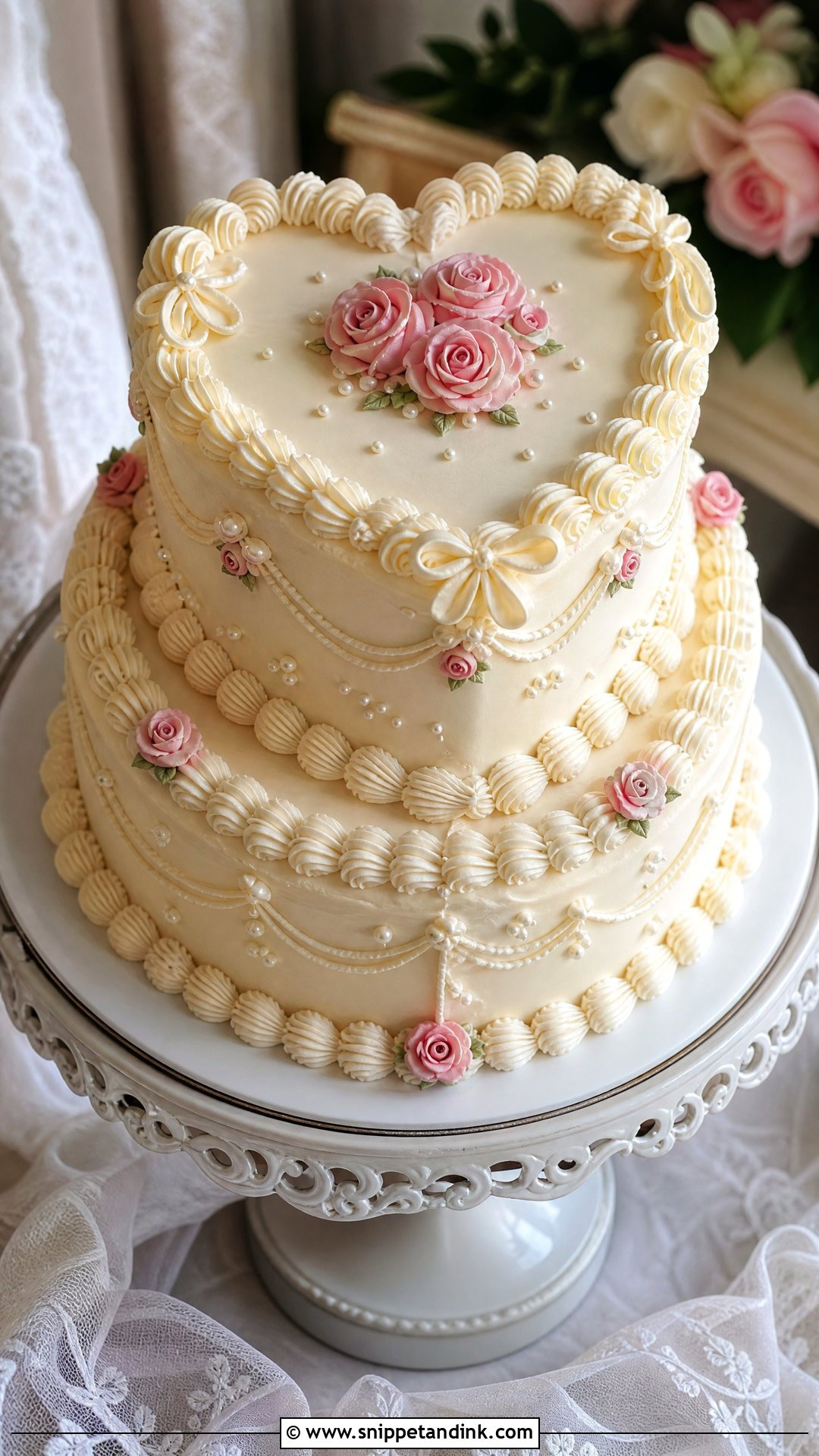
Vintage rose cakes lean on old-fashioned piping: shell borders, Lambeth-style piping, small rose clusters and ivory or pale pink frosting. Lambeth work is built up in layers of overpiping, so it takes real time and should be ordered early. The cake can be round, heart-shaped or tiered. I’d choose buttercream for the soft, piped texture, though true Lambeth is traditionally done in royal icing, which holds sharper detail. Sugar pearls, ribbon or tiny rosebuds finish it, and muted colors keep the result nostalgic rather than fussy.
11. Minimalist Rose Wedding Cake
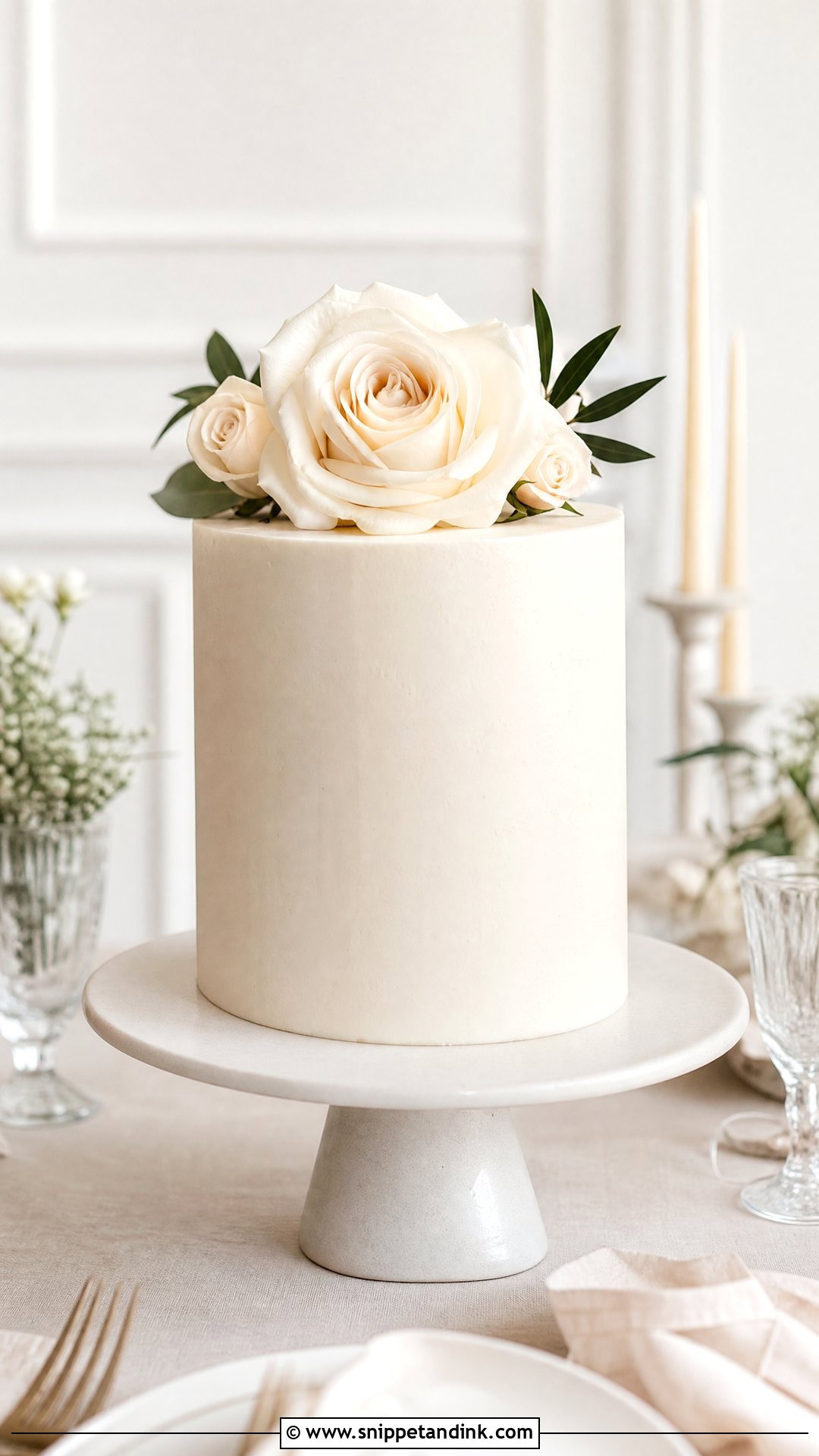
One or two roses can carry a whole cake if everything around them is precise. Minimalist cakes use smooth buttercream with sharp top edges, then a single statement rose on top, a small cluster at the base or one bloom between tiers. Because there’s nothing to hide behind, the finish has to be flawless, and the rose has to be a good one, fully open and unblemished. White, ivory, taupe or pale blush frosting gives it room. Keep the stand simple too, in clear glass, white ceramic or brushed gold.
12. Rustic Rose Wedding Cake
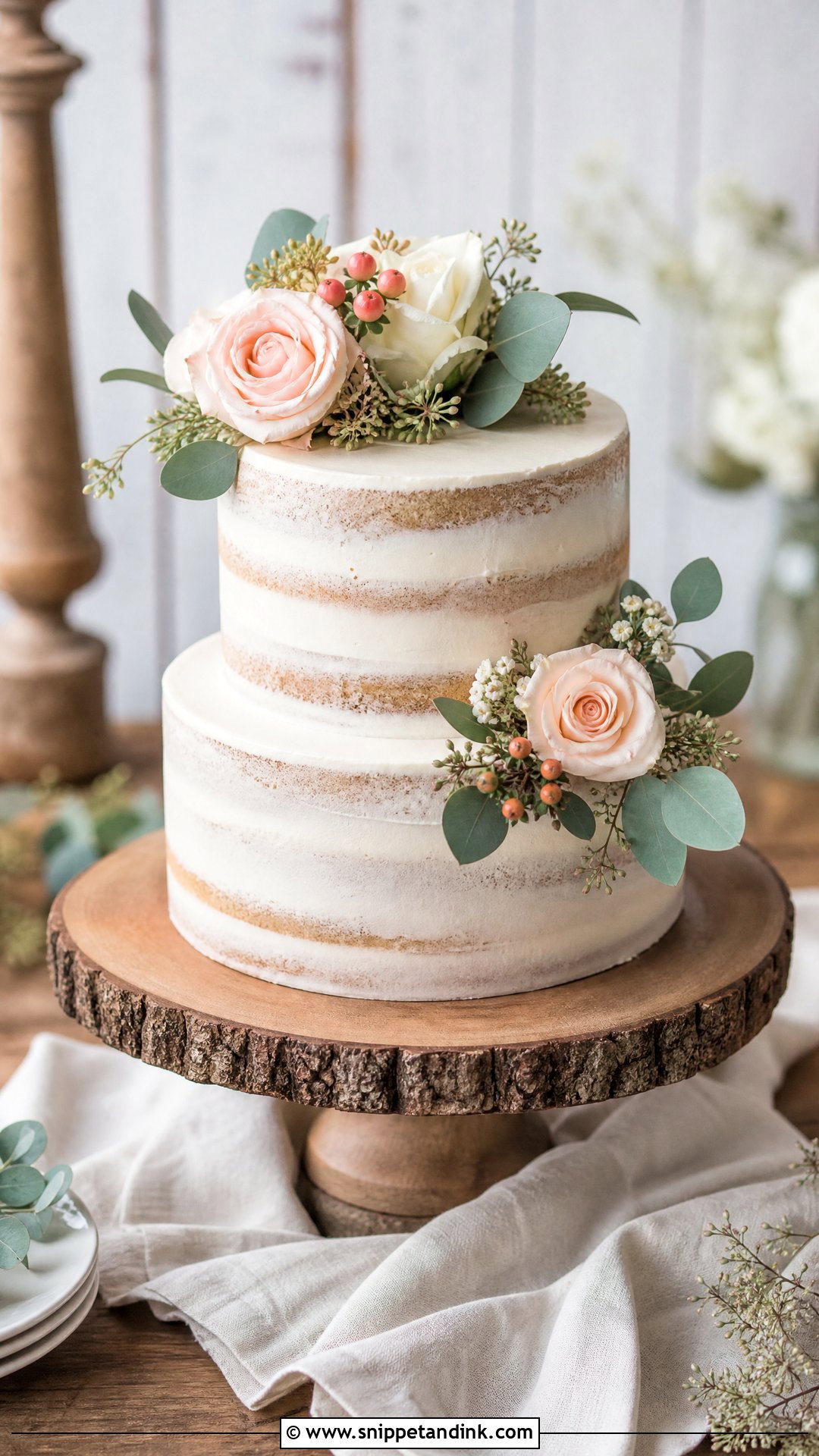
Barn weddings, outdoor receptions and countryside venues pair naturally with a semi-naked, lightly textured or swirled buttercream finish that shows the cake was made by hand. Cream, blush, peach or dusty pink roses soften that rustic surface. Berries, small greenery or dried accents add texture, and a wooden stand completes it. Rustic doesn’t mean careless, though. I still keep the flower placement deliberate, because loose frosting plus messy flowers just looks unfinished.
13. Gold And Rose Wedding Cake
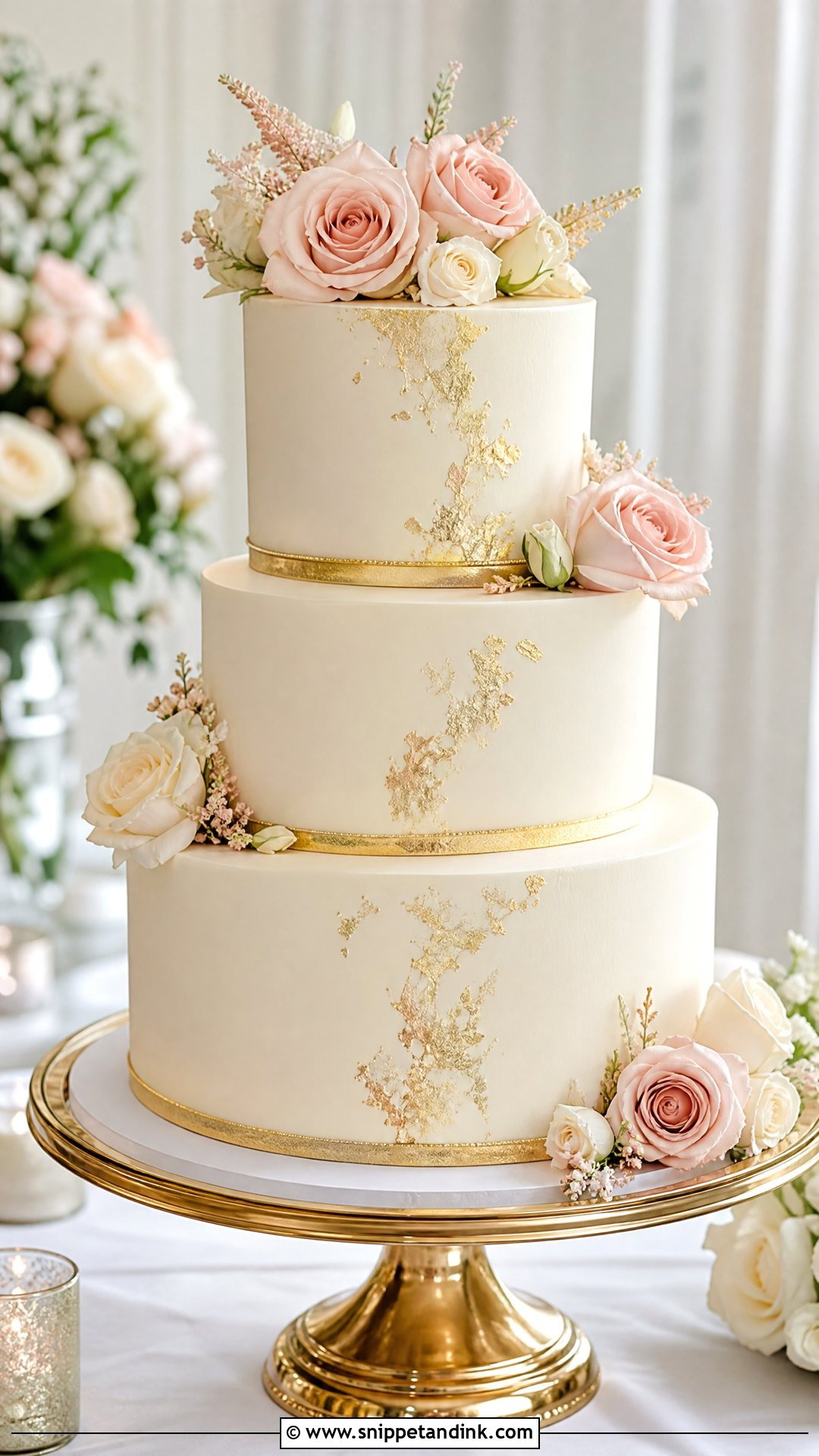
Gold adds luxury quickly, which is exactly why it needs a limit. Gold leaf, brushed metallic paint or thin gold bands highlight the tiers while roses keep the cake soft. White, ivory, blush and champagne frostings all take it. Blush, cream or dusty pink roses keep the palette gentle; deep red ones make it dramatic. My rule is one metallic detail, not three. Leaf on one tier, or bands on all of them, but not both, and the cake looks expensive rather than busy. Evening receptions suit it best.
14. Tall Rose Wedding Cake
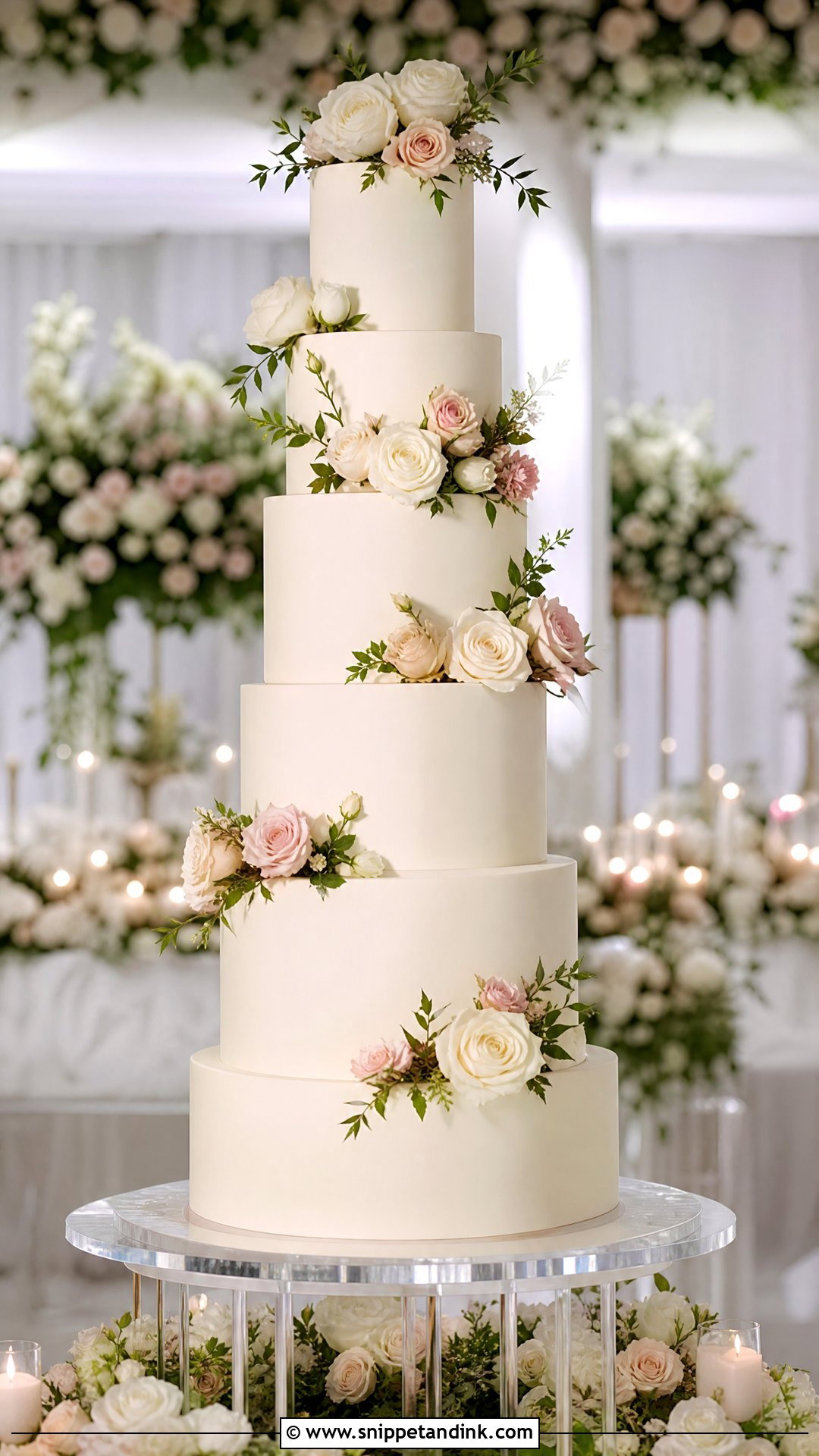
Height comes from four or five tiers, extra-tall tiers or slim stacked layers, and every one of those needs internal support, so tall cakes are usually stacked at the venue rather than driven fully assembled. Roses soften all that structure. Clusters between tiers, a diagonal cascade or flowers only at the top and base all work. Smooth frosting makes the height look clean; textured buttercream adds movement. Choose this when the cake is meant to be a real part of the room design.



15. Two Tier Rose Wedding Cake
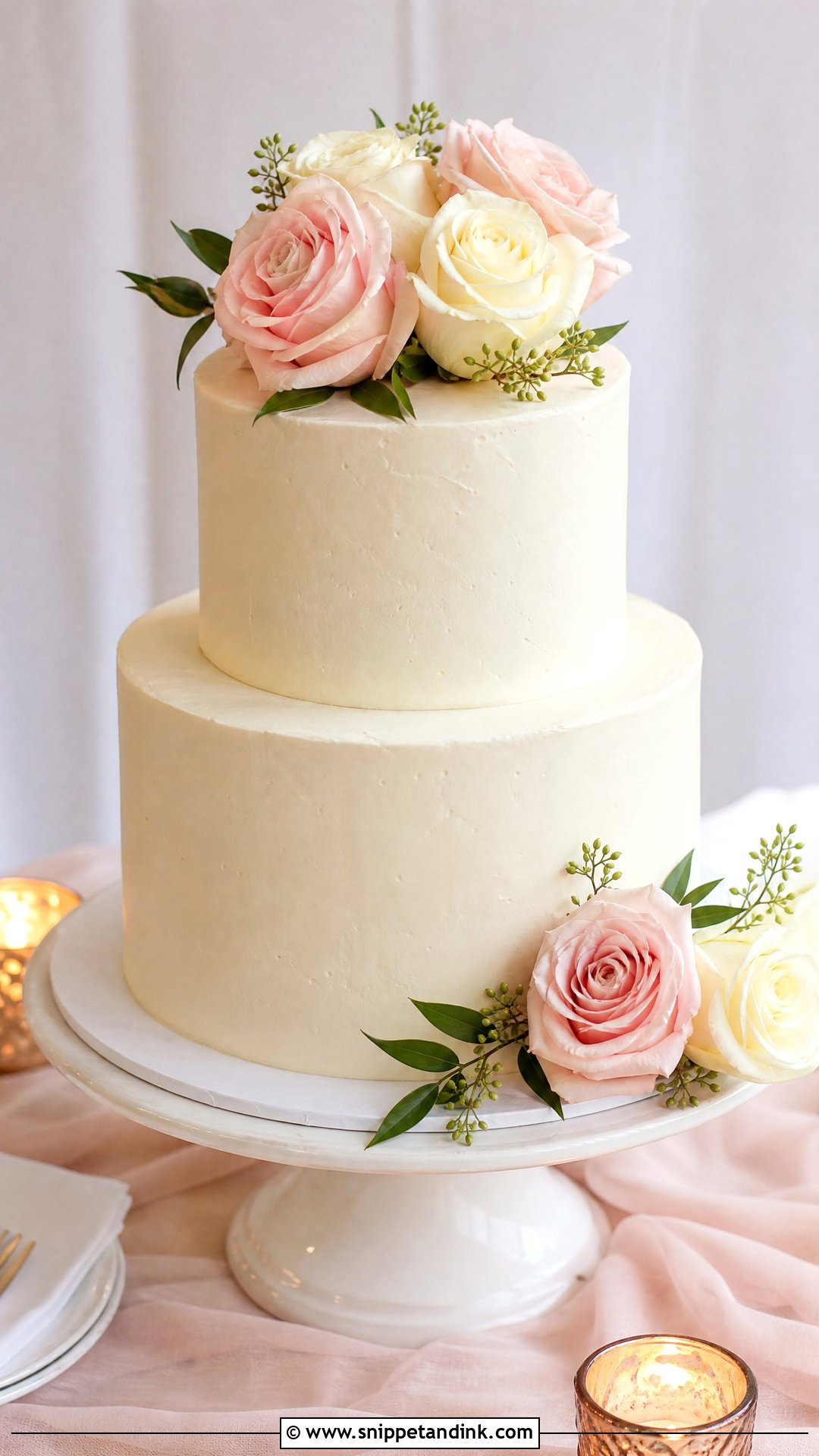
Two tiers suit smaller weddings: there’s enough height for a proper cake-cutting moment without a cake that dwarfs an intimate table. Roses can sit on the top tier, around the base or in the gap between the two. Smooth modern buttercream and rustic semi-naked both work at this size. White and blush roses keep it soft, while peach and mauve add color. It’s also the easiest size to personalize, since there’s less surface to fill and each detail gets noticed.
16. Three Tier Rose Wedding Cake
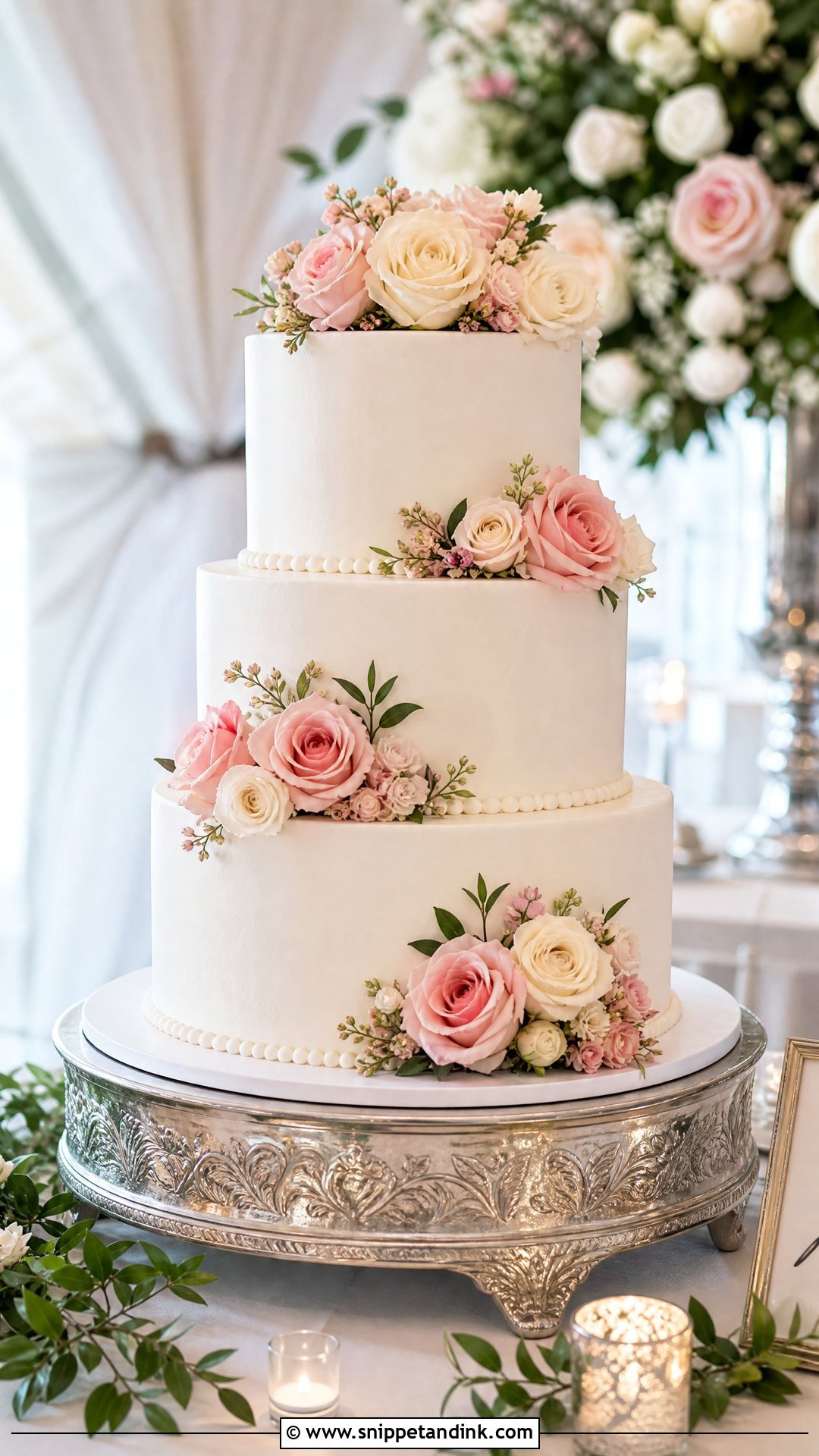
Three tiers is the shape I’m asked for most, and it’s the most flexible: formal enough for a full reception without overwhelming a medium guest list. The extra tier gives room for floral styling, texture and small accents. Roses can cluster on each tier, trail down one side or frame the top and bottom. Smooth ivory buttercream stays classic; soft texture feels newer. Each tier can also be a different flavor, which is a good way to please a crowd while the outside stays coordinated.
17. Pressed Rose Wedding Cake
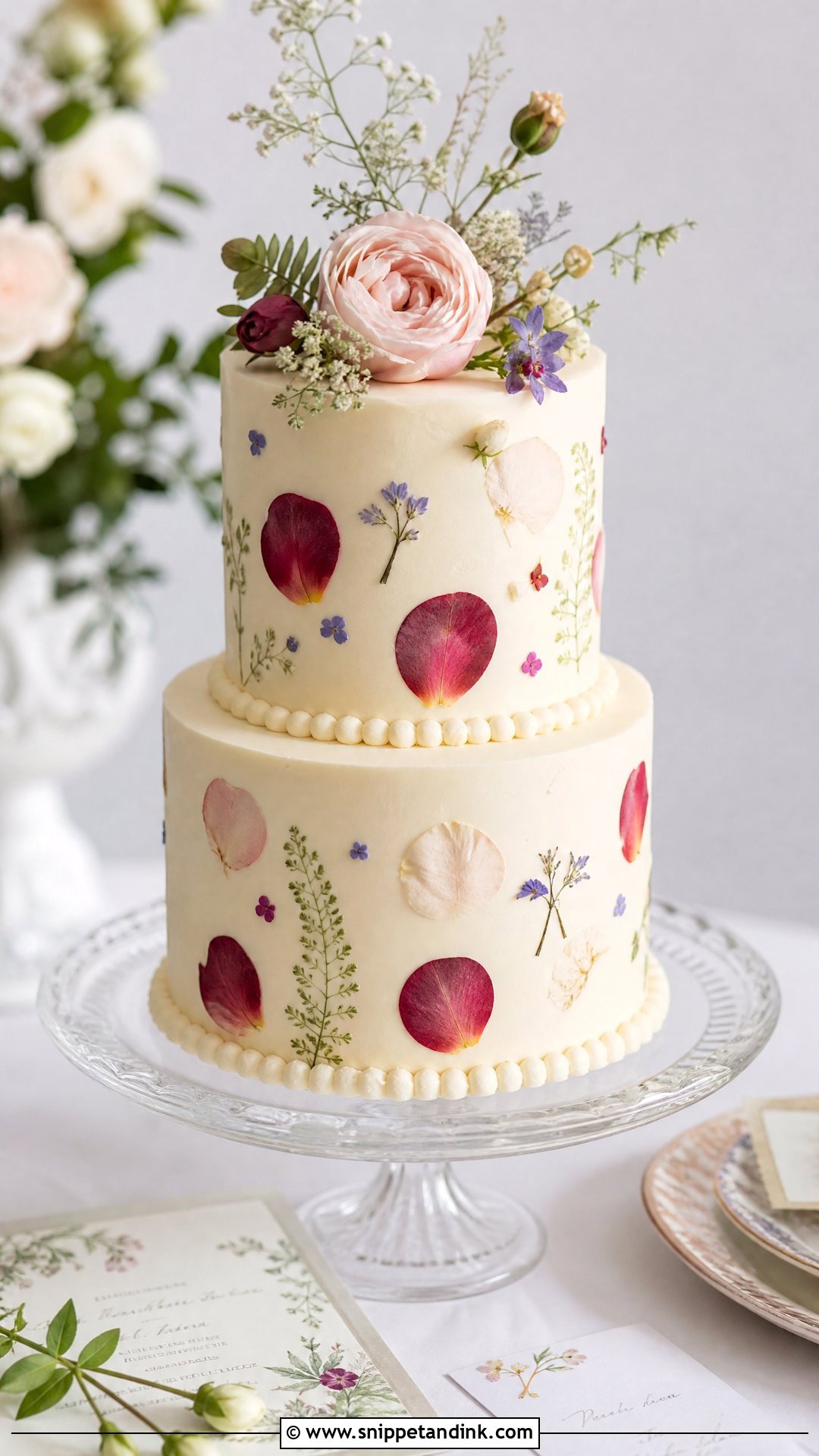
Pressed petals give a cake a botanical, almost painted look instead of three-dimensional clusters. They need to be genuinely edible, grown without pesticides and pressed flat, then laid against a smooth surface: buttercream holds them by itself, while fondant needs a light brush of water or piping gel. Pale pink keeps it subtle; deeper rose tones add color. Pressed flowers can fade under strong light, so I keep the cake out of the sun until it’s served. A neat border or small topper is all the extra it needs.
18. Rose Watercolor Wedding Cake
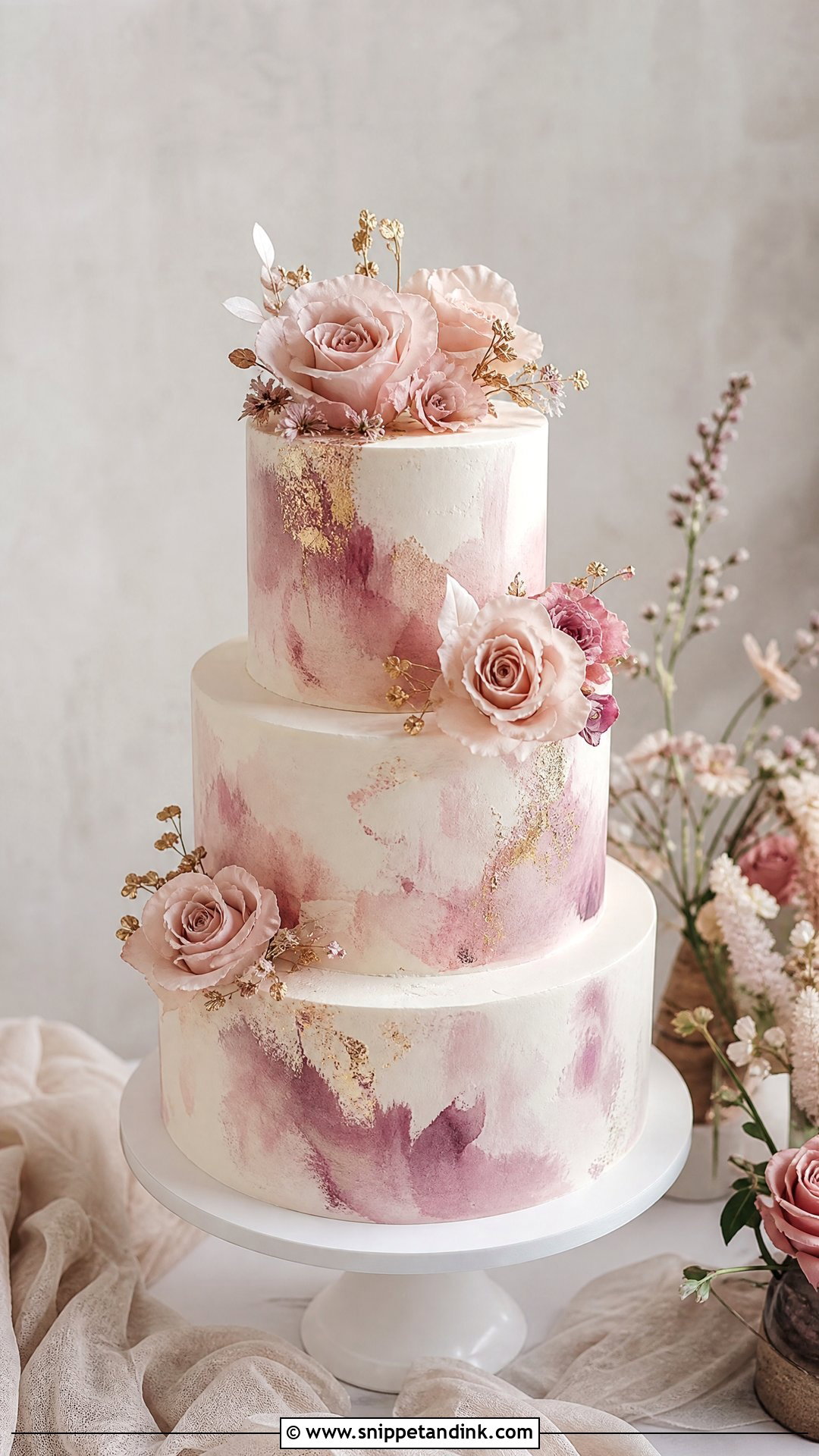
Watercolor is painted color, brushed onto the frosting in blush, mauve, peach or dusty rose shades, with fresh or sugar roses added for dimension. It works best on fondant or very smooth, well-chilled buttercream, since any ripple in the surface shows through the wash. Keep the roses in the same color family as the paint or the two start arguing. It’s an artistic cake that still reads as a wedding cake, and it rewards a baker who paints well, so ask to see her painted work, not just her floral work.
19. Rose And Greenery Wedding Cake
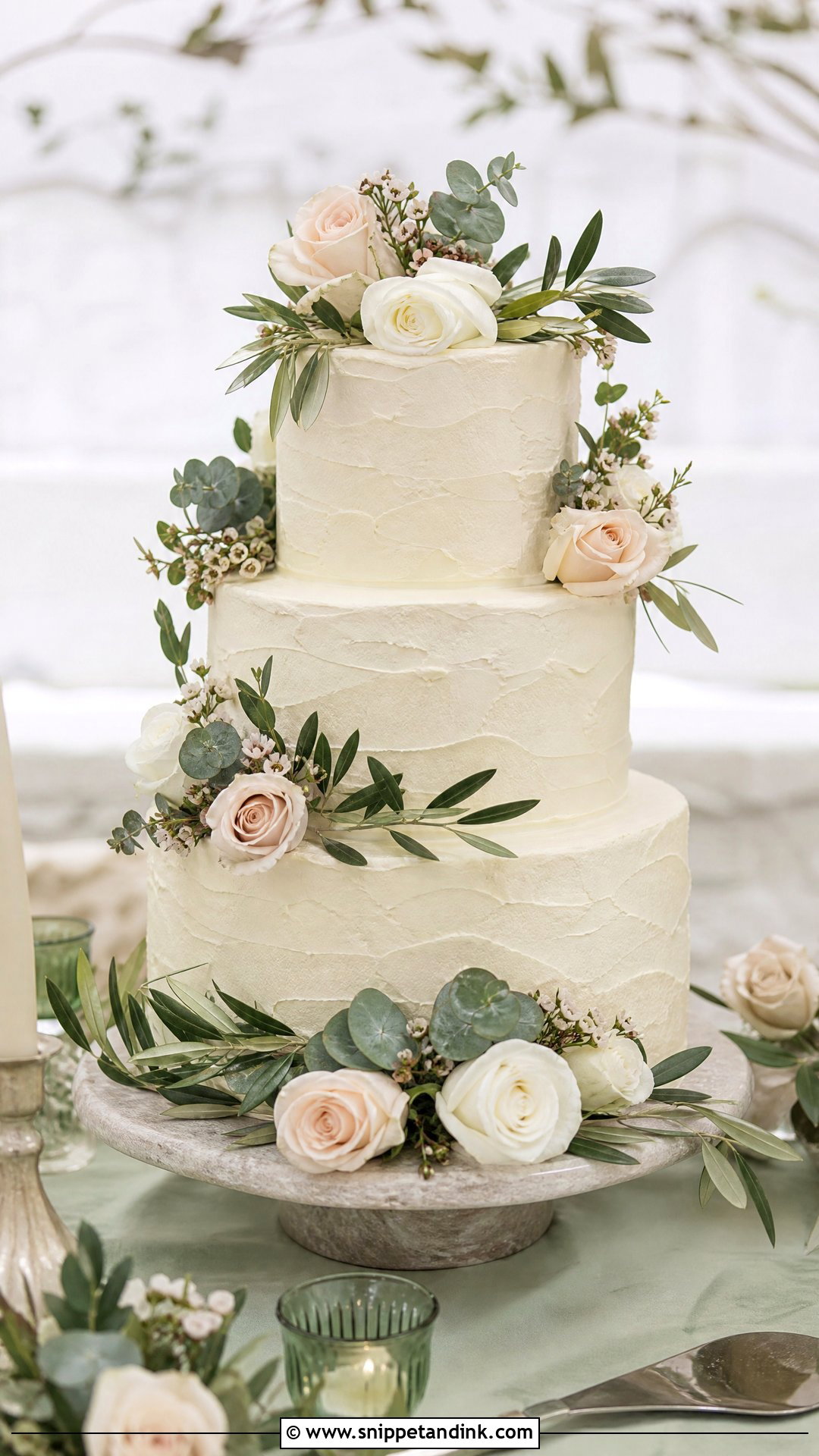
Greenery gives roses shape and lets them breathe. Eucalyptus, olive leaves, fern or small herb-like sprigs each change the mood, and the choice usually follows your venue. White and blush roses look airy with soft green; red or mauve roses look richer. The frosting can be smooth, textured or semi-naked. Two practical points: eucalyptus and many decorative leaves aren’t edible, so they’re placed on barriers like any fresh flower, and greenery should follow one clean line rather than poke out everywhere. That restraint is what makes it photograph well.


20. Rose Heart Wedding Cake
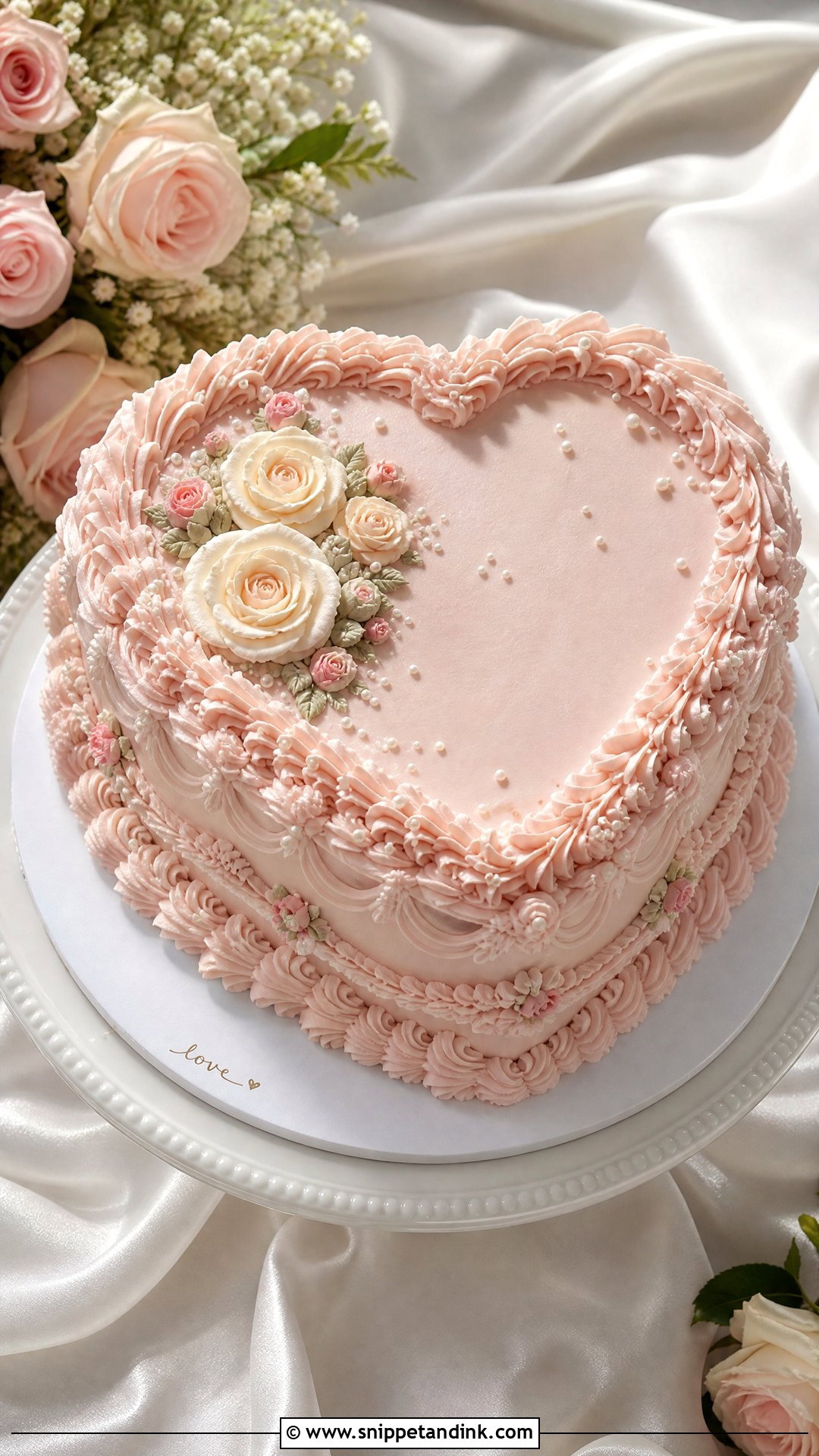
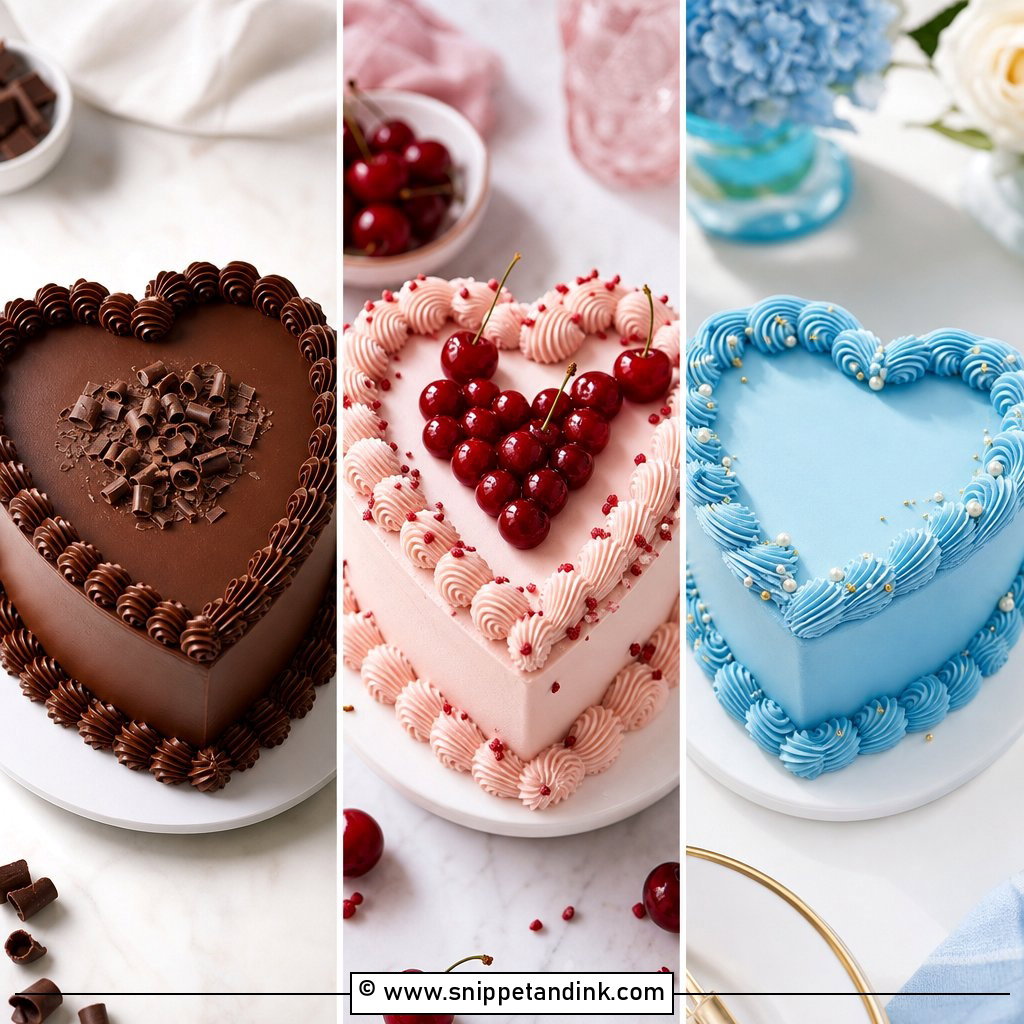
Heart cakes are having a real moment, especially as a smaller statement cake, and roses make the shape feel like a wedding rather than a birthday. The heart gives a soft vintage look, and buttercream piping does most of the work: shell borders, ruffled edges and small rose clusters around the top. Ivory, blush, pale pink or champagne frosting keeps it classic. It suits elopements, courthouse weddings and a cutting cake beside dessert trays. Keep the decoration on the top edge and center so the outline of the heart stays clear.
How Many Guests Two or Three Tiers Will Actually Feed
Couples often pick a tier count from a photo and only later find out it won’t stretch to the guest list. Wedding cakes are cut into small fingers of cake, roughly one inch by two, which is a smaller slice than most people expect. On that basis, round tiers four inches tall serve approximately:
- 6 inch: about 12
- 8 inch: about 24
- 10 inch: about 38
- 12 inch: about 56
So a two-tier cake of 6 and 8 inches feeds around 36, and three tiers of 6, 8 and 10 inches around 74. These are guides, and every baker cuts a little differently, so ask how she counts. If your list is larger than the cake you love, a plain kitchen cake of the same flavor can be cut behind the scenes and nobody at the tables will know.
The top tier question
Many couples save the top tier, which takes it out of the serving count. If you plan to freeze it, tell your baker. Fresh roses come off before freezing, and a sugar rose or two can go in a box beside it as a keepsake.
The Roses Are Only as Good as the Plan Behind Them
Roses suit so many cakes because each method gives a different mood. White roses are timeless, a cascade is dramatic, and a single bloom is modern. Piped buttercream, fresh stems, sugar flowers, pressed petals and loose garden roses all stay romantic while looking nothing alike. Let your venue, dress, bouquet, season and guest count narrow the field. Then ask your baker two things directly: how the roses will be placed safely, and how long the cake can sit out in your room. The answers will rule out more designs than any photo will.
You'll Like These Ideas:









Leave a Reply