
Four tiers is the point where a cake stops being a dessert on a table and starts behaving like part of the room. It’s tall enough to read from the back of a ballroom, yet there’s still space on each tier for texture, flowers, color and a different flavor inside. That height is also a structural job, so the designs I like best balance a strong silhouette with something soft on the surface. Below are twenty finishes, from smooth buttercream and clean fondant to sugar flowers, pearls, ribbon, greenery and painted color, with what each one asks of the baker and of you.
A Cake Table That Can Carry Four Tiers
A four tier cake can weigh as much as a small child once it’s stacked, and I’ve learned to ask about the table before I ask about flowers. The cake needs a solid, level surface that nobody will lean on. Folding banquet tables with a center hinge can sag in the middle, so I’d ask the venue for a sturdy round table or put a firm board under the cloth.
Placing it in the room
Keep the table away from sunny windows, heaters, the kitchen doors and anywhere guests carry plates past it. A spot against a wall or a backdrop gives the photographer a clean background and protects the back of the cake. Check the ceiling too. Under a low beam or a chandelier, a tall stand plus four tiers can look cramped, and a lower cake plate may suit the room better.
When the guest list is smaller than the cake
Four tiers doesn’t have to mean feeding two hundred people. Smaller diameters keep the height while reducing servings, and a decorated foam tier can stand in for one real tier when you want the look without the extra cake. I’d rather design something to your actual guest count than build a cake that sends half its slices home in boxes.
1. White Buttercream 4 Tier Wedding Cake
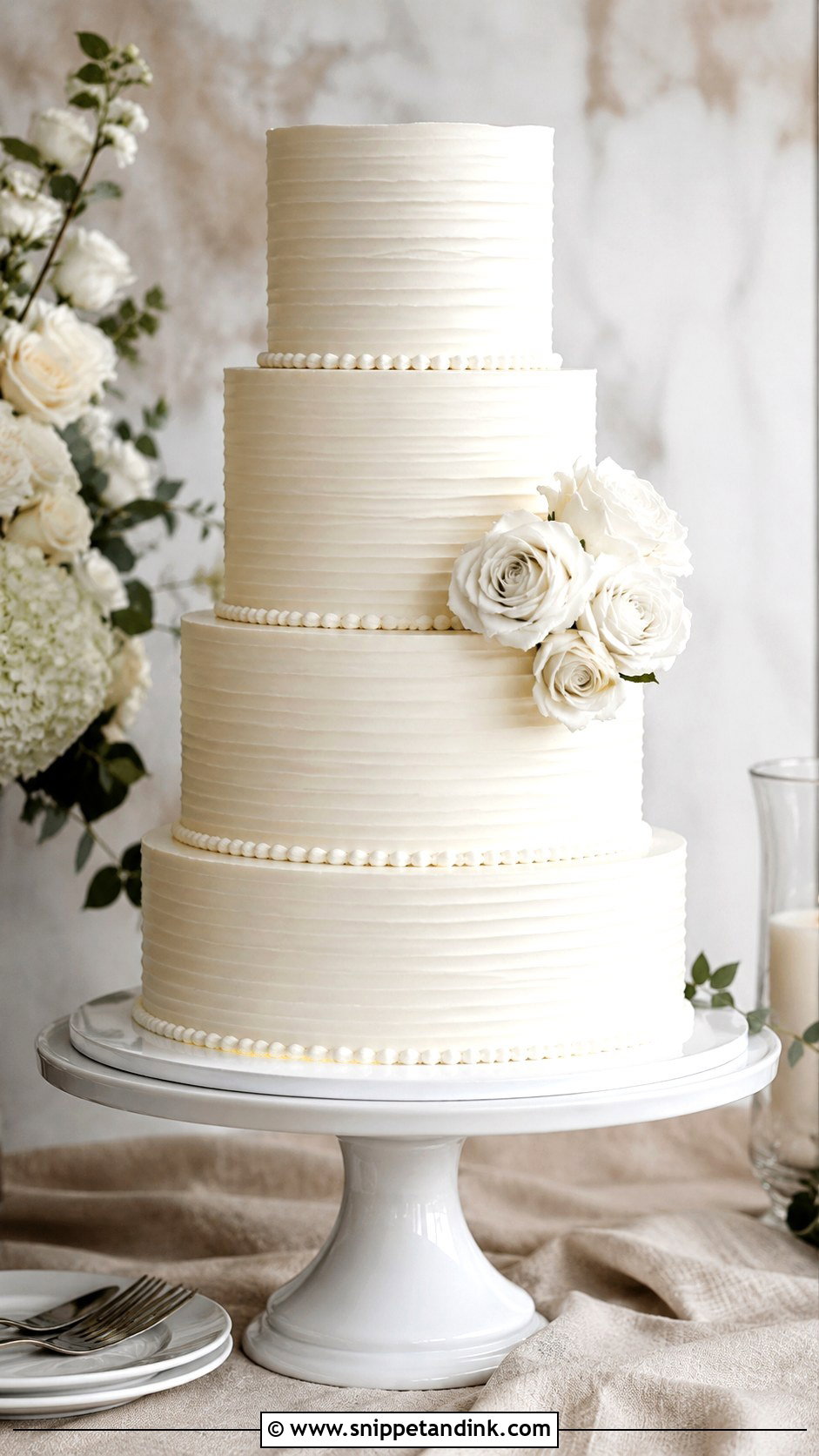
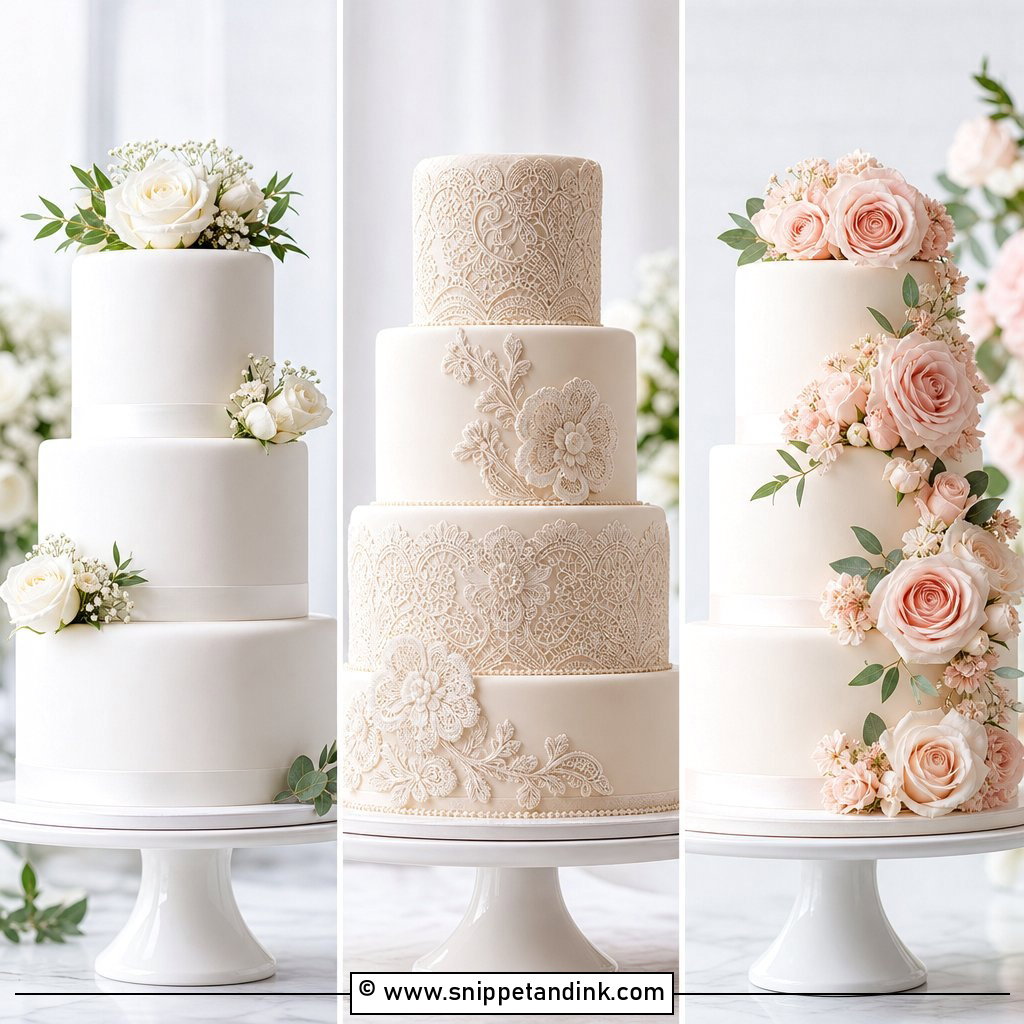
White buttercream on four tiers relies entirely on shape and finish. Smooth sides look modern; light horizontal ridges, pulled with a comb as the turntable spins, add movement without clutter. Vanilla, almond, lemon or champagne sponge keeps the cut slices as pale as the outside. A small cluster of white roses, baby’s breath or pearls is all it needs. My caution with a tall buttercream cake is weight: the bottom tier carries everything above it, so the internal supports have to be right or the base bulges in a warm room.
2. Fondant 4 Tier Wedding Cake With Roses
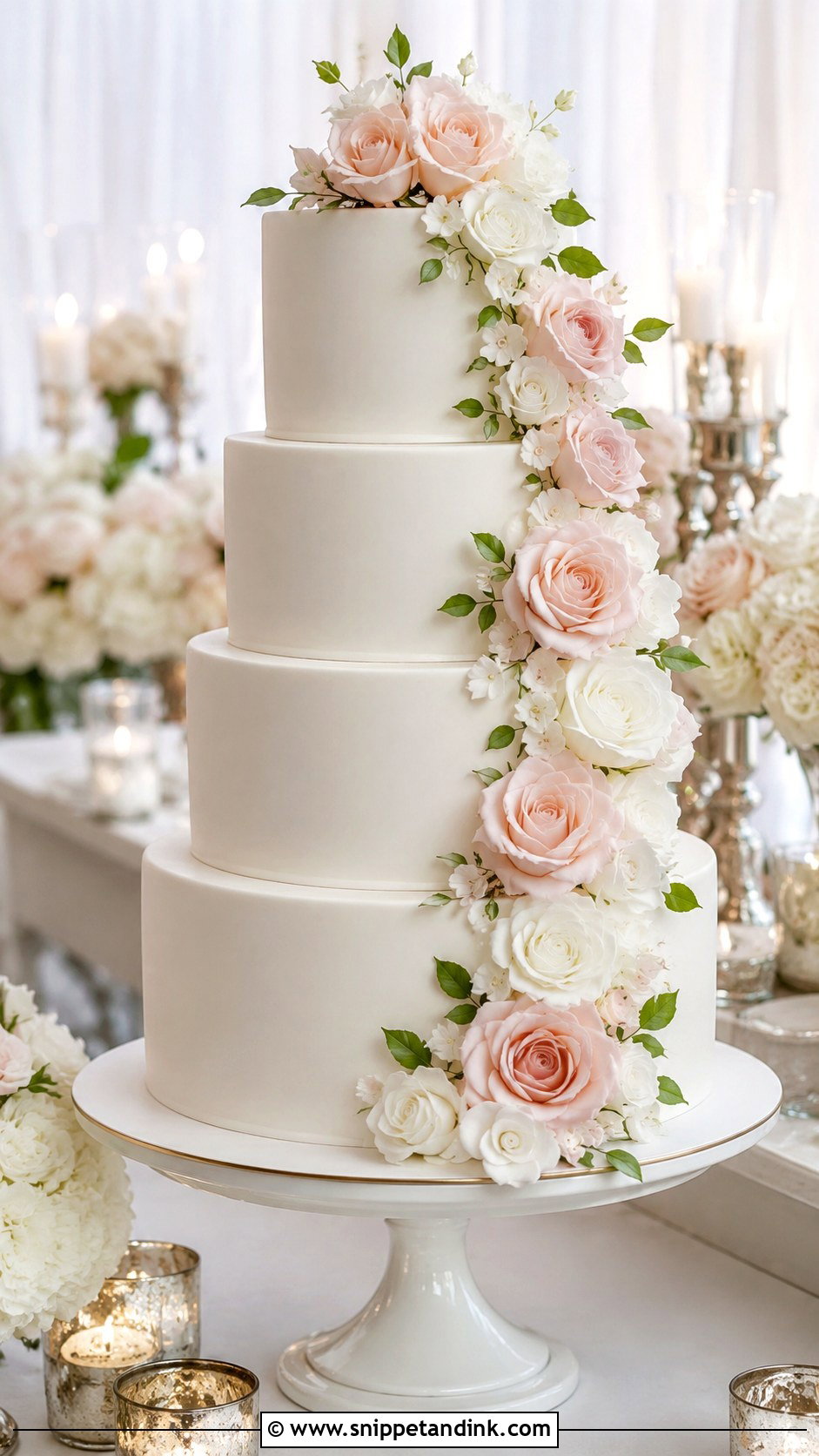
Fondant gives each tier a crisp, structured surface, and roses stand out sharply against it. Fresh roses look natural; sugar roses look more formal and won’t wilt through a long reception. Blush, ivory and soft peach are the shades I’m asked for most, since they add warmth without taking over. Fondant does have one drawback. Many guests peel it off and eat only the cake underneath, so I keep it thin and make sure the buttercream beneath is worth eating. Set the cake on a tall pedestal with simple linens, candles and a few matching blooms at the base.
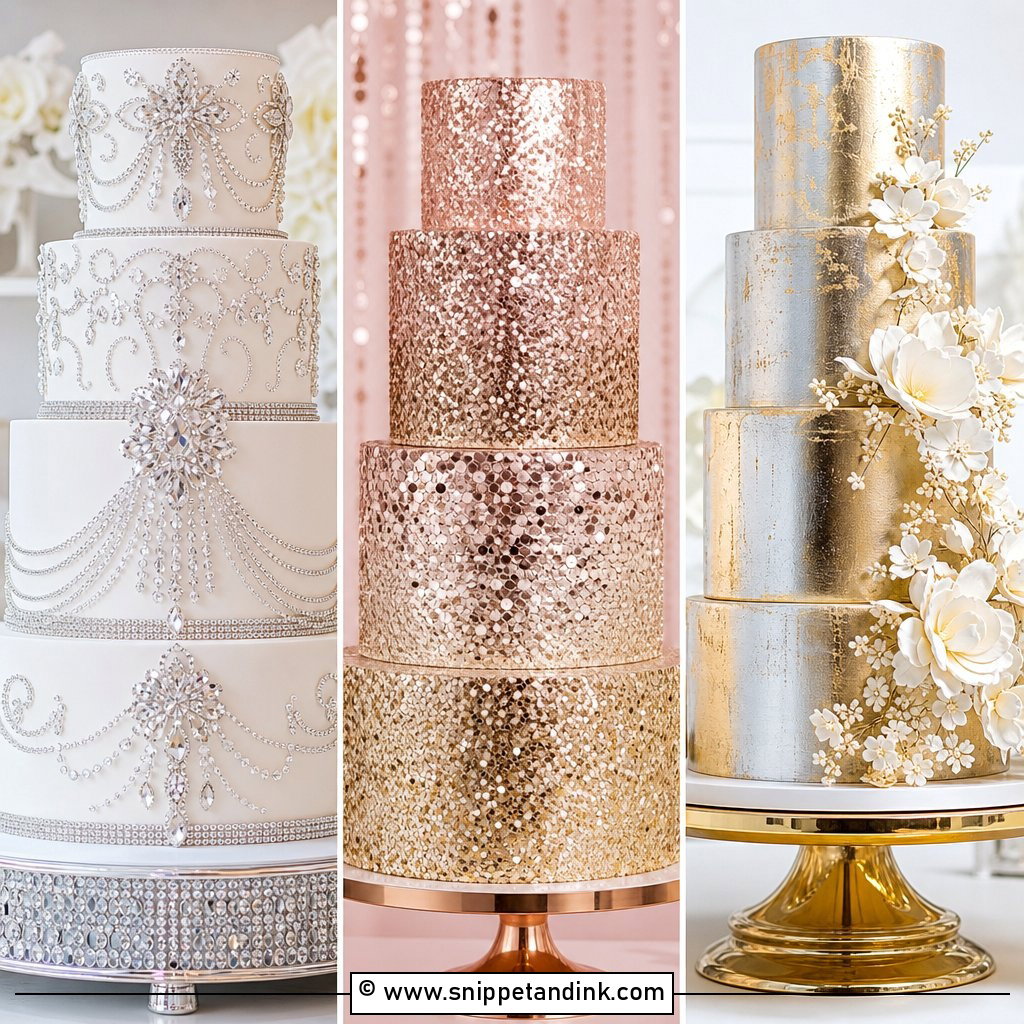
3. Gold Leaf 4 Tier Wedding Cake
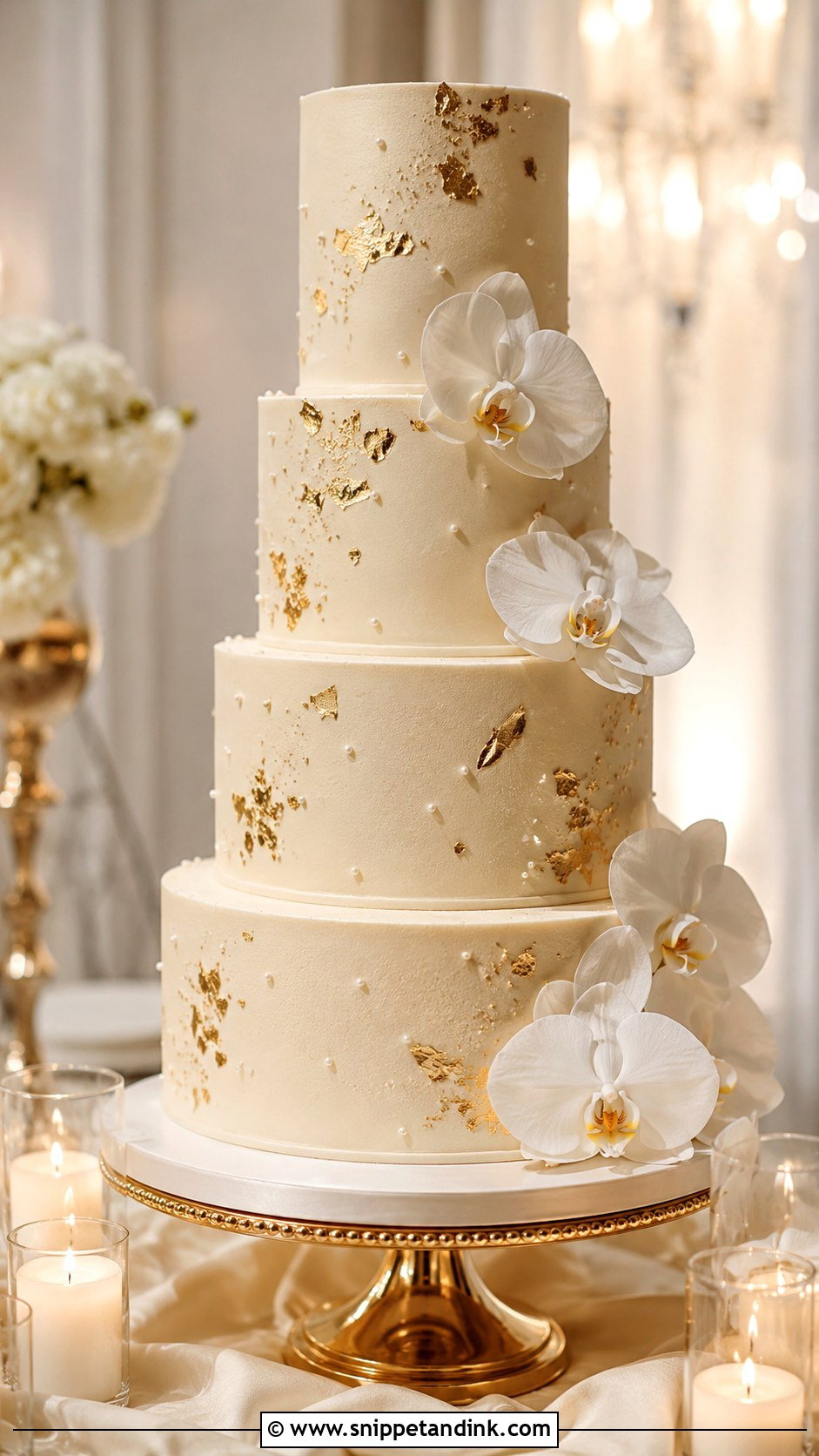
Gold leaf works hardest when there’s less of it. A few flakes along the edges, one brushed tier or a soft gold band is enough to make four tiers feel luxurious, and covering the whole cake tends to look flat in photos because the leaf reflects as one block. Ivory buttercream, white fondant or a pale champagne finish balances it. I apply leaf with a dry brush or tweezers, since it sticks to warm fingers and tears. White orchids, roses or simple sugar blossoms keep the attention on height and shine at a formal hotel or evening reception.
4. Pearl 4 Tier Wedding Cake
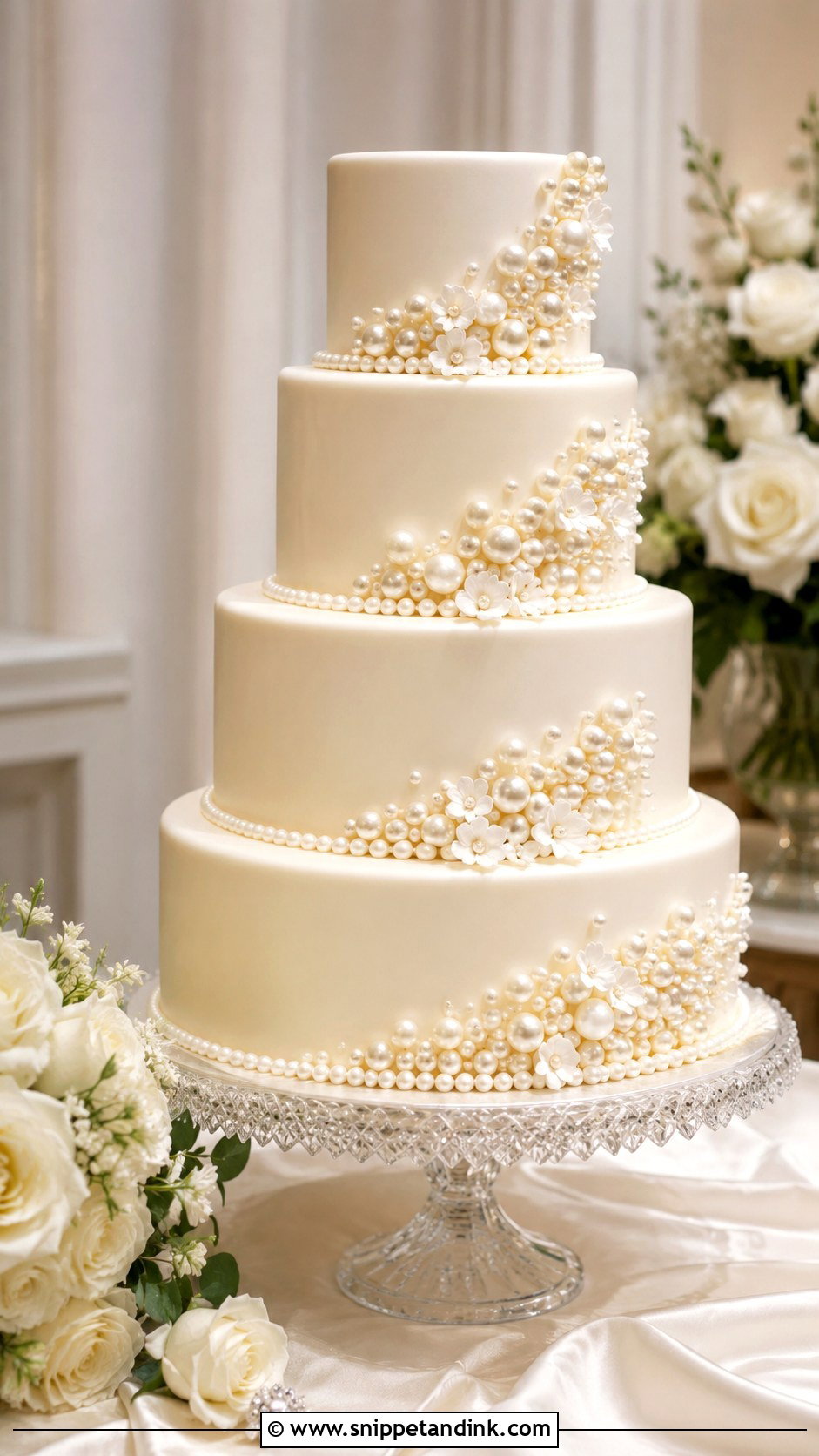
Edible pearls can mimic the beading on a gown. I set them in neat borders, scatter them lightly or build a delicate pattern that follows the dress, and on ivory, white or blush they catch light quietly. A smooth buttercream or fondant finish keeps it clean, and a satin ribbon on one tier or a few small white flowers is plenty of extra detail. Placing pearls is slow because each one goes on individually with a dab of edible glue, so a heavily beaded four tier cake carries real labor in the price. It suits a classic, romantic wedding.
5. Lace 4 Tier Wedding Cake
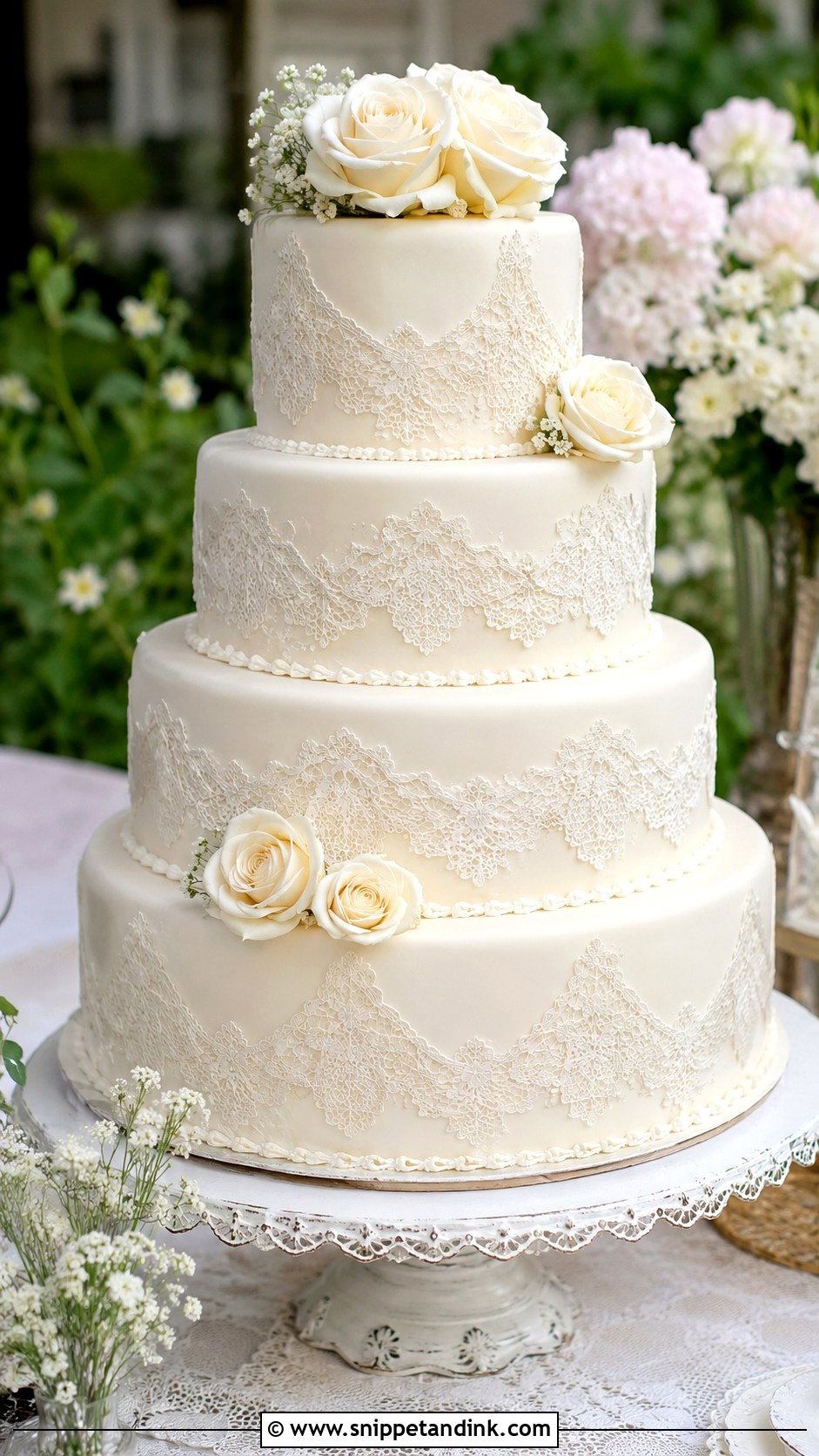
Lace on a cake is my favorite way to repeat the gown. Piped royal icing, fondant appliqué and edible lace sheets each give a different result: piping looks raised and handmade, appliqué gives depth, and lace sheets are the finest and most regular. White on white feels traditional, while ivory lace over a pale blush base feels warmer. Estate weddings, chapel ceremonies and garden receptions suit it. Keep the flowers simple and few. Lace needs space around it to be seen.
6. Cascading Flower 4 Tier Wedding Cake
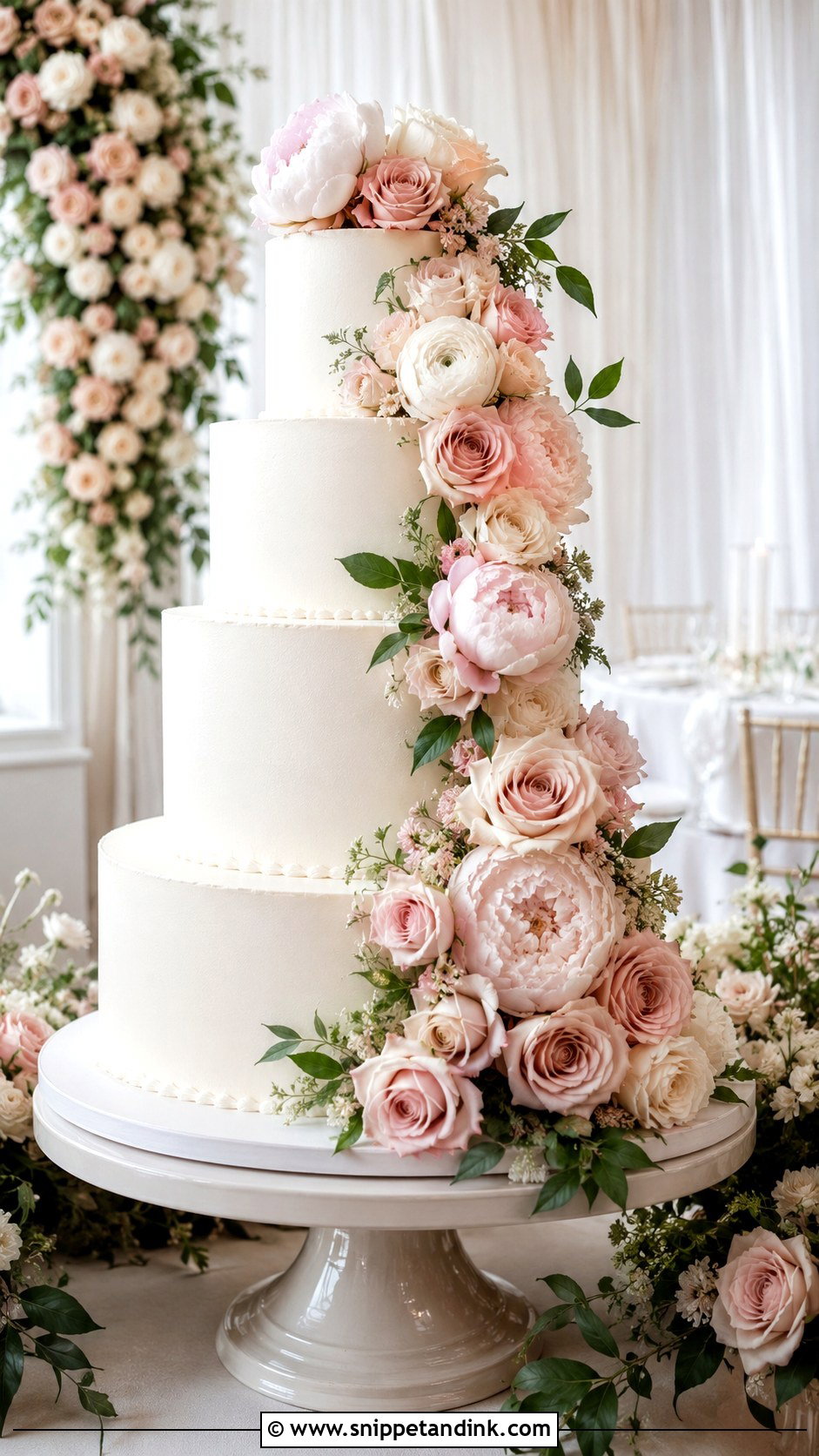
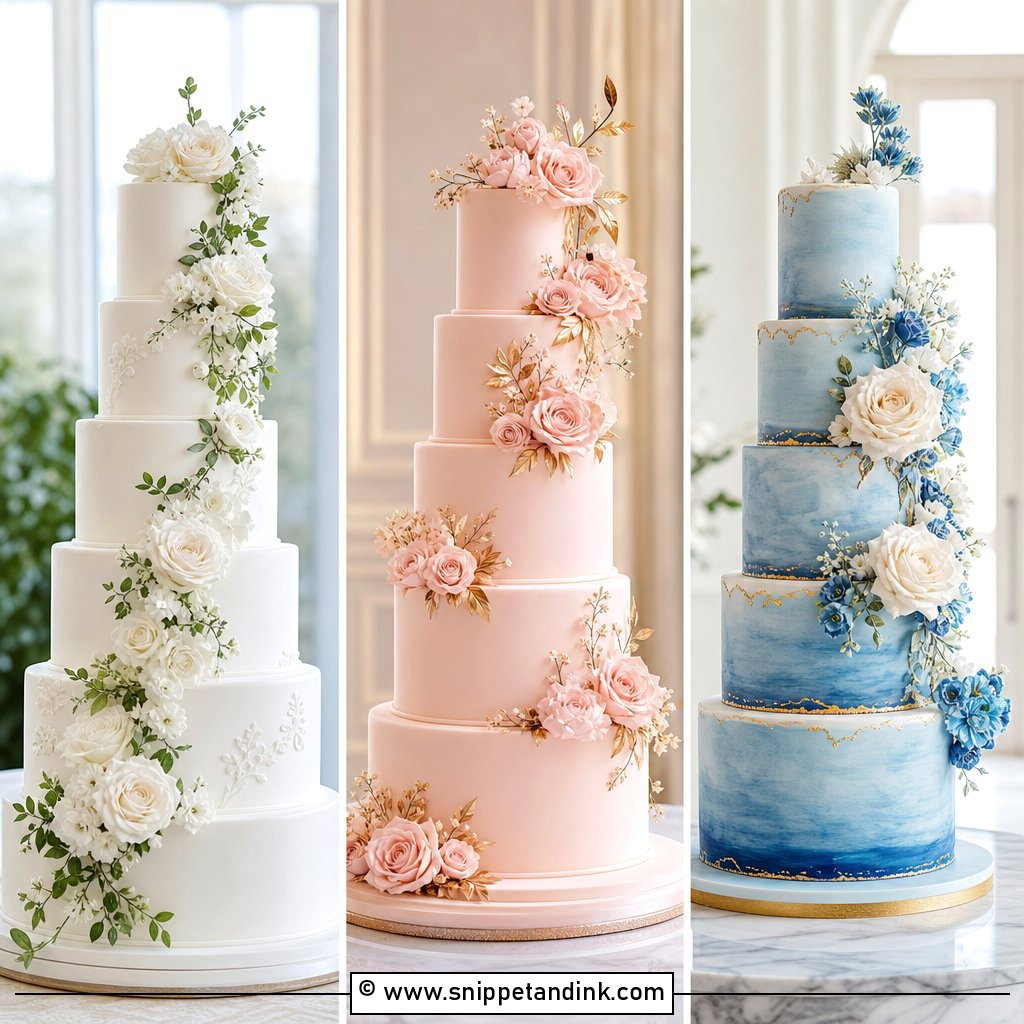
A cascading flower 4 tier wedding cake draws a line from the top tier to the base, and on a cake this tall the cascade does most of the decorating. Roses, peonies, orchids, ranunculus and hydrangeas all work, depending on the season. Keep the base smooth ivory buttercream or fondant so the flowers aren’t fighting heavy texture. I plan the cascade to wrap slightly around the cake rather than run down the front only, so it still looks finished from the side views guests see. Match the flowers to the bouquet.
7. Minimalist 4 Tier Wedding Cake
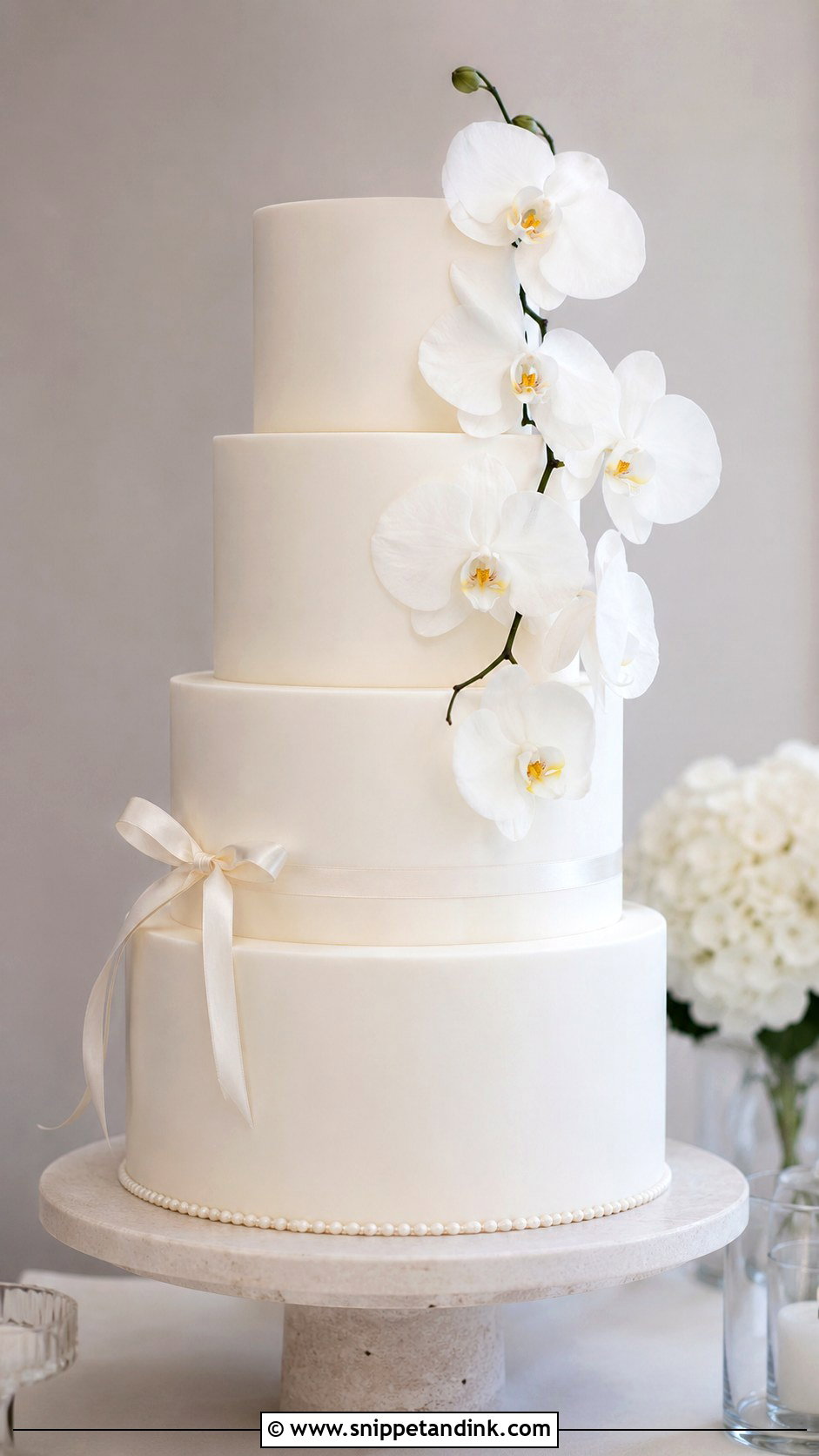
Minimal is the hardest four tier cake to get right because there’s nothing to distract from the proportions. Smooth frosting, exact tier heights and one strong detail carry it: a single flower stem, a thin ribbon, a pearl border or a soft texture. All-white, ivory or warm cream keeps it modern, and it sits comfortably in lofts, museums, modern chapels and simple garden spaces. Vanilla bean, almond, lemon or coconut sponge match the light exterior. I’d ask any baker to show you photos of plain cakes they’ve made. Sharp edges on a minimal cake show skill better than any decoration does.
8. Semi Naked 4 Tier Wedding Cake
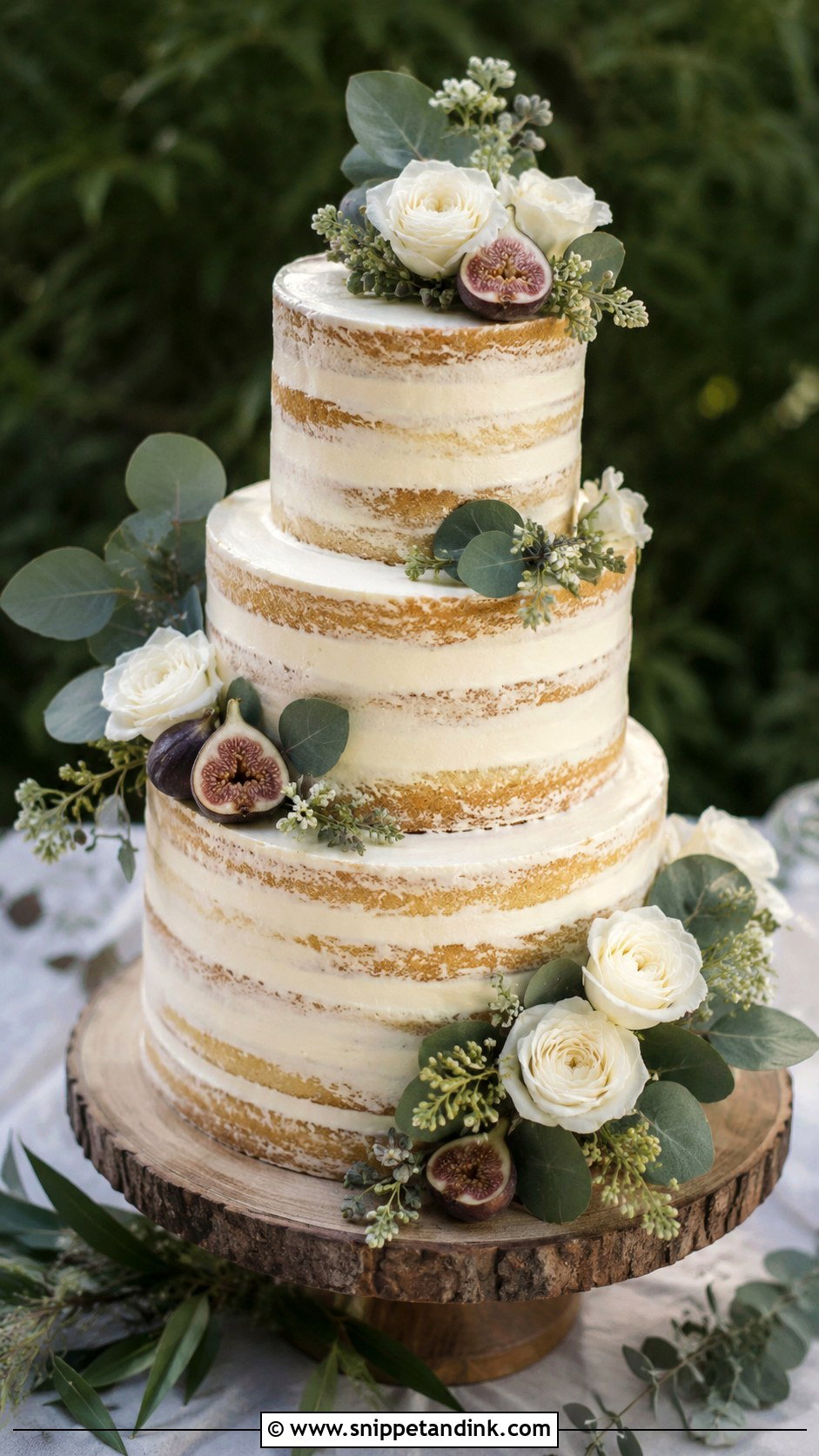
A semi naked 4 tier wedding cake has only a thin scrape of frosting, so a little of the sponge shows through and gives the tiers warmth. That exposure is also its weakness. With less icing protecting it, the cake dries out faster, so I assemble these as close to the event as possible and keep them out of direct sun. Vanilla, almond, spice or lemon layers look good at the edges. Fresh greenery, white flowers, figs, berries or small herbs finish it for a barn, vineyard or relaxed garden reception. Keep the tiers neat and evenly stacked.
9. Marble 4 Tier Wedding Cake
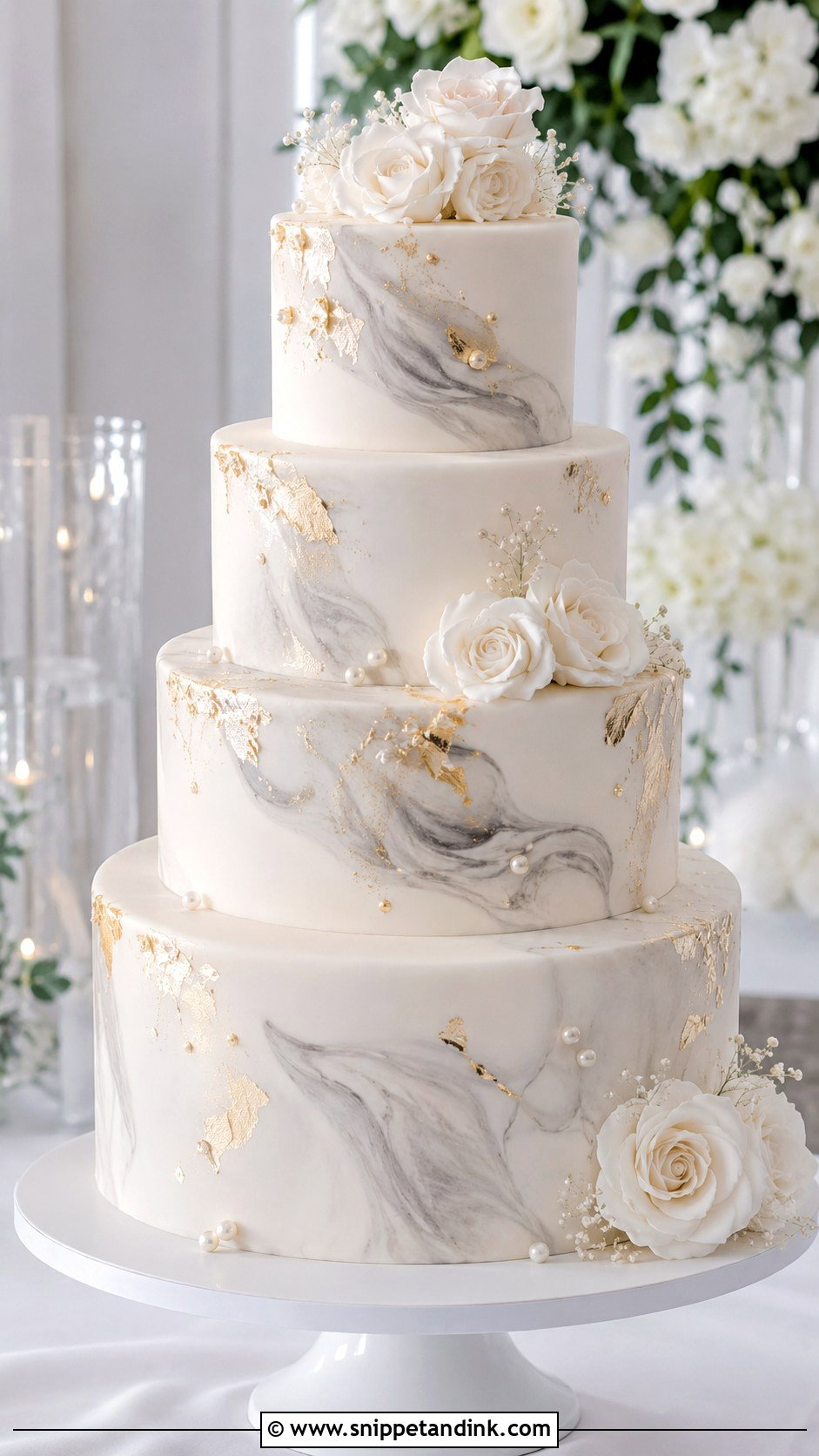
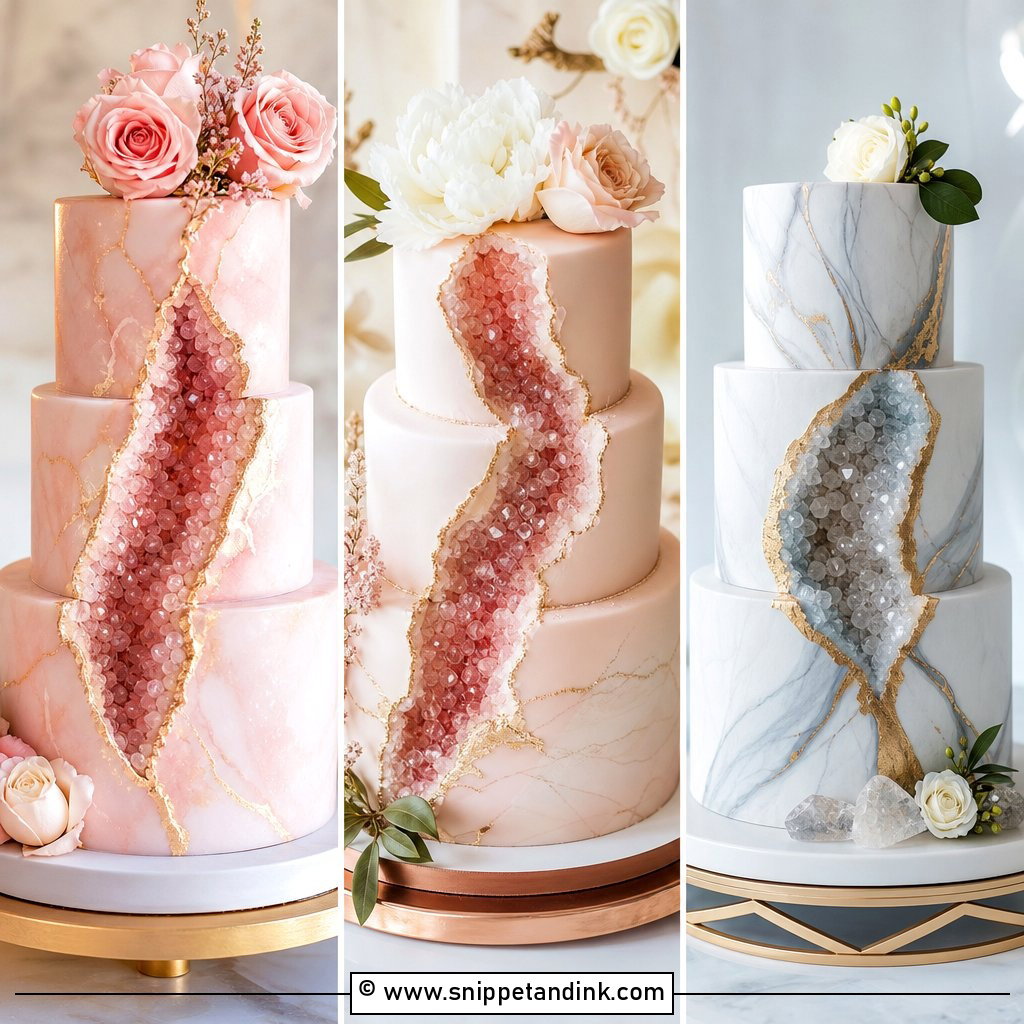
Marbling on fondant is done by folding two or more colors together before rolling, so each tier has its own veining and none repeat exactly. Soft gray, ivory, beige or blush marbling adds movement without turning bold. A touch of gold leaf or a few white sugar flowers warms the design. Contemporary venues, galleries and city weddings suit it. Keep decoration minimal; on four tiers of marble, extra flowers make the cake look crowded very quickly.
10. Square 4 Tier Wedding Cake
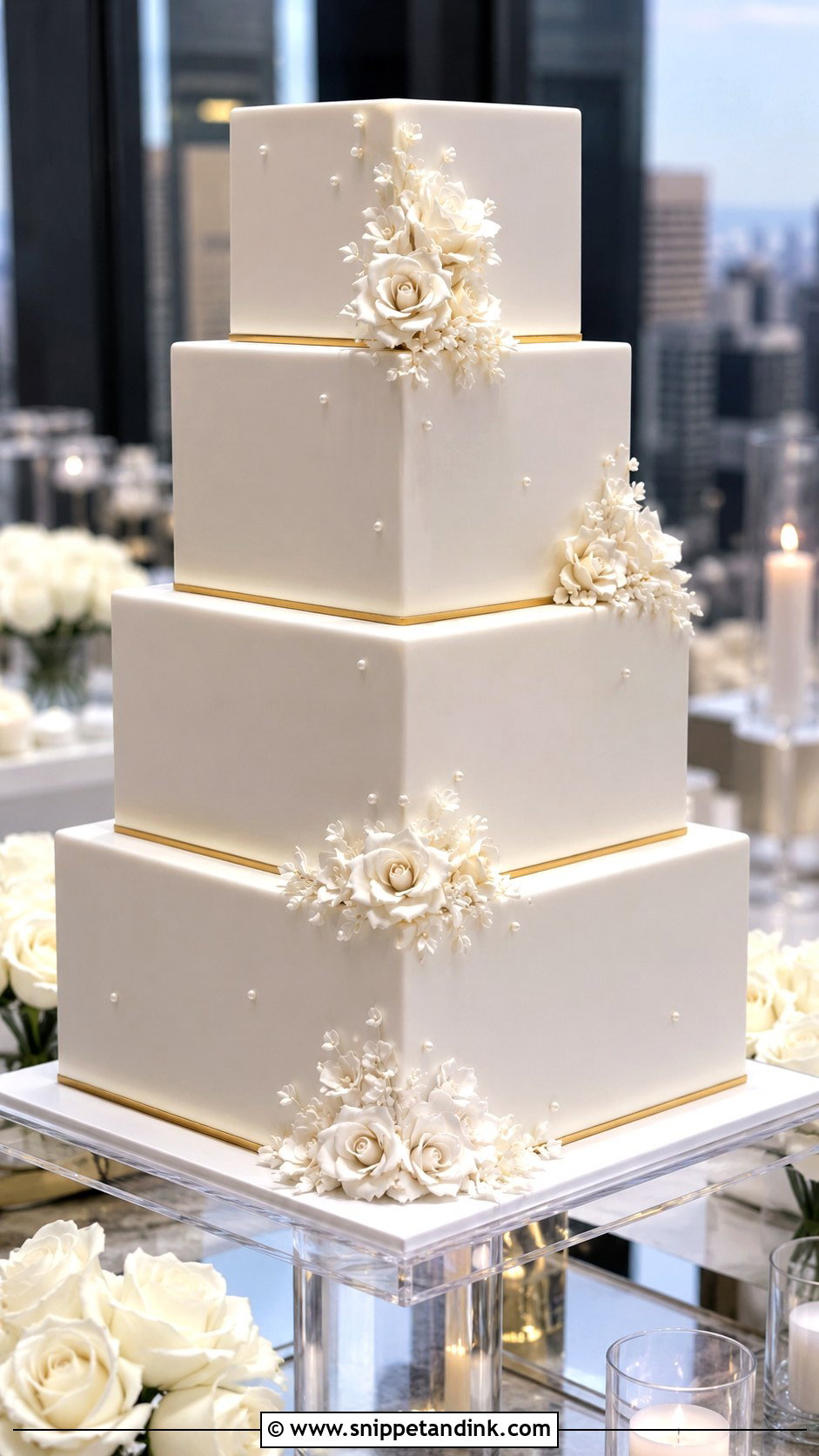
Square tiers look sharp and architectural, and they’re more demanding than rounds. Every corner has to be crisp, and any lean in a stacked square cake is obvious from across the room, so I’d only order one from a baker who shows you finished square work. Smooth fondant, crisp buttercream or a mix of textured and plain tiers all suit the shape. White is classic, and ivory with gold feels richer. Sugar flowers at the corners, thin ribbon borders or delicate piping soften the edges. Square tiers also yield more slices than rounds of the same width, which helps with a big guest list.
11. Round 4 Tier Wedding Cake With Piping
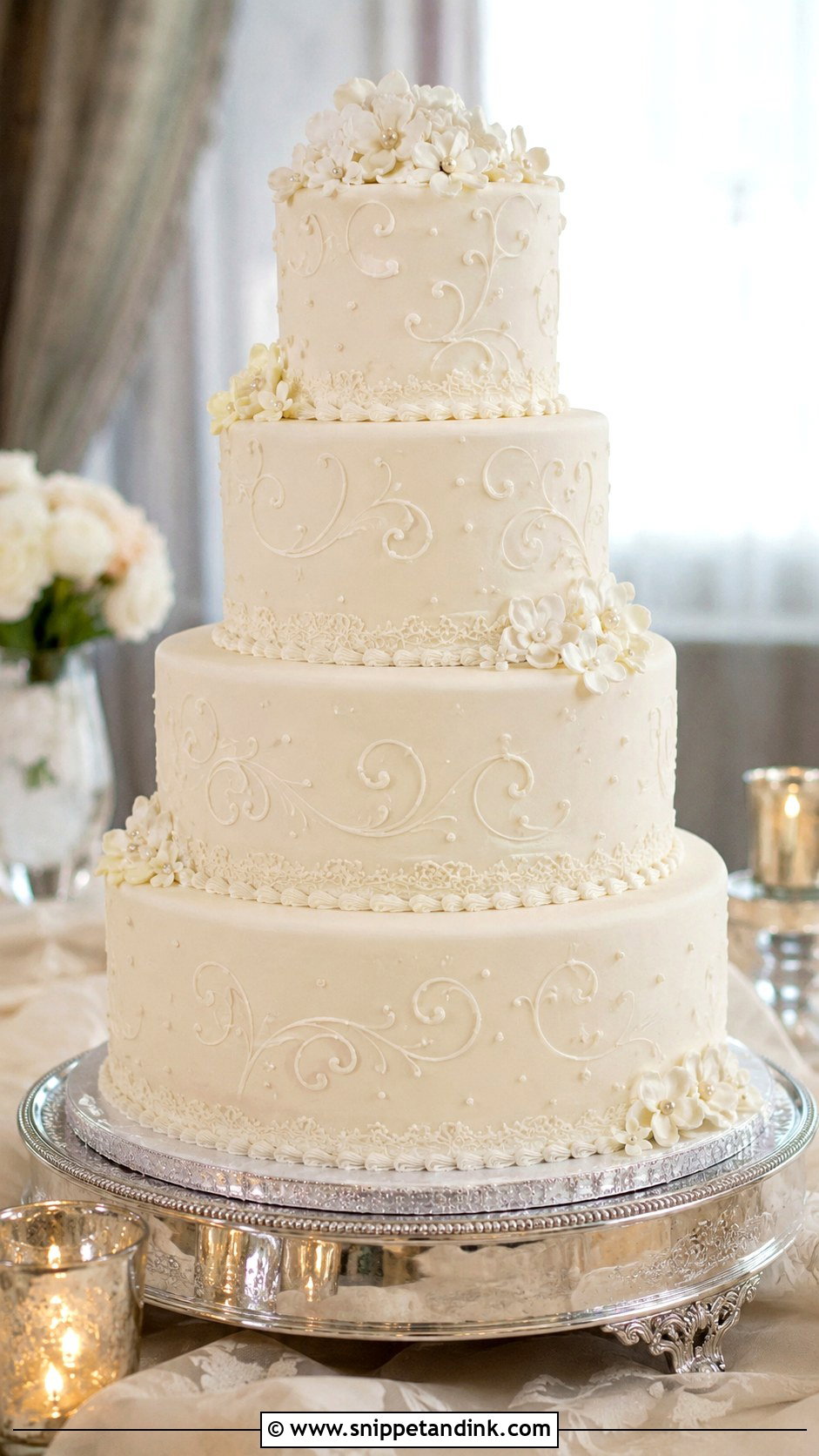
Piping is old-school cake work, and it brings real depth to round tiers without large decorations. Scrolls, dots, borders and floral patterns are all piped by hand, one tier at a time. White on white looks delicate and traditional; ivory on a cream base feels warmer. I give each tier its own pattern but repeat one motif on all four so the cake feels unified, and I’d ask for the same of anyone you book. Formal receptions and vintage-inspired weddings suit it, finished with a few small sugar flowers or pearls.
12. Blush 4 Tier Wedding Cake
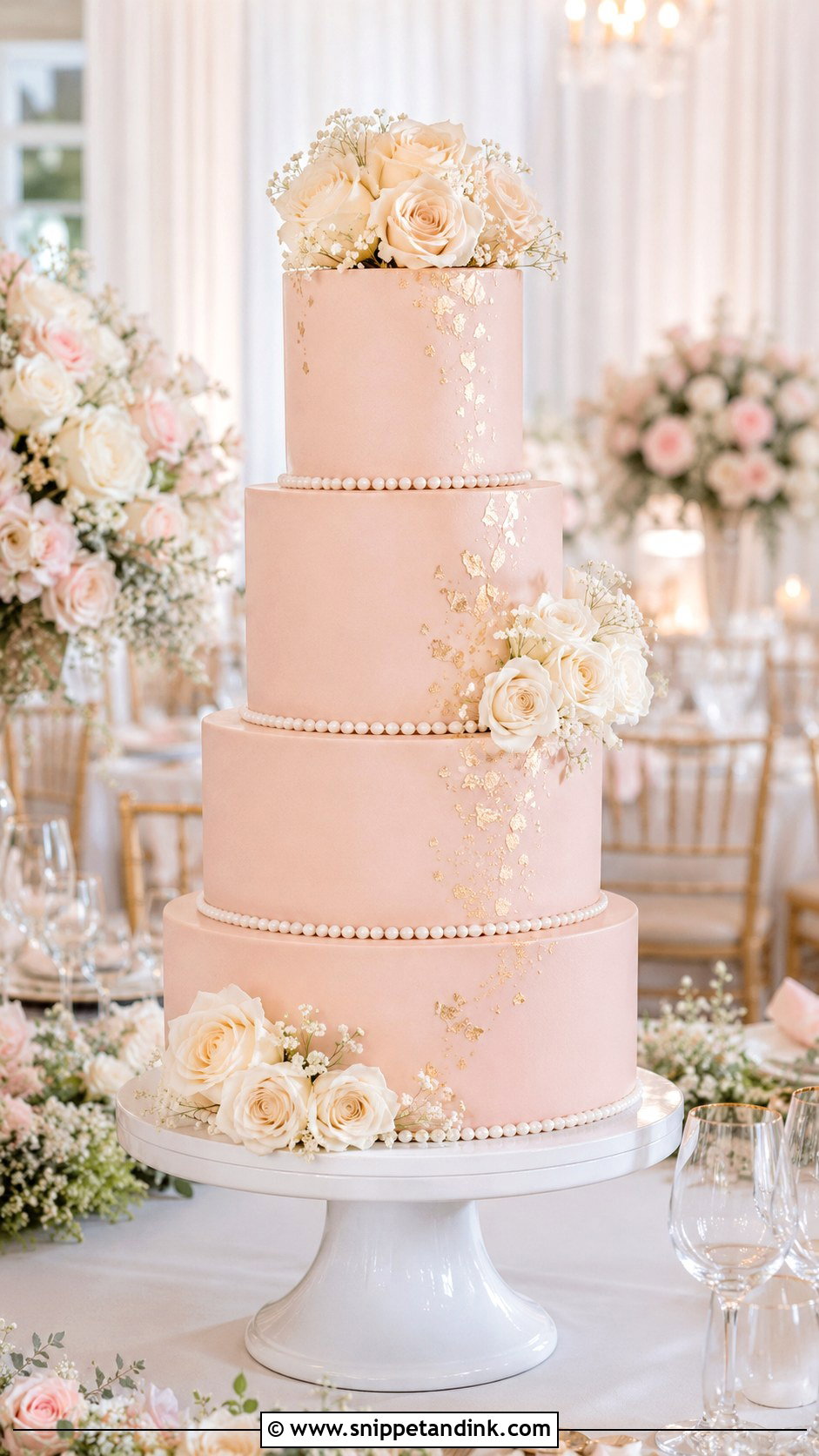
Blush can be barely pink, dusty rose or warm peach, depending on the palette. It sits naturally beside ivory flowers, gold leaf, pearls and satin ribbon. For a lighter look I’d color one or two tiers and keep the rest white; for a fuller statement, every tier can be blush in smooth buttercream or fondant. Pink gel color deepens as it rests, so I mix it a shade paler than the target and check it the next day. Spring weddings, garden receptions and ballrooms all suit it.
13. Greenery 4 Tier Wedding Cake
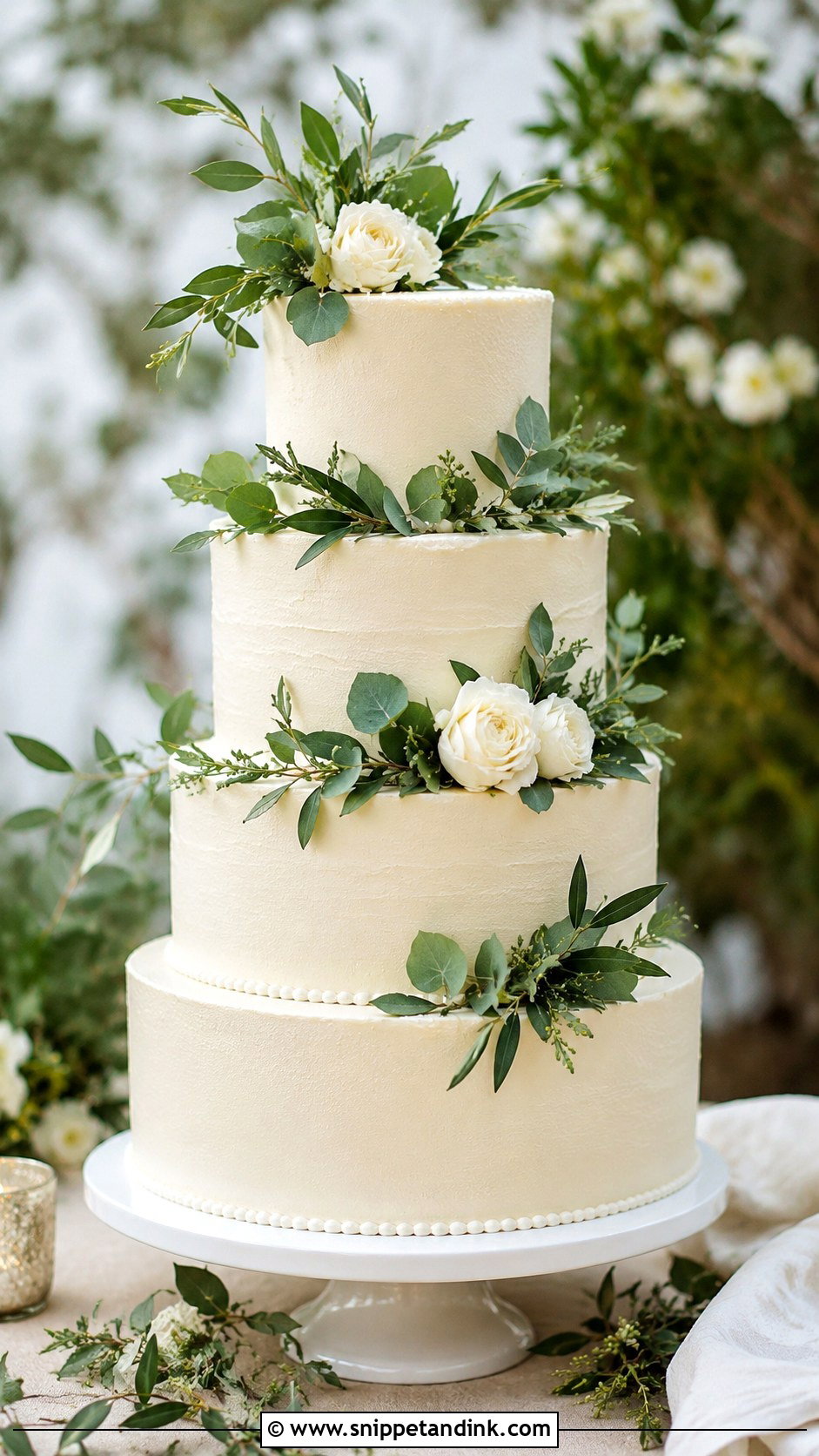
A greenery 4 tier wedding cake is easy to style almost anywhere. Eucalyptus, olive branches, ruscus or soft fern-like foliage can wrap the tiers or run down one side, and smooth white or ivory buttercream lets the green show. Add a few white flowers for a softer finish. Eucalyptus and several other common wedding greens aren’t food safe, so stems should be wrapped or sit on a barrier, and placement is best agreed between your baker and florist ahead of time. Outdoor weddings, botanical venues and simple modern receptions suit it.
14. Orchid 4 Tier Wedding Cake
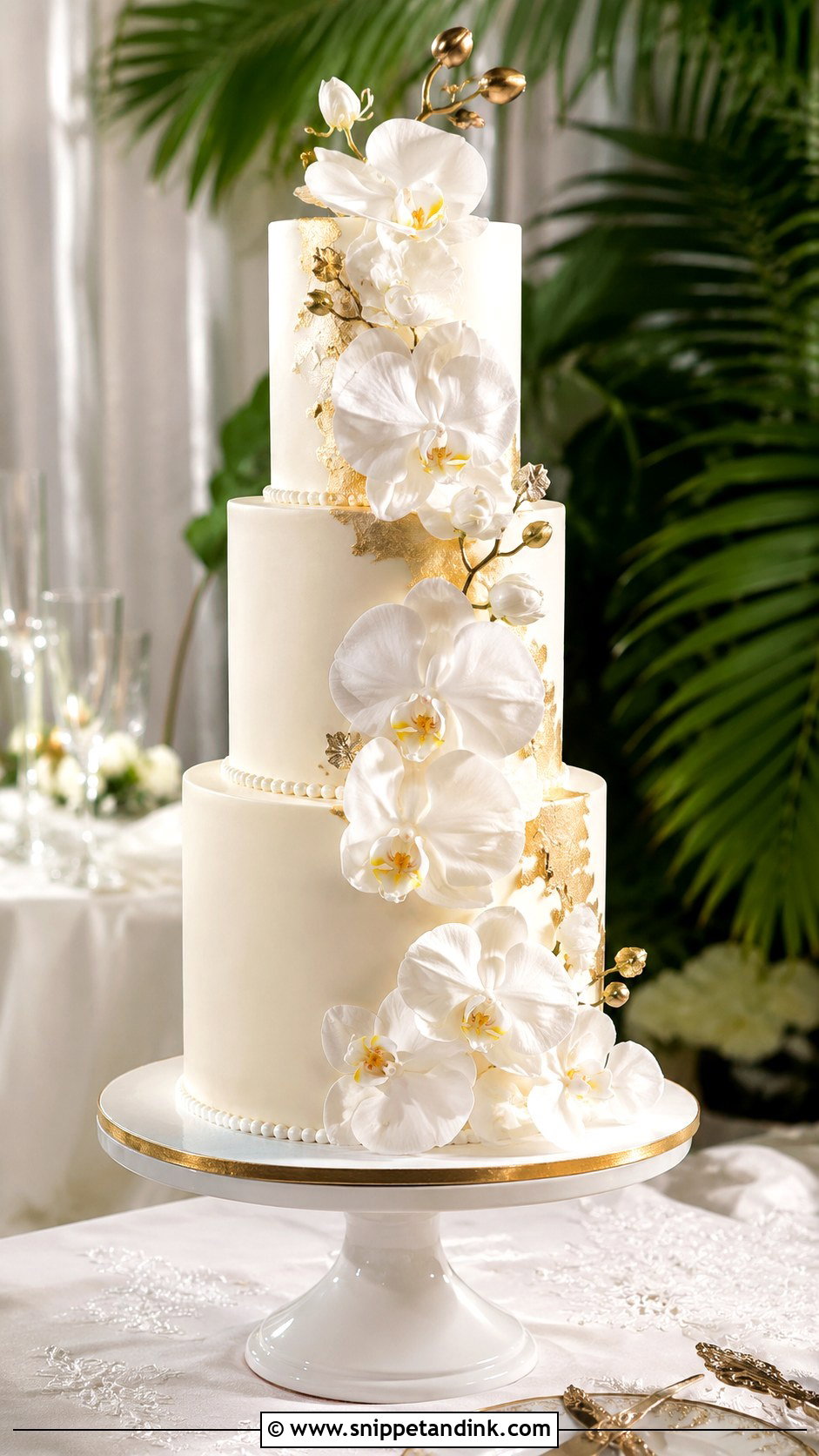
An orchid 4 tier wedding cake looks sleek with a slightly tropical edge. White orchids against smooth ivory or white fondant add movement and height through their shape alone. Place them in a light cascade, a side cluster or a dramatic top arrangement. Gold accents or pearl borders make it more formal. Fresh orchids hold up reasonably well out of water, which helps at a beach or hotel wedding, though I still wrap their stems and add them on site. Keep the rest of the cake plain so the flowers read as sculpture.


15. Ruffle 4 Tier Wedding Cake
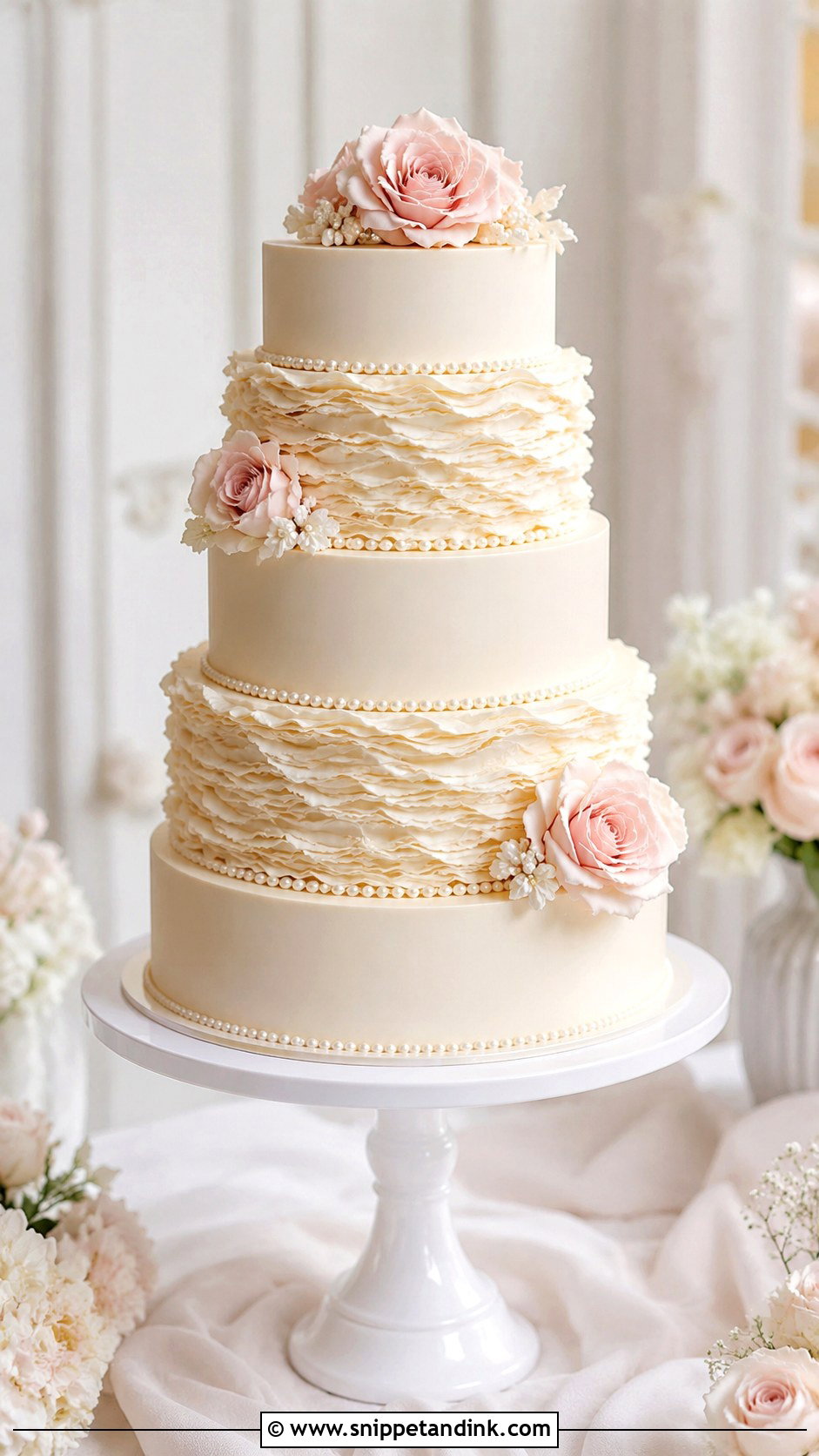
Ruffles add soft movement to a tall cake. They can cover every tier or appear on one or two beside smooth frosting, and that choice changes the mood completely. Buttercream ruffles look soft and handmade; fondant ruffles are more structured and fabric-like, and they hold their shape much better under warm lights. White, ivory, blush or champagne all work. A few roses or sugar flowers keep it bridal in a ballroom or garden reception. Fully ruffled tiers add weight, which is one more reason the support inside a four tier cake matters.
16. Ribbon 4 Tier Wedding Cake
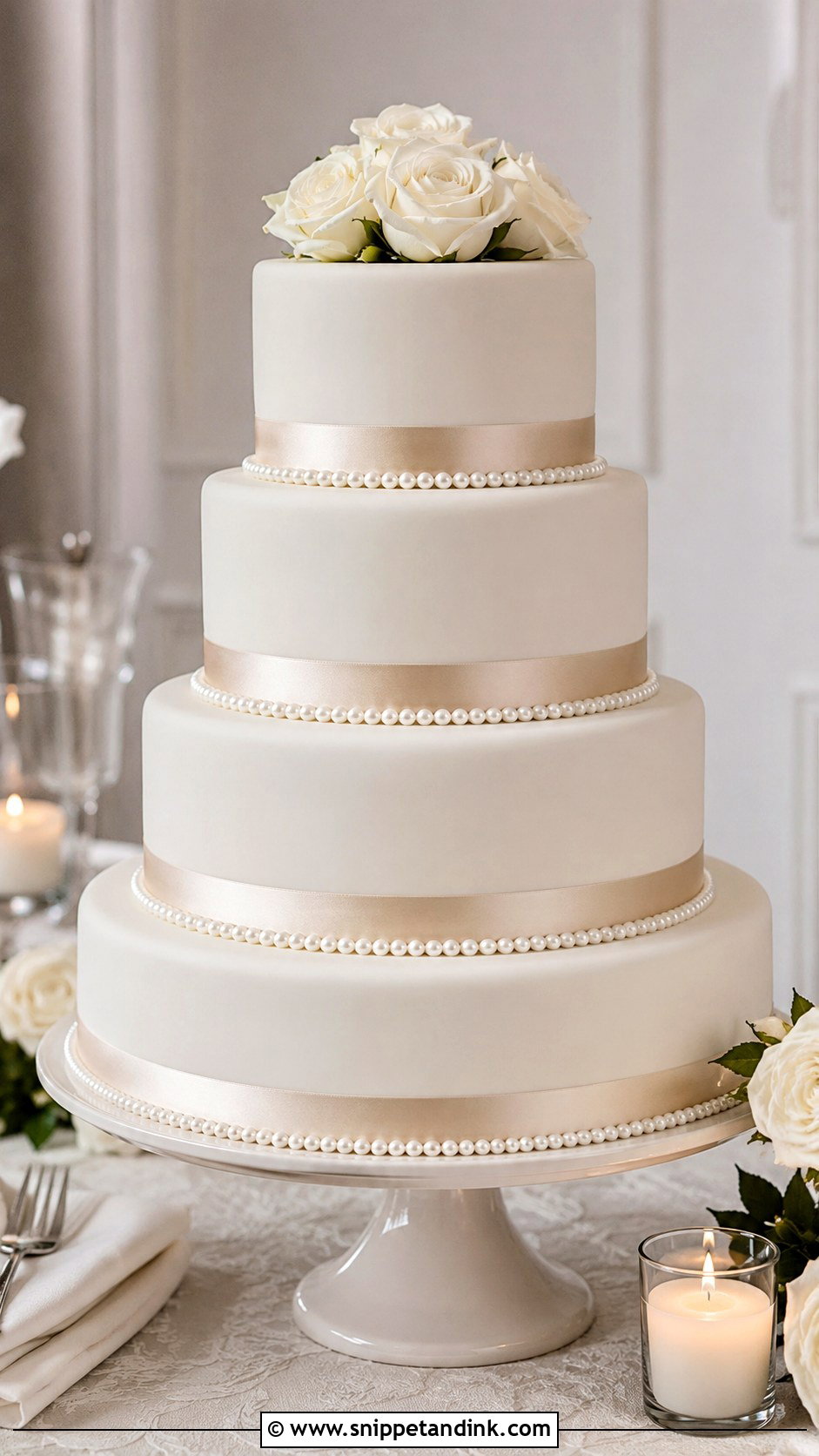
Ribbon is the simplest way to put your wedding colors on the cake. A satin band around the base of each tier defines the shape: ivory is classic, while blush, champagne, navy or sage ties it to the decor. It suits smooth fondant or buttercream because it adds structure without more piping. Ribbon laid straight onto buttercream will absorb fat and spot, so I back it or use a strip of fondant underneath. Finish with a small floral cluster or a pearl pin-style accent.
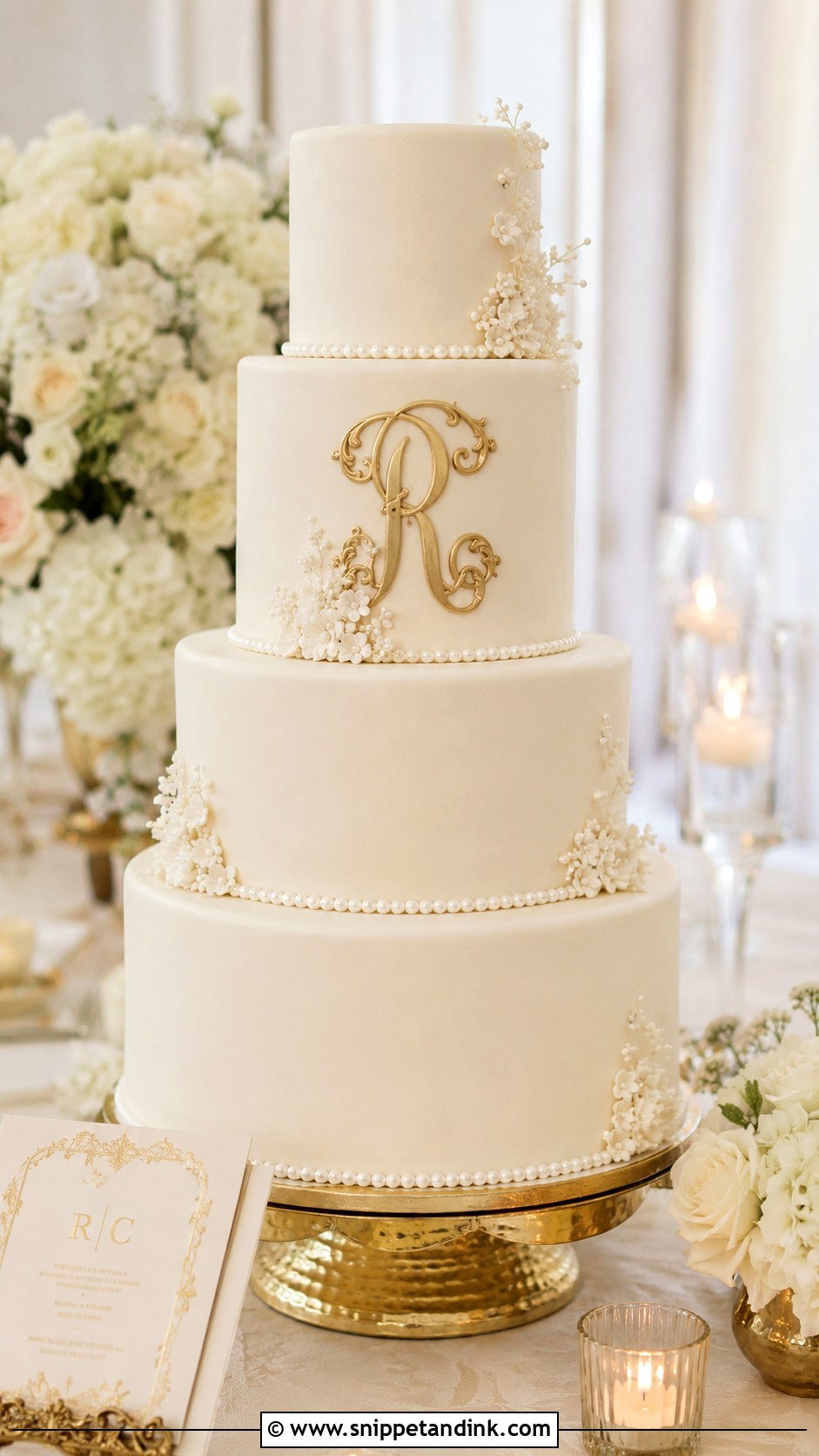
17. Monogram 4 Tier Wedding Cake
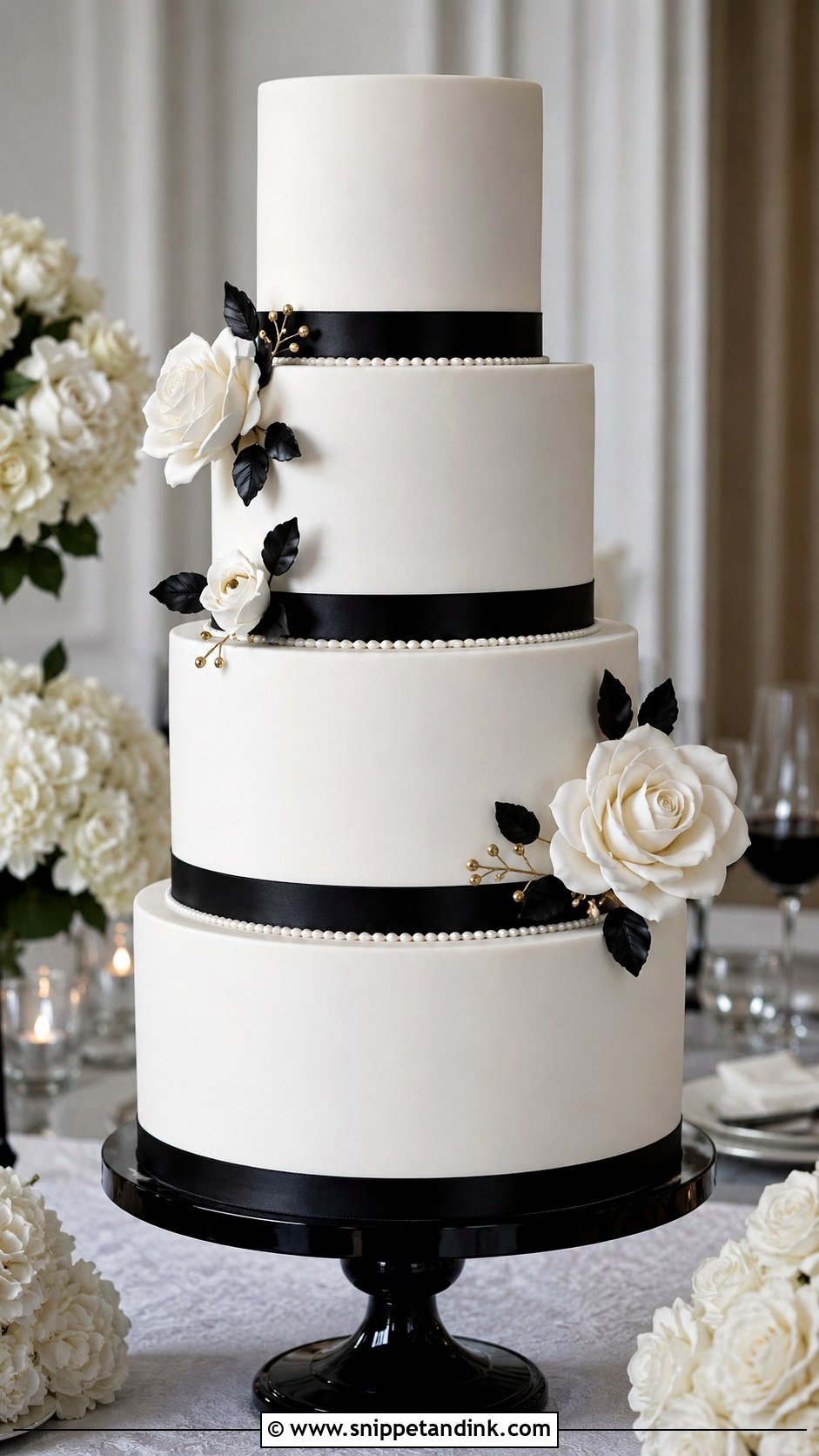
A monogram makes a tall cake feel personal without being loud. Your initials can sit on the front tier in gold, silver, white piping or raised fondant. Keep the rest of the cake clean so the lettering looks deliberate; smooth ivory fondant, pearl borders and small sugar flowers suit it. Send your baker the invitation or signage file so the lettering matches. Hand-cut or piped letters take time to get even, and a crooked letter is the first thing anyone notices at the cake table.
18. Floral Painted 4 Tier Wedding Cake
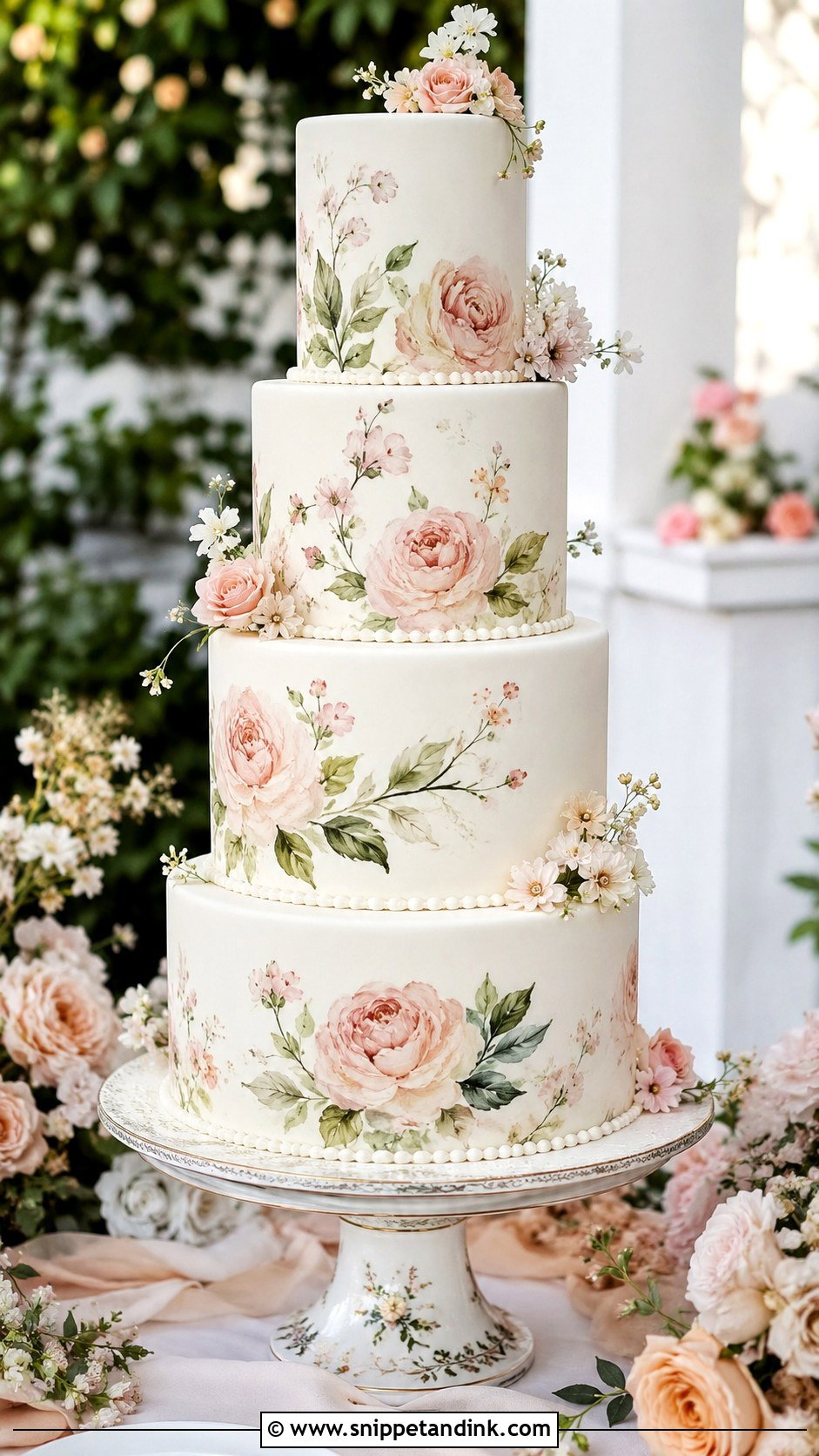
Hand-painted flowers can look like watercolor, botanical sketches or delicate china patterns. They need smooth fondant, since a soft or textured surface takes paint unevenly. Soft blush roses, blue florals, ivory blossoms or sage leaves can match the stationery and table decor. Keep the painting airy so the cake still breathes. If you add real or sugar flowers, place them so they frame the artwork instead of covering it. I paint with edible colors diluted to thin washes, and each tier can take hours, so this is one to book early for a garden or art-inspired wedding.
19. Champagne 4 Tier Wedding Cake
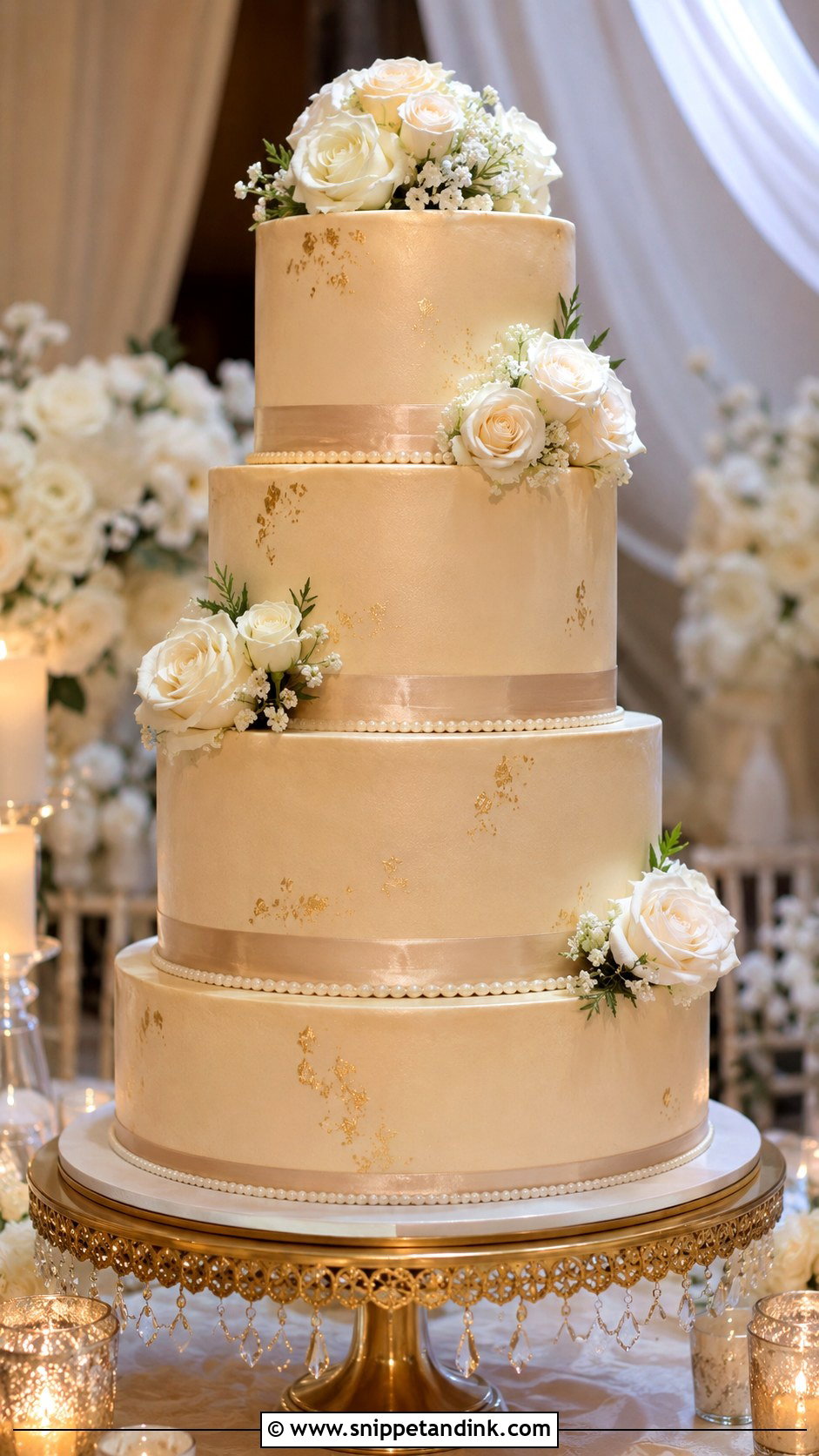
Champagne is warmer and softer than bright white. It works with ivory flowers, gold leaf, pearls and soft beige ribbon, and it’s a natural match for evening receptions, ballrooms and neutral palettes. Smooth buttercream or fondant keeps it refined, and a light shimmer of luster dust makes it glow under reception lighting. Vanilla champagne, almond, caramel or white chocolate sponge suit the color. I’d always check a tinted sample against your linens first; champagne next to a cold white cloth can read slightly gray.




20. Black And White 4 Tier Wedding Cake
A black and white 4 tier wedding cake depends on proportion. White or ivory tiers carry the base, with black ribbon, black piping, a fine bow or one dramatic black accent tier on top of that. Too much black and four tiers look heavy, and deep black icing can also stain teeth, so I keep it on details rather than whole tiers of frosting. White flowers, pearls and small gold touches soften the contrast. Smooth fondant or polished buttercream gives the cleanest lines for a black-tie or evening hotel reception.
Who Cuts a Tall Cake, and How Long It Takes
The ceremonial cut is the easy part. Couples usually slice into the bottom tier because it’s the most stable, and then the cake goes back to the kitchen. What happens next is a job: the staff lift off each tier from the top down, pull out the boards and dowels, and cut every tier into wedding-sized slices before plating. With a small team and a large guest list, that can take a good while, so plan the cutting before guests start drifting home.
- Confirm whether your caterer or venue cuts cake, and whether they charge a cutting fee for a cake from an outside baker.
- Give them a cutting guide from your baker showing where the supports are and how each tier is meant to be sliced.
- Tell them which tier holds which flavor, and which decorations are wired or not edible.
- Ask for the top tier to be boxed separately if you plan to keep it.
- Make sure the cake stand, any rented hardware and the cake knife have a name attached for collection at the end of the night.
If your venue staff have never handled a stacked cake, I’m happy to walk them through it when I deliver. Ten minutes at setup saves a lot of crushed tiers later.
Four Tiers That Still Feel Personal Up Close
Height is only part of it. A four tier cake should suit the mood of the room, photograph well from across it, and still feel personal when someone leans in to look. A plain white buttercream cake can feel every bit as elegant as gold leaf or a floral cascade when the proportions and finishing are right. Start with the venue, palette, dress and flowers. Then pick a finish that supports those details rather than competing with them, and leave the structure to someone who builds tall cakes regularly.
You'll Like These Ideas:










Leave a Reply