
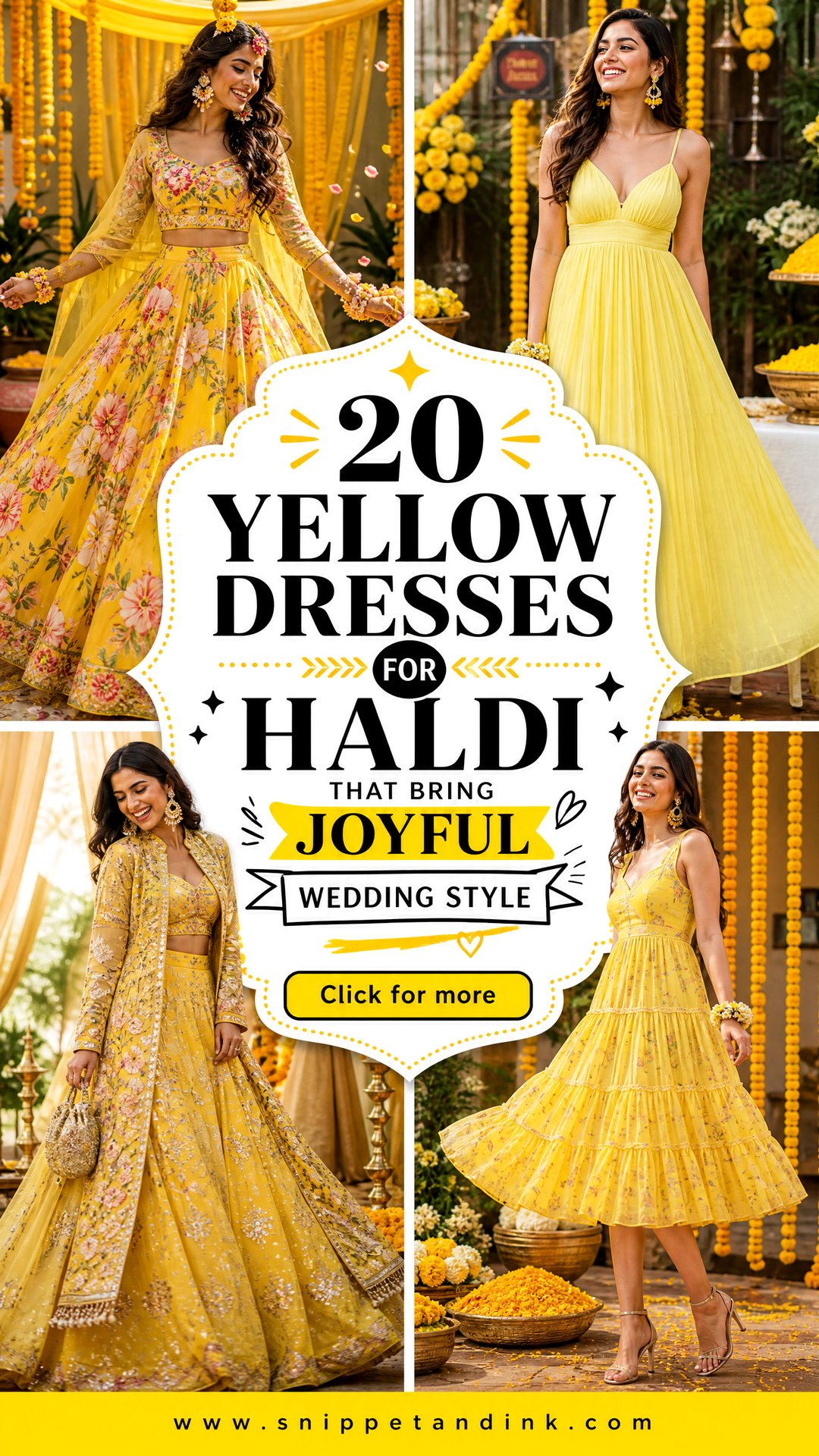
Haldi is the one wedding function where your outfit is expected to get messy. Turmeric paste, water, marigold petals and a lot of hugging all happen within an hour, usually in strong daylight, so I dress clients for it very differently from the sangeet or the reception. Below are twenty yellow looks that cover the traditional end (Anarkalis, lehengas, sarees, salwar suits) and the relaxed end (kaftans, maxis, co-ords), with notes on who each one suits and where it tends to cause trouble. Shade matters as much as silhouette: lemon, marigold, mustard and old gold behave very differently against skin and against a yellow-and-orange decor backdrop, so I’ve flagged that where it counts.
Which Yellow, and Which Fabric, Before Anything Else
I always settle the shade first, standing by a window, because yellow is the colour most changed by light. Pale lemon looks fresh on fair and pink-toned skin but can make olive skin look tired. Marigold and saffron-leaning yellows are friendlier to warm and deeper skin, and mustard or old gold works for almost everyone once the afternoon light turns warm. Hold the fabric under your chin outdoors; if your face looks greyer, move warmer.
Then think about the decor. Many Haldi setups are yellow and orange from floor to canopy, so a bride in exactly the same marigold can disappear into the backdrop. A contrasting border in pink, green or white, or a shade a step brighter or deeper than the decor, keeps you visible.
Fabric that copes with paste and water
- Cotton, cotton-silk, mulmul and rayon: breathable and washable, my first choice for anyone who will be covered in paste.
- Georgette and chiffon: light and quick to dry, but line them, since they cling when wet.
- Organza: holds shape, but water spots show and it doesn’t breathe much in heat.
- Pure silk, velvet and real zari: save them for later functions. Turmeric and water are hard on all three.
If the family plays with water or flowers after the paste, plan a second outfit. Even the best Haldi outfit looks tired after it has been soaked.
1. Yellow Gota Patti Anarkali Dress for Haldi
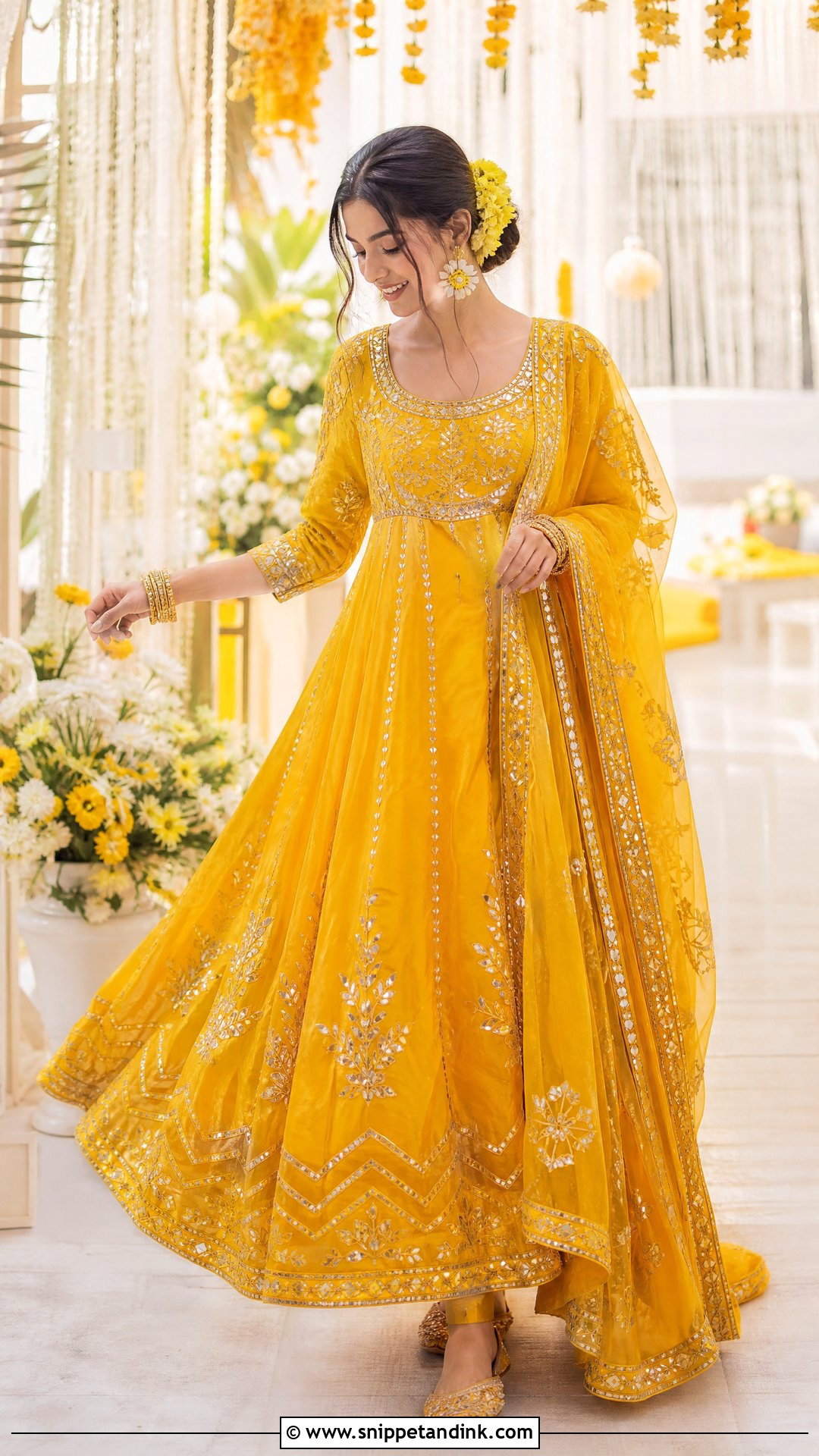
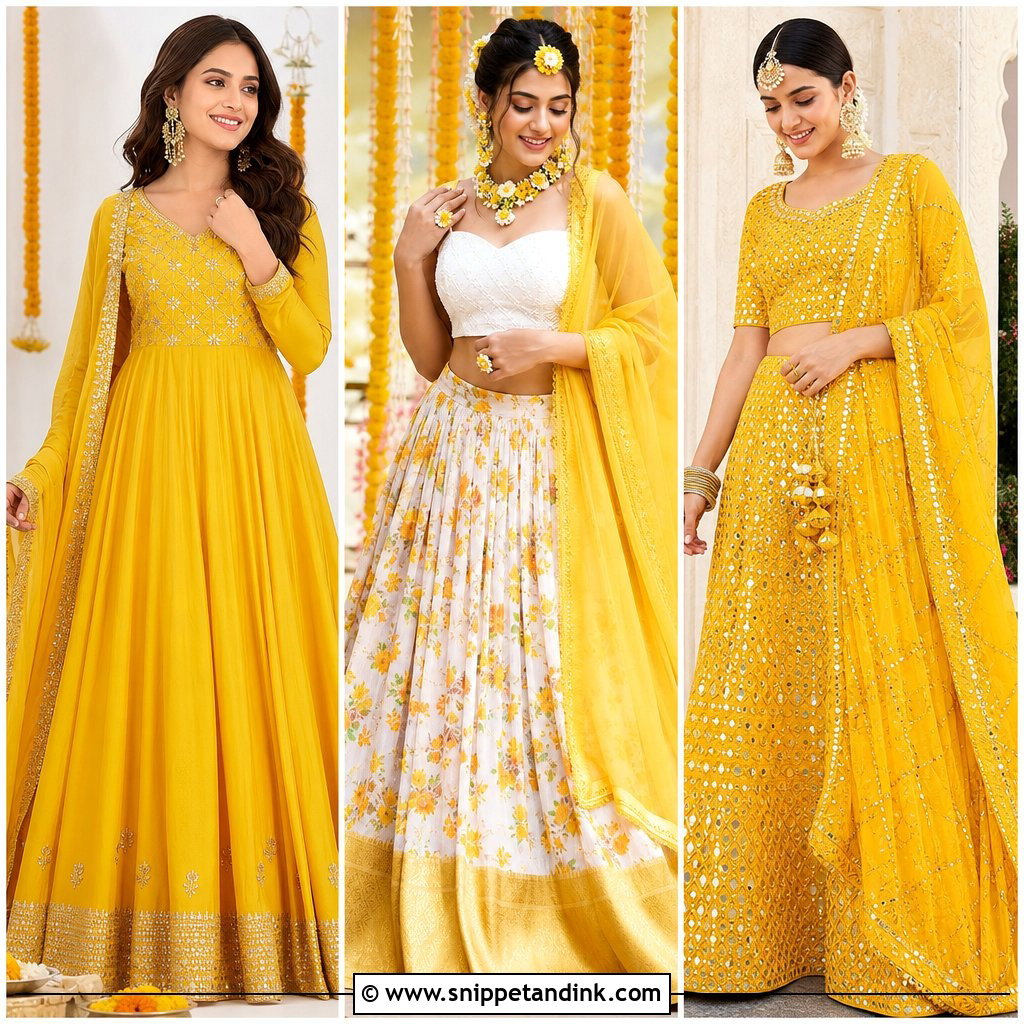
A flowing yellow Anarkali is the safest place to start if you want something traditional that still lets you sit cross-legged on a low chowki. I ask for cotton-silk or georgette with a proper cotton lining, because unlined georgette clings to damp skin the moment the paste goes on. Gota patti at the neckline, cuffs and hem gives enough shine for daylight without the scratch of zardozi. A sheer dupatta, slim bangles and embroidered juttis finish it. For the bride I’d go fuller in the skirt and heavier on the bodice; a guest can wear the same cut with plain trim. Keep makeup to peach blush and a soft pink lip, since anything heavier will be wiped onto someone’s shoulder within minutes.
2. Yellow Mirror Work Sharara Dress for Haldi
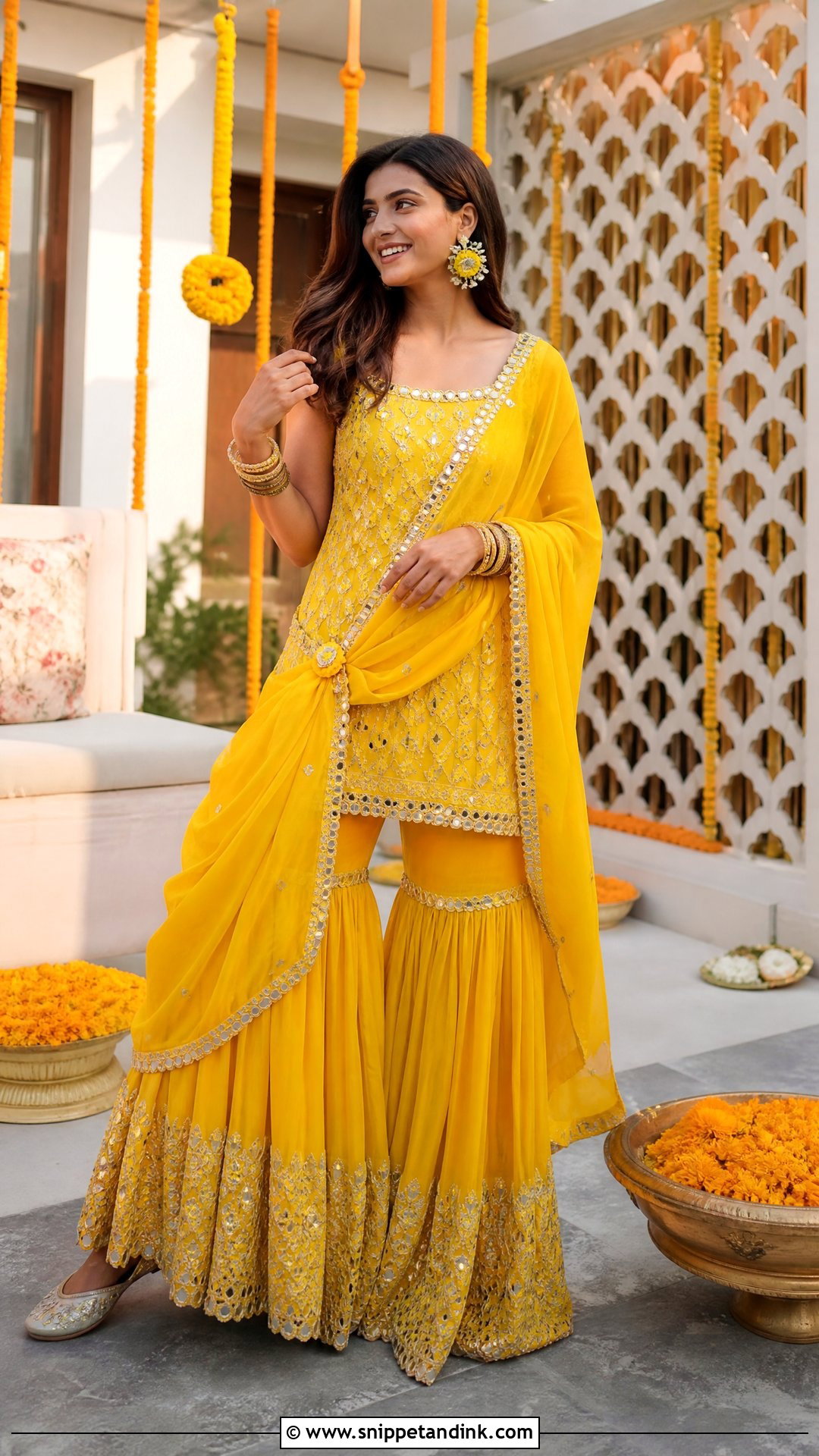
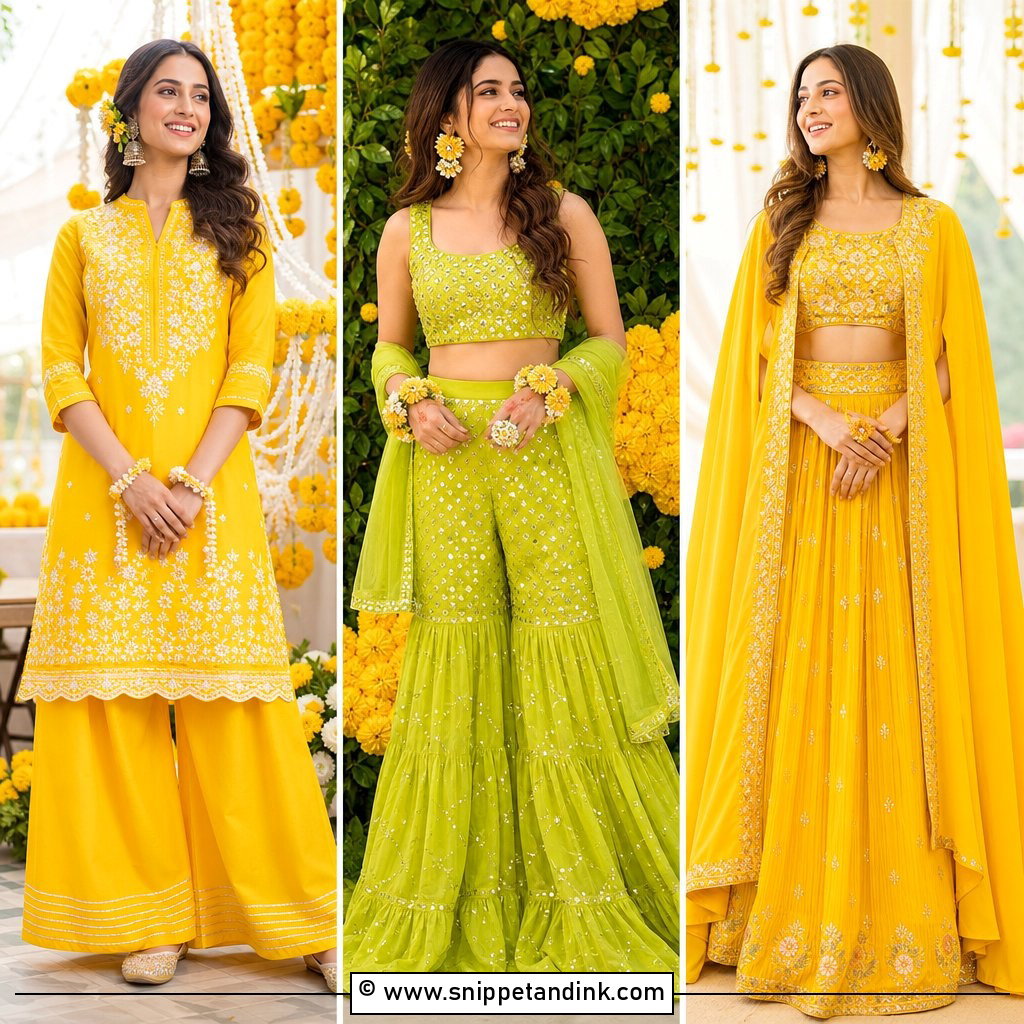
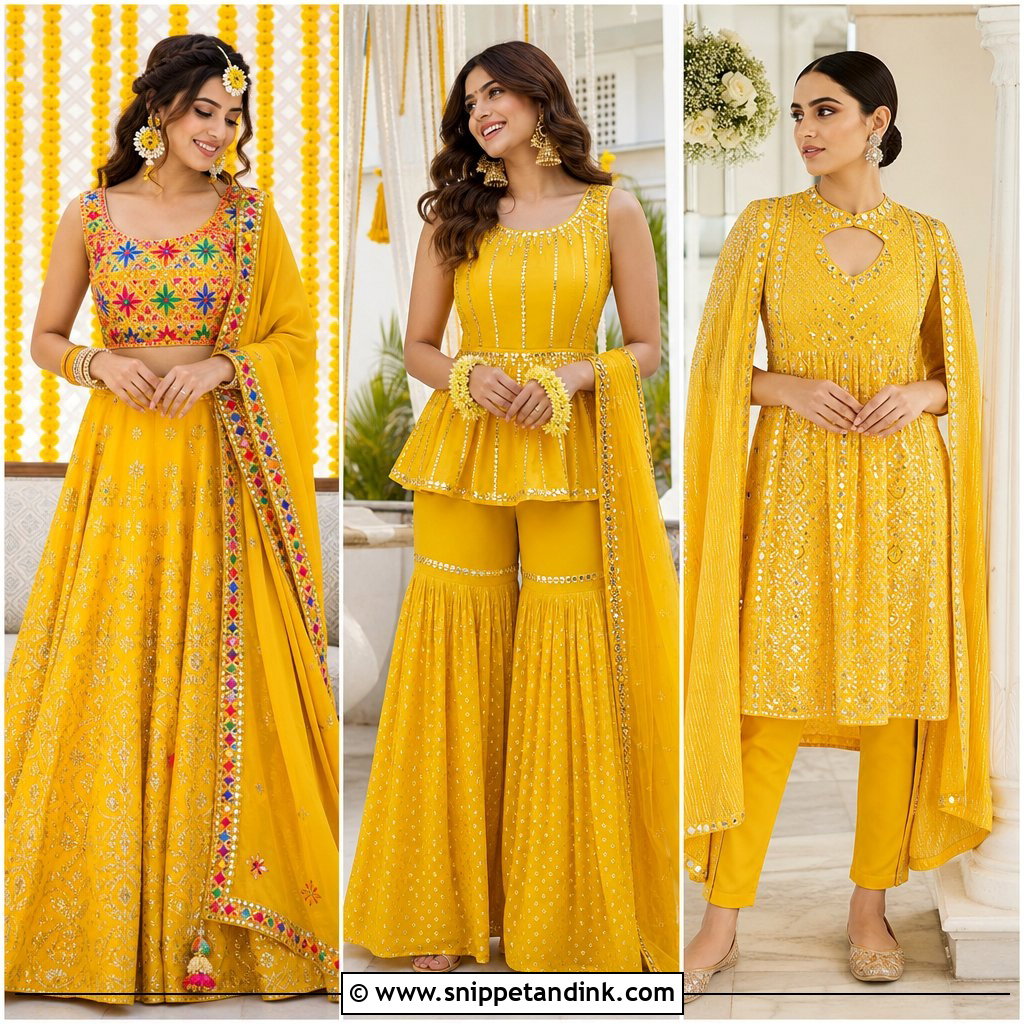
Mirror work is made for daylight: each little disc throws back sun, so a yellow mirror work sharara sparkles in photos without any sequins at all. The set is a short straight kurta, wide flared sharara and a light dupatta that I always pin at the shoulder for this function. One warning from fittings: turmeric paste works its way into the thread around each mirror and is stubborn to clean, so keep the heaviest mirror placement on the hem and sleeves, away from the face and arms where the paste lands. Ask for a fitted shoulder and an easy waist. A braided ponytail survives the dancing, and a small potli holds phone, tissues and lipstick.
3. Yellow Floral Lehenga Dress for Haldi
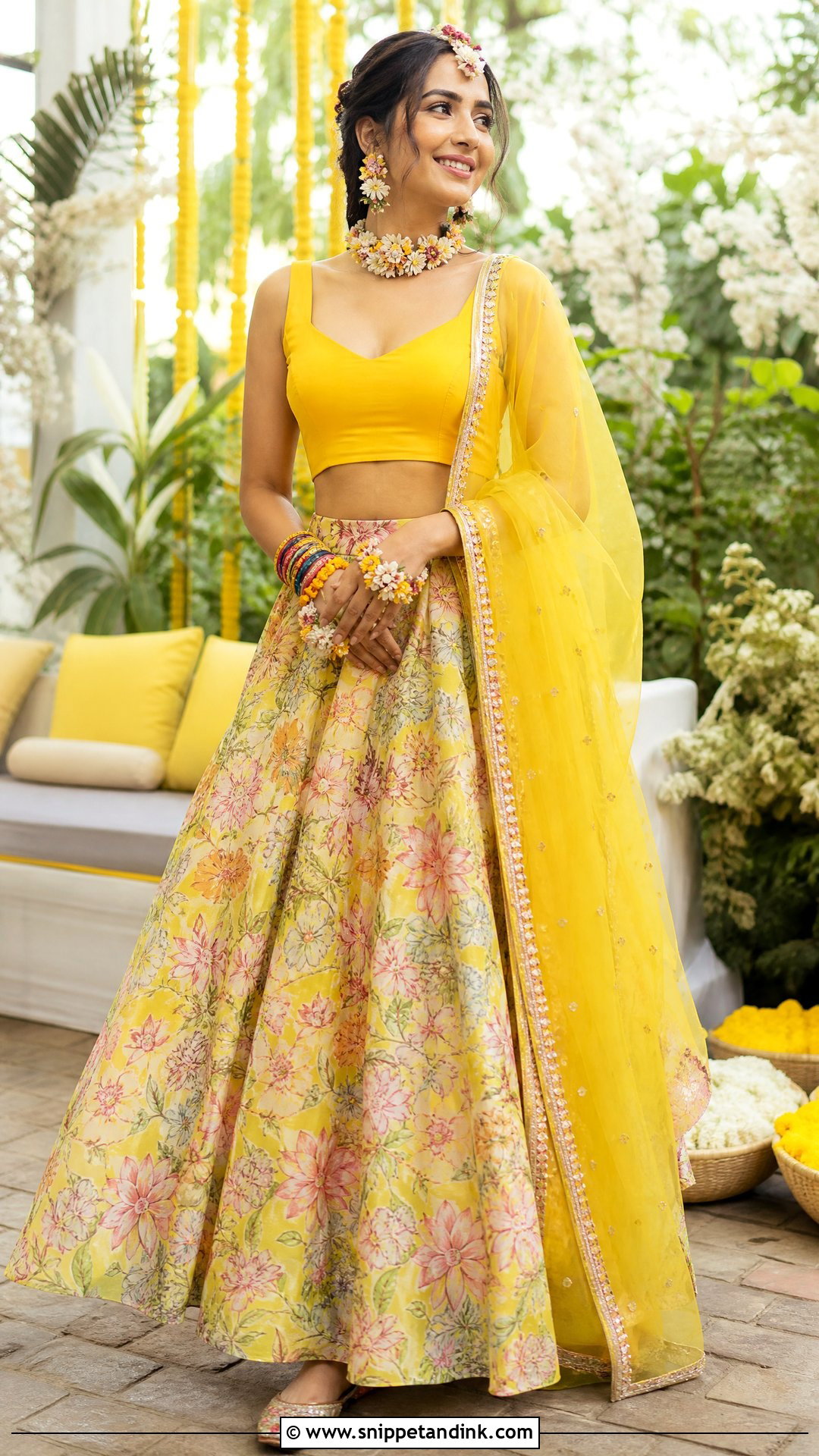
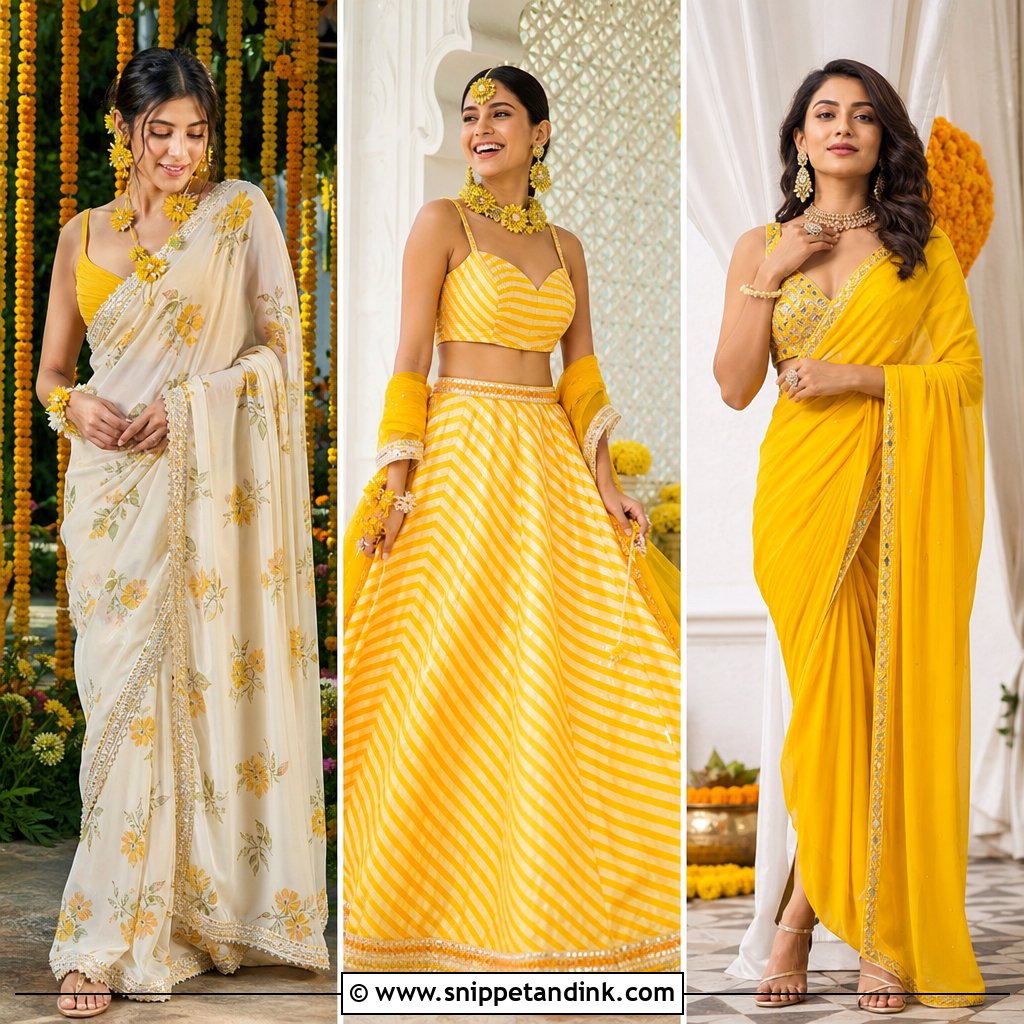
Floral print is forgiving at a Haldi. A splash of turmeric on a busy pink-and-green pattern disappears in a way it never does on plain silk. I pair a printed lightweight skirt with a solid cropped blouse so the eye has somewhere to rest, then add a sheer yellow dupatta with only a narrow border so the print still shows. Flat sandals or juttis, simple bangles and either loose waves or a flower-trimmed braid. The fitting detail I fuss over is the waistband: lehenga skirts drop as you sit and stand repeatedly, so it needs a secure hook and a hem that clears the floor by a finger’s width.
4. Yellow Chikankari Kurta Dress for Haldi
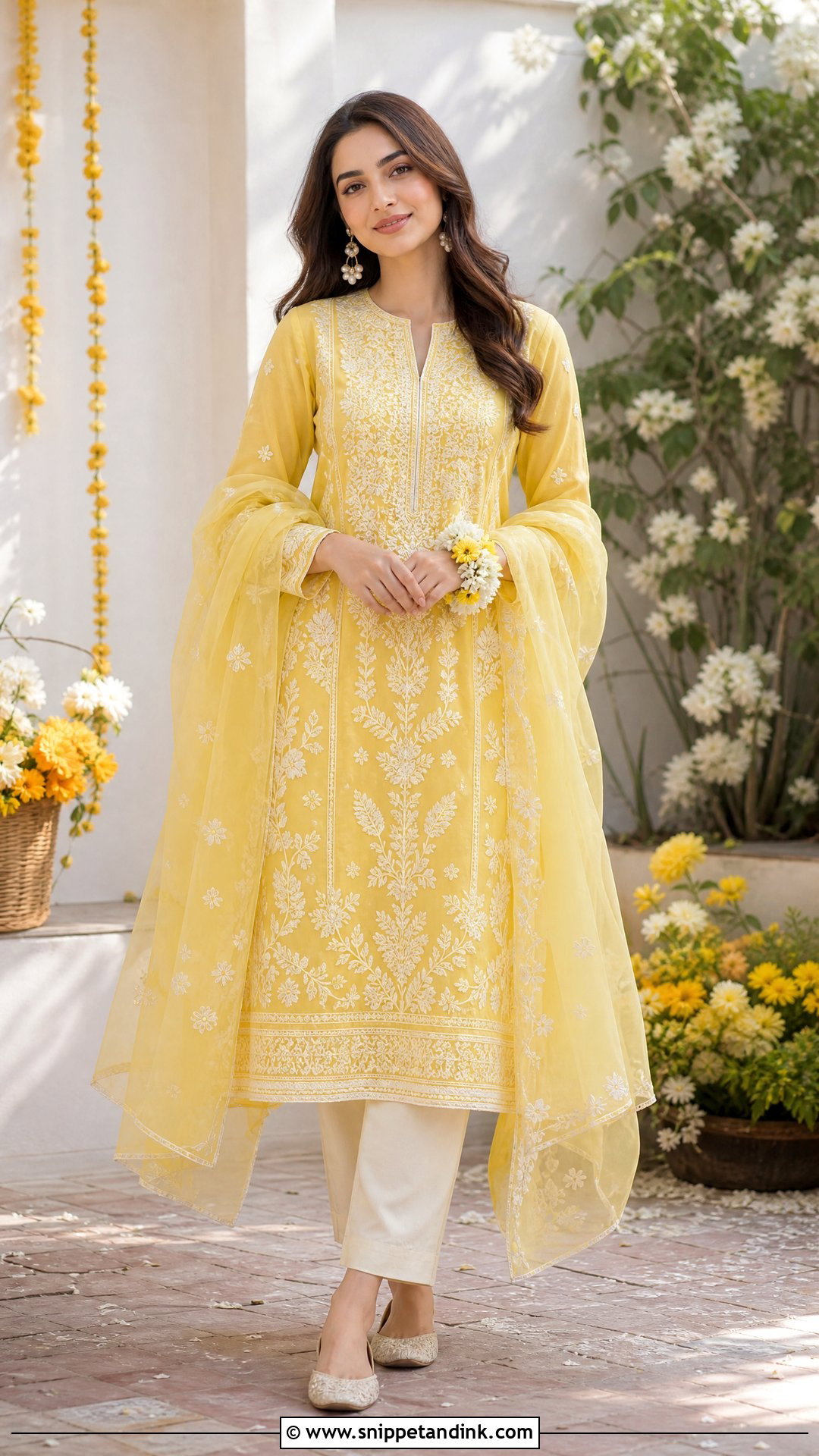
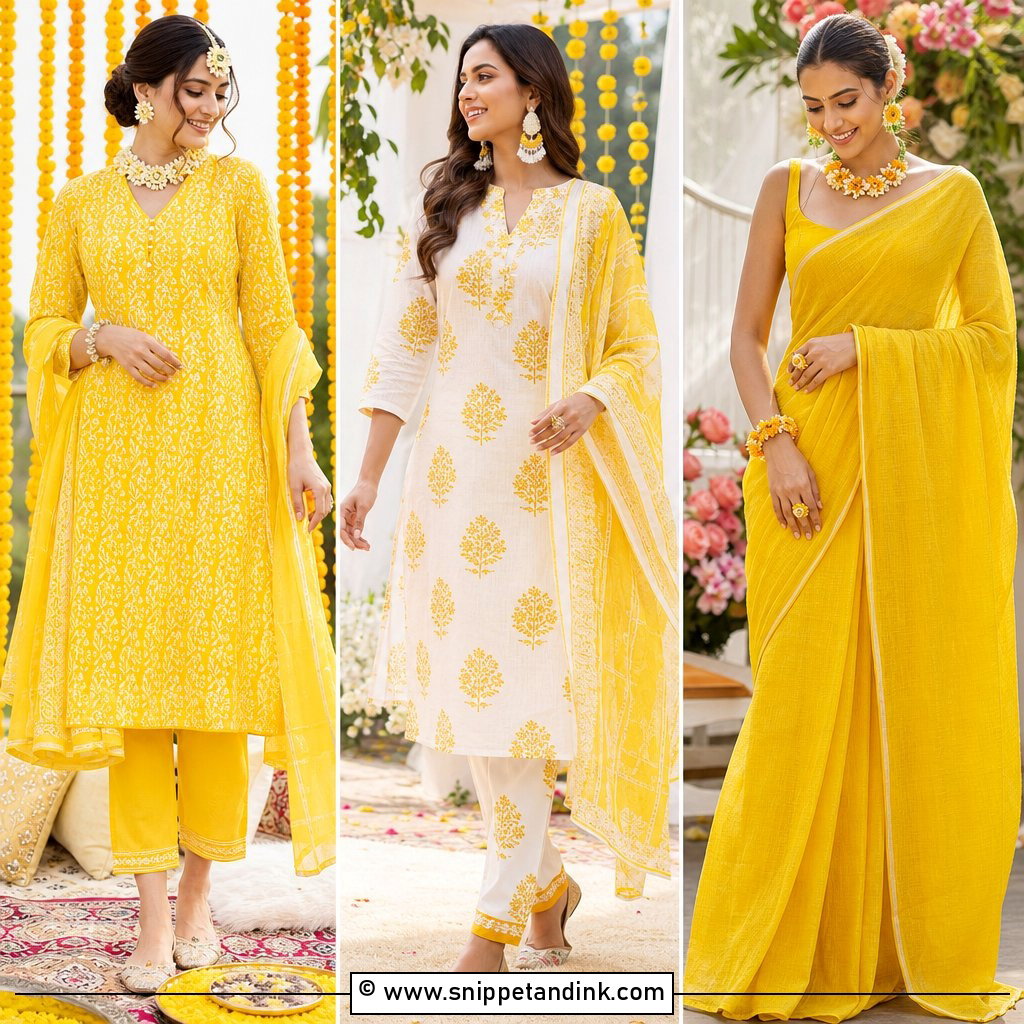
Chikankari is the look I suggest to aunts and mothers who want something graceful that won’t wear them out by noon. It turns a simple yellow Haldi outfit into something considered with nothing but white or cream shadow work. Go for a knee or calf-length kurta in cotton or muslin; real hand chikan on georgette is lighter still but more delicate to wash. Straight pants look crisp, palazzos move more. An organza dupatta adds a little structure. Pearl studs and ivory juttis are enough. Skip sequinned versions for a casual morning function; they look out of place next to thread embroidery.
5. Yellow Organza Saree for Haldi
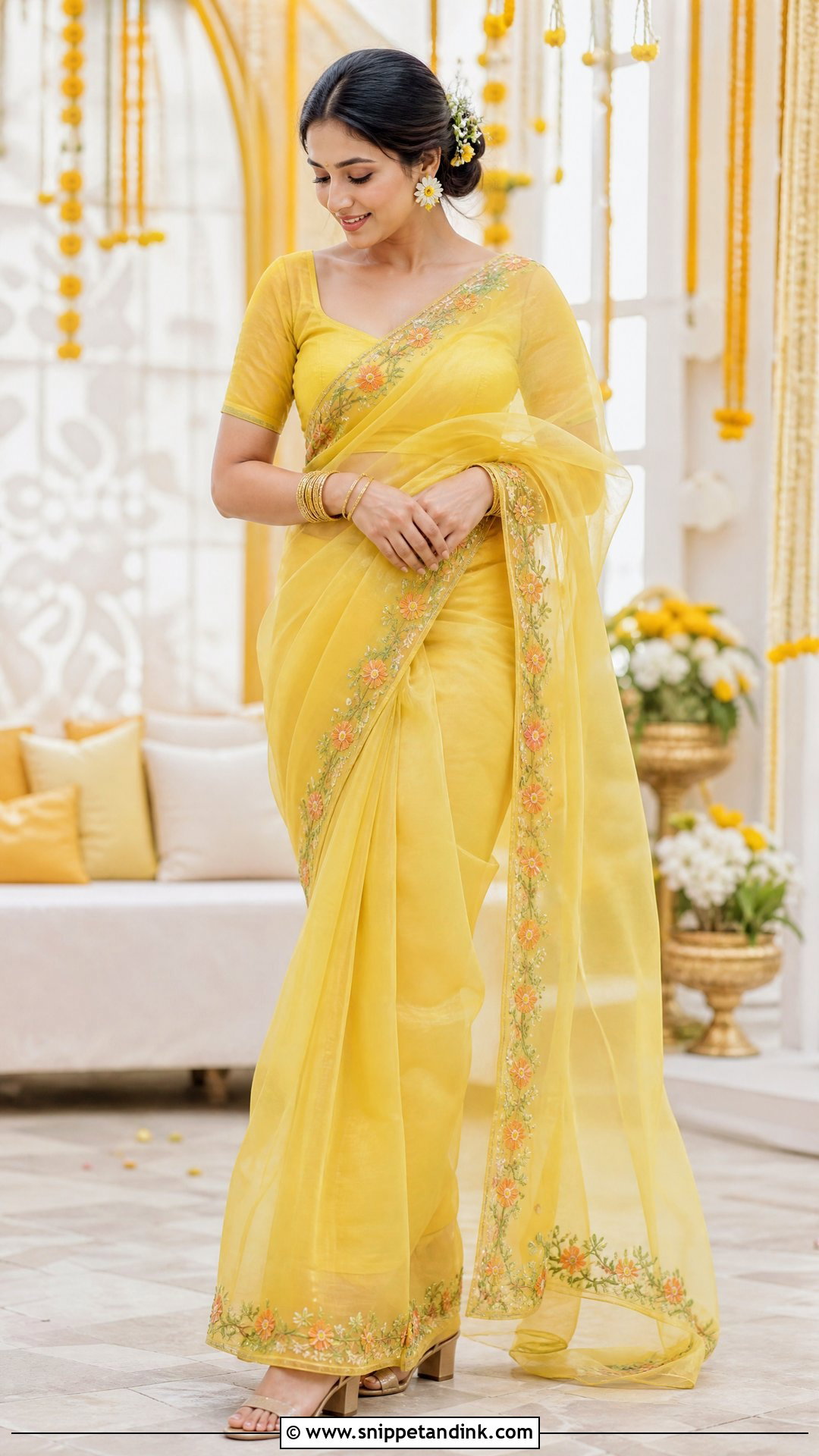
Organza holds its shape, which is exactly why I like it for a saree at a daytime function and exactly why it needs restraint elsewhere. The fabric already stands away from the body, so heavy jewellery on top makes the whole look wide. Choose a plain saree with a floral border or a soft print, and a fitted sleeveless or short-sleeved blouse; brides can add pearl, mirror or gota detail to that blouse. I pin the pleats at the waist and the pallu at the shoulder before anyone sits down, because organza pleats spring open if they aren’t anchored. Small bindi, bangles, low block heels and a sleek bun.
6. Mustard Bandhani Anarkali for Haldi
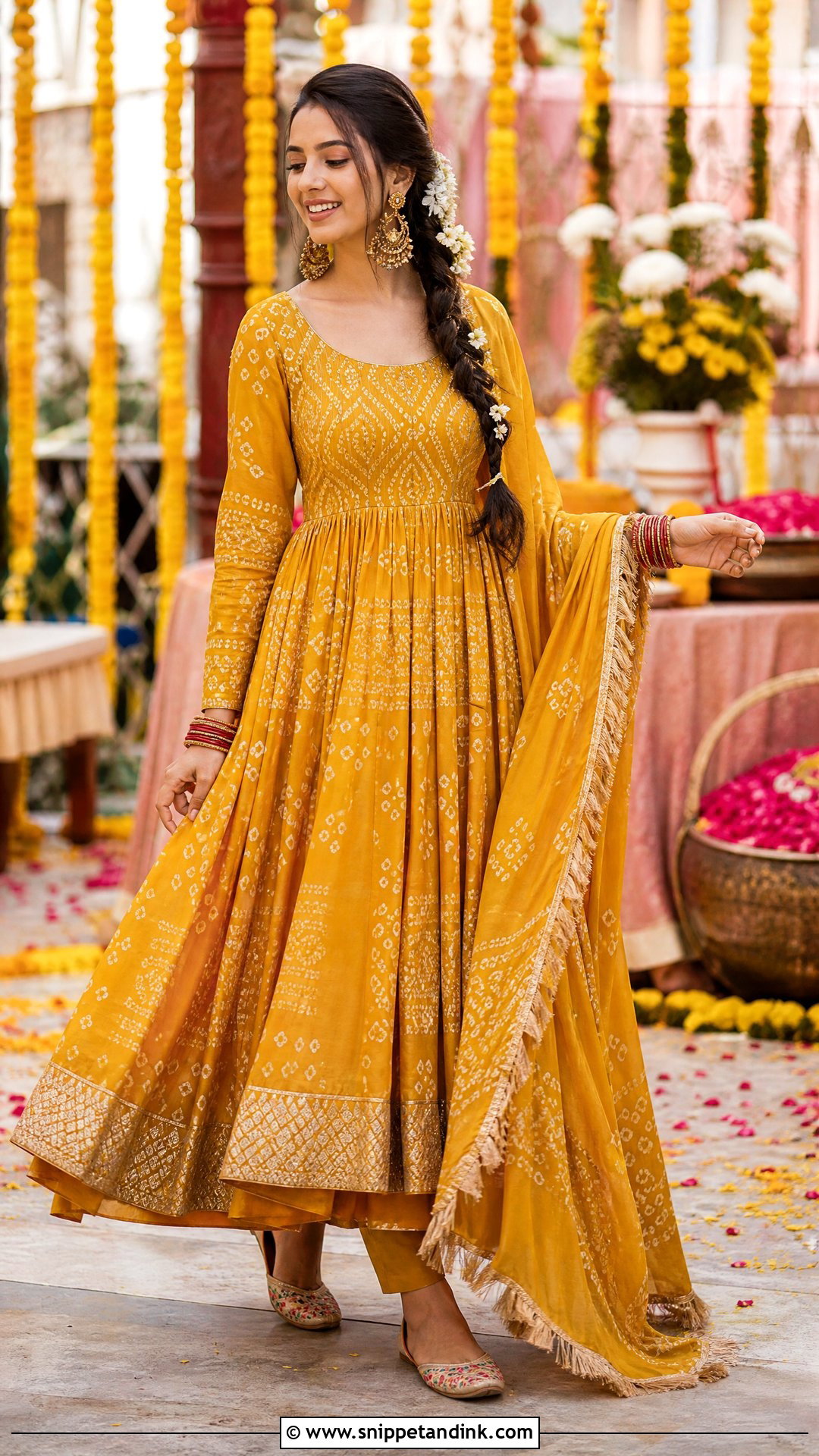
Mustard is my pick for brides who look washed out in lemon. It carries warmth on deeper and olive skin tones and holds up from midday into late afternoon light without reading neon. In Bandhani, the tiny tie-dye dots in red, white or green give a traditional pattern that also hides splashes well. Look for a fitted bodice and a full flare, then a tasselled or gota-edged dupatta. Antique gold earrings and red bangles deepen the palette. Because the print is already busy, I leave the neck bare or nearly so. A long braid with a few fresh flowers and a muted rose lip finish it.
7. Lemon Yellow Maxi Dress for Haldi
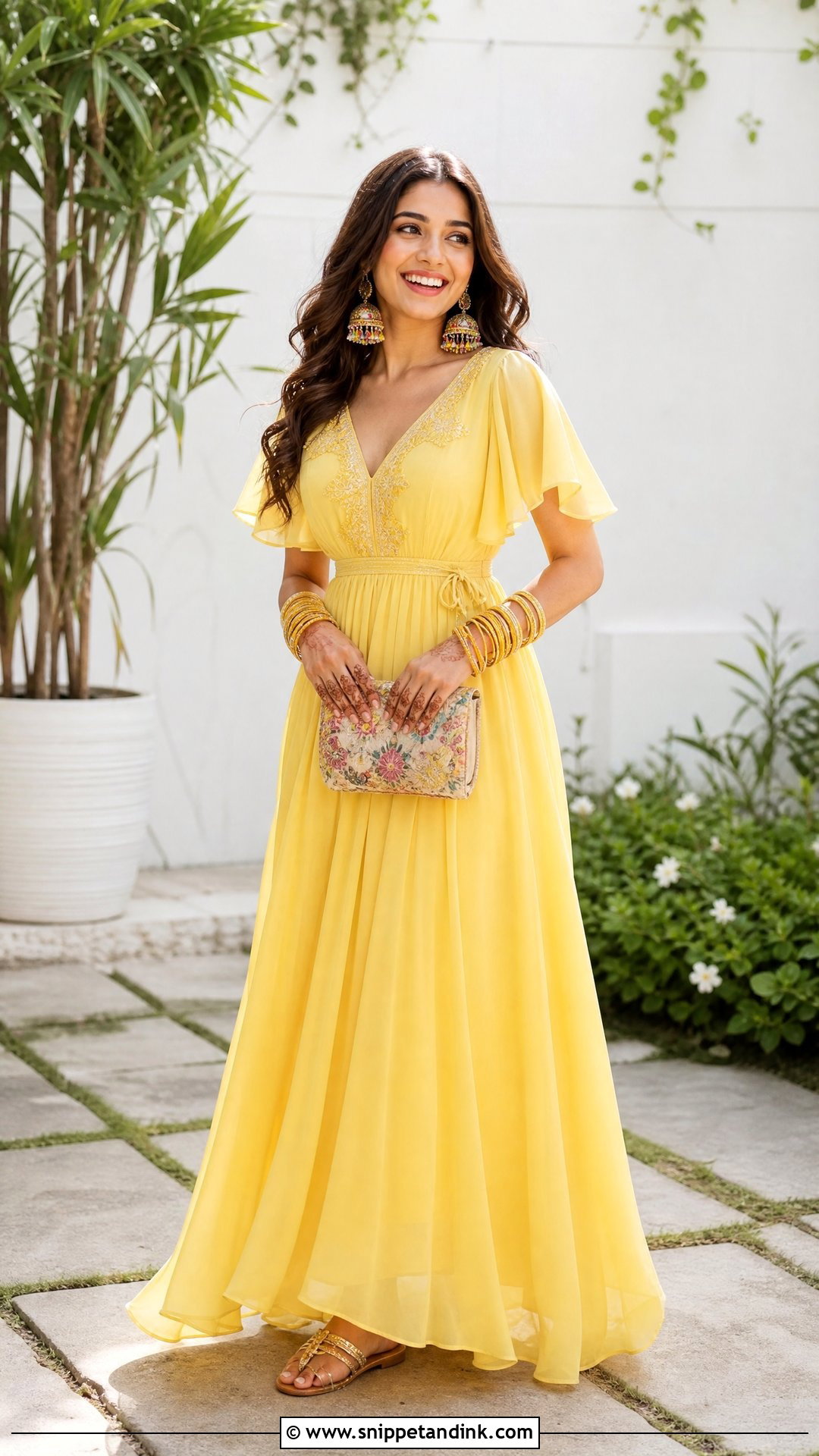
Guests who don’t own Indian clothes ask me what to wear to a Haldi more than anything else, and a lemon maxi is my usual answer. Breathable cotton or lined chiffon, a defined waist, flutter sleeves and an ankle-length skirt look festive the moment you add colourful jhumkas, stacked bangles and an embroidered clutch. Flat gold sandals matter here because Haldi seating is often low and outdoors. Do the sit test in the changing room: if the neckline gapes when you lean forward to apply paste, choose another dress. Brides can borrow the idea with a floral belt and flower jewellery.
8. Yellow Peplum Sharara for Haldi
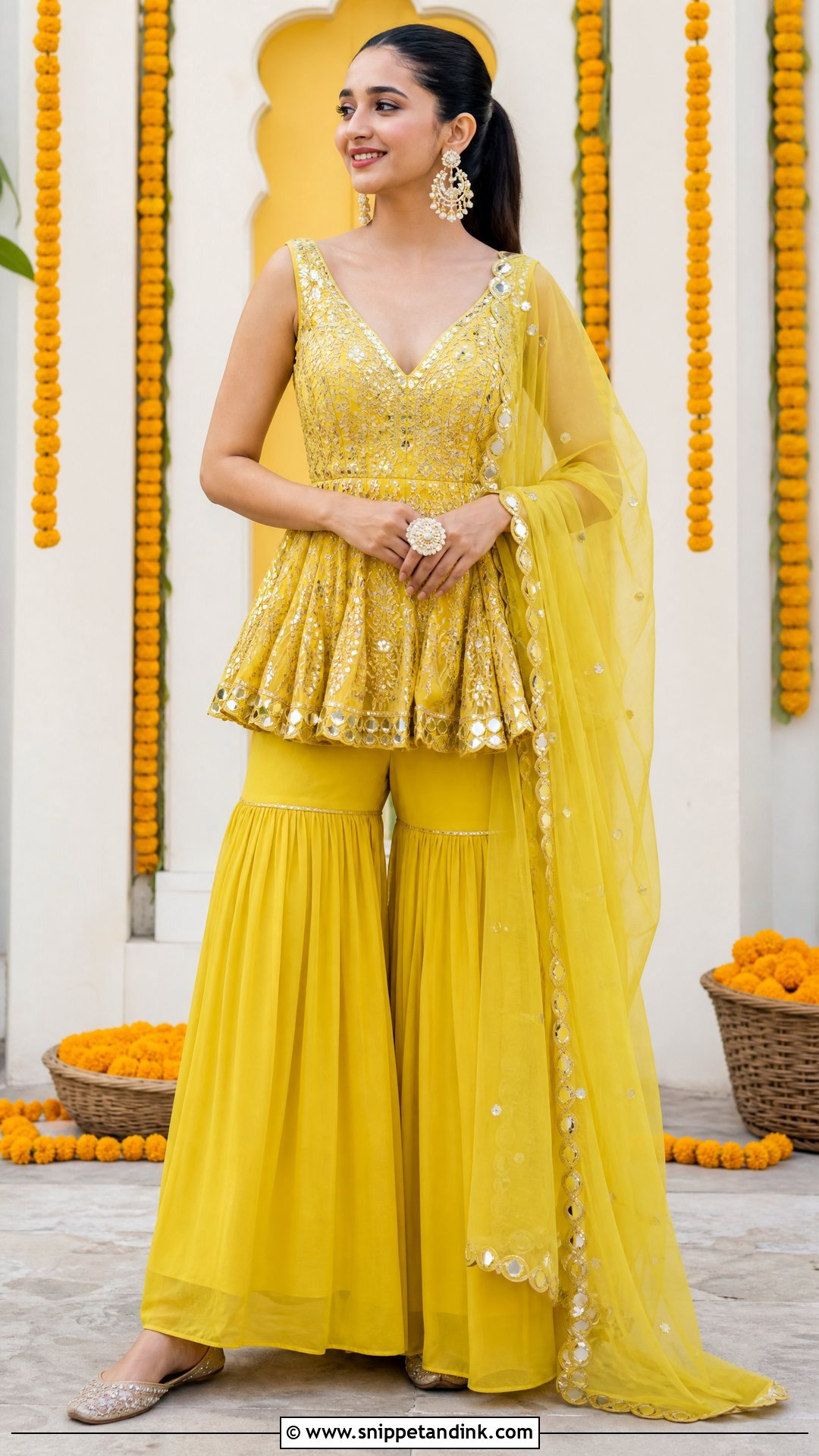
The peplum fixes a common sharara problem, which is the kurta swallowing your waist. A fitted peplum top marks it clearly and the flared pants do the moving. Light georgette or crepe with mirror work or gota trim keeps it airy. I often drop the dupatta altogether for this one, or pin a narrow sheer drape at one shoulder. Statement earrings and metallic juttis are plenty. The proportion I check in the mirror: the peplum hem should end above the widest point of the sharara flare. Let them overlap and the outfit looks bottom-heavy in every photo.
9. Yellow Dhoti Pant Set for Haldi
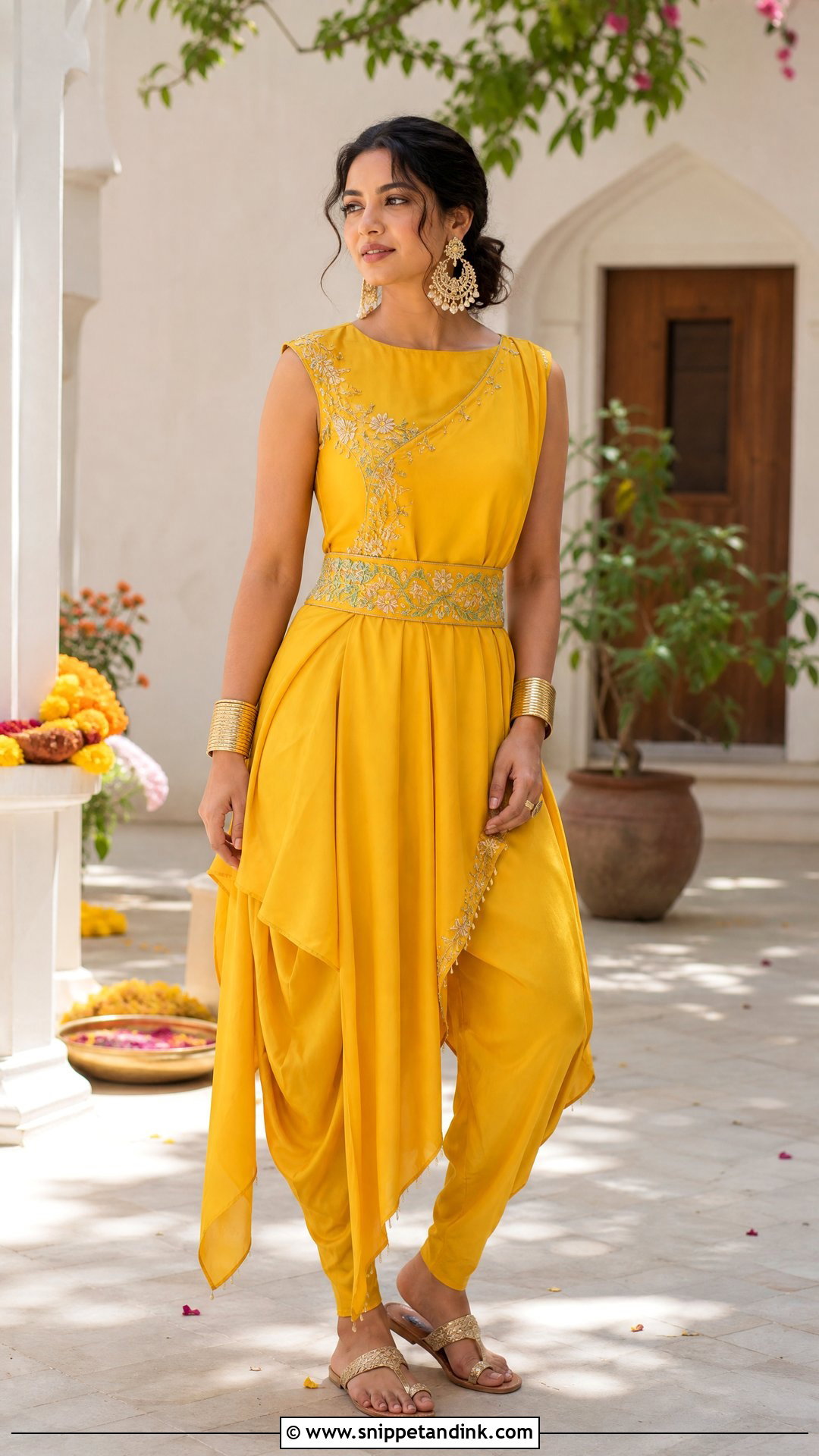
Dhoti pants give you complete freedom to sit, kneel and dance, which is why I suggest them to anyone asking for a modern Indo-Western look at a smaller or destination Haldi. Pair them with a one-shoulder top, a short peplum kurta or an asymmetric tunic, keep the fabric a solid marigold, and let a mirror-work belt or embroidered neckline carry the detail. Kolhapuri flats and a sleek ponytail keep the draping visible. The tailoring is everything: the drape should gather neatly at the ankle, because loose excess fabric swamps petite frames and bunches uncomfortably when you sit for the ritual.
10. Yellow Palazzo Kurta Set for Haldi
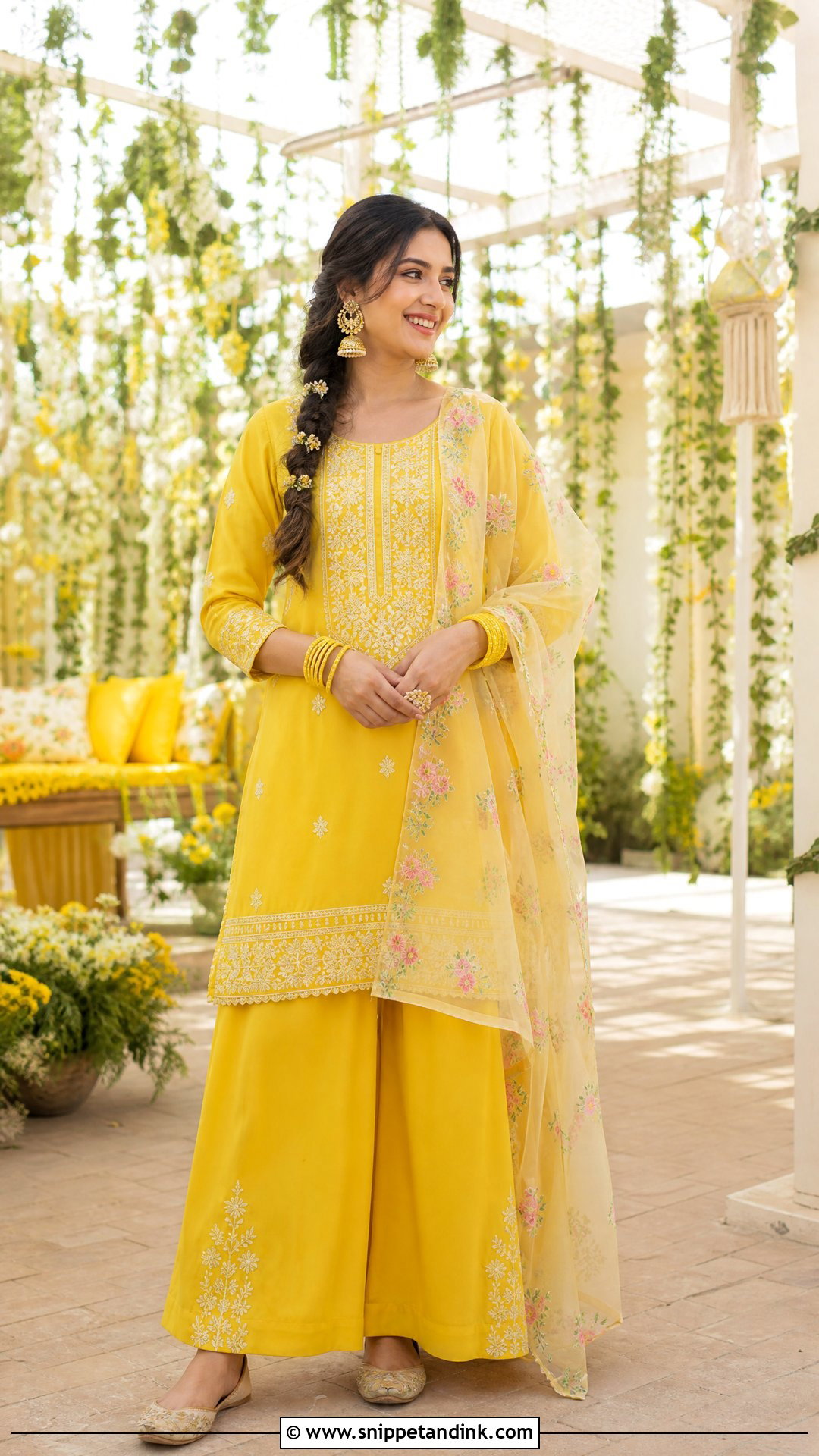
Nothing beats a kurta and palazzo set for a hot morning. Cotton, rayon or a light silk blend lets air move, and wide palazzos never ride up when you sit on the floor. I keep the kurta straight or gently flared and ending near the knee, then add an organza dupatta with a printed or embroidered border for colour. Medium jhumkas and flat juttis. If you’re petite, ask for vertical embroidery down the front and a slightly shorter kurta; that small change lengthens the line and stops the full pants from overwhelming you.
11. Yellow Jacket Lehenga for Haldi
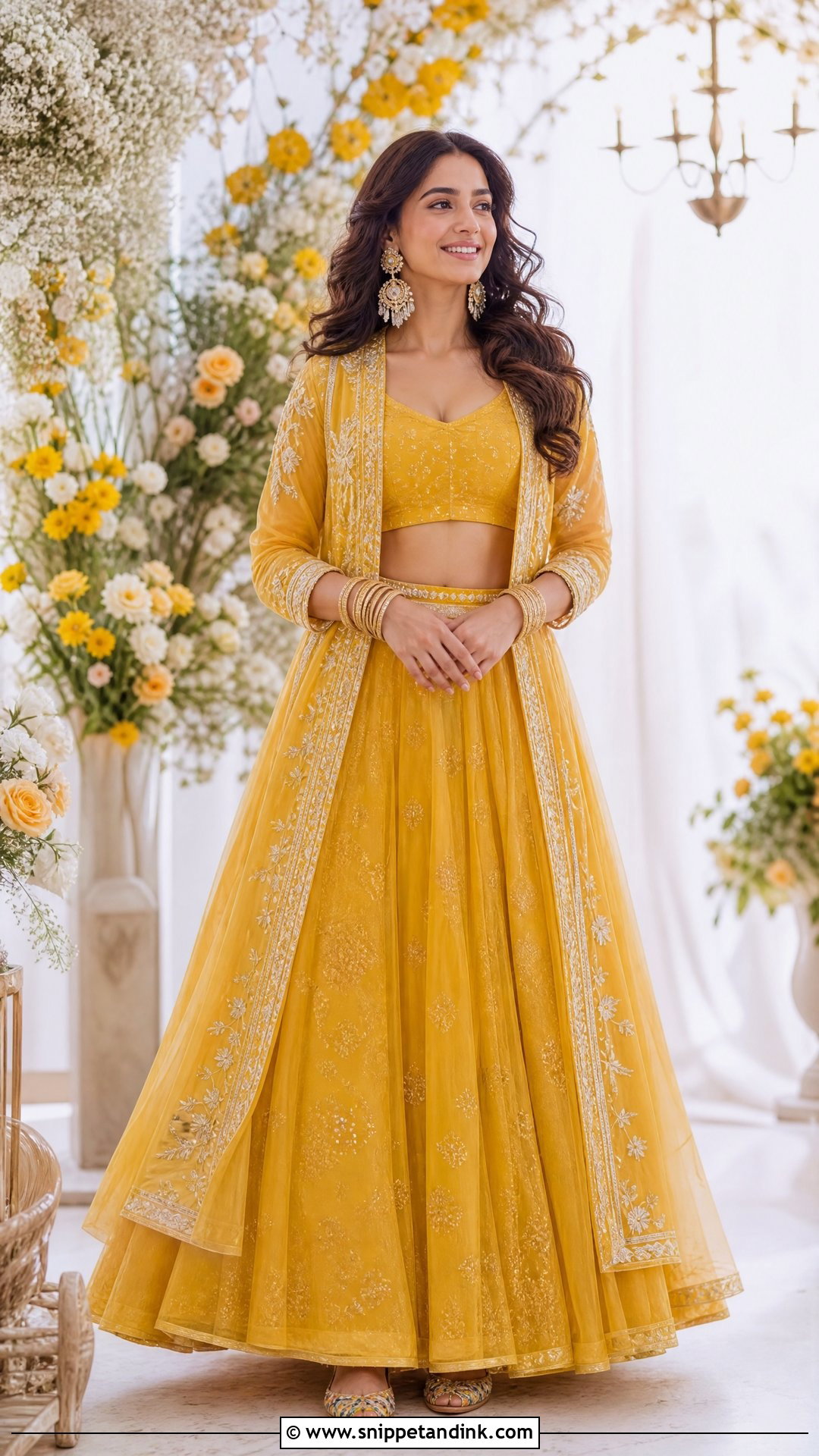
A sheer jacket over a lehenga solves the dupatta problem. Nothing to keep re-pinning while your cousins pull you into the dancing. Start with a light flared skirt and a plain fitted blouse, then layer a waist-length jacket for something playful or a long open-front one for more drama. I keep the embroidery to threadwork, small mirrors or gota borders, since dense work on a sheer layer drags it down. Block heels or juttis, stacked bangles, and hair in a sleek braid so it doesn’t tangle in the jacket collar. Guests can do a printed skirt with a plain jacket.
12. Yellow Cape Dress for Haldi
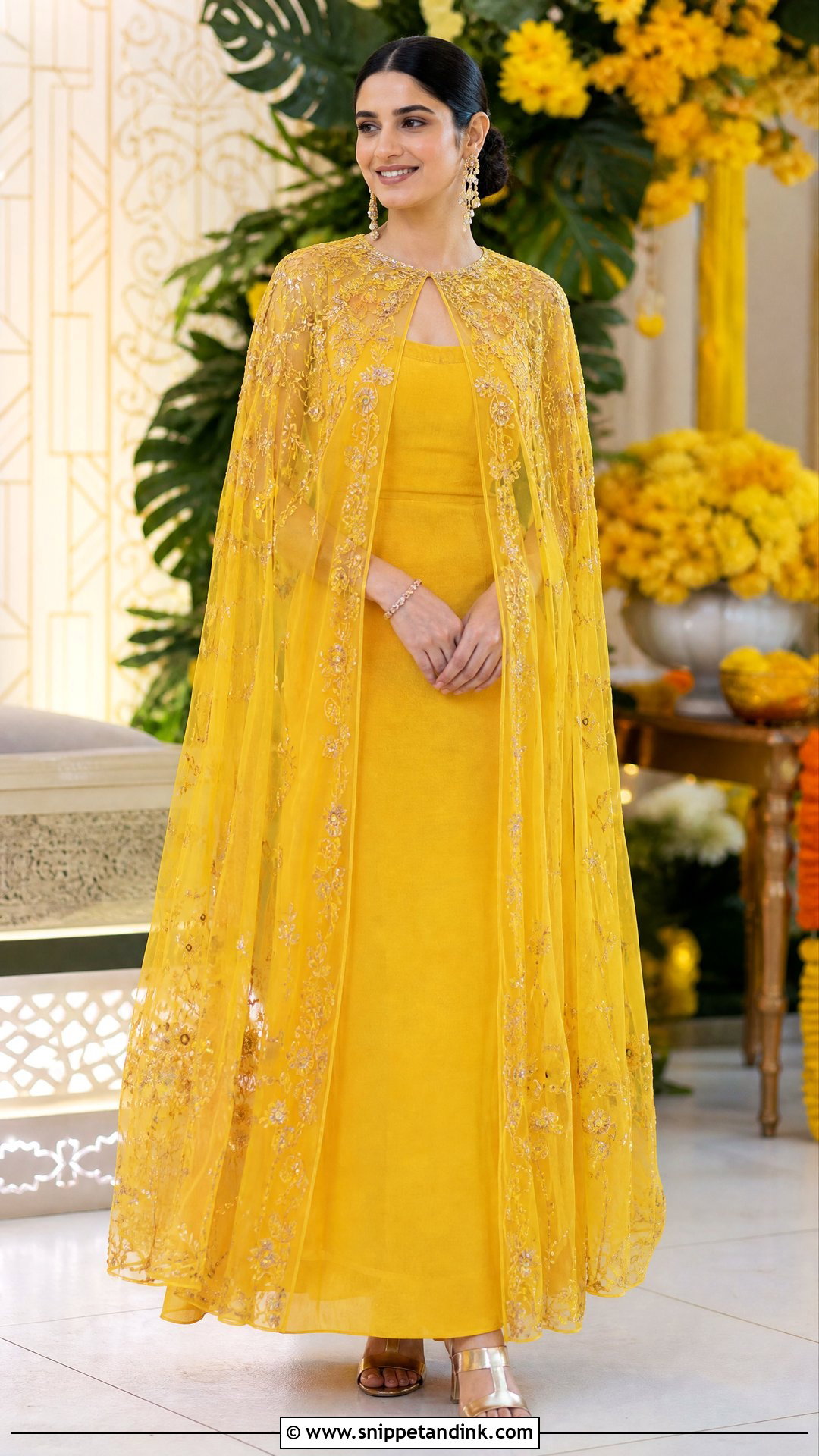
Capes give you the movement of a dupatta that stays exactly where it was stitched. Choose either a fitted ankle-length dress or a crop top and skirt with the sheer cape attached at the shoulders, and keep the base simple so the layers don’t fight. Embroidered edges or small mirrors on the cape catch light as you walk. This is one I steer toward indoor or covered Haldis: outdoors, a sheer cape picks up wind, wet paste and petals. Make sure it ends well above the floor so nobody steps on it during the ritual.
13. Yellow Kaftan Dress for Haldi
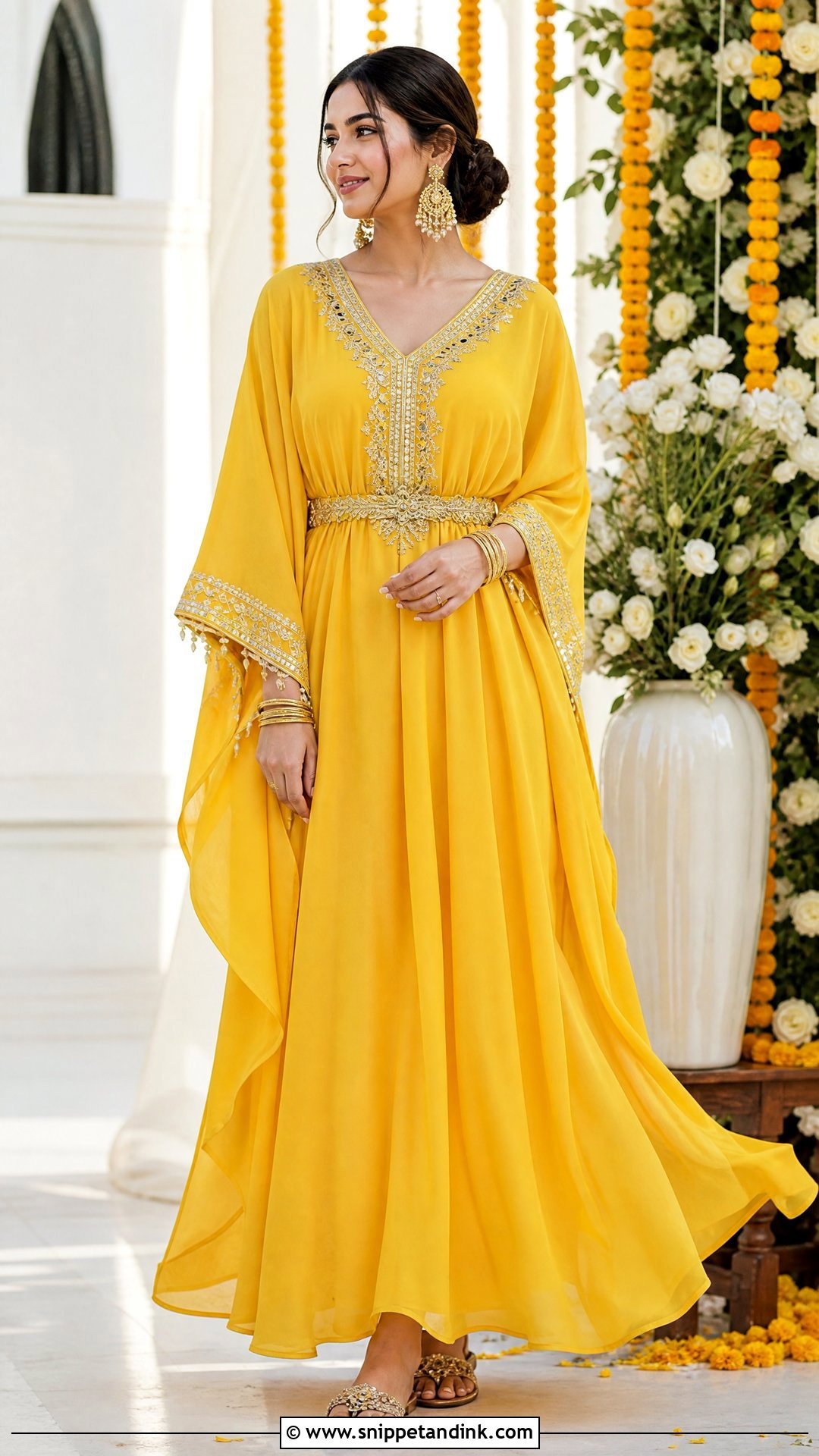
Kaftans are comfortable, but without shape they can look like a cover-up. I only recommend ones with a waist seam, a tie or an embroidered belt that pulls the fabric in. A V-neckline, embellished cuffs and side slits add structure and make it easier to move. Crepe, chiffon or cotton-silk drape well. Pair it with bold earrings, slim bangles and flat embellished sandals, and keep the bag small; an oversized tote next to all that volume tips the look into resortwear. Brides can wear a floor-length version with mirror embroidery, guests a printed calf-length one.
14. Yellow Tiered Midi Dress for Haldi
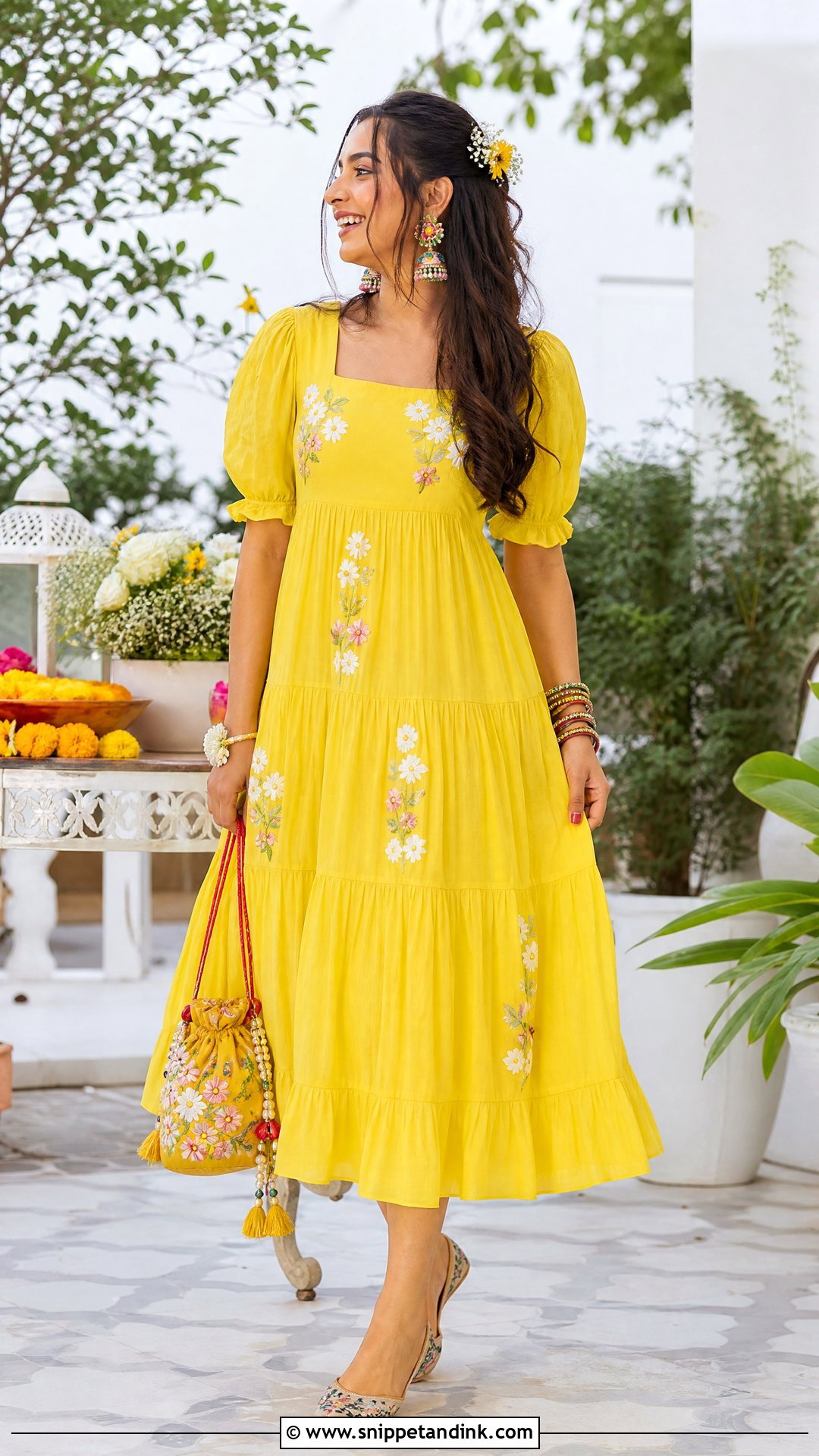
A tiered midi in breathable cotton is youthful and very easy, which suits an outdoor family Haldi. Puff sleeves, a square neck and a defined waist before the tiers start give it shape; a small floral print or embroidered neckline ties it to the occasion. Jhumkas, mixed bangles and embroidered flats, plus a colourful potli. One practical rule I give guests: keep the hem below the knee. Low seating and a short tiered skirt are not friends, and you will be bending forward to put paste on the bride.
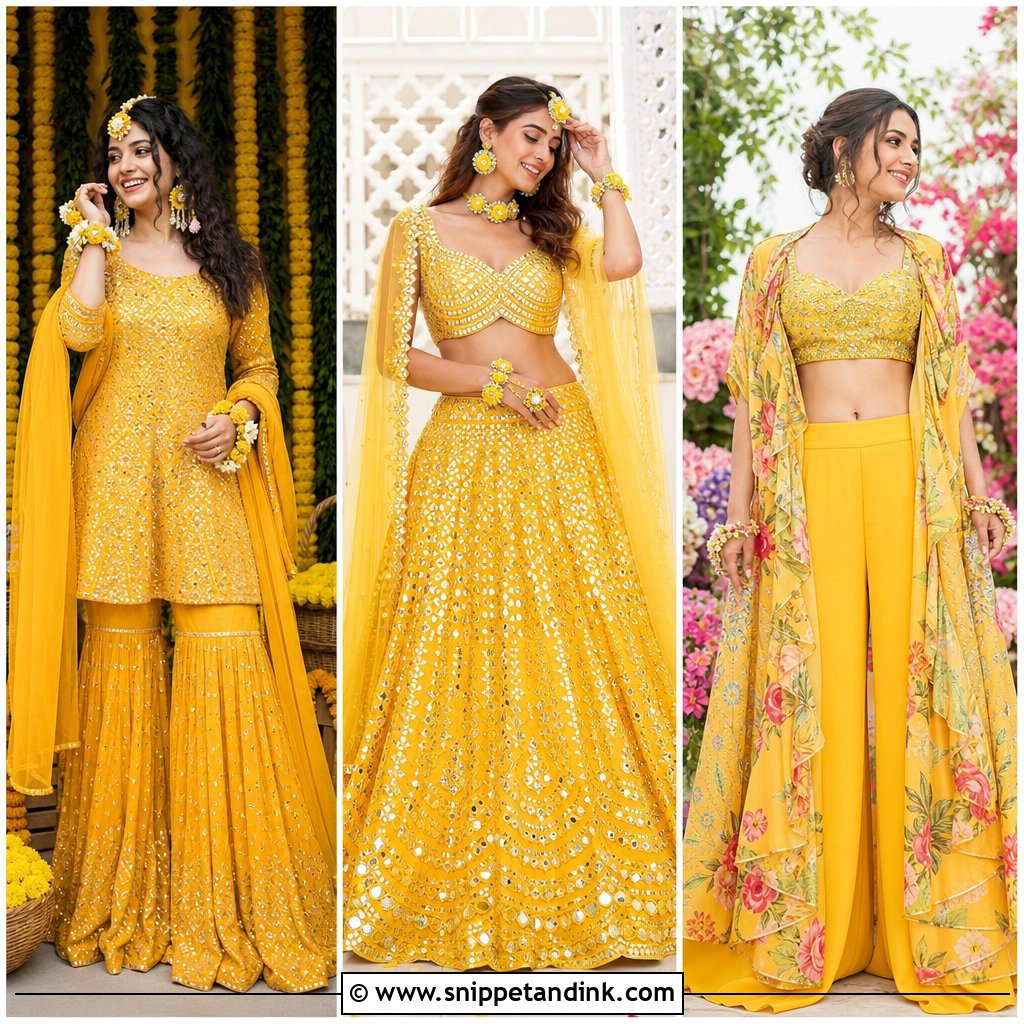
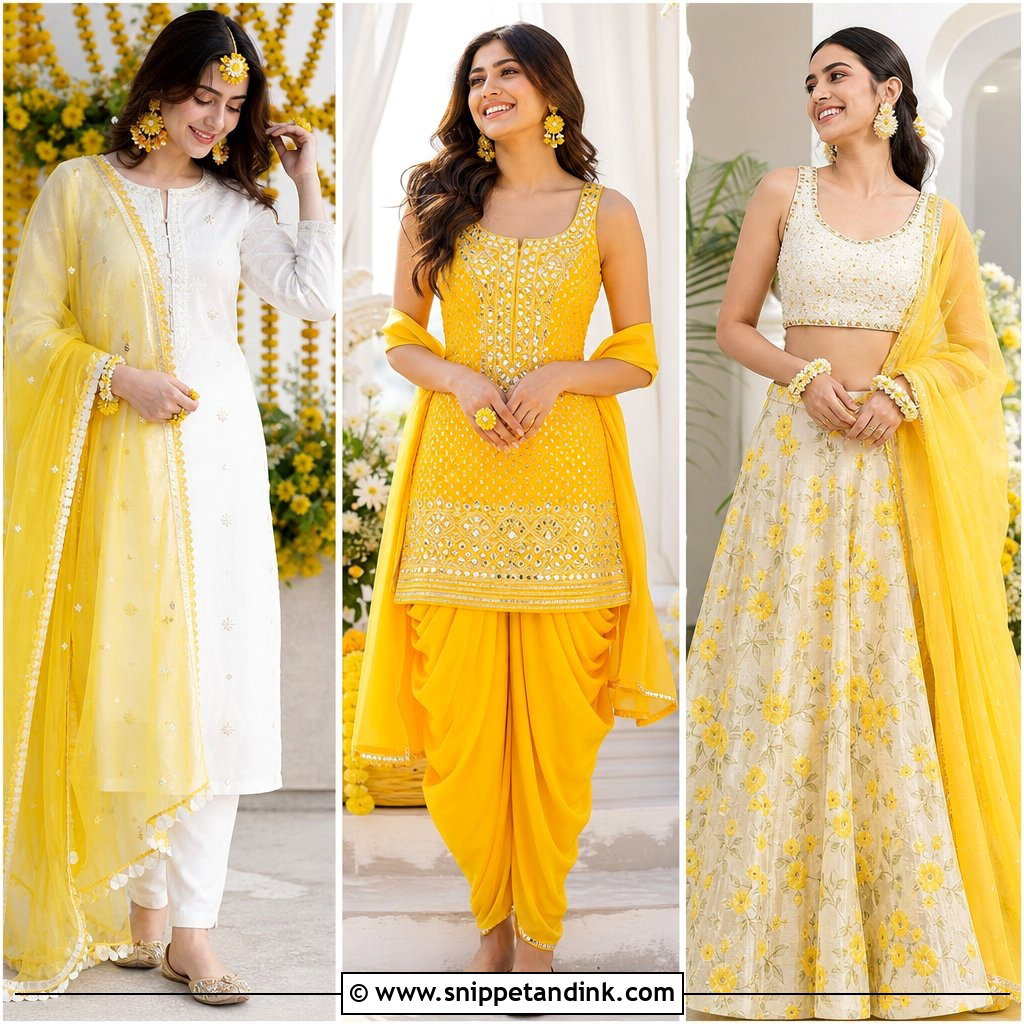
15. Yellow Co-Ord Set for Haldi
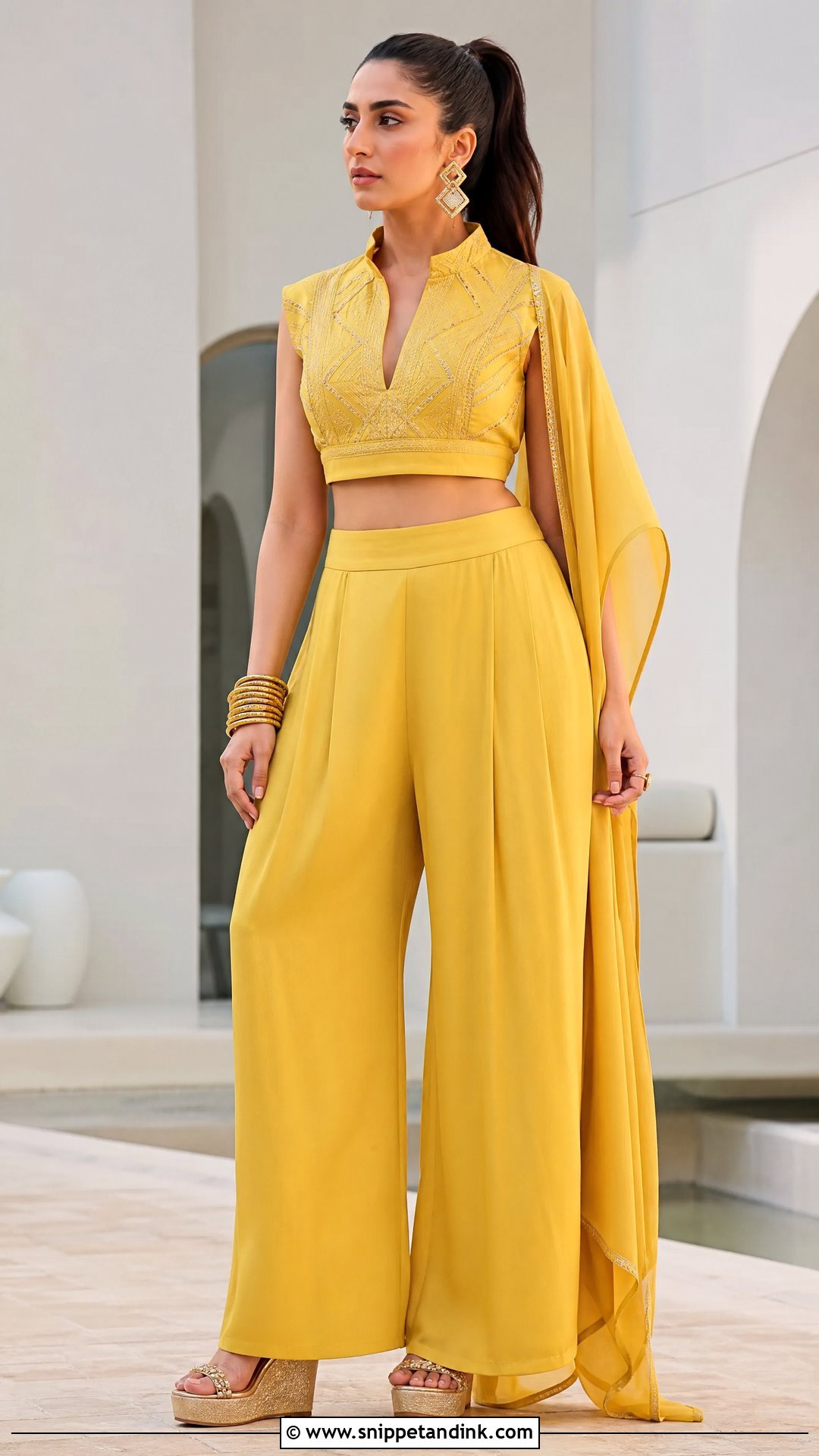
Co-ords are the outfit clients actually wear again, which makes them good value. A cropped yellow kurta or structured top with matching wide-leg pants, maybe with an attached drape or short jacket, covers the ceremonial side without a separate dupatta. Crepe, cotton-silk or georgette with small mirrors at the neck and cuffs. Geometric earrings and decorated flats. Watch the gap: choose a high-rise bottom and a top that meets the waistband, because a cropped top over low pants shows skin every time you sit down for the rituals.
16. Yellow Silk Salwar Suit for Haldi
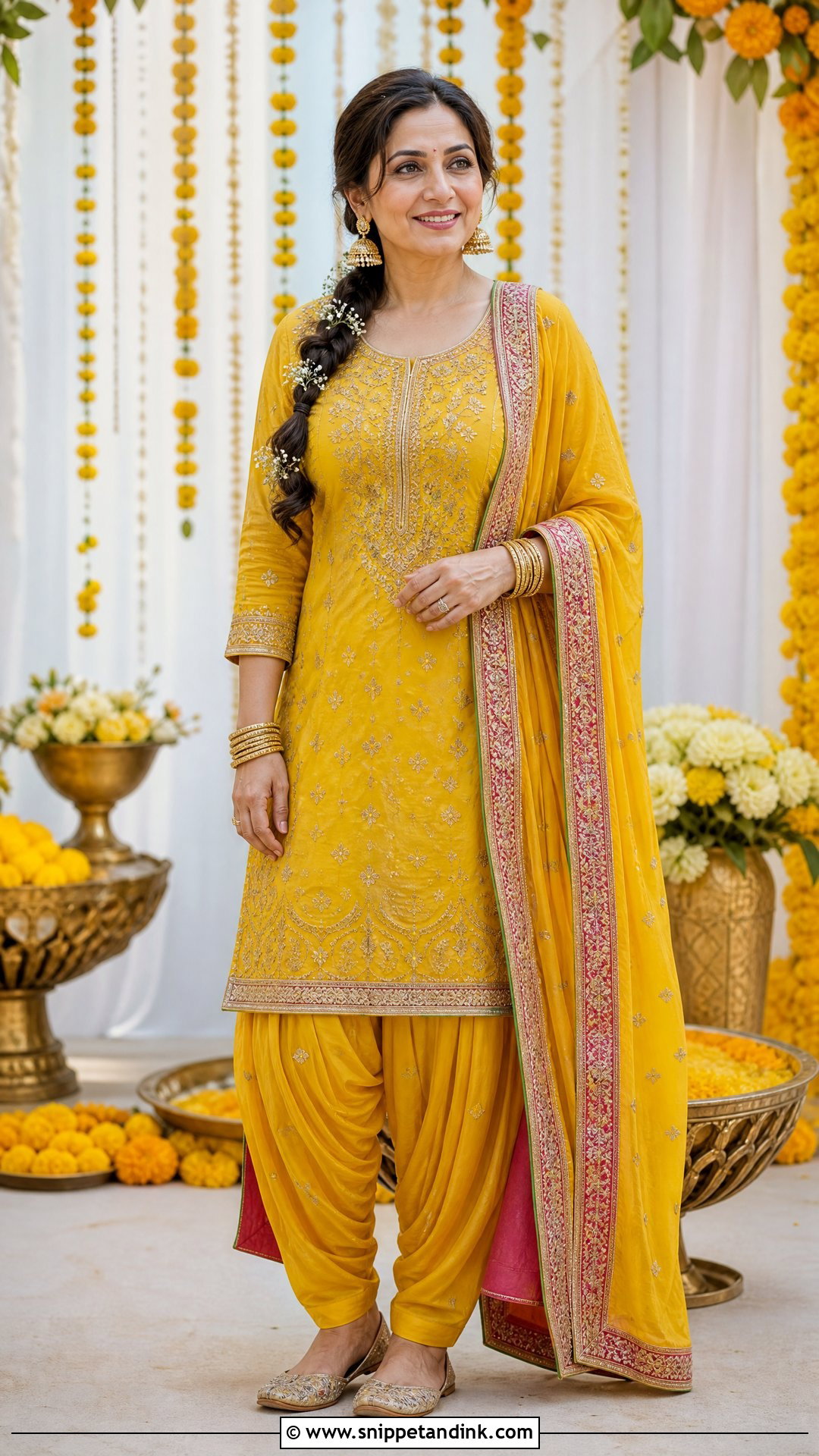
For the woman who wants the classic Punjabi silhouette, a yellow silk salwar suit is hard to beat. I pair a knee-length embroidered kameez with softly pleated salwar and a light contrasting dupatta in cream, pink, orange or green. Choose a silk blend that feels soft in the hand; stiff, heavily layered silk is hot by eleven in the morning and creases into hard lines where you sit. Gold jhumkas, glass bangles, Punjabi juttis and a flower-trimmed braid complete it. If the silk already has sheen, keep embroidery minimal. Check the armhole at the fitting, because you will be reaching forward a lot.
17. Yellow Ruffle Saree for Haldi
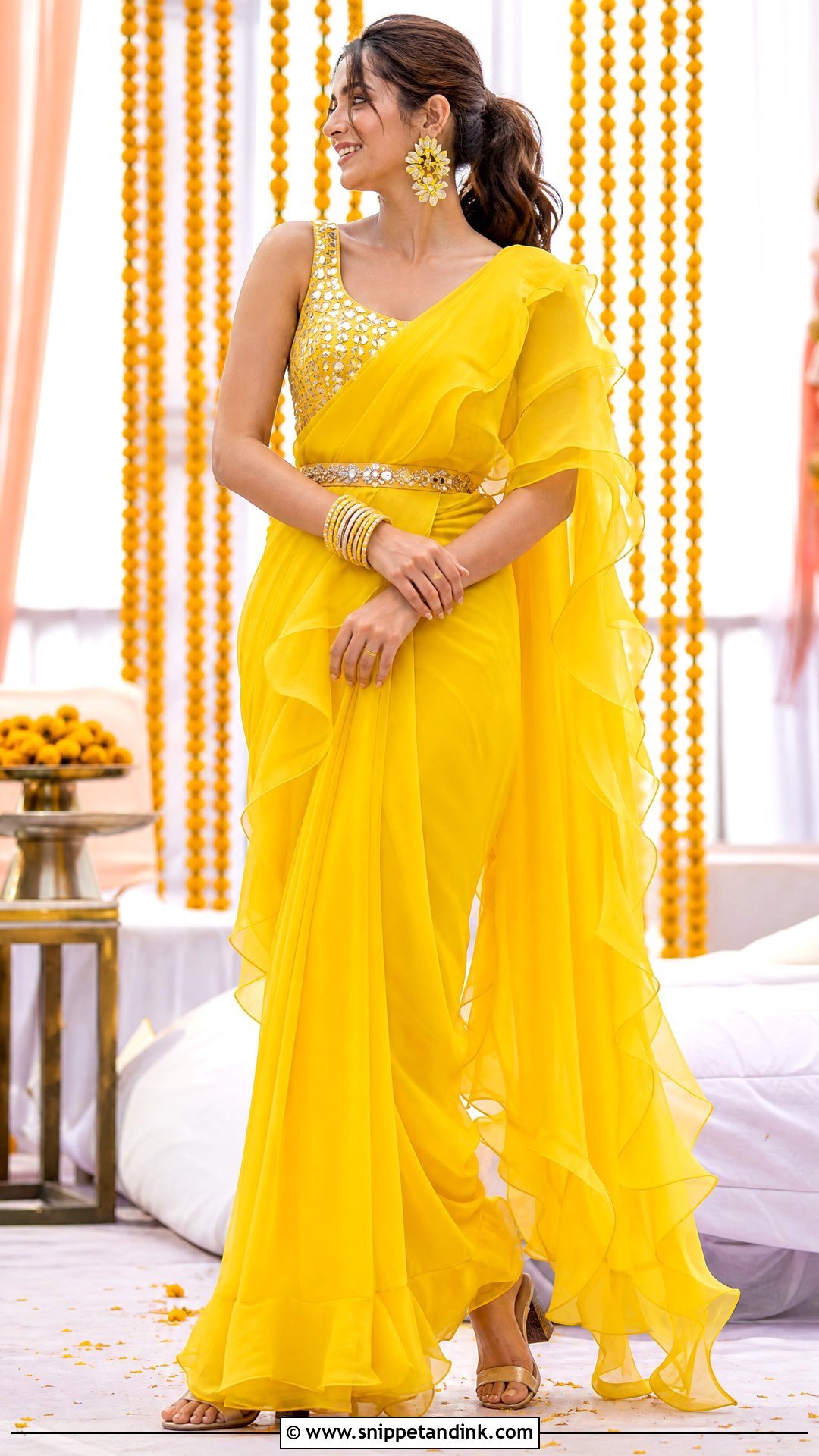
Ruffles add bounce to a saree without any embellishment, but only in chiffon or georgette. In stiffer fabric they stick out and look costume-like. Pair it with a fitted blouse with mirror or thread detail, or a plain square neck. The saree already creates volume, so I keep jewellery fine: floral earrings, a slim waist belt, bangles. Pin the pallu at the shoulder and the waist so the ruffled edge doesn’t trail into the paste bowl. Honestly, I’d keep this one for sisters, bridesmaids or a bride at a fairly dry, controlled ceremony; ruffles soaked in turmeric water collapse fast.
18. Yellow Angrakha Dress for Haldi
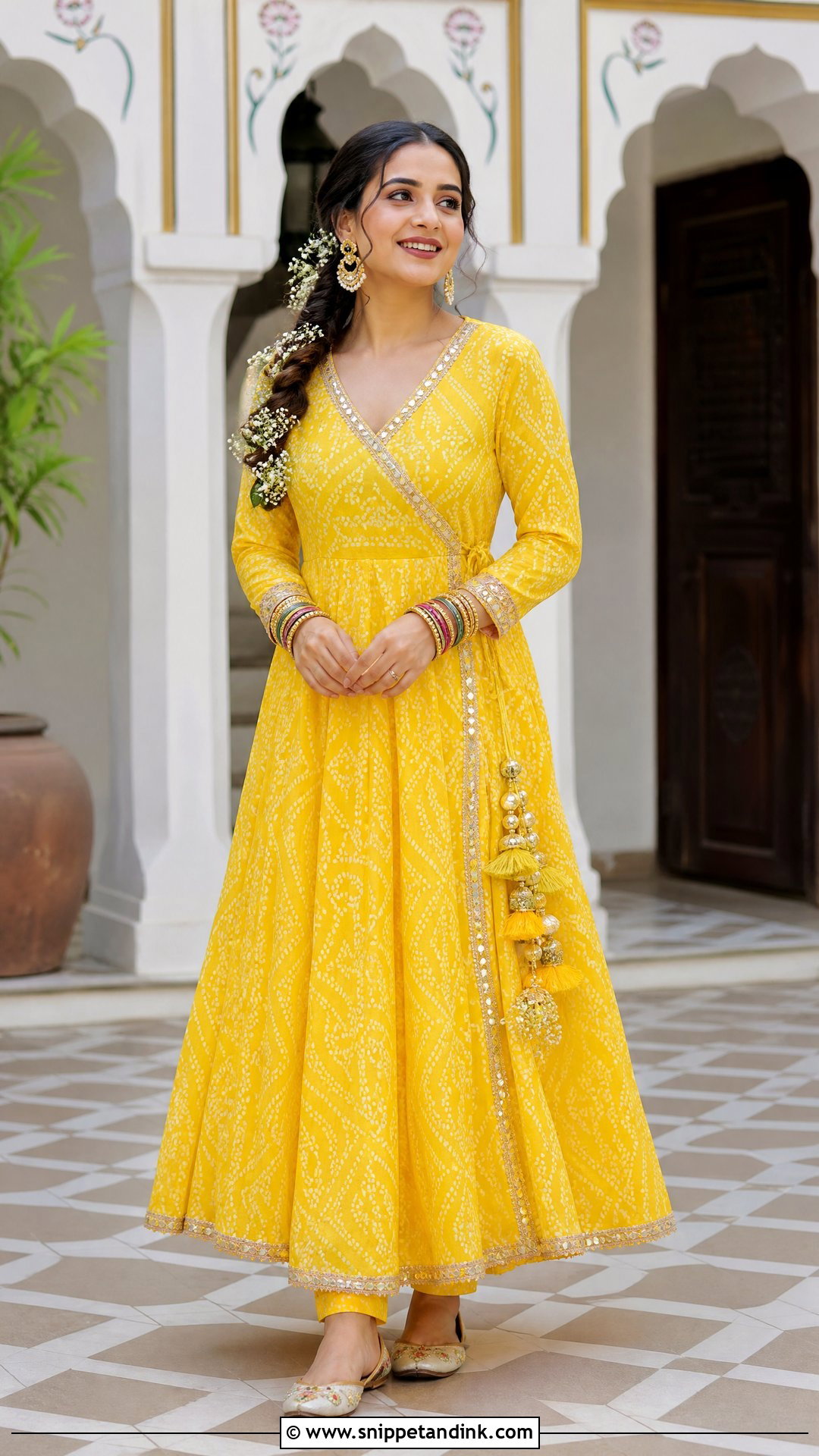
The angrakha’s crossover bodice ties at the side and gives natural waist definition, which is why it flatters so many body types. Calf or ankle length, with tassels and a modest V, works in Bandhani, small florals or with gota borders. Add churidar underneath for more coverage or wear it on its own for an Indo-Western take. Chandbalis, colourful bangles and juttis, with a loose braid. The fitting check is the inner tie: it must be secure, and the outer side ties should be cut short enough that they don’t drag on the floor or get caught when you kneel.
19. Yellow High-Low Dress for Haldi
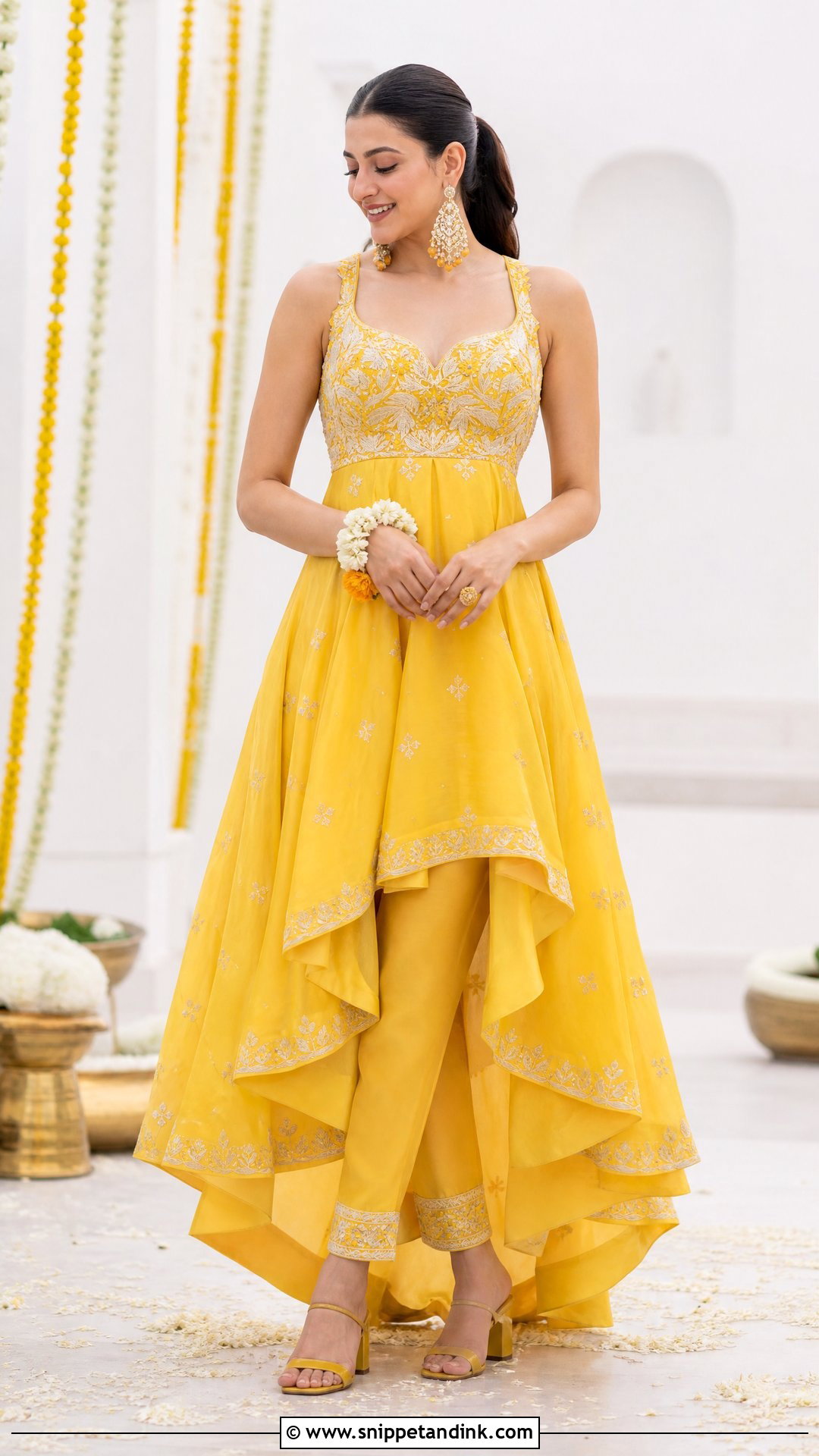
A high-low hem shows off your shoes and keeps the front of the skirt out of the paste, which is a genuinely practical reason to choose one. I look for a gentle graduated drop, roughly knee at the front to ankle at the back; an extreme step looks dramatic in a way that fights a homely ceremony. A fitted bodice, flared skirt and subtle embroidered border balance it. Slim pants underneath are wise if you’ll be sitting on the floor. Embroidered flats and a sleek ponytail keep it contemporary, which suits bridesmaids and younger guests at a relaxed function.



20. Yellow Floral Print Gown for Haldi
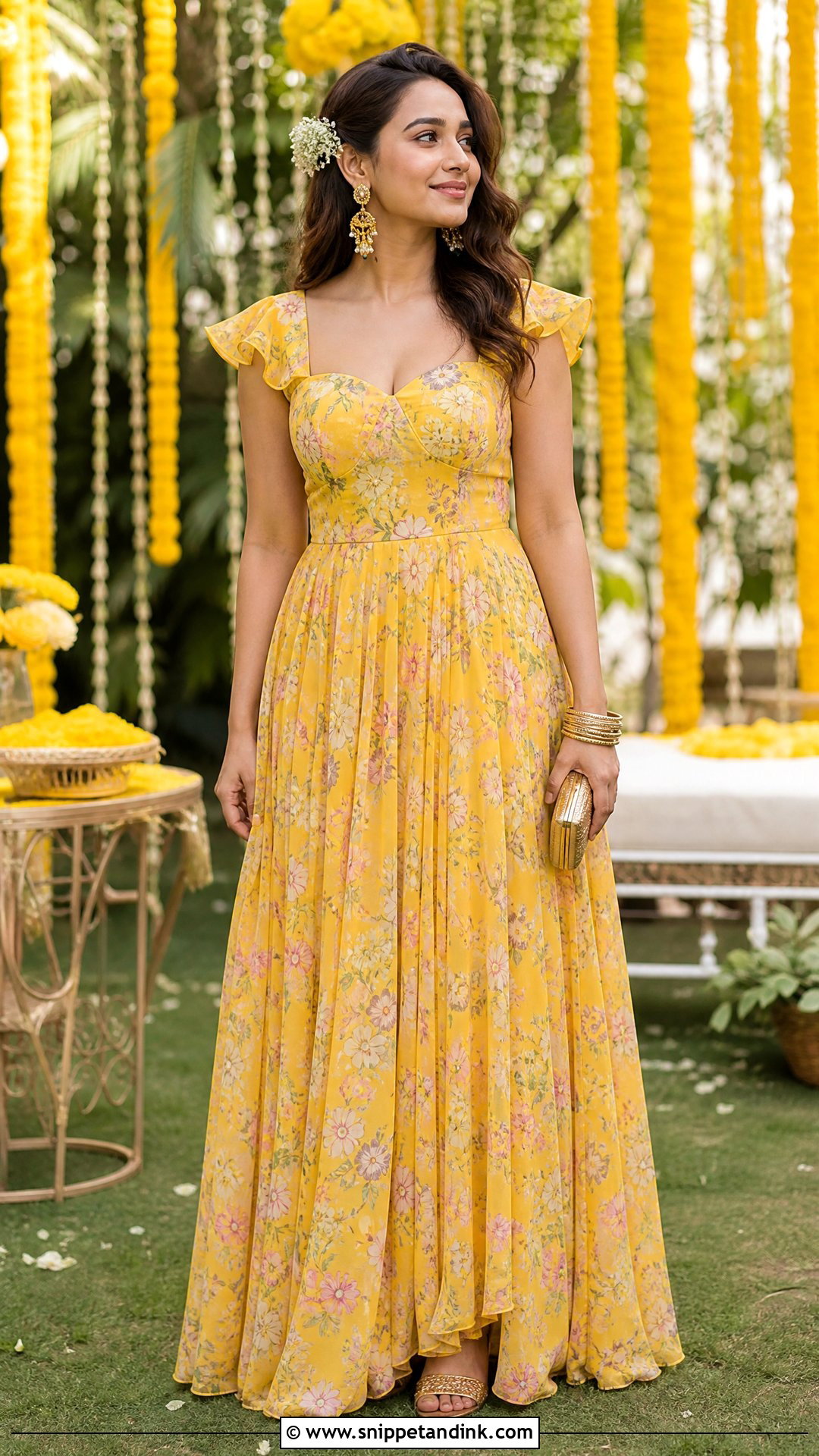
A floral print gown is the dressiest of the Western options here and still comfortable for daytime. I want a defined waist, a supportive bodice and a light skirt that skims the floor without touching it. Pink, orange, green or white flowers add colour while the yellow ground stays dominant. Brides can go off-the-shoulder with a floral belt; guests usually prefer flutter sleeves or a modest V-neck. Drop earrings, gold bangles, low heels or dressy flats. Check the lining at the fitting: a stiff or clingy one shortens your stride, and Haldi involves a lot of getting up and down.
Getting Turmeric Out Once the Ceremony Ends
Turmeric is a dye, so speed matters more than any product. Let wet paste dry for a few minutes and scrape it off with a blunt edge rather than rubbing, which pushes colour deeper into the weave. Rinse from the back of the fabric with cold water, then work in a little liquid dish soap. Don’t panic if the stain flashes reddish when soap touches it; turmeric changes colour with alkaline soap and goes back to yellow as you rinse.
On washable cotton, drying the garment in direct sun helps, as sunlight fades turmeric stains noticeably over a day or two. Keep hot water and the dryer away until the stain is gone, since heat can set it.
Silk, zari and anything with mirror or gota work goes to a dry cleaner, ideally within a few days. Tell them it’s turmeric and point out each mark. Store the clean outfit folded in muslin rather than plastic, and refold it every few months so the creases don’t wear through embroidery.
Small Things I Pack for Every Haldi Client
- Safety pins and a few dupatta pins, because every drape needs re-securing after the first hug.
- Wet wipes and an old towel for hands and feet before anyone walks indoors.
- Clear earring backs, since flower jewellery and jhumkas snag on dupattas.
- Flat slip-on sandals to step into after the ritual, and a dark carry bag for the stained outfit.
Yellow That Can Take a Little Turmeric
Whatever the silhouette, a flowing Anarkali, a light saree, a playful sharara or a modern midi, the Haldi outfit has to let you sit, walk and get hugged by everyone holding a bowl of paste. Breathable fabric and an honest fit matter more than embellishment. Keep the heavy work away from the face and arms, secure every pin and earring back, and wear shoes you can slip off for the ritual. Pick your yellow in daylight, not under shop lighting, and you’ll have something that looks right in the photos and still feels good at the end of the morning.
You'll Like These Ideas:









Leave a Reply