
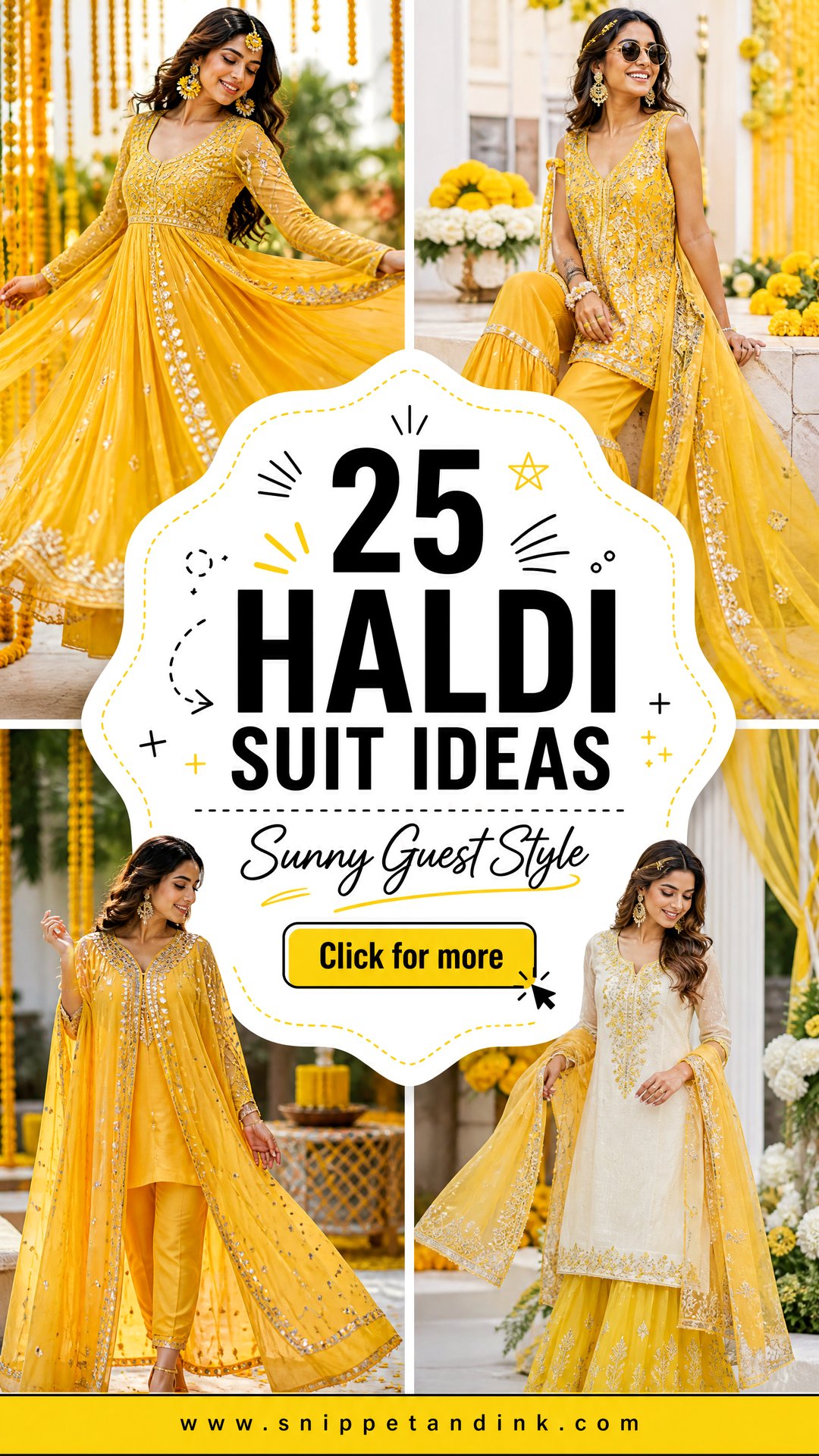
A suit is what I’d put most people in for a haldi, apart from the bride herself. Sisters, cousins, bridesmaids and guests all end up in the middle of the fun: dancing, applying paste, getting some on themselves, sitting on the floor. A kurta set covers all of that with far less fuss than a lehenga. Yellow is the default, but ivory, lime, mint, orange, florals, mirror work, chikankari and cape shapes all show up at haldis now, alongside shararas, ghararas and palazzos. What matters more than the trend is breathable fabric, a fit you can sit cross-legged in, and styling that won’t get in the way. Here are 25 suits, with notes on who each one suits and what to watch for.
Dressing by Role: Sister, Bridesmaid or Guest
How close you are to the bride changes what you should wear. I’d always check with the hosts first. Many haldi invitations name a color, usually yellow, and some families prefer guests in traditional suits rather than fusion wear.
- Sisters and bridesmaids sit closest to the paste. Wear washable fabric and expect to get yellow on your hands and sleeves.
- Guests should stay a clear step below the bride. Avoid her exact color, and skip heavy embroidery that reads as bridal.
- Mothers and aunts usually prefer straight or Anarkali suits with coverage, in silk or cotton silk.
- Children do best in cotton. They’ll end up in the paste regardless.
If you’re buying an unstitched suit, give your tailor plenty of notice. In wedding season, stitching can take a couple of weeks or more, and you’ll want time for one fitting.
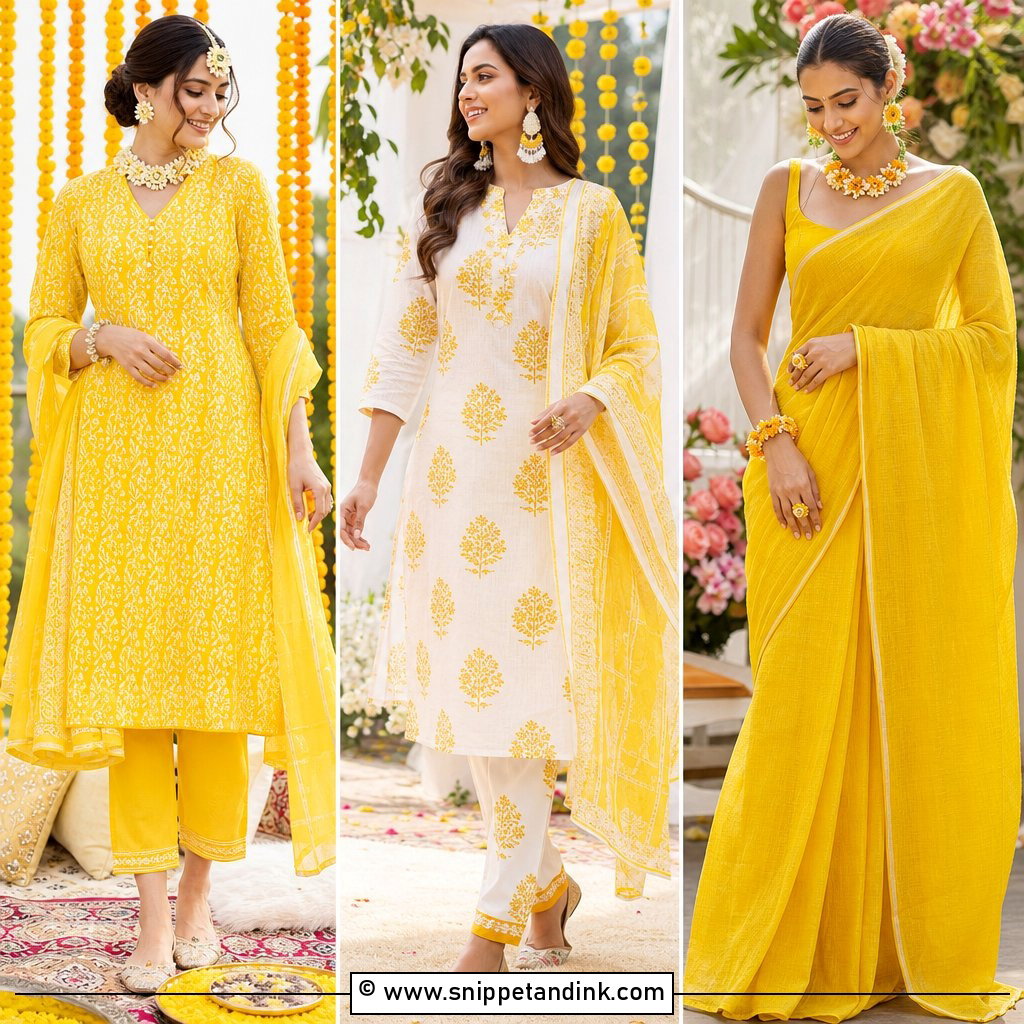
What to carry in your bag
Wet wipes, a small towel and a spare top if there’s an event afterward. Turmeric dries fast on skin and leaves a yellow tint for a day or so, so I’d wash your hands soon after applying it.
1. Yellow Anarkali Haldi Suit
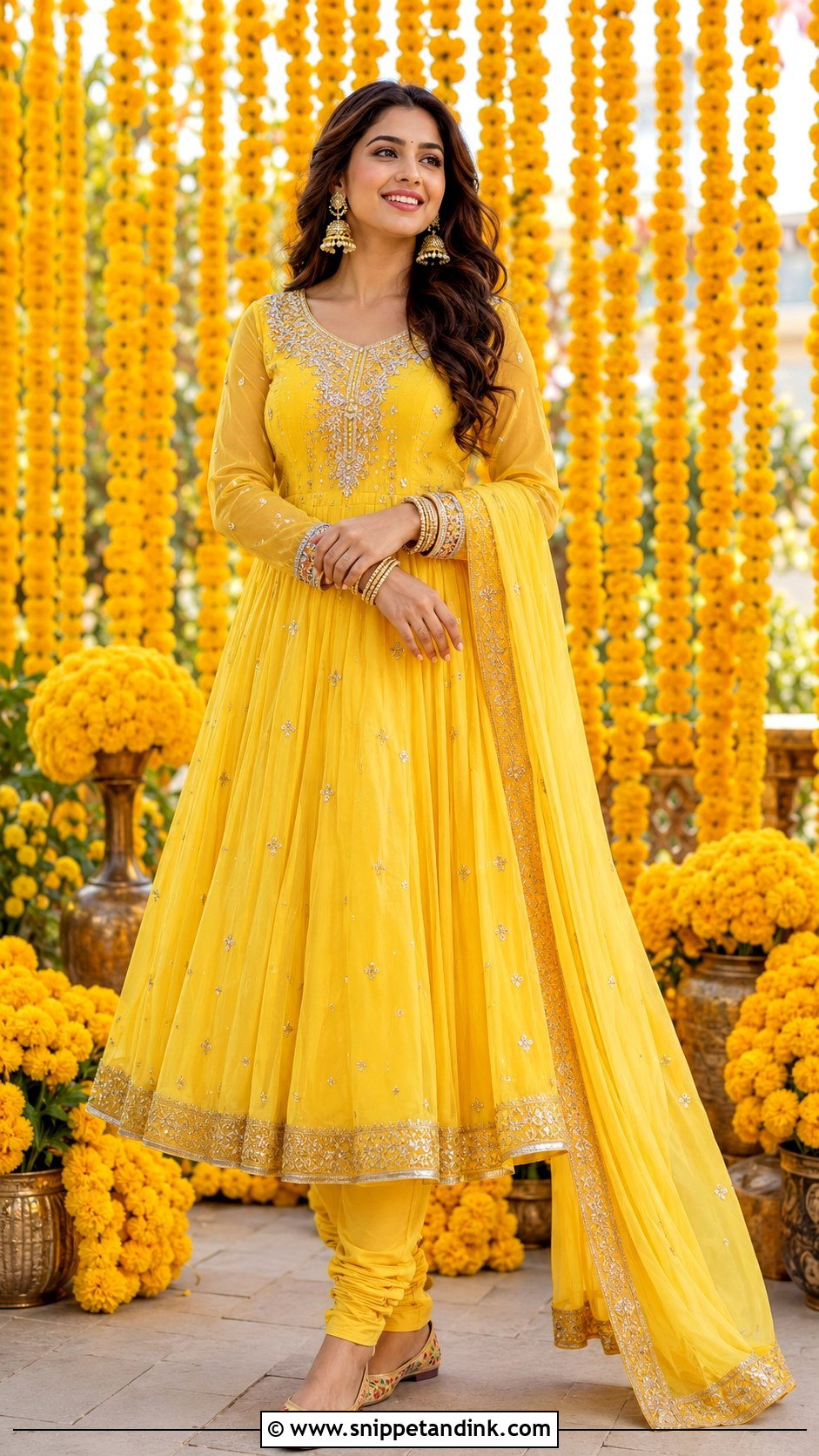
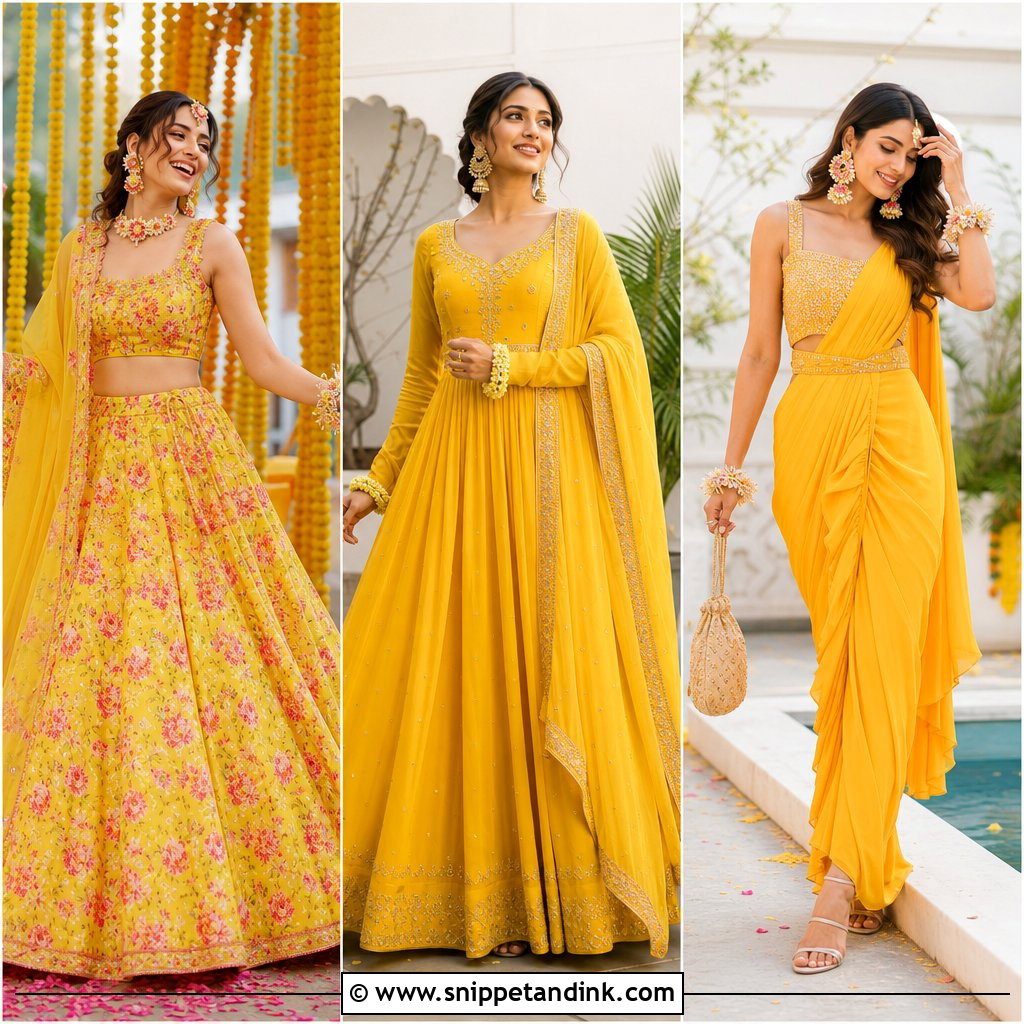
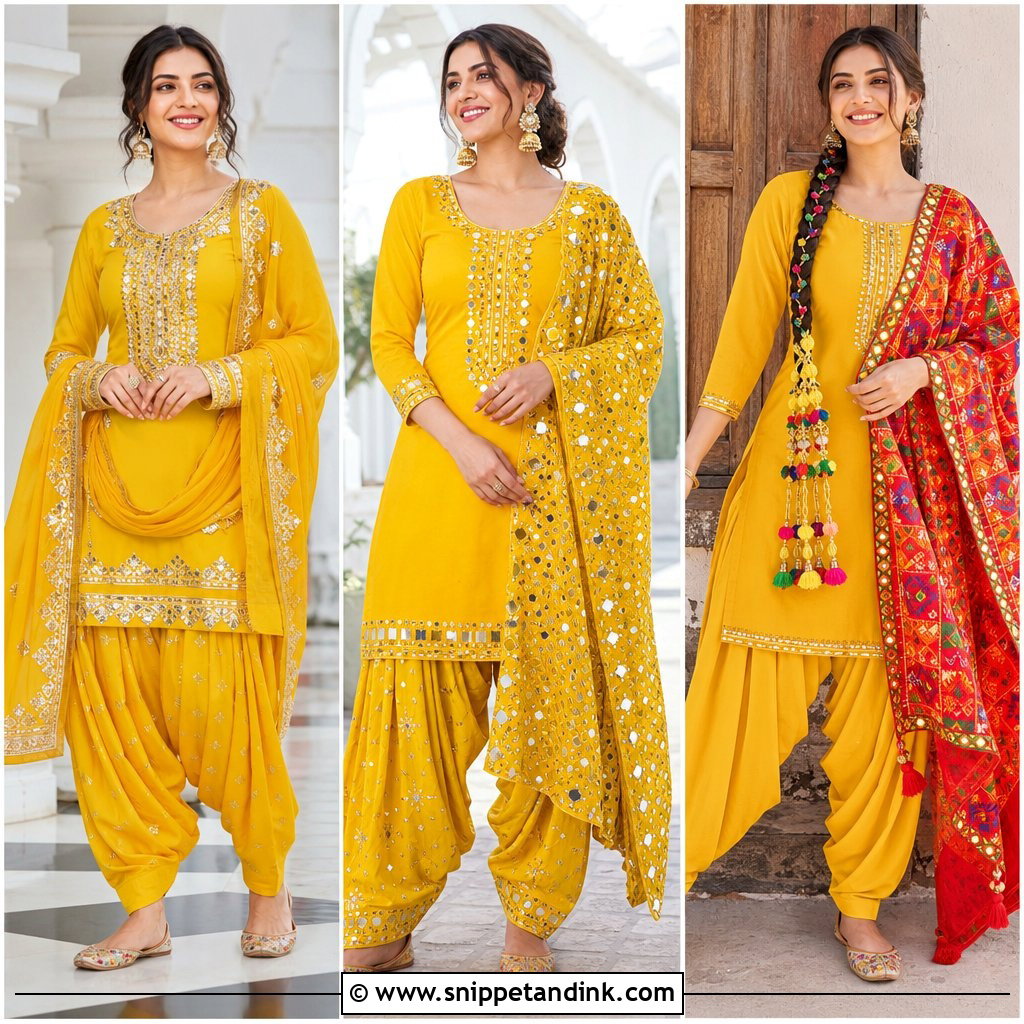
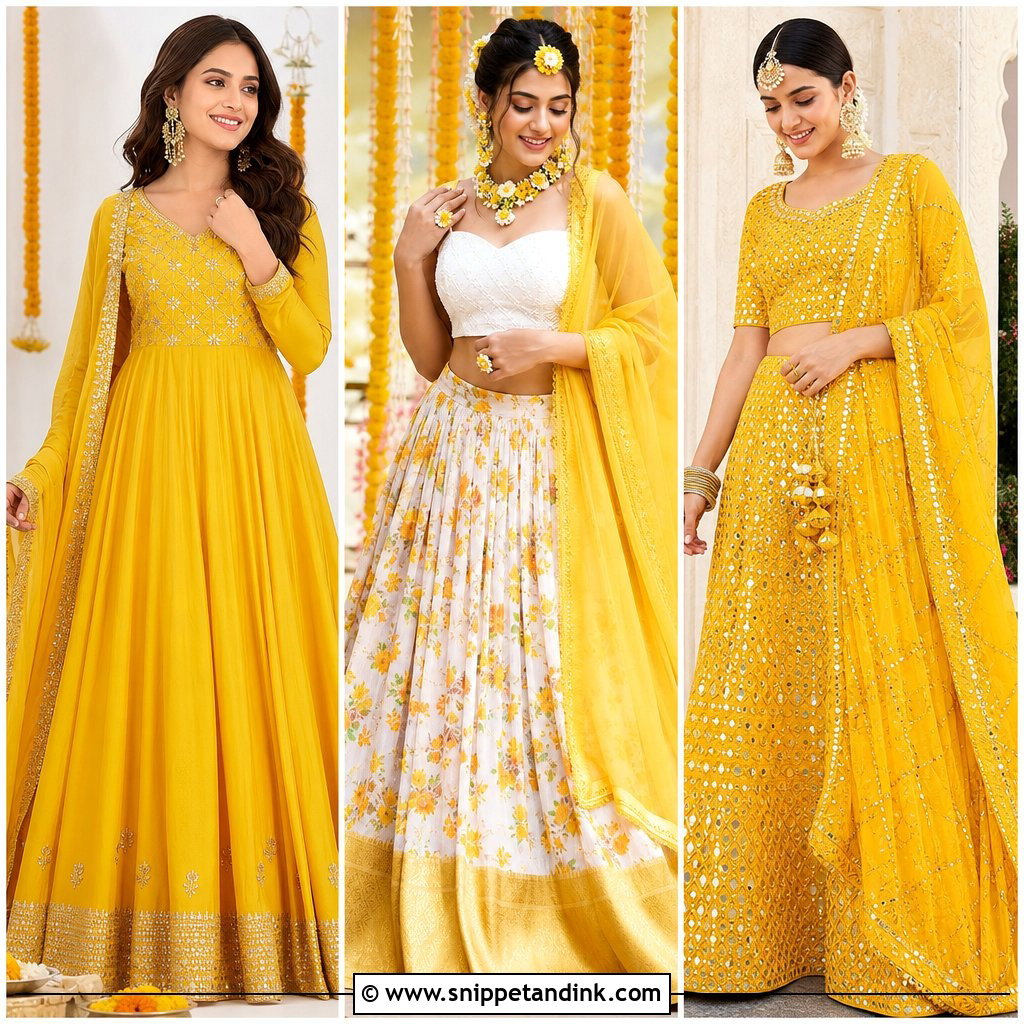
An Anarkali moves on its own, so it needs very little styling to look festive. The flared panel opens up when you walk or turn and spreads neatly around you when you sit. Georgette, cotton silk or light chanderi keep it comfortable in daytime heat. I’d keep the detail to a soft gota border, a mirror neckline or small floral embroidery, and pair it with churidar, juttis, gold bangles and a light dupatta pinned at the shoulder. Check the churidar length: the gathers at the ankle should bunch neatly, not sag.
2. Yellow Sharara Haldi Suit
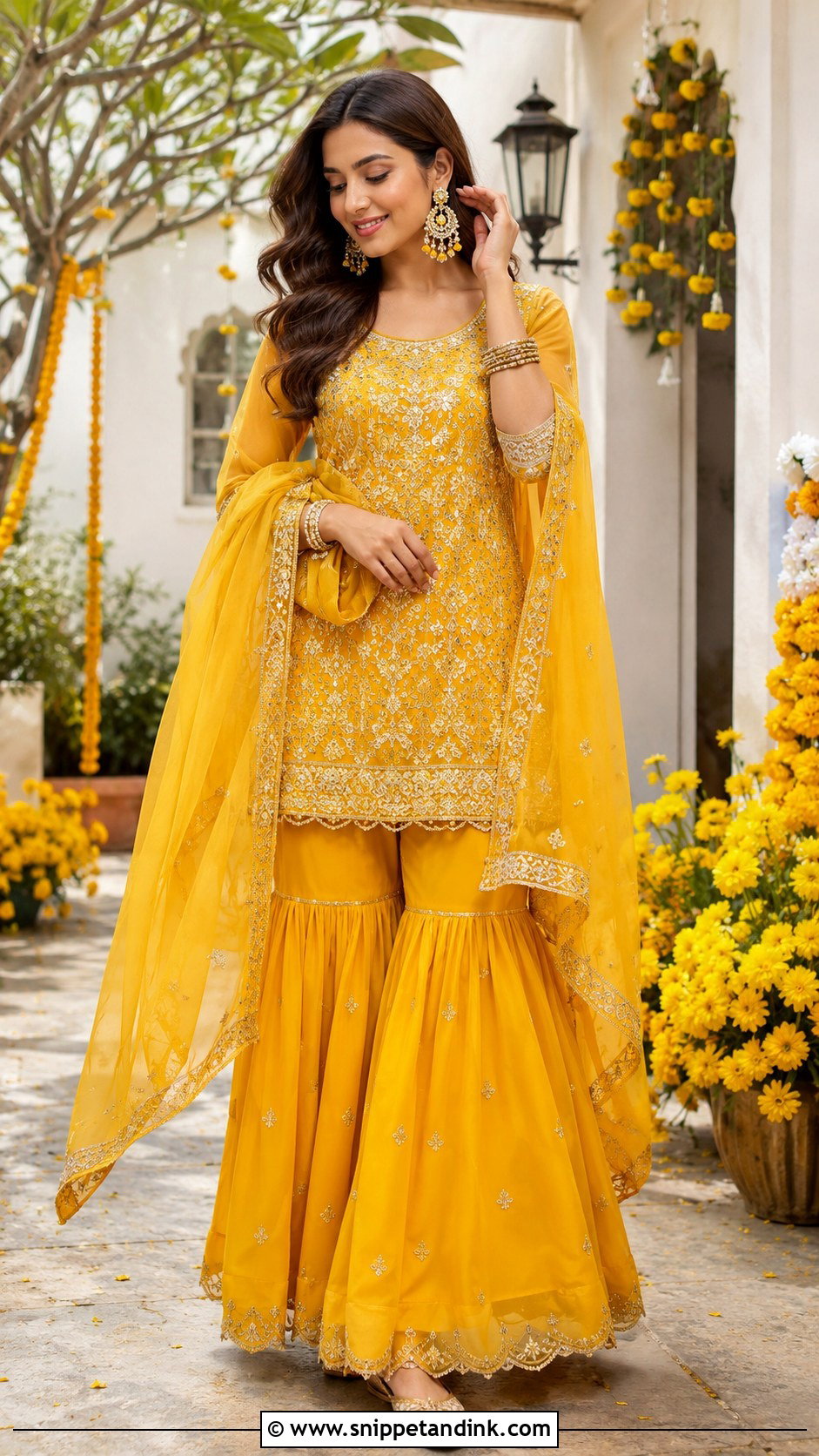
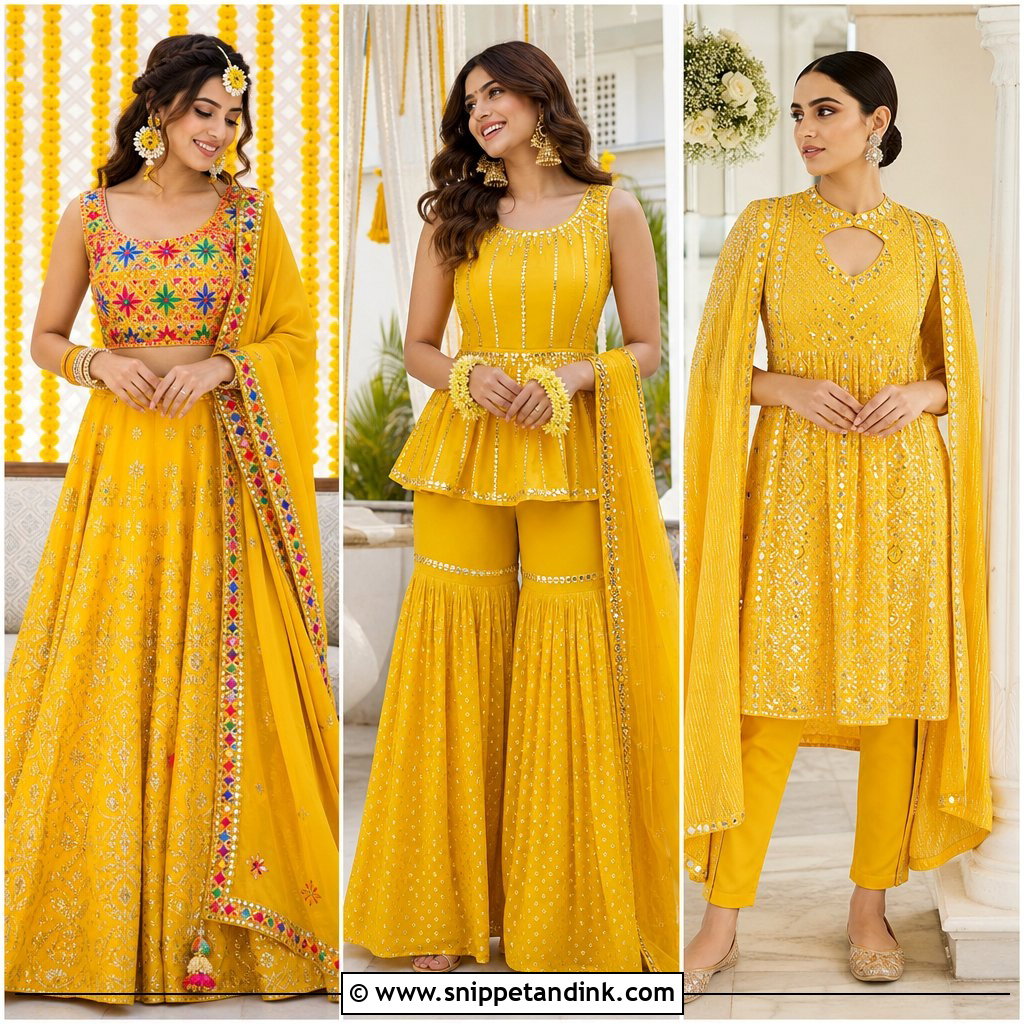
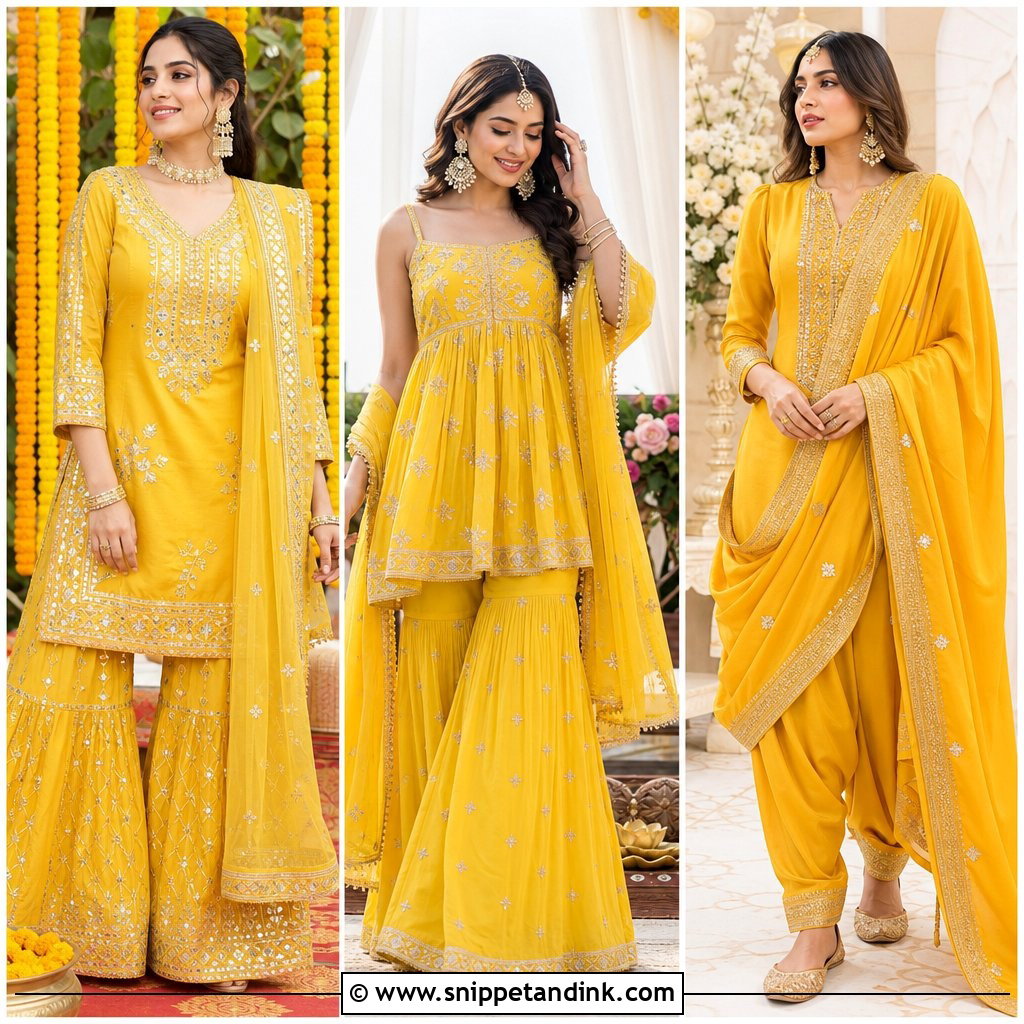
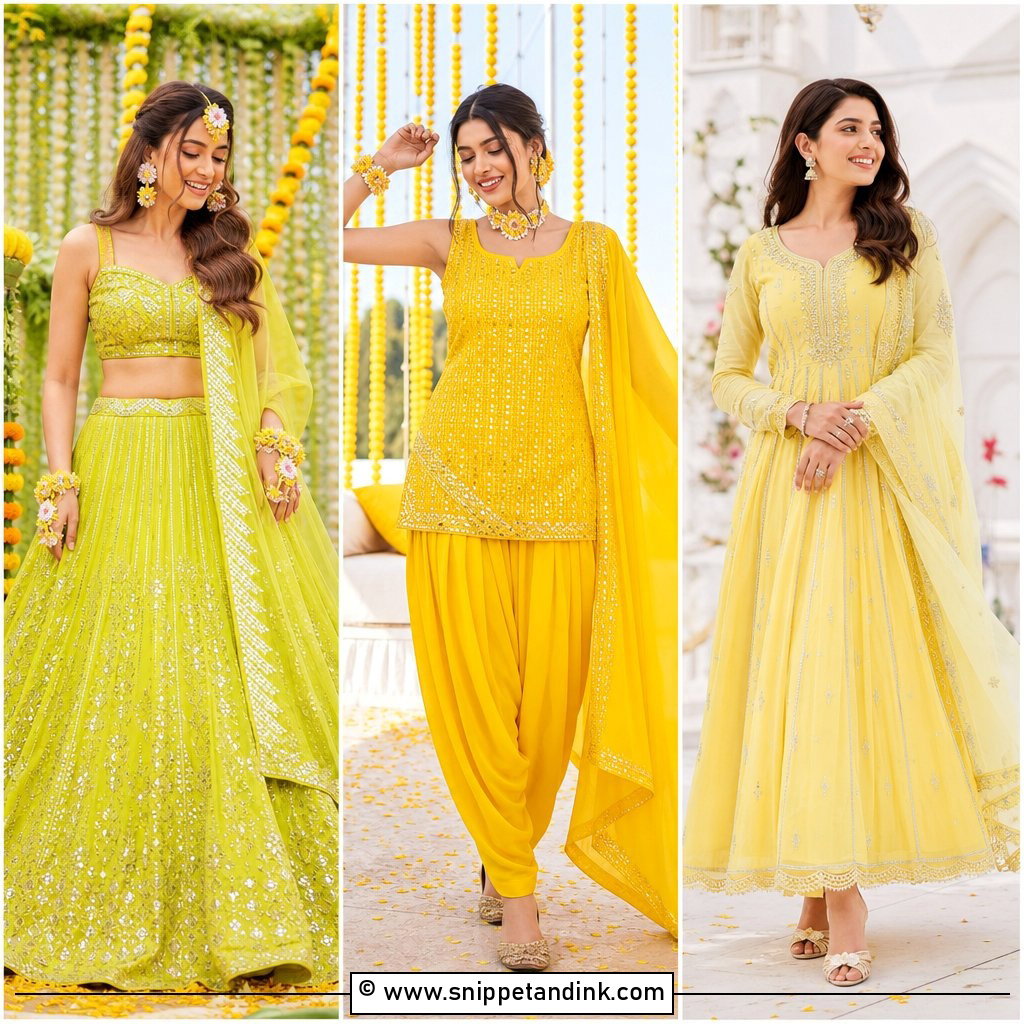
Shararas are what I’d hand a bridesmaid who’ll be dancing all morning. A yellow sharara haldi suit with a short kurta keeps the top neat while the flared pants give volume and movement, and it looks right from every angle in group photos. Mirror work, gota patti, thread embroidery or a scalloped hem on the kurta make it feel like a wedding outfit. Add a printed or embroidered dupatta for contrast, jhumkas, bangles and embellished juttis, with a braid dotted with small flowers.
3. White Chikankari Haldi Suit
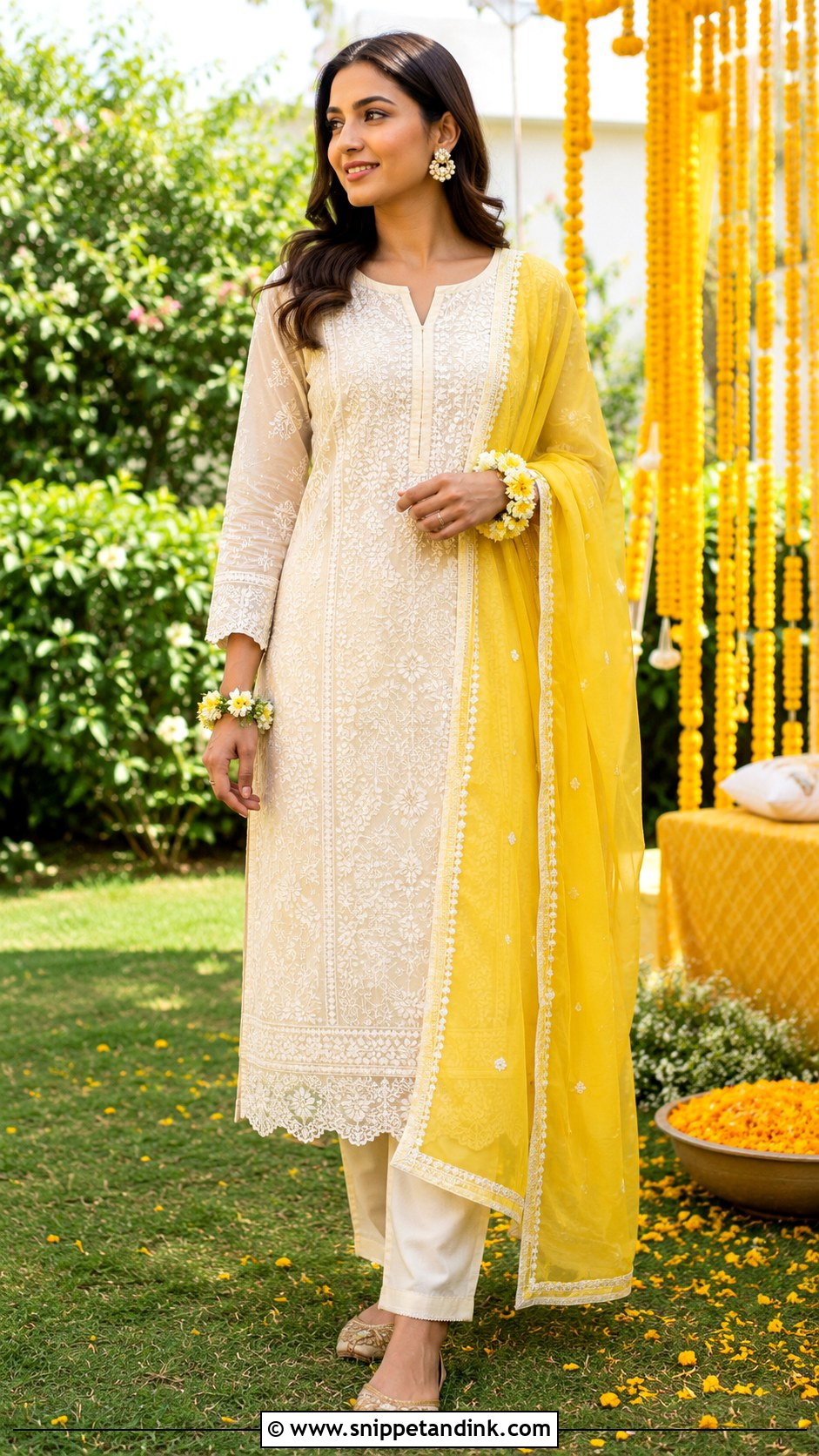
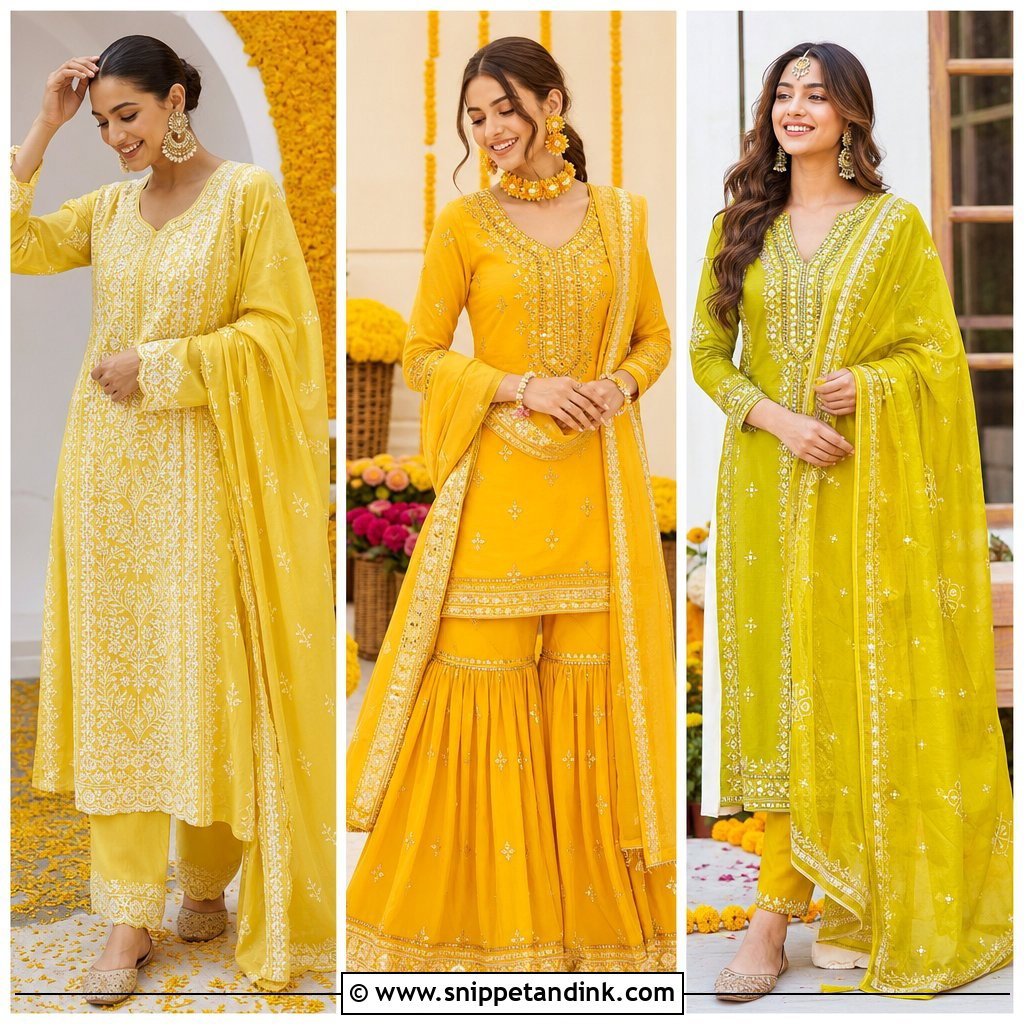
White and ivory against turmeric and marigolds gives a crisp contrast, and plenty of guests now choose it deliberately. A white chikankari haldi suit in cotton, georgette or muslin, with straight pants or palazzos, stays cool and looks refined. A yellow, mustard or lime dupatta ties it to the palette. I’d only wear white if you’re comfortable getting a little paste on it, because guests rarely escape completely. Pearl earrings, floral bangles and beige or gold juttis.
4. Mustard Palazzo Haldi Suit
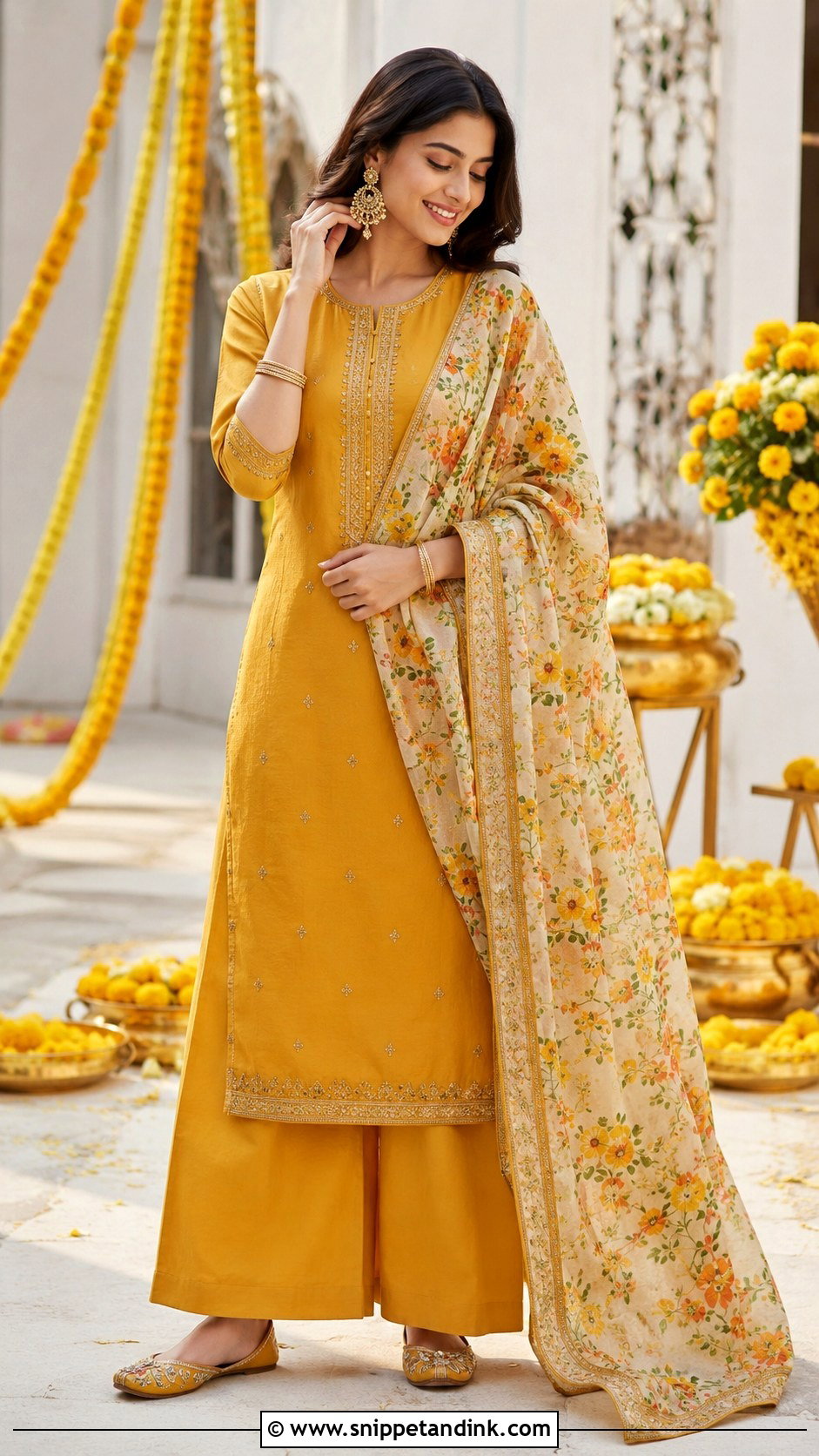
Mustard is the yellow I suggest to anyone who feels washed out in bright lemon. It’s deeper and warmer, and it suits a wider range of skin tones. A straight kurta with wide palazzos is easy to sit, walk and dance in. Rayon, cotton silk, crepe or light georgette all work. One practical point: rayon creases heavily and can cling in humidity, so I’d go for cotton silk on a hot day. Small mirrors, thread work or a printed dupatta add festivity, and it’s easy to wear again afterward.
5. Lime Green Haldi Suit
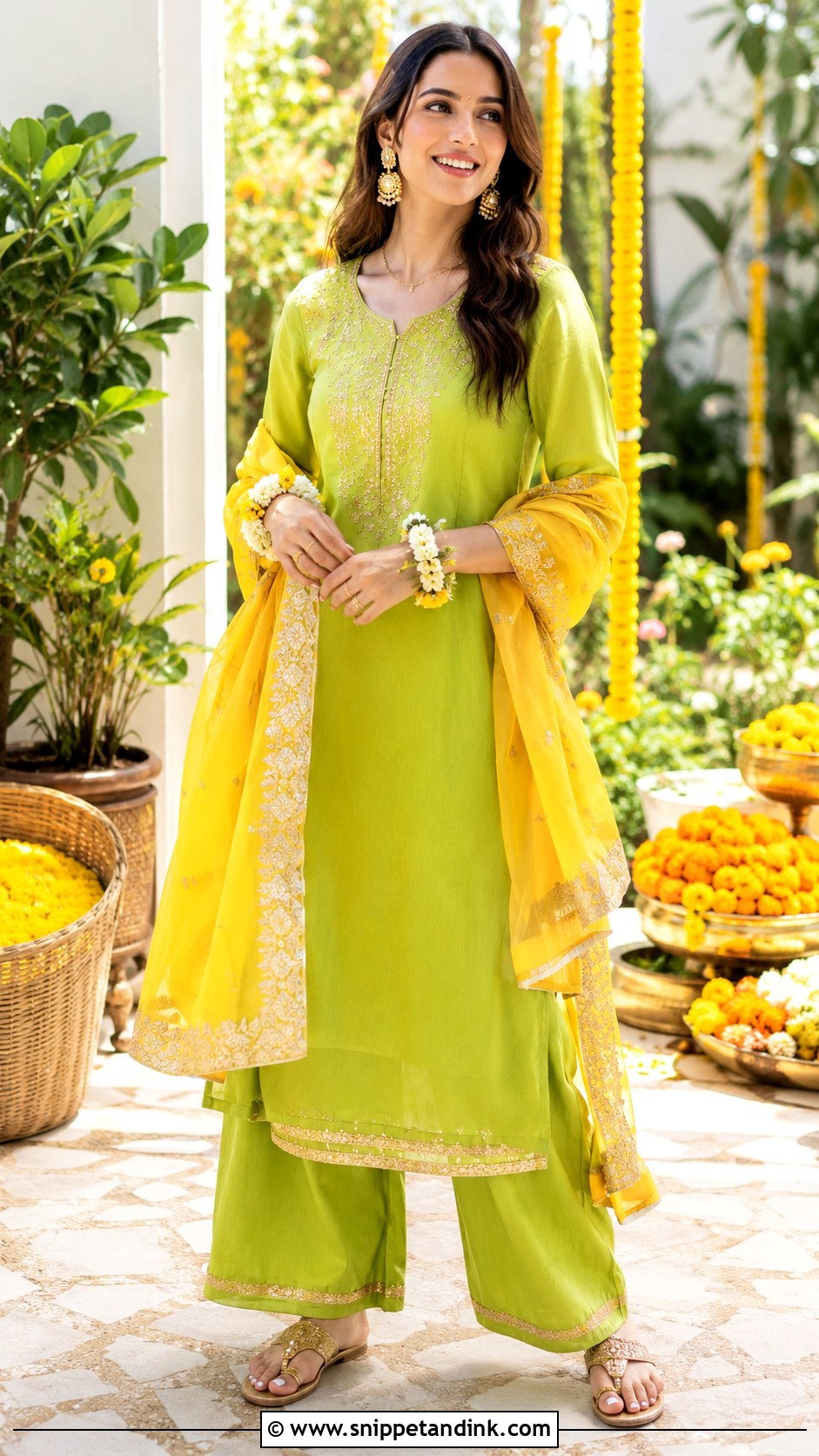
Lime is a good choice for a bridesmaid or guest who wants to stay bright without matching the sea of yellow. A lime kurta with palazzos, straight pants or a sharara can look modern and still traditional. Bring yellow back in through the dupatta, bangles or an embroidered border. Lime is a demanding color, though, and in shade it can make some complexions look sallow, so try it on outdoors before buying. Peach blush, soft gold eyes and gold juttis or kolhapuris complete it.
6. Floral Print Haldi Suit
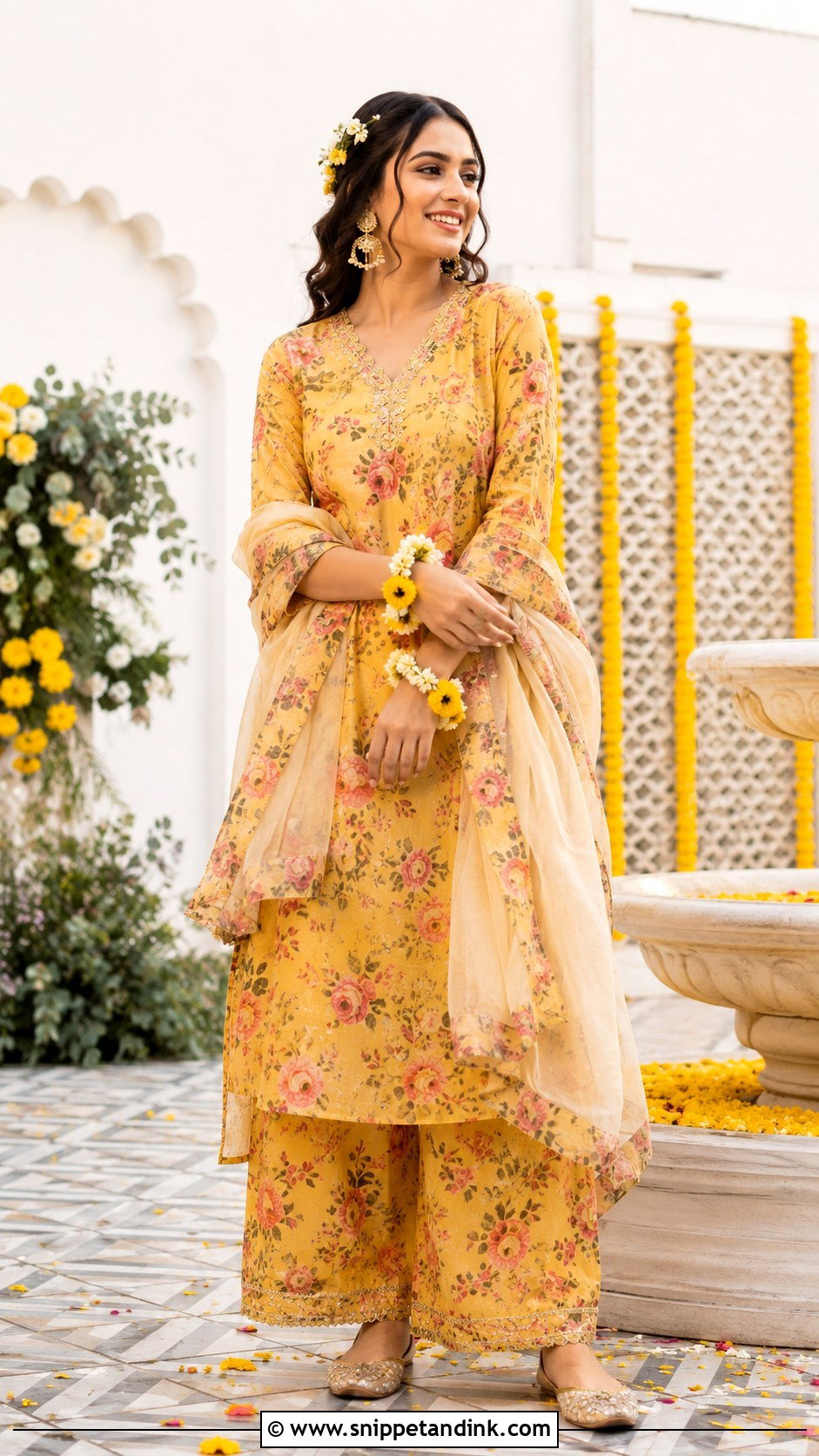
Florals bring color without heavy embroidery, which keeps the outfit light for a long, warm event. Choose a yellow, ivory, mint or peach base with small or medium flowers; very large prints get chopped up awkwardly by a dupatta. A straight kurta with palazzos is relaxed, a floral sharara set more festive. Keep the dupatta plain or very light. For a guest, a floral suit hits the right note: dressed up, clearly festive, but nowhere near bridal.
7. Yellow Gharara Haldi Suit
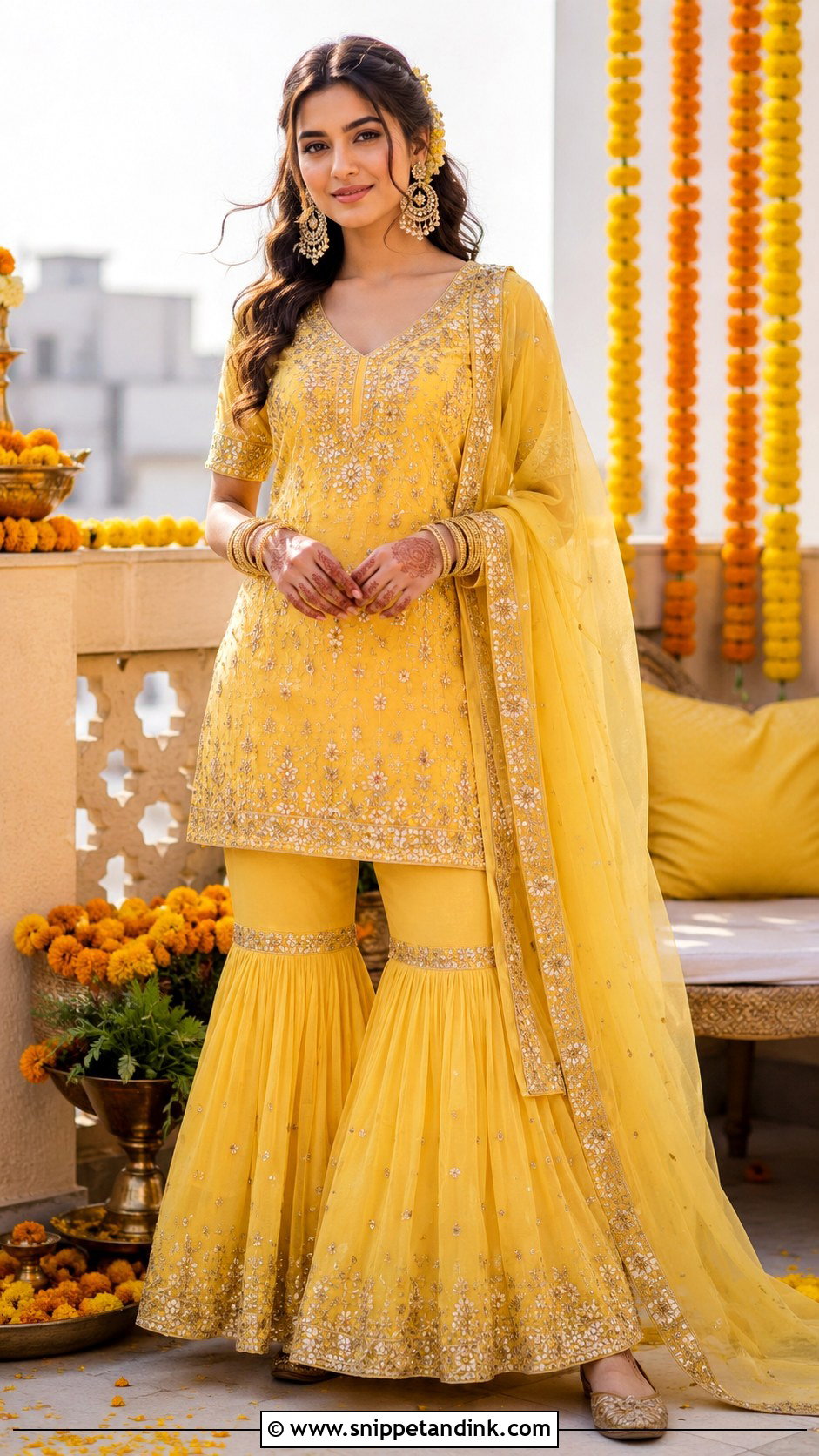
Ghararas have a dramatic, traditional shape: fitted through the thigh, then flaring from a joint at the knee. A short kurta shows that shape off and balances the volume. Gota patti, zari borders, mirror work or fine thread embroidery all suit it, with a sheer dupatta finished at the edge. Ghararas use a lot of fabric in the flare, so they’re warmer and heavier than they look. I’d save one for the bride’s sister or best friend, who’ll want something a step above the other guests.
8. Cotton Kurta Haldi Suit
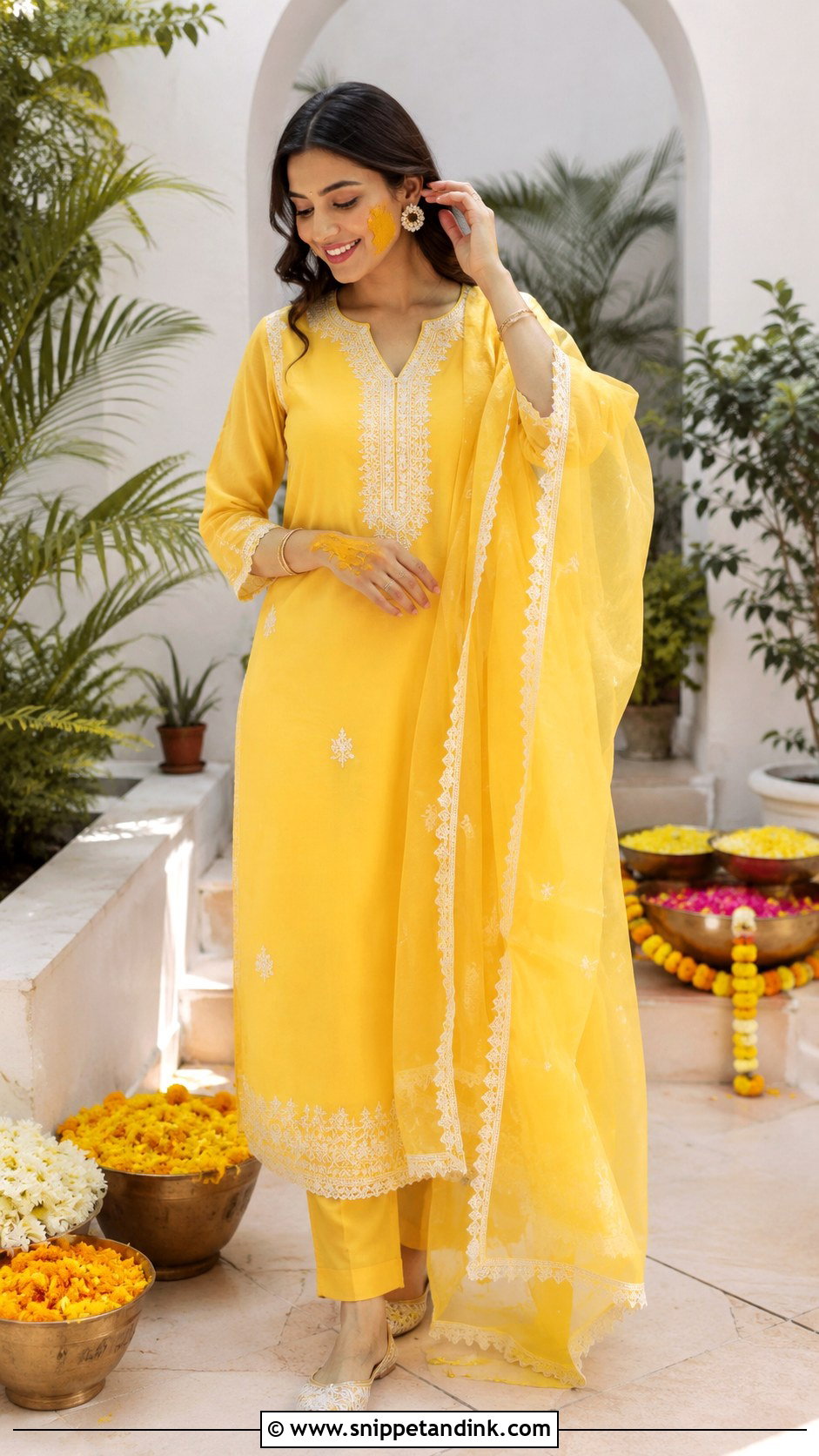
Cotton is my honest recommendation for a home haldi in hot weather. It breathes, it washes, and nobody minds when turmeric lands on it. A yellow, ivory, orange or green kurta with straight pants or relaxed palazzos, finished with block prints, subtle embroidery, lace trim or small mirrors, looks festive without weight. A light dupatta, flat juttis and minimal jewelry are all you need. The one thing to check is whether a block-printed cotton is colorfast before it meets wet paste.
9. Mirror Work Haldi Suit
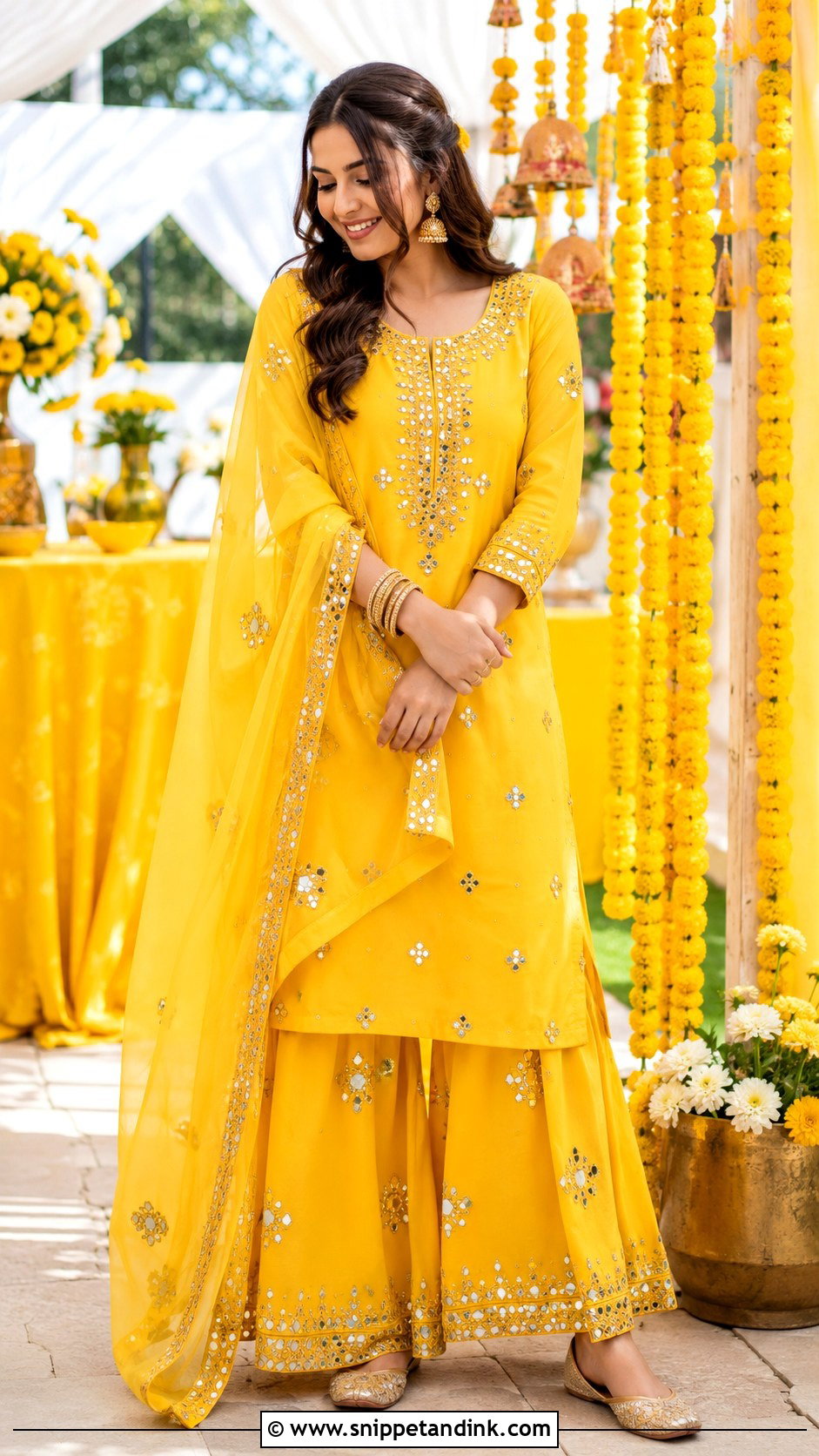
Mirror work sparkles in daylight without sequins or stones. A yellow, mustard, ivory or orange kurta with mirrors at the neckline, sleeves and hem is enough. Pair it with straight pants, palazzos or a sharara depending on how dressy the function is. Mirrors are already shiny, so small jhumkas, gold bangles and simple juttis are plenty. I’d steer clear of mirrors on the inner sleeve if you’ll be hugging and dancing, because the edges can scratch.
10. Bandhani Haldi Suit
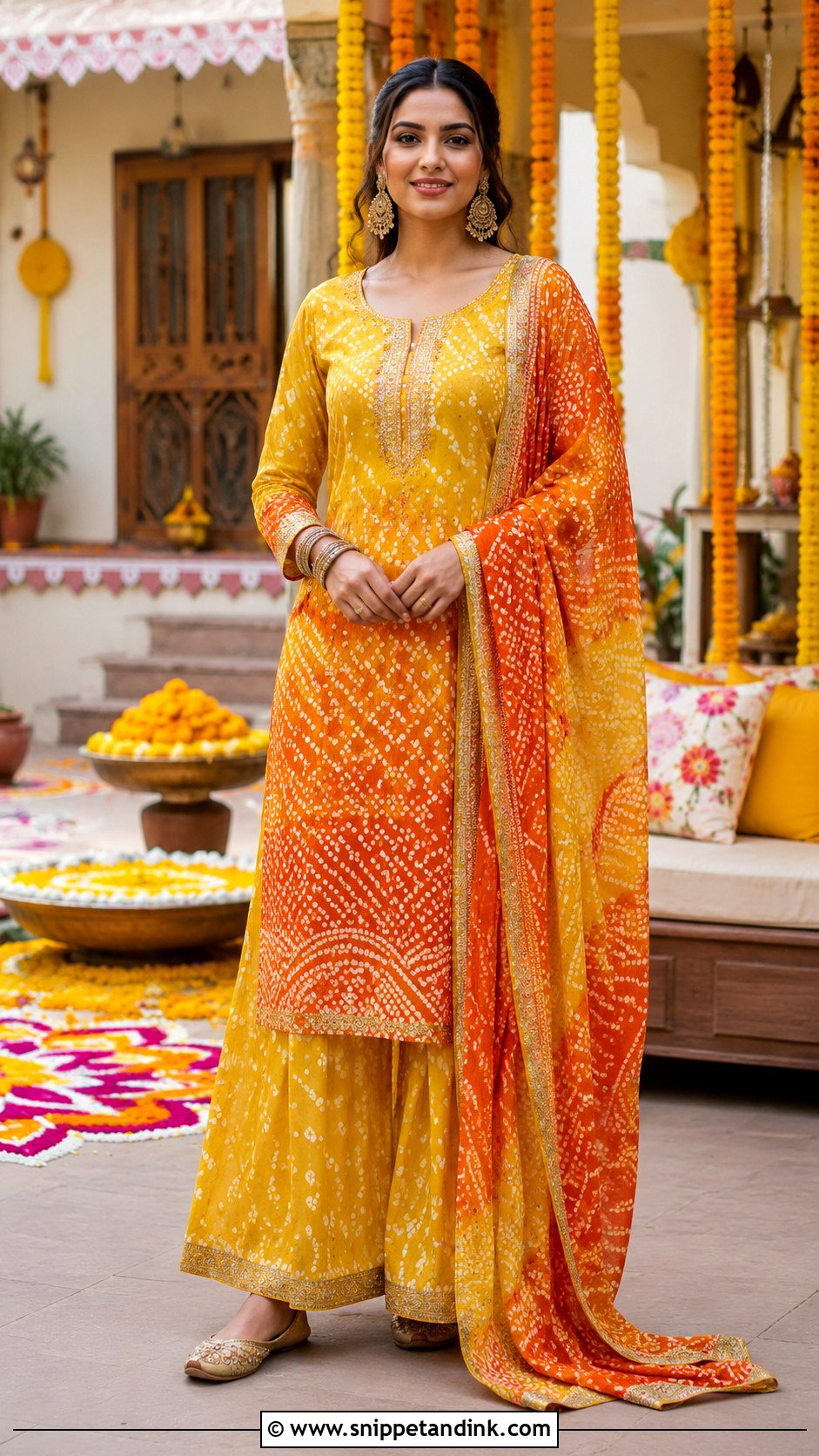
Bandhani carries a strong regional identity, and at a Gujarati or Rajasthani family haldi it often has meaning beyond decoration. A bandhani haldi suit in classic yellow and orange, or with lime, rani pink, ivory or mustard accents, feels festive without weight. A plain yellow suit with a bandhani dupatta is the quieter version. Oxidized jewelry makes it relaxed, antique gold dressier. Braided hair, floral clips and juttis finish it.
11. Short Kurti Sharara Haldi Suit
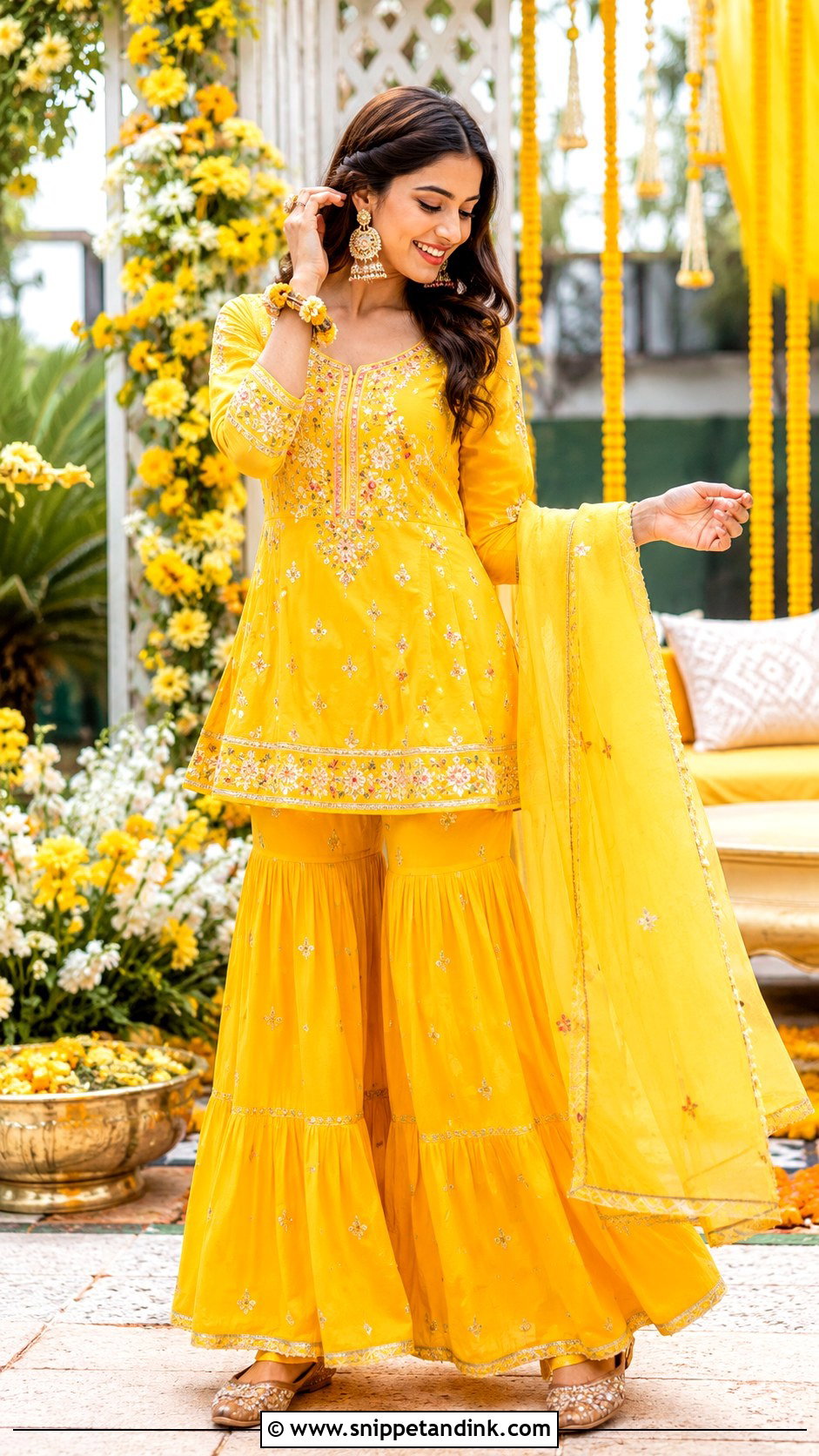
A short kurti over a sharara is one of the easiest ways to look festive and young. The kurti shapes the upper body, while the wide legs give movement. It holds up well through dancing, sitting with friends and candid photos. Mirror work, gota trim or floral embroidery on the kurti keeps it ceremony-ready. If you want your hands free for applying paste, pin the dupatta over one shoulder. Statement earrings, bangles and embellished flats. Check that the kurti covers the sharara waistband when you raise your arms.
12. Cape Haldi Suit
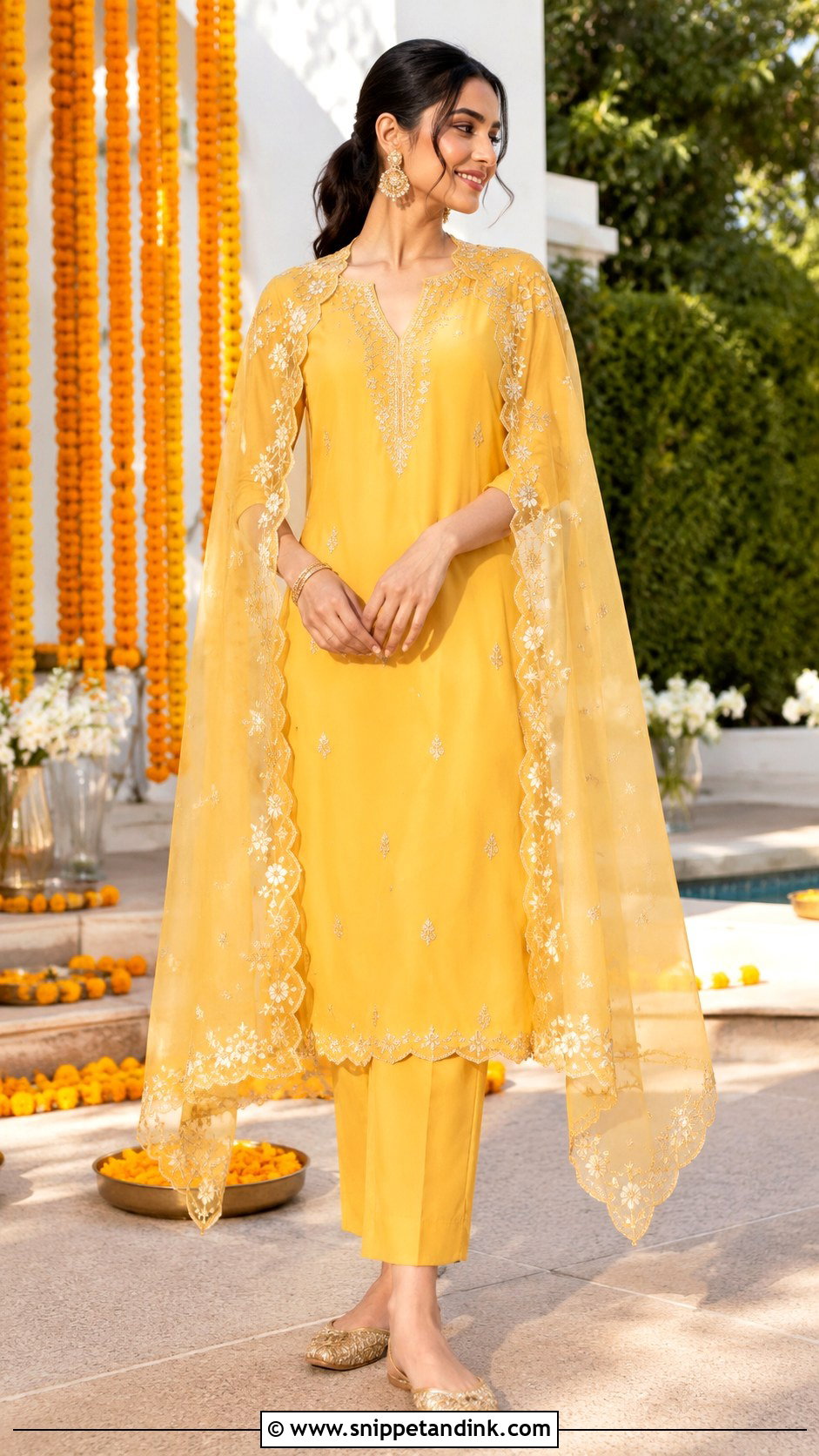
A cape replaces the dupatta with something that stays on by itself, which matters when you’re reaching over people to apply paste. A yellow kurta and pants with a sheer embroidered cape, or an ivory base with yellow floral work, gives a fusion look that still reads ethnic. Keep the jewelry sleek with small earrings, bangles and a ring, and wear strappy flats or embellished sandals. Capes cut too narrow at the shoulder limit arm movement, so lift your arms in the fitting room.
13. Peplum Haldi Suit
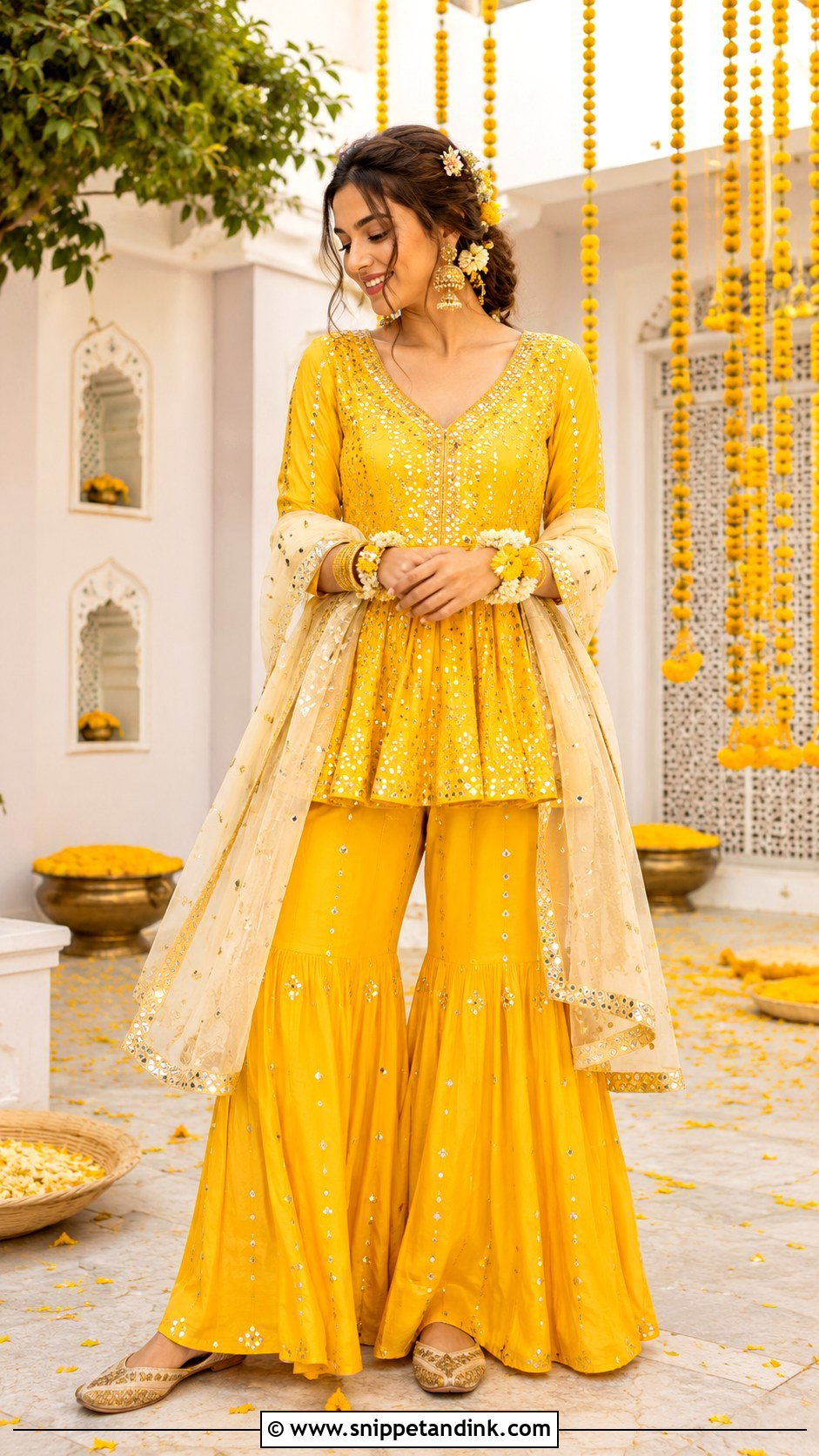
A peplum top flares at the waist, which gives shape without needing a fitted kurta. Paired with sharara, gharara or palazzo bottoms and a light dupatta, a yellow peplum with mirror work or gota looks festive. It defines the waist on many body types, but if you’re short-waisted, a peplum seam sitting too low can make the torso look shorter; I’d have it placed at your natural waist. Jhumkas, bangles and floral hair pins keep it playful. Keep the bottoms simple when the peplum is heavily embroidered.
14. Orange Haldi Suit
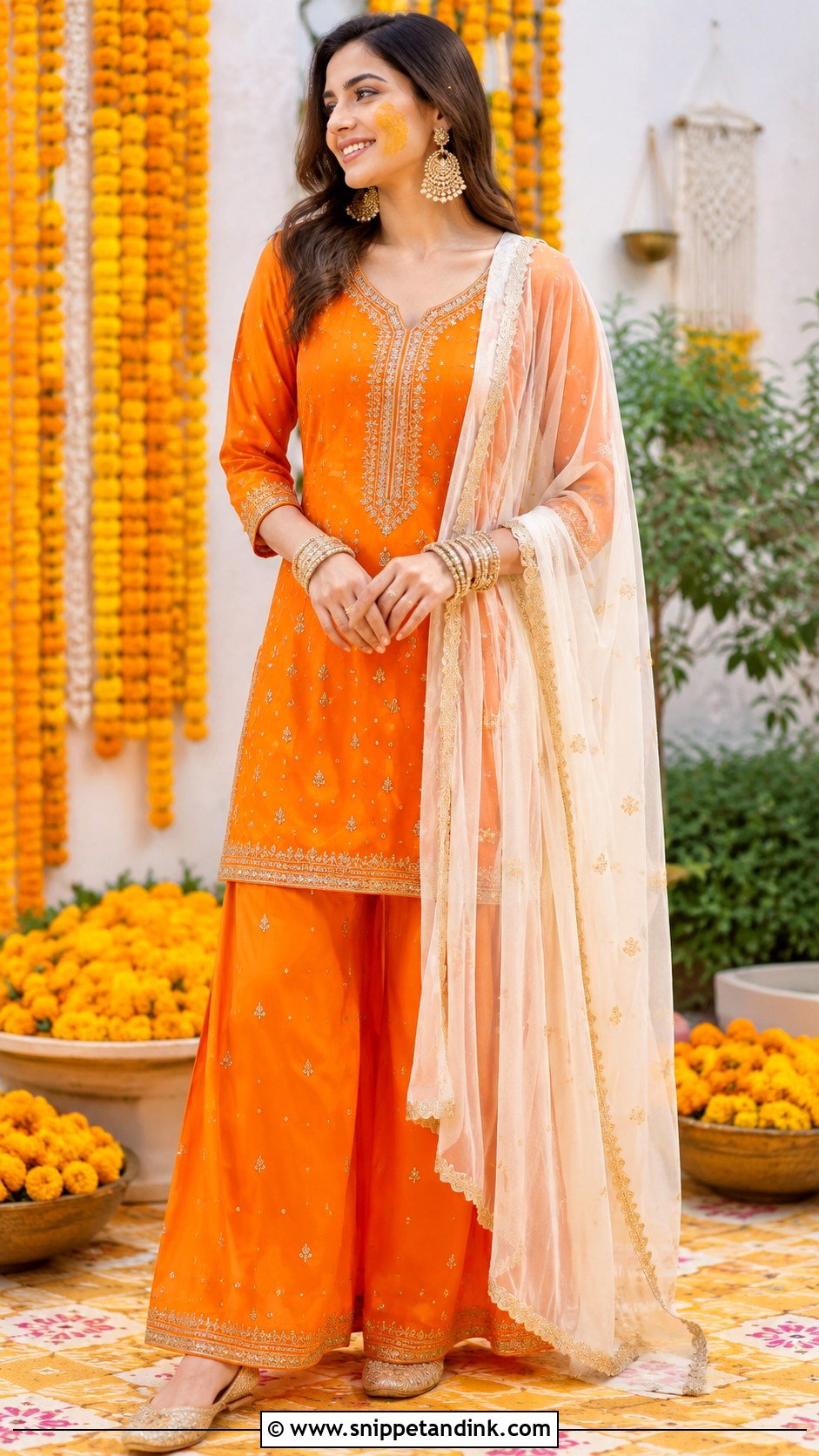
Orange is a warm, joyful alternative to yellow and still feels traditional. A straight kurta with palazzos is balanced, and an orange sharara suit adds volume. Gold gota, mirror work and thread embroidery all sit well on it, with yellow or ivory in the dupatta or jewelry. Before you choose orange as a guest, it’s worth asking whether the bride is wearing it. Glowing skin and a soft coral lip suit the color.
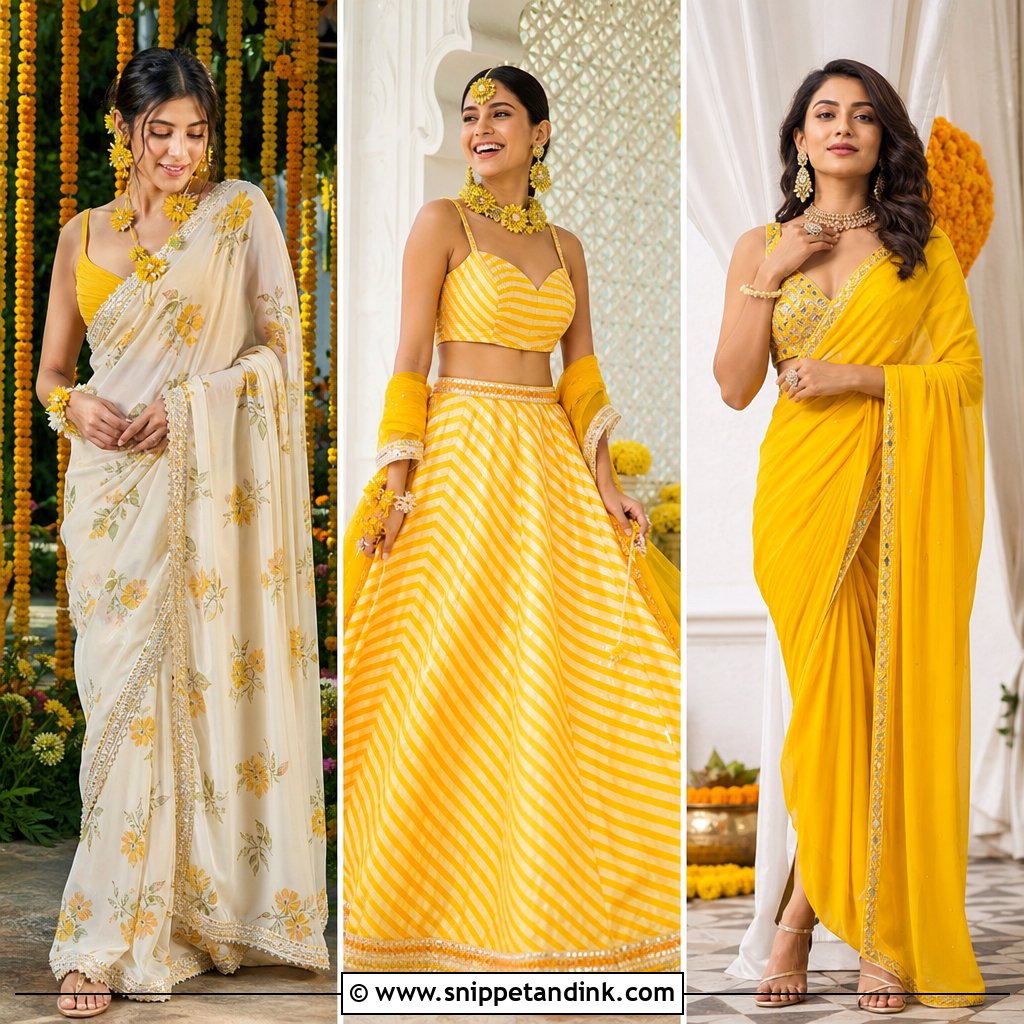
15. Ivory And Yellow Haldi Suit
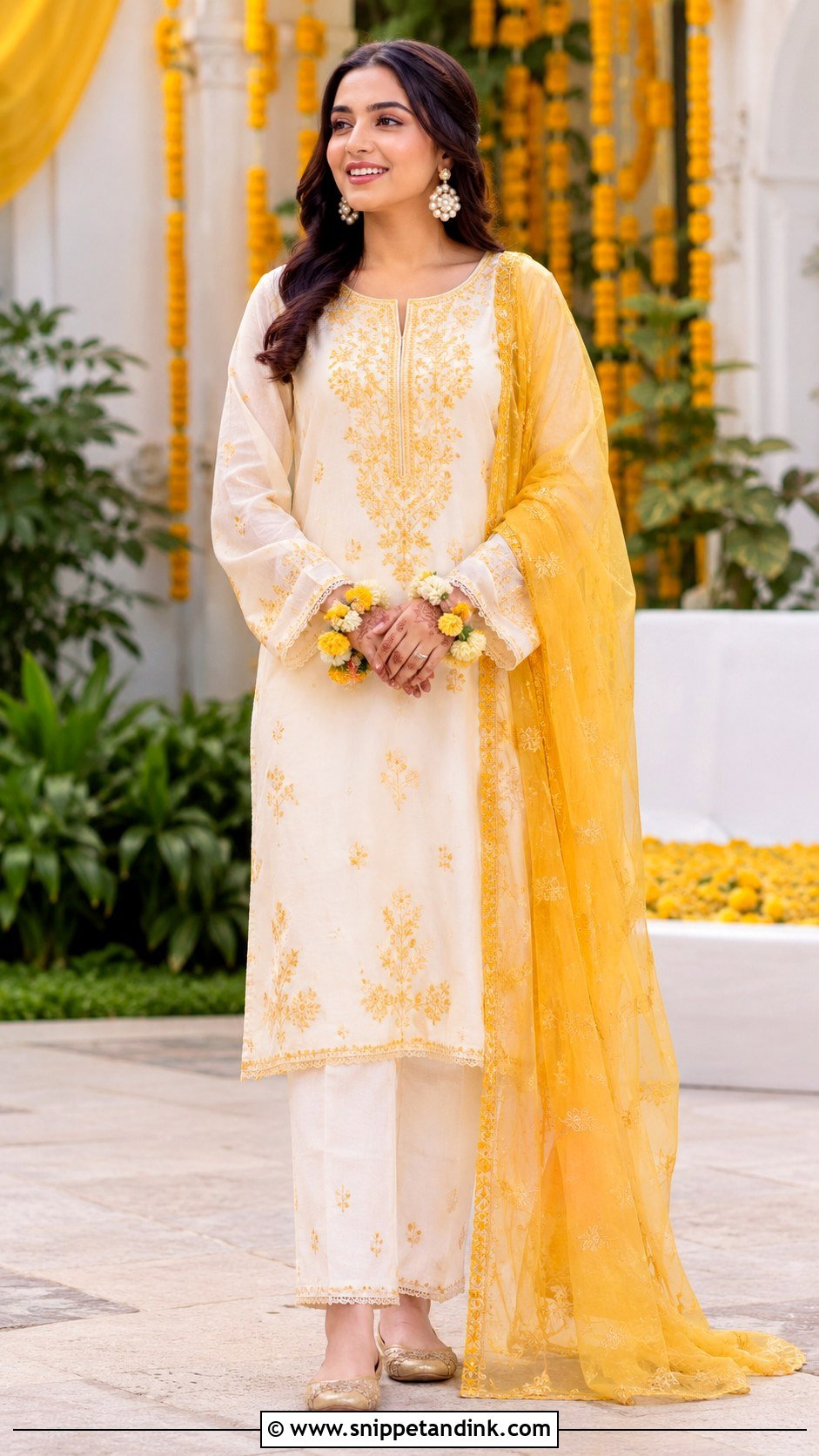
Ivory with yellow softens the haldi palette. An ivory base keeps the outfit light, and yellow embroidery, borders or a yellow dupatta make it fit the occasion. An ivory straight kurta with yellow palazzos, or a white chikankari suit with a vivid yellow dupatta, both work. The contrast stays crisp in daylight photos. Pearl jewelry, floral bangles and gold juttis complete it. Expect some yellow fingerprints by the end, and choose a fabric you can wash if that bothers you.
16. Embroidered Straight Haldi Suit
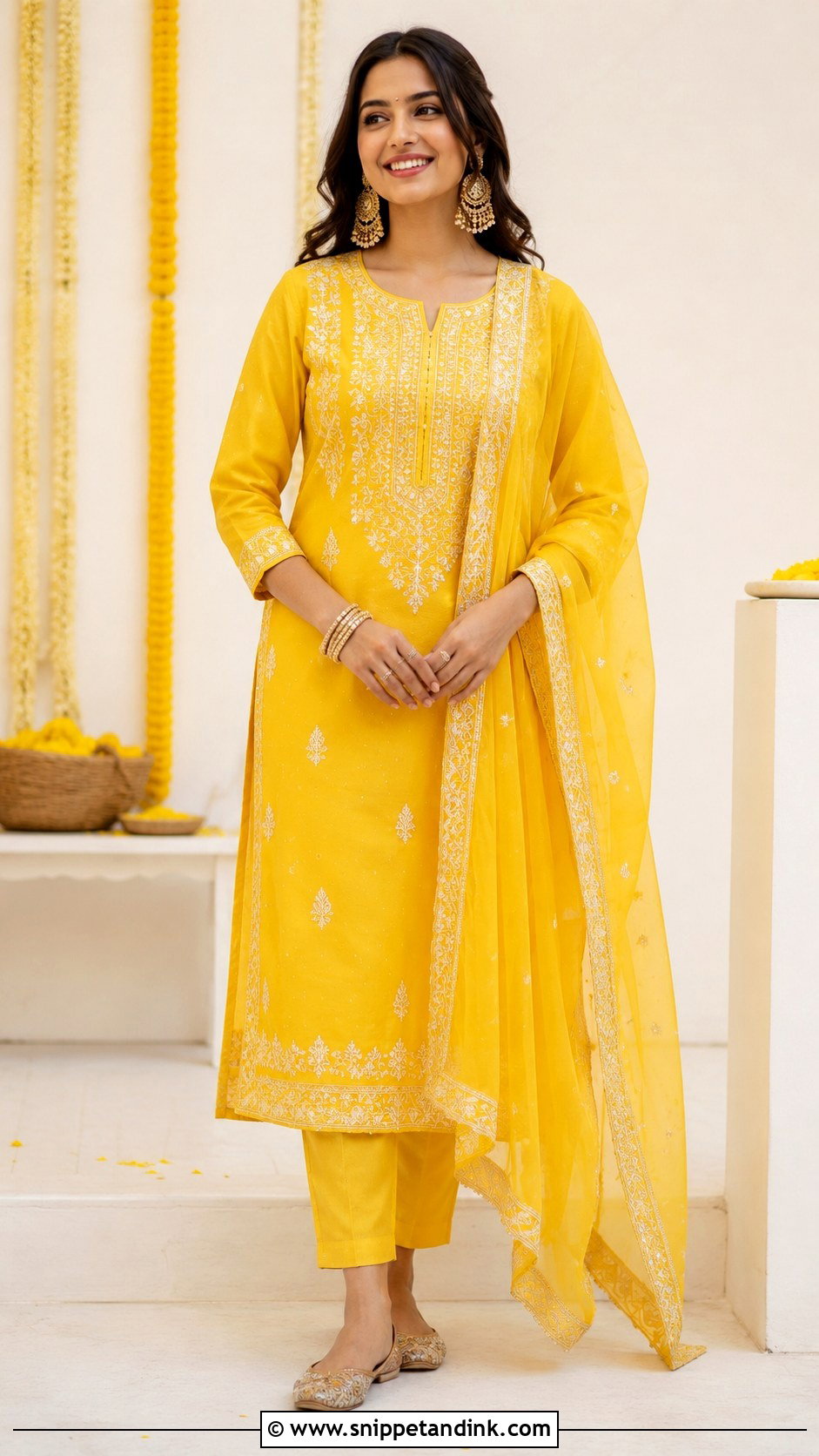
Clean lines suit women who don’t want flare. An embroidered straight haldi suit in yellow, mustard, ivory or lime with thread work, gota patti, mirror accents or fine zari has structure and enough festive detail. Slim pants, cigarette trousers or straight palazzos keep it neat. Straight kurtas need side slits high enough to sit cross-legged, so check that before you buy. A bordered dupatta, statement earrings, a small bindi and bangles finish it; mothers and aunts often prefer this shape.
17. Pastel Yellow Haldi Suit
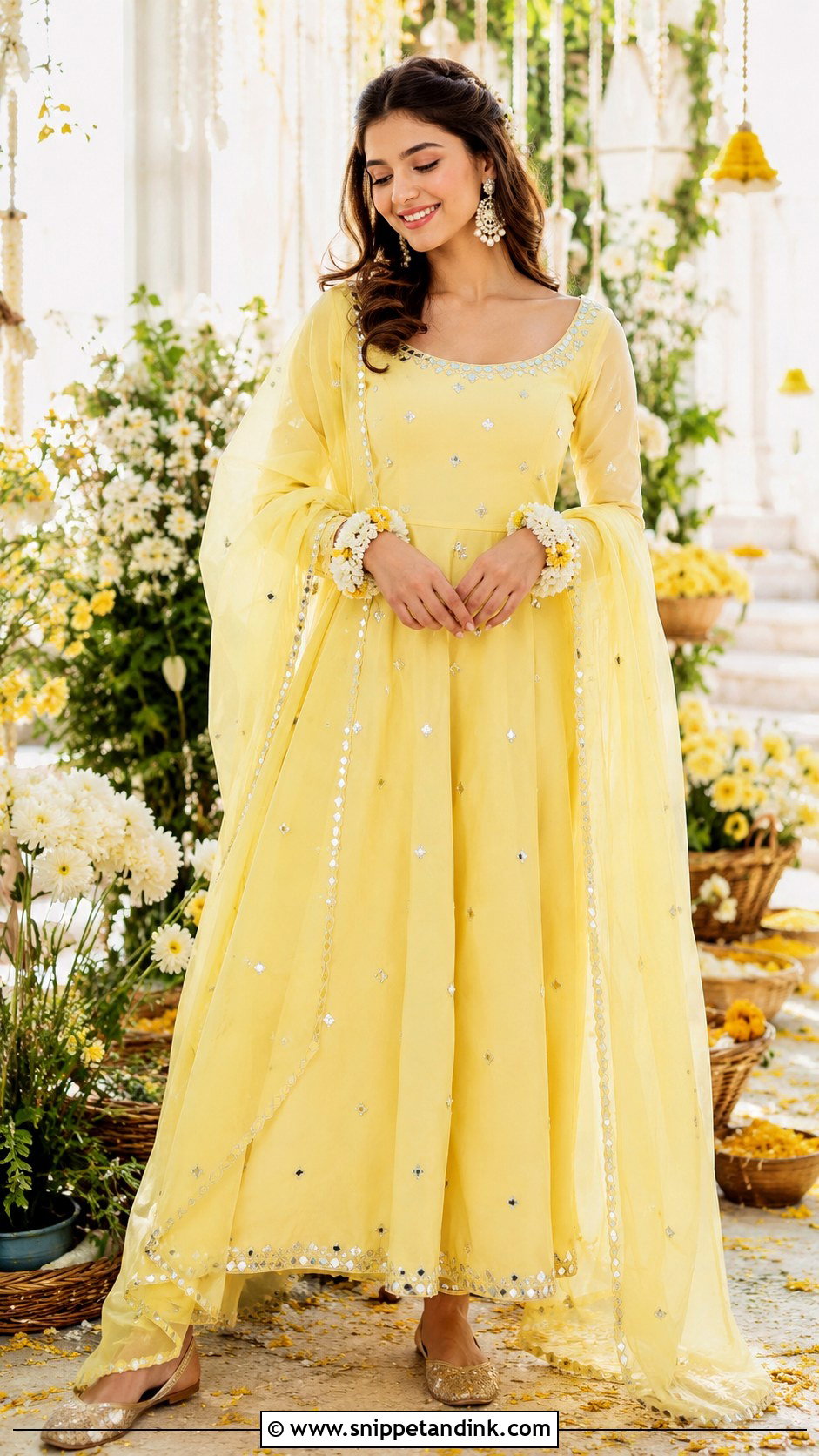
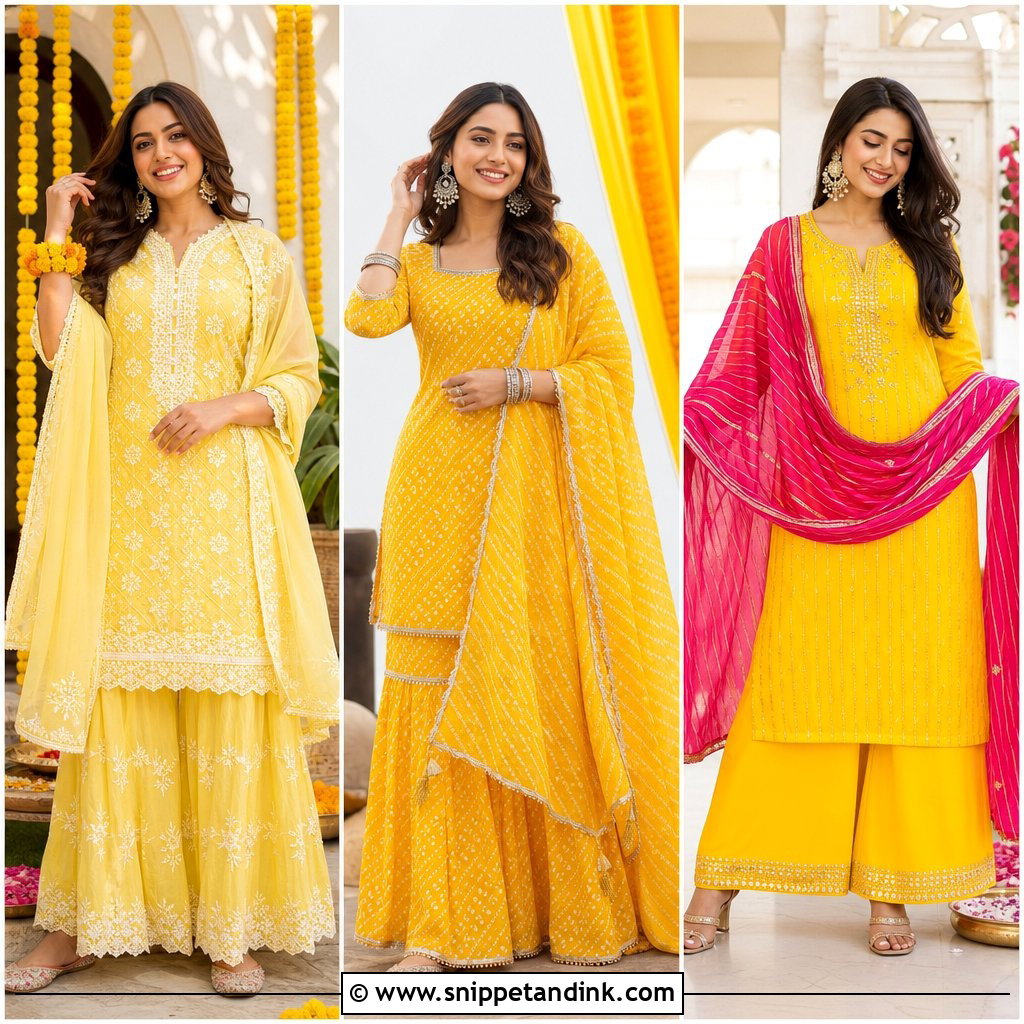
Pastel yellow is lighter than bright yellow and still belongs in the color story. Organza, georgette, cotton silk or chanderi give it an airy finish, as an Anarkali, sharara or straight set with pearl details, floral embroidery or a few mirrors. Keep accessories delicate: pearl earrings, floral bracelets, nude or gold juttis. Pale pastels can look flat in harsh midday light, so a little texture in the embroidery helps the camera pick up detail. It suits a soft décor setup well.
18. Printed Palazzo Haldi Suit
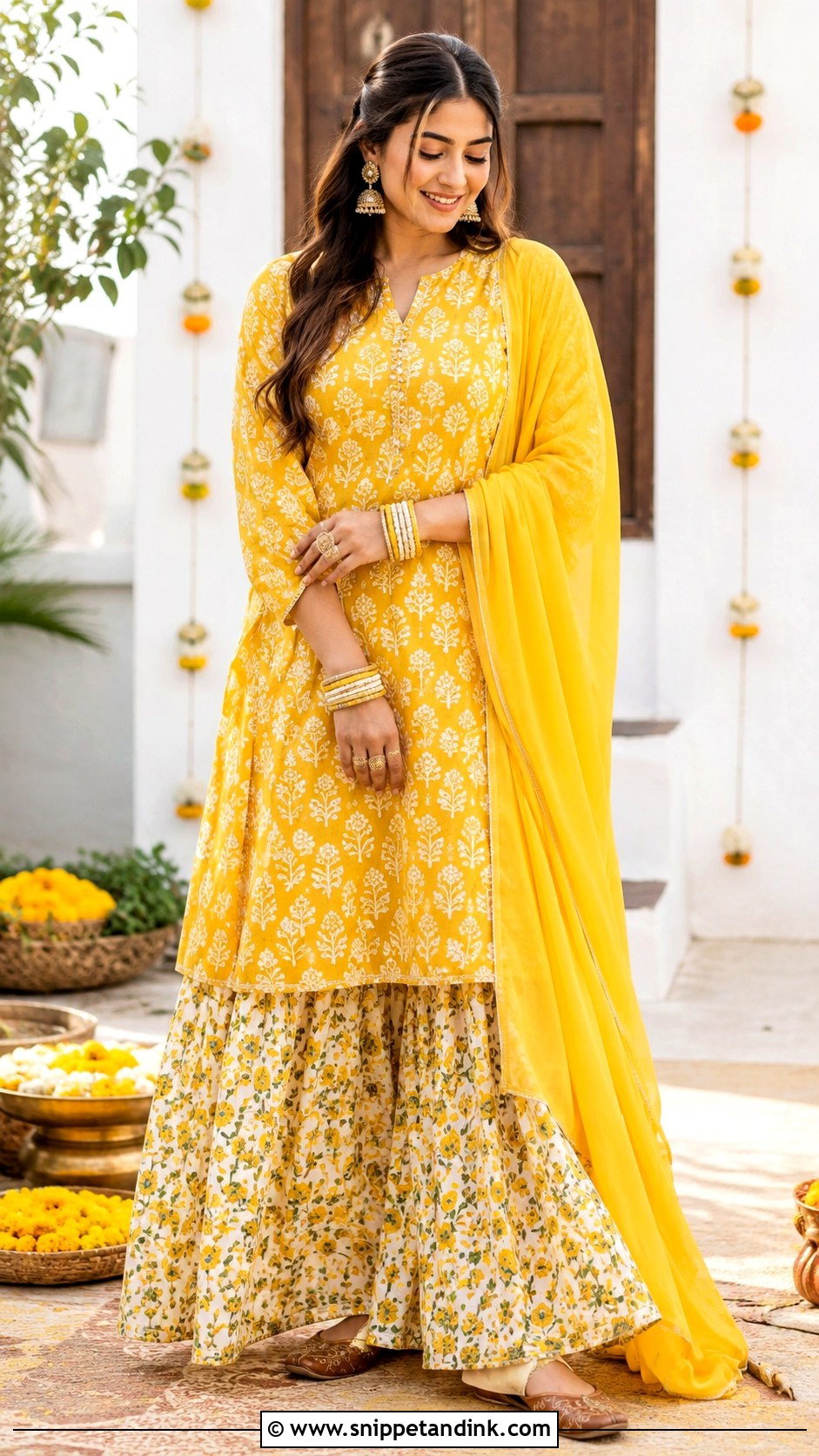
Printed palazzo sets are comfortable for a long ceremony and lively without embellishment. Block prints, florals, leheriya or small ethnic patterns in yellow, orange, green or ivory all suit haldi. My rule is one printed piece and one plain: a bold kurta with a plain dupatta, or a simple kurta with a printed dupatta. Juttis, small jhumkas and stacked bangles finish it. It’s the outfit most likely to be worn again at brunches and family lunches.
19. Jacket Haldi Suit
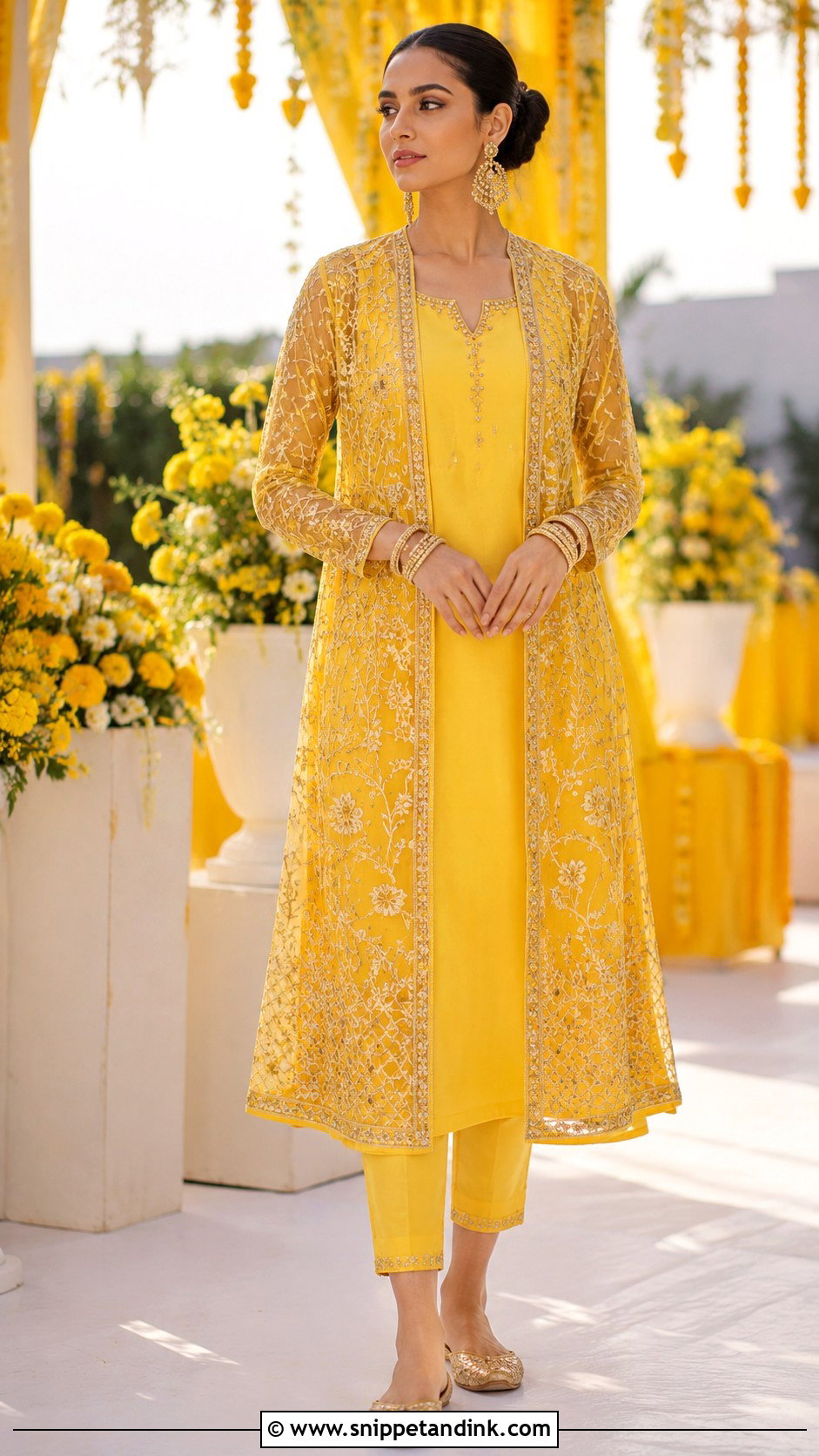
A jacket gives you a layer without the fuss of a dupatta. Long, short, sheer, printed or embroidered, it sets the level of formality: a yellow kurta and pants with an embroidered jacket looks refined, an ivory suit with a bright printed jacket more playful. It also adds coverage. Keep the inner kurta simple when the jacket is busy. On a hot morning, a jacket adds heat quickly, so I’d choose a sheer one for summer. Gold earrings, a sleek bun and comfortable flats.
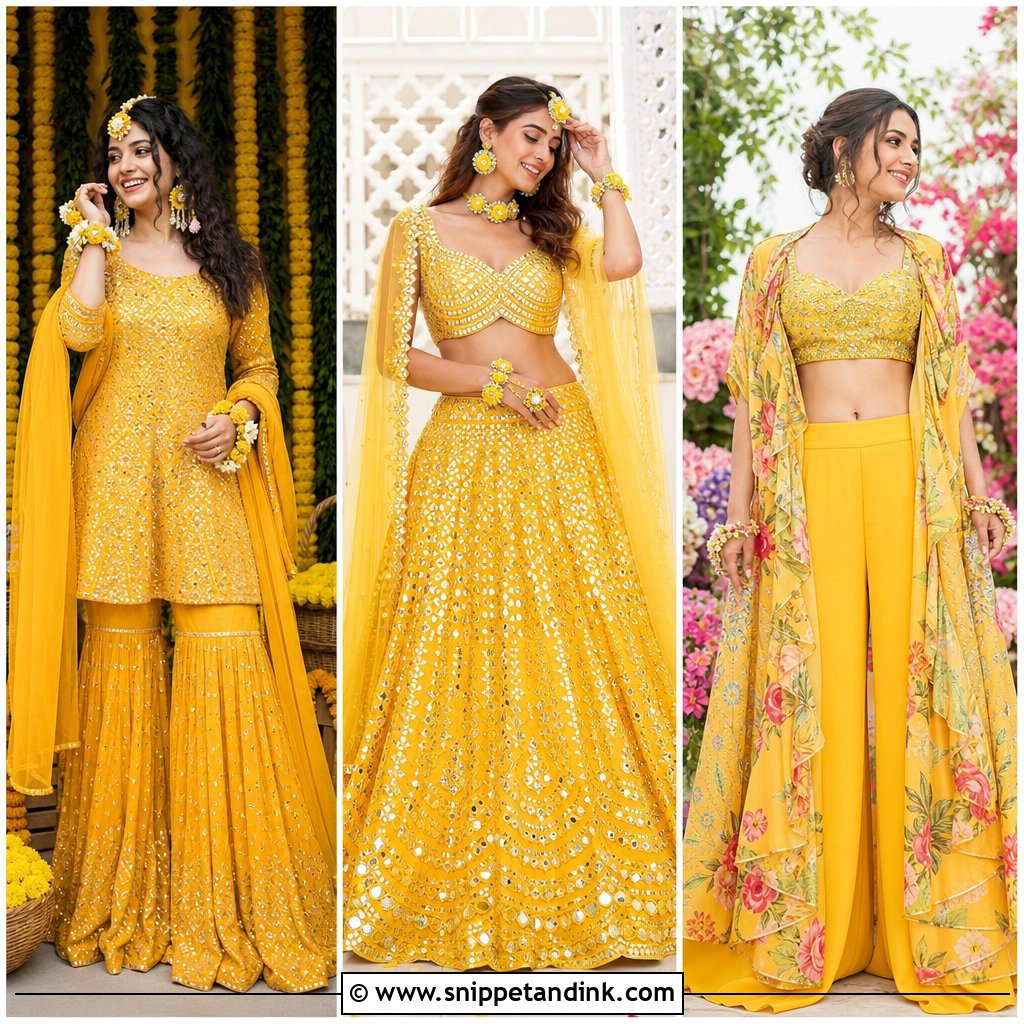
20. Green Sharara Haldi Suit
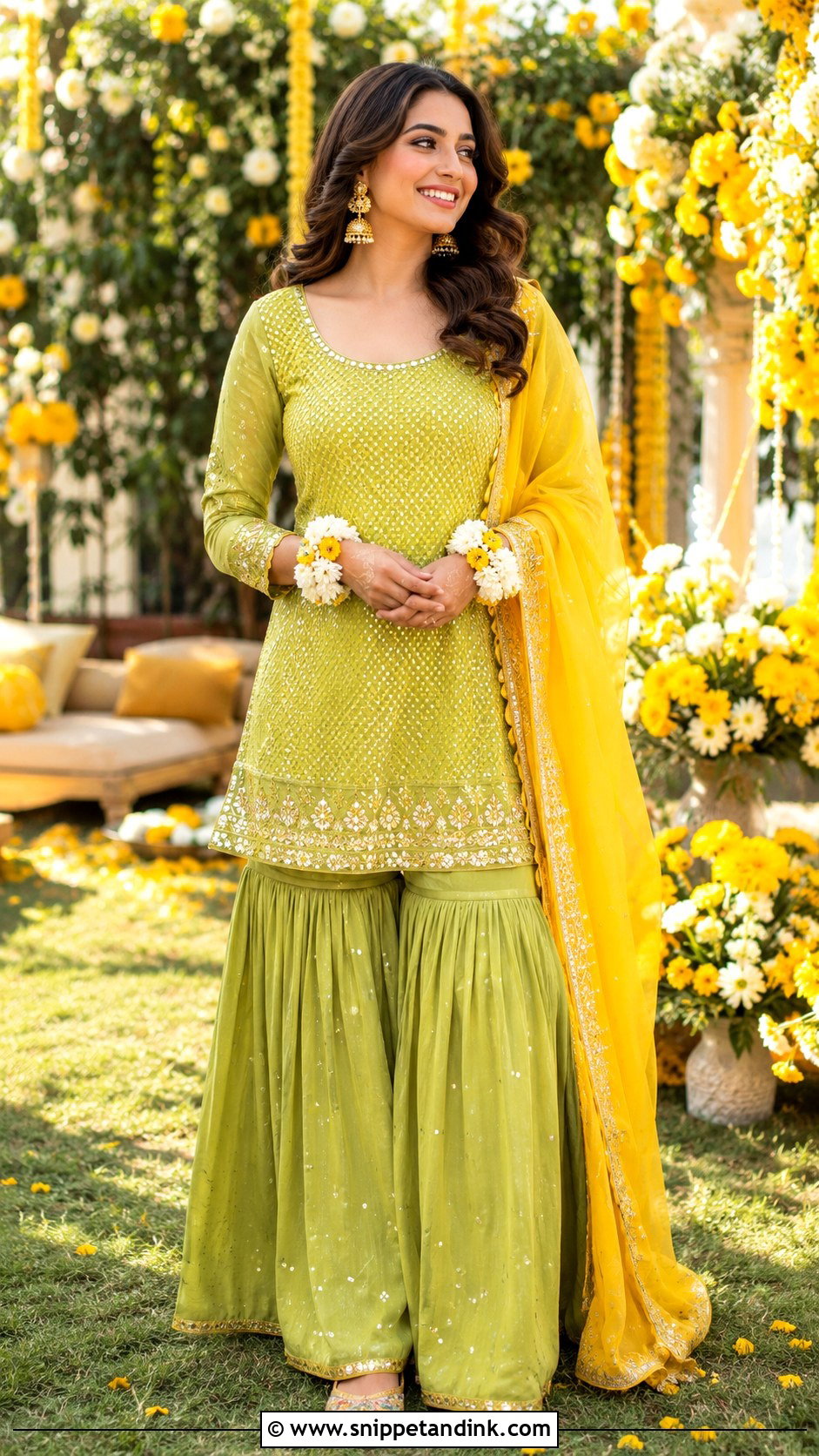
Green is how I’d coordinate a group of bridesmaids without anyone matching the bride. Mint, lime, parrot and pistachio all suit haldi, especially with yellow jewelry or a yellow dupatta. A short kurta over a flared sharara is easy to move in. Light embroidery, mirror work or floral prints keep it cheerful. Gold suits the brighter greens; pearls sit better with mint and pistachio. Juttis, floral bangles and soft curls.
21. Organza Dupatta Haldi Suit
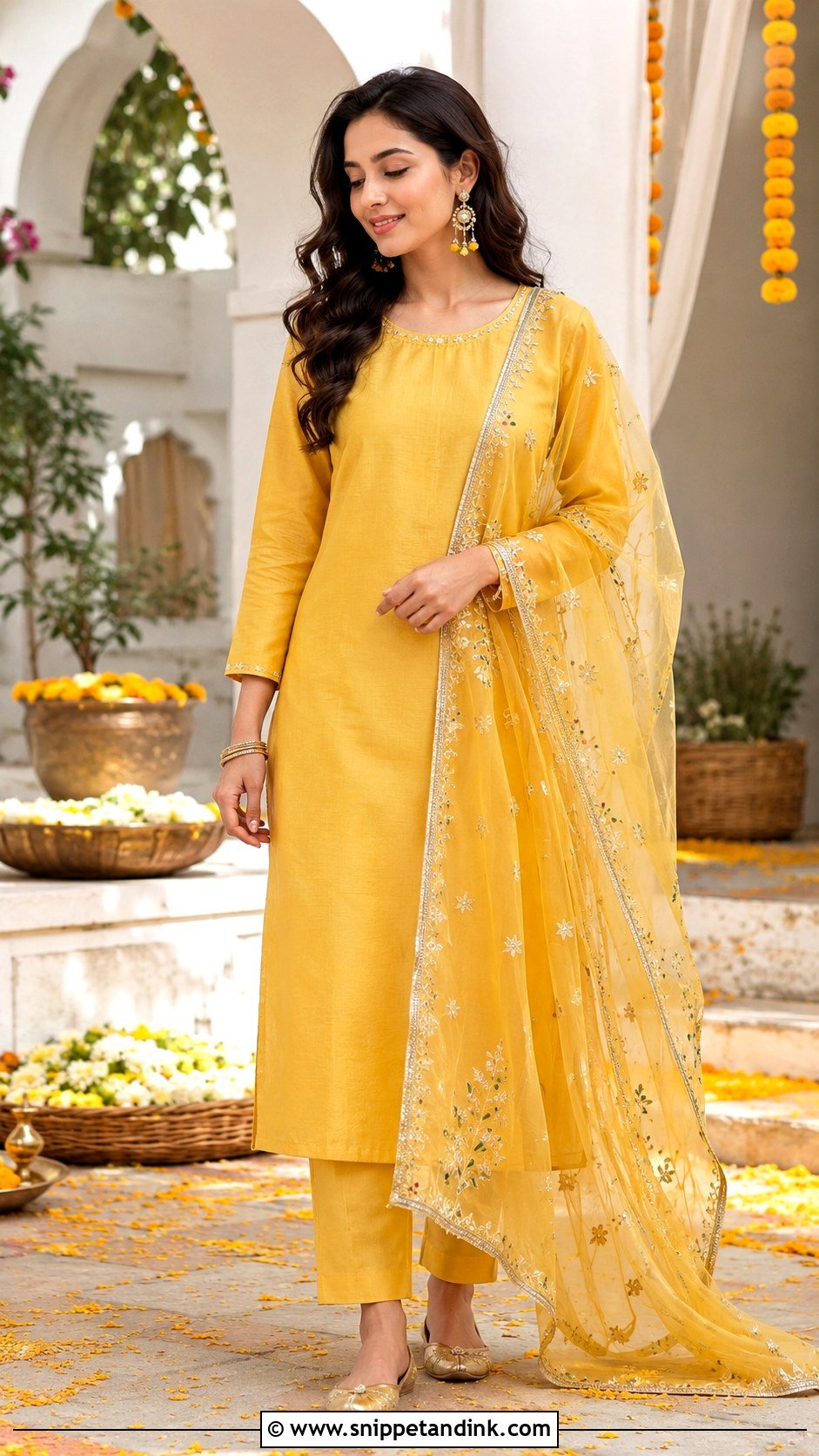
An organza dupatta dresses up a simple suit without adding weight. Pair a plain yellow kurta and pants with an embroidered organza dupatta, or an ivory suit with a yellow organza layer. Floral prints, scalloped edges, mirror borders or gota can make the dupatta the focus, so keep everything else clean. Organza is crisp and holds a fold, which means it creases sharply if you sit on it; drape it over the shoulder rather than letting it fall to the floor. Delicate earrings, slim bangles and gold flats.
22. Leheriya Haldi Suit
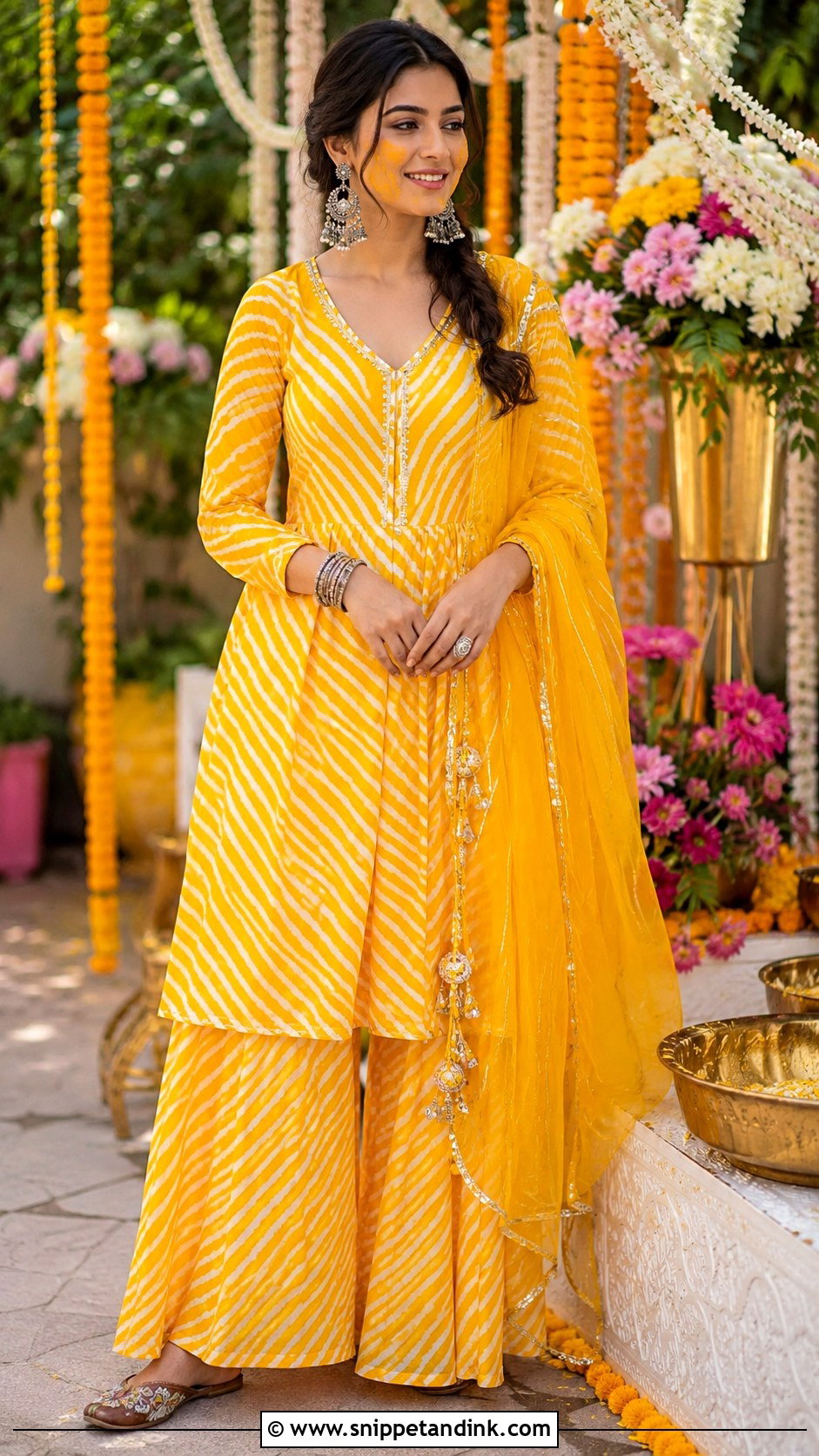
Leheriya is a Rajasthani resist-dye technique that creates diagonal waves of color, and it brings movement to a suit without heavy embroidery. Yellow and white is the classic; yellow with pink, orange or green is more playful. A leheriya kurta with palazzos or a sharara, or a plain yellow suit with a leheriya dupatta for something subtler. Oxidized earrings keep it relaxed, gold makes it dressier. Like bandhani, hand-dyed leheriya can bleed when wet, so check the dye first.
23. Silk Haldi Suit
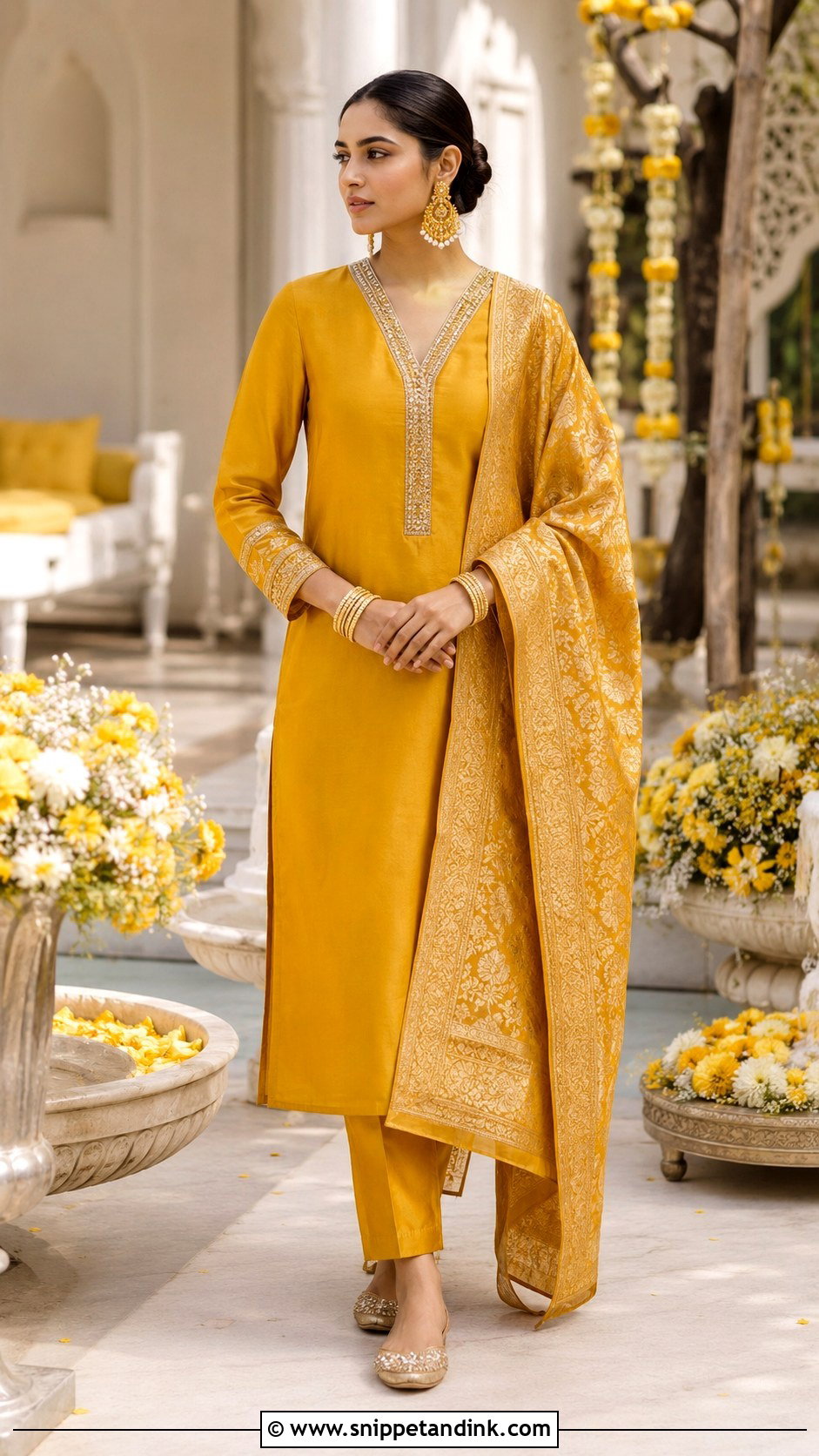
Silk lifts a haldi suit into something more formal, which suits a family that treats the haldi as a serious ritual. Lightweight silk, cotton silk or chanderi silk stays comfortable in daylight; a mustard, golden yellow or ivory kurta with straight pants looks refined. A woven dupatta or zari border adds festivity. Silk already has shine, so keep accessories elegant: gold earrings, a sleek bun, embellished flats. Pure silk and turmeric don’t mix well, and stains need a dry cleaner, so think about how close to the paste you’ll be.
24. Yellow Co Ord Haldi Suit
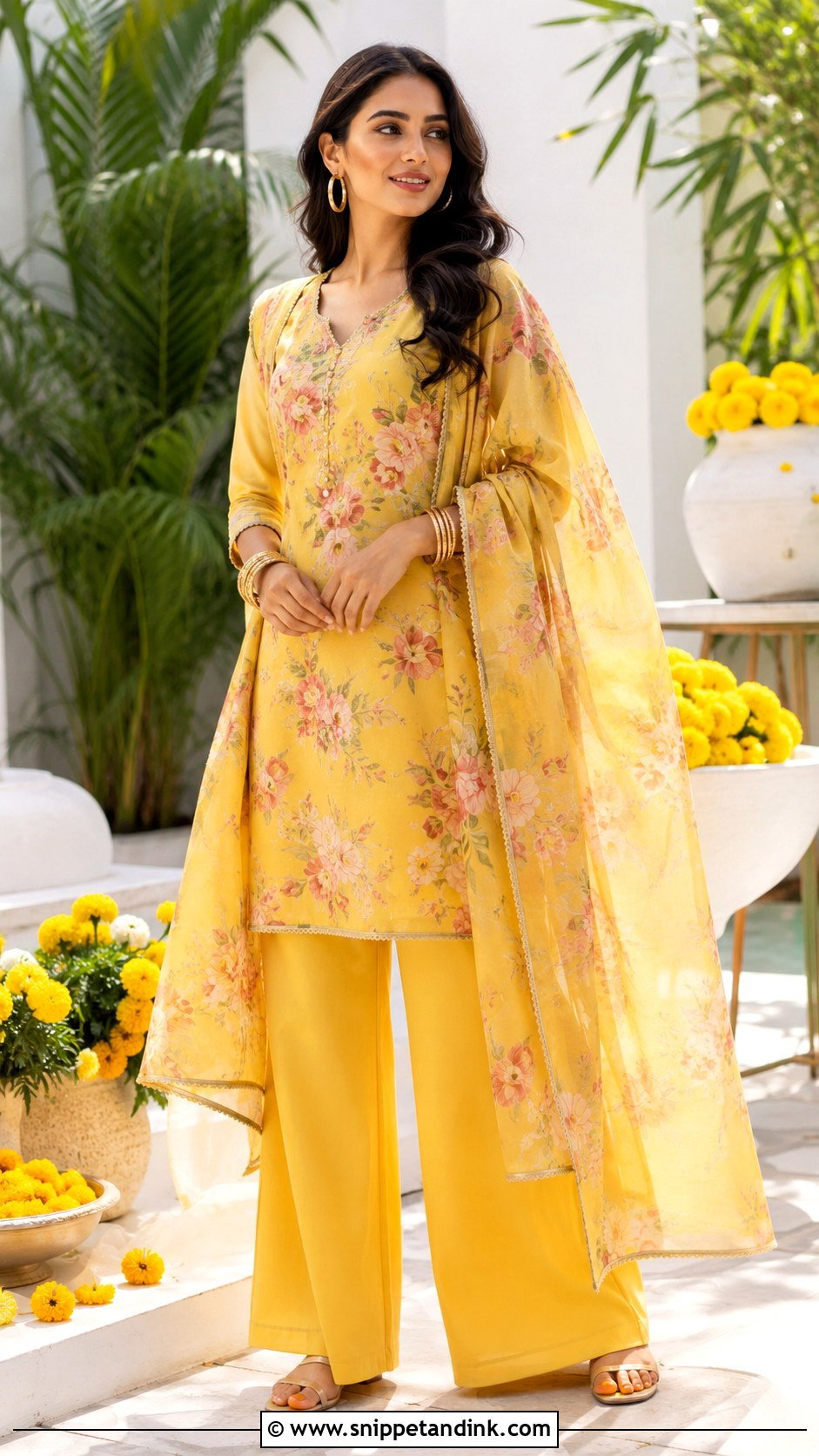
Co-ord sets are the modern option for women who like a clean matching outfit. A short kurta or tunic with matching palazzos, straight pants or flared trousers looks polished, and simple embroidery or a printed dupatta adds ceremony detail. Cotton silk, crepe, georgette or rayon all work. They’re easy to buy as a group for bridesmaids, as most come in standard sizes. Hoops or jhumkas, layered bangles and sleek sandals or juttis complete it.

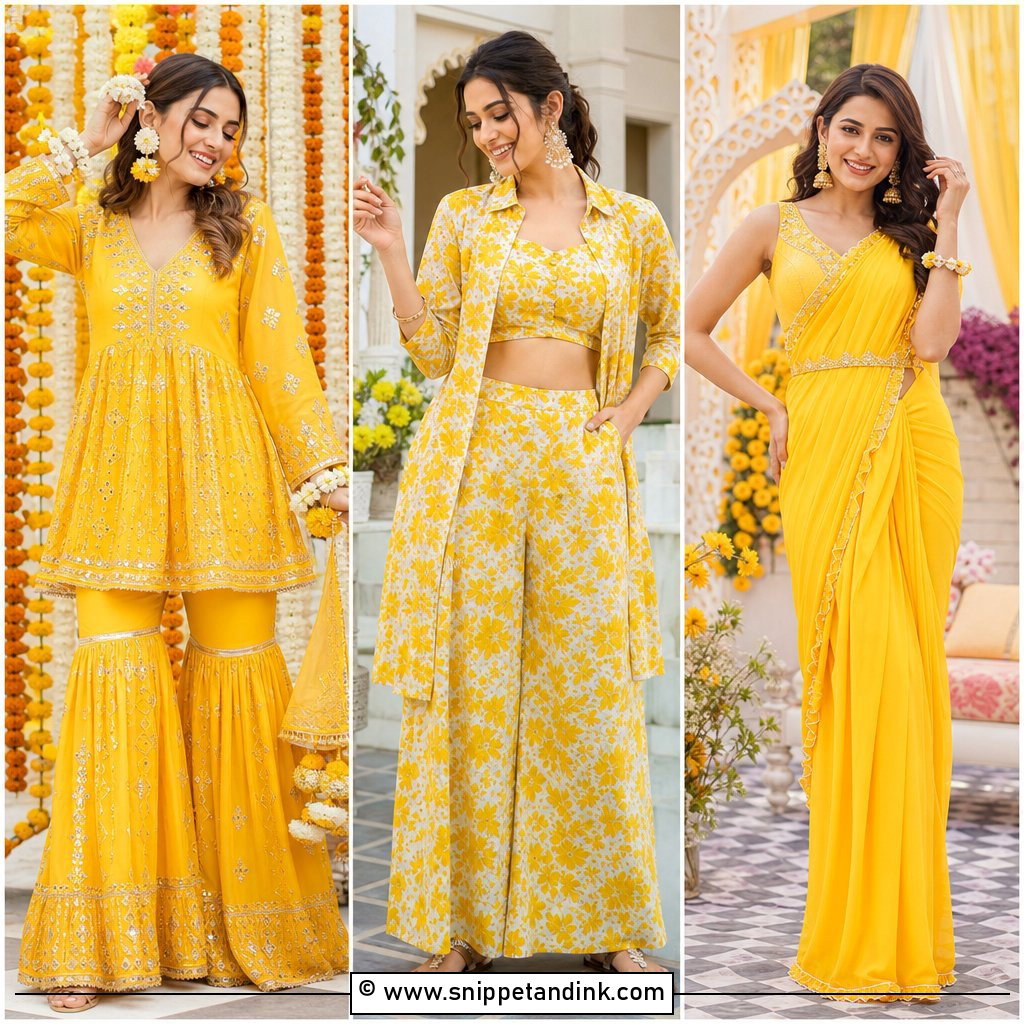
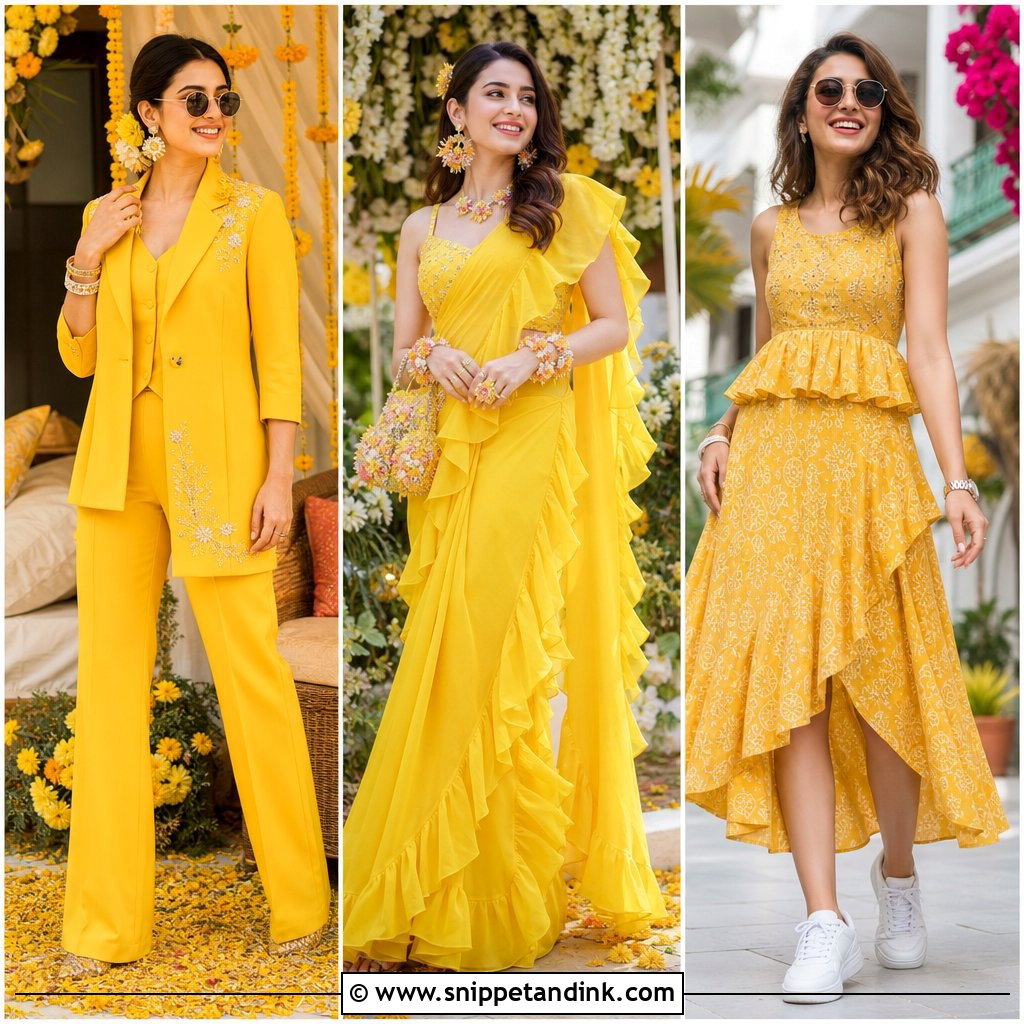
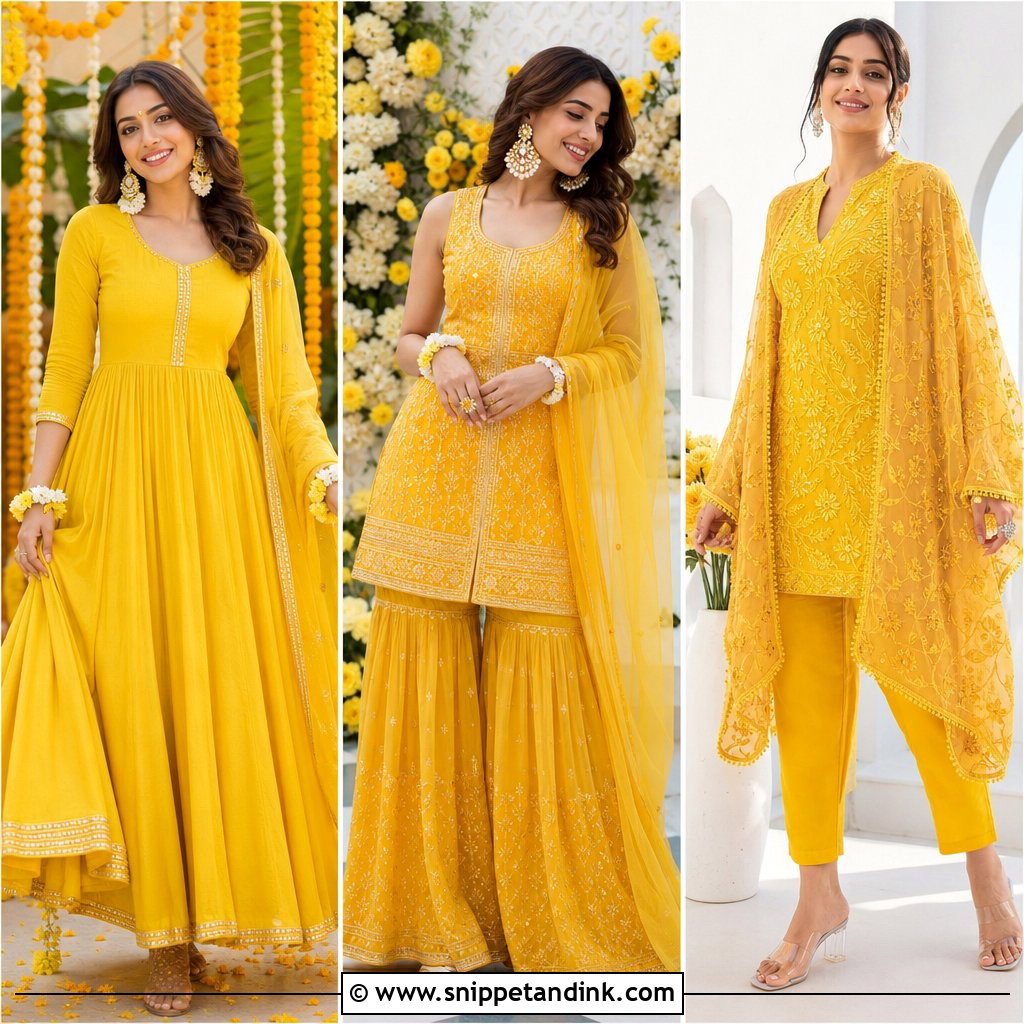
25. Heavy Bridal Haldi Suit
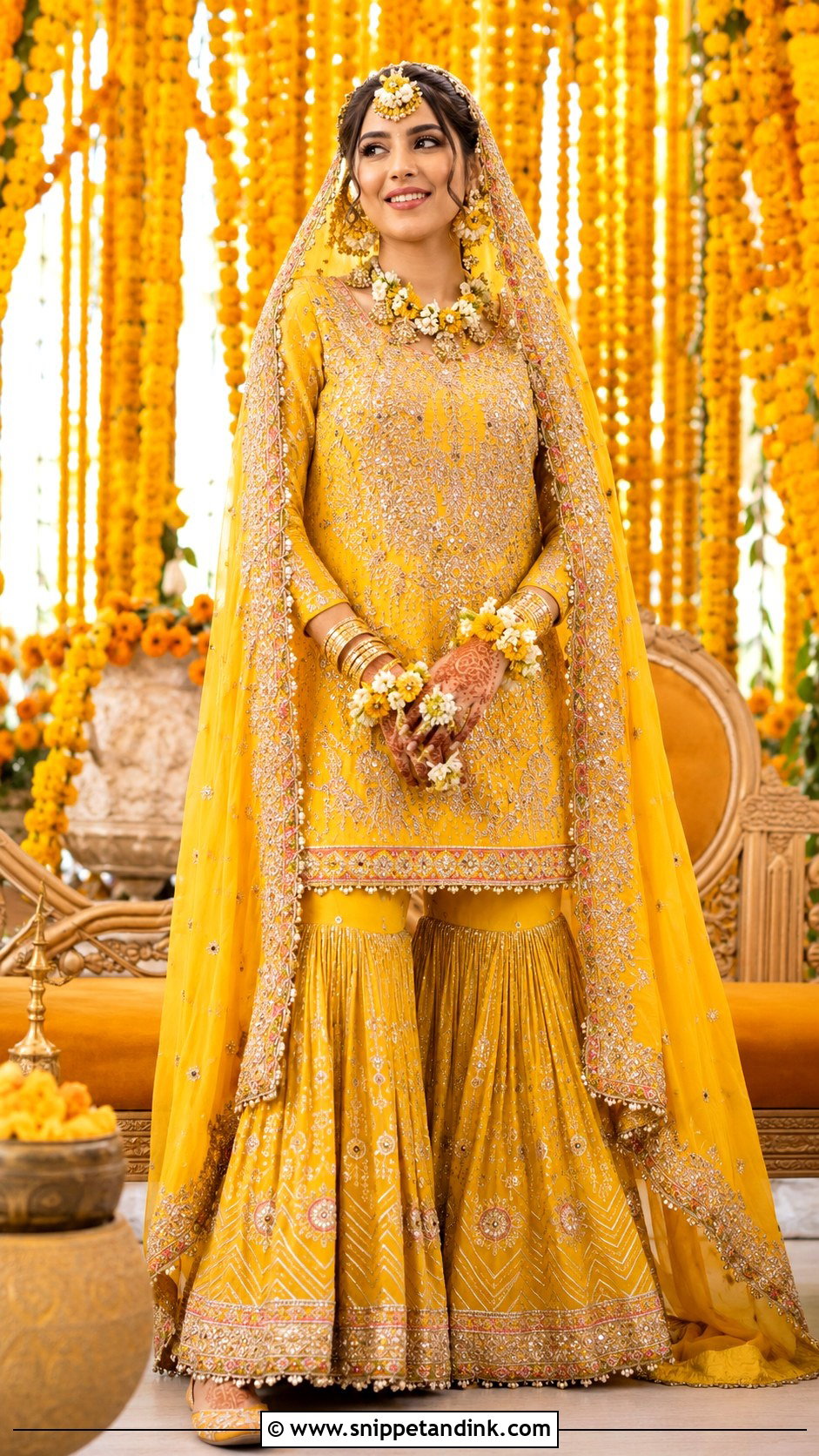
A bride who doesn’t want a lehenga can still look the part in a heavy bridal haldi suit. A richly embroidered Anarkali, sharara or gharara in yellow, ivory, orange or lime, with gota patti, mirror work, zardozi accents or floral thread embroidery. A statement dupatta draped over the head for photos makes it bridal. Zardozi is heavy and stiff, so I’d keep it to the neckline and borders and leave the rest of the fabric breathable. Floral jewelry, a maang tikka, bangles and embellished juttis.
Coordinated Bridesmaids Without Identical Suits
Matching bridesmaids at a haldi can look like a uniform, and finding one suit that flatters every body is close to impossible. I get better results by fixing one or two shared details and letting each woman choose the rest.
- Agree on a color family, such as yellows and mustards, or greens from mint to lime.
- Let everyone choose the silhouette that suits her: sharara, palazzo, Anarkali or straight.
- Link them with one shared piece, usually a matching dupatta or the same floral jewelry.
- If you do order the same suit for everyone, buy in one order. Dye can vary between batches, and yellows show it most.
Height and build matter here too. A tall bridesmaid in a short kurti and a petite one in a floor-length Anarkali can stand side by side and still look like a set, as long as the colors and the dupatta tie them together.
Ask everyone to send a daylight photo of their outfit a week before. That’s usually when someone realizes her lime is closer to neon, and there’s still time to swap the dupatta.
From Sister to Guest, One Suit for Every Seat at the Haldi
A good haldi suit lets you enjoy the morning without thinking about your clothes. Suits are flexible: the same basic shape can look simple, bridal, modern, traditional or playful depending on the fabric, color and cut. Yellow will stay the favorite, but ivory, lime, orange, green, mustard and pastels all belong at a haldi now. Choose breathable fabric, a dupatta that stays put, comfortable shoes and jewelry that won’t catch. Then pick the silhouette that suits your role, from a sharara for dancing to a straight suit for an aunt.
You'll Like These Ideas:



Leave a Reply