
A fully blue gown changes the styling job. With white, the dress sets the rules and everything else follows; with blue, the shade decides which metals, flowers and veils look right, and a wrong pairing shows straight away. The range is wide, from powder tulle to dramatic navy satin, and each end of it asks for different accessories. So for every gown below I’ve styled the whole outfit, shoes to veil, and noted where it suits and what to check at the fitting.
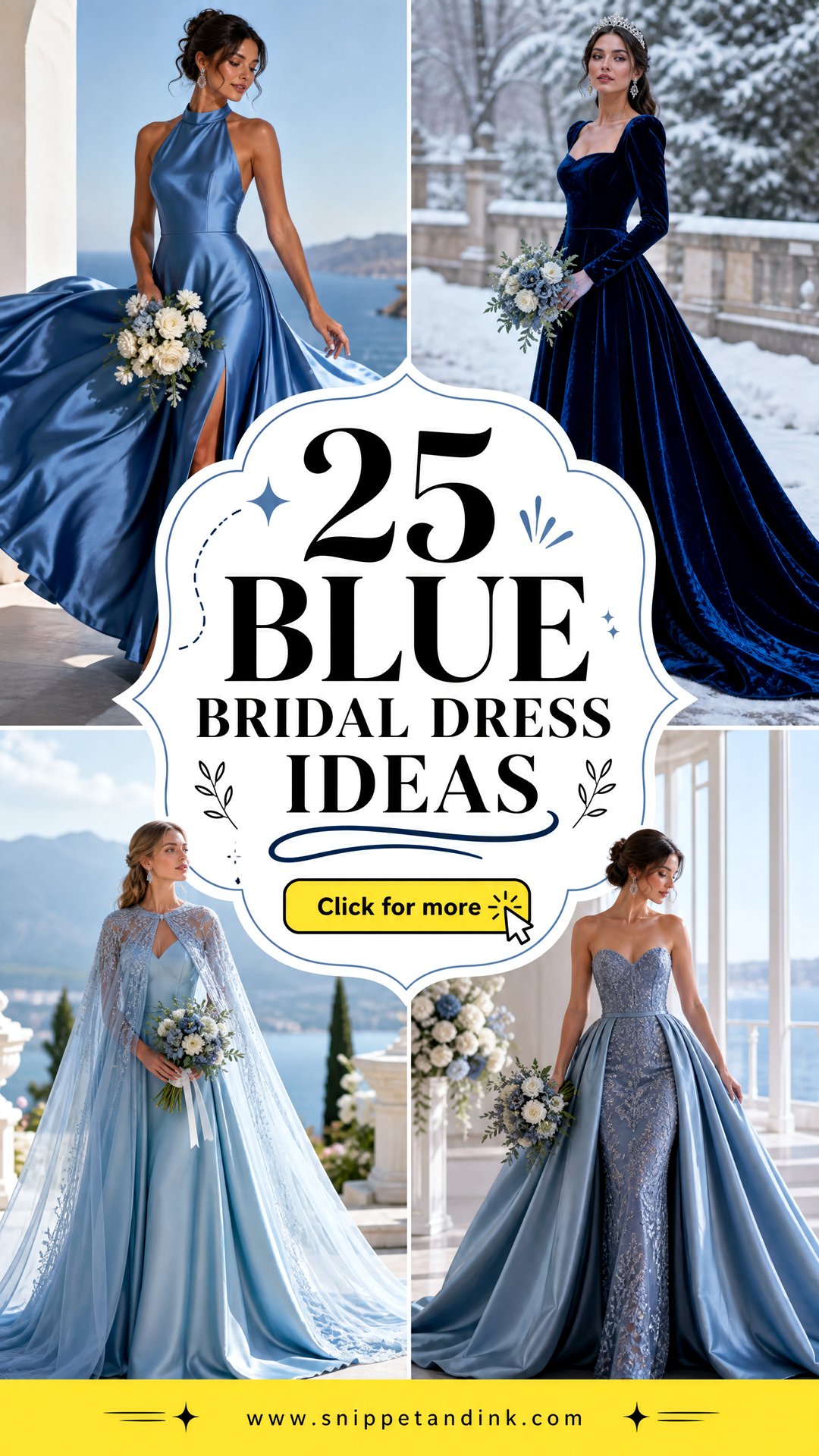
Shopping for a Blue Gown Takes More Lead Time
Most bridal salons stock their samples in white and ivory. A blue version is often made to order, sometimes as a custom colour, so the usual timeline gets longer. I tell brides to start looking around nine to twelve months out if they want colour, and to ask early whether the design is offered in blue at all, or only in the sample shade on the website.
Questions I’d ask the salon
- Can I see a physical swatch of the exact blue in the exact fabric? Screen colours are unreliable, especially for dusty and ice blues.
- Is the colour dyed per order? If so, the finished gown may differ slightly from the swatch, so ask what variation they consider normal.
- Are the lining, lace and thread dyed to match, or is lace coming in white over a blue lining? Those look very different.
- How long does production take for a coloured order, and how much time does that leave for alterations? Alterations usually need a couple of months on their own.
Before you sign, photograph the swatch in daylight next to your skin. It’s the closest preview you’ll get of how the gown will look in your photos.
1. Powder Blue Tulle Bridal Dress
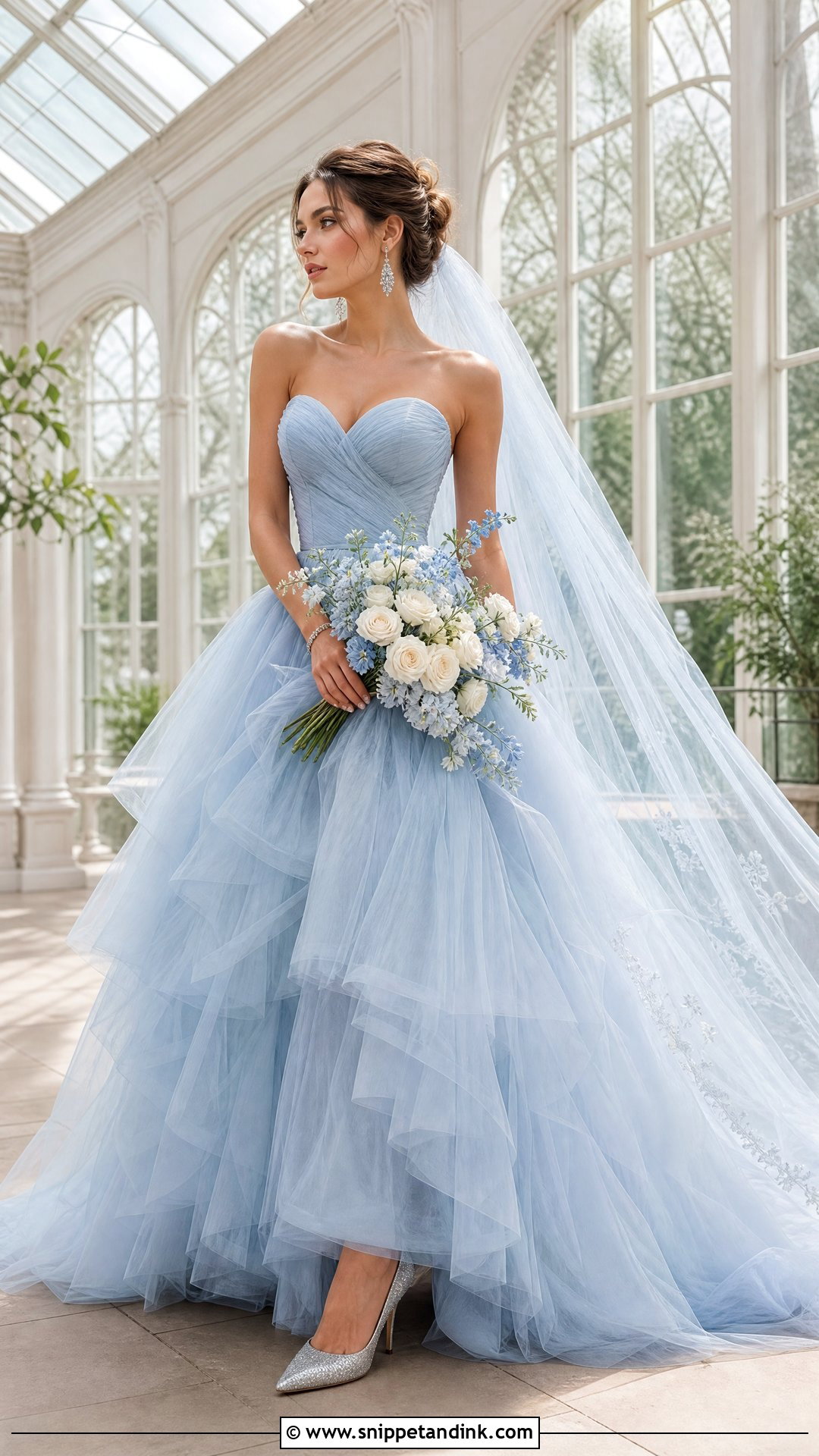
Powder blue tulle is the gentlest way into a coloured gown, and in a full ball skirt it still gives you an entrance. What makes or breaks it is the bodice: tulle has no structure, so the boning underneath is doing all the work, and I’d ask to see how it’s channelled before ordering. Silver pointed heels, crystal drops and a faintly blue-tinted cathedral veil keep the palette cool. White roses with pale blue delphiniums and eucalyptus make the bouquet. Ballrooms, gardens and glass conservatories all flatter it, and a low bun or loose waves with a rosy lip finishes the look.
2. Sky Blue Lace A-Line Bridal Dress
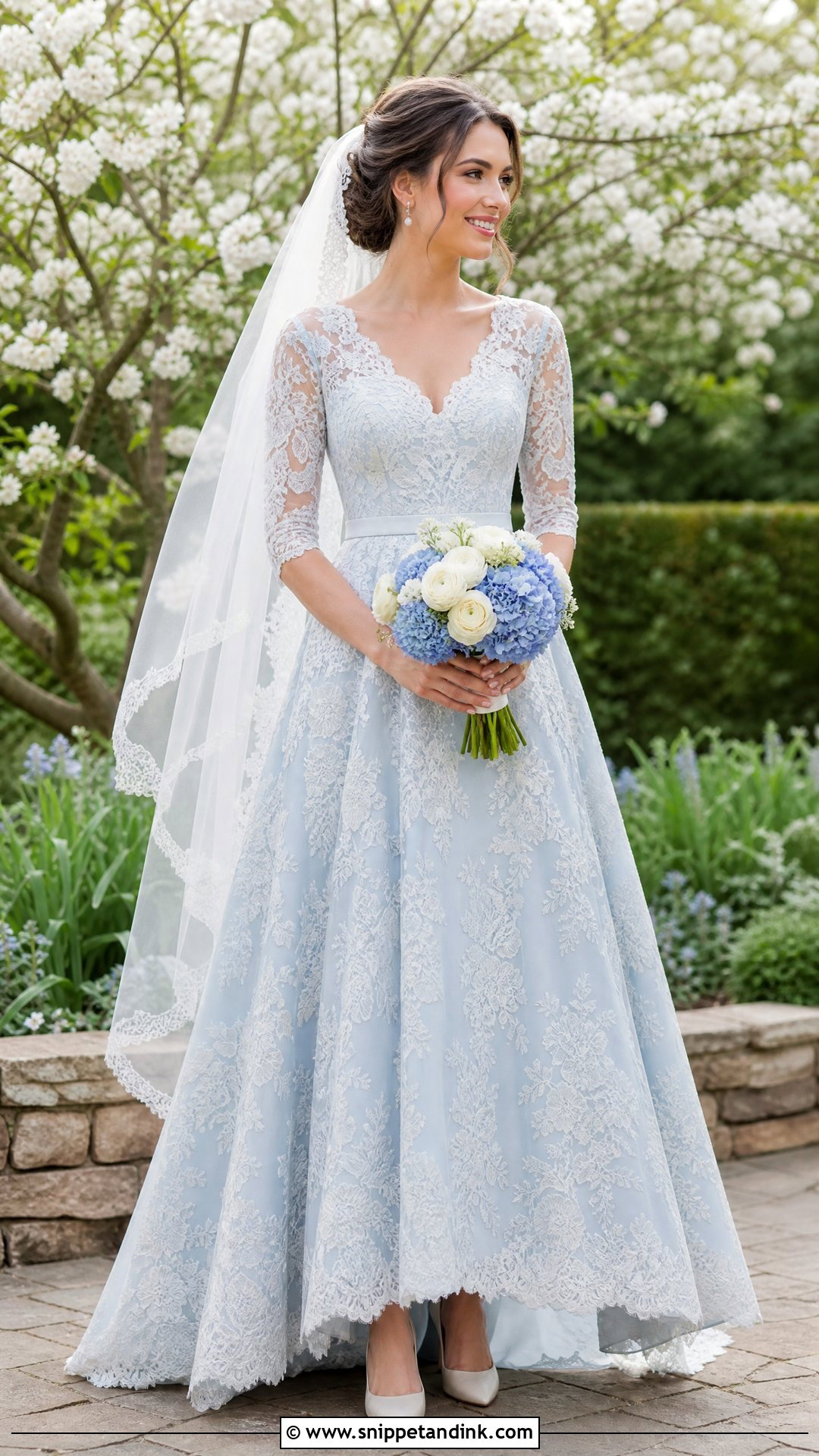
Lace on sky blue only works if you can see the pattern, and that depends on the lining. Matching blue lining under floral lace keeps the motif visible from a distance; a nude lining makes it look faded. An A-line waist with a gentle flare gives you shape without the bulk of a ball gown. I’d pair pearl earrings and ivory satin pumps with a fingertip veil edged in narrow lace. White ranunculus with blue hydrangea suits it. Spring gardens and daytime estates are its natural home, with a loose chignon and a few face-framing pieces.
3. Dusty Blue Off-Shoulder Bridal Dress
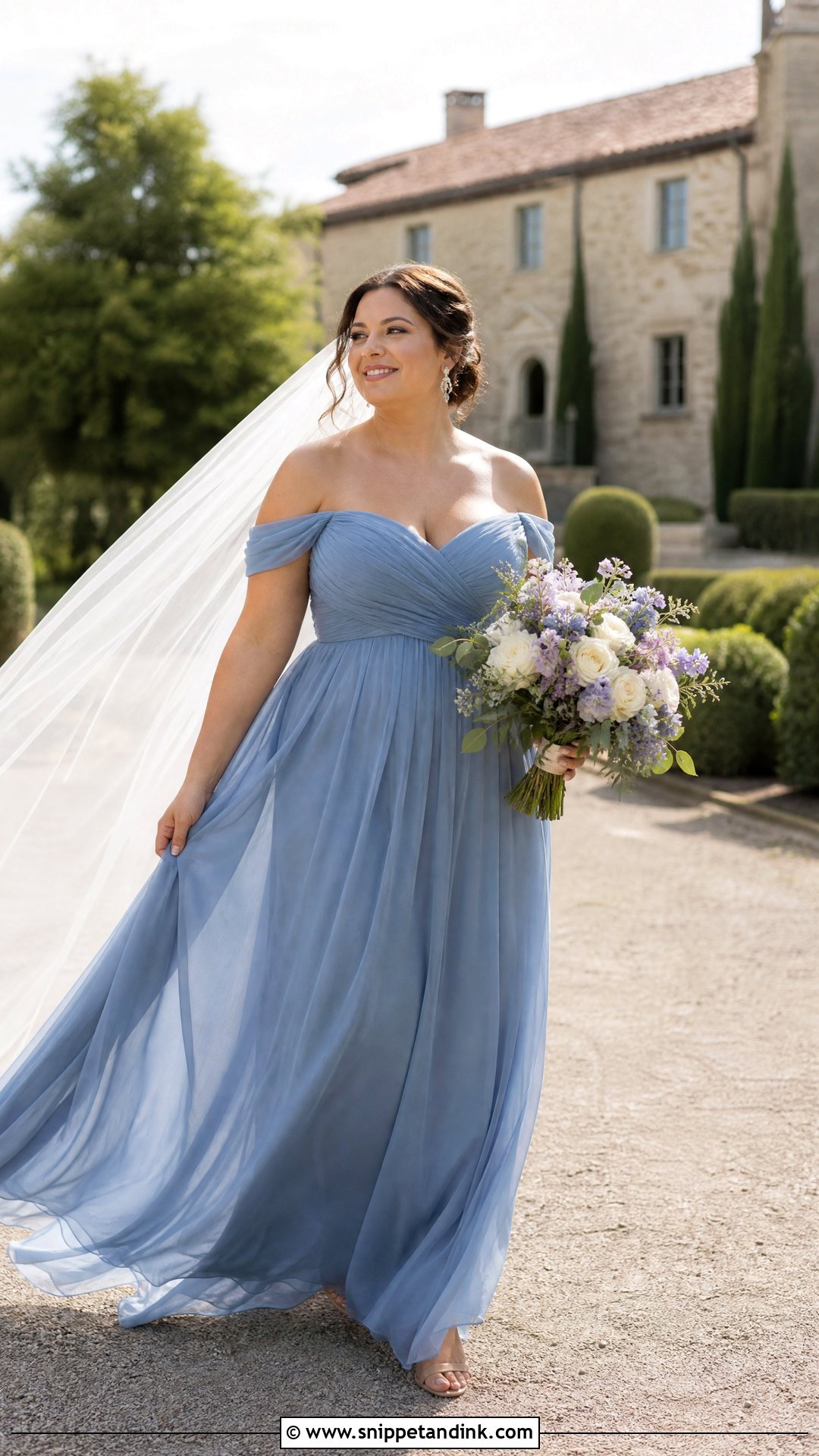
Dusty blue is the muted shade I reach for when a bride wants colour that doesn’t shout, and an off-shoulder drape shows the collarbone without much fuss. Chiffon or soft tulle moves well outdoors. The structured inner bodice is non-negotiable: draped chiffon alone won’t hold an off-shoulder line through a ceremony and a meal. Nude block heels suit grass and gravel at a vineyard, and brushed silver earrings stay quiet beside the dusty tone. Cream roses with muted lavender flowers keep the bouquet in the same register. Pin a light chapel veil beneath a textured updo and keep the makeup soft.
4. Ice Blue Satin Column Bridal Dress
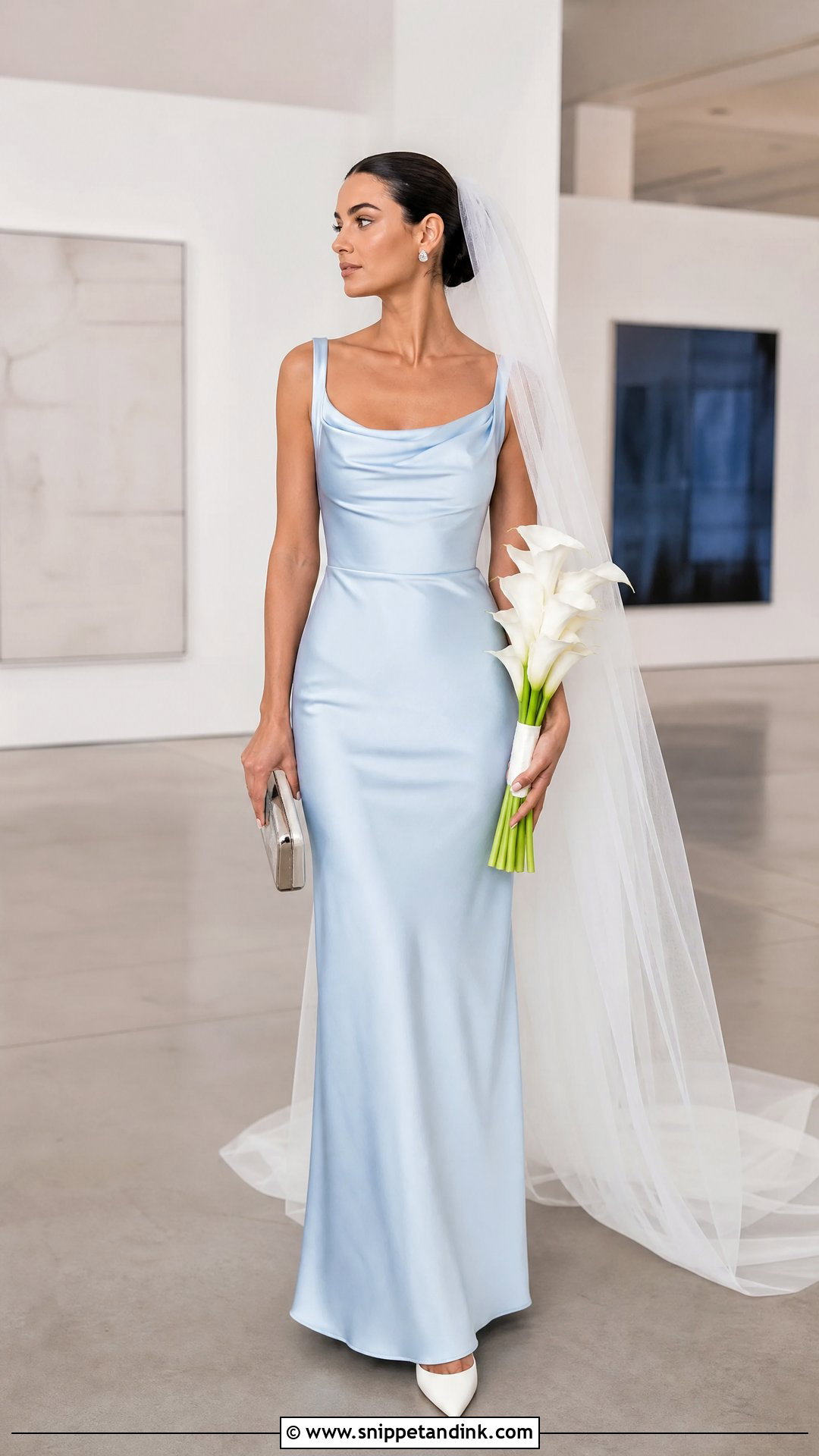
Satin columns have nowhere to hide, which is what minimalist brides love and what makes the fitting critical. An ice blue satin column dress shows every pull line at the hip and every seam that sits slightly off, so I fit it in the shapewear and shoes you’ll actually wear. A softly draped neckline and a shaped waist give it life. White pointed pumps, crystal studs and a slim metallic clutch suit galleries, city halls and modern hotels. Choose a plain cathedral or shoulder-length veil, carry white calla lilies, and wear a sleek bun.
5. Navy Long-Sleeve Bridal Dress
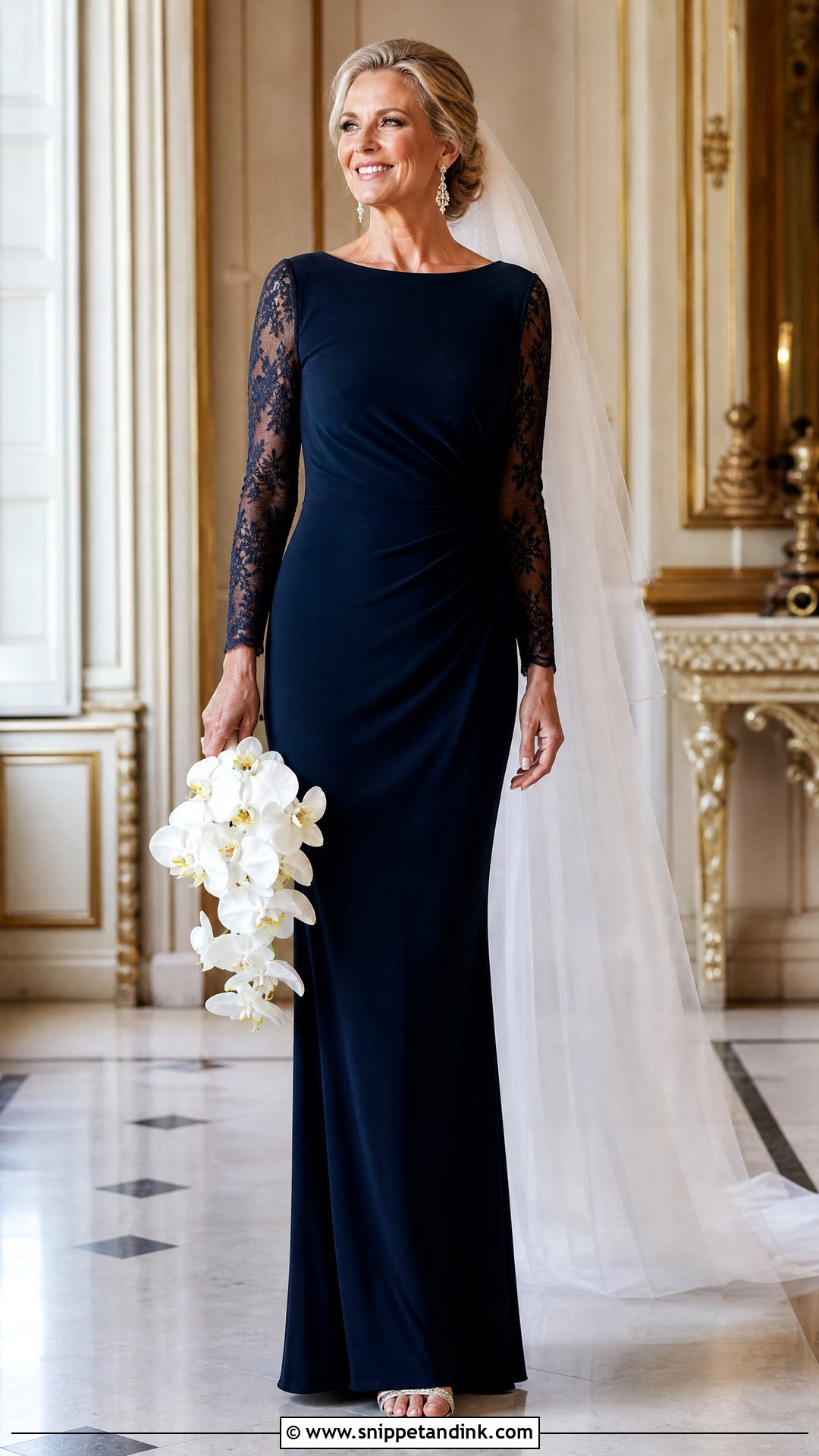
Navy needs help to look bridal, and long sleeves give it formality straight away. A navy long-sleeve bridal dress in fitted crepe or satin with a bateau neckline reads like evening dress first, so the bridal signals have to come from elsewhere. That’s why I insist on a long plain veil and a white bouquet: white orchids or ivory roses stand out sharply against navy. Sheer lace sleeves soften it; solid sleeves look sharper. Navy satin pumps keep things tonal, silver heels add contrast. Hotels, old houses and winter venues suit it.
6. Royal Blue Mikado Bridal Dress
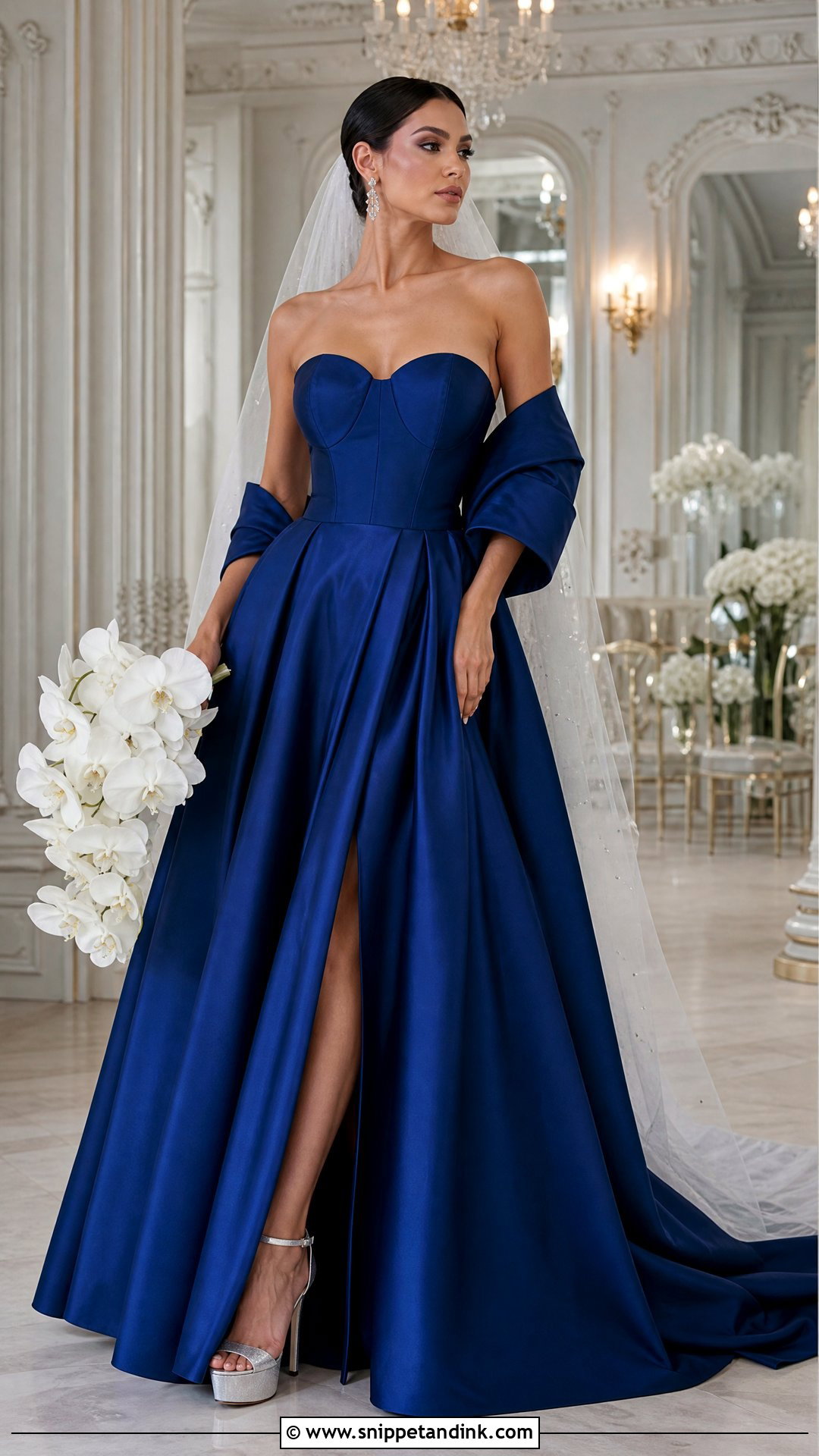
Mikado is a heavy, slightly stiff silk blend, so it holds pleats and a sweeping skirt in a way softer fabrics can’t. In royal blue, that structure makes the gown feel architectural. A clean strapless bodice suits it, and a removable shoulder wrap or matching cape gives ceremony coverage if you want it. Because the colour is saturated, silver platform heels and statement earrings bring brightness without fighting it. I’d keep the veil plain tulle. White roses or orchids tied in royal blue ribbon, a smooth updo, and you’re ready for a grand ballroom.
7. Blue Floral Embroidered Bridal Dress
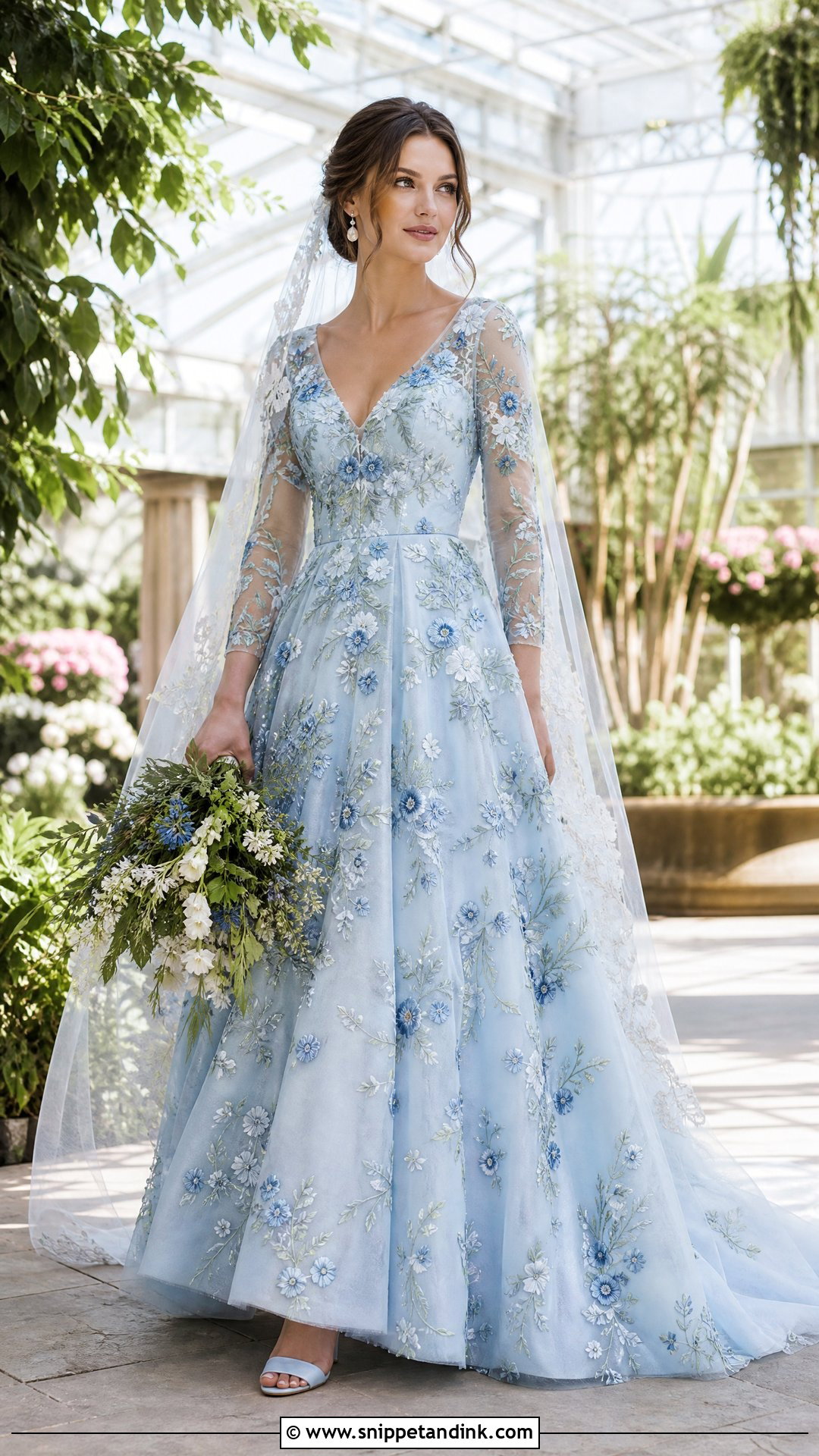
Embroidery spread over a whole gown can swamp a petite bride, so I like it concentrated: bodice and lower skirt, with calmer fabric between. Blue, white and muted green flowers on a pale blue A-line give that garden feel. Ask how heavy the embroidery is before ordering, since dense threadwork adds real weight to a skirt by evening. Pale blue heels and small pearls are enough, with a sheer veil carrying only a few matching appliqués. A loose seasonal bouquet, a soft braided updo and natural makeup suit greenhouse and countryside weddings.
8. Blue Ombre Bridal Dress
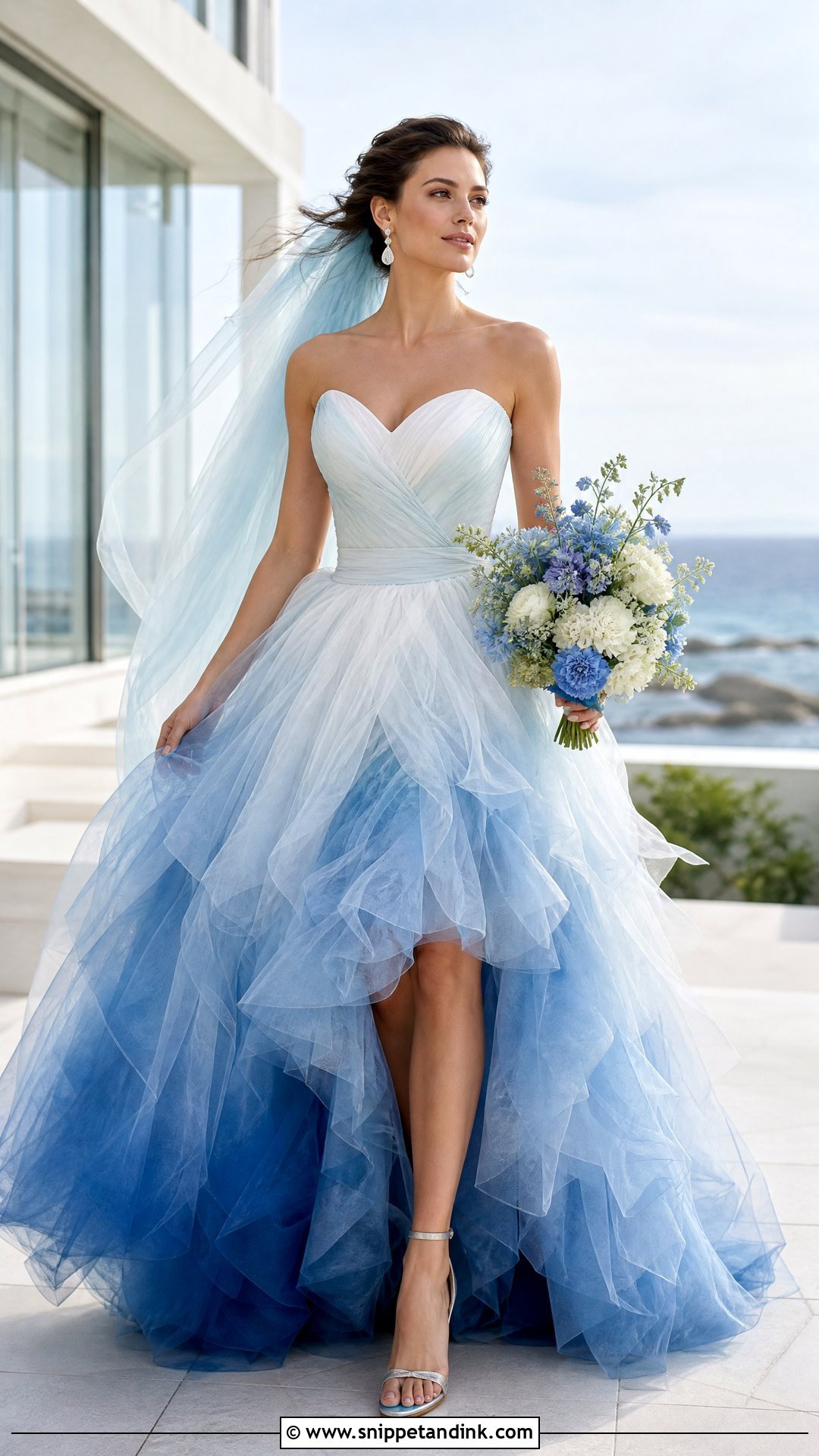
Can’t decide between white and blue? Ombré answers that with a pale bodice deepening into blue through the skirt and train. Chiffon, organza and layered tulle take the dye in a smooth transition; heavier fabrics can band. Keep the neckline simple so the gradient reads. Since every dip-dyed gown comes out slightly different, I always tell brides to expect small variation from the sample photo. Silver ankle-strap heels, moonstone earrings and a plain pale blue veil suit coastal venues and airy rooms. A white bouquet with a few scattered blue blooms mirrors the fade without copying it.
9. Blue And White Two-Tone Bridal Dress
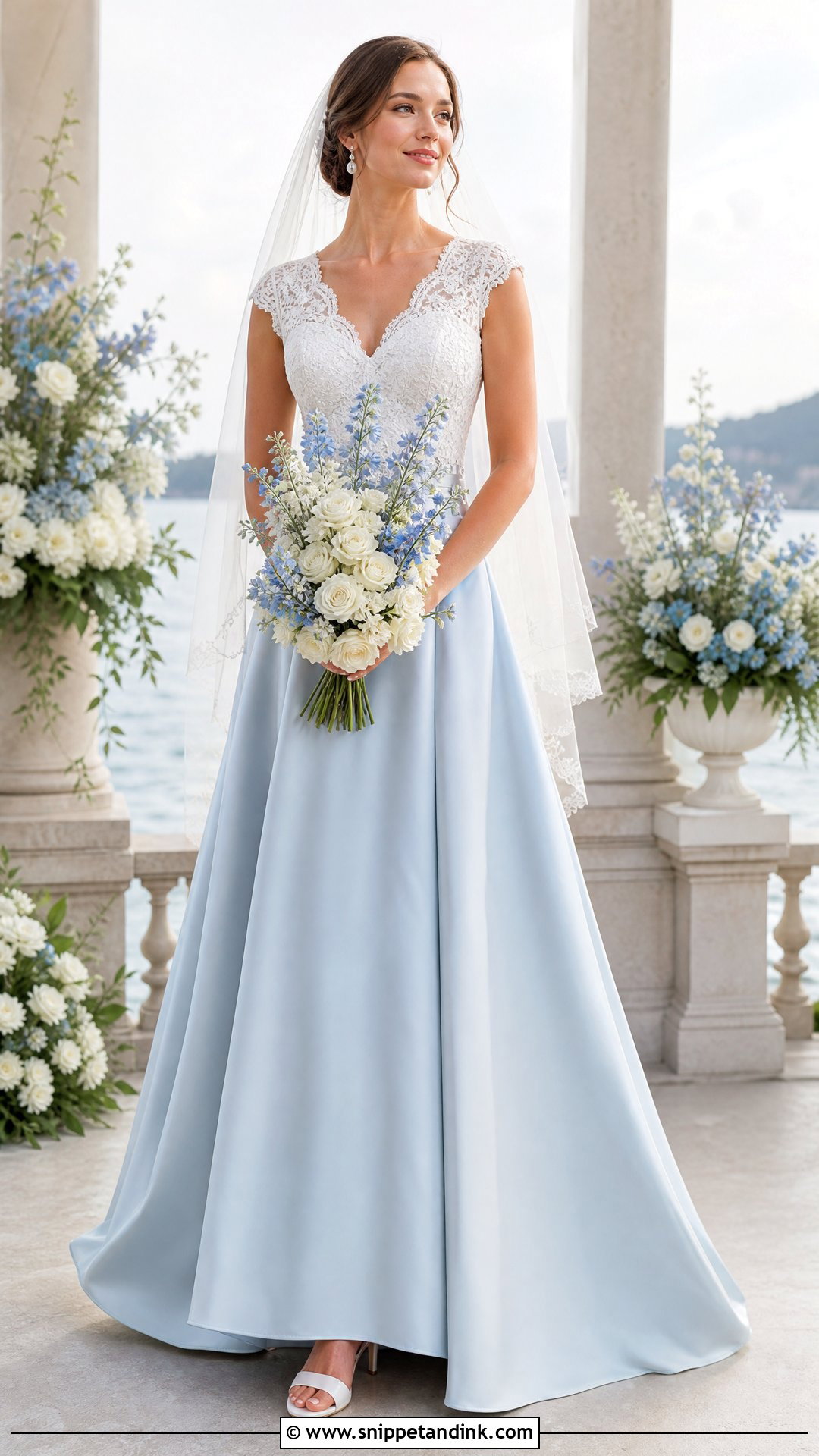
Two-tone gowns live or die at the join. A white fitted bodice over a blue satin skirt, or a pale blue underlayer beneath white lace, needs a defined waistline so the colour change looks planned. I check that the seam sits on your natural waist, not a centimetre above it, because a high join cuts the body awkwardly. White satin heels, pearl drops and a veil matching the lighter section tie it together. Blue delphiniums among white roses connect both colours. Don’t add further accent colours; the outfit already has two.
10. Blue Corset Tulle Bridal Dress
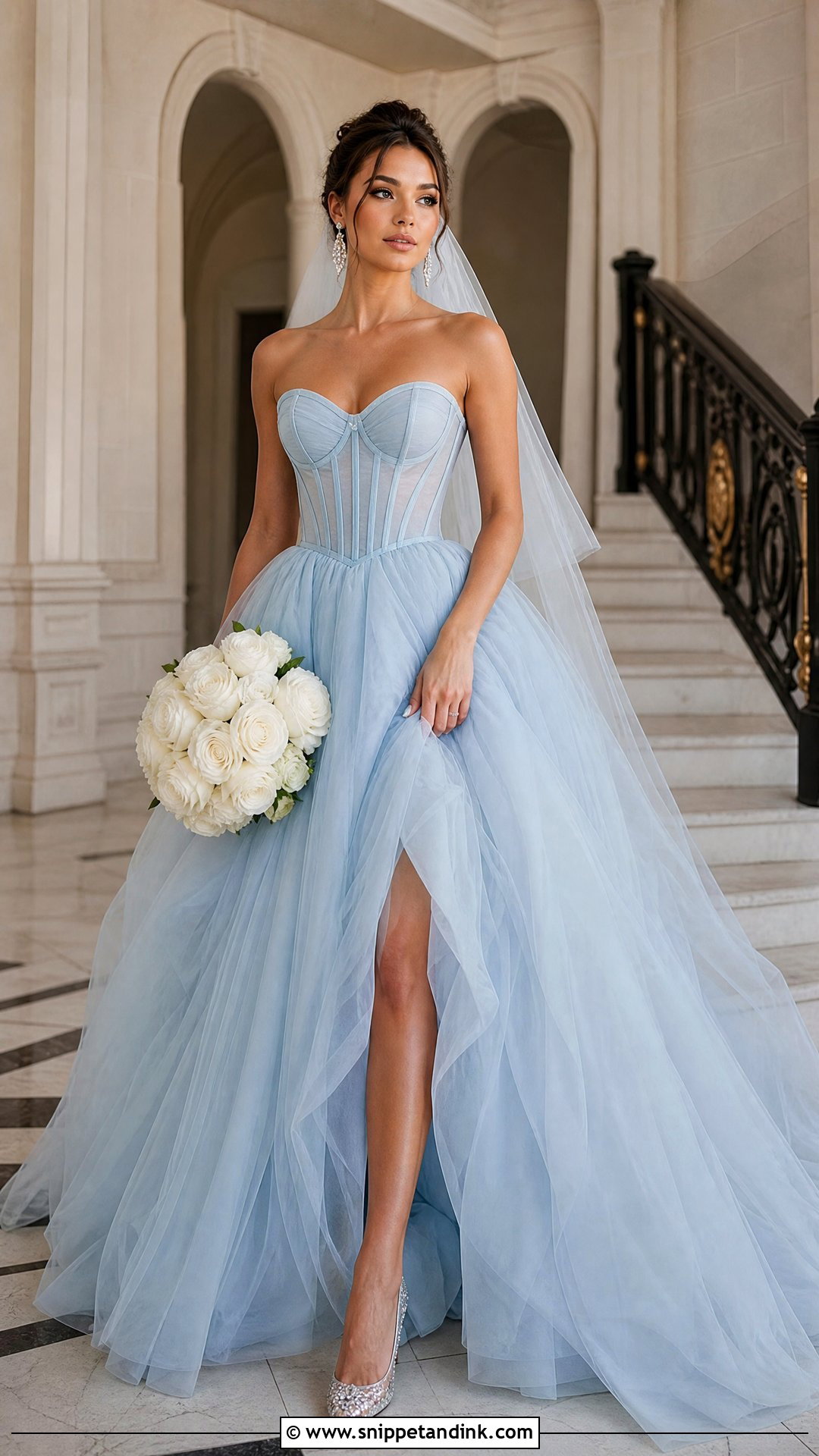
Corset and tulle is a contrast of hard and soft, and it suits most figures because the bodice does the shaping. Visible seamwork and a curved neckline look deliberate; add straps if you want support. A lightly gathered skirt moves, a heavily layered one goes full ballroom. The fitting has to include sitting, since a corset cut only for standing digs into the ribs at dinner. Crystal heels, delicate drops and a simple tulle veil behind a bun keep the corset as the detail. Ivory roses, softly smoky eyes and a muted pink lip suit evening venues.
11. Blue Cap-Sleeve Lace Bridal Dress
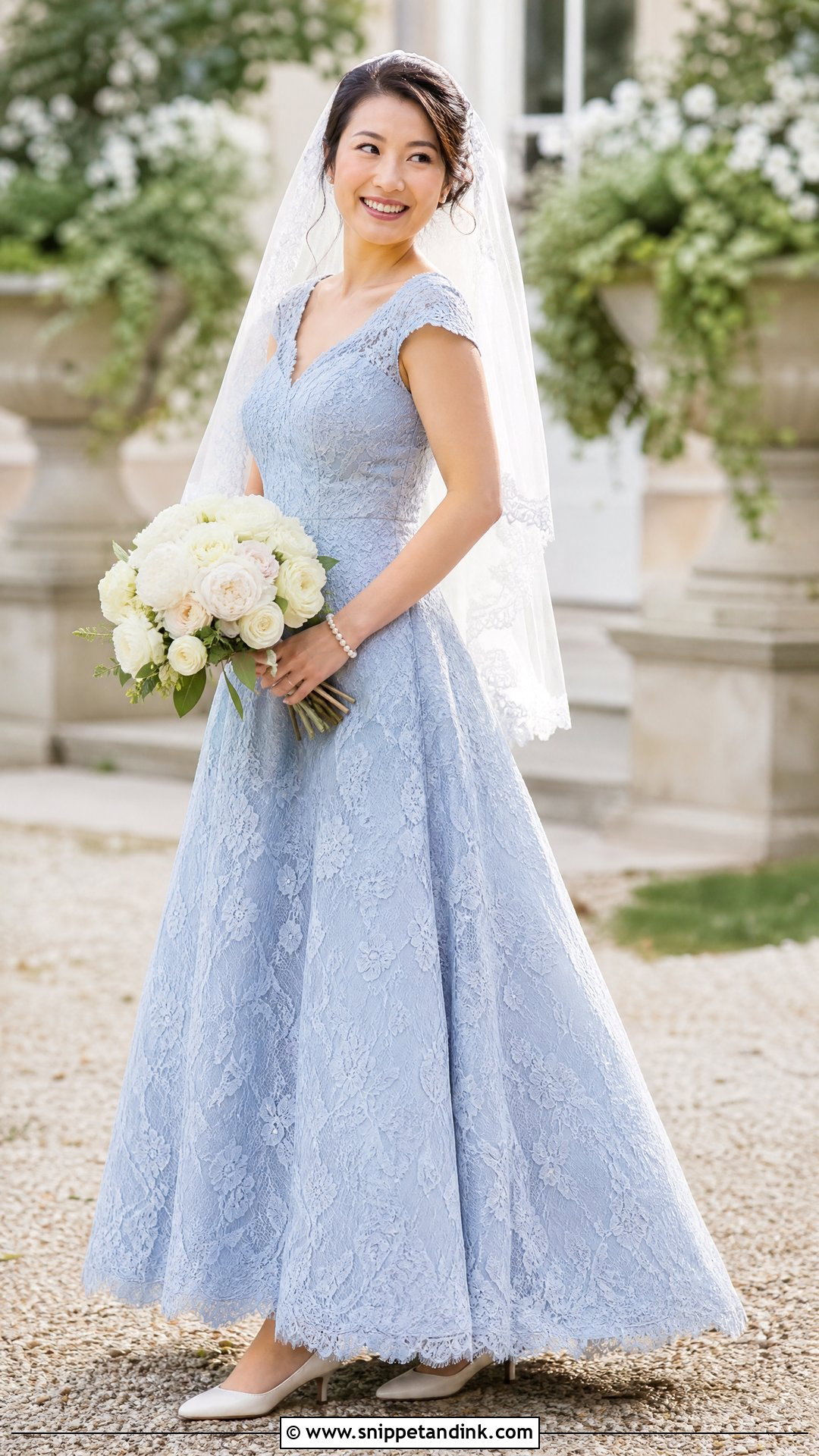
Cap sleeves give a little coverage without closing the neckline. On blue lace, I care most about the lining colour: matching blue gives a tonal effect, nude makes the lace pattern stand forward. Lace that continues naturally from bodice to sleeve looks couture; a separate sleeve sewn on at the shoulder looks cheaper, so check that join. Ivory kitten heels, a pearl bracelet and a lace-edged fingertip veil, with white peonies and roses. A low twisted bun shows the sleeves and back. Daytime estates and garden ceremonies suit it.
12. Blue Halter Satin Bridal Dress
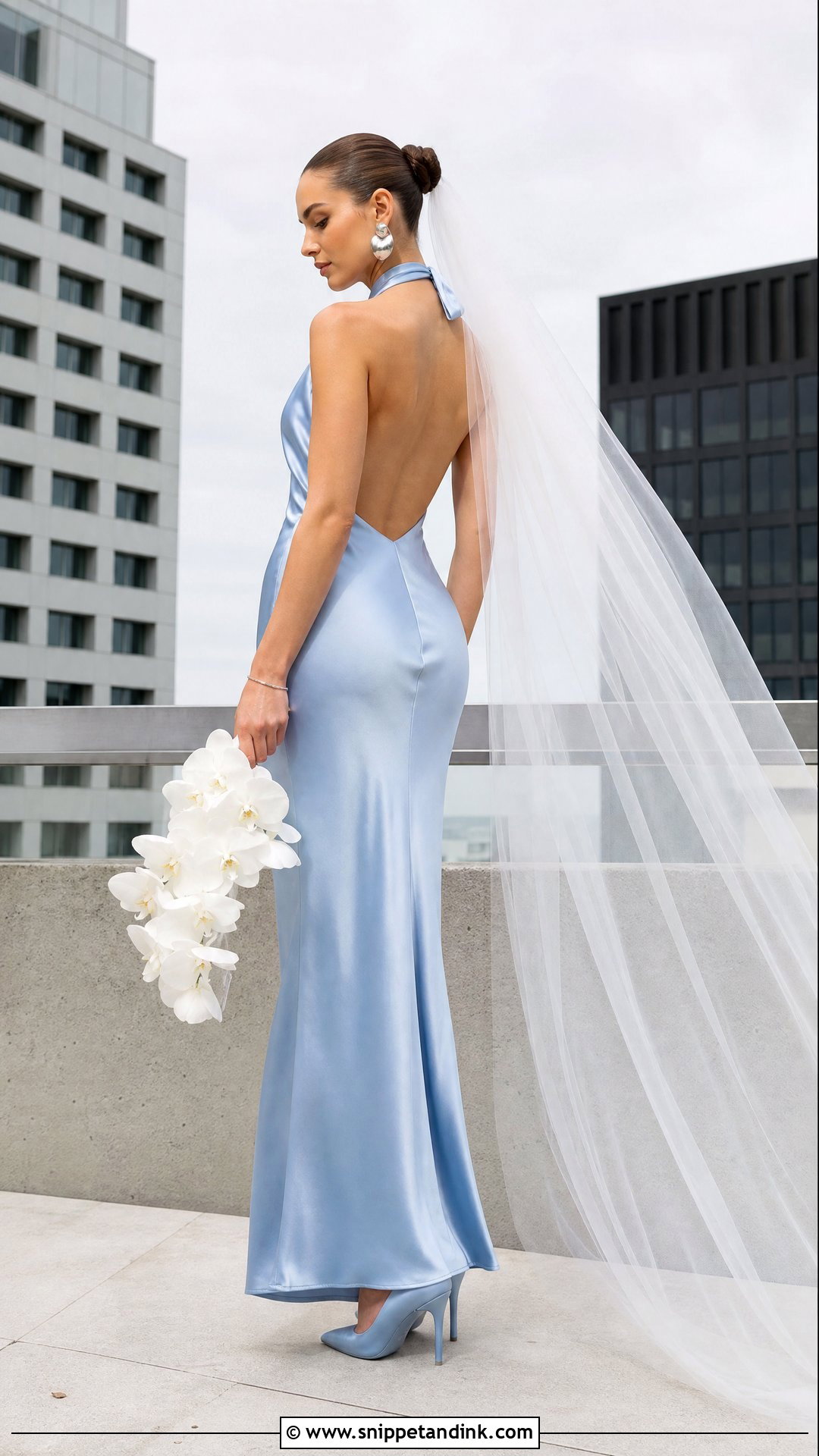
A halter puts blue satin into a long modern line, especially cut on the bias so it skims instead of clinging. The high neck frames the face, so skip the necklace and choose sculptural silver earrings. My warning with halters: the neck strap carries the weight of the bodice, and some brides feel it pulling by mid-afternoon, so wear it for an hour at a fitting. The open back also rules out most ordinary bras, which is why I sort the undergarments before alterations begin. Matching blue pumps, a long sheer veil and white orchids or callas suit rooftops and modern hotels.
13. Blue Square-Neck A-Line Bridal Dress
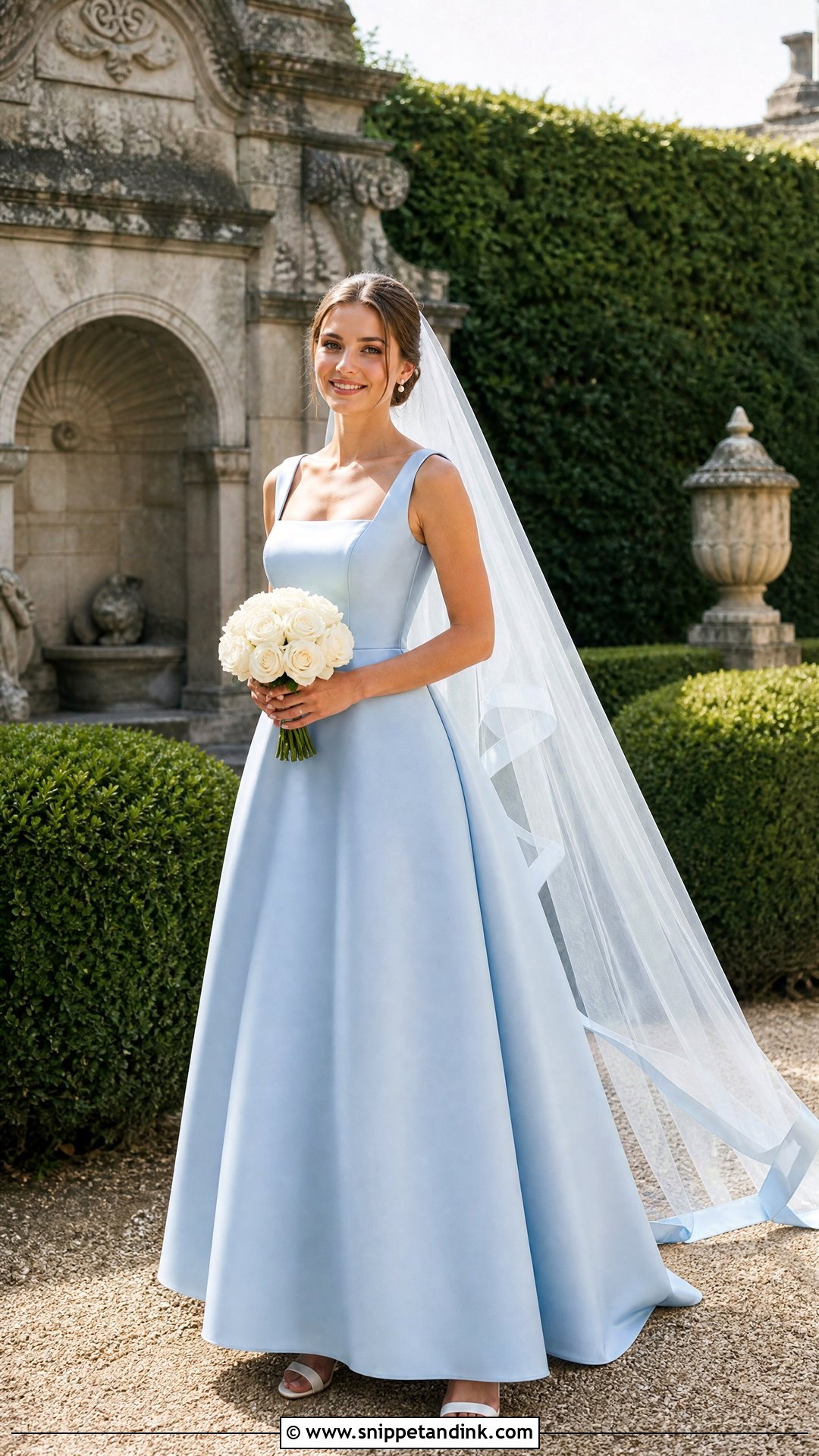
A square neckline over a softly structured A-line never seems to date. Pale blue satin or Mikado holds the shape without beading, and wide straps frame the shoulders cleanly while giving you support. Hidden pockets are worth asking for here; the stiff fabric conceals them completely. Pearl studs, ivory block heels and a long veil with a narrow satin edge suit historic houses and formal gardens. A round bouquet of white roses or anemones, a low bun with a centre part, and rosy makeup finish it.
14. Blue Tea-Length Bridal Dress
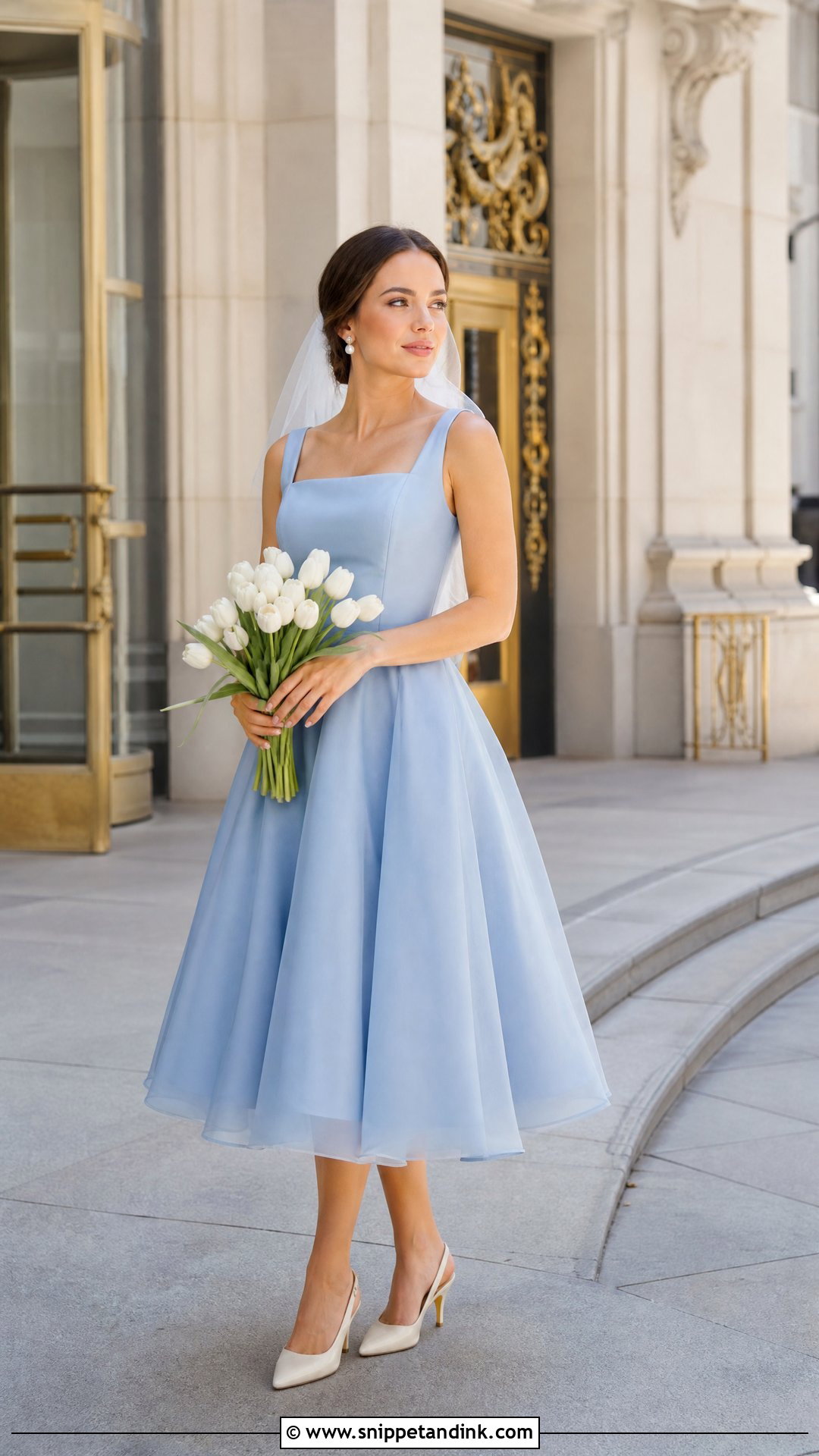
Tea length suits small ceremonies, and in blue it brings real personality. A fitted waist with a full skirt between knee and ankle puts the shoes on view, so treat them as part of the outfit: ivory slingbacks look right. Satin, organza or layered tulle keep it festive. Because the hem is so visible, I have it marked with the shoes on and checked from behind, where uneven hems show most. Pearl earrings, a short veil or a structured bow, and a compact bouquet of white tulips suit city hall and restaurant receptions.
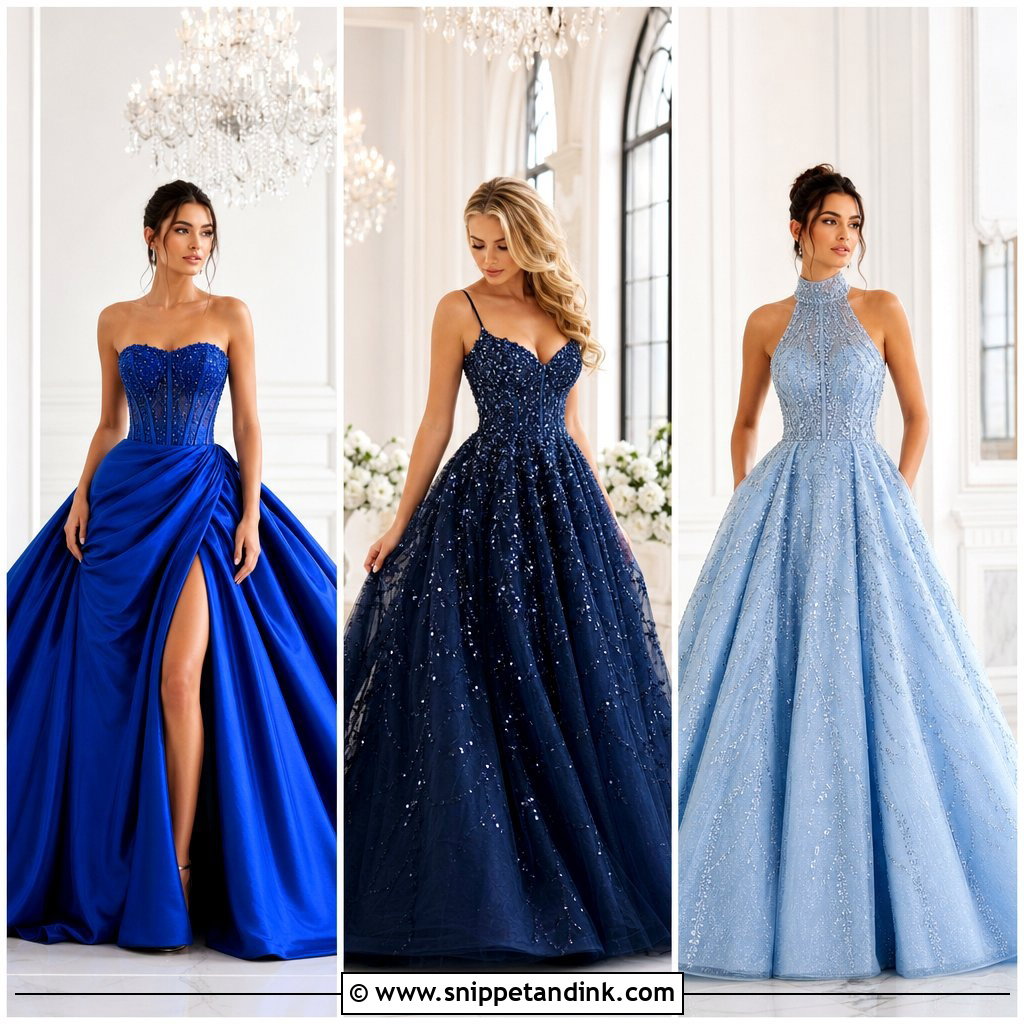

15. Blue Bridal Mini Dress
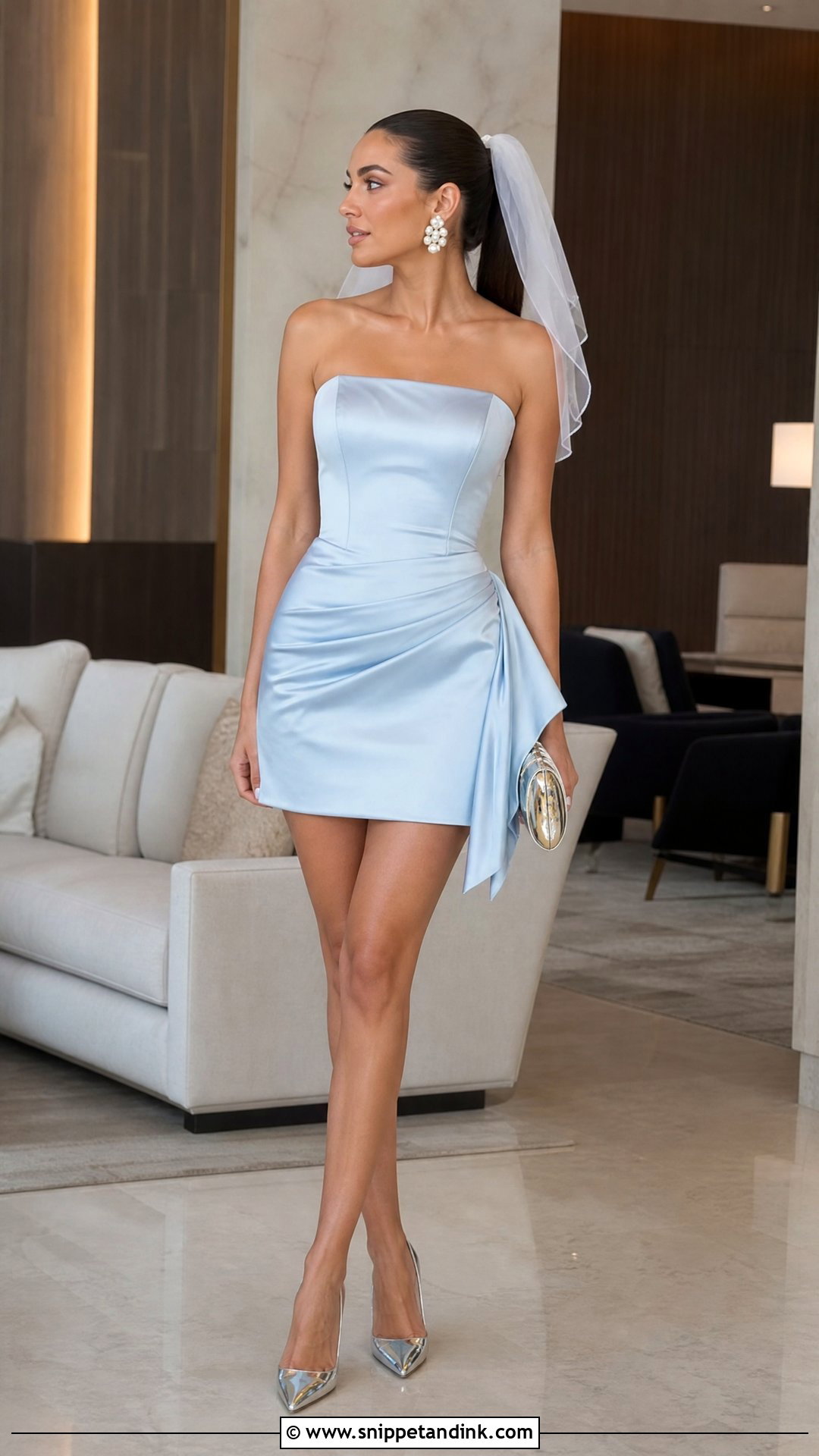
Minis are the playful choice for a courthouse ceremony or a reception change. Structure matters most here: a fitted waist and clean neckline in satin, crepe or floral jacquard keep it bridal rather than party. Do the sit test, because a hem that looks fine standing can be far shorter in a chair. White or silver pointed heels, pearl statement earrings and a short veil on a sleek ponytail work. Carry a petite white bouquet for the ceremony and swap it for a small clutch later. In cold weather, sheer blue tights add coverage.
16. Blue Sequin Bridal Dress
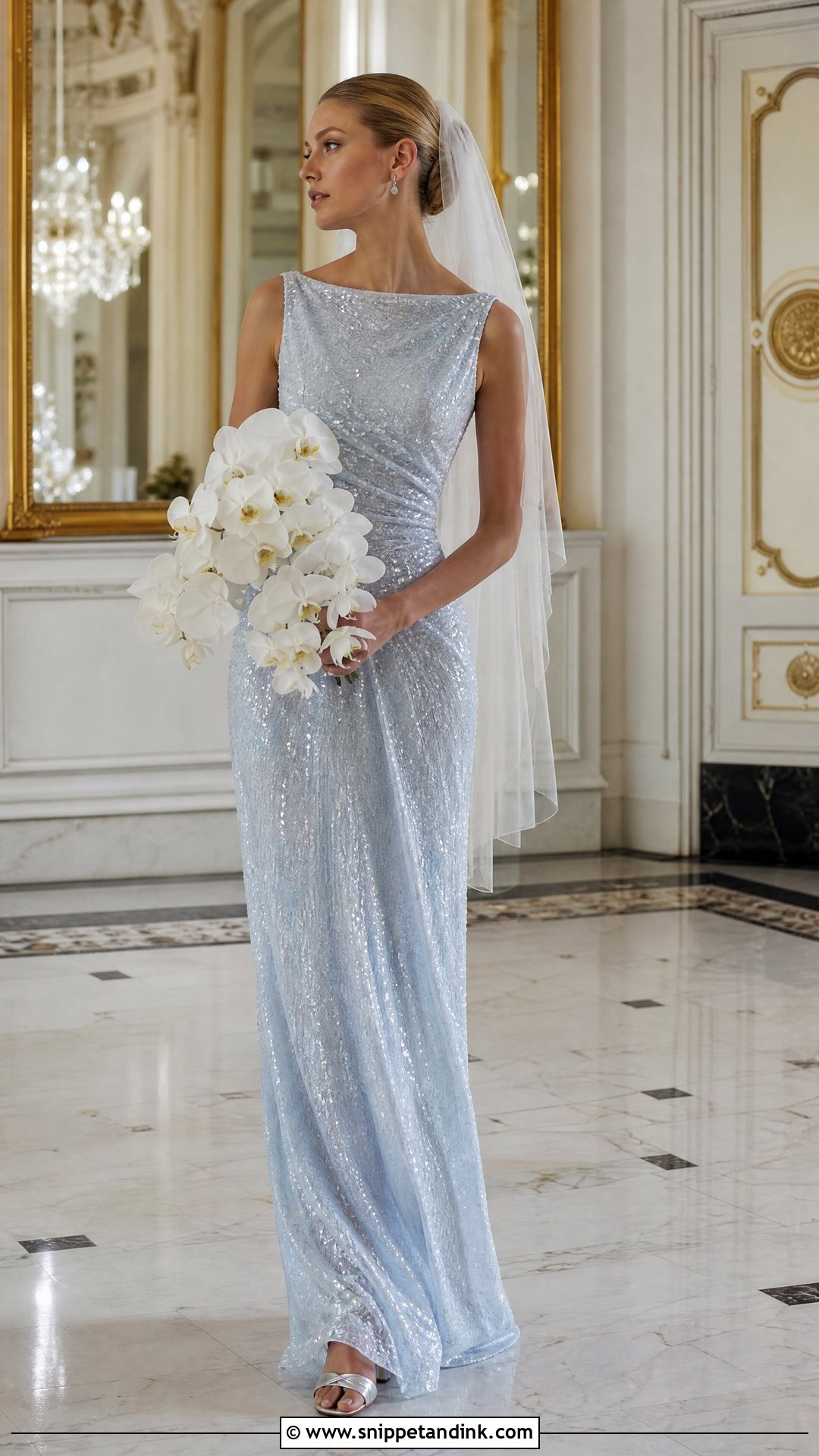
Sequins carry all the detail, so the shape should be quiet: a column or gentle flare. Pale blue sequins look light, while navy or cobalt reads like evening wear. The two things I check are the lining against the skin and the underarm, because sequins scratch with every arm movement, and the veil: tulle snags on sequins, so it must be plain-edged and short of the embellished zone. Metallic heels, small crystal earrings and white orchids keep it controlled. Sleek hair and luminous makeup suit a ballroom or evening ceremony.
17. Blue Velvet Winter Bridal Dress
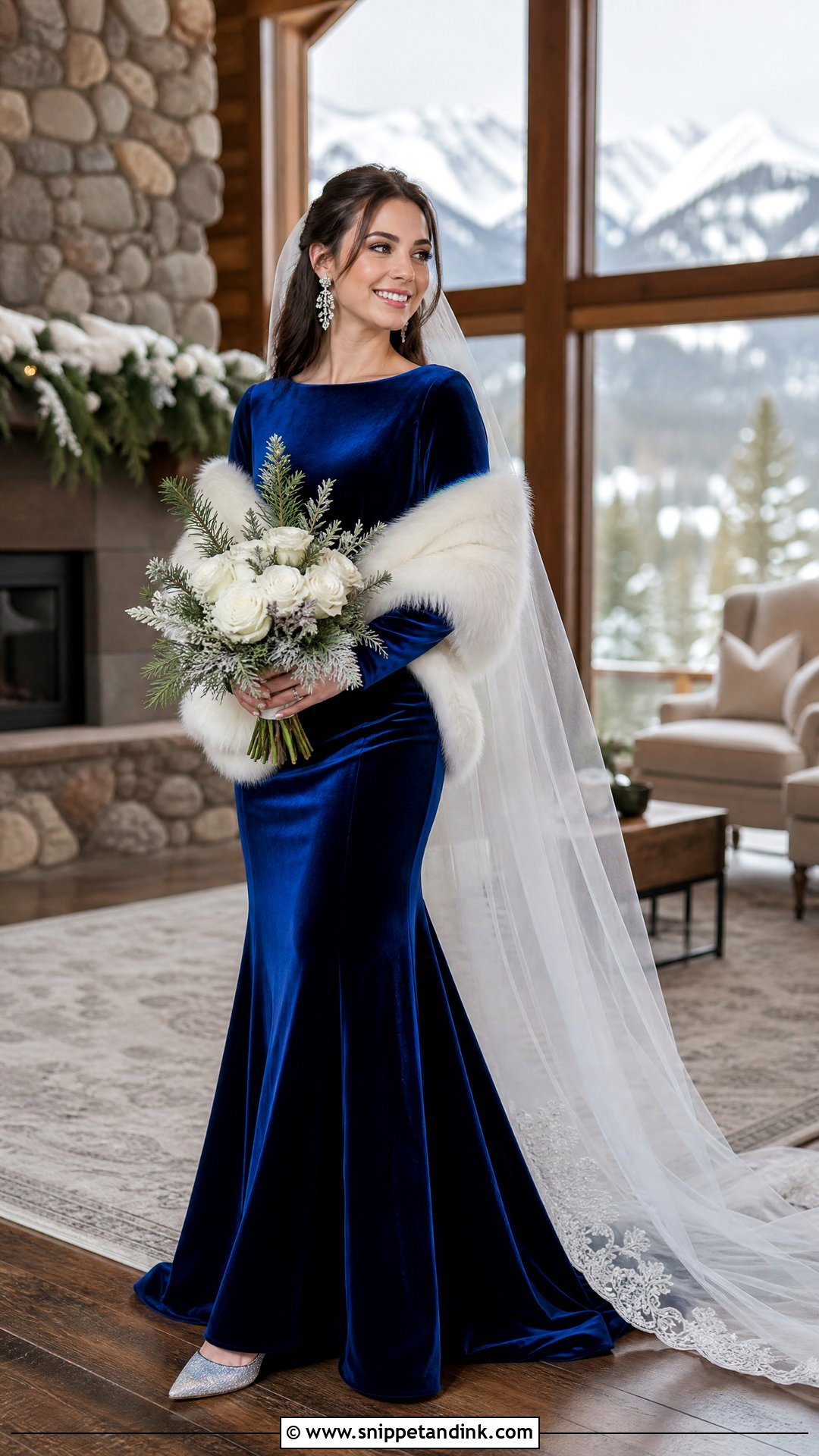
Velvet holds warmth and colour depth that no summer fabric can match, which is why it’s my winter suggestion. Dusty blue, sapphire or navy all look rich in it. Avoid heavy gathering at the waist; velvet piles up and adds bulk where you least want it. Velvet also crushes where you sit, so hang it on arrival and avoid long car rides seated on the skirt. Closed-toe silver heels, crystal earrings and a white faux-fur wrap work for outdoor photos. A cathedral veil gives bridal contrast. Carry white roses, anemones and silvery greenery.
18. Blue Chiffon Beach Bridal Dress
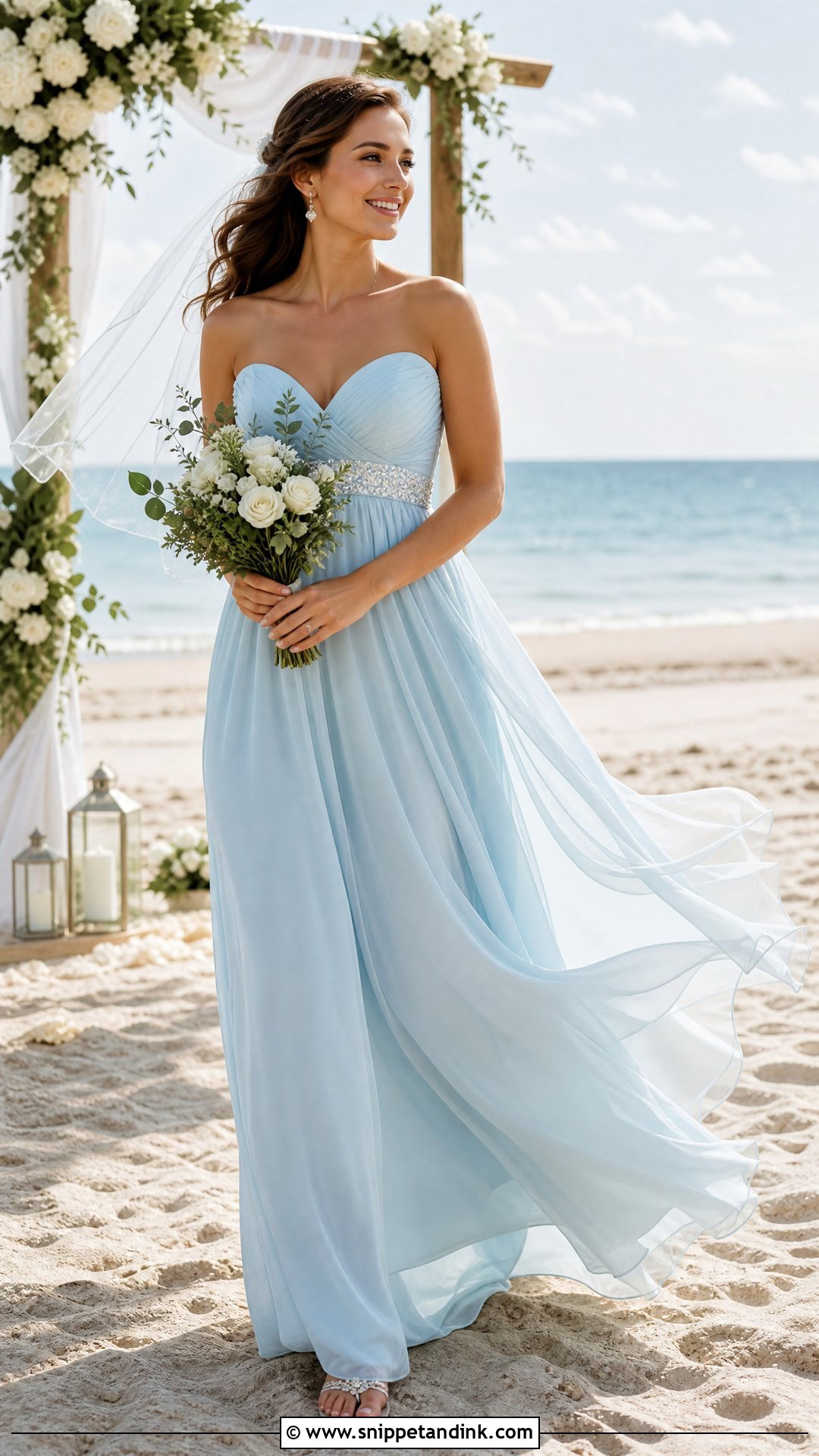
Wind is the main design brief at the beach. A flowing A-line or empire-waist chiffon gown with a securely fitted bodice moves well; too many layers trap air and balloon. Sky blue, sea blue and pale aqua all suit a coastal setting. Choose a fingertip veil that’s easy to remove if gusts pick up, and flat sandals because heels sink. I’d add a bustle so the train stays off wet sand. A loose white bouquet, a low braided bun and humidity-proof makeup finish the outfit.
19. Blue Boho Bell-Sleeve Bridal Dress
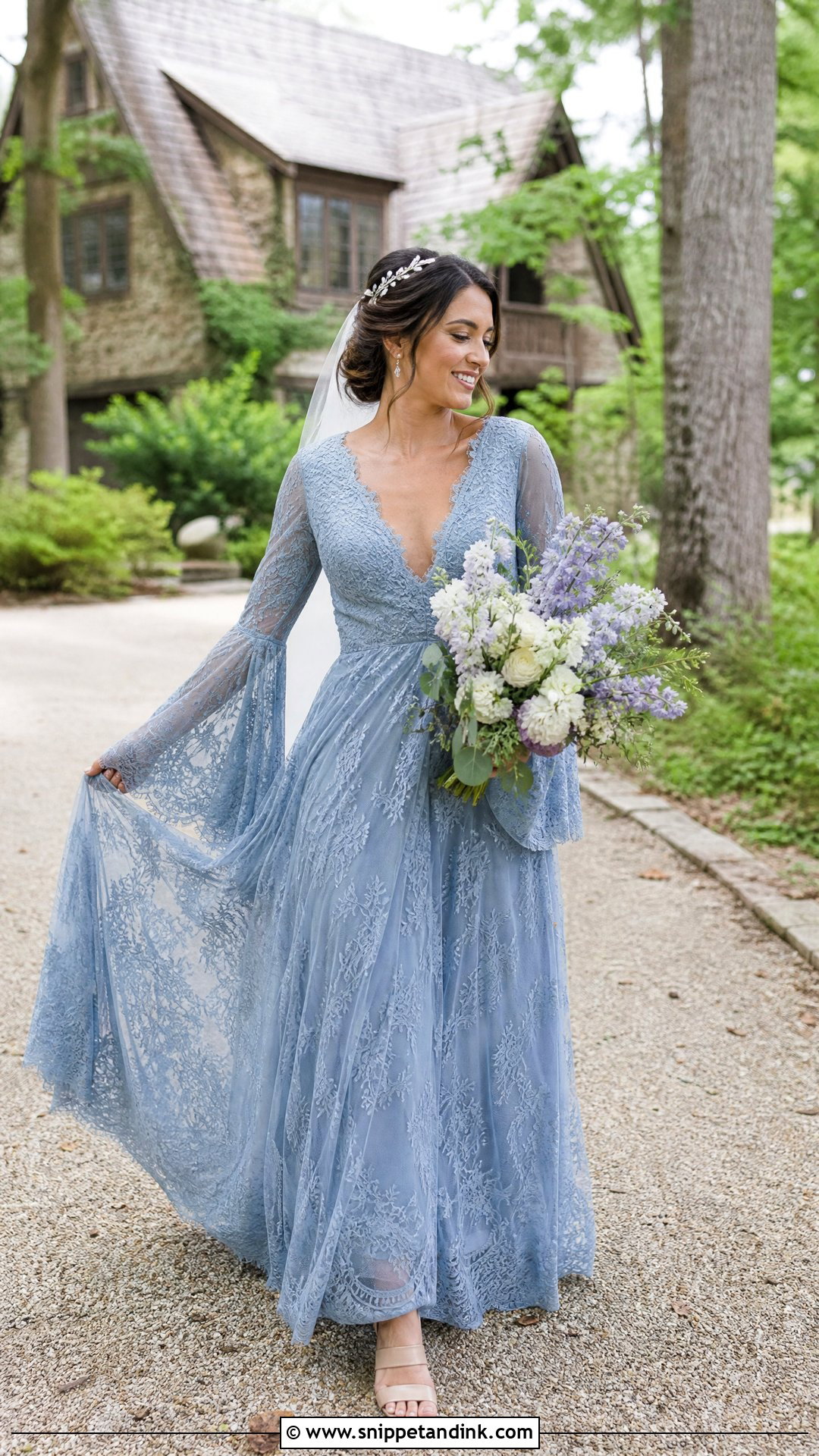
Bell sleeves are the boho detail, and on dusty blue or muted slate lace they pick up natural texture outdoors. A fitted lining under the lace gives coverage; the skirt should flow freely. Wide sleeves do catch on things, cake, candles and bouquet stems, so practise holding the flowers with them. Neutral block-heel sandals, small silver hoops and a hair vine suit woodland and open-air venues. Add a soft tulle veil for the ceremony only. A loose bouquet with lavender-toned blooms and loose waves complete it.
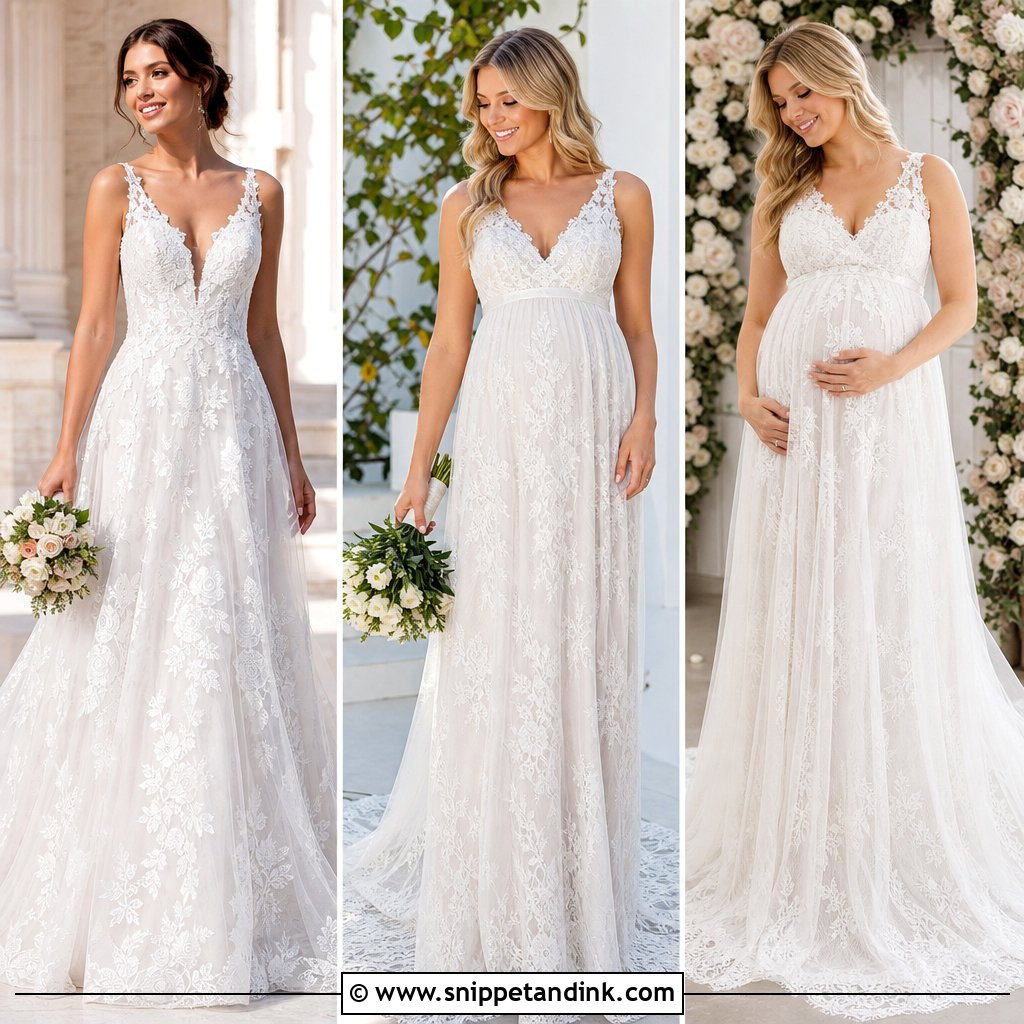
20. Blue High-Neck Modest Bridal Dress
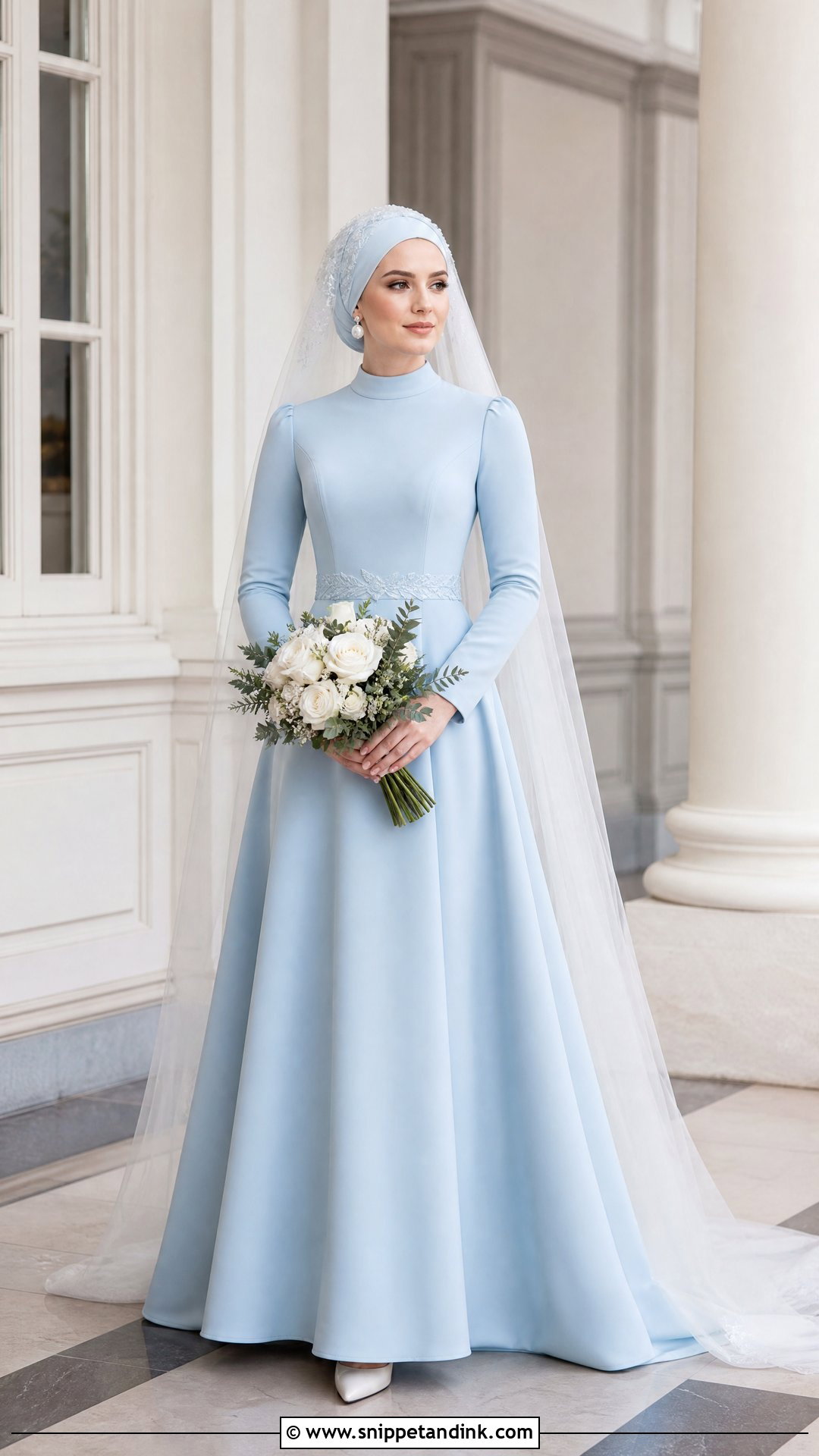
Coverage doesn’t have to mean heavy. A high-neck blue gown with long sleeves, a defined natural waist and an A-line skirt can look current. Crepe looks clean; lace adds texture at the neck and cuffs. High necks need the closest fitting of any neckline, since a few millimetres too tight feels restrictive all day and too loose gapes when you look down. Ask the tailor to check sleeve movement at the same time. Closed-toe ivory pumps, pearl drops and a long veil beneath a neat bun suit traditional venues. White roses keep the bouquet simple.
21. Plus-Size Blue Wrap Bridal Dress
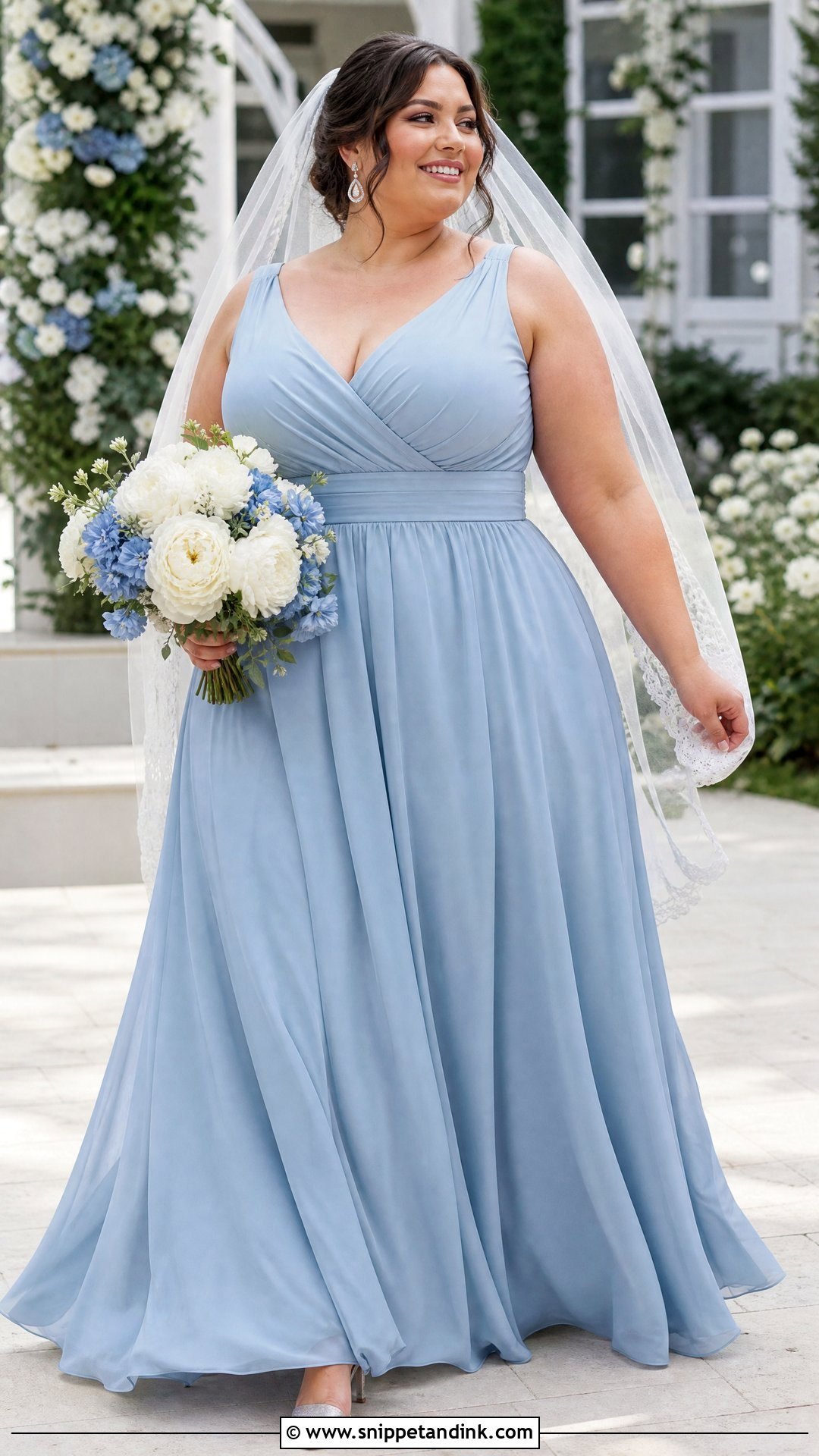
A wrap shape creates definition while giving with movement, but only if it’s built properly. I’d choose a fixed crossover bodice, not a real tie, so nothing loosens during the ceremony. A V-neck, wide waistband and flowing A-line skirt balance across a broad size range. Ignore the size on the label and tailor to the body, especially at bust, waist and hem. Anti-slip tape at the neckline and good foundations add confidence. Silver block heels, teardrop earrings and a chapel veil at a low bun, with white peonies and blue flowers drawing the eye up.
22. Blue Maternity Empire-Waist Bridal Dress
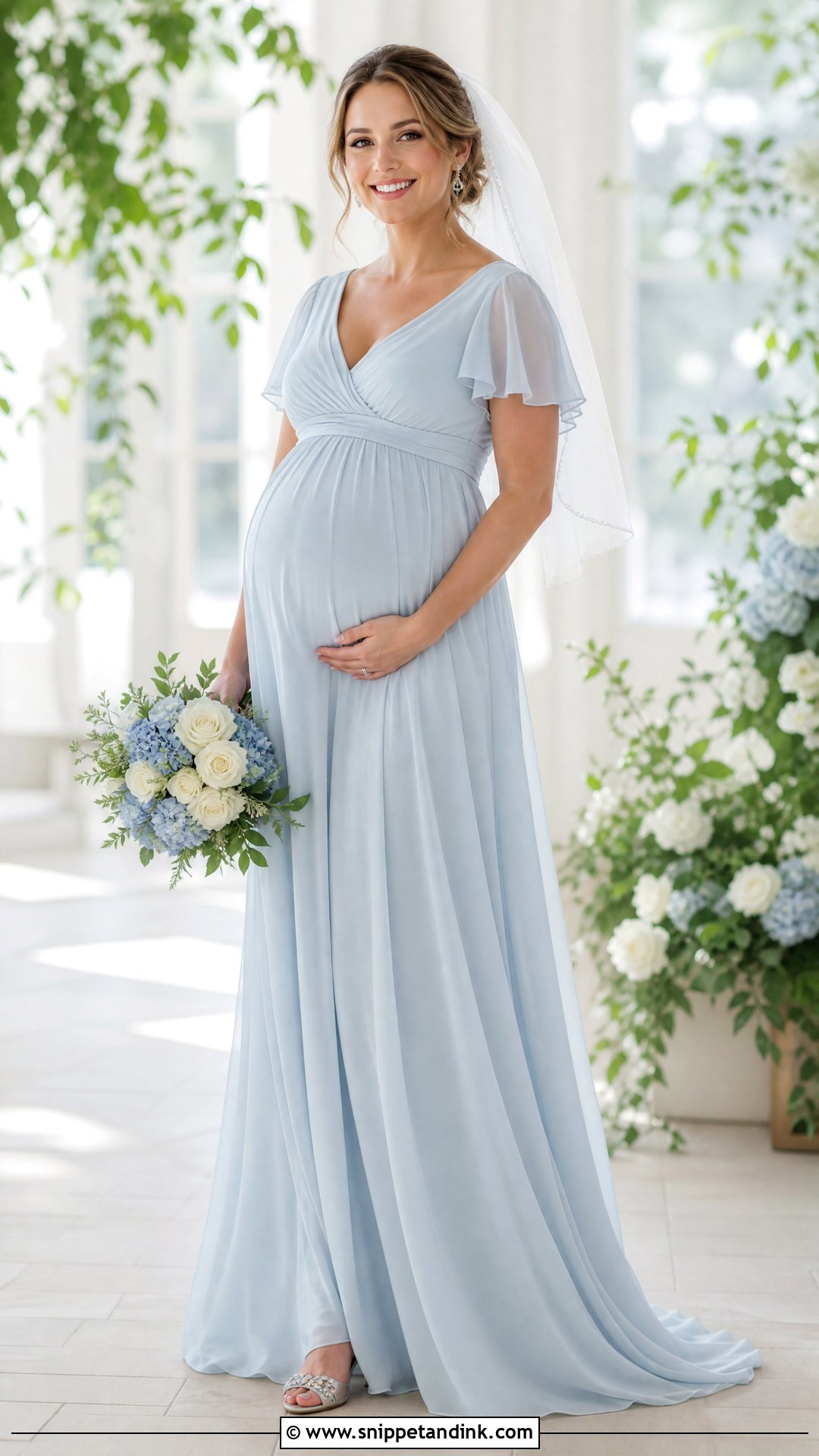
Comfort comes first with a maternity bridal gown, and timing comes second. A pale blue empire waist with a supportive bodice and chiffon skirt gives room without losing shape. Flutter sleeves or wide straps let you wear a supportive bra. Measurements can change within weeks, so I book the final alteration as close to the date as the seamstress allows. Low block heels, cushioned flats or embellished sandals depending on the venue. Keep the veil fingertip length and light, add a wrap for cool evenings, and carry a small bouquet.
23. Blue Cape Bridal Dress
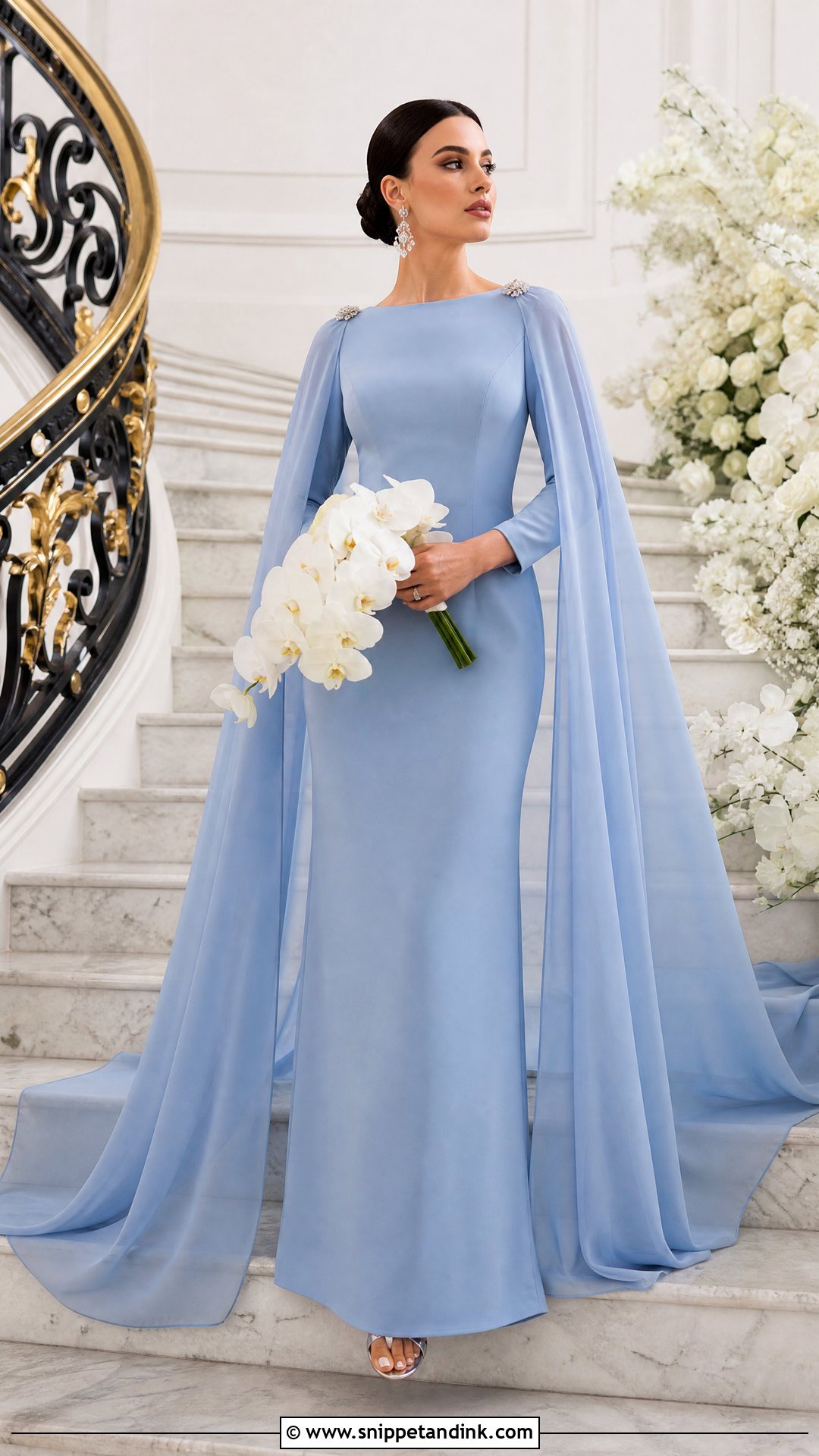
Start with a clean column or A-line in satin, crepe or smooth chiffon, then add a sheer floor-length cape at the shoulders, and the plain gown becomes a ceremony outfit. The cape gives movement and coverage and replaces the veil. Plain edges or restrained crystal keep it refined. Shoulder attachments are better than neck ties, which pull the throat when you raise your arms. Silver heels, small statement earrings and white orchids suit ballrooms and grand staircases. Sleek hair keeps the attachment visible, and it should unhook quickly for dinner and dancing.
24. Blue Detachable Overskirt Bridal Dress
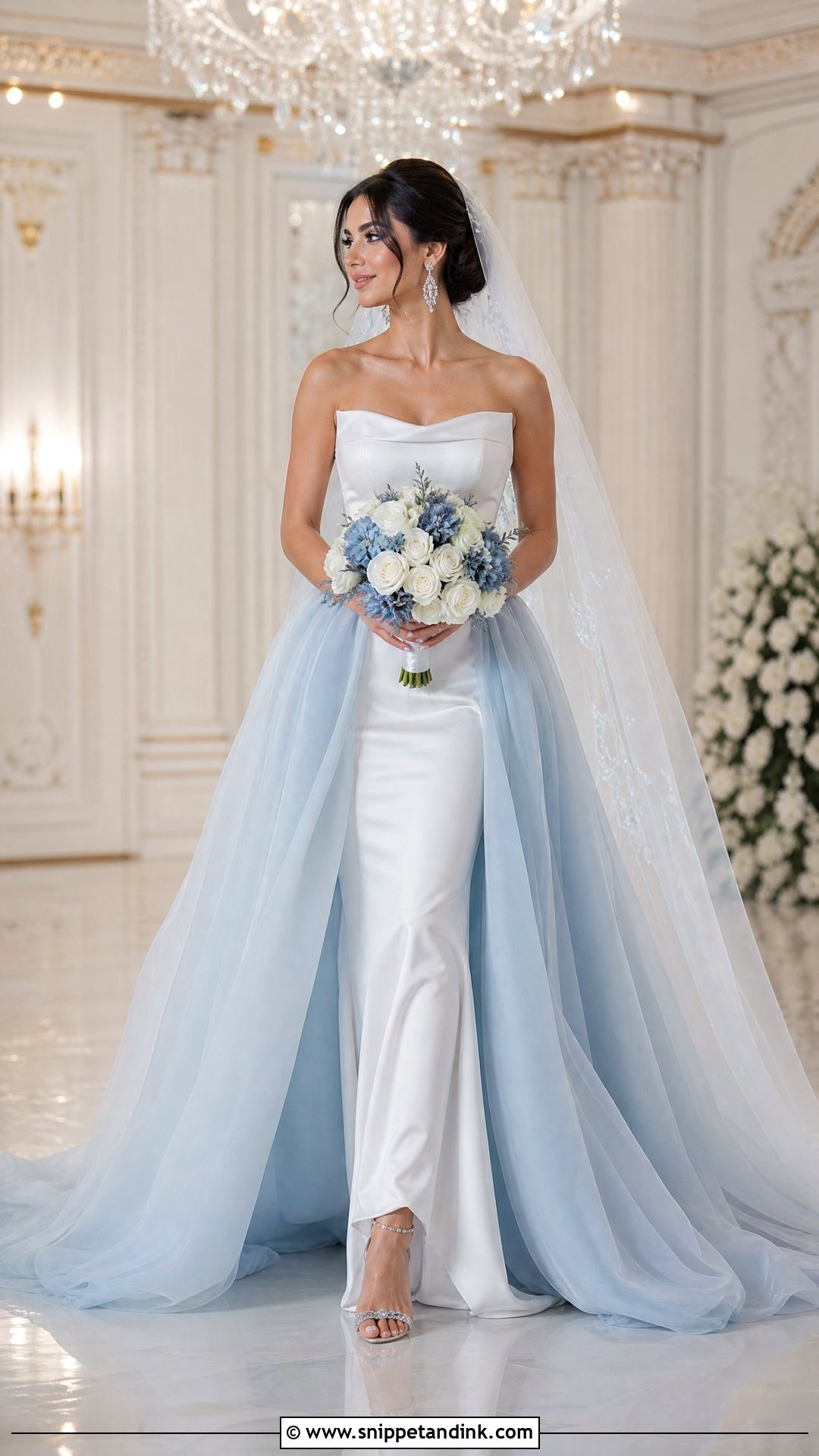
Two outfits from one gown is the idea here. A fitted blue column or fit-and-flare carries the evening, and a full tulle or organza overskirt adds volume and a long train for the ceremony. The attachment points are where quality shows: ask the tailor to hide them so the base dress looks finished alone, and have a bridesmaid practise the release before the day. Crystal heels, a cathedral veil and delicate drops for the ceremony; a small metallic clutch after. White roses with pale blue flowers suit both versions.




25. Blue Ruffle-Train Bridal Dress
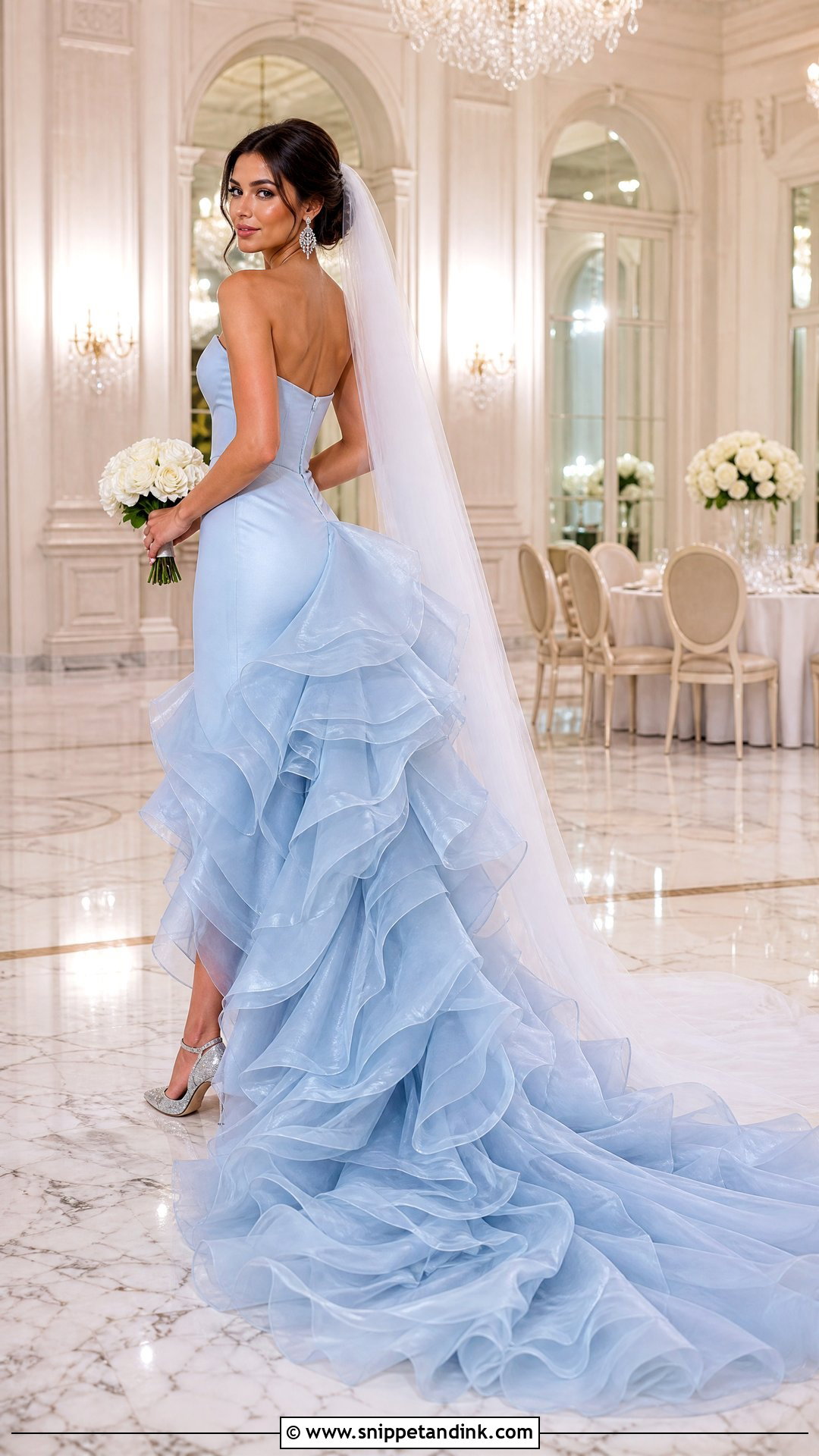
Ruffles that build through the back give movement from every angle, while a relatively clean front keeps it wearable. Powder blue looks airy in layered organza; royal blue turns it into drama. A ruffled train is heavy and needs a proper bustle for the reception, ideally with several pick-up points so the ruffles don’t crush into one lump. Silver heels, crystal earrings and a plain veil falling beyond the first ruffle work. Keep the bouquet compact and the hair up so the back stays visible on staircases and in ballrooms.
What Goes Underneath a Coloured Gown
Undergarments matter more under blue than under white. A white bra or slip that disappears under an ivory gown can glow through pale blue chiffon or a thin satin, especially in flash photos. Match underwear to your skin tone, not to the dress, and bring it to every fitting.
Thin pale satins and silks also show every line, so I steer brides towards smooth, edge-bonded pieces and, for column and bias-cut gowns, sometimes a slip sewn into the dress itself. Darker blues are kinder, but velvet and crepe still pick up a visible bra band across the back. If your gown has an open back or halter neck, sort the solution, sewn-in cups or adhesive support, before the first fitting, because the tailor fits around whatever you wear.
Keeping a Blue Gown Fresh From Hanger to Last Dance
- Deodorant marks: white residue is invisible on ivory but shows clearly on navy and royal blue. Dress first, or let it dry fully, and keep a dry sponge for the underarm.
- Makeup on the neckline: foundation on pale blue is harder to hide than on white. Use a face cover when the dress goes over your head, or step into it.
- Water spots: satin and silk in light blue mark easily from rain or spilled drinks. Blot dry, never rub, and leave cleaning to a professional.
- Sunlight: strong colour can fade where light hits it for hours, so don’t leave the gown hanging in a sunny window on the morning of the wedding.
Start With the Shade, Then Build the Outfit
A blue gown can be every bit as ceremonial as white, as long as the styling around it carries bridal signals: a veil, white flowers, considered jewellery. Pick the shade first for your venue and season, then the silhouette for your body and how you want to move. Pale tulle softens, satin structures, navy and royal blue give evening drama. Shoes, flowers and hair should support the dress, not compete with it. Book alterations early and wear the complete outfit at least once before the day.
You'll Like These Ideas:





Leave a Reply