
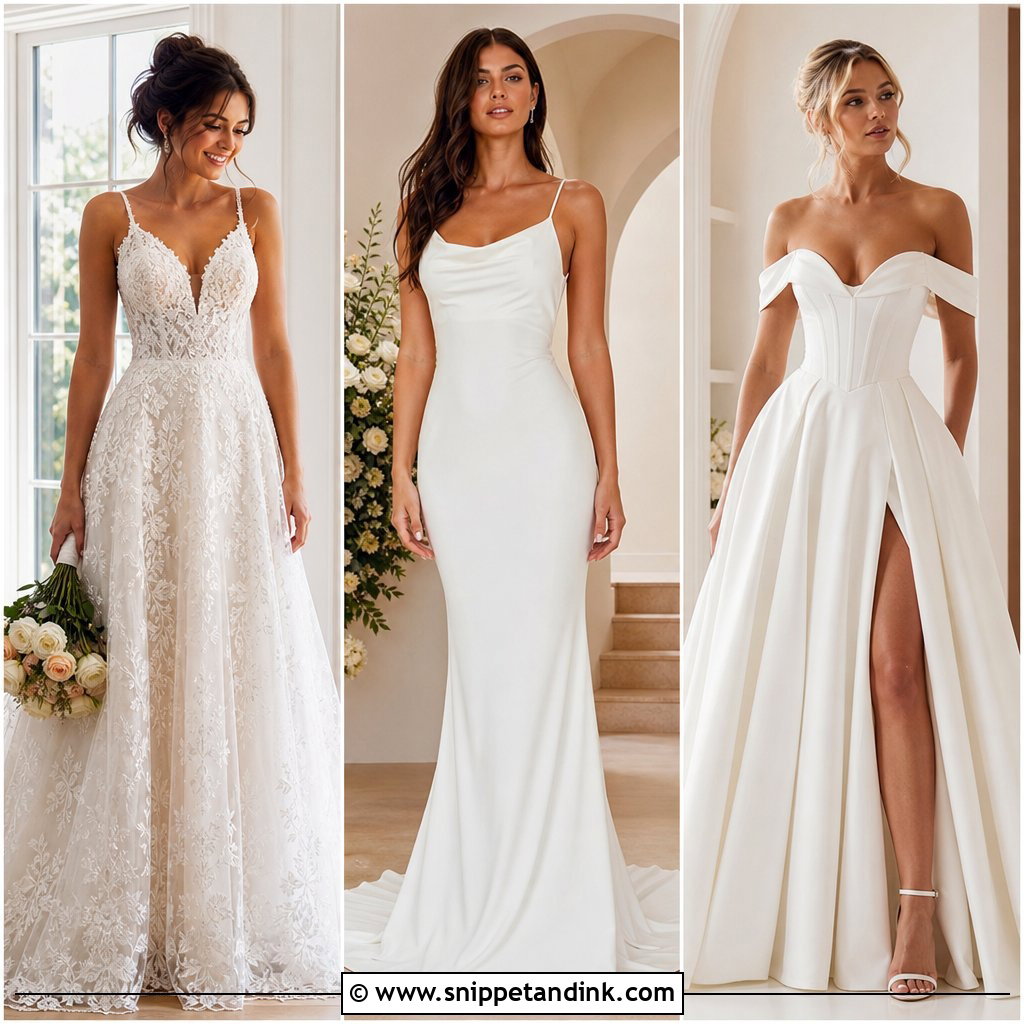
Brides often arrive at a first appointment with a folder of trends and leave in something completely different. That is normal. Silhouette, fabric and how a dress supports you decide far more than any trend, and they only become clear once you are standing in the gown. Where does the waistline sit on your body? Does the neckline stay put when you lift your arms? Will the train and sleeves make sense for your season and venue? The twenty looks here run from structured ball gowns to soft chiffon, each with the accessories and shoes that finish it and the fitting detail I would check. Explore the sections below and note which shapes you keep returning to.
What Your First Bridal Appointment Is Really For
A first appointment is for learning which shapes suit you, not for buying. Most shops carry samples in a limited size range and pin or clip them to fit, so the dress will feel loose or tight in places. That tells you nothing about how the finished gown will fit. Focus on proportion: where the waist falls, how the neckline frames you, how the skirt moves when you walk.
- Wear nude, smooth underwear and bring a strapless bra if you have one.
- Bring shoes close to the heel height you expect to wear, so hems and proportions look realistic.
- Keep the group small. Two people whose opinion you trust are more helpful than six voices.
- Ask about the shop’s photo policy before you start snapping.
- Expect bridal sizes to run smaller than everyday clothing. Gowns are ordered by measurements, so ignore the number on the label.
Timing matters more than most brides expect. Many gowns are made to order and take several months to arrive, and alterations need time after that. I’d start shopping around nine months to a year ahead if you can, and always ask the shop for its own production timeline before you commit.
1. Basque Waist Ball Gown Wedding Dress
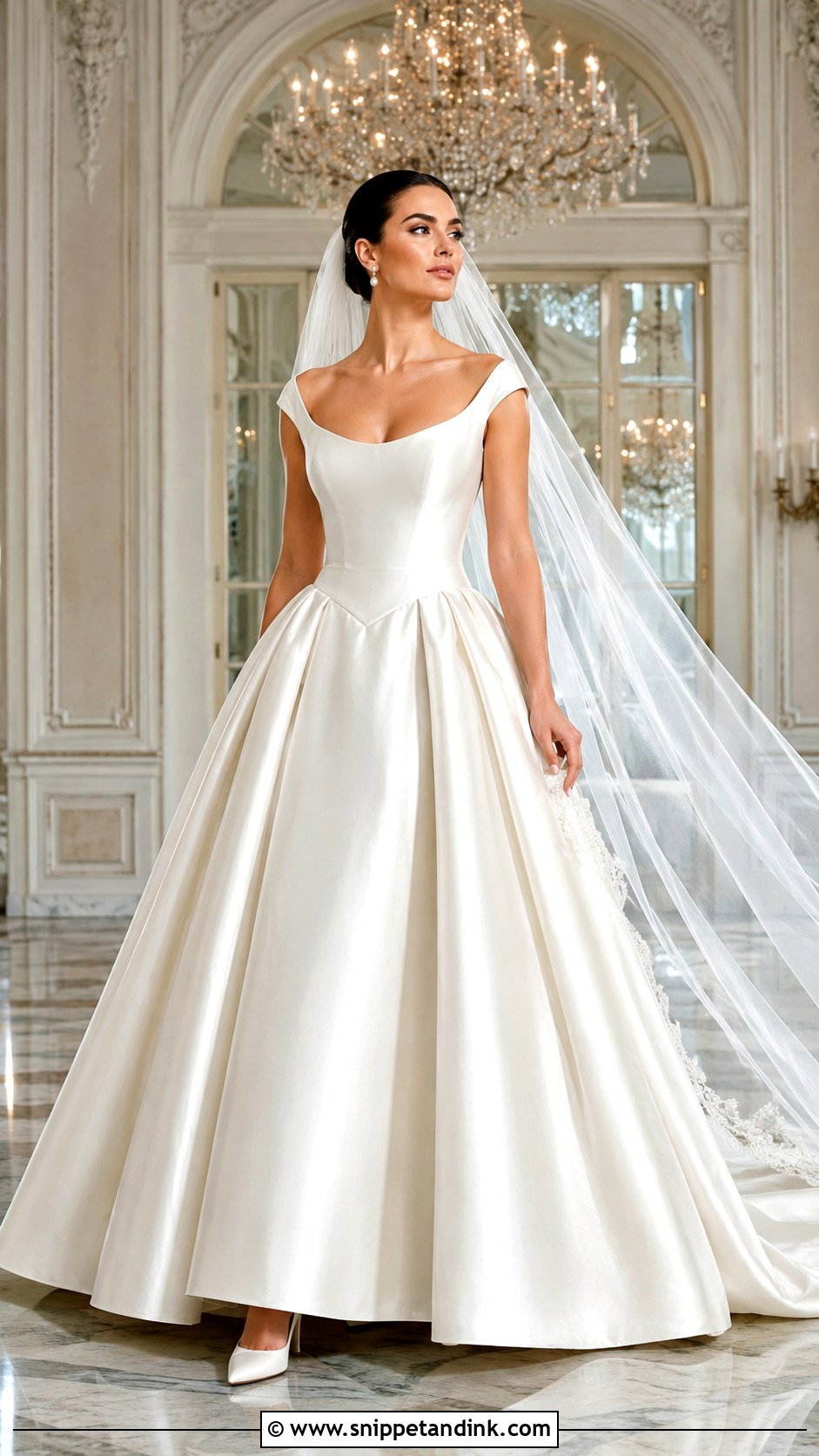
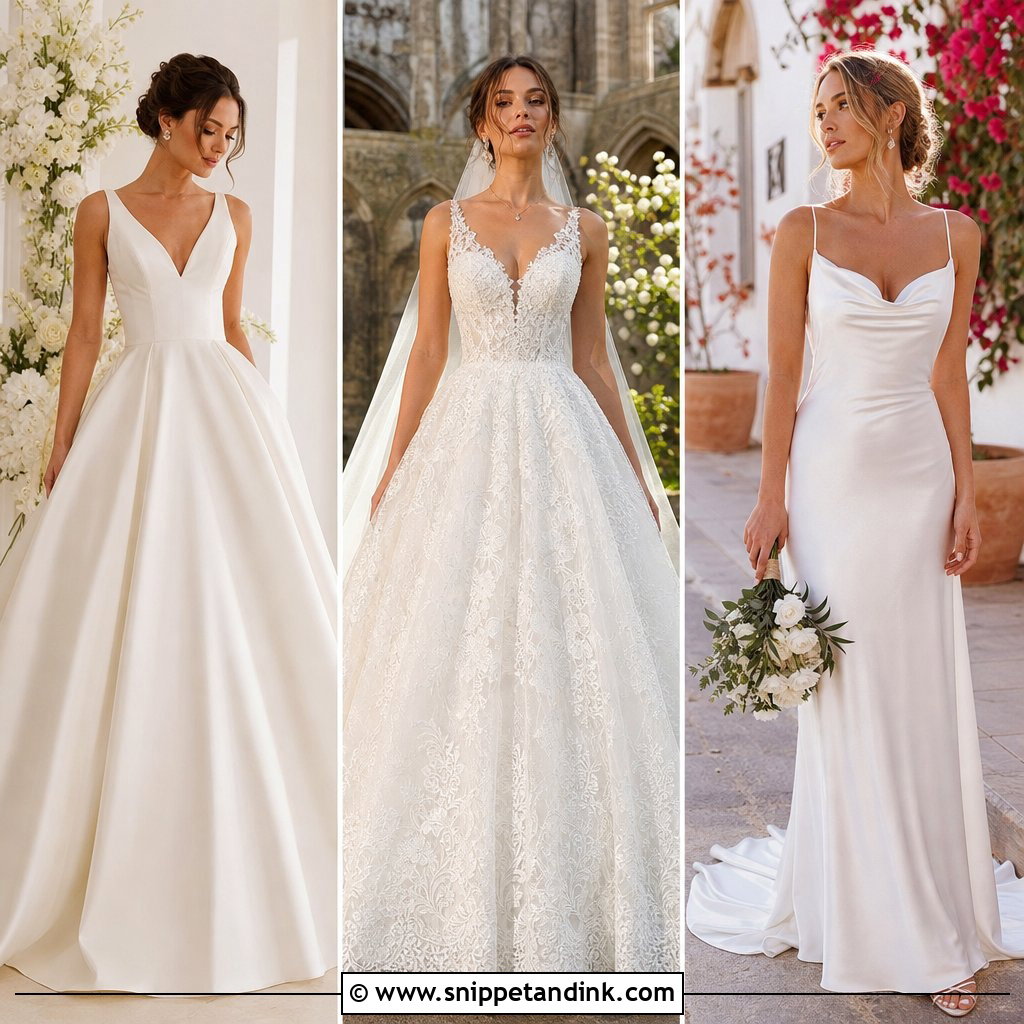
A Basque waist ball gown drops into a V below the natural waist, which lengthens the torso and makes the full skirt look even fuller. The position of that point is everything. Too high and it looks like a regular waist; too low and it cuts the body awkwardly when you sit. I mark it at the first fitting with the bride standing tall and again seated. Ivory satin or structured mikado keeps the shape crisp, with internal boning for support. Pearl drops, a cathedral veil, pointed satin pumps and a low chignon complete it. It needs a room with space for the skirt.
2. Square Neck A-Line Wedding Dress
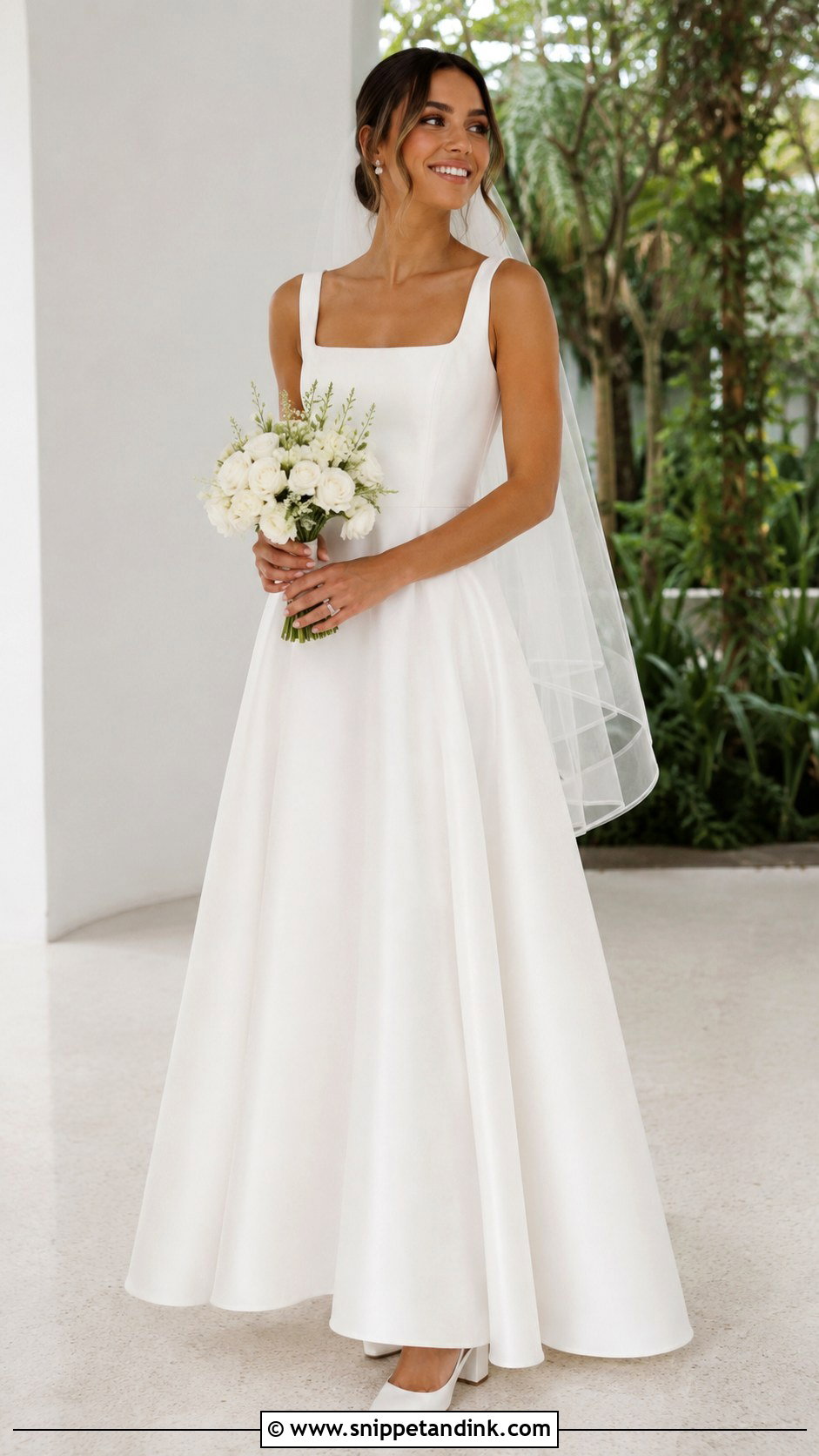
A square neck on an A-line is one of the easiest gowns to wear all day. Wide straps carry the bodice better than spaghetti straps, and the straight neckline frames the collarbone. Silk satin glows; matte crepe is quieter. I’d add pockets if the maker offers them, and ask for a train loop for dancing. A fingertip veil, small studs and closed-toe block heels keep it steady on any floor, with a sleek bun or polished waves. It suits gardens and indoor ceremonies alike.
3. Strapless Mikado Wedding Dress With Bow
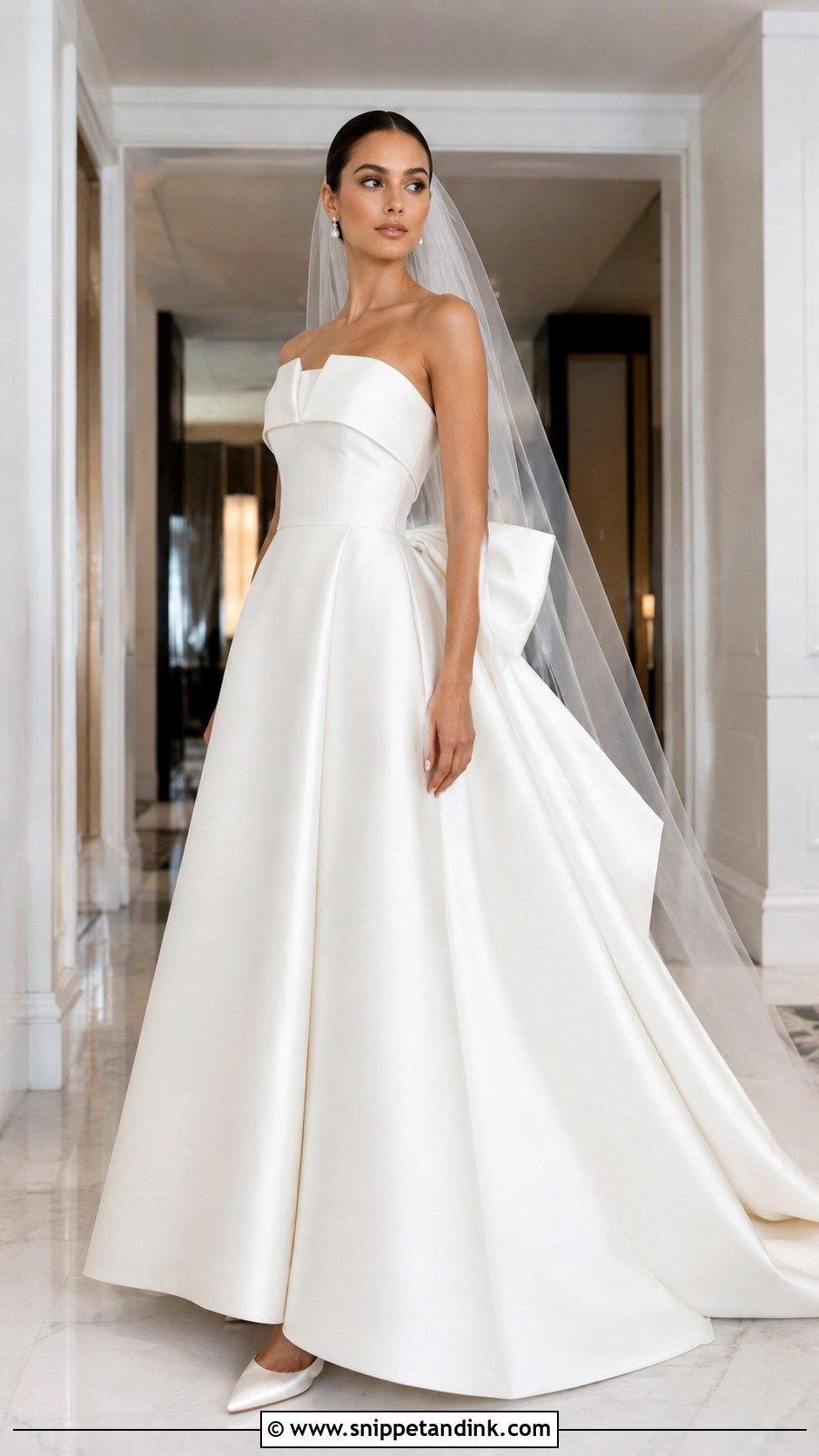
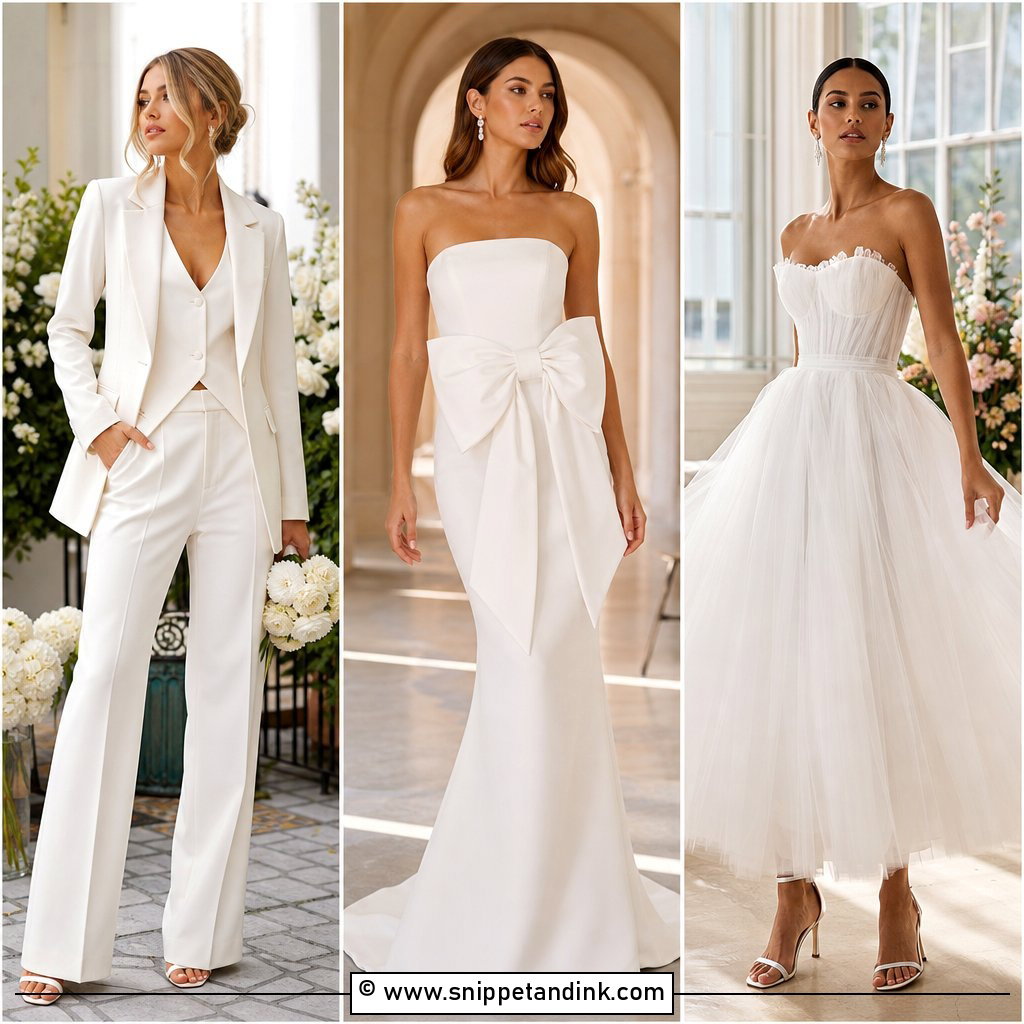
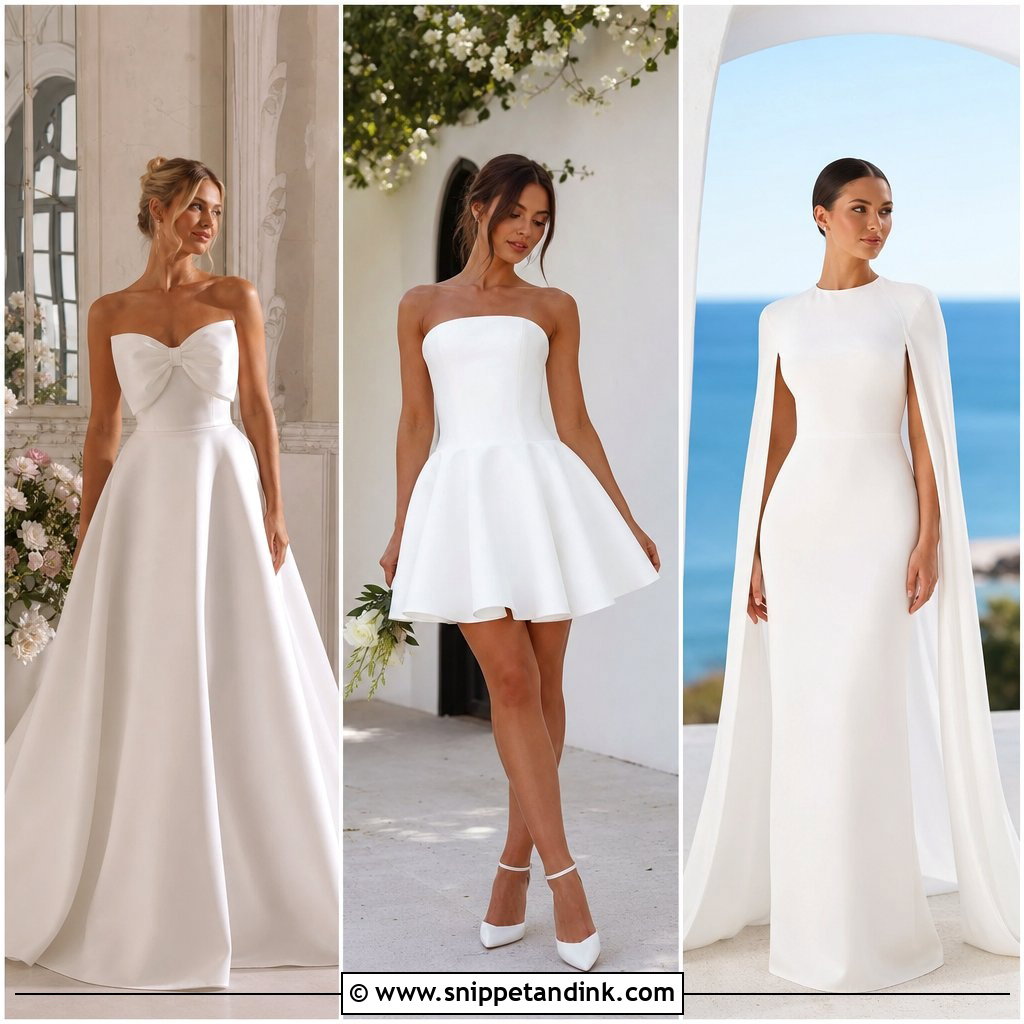
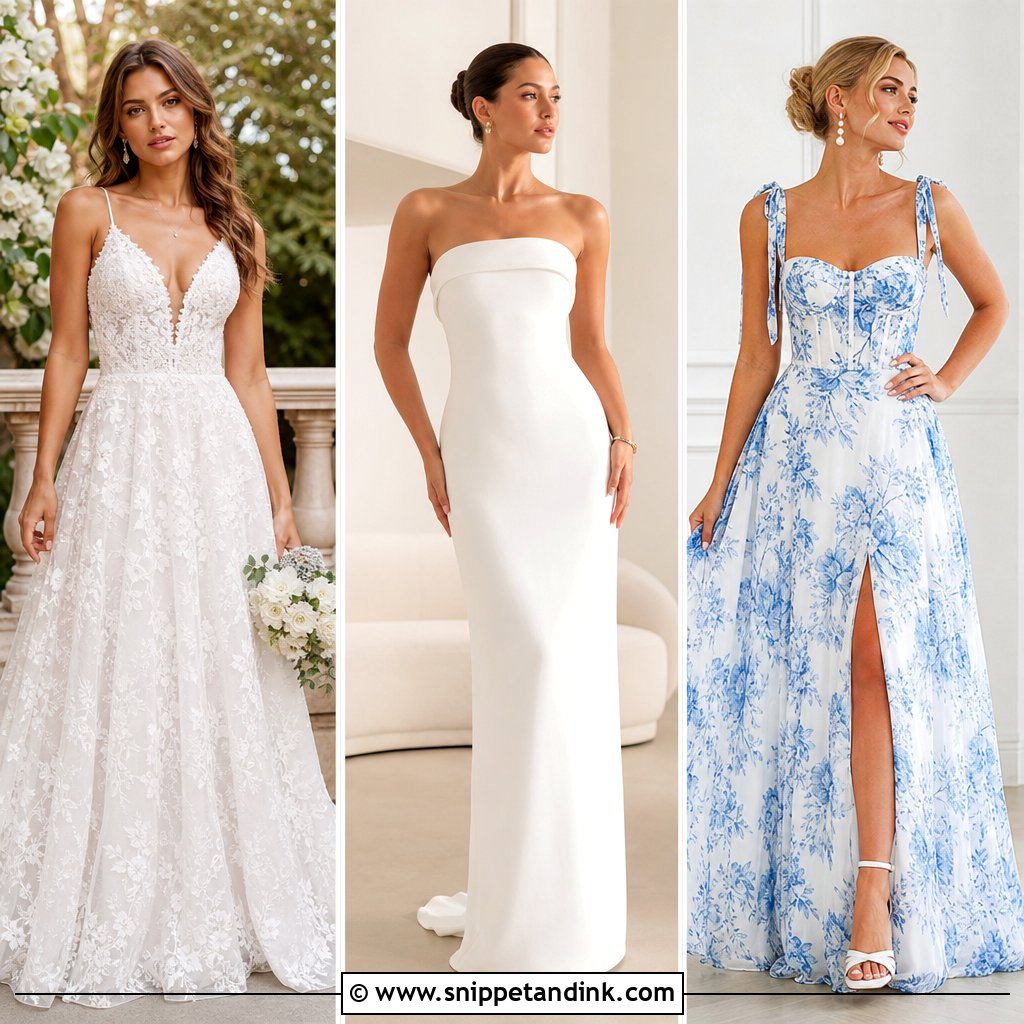
Crisp Mikado fabric holds an architectural shape without beading or lace, which is why it carries a big bow so well. A fitted strapless bodice with a soft scoop, a full A-line skirt and a removable bow at the back give the gown its whole personality. Strapless mikado needs strong internal construction, as the weight of the skirt pulls the bodice down over a long day. I’d put the effort into alterations here, not jewelry. A simple tulle veil, pearl earrings, white satin pumps and a smooth updo keep it clean. Skip the necklace.
4. Long Sleeve Lace Wedding Dress
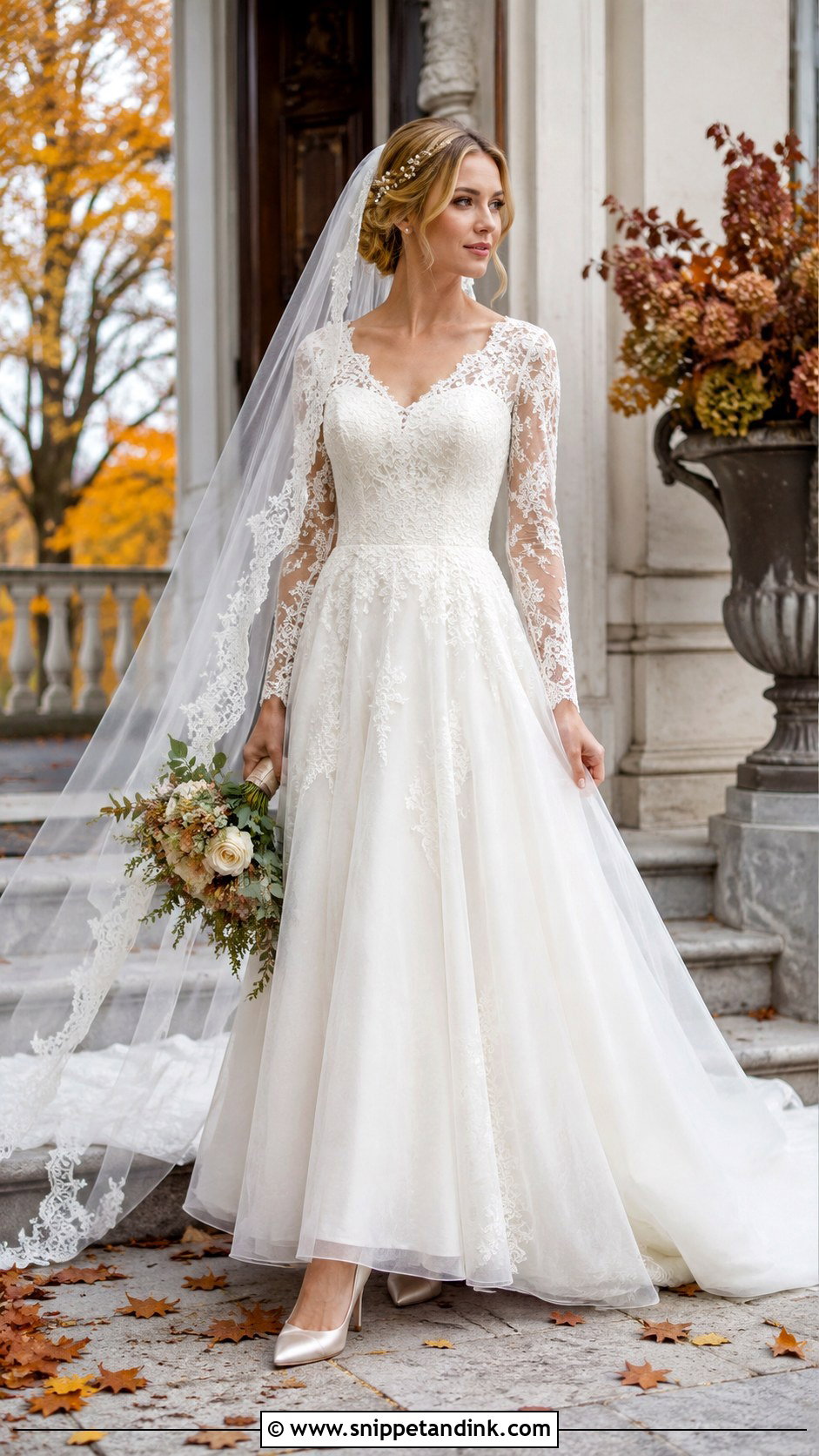
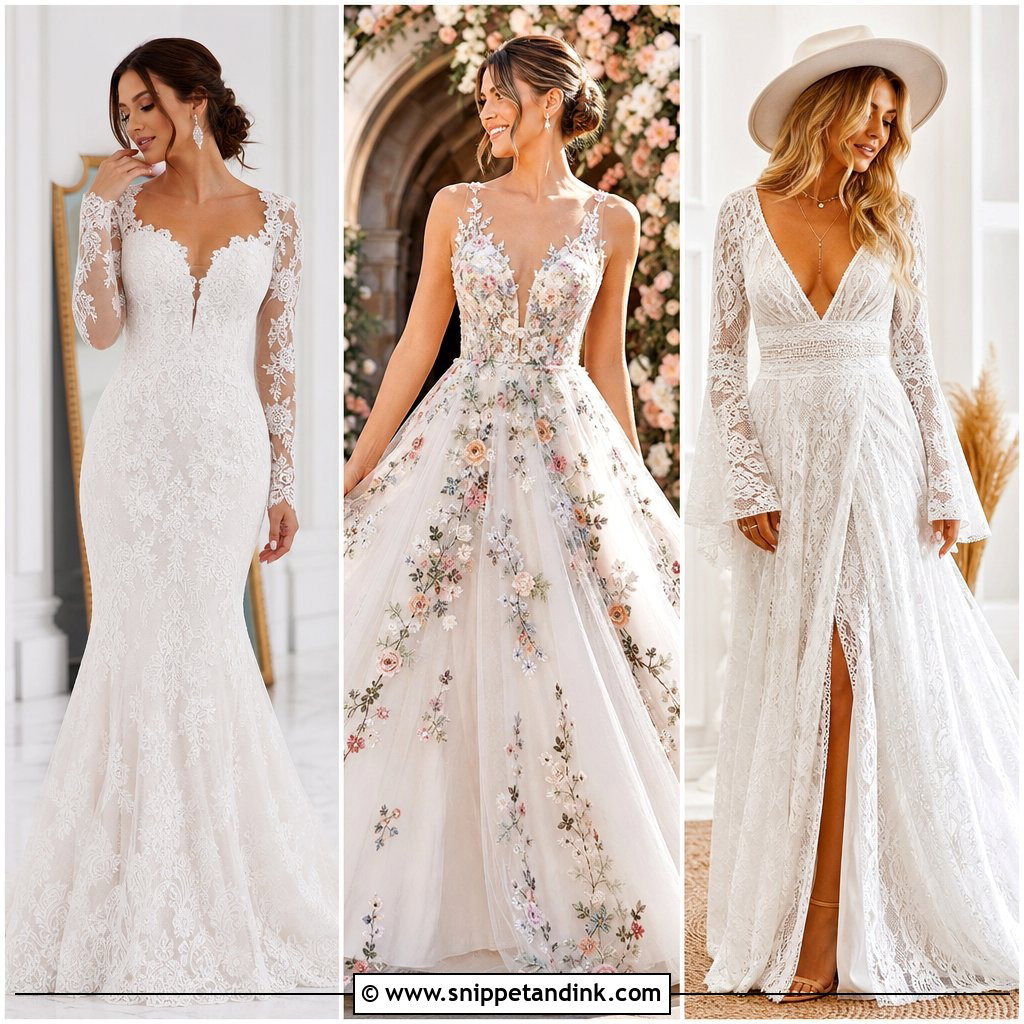
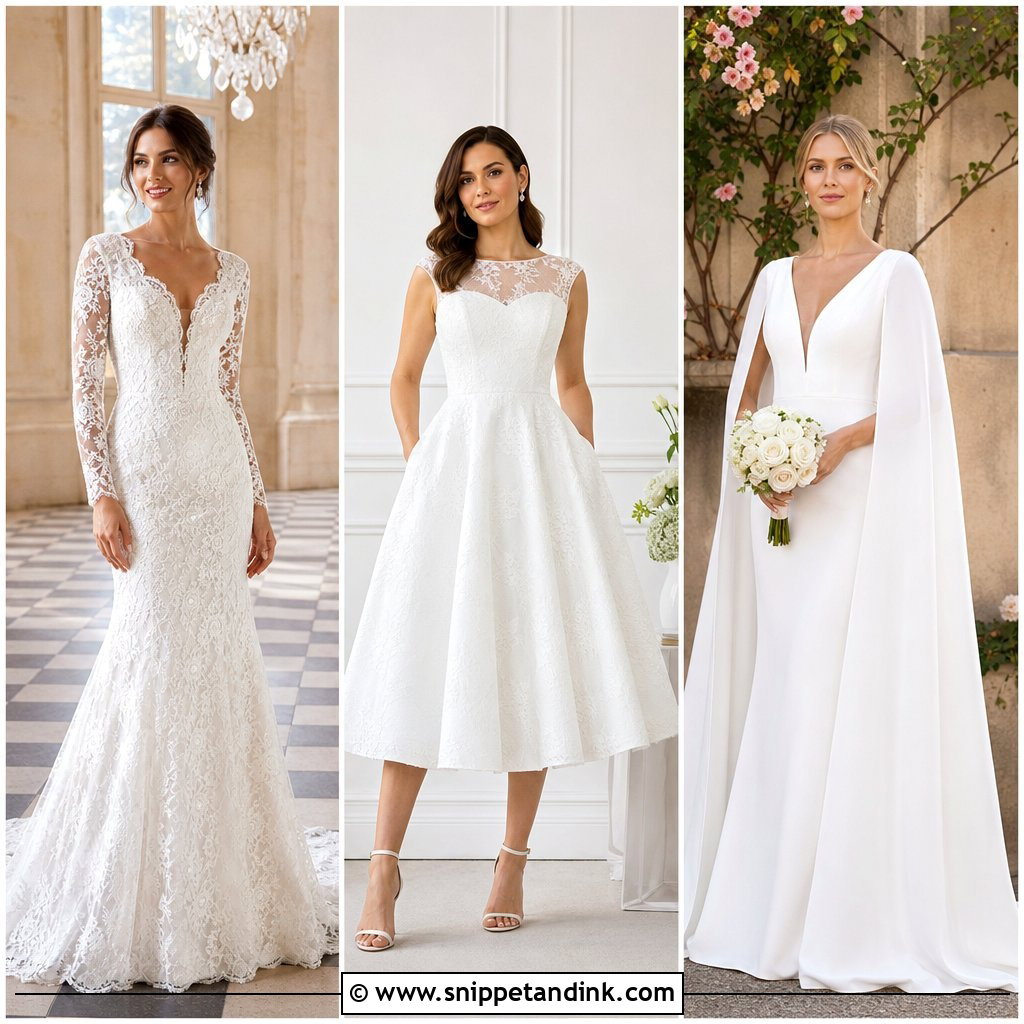
Lace sleeves feel lovely in the fitting room and can itch badly by the speeches. The first thing I check is the inside of the elbow and neckline, and if the lace is rough, I ask for a soft lining there. A fitted lace bodice with lightly lined sleeves, over an A-line or flowing column skirt, gives coverage without heaviness, especially with a modest V or illusion neckline. Floral lace reads romantic; geometric lace looks modern. Pearl pins, small earrings, ivory pumps and a light veil edged in matching lace complete it. Fall and cooler evenings suit it.
5. Off Shoulder Satin Wedding Dress
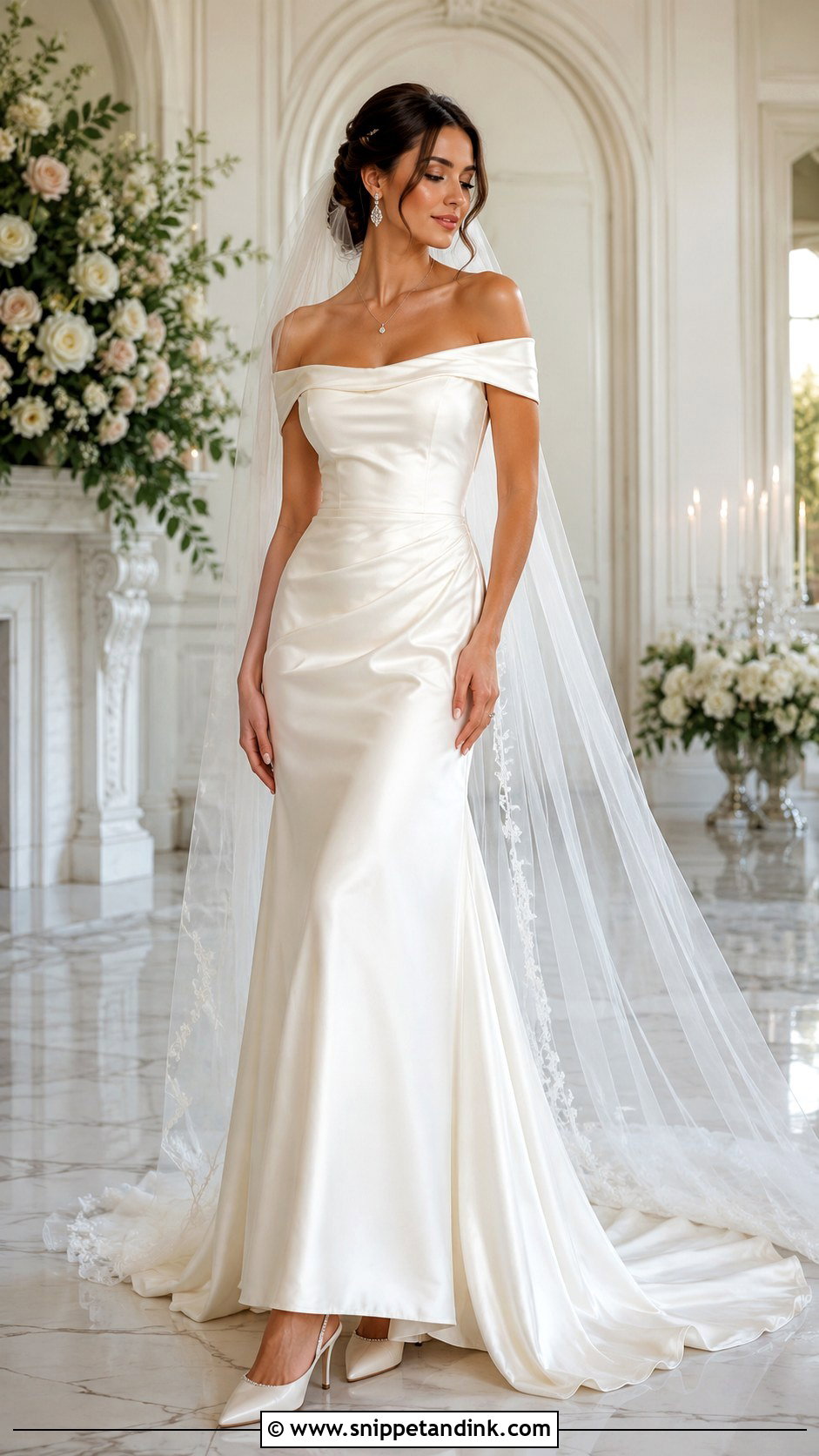
Off-the-shoulder bands look graceful standing still. The test is movement. I have the bride raise her arms and hug someone during the fitting; if the bands cut into the upper arm or ride up, the neckline needs reworking. Medium-weight satin falls smoothly without stiffness, and a fitted bodice with a gently flared skirt gives an hourglass line. A delicate pendant, crystal earrings and pointed pumps or slingbacks suit it, with a medium-length veil so the neckline is not hidden for long. Low bun, ponytail or side-swept waves all work.
6. Corset Tulle Wedding Dress
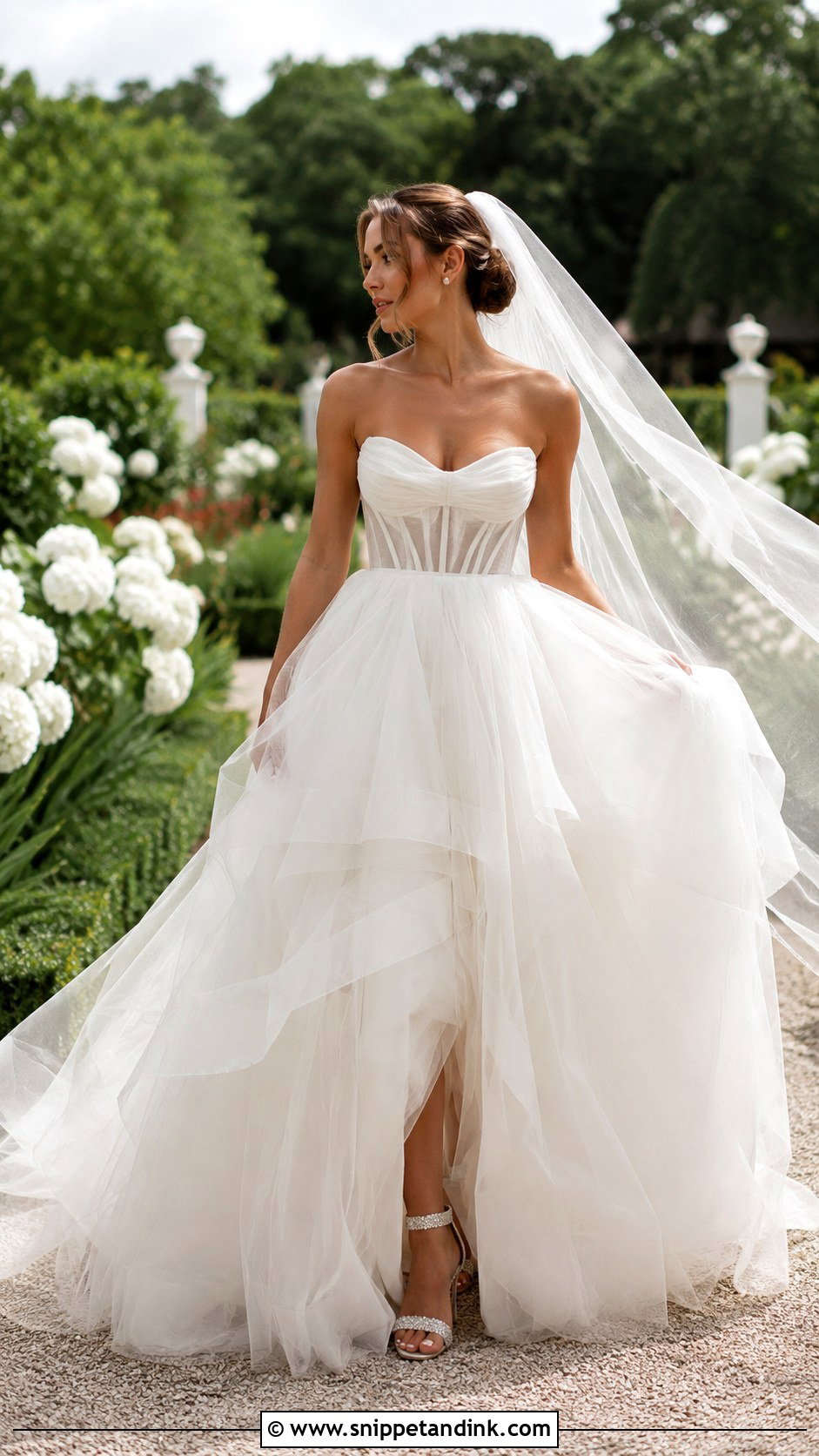
A corset over tulle is a contrast of hard and soft, and the corset decides whether you enjoy the day. Supportive boning, lined cups and draping placed with care matter more than how tight it is. During alterations, I ask brides to sit, walk and take a deep breath; it should support without pinching the ribs or shifting. A full or moderately gathered skirt contrasts with the fitted top. A sheer chapel veil, crystal studs, embellished heels and a loose updo show off the bodice.
7. 3D Floral Wedding Dress
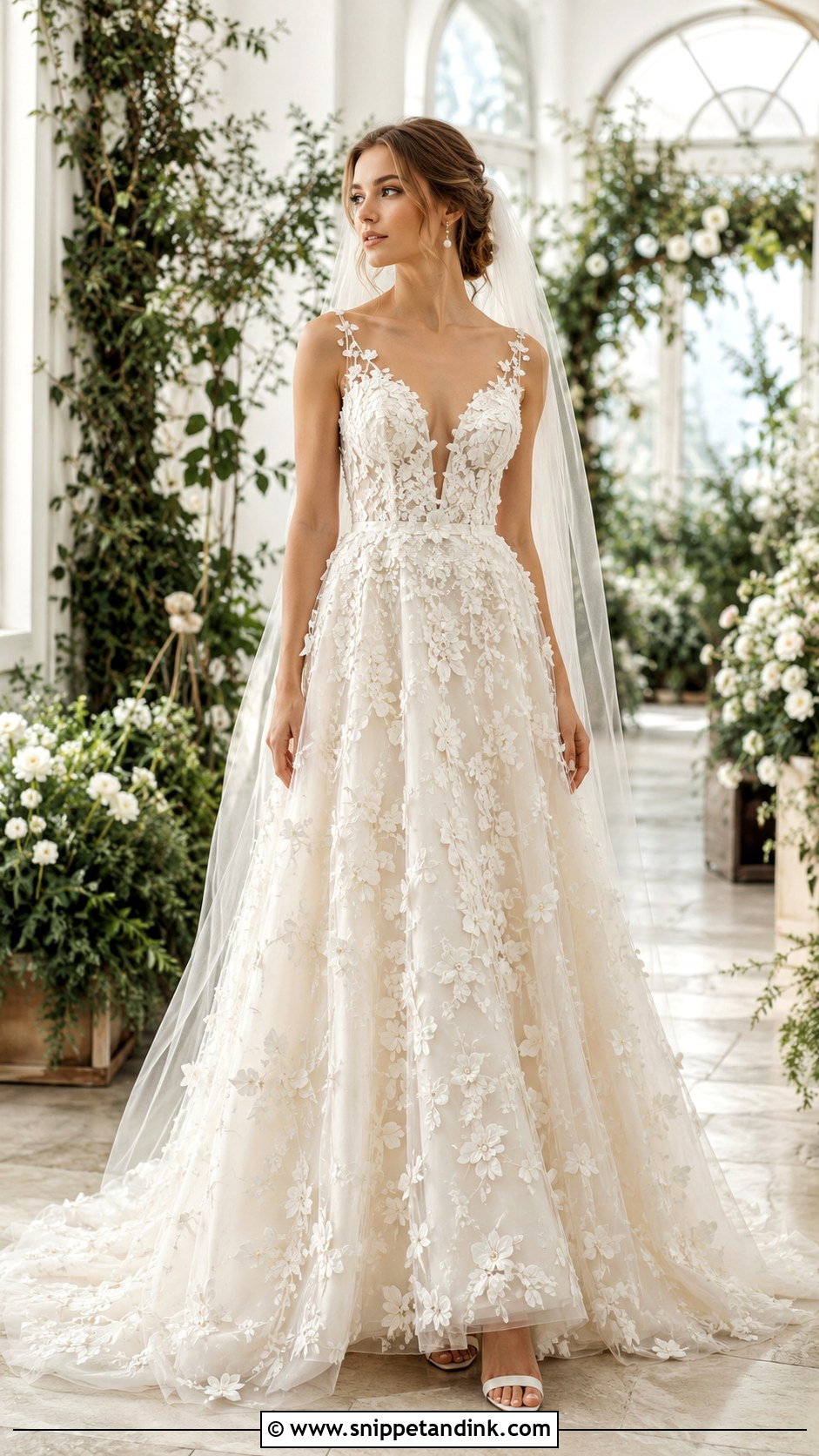
Three-dimensional flowers make a gown interesting from every angle, but they can also look like they were glued on. Varied sizes and lightweight petals keep it organic. Over a sheer overlay, strategic lining controls coverage. I keep everything else plain: understated pearl earrings, plain satin sandals and a simple veil, with one or two small floral pins in a loose bun. Ask the florist for a soft, restrained bouquet of greenery and a narrow palette, because a big floral bouquet on a floral gown turns into noise. Spring and botanical venues suit it.
8. Minimalist Crepe Sheath Wedding Dress
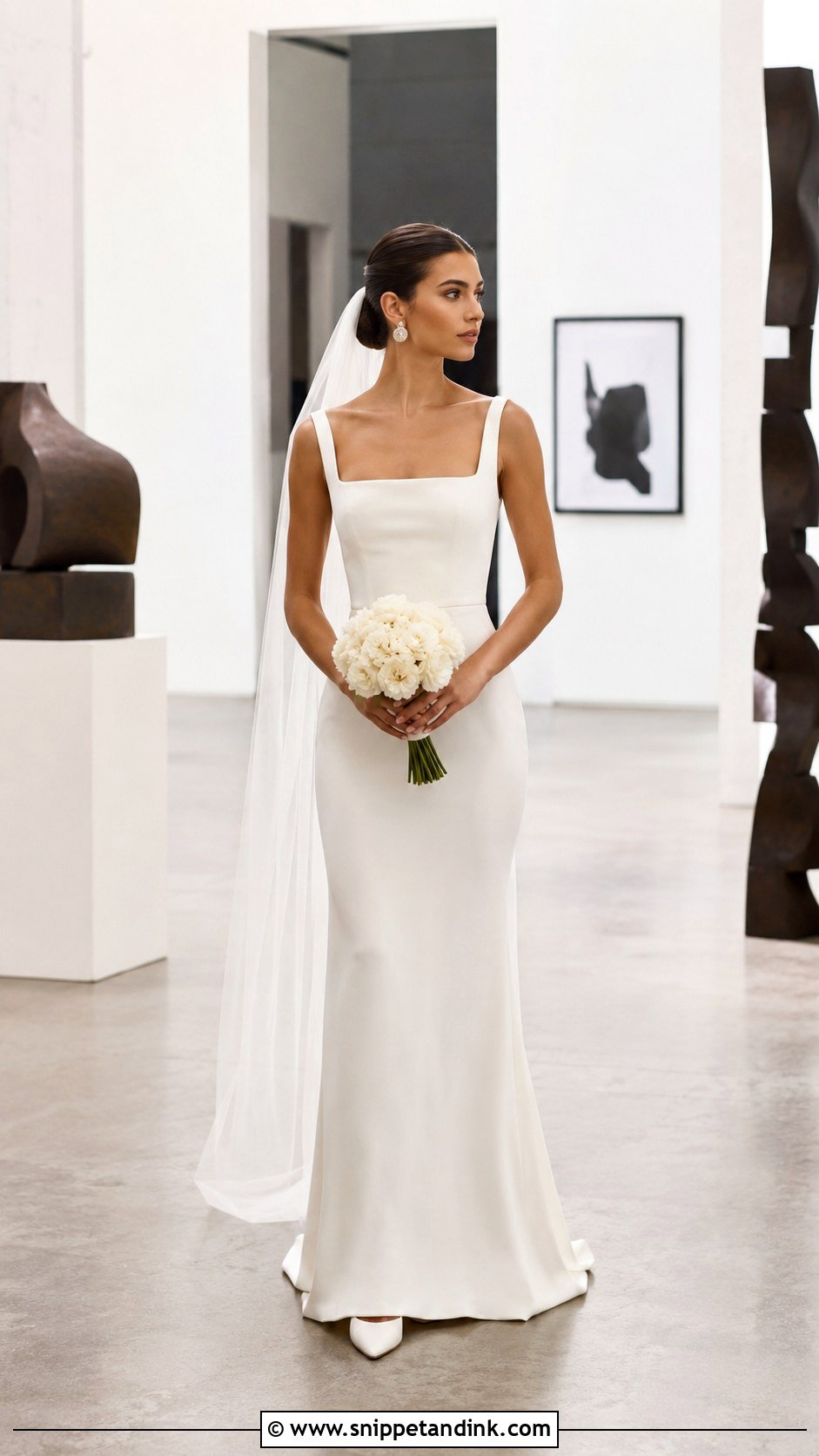
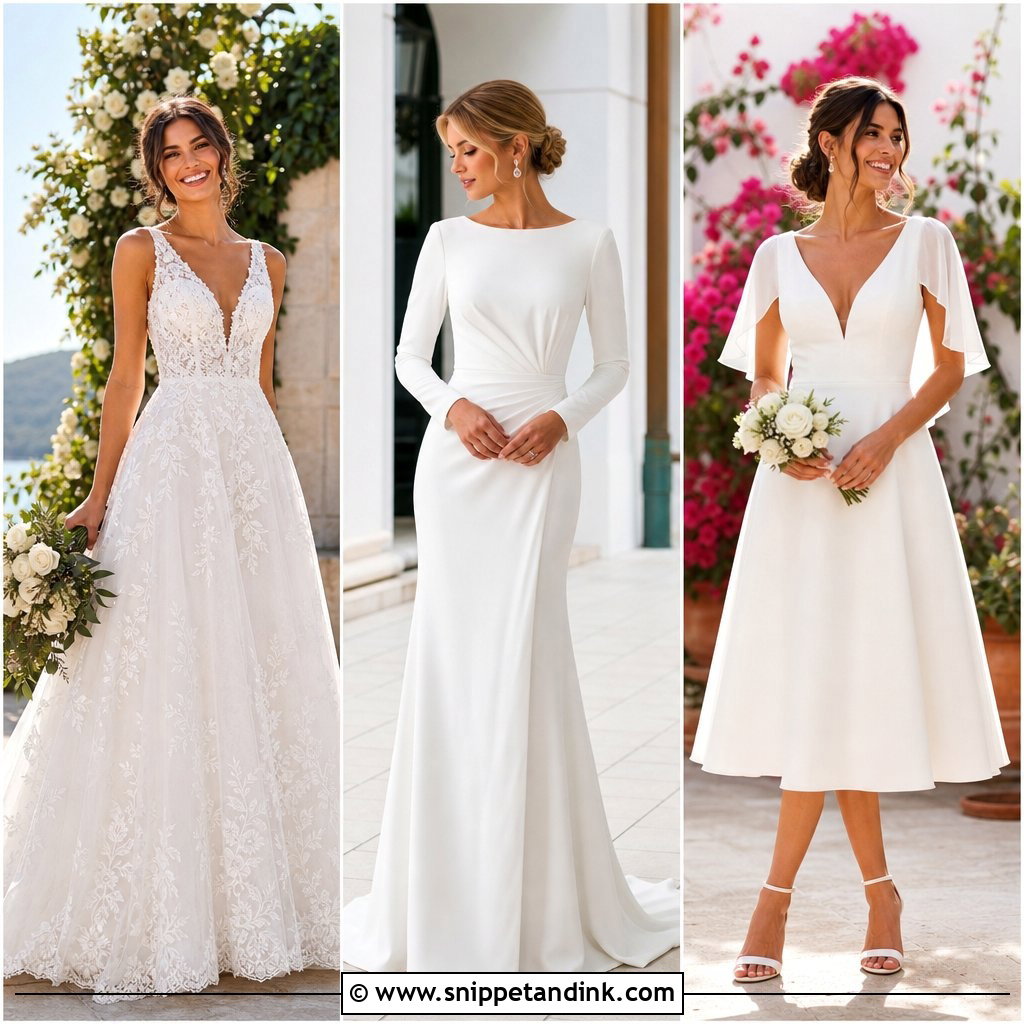
There’s nowhere to hide in a minimalist crepe sheath wedding dress, which is the point. Every seam shows, so I schedule quality alterations and fit it over undergarments chosen for that exact neckline and back. Look for a softly structured bodice, a defined waist and a skirt that follows the body without shortening your step. A bateau, square or modest V-neck keeps it refined. A long plain veil adds ceremony drama, then comes off to show the back. Pointed pumps, sculptural earrings and a compact bouquet finish it.
9. Silk Slip Wedding Dress
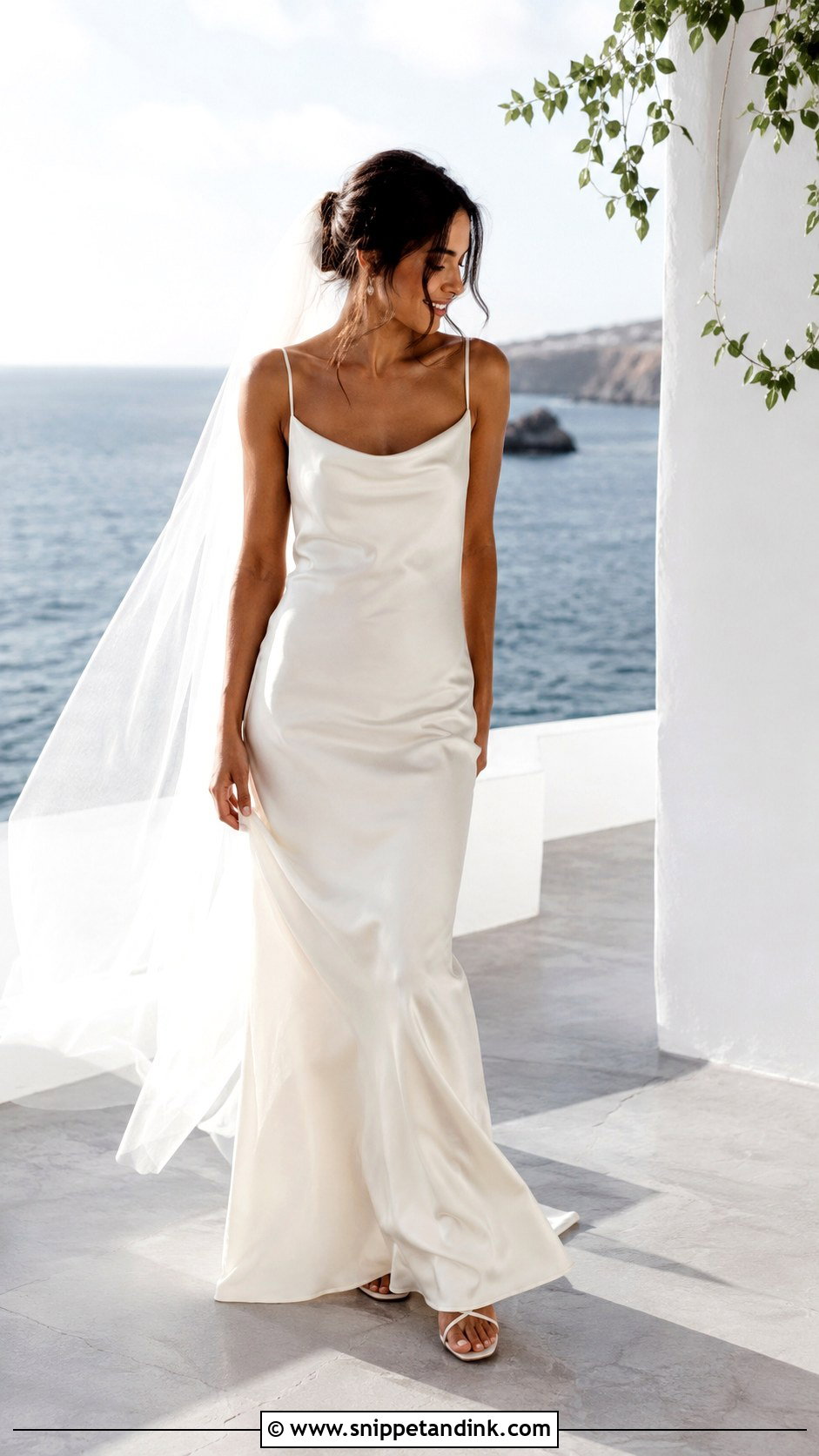
Silk slips are easy to love and hard to keep clean. Silk shows water marks, foundation and wrinkles, so I ask brides to do their makeup in a robe, keep drinks well away and step into the dress last. Choose bias-cut fabric that skims rather than clings, with adjustable straps or an inner layer if you need security. Barely there ivory sandals, delicate earrings and a lightweight veil or sheer scarf complete it, with a neat bun or loose waves. Have it professionally steamed on the morning. Intimate and coastal weddings suit it.
10. High Neck Lace Wedding Dress
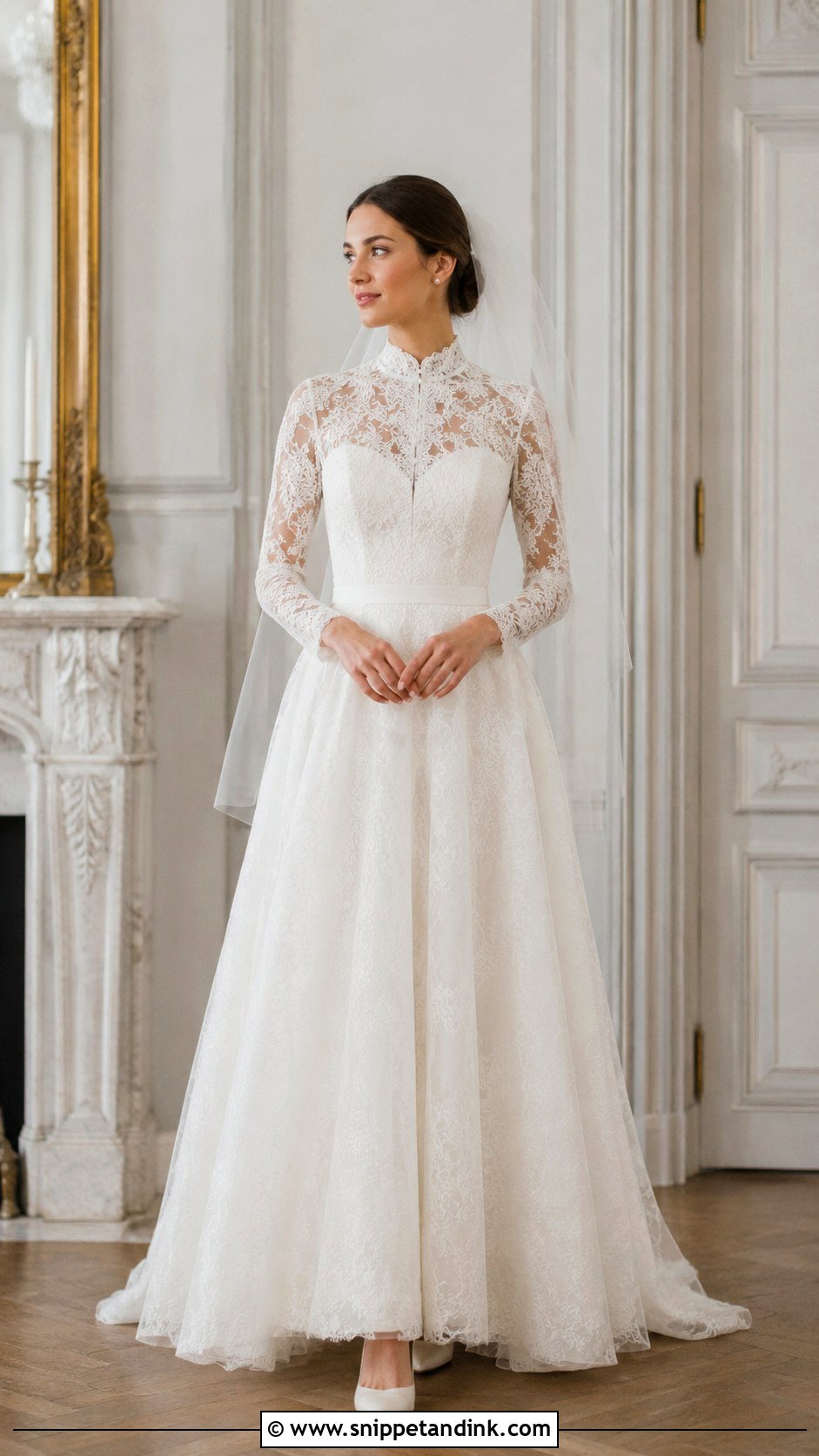
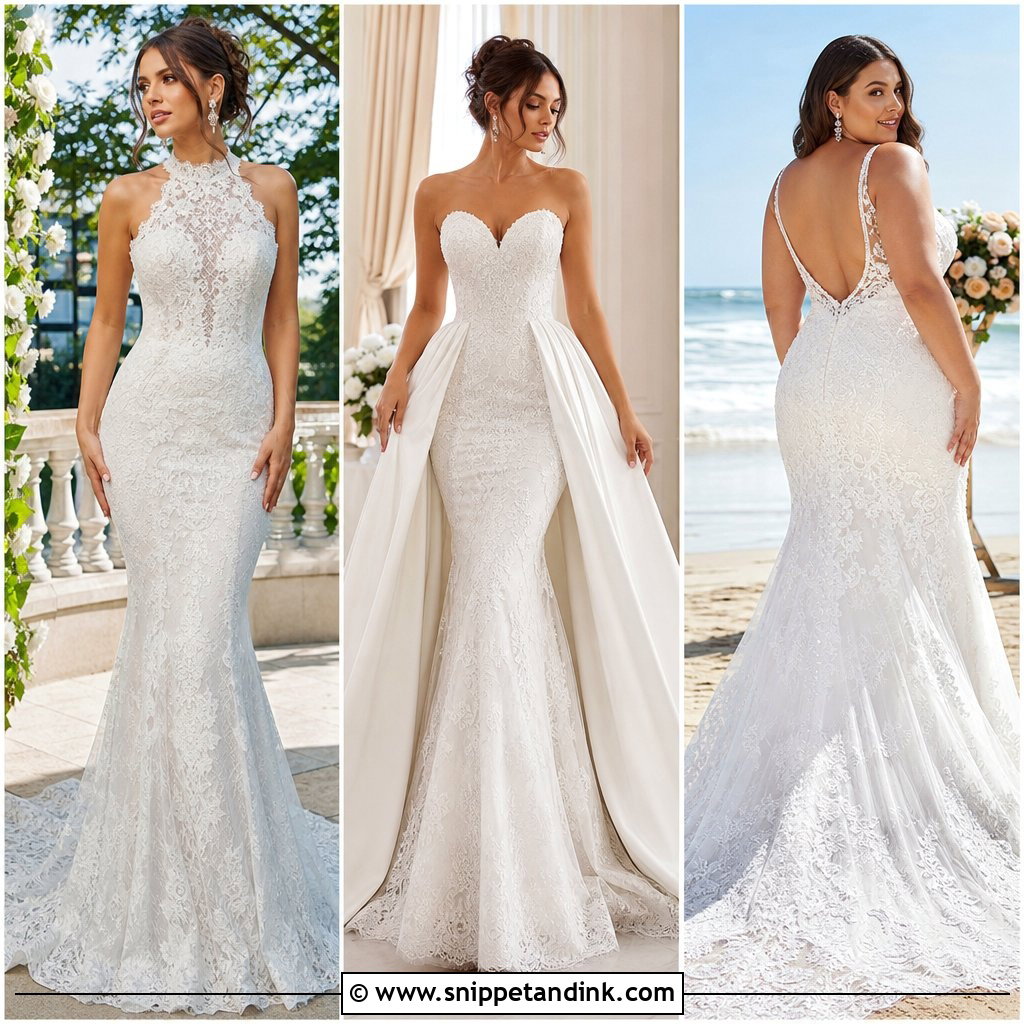
Collars that look perfect in a mirror sometimes catch the jaw when you turn your head, so I ask brides to look over each shoulder during the fitting. Soft edging at the neck and cuffs prevents rubbing. A fitted lace bodice with a lined front, sheer sleeves and a keyhole or buttoned back balances the coverage. An A-line keeps it light; a fitted column is more dramatic. A sleek bun, pearl studs, ivory pumps and a simple veil secured below the hair suit it. No necklace. Historic estates and cooler seasons suit it well.
11. Tea Length Wedding Dress
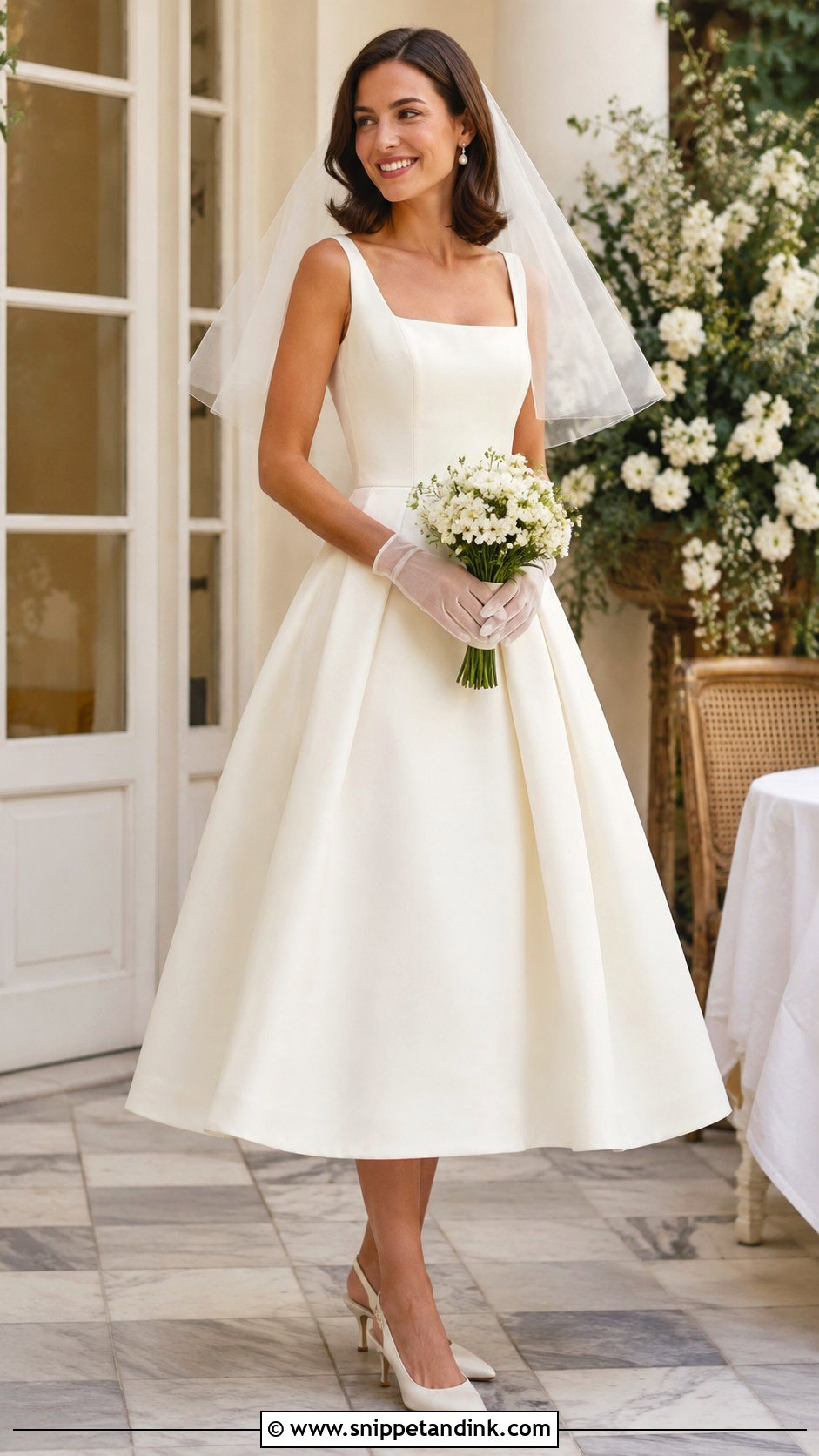
Shoes become part of the outfit with a tea-length hem, which falls between knee and ankle. A fitted bodice with a square, scoop or off-shoulder neckline and a softly structured skirt keeps it playful. Pointed slingbacks, pearl earrings, short gloves and a birdcage or shoulder-length veil suit it, with a compact bouquet. Proportion matters: Petite brides may prefer a hem showing more of the lower leg, while taller brides carry a longer midi. I’d always do the final fitting in the exact wedding shoes.
12. Bridal Mini Wedding Dress
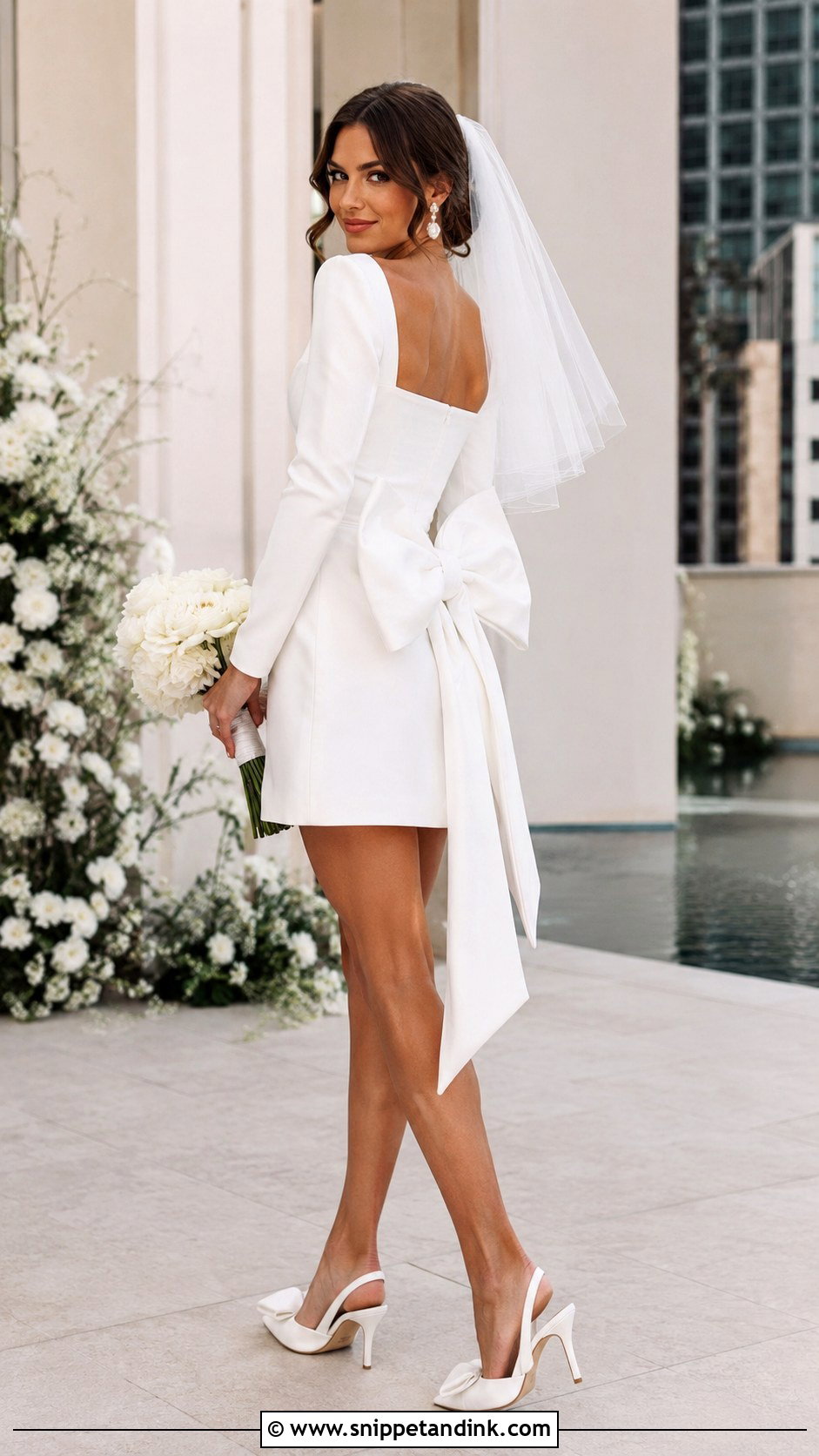
Minis need structure and a hem you can sit in. I test length with the bride on a low chair, because a skirt that looks fine standing can ride up much further when seated. Structured fabric and a tailored bodice keep it polished; a square neckline, long sleeves or a dramatic bow balance the short skirt. Sheer tights or built-in shorts add coverage. Slingback heels, statement earrings, a short veil and a small bouquet or sleek clutch complete it. Many brides wear it as a second look after a longer ceremony gown.
13. Boho Chiffon Wedding Dress
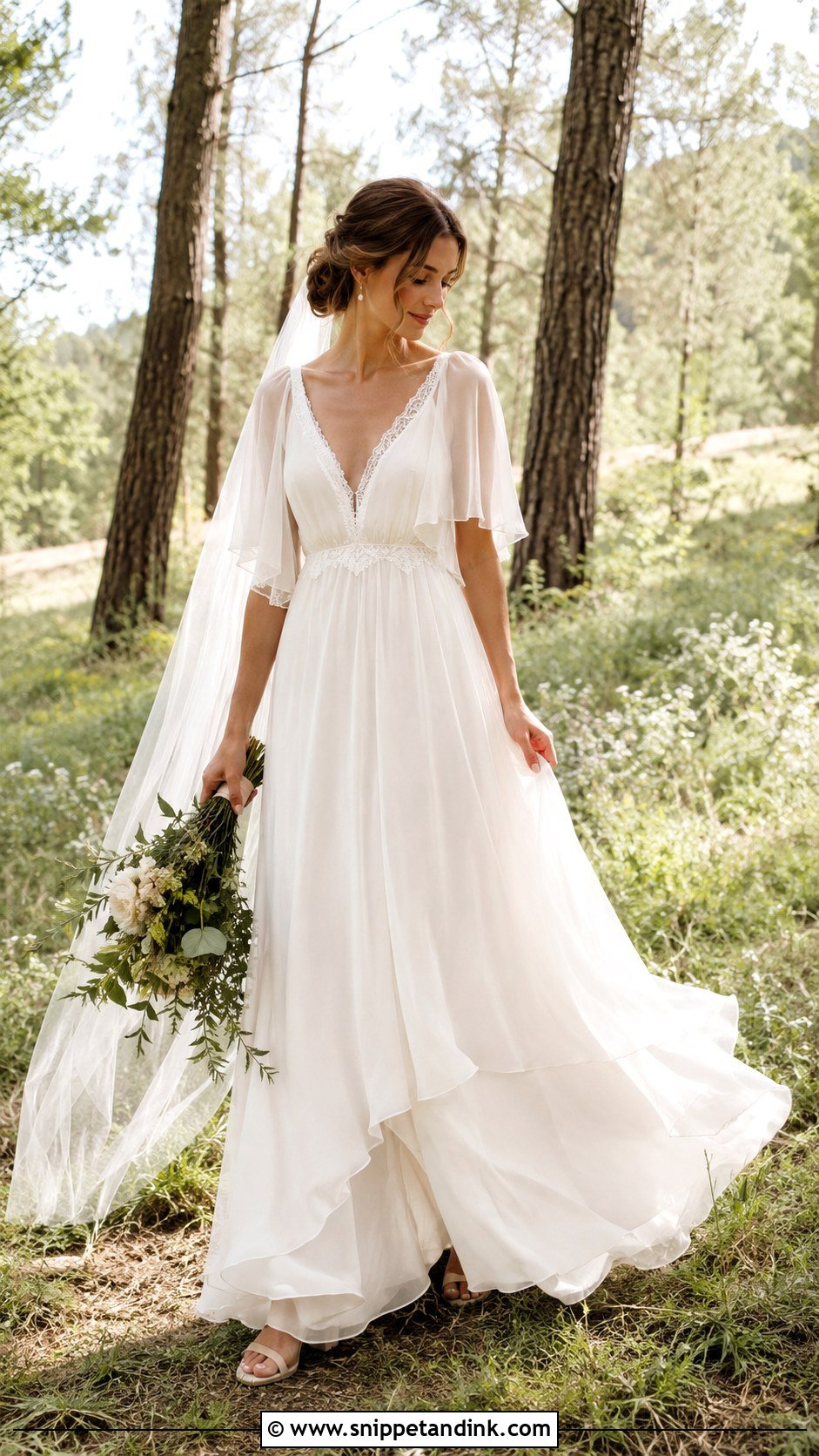
Picture chiffon moving in an outdoor breeze; that is the appeal of a boho gown, with flowing layers, soft sleeves and an easy A-line. A lined bodice with lace trim or subtle embroidery keeps it from looking too casual. Shoes are the practical decision. On grass or sand, stilettos sink, so I send brides out in low block heels, embellished flats or stable sandals. Skip a long train over grass or sand, and add a wrist loop for the skirt. Small drops, a fingertip veil, a loose bouquet and natural waves or a braided low bun finish it.
14. Mermaid Wedding Dress With Veil
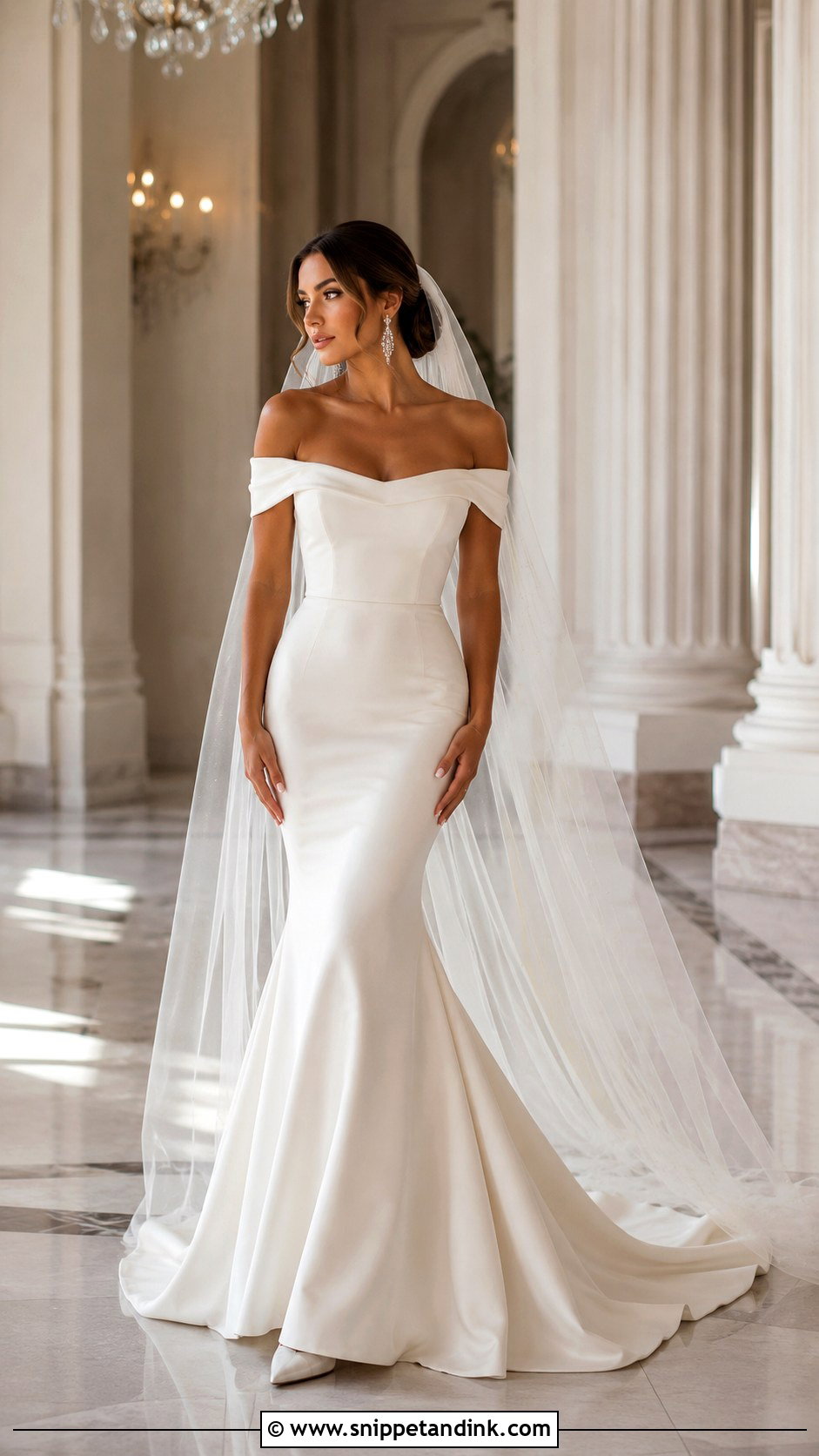
Mermaid gowns fit through bodice, waist and hips, then flare near the knee. Where the flare starts decides how well you can walk, and a flare set too low shortens your stride to small steps. During fittings I have brides walk the length of the room, sit, and climb stairs. Stretch crepe looks smooth and modern; lace adds texture. A sweetheart or off-shoulder neckline balances the skirt. A long sheer veil, crystal earrings, pointed pumps and an elegant updo complete it. Plan a secure bustle to lift the train for the reception.

15. Cape Sleeve Wedding Dress
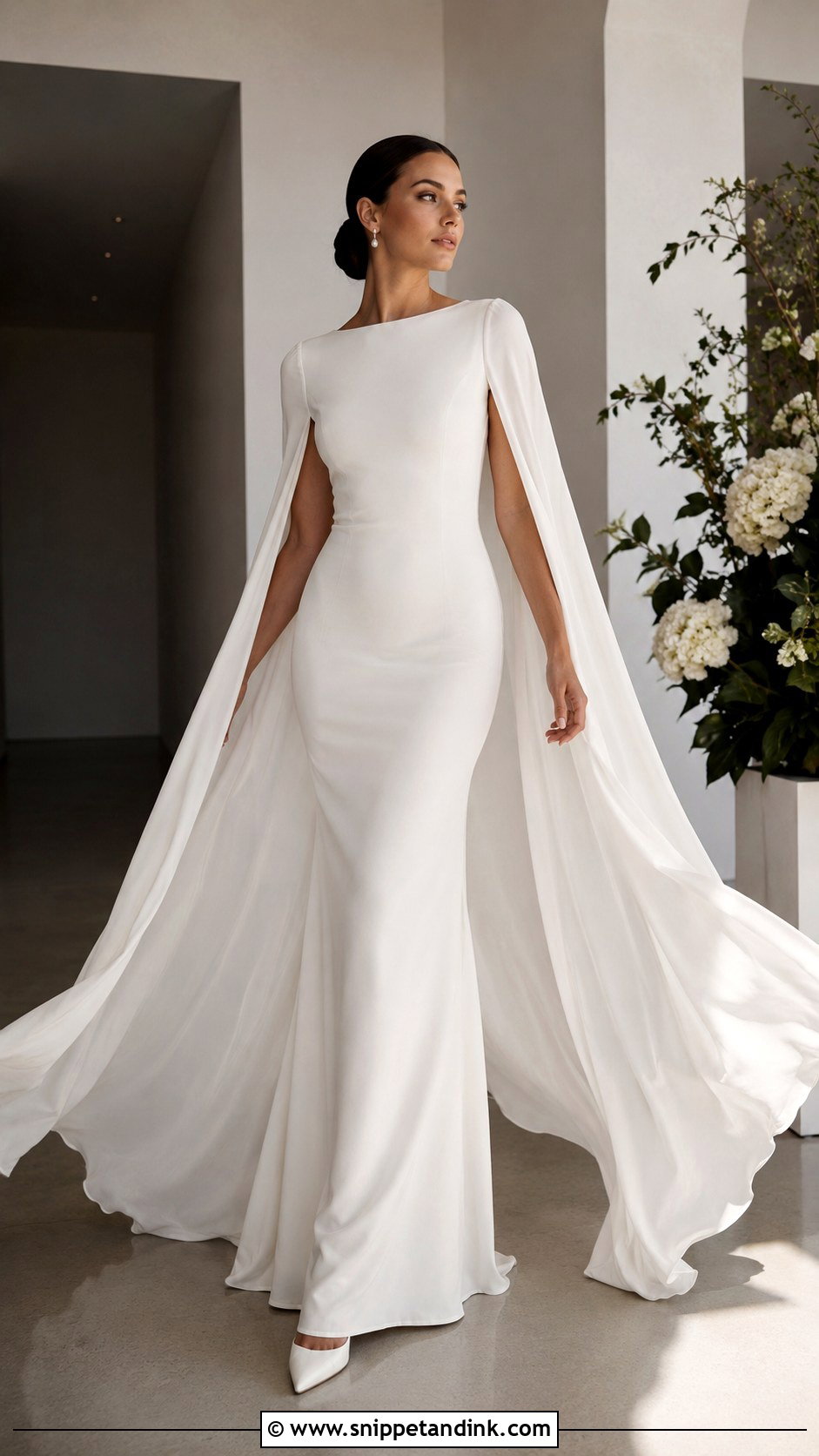
Cape sleeves move like a veil, so you often do not need both. If you do want a veil, keep it short so it does not tangle with the cape panels. Choose a clean column or A-line with cape panels attached at the shoulders or upper back; chiffon floats, crepe holds a firmer line. I always ask the maker whether the cape can detach, since freeing the neckline and arms makes dancing much easier. Simple drop earrings, pointed heels and a smooth low bun suit it. Cooler weather and contemporary venues suit it best.
16. Detachable Overskirt Wedding Dress
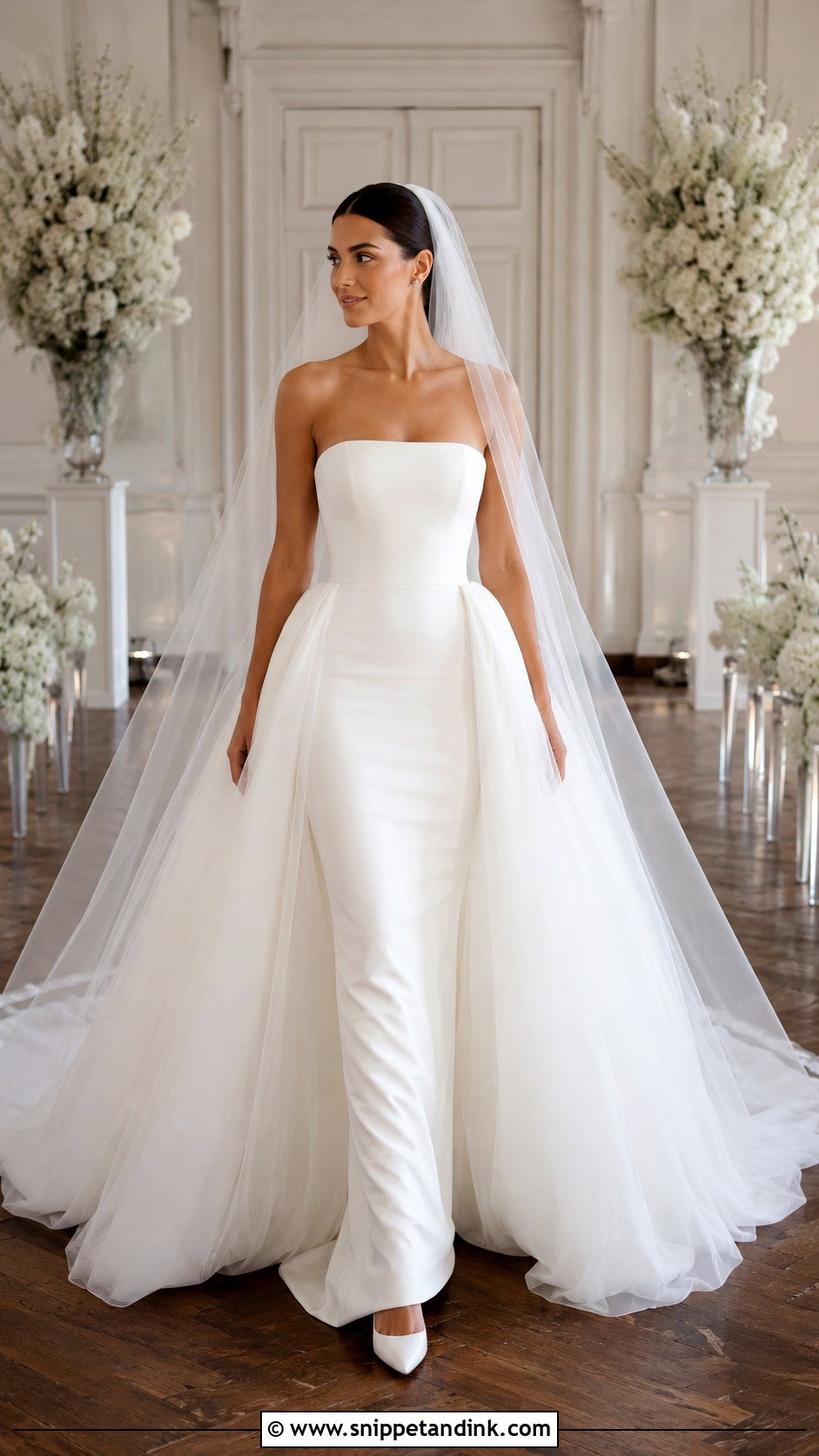
A fitted gown with a detachable overskirt gives you two looks without a full outfit change. Start with a streamlined crepe, lace or satin gown, then add a full tulle or mikado skirt for ceremony volume and train. I check that the waistband sits flat from the side and back, and that the skirt releases without dragging the gown’s fabric with it. A cathedral veil, stud earrings and classic pumps for the ceremony; overskirt and veil off for dancing. A sleek ponytail or low bun suits both versions.
17. Pearl Beaded Wedding Dress
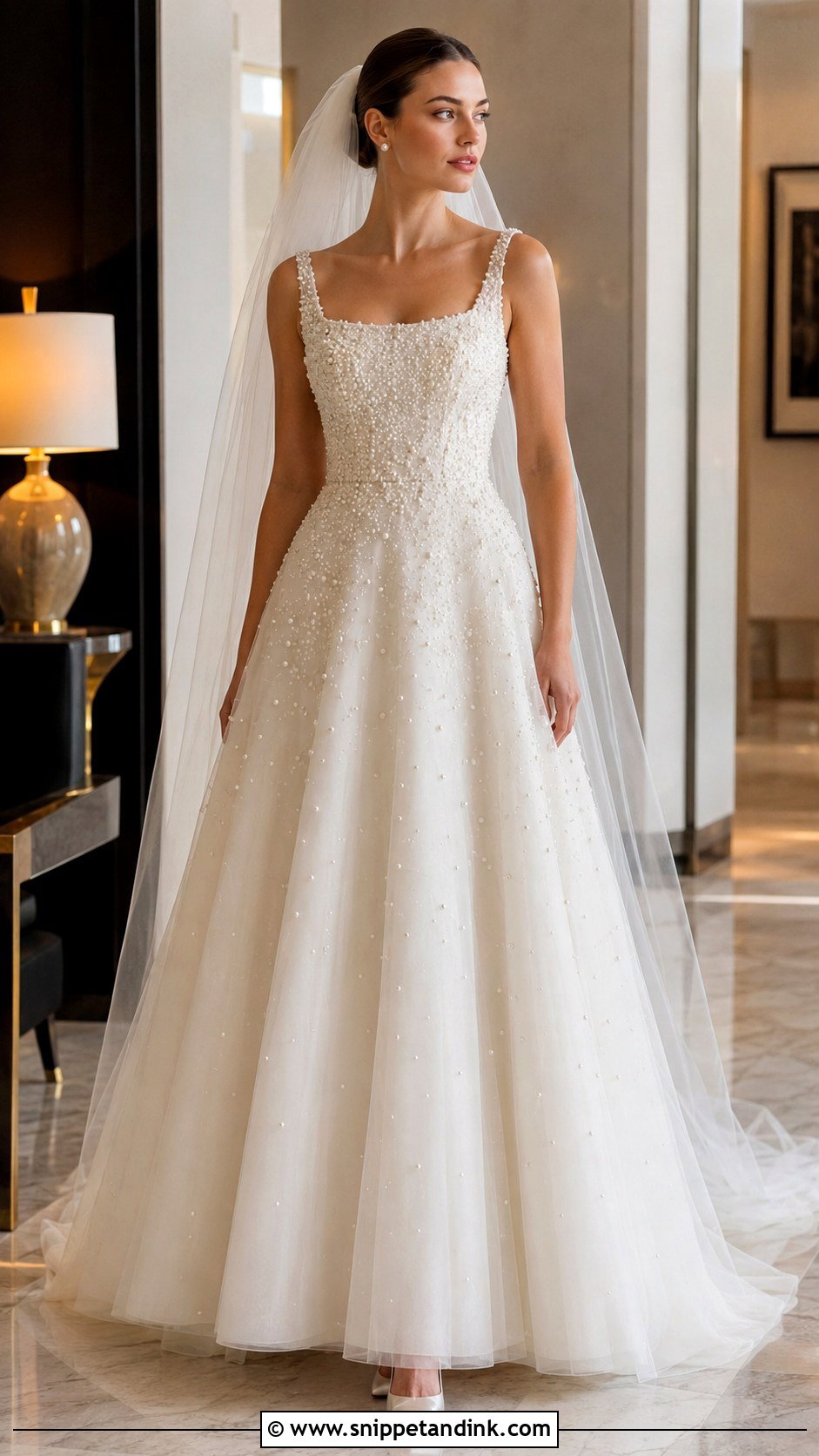
Pearls give soft shine rather than sparkle, and they look best scattered over tulle, satin or lace. Scattered pearls are understated; a concentrated bodice has more impact. A fitted top with an A-line skirt keeps the weight wearable. During fittings I run my fingers under the arms and along the waist, where beading rubs the most, and ask for soft lining wherever thread ends could scratch. Plain satin shoes, pearl studs, a sheer veil with little decoration and a low chignon keep it refined. Evening and hotel venues suit it.
18. Asymmetrical Wedding Dress
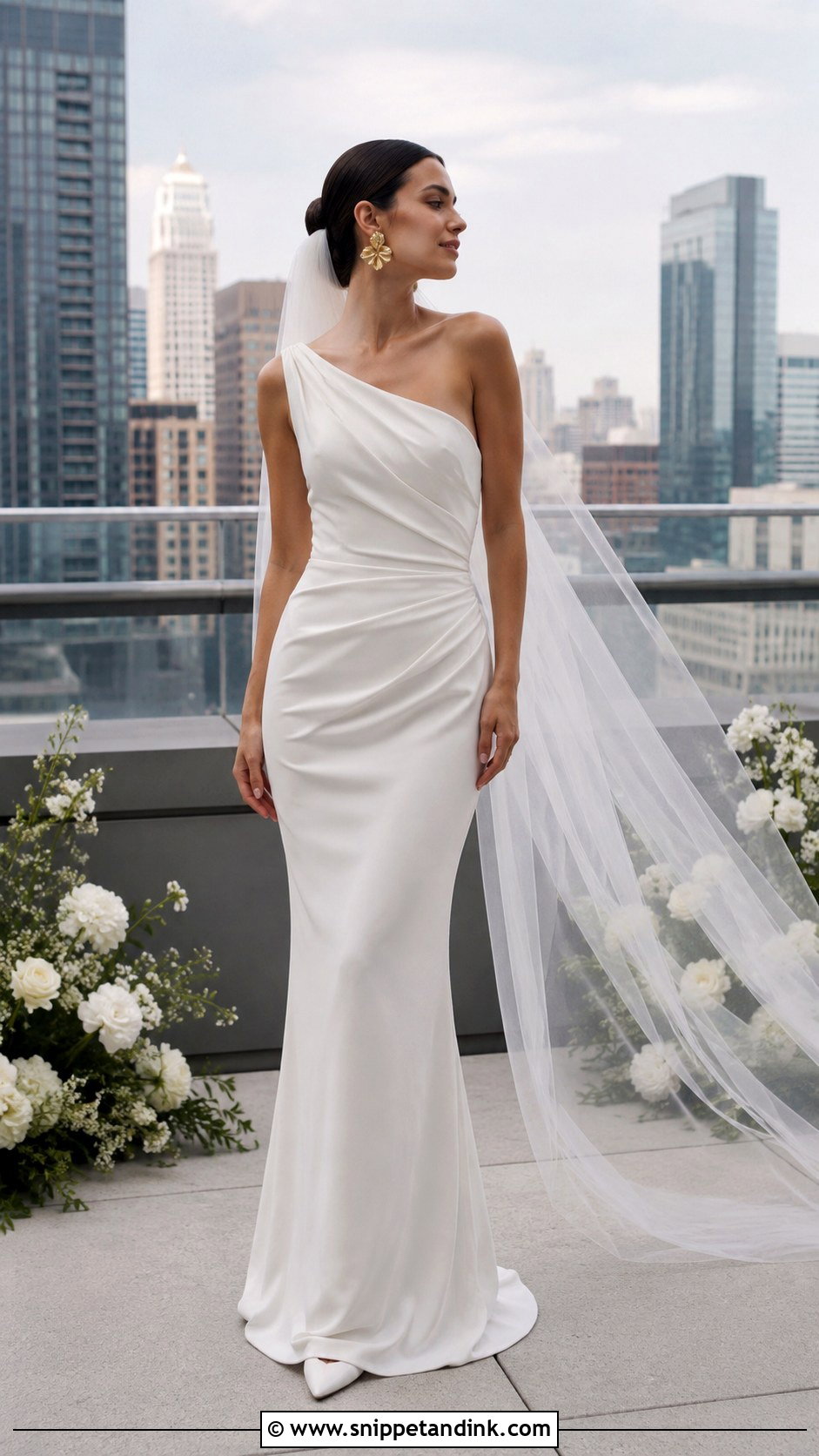
Pick one asymmetric feature and let it lead: an angled neckline, a single shoulder or a diagonal drape. Two of them at once start to look accidental. A fitted crepe column with a shoulder drape is sleek, while gathered chiffon is softer. The fit must keep the neckline secure as you greet guests and dance, and I check that by having the bride hug and reach across a table. Sculptural earrings, simple pumps and a neat bun placed away from the detailed shoulder suit it. Add a plain veil set low, or none at all.
19. Blush Floral Wedding Dress
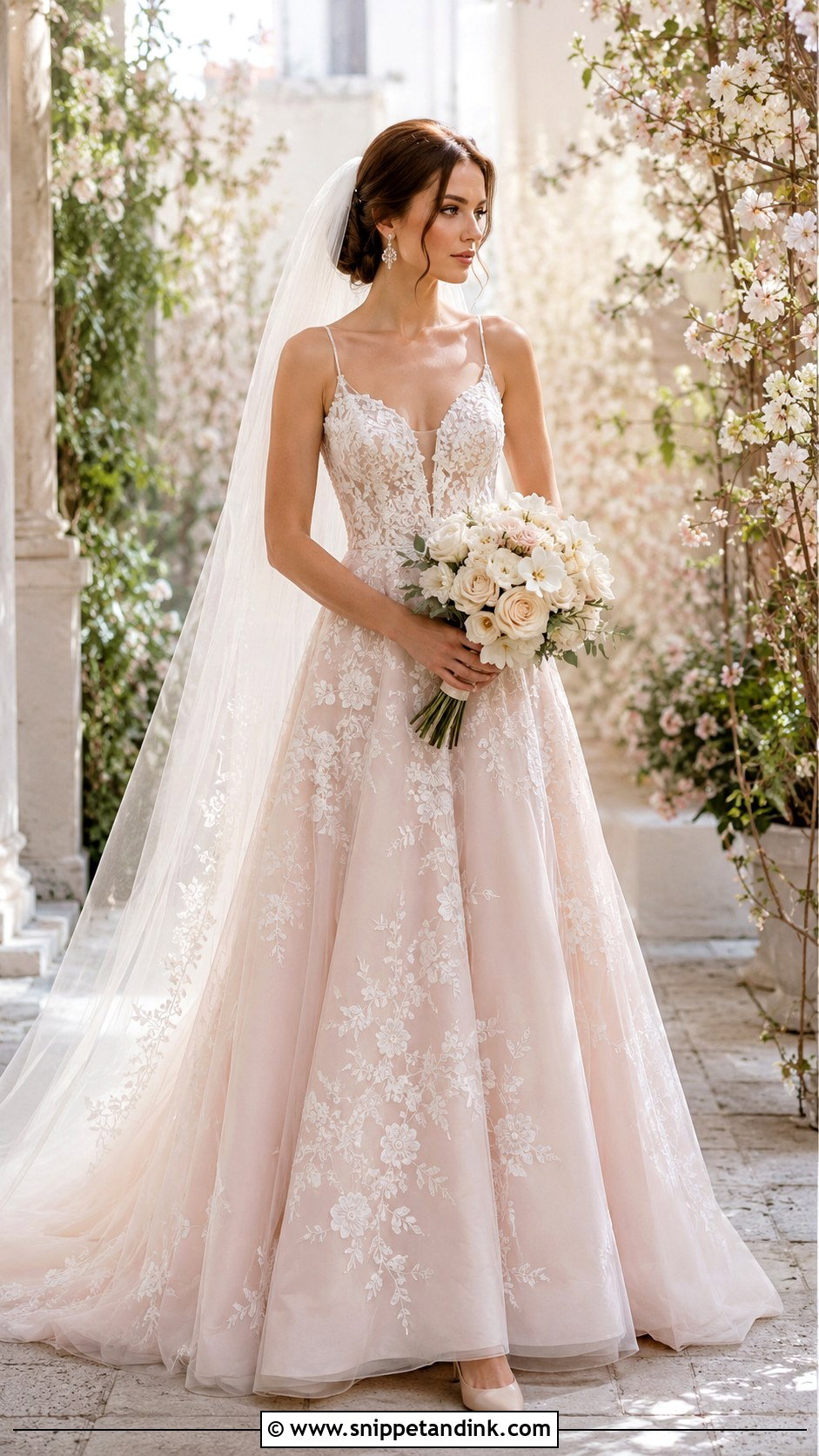
Ivory lace over a blush, champagne or nude lining gives gentle color and makes each motif stand out clearly in photographs. Blush is the tricky part. It can look warmer, cooler or deeper depending on the light, so I always compare swatches against the bride’s skin in daylight before ordering. An A-line with a fitted bodice keeps it romantic. Neutral satin pumps, rose gold earrings and an ivory veil with a clean edge suit it, with a bouquet of cream flowers and only small touches of blush. Spring gardens suit it well.

20. Black Wedding Dress
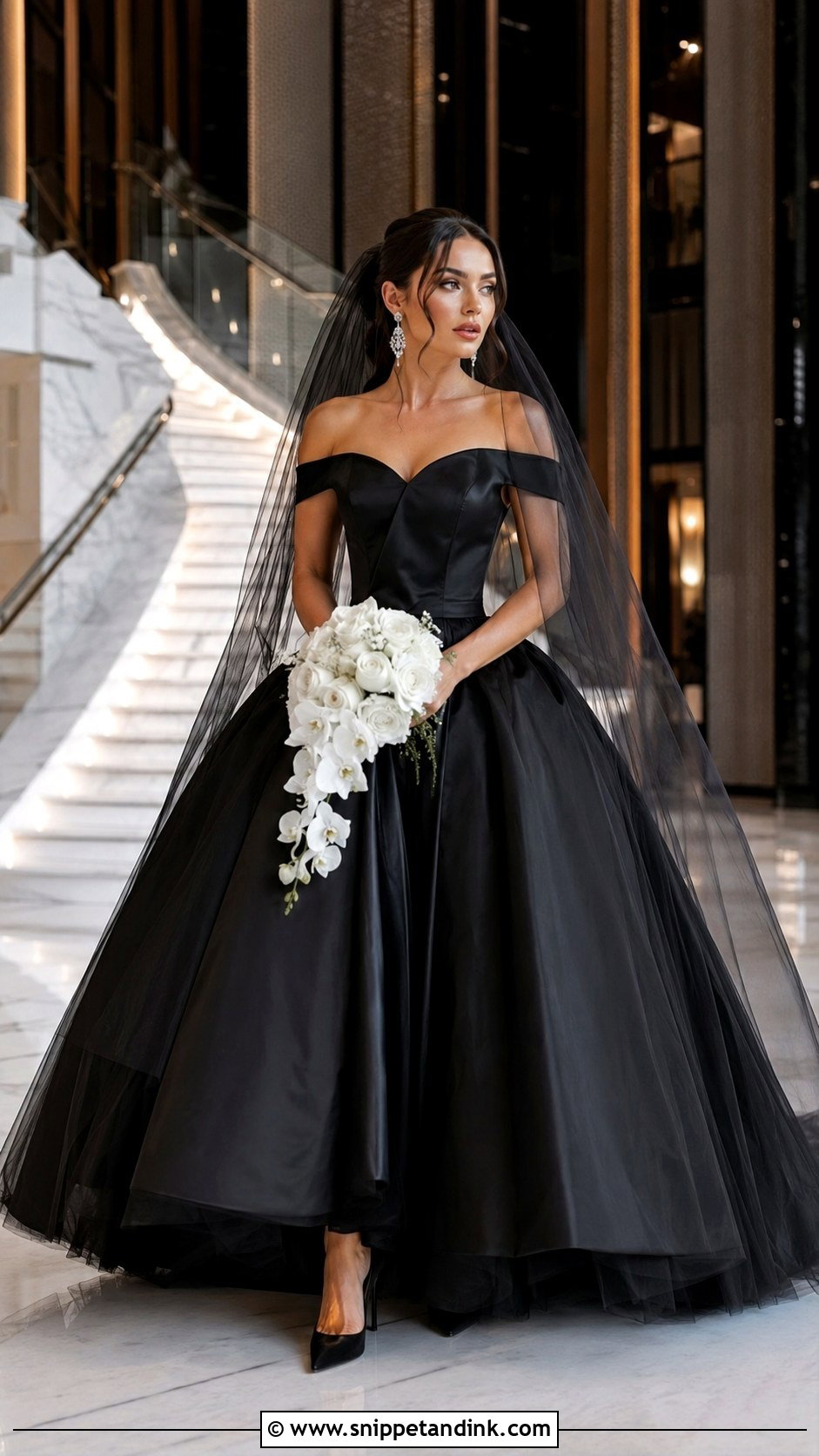
Black looks formal and confident, provided the fabrics are chosen carefully. Satin, tulle, lace and crepe all reflect light differently, and two blacks next to each other can look like two colors under venue lighting, so I check them together in that light. A structured ball gown brings drama, fitted lace adds texture and a crepe column feels modern. Black satin pumps, crystal earrings and a black or smoky-gray veil keep it cohesive, with white flowers for contrast. For a softer option, try charcoal, deep navy or black lace over a lighter lining.
Three Fittings and What Each One Should Settle
Alterations are normally spread over two to three fittings in the last couple of months before the wedding. Each one has a job, and knowing it helps you speak up at the right moment.
First fitting
This is where the big changes happen: taking in the bodice, setting the hem with your wedding shoes on, adjusting straps or sleeves. Bring your shoes and the underwear you will wear on the day. If something already feels wrong, say it now.
Second fitting
Check the work and move. Sit, dance a few steps, raise your arms, hug someone. This is also when the bustle gets planned. Lifted bustles fasten the train up at the back with hooks or buttons; under bustles tuck it beneath itself with ties. Ask which suits your fabric and practice it with whoever will do it on the day.
Final fitting
Close to the wedding, ideally a couple of weeks out, so body changes are minimal. Bring your maid of honor to learn the bustle and any lacing. Then take the dress home, hang it high in its bag and leave it alone until the morning.
The Dress Is Right When You Stop Adjusting It
A wedding gown has to suit you and survive the day you have planned. Start with the silhouettes that make you feel confident, then compare fabric, neckline and detail. Good alterations can transform any dress, whatever it cost. Before you decide, sit, walk, lift your arms and wear it with your actual shoes. Then add accessories that support the dress rather than compete with it. The moment I trust most at a fitting is when a bride stops tugging at the bodice and starts talking about her wedding. That dress lets you be present all day.
You'll Like These Ideas:






Leave a Reply