
A neckline on its own tells you very little. You only know whether a gown works once you see the shape, the fabric, the shoes and the veil together on your body. That’s how I’ve laid out these twenty designs: each is a complete look with the accessories I’d pair, plus the fitting detail I’d check for that particular cut. They range from a full satin ball gown to a crepe sheath, a crochet lace boho dress and a short reception mini. Treat each as a base. Necklines, sleeves, trains and fabric can almost always be adjusted, so look for the silhouette first and personalize the rest.
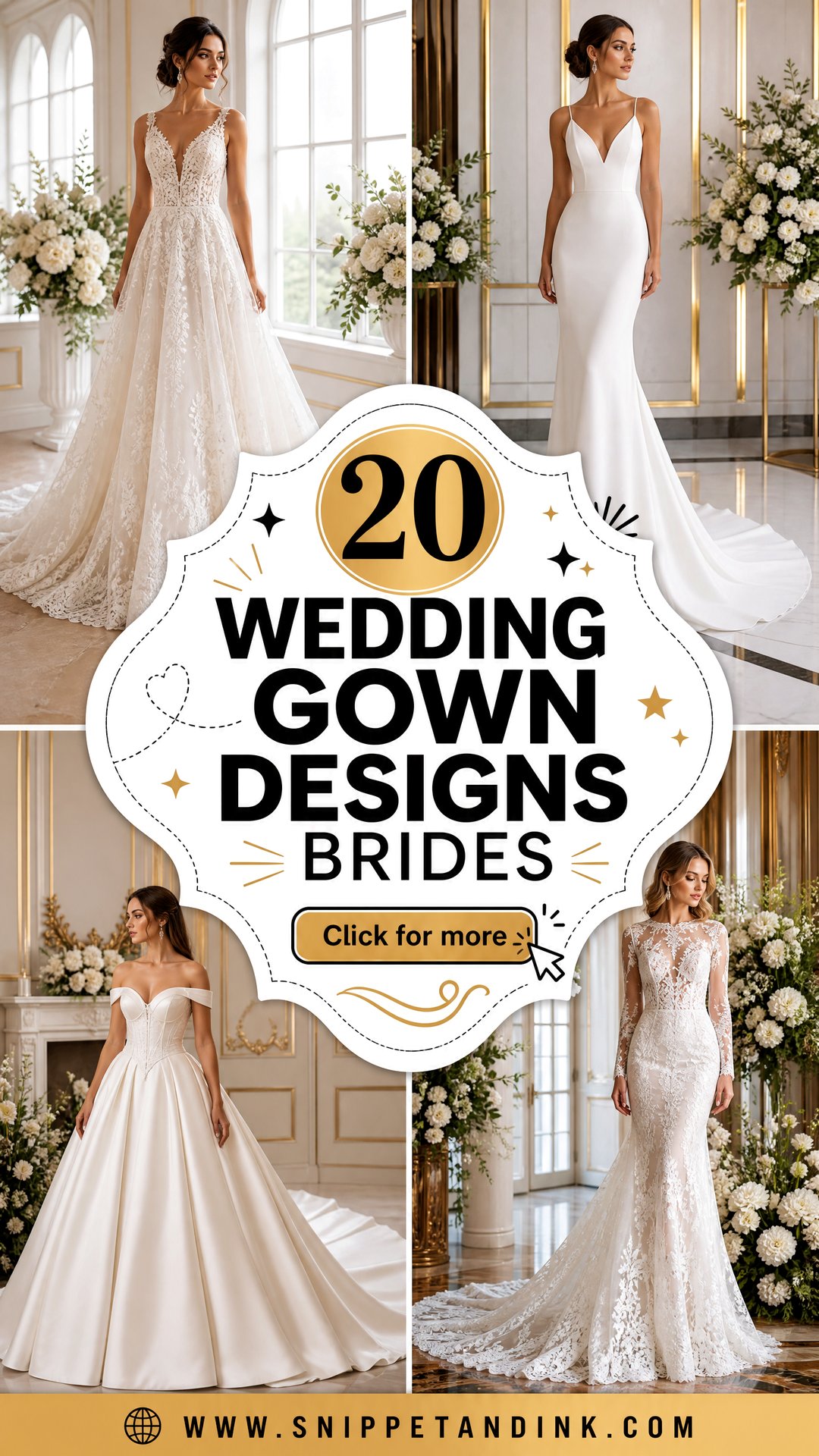
Try Every Skirt Shape Once, Then Worry About Necklines
At a first appointment I ask brides to try one gown from each main family, even shapes they’re sure they’ll hate. The skirt shape decides how you move, sit and look from a distance; the neckline can usually be altered later, but a mermaid can’t be turned into an A-line.
- A-line: fitted at the bodice, gradually wider from the waist. The easiest to walk in and the most adaptable.
- Ball gown: full skirt from a defined waist. Heaviest to wear, biggest entrance.
- Mermaid or trumpet: fitted to the knee or thigh, then flared. Dramatic, but limits stride.
- Sheath or column: follows the body with little volume. Shows every fitting detail.
- Empire: seam under the bust, loose skirt. The coolest option for heat.
Once you know which family you move well in, the twenty looks below become far easier to sort. Most brides cross half of them off within ten minutes of trying the five shapes, and that’s exactly the point.
1. Lace A-Line Wedding Gown
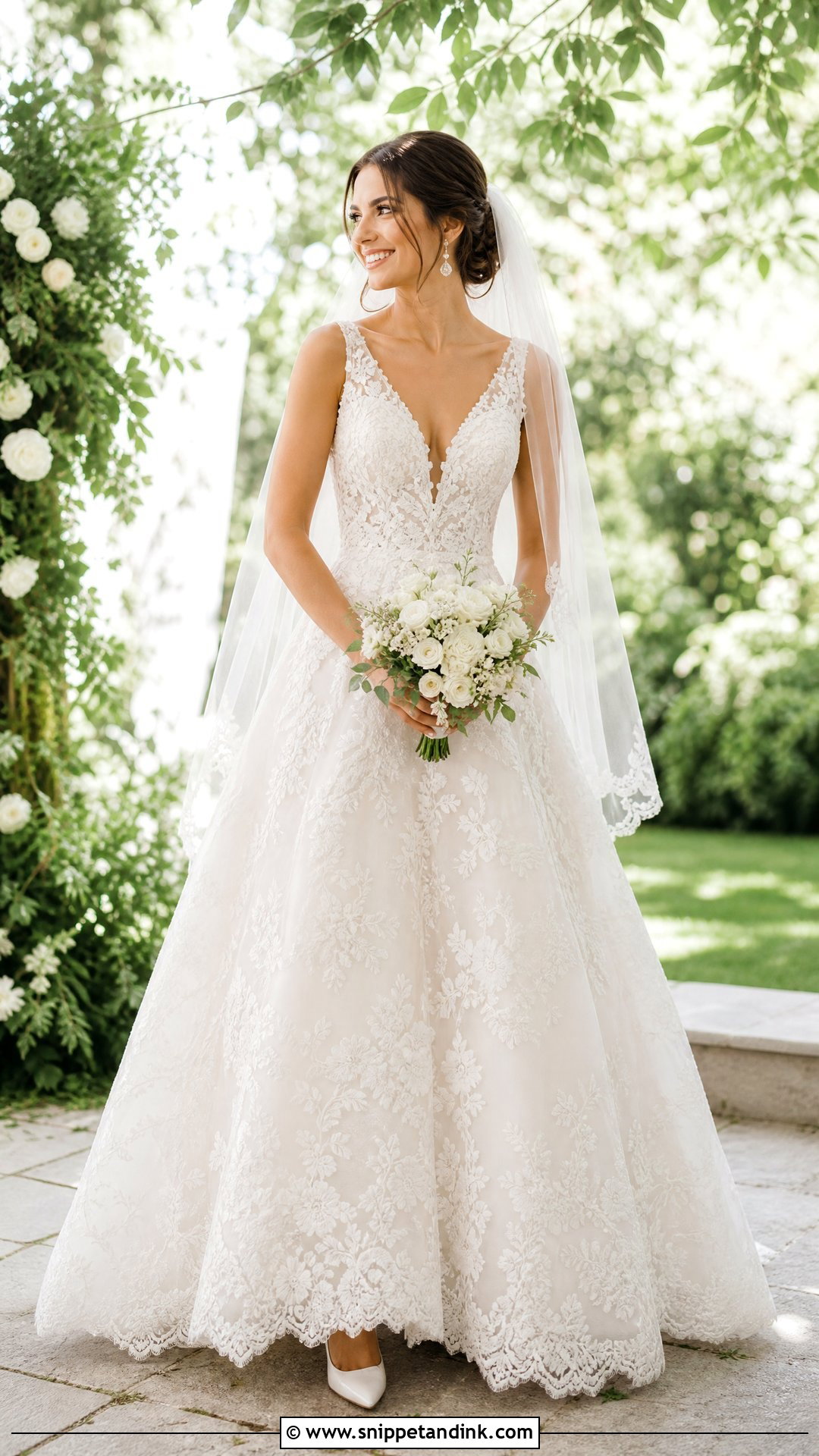
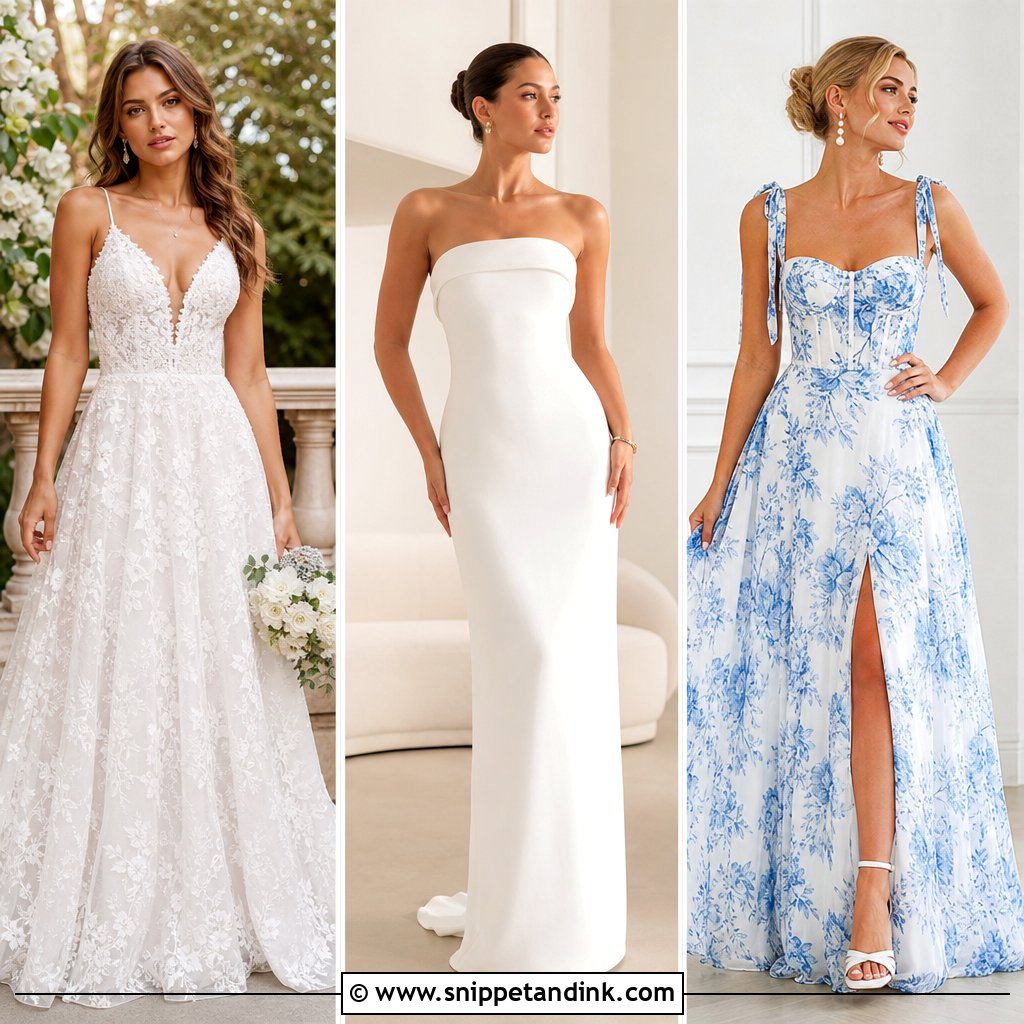
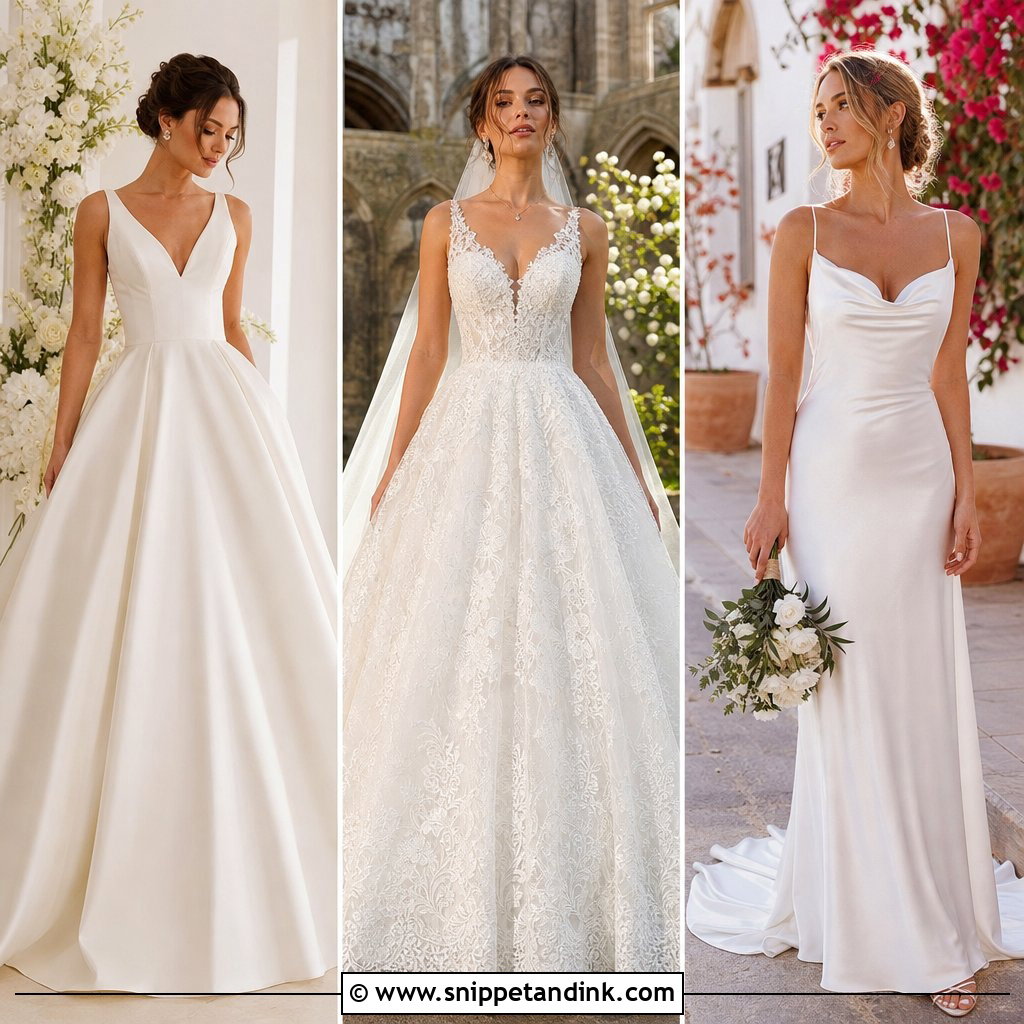
Of all the shapes here, the lace A-line is the one I see suit the widest range of brides, and it’s easy to walk in. The fitted bodice defines the upper body while the skirt widens gradually from the waist. Floral lace over a soft ivory lining shows the pattern clearly; a V-neckline lengthens a short torso, and wider straps carry a fuller bust. Pearl drops, a fingertip veil and pointed satin pumps are enough, with a small bouquet so the lace isn’t hidden. Garden and traditional venues suit it well. Have the hem pinned while you’re wearing your wedding shoes, never in borrowed fitting-room heels.
2. Satin Ball Gown Wedding Gown
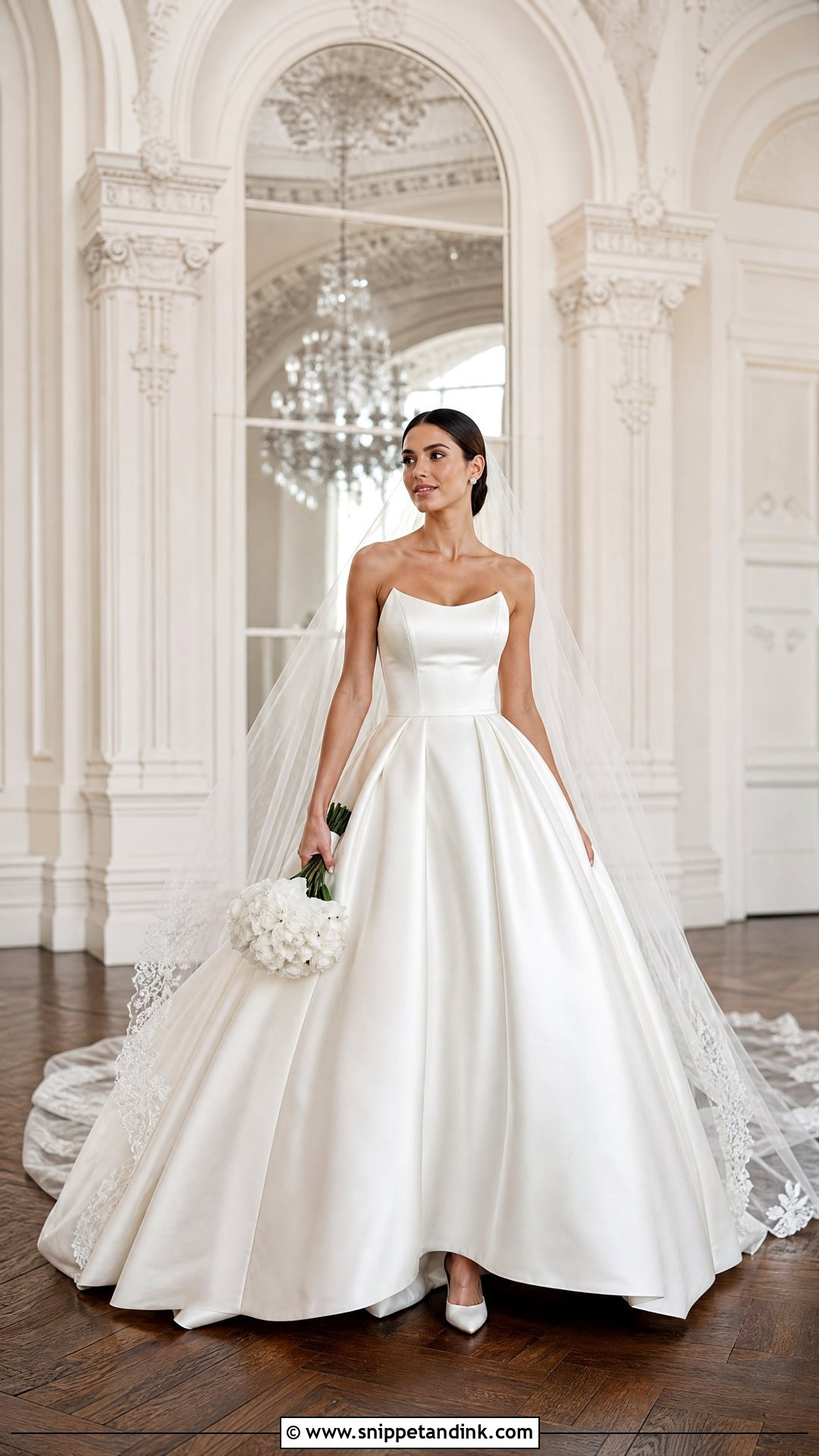
Nothing makes an entrance like a structured satin ball gown. Mikado or duchess-style satin holds the skirt’s volume without a mountain of petticoats, which makes the gown lighter than it looks. Crystal studs, a neat bun, satin heels and a cathedral veil keep the accessories in proportion, and a natural or pointed Basque waist adds definition. Ballrooms and hotels give it room. The part brides forget is the bustle. A skirt this full can have a long train, so ask how many bustle points it needs and practice them before the day.
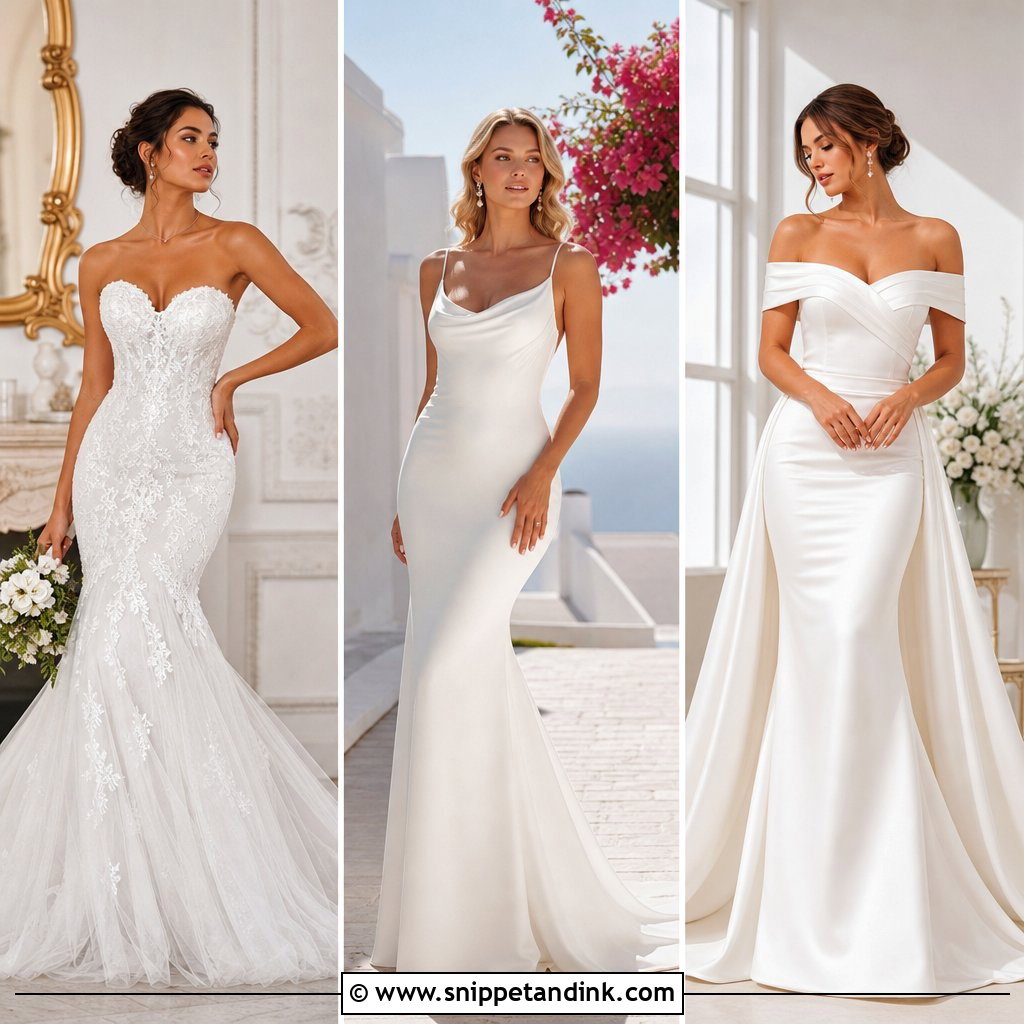
3. Corset Mermaid Wedding Gown
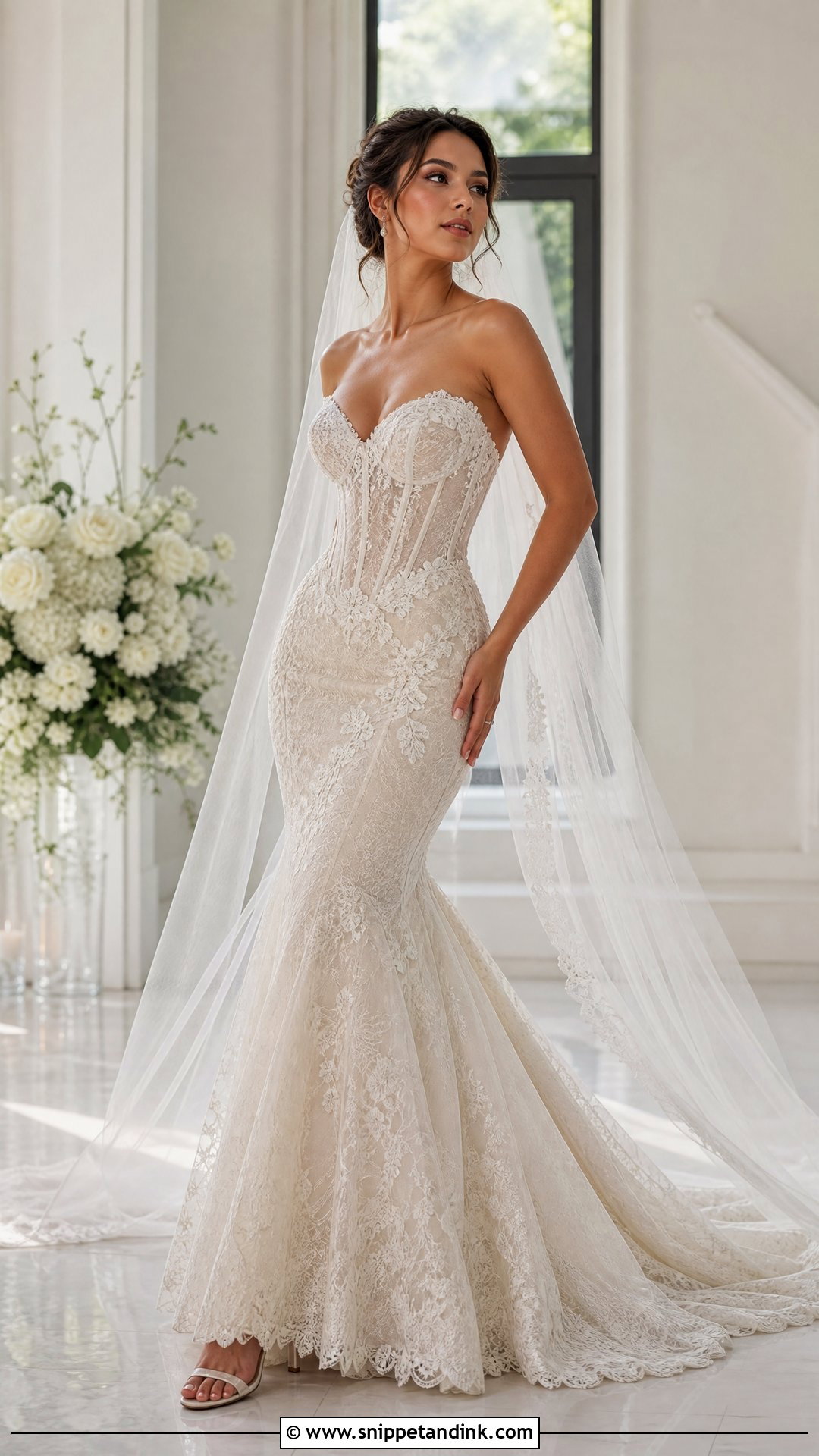
Here the problem is mobility, not looks. A corset mermaid follows the body to the knee before flaring, and if that flare starts too high you’ll shuffle all night. The structured bodice gives support, while visible boning adds a couture detail; tulle or lace reads romantic and fitted crepe reads minimal. Sleek waves, delicate earrings, a simple veil and heels you can walk confidently in are all it needs. At alterations, sit, climb a step and take a full stride. Lowering the flare point slightly usually buys you movement without losing the shape.
4. Minimal Crepe Sheath Wedding Gown
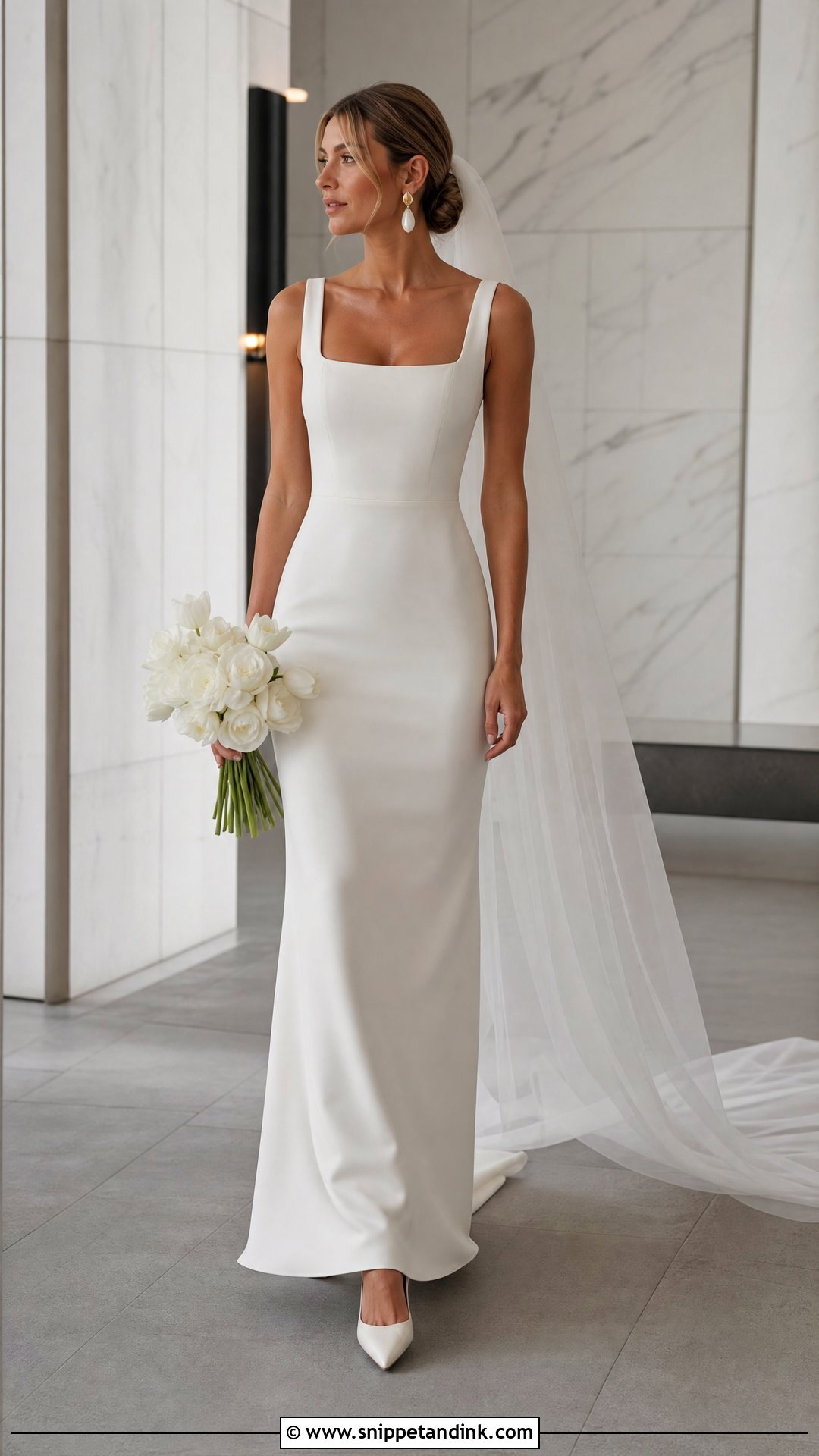
Crepe is honest fabric. It falls close to the body with no volume to hide behind, so a sheath in it looks sharp in a city wedding and shows every line underneath. A square, bateau or draped neckline adds just enough interest. Sculptural earrings, pointed pumps and a smooth low bun suit it, with a long veil for drama or a short one for a modern finish. Check it in daylight with your actual undergarments on, and expect the tailor to spend the most time on the waist, hips and hem.
5. Off-Shoulder Basque Waist Wedding Gown
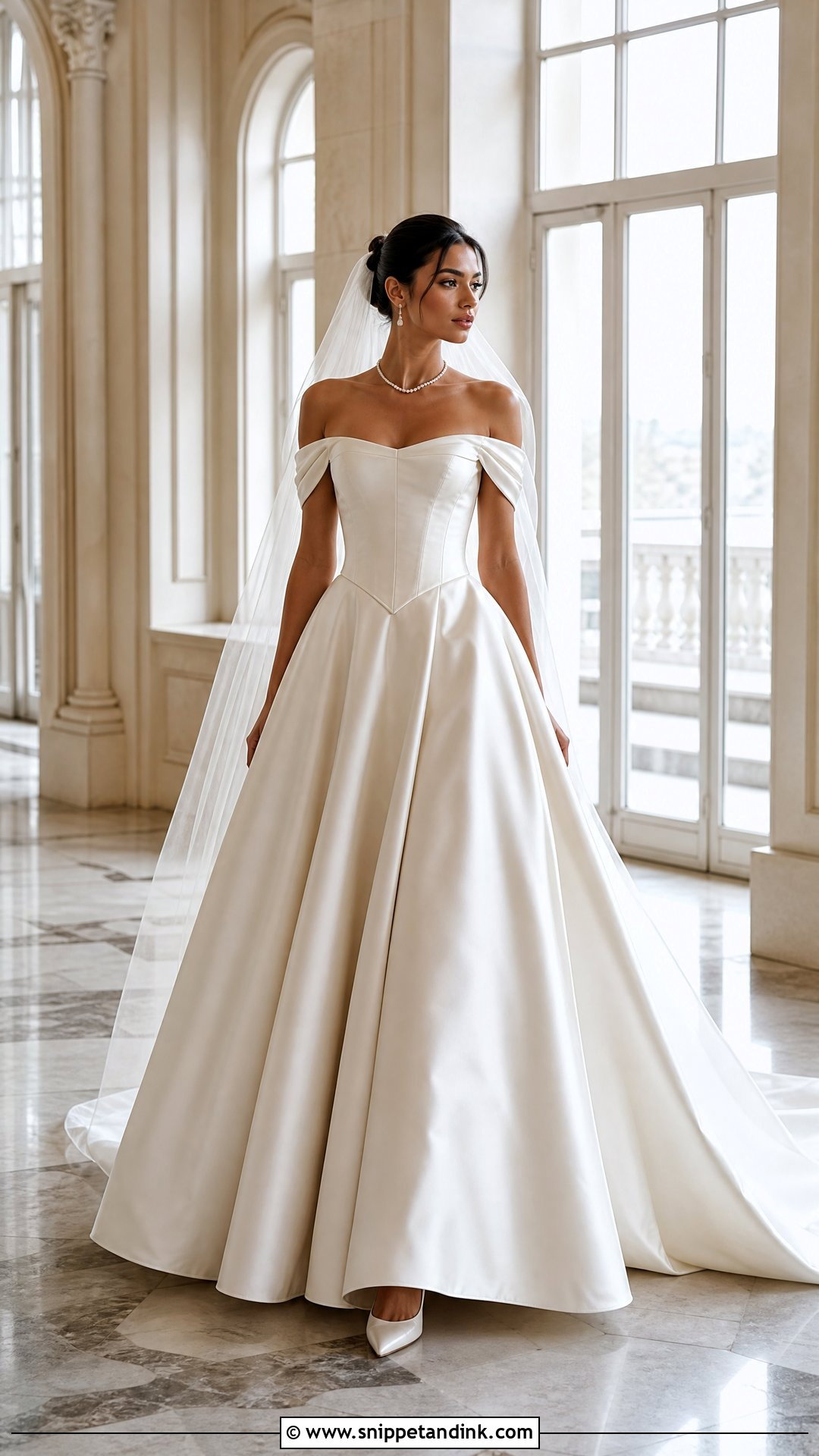
An off-shoulder basque waist wedding gown pairs a romantic neckline with a waist that dips into a V before meeting the skirt. That V draws the eye to the center and lengthens the torso. A short pearl necklace, drop earrings, a gathered veil and closed-toe heels suit it, and an updo or half-up style keeps the shoulders clear. Off-shoulder bands rely on the bodice beneath them, so I look for proper internal boning and cups. Raise your arms at every fitting. If the bands creep up, they need anchoring, not tightening. Satin, brocade or structured silk give the waistline the crispness it needs.
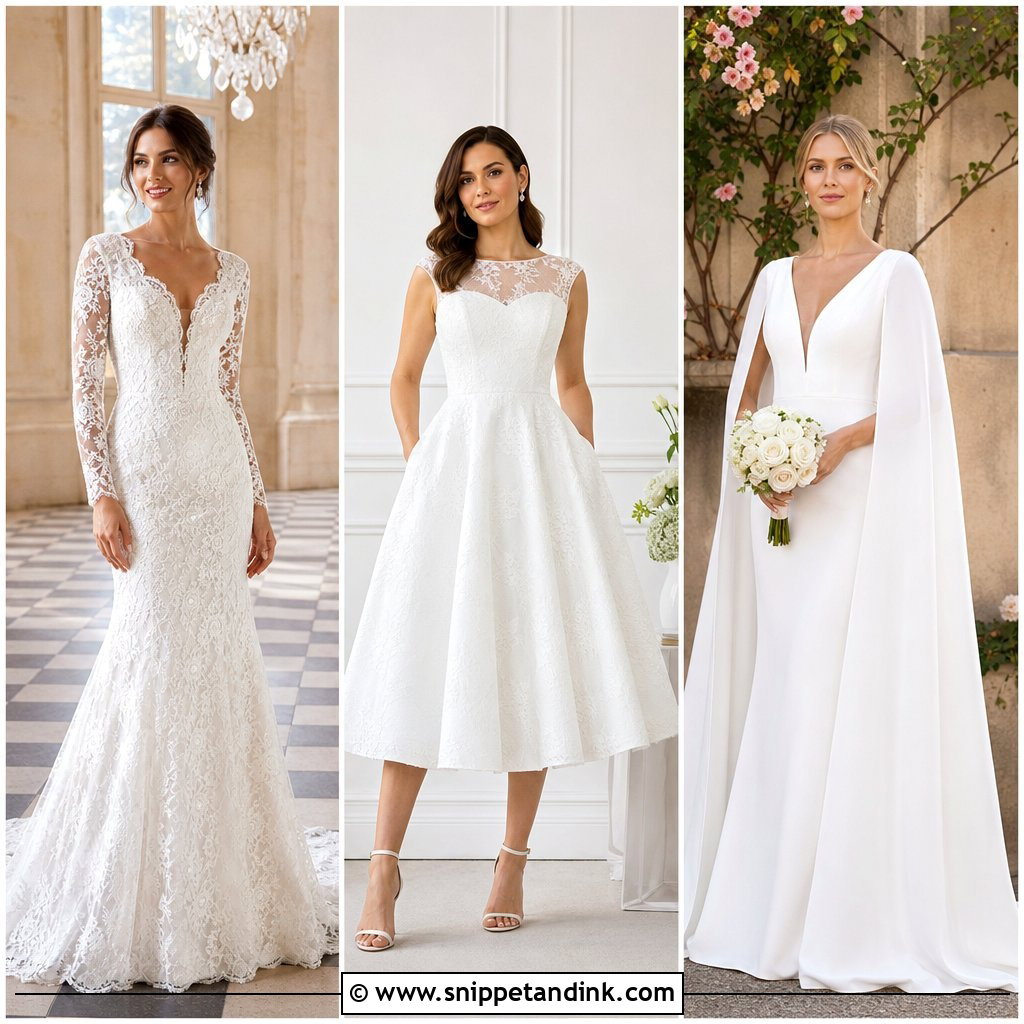
6. Long-Sleeve Lace Wedding Gown
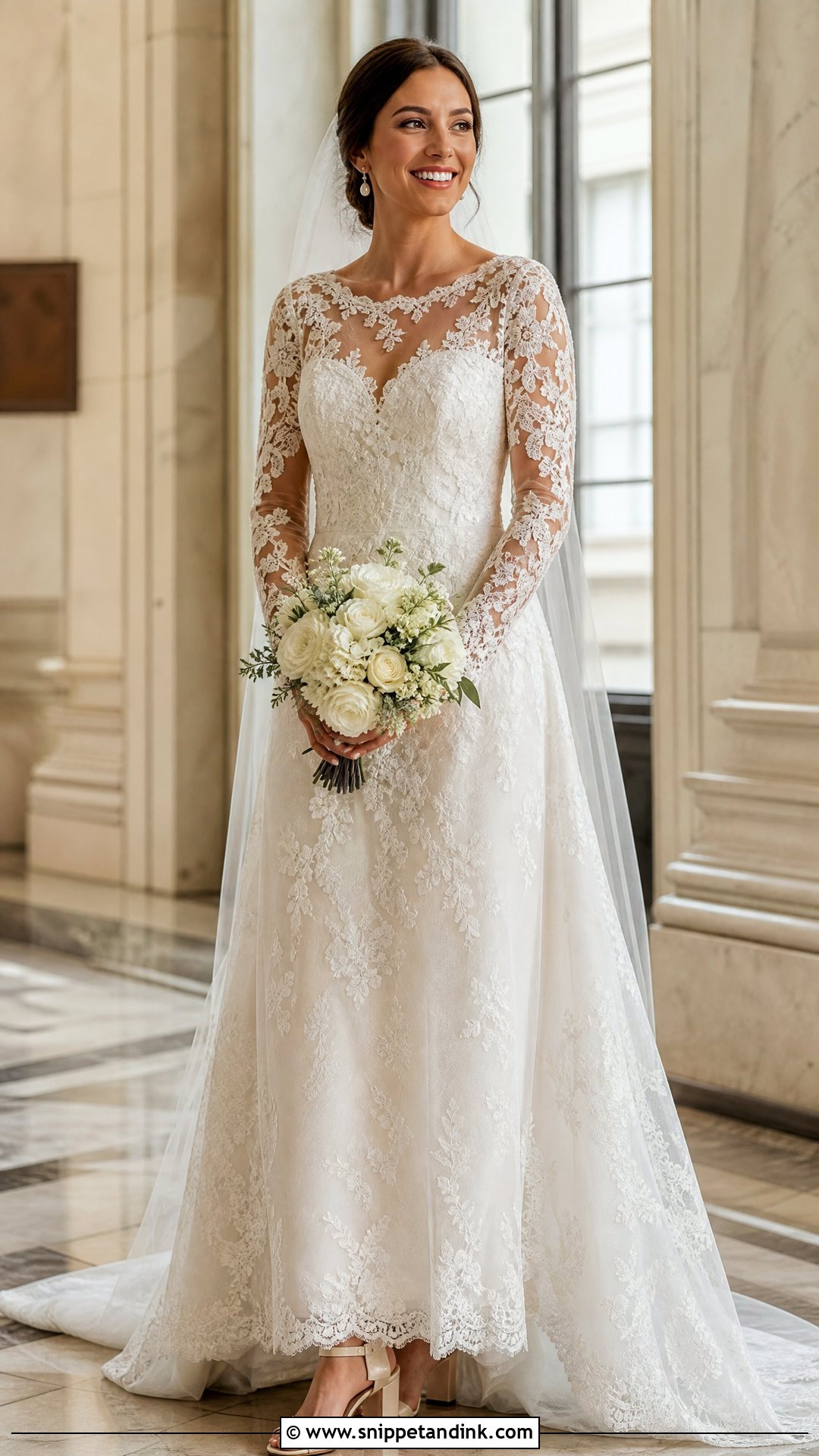
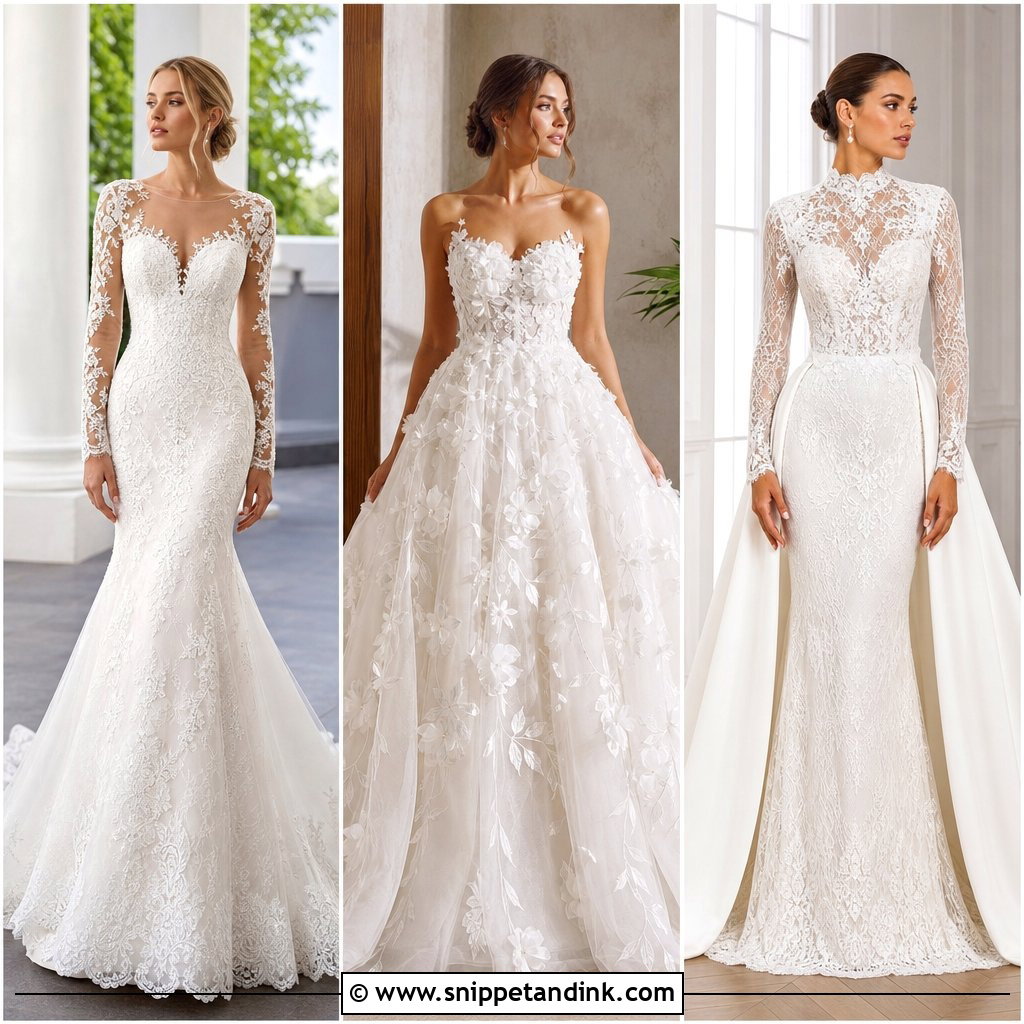
Lace sleeves come in two kinds. Illusion-lined sleeves let the lace float on sheer mesh and feel lighter, while fully lined ones give more coverage and warmth for cooler months. An A-line skirt keeps it soft; a fitted skirt sharpens it. Pearl earrings, a simple comb veil and ivory block heels complete it, with a restrained bouquet that doesn’t compete with the lace pattern. Small buttons at the wrist make dressing easier, and you’ll appreciate them when you wash your hands at the reception. Before you commit, hug someone hard and raise both arms. Sleeves that bind there will bind all evening.
7. Square-Neck A-Line Wedding Gown
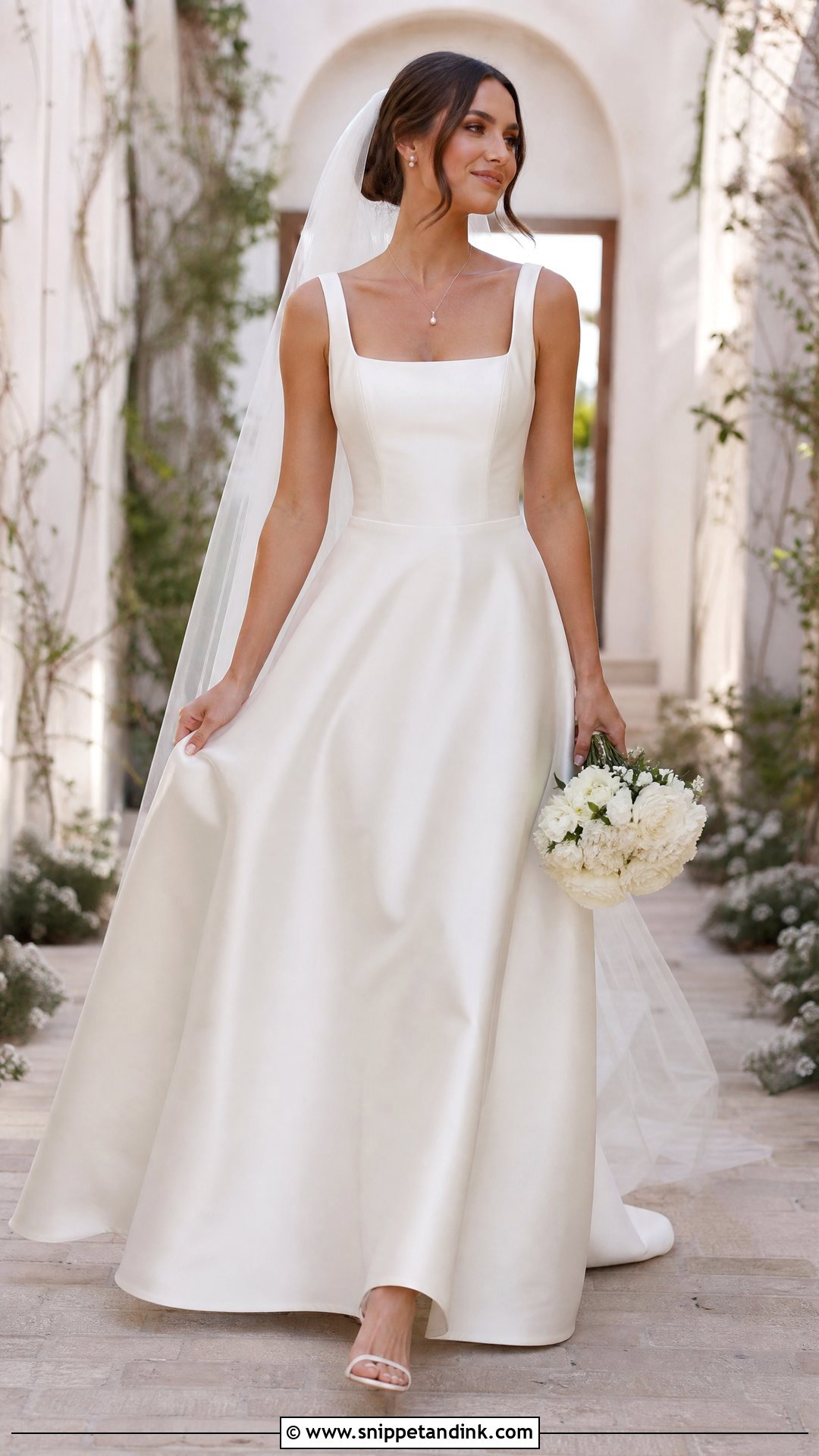
On a square neck, the corners must sit level and flat. If they gape or tilt even slightly, the clean geometry turns sloppy, and it’s a quick fix for a seamstress if you catch it early. The fitted bodice and widening A-line skirt are classic; wide straps hide a supportive bra or built-in cups. Smooth satin keeps it minimal, while floral jacquard adds texture without lace. A delicate pendant, pearl studs, low heels and a chapel veil suit it, and soft waves stop the neckline from looking severe.
8. Halter-Neck Wedding Gown
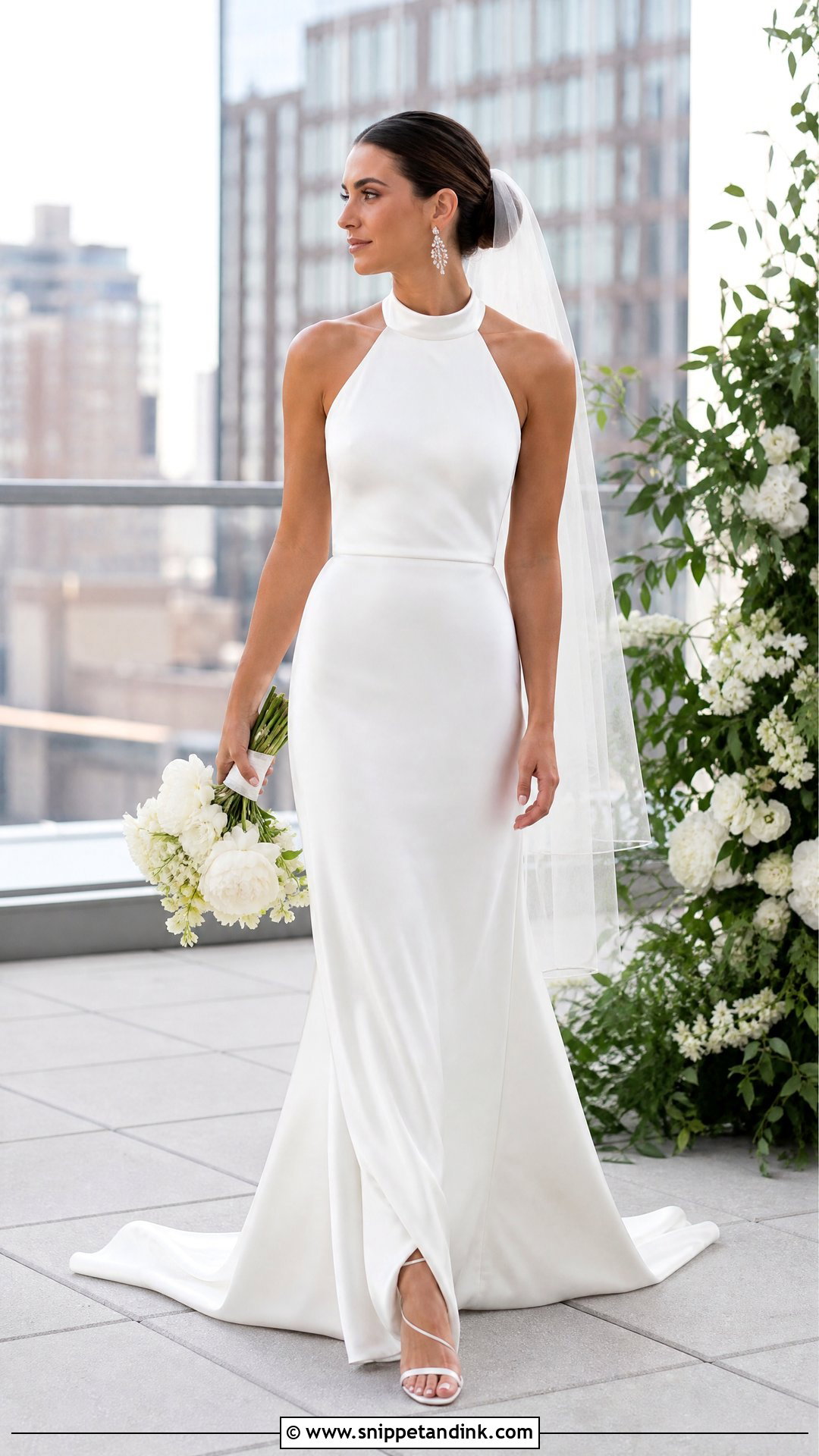
A halter draws attention to the shoulders and needs very little else. The neckline can be gathered, tailored or finished as a high collar, over a fluid satin skirt or a fitted crepe silhouette. Skip the necklace and wear statement earrings, a polished updo and strappy heels, with a simple veil fixed below the hair so the back stays clear. The weak points are the back of the neck and the underarms, where a halter strap can rub after a few hours. Wear it for a full hour at an appointment if the shop allows. Rooftops and coastal venues suit its clean lines.
9. High-Neck Wedding Gown
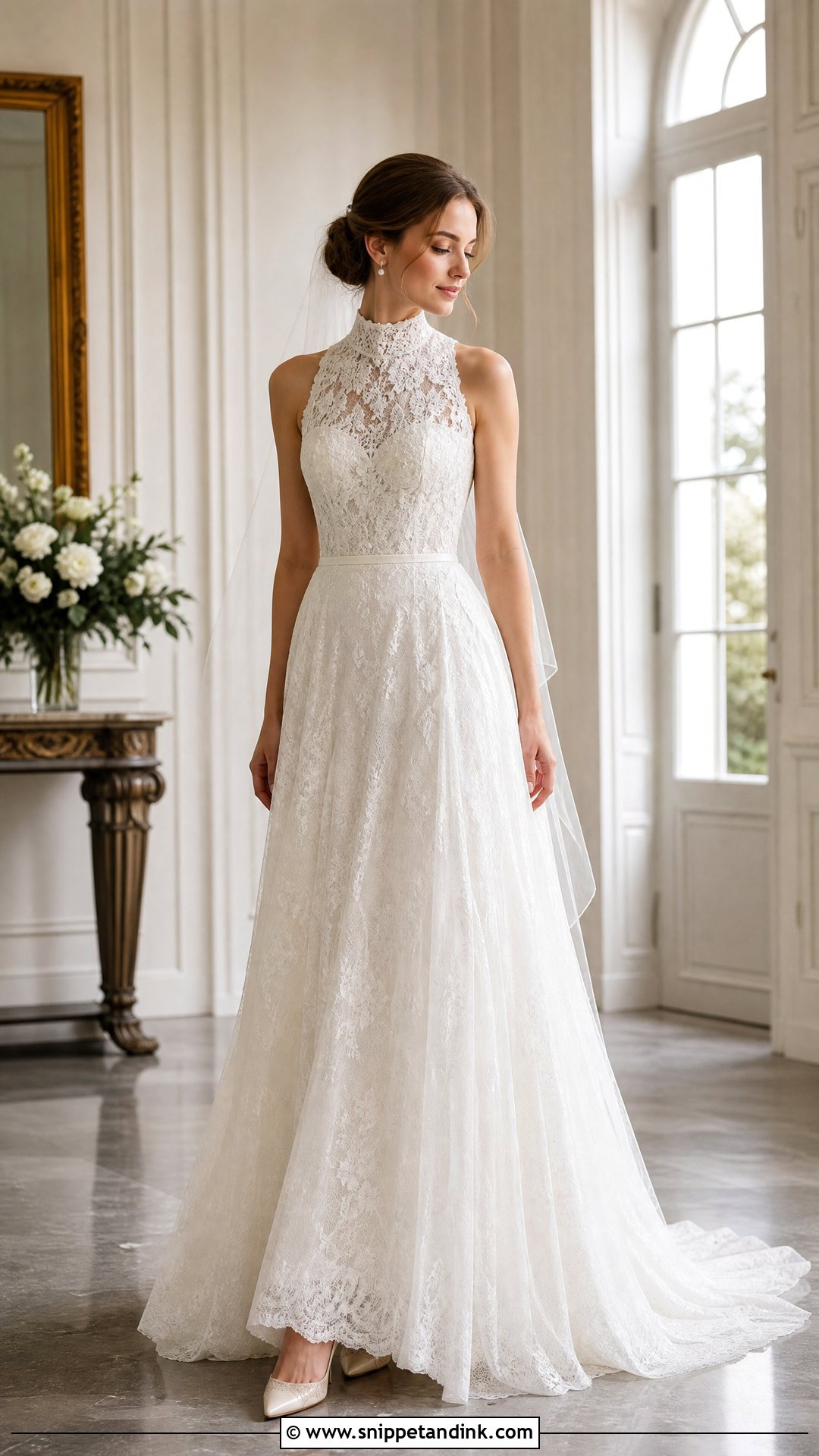
A high neck frames the face so well that it does the work of jewelry. Lace gives a vintage effect; smooth satin or crepe looks sharper and more contemporary. Balance the covered bodice with a defined waist and an A-line, column or softly flowing skirt, and add a low bun, small earrings, pointed heels and a light veil set behind the head. Turn your head fully during fittings. A collar that presses on the throat is distracting in every vow photo. A keyhole back or sheer yoke keeps the coverage from feeling heavy.
10. Drop-Waist Wedding Gown
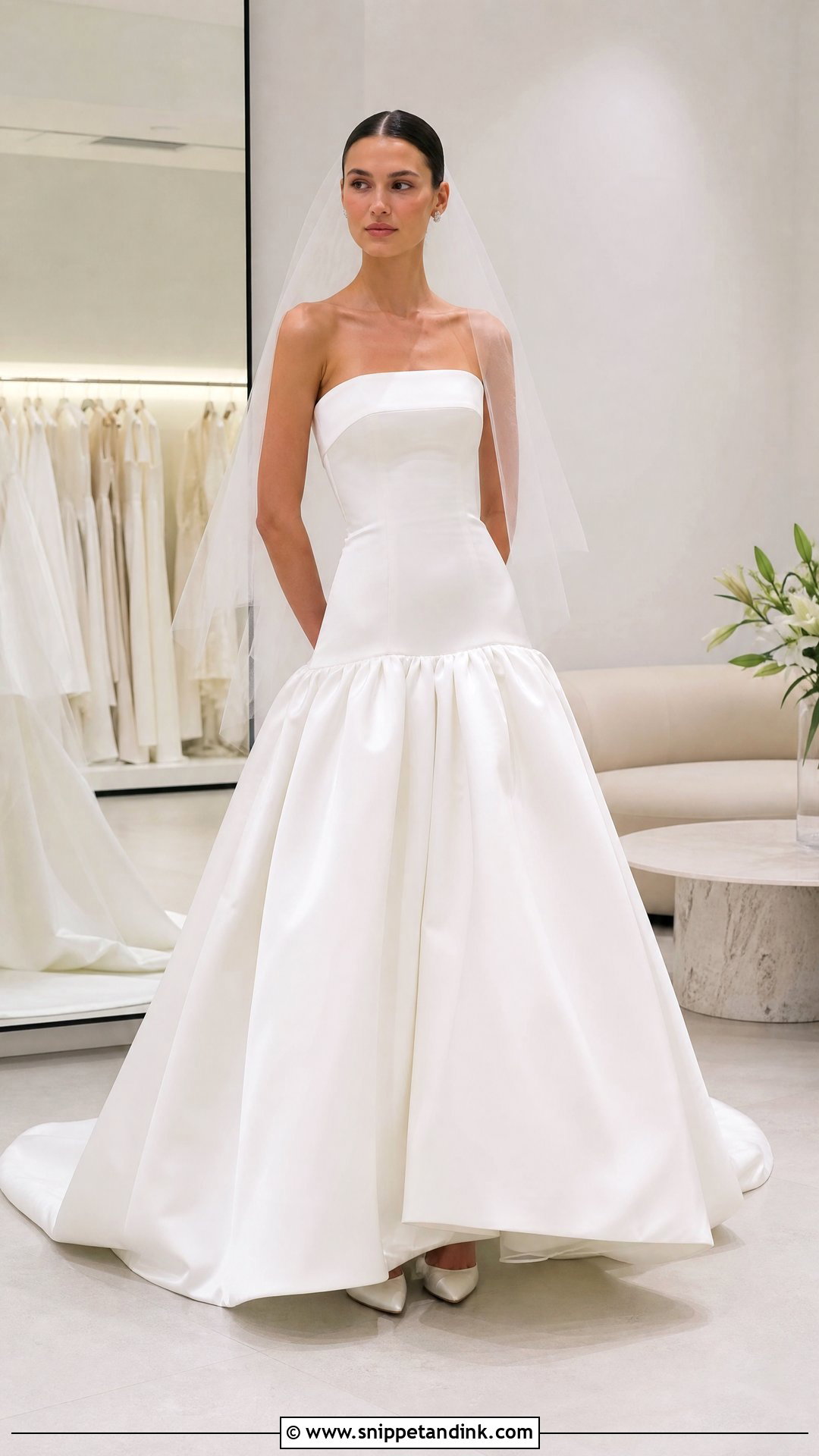
The drop waist lowers the seam below the natural waist, so the bodice reads long and structured before the skirt opens. Satin and taffeta hold the line crisply; softer fabrics blur the transition. A short veil, crystal studs, sleek hair and low satin pumps keep it clean, and I’d leave belts off entirely so the seam stays visible. Where the drop lands is the whole design. Too low and it digs into the hips when you sit, so I always have a bride sit before the tailor finalizes it.
11. Empire-Waist Chiffon Wedding Gown
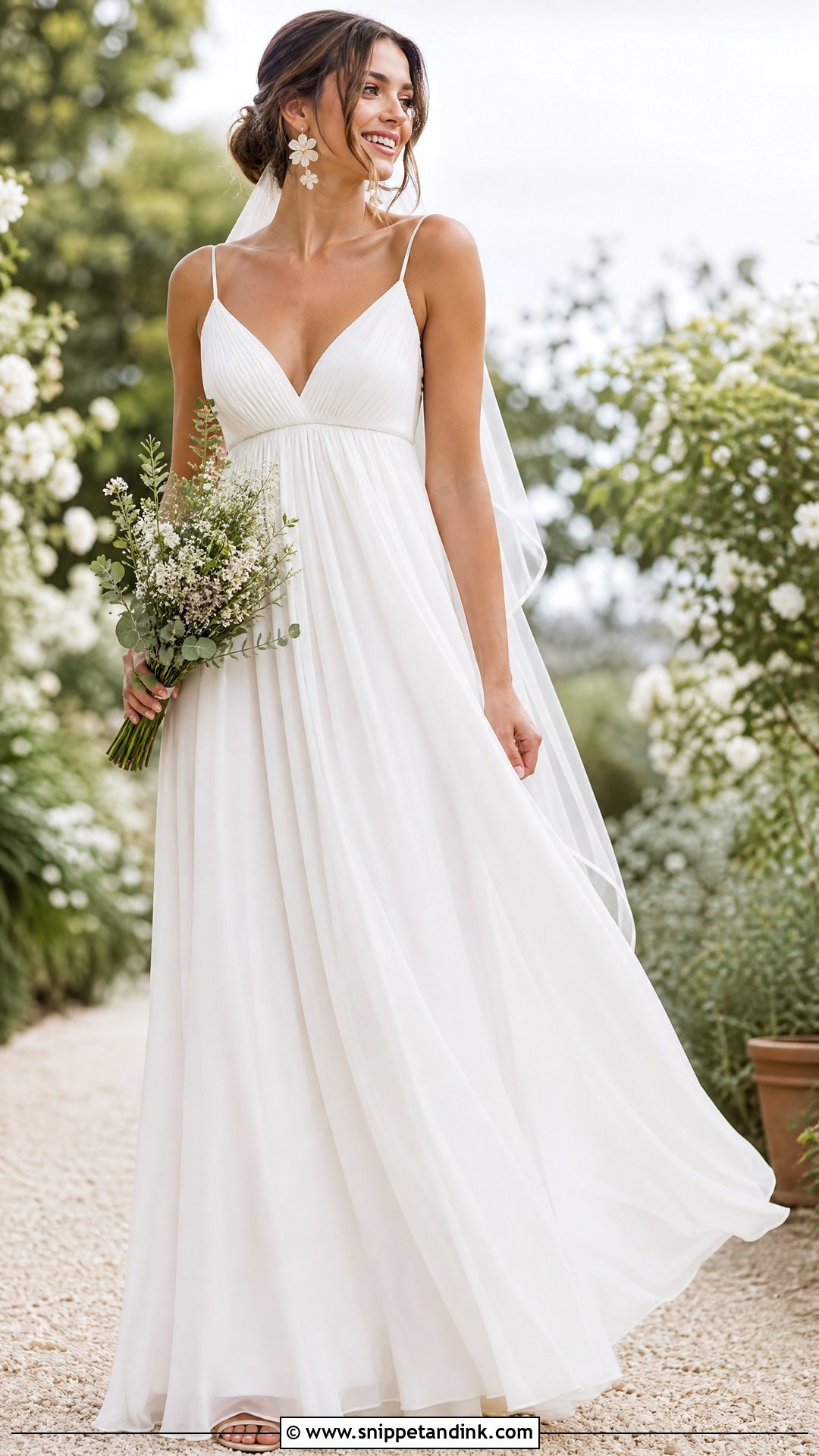
Empire waists sit just under the bust and let the skirt fall loose, which is why they’re one of my first suggestions for heat, sand and long outdoor days. Chiffon moves with every breath of wind. A pleated bodice, flutter sleeves or thin straps suit the airy fabric, with soft curls, botanical earrings, low sandals and a narrow chapel veil. In bright sun, single-layer chiffon can turn see-through, so ask for a breathable but opaque lining and check it outdoors. Keep the hem just skimming the ground for grass or sand.
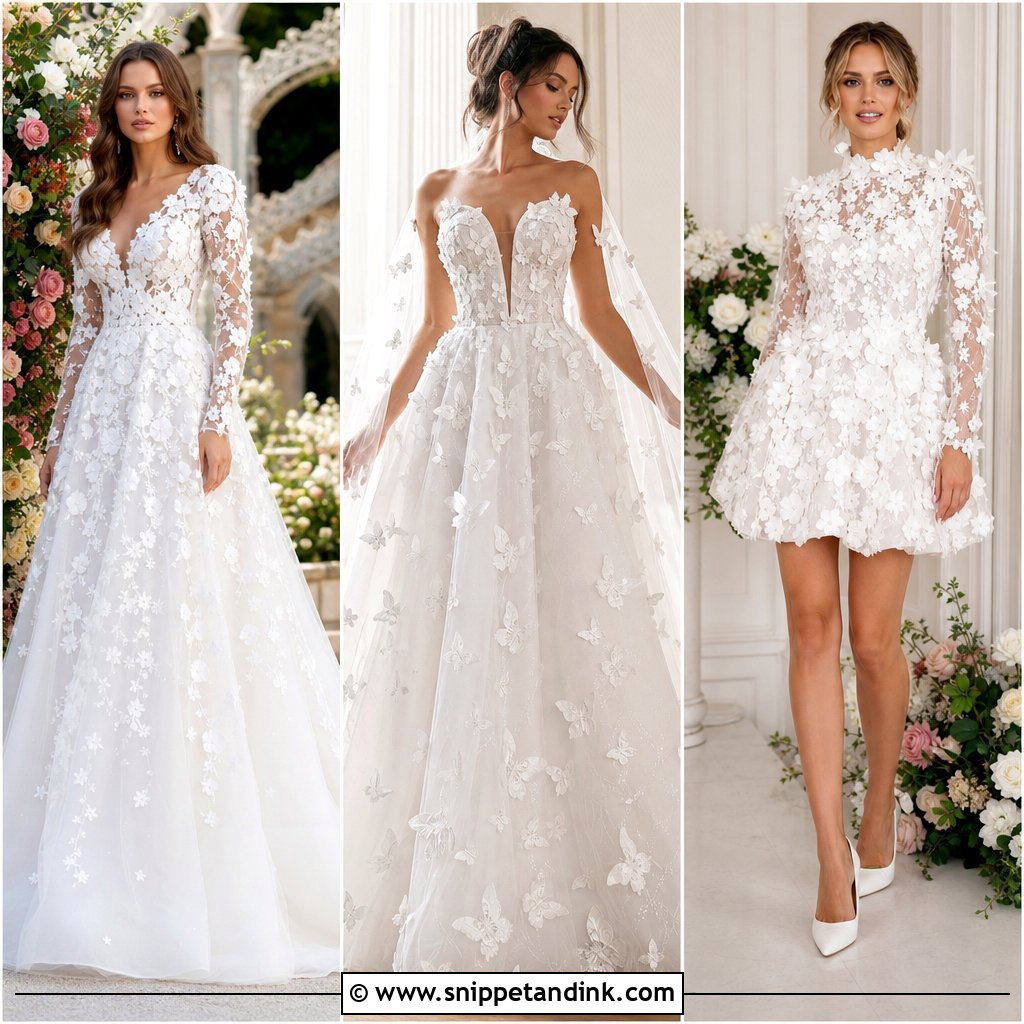
12. Floral Appliqué Wedding Gown
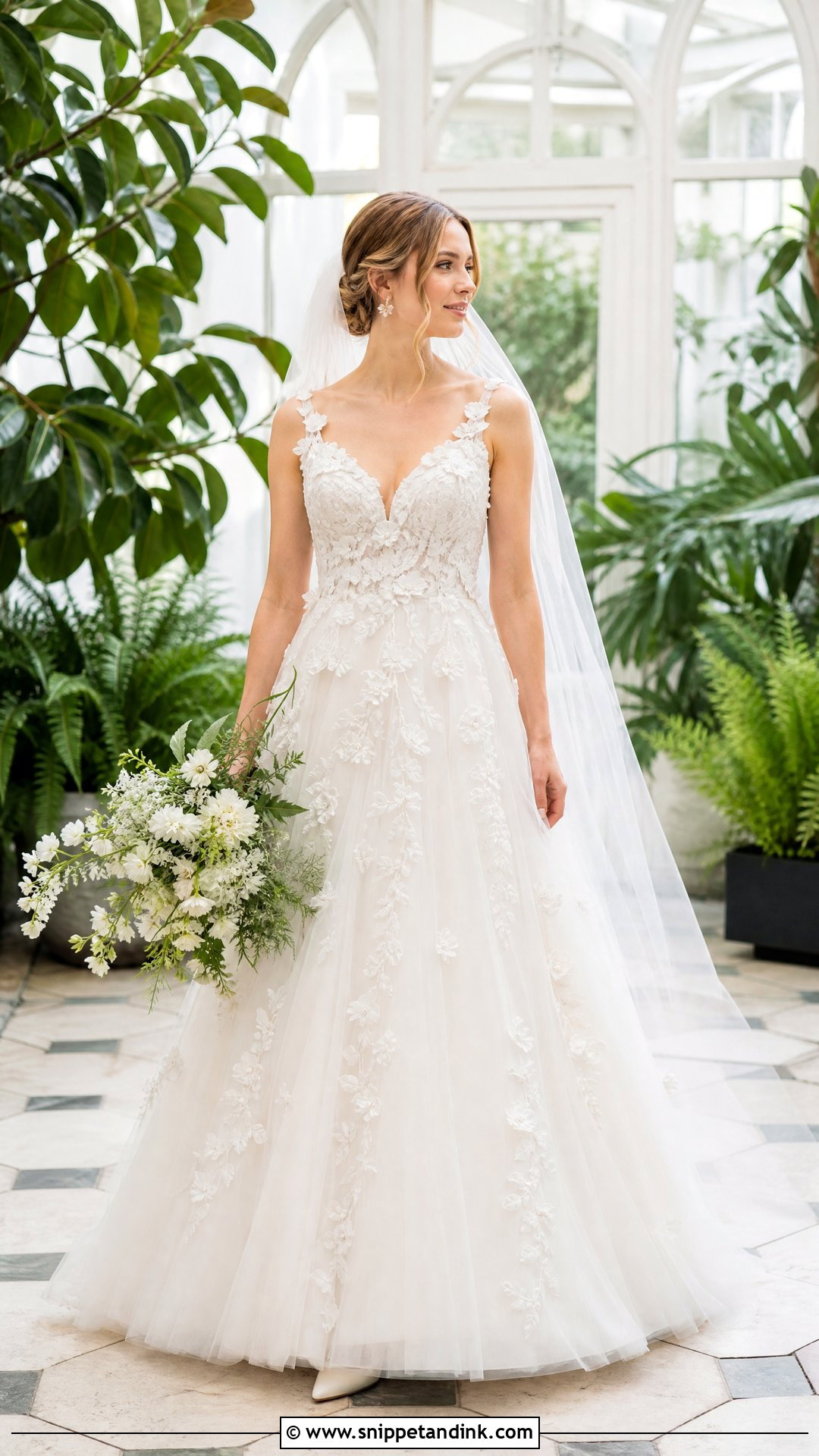
Dimensional flowers can cover the whole gown or sit only on the bodice, waist and skirt, and a soft A-line base lets them show. A plain tulle veil, floral studs, simple ivory shoes and a loose bouquet keep the outfit from looking crowded. Look at the gown from the back and sides as well as the front, because the photographer will. I check the appliqués on the seat and under the arms most carefully; those get crushed and rubbed the most, and a loose flower at the seat is a common day-of repair. Conservatories and spring ceremonies suit it.
13. Beaded Art Deco Wedding Gown
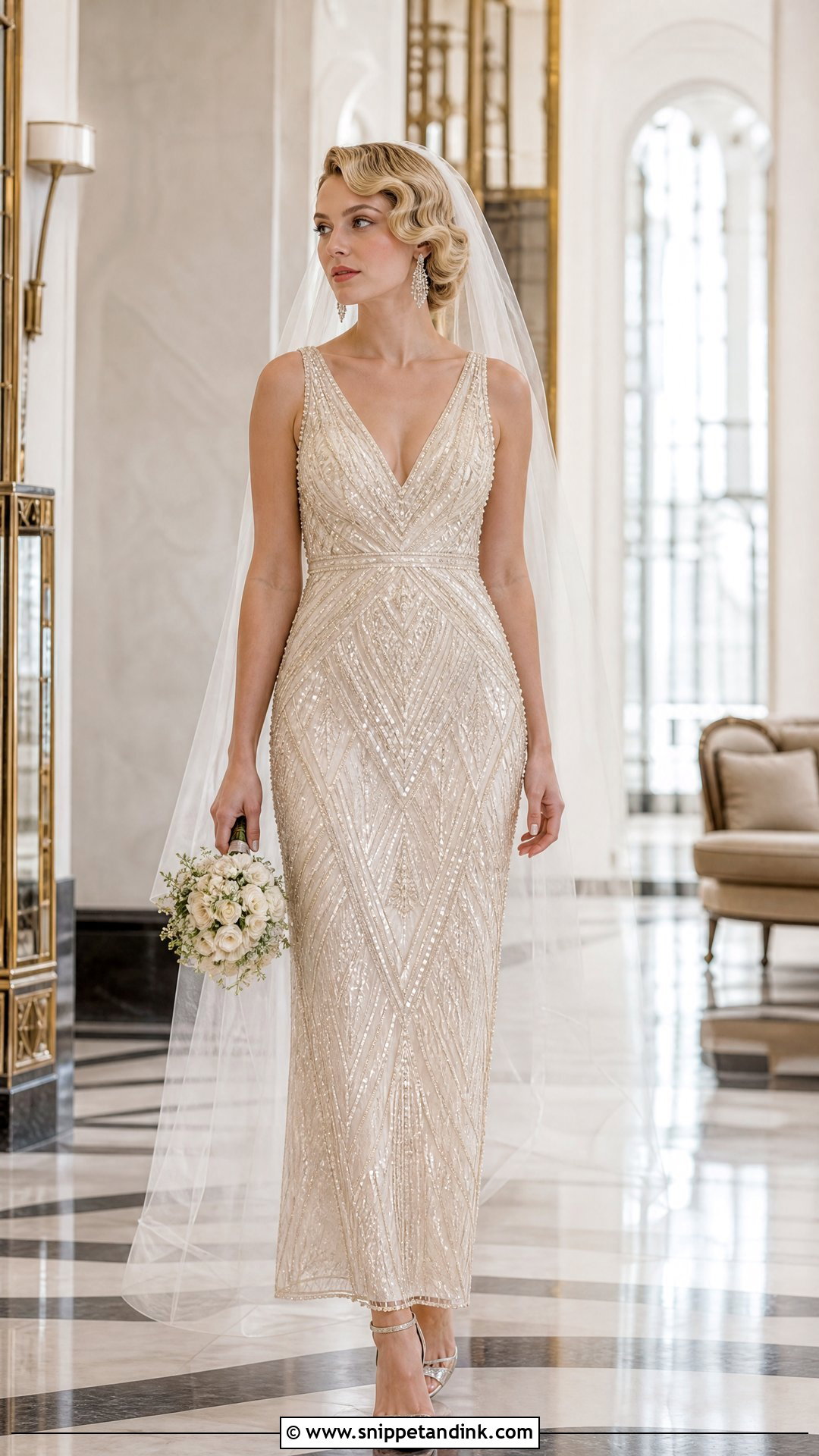
A beaded Art Deco wedding gown relies on linear beadwork, geometric patterns or carefully set crystals over a sheath or softly flared base. Champagne, ivory and soft gold undertones keep it bridal. Crystal earrings, finger-wave hair, metallic heels and a sheer veil suit it, with a small structured bouquet. Beaded gowns are heavier than they look, and the weight hangs off the shoulders, so I weigh one in my hands before a bride falls for it. The lining should stop beads scratching your skin, and the hem needs reinforcing so the beading doesn’t fray against the floor.
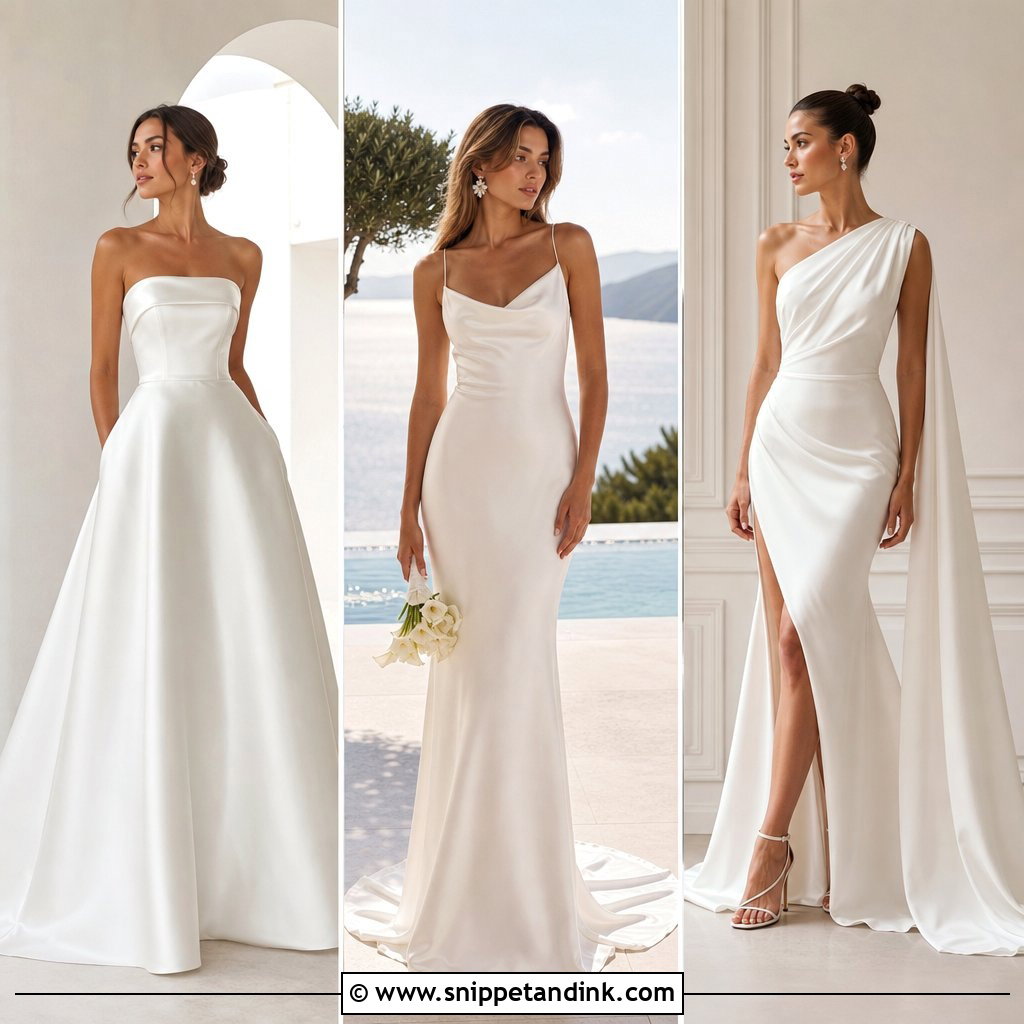
14. Satin Slip Wedding Gown
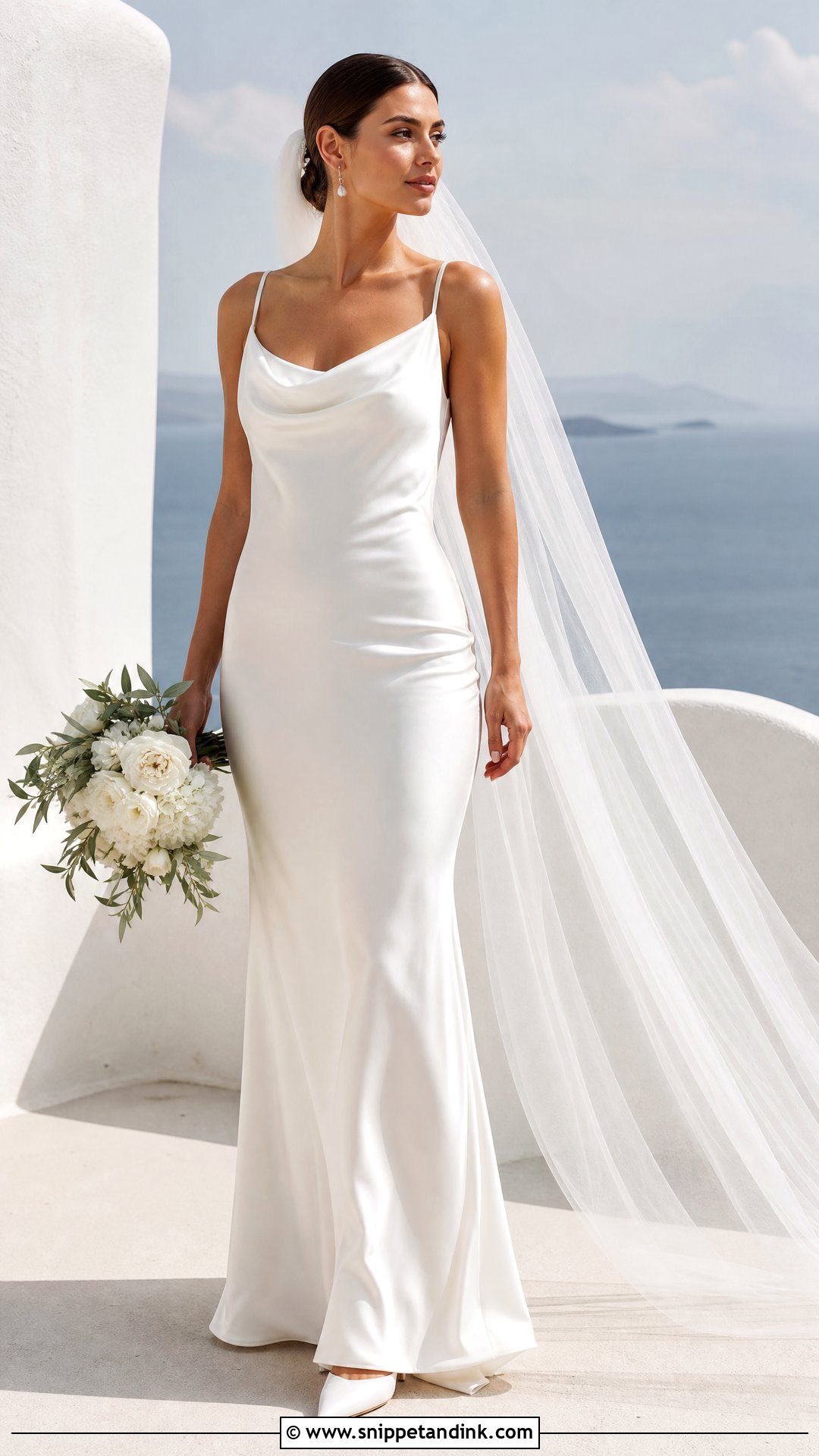
A satin slip is cut on the bias so it follows the body with very little construction: slim straps, a draped neckline and nothing else. Choose heavy satin with a good lining; thin satin shows every ripple. Polished hair, drop earrings, pointed mules and either a long sheer veil or a light wrap complete it. Invisible, line-free undergarments are essential because the fabric reveals everything. During alterations, lean forward and sit; the neckline that looks fine standing can gape the moment you bend. If you want support, discreet cups or a hidden inner bodice can be added.
15. Tea-Length Wedding Gown
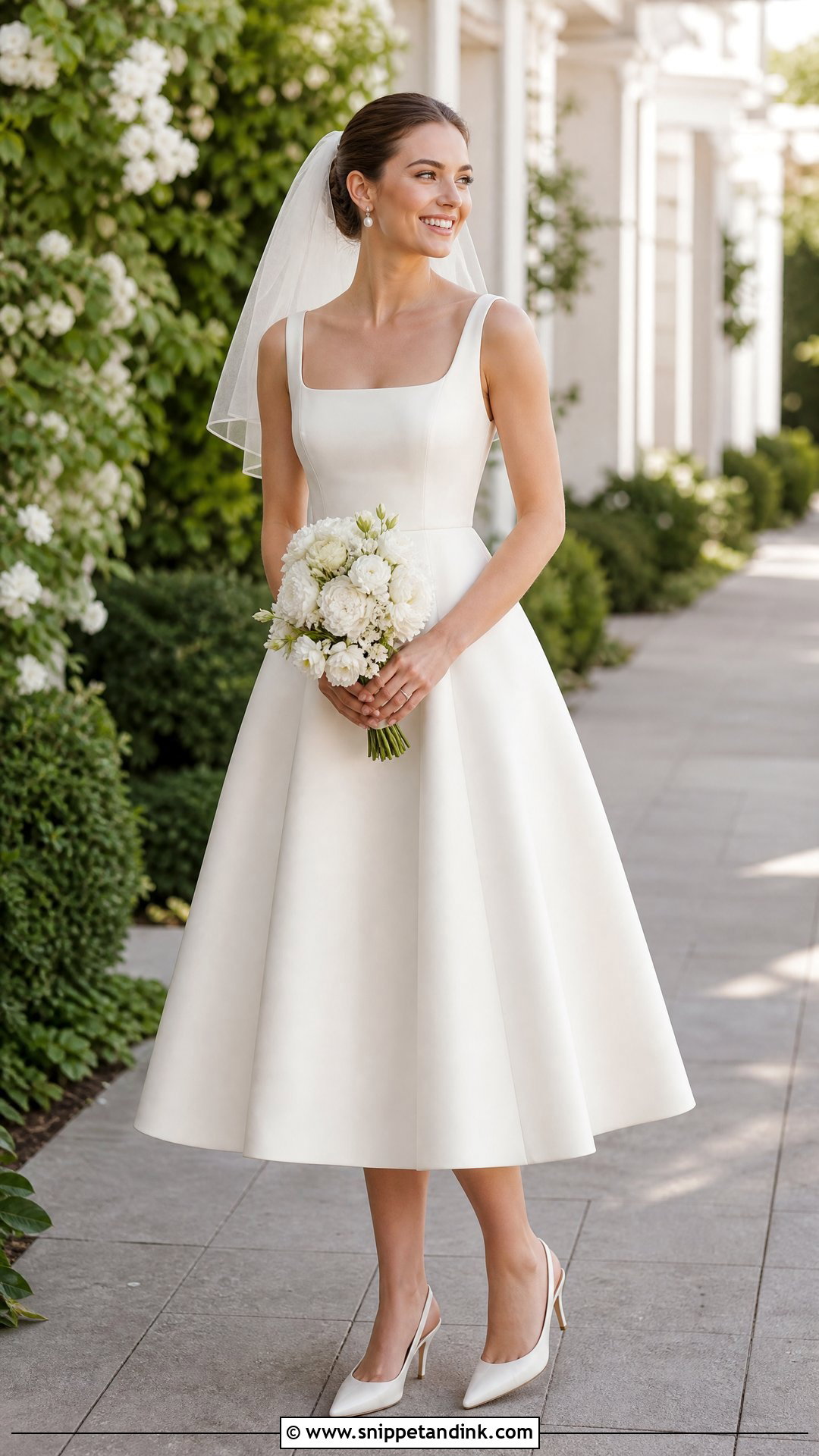
Tea length ends between knee and ankle, playful with a full skirt and modern as a clean column. Your shoes are part of the design here, not an afterthought. Slingback pumps, embellished flats or block heels all show, along with a short veil, pearl earrings and a compact bouquet. The one thing I measure carefully is where the hem lands on the calf. Ending at the widest point of the leg shortens it; an inch higher or lower changes the whole proportion. It suits courthouse ceremonies, brunches and receptions built around dancing.
16. Short Reception Wedding Gown
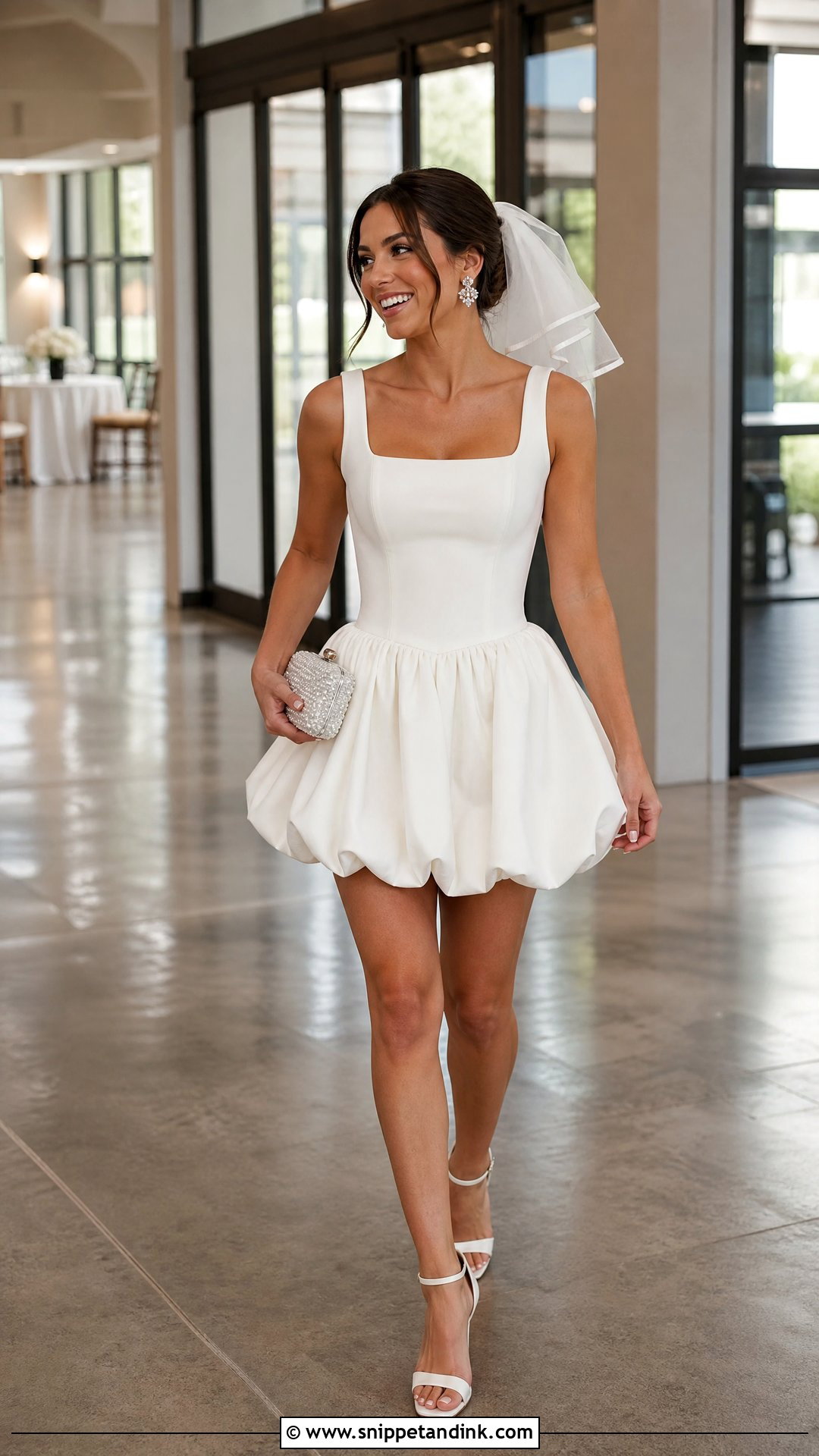
A short reception wedding gown gives you freedom after a long train or heavy beading. A structured square-neck mini, a softly draped satin dress or a bubble hem all work. Supportive heels, crystal earrings and a small clutch complete it, and one statement accessory, perhaps a bow, short veil or removable gloves, is plenty. Sit and dance in it before you buy; a hem that’s secure standing can ride up. A smooth lining or built-in shorts solves that. It also works as the main look for a courthouse wedding.
17. Detachable Overskirt Wedding Gown
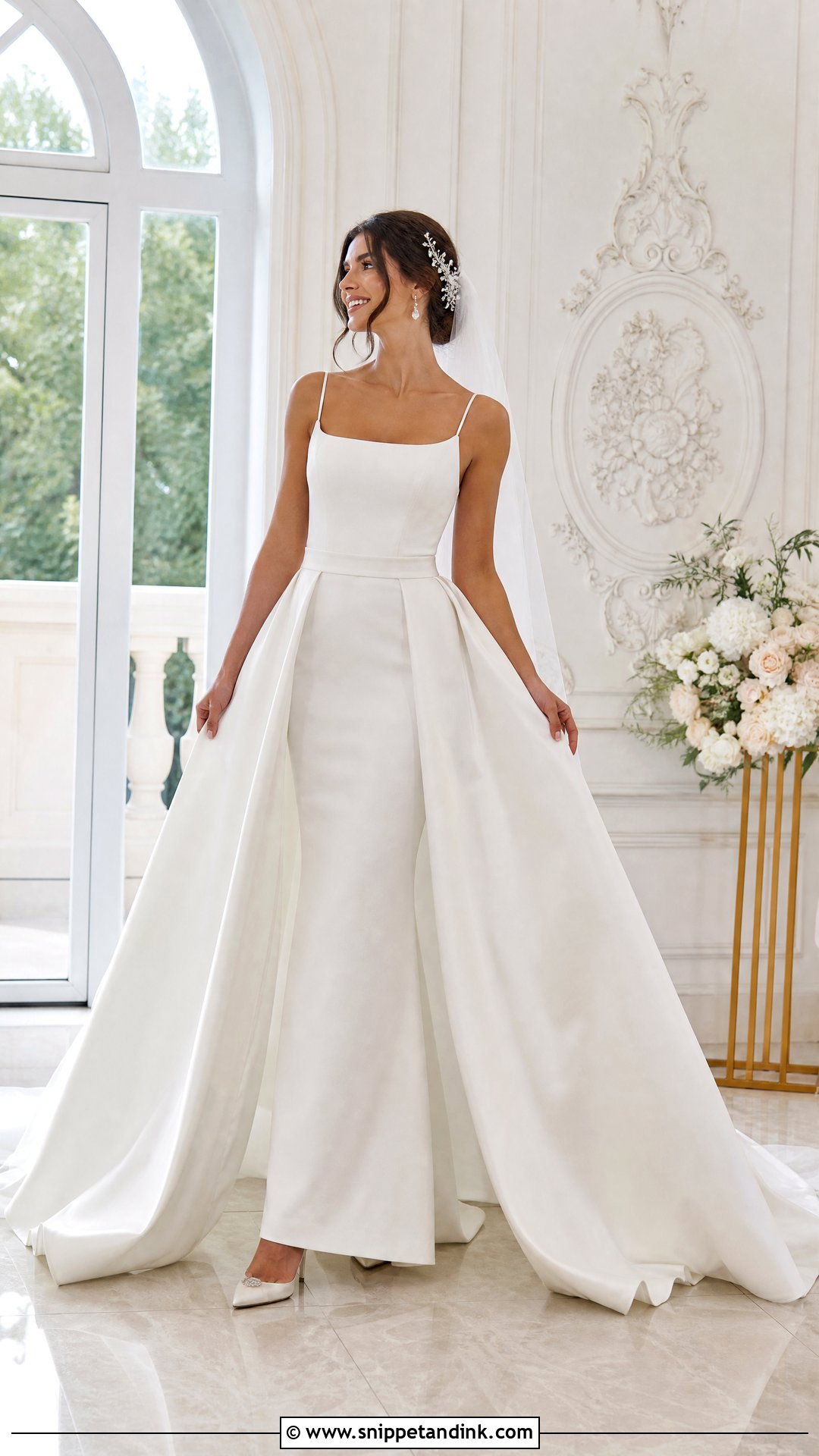
One fitted base dress and a removable overskirt give you two looks. The full skirt goes on for the ceremony, then comes off to show a sheath, mermaid or mini for the reception. Tulle gives soft volume; satin gives a more structured change. Keep the same earrings and shoes for both so the switch takes minutes. A long veil suits the ceremony layer and a jeweled comb the reception. I check the base dress on its own before anything else, because it must look finished, with no loops or uneven seams showing once the skirt is off.
18. Cape-Sleeve Wedding Gown
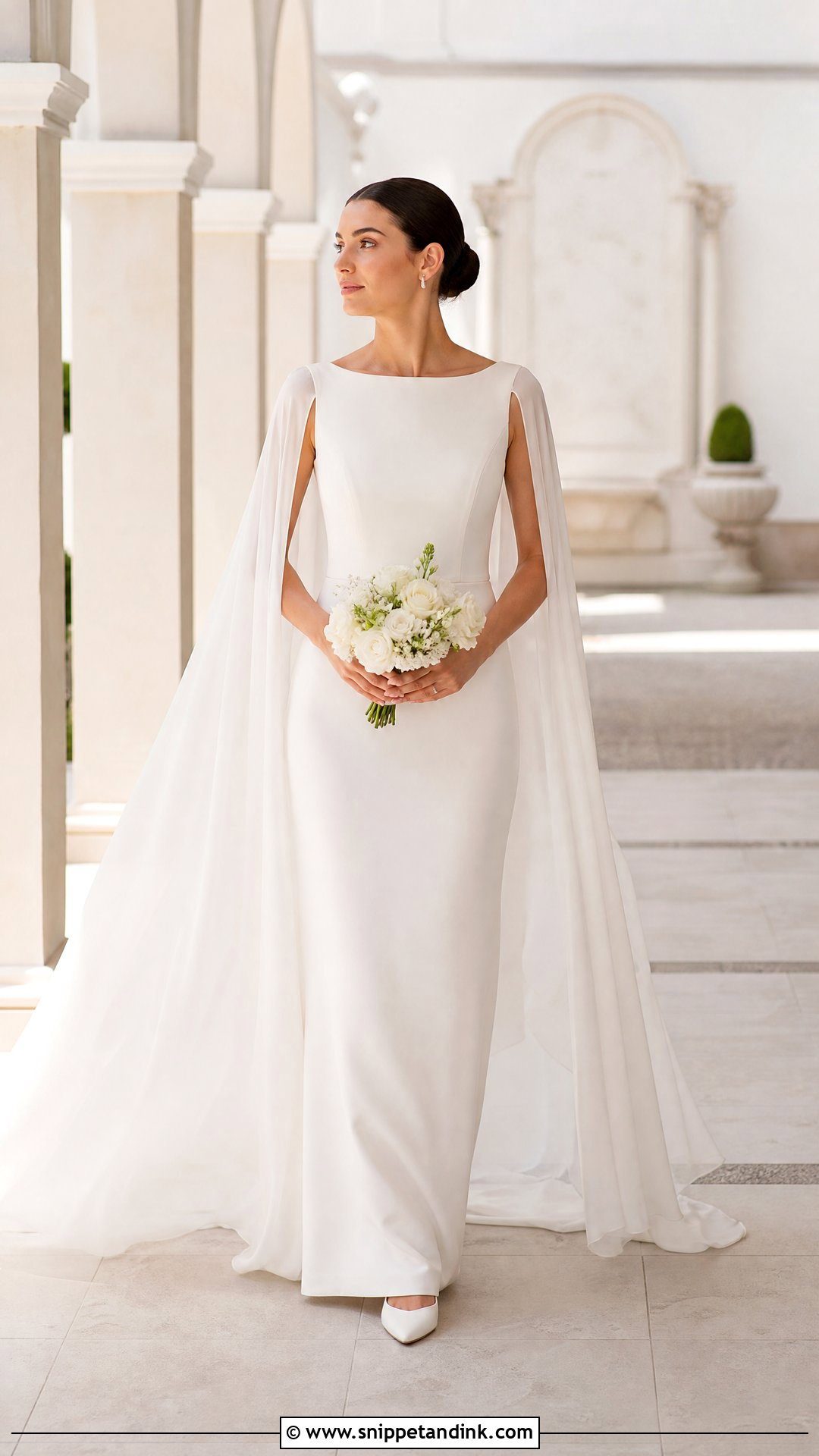
Capes give arm coverage while leaving the arms free to move. They can fall from the shoulders, attach at the neckline or extend into a floor-length layer, and a simple column or A-line underneath keeps the cape as the main feature. A sleek bun, understated earrings and closed-toe pumps suit it, and I’d usually skip a separate veil. Chiffon floats; embellished tulle feels formal. Outdoors, a long chiffon cape catches wind like a sail, so try it moving, not just standing in a mirror. Secure attachment points stop it twisting to one side.
19. Blush Wedding Gown
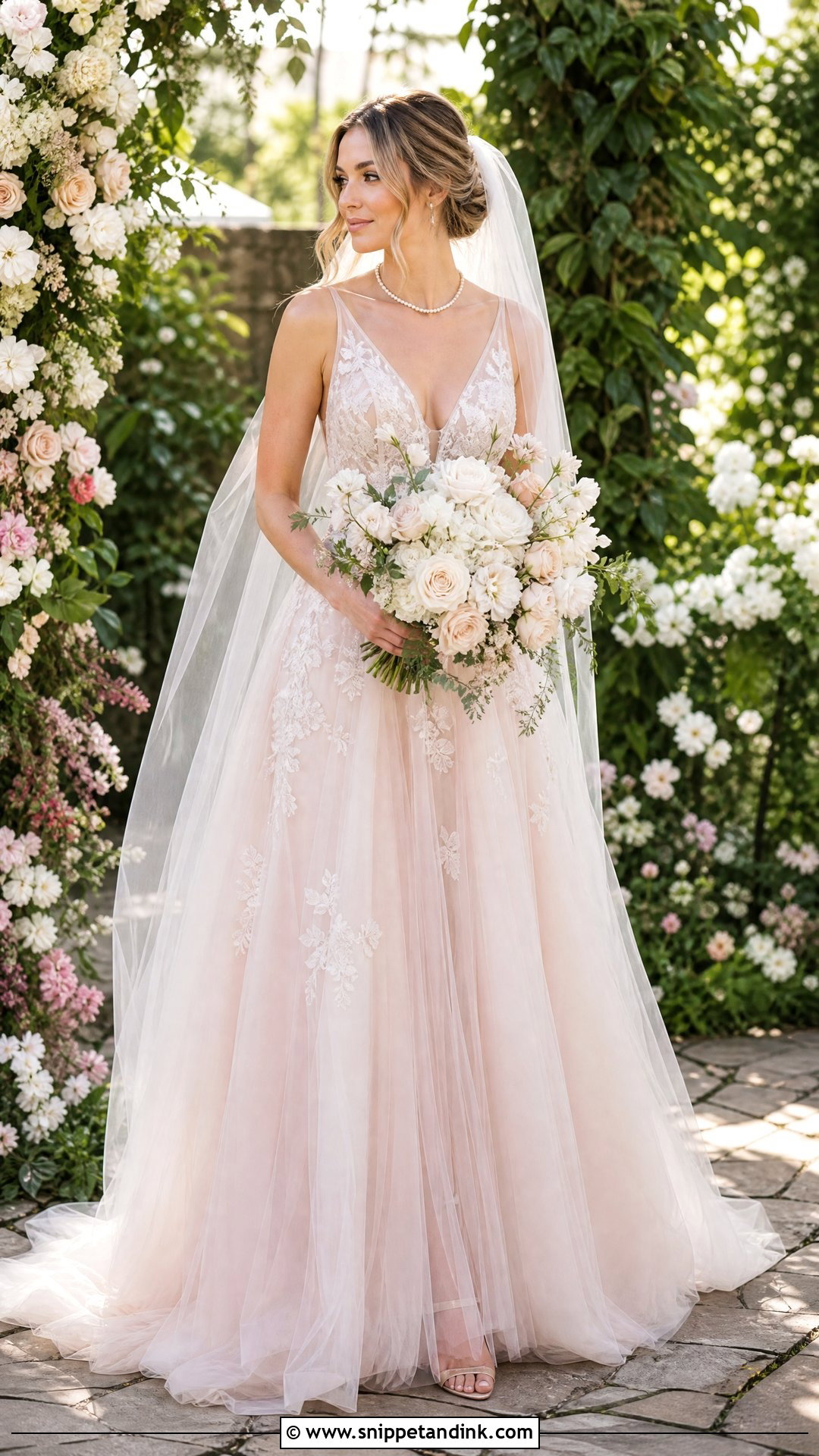
Blush ranges from barely tinted ivory to soft rose, and skin tone changes which shade works. Hold the fabric under your chin in daylight before deciding. Tulle and lace look romantic in blush; satin makes the color richer. Neutral shoes, rose-gold or pearl jewelry, a sheer ivory veil and cream flowers keep it bridal, and varied neutrals look better than matching every piece. Layered gowns often hide a nude or ivory lining that shifts the color, so ask to see it unlined. Daylight venues suit blush best; warm candlelight can turn it peach.
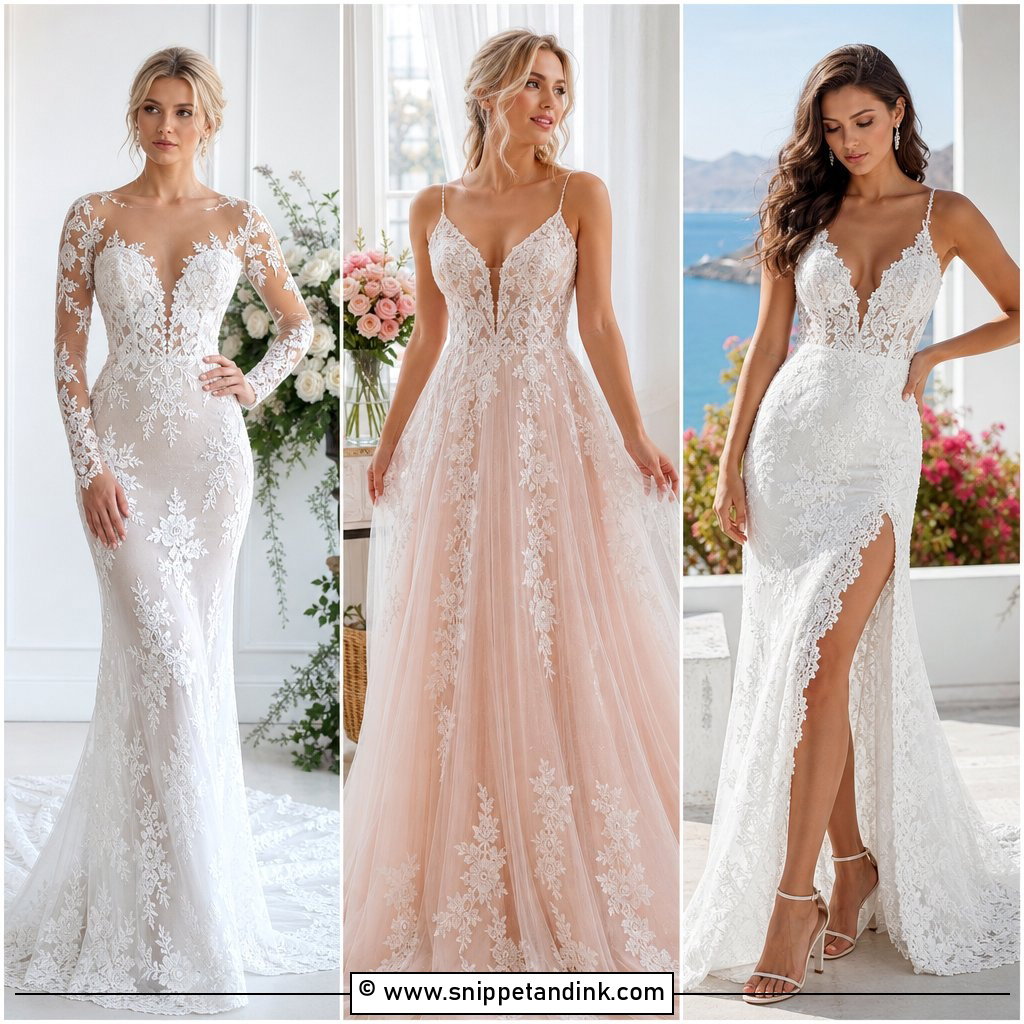

20. Boho Crochet Lace Wedding Gown
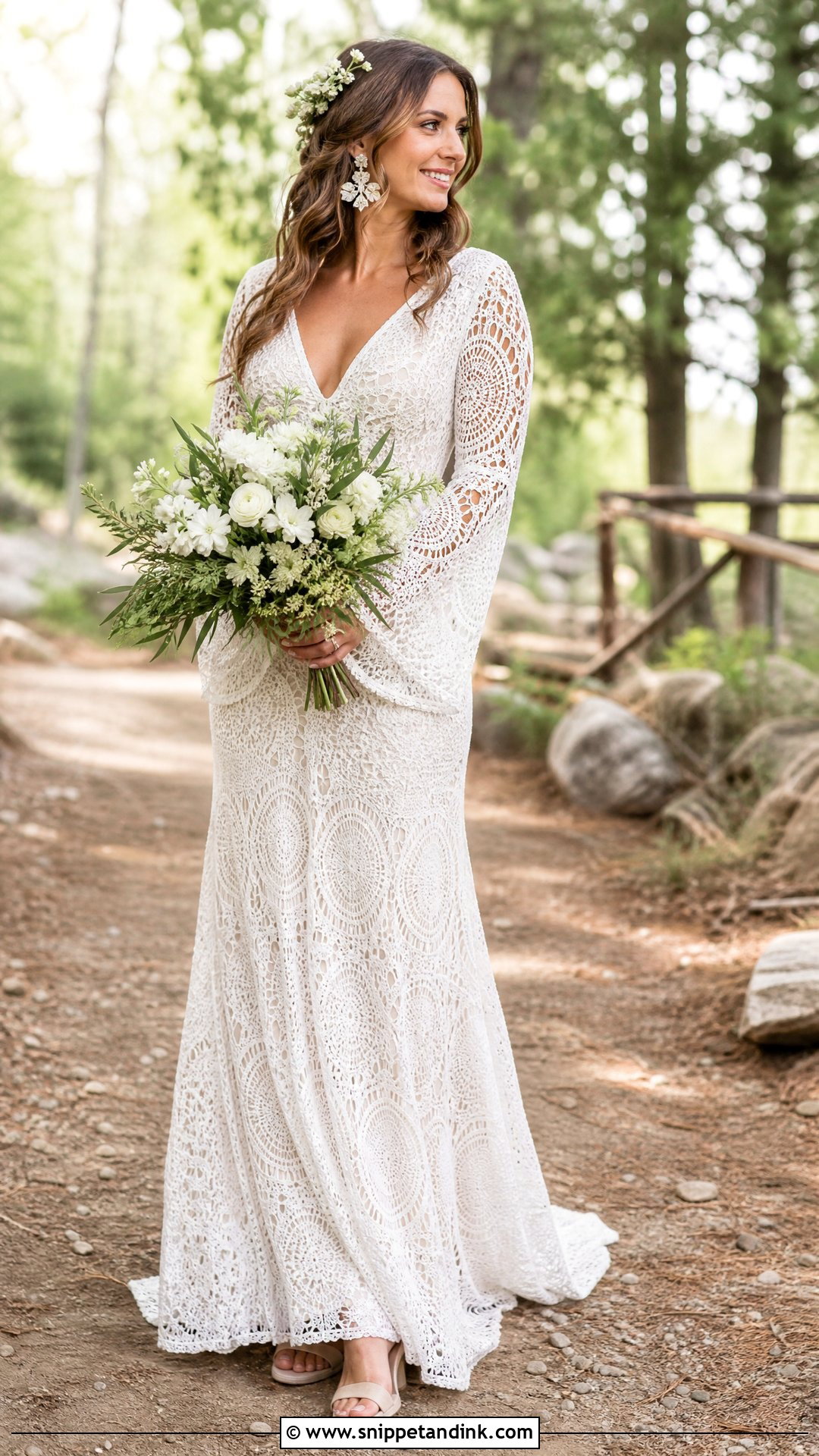
Crochet lace is thicker than most bridal lace, so a boho crochet lace wedding gown needs breathing room: a V-neck or open back keeps it from feeling heavy. Look for an A-line or sheath with a comfortable lining, softly fitted sleeves and a pattern large enough to read in photos. Loose waves, botanical earrings, block-heel sandals and a simple veil or floral comb suit it, with a natural bouquet held low so it doesn’t hide the bodice. Run a finger along the underarms and waist inside; chunky crochet can chafe if it isn’t lined there. Barns, woodland and coastal venues fit it.
Bustles, Trains and the Person Who Has to Fasten Them
Any gown with a train needs a plan for after the ceremony. A bustle lifts the train off the floor with hooks, buttons or ribbon ties so you can dance without anyone stepping on it. The style depends on the fabric and the train’s length, and your seamstress will usually suggest the one that suits the gown.
The main types
- Over bustle: the train is lifted and hooked up onto the back of the skirt. Quick, and it shows off lace or beading.
- Under or French bustle: the train is tucked underneath with ribbon ties, giving a softer, layered look. Ties are usually numbered or color-coded.
- Ballroom bustle: many hidden points that make the skirt look floor-length all round. The neatest result, and the slowest to fasten.
Choose one person, often the maid of honor or a mother, and bring them to the last fitting so the seamstress can teach them. A phone video of the steps helps when hands are shaking. Make a practice run too, because ribbon ties under a dark reception room are harder than in a bright fitting room.
Weather Changes How Each Fabric Behaves
Heat makes satin and heavy lace linings feel close, and crepe can show damp patches, so empire chiffon and lighter linings make sense for summer outdoors. Cold, dry air builds static in chiffon and tulle, which then clings to your legs; a light spray of anti-static on the underskirt helps. Rain spots silk satin, so carry a clear umbrella and blot any drop with a clean white cloth instead of rubbing, which spreads the ring. Wind is the one to plan for with capes, long veils and loose chiffon. Ask your photographer to watch for it and have someone ready to smooth the fabric between shots.
The Dress on the Hanger Is Only Half the Answer
A dress that looks right on a hanger can still be wrong on the day. It has to support you, suit the venue and let you move from the first photo to the last dance. These designs run from structured satin ball gowns to chiffon and crochet, and I’d test the shapes before you think about embellishment or trends. Wear the right undergarments and shoes to every fitting, and photograph each dress from several angles. Above all, notice how you feel walking and sitting. Good tailoring and restrained accessories do the rest.
You'll Like These Ideas:







Leave a Reply