
Bring Your Hijab, Undercap and Pins to Every Fitting
Most bridal gowns are designed for a bride with her neck and hair showing, so a hijab bride is often adapting a sample that wasn’t built for her. The fix starts at the very first appointment. I ask brides to arrive with the hijab they plan to wear, or one in a similar weight, plus their undercap and pins. A neckline that looks high on a mannequin can sit oddly once there’s fabric folded beneath the chin.
At fittings, I run the same few movement tests every time:
- Raise both arms to shoulder height. Sleeves shouldn’t ride up past the wrist bone, and the bodice shouldn’t lift at the waist.
- Sit fully down on a chair. Check the neckline at the back, where gaps tend to open between hijab and zip.
- Lean forward as if hugging a shorter guest. Sheer panels and loose necklines show up here first.
- Turn your head side to side. Beading or stiff lace at the collar can scratch along the jaw.
Coverage changes cost less than people fear. Adding a lining to lace sleeves, raising a neckline with matching fabric or inserting a modesty panel are routine alterations, but they take time, so tell the shop at the order stage that you’ll need them. Alterations usually begin six to eight weeks out, and a gown that needs sleeves built from scratch can take longer.
1. Long Sleeve Lace Hijab Wedding Dress
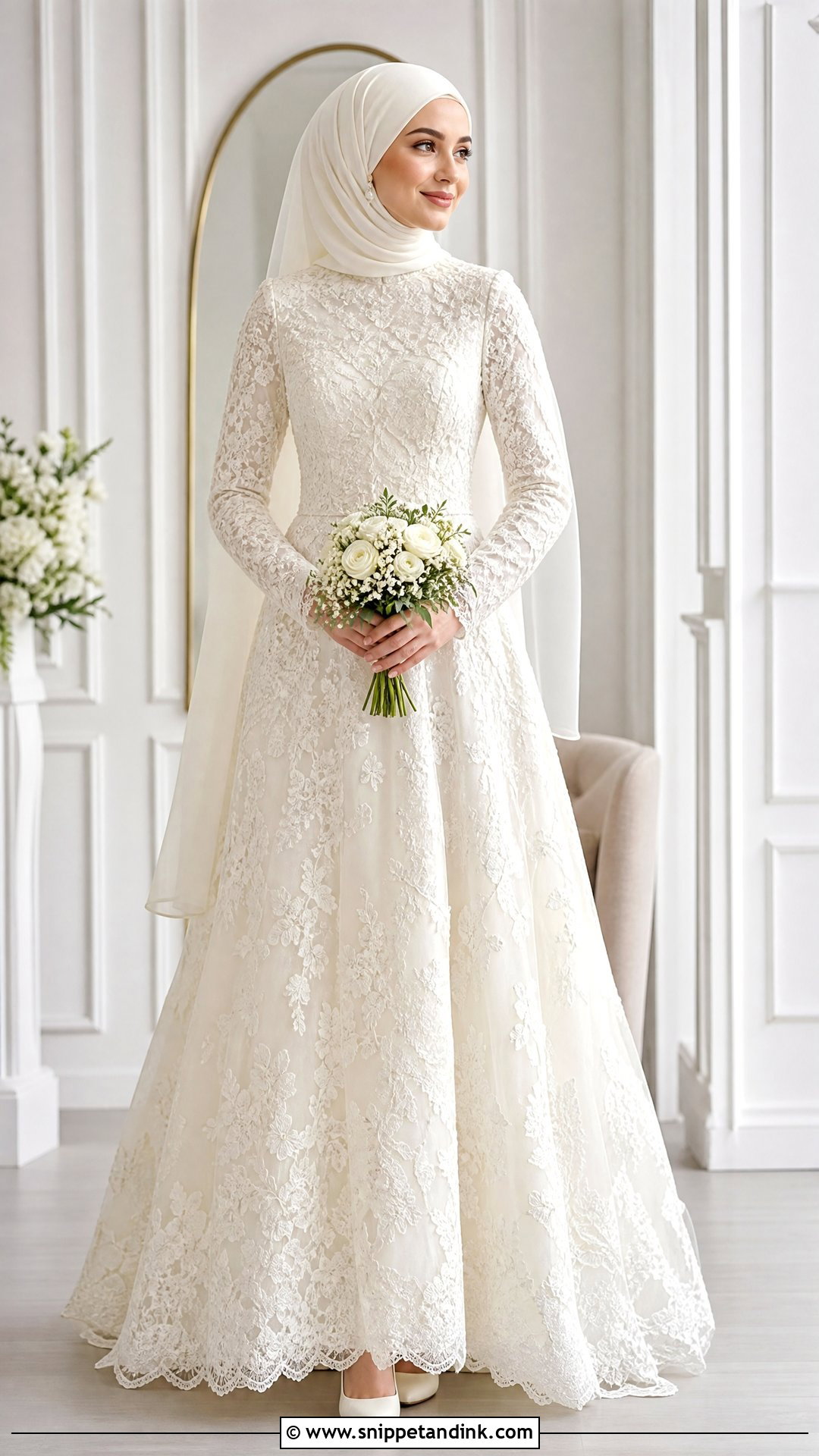
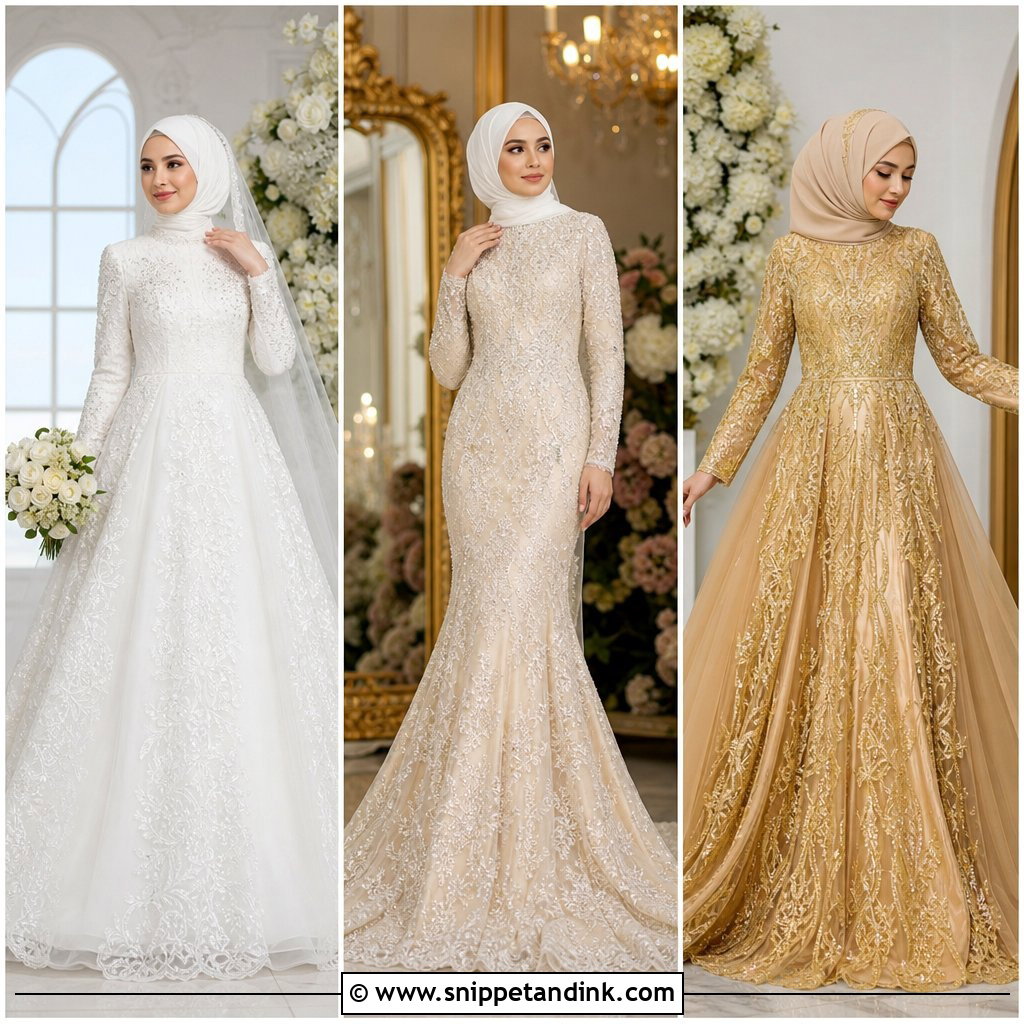
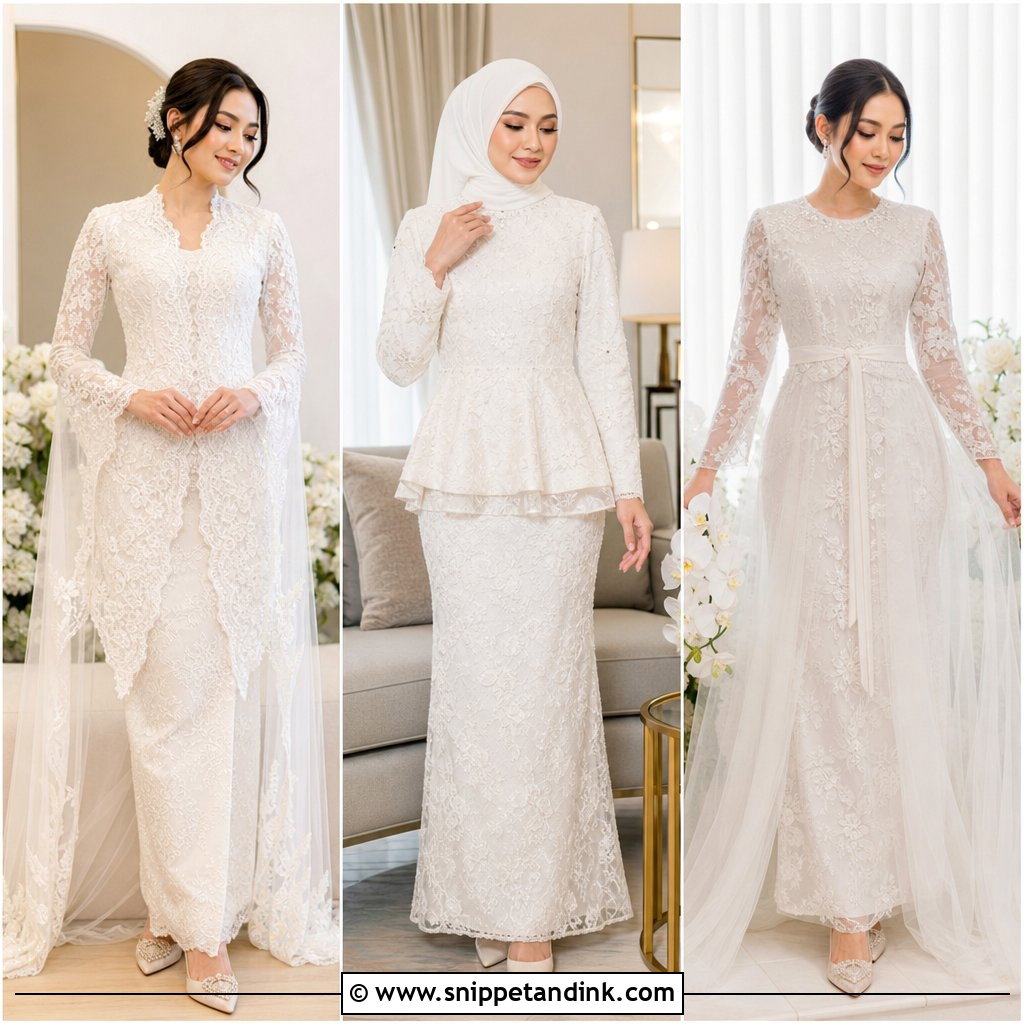
Lace sleeves are where most modest gowns either work or fail, so I look at the lining before I look at the pattern. Plenty of off-the-rack lace sleeves are sheer, and a nude or ivory mesh liner sewn inside fixes that without losing the detail. An A-line skirt gives you room to walk and sit, and a fitted bodice keeps the lace from looking baggy at the waist. Corded lace is heavy enough to sit next to a plain chiffon or silk hijab in ivory or pearl white; with very busy lace I keep the hijab completely plain. Closed-toe satin heels, a small bouquet and pearl earrings are all the gown needs.
2. Satin High Neck Hijab Wedding Dress
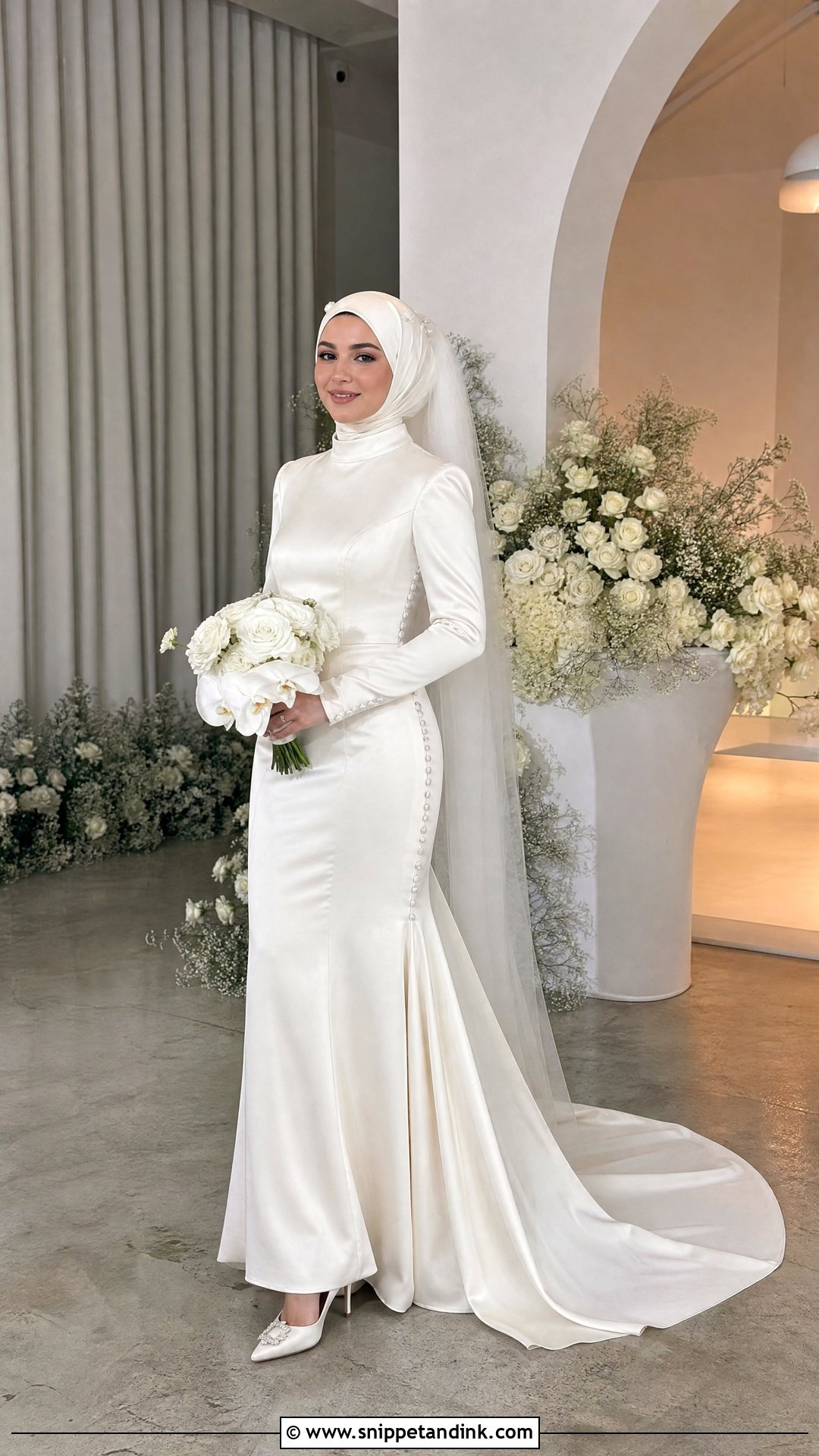
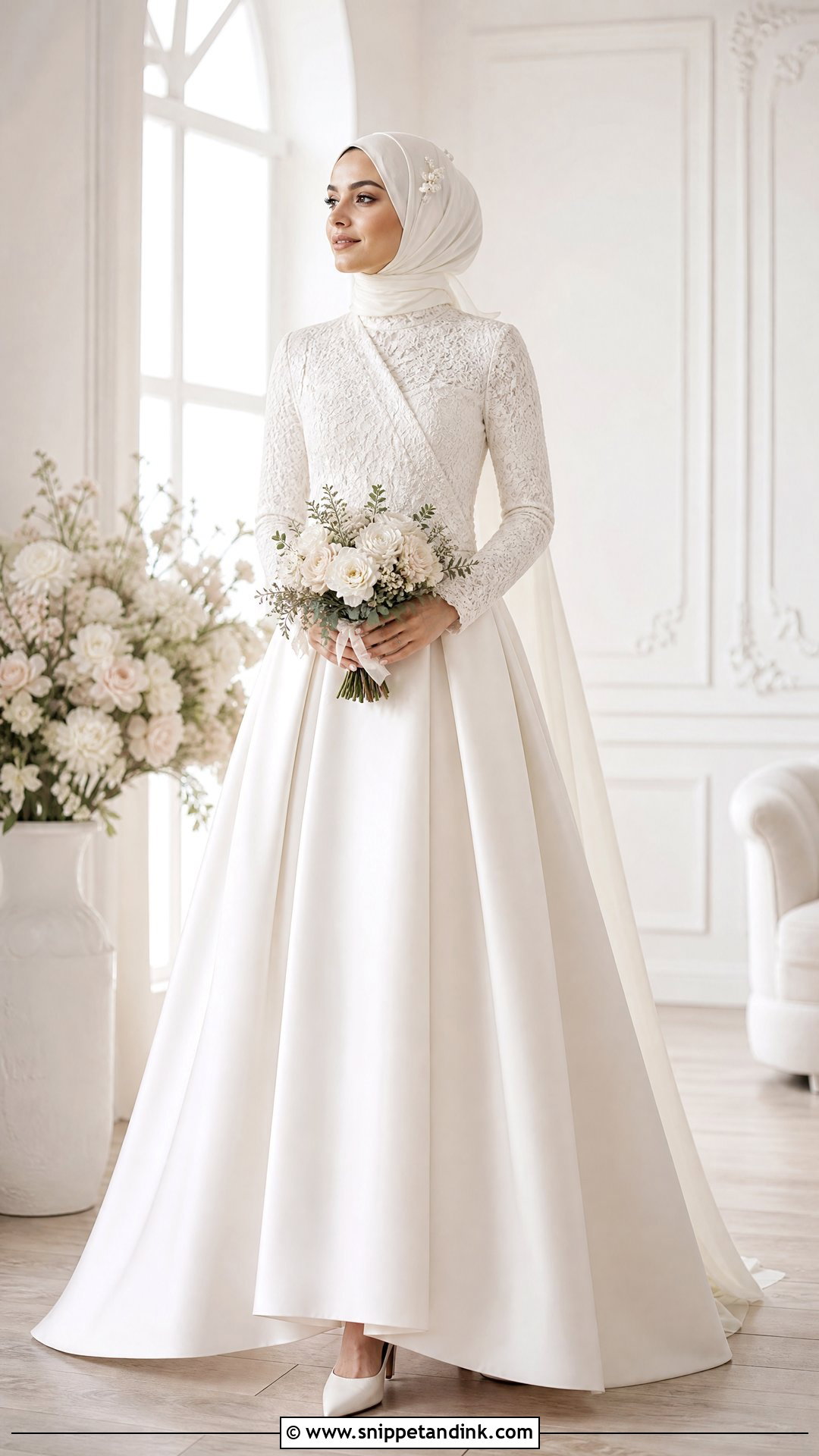
Satin shows everything, which is why I love it on a hijab bride and also why I’m strict about the fit. A smooth bodice and a flowing skirt catch light in portraits, but any pull at the zip or the bust shows straight away, so book an extra fitting. The high neckline lets a tucked hijab or a wrapped undercap style run in one clean line from chin to waist. Long fitted sleeves, covered buttons down the back or a short chapel train add polish without beading. Because the fabric itself is plain, small things carry the look: pearl pins, a structured bouquet, pointed pumps.
3. A Line Hijab Wedding Dress
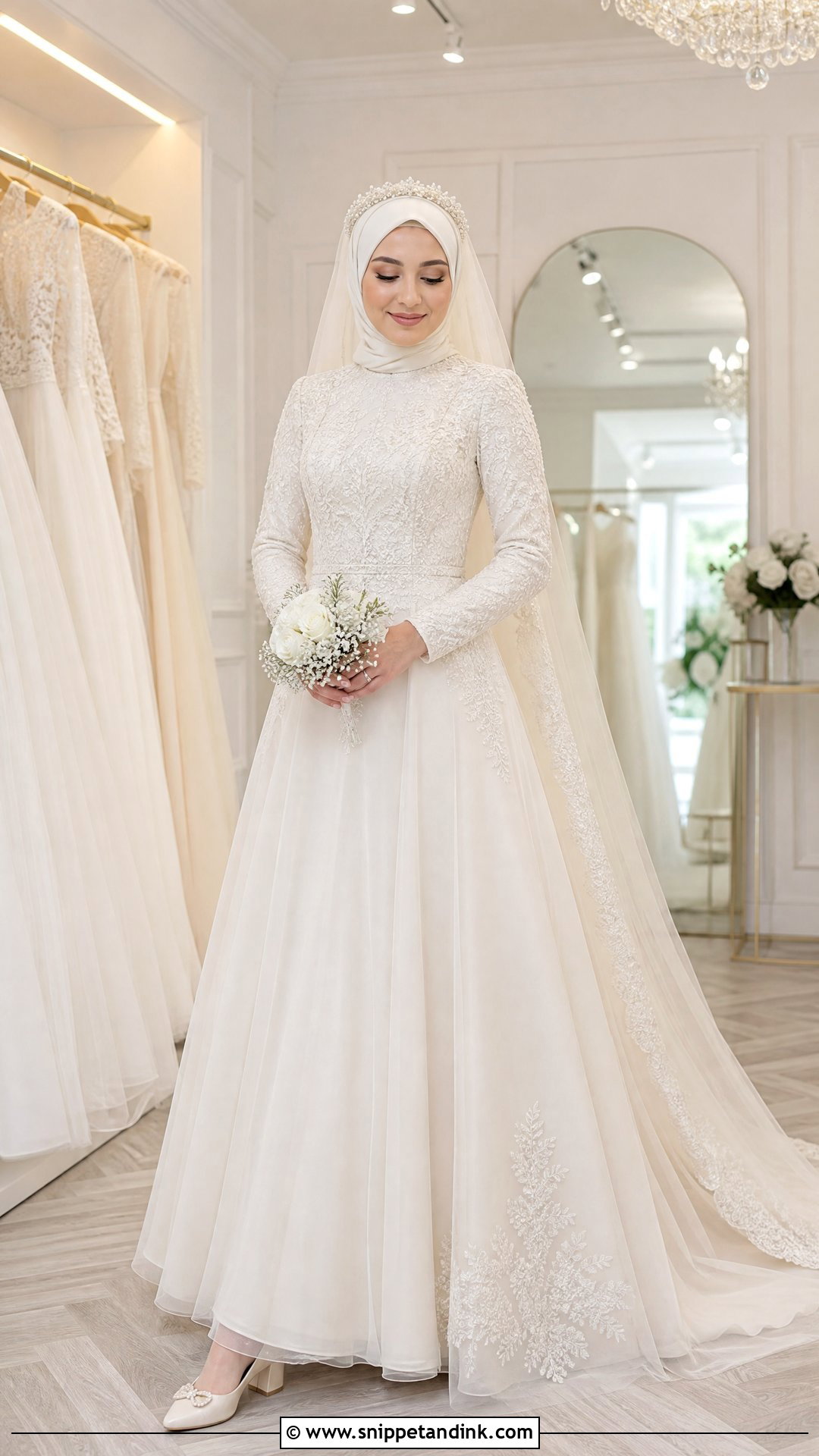
An A-line is the shape I reach for first when a bride isn’t sure what suits her. It’s fitted through the bodice and widens gently from the waist, so you get movement without bulk and it forgives most body shapes. Ask for a high neck, lined long sleeves and a floor-length skirt; the silhouette works in lace, crepe, organza or satin. The balance rule is simple. Embellished bodice, plain hijab. Plain bodice, and a lightly beaded hijab edge can lift it. If you’ll be standing for hours at the reception, block heels will save you.
4. Ball Gown Hijab Wedding Dress
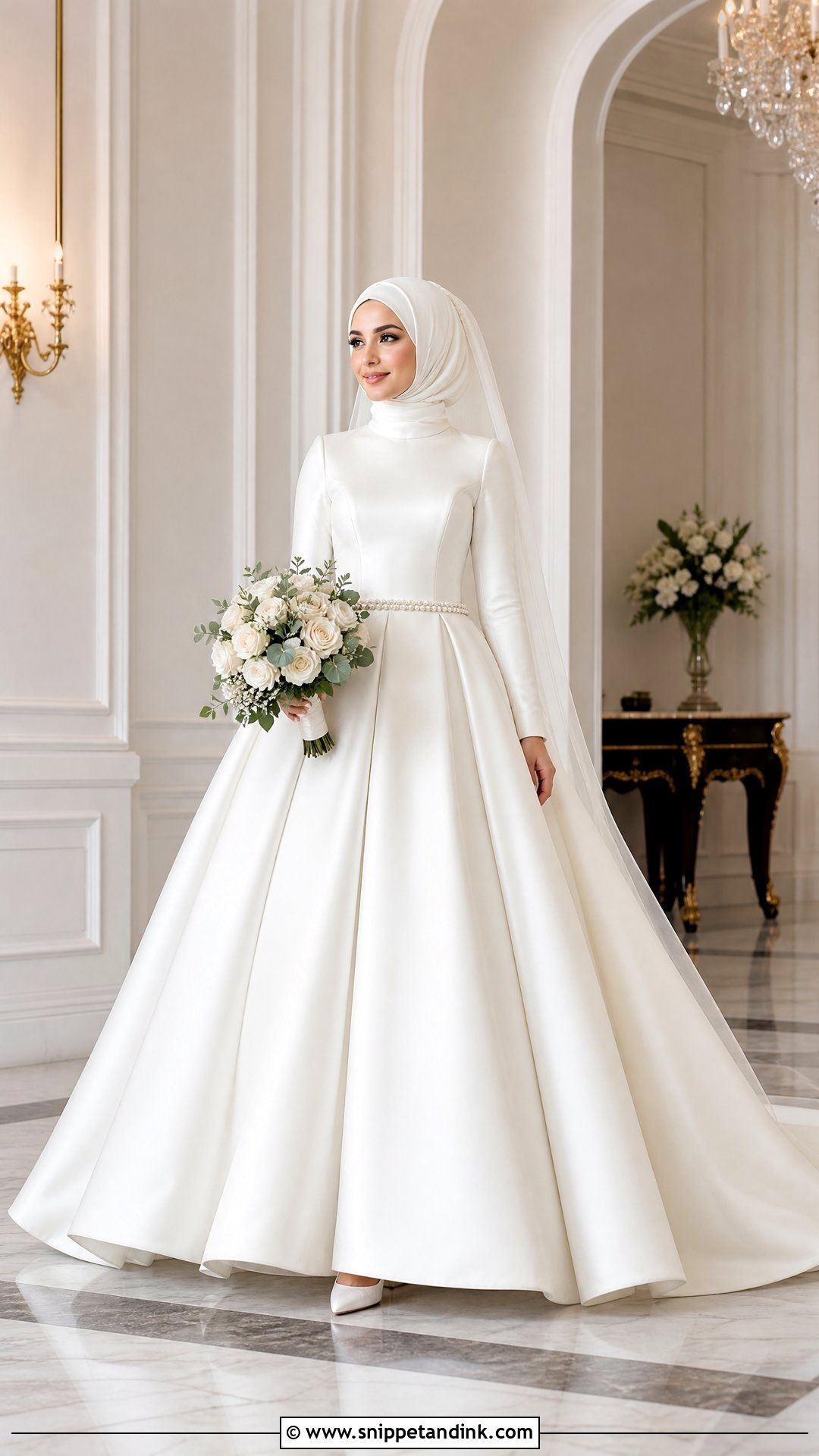
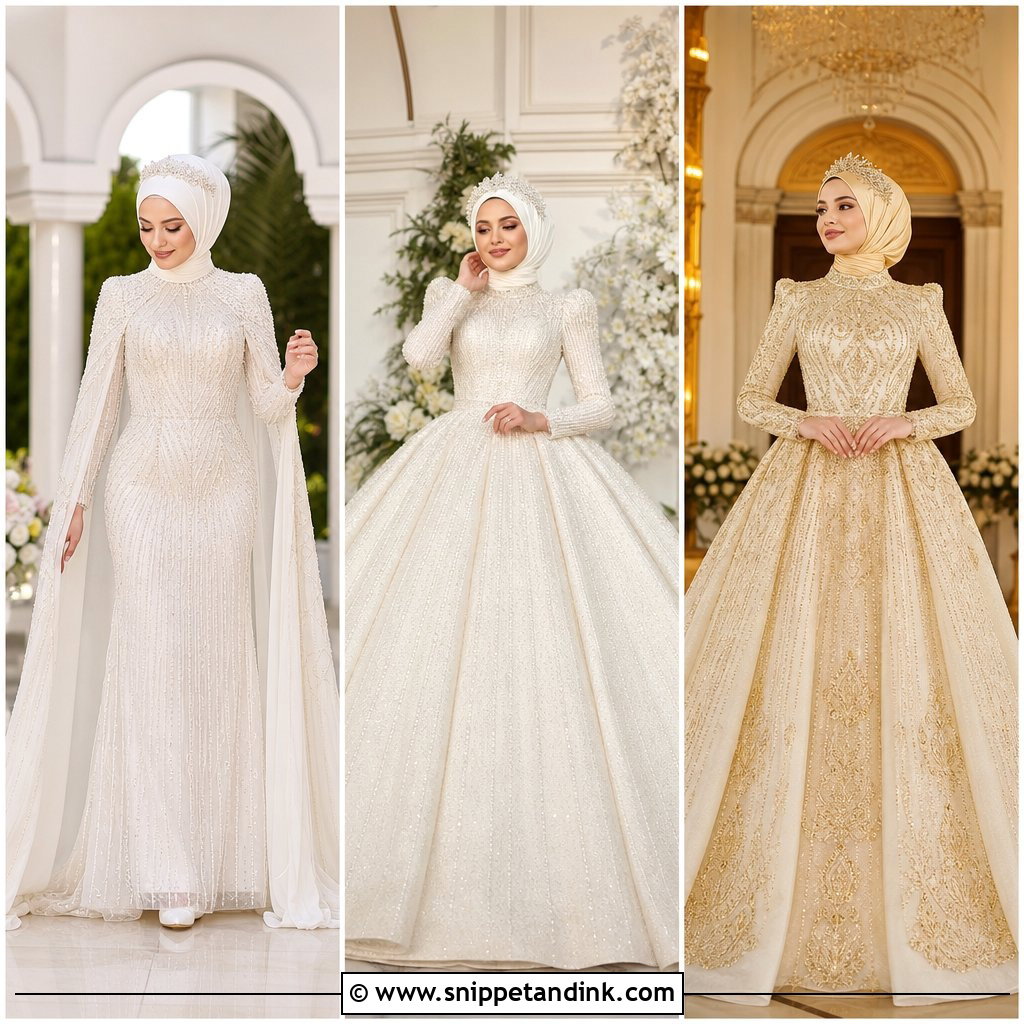
A full ball gown has real presence, but it also changes how the hijab reads. With a very wide skirt, a loosely draped hijab adds width at the shoulders and the whole outline starts to look like a triangle, so I style the hijab neat and close to the face. Satin, mikado, tulle and embroidered lace all hold the skirt’s volume well. A slim belt or a line of pearl trim at the waist gives the eye a stopping point. Wear lower heels than you think; the skirt already adds height, and you’ll be lifting it up stairs.
5. Crepe Modest Hijab Wedding Dress
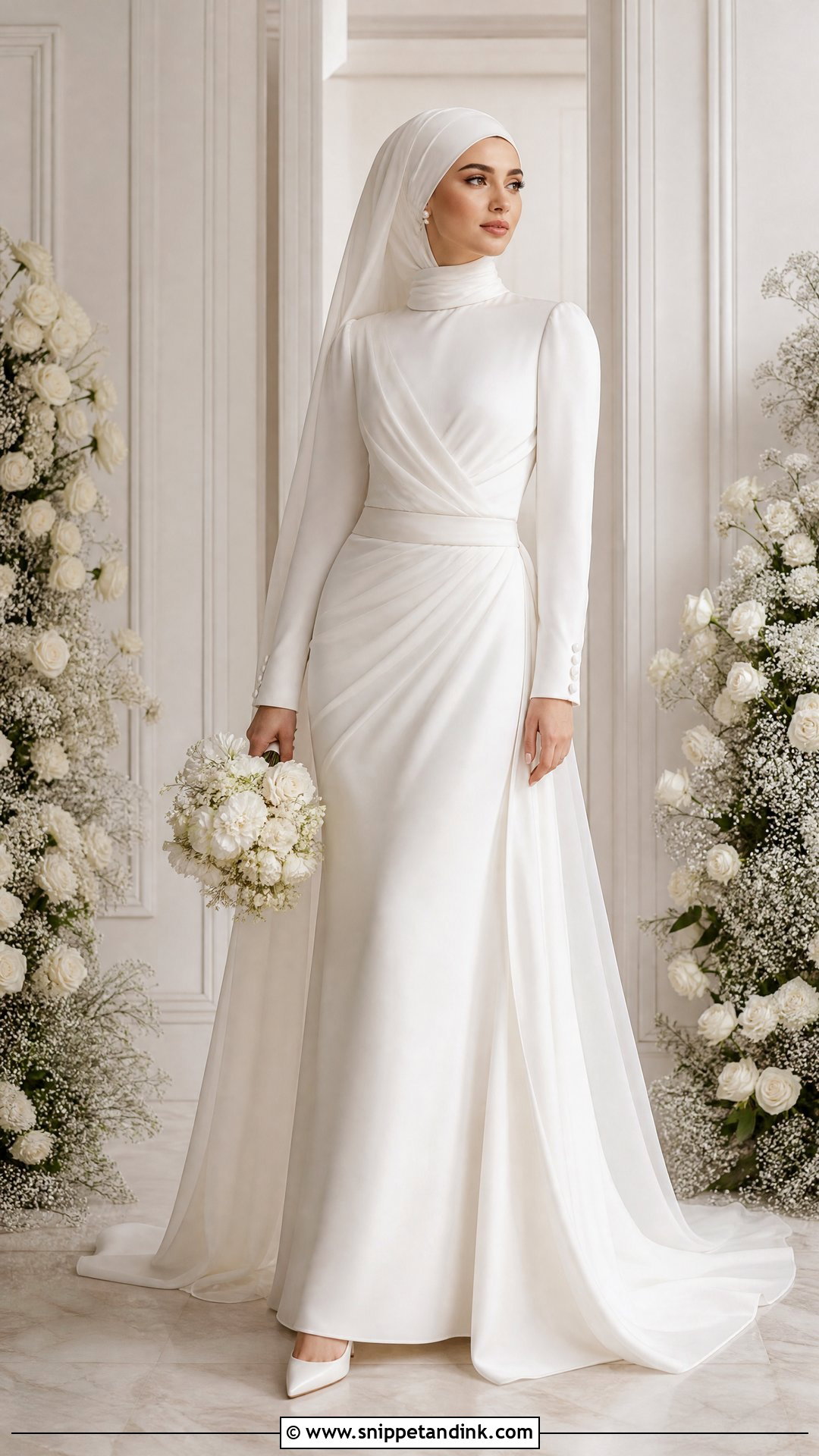
Crepe is the fabric I suggest to brides who don’t want shine at all. It has weight, so it drapes down the body instead of floating, and the seams sit flat in photos. A long sleeve crepe gown with a high neckline and a straight or soft A-line skirt is quiet but very exact. One honest warning: crepe shows lumps from shapewear and bra lines more than lace does, so wear your actual underpieces to every fitting. A matte chiffon hijab keeps it soft; a satin hijab makes it dressier. Pearl studs, a thin bracelet and pointed heels finish it.
6. Pearl Hijab Wedding Dress
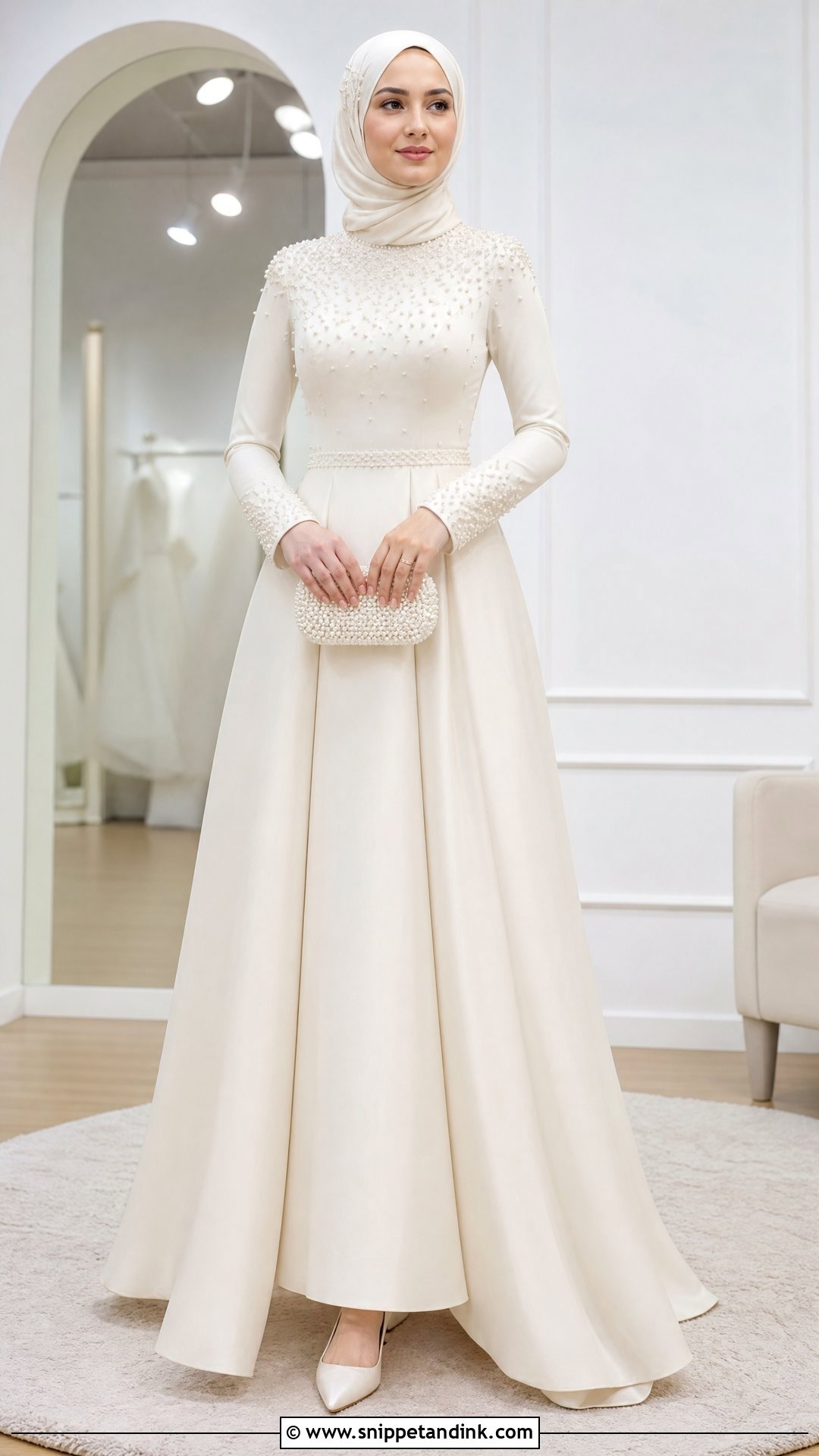
Pearls can sit on the bodice, the cuffs, the hem of the veil, the hijab border or across a skirt overlay. Pick one or two of those places, not all of them. If the gown is heavy with pearl work, I keep the hijab smooth and pin it lightly so the two don’t fight. On a plain gown, a pearl-trimmed hijab edge is often all the detail you need. Check that sewn pearls near the jaw won’t press into your skin when you turn your head; that’s easy to miss in a mirror and hard to ignore after six hours. Ivory heels, a pearl clutch and a clean bouquet complete it.
7. Beaded Hijab Wedding Dress
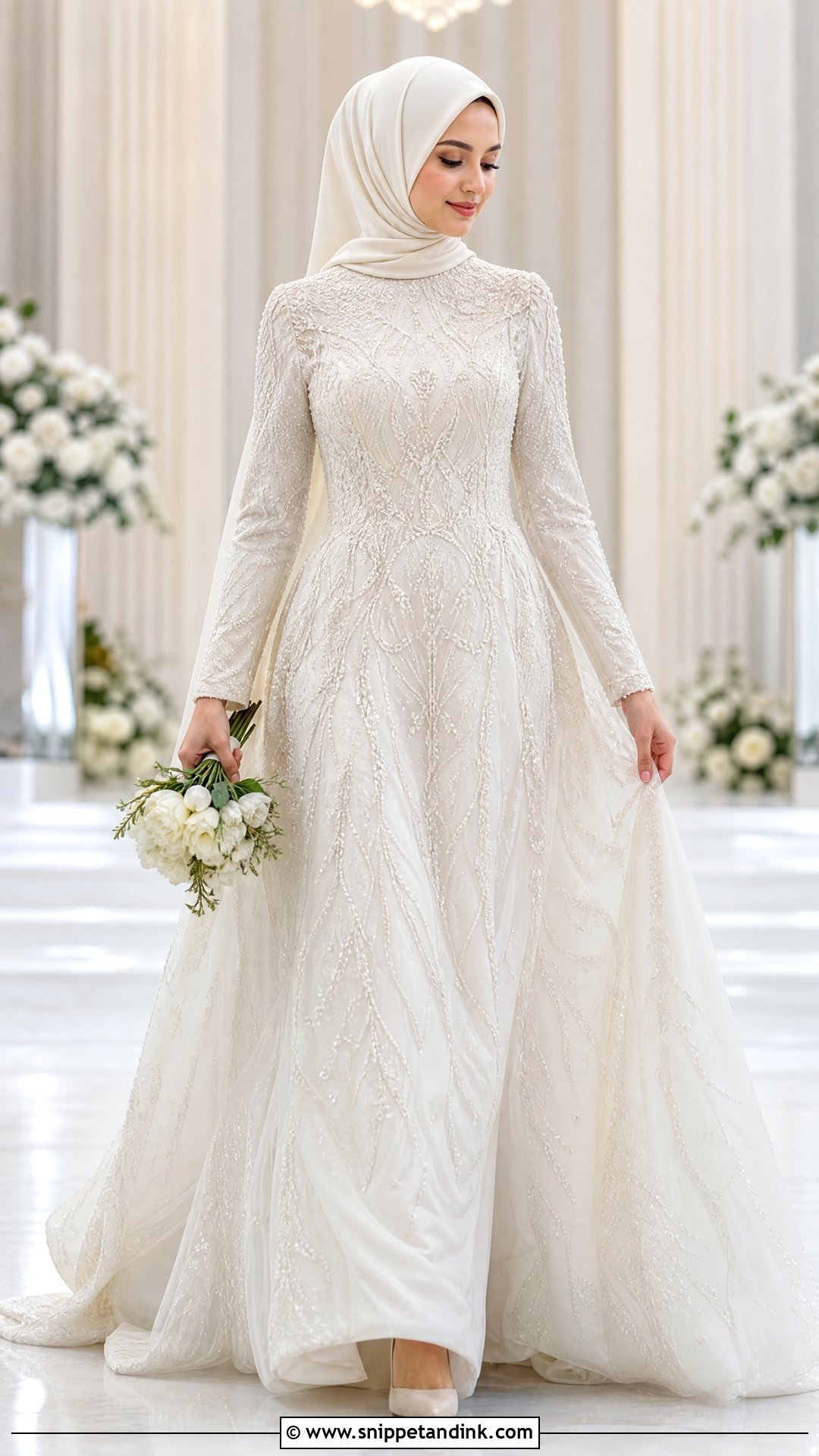
Beadwork weighs more than people expect, and on long sleeves that weight pulls the shoulder seams down over the day. When I see a heavily beaded sleeve, I ask the seamstress to check the shoulder support at the fitting. Placement matters too: beading at the waist and hem reads well from across a room, while beading at the neckline sits right where the hijab falls and can snag chiffon. A full lining is non-negotiable for comfort and coverage. Keep the hijab plain in a matching white or ivory, and let jewelry stay minimal. It suits an evening reception or an indoor venue with good lighting.
8. Tulle Hijab Wedding Dress
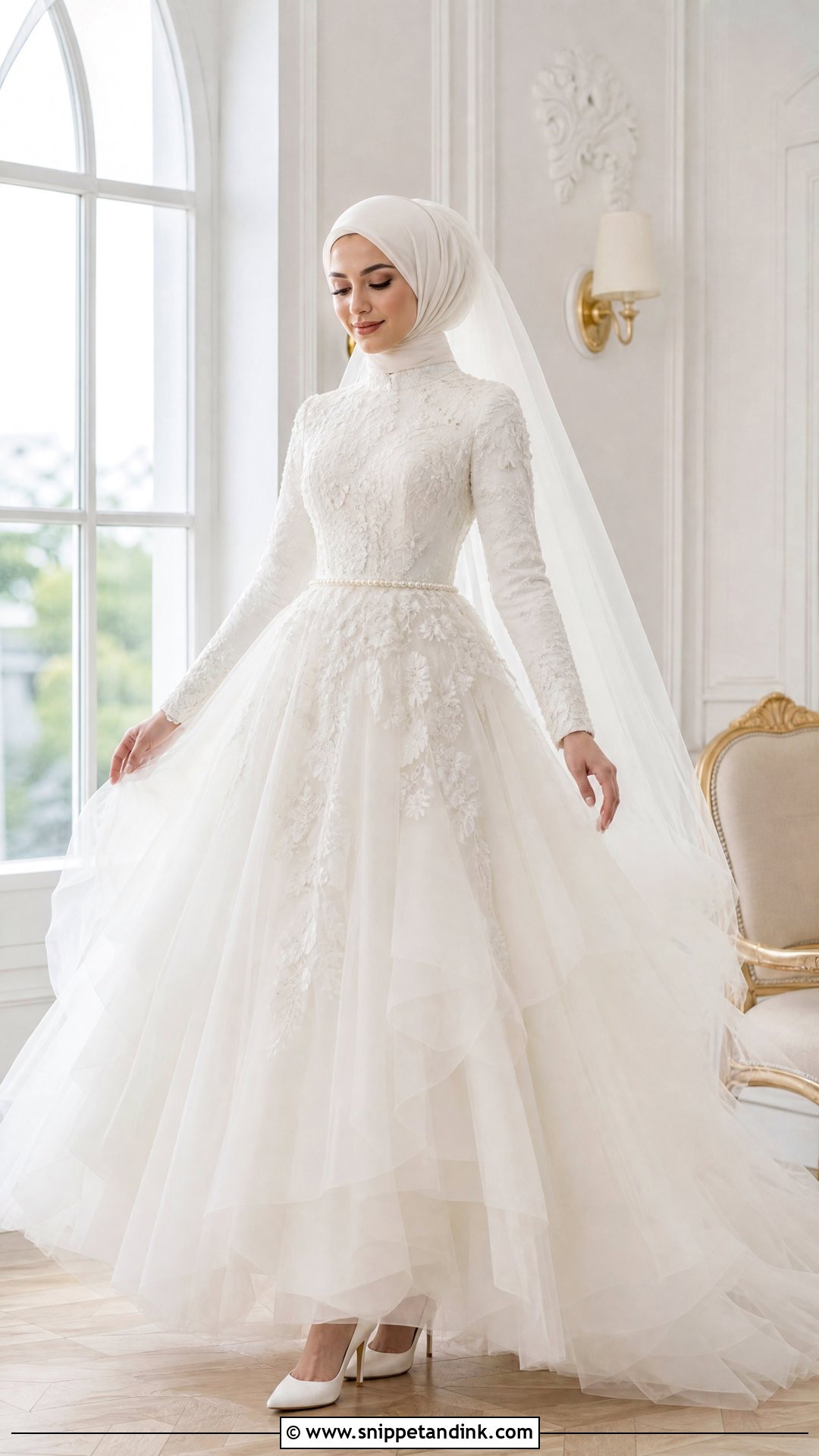
Tulle gives volume without much weight, which is why it’s popular for long receptions. The catch is coverage: tulle sleeves and bodices are see-through unless they’re lined, so ask for a fully lined bodice, long lined sleeves and a high or bateau neckline. Layered tulle builds a full skirt, and embroidered appliqué gives it some depth. Because the skirt moves so much, a neatly wrapped hijab keeps the top half calm. A thin belt, pearl pins or a soft veil over the hijab are optional extras. Several layers of tulle also mean several layers to walk through, so comfortable heels matter.
9. Organza Hijab Wedding Dress
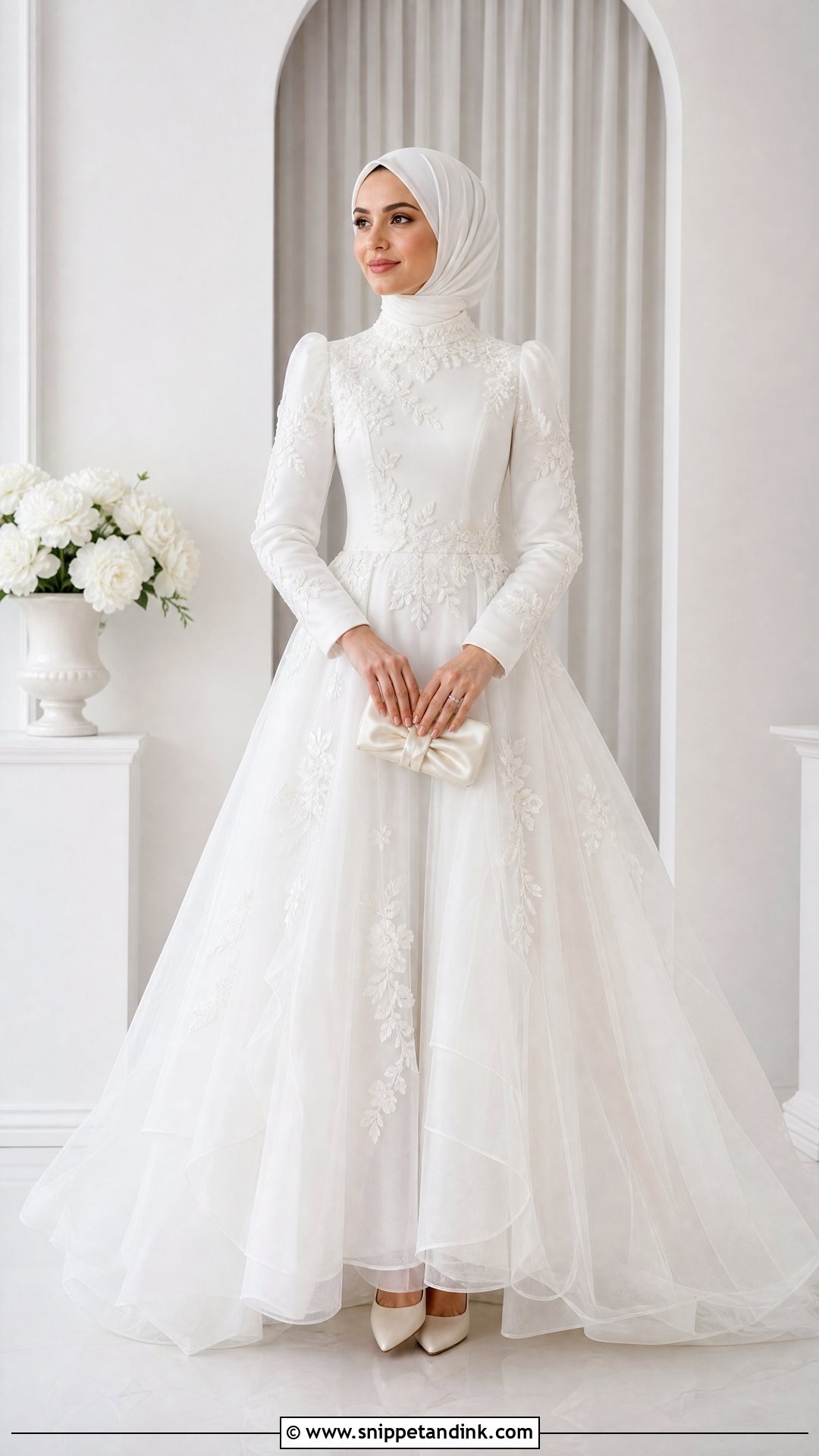
Organza is crisper than chiffon and lighter than satin, so it holds a shape without making the gown heavy. A modest organza gown usually pairs long sleeves and a high neckline with a full, layered skirt. It takes floral appliqué and fine embroidery well, and it looks just as good completely plain. Organza creases where you sit, though, so I steam it on the morning and again before portraits if there’s a long ceremony first. Choose a chiffon hijab for softness at the face, and keep it smooth if the sleeves are puffed. Closed-toe heels, a satin clutch and small earrings finish it.
10. Chiffon Hijab Wedding Dress
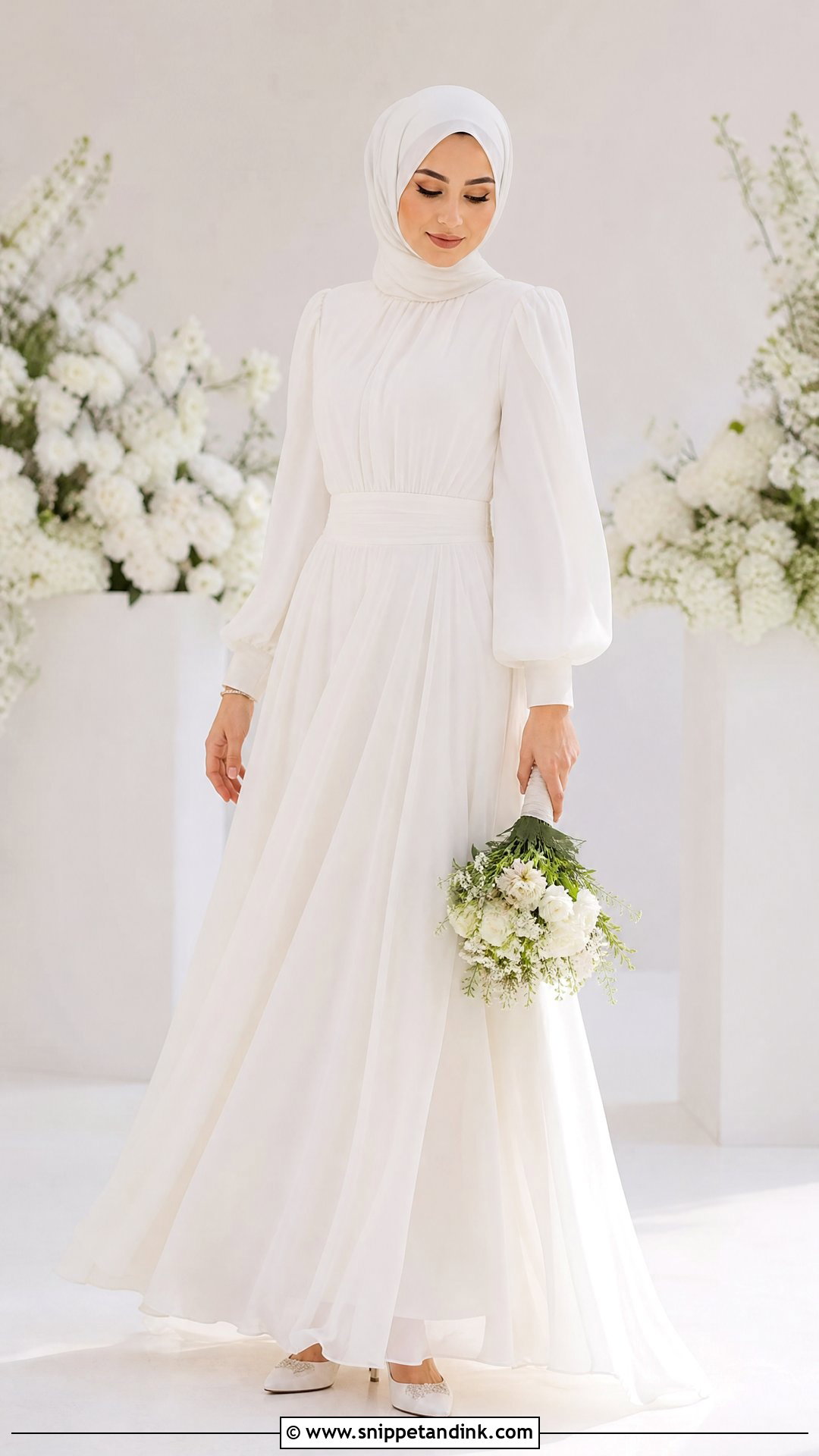
Chiffon is the fabric I recommend for heat, a destination venue or a very long day, because it barely weighs anything and lets air through. For coverage, start with a lined maxi gown with long sleeves, a high neckline and a relaxed A-line skirt. A chiffon hijab in the same shade makes the outfit read as one piece. Lace cuffs, pearl buttons or a small detail at the waist make it feel bridal rather than evening wear. Wind is the one thing to plan for outdoors: chiffon lifts easily, so pin the hijab firmly and wear low heels or sandals on grass.
11. Cape Hijab Wedding Dress
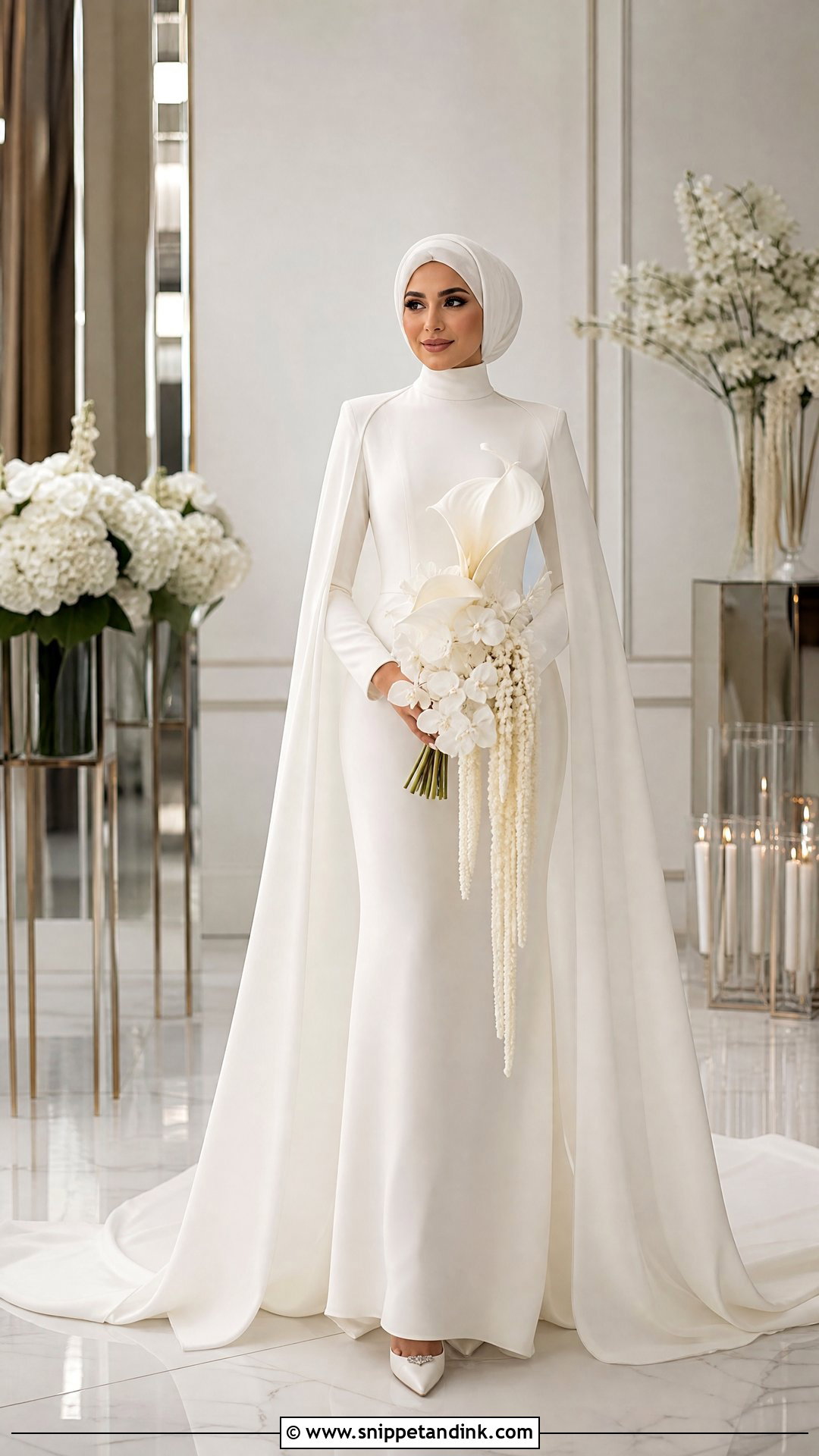
A cape gives drama without showing more of the body, which is exactly why hijab brides like it. It can attach at the shoulders, fall from the neckline or sit over a plain long sleeve gown. Crepe, satin and chiffon capes move well when you walk; stiff fabrics tend to stick out at the back. I keep the hijab tucked so the neckline stays clean and the cape has a clear starting point, and I skip necklaces entirely. One practical point: a long cape gets stepped on, so practise turning and sitting in it, and ask for a wrist loop if it trails.
12. Detachable Sleeve Hijab Wedding Dress
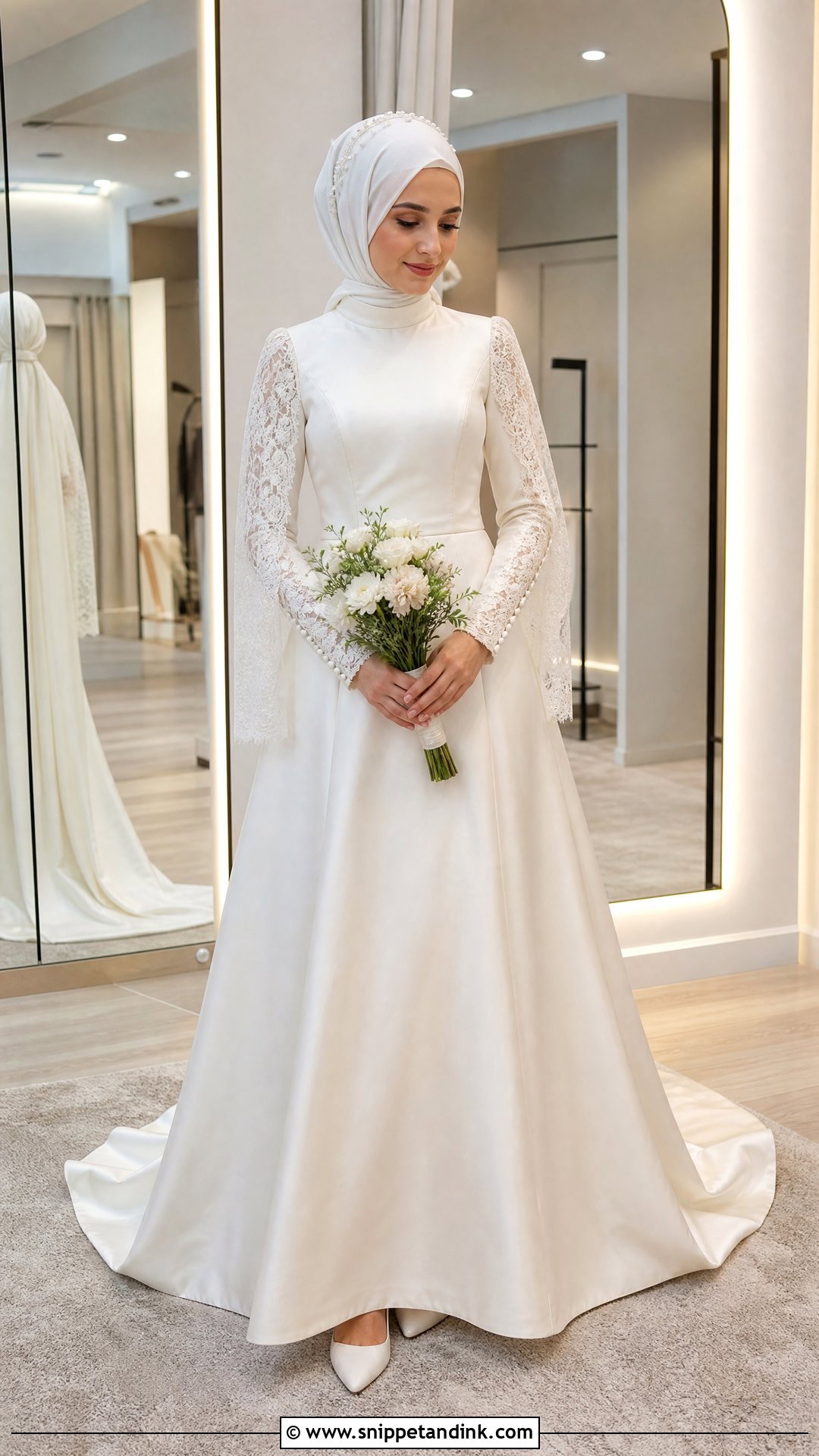
Removable oversleeves, cape sleeves or a jacket layer let you change the outfit between ceremony and reception. The thing I check first is what the base dress looks like without them. If the bodice underneath is strapless or low, it won’t work for a hijab bride on its own, so ask for a high-neck underlayer that stays on all day. Satin, lace and crepe all suit this kind of gown. Keep the hijab and accessories simple so the change looks planned. Have someone who knows the fastenings on hand for the swap; hooks and snaps at the shoulder are fiddly.
13. Embroidered Hijab Wedding Dress
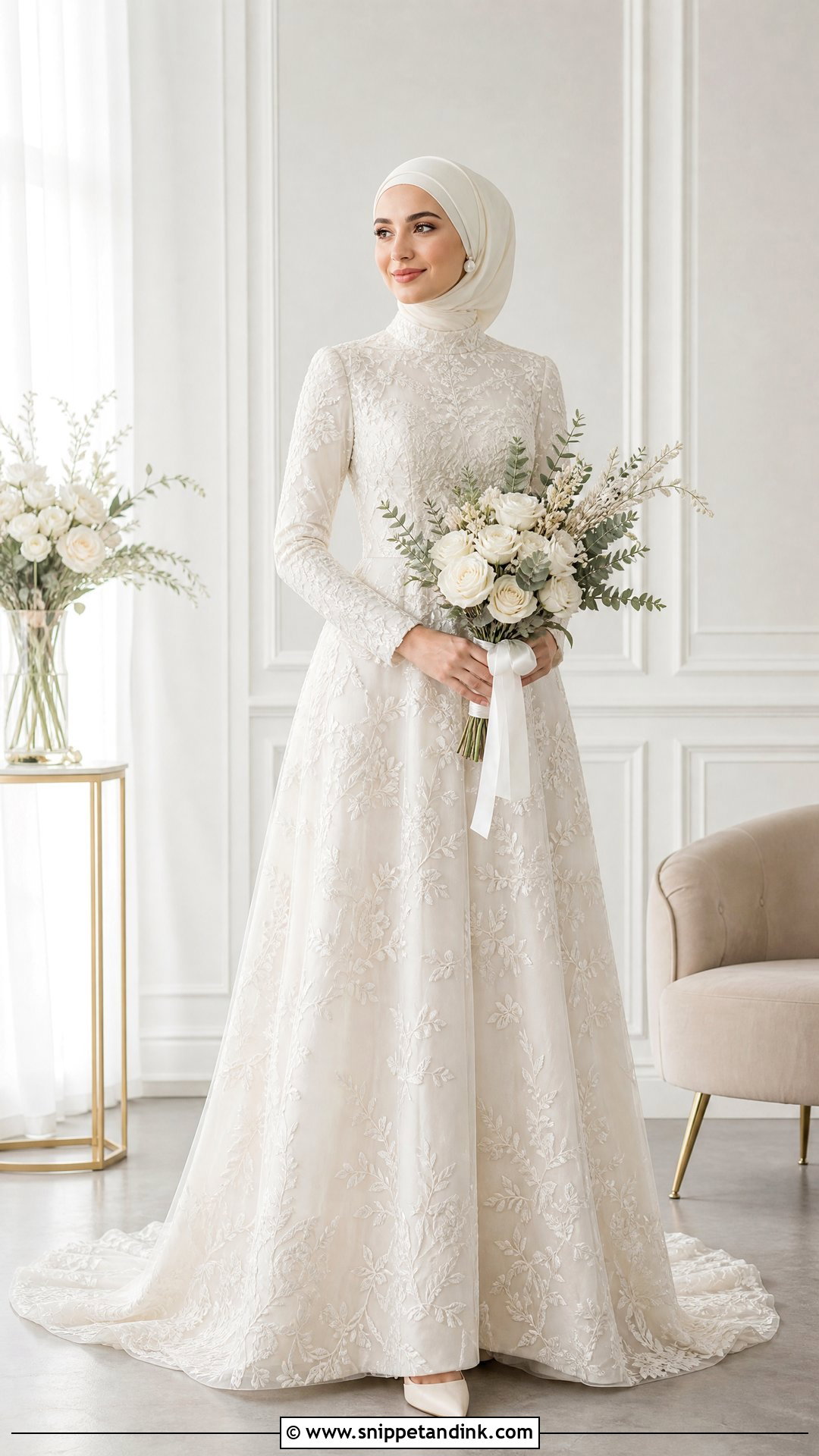
Embroidery gives richness without sparkle, and tone-on-tone thread is the version I find most wearable. Floral vines, geometric motifs or threadwork can run across the bodice, sleeves, hem or train, depending on how much detail you want. Under the high neckline and long sleeves, the lining is what keeps embroidered fabric from scratching, so feel the inside of the sleeve before you commit. A plain hijab suits a heavily embroidered gown. On a quieter gown, a hijab with a lightly embroidered border can pick up the motif.
14. Minimalist Hijab Wedding Dress
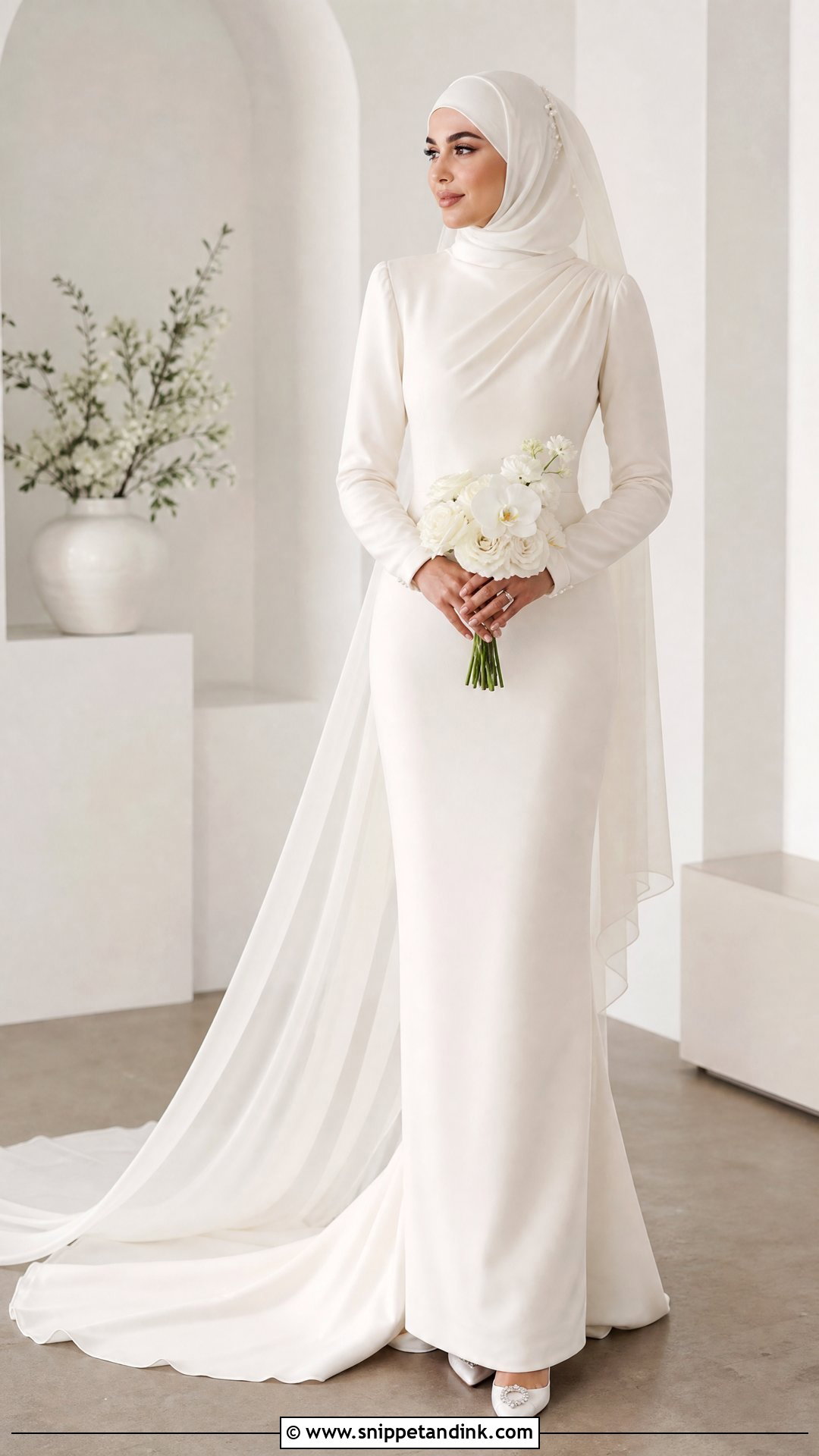
With no embellishment to hide behind, a minimalist gown lives or dies on the cut. That means long sleeves that end at the right point on the wrist, a high neckline that doesn’t gape, a smooth bodice and a column or A-line skirt. Crepe, satin and mikado are my choices here because they hold their shape. A plain ivory hijab, simple pearl pins and pointed heels are enough. Allow yourself one statement detail, such as covered buttons, a long train or a structured cuff, and stop there.
15. Mock Neck Hijab Wedding Dress
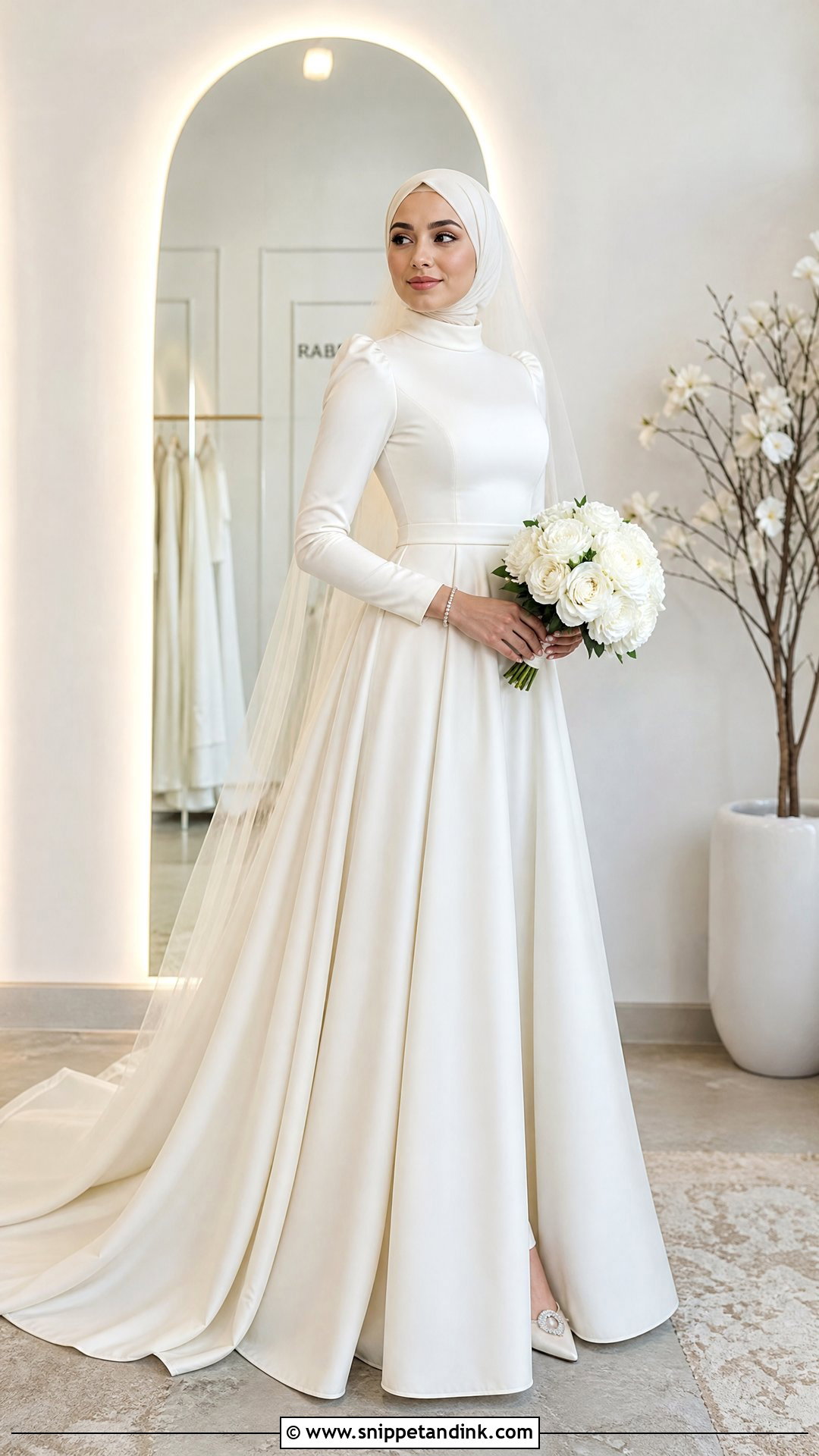
A mock neck is one of the easiest necklines to style with a hijab because it’s already covered and sits close to the throat. Paired with fitted long sleeves and a clean skirt, it looks finished without needing extra layers. Lace mock necks look softer; crepe and satin read more modern. I use a tucked or lightly wrapped hijab here, with very few folds, otherwise the fabric bunches against the collar. Small earrings, a bracelet and heels are enough, and on a plain gown a long veil over the hijab adds softness.
16. Bateau Neck Hijab Wedding Dress
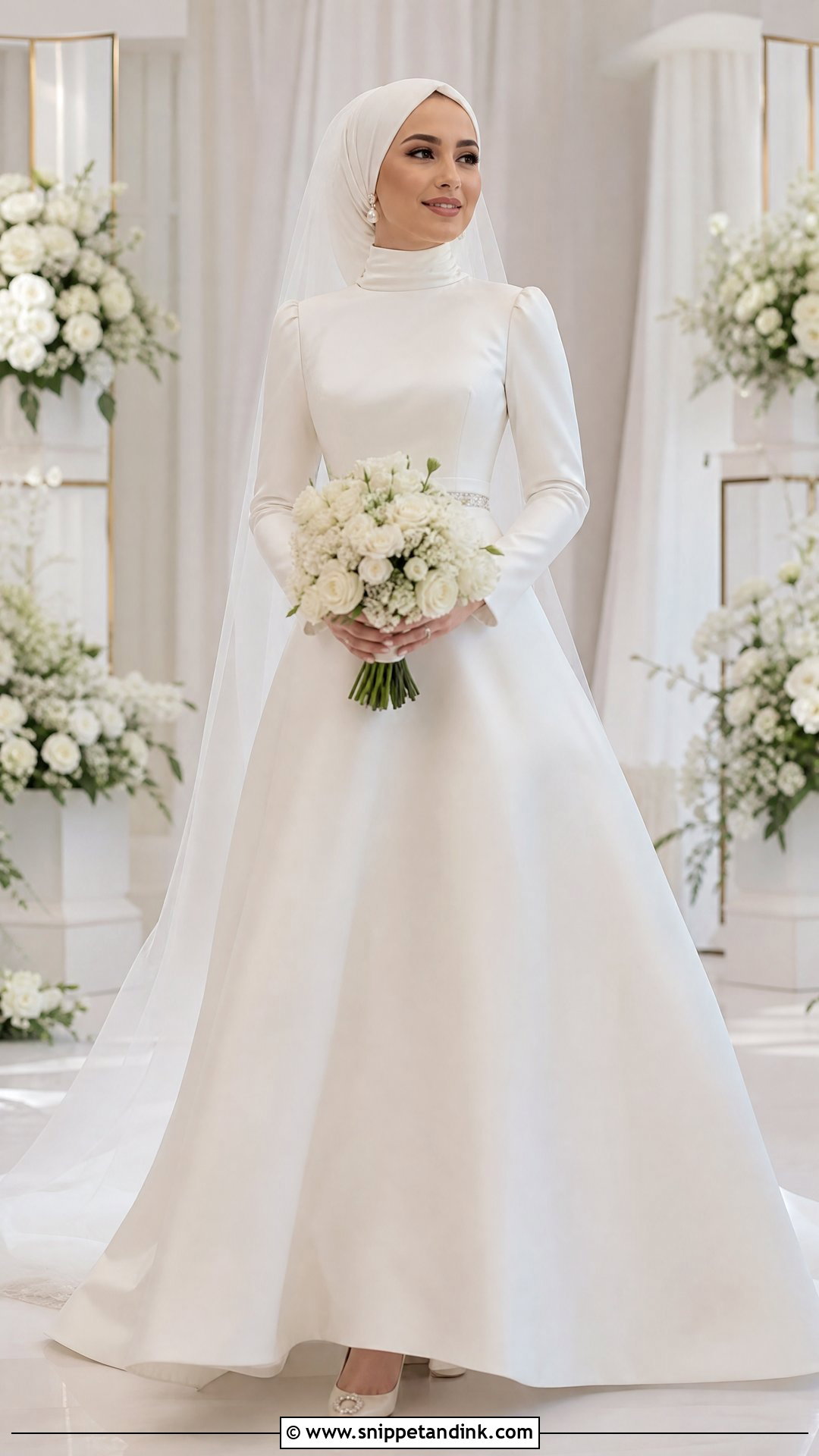
A bateau neck runs straight across the collarbone, and on a hijab bride that line needs care. If it sits low enough to leave a gap between hijab and gown, ask for a matching underlayer or raise the neckline slightly at your alterations appointment. With long sleeves, a fitted bodice and an A-line or sheath skirt, it has a classic outline. Satin and crepe keep it crisp; lace makes it softer. Tuck the hijab under the neckline for a tailored finish, and keep the extras to pearl earrings, a structured bouquet and low heels.
17. Square Neck Hijab Wedding Dress
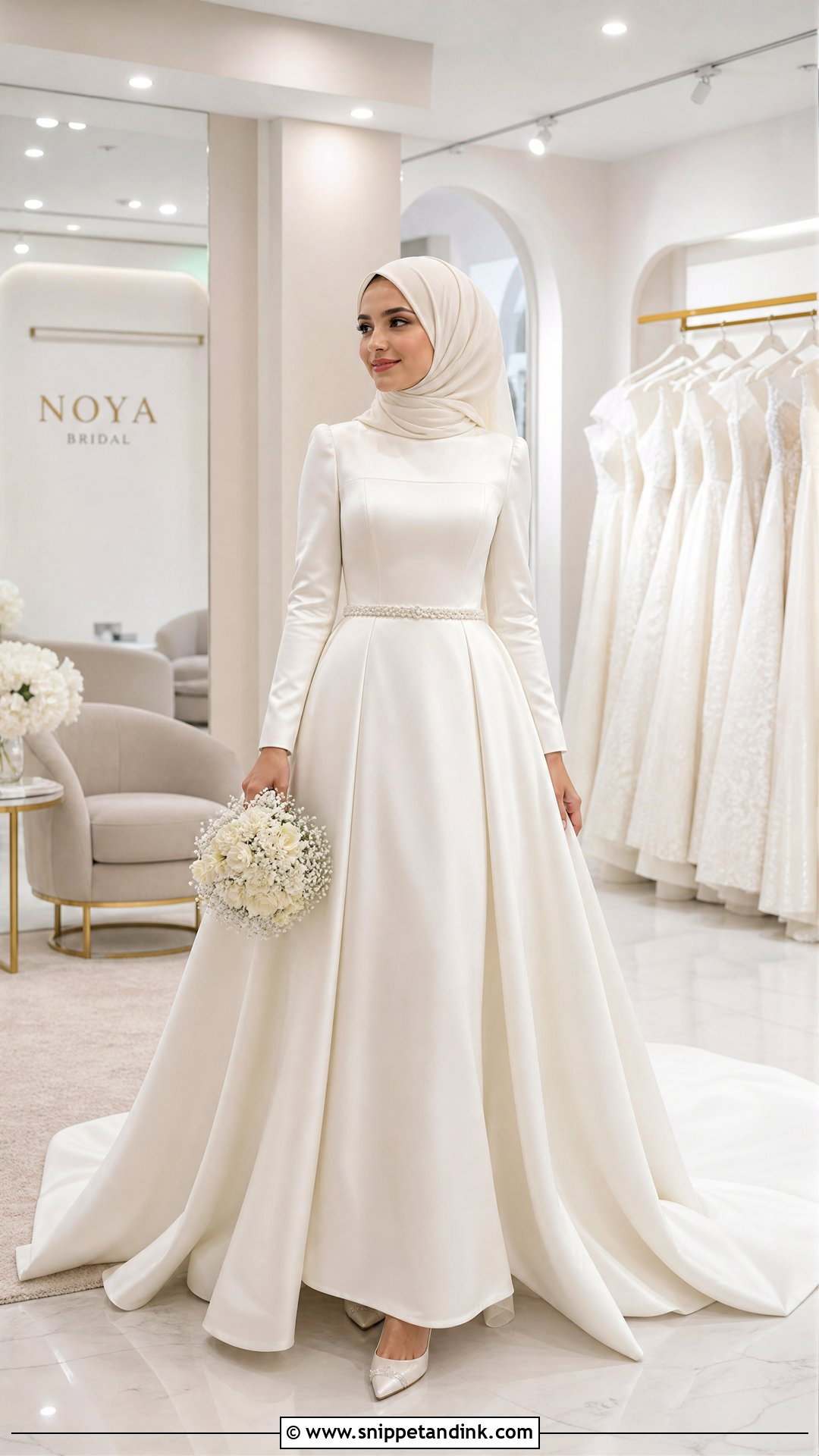
Square necklines are usually cut lower than a hijab bride wants, so this one almost always needs work: a higher square cut or a matching modest insert behind the bodice. When it’s done well, the straight lines frame the upper body and look very current. Long sleeves balance the shape. Structured satin, crepe or lace hold the corners of the neckline; soft fabrics let them collapse. Wrap the hijab close to the face to keep the lines clean, and finish with a pearl belt, simple heels and a small bouquet.
18. Mermaid Hijab Wedding Dress
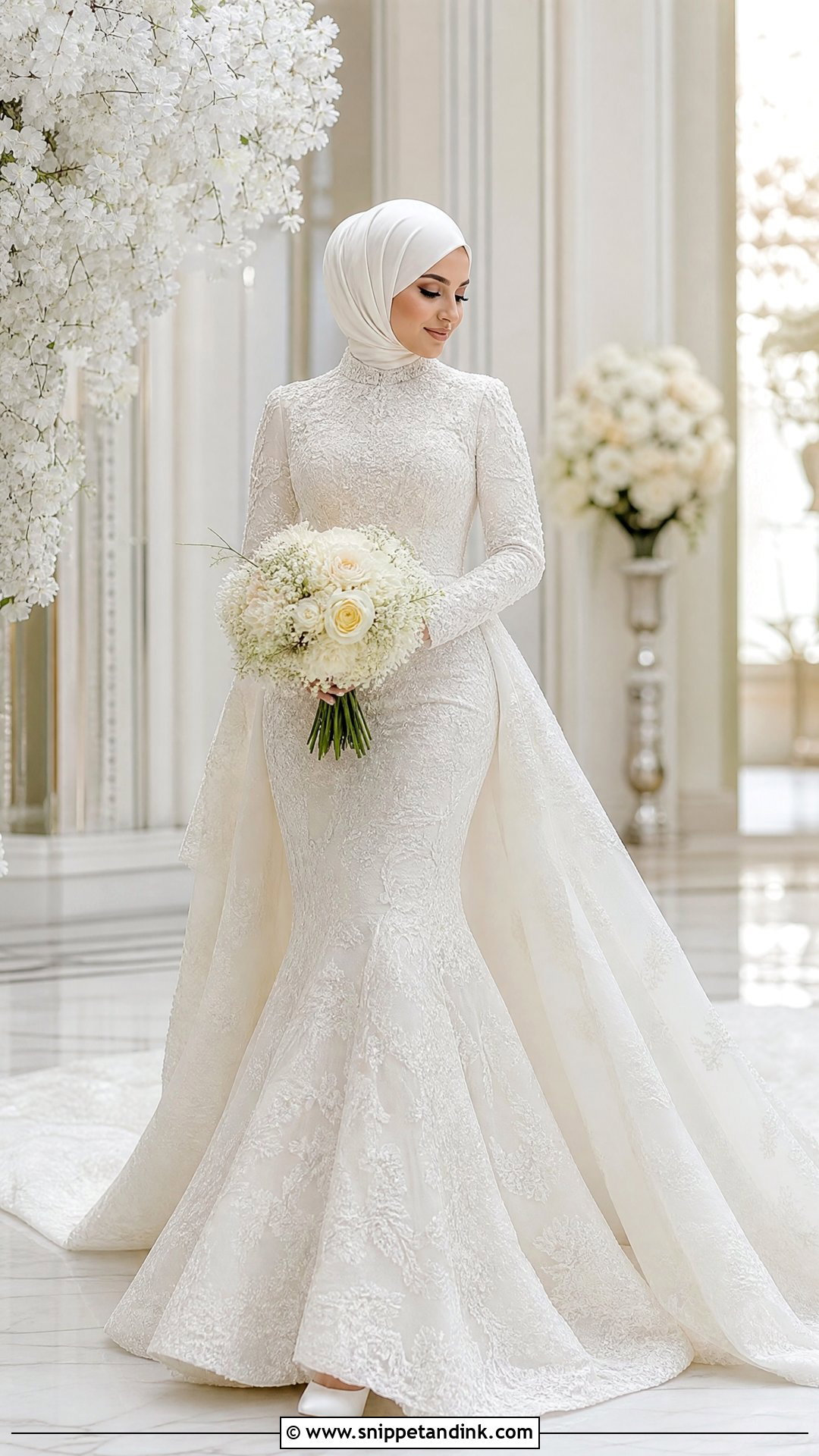
A mermaid cut can still be modest, but only if it skims instead of clinging. I ask brides to sit and climb a step at the fitting, because a mermaid that’s too tight at the knee shows it instantly. Long sleeves, a high neckline and a lined, structured bodice give you the base. Lace, crepe or beaded fabric all work. A simple hijab balances the fitted shape, and if you want more cover through the hips, a detachable overskirt or long cape solves it. Wear supportive heels; you’ll be taking smaller steps all day.
19. Empire Waist Hijab Wedding Dress
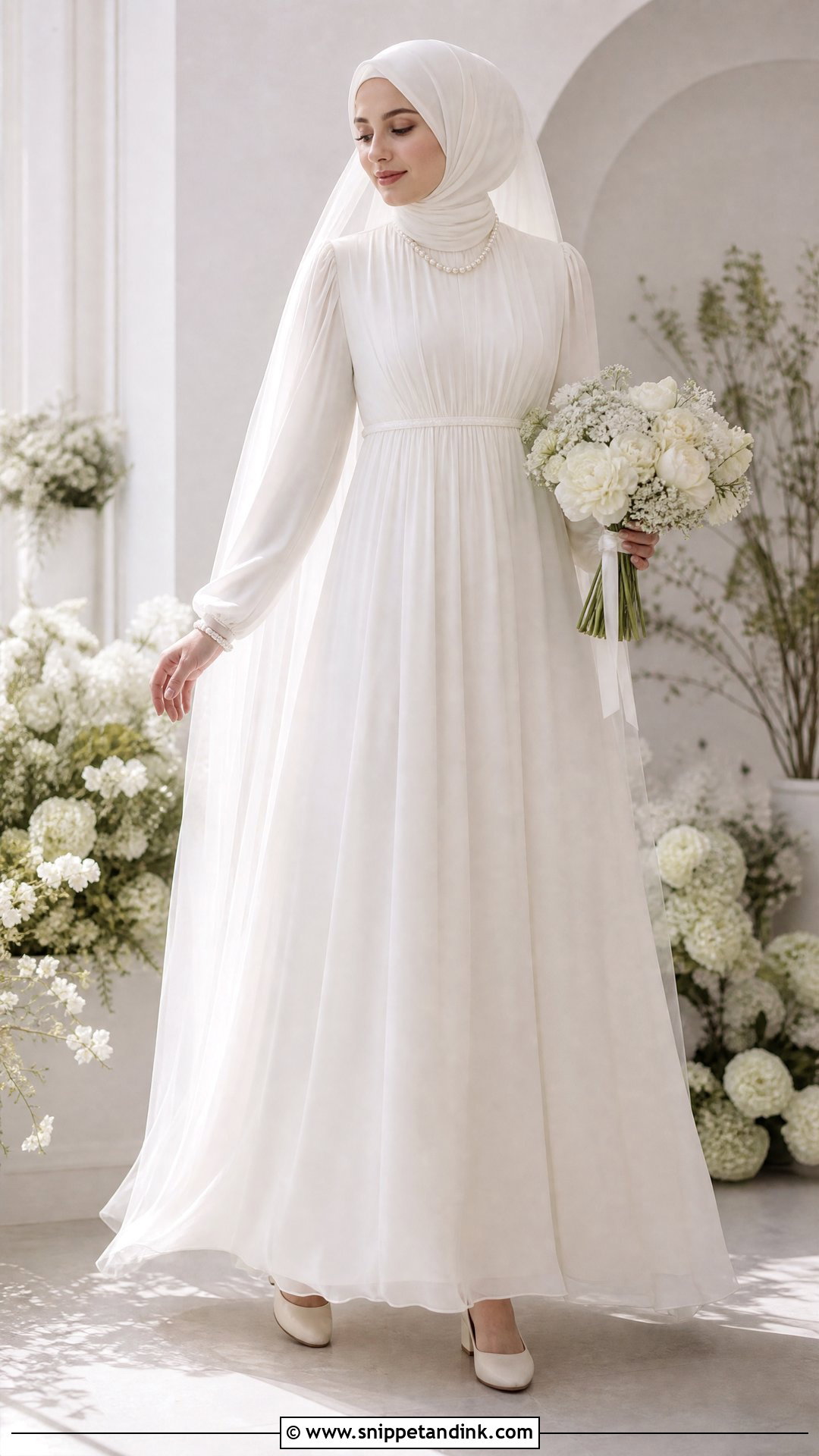
The empire waist sits just under the bust and falls straight into the skirt, so nothing presses on the midsection. That makes it one of the most comfortable modest shapes for a long celebration, and it suits pregnant brides too. Chiffon, tulle and soft crepe drape best here. Choose long sleeves, a high neckline and full lining, and a matching chiffon hijab to keep the whole outfit light. The risk is looking shapeless if the fabric is stiff, so test it in motion. Simple heels, a light veil and small pearl accessories are plenty.
20. Two Piece Hijab Wedding Dress
Two pieces give you more control over fit, since top and skirt can be sized separately. Think of a long sleeve, high neck bridal top with a full maxi skirt, or a structured peplum top over a flowing skirt. The one test I always run is the arm raise: lift both arms as if hugging someone tall and sit down. If any skin shows at the waist, the top needs to be longer. Lace, satin and crepe combine well. A plain hijab keeps it clean, and a matching veil makes it more formal.
21. Bridal Abaya Hijab Wedding Dress
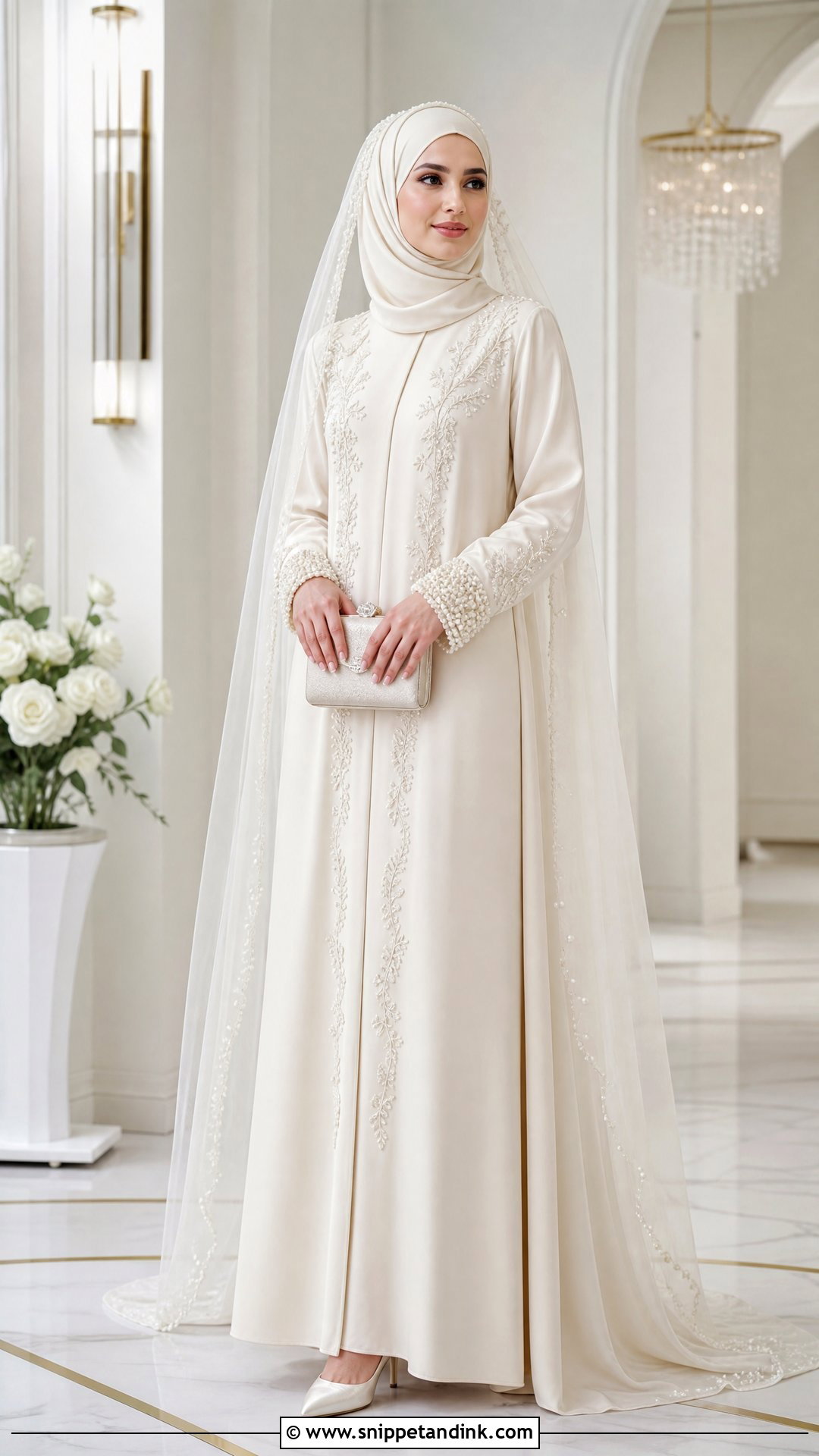
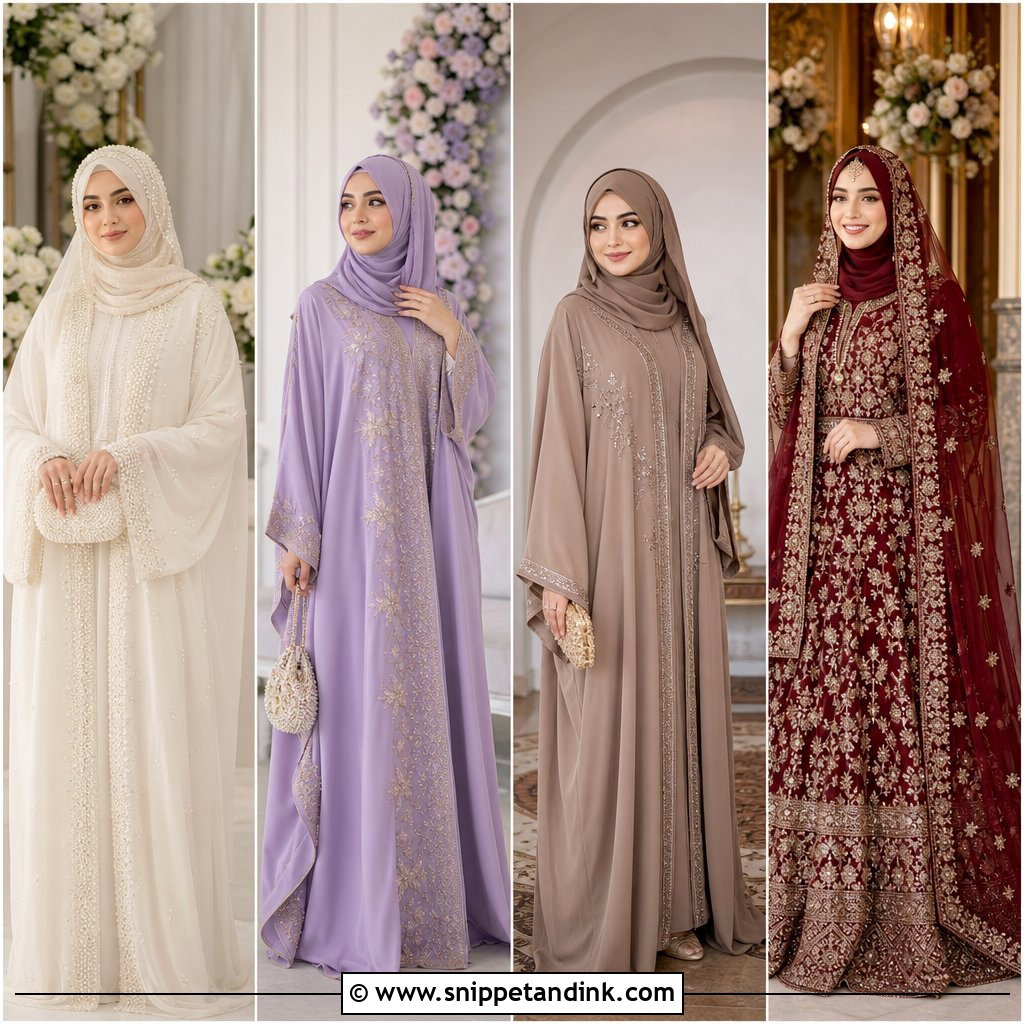
A bridal abaya hijab wedding dress puts modesty at the centre of the design rather than adapting a Western gown. The flowing shape gives full coverage and moves well in satin, chiffon, crepe or embroidered fabric. What makes it bridal is the finishing: detailed cuffs, pearl trim, lace panels or a little beading at the front opening. Check the closures, since snaps on an open-front abaya can pop when you sit. A matching hijab keeps it cohesive, and a soft veil adds ceremony. Closed-toe heels, a small clutch and simple jewelry are enough.
22. Kaftan Hijab Wedding Dress
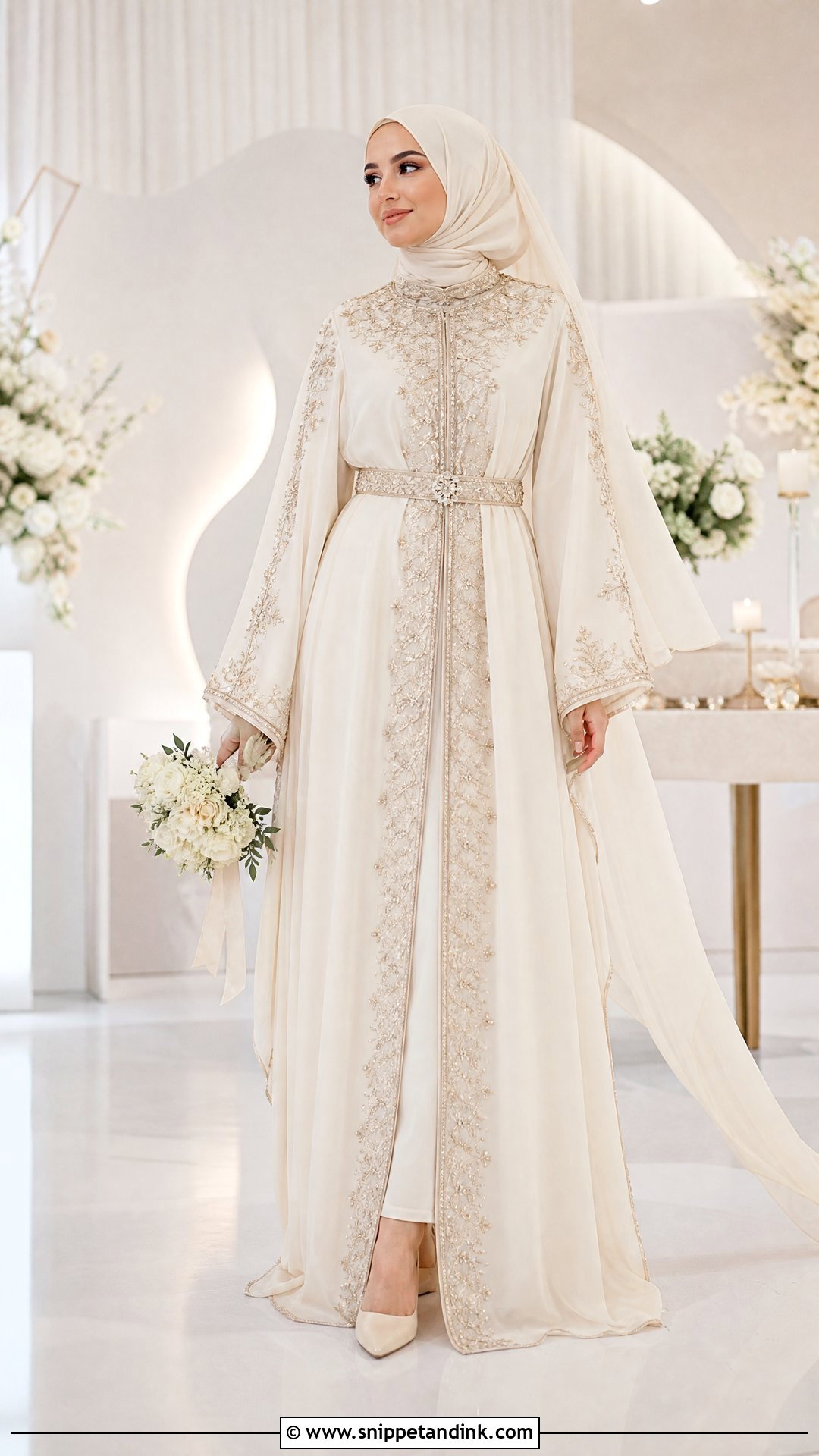
A kaftan hijab wedding dress is for the bride who doesn’t want anything fitted at all. Bridal kaftans range from plain and sleek to heavily worked with embroidery, pearls and beads. Look for a floor-length cut with long sleeves and a high neckline; a belt at the waist adds shape if you want it. Wide kaftan sleeves can slide up when you raise your arms, so I sometimes add a fitted inner sleeve. A chiffon or satin hijab in the matching shade keeps it polished. Check the hem length against your actual heels so you don’t catch it. Kaftans suit intimate celebrations and cultural ceremonies particularly well.
23. Pakistani Hijab Wedding Dress
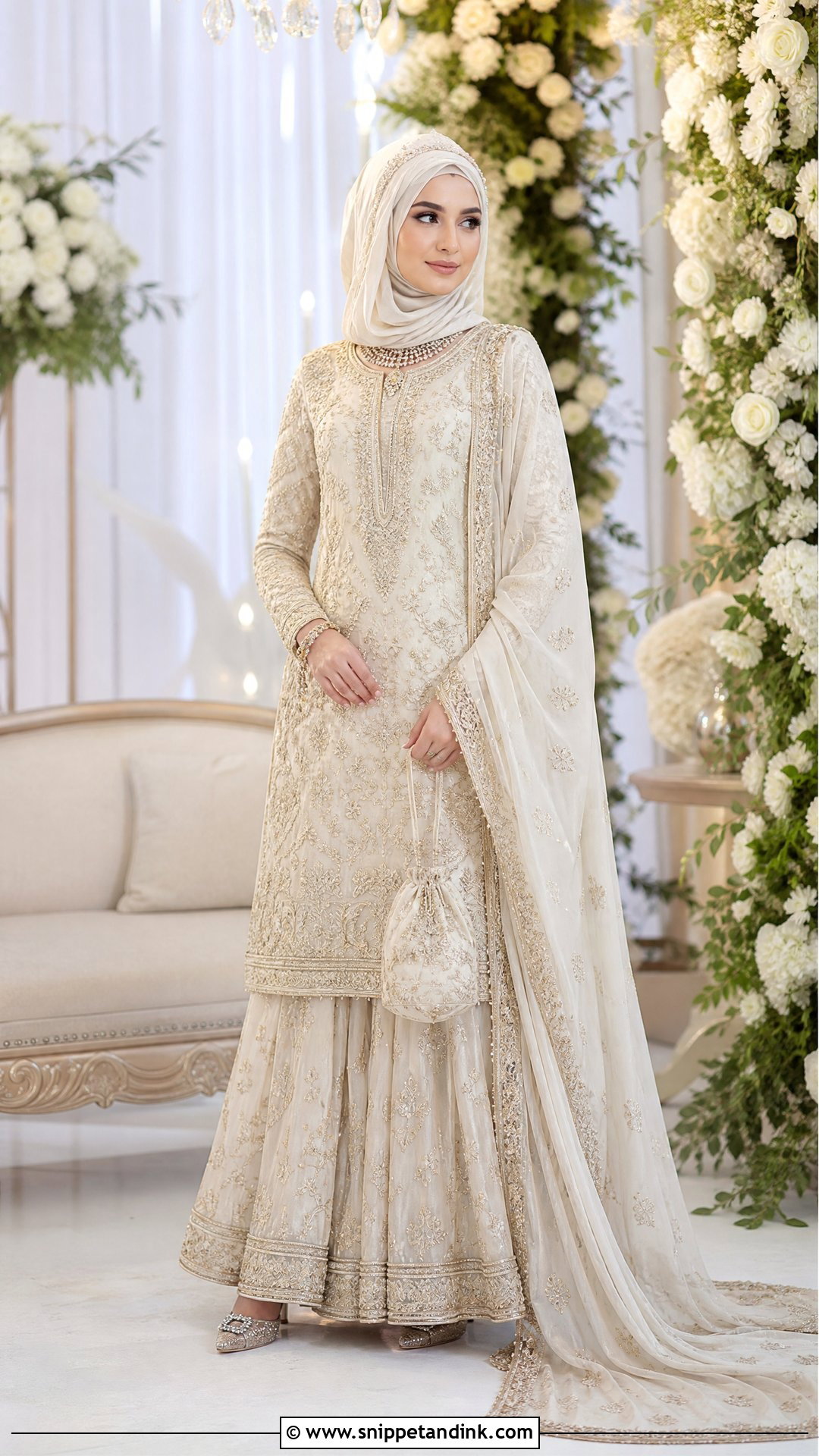
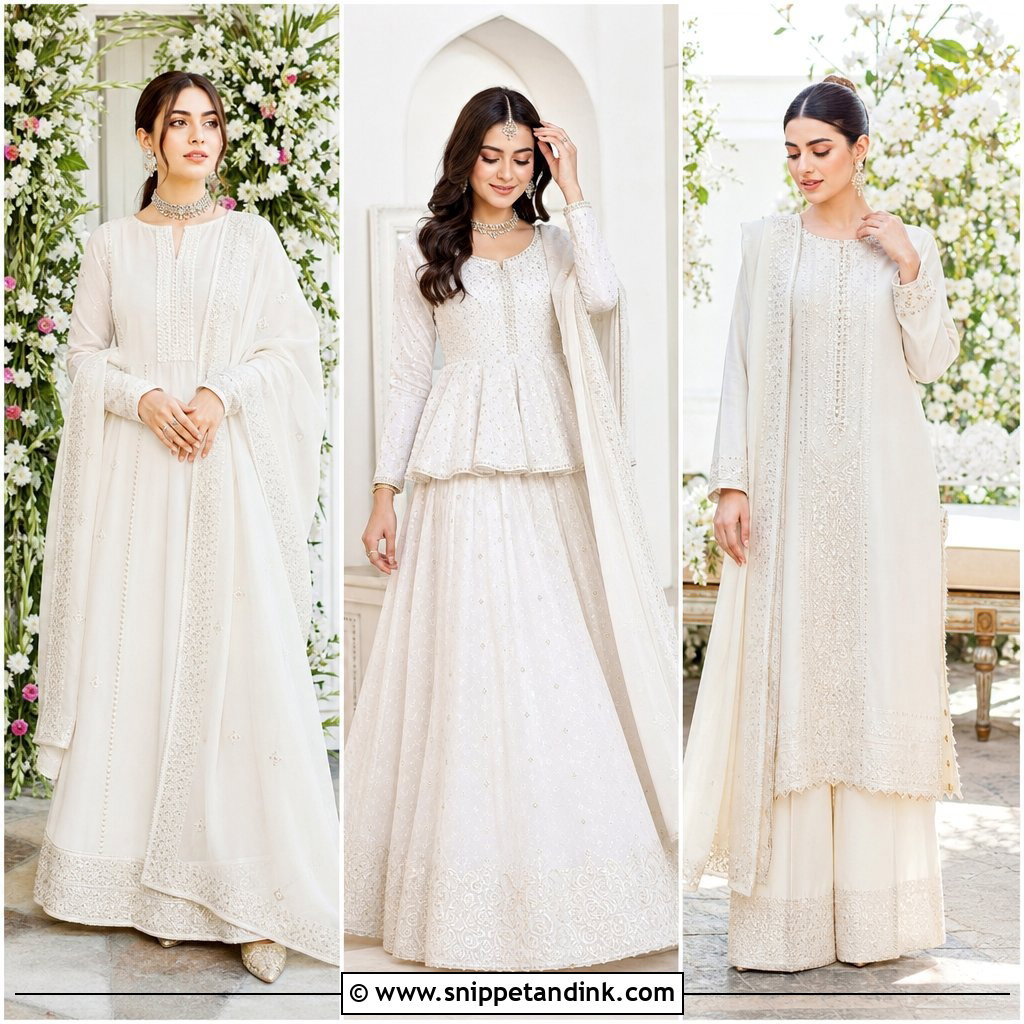
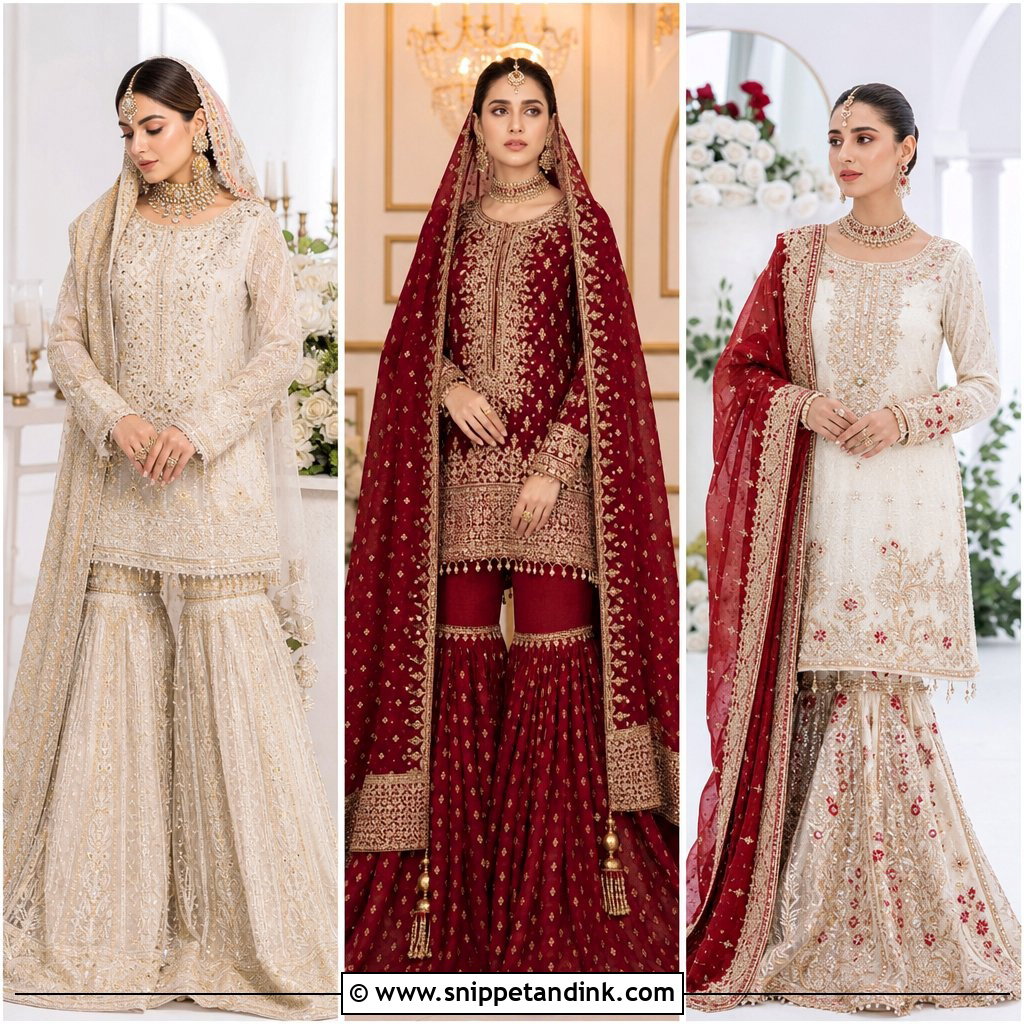
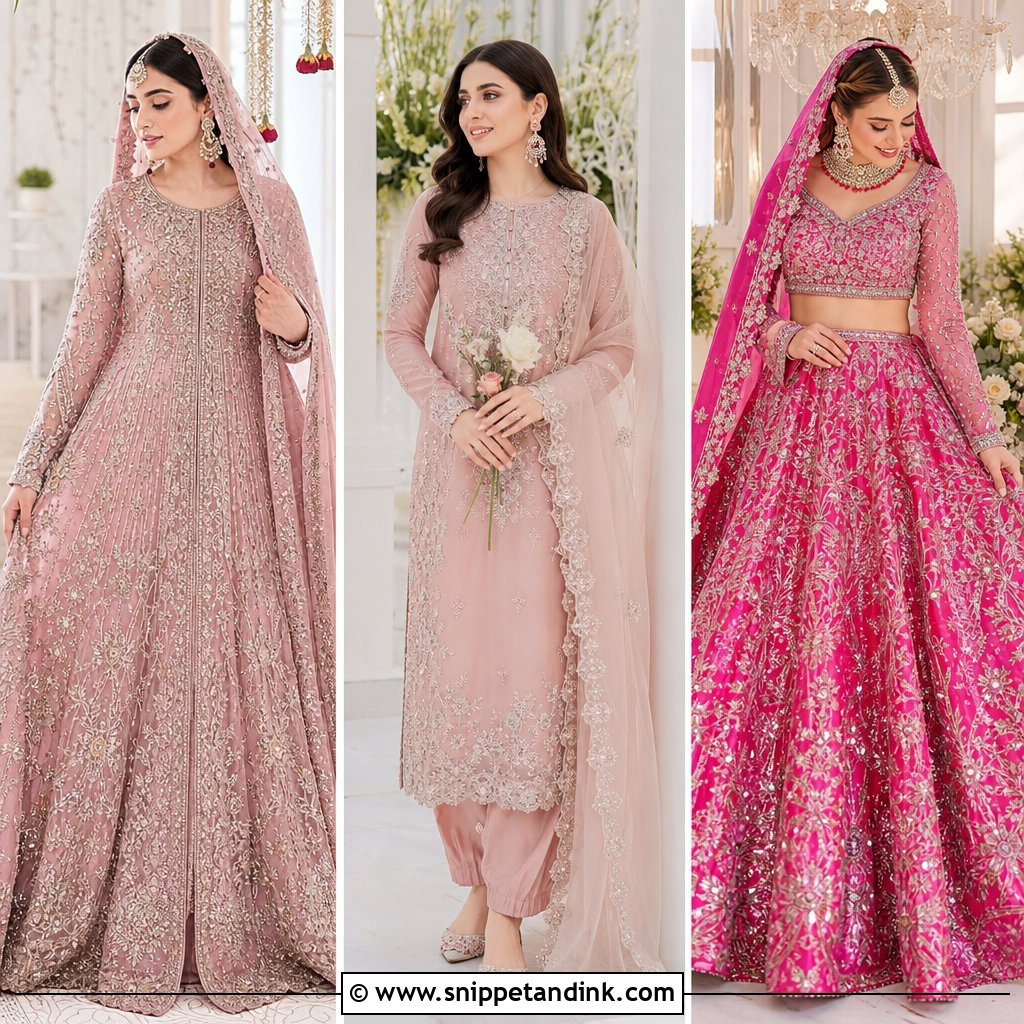
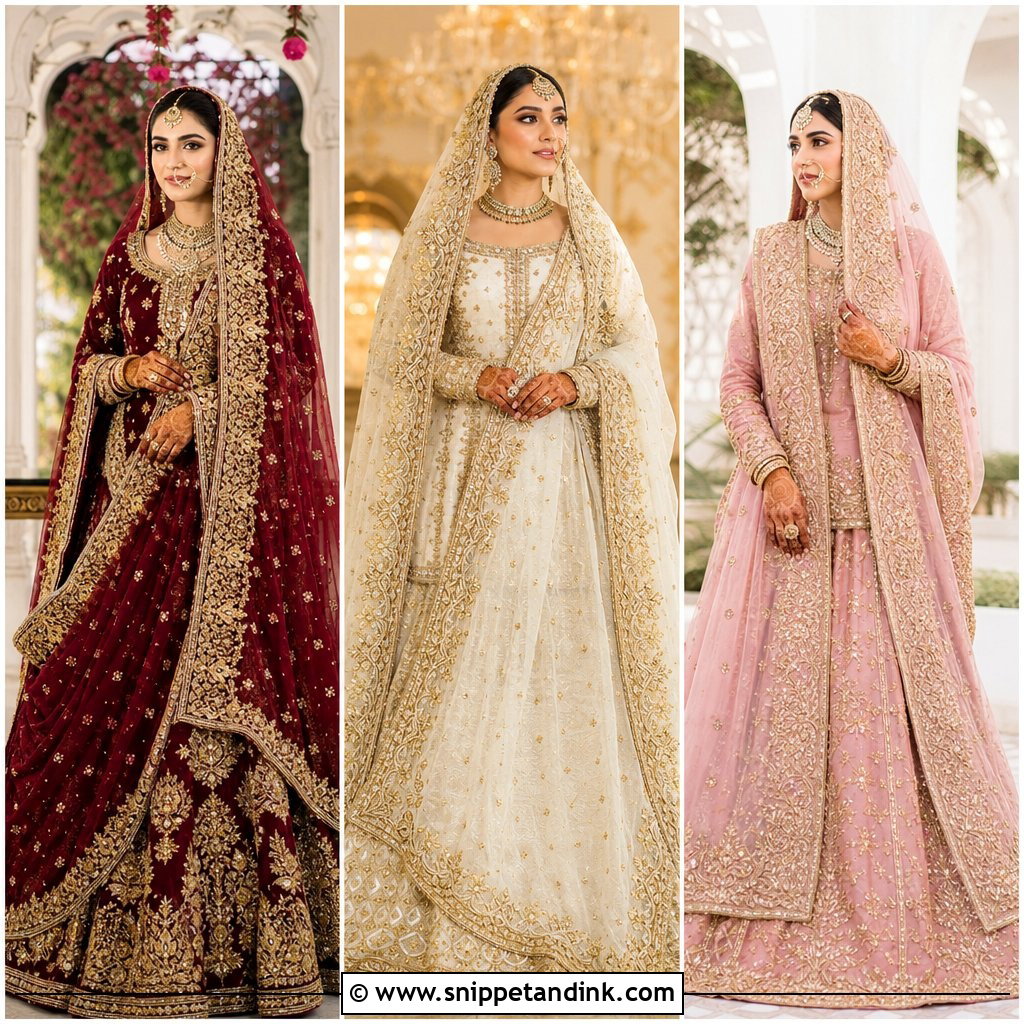
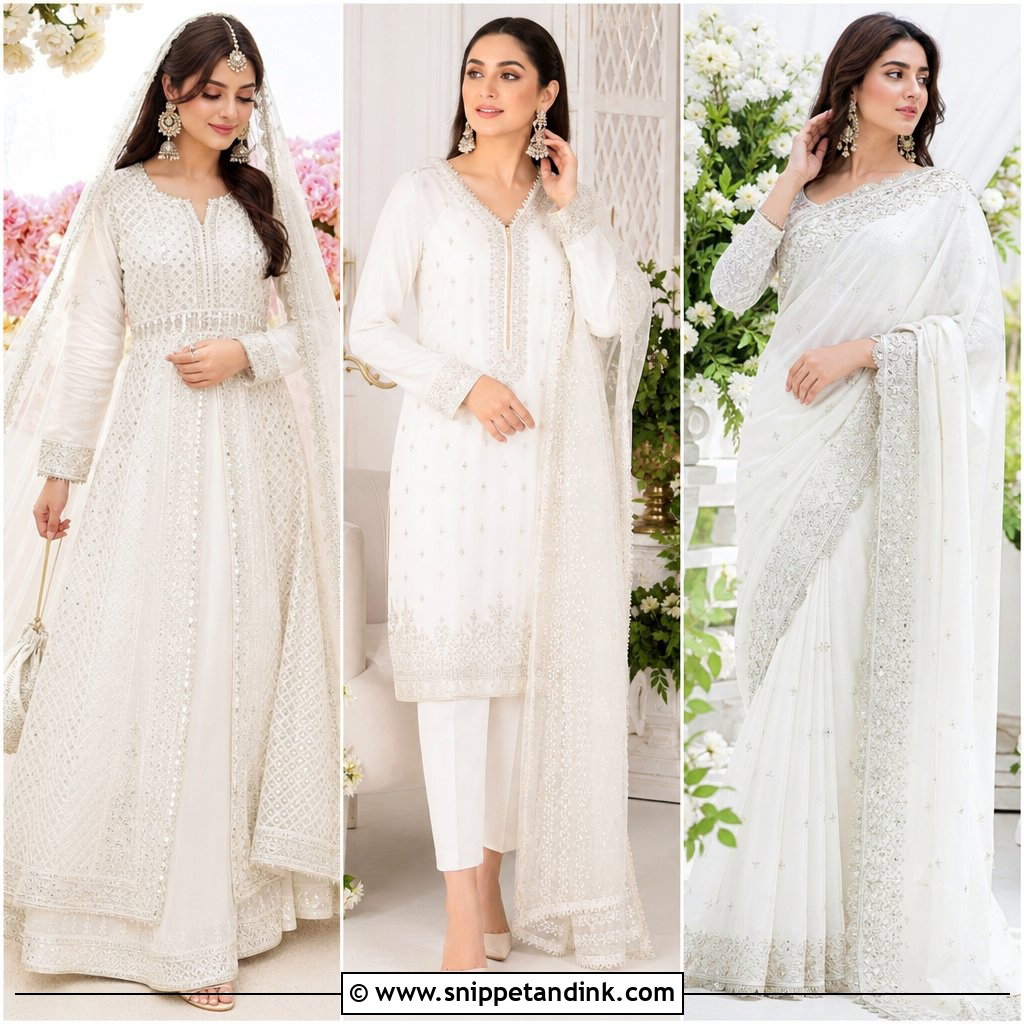
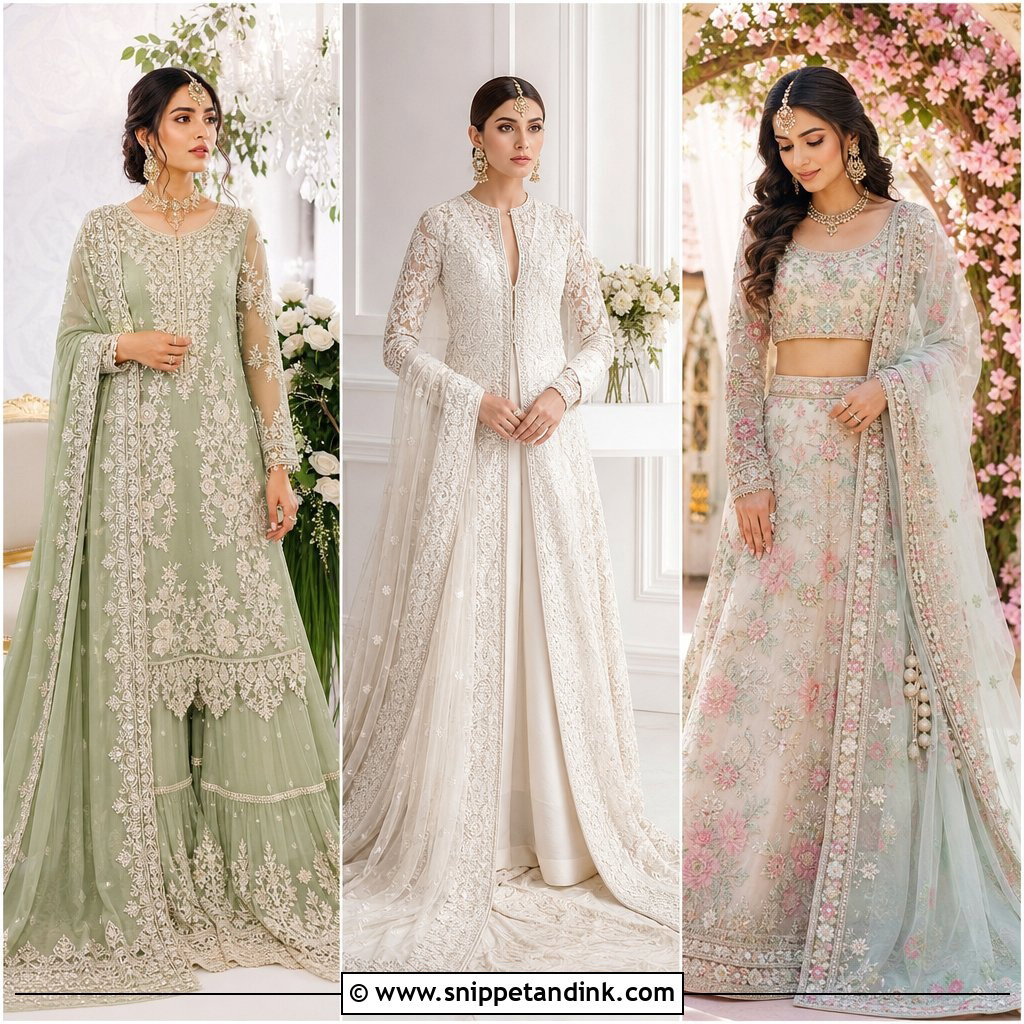
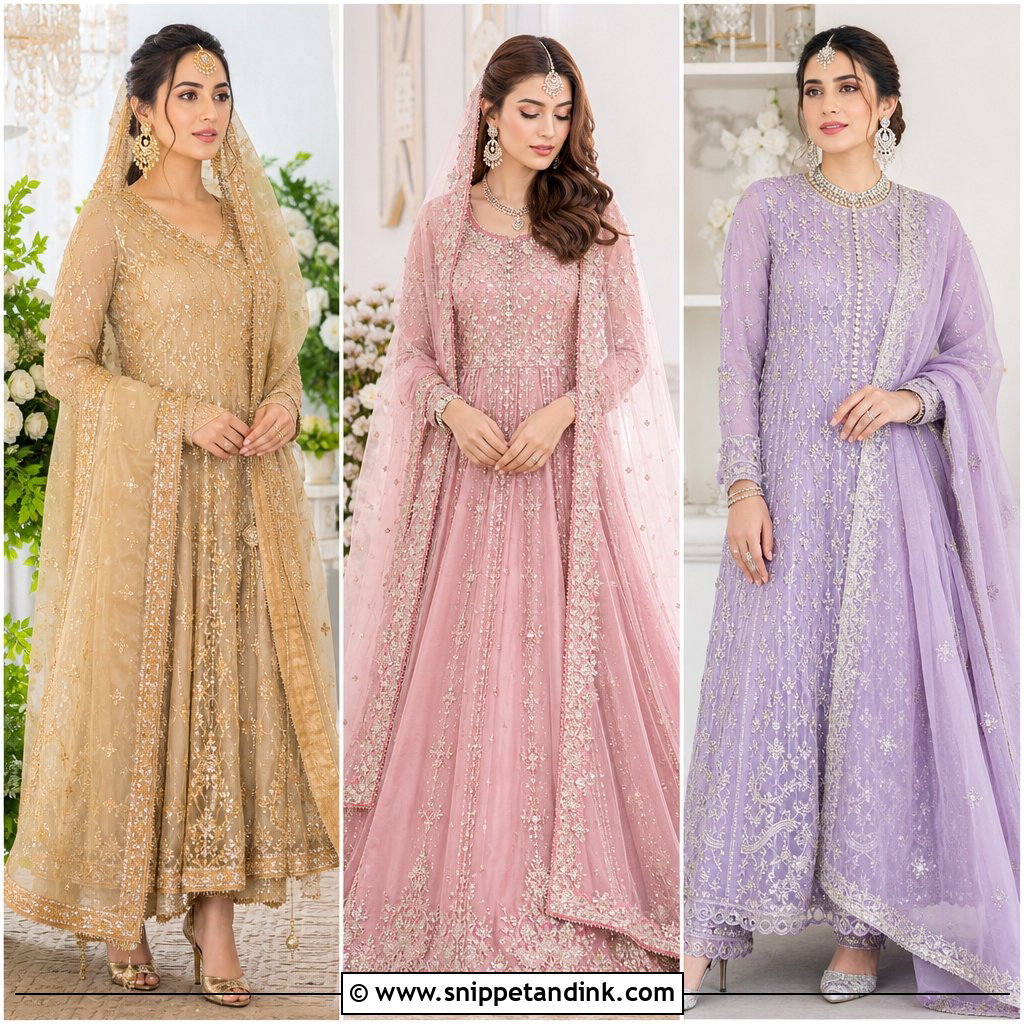
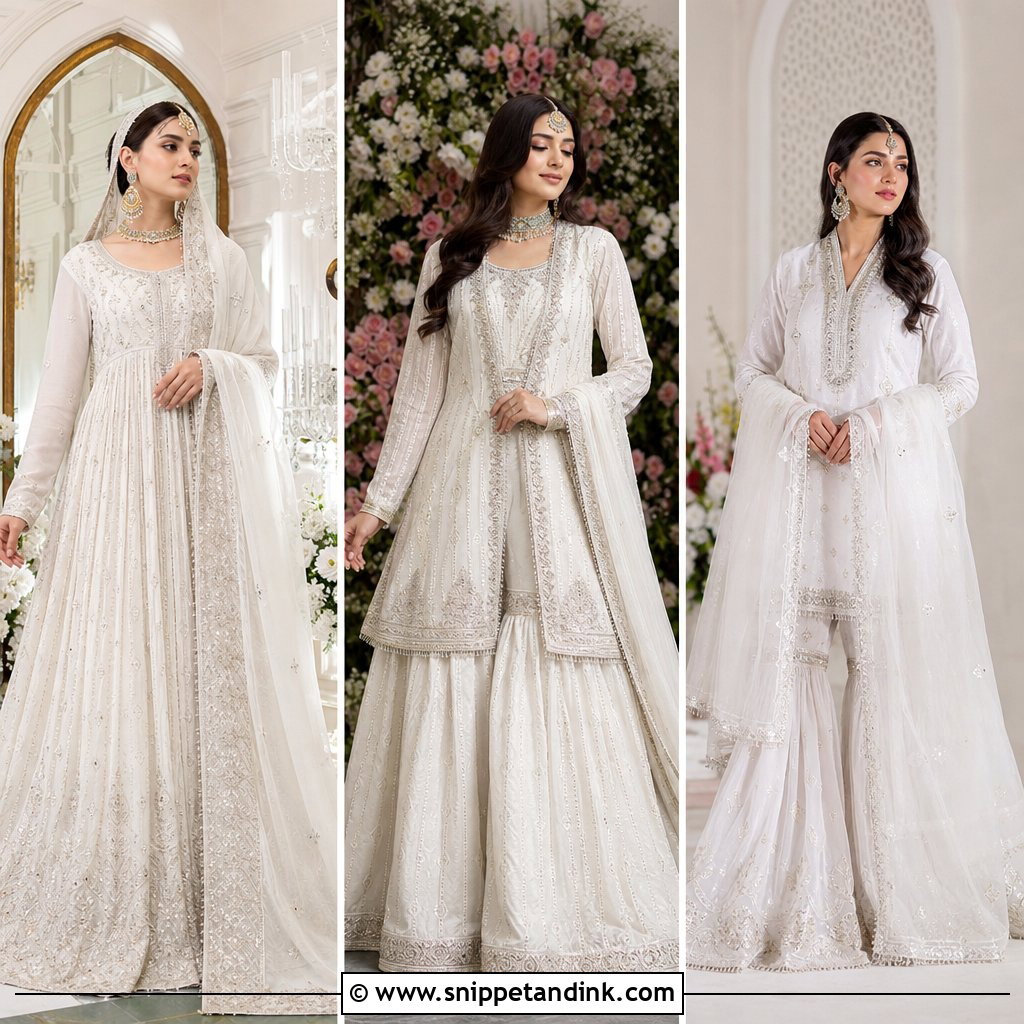
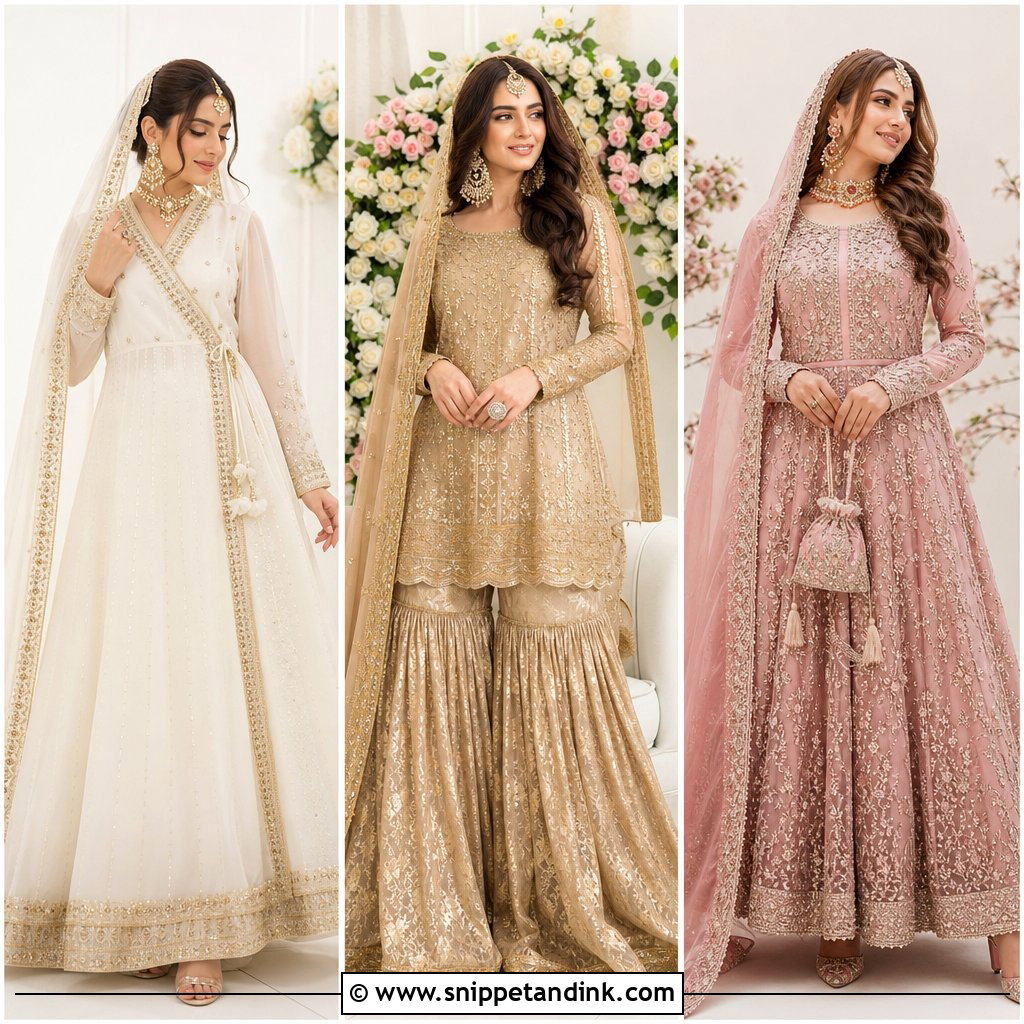
A Pakistani hijab wedding dress usually means layers: a long kameez over a lehenga, gharara or sharara, with heavy embroidery and a dupatta. The dupatta is where hijab styling gets tricky. Pinned straight over a hijab, a heavy dupatta adds bulk and pulls the hijab back, so I pin the hijab firmly first and then anchor the dupatta at the crown and shoulder with separate pins. Long sleeves and a high neckline keep the kameez modest. Ivory, champagne, blush, gold and soft pastels are common for nikah, while deeper reds feel traditional and regal.
24. Turkish Hijab Wedding Dress
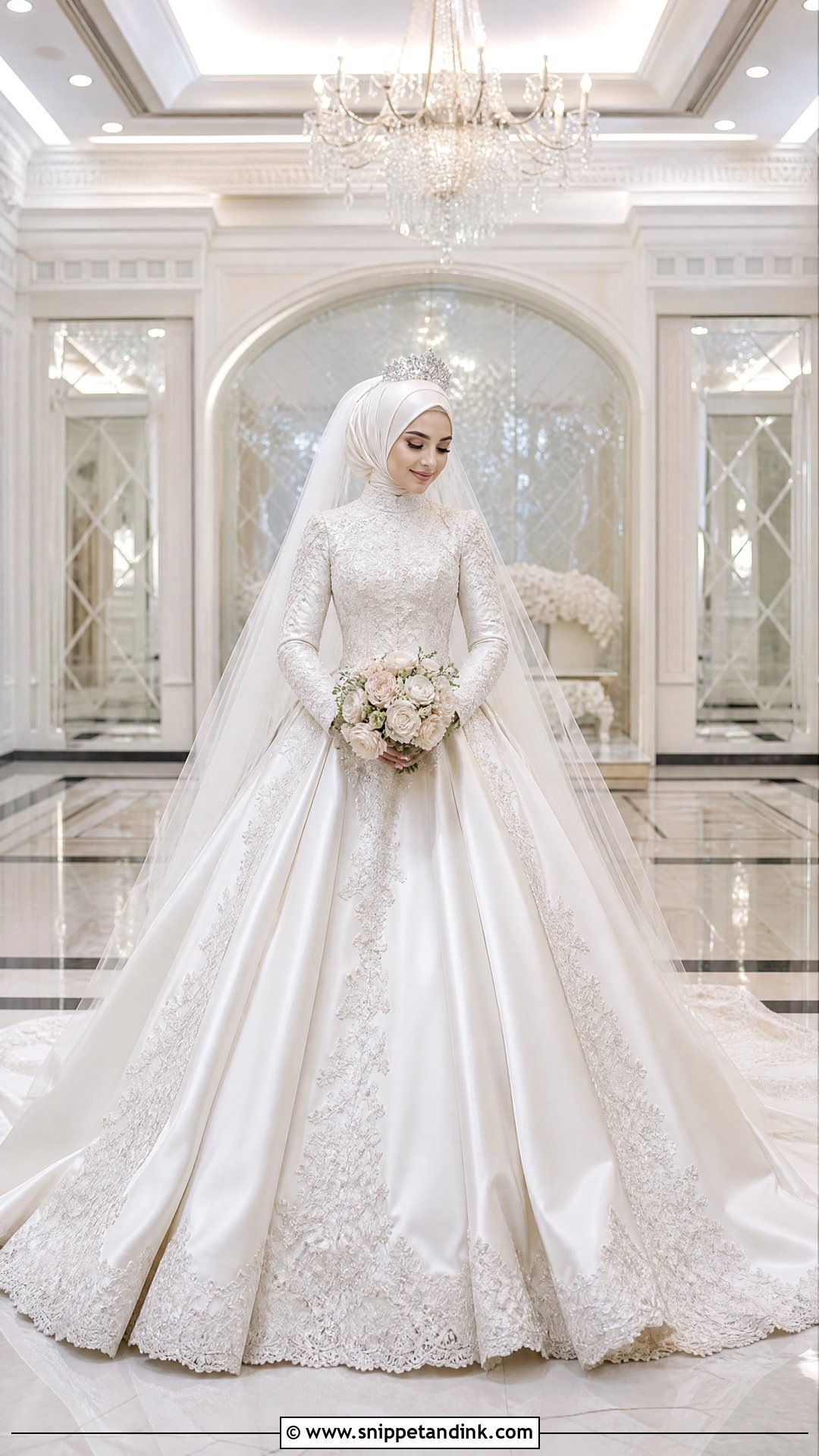
A Turkish hijab wedding dress tends to be highly structured: high neckline, long sleeves, fitted bodice, full skirt and a long train. Satin, lace and tulle dominate this style. The hijab is wrapped neatly, often with volume at the back of the head, and topped with a veil, tiara or small headpiece. Because the gown itself has so many features, I pick one to lead, such as the lace sleeves, the beaded bodice or the skirt, and keep the rest quiet. Closed-toe heels and a refined bouquet finish it.
25. Plus Size Hijab Wedding Dress
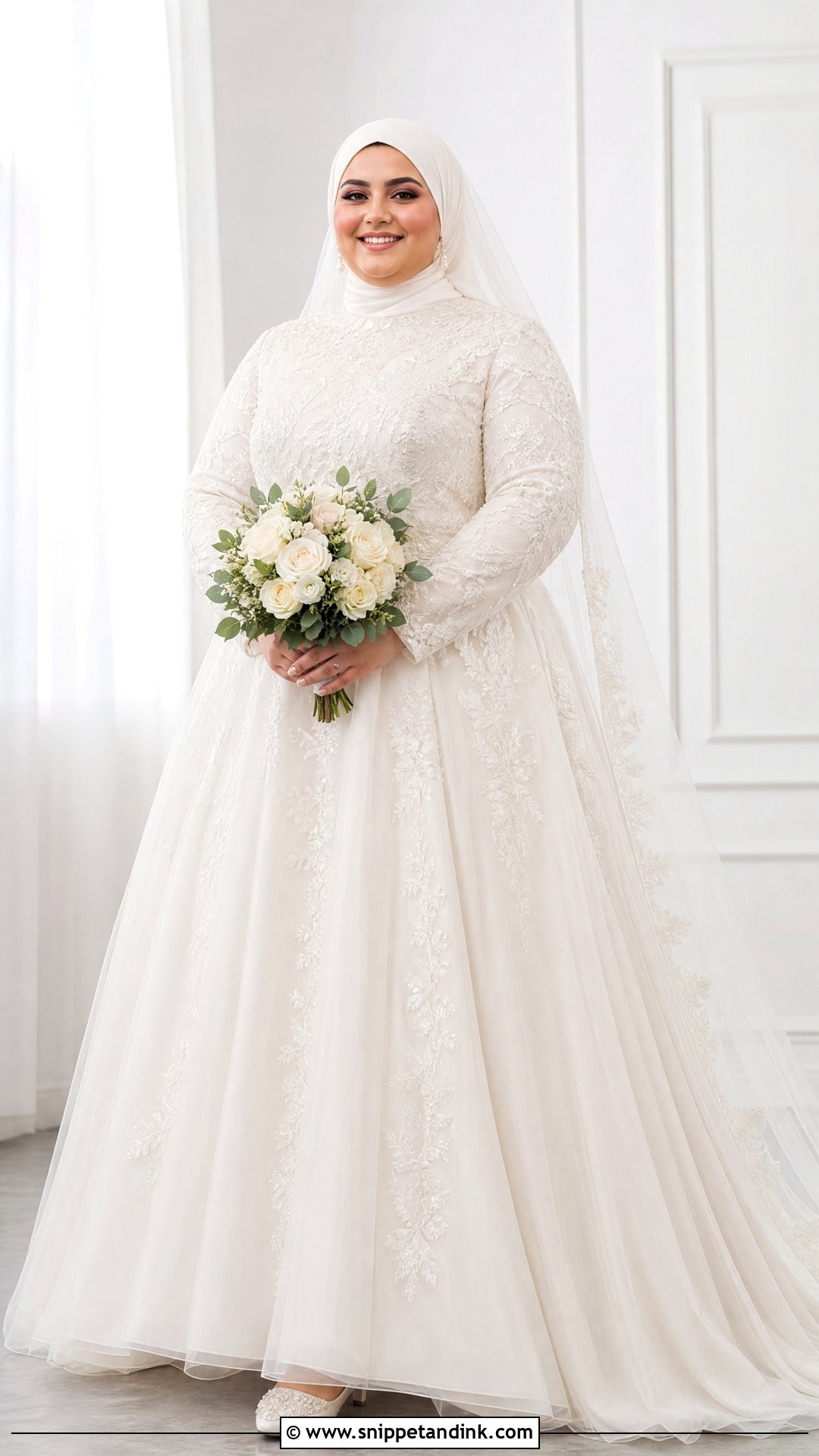
For a plus size bride, construction matters more than style names. I look for strong lining, flat seams, real boning in the bodice and sleeves cut with room at the upper arm, because tight sleeves are the most common complaint I hear by the end of a day. A-line gowns, empire waists, soft ball gowns and structured crepe all work. Lace panels, pearl trim or a defined waist give shape. Choose a hijab fabric with some grip, like jersey or matte chiffon, rather than slippery satin. Comfortable heels or embellished flats help more than you’d think. The aim isn’t hiding the body; it’s a gown that fits it properly.
Ivory Is Never Just Ivory
The most common styling problem I fix on the day is a hijab that’s a slightly different white from the gown. Bridal whites range from bright optic white to warm ivory, champagne and a pale pinkish shade, and next to each other a mismatch looks like a mistake in photos. Ask your shop for a fabric swatch from the gown and take it with you when you buy the hijab. Check them together in daylight, not under shop spotlights.
Fabric that stays put
Satin hijabs look luxurious but slide, especially on silky undercaps. Matte chiffon, crepe and jersey grip better. If you love satin, a cotton or bamboo undercap with some texture holds it in place, and a few flat pins at the temple do more than lots of pins at the chin. When a veil goes on top, I anchor its comb into the undercap itself, never just the hijab, so it can’t drag the hijab backwards.
Planning around prayer
If you’ll be praying during the celebration, think about how you’ll make wudu in the gown. Tight lace cuffs are hard to push past the elbow, so some brides ask for a button or snap at the cuff, or bring a pair of matching sleeve covers. Keep a spare set of pins and a small mirror in the bridal party’s bag for re-pinning afterwards.
Coverage, Comfort and a Hijab That Belongs to the Gown
Modest bridal wear covers far more ground than most brides expect, from lace A-lines and satin high necks to abayas, kaftans, capes and cultural outfits. Whichever shape you end up in, the details that decide whether it works are the same: fit, lining, sleeve comfort, neckline coverage and how the hijab sits against it. When the hijab is chosen with the gown, in the same fitting room, it looks like part of the design. Pearls, embroidery, clean crepe or layered tulle can all be personal and polished without giving up any of your coverage.
You'll Like These Ideas:



Leave a Reply