
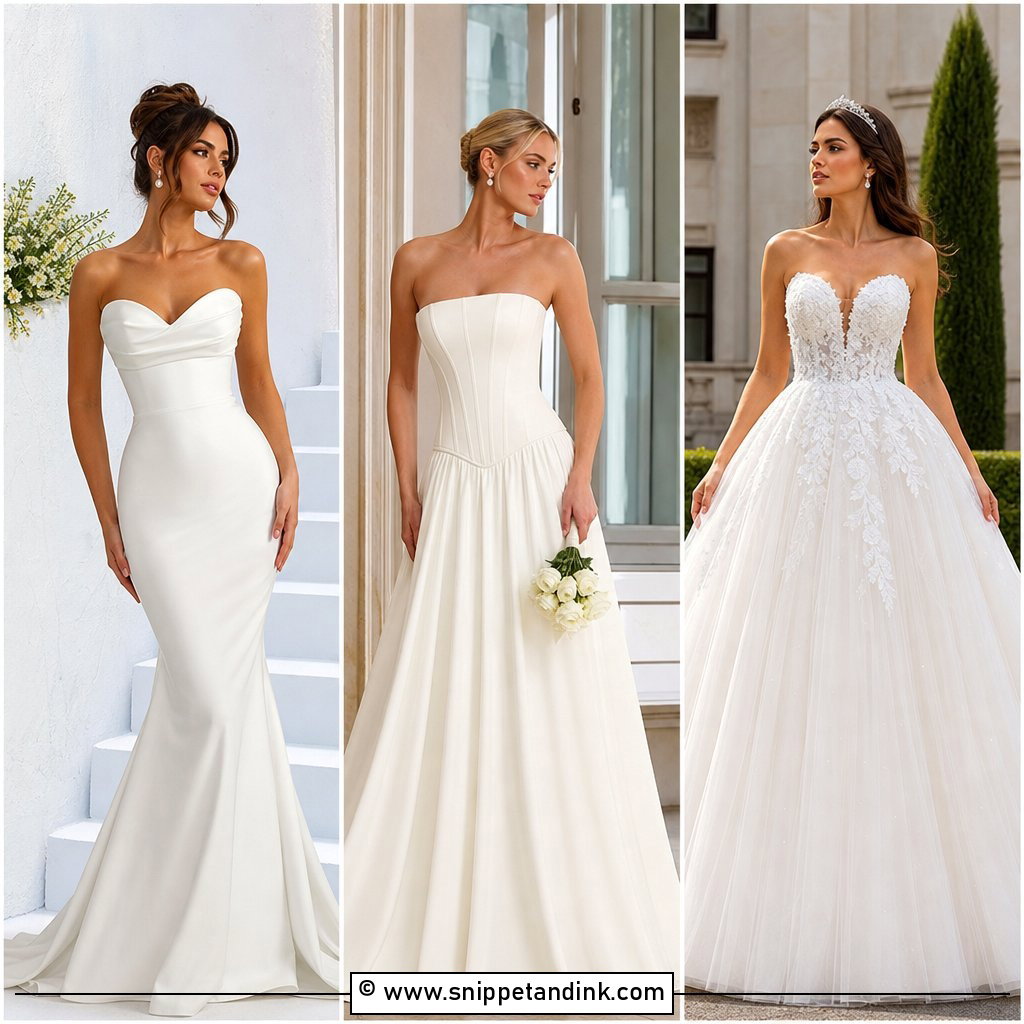
A classic wedding dress is one that won’t date your photographs. In practice that comes down to a clear silhouette, a good fabric and restraint with trends. The A-line and ball gown are the shapes most people picture as bridal, and satin, crepe, silk and lace have enduring appeal because they look the same in a photograph today as they did decades ago. Classic doesn’t have to mean full-length or voluminous, though; a slip, a sheath and a tea-length dress all appear below. I’d judge each one with your venue, season and veil in mind together, rather than choosing the gown first and forcing the rest to fit around it.
Underneath the Gown: Bras, Shapewear and Built-In Support
The neckline you fall in love with decides what you can wear underneath it, and I’d rather sort that out before the first fitting than discover it at the last one. Most structured bridal bodices can have cups sewn directly into the lining, which removes the need for a separate bra altogether. Ask whether your dress can take them; it’s a quick, usually inexpensive alteration.
- Strapless, sweetheart and off-the-shoulder: a long-line strapless bra or sewn-in cups, with the bodice boning doing most of the lifting.
- Deep V and plunge: a low-plunge bra or adhesive cups, and a fine mesh panel if the V needs holding in place.
- Halter and high neck: sewn-in cups are usually the only clean option, since most bras show at the shoulder.
- Bias-cut slips and crepe sheaths: smooth, laser-cut briefs and skin-tone shapewear tested in daylight, as these fabrics reveal any line.
Buy your undergarments before alterations begin and wear the same set to every fitting. Changing the bra after the bodice is fitted can alter the bust measurement enough to make the neckline gape or pinch.
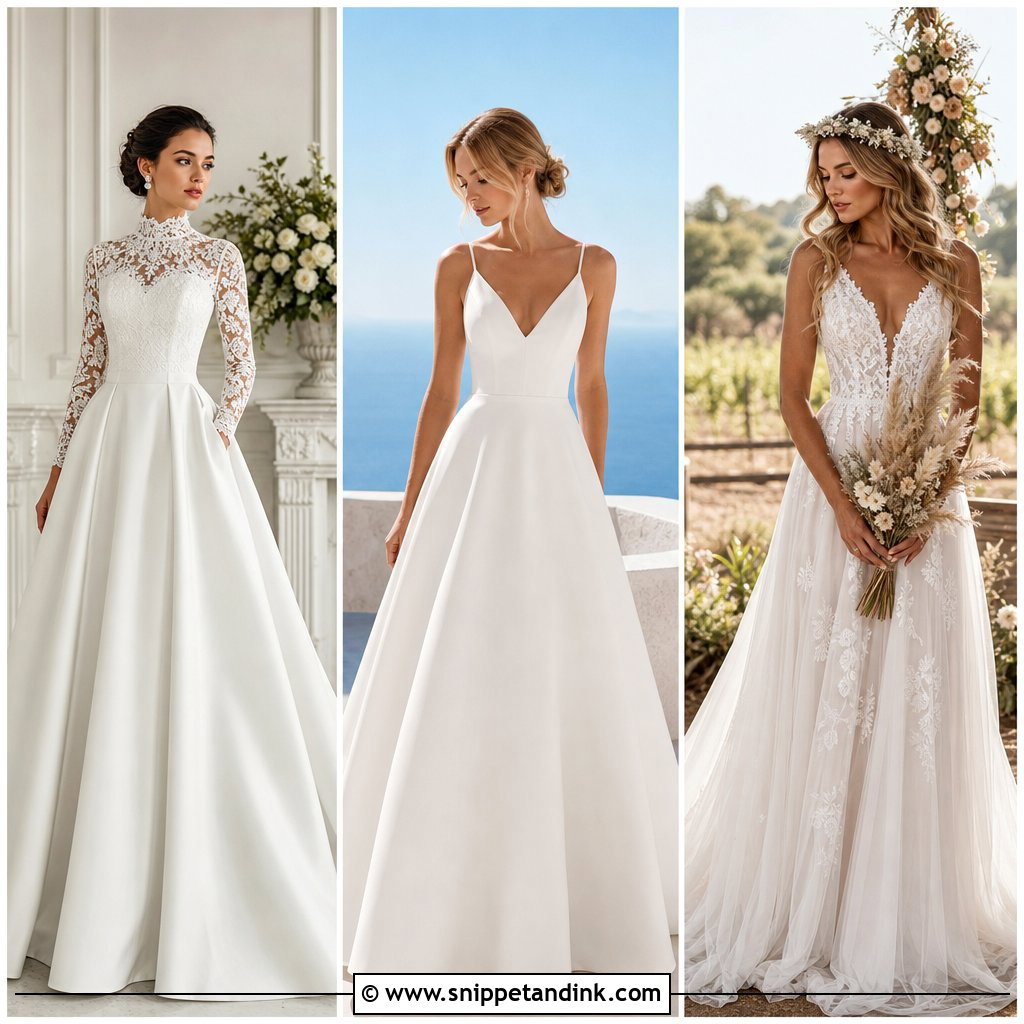
1. Satin A-Line Bridal Dress
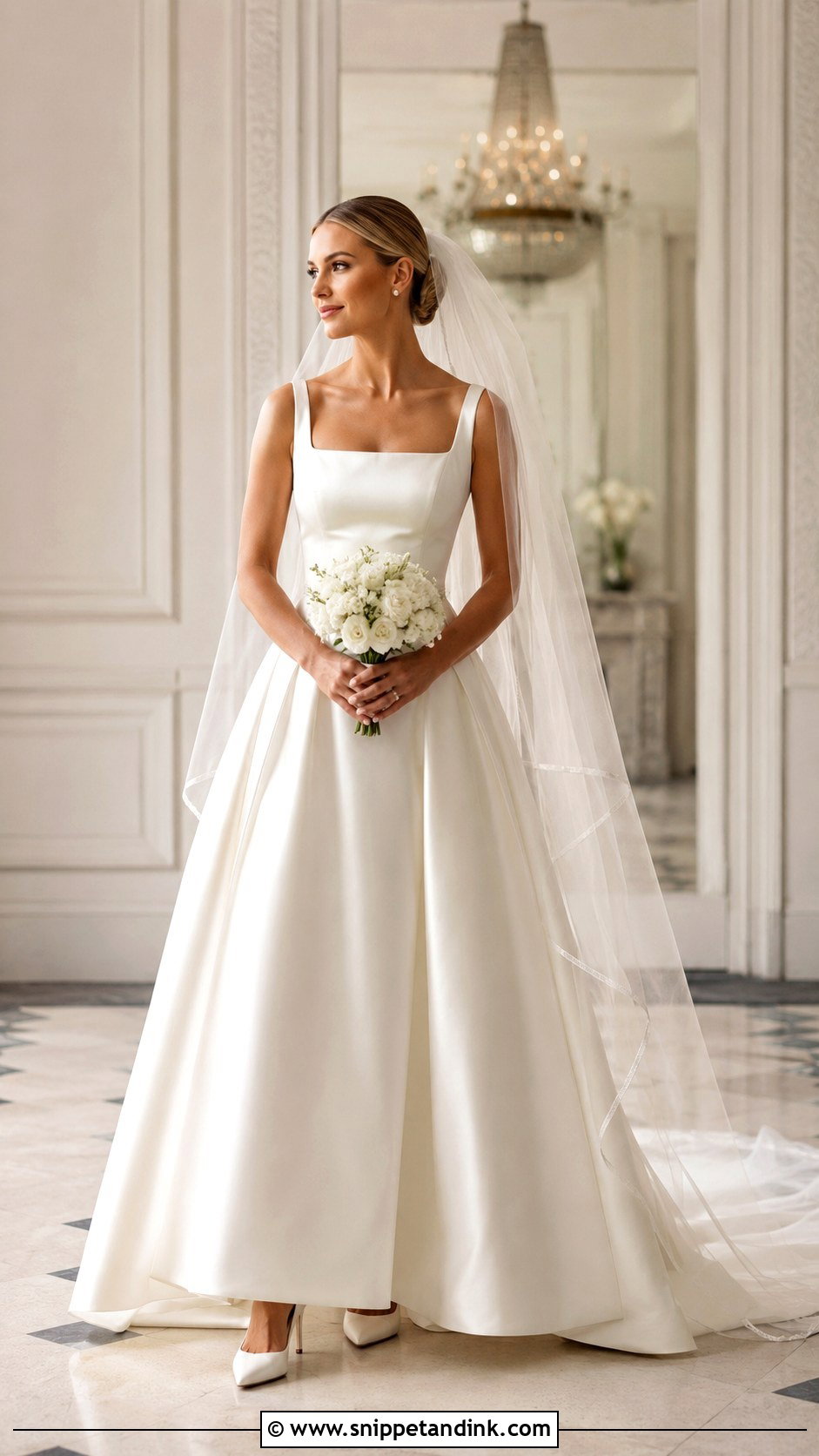
Satin in an A-line is the dress I’d send most brides home in if they wanted something safe. It has none of the weight of a full skirt, the bodice defines the waist and the skirt lets you walk freely. Ivory satin with a square or scoop neckline keeps it refined. The one thing to watch is the fabric quality: thin satin shows every seam and wrinkles quickly, while a heavier duchess satin falls cleanly. A chapel veil, pearl studs and pointed satin pumps finish it, and a removable satin wrap covers you for a church ceremony.
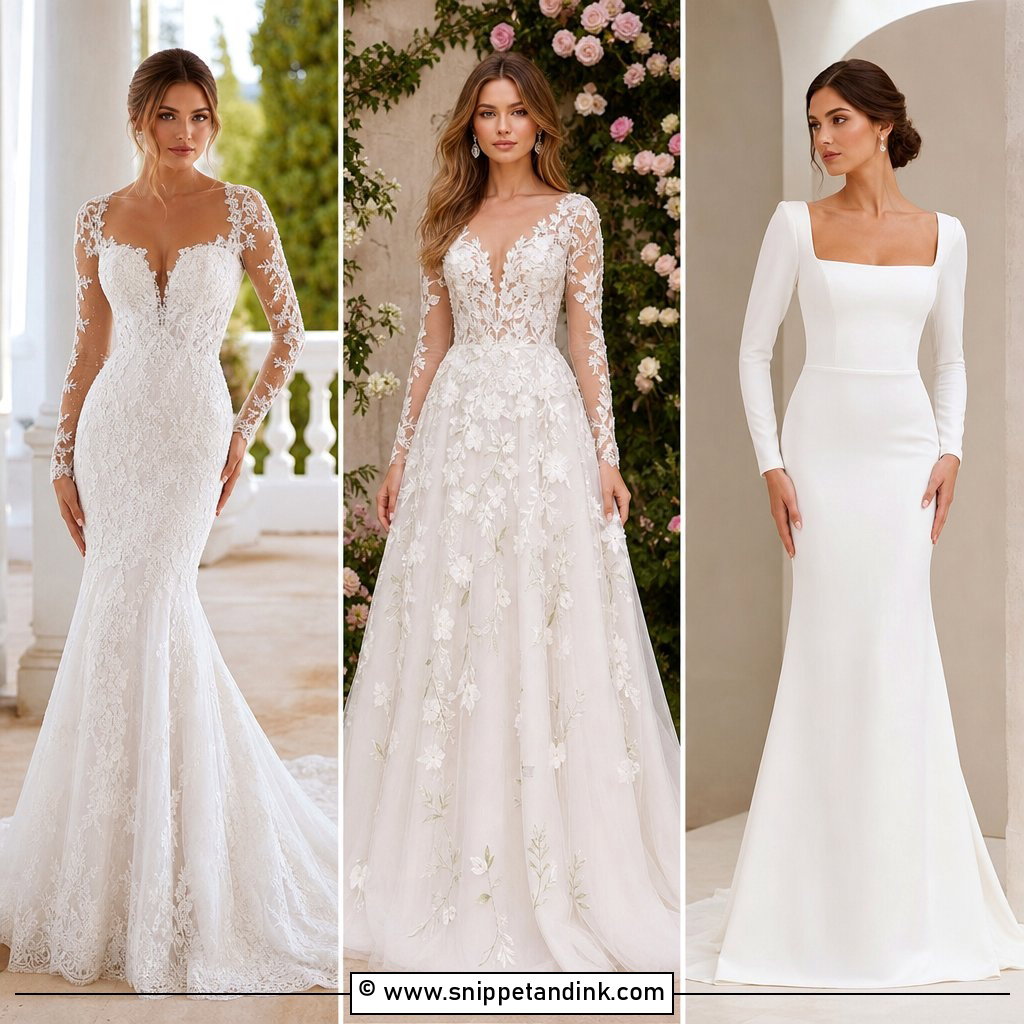
2. Long Sleeve Lace Bridal Dress
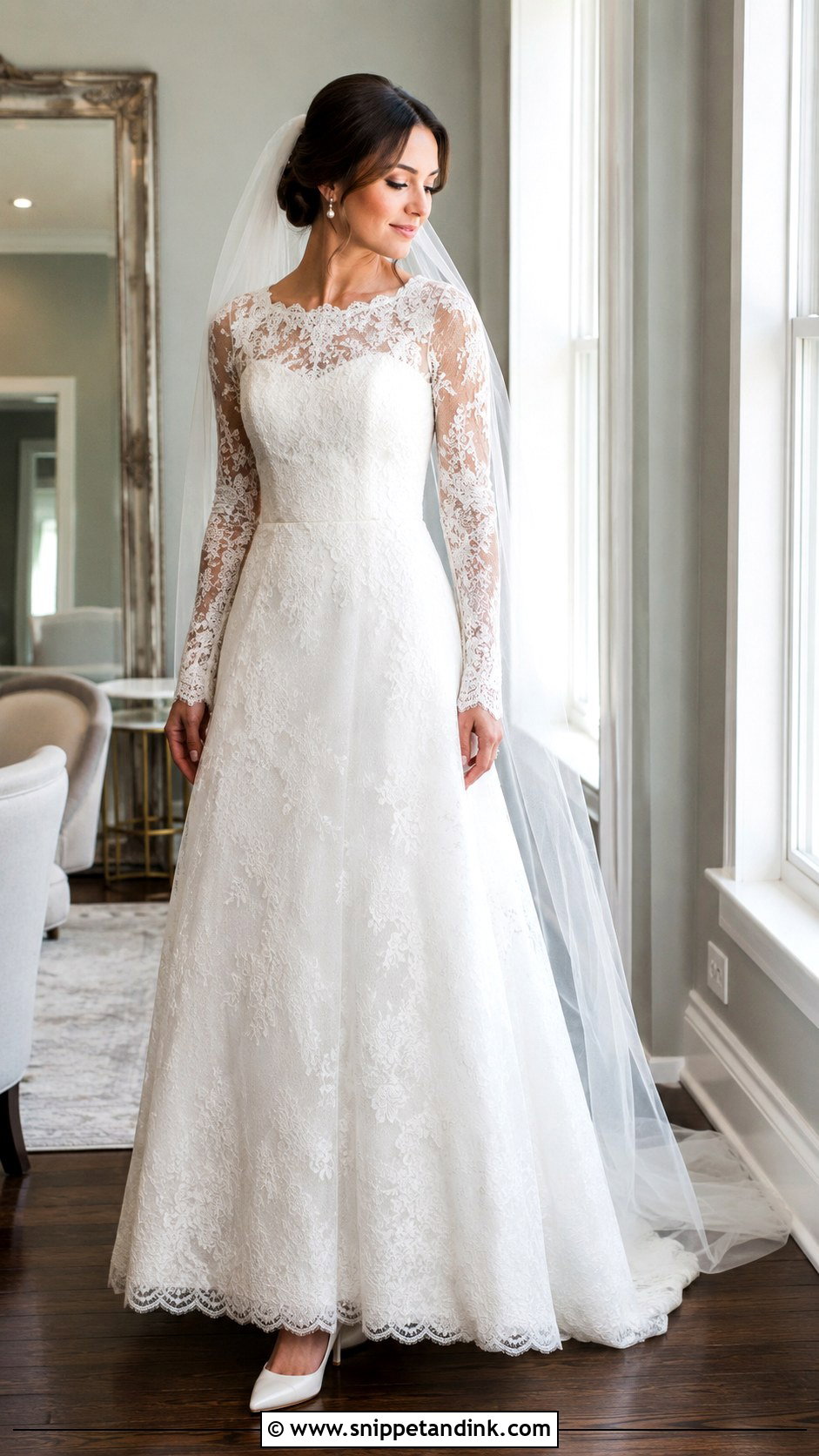
With long lace sleeves, the lining decides the comfort. Sheer sleeves over a lined bodice look light, but a bodice lined in heavy fabric under lace sleeves can become hot within an hour indoors, so ask what the lining is made of. An A-line or softly fitted skirt keeps the lace from overwhelming the outfit. Scalloped cuffs, covered buttons and a modest train are the traditional touches. Keep the veil plain tulle so it doesn’t fight the lace pattern. Pearl drops and closed-toe heels are all the jewelry and shoes you need, and in cold months a more substantial lace and lining are worth the trade.
3. Strapless Ball Gown Bridal Dress
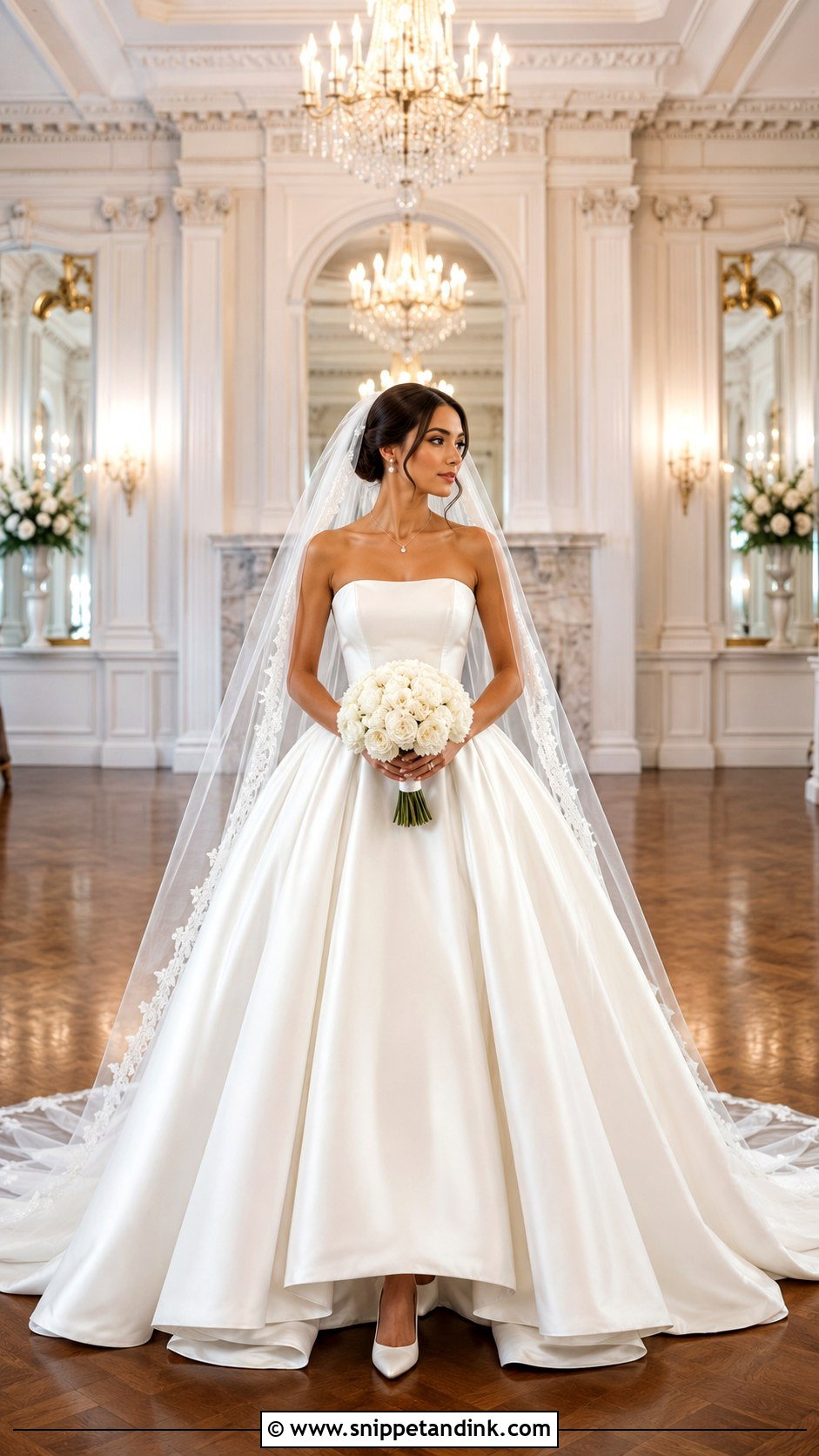
A strapless ball gown makes the most formal entrance of anything here, and it demands the most support. All of that skirt weight hangs from the waist, so the bodice needs proper boning and a waist stay, or it slips down as the day goes on. Test it seated, walking and with your arms raised. Layers of satin, organza or tulle give the volume; a straight or gently curved neckline keeps it simple. Wear a cathedral veil for the ceremony and remove it for the reception. A tennis necklace and block-heel pumps are practical choices under a skirt nobody will see beneath. It needs space: wide aisles, staircases, a ballroom.
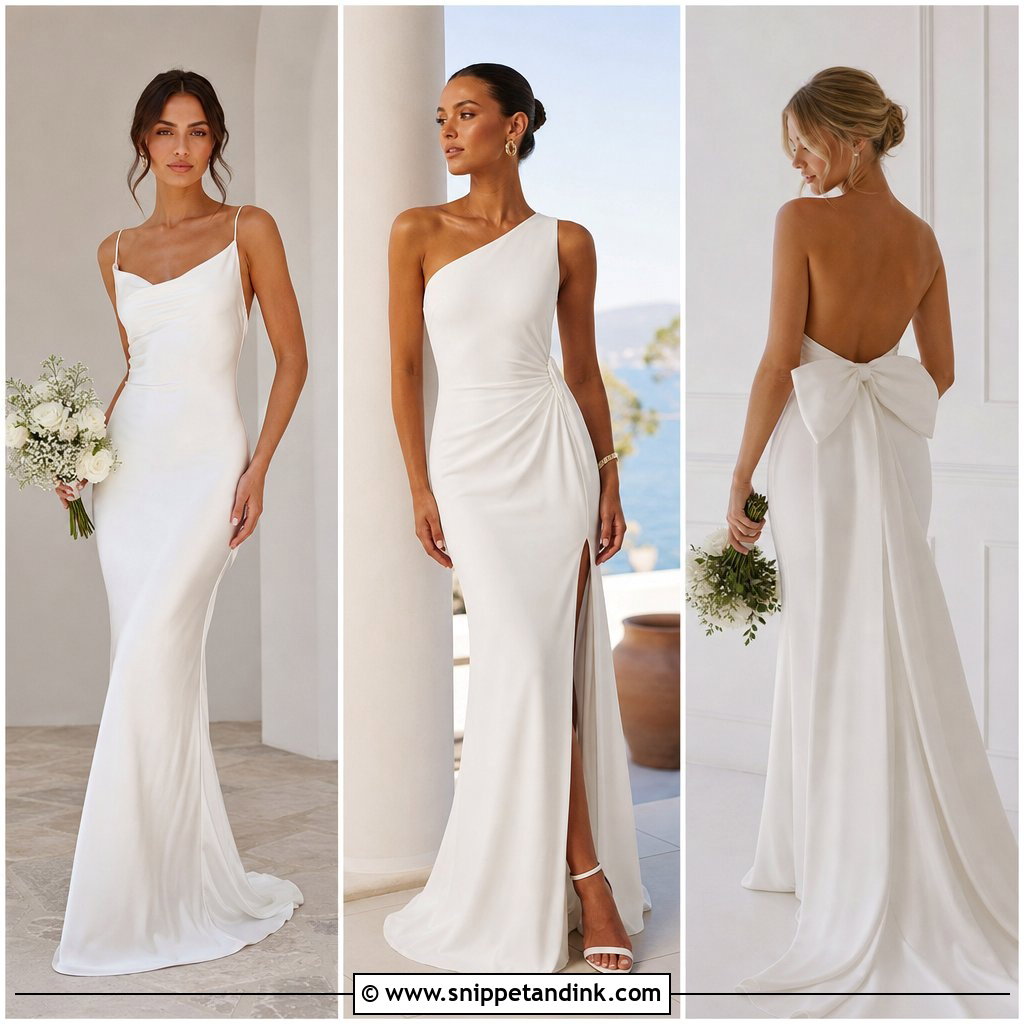
4. Silk Slip Bridal Dress
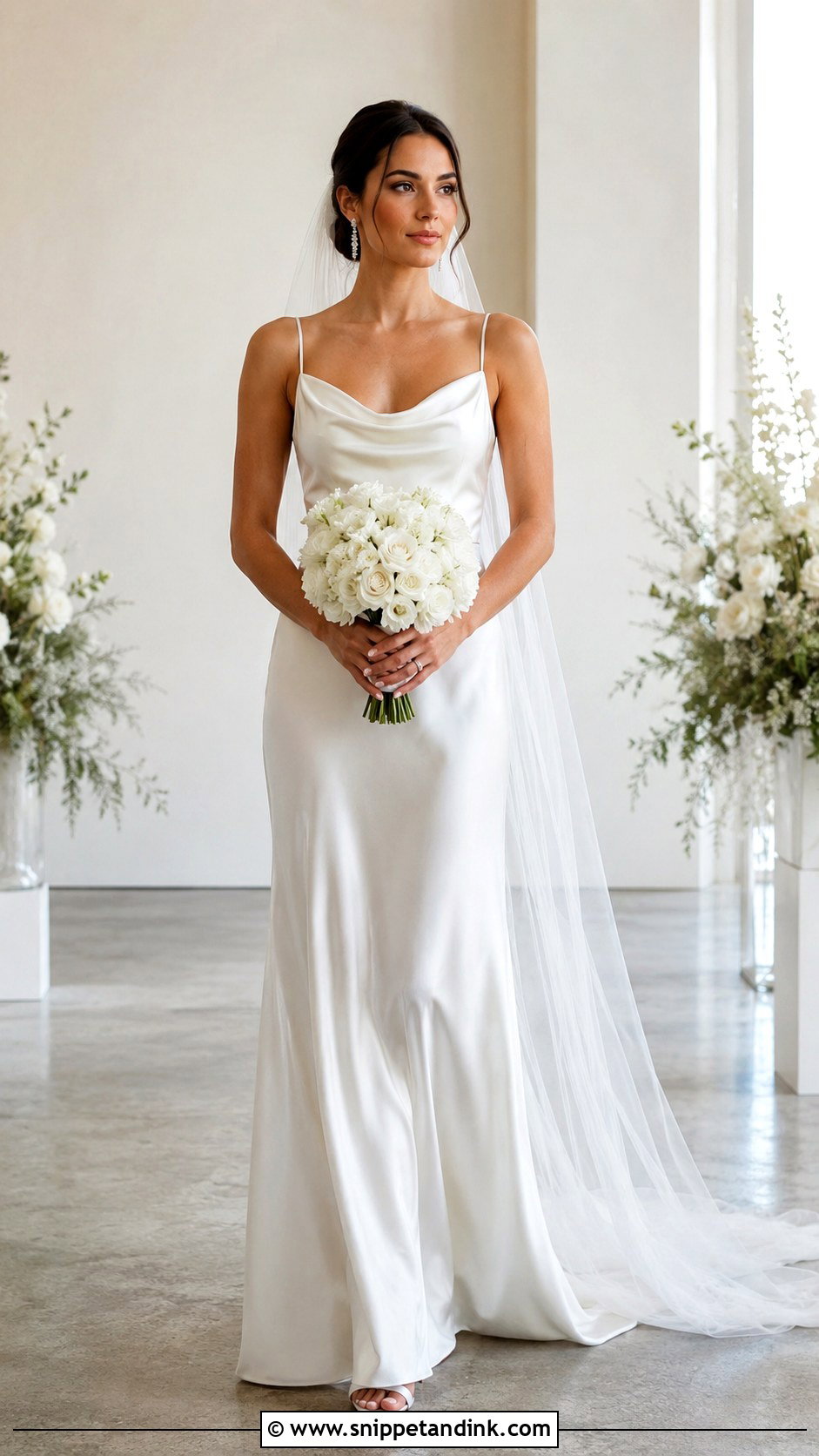
A bias-cut silk slip shows everything, which is its beauty and its difficulty. Because the fabric is cut diagonally across the grain, it stretches and follows the body, and any ridge of underwear or uneven hem shows. I’d have it fitted by someone who works with bias cuts specifically. Look for a draped neckline, narrow straps and a skirt that moves rather than clings at the hip. Smooth, laser-cut undergarments help. A long sheer veil adds ceremony to such a simple shape. Crystal drops, barely-there satin sandals and a small structured bouquet suit modern venues, coastal weddings and small ceremonies.
5. Boat Neck Bridal Dress
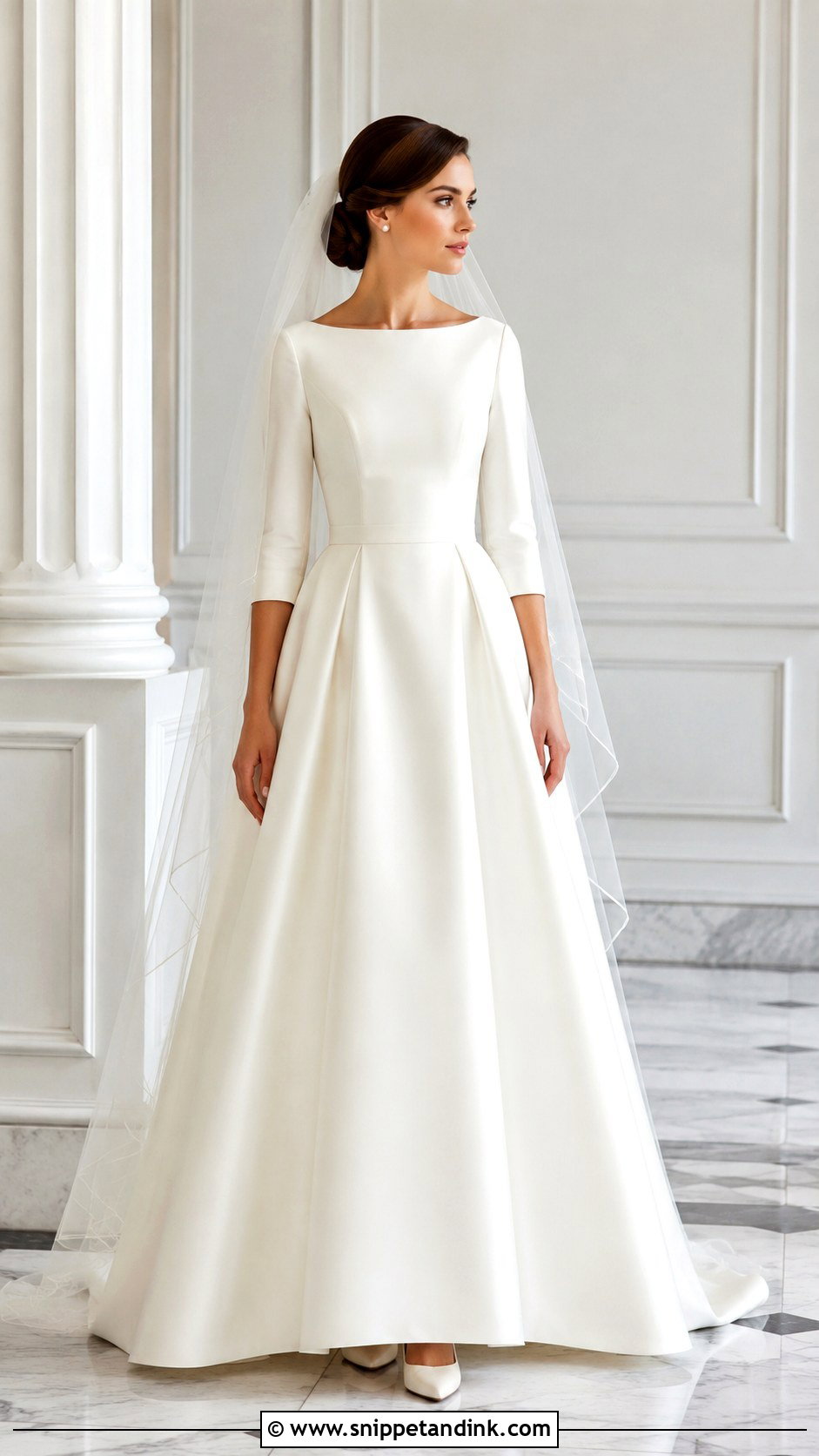
A boat neck bridal dress runs a wide, shallow line across the collarbones, which balances narrow shoulders and suits brides who want to stay covered without a high neck. Mikado or satin gives it a crisp finish; subtle lace adds texture. Three-quarter sleeves push it toward vintage, and sleeveless versions stay classic. Because the neckline is already a strong horizontal, skip the necklace. Pearl studs, a low bun with a fingertip veil beneath it and pointed pumps are all the dress needs.
6. Square Neck Bridal Dress
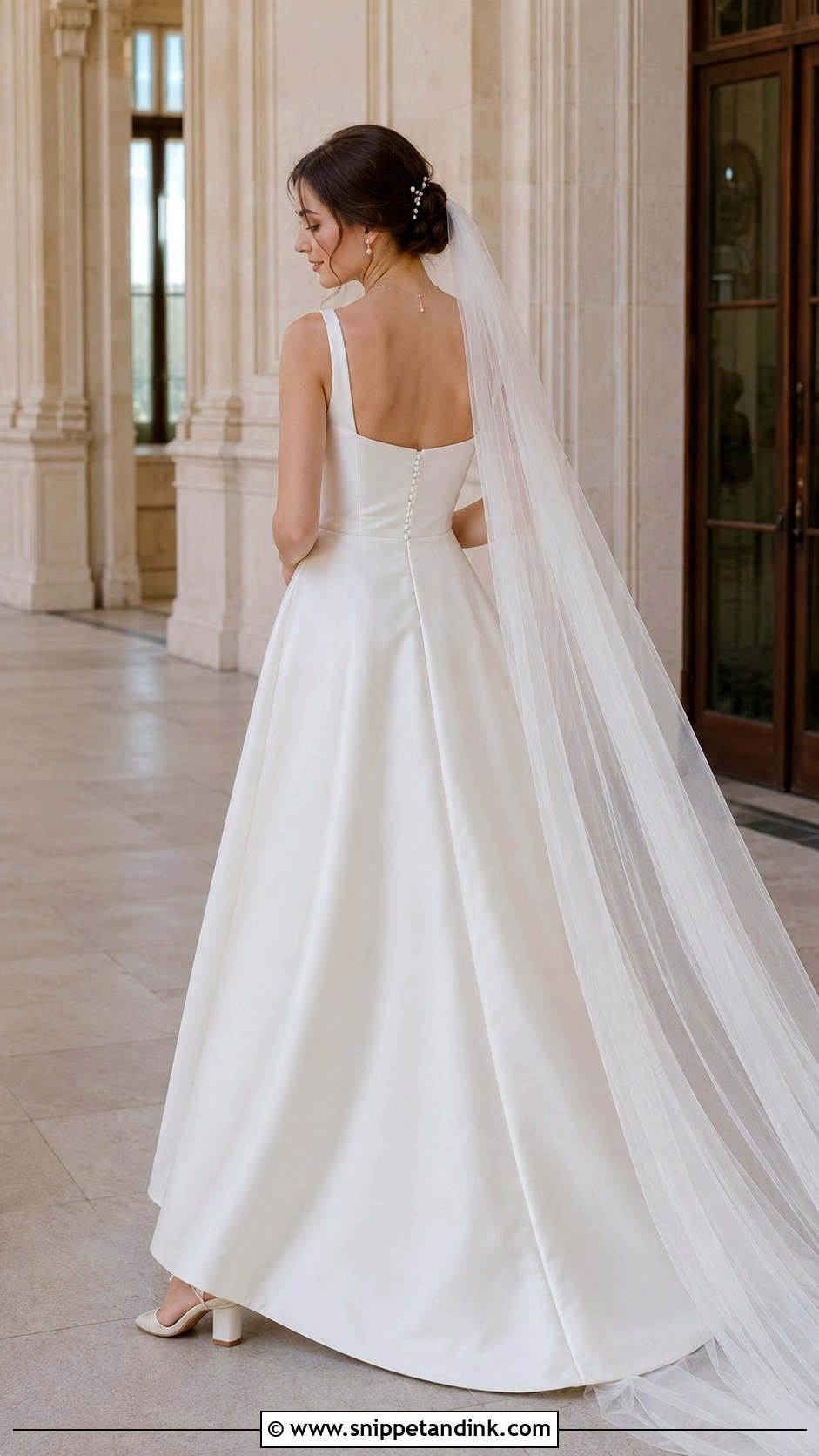
Square necklines look sharp when the corners sit flat and look tired when they don’t. At fittings I check those corners with the bride breathing normally and leaning forward; if they lift or crease, the neckline needs adjusting. Wide straps, a fitted waist and an A-line skirt in matte satin or silk faille complete the classic version. The neckline frames the face and leaves room for a short strand of pearls or a fine pendant. A low square back with covered buttons adds interest from behind. A chapel veil, pearl hairpins and low block heels keep it comfortable through a long day.
7. Off-the-Shoulder Bridal Dress
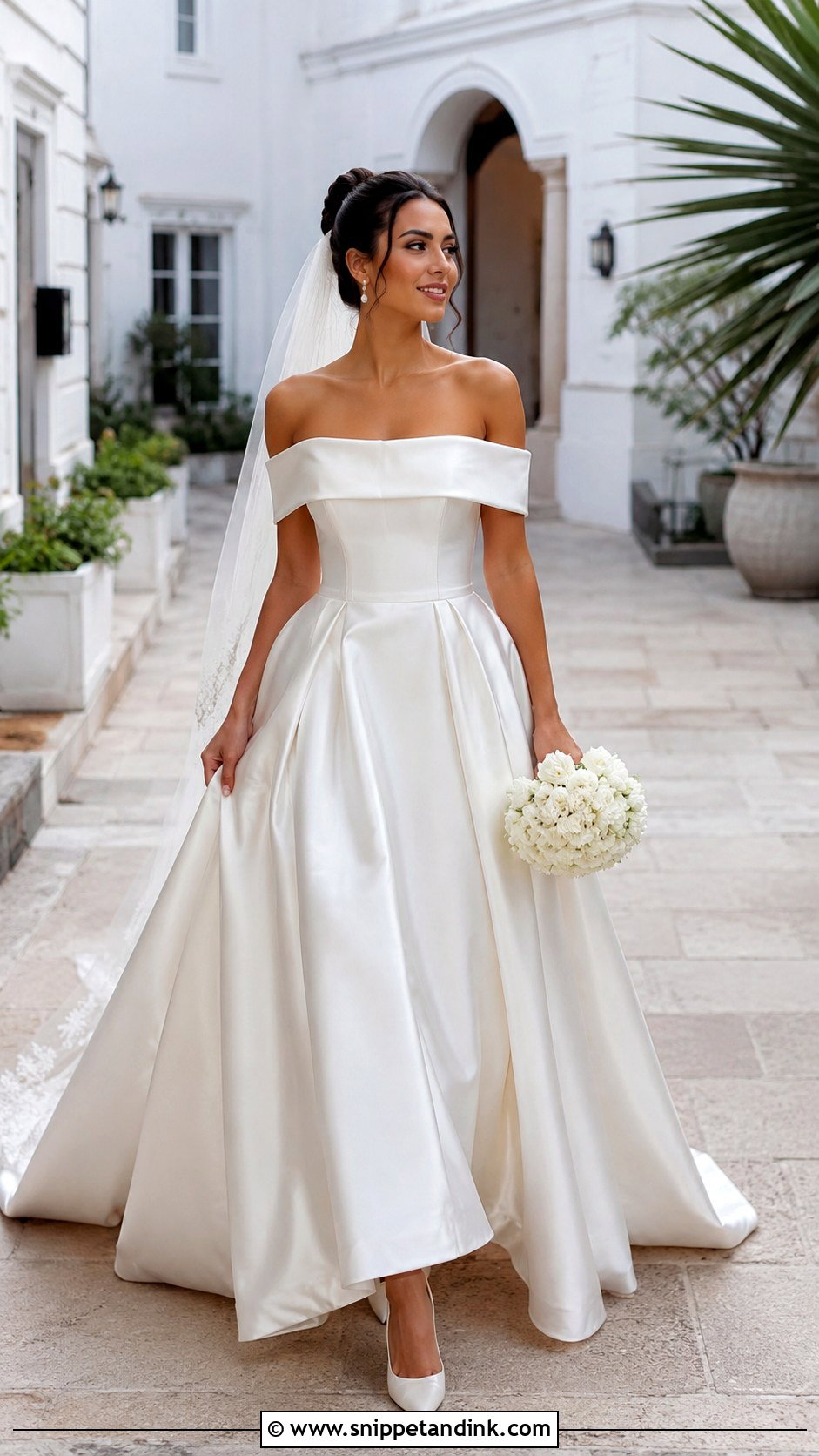
Off-the-shoulder necklines photograph well and restrict you more than people realise. Try hugging, sitting and dancing at the fitting, because a band set too tight across the upper arm stops you raising your hands above shoulder height. Hidden elastic or a built-in strapless foundation helps it stay put. A fold-over satin cuff looks clean, while lace edging is softer. Pair a fitted bodice with a full A-line skirt, a low chignon to keep the shoulders clear, pearl drops and a long veil. Hold the bouquet low so it doesn’t hide the bodice.
8. High Neck Lace Bridal Dress
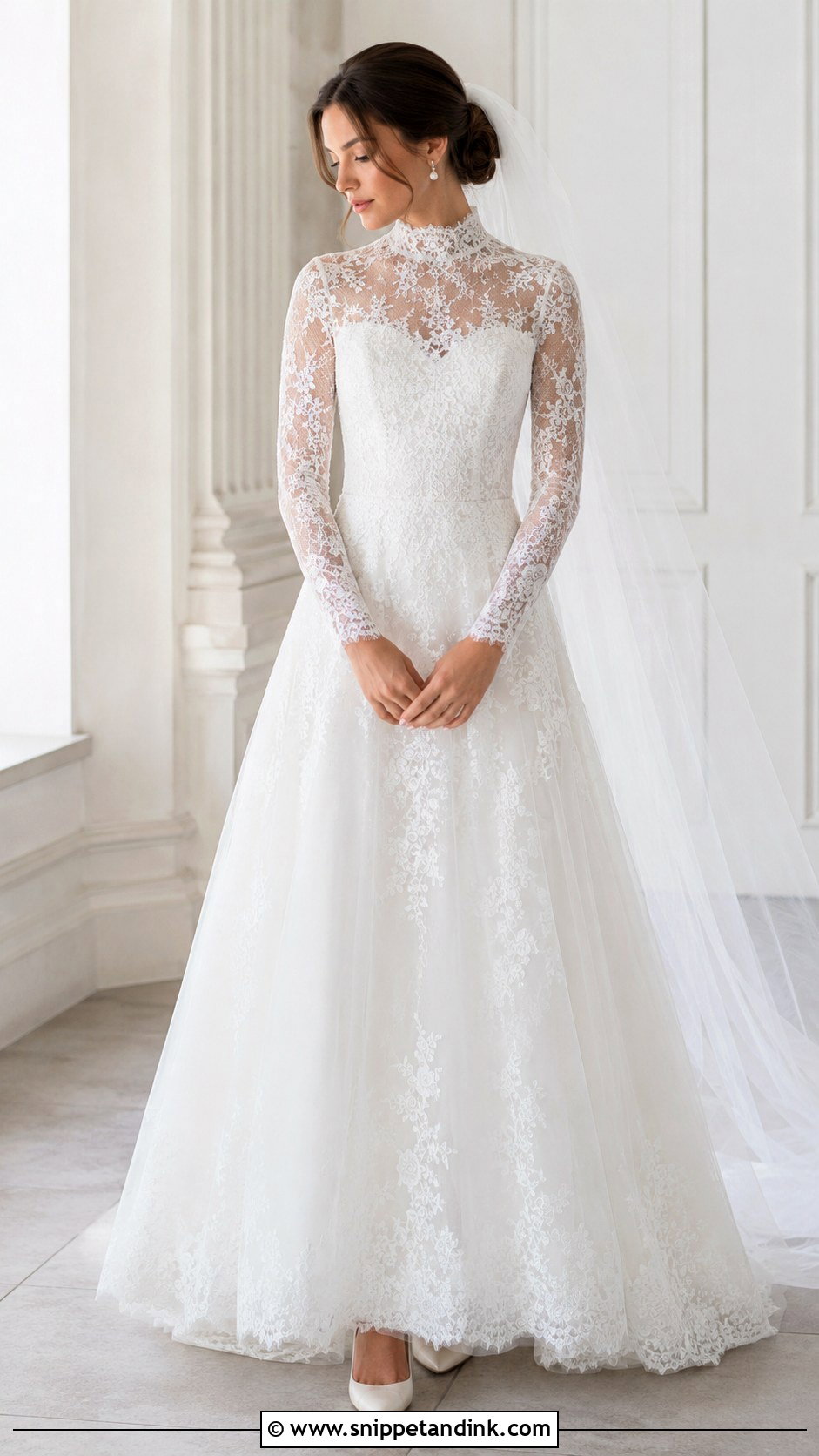
A high lace neck brings detail right up to the face, so your hair and makeup become part of the dress. A sheer lace yoke over a lined sweetheart or scoop bodice gives dimension without baring much skin. Long sleeves and a gently fitted waist make it formal, and an A-line skirt stops the lace from looking dense. Wear your hair up in a neat bun or twist; loose hair hides the neckline entirely. No necklace. Small pearl earrings, closed-toe pumps and a plain tulle veil are plenty, and for a cool-season wedding a satin lining adds warmth.
9. Sweetheart Neckline Bridal Dress
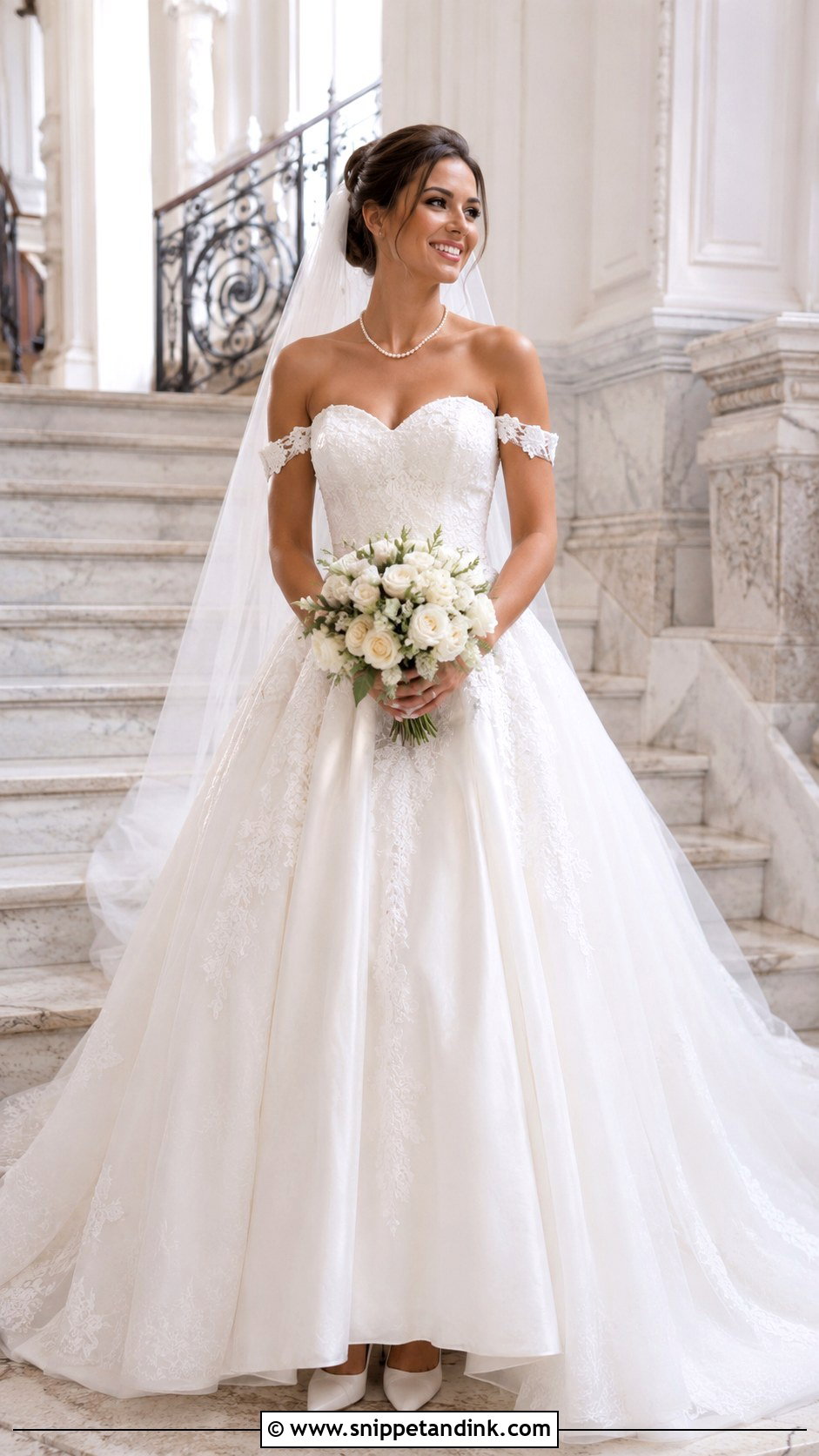
The curve of a sweetheart neckline softens a structured gown, and it’s my first suggestion for fuller busts that feel flattened by a straight strapless edge. It relies completely on a well-fitted corset bodice. If the neckline gapes when you lean forward, it needs taking in at the side seams, not just the cups. Pair it with an A-line or ball gown skirt in plain satin or with light lace appliqué. A narrow pearl necklace can follow the curve, or let statement earrings stand alone. Detachable off-the-shoulder straps or a sheer overlay add support and coverage if you want them.
10. V-Neck A-Line Bridal Dress
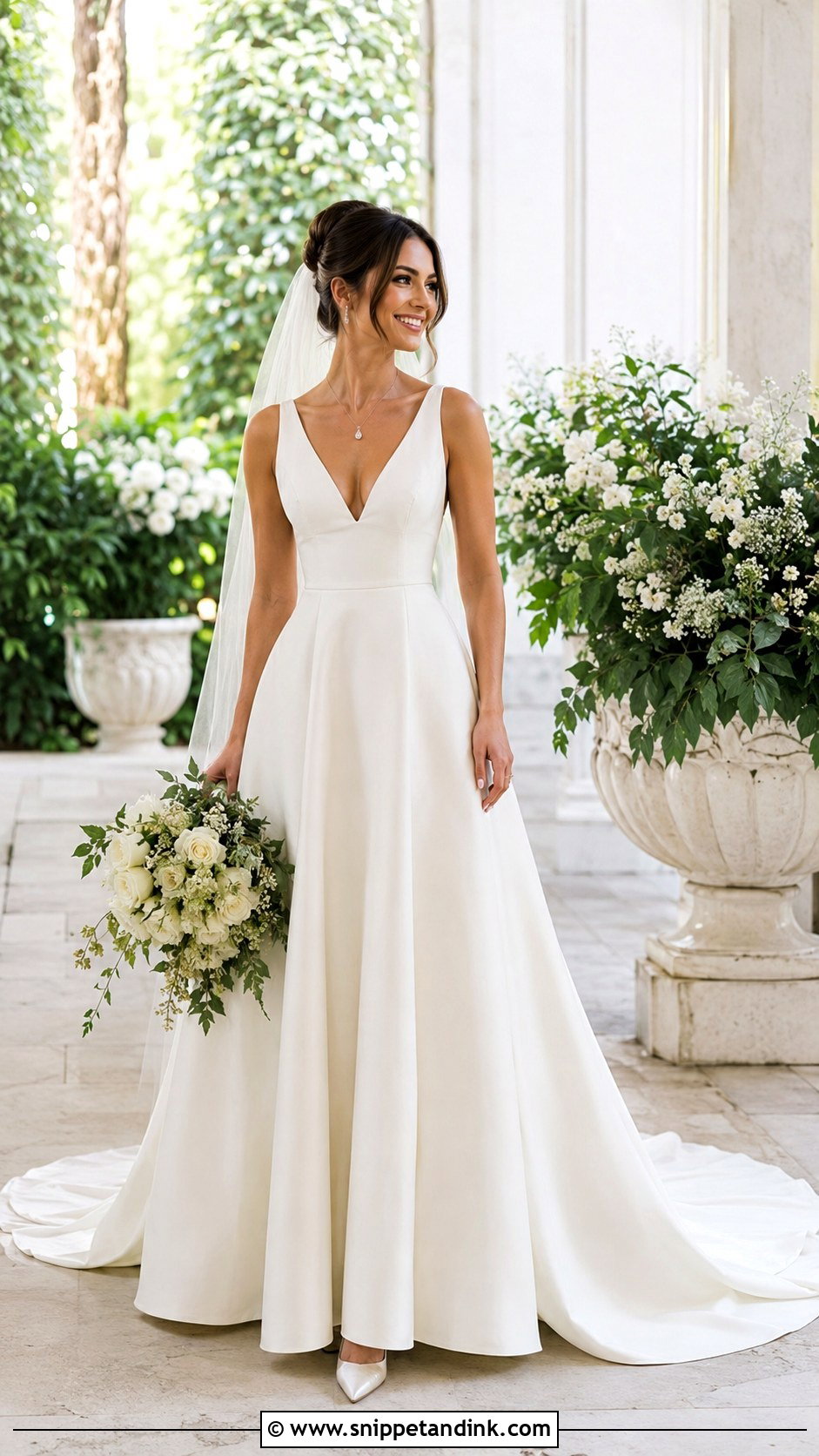
A V-neck A-line draws one long line from shoulder to hem, which lengthens almost every figure. The depth is adjustable; a good seamstress can raise a V with a fine mesh insert if it feels too low. Wide straps carry the bodice more securely than thin ones. Silk crepe drapes softly and satin holds its structure. A low V-back, covered buttons and a chapel train continue the line from behind. Wear a fine pendant and a veil tucked under a polished updo. Check that the bodice stays flat when you sit and bend, because a V-neck is where gaping shows first.
11. Cap Sleeve Bridal Dress
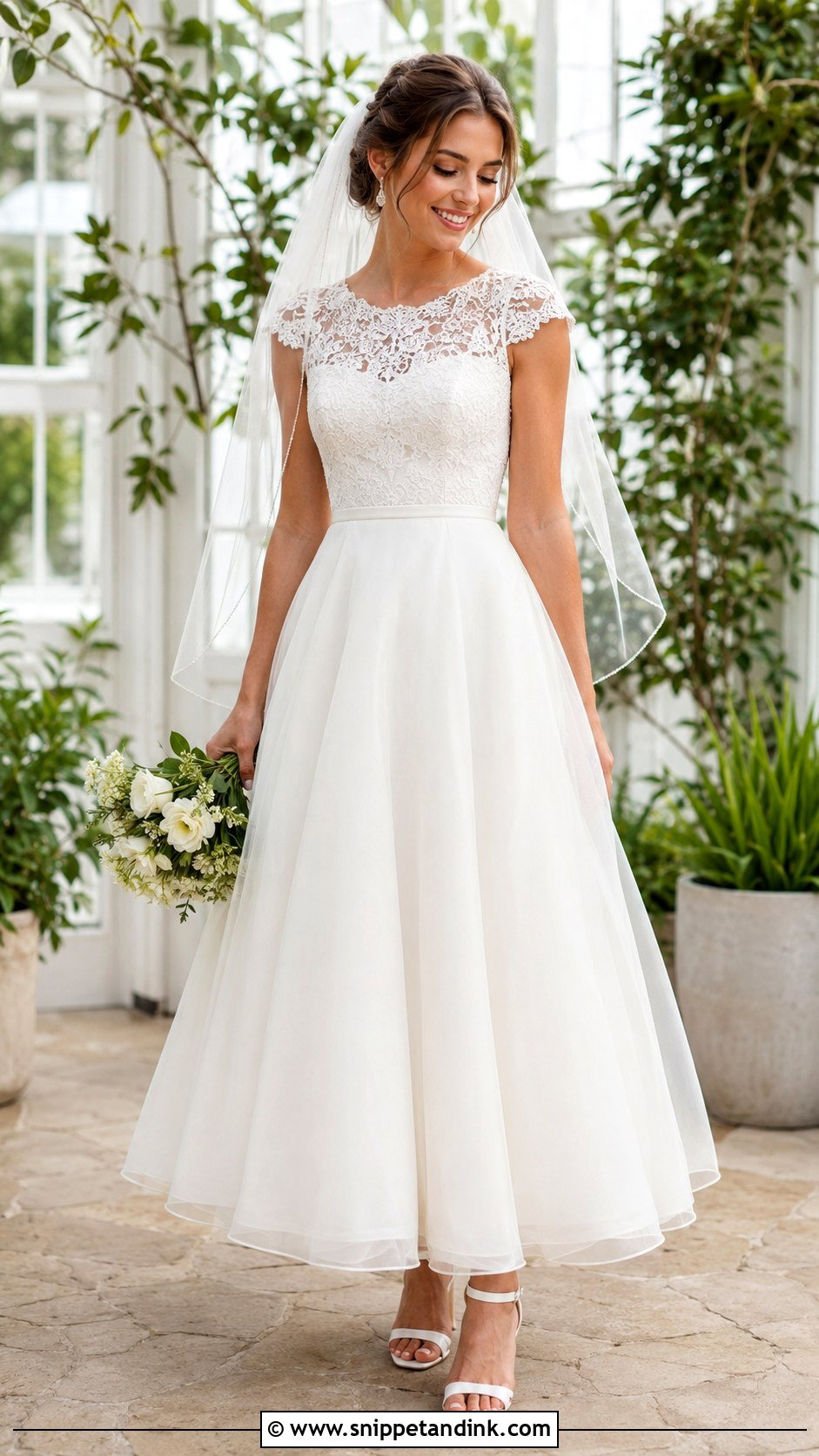
Cap sleeves give a little coverage over the shoulder without the weight of a full sleeve, and in scalloped lace they soften the shoulder line. The fit point is the armhole. A cap sleeve that’s too tight pulls upward when you lift your arms to hug or dance, dragging the bodice with it, so test the movement before alterations are finalised. A V or rounded neckline stops the shoulder area looking closed in. Chiffon, satin or organza all work in the skirt. A half-up style keeps the sleeves visible, with a fingertip veil, pearls and ankle-strap heels.
12. Crepe Sheath Bridal Dress
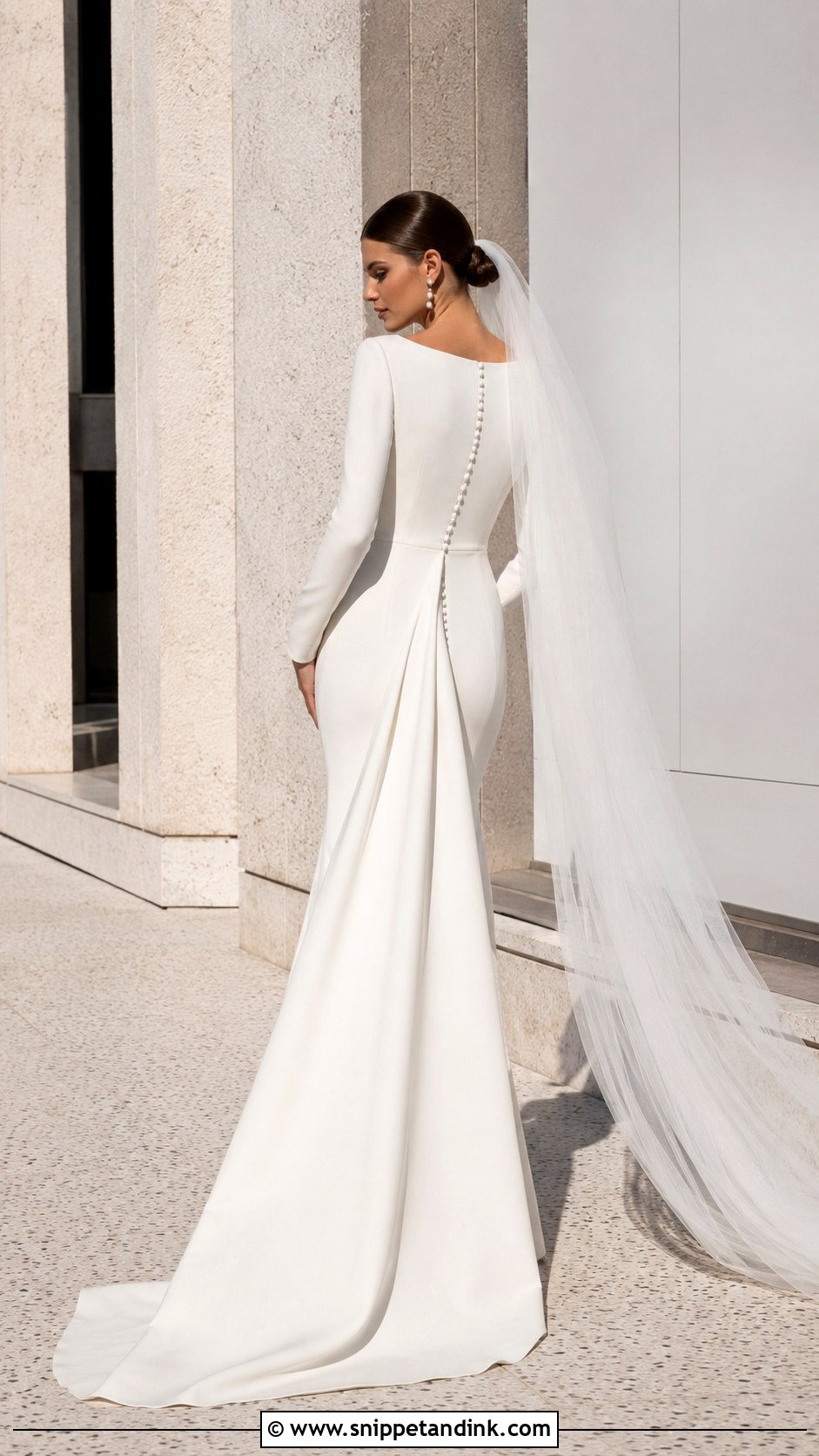
A crepe sheath is the most honest silhouette there is: a straight vertical line, no volume, nowhere to hide. Choose a substantial, fully lined crepe that skims the body; thin crepe clings and shows every seam. A bateau, V or draped neckline adds definition. Covered back buttons and a detachable train give classic detail you can remove for the party. Before the final alteration, walk briskly and climb a few stairs in it, since a sheath has the least room in the skirt of any shape here and may need a small kick pleat. Long veil, sculptural pearl earrings, pointed pumps and a sleek low bun complete it.
13. Lace Fit-and-Flare Bridal Dress
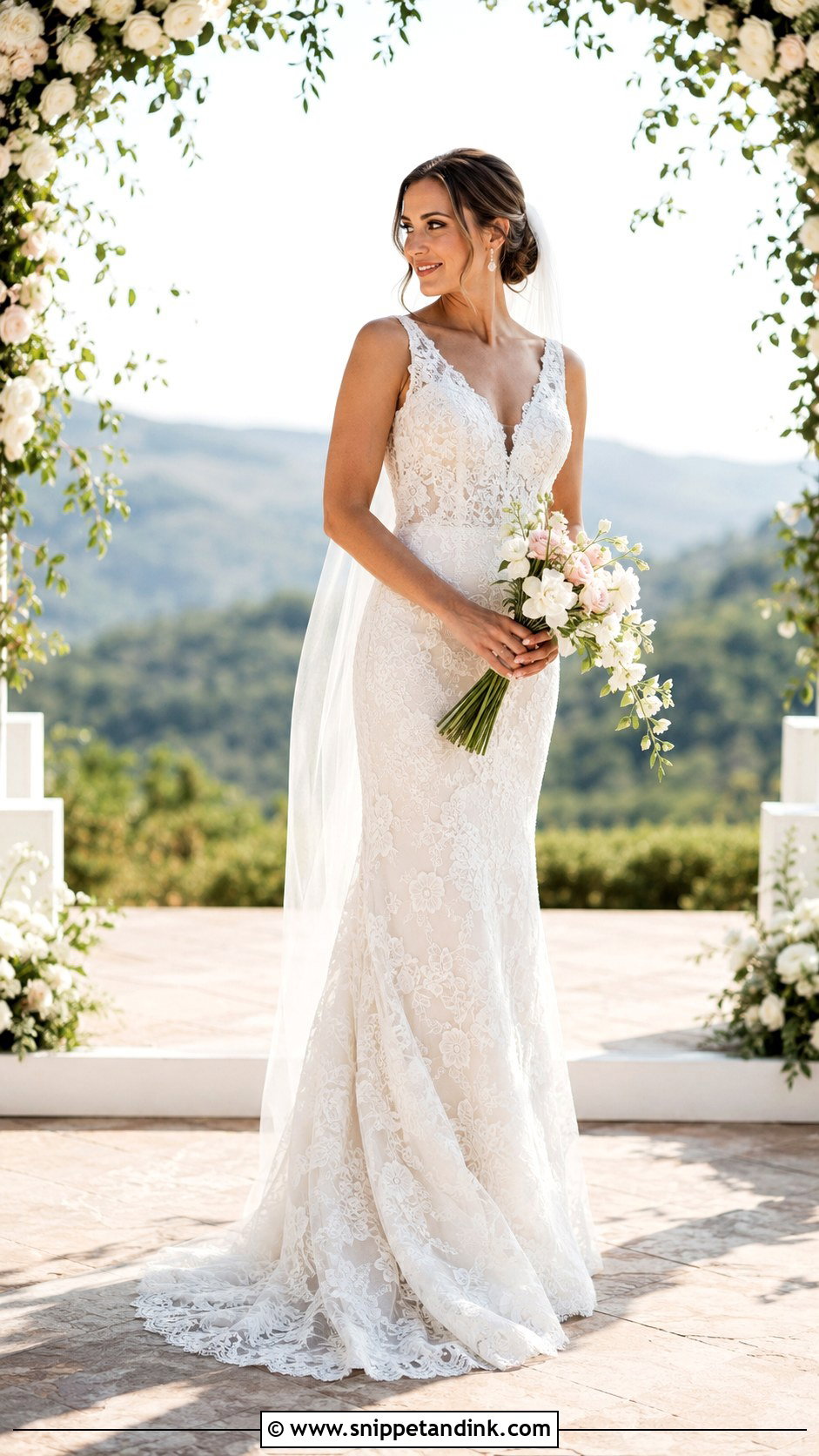
If you want shape but not the full drama of a mermaid, a lace fit-and-flare is the in-between. It follows the bodice, waist and hips and widens gradually lower down the skirt. The question I ask at fittings is where you want the flare to begin; starting it a little higher, nearer mid-thigh, makes sitting and dancing far easier. Floral lace over a smooth ivory lining keeps the pattern visible. A sweetheart or V-neck opens the upper body, and covered buttons finish the back. A plain chapel veil, pearl drops and a slim bouquet show off the waist.
14. Tea-Length Bridal Dress
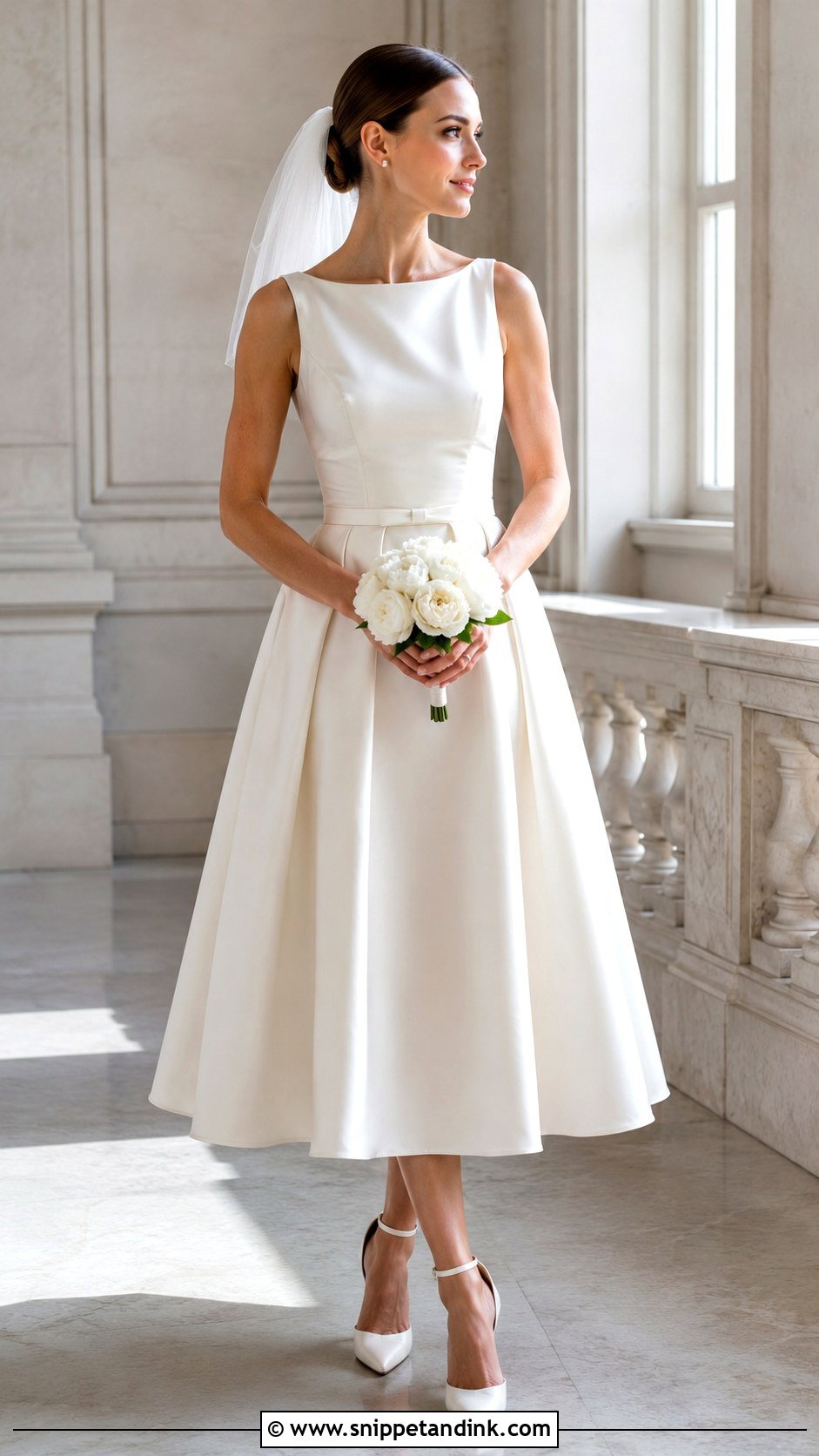
Tea-length puts your shoes on show, so choose them as carefully as the dress. The hem falls between knee and ankle, and a fitted bodice with a defined waist keeps it bridal rather than cocktail. Satin, lace or structured organza helps the skirt hold its shape; a soft fabric at this length can look like a day dress. Pointed pumps, ankle-strap heels or embellished flats all work. A short veil, pearl studs and a compact bouquet suit the lighter proportions better than anything oversized. It’s practical for courthouse weddings, daytime receptions and smaller rooms, and many brides keep one as a second dress for the evening.



15. Empire Waist Bridal Dress
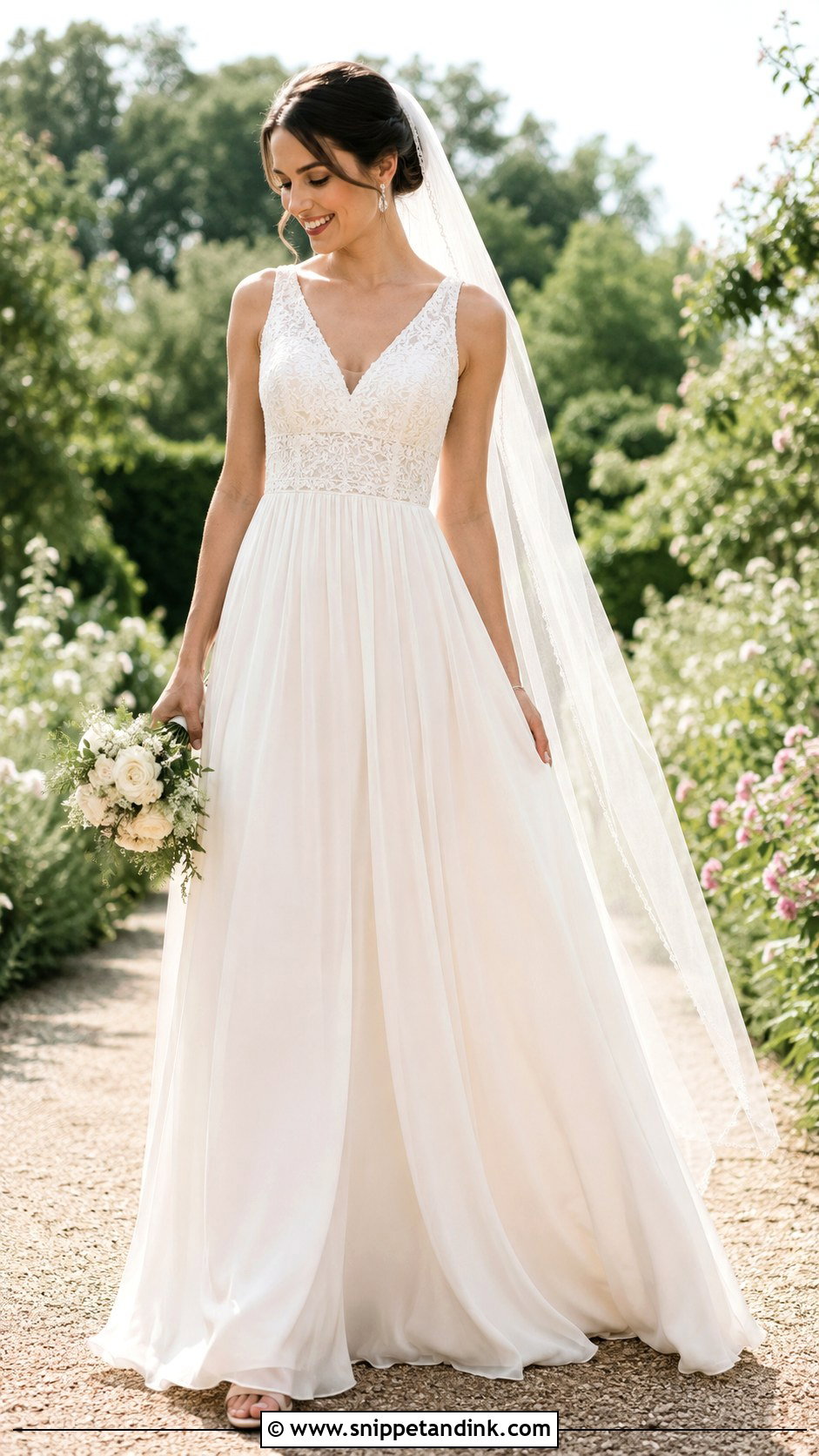
An empire waist sits just below the bust and lets the skirt fall loosely, so there’s nothing pressing on the natural waist all day. That makes it a comfortable choice for summer and outdoor ceremonies. Chiffon, silk georgette or light crepe move without bulk. A V or scoop neckline with supportive straps, plus a little lace panel at the bodice, gives traditional detail. The seam should stay put when you raise your arms; if it rides up, the bodice needs more structure underneath. Drop earrings, low heels, a light chapel veil and a small bouquet keep the proportions graceful.
16. Halter Neck Bridal Dress
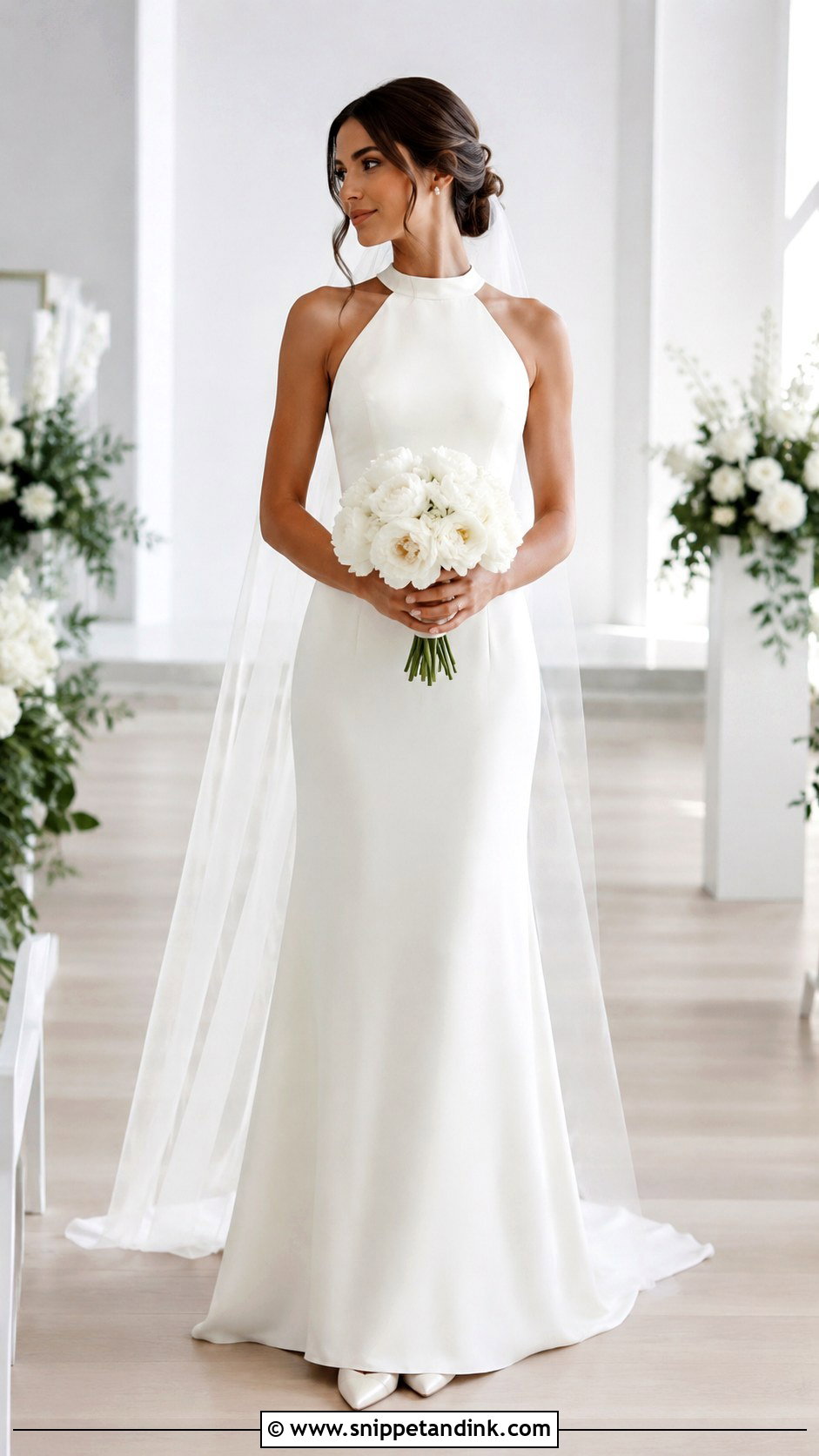
A halter draws focus to the shoulders, and it’s a cut I’d suggest to brides with toned or athletic shoulders who want to show them off. The fit risk is pressure at the back of the neck. Sit down for ten minutes at a fitting and notice whether the strap pulls; a halter that’s slightly too tight gives many people a headache by evening. Smooth crepe or satin in an A-line or column suits the classic version. Wear an updo, no necklace, pearl studs, a clean-edged veil and closed-toe pumps. It looks equally strong from the front and the back.
17. Pleated Satin Bridal Dress
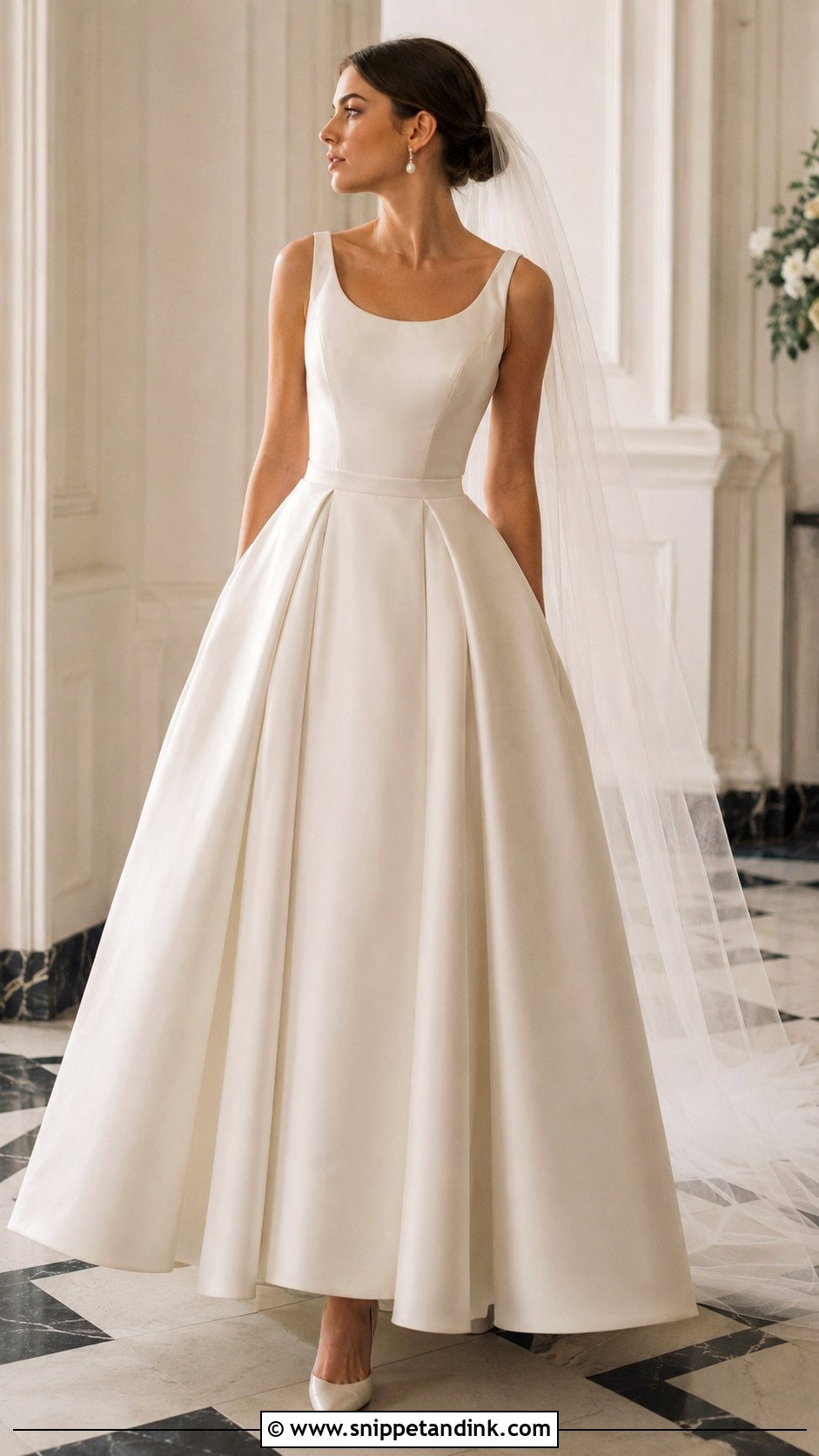
Pleats give satin movement without decoration. Wide pleats read formal and structured, small folds read softer. Have them start at a clearly defined waist and open gradually into an A-line skirt. The alteration risk is bulk: taking in a pleated waist can stack fabric at the seam, so ask the seamstress to adjust at the side seams rather than inside the pleats where possible. A scoop or off-the-shoulder neckline suits the volume. Pearl earrings, pointed satin pumps, a long simple-edged veil and a low bun let the skirt be the focus. Good-quality satin holds the folds crisply.
18. Basque Waist Ball Gown Bridal Dress
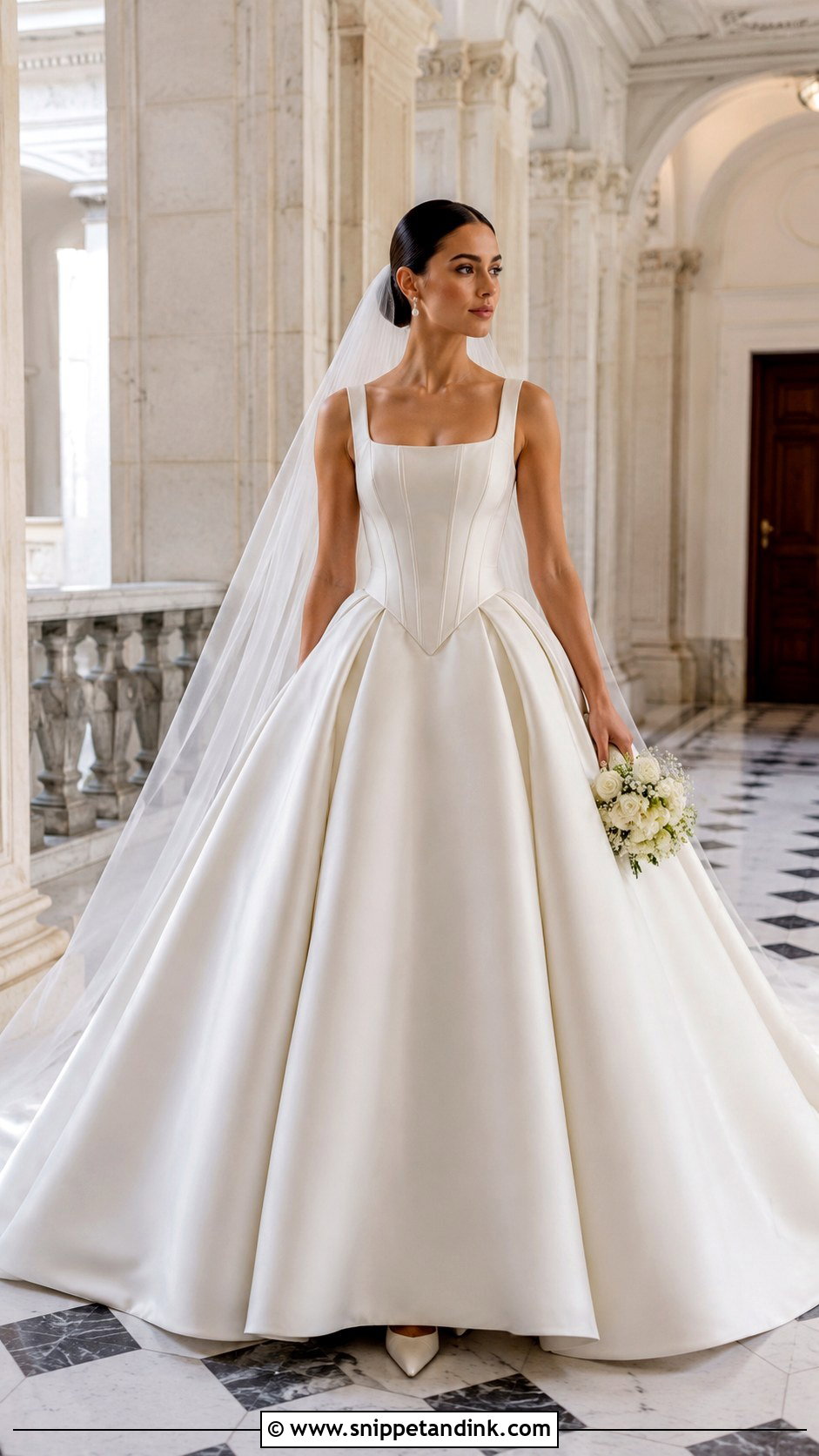
A Basque waist dips below the natural waist in a V or curve, and that elongated bodice makes the waist look smaller above a full skirt. It’s a detail of the classic satin or mikado ball gown. Torso length is what matters most at fittings. If the point lands too low on a short torso, it pushes into the tops of the thighs when you sit; on a long torso it can look slightly high. A square, scoop or strapless neckline balances it, with subtle boning for structure. Skip belts and heavy waist embellishment. A cathedral veil, pearl earrings and pointed pumps complete it.
19. Organza Ball Gown Bridal Dress
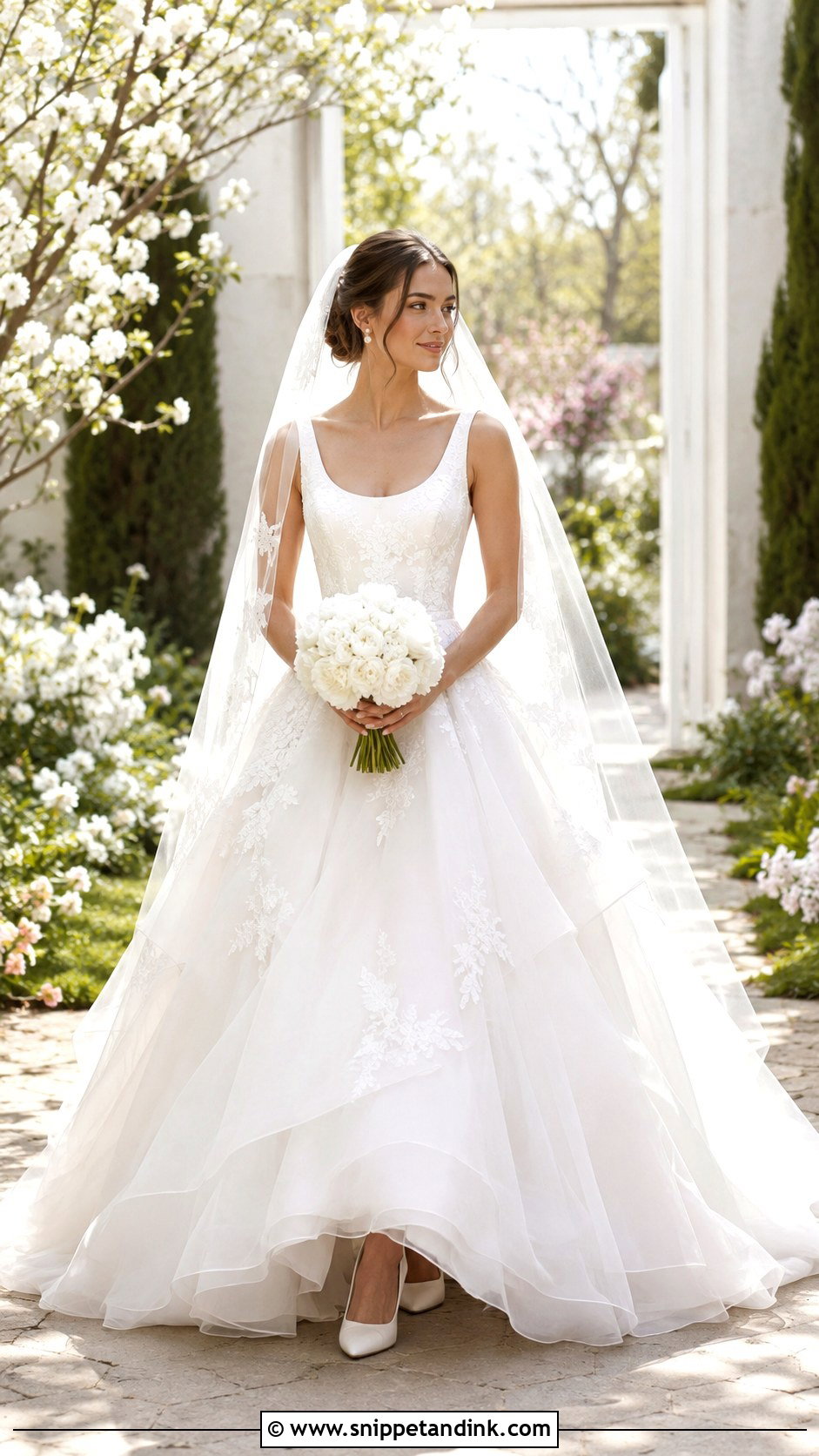
Organza is lighter than satin and holds air between its layers, so a ball gown in organza feels much less heavy than it looks. That’s why it works for spring and summer. A fitted bodice with a scoop, sweetheart or square neckline, then layered organza for the full shape. Minimal lace appliqué on the bodice links the two halves. A long organza train needs a secure bustle so it can be lifted after the ceremony without tearing the delicate layers. A chapel or cathedral veil, pearls and closed-toe pumps are enough; keep jewelry and flowers simple, as the skirt is already busy catching the light.

20. Lace Bodice Satin Skirt Bridal Dress
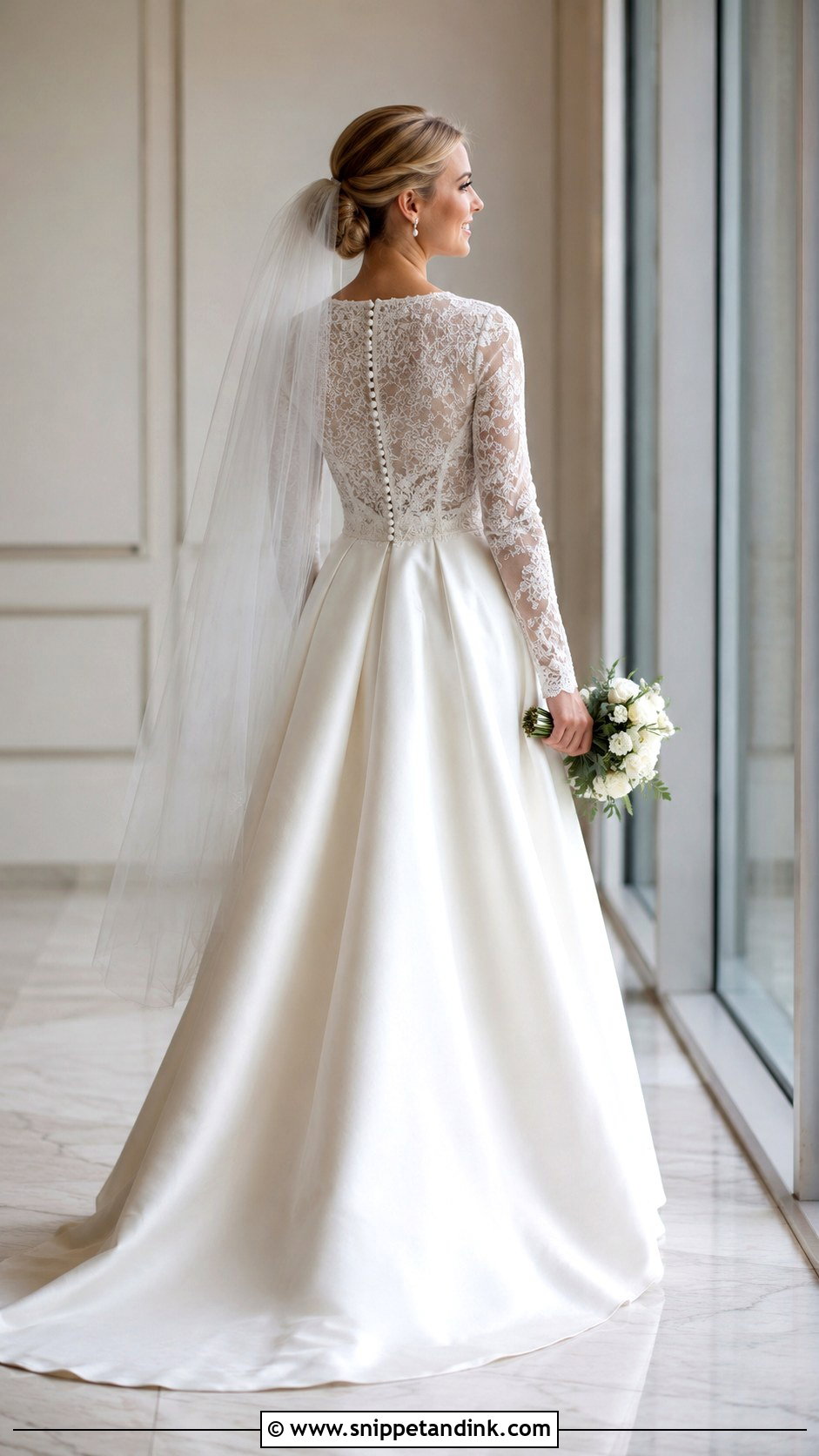
Lace on the bodice and plain satin below gives you texture near the face and a clean skirt for movement. The sleeve choice depends on season and coverage: long, cap or wide straps. A natural waist is where the two fabrics meet, and I always check that seam is level all the way round, because a waist that dips at the back shows clearly when lace meets smooth satin. Covered buttons down the back keep it cohesive. A plain tulle veil, pearl drops and satin pumps are enough. Keep the bouquet simple so it doesn’t fight the lace.
What Dates a Wedding Dress, and What Never Seems To
When brides tell me they want to look at their photos in thirty years without wincing, I point them away from the details that tie a dress to a particular season. Heavy all-over glitter, very sheer corset panels, extreme cut-outs and novelty sleeves tend to mark the year. A clean neckline, a natural waist, good satin or lace and covered buttons look as right in an old album as they do now.
Classic shapes also alter well later on. A satin A-line or ball gown can be restyled for a daughter or remade into a christening gown, because there’s enough plain fabric to work with. A dress covered in beading or glued embellishment is much harder to adapt. If you think you might pass your gown on, have it professionally cleaned soon after the wedding and stored in acid-free tissue, so the fabric is still in good condition when someone wants to wear it.
The Dress Should Disappear Once You’re Wearing It
Start with the silhouette, fabric and coverage you’re comfortable in, and try shapes you’d normally rule out, because a gown on a hanger tells you very little about how it looks on you. Bring your real shoes and undergarments to every fitting, and walk, sit, turn and lift your arms in each dress. Once you’ve found the one, let the veil, jewelry, hair, bouquet and shoes support it quietly. A classic gown is balanced from head to toe, suits the room, and lets you forget about it once you’re dancing.
You'll Like These Ideas:












Leave a Reply