
A dramatic cake works as a centerpiece, not just dessert, and it can set the mood for the whole reception through color, height, texture or flowers that spill down like a bouquet. More couples now ask me to move past plain white tiers toward black icing, metallic finishes, heavy vintage piping, oversized florals, marble and modern architectural shapes. Drama and elegance aren’t opposites; it comes down to balance and to choosing one idea to lead. Below are 20 bold designs, each with what I’d want you to know before ordering it.
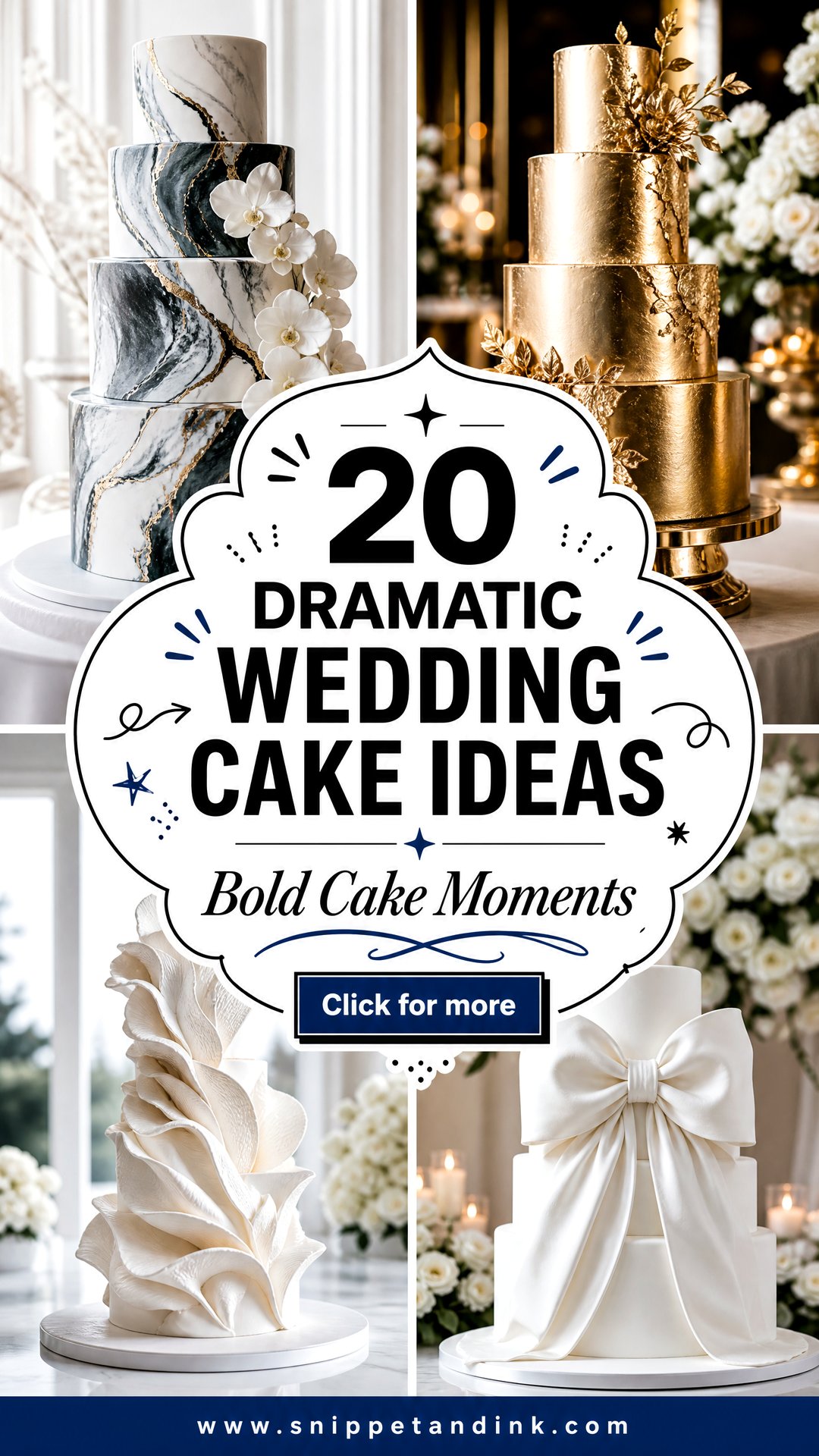
Briefing a Baker on a Bold Design
A dramatic cake takes more planning than a classic one, because color, structure and decoration all have practical limits. The more I know at the first meeting, the more honest my quote and design can be. Here’s what I’d ask you to bring.
- Your guest count, plus how many people will realistically eat cake if there’s also a dessert table.
- Photos of the reception room and the ceiling height, so the cake’s height suits the space.
- Fabric swatches or color references for linens and flowers. Screens shift color, and dark shades shift most.
- Where and when the cake will be displayed: indoors or out, in sun or shade, and for how many hours.
- Your rough budget. Hand-placed pearls, sugar flowers and heavy piping are labor, and labor is most of the cost.
Complex sugar work books up, so I’d start the conversation several months ahead for any of the more involved designs below. A tasting usually comes early too, since flavor choice affects which fillings can sit under fondant for a full day.
1. Black Wedding Cake
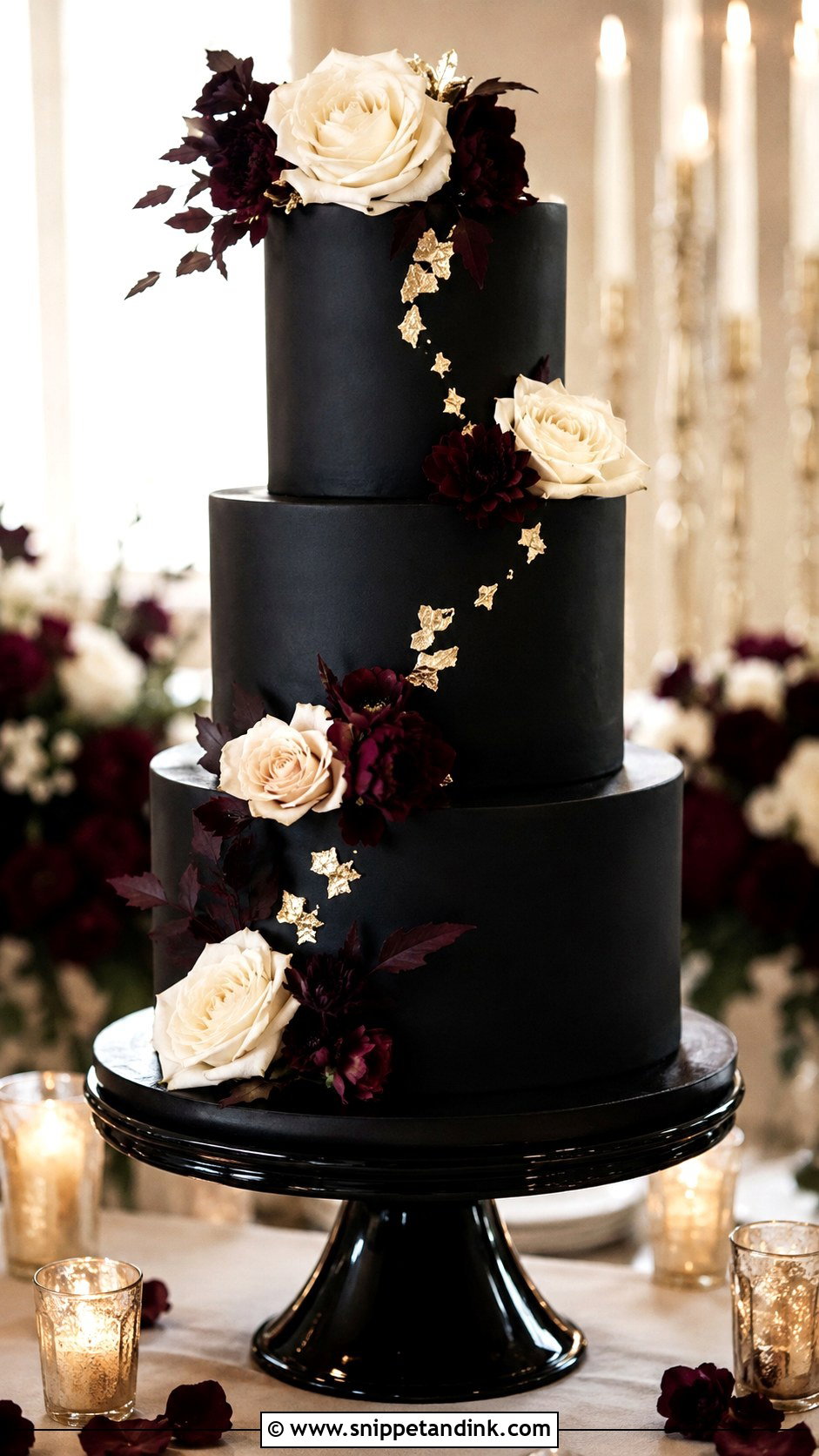
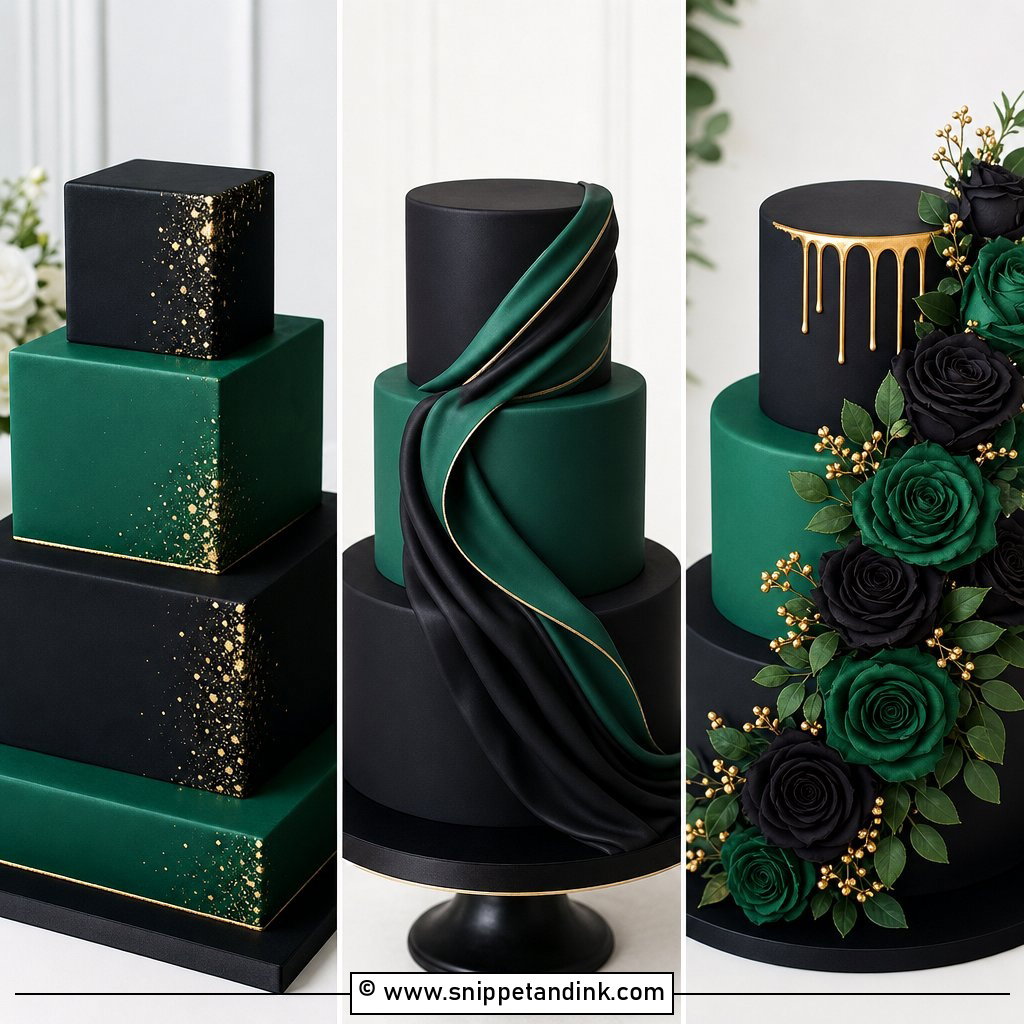
A black cake brings instant drama with very little else on it. The finish matters more than people expect: matte black reads modern, while a glossy finish looks formal but shows every fingerprint and bump. I usually cover a black cake in fondant over a pale buttercream, because heavy black frosting stains teeth and can taste bitter from the amount of coloring needed. Ivory roses, burgundy blooms or a little gold leaf soften the dark tiers. Keep the shape clean so the color does the work, and if you want contrast, ask for one white tier or a small cascade of flowers down one side.
2. Black And Gold Wedding Cake
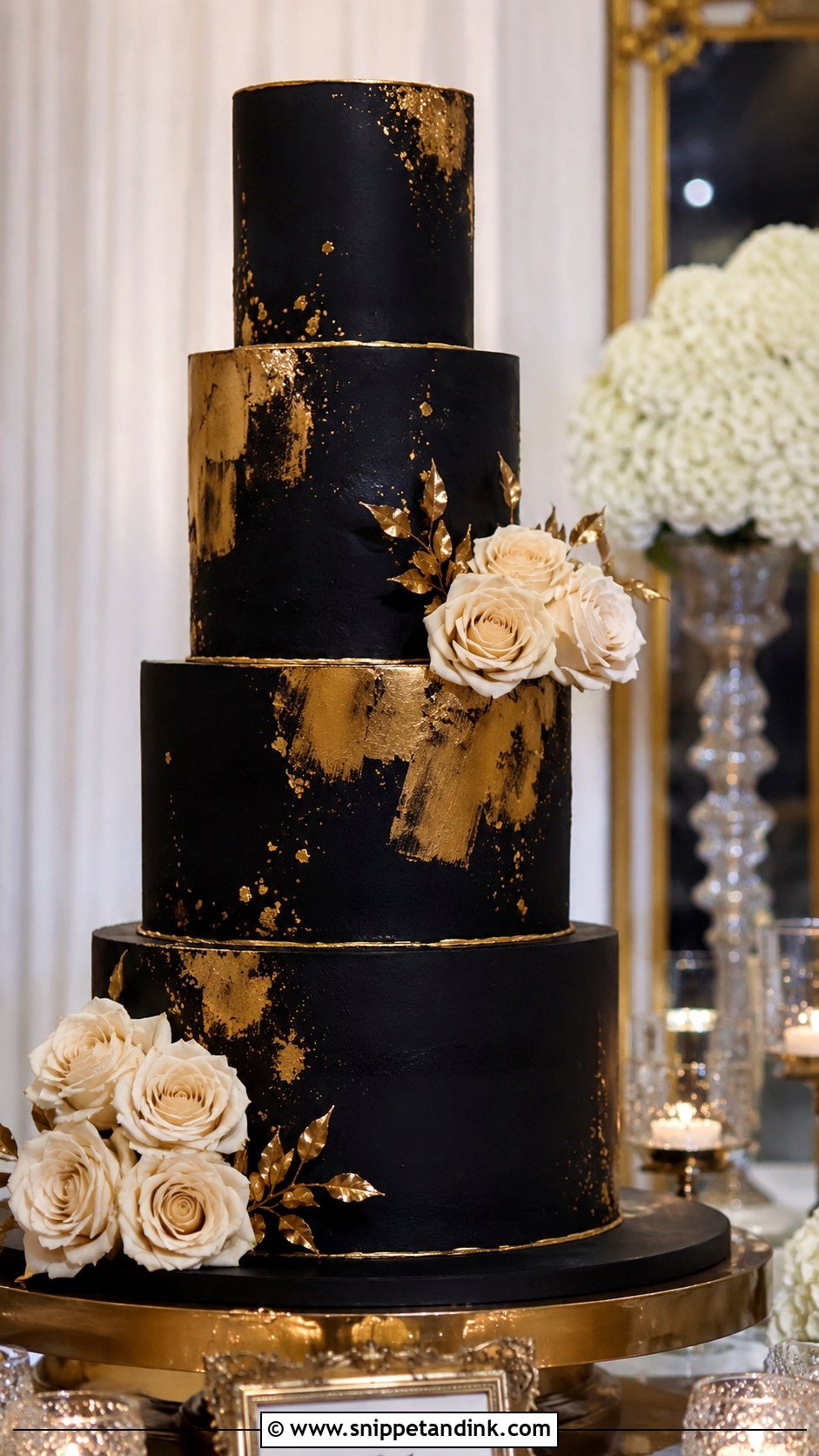
Black and gold is one of the strongest pairings I make, rich and formal, and it reads clearly in photos. A matte black base with brushed gold edges looks polished without getting busy. Gold leaf can be scattered lightly for texture or laid in bold sections for a more artistic finish; real leaf is fragile and creases if touched, so I apply it last, often on site. Evening weddings and venues with dark wood, crystal lighting or gold flatware suit it. To keep it romantic, tuck cream roses or white orchids around the tiers rather than covering every surface.
3. Gothic Wedding Cake
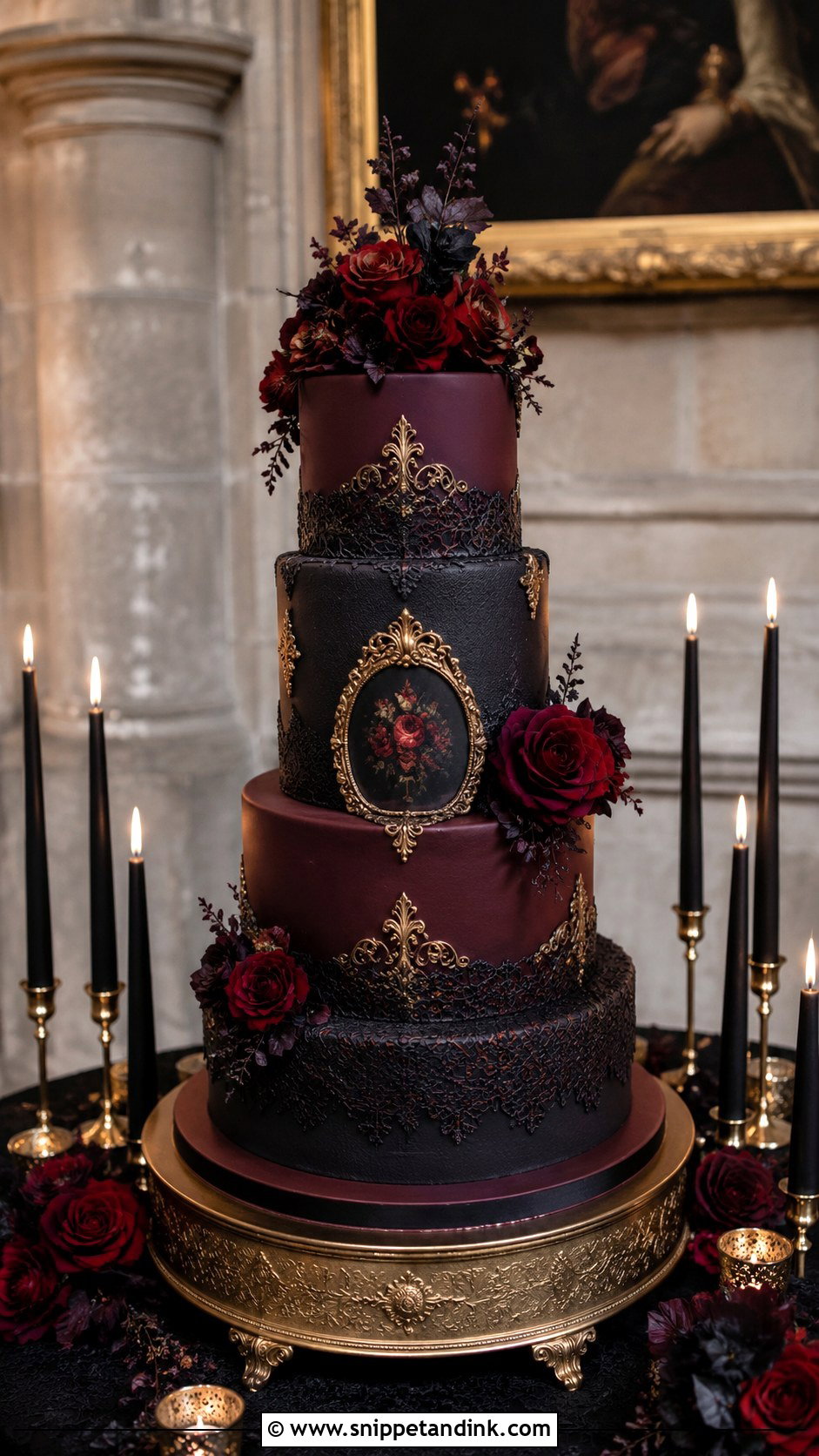
A gothic cake suits couples who love moody romance, ornate detail and a little mystery: black or deep burgundy tiers, lace-style piping, vintage scrollwork, and flowers in dark red, plum or ivory. The line between gothic and costume is thin, and in my experience it’s elegant proportions that keep it on the right side. Tall tiers, refined flower placement and a touch of silver, antique gold or pearl make it look like a wedding cake. Candlelight, velvet linens and historic venues let it become part of the room.
4. Red Wedding Cake
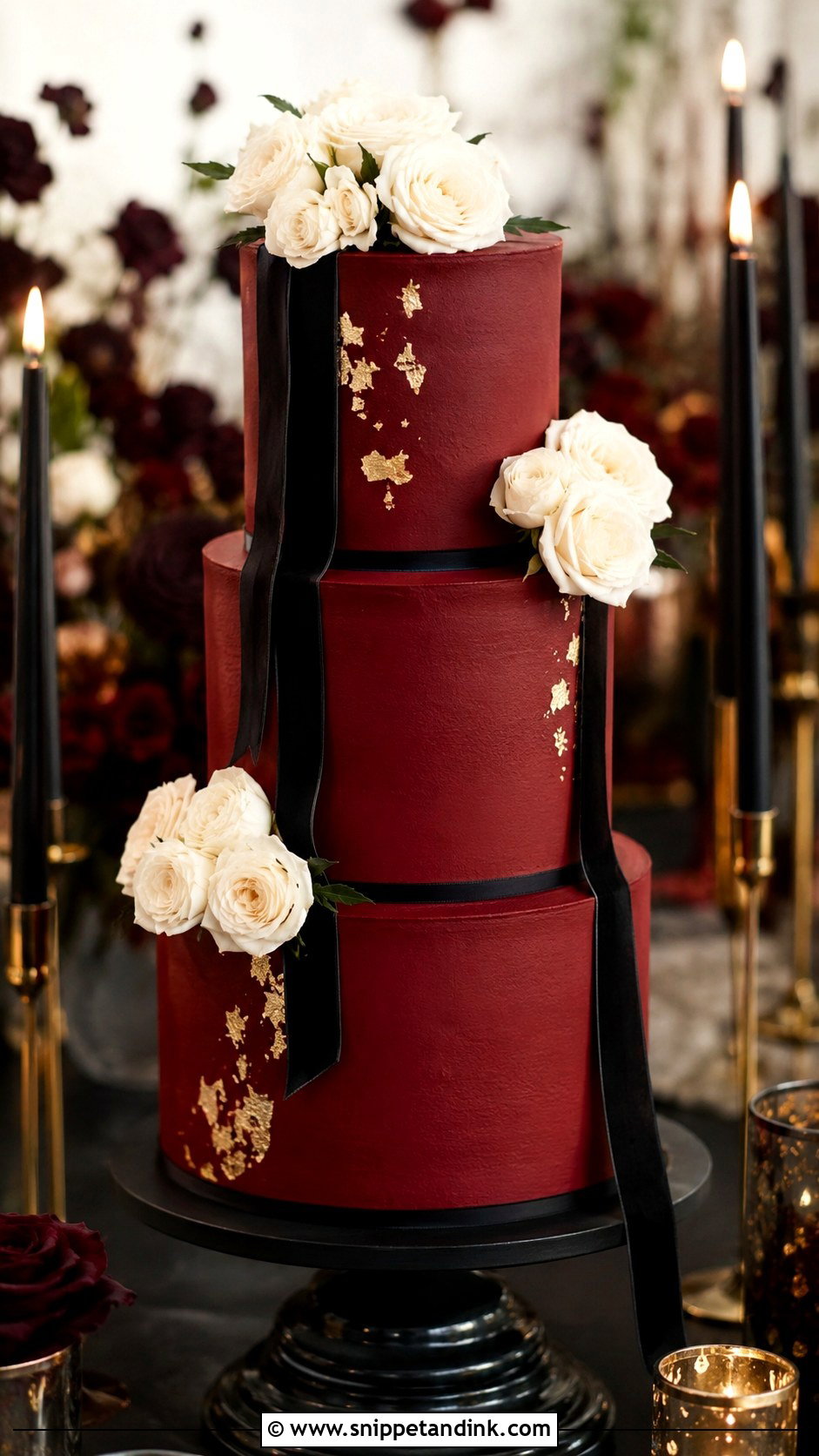
Deep reds carry more romance than bright ones, so for most weddings I steer couples toward burgundy, wine red or dark cherry rather than candy red. Smooth fondant, a velvety buttercream texture or a watercolor finish all work. Like black, saturated red takes a lot of coloring, and it deepens as it sits, so I color it a day ahead and judge the shade the next morning. Gold accents, black ribbon and ivory flowers pair well. For a full reveal, red velvet inside a red cake is hard to beat at a fall or evening wedding.
5. Marble Wedding Cake
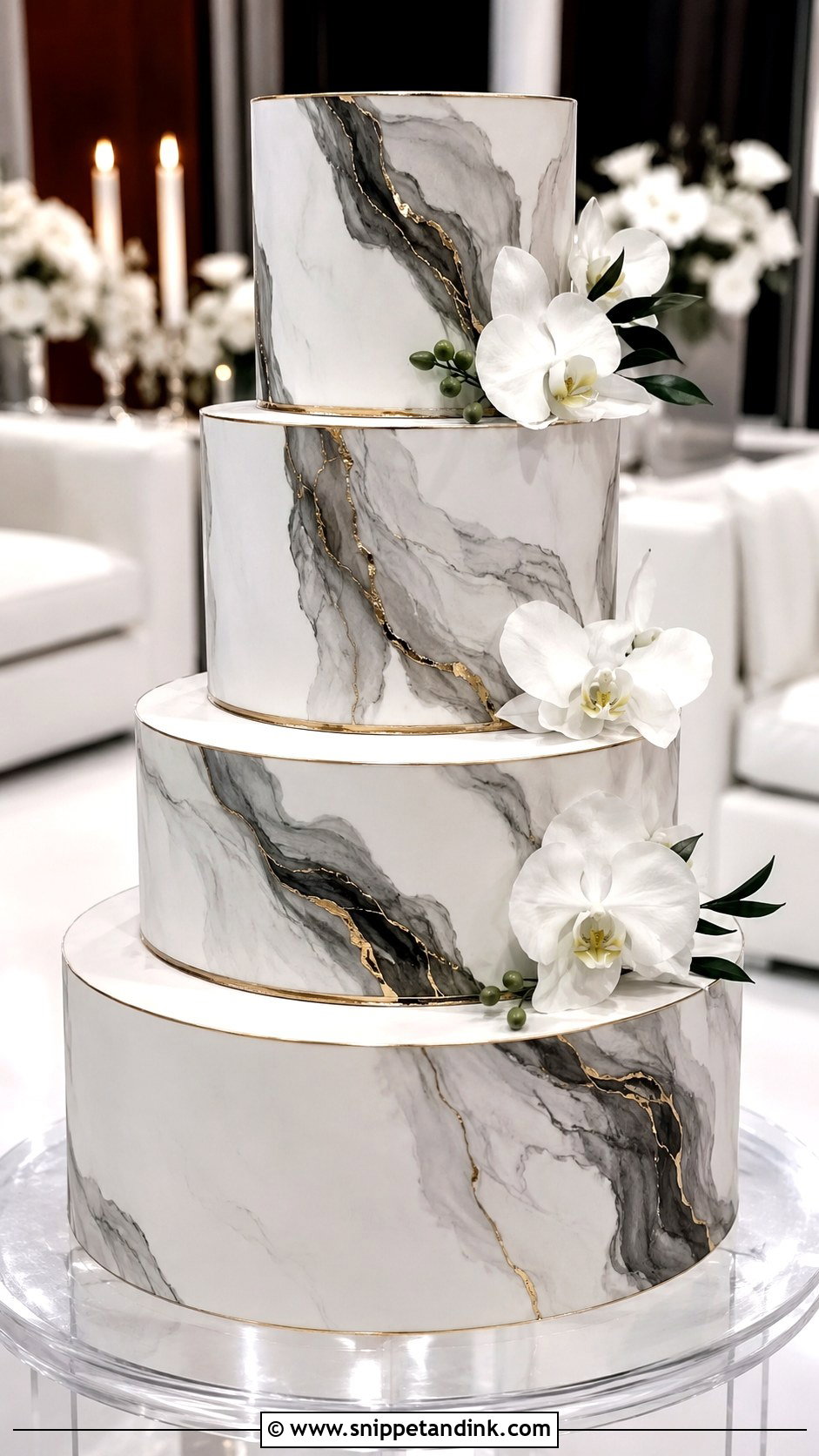
Marble is drama in its most polished form. Black and white veining is the most striking, though grey, gold, blush and navy veins work too. The best marble has movement without chaos, so I limit it to one or two vein colors and keep everything else plain. Fondant marbling is never identical twice, which is part of the charm, but it means you’re approving a direction, not an exact pattern. Metallic edging, a clear acrylic stand or a few fresh flowers finish it. For a softer effect, marble just one tier.
6. Geode Wedding Cake
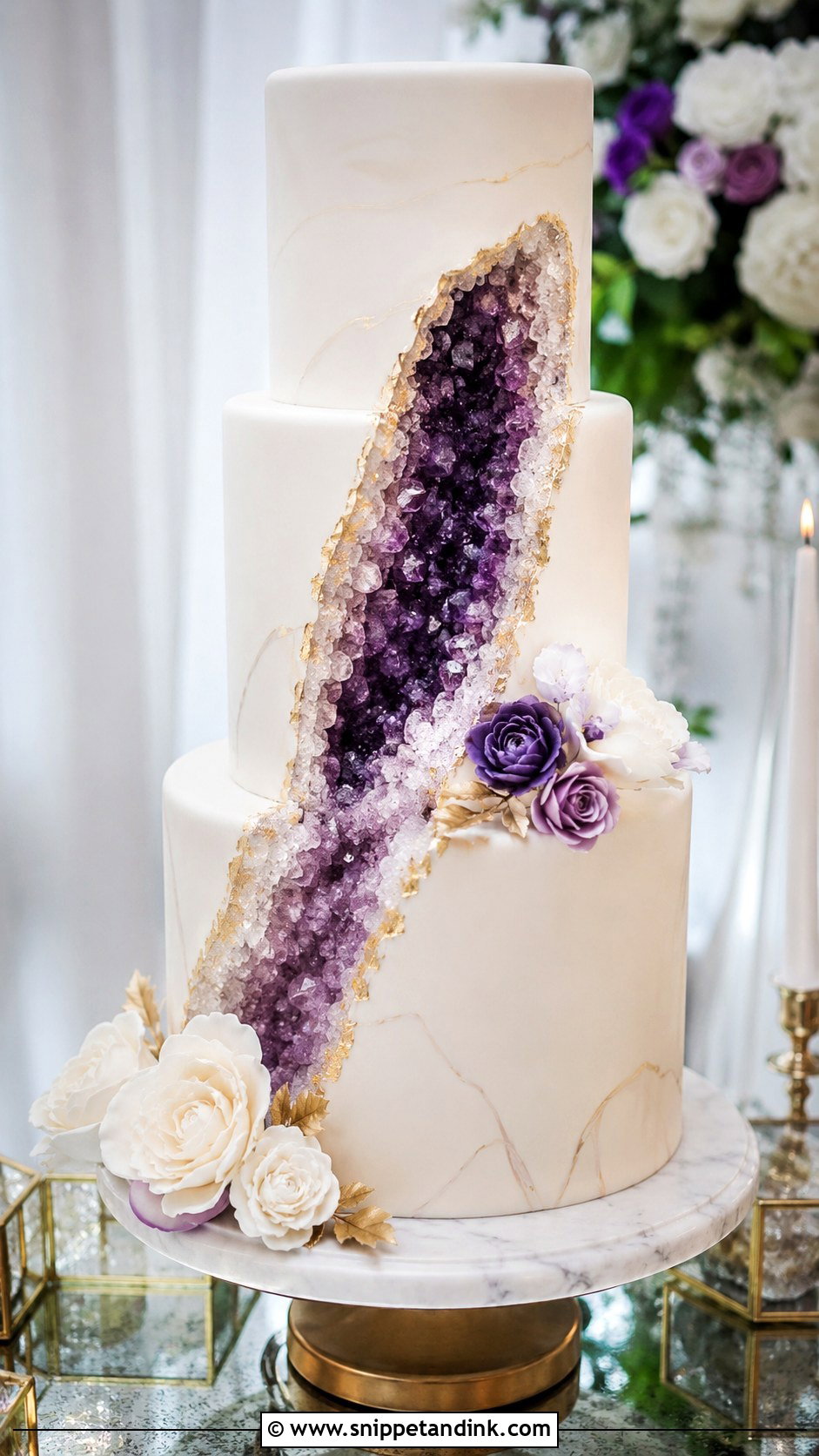
A geode wedding cake has a crystal-like section carved into its side, usually made with rock candy or isomalt. Amethyst, emerald, rose quartz and smoky grey look rich against white, black or marble tiers. Sugar crystals don’t like humidity; they turn sticky and can weep in a damp room, so I ask where the cake will stand before quoting one for an outdoor or summer reception. Keep the geode to one focal area, and edge it in gold so it looks finished. It suits glam weddings, desert venues and modern receptions.
7. Tall Wedding Cake
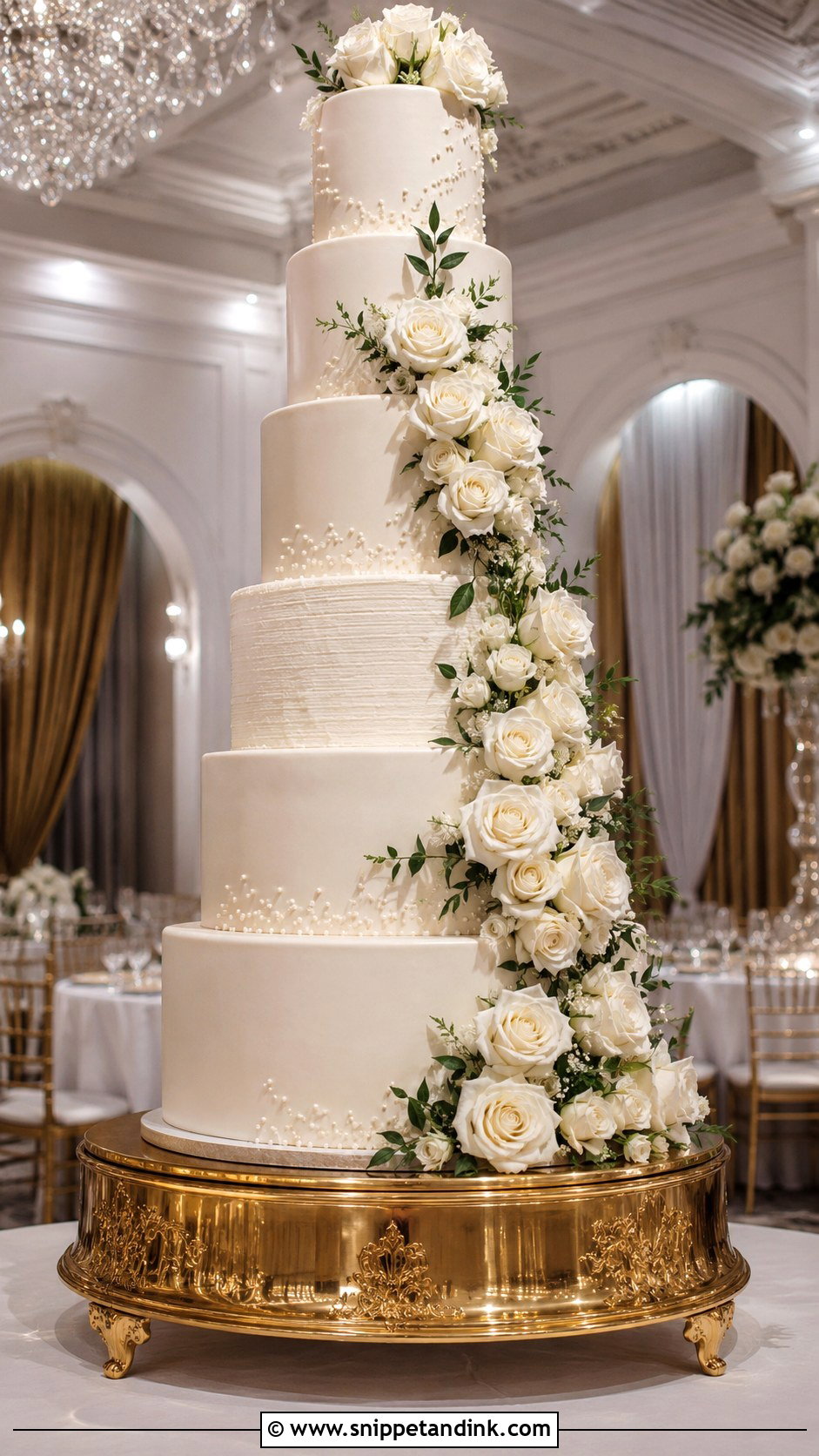
A tall wedding cake makes its point through height and scale, so it needs very little decoration. Five, six or seven tiers fill a ballroom or a high-ceilinged room. I balance smooth tiers with one textured tier, a little piping or a floral cascade. Height brings engineering: every tier needs internal dowels and a board, and very tall cakes get a central rod, so plan on the cake being stacked at the venue rather than arriving whole. If your guest count is small, dummy tiers give you the grand look without paying for cake no one will eat.
8. Floral Cascade Wedding Cake
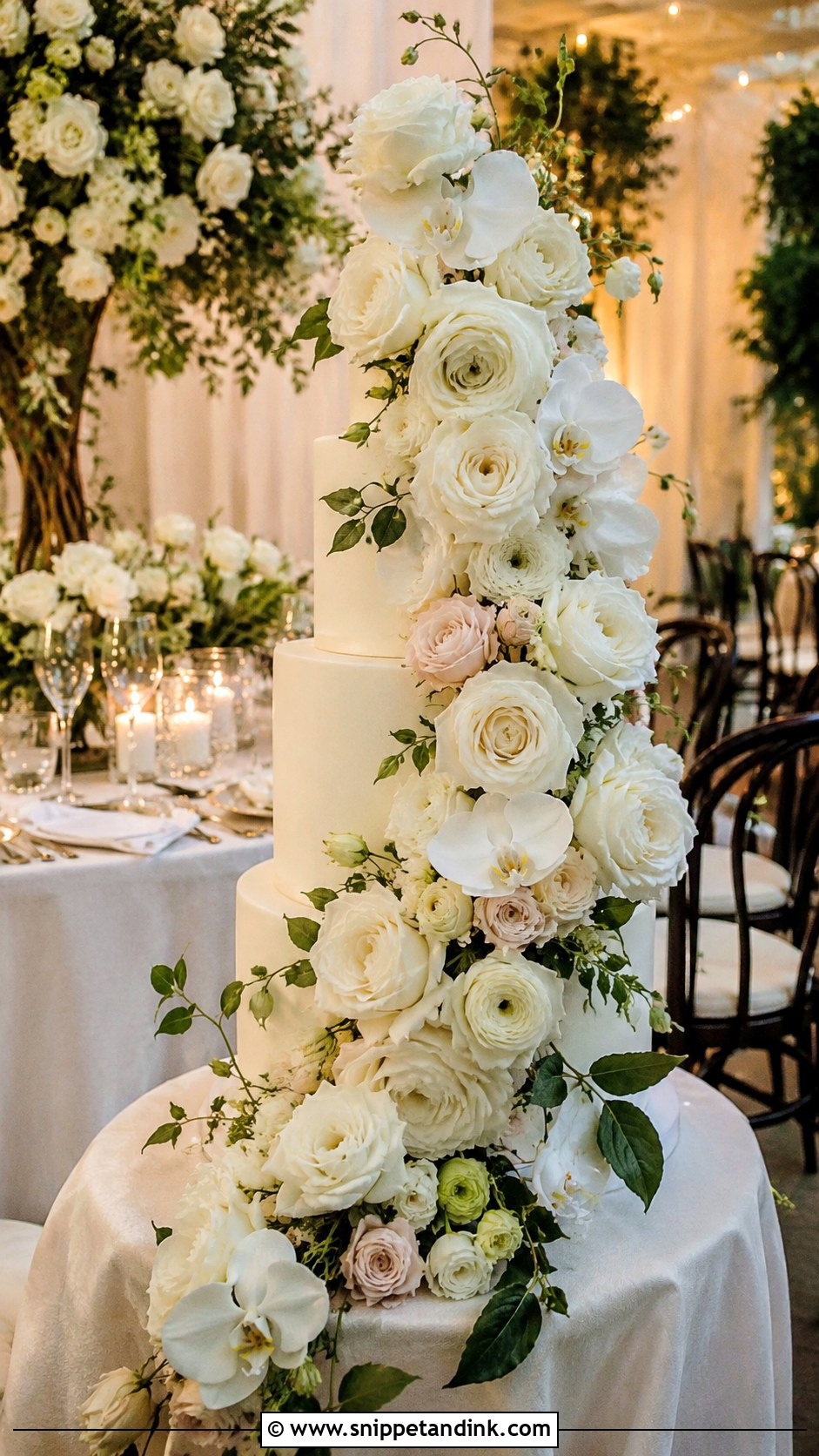
A floral cascade brings drama through movement, with flowers flowing from the top tier down one side and pulling the eye across the whole cake. Roses and ranunculus keep it soft; orchids, dahlias and anthuriums make it bold. For real drama, choose oversized blooms, rich colors or strong contrast against a plain cake. I always check with the florist that every stem is food-safe and grown without pesticides, and the stems are wrapped or set in picks so they never touch the sponge. It reads best from the front, so place it near a floral arch or the sweetheart table.
9. White Wedding Cake With Black Flowers
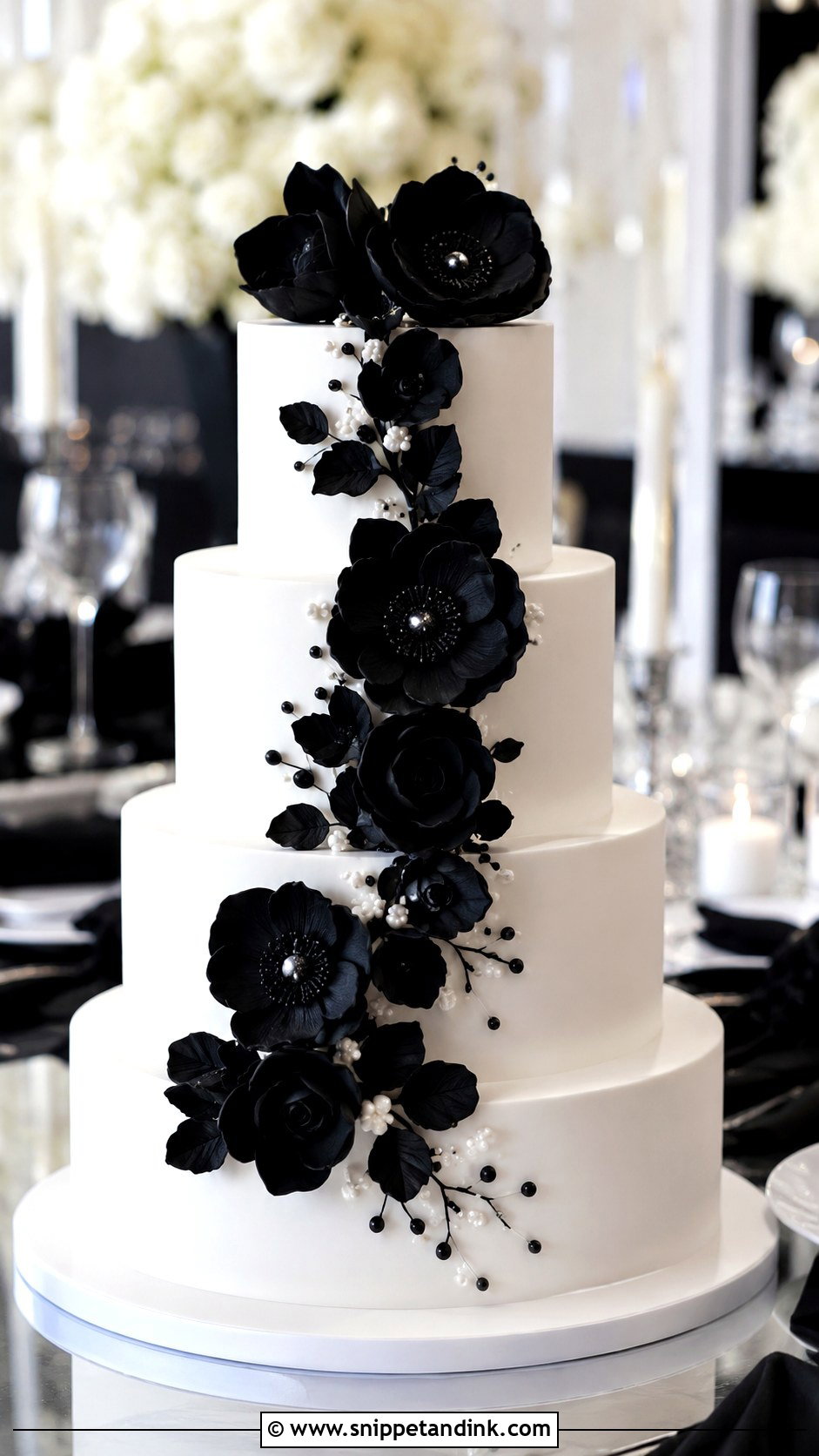
White tiers with black flowers keep the base classic and put all the drama in the contrast. Black sugar flowers, dark anemones or deep plum blooms create it without making the cake feel heavy. Sugar flowers are my choice when the color has to be truly black, since very few real flowers are; most so-called black blooms are deep burgundy or purple in daylight. Smooth white fondant, pearl details or a soft buttercream texture balance the dark accents. It sits well with black bridesmaid dresses and formal evening receptions.
10. Vintage Wedding Cake
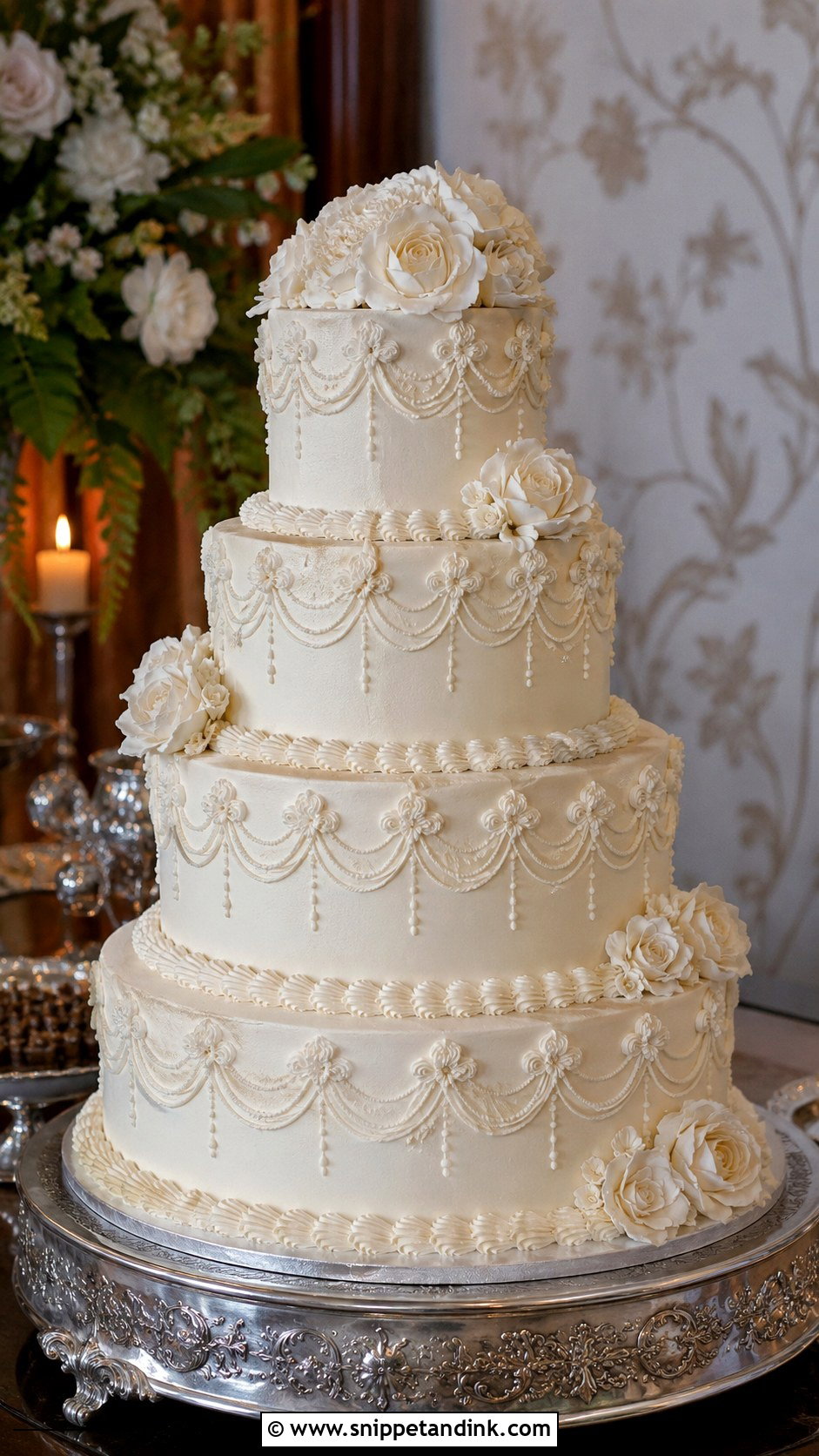
Vintage piping turns dramatic when it’s generous and the shape is grand. Lambeth-style swags, shell borders, pearl dots and ruffled buttercream bring a nostalgia that feels fresh again. Heavy overpiping is slow, careful work, so it’s one of the designs I need the most lead time for. Keep the palette intentional: ivory, blush, champagne, black or deep red all work. A tall vintage cake hardly needs flowers; cherries, bows or sugar roses only belong if they match the wedding. Old-world venues and candlelit rooms suit it.
11. Pearl Wedding Cake
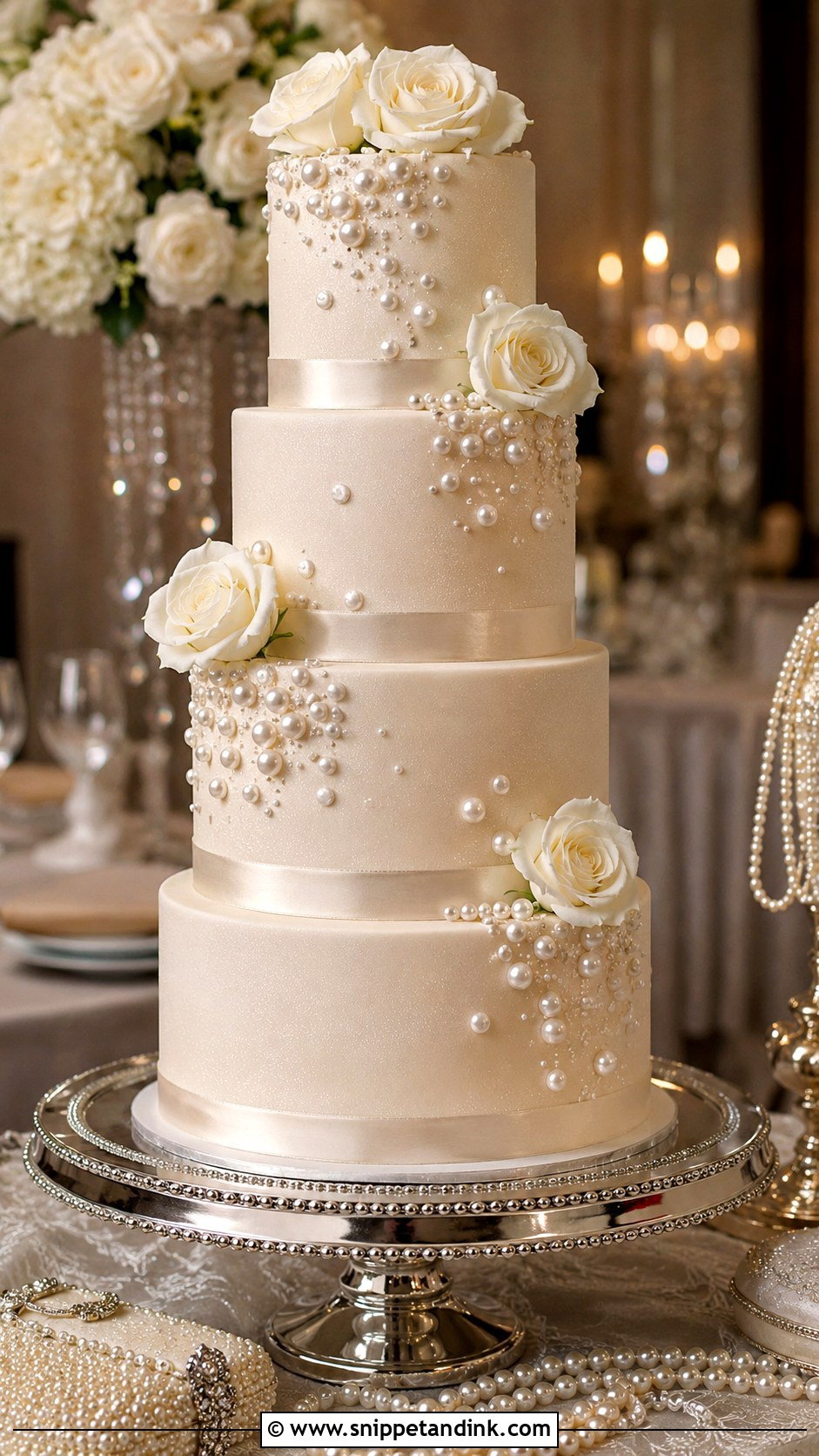
Pearls create drama through shine and detail instead of color. Tiny sugar pearls can cover a whole tier, frame the edges, or form patterns over smooth fondant, while larger clusters look modern used sparingly. Covering a tier in hand-placed pearls takes hours, and that labor shows up in the quote. Ivory, champagne, soft grey and blush suit it, alongside satin gowns and pearl jewelry. To stop it looking flat, mix pearled tiers with smooth ones, soft piping or a single floral accent.
12. Metallic Wedding Cake
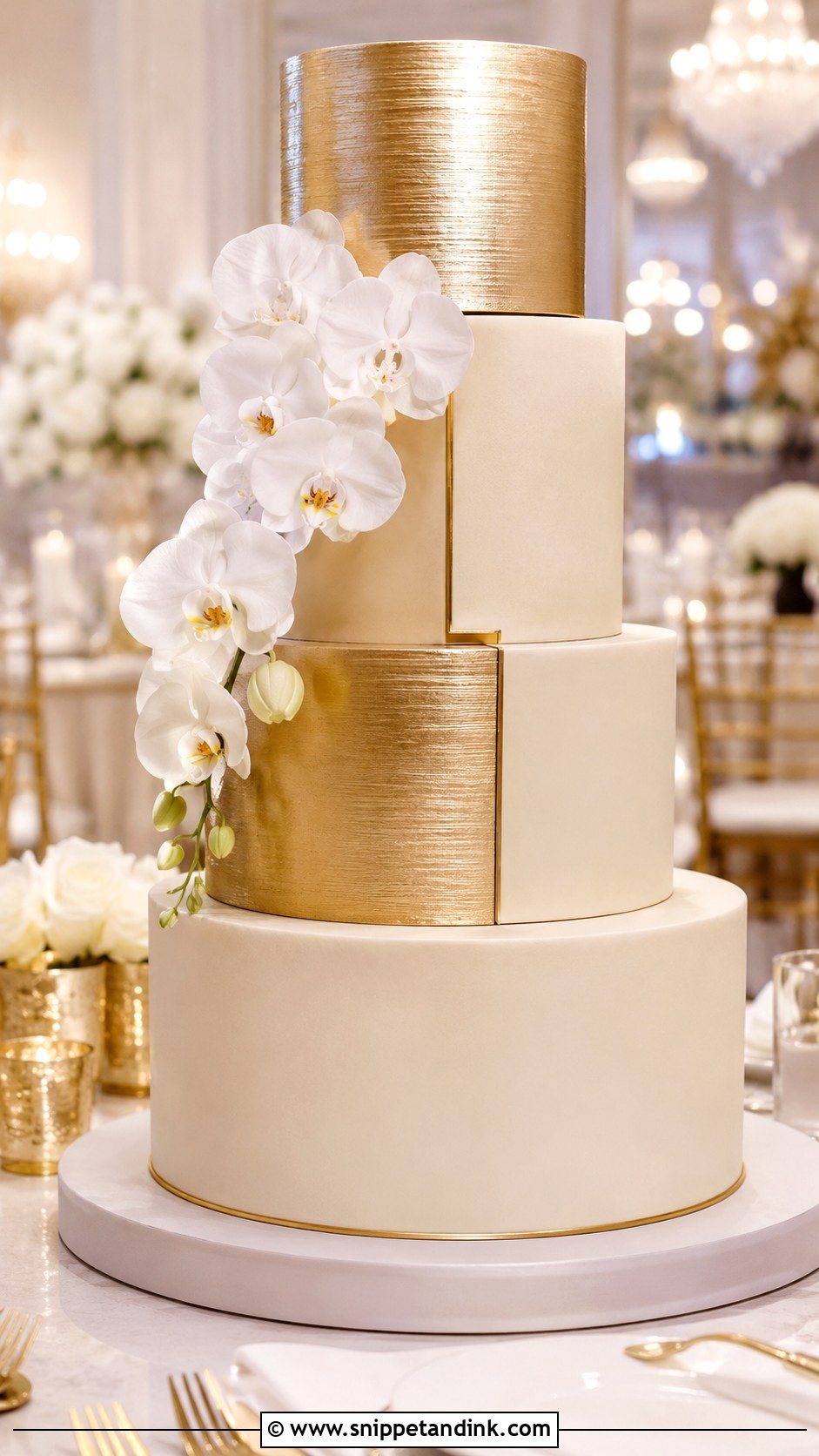
Metallic cakes catch the light. Gold, silver, bronze and champagne can be brushed, painted, foiled or used as textured accents. For impact I put metal on one or two tiers rather than all of them, which stays stylish instead of overwhelming. A practical point: some shimmer dusts sold for cake decorating are labeled non-toxic but not edible, so I use edible-certified metallics on anything that will be served. Black, white, navy, emerald and burgundy all pair well, and simple florals or clean geometric details keep the shine elegant.
13. Ruffle Wedding Cake
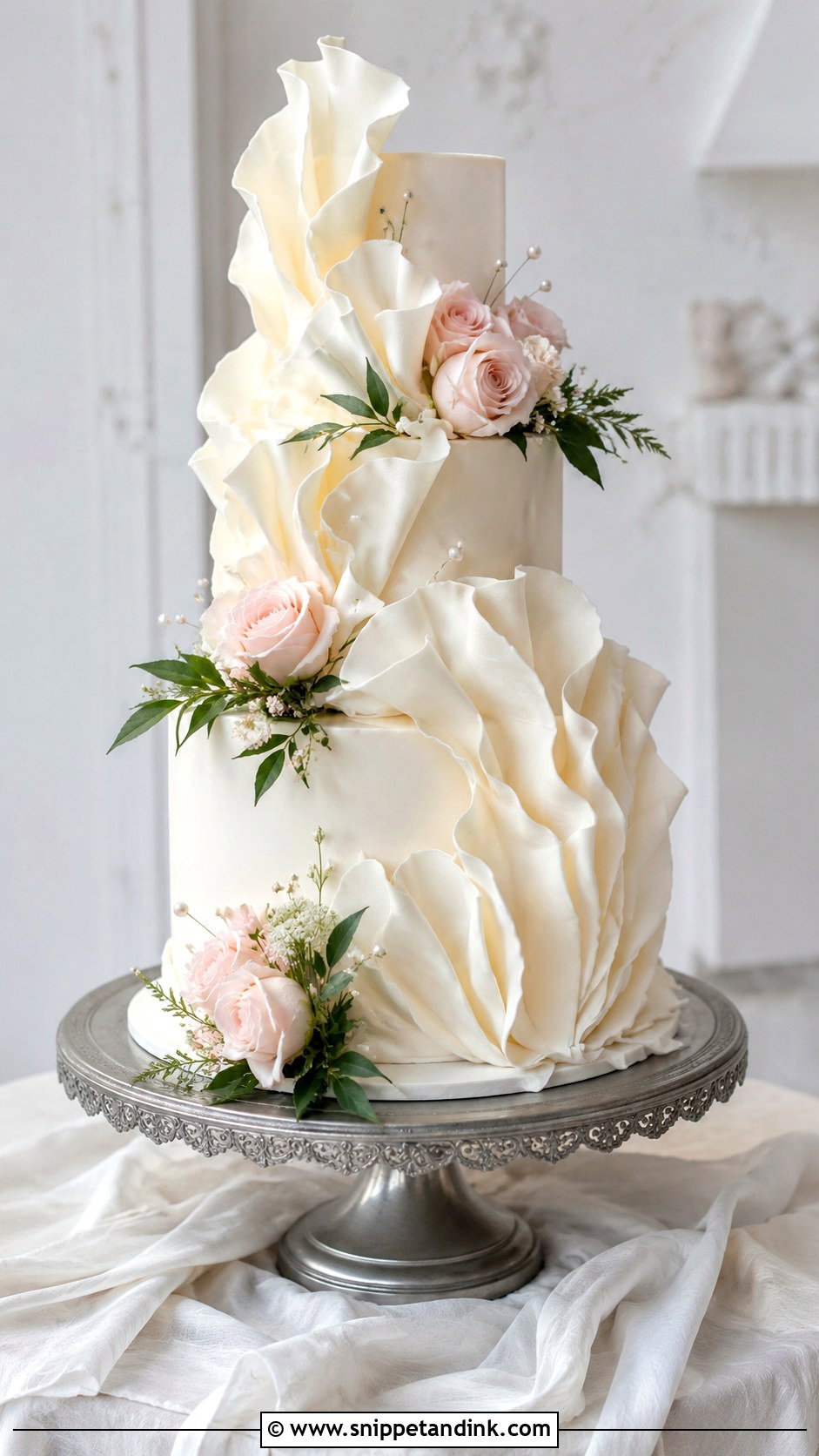
Ruffles create drama through texture, and they look like layers of fabric on a gown. Buttercream or fondant both work; fondant ruffles hold crisper edges, while buttercream ones are softer and more forgiving in a cool room but droop in heat. For a bold look, I’d put oversized ruffles on one tall tier and keep the others smooth. Ivory ruffles feel classic; blush, black or champagne feel more editorial. Leave extra decoration off, apart from a few flowers at the base or a simple topper.
14. Watercolor Wedding Cake
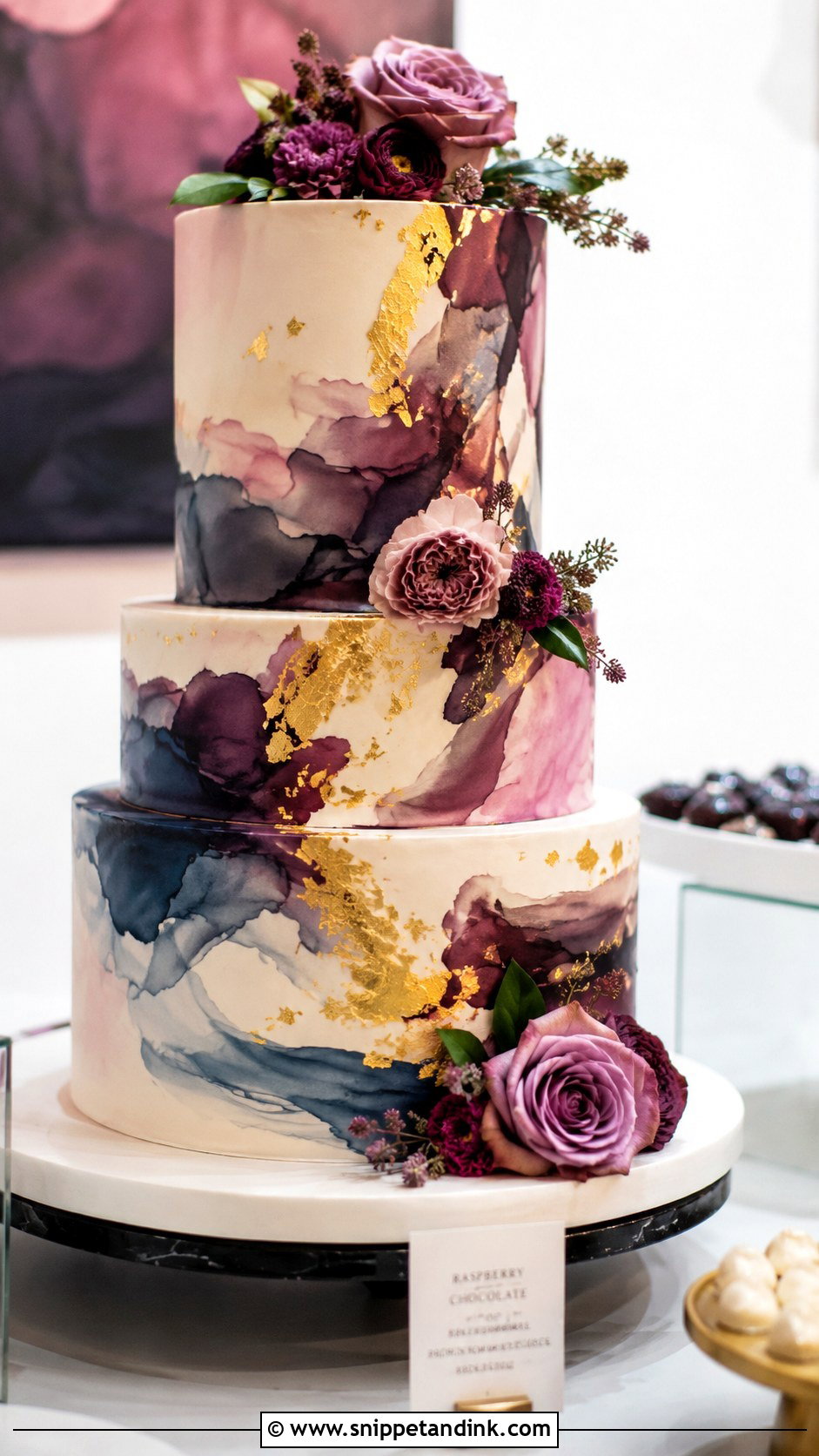
Watercolor brings drama without sharp lines, with painted color drifting across the tiers. For a bold wedding I’d use deep shades like navy, plum, burgundy, emerald or smoky grey. Dark watercolor is harder to blend than pastels, because a deep wash dries with hard edges unless it’s worked quickly, so I test the palette on a dummy before the real cake. Gold leaf, fresh flowers or a fine metallic edge finish it. Matching the washes to your flowers or stationery ties it into the day.

15. Ombre Wedding Cake
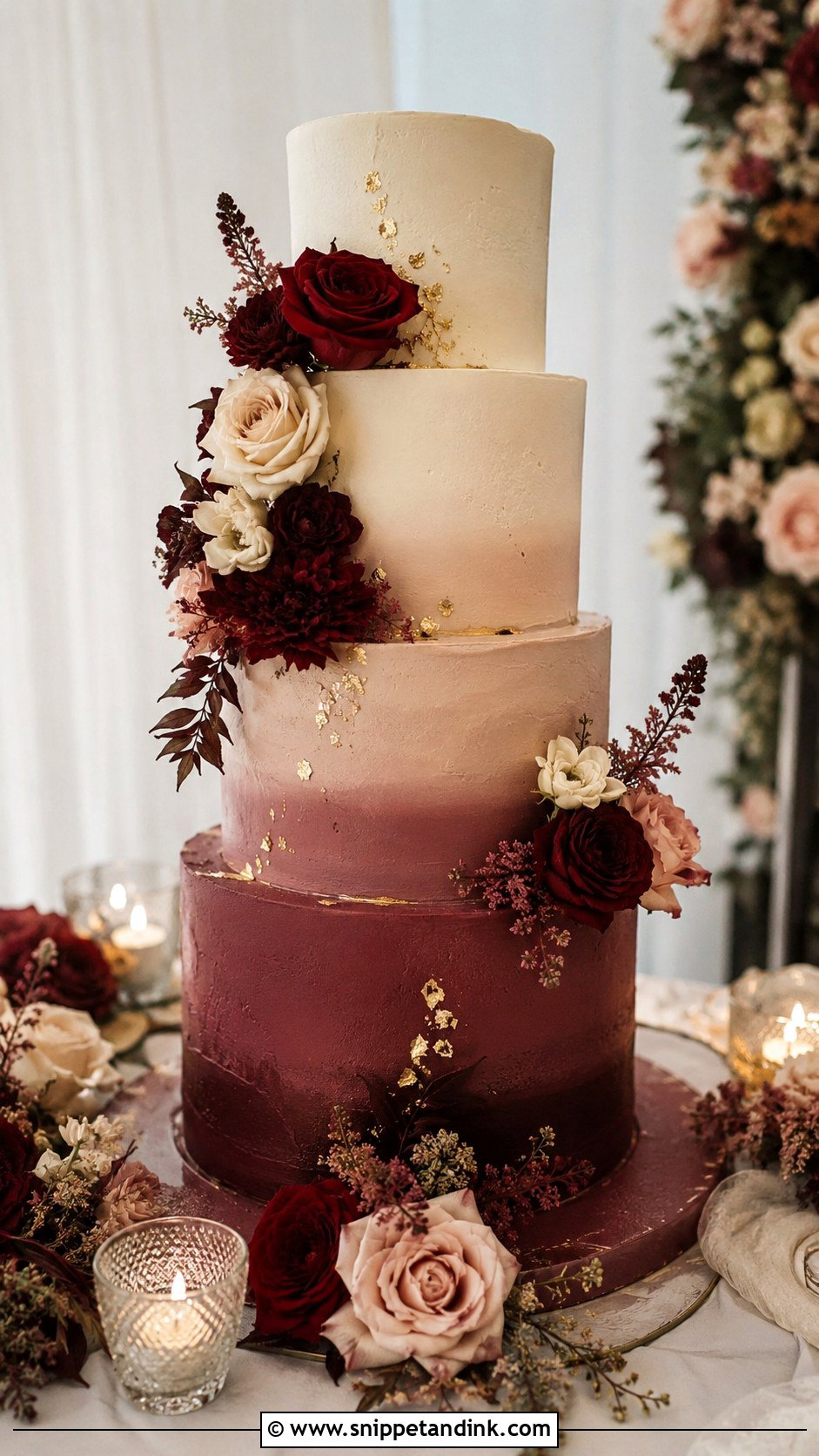
Ombre moves from light to dark across the tiers. It can be subtle, ivory into blush, or bold, white into black, burgundy or navy. Tall tiers make the gradient easier to see, and textured buttercream softens it. I always put the darkest shade at the bottom; reversed, the cake looks top-heavy in photos. Getting four or five even steps between colors takes careful mixing, so I mix every shade before I start icing. Flowers in matching tones finish it.
16. Sculptural Wedding Cake
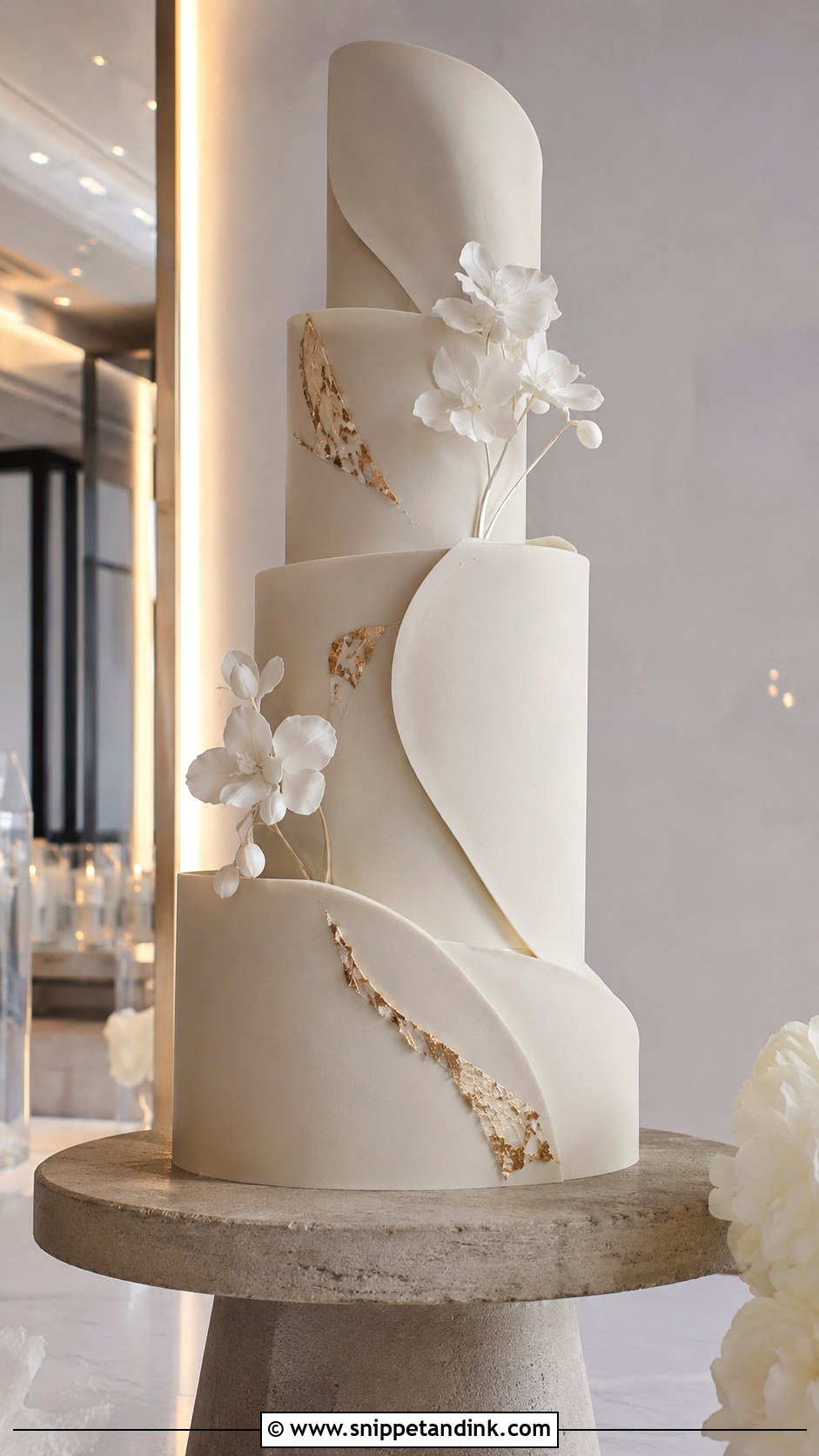
A sculptural cake surprises through its shape: curved edges, offset layers, arches, waves or carved forms instead of standard stacked tiers. Decoration stays minimal so the structure leads, usually smooth fondant in one color with very few flowers. White, ivory, black or a soft stone color makes it look gallery-like. Unusual shapes often need custom boards and internal supports, which means a longer design conversation and more lead time. It’s also a clever way to make a smaller cake memorable.
17. Floating Tier Wedding Cake
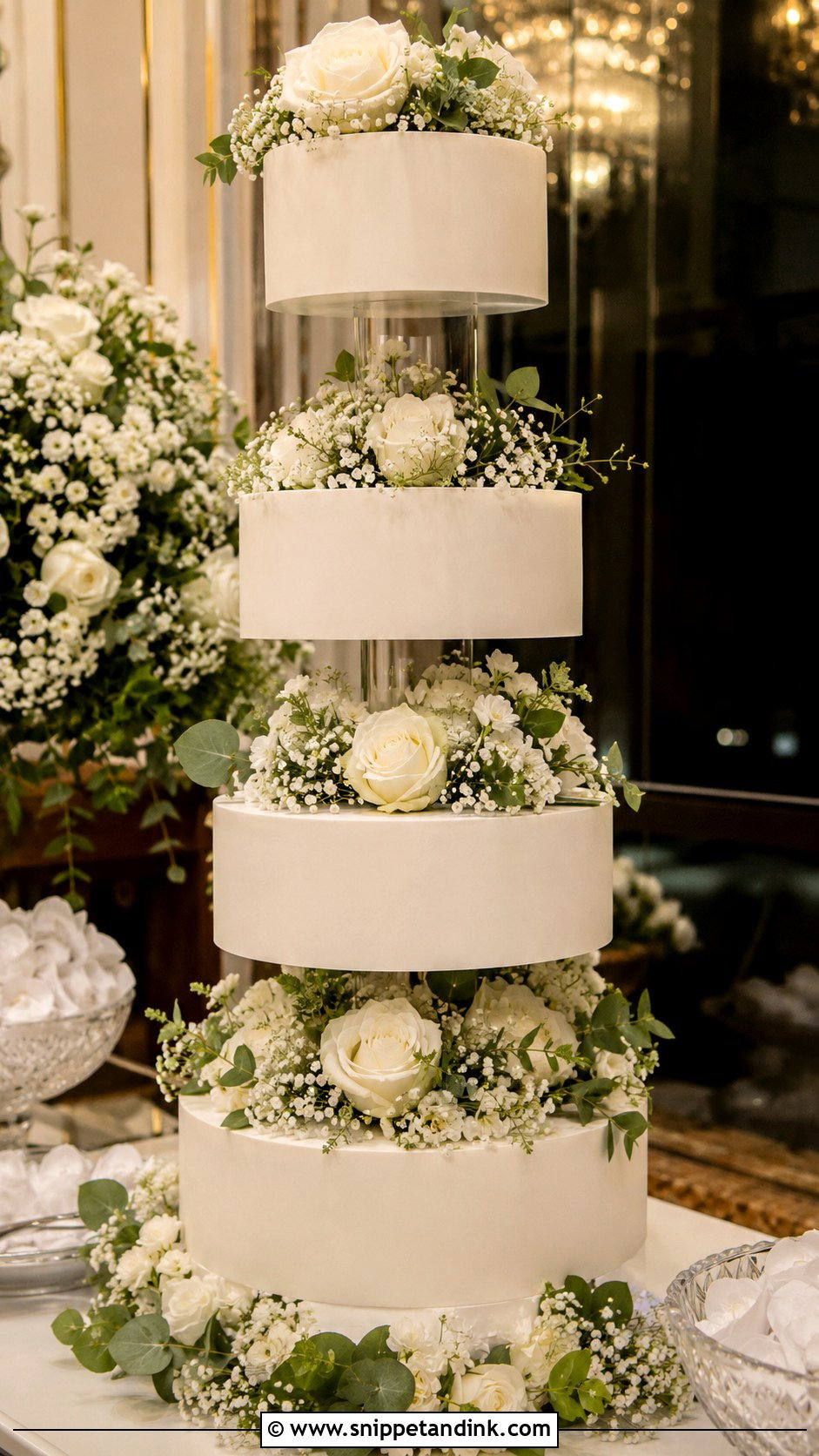
A floating tier wedding cake adds space and surprise between the layers. Clear separators, flower-filled gaps or hidden stands make tiers appear to hover. The stands are the hidden part of the cost, and they’re usually hired and must come back to the baker, so ask who returns them after the reception. Keep the cake surfaces clean and focus decoration around the gaps. White, ivory and blush are classic, while black or metallic accents make it bolder. Large receptions with a grand cake moment suit it.
18. Dark Floral Wedding Cake
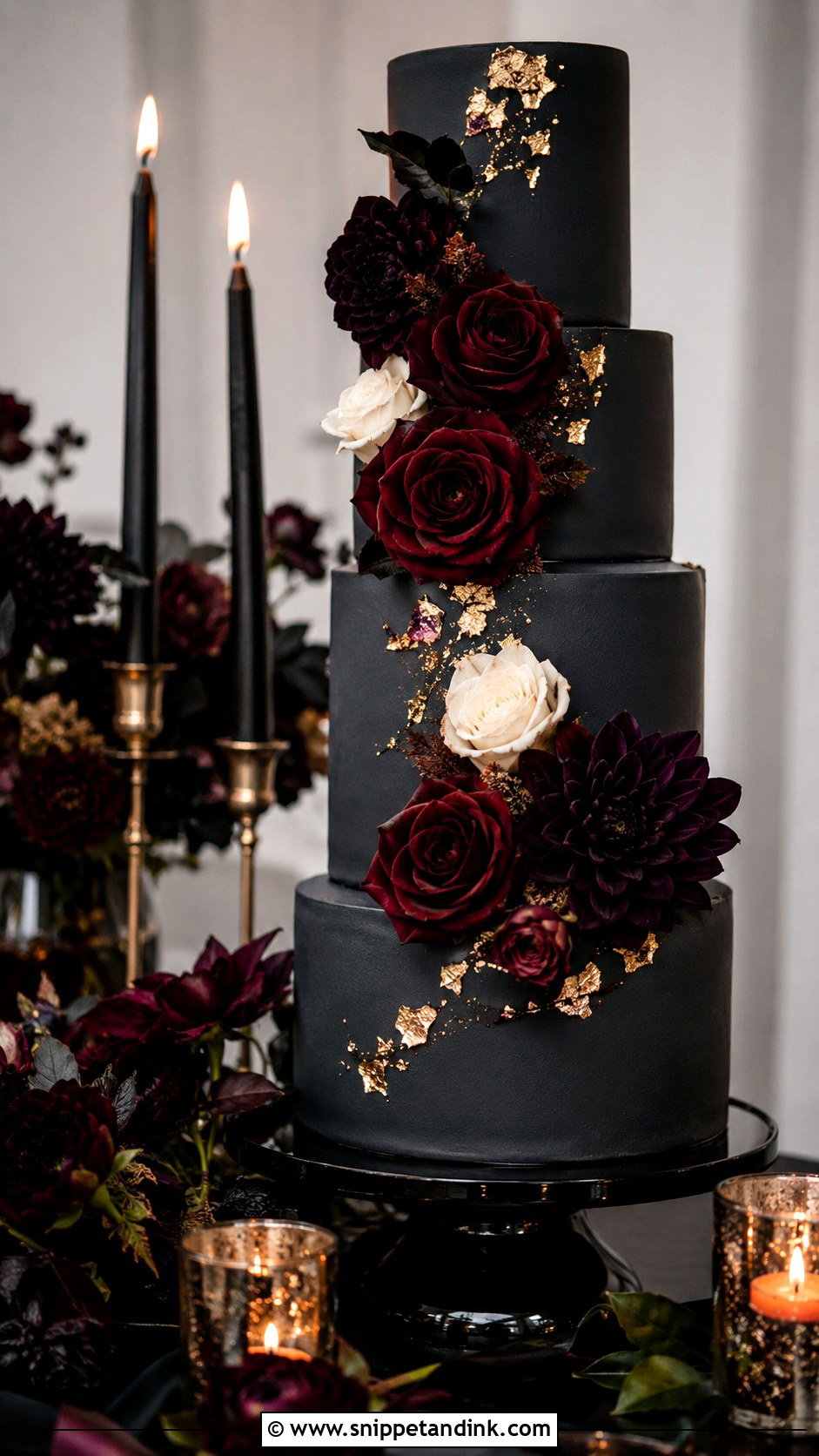
Dark flowers on a dark cake give depth that photographs richly in evening light. The cake can be black, charcoal, burgundy, navy or deep green, finished with plum dahlias, burgundy roses, dark ranunculus and a few ivory blooms for contrast. Balance is everything: the flowers should frame the cake, not bury it. I keep the icing smooth so the petals provide all the texture, then add a few gold accents for warmth. Dark on dark can disappear in a dim room, so ask your planner to put a little light on the cake table.
19. Monochrome Wedding Cake
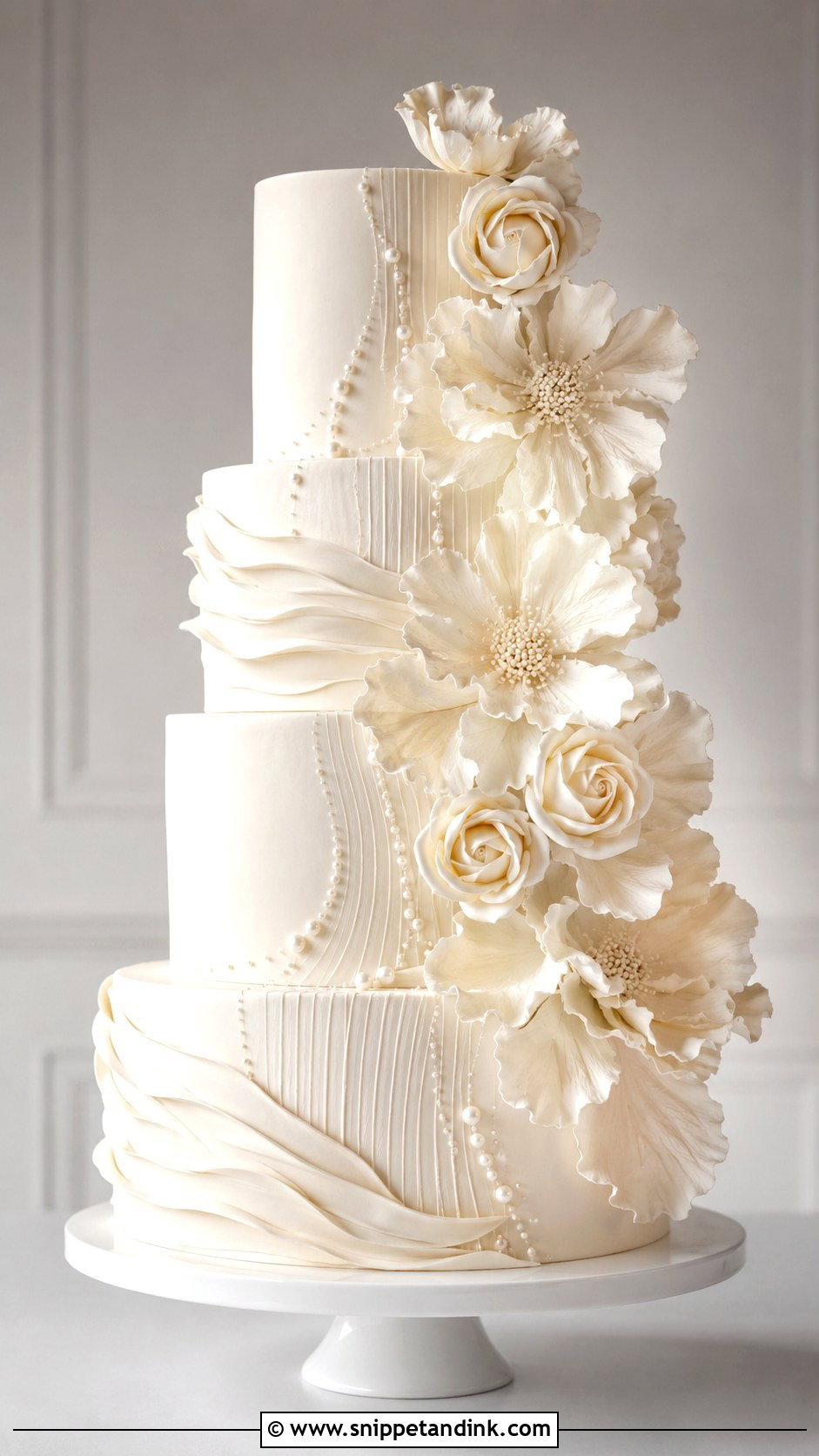
A one-color cake gets its drama from shape and texture. All white turns sculptural when you mix textures, and all black feels bold and modern. All blush, champagne or ivory stays soft but still makes an impact when the cake is tall or heavily detailed. The trick is building dimension through piping, ruffles, pearls, flowers or contrasting matte and shiny finishes in the same color family. Without that variation, a single-color cake can look unfinished from a distance, which is the thing I watch for most.





20. Oversized Bow Wedding Cake
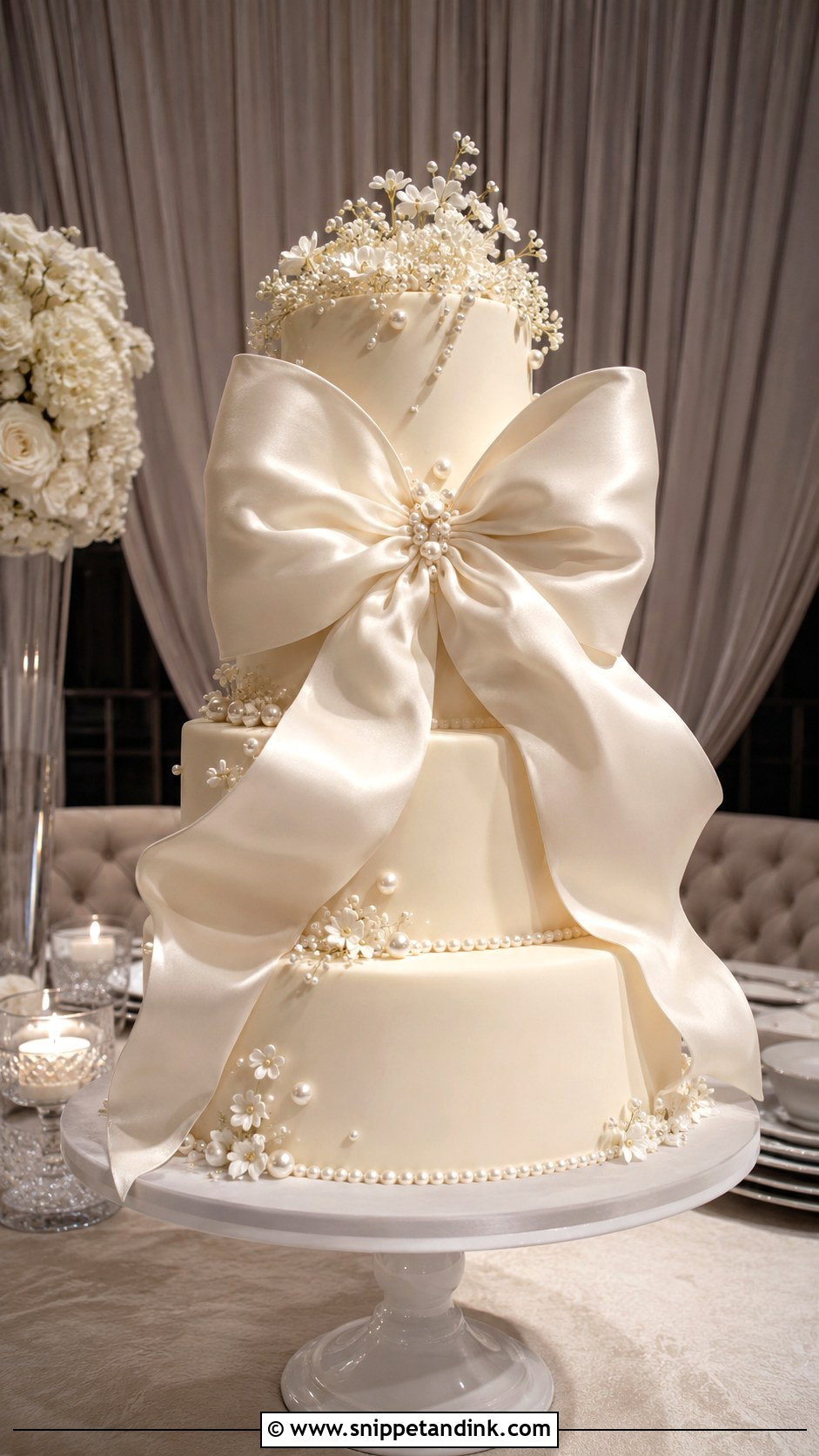
An oversized bow is dramatic in a sweet, fashion-led way. A large fondant or sugar bow can wrap one tier, sit at the front, or drape down like fabric. Big sugar bows are fragile and heavy, so I make the loops ahead, let them dry hard, and attach them once the cake is in place. The rest of the cake should stay simple, in smooth white, ivory, blush or black, so the bow looks deliberate. A few pearls, delicate piping or small flowers add romance. Classic weddings with one standout detail suit it.
Is Every Part of a Dramatic Cake Edible?
Not always, and it’s worth knowing which parts are which before the cake is cut.
- Black and deep red icing are edible, but heavy coloring stains lips and teeth. Thin fondant over pale buttercream avoids most of that.
- Gold and silver leaf sold as edible is safe in small amounts. Glitters and dusts marked only as non-toxic are decoration, not food, and should come off before serving.
- Fresh flowers are decoration. Some common wedding blooms are toxic, so they must be food-safe varieties, grown without pesticides, and kept off the sponge with wrapped stems or picks.
- Dummy tiers, internal dowels and boards are removed by whoever cuts the cake. Make sure the caterer knows where they are.
A Tall Cake, a Warm Room and a Bumpy Delivery Van
Most of what goes wrong with a showpiece cake happens between my kitchen and your table. Tall and sculptural cakes travel in sections and get stacked on site, so I need access to the room an hour or so before guests arrive. Fondant that comes from a cold fridge into a warm, humid room can sweat beads of moisture, which is why I let cakes come up to temperature slowly. Buttercream softens in heat, and isomalt or rock candy turns tacky in humid air.
Ask your venue for a sturdy, level table away from windows, heaters and the dance floor. A wobbly trestle table under a six-tier cake worries me far more than any weather forecast.
One Statement, Supported by Everything Else
A dramatic cake should match the feeling of your wedding rather than chase a trend. For a formal day, black and gold, pearls, metallics or tall tiers fit naturally. Romantic weddings suit floral cascades, ruffles, watercolor and vintage piping. Modern celebrations lean toward marble, geodes, sculptural shapes, floating tiers and monochrome. The cakes people remember usually make one clear statement and let the details support it. Start with your venue, palette and flowers, then bring all three to your first design meeting.
You'll Like These Ideas:







Leave a Reply