
Couples who ask me for a neon cake usually have a rooftop, a tropical venue or a late-night dance floor in mind, and they want the dessert table to feel as loud as the playlist. I love making them, but electric color is the hardest thing to pull off in sugar. Gel colors, butter and room lighting all fight you, so the best designs pair one or two glowing shades with clean tiers and a lot of white space. The ideas below run from a single fluorescent stripe to full rainbow drips, with notes on what actually holds up on the day.
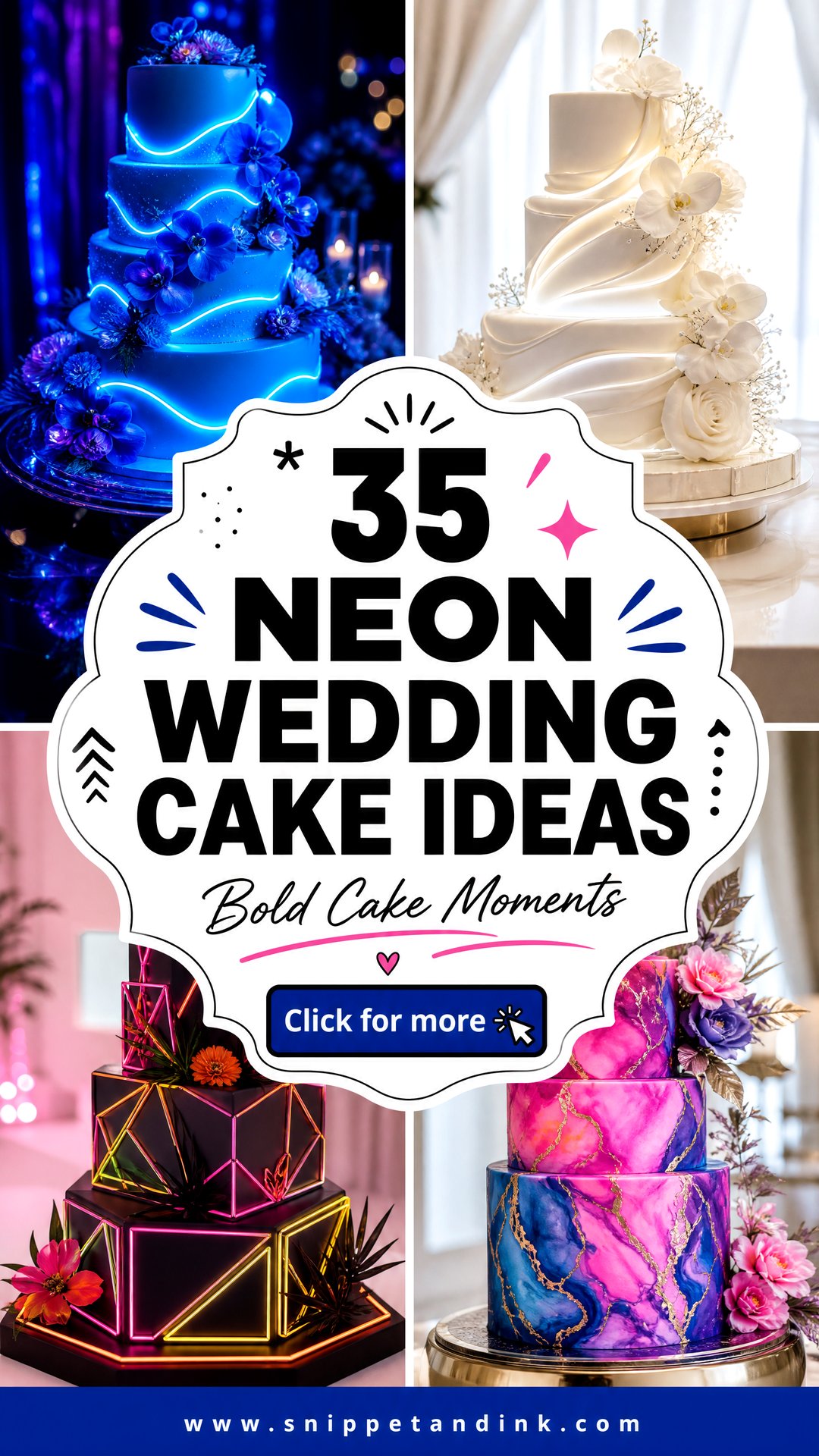
Why Neon Frosting Never Matches the Glow on Your Screen
The neon in an inspiration photo is made of light. Frosting is made of pigment, and pigment can’t give off light, so no baker can reproduce a screen’s electric pink exactly. What I can do is get close, and I explain how before anyone pays a deposit, so nobody is disappointed at the tasting.
- Start white. Butter makes buttercream ivory, which dulls pinks and turns blue toward teal. I whiten the frosting or use fondant for the brightest tiers.
- Mix a day early. Saturated colors darken as they rest, so I mix slightly lighter than the target and match it the next morning.
- Concentrate the color. A thin colored outer layer, fondant panel or airbrushed finish gives brightness without a whole batch tasting of food coloring.
- Protect it from light. Pinks and purples fade in sunlight and under strong lamps, so the cake stays boxed until it’s set up.
Bring two or three swatches of your actual colors, a napkin or a bridesmaid fabric, rather than a phone screen. I’ll match the cake to something you can hold up next to it.
1. Neon Pink Wedding Cake
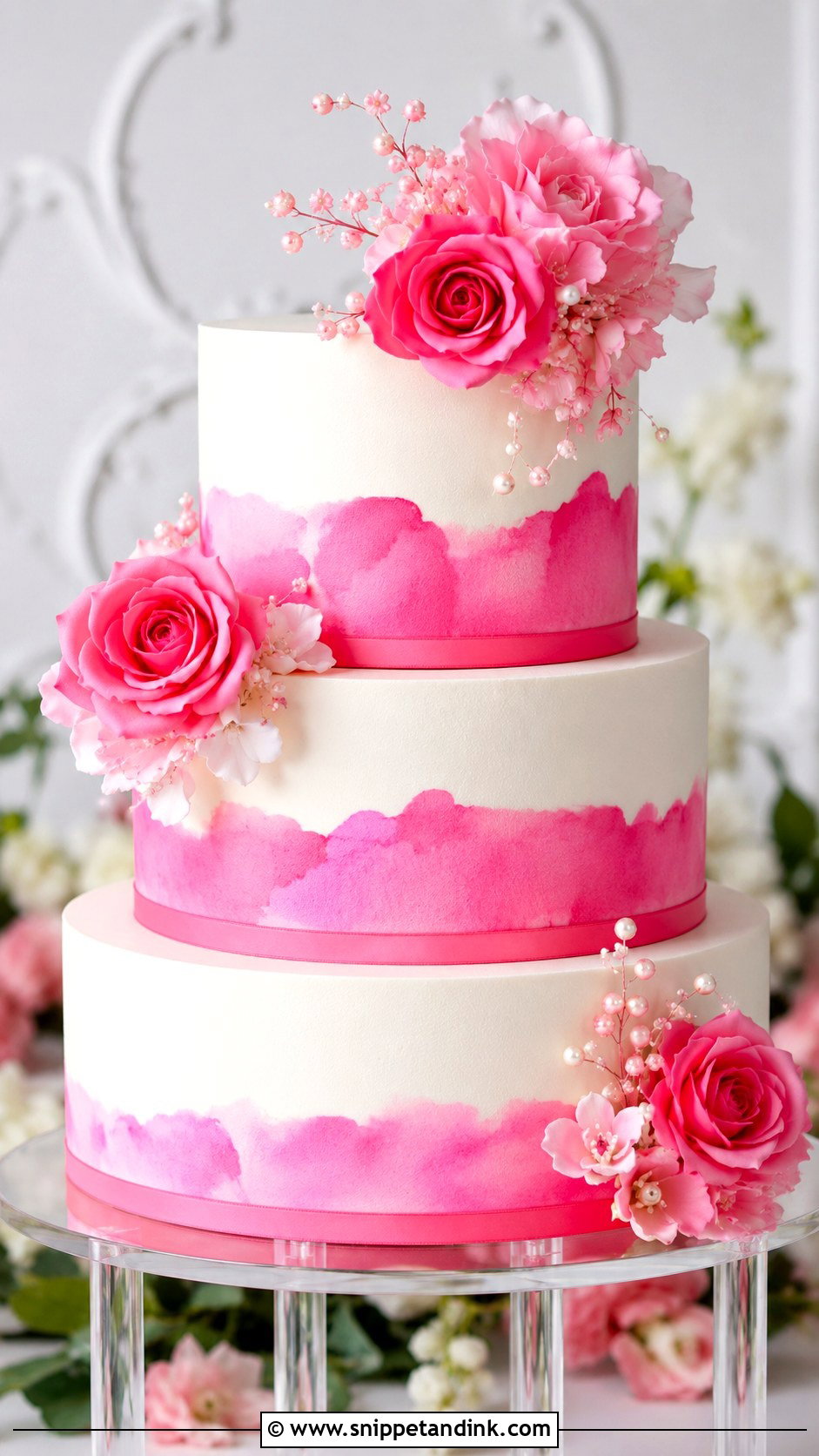
Hot pink is the easiest neon to get right, which is why I suggest it to couples who are new to bright cakes. I start from a white or pale blush base so the pink reads as deliberate, then bring it in as one painted tier, a buttercream drip or a few bold sugar flowers. Raspberry or strawberry filling echoes the color inside. The catch is fading: strong pinks lose saturation under sunlight and bright venue lights within hours, so I keep the cake covered and out of windows until the reception. Mixing hot pink with pale roses and ivory frosting softens it for a more romantic room.
2. Neon Blue Wedding Cake
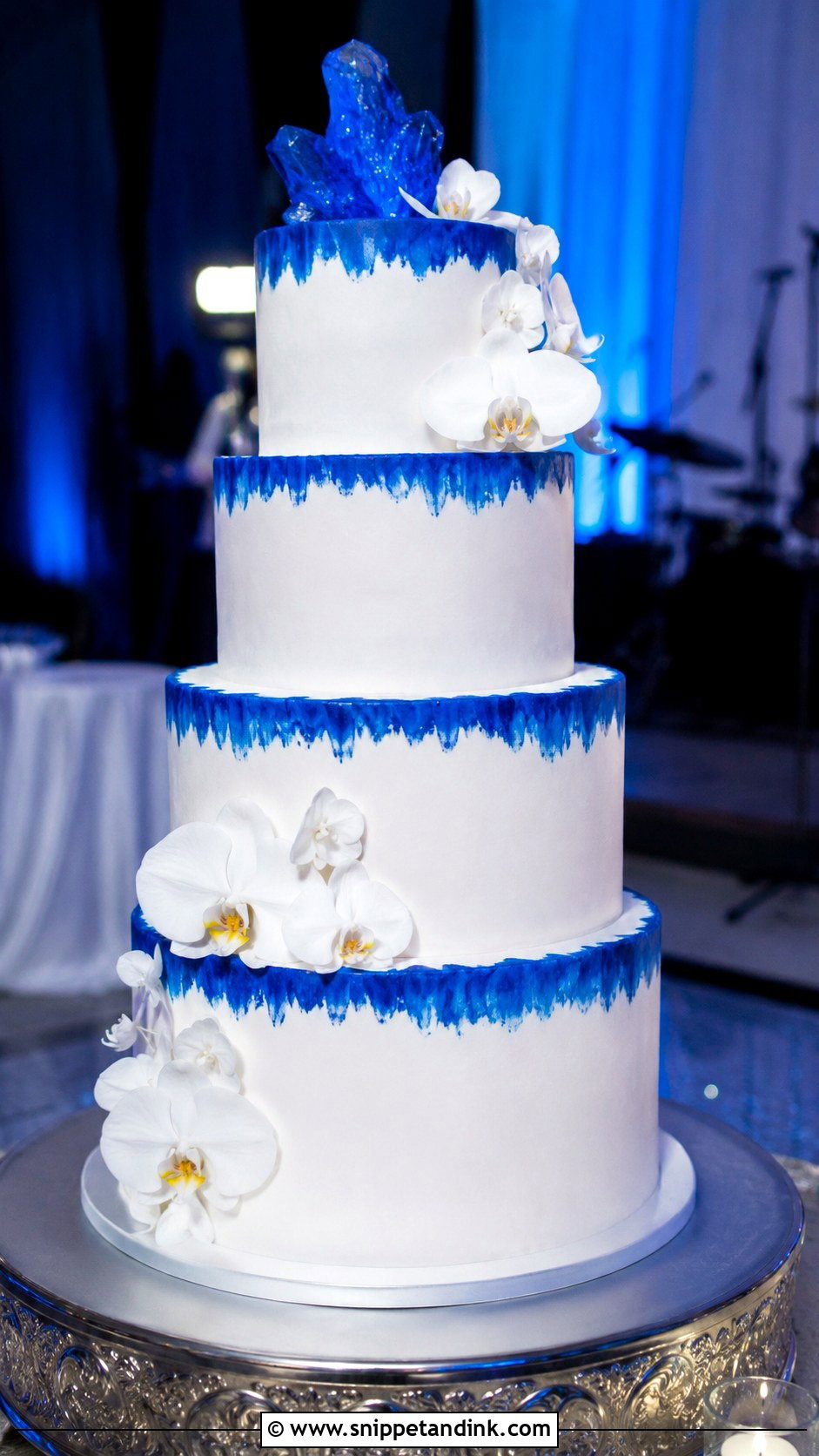
Electric blue looks sharpest against white fondant, silver and clear acrylic, and it’s the color where I have to warn couples most about butter. A buttercream made with real butter is slightly yellow, and yellow plus blue drifts toward teal, so for a true blue I either cover in fondant or whiten the buttercream first. Geometric lines, glowing brushstrokes or a dramatic drip down a tall cake all work. Lemon or blueberry inside keeps it tasting fresh, and a few white orchids or pearls bring back a wedding feel.
3. Neon Green Wedding Cake
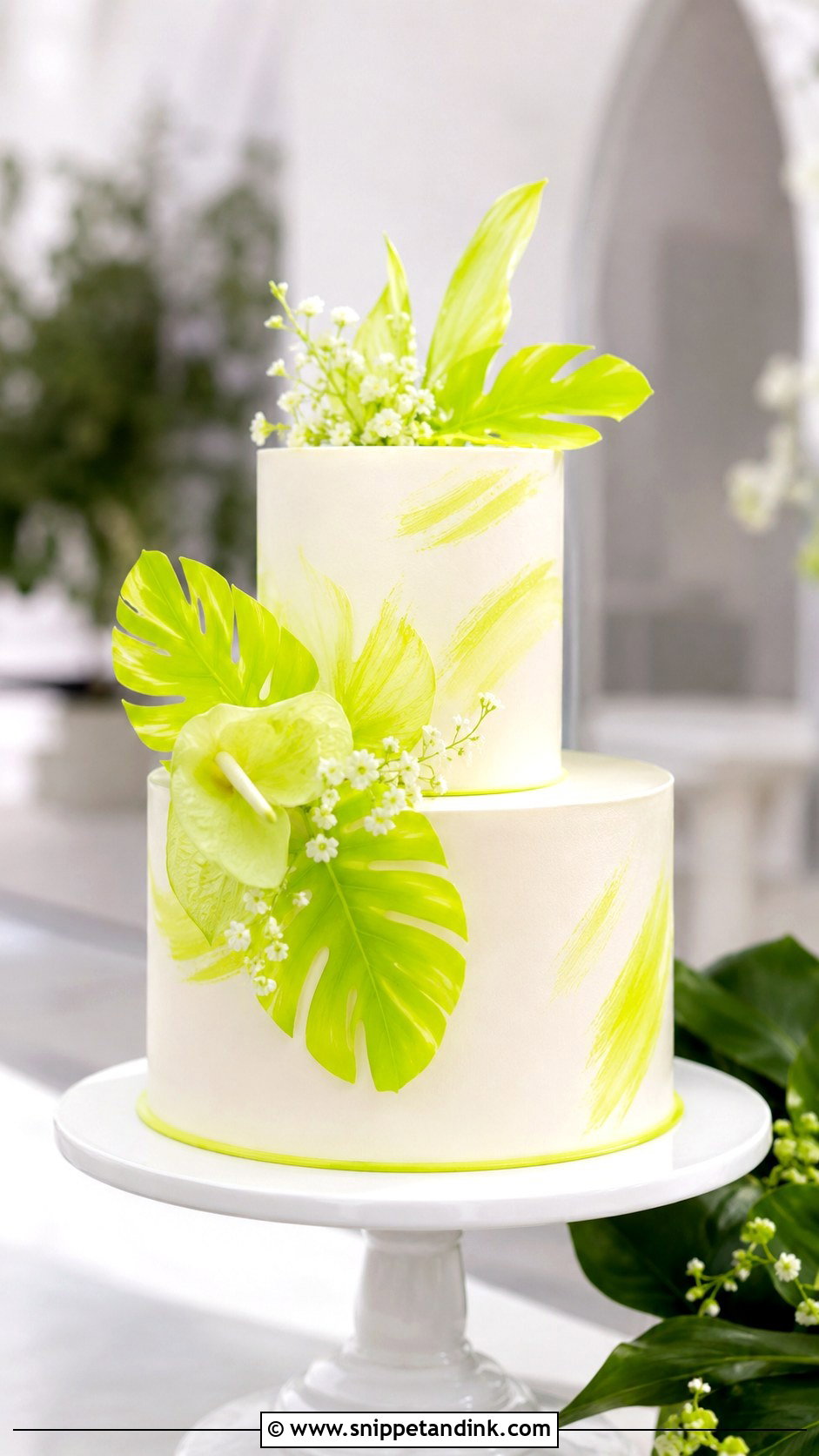
Lime green swings tropical, garden or futuristic depending on what sits next to it. My refined version is white buttercream with thin painted green edges, lime-toned florals and clear isomalt leaves; the bolder route is a full green tier with black or gold. Pistachio, pandan and citrus all suit the color. Green is a shade where heavy gel use can leave a faint bitter note, so on a solid tier I’d rather color fondant or a thin outer coat than tint the whole batch of frosting. Keep the finish smooth so the brightness looks intentional rather than cartoonish.
4. Neon Orange Wedding Cake
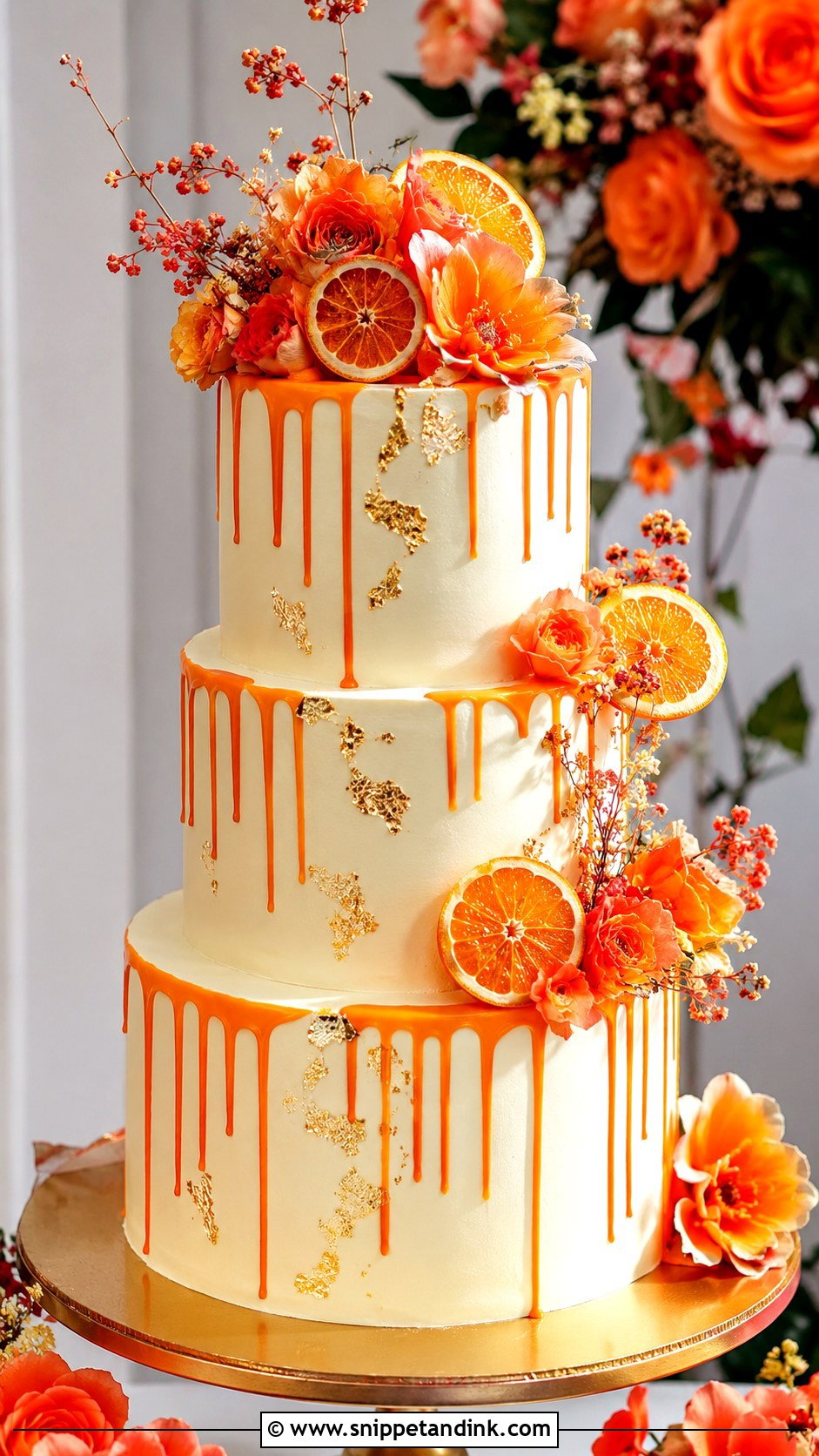
Neon orange suits couples who love sunset colors and a lively reception. A smooth buttercream tier with orange drips reads playful; hand-painted orange brushstrokes feel more like art. I pair it with coral, fuchsia or ivory, and with flavors that make sense of the color, such as orange blossom, mango or carrot cake. Dried citrus wheels and edible gold leaf add depth. Orange is also forgiving in warm light, so it holds its own at summer and desert weddings where cooler neons can look washed out.
5. Neon Yellow Wedding Cake
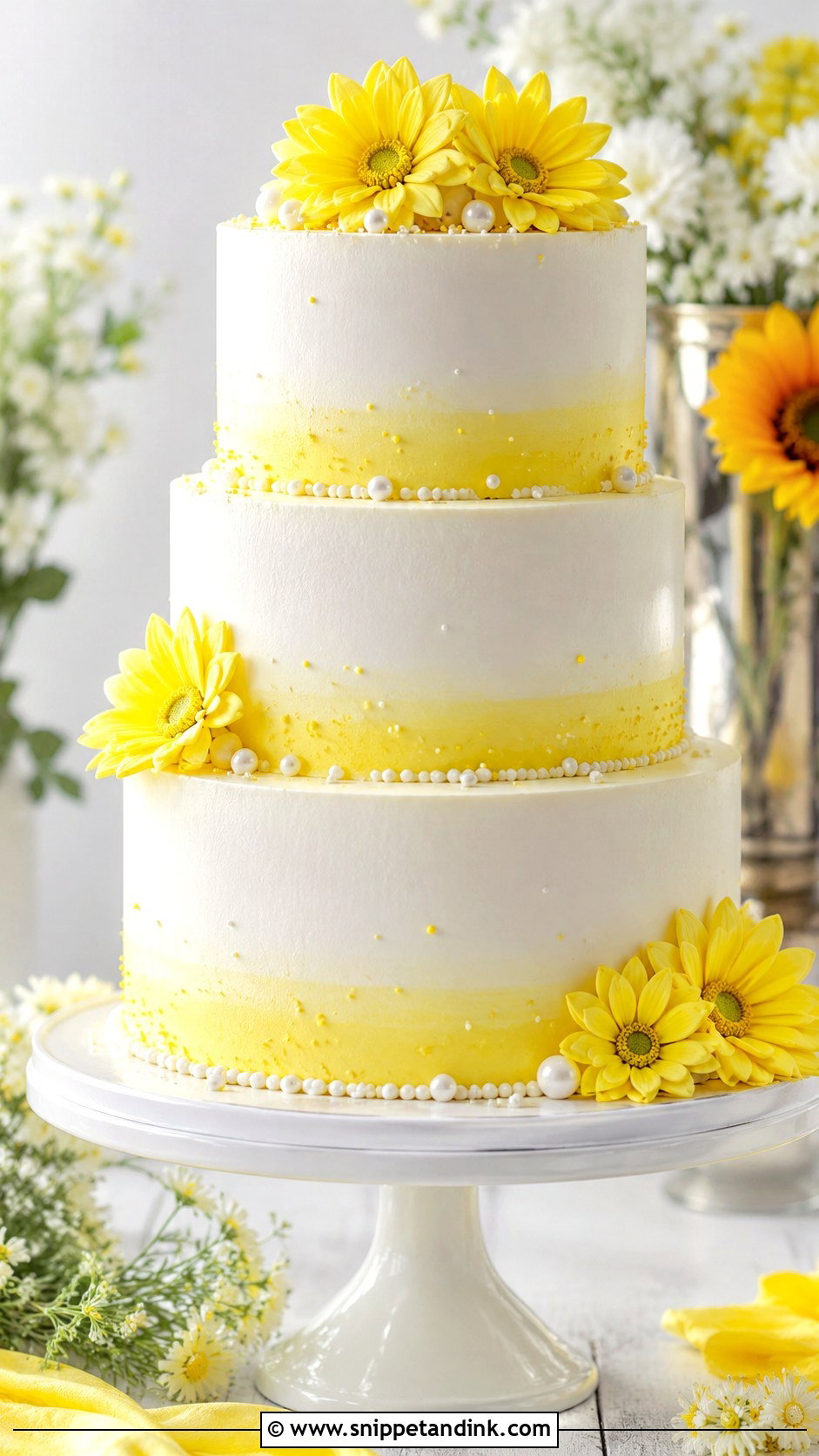
Neon yellow needs contrast more than any other shade. On its own it can look pale and slightly green in photos, so I balance it with crisp white frosting, a few pale blooms or a thin black line. A painted halo around each tier, a lemon drip or a fondant panel all carry it well. Lemon, passion fruit and coconut make the color taste the way it looks. Small white flowers and glossy sugar pearls keep the cake bridal, while confetti sprinkles push it toward party.
6. Neon Purple Wedding Cake
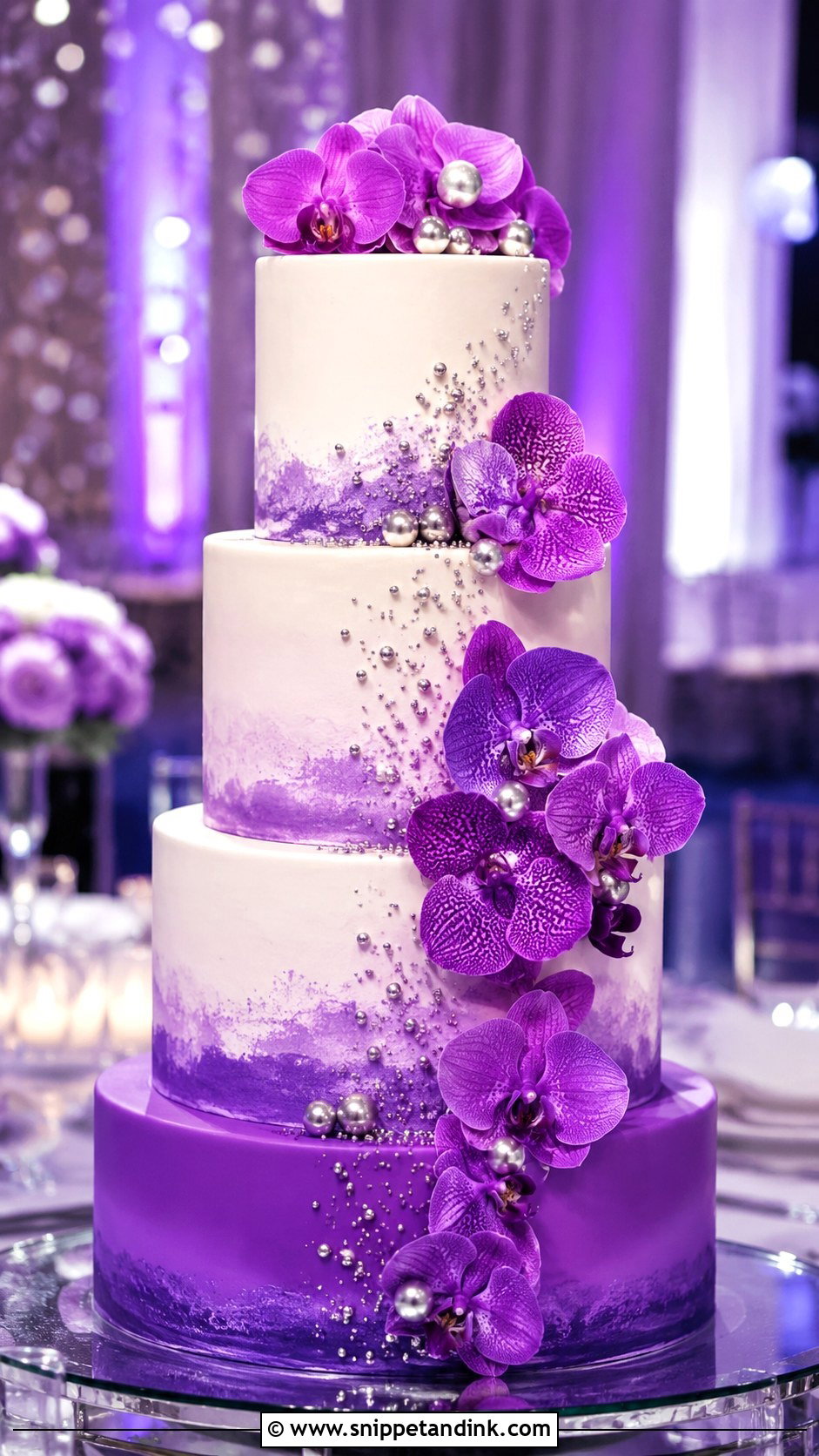
Purple is the neon I treat most carefully, because it fades faster than nearly any other food color when it sits in light, sometimes shifting toward blue or grey over an afternoon. I color it as late as practical and keep it out of sun. Styled with silver and crystal it goes glam; with lavender florals and ivory frosting it softens. Blackberry filling or an ube sponge suits the richness. Give purple room on a clean white base, since it shines only when it has space to stand out at an evening reception or a gallery wedding.
7. Neon Rainbow Wedding Cake
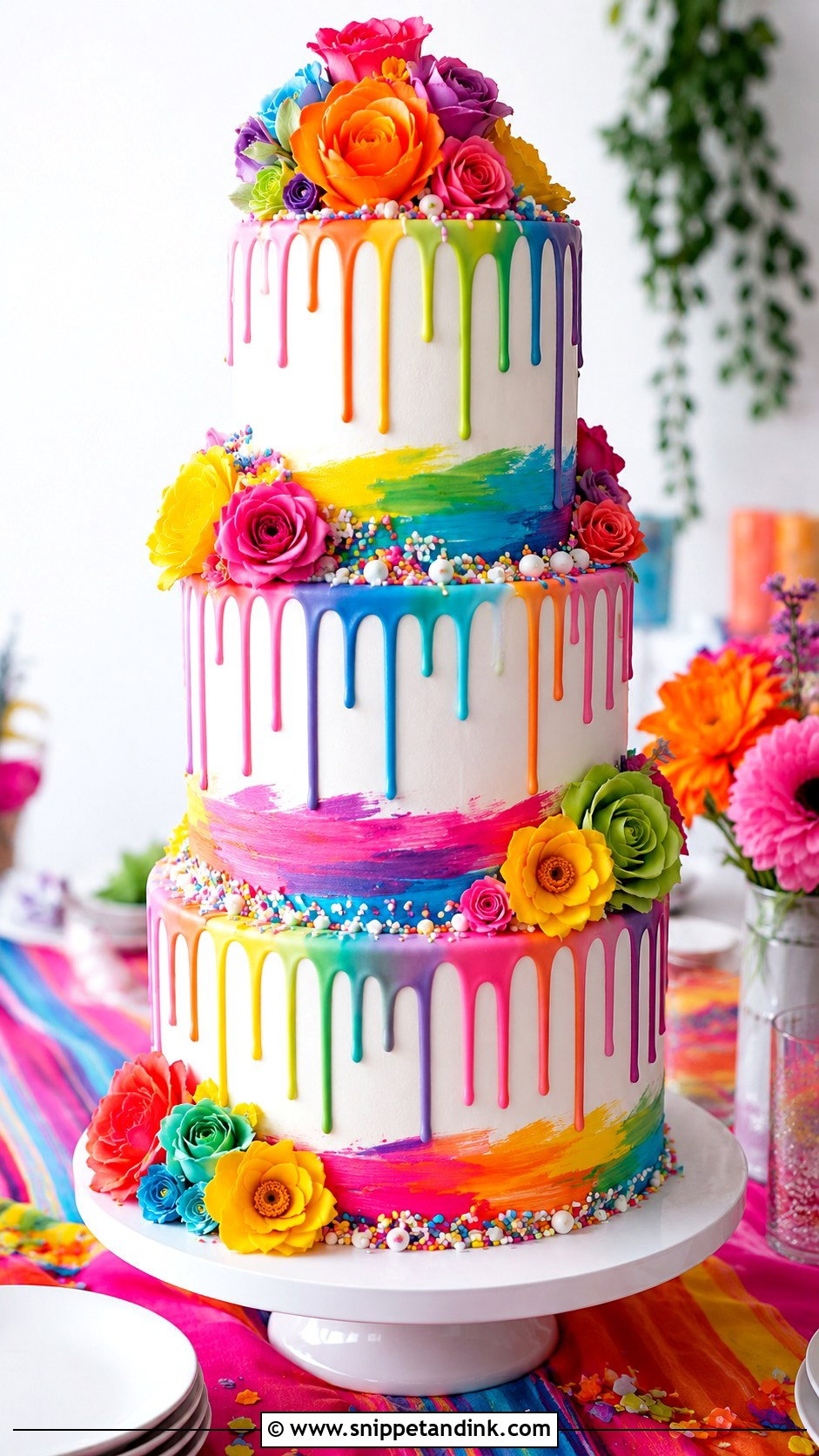
A rainbow cake is joyful, inclusive and very easy to overdo. I keep the structure calm with a white base and elegant tier heights, then let the color arrive in controlled places: painted tiers, buttercream strokes, drips or stacked neon florals. Inside, funfetti or rainbow sponge layers are a fun surprise when the cake is cut. The one rule I stick to is space between colors. Let each shade breathe, and keep the busiest detail to a single tier so the dance-floor crowd still reads it as a wedding cake.
8. Neon Drip Wedding Cake
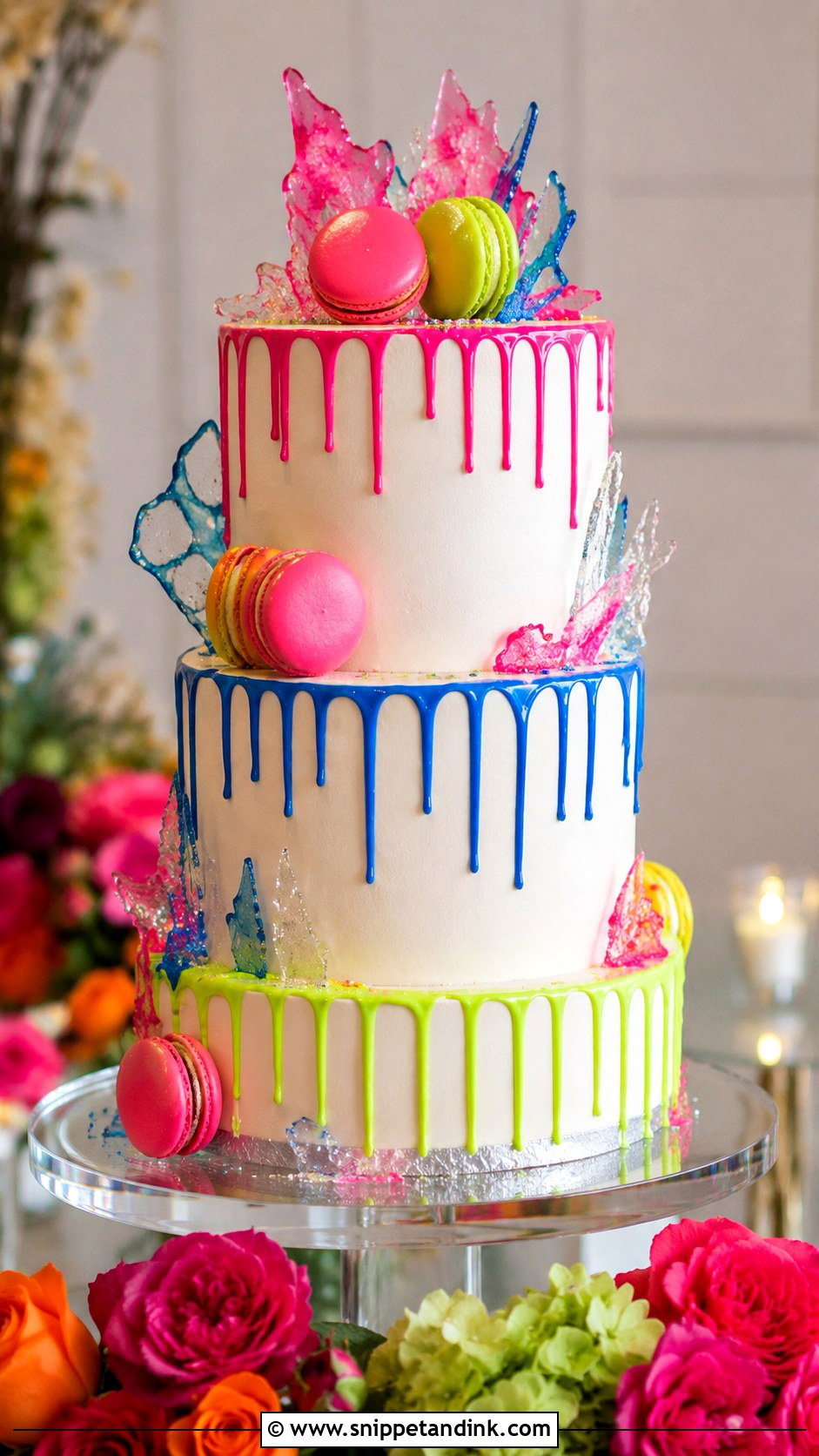
A drip is the simplest way I know to add neon while keeping a classic shape. The drip color can be any single shade or a mix, and the base decides the mood: white buttercream gives the cleanest contrast, while chocolate or black makes the colors feel dramatic. Drips are about temperature. I pipe white chocolate ganache onto a chilled cake once the ganache is just warm, so it stops a third of the way down instead of pooling at the board. Add matching flowers, macarons or sugar shards to finish, and keep it out of a hot room, where the drips soften and slide.
9. Neon Buttercream Wedding Cake
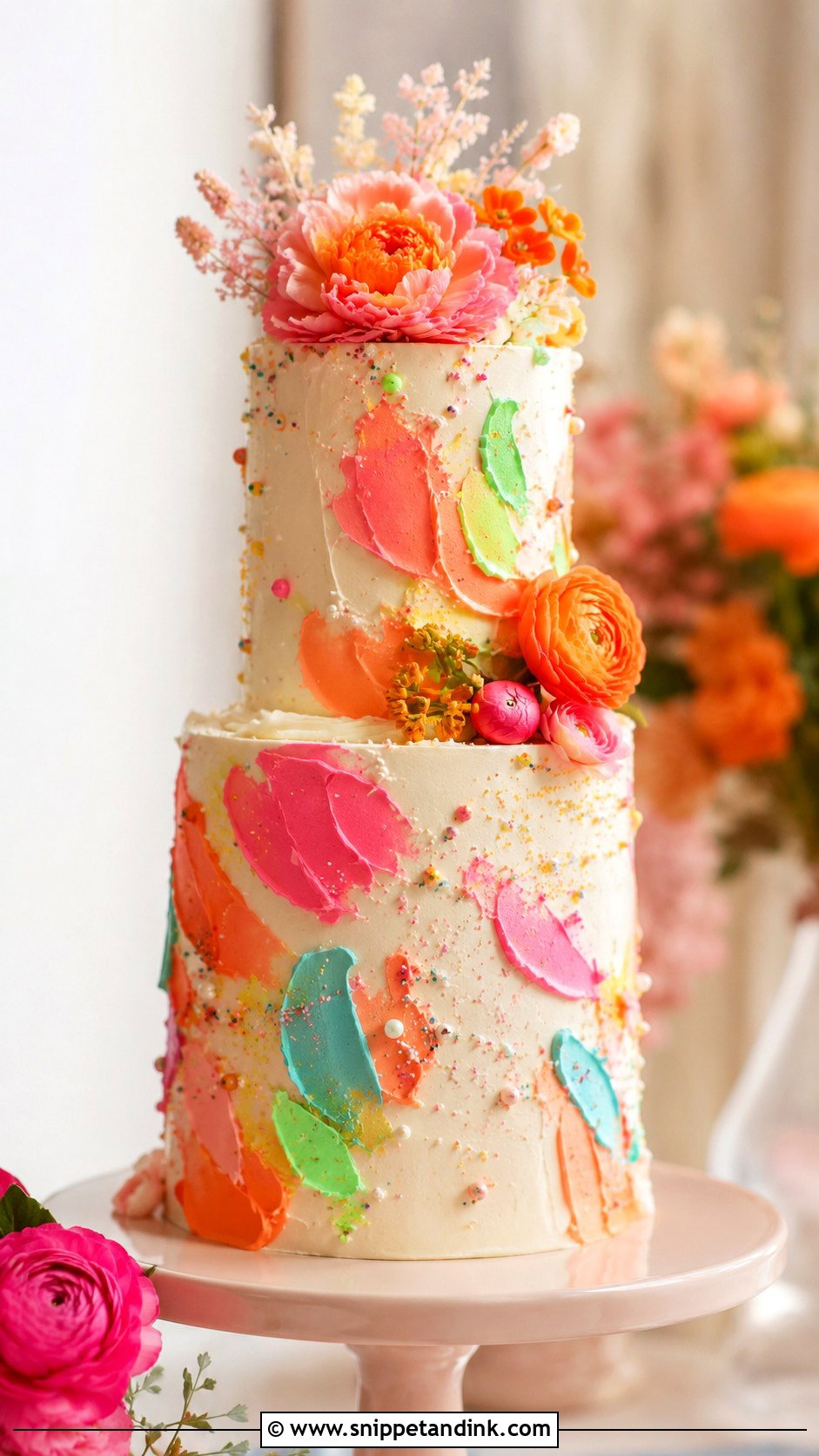
Tinted buttercream gives neon a warmer, handmade feel than fondant. Palette-knife strokes, ridged sides, piped borders and ombré bands all show off the texture. The thing I explain at tastings is that saturated buttercream colors deepen as they sit, so I mix them a day ahead and match the shade the next morning instead of chasing it with more gel. Vanilla, lemon and chocolate sit happily underneath. Buttercream is softer in heat than fondant, though, so for a hot outdoor reception I’d want it in shade and served promptly.
10. Neon Fondant Wedding Cake
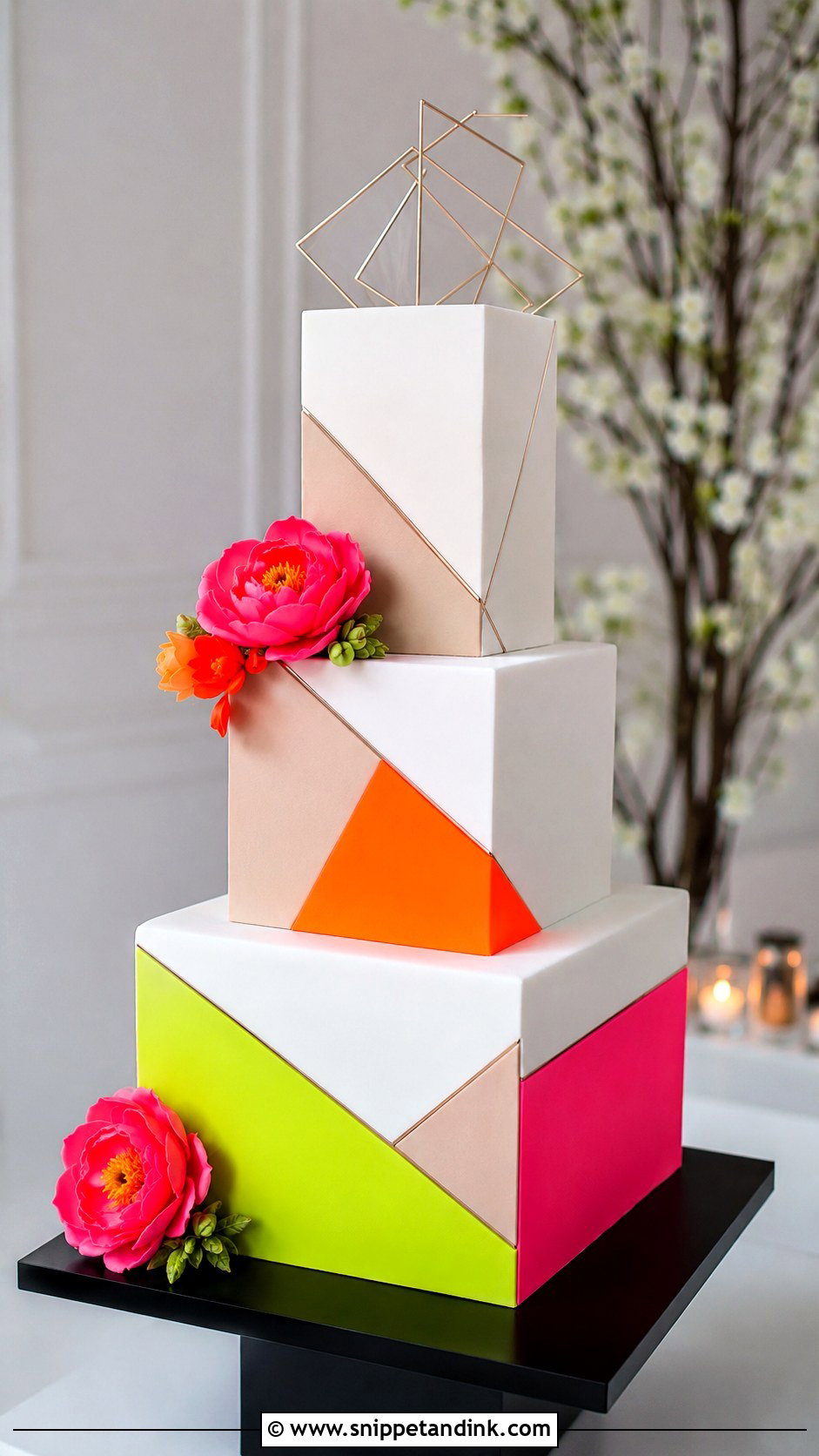
Fondant is where neon looks most graphic. It holds sharp edges, flat color blocks, geometric panels and crisp painted details that buttercream can’t, and the color is in the sugar rather than in a fat that yellows it. Pair it with white tiers, black ribbon lines or clear acrylic risers. The flavor can stay classic inside. My caution is moisture: fondant moved from a cold fridge into a warm, humid room can bead with condensation, which streaks painted color, so I let it come up to temperature slowly in its box.
11. Neon Floral Wedding Cake
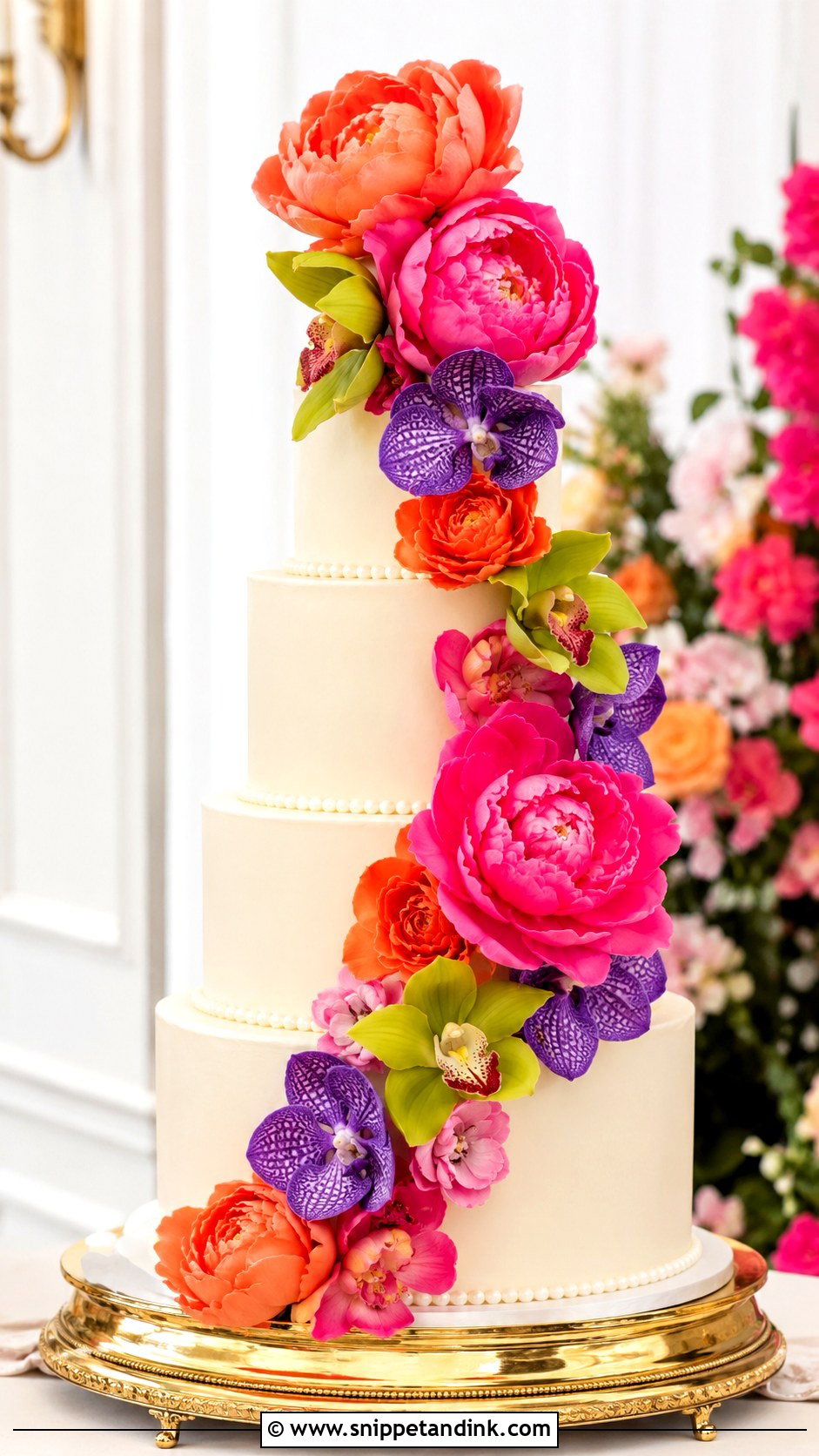
Bright florals turn a traditional wedding shape into something louder. I use sugar flowers in hot pink, lime and violet when the colors don’t exist in nature, and fresh blooms only when they’re food-safe and grown without sprays, with stems wrapped or sleeved so they never touch the cake. White or pale blush tiers show them best. A cascade, a wreath around each tier or a front cluster for photos all work; I’d choose one. Smooth frosting keeps the focus on the flowers.
12. Neon Tropical Wedding Cake
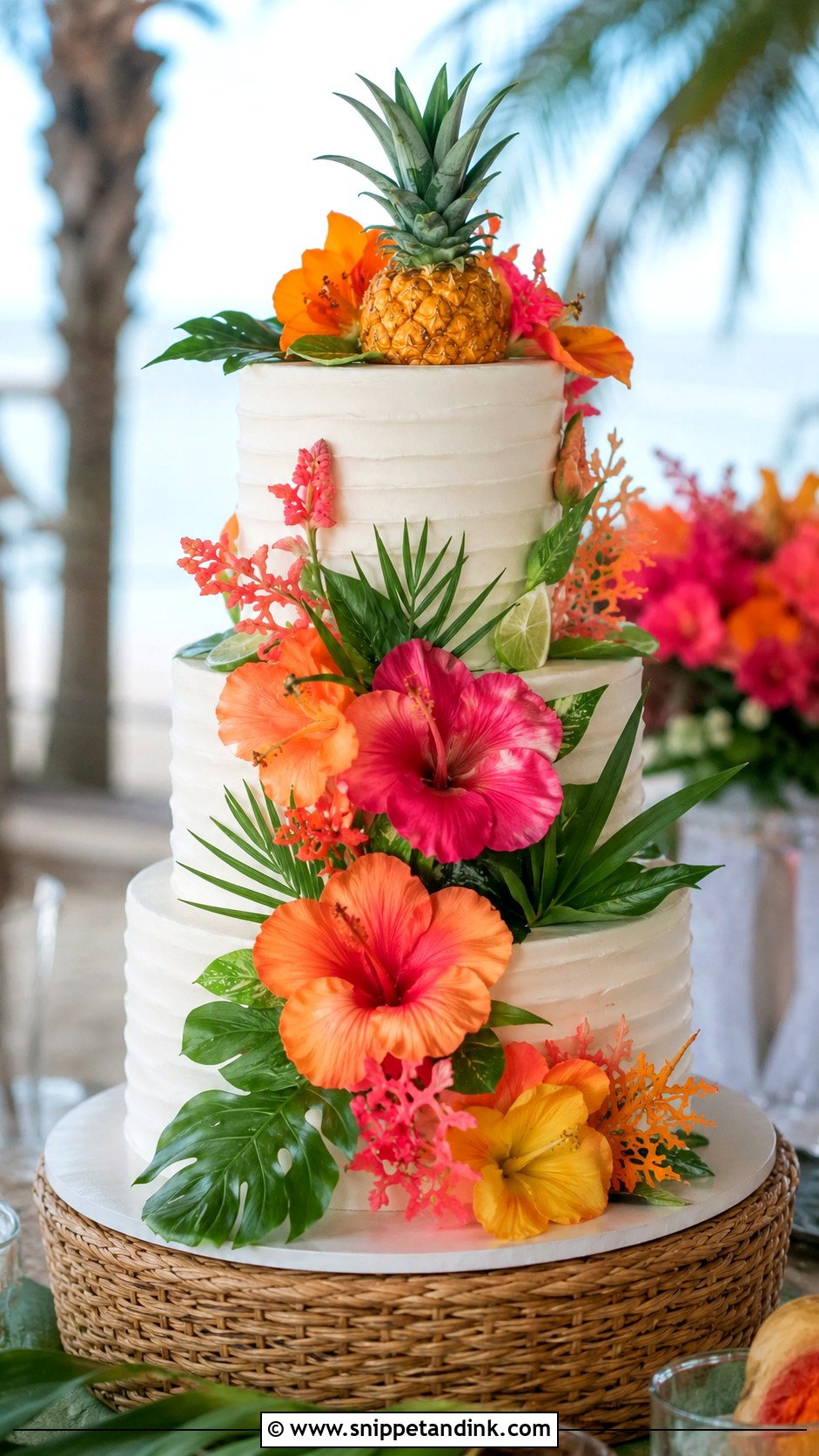
A neon tropical wedding cake belongs at a beach, poolside or destination celebration. Hot pink hibiscus, orange orchids, bright green leaves and a clean white buttercream base carry the theme, and coconut, pineapple or passion fruit fill it in. I’d rather place one or two large flowers than cover every inch; it looks more polished and travels better. Real hibiscus wilts fast in heat, so for an outdoor tropical reception I usually make the blooms in sugar. A glossy leaf or a subtle neon drip adds energy without looking casual.
13. Neon Black Wedding Cake
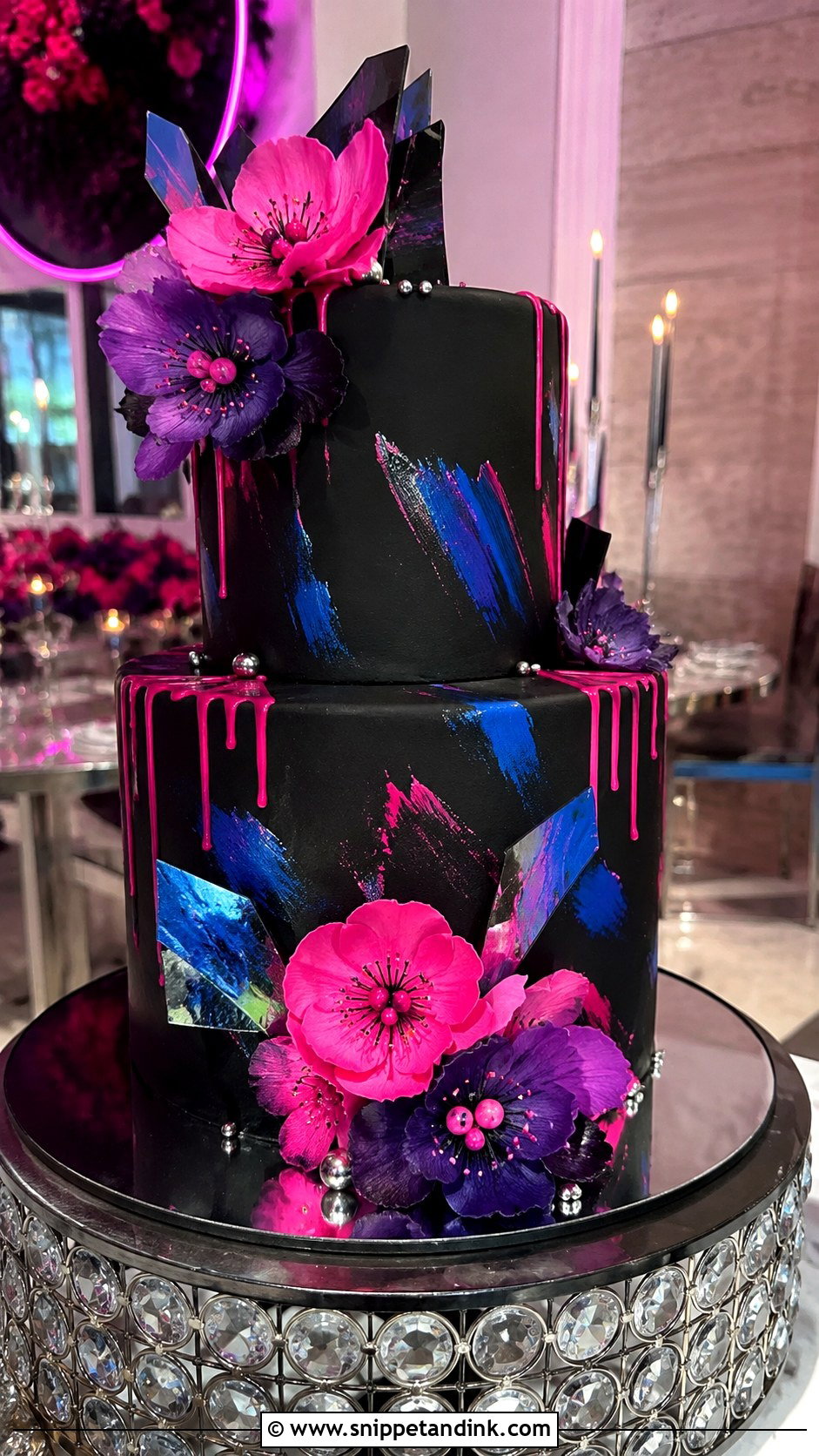
Black gives neon its strongest stage. Over matte black fondant or buttercream, a pink, blue or green brushstroke looks almost lit from behind, which suits an evening reception with a modern edge. Chocolate, espresso and red velvet fit the darker mood. Two honest warnings: black frosting needs a lot of color and can stain mouths and teeth, so I usually make the black an outer fondant shell over a normal-colored buttercream, and I limit the neon to one or two shades. Acrylic tiers or metallic details finish it cleanly for candlelit photos.
14. Neon White Wedding Cake
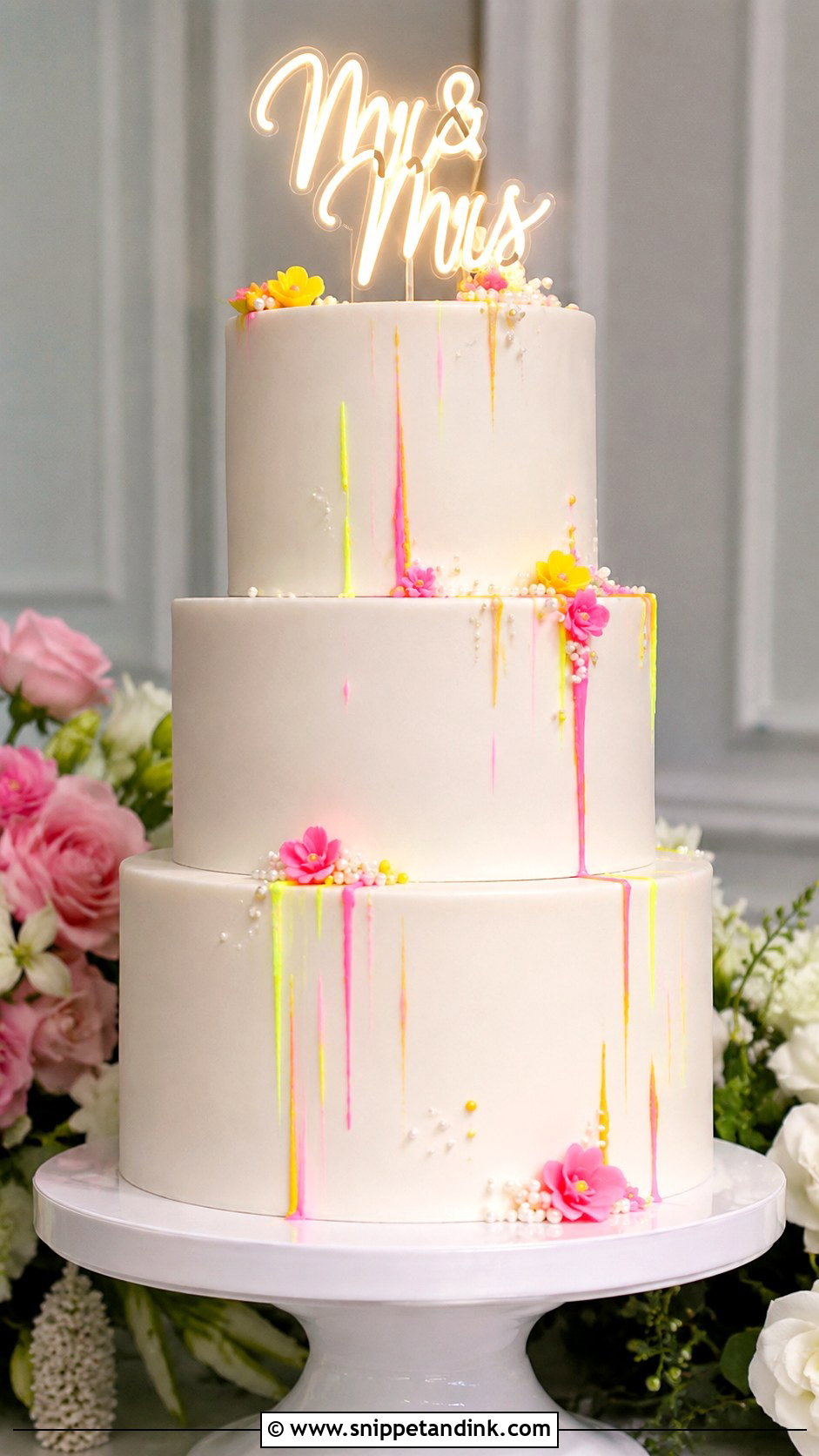
This is the version I steer formal venues toward: a white, ivory or soft cream cake where neon appears only in controlled accents. Thin painted lines, a few small sugar flowers, a bright edible splatter or a neon topper are enough. Vanilla, almond or a champagne-style sponge suits the clean look. Because most of the cake is white, the color reads very sharply in photos, and the design still sits comfortably in a ballroom that wasn’t decorated for a party.
15. Neon Gold Wedding Cake
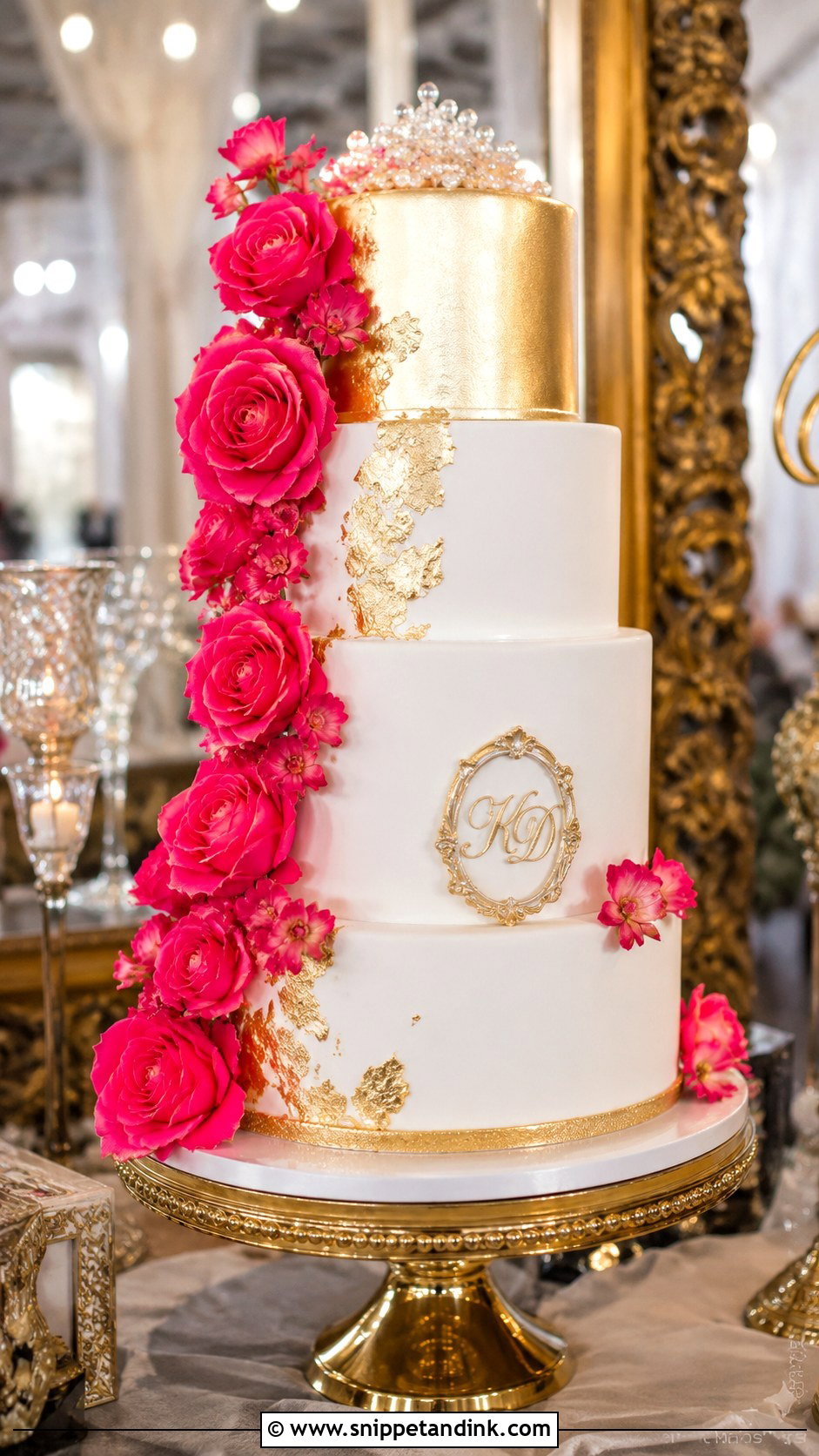
Gold makes electric color feel richer and more grown-up. I use it with hot pink, purple, turquoise or orange, either as gold leaf on a white cake with neon florals or as metallic tiers on black with glowing painted edges. Caramel, chocolate and vanilla bean support the luxe feel. Keep the gold thin, a band or a scattered leaf, because thick gold paint over neon can look heavy. Gold leaf sold for cake decorating should be marked as edible; craft leaf is not, and I check the label every time. Hotel and ballroom receptions suit it.
16. Neon Silver Wedding Cake
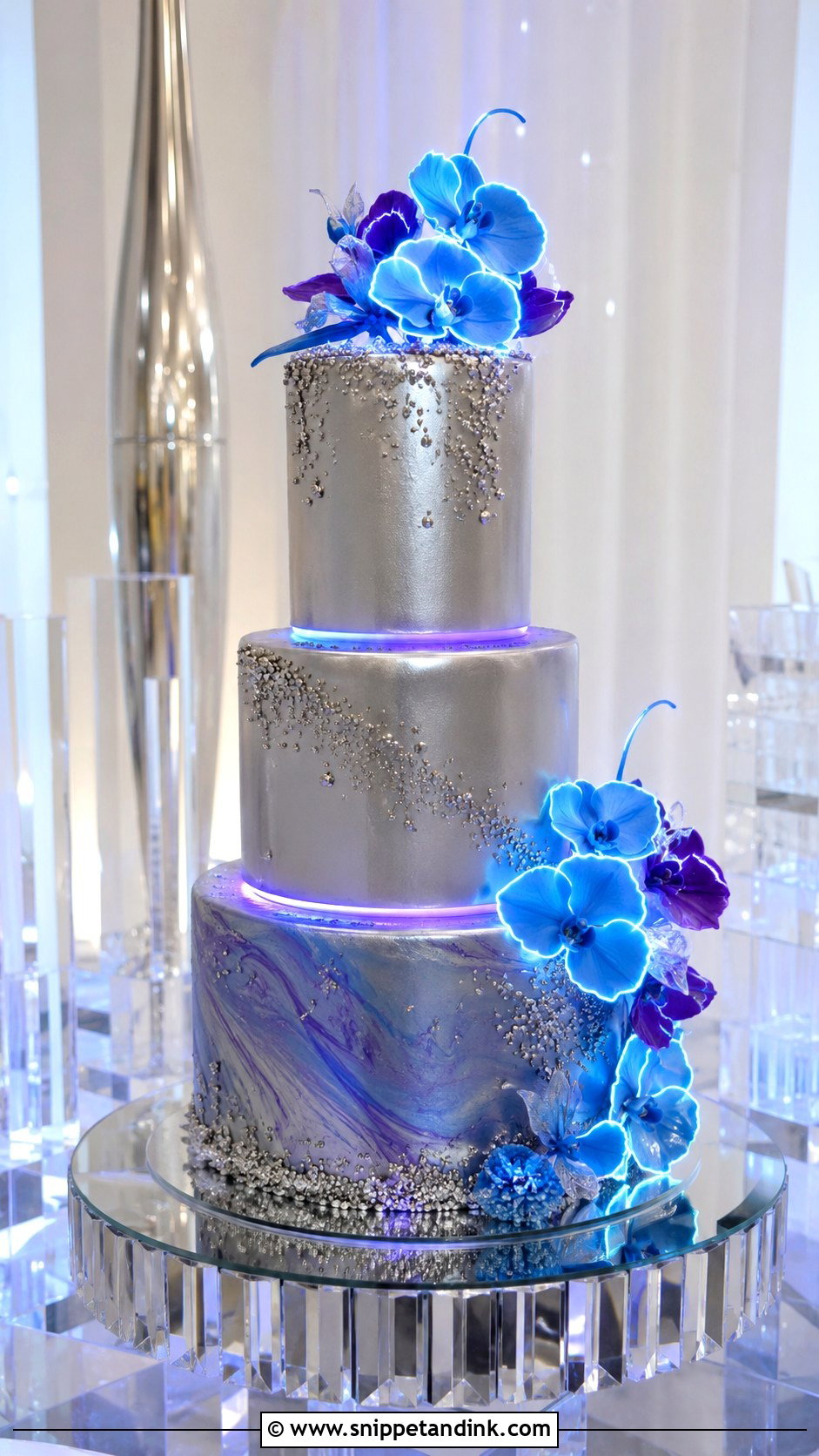
Silver reads cool and a little futuristic, which matches city venues and mirrored décor. I build it from silver fondant, edible metallic paint or pearlized buttercream, then add neon blue, purple or pink accents. Sugar crystals and clear acrylic separators add dimension. One thing I tell couples is that many silver and metallic dusts are labeled for decoration only, not eating, so on any part a guest will eat I use a paint that’s sold as edible. Keep the silhouette simple, since the finish already brings plenty of shine under reception lights.
17. Neon Pastel Wedding Cake
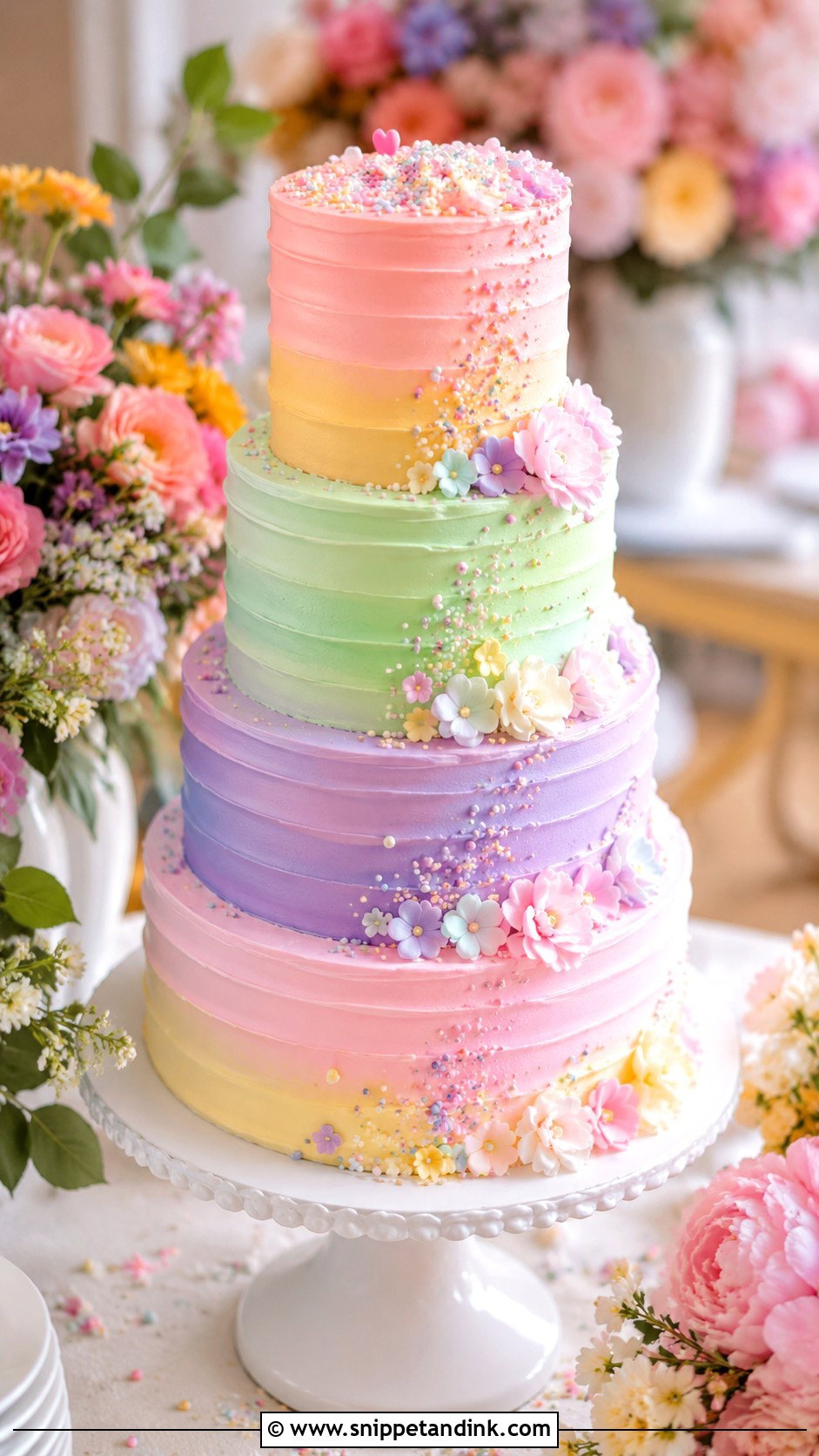
Neon doesn’t always have to shout. A softened palette of bright lavender, mint, coral, lemon and bubblegum keeps the fun but sits gently at a spring garden reception or a brunch wedding. Smooth buttercream with soft ombré tiers, tiny painted hearts or piped pearls suits it. Strawberry and lemon pair naturally. These tints use far less gel than full neon, so the frosting tastes cleaner and holds its shade longer in daylight, which is a quiet advantage for daytime weddings.
18. Neon Ombre Wedding Cake
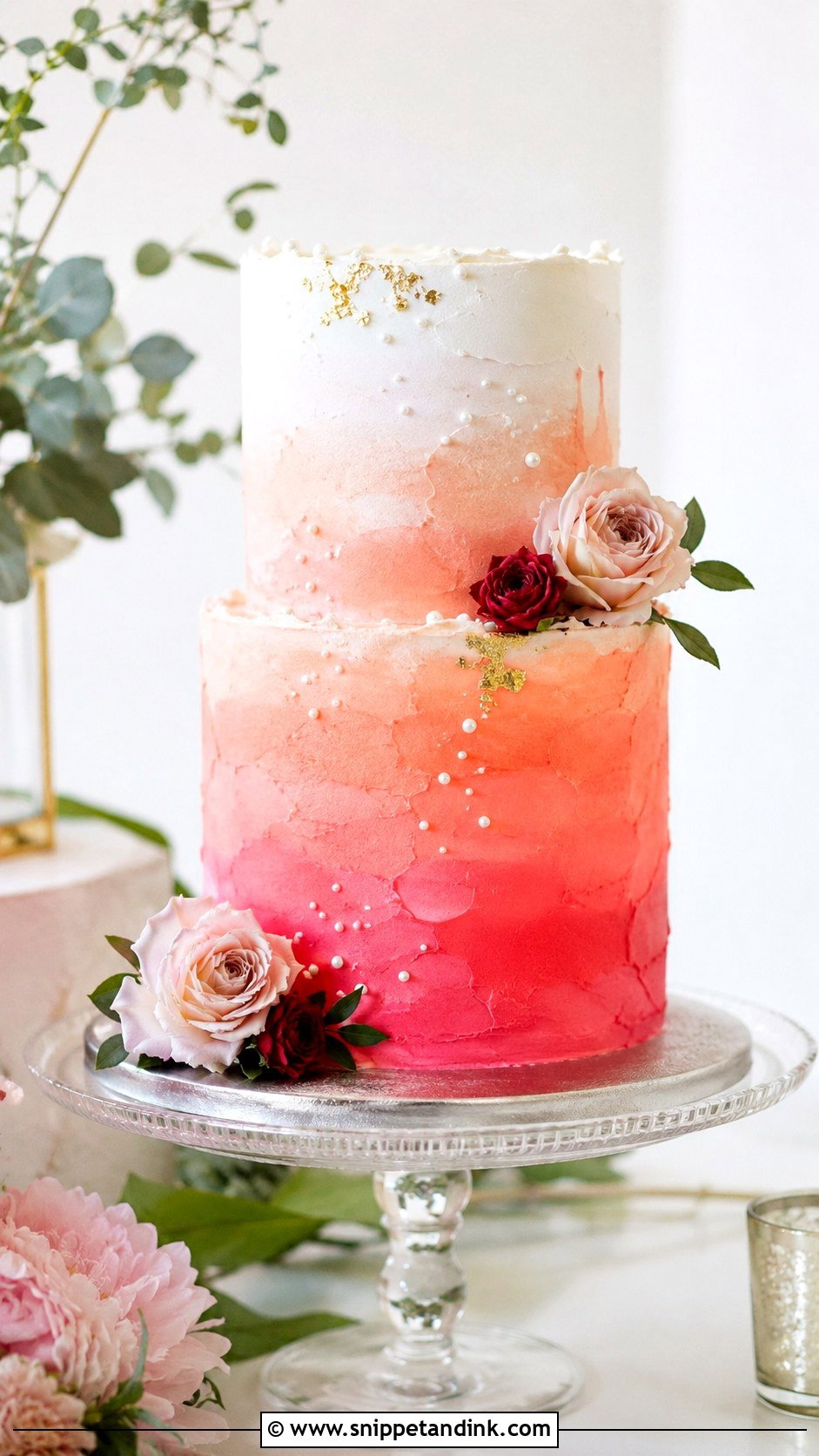
Ombré gives a cake movement from tier to tier, fading from white to hot pink or from pale yellow to orange. Buttercream blends softly; fondant gives a smoother, cleaner gradient. I mix the deepest shade first, then cut it with white to make each lighter step, which keeps the tones related instead of looking like four different pinks. Matching the flavor to the color is a nice touch, raspberry for pink or lemon for yellow. Keep decorations light so the fade stays visible.
19. Neon Geometric Wedding Cake
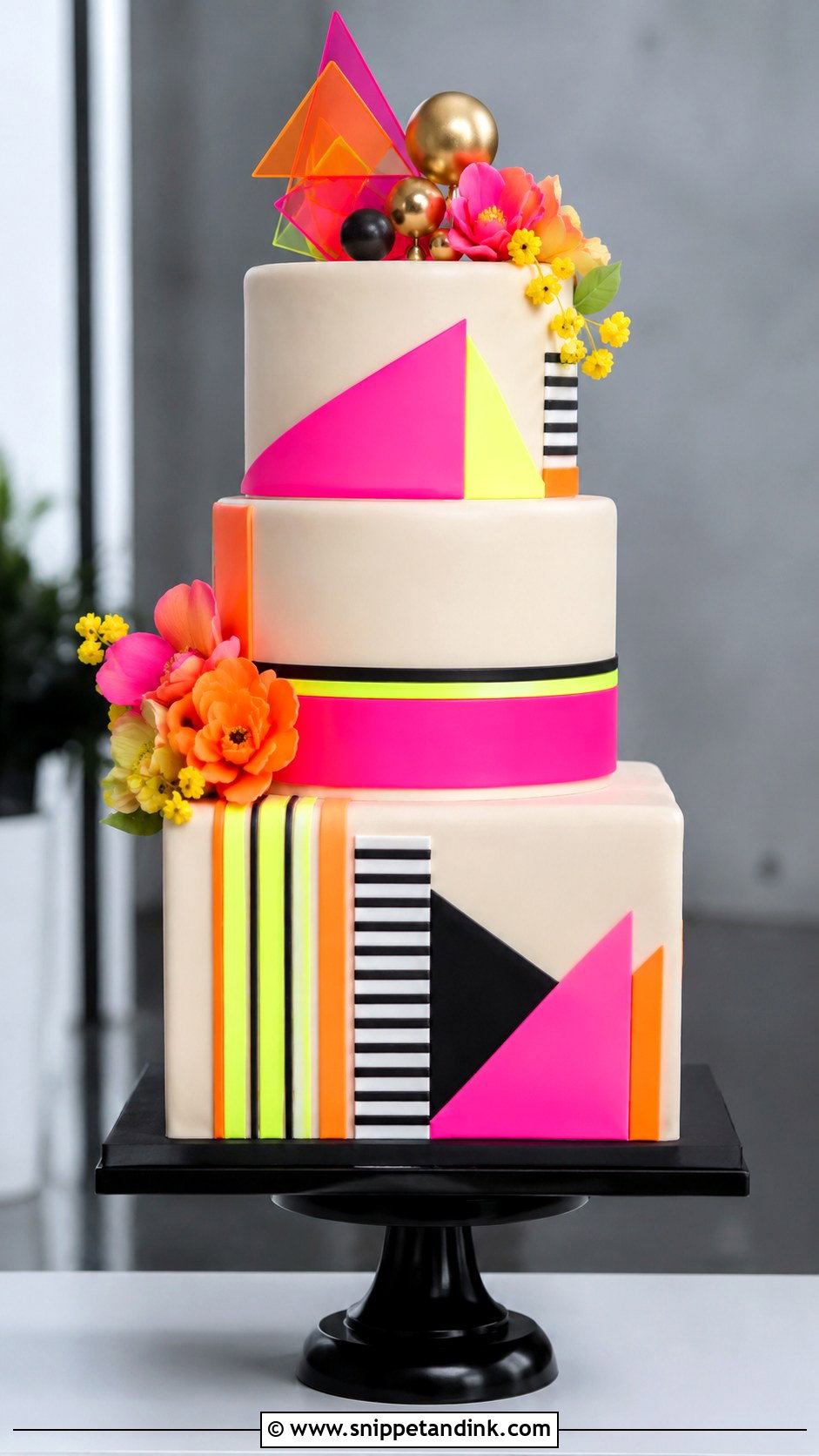
Sharp lines and bright color make a geometric cake look architectural. Square, hexagon or round tiers can carry triangles, stripes, arches or color blocks in neon on white or black. The precision is the whole effect, so I cut fondant panels with templates and chill the cake before applying them; one wobbly stripe is obvious from across a loft. Keep the flavor classic since the design does the talking. Acrylic separators or a thin metallic edge keep it wedding-ready at museum and loft venues.




20. Neon Brushstroke Wedding Cake
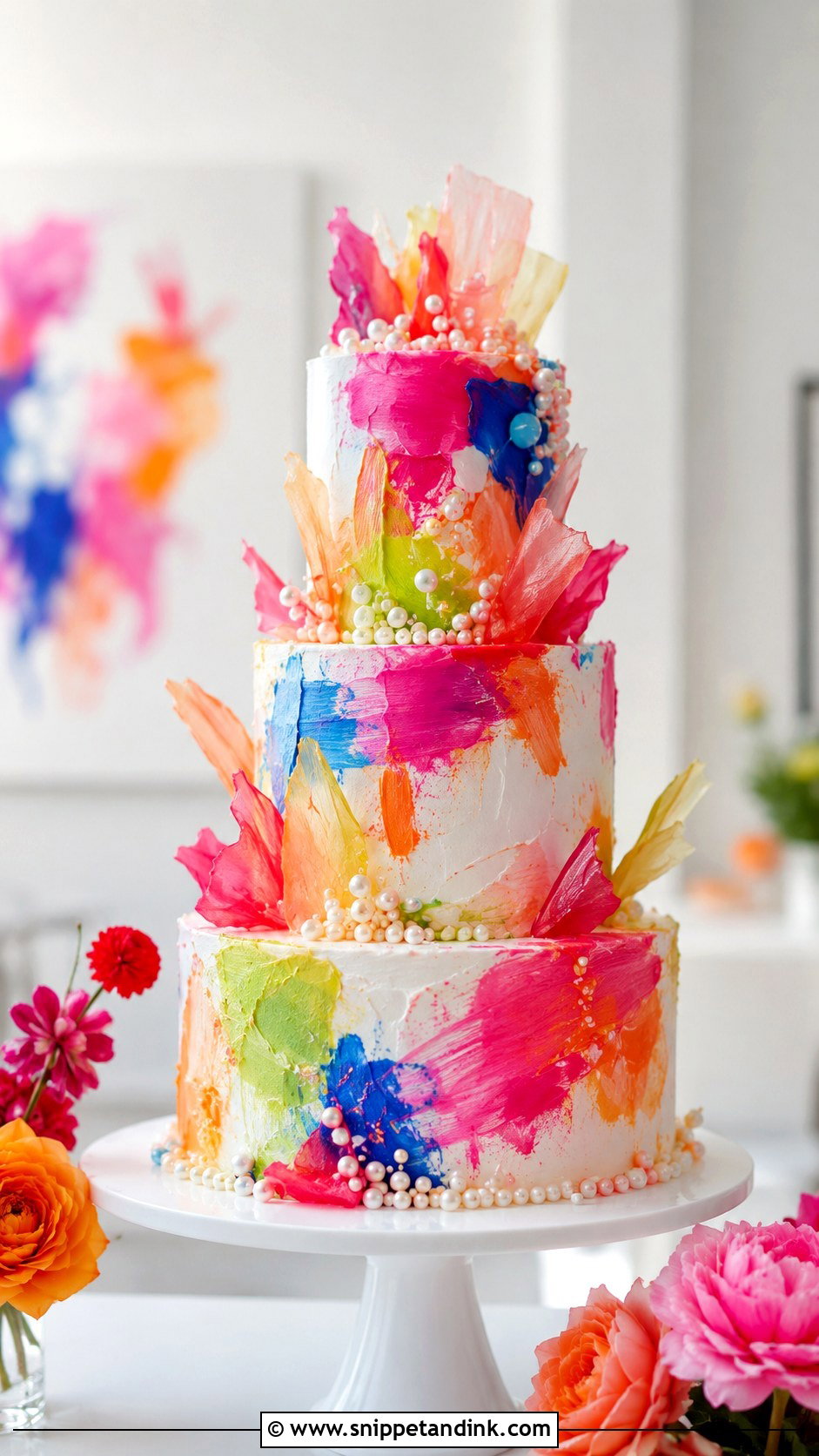
Brushstrokes give a cake an artist’s hand. Bright edible paint or wafer paper brushstrokes layer onto a clean buttercream or fondant base, and the colors can follow your palette. Wafer paper sails are delicate in humidity; they soften and droop if the air is damp, so for a muggy summer evening I’d switch to isomalt or chocolate shards painted the same colors. Raised palette-knife buttercream adds more texture. Keep flowers minimal, because the strokes already create movement.
21. Neon Splatter Wedding Cake
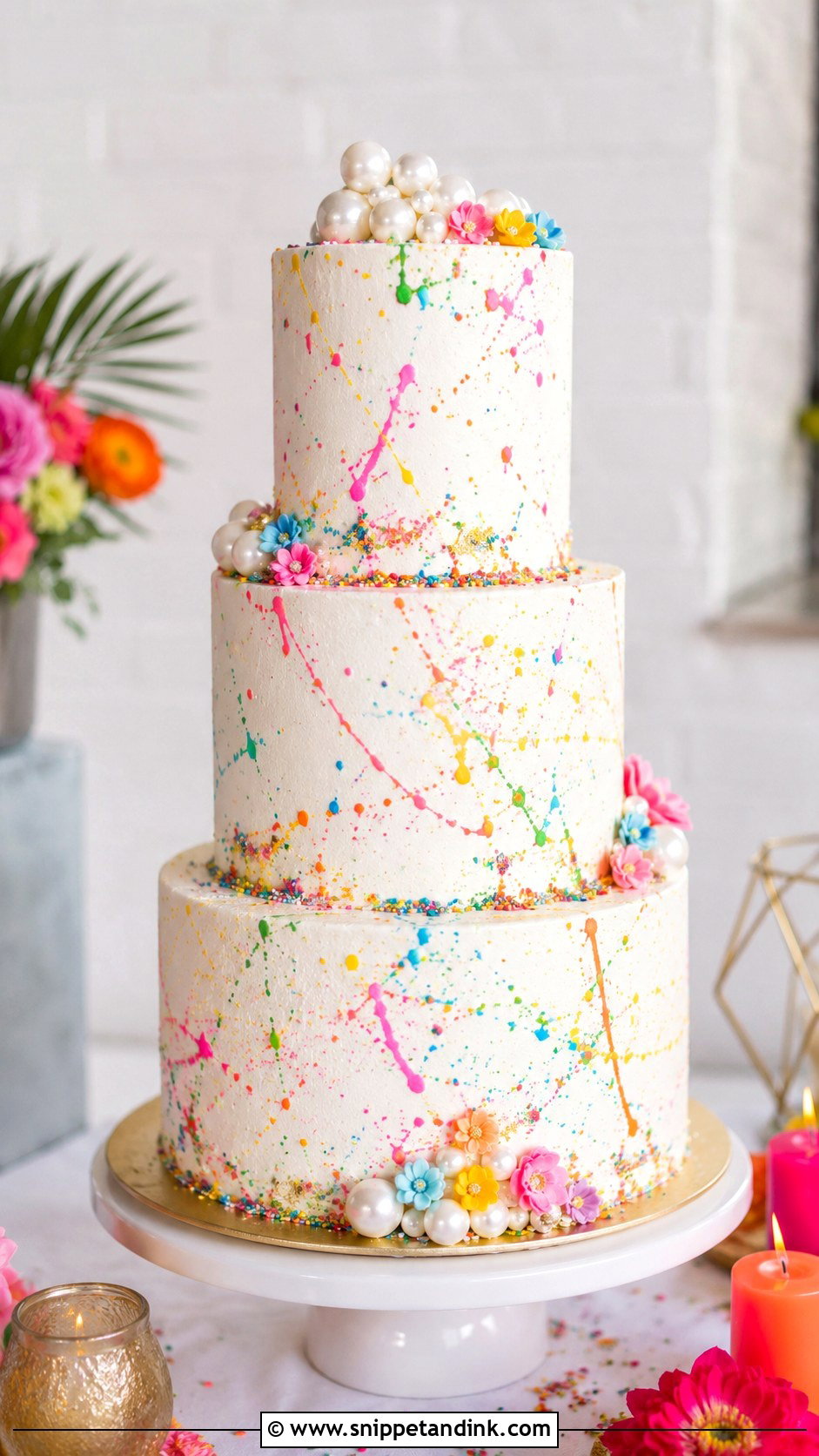
Splatter brings a paint-party energy that I love for couples who don’t want anything traditional. It works on a clean white, black or pale buttercream base, flicked with edible color in hot pink, yellow and blue. I splatter on a chilled cake with thinned gel and a stiff brush, and I test the spray pattern on paper first, because one heavy blob ruins the effect. Tall, smooth tiers with a simple topper keep it polished. Funfetti or chocolate inside fits the upbeat mood.
22. Neon Marble Wedding Cake
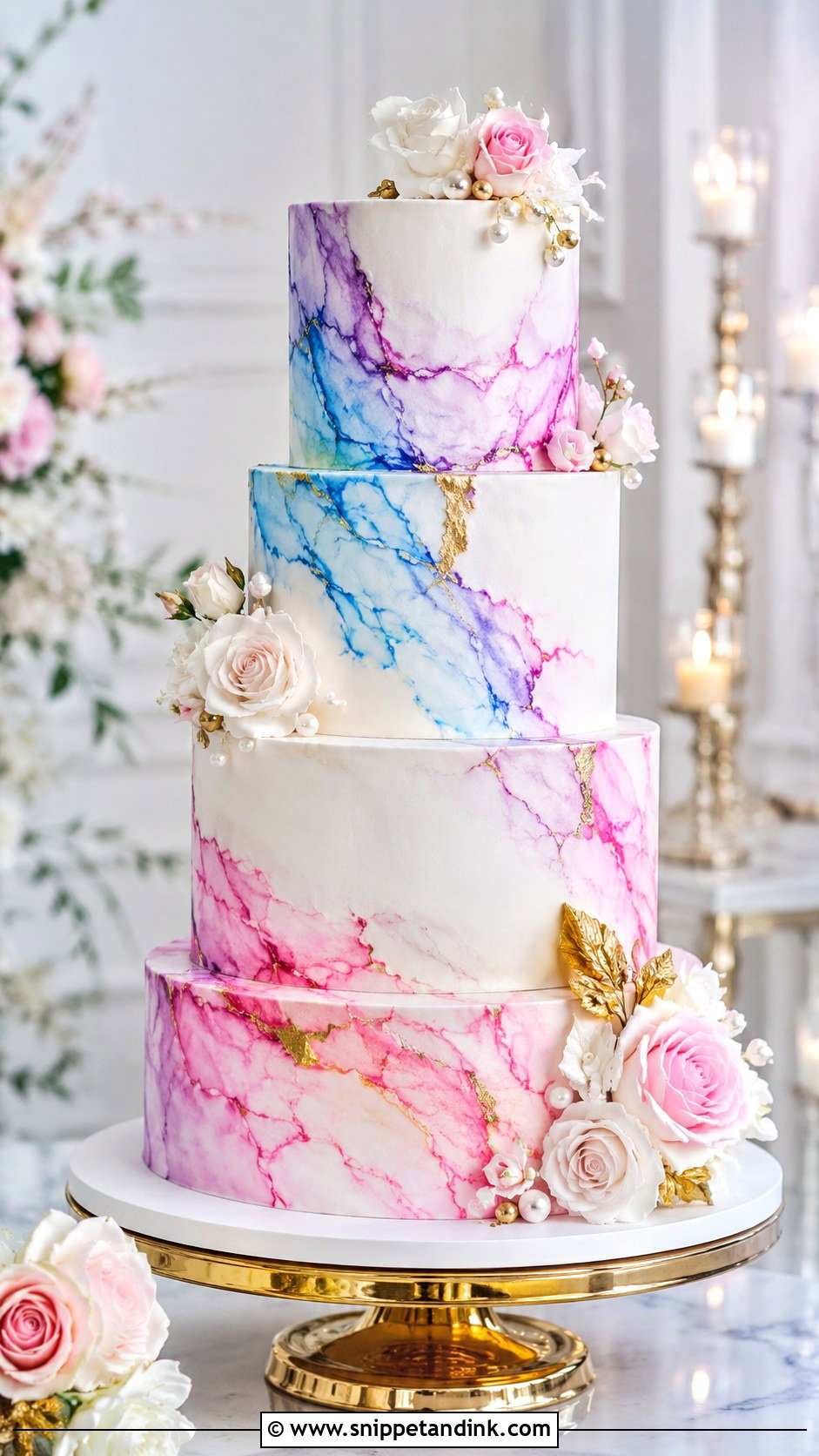
Neon marbling swaps the usual grey or gold veining for electric pink, blue or purple swirls through fondant or buttercream. On white it looks soft; over black, dramatic. With fondant I twist the colored and white pieces together only a few times before rolling, because overworking muddies the veins into a flat pastel. Gold leaf, a pearl border or a few sugar flowers finish it. Couples who want color with some restraint tend to land here.
23. Neon Heart Wedding Cake
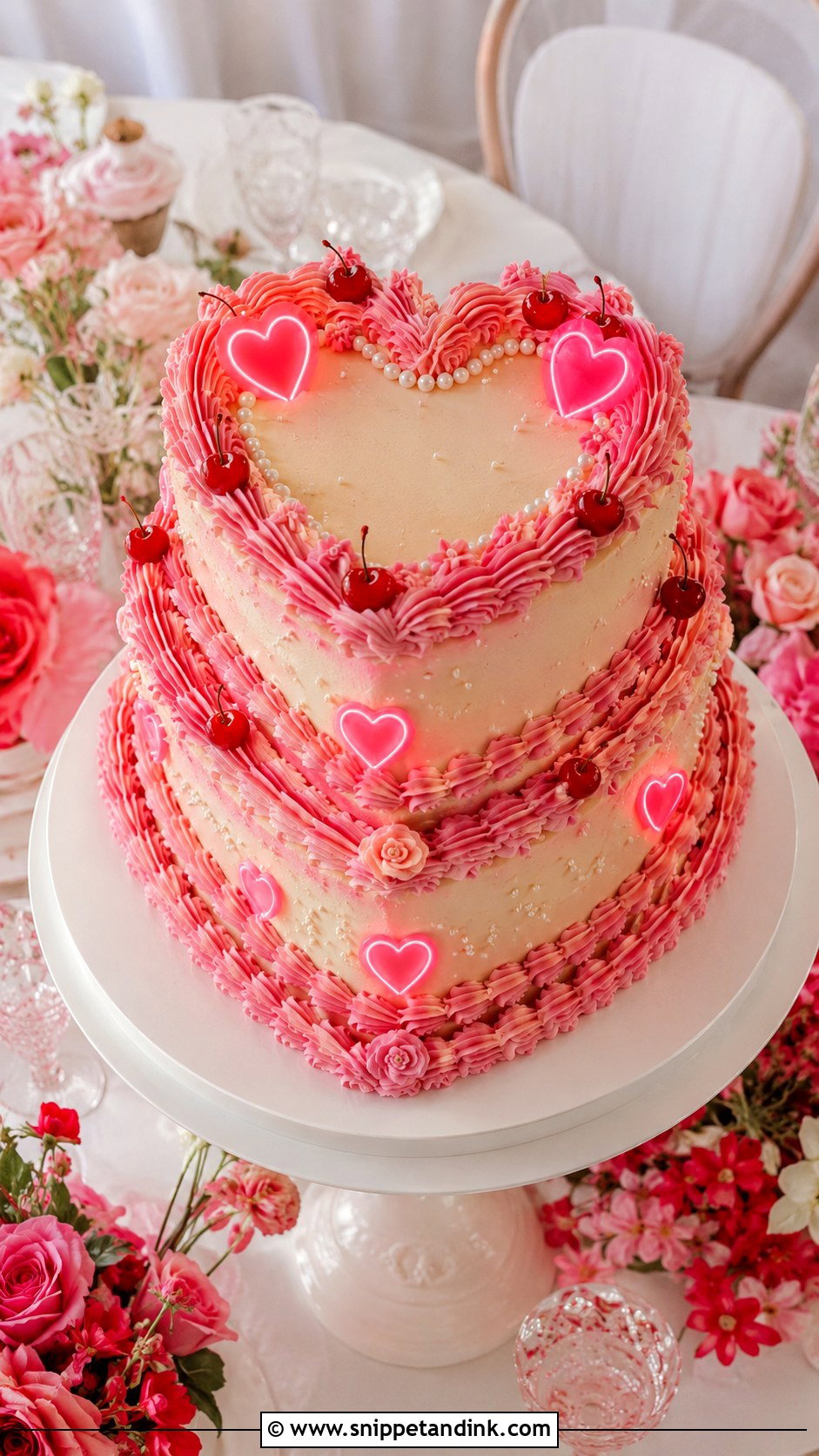
Hearts take neon somewhere sweeter. This can be a heart-shaped vintage cake with bright piping, a tier scattered with heart details, or a white cake under a glowing heart sign. Strawberry, raspberry and red velvet suit the theme, with heart accents in hot pink or electric blue. Any light-up sign should sit on its own stand behind the cake rather than in the frosting, with batteries and wires kept away from anything guests eat. Sweetheart tables and micro weddings suit it best.
24. Neon Vintage Wedding Cake
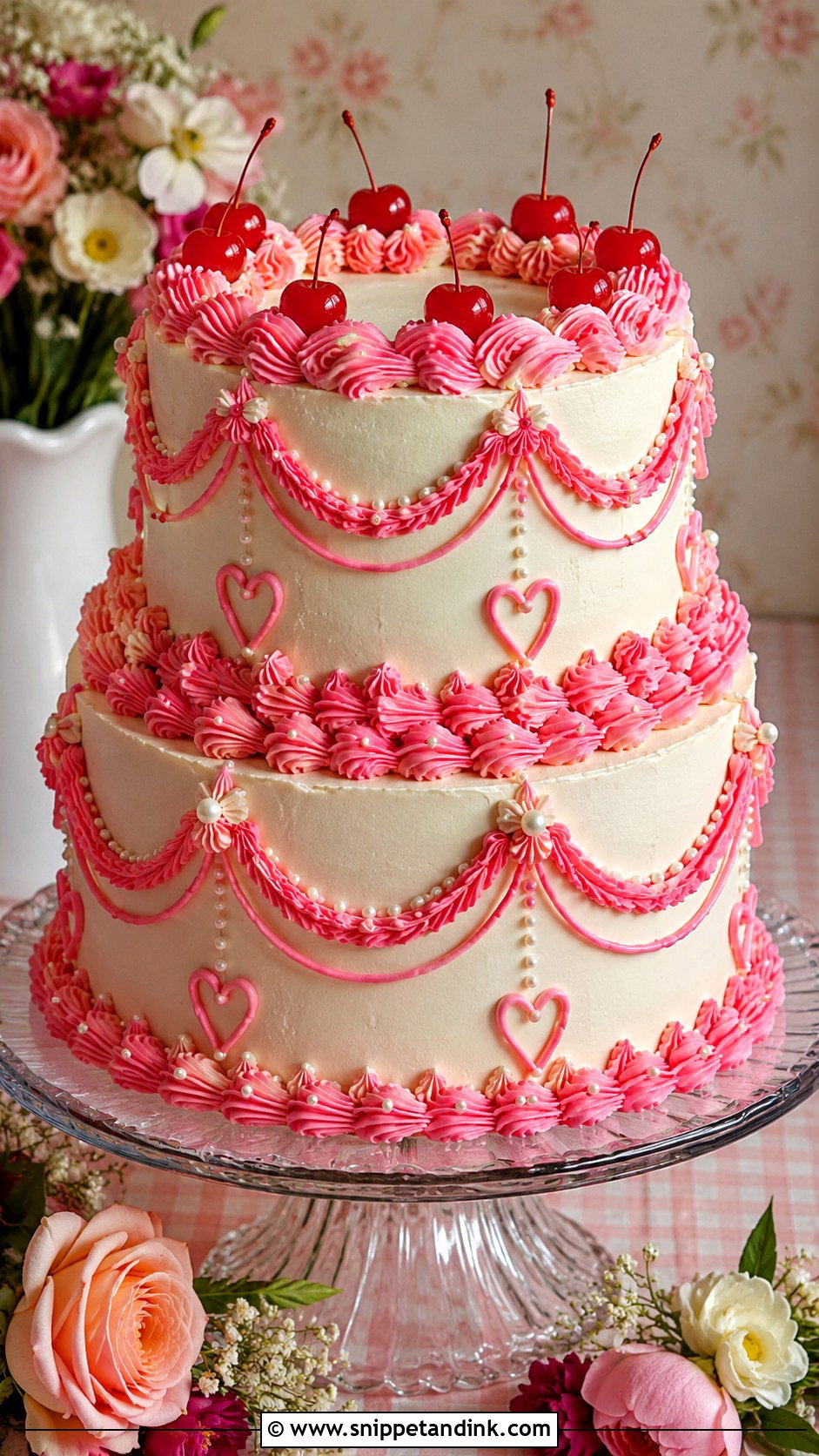
Vintage-style cakes with heavy piping are having a moment, and neon keeps them from looking dated. Lambeth-style overpiping, shell borders, swags and tiny piped hearts in hot pink, lime or blue look fresh on a white, blush or black base. Neat piping is everything, and stiff buttercream holds those layered ridges far better in a warm room than a soft whipped frosting. Pearls, cherries or a simple topper add charm. Strong color contrast keeps all that detail readable from the back of the room.


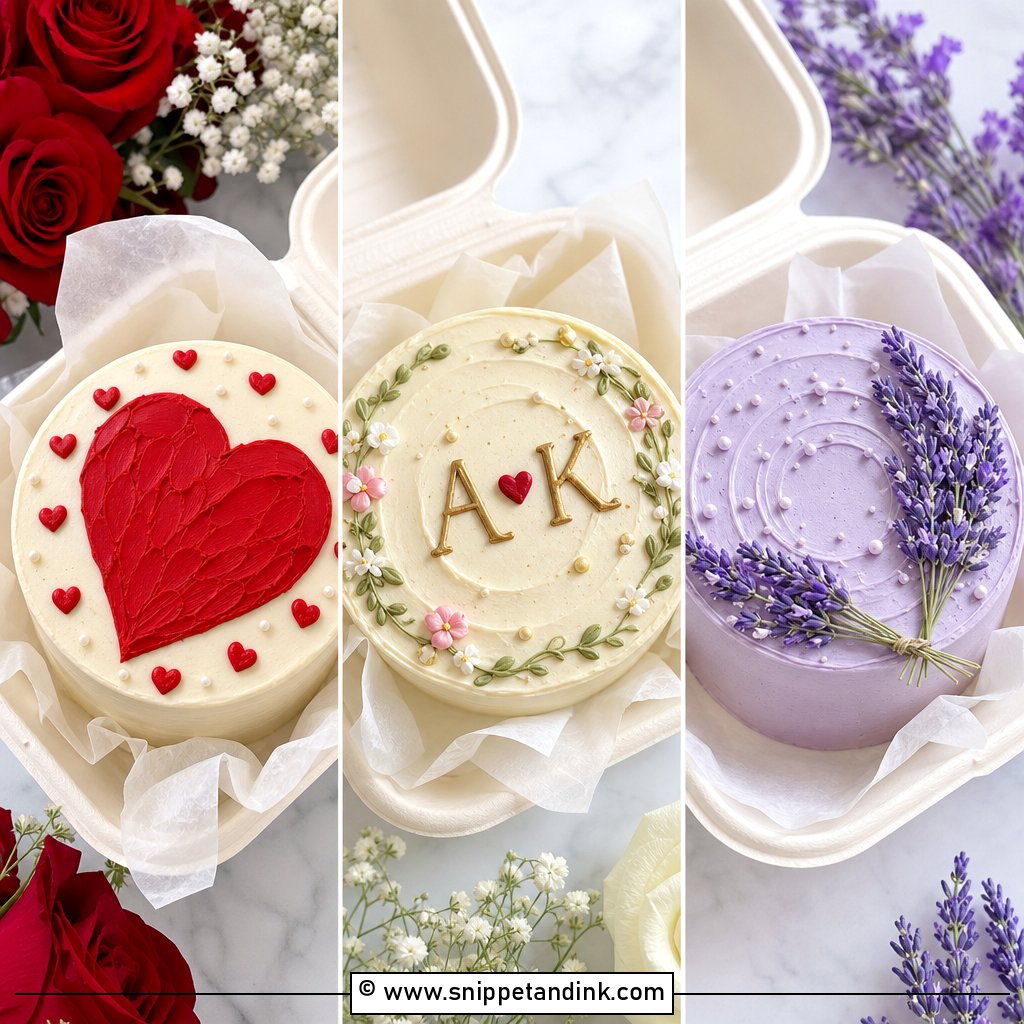

25. Neon Minimalist Wedding Cake
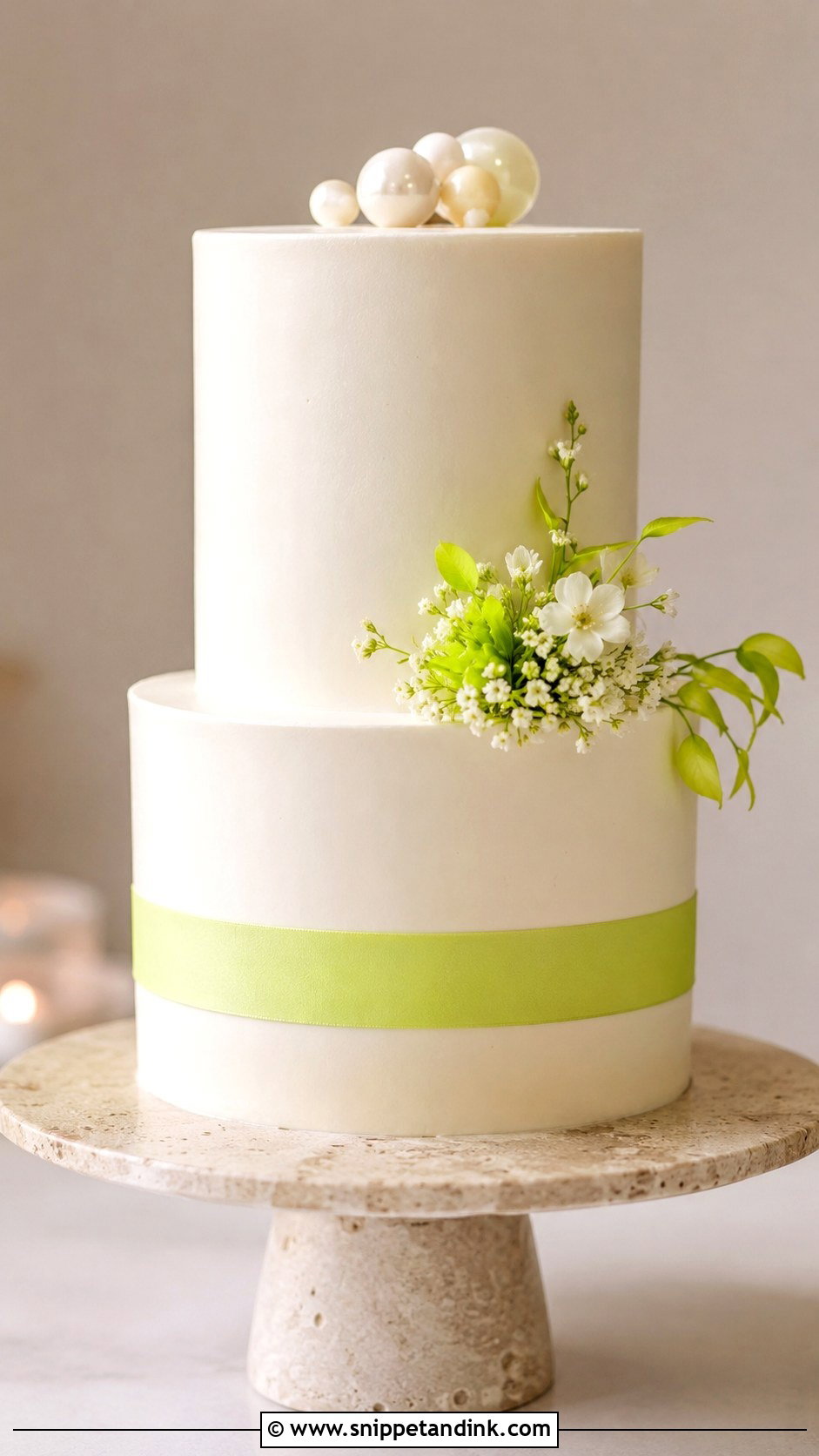
Minimalism proves bold color doesn’t need to be busy. A smooth white or ivory cake with one neon detail, a single stripe, one painted edge or a small bright floral cluster, is enough. I find this is the version couples are happiest with years later, because the cake still looks like a wedding cake in the album. Vanilla bean or almond suits the calm style. Keep the topper and stand simple; courthouse weddings and refined receptions with colorful accents suit it well.
26. Neon Boho Wedding Cake
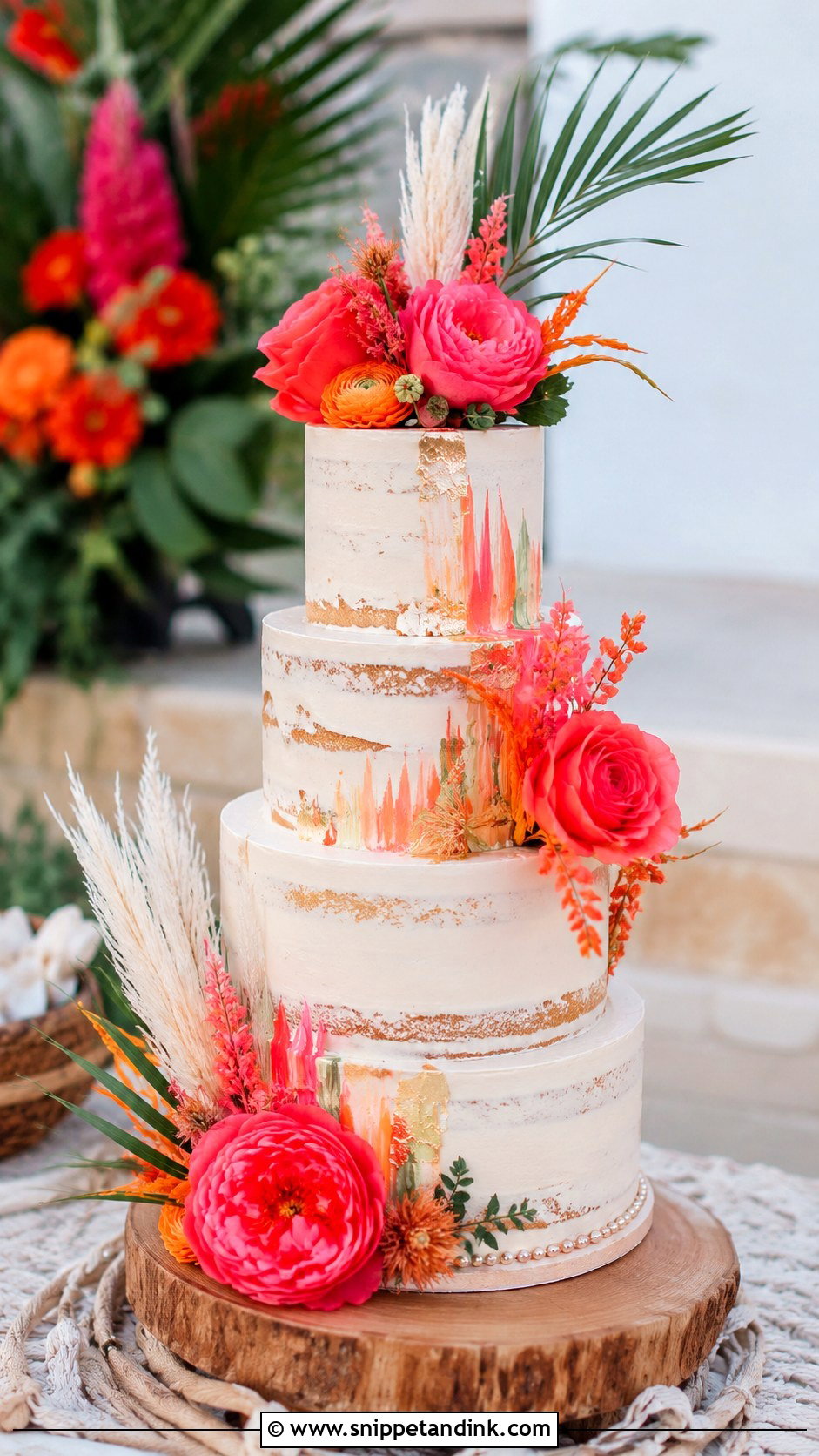
Boho mixes relaxed texture with unexpected color: semi-naked buttercream, dried palm, neon-painted grasses and bright florals against ivory. Honey, citrus and spice cake work with the natural styling. Dried decorations need the same care as fresh ones. I seal or sleeve anything that touches the cake and skip anything treated with dyes or sprays not meant for food. Balance the dried pieces with smooth frosting or a few fresh blooms so it reads as styled, not messy, at an outdoor ceremony or desert venue.
27. Neon Beach Wedding Cake
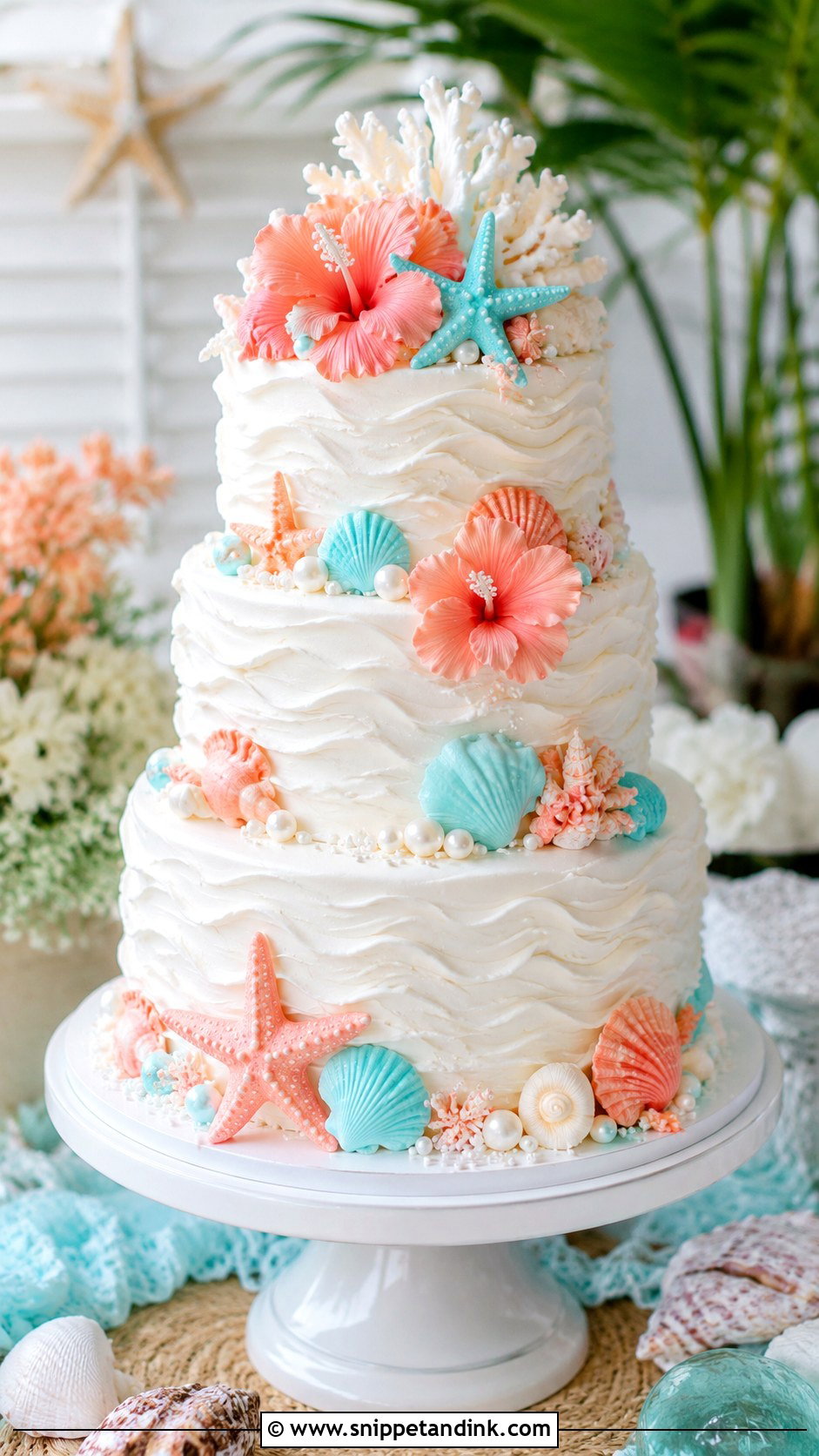
A beach cake trades the usual blue and white for neon coral, aqua and lime. A white buttercream cake with wave texture, bright sugar shells and tropical flowers feels modern and coastal. Coconut, key lime and mango match the seaside mood. Heat and sun are the real problem by the water: buttercream softens and bright colors fade in direct light, so I set the cake up in shade, as close to cutting time as the schedule allows. Keep crumb sand and pearls neat so the design stays elegant.
28. Neon Garden Wedding Cake
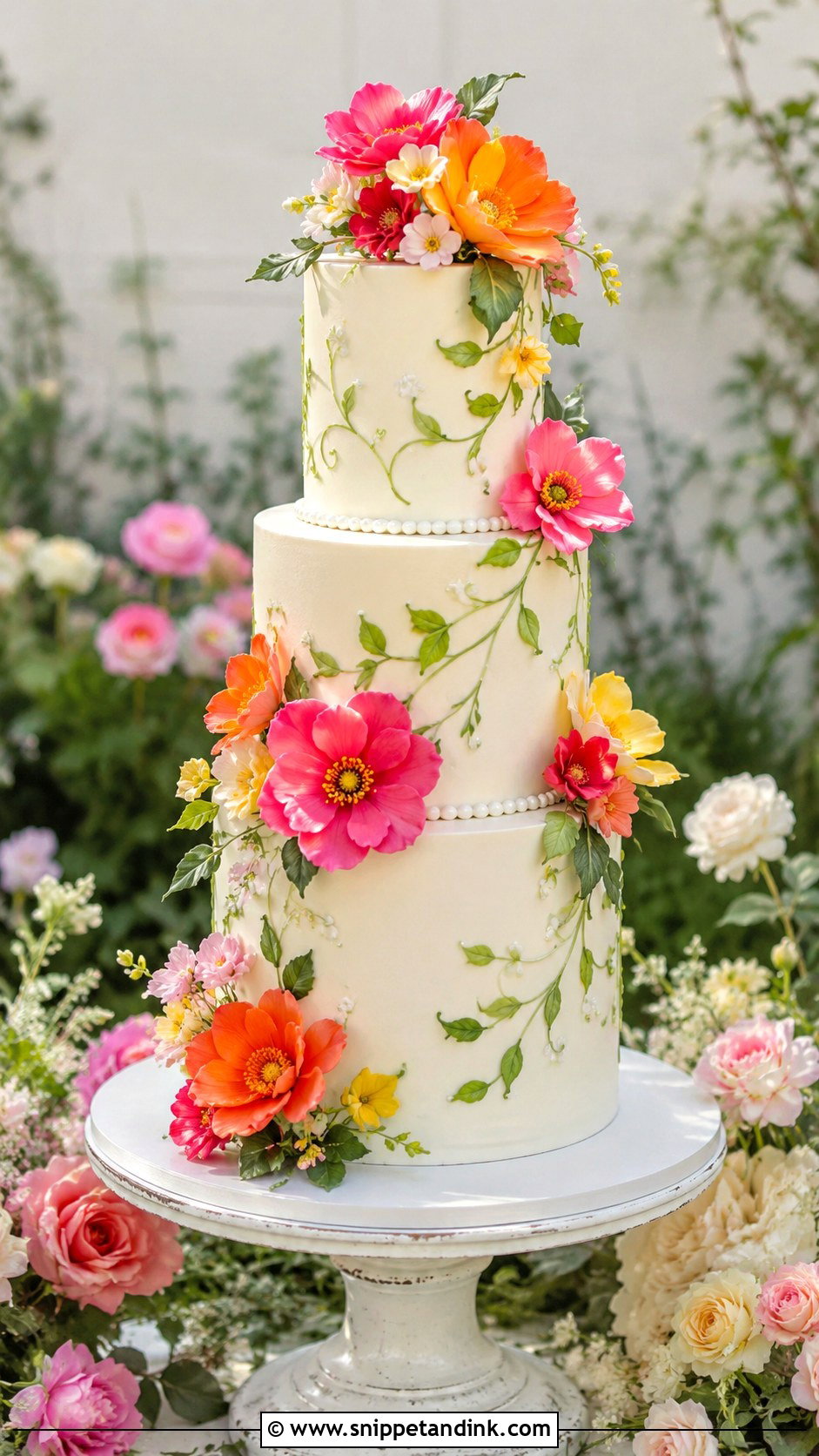
Garden styling gets a color upgrade with bright edible flowers, sugar vines, painted leaves and neon floral clusters on white tiers. Hot pink, lime and violet are the strongest choices. Lemon, raspberry and lavender suit the mood, though I go gently with lavender, which tastes soapy when overdone. Leave some open frosting between clusters so each bloom has impact. It suits greenhouse venues and spring or summer receptions.
29. Neon City Wedding Cake
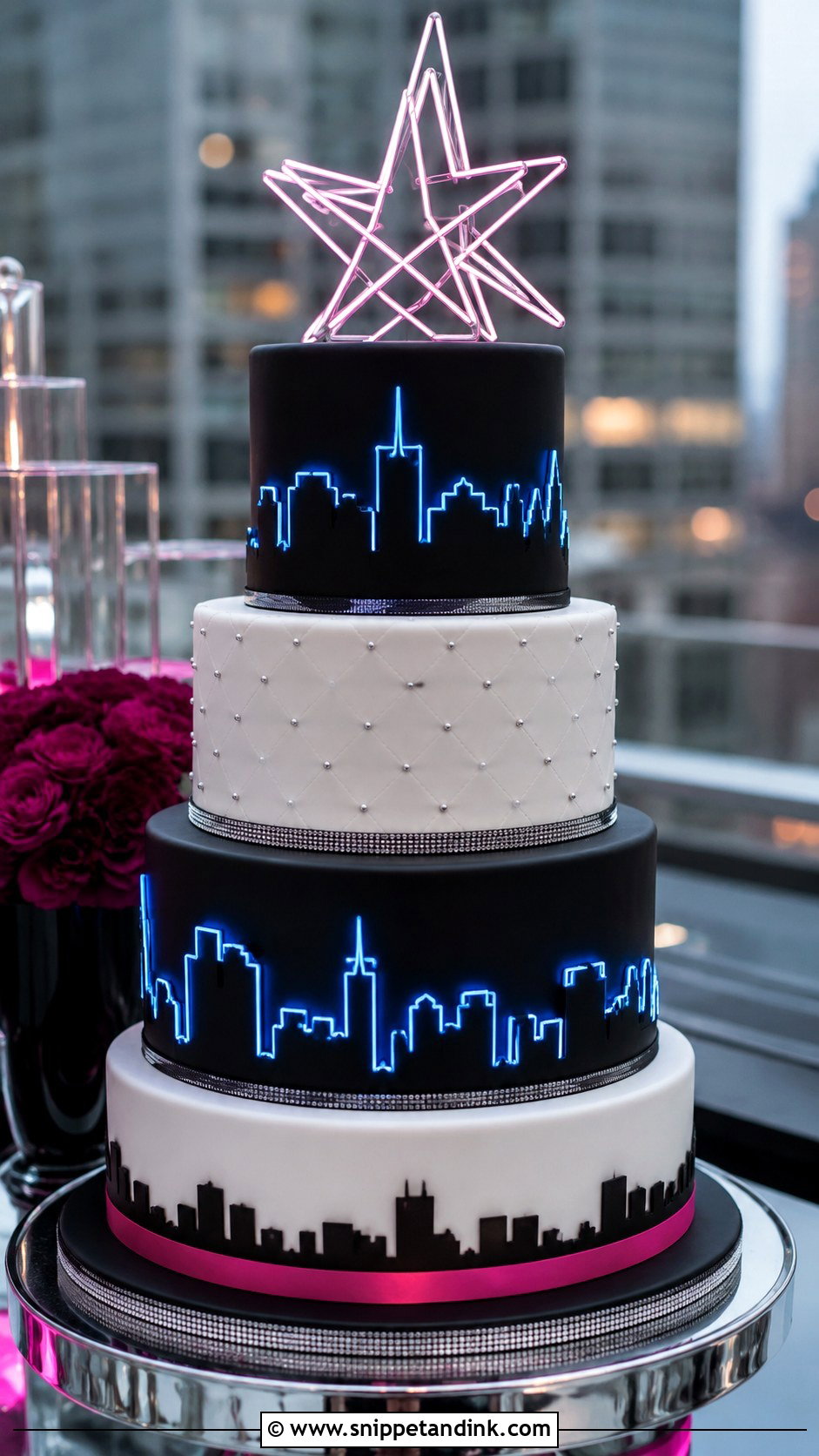
City-light cakes sit on black or white tiers with electric blue, pink and purple lines that echo a skyline at night. Skyline silhouettes, reflective silver and acrylic separators complete the theme. Keep the shape tall and clean. If your venue has floor-to-ceiling windows, think about timing: the cake looks its best once it’s dark outside, and a cake set against a bright window in daylight turns into a silhouette in photos. Chocolate, espresso and raspberry suit the urban mood.
30. Neon Disco Wedding Cake
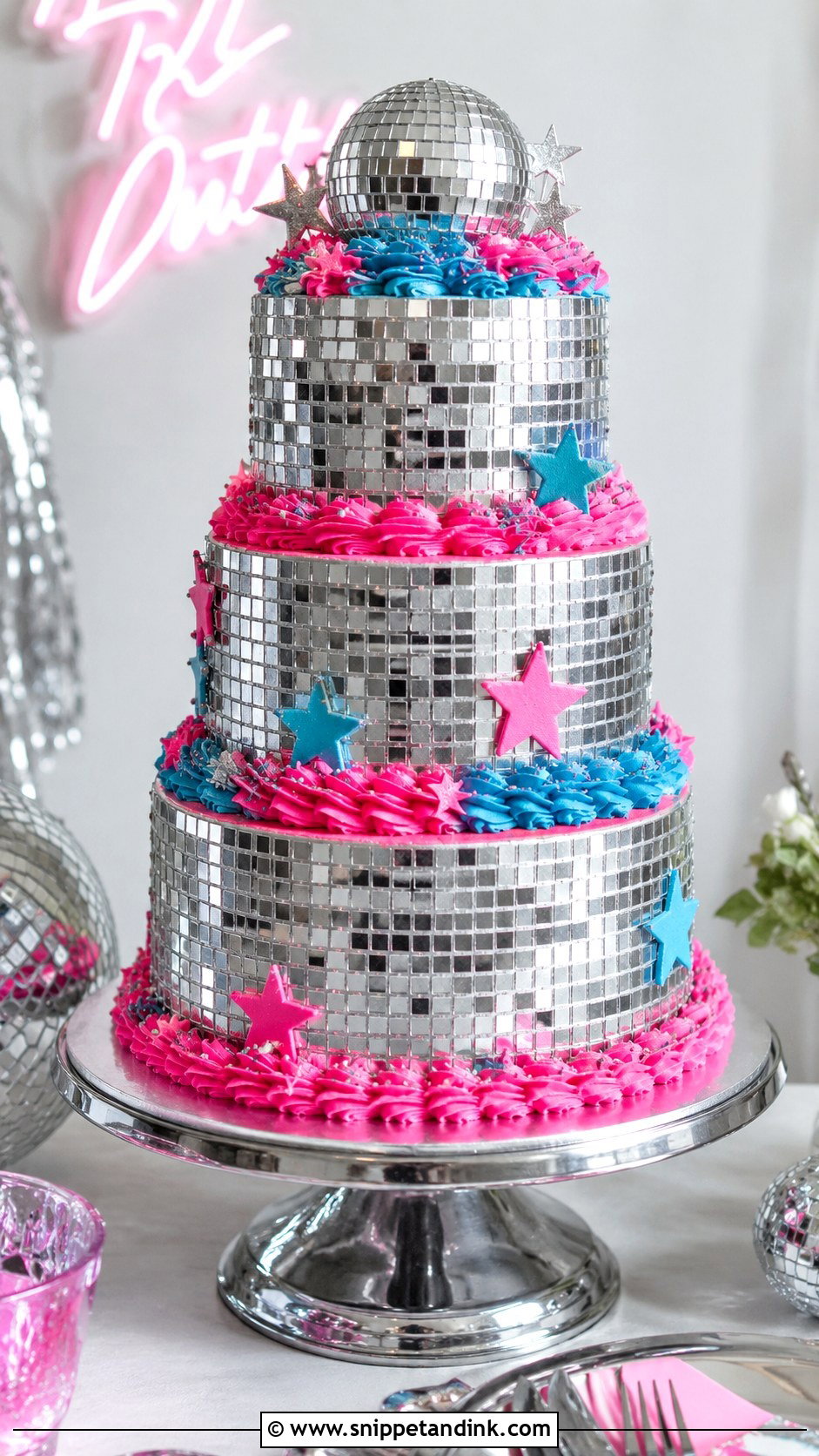
Disco cakes bring sparkle and party energy to the dessert table. Mirror-like sugar tiles, silver accents, neon pink piping and buttercream stars build the look, and a round tiered cake with disco-ball texture catches every light on the dance floor. I keep one metallic shade to tie the colors together. Edible glitter is worth asking about: some glitters sold for cakes are only non-toxic and decorative, so I use ones clearly labeled as edible on anything that gets served. Funfetti or coconut inside fits the playful mood.
31. Neon Graffiti Wedding Cake
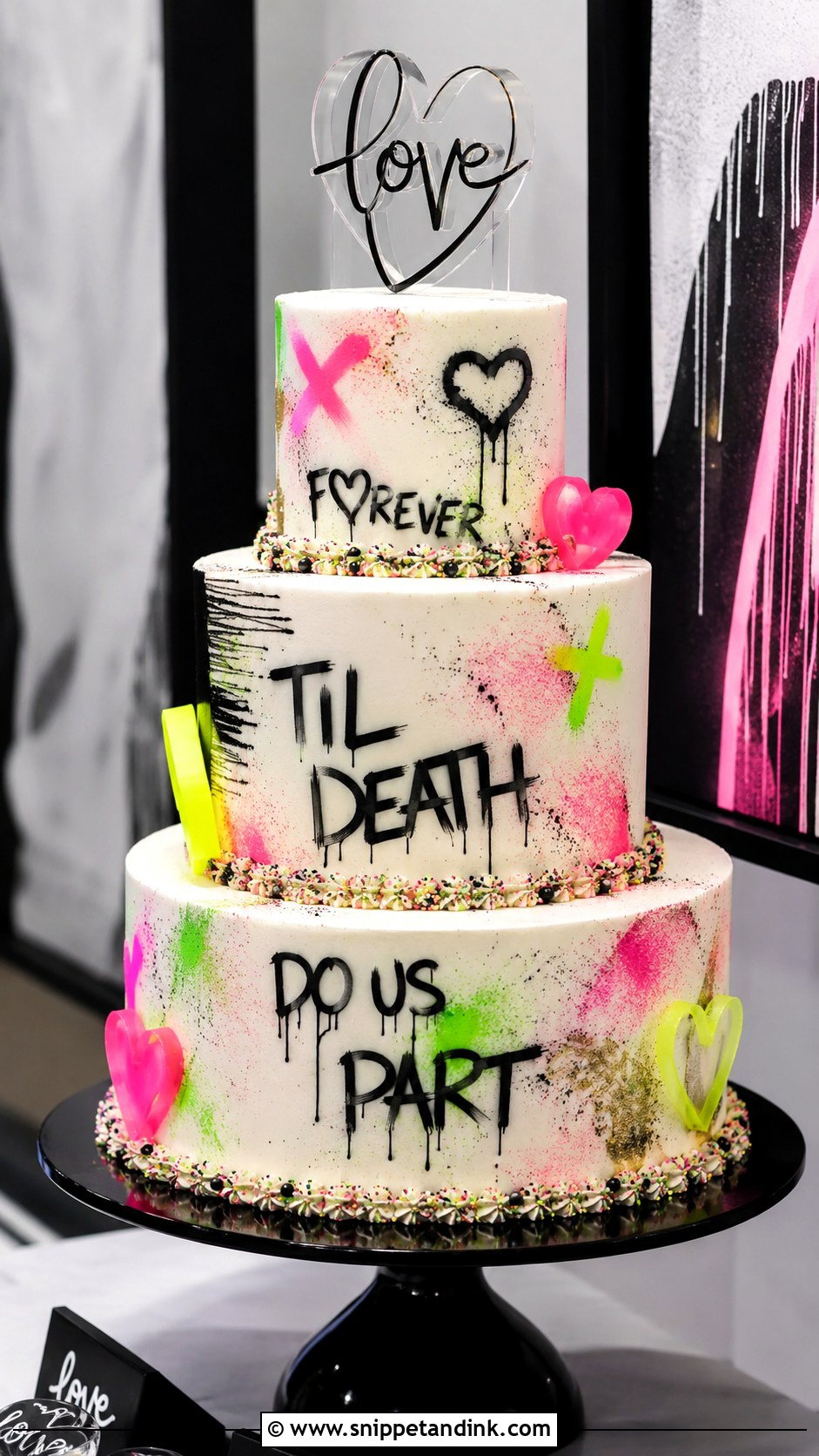
Graffiti cakes are personal: edible spray-paint effects, your names in hand lettering, bright hearts and abstract symbols over a clean tiered base. Neon pink, yellow and green look strongest against white or black. Airbrushed color sits as a fine layer on the surface, so it gives a lot of brightness without loading the frosting with gel. Plan the composition on paper first and leave some tiers quieter, because covering every surface turns it into noise. Warehouse venues and art spaces are its home.
32. Neon Watercolor Wedding Cake
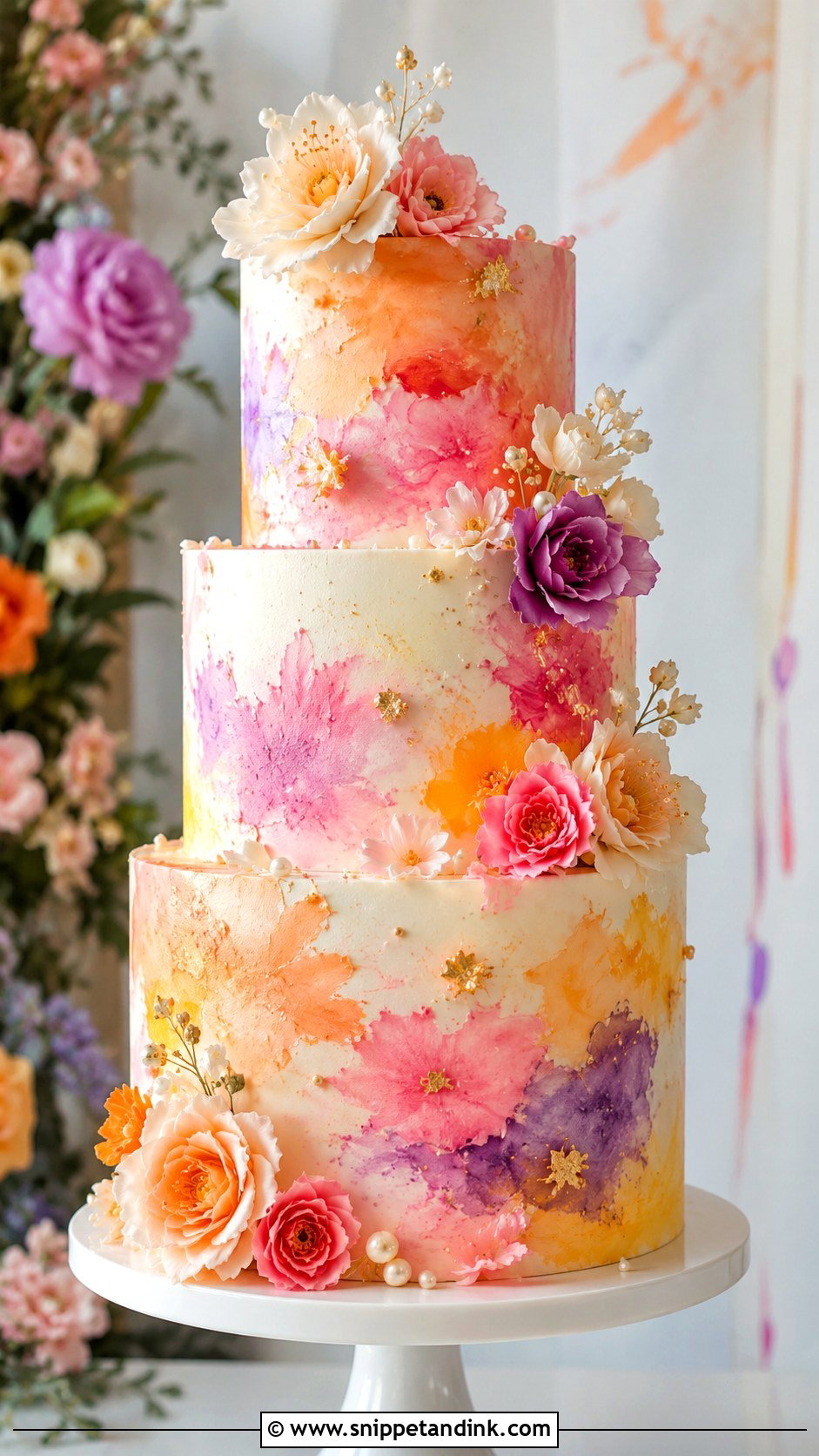
Watercolor is softer than splatter but still full of color, with blended washes of pink, orange and purple that look like a sunset. I paint it onto a chilled buttercream cake with a damp palette knife, or onto fondant with diluted gel, building the wash in thin layers so it stays translucent. Delicate sugar flowers or edible pearls keep it romantic. Each one comes out a little different, and it’s easy to match to the florals because the colors can be pulled straight from the bouquet.
33. Neon Square Wedding Cake
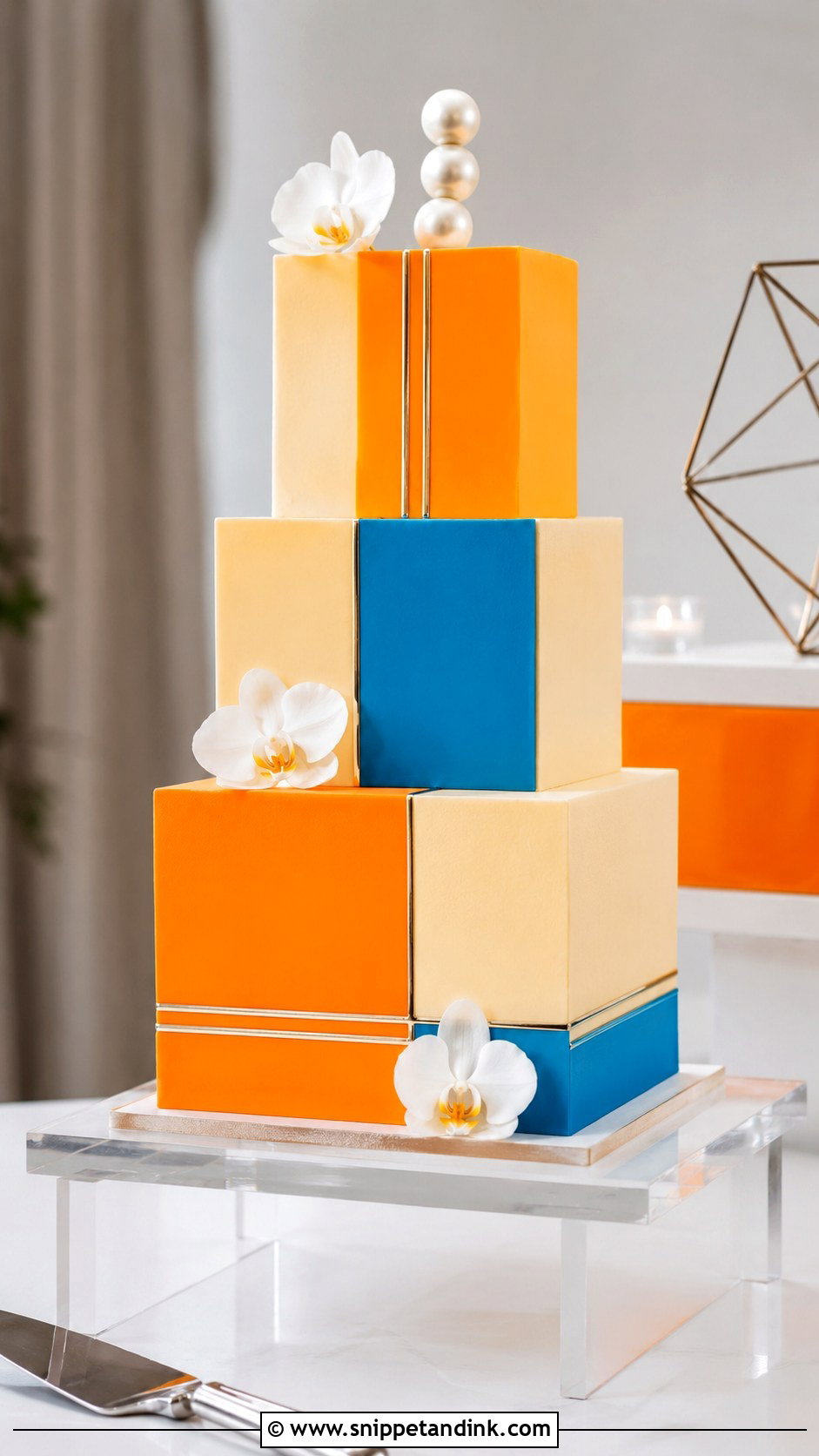
Square tiers make color blocks and stripes look extra sharp. White, black or metallic bases carry neon pink, green or blue panels, while the inside stays classic. Square cakes are harder to cover cleanly than round ones, because the corners tear or crack in fondant, so I’d budget a bit more time and cost for them. A few sugar flowers or a thin metallic line soften the structure for a contemporary venue.
34. Neon Tiered Wedding Cake
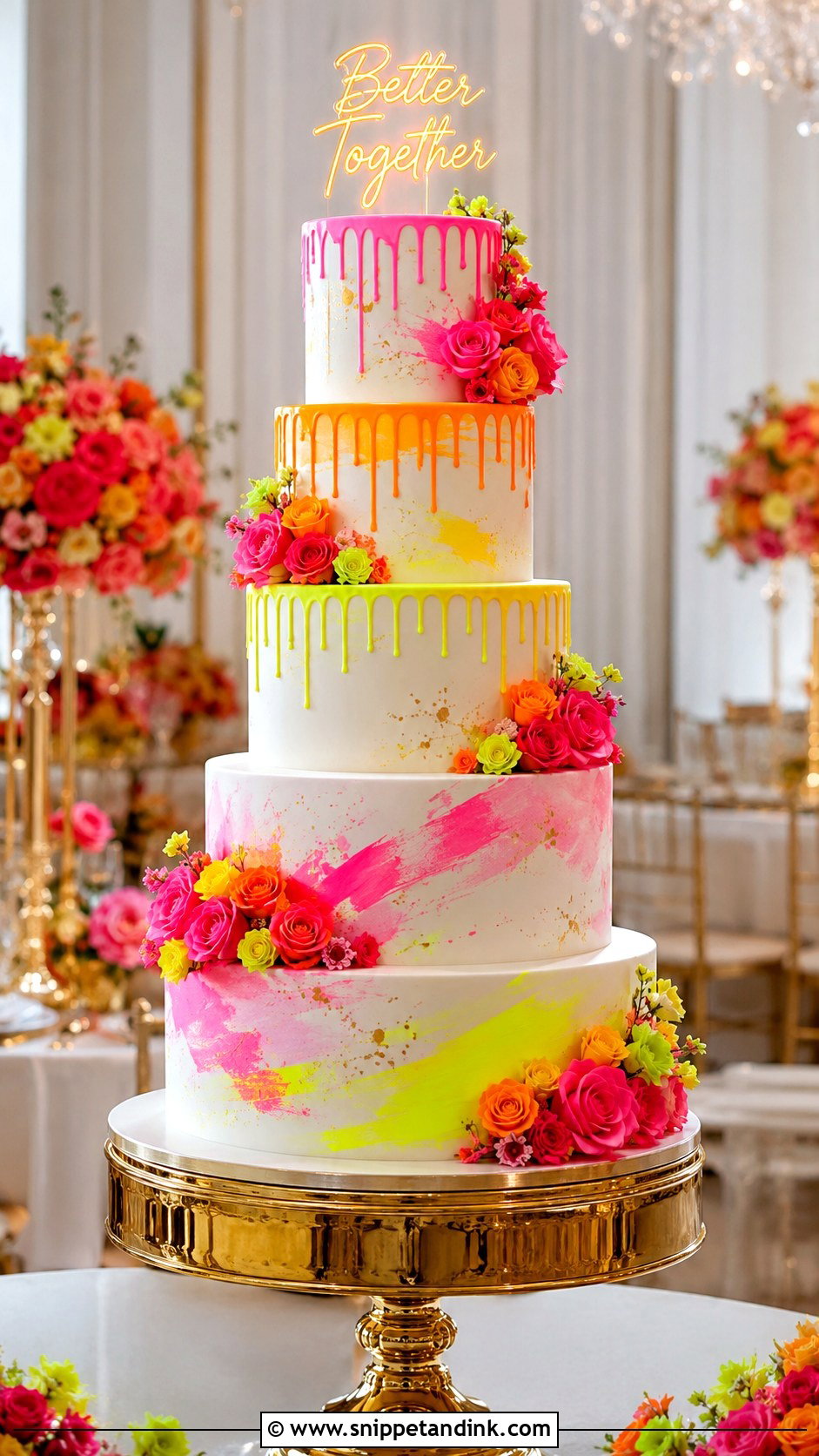
Height gives neon room to be dramatic. Each tier can carry its own detail, a drip on one, painted flowers on another, geometric lines on a third, but I keep one element running through every tier so the cake looks like one design. Flavors can change by tier for variety. Tall cakes need internal supports, dowels and boards in every tier, and they travel best stacked at the venue rather than fully assembled in a van. A sturdy stand and balanced decoration finish it for larger weddings.
35. Neon Cupcake Wedding Cake
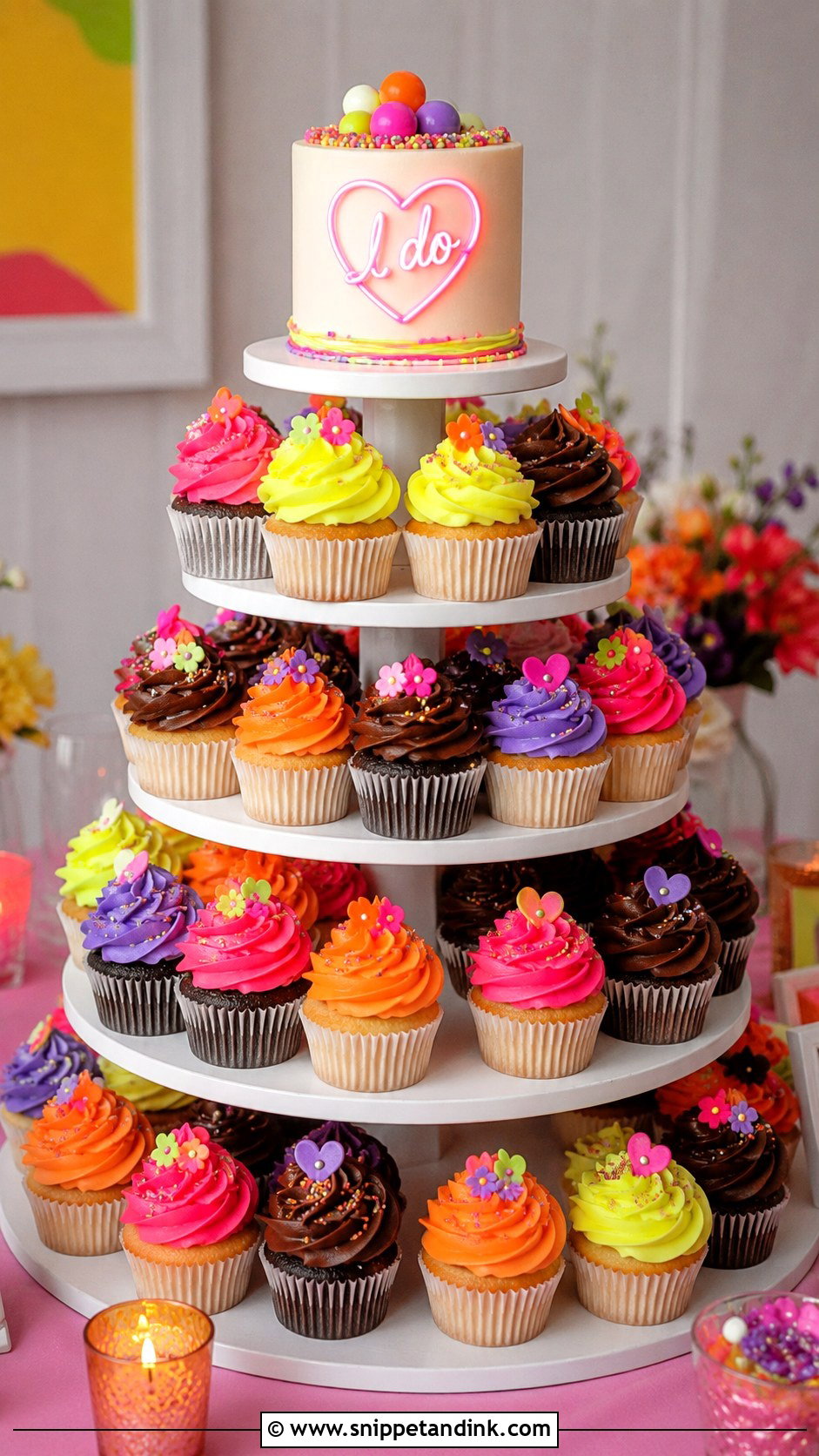
A neon cupcake wedding cake gives guests choice and makes serving simple. Bright cupcakes sit on a tiered stand with a small cutting cake on top, finished with neon buttercream swirls, sprinkles or mini heart toppers. Coordinated wrappers keep it polished, and foil-lined ones stop the bright color from looking muddy once the butter seeps through paper. Swirls on cupcakes soften faster than a stacked cake in a warm room, so I deliver them closer to the reception start. It suits casual receptions, dessert bars and late-night sweets.
Lighting a Cake So It Actually Glows
A neon cake under dim, warm reception lighting can look surprisingly flat, because warm light pulls blues and purples toward grey. The cake table needs its own light. A small pin spot or an uplight aimed at the table, set up with your venue or lighting team, does more for the colors than any extra decoration.
For a true glow, some couples use blacklight on the dance floor. Certain food colors and anything made with tonic water fluoresce under UV, so I can make a tier or a set of sugar details that light up once the lights drop. That needs testing under the actual lamp before the wedding, since not every shade reacts.
LED toppers and neon signs belong on their own stand or acrylic riser behind or above the cake, never pushed into the frosting. Batteries get warm, and wires are not something I want near food a guest will eat.
Will Everyone Leave With Blue Teeth?
It’s the question I get at almost every neon tasting, and it’s fair. Heavily colored frosting can tint lips and teeth, and very dark shades taste faintly bitter when there’s a lot of gel in them. My answer is to keep the strongest color on the outside and the eating parts mild:
- A thin neon fondant or ganache shell over a lightly tinted or plain buttercream.
- Bright color on decorations that are easy to set aside, like sugar flowers, toppers and shards.
- Colored sponge layers kept to pastel strength, which still look bright when the cake is cut.
Tell your caterer which tiers carry the strongest colors so they can cut those for the display and serve slices from the quieter parts if they want to.
Where the Neon Goes Decides Everything
A neon cake can be romantic, tropical, vintage or minimal depending on where you put the color. The cakes that work start with a clear base style and add neon in one focused way: frosting, florals, a drip, painted accents or a cake-safe topper. If your reception already has bright lighting or colorful décor, let the cake echo it. If the room is neutral, the cake can carry the color for both of you. Bring a photo of your venue at night to your tasting; it tells me more about the right shade than any inspiration image.
You'll Like These Ideas:







Leave a Reply