
Monochrome cakes look simple, which is exactly why they’re hard to make. With only two colours there is nowhere to hide an uneven stripe, a smudge of black on white icing or a corner that isn’t square. Get it right and the cake can read as classic, editorial, romantic or dramatic, all from the same palette. The usual rule I give couples is that one strong black element on a white cake looks deliberate, while equal amounts of both can start to look busy. Marble, bows, pearls, stripes, square tiers and sculpted textures all feature below, with notes on what each one asks of the baker and of your venue.
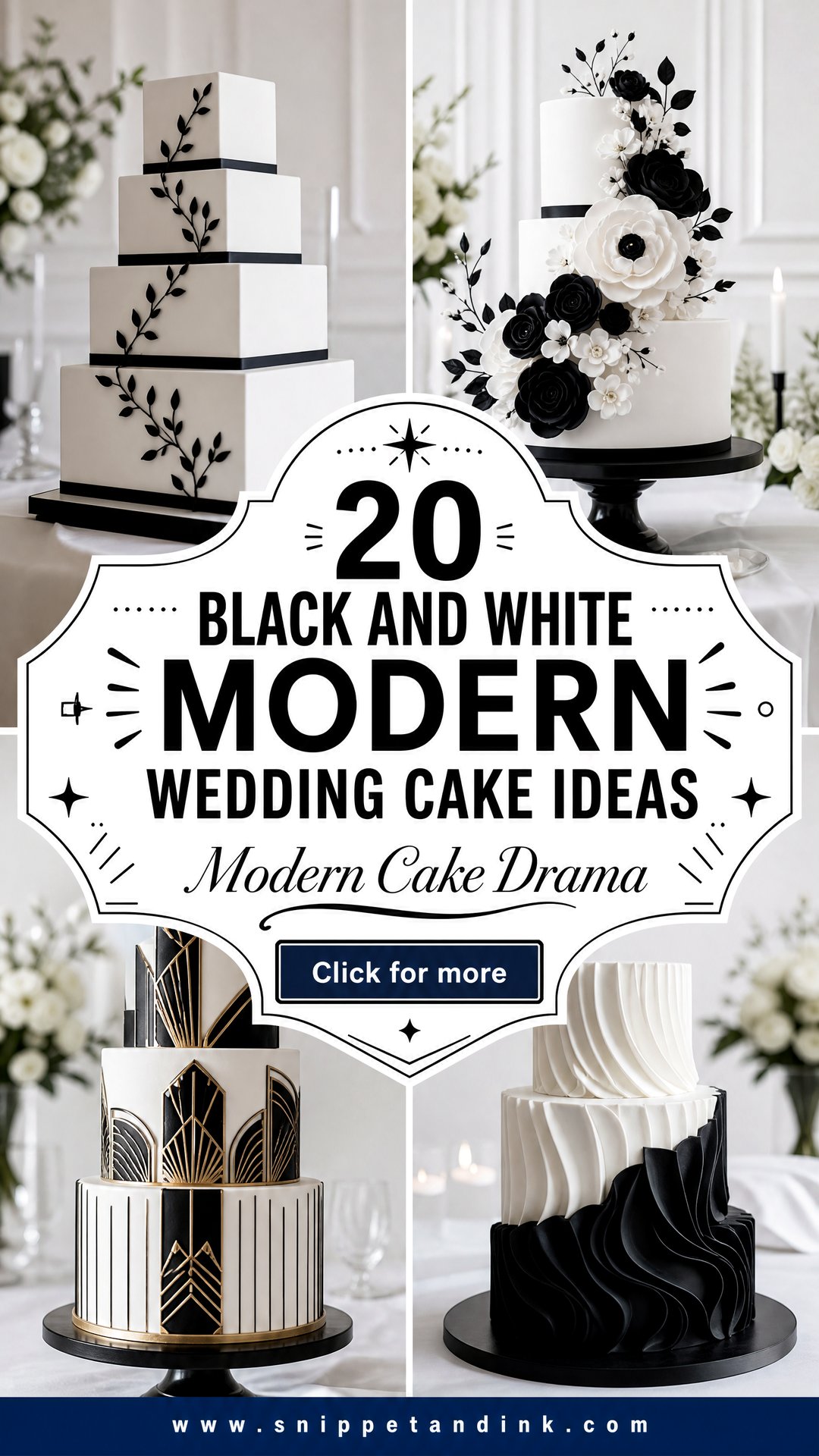
How Much Black Can a White Wedding Cake Carry?
Before I sketch anything, I ask couples to picture the cake as a percentage. Somewhere around a fifth black reads as a white cake with a strong accent. Half and half is graphic and modern. Mostly black is evening drama, and it changes the flavour conversation because more of the slice will be dark icing.
- Daytime or garden wedding: keep black to a ribbon, a band or a single tier.
- Evening or black-tie: a black base tier or full black cake with white flowers can carry the room.
- Small cake table or low ceiling: lighter cakes look bigger; heavy black can shrink a small cake visually.
- Ivory dress: choose an off-white icing too. Bright white next to an ivory gown in photos makes the dress look yellow.
Bring a photo of your linens, invitation and flowers to the consultation. I match the white of the cake to the room, not to an ideal of pure white.
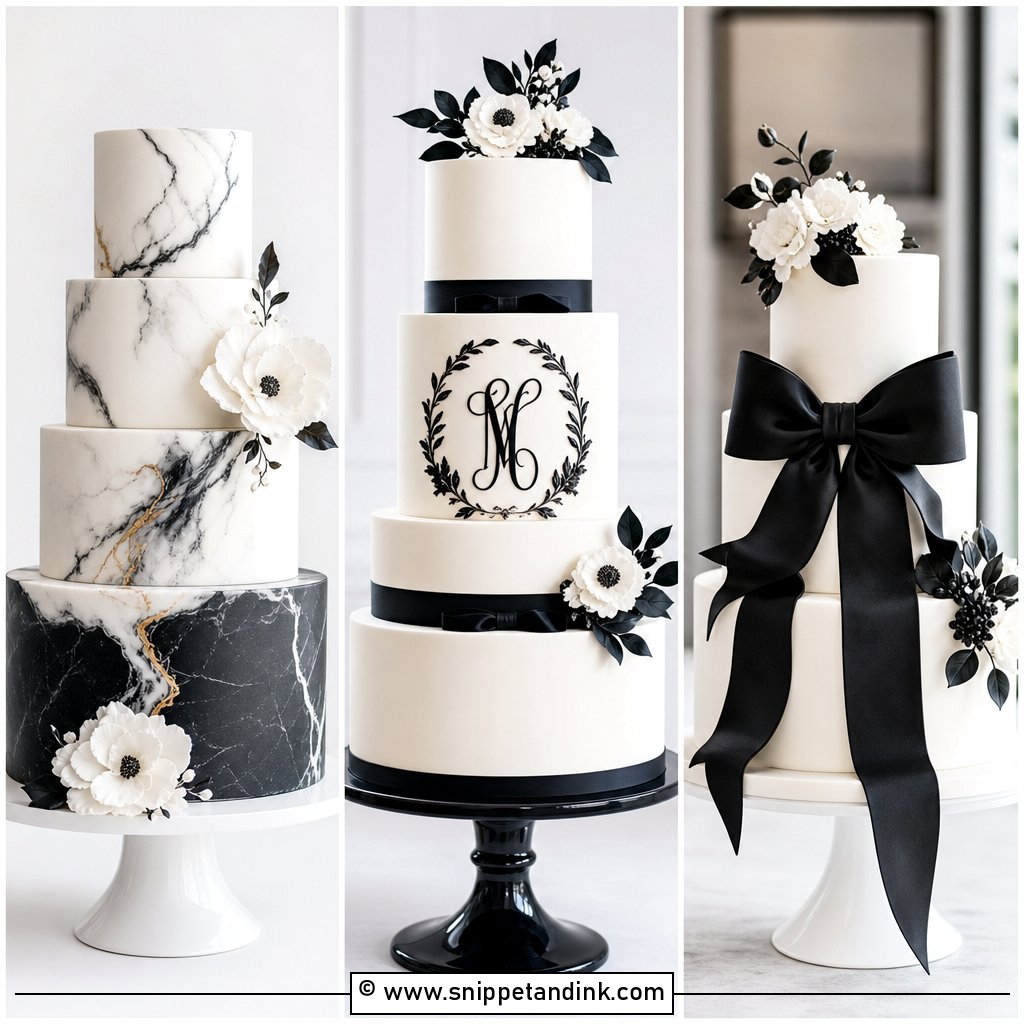
1. Black And White Wedding Cake With Marble Tiers
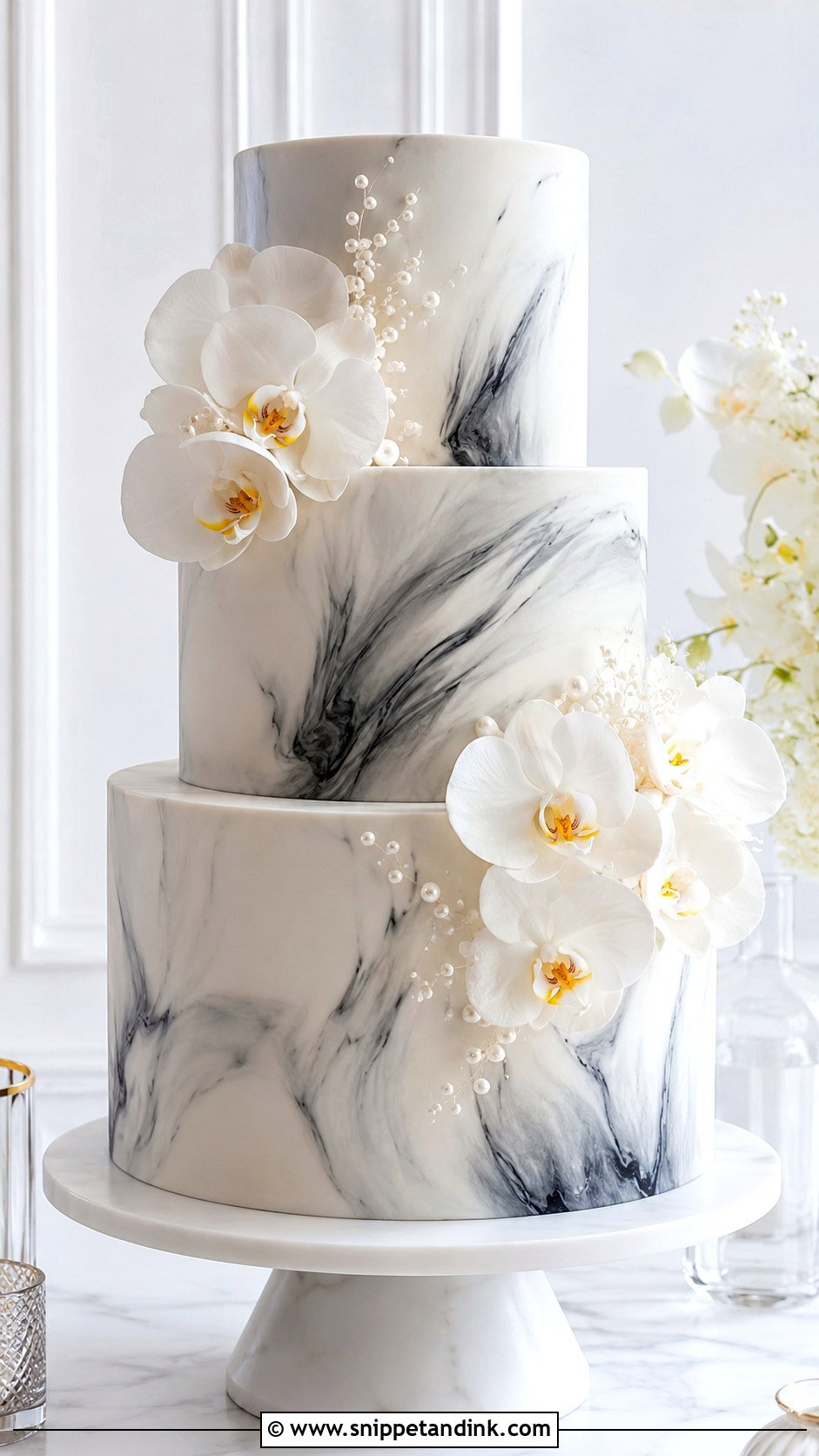
Marble gives you contrast without hard lines. The trick is the grey zone between black and white: real stone has soft transitions, so I fold the two fondant colours only partly together and let grey form where they overlap. Fully separate streaks look printed rather than natural. Marble suits two, three or four tiers, in fondant or polished buttercream. White orchids, black ribbon or a slim pearl border are enough; the pattern is already doing the work, so keep the stand and the table plain.
2. Black And White Wedding Cake With A Bow
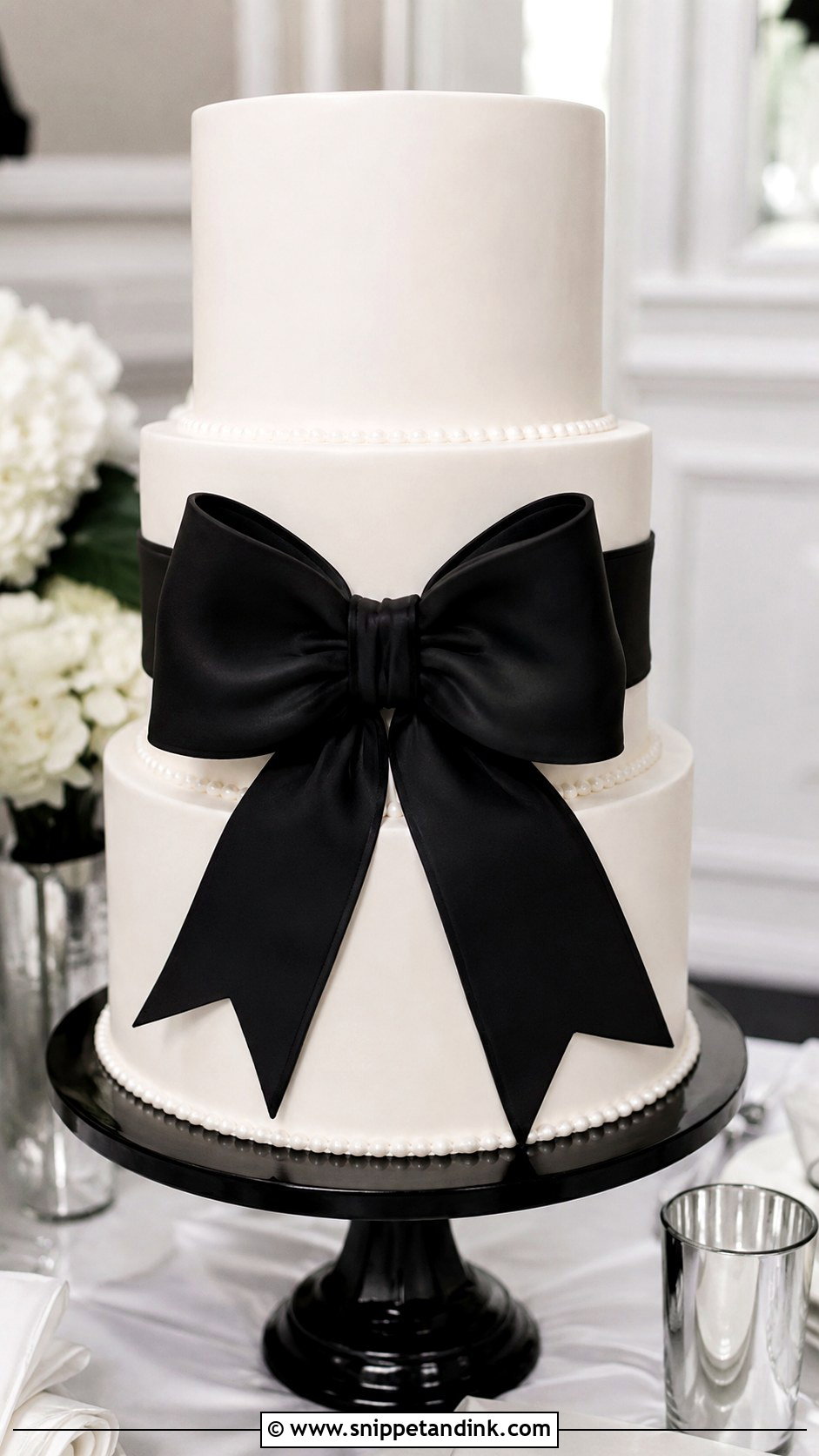
A black bow on a white cake is the fastest route to a fashion look. It can be sugar paste, fondant, edible satin-effect ribbon, or real ribbon that comes off before cutting. Big sugar bows are heavy and need time to dry hollow over padding, so I make them days ahead; a fresh bow sags on the cake. Wrap it around the middle tier or let the tails fall down one side over smooth white icing. Ballrooms, galleries and black-tie receptions suit it.
3. Black And White Wedding Cake With Pearl Details
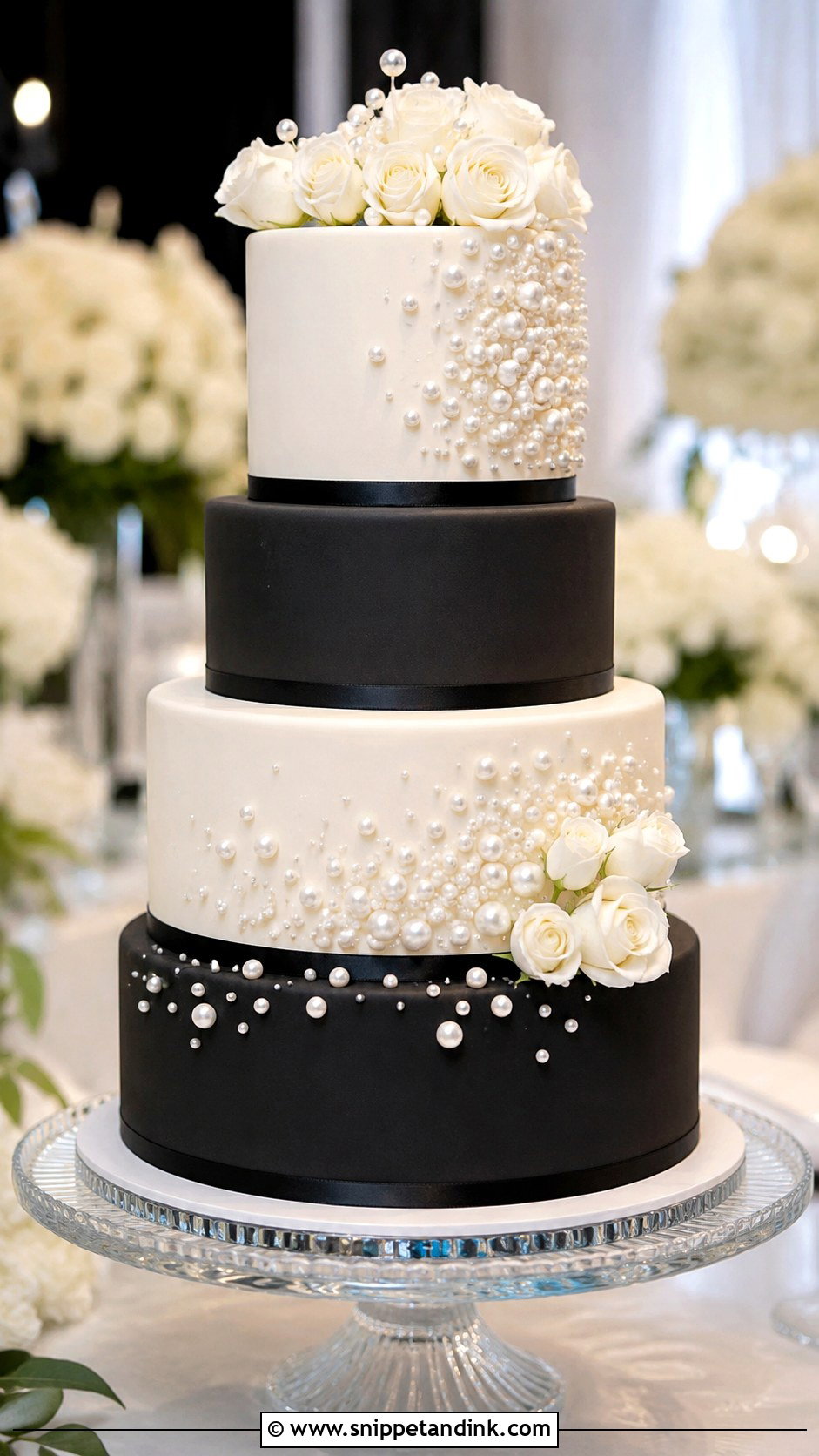
Pearls take the edge off strict black and white. Use sugar pearls in neat rows, loose clusters or a cascade down the tiers. A white cake with black bands and pearl trim feels classic; a black cake with white pearls feels like evening. I mix three or four pearl sizes, because a single size looks machine-made and real strands are never that uniform. If you’re wearing satin or a pearl-edged veil, this one connects to your outfit, and it adds texture without heavy piping.
4. Black And White Wedding Cake With Geometric Pattern
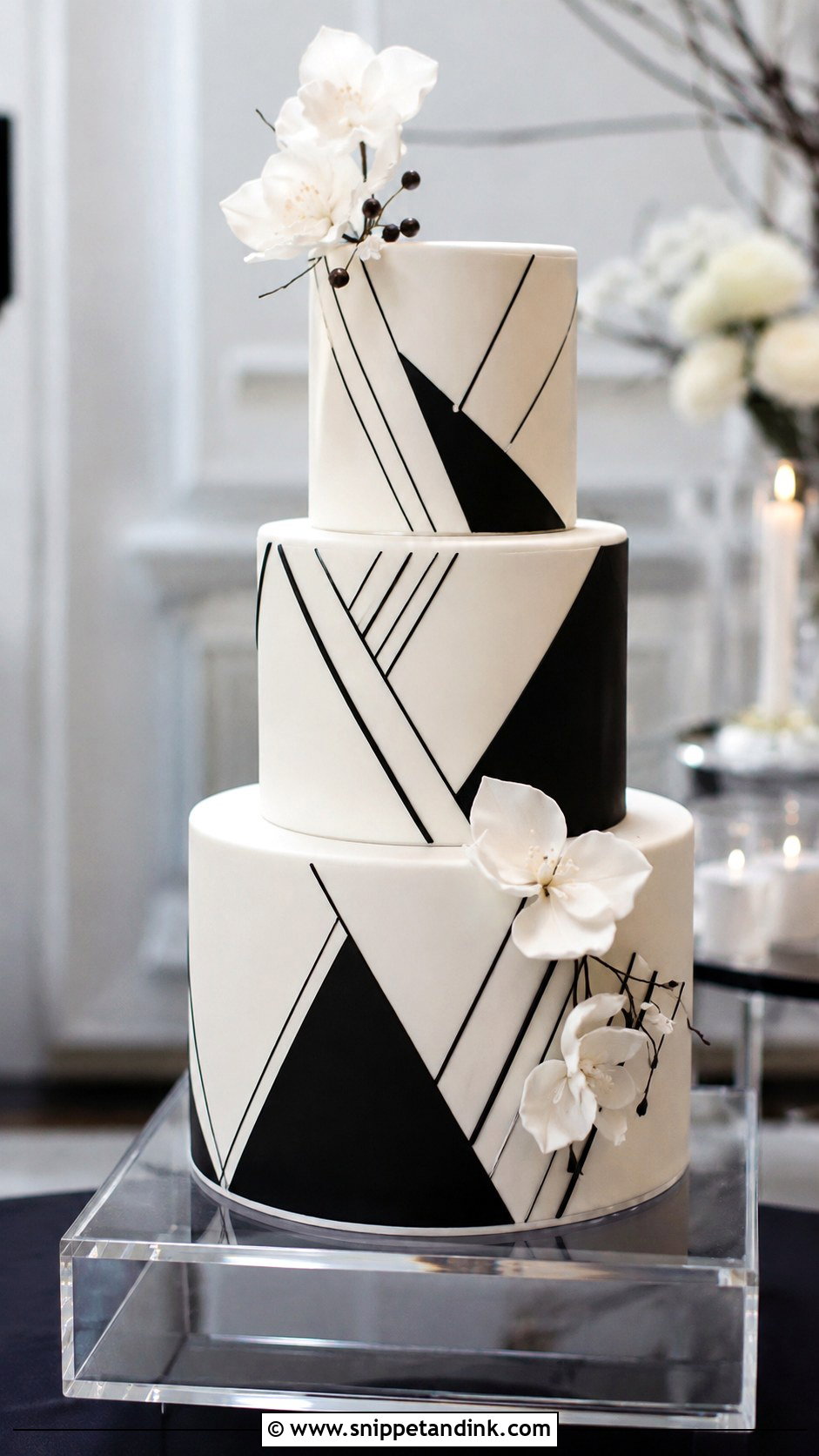
Geometric cakes need discipline. Triangles, thin lines, hexagons or stacked blocks of black and white fondant look sharp when one motif repeats evenly, and crowded when three compete. I cut the pieces from a template and lay them out on paper first, because a geometric pattern that doesn’t meet neatly at the back seam is obvious. Smooth fondant keeps the edges clean. Square or hexagonal tiers push it further toward architecture. One small floral cluster, or nothing at all.
5. Black And White Wedding Cake With Stripes
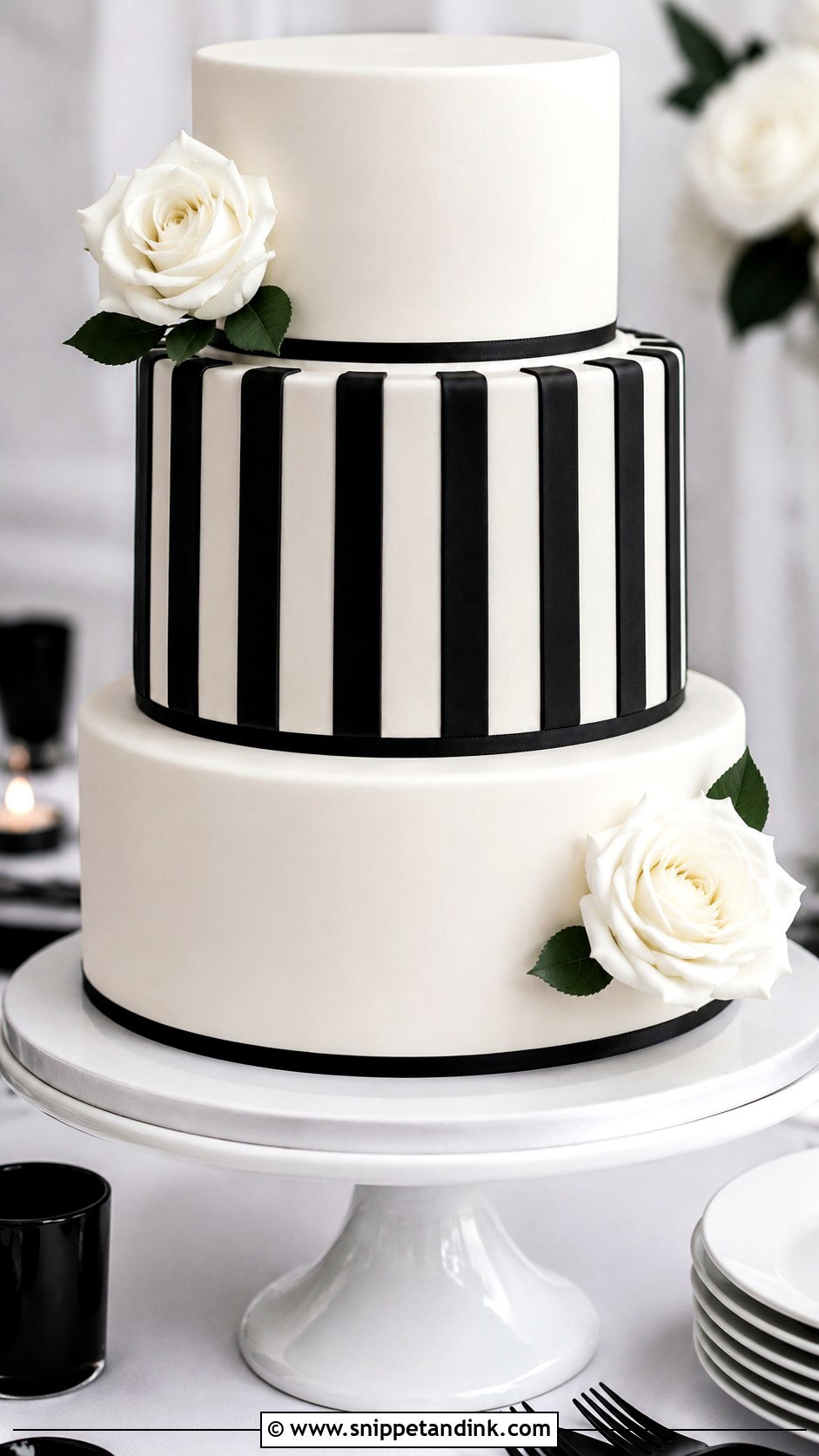
Black and white stripes are graphic and instantly readable from across the room. Vertical stripes stretch the cake taller; horizontal ones feel more formal. I’d put stripes on one statement tier and leave the others plain. Thin stripes look refined, wide ones bolder. Stripes are unforgiving: a stripe that drifts off vertical by a few millimetres shows plainly, so I mark them with a ruler and a turntable guide before cutting. White roses, black anemones or a black ribbon at the base finish it, and striped linens or monochrome stationery tie in naturally.
6. Black And White Wedding Cake With White Flowers
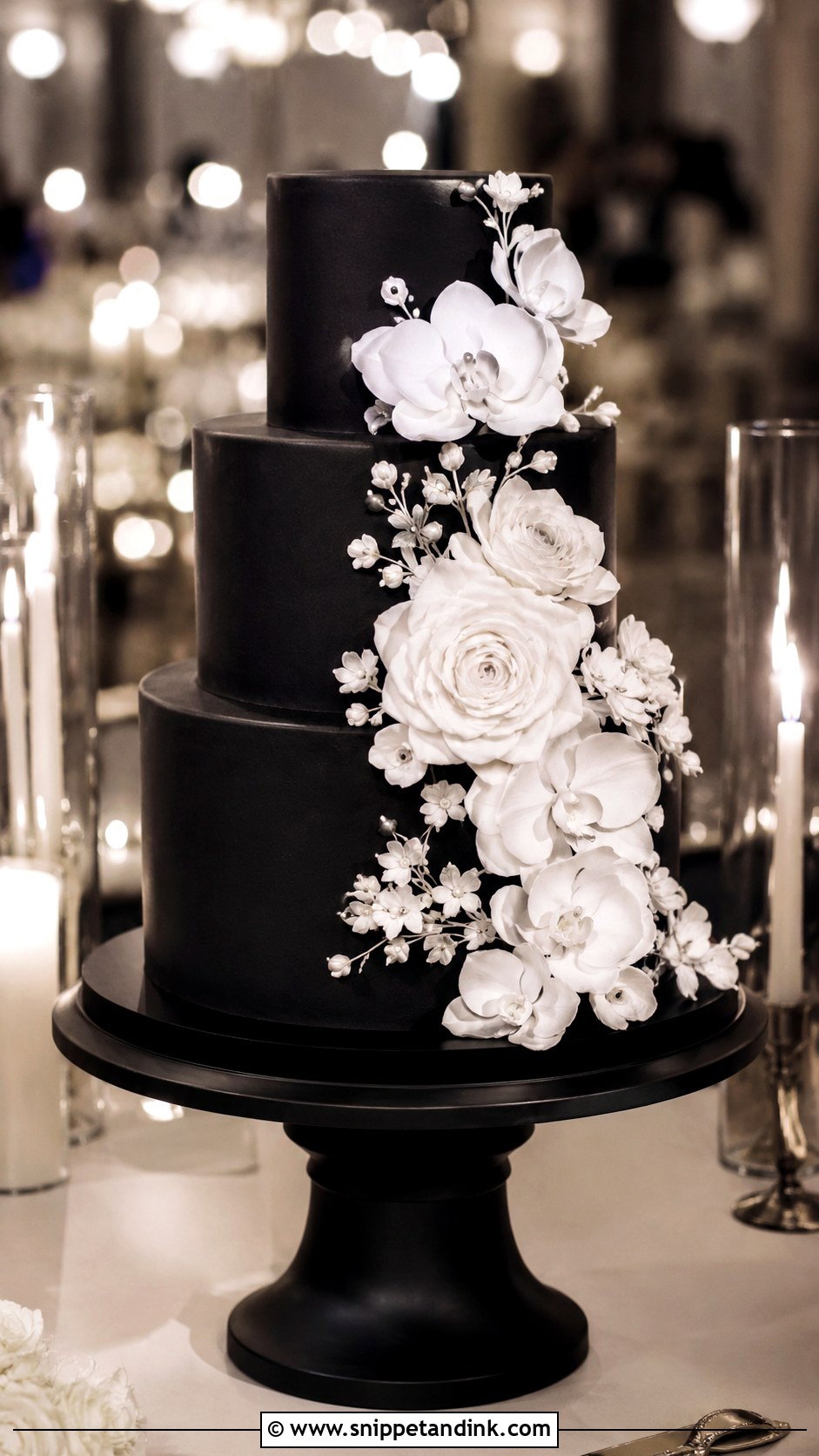
Against a black cake, white flowers look brighter than they would on white icing. Roses, orchids, peonies, calla lilies or sugar flowers all suit it. Matte black reads soft and modern; satin black feels more formal. Group the flowers on one side instead of wrapping every tier, which looks more current. With fresh flowers on dark icing, I watch for pollen: lilies especially drop orange dust that shows on black, so I remove the anthers first. Evening receptions and candlelit rooms suit it.
7. Black And White Wedding Cake With Black Lace
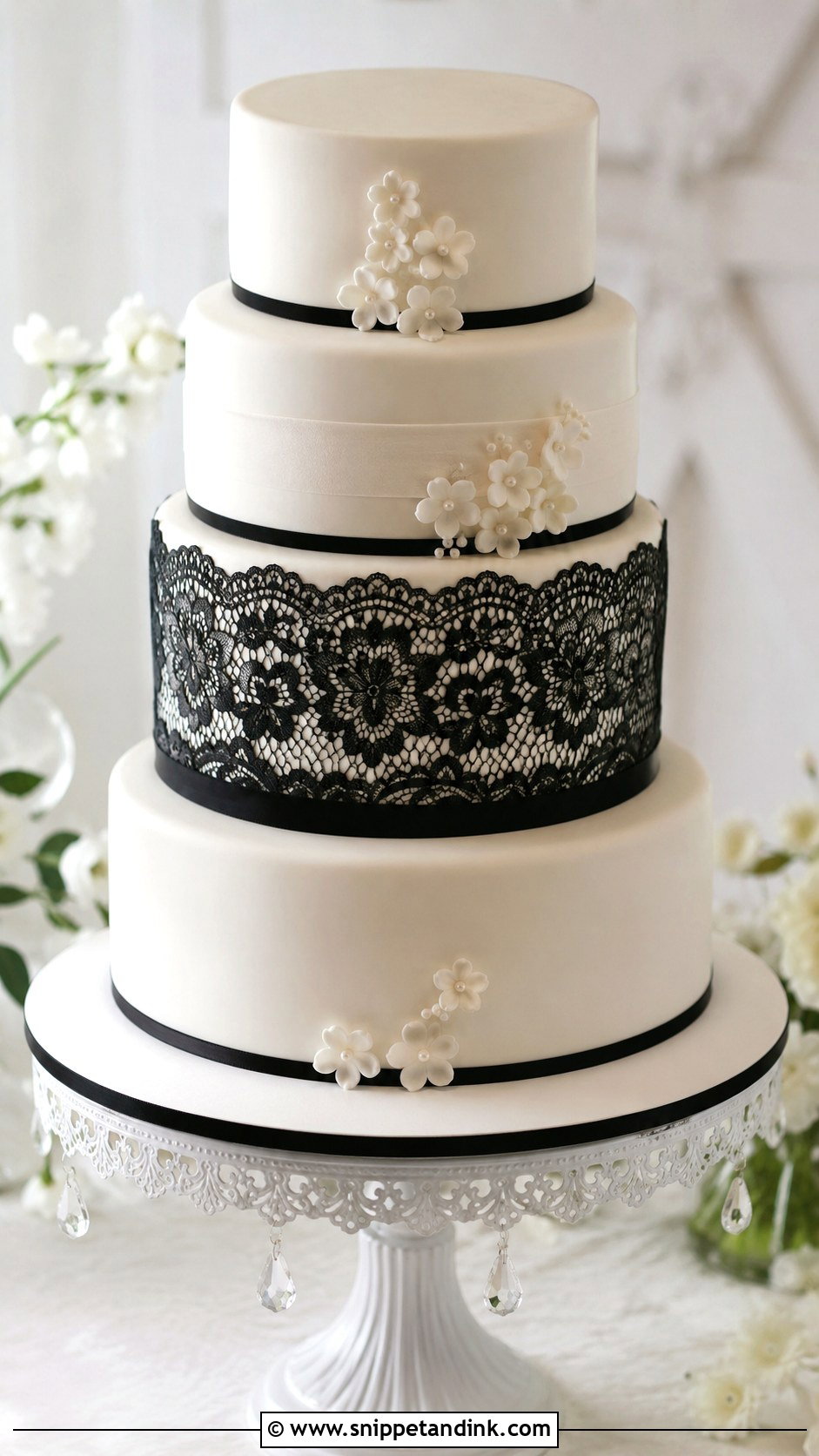
Black lace on white icing is romantic but not old-fashioned, especially when it’s on just one tier with the rest left smooth. The lace can be piped, stencilled or set from an edible lace mat. Black edible lace is fiddly; it can stretch while being applied and distort the pattern, so I lay it in short sections and match the joins. A thin black border or a few black sugar flowers elsewhere connects the lace to the rest of the cake. It has a slightly vintage feel without looking dated.
8. Black And White Wedding Cake With Drip
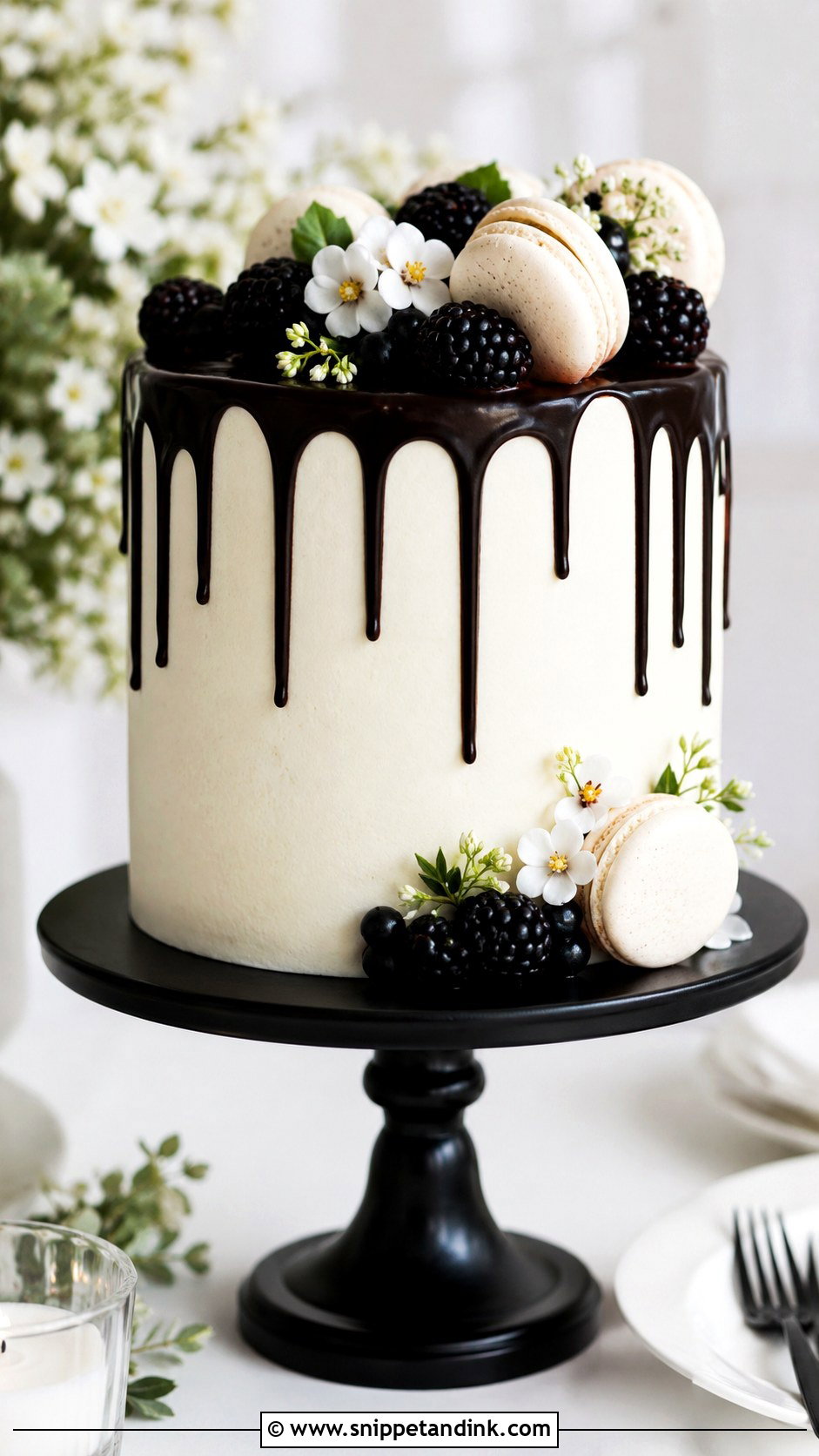
A black drip on white buttercream is the playful option. It can be dark chocolate ganache, black cocoa ganache or tinted white chocolate. Temperature is everything; ganache poured too warm races to the board, so I chill the cake and test one drip first. Keep drips short and even for a wedding. White macarons, blackberries, chocolate sails or a few sugar flowers on top finish it, and a black bottom tier adds depth. It’s the least formal cake here, which is the appeal.
9. Black And White Wedding Cake With Square Tiers
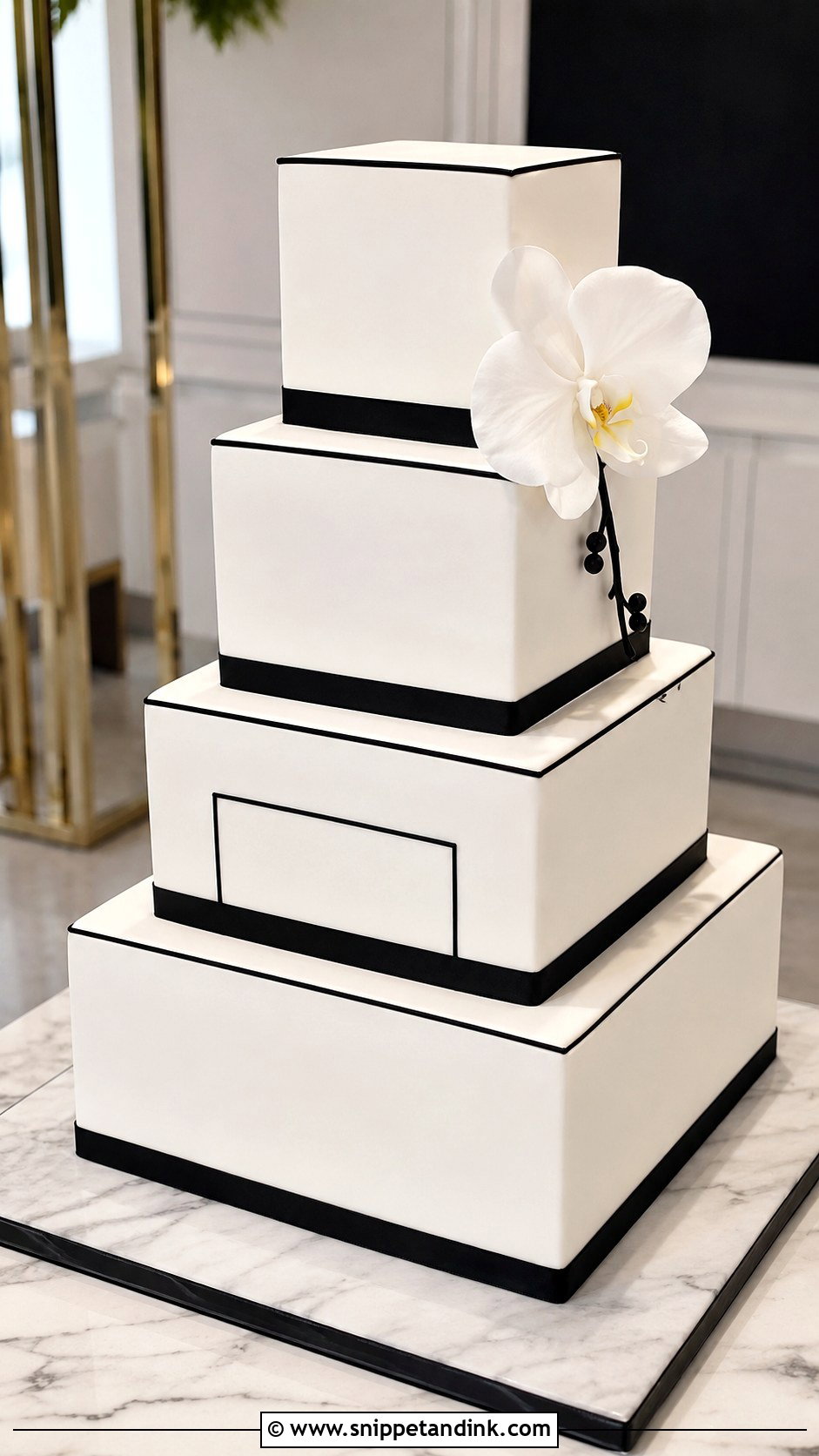
Square tiers make black and white look instantly architectural. Keep the cake mostly white with black ribbon edges, or alternate black and white tiers for something bolder. Fondant is the right finish; sharp corners in buttercream soften as the room warms. Square cakes are also heavier than round tiers of the same width and need solid internal supports, which I plan before baking. One sugar flower, a slim monogram or a thin geometric accent keeps it focused. Glass, concrete or marble interiors suit it.
10. Black And White Wedding Cake With Textured Buttercream
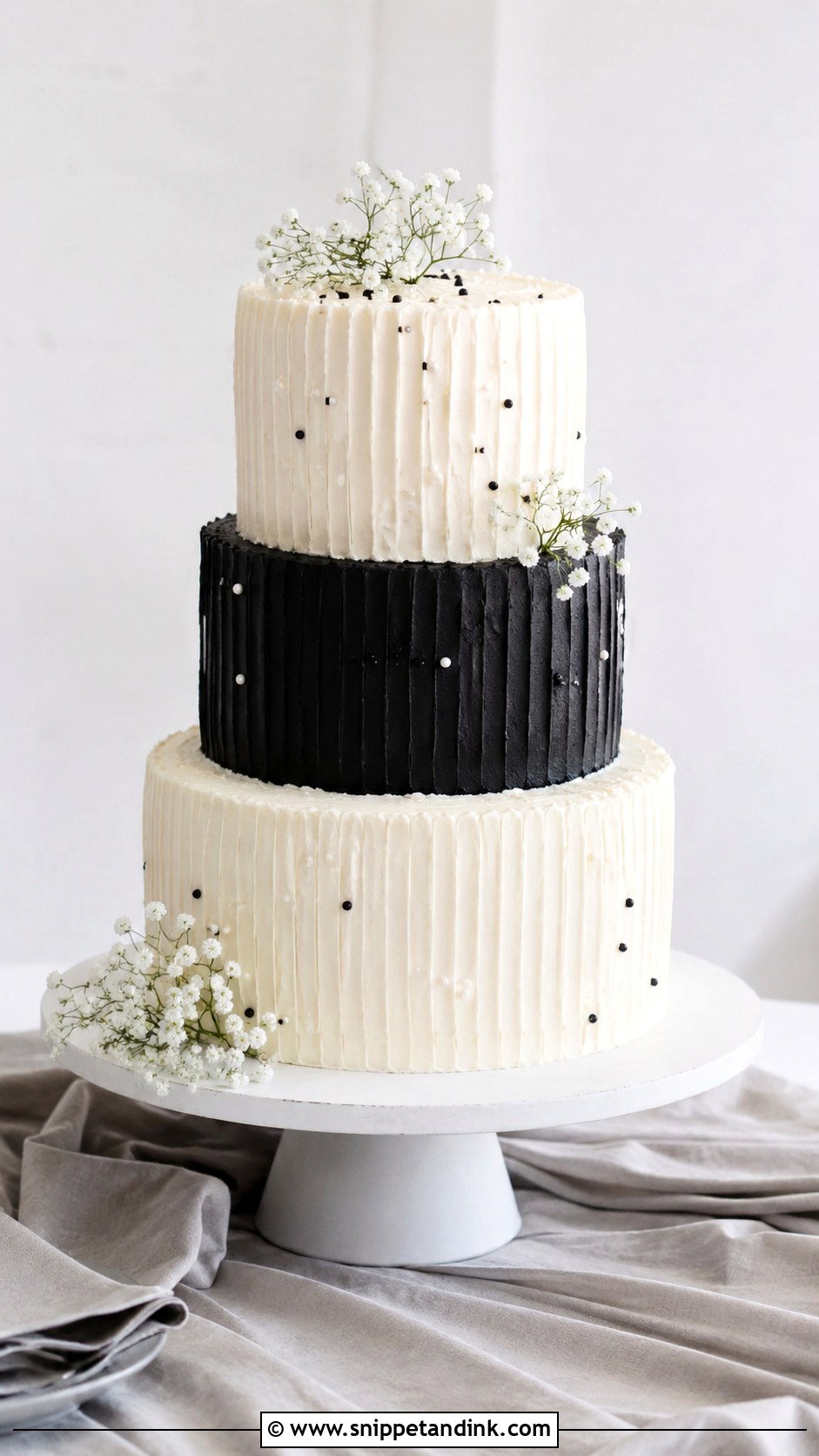
Texture softens a monochrome cake. Vertical ridges, palette-knife strokes, stucco or soft waves in buttercream all catch light and shadow, so even white on white has depth. Use white buttercream with one black textured tier, or reverse it. Black buttercream shows every scrape mark, which is fine for a rough texture but frustrating if you want smooth, so I’d keep black for the textured tier. The handmade look suits lofts, gardens and pared-back receptions.
11. Black And White Wedding Cake With Minimal Topper
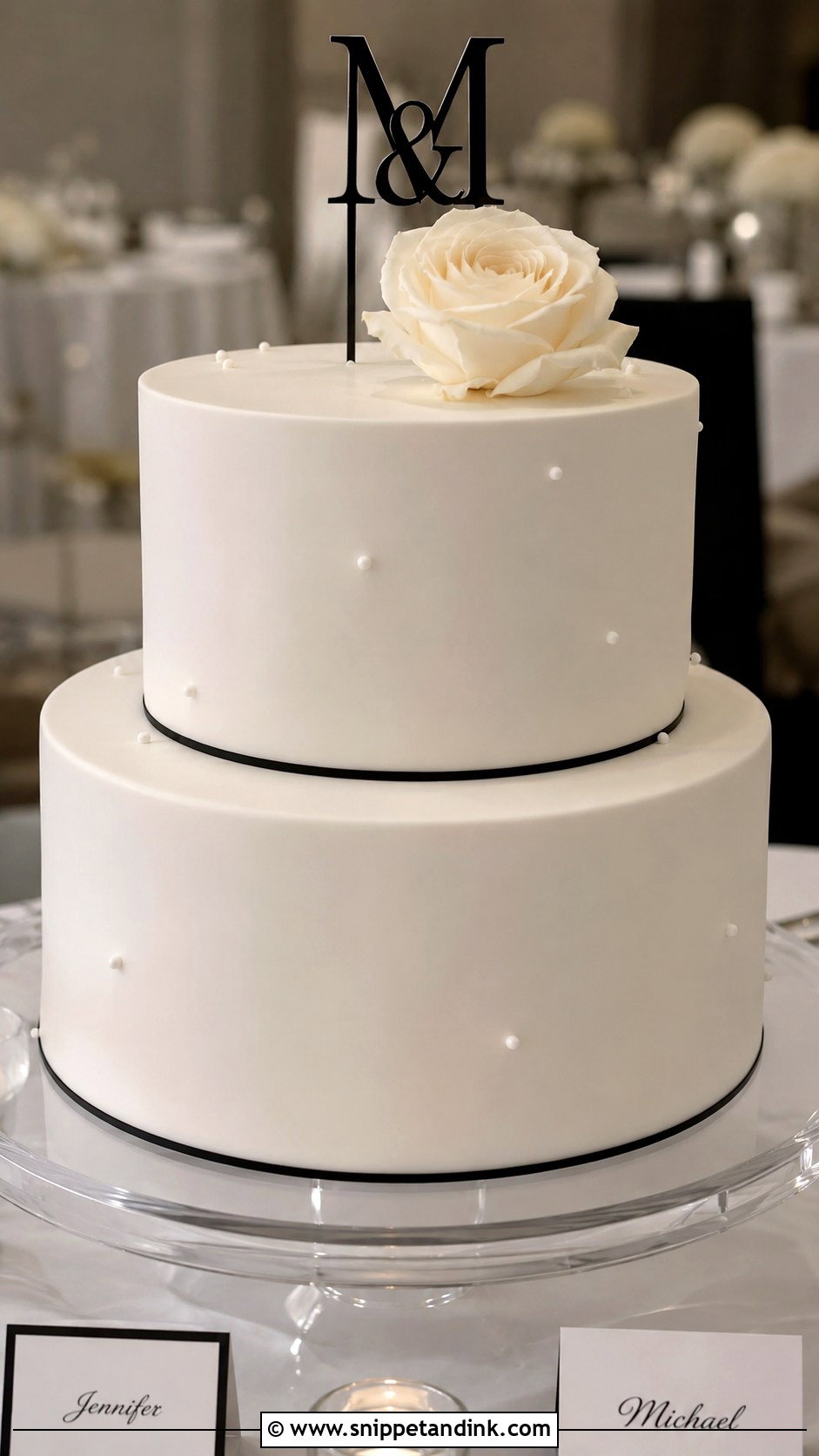
A small topper finishes a clean cake without adding clutter. Think a black acrylic piece, a white ceramic initial or a short modern script. The cake stays plain: smooth white, black trim or one black tier. Avoid long phrases; a lot of words on a minimal cake looks busy. I ask couples for the topper well before delivery so I can fit a food-safe sleeve or support under the picks rather than pushing acrylic straight into the cake.
12. Black And White Wedding Cake With Floating Tiers
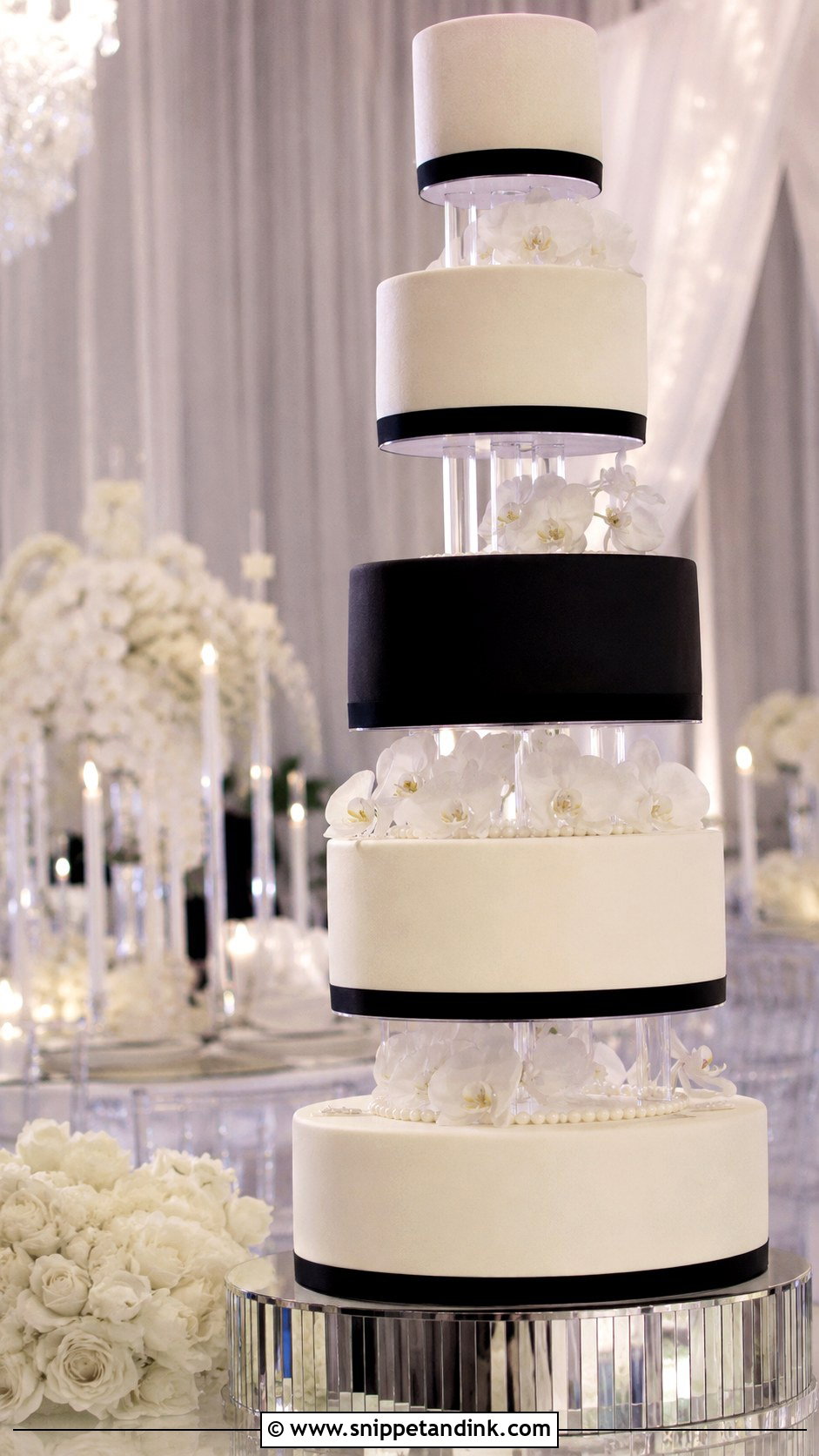
Floating tiers add height and air between layers, using clear acrylic, hidden supports or a decorative separator. White tiers with black accents keep it light, and one black tier becomes the statement. Flowers can sit in the gap, but keep them sparse or the floating effect disappears. These cakes are assembled at the venue, because the separators can’t carry stacked tiers on a drive. Large receptions and dramatic lighting suit it.
13. Black And White Wedding Cake With Half Black Half White
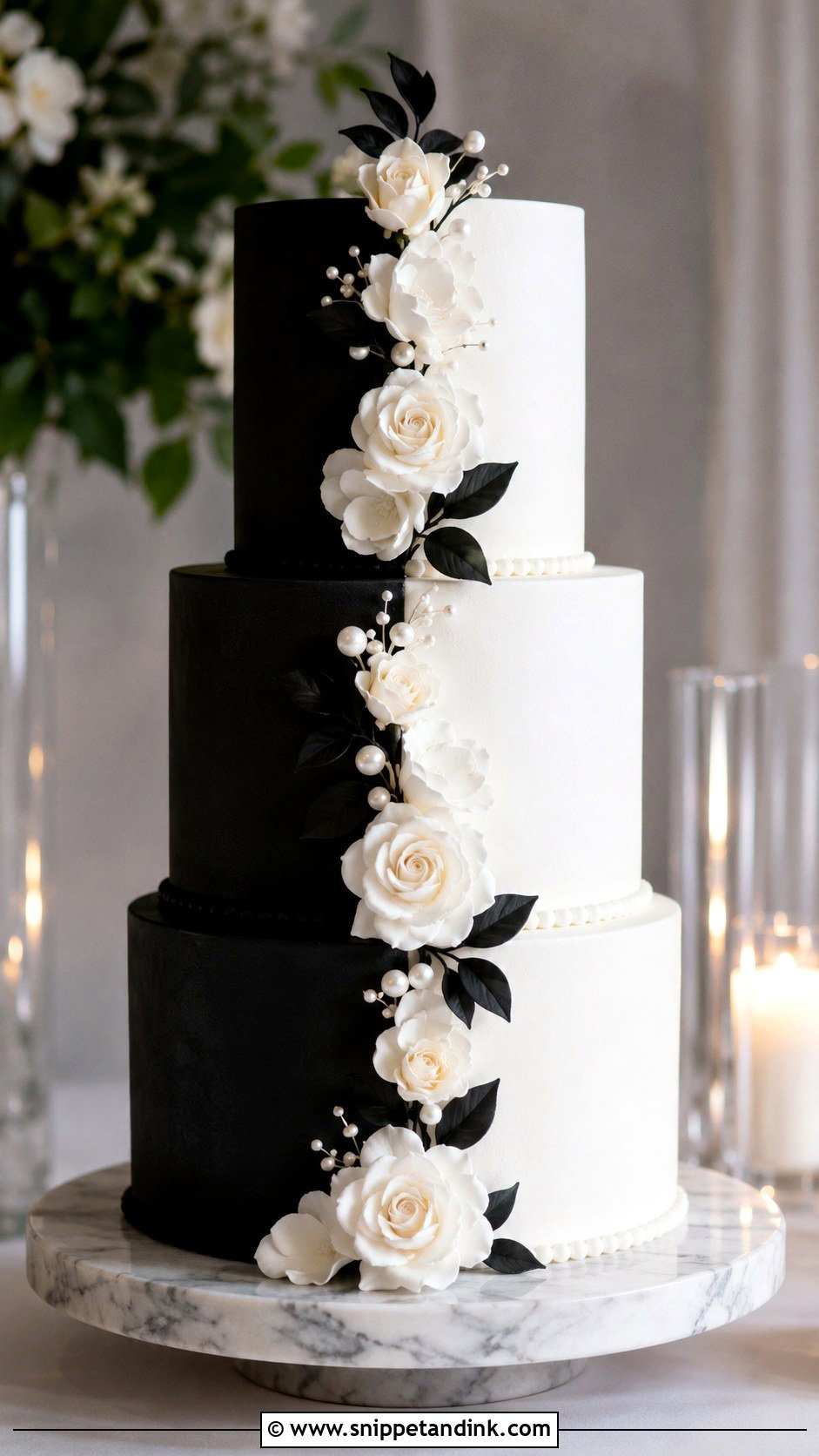
A half black, half white cake is pure graphic design. The split can run vertically, diagonally or as alternating colour blocks; a vertical split shows both colours at once, which is the most striking. Where the two fondants meet, black tends to rub onto white, so I apply the white side first and lay the black up to it with a clean blade. Keep the line sharp, or soften it with sugar flowers along the join. One decoration area is enough.
14. Black And White Wedding Cake With Sugar Flowers
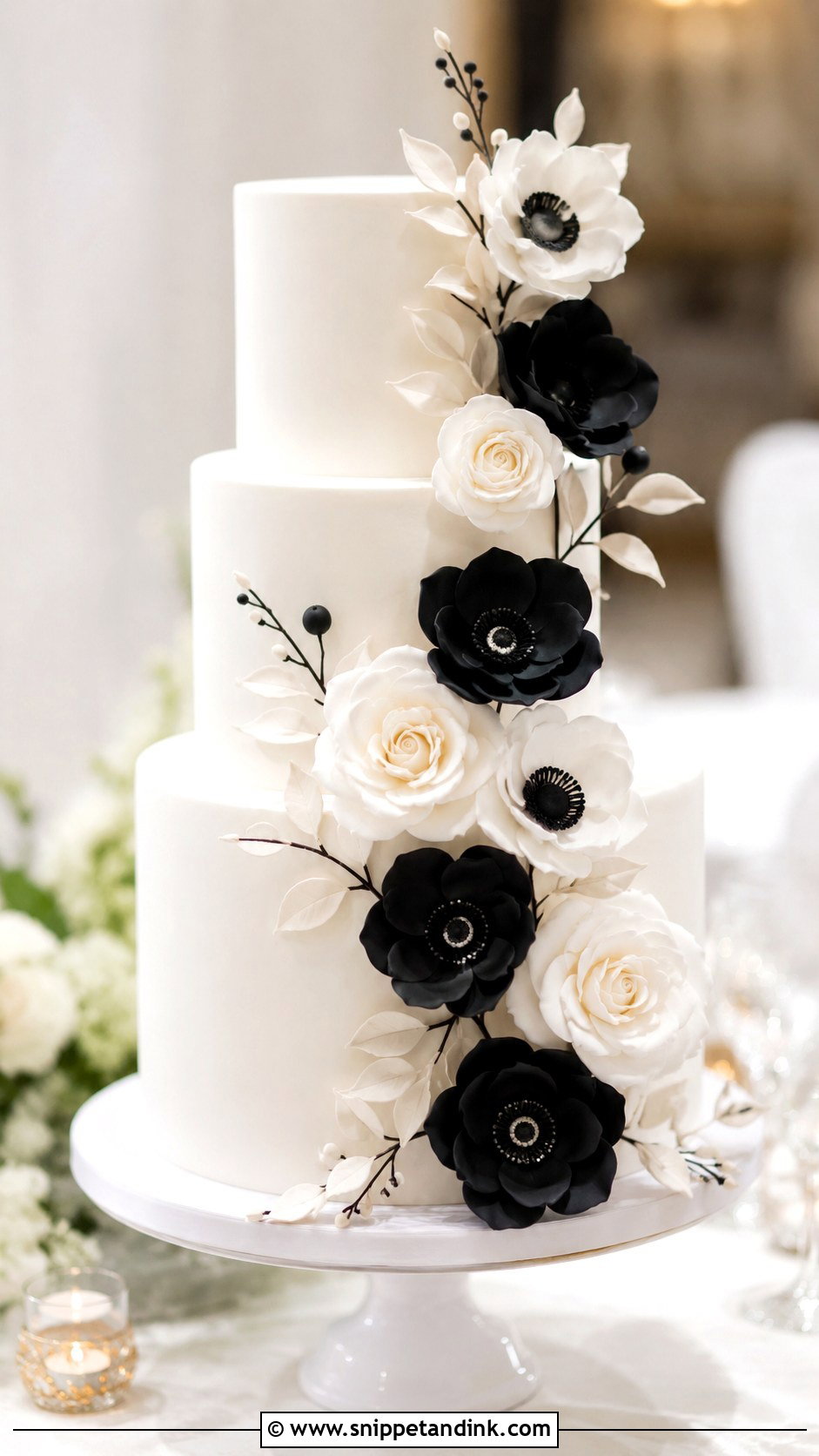
Sugar flowers let me size, shape and colour every bloom exactly for the cake. White roses on a black tier look dramatic; black sugar flowers on white feel fashion-led; white petals with black centres sit somewhere in between. They also don’t wilt or drop pollen, and they can be kept afterwards in a dry box. A small cluster on top and one trailing group down the side is plenty; asymmetry keeps it modern. They take hours of work each, so order them early.


15. Black And White Wedding Cake With Black Ribbon
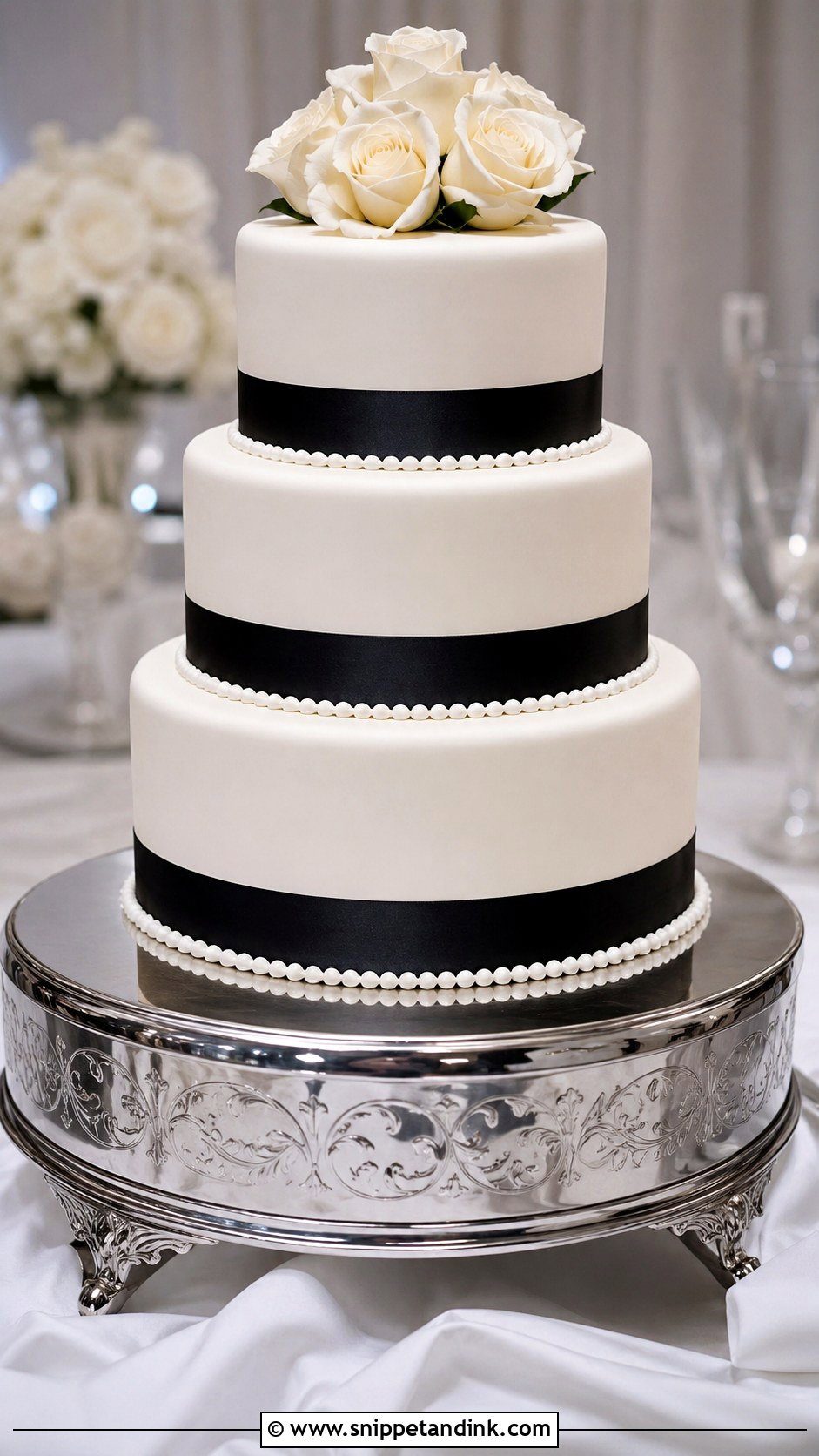
A black ribbon changes a white cake more than almost any other single detail. Thin ribbon looks delicate; a wide band looks black-tie. Wrap every tier, one tier or just the base. Real satin ribbon soaks up butter from buttercream and darkens in patches, so I back it with a strip of clear tape or use an edible ribbon instead. Smooth white fondant, white buttercream or a few pearls complete it. It’s the classic cake with a single modern move, and it suits almost any venue.
16. Black And White Wedding Cake With Art Deco Pattern
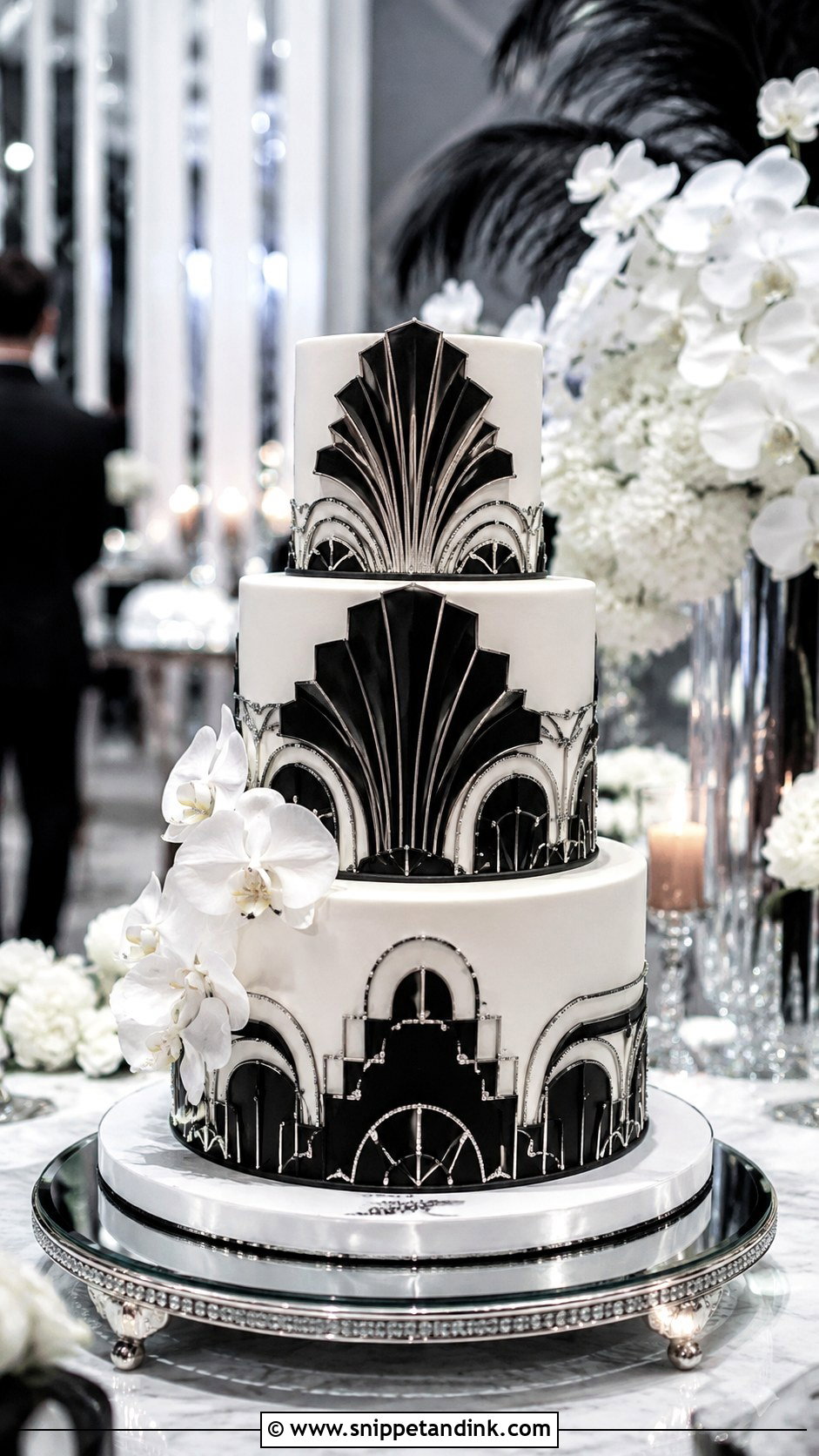
Art Deco brings fan shapes, stepped lines, arches and symmetrical black details on a white base. A touch of silver isn’t required, but it can make the pattern feel finished. The tiers need to be perfectly smooth, because Deco lines exaggerate any bump. I score guide lines into the fondant before painting, since freehand Deco almost always drifts. Black linens, candlelight, mirrored trays and formal settings frame it well. It’s the right vintage reference if you want history without looking old.
17. Black And White Wedding Cake With Black Florals
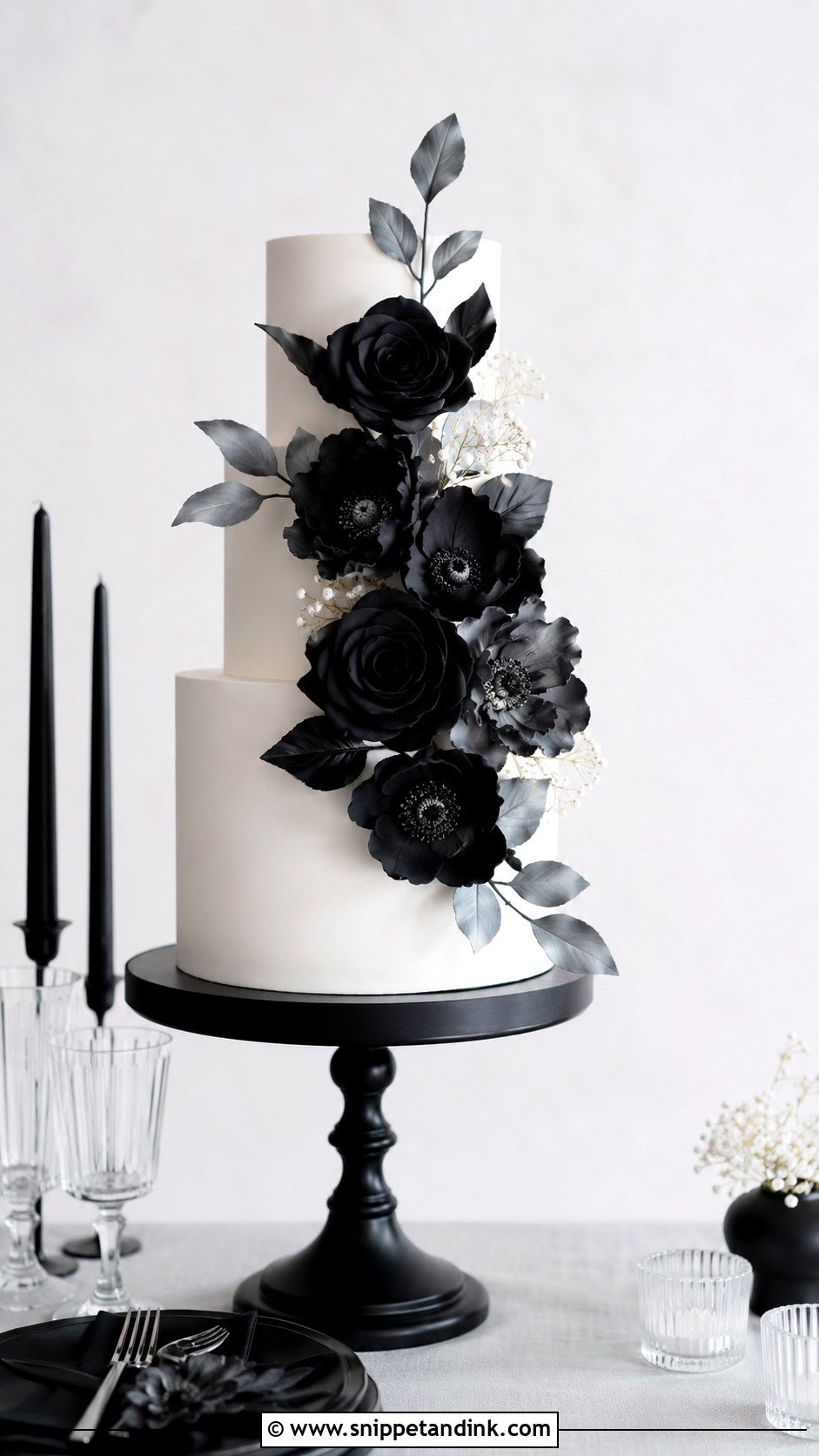
Black flowers on white icing are bold and editorial. Sugar anemones, black roses, wafer paper petals or painted florals all work, but black blooms are heavy visually, so one cluster on the front or a single diagonal trail is enough. Black sugar flowers can stain the icing where they touch, so I set them on small discs or seal the base. A white background keeps the cake bridal. Small white buds or soft grey leaves add depth if you want it, and it’s a strong alternative to pastel florals.
18. Black And White Wedding Cake With Watercolor Finish
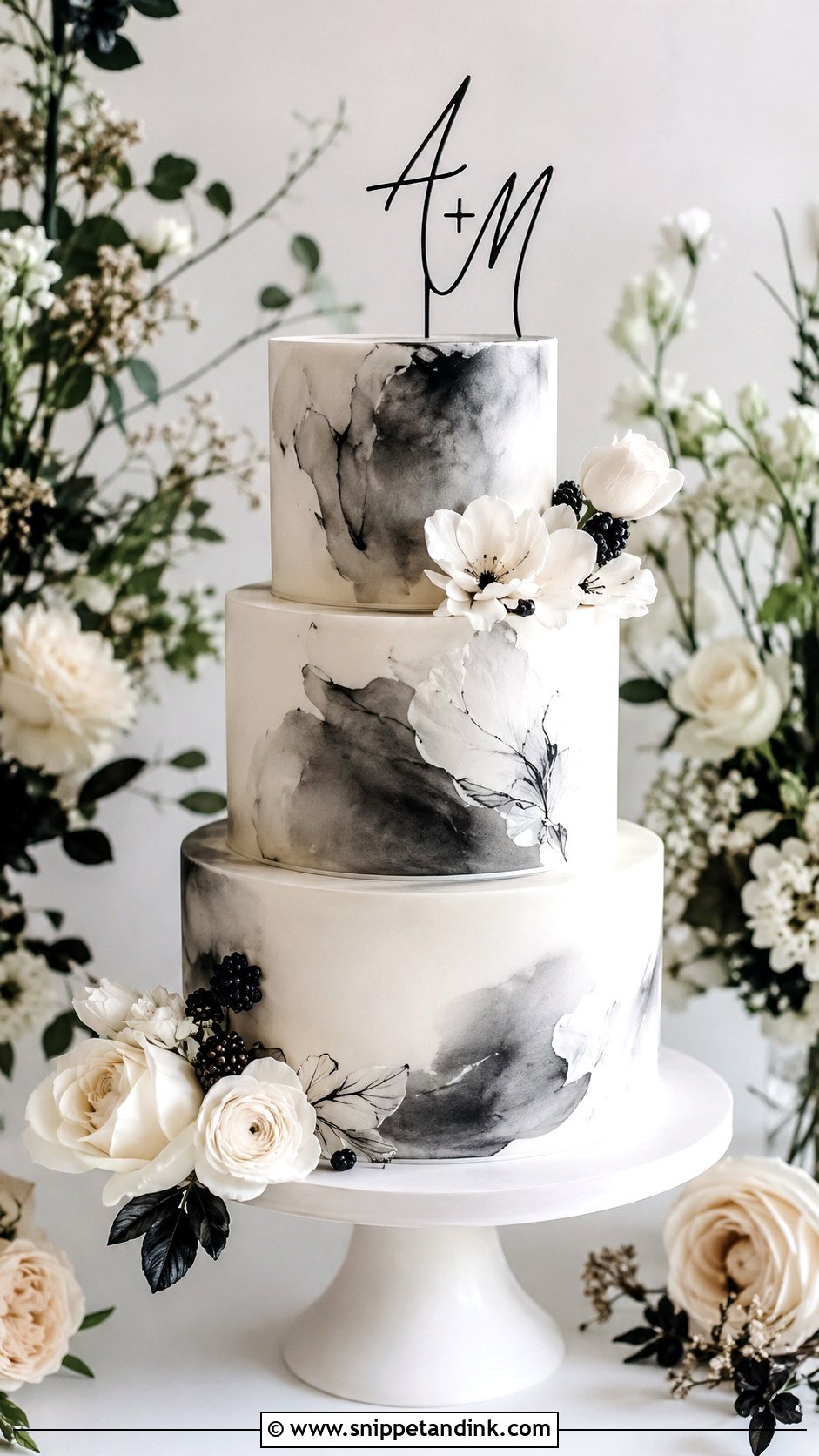
A watercolor finish blends black and grey into white like ink wash. On buttercream I use a palette knife and diluted colour; on fondant I paint with thinned gel, and the brushstrokes need to stay light or they turn muddy. It’s gentler than stripes or geometry, closer to modern art. White flowers, blackberries or a slim black topper are all it needs.
19. Black And White Wedding Cake With Black Bottom Tier
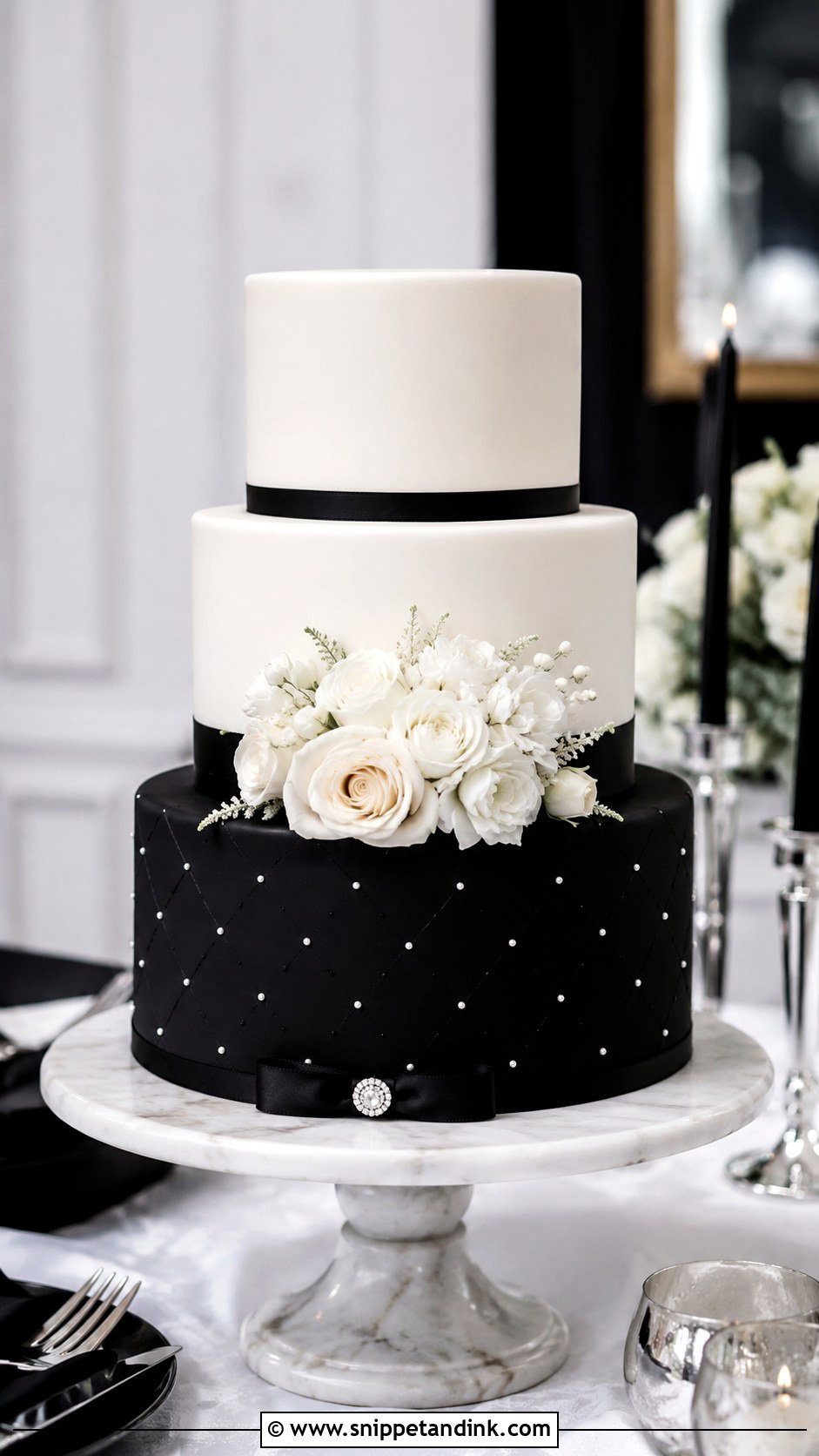
A black bottom tier grounds a white cake and makes the dark colour look planned. It’s much easier to live with than an all-black cake, and it keeps most of the slices white inside and out. I put a white floral cluster where black meets white to soften the step, or use pearl borders, thin black lines or a ribbon to connect the tiers. Three-tier cakes suit it best because the proportions stay balanced. The bottom tier is also the one that usually stays intact longest, so the contrast holds up in photos all evening.




20. Black And White Wedding Cake With Sculptural Texture
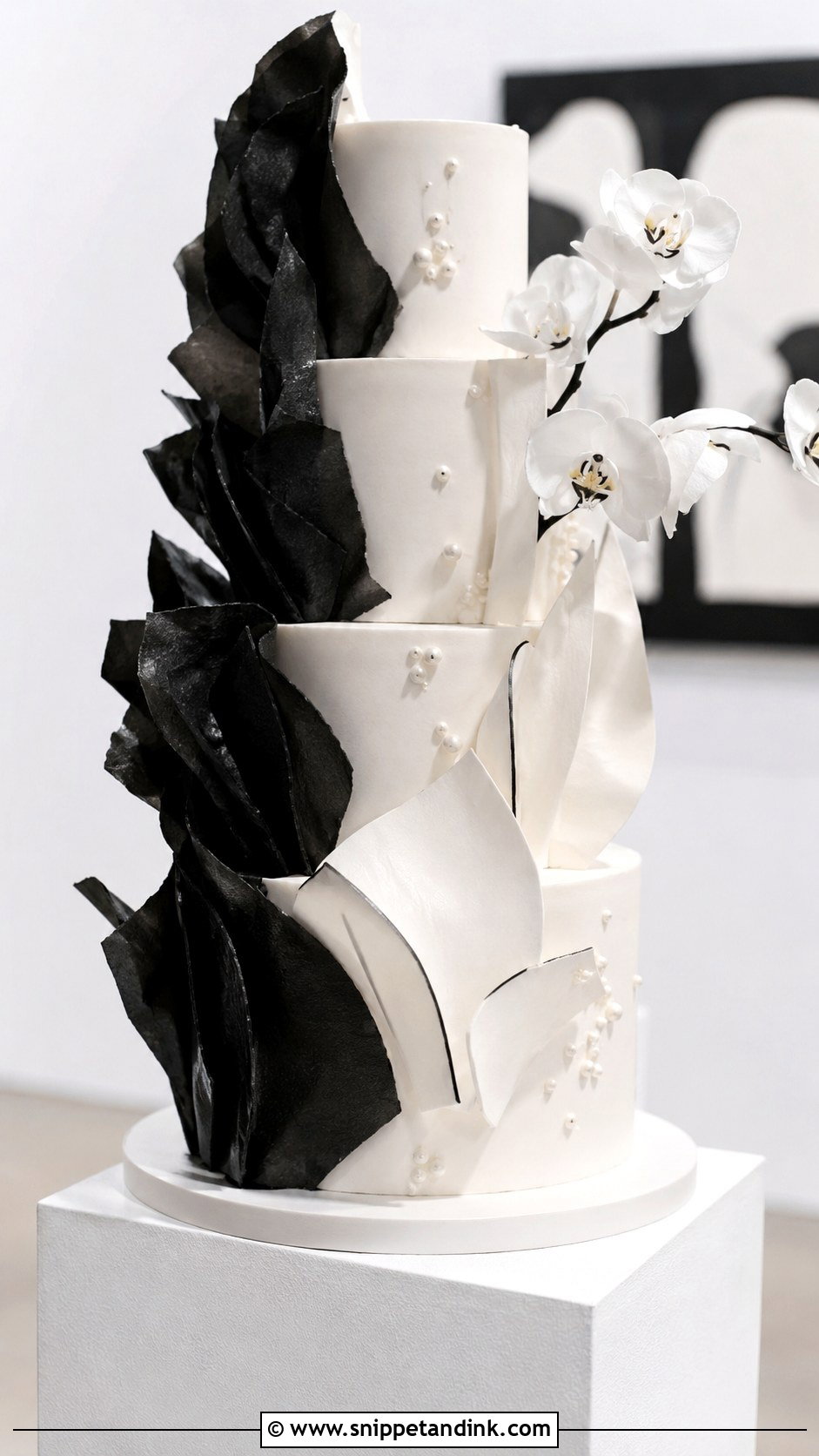
Sculpted texture turns the cake into a centrepiece: ruffled wafer paper, folded fondant panels, raised buttercream waves or abstract sugar shapes. It has to look intentional from every side, because guests walk around the table. A white cake with black sculptural accents looks like gallery work; a black cake with white panels feels dramatic. Skip the flowers or keep them minimal. Wafer paper droops in humidity, so for summer I’d make the sculpted parts from fondant or modelling paste instead.
Stopping Black From Bleeding Into the White
The most common failure on a monochrome cake isn’t the design. It’s colour migration. Black fondant and buttercream carry a lot of dye, and in a warm or humid room that dye can creep into neighbouring white icing, leaving a grey halo along every stripe or join.
Here’s how I prevent it. Black pieces are made ahead so the colour sets. White and black tiers are covered separately and chilled before they’re stacked, so they don’t rub together. Gloves change between colours, and tools get wiped every time. I also avoid putting black icing directly on top of a soft white icing; a thin dry barrier, or a fondant layer, keeps them apart.
On your side: ask whether the cake will sit in a cool spot away from windows, and avoid leaving it in a hot car or a sunny marquee. Humidity is the trigger for most bleeding I see.
Your Photographer and a High-Contrast Cake
Cameras find pure black and pure white hard to capture in the same frame. Set the exposure for the white and the black turns into a flat shape with no texture; expose for the black and white piping loses its detail.
Two things help. Matte or satin finishes photograph more evenly than a high-gloss black, which throws reflections. And soft side light, a window or a well-placed lamp, shows texture far better than an overhead spotlight. Tell your photographer the cake is monochrome so they can plan the cake shots before the room gets dark.
Pick One Statement, Then Let the Cake Breathe
Monochrome cakes can be simple, dramatic, romantic or plainly artistic, and the mood of your wedding decides which. For a classic feel, choose ribbon, pearls, lace or white flowers. For something bolder, look at marble, stripes, geometry, black florals or sculpted texture. Either way, pick one statement and let the rest of the cake be quiet. That restraint, plus clean edges and no black smudged on the white, is what makes these cakes look expensive.

You'll Like These Ideas:




Leave a Reply