
Black cakes stopped being a niche request a while ago. In my kitchen they now come in for candlelit black-tie dinners as often as for moody autumn parties, and the finish decides almost everything about the mood: glossy fondant reads formal, rough buttercream reads relaxed, and a marble swirl sits somewhere in between. Against ivory flowers, gold leaf or a white linen table, a dark cake gives the photographer the strongest contrast in the room. The trick is making it feel deliberate rather than heavy, and that comes down to texture, tier shape and what the icing is actually made of. Below are twenty directions I’d happily build, with notes on how each one behaves once it leaves my workbench.
What Actually Turns Icing Black, and What It Does to Teeth
There are really three ways to get a cake black, and each one tastes and behaves differently. Black cocoa powder is ultra-alkalized cocoa, the kind that gives sandwich cookies their color. It gets buttercream to a deep charcoal on its own and tastes of bitter chocolate rather than food coloring. Gel coloring finishes the job. The third route is pre-colored black fondant, which a designer buys ready-made because kneading enough gel into white paste ruins its texture.
The catch with any of them is color load. Black buttercream needs a lot of pigment, and pigment can leave a faintly bitter or metallic edge if the base isn’t chocolate. It also stains. Expect grey tongues and lips on the dance floor, and occasionally a tint the next day if guests eat a thick piece of frosting. I tell couples this at the tasting, not after the wedding.
How I keep the staining down
- Make the black a thin outer coat over a pale or chocolate crumb coat, so each slice carries less of it.
- Use a chocolate base so less dye is needed to reach true black.
- Mix black buttercream a day early; it darkens as it rests, so you add less color.
- For the bride in a white dress and pale lipstick, serve the first slice from a lighter inside tier or a separate cutting cake.
If someone at the tasting says the black frosting tastes odd, believe them. That’s a recipe problem worth solving months out, not on the morning.
1. Black Wedding Cake With White Flowers
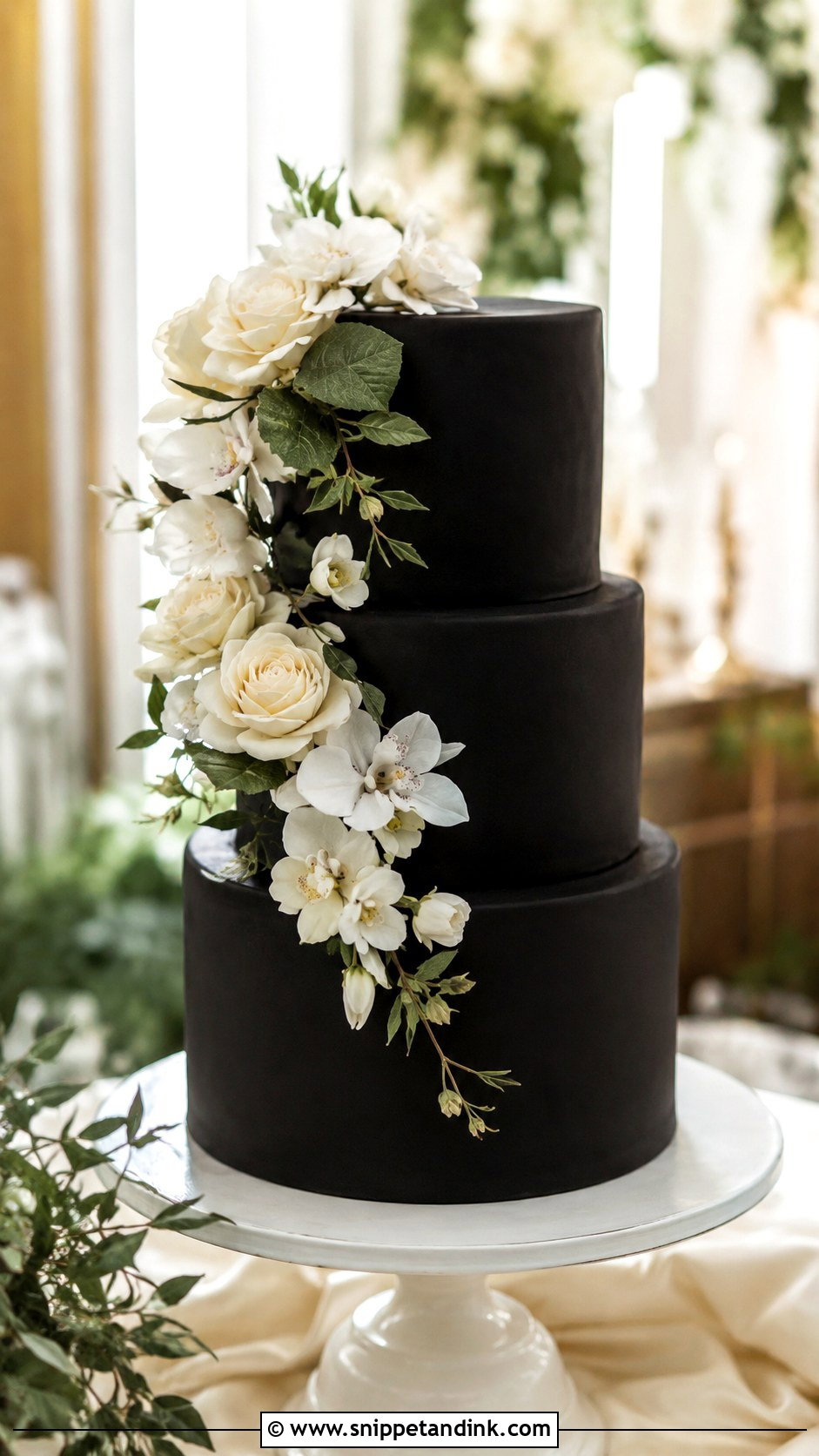
White flowers are the gentlest way into a black cake, because the eye lands on the blooms first and the dark tiers become a backdrop. Smooth fondant gives you the ballroom version; black buttercream gives you something softer and more handmade. Roses, ranunculus and anemones hold up well, though I’d keep orchids for cooler rooms since their thin petals bruise fast. One thing to plan: fresh stems need to be wrapped or sit on a barrier so sap and pollen never touch the icing. Cluster them on one side for a modern line, or let them trail down the tiers if your stationery and linens lean traditional.
2. Black And Gold Wedding Cake
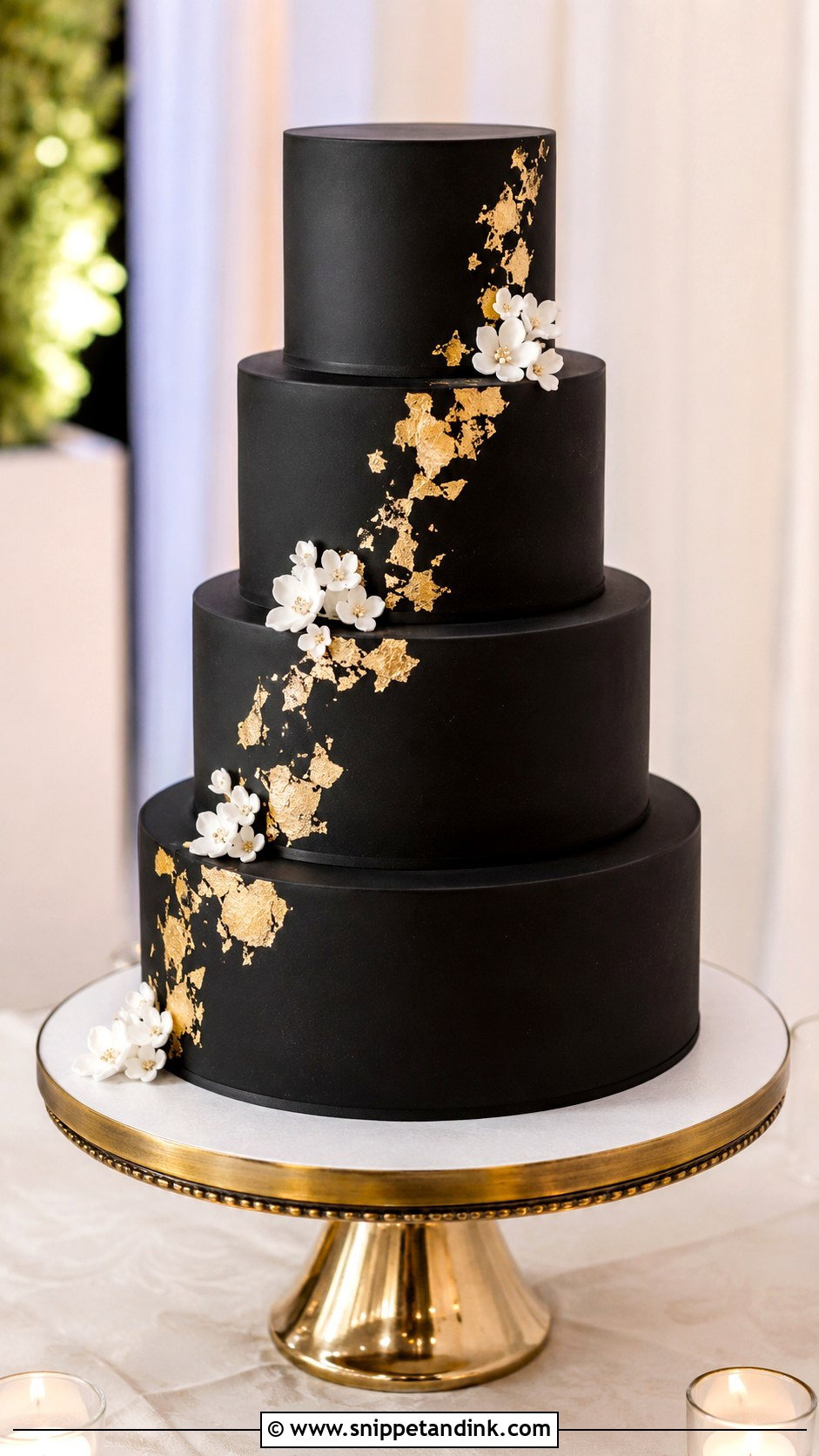
Gold on black is where restraint pays off. A painted edge on each tier, a slim band or a light flick of metallic splatter looks expensive; gold on every surface starts to look like costume jewelry. I apply leaf and paint after the fondant has firmed, because soft fondant drags the brush and the gold goes patchy. Sharp tier edges help here, since gold catches light along a crisp corner far better than along a rounded one. Pair it with white or deep burgundy flowers for an evening hotel reception and leave the rest alone.
3. Matte Black Wedding Cake
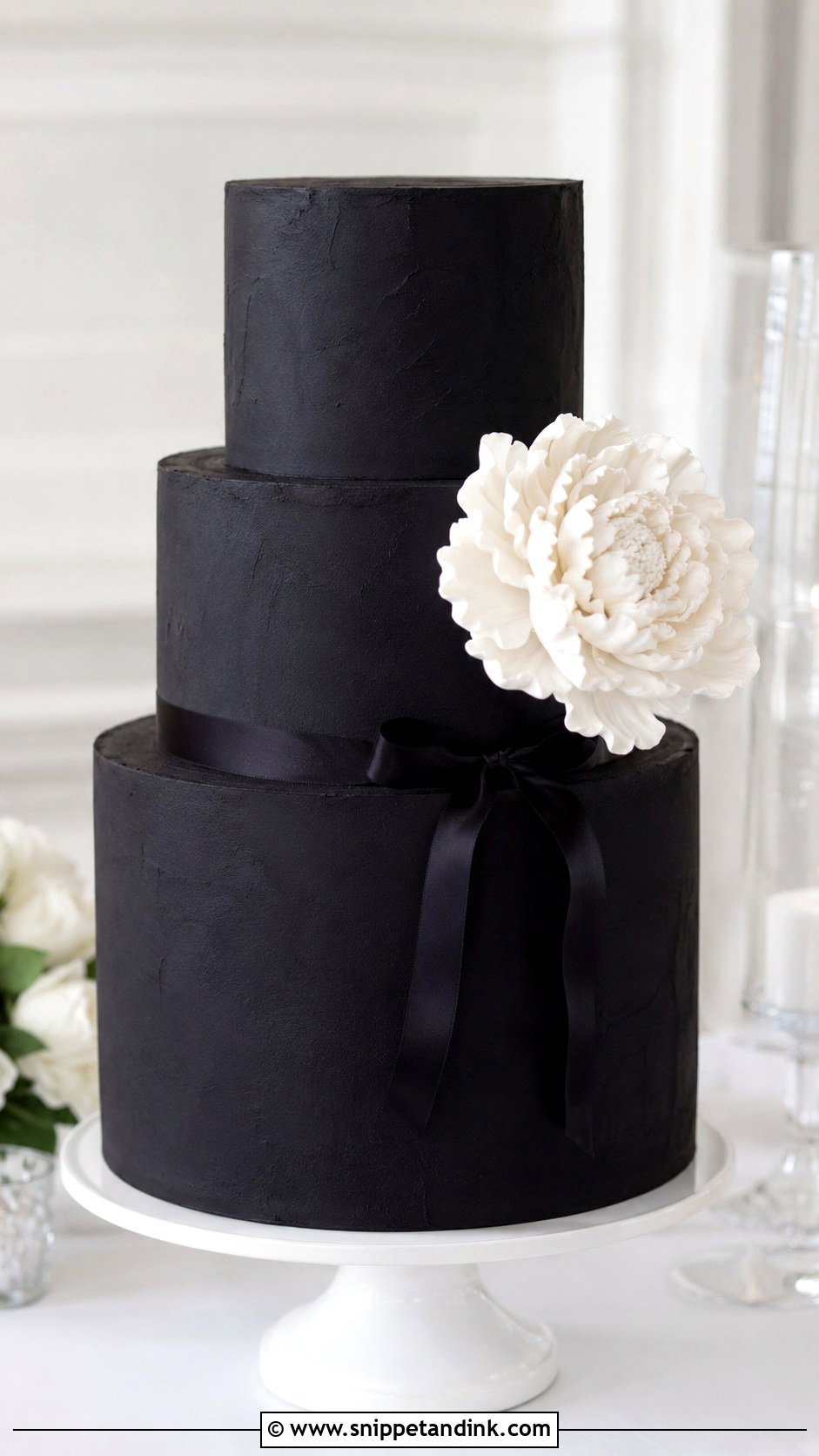
Matte black is the hardest finish to make look effortless, honestly. With no shine to hide behind, every fingerprint, dusting of starch and tiny dent shows, so I handle these tiers with gloves and smooth them with a little shortening rather than powder. When it’s done well the flat surface lets the silhouette carry the design, especially on a tall, clean-edged stack. One detail is enough: a single white sugar flower, a thin satin ribbon, or a small monogram topper. Ask your venue to light the cake table properly, because matte black under dim light simply disappears into the room.
4. Black Buttercream Wedding Cake
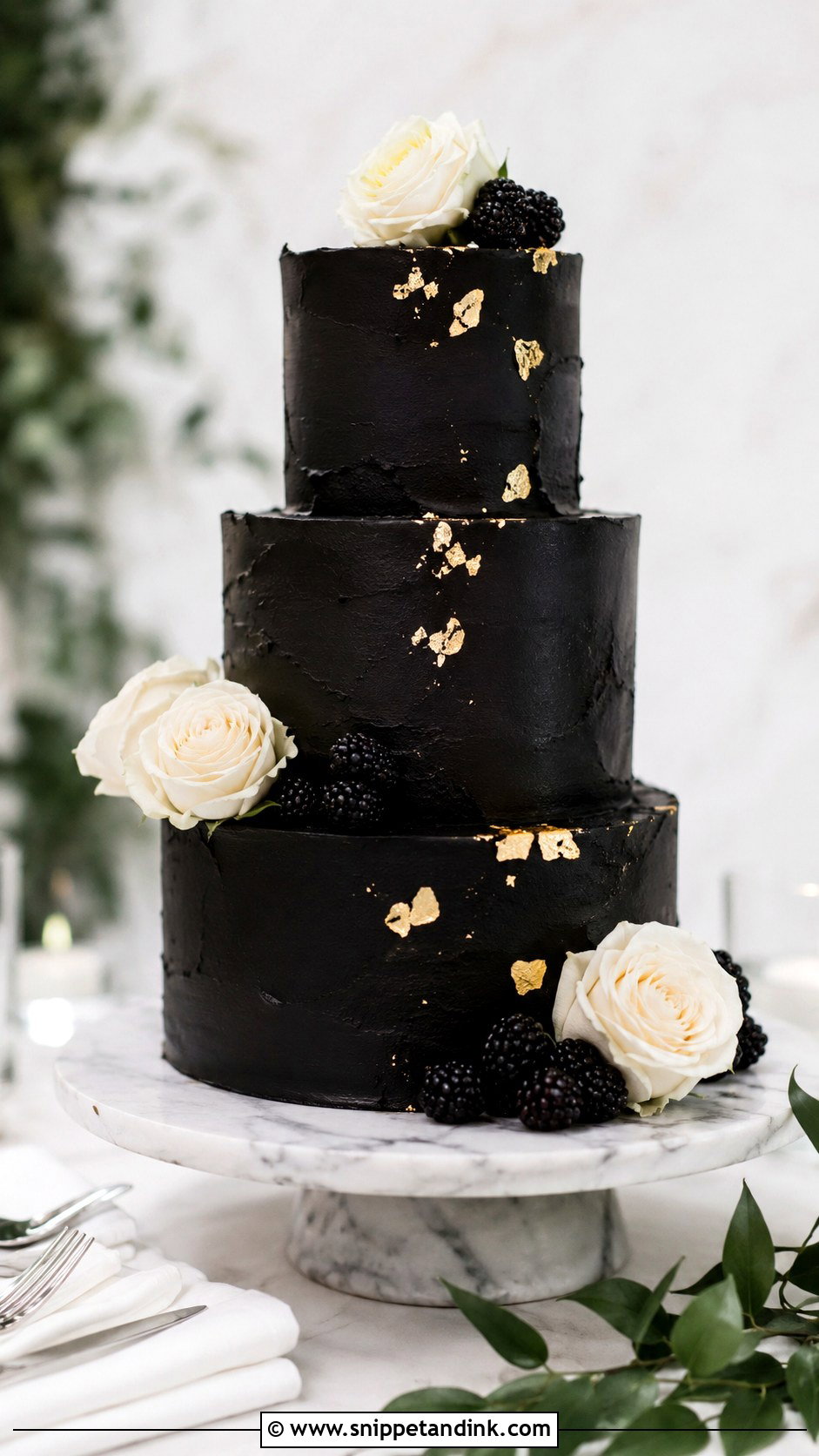
Buttercream gives you a black that looks softer and more forgiving than fondant. It can be combed, swirled or left with spatula marks, and black cocoa powder does a lot of the work, so you need less coloring and the frosting tastes like a dark chocolate cookie rather than dye. I mix it the day before, because black buttercream deepens overnight and what looks charcoal at noon is close to true black by the next morning. Fresh berries, gold flakes and piped borders all sit well on it. Most couples keep the black to a thin outer coat with lighter sponge inside, which also keeps the staining down.
5. Black Fondant Wedding Cake
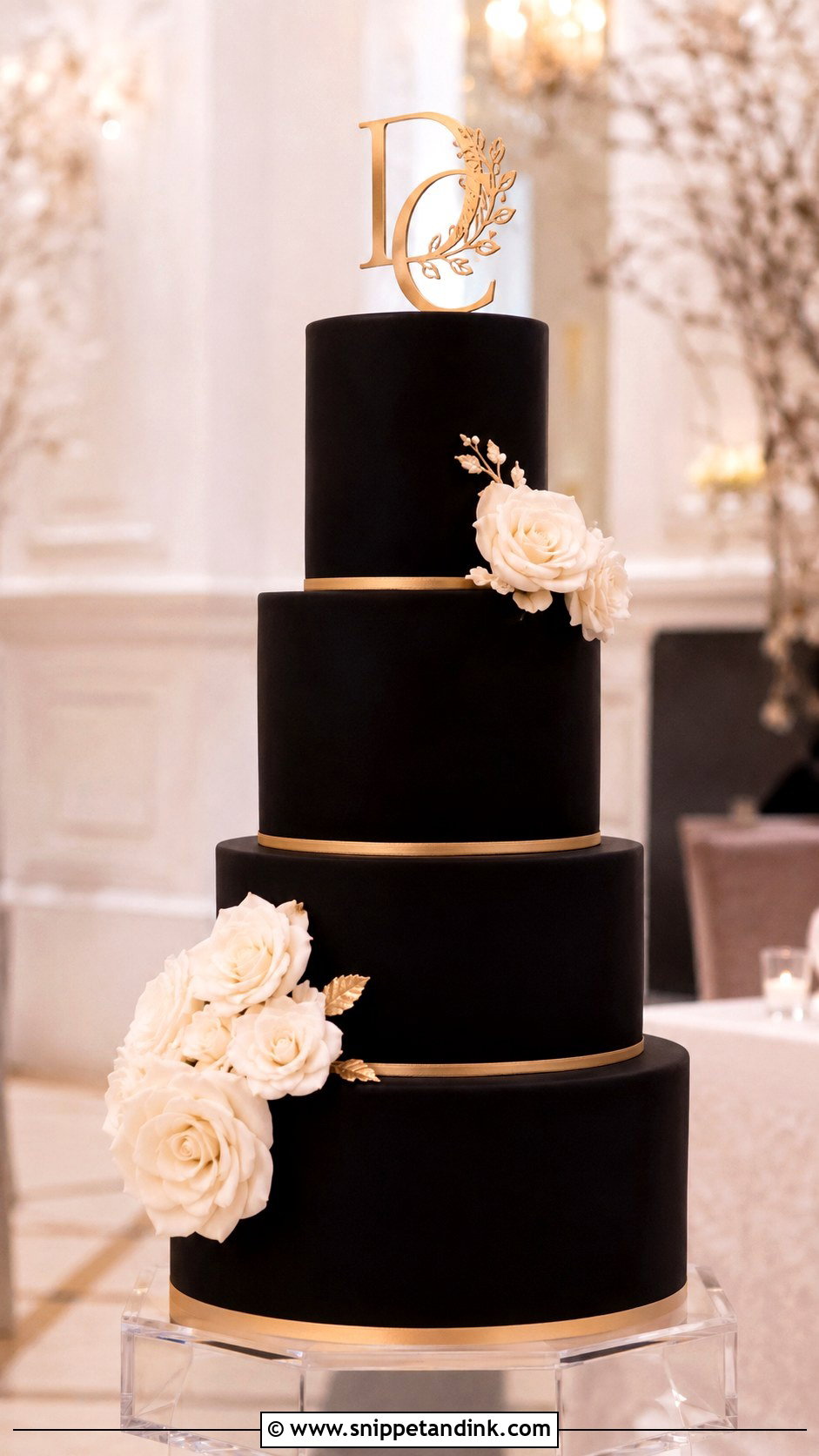
For crisp edges and a surface you can paint on, nothing beats black fondant wedding cake designs. I buy black fondant pre-colored instead of kneading gel into white paste, because getting white fondant fully black takes so much color that it turns sticky and tears on the tier. It holds structure well on tall stacks and takes lace impressions, metallic paint and sugar flowers cleanly. Add ivory blooms and a little greenery to soften it, or pearls and gold leaf to push it toward glamour. The weak point is condensation: a fondant cake moved from a cold fridge into a warm room can bead with moisture and dry with water marks, so mine come out to adjust gradually.
6. Black Wedding Cake With Red Roses
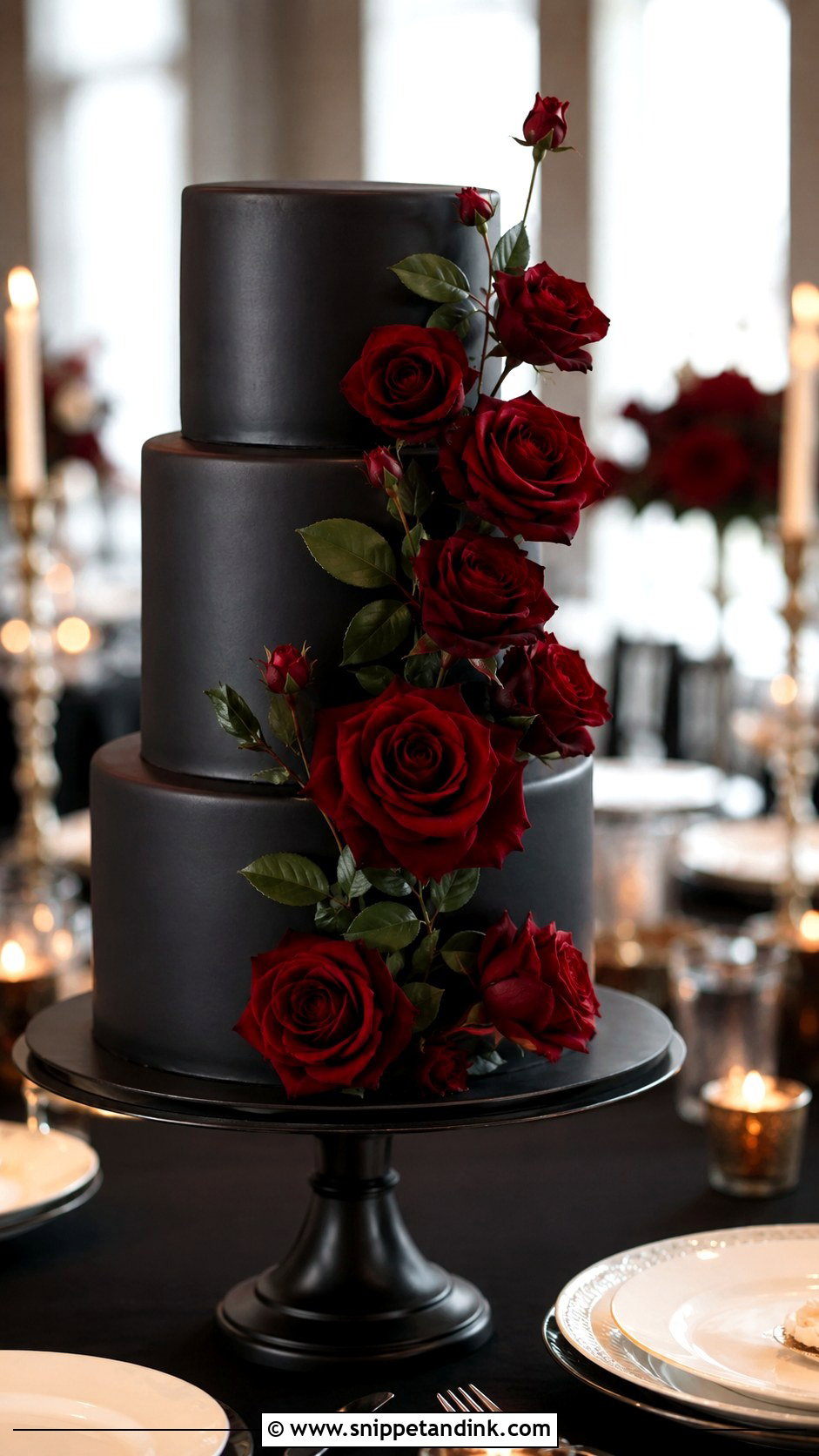
Red roses on black make a dramatic pairing with very little else needed. Deep red brings warmth that keeps the cake from looking cold under candlelight. Sugar roses are the safer bet if the cake has to stand for hours, while fresh roses look looser and more natural but need to come from a florist who grew or sourced them without sprays. Smooth tiers suit a formal dinner; a touch of texture relaxes it. I’d point fall and winter couples here first, since the palette sits so naturally with dark greenery and ivory plates.
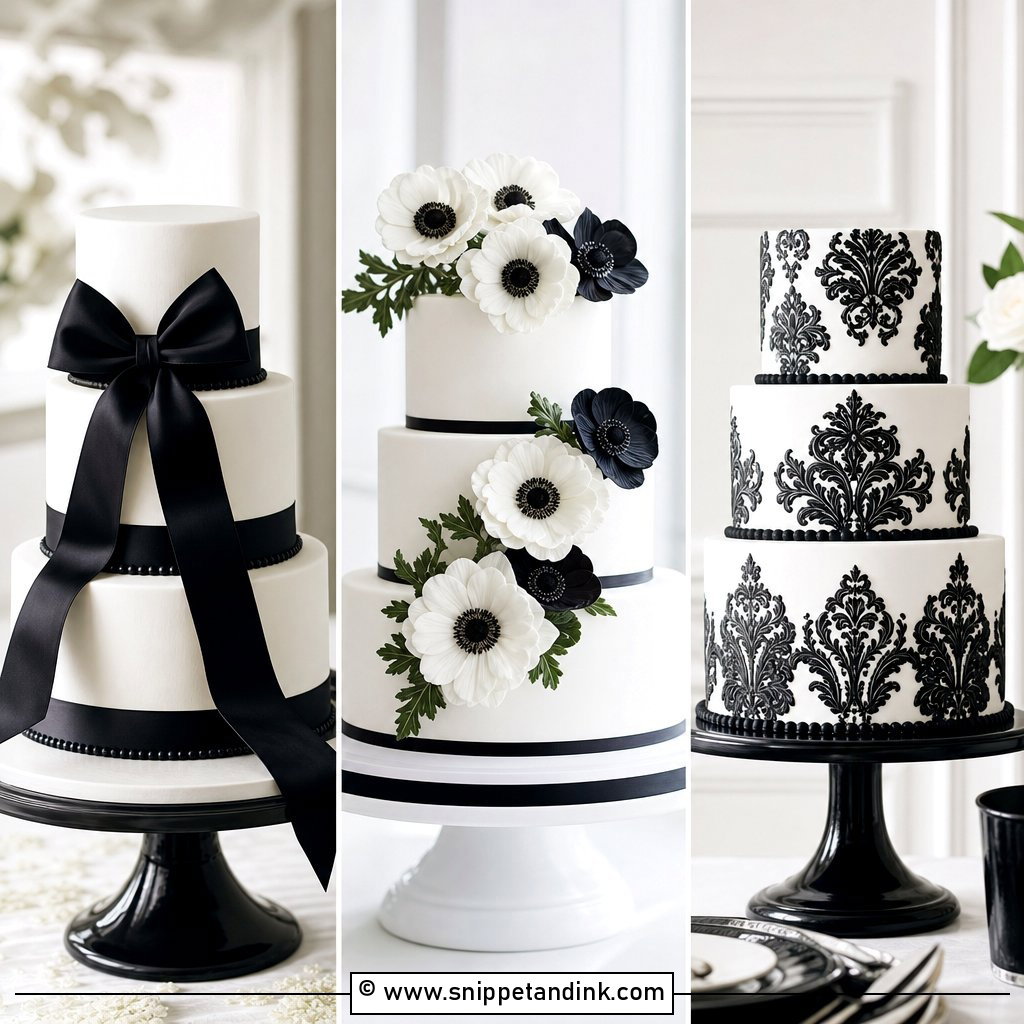
7. Black And White Wedding Cake
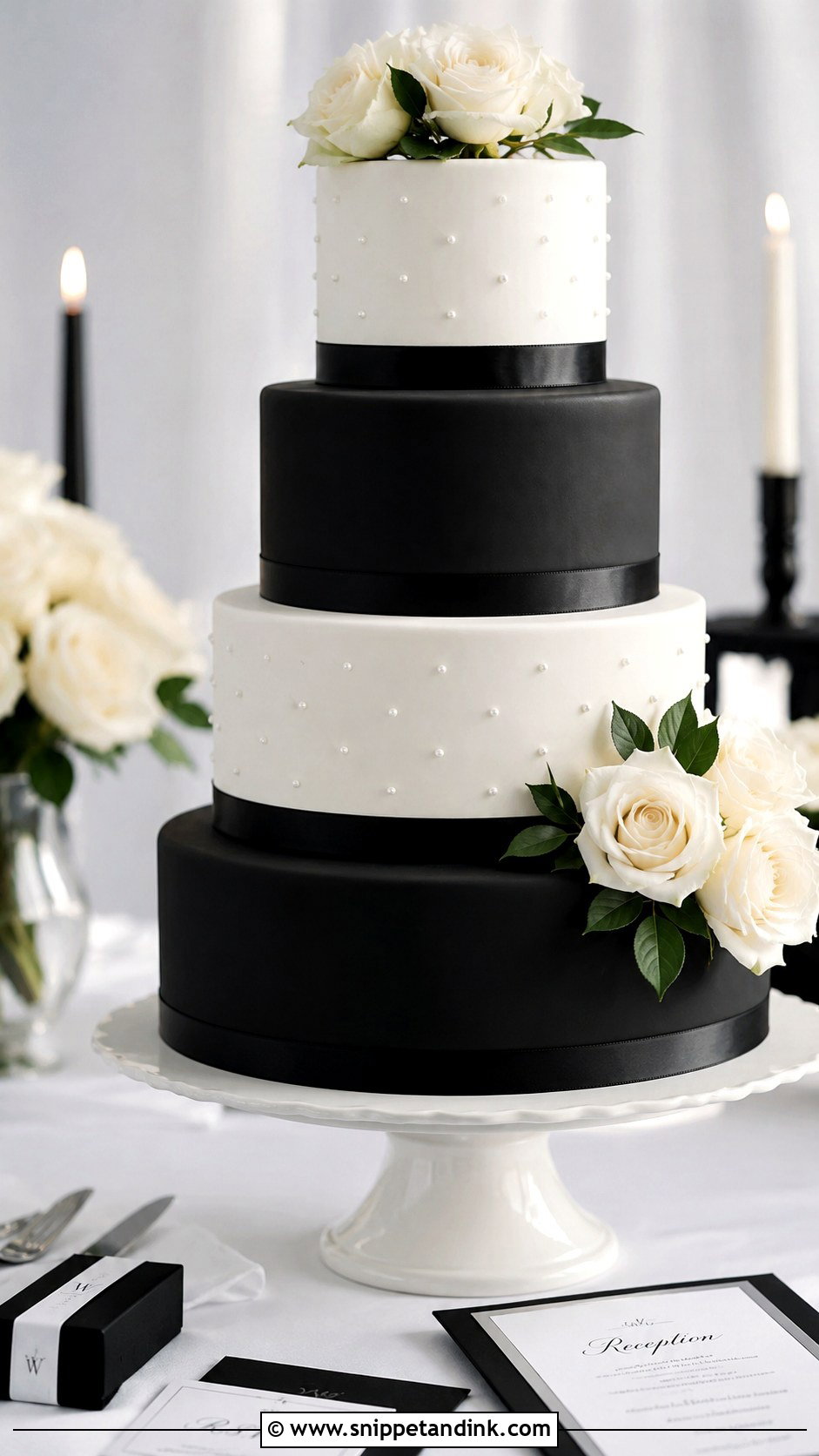
Black and white is the combination I never have to talk anyone into. You can go black tiers with white flowers, white tiers with black piping, or alternate the colors tier by tier. The thing that trips people up is bleed: black piping on white fondant must go on dry, and anything stored overnight needs space so dark color doesn’t print onto a neighboring white surface. Stripes, bows and pearl borders all suit it if you want a fashion edge. Because every detail reads clearly, this is the cake guests will recognize from across the room.
8. Black Marble Wedding Cake
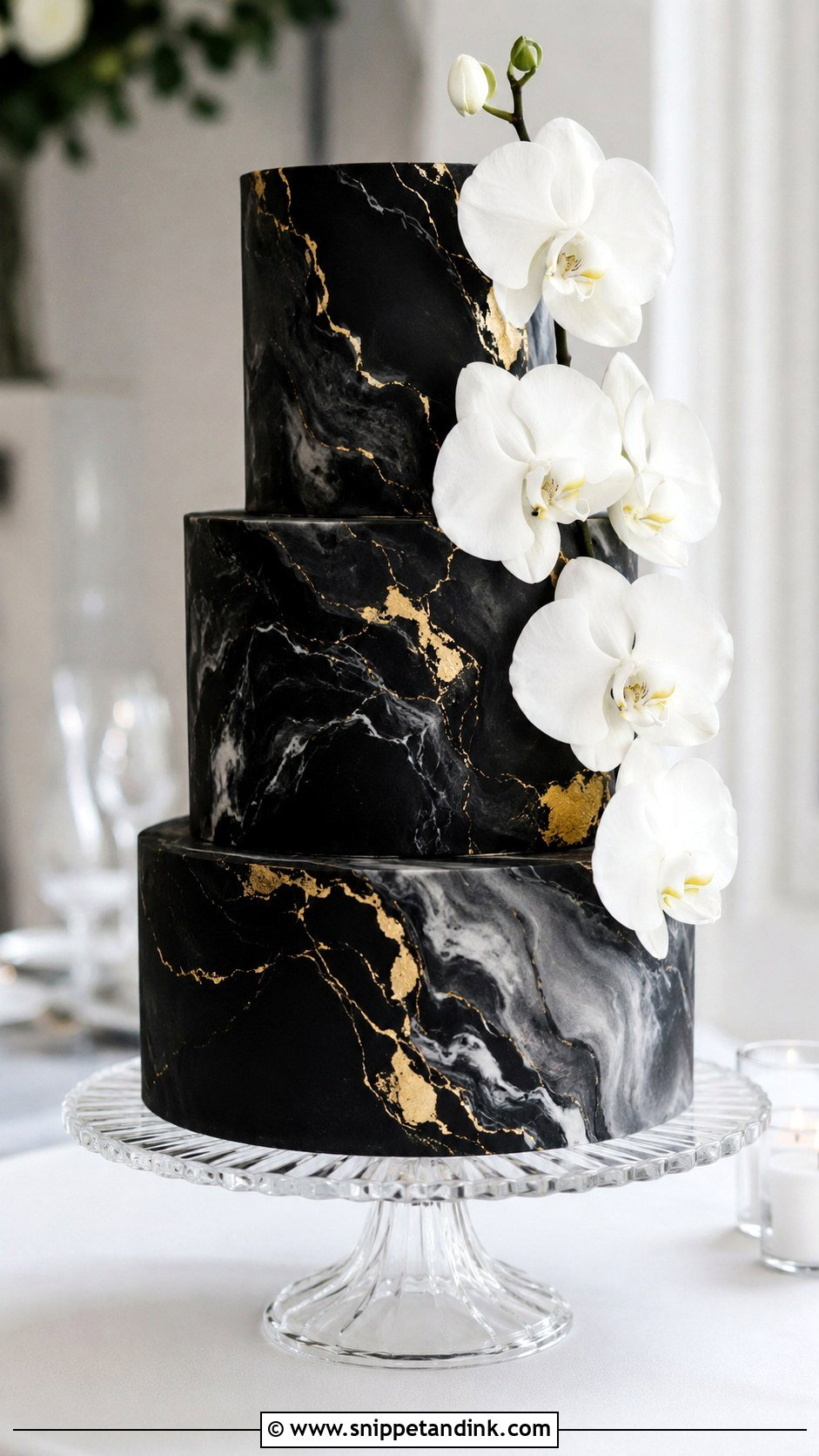
Marbling is a kind way to use black if solid dark tiers feel like too much. Charcoal, grey and white run through the fondant like veins in stone, and a fleck of gold can follow one of the lines. No two marbled tiers ever come out the same, which I love, but it also means you can’t order an exact copy of a photo. Approve the general direction instead of the specific veining. Gold leaf, white orchids and a clear acrylic stand suit it, and the surrounding table should stay plain so the pattern has room.
9. Black Wedding Cake With Pearls
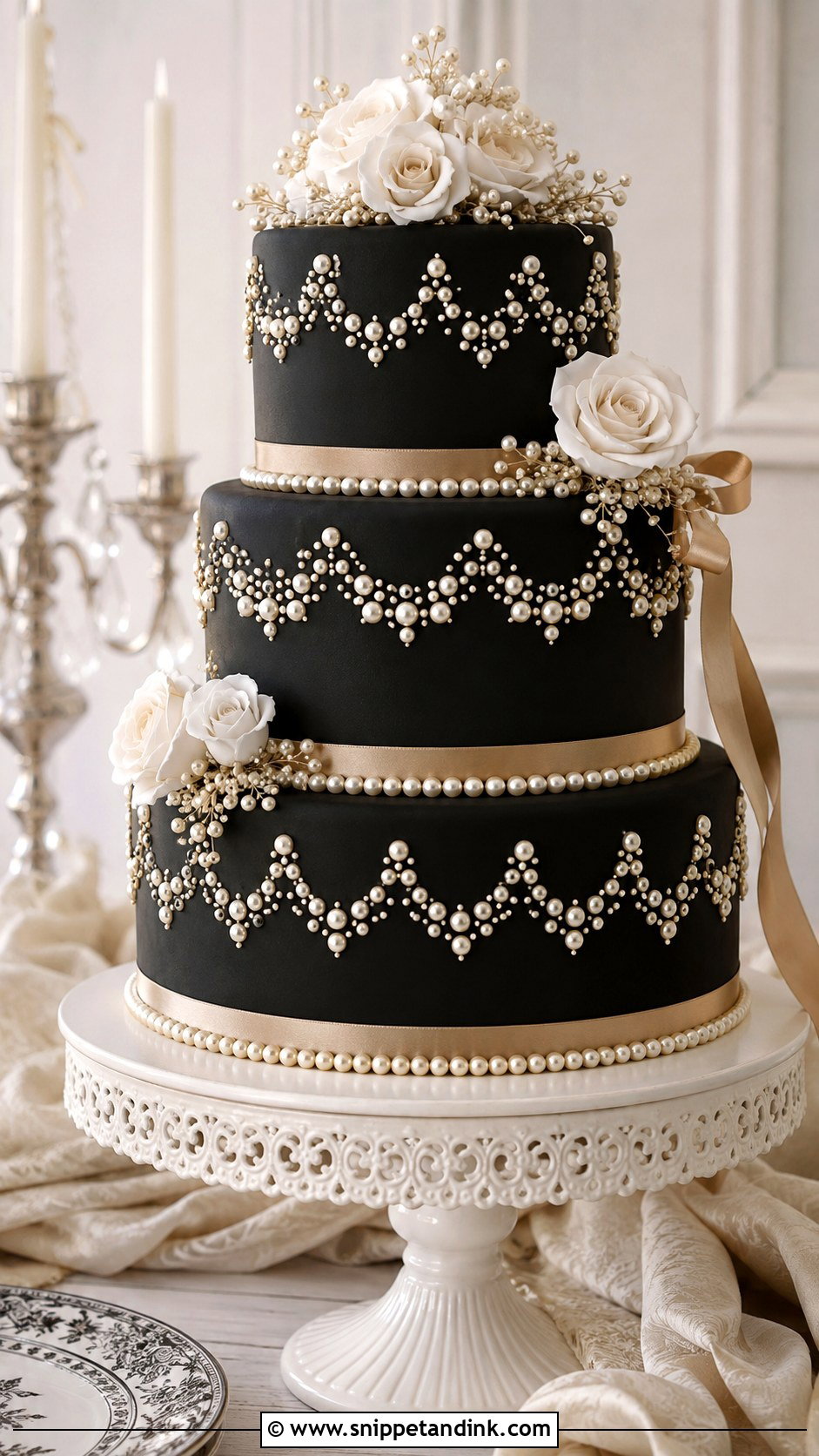
Pearls catch light against black in a way they never do on white, so even small ones read from a distance. I pipe or place them in neat rows for a vintage feel, scatter them loosely for something lighter, or build clusters where the tiers meet to hide the seams. Sugar pearls are edible; the shiny dragées some decorators use are often labelled decorative only, so ask which you’re getting. Smooth fondant with lambeth piping or a satin bow suits them well. Choose ivory or champagne over bright white if the rest of your palette is warm.
10. Black Vintage Wedding Cake
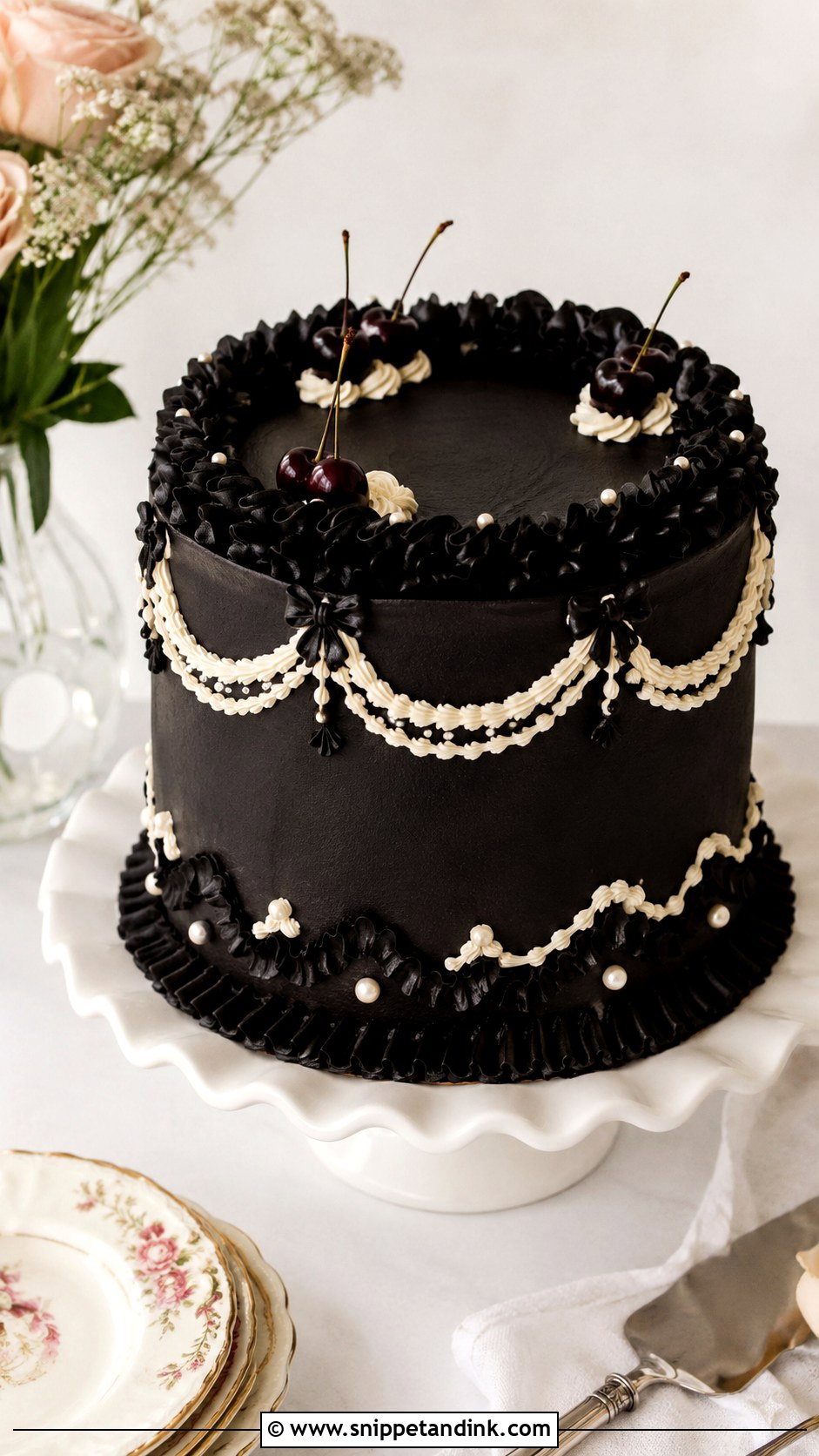
This is old-school piping in a color nobody’s grandmother would have picked: shell borders, ruffled edges, scrollwork, stacked tiers loaded with buttercream detail. Black stops the vintage style from feeling sweet. Keep it all black for a tone-on-tone look or pipe in ivory for contrast, and finish with cherries, pearls or a few sugar flowers. If you love retro cakes but want a surprise at the reception, this is the one. Keep it out of direct sun, though: heavy piping in dark buttercream softens quickly and the shells start to slump.
11. Black Lambeth Wedding Cake
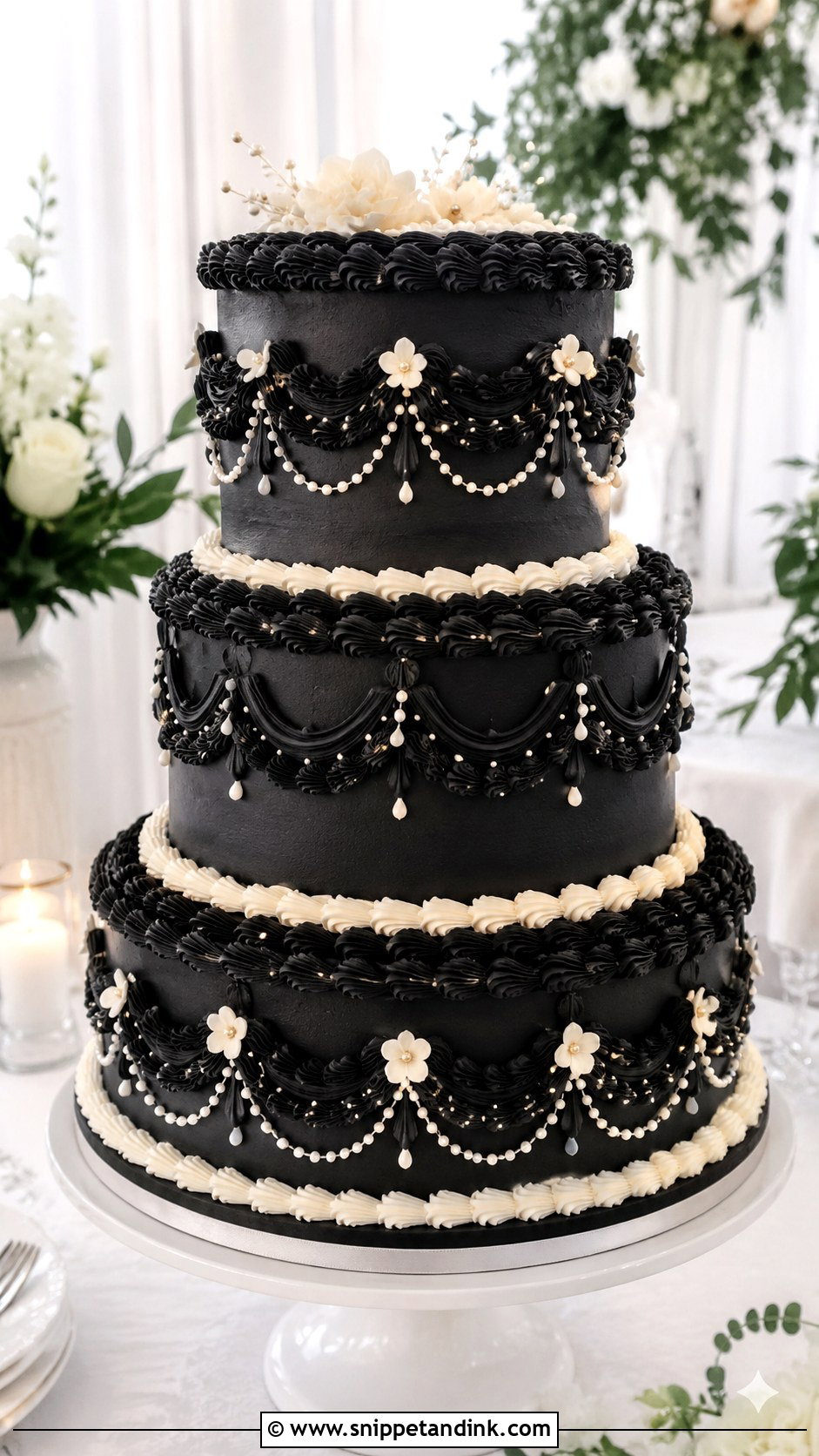
Lambeth is the piping-heavy cousin of the vintage cake: overpiping, scallops, garlands and layered borders built up line by line. It takes hours, and a design this full in black is unusually striking. Black-on-black lets the shadows do the work, which I think is the more interesting version. If that feels severe, ivory piping, pearls and tiny sugar flowers will soften it. Because so much buttercream goes on, I’d keep the tiers smaller than you might for a plain cake, so the slices aren’t mostly frosting.
12. Black Wedding Cake With Silver Details
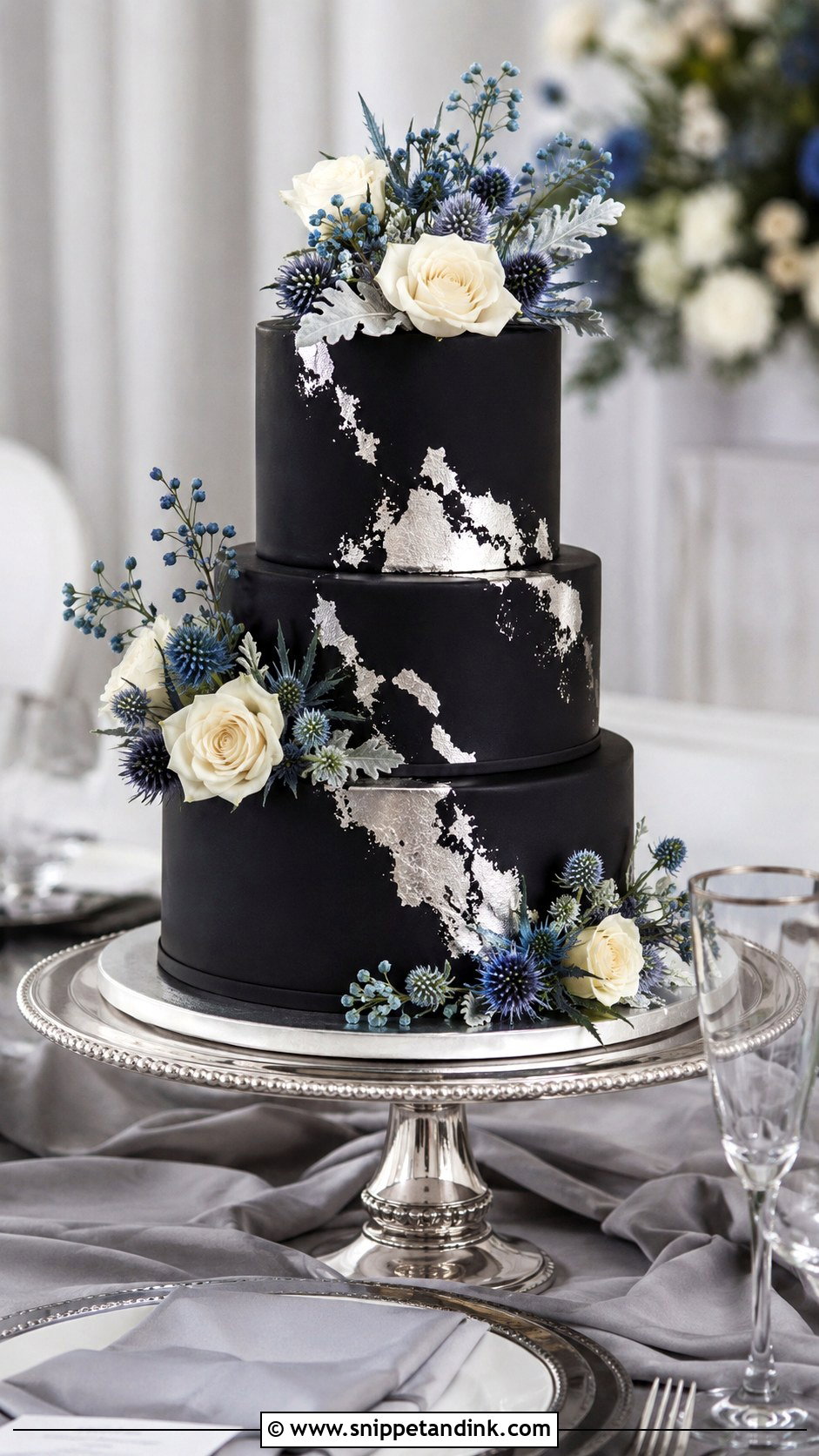
Silver reads cooler than gold, so it suits winter palettes, city venues and sleek reception spaces. Silver leaf, a brushed metallic stroke, edible shimmer or a thin band on each tier will all brighten the surface without warming it. White roses, dusty blue blooms and soft grey foliage finish the look. The usual mistake is overdoing it; a little shine against black goes a long way, and I’d rather leave a tier plain than crowd it.
13. Black Drip Wedding Cake
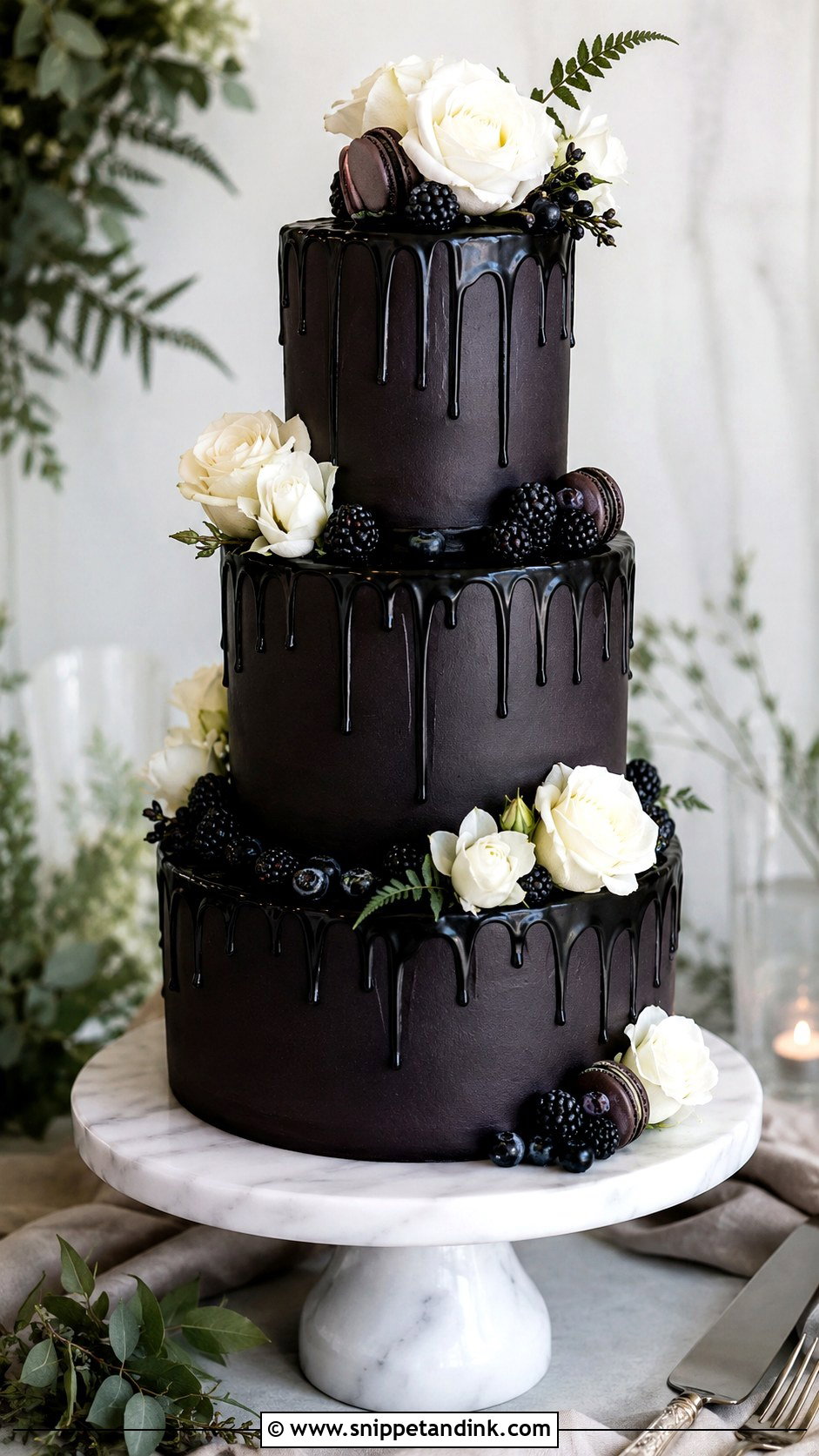
A drip loosens up a dark cake without making it casual. Glossy black over a matte black tier gives a tone-on-tone effect; white chocolate, gold or dark chocolate gives contrast. Temperature is everything here. Pour the ganache too warm and it races to the board, too cool and it sits in stubby lumps, so I always test one drip on the back of the tier first. Macarons, berries and chocolate shards stack well on top. If your dessert table is more relaxed, this one still feels like a wedding cake.
14. Black Geode Wedding Cake
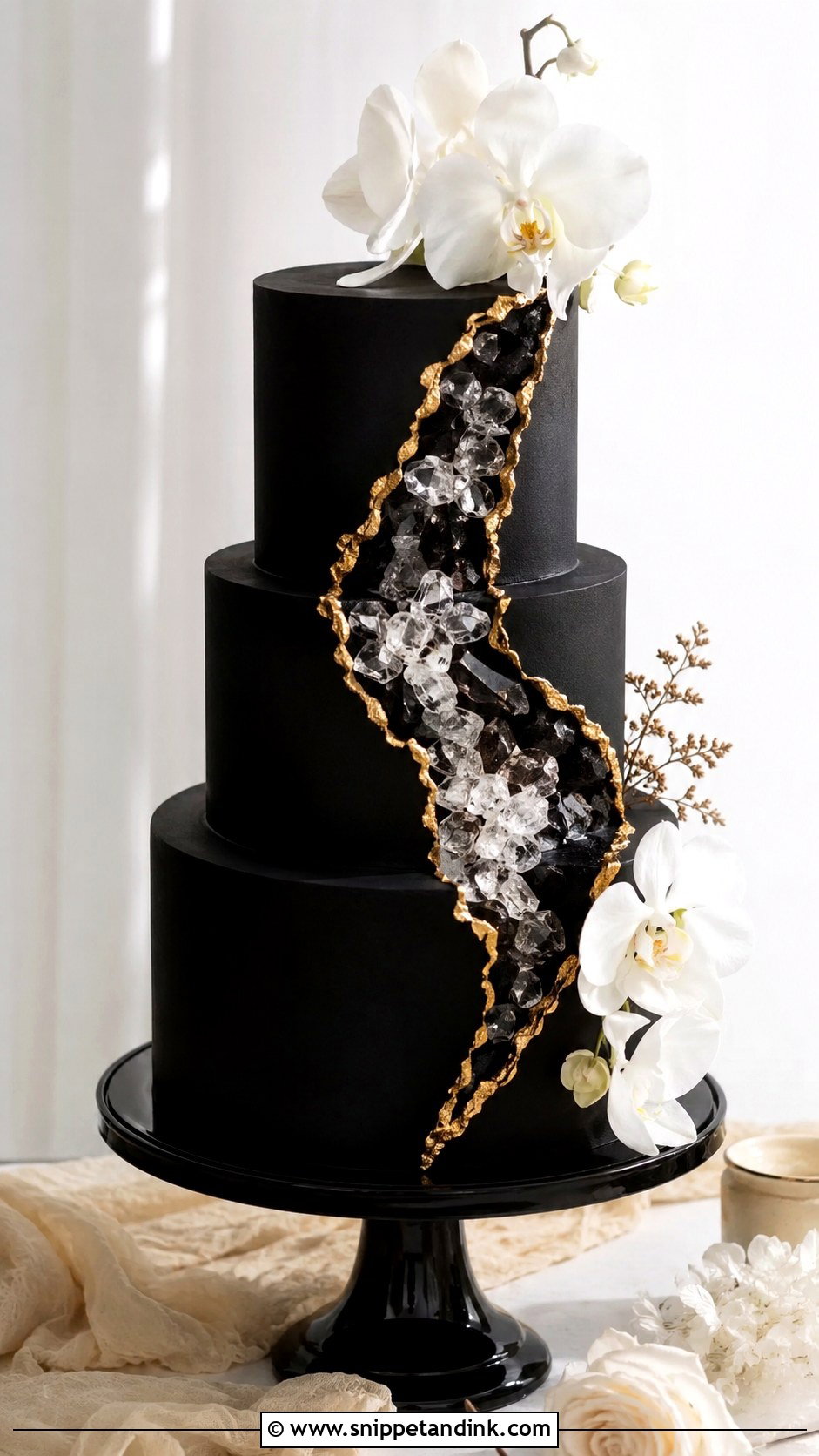
A geode cake cuts a cavity into the tier and fills it with sugar or isomalt crystals, and a black exterior makes that crystal center glow. White, clear, gold and soft blush crystals all show up well against it. I build these on fondant, since the clean surface frames the opening better than buttercream does. Round tiers keep it classic; hexagon tiers make it more architectural. A word of warning for summer venues: isomalt crystals go tacky in humidity, so the cake should stay indoors.


15. Black Wedding Cake With Greenery
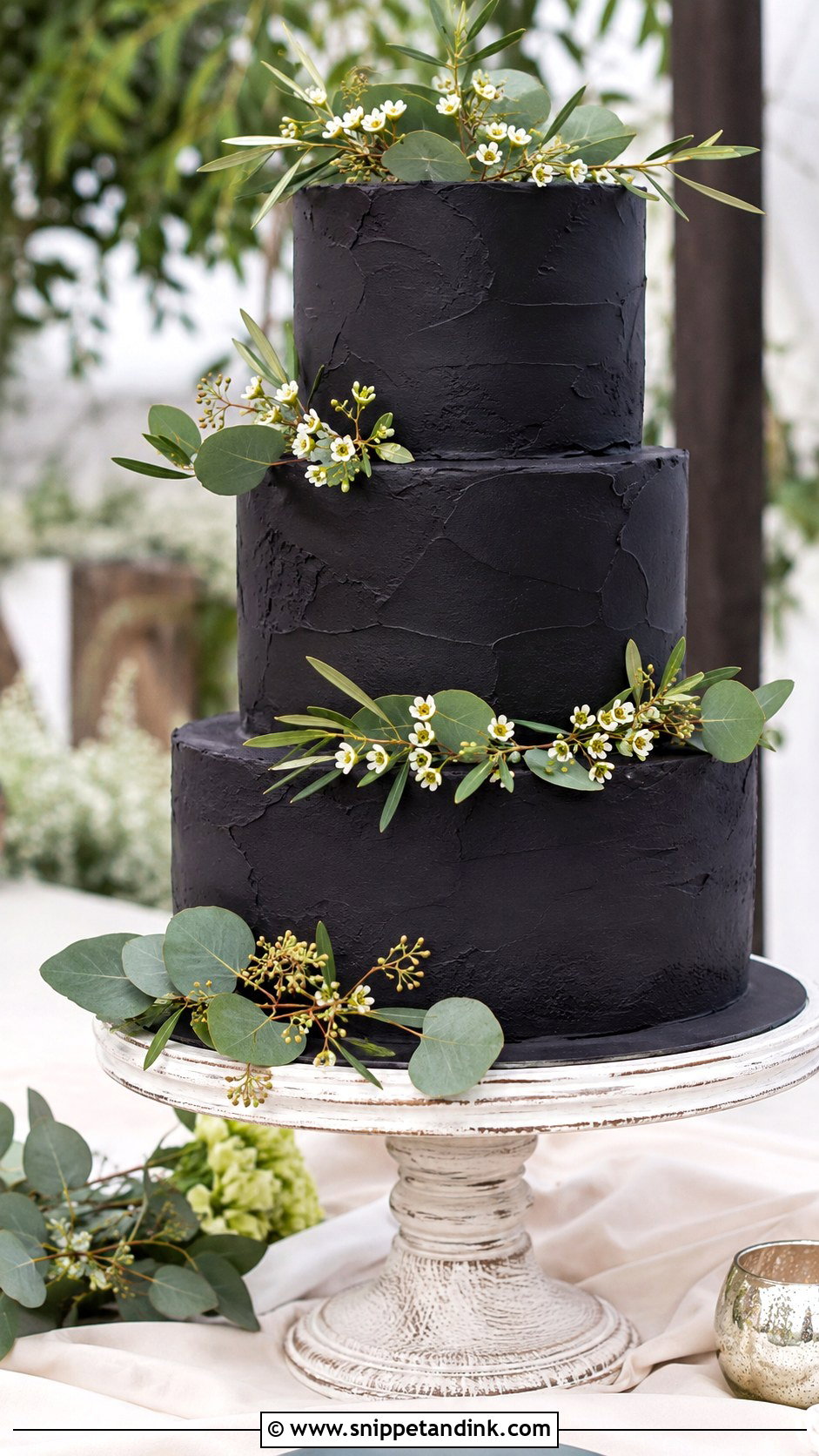
Greenery makes a black cake feel earthier and less formal. Eucalyptus, olive branches and ferns soften the dark base without needing color, but they are not all food safe, and some common eucalyptus varieties should never touch icing directly. I wrap stems and sit leaves on small barriers so nothing leaches into the cake. Textured buttercream and semi-naked finishes suit this look best. Add a few white blooms for contrast or keep it all green for an outdoor, greenhouse or barn reception.
16. Black Wedding Cake With Sugar Flowers
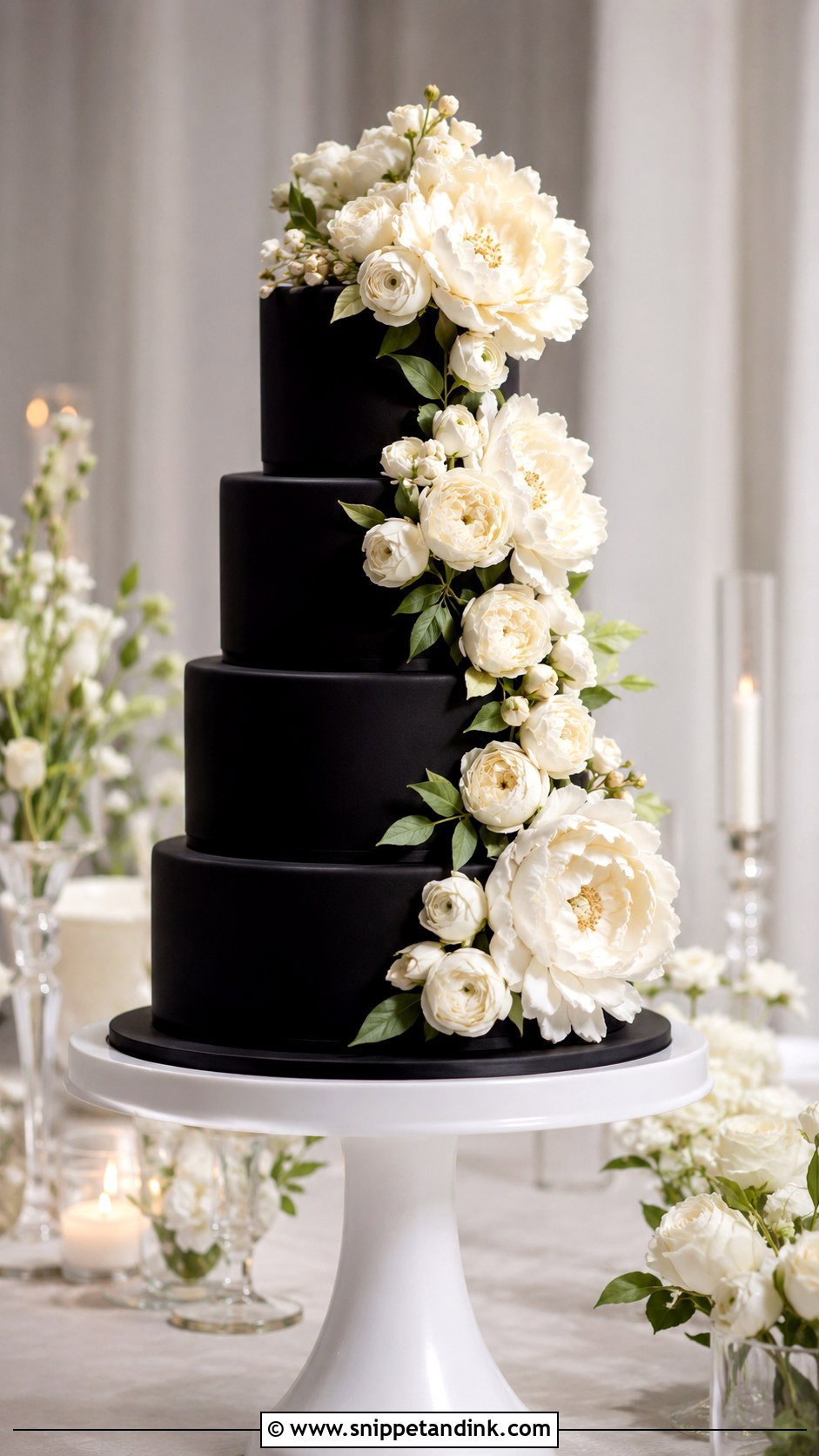
Sugar flowers are what I recommend when the cake has to look fresh for six hours under warm lights. They’re shaped and dusted petal by petal, so color, size and form can match your bouquet or invitation art exactly, and against black, pale sugar roses, peonies and ranunculus look almost sculptural. One large focal flower is quietly confident; a full cascade is pure drama. They do need lead time, because each bloom dries for days before it can be wired onto a tier. They won’t wilt, and many couples keep one as a keepsake afterwards.
17. Black Sequin Wedding Cake
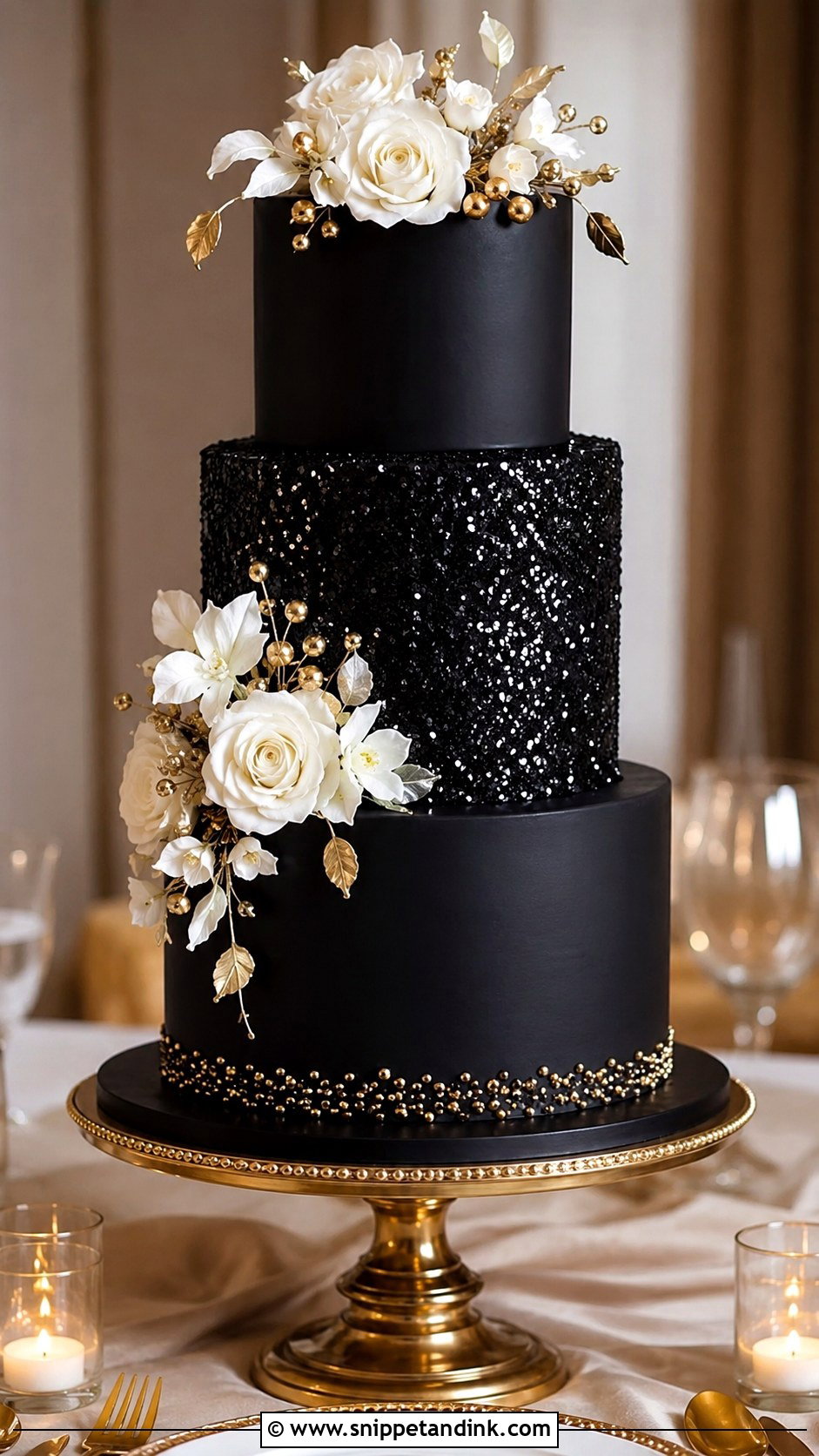
A black sequin wedding cake is party dressing for a dessert table. The sequins are tiny edible discs, piped dots or metallic sugar pieces pressed one by one onto a single tier, which is slow work and the reason I’d limit the effect to one band. Smooth black tiers above and below keep it from overwhelming the cake. Gold sequins feel warm, silver feels sleek and black-on-black only sparkles when the light hits it. Under evening reception lighting, this is the cake people walk over to touch, so tell the venue to keep fingers away.
18. Black Square Wedding Cake
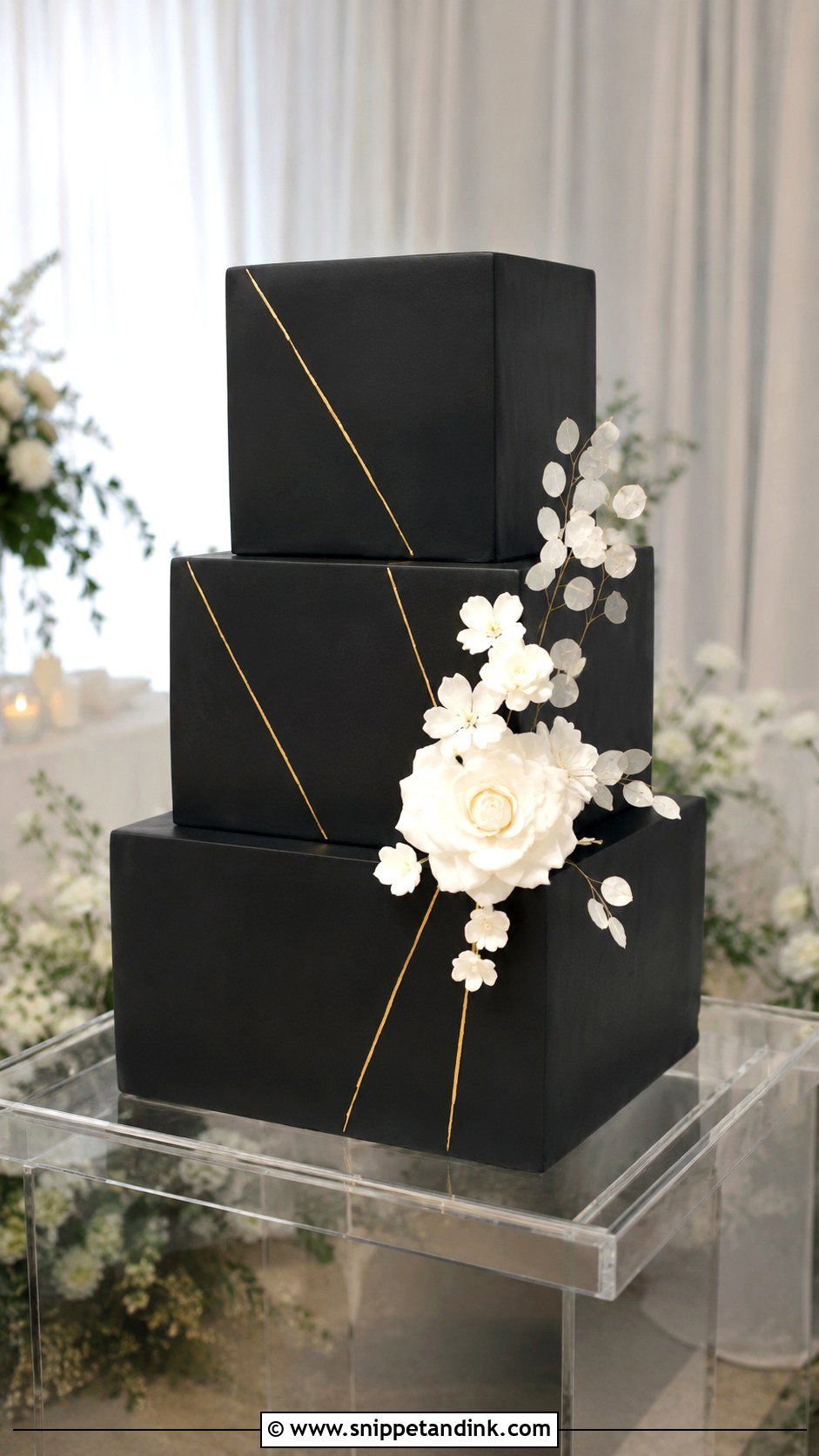
Square tiers look architectural, and black exaggerates that. They are also less forgiving than round ones; corners bulge if the ganache underneath isn’t firm, so I always ganache square cakes before covering them. Stack the tiers evenly for minimalism or offset them for something more artistic, and keep the decoration to one floral cluster, a thin metallic line or a small monogram. Square cakes also give you flat panels to work on, which suits marble effects and clean piping. Expect a few more slices per tier than a round cake of the same width.
19. Black Textured Wedding Cake
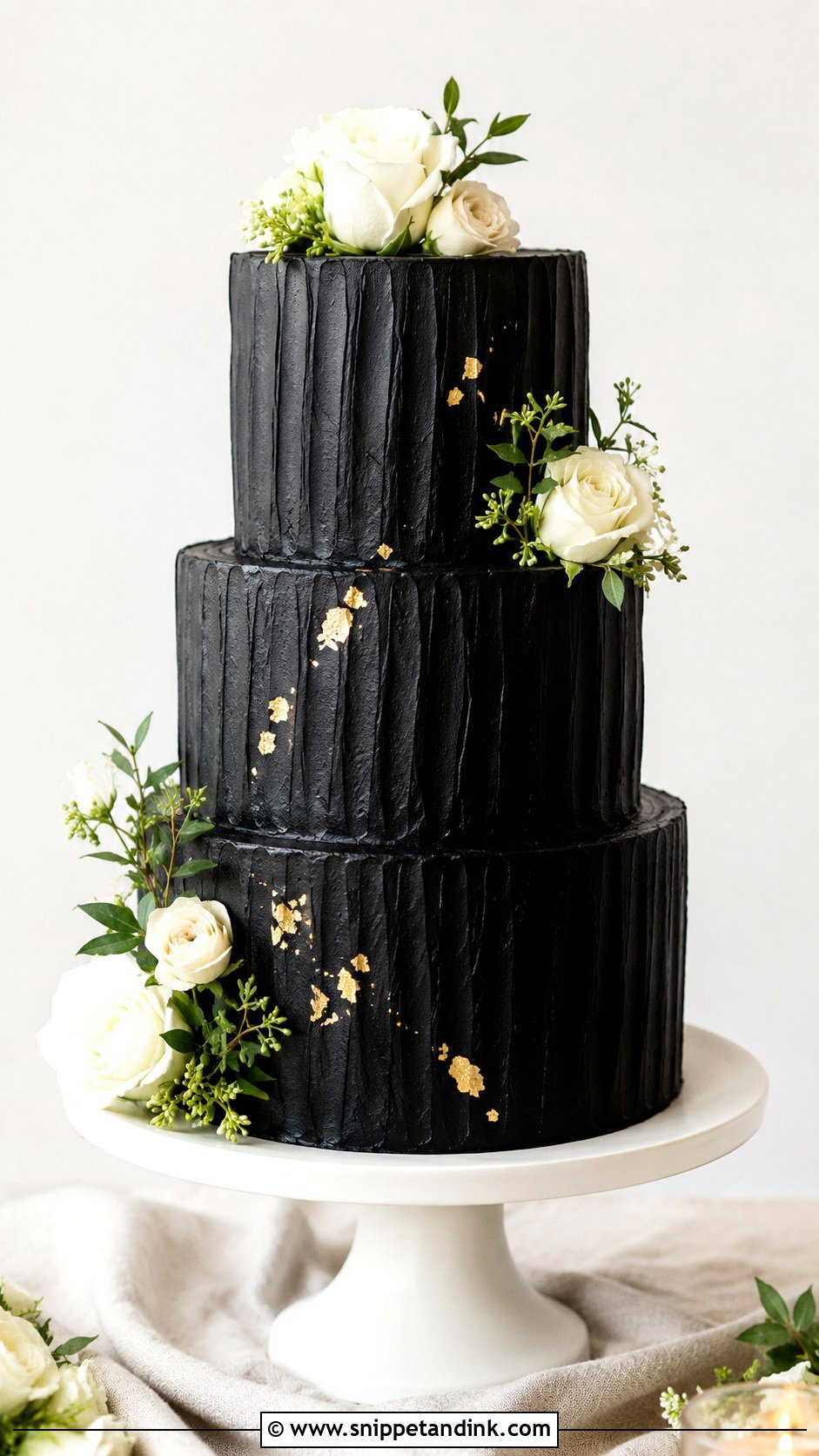
Texture stops black from looking flat in photos, because ridges and ruffles throw small shadows that the camera picks up as depth. Rough buttercream feels organic, vertical combed ridges feel modern and fondant ruffles feel romantic. I’d steer anyone with a very warm outdoor venue away from deep buttercream ruffles, since they lose their shape first. White flowers, gold leaf or greenery add contrast if you want it. My favorite version leaves the texture alone and lets the shadows be the decoration.

20. Black Wedding Cake With Monogram
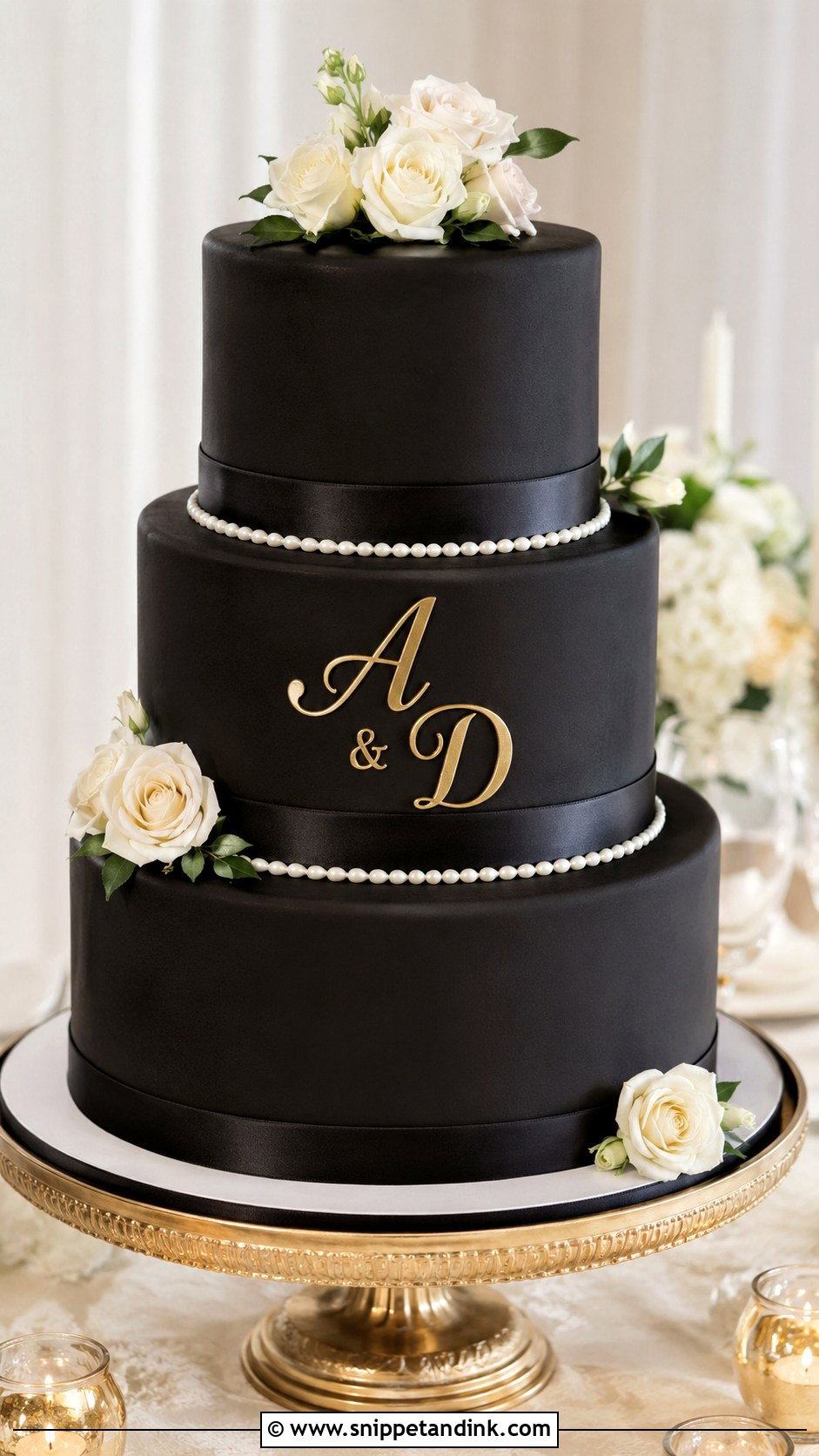
A monogram turns a dark cake into something personal, and black gives an initial the cleanest possible background. It can be painted in gold, piped in ivory, pressed into fondant, or added as a custom topper. Send your designer the exact lettering from your invitations so the shapes match; hand-painted letters drift if I’m working from a description. Keep everything else on the cake quiet, maybe a satin ribbon, pearl dots or a few small white flowers. It photographs clearly from the back of the room, which helps on a formal cutting.
Dark Tiers Against Sun, Fridge Chill and Camera Flash
Black absorbs heat, so a dark buttercream cake in afternoon sun softens noticeably faster than a white one in the same spot. For a garden or terrace reception, I ask for the cake table to sit in shade and for the cake to come out as late as the schedule allows. Fondant copes better with heat but has its own problem: chilled fondant sweats when it hits a warm room, and on black every dried droplet shows as a pale spot.
Photography is the other thing worth thinking about early. On a dim reception floor, a matte black cake can read as a dark shape with no detail. Give the photographer a little side light, a candle cluster or a nearby uplight, and let the gold, pearls or texture catch it. Flash flattens matte surfaces, so the detail shots are best taken before the room goes dark.
Questions to put to your cake designer
- What is your black made of, and can I taste that exact icing?
- Will the cake be delivered chilled, and how long does it need to settle before guests see it?
- Are the flowers fresh or sugar, and how are fresh stems kept off the icing?
- How long can it stand safely at my venue’s temperature?
A designer who has built a lot of dark cakes will answer each of those without hesitating.
Settle the Flavor Before You Fall for the Color
A black cake can be romantic with white flowers, glamorous with gold, earthy with greenery or architectural with sharp square tiers, so the color alone won’t tell you much about the result. Start from your venue, the season and how long the cake will stand before it’s cut, then choose a finish that survives those conditions. Taste the black icing before you commit, plan the staining, and ask how the cake will travel. Get those right and the dark tiers will hold the room all evening.
You'll Like These Ideas:









Leave a Reply