
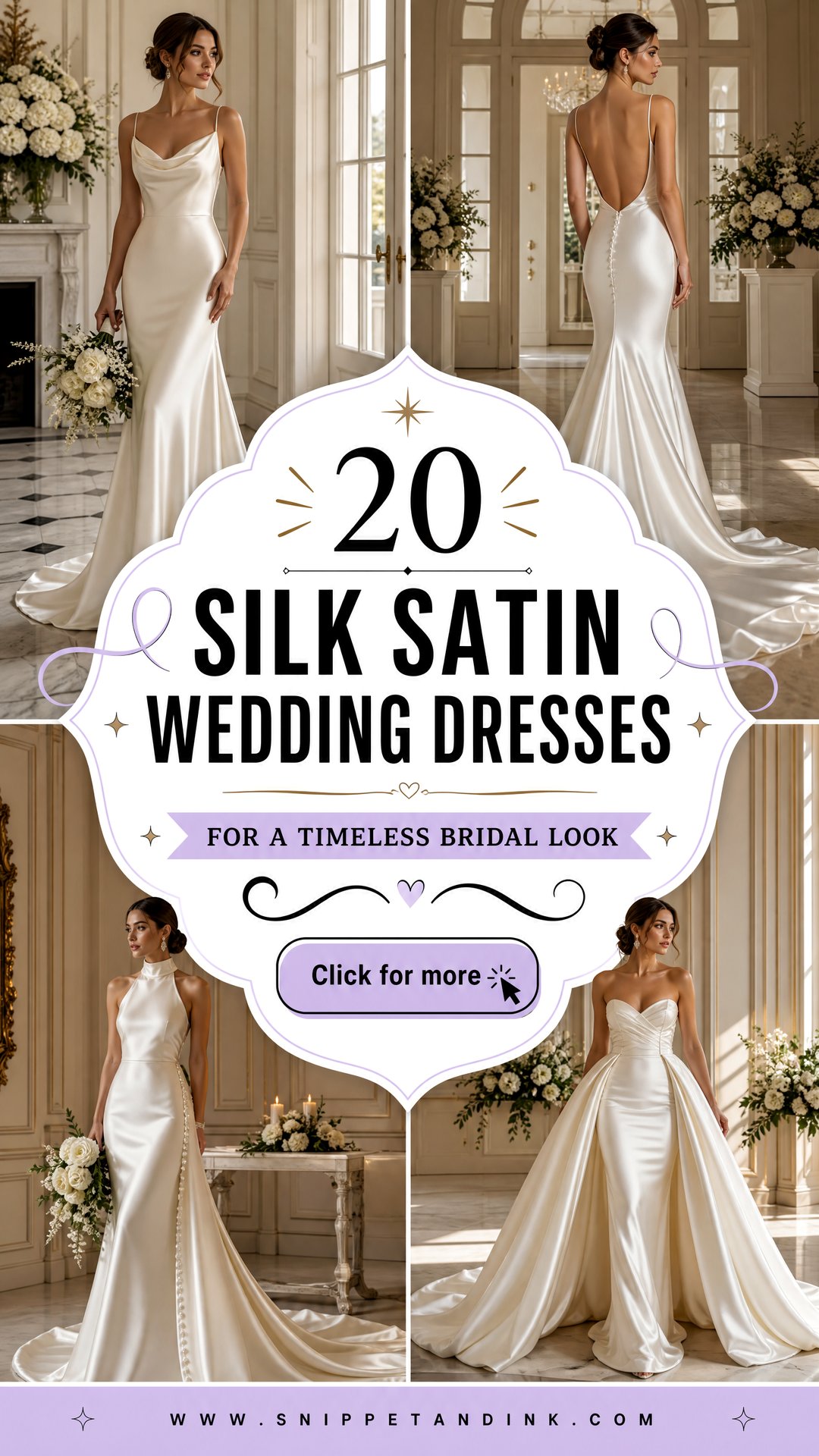
Satin doesn’t let a dress hide anything, which is exactly why I enjoy dressing brides in it. There’s no lace to blur a seam and no beading to distract from a strap that sits wrong; the gown is simply the cut, the cloth and the fit. Collections right now pair clean satin with lace details, shorter hems and detachable pieces, so there’s plenty of room to make one dress your own. Below are twenty silk satin shapes, from narrow columns to full skirts, with what I watch for in each: how it moves, who it suits, and where it needs a tailor’s attention.
Ivory, Diamond White or Champagne Satin Against Your Skin
Satin throws light back onto your face, so its shade matters more than it does with matte fabrics. Bridal white covers a wide range, and the names vary between designers, which is why I always ask to see swatches side by side rather than trusting a label.
- Diamond or optic white: the brightest. Crisp on deeper skin tones and on fair skin with cool undertones, but it can make warm or olive skin look sallow beside it.
- Ivory or off-white: a hint of cream that flatters most people, and the shade many silk satins sit closest to.
- Champagne or a blush underlay: warmer tones that bring colour to pale skin and look rich in candlelight.
My test is to hold the satin under your chin by a window, bare-faced if you can, then again under warm indoor light like your venue’s. If your skin looks grey or yellow beside it, try a shade warmer or cooler. Silk’s white is often a little softer than polyester’s brightest white, so expect a silk gown to read gentler than the photo online.
1. Silk Satin Slip Wedding Dress
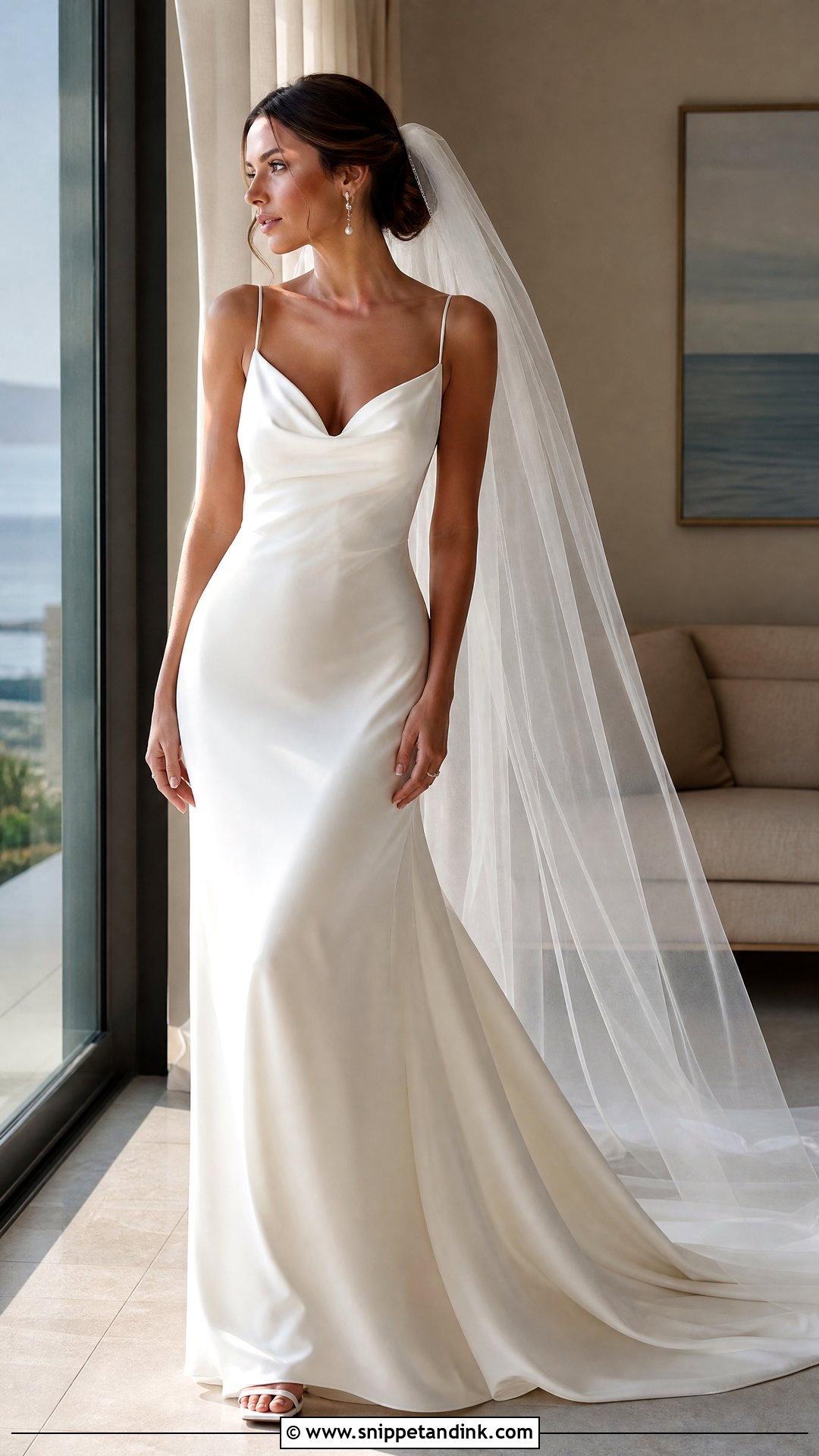
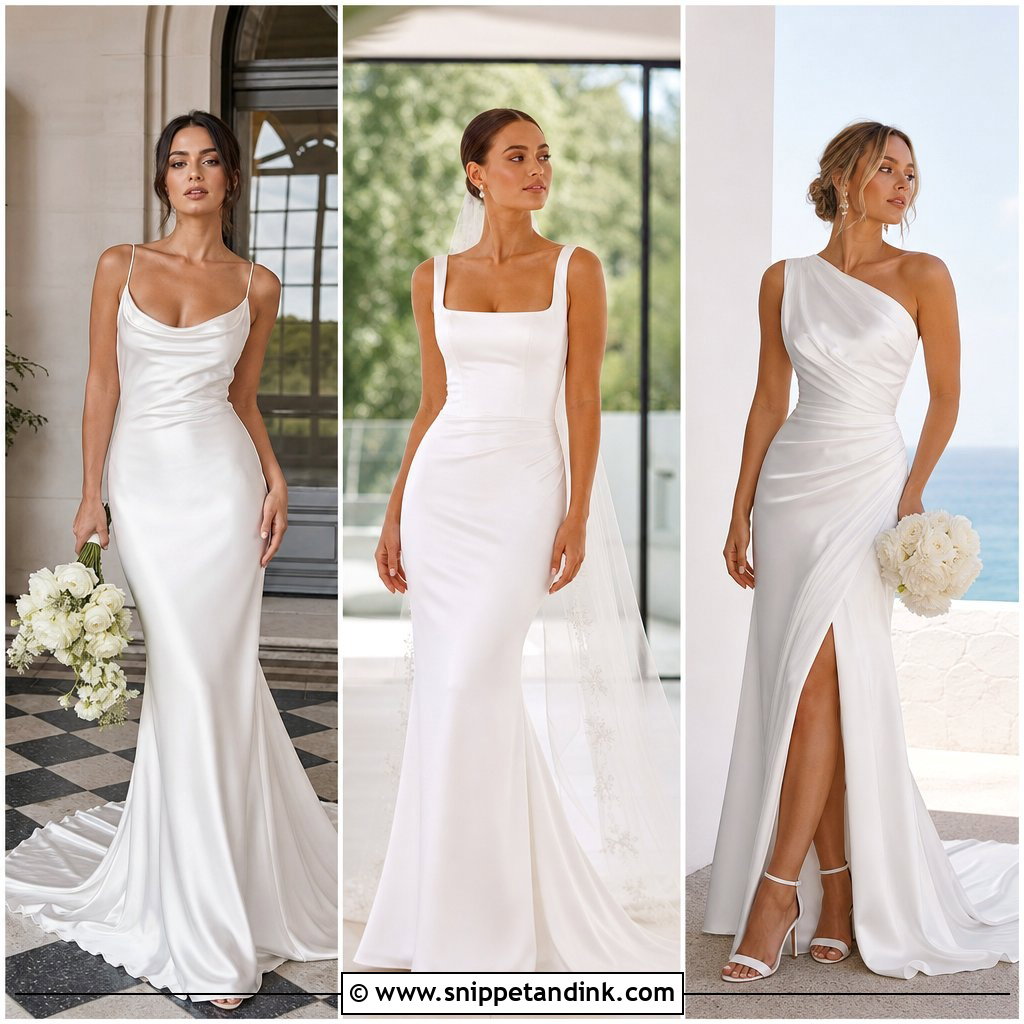
Verdict first: this is the hardest dress here to fit and the easiest to wear once it’s right. A slip should skim and never squeeze, and that comes down to the bias cut, so ask whether the gown is cut on the bias before you fall for it on the hanger. A soft cowl, delicate straps or a straight neckline all suit it, and a low back adds interest without fuss. I’d wear barely-there sandals, pearl drops and a fine-edged veil. Underneath, bonded or laser-cut underwear only. A visible line through glossy satin is the first thing a guest’s phone camera will catch.
2. Strapless Silk Satin Ball Gown Wedding Dress
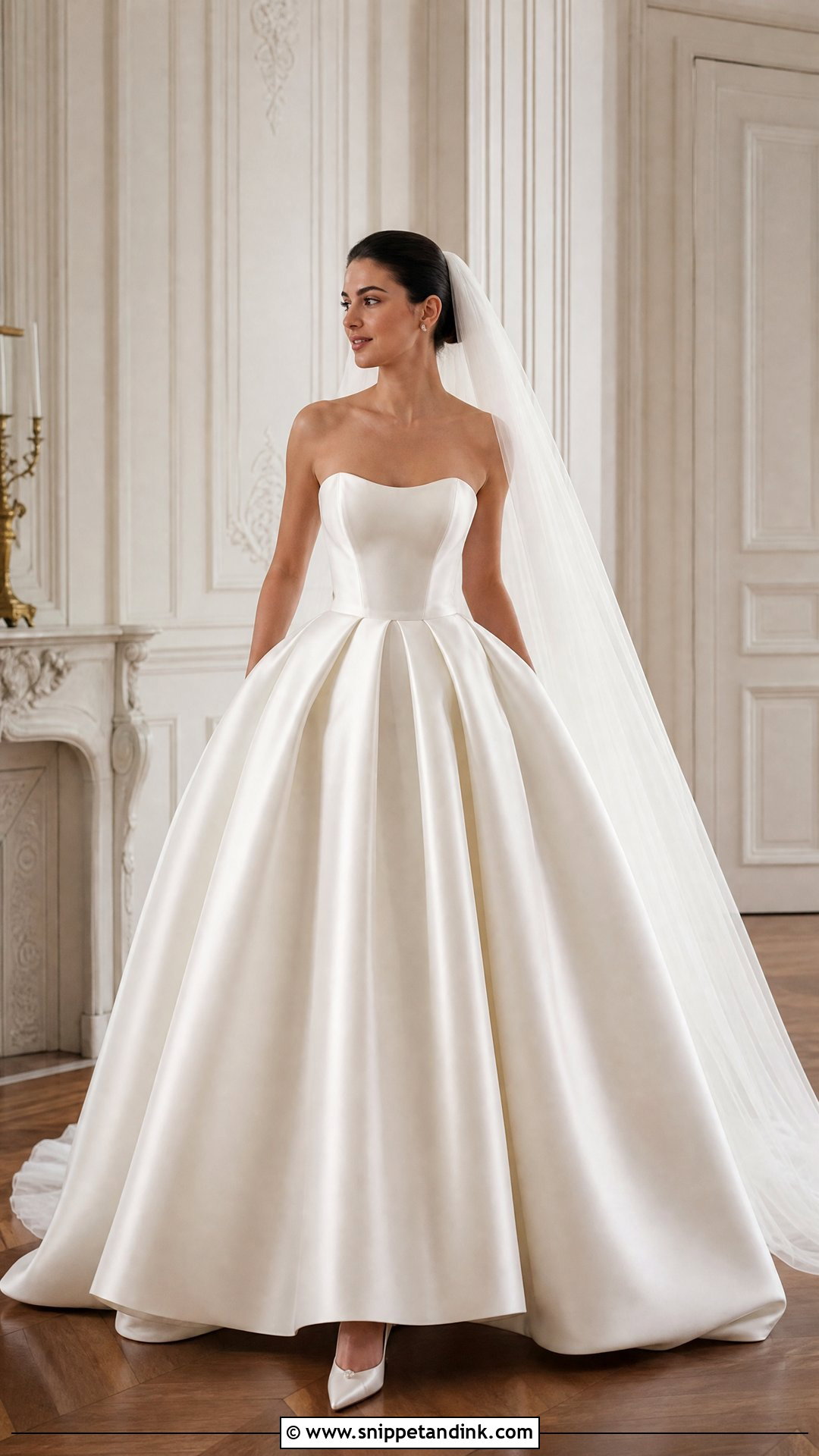
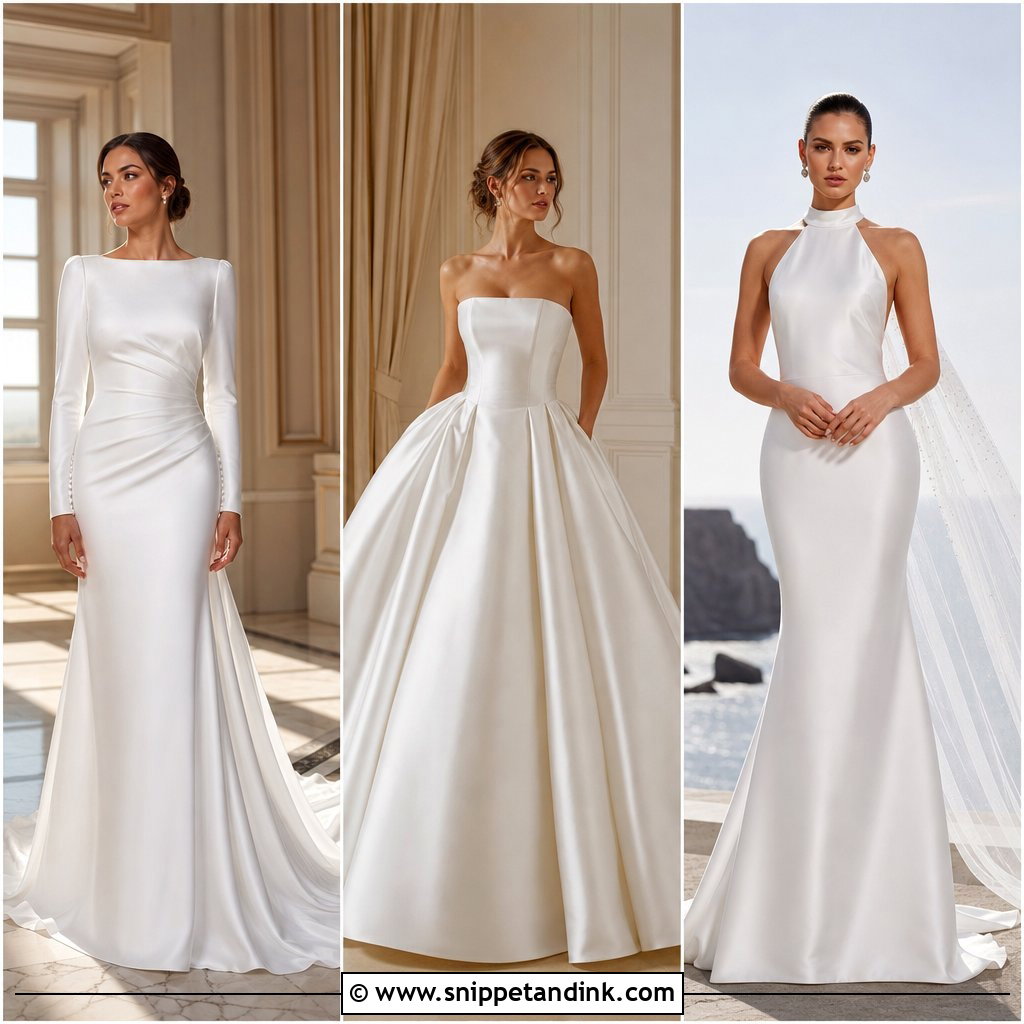
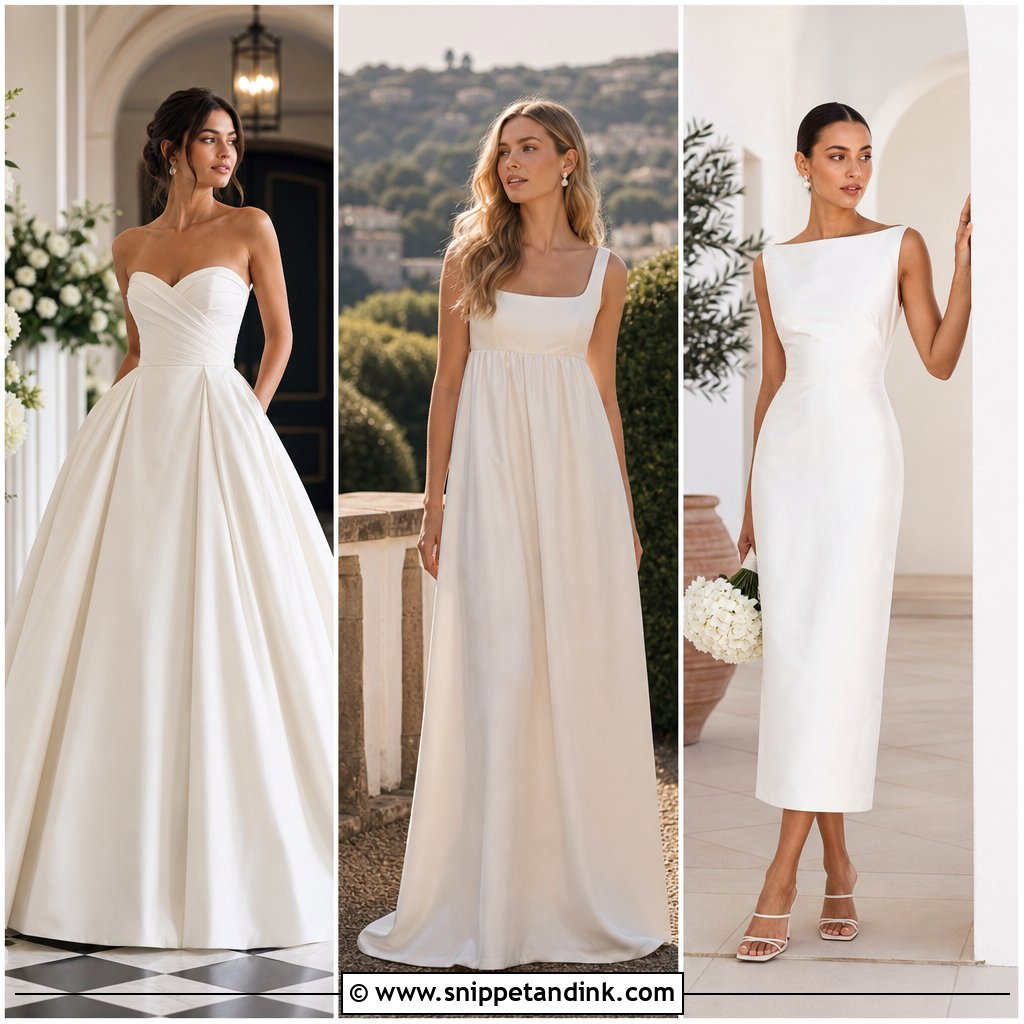
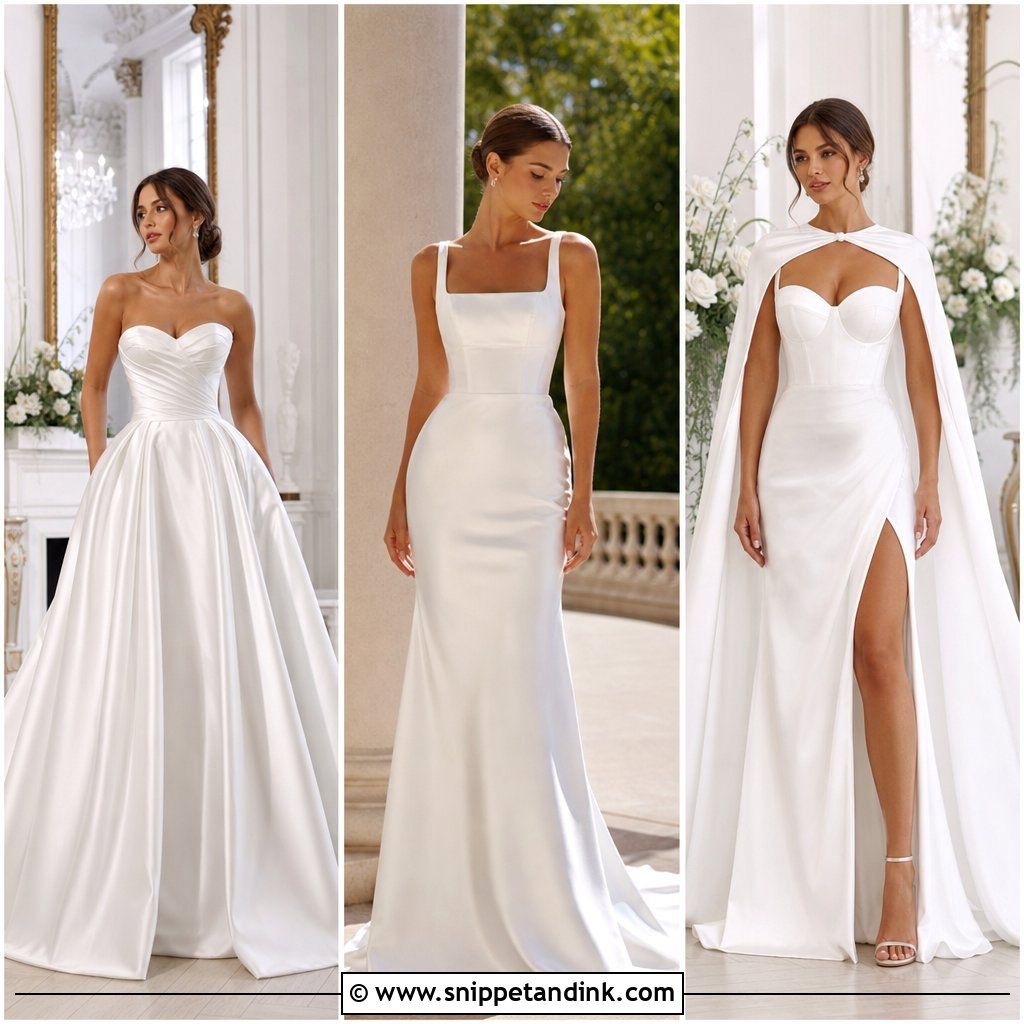
A strapless satin ball gown carries a lot of skirt, and it’s the waist stay and boning, not the bust, that hold it up. Built properly, it lets you stand through an hour of portraits without hitching. A curved neckline reads softer; a straight one reads sharper and more current. Pointed satin pumps, a structured veil and small diamond or crystal studs keep the top clean, and I’d leave the necklace off. Petite brides aren’t ruled out. I shorten the bodice so the waist sits where theirs does and reduce the petticoat layers so the volume doesn’t swallow them. Ballrooms and large estates give this skirt the space it needs.
3. Cowl Neck Silk Satin Wedding Dress
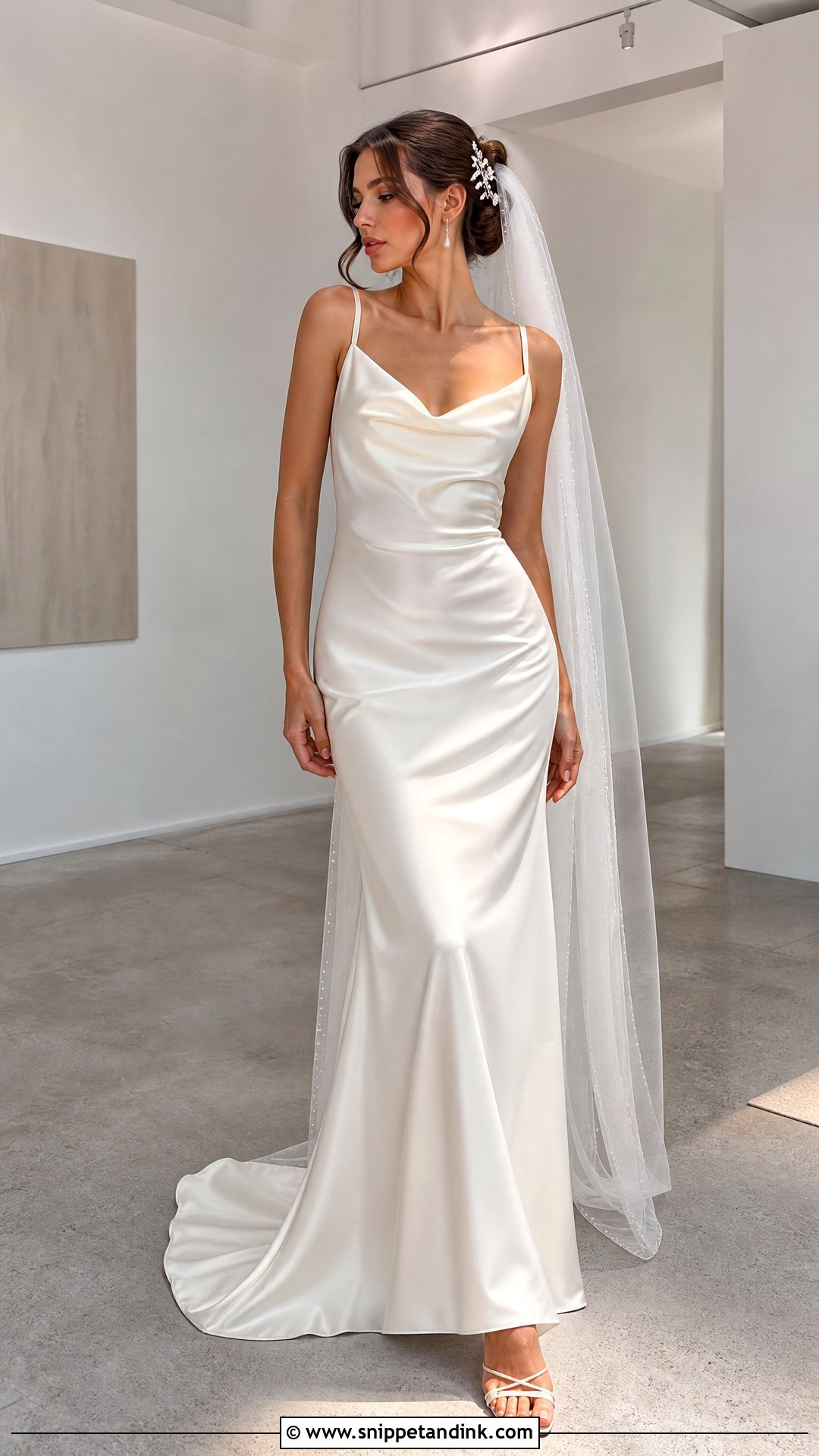
The depth of the cowl changes the whole dress. A shallow drape sits close and secure; a deep one is more fashion and needs a tack stitch or a little fashion tape to stay put when you lean in for a hug. Try it on and bend forward, the way you would to sign the register, before deciding. A cowl neck silk satin wedding dress leans toward 1990s minimalism, so I keep the rest clean: a low bun with a few crystal pins, delicate earrings, slim heels and a chapel veil that falls behind the neckline rather than over it. Galleries and restaurant receptions suit its quiet mood.
4. Square Neck Silk Satin Wedding Dress
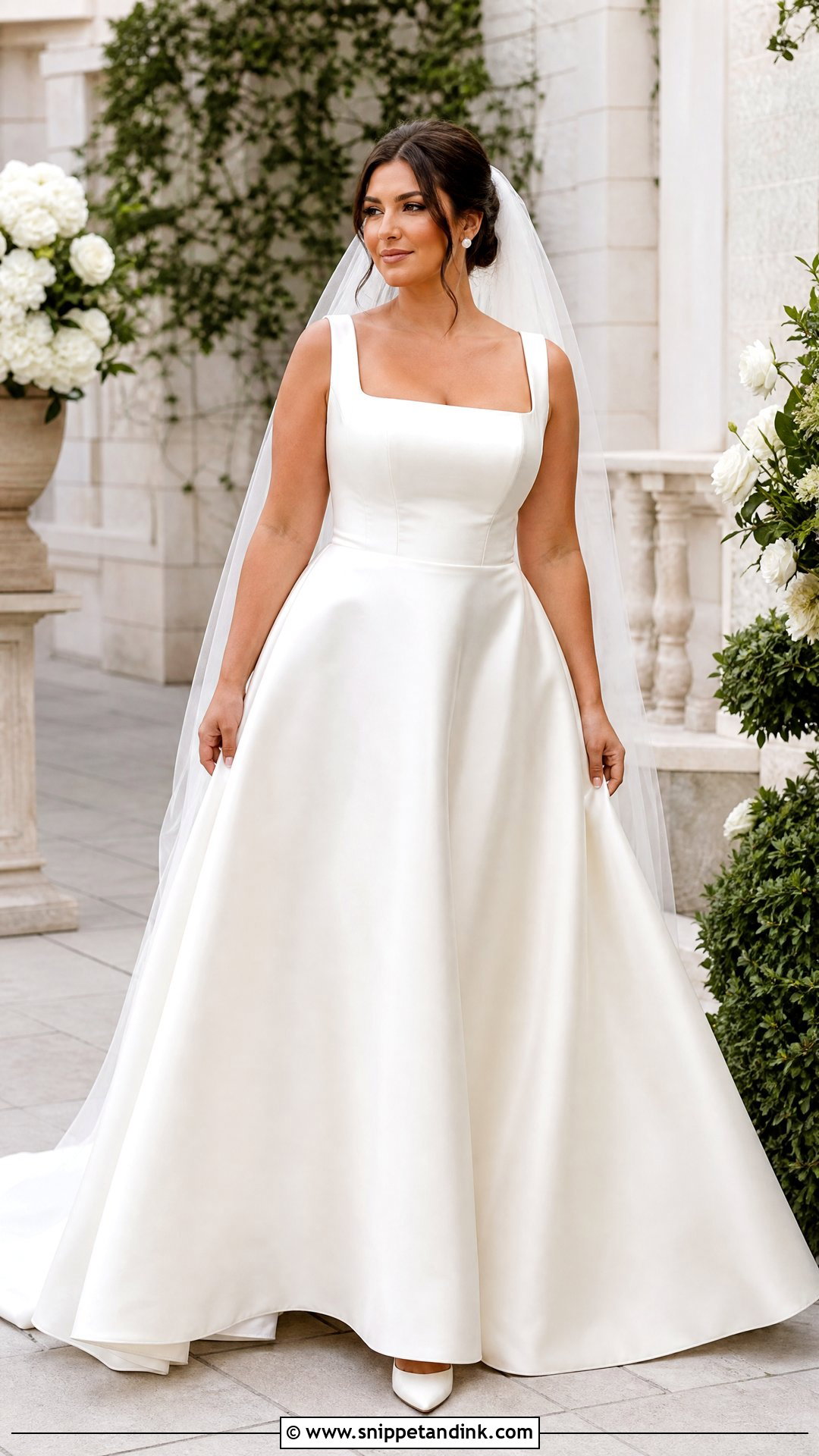
Square necks look simple but they’re engineered: the corners only stay sharp if the neckline sits flat against the chest. Brides with fuller busts usually do better with wider straps and a slightly higher square, which I’d have the seamstress adjust at the strap seams. Wide straps, fitted long sleeves or a structured sleeveless bodice all frame it well. An A-line skirt is the easy shape, while a column is more architectural. Pearl studs, a sleek bun, closed-toe pumps and a plain tulle veil are enough. Satin shows pulling across a bodice instantly, so this is one dress where I’d book an extra fitting.
5. Off The Shoulder Silk Satin Wedding Dress
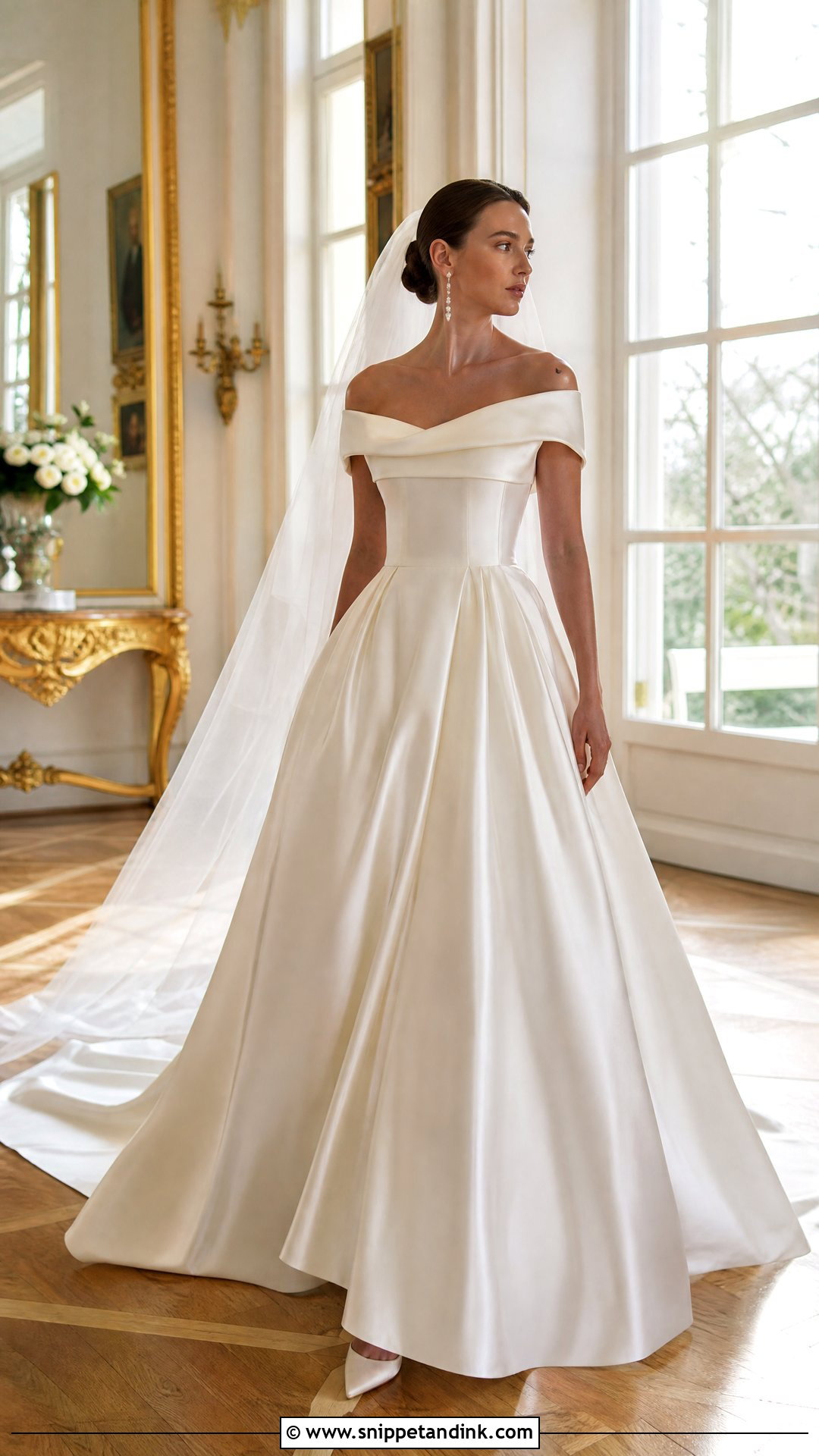
An off-the-shoulder band either stays put or slides, and you’ll know within ten minutes of wearing it. Folded satin bands make a crisp portrait neckline; draped sleeves are lighter but slip more. If the band feels loose, I ask for a strip of silicone gripper or hidden elastic inside it. Over a fitted bodice, a full A-line or a gentle mermaid both work. A low chignon, drop earrings, pointed pumps and a sheer veil keep the shoulders visible. Lift your arms, sit and walk before you buy, then repeat all three at every fitting.
6. Long Sleeve Silk Satin Wedding Dress
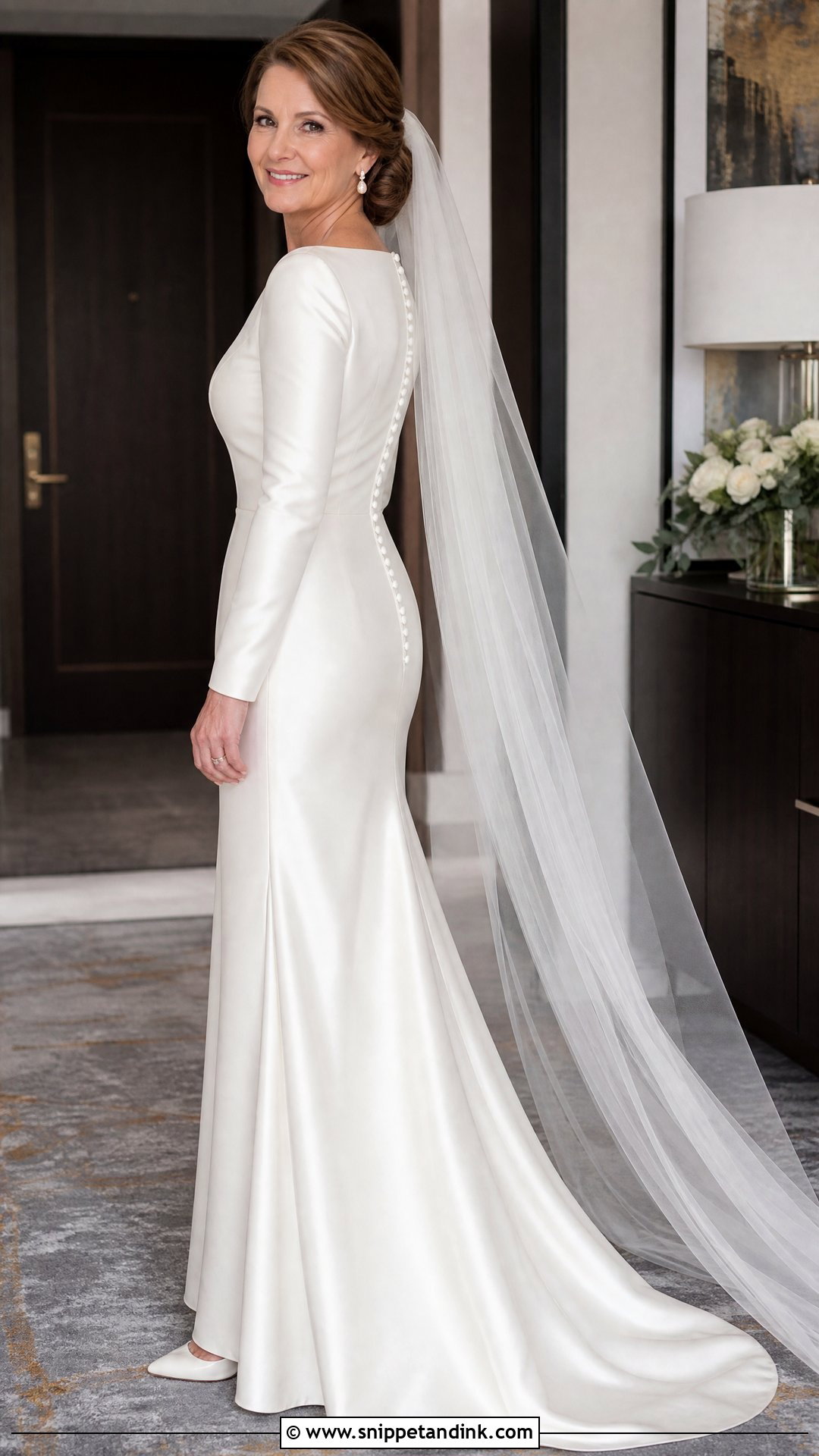
Long satin sleeves look composed and formal, and their weak spot is the elbow. Satin creases there more than anywhere else on a dress, and a tight sleeve creases it harder, so I like a little ease through the forearm even on a fitted look. Slightly gathered shoulders add a touch of volume, and covered buttons down the back finish it traditionally under a bateau, square or high neckline. Closed-toe heels, a low bun, pearl earrings and a cathedral veil make it properly formal. Silk breathes better than heavily layered synthetics, but the lining and structure still decide how warm you’ll feel. Autumn and winter weddings in older buildings suit it.
7. Halter Neck Silk Satin Wedding Dress
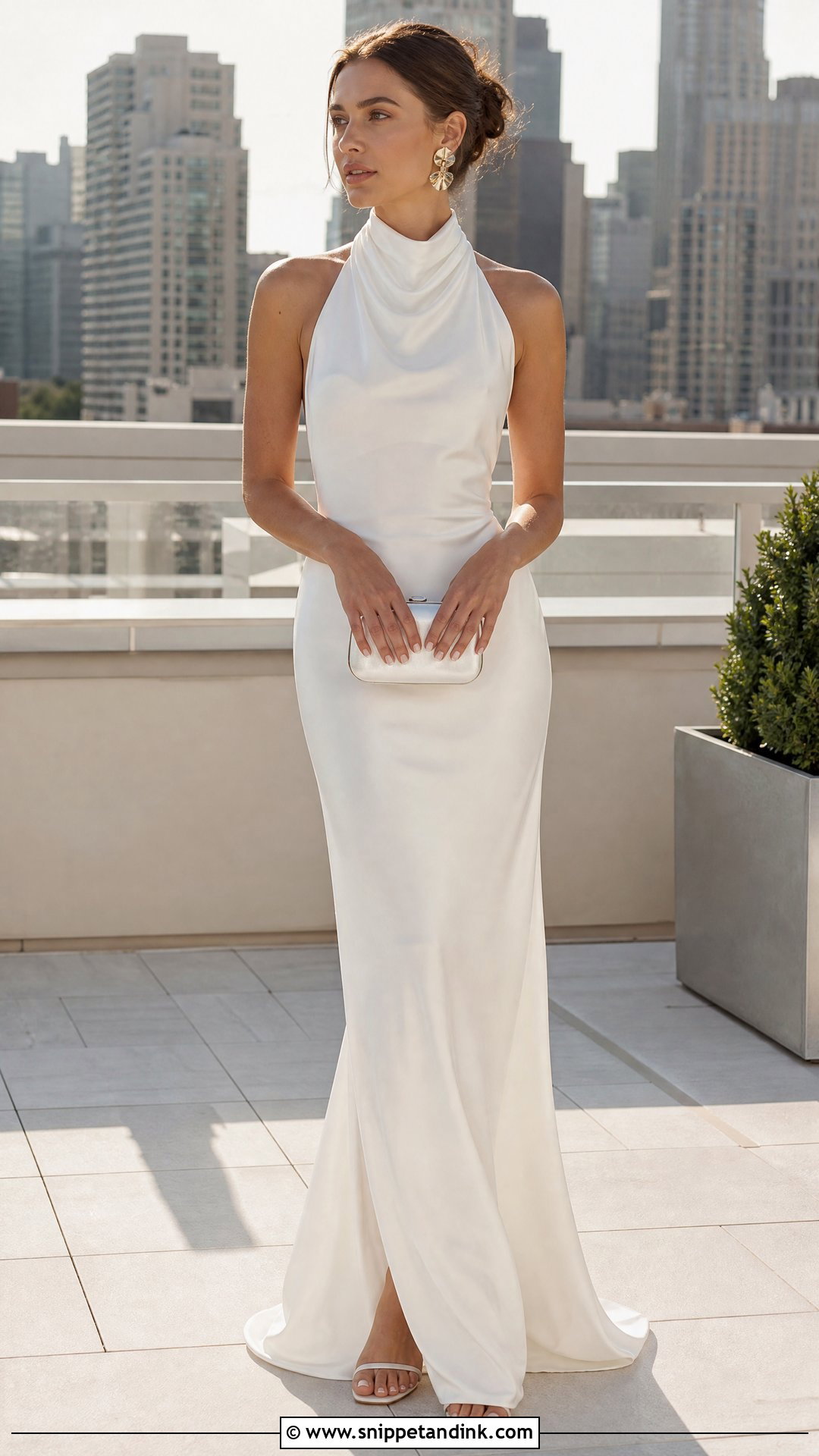
How a halter sits depends on the weight of the satin. A heavier cloth gives a high, structured neckline, and a lighter one falls into soft drapes. Either way, check the bust support carefully, because a halter has no side straps to help. A column or subtle fit-and-flare skirt keeps the neckline as the focus. Swept-back hair, sculptural earrings, sleek sandals and a small clutch suit it, and I’d leave any necklace at home since it fights with the halter. Rooftops and galleries match its modern mood.
8. One Shoulder Silk Satin Wedding Dress
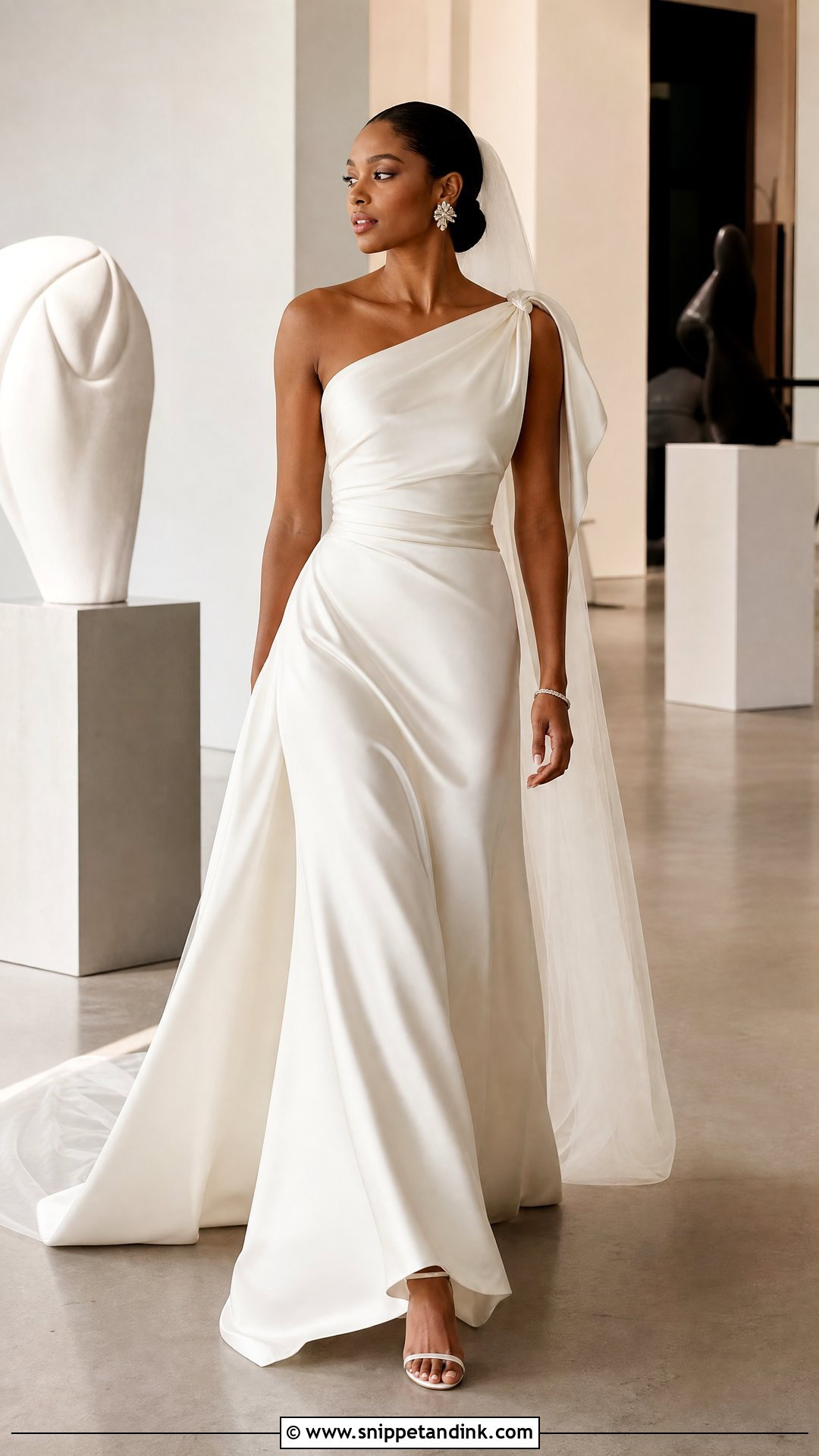
The thing I check at every one-shoulder fitting is twist. If the bodice isn’t balanced, the whole diagonal rotates as you walk and you spend the night tugging it straight. A clean fitted bodice looks architectural, and a draped shoulder looks softer. Keep the skirt narrow for a column or widen it to an A-line for more movement. A smooth updo, one statement earring on the bare side, slim heels and a plain bracelet balance the shape. A cape-style veil fastened at the shoulder echoes the asymmetry; a standard veil works too if it’s light.
9. V Neck Silk Satin Wedding Dress
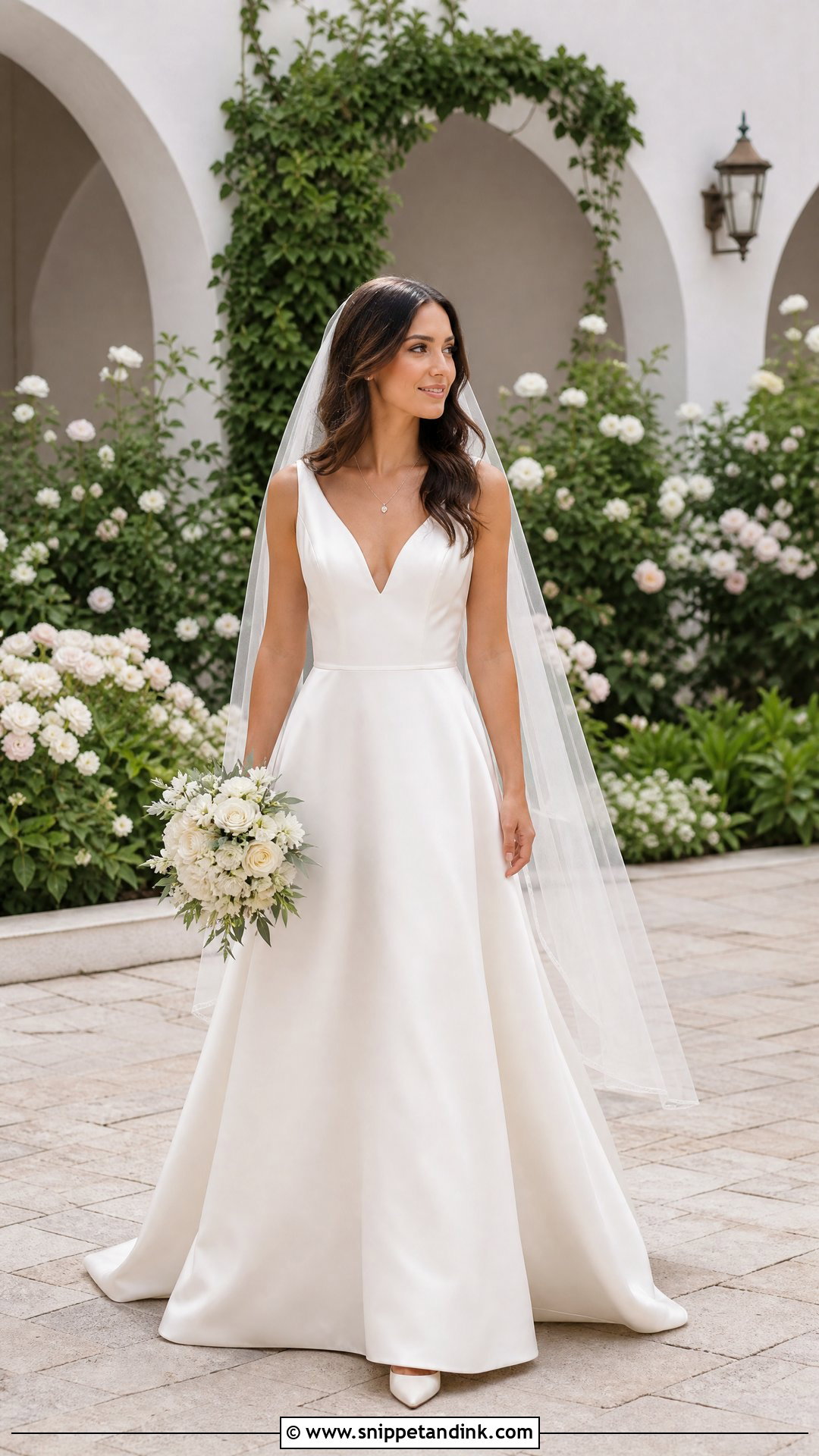
A V lengthens the upper body, and how deep you go is mostly a question of support. A moderate V is comfortable all day. A plunge looks bold, but I’d only send a bride down the aisle in one with illusion mesh or well-placed tape, because satin is heavy and pulls the edges apart as you move. Wide straps and a supportive bodice help fuller busts. Pair it with an A-line for balance or a fitted skirt for a sleeker line. A delicate pendant, soft waves, pointed pumps and a lightweight veil finish it, and it moves easily from a garden ceremony to a ballroom reception.
10. Backless Silk Satin Wedding Dress
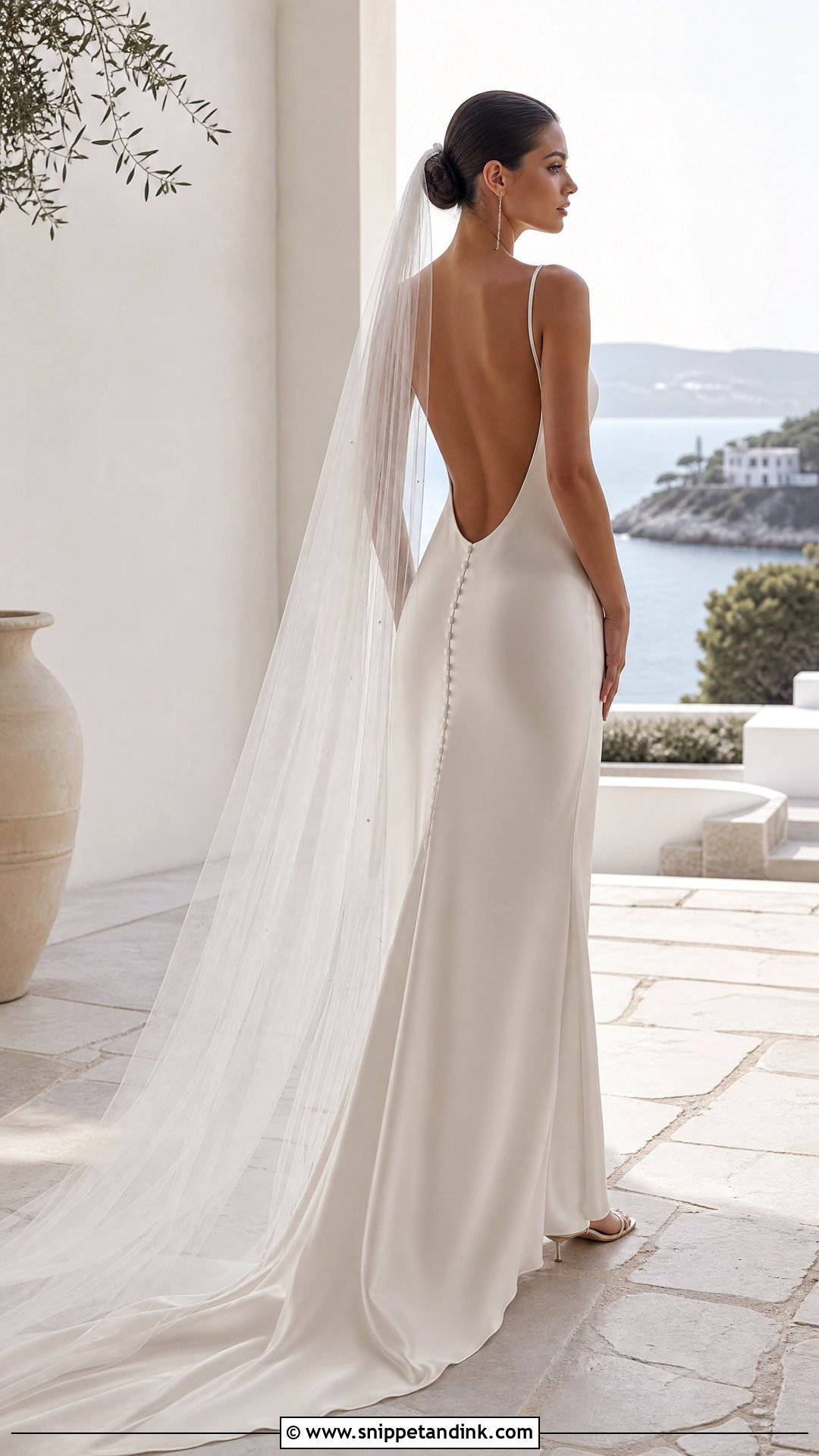
From the front, a backless silk satin wedding dress looks almost plain, and that’s the point: the drama arrives when you turn at the altar. Pick the back by how much skin you’re comfortable showing, from a low scoop to a deep V or a soft cowl. Built-in cups are far more reliable than any stick-on bra, and fashion tape along the edges stops them lifting as you dance. An updo, long earrings, sleek sandals and a veil you’ll take off after the ceremony keep the back on show. Warm-weather and coastal venues suit it best, since there’s nothing here to keep you warm.
11. Corset Silk Satin Wedding Dress
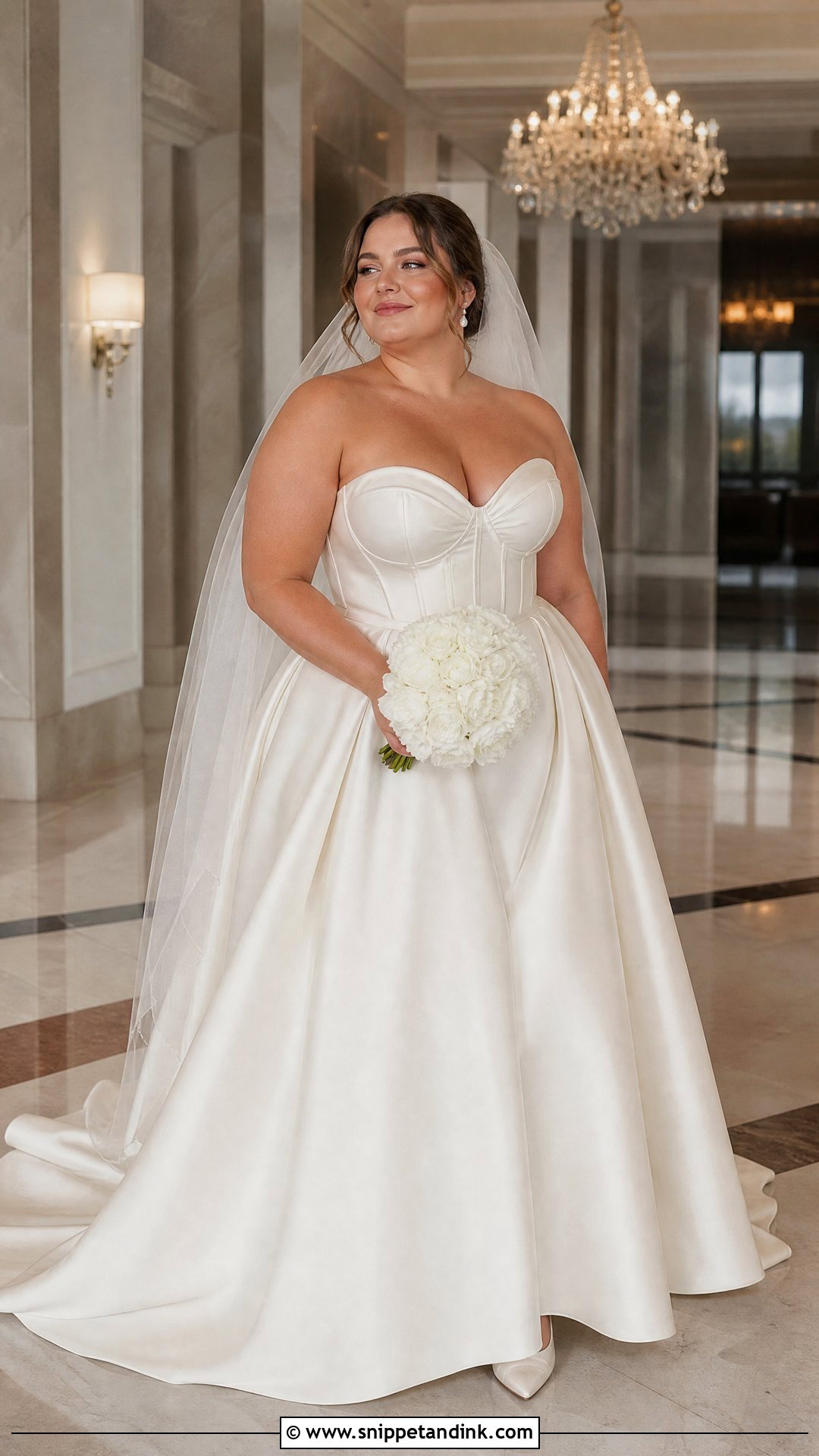
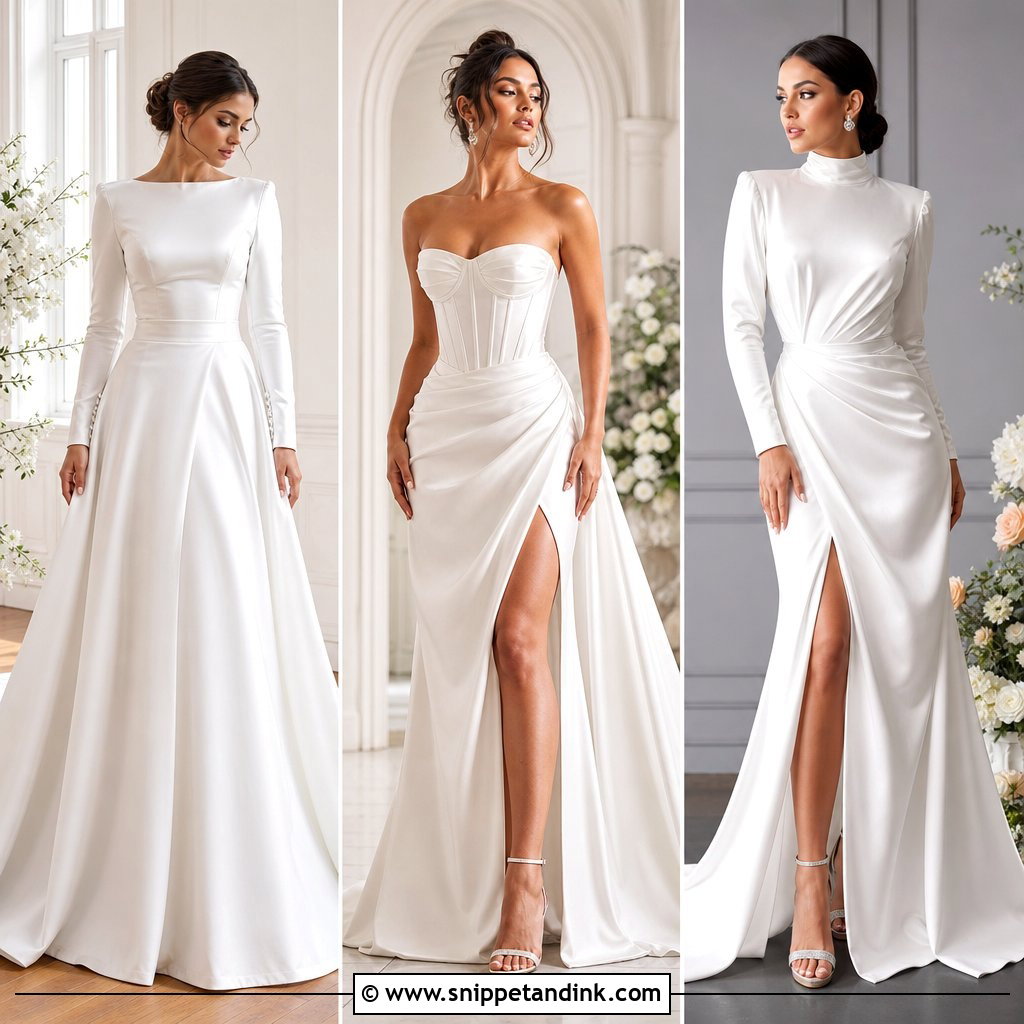
With a corset silk satin wedding dress, the quality is in the seams. Well-shaped panels and internal boning define the torso, while lots of exposed hardware often means the shaping isn’t doing its job. A full skirt makes a princess silhouette; a fitted one is more dramatic. I always ask whether the back laces or zips. Lacing can be adjusted on the morning if your body has changed a little since the last fitting, and a zip can’t. The test is simple: you should be able to breathe deeply, sit and eat dinner. Satin pumps, a clean veil, pearl earrings and a small structured bouquet complete it.
12. Draped Silk Satin Wedding Dress
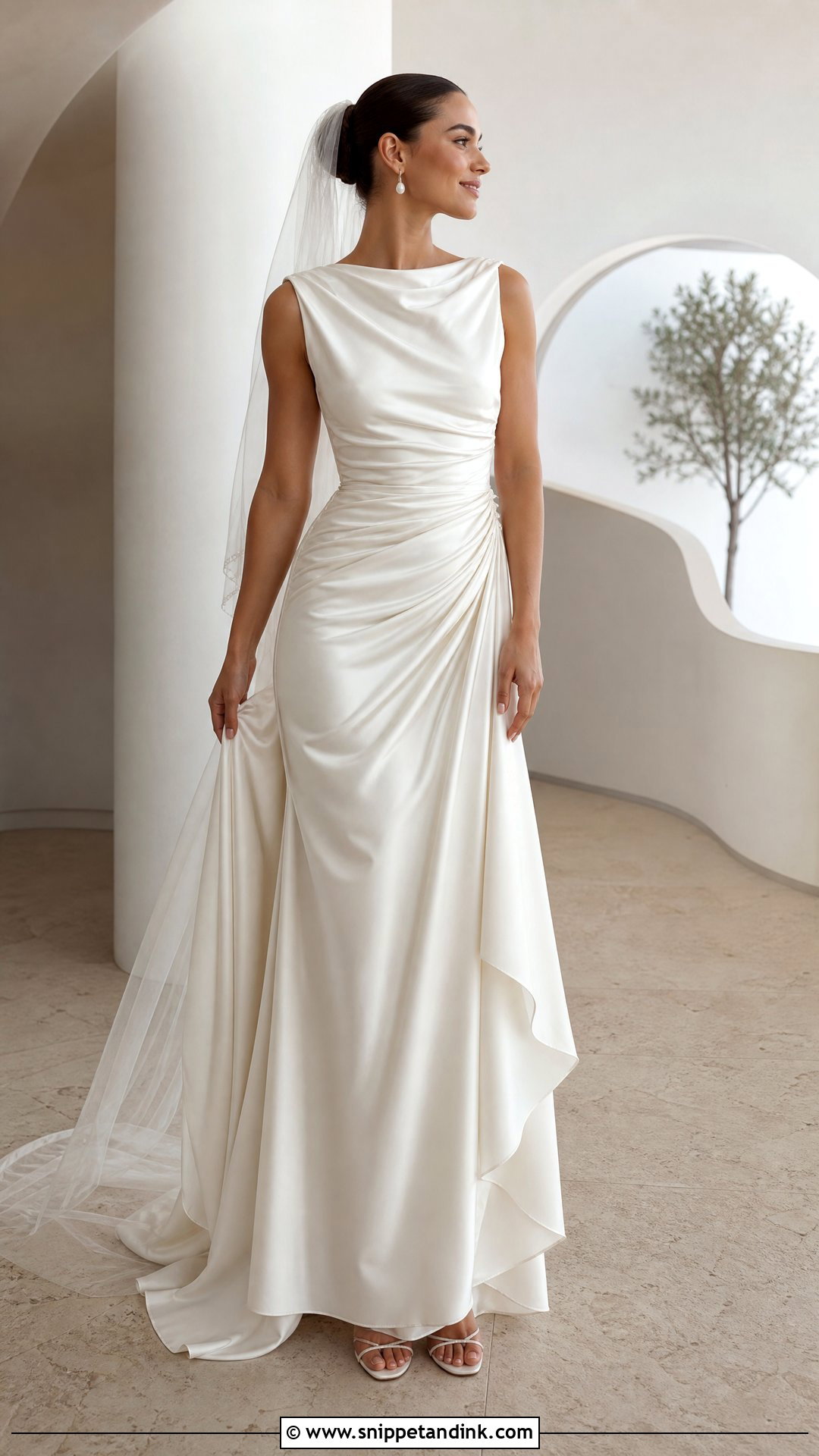
Every fold of satin catches light, so in a draped gown the folds are the decoration, and their placement matters more than the amount of fabric. Draping at the waist defines it, and diagonal ruching across the bodice and hips smooths them. A gathered neckline or a cascading panel adds movement as you walk. During alterations I watch for drapes that pull rather than fall, because a pulled drape just looks like a creased dress. Minimalist earrings, a clean bun, strappy heels and a sheer veil keep it uncluttered.
13. Mermaid Silk Satin Wedding Dress
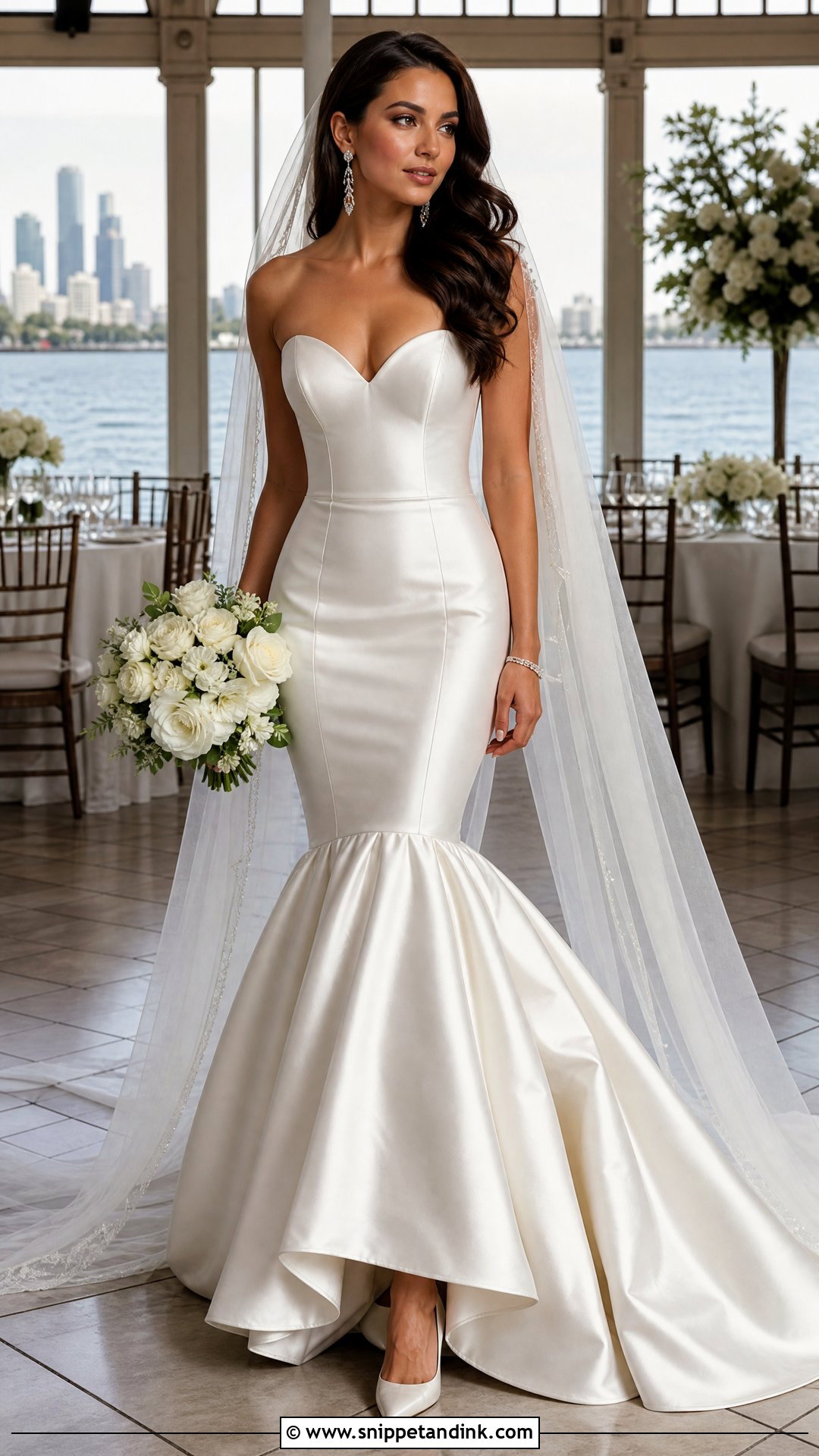
In satin, a mermaid is the most revealing silhouette on this list. The fabric follows every curve and shows every seam, so seam placement has to do the shaping that lace does on other gowns. A sweetheart, square or off-the-shoulder neckline balances the flare. At the fitting I make brides climb a few steps; if you can’t, the flare needs to move up. Pointed heels, drop earrings, a long veil and polished waves or a sculpted bun finish it.
14. A Line Silk Satin Wedding Dress
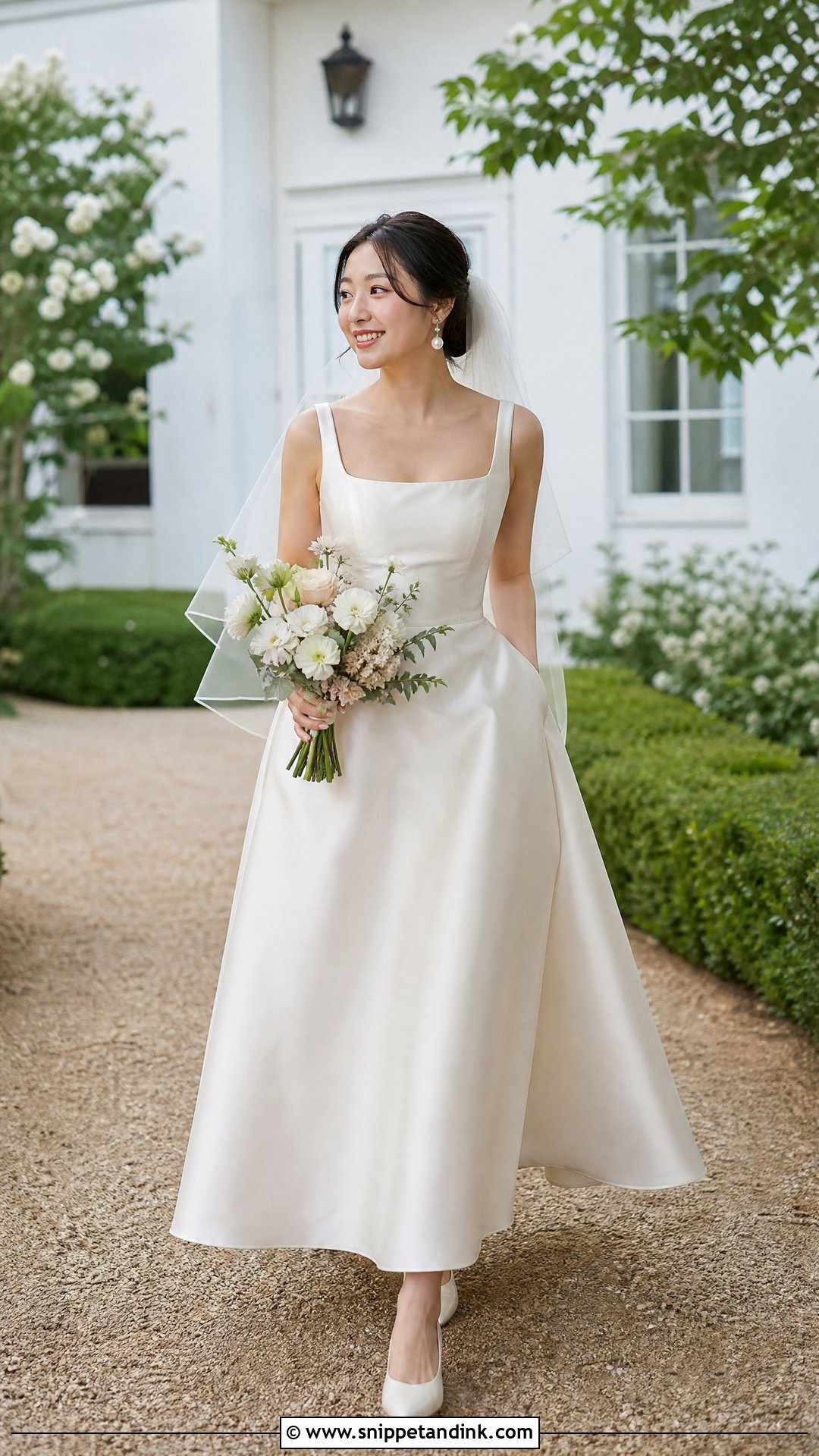
When a bride can’t decide, I start her in an A-line, because it shows how she feels in satin without the extremes of a mermaid or ball gown. The skirt widens gradually from a fitted bodice, defining the waist without clinging to the hips, and it takes almost any neckline. The weight of the satin changes it a great deal: heavier cloth gives a fuller, more formal skirt, and lighter cloth swings and feels relaxed. Pockets only really work in the heavier cloth, since in light satin they drag the skirt out of line. Block-heel pumps, pearl earrings, a fingertip veil and a structured bouquet complete it.

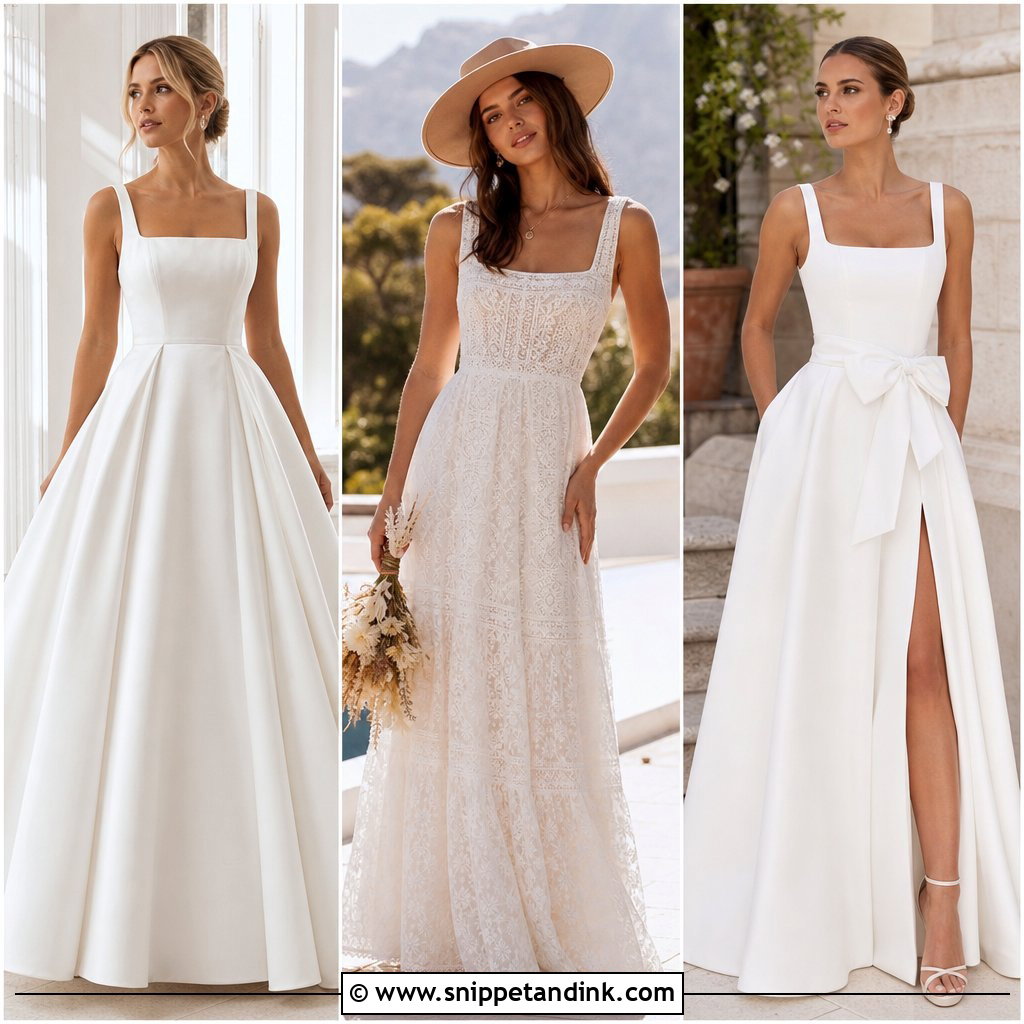
15. Empire Waist Silk Satin Wedding Dress
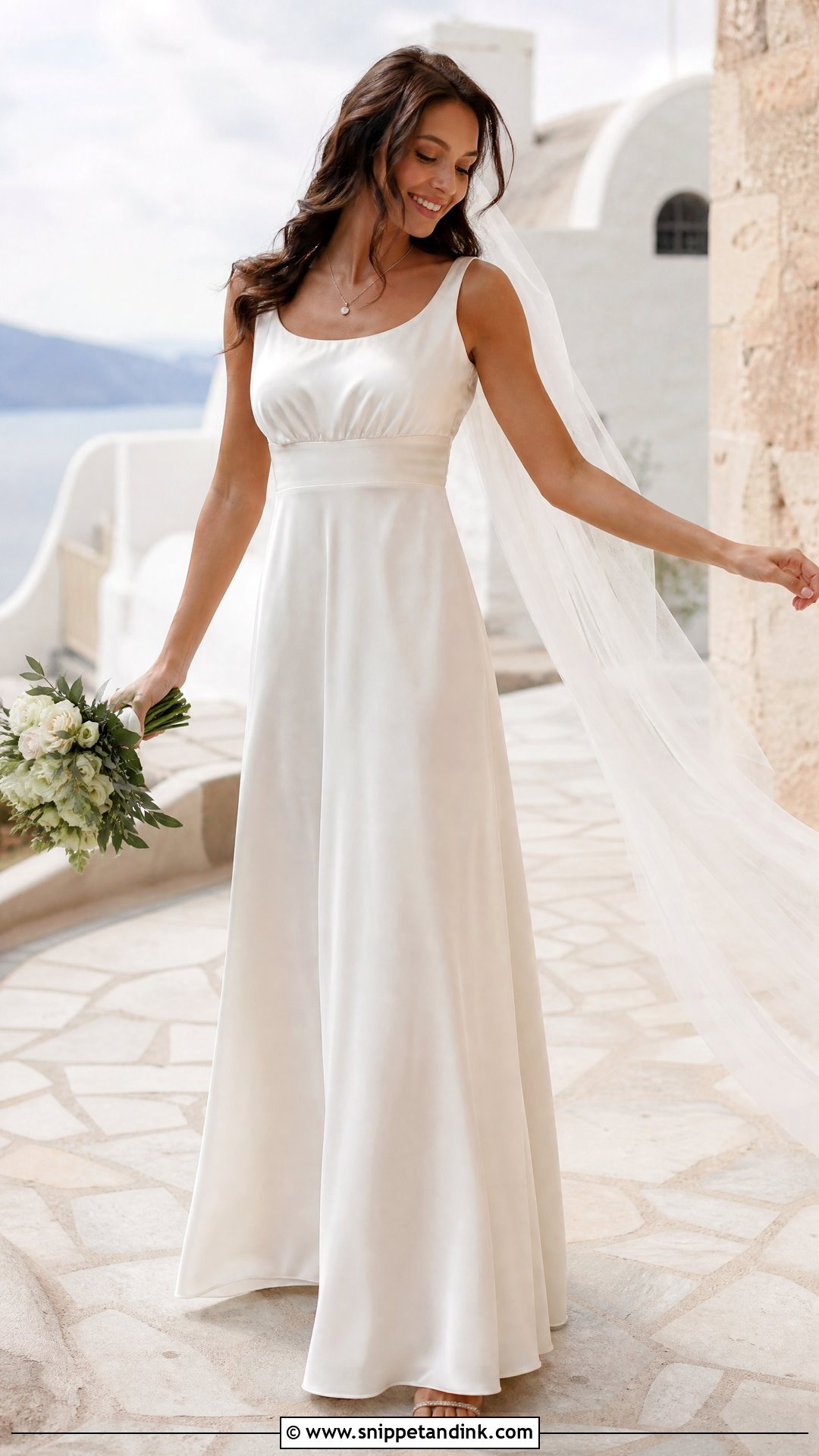
The empire seam sits just below the bust and everything beneath it falls free, so nothing presses on the waist. That makes it the gown I suggest to expectant brides and to anyone who hates feeling held in. A rounded, square or softly draped neckline suits the raised waistline. Keep the gathering at the seam light if you want a long, clean line, since heavy gathers add bulk at the bust. Fluid satin swings and shifts as you walk, so have it hemmed carefully in your wedding shoes. Delicate sandals, a simple pendant, loose waves and a light veil suit outdoor and destination ceremonies.
16. High Neck Silk Satin Wedding Dress
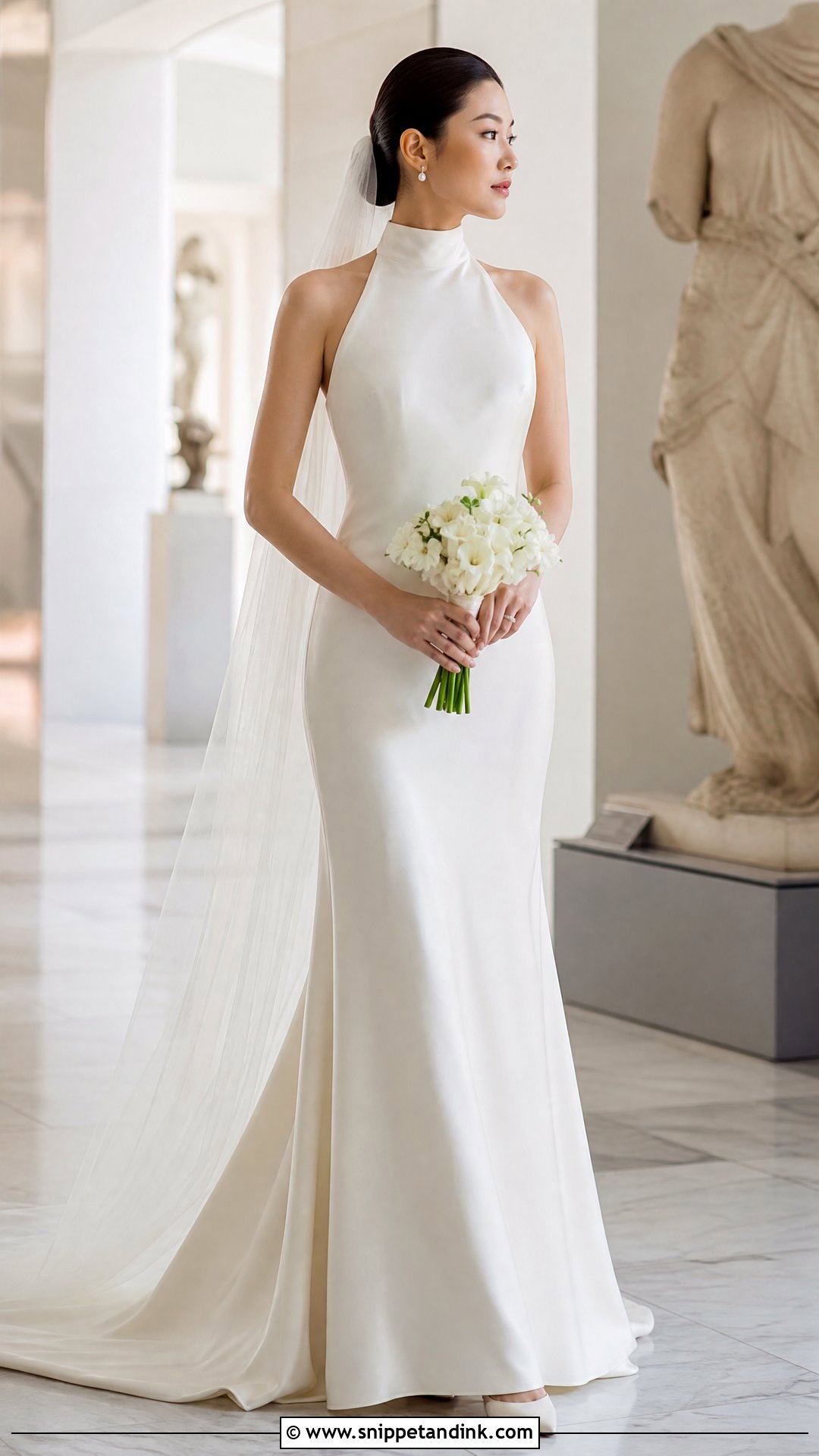
A high neck silk satin wedding dress gives one long, unbroken line through the bodice. A mock neck feels modern, and a softly gathered neckline has a hint of vintage. Sleeveless versions show the shoulders; long sleeves make it formal. I’d skip the necklace, because the neckline is already doing that job, and wear small earrings with an updo and a veil anchored beneath it. Check the collar sitting down as well as standing, since it often tightens when you sit. A keyhole or open back adds contrast and, in summer, a little welcome air.
17. Tea Length Silk Satin Wedding Dress
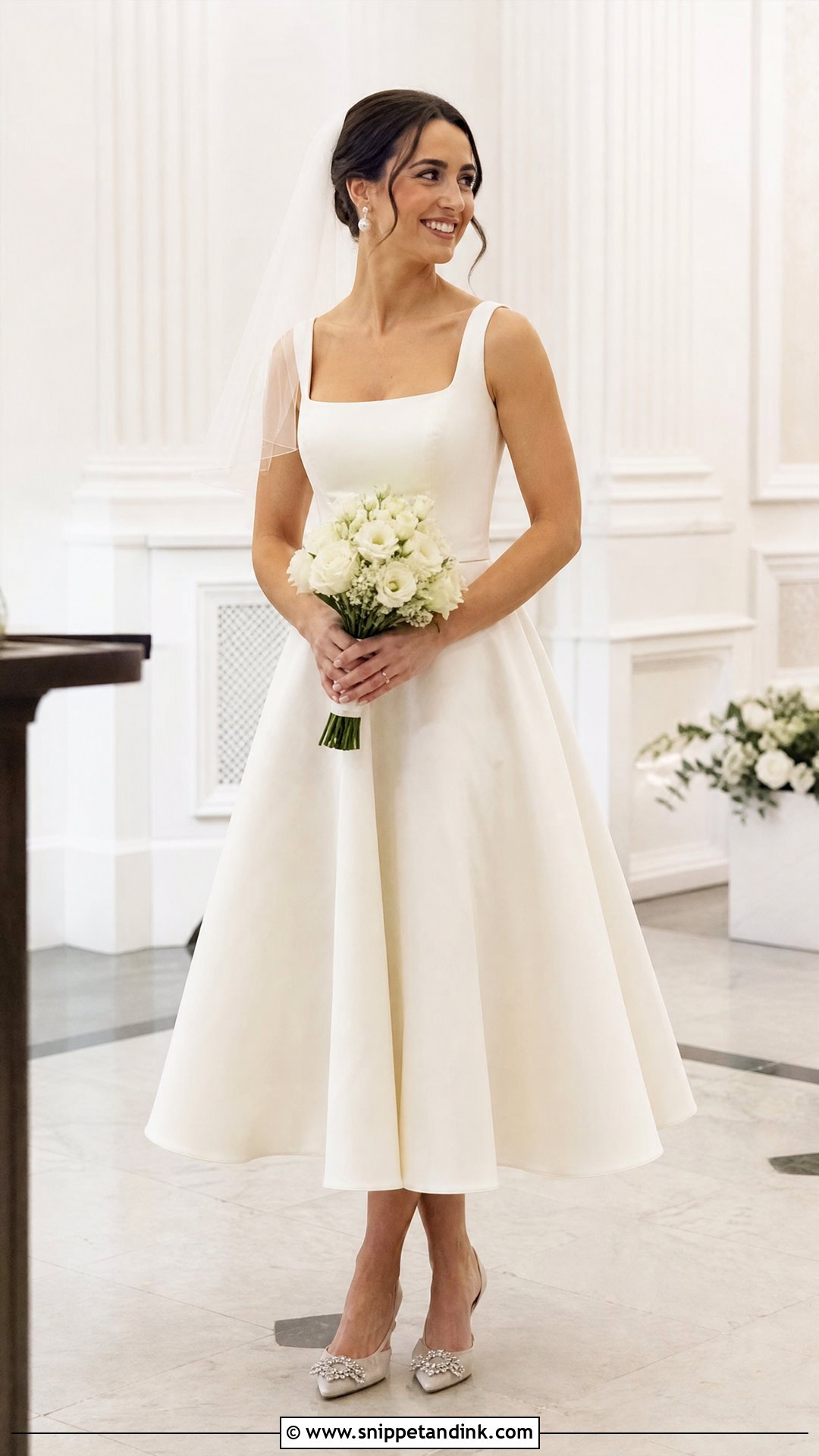
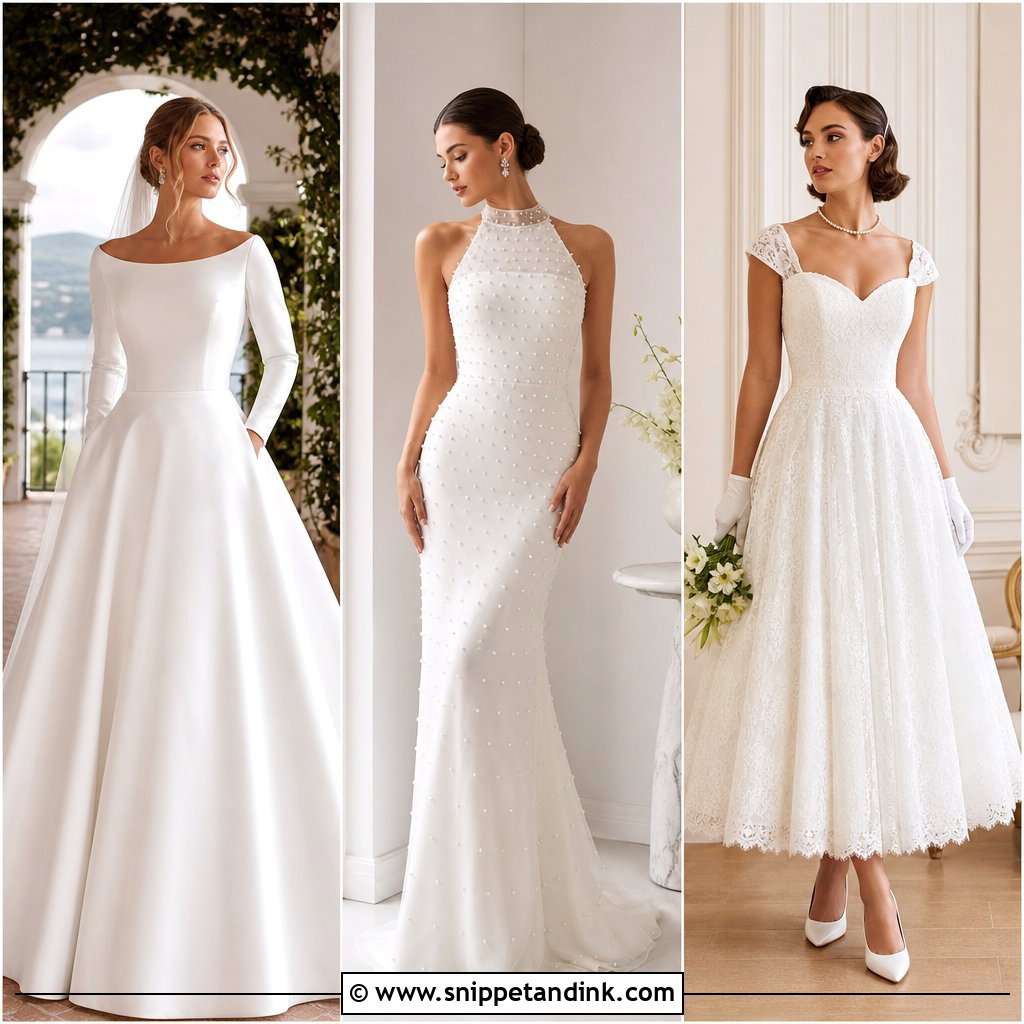
In a tea-length dress the shoes are half the outfit, so I’d buy them before the hem is set, and buy them comfortable. The hem usually lands between the knee and the ankle. A fitted bodice with a softly flared skirt is the classic balance, and a slimmer skirt feels more current. Embellished pumps, a short veil, pearl earrings and a compact bouquet keep the proportions right. Check the shoe colour against the satin in daylight, because ivory shoes beside a bright white dress can look dingy. It’s easy to dance in and suits civil ceremonies, brunch weddings or a second look for the reception.
18. Silk Satin Wedding Dress With Detachable Overskirt
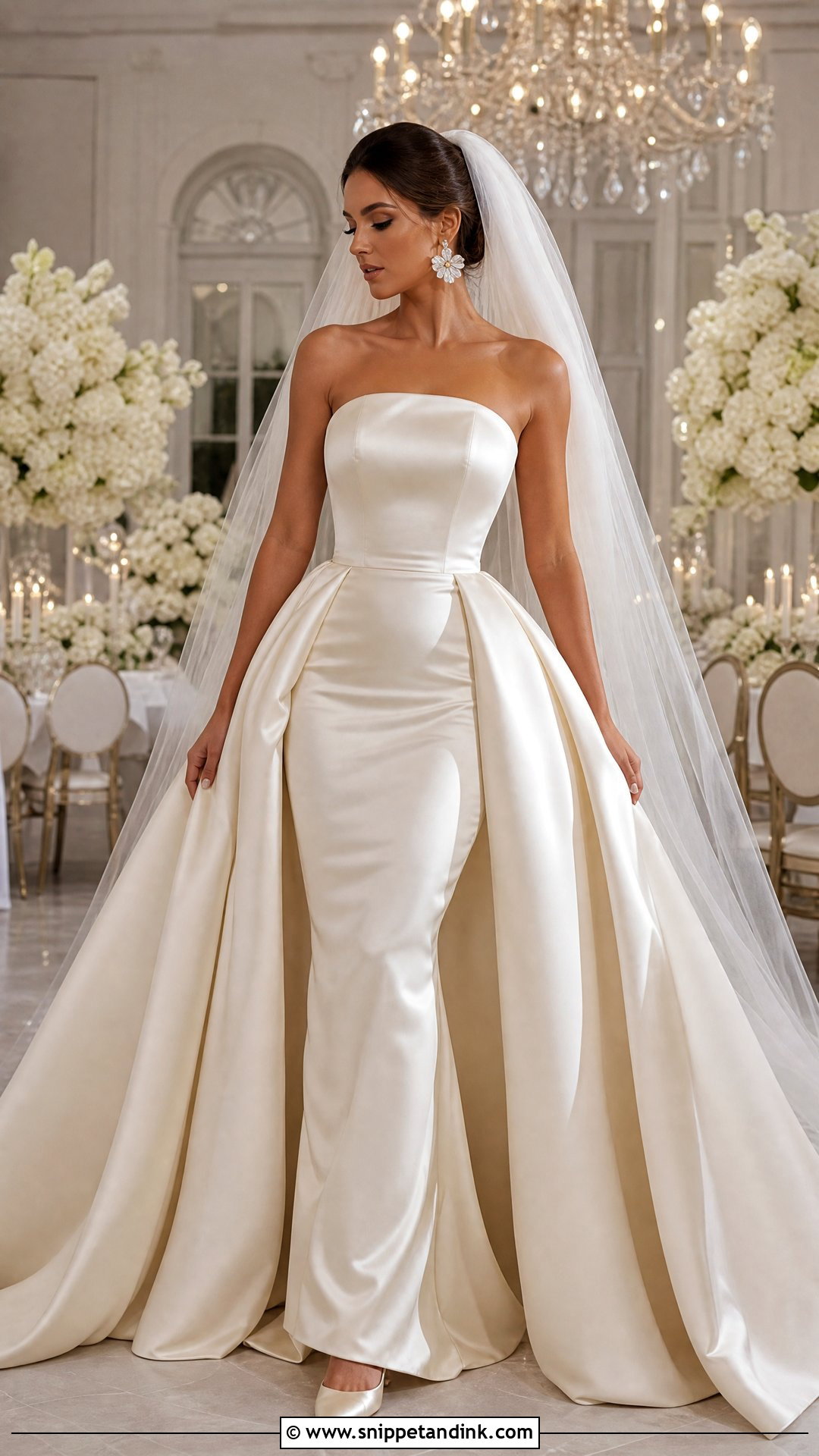
A detachable overskirt turns a ceremony ball gown into a slimmer column, sheath, or mermaid dress for the reception. What makes or breaks it is the attachment: it should hide under a belt, fold or structured seam so nothing looks bolted on. Hooks are faster than buttons when someone’s helping you in a hurry. I’d do a full, timed practice run with whoever will help before the day. Wear a long veil and pointed pumps for the ceremony, then drop the veil and add statement earrings later.
19. Silk Satin Wedding Dress With Bow Back
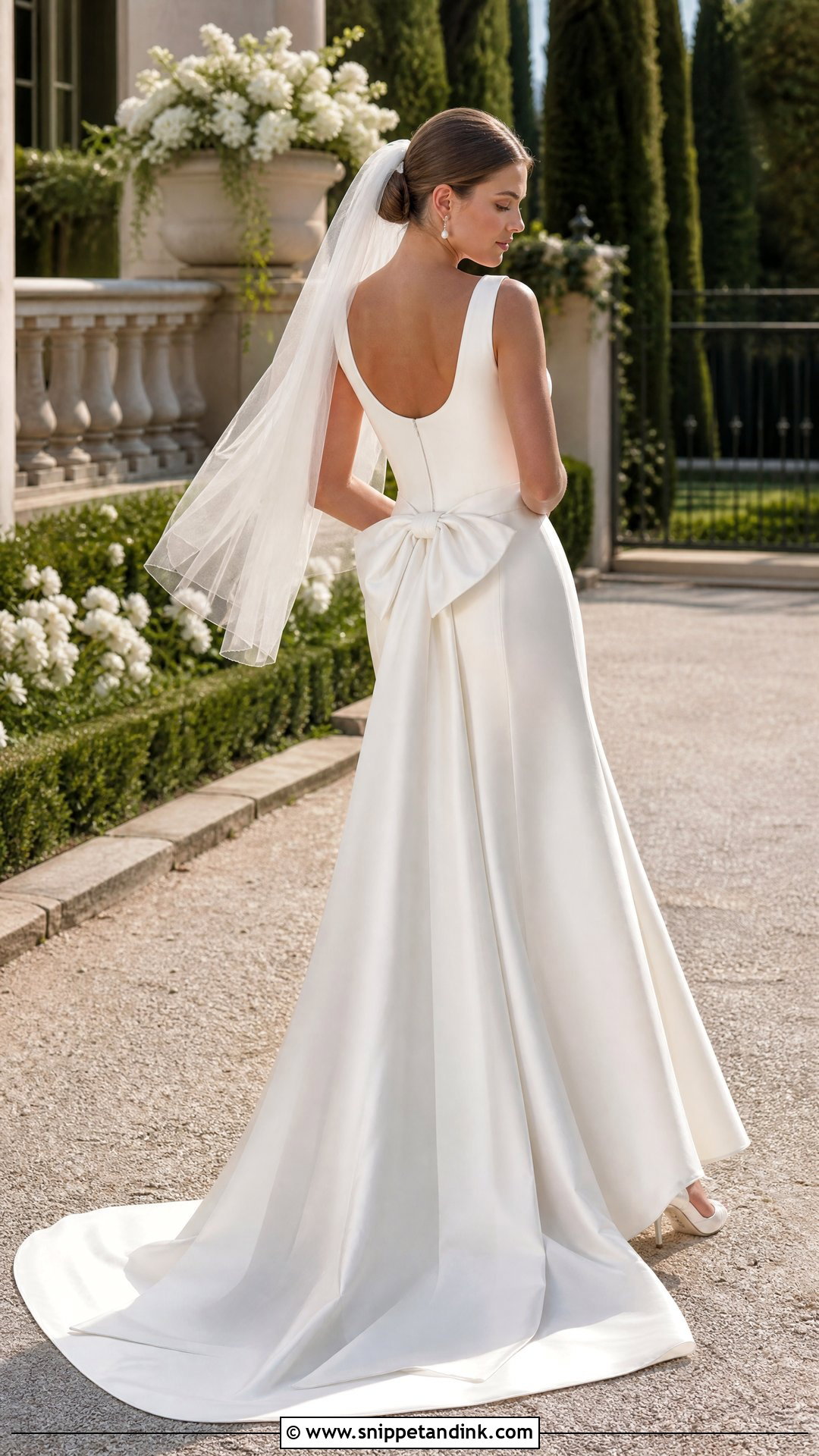
The weight of the satin decides the bow. Crisp satin makes a structured bow that holds its loops, while lighter silk satin gives softer loops and long trailing tails. The bow can sit at the waist, trail down the skirt or form part of a detachable train. My check is to sit in it, because a large bow at the small of the back can push you forward on a dining chair and add bulk at the waist. Keep the front simple and the veil sheer so the bow shows through it. A low bun, pearl earrings and classic pumps are enough.

20. Silk Satin Wedding Dress With Cape
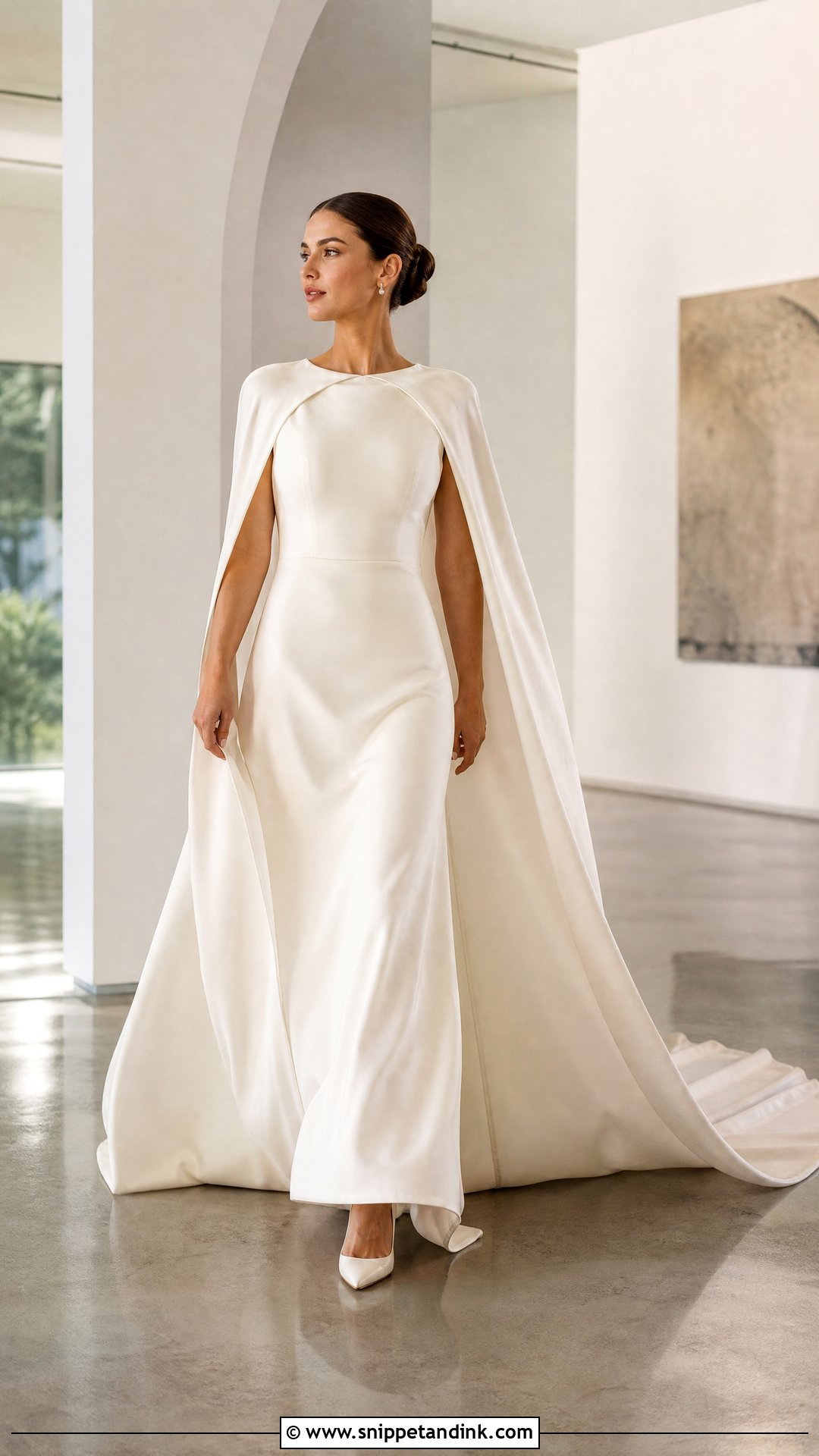
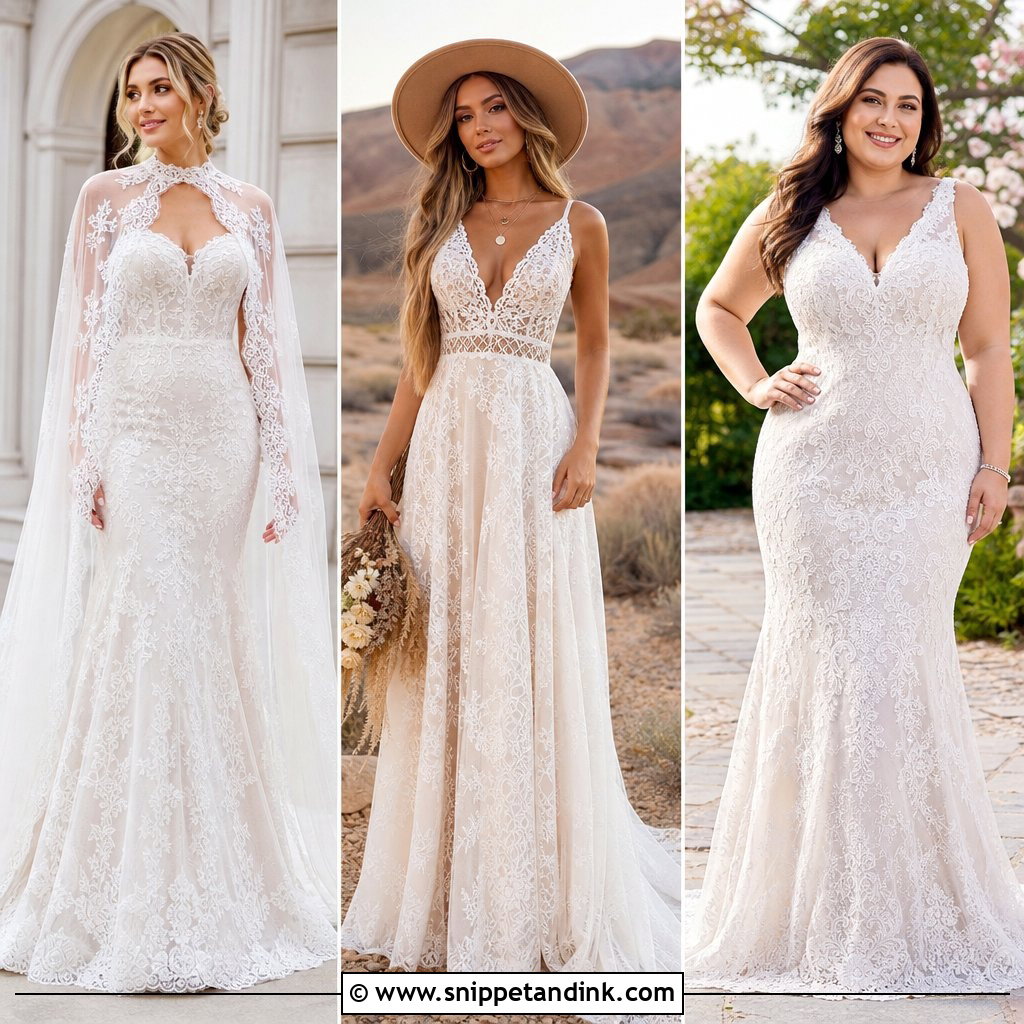
I treat a cape as an alternative to a veil, not an addition, since wearing both usually means one hides the other. It can fall from the shoulders, hang from the back neckline or fasten under a structured collar. Sheer tulle moves lightly; matching satin is heavier and more regal, but also warmer. Underneath, a streamlined column, A-line or fitted gown keeps the layers from fighting. Pointed pumps, small earrings and a sleek updo finish it. Make sure the cape comes off in seconds, because you won’t want it on a crowded dance floor.
A Fitting Calendar That Leaves Room for Satin
Satin gowns need time, and the fabric doesn’t forgive rushed alterations. Lead times vary widely between designers and shops, so treat these as my planning habits rather than fixed rules.
- Order around eight to ten months ahead if you can. Many made-to-order gowns take several months to arrive, and rush fees add up quickly.
- Start alterations roughly two to three months before the wedding. Satin keeps the marks of old needle holes, so a careful seamstress pins inside the seam allowance and avoids unpicking more than she needs to.
- Plan on two or three fittings, and bring your wedding shoes and your actual underwear to every one.
- Hold the final fitting in the last couple of weeks, and avoid big changes to training or diet after it.
- Collect the dress pressed, lay it as flat as you can in the car, and hang it by its inner hanging loops, never by the straps.
Sweat, Flash and Daylight: How Satin Reads in Photos
Silk satin shows moisture. Sweat at the underarms or lower back can darken the fabric in a patch that a camera picks up long before any guest would notice it. For summer weddings and nervous brides, I sew removable dress shields under the arms and ask that antiperspirant goes on early and dries fully before the dress does, since some formulas leave white or greasy marks on silk.
Direct flash creates bright hotspots on satin, especially across a smooth bodice and the front of a full skirt. Tell your photographer what the gown is made of; most will bounce or diffuse the light. Outdoors, open shade is kinder to satin than midday sun, which can wash the sheen on a white gown into a flat glare.
Does It Still Feel Right at Midnight?
Look past the neckline and the skirt for a moment. Notice how the satin feels against your skin, how the silhouette moves and whether the structure supports you without effort. Satin reflects light and shows construction clearly, so good alterations, smooth underwear and a proper steam on the morning matter more than with almost any other fabric. Match the gown to your venue, then leave room for the details that are yours, whether that’s a veil, a cape, a bow or a piece of family jewelry. Whichever silhouette wins, you should be able to walk, sit and celebrate in it without thinking about the dress at all.
You'll Like These Ideas:









Leave a Reply