
What I notice first in Italian bridal design isn’t decoration; it’s how much of the gown’s shape is built inside it. Sculpted Mikado skirts, lace sleeves, fluid silk and fitted corsetry all depend on careful tailoring and good fabric. An Italian wedding dress can lean traditional, modern or somewhere in between, and the venue and season should steer you as much as taste does. A cathedral veil suits a formal gown; a short veil and low heels suit a small civil ceremony. Below are twenty complete looks across silhouettes, body types and settings, with the fitting notes I’d give you for each.
Mikado, Crepe or Silk: How Each Fabric Behaves on the Day
Most of the gowns below come down to one of three fabric families, and each has habits you’ll want to know before you commit.
Mikado
Heavy and crisp, it holds pleats, Basque waists and full skirts without much petticoat. It’s warm, and it creases across the lap after you sit for dinner. I’d avoid it for a midsummer outdoor ceremony.
Crepe
Matte and fluid, it gives clean lines and photographs without glare. Thinner crepes cling and show underwear seams, so ask about weight and look at it against a light.
Silk satin and chiffon
Light and cool to wear, with a lovely drape. Satin shows water marks and every wrinkle; chiffon is sheer and needs lining. Both suit warm weather far better than Mikado.
1. Italian Lace A-Line Wedding Dress
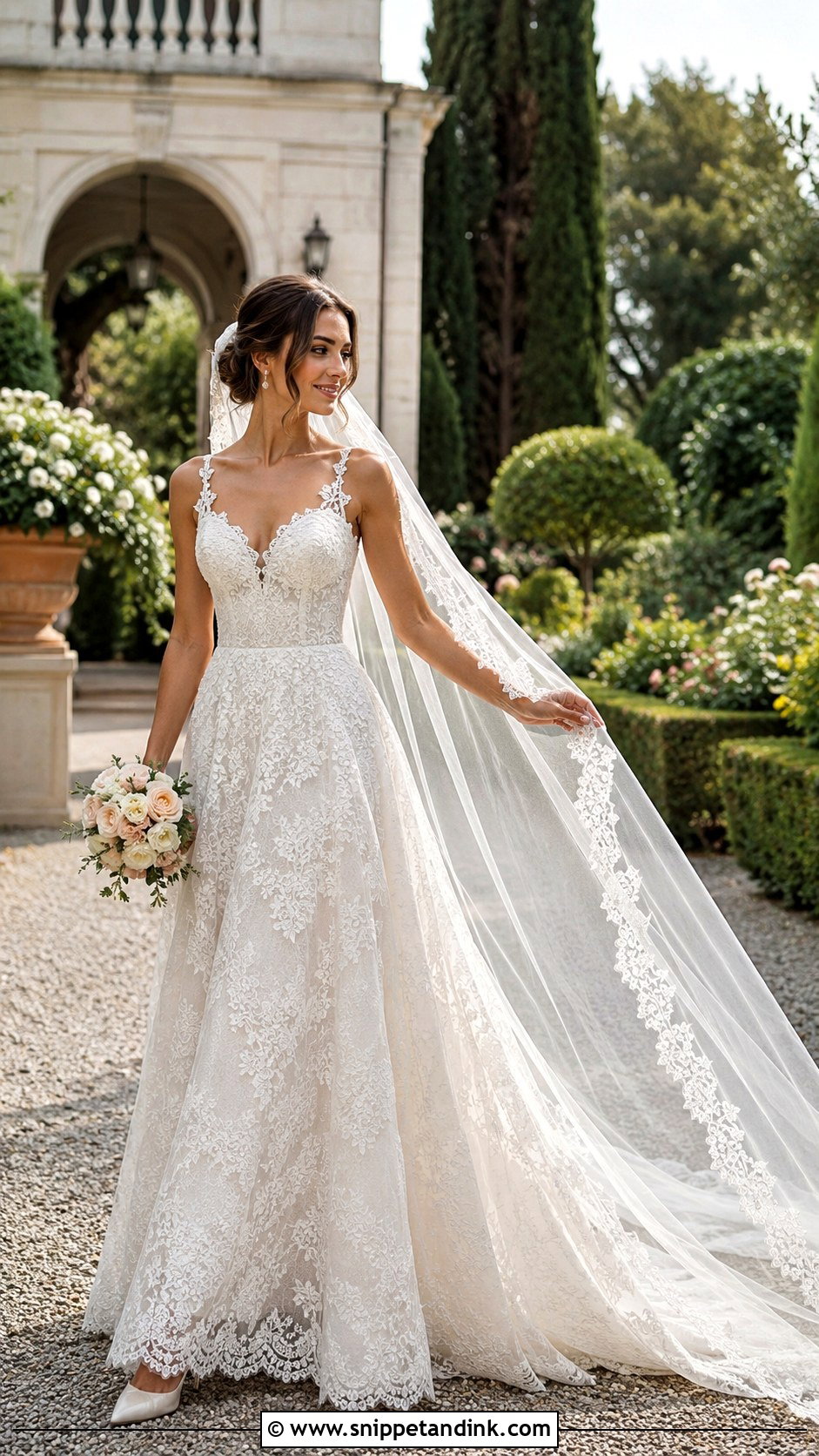
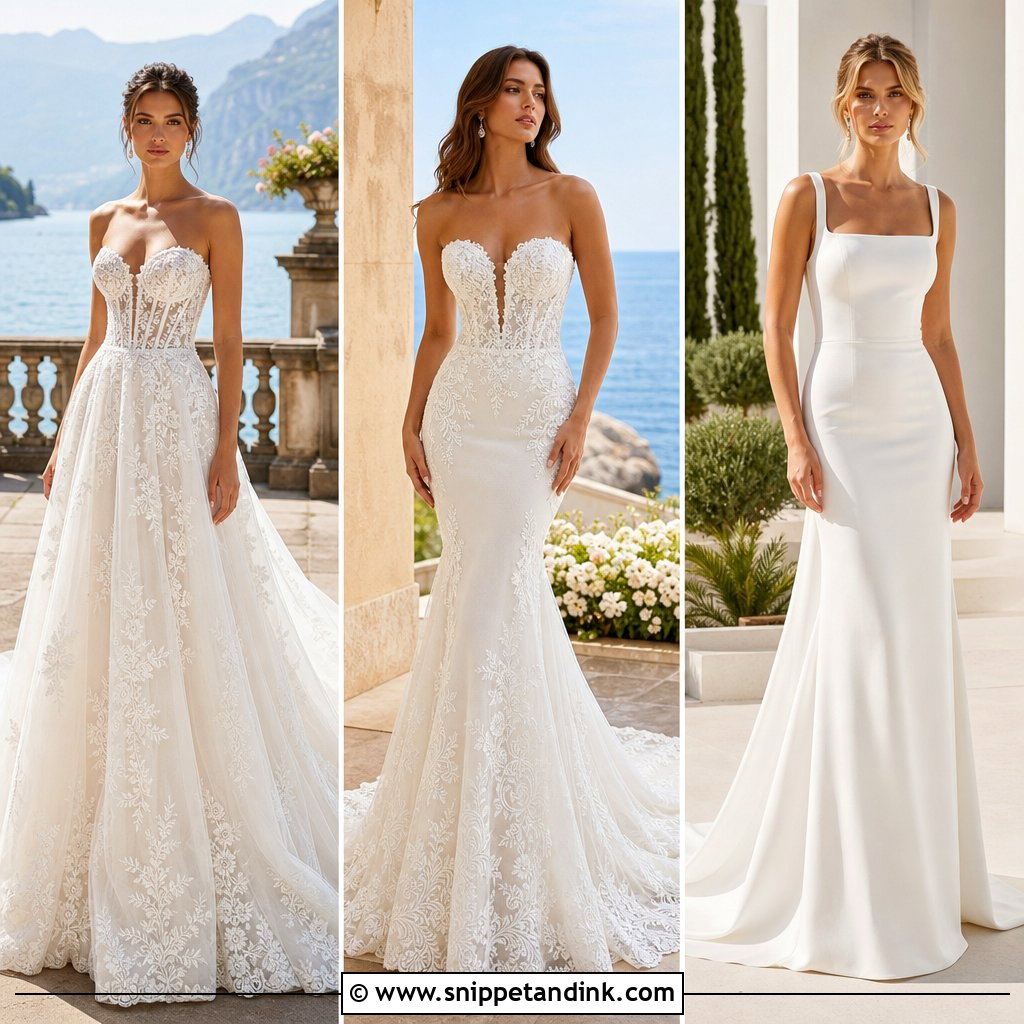
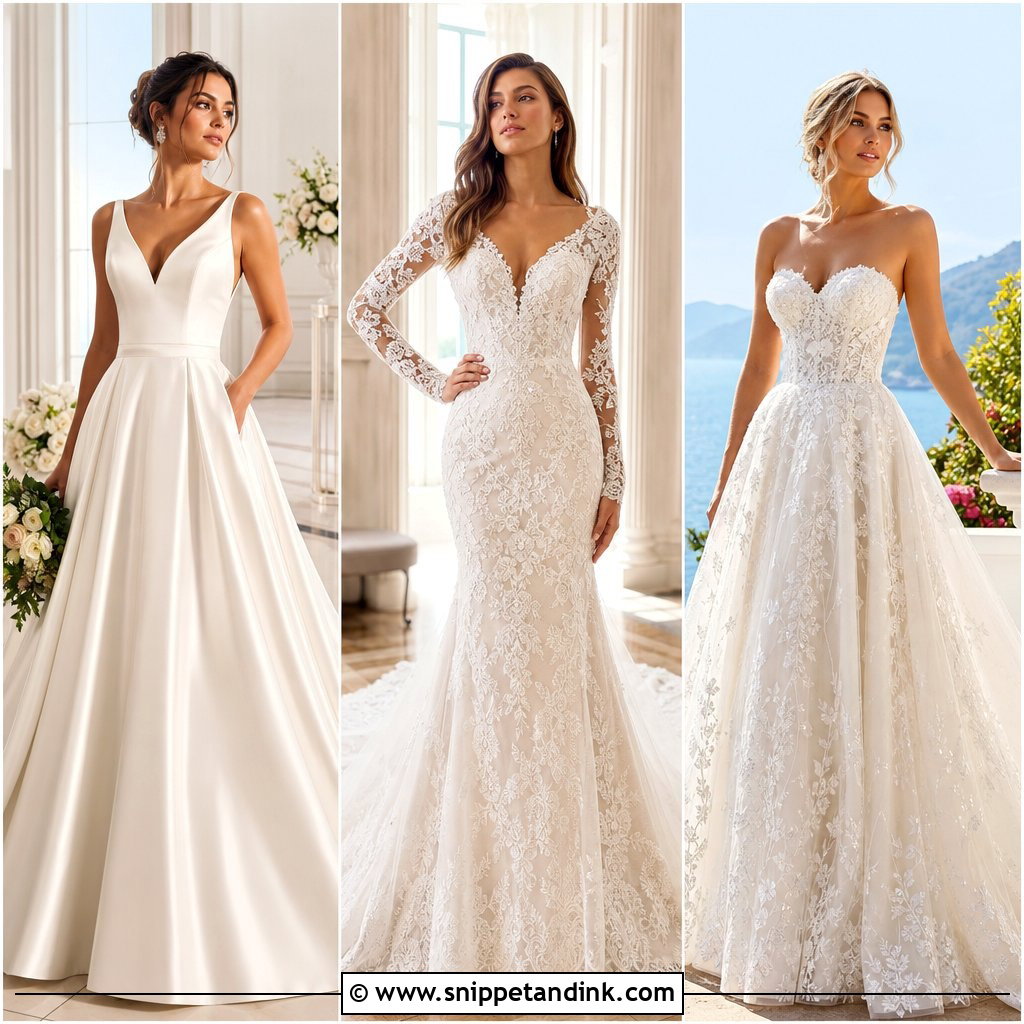
Lace on an A-line is forgiving, which is why I suggest it to brides who aren’t sure of their shape yet. The bodice should be softly structured with a defined waist and delicate straps, and the lace should run onto the skirt without an obvious seam line. The flare lets you walk freely. A low chignon keeps the neckline visible, and a fingertip veil with a narrow lace edge finishes it. For an outdoor villa, ask for a lighter lining and a train short enough that you aren’t dragging it across gravel.
2. Italian Satin Ball Gown Wedding Dress
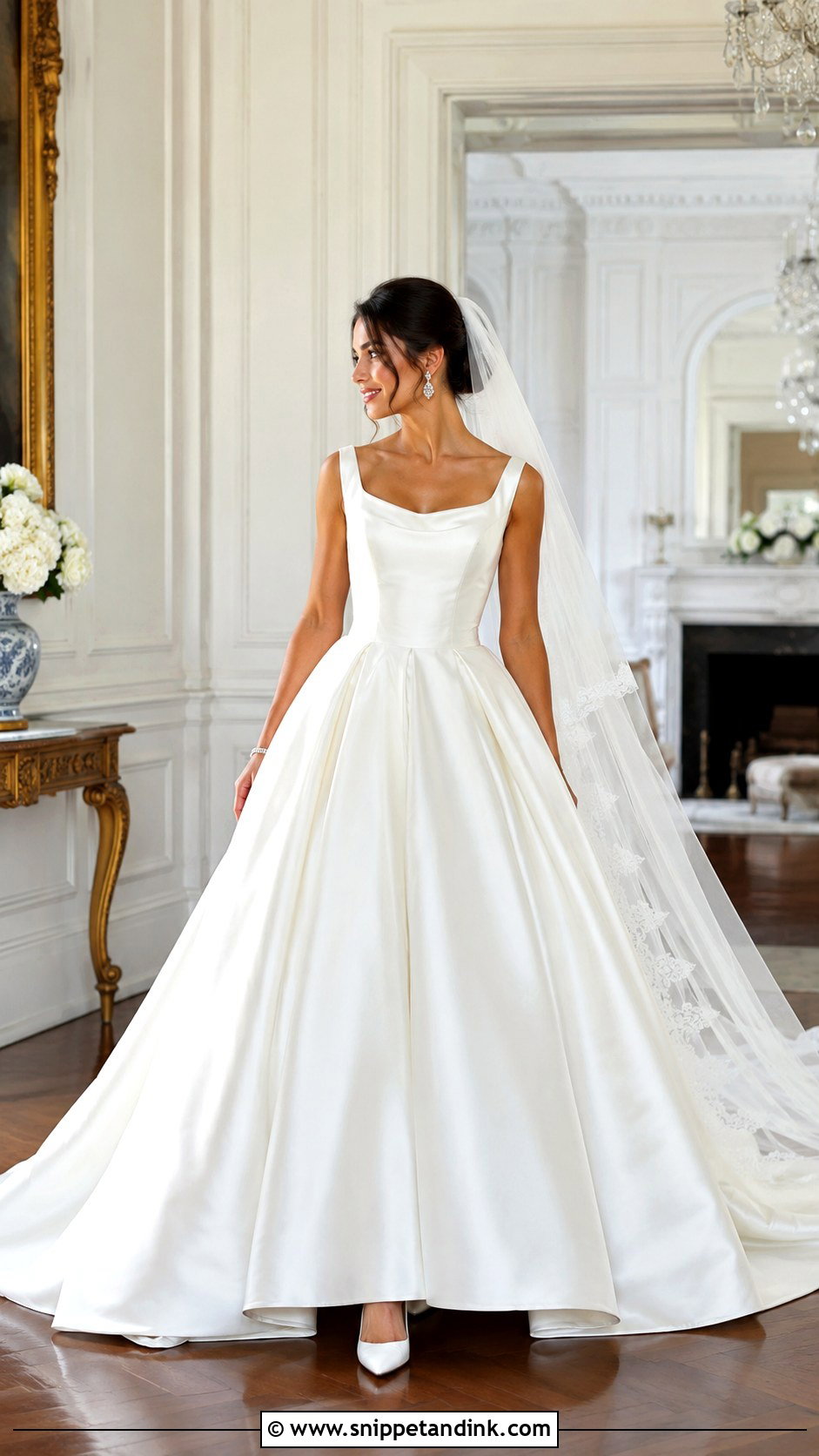
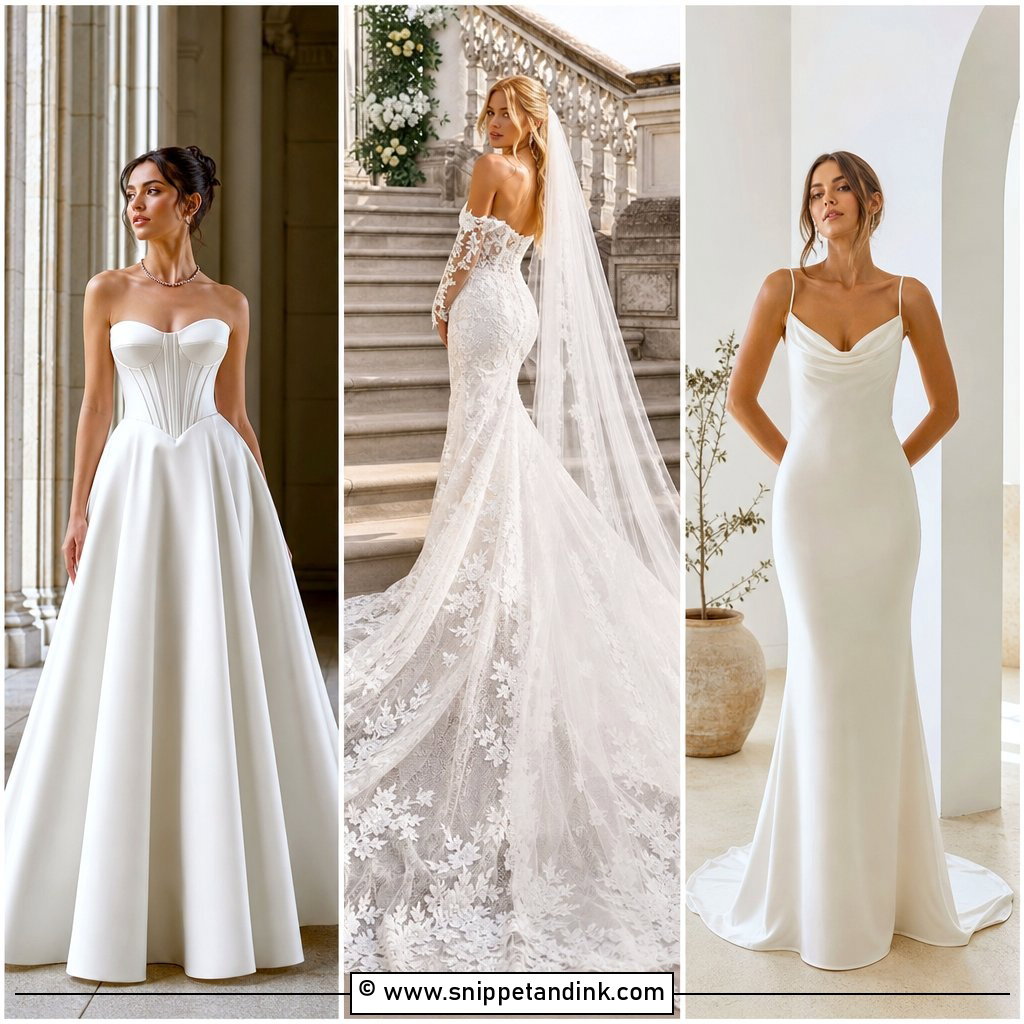
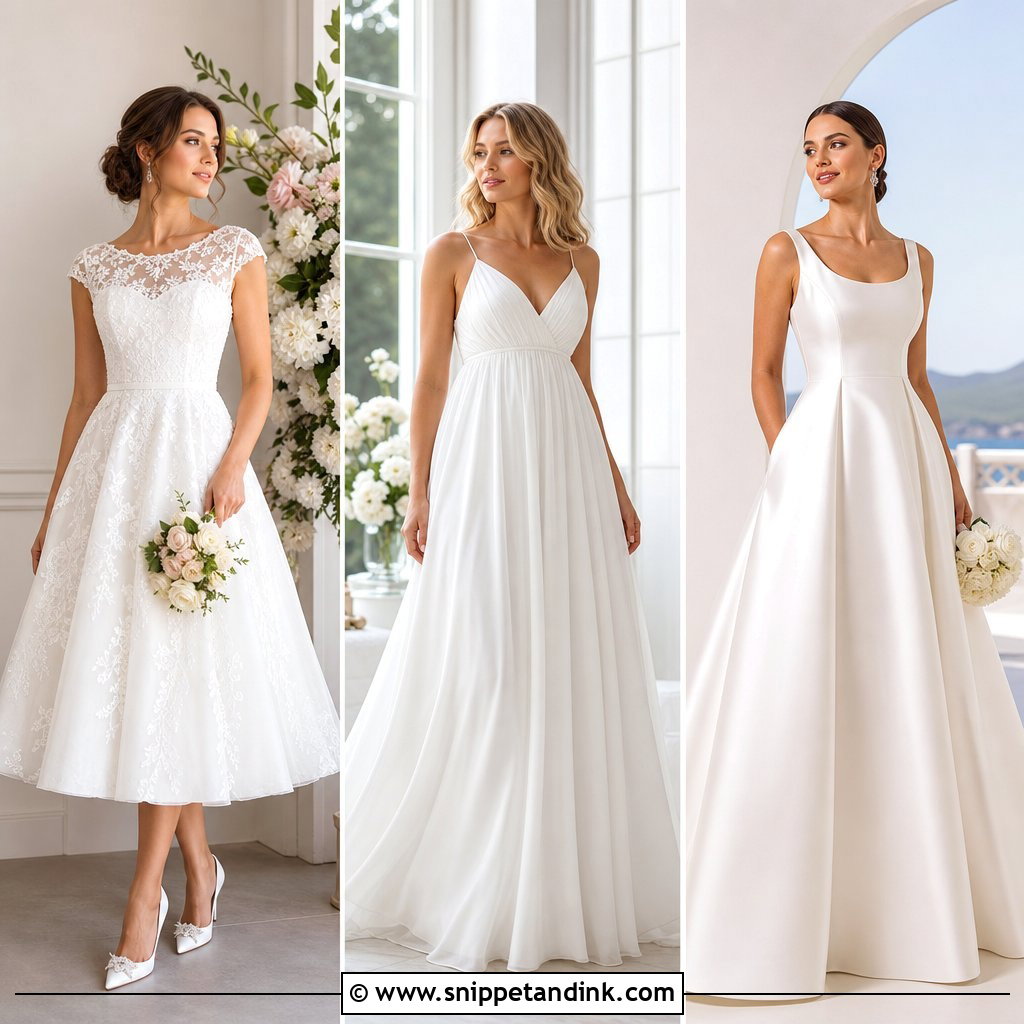
Satin ball gowns get their drama from the fabric’s sheen and nothing else, so the seams have to be immaculate. Choose a fitted bodice with a gently curved neckline and a structured petticoat that holds the skirt out without padding the waist. A long veil anchored under a neat bun, crystal earrings and satin pumps finish it; I’d skip a necklace entirely. A narrow belt in the same ivory adds definition if you want it. Give it a large room, such as a grand hotel or ballroom, because this skirt needs space around it.
3. Italian Mikado Basque Waist Wedding Dress
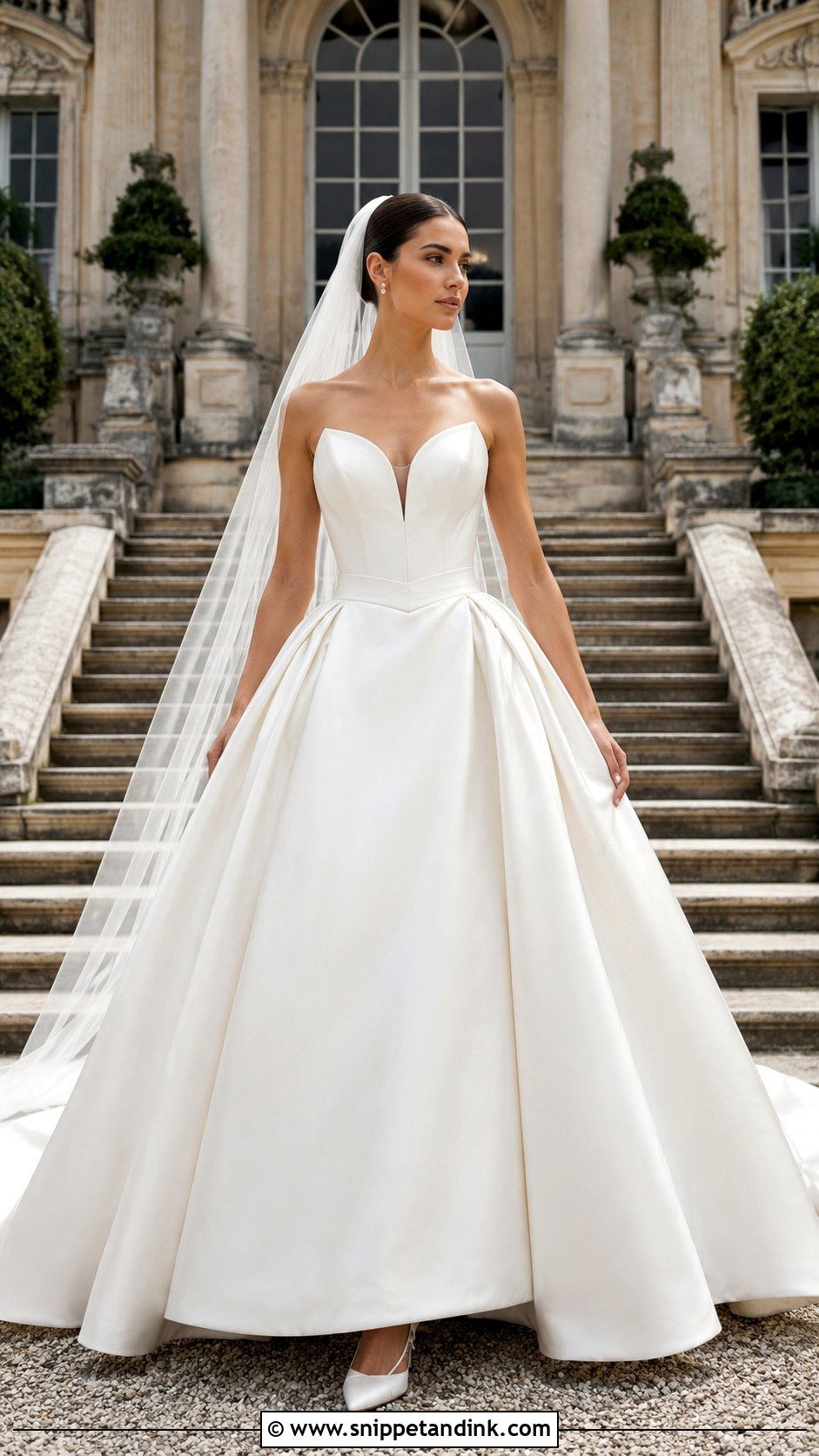
Mikado is stiff enough to hold architecture, which is what gives a Basque waist wedding dress its sculpted shape. The dropped, pointed waist lengthens the torso, and a structured bodice gives real support. I prefer deep pressed pleats to gathering on these skirts, because gathered Mikado puffs out at the hip. A smooth twisted bun matches the clean lines, and pearl studs and slingbacks keep everything else quiet. One honest drawback: Mikado creases at the lap after a long sit, so book steaming before the reception photos if you can.
4. Italian Silk Slip Wedding Dress
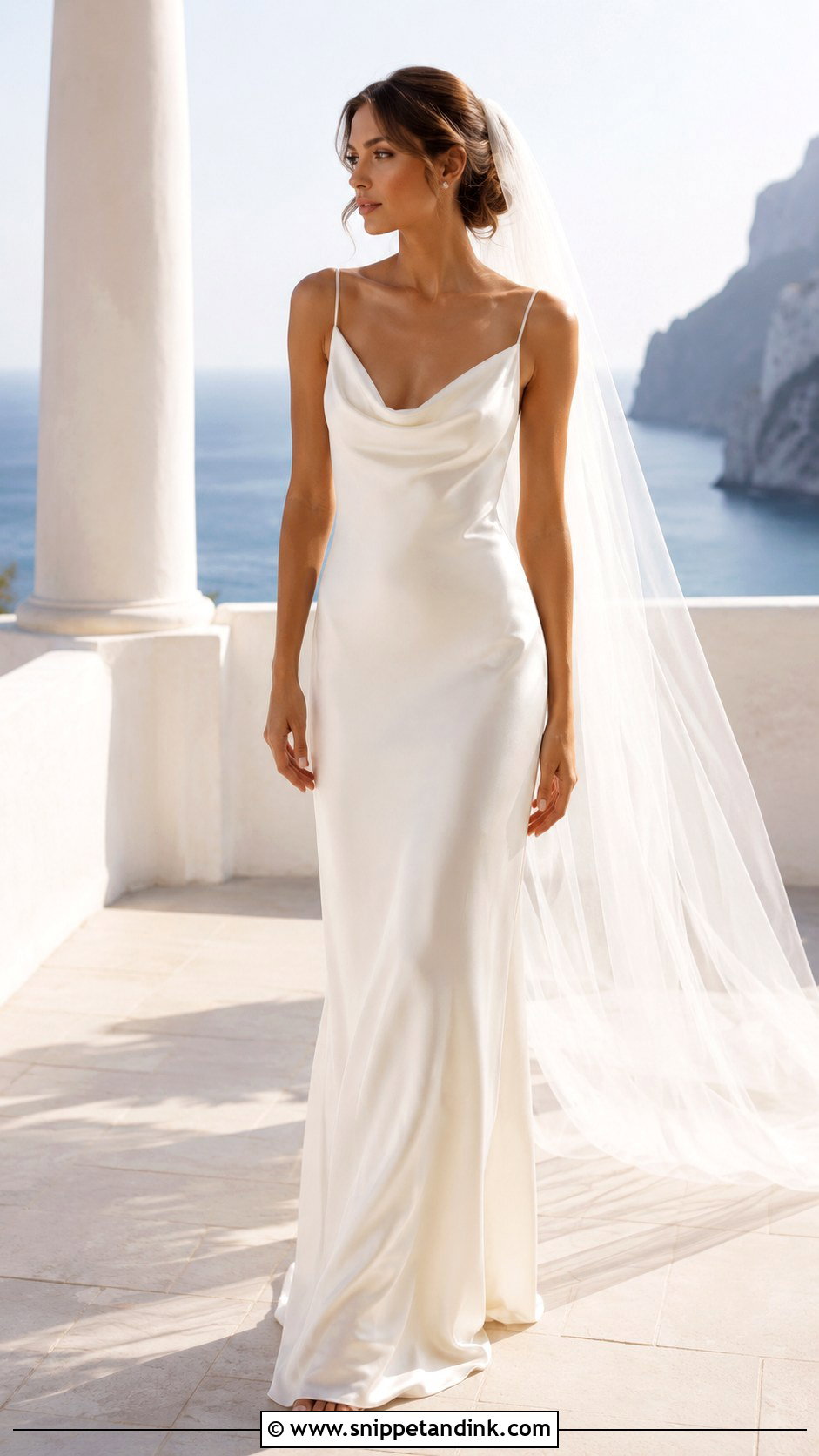
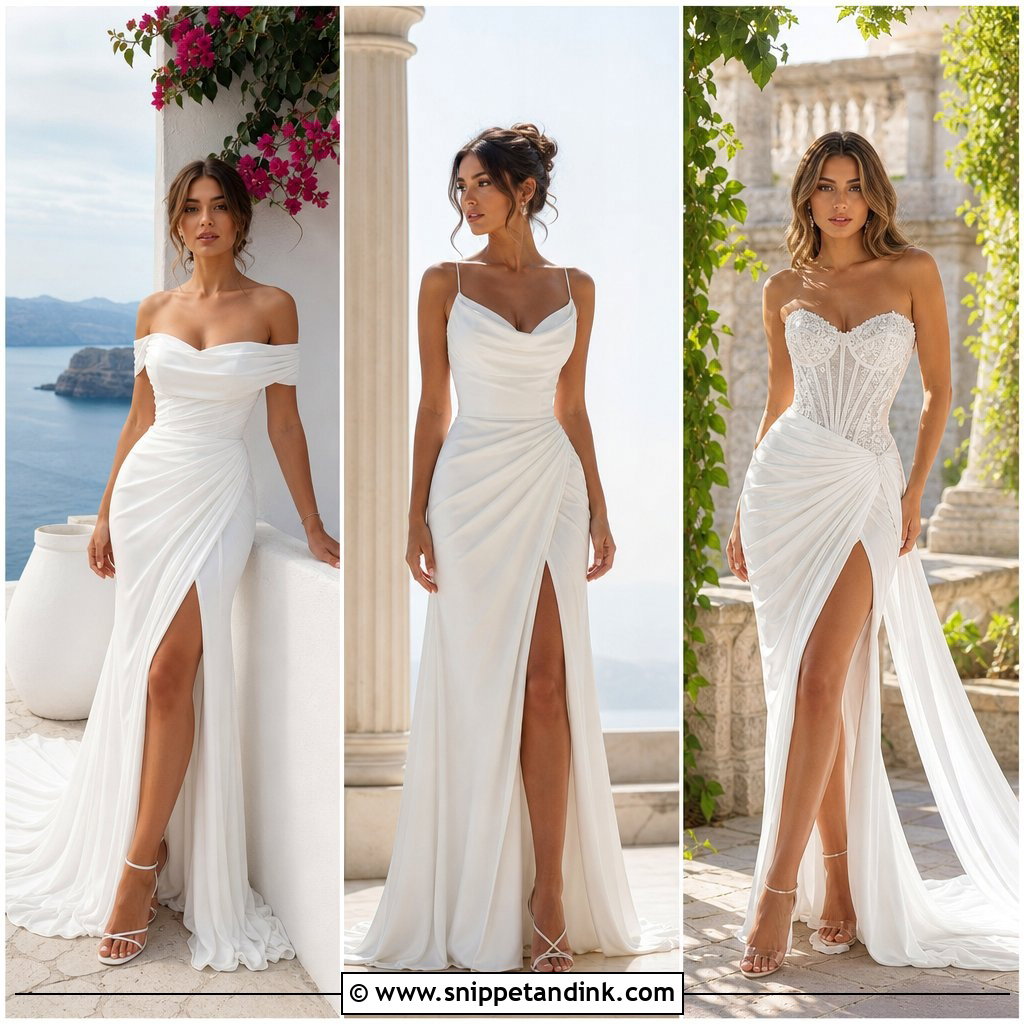
Bias-cut silk is the hardest dress here to get right and the simplest to look at. The bias lets the fabric skim the body, but it also shows every line beneath it, so I fit these with the exact underwear the bride will wear. Look for a softly draped neckline and fine straps. Nearly invisible ivory sandals, small studs and a sheer chapel veil keep it understated, with a sleek low bun or loose shoulder-length waves. Bring a silk wrap for a breezy coast or a cool evening.
5. Italian Long Sleeve Lace Wedding Dress
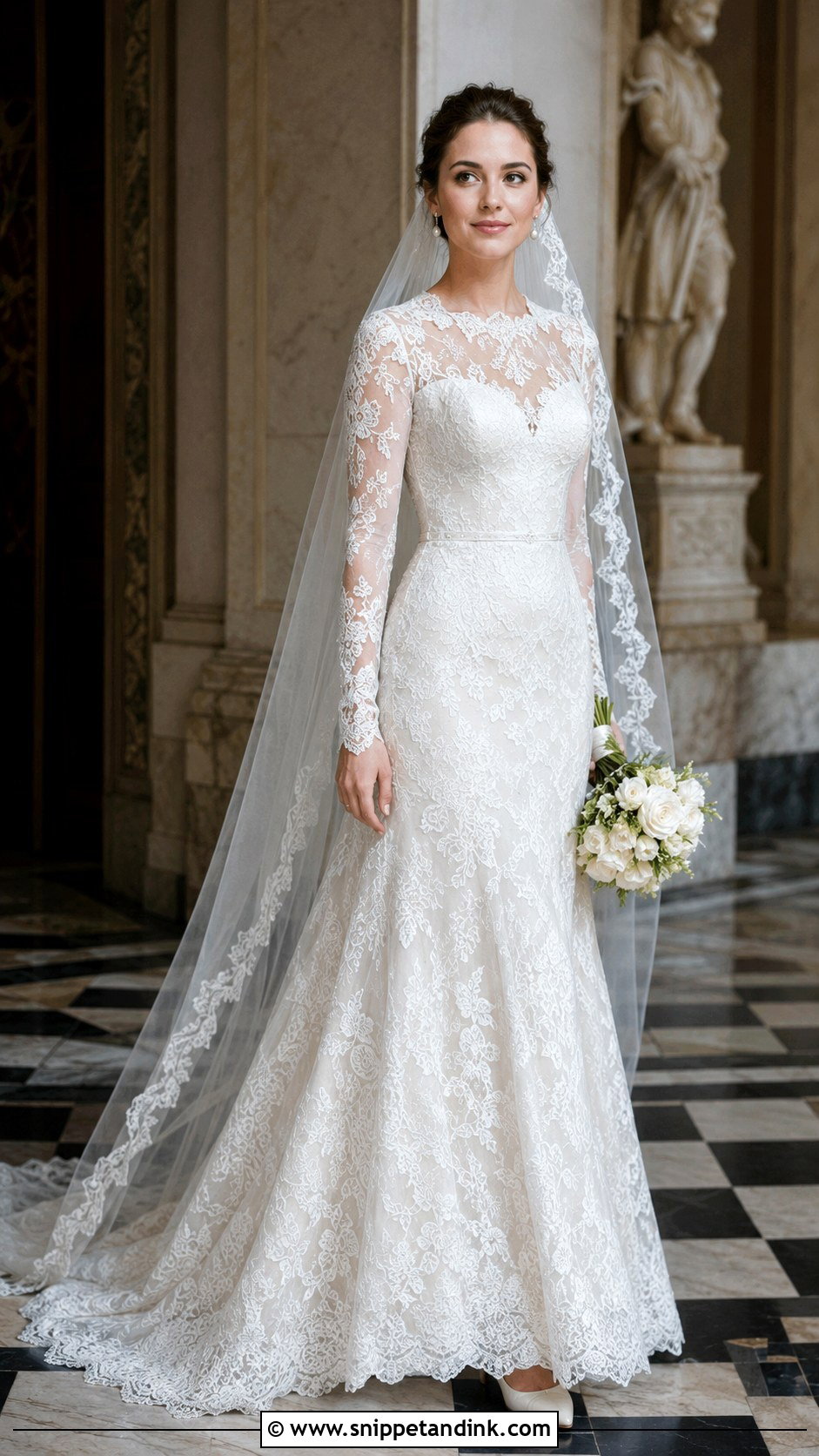
Long lace sleeves feel traditional, especially for an autumn or winter wedding. Fitted illusion sleeves with lace motifs at the wrists and shoulders, a lace bodice and a softly flared skirt keep it romantic without being restrictive. The veil should echo the lace edge rather than match it motif for motif, which can look like a set. I always check that the illusion sleeves allow a full arm lift, since tight mesh can pull at the shoulder seam when you hug someone. For colder weather, fully line the bodice.
6. Italian Off Shoulder Wedding Dress
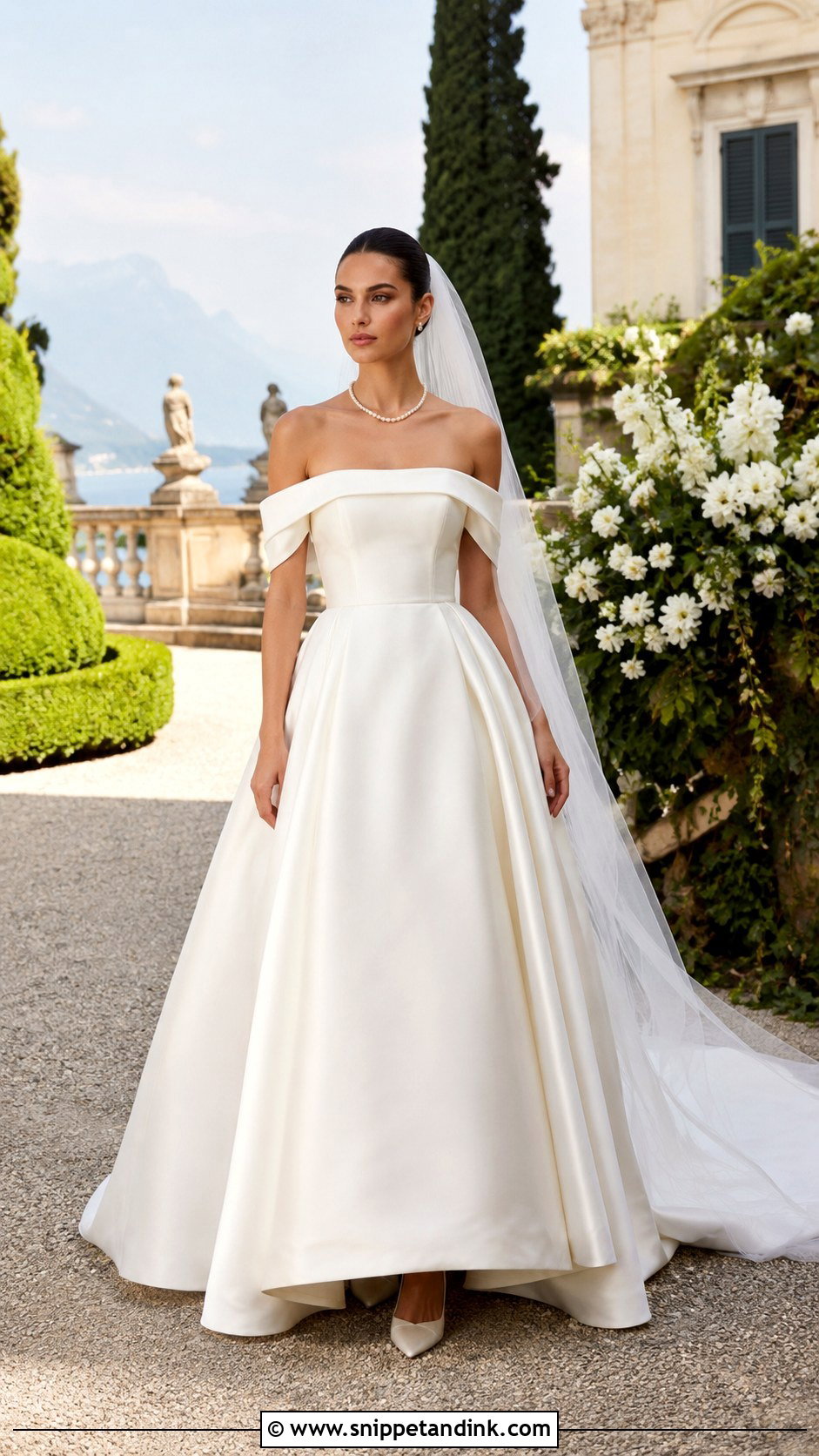
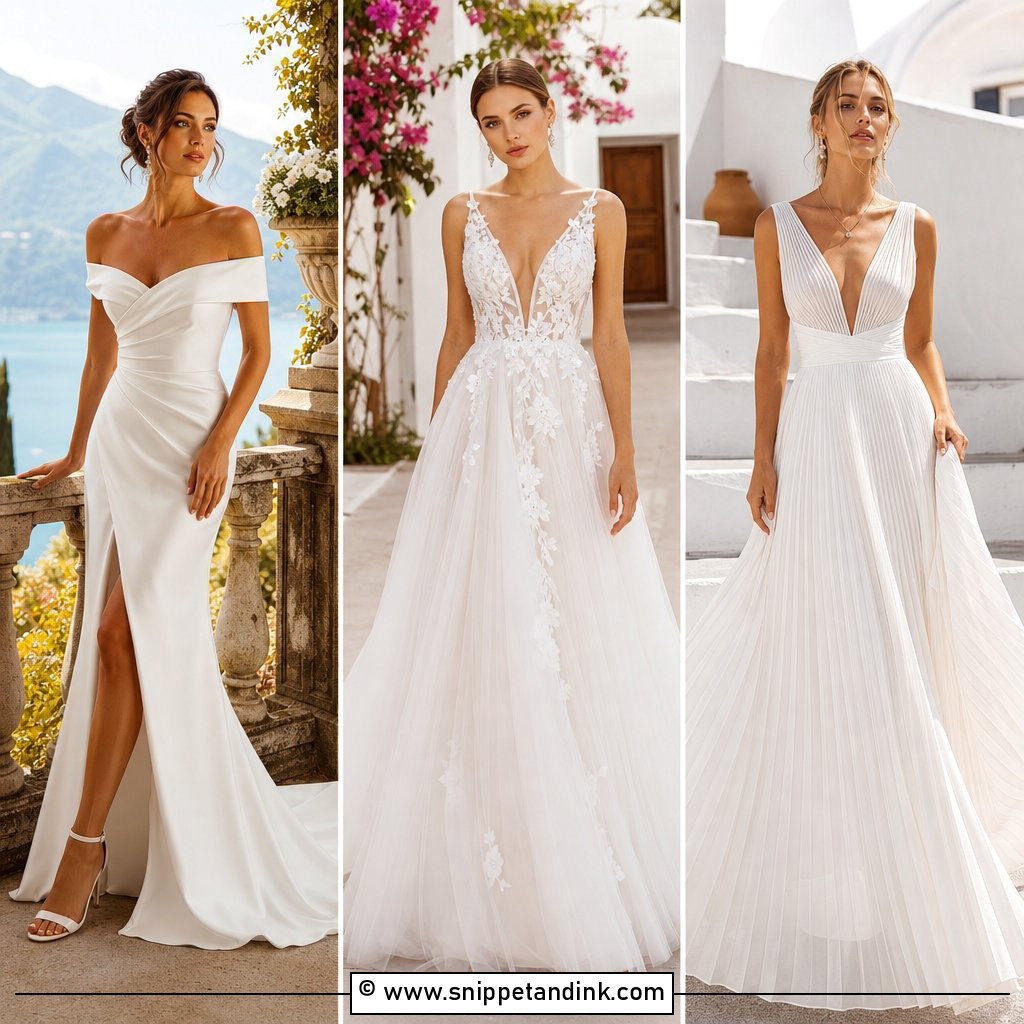
An off-shoulder neckline frames the collarbones and shoulders, and it depends entirely on the bodice underneath. Without a properly boned structure, the sleeves slide down or ride up all evening. Folded satin or draped crepe gives a refined edge, balanced by an A-line or gently full skirt. A short pearl necklace, matching earrings and an updo keep the shoulders clear. At fittings, I have brides sit and raise their arms; if the sleeves dig into your upper arms, they need loosening before the day.
7. Italian Square Neck Wedding Dress
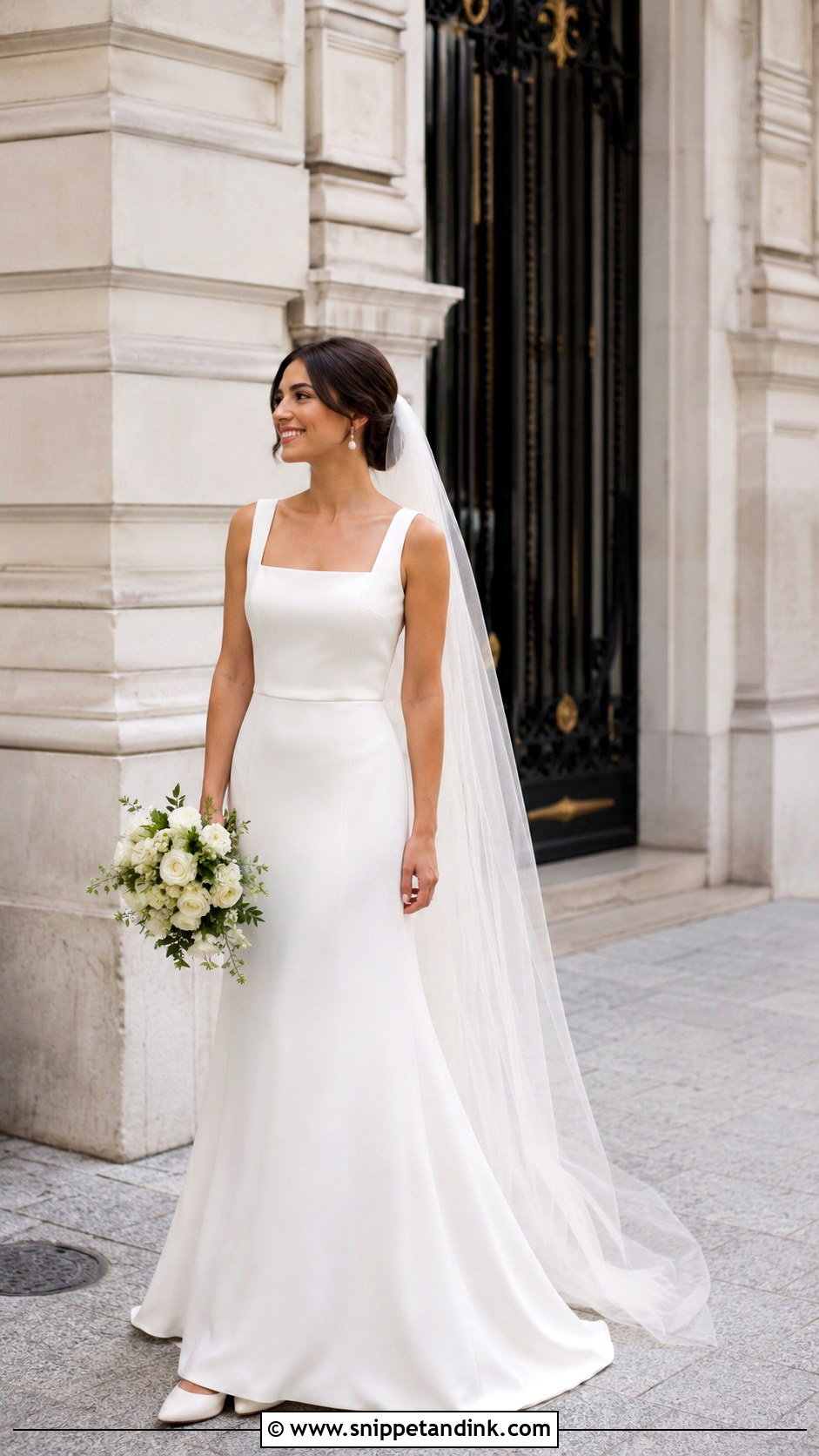
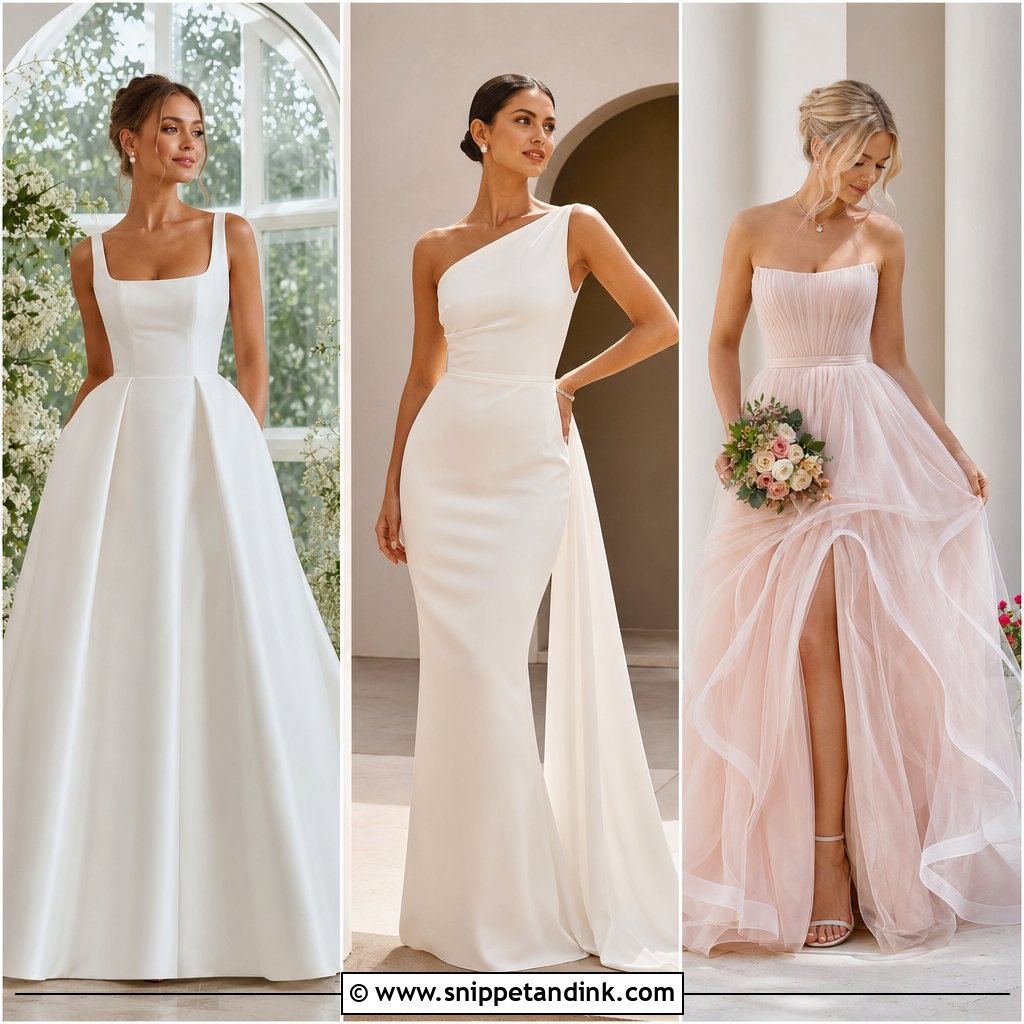
A square neck gives a clean, structured line and highlights the collarbones. Wide straps and firm construction suit it, with either a fitted or softly flared skirt; matte crepe looks modern, satin more formal. I’d generally leave the neckline bare, since a pendant breaks the straight edge. For extra support, built-in cups, boning and adjusted strap placement make a real difference with this cut. It travels well between a city ceremony, a country estate and a small destination wedding.
8. Italian Corset Tulle Wedding Dress
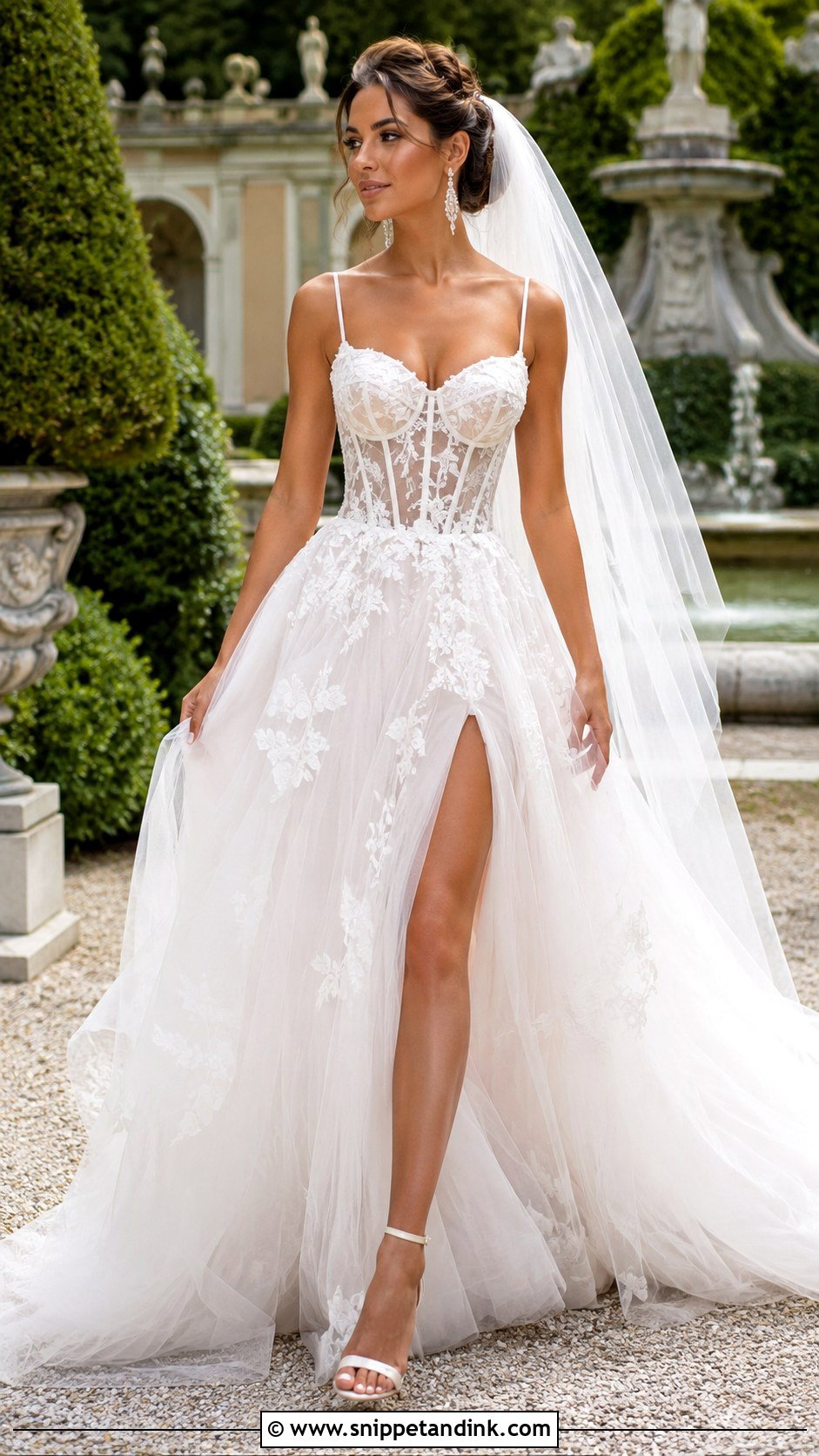
Corset bodices are built to hold, so the question is whether they let you breathe and eat. Look for supportive boning, carefully shaped cups and lace appliqué or soft draping to take the edge off the structure, with a skirt of airy tulle layers rather than stiff ones. A long plain tulle veil and ankle-strap heels keep it light. I ask brides to sit, walk and dance at the fitting and tell me honestly where it presses, because a corset that’s only snug standing up becomes painful by the third course.
9. Italian Mermaid Wedding Dress
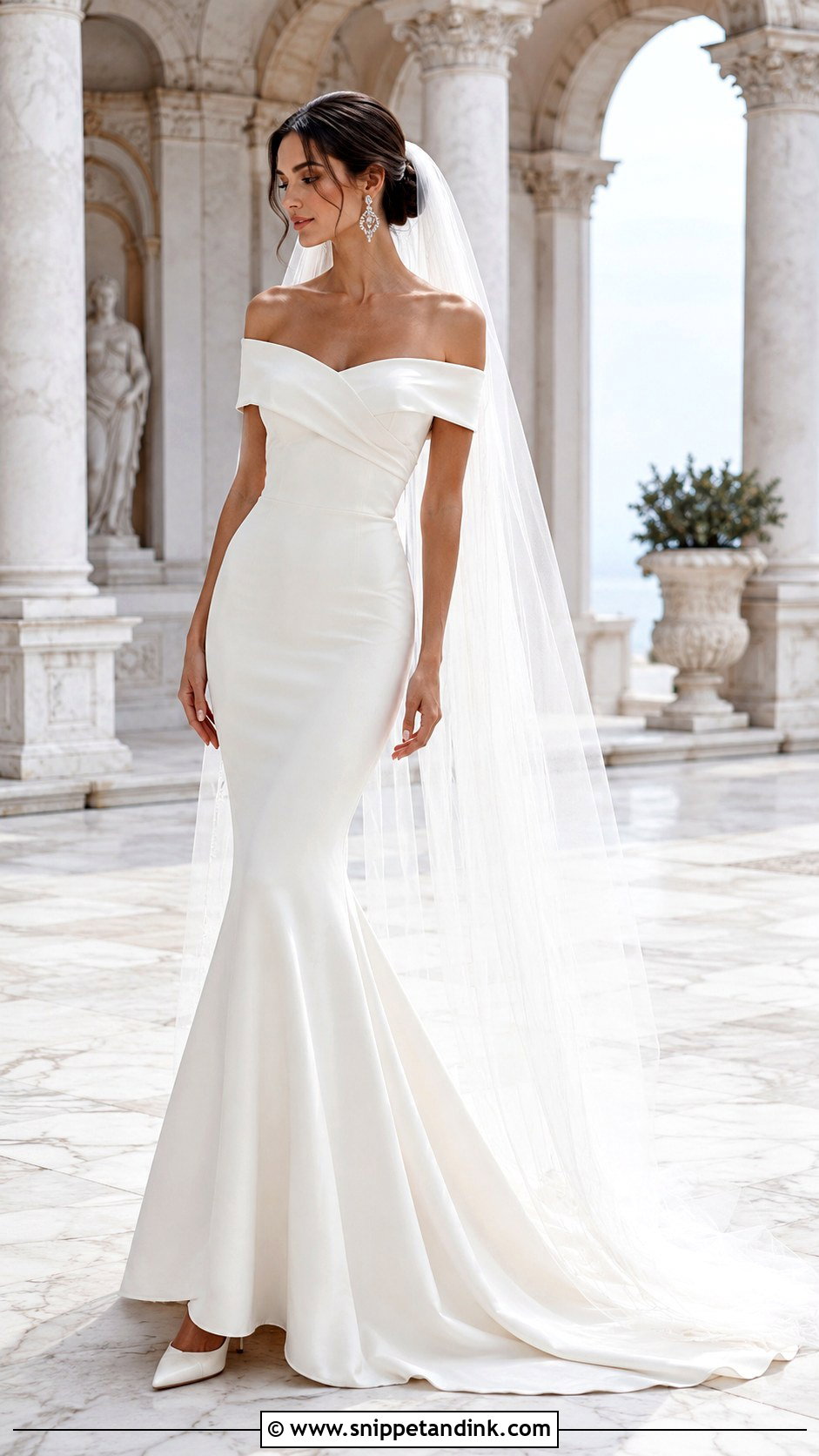
Fit decides whether a mermaid looks confident or awkward. The gown should follow the waist and hips and release at the knee, not lower, or walking becomes a shuffle. Stretch crepe moves more easily than lace, though lace adds texture. Bulky shapewear creates lines under fitted fabric; I’d rather build support into the gown itself during alterations. A long veil under a polished updo, statement earrings and pointed pumps finish it, and a bustle or detachable train makes the reception far more comfortable.
10. Italian Column Wedding Dress With Cape
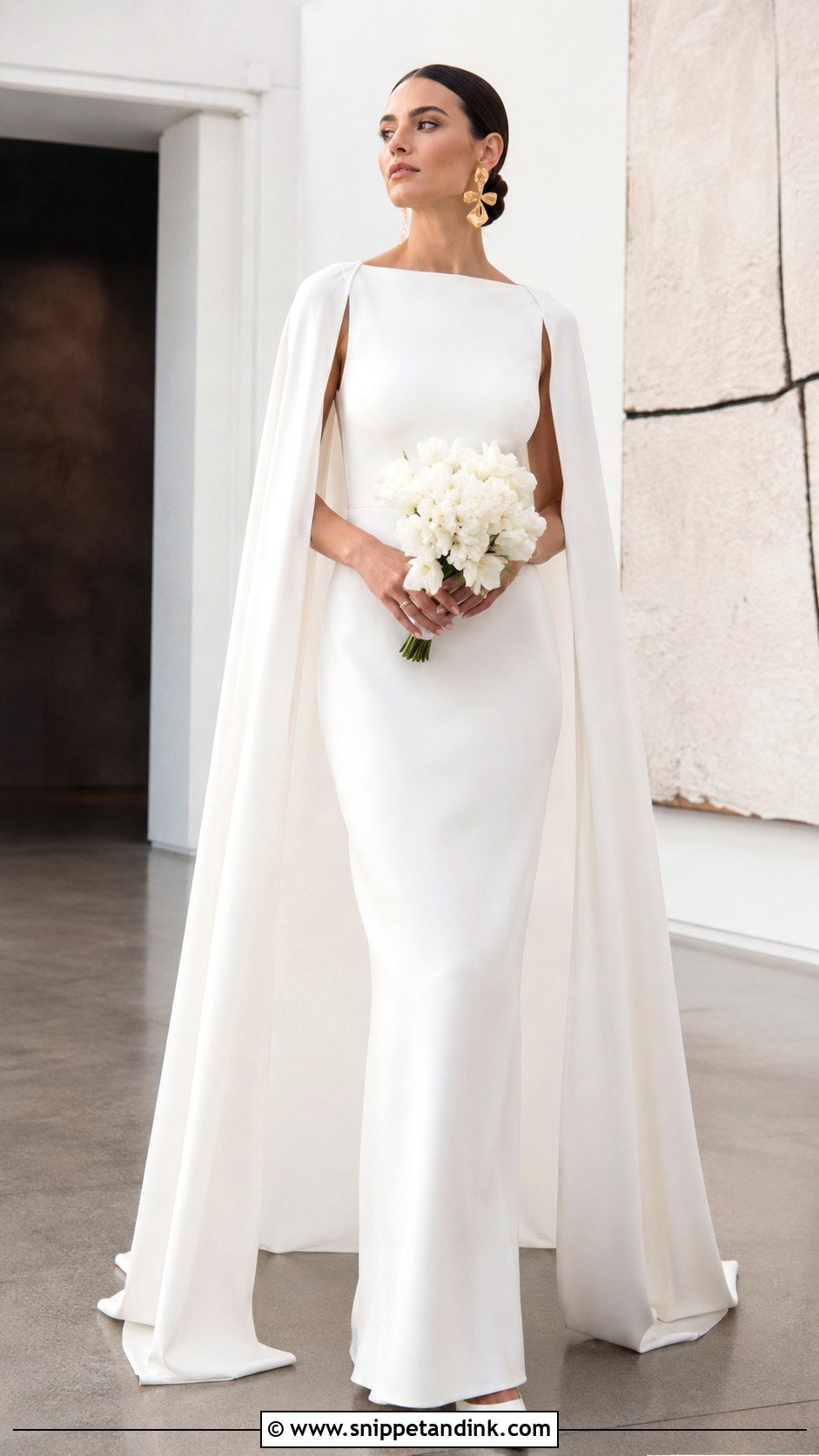
A cape replaces the veil and gives a column gown movement it wouldn’t otherwise have. Choose a clean crepe or satin column with a defined waist and minimal seams, and attach the cape at the shoulders or neckline. Shorter brides should keep the cape lightweight and no longer than the dress, or it swamps the frame. A sleek bun or hair tucked behind the ears shows off the neckline. Removing the cape gives you a second look, which suits contemporary venues and formal civil ceremonies.
11. Italian Tea Length Wedding Dress
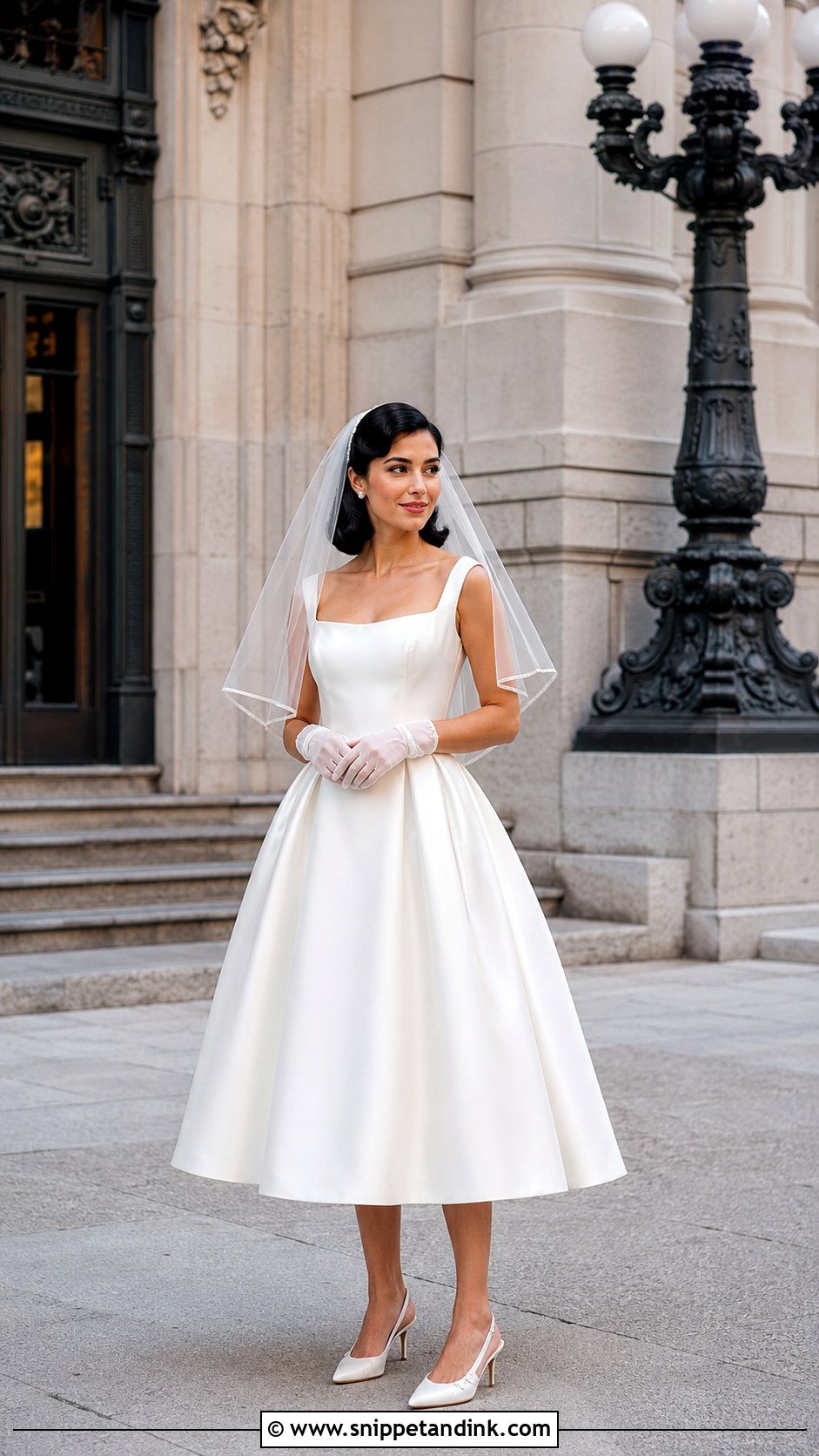
Tea length ends between the knee and ankle and puts your shoes on show. Mikado, satin and structured lace all hold the skirt shape well. Choose slingback pumps or embellished low heels, then add pearl studs, short gloves and a shoulder-length veil for a vintage feel. A smooth bun or softly curled bob keeps the proportion right. Hem length is fussy here: an inch too long looks like a mistake, so I fit it with the actual shoes. City halls, restaurant receptions and warm-weather ceremonies all suit it.
12. Italian Bridal Mini Wedding Dress
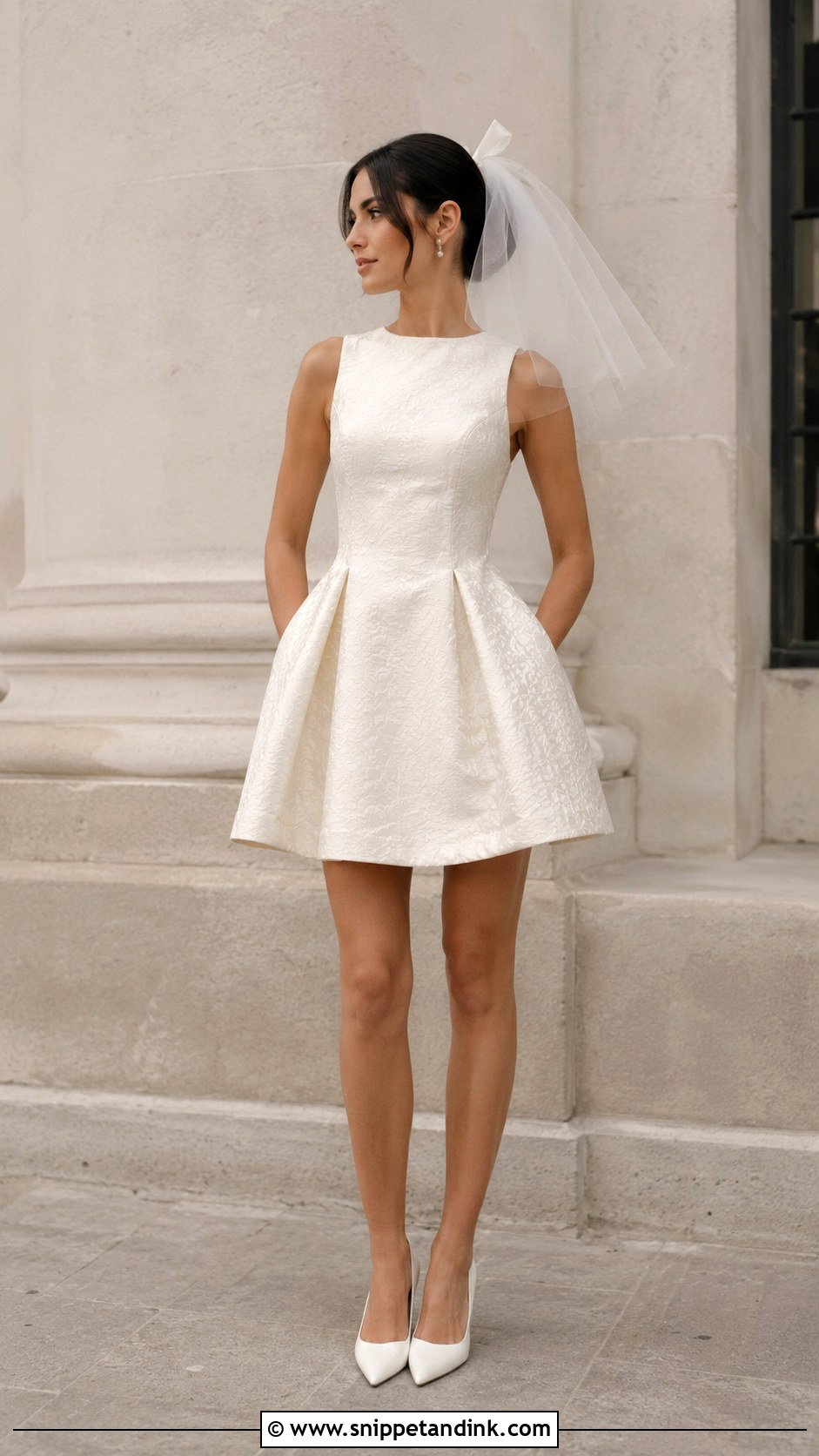
A bridal mini needs more polish than a long gown, because there’s no skirt to carry the occasion. A clean shift, a fitted long-sleeve style or a short A-line in satin or textured jacquard all work. Sit down in it before buying; a hem that rides up when seated means you’ll be tugging it all day. Sheer tights add finish in cooler months, bare legs and slingbacks in warmer ones. A short veil or structured bow and a small bouquet keep the scale right for a civil ceremony or an evening change.
13. Italian Two Piece Wedding Dress
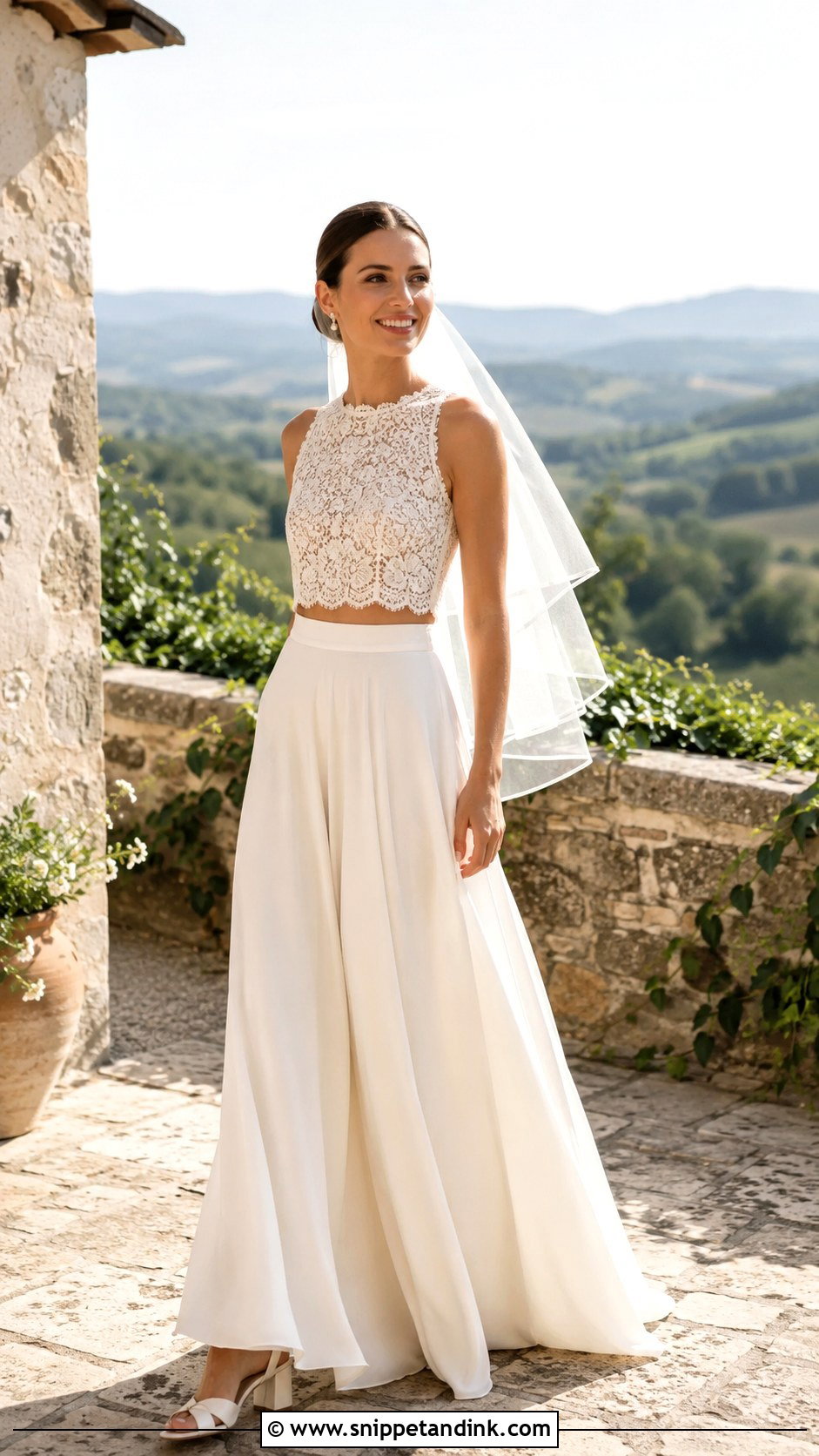
Separates give flexibility, but they only look bridal if the fabric and ivory match exactly. Pair a fitted lace, silk or crepe top with a high-waisted skirt that meets its hem cleanly, narrow and modern or softly full. I insist both pieces come from the same fabric roll; two ivories from different batches separate in photos. Ask the tailor to fasten top and skirt together with hidden hooks so the waist doesn’t open when you reach up. A sleek ponytail or low bun suits the modern shape, as does a relaxed destination wedding.
14. Italian Floral Appliqué Wedding Dress
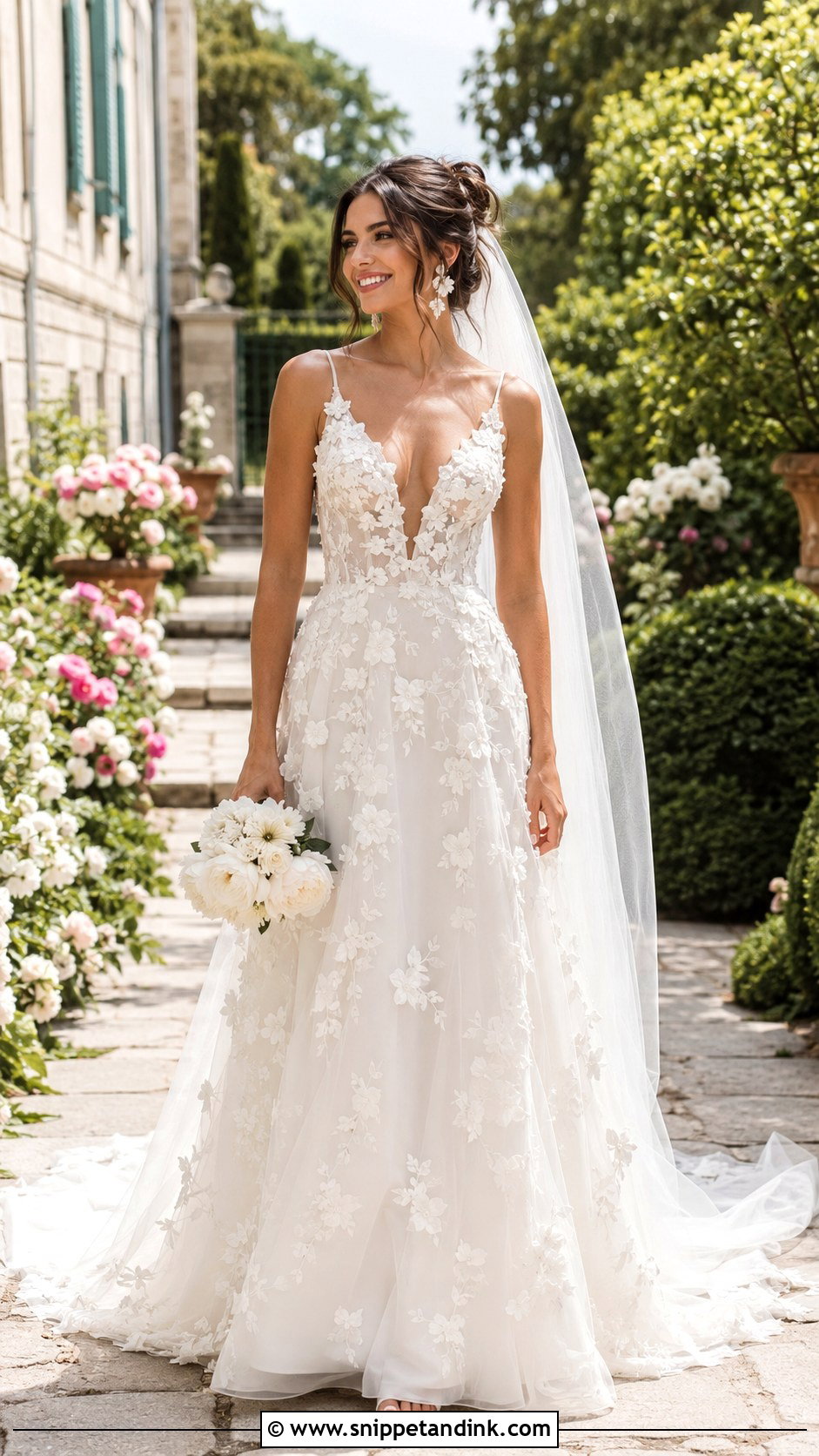
Three-dimensional flowers give real texture. On an A-line, I like them concentrated on the bodice and scattering across the skirt so the silhouette is still visible. Sheer straps or sleeves make the appliqués look as though they’re floating on the skin. Keep earrings small and the veil plain. Raised flowers catch on tulle, especially at the waist, so I test the veil and bouquet against the gown at the fitting. It suits spring and outdoor weddings, with a bouquet in a limited palette.

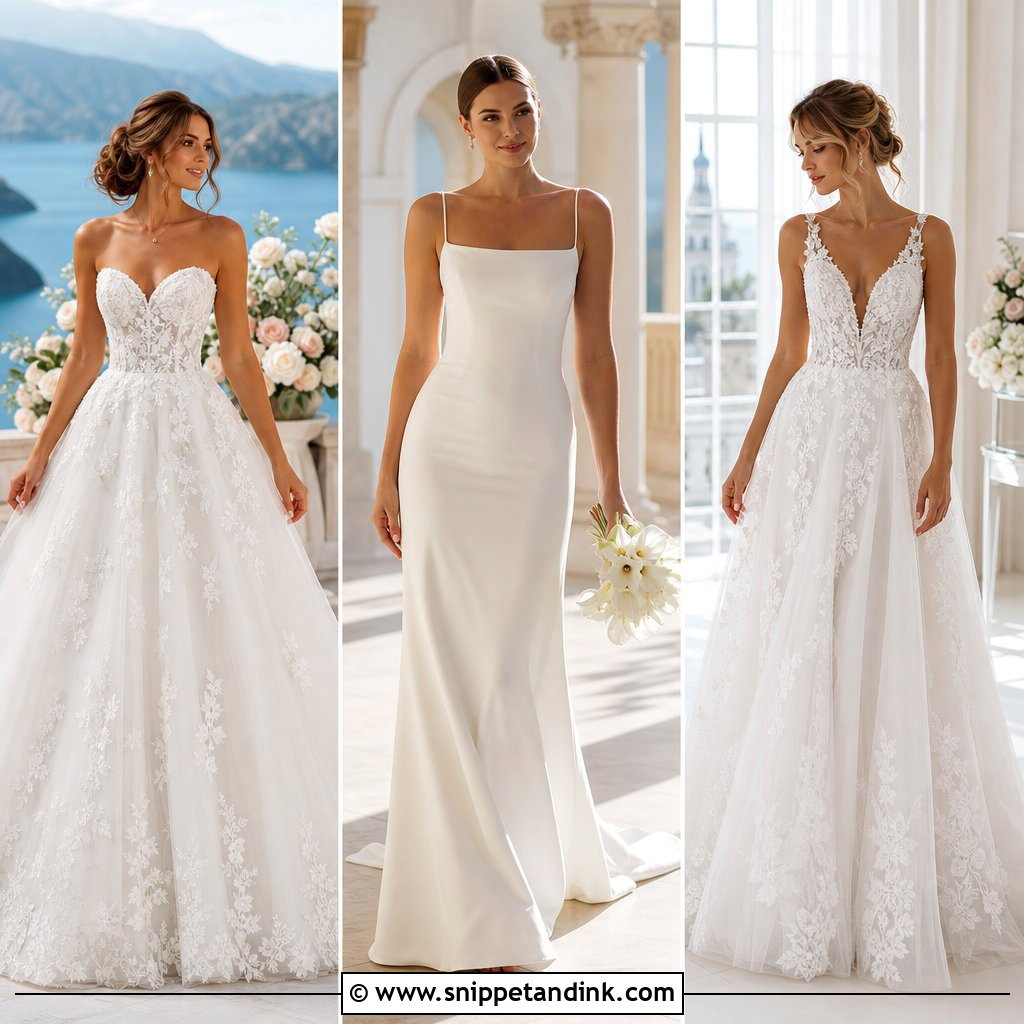

15. Italian High Neck Wedding Dress
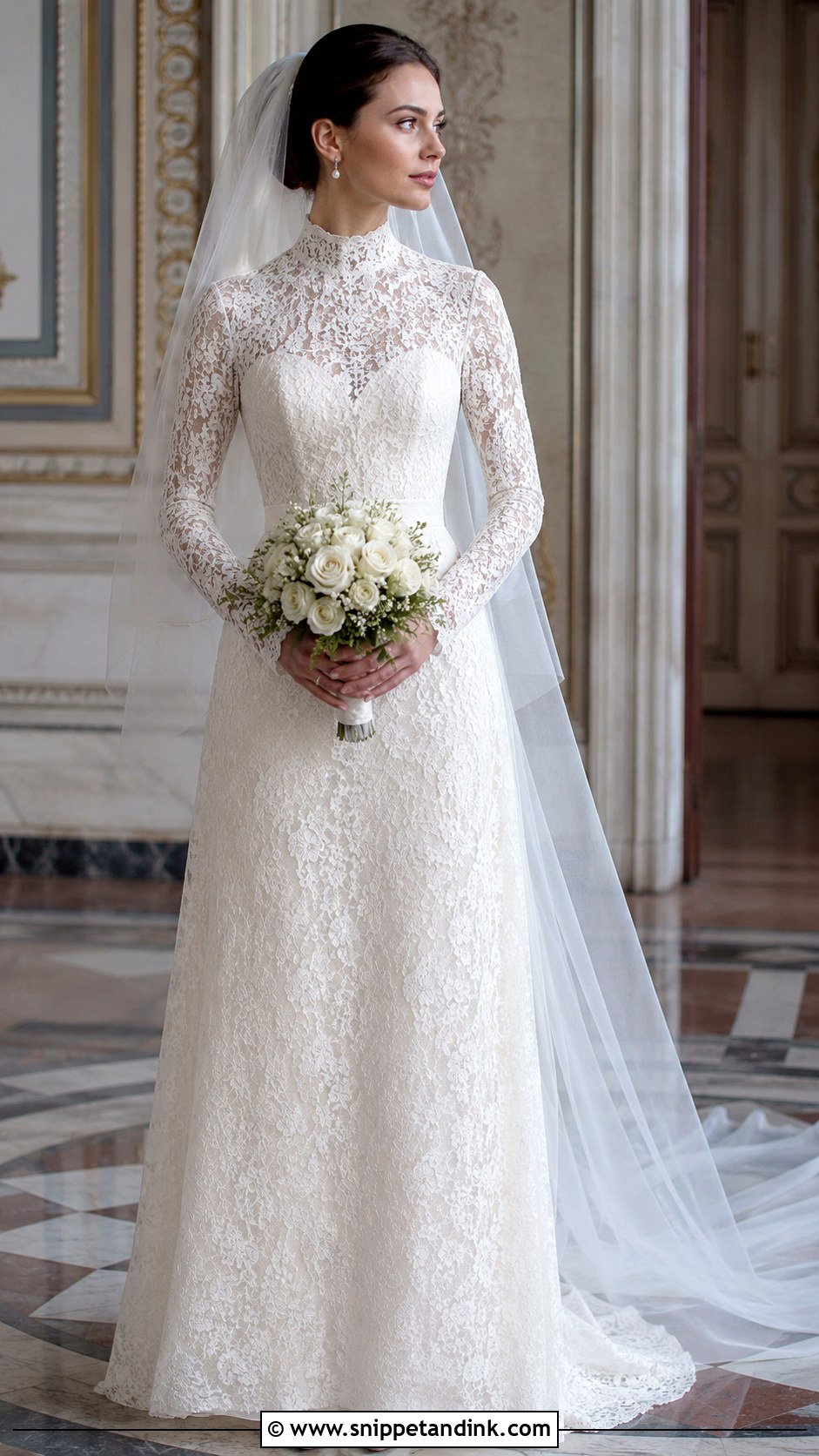
A high neck gives coverage with a strong fashion presence. Lightweight lace reads romantic; smooth crepe reads cleaner. Pairing a fitted bodice with a narrow A-line keeps the covered neckline from feeling heavy. Wear your hair up to show the collar and the buttons down the back, skip the necklace, and choose small earrings. The fitting detail I’m strictest about is the collar itself: too snug and it rubs by evening, too loose and it gapes when you turn your head. It suits cooler seasons and formal venues.
16. Italian One Shoulder Wedding Dress
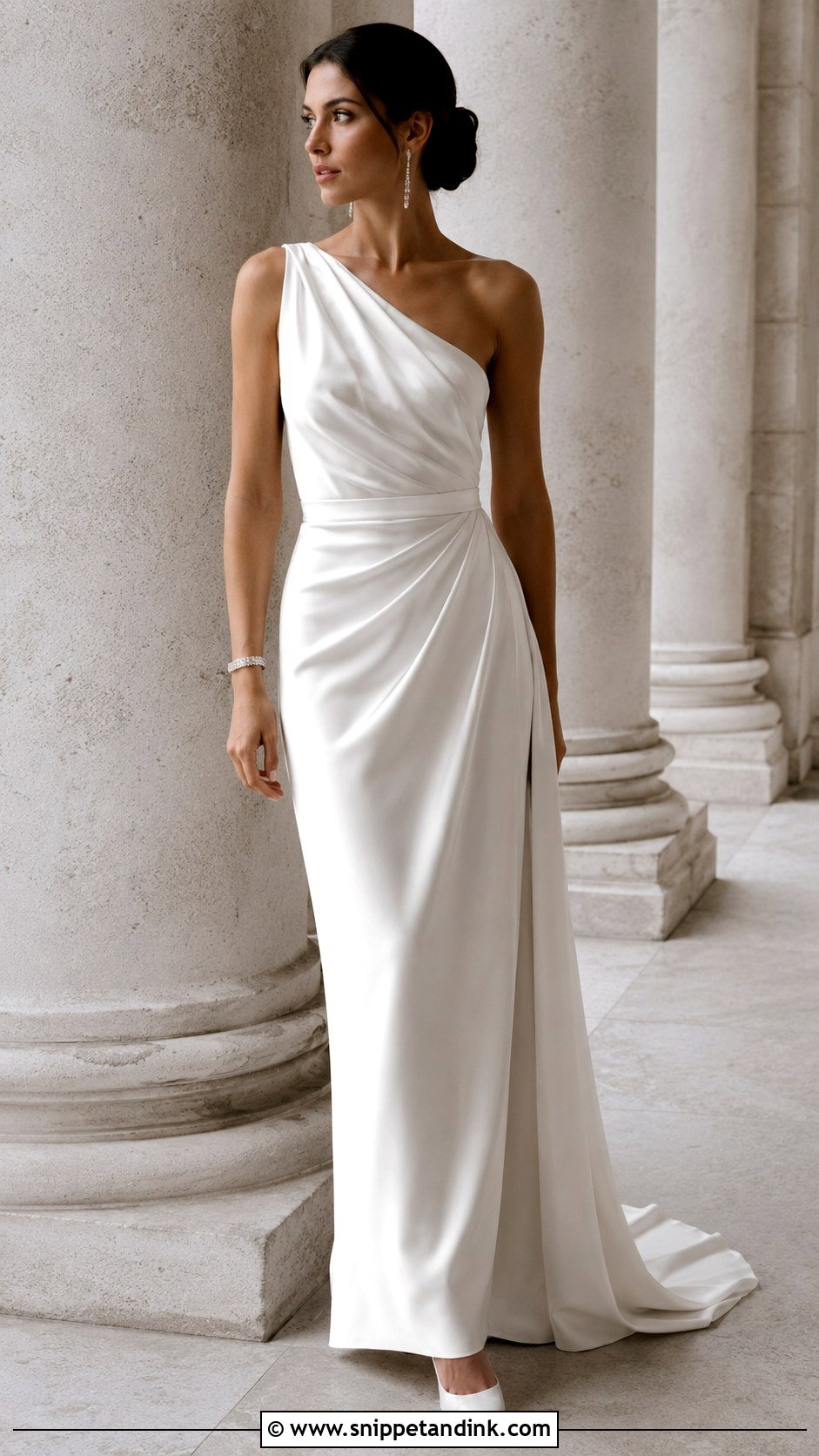
A one-shoulder gown pairs classical draping with clean modern lines. Soft crepe, silk satin or light chiffon gathered across the shoulder and waist gives movement, but the bodice beneath needs real support, since one strap carries uneven weight. I fit these with the bride raising her arm on the strapless side. A necklace interrupts the diagonal, so skip it and wear drop earrings and a bracelet. An off-center low bun continues the asymmetry, with a plain veil or a minimal comb.
17. Italian Pleated Chiffon Wedding Dress
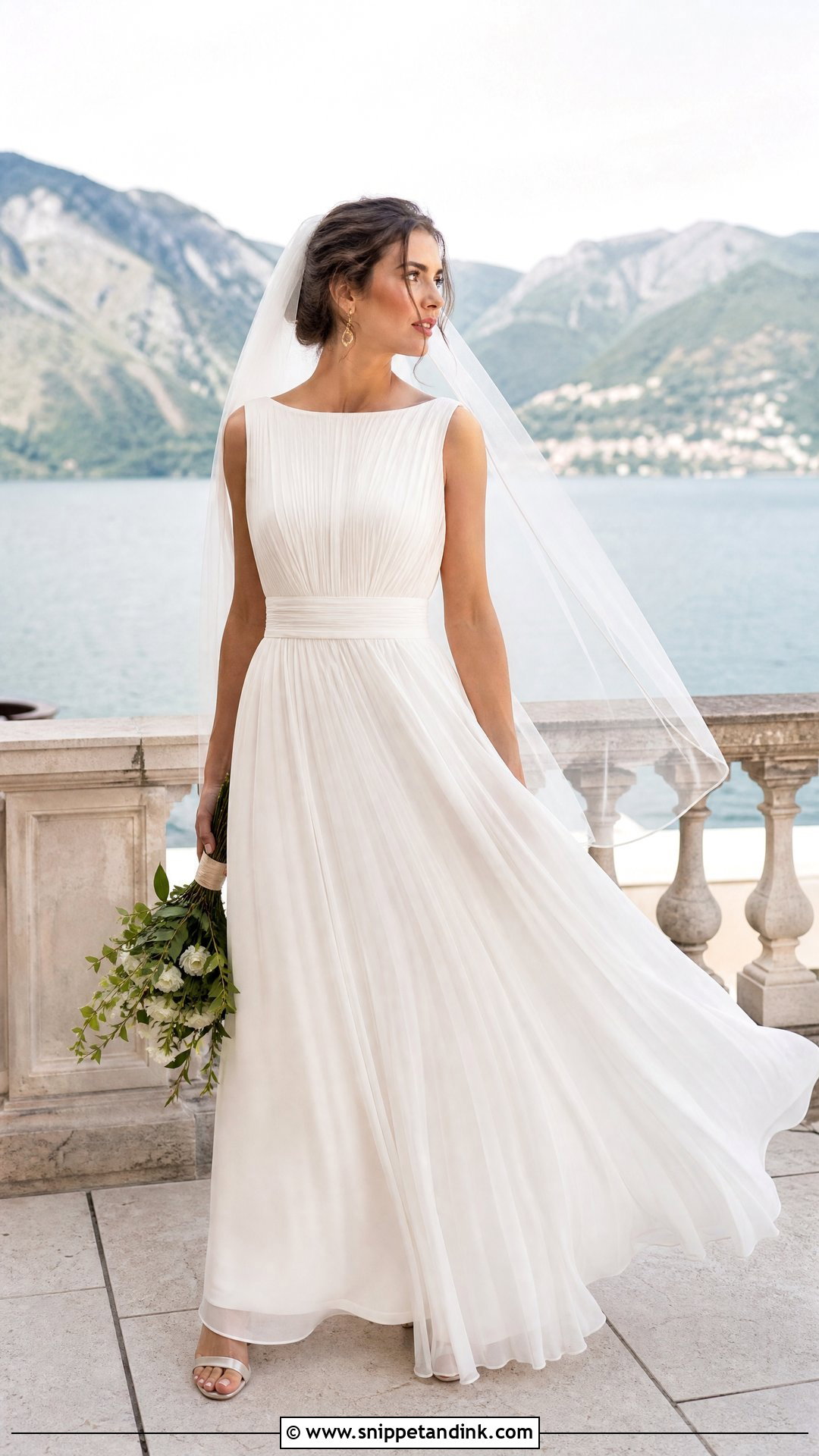
Pleated chiffon moves in any breeze, which makes it a good choice for a coast or countryside wedding. A softly fitted, lined bodice and a skirt of narrow flowing pleats, defined at the waist, keep the shape from overwhelming you. Several chiffon layers over a short lining stay airy without going see-through. One practical note: pleats can lose their crispness in humidity and when packed tightly, so hang the gown as soon as you arrive. Block-heel sandals, gold earrings and a sheer fingertip veil keep it relaxed.
18. Italian Wedding Dress With Detachable Overskirt
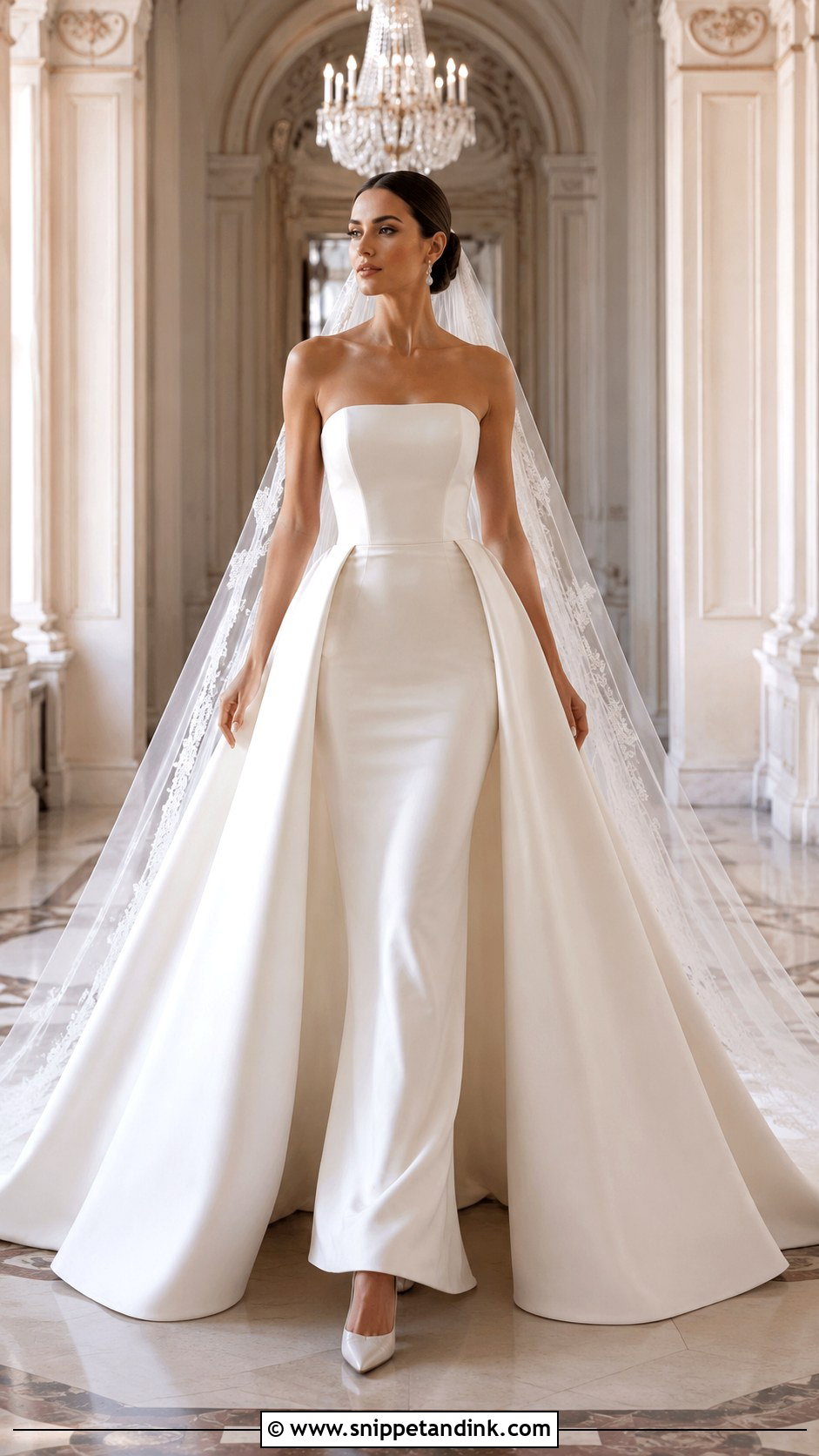
A detachable overskirt gives you two dresses in one. Start with a fitted crepe, lace or satin column that looks finished on its own, then add a full Mikado or organza overskirt for the ceremony, with a waistband that disappears into the bodice. Wear it with a long veil and pointed heels, then remove both for the reception. The fastening is where these fail, so I test the hooks or snaps repeatedly during alterations, including while the bride sits and stands.
19. Italian Pearl Embellished Wedding Dress
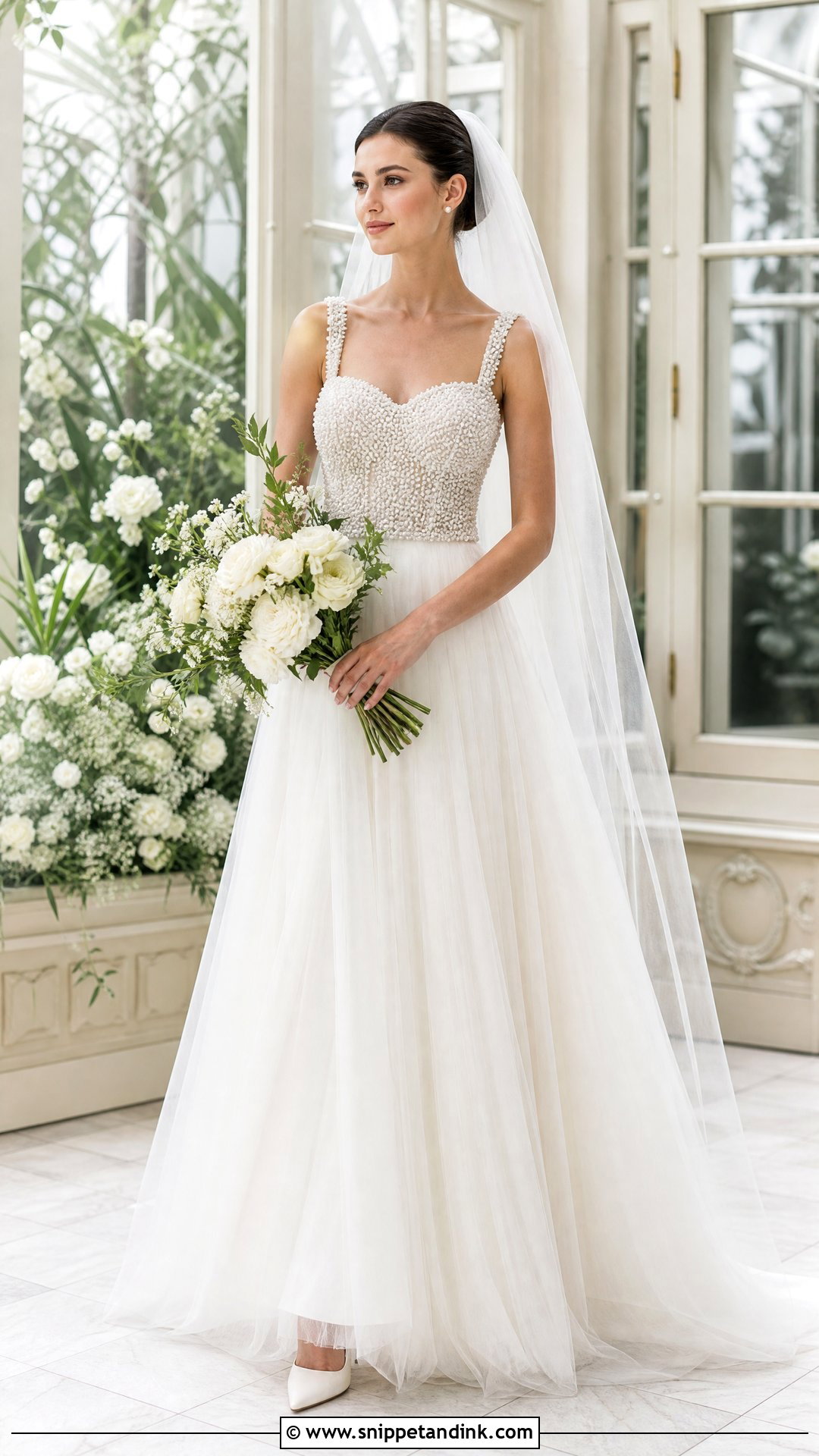
Pearls add dimension with a softer glow than crystals. A fitted bodice or sheer overlay scattered with pearls of different sizes, balanced by a plain satin, crepe or tulle skirt, keeps the detail in one place. Keep accessories quiet, because pearl earrings, pearl veil and pearl bodice together look busy. A smooth low bun and luminous makeup suit the finish. Pearls at the waist and arms snag veils, so check them together. Bright natural light shows them best.

20. Vintage Italian Wedding Dress
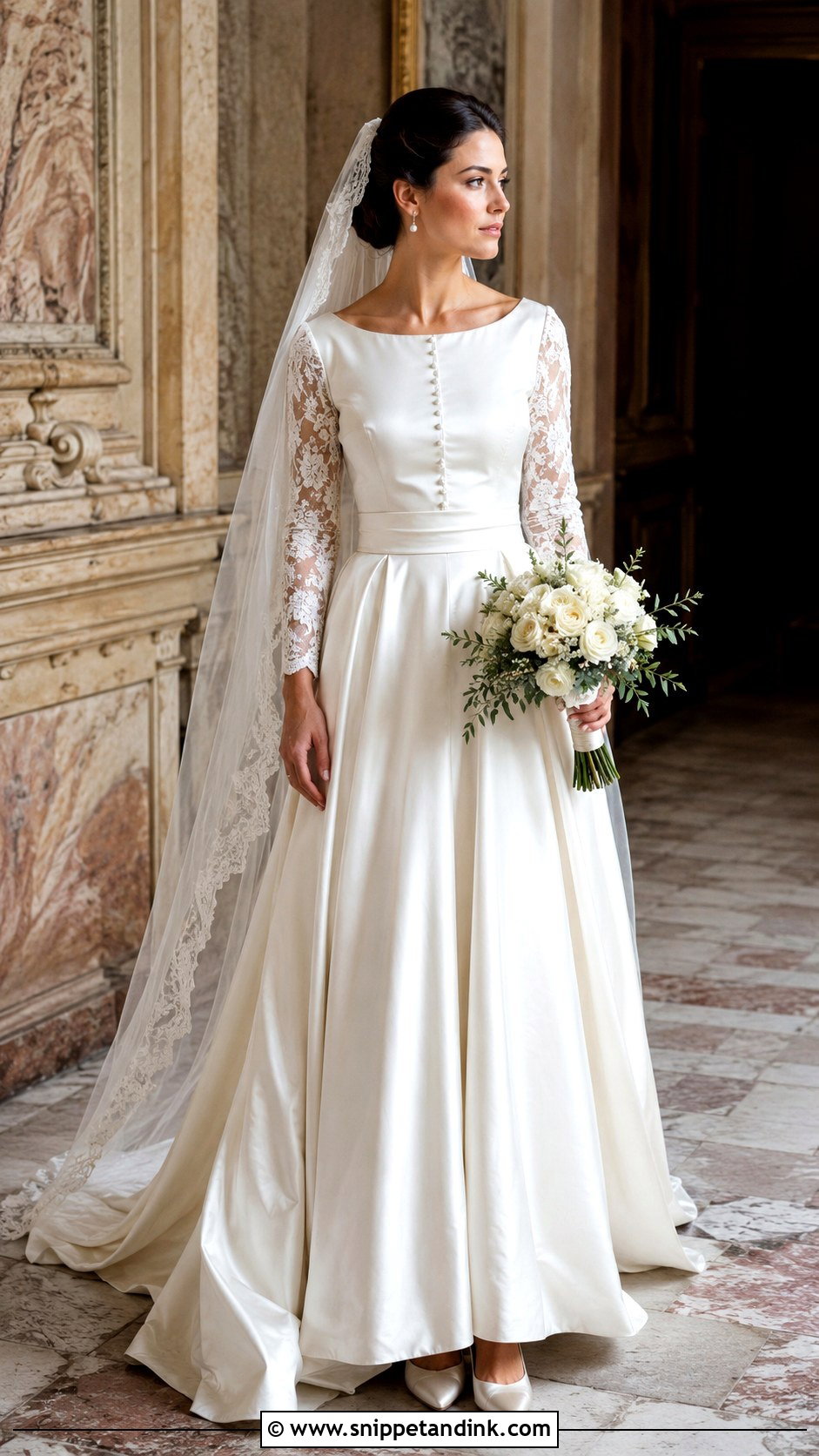
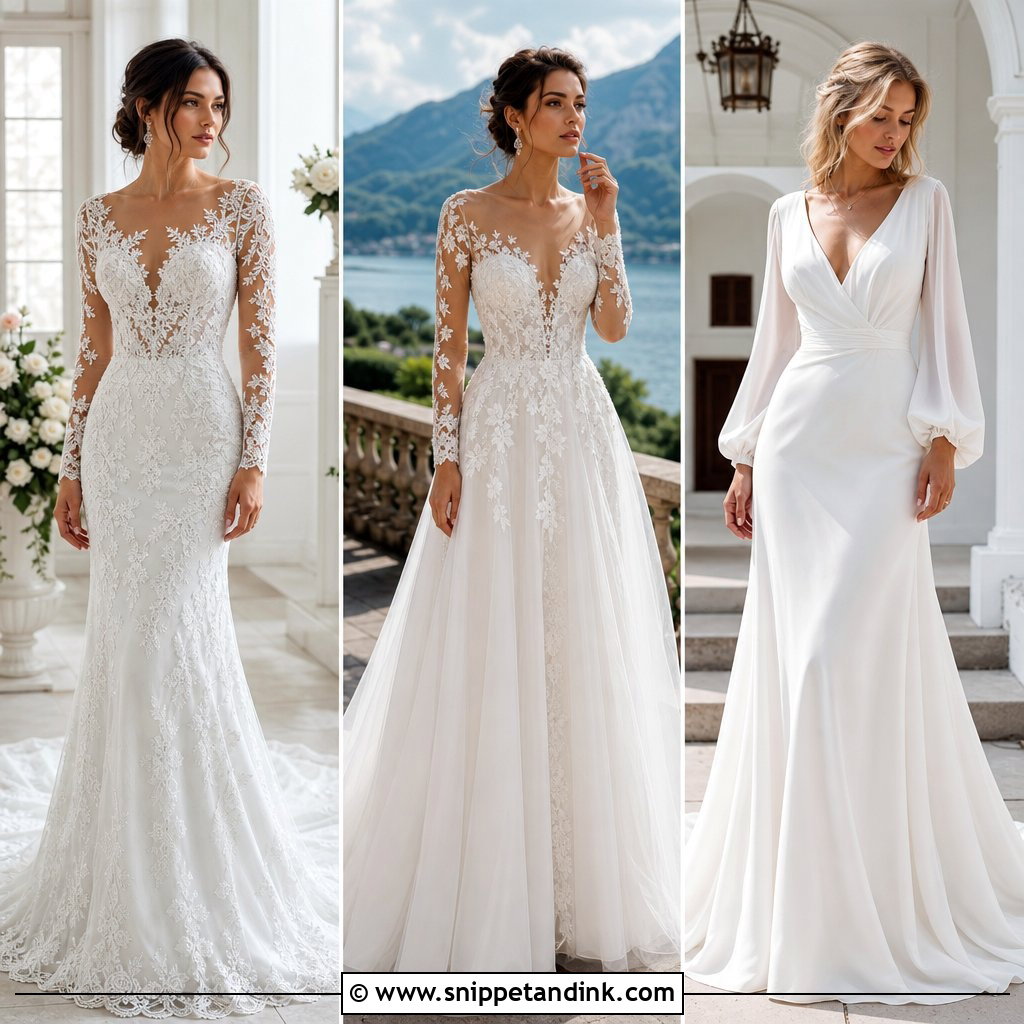
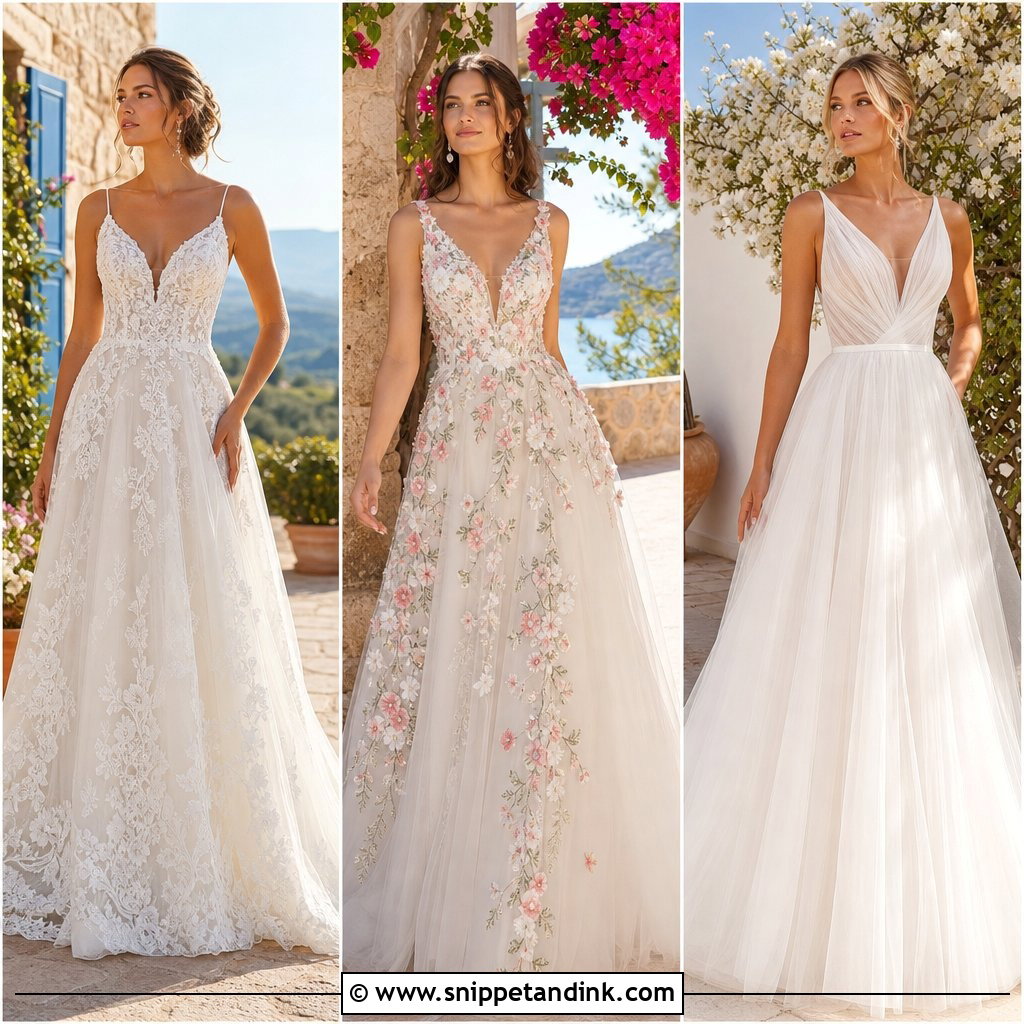
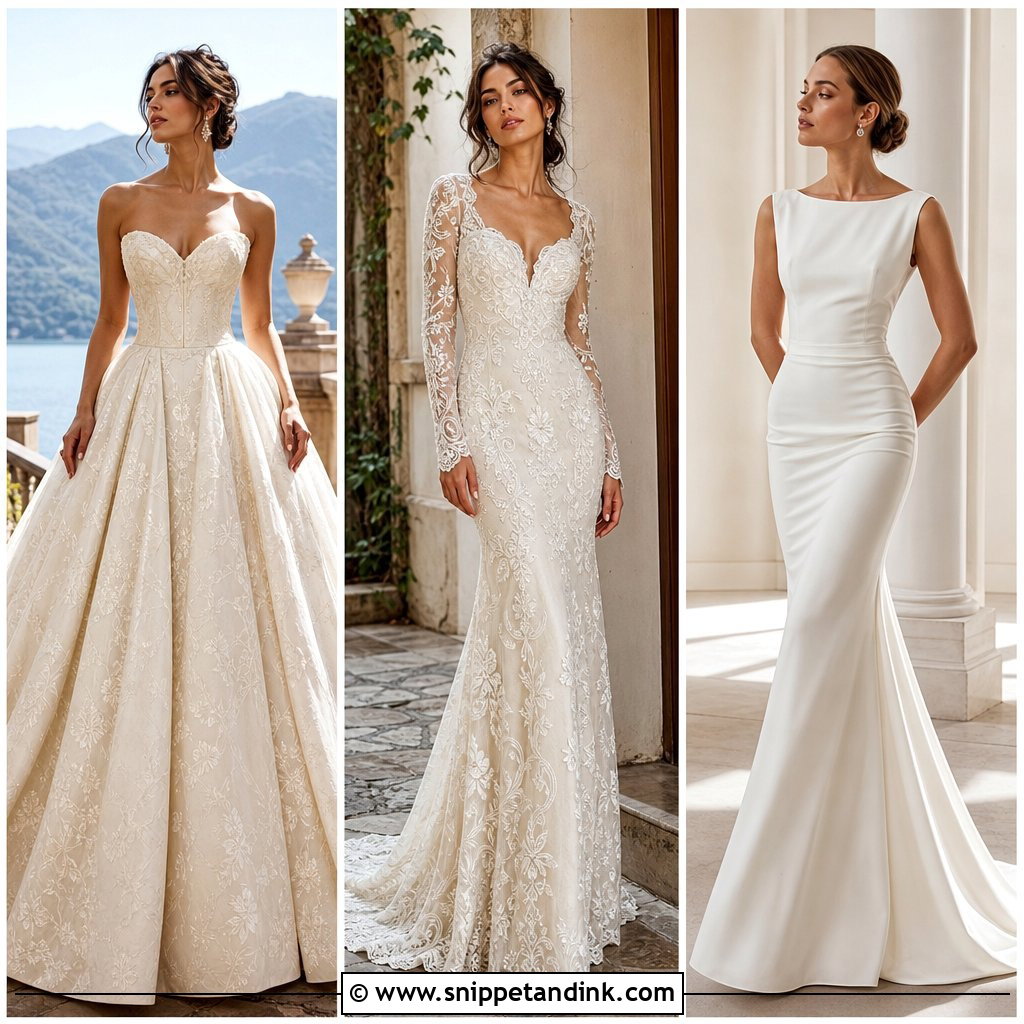
Vintage works when you borrow a few details rather than recreate an era. A softly shaped waist, covered buttons, lace sleeves, a bateau neckline or a flowing satin skirt each carry the mood; I’d pick two or three, not all of them, or it tips into costume. Pearl earrings, a lace-edged veil, polished waves or a low chignon finish it. If you buy a genuine vintage gown, have the seams, lining and closures inspected before any alterations start, because old fabric can tear when it’s taken in.
Marrying in Italy? Plan for Churches, Cobblestones and the Flight
Many brides who love Italian gowns are actually marrying in Italy, and the setting brings practical problems that a bridal salon at home won’t mention.
- Churches: many Catholic churches expect covered shoulders during the ceremony. A lace bolero, a cape or a sheer shawl solves it with a strapless or off-shoulder gown, and can come off for the reception. Ask your officiant what is expected.
- Cobblestones and gravel: stilettos sink and twist on old streets and villa paths. Block heels or slim heel protectors save both your ankles and your hem.
- Heat: a Tuscan or southern summer afternoon is hot. Mikado and multiple satin layers become uncomfortable quickly, so lighter fabrics or a later ceremony time help.
- Travel: carry the gown on in a breathable garment bag rather than checking it, and contact the airline ahead to ask how they handle it. Book a steamer or a local pressing service for when you arrive, because even a well-packed gown creases.
I’d also schedule your final fitting at home close enough to departure that nothing changes, but with a few days’ margin in case a seam needs a last adjustment. Finding a bridal seamstress in a small Italian town at short notice is not something you want to attempt.
Fit It Like It Was Made for You, Because It Should Be
No single silhouette, fabric or level of decoration makes a gown Italian; tailoring and restraint do. Weigh each dress against your venue, weather, how much you’ll move and how formal the day is. At appointments, walk, sit, turn and lift your arms, wear shoes with a similar heel and photograph the dress from several angles. Satin, chiffon, appliqué or lace all work as long as the fit is right and the accessories support the gown rather than compete with it.
You'll Like These Ideas:






Leave a Reply