
A Khmer bride rarely wears just one outfit. The different parts of a traditional Khmer wedding each have their own clothing and colors, so styling one is really styling a sequence. The pieces repeat: the sampot wrapped at the waist, the sbai draped diagonally over one shoulder, a fitted embroidered top, a heavy gold belt and layered jewelry. What changes is the color, the fabric weight and how much of it you can comfortably wear for hours. Customs differ between families, so I always plan the order of outfits with the bride’s relatives and an experienced Khmer tailor before choosing a single color. Here are twenty complete looks to start that conversation.
Planning the Outfit Changes Around the Ceremonies
A traditional Khmer wedding can include several separate ceremonies over one or more days, and many brides change for each. Each change takes real time: unwrapping and retying a sampot chang kben, re-pinning a sbai, swapping jewelry and refreshing hair and makeup. I plan for about half an hour per change and never less.
- Write out the ceremony order with your family and give each segment its outfit and color.
- Place the heaviest or most complicated outfit where you will mostly be seated.
- Alternate warm and cool colors so consecutive photos don’t look alike.
- Assign one dresser or relative who knows the draping to stay with you all day.
- Hang each outfit with its belt, jewelry and shoes in a labeled bag, in order.
Hair usually stays in one base updo for most of the day, with ornaments swapped to suit each outfit. Taking the hair down and redoing it between ceremonies eats more time than any change of clothes.
1. Red And Gold Cambodian Wedding Dress
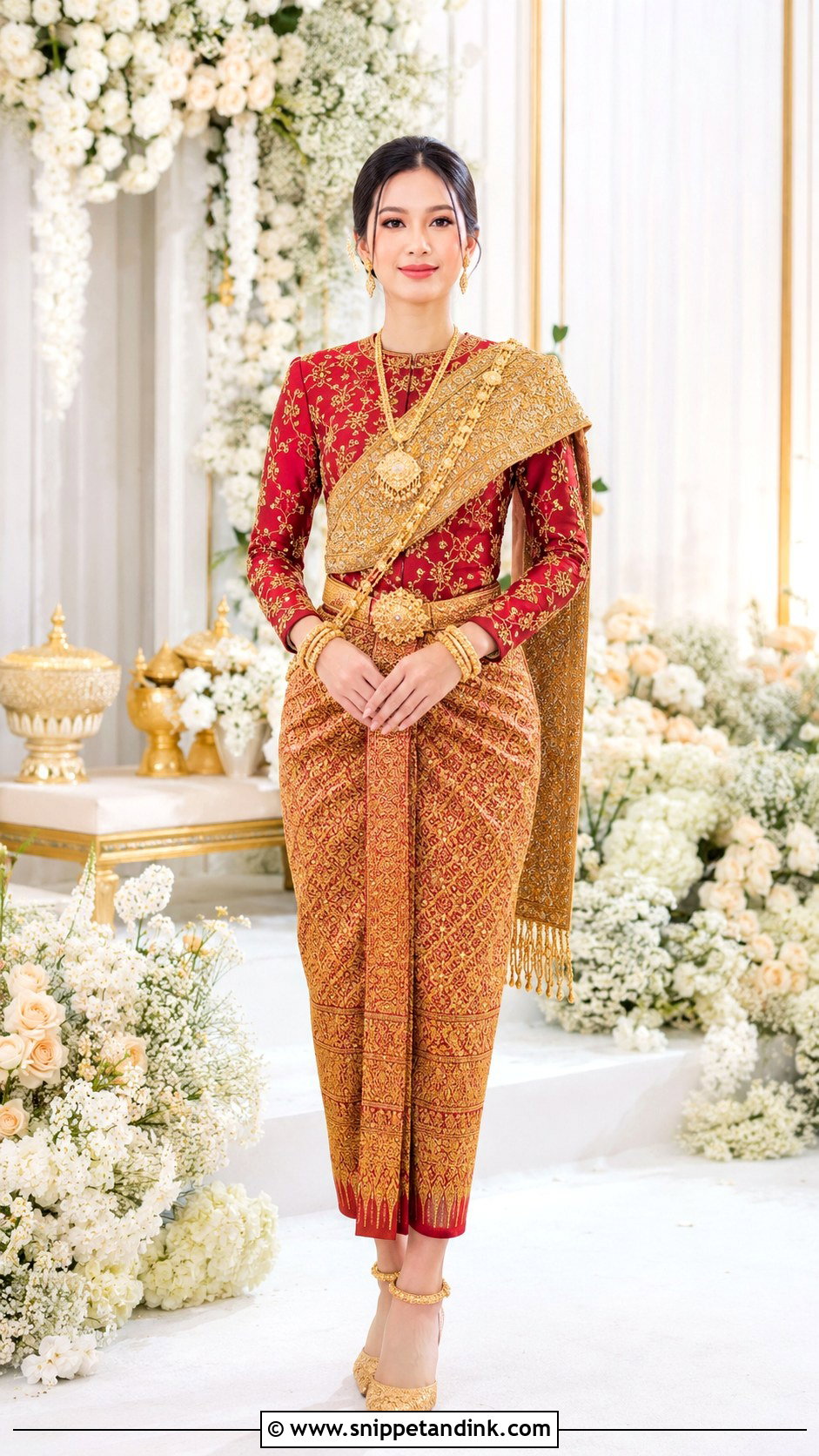
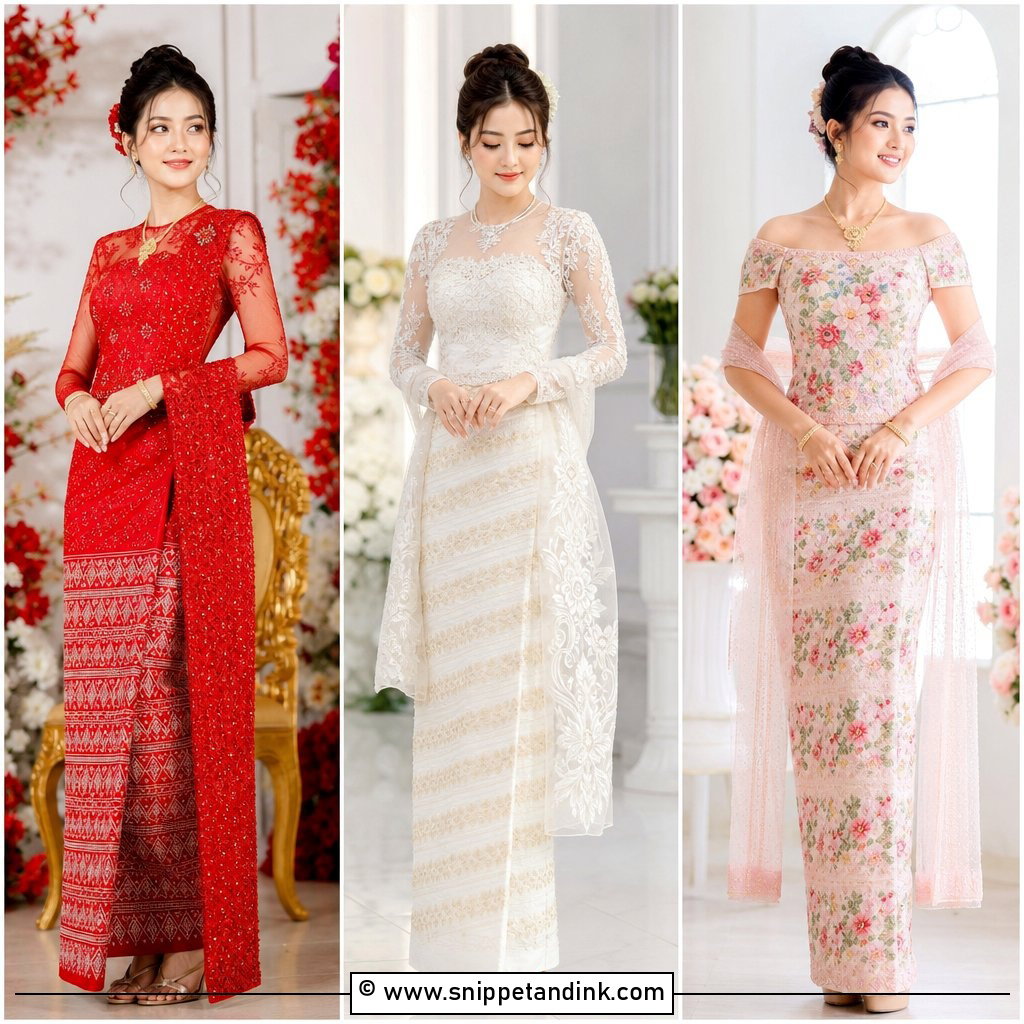
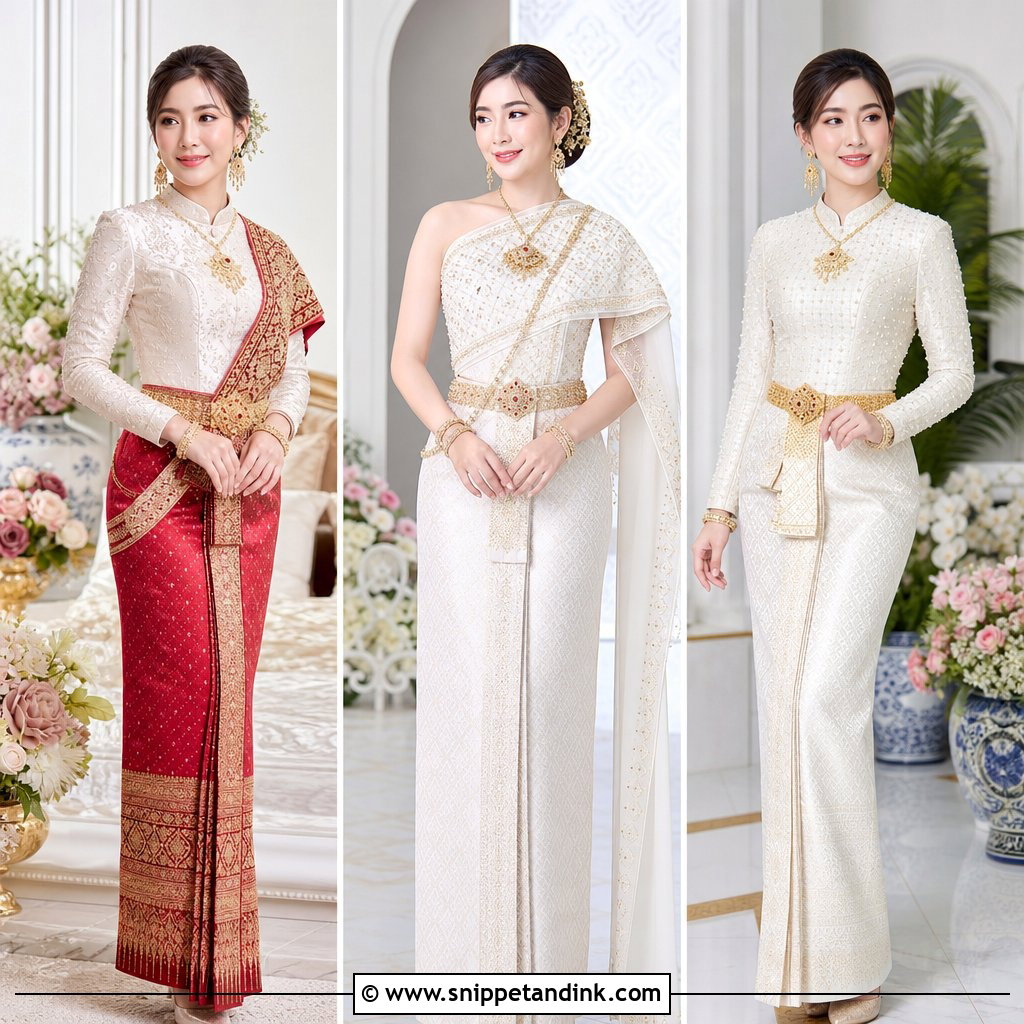
Red with gold is the combination most families picture first. A fitted red silk blouse with gold embroidery, a structured sampot with metallic patterning and a gold sbai across one shoulder read as bridal from across the room. Heavy gold thread makes silk stiff, so I ask for the blouse to be fitted with the arms raised as well as down; otherwise the armholes cut in during the blessings. A smooth bun with gold ornaments and a classic red lip keep the face clear of all that detail. Cream or ivory décor behind it makes the red glow.
2. Gold Sampot Chang Kben Wedding Dress
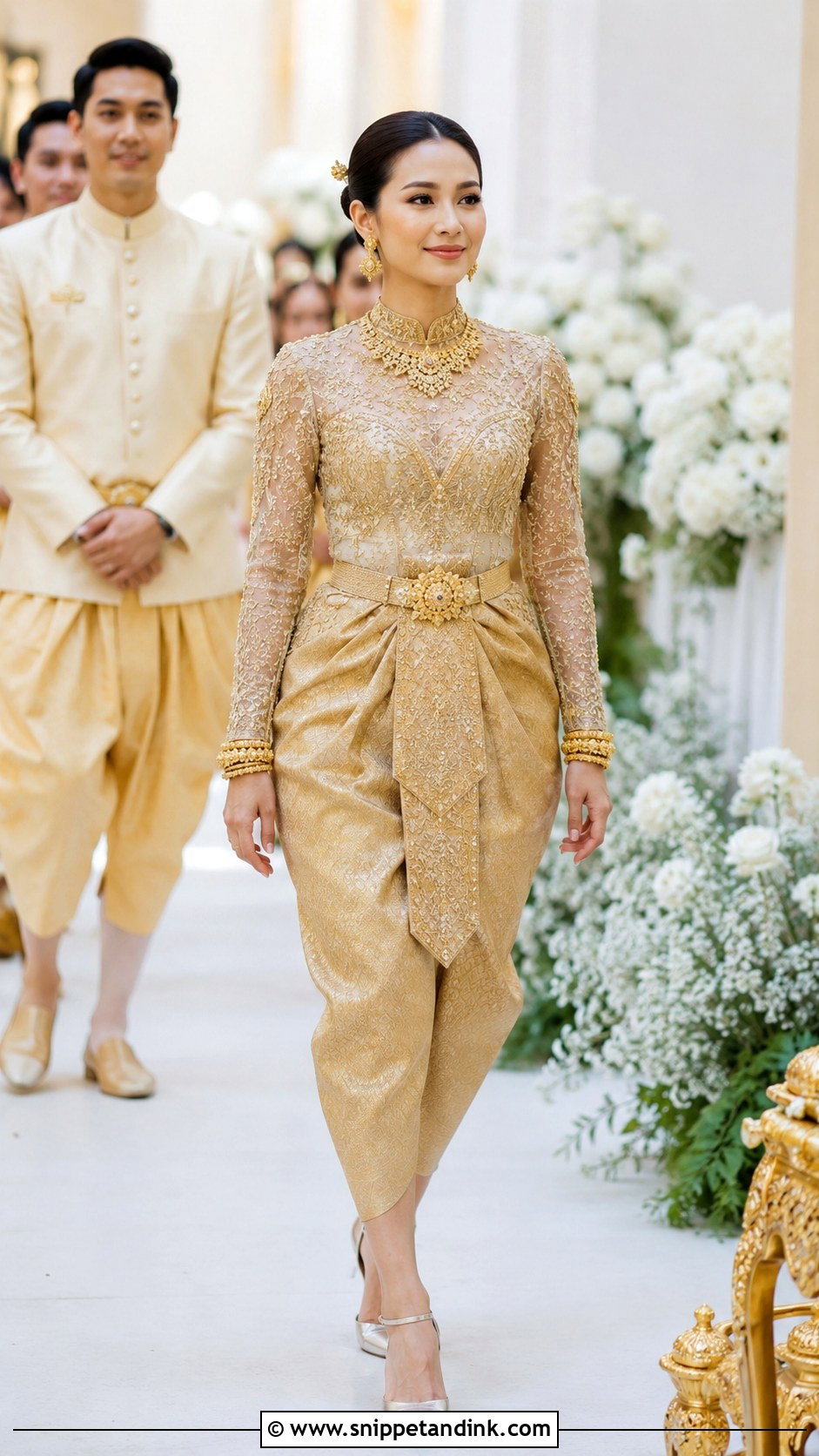
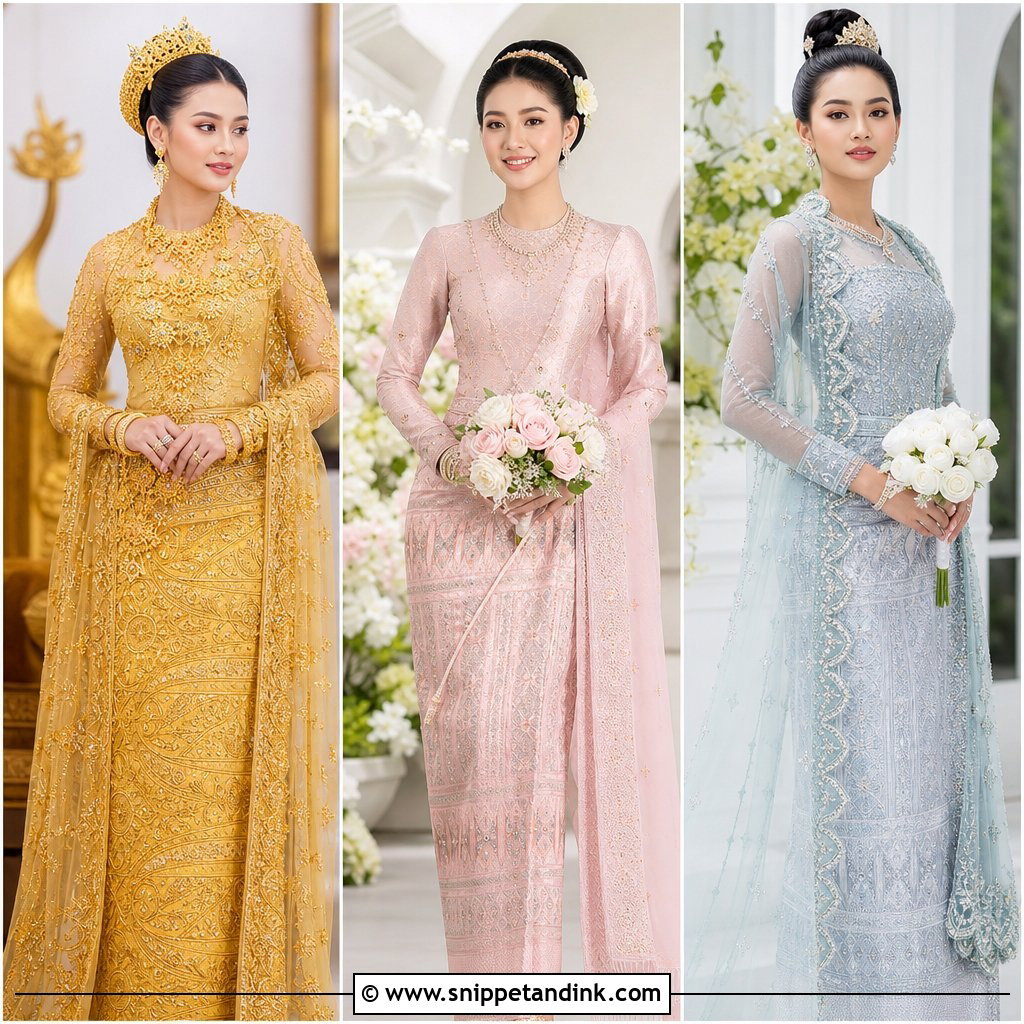
The sampot chang kben is wrapped and pulled through between the legs to form a trouser-like shape, which is why it suits processions and long periods of walking. In all-gold, I like a blouse a shade softer, antique gold or champagne, so the outfit has depth rather than one flat shine. The folds are only as secure as whoever ties them. Ask the tailor or dresser to pin the back tuck well and test it by climbing a step or two before the ceremony starts. Stacked bangles and a collar necklace go well with a high, smooth bun.
3. Ivory And Gold Sbai Wedding Dress
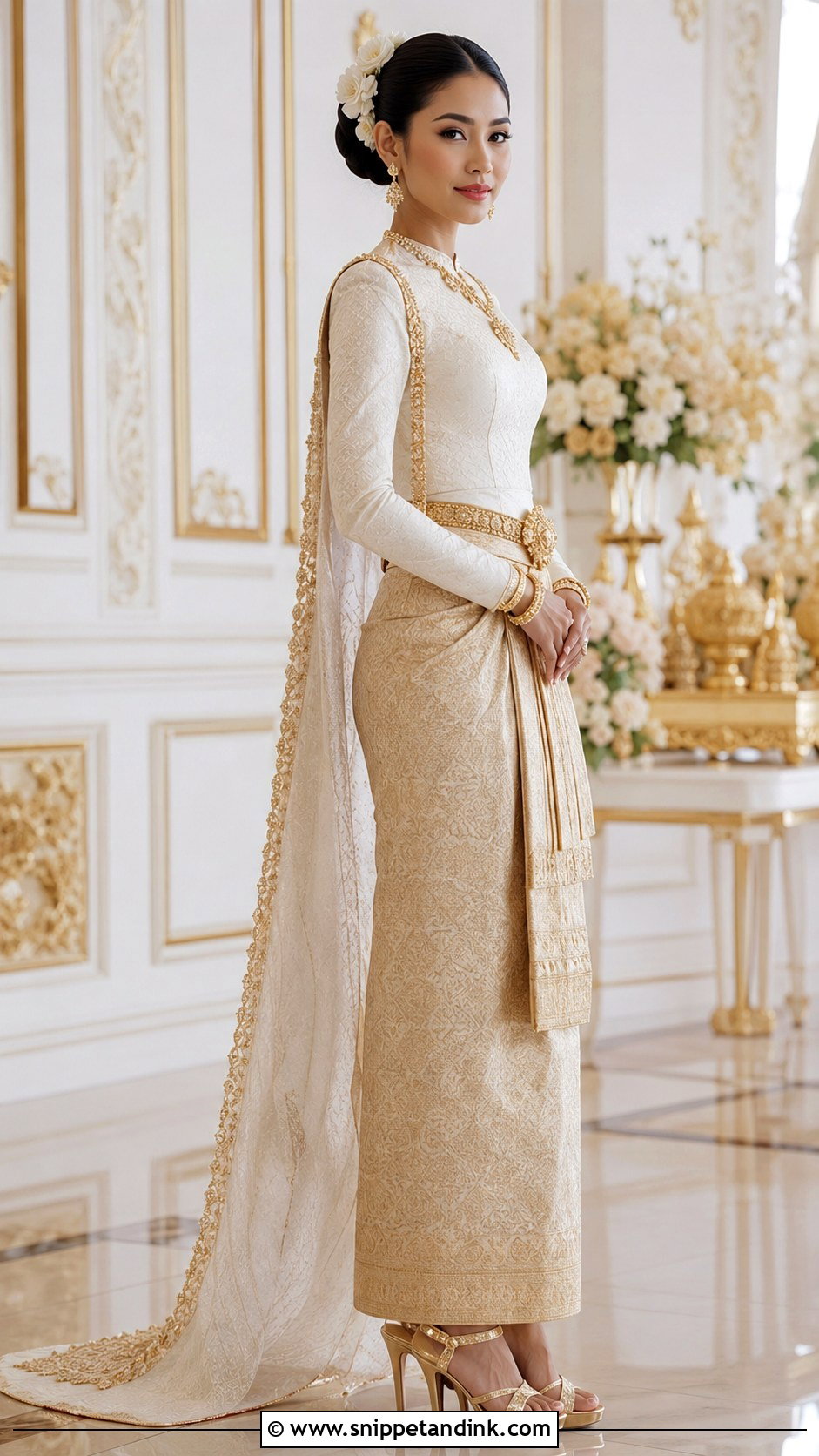
Ivory with gold weaving gives a lighter, brighter look that suits a daytime ceremony. An ivory silk sampot and matching bodice let a long gold-edged sbai fall over one shoulder and down the back. In Khmer ceremonial clothing, the sbai pairs naturally with the sampot, and bridal versions are often longer. Ivory silk marks easily, so I keep makeup wipes and a clean towel near anyone eating while dressed. Champagne shoes and fresh white flowers in the bun finish it.
4. Emerald Green Cambodian Wedding Dress
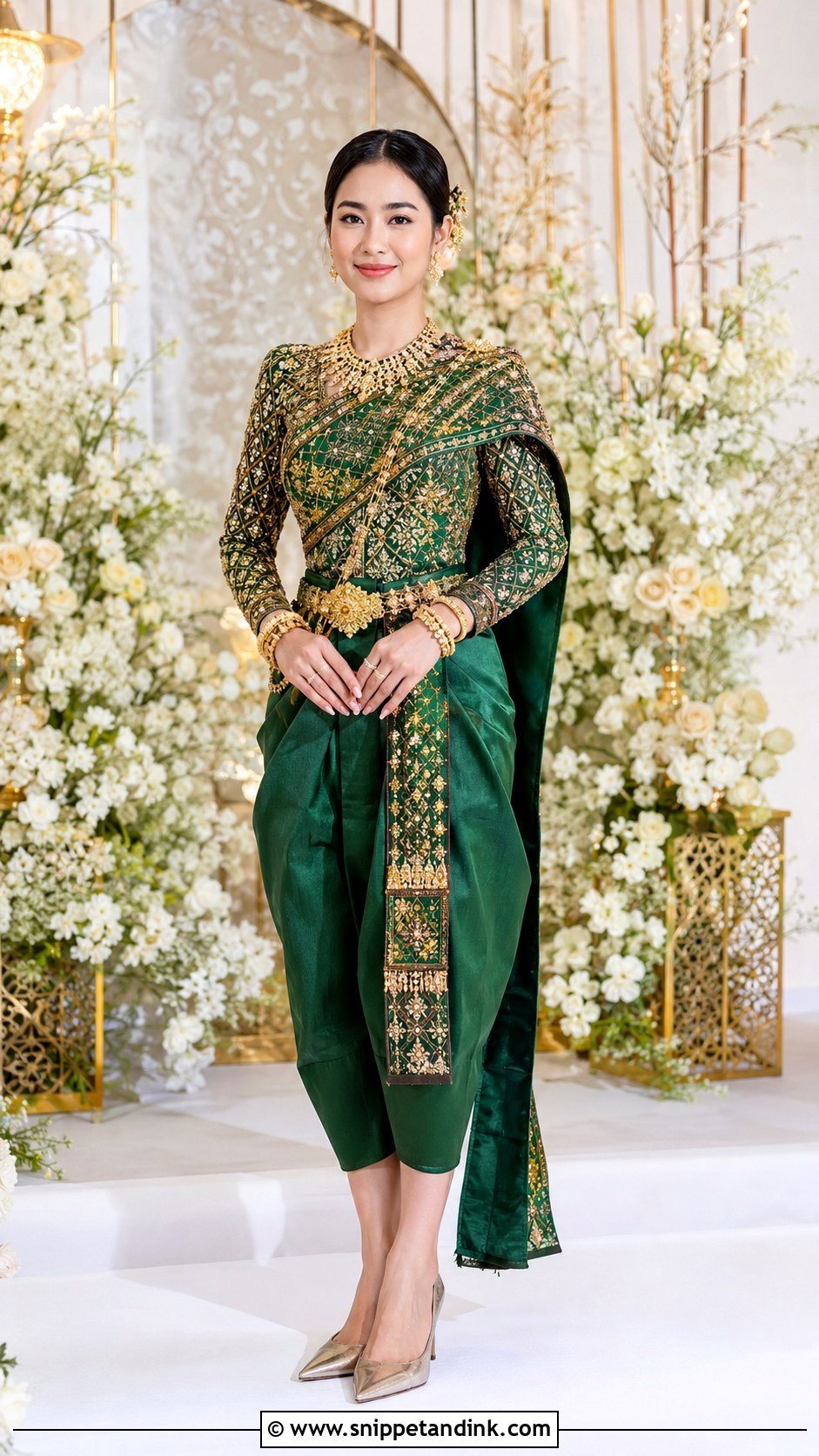
Emerald is my favorite answer for a bride who doesn’t want red. A fitted green blouse with gold embroidery at the neckline, sleeves and waist sits over a silk sampot with a quiet geometric weave. Green can turn olive under warm indoor bulbs, so check the silk under both daylight and the venue’s lighting before committing. A green-and-gold sbai, a sculpted belt and a collar necklace give it ceremony. Bronze eyes and a muted berry lip suit the shade.
5. Royal Blue Cambodian Wedding Dress
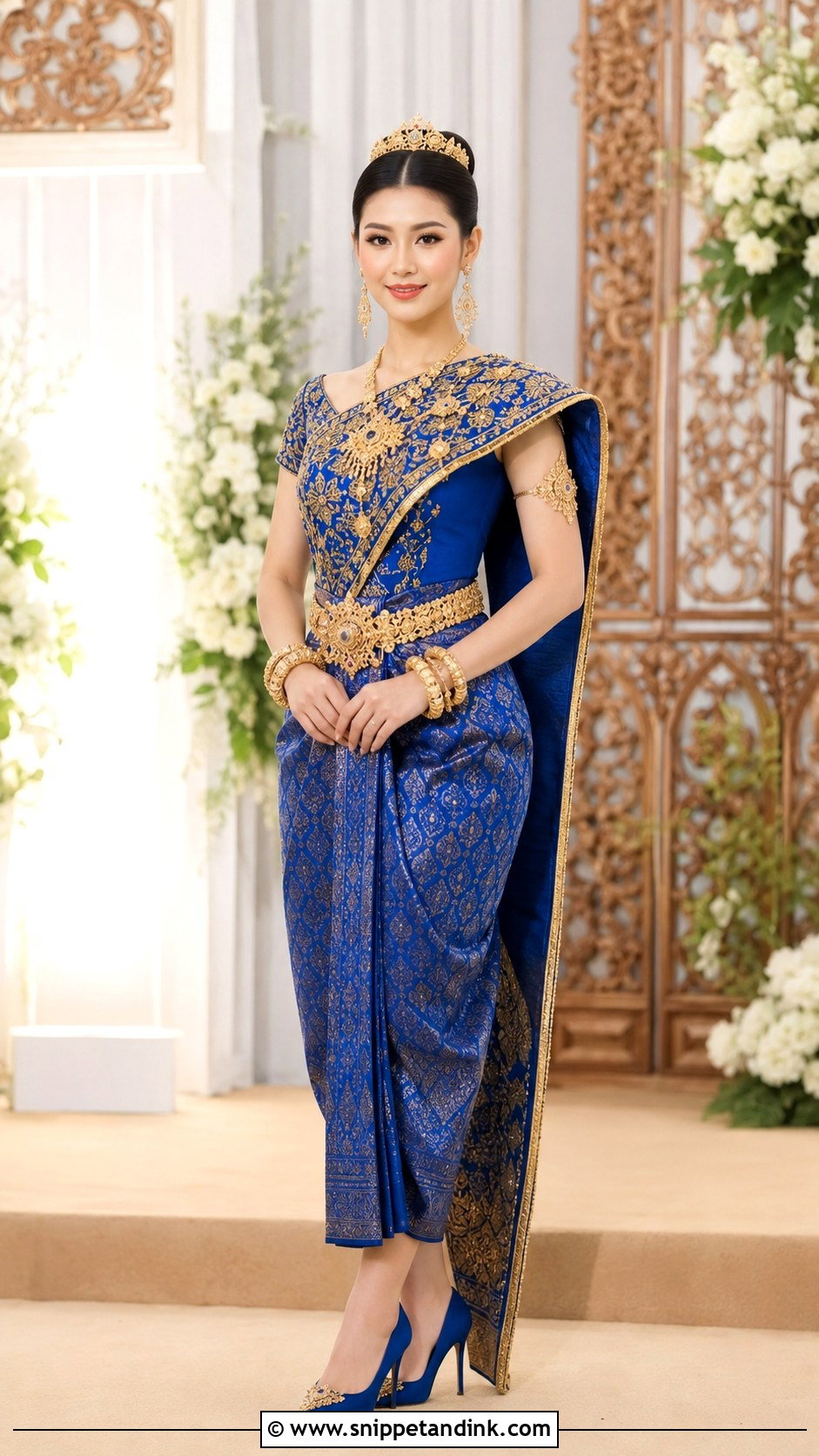
Saturated royal blue suits a bride who loves strong color and wants it to carry in daylight photographs. A close-fitting blue silk top with gold beading pairs with a long brocade sampot, either all blue or with a gold woven panel. Beaded tops are heavy at the shoulder, and a short sbai keeps the line neat if the beading already weighs a lot. A broad gold belt and cuffs complete it. Defined liner and a soft pink lip brighten the face against the deep blue.
6. Lotus Pink Khmer Wedding Dress
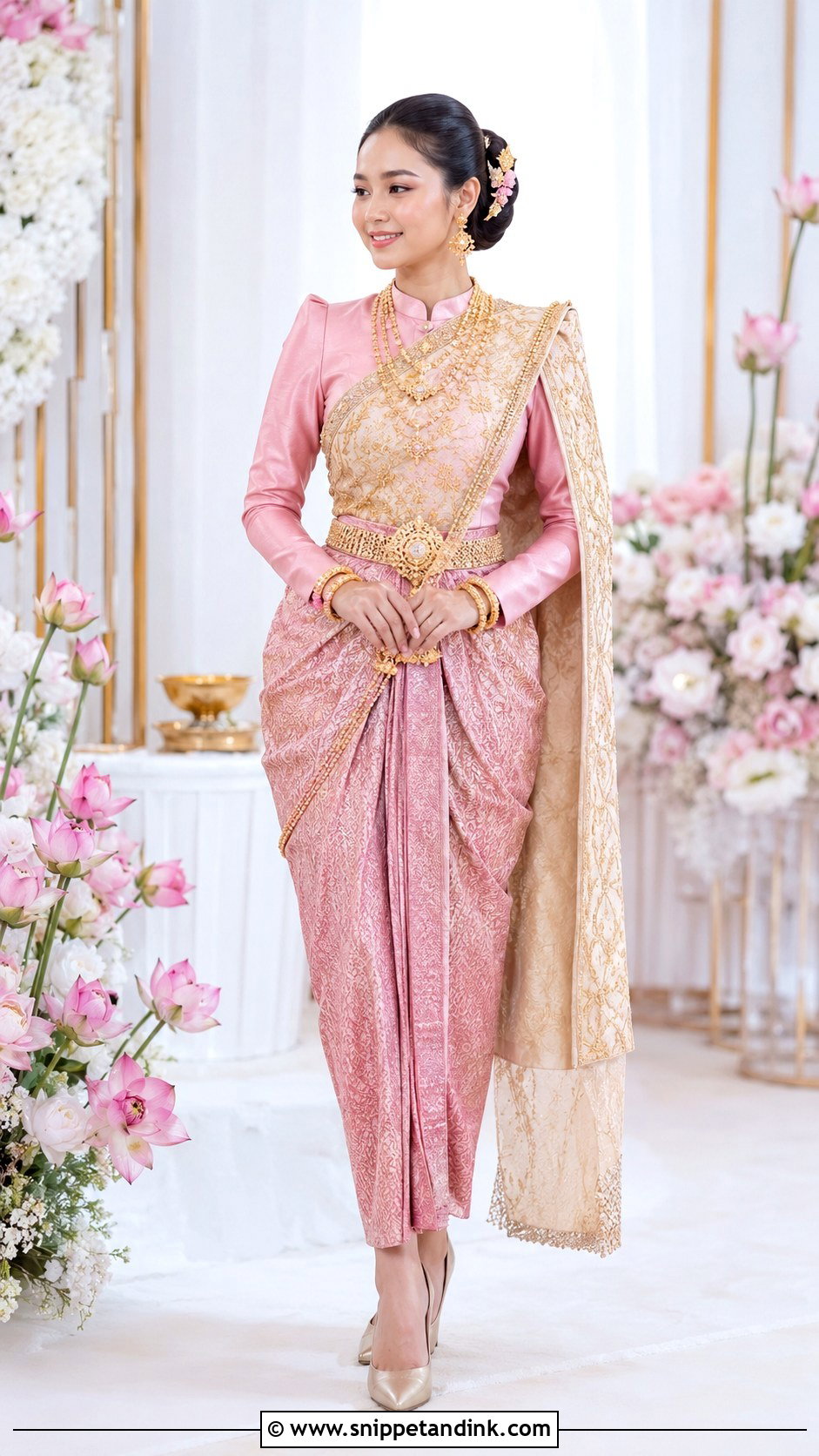
Lotus pink is softer than the classic ceremonial colors and sits well in morning light. A pink blouse with gold thread and a matching silk sampot need enough body to hold clean pleats at the waist; very soft silk collapses after an hour of sitting. A pale gold sbai stops the outfit tipping into sweetness. Small lotus-shaped ornaments or fresh pale flowers in a smooth bun tie the theme together. Keep makeup luminous, with a pink-nude lip.
7. Purple Sampot Phamuong Wedding Dress
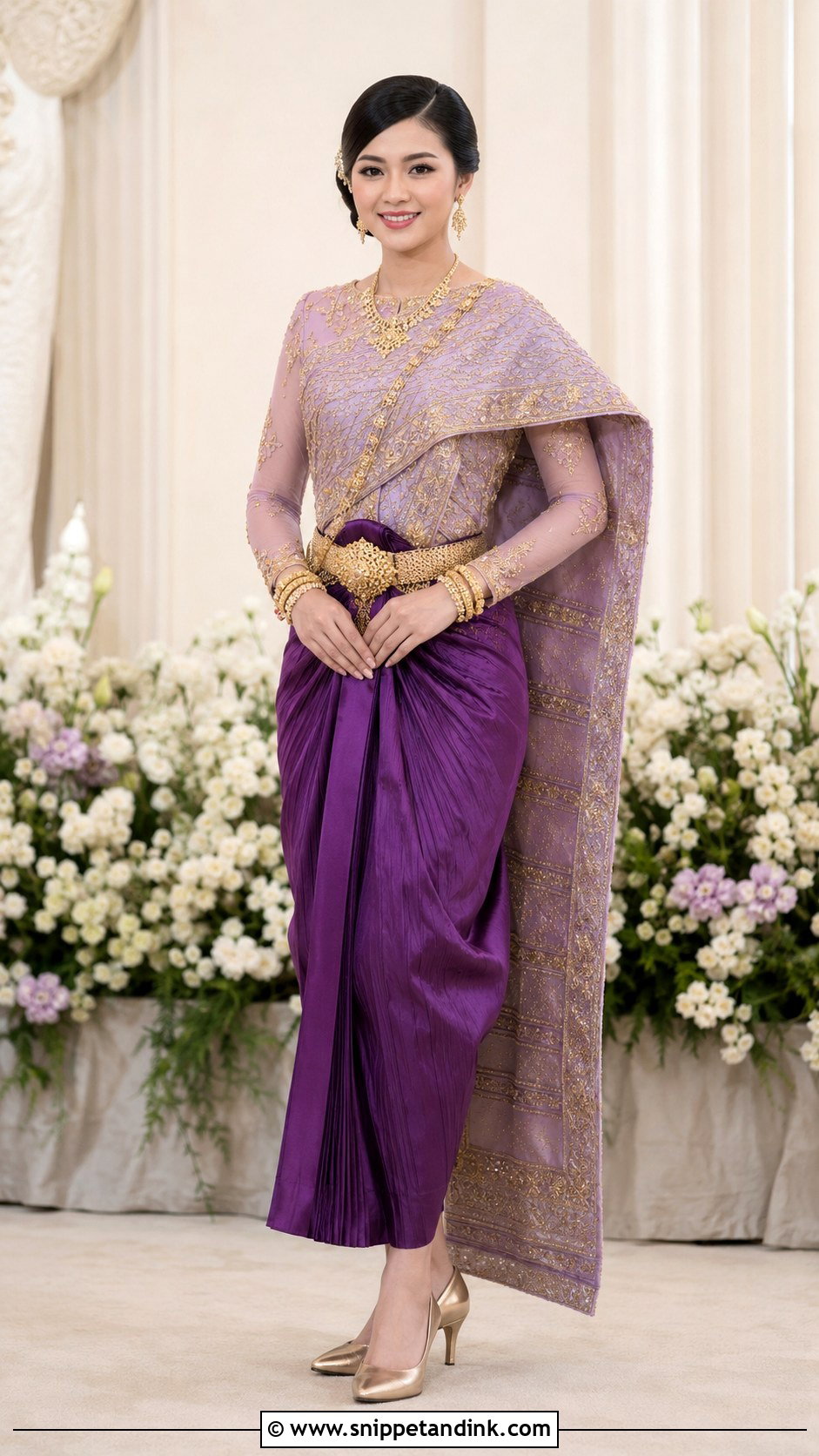
Deep purple is the most dignified color in this collection, quieter than red but still clearly ceremonial. A carefully pleated sampot phamuong with a fitted gold or lavender blouse lets the woven silk speak. If a full sbai feels like too much, a decorative shoulder panel gives a cleaner line. I’d always have the hem made to your actual shoes, since a long sampot that brushes the floor will be stepped on. Balance the purple with warm makeup such as bronze eyeshadow and berry-rose lipstick, and a sleek side-parted bun.
8. White Lace And Gold Sampot Wedding Dress
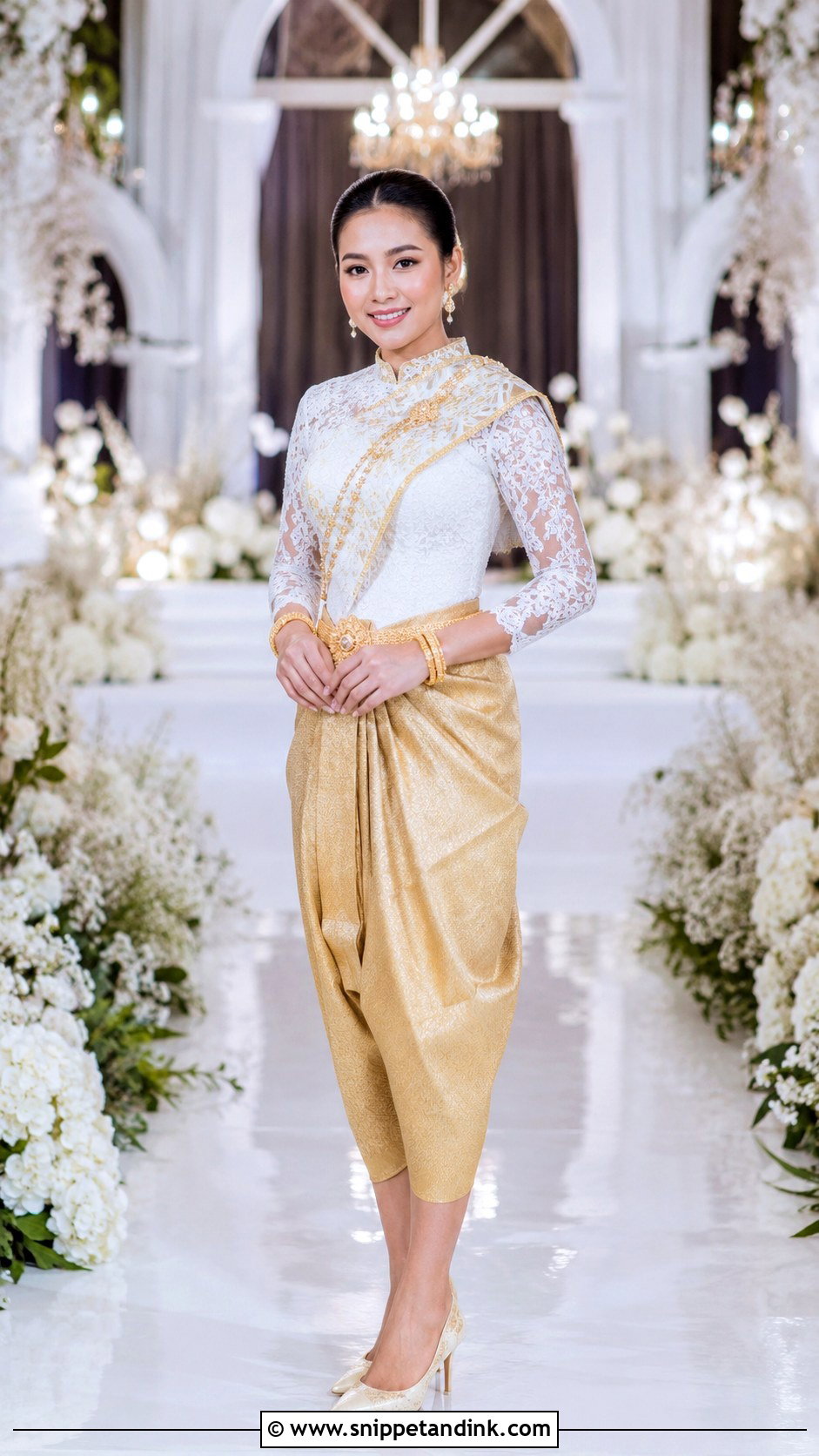
A white lace blouse over a gold sampot bridges Western bridal dressing and Khmer formalwear. The lace should be fine enough that it doesn’t compete with the metallic pattern below. A structured blouse with a modest neckline and three-quarter sleeves gives the lace something to hold onto. A narrow white-and-gold sbai joins the top and bottom so they read as one outfit. Pearl pins in a low bun echo the lace. It suits a lighter, contemporary color scheme while keeping the Khmer pieces recognizable.
9. Burgundy Cambodian Wedding Dress
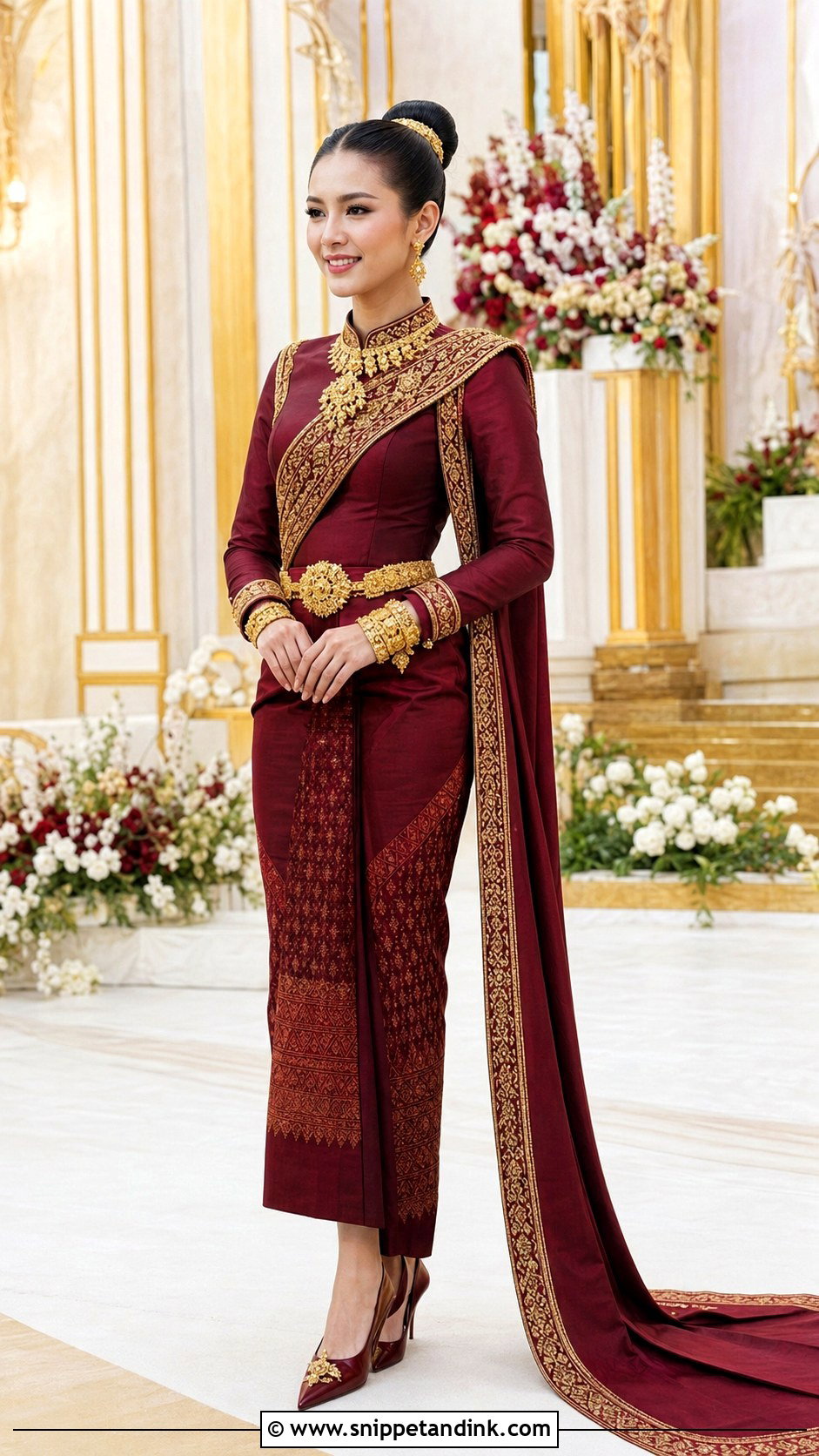
Burgundy has depth that bright red doesn’t, and it pairs best with antique gold rather than shiny yellow gold. Start with a fitted silk blouse embroidered in antique thread and a burgundy sampot with small metallic motifs that look even from a distance. A matching drape with a narrow gold border lengthens the line. Antique-finish jewelry ties it together. In low indoor light, burgundy can read almost brown, so the photographer should know to light it well.
10. Champagne Beaded Cambodian Wedding Dress
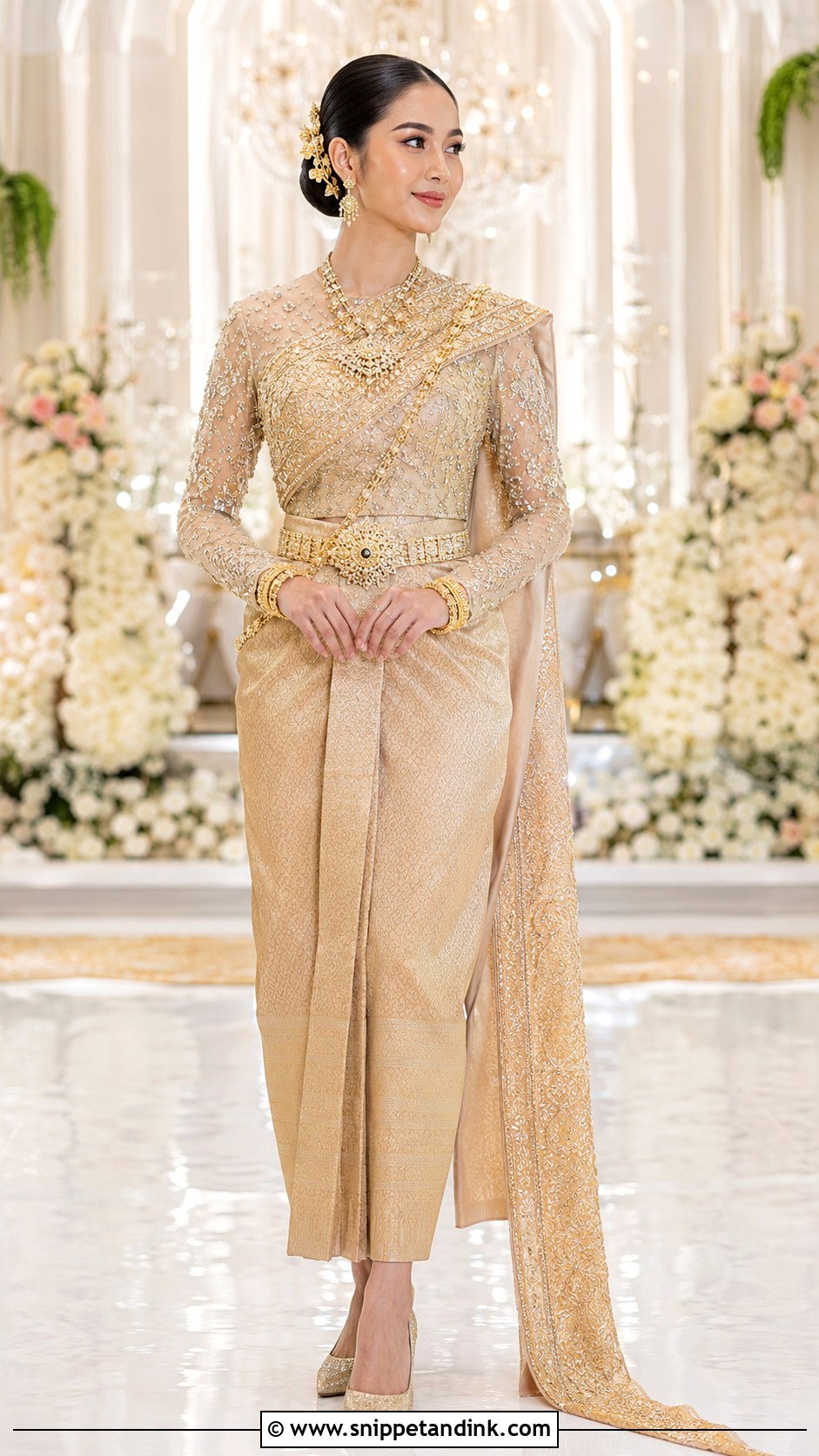
Champagne is the softer route to an all-gold bride. A beaded top with a clean neckline and a sampot woven with fine metallic threads give shimmer without hard contrast. Drape the light gold sbai close to the body for a streamlined shape. Beaded bodices can scratch the inner arm, so ask the tailor to line the underarm with soft silk. A sleek bun with a crystal-and-gold comb and peachy nude lips suit the tonal palette.
11. Pastel Blue Cambodian Wedding Dress
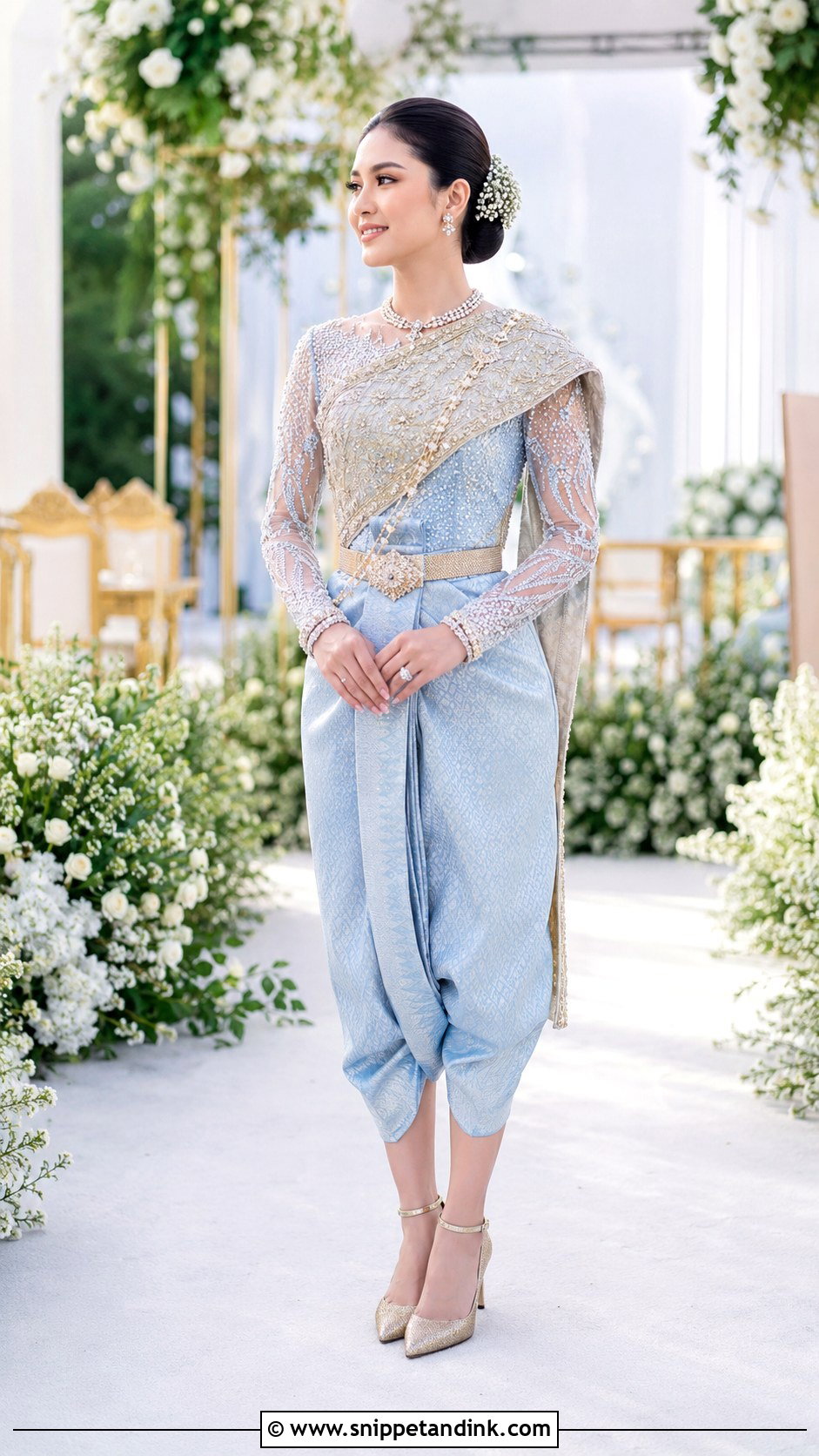
Powder blue feels calm and suits a daytime celebration. A fitted top embroidered in silver-gold or tiny pearls pairs with a silk sampot in a delicate weave, and a pale champagne sbai adds contrast. Pastels are where skin tone matters most; a blue that is too pale next to a light complexion washes the bride out, so hold the fabric near your face in daylight first. A slim belt suits this palette better than a heavy one. Small white flowers in a low bun finish it.
12. Blush Embroidered Cambodian Wedding Dress
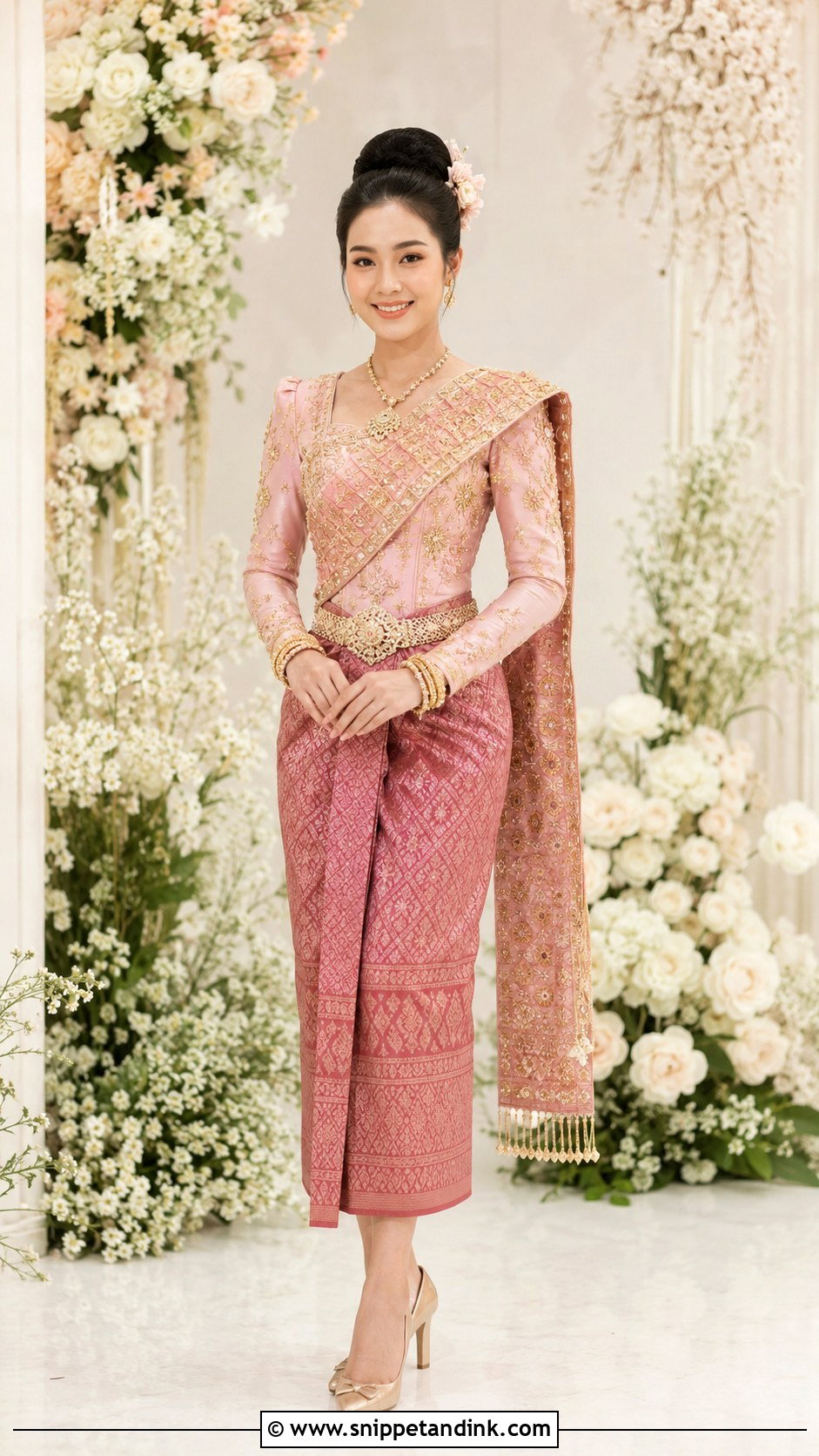
Blush silk needs strong tailoring or it looks limp. A structured blush blouse with gold floral embroidery and a deeper rose sampot gives tonal contrast, and a blush-and-gold sbai worn diagonally joins them. Medium-scale jewelry suits the softer colors better than the heaviest pieces. When the outfit is pink, keep the makeup distinct, with a defined eye and a clear lip color, so the face doesn’t disappear into one shade. Gold pins or pale flowers sit at one side of a high bun.
13. Silver Cambodian Reception Dress
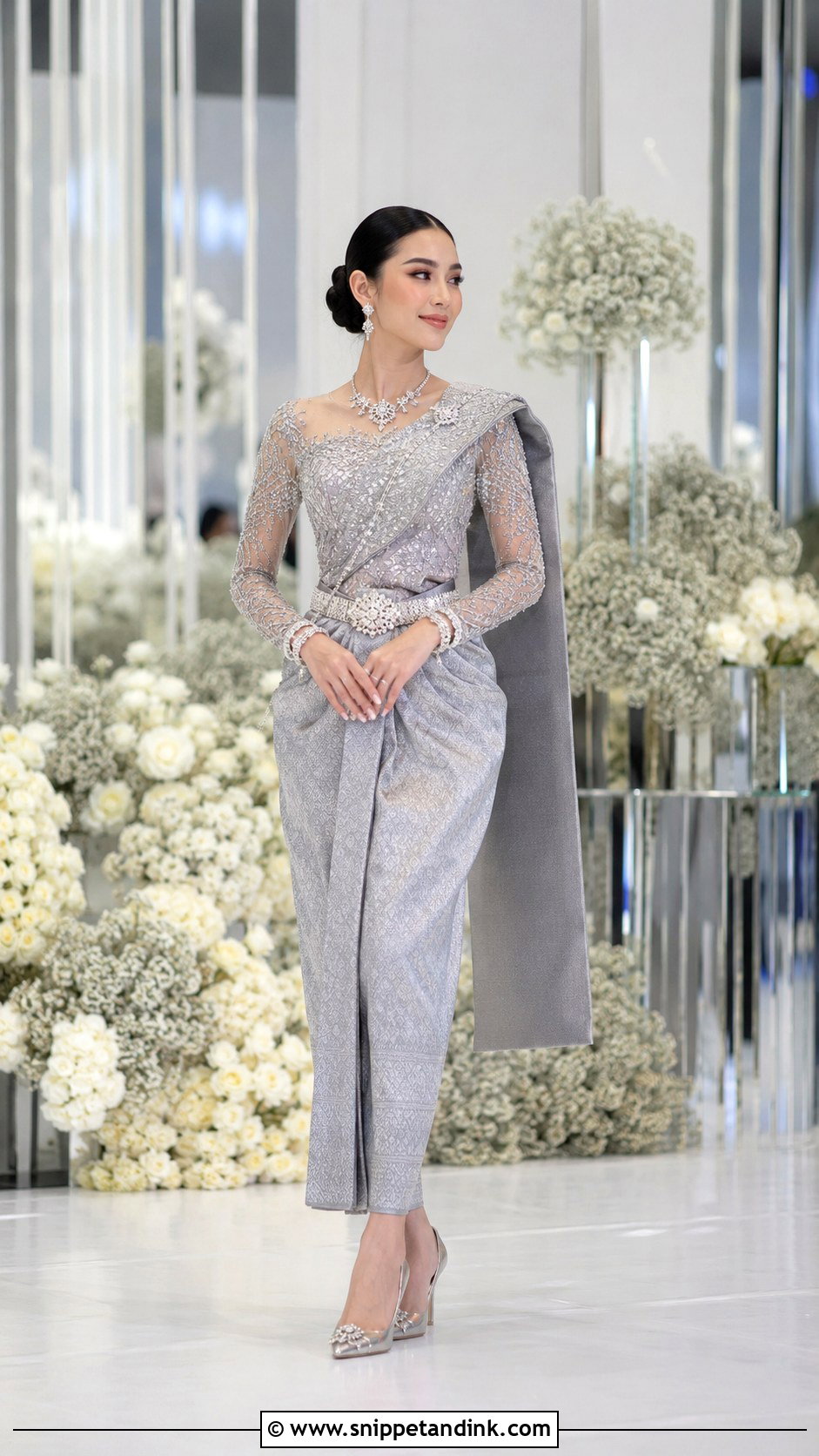
Silver is cool and glamorous for the evening reception or the last change. A crystal-beaded silver blouse and a sampot woven in silver-gray silk can take a structured shoulder drape instead of a full sbai for a cleaner shape. Silver photographs flat when every piece has the same finish, so I mix matte silk with metallic weave and sparkling beads to give it texture. Pointed silver heels and mauve lipstick finish it. Keep the hair swept back so the neckline stays clear.
14. Red Hair-Cutting Ceremony Wedding Dress
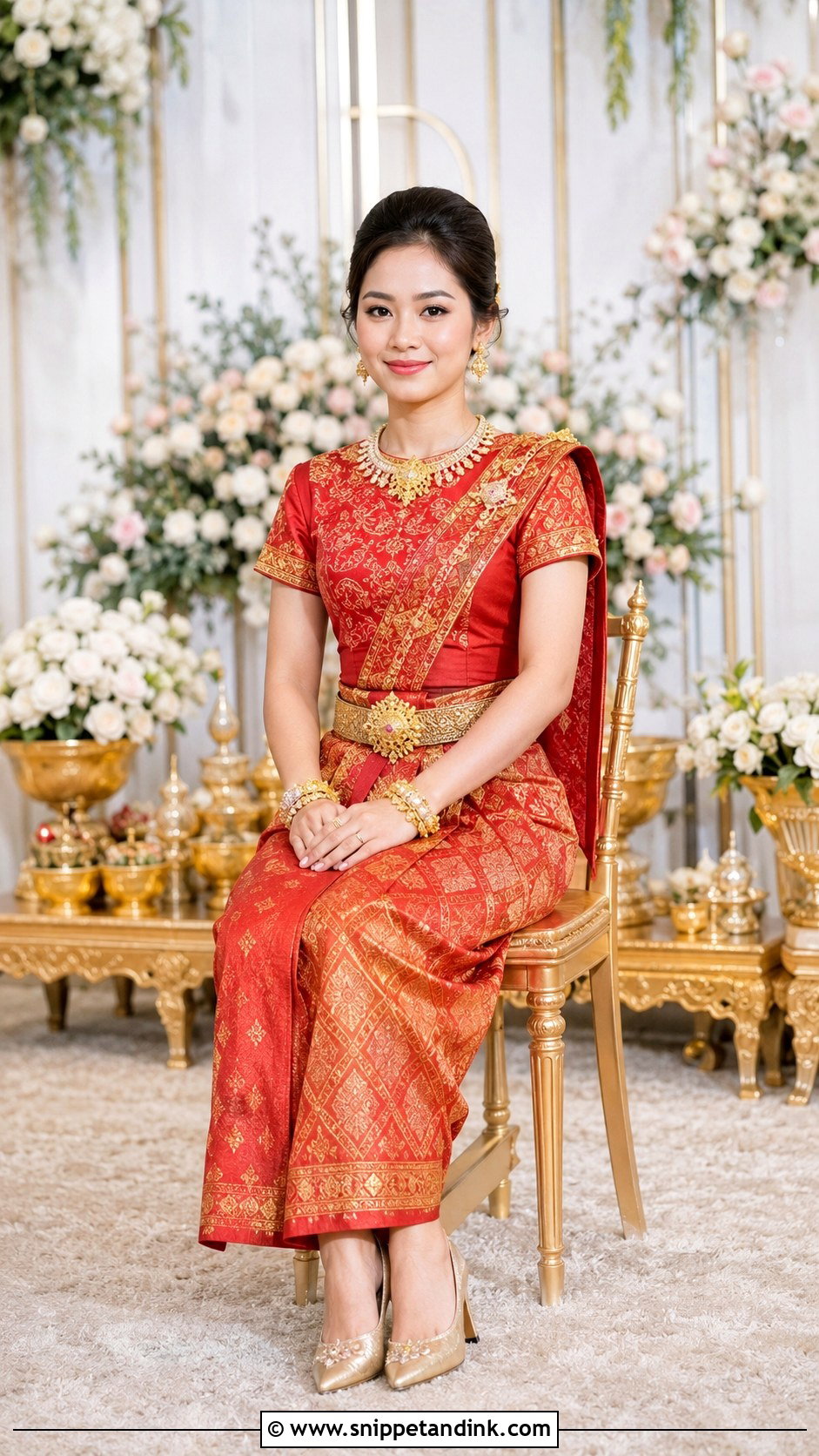
The symbolic hair-cutting ceremony is when relatives come to the bride, so she spends most of it seated. A red outfit makes that moment joyful and instantly recognizable. Choose a fitted embroidered blouse with short sleeves and a secure neckline, since you’ll be leaning slightly forward. A structured gold belt keeps the sampot and shoulder drape in place while you sit. Stable low heels make the next outfit change easier. Sequence, colors and presentation vary between families, so confirm the details with elders before choosing anything.
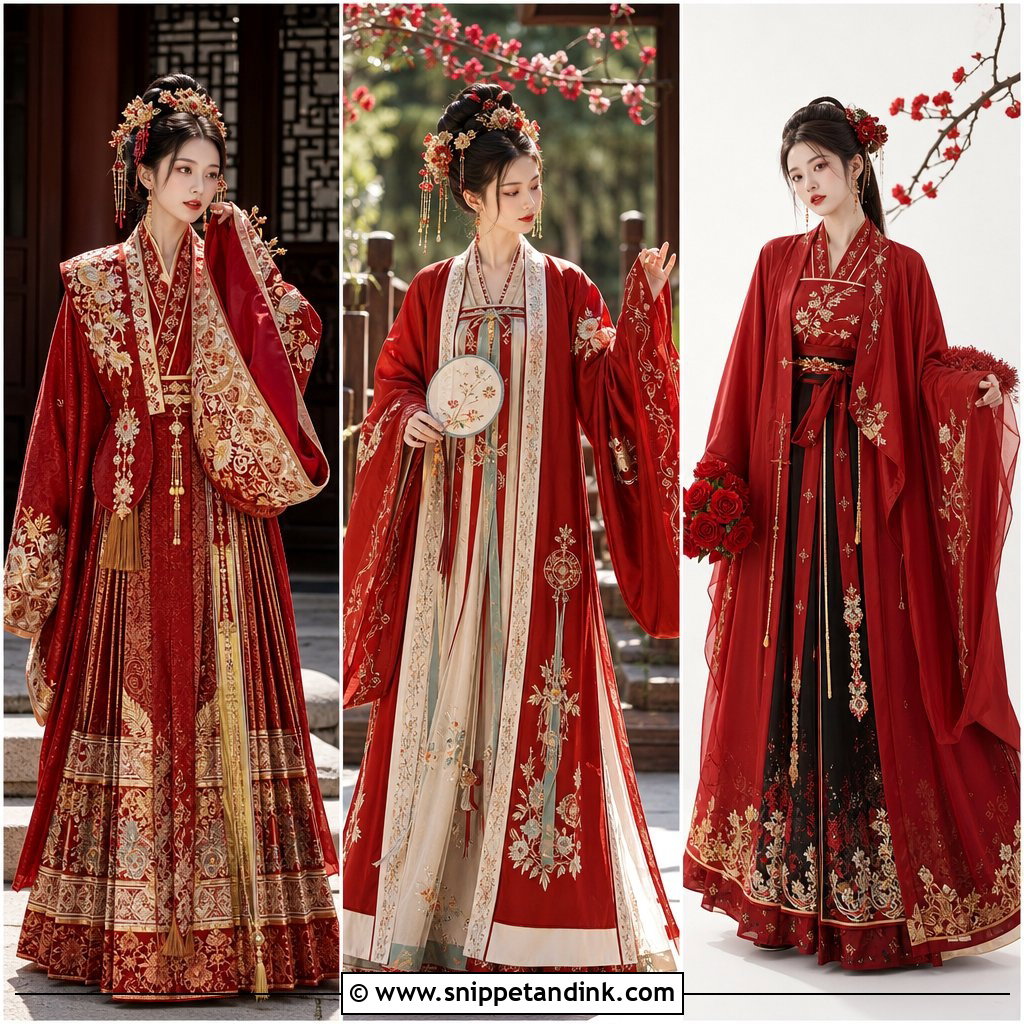

15. All-Gold Hand-Tying Ceremony Wedding Dress
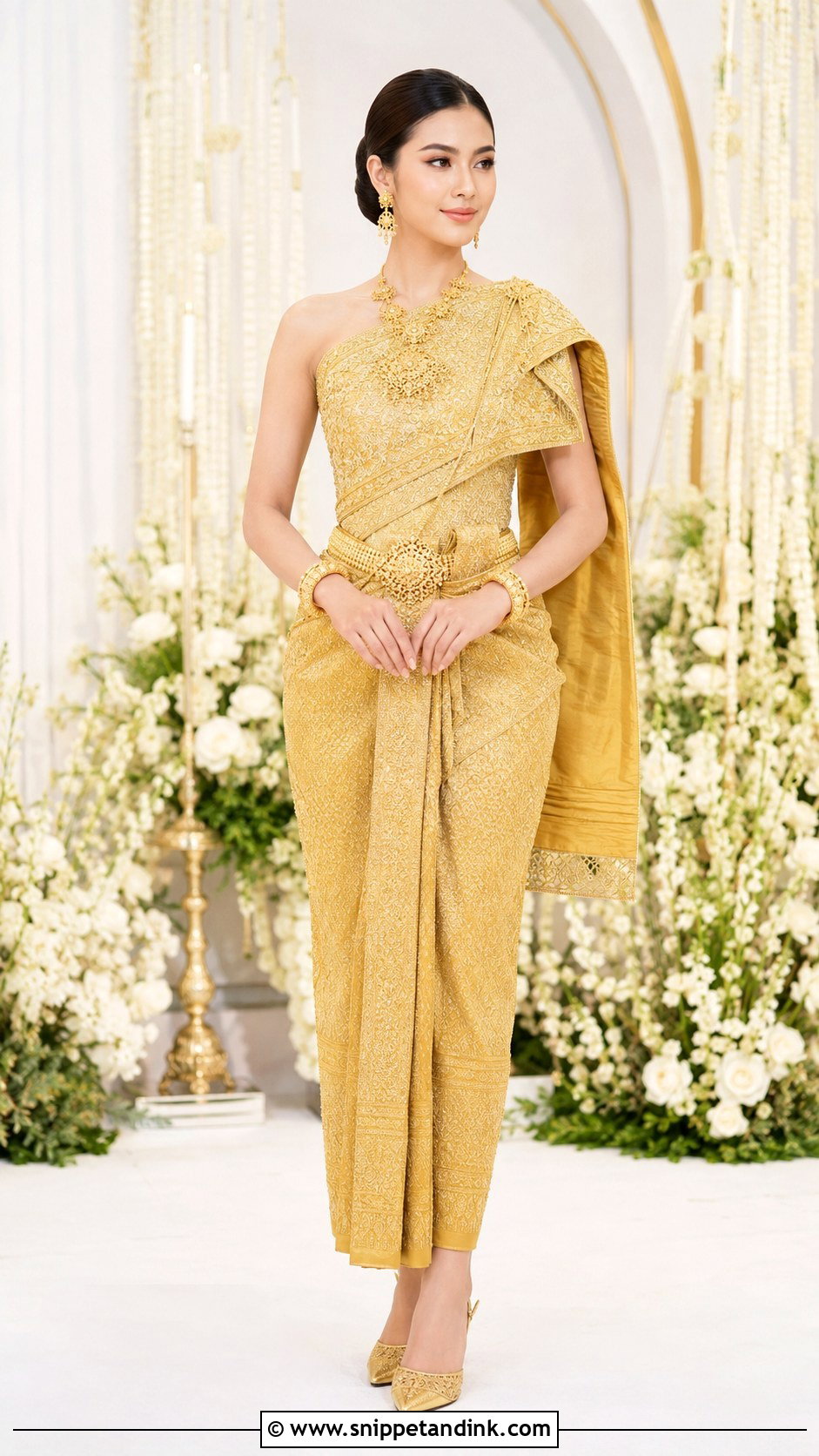
All gold suits the hand-tying ceremony, when family members tie blessing threads around the couple’s wrists. Start with a fitted gold blouse with raised embroidery and a matching sampot or chang kben. The one practical rule I follow is keeping the wrists clear: place bangles and arm jewelry so the threads can go on easily, or add them afterward. A gold sbai over one shoulder leaves the arms free. Because this is one of several smaller ceremonies, comfort and a careful fit matter as much as the look.
16. Peach Cambodian Morning Wedding Dress
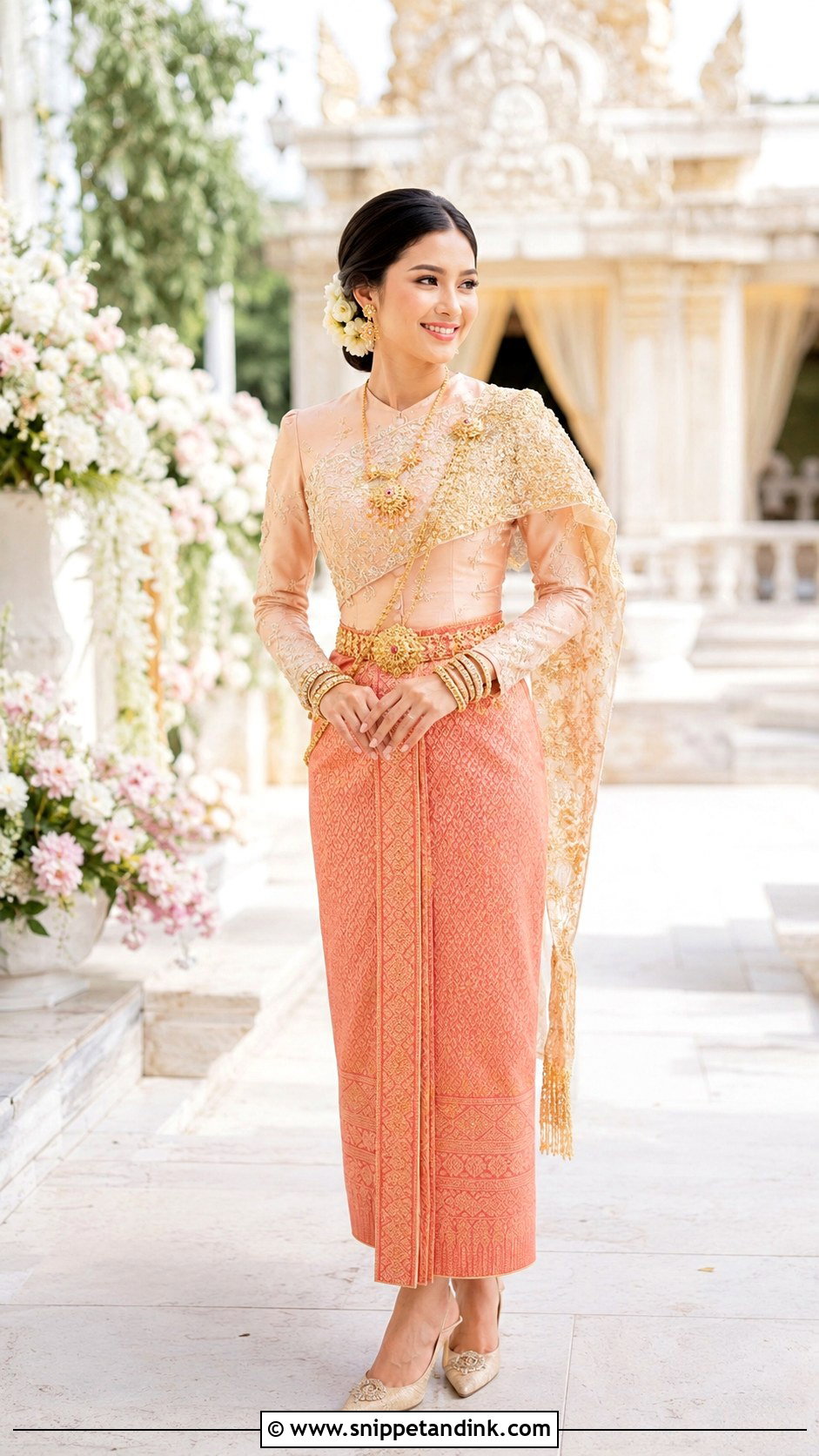
Peach brings warmth to an early ceremony without looking heavy in morning light. A peach silk blouse with champagne embroidery pairs with a coral-peach sampot, and a pale gold sbai adds formality. Morning schedules often start before dawn and run long, so ask for a breathable lining and secure fastenings. The sampot should hold its shape but allow you to walk and sit. Cream flowers in a smooth bun and peach blush with a rose-coral lip complete it.
17. Jewel-Tone Cambodian Wedding Dress
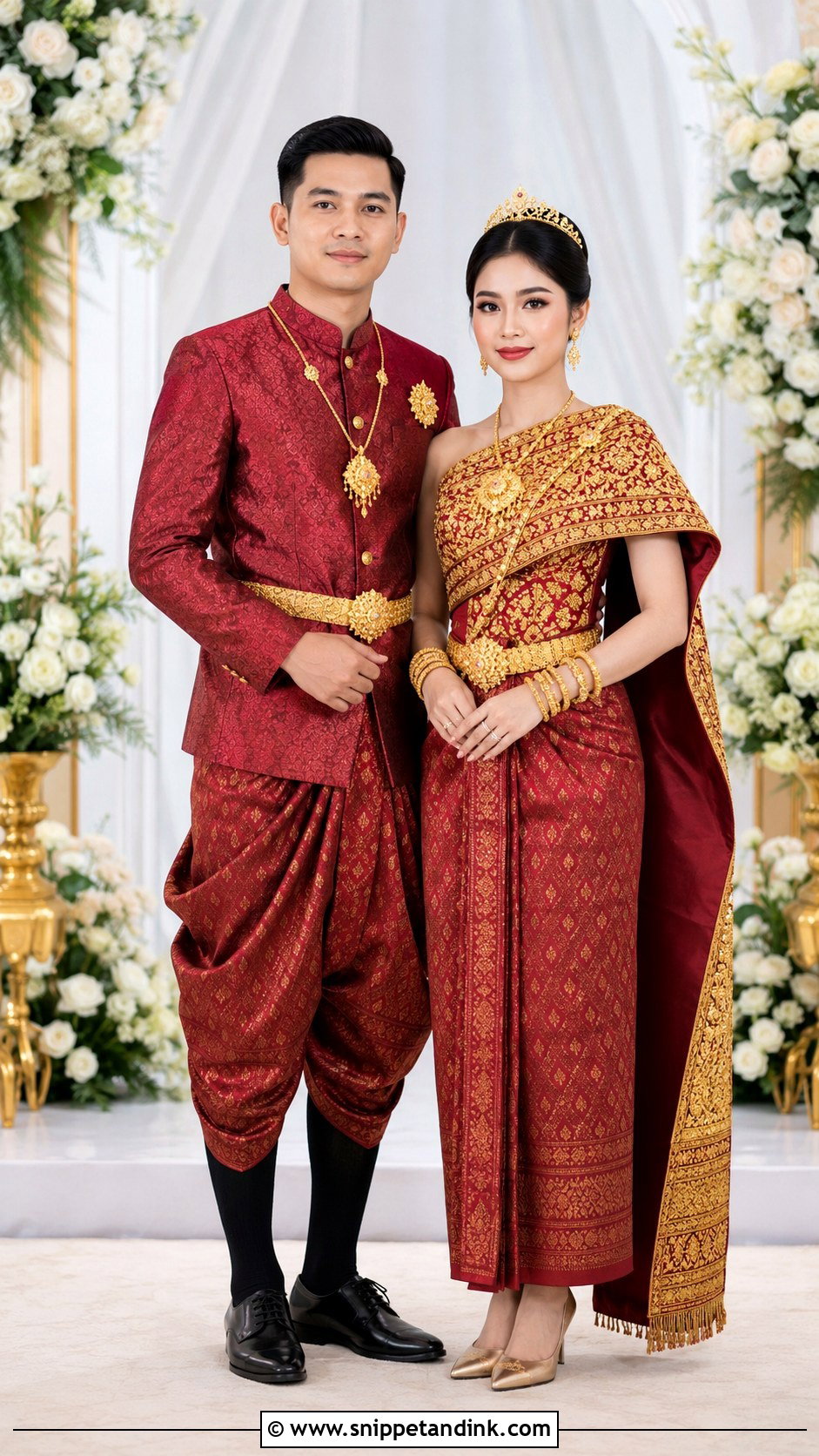
Jewel tones let the bride wear strong color and coordinate with her partner. Ruby, sapphire, amethyst or emerald silk for the top and sampot can be joined by gold embroidery across the blouse, waist and drape. The groom looks best in a jacket and chang kben in a complementary shade, not the same one. Before final tailoring, I always lay both outfits side by side in daylight, because two silks that match in the shop can clash in sun. Makeup should complement the fabric, not copy it.
18. Apsara-Inspired Cambodian Wedding Dress
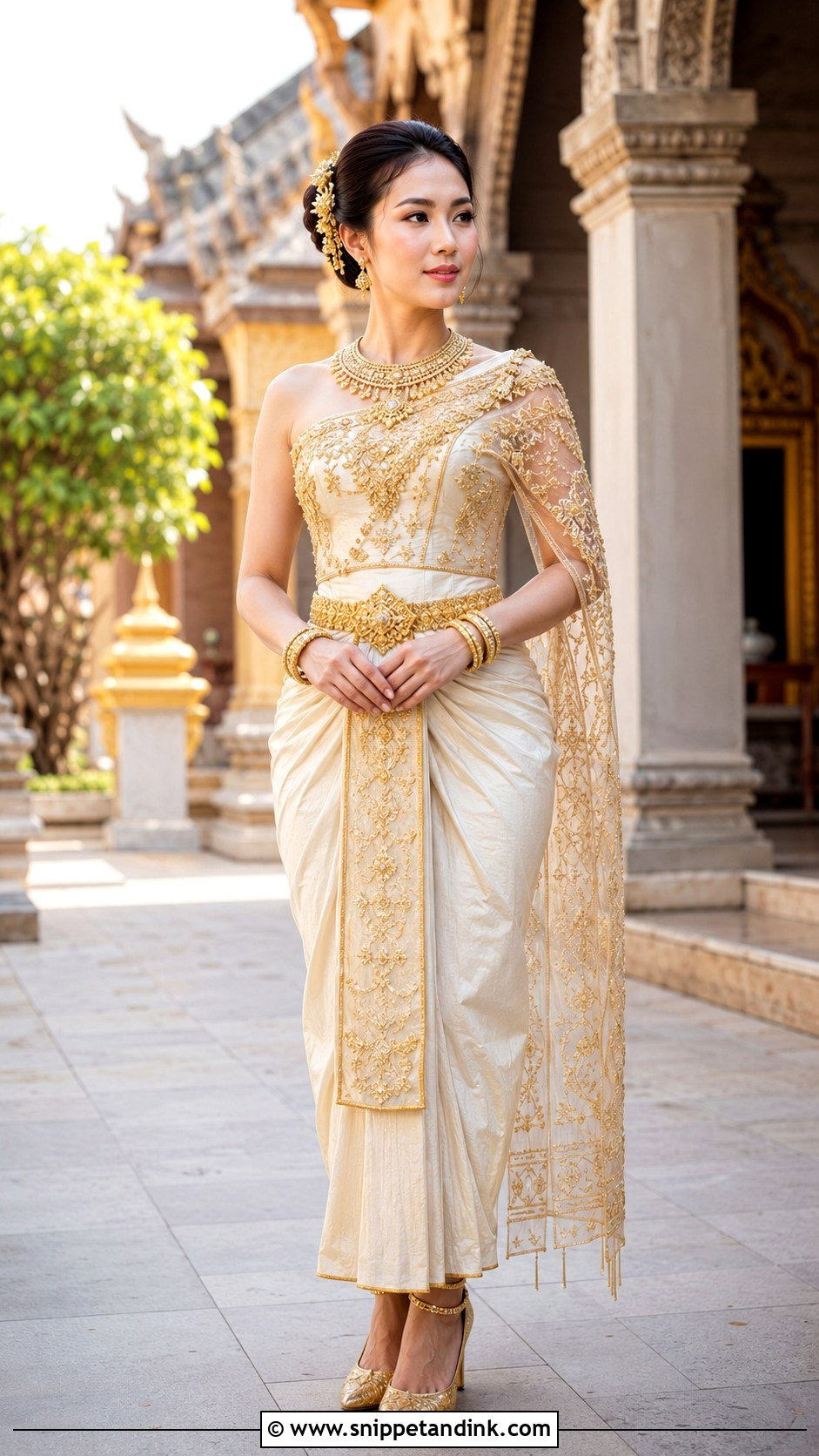
An Apsara-inspired look can celebrate Khmer visual heritage, but it needs to be made with care and the guidance of a knowledgeable designer. A fitted gold or ivory bodice with precise borders, a pleated silk sampot and a decorative front panel give the long vertical lines Apsara imagery is known for. I’d steer away from copying a performance costume and its tall headdress; a refined bridal updo with a smaller ornament keeps it suitable for a wedding. Let a Khmer tailor guide which motifs and jewelry placements are appropriate.
19. White Gown With Cambodian Sbai
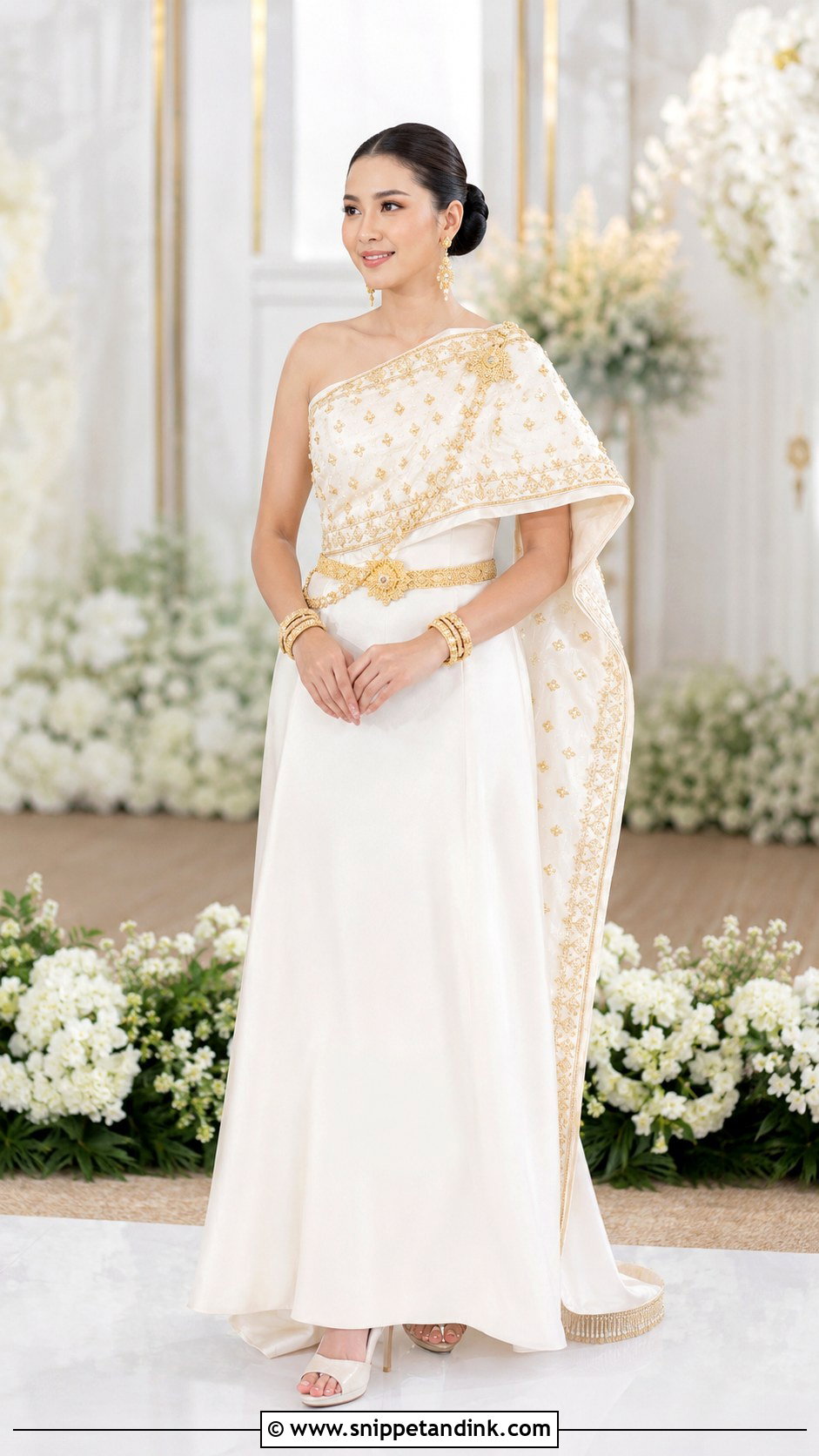
A modern white gown can carry Khmer heritage through a well-made sbai and coordinated jewelry. Keep the gown plain, a column or A-line with a simple neckline, and let an embroidered white-and-gold sbai cross one shoulder. The gown fabric has to support the sbai’s weight; fine chiffon puckers where it’s pinned, so a satin or crepe base works better. A slim gold belt connects the two. This pairing suits a multicultural ceremony or a reception entrance.




20. Modern Sampot-Inspired Cambodian Reception Dress
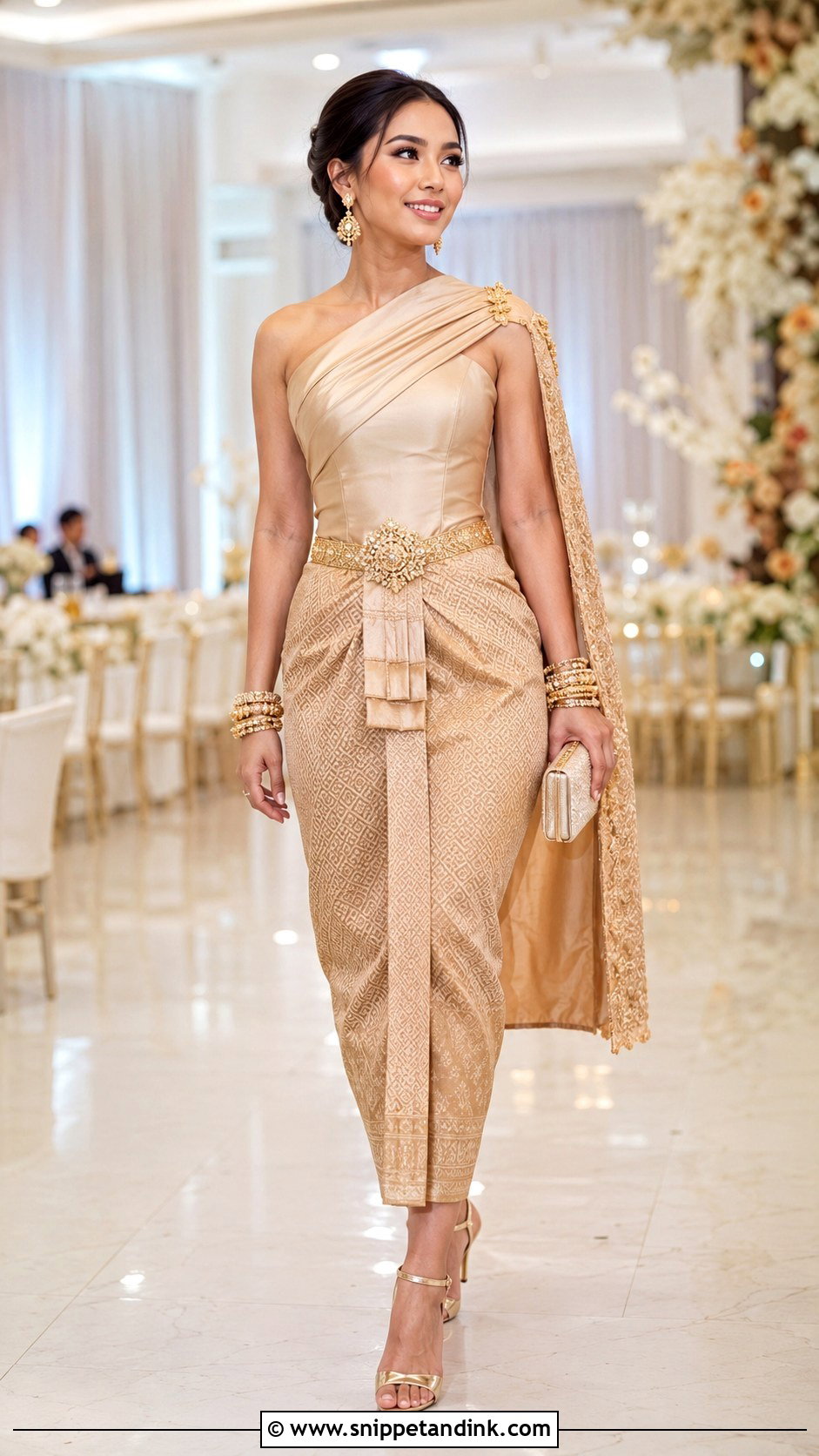
For the reception, a sampot-inspired skirt with a modern top gives freedom to dance. A fitted blouse with an asymmetric neckline echoes the diagonal line of a sbai, and a silk skirt with front pleats and a woven panel keeps the Cambodian textile central. Make the shoulder drape removable: wear it for the entrance, then take it off for dancing. The cut can be modern, but I’d let an experienced Khmer tailor decide where the woven panel sits.
Rent From a Wedding Studio or Commission Your Own Silk?
Many Cambodian brides rent their outfits from wedding studios, which often supply the clothing, jewelry, hair and makeup together as a package. Renting makes a large number of outfit changes affordable and puts an experienced dresser in the room. The trade-off is fit, since rented tops are usually adjusted with pins and stitching rather than cut for you.
Commissioning means choosing your own silk and having every piece cut to your measurements. It costs more and needs several months, especially for hand-woven silk, but you keep the outfits. Some brides do both: commission one important outfit and rent the rest.
Silk, gold and a hot day
- Ceremonial jewelry is heavy. Try on the full set, belt included, for an hour at your fitting.
- Silk shows sweat marks; ask for underarm shields sewn inside fitted blouses.
- Drink water between changes and eat lightly with a napkin tucked over the blouse.
- Air silk pieces after wearing and store them flat or rolled, never folded along the same crease.
If you rent, ask the studio how many outfits are included, whether the jewelry is part of the package and what happens if a piece is marked during the day. Those answers decide how freely you can eat and celebrate in them.
A Wedding Told in Several Outfits
Every outfit here is built from the same core pieces: an embroidered top, a sampot, a sbai, a gold belt and coordinated jewelry, worn so they look like one complete look. Classic red and gold, pastels, jewel tones, ivory lace, silver and modern white gowns all fit within that structure. Because practices differ among families, keep relatives involved from the first fitting. A Khmer tailor who knows the draping will make each change faster and every fold more secure, and that matters most on a long ceremony day.
You'll Like These Ideas:




Leave a Reply