
Bridal fashion is very open right now: clean satin, structured corsets, lace sleeves, tea-length skirts, mini reception dresses and soft colour all sit side by side. That freedom makes choosing harder, not easier. When I work with a bride, I steer the decision less by trend and more by the venue, how she needs to move, the season and what each fabric does after a full day of wear. Each dress below comes with the shoes, veil and accessories I’d pair with it, plus the practical detail I’d check first.
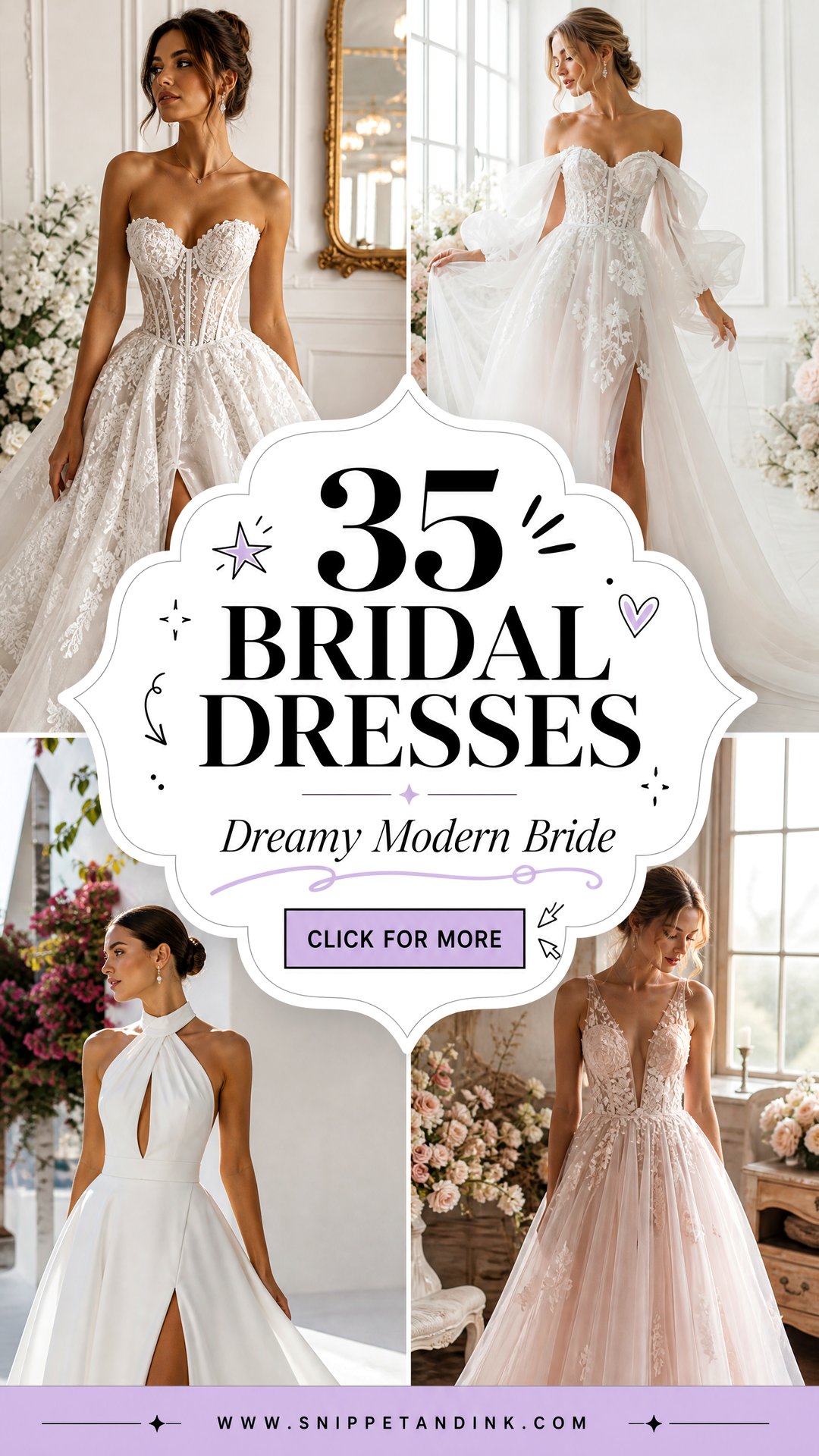
Satin, Crepe, Mikado or Chiffon? How Each Fabric Behaves by Evening
Brides usually choose a silhouette first and a fabric second. I’d almost reverse that, because the fabric decides how the dress feels at the end of a long day and how it looks in the last photos.
- Satin: rich sheen and smooth drape, but it creases where you sit and shows water marks. Heavier duchess satin recovers better than thin charmeuse.
- Crepe: matte and forgiving, with a clean line that crushes less than satin. It shows any tailoring flaw because there is no texture to hide it.
- Mikado: holds structured shapes with a gentle sheen. Heavy, so a full mikado skirt is tiring late at night.
- Organza: crisp volume that stays light, but it wrinkles sharply and needs steaming.
- Chiffon and tulle: light and cool for heat and outdoor venues, but both snag on rough surfaces and fray at the hem.
- Lace: hides small creases and marks better than anything else, which makes it the most forgiving fabric for a long, busy day.
Ask the shop for a swatch of your top choice and sit on it, crumple it in your hand and leave it for ten minutes. How it recovers tells you a lot about how the dress will look after the dinner.
1. Satin Slip Bridal Dress
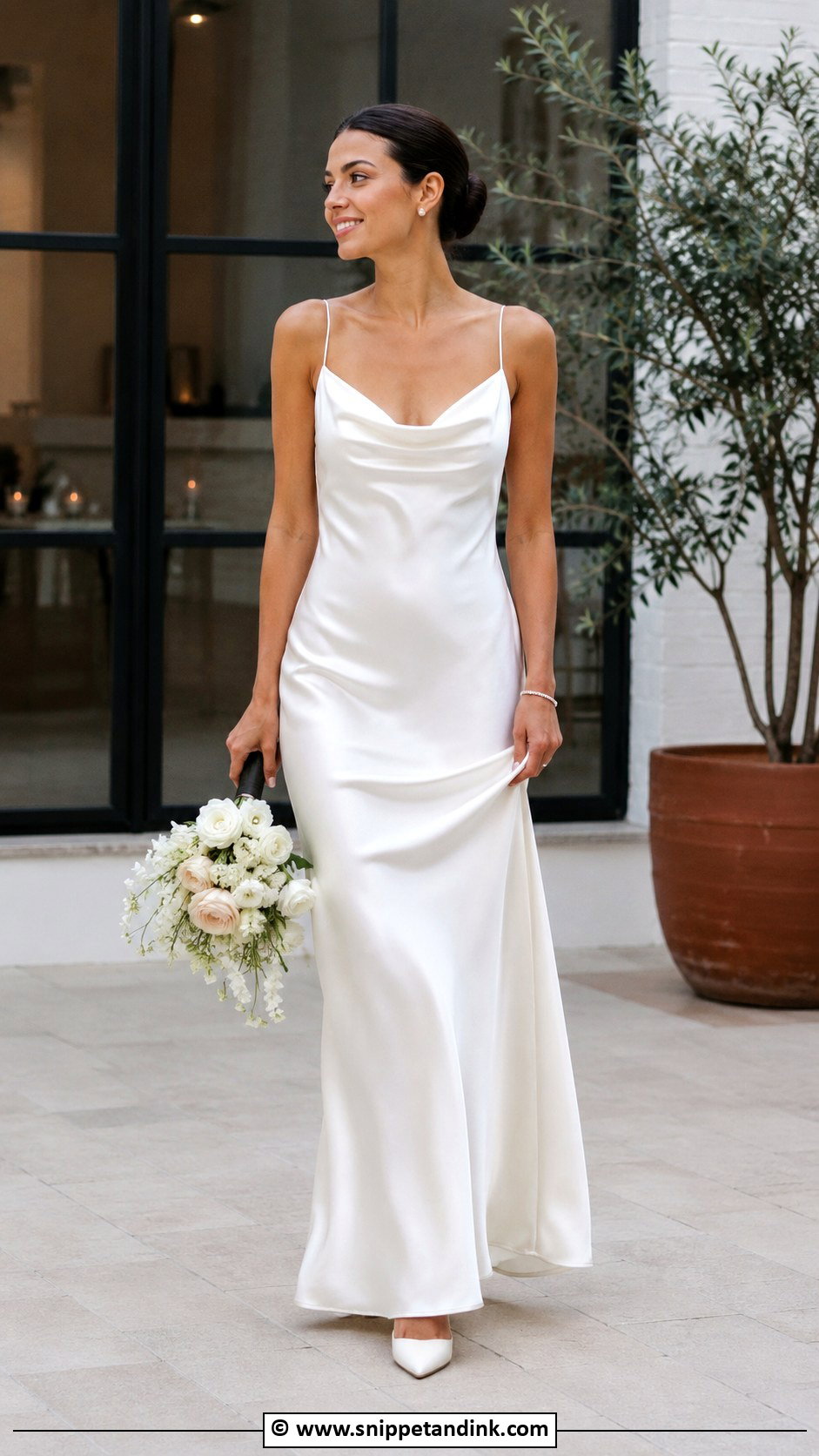
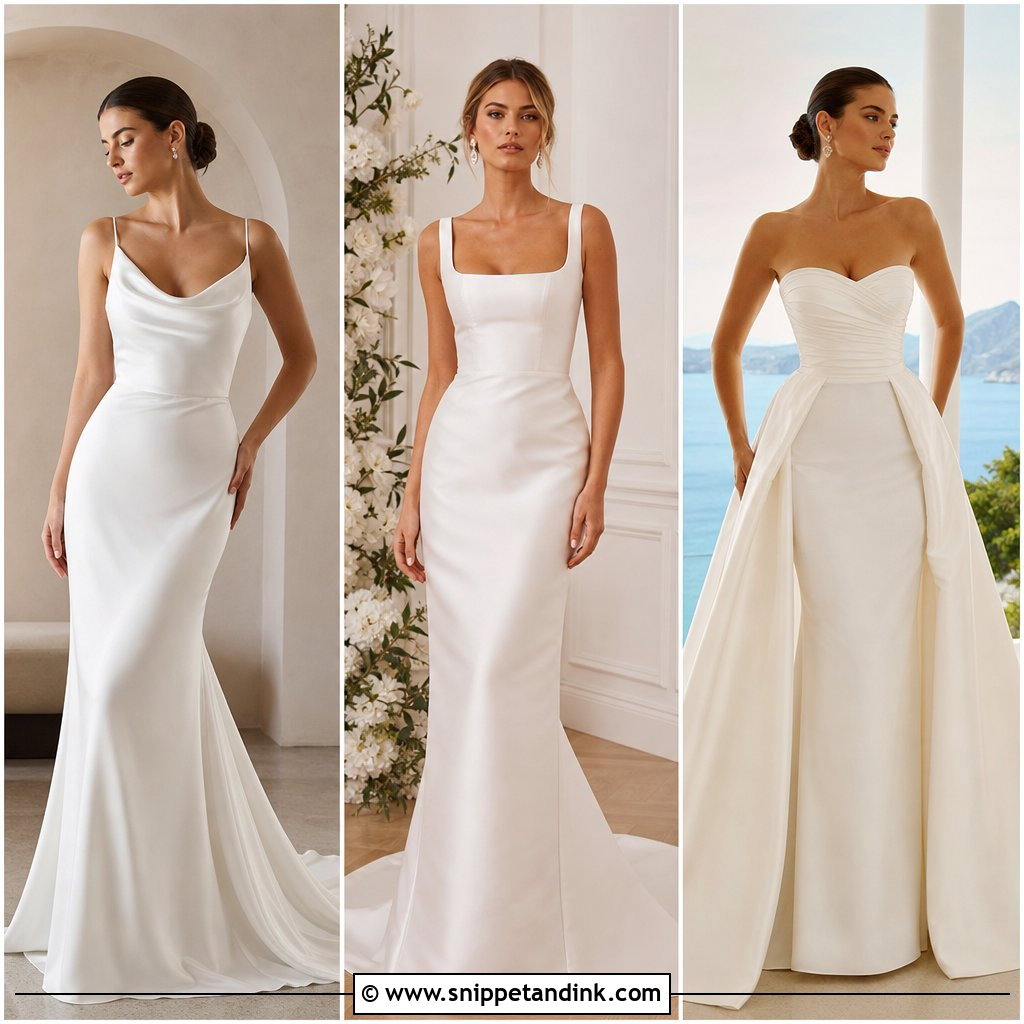
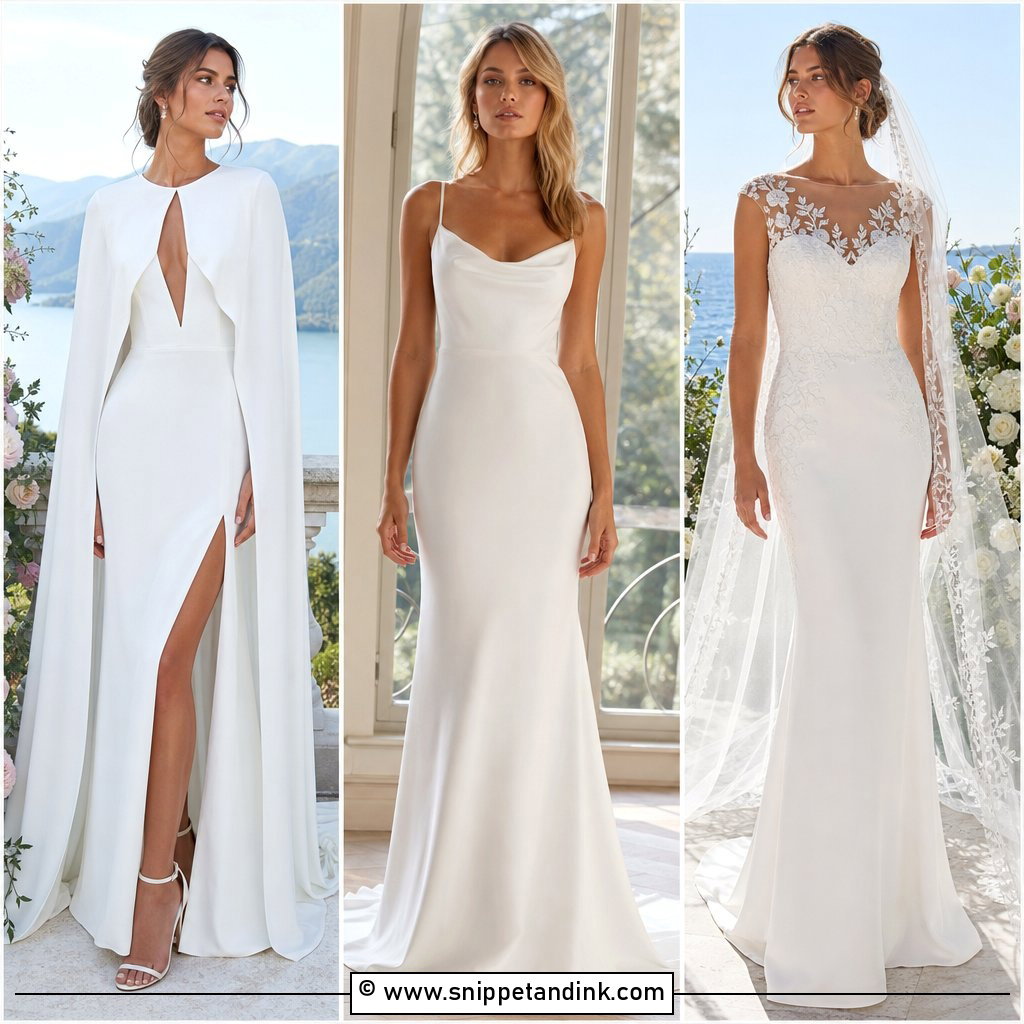
With a satin slip, the drape is everything, so look for bias-cut satin or a silk-like fabric that glides rather than clings stiffly. A cowl neck, thin straps or an open back keep it modern. Bias satin stretches slightly over time on the hanger, so I’d keep it folded flat in the weeks before the wedding and have the hem checked at the final fitting. Pointed ivory heels, pearl studs and a fingertip veil suit city, beach and intimate weddings, with a wrap or tailored coat for cool weather.
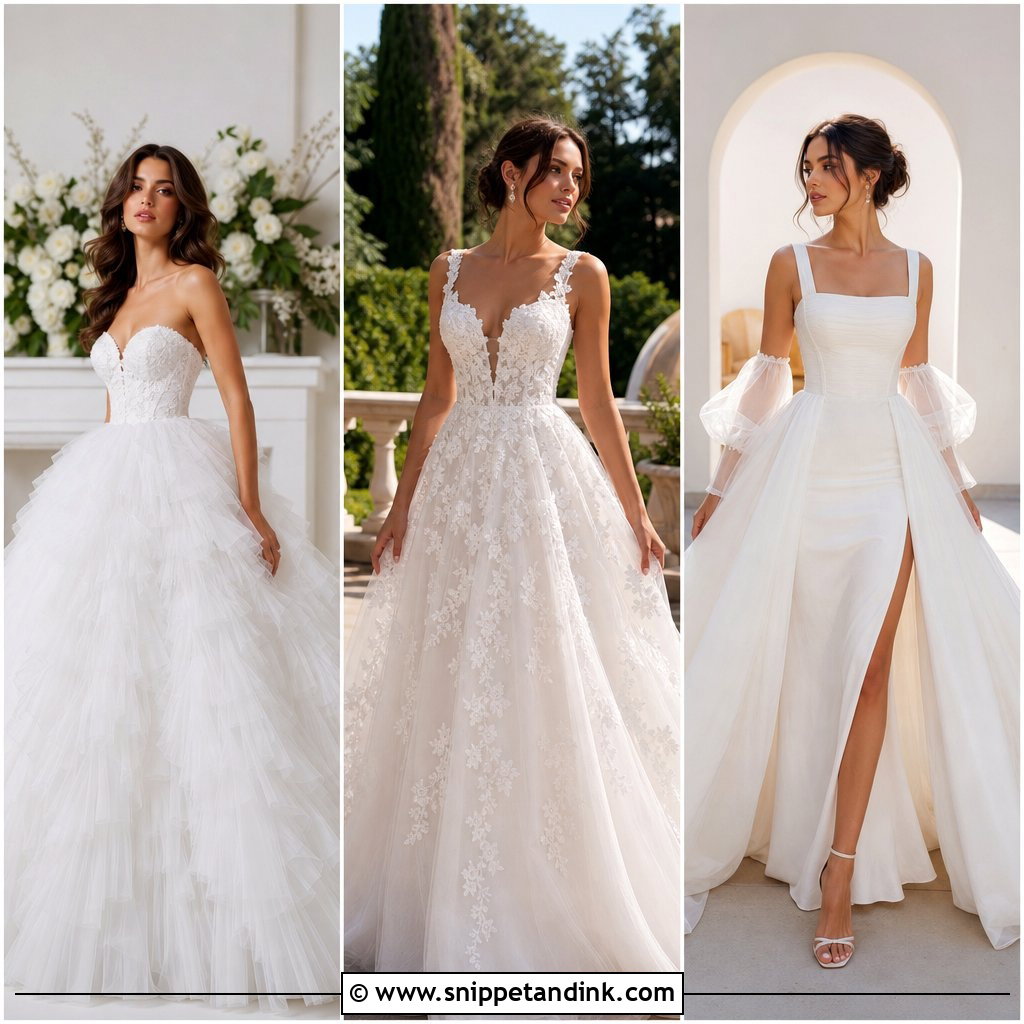
2. Lace A Line Bridal Dress
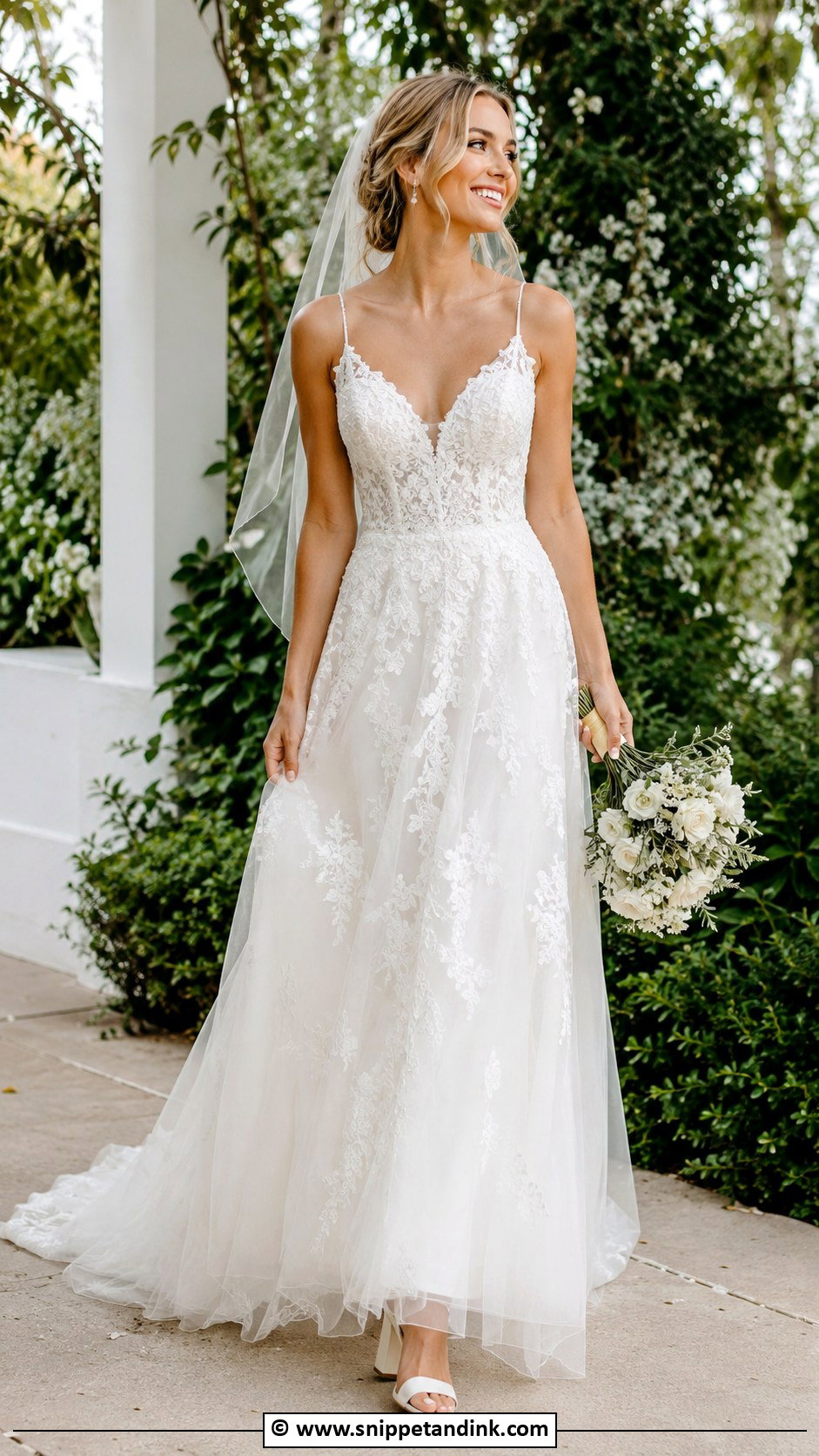
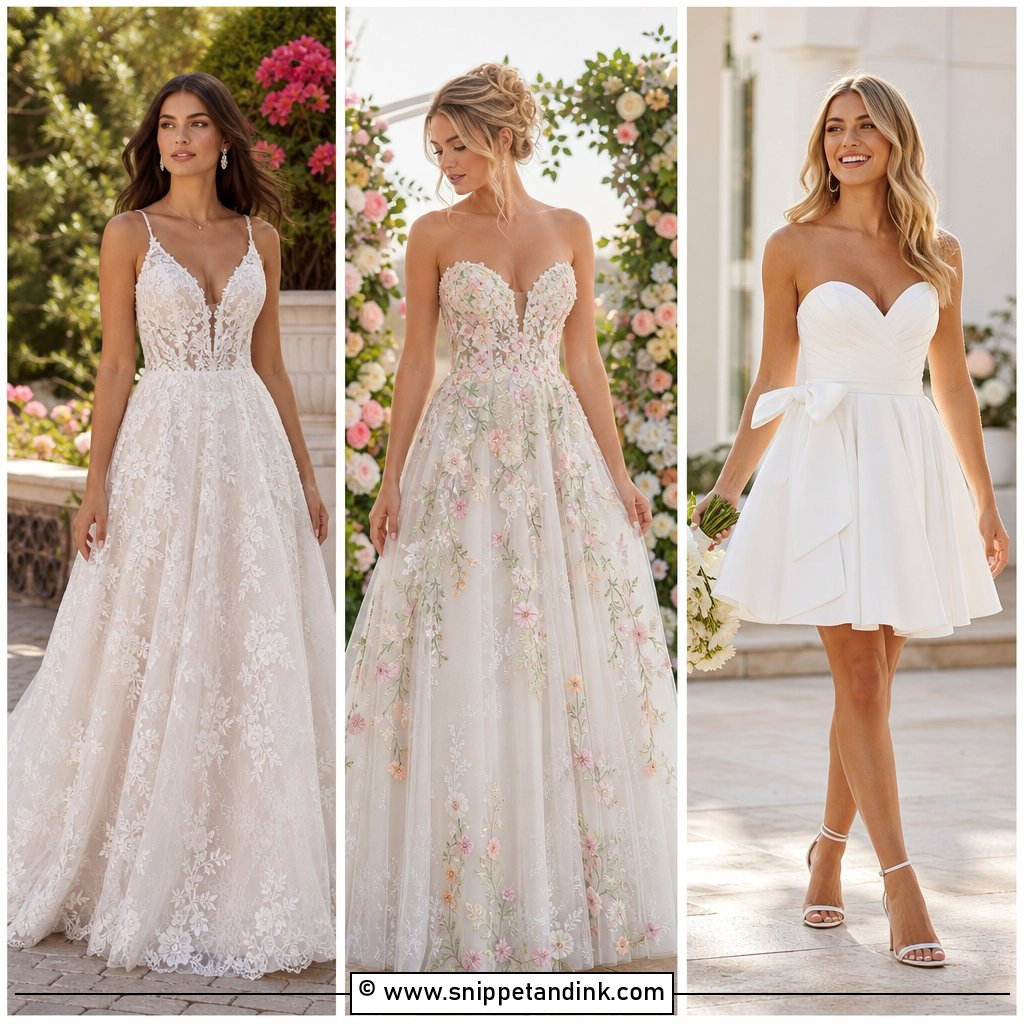
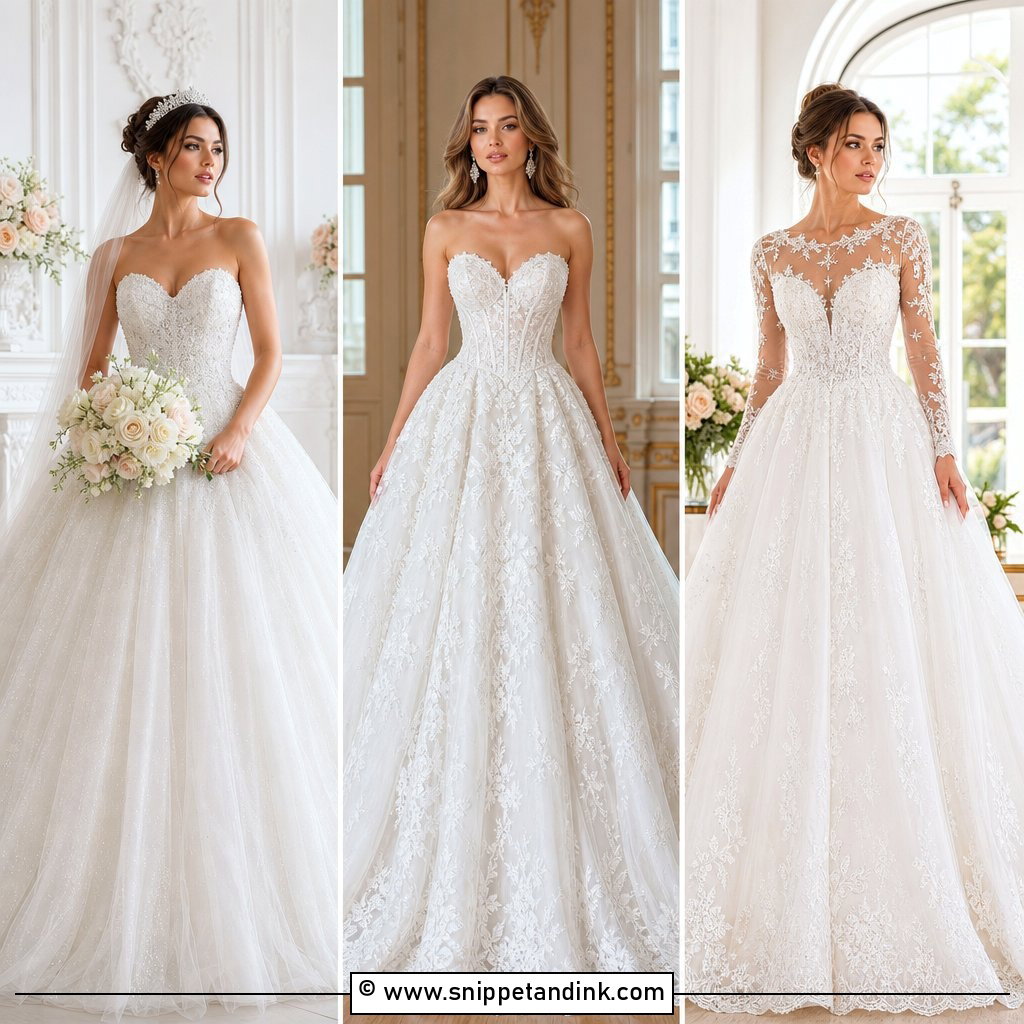
The lace A-line balances structure and softness: the bodice defines the waist, the skirt moves away from the hips, and you can walk, sit and dance without thinking about it. All-over lace looks romantic; lace appliqué over tulle is lighter and more dimensional. Hemming lace takes longer than plain fabric because the scalloped edge is usually unpicked and resewn, so leave extra time for alterations. Block heels or pointed pumps, a soft veil and small drop earrings finish it.
3. Strapless Ball Gown Bridal Dress
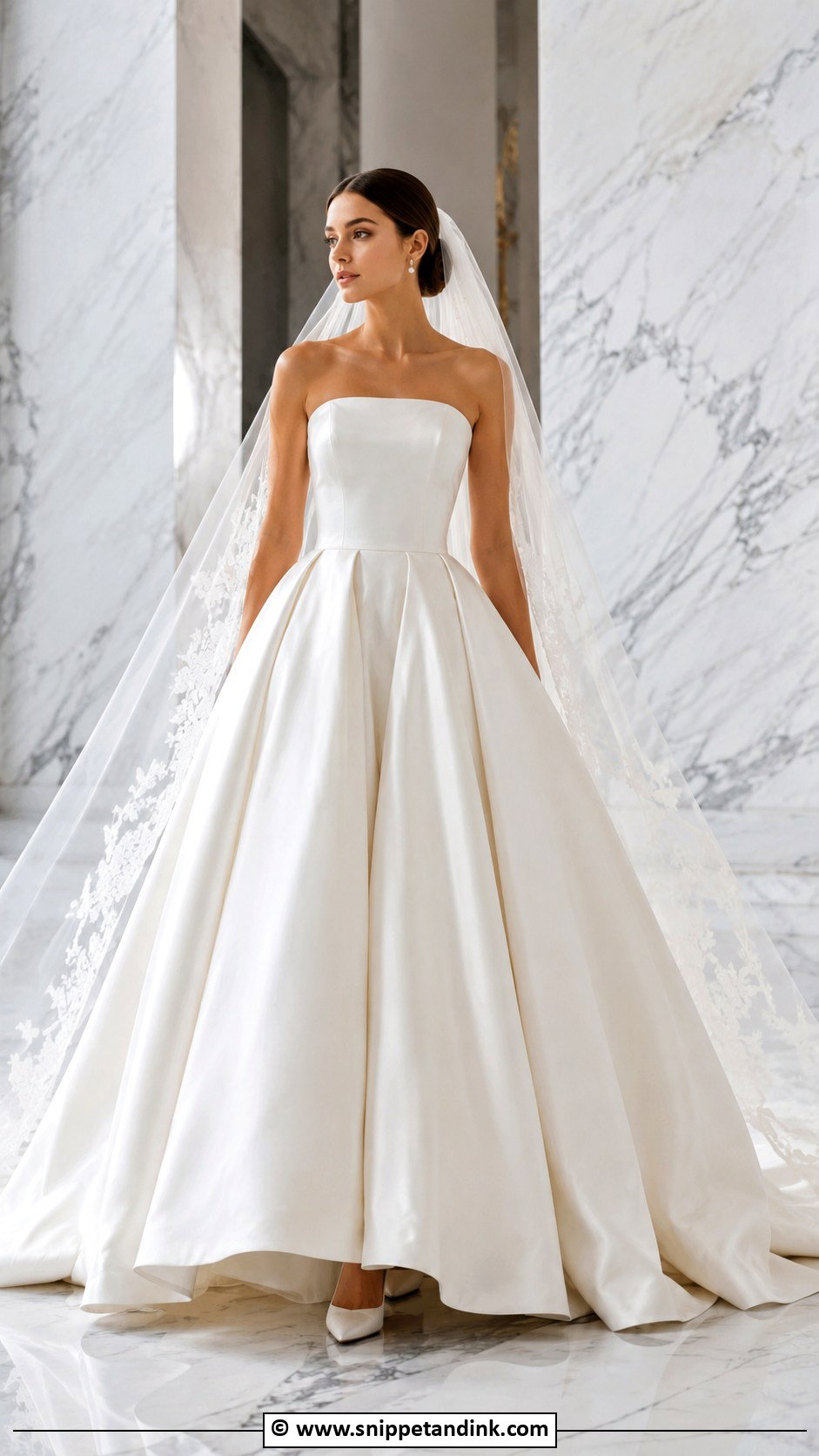
A strapless ball gown gives the ceremony a defined waist and a full skirt without needing extra decoration. Built-in support matters if you’ll wear it for hours, and the boning should keep the bodice steady when you raise your arms. Satin gives a clean finish; tulle adds movement. Choose either a pearl necklace or statement earrings, not both. Classic pumps and a cathedral veil suit grand venues and formal receptions.
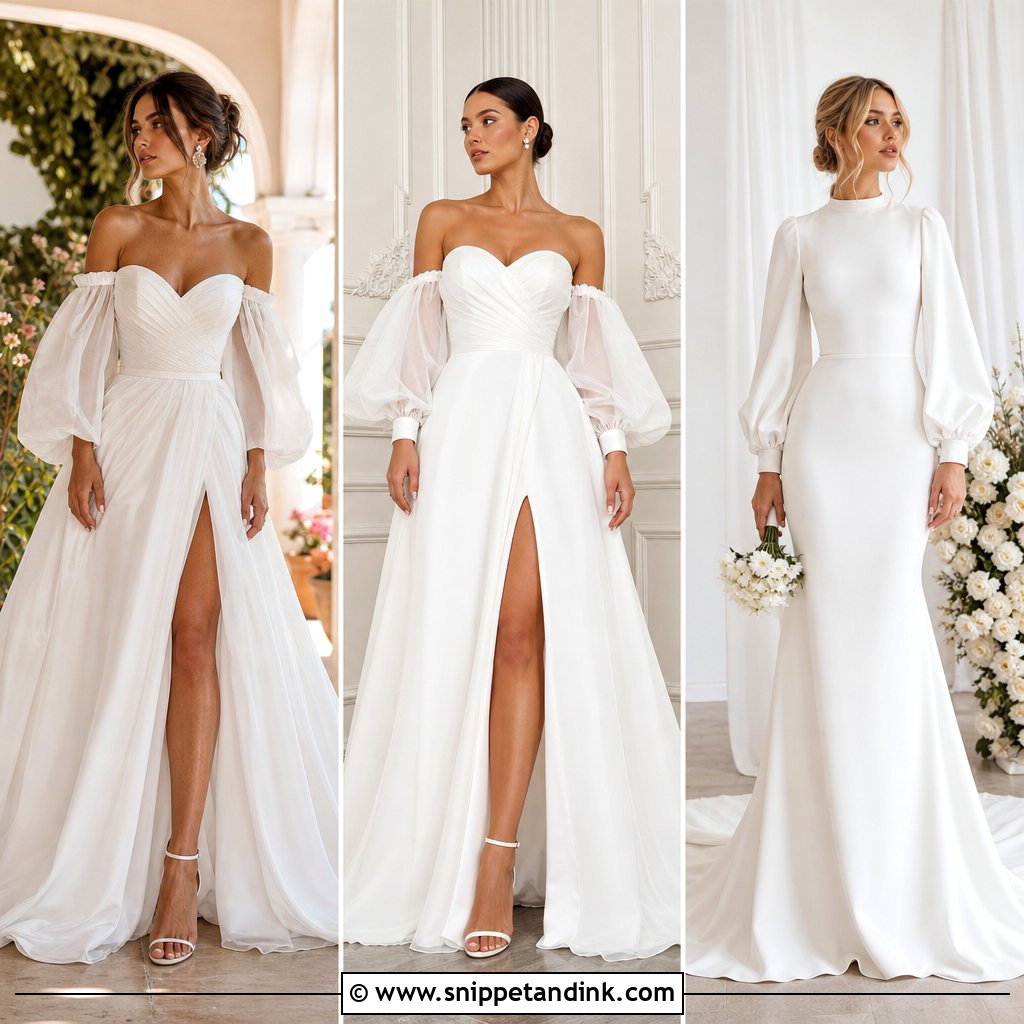
4. Off Shoulder Bridal Dress
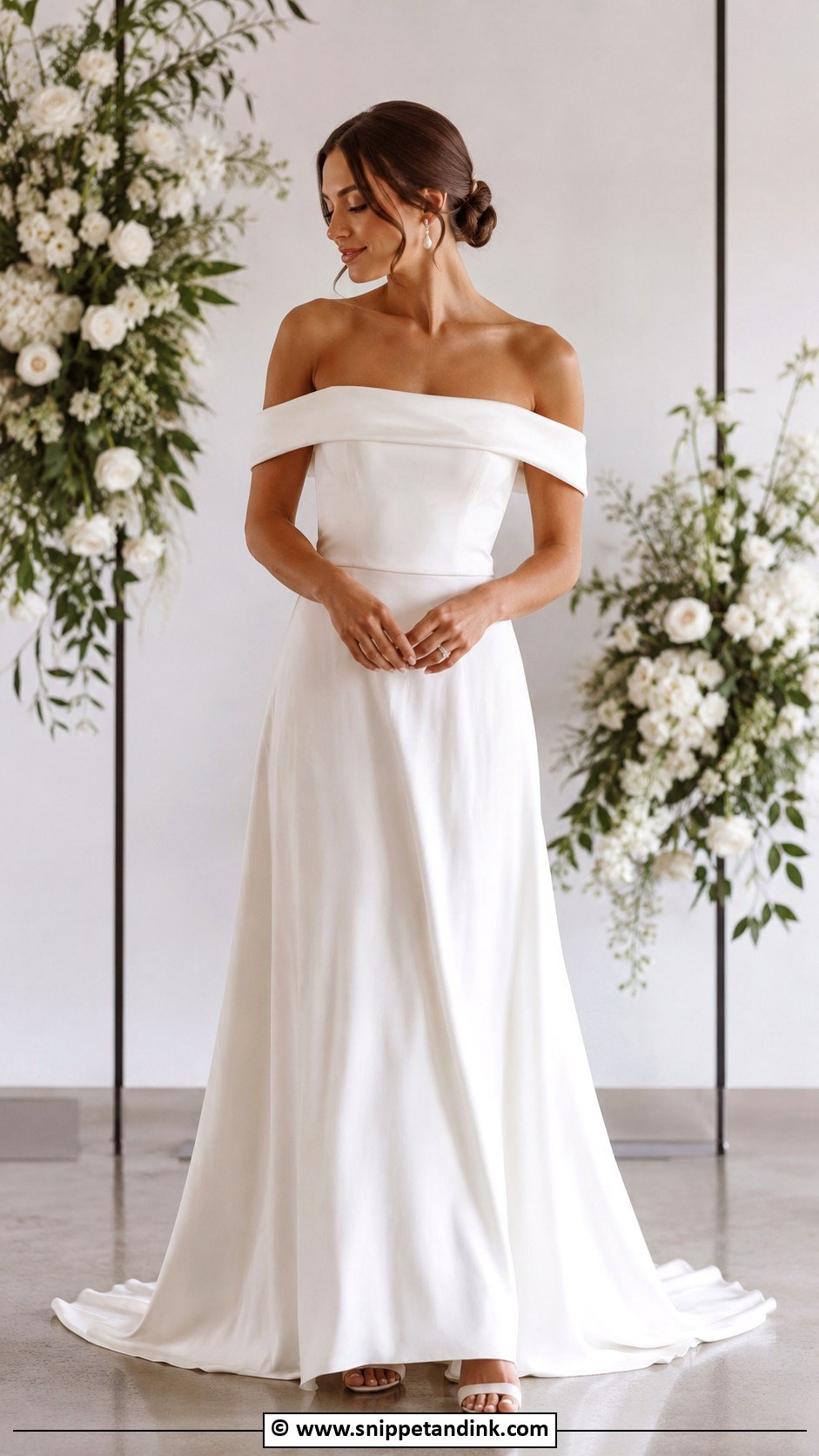
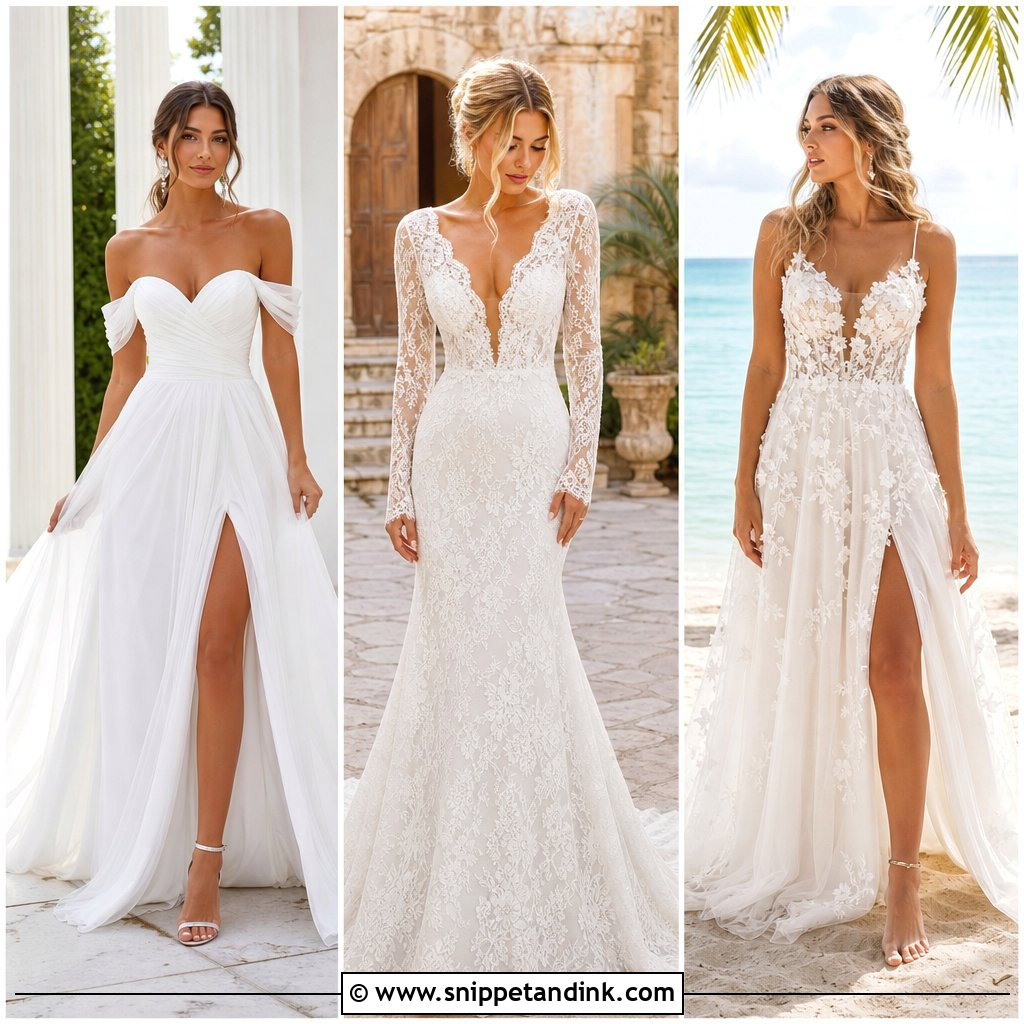
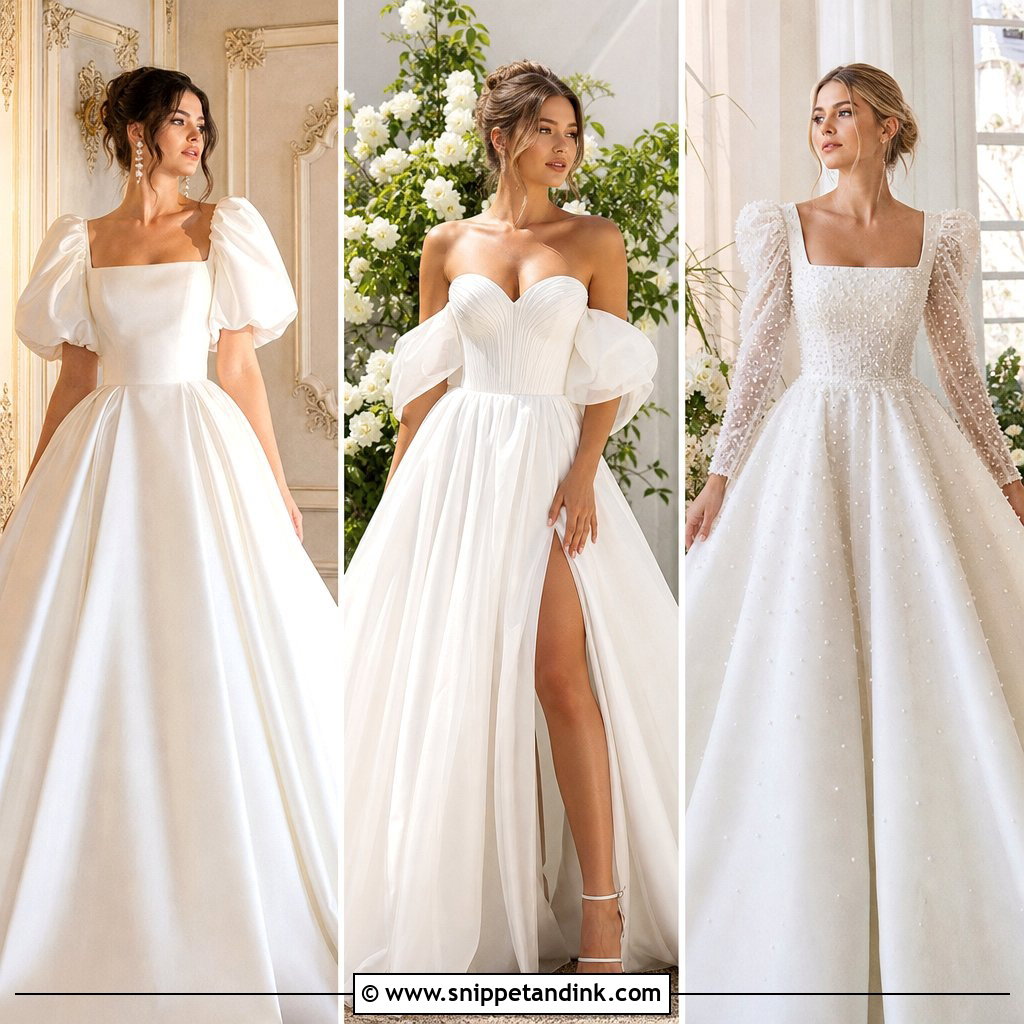
Off-shoulder necklines frame the collarbone and sit between sleeves and full exposure. Lace keeps it classic, crepe sleek, satin dramatic. These straps rest on the upper arm, so check how high you can lift your arms in it before choosing it for a dance-heavy night. A low bun, delicate earrings and a smooth veil let the neckline lead, with ivory heels or embellished sandals.
5. Long Sleeve Lace Bridal Dress
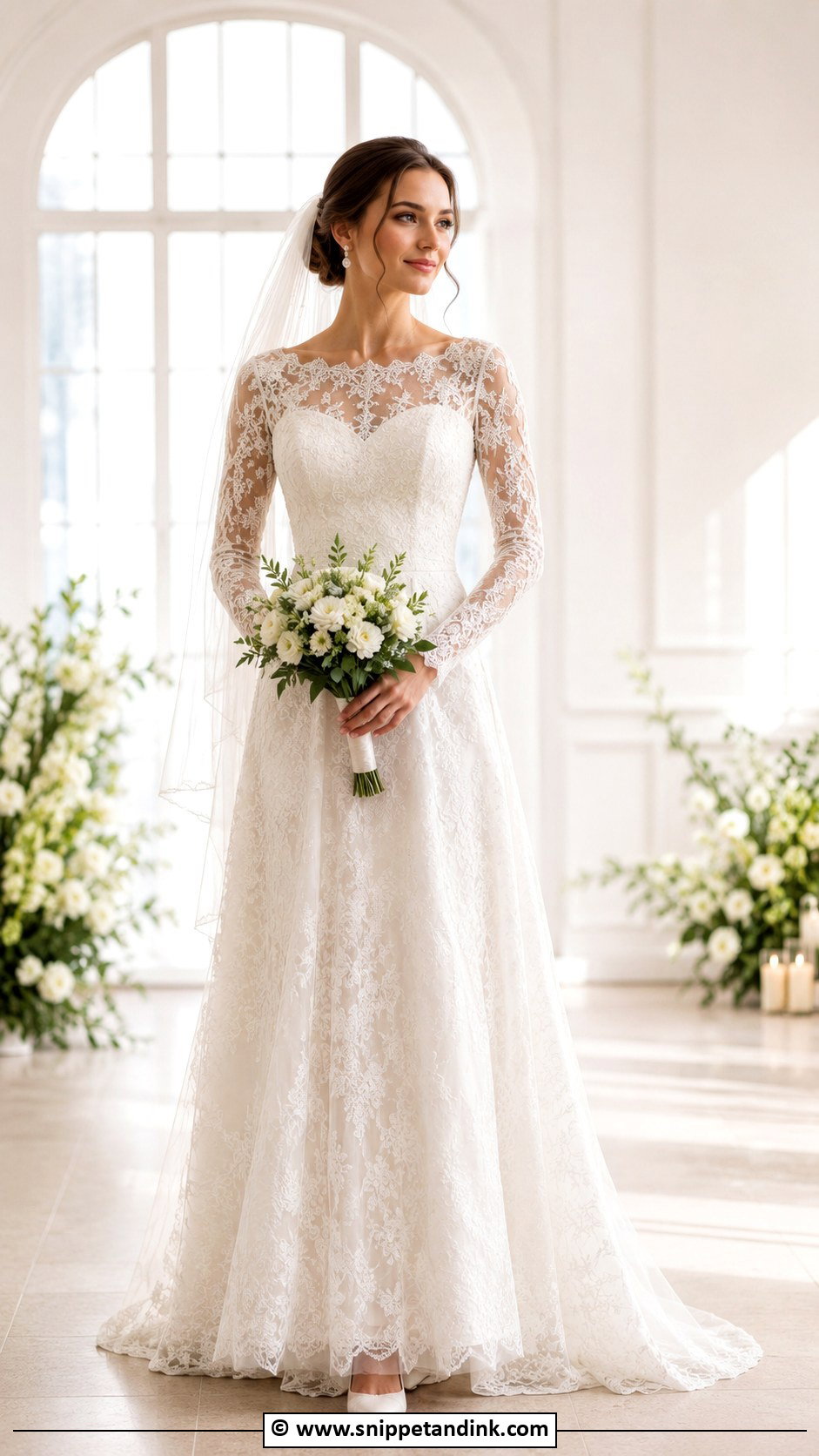
Long lace sleeves can be sheer for lightness or fitted for a tailored line, and they work in any season. A soft A-line, a sheath or a subtle train all suit them. Lace sleeves are the most common place a gown tears, usually at the inner elbow during a hug, so I ask brides to cross their arms at every fitting. Keep accessories light: pearl earrings, a slim bracelet and a simple veil, with closed-toe pumps or heeled sandals.
6. Minimalist Crepe Bridal Dress
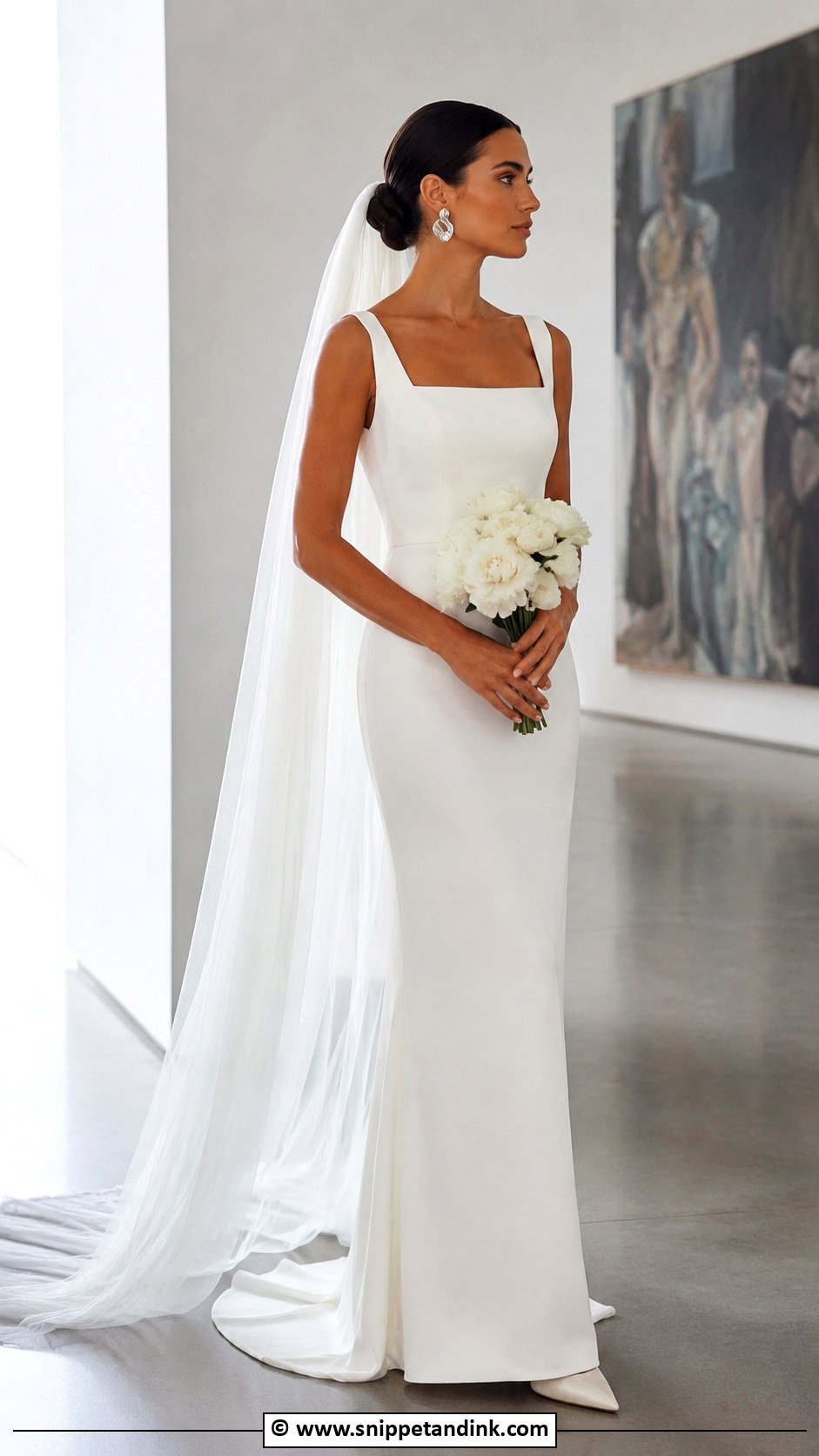
A minimalist crepe bridal dress is all about fit. Crepe has a smooth, slightly structured hand that suits column, sheath and fit-and-flare shapes, and a square, bateau or high neck looks modern on it. Plain crepe shows any seam that pulls, so the budget should go to the seamstress before any accessory. Sculptural earrings, sleek heels, a low bun and a long plain veil suit courthouses, galleries and rooftops.
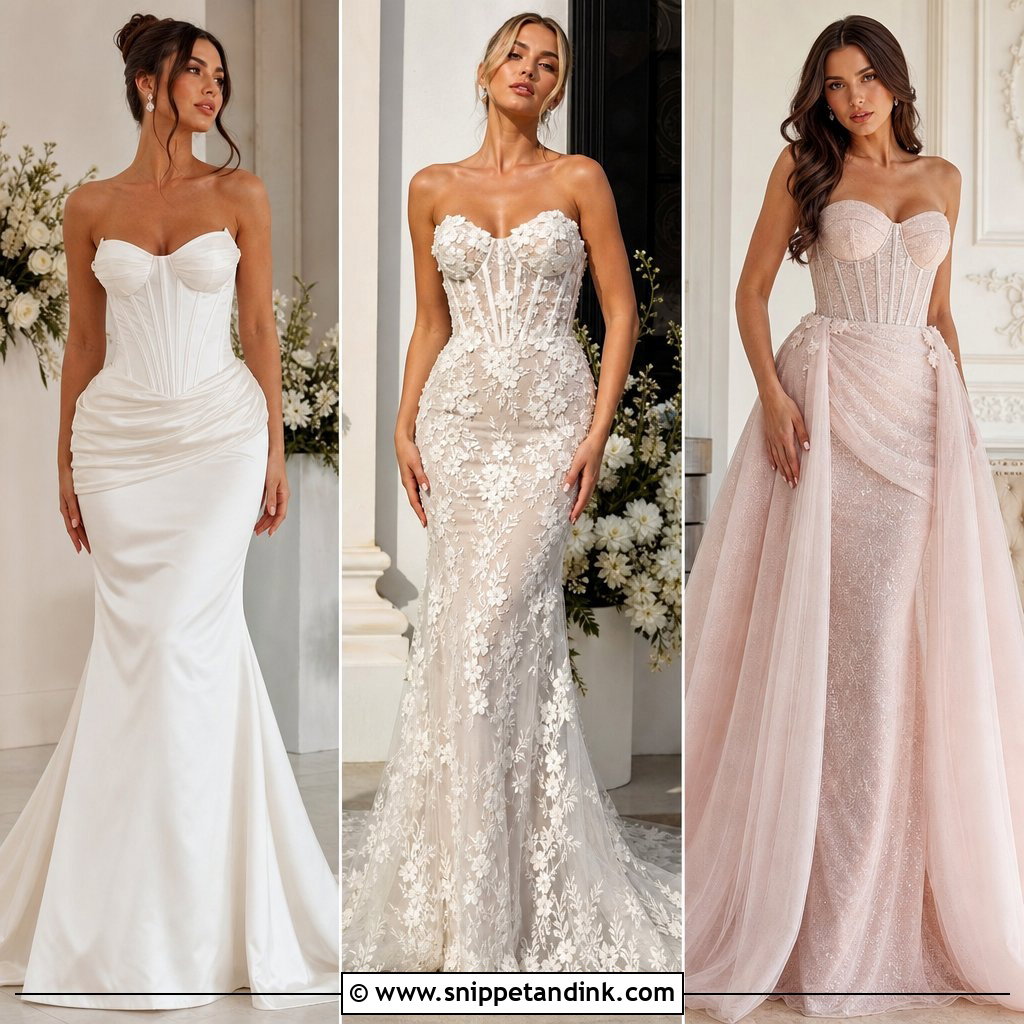
7. Corset Bridal Dress
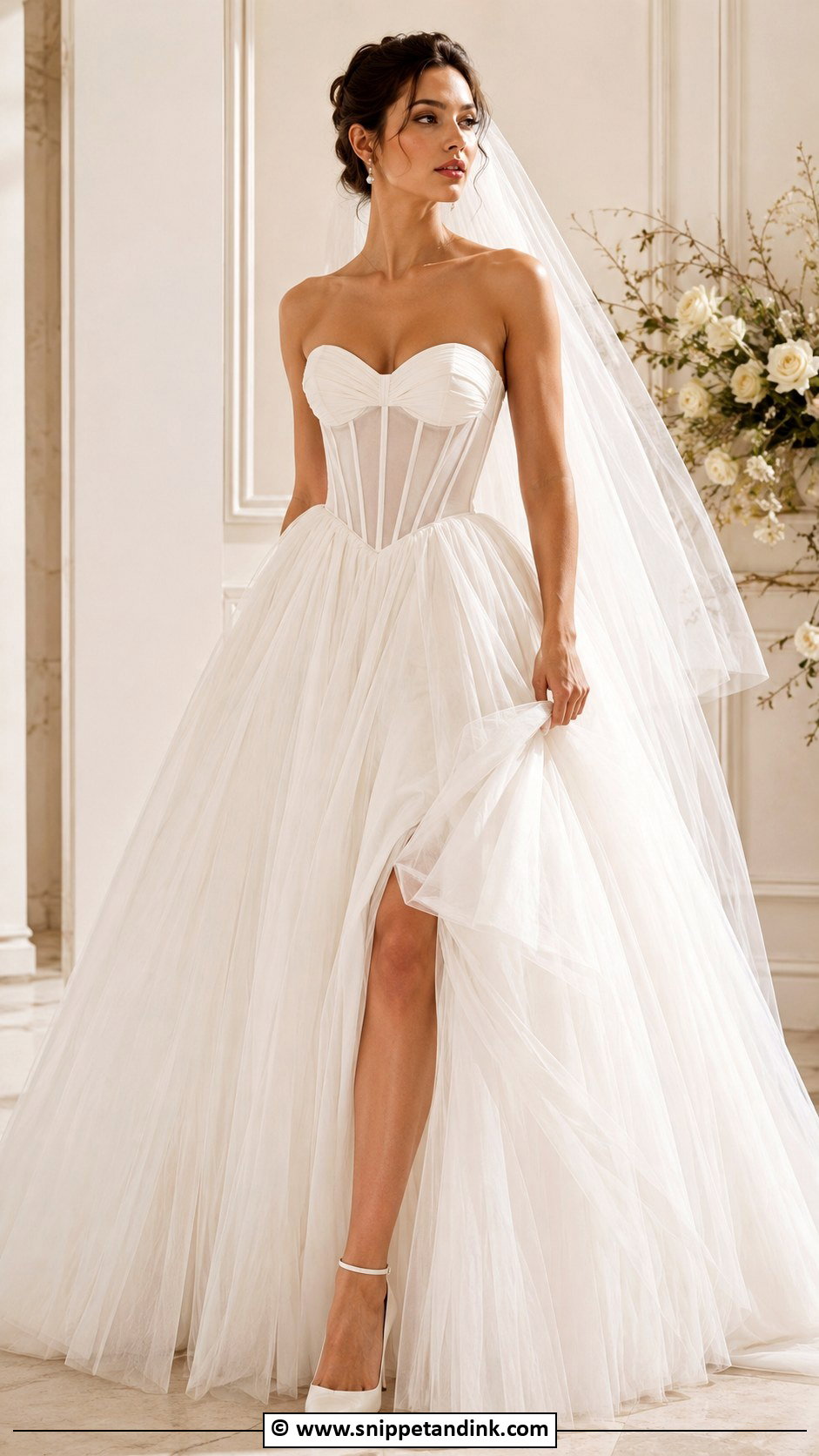
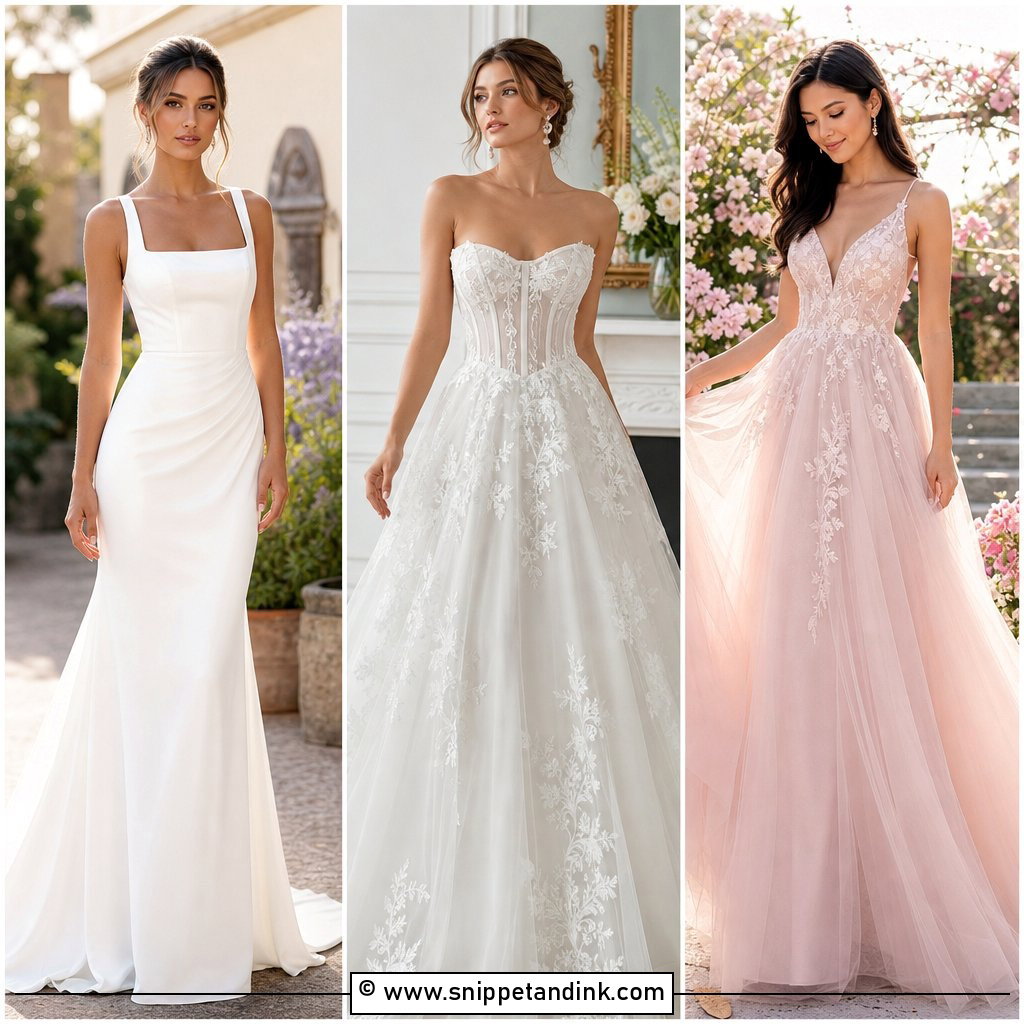
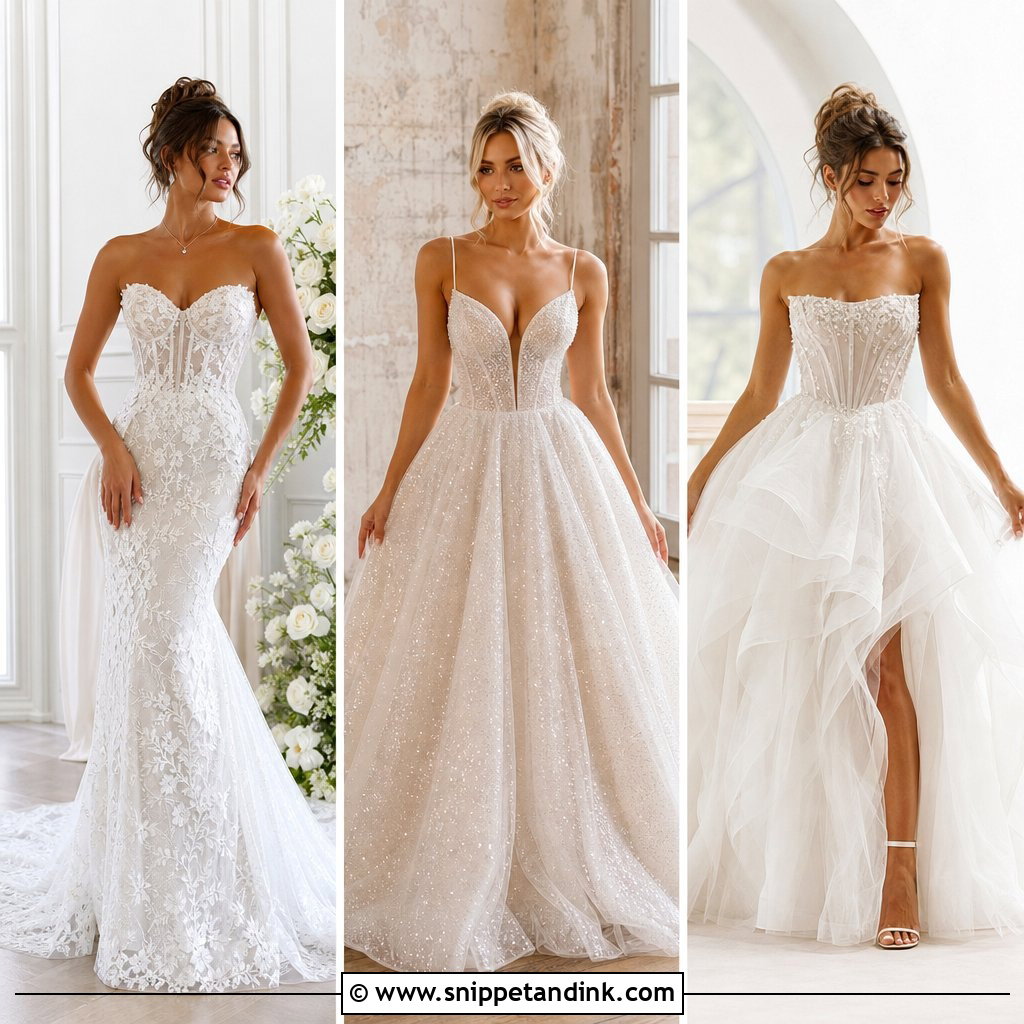
Corset bodices give shape and support with a vintage romance, from hidden structure to visible boning with sheer panels. They pair with a full tulle skirt, a soft A-line or a fitted mermaid bottom. The bodice is already the statement, so keep jewelry light: pearl drops, satin heels and a light veil. Lace-up backs can be adjusted on the day, which is useful if your weight shifts in the last weeks.
8. Mermaid Bridal Dress
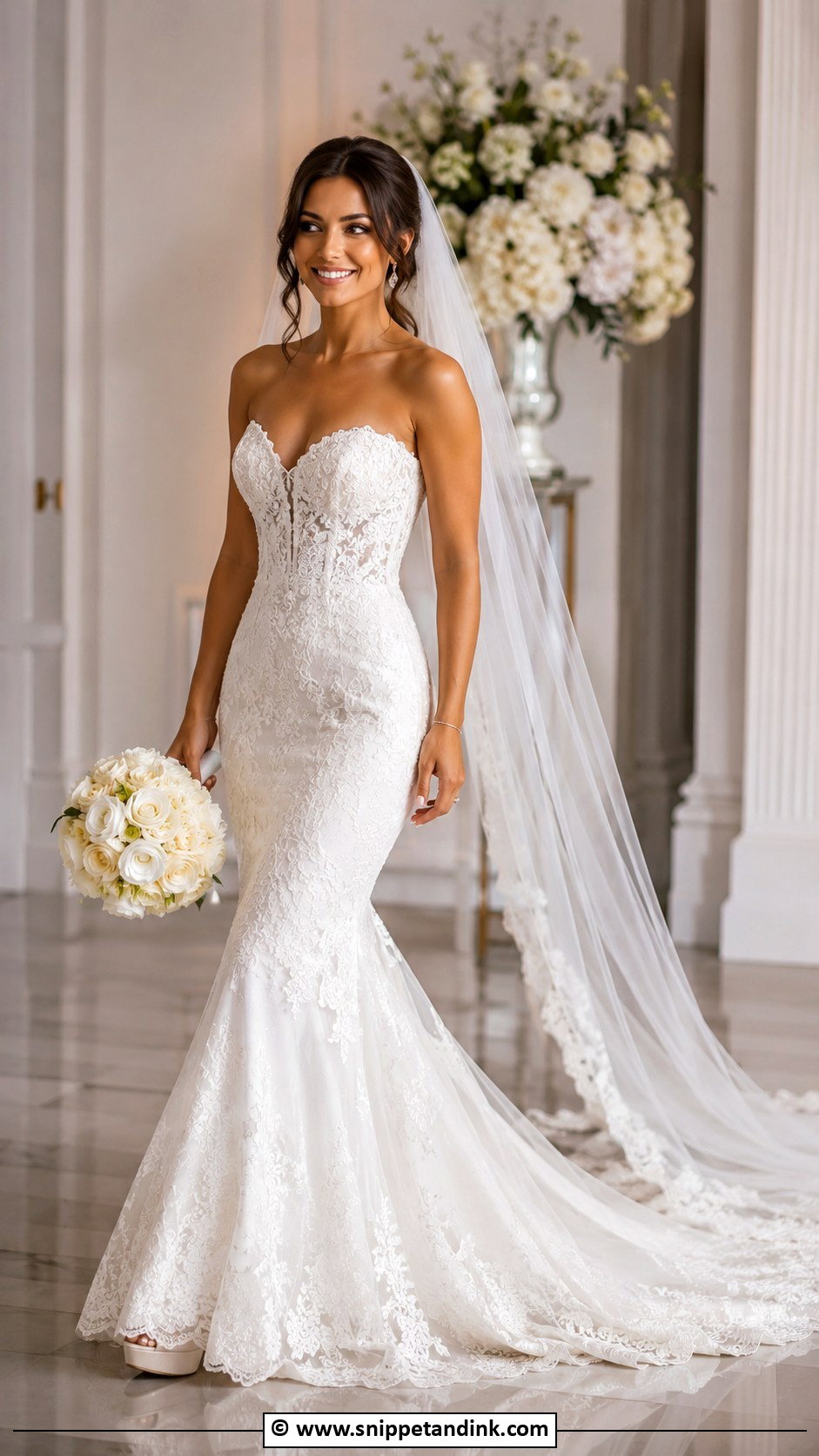
Mermaid gowns fit closely through the bodice, waist and hips and flare near or below the knee, creating a strong hourglass shape. Lace reads romantic, crepe sleek, satin formal. Movement is the trade-off. Try walking, sitting and stepping up a stair in it, since a flare set too low turns every step into a shuffle. Tall heels, a fitted veil and simple earrings suit formal evening venues.
9. Fit And Flare Bridal Dress
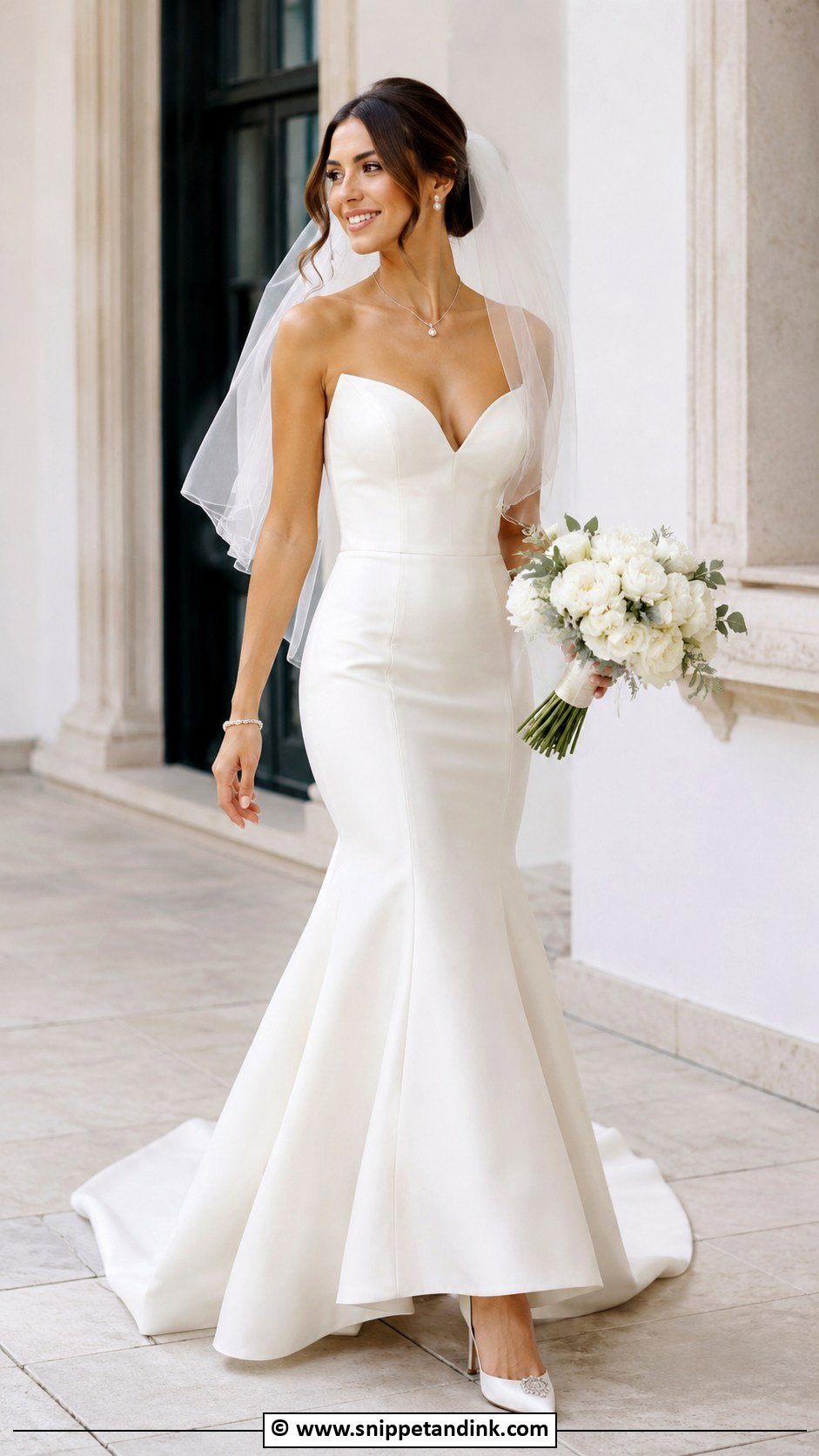
Fit-and-flare gives shape without the full mermaid restriction: it hugs the waist and hips and opens earlier, so walking is easier. Lace, crepe, satin and mikado all work. With a simple neckline, choose statement earrings; with beading or lace, keep accessories minimal. When a bride loves the mermaid look but can’t sit comfortably in one, this is usually the compromise I suggest.
10. Square Neck Bridal Dress
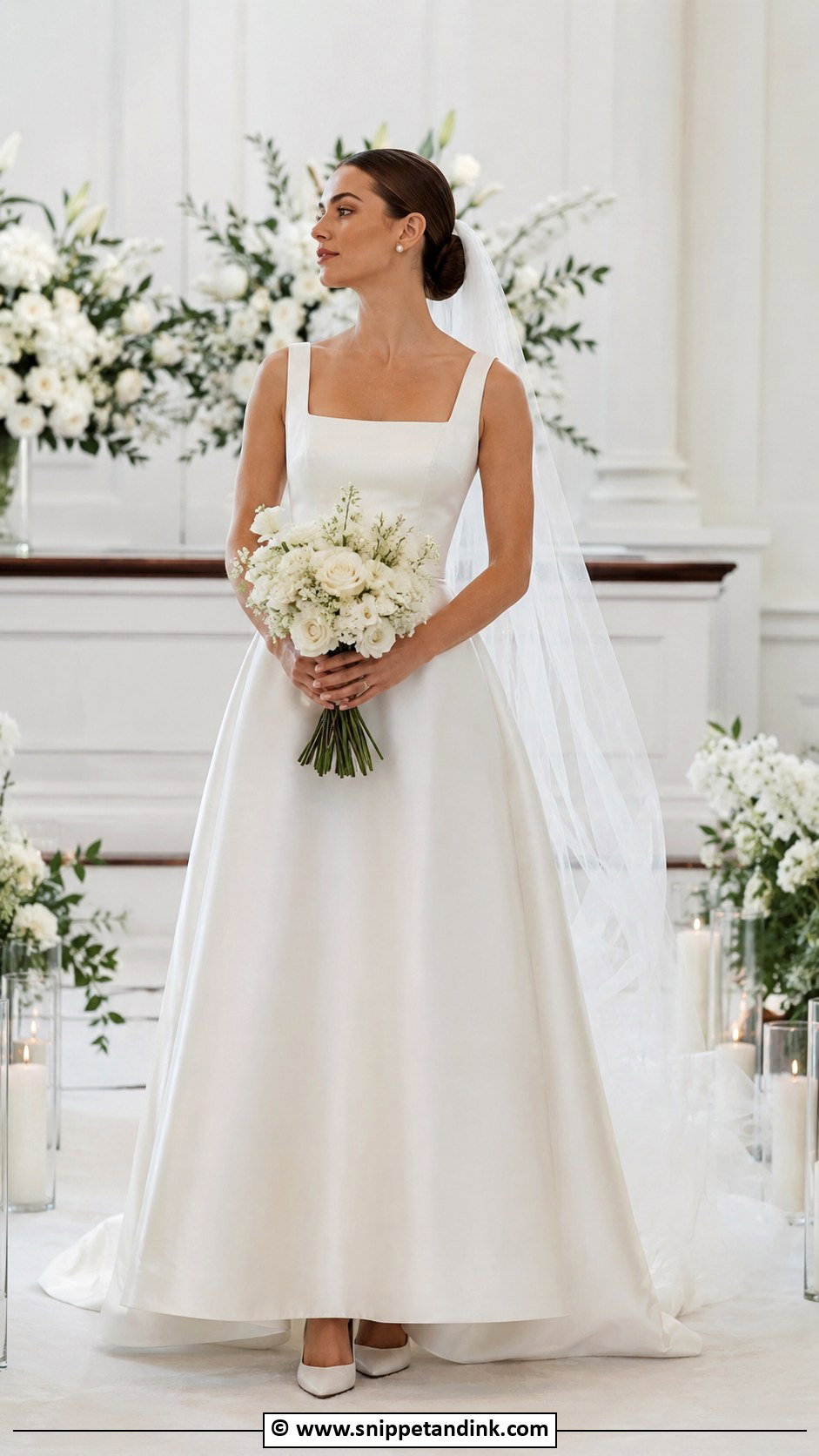
A square neck frames the chest and collarbone in a structured line that suits both minimalist and vintage brides. Straps, long sleeves or a fitted bodice all work with it. Satin or crepe looks sleek; lace softer. The corners should lie flat against the skin when you breathe in; if they lift away, the side seams need adjusting. A low bun, pearl studs and elegant pumps finish it.
11. High Neck Bridal Dress
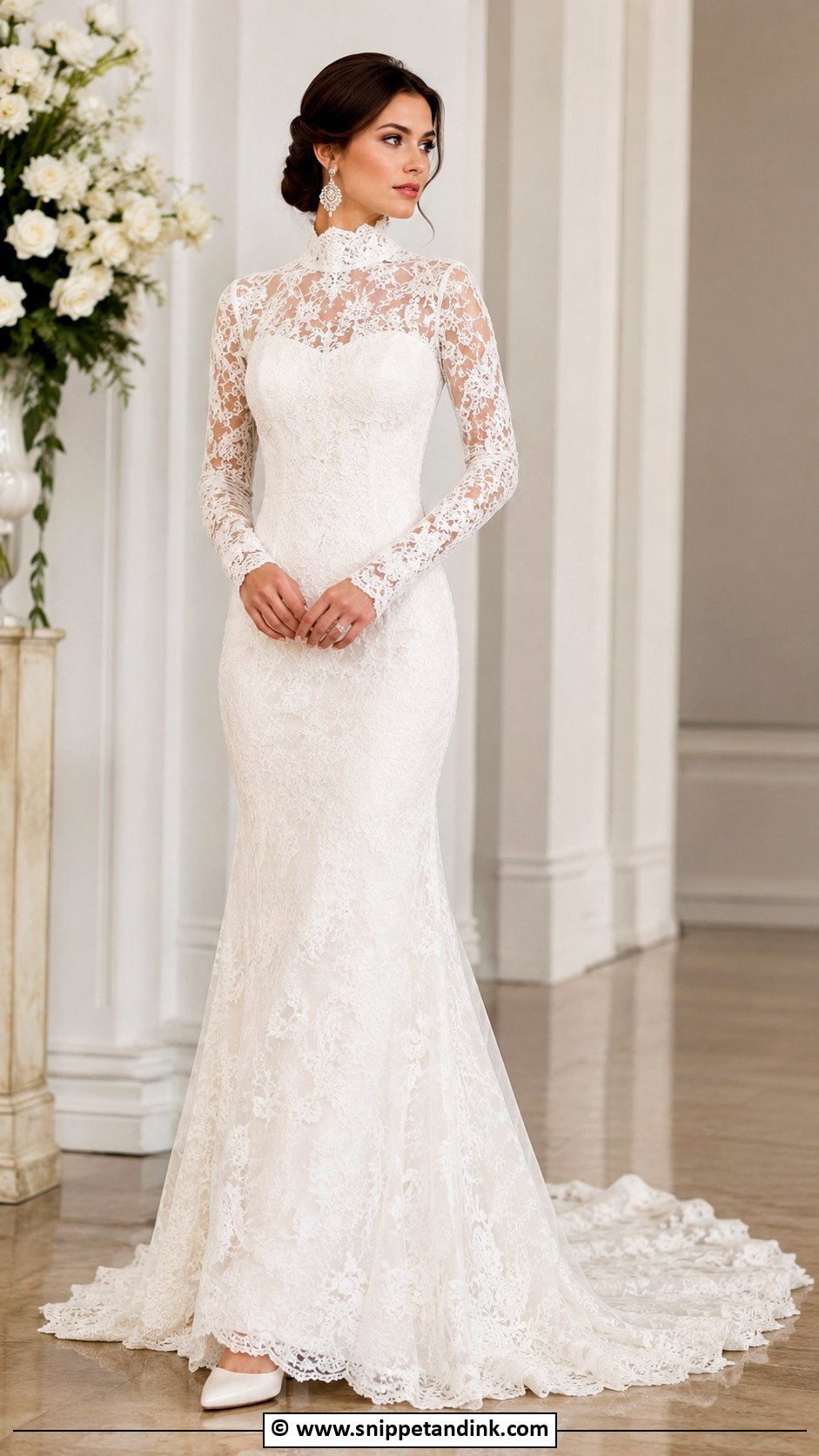
A high neck gives coverage with a long, clean line: sleek in crepe, romantic in lace, light in chiffon. Skip necklaces and focus on earrings, a bracelet or a detailed hair accessory, with a sleek updo. I check the neck opening after the bride has moved around for a while, because a high neck that feels fine at first can feel tight once you’re warm. Closed-toe heels or delicate sandals suit the venue.
12. Tea Length Bridal Dress
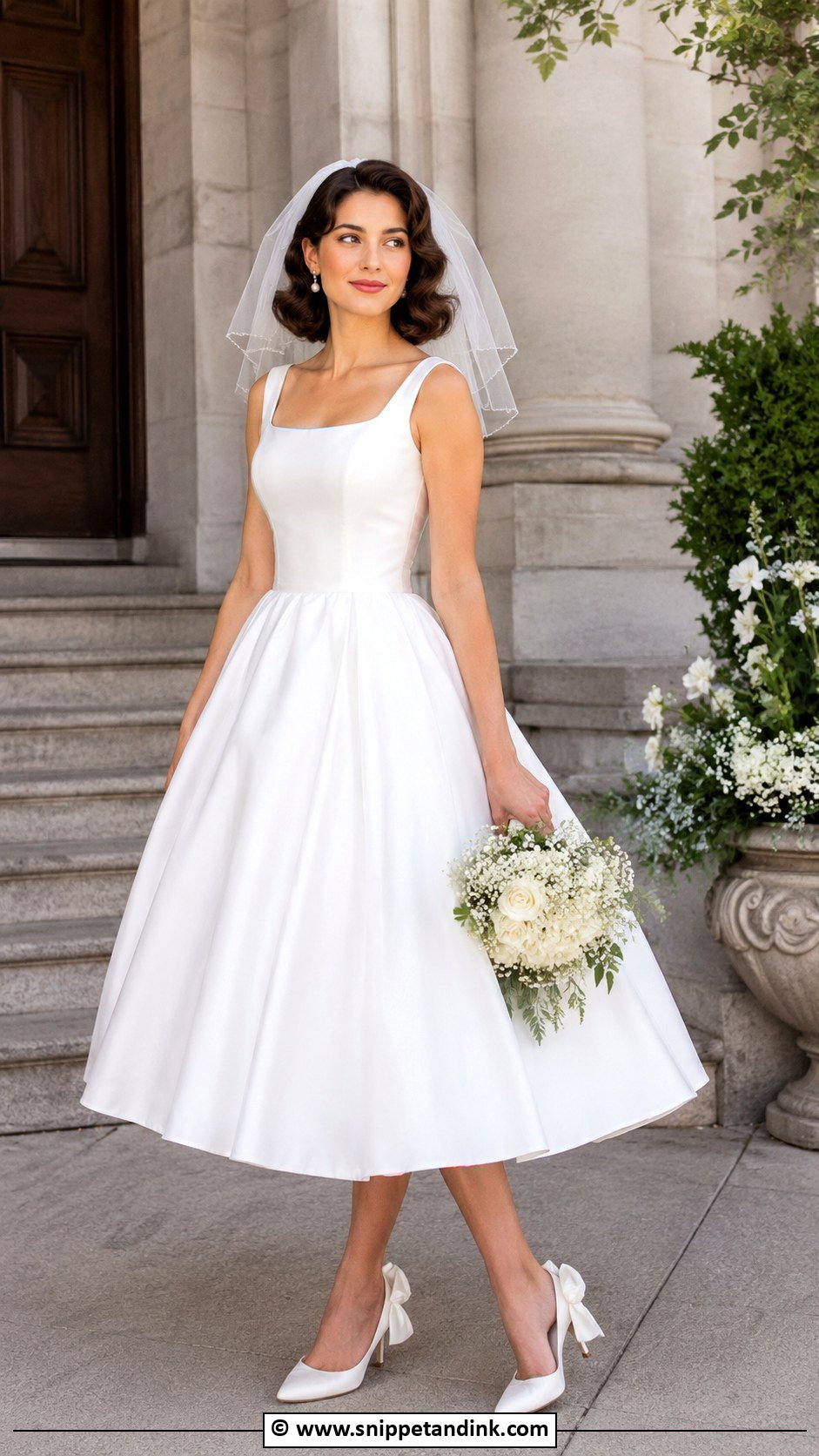
Tea length falls between knee and ankle and makes the shoes part of the outfit, so satin pumps, bow heels or embellished ankle straps deserve some thought. A fitted bodice and fuller skirt look vintage; a slimmer shape looks modern. Choose the shoes before the hem is set, since heel height shifts where the skirt falls. It suits courthouse weddings, garden ceremonies and brunch receptions, and works as a second look.
13. Short Bridal Dress
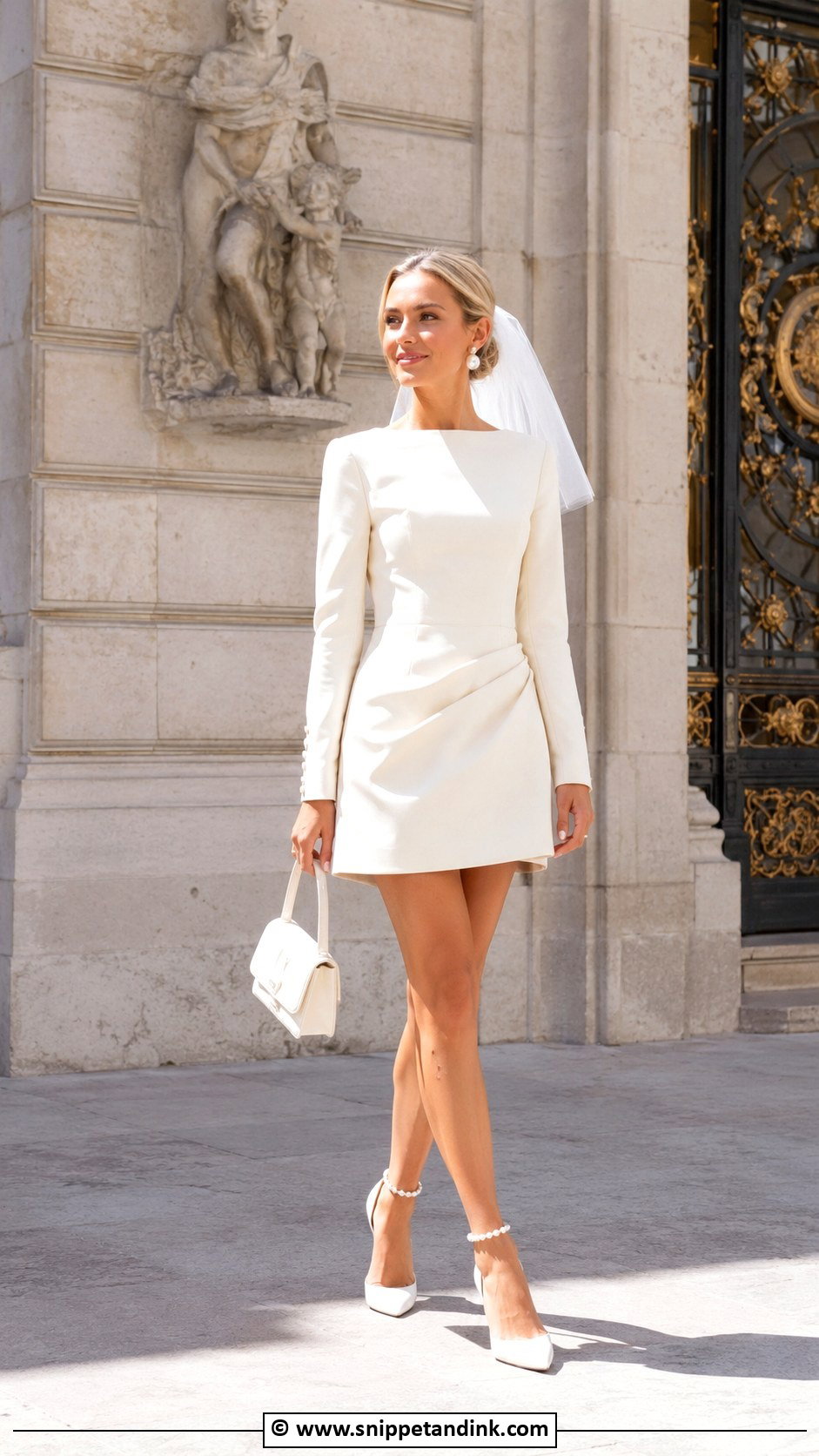
Short bridal dresses suit civil ceremonies, reception changes, after-parties and brides who simply don’t want floor length. A tailored mini with long sleeves looks modern, a lace mini romantic, a structured satin mini sharp. Sit down in it before you buy, because a mini rises several inches on a chair. Statement heels, sheer tights if needed, pearl earrings and a short veil or hair bow keep it bridal.
14. Bridal Dress With Detachable Sleeves
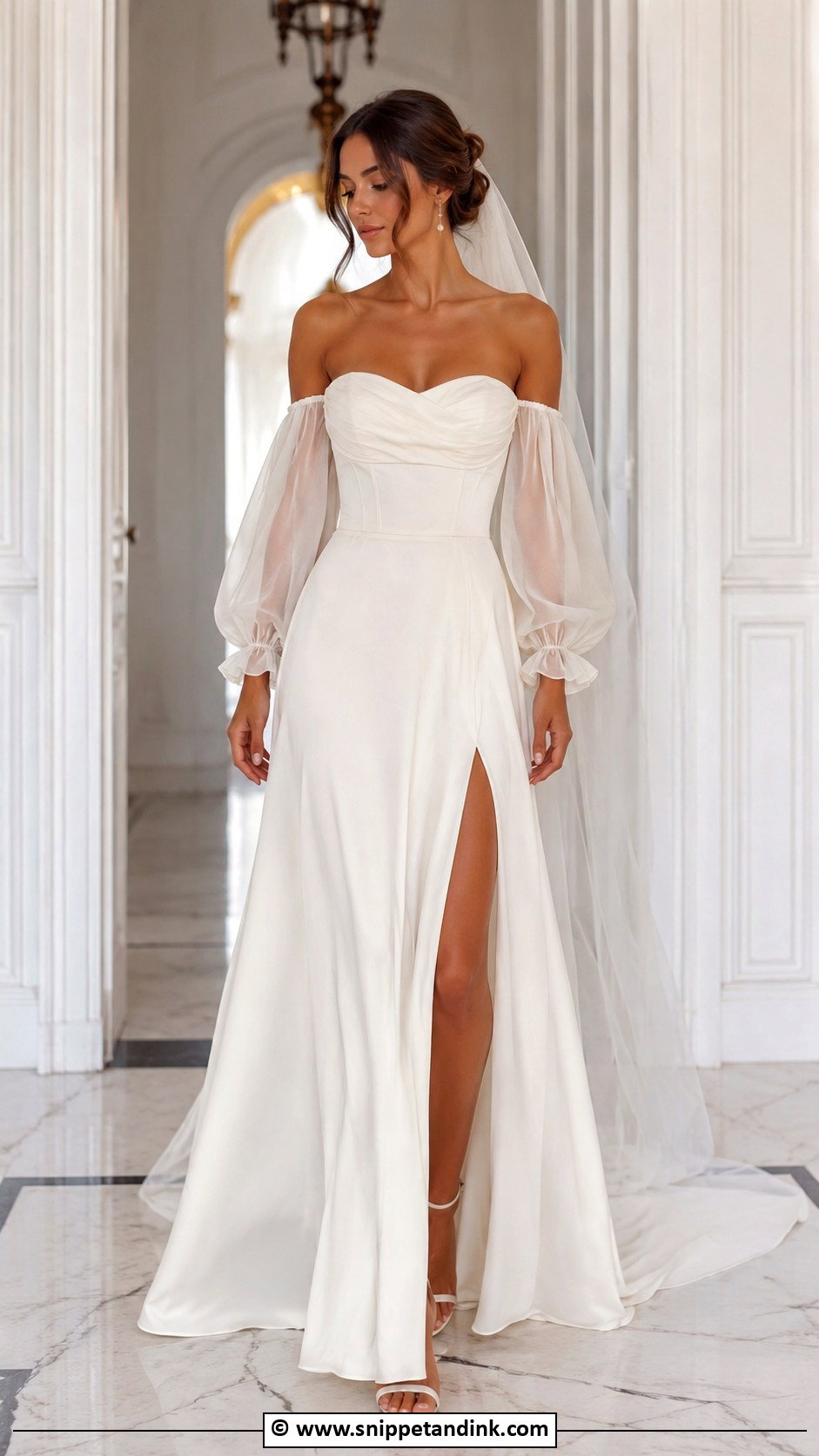
Detachable sleeves give two looks without a full outfit change. Wear them for the ceremony, remove them for the reception. Puff sleeves, lace sleeves and sheer tulle sleeves are common, over a strapless, square-neck or corset base. Ask how they attach; elastic arm bands are easy to slip off, while sleeves sewn to the bodice with snaps need a helper. Simple heels and jewelry keep the focus on the sleeves.
15. Bridal Dress With Bow Back
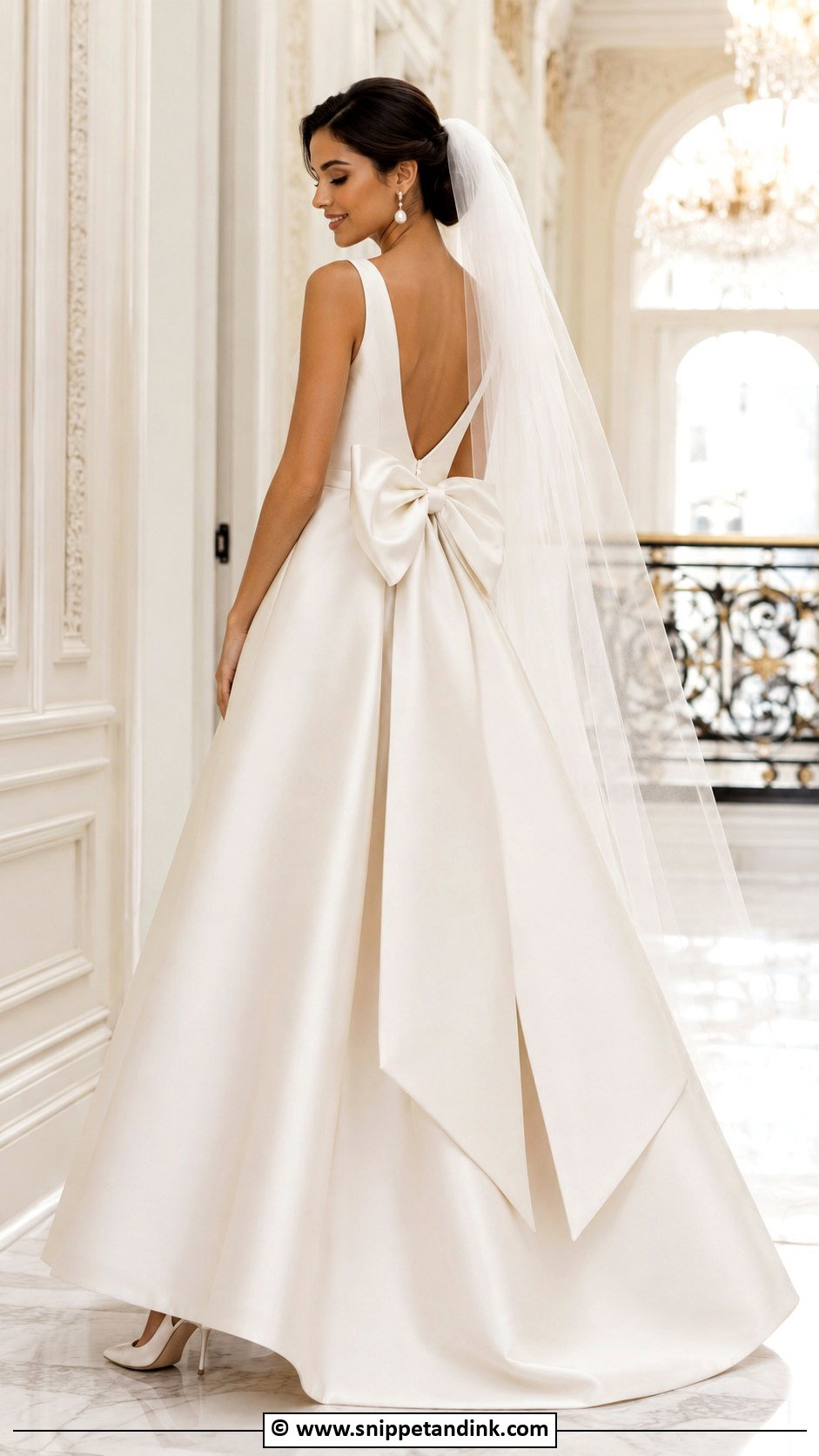
A bow at the back gives a statement without covering the gown in embellishment, oversized or slim depending on your taste. It suits satin ball gowns, minimalist crepe and structured A-lines. Choose a veil sheer enough that the bow shows through in aisle photos. Large bows crush flat when you sit back in a car, so ask whether yours is interfaced and have someone fluff it before the ceremony.
16. Pearl Bridal Dress
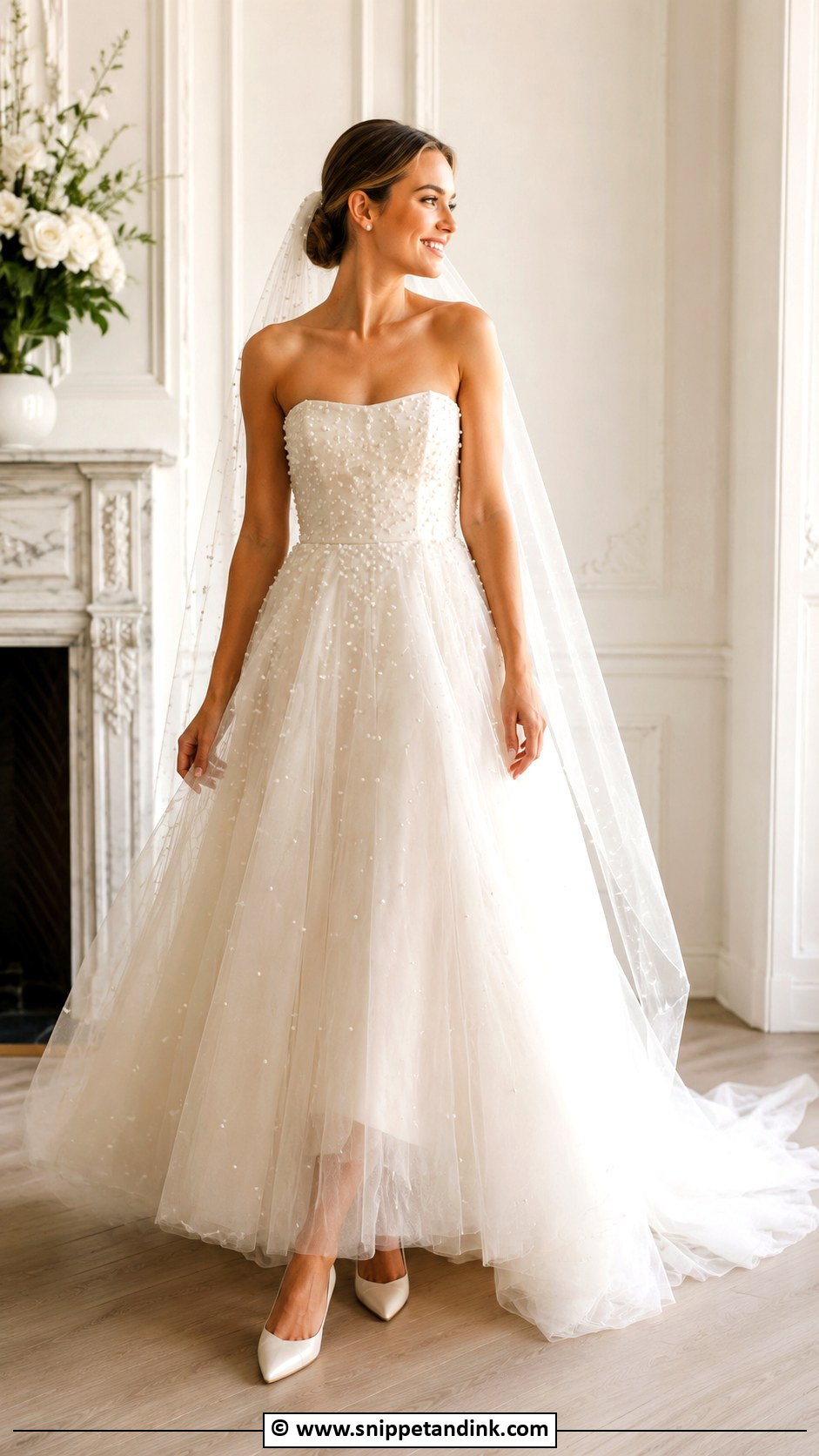
Pearls add texture and soft light across the bodice, sleeves, neckline, veil or whole gown. Scattered pearls on tulle feel soft; all-over pearl beading on a fitted dress is bolder. Keep accessories coordinated but restrained, pearl studs, satin heels and a clean veil. Hand-sewn pearls hold for the whole day, while glued pearls tend to pop off where your arms brush the bodice, so ask which you’re buying.
17. Beaded Bridal Dress
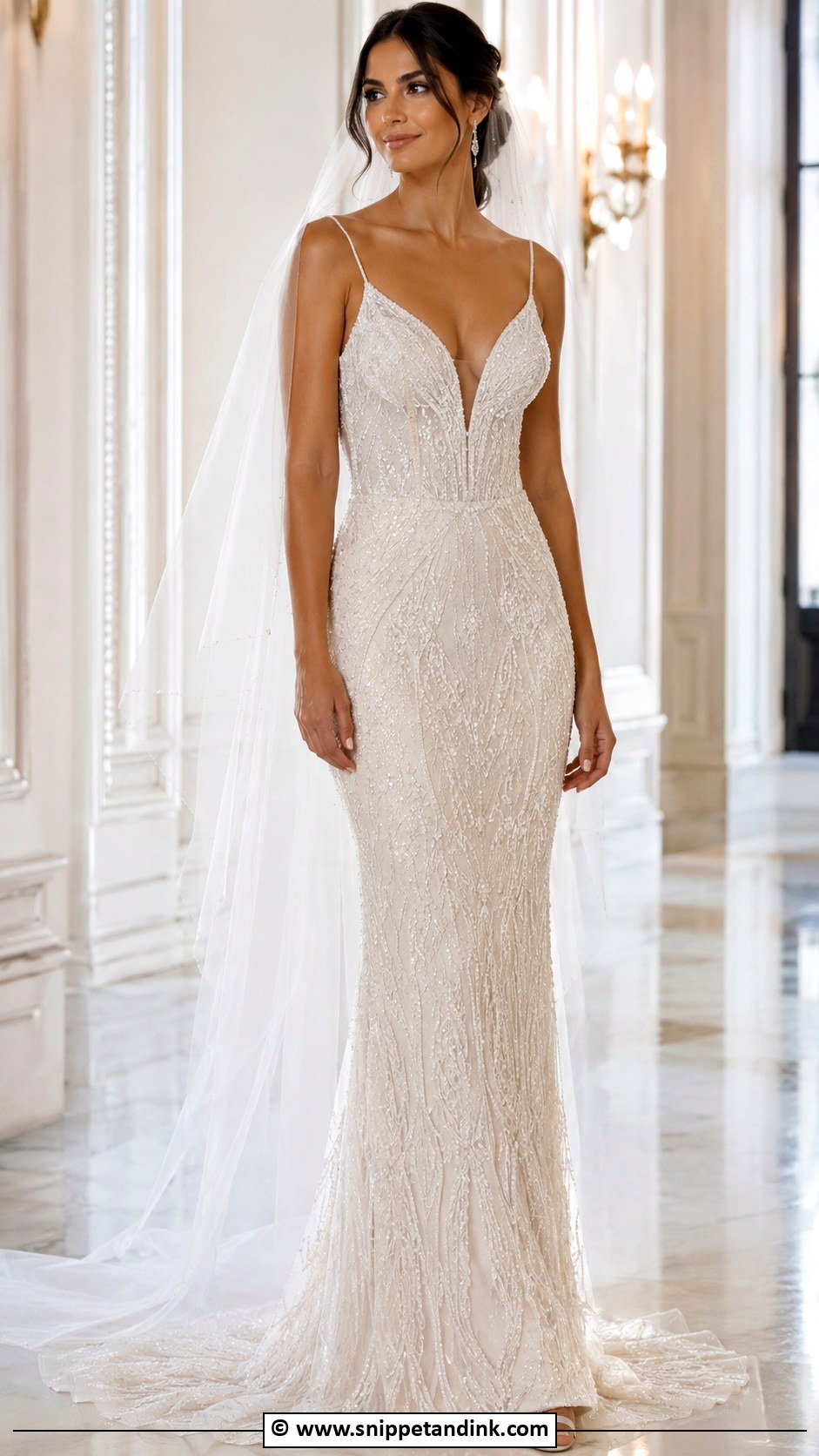
Beading brings shimmer and texture, either tracing the lace pattern on the bodice or covering the whole gown. A fully beaded dress can be surprisingly heavy, so wear it for twenty minutes at a fitting before committing. Simple heels, understated earrings and a soft veil let the gown lead. Beading is also the costliest part to repair, so ask the shop for a few spare beads to keep in your emergency kit.
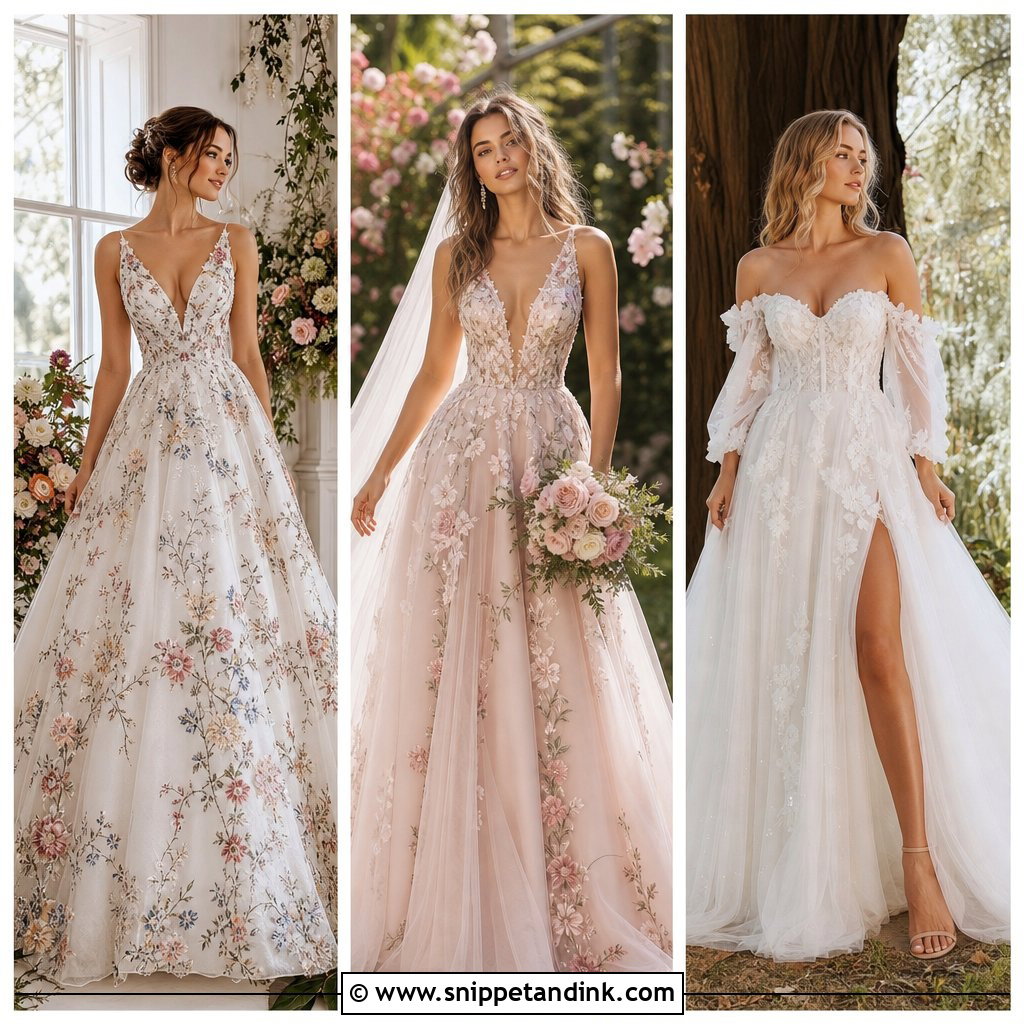
18. Floral Applique Bridal Dress
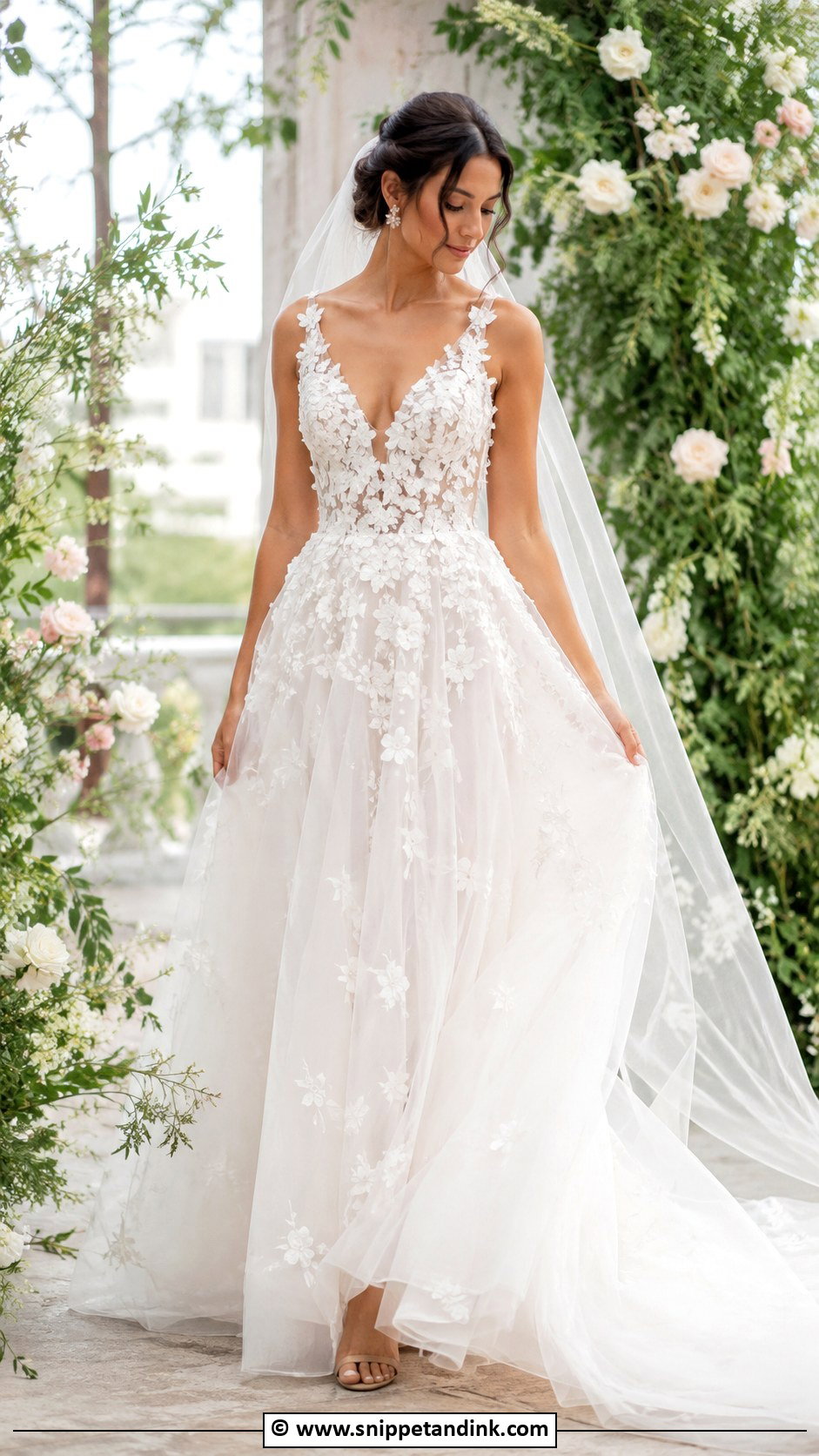
Floral appliques sit on top of the fabric, which gives depth that flat lace can’t. Small scattered flowers look delicate; larger blooms read from across the room. They suit tulle, organza and soft A-lines. Raised petals catch on veil tulle, so check the edge of your veil against the bodice before buying both. Barely-there heels and a simple veil suit garden and spring weddings.
19. Tulle Bridal Dress
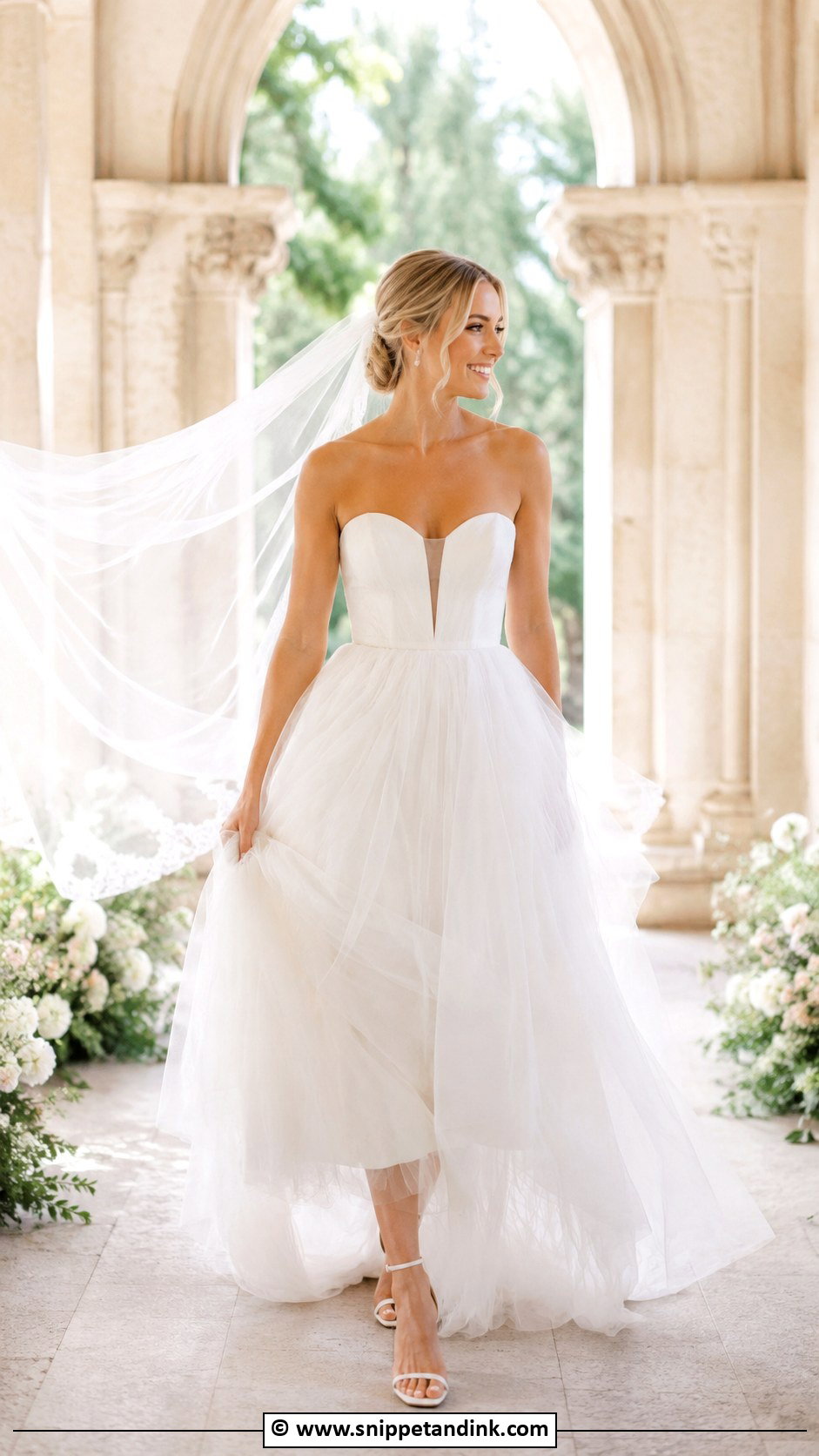
Tulle gives an airy effect, either building a full skirt or adding movement over a slimmer gown. A fitted bodice balances the volume, or a delicate lace top keeps everything soft. Tulle snags on rough wood, stone and heel buckles, so I’d suggest smooth shoes and asking someone to watch the hem on rustic floors. Dainty heels, a floating veil and minimal jewelry suit outdoor spaces and halls with natural light.

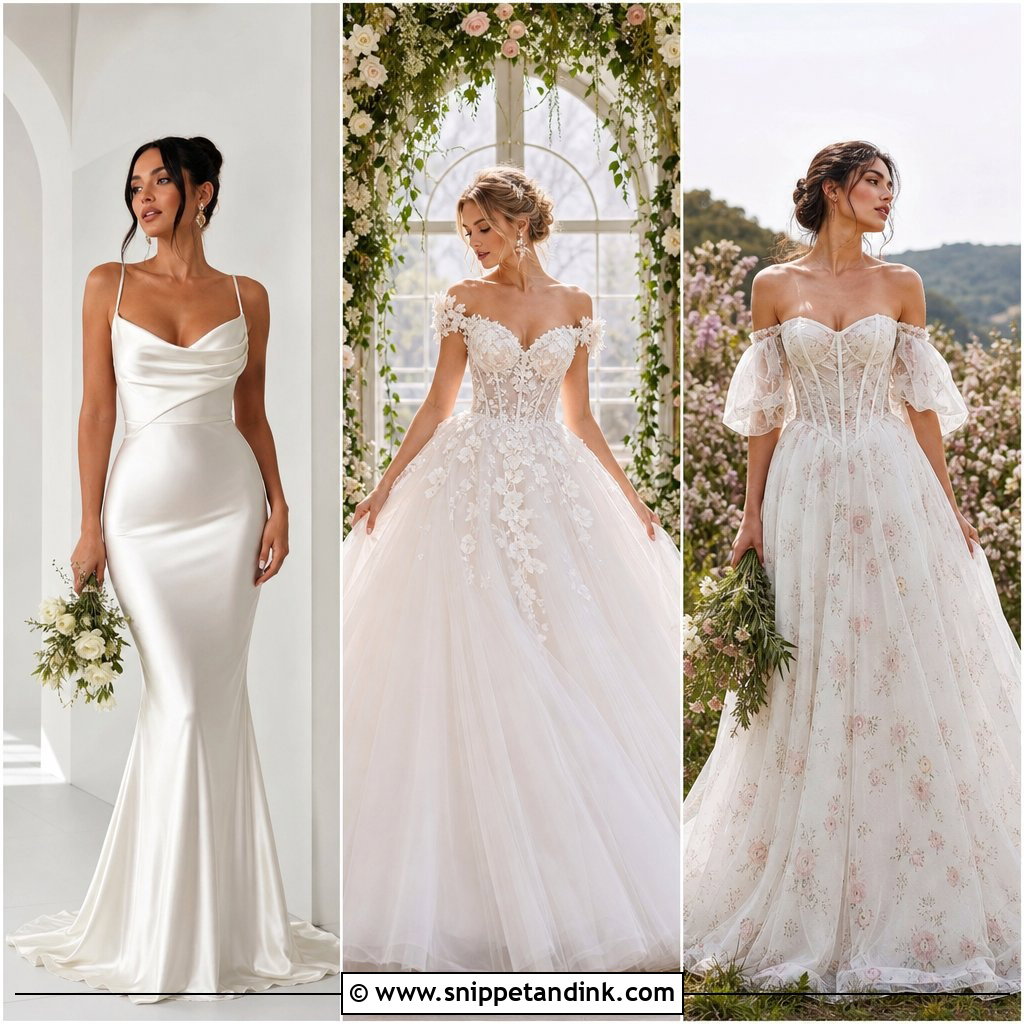
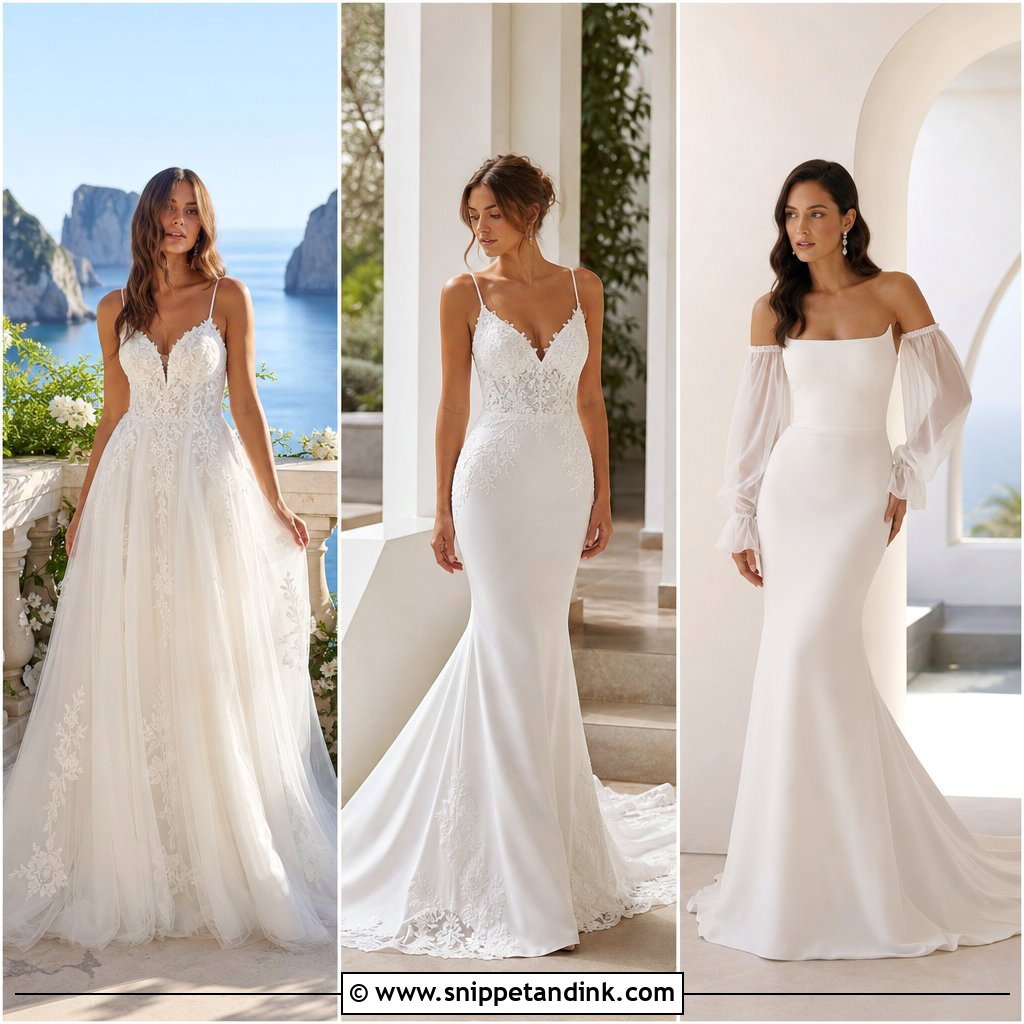
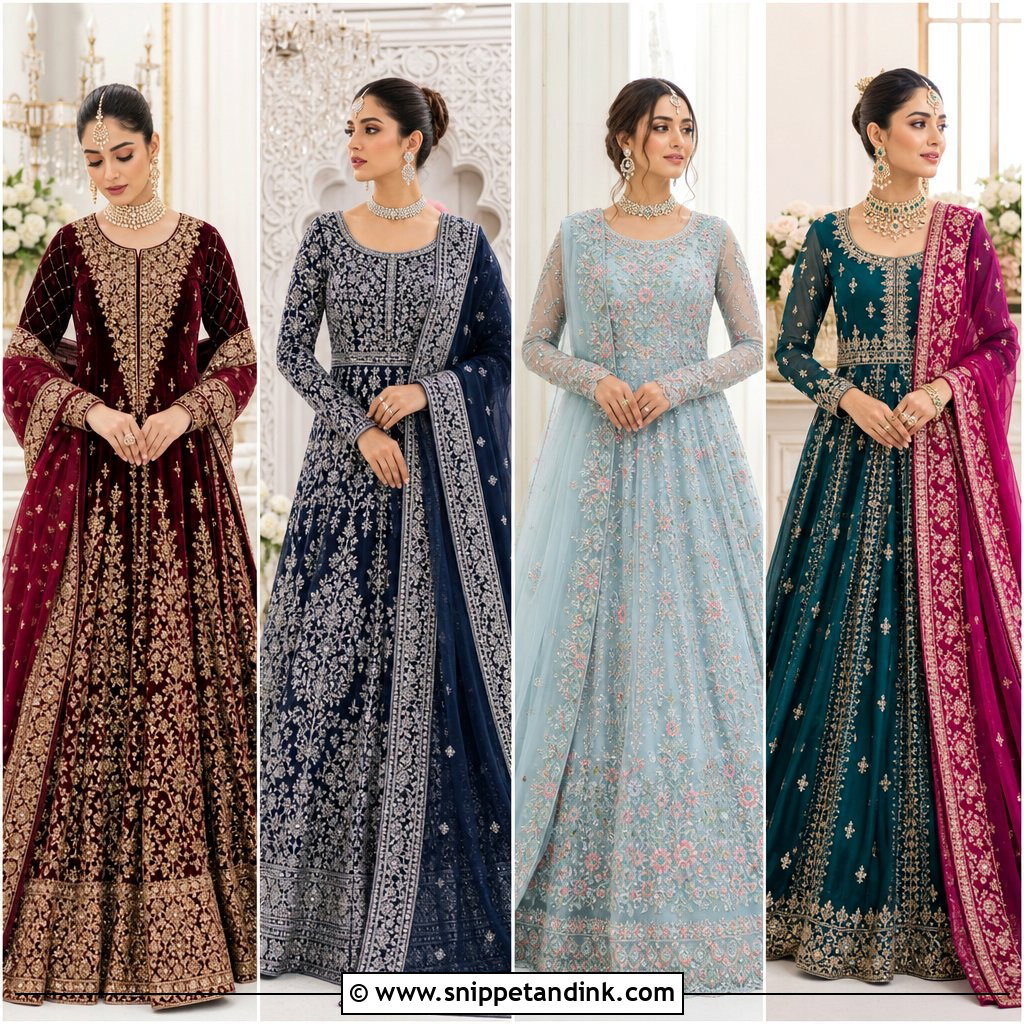
20. Chiffon Bridal Dress
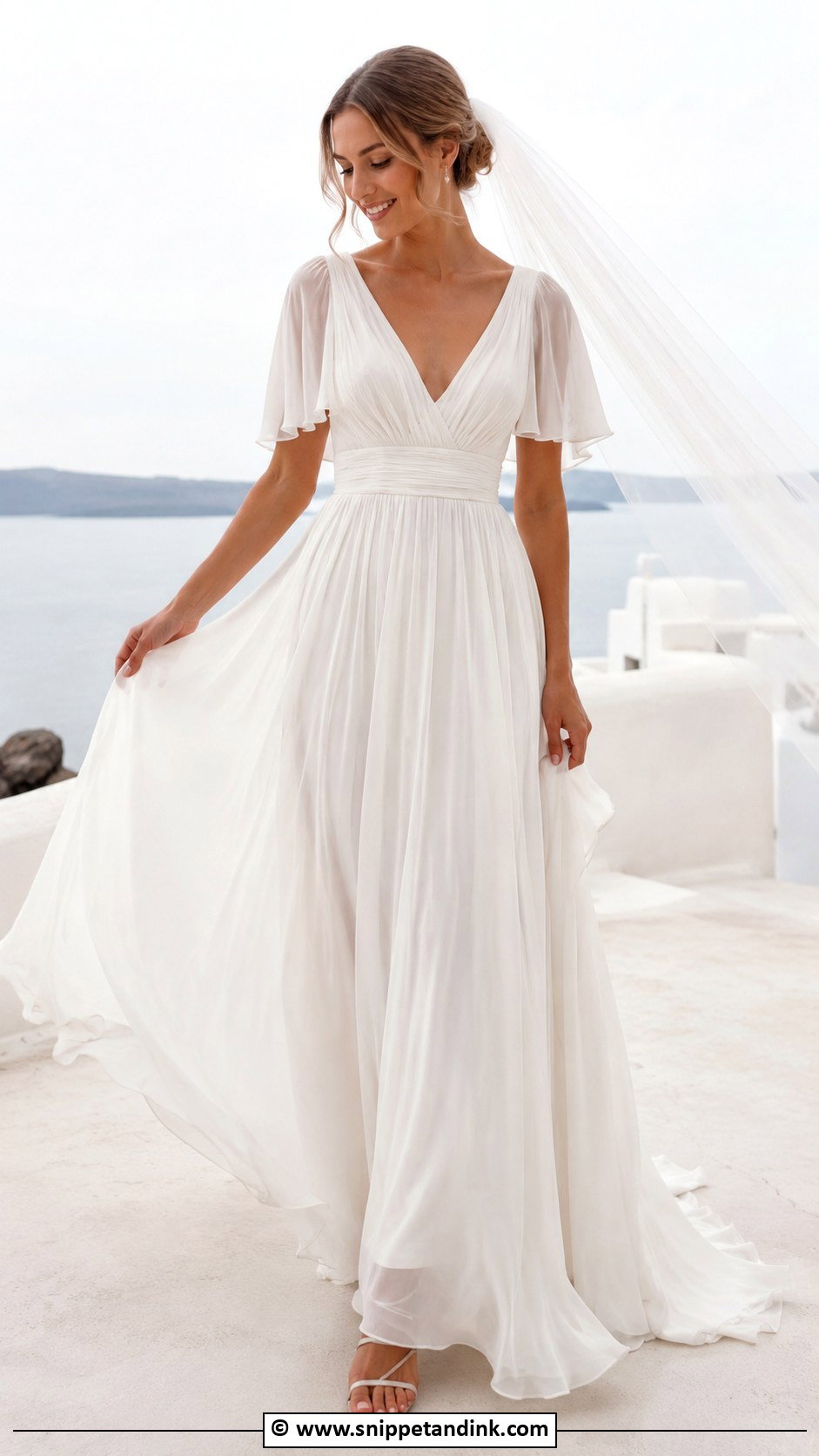
Chiffon is light and soft, and it moves with every step, which is why I put brides in it for beach weddings and hot outdoor ceremonies. It works with empire waists, A-lines, flutter sleeves and soft pleating. Chiffon frays easily at the hem and snags on rough surfaces, so keep the hem just off the ground. Flat sandals, block heels or ankle straps, simple earrings, a light veil and soft waves suit it.
21. Organza Bridal Dress
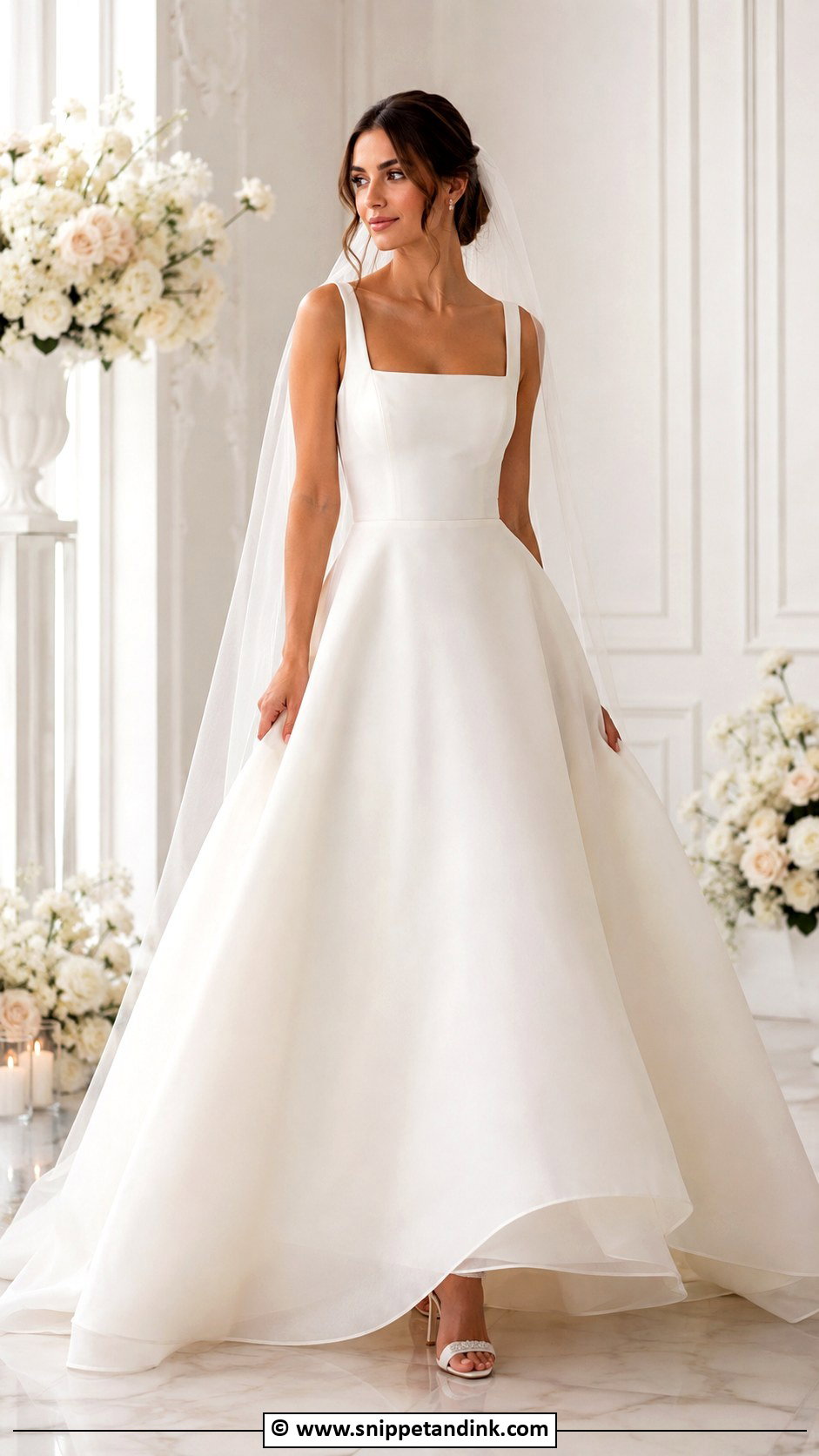
Organza is crisp and airy, giving volume without the weight of heavier fabric. It holds structured skirts, soft ruffles and overlays, so an A-line or ball gown keeps its shape while staying light. The downside is creasing: organza wrinkles sharply and shows it, so plan for steaming on the morning. Elegant heels, a sheer veil and minimal jewelry keep it fresh, and floral appliqués or subtle embroidery suit the fabric.
22. Mikado Bridal Dress
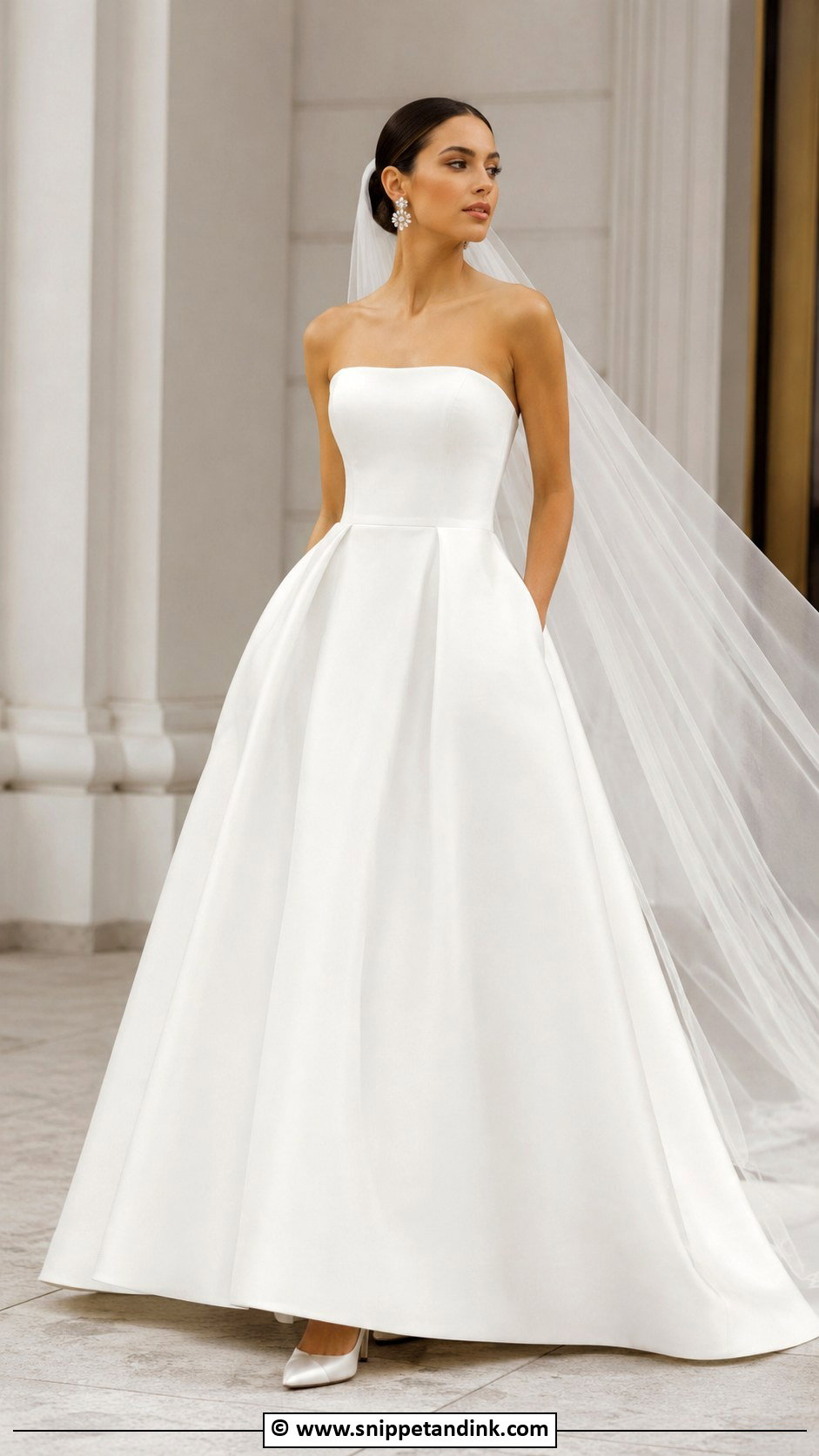
Mikado has a subtle sheen and enough body to hold clean, architectural shapes, which is why it’s used for ball gowns, A-lines and modern strapless gowns. Because it looks polished on its own, keep styling simple: classic pumps, a long veil and sculptural earrings. Mikado is heavier than it looks, and a full mikado skirt can be tiring by late evening, so plan a lighter reception look if you’ll dance for hours.
23. Sheath Bridal Dress
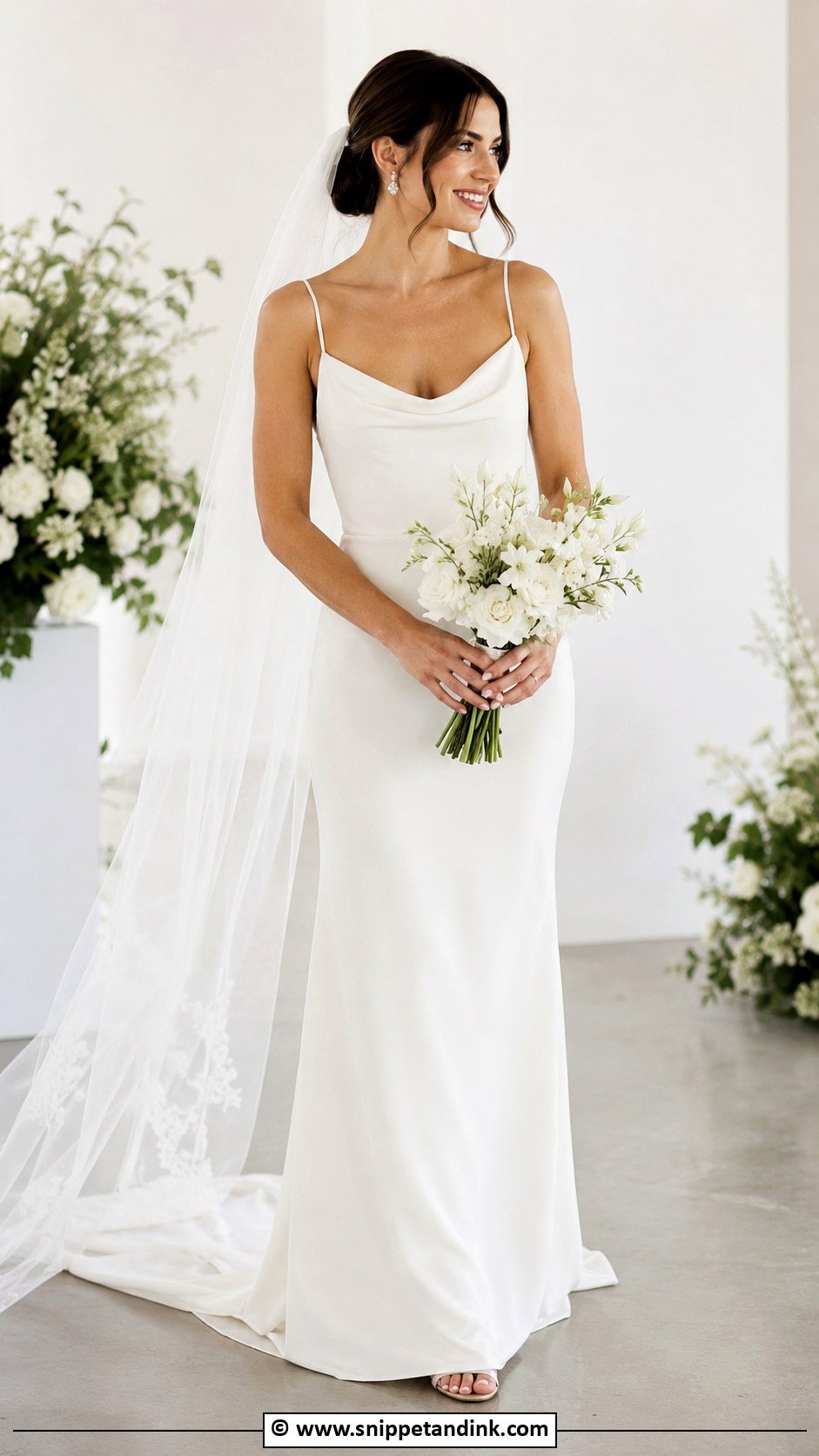
Sheath dresses follow the body without a dramatic flare, so they’re light and easy to wear. Crepe, satin, lace and chiffon all work. The dress should skim rather than pull, and the hips are where a too-tight sheath gives itself away with horizontal creases. With a plain dress, add a statement earring or textured veil; with lace or beading, keep it simple. It suits destination weddings and intimate ceremonies.
24. Column Bridal Dress
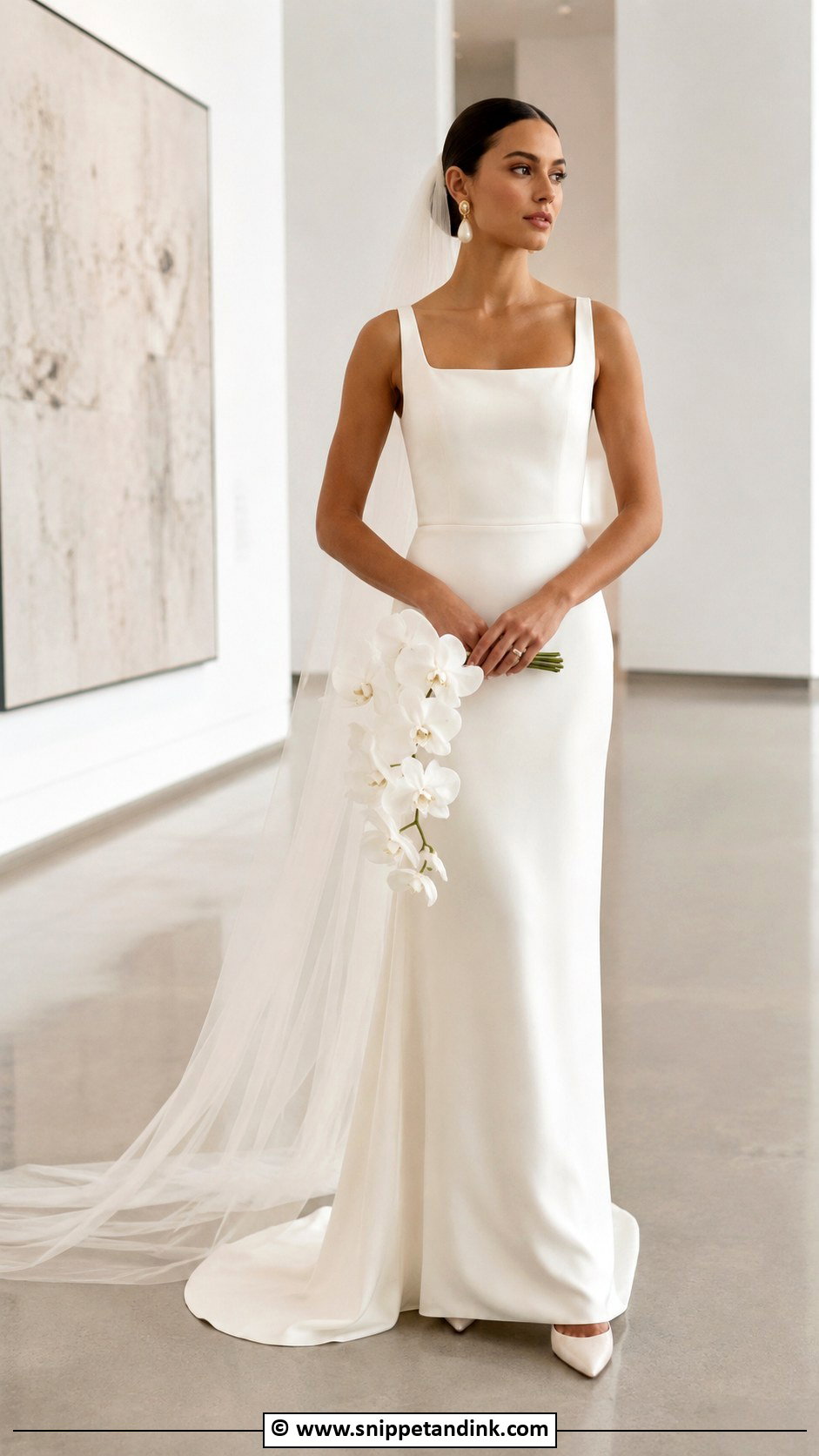
A column has a straighter, more structured vertical line than a sheath, from neckline to hem. It’s popular with minimalist brides. Crepe, satin and matte silk-like fabrics suit it, with a square neck, high neck or a strapless column gown. Without a slit or kick pleat, a column restricts your stride, so walk the length of the shop before deciding. Pointed heels, a long veil and simple bold earrings suit city venues, museums and rooftops.

25. Basque Waist Bridal Dress
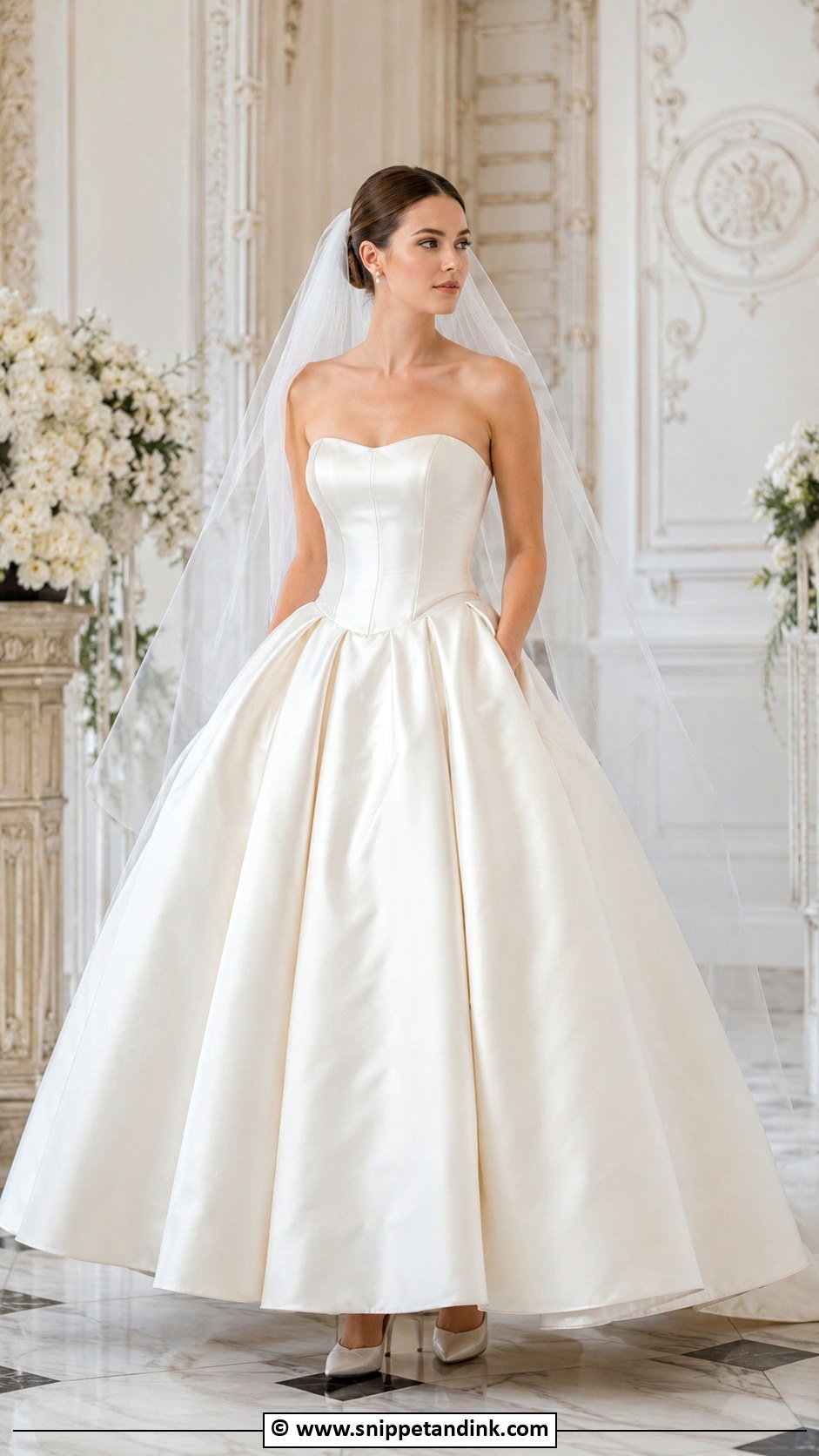
The basque waist dips into a V or curve below the natural waist, lengthening the torso and giving ball gowns and full A-lines a vintage drama. Satin looks clean; lace softer. The V point needs to land correctly on your body; on a short torso it can press into the hip bone when you sit. Simple earrings, classic heels and a sheer veil keep the waist in focus.
26. Drop Waist Bridal Dress
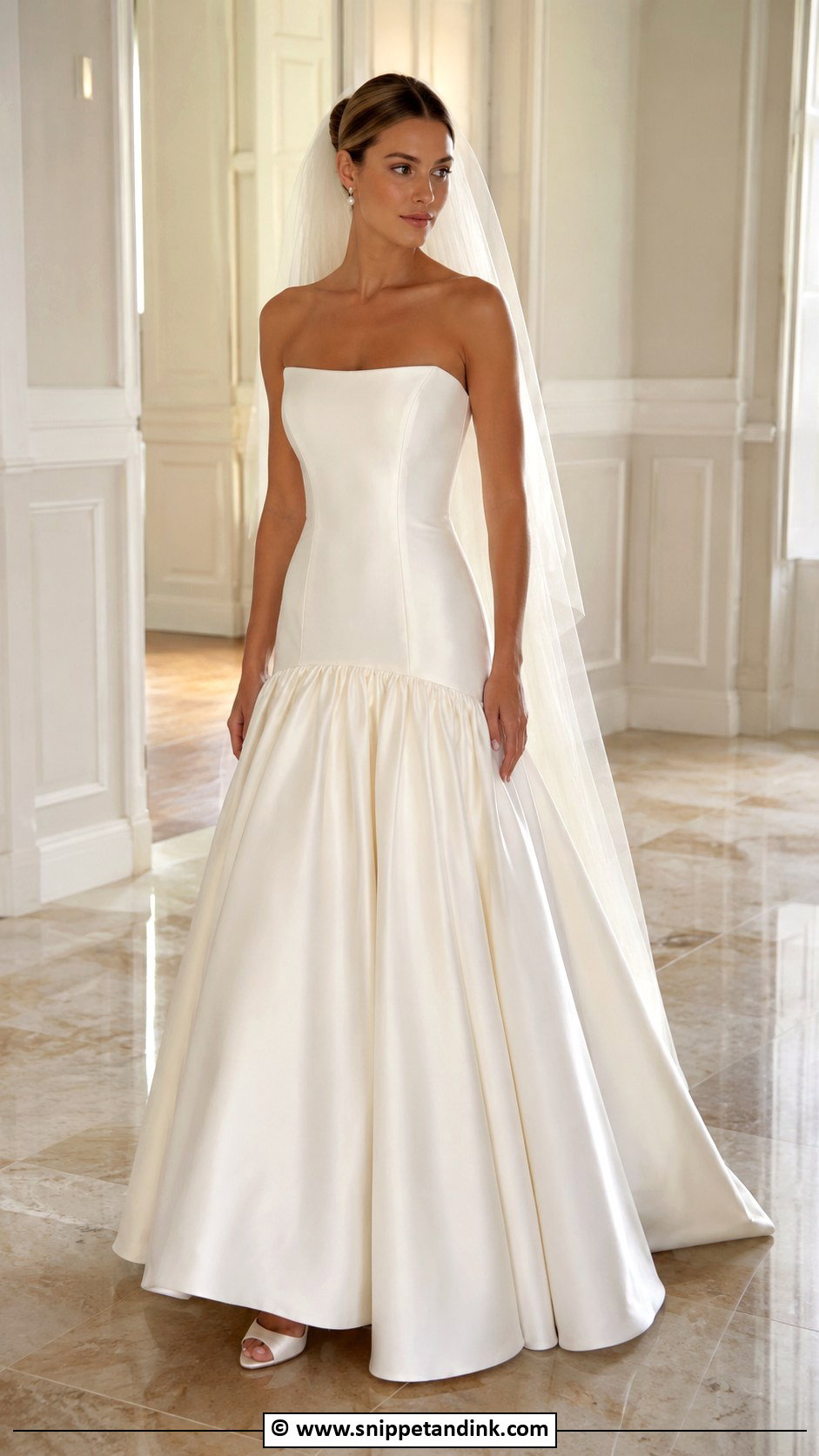
A drop waist starts the skirt lower on the hips, creating a long torso line that can look vintage, modern or dramatic. A fitted drop waist with a full skirt is a statement; a softer version feels relaxed. On petite frames I lift the drop slightly so the legs don’t look shorter. Sleek heels, a fitted veil and simple jewelry finish it.
27. Halter Bridal Dress
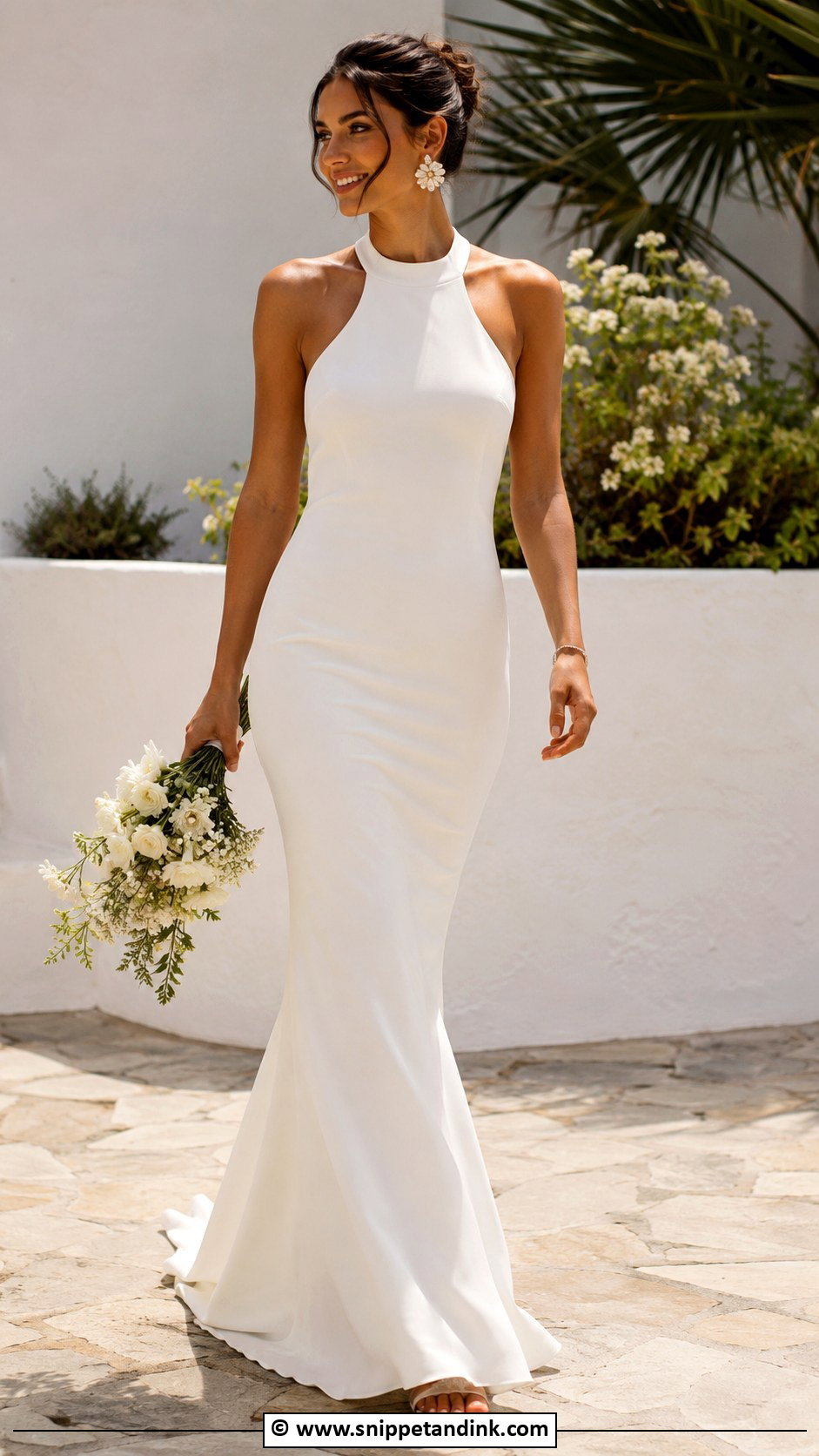
A halter draws attention to the shoulders and gives support without traditional straps. Crepe makes it modern and sporty, satin glamorous, lace romantic. Skip the necklace and wear your hair up so the neckline shows. The neck closure carries some of the dress weight, which is why I prefer halters on lighter fabrics or add a support strap across the back on heavier ones. It suits beaches, modern spaces and warm-weather ceremonies.
28. V Neck Bridal Dress
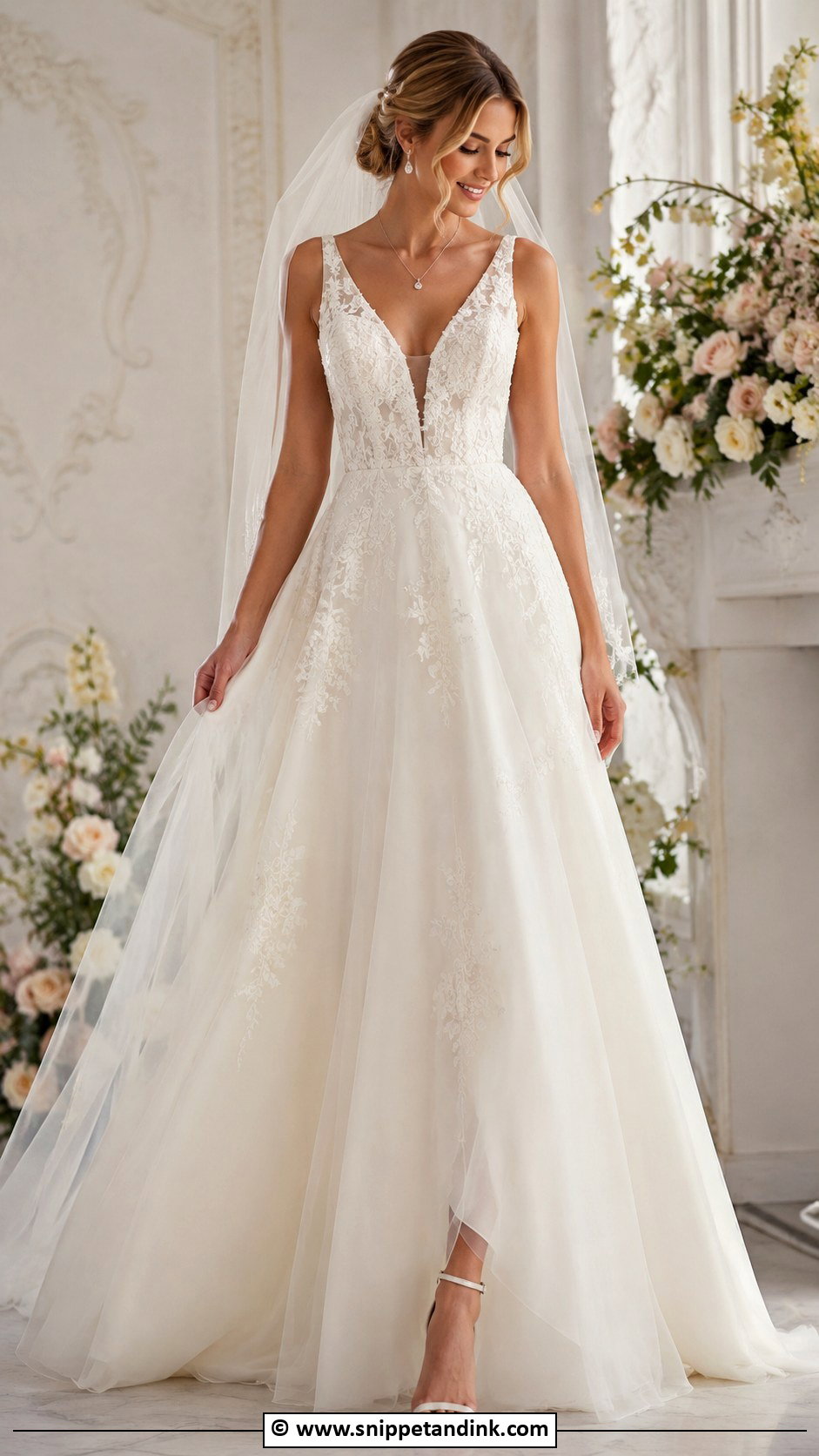
V necks work for almost everyone: a soft V reads modest, a deeper V more fashion-forward. They suit A-line, sheath, fit-and-flare and chiffon gowns. A deep V needs illusion mesh or a firmly built bodice to stay put, and I’d add a small strip of fashion tape at the edges too. A delicate pendant or drop earrings, depending on the depth, with classic pumps, block heels or strappy sandals.
29. Backless Bridal Dress
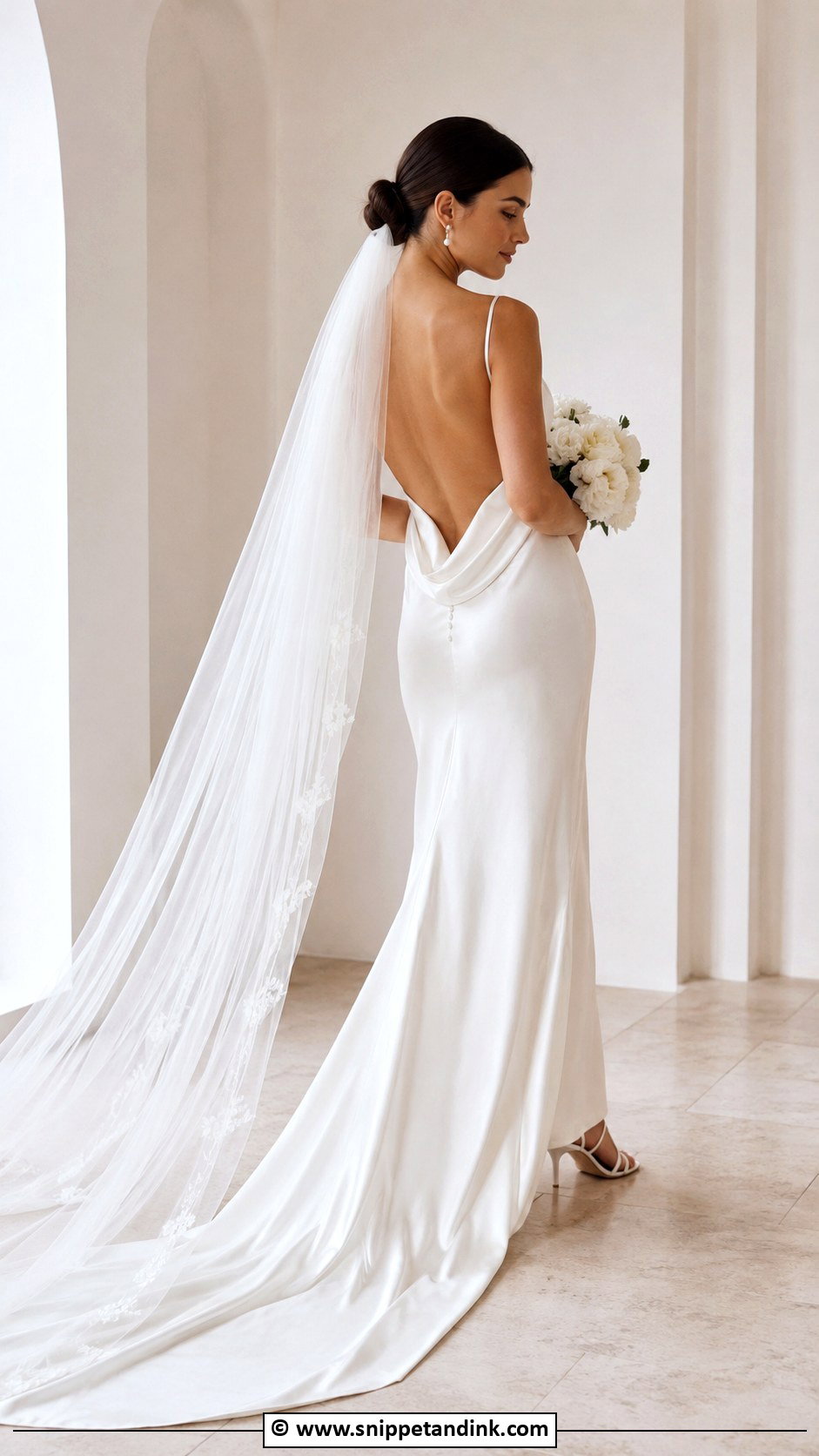
A backless dress keeps the front simple and saves the surprise for when you turn around. Satin looks sleek, lace romantic, fitted crepe dramatic. The dress needs enough structure to stay in place without straps, so ask for built-in cups or plan adhesive support. Remove the veil after the ceremony to show the back. Practise sitting back in a chair, since an open back can gape away from the body when you lean.
30. Colored Bridal Dress
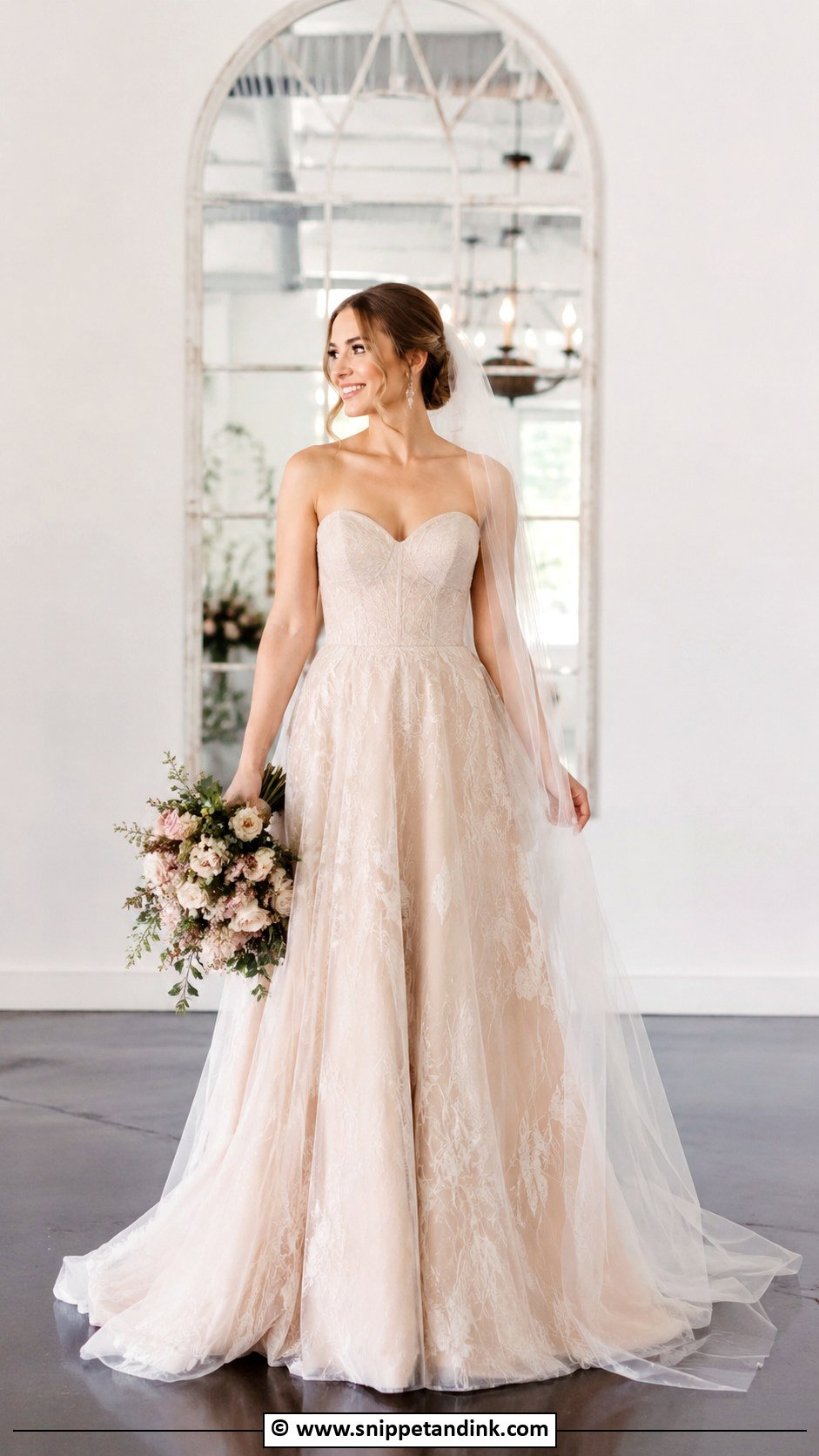
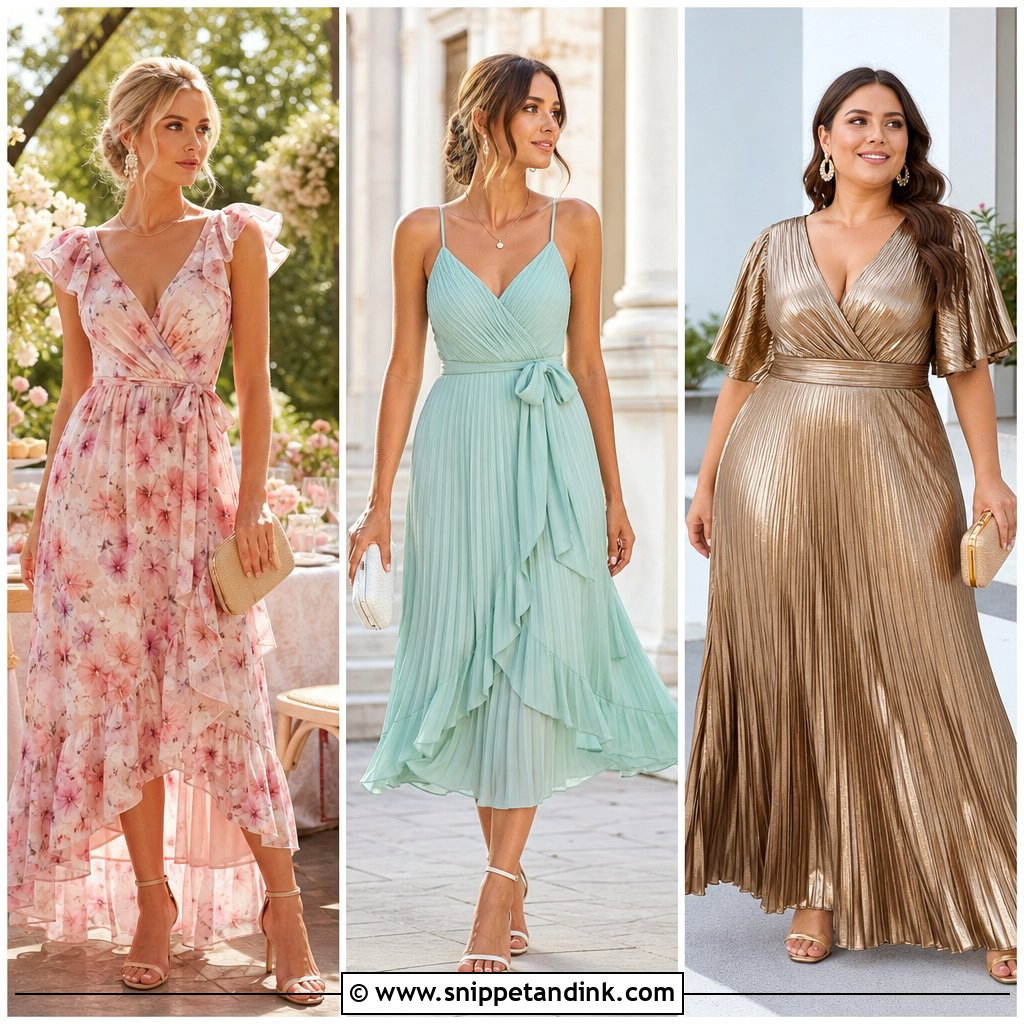
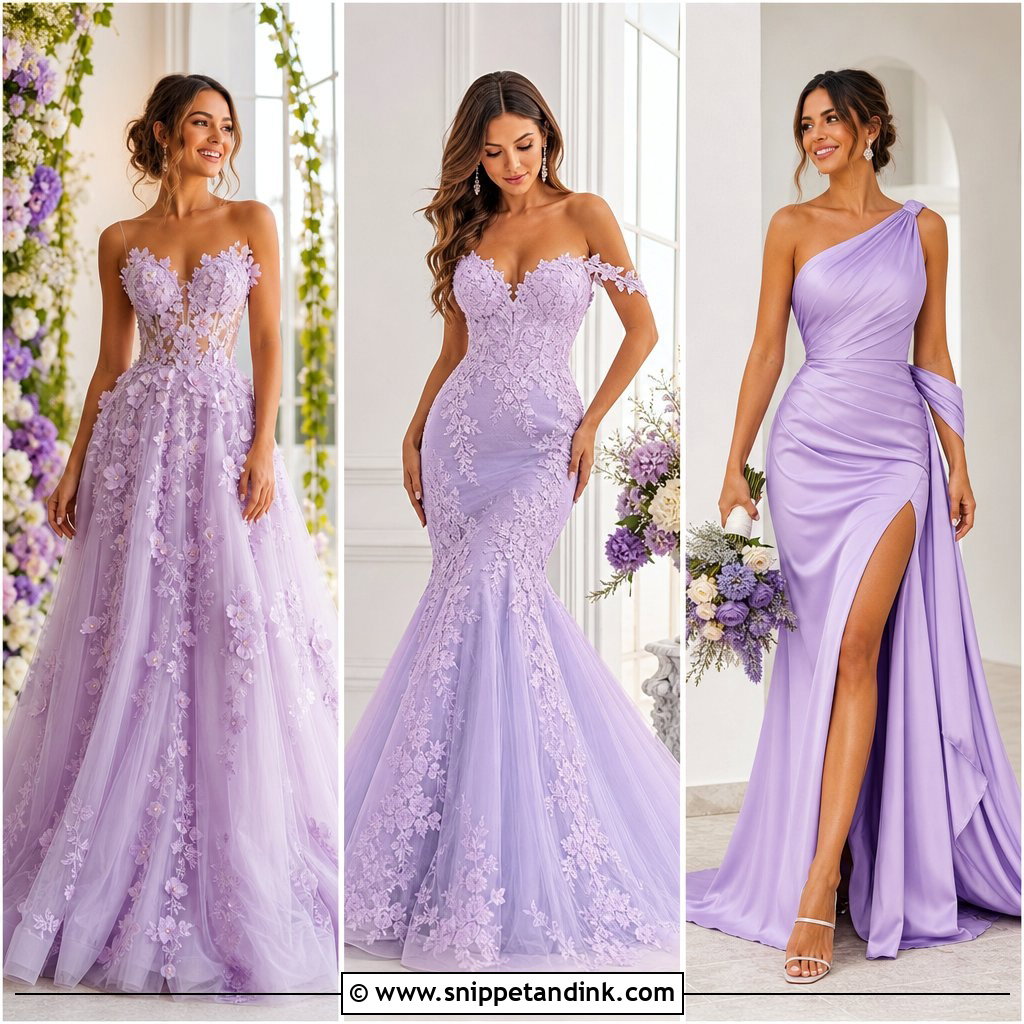
Soft colour lets you look personal and still bridal: blush, champagne, ivory-nude, pale blue or light silver. The silhouette can be simple or dramatic. Keep heels neutral, jewelry delicate and the veil in matching colour or sheer ivory so the colour looks deliberate. Coloured gowns are often dyed to order, which can add time, so order earlier than you would for ivory. It suits second looks, outdoor ceremonies and creative venues.
31. Blush Bridal Dress
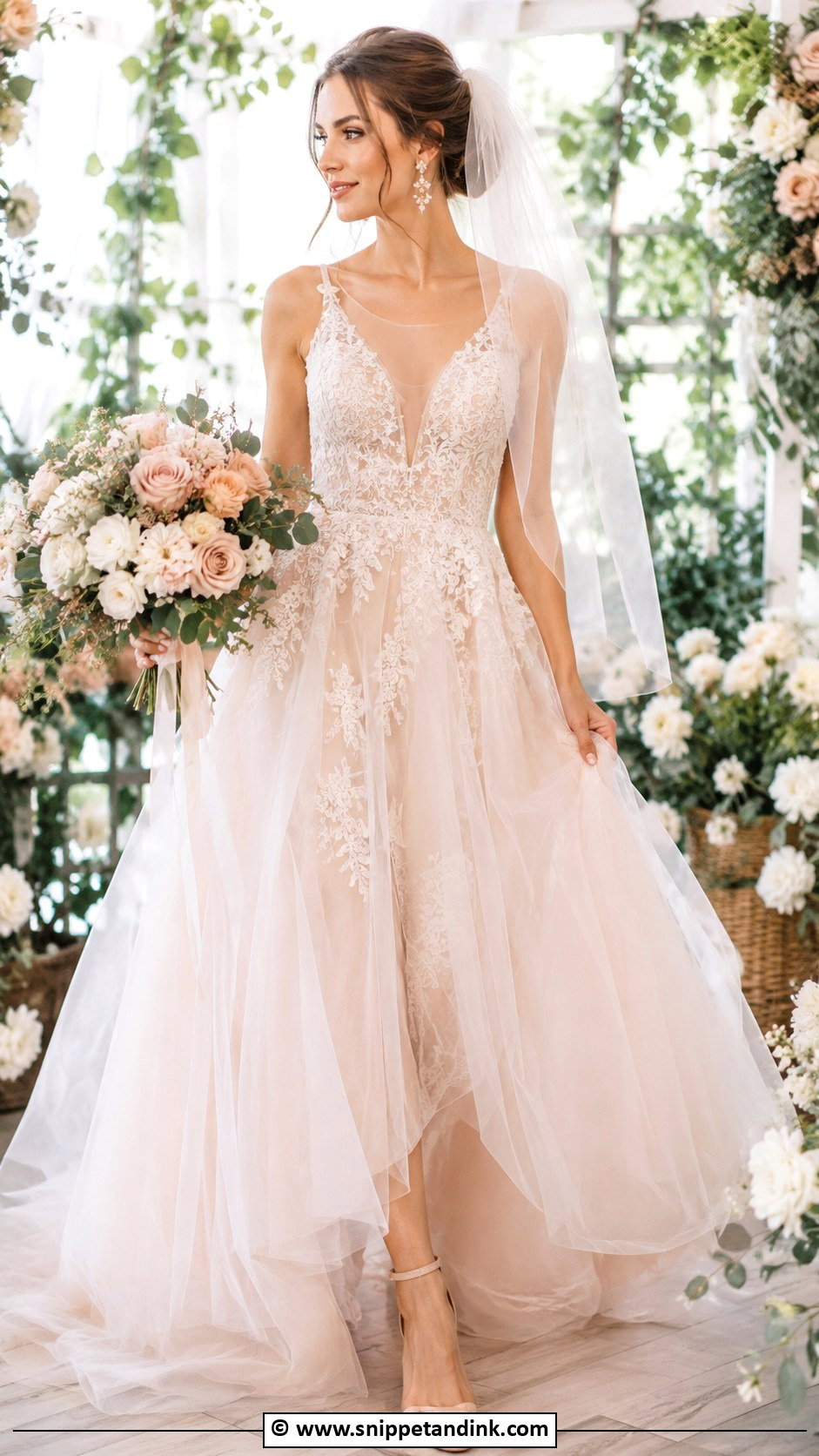
Blush gives a warm glow while staying soft, especially in tulle, lace, chiffon or floral appliqué. Pink undertones suit many skin tones in natural light but can turn beige under some indoor lighting, so check it in both. Ivory or nude heels, rose-toned earrings and a sheer veil keep it gentle; bright accessories distract from the colour. It suits garden venues and romantic receptions.
32. Reception Bridal Dress
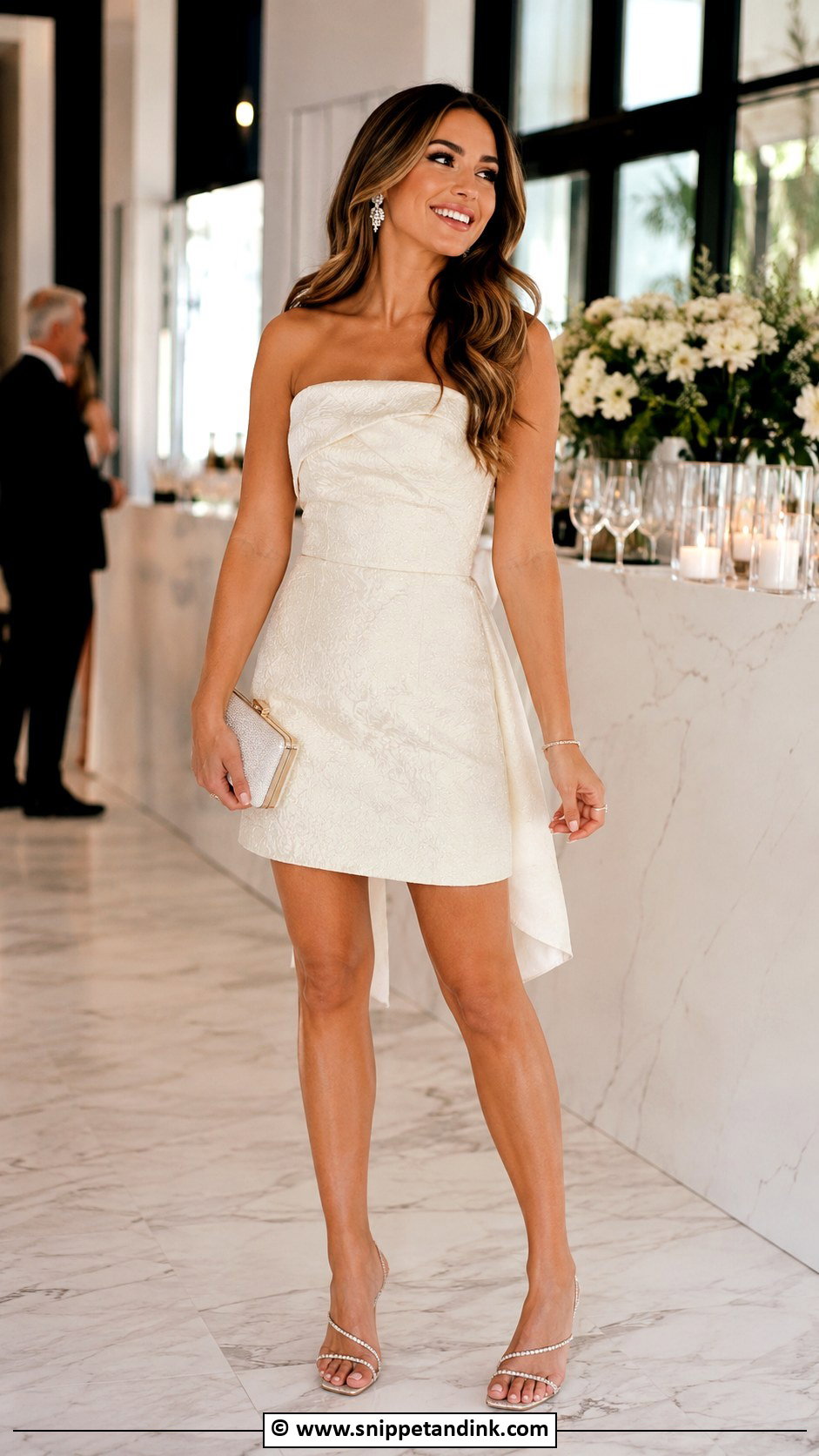
A reception dress should let you move, mingle and dance. Many brides change into a shorter dress, a sleek slip, a feather-trimmed mini or a light column gown. It can be more playful than the ceremony dress while staying polished. Plan the change into the timeline with a helper and about twenty minutes. Comfortable statement heels, a small clutch and earrings that catch the light finish it.
33. Courthouse Bridal Dress
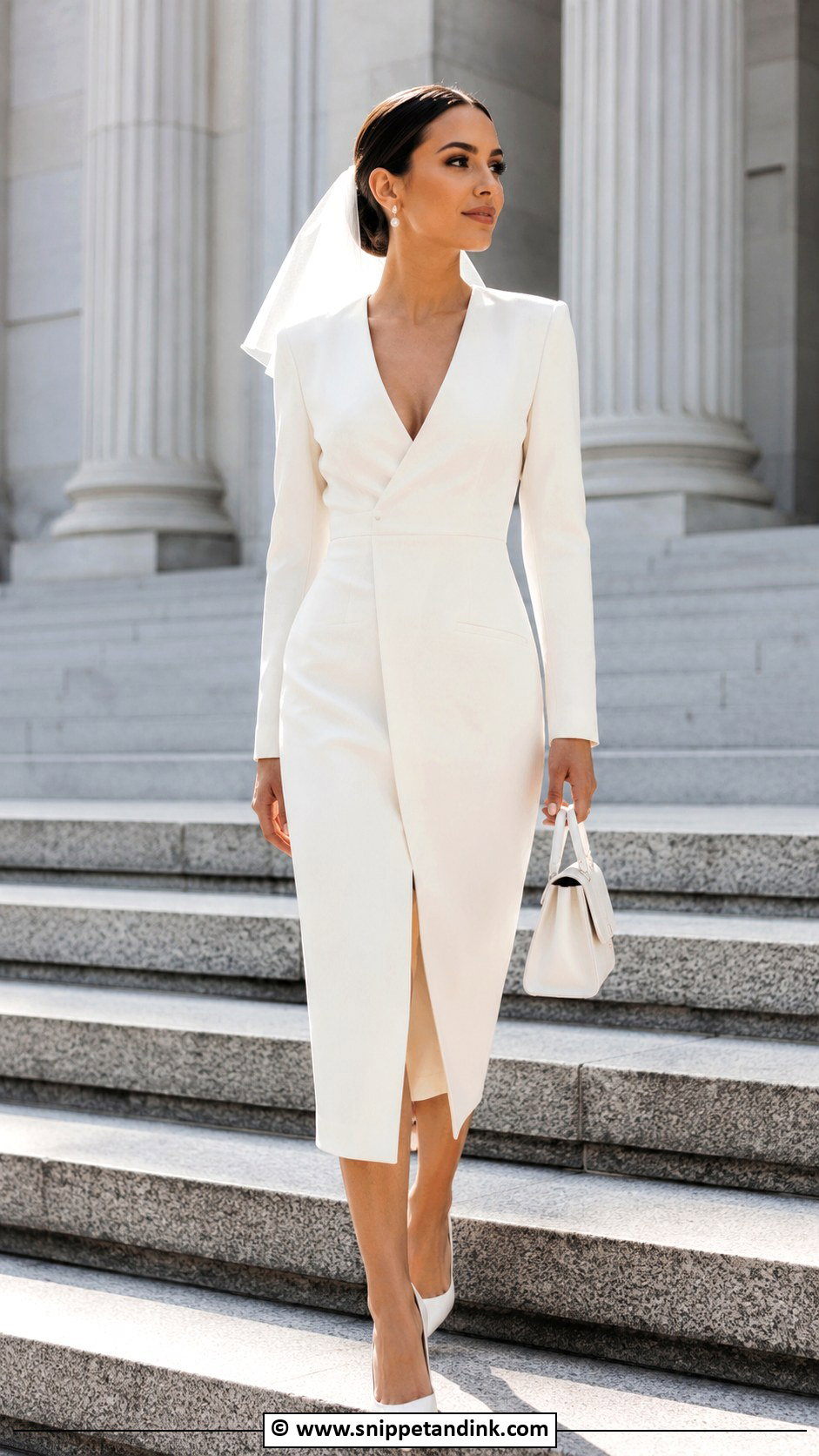
A courthouse dress should be polished, comfortable and personal: a tailored midi, a simple satin slip, a structured mini or a white blazer dress. Courthouse ceremonies are short and intimate, so fit and clean styling carry the look. Pointed pumps, a small handbag, pearl earrings and a short veil or hair bow mark it as bridal, with a chic coat in cool weather. Pick shoes you can walk city blocks in, because the photos often move outside.
34. Beach Bridal Dress
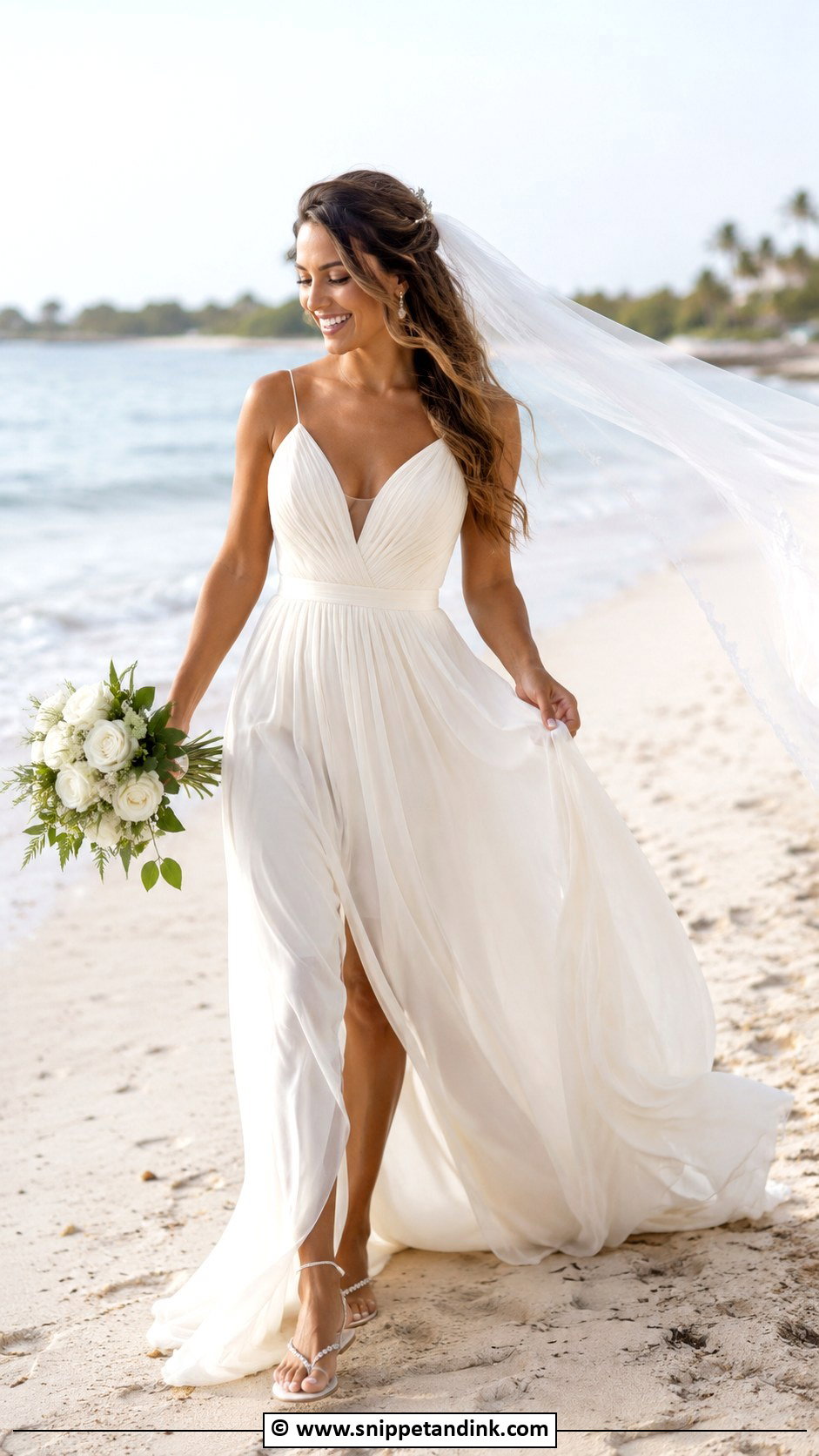
A beach bridal dress has to be light and breathable: chiffon, soft tulle, lace or silk-like satin that moves in the breeze. Sheath, A-line and slip shapes work best, and heavy trains are hard work on sand. Wind is the real issue, so choose a short or weighted veil, or plan to remove it after the ceremony. Flat sandals or block heels for a boardwalk complete it.
35. Vintage Bridal Dress
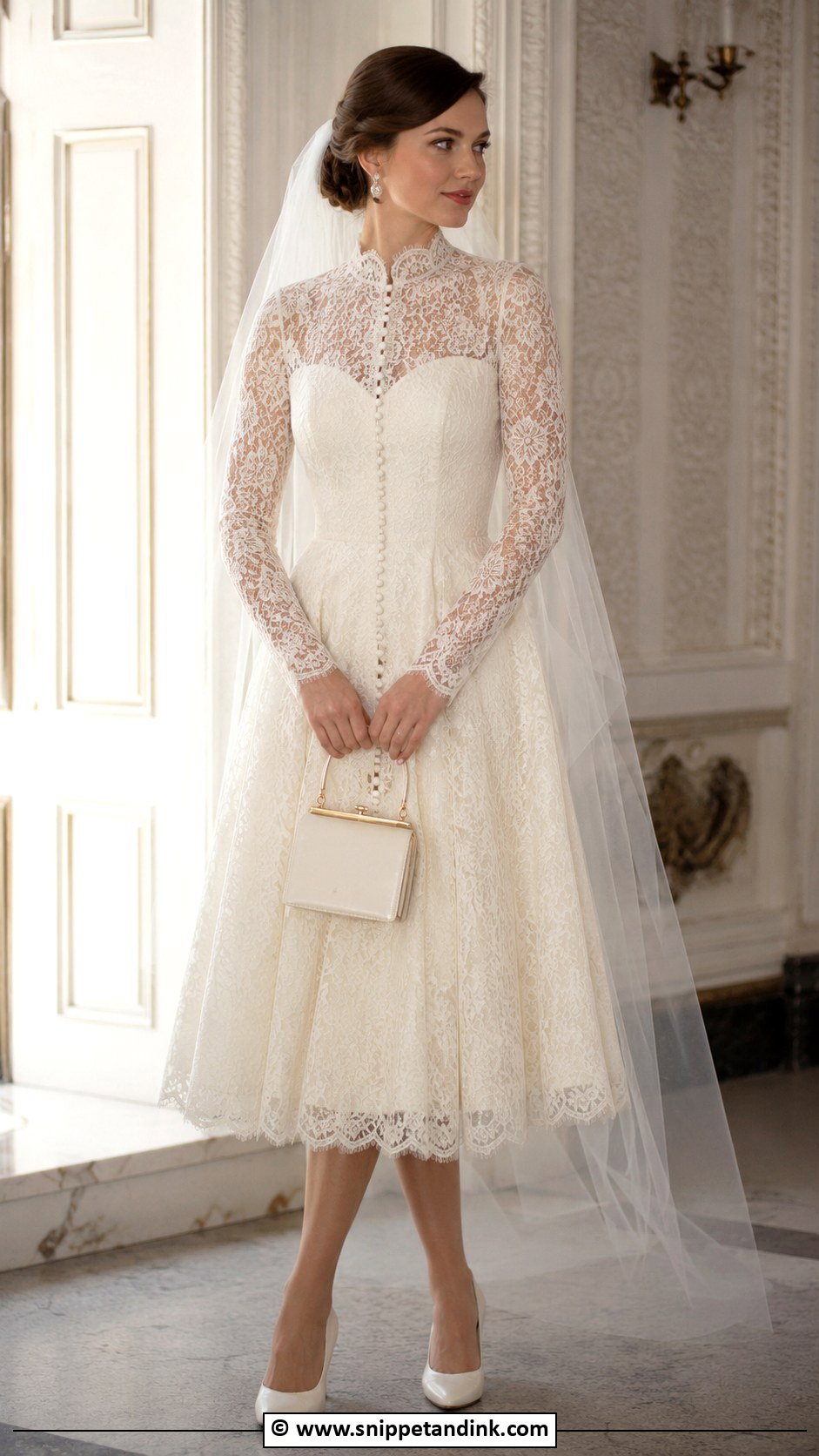
A vintage dress brings character and story, whether it’s true vintage, a restored family gown or a new design inspired by an earlier decade. Lace sleeves, high necks, satin buttons, tea-length hems, basque waists and delicate embroidery are typical. With older gowns, I check the fabric strength at the seams and underarms first, because aged silk can split during alterations. Classic heels, pearl earrings and a soft veil finish it.
The Last Hour Before the Aisle: Steaming, Buttons and Who Zips You In
Getting into a wedding dress takes longer than most timelines allow. I schedule at least thirty minutes for it and do it after hair and makeup, with the bride’s face covered by a scarf as the gown goes over her head, or have her step into it where the design allows.
- Steam the dress the day before or early that morning, hanging from a high hook so the train falls straight.
- Put on shapewear, the bra or cups, and shoes before the dress, since bending to buckle shoes afterwards is hard in a fitted bodice.
- For a row of covered buttons, use a crochet hook to pull each loop over its button. It’s much quicker than fingers.
- Give one person the job of zips, hooks and bustle, and make sure they practised at the final fitting.
- Do one full turn in front of the mirror and one sit-down before you leave the room.
Alterations That Quietly Add Up
Prices vary widely by region and by gown, but certain jobs reliably cost more: hemming lace or multiple tulle layers, adding a bustle to a long train, taking in a beaded bodice, and adding built-in cups. Ask for an itemised quote at the first fitting rather than a single total, so you can decide which changes you actually need.
Your Venue Gets a Vote Too
Some brides shine in a dramatic ball gown; others feel most like themselves in a satin slip, a lace A-line, a courthouse midi or beach chiffon. The neckline, sleeves, fabric, veil, shoes and jewelry can change a dress’s mood completely. Start with your venue, season and how much you’ll move, then let fit and comfort decide between your favourites. The dress that feels right at hour eight matters more than the one that looks right on the hanger.
You'll Like These Ideas:




Leave a Reply